 Your Artifactory is fine. Your Linux kernel hosting it might not be.
CVE-2026-98432 is a race-condition use-after-free in the Linux kernel's IPv4 TCP connection setup, present since Linux 4.4 and scored 9.8 by the kernel team. Anthropic reported on 27 October 2026 that Claude wrote a remote root exploit against MPTCP listeners. JFrog lists fixed kernel versions, distro patch status as of 30 October, changelog check commands for Debian, Ubuntu and RHEL, and mitigations where no fix exists.
 jfrog.comadvisoryPublished and added 2 Nov 2026🛡️ Security
 Threat Brief: Critical Vulnerabilities in PHP: CVE-2026-109618, CVE-2026-109619 (Updated October 29)
Unit 42 threat brief on PHP2Shell, two PHP remote code execution flaws, CVE-2026-109618 and CVE-2026-109619 (CVSS 4.0 9.2), both caused by longjmp() error handling that leaves memory uninitialized or freed. Cortex Xpanse counted over 22.6 million exposed instances. The 29 October 2026 update says attackers chained PHP2Shell with a Linux kernel privilege escalation against internet-exposed PAN-OS management interfaces. An earlier 23 October claim of post-compromise activity was retracted on 25 October.
 unit42.paloaltonetworks.comadvisoryAdded 30 Oct 2026, published 29 Oct 2026🛡️ Security
 CVE-2026-98432: 9.8 CVE affecting all Ubuntu versions
CVE-2026-98432 is a Linux kernel use-after-free in the IPv4 TCP stack, tracked by Ubuntu (published 15 October 2026, updated 29 October 2026). ireq_opt/inet_opt were freed with plain kfree() while another CPU built a SYNACK under RCU, so ip_options_build() read freed memory; the fix uses kfree_rcu(). Ubuntu rates it High priority, CVSS v3.1 9.8 and v4.0 8.3. The page text does not list per-release package status.
 ubuntu.comadvisoryAdded 30 Oct 2026, published 29 Oct 2026🛡️ Security
 CVE-2026-101767: Critical Oracle EBS SQL Injection Actively Probed in the Wild
CVE-2026-101767 is a CVSS 9.8 unauthenticated SQL injection in Oracle E-Business Suite's Application Object Library, reachable through the /OA_HTML/AppsTCFServer servlet (GanttDataServer) and chainable to OS command execution. It affects versions 12.2.3 to 12.2.15 and was fixed in the October 2026 Critical Patch Update. Horizon3.ai found it, and Defused saw probing on honeypots on 27 October 2026. Interim mitigation is removing the servlet from the URL firewall allowlist.
 orca.securityadvisoryPublished and added 28 Oct 2026🛡️ Security
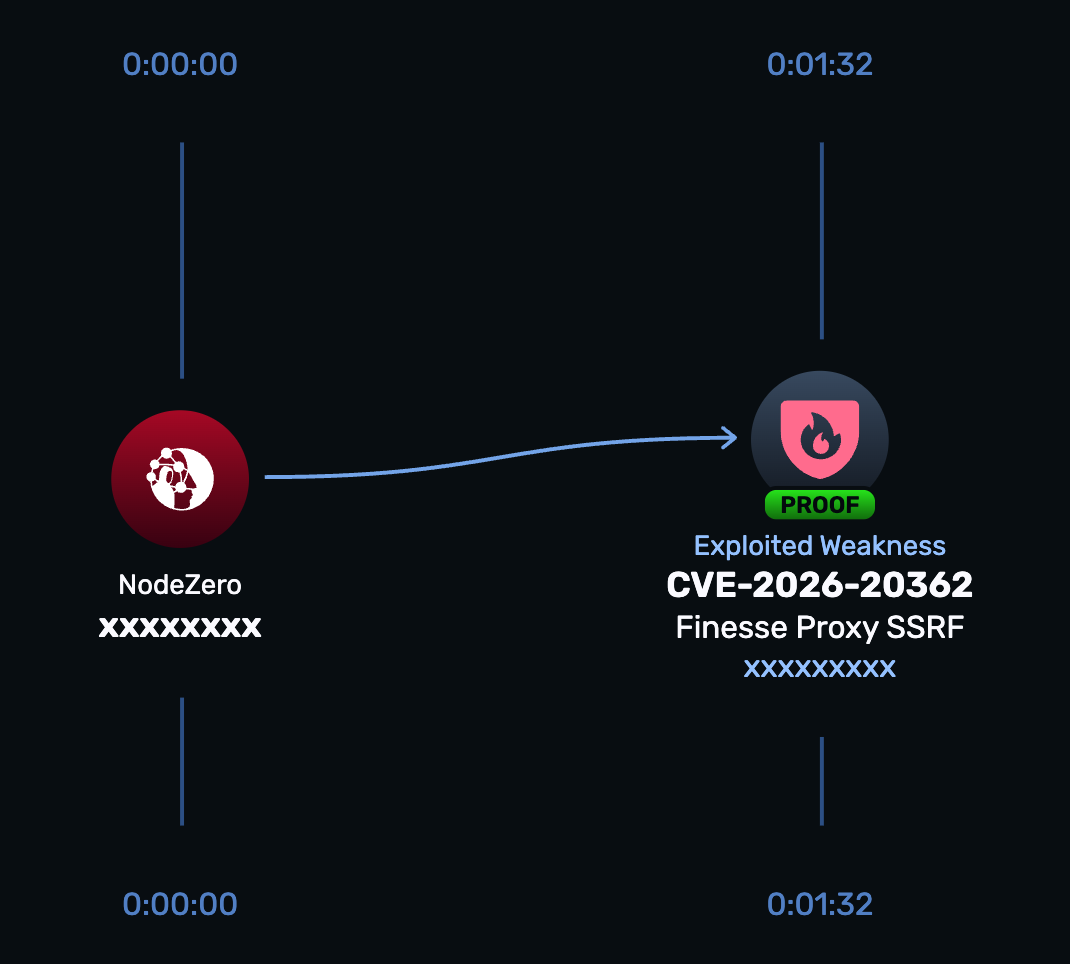 CVE-2026-20362 | Cisco Finesse Server-Side Request Forgery Vulnerability
CVE-2026-20362 is an unauthenticated server-side request forgery in Cisco Finesse (CVSS 3.1 score 7.2), found by Horizon3 researchers Noah King and Brandon Peterson. The embedded Apache Shindig content proxy fetches attacker-supplied URLs, including loopback services such as the Finesse REST API at 127.0.0.1:8082, which returns SystemInfo with node hostnames and the XMPP domain. Cisco published its advisory on 7 October 2026. Fixes are planned for January and February 2027, and no workaround exists.
 horizon3.aiadvisoryAdded 29 Oct 2026, published 28 Oct 2026🛡️ Security
- Node.js Brotli Decoder Out-of-Bounds Write Threatens Remote Code Execution Across All Supported Versions
CVE-2026-111497 is a high-severity out-of-bounds write in the Node.js Brotli decoder, reported by Orca Security. It affects all supported release lines (22.x, 24.x, 26.x) and can be triggered by malformed Brotli data processed through node:zlib or fetch(). Impacts named are crashes, memory disclosure and remote code execution in cloud workloads; patching is advised. The fetched text covers only the executive summary.
orca.securityadvisoryPublished and added 27 Oct 2026🛡️ Security - ENISA Technical Advisory for Software Bill of Materials
ENISA Technical Advisory for Software Bill of Materials is practical guidance on SBOM adoption for organizations, especially micro, small and medium enterprises and open-source stewards. It sets out an SBOM implementation architecture and data flows across a defined lifecycle, an indicative SBOM threat model with targeted risks, and measures for the SBOM ecosystem. It aligns with the ENISA Secure by Design and Default Playbook and supports Cyber Resilience Act compliance.
 enisa.europa.euadvisoryAdded 23 Oct 2026🛡️ Security
 Node2Shell: Node.js Brotli vulnerability allows remote code execution (CVE-2026-111497)
Node2Shell (CVE-2026-111497) is an out-of-bounds write in the Brotli decoder bundled with Node.js and Bun, triggered by malformed compressed input and rated high by Node.js, with possible remote code execution. Fixed in Node.js 22.23.4, 24.22.1 and 26.12.1 and Bun 1.4.4. The post covers exposure via Express 5, body-parser 2.x, fetch() and node:zlib, stopgaps, and a timeline with public proofs of concept on 22 October 2026.
 aikido.devadvisoryPublished and added 22 Oct 2026🛡️ Security
 PHP Patches Two Critical Unauthenticated RCEs (CVE-2026-109618, CVE-2026-109619): Update Now
Snyk's write-up of two critical unauthenticated PHP runtime RCEs, CVE-2026-109618 (out-of-memory corruption) and CVE-2026-109619 (stale global state, cross-request use-after-free), both CVSS v4.0 9.2. Fixed in PHP 8.5.12, 8.4.27, 8.3.36 and 8.2.35 on 21 October 2026. It covers the disclosure timeline, affected SAPIs (mod_php most exposed), backports for 8.1 and older, and partial mitigations.
 snyk.ioadvisoryPublished and added 22 Oct 2026🛡️ Security
 PHP2Shell: Critical vulnerabilities in PHP (CVE-2026-109618, CVE-2026-109619) | Endor Labs
PHP2Shell is the name for two critical PHP core memory-safety flaws, CVE-2026-109618 and CVE-2026-109619, that allow unauthenticated remote code execution. Fixes ship in PHP 8.2.35, 8.3.36, 8.4.27 and 8.5.12. Wiz researchers demonstrated RCE against WordPress, Drupal and Joomla, and Apache with mod_php is the highest risk. The post covers inventory, container rebuilds, Cloudflare WAF rules and temporary exposure reduction.
 endorlabs.comadvisoryPublished and added 21 Oct 2026🛡️ Security
 PHP Remote Code Execution ("PHP2Shell" CVE-2026-109618 & CVE-2026-109619)
PHP2Shell is the name for CVE-2026-109618 (out-of-memory corruption) and CVE-2026-109619 (stale global state), two unauthenticated PHP remote code execution flaws rated CVSS 4.0 9.2. Details leaked before the 21 October 2026 patch release, and watchTowr's honeypots saw exploitation. The page lists fixed versions (8.5.12, 8.4.27, 8.3.36, 8.2.35), states that .ini mitigations do not work, gives a timeline, and describes compromise checks.
 watchtowr.comadvisoryAdded 28 Oct 2026, published 21 Oct 2026🛡️ Security
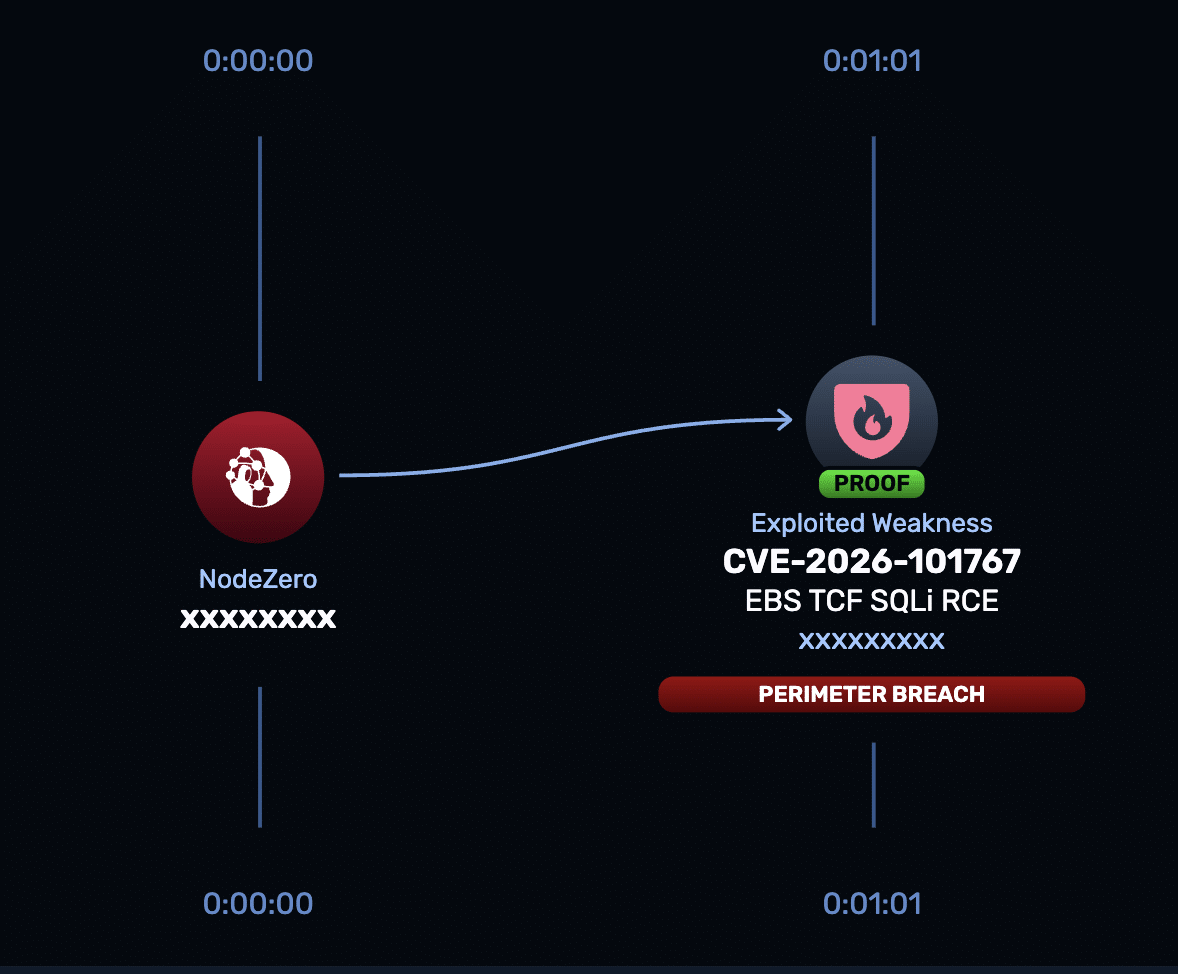 CVE-2026-101767 | Oracle E-Business Suite TCF SQL Injection and Remote Code Execution
CVE-2026-101767 is an unauthenticated SQL injection in the Oracle E-Business Suite Thin Client Framework servlet (/OA_HTML/AppsTCFServer, oracle.apps.fnd.tcf.SocketServer), CVSS 3.1 9.8. It runs SQL as the APPS user and chains to OS commands as the EBS account. Affects 12.2.3 to 12.2.15, fixed in the Oracle October 2026 CPU (20 October 2026). The page lists mitigations, IOCs and a timeline.
horizon3.aiadvisoryAdded 29 Oct 2026, published 20 Oct 2026🛡️ Security Threat Brief: Active Exploitation of PAN-OS CVE-2026-0257 (Updated Oct 20)
Unit 42 threat brief on active exploitation of CVE-2026-0257, a PAN-OS GlobalProtect authentication bypass added to CISA KEV on May 13, 2026. It lists IP addresses, host IDs and PoC-derived client values to hunt in GlobalProtect logs. The October 2026 updates cover Qilin and Inc ransomware operators, MFA bypass, pivots to vCenter and ESXi with offline VMDK credential dumping, and management interface exposure on ports 4443 and 3879.
unit42.paloaltonetworks.comadvisoryAdded 21 Oct 2026, published 20 Oct 2026🛡️ Security- lee1981 (@lee1981b) on X
CVE-2026-77932 affects DB-GPT through 0.8.2 (dbgpt-app). The /api/v1/chat/react-agent route accepts unauthenticated requests because get_user_from_headers returns an admin-role user, and the ReAct agent can reach unsandboxed Python and shell tools. Lasso reported root in the webserver container in a lab. The post gives CVSS 9.8 and 9.3, no verified fix (0.8.2 is still the latest release), no KEV match, no EPSS data, and a SOC hunting trail.
 x.comadvisoryAdded 23 Oct 2026, published 20 Oct 2026🛡️ Security
- Dark Web Intelligence (@DailyDarkWeb) on X
Summary of Vercel's Oct 14, 2026 out-of-band Next.js security release fixing two critical unauthenticated RCEs: one in App Router apps with Cache Components where a "use cache" function returns multiple typed arrays (GHSA-673q-mjm6-r5xr, upstream React GHSA-xqc2-xf4c-x3h3, no workaround), and one in the Image Optimization API handling SVG on glibc Linux via a memory bug in a library used through sharp (CVE-2026-96889 / GHSA-2464-fhr4-w9xw, workaround sharp 0.35.5+). Also covers a high-severity Server Actions DoS (GHSA-p3m5-59mp-jv5r). Fixes ship in two supported Next.js LTS lines. No in-the-wild exploitation reported.
x.comadvisoryAdded 17 Oct 2026, published 16 Oct 2026🛡️ Security  Critical GitLab RCE Lets Unauthenticated Attackers Execute Code on Servers (CVE-2026-97229)
Orca Security analysis of CVE-2026-97229, a CVSS 10.0 flaw in GitLab CE/EE. An integer overflow (CWE-190) in the CI/CD regular expression compiler gives memory corruption and code execution as the git user. It is triggered by a crafted regex in .gitlab-ci.yml combined with a UTF-8 repository path, with no authentication needed on instances that allow public project creation or self-registration. Lists affected branches (19.2 before 19.2.8, 19.3 before 19.3.5, 19.4 before 19.4.2), the absence of a workaround, interim mitigations, and a Rapid7 PoC against GitLab CE 19.4.1 with ASLR on. Notes a prior max-severity GitLab bug (CVE-2026-85706) was probed in the wild within hours and later added to CISA KEV.
orca.securityadvisoryPublished and added 14 Oct 2026🛡️ Security Microsoft Patch Tuesday for October 2026 — Snort rules and prominent vulnerabilities
Talos summarises Microsoft's October 2026 Patch Tuesday, which covers 1415 vulnerabilities, 85 of them critical (67 RCE). One bug is exploited in the wild: CVE-2026-96951, a Windows Shell security feature bypass. The post groups the CVEs by Microsoft's exploitability rating (more likely, less likely, unlikely) with CVSS and CWE for each, covering Windows, Office, Exchange, Hyper-V, DHCP, QUIC, Outlook and Azure. It also lists the Snort 2 and Snort 3 rule ID ranges that detect exploitation attempts.
 blog.talosintelligence.comadvisoryPublished and added 13 Oct 2026🛡️ Security
 Ivanti Connect Secure zero-day exploited in the wild (CVE-2026-104935)
Rapid7 emergency-response analysis of CVE-2026-104935, a CVSS 8.6 authentication bypass by spoofing (CWE-290) in Ivanti Connect Secure that allows unauthenticated remote command execution. It was exploited as a zero-day against a limited number of customers, added to CISA KEV on disclosure day, and Volexity observed it chained with a still-unpatched privilege escalation flaw. Part of the fix shipped in 25.1.3.0 in July 2026, with backports to other supported versions pending. Rapid7 advises emergency patching outside normal cycles and hunting for compromise using Volexity's IOCs, since Ivanti has no reliable ones.
 rapid7.comadvisoryPublished and added 13 Oct 2026🛡️ Security
- Major ICQ security hole (1998)
Rootshell Security Bulletin #22 (Aug 1998) reports an ICQ authentication flaw found by a Linux ICQ clone developer. The Mirabilis server stores 8-character passwords, and sending a password of 9 or more characters (e.g. "123456789") overflows the buffer and logs the client in as any UIN not already online. This gives full account takeover, including receiving offline messages. It is not spoofing, and it works with unofficial clients such as zicq, since the official client enforces the length limit client-side.
 opennet.ruadvisoryAdded 17 Oct 2026, published 13 Oct 2026🛡️ Security
- CISA AA26-281A: Chinese Government-linked Actors Combine Automated and Hands-on Hacking Tools to Steal Data
Joint FBI/CISA/NSA and allied-agency advisory on China-linked actors enabled by Integrity Technology Group (overlapping with Flax Typhoon, Ethereal Panda, Red Juliett). It details their TTPs: open-source scanners and the MicroScan exploit-script app, an XSS credential-harvesting payload dropping live700_v1.exe, EBurst password spraying against Exchange/O365, SoftEther VPN persistence, DCSync via DC.exe, and email theft via the Curlc4.txt PHP bot and the office-cli utility. It also provides IOCs, MITRE ATT&CK mappings, CVEs, incident response steps, and mitigations.
 cisa.govadvisoryAdded 9 Oct 2026🛡️ Security
- ♫Why♥Not♪ (@Python_s_) on X
Alert summarizing Socket Threat Research's disclosure that a malicious version of the Tensorlake npm SDK (an AI-agent infrastructure package) was published with a preinstall hook delivering Shai-Hulud/ChainDrop credential-stealing malware. The payload targets GitHub, npm, AWS, Kubernetes and Vault credentials, persists via a gh-token-monitor mechanism, and spreads through compromised publishing accounts. It lists IOCs (lib/setup.mjs, lib/Math_Symbol.js) and warns to remove the persistence before revoking stolen GitHub tokens, since revocation triggers a destructive routine. Socket detected the release about 11 minutes after publication.
x.comadvisoryAdded 11 Oct 2026, published 9 Oct 2026🛡️ Security  Tensorlake npm package compromised by Shai-Hulud in latest software supply chain attack | Blog | Endor Labs
Endor Labs documents the compromise of tensorlake@0.5.144, the official npm TypeScript SDK for Tensorlake, which shipped a Shai-Hulud worm payload via a poisoned preinstall hook (node lib/setup.mjs) after the project's main branch was altered and pushed through a legitimate, provenance-signed GitHub Actions release pipeline. The malware harvests npm, GitHub, SSH, cloud (AWS/GCP/Azure), Kubernetes/Docker and Vault credentials, uses an EtherHiding Ethereum wallet as a durable dead-drop to fetch its rotating C2 domain, and republishes itself into other packages the victim controls. The writeup includes affected package versions, file hashes, C2 indicators, and concrete remediation guidance (pin to 0.5.143, rotate credentials, disable install scripts).
endorlabs.comadvisoryPublished and added 8 Oct 2026🛡️ Security- lee1981 (@lee1981b) on X
Analysis of CVE-2026-105844, a CWE-1321 prototype-pollution vulnerability in @payloadcms/plugin-import-export that the vendor says can lead to unauthenticated remote code execution. It covers affected ranges (stable 3.0.0–3.87.x, canary 4.0.0-canary.0–canary.26), the fix (3.88.0 / 4.0.0-canary.27), the patched field-path guard against __proto__/constructor/prototype segments, and a six-step SOC hunting/triage playbook with two offline Python scripts for inspecting npm package trees and triaging request field-paths for prototype-sensitive values.
x.comadvisoryAdded 8 Oct 2026, published 7 Oct 2026🛡️ Security  Frequently Asked Questions About the Atlassian Jira & Confluence Arbitrary File Read Vulnerability (CVE-2026-21589)
CVE-2026-21589 is an unauthenticated arbitrary file read in eight self-hosted Atlassian products: Bitbucket, Confluence, Jira Service Management, Jira Software, Bamboo, Crowd, Crucible and Fisheye Data Center. Attackers must know the exact file path, and watchTowr Intel observed exploitation by 6 October 2026. The FAQ covers the timeline (Atlassian advisory 5 October 2026), upgrade and WAF mitigations, and log searches for two dots next to a slash, backslash or double colon.
watchtowr.comadvisoryAdded 30 Oct 2026, published 6 Oct 2026🛡️ Security Citrix NetScaler Zero-Day Exploited in the Wild Crashes SAML Authentication Services
Analysis of CVE-2026-88779 (CVSS v4.0 8.7), an unauthenticated memory-overflow flaw in the nsaaad SAML authentication handler on Citrix NetScaler ADC/Gateway that lets attackers crash the SAML service and lock out VPN/SSO access indefinitely through repeated triggering. Affects NetScaler 14.1 before 14.1-73.41 and 13.1 before 13.1-64.28 (plus FIPS/NDcPP builds); watchTowr Labs reproduced it via honeypot activity, Citrix confirmed targeted in-the-wild exploitation from IP 213.209.159.55, and CISA added it to KEV on 2026-10-04 with an Oct 7 federal remediation deadline. Some researchers suspect the overflow could extend to RCE beyond the documented DoS, though Citrix hasn't confirmed this.
orca.securityadvisoryPublished and added 5 Oct 2026🛡️ Security GitLab patches critical 9.9 AI Gateway template-sandbox-escape RCE (CVE-2026-90970)
GitLab patched CVE-2026-90970, a critical (CVSS 9.9) flaw in the AI Gateway used by Duo Agent Platform, where a logged-in user with Duo Agent Platform access could craft a flow configuration to escape the prompt template sandbox and achieve arbitrary command execution on the gateway. Only self-managed organizations hosting their own AI Gateway (versions 18.1.6 through 19.1) need to act; the fix lands in 19.2.4, 19.3.2, and 19.4.1. The bug is a template engine weakness (CWE-1336), the same class as the earlier CVE-2026-1868 gateway RCE GitLab fixed in February, and was reported via HackerOne by researcher invisiblemeerkat.
 thehackernews.comadvisoryAdded 4 Oct 2026🛡️ Security
- CISA KEV: Fortinet FortiMail CVE-2026-104286 path traversal, actively exploited, no patch yet
CISA added CVE-2026-104286, a path traversal vulnerability in Fortinet FortiMail, to its Known Exploited Vulnerabilities Catalog on evidence of active exploitation. The alert restates the obligations of BOD 26-04 for Federal Civilian Executive Branch agencies: prioritise KEV CVEs on publicly exposed assets that give total control, and check for compromise before patching. It also describes the KEV nomination criteria: a CVE ID, evidence of exploitation and clear mitigation guidance. The page gives no technical detail, patch status or IOCs.
cisa.govadvisoryAdded 4 Oct 2026🛡️ Security  Critical FortiMail Zero-Day Flaw (CVE-2026-104286)
CISA added CVE-2026-104286 (CVSS 9.8), a path traversal and NULL-byte handling flaw in Fortinet FortiMail, to its Known Exploited Vulnerabilities catalog after confirming active in-the-wild exploitation. The bug lets unauthenticated attackers write arbitrary files via crafted HTTP/HTTPS requests, affecting FortiMail 7.2 through 8.0.1; Fortinet published workarounds (disabling IBE, restricting management-interface access) ahead of patches and shared attacker IPs and modified/added files as IOCs. The article also lists several other actively exploited vendor flaws disclosed the same week (Check Point, Arista VeloCloud, F5 BIG-IP APM, Cisco Catalyst SD-WAN Manager, Citrix NetScaler).
thehackernews.comadvisoryAdded 3 Oct 2026🛡️ Security- MCP TypeScript SDK v2.2.0
Release notes for v2.2.0 of the official Model Context Protocol TypeScript SDK. Upgrade notes: machine-to-machine OAuth providers (ClientCredentialsProvider, PrivateKeyJwtProvider, StaticPrivateKeyJwtProvider, CrossAppAccessProvider) should now be given expectedIssuer, and fetchToken() throws AuthorizationServerMismatchError when client information is bound to a different authorization server. listTools/listPrompts/listResources/listResourceTemplates now follow nextCursor automatically, capped by listMaxPages. Fixes include CommonJS type-checking of the DPoP jose types, unhandled rejections in Client.listen(), createMcpHandler stack overflow and subscriptions/listen handling, .localhost loopback for OAuth token endpoints, and v1-to-v2 codemod comment preservation.
 github.comadvisoryAdded 1 Oct 2026🧠 AI
 [Security Disclosure] MetaMask Staking Precautionary Out of Order Exits
Lido Finance's governance forum discloses that MetaMask Staking (formerly Consensys Staking), one of its Ethereum validator node operators, detected an infrastructure compromise and is precautionarily exiting its operated validators from the Lido protocol. The post details the exit/withdrawal/re-entry timeline (~45 days), the non-custodial nature of Lido staking (MetaMask does not hold withdrawal keys), and the protocol's ad hoc reserve fund (6,750+ stETH) as a mitigation mechanism while a full investigation continues.
 research.lido.fiadvisoryAdded 3 Oct 2026, published 30 Sep 2026🛡️ Security
- Critical Cisco Catalyst SD-WAN Manager API authentication bypass exploited in the wild (CVE-2026-76504)
Rapid7 analysis of CVE-2026-76504, a critical (CVSSv3.1 9.8) unauthenticated API authentication bypass in Cisco Catalyst SD-WAN Manager caused by improper URL-encoding handling (CWE-177), allowing attackers to gain admin-level API access via crafted requests to the j_security_check endpoint. The flaw is being actively exploited in the wild, was added to CISA's KEV list on October 1, 2026 with a remediation deadline of October 3, and follows two earlier 2026 Catalyst SD-WAN peering authentication bypasses (CVE-2026-20127 and Rapid7-discovered CVE-2026-20182). The post gives fixed-release guidance, no-workaround caveats, and log-based IOCs (encoded-character requests like %6a_security_check, viptela-reserved- usernames) for detecting compromise.
rapid7.comadvisoryAdded 7 Oct 2026, published 30 Sep 2026🛡️ Security  Solidity 0.8.37 Release Announcement
Official release notes for Solidity v0.8.37 detailing three bug-bounty-reported compiler bugs: memory `delete` on a bytes-array element zeroing a full 32-byte word instead of one byte (corrupting adjacent memory, evmasm pipeline, up to v0.8.36); a stack-to-memory spill-slot collision under mutual recursion in the IR pipeline (`--via-ir`, v0.7.2–v0.8.36) that silently overwrites live variables; and named custom-error arguments in `require(...)` being ABI-encoded in call-site order rather than declaration order, so revert data misrepresents error values (v0.8.36 introduced but only affects revert data). Also covers two non-security miscompilations (uninitialized packed function pointers, checked/unchecked constant reuse), a new SSA-CFG stack shuffler, Amsterdam EVM's SLOTNUM opcode support, and removal/deprecation of LSP mode, Generic Solidity, and several EVM version pragmas.
 soliditylang.orgadvisoryAdded 29 Sep 2026🛡️ Security
 Critical Citrix NetScaler Zero-Days Under Active Exploitation
Analysis of two CVSS 9.5 Citrix NetScaler ADC/Gateway zero-days, CVE-2026-88771 (unauthenticated RCE through improper input validation in the management interface, affecting default deployments) and CVE-2026-88772 (memory overflow in DTLS, enabled by default on VPN virtual servers). It lists six more high-severity flaws patched in advisory CTX697096, the affected and fixed versions, and the CISA KEV listing with a federal deadline of 2026-09-30. It advises checking for compromise before patching, since patching can destroy forensic evidence, and gives response steps: isolate, revoke credentials, rebuild firmware, rotate keys and certificates.
orca.securityadvisoryPublished and added 29 Sep 2026🛡️ Security- Claude Desktop (macOS): malicious file in a Cowork folder could run commands on the host
GHSA-v234-4jrq-mgg6 discloses that Claude Desktop for macOS (versions >=1.1.3918, less than 1.15962.0) omitted a macOS-executable file type from its Cowork folder block-list, letting a malicious file written into a Cowork sandbox's shared folder by a compromised or prompt-injected agent run commands on the host when opened via Claude Desktop. A separate, compounding issue is also disclosed: Cowork VM images before 1.11847.5 shipped a guest Linux kernel vulnerable to CVE-2026-43284, which combined with the block-list gap could let VM-privileged code trigger the file open without user interaction. Both issues are fixed in Claude Desktop 1.15962.0; reported internally by Anthropic and independently by Vladimir Tokarev of Cyera Research.
github.comadvisoryAdded 28 Sep 2026🛡️ Security - CVE-2026-85661 in excel-mcp-server
CVE-2026-85661 affects excel-mcp-server 0.1.8. In stdio mode with EXCEL_FILES_PATH unset, the server does not confine file paths, so a client can pass relative or absolute paths to the read and write tools. That gives arbitrary file read and write with the privileges of the server process. The page classifies it as CWE-22 (ATT&CK T1083) and recommends canonical path checks against a base directory, making EXCEL_FILES_PATH mandatory, and running with least privilege.
 vuldb.comadvisoryAdded 26 Sep 2026🛡️ Security
- CVE-2026-75130: Context7 through 2
CVE-2026-75130 describes a prompt injection flaw in Context7 (through v2.1.2), an MCP server that serves library documentation to AI coding agents. The vulnerability lies in the Custom AI Instructions feature, which fails to sanitize content before injecting it into agent context; attackers can poison these instructions so that a routine documentation lookup triggers the agent to exfiltrate credentials from environment files and delete files on the victim's machine. Researchers at Noma Security and VulnCheck published independent technical breakdowns of the attack chain.
 nvd.nist.govadvisoryAdded 26 Sep 2026🛡️ Security
- CVE-2026-65695: Office-Word-MCP-Server through 1
CVE-2026-65695 is a path traversal vulnerability (CWE-22, CVSS 4.0 7.6 HIGH) in Office-Word-MCP-Server through version 1.1.11, an MCP server that exposes Word document manipulation tools to LLM agents. Attackers who can influence the filename argument can supply absolute paths or ../ sequences to document open/save operations, bypassing the check_file_writeable and ensure_docx_extension helpers (which do no base-directory confinement or realpath validation) to read or overwrite arbitrary .docx files outside the intended working directory.
nvd.nist.govadvisoryAdded 26 Sep 2026🛡️ Security - CVE-2026-57860: ForgeCode (tailcallhq/forgecode), an AI pair-programming CLI, automatically loads and executes the MCP servers defined i
CVE-2026-57860 describes an arbitrary code execution flaw in ForgeCode (tailcallhq/forgecode), an AI pair-programming CLI that automatically loads and executes MCP servers defined in a repository's .mcp.json on startup without user confirmation. A malicious repo can define mcpServers entries with arbitrary command/args (e.g. bash -c) that spawn under the invoking user's privileges the moment forge is run inside the cloned repo, giving attackers a reliable initial-access and persistence primitive against developers evaluating untrusted code. CVSS 4.0 8.4 HIGH, CWE-829 (inclusion of functionality from untrusted control sphere); a fix commit and VulnCheck advisory are linked.
nvd.nist.govadvisoryAdded 26 Sep 2026🛡️ Security - CVE-2026-19984: A flaw has been found in jkawamoto mcp-florence2 up to 0
CVE-2026-19984 describes a server-side request forgery flaw in jkawamoto mcp-florence2 (up to 0.3.13), an MCP server wrapping Microsoft Florence-2 image model. The vulnerable get_images function in src/mcp_florence2/__init__.py passes an attacker-controlled src argument into an HTTP fetch without validation, letting a remote caller force the server to request arbitrary internal or external URLs. The maintainer recommended fix is deploying an SSRF-safe egress proxy rather than patching the source, and a public exploit is available.
nvd.nist.govadvisoryAdded 26 Sep 2026🛡️ Security - CVE-2026-14748: A flaw has been found in AIAnytime Awesome-MCP-Server up to a884bb51bcd99e08e14fd712c749d55d9d9a13ab
CVE-2026-14748 is a low-severity (CVSS 4.0: 2.1) server-side request forgery flaw in AIAnytime's Awesome-MCP-Server, specifically in the mcp-wiki/wiki-summary component's server.py, where the url argument is not validated before the server fetches it. A remote, low-privilege attacker can abuse this to make the MCP server issue arbitrary outbound requests; the exploit has already been published via GitHub issues and the maintainer has not responded to the disclosure.
nvd.nist.govadvisoryAdded 26 Sep 2026🛡️ Security - CVE-2026-14541: An authentication bypass and audience confusion vulnerability exists in the Google OAuth provider component of Google mc
CVE-2026-14541 describes an authentication bypass (CWE-287) in the Google OAuth provider of Google's mcp-toolbox for databases v1.4.0, an MCP server that lets LLM agents query databases. When the Google authService is configured with mcpEnabled: true but no explicit audience or clientId, the ValidateMCPAuth pipeline skips audience checks for opaque tokens, so any valid Google OAuth access token — even one issued for an unrelated app — is accepted, letting unauthorized clients reach protected tools and data backends.
nvd.nist.govadvisoryAdded 26 Sep 2026🛡️ Security - Flowise MCP Security Bypass Enables RCE
GHSA advisory detailing three bypasses in Flowise's Custom MCP Server security controls (validateCommandFlags and validateArgsForLocalFileAccess in packages/components/nodes/tools/MCP/core.ts) that combine to achieve remote code execution: an unblocked `docker build` subcommand that pulls and runs a remote Dockerfile, a missing `--yes` long-flag alias on the npx blocklist (only `-y` was blocked) enabling arbitrary npm package execution, and a Unix absolute-path regex that fails to catch double-leading-slash paths (`//root/...`), allowing `node` to execute an uploaded local file. Any authenticated Flowise user (or an API key with chatflow view/update rights) can chain these to fully compromise the host via a prediction API call.
github.comadvisoryAdded 26 Sep 2026🛡️ Security  Cisco Warns of New Zero-Day ISE Auth Bypass (CVSS 10.0) Exploited in Active Attacks
Cisco disclosed CVE-2026-76460 (CVSS 10.0), an unauthenticated API authentication bypass in Identity Services Engine (ISE) and ISE-PIC that is under active exploitation and has been added to CISA's KEV catalog with a federal patch deadline of September 19, 2026; successful exploitation can yield root command execution, and Cisco provides log-based IOC detection guidance since there is no workaround. The same disclosure batch includes 77 new CVEs, 41 in ISE and 28 in Secure Firewall (ASA/FTD/FMC), covering authenticated RCE, SQL injection, XXE, command injection, and additional REST API auth bypasses, plus a separately exploited Secure Email Gateway flaw (CVE-2026-76461, CVSS 9.8).
thehackernews.comadvisoryAdded 22 Sep 2026🛡️ Security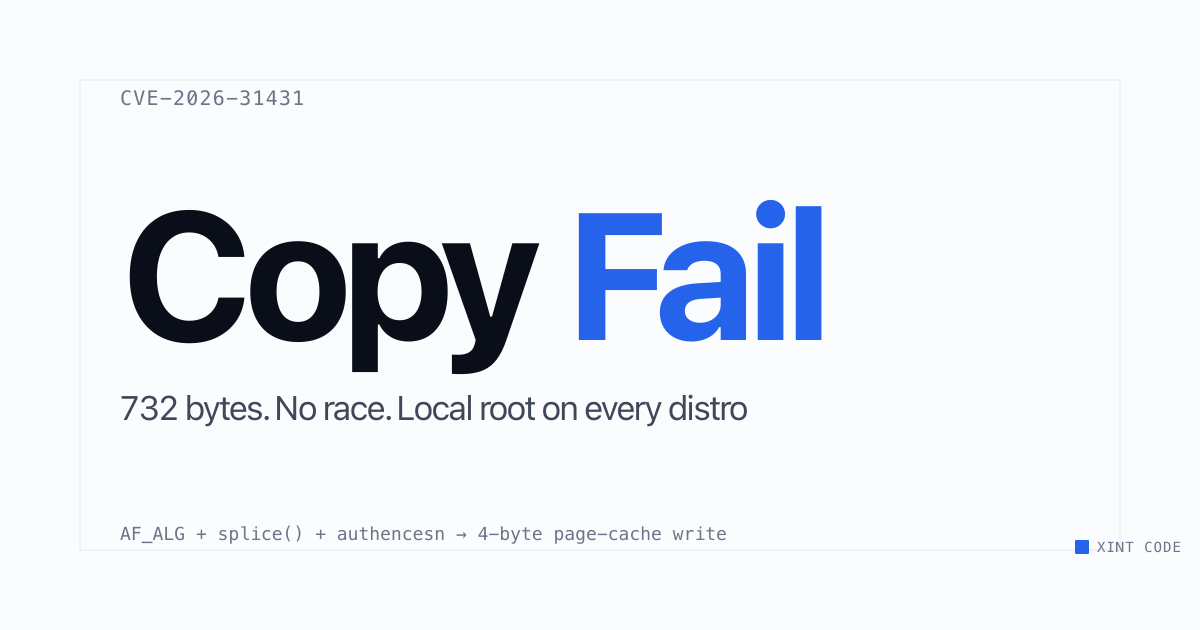 Copy Fail (CVE-2026-31431): 9-year-old Linux kernel LPE found by AI-assisted fuzzing
Copy Fail (CVE-2026-31431) is a 9-year-old Linux kernel logic bug in algif_aead, reachable via the AF_ALG crypto API and chained through splice() into a 4-byte page-cache write to achieve local root, affecting kernels built between 2017 and the fix. The site publishes a 732-byte stdlib-only Python PoC that roots multiple distributions unmodified, identifies the fixing mainline commit a664bf3d603d, and gives interim mitigation (disable algif_aead / seccomp-block AF_ALG for untrusted workloads). The bug was found by Xint Code's AI-assisted fuzzing against the Linux crypto/ subsystem in roughly an hour of scan time.
 copy.failadvisoryAdded 17 Sep 2026🛡️ Security
 Breaking: GitLab Critical Path Traversal Flaw Exploited in the Wild — Patch Immediately
Details CVE-2026-85706 (CVSS 10.0), an unauthenticated arbitrary file read in GitLab CE/EE's repository commits API exploitable via a crafted file.path parameter in a single POST request, requiring only that one public project exist on the instance. It also covers CVE-2026-87719 (CVSS 9.9), an authenticated insecure deserialization bug in GitLab EE's GraphQL subscription serializer reachable via Duo Chat access that leaks stored Elasticsearch/OpenSearch credentials. Both affect GitLab versions through 19.3.1; CVE-2026-85706 is under active internet-wide scanning per WatchTowr Labs and is in CISA's KEV catalog with a federal patch deadline, with fixes in GitLab 19.1.8/19.2.6/19.3.2.
orca.securityadvisoryPublished and added 14 Sep 2026🛡️ Security- CVE-2026-85706: Critical GitLab Path Traversal Exploited in the Wild
GitLab patched CVE-2026-85706, a critical (CVSS 10.0) path traversal flaw (CWE-22) in the repository commits API that lets an unauthenticated attacker read arbitrary files from self-managed GitLab CE/EE instances; CISA added it to the KEV catalog on September 11, 2026 due to active exploitation, with a remediation deadline of September 14. The same patch release fixes CVE-2026-87719, a critical insecure deserialization bug (CWE-502) letting an authenticated Duo Chat user exfiltrate Advanced Search configs and credentials via a crafted GraphQL subscription argument, plus 17 other vulnerabilities. Rapid7 recommends emergency patching and post-patch compromise checks given confirmed in-the-wild exploitation.
rapid7.comadvisoryAdded 7 Oct 2026, published 14 Sep 2026🛡️ Security  CVE-2026-85706: GitLab CE/EE Repository Commits API Path Traversal
CVE-2026-85706 is a CVSS 10.0 critical path traversal vulnerability in GitLab CE/EE's repository commits API, caused by improper path confinement combined with missing authentication enforcement. It allows unauthenticated, remote attackers to read arbitrary files from the GitLab server — potentially exposing credentials, secrets, tokens, SSH keys, and database credentials. Affects versions 18.7 through 19.1.7, 19.2.0-19.2.5, and 19.3.0-19.3.1; fixed in 19.1.8, 19.2.6, and 19.3.2.
horizon3.aiadvisoryAdded 17 Sep 2026, published 11 Sep 2026🛡️ Security Rapid Reaction: GitLab Critical Path Traversal Vulnerability (CVE-2026-85706)
watchTowr's rapid-reaction analysis of CVE-2026-85706, a critical (CVSS 10.0) unauthenticated path traversal in GitLab CE/EE's repository commits API, patched in versions 19.3.2, 19.2.6, and 19.1.8. The flaw lets an unauthenticated attacker read arbitrary files (configs, secrets) from self-managed GitLab servers via crafted requests to /api/v4/projects/{id}/repository/commits/ with a file.path parameter; watchTowr reproduced the bug and reports honeypot probes indicating attackers have already reverse-engineered it ahead of mass exploitation.
watchtowr.comadvisoryAdded 21 Sep 2026, published 11 Sep 2026🛡️ Security- Rapid Reaction: GitLab Path Traversal Vulnerability (CVE-2026-85706)
watchTowr's rapid-reaction analysis of CVE-2026-85706, a critical (CVSS 10.0) unauthenticated path traversal vulnerability in the GitLab CE/EE repository commits API, patched in versions 19.3.2, 19.2.6, and 19.1.8. The flaw allows an unauthenticated attacker to read arbitrary server-side files via the commits API due to improper path confinement and missing auth enforcement; watchTowr's honeypot network was already observing exploitation probes at time of publication. The post includes hunting guidance (searching logs for POST requests to /api/v4/projects/{id}/repository/commits/ containing file.path parameters) and patching priorities for self-managed instances.
watchtowr.comadvisoryAdded 16 Sep 2026, published 11 Sep 2026🛡️ Security  Artifactory Under Attack: In-the-Wild Exploitation of CVE-2026-42016, CVE-2026-42018 & CVE-2026-82329
Wiz Research documents active in-the-wild exploitation of three JFrog Artifactory vulnerabilities: CVE-2026-42018 (exposes an internal anonymous-user JWT via POST /access/api/v1/aws/token/), CVE-2026-42016 (token scope validation flaw allowing that JWT to be escalated to admin via POST /access/api/v1/tokens), and CVE-2026-82329 (unauthenticated admin access via POST /access/api/v1/registry/join, added to CISA KEV). Attackers chained the first two to create persistent admin accounts, deploy malicious Groovy plugins for RCE, and drop Rust-based C2 backdoors, while CVE-2026-82329 was exploited independently for configuration exfiltration, cluster join-key theft, and credential/SSH-key persistence. The post includes exact request sequences, detection signatures, affected/fixed version ranges, and remediation guidance.
 wiz.ioadvisoryPublished and added 10 Sep 2026🛡️ Security
- Memory Byte Array Element Delete Clears Whole Word Bug
The Solidity team disclosed a code-generator bug (reported by Shaheen Fazim via the Ethereum Foundation bug bounty program) where `delete b[i]` on a bytes/string element located in memory incorrectly writes a full 32-byte zero word instead of a single byte, corrupting up to 31 subsequent bytes — either later elements of the same array or, for elements near the array's end, adjacent memory allocations like other variables. The bug affects only the default evmasm pipeline (not the IR pipeline via --via-ir) in all versions up to and including 0.8.36, is fixed in 0.8.37, and the equivalent assignment `b[i] = 0` is unaffected and serves as a workaround. A Sourcify scan of ~870,000 verified compilations found the triggering pattern in only two functions, neither actually exploitable in practice.
soliditylang.orgadvisoryAdded 29 Sep 2026, published 10 Sep 2026🛡️ Security - Spill Slot Collision Across Mutual Recursion Bug
The Solidity team disclosed a compiler bug (fixed in Solidity 0.8.37) where the IR pipeline's stack-to-memory spill mechanism can assign the same fixed memory offset ("spill slot") to two simultaneously-live local variables when a contract's call graph contains mutual recursion, silently corrupting values without any revert or warning. The bug requires --via-ir compilation plus a narrow set of conditions (mutual recursion, >16 live locals in reachable non-recursive functions, a variable read back after the recursive call) and affects Solidity 0.7.2 through 0.8.36; a rescan of ~319,000 Sourcify-verified contracts found no affected deployments. The writeup includes full technical detail on the buggy depth-first slot allocator, an annotated PoC contract reproducing the silent overwrite, and the strongly-connected-component fix.
soliditylang.orgadvisoryAdded 29 Sep 2026, published 10 Sep 2026🛡️ Security - Solidity 0.8.37 Release Announcement
Solidity 0.8.37 release notes disclosing three EF bug-bounty-reported compiler bugs with security implications: deleting an element of a memory bytes array (or converted string) zeroed the full 32-byte word instead of one byte, corrupting adjacent data in the evmasm pipeline (all versions ≤0.8.36); a stack-to-memory spill-slot collision in mutually recursive functions under --via-ir silently overwrote live variables (0.7.2–0.8.36); and require() with a custom error using named arguments encoded parameters in call-site rather than declaration order, producing structurally valid but semantically wrong revert data. The release also adds two non-security miscompilation fixes, an experimental planning-based stack shuffler for the SSA CFG backend, support for the Amsterdam EVM's SLOTNUM opcode (EIP-7843), and removes/deprecates several experimental features.
soliditylang.orgadvisoryAdded 29 Sep 2026, published 10 Sep 2026🛡️ Security  Microsoft Patch Tuesday for September 2026 — Snort rules and prominent vulnerabilities
Cisco Talos's analysis of Microsoft's September 2026 Patch Tuesday release, covering 973 vulnerabilities (113 critical, 82 of those RCE). Two flaws are confirmed exploited in the wild — CVE-2026-81963 (Windows Update Stack elevation of privilege) and CVE-2026-85880 (Windows ALPC elevation of privilege) — alongside a long list Microsoft rates "more likely" to be exploited, including a Windows Kerberos auth-bypass-by-replay RCE (CVE-2026-69676) and a Windows DNS Server use-after-free RCE (CVE-2026-69730). Talos releases accompanying Snort 2/3 rule coverage (SIDs 67011-67084, 301619-301655) to detect exploitation attempts.
blog.talosintelligence.comadvisoryAdded 7 Oct 2026, published 8 Sep 2026🛡️ Security GHSL-2026-203: Same-second TOCTOU in jupyterlab/maintainer-tools
GitHub Security Lab discloses GHSL-2026-203 / CVE-2026-84973, a same-second time-of-check-to-time-of-use race condition in the jupyterlab/maintainer-tools update-snapshots-checkout GitHub Action. The action compares one-second-precision pushed_at and comment created_at timestamps to detect post-authorization pushes, but a strict greater-than check lets an attacker push a malicious commit in the same second as an authorized "please update snapshots" comment, causing the action to check out and later execute attacker-controlled code (including a local composite action and jlpm-driven package scripts) with the workflow's GITHUB_TOKEN (contents: write, pull-requests: write) in the jupyter/notebook repository. The issue was fixed in v1.0.0 and is a variant of the "pwn request" class of GitHub Actions vulnerabilities.
 securitylab.github.comadvisoryAdded 20 Sep 2026, published 4 Sep 2026🛡️ Security
 Grafana fixes critical SSRF flaw affecting Grafana MCP servers
Grafana patched CVE-2026-19516 (CVSS 9.1), a critical SSRF in the Grafana MCP server's grafana_api_request tool where a caller-supplied X-Grafana-URL header could control the method, path and body of outbound requests, letting an attacker reach internal-only services from the server's network position. Pillar Security researchers chained this with a second flaw — the MCP server accepting unauthenticated "session-shaped IDs" it never issued — and demonstrated using it to hit the AWS IMDSv2 endpoint and retrieve cloud credentials via a two-step PUT/TTL token request. Grafana MCP v1.1.0 adds optional bearer-token auth to close the session-forgery gap; Pillar frames MCP servers broadly as "identity brokers" that need explicit outbound destination policies and mandatory auth for remote deployments.
 scworld.comadvisoryAdded 26 Sep 2026, published 3 Sep 2026🛡️ Security
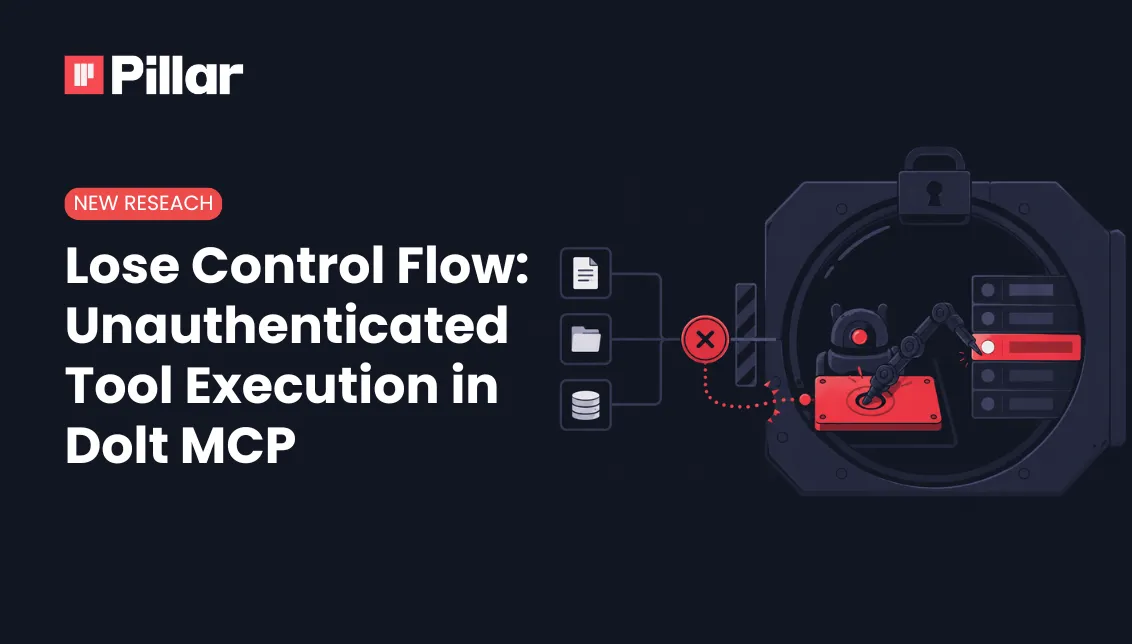 Lose Control Flow: Unauthenticated Tool Execution in Dolt MCP
Pillar Security details CVE-2026-73554, a critical authentication bypass in DoltHub's remote Dolt MCP server (versions 0.3.1–0.3.6) that let unauthenticated attackers reach tool dispatch and execute database operations under the server's own credentials. The bug combined a JWT middleware missing a return statement (so a 401-rejected request kept processing) with the bundled mark3labs/mcp-go library's InsecureStatefulSessionIdManager, which accepted any attacker-forged mcp-session-<uuid> value without verifying server issuance. DoltHub confirmed and patched within a day, issuing GHSA-mgpq-fxxc-h49q; fixed in Dolt MCP 0.3.7.
 pillar.securityadvisoryPublished and added 1 Sep 2026🛡️ Security
- PaperCut Zero-Day: Active Exploitation and Pre-Auth RCE
Huntress details active exploitation of an authorization-bypass flaw in PaperCut NG/MF (CVE-2026-81578) chained with an unsafe dynamic class-loading vulnerability in the database connection utilities (CVE-2026-82078) to achieve unauthenticated remote code execution in the PaperCut Application Server. The writeup covers Huntress's own observed intrusions (base64-encoded recon commands, dropped Java .class payloads decompiled with Fernflower, log-wiping behavior, and an Apache Derby pwn database indicator), a reproduced PoC achieving SYSTEM-level code execution via pc-app.exe, and detailed patching, evidence-preservation, and hunting guidance across PaperCut's staged emergency patches.
 huntress.comadvisoryAdded 3 Sep 2026, published 28 Aug 2026🛡️ Security
 Security Hardening Release for Splunk Apps and Add-ons - August 2026
Splunk's August 2026 hardening advisory (SVD-2026-0808) discloses 17 CVEs across Cisco Talos Intelligence for Enterprise Security Cloud, Splunk AI Toolkit, Splunk Connect for Kafka, the Splunk MCP Server app, and Splunk On-Call (VictorOps). Notable issues include a critical (CVSS 9.1) RCE via unsafe credential deserialization in the Splunk MCP Server app (CVE-2026-76404), an RCE via pickle-based deserialization when loading ML model files in Splunk AI Toolkit (CVE-2026-76395), multiple SSRF and authorization-bypass flaws letting low-privileged users escalate to system-level search execution, hardcoded/predictable container credentials, and unauthenticated DoS/ReDoS and cert-validation bypasses in Splunk Connect for Kafka. Each finding includes CWE classification, CVSS vector, and mitigation guidance (typically disabling the affected app or restricting REST API access).
 advisory.splunk.comadvisoryAdded 21 Aug 2026🛡️ Security
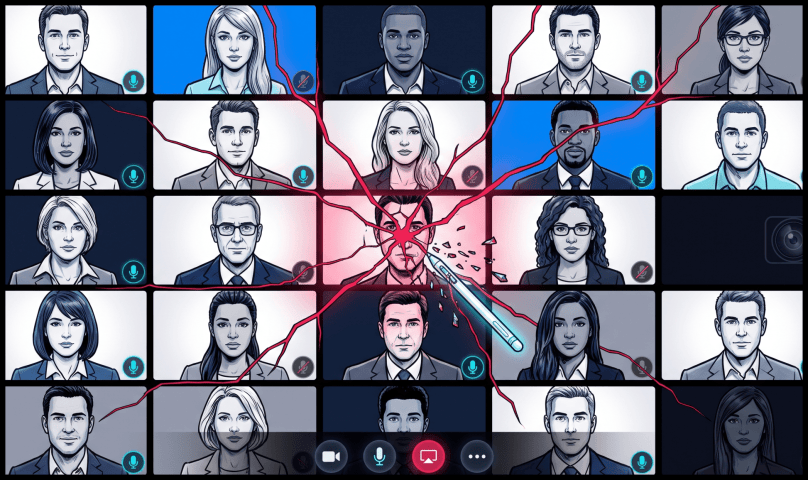 Orca Security: Zoom Zero-Click RCE Flaws Allow Any Meeting Attendee to Compromise All Participants
Orca Security details four Zoom vulnerabilities in the cross-platform annotation engine (libannotate.so): CVE-2026-53413, a stack buffer overflow in CAnnoFormatBlock::Deserialize from unchecked 32-bit character counts, and CVE-2026-53415, a use-after-free in auto-shape metadata handling giving a write-what-where primitive, both enabling zero-click RCE against every meeting participant via crafted annotation messages during screen sharing. Also disclosed are CVE-2026-53414 (heap over-read/DoS) and CVE-2026-53416 (path traversal in the Windows VDI client). The write-up notes a working exploit chain built in under 24 hours with fewer than 20 AI-model prompts, platform-specific exploitation details (macOS ARM64 ASLR bypass, Android heap spraying/vtable corruption), and that E2EE meetings bypass Zoom's server-side message filtering.
orca.securityadvisoryPublished and added 12 Aug 2026🛡️ Security- NPM Malware Compromises keyv and cacheable with 500M+ Weekly Downloads and Spreads to Hundreds of Packages | Blog | Endor Labs
Endor Labs' active-tracking advisory on an npm supply-chain worm that compromised keyv, flat-cache, and file-entry-cache (500M+ combined weekly downloads) via the jaredwray/Cacheable GitHub Actions OIDC trusted-publishing pipeline, injecting a preinstall hook (setup.mjs) that fetches a legitimate Bun binary to run an obfuscated ~727KB stage-2 payload (Math_Symbol.js/math_init.js) stealing AWS, npm, GitHub, and Vault tokens. The stolen tokens were used to self-propagate the same payload to 384+ packages and 1,136+ versions across unrelated maintainer accounts, including scopes belonging to companies like ServiceTitan, Qlik, and Picsart. The post includes IOCs (file hashes), affected package/version lists, and mitigation guidance (lockfile/CI log checks, --ignore-scripts).
endorlabs.comadvisoryAdded 3 Sep 2026, published 4 Aug 2026🛡️ Security  Keyv and friends compromised in active Shai-Hulud supply chain attack
Aikido Security reports that Keyv and several related npm packages were compromised as part of the ongoing Shai-Hulud supply-chain attack, in which malicious versions were published to npm to spread a self-replicating worm across the ecosystem. The write-up details the affected packages and versions and the worm's propagation mechanism via compromised maintainer credentials and postinstall scripts.
aikido.devadvisoryAdded 3 Sep 2026, published 4 Aug 2026🛡️ Security- CVE-2026-15988 | INCIBE-CERT | INCIBE
CVE-2026-15988 describes a CSRF vulnerability (CVSS 8.8, CWE-352) in the "AI Engine – The Chatbot, AI Framework & MCP" WordPress plugin, affecting all versions up to and including 3.6.5. Missing/incorrect nonce validation on the reauth_for_authorize function lets an unauthenticated attacker trick a logged-in administrator into visiting a crafted link, which — combined with WordPress's ?_method=POST override to turn a GET into an authenticated REST POST — creates a new administrator account with attacker-supplied credentials.
 incibe.esadvisoryAdded 2 Aug 2026🛡️ Security
 Coldcard Security Advisory
Unchained client-facing security advisory responding to Coinkite disclosure that Coldcard hardware wallets (Mk3, Mk4, Mk5, and Q models) generated private keys using a lower-than-expected amount of random bits, weakening key-generation entropy. The advisory details risk to Bitcoin multisig vaults built with Coldcard-generated keys and describes an attack scenario where an attacker holding 2-of-3 compromised keys plus knowledge of a reused address can mount a Replace-By-Fee (RBF) replacement-cycling attack to redirect pending transactions, along with key-replacement remediation steps including Unchained Slipstream as RBF mitigation.
 unchained.comadvisoryAdded 4 Oct 2026, published 31 Jul 2026🛡️ Security
 Security notice and deprecation: standalone circleci-mcp-server
CircleCI disclosed GHSA-8xjg-jpfh-5257 affecting its standalone circleci-mcp-server npm package used as an MCP server in Claude Desktop, Cursor, VS Code, and Windsurf, and is deprecating that package in favor of a built-in MCP server shipped with a new CircleCI CLI. Affected users are told to upgrade to version 0.19.0 immediately, while CircleCI cloud users are pointed toward migrating to the CLI, which adds OAuth-based auth and native pipeline watching. CircleCI will keep shipping security patches to the old package but is no longer adding features to it.
 discuss.circleci.comadvisoryAdded 22 Aug 2026, published 20 Jul 2026🛡️ Security
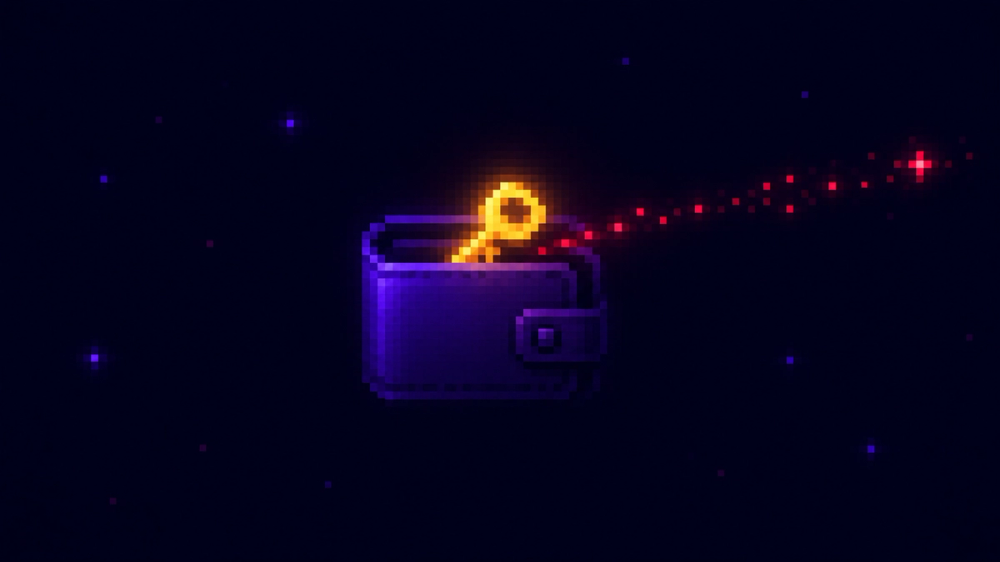 Compromised Injective SDK npm Package Exfiltrates Wallet Keys and Mnemonics
Socket details a compromise of @injectivelabs/sdk-ts version 1.20.21 (a popular Injective Labs TypeScript SDK with ~50,000 weekly downloads), in which the fromMnemonic and fromHex key-derivation functions were hooked with a trackKeyDerivation call that base64-encodes and exfiltrates wallet private keys and mnemonic phrases to a lookalike Injective public infrastructure endpoint. The attacker gained access via a legitimate maintainer's GitHub account, published the malicious version, and simultaneously pushed version 1.20.21 to 17 other @injectivelabs-scoped packages pinned to the compromised SDK, amplifying blast radius to transitive dependents. The compromise was detected and reverted within roughly an hour by the account owner, but the malicious release artifacts remained downloadable on npm and GitHub at time of writing.
 socket.devadvisoryAdded 21 Sep 2026, published 9 Jul 2026🛡️ Security
- Solidity 0.8.36 Release Announcement
Solidity 0.8.36 release notes disclose two medium-severity compiler bugs: a Yul optimizer call-cycle detection flaw that let stack-to-memory spilling be wrongly applied to mutually recursive functions, causing separate invocations to share and overwrite the same memory slots; and a storage-layout warning bug that could reverse the AST's linearizedBaseContracts annotation when a contract's variables sit very close to the end of storage, corrupting constructor/state-variable initialization order. The release also adds experimental stack-to-memory spilling to the new SSA-form CFG code generator (behind --experimental --via-ssa-cfg) and removes the now-obsolete experimental EOF backend after EOF's rejection from the Fusaka upgrade.
soliditylang.orgadvisoryAdded 29 Sep 2026, published 9 Jul 2026🛡️ Security - Inheritance Order Reversal On Storage End Warning Bug
The Solidity team discloses a medium-severity compiler bug present from Solidity 0.8.29 through 0.8.35 (fixed in 0.8.36): the code that emits Warning 3495 (custom storage layout too close to storage end) uses ranges-v3's actions::reverse instead of views::reverse, permanently mutating the linearizedBaseContracts AST annotation instead of only reading a reversed copy. Because that annotation drives inheritance-order decisions throughout analysis and codegen, affected contracts can get reversed constructor execution order, wrong super/virtual-function and virtual-modifier resolution, and incorrect fallback/receive dispatch — either silently miscompiling or triggering internal compiler errors. Exploitation requires a contract using both inheritance and a `layout at` clause landing within the last 2^64 storage slots, a pattern the team found no real-world evidence of via GitHub and Sourcify scans.
soliditylang.orgadvisoryAdded 29 Sep 2026, published 9 Jul 2026🛡️ Security - AI Security Briefing
CVE-2026-52830 describes a path traversal flaw in fast-mcp-telegram, a PyPI package exposing Telegram as an MCP server, where HTTP Bearer tokens are joined directly into a session-file path without normalization. The verifier blocks the literal reserved token "telegram" but not path separators, so a token like "../fast-mcp-telegram/telegram" lets a remote HTTP client authenticate as the default legacy session, bypassing the control meant to keep multi-user HTTP sessions from colliding with the default stdio/legacy account. Account-prefixed MCP tool naming does not prevent the bypass since prefixed tools for the compromised default account remain accessible.
 advisories.gitlab.comadvisoryPublished and added 5 Jul 2026🛡️ Security
 Orca Security: Langflow RCE (CVE-2026-33017) Actively Exploited
Orca Security details CVE-2026-33017 (CVSS 9.8), an unauthenticated RCE in Langflow's public flow-build API (/api/v1/build_public_tmp/{flow_id}/flow) that lets attackers execute arbitrary Python via a crafted node definition, with no sandboxing. Trend Micro observed active exploitation within 20 hours of disclosure, deploying a Go-based "lambsys" binary that kills rival cryptominers, disables AppArmor/SELinux/UFW/iptables, wipes logs, harvests credentials/.env files, and installs a geo-aware XMRig miner; ~7,000 internet-exposed Langflow instances were found, the flaw is in CISA's KEV catalog, and fix guidance clarifies 1.8.2 is still vulnerable — users must upgrade to 1.9.0+ or the 1.9.0.dev18 nightly and rotate exposed secrets.
orca.securityadvisoryPublished and added 2 Jul 2026🛡️ Security simonecorsi/mawesome GitHub Action has been compromised
StepSecurity reports that the simonecorsi/mawesome GitHub Action repository was compromised on June 24, 2026, when an attacker force-pushed malicious commits and repointed several release tags to point at them, so any workflow pinned to those tags subsequently ran the attacker's code inside its GitHub Actions runner. StepSecurity notes the attack method mirrors the codfish/semantic-release-action compromise disclosed the same day, suggesting a coordinated campaign targeting GitHub Action maintainers via tag hijacking.
 stepsecurity.ioadvisoryAdded 3 Sep 2026, published 1 Jul 2026🛡️ Security
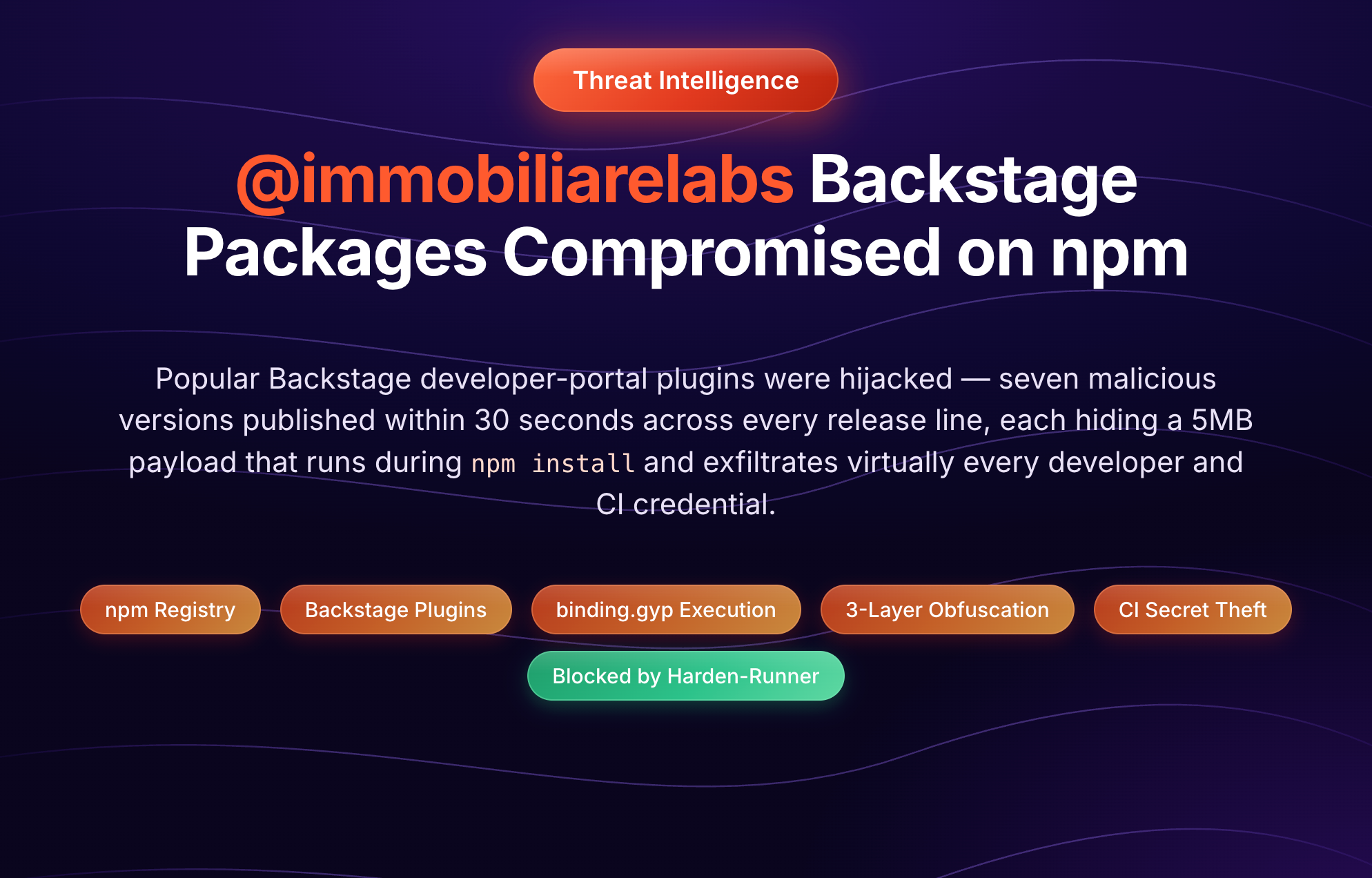 Multiple @immobiliarelabs Backstage Plugins Compromised on npm
StepSecurity reports that multiple npm packages published under the @immobiliarelabs scope, used as Backstage plugins, were compromised and had malicious code injected, likely via a maintainer account or publishing credential takeover. The advisory covers the affected package versions and indicators, warning organizations using these Backstage plugins to check their dependency trees for the compromised releases.
stepsecurity.ioadvisoryAdded 3 Sep 2026, published 1 Jul 2026🛡️ Security Orca Security: Critical Jupyter Enterprise Gateway Vulnerabilities
Orca Security discloses three critical unauthenticated vulnerabilities in Jupyter Enterprise Gateway's Kubernetes manifest rendering pipeline: CVE-2026-44182 (YAML injection via unsanitized environment variables allowing creation of privileged pods/secrets), CVE-2026-44181 (Server-Side Template Injection via KERNEL_XXX env vars in the Jinja2 rendering path, enabling arbitrary Python/OS code execution), and CVE-2026-44180 (bypass of the _enforce_prohibited_ids control that blocks UID/GID 0 kernels, enabling container escape). All affect versions before 3.3.0 and can lead to full Kubernetes cluster compromise in multi-tenant or internet-facing deployments.
orca.securityadvisoryPublished and added 11 Jun 2026🛡️ Security Orca Security: Critical RCE in LiquidJS (CVE-2026-45618)
Orca Security details CVE-2026-45618, a CVSS 10.0 unauthenticated RCE in LiquidJS (Shopify's Liquid template engine for Node.js, 7.3M+ monthly npm downloads) affecting all versions prior to 10.26.0. Attackers craft a template expression using the valueOf filter (1|valueOf) to escape the sandbox, chain prototype manipulation to reach internal engine objects (parser, loader, filters), and ultimately invoke the JavaScript Function constructor for arbitrary command execution; a public PoC demonstrates file reads and execSync-based RCE, and CCB Belgium's national CERT has issued an advisory urging immediate patching.
orca.securityadvisoryPublished and added 2 Jun 2026🛡️ Security Orca Security: Critical Unauthenticated RCE in Kopia Backup via SSH ProxyCommand Injection
Orca Security breaks down CVE-2026-45695 (CVSS 9.8), an unauthenticated RCE in the Kopia backup tool's HTTP server, affecting versions 0.22.3 and earlier. The flaw stems from Kopia's /api/v1/repo/exists endpoint splitting SFTP storage configuration fields on literal spaces without a proper tokenizer or quote handling, letting an attacker inject `-oProxyCommand=<cmd>` into the SSH command line when the server runs with --without-password and SFTP/external-SSH enabled — achieving code execution via a single crafted HTTP request. Fix is Kopia 0.23.0, which blocks starting with --insecure/--without-password on non-loopback interfaces; researcher Daniele Berardinelli reported it, tracked as GHSA-2q4c-3mrw-63c3.
orca.securityadvisoryPublished and added 26 May 2026🛡️ Security Copy Fail (CVE-2026-31431): Universal Linux Local Privilege Escalation Vulnerability
Wiz's analysis of CVE-2026-31431 ("Copy Fail"), a logic flaw in the Linux kernel's AEAD crypto implementation (algif_aead) that, when chained with AF_ALG sockets and splice(), lets an unprivileged local user write 4 controlled bytes into the page cache of any readable file — including setuid binaries like /usr/bin/su — to gain root. It affects nearly all kernels built since 2017, also enables container escape between co-located containers sharing a base image, and the post covers patch status, seccomp-based mitigation, and detection heuristics (delayed AF_ALG loading, malformed su auth.log entries).
wiz.ioadvisoryAdded 23 Sep 2026, published 1 May 2026🛡️ Security Fixes available for CVE-2026-31431 (Copy Fail) Linux Kernel Local Privilege Escalation Vulnerability | Ubuntu
Ubuntu Security Team advisory for CVE-2026-31431 ("Copy Fail"), a HIGH severity (CVSS 7.8) local privilege escalation vulnerability in the Linux kernel's algif_aead cryptographic acceleration module, affecting all Ubuntu releases before 26.04 (Resolute). A public exploit lets a local user escalate to root on non-containerized hosts, while container deployments may face escape scenarios (no PoC yet for that path); the advisory covers the temporary kmod-based module-disabling mitigation, the permanent kernel patch, and manual remediation steps via modprobe.d.
ubuntu.comadvisoryAdded 20 May 2026, published 30 Apr 2026🛡️ Security CVE-2025-62878 — Critical Path Traversal in Rancher Local Path Provisioner (CVSS 10.0)
Analysis of CVE-2025-62878 (CVSS 10.0), a path traversal flaw in Rancher's Local Path Provisioner — the default StorageClass backend for K3s — caused by unsanitized pathPattern templates in StorageClass definitions being joined into filesystem paths via filepath.Join. Exploitation lets an attacker escape the configured base storage directory to read/write/delete arbitrary host files (e.g. /etc/kubernetes/pki, /root/.ssh/authorized_keys) through a helper pod that gains host access via a hostPath mount rather than privileged mode, evading policies that only block privileged containers. The piece also challenges the CVSS 10.0 rating given the cluster-admin RBAC typically required, and covers a post-patch bypass via the allowUnsafePathPattern escape hatch.
orca.securityadvisoryAdded 2 Oct 2026, published 10 Feb 2026🛡️ Security- Ni8mare and N8scape flaws among multiple critical vulnerabilities affecting n8n
Rapid7's ETR write-up on "Ni8mare," an exploit chain against n8n automation software anchored by CVE-2026-21858 (CVSS 10.0), an unauthenticated file read flaw triggered by improper content-type validation on custom webhook file-upload forms that lets an attacker overwrite internal JSON to read arbitrary files and forge admin session tokens. That access can be chained with four authenticated CVEs — CVE-2025-68613 (expression language injection RCE), CVE-2025-68668 (Pyodide Python node command execution), CVE-2025-68697 (legacy Code node file read/write), and CVE-2026-21877 (arbitrary file write RCE, CVSS 9.9) — for full remote code execution. Cyera and researcher Valentin Lobstein published separate technical analyses and PoCs on the same day; Rapid7 lists affected version ranges for each CVE and recommends upgrading self-hosted n8n to 1.121.0+.
rapid7.comadvisoryAdded 26 Sep 2026, published 8 Jan 2026🛡️ Security - Gladinet CentreStack/Triofox: Cryptography Vulnerability | Huntress
Huntress reverse-engineered Gladinet CentreStack/Triofox's filesvr.dn HTTP handler and found that its AES-256 "Access Ticket" encryption uses hardcoded, static key/IV strings (Chinese and Japanese marketing text embedded in GladCtrl64.dll) extracted from the SysKeyMgr class, assigned CVE-2025-14611 (CVSS 7.1). Because the keys never change, attackers can forge tickets with arbitrary timestamps to read the server's web.config and steal ASP.NET machine keys, enabling ViewState deserialization RCE; this was chained with a prior auth bypass (CVE-2025-11371) and observed exploited in the wild against at least nine organizations. Later updates report suspected cl0p ransomware group exploitation of CVE-2025-30406 (ViewState deserialization) against internet-facing CentreStack servers, with IOCs including a "conqueror.exe" payload and specific attacker IPs.
huntress.comadvisoryAdded 3 Sep 2026, published 18 Dec 2025🛡️ Security - CVE-2023-47480: unchecked return values of set*id() family functions in Puredata
Researcher writeup on CVE-2023-47480, where the Pure Data (Pd) visual programming language failed to check return values of set*id() family functions (e.g. setuid()), which could allow the process to silently continue running with elevated privileges if the privilege-drop call failed. Maintainers (fixed by Umläute) patched it in Nov 2023 to abort execution on setuid() failure; the author notes this is the same bug class as their earlier CVE-2023-40303 in GNU inetutils. Impact is rated moderate since triggering setuid() failure is hard and Pd is not widely deployed.
 bencteux.fradvisoryAdded 3 Sep 2026, published 26 Sep 2024🛡️ Security
- CVE-2023-40303: unchecked return values of set*id() family functions in GNU inetutils
Disclosure writeup for CVE-2023-40303, found by the author, describing how GNU inetutils fails to check return values of set*id() family calls (setuid/setgid/etc.) across several of its binaries, including the ftpd, rcp, rlogin, rsh, rshd, and uucpd utilities. Because privilege-dropping calls are not verified, failure conditions can leave a process running with unintended elevated privileges, enabling local or in some server-daemon cases remote privilege escalation; the fix landed in the inetutils master branch ahead of a future release.
bencteux.fradvisoryAdded 3 Sep 2026, published 14 Aug 2023🛡️ Security - CVE-2023-38336: Command injection in netkit-rcp
Writeup by the researcher who reported CVE-2023-38336, a command injection vulnerability in Netkit's rcp implementation (Debian's rsh-client package). The bug is in susystem() in rcp/rcp.c, which passes filename arguments unsanitized to `sh -c`, letting an attacker who controls a copied filename execute arbitrary commands (demonstrated via `ltrace` with a filename like `";whoami"`); the binary is SUID root but drops privileges via setuid() before executing the shell, so the flaw grants command execution as the invoking user rather than root escalation. No patch exists since the project has no upstream maintainer, and the author recommends migrating from RSH to SSH.
bencteux.fradvisoryAdded 3 Sep 2026, published 18 Jul 2023🛡️ Security