 Alpine Linux rebuilds GitLab after attempted RCE attack
Alpine Linux rebuilt its GitLab server and reset all passwords after attackers tried to exploit CVE-2026-97229, a maximum-severity integer overflow in the Onigmo regex engine bundled with Ruby, on October 20-21. Eight worker crashes occurred and four were partially successful. Missing logs and outbound connection records meant compromise could not be ruled out. Alpine had run GitLab 19.3.4, then 19.3.6, which lacked the Ruby patch; the fixed image is alpinelinux/gitlab:19.3.6 with Ruby 3.3.13.
 bleepingcomputer.comarticlePublished and added 1 Nov 2026🛡️ Security
 [AINews] Building AIE CODE: The top Coding Agent Conference
AINews issue for 28 to 29 October 2026 from Latent Space. It opens with a preview of the AIE CODE summit (themes: Scaling without Slop, System One models, Increasing Ambition, with Jarred Sumner on Bun in Rust). It then recaps Twitter and Reddit news: Mistral Large 4 open weights (1.05T total, 52B active), Artificial Analysis benchmarks, Gemini 4 Carbon, Qwen4 rumours, Claude Code quota complaints and OpenAI frontier-run monitoring. Text was cut before the end.
 latent.spacearticlePublished and added 30 Oct 2026🧠 AI
 Rekt - News or Hype?
Rekt's "News or Hype?" compares four October 2026 AI headlines with their sources. These are Justin Drake's "bunker mode" ECDSA warning, Anthropic's Claude tracing NIST curve seeds to lrand48, OpenAI's agent spending Sepolia ETH from a default-mnemonic account, and Wiz's "AI uncovers" PHP RCE claim of 70% reach. It ends with four questions for checking claims.
 rekt.newsarticleAdded 30 Oct 2026🧠 AI
- Rekt - News or Hype?
Rekt News piece tracing three AI-security headlines back to their sources. It covers Justin Drake's October 2026 "bunker mode" warning about AI breaking ECDSA, OpenAI's report of a model spending Sepolia test ETH from a default developer mnemonic, and Wiz's "70% of the Internet" claim for PHP CVE-2026-109618 and CVE-2026-109619. It closes with four questions for checking a claim.
rekt.newsarticleAdded 29 Oct 2026🛡️ Security  Backporting security fixes to stable releases
Trail of Bits argues that stable and LTS software, such as Ubuntu 26.04 LTS, Debian 13 and stable Linux kernel branches, carries many known CVEs that were fixed upstream but never backported. It measures the gap using the kernel CVE team's vulns.git (18 September 2026) and Debian and Ubuntu CVE feeds. Using Codex with GPT-5.6, the team got 142 fixes covering 90 CVEs applied to stable kernel trees and has begun sending patches to distributions.
 blog.trailofbits.comarticlePublished and added 27 Oct 2026🛡️ Security
 eMudhra, Brotli, and the Long Tail of a Security Fix
Socket post on why fixing the eMudhra weak-key intermediate CA incident (October 2026) and Brotli memory corruption CVE-2026-111497 takes more than updating Node.js. Bundled Brotli copies in Bun, Python Requests and .NET, Go binaries needing rebuilds, and per-program certificate stores all leave stale copies. It lists steps: track bundled components, keep a rebuild path, use workarounds, and verify the shipped artifact.
 socket.devarticlePublished and added 26 Oct 2026🛡️ Security
 Node2Shell: Brotli Flaw Triggers Patching Across Microsoft, Node.js, Python Packages
CVE-2026-111497 (Node2Shell) is an out-of-bounds write in Google's Brotli decoder, versions 1.0.3 through 1.2.0, rated CVSS v4 9.2. Fixed in Brotli 1.0.10, 1.1.1 and 1.2.1, with patches from Node.js, Microsoft (.NET, Visual Studio, PowerShell on October 25), PyPI Brotli and brotlicffi, Bun, Envoy and Istio. Imperva showed code execution on Node.js 24.22.0 arm64; no in-the-wild exploitation is reported and some researchers say it only enables DoS.
 securityweek.comarticlePublished and added 26 Oct 2026🛡️ Security
 Crypto's Two Answers to AI Bug Hunters
Bankless article on how crypto is responding to AI-driven bug discovery. It cites Bitcoin Core's 22 October 2026 policy change to fix and ship bugs findable with a simple LLM prompt instead of embargoing them, DefiLlama's 112 hacks over $1M in 2026 versus 70 in 2025, and the Initia exploit (~$2.7M). It contrasts an agility approach (Starknet, bunker mode) with minimalism and AI-assisted formal verification (Anthropic and Theorem proofs across 123 libraries).
 bankless.comarticlePublished and added 23 Oct 2026🛡️ Security
 eMudhra / emSign CA Compromise: What Python, pip, and CI/CD Users Need to Update
Guidance on the October 2026 eMudhra / emSign CA incident, where eight intermediate CA certificates had private keys generated with insufficient randomness. It explains why updating certifi alone does not fix pip's vendored bundle, and lists fixed versions (certifi 2026.10.19, pip 26.2.2, Python 3.15.1, 3.14.9, 3.13.17). StepSecurity's OpenSSL 4.0.3 tests showed the older bundle accepted seven emSign paths, while both corrected bundles rejected all fourteen.
 stepsecurity.ioarticlePublished and added 22 Oct 2026🛡️ Security
 PHP2Shell Exposure Depends on More Than Whether You Use PHP
Horizon3.ai post on assessing exposure to PHP2Shell (CVE-2026-109618, CVE-2026-109619), two memory-handling flaws in PHP. It says affected PHP may be bundled in third-party products, containers or managed hosting, and that finding it shows a remediation need, not proven exploitability. It lists questions to ask hosting providers and says Horizon3.ai has validated exploitation under specific preconditions that are still being characterized.
 horizon3.aiarticleAdded 29 Oct 2026, published 22 Oct 2026🛡️ Security
 eMudhra CA Compromise: The Trust Stores You Didn't Patch | Endor Labs
The eMudhra CA compromise (disclosed 20 October 2026) involves eight intermediate CA certificates whose private keys can be derived from the certificates themselves. They chain to AAA Certificate Services and three other roots. Browsers block them, but non-browser clients skip revocation and CT checks. Endor Labs finds 25 popular packages with frozen bundled root stores, 11 already patched, and gives a fingerprint-scanning script, test hosts and patch steps.
 endorlabs.comarticlePublished and added 21 Oct 2026🛡️ Security
 Your MCU likely escaped the eMudhra intermediate CA compromise
Analysis of the eMudhra intermediate CA compromise disclosed 20 October 2026, in which eight intermediate CA private keys were weak P-384 keys (top 376 bits zero, one key equal to 4) and publicly accessible. It explains web PKI chains and why browsers enforcing Certificate Transparency were not exposed. It argues MCU firmware that bundles only the single root it needs, as in Zephyr's HTTP GET sample, is likely safe unless it trusts an eMudhra or Sectigo cross-signing root.
 danielmangum.comarticleAdded 22 Oct 2026, published 21 Oct 2026🛡️ Security
- eMudhra Intermediate CA Compromise
eMudhra Intermediate CA Compromise is a 20 October 2026 link-blog post reporting that private keys of eight eMudhra intermediate CA certificates were compromised. They chain to roots trusted by the Mozilla, Microsoft, Apple and Chrome programs. Software bundling trust lists needs updating: Linux distros must update ca-certificates, and uv 0.13.4, pip 26.2.2 and certifi 2026.10.19 ship new lists. The post does not describe how the keys were compromised.
 simonwillison.netarticleAdded 21 Oct 2026, published 20 Oct 2026🛡️ Security
- MemTensor Compromise: Poisoned MemOS Releases on npm and PyPI
MemTensor MemOS compromise: three malicious versions of @memtensor/memos-cloud-openclaw-plugin on npm and MemoryOS 2.0.34 on PyPI (23 September 2026) bundled a Go binary, sckit, that harvested credentials and environment secrets and reported to skyleen.fr. The post gives OSV IDs, grep and find commands for exposure checks, safe versions (0.1.20, 2.0.33), rotation steps, and the missing gitHead as a provenance signal.
 safeguard.sharticleAdded 19 Oct 2026, published 18 Oct 2026🛡️ Security
 Canonical Websites Disrupted in Second DDoS Attack This Year
SecurityWeek reports that Canonical's main web properties (ubuntu.com, canonical.com, the Ubuntu blog and developer site, and the security advisory pages and API) were hit by a sustained DDoS attack confirmed on October 8. Downtime was a little over four hours. Launchpad and the Snap Store appeared unaffected. The attack's size and origin are undisclosed and nobody has claimed it. It follows a more disruptive April attack that took down Launchpad and the Snap Store and was claimed by The Islamic Cyber Resistance in Iraq – 313 Team. It is unclear whether the two are linked.
securityweek.comarticlePublished and added 12 Oct 2026🛡️ Security How Zcash Plans to Hide Your Keys From AI and Quantum Attacks
Decrypt reports that Zakura, which builds a Zcash full node, expects post-quantum signature opcodes in Zcash in January, to enable hash-based signatures for transparent pools. The plan rotates to a fresh transparent address after every transaction so public keys stay hidden, and adds a WOTS hash-based backup signature. Private information retrieval, shipping this week in the Vizor wallet, stops servers from linking the rotated addresses. It follows Justin Drake's "bunker mode" warning that AI-driven math could break ECDSA. The plan covers only transparent payments, and no activation date has been confirmed.
 decrypt.coarticlePublished and added 11 Oct 2026🛡️ Security
 Zcash developers set January target for quantum-resistant payments after ‘bunker mode’ scare
Zcash developer Roman Akhtariev, writing for the Zakura client team, announced a January target for adding post-quantum signature opcodes supporting hash-based signatures to Zcash's transparent (public) payment pool, which holds about 70% of issued ZEC. The move responds to Ethereum researcher Justin Drake's "bunker mode" warning that AI could soon break the elliptic-curve math behind Bitcoin and Ethereum wallet keys. Zakura has also built a private-information-retrieval balance-lookup tool, now experimentally available in the Vizor wallet, that lets a wallet check address balances without revealing to the server which addresses are linked, separate from the shielded-pool quantum-recovery work still needed to defend against store-now-decrypt-later attacks.
 coindesk.comarticlePublished and added 9 Oct 2026🛡️ Security
 Coinbase Cryptographer Calls Drake's 'Bunker Mode' Warning 'The Very Definition of FUD'
News piece reporting that a Coinbase cryptographer dismissed Justin Drake's proposal for Ethereum validators/users to adopt a 'bunker mode' against AI-accelerated cryptanalysis as unfounded FUD. Vitalik Buterin weighed in that AI-accelerated math risk is real but should be pointed at lattice-based cryptography rather than elliptic-curve schemes like ECDSA used by Ethereum, while a former Ethereum Foundation researcher argued bunker mode would not help if the curves actually broke.
 thedefiant.ioarticlePublished and added 8 Oct 2026🛡️ Security
 Vitalik Buterin backs crypto ‘bunker mode’ amid rapid AI math advances
Ethereum researcher Justin Drake, backed by Vitalik Buterin, warns that rapid AI progress in mathematics (citing OpenAI's recent batch of math findings and a 10,000-agent solve of Navier-Stokes) could break ECDSA-based wallet signatures before quantum computers ever do, and that lattice-based post-quantum schemes may not be safe either. They recommend a controlled 'bunker mode' migration of crypto holdings to fresh addresses whose public keys have never been exposed on-chain, while cautioning that botched migrations carry their own risk.
 cointelegraph.comarticlePublished and added 8 Oct 2026🛡️ Security
 Vitalik Flags AI Risk to Crypto, Warns Against Rushed Wallet Moves
Vitalik Buterin responds to Ethereum Foundation researcher Justin Drake's bunker mode proposal, agreeing AI-accelerated cryptanalysis could break ECDSA, the signature scheme behind most crypto wallets, in months not years, and that lattice-based schemes like ML-DSA billed as quantum-safe could also take serious hits within two years. Buterin gives practical key-hygiene advice such as keeping funds in addresses that never exposed a public key and rotating multisig signer keys after every operation with offchain signature collection, while warning that botched migrations cost more than hacks.
bankless.comarticlePublished and added 8 Oct 2026🛡️ Security Will AI Break Crypto Encryption? Ethereum’s Vitalik Buterin Weighs In on 'Bunker Mode' Shift
Decrypt reports on Ethereum co-founder Vitalik Buterin's warning that AI-driven advances in mathematics could plausibly break lattice-based cryptography within two years, a day after Ethereum Foundation researcher Justin Drake urged the industry to adopt "bunker mode" — moving funds to addresses whose public keys have never been exposed. The piece covers pushback on reusing public keys, the tradeoff between quantum-resistant lattice schemes (used by projects like Cardano) and their potential AI-math vulnerability, and Buterin's preference shift toward hash-based cryptography, with commentary from BIP-360 co-author Isabel Foxen Duke and Charlie Quant Lab's Ananda Banerjee urging calm preparation over panic.
decrypt.coarticlePublished and added 8 Oct 2026🛡️ Security Tensorlake npm Package Compromised to Spread Shai-Hulud Worm
The tensorlake npm package, version 0.5.144 released 8 October 2026, carried a new Shai-Hulud worm variant, per Aikido's analysis. A preinstall script runs node lib/setup.mjs, downloads Bun and launches lib/Math_Symbol.js, which steals cloud, CI/CD, SSH, Vault, browser and crypto-wallet secrets. It reaches C2 iseekaigogo[.]com or an Ethereum smart-contract dead drop, and has a wipe dead-man's switch tied to a GitHub token.
 cybersecuritynews.comarticleAdded 19 Oct 2026, published 8 Oct 2026🛡️ Security
 Morning Minute: Ethereum Researcher Says AI May Break Crypto Encryption Before Quantum
A daily crypto-market newsletter segment reporting Ethereum Foundation researcher Justin Drake's warning that AI, not quantum computing, may be the first to break ECDSA — the elliptic-curve signature scheme securing Bitcoin and Ethereum — potentially within months by recovering private keys from exposed public keys using large GPU clusters. Drake calls for industry-wide "bunker mode": migrating self-custodied funds to fresh addresses whose public keys remain hashed/hidden, and names exchanges (Binance, Bitbank, Robinhood, Bitfinex, Tether) he wants to harden cold storage. The article also notes a concurrent Europol report flagging crypto wallets with already-revealed public keys as the main weak point for future quantum/AI attacks, since those cannot be retroactively protected.
decrypt.coarticlePublished and added 8 Oct 2026🛡️ Security Bitcoin and ether holders urged to enter ‘bunker mode’ against possible AI attacks
Ethereum researcher Justin Drake and co-founder Vitalik Buterin warn that rapid AI progress in mathematics could break the elliptic-curve signatures securing Bitcoin and Ethereum wallets within months - far sooner than quantum computers are expected to - urging large holders to enter bunker mode by migrating funds to addresses whose public keys have never been exposed onchain. Buterin also flags that lattice-based post-quantum schemes, the basis of NIST's signature standard, could face similar AI-driven erosion, pushing Ethereum's long-term roadmap toward hash-based signatures instead. The piece grounds the warning in already-documented AI-assisted exploit discovery: a 5-year-old Coldcard hardware-wallet firmware bug drained over 1,367 BTC, BTCPay Server Lightning-node thefts, Core Lightning bugs surfaced via AI-generated audits, and Anthropic's demonstration of AI models writing working exploits against simulated DeFi contracts.
coindesk.comarticlePublished and added 8 Oct 2026🛡️ Security AI risk to crypto wallets: Ethereum researcher warns keys could be cracked in months
Ethereum Foundation researcher Justin Drake warned on October 7, 2026 that advances in AI and mathematics could break ECDSA — the signature scheme securing blockchain transactions — within months, potentially letting an attacker recover a private key in about a week using a large GPU cluster. He urged gradual "bunker mode" preparation rather than panic: rotating funds into fresh addresses whose public keys have never been exposed on-chain, strengthening cold storage, and accelerating Ethereum's move toward hash-based signature schemes such as SPHINCS for critical signers like oracles and L2 security councils.
 en.cryptonomist.charticlePublished and added 8 Oct 2026🛡️ Security
 Justin Drake Urges 'Bunker Mode' Migration to Fresh Crypto Addresses
Justin Drake urges migrating to fresh crypto addresses over AI cryptographic break fears; Ledger CTO disputes the risk of mass migration.
thedefiant.ioarticlePublished and added 8 Oct 2026🛡️ Security Ethereum Researcher Says AI May Break Encryption Before Quantum Does
Ethereum Foundation researcher Justin Drake warns that AI-driven mathematical advances could break ECDSA — the signature scheme securing Bitcoin and Ethereum — before quantum computers do, potentially recovering a private key from an exposed public key in about a week using a large GPU cluster. He calls for "bunker mode": a controlled mass migration of funds to fresh addresses whose public keys have never been exposed, urges major custodians (Binance, Bitbank, Robinhood, Bitfinex, Tether) to harden cold storage, and pushes Ethereum to accelerate its move to hash-based (post-quantum) cryptography.
decrypt.coarticlePublished and added 7 Oct 2026🛡️ Security Improving SPIRE security and resiliency with AWS managed services
AWS Security Blog walkthrough on hardening SPIRE (the SPIFFE Runtime Environment) in production by replacing its default self-managed components with AWS managed services: AWS KMS for SVID signing keys, Amazon Aurora PostgreSQL as the datastore, AWS Private CA as the upstream certificate authority, Amazon S3/CloudFront for trust bundle distribution, AWS Secrets Manager for delivering SVIDs to serverless/container workloads, and Amazon Verified Permissions (Cedar policies) for fine-grained SPIFFE-ID-based authorization. It addresses operational concerns like key custody, datastore resiliency, PKI integration, and offline identity validation, and links to a GitHub reference deployment and a SPIFFE/SPIRE-on-AWS workshop.
 aws.amazon.comarticleAdded 7 Oct 2026, published 6 Oct 2026🛡️ Security
- pwasm 0.2a0
Simon Willison describes pwasm, a pure-Python WebAssembly engine he originally vibe-coded in January, and how he later let Claude Opus 5.5 work on it autonomously with minimal prompting: over 42 commits the model extended it to handle almost all of the WASM spec and got working builds of MicroPython, QuickJS and Micro QuickJS running inside it, bundled in the PyPI wheel. He frames it as a rough but telling illustration of how much more capable today's coding agents are than the models used ten months earlier, while still not trusting the alpha-tagged result.
simonwillison.netarticleAdded 8 Oct 2026, published 1 Oct 2026🧠 AI 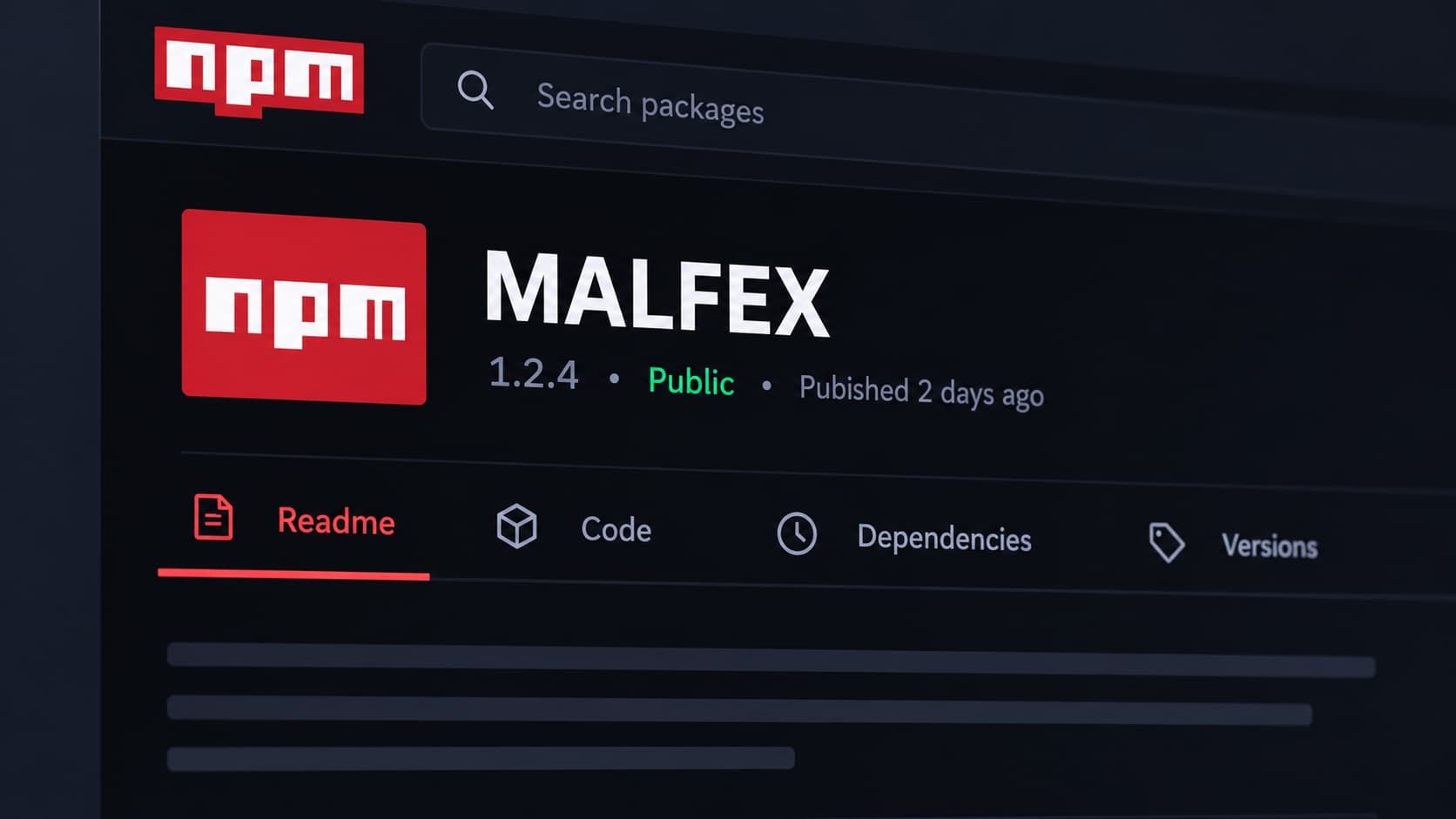 MALFEX npm Attack Spreads Windows RAT, Steals Discord and Browser Data
CloudSEK's Global Threat Intelligence team uncovered MALFEX, a supply-chain campaign active since August 2023 that uses malicious npm packages (including tlxbnhd, tldriver, mxdriver, img-to-native, cdn-img-fetch, function-flag, function-color) to deliver malware on Windows. One chain disguises a Windows executable as a PNG to load Overlord RAT, an open-source Go-based RAT that uses the Solana blockchain to resolve C2 addresses; a second chain fetches a 64MB Node.js bundle that steals Discord tokens, browser cookies/credentials, crypto wallets and Telegram session data, exfiltrating via a Discord webhook. Some malicious packages stayed live for over a year even after related packages were pulled or flagged.
 hackread.comarticleAdded 3 Oct 2026, published 30 Sep 2026🛡️ Security
 OpenAI Gave AI Agents Their Own Computers at DevDay 2026. Here's Everything It Announced
Roundup of OpenAI DevDay 2026 announcements: Dots, always-on cloud hosted agents running on GPT-6 Astra and the newly open sourced Codex harness that connect to thousands of apps; GPT-6.1 Sol, a workhorse model priced at one fifth of Astra tokens while nearly matching it on agentic coding and computer use; and Ultrafast, a premium speed tier up to 8x faster in Codex on Cerebras hardware, bundled with a new Pro 500 plan. Also covers a shared human plus agent workspace called ChatGPT Space, a fast fixed choice Decisions API, Codex Security Cloud for scheduled repo vulnerability scanning and patching, an Agents API adding computer use and multi agent context compaction tooling, Private Intelligence with zero data retention and confidential computing inference coming this fall, and marketplace and plugin features such as Sign in with ChatGPT and OpenAI Marketplace.
decrypt.coarticleAdded 30 Sep 2026, published 29 Sep 2026🧠 AI upm Launches as a Fast, Tiny Package Manager Written in TypeScript
Socket covers upm, a new ~250KB TypeScript package manager built by Nuxt/Nitro/UnJS creator Pooya Parsa that uses only Node.js built-ins for fast npm installs and exposes a JavaScript API for embedding in other tools. Its security-relevant defaults include disabling dependency lifecycle install scripts and enforcing a one-day minimum release age before selecting new package versions (both configurable), aimed at mitigating malicious install-script and fresh-release supply-chain attacks; it also lacks hoisting and can read (but has limited compatibility with) npm, pnpm, and bun lockfiles.
socket.devarticlePublished and added 29 Sep 2026🛡️ Security Researchers Detail DifyTap Flaws in Dify That Could Expose AI Chats Across Tenants
Zafran Security disclosed four vulnerabilities (dubbed DifyTap) in the open-source agentic workflow platform Dify, including two critical authorization bypass/path-traversal bugs (CVE-2026-41947, CVE-2026-41948) letting attackers redirect app traces to an attacker-controlled LLM provider or reach Dify's internal Plugin Daemon API, plus two file-preview authz flaws (CVE-2026-41949, CVE-2026-41950) exposing other tenants' uploaded documents and chat files via UUID guessing. Separately, Dify's file-parsing stack bundled a version of PDFium vulnerable to CVE-2024-5846, a use-after-free that can trigger heap corruption via a crafted PDF. All but CVE-2026-41948 were patched in Dify 1.14.2.
 thehackernews.comarticleAdded 26 Sep 2026🛡️ Security
 Socket Joins New OpenJS Program to Fund Node.js Security Work
Socket announces it is an inaugural funder of the OpenJS Foundation's new Security Stewardship Program, which pools money to pay both bug bounty researchers and maintainers doing triage, patching, and backporting for Node.js, starting there before expanding across the JS ecosystem. The article frames this against a broader funding crisis: curl suspended its bounty program after AI-generated report floods, GitHub restructured its bounty tiers, Canonical moved Ubuntu kernel updates to weekly releases to keep pace with rising CVE volume, and Node.js paused bounty payouts in April after the Internet Bug Bounty pulled funding, even as HackerOne report volume to the Node.js team spiked 4.6x in one month.
socket.devarticlePublished and added 25 Sep 2026🛡️ Security Securing the unpatchable in an age of AI-driven vulnerabilities
Cisco Talos argues that AI-accelerated vulnerability discovery is outpacing organizations' ability to patch, especially for unpatchable operational technology (OT) like medical devices and industrial control systems. It recommends network-level compensating controls instead of patching: upstream next-generation firewalls with intrusion prevention for virtual patching, VLAN/ACL-based micro-segmentation to restrict which devices can reach legacy systems, and visibility into legacy network fingerprints to build an asset inventory. It also debunks the air-gap myth, citing WannaCry's spread through unpatched Windows XP in the NHS as a cautionary example of "hope for the best" failing.
 blog.talosintelligence.comarticleAdded 7 Oct 2026, published 16 Sep 2026🛡️ Security
 Why OVAL Feeds Outperform NVD for Linux Vulnerability Management | Blog | Endor Labs
Endor Labs explains why OVAL (Open Vulnerability and Assessment Language) feeds from Linux distributions like Debian, Ubuntu, and Red Hat produce more accurate vulnerability data than NVD for container/Linux scanning. Using CVE-2022-1587 (PCRE2 DoS) as a case study, it shows how NVD rated the flaw "Critical" (CVSS 9.1) while Ubuntu's OVAL-based advisory rated it "Low" because the distro had already backported a fix into a version string (10.34-7ubuntu0.1) that naive NVD-based scanners would still flag as vulnerable.
endorlabs.comarticlePublished and added 11 Sep 2026🛡️ Security The dark figure of supply chain detection
Aikido Security argues that string/IOC-based malware detection suffers from survivorship bias (the 'dark figure' of undetected supply-chain attacks) and proposes an adapted version of David Bianco's Pyramid of Pain for package ecosystems, where durable detection requires behavioral baselines mapped per package type rather than hashes or known-bad strings. It illustrates the approach with a real incident: a malicious version of the popular npm package Keyv (600M+ downloads) that executed obfuscated JS, downloaded the Bun runtime, and ran a second obfuscated payload at install time, caught by behavioral/technique-level analysis in Aikido's sandbox despite heavy obfuscation defeating static analysis.
 aikido.devarticleAdded 3 Sep 2026, published 1 Sep 2026🛡️ Security
 OWASP Agentic Skills Top 10 explained: the ten agent skill risks, and which to fix first
Explains OWASP's Agentic Skills Top 10 v1.0 (AST01-AST10), a new framework for the risks of "agent skills" — folders with a SKILL.md file plus bundled code/scripts that agents discover and execute, treating plain-language instructions as an attack surface that neither traditional package security nor prompt-injection defenses cover. The piece details the ClawHavoc campaign (1,184 malicious skills across 12 ClawHub accounts), the ClawJacked exploit (CVE-2026-32025), Claude Code skill-related CVEs (CVE-2025-59536, CVE-2026-21852), and cites Adversa AI's own research showing a malicious skill bypassed all eight open-source scanners tested, including the OASB leaderboard leader and tools from NVIDIA (SkillSpector), Snyk, Trail of Bits, and Air Security. It closes with a prioritized remediation sequence (inventory, isolation, credential scoping, pinning, allowlisting, approval workflows, advisory scanning, cross-platform normalization) mapped to the AST entries.
 adversa.aiarticleAdded 7 Oct 2026, published 25 Aug 2026🛡️ Security
 Why NPM Malware Keeps Reaching for Bun | Supply Chain Security | Blog | Endor Labs
Endor Labs analyzes why a string of npm supply-chain campaigns — Shai-Hulud 2.0 (Nov 2025, 796 packages backdoored) and an April 2026 SAP-ecosystem attack on mbt, @cap-js/db-service, @cap-js/sqlite and @cap-js/postgres — all use the same second stage: a preinstall script that downloads the Bun JavaScript runtime to run an obfuscated credential stealer. Bun is attractive to attackers because it's a userland, statically-linked binary with a different process name than node, bypasses Node's --require/NODE_OPTIONS instrumentation hooks, and ships built-in shell/decompression/HTTP primitives (Bun.$, Bun.gunzipSync) that avoid the suspicious imports scanners look for. The piece also notes CVE-2026-24910, a trusted-dependency spoofing flaw in Bun's package manager, and recommends prioritized controls: disable npm lifecycle scripts (ignore-scripts=true) with an auditable allowlist, enforce a minimum release age/cooldown on dependencies, block known-malicious versions pre-install, eliminate long-lived npm/cloud tokens, and detect on process lineage rather than binary name.
endorlabs.comarticleAdded 3 Sep 2026, published 12 Aug 2026🛡️ Security 77 "Evil Twin" Open VSX Extensions
Manifold Security identified 77 malicious "evil twin" extensions uploaded to Open VSX between July 26 and August 1, 2026, that impersonate real Microsoft VS Code Marketplace extensions by reusing their names/namespaces/descriptions under unrelated publisher accounts at low version numbers (e.g. 0.0.1). 58 lightweight variants exfiltrate just the hostname while 19 "recon" variants collect detailed machine, Git repository, CI environment (GITHUB_REPOSITORY, CI_PROJECT_PATH, Azure DevOps, Buildkite, CircleCI, Codespaces, Gitpod), installed-extension, and telemetry opt-out data to mangorbit[.]com, with DNS TXT-based fallback C2 and a persistent multi-day retry schedule. The article also covers the concurrent ChainDrop campaign compromising 450 npm packages (2,244 artifacts) via a Mini Shai-Hulud self-propagating credential-stealing worm using a Bun runtime payload and preinstall hooks, which plants persistence via .claude and .vscode config injection.
thehackernews.comarticlePublished and added 8 Aug 2026🛡️ Security Building secure Uniswap v4 hooks
Trail of Bits distills dozens of Uniswap v4 hook audit findings into seven recurring failure patterns — missing caller checks, unvalidated PoolKey trust, custom accounting leaks, wrong-hook timing bugs, permission-bit mismatches, callback-triggered denial of service, and cross-callback state changes. The post walks through real incidents (the ~$12M Cork exploit and $8.4M Bunni rounding bug) to show how these bugs bypass PoolManager's settlement invariant, and gives developers and auditors a concrete checklist plus fuzzing guidance (Echidna, Medusa) for securing hook contracts.
blog.trailofbits.comarticleAdded 3 Sep 2026, published 30 Jul 2026🛡️ Security The upgrade trap: when upgrading is the wrong answer to a CVE
Aikido argues that the reflexive SCA-tool advice to 'just upgrade' to fix a CVE breaks down in three cases: no fixed version exists (e.g. the deprecated Node.js 'request' package's SSRF advisory), the fix hasn't shipped yet (lodash CVEs affecting all versions up to 4.17.23), or the fix ships with breaking changes (Node.js CVE-2026-48937, which bundled a fix with removal of HTTP/2 priority signaling). It also cites the chalk/debug npm maintainer-account compromise as evidence that blind auto-upgrading can pull in malware, and pitches backporting isolated fixes to already-deployed versions (via Aikido Libraries) as the alternative to upgrade-or-freeze.
aikido.devarticleAdded 3 Sep 2026, published 22 Jul 2026🛡️ Security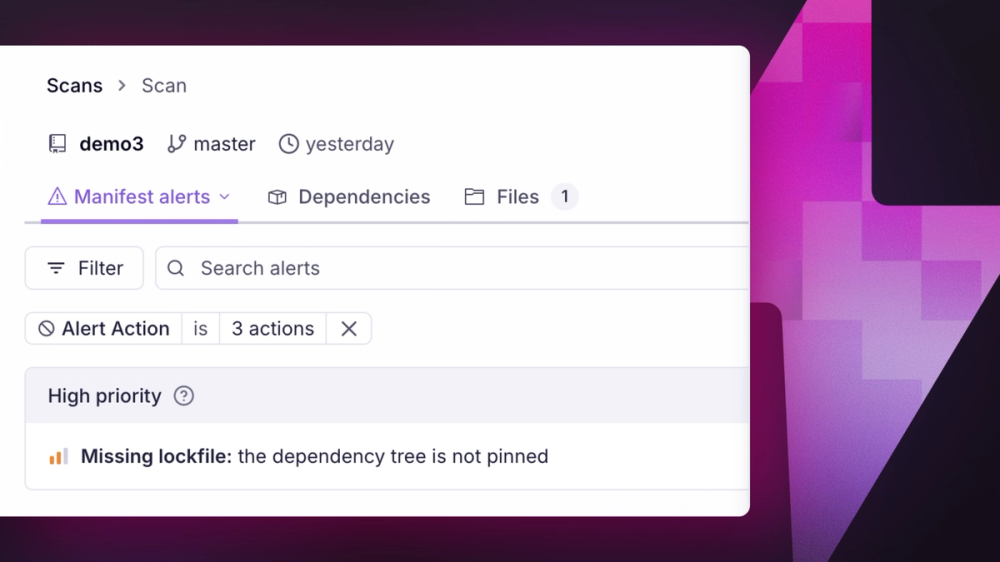 Socket: Introducing Manifest Alerts
Socket announces Manifest Alerts, a new alert type that flags application repositories missing a lockfile (e.g. package.json without package-lock.json), separate from its existing per-dependency Dependency Alerts. The feature was motivated by the Axios npm compromise, where repos without committed lockfiles had a wider, harder-to-verify blast radius because fresh installs could resolve to different dependency versions than expected. Alerts include impact explanation and package-manager-specific remediation guidance for npm, pnpm, yarn, and bun.
socket.devarticlePublished and added 18 Jun 2026🛡️ Security Miasma and Hades Are Spreading Now: Detect Them on Developer Machines with Suspicious Files
StepSecurity details the fast-moving Miasma (npm) and Hades (PyPI) supply-chain worm campaigns, which shifted the execution trigger from install-time lifecycle scripts to open-time and import-time: Miasma uses a "Phantom Gyp" technique via a malicious binding.gyp that fires during native npm builds, while Hades embeds an obfuscated hook in __init__.py that downloads a Bun runtime and reads secrets from process memory on import. The post explains why EDR, registry gateways, and SCA scanners all miss these artifacts (they aren't declared dependencies and don't touch disk in classic ways), then pitches StepSecurity's Dev Machine Guard "Suspicious Files" feature, which scans developer machines for known attack artifacts using centrally maintained detection rules.
stepsecurity.ioarticleAdded 3 Sep 2026, published 18 Jun 2026🛡️ Security Socket: RubyGems Bundler 4.0.13 Adds Opt-In Cooldown for Newly Published Gems
RubyGems and Bundler 4.0.13 introduced an opt-in 'cooldown' feature that lets projects delay dependency resolution to newly published gem versions (e.g. source "https://rubygems.org", cooldown: 7), using per-version created_at timestamps from RubyGems.org's v2 compact index. The goal is to blunt fast-moving supply-chain attacks where a compromised maintainer account pushes a malicious release that CI/automated installs pick up within hours; it joins similar minimumReleaseAge controls already added by pnpm and npm, and gem.coop's earlier registry-side cooldown experiment. Bundler's cooldown is conservative (skips gems only when timestamp metadata proves they're too new, ignores older/private sources lacking it) and configurable via Gemfile, CLI flags, env var, or config, with a --cooldown 0 escape hatch for urgent fixes.
socket.devarticlePublished and added 13 Jun 2026🛡️ Security The Pros and Cons of NPM v12's Security Improvements
An analysis of npm v12 (shipping ~July 2026, previewable on npm 11.16.0+), which flips three dangerous defaults to deny-by-default: automatic preinstall/install/postinstall lifecycle scripts, git dependencies (now requiring --allow-git), and remote HTTPS tarball dependencies (now requiring --allow-remote). The author, a DEF CON speaker on install-script abuse, argues the changes are genuinely good but warns that widespread legitimate use of install scripts (esbuild, sharp, core-js, puppeteer, node-gyp native builds) will drive developers toward reflexive npm approve-scripts approval, and that attackers will simply relocate payload execution outside npm's visibility (curl|bash in install.js, bootstrap binaries), citing DPRK actors' continued abuse of VSCode tasks files even after Microsoft disabled task.allowAutomaticTasks by default. It also surveys complementary controls gaining traction across the ecosystem: npm's min-release-age cooldown (following pnpm's minimumReleaseAge, Yarn's npmMinimalAgeGate, and Bun) and package-firewall products (Datadog's supply-chain-firewall, Liran Tal's npq, Socket, Aikido, Endor Labs).
 opensourcemalware.comarticleAdded 3 Sep 2026, published 10 Jun 2026🛡️ Security
- From Cookies to Keys: The Threat of Session Hijacking
Huntress breaks down how session hijacking has overtaken password theft, with infostealer malware (e.g. RedLine) harvesting browser cookies/tokens for Google Workspace, Microsoft 365, Slack, GitHub, and AWS. It details the dark-web economy for these tokens (pricing from $5 logs up to $1,000+ "Developer Access Bundles" resold by initial access brokers), the replay tooling used (OpenBullet, StealyBot), and defensive measures like short-lived sessions, Secure/HttpOnly cookies, and canary credentials.
 huntress.comarticleAdded 3 Sep 2026, published 26 May 2026🛡️ Security
 Mini Shai-Hulud strikes again: npm worm compromises hundreds of @antv packages
Aikido's malware team documents a new wave of the Mini Shai-Hulud npm worm compromising hundreds of packages including Alibaba's @antv suite, echarts-for-react, and timeago.js. The payload runs via a preinstall hook (bun run index.js), harvests CI/CD, cloud, and SSH credentials, plants persistent backdoors in .vscode/tasks.json and .claude/settings.json, exfiltrates via a disguised telemetry endpoint (t.m-kosche.com), and self-propagates by stealing npm tokens to republish poisoned versions of other packages the victim can publish to — over 2,700 rogue GitHub repos have been created from stolen tokens so far. The article includes a full appendix of affected package/version pairs and mitigation guidance emphasizing package-age gating over post-publish detection.
aikido.devarticleAdded 3 Sep 2026, published 19 May 2026🛡️ Security Socket: pnpm 11 Adds Supply Chain Protection Defaults
Socket covers pnpm 11's new security-by-default settings: a 24-hour Minimum Release Age that delays resolution of freshly published package versions, blockExoticSubdeps which by default rejects transitive dependencies resolved from git/tarball URLs instead of the registry, and a new allowBuilds model that consolidates prior build-script controls (onlyBuiltDependencies, ignoreDepScripts, etc.) into a single package-pattern-to-boolean map. The piece ties these defaults to the conditions exploited by the Mini Shai-Hulud campaign (npm/PyPI/Packagist compromise using preinstall hooks to fetch a Bun runtime and run a credential stealer), and also notes pnpm 11's built-in SBOM generation (CycloneDX 1.7/SPDX 2.3), GHSA-based audit --fix=update, and a preview of the Rust-based Pacquet install engine slated for pnpm v12.
socket.devarticlePublished and added 7 May 2026🛡️ Security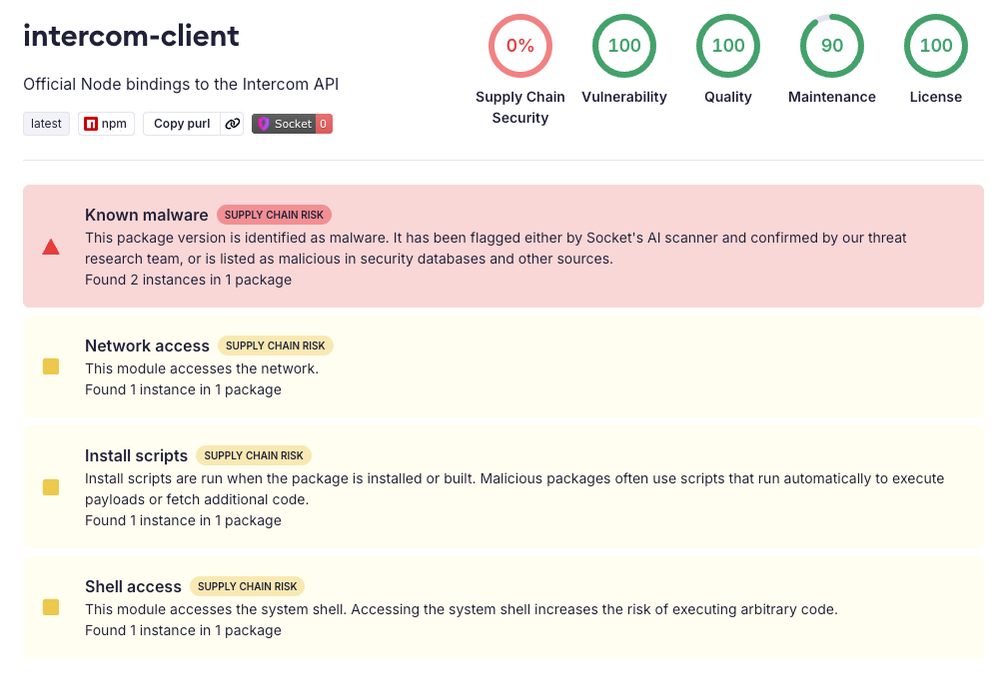 Mini Shai-Hulud Worm (Apr–May 2026)
Socket's Threat Research team confirms intercom-client@7.0.4, the official Intercom Node.js SDK (~360k weekly downloads), was compromised via a preinstall hook (setup.mjs) that downloads an unverified Bun binary and executes an 11.7MB obfuscated payload (router_runtime.js) which harvests Kubernetes and Vault credentials and exfiltrates them via the GitHub API. The compromise traces to a hijacked maintainer GitHub account (nhur) that pushed spoofed Dependabot-style workflow changes to trigger the npm publish CI pipeline, and the payload closely matches the 'Mini Shai-Hulud' campaign also seen in a PyPI package (lightning) and prior SAP CAP/Cloud MTA npm packages linked to TeamPCP activity.
socket.devarticlePublished and added 6 May 2026🛡️ Security- Cooldowns.dev
Cooldowns.dev is a living reference documenting "dependency cooldown" (minimum release age) settings that block package managers from installing versions published within the last N days, a defense against the short-lived window in which malicious package versions (e.g. the ChainDrop keyv worm, arrayref, LiteLLM, Telnyx SDK, axios) typically get caught and pulled. It gives exact configuration syntax for uv, pip, pipenv, poetry, PDM, conda, pixi, npm, pnpm, Yarn, Bun, Deno, ncu, Cargo (via cargo-cooldown), Bundler, Hex, Scala Steward, mise, VS Code, actions-up, plus Dependabot/Renovate defaults, Socket/StepSecurity PR checks, and registry-level proxies (Artifactory, Nexus, Cloudsmith, CodeArtifact, Verdaccio), and ships a cross-tool cooldowns.sh helper script.
 cooldowns.devarticlePublished and added 6 May 2026🛡️ Security