4 real? Tracking exploitation and patching of eMudhra’s weak keys
Cloudflare's follow-up on eMudhra's eight trivially recoverable intermediate CA keys (such as 4, 56 and 66), disclosed 19 October 2026. Pingora logging showed about 22,000 handshakes with the weak keys, including about 160 forged certificates made within hours of disclosure. Probes on 50 million challenge pages show many bots, old browsers and Android WebView still trust the chain.
 blog.cloudflare.comwriteupPublished and added 30 Oct 2026🛡️ Security
- GitLab Security Incident: Attempted Exploitation of CVE-2026-97229
Alpine Linux incident report on attempted exploitation of CVE-2026-97229 (CVSS 10.0), a regex-evaluation bug in Ruby's Onigmo engine reachable through GitLab CI configuration. An attacker crashed workers 8 times on 20 and 21 October 2026. Upgrading to GitLab 19.3.6 did not fix it because the patch sits in GitLab's bundled Ruby. Alpine rebuilt the instance and found no tampering with aports or releases.
 alpinelinux.orgwriteupAdded 29 Oct 2026, published 28 Oct 2026🛡️ Security
 Plex vulnerabilities being exploited in the wild to drop a cryptominer
Honeypot writeup of in-the-wild exploitation of Plex Media Server through the Plex2Shell chain (CVE-2026-96652, -96654, -96655, -96656) in October 2026. Attackers from 45.194.92.222, 91.92.40.202 and 176.65.139.228 used SSRF-style timeline/subscribe requests and downloaded a Docker-named dropper and an XMRig miner from 217.60.194.116. Includes file hashes, a later-seen proxyware sample (myawesomeproxy), lab pcaps for signatures and links to sandbox reports.
 boredhackerblog.infowriteupAdded 20 Oct 2026, published 19 Oct 2026🛡️ Security
- Zero to calc in six days: inside XBOW's Chrome full chain
XBOW researchers describe a Chrome full-chain exploit that combines a V8/Maglev deoptimization bug (mutable HeapNumber treated as immutable), a TOCTOU flaw in Blink's animated-WebP decoder exploiting a transferred ArrayBuffer, and a race in Crashpad's remote-memory reader to achieve code execution outside the renderer sandbox. The chain, built in six days largely by AI agents using OpenAI's gpt-5.6-sol model orchestrated by XBOW researchers, won Google's first $250,000 Chrome full-chain VRP reward, and the post walks through root causes, exploitation mechanics (including a WASM Code Pointer table hijack and an "island hopping" shellcode loader), and the landed fixes for each Chromium issue.
 xbow.comwriteupAdded 18 Oct 2026, published 13 Oct 2026🛡️ Security
- Threat Actors Exploit Critical AhsayCBS Flaws to Drop Webshells and XMRig Cryptominer
Huntress documents active exploitation of two AhsayCBS (Ahsay Cloud Backup Server) vulnerabilities being chained together: CVE-2026-105133, an authentication bypass in checkSysPwd, and CVE-2026-105134, an unauthenticated RCE in the Replication Receiver's UpdateReceivers.do endpoint that grants SYSTEM. Attackers use the chain to drop JSP webshells, then deploy a renamed XMRig cryptominer (masquerading as msedge.exe via a modified NSSM binary), a Task-Manager-aware anti-detection PowerShell script, and the vulnerable WinRing0x64.sys kernel driver for hardware-level miner access. Huntress provides IOCs, mitigation guidance (restrict management interface, re-image if compromised) and four Sigma rules targeting each stage of the intrusion chain.
 huntress.comwriteupAdded 9 Oct 2026, published 8 Oct 2026🛡️ Security
 Post-Exploitation Analysis & Artifacts – Citrix NetScaler CVE-2026-88771
watchTowr post-exploitation analysis of CVE-2026-88771, an unauthenticated log-poisoning command injection in Citrix NetScaler (advisory CTX697096). Sensors logged thousands of attempts: about 85% were OOB callbacks, the rest Sliver implants, a trojanized Dropbear SSH backdoor, a Perl stager with a PHP webshell, and SSH-key and secret-harvesting sprays. Includes artifacts to hunt (/var/tmp files, ns_helper, ns.conf edits) and IOC repo pointers.
 watchtowr.comwriteupAdded 30 Oct 2026, published 7 Oct 2026🛡️ Security
 Password Cracking: Stealing SSH Credentials with PAM
Walks through a post-exploitation credential-harvesting technique on Linux: enabling password authentication in sshd_config, writing a pam_exec.so logging script, and inserting it into /etc/pam.d/sshd (or common-auth/password-auth) so every SSH login attempt is logged with username, password, and source host to a hidden log file. Also covers using each user's ~/.ssh/known_hosts to identify pivot targets for lateral movement during a pentest.
 hackers-arise.comwriteupAdded 7 Oct 2026, published 6 Oct 2026🛡️ Security
 CITRIX 0-DAY EXPLOITS: CVE-2026–88771 & CVE-2026–88772 IN THE WILD
An incident-response style deep dive into active in-the-wild exploitation of Citrix NetScaler ADC/Gateway via CVE-2026-88771 (unauthenticated RCE through log-poisoning of ns_monuploadd_err.pl) and CVE-2026-88772 (DTLS memory overflow), part of 8 CVEs disclosed by Citrix on September 27, 2026. The author reverse-engineers the full post-exploitation toolkit dropped after root is obtained: SLAPSHOT (a Perl/Python loopback TCP tunneler/pivot), WHIPSHOT (a disguised PHP web shell served via fake CSS paths), the Platypus C2 agent, and a Perl "Pitboss" dropper script (with full decoded source and an embedded SHA-256-protected PHP web shell) that creates a rogue superuser, SUIDs /bin/sh, exfiltrates NetScaler config, and patches httpd.conf for persistence. It closes with extensive IOCs (C2 IPs, file hashes, paths, credentials) and patch guidance for affected NetScaler builds.
 theravenfile.comwriteupPublished and added 6 Oct 2026🛡️ Security
- Pentesting: Managing Compromised Machines with Platypus
Walkthrough of Platypus, an open-source C2-style host management platform (github.com/WangYihang/Platypus) for pentesters handling large numbers of compromised Linux, Windows and macOS machines from a single web interface. Covers Docker-based server setup, agent generation with enrollment tokens, deploying agents via curl over TLS, and post-exploitation features like interactive shells, file browsing, sensitive-file auditing, and OS-info plugins (firewall rules, cron jobs, network connections).
hackers-arise.comwriteupAdded 7 Oct 2026, published 2 Oct 2026🛡️ Security  Tracking CVE-2026-73570: unauthenticated command injection on internet-facing mail servers
Microsoft Threat Intelligence tracked in-the-wild exploitation of CVE-2026-73570, an unauthenticated OS command-injection vulnerability in Zimbra Collaboration Suite's SNMP notification path (swatchdog-to-snmptrap), triggerable via a crafted SMTP request when the optional zimbra-snmp package is enabled. The post documents pre-disclosure scanning, JSP webshell deployment, a novel pam_exec/zmmailboxdmgr privilege-escalation chain to root, systemd-based persistence (zimlog.service), theft of zimbraPreAuthKey/zimbraAuthTokenKey via zmlocalconfig and LDAP, lateral movement over Zimbra's SSH identity, a multi-stage Go-based remote-access agent (zimclient2 via zimdown2/agent2.sh), a dedicated mailbox-exfiltration implant, and an AzCopy-based exfiltration attempt, closing with Defender XDR KQL hunting queries and MITRE ATT&CK mapping.
 microsoft.comwriteupAdded 1 Oct 2026, published 30 Sep 2026🛡️ Security
- Quoting Anthropic Frontier Red Team
A quoted excerpt from Anthropic's Frontier Red Team report on GLM-5.3 finds that, across 100 randomly selected tasks from an internal Binary Exploitation benchmark, GLM-5.3 achieved full control-flow hijacks in 4% of trials and Claude Mythos Preview in 6%, while earlier models (Claude Opus 4.6, GLM-5.2) succeeded in none. Anthropic frames this as a meaningful threshold crossed in advanced cyber capability, part of ongoing frontier-model dangerous-capability evaluation.
 simonwillison.netwriteupPublished and added 29 Sep 2026🧠 AI
 Defending Against Active Exploitation of Citrix NetScaler ADC and Gateway Appliances
Mandiant and GTIG report on exploitation of the Citrix NetScaler ADC and Gateway zero-day CVE-2026-88772, active since early September 2026, alongside CVE-2026-88771. It covers the DTLS-triggered NSPPE crash, httpd.conf persistence via .deb and .sig handlers, SUID /bin/sh, and the WHIPSHOT web shell and SLAPSHOT tunneler. It gives hunting commands, log artifacts, YARA rules, patched builds and containment steps.
 cloud.google.comwriteupAdded 29 Oct 2026, published 29 Sep 2026🛡️ Security
 Citrix NetScaler CVE-2026-88772 — DTLS preauth memory overflow
watchTowr Labs reverse-engineers CVE-2026-88772, a preauth DTLS memory overflow in Citrix NetScaler ADC/Gateway's nsppe binary, exploited in the wild as a zero-day and fixed in Citrix bulletin CTX697096. The writeup walks through patch diffing between build 14.1-73.30 and 14.1-73.37, crafting malicious DTLS handshake fragments that trick NetScaler's reassembly logic into copying about 174KB of NSB chain data into a 35,840-byte scratch buffer, and the full exploitation path from crash to a fake-vtable hijack, ROP-based mprotect call, and shellcode execution, plus a public detection artefact generator.
 labs.watchtowr.comwriteupAdded 1 Oct 2026, published 29 Sep 2026🛡️ Security
- ShinyHunters Renewed Mass Exploitation Campaign Targeting Oracle PeopleSoft
Mandiant and GTIG report renewed mass exploitation of Oracle PeopleSoft CVE-2026-35273 by UNC6240 (ShinyHunters). The actor bypassed WAF rules by requesting /%50SEMHUB/ instead of /PSEMHUB/, then deployed JSP web shells (x.jsp, u.jsp), the SIDEEYE backdoor (Ple64.exe), Neo-reGeorg and MeshAgent on dozens of systems globally. The post gives host and log hunting guidance, remediation steps and detection rules.
cloud.google.comwriteupAdded 29 Oct 2026, published 25 Sep 2026🛡️ Security - The Not So Silent Miner: Threat Actor Compiles Cryptominer on the Endpoint
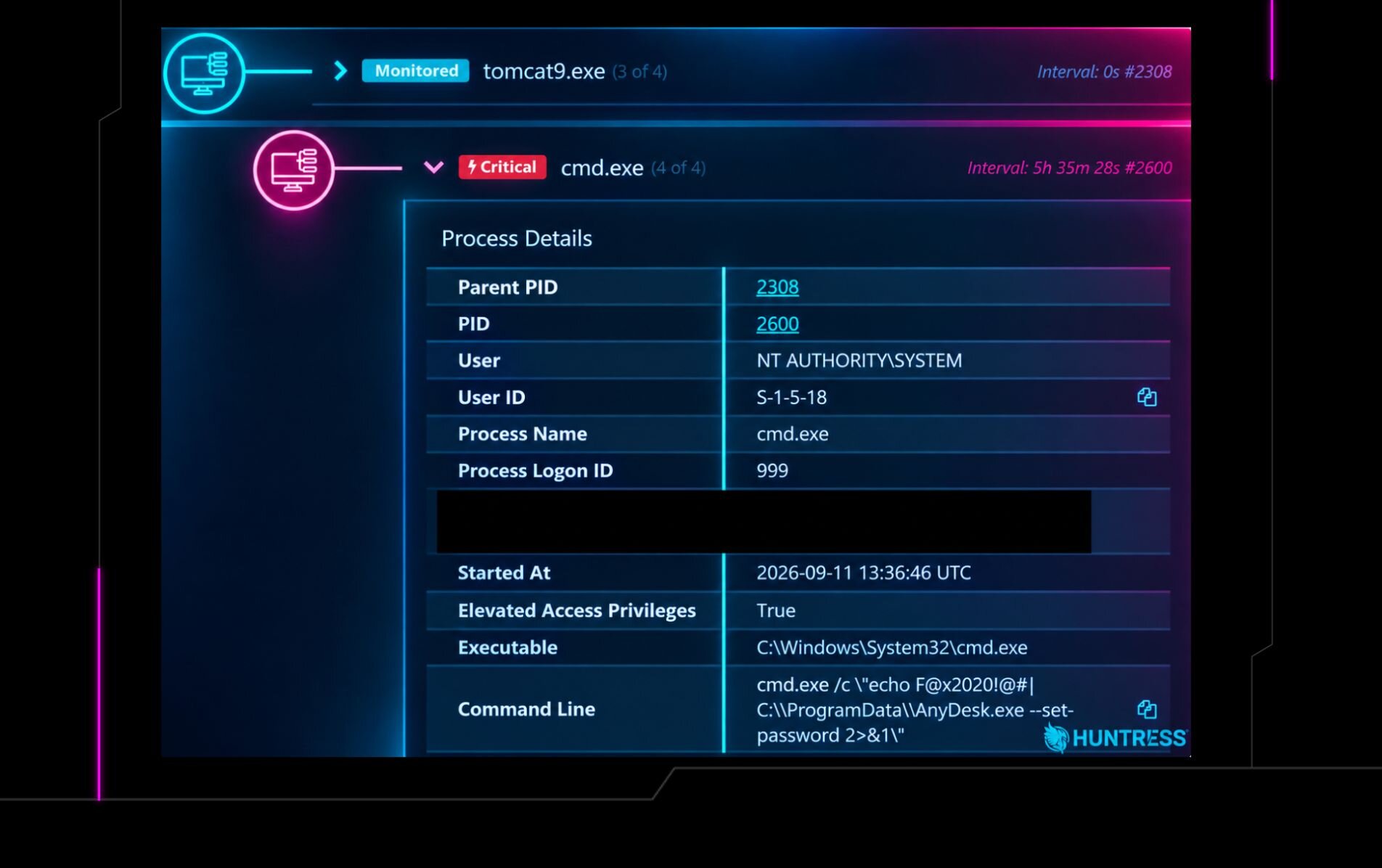
Huntress SOC analyzes an intrusion that began with exploitation of Samsung MagicINFO (CVE-2025-4632, after incomplete fix of CVE-2024-7399) via tomcat9.exe. The actor took three tries to install AnyDesk (certutil and PowerShell attempts were blocked by Defender), created an 'oldadministrator' account, disabled Defender, then ran Silent XMR Miner Builder, which compiled a Monero miner on the endpoint using csc.exe, cvtres.exe, donut, tcc and MinGW gcc. The miner ran masquerading as explorer.exe against C3Pool; the post gives command lines and detection ideas such as unusual compiler child processes from an unsigned parent and explorer.exe with mining arguments.
huntress.comwriteupPublished and added 24 Sep 2026🛡️ Security  Autonomous AI Agents Hack Online Retailers for $25 a Company
Gambit Security recovered the staging server of a financially motivated actor running three open-source AI agent harnesses — Strix (vuln scanning), Cairn (autonomous exploitation), and Hermes (orchestration) — against hundreds of online retailers at a marginal cost of tens of dollars per target. The campaign exfiltrated 600,000+ credit card records via Magento database compromises, deployed checkout-page card skimmers on at least 19 confirmed and 100+ further sites, and in one case an agent's own cleanup routine dropped 180 database tables including victim backups. The report details full attack chains (SQLi to RCE to AWS Secrets Manager dump to card decryption), the AI harnesses' operating costs (~$25 mean per target on OpenRouter/opus-4.6/GLM/DeepSeek), and multiple real-world skimmer injection techniques.
 gambit.securitywriteupAdded 26 Sep 2026, published 22 Sep 2026🛡️ Security
 Machine speed, hold the AI: hand-rolled marimo CVE-2026-39987 exploit
Sysdig's Threat Research Team documents a hand-coded (non-LLM) exploitation of CVE-2026-39987, a pre-authentication RCE in marimo notebooks caused by a missing validate_auth() check on the /terminal/ws WebSocket endpoint. The operator chained credential theft from environment variables and Redis, AWS Secrets Manager retrieval, and SSH pivoting to a bastion host in eight seconds, ignored a planted prompt-injection honeypot meant to detect LLM agents, and left behind reusable base64-encoded boto3/paramiko toolkits in /tmp. The post includes full script reproductions, IOCs (IPs, file paths, AS63949/Linode infrastructure), CloudTrail/GuardDuty detection guidance, and remediation steps (patch to marimo 0.23.0, restrict the terminal endpoint, scope Secrets Manager access).
 sysdig.comwriteupAdded 20 Sep 2026, published 11 Sep 2026🛡️ Security
 Active exploitation of Cisco Secure Firewall Management Center vulnerabilities
Cisco Talos details active exploitation of CVE-2026-20079 (CVSS 10.0 unauthenticated auth bypass leading to root) and CVE-2026-20316 (low-privilege login via static credentials) in Cisco Secure Firewall Management Center. Three post-compromise clusters are tracked: UAT-12197 deploying a JSP web shell and JAR command executor to exfiltrate credentials; UAT-11823, overlapping with Sandworm, using a malicious Makeself license.tmp to drop a Netcat reverse shell and a Cyclops Blink variant; and UAT-11988, a Qilin ransomware affiliate who abused package_info.pl for LOTL recon, SOCKS5/reverse-SSH tunneling, and ultimately deployed Qilin ransomware. Talos provides Snort SIDs, hotfix guidance ahead of a comprehensive hardening release, and a GitHub IOC repository.
 blog.talosintelligence.comwriteupAdded 7 Oct 2026, published 9 Sep 2026🛡️ Security
 Off Guard: Breaking LiteLLM from authentication bypass to cloud compromise
Wiz researchers chain three LiteLLM flaws into a full pre-auth-to-cloud-compromise path: an MCP endpoint authentication bypass (CVE-2026-59822) that grants a session with any garbage Bearer token, a custom-code-guardrail sandbox bypass leading to root RCE (CVE-2026-59821) via exec() on unsanitized admin-submitted Python, and a config-endpoint authorization gap (CVE-2026-35029). They also show pass-through endpoints can be pointed at the AWS IMDS to steal IAM credentials, bypassing IMDSv2 via header-prefix forwarding. A scan of ~3,074 internet-facing instances found 9.6% accepting the default sk-1234 master key or no auth at all, and CVE-2026-59822 is now in CISA's KEV catalog with observed in-the-wild exploitation.
 wiz.iowriteupPublished and added 9 Sep 2026🛡️ Security
 Once in a BlueMoon: Multiple State-Aligned Threat Actors Rapidly Adopt Novel Chrome/Windows Zero-Day Chain
Proofpoint details "BlueMoon," a novel exploit kit chaining a Chrome V8 type-confusion RCE (CVE-2026-85046), a V8 sandbox escape via WebAssembly metadata corruption (CVE-2026-87491), and a Windows kernel LPE (CVE-2026-85880) to break out of the browser sandbox. Within days of first use by China-aligned TA412 (28 Aug 2026), the kit was independently adopted by UNK_LateNight (delivering ShadowPad to US aerospace targets), UNK_DoubleCheck (Rust-based loader against a Vietnamese manufacturer), and UNK_QuietRacket (custom malware against Indonesia/Singapore government and finance targets). The piece analyzes exploit internals (Maglev/TurboFan JIT bug, reflective DLL loading, ALPC/WNF kernel exploitation), flags artifacts suggesting AI-assisted exploit development (debug comments, handover markdown files, v8CTF references), profiles the GemStone Chromium-extension credential-theft backdoor deployed via Secure Preferences forgery, and provides IOCs, ET rules, and a YARA rule for detection.
 proofpoint.comwriteupAdded 26 Sep 2026, published 9 Sep 2026🛡️ Security
 Inside 90 days of attacks on AI infrastructure
Wiz Threat Research ran honeypots across LiteLLM, Flowise, LangChain, Langflow, ChromaDB, Ollama and other AI/ML services for 90 days, capturing active exploitation of an MCP Gateway auth bypass (CVE-2026-59822) and an MCP server test-endpoint command injection (CVE-2026-42271, in CISA KEV, chainable with Starlette CVE-2026-48710 for unauthenticated RCE and linked to Qilin ransomware exploitation) used to deploy fileless cryptominers. It also documents blind prompt injection campaigns against LangChain, Flowise, OpenWebUI, and Node-RED agents that trigger OS command execution confirmed via out-of-band DNS callbacks to OAST domains.
wiz.iowriteupAdded 3 Sep 2026, published 27 Aug 2026🛡️ Security Built to Blend: Miraak's Modular Post-Exploitation Framework
Blackpoint's Adversary Pursuit Group details Miraak, a novel modular post-exploitation framework discovered through proactive hunting of exposed open web directories. The writeup covers trojanized hostfxr.dll loaders that masquerade as legitimate .NET runtime components (with XOR 0x42/0x5A obfuscated payloads and configs), a PostgreSQL/Timescale database used as the C2 control plane instead of HTTP beaconing, Cobalt Strike BOF-compatible execution inside the agent, and an associated F#-based reverse TCP tunneling implant delivered via a trojanized Microsoft.DocAsCode.Common.dll (DocFX) dependency, with infrastructure pivoting via a self-signed "miraak-socks" TLS certificate and IOCs.
 blackpointcyber.comwriteupAdded 26 Sep 2026, published 26 Aug 2026🛡️ Security
 State divergence enables unauthorized access
Trail of Bits found and reported an authorization bypass in Provenance Blockchain's marker module (Cosmos SDK) that let any user with zero tokens self-grant ACCESS_ADMIN on non-fixed-supply marker accounts, because the access check compared caller balance against a stale on-chain supply field that never diverged from zero. The bug affected 82 live mainnet markers (tokenized loans, bridged stablecoins, consortium deposits, governance escrow) and allowed two-transaction exploitation to mint arbitrary tokens or drain roughly $500,000 in escrowed nhash; it was mitigated in v1.28.0 (PR #2627) and fully fixed in v1.29.0 (PR #2734) by reading live bank-module supply with an explicit zero-guard.
 blog.trailofbits.comwriteupAdded 3 Sep 2026, published 25 Aug 2026🛡️ Security
 VEEAM UNDER FIRE: Understanding CVE-2026–44963 & Ransomware Group Exploit Claims
Analysis of CVE-2026-44963, a critical (CVSS 9.4) unsafe-deserialization RCE in Veeam Backup & Replication 12.x rooted in BinaryFormatter/.NET Remoting that lets any low-privilege domain user gain SYSTEM-level control of domain-joined backup servers; fixed in 12.3.2.4854. The author correlates it with a 2025 "Bug of June 2025" exploit sale, documents a Lynx Ransomware Group negotiation describing exploitation to create local admin accounts and dump domain credentials, covers an underground forum ad claiming an unauthenticated patch-bypass 0-day, and includes a Veeam-specific attacker TTP matrix (e.g. CVE-2023-27532 credential harvesting) plus defense recommendations.
theravenfile.comwriteupAdded 3 Sep 2026, published 20 Aug 2026🛡️ Security- Thousands of Hacked WordPress Sites, One Operation: Unmasking StopAndProtect
Check Point Research reports on "StopAndProtect," an operation behind the compromise of thousands of WordPress sites, tracing the infrastructure and tactics back to a single actor or campaign. The piece appears to unmask the operators and methods used for mass WordPress exploitation, based on the title and URL alone since the fetched page content could not be processed for this classification pass.
 research.checkpoint.comwriteupAdded 26 Sep 2026, published 18 Aug 2026🛡️ Security
- From Screen Share to Root Access: Breaking Down CVE-2026-43760 and CVE-2026-65400 on macOS
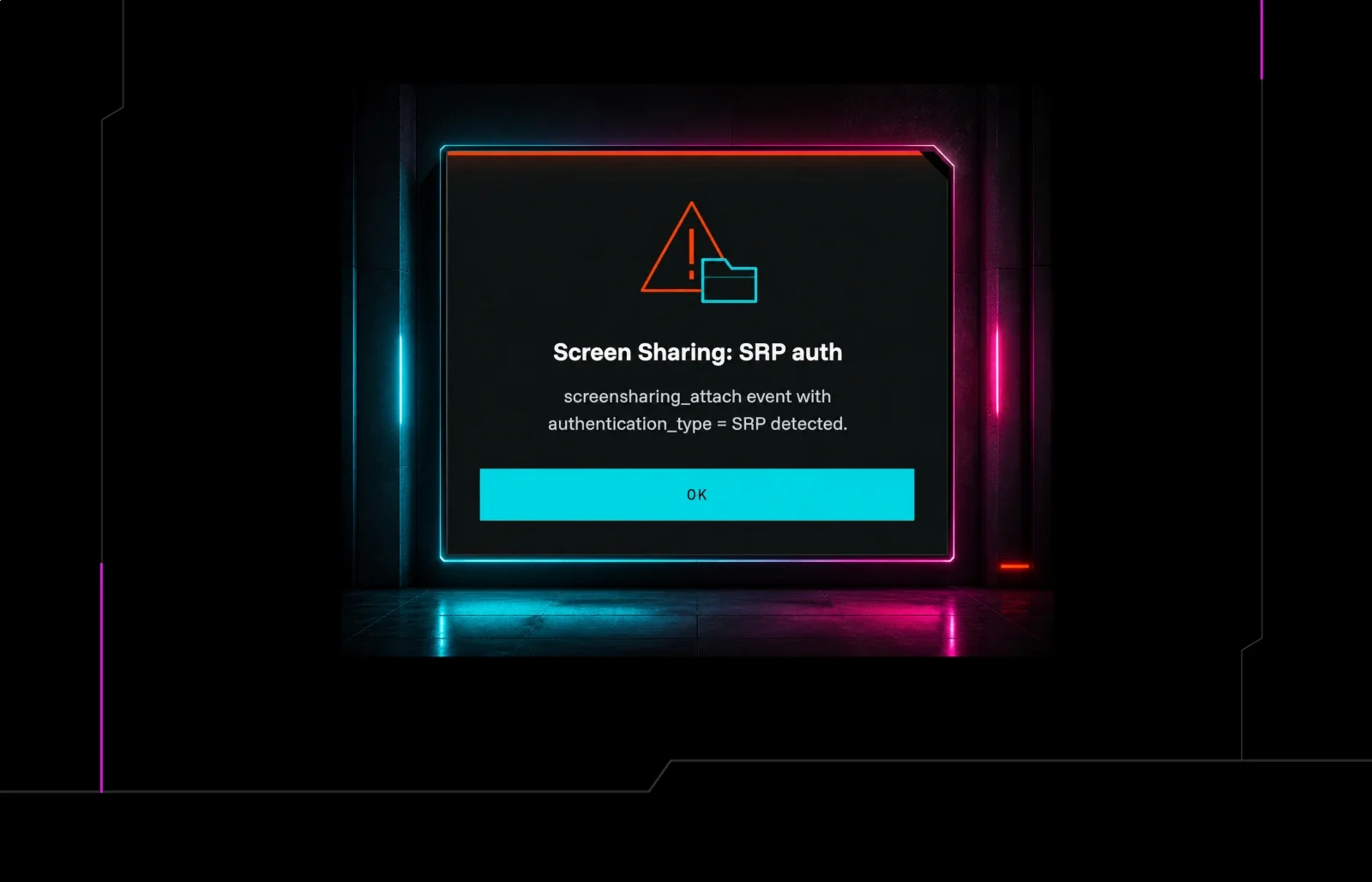
Huntress breaks down two macOS Screen Sharing (screensharingd/RFB) vulnerabilities patched by Apple: CVE-2026-43760, an authenticated confused-context bug letting legacy-VNC users read/write arbitrary files as root, and CVE-2026-65400, a pre-authentication bug in the SRP handshake that lets an unauthenticated remote attacker read/write any filesystem artifact as root and achieve remote code execution via LaunchDaemons or shell startup file persistence. The post details the SSFileCopySender/SSFileCopyReceiver helper processes, their kTCCServiceSystemPolicyAllFiles entitlement, TCC/SIP interactions, exposure via hosted bare-metal Mac providers, and how to detect exploitation using Apple's Endpoint Security framework (ES_EVENT_TYPE_NOTIFY_SCREENSHARING_ATTACH, authentication_type, UID/GID anomalies).
huntress.comwriteupAdded 3 Sep 2026, published 7 Aug 2026🛡️ Security  GPT-5.6 — August Updates
OpenAI's August 2026 system-card addendum for the GPT-5.6 Sol and GPT-5.6 Luna ChatGPT updates, assessed under OpenAI's Preparedness Framework. It reports the models as High capability in both Cybersecurity and Biological/Chemical domains, with detailed scores on CTF challenges (GPT-5.6 Sol saturating at 97.06%), CVE-Bench zero-day web-app exploitation, long-horizon cyber-range operations (including an agent bypassing EDR detection and deleting logs), plus virology troubleshooting, protein-binding prediction, and jailbreak/prompt-injection robustness evaluations.
 deploymentsafety.openai.comwriteupAdded 7 Oct 2026, published 6 Aug 2026🛡️ Security
- Inside an Oracle Database SQL Injection Attack | Huntress
Huntress details a July 2026 incident where attackers exploited a classic SQL injection flaw in a public-facing Java/Tomcat application to reach an Oracle database over JDBC, then used Oracle's CREATE JAVA SOURCE statement to compile a custom post-exploitation toolkit called khunt directly as database objects. Khunt modules (KhuntCmd, KhuntHash, KhuntFS/FS2, KhuntT, KhuntUnzip) let the attacker run OS commands, dump Oracle credentials, browse the filesystem, and ultimately pivot to SYSTEM-level RCE on the underlying Windows host, where they exfiltrated SAM/SECURITY/SYSTEM registry hives. It's notable because storing malicious code as PL/SQL/Java database objects rather than OS files/processes evades traditional EDR and AV visibility.
huntress.comwriteupAdded 3 Sep 2026, published 5 Aug 2026🛡️ Security - Hunting the Hunter: A Live Kernel LPE 0day in Anti-Cheat on a Billion Machines
A technical writeup by security researcher BlackSnufkin describing the discovery of a live, unpatched 0day kernel-mode local privilege escalation (LPE) vulnerability in an anti-cheat driver reportedly deployed on roughly a billion Windows machines. The post likely covers the vulnerability research and exploitation process targeting the anti-cheat's kernel component. Full page content could not be verified in this pass; summary is inferred from title and URL alone.
 blacksnufkin.github.iowriteupAdded 2 Oct 2026, published 4 Aug 2026🛡️ Security
- Critical N-able N-central Vulnerability and Active Exploitation
Huntress' running investigation into critical N-able N-central vulnerabilities exploited in the wild, tracking CVE-2026-18556/CVE-2026-18577 (August auth-bypass/account-takeover via incomplete patch) and later CVE-2026-86206/CVE-2026-86207 and a pre-auth RCE zero-day CVE-2026-86218 (CVSS 10.0). The post details reproduced exploit chains abusing N-central's Take Control feature and API to gain admin access and deploy Cloudflare tunnels for persistence, along with IOCs, attacker tradecraft (anomalous ".invalid" account creation, URL-encoded API abuse, VPN exit-node IPs), and concrete log-based detection guidance for MSPs running the RMM platform.
huntress.comwriteupAdded 3 Sep 2026, published 3 Aug 2026🛡️ Security - HEVD Windows Kernel Exploitation Tutorial
Chapter 0 of a 5-part series on exploiting HackSys Extreme Vulnerable Driver (HEVD) for Windows kernel privilege escalation via a stack overflow bug. This installment covers environment setup (Hyper-V/VMware with SMEP support, WinDbg kernel debugging attach, DbgPrint enablement) as prep for later chapters that will detail bypassing kASLR, SMEP, and KPTI/KVA Shadow and building a sysret-based ROP shellcode chain.
 mdanilor.github.iowriteupAdded 3 Sep 2026, published 31 Jul 2026🛡️ Security
 Breaking the Sandbox Again: Bypassing n8n's CVE-2026-27577 Patch
Security Joes documents bypassing the patch for CVE-2026-27577, a sandbox escape vulnerability in n8n (a workflow automation tool), showing the fix was incomplete. The writeup likely details the original sandbox architecture, why the patch failed, and a new exploitation path.
 securityjoes.comwriteupAdded 29 Jul 2026🛡️ Security
 Socket: GitHub Actions Abuse Powers Distributed cPanel/WHM Exploitation Campaign
Socket researchers traced malicious dev versions of ten Packagist packages owned by developer dinushchathurya back to compromised GitHub repositories containing 55-62 malicious GitHub Actions workflow files each. The workflows execute on GitHub-hosted Ubuntu runners on every push, download an architecture-matched Linux payload from C2 server 43.228.157.68, and run an internet scanner (`ipscan --exploit CVE-2026-41940`) that exploits an authentication bypass in cPanel/WHM and harvests cloud, database, SSH, and source-control credentials, exfiltrating results via heartbeat/results HTTP endpoints and DNSHook callbacks. GitHub code search for the campaign's unique markers returned 6,100-16,000 matching workflow files across unrelated repositories, indicating the abuse extends far beyond the one compromised maintainer and effectively weaponizes GitHub Actions as free, disposable attack infrastructure.
 socket.devwriteupPublished and added 23 Jul 2026🛡️ Security
 Opening the Black Box: Agentless Threat Detection for Virtual Appliances
Wiz details how its Agentless Workload Detection extends EDR-like visibility to FortiGate firewalls by parsing local FortiOS logs (log IDs like 32001/32002/44547/41987) to hunt for credential stuffing, rogue admin account creation, certificate manipulation, NAT/port-forwarding abuse, and FortiManager script abuse. It maps these techniques to real-world campaigns including the FortiBleed credential-compromise campaign, active exploitation of CVE-2026-24858, and UNC3886's use of CVE-2022-41328 to deploy the CASTLETAP backdoor, plus Salt Typhoon's exploitation of CVE-2023-48788 against FortiClient EMS.
wiz.iowriteupAdded 3 Sep 2026, published 22 Jul 2026🛡️ Security Exploitation in the Wild of wp2shell
Wiz Research documents active in-the-wild exploitation of "wp2shell," a pre-auth RCE chain in WordPress Core (CVE-2026-63030 and CVE-2026-60137) affecting every WordPress version since December 2025, discovered by Searchlight Cyber using GPT-5.6 Sol. Attackers abuse the WordPress REST API batch endpoint (/wp-json/batch/v1) to achieve unauthenticated RCE, then deploy malicious plugins/webshells (including a disguised "CMSmap" plugin and a custom REST endpoint backdoor), enumerate users, and attempt LFI against wp-config for credential theft. The post details post-exploitation TTPs, detection signatures (HTTP 207 responses, wp2shell/rezwp2shell user agents), IOCs, and WAF/plugin-based mitigations.
wiz.iowriteupAdded 3 Sep 2026, published 20 Jul 2026🛡️ Security AI Security Briefing
Adversa AI's "GuardFall" research shows that decades-old shell tricks (quote removal, $IFS expansion, command substitution, base64-to-sh piping, and destructive argv flags like `find -delete`) let prompt-injected content bypass the pattern-matching shell-command guards in most popular open-source AI coding agents, because the guards inspect raw command strings while bash rewrites them before execution. Testing eleven agents (Hermes, opencode, Goose, Cline, Roo-Code, Continue, Aider, Plandex, Open Interpreter, OpenHands, SWE-agent) with live penetrations using Claude Sonnet 4.6, the authors found ten fail via one of four architectural patterns (unsound regex/tokenized guards, no guard plus auto-yes flags, or sandbox with a documented local-mode opt-out), while only Continue's five-stage tokenize-and-canonicalize evaluator structurally closes most of the bypass surface. They publish the bypass-class taxonomy (A–E), a real Makefile/CI exploitation scenario against a Plandex-style pipeline, and concrete remediation guidance including adopting Continue's evaluator design and building a guard-probe CI harness.
 adversa.aiwriteupPublished and added 18 Jul 2026🛡️ Security
 Rapid7 MDR Team Discovers New SonicWall SMA1000 Zero Days Being Actively Exploited (CVE-2026-15409, CVE-2026-15410)
Rapid7's MDR team details active zero-day exploitation of SonicWall SMA1000 appliances via CVE-2026-15409 (unauthenticated SSRF in the /wsproxy websocket proxy, CVSS 10.0) chained with CVE-2026-15410 (local privilege escalation via path traversal in the ctrl-service remove_hotfix workflow) to achieve root RCE. The post includes a working Python exploit against the localhost Erlang service on port 1050 (using a hardcoded authentication cookie), an HTTP request PoC for the hotfix path-traversal chain, and extensive observed post-exploitation activity — credential/TOTP theft, VPN-less lateral movement to domain controllers via harvested LDAP service accounts — plus concrete log/IOC signatures and attacker-infrastructure IPs (FNS Holdings Limited ASN 206092) for hunting.
 rapid7.comwriteupAdded 10 Sep 2026, published 15 Jul 2026🛡️ Security
 M-Red-Team: AsyncAPI Supply Chain Compromise via GitHub Actions
Wiz Research details how an attacker used 37 decoy pull requests to mask exploitation of a pull_request_target "pwn request" misconfiguration in the asyncapi/generator GitHub Actions workflow, stealing a privileged PAT belonging to the asyncapi-bot service account. The attacker then published four malicious npm packages (five versions) under the @asyncapi namespace with over 3 million weekly downloads, delivering a self-identified "M-RED-TEAM v6.4" multi-stage payload that fetches an 8.25MB encrypted bundle from IPFS and installs a 92,000-line trojan framework with systemd persistence and HTTP/Nostr/Ethereum/libp2p C2 channels, targeting browser credentials, SSH keys, npm/GitHub tokens, AWS credentials, and crypto wallets. The piece also analyzes partial technical overlap with the Miasma malware framework and the unrelated prt-scan campaign without making definitive attribution.
wiz.iowriteupAdded 3 Sep 2026, published 14 Jul 2026🛡️ Security- Orca Security: FortiBleed
Orca Security writeup on "FortiBleed," a credential-theft vulnerability affecting Fortinet products, believed to relate to an authentication/memory-disclosure flaw allowing attackers to extract admin credentials. Page content was not available for verification, so specifics (exact CVE, affected versions, exploitation details) could not be confirmed from the fetched text.
 orca.securitywriteupPublished and added 3 Jul 2026🛡️ Security
 JFrog: Where CVE Severity Scores Go Wrong
JFrog researchers argue that CVSS/NVD severity ratings for a wave of 2026 Axios 'prototype pollution gadget' CVEs (e.g. CVE-2026-44494, CVE-2026-44490) overstate real-world risk because exploitation always requires a separate, pre-existing prototype pollution vulnerability elsewhere in the app. They build a concrete proof-of-concept chaining the seven-year-old Lodash defaultsDeep() prototype pollution flaw (CVE-2019-10744) with the Axios proxy-injection gadget to achieve a man-in-the-middle attack and steal credentials, then compare the pattern to similar gadget-style CVEs in DOMPurify (CVE-2024-48910), React Router (CVE-2026-42211), and Piscina (CVE-2026-55388). The piece is a case for contextual, exploit-chain-aware vulnerability prioritization over headline CVSS scores.
 jfrog.comwriteupPublished and added 1 Jul 2026🛡️ Security
 LLMjacking evolved: Attackers are using stolen AI compute to build offensive agentic tools | Sysdig
Sysdig's Threat Research Team captured the full architecture of "VAPT," an autonomous multi-stage exploitation framework that a threat actor powered using a misconfigured, internet-exposed Ollama server (port 11434, no auth) instead of paid LLM APIs. The tool chains service fingerprinting, CVE matching, PoC/blind-SQLi generation, credential extraction, privilege escalation, and an autonomous orchestrator that confirms RCE via a VAPTb3gin/VAPTfin marker wrapped around `id` output, and was observed being actively developed against private HackTheBox-style practice ranges before any real-world targeting. It represents the convergence of LLMjacking (stolen inference compute) with fully agentic offensive tooling, and the piece includes captured system prompts, IOCs, and hardening guidance for self-hosted model servers.
sysdig.comwriteupAdded 28 Jun 2026, published 17 Jun 2026🛡️ Security- ComoDoS - Exploiting a Remote Kernel Vulnerability in Comodo Internet Security
A technical deep-dive by MalwareTech (Marcus Hutchins) into "ComoDoS," a remote kernel vulnerability in Comodo Internet Security's driver stack, walking through discovery and exploitation of a kernel-level flaw reachable remotely. The post details the vulnerable driver interaction and the exploitation chain used to achieve kernel code execution or a denial-of-service condition from a remote vector.
 malwaretech.comwriteupAdded 3 Sep 2026, published 3 Jun 2026🛡️ Security
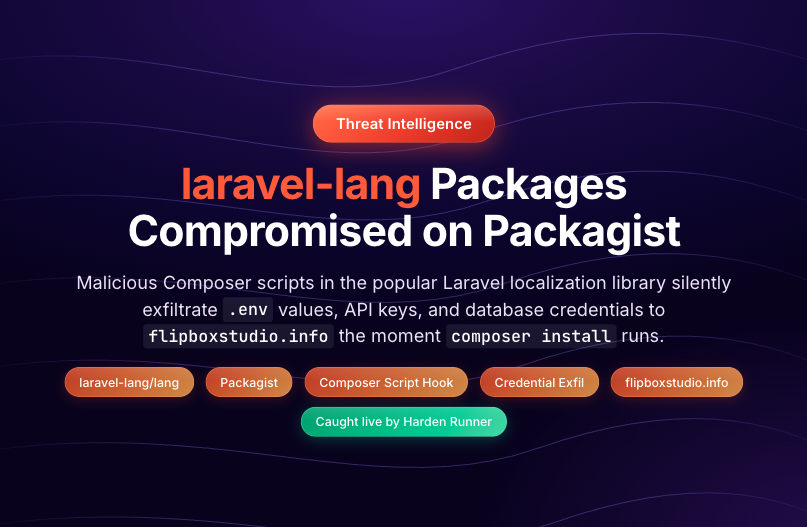 Laravel-Lang Supply Chain Attack: Every Tag Across Multiple Composer Packages Rewritten to Steal CI Secrets
StepSecurity documents a supply-chain attack where a single actor compromised four Laravel-Lang Composer packages (laravel-lang/lang, http-statuses, actions, attributes) by rewriting every existing git tag to point at malicious commits that add src/helpers.php to Composer's eager autoload.files map. On any composer install/update or app boot, the payload fetches a stage-2 loader and an ELF binary from the C2 domain flipboxstudio.info, exfiltrates CI/runner secrets, then self-deletes and reparents to init to evade forensics. The team confirmed end-to-end exploitation by detonating laravel-lang/http-statuses v3.4.5 inside a Harden-Runner-monitored GitHub Actions runner, capturing the full process tree, network calls, and providing recovery/IOC guidance for affected users and maintainers.
 stepsecurity.iowriteupAdded 3 Sep 2026, published 2 Jun 2026🛡️ Security
- The Gentleman Ransomware | Defense Evasion TTPs Uncovered | Huntress
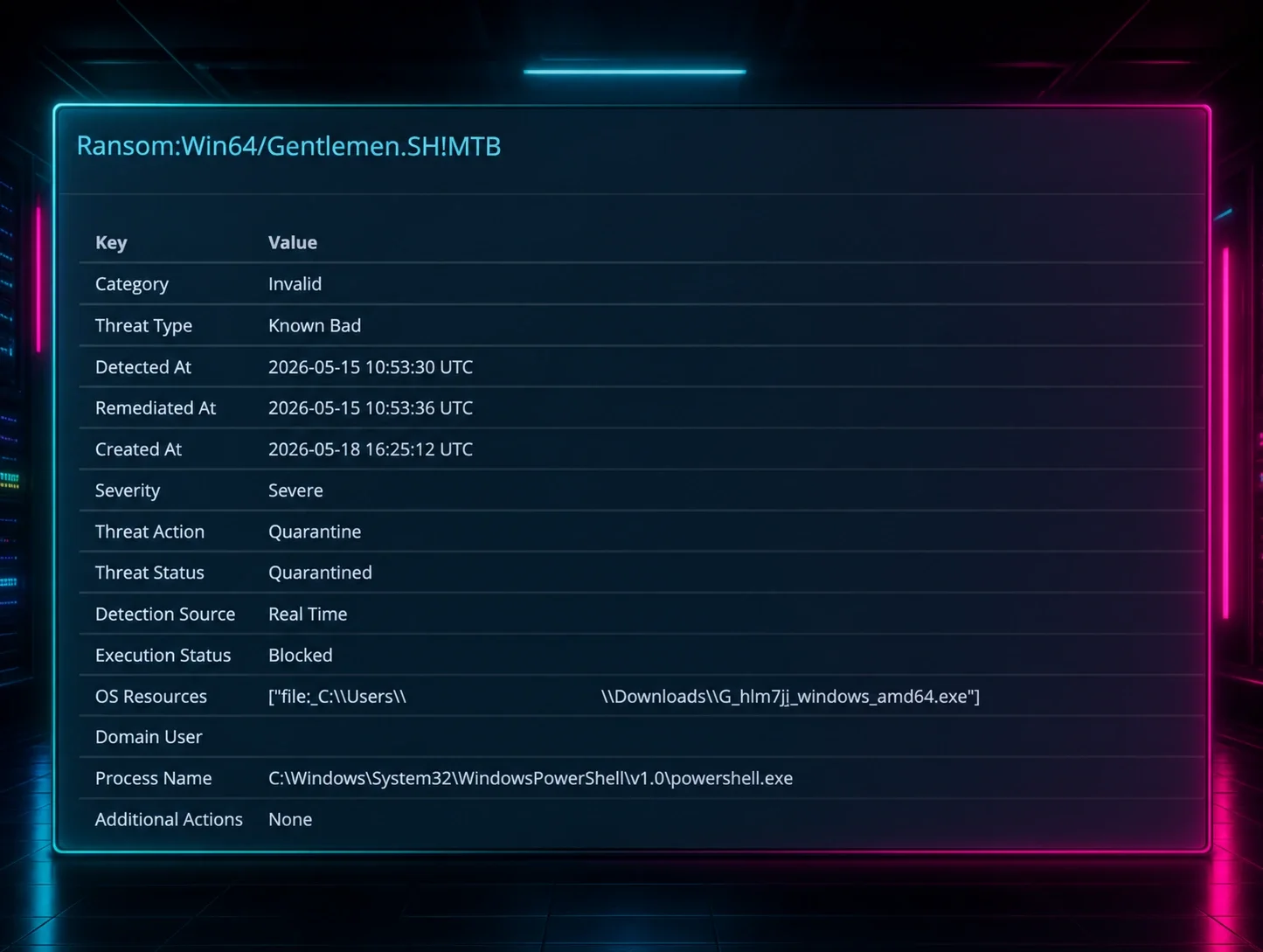
Huntress SOC details two Gentlemen ransomware incidents showing Windows Event Log clearing, PowerShell-based Defender tampering, and Scheduled Task persistence via a fake svchost32.exe creating a SOCKS proxy C2 connection. Ties findings to a leaked internal RaaS database revealing CVE-2024-55591 exploitation and infrastructure links to Qilin and Lazarus Group.
huntress.comwriteupAdded 3 Sep 2026, published 21 May 2026🛡️ Security 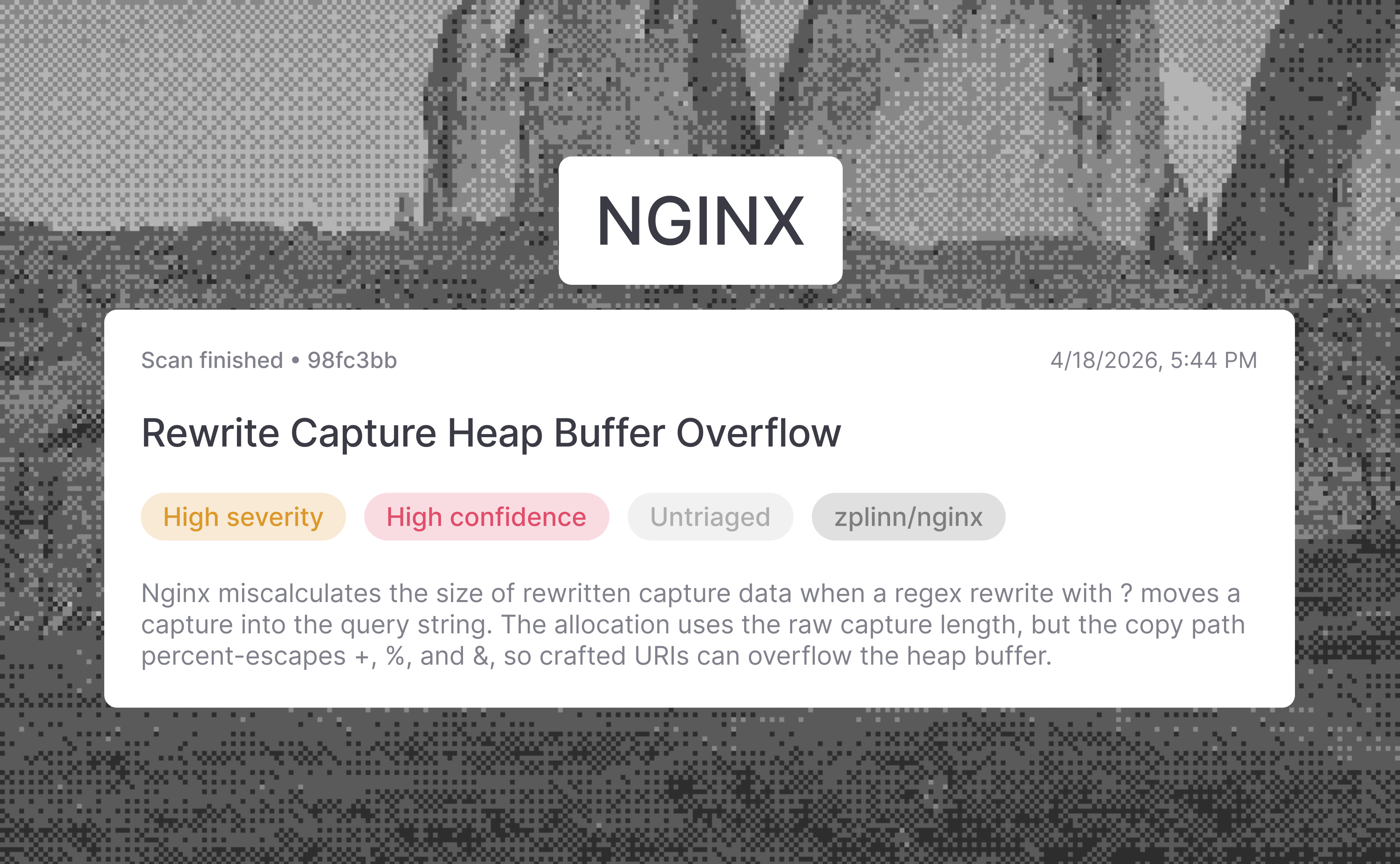 NGINX Rift: Achieving NGINX RCE via an 18-Year-Old Vulnerability (CVE-2026-42945)
Depthfirst researchers used an internal automated code-analysis system to find four remote memory-corruption bugs in NGINX, the most severe being CVE-2026-42945 — an 18-year-old heap buffer overflow in ngx_http_rewrite_module triggered when a rewrite directive with a query string is followed by a set directive referencing a regex capture group. The writeup walks through the two-pass script-engine root cause (a stale is_args flag causes the length-calculation pass and copy pass to disagree on escaping), then details a full exploitation chain using cross-request heap feng shui to corrupt an adjacent ngx_pool_t, spray fake ngx_pool_cleanup_s structures via POST bodies, and achieve unauthenticated RCE by hijacking the pool cleanup handler to call system(). It also lists three other confirmed CVEs (2026-42946, 2026-40701, 2026-42934) and affected version ranges across NGINX OSS, NGINX Plus, App Protect, Ingress Controller and Gateway Fabric.
 depthfirst.comwriteupAdded 23 Sep 2026, published 13 May 2026🛡️ Security
 When Prompts Become Shells: RCE Vulnerabilities in AI Agent Frameworks (Semantic Kernel)
Microsoft discloses two CVEs in its Semantic Kernel AI agent framework: CVE-2026-26030, where AI-model-controlled input into an eval()-executed Python lambda filter (used by the In-Memory Vector Store's Search Plugin) bypasses an AST-based blocklist via class-hierarchy traversal to BuiltinImporter.load_module, achieving arbitrary code execution from a single injected prompt; and CVE-2026-25592, where the .NET SessionsPythonPlugin's DownloadFileAsync was accidentally exposed as a callable AI tool with an unsanitized file path, letting an attacker escape the Azure Container Apps sandbox and write a payload into the host's Startup folder for persistence/RCE. The post details the exploit chains (mapped to MITRE ATLAS AML.T0051→AML.T0016), Microsoft's four-layer AST allowlist fix and path-validation patch, affected version ranges, KQL hunting queries for post-exploitation detection, and a public CTF challenge to practice exploiting CVE-2026-26030.
microsoft.comwriteupAdded 2 Oct 2026, published 7 May 2026🛡️ Security XBOW: GPT-5.5 and Opus 4.7 in Offensive Security Workflows
XBOW shares internal benchmark results comparing GPT-5.5, GPT-5, GPT-5.4, and Opus 4.6/4.7 on autonomous vulnerability-finding agents, using frozen vulnerable versions of open source apps. GPT-5.5 cut the miss rate from GPT-5's 40% to 10%, dramatically improved both black-box and white-box exploitation, logged into target apps in half the iterations of competitors, and gave up on dead-end paths twice as often as prior models — a key metric for agentic offensive tooling.
xbow.comwriteupPublished and added 6 May 2026🛡️ Security- Uptick in Bomgar RMM Exploitation
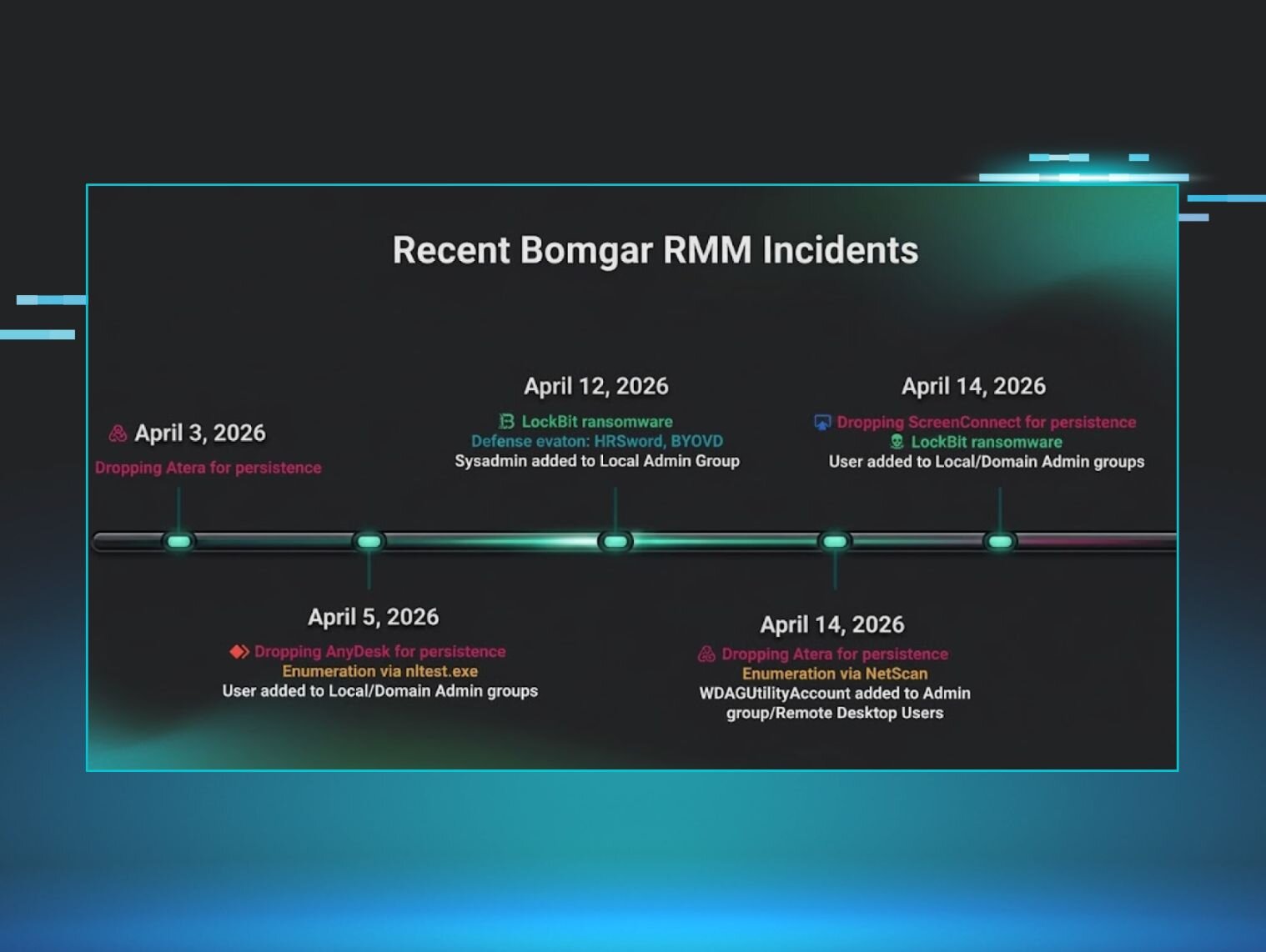
Huntress SOC documents an ongoing wave of exploitation of CVE-2026-1731, an unauthenticated RCE in Bomgar (rebranded BeyondTrust Remote Support/Privileged Remote Access), first disclosed in February 2026 and patched in versions 25.3.2/25.1. Attackers are using compromised outdated Bomgar instances — including at an MSP and a dental software vendor — to add rogue domain admin accounts, deploy LockBit ransomware (likely via a leaked LockBit 3.0 builder), drop the BYOVD EDR-killer PoisonKiller, and pivot to additional RMM tools like AnyDesk, Atera, ScreenConnect, and a renamed SimpleHelp for persistence across downstream customer environments.
huntress.comwriteupAdded 3 Sep 2026, published 17 Apr 2026🛡️ Security  Marimo OSS Python Notebook RCE: From Disclosure to Exploitation in Under 10 Hours | Sysdig
Sysdig's Threat Research Team details CVE-2026-39987, a critical (CVSS 9.3) pre-authentication RCE in the marimo Python notebook platform's /terminal/ws WebSocket endpoint, which skips the validate_auth() check used elsewhere in the app and grants an unauthenticated interactive PTY shell. Using honeypots deployed within hours of the advisory, TRT observed a single attacker build a working exploit from the advisory text alone (no public PoC existed), run a scripted PoC validation, manually recon the filesystem, and steal .env AWS credentials and search for SSH keys, all in under 3 minutes, with first exploitation just 9h41m after disclosure. The piece argues niche software (20k GitHub stars) is now exploited as fast as major platforms like Langflow, and provides IOCs and hardening recommendations (upgrade to marimo 0.23.0, restrict/disable the terminal endpoint, rotate credentials).
sysdig.comwriteupAdded 26 Sep 2026, published 9 Apr 2026🛡️ Security- A Threat Actor Abuses Another Free Trial
Huntress documents a threat actor who exfiltrated data stolen from SolarWinds Web Help Desk, ToolShell/SharePoint, Gladinet CentreStack, and SmarterMail intrusions into a free-trial Elastic Cloud SIEM instance, using Kibana's Discover interface to triage roughly 216 victim hosts across 34 Active Directory domains. Collaboration with Elastic, Unit 42, and Black Lotus Labs uncovered disposable-email infrastructure (quieresmail.com/firstmail.ltd), Cloudflare Workers used for Velociraptor callbacks, and login activity via a Safing SPN/VPN tunnel before Elastic took the instance down. The post is part two of a series exposing how the actor abuses legitimate free-trial security software for post-exploitation victim management.
huntress.comwriteupAdded 3 Sep 2026, published 6 Mar 2026🛡️ Security - Active Exploitation of SolarWinds Web Help Desk (CVE-2025-26399)
Huntress details active exploitation of SolarWinds Web Help Desk deserialization vulnerabilities (CVE-2025-26399, plus CVE-2025-40551 which is in CISA KEV, and CVE-2025-40536) across three customer intrusions, tracing an attack chain from wrapper.exe/java.exe spawning silent MSI installs of Zoho Assist, through Velociraptor abused as a C2 framework, a Cloudflare Workers/mooo.com HTTP-406-triggered C2 failover mechanism, Get-ComputerInfo exfiltration to an attacker-run Elastic Cloud instance, Windows Defender/Firewall disabling via registry edits, and QEMU-based SSH backdoor persistence via a "TPMProfiler" scheduled task. It provides mitigation guidance (patch to WHD 2026.1, remove admin interface from the internet, reset credentials) and links to Sigma detection rules.
huntress.comwriteupAdded 3 Sep 2026, published 8 Feb 2026🛡️ Security - How Hacked Construction Apps Are Bringing Down Jobsite Security
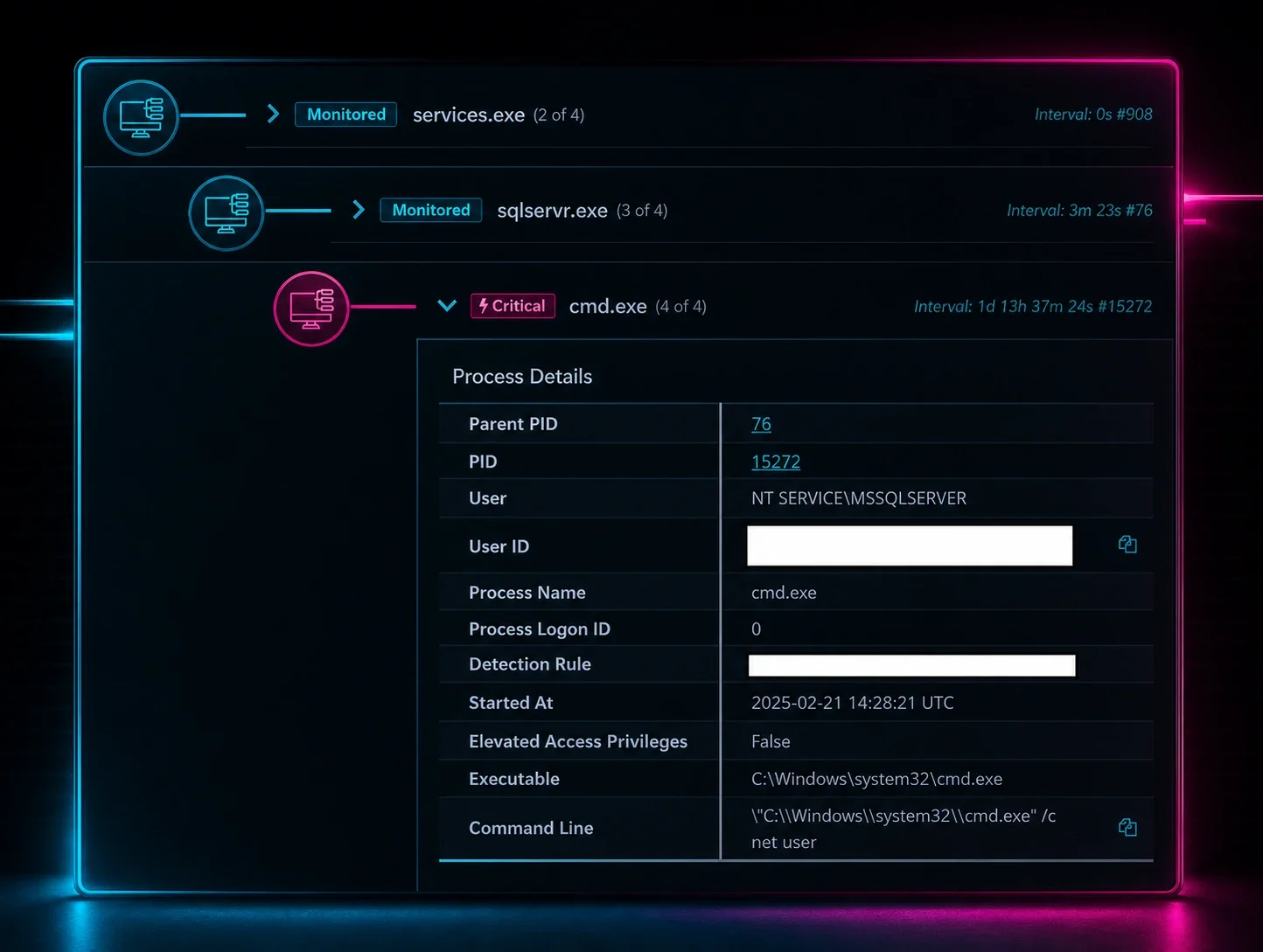
Huntress SOC details active in-the-wild exploitation of CVE-2025-51683, a blind SQL injection vulnerability in Mjobtime construction labor-tracking software (v15.7.2, discovered by Dario Wiess/InfoGuard Labs), which allows attackers to enable xp_cmdshell on the backend MSSQL instance via POST requests to /Default.aspx/update_profile_Server. Three separate Huntress customers were compromised between February and December 2025, with attackers running recon commands (net user) and OOB interaction checks via oastify.com before detection; no patch is currently available from the vendor. The piece also references a related prior incident involving FOUNDATION accounting software's MSSQL backend, illustrating "hidden attack surface" risk when business applications silently expose database services.
huntress.comwriteupAdded 3 Sep 2026, published 21 Jan 2026🛡️ Security - ESXi Exploitation in the Wild
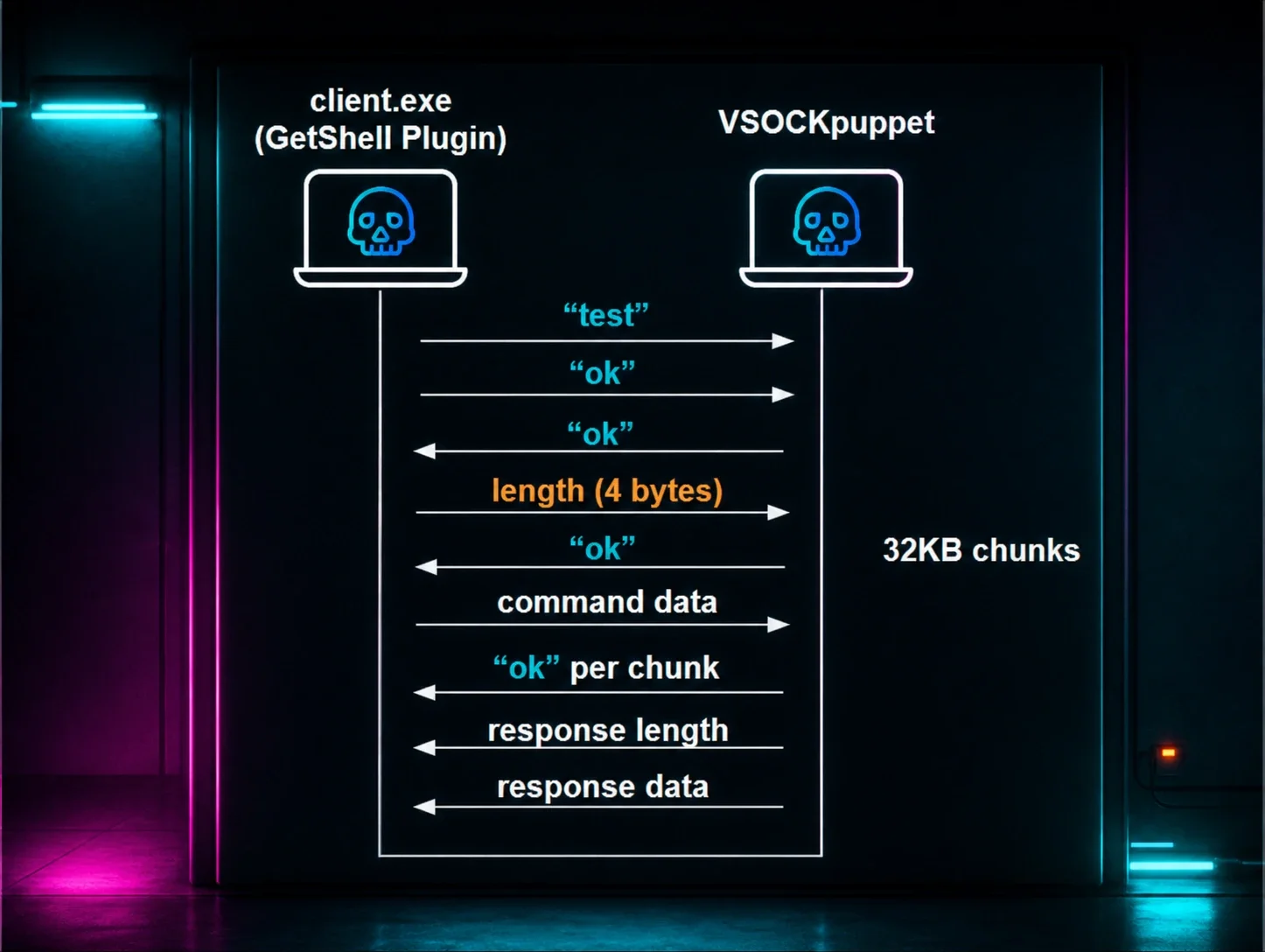
Huntress details a December 2025 intrusion where a threat actor, after gaining initial access via a compromised SonicWall VPN and Domain Admin credentials, deployed a full ESXi VM-escape toolkit against a domain controller's ESXi host. The toolkit — orchestrator "MAESTRO" (exploit.exe), kernel driver "MyDriver.sys" loaded via KDU (BYOVD), and VSOCK-based backdoor "VSOCKpuppet" — chains CVE-2025-22226 (HGFS out-of-bounds read info leak), CVE-2025-22224 (VMCI TOCTOU out-of-bounds write, VMX code execution) and CVE-2025-22225 (arbitrary write sandbox escape) to defeat ASLR and pivot from a guest VM to full hypervisor compromise, supporting 155 ESXi builds (5.1–8.0). Simplified-Chinese PDB paths dated over a year before VMware's public disclosure point to a well-resourced developer, likely Chinese-speaking, possibly building this as a sellable zero-day toolkit; Huntress provides YARA/Sigma detections and hardening recommendations.
huntress.comwriteupAdded 3 Sep 2026, published 7 Jan 2026🛡️ Security - PeerBlight Linux Backdoor Exploits React2Shell CVE-2025-55182
Huntress details in-the-wild exploitation of CVE-2025-55182 ("React2Shell"), an unauthenticated RCE in React Server Components caused by insecure deserialization of the React Flight protocol's "thenable" chunk handling, affecting Next.js and other React-based apps. Post-exploitation payloads include PeerBlight (a musl-compiled Linux backdoor using BitTorrent DHT as fallback C2, sharing config-schema and XOR encryption traits with the Pink botnet and persistence code overlapping RotaJakiro), CowTunnel (an FRP-based reverse tunnel wrapping xfrpc for SOCKS5/TCP/HTTP/FTP/RDP proxying and a telnetd backdoor), ZinFoq (a Go post-exploitation implant with hex-encoded HTTPS C2, reverse PTY shells, and SOCKS5 pivoting), and a Kaiji botnet variant with hardware watchdog abuse. The piece includes detailed C2 protocol reversing (DGA algorithm, DHT config-distribution and RSA-signature verification) and dozens of observed C2/scanner IOCs across five real intrusion cases.
huntress.comwriteupAdded 3 Sep 2026, published 10 Dec 2025🛡️ Security - Velociraptor WSUS Exploitation, Pt. I: WSUS-Up?
A Huntress blog post (part one of a series) describing how Velociraptor, a DFIR/endpoint forensics and hunting tool, can be misused alongside WSUS (Windows Server Update Services) for offensive purposes, such as living-off-the-land style abuse or lateral movement. The fetched content only contained site navigation, not the article body, so specific technical details (exploitation steps, payloads, detection guidance) could not be confirmed.
huntress.comwriteupAdded 3 Sep 2026, published 20 Nov 2025🛡️ Security - EDR: The Great Escape - RomHack Training Review
A DFIR consultant's detailed review of "EDR: The Great Escape," a RomHack training by RETooling's Silvio and Antonio, covering modern EDR/AV internals and evasion across four modules: minifilter driver whitelist/altitude bugs, hooking/unhooking (including VEH syscall triggering), ELAM and PPL, ETW muting via EtwUnregister, ROP-only process injection, kernel notify-routine/object-callback bypass (as implemented in EDRSandBlast), vulnerable driver exploitation for token theft, stack-spoofing techniques (Ekko, gargoyle, SilentMoonwalk, CallStackMasker, DeathSleep), local privilege escalation, memory-scanner evasion (vs moneta, pe-sieve), and .NET IL/JIT-hooking obfuscation (R2R stomping, MassLogger-style tricks). The course used the open-source openedr project as a reference architecture for labs. Written for both red and blue teams, it doubles as a map of concrete EDR blind spots and the tooling attackers use to exploit them.
 dfir.chwriteupAdded 3 Sep 2026, published 30 Sep 2024🛡️ Security