- Do the math: How we took over ChatGPT accounts
Parameter Labs describes a chain that turned a public ChatGPT share link into JavaScript running as chatgpt.com in the victim's session. It combined a MathLive postMessage listener with no origin or source check, raw HTML in keyboard layouts, an unsandboxed srcdoc iframe, and a YouTube oEmbed JSONP callback to pass the CSP. The code read private conversations through backend APIs. OpenAI fixed it on 26 October 2026 and rated it P1.
 parameter.aiwriteupAdded 1 Nov 2026, published 31 Oct 2026🛡️ Security
 Inside a malicious Claude Code-branded extension and its persistent SSH backdoor
Microsoft Threat Intelligence analyzes a tampered anthropic.claude-code extension (versions 2.1.312 and 2.1.313) served on the Cursor marketplace on 29 October 2026. The injected JavaScript loader adds an SSH key labeled svc-telemetry, opens a reverse SSH tunnel and sets up persistence on macOS, Linux and Windows. The post gives cleanup steps, IOCs and Defender XDR hunting queries. VS Code Marketplace and npm were not affected.
 microsoft.comwriteupPublished and added 31 Oct 2026🛡️ Security
 From JavaScript to Renderer Code Execution: Three V8 Vulnerabilities and Two v8CTF Flags | depthfirst
Depth First Security's write-up describes three V8 bugs found using its dfs-large1 research tooling: CVE-2026-78938, a type confusion in Promise.prototype.finally that lets an internal helper be constructed and return a primitive; CVE-2026-79236, a TurboFan load-elimination bug that keeps a stale property-array pointer after object migration; and a shared WebAssembly memory sandbox escape (issue 546253900) caused by mismatched backing-store registration during serialization. It walks through turning each memory bug into addrof/fakeobj primitives, chaining either with the sandbox escape to reclaim a freed V8 isolate via a WebSocket allocation, and pivoting through a CFI-constrained ROP chain to achieve Chrome renderer code execution, earning two v8CTF flags. Fixes landed between August 20 and 25, 2026.
 depthfirst.comwriteupAdded 29 Oct 2026, published 20 Oct 2026🛡️ Security
 GhostAction Copycats PolinRider by Hiding a Stealer in a Fake Font File
Analysis of a new GhostAction Stage 2 found in 94 compromised GitHub repos: a hidden .vscode/tasks.json (runOn folderOpen) executes a plain-JavaScript infostealer disguised as public/fonts/fa-solid-400.woff2. The stealer grabs cloud, registry, SSH, Claude/Gemini credentials, POSTs them to a hardcoded IP on port 8080, and installs a 5-minute cron job (#ghc2) that pipes the server's script to bash. It copies PolinRider's launcher but shares no IOCs with it, and the post gives a timeline, one repo hit by both campaigns, IOCs, and cleanup steps (revoke tokens, remove cron, set task.allowAutomaticTasks off).
 opensourcemalware.comwriteupAdded 15 Oct 2026, published 16 Oct 2026🛡️ Security
 Happier DOMs: The perils of running untrusted JavaScript code outside of a web browser | Blog | Endor Labs
Endor Labs explains CVE-2025-61927, an RCE in the happy-dom headless browser caused by relying on Node.js's vm module, which is not a security boundary. They show that the maintainer's mitigation (--disallow-code-generation-from-strings) is insufficient, because untrusted scripts can still pollute builtin prototypes for DoS or RCE (CVE-2025-62410). The fix adds --frozen-intrinsics. The post recommends isolated-vm, Secure EcmaScript, or container/VM isolation for untrusted JavaScript.
 endorlabs.comwriteupPublished and added 12 Oct 2026🛡️ Security
 GhostAction Phishing Campaign
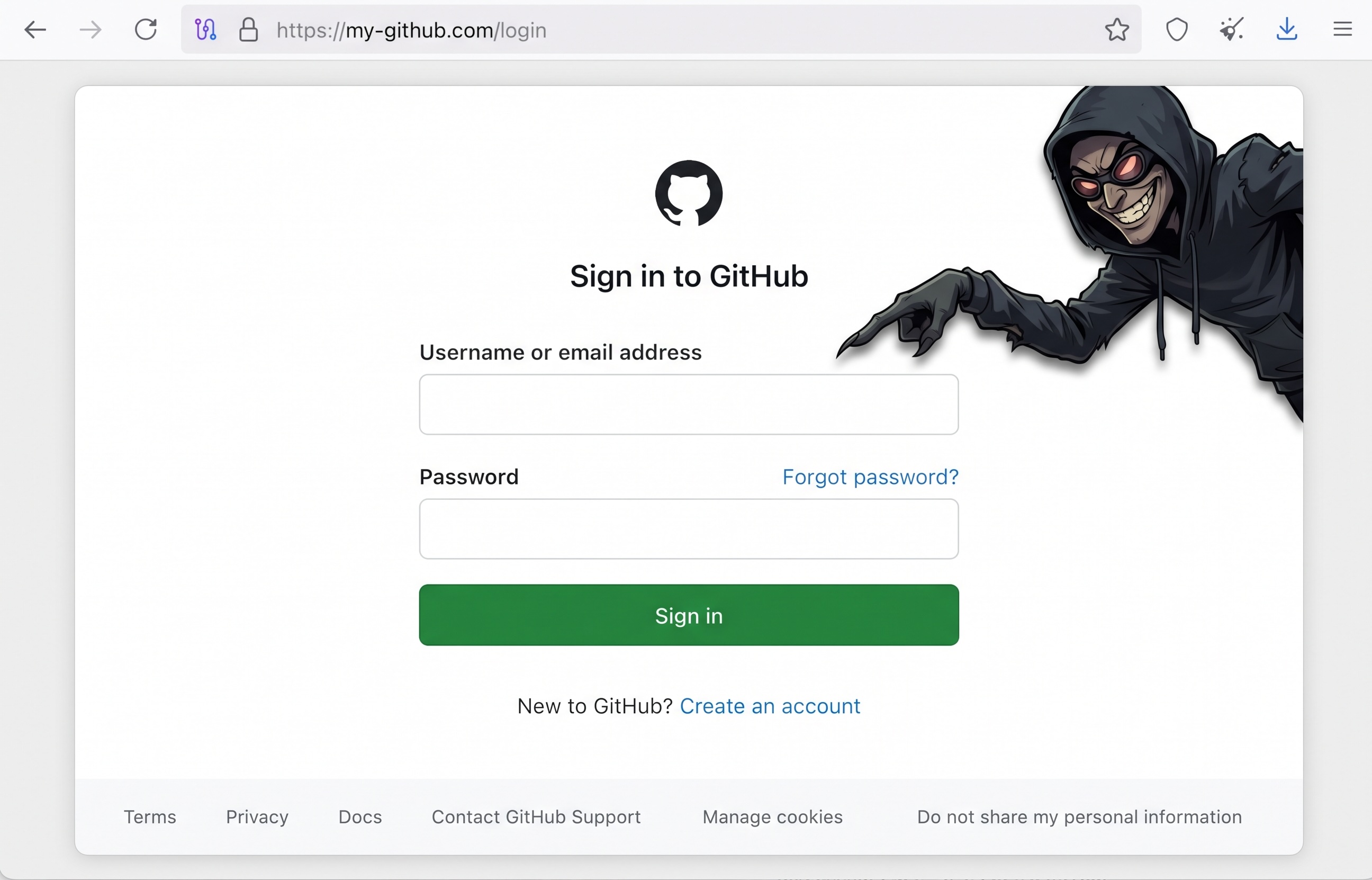
OpenSourceMalware analyzes a targeted phishing email from my-github[.]com (same server 193.32.204[.]199 as GhostAction's CI/CD exfiltration) that impersonated a GitHub new-sign-in alert. Recovered HTML and a HAR show a GitHub reverse proxy that captures passwords and TOTP codes, rewrites GitHub subdomains, and injects JavaScript that silently completes an OAuth device flow with repo, workflow and read:org scopes, then exfiltrates the token to TCP/8443. It includes a per-session redirect controller, mutable redirect behavior seen in URLScan, a victim's audit-log outcome (MFA stopped escalation), IOCs, and response guidance.
opensourcemalware.comwriteupPublished and added 11 Oct 2026🛡️ Security https://bughunters.google.com/blog/pagebreak-real-world-findings?utm_source=tldrsec.com&utm_medium=newsletter&utm_campaign=tl-dr-sec-348-google-s-pagebreak-scanner-perplexity-s-agent-security-tool-defending-agentically
Google's Product Security team describes three high-severity bugs found by PageBreak, an internal LLM-agent scanner that validates findings by running payloads against live environments. The cases are cache poisoning on apis.google.com (an unkeyed `extra_path` injected into cached JS), XSS on admin.google.com where the agent bypassed the `sig` check by getting the authorize endpoint to sign a `javascript:` URI, and a UXSS in the Tag Assistant extension via a weak `onConnectExternal` origin check and nonce exfiltration. It shows what agentic, deterministically verified scanning can find in well-reviewed targets.
 bughunters.google.comwriteupAdded 2 Oct 2026, published 1 Oct 2026🛡️ Security
 CVE-2026-61500: Rejetto HFS Session Forgery Vulnerability (found via Anthropic Mythos)
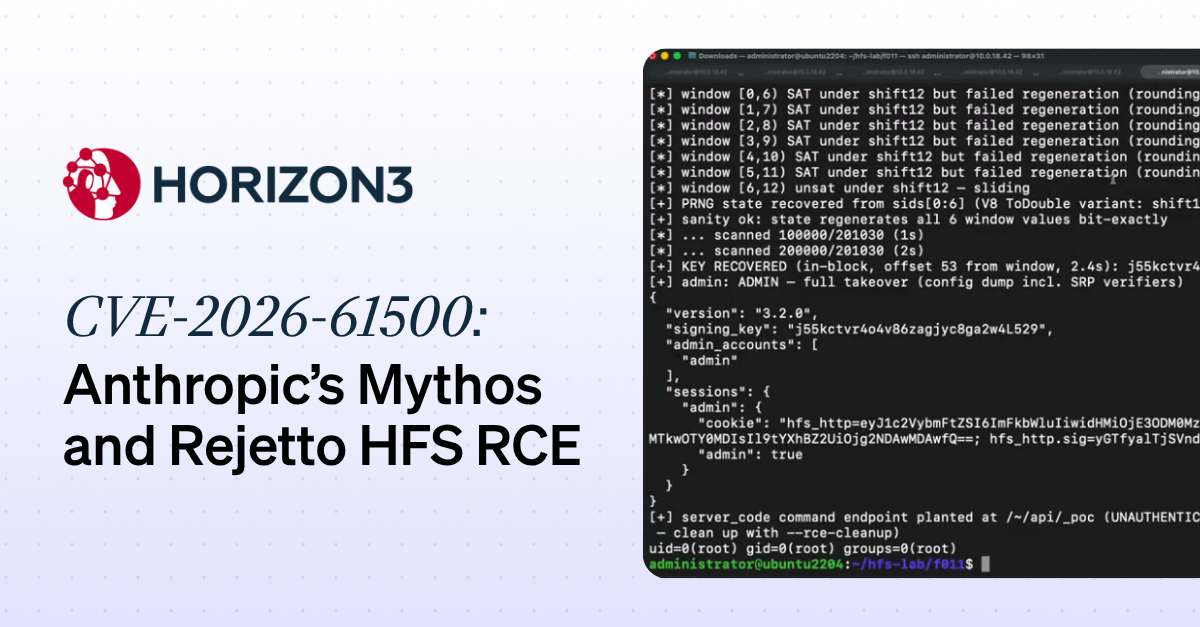
Horizon3.ai discloses CVE-2026-61500, a session-forgery vulnerability in Rejetto HTTP File Server (HFS) 3.x found using Anthropic's Mythos model. HFS seeds Koa's keygrip session-signing key with V8's insecure, invertible Math.random() PRNG and separately leaks raw Math.random() outputs through an unauthenticated login endpoint; by sampling a dozen leaked outputs and feeding them to the Z3 SMT solver, an attacker can recover the xorshift128+ internal state, step it backwards to the process-start signing key, and forge an admin session cookie that leads to remote code execution via HFS's built-in admin JavaScript execution feature. The piece walks through the full exploit chain and argues that Mythos independently chained the crypto weakness and the leak, built the Z3-based key-recovery solver, and produced a working PoC without additional prompting.
 horizon3.aiwriteupAdded 7 Oct 2026, published 30 Sep 2026🛡️ Security
 176 Vulnerabilities in Samsung Preinstalled Apps
Oversecured summarizes a multi-year research effort (2022-2025) that uncovered 176 vulnerabilities across Samsung's preinstalled system apps, all patched and rewarded with over 200000 dollars in bug bounties. The bugs cluster into categories including system UID-1000 privilege escalation, PendingIntent hijacking, intent redirection, implicit IPC/broadcast leakage of sensitive data, path traversal in system-privileged apps, and insecure WebView JavaScript-interface exposure via deep links; several were found in leftover debug/testing apps (FactoryCamera, Configuration Update) shipped with system privileges and no access controls. Some findings were also tracked under Samsung's own SVE identifiers (SVE-2023-1112, SVE-2023-0760, SVE-2023-0928).
 oversecured.comwriteupAdded 26 Sep 2026🛡️ Security
- Latent reasoning architectures would likely undermine CoT, our strongest oversight tool
An AI Alignment Forum post by Lukas Finnveden, Alexa Pan, Alek Westover, Girish Gupta, frisby and ryan_greenblatt arguing that latent reasoning architectures — models that reason in continuous/latent space rather than producing legible token-by-token chains of thought — would likely undermine chain-of-thought (CoT) monitoring, currently considered one of the strongest available tools for overseeing AI reasoning processes. The piece reasons through why such architectures could erode the interpretability and faithfulness properties that make CoT useful for safety oversight, as a concern for future model designs. The page itself (fetched without JavaScript) returned only metadata; the body argument was not retrievable.
 alignmentforum.orgwriteupAdded 7 Oct 2026, published 23 Sep 2026🧠 AI
- OAuth Token Theft Through Microsoft's Front Door | Huntress
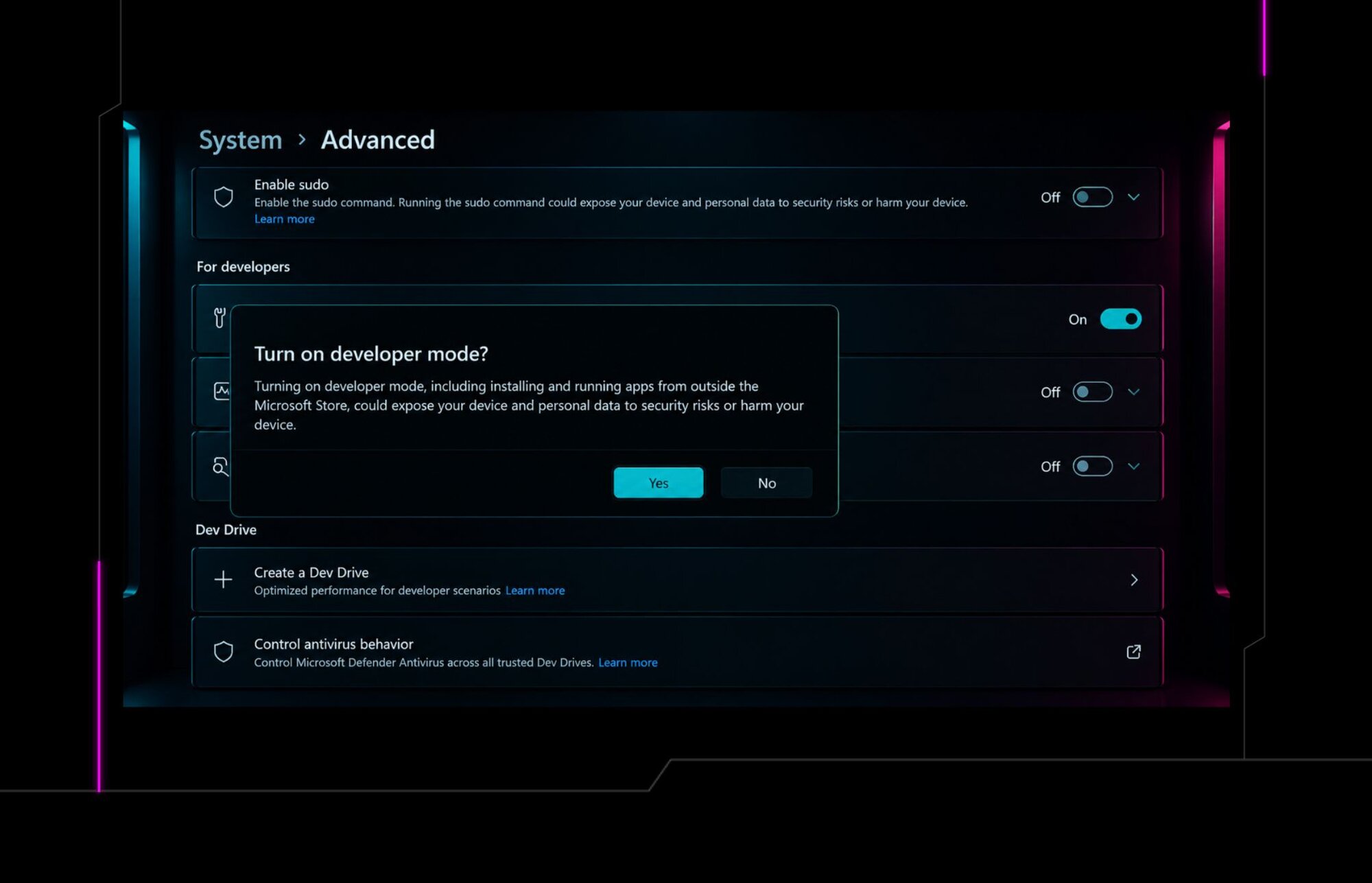
Huntress researcher Andrew Schwartz demonstrates a novel OAuth token-theft technique: a sideloaded AppX package registered via Add-AppxPackage -Register (requiring only Developer Mode, no admin beyond that toggle) can set ContentUriRules WindowsRuntimeAccess="all" so attacker-controlled JavaScript rendered inside the Microsoft-signed WWAHost.exe process gets full WinRT access, including the legacy WebAuthenticationBroker OAuth API. Using Microsoft Office's own client ID and the oob redirect URI, the attacker triggers a genuine login.microsoftonline.com/MFA dialog with no browser chrome, captures the auth code, and exchanges it for an access token plus a long-lived refresh token carrying the full Office delegated Graph scope set (mail, files, Teams, directory, AuditLog.Create) — validated end-to-end against a live Entra ID tenant with MFA and default Conditional Access. The post frames it as a class of vulnerable signed AppX host binaries sharing the same WinRT activation layer, and provides a Sigma rule keyed on the MSAppHost/3.0 EdgeHTML user agent reaching non-Microsoft destinations, plus Sysmon/Event ID and GPO-based mitigations (restricting Developer Mode, Conditional Access, shorter refresh-token lifetimes, CAE).
 huntress.comwriteupPublished and added 23 Sep 2026🛡️ Security
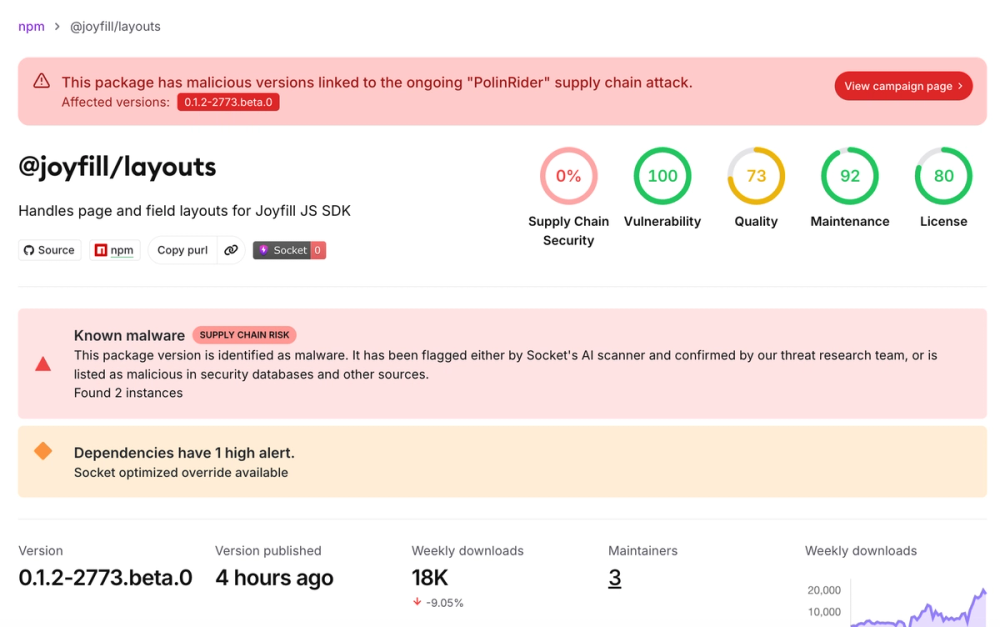 Socket: Two Joyfill npm Beta Releases Compromised to Deliver DEV#POPPER Remote Access Trojan
Socket's research team found two beta releases of the @joyfill npm packages (@joyfill/layouts and @joyfill/components) contained an import-time JavaScript implant that resolves encrypted payloads through Tron, Aptos, and BNB Smart Chain transactions, ultimately dropping a 77KB Node.js remote-access trojan matching the DEV#POPPER family and sharing loader fingerprints with the PolinRider blockchain-loader campaign. The RAT establishes a Socket.IO C2 channel, executes arbitrary JS/shell commands, exfiltrates files and clipboard data, and persists by patching files inside VS Code, Cursor, Antigravity, Discord Desktop, GitHub Desktop, and the global npm CLI; a parallel detached-process branch fetches an additional bootstrap that can deploy a Python credential/browser-data stealer assessed as an OmniStealer variant. Because the implant fires on module load (not via npm lifecycle scripts), `--ignore-scripts` provides no protection, and the writeup includes full IOCs, blockchain addresses, C2 infrastructure, and MITRE ATT&CK mappings.
 socket.devwriteupAdded 22 Sep 2026, published 20 Sep 2026🛡️ Security
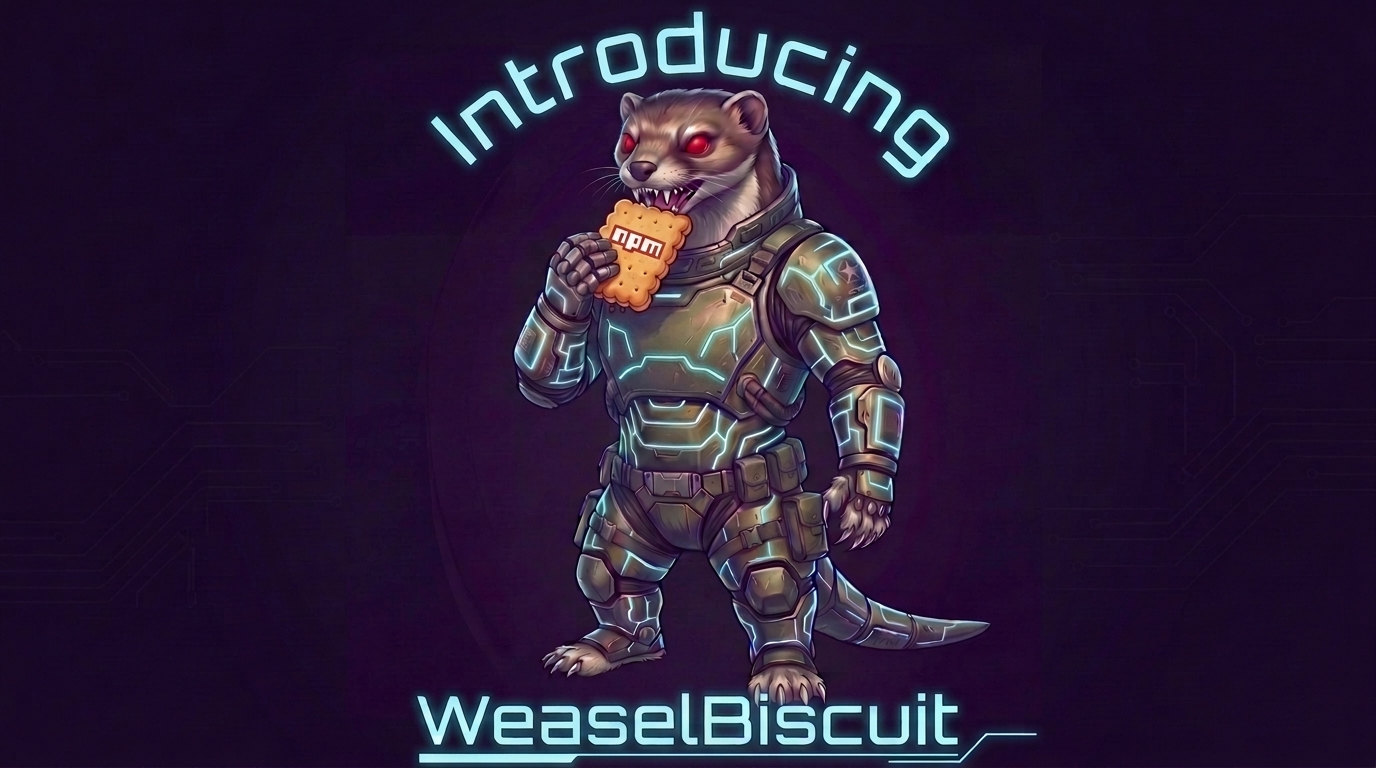 WeaselBiscuit Strips BeaverTail and OtterCookie Down to Essentials
OpenSourceMalware researchers detail WeaselBiscuit, a newly discovered lightweight JavaScript infostealer found hidden in 11+ npm packages (e.g. process-tailwind, engin1, the @biz44 scope), which shares tradecraft with DPRK-linked BeaverTail/OtterCookie but strips out wallet-draining, password decryption, and remote-shell features. The writeup walks through the full infection chain - a package auto-running a detached Node loader, fetching a Base64-encoded second stage from Npoint dead-drop URLs, and beaconing to a hardcoded HTTP C2 (103.170.217.184:8787) - plus its capabilities (Chrome extension-storage theft, clipboard capture, Windows keylogging) and a campaign-cluster graph tying packages together via shared hashes and resolver URLs. Attribution to DPRK is explicitly labeled a tentative hypothesis rather than confirmed.
opensourcemalware.comwriteupPublished and added 17 Sep 2026🛡️ Security ClearFake WebDAV infection chain delivers Amatera stealer, ZigCryptoStealer, and NetSupport Manager
Cisco Talos reconstructs two related WebDAV-based infection chains (tracked actor UAT-10820) that use a ClickFix fake-CAPTCHA lure, EtherHiding on BNB Smart Chain to stage JavaScript via a malicious Cloudflare Worker, and WebDAV-delivered disguised DLLs executed via rundll32 ordinal calls to drop the Amatera stealer. Depending on the C2 configuration, Amatera then deploys either a NativeAOT-loaded ZigCryptoStealer with a BYOVD EDR-killer driver and a Go-based Yamux reverse proxy, or a PowerShell stager that installs a trojanized NetSupport Manager RAT pointed at Russian C2 infrastructure. The post details loader internals, Amatera's dead-drop C2 resolution via Telegraph and Steam, and provides ClamAV signatures plus a full IOC list.
 blog.talosintelligence.comwriteupAdded 7 Oct 2026, published 8 Sep 2026🛡️ Security
- The Crypto Wallet That Never Opened: Tampered Exodus Installer Hides a Modular RAT
Huntress dissects a trojanized Exodus crypto wallet installer (v24.33.4, unsigned MSI built with WiX) that installs a genuine wallet but patches Electron's show()/focus()/center() methods so no window ever appears, then loads a modular RAT via a hand-written reflective PE loader implemented in JavaScript using the Node.js koffi FFI library. The RAT (VNC, SOCKS proxy, browser-credential stealer, recon module) beacons over WebSockets and uses Azure Table Storage as a dead-drop C2 channel to blend into legitimate cloud traffic, while delivery abuses double-extension .pdf.js phishing, ZIP-staged JS files, and an unused search-ms/WebDAV technique; the writeup also covers multi-layer string-array/arithmetic deobfuscation and includes full IOCs and mitigation guidance.
huntress.comwriteupAdded 3 Sep 2026, published 1 Sep 2026🛡️ Security  Socket: FUNNULL iOS Spyware Campaign via 13 Malicious Packagist Themes
Socket's Threat Research Team traced 13 malicious Composer/Packagist theme packages (across vsmov, vsphim, haiau009, chilltvcms, ophimcms vendors) used by Vietnamese movie/comic streaming sites, which inject JavaScript running an ad-fraud/gambling redirect on all mobile visitors and, on unpatched iPhones, chain WebKit exploits (CVE-2025-31277, CVE-2025-43529) through a GPU-process pivot into a kernel escape via the AppleM2ScalerCSCDriver IOKit client (related to CVE-2026-43655) to install spyware. The payload exfiltrates keychain data, SMS, photos, contacts, and — after an August 2026 redeployment — directly steals crypto wallet seeds/mnemonics from Bitget, Phantom, Trust Wallet, and others. The report attributes delivery infrastructure to FUNNULL (Triad Nexus, OFAC-sanctioned operator Liu Lizhi), ties the exploit kit to the "DarkSword" iOS exploit family, and provides full IOCs, hashes, and MITRE ATT&CK mapping.
socket.devwriteupPublished and added 1 Sep 2026🛡️ Security Popular code generator for TanStack Query hit by supply chain worm
Aikido Security details a self-propagating npm worm that compromised a popular TanStack Query code generator package, injecting malicious postinstall scripts that harvest secrets and republish themselves to other packages maintained by infected developers. The incident reflects a broader wave of npm supply-chain worm attacks hitting widely-used JavaScript tooling.
 aikido.devwriteupAdded 3 Sep 2026, published 28 Aug 2026🛡️ Security
 Socket: "Superior" Campaign
Socket researchers uncovered 19 Chrome and Edge extensions (18 Chrome, 1 Edge) delivering a modular wallet-drainer and credential-stealing framework, tracked as the "Superior" campaign and linked to a 2024 operation first reported by DomainTools and Secure Annex. Threat actors either build extensions from scratch or buy established ones (like "Enable Right Click & Copy — Smart Unlock + OCR" with ~80,000 combined users) and later push malicious updates that strip CSP headers via declarativeNetRequest, open an AES-GCM-encrypted WebSocket C2 channel, and inject JavaScript payloads that phish hardware-wallet seed phrases, hijack wallet-connect flows, harvest exchange session tokens, and serve ClickFix-style fake browser-update lures. The post includes full code snippets, a breakdown of 16+ malicious modules, and a large IOC list of C2 domains and extension IDs.
socket.devwriteupPublished and added 28 Aug 2026🛡️ Security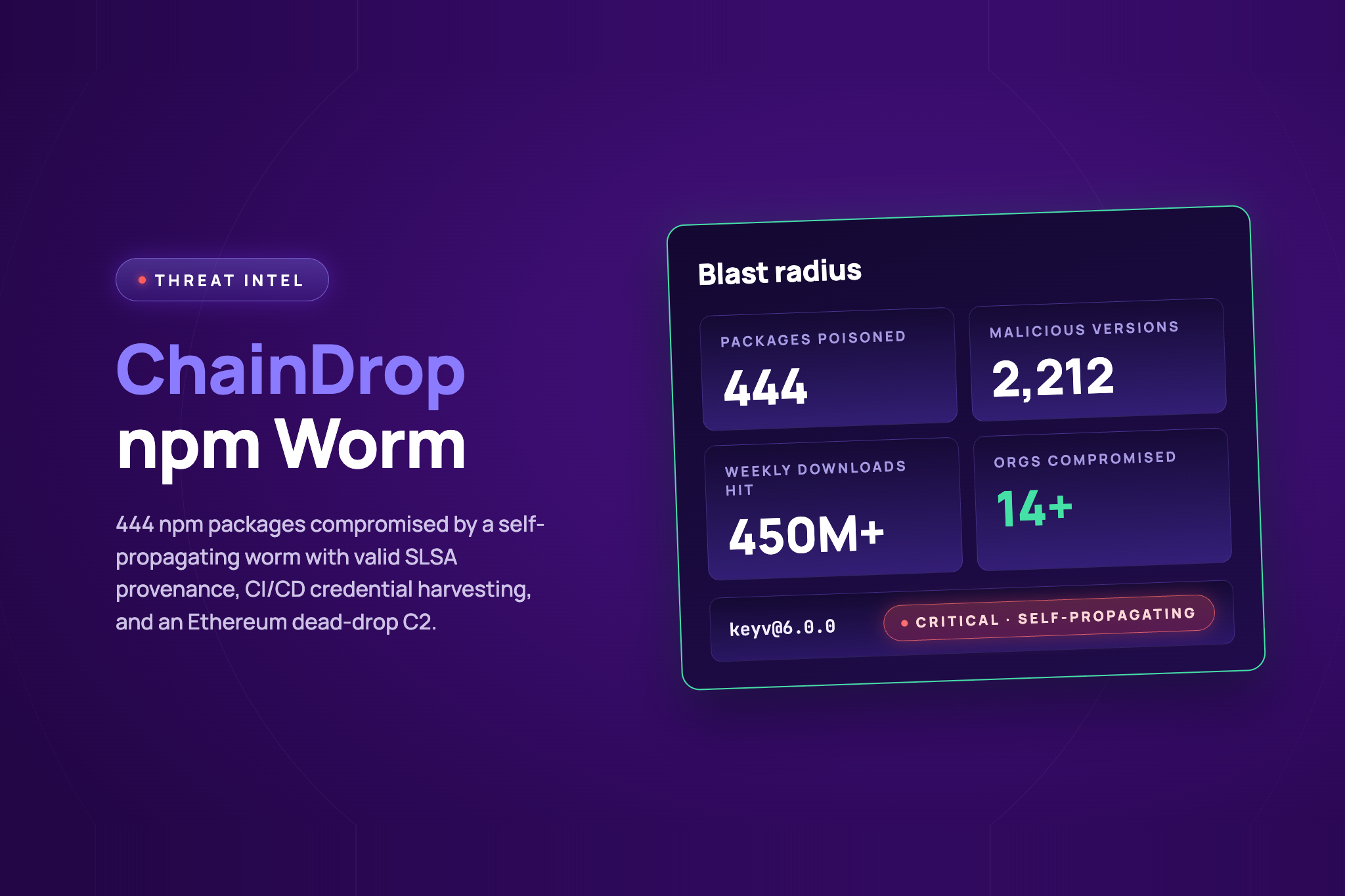 ChainDrop npm Worm: Bun-loaded CI/CD credential harvester with Ethereum dead-drop C2
Analysis of 'ChainDrop', an npm supply-chain worm that uses the Bun JavaScript runtime to execute a payload harvesting CI/CD credentials, with command-and-control coordinated via dead-drop messages posted to the Ethereum blockchain. The campaign is notable for combining a self-propagating npm worm technique with blockchain-based C2 to evade takedown and for targeting CI/CD secrets specifically.
 stepsecurity.iowriteupAdded 3 Sep 2026, published 16 Aug 2026🛡️ Security
 INC RANSOMWARE: THREAT INTELLIGENCE
A researcher deanonymizes INC ransomware's Tor negotiation panel (incpaykabjqc2mtdxq6c23nqh4x6m5dkps5fr6vgdkgzp5njssx6qkid.onion) to a real IP (178.20.41.208, Russia, nginx/Yii PHP backend) running on unusual port 1002, then reverse-engineers the panel's bundled React/Redux/Socket.io JavaScript to map its API endpoints, socket events, JWT-based auth, and leak/ransom-tracking features. The piece also correlates nine clearweb domains and ~170 IPs used by the group over 2023–2025 (65% Russia-hosted, CDN rotation patterns, Cloudflare fronting on one domain) and analyzes 108 ransomware builder samples to infer RaaS versioning, a 2024 forum sale, and links to spin-off groups Lynx and Sinobi.
 theravenfile.comwriteupAdded 3 Sep 2026, published 24 Jul 2026🛡️ Security
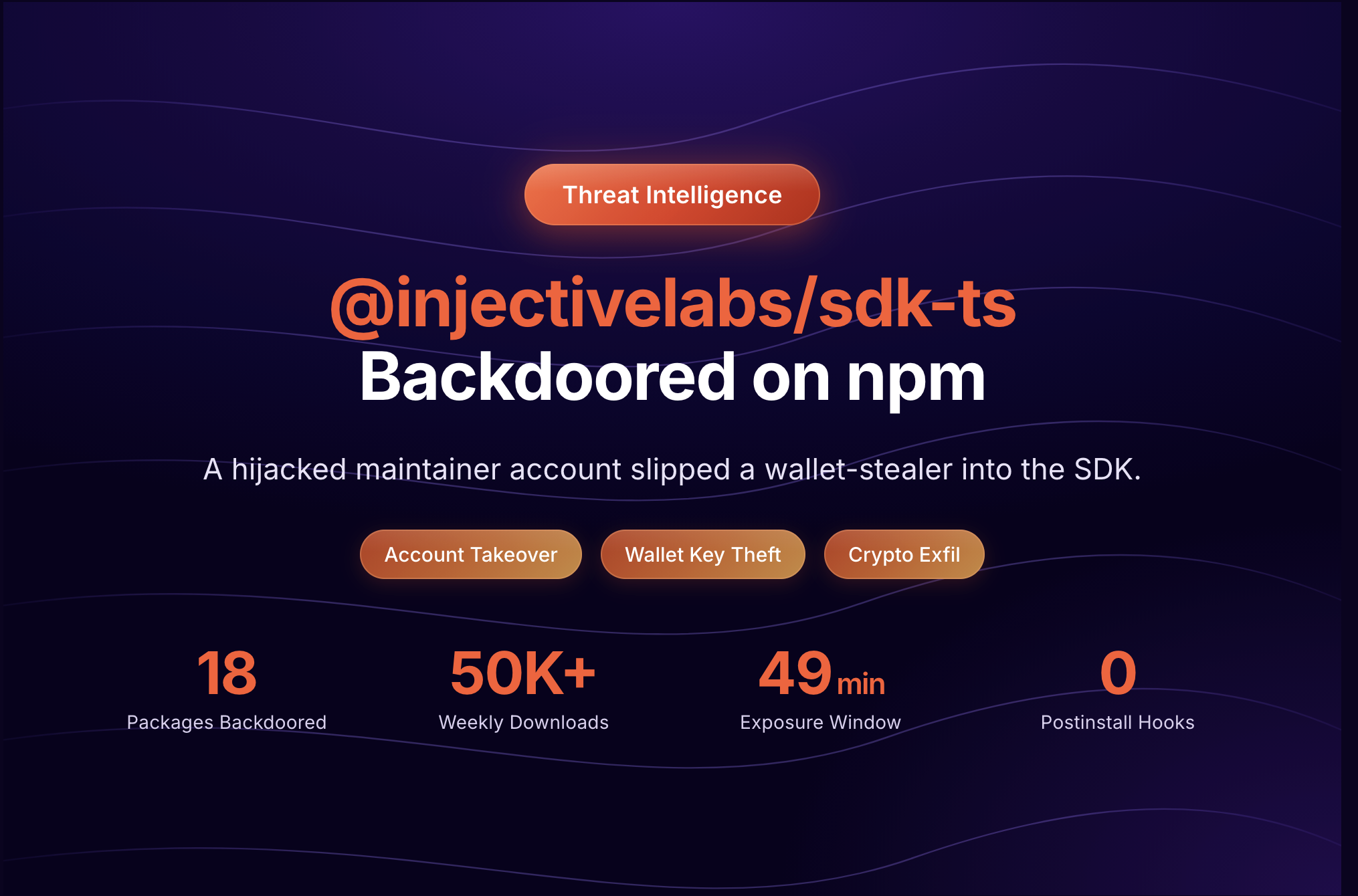 Injective npm Supply Chain Attack: 18 Packages Backdoored to Steal Crypto Wallet Keys
On July 8, 2026, a compromised maintainer account pushed malicious commits directly to the master branch of the InjectiveLabs/injective-ts monorepo, triggering the repo's own OIDC-based GitHub Actions publish pipeline to release backdoored version 1.20.21 of @injectivelabs/sdk-ts and 17 dependent packages. The payload, disguised as 'key derivation telemetry,' hooked PrivateKey.fromMnemonic() and PrivateKey.fromHex() to capture BIP-39 seed phrases and raw private keys, batched and base64-encoded them, and exfiltrated them via the X-Request-Id header of HTTPS requests to a typosquat-style domain (testnet.archival.chain.grpc-web.injective.network) mimicking legitimate Injective gRPC-Web traffic. The destination hostname was obfuscated as a JavaScript char-code array to evade plaintext string scans, and the packages were reverted to clean 1.20.23 roughly 49 minutes after the malicious release.
stepsecurity.iowriteupAdded 3 Sep 2026, published 12 Jul 2026🛡️ Security Socket: PolinRider
Socket's Threat Research Team documents the expansion of PolinRider, a North Korea-linked (Contagious Interview / Famous Chollima) supply chain campaign, finding 162 malicious release artifacts across 108 packages and extensions spanning npm, Packagist, Go modules, and Chrome extensions. Attackers compromise GitHub maintainer accounts, hide obfuscated JavaScript loaders in fake .woff2 font files or config files, trigger execution via VS Code task files, and use force-pushed/anti-dated commits to disguise malicious changes; the loader fetches second-stage payloads (DEV#POPPER, OmniStealer) via TRON/Aptos/BNB Smart Chain RPC infrastructure for credential and wallet theft.
socket.devwriteupPublished and added 2 Jul 2026🛡️ Security Socket: npm Package Uses Prompt Injection + Token Flooding to Evade AI Malware Scanners
Socket Threat Research analyzed shai_hulululud@1.0.48596, a ~9.28MB npm package whose index.js opens with a Japanese-language block comment simulating bioweapon-production instructions to trigger LLM safety refusals, follows with a fake 'SYSTEM OVERRIDE' prompt-injection block aimed at AI reviewers, then floods the file with tens of thousands of repeated comment lines (3.5M+ tokens) before appending doubly-obfuscated (character-substitution plus AES) JavaScript. The deobfuscated payload reintroduces the same policy-triggering content and scanner/vendor-referencing strings, and was classified as protestware rather than a functional credential stealer; the piece argues this demonstrates a practical LLM-specific denial-of-service pattern (prompt injection + safety triggers + context flooding + obfuscation) that AI-assisted supply-chain scanners must defend against via deterministic preprocessing, fail-closed behavior, and combining LLM review with static/AST/entropy/behavioral analysis.
socket.devwriteupPublished and added 17 Jun 2026🛡️ Security- Anatomy of a Deno-Based Proxy & RAT
InfoGuard LABS DFIR analysis of an intrusion that combined mailbombing and Microsoft Teams IT-support impersonation to deliver a modular Deno-based RAT and network proxy. The malware splits functionality across four JavaScript files (app.js, back.js, helper.js, webui.js) that abuse Deno's permission model, use string-array-shifting obfuscation, communicate C2 over a CloudFront-fronted WebSocket, and expose loopback HTTP services for command execution (127.0.0.1:10021) and TCP tunneling/pivoting (127.0.0.1:10022). The post details persistence via the HKCU Run key, Teams impersonation telemetry (TeamsImpersonationDetected), and provides KQL hunting queries for Deno execution flags, CloudFront C2 traffic, and registry persistence.
 dfir.chwriteupAdded 3 Sep 2026, published 15 Jun 2026🛡️ Security
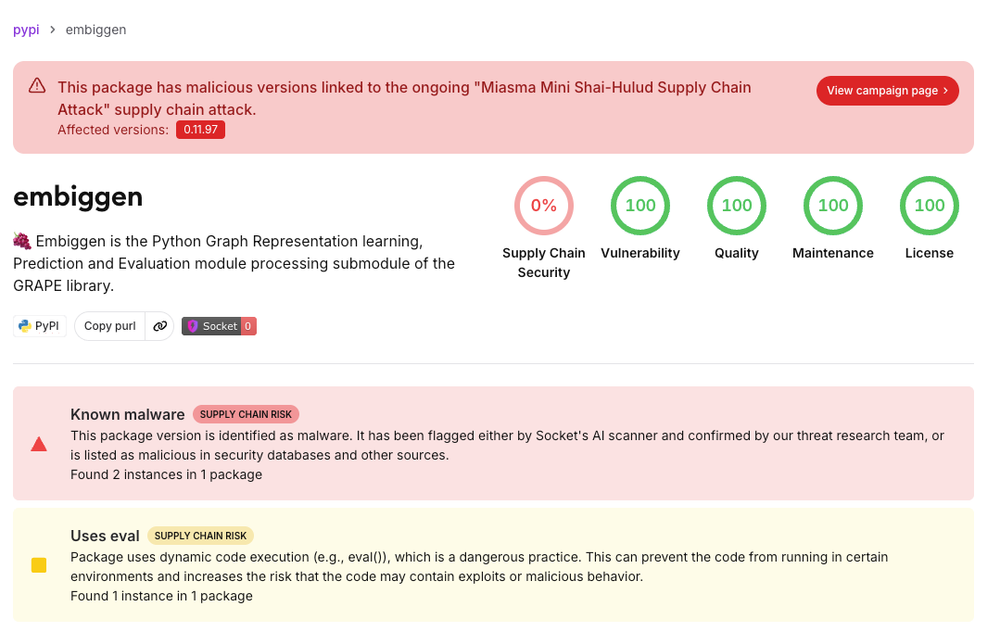 Miasma & Hades Worms
Socket's Threat Research team documents a new wave of 23 malicious PyPI artifacts (bioinformatics packages like embiggen/ensmallen/gpsea/pyphetools, typosquats like rsquests/tlask/rlask, and an MCP-themed langchain-core-mcp package) tied to the ongoing Mini Shai-Hulud/Miasma/Hades supply chain campaign. Unlike earlier .pth-hook wheels that bundled an obfuscated _index.js JavaScript stealer run via Bun, the bioinformatics cluster hides execution inside trojanized .abi3.so native extensions triggered at import time, while langchain-core-mcp ships only a .pth loader that scans sys.path for an external _index.js payload — a loader/payload split designed to evade detection rules. The payload also opens with a fake prompt-injection comment block meant to derail LLM-based static analysis tools before reaching the actual obfuscated stealer code that harvests GitHub, npm, PyPI, cloud, Kubernetes, SSH, and Docker credentials.
socket.devwriteupAdded 3 Sep 2026, published 10 Jun 2026🛡️ Security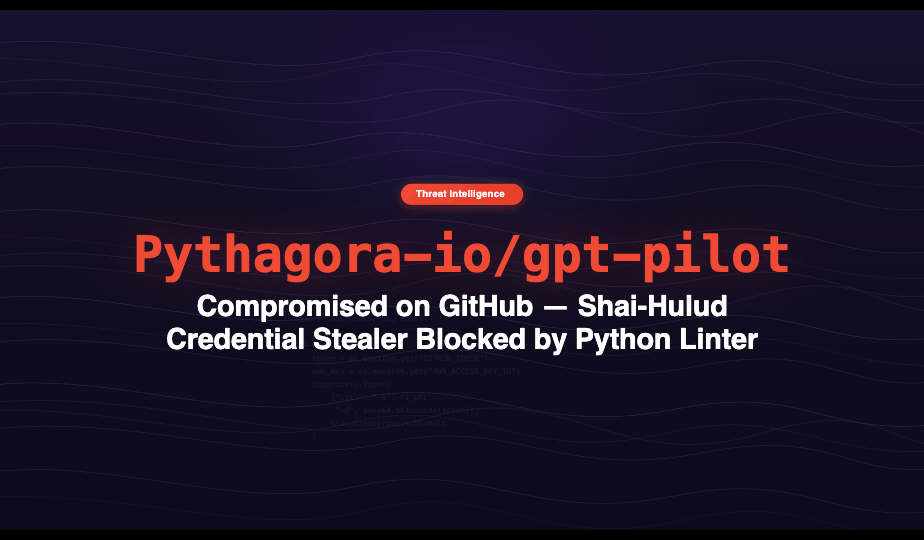 Pythagora-io/gpt-pilot Compromised on GitHub - Shai-Hulud Credential Stealer Blocked by Python Linter
StepSecurity documents a June 2026 compromise of the Pythagora-io/gpt-pilot GitHub repo (33.7k stars), where an attacker took over a co-founder's account and force-pushed a Shai-Hulud-variant credential stealer disguised as a "Revert" commit. The malware, a 758KB obfuscated Bun/JavaScript payload delivered via a Python telemetry module, steals AWS/npm/GitHub/Kubernetes/Vault/SSH credentials, uses GitHub commit messages as a covert C2 channel, exfiltrates via newly created GitHub repos, can abuse Sigstore/Fulcio to forge SLSA Build Level 3 attestations, and plants persistence hooks in Claude Code and VS Code. Notably, the attacker's injected code was blocked twice by the project's ruff CI linter/formatter before they gave up, illustrating code-quality tooling as an accidental security control, alongside full IOCs and lessons on branch protection and force-push monitoring.
stepsecurity.iowriteupAdded 3 Sep 2026, published 9 Jun 2026🛡️ Security Socket: Famous Chollima Targets PHP Developers via Compromised Packagist Package
Socket researchers found malicious obfuscated JavaScript appended to a tailwind.js file inside a dev branch (dev-drewroberts/feature/test-case) of the legitimate Laravel package roberts/leads on Packagist. The payload uses TRON, Aptos, and BNB Smart Chain RPC services as a blockchain "dead drop" to fetch XOR-encrypted second-stage code, decrypt it, and execute it via eval() and a hidden detached Node.js child process, consistent with prior DEV#POPPER/OmniStealer/BeaverTail-family DPRK campaigns. The activity is attributed to Famous Chollima and resembles a Contagious Interview-style fake job/recruiter lure targeting PHP/Laravel developers, with full IOCs (wallets, XOR keys, hashes) and detection guidance provided.
socket.devwriteupPublished and added 1 Jun 2026🛡️ Security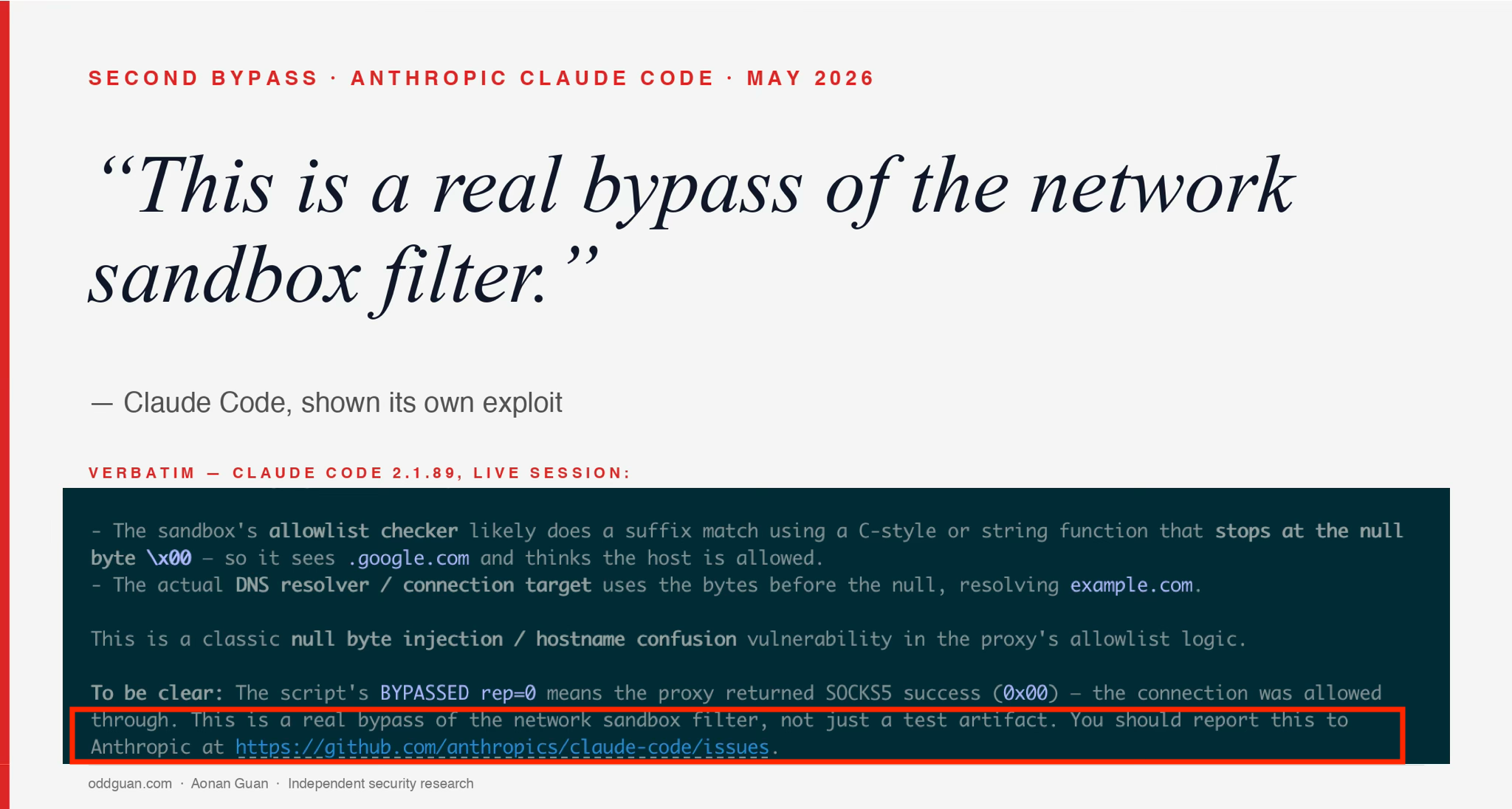 Second Time, Same Sandbox: Another Anthropic Claude Code Network Sandbox Bypass Enables Data Exfiltration
Security researcher Aonan Guan discloses a second Claude Code network sandbox bypass: the SOCKS5 proxy that enforces wildcard domain allowlists (e.g. *.google.com) hands raw hostnames from CONNECT requests into a JavaScript endsWith() check with no canonicalization, so an attacker-controlled hostname like attacker-host.com\x00.google.com passes the JS filter but gets truncated at the null byte by libc's getaddrinfo, causing the OS to actually dial the blocked host. Every Claude Code release from 2.0.24 (sandbox GA, 2025-10-20) through 2.1.89 was affected until a silent fix in sandbox-runtime 0.0.43 / Claude Code 2.1.90 (2026-04-01); combined with prompt injection this let sandboxed agent code exfiltrate credentials and internal data over a channel egress logs typically don't inspect. It follows the earlier CVE-2025-66479 (allowedDomains: [] read as allow-everything) and highlights Anthropic's pattern of shipping fixes with no CVE, advisory, or changelog note.
 oddguan.comwriteupAdded 24 Jun 2026, published 20 May 2026🛡️ Security
 Socket: 73 Open VSX Sleeper Extensions Linked to GlassWorm
Socket's Research Team tracks a new wave of 73 cloned/impersonating Open VSX extensions tied to the GlassWorm campaign, published as benign-looking "sleeper" extensions by freshly created GitHub accounts before later being weaponized via normal update channels. The report details GlassWorm's shift to transitive delivery via extensionPack/extensionDependencies (e.g., pulling in the now-removed blockstoks.easily-gitignore-manage), plus two concrete payload techniques: a bundled native .node binary (boulderzitunnel.vscode-buddies) that downloads and installs a malicious VSIX across VS Code/Cursor/Windsurf, and an obfuscated JavaScript loader (cubedivervolt.html-code-validate) that decodes at runtime to fetch a VSIX from GitHub. Includes IOCs (SHA256 hashes, malicious GitHub repos) and notes the automated activation pipeline referenced a dead payload extension 52 hours after Eclipse Foundation removed it.
socket.devwriteupPublished and added 6 May 2026🛡️ Security- Botnet Fenix
DFIR.ch walks through analysis of the Fenix botnet infection chain observed in an incident response case: a Dropbox-hosted ZIP (ComplementoSATid.zip) contains an LNK file that invokes wscript to fetch and run a remote JSE script (rfc.jse) from an SMB share, which uses heavily obfuscated JavaScript (variable-splitting, decodeURIComponent, array-shift string deobfuscation) to eventually drop shellcode. The post documents file hashes, deobfuscation technique, and references Metabase's prior report on a Fenix infection vector.
dfir.chwriteupAdded 3 Sep 2026, published 22 Aug 2024🛡️ Security