 NIK C2: The new AI-enabled command-and-control framework
NIK C2 is a newly observed C2 framework with a Go-based 64-bit Windows implant that embeds an OpenAI Chat Completions client (ai_generate command), falling back to the victim's OPENAI_API_KEY. Talos details its 52+ commands, AES-256-GCM over WebSocket with HTTP fallback, credential, wallet and keystroke theft, screen-lock ransomware, AMSI bypass and anti-debug. It also lists a live C2 at 87.120.196[.]120 and total-sitevv[.]lol.
 blog.talosintelligence.comwriteupPublished and added 29 Oct 2026🛡️ Security
- Dan Kornas (@DanKornas) on X
jshook is an open-source (AGPL-3.0) MCP server that gives AI agents a search-first, profile-aware reverse-engineering workspace for JavaScript, browser traffic, WASM and native processes. Agents start with a small searchable tool surface and move to workflow or full profiles only when needed. It drives Chromium or Camoufox over CDP, captures WebSocket traffic, has HTTP, GraphQL and Burp Suite helpers, and supports hot-reload plugins and declarative workflows. The post is a short announcement; the repository link is in a reply.
 x.comtoolAdded 28 Oct 2026, published 25 Oct 2026🧠 AI
- Dan Kornas (@DanKornas) on X
jshook is an open-source (AGPL-3.0) search-first reverse-engineering workspace for AI agents, exposed over MCP. It drives Chromium or Camoufox through CDP, captures WebSocket traffic, offers HTTP, GraphQL and Burp Suite helpers, deobfuscates JavaScript, rebuilds source maps and disassembles WebAssembly. Tool profiles start small and expand to workflow or full sets; hot-reload plugins and declarative workflows extend it.
x.comtoolAdded 28 Oct 2026, published 25 Oct 2026🛡️ Security 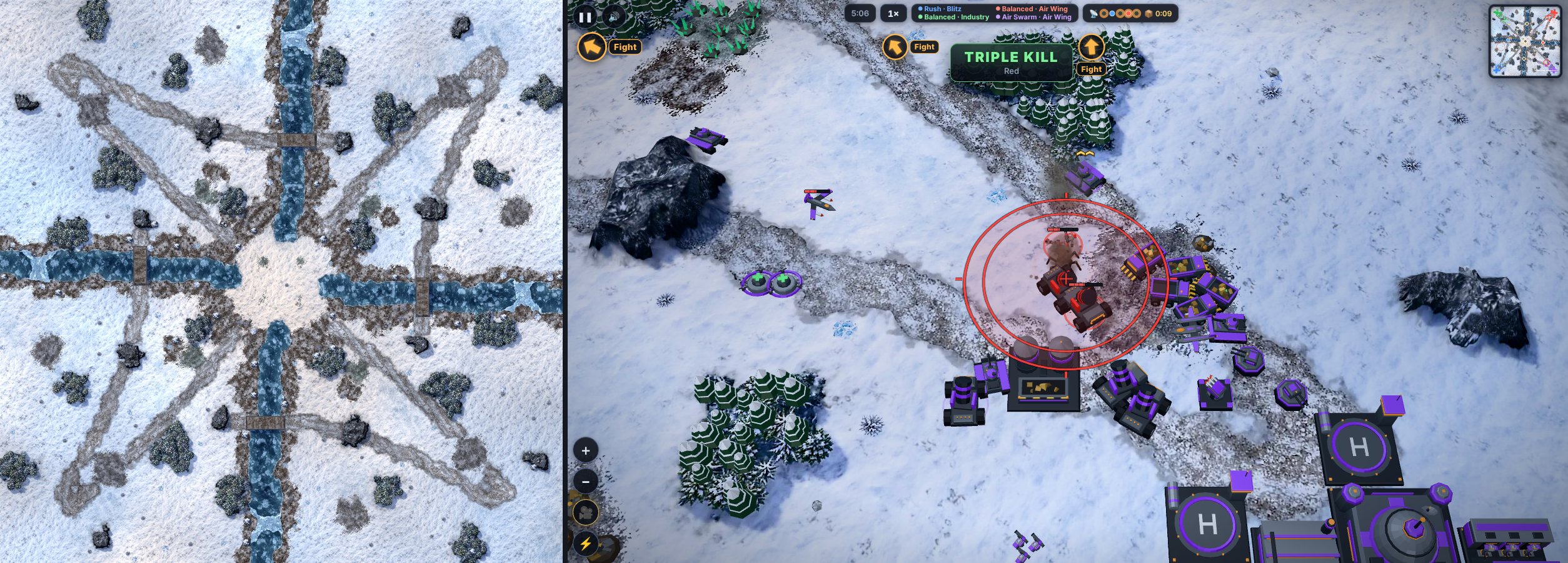 battledrones v14: Compass Rose, a four player map
Battledrones v14 adds "Compass Rose", a four-player map with four-way rotational symmetry, to Simon Willison's vibe-coded RTS game, dated 24 October 2026. A single prompt to Claude Opus 4.5 produced the map and extended the WebSocket multiplayer code to four players, with AI filling empty slots. Players join by share link or QR code. New teams are purple and green. The post gives no code or diff.
 simonwillison.netarticlePublished and added 24 Oct 2026🧠 AI
- SpyTech Ai (@RizeOnline) on X
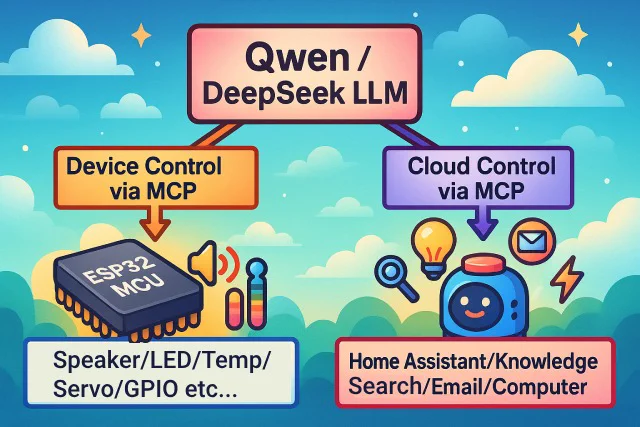
XiaoZhi ESP32 is an open-source, MIT-licensed firmware stack that turns ESP32 boards into MCP-based voice chatbots using models such as Qwen and DeepSeek. It streams Opus audio over WebSocket or MQTT + UDP through ASR, LLM and TTS, adds offline ESP-SR wake words, and uses device-side MCP to drive speakers, LEDs, servos and GPIO. It supports 138 board directories and builds with ESP-IDF 6.0.1 or newer.
x.comthreadAdded 23 Oct 2026, published 21 Oct 2026🧠 AI  From JavaScript to Renderer Code Execution: Three V8 Vulnerabilities and Two v8CTF Flags | depthfirst
Depth First Security's write-up describes three V8 bugs found using its dfs-large1 research tooling: CVE-2026-78938, a type confusion in Promise.prototype.finally that lets an internal helper be constructed and return a primitive; CVE-2026-79236, a TurboFan load-elimination bug that keeps a stale property-array pointer after object migration; and a shared WebAssembly memory sandbox escape (issue 546253900) caused by mismatched backing-store registration during serialization. It walks through turning each memory bug into addrof/fakeobj primitives, chaining either with the sandbox escape to reclaim a freed V8 isolate via a WebSocket allocation, and pivoting through a CFI-constrained ROP chain to achieve Chrome renderer code execution, earning two v8CTF flags. Fixes landed between August 20 and 25, 2026.
 depthfirst.comwriteupAdded 29 Oct 2026, published 20 Oct 2026🛡️ Security
 ARMORY CASTLE Exploits BeyondTrust
ARMORY CASTLE (formerly UNC5221), a suspected PRC-nexus actor, exploited BeyondTrust Remote Support zero-day CVE-2026-102764 in August 2026, per Mandiant incident response. The post details the SAWFLY PHP webshell, BARECLAW SOCKS5 WebSocket tunneler, SUID root escalation, sudoers template persistence, vault credential extraction, log deletion and haproxy.conf changes. It adds YARA rules, detection ideas and patch-first remediation (BT26-05).
 cloud.google.comwriteupAdded 29 Oct 2026, published 15 Oct 2026🛡️ Security
 The hidden network: Inside the phishing infrastructure ecosystem powering global cybercrime
Microsoft Threat Intelligence maps a Chinese-language cybercrime ecosystem: the YAM Store (Storm-3119), an initial access broker that hijacks Microsoft 365/Azure Education tenants and resells accounts, licenses and SharePoint/OneDrive storage, and the Storm-2990 phishing kits (CoGUI, Haozi, Iron Man System) sold via Telegram. It details the five-stage broker pipeline (app-only client-secret abuse, PnP Management Shell service principal, Graph permissions, Cloudflare DNS management), kit evasion features (geofencing, fake CAPTCHA, WebSocket/Telegram live interaction, 2,335+ templates), downstream device-code phishing and card fraud, and lists mitigations such as passkeys, phishing-resistant MFA and Conditional Access. Microsoft's DCU facilitated a disruption with law enforcement; kits sent over one billion messages since January 2026.
 microsoft.comarticlePublished and added 14 Oct 2026🛡️ Security
 UAT-11985: AI-assisted event lures delivering real-time Google AitM phishing
Cisco Talos details UAT-11985, a spear-phishing campaign against Taiwan-based research organizations (impersonating institutions like the Taiwan European Union Centre and NCCU Institute of International Relations) that used AI-assisted, templated lure emails and poster-based QR code phishing (quishing) to drive victims to a real-time adversary-in-the-middle phishing kit. The kit impersonates Google sign-in across zh-CN/zh-TW/en locales, uses a split HTTP-POST/WebSocket architecture to mirror Google's live authentication flow and dynamically push MFA challenge screens, enabling full session-token theft and MFA bypass. Talos attributes the kit's localization architecture and lexical choices to a Simplified Chinese-speaking developer and publishes ClamAV/Snort coverage plus IOCs on GitHub.
blog.talosintelligence.comwriteupPublished and added 8 Oct 2026🛡️ Security- A model guide for the GPT-6 family
OpenAI's practical guide to the GPT-6 family (Astra, 6.1 Sol, Luna), with per-token pricing and when to use each model. It gives guidance on picking a reasoning level (low to max), Fast and Ultrafast speed modes, and rewriting skills, AGENTS.md and prompts with clear decision boundaries and a definition of "done". For long-running agent work it covers mid-turn steering over the Responses WebSocket API, async tool calling, multi-agent delegation (beta) and computer use with Playwright or PyAutoGUI. It also gives production advice on prompt caching, compaction, monitoring and measuring cost per successful task.
 openai.comarticlePublished and added 2 Oct 2026🧠 AI
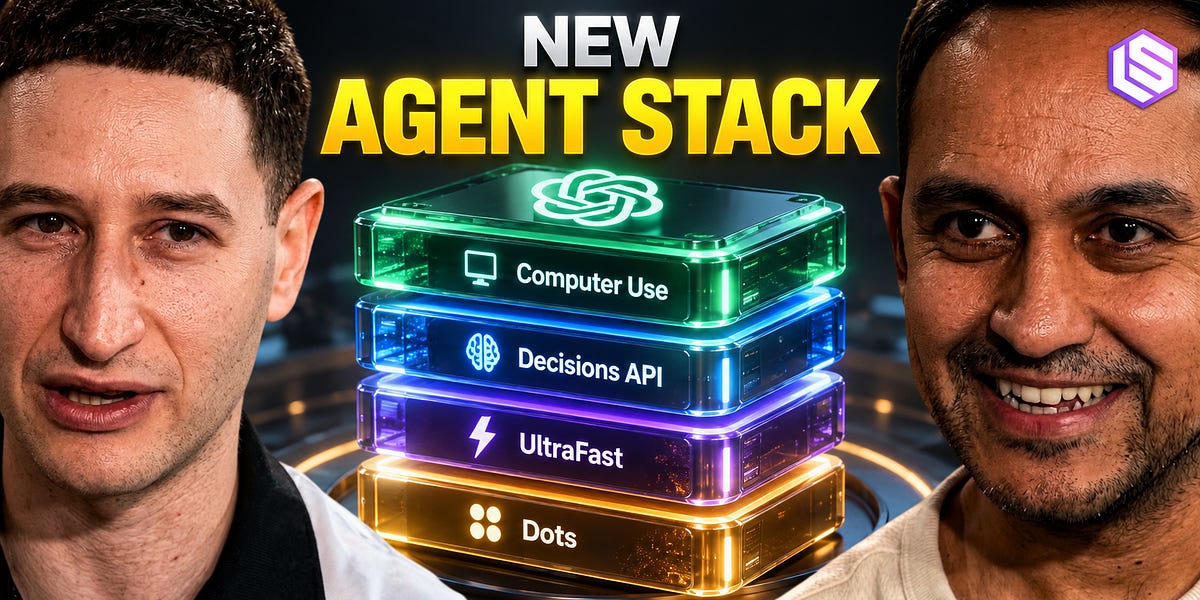 Why Dwarkesh is Wrong about Computer Use + How OpenAI shipped its Jev competitor in 1 Week
Latent Space podcast transcript recorded live after OpenAI's DevDay 2026 keynote, featuring Ari Weinstein (OpenAI's Computer Use lead, ex-Apple Shortcuts and Sky cofounder) and Nikunj Handa (OpenAI API product lead). Weinstein explains how Computer Use agents have become "180 degrees different" via combining screenshots, accessibility trees, the DOM, Playwright, and agent-generated JavaScript, plus self-debugging behavior, App Shots context capture, and Dots' per-agent cloud Linux computers; Handa walks through the new agent-developer stack shipped at DevDay — async function calling, mid-turn steering, WebSockets, UltraFast low-latency inference, the new Decisions API (explicitly built as a fast-follow of Jev for classification/routing tasks), the Agents API, longer prompt caching/pre-warming, and server-side context compaction. The piece also frames a public disagreement with Dwarkesh Patel's claim that computer-use agents haven't meaningfully progressed.
 latent.spacetalkPublished and added 30 Sep 2026🧠 AI
- Determined Attacker Uploads Malicious Webshells to Parks and Rec Management Platform Servers
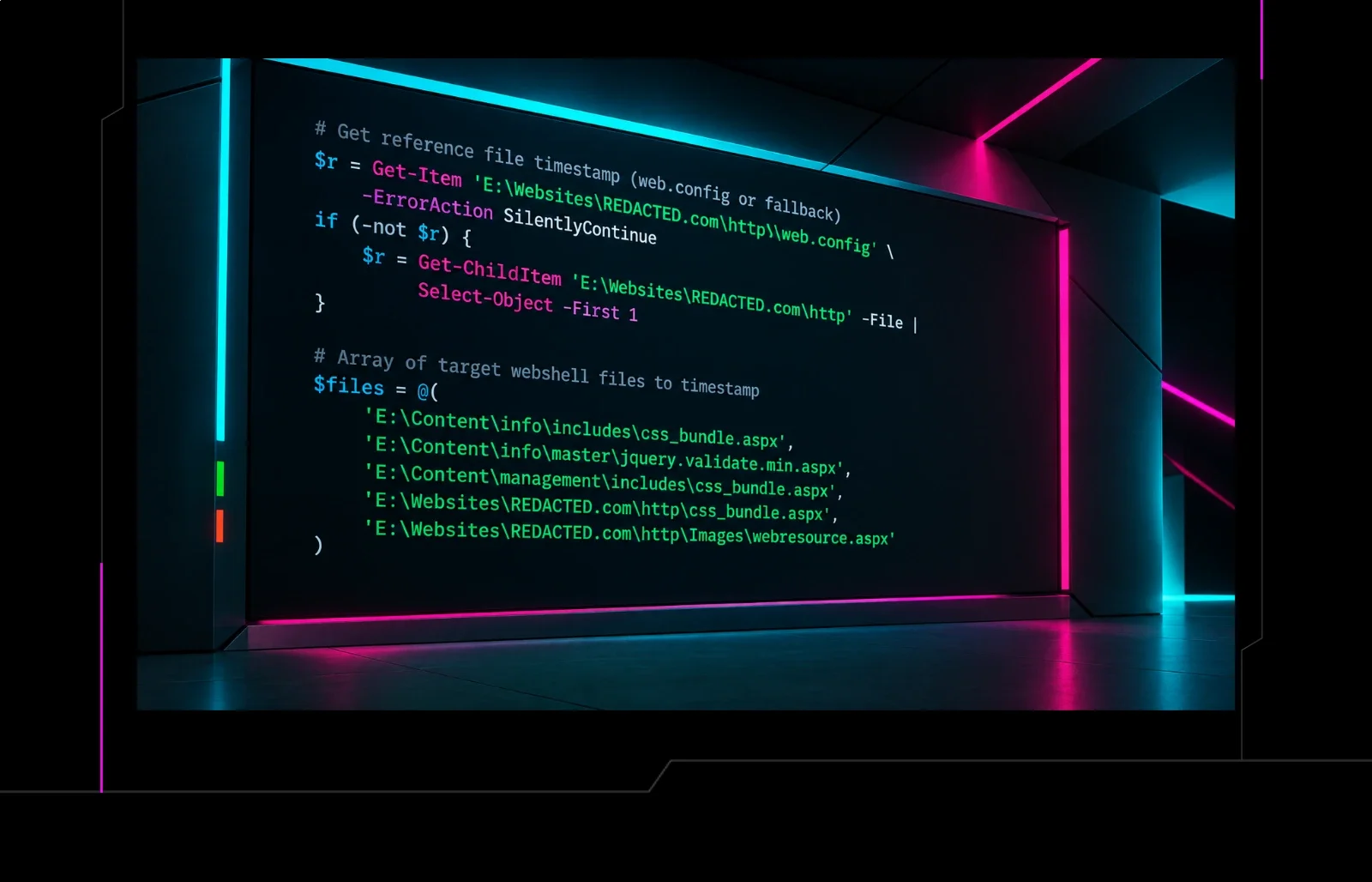
Huntress details a four-act intrusion against a shared parks-and-recreation management platform running on IIS, where an attacker first tried noisy unauthenticated exploits (IIS 8.3 tilde enumeration, WebDAV verb abuse, upload-handler bypasses) before simply registering a member account and uploading .aspx webshells via a member-file upload feature across three servers. The attacker enumerated hosts, extracted web.config/connection strings, hunted for cardholder data (Fortis/MXMerchant webhook logs, CVV/card-number strings), then escalated to timestomping, re-deploying known-filename webshells, and finally injecting an AI-generated PowerShell/JS dropper into a trojanized jQuery file to turn site visitors' browsers into WebRTC/WebSocket C2 clients (ririmochii/bubuneeko Cloudflare Workers infrastructure). Includes a zh-CN PowerShell user-agent string used for attribution and full command/IOC listings useful for detection engineering.
 huntress.comwriteupAdded 1 Oct 2026, published 30 Sep 2026🛡️ Security
 NeedyMantis: Unpacking a post-compromise malware family used in targeted operations
Microsoft Threat Intelligence documents NeedyMantis, a previously unreported modular post-compromise malware family used in targeted intrusions against telecoms, universities, medical nonprofits, intergovernmental organizations, and government contractors. The writeup details a multi-stage C++/x64 shellcode loader chain delivered via DLL sideloading (abusing Poedit, curl, TightVNC, Vim, and spoofed Office/Broadcom/Intel/NVIDIA DLLs), a custom encrypted/compressed archive format, a minimized custom PE-like executable format, and a WebSockets-based C2 protocol with RC4 key exchange and modular load/unload commands. Microsoft links observed use to Storm-3069 (tied to the Kaspersky-reported DAEMON Tools supply chain compromise) and China-nexus activity, and provides IOCs, Defender detections, and KQL/Sentinel hunting queries.
microsoft.comwriteupAdded 7 Oct 2026, published 28 Sep 2026🛡️ Security AutoJack Attack Lets One Web Page Hijack AI Agent for Host Code Execution
Microsoft researchers detailed AutoJack, an exploit chain in AutoGen Studio, Microsoft Research's multi-agent framework prototyping UI, where a browsing AI agent that loads an attacker-controlled webpage inherits localhost trust, letting the page's JavaScript reach an unauthenticated MCP WebSocket handler that runs an attacker-chosen command with no allowlist. The Hacker News independently confirmed the vulnerable handler shipped only in two PyPI pre-releases, 0.4.3.dev1 and 0.4.3.dev2, not the stable 0.4.2.2 release, and it remains unpatched on PyPI even though maintainers hardened GitHub main at commit b047730 after Microsoft's MSRC report. The piece frames this as a generalizable pattern for agent frameworks, localhost checks treated as auth, unauthenticated local control planes, and agents that browse untrusted content, also seen in the ChatGPhish case and Microsoft's Semantic Kernel RCE research.
 thehackernews.comarticleAdded 26 Sep 2026🛡️ Security
- OWASP Agentic Skills Top 10 (AST10)
The OWASP Agentic Skills Top 10 (AST10) is a new security framework cataloging the 10 most critical risks in AI agent "skills" — the behavior layer that orchestrates multi-step tool use in OpenClaw, Claude Code, Cursor/Codex, and VS Code. It documents real 2026 incidents (the ClawHavoc registry-poisoning campaign with 1,184 malicious skills, Snyk's ToxicSkills audit of 3,984 skills finding 36.82% flawed, CVE-2025-59536/CVE-2026-21852 RCE in Claude Code project files, and CVE-2026-28363 ClawJacked WebSocket hijacking) and proposes a Universal Skill Format (YAML) with signing, permission allowlists, and identity-file protections to mitigate them, mapped to CSA's MAESTRO 7-layer threat model.
 github.comrepoAdded 18 Sep 2026🛡️ Security
- OWASP Agentic Skills Top 10
OWASP's Agentic Skills Top 10 (AST10) catalogs the ten most critical security risks in the "skills" layer of AI agent platforms — OpenClaw's SKILL.md, Claude Code's skill.json, Cursor/Codex manifest.json, and VS Code package.json — arguing this behavior/orchestration layer is distinct from and less protected than the MCP tool layer. It documents real 2026 incidents (the ClawHavoc campaign poisoning 1,184+ ClawHub skills with AMOS-stealer payloads via a shared C2 IP, Snyk's ToxicSkills audit finding 36% of skills flawed, CVE-2025-59536/CVE-2026-21852 in Claude Code enabling RCE and API-key exfiltration on project open, and CVE-2026-28363 "ClawJacked" WebSocket hijacking of local OpenClaw instances), and proposes a Universal Skill Format with signing, permission manifests, and risk tiers plus a checklist for registries, runtime, governance, and skill development.
 owasp.github.iopaperAdded 14 Sep 2026🛡️ Security
- agent-egress-bench
Agent Egress Bench is an open, tool-neutral benchmark maintained by PipeLab (makers of Pipelock) that tests whether products mediating an AI agent's outbound traffic — proxies, egress firewalls, MCP wrappers, agent gateways — actually catch exfiltration attempts caused by prompt injection or misalignment, rather than testing the underlying model itself (that's left to AgentDojo, InjecAgent, CyberSecEval, AgentHarm, ASB). It ships a reproducible Go runner with a proxy/WebSocket/MCP/A2A adapter contract, an offline validator, DSSE-signed evidence bundles, and a CI-runnable GitHub Action, and separates containment from false-positive rate as two distinct scored axes with immutable case IDs and OWASP Agentic Top 10/MITRE ATT&CK mappings. Its governance explicitly permits third parties to publish results unfavorable to the maintainer's own Pipelock product.
github.comrepoAdded 12 Sep 2026🛡️ Security  Machine speed, hold the AI: hand-rolled marimo CVE-2026-39987 exploit
Sysdig's Threat Research Team documents a hand-coded (non-LLM) exploitation of CVE-2026-39987, a pre-authentication RCE in marimo notebooks caused by a missing validate_auth() check on the /terminal/ws WebSocket endpoint. The operator chained credential theft from environment variables and Redis, AWS Secrets Manager retrieval, and SSH pivoting to a bastion host in eight seconds, ignored a planted prompt-injection honeypot meant to detect LLM agents, and left behind reusable base64-encoded boto3/paramiko toolkits in /tmp. The post includes full script reproductions, IOCs (IPs, file paths, AS63949/Linode infrastructure), CloudTrail/GuardDuty detection guidance, and remediation steps (patch to marimo 0.23.0, restrict the terminal endpoint, scope Secrets Manager access).
 sysdig.comwriteupAdded 20 Sep 2026, published 11 Sep 2026🛡️ Security
 Training a coding model to paint watercolours with TRL and OpenEnv
A Hugging Face engineering blog post reproducing Surya Narreddi's viral "AI paints watercolours" project in the open: a coding LLM (Qwen3.5-35B-A3B, LoRA) is trained with GRPO via TRL to write p5.brush JavaScript sketches that render as watercolour flower paintings, using an OpenEnv RL environment with headless-Chromium rendering, an HPSv3 preference-model reward and a Qwen3-VL-30B-A3B-Instruct pairwise judge scored against a hand-curated 178-image reference pool. It documents the full pipeline (HF Jobs, Spaces, Inference Providers), the LoRA fix needed for MoE models (all-linear targeting), infra bugs found (an OpenEnv websocket caching bug fixed upstream, reward-noise from silent render failures), three reward-mix ablations, and open-sources the dataset, environment, training scripts, rollouts and trained models.
 huggingface.coarticleAdded 29 Sep 2026, published 3 Sep 2026🧠 AI
- The Crypto Wallet That Never Opened: Tampered Exodus Installer Hides a Modular RAT
Huntress dissects a trojanized Exodus crypto wallet installer (v24.33.4, unsigned MSI built with WiX) that installs a genuine wallet but patches Electron's show()/focus()/center() methods so no window ever appears, then loads a modular RAT via a hand-written reflective PE loader implemented in JavaScript using the Node.js koffi FFI library. The RAT (VNC, SOCKS proxy, browser-credential stealer, recon module) beacons over WebSockets and uses Azure Table Storage as a dead-drop C2 channel to blend into legitimate cloud traffic, while delivery abuses double-extension .pdf.js phishing, ZIP-staged JS files, and an unused search-ms/WebDAV technique; the writeup also covers multi-layer string-array/arithmetic deobfuscation and includes full IOCs and mitigation guidance.
huntress.comwriteupAdded 3 Sep 2026, published 1 Sep 2026🛡️ Security  Socket: 18 Malicious Microsoft Edge Extensions Found
Socket announces extension security coverage for Microsoft Edge Add-ons and discloses research into 18 malicious Chrome extensions and one Edge extension delivering an extensible malware framework. Five extensions were purchased from legitimate developers and turned malicious via updates; the framework included 16 modules covering a multi-chain wallet drainer, Ledger/Trezor recovery-phrase phishing, credential/form theft, crypto exchange session harvesting, CSP-header stripping, and a persistent WebSocket C2 channel. The Edge version of "Enable Right Click & Copy — Smart Unlock + OCR" remained live and received a new C2 domain even after the Chrome listing was removed.
 socket.devarticlePublished and added 30 Aug 2026🛡️ Security
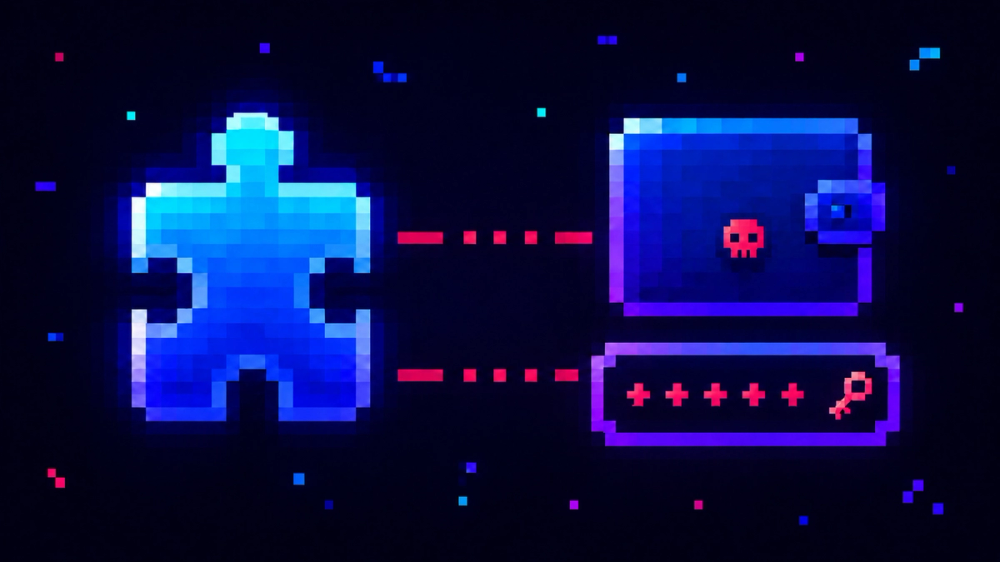 Socket: "Superior" Campaign
Socket researchers uncovered 19 Chrome and Edge extensions (18 Chrome, 1 Edge) delivering a modular wallet-drainer and credential-stealing framework, tracked as the "Superior" campaign and linked to a 2024 operation first reported by DomainTools and Secure Annex. Threat actors either build extensions from scratch or buy established ones (like "Enable Right Click & Copy — Smart Unlock + OCR" with ~80,000 combined users) and later push malicious updates that strip CSP headers via declarativeNetRequest, open an AES-GCM-encrypted WebSocket C2 channel, and inject JavaScript payloads that phish hardware-wallet seed phrases, hijack wallet-connect flows, harvest exchange session tokens, and serve ClickFix-style fake browser-update lures. The post includes full code snippets, a breakdown of 16+ malicious modules, and a large IOC list of C2 domains and extension IDs.
socket.devwriteupPublished and added 28 Aug 2026🛡️ Security- Orbien
Orbien is a lightweight (~5MB binary) NAT traversal / intranet penetration tool written in Rust with Tokio, supporting tunnel protocols (TCP, UDP, HTTP, HTTPS, SOCKS5) over multiple transports (TCP, KCP, WebSocket, QUIC). It provides token-based tunnel authentication and TLS/mTLS encryption, positioning it as a secure, high-performance alternative to frp for exposing internal services or pivoting through NAT.
github.comrepoAdded 3 Sep 2026, published 21 Aug 2026🛡️ Security - MacSync Stealer: How a Google Search for Claude Led to a macOS Infostealer
Huntress SOC analysts reverse-engineer MacSync, a macOS infostealer/RAT distributed via a sponsored Google Ads link to a fake "Apple Support"-branded claude.ai shared conversation that uses ClickFix to trick victims into pasting a curl/zsh loader into Terminal. The six-stage chain runs a polymorphic gzip/Base64 loader, an in-memory AppleScript stealer that harvests Chromium Safe Storage keys, keychain secrets, Telegram/SSH/cloud credentials, abuses TCC (Full Disk Access and Screen Recording) prompts, drops a Mach-O RAT with WebSocket/TLS C2 and an XOR-obfuscated fallback domain, and trojanizes 84 crypto wallet extensions/apps to phish seed phrases. The piece also compares it to prior AMOS Stealer and SectopRAT ClickFix campaigns and offers behavior-based detection guidance.
huntress.comwriteupAdded 3 Sep 2026, published 17 Aug 2026🛡️ Security - Reverse Engineering the Six Stages of MacSync Stealer and RAT
Huntress reverse-engineers MacSync, a macOS stealer-and-RAT chain delivered via a weaponised claude.ai share link promoted through Google Ads malvertising, where a victim searching for how to install Claude on a Mac pastes a curl piped to zsh one-liner. The writeup traces all six stages: a polymorphic zsh loader, a server-side AppleScript that social-engineers Full Disk Access and validates the account password via dscl authonly, keychain and browser Safe Storage theft, a statically-linked C++ Mach-O RAT with WebSocket and AES-CBC C2 plus LaunchAgent persistence disguised as legitimate updaters, a signed Screen Recording-badged helper that phishes the TCC screen-capture permission, and trojanised Electron wallet apps (Ledger Live and Ledger Wallet) that inject a fake recovery-phrase phishing flow. It ties the kit to the AMOS and Atomic Stealer lineage via Russian-language code comments and shared infrastructure, and documents concrete IOCs including domains, C2 IP, mutex naming, and plist patterns for defenders.
huntress.comwriteupAdded 3 Sep 2026, published 29 Jul 2026🛡️ Security - dstours/OctoC2
OctoC2 is a GitHub-native command-and-control framework built with TypeScript/Bun, featuring a beacon, durable controller, operator dashboard, and CLI. It supports multiple encrypted transports (GitHub Issues/branches/Actions/Gists/Git Notes, HTTPS/WebSocket, gRPC with mTLS, GitHub Actions OIDC, and relayed Codespaces SSH tunnels) with a signed task protocol, Ed25519 beacon identities, exclusive delivery leases, and replay-protected state for authorized red-team and security research engagements.
github.comrepoPublished and added 18 Jul 2026🛡️ Security - CVE-2026-59950
CVE-2026-59950 (CVSS 7.6) affects the MCP Python SDK's deprecated mcp.server.websocket.websocket_server transport, which accepted WebSocket handshakes without validating Host or Origin headers, giving no SDK-level way to restrict which origins could connect to applications exposing that transport. This is a classic CSWSH-style origin-validation flaw (CWE-346, CWE-1385) fixed in mcp 1.28.1.
 nvd.nist.govadvisoryPublished and added 17 Jul 2026🛡️ Security
 Rapid7 MDR Team Discovers New SonicWall SMA1000 Zero Days Being Actively Exploited (CVE-2026-15409, CVE-2026-15410)
Rapid7's MDR team details active zero-day exploitation of SonicWall SMA1000 appliances via CVE-2026-15409 (unauthenticated SSRF in the /wsproxy websocket proxy, CVSS 10.0) chained with CVE-2026-15410 (local privilege escalation via path traversal in the ctrl-service remove_hotfix workflow) to achieve root RCE. The post includes a working Python exploit against the localhost Erlang service on port 1050 (using a hardcoded authentication cookie), an HTTP request PoC for the hotfix path-traversal chain, and extensive observed post-exploitation activity — credential/TOTP theft, VPN-less lateral movement to domain controllers via harvested LDAP service accounts — plus concrete log/IOC signatures and attacker-infrastructure IPs (FNS Holdings Limited ASN 206092) for hunting.
 rapid7.comwriteupAdded 10 Sep 2026, published 15 Jul 2026🛡️ Security
 AutoJack: How a single page can RCE the host running your AI agent | Microsoft Security Blog
Microsoft Security Research disclosed "AutoJack," an exploit chain in AutoGen Studio (the prototyping UI for Microsoft's AutoGen multi-agent framework) where an agent with browsing capability (e.g., MultimodalWebSurfer) that renders an attacker-controlled webpage can be jacked into opening a WebSocket to the local MCP control plane at /api/mcp/ws. The chain combines three flaws: a localhost-only origin allowlist that the agent's own headless browser satisfies (CWE-1385), an auth middleware that explicitly skips /api/mcp/* paths without the intended WebSocket-level check (CWE-306), and a server_params query parameter that is base64-decoded into StdioServerParams and executed verbatim via stdio_client with no executable allowlist (CWE-78) — letting the page spawn calc.exe or arbitrary commands under the developer's account with no user interaction beyond the agent rendering the page. The issue was fixed pre-PyPI-release upstream (commit b047730) and never shipped in the published autogenstudio package; Microsoft provides mitigation guidance and Defender advanced hunting KQL queries to detect the pattern (suspicious child processes from autogenstudio, WebSocket calls carrying server_params, browser-automation processes reaching non-corporate domains).
microsoft.comwriteupAdded 20 Jun 2026, published 19 Jun 2026🛡️ Security- Anatomy of a Deno-Based Proxy & RAT
InfoGuard LABS DFIR analysis of an intrusion that combined mailbombing and Microsoft Teams IT-support impersonation to deliver a modular Deno-based RAT and network proxy. The malware splits functionality across four JavaScript files (app.js, back.js, helper.js, webui.js) that abuse Deno's permission model, use string-array-shifting obfuscation, communicate C2 over a CloudFront-fronted WebSocket, and expose loopback HTTP services for command execution (127.0.0.1:10021) and TCP tunneling/pivoting (127.0.0.1:10022). The post details persistence via the HKCU Run key, Teams impersonation telemetry (TeamsImpersonationDetected), and provides KQL hunting queries for Deno execution flags, CloudFront C2 traffic, and registry persistence.
 dfir.chwriteupAdded 3 Sep 2026, published 15 Jun 2026🛡️ Security


Showing 30 of 35
Show more