- rikugan: LLM reverse-engineering agent for IDA Pro and Binary Ninja
Rikugan is an open-source reverse-engineering agent that runs inside IDA Pro 9.0+ and Binary Ninja, with its own agent loop instead of an MCP server. It has 60+ tools (decompiler, xrefs, strings, types, IL/microcode), parallel subagent exploration, an experimental /modify natural-language patching command and an experimental Binary Ninja deobfuscation skill for control flow flattening and opaque predicates. It supports Claude, Gemini, MiniMax, Kimi, OpenAI-compatible endpoints and Ollama.
 github.comrepoAdded 30 Oct 2026
- llm-trails: What LLMs reach for inside a breached AWS account
llm-trails is a research repo that placed 14 LLMs in 13 post-compromise AWS situations, asked only for their next move (single-turn, nothing executed), and coded each answer to CloudTrail events. It includes the llmtrials harness, prompts, codebook, processed dataset (viz_data.json) and an interactive dashboard. Rates are conditioned on the situation shown, and the aim is turning model behavior into detection priorities.
github.comrepoAdded 30 Oct 2026 - Show HN: Auto Dismiss Mac OS "Allow <app> to find devices on local networks?"
dontallow is a two-file Swift launchd agent for macOS 15 and later that clicks "Don't Allow" on the "find devices on local networks" prompt. It watches the UserNotificationCenter process through an Accessibility observer, supports pause and allowlist, and can decode the Local Network rule store to show orphaned rows. It explains why Chromium temp-bundle paths make the prompt recur, and gives a PPPC profile route for fleets.
github.comrepoAdded 30 Oct 2026, published 29 Oct 2026 - alirezarezvani/claude-skills
claude-skills is an open-source MIT library of about 398 Claude Code skills, agents and plugins that also installs into Codex, Gemini CLI, Cursor and 9 other coding agents. The security-relevant parts are skill-security-auditor, a stdlib-only Python scanner that checks skills for command injection, data exfiltration, prompt injection and dependency supply-chain risks before install, plus a security-guidance PreToolUse hook, a security suite and compliance skills (ISO 27001, SOC 2, GDPR).
github.comrepoAdded 25 Oct 2026 - x86rc/unthemidator
Unthemidator is an automated unpacker for binaries protected with Themida, Code Virtualizer and WinLicense (v3.0 to v3.2.6.0, experimental v4.0). It works without executing the target, handles x86 and x64 exe, dll and sys files, decrypts imports, restores the IAT, rebuilds the PE and identifies VM versions and entry points. It does not devirtualize or unmutate code. Releases cover Windows x64 and macOS Apple Silicon.
github.comrepoAdded 27 Oct 2026, published 23 Oct 2026 - Spectrmachina/Ztrust
ZTrust is a Python supply-chain scanner that checks manifests, lockfiles, source and GitHub workflows for vulnerable or malicious dependencies (via OSV.dev), typosquats, leaked secrets, unsafe lockfiles and risky CI patterns such as pwn requests and script injection. It outputs console, JSON and SARIF 2.1.0 and ships as a GitHub Action. It also includes a FastAPI bounty service using commit-reveal and shielded Zcash payouts for researchers.
github.comrepoAdded 27 Oct 2026, published 22 Oct 2026 - SnailSploit/Claude-Red
claude-red is a library of offensive security skills for the Claude Skills system, each a SKILL.md file that loads on conversational triggers (for example, mentioning SQL injection loads offensive-sqli). Categories include web, Active Directory, cloud, mobile, exploit development, fuzzing, privilege escalation, post-exploitation and AI. It targets about 130 skills across 23+ categories, with an install script and sparse-checkout install per category. Built on Sahar Shlichov's offensive checklists, MIT licensed.
github.comrepoAdded 22 Oct 2026 - Cyber Detective💙💛 (@cyb_detective) on X
Python Cybersecurity Libraries is a curated GitHub list by Yogsec, shared in a post by cyb_detective. It groups Python libraries by task: network analysis, penetration testing, threat intelligence, reverse engineering and malware analysis, forensics and investigation, web application security, CTF, and machine learning for security. The tweet shows only the category names, not the individual libraries.
 x.comrepoAdded 24 Oct 2026, published 21 Oct 2026
- eness/php2shell-CVE-2026-109618-CVE-2026-109619-PoC
php2shell is the name given to two critical pre-auth remote code execution flaws, CVE-2026-109618 and CVE-2026-109619, in PHP core's session upload progress handler (php_session_rfc1867_callback), where zend_hash_update frees live zval pointers that are later reclaimed and redirected into zend_call_function to run zif_system. This repository ships poc_109618.py, a fully automated four-stage HTTP exploit that leaks ASLR offsets via Set-Cookie headers against php:8.4.26-apache on Debian Bookworm, along with a root-cause C source patch, mitigation scripts to disable session.upload_progress, and WAF/ModSecurity/Lighttpd/Apache rules plus detection guidance for anomalous PHP worker child processes. Confirmed PHP versions include 8.4.4 and 8.2.34, with EOL branches (5.x, 7.x, 8.0, 8.1) left without official vendor patches.
github.comrepoAdded 23 Oct 2026, published 21 Oct 2026 - ikow/php2shell-poc
php2shell-poc is a proof-of-concept and detection toolkit for CVE-2026-109618 and CVE-2026-109619, two PHP vulnerabilities tied to session.upload_progress handling and a Zend engine out-of-memory bailout path affecting PHP 5.4.0 through 8.5.11. The repository includes three working exploit chains, a Docker-based lab (PHP-FPM, nginx, Apache mod_php) for reproduction, and pre-built Suricata, Sigma, ModSecurity, and Lua detection rules. The author recommends disabling session.upload_progress as an interim mitigation, noting the underlying memory corruption requires a full PHP patch to fix.
github.comrepoAdded 23 Oct 2026, published 21 Oct 2026 - Show HN: VoidAccess – open-source dark web OSINT, from query to a graph
VoidAccess is a self-hosted, MIT-licensed dark web OSINT platform that runs a 13-step pipeline from a research query to a relationship graph. It collects from Tor indexes, paste sites, code forges, security feeds and .onion seeds, applies content-safety filters, and exports STIX 2.1, MISP, Sigma, YARA, Snort, Suricata, CSV and JSON. It runs as a CLI with SQLite or as a Docker Compose stack with PostgreSQL, FastAPI and Next.js.
github.comrepoAdded 21 Oct 2026, published 20 Oct 2026 - ☣ KitPloit - Hacker Tools (@KitPloit) on X
DidierStevensSuite is a collection of Python scripts for malware analysis, file format parsing, hashing and forensic triage. It includes utilities for analysing PDF and OLE documents and for XOR-obfuscated data. The post is a short KitPloit announcement that links to the repository and gives no usage detail.
x.comrepoAdded 21 Oct 2026, published 20 Oct 2026 - better-isms/grcskills
grcskills is an MIT-licensed library of 60 SKILL.md files (Agent Skills format) that let coding agents draft and prepare governance, risk and compliance work: scope statements, statements of applicability, risk registers, audit prep, vendor review, policies, privacy, incidents and continuity. Each skill names where the agent must stop so a person decides. Installs are pinned to release tag v2026.10.19.2, and a validator rejects network commands and credential paths.
github.comrepoAdded 20 Oct 2026 - Panos Gkatziroulis 🦄 (@ipurple) on X
Malvex (JoasASantos/Malvex) is an AI-driven malware analysis framework that integrates more than 30 analysis tools, a web REPL and an MCP server. Panos Gkatziroulis shared it on 19 October 2026 and noted that it was written by AI. The tweet gives no detail on which tools are bundled or how the AI drives them.
x.comrepoAdded 22 Oct 2026, published 19 Oct 2026  Abhinav Singwal (@yogsec) on X
GetSubDomains is an open-source tool by yogsec that enumerates subdomains by querying crt.sh certificate transparency logs. It is aimed at the reconnaissance step of penetration tests and bug bounty work. The source is a short tweet pointing to a GitHub repository, so usage details and options are not given.
x.comrepoAdded 21 Oct 2026, published 19 Oct 2026- OWASP/MCP-Security-Testing-Guide
OWASP MCP Security Testing Guide is a living, GPL-3.0 collection treating the Model Context Protocol as a security boundary from user through model, MCP client, MCP server and tool to the target system. It covers threats, secure development, host/client controls, supply chain, enterprise gateways, detection, incident response, taxonomy, public incidents, case studies and review checklists, with 79 tests in Chapter 3 (sections 3.1–3.19). It includes a finding template, and it links the MCP Goat lab for safe practice. It is useful to AppSec, red team and SOC people assessing MCP deployments.
github.comrepoAdded 17 Oct 2026 - enisaeu/enisa-sbd-playbook
ENISA repository of 22 Secure by Design and Secure by Default playbooks for SMEs building products with digital elements. Each playbook has a principle, objective, checklist, minimum evidence and release gate, covering design, build, deployment, maintenance and decommissioning. It supports progressive adoption and CRA readiness without replacing legal obligations.
github.comrepoAdded 17 Oct 2026 - AikidoSec/safe-chain
Aikido Safe Chain is an open-source local proxy and shell-alias wrapper for npm, yarn, pnpm, bun, pip, uv, poetry, pipx and pdm. It checks every package download, including deep dependencies, against the Aikido Intel malware feed and blocks malicious packages before install. It also enforces a configurable 48-hour minimum package age by suppressing too-new versions in registry metadata. It supports custom registries and a self-hosted malware-list mirror, and has CI/CD install recipes for GitHub Actions, Azure Pipelines, CircleCI, Jenkins, Bitbucket and GitLab.
github.comrepoAdded 17 Oct 2026 - gichirimaku/wp2shell-PoC
wp2shell-PoC is a Python proof-of-concept exploiting a pre-authentication RCE chain in WordPress core, combining CVE-2026-63030 (REST API batch route confusion) and CVE-2026-60137 (SQL injection in WP_Query). It demonstrates escalation from the route-desync bug through blind SQLi, customize_changeset forgery, and hook re-entry to administrator account creation and arbitrary command execution via a malicious plugin upload. The tool supports vulnerability checking, data extraction (union, error-based, blind techniques), and full shell access with or without existing admin credentials.
github.comrepoAdded 23 Oct 2026, published 15 Oct 2026 - morluto/rea
REA (rea-agents) is an MIT-licensed toolkit that exposes native-binary, JavaScript/Electron, .NET assembly and website analysis to AI agents via MCP, and also as a local CLI. It drives Hopper, Ghidra, IDA, objdump or Rizin for disassembly and pseudocode, recovers modules and Electron IPC boundaries from ASAR/JS apps, and returns findings with evidence and limitations. Showcases include reconstructing a x86 audio helper into byte-matching C and tracing an Electron clipboard API through preload and IPC; the README also carries lawful-use and licensing guidance.
github.comrepoAdded 14 Oct 2026 - santosomar/AI-agents-for-cybersecurity
Omar Santos's companion repo for his Pearson/O'Reilly trainings and books, organised in eight parts. They cover LangChain prompts, chains and RAG (Chroma), and agents (LangGraph, CrewAI, DeepAgents). They also cover FastMCP security servers (nmap, CISA KEV, Shodan) and attack-surface-management and SOC agent examples. Later parts have security guides to six agentic frameworks (OpenClaw, Hermes, Agent Zero, OpenHands, Paperclip, Buzz) with hardening notes and 2026 CVE mapping, agent cost/tokenomics scripts including denial-of-wallet budget guards, and a vendor-neutral spec for a human-gated multi-agent security-assessment harness (scope manifest, approval gates, kill switch). Useful as a hands-on path into AI-agent security tooling, with warnings that some examples act on real systems.
github.comrepoAdded 13 Oct 2026 - zero-lab-ai/skills
zero-lab-ai/skills is a collection of 56 portable SKILL.md agent skills in 10 installable plugins from zero-lab.ai. They cover authorized defensive assessment, penetration testing, red teaming, detection engineering, purple teaming and engagement operations. Skills install via the Claude marketplace layout or `npx skills add`, and a make check release gate runs linting and tests.
github.comrepoAdded 23 Oct 2026, published 11 Oct 2026 - Dan Kornas (@DanKornas) on X
Arcjet JS SDK is an Apache-2.0 JavaScript monorepo that adds runtime security checks to AI apps, agents and HTTP endpoints. It ships framework SDKs (Next.js, Node.js, Bun, Deno, Fastify, NestJS) plus a Guard API for agent tool calls, MCP handlers, queue workers and background jobs that have no HTTP request object. Features include prompt injection detection, sensitive-information detection (PII, credit cards, custom patterns) and token-bucket, fixed-window and sliding-window rate limiting.
x.comrepoPublished and added 11 Oct 2026 - sakidekin/CVE-2026-41940-PoC
This repository hosts a proof-of-concept for CVE-2026-41940, described as a CVSS 10.0 unauthenticated authentication bypass in cPanel and WHM caused by CRLF injection into server-side session files via the Authorization header. The accompanying Python tool (cve.py) can detect vulnerable cPanel/WHM instances, retrieve system and account information, and perform post-exploitation actions such as running OS commands, changing the root password, and opening an interactive WHM shell. It also supports bulk scanning workflows piped from subfinder, httpx, and Shodan.
github.comrepoAdded 23 Oct 2026, published 11 Oct 2026 - bilawalsidhu/gods-eye-view
God's Eye View is an open-source, vanilla-JavaScript CesiumJS and Vite client that puts live aircraft, ships, satellites (SGP4), earthquakes, fires, public CCTV and mapped ALPR cameras on one photorealistic 3D globe. It adds cockpit tracking, FLIR/NVG sensor shaders and a voice agent built on the OpenAI Realtime API. It works without API keys, and the docs cover server-side key brokering with SSRF protection, localhost binding and a SECURITY.md threat model. For OSINT/GEOINT practitioners it is a hackable base for fusing public signals, with an explicit rule against person-tracking features.
github.comrepoAdded 11 Oct 2026 - morluto/awesome-reverse-engineering
awesome-reverse-engineering is a CC0 curated list of reverse-engineering tools and learning resources, organized by task: triage, native analysis, debuggers, instrumentation, deobfuscation, malware analysis, mobile, firmware, file formats, games, diffing, symbolic execution, lifting and AI agents. Each entry notes licensing, maintenance status and prerequisites. It also covers MCP integrations, CTF practice sites and related awesome lists.
github.comrepoAdded 27 Oct 2026, published 9 Oct 2026 - trhhubsd/ARTEX
ARTEX is an AGPL-3.0 autonomous penetration-testing system with a Go backend and Next.js frontend, backed by PostgreSQL. A planner agent and parallel worker agents share a global asset graph and a per-task exploration graph, with human-in-the-loop approval, a MITM traffic-recording proxy, ScopeSentry asset sync, vulnerability retesting and a shared todolist for multi-step attack chains. The README claims a Baidu agent+ attack-defense challenge win and limits use to local isolated labs.
github.comrepoAdded 27 Oct 2026, published 8 Oct 2026 - Dark Web Informer (@DarkWebInformer) on X
Infoooze is an open-source command-line OSINT reconnaissance toolkit (github.com/devxprite/infoooze) that consolidates common footprinting tasks into one CLI: username enumeration across platforms, email discovery, subdomain enumeration, port scanning, WHOIS/DNS lookups, IP/HTTP header analysis, EXIF metadata extraction, GitHub recon, and URL scanning/expansion. It automatically saves results, making it a lightweight all-in-one alternative to running several separate recon tools.
x.comrepoPublished and added 8 Oct 2026 - microsoft/mxc
MXC is Microsoft's cross-platform sandboxed code execution system for running untrusted code such as LLM/agent output, plugins, and tools, offering containment backends ranging from OS-native process sandboxes (Windows Sandbox, LXC, Bubblewrap, Seatbelt) to full VMs (Nanvix MicroVM, Hyperlight). It exposes a unified JSON-based policy model for filesystem, network, and UI access controls, with Rust, .NET, and Node SDKs plus diagnostic tooling (audit mode, access-denied logging) to help developers tune containment rules for agentic workloads.
github.comrepoAdded 8 Oct 2026 - chainguard-dev/malcontent
malcontent is Chainguard's open-source malware/supply-chain discovery tool that analyzes binaries (ELF, Mach-O, PE, a.out) and scripting-language source across Linux, macOS and Windows using 14,500+ YARA rules (including third-party rules from Avast, Elastic, FireEye, Mandiant, Nextron and ReversingLabs). Its standout feature is differential analysis ("mal diff"), which compares two versions of a build artifact or OCI image against a known-good baseline to surface newly introduced risky behaviors — the technique the project demonstrates on the 3CX supply-chain compromise by flagging unexpected high-risk changes to libffmpeg. It also supports threshold-based scanning ("mal scan") and unfiltered capability enumeration ("mal analyze"), and is designed to run inside CI/CD pipelines, including air-gapped environments via embedded rules.
github.comrepoAdded 8 Oct 2026 - target/strelka
Strelka is Target's open-source, container-based real-time file scanning system for threat hunting, threat detection, and incident response, built in Go and Python. It runs 50+ scanners (YARA, PE parsing, encrypted ZIP cracking, entropy analysis, etc.) to extract metadata and content from files at enterprise scale, which can feed a SIEM for alerting on suspicious artifacts like an Emotet-laden encrypted ZIP payload.
github.comrepoAdded 8 Oct 2026 - deepfence/YaraHunter
YaraHunter is Deepfence's open-source scanner that applies YARA rulesets against container images, running Docker containers, and filesystems to detect indicators of compromise such as malware and cryptominers. It supports CI/CD build-time scanning, at-rest image scanning, and runtime container scanning, with JSON output for automation, and is designed to eventually integrate into the Deepfence ThreatMapper platform. The README walks through detecting the XMRig cryptominer inside a container image as a worked example.
github.comrepoAdded 8 Oct 2026  The Vulnerable MCP Project — MCP vulnerability database
The Vulnerable MCP Project is a curated, continuously growing database of security vulnerabilities and attack techniques specific to the Model Context Protocol ecosystem. Entries cover concrete CVEs (e.g. CVE-2025-68143/68144/68145 in Anthropic's mcp-server-git), transport-layer SDK flaws (cross-client response leakage, missing DNS rebinding protection in the official TypeScript/Python SDKs), unauthenticated/0.0.0.0-bound servers enabling RCE (MCPJam inspector, MCP Inspector, Grafana MCP), command/path injection in dozens of third-party servers (gemini-mcp-tool, mcp-server-kubernetes, Framelink Figma MCP, Zen MCP, filesystem-mcp), SSRF chains reaching cloud metadata (MarkItDown MCP, mcp-fetch-server), and a large set of AI-specific attacks: tool poisoning, trigger-phrase data exfiltration, prompt injection via GitHub issues, Jira and Google Docs, rug-pull tool mutation, and cross-server tool-name collisions. It functions as the de facto vulnerability registry for the MCP ecosystem, useful for tracking disclosed issues before patching or adopting third-party MCP servers.
 vulnerablemcp.inforepoAdded 6 Oct 2026
- Dark Web Informer (@DarkWebInformer) on X
A public PoC chains CVE-2026-42589 and CVE-2026-40281 to achieve unauthenticated remote code execution against Gotenberg (a document/PDF-conversion microservice), abusing metadata injection flaws in the /forms/pdfengines/metadata/write endpoint. The tool supports vulnerability detection, interactive command execution, reverse shell delivery, and multi-target scanning against Gotenberg versions ≤8.30.1 (patched in 8.31.0).
x.comrepoPublished and added 5 Oct 2026 - the_OSINT_rack (@the_OSINT_rack) on X
Vinted_OSINT is a GitHub tool by EchterAlsFake that performs open-source intelligence gathering against Vinted.com user profiles, pulling seller/buyer account information and computing a risk score to flag accounts likely run by scammers. It's aimed at buyers wanting to vet sellers before transacting on the second-hand marketplace.
x.comrepoPublished and added 4 Oct 2026 - M-med/Active-Directory-Simulation-Attack-
Active-Directory-Simulation-Attack- is a purple team lab for the lab.local domain (192.168.100.0/24). It walks through an attack chain: BloodHound/SharpHound recon, Kerberoasting, hash cracking with John the Ripper or Hashcat, and lateral movement with Impacket. It then applies hardening (gMSA, tiering, LLMNR/NetBIOS disabling) and adds Sysmon, Wazuh SIEM and custom Kerberoasting rules (Event ID 4769, RC4).
github.comrepoAdded 23 Oct 2026, published 4 Oct 2026 - DeepZero
DeepZero is an open-source orchestration engine that lets researchers define vulnerability-research pipelines declaratively in YAML, handling parallel execution (ThreadPoolExecutor), resumable/fault-tolerant state, and LLM-assessment stages via LiteLLM/Jinja2 prompts. It ships example processors for Ghidra headless decompilation, LOLDrivers.io hash exclusion filtering, PE header/driver metadata extraction, and batch Semgrep scanning, with a dedicated pipeline for BYOVD kernel driver vulnerability research. An extensibility model lets users plug in custom Python processors referenced by path in the YAML config.
github.comrepoAdded 3 Oct 2026 - Sigma r2026-07-01 — 20 new detection rules
GitHub release notes for Sigma r2026-07-01, the open-source detection-rule repository, adding 20 new rules (e.g. LSASS crash via Netlogon buffer overflow CVE-2026-41089, TanStack supply-chain attack indicators for Windows/Linux, RedTail cryptominer user-agent detection, AF_ALG kernel crypto API exploit indicator) and updating/fixing dozens of existing rules for ARM64 binary variants, file-sharing domain IOCs, and WMI-based reconnaissance/persistence detection. It's a routine but substantive update to a widely-used blue-team detection content pack.
github.comrepoAdded 3 Oct 2026 - jiwoochris/artex-global
ARTEX global edition is an English-default fork of the Chinese open-source ARTEX (AGPL-3.0), an autonomous penetration-testing system in which planner and worker LLM agents run real tools and record results in an asset graph and an exploration graph on PostgreSQL. It also ships a defense guide, Sigma and Suricata rules, an ATT&CK Navigator layer, MISP indicators and a host triage script for spotting ARTEX-driven attacks.
github.comrepoAdded 31 Oct 2026, published 3 Oct 2026 - NuvexNetwork/nuvex
Nuvex is a Solana-native verifiable compute and oracle protocol, still pre-mainnet, whose own README documents unresolved security gaps instead of hiding them: its VRF proof verification relies on solana-ecvrf 0.0.1 (RFC 9381 ECVRF-Edwards25519-SHA512-TAI) which has no known audit, max_fee is stored but never actually charged, and VRF fulfillment is first-come among any node meeting the configured stake/heartbeat threshold — meaning an operator who funds several keys at a low minimum stake can selectively pick which randomness output gets used. The deploy-mainnet script is stubbed to exit before any transaction, and unresolved design questions (fee shares, challenge/reject state transitions) are tracked as explicitly blocked ADRs rather than quietly shipped.
github.comrepoPublished and added 2 Oct 2026 - renato-osec/goonfi-v2-decompiled
goonfi-v2-decompiled holds byte-identical reconstructed Rust source for the GoonFi V2 Solana program goonuddtQRrWqqn5nFyczVKaie28f3kDkHWkHtURSLE, as deployed at slot 448984043. The on-chain program was upgraded on 6 October 2026 to fix reported bugs. VERIFY.sh builds with Solana platform-tools v1.48 and compares the result to the deploy transaction's loader buffer writes. The page does not describe the bugs.
github.comrepoAdded 22 Oct 2026, published 2 Oct 2026 - NVIDIA/OpenShell — sandboxed runtime for autonomous AI agents
OpenShell is NVIDIA's open-source runtime for safely running fleets of autonomous AI agents: each agent runs in an isolated sandbox where kernel-level controls enforce a declared policy over file access, syscalls, and network connections, and credentials are injected only for approved endpoints rather than exposed to the agent directly. Policy changes are checked with formal verification to flag risky new access (new hosts, new API methods) before they're approved, and the project ships a CLI, gateway, Kubernetes/Helm deployment, and a tutorial running OpenCode against an OpenRouter model.
github.comrepoAdded 1 Oct 2026 - MITRE ATLAS v2026.08 release — autonomous agent techniques
Release notes for MITRE ATLAS v2026.08, the adversarial AI/ML knowledge base (now 1 matrix, 16 tactics, 114 techniques, 83 sub-techniques, 39 mitigations, 72 case studies). This version renames the "AI Attack Staging" tactic to "AI Attack Adaptation," generalizes several techniques (e.g., Cloud Service Discovery → Enterprise Resource Discovery, Process Discovery → Enterprise Environment Discovery, Reverse Shell → Cyber Communication Channel), and updates mitigations and techniques like LLM Prompt Crafting and Retrieval Content Crafting.
github.comrepoAdded 1 Oct 2026 - AI-Infra-Guard (A.I.G) — Tencent Zhuque Lab
AI-Infra-Guard (A.I.G) is Tencent Zhuque Lab's open-source AI red-teaming platform combining AI infrastructure vulnerability scanning (2000+ CVE rules covering vLLM, llama.cpp, LangFlow, n8n, MLflow and 145+ other AI components), MCP server/skill security scanning, LLM API poisoning detection, and multi-turn jailbreak evaluation (Many-Shot, PAIR, GOAT, ActorAttack). It ships CLI tools (skill-scan, mcp-scan, agent-scan), a Docker-deployed web UI, and has produced original research including FORGE-Bench (loss-of-control benchmark), RogueHandoff-20, and SkillJack (persistent skill backdoors), with talks at Black Hat Europe 2025 on MCP security.
github.comrepoAdded 30 Sep 2026 - Sift — Open-Source Secrets/Credential Scanner
Sift is Stratus Security's open-source successor to Snaffler: a Native AOT credential/secrets scanner for pentesters that crawls local drives, SMB shares/subnets, Active Directory, SharePoint/OneDrive/Teams, Slack, and Jira/Confluence for exposed secrets. It supports Kerberos/NTLM/pass-the-hash authentication, resumable checkpointed scans, a JSON rule/ignore-rule system compatible with Snaffler's detection catalogue, and optional local-LLM (Ollama) validation to cut false positives without sending sensitive findings to a cloud API.
github.comrepoAdded 30 Sep 2026 - CAIRN — Cisco Talos AI-Malware-Hunting Toolkit
CAIRN is a Cisco Talos research toolkit that identifies and attributes AI-integrated malware purely from VirusTotal metadata — no binary downloads or detonation — by running a tiered YARA ontology (T1/T2/T3) over composed scan text (AV strings, PE resources, Sigma/sandbox behavioral data, embedded URLs) and layering on sentence-transformer embeddings with HDBSCAN clustering for semantic family attribution. It has produced confirmed family reports for AI-malware such as PROMPTLOCK, LAMEHUG, PROMPTSTEAL, QUIETVAULT, CLOSEDQUORUM, and FRUITSHELL, each cross-verified by hands-on Talos reverse engineering before publication.
github.comrepoAdded 30 Sep 2026 - Andrea (Drego) Draghetti 👨🏻💻 🎣 (@AndreaDraghetti) on X
Tosint v1.0.0 is an open-source Telegram OSINT tool for analyzing bots and chats, exporting message history and media. The new release adds richer JSONL metadata output, optional SHA-256 hashing of exported media, bot/user authentication support, and an automatic fallback from MTProto-based history retrieval to ID-scan mode when dealing with restricted chats.
x.comrepoAdded 2 Oct 2026, published 30 Sep 2026 - garak v0.17.0 — LLM vulnerability scanner release
Release notes for garak v0.17.0, NVIDIA's open-source LLM vulnerability scanner used for red-teaming and probing models for jailbreaks, prompt injection, data leakage and other failure modes. The release adds an EU AI Act risk-category mapping to tag and group probe results, plus fixes to detectors (agent_breaker judge verdict validation, packagehallucination import parsing, MarkdownExfilContent divide-by-zero, TriggerListDetector alignment) and probes (badchars ASCII selection, Markdown exfiltration link templates), along with Ollama generator improvements and dropped Python 3.10 support in favor of 3.13.
github.comrepoAdded 29 Sep 2026 - NVIDIA OpenShell — secure runtime for autonomous AI agent fleets
OpenShell is NVIDIA's open-source runtime for running fleets of autonomous AI agents in isolated sandboxes, enforcing per-agent policies on filesystem, syscall, and network access at the kernel level and injecting credentials only for approved endpoints. Policy changes go through a formal-verification step (an 'advisor'/'prover') that flags newly granted risky access, such as a new host reachable with credentials, before it's applied, and it deploys via Docker/Podman/host virtualization or Kubernetes with Helm.
github.comrepoAdded 29 Sep 2026 - https://github.com/dmdhrumilmistry/security-harness
security-harness is an open-source Claude Code plugin (also packaged for Gemini CLI, Codex and opencode) that orchestrates subagents — sh-recon, sh-hunter, sh-chainer, sh-verifier, sh-reporter — through a static-analysis pipeline covering 15 vulnerability classes (IDOR/BOLA, SQLi, XSS, SSRF, injection, auth, deserialization, path traversal, secrets, CSRF, XXE, open redirect, crypto, race conditions, file upload), producing README/JSON/SARIF/HTML/PDF reports with PoCs, CVSS and CWE/OWASP mappings. It also ships sh-pr-review, a per-PR merge-gate skill that posts inline findings and a commit status scoped only to code the PR itself introduced or aggravated, with caching, dedup via fingerprints, and a scheduled GitHub Action that keeps its per-class knowledge bases fresh by having one AI agent draft updates from allowlisted sources (OWASP, PortSwigger Research, CWE/CAPEC, HackerOne) while a separate adversarial reviewer agent fails-closed against prompt injection before auto-merge.
github.comrepoAdded 2 Oct 2026, published 29 Sep 2026 - Uncensored and Offensive Security AI Models Benchmark
A curated GitHub list of open-weight "uncensored" and security-fine-tuned LLMs intended for authorized red teaming, pentesting, and security research, covering models like WhiteRabbitNeo's DeepHat V2, BugTraceAI-CORE, CYBER-FROST, and several abliterated Qwen/GLM/DeepSeek variants. It explains the underlying techniques (abliteration per Arditi et al. 2024, QLoRA/DPO fine-tuning, GGUF/FP8 quantization) and links to Hugging Face model cards, benchmark suites (CyberBench, TrustedSec's LLM Attack Benchmark vs OWASP Juice Shop), and deployment platforms for running these models locally or via API.
github.comrepoAdded 2 Oct 2026, published 29 Sep 2026 - openrig — multi-agent Claude Code/Codex orchestration
OpenRig is an open-source local daemon/CLI/TUI/MCP server that orchestrates teams of Claude Code and Codex agent sessions (via tmux) defined declaratively in YAML "RigSpecs." Its own docs disclose a significant trust/permission footprint: it writes workspace-trust settings and status-line/activity hooks into ~/.claude.json and .claude/settings.local.json, pre-writes Codex trust hashes and trusted workspace entries into ~/.codex/config.toml, defaults Claude to --permission-mode acceptEdits and Codex to -s workspace-write, and supports an explicit OPENRIG_YOLO=1 mode that enables Claude's --dangerously-skip-permissions or Codex's -s danger-full-access. It also relays session/activity telemetry to a local daemon endpoint.
github.comrepoAdded 28 Sep 2026 - SpecterOps/Blacklight — local AI agent attack surface mapping toolkit
Blacklight is a SpecterOps toolkit for endpoint forensics on AI coding agents, split into Scout (bounded metadata/filesystem triage across Codex, Claude Code, Cursor, Antigravity CLI, and Grok that finds candidate session artifacts without reading their contents) and Session Analysis (a Python CLI that parses selected JSONL/SQLite session downloads from Codex, Claude Code, Cursor, and Antigravity CLI into ranked, redacted local reports). It's built for investigators who need to identify and review AI agent session history on a host — surfacing config, auth metadata, and high-value indicators — while explicitly leaving secret scanning to external tooling; paths are informed by SpecterOps' Endpoint AI Agent Abuse (EAA) technique catalog.
github.comrepoAdded 27 Sep 2026 - Adversarial-Detection-Engineering/adeskills
adeskills is a working knowledge base for "Adversarial Detection Engineering" (ADE), a taxonomy of four categories and 16 subcategories of detection-logic bugs (e.g. Reformatting in Actions, Omit Alternatives, Context Development, Logic Manipulation) that explain why a SIEM/EDR/XDR rule fails to catch what it intends to. It ships 38 worked technique files with vulnerable/hardened rule examples and detection-layer guidance, a cross-platform bug-pattern catalog, a pre-engagement scoping checklist, and a Redamon-packaged skill (ade_scoper), all grounded in analysis of real public rulesets from Sigma, Elastic Security, and Microsoft Sentinel. It's explicitly scoped for defensive detection engineering and purple-team rule hardening, with several files documenting real vendor-rule weaknesses.
github.comrepoAdded 2 Oct 2026, published 27 Sep 2026 - 0xtbug/Recat
Recat is a local, Bun-based web workspace for reviewing security findings, including ones produced by AI agents such as Hermes, Codex and Claude Code. It reads a folder of finding.json, README and PoC evidence per project, and offers a dashboard by severity, status and asset coverage (web, smart contract, mobile, desktop, network, hardware). It also has filters by vulnerability class, an evidence viewer, JSON and ZIP exports, password-protected access with a censored view, and a SKILL.md reporting skill that lets agents write findings straight to the source folder.
github.comrepoAdded 16 Oct 2026, published 27 Sep 2026 - Agent Control Standard (ACS)
Agent Control Standard (ACS) is an OWASP GenAI Security Project specification that lets a separate Guardian Agent inspect an AI agent's proposed actions before they execute and return allow/deny/modify/ask/defer over an authenticated JSON-RPC wire, with OpenTelemetry/OCSF audit trails and a CycloneDX/SPDX/SWID AgBOM inventory. The reference implementation runs Microsoft's Agent Governance Toolkit (AGT) behind the ACS contract with Bun, including host shims for Claude Code and OpenCode, and demonstrably denies a destructive `rm -rf /` command from a live coding-agent session while allowing benign ones. The project is explicit about current gaps — the wire is unauthenticated (issue #70) and the reference Guardian fails open by default (issues #32/#37) — and only 2 of 16 lifecycle hooks are evaluated live in v0.1.0.
github.comrepoAdded 26 Sep 2026 - FirmAgent: Fuzzing + LLM Agents for IoT Firmware Vulnerability Discovery (NDSS 2026)
FirmAgent is an academic research toolkit (NDSS 2026) for finding vulnerabilities in re-hosted IoT firmware web services by combining IDA-based pre-fuzzing (CFG/sink distance scoring), QEMU instrumented tracing, CFG-guided API fuzzing, and an optional LLM agent (LLMATaint.py) that consumes runtime taint traces to reason about and produce PoCs for bug classes like command injection. The pipeline is explicit about scope: it is meant for authorized, owned or re-hosted firmware (e.g. Greenhouse-style containers), and stitches together sink-scope extraction, feedback-driven fuzzing, and request-to-trace attribution before handing traces to an LLM for taint-to-PoC analysis.
github.comrepoAdded 26 Sep 2026 - SAPMAP — SAP Landscape Attack Path Mapper
SAPMAP is a BloodHound-style attack path mapper for SAP landscapes: it discovers SAP systems on a network, maps RFC trust connections, and implements real exploits (10KBLAZE/CVE-2020-6207 gateway trust, CVE-2025-31324 VisualComposer JSP webshell, a described CVE-2026-58240 Message Server rogue-registration flaw, and CVE-2026-31431 root LPE via AF_ALG page-cache patching) to chart lateral movement across ABAP, Java, HANA, and BTP-connected systems. Its AutoPwn mode chains scan → exploit → enrich → propagate across an entire landscape, and it includes an engagement-report generator, SecStore/RSECTAB credential decryption, SSH lateral movement, hash cracking via hashes.com, and a Tier-3 "evasion" module (SAL slot disable, DBTABLOG purge) paired with an extensive, specific blue-team detection guide (SAL/SM20, DBTABLOG gaps, kernel-param diffing, OS/network IOCs) for defenders to catch it.
github.comrepoAdded 26 Sep 2026 - garak v0.17.0 — adds EU AI Act risk-category mapping
garak is NVIDIA's open-source LLM vulnerability scanner that runs probes/detectors for jailbreaks, prompt injection, PII leakage, package hallucination, markdown exfiltration and more against LLM targets. This v0.17.0 release adds a new EU AI Act risk-category mapping to tag and group probe results by the Act's risk categories, alongside fixes to the agent_breaker judge, markdown-exfiltration detectors, Ollama auth/generation support, and dropped Python 3.10 in favor of 3.13 support.
github.comrepoAdded 26 Sep 2026 - Agent Threat Rules (ATR) — open detection-rule standard for AI agent threats
Agent Threat Rules (ATR) is an open, versioned YAML rule format (ATR-YYYY-NNNNN scheme) for detecting AI-agent runtime threats — prompt injection, tool-poisoning, malicious SKILL.md content, and MCP exchange abuse — evaluated by a reference TypeScript engine (with a Python wrapper) shipped as an npm/pip package, CLI, GitHub Action, and Docker scanner with SARIF output. The project positions itself as "Sigma for agent threats," maps rules to OWASP Agentic/LLM Top 10, MITRE ATLAS, and NIST AI RMF, and publishes an extensive (and unusually self-critical) benchmark suite against corpora like garak, PromptBench, and PromptInject, including documented harness bugs and withdrawn recall figures.
github.comrepoAdded 26 Sep 2026 - MITRE ATLAS v2026.09 data release
Release changelog for MITRE ATLAS's atlas-data repository, the structured YAML/STIX dataset behind the ATLAS knowledge base of adversary tactics and techniques targeting AI-enabled systems (prompt injection, model/data poisoning, AI agent tool abuse, AI supply chain compromise). The v2026.09 release brings the matrix to 120 techniques, 88 sub-techniques, 40 mitigations, and 73 case studies, and recent versions introduced a new v6 YAML data format with Pydantic/SQLAlchemy/FastAPI tooling, platform tagging (Predictive AI, Generative AI, Agentic AI, Enterprise), and renamed/generalized techniques like "AI Agent Tool Poisoning," "Manipulate AI Model," and "Enterprise Resource Discovery." It's the canonical, actively-maintained taxonomy practitioners use for AI red-teaming, threat modeling, and mapping real-world AI attack case studies.
github.comrepoAdded 26 Sep 2026 - graygnatconsole/mcp-audit-tool
mcp-audit-tool is a dependency-light Python CLI that statically scans Claude Desktop, Cursor, Windsurf, Cline, Zed, and VS Code MCP configuration files for security issues, including hardcoded secrets, unpinned/rug-pull packages, pipe-to-shell installers, tool-poisoning via hidden instructions in tool descriptions, filesystem servers rooted at '/', and unauthenticated plaintext HTTP MCP endpoints. It auto-discovers configs across macOS/Linux/Windows, produces a security score/grade plus SARIF 2.1.0 output for GitHub Code Scanning, and is built around the OWASP MCP Top 10 categories with a CI/CD example that fails builds on severity thresholds. The roadmap adds live server probing over stdio/SSE for runtime rug-pull detection and an ML-based prompt-injection classifier for tool descriptions.
github.comrepoPublished and added 26 Sep 2026 - Sandyaa — open-source autonomous code auditor that proves bugs with working exploit PoCs
Sandyaa is an open-source autonomous code-audit tool that points at a local directory or git URL and runs end-to-end, driven by the Claude Code CLI (optionally Gemini) with no separate API key required. It uses a Recursive Language Model approach — the model drives a Python REPL to chunk code, spawn sub-LLM queries, and aggregate results — running eight recursive passes (call-chain tracing, data-flow expansion, vulnerability chaining, exploitability proof, etc.) and an attacker-control-reachability analyzer to filter unreachable findings, then writes each finding with a working exploit PoC and an evidence.json linking claims to file/line. Maintained by SecureLayer7, who report using it to surface zero-days; it's alpha-stage, macOS-tested, Linux/WSL2-expected-to-work, and unsupported on native Windows.
github.comrepoAdded 26 Sep 2026 - rewanthtammana/Who-Let-The-Agents-Act
who-let-the-agents-act is a self-hostable lab suite (Docker/Python, Groq-backed LLM agent) with nine isolated scenarios — overpowered data tools, IDOR-style cross-account access, unsafe agent handoffs, refund-limit bypass, indirect prompt injection via poisoned invoices, multi-tenant RAG leakage, secret leakage through debugging, fail-open approval outages, and a multi-hop confused-deputy agent chain. Each scenario runs in multiple modes (vulnerable vs. application-enforced) against the same prompt, recording model plan, policy decision, tool calls, and DB access as JSON so a reader can directly compare what changes when authorization is enforced outside the system prompt.
github.comrepoAdded 26 Sep 2026 - Chocapikk/CVE-2026-21858
A GitHub PoC chaining two n8n CVEs into unauthenticated RCE: CVE-2026-21858 abuses a Content-Type confusion in the Form Trigger/Respond-to-Webhook nodes to read arbitrary files (e.g. /proc/self/environ, the SQLite database, and the config file), from which the attacker derives the JWT secret from n8n's encryptionKey and forges an admin session cookie. That admin access is then used to create a workflow exploiting CVE-2025-68613, an expression-injection sandbox bypass (`this.process.mainModule.require`) that yields command execution, all demonstrated with a working Python exploit script and Docker lab against n8n 1.65.0. It notes the exploit was developed independently of a prior Cyera/Dor Attias write-up on a related n8n chain and details the specific vulnerable workflow pattern (file-upload form + binary Respond node) required for exploitation.
github.comrepoAdded 26 Sep 2026 - git-pkgs — dependency history & supply-chain analysis for git repos
git-pkgs is a Go rewrite of a Ruby tool that adds a git subcommand for tracking dependency changes across a repository's history, indexing manifests/lockfiles from 36+ package managers (npm, RubyGems, Cargo, PyPI, Maven, Composer, Go modules, etc.) into a local SQLite database. Beyond history/blame/diff, it offers supply-chain security commands: `vulns` (OSV-based CVE scanning with SARIF output for GitHub code scanning, plus blame/praise/exposure for remediation metrics), `licenses` (with drift detection and CI-friendly exit codes), `deprecated`, `provenance` (trusted-publishing/attestation checks), `integrity` (lockfile hash drift detection), `maintainers`/`health` (via ecosyste.ms metadata), and `sbom` export in CycloneDX/SPDX. It also supports a dependency-aware `bisect` to find when a vulnerability, license change, or capability (e.g. network access) was introduced, and ships GitHub Actions for CI integration.
github.comrepoAdded 25 Sep 2026 - https://github.com/davila7/claude-code-templates/tree/main/cli-tool/components/skills/security/security-threat-model
A "security-threat-model" skill folder in the davila7/claude-code-templates repository, part of a library of reusable Claude Code skills/components. It packages a SKILL.md definition with supporting agent and reference files intended to let Claude Code agents carry out structured threat-modeling analysis as part of a development or security-review workflow.
github.comrepoAdded 2 Oct 2026, published 25 Sep 2026 - artemy-ccrsky/COM-Jungle
COM-Jungle is a GitHub repository of offensive security research notes on Windows COM (Component Object Model), written by Artemy Tsetsersky in 2026. Notes are ordered by tactic: how COM works, execution, trust boundaries and privilege escalation, lateral movement via DCOM, persistence, initial access, finding new classes, and detection and hardening. It advises recording build, bitness, token and session before generalising a CLSID result, and says detections should key on registration, load and process context rather than a single CLSID.
github.comrepoAdded 23 Oct 2026, published 23 Sep 2026 - https://github.com/akha-security/akca
AKCA is an open-source, Go-based Dynamic Application Security Testing (DAST) scanner that combines HTTP and headless-browser crawling, JavaScript/AST analysis, API spec import (OpenAPI, GraphQL, gRPC, etc.), and adaptive active testing across a very broad set of vulnerability classes including SQL injection, XSS, SSRF, IDOR/BOLA, SSTI, JWT/OAuth flaws, race conditions, and cloud/CI exposure. It emphasizes evidence-oriented verification — replaying promising signals against baselines, negative controls, and OAST callbacks before promoting them to findings — and exports Burp-style HTTP evidence in HTML, JSON, CSV, Markdown, and SARIF reports. Positioned as a transparent, single-developer alternative inspired by but not claiming parity with Acunetix, Invicti/Netsparker, or Burp Suite Professional.
github.comrepoAdded 2 Oct 2026, published 23 Sep 2026 - shai-hulud-detect: multi-ecosystem npm/PyPI/Composer/Crates/Go/Hex/RubyGems supply-chain worm scanner
shai-hulud-detect is a dependency-free Bash scanner that checks projects against a 5,782-entry list of compromised npm, PyPI, Composer, Crates, Go, Hex, and RubyGems package versions, plus content-pattern indicators of compromise (malicious file hashes, C2 domains, dead-man's-switch artifacts, forged commits, suspicious lifecycle hooks) tied to the Shai-Hulud supply-chain attack waves. It supports single-project and bulk scanning, CI-friendly exit codes, JSON/log output for pipeline gating, and a --check-host mode to detect the May 2026 gh-token-monitor/kitty-monitor persistence daemons that wipe hosts if their monitored GitHub token is revoked (with a documented safe remediation order). Detection is read-only; new package entries are sourced from named threat-research firms (Socket, StepSecurity, Aikido, Snyk, JFrog, Wiz, Semgrep, SafeDep, GitGuardian, OX Security) and cited in PRs.
github.comrepoAdded 23 Sep 2026 - nealbridges/VulnHunter
A maintained, harness-portable fork of Capital One's open-source VulnHunter — an agentic AI tool that performs attacker-first forward analysis on source code to find exploitable vulnerabilities, falsify weak findings, and produce evidence-backed PoCs rather than pattern-matched SAST alerts. This fork adds containerized (Docker-based) exploit validation, measured-impact PoCs (rows leaked, amplification factor, etc.), and portability across agent harnesses (Claude Code, Codex, Grok, etc.) via environment-contract prompt files, plus an unattended operator (vulnhunter-run) and batch-scanning/benchmark harness tested against OWASP NodeGoat, Juice Shop, and WebGoat.
github.comrepoAdded 6 Oct 2026, published 22 Sep 2026 - DVLAA
DVLAA (Damn Vulnerable LLM and Agent Application) is a self-hosted, Docker-deployable security training range for LLM and agent applications, modeled on the DVWA concept but for AI. It covers OWASP LLM Top 10 and Agent Security Top 10 risks (prompt injection, RAG poisoning, tool abuse, memory poisoning, excessive resource consumption, etc.) through 81 hands-on challenges, including an "AWDP" attack/defense track where 10 challenges reproduce real disclosed vulnerabilities in Dify, RAGFlow, Langflow, Flowise, Open WebUI and n8n (with optional real upstream container reproduction), 20 challenges adapted from a China–ASEAN AI security CTF, and 6 challenges adapted from a real model-poisoning CTF. It provides real model interaction, state-machine flag verification, source/prompt viewers, model management (local, Ollama, SiliconFlow, OpenAI-compatible), and bilingual UI.
github.comrepoAdded 22 Sep 2026 - Supply Chain Firewall (Datadog)
Supply Chain Firewall (SCFW) is a Datadog-built CLI that wraps npm, pip, and poetry commands to inspect every package target against known-malicious/compromised package datasets (the open-source malicious-software-packages-dataset and OSV.dev) before installation proceeds, blocking or warning on hits. It ships as a single Go binary, can be aliased transparently into a developer's shell, and optionally reports run outcomes and enforces centralized allow/block policies through Datadog Code Security across a fleet, sending only package metadata (never source code) to Datadog.
github.comrepoAdded 22 Sep 2026 - StellarFoundry/soroban-security-scanner
soroban-scan is an open-source, deterministic static analyzer for Stellar Soroban smart contracts and Rust projects. It ships 19 Soroban-aware detectors (SS-001 to SS-033) covering missing authorization, re-initialization, cross-contract call ordering, unchecked arithmetic and storage or resource misuse. Output includes JSON, SARIF 2.1.0 and GitHub annotations, with baselines and a PR-scanning Action. The project describes itself as early development.
github.comrepoAdded 28 Oct 2026, published 21 Sep 2026 - SnailSploit/Claude-Red
claude-red is a GitHub library of structured SKILL.md files for the Claude Skills system, each priming Claude with expert-level offensive-security methodology for a specific attack surface (SQL injection, shellcode, EDR evasion, ADCS abuse, wireless, IoT, cloud, mobile, fuzzing, etc.). Skills load on-demand from conversational triggers so context isn't spent on unused domains, and can be installed wholesale, per-category via sparse-checkout, or pasted directly into a system prompt. It's aimed at authorized red-team engagements, bug bounty triage, CTF prep, and operator training, building on Sahar Shlichov's offensive checklist collections.
github.comrepoAdded 21 Sep 2026 - Lonkero — Rust web vulnerability scanner (v3.7, AI agent mode)
Lonkero is an open-source Rust web vulnerability scanner (v3.7) combining 125+ context-aware scanners with an AI agent mode that drives targeted scans via natural-language conversation (using Claude, GPT, or local Ollama models). Notable techniques include a browser-free "proof-based" XSS engine that mathematically proves exploitability from reflection context + escape behavior, an "OOBZero" engine for detecting blind SQLi/SSRF/XXE via Bayesian multi-channel statistical inference and Pearson-correlated timing attacks without external callback infrastructure, Next.js middleware-bypass detection (CVE-2025-29927, CVE-2024-34351), AWS Cognito user-enumeration checks, and a scanner module that detects invisible prompt-injection payloads hidden in README.md files targeting AI coding assistants.
github.comrepoAdded 21 Sep 2026 - CVE-2026-26980 — Ghost CMS Content API unauthenticated blind SQLi lab
A Docker-based exploitation lab for CVE-2026-26980, an unauthenticated blind SQL injection in Ghost CMS's Content API (versions before 6.19.1). The bug lives in slug-filter-order.js, where slug values from the array-notation filter syntax (filter=slug:['value']) are interpolated unsanitized into an ORDER BY CASE statement, letting NQL's single-quote-wrapped literals smuggle raw SQL past input validation; since MySQL treats || as OR and empty strings as falsy, attackers get a clean boolean oracle to extract data (e.g. admin email/password hash) from any Ghost site using only the publicly embedded Content API key. The repo includes exploit.py for full setup/verify/extract, a docker-compose lab spinning up both vulnerable (6.18.0) and patched (6.19.1) Ghost instances, and also mentions a second patched bug (jsonpath/static-eval prototype pollution in the {{#get}} Handlebars helper leading to RCE via themes).
github.comrepoAdded 21 Sep 2026 - watchTowr detection artifact generator for Splunk CVE-2026-20253
A Python script from watchTowr Labs that checks whether a Splunk Enterprise instance is vulnerable to CVE-2026-20253, a pre-auth RCE stemming from unauthenticated access to the PostgreSQL Sidecar Service's /v1/postgres/recovery/backup endpoint. It probes the endpoint and reports vulnerable/not-vulnerable based on the HTTP response code, without performing actual exploitation. Affected versions span Splunk Enterprise 10.0.0–10.0.6 and 10.2.0–10.2.3; 10.0.7, 10.2.4, and 10.4.0 are patched.
github.comrepoAdded 21 Sep 2026 - awarexone/Agentic-Bug-Hunter
Agentic-Bug-Hunter is an open-source CLI (bughunter) and Claude Code plugin that automates the bug bounty pipeline end-to-end: recon, vulnerability hunting across 26 web2 and 10 web3/smart-contract bug classes, a "7-Question Gate" validation step to kill weak findings, and submission-ready report generation for HackerOne, Bugcrowd, Intigriti, and Immunefi. It orchestrates existing scanners (subfinder, httpx, nuclei, katana, ffuf, dalfox) behind a multi-provider LLM layer (Ollama, Groq, DeepSeek, Claude, OpenAI) and cross-session "hunt memory," and also ships an MCP server for use from Cursor, Codex, or OpenCode.
github.comrepoAdded 21 Sep 2026 - Gihchathur/kubemotion
KubeMotion is a browser-only visualizer that turns raw Kubernetes YAML or a packaged Helm chart (.tgz) into an interactive, Argo CD-style dependency graph without ever connecting to a live cluster or executing Helm. Beyond visualization it runs rule-based checks for common deployment problems — missing probes, incomplete containers, missing selectors, missing service accounts, and mutable image tags — surfaced per-resource in an inspector panel, and can export the resulting architecture as a Mermaid diagram. Built with React, TypeScript, Vite, React Flow and CodeMirror; explicitly a read-only, credential-free tool for reviewing manifests/charts before they're applied.
github.comrepoAdded 21 Sep 2026 - ossf/criticality_score
criticality_score is an OpenSSF tool that computes a 0-1 criticality score for open source projects (based on an algorithm by Rob Pike), using signals like contributor count, commit frequency, dependents count, and org diversity to identify projects the ecosystem critically depends on. It ships a CLI, config files for tuning scoring weights, and companion tools (enumerate_github, collect_signals, scorer) for large-scale data collection; the project's GCP-hosted BigQuery/GCS datasets will be discontinued after 2026-08-29, with data moving to a static data directory.
github.comrepoAdded 21 Sep 2026 - Shor
Shor is a source-available, multi-tenant autonomous pentesting platform where a ~17-agent LLM pipeline (discovery, hypothesis, adversarial screening jury, exploitation, proof replay) attacks a target URL and optionally its connected source repo. It wields 30+ real offensive tools (sqlmap, dalfox, nuclei, jwt_tool, hydra, ffuf, etc.) plus SAST/secret/SCA tools (Semgrep, Gitleaks, TruffleHog, OSV-Scanner, Trivy) in white-box mode, and only reports findings whose PoC is deterministically re-executed and confirmed by a code-enforced safety layer under a signed Rules of Engagement, with scan authorization gated behind single-use human-minted tokens on its MCP/automation surface.
github.comrepoAdded 22 Sep 2026, published 19 Sep 2026 - Outrider Recon
Outrider Recon is an open-source, Claude-native multi-agent OSINT and external attack-surface recon platform for authorized engagements, covering web/API, identity/SSO, cloud, secrets, and people/breach intelligence. It deliberately stops short of exploitation: active enumeration is approval-gated and intrusive validation is a human hand-off, with deterministic Python controls enforcing scope, evidence integrity, workflow state, and finding promotion around Claude skills and optional MCP-based enrichment. Output is ranked, evidence-backed finding cards (confidence/severity/handoff recommendations) meant to feed proxy-assisted testing or pen-testing rather than raw scanner dumps.
github.comrepoAdded 22 Sep 2026, published 19 Sep 2026 - Betterleaks — secrets scanner from the Gitleaks creator
Betterleaks is a configurable, fast secrets scanner maintained by the original Gitleaks author and team, capable of scanning git history, local filesystems, stdin, GitHub/GitLab orgs and specific PRs/MRs, Hugging Face models/datasets, and public S3/R2 buckets. Detection rules use regex plus an Expr (with legacy CEL compatibility) based prefilter/filter/validate pipeline, allowing entropy checks, keyword gating, and live API validation of found credentials (e.g. checking a GitHub PAT against api.github.com). It's used in production by projects like Aikido Security and shipped inside MegaLinter.
github.comrepoAdded 18 Sep 2026 - OWASP Agentic Skills Top 10 (AST10)
The OWASP Agentic Skills Top 10 (AST10) is a new security framework cataloging the 10 most critical risks in AI agent "skills" — the behavior layer that orchestrates multi-step tool use in OpenClaw, Claude Code, Cursor/Codex, and VS Code. It documents real 2026 incidents (the ClawHavoc registry-poisoning campaign with 1,184 malicious skills, Snyk's ToxicSkills audit of 3,984 skills finding 36.82% flawed, CVE-2025-59536/CVE-2026-21852 RCE in Claude Code project files, and CVE-2026-28363 ClawJacked WebSocket hijacking) and proposes a Universal Skill Format (YAML) with signing, permission allowlists, and identity-file protections to mitigate them, mapped to CSA's MAESTRO 7-layer threat model.
github.comrepoAdded 18 Sep 2026 - PortSwigger/http-terminator
http-terminator is PortSwigger's AI-assisted research pipeline for finding and exploiting HTTP request-smuggling and response-desynchronization vulnerabilities. It chains four stages: seeker extracts desync vectors from RFCs and URLs, flamer generates malformed test cases, validator checks candidates against a live target via Burp Suite, and investigator exploits, confirms, and reports findings. Released under AGPL-3.0 as a reference companion to the underlying research, with explicit warnings to only run against authorized targets.
github.comrepoAdded 18 Sep 2026 - crypt0p3g/adnullenum
adnullenum is a single-pass Active Directory enumerator that uses anonymous (null) SMB sessions over the \samr and \lsarpc named pipes to pull domain info, password/lockout policy, RID-cycled account inventory, per-user detail, and group membership without credentials. It consolidates what rpcclient, impacket's samrdump.py/lookupsid.py, enum4linux-ng, and NetExec each do separately into one run, falls back to LSA lookups when SAMR is locked down, flags interesting accounts (AS-REP-roastable, PASSWORD_NOT_REQUIRED, unconstrained delegation, etc.), and writes ready-to-use userlist.txt/computerlist.txt plus a reusable RID cache. The README also gives blue-team guidance on closing null-session access (RestrictAnonymousSAM, Pre-Windows 2000 Compatible Access group) and detecting it via Event 4661/4662/4624/5140.
github.comrepoAdded 2 Oct 2026, published 17 Sep 2026 - Copy Fail (CVE-2026-31431): 9-year-old Linux kernel LPE found by Theori's Xint Code
A GitHub repository from Theori's Xint Code team detailing CVE-2026-31431, a Linux kernel local privilege escalation bug ("Copy Fail") that had gone undetected for roughly nine years. The researchers confirmed exploitability across current production kernels including Ubuntu 24.04 LTS (6.17.0-1007-aws), Amazon Linux 2023 (6.18.8-9.213.amzn2023), RHEL 10.1 (6.12.0-124.45.1.el10_1), and SUSE 16 (6.12.0-160000.9-default).
github.comrepoAdded 17 Sep 2026 - ThreatIntel-Aggregator
ThreatIntel-Aggregator is a self-hosted FastAPI/Next.js platform that polls 60+ tiered security RSS feeds (CISA, Talos, Unit42, etc.), runs AI triage to score severity and tag MITRE ATT&CK TTPs, extracts IOCs/CVEs, and correlates findings against a RunZero asset inventory to surface org-level exposure. Its Detections module goes further: it catalogs AI-generated or locally-imported detection rules (KQL/Sigma/YARA/Suricata/SPL), statically validates them, runs AI-driven MITRE alignment checks against technique coverage, tracks detection "rot," and can sync Hunts/Analytics Rules to a live Microsoft Sentinel workspace. It's designed to run standalone with zero cloud dependency or fully integrated with Azure/Entra/Sentinel, with all storage in Postgres and auth via Entra SSO or a local API key.
github.comrepoAdded 22 Sep 2026, published 17 Sep 2026 - All-AI-Jailbreaks
A GitHub repository archiving 19 jailbreak, prompt-injection, persona-conditioning, and response-format-manipulation prompts collected against DeepSeek, Gemini, GLM, Grok, Kimi, Qwen, Sonnet, and ChatGPT. Prompts are kept close to their original form for provenance/reproducibility, positioned as a corpus for red-teaming and robustness evaluation rather than a guaranteed exploit list, with guidance to test in isolated environments and log model version/config/date/response per trial.
github.comrepoAdded 22 Sep 2026, published 17 Sep 2026 - AI Agent Hacking Writeups
A GitHub-hosted, CC0-licensed index of 281 public writeups on attacks against AI agents, organized into six categories: indirect prompt injection, direct prompt injection/jailbreaks/guardrail bypass, MCP and agent tooling, AI platform/infrastructure bugs, classic web bugs in AI product surfaces, and AI used as an attacker's tool. Entries span 2021-2026 and include major disclosures like GeminiJack, ForcedLeak, Clinejection, CVE-2025-53773 (GitHub Copilot RCE), and dozens of Johann Rehberger/PromptArmor/qual1a writeups covering exfiltration, MCP OAuth flaws, and coding-agent sandbox escapes. Comes with an accompanying blog post "How to Hack AI Agents" and a scripted links.txt for automation.
github.comrepoAdded 22 Sep 2026, published 17 Sep 2026 - Markakd/Container_escape
A GitHub repository hosting target-specific proof-of-concept exploits for two Linux kernel vulnerabilities, CVE-2026-52910 and CVE-2026-80521 (the latter an AF_UNIX kernel bug also documented in a kernelCTF LTS exploit-chain submission), both usable to break out of container isolation. The project ships a QEMU/Docker-based disposable VM builder (pinned to specific Ubuntu cloud images and kernel versions) so the destructive PoCs can be compiled and detonated only inside throwaway guests rather than on real hosts.
github.comrepoAdded 2 Oct 2026, published 16 Sep 2026 - Shai-Hulud-2.0-Detector — npm supply-chain compromise scanner
Shai-Hulud-2.0-Detector is a GitHub Action and CLI tool that scans package.json/lockfiles for packages compromised in the Shai-Hulud 2.0 (Nov 2025) and ChainDrop (Aug 2026) npm supply-chain worms. It uses semver-precise matching against a database of 1,241+ known-compromised package versions (auto-updated daily from Datadog and Wiz Research feeds) to flag malicious preinstall/postinstall droppers (setup_bun.js, Math_Symbol.js), rogue GitHub self-hosted runners named SHA1HULUD, and ChainDrop's new IDE-persistence hooks in .claude/settings.json and .vscode/tasks.json. It ships SARIF output for GitHub Security tab integration, an allowlist system, and a detailed incident-response guide covering credential rotation and forensic checks.
github.comrepoAdded 16 Sep 2026 - y0usaf/pi-jev
pi-jev is an npm extension (@y0usaf/pi-jev) that adds a typed decision layer to the Pi coding agent: a gate scores pending bash/write/edit tool calls on destructiveness, exfiltration risk, scope, and impact before they run, while an output judge scans bash results for leaked secrets and classifies command failures (retry/environment/code_bug/permission/user_error). Answers come back as probabilities or choice distributions rather than prose, are batched into one API round trip to api.typesafe.ai, cached per input, and fail open on any error so a dead endpoint never blocks the agent. The README documents calibration work behind the thresholds (e.g. destructive=0.90, leak=0.90) derived from repeated fixture runs, and details argument/output truncation and key redaction to limit what leaves the machine.
github.comrepoAdded 26 Sep 2026, published 16 Sep 2026 - Cloudflare security-audit-skill
security-audit-skill is a Cloudflare open-source coding-agent skill that turns an AI coding agent into a structured vulnerability hunter, running six phases: reconnaissance into architecture.md/coverage-ledger.json, coverage-led hunting by isolated sub-agent "hunters," adversarial candidate validation, structured findings.json output validated against a report-schema.json, independent re-verification of claims, and target-neutral report generation (REPORT.md, FINDINGS-DETAIL.md, NEEDS-VALIDATION.md). It is installed via the Skills CLI (`npx skills add`), uses Node.js validators (validate-coverage-ledger.cjs, validate-findings.cjs), requires a sandboxed environment for safely executing target code/tests/fuzzers, and is the single-repo seed for Cloudflare's larger fleet-wide vulnerability discovery harness described in a companion blog post.
github.comrepoAdded 22 Sep 2026, published 15 Sep 2026 - OpenHunterAI
OpenHunterAI is a self-hosted, alpha-stage AI red-teaming workspace that applies attacker-style reasoning to web, API, and LLM application security testing against verified, in-scope public targets. It runs locally via Docker/Node.js, orchestrates bounded testing (scope lock → surface mapping → baseline → hypothesis testing → evidence gating → report/retest) through Go workers over NATS, and ships adapters for browser inspection, OWASP ZAP, and Nuclei, with separate OpenHack and Strix runtime integrations and an agent skill for Claude Code/Codex/Gemini CLI/Grok.
github.comrepoAdded 22 Sep 2026, published 15 Sep 2026 - Maskit
Maskit is a local privacy gateway that sits between AI coding tools (Cursor, Claude Code, Codex, ChatGPT, Claude, DeepSeek) and the model provider, automatically redacting sensitive data — API keys, database connection strings, private IPs, PEM keys, JWTs, PII like phone numbers/ID numbers — into placeholders before requests leave the machine, then streams responses back with the placeholders transparently restored. It works as a local reverse proxy (per-protocol ports for OpenAI/Anthropic/DeepSeek) plus a browser extension (Chrome/Edge MV3) that intercepts Fetch/XHR traffic on ChatGPT, Claude and DeepSeek web UIs, including redaction of uploaded Office documents. It also includes a lightweight local ONNX NER model for names/orgs/addresses, placeholder consistency across multi-turn conversations, and passive prompt-injection detection on model replies.
github.comrepoAdded 22 Sep 2026, published 15 Sep 2026 - WordPress Security Skills
WordPress-Security-Skills is a GitHub repo of modular 'Agent Skills' (per the open Agent Skills spec) that install into AI coding agents like Claude Code, Cursor, Codex, OpenCode, and Gemini CLI to guide secure-by-default WordPress plugin/theme development and security code review. Each skill targets a documented failure mode in AI-generated WordPress code — missing nonce checks, broken authorization, missing output escaping, unprepared SQL queries — with when-to-use guidance, common AI mistakes (wrong vs right), code examples, and checklists tied to official WordPress API references. It is explicitly instructional Markdown/PHP reference material, not a scanner or automatic protection, meant for developers and reviewers auditing AI-written or third-party WordPress code.
github.comrepoAdded 22 Sep 2026, published 15 Sep 2026 - MassPIIFinder v2
MassPIIFinder v2 is a Python recon tool that automates crawling a target's in-scope JavaScript (multi-hop HTML crawl, dynamic imports, chunk manifests, sourcemaps, plus optional passive CT-log subdomain discovery) and mines it for API keys, tokens, credentials, internal endpoints, and PII using ~90 named patterns plus a high-entropy freeform heuristic. Findings are validated offline (Luhn checks, JWT decode, AWS key-shape) and via scope-checked, rate-limited reachability probes, then triaged by severity and exported as JSON/HTML/SARIF/Markdown/CSV. It enforces authorization with a required --confirm-authorized flag and a ScopeGuard that blocks any out-of-scope requests, and explicitly avoids testing leaked keys against third-party providers or exploiting findings.
github.comrepoAdded 22 Sep 2026, published 15 Sep 2026 - KillaBoi/BrokenPipe
BrokenPipe is a PowerShell PoC that escalates a standard Windows user to NT AUTHORITY\SYSTEM by abusing the Steam Client Service (steamservice.exe). It connects to the service's shared-memory IPC, whitelists a genuine Valve-signed install-script VDF against a caller-controlled installation root (IClientInstallUtils::AddInstallScriptToWhiteList), then triggers RunInstallScript so the SYSTEM service launches a relocated executable (by default cmd.exe) without any UAC prompt. The flaw was reported to Valve in March and remained unpatched as of the write-up, validated on Steam 10.96.30.42 on Windows 10/11 x64.
github.comrepoAdded 2 Oct 2026, published 14 Sep 2026 - DeathShotXD/0xCr0ssCrush
Research project on two signed vulnerable Windows drivers, DCRCVDrv.sys (MOCOMSYS) and Alinubx.sys (CnCrypt), abused by the Cruciferra MaaS loader to kill AV/EDR processes. It documents their devices, IOCTLs (0x2205C0, 0x222024) and the termination chain (ObOpenObjectByPointer -> ZwTerminateProcess), and gives annotated disassembly, hash-level sample provenance and blocklist-status snapshots. It includes a Rust lab harness with hash validation and dry-run, plus Sigma, YARA and telemetry guidance. Findings carry evidence labels, and the test matrix is limited to Windows 11 24H2 with HVCI disabled.
github.comrepoAdded 11 Oct 2026, published 14 Sep 2026 - RepoGuardBench
RepoGuardBench is a benchmark and accompanying paper that measures whether local open-weight coding agents (Qwen2.5-Coder 1.5B-14B via Ollama) stay on the bug-fix task when repository artifacts — README files, issue text, code comments, test logs, and agent-rule files — carry inert prompt-injection instructions. It evaluates five lightweight context- and action-level defenses (D0-D5, including a path-only action gate) across seven metrics in a sandboxed task workspace, finding no statistically clear utility winner among them. The project ships a deterministic no-GPU smoke test, paper-claim verification scripts, and reproducible tables/figures under MIT (code) and CC BY 4.0 (data) licenses.
github.comrepoAdded 22 Sep 2026, published 13 Sep 2026 - shinthink/blitzstrike
Blitz Strike is an open-source Model Context Protocol server (TypeScript/Bun) that packages a structured 3-tier pentesting methodology — BLITZ (attack-surface recon), EAGLE-EYE (source-to-sink reachability tracing), and STRIKE (live validation before reporting) — into callable tools any MCP client (Claude Code, Cursor, Gemini, etc.) can drive with a single run_engagement call. It ships 130 self-written security tools, 317 indexed tool manuals, 58 data-driven escalation chains with negative-control checks, a Web3/Solidity audit module with Foundry proofs, and a regression/benchmark suite (453 checks, reported 1.0 detection / 0 false-positive rate) to make every finding verified rather than pattern-matched.
github.comrepoAdded 2 Oct 2026, published 12 Sep 2026 - agent-egress-bench
Agent Egress Bench is an open, tool-neutral benchmark maintained by PipeLab (makers of Pipelock) that tests whether products mediating an AI agent's outbound traffic — proxies, egress firewalls, MCP wrappers, agent gateways — actually catch exfiltration attempts caused by prompt injection or misalignment, rather than testing the underlying model itself (that's left to AgentDojo, InjecAgent, CyberSecEval, AgentHarm, ASB). It ships a reproducible Go runner with a proxy/WebSocket/MCP/A2A adapter contract, an offline validator, DSSE-signed evidence bundles, and a CI-runnable GitHub Action, and separates containment from false-positive rate as two distinct scored axes with immutable case IDs and OWASP Agentic Top 10/MITRE ATT&CK mappings. Its governance explicitly permits third parties to publish results unfavorable to the maintainer's own Pipelock product.
github.comrepoAdded 12 Sep 2026 - CassiopeiaCode/CosyRedactGateway
Cosy (CosyRedactGateway) is a Node.js gateway that sits between programmers' LLM clients and OpenAI or Anthropic APIs. It replaces credentials found in JSON request text with reversible SHA-256-based placeholders, using high-entropy scoring, structured detectors and Gitleaks-compatible rules, and restores them in responses, SSE streams and tool arguments. It runs on Cloudflare Workers, Deno or locally, and documents its limits: auth headers are still forwarded, and misses are possible.
github.comrepoAdded 19 Oct 2026, published 11 Sep 2026 - CVE-2026-42533 nginx heap buffer overflow PoC (pre-auth RCE via two-pass capture clobbering)
A public PoC repo for CVE-2026-42533, a pre-auth heap buffer overflow in nginx's two-pass string evaluation engine that occurs when a regex-based map directive using numbered captures ($1, $2) clobbers the shared r->captures state used by a regex location, causing a LEN/VALUE size mismatch. The overflow can corrupt an adjacent ngx_pool_cleanup_t structure to hijack a function pointer for RCE, or under-write to leak heap/libc pointers defeating ASLR; the repo ships exploit.py/leak.py/overflow.py plus a Docker test environment demonstrated at 10/10 reliability on Ubuntu 24.04 against nginx 0.9.6-1.30.3/1.31.2. It also documents the exact vulnerable config pattern, a config scanner link, and the fix (named captures or upgrade to nginx 1.30.4+/1.31.3+).
github.comrepoAdded 10 Sep 2026 - sage — Agent Detection & Response (ADR) for AI coding agents
Sage is an "Agent Detection & Response" (ADR) security layer that intercepts tool calls made by AI coding agents — shell commands, URL fetches, file writes — and screens them through multiple detection layers before execution. It combines cloud URL reputation, 300+ YAML local heuristics, a two-tier (heuristic + fine-tuned ML) prompt-injection detector for fetched content, npm/PyPI package supply-chain checks (registry existence, file reputation, age), installed-plugin scanning at session start, and Windows AMSI integration. It ships as a plugin for Claude Code, Cursor, VS Code, OpenClaw, and OpenCode, and is published by Gen Digital (also distributed under the Norton/Avast Sage branding).
github.comrepoAdded 10 Sep 2026 - AWSHound — AWS BloodHound OpenGraph Collector
AWSHound is a Go CLI/container tool that collects AWS IAM and authorization data across profiles, config-file opt-ins, or an entire AWS Organization (via cross-account role assumption), and outputs a BloodHound OpenGraph for attack-path analysis. It supports phased collection with on-disk artifacts, offline graph building from previously collected data, and safeguards like --max-api-requests and --max-api-requests-per-minute to bound AWS API traffic during collection.
github.comrepoAdded 8 Sep 2026 - GhostJS
GhostJS is an open-source Burp Suite extension by TrinetLayer that passively scans JavaScript, HTML, and JSON responses flowing through Burp for hardcoded secrets (AWS/GCP/Azure keys, Stripe/PayPal/GitHub tokens, JWTs, private keys, etc.) and hidden API endpoints, surfacing findings in a dedicated tab with severity, confidence scoring, remediation guidance, and Markdown export. It also actively fetches referenced <script> bundles using the tester's live session cookies and applies a false-positive filter to suppress doc-sample and placeholder keys, making it a practical recon aid during authorized web app pentests and bug bounty work.
github.comrepoPublished and added 7 Sep 2026 - vet (SafeDep)
vet is an open-source CLI (from SafeDep) that scans package manifests, SBOMs, container images, and source repos across npm, PyPI, Maven, Go, RubyGems, Cargo, and Packagist to surface vulnerabilities, malicious packages, and license/quality issues. It cuts through CVE noise by analyzing actual code-usage evidence, queries SafeDep Cloud's threat-intelligence database for real-time malware detection (e.g. flagged packages like express-cookie-parser, eslint-config-airbnb-compat), and lets teams enforce security/license/OpenSSF-Scorecard policies as CEL expressions in CI/CD via SARIF/JSON/Markdown reporting.
github.comrepoPublished and added 7 Sep 2026 - pashov/skills
pashov/skills is a set of Claude Code "skills" built by Pashov Audit Group that turn an AI coding agent into a Solidity security auditor: an "x-ray" command for quick codebase reconnaissance, a "solidity auditor" mode that runs multiple different agent personas over a codebase (or specified files) looking for vulnerabilities, and a "fizz" command for additional automated checks. It packages smart-contract audit tradecraft into reusable AI agent skills rather than a standalone scanner, letting developers or auditors invoke deep, multi-pass Solidity review directly inside their coding assistant.
github.comrepoPublished and added 7 Sep 2026 - PlamenTSV/plamen
Plamen is an open-source Python orchestrator that drives 18-100 Claude Code or OpenAI Codex CLI agents across 40+ phases to autonomously audit smart contracts (EVM/Solidity, Solana/Anchor, Aptos Move, Sui Move, Soroban, DAML/Canton) and L1 node-client infrastructure (Go/Rust consensus, p2p, mempool code), producing a severity-tiered AUDIT_REPORT.md with verified proof-of-concept exploits for each finding. It integrates MCP servers for Slither, ChromaDB and Solodit, ingests vulnerability corpora from Solodit, DeFiHackLabs and Immunefi to ground findings, and runs a PTY-supervised worker-pool architecture with checkpoint/resume, artifact-based completion gating, and a dedicated L1 mode with consensus-invariant and network-surface depth agents.
github.comrepoPublished and added 7 Sep 2026 - trailofbits/skills
Trail of Bits maintains a Claude Code plugin marketplace of "skills" that extend AI coding agents (Claude Code, Codex, ChatGPT workspaces) with security analysis, testing, and secure development capabilities. It's installed via `/plugin marketplace add trailofbits/skills` and is also compatible with Codex's Claude marketplace support, with related sibling repos for curated skills, devcontainers, and config.
github.comrepoPublished and added 7 Sep 2026 - bikini/exploitarium
Exploitarium is a consolidated GitHub archive of an independent researcher's proof-of-concept vulnerability writeups, merging over a dozen former standalone PoC repos into one. It covers diverse real-world targets including RustDesk session permission bugs, an OpenSSH agent lock provider bypass, a Redis VSET duplicate HNSW ID RCE, a QEMU CXL Type3 mailbox escape, Firefox native/backup NSS RCE PoCs, libssh2 CVE-2026-55200, Nextcloud federated share bearer token issues, and more. The author documents an AI-assisted fuzzing workflow (hand-typed PoCs, AI-drafted READMEs) and credits prior work on an objdump OOB write finding.
github.comrepoPublished and added 7 Sep 2026 - 0x4D31/endpoint-ai-agent-abuse
endpoint-ai-agent-abuse (EAA) is a curated, evidence-scoped taxonomy of techniques for abusing local, endpoint-resident AI agents — especially coding and developer agents — covering launchers/flags, provider routing, instructions, memory, hooks, plugins, skills, MCP, transcripts, telemetry, and inherited local-user authority. Each technique is tagged by maturity (feasible, demonstrated, observed) and backed by cited incidents, artifacts, or research, with companion files for surfaces, tactics, case mappings, and detection/hunting hypotheses plus a validator script and JSON schema for the catalog.
github.comrepoPublished and added 7 Sep 2026 - mukul975/cve-mcp-server
cve-mcp-server is a Model Context Protocol server that gives Claude direct access to 28 security tools spanning 24 APIs (NVD, EPSS, CISA KEV, OSV.dev, GitHub GHSA, MITRE ATT&CK, AbuseIPDB, GreyNoise, Shodan, VirusTotal, MalwareBazaar, ThreatFox, Ransomwhere, and more), fronted by a one-call triage_cve orchestrator. It computes a composite 0-100 risk score from CVSS, EPSS, KEV status, and PoC availability (with a hard CISA KEV override forcing CRITICAL/≥76), supports dependency scanning via OSV, IP/domain reputation lookups with private-IP blocking, and ships an SSVC v2 gated decision mode plus audit logging and XML-bomb protections via defusedxml.
github.comrepoPublished and added 7 Sep 2026 - kaandemir993/DarkTortilla-RAT-Telegram-Exfiltration-Payload-Extraction-Analysis
A hands-on reverse-engineering writeup dissecting a DarkTortilla RAT sample (pulled from MalwareBazaar) using Process Hacker, Binary Ninja and x64dbg. It documents the malware's credit-card theft (card_number_encrypted strings for Visa, Mastercard, Amex, Diners Club, etc.), browser credential theft via SQLite queries against Login Data files and app_bound_encrypted_key/os_crypt decryption, and three parallel exfiltration channels — a Telegram bot, SMTP mail, and FTP upload — with the C2 domain showip.net used for IP detection.
github.comrepoAdded 30 Sep 2026, published 5 Sep 2026 - ForgeGuardian
ForgeGuardian is an open-source (Apache 2.0) supply chain security scanner covering 9 package ecosystems (npm, PyPI, Go, Maven, RubyGems, Cargo, NuGet, Hugging Face, GitHub Actions) via 8 concurrent scan engines and 223+ built-in malicious-package detection signatures. It runs fully offline/local-first, offers a CLI (fgctl) and self-hosted SOC-style dashboard, generates CycloneDX/SPDX SBOMs, supports Sigstore keyless signing and provenance tracking, policy-as-code rules, dependency topology/attack-surface mapping, drift detection with auto-quarantine, and SARIF output for GitHub Actions CI integration, plus optional AI-powered advisory/patch-agent triage.
github.comrepoPublished and added 5 Sep 2026 - The React Native Developer's Security Guide
A GitHub-hosted book focused entirely on securing the React Native developer's workstation and toolchain rather than the shipped app — covering the polyglot execution surface triggered by a single git clone/yarn/pod install (Ruby, CocoaPods, Xcode build phases/XCSSET, Gradle, gradle-wrapper.jar, keystores), CVE-2025-11953 (exposed Metro/RN dev server), ClickFix-style social engineering of developers, CI-as-extended-workstation risks, and Expo/EAS-specific supply-chain concerns. It ships alongside a separate companion repo of 119 Opengrep detection rules, each mapped to a specific chapter's attack technique, plus practical appendices like a safe-clone runbook and a file risk atlas for hardening teams.
github.comrepoPublished and added 5 Sep 2026 - OWASP OASIS
OWASP OASIS is a proposed community project that operationalizes turning automated vulnerability/fix-generation tool output into human-validated pull requests submitted upstream to open source projects. It defines a full lifecycle (intake, weighted validator review with accept/reject/modify/duplicate decisions, OWASP adoption, ephemeral working forks, upstream submission) plus roles (project owners, validators, maintainer liaisons, automation operators) and outcome metrics like upstream acceptance rate. The GitHub repo lays out governance via a validators.yml credibility file, CODEOWNERS-gated scoring, and GitHub Projects/issue templates to run the whole thing without custom tooling.
github.comrepoPublished and added 5 Sep 2026 - Numbat
Numbat is a Go-based, single-binary endpoint agent from Perplexity AI that gives visibility into AI coding-agent activity (Claude Code, Codex, OpenClaw, and other CLI/IDE/gateway agents) by capturing events through local hooks, OTLP/HTTP logs, and on-disk session artifacts. It normalizes activity into one event model, evaluates it with a local CEL rule engine (including multi-step sequence rules like secret-read-then-egress), and can optionally block matched actions via synchronous pre-action hooks (deny/monitor decisions), with case bundles and SHA-256 manifests for forensic reconstruction. Example built-in rules detect cloud-metadata SSRF requests (169.254.169.254) and credential-exfiltration chains, mapped to MITRE ATT&CK technique tags.
github.comrepoPublished and added 5 Sep 2026 - eldarshiraliyev/BugScanner
BugScanner is an asyncio/httpx Python framework for recon and automated web vulnerability scanning, with a React and FastAPI dashboard. It covers subdomain enumeration (crt.sh, DNS brute force), TCP port scanning, fingerprinting, and modules for XSS, SQLi, CORS, SSRF, open redirect, JWT, IDOR and business logic, plus a Nuclei wrapper. A 5-rule false-positive filter with SPA detection, adaptive rate limiting, WAF detection and SARIF export are included.
github.comrepoAdded 20 Oct 2026, published 5 Sep 2026 - h5i-dev/awesome-ai-agent-incidents
A curated GitHub corpus tracking real-world security incidents, CVEs, attack techniques, and defensive tools specific to autonomous AI agents — spanning prompt injection/goal hijacking, MCP client-side tool-metadata poisoning, the "Promptware Kill Chain" multi-stage attack model, MITRE ATLAS agentic techniques, and the OWASP Top 10 for Agentic Applications. It also documents the OpenClaw/ClawHub supply-chain incident (1,184 malicious skills confirmed by Antiy CERT) and links defensive projects like OWASP Agent Memory Guard for LangChain/LlamaIndex agent memory protection.
github.comrepoAdded 3 Sep 2026 - cyanheads/osv-advisory-mcp-server
osv-advisory-mcp-server is an MCP server that queries the OSV.dev vulnerability database, offering single-package version checks, batch audits of up to 1000 {name, ecosystem, version} tuples for SBOM/lockfile triage, and full advisory record fetch by OSV ID (GHSA/PYSEC/RUSTSEC/GO/DSA/DLA/CVE prefixes). It surfaces CVE aliases, CVSS vectors, derived severity labels, and CWE IDs, and is designed to chain into a companion nist-nvd-mcp-server for CVSS base scores, EPSS probability, and CISA KEV status. It ships as a keyless, no-API-key tool runnable via STDIO or Streamable HTTP, with a public hosted instance and Bun/npx/Docker install paths.
github.comrepoAdded 1 Sep 2026 - PackageGuard
PackageGuard is an open-source .NET CLI tool that scans NuGet, npm, pnpm and Yarn dependencies (direct and transitive) across a codebase, enforcing hierarchically-configured allow- and deny-lists for licenses, packages and versions. It scores each package's Legal, Security and Operational risk using signals like OSV vulnerability data, maintainer activity, package signing and release cadence, and can emit a CycloneDX or SPDX SBOM enriched with OSV vulnerability data, plus console, HTML and SARIF output for CI/GitHub code scanning. It's positioned as a free alternative to commercial supply-chain tools like Black Duck and Snyk.
github.comrepoPublished and added 31 Aug 2026 - galyarder-security
galyarder-security (formerly Shannon Proxy) is a Docker/Temporal-based auditing layer that intercepts model SDK calls (Anthropic, Groq, local Ollama, etc.) and routes them through a local proxy on port 8317 rather than direct cloud endpoints, giving operators visibility into and control over what autonomous coding/tool-using agents execute. It runs structured "security sweep" and threat-modeling workflows against a target repo (`./shannon start`) and includes deterministic cleanup routines (`./shannon cleanup`) to remove agent-generated scripts and execution residue and prevent workspace pollution/exposure. It targets a threat model broader than chat-based prompt injection: agent tool-execution drift, dependency supply-chain issues, and unverified code paths in "agentic company" shell-access workflows.
github.comrepoPublished and added 31 Aug 2026 - Awesome Cybersecurity Agentic AI
A curated GitHub awesome-list cataloging the emerging agentic-AI security ecosystem: dozens of Model Context Protocol servers that give LLM agents access to security tools (Nuclei, Shodan, VirusTotal, Burp Suite, Ghidra, BloodHound, x64dbg), autonomous penetration-testing and CTF-solving agent frameworks (CAI, pentagi, BreachSeek, Dark-Moon, D-CIPHER), scanners/guardrails that audit agent skills, MCP servers, and multi-agent chains for prompt injection and other risks (Aguara, Inkog, MCP Doctor, AI-Infra-Guard, ATR), agentic SOC/detection platforms (Vigil), threat-modeling frameworks for agentic systems (MAESTRO, ATFAA/SHIELD), research papers, benchmark datasets, and community/learning resources. It functions as a living index for anyone building or defending AI-agent-driven security tooling.
github.comrepoAdded 3 Sep 2026, published 31 Aug 2026 - age
age is a simple, modern file encryption tool, format, and Go library by Filippo Valsorda and @benjojo, offering small explicit keys, no config options, UNIX-style composability, and now built-in hybrid post-quantum encryption (ML-KEM + X25519) as of v1.3.0. It supports multiple recipients, passphrase encryption, SSH key (ed25519/rsa) recipients/identities, hardware tokens via age-plugin-yubikey, and an age-inspect command to view encrypted-file metadata without decrypting.
github.comrepoAdded 3 Sep 2026, published 31 Aug 2026 - vibecheck
vibecheck is a free, open-source, client-side scanner that checks apps built with AI code generators (Lovable, Bolt, v0, Cursor, Claude Code) for common security holes: exposed Supabase Row Level Security / Firebase rules, secrets embedded in the client bundle (Stripe/AWS/DB keys), missing security headers, exposed .env/.git/source maps, unauthenticated LLM proxy or MCP endpoints, and email/TLS misconfigurations. It also scans public repos for cross-tenant IDOR patterns, committed secrets, an OSV.dev supply-chain check, a Dockerfile lint, and generates a CycloneDX SBOM; a companion CLI (tenant-guard) adds a live Postgres cross-tenant isolation test as a CI gate. The project cites CVE-2025-48757 (170+ Lovable apps found with RLS disabled) as motivation.
github.comrepoPublished and added 27 Aug 2026 - numasec
numasec is an open-source AI security agent that runs in the terminal, wrapping a user-chosen LLM (OpenAI, Anthropic, Google, Bedrock, Ollama, etc.) with an operation kernel that tracks target scope, runbooks, findings, evidence, replay, and reports across a security engagement. It orchestrates local tools such as nmap, sqlmap, ffuf, gobuster, nikto, nuclei, trivy, and checksec, and is aimed primarily at authorized AppSec triage and Pentest workflows, with OSINT, CTF, and cloud surfaces marked as less mature.
github.comrepoPublished and added 27 Aug 2026 - DataSentry
DataSentry is a Claude Code plugin that redacts secrets (AWS keys, tokens, credentials) from tool outputs before they enter the model's context window, using deterministic hooks rather than model instructions, and blocks prompts that contain live credentials. It ships 40 regex-based detection rules (ported from an enterprise Warp ADE ruleset), stable per-secret placeholders via sha1 hashing, per-category overrides, an audit log, and a fail-closed mode; PII/financial/healthcare pattern detection is reserved for a paid Enterprise tier.
github.comrepoPublished and added 27 Aug 2026 - CrystalPotato
CrystalPotato is a Crystal-language port of GodPotato, a Windows local privilege escalation tool that abuses the DCOM OXID Resolver and named pipe impersonation to escalate from an account with SeImpersonatePrivilege to SYSTEM. It resolves Windows APIs dynamically, invokes them via indirect syscall stubs, XOR-obfuscates strings at compile time, and can execute commands, spawn reverse shells, or create a local admin account. Compiles to a single dependency-free static binary and was tested on Windows 10, 11, and Server 2025.
github.comrepoPublished and added 27 Aug 2026 - YesWeHack Claude Kit
Claude Kit is a Claude Code plugin from YesWeHack that helps bug bounty hunters draft and triage vulnerability reports without letting the AI invent unverified technical details. It adds an always-on SessionStart hook enforcing evidence-only claims (no theoretical impact, no OWASP boilerplate padding) plus three on-demand skills (/ywh:write, /ywh:triage, class-specific checks) that structure findings, flag unproven claims, and recompute defensible CVSS scores — e.g. downgrading an inflated 9.1 to ~5.9 Medium after verifying an IDOR's actual exploitability (AC:H, non-enumerable UUIDv4 ID).
github.comrepoPublished and added 27 Aug 2026 - BountySkiller
BountySkiller is a Flask app with two bug-bounty-focused tools: a collector that pulls disclosed HackerOne hacktivity and bug-bounty writeups (plus RSS/Google sources) into local JSON, and "Hunt Buddy," a browser-driven orchestrator that takes a target profile, runs a gap analysis against a set of pluggable bug-class hunting modules (sourced from an external HUNT_TOOLS directory, e.g. SSRF), and produces ranked findings with per-module status and enforced scope.domains restrictions. It exposes a small REST API (/api/hunt/plan, /api/hunt/run, /api/fetch, etc.) for scripting the collection and hunt workflow.
github.comrepoPublished and added 27 Aug 2026 - subScraper
subScraper is a self-contained, single-file (main.py) Python orchestrator that chains subdomain enumeration tools (Amass, Subfinder, Assetfinder, Findomain, Sublist3r) into httpx probing, screenshot capture, ffuf fuzzing, nuclei, and nikto scans, all driven from a live web UI with resumable job state, worker concurrency controls, and Docker packaging. It ships 34 custom nuclei templates for CVEs lacking official coverage and exposes a scoped, API-key-authenticated "bug bounty agent API" for programmatic recon and attack-surface queries against a target's scope.
github.comrepoPublished and added 27 Aug 2026 - ThreatRadar
ThreatRadar is an open-source, Docker-based threat intelligence pipeline that ingests IOCs from feeds like NVD, OTX, AbuseIPDB, and EmergingThreats, enriches them with MITRE ATT&CK and CVSS data, and scores them via Cortex analyzers (VirusTotal, AbuseIPDB, Maltiverse, IPinfo, Urlscan, HybridAnalysis). Its core focus is feed poisoning detection: a scikit-learn IsolationForest model flags statistically anomalous IOCs, which are then semantically validated by an LLM (GPT-4o via OpenRouter) against eight contradiction classes (e.g., APT-sector mismatches) before enriched, validated intel is pushed to MISP with TLP tagging, and analyst-confirmed sightings feed back into retraining the anomaly model.
github.comrepoPublished and added 27 Aug 2026 - Rekono
Rekono is an open-source pentesting automation platform that chains 19 hacking tools (Nmap, Nuclei, Metasploit, OWASP ZAP, Nikto, Gitleaks, SearchSploit, etc.) so that output from one tool feeds the next, automatically covering recon, service enumeration, vulnerability scanning, and exploit correlation. It deduplicates findings into a single attack-surface inventory per host/port, enriches CVEs with community context for prioritization, tracks fixed/reopened vulnerabilities, and supports team collaboration, scheduled scans, Telegram/email alerts, and report generation for engagements.
github.comrepoAdded 3 Sep 2026, published 27 Aug 2026 - S1N6H/pentest-harness
pentest-harness is an open-source, plugin-based AI agent framework aimed at authorized penetration tests, bug bounty research, security labs, and CTFs. It provides a "Pentest Mode" offensive-security operating standard, a full agent toolset (shell, filesystem, web research, subagents, background jobs), and a bring-your-own-key multi-provider LLM engine (OpenAI, Anthropic, DeepSeek, Google, Mistral, Groq, OpenRouter, Azure OpenAI) with durable JSONL/SQLite session persistence and an owner-only credential store for API keys.
github.comrepoPublished and added 27 Aug 2026 - IAM Policy Autopilot
IAM Policy Autopilot is an AWS Labs open-source CLI/MCP server that statically analyzes application source code (Python, Go, TypeScript, JavaScript, Java) or a Terraform plan JSON to generate baseline least-privilege IAM identity-based policies, and can also parse AccessDenied error messages to suggest policy fixes. It integrates with AI coding assistants (Kiro, Claude Desktop, etc.) via MCP so assistants can auto-generate scoped IAM permissions instead of overly broad ones, with a --service-hints flag to reduce false-positive permission inclusion.
github.comrepoPublished and added 25 Aug 2026 - Cyberful
Cyberful is an AI red-team CLI that orchestrates 316 cybersecurity tools (203 CLI apps/commands including Nmap, Metasploit, Nuclei, plus ZAP and Ghidra) through a multi-agent system: hypothesis workers map attack surfaces and test exploit paths, while a deterministic control plane enforces engagement scope, preserves evidence, and only surfaces independently reproduced vulnerabilities. Built for authorized penetration testing, code audits, and bug bounty hunting; ships a hardened agent-controlled browser, Docker-based runtime, offline MITRE ATT&CK snapshot, and CVE dictionary.
github.comrepoPublished and added 25 Aug 2026 - Ashmmmm/crockTail
crockTail is a passive OSINT tool that, given a domain, aggregates DNS records, IP/ASN ownership, TLS certificate details, WHOIS data, and crt.sh certificate-transparency history into a single report. It layers analysis on top of the raw data: plain-language warning/info observations (near-expiry or expired certs, recently registered domains, unusual reissuance, historical subdomains from CT logs), multi-resolver (Google vs Cloudflare) DNS cross-verification to flag possible tampering, and a 0-100 confidence score per scan based on module success and cross-check agreement. It supports batch domain queries and query logging, and is explicitly limited to passive lookups and a standard TLS handshake, no port scanning or active probing.
github.comrepoAdded 30 Sep 2026, published 25 Aug 2026 - henrymao2004/Auto-research-red-teaming
AHA (Agent Hacks Agent) is an autonomous red-teaming framework where a researcher agent iteratively hypothesizes attacks, runs them against Docker-sandboxed victim agents (built on Claude Code and Codex, targeting frontier models like Minimax-M2.7, Kimi-K2.6, and Deepseek-V4-Pro), and accumulates a persistent Vulnerability Concept Graph of reusable attack mechanisms rather than one-off jailbreak strings. It reports held-out Attack Success Rate evaluations showing these mechanisms — notably a "claimed-authorization" bypass pattern — transfer across scenarios and victim models (up to ~88% of native ASR), and ships as registry-discovered plugins for scenarios like AgentHazard, AgentDojo-style indirect injection, and DecodingTrust-Agent.
github.comrepoPublished and added 25 Aug 2026 - Cloudflare Computer
Cloudflare Computer is a preview virtual filesystem living inside a Durable Object, with authoritative state in SQLite exposed through three pluggable execution backends: a full Linux container mounted via FUSE and capnweb RPC, an isolated shell (just-bash) running in a Dynamic Worker, and isolated JavaScript modules in a fresh Dynamic Worker with scoped fs/git/artifacts access. It's designed as sandboxing infrastructure for AI agents, with examples demonstrating per-backend egress policy controls (none/all/custom) and MCP-based code execution tools, making it relevant to securely isolating and constraining agent/LLM code execution.
github.comrepoAdded 3 Sep 2026, published 25 Aug 2026 - ADScanPro/Claude-AD
Claude-AD is a Claude Code plugin that packages Active Directory pentest methodology as skills, agents, and slash commands, directing Claude to run standard tooling (netexec, Impacket, certipy, bloodyAD, BloodHound CE) in the correct setup-collection-exploitation-post order. It covers environment constraints that break tooling in hardened domains (AES-only Kerberos, LDAP channel binding, Protected Users, LAPS, gMSA), techniques like Kerberoasting, AS-REP roasting, ADCS ESC1-ESC17, ACL abuse, coercion/NTLM relay (PetitPotam, PrinterBug, DFSCoerce) and delegation abuse with their Windows Event IDs/MDI telemetry, and maps each technique to DORA/NIS2/ENS compliance controls. Exploitation agents require human confirmation before directory-modifying actions.
github.comrepoAdded 2 Oct 2026, published 24 Aug 2026 - flawed
flawed is a static-analysis engine for Python web applications that builds a framework-aware model of an app's routes, request inputs, state effects, call graph, and value flow, exposing it both as a queryable Python library (open_repo(), load_findings()) and a CLI scanner. It runs pluggable rule modules (@detector contract) across three layers — L1 index, L2 semantic model, L3 rules — and outputs findings as JSON/SARIF with baseline diffing support for CI use.
github.comrepoPublished and added 23 Aug 2026 - agentgg
agentgg is an open-source, agentic SAST scanner that uses LLM agents to read source code, follow imports, trace the call graph, and confirm findings before reporting — aiming to reduce the pattern-matching false positives of traditional SAST. It runs locally or as a hosted service, supports full-repo scans or git-diff PR review, and works with multiple model providers (Anthropic, OpenAI, AWS Bedrock, Google Vertex AI, OpenRouter, Ollama); agents are defined as markdown files with YAML frontmatter and are pulled from a community agents catalog.
github.comrepoPublished and added 23 Aug 2026 - Cybermes
Cybermes is an open-source bug bounty and pentest automation framework that pairs a native Go MCP server (cybermes-mcp) with an autonomous Hermes CLI agent, orchestrating recon tools (subfinder, httpx, katana, ffuf, Nuclei, sqlmap), 200+ offensive playbooks covering IDOR/BOLA, JWT, SSRF, XSS, SQLi and cloud misconfig, and a validation-gate workflow that writes non-destructive PoC scripts before compiling findings into Markdown/HTML/PDF reports. It exposes its tools over JSON-RPC 2.0 to AI coding assistants (Claude Desktop, Cursor, Windsurf, Cline, Gemini/Antigravity) so an external LLM can drive scoped, evidence-backed security assessments.
github.comrepoPublished and added 23 Aug 2026 - duty1g/x64dbg-mcp-server
x64dbg-MCP Server is a native, zero-dependency MCP plugin (built in Zig) for the x64dbg Windows debugger that exposes its full API — breakpoints, stepping, memory allocation/read/write, registers, modules, threads, call stack, pattern scanning, xrefs, symbols, PE/OEP analysis and module dumping — as 84 MCP tools plus 22 event callbacks over Streamable HTTP and SSE transports with mandatory bearer-token auth. It lets any MCP-compatible AI assistant drive an interactive reverse-engineering session against a running process (e.g. load a binary, set a breakpoint, dump registers, step and inspect the stack) directly from inside x64dbg's address space, with no polling or external process required.
github.comrepoAdded 2 Oct 2026, published 22 Aug 2026 - Deep Eye
Deep Eye is an open-source Python pentesting framework that orchestrates 11 AI providers (OpenAI, Claude, Grok, Gemini, Ollama, Groq, Mistral, OpenRouter, LiteLLM, LM Studio, and more) with automatic failover to generate context-aware attack payloads for 50+ vulnerability classes including SQLi, XSS, SSRF, IDOR, JWT and GraphQL flaws. It adds an RAG-indexed CVE intelligence DB built from NVD/MITRE/Exploit-DB, AI-based finding triage and false-positive filtering, Nuclei-style YAML templates, Playwright browser automation, CAPTCHA-solving (reCAPTCHA/hCaptcha/Turnstile/Arkose), mitmproxy interception, and auto-generated HackerOne-style bug bounty reports with PCI-DSS/SOC2/ISO 27001 compliance mapping, SARIF/JUnit export, scan diffing, and retest workflows.
github.comrepoAdded 3 Sep 2026, published 22 Aug 2026 - MinIO Security Lab
A defensive security review lab for MinIO pinned at commit 7aac2a2 (~RELEASE.2025-10-15+11), providing Docker-based single-node, two-node replication, and dual-OIDC environments plus per-finding repro.sh PoCs for issues including service-account key path traversal, server-update SSRF, cross-provider OIDC token acceptance, source-IP/X-Forwarded-For trust, tag-deletion replication bypass, batch job data exfiltration, and secrets exposed via config history. Each of 16+ findings (F-01 through F-16) has ANALYSIS.md with root cause, data-flow trace, and suggested fix, produced via a generate/judge/independent-verify pipeline with cross-vendor adjudication (including an OpenAI/codex-based verifier) and live validation on a lab-built Go binary; ~90 candidates were triaged with ~55 set aside as false positives or intended behavior.
github.comrepoAdded 3 Sep 2026, published 21 Aug 2026 - Teycir/BurpAPISecuritySuite
BurpAPISecuritySuite is a Jython-based Burp Suite extension that consolidates API reconnaissance, intelligent fuzzing (108+ payloads across 15 attack types including BOLA, IDOR, JWT exploitation, GraphQL abuse, SSTI, and WAF bypass), and passive deep-logic checks (counterfactual differentials, sequence invariants, token lineage, cross-interface parity drift) into a single tool covering the OWASP API Top 10. It auto-captures and normalizes API traffic, exports attack campaigns to Burp Intruder/Turbo Intruder/Nuclei, and generates AI-ready bundles (ChatGPT/Claude/Ollama) for LLM-assisted triage, while orchestrating external tools like ApiHunter, Katana, httpx, FFUF, Kiterunner, sqlmap, and Dalfox for verification.
github.comrepoPublished and added 21 Aug 2026 - CarterPerez-dev/Cybersecurity-Projects
A GitHub repo of hands-on cybersecurity build projects with full source code, organized into Foundations (pre-beginner, heavily commented single-file Python teaching projects), Beginner, Intermediate, and Advanced tiers, including a work-in-progress DDoS mitigation tool. It also bundles 10 certification/career roadmaps (SOC Analyst, Pentester, Security Engineer, GRC Analyst, etc.) and a curated list of learning tools, courses, and communities, cross-promoting the author's CertGames platform for guided versions of the same projects.
github.comrepoPublished and added 21 Aug 2026 - SKANF
SKANF is a static and symbolic analysis tool that finds asset-management vulnerabilities in closed-source or obfuscated EVM smart contracts by fetching deployed bytecode from a JSON-RPC endpoint and locating attacker-reachable sensitive external calls (e.g. ERC-20 transfer/transferFrom/approve on tokens like USDT or WBTC). Beyond detection, it includes an exploit-generation phase that symbolically synthesizes calldata satisfying a verified vulnerability's preconditions and replays it against a forked EVM to confirm real balance changes. It builds on custom forks of the greed symbolic execution engine and the Gigahorse decompiler, and accompanies the ACM CCS 2026 paper "Insecurity Through Obscurity: Veiled Vulnerabilities in Closed-Source Contracts."
github.comrepoPublished and added 21 Aug 2026 - archcanary
Archcanary is a read-only, layered detection scanner for Arch Linux (and derivatives like EndeavourOS/Manjaro) that checks installed packages, pacman logs, systemd units, eBPF programs, ld.so.preload, DKMS kernel modules, and npm/bun/yarn/pnpm caches against curated and third-party (aur-audit.wtako.net) threat lists. It was built in direct response to a 2026 AUR supply-chain attack in which commit forgery was used to impersonate maintainers and inject npm/bun install hooks delivering an infostealer (Discord tokens, GitHub PATs, SSH keys, Vault tokens) and a CAP_BPF eBPF rootkit into 1600+ PKGBUILDs, plus a separate Russian-spam PKGBUILD injection campaign. It integrates with yay/paru pre-build hooks, systemd timers, auditd, and Lynis, and originated as a fork/expansion of lenucksi/aur-malware-check.
github.comrepoPublished and added 21 Aug 2026 - ScreenshotDetector
ScreenshotDetector is an Android app-layer tool that detects screenshot, screen recording, screen mirroring, and casting activity using a combination of public APIs (ScreenCaptureCallback, ScreenRecordingCallback, DisplayManager, MediaProjection, ContentObserver/MediaStore, FileObserver, AccessibilityService, NotificationListenerService) and hidden APIs accessed via reflection (DisplayManagerGlobal.getDisplayInfo, WifiDisplayStatus, AppOps project_media/project_audio). It is positioned as a research counterpart to ScreenshotFaker (an LSPosed/Shizuku-based tool that forges/bypasses screenshot detection), illustrating the attacker/defender dynamic around screen-capture evasion on Android, including detection of adb shell screencap/screenrecord, freeform/mini-window attribution, and accessibility-overlay/screen-reader channel abuse detection.
github.comrepoPublished and added 21 Aug 2026 - Uber ADR (Agentic AI Detection and Response)
ADR (Agentic AI Detection and Response) is Uber's open-source enterprise security system for AI agents, covering discovery of unsanctioned AI tools on endpoints, telemetry capture of agent intent/tool-use/execution traces, a benchmark (ADR-Bench: 300+ tasks, 134 MCP servers, 17 agent attack techniques), and a dual-agent detector for risky agent behavior. It is deployed in production at Uber to secure employee-facing coding agents (Cursor, Claude Code, Codex, GitHub Copilot CLI, DeepSeek) and customer-facing support agents; the accompanying paper was accepted to MLSys 2026. The prevention component and offline red-teaming engine (ADR Explorer) are not included in the open-source release.
github.comrepoPublished and added 21 Aug 2026 - Orbien
Orbien is a lightweight (~5MB binary) NAT traversal / intranet penetration tool written in Rust with Tokio, supporting tunnel protocols (TCP, UDP, HTTP, HTTPS, SOCKS5) over multiple transports (TCP, KCP, WebSocket, QUIC). It provides token-based tunnel authentication and TLS/mTLS encryption, positioning it as a secure, high-performance alternative to frp for exposing internal services or pivoting through NAT.
github.comrepoAdded 3 Sep 2026, published 21 Aug 2026 - armourinfosec/Offensive-Linux-Privilege-Escalation
A structured collection of 50+ notes taking a low-privileged Linux foothold to root, covering sudo/SUID misconfigurations, GTFOBins and LD_PRELOAD abuse, the Baron Samedit sudo bug, Linux capabilities, cron/systemd-timer abuse, kernel exploits (DirtyCow, DirtyPipe, OverlayFS, PwnKit), NFS no_root_squash, Docker/LXD namespace escapes, screen/tmux and D-Bus IPC abuse, and credential mining. Each note follows a concept-to-exploitation-to-detection-to-defense format and the repo includes a methodology checklist, hardening guide, two guided labs with a lab-setup script, and skills assessments, published for authorized lab/CTF use under CC BY 4.0.
github.comrepoAdded 2 Oct 2026, published 19 Aug 2026 - 0sec-labs/0
"0" is an open-source security workflow runner from 0sec Labs (YC-backed, with a Swiss Applied AI & Cybersecurity Research Lab) usable from a terminal, a browser "Command Center," or a coding agent via MCP. It ships 12 starter templates (e.g. a "security-research" template that produces a source review of a demo API with code locations and suggested fixes), supports scheduled/triggered runs with retained results and revision history, and integrates with GitHub, Elastic, Semgrep, Snyk, Linear, Jira, Cloudflare, Slack and Teams via plugins.
github.comrepoAdded 2 Oct 2026, published 19 Aug 2026 - hunt.md
hunt.md is an open, portable Markdown format for writing threat-hunting playbooks as git-diffable documents combining YAML frontmatter with a typed graph of steps — queries, data collection, agent reasoning, human review, and response. The reference tool huntmd validates hunts (checking reachability, variable use, agent bounds, gated destructive actions) and converts between hunt.md, Huntbase definitions, OASIS CACAO v2 playbooks, and MISP events, with CACAO round-trip tested against 49 real playbooks from six projects.
github.comrepoAdded 3 Sep 2026, published 17 Aug 2026 - opaxial/CVE-2026-9830
A Python proof-of-concept (CVE-2026-9830) that validates an unauthenticated REST API exposure in the BookingPress Pro WordPress plugin, where unauthenticated requests to a booking endpoint can return customer PII such as names, emails, phone numbers, and booking details. The script supports non-invasive checking, proxy/timeout/user-agent configuration, booking ID and date filtering, and optional saving of retrieved responses, alongside guidance for responsible use and remediation (patching, enforcing auth/capability checks on REST routes, log review, and incident response).
github.comrepoAdded 2 Oct 2026, published 15 Aug 2026 - vscan
vscan is an open-source, lightweight, cross-platform website vulnerability scanner built for authorized security assessments. It combines port scanning and fingerprint identification (using a merged database of ~6,832 fingerprints from eHole, wappalyzergo, and local rules), login credential brute-forcing, sensitive file detection, and vulnerability PoC checks compatible with both Xray and Nuclei PoC formats. It supports flexible input (STDIN/host/IP/CIDR/URL/TXT) and output formats (JSON/TXT/CSV/STDOUT).
github.comrepoPublished and added 15 Aug 2026 - ITScape / Januscape / Zapscape
ITScape is a guest-to-host escape exploit (CVE-2026-46316) against KVM/arm64, discovered by Hyunwoo Kim (@v4bel), exploiting a race condition in the vGIC-ITS (Interrupt Translation Service) emulation inside the Linux kernel's in-kernel KVM code rather than QEMU userspace. A malicious guest with only EL1 (guest kernel) privilege can trigger the bug via GIC/ITS MMIO to gain host kernel (root) code execution, threatening isolation on multi-tenant arm64 public clouds; the repo includes a reproducible PoC built on the Linux kvm selftest framework and QEMU TCG for safe testing, plus patch/version range and disclosure timeline.
github.comrepoPublished and added 15 Aug 2026 - Nothing Private
Nothing Private is a PHP/MySQL proof-of-concept that uses the ClientJS browser-fingerprinting library to generate a persistent device fingerprint from attributes like user agent, screen resolution, plugin list, font list, timezone, and canvas print, storing it alongside a user-submitted name. It demonstrates that the same fingerprint (and thus identity) can be matched even after switching to private/incognito mode, showing that clearing history does not prevent server-side tracking via fingerprinting.
github.comrepoAdded 3 Sep 2026, published 14 Aug 2026 - VaultKeepR/vaultkeepr-public
vaultkeepr-public is the MIT-licensed repository behind VaultKeepR, a zero-knowledge password manager. It holds 15 SDK packages published to npm under @vaultkeepr and Solidity contracts on Base L2 that anchor vault locations, recovery fragments and digital legacy, tested with Foundry. Encryption is XChaCha20-Poly1305 with Argon2id (t=3, m=64 MiB, p=4), and docs/THREAT_MODEL.md covers assets, adversaries and trust boundaries. Clients stay in a private repository.
github.comrepoAdded 23 Oct 2026, published 12 Aug 2026 - Cariddi
Cariddi is a Go-based CLI tool that crawls a list of domains/URLs to discover endpoints, secrets, API keys, tokens, and juicy file extensions. It supports proxying through Burp Suite, custom headers, secret/endpoint regex files, JSON/HTML/TXT output, and configurable crawl depth and concurrency, making it a common recon tool in bug bounty and pentest workflows.
github.comrepoAdded 3 Sep 2026, published 12 Aug 2026 - xiaoyeuzixi/revlab
REVLab is a local Windows binary analysis workbench covering generic PE files, Unreal Engine dumps and Unity game directories. It splits work into stages (identify, unpack, disassemble with Capstone, decompile with Ghidra Headless, gated local dynamic run) stored per sample in SQLite. A Vue Flow workflow editor, AI tool-loop nodes and an MCP server let external agents drive analysis, with evidence labelled static, runtime, inferred or blocked.
github.comrepoAdded 23 Oct 2026, published 11 Aug 2026 - sgkdev/bad_garbage
GitHub repo (sgkdev/bad_garbage) containing a proof-of-concept exploit for CVE-2026-53361, an unprivileged, container-escapable use-after-free in the Linux AF_UNIX socket garbage collector. The bug stems from a race where a concurrent MSG_PEEK on an in-flight socket slips past the gc_in_progress check, letting the GC free a still-referenced socket; the same underlying race has been patched three separate times (CVE-2021-0920, CVE-2026-23394, CVE-2026-53361). The PoC targets systems with 2–7 CPUs and notes that most SLUB cache-armoring/shadowing code was stripped out, leaving occasional collisions in kmalloc-64/anon_vma caches that a user would need to re-armor for near-100% reliability.
github.comrepoAdded 2 Oct 2026, published 10 Aug 2026 - AuditSentry
AuditSentry is a GitHub project that pairs Claude Code with 13 specialized MCP servers and 23 parallel AI agents to audit Solidity and Vyper smart contracts, generating vulnerability findings, working exploit PoCs, mainnet-fork simulations, and CVSS-scored audit reports. It targets DeFi-specific bug classes (reentrancy, oracle manipulation, flash loan attacks, ERC-4626 inflation, cross-chain messaging replay, L2 sequencer issues, ERC-4337 account abstraction) and claims results benchmarked against 150+ historical Code4rena/Sherlock contest findings.
github.comrepoAdded 3 Sep 2026, published 10 Aug 2026 - Static Analysis Tools & Linters
analysis-tools.dev's source repository is a community-maintained directory of static analysis tools and linters spanning nearly every programming language, tagged for license (proprietary vs open source), maintenance status, and community endorsement. Beyond general code-quality linters, it catalogs many security-relevant static analyzers such as gosec, flawfinder, OWASP Dependency Check, Mariana Trench, Psalm, PHPStan, govulncheck, and WAP, making it a reference point for discovering SAST tooling per language/ecosystem.
github.comrepoAdded 3 Sep 2026, published 9 Aug 2026 - PrimeIntellect-ai/prime-agent
Prime Agent is an open source coding and research agent built on a persistent Python REPL and subagent architecture. Its documentation explicitly warns that it executes model generated code with full user permissions and is not a security sandbox, advising users to only run trusted repositories, instructions, and skills.
github.comrepoPublished and added 9 Aug 2026 - SiberKapan
SiberKapan is a Turkey-focused, community-driven open-source threat intelligence platform that aggregates data from FortiGate webhooks, an 11-service honeypot (HoneypotKapan), nginx/Fail2ban log watchers, and external feeds, publishing it as STIX 2.1/TAXII 2.1, a MISP default feed, Sigma/Suricata/Wazuh exports, and REST blocklists. It also runs a real-time phishing/domain-squatting detector via Certificate Transparency log monitoring with fuzzy typosquat and Punycode/IDN decoding, and safely fingerprints SSH-honeypot malware downloads with SSRF-protected, never-executed hashing enriched via MalwareBazaar. The write-up details concrete anti-abuse safeguards: time-based IP score decay, CDN/cloud-proxy allowlisting, UDP-spoofing exclusion, RFC1918 rejection, and manual review gating for weak phishing signals.
github.comrepoPublished and added 8 Aug 2026 - aurscan
aurscan is a Go-based CLI that hooks into yay/paru to scan a downloaded AUR package's PKGBUILD, .install scriptlets, .SRCINFO and helper scripts before makepkg runs, blocking the build if it looks malicious. It combines offline, quote-aware static rules covering known AUR campaign signatures such as disguised source patch URLs, install-scriptlet worms, masqueraded binary file types, and editor auto-exec triggers with an LLM auditor (Claude Code, Codex, Anthropic API, or a local OpenAI-compatible model) that answers a fixed checklist of yes/no behavioral questions, from which aurscan deterministically derives a verdict, severity and confidence, and fails closed when no backend is available. It documents and defends against real incidents including the July 2025 firefox-patch-bin CHAOS RAT vector, the June 2026 Atomic Arch mass orphan-package takeover pulling a Rust stealer and eBPF rootkit, and the August 2026 xsnow dot-install worm that harvested SSH keys and self-propagated across AUR.
github.comrepoPublished and added 8 Aug 2026 - manyuegong33/r0crawl_skills
r0crawl_skills is a beginner-friendly Chinese-language skill library of 196 specialized reverse-engineering modules for Codex-style AI coding agents, with a router that asks scoping questions and directs the agent to the right workflow (web RE, Android unpacking, Frida instrumentation, native binary analysis, protocol reconstruction, malware triage, firmware analysis, CTF). It ships lightweight scripts (case init, module router, artifact hashing) and ten sanitized example playbooks covering DEX dump verification, WebCrypto hooking, native loader tracing, PCAP reconstruction, and selective emulation, plus dedicated modules for CAPTCHA/WAF/anti-bot systems, mini-programs, hybrid apps (Flutter/React Native/Electron), and IDA/Ghidra/Rizin automation.
github.comrepoAdded 30 Sep 2026, published 6 Aug 2026 - autoguardrails
autoguardrails is an open-source alignment research scaffold from Santander AI Lab, inspired by Karpathy's autoresearch pattern, that searches over a single mutable policy.md file to minimize attack success rate (ASR) against a fixed jailbreak/obfuscation eval suite while enforcing a benign-pass floor so the guardrail can't just refuse everything. It reports asr_unguarded, asr_with_policy, and policy_delta to isolate the guardrail's contribution from the target model's native safety, and supports both an offline deterministic stub and real OpenAI-compatible target/judge models.
github.comrepoPublished and added 5 Aug 2026 - Dark-Moon
DarkMoon is a self-hosted, GPLv3 AI penetration testing platform that orchestrates 50 specialist agents over an MCP-gated toolbox (Nuclei, BloodHound, sqlmap, Impacket, Naabu, httpx, ffuf, etc.) to autonomously run recon-to-exploitation across web, API, Active Directory, Kubernetes, multi-cloud, CI/CD, databases, IoT firmware, and AI/LLM inference endpoints. It uses a Privacy Gateway that tokenizes real IPs/hosts/credentials into placeholders so raw infrastructure data never reaches the (optionally local, e.g. Ollama/llama.cpp) LLM, and can generate sandbox-validated, exploit-retested pull requests for findings. It also ships a dedicated LLM agent that probes OpenAI-compatible/Ollama/vLLM/TGI inference endpoints for the OWASP LLM Top 10 (prompt injection, jailbreaks, system-prompt leakage) using garak-backed probes.
github.comrepoPublished and added 5 Aug 2026 - SecureAI-Scan
SecureAI-Scan is an offline CLI that performs import-resolved dataflow analysis on TypeScript, JavaScript, and Python code to find LLM/MCP/Agent-Skill/RAG-specific risks (prompt injection, tool poisoning, unsafe output handling, vector-store access control), mapped to the OWASP Top 10 for LLM Applications, Agentic Applications, and MCP Top 10. It distinguishes proven dataflow traces from heuristic keyword matches, scans .mcp.json/claude_desktop_config.json/SKILL.md for tool-poisoning and command-injection patterns (citing the WhatsApp MCP rug-pull and postmark-mcp backdoor), and includes evasion-resistant deobfuscation checks built in response to the "Cloak and Detonate" adversarial study (arXiv:2607.02357) that bypassed most published skill scanners. It also runs offline advisory checks against known-malicious/vulnerable packages (validated against CVE-2025-6514 and CVE-2024-34359) and integrates via GitHub Actions, pre-commit hooks, SARIF output, and an MCP server for Claude Code.
github.comrepoPublished and added 5 Aug 2026 - TRONSEC
TRONSEC is an open-source, browser-based security workbench for the TRON blockchain (TRX mainnet) that lets users inspect wallet addresses, TRC-20 token approvals, smart contracts, transaction calldata, and URLs for risk without connecting a wallet or holding custody. It bundles a wallet risk scanner, AML/sanctions-exposure heuristics, an unlimited-approval monitor, a contract-privilege/proxy checker, a transaction decoder that flags drain patterns, a phishing/typosquat URL checker, and a local in-browser vanity address generator. Production API keys for TronGrid, TronScan, and VirusTotal are kept server-side via a Cloudflare Worker proxy rather than shipped in client JS.
github.comrepoPublished and added 5 Aug 2026 - CyberSec-Blogs
CyberSec-Blogs is a GitHub-hosted, categorized directory of independent cybersecurity blogs run by practitioners, organized into Red Team (54 entries), Threat Hunting (6), Threat Intelligence, Purple Team, and Detection Engineering sections. The list favors personal blogs publishing original research, tradecraft, and tooling over corporate/vendor content, and is community-maintained via PRs/issues under a CC0 license.
github.comrepoPublished and added 5 Aug 2026 - Awesome Android Reverse Engineering
A curated GitHub list covering the full Android reverse engineering toolchain: decompilers (JADX, Apktool, Ghidra, IDA Pro), dynamic instrumentation (Frida, Objection, FriDump, jnitrace), deobfuscation tools (Simplify, Obfu[DE]scate, deoptfuscator), network interception (Burp Suite, MITMProxy, SSLsplit), anti-tamper/root-detection bypass tooling, and malware analysis frameworks (MobSF, Quark Engine, Cuckoo Droid). It also links training courses (Maddie Stone's RE training, Azeria Labs ARM assembly), books (Android Hacker's Handbook, Android Security Internals), and CTF/practice targets (UnCrackable Mobile Apps, KGB Messenger, Flare-On).
github.comrepoPublished and added 5 Aug 2026 - npm-scan
npm-scan is a CLI supply-chain security scanner (@lateos/npm-scan) that inspects npm packages and lockfiles for behavioral attack patterns missed by npm audit/Snyk/Socket, including obfuscated payloads, credential stealers, eBPF kernel rootkits, memory-level OIDC token extraction, GitHub maintainer-account spoofing, and AI-platform-targeted key theft. It ships 23 detectors (D1-D25), validated against real campaigns like IronWorm and Miasma, and outputs SBOM (CycloneDX/SPDX) and SARIF for GitHub Security, plus a workflow to submit critical findings to CISA's VINCE with mandatory manual review. It's free (MIT) for individuals/OSS/evaluation, with paid commercial tiers ($799-$9,900/yr).
github.comrepoPublished and added 5 Aug 2026 - Frieren DAST-AI
Frieren DAST-AI is an open-source dynamic application security testing tool combining an HTTPS MITM proxy with a real-time dashboard and LLM-driven multi-agent active scanner. A YAML-based passive rule engine (62 rules covering headers, cookies, CORS, secrets, error pages, LLM endpoint detection, and Blazor-specific checks) flags issues on every intercepted response, while an LLM planner dispatches parallel VulnAgents (xss, sqli, ssrf, file_read, auth_bypass, secrets, discovery, llm_injection, business_logic, blazor) per endpoint, with an LLM validator confirming findings and adaptive WAF-bypass payload mutation.
github.comrepoPublished and added 5 Aug 2026 - Precogly
Precogly is an open-source, now-OWASP threat modeling platform (React/TypeScript frontend, Django REST Framework/PostgreSQL backend) offering a collaborative DFD editor with trust zones, TM-BOM import/export, and community library packs linked to MITRE ATT&CK, CAPEC, STRIDE, and LINDDUN. It's positioned as compliance-aware, tracing threats and countermeasures to DORA, the EU Cyber Resilience Act, ASVS, NIST CSF, and SOC 2, and exposes a full OpenAPI REST API meant as scaffolding for AI-driven threat modeling assistants.
github.comrepoAdded 3 Sep 2026, published 5 Aug 2026 - Momoko-Ayase/Senbei
Senbei is a Rust-based static unpacker for binaries protected by "CrackProof," working against both Windows PE executables and Android AArch64 shared libraries. It performs a purely static, file-local transformation (no vendor code, no key extraction service) to reverse the protection wrapper for legitimate RE, interoperability, and preservation purposes; one Android packaging variant is unwrapped using an XOR keystream the authors recovered during their own analysis.
github.comrepoAdded 4 Oct 2026, published 3 Aug 2026 - System Prompts Leaks
A community-maintained repository that archives leaked or extracted system prompts — the hidden instructions given to LLM chatbots before user input — captured verbatim from products including Claude/Claude Code, ChatGPT/Codex, Gemini, Grok, Cursor, Copilot, Perplexity, Meta AI, Mistral, DeepSeek, GLM, and others. It serves as a reference corpus for studying system prompt design, extraction techniques, and the system prompt leakage risk class, and is updated regularly as new prompts are exfiltrated from newer model releases.
github.comrepoAdded 3 Sep 2026, published 3 Aug 2026 - asgeirtj/system_prompts_leaks
This GitHub repository collects verbatim leaked/extracted system prompts — the hidden instructions and guardrails — from a wide range of AI products including Claude.ai, Claude Code, ChatGPT, Codex, Gemini, Grok, Perplexity, Microsoft Copilot, Cursor, Meta AI, Mistral, Kimi, DeepSeek, GLM, Qwen and others. It is updated regularly as new prompts are captured, and serves as reference material for AI red-teamers and researchers studying how vendors constrain model behavior and how those constraints can be extracted or bypassed.
github.comrepoPublished and added 3 Aug 2026 - UseOSINT/Skills
Collection of 28 skill files for coding agents to run OSINT investigations covering domains, emails, usernames, photos, and companies, using techniques like WHOIS, certificate transparency, reverse image search, and breach lookups.
github.comrepoAdded 30 Sep 2026, published 2 Aug 2026 - Nomos
Nomos is an open-source permission/authorization layer for custom AI agent tools: agents propose actions (e.g. email.send), and Nomos evaluates them against a policy as ALLOW, DENY, or REQUIRE_APPROVAL before the underlying tool executes. It ships a CLI for writing and running permission tests in CI (with a GitHub Actions example pinning a checksummed release), a Python SDK for wrapping tools with explicit external authorization, and a LangGraph integration that pauses a workflow for human review before resuming execution.
github.comrepoAdded 3 Sep 2026, published 2 Aug 2026 - Kritt-ai/open-kritt
open·kritt is a self-hosted, open-source platform that orchestrates AI coding agents (Codex, Claude Code, or Grok Build) in parallel to hunt for vulnerabilities in remote or local repositories and their dependencies. It breaks security research into small chained prompt "workflows," runs jobs in disposable root-access Docker containers with internet access, then de-duplicates and ranks findings, validates them via post-scripts/PoC generation, and exports share-safe finding bundles. It's the open-source distillation of the internal tooling behind the Kritt team's (Blockian) $1.5M+ in bug-bounty payouts.
github.comrepoPublished and added 2 Aug 2026 - openhackai/OpenHack
OpenHack is an open-source, agentic vulnerability scanner CLI that runs a recon -> hunter -> validation -> verification pipeline over a codebase using open-source LLMs. It uses category- and feature-based hunter agents to find candidate vulnerabilities, validator agents to confirm them, and optional Docker-based sandbox plus headless-browser verification to actually exploit findings (e.g. XSS, SQLi, command exec) and confirm them with real HTTP/DOM execution, reporting CVSS-scored findings with fixes.
github.comrepoPublished and added 2 Aug 2026 - QM
QM is an MIT-licensed, self-hosted "multiplayer" agent harness that lets a company deploy a shared coding/ops agent across Slack and a web app, with per-person and per-room isolated sandboxes, memory, keychains, permissions, and crons. Its security model centers on an org-wide posture (Strict pauses every tool call for approval; Auto blocks private-network access and applies optional content screening; Dangerous disables both) layered under a predeclared command policy that hard-denies things like recursive deletes, plus an explicit Isolated/Open sharing posture that governs cross-scope memory and file access with provenance labeling and audit trails. It supports pluggable harnesses (Pi, OpenCode, Codex, Claude Code) behind a common core and documents its threat model and operator assumptions in SECURITY.md.
github.comrepoAdded 3 Sep 2026, published 1 Aug 2026 - Codex Security CLI
@openai/codex-security is a CLI and TypeScript SDK that uses Codex/LLM agents to scan codebases for vulnerabilities, draft repository-specific SECURITY.md policies, deduplicate findings via embedding similarity, and classify severity against a custom rubric. It supports self-hosted deployment via Docker Compose with a findings service (SQLite-backed dashboard) and can run against multiple inference providers including Amazon Bedrock, OpenRouter, and Fireworks in addition to OpenAI.
github.comrepoPublished and added 1 Aug 2026 - Awesome Offensive AI Agentic Landscape
A comprehensively curated landscape document tracking the offensive AI agent space: ranked open-source pentesting/red-team agent projects (e.g. strix, shannon, VulnBot), uncensored offensive LLMs (Qwythos, WhiteRabbitNeo/DeepHat, BaronLLM) versus security-specialized but aligned models (Foundation-Sec, CyberSecQwen), Claude Code Agent Skills and MCP servers wrapping tools like Metasploit and BloodHound, 116 cross-referenced academic papers on pentest/vuln-discovery agents, capability benchmarks (Cybench, NYU CTF Bench, CyberGym), and a fact-checked Top-20 list of commercial AI pentesting vendors. It also covers competitions like the DARPA AI Cyber Challenge and Tencent's Intelligent Penetration Hackathon, positioning itself as a cross-merge of several other awesome-lists in this niche.
github.comrepoPublished and added 1 Aug 2026 - AgentHound
AgentHound is an open-source offensive security framework that, from a single compromised host, collects local credentials and agent configuration, discovers and fingerprints reachable AI services (MCP servers, A2A agents, model gateways, inference servers like Ollama, vector stores, MLOps platforms, notebooks), reuses harvested credentials to verify concrete access, and writes everything to a checkpointed JSON artifact. An optional analysis server (Neo4j/PostgreSQL-backed) turns the artifact into a queryable attack graph with credential-chain, cross-protocol pivot, exfiltration/execution paths, and prompt-injection-related findings (POISONED_INSTRUCTIONS, POISONED_DESCRIPTION, SHADOWS). It supports an active mode (credential reuse, differential reads, reversible mutation with auto-rollback) and a read-only --stealth mode for OPSEC-constrained engagements.
github.comrepoPublished and added 1 Aug 2026 - ChipWhisperer
ChipWhisperer is NewAE Technology's open-source hardware security toolchain for side-channel power analysis and fault injection research, comprising capture-board hardware/PCB schematics, USB and FPGA firmware, target device firmware examples, and Python APIs (ChipWhisperer Capture and Analyzer) for acquiring and processing power traces. It's widely used to demonstrate and teach attacks like differential power analysis (DPA) and voltage/clock glitching against embedded targets such as microcontrollers and crypto implementations. The repository is undergoing a git-history cleanup for the 6.0 release, splitting files across companion repos including chipwhisperer-jupyter.
github.comrepoPublished and added 31 Jul 2026 - Awesome Flipper Zero
An awesome-list GitHub repo cataloging Flipper Zero resources: Sub-GHz OOK bruteforce generators, BadUSB ducky-script payload collections, NFC/RFID dumps (Amiibo, Tonies, TouchTunes, event bracelets), custom firmware forks (Unleashed, Momentum, RogueMaster) with rolling-code and community-plugin support, plus apps like a PC vulnerability scanner, mouse jiggler, and BLE spam tool. It serves as a curated index for hardware/RF hacking and red-team tooling built around the Flipper Zero platform.
github.comrepoPublished and added 31 Jul 2026 - Awesome Embedded & IoT Security
A curated GitHub list of embedded and IoT security resources maintained by Fraunhofer FKIE, covering firmware analysis frameworks (FACT, emba, Firmadyne, Binwalk, Ghidra, Radare2), hardware hacking tools (JTAGULATOR, Bus Pirate, ChipWhisperer, Proxmark3, HackRF), RF/wireless gear (RTL-SDR, LimeSDR, UberTooth), books, academic papers on firmware security and fuzzing, real-world case studies of device hacking (D-Link, Huawei, Xerox printers), and CTF challenges (Rhme, Microcorruption, IoTGoat). It serves as a comprehensive entry point for beginners and experts doing embedded/IoT security analysis and hardware pentesting.
github.comrepoPublished and added 31 Jul 2026 - Damn Vulnerable DeFi
Damn Vulnerable DeFi is a Foundry-based Solidity smart contract security playground featuring intentionally vulnerable challenges around flashloans, price oracles, governance, NFTs, DEXs, lending pools, smart contract wallets, timelocks, vaults, meta-transactions, and upgradeability. Each challenge presents a prompt and vulnerable contracts; solvers write a Foundry test exploiting the flaw to drain funds or bypass restrictions, making it a benchmark for both human auditors and automated security tooling.
github.comrepoPublished and added 31 Jul 2026 - Slither
Slither, developed by Trail of Bits, is a Python3-based static analysis framework for Solidity and Vyper smart contracts that runs a suite of vulnerability detectors, visualizes contract internals via 'printers', and exposes an API for writing custom analyses using its SlithIR intermediate representation. It integrates into Hardhat/Foundry/Brownie builds and CI (including GitHub code scanning), claims 99.9% parse coverage of public Solidity code and sub-second average analysis time per contract, and ships companion tools like slither-check-upgradeability, slither-prop, and slither-read-storage.
github.comrepoPublished and added 31 Jul 2026 - Awesome Malware Analysis
Awesome Malware Analysis is a curated GitHub list aggregating hundreds of tools and resources across the malware analysis lifecycle: honeypots (Cowrie, Dionaea, Conpot), sample repositories (VirusShare, Malshare, theZoo, VX Underground), IOC/threat-intel platforms (MISP, YARA, ThreatCrowd, URLhaus), online sandboxes (VirusTotal, Cuckoo Sandbox, Hybrid Analysis, any.run), static/dynamic RE tools (IDA Pro, Ghidra, Radare2, x64dbg, angr), deobfuscation utilities, network traffic analyzers (Wireshark, Bro, mitmproxy), and memory forensics frameworks (Volatility, Rekall). It also links essential books, blogs, and training material (Practical Malware Analysis, REMnux, FLARE VM) making it a de facto index for the malware analysis community.
github.comrepoPublished and added 31 Jul 2026 - radare2
radare2 (r2) is a free and open-source command-line reverse engineering framework providing disassembly, binary analysis, debugging (local and remote via gdb/windbg), emulation via ESIL, and hex editing/forensics across an enormous range of CPU architectures and executable file formats (ELF, PE, Mach-O, DEX, WASM, etc.). It is extensible via r2pipe scripting and the r2pm package manager, with a large plugin ecosystem including r2ghidra (decompiler), r2frida (dynamic instrumentation), r2yara, radius2 (symbolic execution), and r2dec.
github.comrepoPublished and added 31 Jul 2026 - Ghidra
Ghidra is a free, open-source software reverse engineering (SRE) framework developed by the NSA, offering disassembly, decompilation, graphing, and scripting across Windows, macOS, and Linux. It supports a wide range of processor architectures and executable formats, can run interactively or in automated/headless mode, and allows extension development via Java or Python (including the bundled PyGhidra). It is one of the primary open-source alternatives to IDA Pro for malware analysis and vulnerability research.
github.comrepoPublished and added 31 Jul 2026 - thewhiteh4t/FinalRecon
FinalRecon is a Python-based OSINT/reconnaissance tool for web targets, gathering header info, whois data, SSL certificate details, crawling, DNS enumeration, subdomain discovery, port scanning, and directory search in a single utility. It's commonly used during the recon phase of web application pentests to consolidate multiple footprinting techniques into one CLI tool.
github.comrepoPublished and added 31 Jul 2026 - Beetle
Beetle is an offline-first mobile application security platform that statically analyzes Android APKs and iOS IPAs (including Flutter and React Native apps), combining decompilation, taint analysis, secret/endpoint extraction, certificate and native-binary hardening checks, and CVE enrichment with explainable 'intelligence engines' (ownership, confidence, evidence selection, finding fusion) that correlate findings into evidence-backed attack chains. It maps results to OWASP MASVS/Mobile Top 10, provides source-level navigation, and exports SARIF, CycloneDX SBOM, and PDF reports, with optional (non-scanning) AI assistance via Claude, OpenAI, Gemini, DeepSeek, or local Ollama for explaining findings.
github.comrepoPublished and added 31 Jul 2026 - Dark Web OSINT Tools
A curated GitHub list of tools for dark web OSINT and investigation, including onion search engines (Ahmia, OnionSearch, Darkdump, Onion Search Engine), crawlers/scanners (TorBot, TorCrawl, OnionScan, Onioff, Onion-nmap), CTI feed aggregators (DeepDarkCTI), and directories like The Hidden Wiki. Also links the author's own Robin tool and IACA's dark web investigation support resources, making it a one-stop reference for researchers and investigators scoping Tor hidden services.
github.comrepoAdded 3 Sep 2026, published 31 Jul 2026 - Flowsint - OSINT Framework
Flowsint is an open-source, self-hosted OSINT investigation platform that lets analysts visually explore relationships between entities (domains, IPs, ASNs, individuals, organizations, crypto wallets, emails, phones) via a graph interface backed by automated enrichers. It integrates recon modules like reverse/forward DNS resolution, WHOIS, subdomain discovery, ASN/CIDR mapping, breach-database checks, Maigret username search, and crypto wallet transaction/NFT lookups, storing all data locally for investigation privacy. The deployment docs also cover hardening steps for network exposure, including rotating AUTH_SECRET and MASTER_VAULT_KEY, binding backend services (PostgreSQL, Redis, Neo4j, API) to localhost, and a host-header allowlist to defend against DNS rebinding.
github.comrepoAdded 3 Sep 2026, published 31 Jul 2026 - Clairvoyance
Clairvoyance is a Python tool that reconstructs a GraphQL API's schema even when introspection is disabled (e.g., Apollo Server in production mode) by brute-forcing field and type names against the API using wordlists. Output is JSON schema compatible with downstream tools like GraphQL Voyager, InQL, and graphql-path-enum, making it useful for API reconnaissance during bug bounty and pentest engagements.
github.comrepoPublished and added 31 Jul 2026 - hackingtool
hackingtool is a console launcher that bundles 215 curated security tools across 21 categories (recon, OSINT, wireless, phishing, forensics, post-exploitation) so users can install and run them without hunting down individual Git repos. Its newer AI layer maps plain-English goals to the right tool and exact command, plans multi-step objectives with confirmation gates, and drafts engagement reports, while emphasizing safe installs (pinned/SHA-256-verified downloads, no curl|bash, list-form subprocess calls, signed releases with SBOM) and refusing out-of-scope asks like DoS or mass-targeting. It also ships a non-interactive orchestrator (`--engagement`/`--pipeline`) that normalizes tool output into findings.json for red team, blue team, OSINT, bug bounty, and DFIR workflows.
github.comrepoAdded 3 Sep 2026, published 31 Jul 2026 - Hetty
Hetty is an open-source HTTP toolkit for security research written to be a free alternative to Burp Suite Pro, aimed at infosec and bug bounty practitioners. It provides a machine-in-the-middle HTTP proxy with searchable logs, a manual HTTP client for crafting/editing/replaying requests, request/response interception for manual review, project-based scoping, and a web-based admin UI backed by a GraphQL API, distributed via Homebrew, Scoop, Snap, and Docker.
github.comrepoAdded 3 Sep 2026, published 31 Jul 2026 - Talaria
Talaria is a single-binary, pure-Go Linux privilege escalation scanner that enumerates misconfigurations (SUID/SGID, sudoers, capabilities, cron, Polkit JS rules, systemd EnvironmentFile overrides) and links them into confirmed multi-stage root-escalation chains using an embedded Dijkstra pathfinder. It runs read-only with no disk writes, executes in milliseconds, detects backport-aware 2026 Linux kernel vulnerabilities (Dirty Frag, Fragnesia, Copy Fail, DirtyClone, CIFSwitch, PinTheft, pedit COW), and exports JSON/SARIF for SIEM and GitHub Code Scanning integration.
github.comrepoAdded 3 Sep 2026, published 31 Jul 2026 - Mimikatz Missing Manual
A deep-dive, self-paced manual on Mimikatz and Windows identity internals by Carlos Perez (DarkOperator), refined with input from Benjamin Delpy (Mimikatz's author). It covers LSASS credential dumping, Kerberos ticket forgery/roasting/delegation abuse, PKI/smart card and certificate abuse, DCSync/DCShadow domain persistence, and DPAPI secrets, alongside blue team detection strategies and event log signatures.
github.comrepoAdded 3 Sep 2026, published 31 Jul 2026 - vigneshwaran1702/Cloud-Security-Scanner
CSPM tool auditing AWS, Azure, GCP for misconfigurations with AI remediation and compliance mapping.
github.comrepoAdded 30 Sep 2026, published 31 Jul 2026 - lockfale/OSINT-Framework
OSINT Framework is a curated, categorized index of free (mostly) open-source intelligence tools and resources, organized by data type (username, domain, IP, email, social media, etc.) and rendered as an interactive tree at osintframework.com. Each entry in the underlying arf.json is tagged with metadata like whether it requires local install (T), a Google dork (D), registration (R), or manual URL editing (M), plus richer fields such as input/output type, pricing, and opsec notes. It's a long-standing community reference for recon and investigation tradecraft across infosec and other fields.
github.comrepoPublished and added 31 Jul 2026 - Sherlock
Sherlock is a command-line OSINT tool that checks over 400 social networks for the existence of a given username, outputting results to text, CSV, or XLSX files. It supports proxying, JSON-based site definitions, NSFW site inclusion, and browsing found accounts directly, making it a staple recon tool for investigators, red teamers, and social engineering research.
github.comrepoPublished and added 31 Jul 2026 - OpenOSINT
OpenOSINT is a Python OSINT agent that wraps 20 investigation tools (holehe for email enumeration, sherlock for username lookup, sublist3r for subdomain enumeration, phoneinfoga for phone intel, plus HaveIBeenPwned, Shodan, VirusTotal, Censys, AbuseIPDB, IP2Location, DNS/SPF/DMARC checks, GitHub, and Bright Data-powered dorking/scraping) behind a natural-language AI interface that issues deterministic tool calls so findings can't be hallucinated. It ships as a REPL, CLI, MCP server (usable from Claude Code/Desktop, Cursor, Windsurf), or browser web UI, with an optional additive FollowTheMoney entity graph for correlating findings and pivoting between investigation results, plus documented reverse-proxy/credential-handling behavior for remote deployments.
github.comrepoPublished and added 31 Jul 2026 - awesome-osint-arsenal
An awesome-list repo that claims 753+ OSINT and security tools across 50 categories. Sections cover username, email, phone, domain/IP, geolocation, image, breach-search, dark web, web scanning and password-cracking tools, plus red team, blue team, DFIR, hardware and training sections. It ships multi-distro installer scripts (install.sh, osint.sh, redteam.sh, blueteam.sh, forensics.sh, hardware.sh, labs.sh, termux.sh) for Kali, Debian and Ubuntu, with partial Arch/Fedora support and a Termux subset. It also gives short usage walkthroughs such as a subfinder + amass + httpx recon chain. Some entries are dual-use (people search, face recognition, phone exploitation, IP camera dorking), and the README says the repo is for authorized research only.
github.comrepoPublished and added 31 Jul 2026 - Semgrep Rules (0xdea)
A "battle-tested" collection of Semgrep rules by researcher 0xdea aimed at C (and some C++) vulnerability hunting, covering buffer overflows, use-after-free/double-free, format string bugs, integer truncation/wraparound, command injection, insecure APIs (gets, strcpy, sprintf, scanf family), privilege management ordering, ReDoS, and dozens of other memory-safety and secure-coding checks. Rules are published to the Semgrep registry as "p/0xdea" and can be run directly via `semgrep --config "p/0xdea"` or cloned locally, with SARIF output support for triage in VS Code via SARIF Explorer. The repo also documents a roadmap including porting rules to the Semgrep Pro engine for taint/inter-procedural analysis.
github.comrepoAdded 3 Sep 2026, published 31 Jul 2026 - Web3 Security Tools Hub
A curated GitHub repo cataloging AI tools for smart-contract security auditing, split into free/open-source and paid/closed-source categories and organized by chain/language: Solidity/EVM, Rust/Solana, Move/Sui, ZK/Circom, and multi-language tools. Maintained by pashov, it's meant as a directory for finding AI-assisted auditing tooling rather than a single tool itself.
github.comrepoAdded 3 Sep 2026, published 31 Jul 2026 - hahwul/WebHackersWeapons
WebHackersWeapons is a GitHub-hosted, community-curated list of tools commonly used by web hackers and bug bounty hunters. As an 'awesome list' style repo it aggregates recon, scanning, exploitation, and other web-hacking utilities in one place for practitioners to discover and adopt.
github.comrepoPublished and added 31 Jul 2026 - elementalsouls/Claude-OSINT
Claude-OSINT is a library of 8 drop-in Claude Skills (SKILL.md files, ~10,000 lines) that turn Claude/Claude Code into a structured external-recon operator for authorized red-team and bug-bounty engagements. The core pair (osint-methodology, offensive-osint) covers a 6-stage recon pipeline, an 80-pattern secret scanner, 80+ dorks, and read-only credential validators, while six organization-grade skills add legal-entity-to-footprint mapping, SPF/email-spoofability analysis, FAIR-based dollar risk scoring, continuous exposure re-scan/diff monitoring, cloud/SaaS and dependency-confusion checks, and identity-provider tenant/user-enumeration with explicit hard scope boundaries (no password spraying, no active exploitation).
github.comrepoPublished and added 31 Jul 2026 - PentesterFlow/agent
PentesterFlow is an open-source terminal AI agent for authorized offensive-security engagements, connecting to local or hosted LLMs (Ollama, LM Studio, Anthropic, Gemini, DeepSeek, Groq, OpenRouter, etc.) to plan and execute recon, enumeration, vulnerability validation, and evidence-backed reporting against a scoped target. It gates sensitive actions behind analyst approval, bridges with Burp Suite for traffic capture/finding import via a local listener and companion MCP server, and maintains persistent project/personal memory (redacting secrets) to carry lessons and coverage state across sessions. The demo walks through discovering and confirming an IDOR on an orders API and writing findings to a local markdown report.
github.comrepoPublished and added 29 Jul 2026 - Bug Bounty Directory & MCP API
bug-bounties is a community-maintained directory of over 3,000 active bug bounty programs and vulnerability disclosure policies (VDPs), exposed via a public API and a Model Context Protocol (MCP) server. It lets researchers programmatically query scope, rewards, and program metadata, and lets AI coding agents like Claude Code look up bug bounty targets directly.
github.comrepoAdded 3 Sep 2026, published 29 Jul 2026 - RamanMG/Burp-MCP-Unrestricted
An unofficial fork of PortSwigger's Burp Suite MCP server extension that removes the human-approval prompts before an AI client can send HTTP requests or read captured proxy data, and adds tooling aimed at long unsupervised engagements: newest-first proxy history, site map access, scan/crawl driving, and Repeater automation via direct Swing UI manipulation. It also removes the upstream 5000-character response truncation (configurable via maxLength) that could otherwise hide large findings like stack traces or GraphQL introspection dumps from an agent.
github.comrepoPublished and added 29 Jul 2026 - glsec
glsec is a security linter for GitLab CI (.gitlab-ci.yml) configuration files, analogous to zizmor/actionlint for GitHub Actions. It detects misconfigurations like mutable image tags, unquoted user-controlled CI variables in scripts, and other issues mapped to 84 rules across 8 OWASP CI/CD Security categories (excluding IAM and logging, which require platform-level access). It supports baseline/ignore workflows, ShellCheck integration, SARIF/Code Climate/JUnit output for GitLab dashboards, a pre-commit hook, and a Claude Code plugin, and ships releases with Sigstore/cosign signing and SLSA provenance attestations.
github.comrepoPublished and added 29 Jul 2026 - Recon-Skills
Recon-Skills is a curated collection of SKILL.md playbooks for external web security assessments, organized into auth (SSO/OAuth/SAML/MFA), chains (multi-step attack-path analysis), infra, recon (subdomain/DNS/port/tech discovery, route/parameter/API mapping), and redteam (vulnerability-class and platform-specific validation) categories. Each skill documents prerequisites, procedure, pitfalls, and verification criteria, and the skills are designed to be followed manually or loaded as task context by an automation system for authorized penetration testing engagements. It includes a validator script (validate_skills.py) and style/contribution guides to maintain a consistent quality baseline across skills.
github.comrepoPublished and added 29 Jul 2026 - Visa Vulnerability Agentic Harness (VVAH)
VVAH is Visa's open-source agentic harness that runs an eleven-stage (S0–S11) LLM pipeline to discover, verify, report, and optionally remediate/validate application vulnerabilities, built on learnings from Anthropic's Project Glasswing. It combines threat-modeled discovery, multi-lens adversarial analysis, interprocedural taint analysis, and a beta live-HTTP "exploit verification" stage (S6) that proves exploitability and supports regression-testing fixes via ev-replay, outputting Markdown and SARIF 2.1.0 findings with CVSS/CWE data.
github.comrepoPublished and added 29 Jul 2026 - YuroGod/VMPStaticUnpacker
VMPStaticUnpacker is a Python tool that statically unpacks VMProtect-protected Windows PE binaries without executing them, supporting both the legacy plaintext PACKER_INFO metadata format and the compact rotating-XOR format seen in VMProtect 3.9.5 PE32+ samples. It recovers the destination key by XORing the encoded destination with the first packed section's RVA and rolling the key with ROL32(key,7), then validates candidate tables and LZMA streams before rebuilding a memory-image PE for static analysis. It does not devirtualize protected code, recover the original entry point, strip the VMProtect runtime, or fix imports.
github.comrepoAdded 2 Oct 2026, published 29 Jul 2026 - DevCop95/shodan_reconsx
recons101x (shodan_reconsx) is a passive-by-default Python CLI that enumerates hostnames published to certificate transparency logs via ctl.shodan.io, requiring no Shodan API key. It supports optional active features — DNS resolution, TCP/HTTP reachability probing on ports 443/80, bounded live scans, and certificate metadata enrichment — with status states (DNS_ONLY, TCP_REACHABLE, HTTP_REACHABLE, STALE), JSON/TXT output, and safeguards like --max-time, --active-only, and explicit warnings to only scan authorized domains.
github.comrepoAdded 30 Sep 2026, published 29 Jul 2026 - 1N3/Sn1per
Sn1per is an open-source Community Edition offensive-security platform that automates reconnaissance, vulnerability scanning, and exploitation by orchestrating 90+ third-party tools such as Nmap, Metasploit, Burp Suite, and Nessus into unified scan modes (normal, stealth, discover, airstrike, nuke). It ships with 600+ exploits and 10,000+ detections, supports Docker deployment, workspace-based loot management, and scheduled scans for external attack surface management. Paid Professional and Enterprise tiers add a web UI, reporting exports, and a JSON API on top of the same source-available CLI scanning engine.
github.comrepoPublished and added 26 Jul 2026 - Bug Bounty Lab101
Bug Bounty Lab101 is a workspace that structures the real HackerOne bug bounty workflow: document program scope, run scope-gated recon/vuln scanning via bugbounty-hunter.sh (backed by a 400+ tool arsenal spanning recon, DNS enumeration, web scanning, exploitation, and cloud/subdomain-takeover checks), then produce a triage-ready H1 report with Hacktivity dedup checks. It also integrates T3MP3ST, a separate multi-agent offensive framework that connects local AI coding agents (Claude Code, Codex) to automate target investigation, and ships a legacy-vm-practice lab (DVWA/Metasploitable-style) for safe skill-building outside real program scope.
github.comrepoPublished and added 25 Jul 2026 - Dalfox
Dalfox is an open-source XSS scanning and parameter analysis tool, rewritten in Rust for v3 (previously Go, preserved on the v2 branch). It automates discovery via parameter mining and static/BAV analysis, detects reflected, stored, and DOM-based XSS with DOM/AST verification, and includes WAF fingerprinting with confidence scoring and bypass tracking, plus a REST API and MCP stdio server for extensibility.
github.comrepoPublished and added 25 Jul 2026 - ShortDot Zone Abuse Evidence
PhishDestroy's shortdot-evidence is a daily-updated GitHub investigation into ShortDot SA, the Luxembourg registry operator behind the .icu, .bond, .cyou, .sbs, .cfd, .buzz and .qpon gTLDs, documenting that 51,985+ tracked domains impersonate brands like Chase, Binance, MetaMask and Ledger and that ~70% of registered domains in these zones carry no DNS records (metric-padding rather than legitimate use). It publishes machine-generated IOC/blocklist files and analytics built from a per-TLD zone-file pull cross-referenced against Spamhaus DBL, SURBL, OpenPhish, URLhaus, PhishTank and AlienVault OTX, and ties the zones to concrete criminal cases (FBI's LabHost domain list, Google v. DOES/Yucheng Chang RICO suits, the Revolver Rabbit XLoader/Formbook C2 campaign using 500k+ .bond domains). It also details structural conflicts of interest between ShortDot, its registry infrastructure provider Team Internet Group/CentralNic, registrar partner NameSilo, and the brand-protection vendor NameBlock, backed by Interisle Consulting Group phishing-volume statistics.
github.comrepoPublished and added 25 Jul 2026 - thomasbuilds/Spectre
Spectre is a free, open-source Android app (min API 31) for observing and interacting with the surrounding wireless environment, combining passive monitoring of Bluetooth LE, Wi-Fi, cellular (2G-5G), and GNSS with a growing set of pentesting tools. Notable features include a BLE GATT inspector that can read/write characteristics on connected devices, a local-network scanner (TCP-connect host discovery, SSDP/UPnP, mDNS/DNS-SD, banner grabbing, reverse DNS), iBeacon broadcast spoofing, and a computed aggregate RF-exposure figure derived by correctly summing per-emitter power in linear watts rather than dBm. It also documents Android platform limitations affecting wireless recon, such as invisible 5G NSA signal, Wi-Fi scan throttling, and single-carrier cell visibility.
github.comrepoPublished and added 23 Jul 2026 - aniqfakhrul/CVE-2026-54121
Certighost is a Python PoC for CVE-2026-54121, an Active Directory Certificate Services attack that spins up rogue SMB/LSA and LDAP listeners to intercept the CA's NetLogon-based identity resolution during certificate enrollment. By impersonating a low-privileged computer account and redirecting the CA's lookups to the target Domain Controller's identity, the tool causes the CA to issue a valid certificate for the DC, then uses PKINIT with that certificate to retrieve the DC's Kerberos TGT/ccache and NT hash — a full domain-compromise chain from a single low-privileged account. The repo includes fixes for an in-the-wild NetLogon trust-account error (STATUS_NOLOGON_SERVER_TRUST_ACCOUNT) and a SAN-spoofing bypass for CAs enforcing ESC6-style EDITF_ATTRIBUTESUBJECTALTNAME2 protections.
github.comrepoAdded 5 Oct 2026, published 23 Jul 2026 - gowitness
gowitness is a Golang website screenshot utility that drives Chrome Headless to capture screenshots of web interfaces at scale from the command line, ingesting targets from URL lists, CIDRs, Nmap, or Nessus results. It can also capture request/console logs, headers, and cookies, writing results to SQLite, JSONL, or CSV, with a bundled web-based report viewer and API for triaging large recon datasets.
github.comrepoAdded 3 Sep 2026, published 23 Jul 2026 - LSPosed/LSPromise
LSPromise is a GitHub repo and detailed writeup documenting a complete Android privilege-escalation exploit chain from an untrusted local app to root/kernel, with no memory corruption required. It chains a logic bug in Telecom's InCallController.java (CVE-2026-49881) that lets arbitrary code run inside system_server, pivots via ActivityManager reflection into com.android.networkstack to reach the DirtyFrag kernel 1-day (CVE-2026-43500/CVE-2026-43284), and then uses a DirtyPipe-style binary-patching technique (crash_dump, modprobe, vendor_file labeled kernel module) to disable SELinux and launch KernelSU with root. Tested on Pixel 10 running Android 17; the first bug was fixed in the September 2026 security bulletin.
github.comrepoAdded 2 Oct 2026, published 23 Jul 2026 - BountyForge
BountyForge is a Claude Code skill that spins up 8 specialized agents in parallel to hunt for vulnerabilities across web/API, smart contracts (EVM, Move, Solana, TRON), infrastructure, and supply-chain targets, then deduplicates and runs findings through a four-gate validation pipeline (Refutation, Reachability, Trigger, Impact) before CVSS-scoring them into submission-ready HackerOne/Bugcrowd/Intigriti/Immunefi reports. It orchestrates local tools (nmap, ffuf, sqlmap, amass, ZAP, Burp Suite) when Claude Code execution is enabled, integrates with a companion `bug-bounty-intelligence-mcp` MCP server for Solidity scanning via "Al-Mizaan v3" 7-gate deep validation, and also offers a paid Firecracker-microVM cloud version at bountyforge.xyz.
github.comrepoPublished and added 22 Jul 2026 - SeClaw
SeClaw is a benchmark framework for evaluating security risks of autonomous LLM agents, combining spec-driven synthesis of security tasks (covering resource, task, environment, and intrinsic-agent risk categories) with execution-based evaluation in a Docker sandbox. The repo ships SeClaw-Bench, a public dataset of 150 OpenClaw task directories, plus batch-execution scripts that record full agent trajectories (tool calls, file ops, outputs) and grade them against a multi-dimensional risk rubric covering information leakage, privilege misuse, content safety, and compliance risks, rather than only judging final responses.
github.comrepoPublished and added 22 Jul 2026 - ClawSecCheck
ClawSecCheck audits OpenClaw agent installs for prompt injection, malicious MCP servers, and supply-chain risk in skills and dependencies.
github.comrepoPublished and added 22 Jul 2026 - HackingLZ/gibson
Gibson is a Rust-based network monitoring toolkit with a lightweight agent, server, and parser that maps process-to-network connections, detects cloud provider ownership (AWS/Azure/GCP/Cloudflare), flags beaconing candidates and EOL OS risk, and auto-generates iptables/Windows firewall rules. It supports AES-256-GCM encrypted uploads, ASN/ARIN-based IP ownership lookups, and SQL/JSON report exports for cross-host threat hunting.
github.comrepoPublished and added 22 Jul 2026 - Gabson0x/pentdem
pentdem is an autonomous AI-powered pentesting CLI/pipeline that fans out 15+ vulnerability-class hunters (XSS, SQLi, SSRF, IDOR, SSTI, JWT, GraphQL, etc.) and 8 advanced attack skills (mass assignment, race conditions, cloud metadata, OAuth/OIDC, subdomain takeover, credential harvesting) in parallel, using an LLM to adapt strategy mid-scan. It wraps real tools (nmap, sqlmap, nuclei, ffuf, subfinder, httpx) in Docker isolation and adds a novel gate chain — quality gate, kill-chain builder, adversarial cross-model validation (a second model tries to disprove each finding), a capability execution ledger (proves each hunter actually ran instead of silently crashing), and a ship-discipline gate — before mapping surviving findings to MITRE ATT&CK/OWASP Top 10/CVSS and generating reports.
github.comrepoPublished and added 20 Jul 2026 - weirdmachine64/GhidraGPT
GhidraGPT is a Ghidra extension that sends a selected function's decompiled C to an LLM provider (OpenAI, Gemini, Ollama, etc.) and streams results back into a console, offering three actions: Explain (natural-language summary), Rewrite (recovers names/types and writes them back into the Ghidra database), and Audit (best-effort single-function review for issues like unbounded copies and integer overflows). Analysis is scoped to one function's decompiler output with no cross-function dataflow, so audit findings are leads to verify rather than sound static-analysis proof; API keys are stored locally with only XOR obfuscation, not real encryption.
github.comrepoPublished and added 20 Jul 2026 - dinosn/fastjson-jsontype-rce-lab
A dual-track research lab reconstructing Fastjson RCE chains: a legacy JDK 8 direct-remote-class JSONType RCE for Fastjson 1.2.83, and a modern JDK 17 retained-JAR via proc-self-fd composition that works even with AutoType disabled and DTO binding in place, exploiting how ParserConfig.checkAutoType probes every type value via getResourceAsStream. It also reproduces an independent fastjson2 2.0.57/2.0.62 autoType bypass disclosed by Chaitin, where ObjectReaderSeeAlso hardcodes SupportAutoType, letting seeAlso/JsonSubTypes/sealed-type modeling trigger remote class loading even with autoType disabled. The repo ships dependency-free Python scanner tools for passive log detection, static artifact inventory, and safe active reachability probing via Burp Collaborator or interactsh.
github.comrepoAdded 2 Oct 2026, published 20 Jul 2026 - AI Security Briefing
SingGuard-NSFA is an open-source guardrail framework (released as 0.8B/2B/4B/9B model checkpoints) that targets operational threats in LLM agents—prompt injection, sensitive-info extraction, malicious code requests, tool misuse, and resource exhaustion—rather than just content-safety issues. It's built on a CIA-triad-grounded taxonomy of 185 risk variants across 7 domains (cross-validated against OWASP guidelines) and a 133-language benchmark with 93K+ samples, offering both generative chain-of-thought auditing and ~50ms real-time classification heads. It beats Llama Guard 3, WildGuard, and GPT-5.1 by 6-12 F1 points on multilingual benchmarks, and can also be plugged into Llama Guard 3 as a lightweight enhancement (+17.6 F1).
github.comrepoPublished and added 19 Jul 2026 - capitalone/VulnHunter
VulnHunter is Capital One's open-source agentic AI vulnerability scanner built as a set of Claude Code skills (/vulnhunt, /vulnhunter-fix, /vulnhunt-fix-verify) that runs on Claude Opus. Instead of pattern-matching like traditional SAST, it does attacker-first forward analysis from entry points, runs a "falsification engine" to discard unexploitable findings, and generates evidence-backed remediation patches; it also ships a headless agent runtime and a benchmarking harness tested against OWASP NodeGoat, Juice Shop, and WebGoat.
github.comrepoAdded 19 Jul 2026 - Awesome AI Web3 Security
A curated, verified awesome-list of AI-powered tools for smart contract and blockchain security, covering autonomous auditor agents (Hound, Plamen, Aether, SolidityGuard), commercial AI audit platforms (Sherlock AI, Cantina Apex, Zellic V12, Nethermind AuditAgent), MCP-based auditing plugins (Trail of Bits Skills, Claudit, Slither MCP, Solodit MCP Server), real-time on-chain ML monitoring (Forta Network, AnChain.AI), and benchmark/training datasets (EVMbench, SCONE-bench, ScaBench, SmartBugs). Every entry requires a real AI/ML/LLM component plus a specific Web3 security focus, with open-source entries needing 25+ GitHub stars, positioning it as a practical index for the emerging AI-driven smart-contract-audit tooling ecosystem.
github.comrepoAdded 3 Sep 2026, published 18 Jul 2026 - Argo
Argo is an LLM-native static application security testing tool that drives Claude Code, Codex, Gemini, or local models (via Ollama/LM Studio) as an AI analyst to audit source code, extract security invariants, and produce reviewable vulnerability reports with optional patch generation and ASan-verified proof-of-concept crashes. It positions itself as a complement to rule-based SAST tools like CodeQL and Semgrep, targeting logic/authorization bugs that fixed patterns miss, and has been used to find real, disclosed vulnerabilities across 15 audited open-source projects (53 PRs, 2 CVEs). It supports two modes — general code audit and bug-bounty triage with scope-enforced, read-only, opt-in live verification guardrails.
github.comrepoAdded 3 Sep 2026, published 18 Jul 2026 - jit
jit is a macOS (Apple Silicon) tool that moves plaintext secrets from .env files, ~/.aws/credentials, shell exports, .npmrc, and MCP configs into a Touch ID-gated local encrypted vault, leaving decoy files on disk and injecting real values only into the specific process that requests them via execve, native credential-helper protocols (AWS credential_process, docker/git credential helpers), or ephemeral named-pipe (FIFO) mounts. It adds per-process consent prompts naming the requesting tool/agent, time-bounded "process grants" for unattended AI agents (e.g. Claude, Codex) to use credentials overnight, and a durable audit log of every credential read, unlock, and denial. It explicitly targets the risk that AI coding agents and CLIs run with full user permissions and can read plaintext secrets, treating agent MCP configs and wrapped AI CLIs as first-class.
github.comrepoPublished and added 18 Jul 2026 - OpenNVR
OpenNVR is a self-hosted, Docker-deployed network video recorder for ONVIF/RTSP IP cameras that is explicitly designed around a "sovereign, air-gapped by default" security architecture: network isolation between camera/gateway/analytics planes, Fernet-encrypted credentials at rest, RTSPS transport, and two default-deny gates (DEPLOYMENT_MODE=offline, AI_SOVEREIGNTY=local_only) that keep cloud and AI egress returning HTTP 403 until explicitly opened. It's positioned as a response to systemic IP-camera weaknesses (default creds, hard-coded keys, unsigned firmware, vendor cloud aggregation) exploited historically by the Mirai botnet and the 2021 Verkada camera-feed breach, and targets regulated buyers newly barred from Hikvision/Dahua/Uniview/Edimax-class vendors under NDAA §889 and 2025-26 FCC enforcement. Its pluggable AI Adapter Contract (Apache-2.0 SDK) lets third parties add detection/LLM capabilities out-of-tree, with correlation-ID audit trails and SHA-256 model fingerprinting for compliance evidence.
github.comrepoPublished and added 18 Jul 2026 - EVM Hack PoC
A public GitHub repository aggregating proof-of-concept exploit archives for EVM (Ethereum Virtual Machine) smart contract hacks, generated from the companion evm-hack-registry dataset and meant to be consumed by the evm-hack-analyzer tool. It's positioned as raw material for blockchain security research, education, and building automated PoC-analysis tooling rather than a single vulnerability writeup.
github.comrepoAdded 3 Sep 2026, published 18 Jul 2026 - EVM Hack Analyzer
EVM Hack Analyzer is a static, backend-free, in-browser debugger that forks chain state at a historical transaction, replays it in an in-browser EVM (@ethereumjs/vm), pulls verified Solidity sources from Etherscan, and produces a pc-to-source-line map so researchers can step through a real exploit opcode-by-opcode or line-by-line. It supports both native replay of a historical tx hash and loading pre-built scripted exploit ZIPs from the companion evm-hack-poc dataset (mirroring DeFiHackLabs and crypto.training/hacks), letting users annotate the vulnerable line and exploit steps, then export/share a self-contained PoC via ZIP or IPFS. It's aimed at smart-contract vulnerability research and community-sourced exploit PoC archiving, entirely client-side with no server or persistent backend required.
github.comrepoAdded 3 Sep 2026, published 18 Jul 2026 - OSCP & CPTS Study Notes
A GitHub repository (also published as a GitBook) of study notes compiled while pursuing the Hack The Box CPTS certification, structured to double as OSCP prep material. It covers networking fundamentals, enumeration, privilege escalation, Active Directory attacks, and pivoting with hands-on methodologies and tool usage rather than just theory.
github.comrepoAdded 3 Sep 2026, published 18 Jul 2026 - dstours/OctoC2
OctoC2 is a GitHub-native command-and-control framework built with TypeScript/Bun, featuring a beacon, durable controller, operator dashboard, and CLI. It supports multiple encrypted transports (GitHub Issues/branches/Actions/Gists/Git Notes, HTTPS/WebSocket, gRPC with mTLS, GitHub Actions OIDC, and relayed Codespaces SSH tunnels) with a signed task protocol, Ed25519 beacon identities, exclusive delivery leases, and replay-protected state for authorized red-team and security research engagements.
github.comrepoPublished and added 18 Jul 2026 - 0x1ceKing/HTB-Certified-Penetration-Testing-Specialist
A GitHub repository compiling personal study notes and cheatsheets for HackTheBox's CPTS (Certified Penetration Testing Specialist) certification, organized by module: network enumeration (Nmap), web footprinting, file transfers, shells/payloads, Metasploit, password attacks, pivoting/tunnelling, Active Directory enumeration and attacks, web app attacks (SQLi, SQLMap, XSS, LFI, file upload, command injection, Ffuf), and Linux/Windows privilege escalation. It functions as a reference guide mirroring the official HTB Academy course structure rather than original research.
github.comrepoPublished and added 18 Jul 2026 - CyberSunil/LLMVault
LLMVault is a self-hosted, deliberately-vulnerable training range modeled on WebGoat but for LLM applications, covering 25 labs across the OWASP Top 10 for LLM Applications (2025) - prompt injection, jailbreaking, data/model poisoning, agent exploitation, model extraction, and insecure downstream output handling. It ships two modes: a scored Play Mode with scripted assistants for repeatable flag capture, and an unscripted Live Mode that points the same attacks at a real local Ollama model (qwen2.5:3b-instruct) with a freshly minted per-session secret, requiring the player to actually talk the model into leaking it. Each lab pairs the attack with a written defense explanation, and an expert tier is shipped AES/Fernet-encrypted and unlocked manually by the maintainer.
github.comrepoPublished and added 18 Jul 2026 - VulnHunter (Capital One)
VulnHunter is Capital One's open-source agentic AI security scanner, implemented as a set of Claude Code skills (/vulnhunt, /vulnhunter-fix, /vulnhunt-fix-verify) that require Claude Opus. Instead of traditional sink-first SAST pattern matching, it reasons forward from attacker-accessible entry points (APIs, uploads, network messages), runs a 'falsification engine' to discard unexploitable findings, and generates evidence-backed exploit paths and targeted code fixes; it also ships a headless agent for CI/CD-scale scanning and a benchmarking harness against corpora like Juice Shop, WebGoat and NodeGoat.
github.comrepoAdded 22 Sep 2026, published 18 Jul 2026 - GoogleCloudPlatform/k8s-aibom
k8s-aibom is a Kubernetes controller from GoogleCloudPlatform that generates CycloneDX 1.6 ML-BOM documents at runtime for AI workloads — inference services (vLLM, TGI, Triton, Ollama), agent stacks (LangChain, AutoGen, CrewAI), RAG/vector DB infrastructure (Milvus, Qdrant, Weaviate), and training/eval jobs — by watching Kubernetes API objects with no privileged access. Each BOM attribute carries a declared/inferred/unresolved confidence flag and evidence locator, and the project positions its output as auditor-traceable evidence for EU AI Act Article 12/50, NIST AI RMF, and ISO/IEC 42001 compliance, with redaction filters, immutable GCS write-once sinks, and Sigstore-signed release attestations.
github.comrepoPublished and added 18 Jul 2026 - Icex0/wp2shell-poc
wp2shell-poc is an independent proof-of-concept tool for the wp2shell vulnerability chain in WordPress core: an unauthenticated route-confusion bug in the REST /batch/v1 handler (serve_batch_request_v1) that desynchronizes matched-handler and validation arrays when a sub-request fails wp_parse_url(), letting a GET posts item-route request be dispatched under get_items() so the author_exclude parameter reaches WP_Query's author__not_in query var as unsanitized SQL. The tool's check/read/shell commands detect the route-confusion marker pattern, extract data via UNION/error-based/boolean-blind SQLi, and (without credentials) chain UNION fake-post rendering into oEmbed cache post creation, ID recovery via SQLi, and a poisoned batch request that creates a real WordPress administrator account, finishing with a plugin-upload webshell. Affects WordPress builds before 7.0.2 (or 6.9.5 on the 6.9 branch); links out to Searchlight Cyber's advisory and Elastic/Eye Security detection guidance.
github.comrepoAdded 2 Oct 2026, published 17 Jul 2026 - icedracon/adhammer
ADhammer is an open-source Rust CLI for authorized Active Directory assessments that discovers domain state, maps attack paths to Tier-0, and reports findings with an explicit evidence/validation status. Its v1.5.2 release adds an ESC1-based KB5014754 PKINIT bypass against Full-Enforcement KDCs, pass-the-hash DCSync, workstation preflight checks, and a hardened error classifier. It exposes a 74-method catalog spanning enumeration, Kerberos/credential attacks, delegation/S4U abuse, coercion/relay, and remote execution, plus reusable Rust protocol crates and an SDK.
github.comrepoAdded 2 Oct 2026, published 17 Jul 2026 - AI-Powered Threat Modeling
AITM is an open-source Python CLI (MIT licensed) that automates STRIDE threat modeling of system architectures using LLMs via Bedrock, OpenAI, or local Ollama. Given a text description or architecture diagram image, it identifies assets and data flows, generates STRIDE-categorized threats with CWE mapping (e.g. CWE-89 for SQLi), scores risk on a 5-level matrix, and outputs actionable mitigations in Markdown or JSON. The engine is stateless with a Pydantic data contract, designed to later support a REST API and frontend; an enterprise edition with additional features is offered commercially.
github.comrepoAdded 3 Sep 2026, published 17 Jul 2026 - tiwe0/r0dump
r0dump ports the FART active-invocation dumping technique into the Android 16 / ART runtime, hooking DEX registration, class loading and method dispatch directly inside ART to force packed apps to decrypt their code at runtime. It also captures DEX loaded via InMemoryDexClassLoader, reconstructs shifted ID tables back into standard DEX files, and recomputes Adler-32/SHA-1 checksums, with a companion "R0dump Manager" app (including an ADB-driven MCP bridge) for target selection, repair and ZIP export of dumped samples for inspection in JADX/dexdump. The reference build targets a OnePlus 9 running LineageOS 23.2 with test-keys, and the project ships git-format-patch sets for porting to other Android 16 devices.
github.comrepoAdded 2 Oct 2026, published 17 Jul 2026 - Strix
Strix is an open-source framework of autonomous AI pentesting agents that dynamically run target code, discover vulnerabilities across the OWASP Top 10 (SQLi, SSRF, XXE, IDOR, XSS, auth bypass, business-logic flaws) and validate them with working proof-of-concept exploits rather than static-analysis heuristics. It ships a CLI with a full offensive toolkit (Caido-based HTTP interception, browser exploitation, Python exploit sandbox, recon/OSINT, SAST/DAST), supports OpenAPI/Postman-driven black-box testing, integrates into GitHub Actions/CI pipelines to block vulnerable PRs, and can run against local or hosted LLMs via LiteLLM, with an optional cloud offering for autofix PRs and compliance reporting.
github.comrepoPublished and added 15 Jul 2026 - Destructive Command Guard (dcg)
Destructive Command Guard (dcg) is a Rust-based hook that intercepts and blocks catastrophic commands (git reset --hard, rm -rf, DROP TABLE, kubectl delete namespace, terraform destroy, etc.) before AI coding agents like Claude Code, Codex CLI, Gemini CLI, GitHub Copilot CLI, and Cursor can execute them. It uses a modular "pack" system covering 50+ categories (databases, cloud providers, Kubernetes, secrets managers, CI/CD, storage, DNS, payments) plus a three-tier heredoc/inline-script AST scanning pipeline to catch destructive commands hidden inside python -c/bash -c payloads, and a dedicated "careful_company_running_windows" preset that also blocks data-exfiltration channels (webhooks, uploads, tunnels) and attempts to disable security controls. Configurable via TOML with agent-specific trust profiles, allowlists, and fail-closed/fail-open policies for unattended agent sessions.
github.comrepoPublished and added 15 Jul 2026 - Skills Janitor
Skills Janitor is a Claude Code/OpenAI Codex plugin that inventories installed skills, subagents, and MCP servers, then lets users swipe-delete unused or duplicate ones to reclaim context window space. Its janitor-security and janitor-discover commands scan skill contents for known prompt-injection shapes: instruction-override phrases, 'don't tell the user' directives, payloads hidden in HTML comments or zero-width unicode, smuggled base64, and scripts that pipe network output into a shell or read credential stores, citing research that found injection in roughly a third of tested community skills. It also cross-references MCP server configs against real session-transcript usage to flag connected-but-never-called servers whose tool schemas silently consume context on every request.
github.comrepoPublished and added 15 Jul 2026 - Mantis
Mantis is Google's open-source suite of AI agent skills plus an ADK-based reference harness for autonomous security code review. It walks a codebase to build a semantic index and threat model, generates and executes vulnerability research hypotheses across agents, deduplicates and triages findings to combat LLM hallucination, attempts reproduction (static guesses up to spun-up mock servers), chains findings for impact, and patches issues in an adversarial verify-the-fix loop, calibrating severity against a rubric to avoid inflated "critical" spam. It explicitly warns it is demonstration-only, non-deterministic, and requires isolated sandboxing plus human expert verification before any findings are reported.
github.comrepoPublished and added 15 Jul 2026 - HOL Guard
HOL Guard is an open-source local "antivirus" runtime protection layer for AI coding agents that intercepts shell commands, file access, package installs, and MCP tool calls before execution, classifying them for secret exposure, destructive operations, prompt injection, and supply-chain risk, then allowing/blocking/requesting approval per policy. It integrates via native hooks and managed MCP proxies with Codex, Claude Code, GitHub Copilot CLI, Cursor, Cline, Gemini CLI, Grok, and other agents, and includes a supply-chain package/advisory checker (hol-guard supply-chain scan/explain). The repo also bundles plugin-scanner, a companion CLI/GitHub Action that lints and scores agent plugins, skills, and MCP integrations for manifest issues, secrets, MCP transport risks, and dependency/lockfile problems, producing SARIF/JSON reports for CI gating.
github.comrepoPublished and added 15 Jul 2026 - brain0
brain0 is an open-source (Apache-2.0) passive observer that builds a decision graph linking git commits to the AI-agent prompts/sessions that produced them, by reading git history alongside Claude Code and Codex transcripts on disk. It reconciles what agents claim they changed against what actually changed (drift detection), flags sessions that read secrets like .env files or private keys before pushing (DLP audit), and computes a two-dimensional risk score per artifact, exposed via a local GUI, CLI, and an MCP server for agent queries.
github.comrepoPublished and added 15 Jul 2026 - SreeragPramod/securepipe
SecurePipe is a small demo GitHub repo showing a GitHub Actions CI/CD pipeline for a Python project that runs Flake8, Black, Bandit SAST scanning, and pytest with an 80% coverage gate before code can be merged. Its commit history documents a real vulnerability lifecycle: a hardcoded database password (Bandit rule B105) and a shell-injectable subprocess call (Bandit rule B602) were intentionally introduced, automatically blocked by the Bandit gate, then fixed by moving secrets to environment variables and replacing shell=True with an explicit argument list and host allowlist.
github.comrepoPublished and added 15 Jul 2026 - deep-scan
deep-scan is a modular security-scanning monorepo exposing one shared scanner engine (SAST, SCA, secrets, IaC, license, malware, DAST, CI/CD checks) through a CLI, MCP server, REST API/web app, and a continuous-scanning ASPM fleet called kruncher. It adds a deterministic, AI-free code-graph engine for taint and reachability analysis to cut CVE noise to actually-reachable dependencies, an optional local-model AI triage pass, and an agent-driven MCP workflow that scans, confirms reachability, and opens fix-group PR branches with regression tests. Untrusted-repo scanning is hardened with pinned/checksum-verified tools, sandboxed subprocesses, and optional gVisor (runsc) isolation for dependency resolution on Kubernetes.
github.comrepoAdded 3 Sep 2026, published 14 Jul 2026


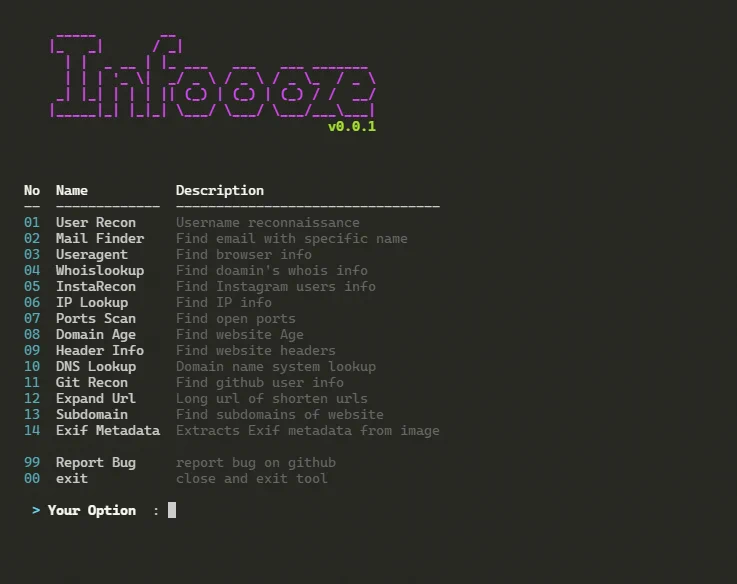
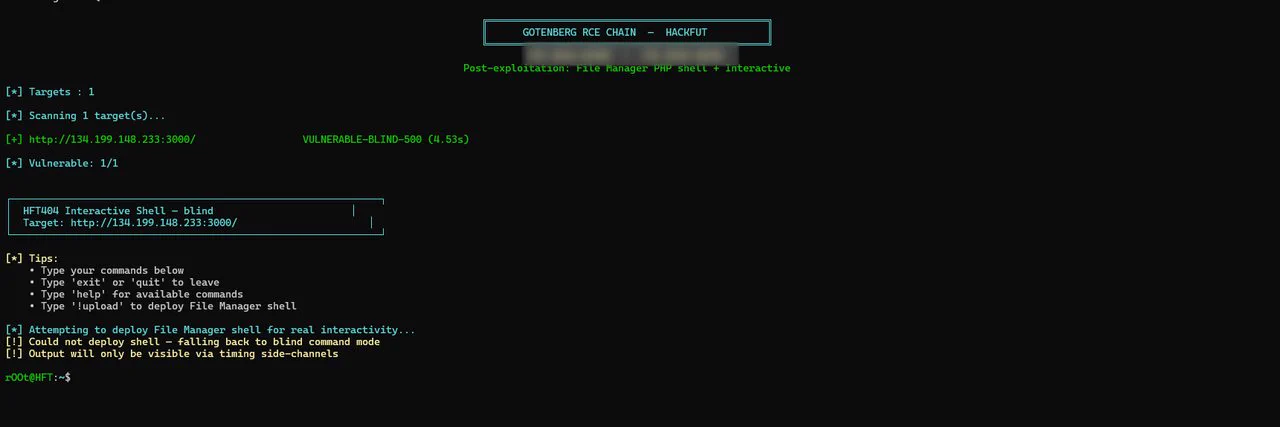
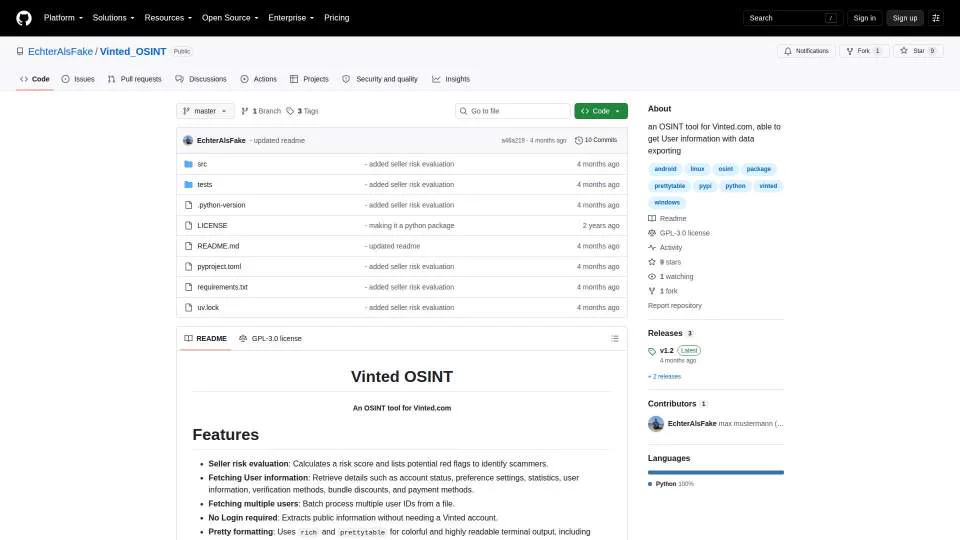

Showing 270 of 399
Show more