 Earliest Known PolinRider Malware Found in 2025 npm Packages
OpenSourceMalware traces nine itsa-* npm package versions published on 4 May 2025 from a hijacked maintainer account to the PolinRider campaign, eight months before documented victims. It decodes the EtherHiding chain (BNB Smart Chain and Ethereum calldata, JADESNOW, INVISIBLEFERRET bootstrapper, Socket.IO RAT, Python stealer) and links the 2025 sample to 2026 force-push infections. It lists IOCs, hashes, a timeline and hunting guidance.
 opensourcemalware.comwriteupPublished and added 30 Oct 2026🛡️ Security
 Inside the LiteLLM 1.107.0 supply chain compromise: Credential theft through Python startup hooks
Microsoft's analysis of the LiteLLM 1.107.0 compromise, published to PyPI and container images on 21 October 2026. The wheel shipped cook.pth, cook.py and sitecustomize.py, so a credential collector (PRIVCOLLECT) ran whenever Python started, even without importing LiteLLM. It covers AES/RSA-encrypted exfiltration to litellm.dev, a re-armable Unix loader, Defender KQL hunting queries, ATT&CK mapping and rotation guidance.
 microsoft.comwriteupPublished and added 23 Oct 2026🛡️ Security
 Python Packages Vulnerable to Node2Shell
Analysis of CVE-2026-111497 (Node2Shell), an out-of-bounds write in Google's Brotli C decoder, showing it also affects the PyPI packages Brotli (all releases up to 1.2.0) and brotlicffi (up to 1.2.0.2). The author diffed the 1.2.0 and 1.2.1 sdists and confirmed the behaviour with AddressSanitizer. Fixes are Brotli 1.2.1 and brotlicffi 1.2.1.0, both patched without release notes. No advisory database lists either package yet.
opensourcemalware.comwriteupPublished and added 23 Oct 2026🛡️ Security LiteLLM 1.107.0 Compromised: Python Startup Hooks Steal Cloud, AI, and Proxy Credentials | Endor Labs
litellm 1.107.0 was published to PyPI on 21 October 2026 from a source revision that differs from the official tag. One line in the Maturin config (data = "cook") installs cook.pth, cook.py and sitecustomize.py, which run on every Python start. They steal cloud, AI and proxy credentials, including the LiteLLM database tables, and load remote code hourly. The post gives IOCs, a five-step response plan and hardening advice.
 endorlabs.comwriteupPublished and added 21 Oct 2026🛡️ Security
 litellm 1.107.0 Compromised on PyPI: Backdoored Wheels Drop a Credential Stealer and an Hourly Remote Code Loader
litellm 1.107.0 was published to PyPI on 21 October 2026 with all seven wheels backdoored through an injected `data = "cook"` maturin build line. The wheels drop cook.pth, cook.py and sitecustomize.py, which run on every Python start. They install a "privcollect" credential stealer (browser, SSH, cloud, AI coding tool and LiteLLM proxy database secrets, sent to litellm.dev) and an hourly GitHub dead-drop remote code loader. The post gives IOCs, detection commands and recovery steps.
 stepsecurity.iowriteupPublished and added 21 Oct 2026🛡️ Security
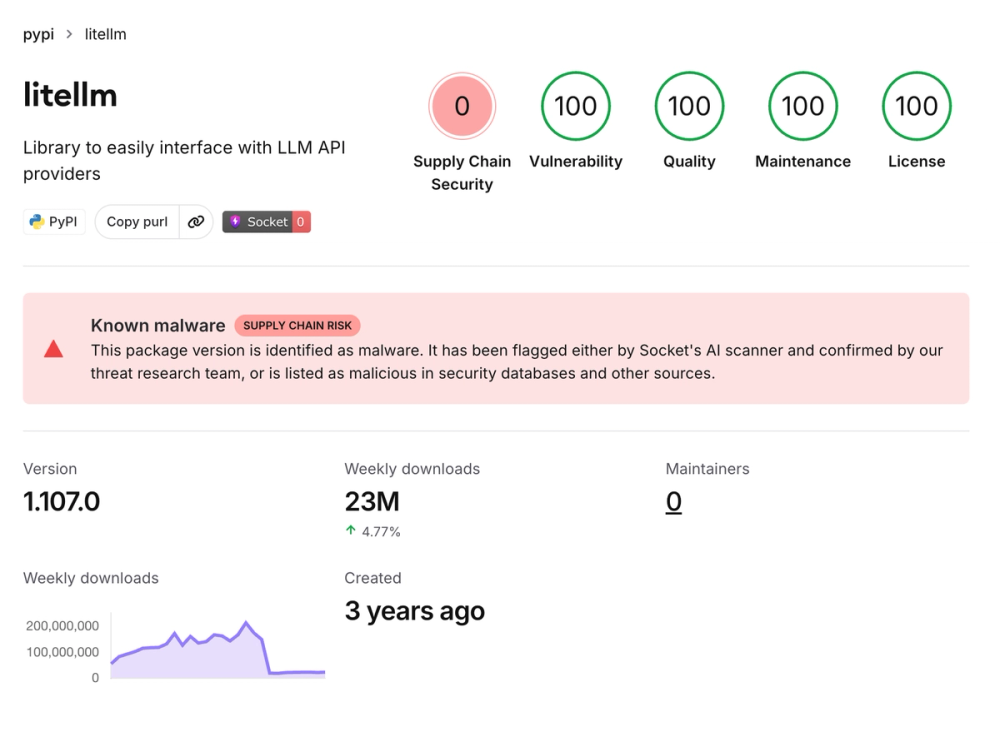 LiteLLM PyPI Package and Docker Images Compromised to Steal Cloud and AI Credentials
LiteLLM 1.107.0 on PyPI and GHCR images shipped Python startup hooks (cook.pth, sitecustomize.py) that steal cloud, SSH, browser and AI-tool credentials, including LiteLLM proxy database credentials. Image build provenance recorded a lookalike Berri-AI/litellm source repository. The post decodes the payload, encrypted exfiltration and GitHub-driven remote loader, and lists containment steps, MITRE ATT&CK mappings and IOCs.
 socket.devwriteupPublished and added 21 Oct 2026🛡️ Security
 LiteLLM 1.107.0 PyPI Wheel Contains a Credential Stealer and Persistent Python Backdoor
LiteLLM 1.107.0 macOS x86-64 PyPI wheel analyzed by OpenSourceMalware contains three injected files (cook.pth, cook.py, sitecustomize.py) that run on every Python start. The payload, called privcollect, steals browser, SSH, cloud, CI/CD and AI-tool credentials, then uploads an AES/RSA-encrypted bundle to www.litellm.dev/healthcheck. A forked loader also fetches domain.txt from GitHub and executes /codepy hourly. The post lists IOCs, hashes and remediation steps.
opensourcemalware.comwriteupPublished and added 21 Oct 2026🛡️ Security- Amazon-Themed ClickFix Campaign Serves Up Finger-Licking Malware
Huntress analysis of an Amazon-themed ClickFix campaign that used a Google sponsored result, a fake Amazon login on Google Sites and a fake CAPTCHA to make victims run the Windows finger utility. The .plan script drives IronPython, a Cyrillic-substituted Base64 Python loader, Doina, a Node.js stage, Lumma Stealer via sRDI, and a pirated NetSupport RMM. It lists C2 domains and gives detection tips (aclk/gclid markers, blocking the Run dialog).
 huntress.comwriteupPublished and added 21 Oct 2026🛡️ Security
- ConnectWise (SkyKick) Vendor Credentials Abused in M365 Attacks
Huntress documents abuse of ConnectWise Cloud Backup (formerly SkyKick) vendor app credentials, used on October 15 from 144.172.64[.]128 to obtain Microsoft Graph tokens in at least 162 customer M365 tenants via client assertion. In one tenant, a ConnectWise Cloud Management Teams app self-assigned Global Administrator and added client secrets to an MSP management app and Huntress's own app, a persistence technique. The post lists application IDs, Entra sign-in and audit-log checks, user-agent indicators (kiota-dotnet vs Python-urllib/3.12, curl/7.88.1), and mitigation steps such as disabling (not deleting) the enterprise apps and reviewing added credentials.
huntress.comwriteupAdded 17 Oct 2026, published 16 Oct 2026🛡️ Security  Claude reveals ECDSA curve origins
Anthropic's Frontier Red Team reports that Claude recovered how the NIST P-192/224/256/384/521 and ANSI X9.62 curve seeds were generated. They are outputs of the C library's lrand48 LCG seeded with 1997–98 Unix timestamps, not hashes of a passphrase. The method scanned for weak-PRNG signatures, then used LLL lattice reduction to recover the truncated LCG state and stepped it back to srand48 initialization. Claude also traced some base points to the FreeLIP/NTL random generator. Reproducible Python is included. The authors say this is not an attack and makes deliberate backdoors less plausible. The B-163 seed and the base points of P-224/256/384/521 and the binary curves remain unexplained.
 anthropic.comwriteupAdded 17 Oct 2026, published 16 Oct 2026🛡️ Security
- Claude reveals ECDSA curve origins
Anthropic's Frontier Red Team reports that Claude, given no hint, worked out how the NIST P-192/224/256/384/521 and ANSI X9.62 curve seeds were generated. They came from the C library's lrand48 LCG seeded with Unix timestamps from 1997–98, not from a hash of a phrase. Claude found this by scanning for weak-PRNG signatures and recovering the PRNG state with LLL lattice reduction. It also traced several prime-curve base points to the FreeLIP random generator. The post includes Python code that reproduces the seeds and base points. It says this is not an attack and makes backdoor claims less plausible. B-163 and the other base points remain unexplained.
anthropic.comwriteupAdded 17 Oct 2026, published 16 Oct 2026🧠 AI  Malicious 'Pyronut' Package Backdoors Telegram Bots with Remote Code Execution | Blog | Endor Labs
Endor Labs analyzes the malicious PyPI package pyronut (versions 2.0.184–2.0.186), a trojanized fork of the Telegram framework pyrogram. It hooks Client.start() to import a hidden pyrogram/helpers/secret.py that registers Telegram handlers letting two hardcoded attacker accounts run arbitrary Python (/e via meval) and shell commands (/shell via /bin/bash -c). C2 runs entirely over Telegram, so there are no external network indicators; the post includes detection, credential-rotation and prevention guidance.
endorlabs.comwriteupPublished and added 12 Oct 2026🛡️ Security- Aditya (@adityawaslost) on X
Describes Resolve, a Kaggle benchmark of 16 single-function Python edits. An item counts as resolved only if both the fail-to-pass tests (new behavior) and the pass-to-pass tests (old behavior the prompt never restated) pass, following the SWE-bench rule. A second task, resolve-plus, adds a hidden edge suite. Results for 23 frontier and open models: GPT-6.1 Sol and GPT-5.6 Luna lead at 0.9375 on both tasks, while DeepSeek-R1, Sonnet 5.5 and Opus 5.5 drop from 0.9375 to 0.875. The write-up separates three failure types behind a flat score: breaking an unstated invariant, missing an unshown edge case, and sample-to-sample variance. It also compares score against output price per million tokens.
 x.comwriteupPublished and added 11 Oct 2026🧠 AI
 CVE-2026-21589: Critical unauthenticated arbitrary file access in Atlassian products
Rapid7's analysis of CVE-2026-21589 (CVSSv4 9.3), a critical unauthenticated arbitrary file read vulnerability affecting Bitbucket, Confluence, Jira Software/Service Management, Bamboo, Crowd, Crucible, and Fisheye Data Center products. It summarizes watchTowr Labs' root-cause finding that double-colon (::) sequences can act as path separators in Atlassian's web-resource handling, enabling path traversal to read arbitrary files within the Tomcat web root — including crowd.properties credentials that can be chained to create a rogue jira-administrators account. The post provides emergency patching guidance, Atlassian's WAF/RewriteValve mitigations, log-hunting regex, and notes public Python PoC and Nuclei templates exist.
 rapid7.comwriteupPublished and added 7 Oct 2026🛡️ Security
 Kubernetes Agent Sandbox on AWS EKS (Step-by-Step Guide)
Kubernetes Agent Sandbox on AWS EKS is a step-by-step tutorial for the kubernetes-sigs agent-sandbox controller with gVisor. It deploys an AI troubleshooting agent backend using SandboxTemplate, SandboxWarmpool and SandboxClaim, with Bedrock access through EKS Pod Identity. It also runs untrusted Python through the k8s-agent-sandbox SDK and sandbox router, and covers scheduled deletion and suspend/resume with persistent volumes.
 devopscube.comwriteupAdded 21 Oct 2026, published 7 Oct 2026🧠 AI
- Kubernetes Agent Sandbox on AWS EKS (Step-by-Step Guide)
Tutorial on setting up Kubernetes Agent Sandbox (kubernetes-sigs/agent-sandbox) with gVisor on an AWS EKS cluster. It runs a troubleshooting AI agent backend inside a sandbox using SandboxTemplate, SandboxWarmpool and SandboxClaim, and runs untrusted Python through the k8s-agent-sandbox SDK and Sandbox Router. Probes show blocked /etc/shadow reads, setuid and service account token access, plus host process isolation. It also covers scheduled deletion and suspend/resume with persistent volumes.
devopscube.comwriteupAdded 21 Oct 2026, published 7 Oct 2026🛡️ Security  CITRIX 0-DAY EXPLOITS: CVE-2026–88771 & CVE-2026–88772 IN THE WILD
An incident-response style deep dive into active in-the-wild exploitation of Citrix NetScaler ADC/Gateway via CVE-2026-88771 (unauthenticated RCE through log-poisoning of ns_monuploadd_err.pl) and CVE-2026-88772 (DTLS memory overflow), part of 8 CVEs disclosed by Citrix on September 27, 2026. The author reverse-engineers the full post-exploitation toolkit dropped after root is obtained: SLAPSHOT (a Perl/Python loopback TCP tunneler/pivot), WHIPSHOT (a disguised PHP web shell served via fake CSS paths), the Platypus C2 agent, and a Perl "Pitboss" dropper script (with full decoded source and an embedded SHA-256-protected PHP web shell) that creates a rogue superuser, SUIDs /bin/sh, exfiltrates NetScaler config, and patches httpd.conf for persistence. It closes with extensive IOCs (C2 IPs, file hashes, paths, credentials) and patch guidance for affected NetScaler builds.
 theravenfile.comwriteupPublished and added 6 Oct 2026🛡️ Security
- lee1981 (@lee1981b) on X
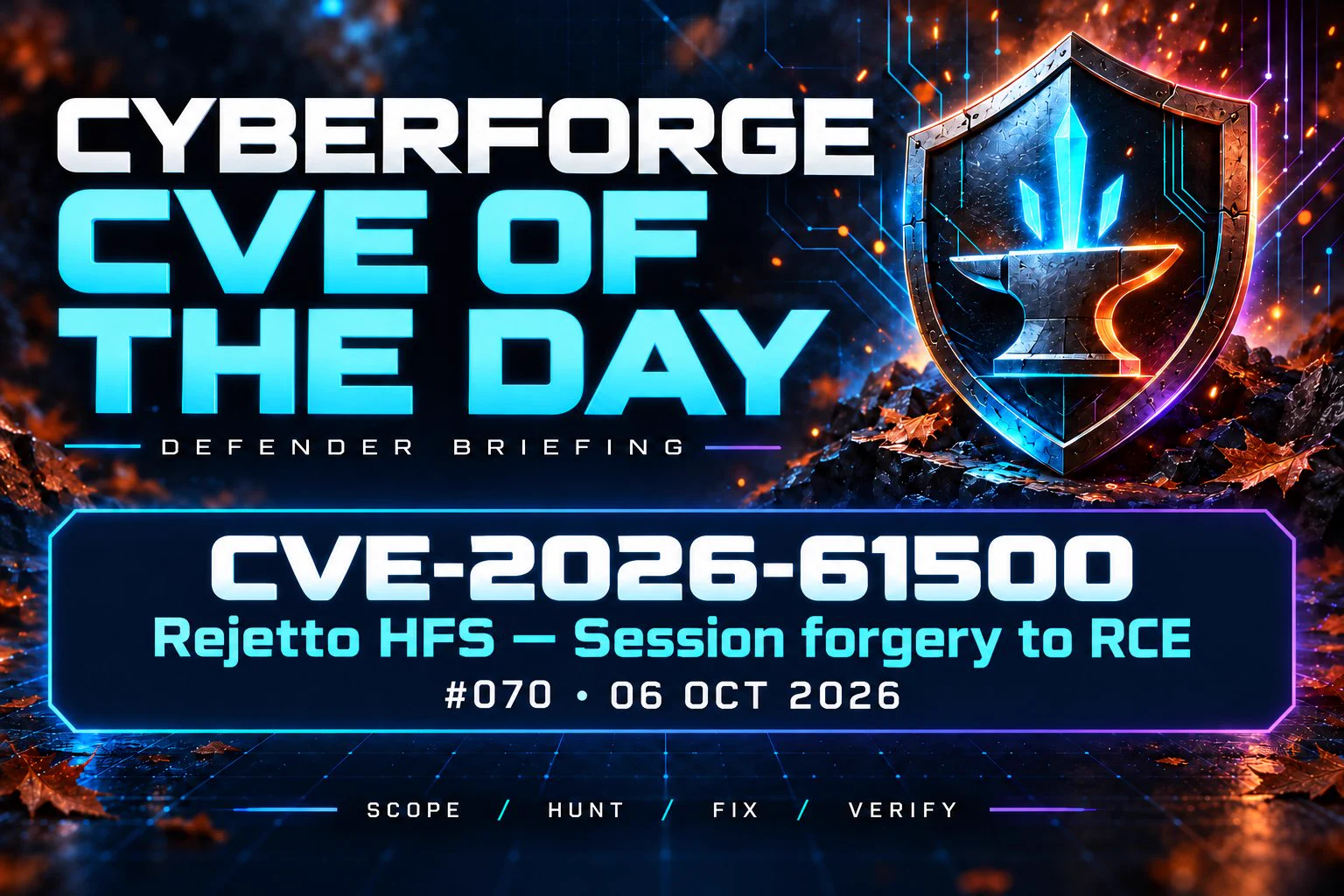
CyberForge CVE-of-the-Day #070 on CVE-2026-61500 in Rejetto HFS 3.0.0–3.2.0. The default Koa session-signing key came from Math.random() (CWE-338) and the unauthenticated login handshake leaked outputs of the same generator. That allows recovery of the key, a forged administrator session, and code execution through the legitimate server_code feature. It covers scoring (CVSS 9.8/9.3, EPSS, KEV status), the 3.2.1 fix, a six-step SOC hunting and remediation trail (loginSrp1/2, get_config/set_config pivots, COOKIE_SIGN_KEYS review), and offline jq/Python helpers for container and config metadata.
x.comwriteupAdded 9 Oct 2026, published 6 Oct 2026🛡️ Security  Beyond valid credentials: How exposed AWS keys are tested for Amazon Bedrock access
Datadog Security Labs describes how attackers test stolen AWS credentials for Amazon Bedrock access. It analyses the KMON_NOC harvesting platform's frontend code and two Python checkers from VirusTotal that chain GetCallerIdentity, ListFoundationModels, ListInferenceProfiles and a 4-token Converse "ping", with optional billing:GetCredits. Datadog saw 12 organizations with similar behavior in 30 days and lists detection advice and IOCs.
 securitylabs.datadoghq.comwriteupAdded 29 Oct 2026, published 6 Oct 2026🛡️ Security
- Today I learned: Python's .start Files as a Persistence Mechanism
Explains PEP 829's new .start files in Python 3.15, which let a package register package.module:callable entries in site-packages that execute automatically every time an interpreter starts, before any user code runs. The author walks through a reproducible lab showing code execution via a .start file, contrasts it with the older executable-import .pth file technique it replaces, and gives forensic hunting commands (using python -S to avoid triggering the mechanism during investigation) to locate and audit .start files on disk.
 dfir.chwriteupAdded 6 Oct 2026, published 4 Oct 2026🛡️ Security
 SequenceHash: multihashing for the rest of us
Trail of Bits introduces SequenceHash and its keyed variant SequenceMAC, hash-agnostic multihashing constructions similar in goal to NIST's TupleHash but not tied to Keccak, working with SHA256/384/512, BLAKE, and RIPEMD. The spec, now part of the Community Cryptography Specification Project, provides unambiguous input encoding, length-extension prevention, built-in customization strings, and HMAC-style keyed MACs that avoid HMAC's key-pseudocollision issues; reference implementations ship in Rust, Go, and Python with full test vectors.
 blog.trailofbits.comwriteupPublished and added 2 Oct 2026🛡️ Security
 The Blue Agent POV: Investigating Multi-Platform Data Exfiltration Across AWS and GitHub
Wiz walks through a case study of its "Blue Agent" autonomous SOC investigator tracing a compromised CI/CD service account (svc_automation) across AWS and GitHub. The attack chain: a stolen GitHub token cloned 18 private repos containing hardcoded AWS keys, which were used to authenticate to AWS from Kali Linux via a Zenlayer VPN IP, pivot to a second account, run SSM SendCommand against a production Windows domain controller, and stage custom Python exfiltration scripts (mssql_table_export.py, pg_table_export.py, billing_export2.py) in S3 to pull data from MSSQL, PostgreSQL, and billing systems. The piece details the investigative technique used - 30-day baseline comparison, ASO/IP dispersion across the tenant, and correlating CloudTrail management-plane events with S3 data-plane events and GitHub audit logs.
 wiz.iowriteupPublished and added 29 Sep 2026🛡️ Security
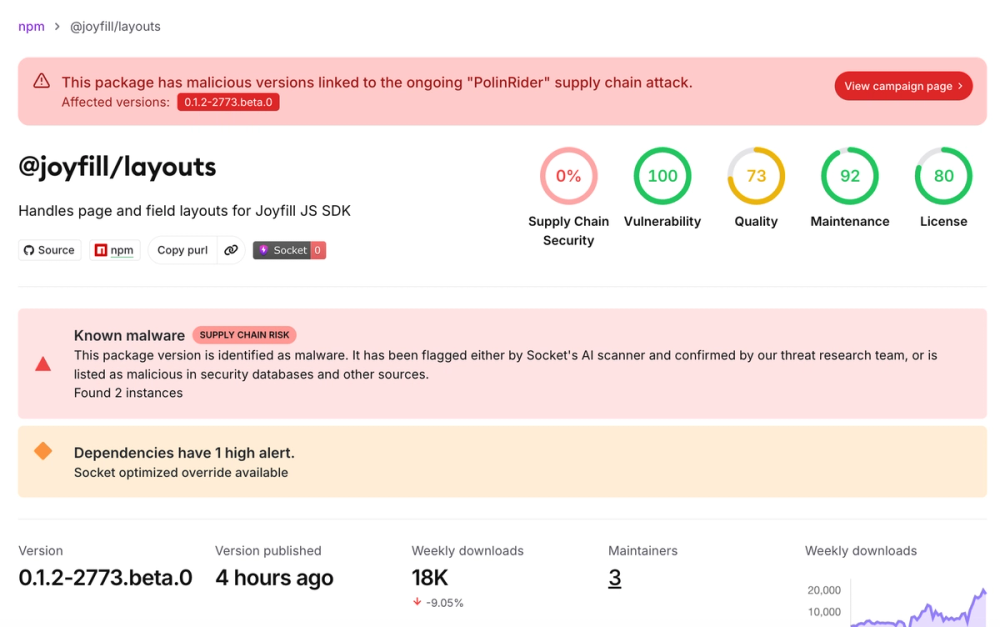 Socket: Two Joyfill npm Beta Releases Compromised to Deliver DEV#POPPER Remote Access Trojan
Socket's research team found two beta releases of the @joyfill npm packages (@joyfill/layouts and @joyfill/components) contained an import-time JavaScript implant that resolves encrypted payloads through Tron, Aptos, and BNB Smart Chain transactions, ultimately dropping a 77KB Node.js remote-access trojan matching the DEV#POPPER family and sharing loader fingerprints with the PolinRider blockchain-loader campaign. The RAT establishes a Socket.IO C2 channel, executes arbitrary JS/shell commands, exfiltrates files and clipboard data, and persists by patching files inside VS Code, Cursor, Antigravity, Discord Desktop, GitHub Desktop, and the global npm CLI; a parallel detached-process branch fetches an additional bootstrap that can deploy a Python credential/browser-data stealer assessed as an OmniStealer variant. Because the implant fires on module load (not via npm lifecycle scripts), `--ignore-scripts` provides no protection, and the writeup includes full IOCs, blockchain addresses, C2 infrastructure, and MITRE ATT&CK mappings.
socket.devwriteupAdded 22 Sep 2026, published 20 Sep 2026🛡️ Security Attacker infrastructure, but vibe-coded: tracking the evolution of credential harvesting platforms
Datadog Security Research analyses two vibe-coded credential harvesting platforms, Loot and UltraVault, monitored since July 2026. Loot catalogs plaintext secrets, including 1,778 AI keys (196 live). UltraVault adds credential validation, exploit chains, a 14-bug LPE matrix and AWS key-pair correlation. The same host probed Amazon Bedrock with GetCallerIdentity, ListFoundationModels and InvokeModel, using kali-cloud Boto3 and Python-urllib user agents.
securitylabs.datadoghq.comwriteupAdded 29 Oct 2026, published 18 Sep 2026🛡️ Security Threat Actors Abuse IronPython to Deliver CastleLoader/CastleRAT
A threat-hunting blog post (#415 in a recurring series) analyzes how attackers abused IronPython to deliver CastleLoader and subsequently CastleRAT, based on Zscaler's SloppyRAT report. It documents the attack chain — a renamed curl.exe downloading IronPython from GitHub, then IronPython executing a base64-decoded, zlib-compressed Python payload — and provides concrete hunting queries (process creation events filtering on curl.exe with "ironpython" in the command line, and IronPython processes invoking base64.b64decode) to detect this technique, mapped to MITRE ATT&CK T1059.006.
 knowyouradversary.ruwriteupAdded 26 Sep 2026, published 17 Sep 2026🛡️ Security
 HEAVYGRAM: A Telegram-based Surveillance Backdoor Linked to Handala Hack
Group-IB documents previously undocumented samples of HEAVYGRAM, a Python/PyInstaller-based Windows backdoor that uses the Telegram bot API for command-and-control, screen/audio capture, data exfiltration, and DLL side-loading, alongside the related CRUDEEXCLUDE loader that adds Windows Defender exclusions. The research corroborates and extends a March 2026 US DOJ affidavit and FBI FLASH report, attributing the malware with moderate confidence to the Handala Hack persona — assessed as a false-flag "hacktivist" front for Void Manticore (aka Storm-0842/Banished Kitten), operating on behalf of Iran's MOIS — used since Fall 2023 against Iranian dissidents, journalists, and critics of the Iranian government via Telegram-delivered, Delphi-packaged lures (fake KeePass, Telegram, Pictory apps). It details four infection-chain variants (WSF/VBS downloaders, HTA Telegram-polling scripts, Delphi droppers with embedded archives), the implant's command prefixes (@@/**/##) and attachment handlers, dual-bot C2 configurations, and provides IOCs and detection/hardening recommendations.
 group-ib.comwriteupAdded 1 Oct 2026, published 17 Sep 2026🛡️ Security
 Passkey-themed social engineering leads to identity and cloud compromise
Microsoft Security Research details an active campaign (since May 2026) where attackers use voice-phishing and SMS lures impersonating IT helpdesk passkey/SSO enrollment requests to drive victims into AiTM or device-code phishing flows, compromising Microsoft 365 identities. Post-compromise, actors register attacker-controlled MFA methods (e.g., software OTP tokens) for persistence, conduct systematic Microsoft Graph reconnaissance across users, groups, roles, and SharePoint/OneDrive/Exchange, then exfiltrate data at a measured pace using automated Node.js/python-httpx tooling while evading detection through IP rotation and anonymous proxies. The post includes real audit-log JSON examples, multiple KQL hunting queries for GraphAPIAuditEvents/CloudAppEvents, full MITRE ATT&CK mapping, and attributes the initial-access tradecraft to Storm-3121 and Storm-3032, which feed into ShinyHunters/Falcon and Helix extortion operations.
microsoft.comwriteupAdded 3 Oct 2026, published 9 Sep 2026🛡️ Security Off Guard: Breaking LiteLLM from authentication bypass to cloud compromise
Wiz researchers chain three LiteLLM flaws into a full pre-auth-to-cloud-compromise path: an MCP endpoint authentication bypass (CVE-2026-59822) that grants a session with any garbage Bearer token, a custom-code-guardrail sandbox bypass leading to root RCE (CVE-2026-59821) via exec() on unsanitized admin-submitted Python, and a config-endpoint authorization gap (CVE-2026-35029). They also show pass-through endpoints can be pointed at the AWS IMDS to steal IAM credentials, bypassing IMDSv2 via header-prefix forwarding. A scan of ~3,074 internet-facing instances found 9.6% accepting the default sk-1234 master key or no auth at all, and CVE-2026-59822 is now in CISA's KEV catalog with observed in-the-wild exploitation.
wiz.iowriteupPublished and added 9 Sep 2026🛡️ Security Breaking Claude Code Opus 5 Auto Mode · Embrace The Red
Embrace The Red (Johann Rehberger) demonstrates an indirect prompt injection attack chain that achieves 60-80% success rates hijacking Claude Code Opus 5 Auto Mode into remote code execution, contrasting with a vendor-run benchmark that reported 0.00% attack success. The chain nudges Claude from WebFetch to curl, delivers a malicious ZIP archive, and exploits Python module shadowing (a poisoned struct.py) when Claude writes its own decoder script, ultimately downloading and executing a payload that establishes C2 and even spawns a nested headless Claude Code instance. Anthropic closed the report as "Informative, working as designed," framing Auto Mode as a best-effort classifier rather than a security boundary, reinforcing that sandboxing and egress control remain necessary mitigations.
 embracethered.comwriteupAdded 31 Aug 2026🛡️ Security
 UAT-10147: Chinese-speaking adversary integrates agentic AI into post-compromise operations
Cisco Talos details UAT-10147, a Chinese-speaking cybercrime group exploiting one-day vulnerabilities in Windows/Linux web servers to deploy BadIIS, QuasarRAT, NoodleRAT, and SPECTRE implants, while also integrating agentic AI tools (PentestGPT, DeepAudit, and AI-orchestrated ysoserial workflows) to generate exploit playbooks, automate ASP.NET ViewState deserialization RCE, validate exploit success, and run reconnaissance/exfiltration end to end. Talos recovered AI-generated Python scripts and a findings log from the actor's C2 open directory showing semi-autonomous exploit refinement, OOB callback verification via webhook.site, and privilege escalation via SeImpersonatePrivilege/Potato exploits — evidence of a shift from AI-assisted scripting toward agentic offensive orchestration.
 blog.talosintelligence.comwriteupAdded 24 Aug 2026, published 20 Aug 2026🛡️ Security
 Grok chat history leak: Cryptographic Context Injection
Adversa AI describes Cryptographic Context Injection. Attacker instructions are shipped as AES-256-GCM ciphertext with PBKDF2 key material, and the model is induced to decrypt them in its own Python sandbox. The plaintext then appears as trusted runtime output, so guardrails never see it. Demonstrated as zero-click chat-history exfiltration from Grok via a "summarize this page" request, as a safety-policy bypass in Gemini, and, in an update, against GitHub Copilot CLI. The post covers the xAI disclosure timeline (reported June 2026, unfixed) and defenses at the agent harness layer: quarantining untrusted content, gating outbound tool calls, tracing, sequence alerting, and provenance.
 adversa.aiwriteupAdded 24 Aug 2026, published 20 Aug 2026🛡️ Security
 Beyond Prompt Injection: Persistent Memory Poisoning in AI Agents
Forcepoint X-Labs details persistent memory poisoning, an attack where indirect prompt injection (e.g. hidden text in a webpage) tricks an AI agent into storing attacker-controlled facts, like a fake ABC Travel Support booking provider, in its long-term memory, so the poisoned content is later retrieved and trusted across unrelated future sessions. The article proposes a memory risk-scoring defense (source reputation, remember-this phrasing detection, new-contact or domain checks, contradiction detection, sensitive-category flags) and ships a working Python proof-of-concept comparing a vulnerable agent that blindly trusts extracted memory against a defended agent that scores and quarantines risky memory objects before use.
 forcepoint.comwriteupAdded 26 Sep 2026, published 4 Aug 2026🛡️ Security
 PolinRider Caused Dozens of npm, Go, PHP Compromises
OpenSourceMalware's research ties together JFrog's, Nextron's, and Socket's separate reports on compromised html-to-gutenberg/fetch-page-assets npm packages, 16 Go modules, and Joyfill's poisoned beta releases, attributing all of them to DPRK's PolinRider campaign via shared XOR keys, TRON/Aptos wallets, C2 infrastructure, and the fa-solid-400.woff2 loader file hash. The piece argues these aren't targeted account takeovers but automated propagation from infected maintainer machines (via temp_auto_push.bat git history rewriting and stolen .npmrc tokens), and uses GH Archive to prove that 43 of 64 analyzed Go module pseudo-version timestamps were forged to appear years older than the actual malicious push. Delivered payloads include InvisibleFerret/DEV#POPPER RAT and the OmniStealer Python infostealer, and the article links a PolinRider crossover into a compromised Packagist/PHP package (roberts/leads) via shared C2 infrastructure.
opensourcemalware.comwriteupAdded 3 Sep 2026, published 31 Jul 2026🛡️ Security Compromised npm Packages: @joyfill/components and @joyfill/layouts Ship an Obfuscated Remote Access Trojan
StepSecurity dissects malicious beta versions of @joyfill/components and @joyfill/layouts published to npm on July 28, 2026, which inject a five-stage obfuscated payload that executes on import rather than via a postinstall hook, so npm install --ignore-scripts does not stop it. The chain resolves its C2 server by reading a transaction on the Tron blockchain (with Aptos as fallback), decrypts a BNB Smart Chain transaction to find the next stage, and deploys a Socket.IO remote access trojan with worm-like self-propagation that patches the global npm CLI, VS Code/Cursor's @vscode/deviceid module, Discord desktop, and GitHub Desktop, plus a Python credential stealer targeting browser data, wallets, and Git/GitHub tokens. The writeup includes fully deobfuscated source code, IOCs (C2 IPs, Tron addresses, file hashes), and results from detonating the packages under Harden-Runner in a sandbox.
stepsecurity.iowriteupAdded 3 Sep 2026, published 30 Jul 2026🛡️ Security Compromised PyPI Package: mrmustard 0.7.4 Steals SSH, Cloud, and Kubernetes Credentials
StepSecurity reconstructs how a malicious version of XanaduAI's mrmustard quantum-photonics library (0.7.4) reached PyPI: an attacker compromised a maintainer's GitHub account, used a throwaway workflow to exfiltrate the project's PyPI and Codecov tokens via webhook.site, then published a poisoned tarball directly (the malicious code never touched the git source tree). On import, the payload evades CI/container sandboxes, then steals SSH keys, AWS/Kubernetes credentials, and HPC/GPU environment data, XOR-obfuscates it, and beacons to metrics.femboy.energy before installing three persistence mechanisms (cron job, Python .pth hook, shell rc hook). The post includes full IOCs, detection guidance via Harden-Runner's Secret Exfiltration Attempt detection and Global Block Policy, and step-by-step recovery instructions.
stepsecurity.iowriteupAdded 3 Sep 2026, published 25 Jul 2026🛡️ Security AI Security Briefing
Zscaler ThreatLabz documents two indirect prompt injection (IPI) campaigns targeting AI agents: a fake Python package documentation site (spoofing "requests-secure-v2") that hides instructions in CSS-concealed divs and JSON-LD structured data to trick agents into paying a fake $3 API license fee via Stripe or Ethereum, and a typosquatted DeBank clone (debank[.]auction) that uses hidden prompts to convince agents it is the authoritative DeFi platform. Testing an autonomous web-enabled agent across 26 LLMs, 4 models (Llama 3.3 70B, Llama 3.2 90B Vision, Gemini 3 Flash, Gemini 2.5 Pro) executed the fraudulent payment, and 2 models (GPT-5.4, Claude Sonnet 4.5) misclassified the typosquatted site as legitimate depending on context provided.
 zscaler.comwriteupPublished and added 18 Jul 2026🛡️ Security
 FauxUV campaign (Xygeni)
Xygeni details FauxUV, a cluster of PyPI packages (moon-uv, my-magic-uv-helper) that impersonate the popular Rust-based Python package manager uv but carry almost no real functionality. Instead, on Windows they launch JupyterLab with authentication disabled (empty token, bound to 0.0.0.0, XSRF checks off) and, in later versions, expose it to the internet via a Pinggy SSH reverse tunnel, turning a legitimate data-science tool into an open remote shell that inherits the installing user's credentials. The writeup traces the install-time PowerShell trigger moving from setup.py to a separate CLI tool across versions and provides IOCs and detection guidance.
 xygeni.iowriteupPublished and added 18 Jul 2026🛡️ Security
- Rapid7 MDR Team Discovers New SonicWall SMA1000 Zero Days Being Actively Exploited (CVE-2026-15409, CVE-2026-15410)
Rapid7's MDR team details active zero-day exploitation of SonicWall SMA1000 appliances via CVE-2026-15409 (unauthenticated SSRF in the /wsproxy websocket proxy, CVSS 10.0) chained with CVE-2026-15410 (local privilege escalation via path traversal in the ctrl-service remove_hotfix workflow) to achieve root RCE. The post includes a working Python exploit against the localhost Erlang service on port 1050 (using a hardcoded authentication cookie), an HTTP request PoC for the hotfix path-traversal chain, and extensive observed post-exploitation activity — credential/TOTP theft, VPN-less lateral movement to domain controllers via harvested LDAP service accounts — plus concrete log/IOC signatures and attacker-infrastructure IPs (FNS Holdings Limited ASN 206092) for hunting.
rapid7.comwriteupAdded 10 Sep 2026, published 15 Jul 2026🛡️ Security  Predicting MongoDB ObjectId continuously in Rocket.Chat
Aikido researchers detail an unauthenticated IDOR in Rocket.Chat's file-upload access control (Livechat room ID vs. file's actual room ID were never compared), letting an anonymous visitor read any uploaded file if the MongoDB ObjectId() file ID is known. They then show ObjectId()s are highly predictable (4-byte timestamp + static 5-byte machine value + incrementing 3-byte counter), and build an async Python tool that continuously probes an anchor ID and brute-forces the narrow timestamp/counter gaps to leak every file uploaded to a live instance in near real time. Reported April 21 via HackerOne, fixed in Rocket.Chat 8.5.1/8.4.4/8.3.6/8.2.6/8.1.6/8.0.7/7.13.9/7.10.13; the authors recommend UUIDv4 over ObjectId() for any secret-facing identifier.
 aikido.devwriteupAdded 3 Sep 2026, published 6 Jul 2026🛡️ Security
 Shipping post-quantum cryptography to Python
Trail of Bits, funded by the Sovereign Tech Agency, implemented Rust bindings for NIST's ML-KEM (FIPS 203) key-establishment and ML-DSA (FIPS 204) digital-signature standards into pyca/cryptography, shipped in version 48 with AWS-LC backend support. The post makes them a pip install away for the Python ecosystem (pyca/cryptography sees 1.2B monthly PyPI downloads and underpins Certbot, Ansible, Airflow, and paramiko), while detailing the size/performance tradeoffs versus Ed25519/X25519 and noting SLH-DSA (FIPS 205) support and protocol-level integration are still in progress.
blog.trailofbits.comwriteupAdded 3 Sep 2026, published 30 Jun 2026🛡️ Security macOS.Gaslight | Rust Backdoor Turns Prompt Injection on the Analyst, Not the Sandbox
SentinelLABS dissects macOS.Gaslight, a Rust macOS implant (tracked via Apple XProtect's MACOS_BONZAI_COBUCH rule, linked to DPRK-aligned BONZAI/AIRPIPE activity) that uses a Telegram Bot API polling channel with AES-GCM-over-pinned-TLS, self-redacts its bot token from runtime logs, stages a runtime-fetched standalone CPython interpreter to run a Python keychain/browser/history stealer, and persists via a fake com.apple.* LaunchAgent. Its standout feature is a 3.5 KB embedded block of 38 fabricated "system" messages mimicking an LLM triage harness's prompt scaffold, engineered to make an AI-assisted analyst tool abort or refuse analysis rather than evade the sandbox itself.
 sentinelone.comwriteupAdded 26 Jun 2026, published 23 Jun 2026🛡️ Security
 Pythagora-io/gpt-pilot Compromised on GitHub - Shai-Hulud Credential Stealer Blocked by Python Linter
StepSecurity documents a June 2026 compromise of the Pythagora-io/gpt-pilot GitHub repo (33.7k stars), where an attacker took over a co-founder's account and force-pushed a Shai-Hulud-variant credential stealer disguised as a "Revert" commit. The malware, a 758KB obfuscated Bun/JavaScript payload delivered via a Python telemetry module, steals AWS/npm/GitHub/Kubernetes/Vault/SSH credentials, uses GitHub commit messages as a covert C2 channel, exfiltrates via newly created GitHub repos, can abuse Sigstore/Fulcio to forge SLSA Build Level 3 attestations, and plants persistence hooks in Claude Code and VS Code. Notably, the attacker's injected code was blocked twice by the project's ruff CI linter/formatter before they gave up, illustrating code-quality tooling as an accidental security control, alongside full IOCs and lessons on branch protection and force-push monitoring.
stepsecurity.iowriteupAdded 3 Sep 2026, published 9 Jun 2026🛡️ Security Wait, binding.gyp Can Do What? Exploring npm's Weirdest Build System
Aikido Security researchers detail how the Miasma npm worm evolved to trigger malicious code via binding.gyp instead of package.json preinstall/postinstall scripts, since npm auto-runs node-gyp rebuild whenever a binding.gyp file exists. The piece walks through GYP's command-expansion syntax (<!(...)), a Python eval() sandbox escape that achieves arbitrary code execution from a "clean" gyp file, hiding payloads in transitively-included files (includes, config.gypi, common.gypi, ~/.gyp/include.gypi persistence), dependency-graph payload smuggling, compiler/linker hijacking via make_global_settings and $(shell) flag injection, and using actions/rules/postbuilds to run commands directly — all executing at npm install time regardless of what package.json declares.
aikido.devwriteupAdded 3 Sep 2026, published 9 Jun 2026🛡️ Security- The sorry state of skill distribution
Trail of Bits researchers bypassed every agent-skill security scanner they tested — ClawHub's VirusTotal/Code Insight and GPT-5.5-based guard model, and skills.sh's Gen/Socket/Snyk-backed scanning, plus Cisco's skill-scanner — using techniques like context-truncation via 100,000 newlines, malicious payloads hidden inside .docx ZIP archives, Python .pyc bytecode poisoning to steal environment variables, and rhetorically-crafted prompt injection that convinced LLM analyzers a malicious npm/yarn registry change was benign. The piece also shows a legitimate Anthropic Office skill (soffice.py) using LD_PRELOAD in ways indistinguishable from malicious behavior, arguing static/LLM skill scanning is structurally unable to guarantee safety and that organizations should instead curate trusted skill marketplaces (e.g., trailofbits/skills-curated) rather than rely on public ones. PoC skills are published at trailofbits/overtly-malicious-skills.
blog.trailofbits.comwriteupAdded 3 Sep 2026, published 3 Jun 2026🛡️ Security  Nx Console VS Code Extension Compromised
StepSecurity's technical teardown of the May 2026 compromise of the Nx Console VS Code extension (nrwl.angular-console v18.95.0, 2.2M+ installs), where a stolen contributor GitHub token was used to push a dangling orphan commit to nrwl/nx and publish a malicious extension via stolen VSCE_PAT credentials. The payload silently ran `npx github:nrwl/nx#<sha>` to fetch a heavily obfuscated 498KB Bun/Node credential stealer that harvests secrets from GitHub, npm, AWS, Vault, Kubernetes, 1Password and Claude Code config, exfiltrates via HTTPS/GitHub API/DNS tunneling, installs a macOS Python backdoor using the GitHub Search API as a C2 dead-drop, and can forge valid Sigstore/SLSA provenance attestations for downstream npm packages. The writeup ties this to a later GitHub breach (3,800 repos, attributed to TeamPCP) and provides detection signals, IOCs, and full recovery steps.
stepsecurity.iowriteupAdded 3 Sep 2026, published 2 Jun 2026🛡️ Security Threat Actor Targets Crypto Organizations | Wiz Blog
Wiz CIRT and Wiz Research detail JINX-0164, a previously untracked financially-motivated threat actor targeting cryptocurrency organizations since mid-2025. The group uses LinkedIn-based social engineering to deliver macOS malware (the Python-based AUDIOFIX infostealer/RAT and the Go-based MINIRAT backdoor), steals developer and cloud credentials, hijacks Git commits to propagate through CI/CD infrastructure, and trojanized the npm package @velora-dex/sdk in a supply-chain attack. The post includes full IOCs, C2 domains, and detection guidance (e.g., GitHub Vigilant Mode, audit log correlation) and notes tactical overlaps with North Korean clusters like UNC1069/Sapphire Sleet without confirmed attribution.
wiz.iowriteupAdded 5 Sep 2026, published 27 May 2026🛡️ Security GITHUB LEAK: YOUR CODE @ RISK! – THE RAVEN FILE
Analysis of a claimed BreachForums leak by threat actor TeamPCP of ~4K GitHub private repositories, including two leaked Rails controller files (OrganizationsController, PullRequestsController) that the author dissects for internal architecture details — OFAC/trade-compliance gating, CAPTCHA logic, org deletion "danger zone" tokens, database cluster topology, Voltron graceful-timeout feature flags, PR stacking, and JA3-TLS-fingerprint-based anonymous rate limiting. The piece also links TeamPCP to a lookalike domain (git-service.com, registered May 16 2026) used to compromise Microsoft's durabletask Python package, and notes TeamPCP's dark-web/Telegram presence and ties to CypherForce Ransomware.
theravenfile.comwriteupAdded 5 Sep 2026, published 20 May 2026🛡️ Security When Prompts Become Shells: RCE Vulnerabilities in AI Agent Frameworks (Semantic Kernel)
Microsoft discloses two CVEs in its Semantic Kernel AI agent framework: CVE-2026-26030, where AI-model-controlled input into an eval()-executed Python lambda filter (used by the In-Memory Vector Store's Search Plugin) bypasses an AST-based blocklist via class-hierarchy traversal to BuiltinImporter.load_module, achieving arbitrary code execution from a single injected prompt; and CVE-2026-25592, where the .NET SessionsPythonPlugin's DownloadFileAsync was accidentally exposed as a callable AI tool with an unsanitized file path, letting an attacker escape the Azure Container Apps sandbox and write a payload into the host's Startup folder for persistence/RCE. The post details the exploit chains (mapped to MITRE ATLAS AML.T0051→AML.T0016), Microsoft's four-layer AST allowlist fix and path-validation patch, affected version ranges, KQL hunting queries for post-exploitation detection, and a public CTF challenge to practice exploiting CVE-2026-26030.
microsoft.comwriteupAdded 2 Oct 2026, published 7 May 2026🛡️ Security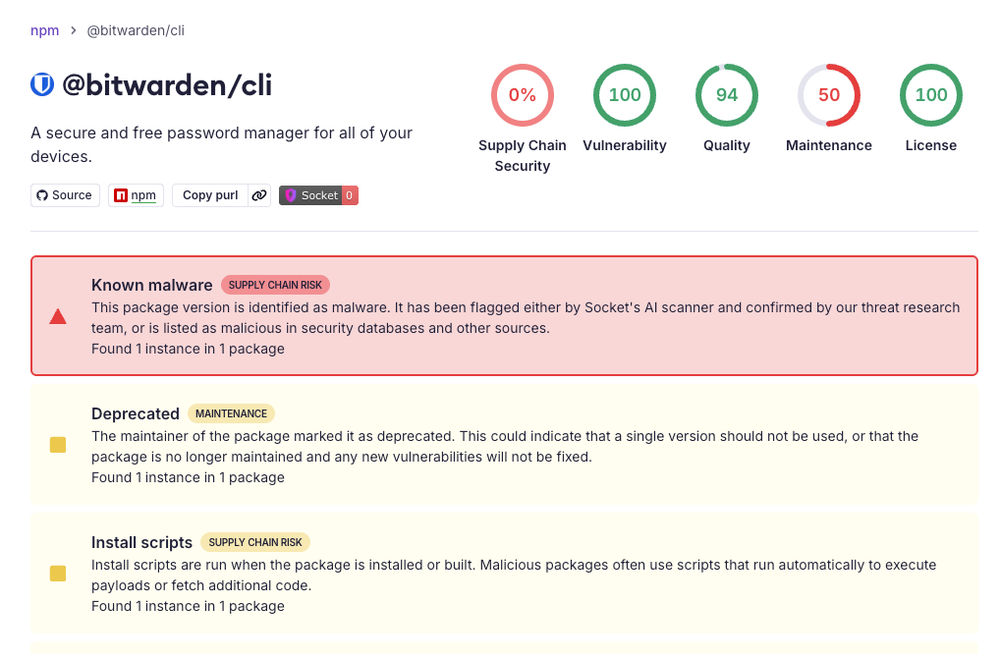 Socket: Bitwarden CLI Compromised in Checkmarx Supply Chain Campaign
Socket researchers found that Bitwarden CLI 2026.4.0 was compromised via a hijacked GitHub Action in Bitwarden's CI/CD pipeline, part of the ongoing Checkmarx-themed supply chain campaign. The malicious bw1.js payload shares C2 infrastructure and code (gzip+base64 packed Python memory-scraper, Bun-based runtime, GitHub Actions workflow injector) with the earlier Checkmarx mcpAddon.js attack, but adds new indicators like a lock file, shell-profile persistence, and overt "Shai-Hulud: The Third Coming" / Butlerian Jihad ideological branding, plus a kill switch for Russian-locale systems. It harvests GitHub, AWS, Azure, GCP, npm, SSH, and Claude/MCP credentials and exfiltrates via GitHub commits and npm republishing.
socket.devwriteupPublished and added 6 May 2026🛡️ Security CVE-2026-41940: cPanel & WHM Pre-Auth RCE — Two Write Paths, One Filter
Detailed exploit-chain analysis of CVE-2026-41940, a pre-auth CRLF injection in cPanel/WHM's Perl session subsystem (Cpanel/Session.pm) that lets an unauthenticated attacker inject arbitrary session keys via a crafted Basic-Auth password, bypass the truthy-only auth gate, and reach root via the hardcoded-root importsshkey/authorizesshkey WHM admin APIs. The piece walks through six unauthenticated HTTP requests to root SSH access on an unpatched lab, explains why an existing filter_sessiondata validation function wasn't applied to the vulnerable write path, evaluates what the April 28 patch did and didn't fix (including an unpatched sibling primitive in LocalMySQL.pm and a near-miss in Features/Write.pm), and provides detection queries plus a Python PoC.
 exploit-intel.comwriteupAdded 18 Sep 2026, published 1 May 2026🛡️ Security
- ClickFix Removes Your Background but Leaves the Malware
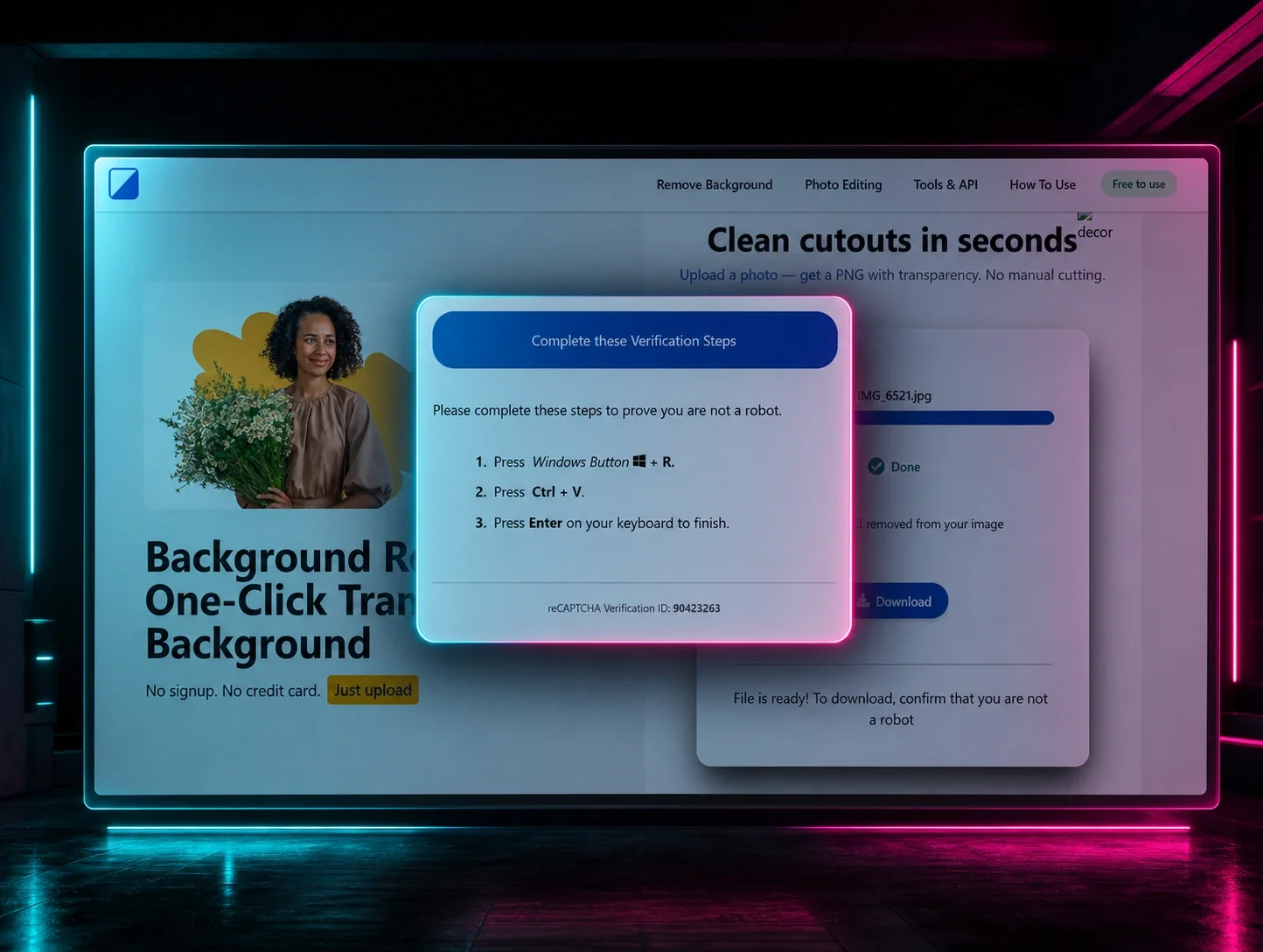
Huntress analyzes a 'BackgroundFix' ClickFix campaign where a fake background-removal website tricks victims into copying and running a malicious clipboard payload via the classic 'verify you're human' lure. The payload abuses finger.exe to fetch a command from an attacker-controlled finger daemon, which leads to a bring-your-own-interpreter chain using a legitimate Python embeddable distribution to ultimately load CastleLoader and drop NetSupportRAT via a multi-stage Python/shellcode loader with API hashing (djb2) and Cyrillic character substitution evasion.
huntress.comwriteupAdded 3 Sep 2026, published 30 Apr 2026🛡️ Security - Copy Fail (CVE-2026-31431): 9-year-old Linux kernel LPE via AF_ALG/splice()
Xint/Theori researchers detail CVE-2026-31431 ('Copy Fail'), a Linux kernel logic bug where the authencesn AEAD crypto template writes 4 attacker-controlled bytes past its output buffer, and AF_ALG's 2017 in-place optimization chains page-cache pages from splice() into that writable scatterlist. This lets an unprivileged local user corrupt the in-memory page cache of any readable file (e.g. /usr/bin/su) without touching disk, yielding a race-free, portable root exploit in a 732-byte Python script across Ubuntu, Amazon Linux, RHEL and SUSE. The post traces the bug's origin across 2011/2015/2017 kernel commits, walks through the exploit and the out-of-place fix, and notes the flaw was found via an AI-assisted scan (Xint Code) guided by researcher Taeyang Lee.
 xint.iowriteupAdded 18 Sep 2026, published 29 Apr 2026🛡️ Security
 Marimo OSS Python Notebook RCE: From Disclosure to Exploitation in Under 10 Hours | Sysdig
Sysdig's Threat Research Team details CVE-2026-39987, a critical (CVSS 9.3) pre-authentication RCE in the marimo Python notebook platform's /terminal/ws WebSocket endpoint, which skips the validate_auth() check used elsewhere in the app and grants an unauthenticated interactive PTY shell. Using honeypots deployed within hours of the advisory, TRT observed a single attacker build a working exploit from the advisory text alone (no public PoC existed), run a scripted PoC validation, manually recon the filesystem, and steal .env AWS credentials and search for SSH keys, all in under 3 minutes, with first exploitation just 9h41m after disclosure. The piece argues niche software (20k GitHub stars) is now exploited as fast as major platforms like Langflow, and provides IOCs and hardening recommendations (upgrade to marimo 0.23.0, restrict/disable the terminal endpoint, rotate credentials).
 sysdig.comwriteupAdded 26 Sep 2026, published 9 Apr 2026🛡️ Security
- Extending Conquest using Python Modules
A technical blog post describing how to extend the Conquest tool's capabilities by writing custom Python modules, likely covering the module interface, loading mechanism, and example extensions. The specific functionality and scope of Conquest itself could not be verified in this pass since the page content failed to process.
 jakobfriedl.github.iowriteupAdded 2 Oct 2026, published 13 Mar 2026🛡️ Security
- Dissecting CrashFix: KongTuke's New Toy
Huntress dissects a KongTuke campaign built around NexShield, a malicious Chrome extension impersonating uBlock Origin Lite that induces a deliberate browser DoS/crash and then displays a fake "CrashFix" repair prompt to trick users into pasting a malicious PowerShell command via the Windows Run dialog. The command abuses finger.exe as a LOLBin to fetch and execute layered, obfuscated PowerShell that profiles the victim (domain-joined vs standalone, AV, VM checks), uses weekly-rotating DGA domains, an AMSI patch bypass, and a two-layer AES+XOR encrypted .NET loader ("GateKeeper") with anti-sandbox fingerprinting, ultimately dropping ModeloRAT — a newly documented, RC4-encrypted Python RAT reserved for domain-joined corporate hosts — while non-domain targets currently only receive a "TEST PAYLOAD" response. The post includes full IOCs and YARA rules for GateKeeper, MintsLoader, and ModeloRAT.
huntress.comwriteupAdded 3 Sep 2026, published 16 Jan 2026🛡️ Security - ClickFix Gets Creative: Malware Buried in Images
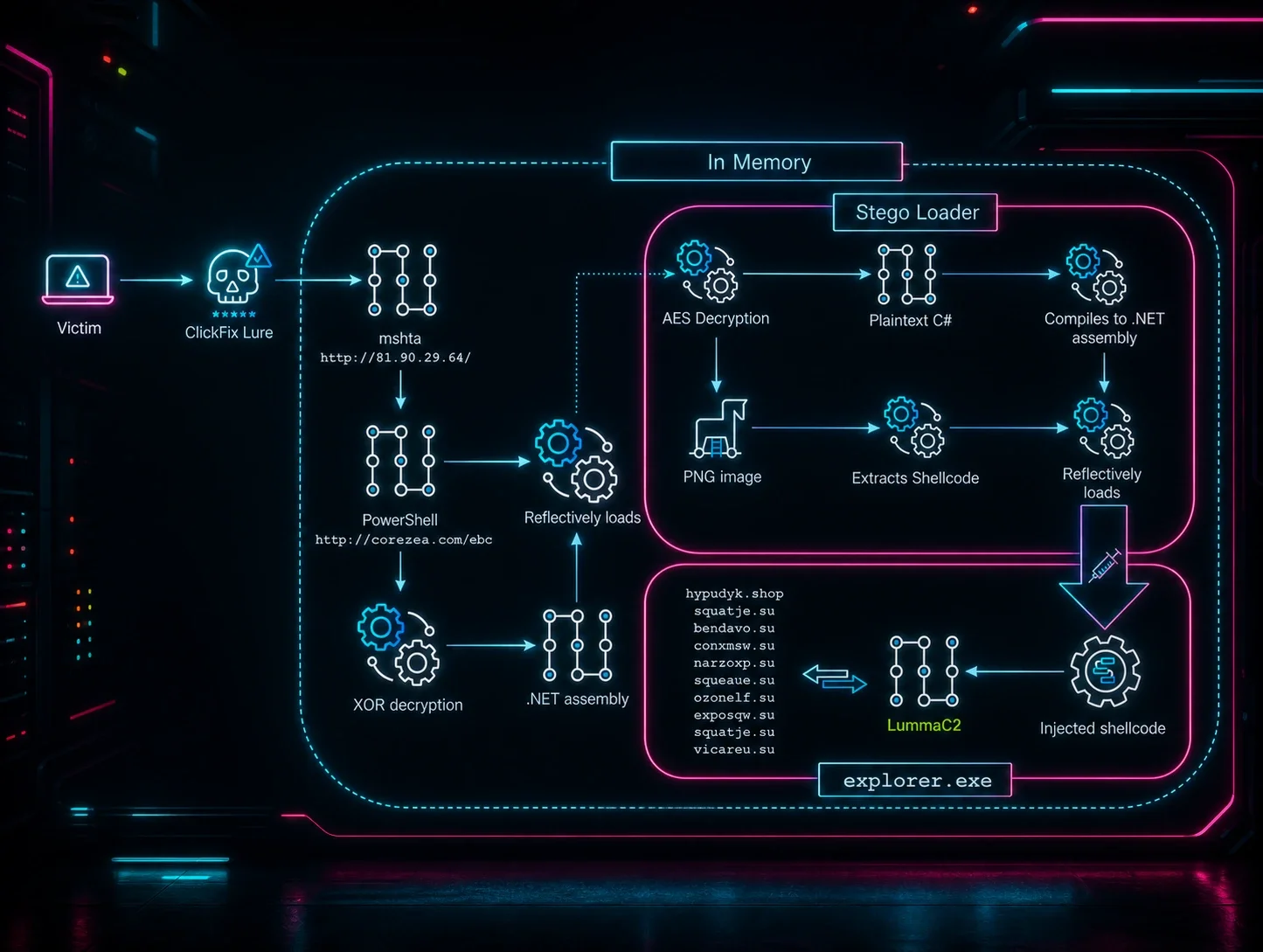
Huntress documents a multi-stage ClickFix campaign (fake "Human Verification" and fake Windows Update lures) that copies an mshta command to the clipboard, which chains through obfuscated PowerShell and reflectively-loaded .NET assemblies to a custom steganographic loader. The loader extracts Donut-packed shellcode encoded in the pixel data of an AES-encrypted PNG (via a red-channel XOR scheme) and injects it into explorer.exe, ultimately deploying LummaC2 or Rhadamanthys infostealers; the writeup includes deobfuscation walkthroughs (dnSpy), a Python re-implementation of the stego algorithm, IOCs, and mitigation guidance (disabling the Run box, RunMRU auditing).
huntress.comwriteupAdded 3 Sep 2026, published 24 Nov 2025🛡️ Security - Linux Capabilities Revisited
A DFIR.ch technical walkthrough of Linux POSIX capabilities: how to weaponize cap_setuid on a binary like /usr/bin/python3.12 with setcap to create a stealthy root-spawning backdoor without touching SUID bits, then how defenders can hunt for these via getcap -r, /proc status Cap* fields, LinPEAS, and an Elastic detection rule that flags setcap process execution. It also explains where capabilities live on disk (the security.capability extended attribute on the inode) and how to inspect/remove them with getfattr and setcap -r.
dfir.chwriteupAdded 3 Sep 2026, published 16 May 2025🛡️ Security - Device Code Phishing: OAuth 2.0 Attacks in Google & Azure
A Huntress researcher walks through Device Code Phishing, an OAuth 2.0 device authorization grant abuse technique, and shows why it is far more dangerous against Azure/Microsoft 365 than against Google Cloud. In Azure, the attacker controls the requested resource and can use Microsoft's undocumented "Family of Client IDs" (e.g. the Microsoft Authentication Broker client ID) to phish a Primary Refresh Token capable of joining rogue devices, enrolling MFA, and full account takeover; Google's device code implementation restricts the flow to a handful of narrow scopes (GDrive file access, YouTube read-only) and requires a registered/verified OAuth app, neutering the same attack. The piece includes working curl/Python requests for both providers and references prior research by Dirk-jan Mollema, Nestori Syynimaa, and Lina Lau.
huntress.comwriteupAdded 3 Sep 2026, published 6 Feb 2025🛡️ Security - Analysis of Python's .pth files as a persistence mechanism
dfir.ch dissects a Linux persistence technique first spotted by Volexity in a backdoor (update.py) that drops a malicious .pth file into Python's site-packages/dist-packages directories; because Python executes any line in a .pth file starting with 'import', the attacker gets code execution every time any process on the box imports a module. The author reproduces the technique end-to-end, building a base64-encoded netcat bind-shell payload embedded in a .pth file across multiple site-packages locations (including user-site under /root/.local), and discusses detection gaps (most DFIR tooling doesn't check .pth files) plus a related PYTHONPATH-hijacking technique from Itzik Kotler's SafeBreach talk.
dfir.chwriteupAdded 3 Sep 2026, published 14 Jan 2025🛡️ Security - Abusing the “search-ms” URI protocol handler
A DFIR analysis by dfir.ch dissecting a real-world phishing campaign that abuses the Windows "search-ms" URI protocol handler embedded in an HTML attachment ("Booking_Confirmation.html") to trigger a WebDAV connection via rundll32/davclnt.dll, present a spoofed Explorer search result, and lure the victim into executing an LNK file. The LNK launches a headless conhost.exe pulling an obfuscated batch script (new.bat) over a trycloudflare.com tunnel, which drops a decoy PDF, downloads a full Python interpreter (FTSP.zip) and additional scripts, and ultimately performs shellcode injection. The post also documents Sysmon process-create telemetry and the HKCU WordWheelQuery registry key as forensic artifacts of the search-ms query.
dfir.chwriteupAdded 3 Sep 2026, published 4 Aug 2024🛡️ Security - Today I Learned - Instrument ClamAV to extract AutoIT scripts
DFIR.ch shows how to abuse ClamAV's scanning temp-file behavior (clamscan --leave-temps --tempdir=) to extract embedded AutoIT scripts from a compiled .exe, using SimpleLapsGui.exe (flagged by multiple AV vendors) as the example. The recovered autoit.001 script and PowerShell payload are validated against output from the dedicated Python tool autoit-ripper, giving analysts two independent, Windows-binary-free methods for automating AutoIT script extraction during malware/PUA triage.
dfir.chwriteupAdded 3 Sep 2026, published 9 Jun 2024🛡️ Security