Weekly Research Brief: Binance Hacked; Hyperliquid on Wall Street; Prediction Markets’ Brazil ‘Miss’
Galaxy Research's weekly brief of 30 October 2026 opens with the Binance hack: about $6.3b drained across 10 blockchains, attributed by TRM Labs and Chainalysis to TraderTraitor (Lazarus-linked). The attacker used EIP-7702 with 50 pre-signed authorizations on Ethereum, and Binance's preliminary finding is a compromised DevOps laptop reaching a service container. Tether and Circle froze about $2.6b. The other sections cover Hyperliquid and prediction markets.
 galaxy.comarticleAdded 30 Oct 2026🛡️ Security
- Artificial Analysis (@ArtificialAnlys) on X
Hyperflow H3 is Video Rebirth's 8-step LoRA for MiniMax H3, released in September 2026 with open weights. Artificial Analysis ranks it #5 on AA-Video-I2V v2.1 and #3 on AA-Video-Editing v1.1, ahead of MiniMax H3 (768p). It costs $9.00 per minute for Image to Video and $18.00 for Video Editing at 1088p, under half of Dreamina Seedance 2.5 ($34.12 and $40.82). The thread gives per-capability and per-use-case breakdowns.
 x.comthreadAdded 31 Oct 2026, published 30 Oct 2026🧠 AI
 Rekt - News or Hype?
Rekt's "News or Hype?" compares four October 2026 AI headlines with their sources. These are Justin Drake's "bunker mode" ECDSA warning, Anthropic's Claude tracing NIST curve seeds to lrand48, OpenAI's agent spending Sepolia ETH from a default-mnemonic account, and Wiz's "AI uncovers" PHP RCE claim of 70% reach. It ends with four questions for checking claims.
 rekt.newsarticleAdded 30 Oct 2026🧠 AI
 Rekt - NEAR Intents - Rekt
Rekt News analysis of the 30 September to 1 October 2026 theft of 3.865 million USDT from the NEAR Intents HOT Bridge treasury on BNB Chain, paid out in five signed withdrawals after a 10 USDT deposit. It uses Bitquery's trace of laundering via Chainflip, THORChain, KuCoin and Hyperliquid, and a NEAR regression test showing an oversized refund log made mt_resolve_deposit fail. NEAR said the funds were returned but published no report.
rekt.newsarticleAdded 29 Oct 2026🛡️ Security- Rekt - News or Hype?
Rekt News piece tracing three AI-security headlines back to their sources. It covers Justin Drake's October 2026 "bunker mode" warning about AI breaking ECDSA, OpenAI's report of a model spending Sepolia test ETH from a default developer mnemonic, and Wiz's "70% of the Internet" claim for PHP CVE-2026-109618 and CVE-2026-109619. It closes with four questions for checking a claim.
rekt.newsarticleAdded 29 Oct 2026🛡️ Security  Fake crypto app on Apple App Store linked to $23K wallet theft
Padre Terminal, a fake Solana meme-coin trading app on the Apple App Store, drained about $23,000 from 27 Solana wallets after users imported private keys, per blockchain investigator Iris. The app has been removed, but the drainer stayed active; Iris traced funds to two attacker wallets holding 229.66 SOL. Iris also flagged four other suspected impersonator apps (Axiom Pro: Focus, GMGN AI, HyperTerminal-HyperliquidTools, Pump Fun Tokens & Analitycs).
 bleepingcomputer.comarticleAdded 30 Oct 2026, published 29 Oct 2026🛡️ Security
 Hygentra: AI Trading Agents Kept 97.5% of Losses by Value Within Limits
Hygentra's six-month study (February to August 2026) audited four AI trading agents, each with its own strategy and preset risk rules, through a 29% Bitcoin decline and recovery. 97.5% of losses by value stayed within limits, 23 of 24 runs respected the five-open-trade cap, and no agent raised risk after a loss. Trade records and testing tools were published; 18% of positions were real Hyperliquid orders, the rest simulated with a 0.09% round-trip fee.
 en.cryptonomist.charticlePublished and added 28 Oct 2026🧠 AI
- Mitsubishi Electric and Mitsubishi Electric Iconics Digital Solutions GENESIS, GENESIS64, ICONICS Suite, Hyper Historian, AnalytiX, MobileHMI, IoTWorX, MC Works64, GENESIS32 and BizViz
CISA advisory ICSA-26-300-02 covers four vulnerabilities in Mitsubishi Electric and Mitsubishi Electric Iconics Digital Solutions GENESIS64, ICONICS Suite, Hyper Historian, AnalytiX, MobileHMI, IoTWorX, MC Works64, GENESIS32 and BizViz. CVE-2023-4863 (CWE-787 out-of-bounds write) allows code execution; CVE-2026-16436 and CVE-2026-16437 allow authentication bypass; CVE-2026-16438 allows arbitrary operations. Fixes are 10.97.3, 10.98 and GENESIS 11.04. MC Works64, GENESIS32 and BizViz are affected in all versions, and MC Works64 has no fix planned. Mitigations include removing the ClientChallengeTable.dat or SecurityChallenges.dat file contents. The fetched text was truncated, so later content is not covered.
 cisa.govadvisoryAdded 29 Oct 2026, published 26 Oct 2026🛡️ Security
 The rise and fall of Jev hype
The essay uses the launch of Jev, TypeSafe AI's "System One" general-purpose classifier trained with RLCD, to dissect AI marketing patterns: name dropping, jargon, ambiguity, inflated claims and drama. The author argues Jev's hype peaked and collapsed within about 33 days, while open-weight rivals beat it on cost and performance. It also lists incremental advances since ChatGPT and four unsolved problems: abstract reasoning, continuous learning, embodiment and the economics of running AI.
 blog.alexewerlof.comarticleAdded 24 Oct 2026, published 23 Oct 2026🧠 AI
 Inside AMD and Anthropic’s ‘chips for shares’ deal
Protos reports on the AMD and Anthropic compute deal: Anthropic commits to buy over $20 billion of AMD AI compute, up to 2 GW of Instinct MI450 chips from the first half of 2027, while AMD commits up to $5 billion to Anthropic stock through fiscal 2028. It cites WSJ reporting that hyperscalers cap Anthropic's compute, and Anthropic's 2025 operating loss above $8 billion on $4.6 billion revenue.
 protos.comarticlePublished and added 21 Oct 2026🧠 AI
 Mastercard’s agent payments enter early access after nine-payment demo
Mastercard's Agent Pay for Machines lets AI agents buy digital services with signed payment vouchers inside a business-set task, permission and budget. On 20 October 2026 it opened Early Access with buyer and seller APIs, a toolkit, sandbox and docs. In the Hype demo at Cloudflare Connect, an agent made nine payments to two providers over the x402 protocol. The system is still at pilot stage.
en.cryptonomist.charticlePublished and added 20 Oct 2026🧠 AI ZachXBT Flags $20M XMR Laundering Ring on Hyperliquid
FreedomXMR (FXMR) is a centralized Monero swap service on Hyperliquid Core that appeared in August 2026. ZachXBT's manual review of every inflow above $10K traced over $20M, more than 87% of volume, to ransomware, malware and exploits including DCENT Wallet, Fetch.ai, Axelar and Gamdom. The admin sources XMR liquidity from KuCoin and won the FXMR ticker in an auction for 518.28 HYPE.
 bankless.comarticlePublished and added 20 Oct 2026🛡️ Security
 Zippel: A Language, Compiler, Runtime, and Analyzer for ZK Proof Systems
Zippel is a language, compiler, runtime and analyzer for writing zero-knowledge proof systems in syntax close to the pseudocode in cryptography papers. Its type system and runtime remove vulnerability classes by construction, for example by synchronizing transcripts automatically and applying the Fiat–Shamir transform correctly. Its static analyses check completeness and soundness from the protocol description alone. The authors implemented 35 proof systems, including Sumcheck, Schnorr, KZG, Groth16, Bulletproofs, Hyrax, Spartan, Dory, HyperPlonk, DeKART and Pari. They report performance competitive with hand-written multi-core implementations.
 eprint.iacr.orgpaperAdded 17 Oct 2026, published 16 Oct 2026🛡️ Security
 Dark Web Informer (@DarkWebInformer) on X
Social post from DarkWebInformer announcing a released proof-of-concept for CVE-2026-82957, a server-side request forgery in Hyperledger FireFly. The flaw lies in webhook subscriptions, where a user-controlled webhook URL is accepted without validating the destination host. The PoC is hosted in a hakaioffsec GitHub repo.
x.comthreadAdded 15 Oct 2026, published 14 Oct 2026🛡️ Security Microsoft Patch Tuesday for October 2026 — Snort rules and prominent vulnerabilities
Talos summarises Microsoft's October 2026 Patch Tuesday, which covers 1415 vulnerabilities, 85 of them critical (67 RCE). One bug is exploited in the wild: CVE-2026-96951, a Windows Shell security feature bypass. The post groups the CVEs by Microsoft's exploitability rating (more likely, less likely, unlikely) with CVSS and CWE for each, covering Windows, Office, Exchange, Hyper-V, DHCP, QUIC, Outlook and Azure. It also lists the Snort 2 and Snort 3 rule ID ranges that detect exploitation attempts.
 blog.talosintelligence.comadvisoryPublished and added 13 Oct 2026🛡️ Security
- Dark Web Informer (@DarkWebInformer) on X
Social post announcing a PoC (hakaioffsec) for CVE-2026-82957, an SSRF in Hyperledger FireFly ≤ 1.5.0 (CVSS 8.5). Webhook subscriptions accept a user-controlled URL without validating the destination host, letting the FireFly node reach internal services, private networks, loopback and cloud metadata endpoints. The PoC creates a malicious webhook subscription, triggers a matching event and confirms the request originates from the FireFly server.
x.comthreadPublished and added 13 Oct 2026🛡️ Security  There's little that's "inevitable" about AI
An essay arguing that LLM adoption is not "inevitable". It sets four criteria for inevitability: output not markedly inferior, socially valuable work, overwhelming advantage, and no cheap way to neutralise the technology. Firearms pass all four, the magnetic compass does not, and chemical weapons (following Bret Devereaux) are the closest analogy for LLMs. The author concludes LLMs fail the two criteria that matter most. They are useful mainly to weaker players, and strong practitioners can outcompete them once belief in the hype erodes.
 deadsimpletech.comarticleAdded 11 Oct 2026, published 10 Oct 2026🧠 AI
 TokenRouter: Efficient Serving System for Token-Level LLM Routing
TokenRouter is a serving system for token-level routed LLM inference, where different tokens of one request are routed across different models. It uses request-centric programming with model-centric execution: developers write routing logic per request while the runtime launches a subserver per LLM and dispatches requests asynchronously. Each subserver uses a delayed-batching scheduler whose hyperparameters come from a mathematical throughput model, fixing step desynchronization and batch admission delays and giving 2.01-64.15x higher decoding throughput than existing systems.
 huggingface.copaperAdded 9 Oct 2026🧠 AI
 Multi-Stream Attention Residuals
Introduces Multi-Stream Attention Residuals (MSAR), which extends Attention Residuals (AttnRes, single-stream softmax attention over network depth) to multi-head depth attention. Heads get diverse views through multi-scale causal convolutions over sequence context, and the retrieved streams are merged by lightweight adaptive mixing into a single-stream layer input, so no persistent multi-stream storage or communication is needed. It beats standard residuals, manifold-constrained Hyper-Connections (mHC) and AttnRes on 12 downstream benchmarks at 18B and 28B MoE scales, with an iso-loss compute speedup of 1.58x versus 1.35x for AttnRes and 1.30x for mHC.
 arxiv.orgpaperAdded 12 Oct 2026, published 9 Oct 2026🧠 AI
- Exploit Reversing #10: iOS Security Research (Part 1)
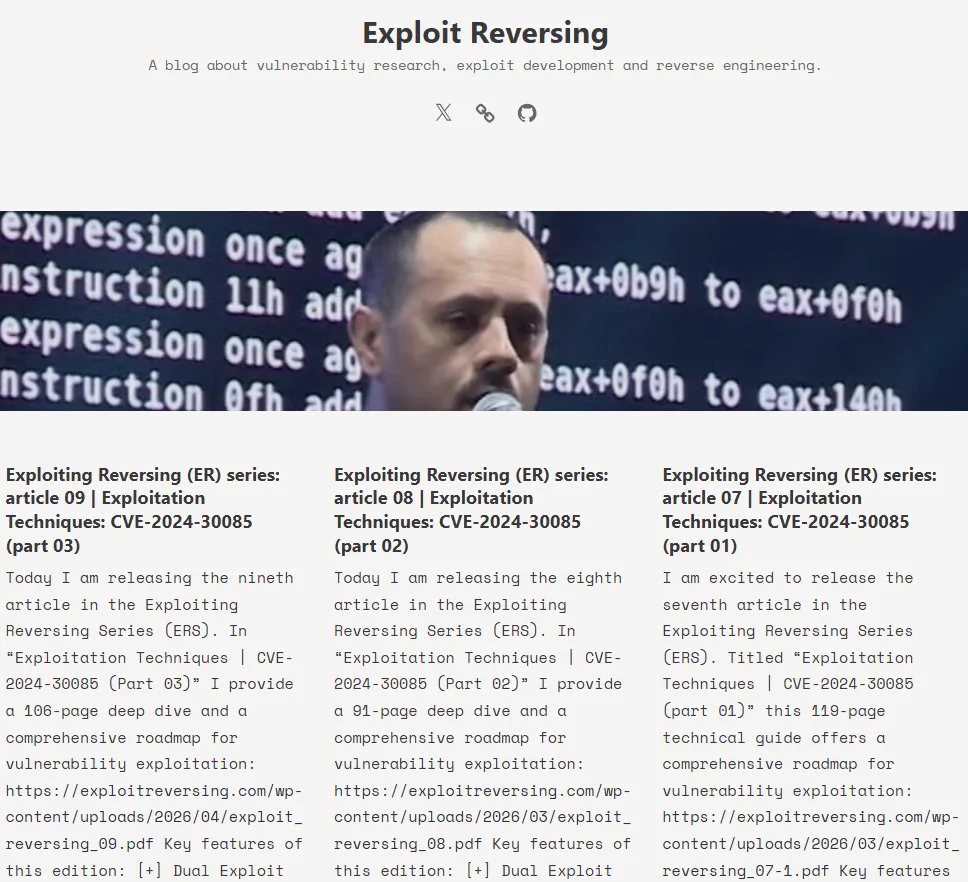
First installment of a new iOS-focused arc in Alexandre Borges's "Exploit Reversing" series, detailing how to build a practical iOS vulnerability-research lab (Mac host, Apple Virtualization.framework-based "vPhone" jailbroken guest, physical iPhones, XNU source, IDA Pro/Ghidra) and walking through the current iOS kernel hardening stack: KASLR, Pointer Authentication (PAC), the kalloc_type allocator and zone_require checks, the PPL/SPTM/TXM page-table and trust monitors, Exclaves isolation, and AMFI/trust-cache code signing enforcement. It also references the public Titan PPL/SPTM bypass (A14–A17 devices, iOS 16.1–17.4 beta 3) as the state of the art for defeating these protections. Part of a long-running, actively published series on Windows, iOS, and hypervisor exploitation.
 exploitreversing.comarticleAdded 8 Oct 2026🛡️ Security
- A Closer Look at Agentic BBO: Benchmarking LLM Agents for Black-Box Optimization
Introduces AgenticBBO-Bench, a benchmark for LLM-agent black-box optimization across synthetic functions, hyperparameter optimization, database tuning, chip design and molecular design under a unified finite-budget protocol. Agentic BBO beats direct LLM methods in all five domains and the best numerical optimizers in four. Ablations show extra numerical tools don't consistently help, task semantics help more than specific priors, and numerical optimizers can absorb gains from agent-found trajectories. A five-task frontier challenge evaluates seven LLMs under the Codex agent harness, with GPT-6 Astra and DeepSeek-V4.1-Flash on the performance-cost Pareto frontier.
arxiv.orgpaperAdded 9 Oct 2026, published 8 Oct 2026🧠 AI - microsoft/mxc
MXC is Microsoft's cross-platform sandboxed code execution system for running untrusted workloads — model output, plugins, and tool calls — behind a unified containment model with Rust, .NET, and Node SDKs. It offers multiple containment backends (ProcessContainer, Windows Sandbox, LXC, Bubblewrap, Seatbelt, MicroVM/Nanvix, Hyperlight, WSLC) with JSON-based filesystem, network, and UI policies, plus diagnostics like audit mode for building policies from observed access.
 github.comrepoAdded 8 Oct 2026🧠 AI
- microsoft/mxc
MXC is Microsoft's cross-platform sandboxed code execution system for running untrusted code such as LLM/agent output, plugins, and tools, offering containment backends ranging from OS-native process sandboxes (Windows Sandbox, LXC, Bubblewrap, Seatbelt) to full VMs (Nanvix MicroVM, Hyperlight). It exposes a unified JSON-based policy model for filesystem, network, and UI access controls, with Rust, .NET, and Node SDKs plus diagnostic tooling (audit mode, access-denied logging) to help developers tune containment rules for agentic workloads.
github.comrepoAdded 8 Oct 2026🛡️ Security - Training Parallel Speculative Draft Models by Directly Minimizing Expected Decoding Rounds
The paper formalizes speculative decoding as a Markov reward process and derives the Expected Decoding Rounds (EDR) objective, a hyperparameter-free training loss equal to the expected number of decoding rounds, addressing cross-round coupling that prior block-local surrogate objectives ignore. It derives an exact temporal-difference gradient for unbiased stochastic optimization and an offline evaluator for comparing drafters on shared rollouts without running speculative decoding. Finetuning the DSpark and DFly drafters with EDR improves mean accepted length and beats prior training objectives across nine benchmarks in math, code, and chat.
arxiv.orgpaperAdded 8 Oct 2026, published 7 Oct 2026🧠 AI  The Cyber Risk Discourse is Broken
Nathan Lambert's Interconnects op-ed argues the "open weights are a cyber weapon" discourse ignores that documented real-world AI-enabled cyber incidents to date trace mostly to closed-API models (OpenAI), not open-weight ones, and critiques Anthropic's GLM-5.3 offensive-cyber risk report for not engaging with the trade-offs of banning open models. It also unpacks how Chinese labs (e.g., Kimi K3, GLM-5.3) assess and register AI risk differently from US labs, and contrasts the hype around Claude Mythos's hypothetical leak with GLM-5.3's actual open release having caused no comparable societal disruption.
 interconnects.aiarticlePublished and added 6 Oct 2026🛡️ Security
 Sandboxes Explained: What Each Type Actually Isolates | Blog | Endor Labs
An Endor Labs primer surveying what different sandbox technologies actually isolate: hypervisor-based VMs (Firecracker microVMs, the VENOM floppy-controller escape CVE-2015-3456, Spectre/Meltdown), Linux containers (namespaces/cgroups/seccomp, the runc host-overwrite escape CVE-2019-5736, gVisor's userspace kernel, Kata Containers' per-pod microVMs), and language-runtime sandboxes (Java's deprecated SecurityManager, V8 isolates behind Cloudflare Workers, WebAssembly/WASI's capability model). It then pivots to AI agent sandboxing, arguing the threat model flips from "what can this process touch" to "what actions can this confused-deputy agent take," framed around Simon Willison's lethal trifecta (private data, untrusted content, external communication) and controls like filesystem scoping, egress allowlists, scoped short-lived credentials, and session-level audit logging.
 endorlabs.comarticlePublished and added 2 Oct 2026🛡️ Security
 Tencent Hy4 preview (open-weight MoE + Sherry quantization)
Hy4 preview is Tencent's new flagship Mixture-of-Experts language model: 770B total parameters with 49B activated per token across 78 layers (256 routed experts + 1 shared expert, top-8 routing), plus a native 10B multi-token-prediction layer for speculative decoding. It introduces Gated DeepSeek Sparse Attention with IndexCache for cross-layer index reuse and identity Hyper-Connections (iHC) on the residual path, and in blind internal evaluations on engineering tasks it edges out GLM-5.3 and Kimi K3. Weights (including an FP8 variant) are released under Apache 2.0 on Hugging Face with vLLM/SGLang deployment recipes and AngelSlim-based quantization/compression tooling.
huggingface.corepoAdded 2 Oct 2026🧠 AI- Multimodal Flow: Unified Flow Modeling of Language and Vision in Embedding Spaces
Multimodal Flow (MF-1) is a fully continuous generative model that unifies language and vision modeling by representing both text and images as ordered continuous "hyperchunks" processed through a single shared chunk-causal Flow Matching backbone, avoiding the visual quantization bottleneck of discrete-token unified models and the mismatched objectives of hybrid discrete/continuous approaches. Joint attention handles cross-modal interaction while modality-specific feed-forward networks process each modality, and the model predicts multiple chunks in parallel during training but generates sequentially at inference. Pretrained at 0.6B/1.2B/1.6B scales on 150B tokens, MF-1 scores 82.8 average on GenEval/DPG-Bench and 75.3 on VQAv2/MMBench/POPE, remaining competitive with unified models trained on far more data and outperforming matched hybrid/discrete baselines; code and model are publicly released.
arxiv.orgpaperAdded 1 Oct 2026, published 30 Sep 2026🧠 AI - EvE: An Alternate Optimizer to Adam
EvE (Evolutionary Explorer) is a steady-state, population-of-four differential evolution optimizer with a targeted Adam fallback, proposed as an alternative to Adam for cheap, early ranking of configurations in hyperparameter and architecture search. Under a fixed evaluation-cost-matched budget it wins or ties Adam on 76% of 70 (problem, dimension) cells across seven scalable benchmarks up to one million variables, and on real tasks (MLP on MNIST, LoRA fine-tuning of a 1.5B-parameter LLM on two datasets) it finishes 1.7-3.9x faster at a modest quality cost. Inside successive halving on UCI Adult it completes hyperparameter/architecture searches 3.1-3.5x faster while ranking configurations nearly as consistently as Adam does with itself across seeds (Kendall's tau 0.66-0.69).
arxiv.orgpaperAdded 29 Sep 2026, published 28 Sep 2026🧠 AI - zhuyansen/awesome-claude-video-skills
Awesome-list repository cataloguing 183 open-source 'skills' and toolkits that let Claude Code, Codex and other coding agents generate or edit video: rendering frameworks like HyperFrames and Remotion, motion graphics, explainer/promo video generators, short-form editors, digital avatars and music videos. Each entry is read and security-graded by a companion service (Agent Skills Hub / agentskillshub.top), with a machine-readable JSON feed and category breakdowns (frameworks, promos, explainers, editing, shorts, avatars, animation, motion graphics, scripts, music videos).
github.comrepoAdded 29 Sep 2026, published 27 Sep 2026🧠 AI - Quantization as a Malicious Task: Removing Quantization-Conditioned Backdoors via Task Arithmetic
This paper introduces QVec, a defense against Quantization-Conditioned Backdoors (QCBs) — a threat where a neural network behaves normally in full precision but activates hidden malicious behavior only after quantization. QVec treats the weight difference between the full-precision and quantized model as a "malicious task vector" (via task arithmetic) and applies a lightweight parameter correction before deployment to cancel it out, requiring no retraining, no trigger samples, and only one quantization pass plus a small hyperparameter search. It's evaluated across image classification benchmarks and multiple LLM backdoor attack scenarios, suppressing backdoor activation while preserving clean-model performance.
arxiv.orgpaperAdded 26 Sep 2026🛡️ Security  Betterleaks: Gitleaks creator's open-source secrets scanner successor
Betterleaks is a new open-source secrets scanner built by Gitleaks' original creator (now Head of Secrets Scanning at Aikido) as a drop-in replacement for Gitleaks. It adds CEL-based rule validation, a BPE-tokenization "token efficiency" filter that hits 98.6% recall on the CredData benchmark versus 70.4% for entropy-based detection, default double/triple-encoding handling, parallelized git repo scanning, and a pure-Go (no CGO/Hyperscan) implementation, with v2 plans for auto-revocation, permissions mapping, and LLM-assisted classification.
 aikido.devarticleAdded 18 Sep 2026🛡️ Security
- Accelerating Sharded Data Parallelism at Scale with Federated Learning
This paper introduces FL+FSDP and FL+HSDP, hybrid algorithms interleaving sharded data parallelism with FedAvg-style federated aggregation to reduce communication overhead when training foundation models across large, heterogeneous GPU clusters. Decoupling large data-parallel deployments into smaller, loosely-coupled federation groups bounds global batch size growth and cuts inter-group traffic. A Llama3.1 8B pre-training run on 512 A100 GPUs shows up to 8.04x faster data processing and 4.48x lower evaluation perplexity than standard FSDP/HSDP under identical hyperparameters.
arxiv.orgpaperAdded 22 Sep 2026, published 17 Sep 2026🧠 AI - Grand Theft Auto VI hype leads to malware
Huntress analyzed a fake GTA6 game ISO (some padded to 100GB+ with junk data) distributed via SEO poisoning, gaming forums, and torrents ahead of the game's real release. The ISO's "installer" drops a Russian-language crack-themed installer that stages multiple NJRAT copies, a DCRAT implant, the Mercurial Grabber infostealer (exfiltrating browser/Discord/Roblox/Minecraft data via Discord webhooks), Chaos ransomware repurposed as a destructive wiper (with a fake "license not found" error to mask the compromise), and an unexplained Yandex Browser install. The writeup includes IOCs (C2 IPs, ngrok tunnel, hosts-file modifications, malicious Discord webhook URL) and notes current Windows Defender detects the components.
 huntress.comwriteupAdded 11 Sep 2026, published 9 Sep 2026🛡️ Security
- Machine Speed is a lie: stop trying to fight AI with AI
Long-form critique arguing that autonomous, self-propagating attacks (Morris Worm, SQL Slammer, Emotet, WannaCry) are decades old and that vendor claims of AI-driven "machine speed" attacks are largely hype. It uses CrowdStrike's 2026 average breakout time (29 minutes), the UK AISI evaluation of Mythos Preview (3 of 10 full compromises on an undefended range, at high token cost), and the delay between SOC alert and remediation to argue AI SOCs are a band-aid. It recommends proactive hardening (Credential Guard, LAPS, segmentation, least privilege), automatic EDR isolation and credential rotation on high-fidelity alerts, and realistic assumed-breach exercises.
 malwaretech.comarticleAdded 4 Sep 2026, published 3 Sep 2026🛡️ Security
- ProjectDXAI/continuous-record-llm-trading-agents
Companion repository for the DXRG paper "What LLM Trading Agents Actually Do in Production" (arXiv:2609.05663), reporting a six-month, population-scale record of two live LLM-agent trading fleets: 3,505 DX Terminal Pro vaults on Base and a 500-599 agent DXAP fleet on Hyperliquid perpetuals (231,638 finalized turns, 14,596 fills). It quantifies how the operating layer — not strategy text — drives behavior: a prompt-rendered leaderboard routes 46.5% of trade entries with a sharp regression discontinuity at the render boundary, agent fixed effects absorb 60% of outcome variance, leverage choice is volatility-blind (median 5.0x across a 5.7x volatility spread) with one posture/slider cell concentrating 62% of liquidations, and discretionary exits underperform a fixed 2%/4% bracket. A 416-scenario paired replay across three frontier models found similar decision quality but sharply different choice-consistency flip rates (35% vs 90%+), and the repo ships the paper, figures, aggregate data extracts, dataset cards and a 17-rule methodology canon distilled from the project's own retracted claims.
github.comrepoAdded 2 Oct 2026, published 1 Sep 2026🧠 AI - Superior-Trade/trading-terminal
Open-source (Apache-2.0) AI trading terminal for Hyperliquid where a user sketches a chart read (trendlines, levels, fib retracements) and an agent turns it into a ranked trade setup with entry, stop and target, then generates a Freqtrade Python strategy to trade it. The generated strategy passes through a validator that catches unsafe patterns and sends failures back to the model in a repair loop until the code is safe to deploy, a pattern documented in docs/strategy-pipeline.md. It is self-hostable or available as a hosted build, and also exposes an agent-facing entry point (SKILL.md) for coding agents like Claude Code, Codex and Cursor to trade directly without the UI.
github.comrepoAdded 2 Oct 2026, published 21 Aug 2026🧠 AI - galleonlabs/hypergrok-trading-desk
HyperGrok Trading Desk is an open-source "Agent Skills" pack (MIT licensed) that turns a Grok Bot, Claude Code or Cursor instance into a coordinated seven-agent trading desk for Hyperliquid perpetuals, using seventeen portable SKILL.md skills covering bootstrap/setup, exchange API access, and desk operating procedures. Each trade moves through a fixed pipeline — idea, evidence, risk sign-off, explicit human approval by ticket id, a single execution agent that sends the order, reconciliation, and a separate review agent — with read-only "opening bell" and "desk doctor" scripts for zero-key market snapshots and release/connectivity checks. The design choices worth noting for agent builders are the one-writer/many-readers pattern, sizing risk off the stressed (slipped) cost of a stop rather than its trigger price, and keeping the approval gate (Grok Bot's Require Approval rule) outside the chat the agent itself can write to.
github.comrepoAdded 5 Oct 2026, published 16 Aug 2026🧠 AI - HEVD Windows Kernel Exploitation Tutorial
Chapter 0 of a 5-part series on exploiting HackSys Extreme Vulnerable Driver (HEVD) for Windows kernel privilege escalation via a stack overflow bug. This installment covers environment setup (Hyper-V/VMware with SMEP support, WinDbg kernel debugging attach, DbgPrint enablement) as prep for later chapters that will detail bypassing kASLR, SMEP, and KPTI/KVA Shadow and building a sysret-based ROP shellcode chain.
 mdanilor.github.iowriteupAdded 3 Sep 2026, published 31 Jul 2026🛡️ Security
- Harness Engineering for Self-Improvement
Lilian Weng's long-form post argues that the "harness" surrounding a base model — the system that orchestrates planning, tool use, context, memory and evaluation — is as important to recursive self-improvement (RSI) as raw model intelligence. It surveys harness design patterns (workflow loops, file-system-as-memory, sub-agents) and traces an optimization progression from prompts to context engineering (ACE, Meta Context Engineering) to workflow search (ADAS, AFlow) to self-editing harness code (STOP, Self-Harness, Agentic Harness Engineering, Darwin Gödel Machine, Hyperagents) and evolutionary program search (AlphaEvolve, ShinkaEvolve). It closes with open problems for auto-research and self-improving agents: weak evaluators, memory/context lifecycle, negative-result bias, diversity collapse, reward hacking, and the durable need for human oversight, plus a benchmark appendix (PaperBench, CORE-Bench, RE-Bench, MLE-bench, KernelBench). Note: the fetched text is truncated partway through the references/appendix.
 lilianweng.github.ioarticleAdded 29 Sep 2026, published 4 Jul 2026🧠 AI
 Mastra Attack Targets Crypto, Password Managers, Authenticators, and Zapier
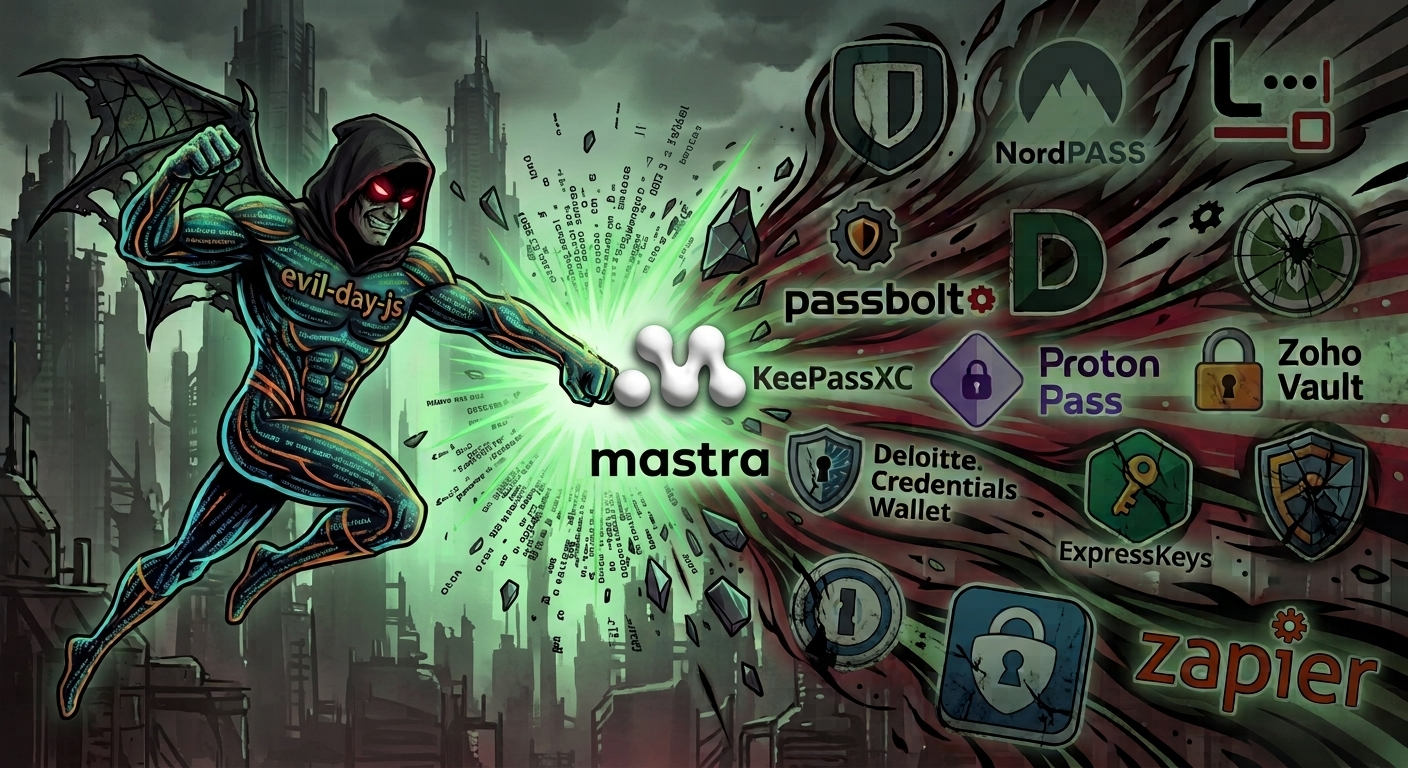
A threat actor took over a dormant maintainer account and republished 140+ packages in the @mastra npm scope (including @mastra/core, ~918K weekly downloads), injecting a typosquat of dayjs called easy-day-js as a new dependency in every manifest. A clean 1.11.21 version was published first, then a weaponized 1.11.22 tagged latest was pulled in via caret-range resolution, delivering a two-stage cross-platform backdoor that disables TLS validation, self-deletes, installs OS-specific persistence disguised as Node/NVM tooling, and steals browser history plus data from 166 crypto-wallet, password-manager (1Password, Bitwarden, LastPass, Dashlane, NordPass, Proton Pass, KeePassXC, Zoho Vault, Kaspersky), MFA-authenticator, and Zapier browser extensions. The report ties the campaign's Hostwinds infrastructure, clean-then-armed typosquat, and TLS-off/detached/self-delete dropper pattern to the same playbook Microsoft attributed to Lazarus Group in the earlier axios npm compromise, and compares its extension targeting to the "HyperHives" ClickFix campaign, noting npm's lack of provenance enforcement (provenance: no on the malicious wave) as the control gap that let it through.
 opensourcemalware.comwriteupAdded 3 Sep 2026, published 18 Jun 2026🛡️ Security
- Akira, LimeWire, and the Sour Taste of Data Exfiltration
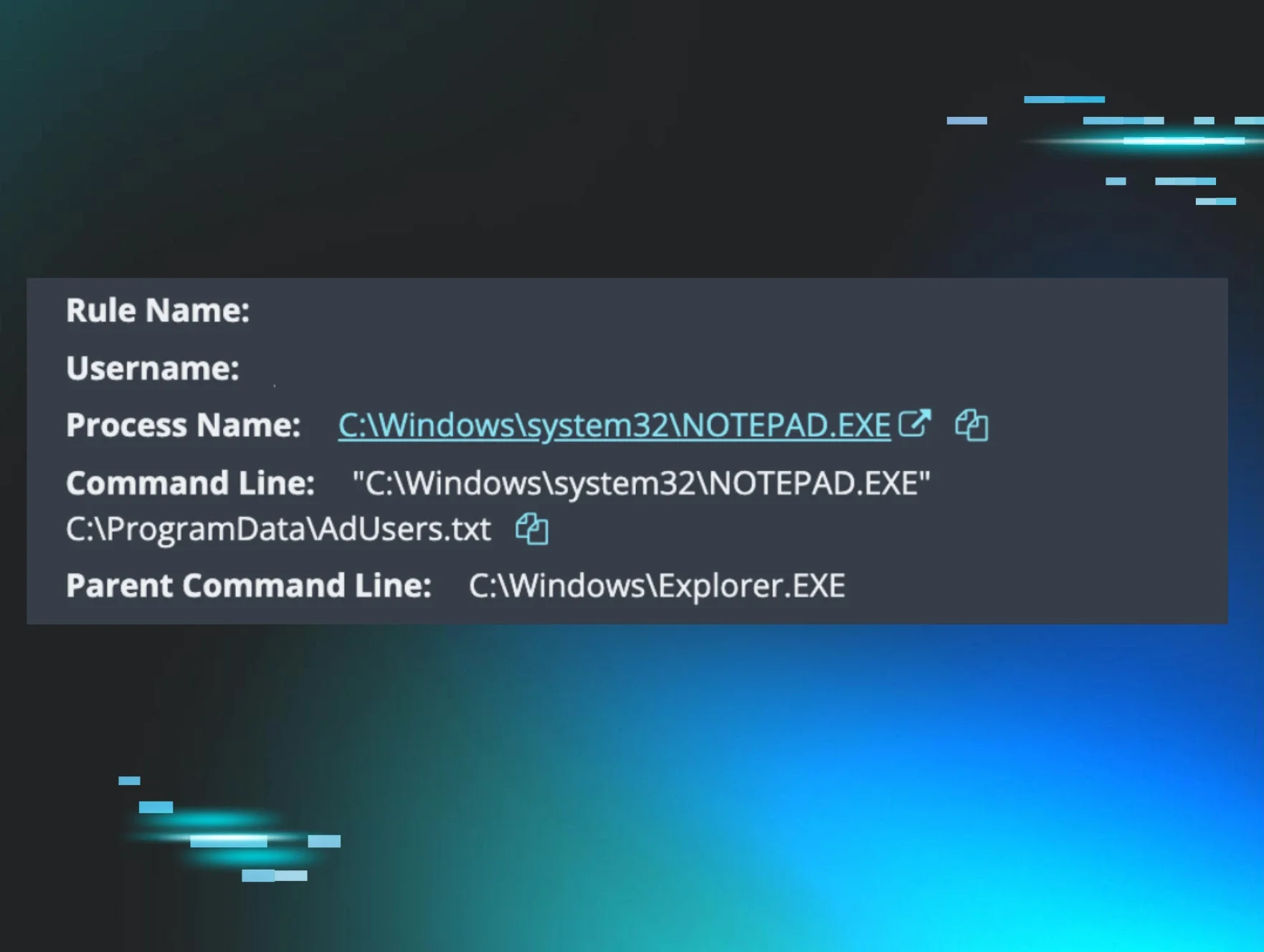
Huntress SOC details an Akira ransomware incident where a threat actor accessed a hypervisor, spun up a new VM (bypassing EDR since it lacked the Huntress agent), disabled Microsoft Defender, and deployed a renamed akira.exe encryptor. Notably, the actor exfiltrated staged WinRAR archives via Easyupload.io, a file-upload service run by the rebranded former peer-to-peer client LimeWire, alongside earlier use of WinSCP for exfiltration.
huntress.comwriteupAdded 3 Sep 2026, published 12 Jun 2026🛡️ Security - X Post by @ale_sp_brazil
A tweet by @ale_sp_brazil rounding up all nine parts of the Exploiting Reversing Series (ERS), a technical blog series on exploitreversing.com covering exploit development against real-world targets including Windows, Chrome, macOS, iOS, and hypervisors, totaling over 1000 pages of content published from 2023 to 2026. The author announces a hiatus to focus on new security research projects to be announced later.
x.comthreadAdded 3 Sep 2026, published 14 May 2026🛡️ Security  Mythos AI Security Testing
Daniel Stenberg recounts curl's first security scan using Anthropic's unreleased Mythos AI model (obtained via Linux Foundation's Alpha Omega program under 'project Glasswing'), which analyzed 178K lines of curl's src/ and lib/ code and reported five 'confirmed' vulnerabilities that the curl security team whittled down to one low-severity CVE (three false positives, one 'just a bug'). He contrasts Mythos with curl's ongoing use of AISLE, Zeropath, OpenAI Codex Security, GitHub Copilot and Augment code, concluding AI scanners are genuinely valuable for finding known bug classes at scale but that Mythos itself showed no evidence of the 'dangerous' capability hyped by Anthropic's media messaging.
 daniel.haxx.searticleAdded 3 Sep 2026, published 12 May 2026🛡️ Security
- Titus by Praetorian
Titus is Praetorian's open-source secrets scanner that detects credentials, API keys, and tokens across source code, git history, container images, and binary files using 487 detection rules drawn from NoseyParker and Kingfisher. It combines Hyperscan/Vectorscan-accelerated regex matching with live credential validation (checking secrets against AWS/GitHub/etc APIs) and risk-based severity scoring, and ships as a CLI, Go library, Burp Suite extension, and Chrome extension sharing one detection engine.
github.comrepoPublished and added 10 May 2026🛡️ Security - ESXi Exploitation in the Wild
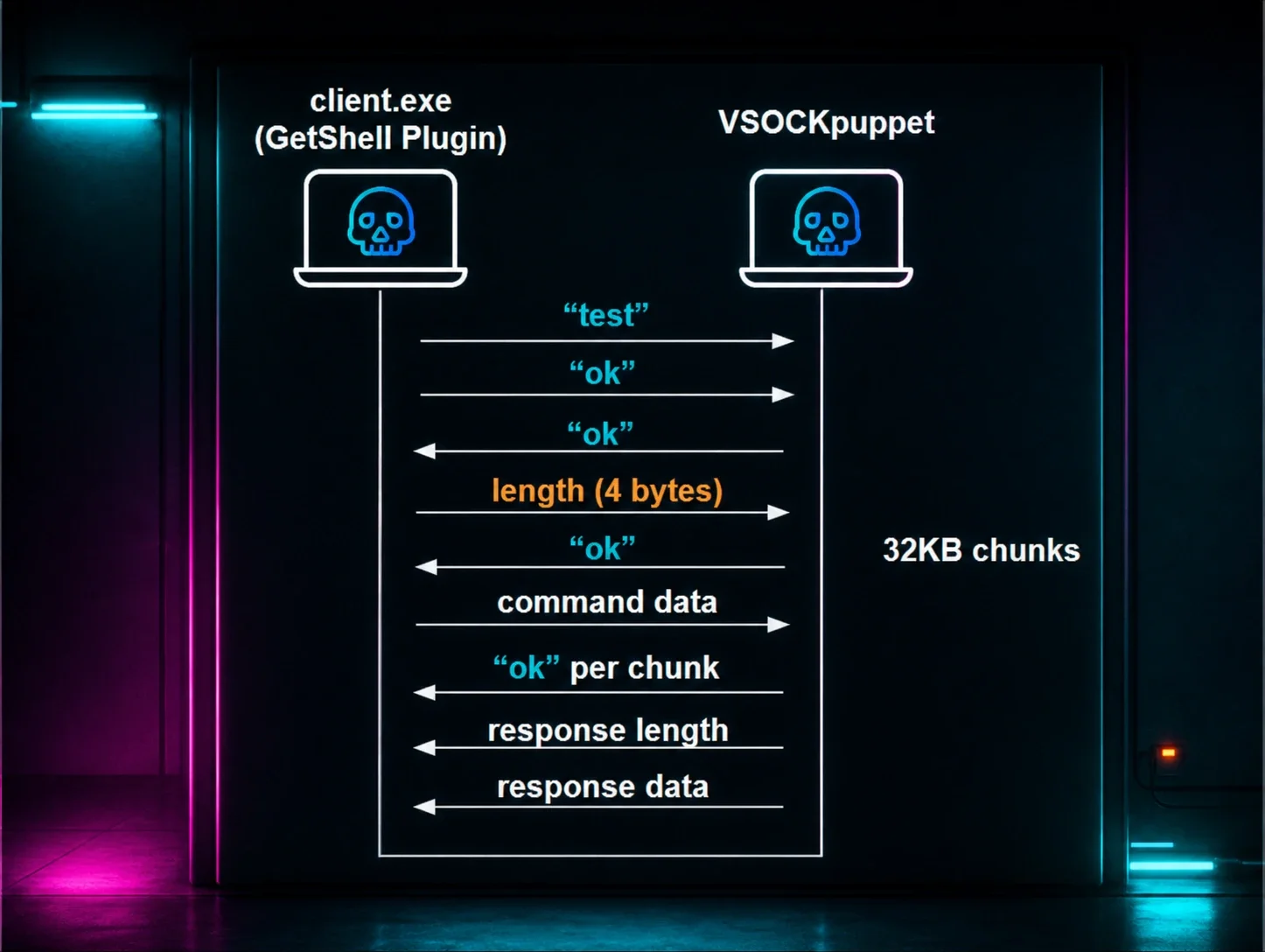
Huntress details a December 2025 intrusion where a threat actor, after gaining initial access via a compromised SonicWall VPN and Domain Admin credentials, deployed a full ESXi VM-escape toolkit against a domain controller's ESXi host. The toolkit — orchestrator "MAESTRO" (exploit.exe), kernel driver "MyDriver.sys" loaded via KDU (BYOVD), and VSOCK-based backdoor "VSOCKpuppet" — chains CVE-2025-22226 (HGFS out-of-bounds read info leak), CVE-2025-22224 (VMCI TOCTOU out-of-bounds write, VMX code execution) and CVE-2025-22225 (arbitrary write sandbox escape) to defeat ASLR and pivot from a guest VM to full hypervisor compromise, supporting 155 ESXi builds (5.1–8.0). Simplified-Chinese PDB paths dated over a year before VMware's public disclosure point to a well-resourced developer, likely Chinese-speaking, possibly building this as a sellable zero-day toolkit; Huntress provides YARA/Sigma detections and hardening recommendations.
huntress.comwriteupAdded 3 Sep 2026, published 7 Jan 2026🛡️ Security - Hardening the Hypervisor | Huntress
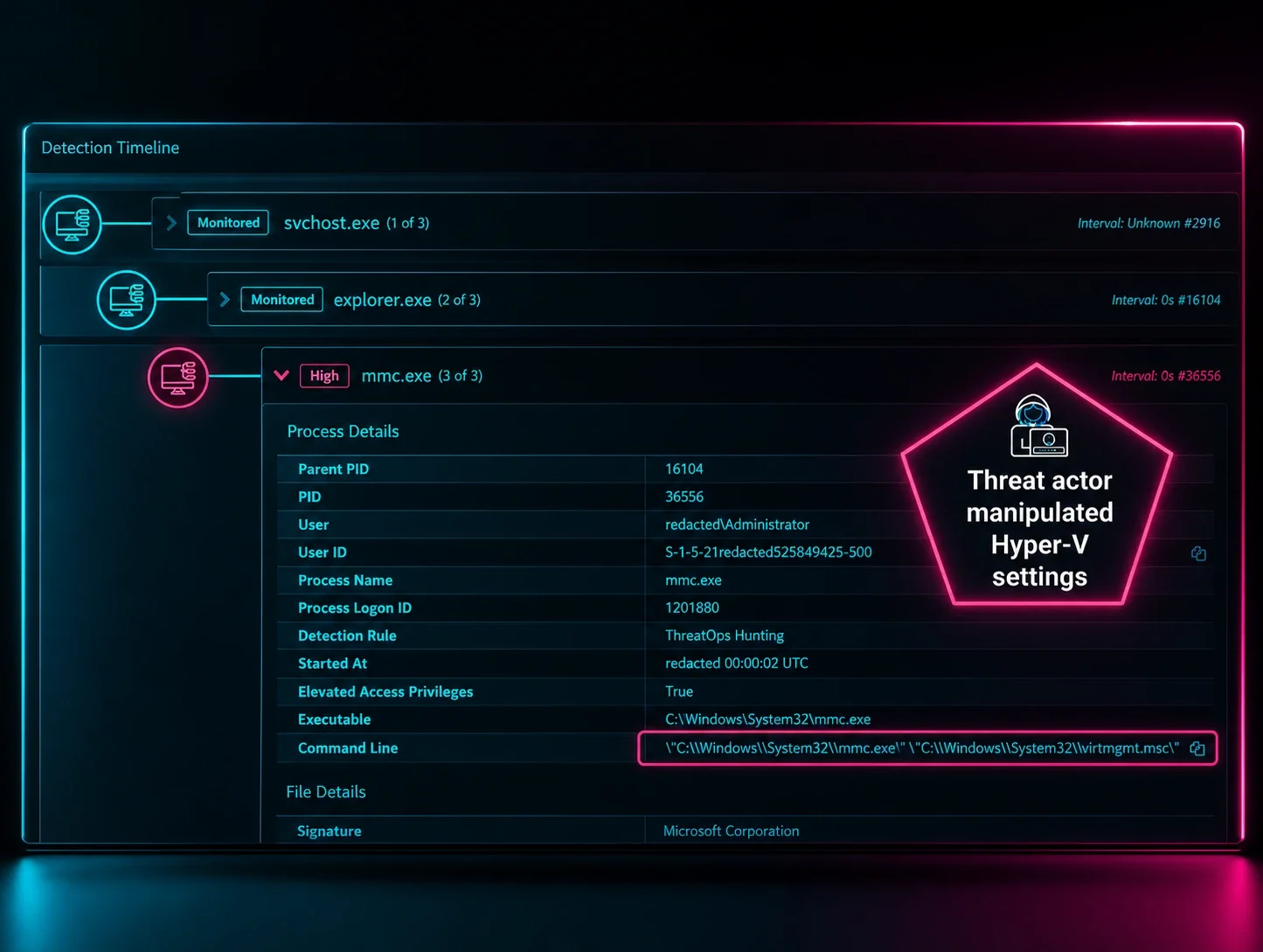
Huntress details a sharp 2025 rise in hypervisor-targeted ransomware (from 3% to 25% of malicious-encryption cases), driven mainly by the Akira group abusing ESXi and Hyper-V management interfaces to bypass endpoint EDR and encrypt VMs at scale. It provides hardening guidance: local non-AD ESXi accounts, MFA, jump boxes, least privilege, VMkernel.Boot.execInstalledOnly and lockdown mode, patching against CVE-2024-37085 and disabling exposed SLP (port 427, abused by ESXArgs), immutable 3-2-1 backups, and forwarding ESXi logs to a SIEM.
huntress.comarticleAdded 3 Sep 2026, published 8 Dec 2025🛡️ Security