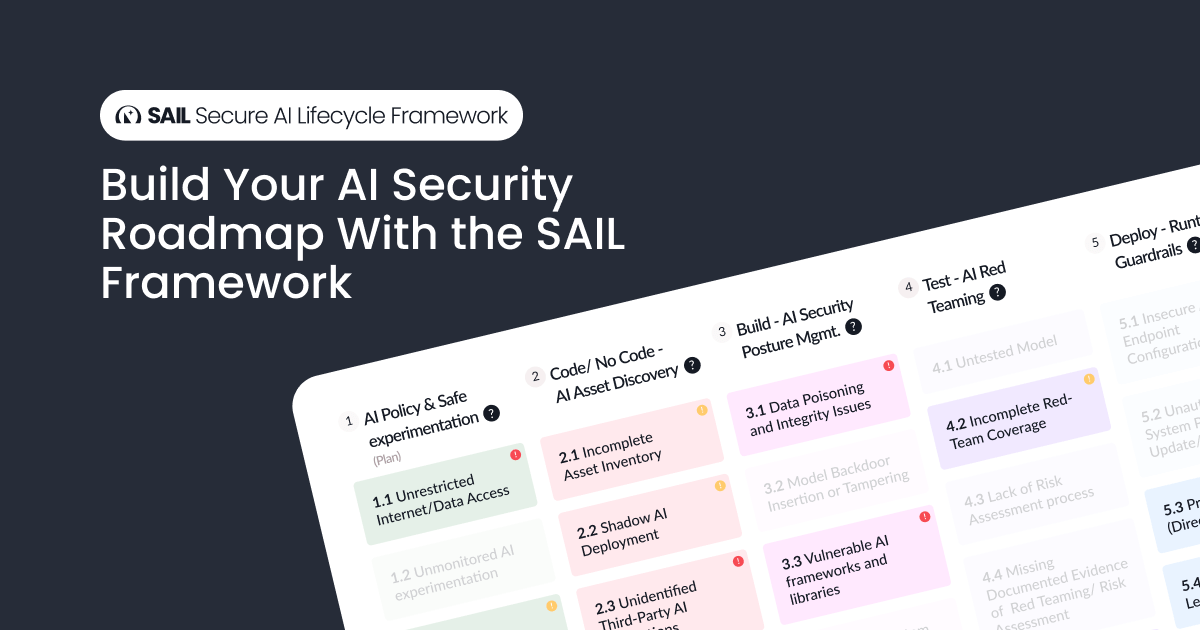
 SAIL Framework: A Practical Guide for AI Security
The SAIL Framework from Pillar Security is a seven-phase, lifecycle-oriented method for securing AI systems. The phases are AI policy and safe experimentation, AI asset discovery, AI security posture management, AI red teaming, runtime guardrails, sandboxed execution for agents and MCP servers, and AI activity tracing. It argues for a "Shift Up" approach that protects the business logic AI controls, and it is meant to sit on top of existing standards.
 pillar.securityarticleAdded 29 Oct 2026🛡️ Security
 Cisco Open Sources Quarry to Catch AI Agent Attacks Hidden in Harmless Steps
Project Quarry is a neurosymbolic rule language Cisco has open sourced to detect AI agent attacks that only show up across a sequence of individually benign steps. Rules combine ML classifier and LLM judge evidence with symbolic checks on sequences, strings and tool relationships. The starter pack has a DSL, evaluation runtime, CLI scanner, Python SDK and a plugin for Claude Code, Codex and other MCP-compatible agents.
 securityweek.comarticlePublished and added 29 Oct 2026🛡️ Security
 What is an AIBOM? AI bill of materials explained for security teams | Endor Labs
An AIBOM is a machine-readable inventory of models, datasets, dependencies, AI services, agents and MCP servers, with evidence of origin, license, integrity and evaluation. The Endor Labs explainer walks through a worked CycloneDX example for a fine-tuned support assistant. It compares CycloneDX ML-BOM, SPDX 3.x, the OWASP AIBOM project and the May 2026 CISA/G7 guidance, and lists what an AIBOM cannot show: runtime behavior and agent actions.
 endorlabs.comarticlePublished and added 29 Oct 2026🧠 AI
- What is an AIBOM? AI bill of materials explained for security teams | Endor Labs
AIBOM explainer from Endor Labs: an AI bill of materials is a machine-readable inventory of models, datasets, dependencies, AI services, agents and MCP servers, with origin, license and integrity evidence. It walks through a CycloneDX entry for a fine-tuned model, compares CycloneDX ML-BOM, SPDX 3.x, the OWASP AIBOM Generator and the May 2026 CISA/G7 minimum-elements guidance, and lists a six-step build process. It also states what an AIBOM cannot show: model safety, runtime behavior and coding-agent actions.
endorlabs.comarticlePublished and added 29 Oct 2026🛡️ Security  ADLC compliance: Mapping agentic development to NIST SSDF, OWASP, and the EU AI Act | Endor Labs
ADLC compliance is Endor Labs' interpretation of how NIST SSDF (SP 800-218), the OWASP LLM and Agentic Top 10 lists, and the EU AI Act apply to software built with coding agents. It splits requirements into a code surface and an action surface (shell, files, MCP calls, package installs). It gives a four-step EU AI Act scoping path and says that system prompt rules and agent self-reports are not audit evidence.
endorlabs.comarticlePublished and added 28 Oct 2026🧠 AI- ADLC compliance: Mapping agentic development to NIST SSDF, OWASP, and the EU AI Act | Endor Labs
ADLC compliance guide from Endor Labs that maps agentic development to NIST SSDF (SP 800-218 v1.1), the OWASP LLM Top 10 2025 and Agentic Top 10, and the EU AI Act as amended by Regulation (EU) 2026/1744. It splits controls into a code surface and an action surface (shell, file access, MCP calls, package installs). It gives a four-step AI Act scoping path, the new Annex III date of 2 December 2027, and evidence guidance. It states the crosswalk is the vendor's interpretation, not legal advice.
endorlabs.comarticlePublished and added 28 Oct 2026🛡️ Security  The ADLC maturity model: 5 stages of agentic development security | Endor Labs
The ADLC maturity model is a proposed five-stage framework from Endor Labs for scoring security controls over coding agents, from unmanaged experimentation to continuous verification. Each stage has requirements on two tracks, agent actions (shell commands, MCP calls, package installs) and agent output (code, dependencies, secrets). It sets stage 3 at deterministic hooks that block actions, gives evidence-based assessment questions, and lists traps such as relying on prompt-level rules.
endorlabs.comarticlePublished and added 28 Oct 2026🛡️ Security ADLC Security Best Practices for Teams Shipping with Coding Agents | Endor Labs
ADLC Security Best Practices is an Endor Labs guide to controlling what AI coding agents can access, run, install and ship. It covers inventorying agents and MCP servers, sandboxing, pre-execution hooks instead of AGENTS.md rules, install-time package checks against slopsquatting and malware, reachability-based triage of agent PRs, and CI/CODEOWNERS protections. A five-step worked example and coverage metrics are included.
endorlabs.comarticlePublished and added 23 Oct 2026🛡️ Security- Donating Agent Skills to the Agentic AI Foundation
Simon Willison's link post covers Anthropic's 22 October 2026 announcement that it is donating the Agent Skills standard to the Agentic AI Foundation (AAIF) under the Linux Foundation. Anthropic co-founded the AAIF with Block and OpenAI and earlier donated MCP to it. Willison notes he predicted this in December 2025 and found his old post by querying his blog through datasette-mcp in Claude.
 simonwillison.netarticlePublished and added 22 Oct 2026🧠 AI
 Software supply chain security best practices for 2026
Aikido's guide to software supply chain security controls for 2026, tied to real incidents. It covers a 48-hour package cooldown, ignore-scripts, lockfile enforcement, SHA and digest pinning, scoped tokens, FIDO2, developer endpoint protection, extension allowlists, agent sandboxing, MCP server vetting, slopsquatting, signed SBOMs and rotation drills. Examples include the March 2026 axios compromise and the March 2025 tj-actions/changed-files attack.
 aikido.devarticleAdded 22 Oct 2026, published 21 Oct 2026🛡️ Security
 How Commerce.com and Cloudflare are getting storefronts ready for AI agents
Cloudflare and Commerce.com describe enabling WebMCP, Google's proposed browser standard for exposing structured tools to AI agents, across almost 100,000 storefronts. Cloudflare injects a bridge script at the edge that proxies tools from Commerce.com's backend MCP server. Per-merchant opt-out uses Configuration Rules and custom hostname metadata, and a configurable MCP URL (/api/mcp) was added.
 blog.cloudflare.comarticleAdded 29 Oct 2026, published 21 Oct 2026🧠 AI
 AI Model Risk Depends on What the Model Can Reach
Snyk's State of Agentic AI Adoption Volume III scores models against 29 attacker goals (0 to 1,000) and matches them to AI-BOM scan data from 1,693 environments. 74.5% reference a model scoring 500+ on some goal and 49.2% one scoring 750+. Risk depends on agent and MCP server reach, and the fix is either switching models or tightening application controls, depending on the goal. Only 37.5% of model occurrences have a score.
 snyk.ioarticlePublished and added 21 Oct 2026🛡️ Security
- Huda (@AlAssaf_H) on X
Source-level review of x64dbg-MCP, GhidraMCP and IDA Pro MCP security, dated October 2026. It covers GHSA-4478-h5jv-647m (missing authentication, 0.0.0.0 bind) and GHSA-jgj3-97w2-9v9r (Content-Length integer overflow before the token check, causing a DoS panic), and compares tags 1.0, v1.1 and v1.2. It separates network reachability, tool authority and semantic influence from hostile binaries. No new exploit is claimed.
 x.comarticleAdded 21 Oct 2026, published 19 Oct 2026🛡️ Security
 TokenMaxxing: How to Get the Most Out of Your AI Models
Decrypt guide to "tokenmaxxing" reframed as maximizing value per token rather than burning tokens. It gives tiered tips: pick smaller models for simple jobs, write one clear prompt, start new chats, cap output length, and use free models (beginner); Claude Code commands like /model, /clear, /compact, /context, /mcp, /effort and plan mode (intermediate); and prompt caching via cache_control, 50% batch discounts, and agent budget limits like --max-budget-usd (advanced). Includes context on Meta, Amazon and Uber token leaderboards and spend, a worked invoice-processing example where routing cut cost from $30 to $3.90, and the Jevons paradox in falling token prices.
 decrypt.coarticlePublished and added 17 Oct 2026🧠 AI
 In Other News: ICS-Sniper Attack, Hacking XWorm Malware Operators, $250k Chrome Exploit
SecurityWeek's weekly roundup covers ICS-Sniper, a UBC proof-of-concept that uses VPN-encrypted packet size, direction and timing to drop critical SCADA traffic on cloud-hosted ICS (tested on the SWaT water testbed). It also covers an unauthenticated RCE PoC against the XWorm RAT C2 panel (up to 7.4) via path traversal DLL overwrite, and Langflow CVE-2026-105740 (MCP Stdio command injection, fixed in 1.9.0) exploited from September 19, before the CVE was published. Other items: XBOW's AI-assisted Chrome full-chain exploit (GPT-5.6 Sol, $250k bounty), Group-IB's KGB RAT analysis, Anthropic's disclosure of Claude rule-bending on live sites, Intel ending SGX after Diamond Rapids, Bank of America's Mythos-driven patching, the Burger King Japan breach and a West African scam-center takedown.
securityweek.comarticlePublished and added 16 Oct 2026🛡️ Security [tl;dr sec] #350 - Reverse Engineer Anything, Tracking AI-integrated Malware, Test-driving Jev
tl;dr sec issue #350 is a weekly security newsletter digest. It covers XBOW's six-day Chrome full-chain exploit built with GPT-5.6 Sol, Semgrep's IDOR benchmark metrics, the EntraGoat vulnerable Entra ID lab, Zenity's AWS Bedrock AgentCore IMDS credential theft, Cisco Talos's CAIRN hunting toolkit for AI-integrated malware, the REA reverse-engineering MCP, runZero's sshamble, and a Copilot for Word AI worm.
 tldrsec.comarticleAdded 30 Oct 2026, published 15 Oct 2026🛡️ Security
 Developer Who Cloned Photoshop With AI Just Did the Same to Microsoft Office
Decrypt reports that developer Brandon Thomas released WordCraft, GridCraft and DeckCraft, MIT/Apache-2.0 open-source clones of Word, Excel and PowerPoint. They were written in Rust with Anthropic's Claude (Opus 5.5) as a clean-room rebuild and run natively on Windows, macOS, Linux and BSD, and in a browser. Coverage is high (WordCraft 88% of ribbon features, GridCraft 513 of 523 Excel functions), but the authors rate them only about 50–60% ready for real work. Every button is also an MCP command, so agents like Claude can drive the apps. The article is a useful data point on what AI-assisted "vibe coding" can produce in under two weeks, and on where it still falls short (file fidelity, stability).
decrypt.coarticlePublished and added 14 Oct 2026🧠 AI- AI Agents for Cybersecurity: A Guided Tour of a Repository with Tons of Resources and Examples
A guided tour of a GitHub repository of resources and examples for building AI agents, published on the Becoming a Hacker blog. Per the routing note, it covers LangChain 1.x, LCEL, RAG, LangGraph, CrewAI, DeepAgents, MCP servers and token-cost control such as caching, routing and budget guards. The fetched page held only a LinkedIn redirect notice, so the article text was not read.
 linkedin.comarticleAdded 13 Oct 2026🧠 AI
- AI Agents for Cybersecurity: A Guided Tour of a Repository with Tons of Resources and Examples
Guided tour of Omar Santos's eight-part AI-agents-for-cybersecurity repository. It moves from LLM building blocks (LangChain, RAG) to security agents built with LangGraph, CrewAI, DeepAgents and MCP servers (nmap, CISA KEV, Shodan). It also covers a hardening guide for six agentic frameworks, token-cost control, and a spec for a supervisor-led, human-gated assessment harness. Design lessons include least-privilege subagents, single-use approvals and kill switches.
 becomingahacker.orgarticleAdded 13 Oct 2026🧠 AI
- AI Agents for Cybersecurity: A Guided Tour of a Repository with Tons of Resources and Examples
Omar Santos walks through his eight-part AI-agents-for-cybersecurity repository: LLM building blocks (LangChain, RAG), then security agents with LangGraph, CrewAI, DeepAgents and MCP servers (nmap, CISA KEV, Shodan), a hardening guide for six agentic frameworks, token-cost control for agents, and a spec for a supervisor-led, human-gated security-assessment harness. It covers concrete design lessons such as least-privilege subagents, staged response actions, single-use approvals bound to exact actions, kill switches, and mapping controls to the OWASP Top 10 for Agentic Applications. Also notes Project CodeGuard rules shipped for AI coding assistants.
becomingahacker.orgarticleAdded 13 Oct 2026🛡️ Security - AI Agents for Cybersecurity: A Guided Tour of a Repository with Tons of Resources and Examples
Omar Santos walks through his AI-agents-for-cybersecurity GitHub repo, which has eight parts. Parts 1–4 cover LLM basics (LangChain, prompting, LCEL, RAG). Parts 5–8 cover building security agents with LangGraph, CrewAI, DeepAgents and MCP servers (nmap, CISA KEV, Shodan), and a hardening baseline for six ready-made agentic frameworks. They also cover token-cost control (caching, routing, budget guards, cost per accepted outcome) and a supervisor-led, human-gated security-assessment harness spec with single-use approvals, a kill switch and an append-only audit log. The post also covers Project CodeGuard rules for AI coding assistants. It is a practical learning path and a reference for governing and securing agents.
linkedin.comarticleAdded 13 Oct 2026🛡️ Security  From GTA V on iPhone to Free Photoshop: This AI Tool Is Upending Software
Decrypt reports on REA (Reverse Engineer Anything), an open-source toolkit that uses MCP to connect AI coding agents such as Claude Code and Codex to reverse-engineering tools like Ghidra. It went from under 10,000 to over 100,000 GitHub stars in a week. The article describes AI-decompiled game ports and mashups, and ArtCraft, a set of Rust-built Photoshop-style apps that Brandon Thomas made with Claude Opus 5.5 as a clean-room rebuild. It also covers the copyright and takedown fallout (Activision, Bethesda) and what cheap agent-driven decompilation means for software protection.
decrypt.coarticlePublished and added 12 Oct 2026🧠 AI GitHub Copilot app for Beginners: How to teach Copilot about your codebase
Beginner-oriented GitHub blog guide to giving GitHub Copilot project context through four mechanisms: repository custom instructions (.github/copilot-instructions.md and path-specific .github/instructions files with applyTo), agent skills (SKILL.md folders under .github/skills), custom agents (.github/agents profiles), and MCP servers such as Playwright. It explains when to use each and how they combine, using examples like a quality-checks skill and an accessibility-review agent. Useful as a concrete reference for the repo layout Copilot reads, with a pointer to the community Awesome Copilot collection.
 github.blogarticlePublished and added 12 Oct 2026🧠 AI
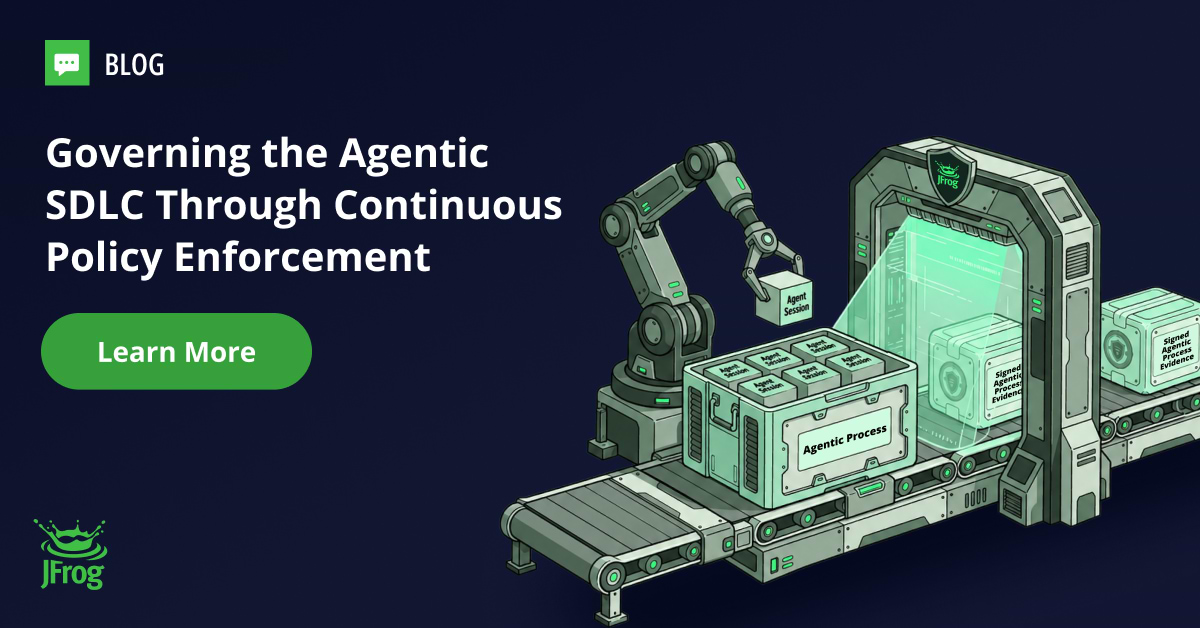 Governing the Agentic SDLC Through Continuous Policy Enforcement
JFrog proposes the Agentic Process Evidence Protocol, an open spec that records coding-agent sessions (harness and agent version, model ID, tool and MCP calls, prompts, owner, human reviewer) as signed in-toto/DSSE attestations bound to a git commit, artifact or release. Policy-as-code release gates can then check for approved LLMs and MCP tools, an accountable human and adherence to guidelines, and the logs allow post-release audit. The post gives mock session-log and evidence JSON, ties the approach to EU AI Act Articles 12 and 14, OWASP AISVS and SLSA, and points to a GitHub reference repo, with JFrog AppTrust as the commercial implementation.
 jfrog.comarticleAdded 14 Oct 2026, published 12 Oct 2026🧠 AI
- Governing the Agentic SDLC Through Continuous Policy Enforcement
JFrog proposes Agentic Process Evidence, an open protocol that records AI coding agent sessions (harness, model ID, tool calls, MCP use, prompts, owner, human reviewer) as signed in-toto/DSSE, SLSA-compatible attestations bound to commits, artifacts and releases. Policy-as-code gates can then block releases that used unapproved LLMs or MCP tools, or that lack an accountable human. It maps the approach to EU AI Act Articles 12/14, OWASP AISVS and ISO/IEC 42001, and includes example session-log and evidence JSON. The post also promotes JFrog AppTrust's Prompt to Release Traceability.
jfrog.comarticleAdded 14 Oct 2026, published 12 Oct 2026🛡️ Security  The OWASP Top 10 Gets Modernized | Endor Labs
Commentary on the 2025 OWASP Top 10 update presented at OWASP Global AppSec in Washington, D.C. Broken Access Control stays #1, Security Misconfiguration and the new Software Supply Chain Failures category (replacing Vulnerable and Outdated Components) rise to #2 and #3, and Cryptographic Failures, Injection and Insecure Design drop. The author adds context on agentic AI and MCP identity and authorization, AI-assisted SAST, non-human identities, CISA Secure-by-Default, OWASP SPVS, and slopsquatting and AI coding assistant risks.
endorlabs.comarticlePublished and added 12 Oct 2026🛡️ Security Context Engineering for Application Security | Endor Labs
Endor Labs whitepaper on using context engineering to make AI coding assistants produce secure code. It covers secure prompting (priming, decomposition, refinement with design-spec and test-first patterns), reusable system rules such as Cursor rules and the CSA R.A.I.L.G.U.A.R.D. framework, and external SAST/SCA tools wired in through MCP servers with a rule that triggers scans. It also covers the costs and risks: extra token use, models ignoring rules, untrusted community rules, and MCP server supply-chain threats. It cites figures such as 62% of AI-generated solutions containing flaws and a 77.5% reduction in weaknesses from recursive prompting.
endorlabs.comarticlePublished and added 12 Oct 2026🧠 AI- Context Engineering for Application Security | Endor Labs
Endor Labs whitepaper on using context engineering to make AI coding assistants write secure code. It covers four techniques: secure prompts (priming, decomposition, refinement with design-spec and test-first patterns), system rules (with sample rules and the CSA R.A.I.L.G.U.A.R.D. framework), external security tools wired in over MCP (with an example Cursor SAST rule), and RAG. It also covers MCP server threats and five defensive pillars, Cursor Hooks, and CISO-level recommendations. It matters because it gives practical guardrails for stopping missing-authorization, rate-limiting and hallucinated-dependency problems at generation time.
endorlabs.comarticlePublished and added 12 Oct 2026🛡️ Security  Introducing AI Coding Agent Governance: Using Hooks to Bring Visibility to the ADLC | Endor Labs
Explains how lifecycle hooks in Claude Code (.claude/settings.json) and Cursor (.cursor/hooks.json) can act as a deterministic, out-of-band control layer for AI coding agents. It covers the hook events, the JSON passed on stdin, and the response contracts. Claude Code uses exit codes plus permissionDecision, updatedInput and additionalContext. Cursor uses stdout JSON with permission and userMessage. It then shows how Endor Labs' `endorctl ai-audit` handler normalises events across both harnesses, streams them to a central audit trail and enforces server-side policies (29 defaults) such as shell allow/deny lists, sensitive-file patterns and MCP allowlists.
endorlabs.comarticlePublished and added 12 Oct 2026🧠 AI- Cloudflare Changelog (@CFchangelog) on X
Cloudflare's changelog announces that its Cloudflare API MCP server now serves Cloudflare skills alongside its tools. A connected MCP client discovers them by calling `skills/list`. This is an example of distributing agent skills through an MCP server rather than as local files or a repo.
x.comarticlePublished and added 11 Oct 2026🧠 AI 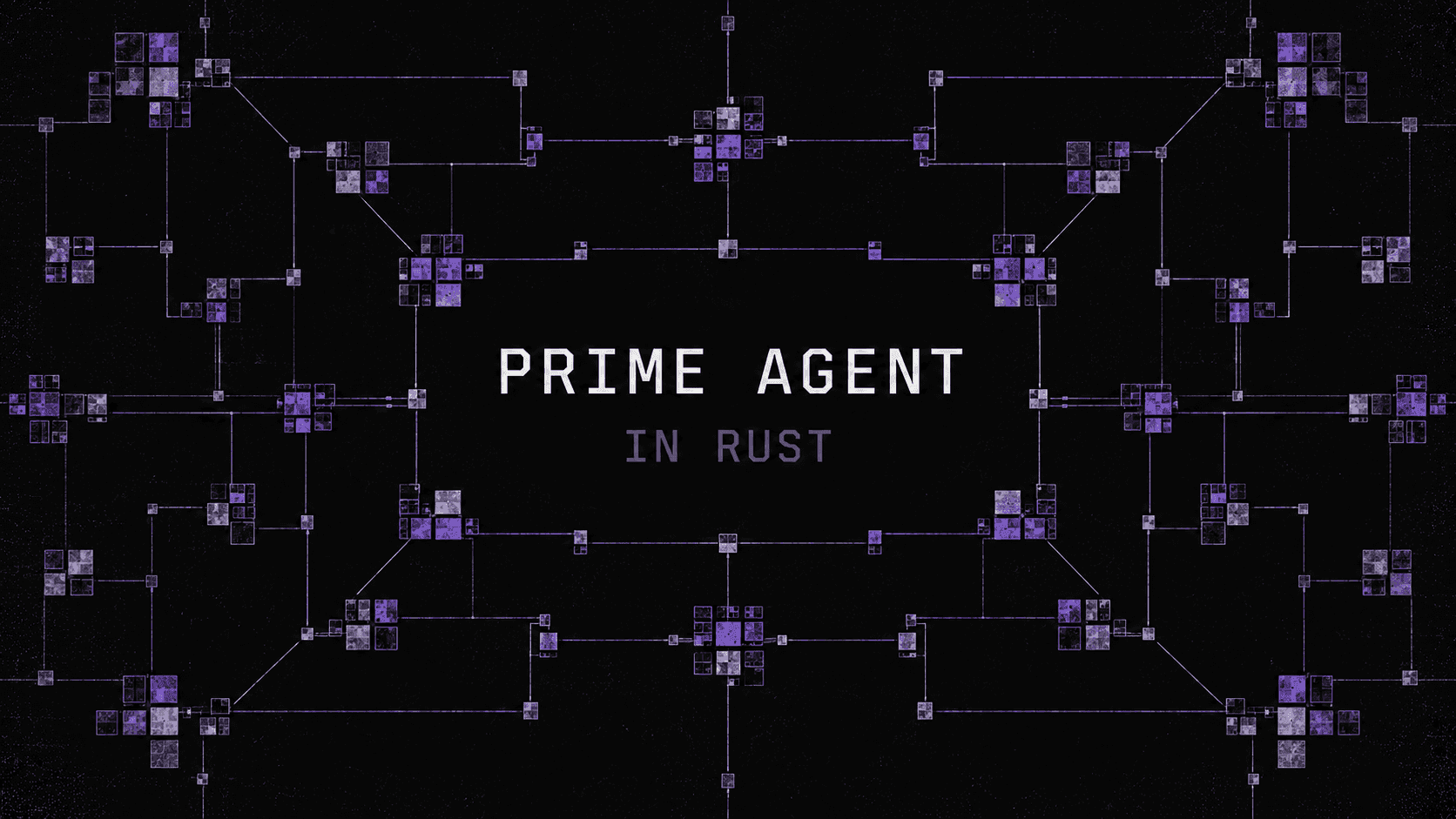 Rewriting Prime Agent in Rust
Prime Intellect describes rewriting its open-source Prime Agent coding-agent harness from TypeScript to Rust. Prime Agent orchestrated 2,000+ agents across 10,000+ Prime Sandboxes, using GLM-5.3 inference, to do the rewrite. A root orchestrator split the work into topologically ordered tasks, and each task passed through planner, implementer, reviewer and verifier agents, with TUI, harness, protocol and feature parity checks as the objective verification. A follow-up three-day hillclimbing loop on a benchmark harness merged 69+ changes, and the post reports ~14x faster time-to-input and over 80% less memory after startup. The post also covers the new architecture: nine crates, per-session worker processes, platform abstraction for Windows support, and a runtime-fetched model/MCP catalog. Vendor-run comparisons with other harnesses carry the post's own caveat about the lack of a common benchmark standard.
 primeintellect.aiarticleAdded 10 Oct 2026, published 9 Oct 2026🧠 AI
 SonicWall and Splunk Patch Critical Vulnerabilities
SonicWall patched four SMA1000 appliance vulnerabilities including CVE-2026-102255, a pre-authenticated SSRF flaw (CVSS 10) that lets an unauthenticated remote attacker abuse an unintended alternate access path to reach internal functionality; two other high-severity bugs enable RCE and one medium-severity bug enables XSS. Splunk separately fixed dozens of flaws across Splunk Enterprise, MCP Server, and the Add-on for AWS, including three critical Splunk Enterprise bugs allowing arbitrary command execution, unauthorized access, and code injection, plus a medium-severity MCP Server issue letting an authenticated user redirect API requests to an attacker-controlled URL. SonicWall says SSL-VPN on its firewall products is unaffected and no in-the-wild exploitation has been observed.
securityweek.comarticlePublished and added 8 Oct 2026🛡️ Security Top MCP security resources — October 2026
Adversa AI's October 2026 MCP security roundup, aggregating and synthesizing 15 resources: authentication-bypass vulnerabilities in LiteLLM's MCP endpoint (CVE-2026-59822, now CISA KEV), Grafana's MCP server session spoofing/SSRF (CVE-2026-19516), an MCP Python SDK OAuth-fallback flaw exploited by a malicious server returning a 404, and an Obot gateway route-matching bypass reopening GHSA-vw82. It also covers detection failures (two malicious MCP servers passing five scanners including Cisco mcp-scanner and Snyk agent-scan, 12% of 82,000 public MCP configs hardcoding secrets), a malicious npm wallet-signing package (gadgethumans-mcp), the A2M agent-hijacking attack technique, and CoSAI's MCP Security v2.0 governance model.
 adversa.aiarticlePublished and added 8 Oct 2026🛡️ Security
 Can a Cloud-Native Harness Make Agents Reliable Beyond the Desktop?
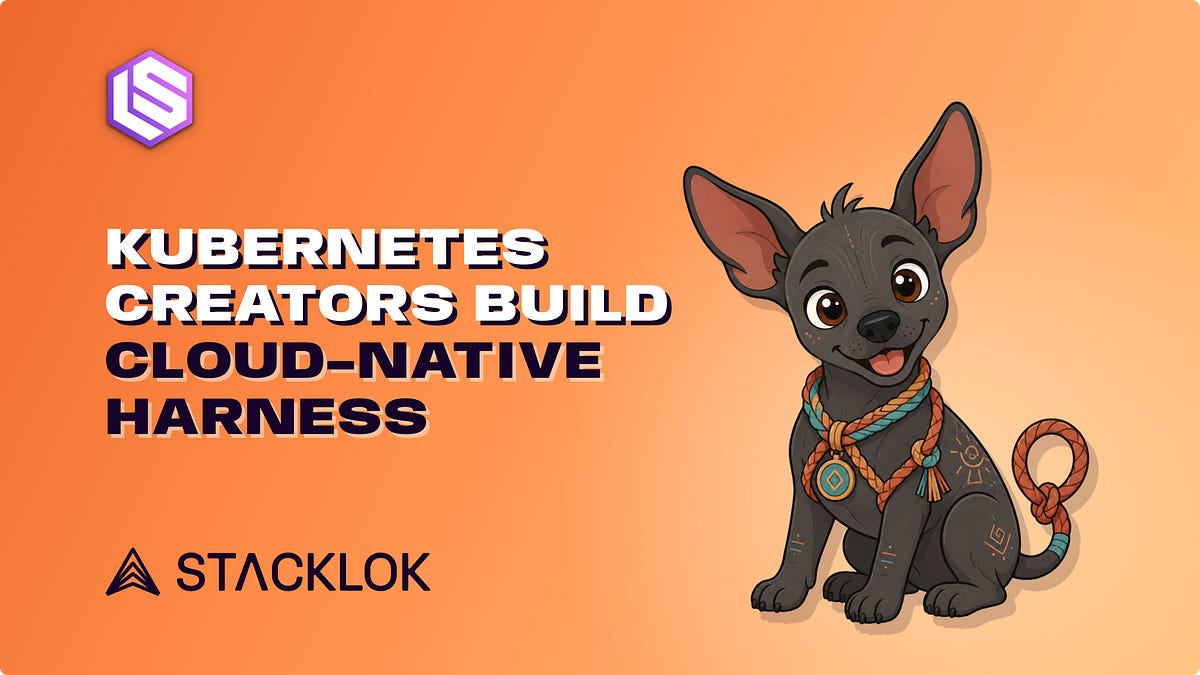
Latent Space interviews Stacklok founders Craig McLuckie and Joe Beda (Kubernetes co-creators) about Mecatl, an open-source "cloud-native harness" for coding agents that separates the agent loop from local tool execution, session state and model provider so enterprises can run and govern agents centrally rather than on individual desktops. The piece also covers Stacklok's earlier pivot from supply-chain security to ToolHive, an open-source platform/Kubernetes operator for running and governing MCP servers, and a not-yet-open-sourced "AI Gateway" focused on access control, budgets and provider routing for regulated enterprises (banks, telcos, semiconductor firms). The framing draws an explicit analogy to how Kubernetes decoupled enterprises from cloud providers, arguing agent harnesses need the same "cattle not pets" treatment to scale beyond desktop tools like Claude Code, Codex and GitHub Copilot.
 latent.spacearticlePublished and added 7 Oct 2026🧠 AI
 [AINews] not much happened today
Daily AINews digest (Latent Space) covering an October 2026 news cycle: OpenAI's cheaper/faster GPT-6.1 Sol and Anthropic's Claude Sonnet 5.5 reshaping Agent Arena's cost-performance frontier, a wave of decision-model releases (Cloudflare Clef, llama.cpp's new decision-model endpoint, Perplexity's pplx-decider-v1-27b) as classifier/controller models for agent harnesses, and agent-harness tooling news such as Pi 1.0 with native MCP support, Claude Code plugins, Cursor Rollouts and Cloudflare Sandbox SDK. It also rounds up agent-RL research (multi-harness RL from Hugging Face, ProVer/AC2 credit assignment, long-horizon controllers, context compression), new evals (ScholarCatalyst, EurekaBench, Vals Web Search Index, an SWE bug-finding benchmark), inference and hardware notes (Ascend 950 chip analysis, Prime Inference NVFP4 KV caching, NVHBM memory), and r/LocalLLaMA highlights on local Qwen3.8-27B inference and MTP speculative decoding in llama.cpp.
latent.spacearticlePublished and added 3 Oct 2026🧠 AI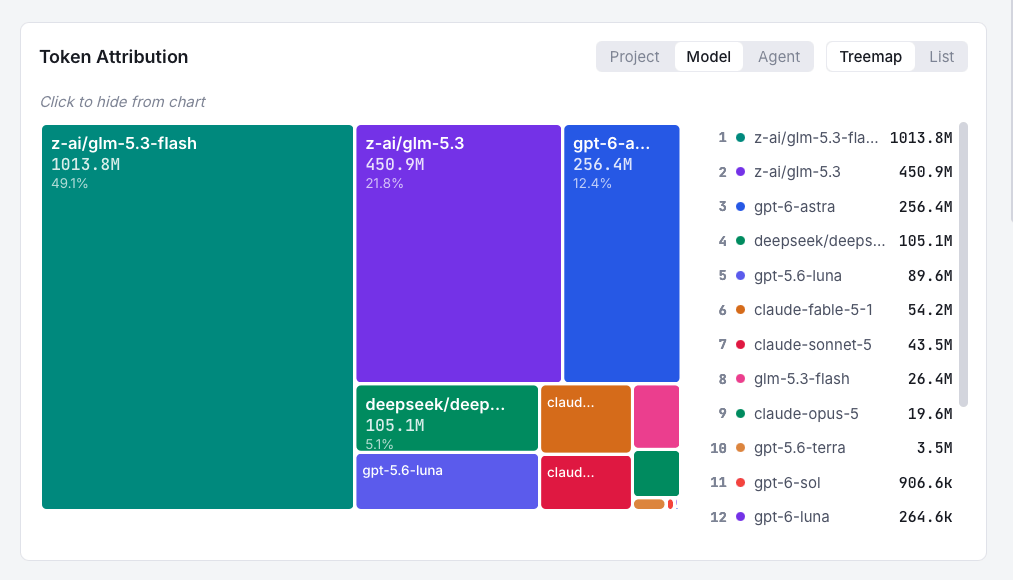 One month coding with GLM 5.3 Flash
Wagtail's engineering team recounts a September challenge to run all day-to-day coding work on one efficient open model, GLM-5.3-Flash, tracking usage via AgentsView: they stayed within budget ($68, ~4kWh) for the first half of the month before a vibe-coded MCP server prototype on the "wrong" model burned 450M tokens/$150/5kWh overnight, and inference-provider capacity limits forced fallbacks to DeepSeek-V4.1-Flash and Qwen 3.8 Flash. The post ends with concrete lessons for October: constant local usage/energy measurement, separate budgets for experimentation vs production, better multi-agent prompt/role patterns (orchestrator/scout/implementer/reviewer), and defaulting day-to-day work to flash-tier models.
 wagtail.orgarticleAdded 3 Oct 2026, published 2 Oct 2026🧠 AI
 Blockworks Opens Its Full Dataset To AI Agents
Blockworks, a crypto research and data provider, launched a hosted Model Context Protocol server that gives AI agents like ChatGPT, Claude and Cursor read access to the datasets underlying its research and its Intel app. The MCP server is included free with every existing API plan and uses the same API key and permission scope as the regular API, rather than requiring separate onboarding.
 thedefiant.ioarticlePublished and added 1 Oct 2026🧠 AI
 Connect Orca’s ChatGPT Plugin: Cloud Risk Context in Chat and Codex
Orca Security's plugin connects ChatGPT and Codex to Orca's MCP server, letting security teams and developers query cloud alerts, attack paths, effective IAM permissions, and code-to-cloud origins directly from chat or a coding agent instead of logging into a console. The post walks through six security-team use cases (exposure discovery, CVE impact triage, alert-to-blast-radius investigation, identity permission review, CISO reporting) and three developer workflows in Codex where alerts are traced back to the Terraform/code that created the misconfiguration and fixed in place.
 orca.securityarticleAdded 2 Oct 2026, published 30 Sep 2026🛡️ Security
 Getting the Source Right, Not Just the Fact: Source-Aware Verification for MCP Agents
Multiverse Computing's blog introduces ProvenanceGuard, a post-generation verification layer for MCP-based LLM agents that checks not just whether a claim is factually supported somewhere in retrieved evidence, but whether it is attributed to the correct MCP source — catching a failure mode they call cross-source conflation (e.g., a refund-policy fact wrongly attributed to an account record). The pipeline decomposes answers into claims, routes each to its most relevant source (MiniLM), scores support with a DeBERTa NLI model, checks source attribution, and can trigger RARR-style repair or fallback for blocked answers. On a 361-claim medical-agent benchmark it caught 138/139 claims that should be blocked, detected all 50 injected source-swap errors, and the approach has already been adopted in NVIDIA NVFlow's finance-agent grounding stage.
 huggingface.coarticleAdded 7 Oct 2026, published 29 Sep 2026🛡️ Security
 The Official Ruby SDK for MCP Reaches Tier 1
The official Ruby SDK for the Model Context Protocol (the mcp gem) became the sixth Tier 1 MCP SDK in September 2026, after TypeScript, Python, C#, Go and Rust. Version 1.2.0 supports the 2026-07-28 spec revision, including the stateless lifecycle, multi round-trip requests and cache hints. The SDK passes 67/67 server and 50/50 client conformance runs, and the post gives install and upgrade steps.
 blog.modelcontextprotocol.ioarticleAdded 30 Oct 2026, published 29 Sep 2026🧠 AI
 Holo4: powering generalist computer-use agents
H Company's blog post announcing Holo4, a pair of open-weight agentic models (27B dense and 35B-A3B MoE, built on Qwen bases) trained to operate software through GUIs, code execution, MCP, and APIs interchangeably rather than a single interface. It reports benchmark results on OSWorld 2.0 and AutomationBench against frontier models like Claude Opus 5.5 and GPT-5.6 Sol, describes the training pipeline (an internal "Agentic Task Factory" generating ~10,000 verifiable environments/tasks plus SFT+RL), and also releases Holotron4 Nano, the same post-training recipe applied to NVIDIA's Nemotron 3 Nano Omni. Weights (BF16, FP8, NVFP4, GGUF) and full agent trajectories are published on Hugging Face.
huggingface.coarticleAdded 29 Sep 2026, published 28 Sep 2026🧠 AI Veeam, Terraform MCP, Django Patch Critical Flaws, Led by CVSS 10.0 Cross-Tenant Bug
The Hacker News roundup covers 11 patched CVEs across three products: Veeam Service Provider Console (CVE-2026-58073, 9.5, unauthenticated managed-agent credential theft; CVE-2026-58072, arbitrary file write to RCE), HashiCorp's Terraform MCP Server (CVE-2026-16498, a 10.0 cross-tenant credential-reuse bug caused by the underlying MCP library not issuing unique session IDs in stateless HTTP mode; CVE-2026-16496 stateful-mode equivalent; CVE-2026-14869 SSRF via header/query-param inconsistency), and Django/GeoDjango (CVE-2026-15307, a spatial-lookup flaw letting GDALRaster write files, reachable by a staff user with view permission on a model with a spatial field, plus a stored XSS, a GEOS DoS, and a language-code DoS). Fixes: Terraform MCP Server 1.1.0+, VSPC 9.3.0.35057, Django 6.0.8/5.2.17; none of the flaws are known to be exploited or listed in CISA KEV as of publication.
 thehackernews.comarticleAdded 26 Sep 2026🛡️ Security
 Marimo Notebook Flaw Could Run MCP Commands Before Cells Execute in Edit Mode
The Hacker News details CVE-2026-75149, a high-severity (CVSS 8.8) code injection flaw in Marimo notebooks where a crafted notebook's configuration could supply an attacker-controlled MCP server command that runs as a local subprocess as soon as the notebook is opened in edit mode, before any cell executes. Marimo fixed it in version 0.23.15 by treating notebook metadata as untrusted and allowlisting configuration, stripping ai/mcp/completion/secrets/server sections; the article also covers the related CVE-2026-67618 (AI base_url exfiltrating API keys via notebook metadata) and the earlier CVE-2026-39987 (unauthenticated /terminal/ws endpoint granting a full PTY shell).
thehackernews.comarticleAdded 26 Sep 2026🛡️ Security Amazon Kiro Prompt Injection Can Exfiltrate Sensitive Data Through Kiro Powers
Mindgard disclosed a prompt-injection vulnerability in Amazon Kiro IDE, fixed in v0.8.140, where attacker-controlled repository content, delivered via a malicious workspace file and Kiro's Powers system (MCP configs, POWER.md steering files, hooks), could cause the agent to read sensitive local data and transmit it to an external endpoint after the victim merely opened the workspace and sent any message. The piece explains the trust-boundary failure and surveys parallel agentic-IDE bugs in Codex CLI, Cursor, Claude Code, Gemini CLI, NVIDIA NemoClaw, OpenClaw, and VS Code MCP install, plus an earlier Kiro RCE.
thehackernews.comarticleAdded 26 Sep 2026🛡️ Security FakeGit Campaign Uses 7,600 GitHub Repositories to Spread SmartLoader Malware
Researchers at Island identified nearly 7,600 malicious GitHub repositories (from ~6,600 fake profiles) making up the "FakeGit" campaign, with over 800 posing as AI Skills or MCP servers (for Gmail, WhatsApp, Databricks, Jenkins, Docker, etc.) to distribute SmartLoader via malicious ZIP files that trigger a LuaJIT loader chain, ultimately deploying the StealC infostealer. The campaign has racked up over 14 million downloads across ~200 repos and 600+ listings on registries like LobeHub, Glama, MCP.so, and MCP Market. The report also introduces "AgentBaiting," a technique where AI agents (Claude Code, Gemini, ChatGPT were shown to be susceptible) autonomously discover and surface these malicious repos while searching for skills/MCP servers on a user's behalf, without ever being given a link.
thehackernews.comarticleAdded 26 Sep 2026🛡️ Security Critical Cursor Flaws Could Let Prompt Injection Escape Sandbox and Run Commands
Cato AI Labs disclosed DuneSlide, two critical (CVSS 9.8) Cursor flaws — CVE-2026-50548 and CVE-2026-50549 — that let a zero-click prompt injection (via MCP servers or web search results read by the agent) escape Cursor's terminal sandbox and achieve arbitrary command execution. Both abuse the file-write allowlist logic: one via the run_terminal_cmd tool's working_directory parameter, the other via a symlink-resolution fallback that trusts an in-project path when the real-path check fails; both let an attacker overwrite Cursor's sandbox helper binary or startup files like ~/.zshrc to disable the sandbox entirely. Fixed in Cursor 3.0 (April 2), affecting all prior 2.x versions; the piece also situates this alongside earlier Cursor agent-exploitation chains (CurXecute/CVE-2025-54135, MCPoison/CVE-2025-54136, CVE-2026-26268).
thehackernews.comarticleAdded 26 Sep 2026🛡️ Security LiteLLM Flaw CVE-2026-42271 Exploited in the Wild, Chains to Unauthenticated RCE
CISA added CVE-2026-42271, a command injection flaw in BerriAI's LiteLLM AI gateway, to its KEV catalog after confirming active exploitation; the bug lets any authenticated proxy user run arbitrary commands via the MCP server test endpoints (/mcp-rest/test/connection and /mcp-rest/test/tools/list), which spawned attacker-supplied stdio subprocess configs. Horizon3.ai separately showed the flaw can be chained with CVE-2026-48710, a Starlette "BadHost" header validation bypass, to skip authentication entirely and achieve unauthenticated RCE (combined CVSS 10.0), exposing model provider credentials and enabling lateral movement into AI infrastructure. Fixed in LiteLLM 1.83.7 (test endpoints now require PROXY_ADMIN role) and Starlette 1.0.1; the article also notes a prior LiteLLM SQLi (CVE-2026-42208) exploited within 36 hours of disclosure.
thehackernews.comarticleAdded 26 Sep 2026🛡️ Security AutoJack Attack Lets One Web Page Hijack AI Agent for Host Code Execution
Microsoft researchers detailed AutoJack, an exploit chain in AutoGen Studio, Microsoft Research's multi-agent framework prototyping UI, where a browsing AI agent that loads an attacker-controlled webpage inherits localhost trust, letting the page's JavaScript reach an unauthenticated MCP WebSocket handler that runs an attacker-chosen command with no allowlist. The Hacker News independently confirmed the vulnerable handler shipped only in two PyPI pre-releases, 0.4.3.dev1 and 0.4.3.dev2, not the stable 0.4.2.2 release, and it remains unpatched on PyPI even though maintainers hardened GitHub main at commit b047730 after Microsoft's MSRC report. The piece frames this as a generalizable pattern for agent frameworks, localhost checks treated as auth, unauthenticated local control planes, and agents that browse untrusted content, also seen in the ChatGPhish case and Microsoft's Semantic Kernel RCE research.
thehackernews.comarticleAdded 26 Sep 2026🛡️ Security Agentjacking Attack Tricks AI Coding Agents Into Running Malicious Code
Researchers at Tenet Security disclosed Agentjacking, an attack abusing Sentry's public write-only DSN credential to inject crafted error events containing markdown-formatted malicious instructions. When a developer asks an AI coding agent to fix unresolved Sentry issues, the agent retrieves the poisoned event via the Sentry MCP server, cannot distinguish it from legitimate diagnostic guidance, and executes attacker-controlled code with the developer's full privileges. Tenet found over 2,388 organizations with exposed injectable DSNs and reported an 85 percent exploitation success rate in controlled tests; Sentry acknowledged the flaw but declined to fix it beyond filtering one specific payload string.
thehackernews.comarticleAdded 26 Sep 2026🛡️ Security- 973 MCP Packages, 71% Single-Maintainer: A Practitioner
Suzu Labs guide to securing AI developer workflows across three surfaces: AI-generated code (Veracode 45% vulnerable, a formal-verification study at 55.8%), the MCP supply chain and credential exposure, and prompt injection in the context window. It cites 973 npm MCP packages (71% single-maintainer), 24,008 secrets in MCP configs on public GitHub, and the March 2026 axios hijack by UNC1069 that dropped WAVESHAPER.V2 and tampered with MCP configs. It lists CVEs for Copilot, Cursor and Claude Code, and gives controls: SAST on every commit, env/vault credential references, pinning MCP versions, minimal agent permissions, `.cursorignore`/Claude deny rules, and monitoring IDE DNS traffic.
 securityboulevard.comarticleAdded 26 Sep 2026🛡️ Security
 ICYMI: August 2026 @AWS Security
AWS Security Blog's August 2026 ICYMI roundup covering 20 blog posts, 23 security bulletins, and 17 code samples. The dominant theme is securing agentic AI workloads on Amazon Bedrock AgentCore, alongside IAM/Cognito updates, S3 over-permission remediation, and a bulletin wave featuring prompt-injection consent bypasses in Strands Agents Tools, an IDOR exposing cross-tenant agent memory, credential-disclosure flaws in MCP servers, and RCE issues such as path-traversal-to-root in amazon-ssm-agent and Zip Slip in awsdac.
 aws.amazon.comarticleAdded 7 Oct 2026, published 23 Sep 2026🛡️ Security
 30+ MCP CVEs in Two Months: What the Early-2026 Vulnerability Wave Means for Your MCP Supply Chain
Analysis of 30+ CVEs filed against Model Context Protocol servers, clients, SDKs, and proxies in the first two months of 2026, showing the flaws concentrated in plumbing (proxies, registries, transports) rather than tool implementations. It walks through CVE-2025-6514 (CVSS 9.6 RCE in mcp-remote via unsanitized OAuth authorization_endpoint URLs shelled out to launch a browser), the chained Atlassian MCP server CVEs (CVE-2026-27825/CVE-2026-27826), unauthenticated public registries, and a systemic stdio-transport advisory, then ties the findings to the NSA's May 2026 MCP security CSI and the OWASP MCP Top 10.
 bex.coarticleAdded 26 Sep 2026, published 23 Sep 2026🛡️ Security
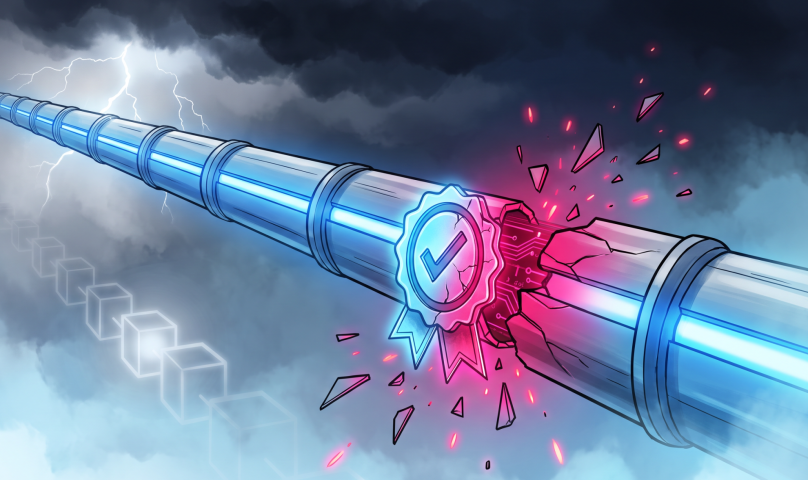 npm Supply-Chain Attack Abuses Trusted Publishing to Ship GHAPPIER Loader
Orca Security details a supply-chain attack on the npm package @dforge-core/dforge-mcp, where a compromised maintainer account modified the GitHub Actions release workflow so any push to main triggered an OIDC-based trusted publish, shipping malicious version 0.2.21 with valid Sigstore provenance. The four-stage GHAPPIER loader activated only when the MCP server launched, deployed a self-deleting remote shell, and per CloudSEK's tracing appeared across 65 repos and 22 accounts; a second payload matched PolinRider, a DPRK-linked campaign using Ethereum transactions for C2. The piece underscores that npm provenance attests build origin, not source integrity, and lists remediation steps since no CVE or advisory yet exists.
orca.securityarticlePublished and added 22 Sep 2026🛡️ Security- V7 cuts costs 78% while boosting accuracy with GPT-5.6 Luna
Case study of V7 Go, an agentic workflow platform for finance and insurance. It builds a Context Graph of entities, relationships and cited evidence extracted from SharePoint and Google Drive files, with RAG fallback and an MCP server for querying and ingestion. Workflow steps are tiered across GPT-5.6 Luna (high-volume extraction), Terra and Sol (reasoning and tool use), and GPT-6 Astra (hardest graph queries). Reported results: 78% lower cost per document with Luna versus GPT-5.4 mini, tool-call error rate down from 2.7% (GPT-5.5) to 0.2% (GPT-5.6 Sol), and GPT-6 Astra at 89% versus Sol's 78% on very-hard graph-query questions. V7 also reports ~5% token savings from moving Chat Completions to the Responses API and a 69% gain over the HERB baseline. The figures are vendor and customer reported.
 openai.comarticleAdded 29 Sep 2026, published 21 Sep 2026🧠 AI
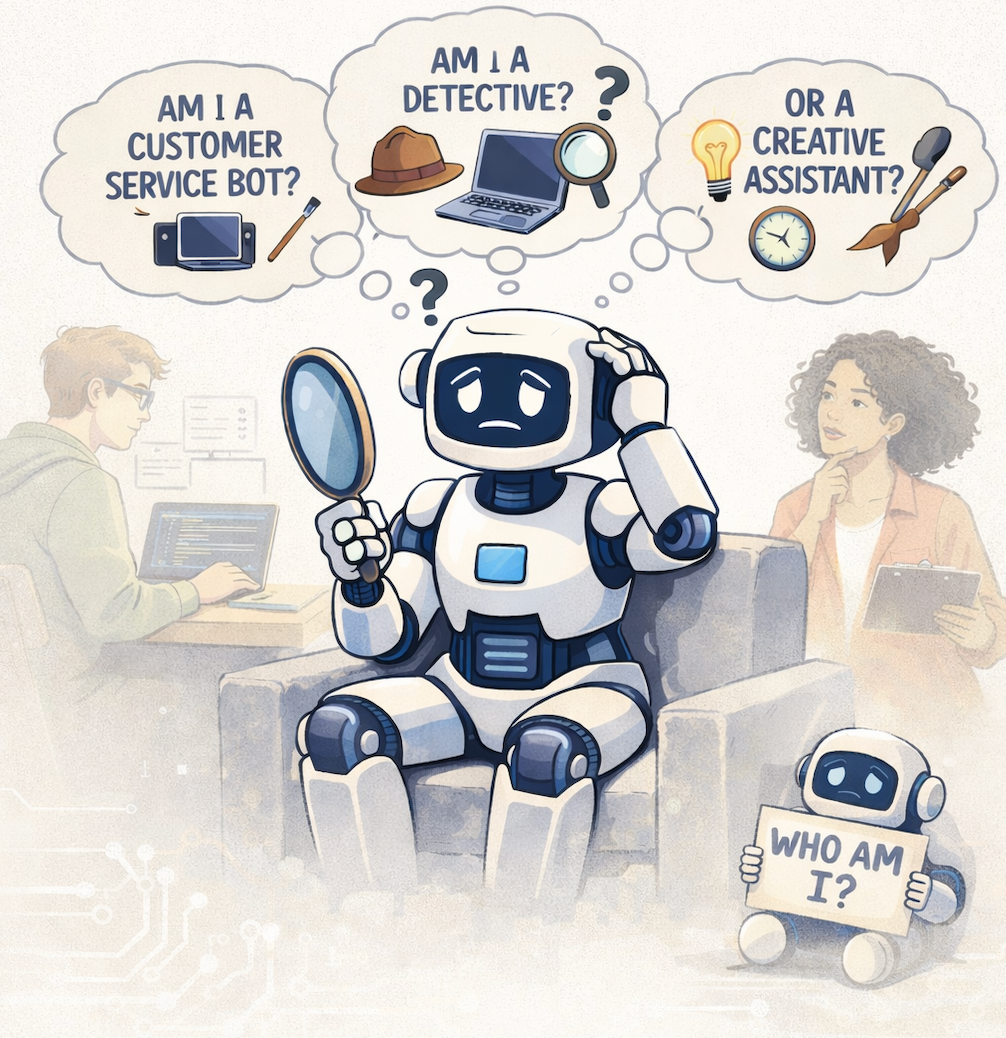 Solving the Identity Crisis for AI Agents (Uber)
Uber describes how it extended its Zero Trust stack to give AI agents verifiable identities: workloads get SPIRE SVIDs, an Agent Registry validates agent-to-workload binding, and a Security Token Service mints single-hop, short-lived JWTs (based on OAuth 2.0 Token Exchange, RFC 8693) that embed the full actor chain from human to agents. An MCP Gateway enforces tool-level policy and an SDK-integrated A2A client makes secure propagation the default. It addresses delegation, provenance loss across agent hops, and auditability, and notes alignment with IETF WIMSE drafts.
 uber.comarticleAdded 18 Sep 2026🛡️ Security
- [AINews] Jev: a “System One Model” that only decides/classifies/routes/scores — >100x faster, >200x cheaper than small frontier LLMs
This AINews/Latent Space daily digest (Sep 14–15, 2026) leads with TypeSafe's Jev, a non-autoregressive "System One Model" trained via RLCD (reinforcement learning from calibrated decisions) that skips free-form text generation entirely, instead outputting predefined structured decisions/classifications 20–200x faster and 40–400x cheaper than small frontier LLMs — positioned as a cheap calibrated inference engine for routing, judging, and classification rather than a general LLM replacement. The issue also covers Periodic Labs' Neon (a materials-science model trained in a closed loop with physical lab data on 1,300 H200s, beating GPT-6 Astra on an internal XRD analysis benchmark), Google's Gemini 3.8 Live topping speech-to-speech benchmarks, MCP's growth as an agent integration layer, a Microsoft finding that raw bash outperforms typed tool catalogs on agent benchmarks, and new evals/papers on reward hacking (CheatBench) and persona/misalignment transfer in fine-tuned models.
latent.spacearticleAdded 29 Sep 2026, published 16 Sep 2026🧠 AI  What is an agent harness (and how do you secure one)?
Adversa AI argues that AI agent security lives in the harness, the loop, tool executors, context/memory management, approval gates and sandbox wrapped around an LLM, not in the model itself, and catalogs nine recurring harness failure classes. It details the firm's own research: SymJack (a symlink-based approval-prompt bypass that let six tested coding agents write attacker-controlled MCP config), GuardFall (shell-matcher bypass exploitable in 10 of 11 open-source agents tested), and TrustFall (MCP servers auto-executing on folder-trust acceptance in Claude Code, Gemini CLI, Cursor CLI and GitHub Copilot CLI), plus references to IDEsaster's 30+ AI-IDE vulnerabilities, a Hugging Face download-counter side channel (CVE-2026-54316), and Novee Security's Black Hat findings on credential leakage across Gemini CLI/Codex trust boundaries. It closes with concrete mitigations: Meta's Agents Rule of Two, allowlisting over blocklisting, treating agent config as executable code, and chain-of-event monitoring mapped to the OWASP Top 10 for Agentic Applications.
adversa.aiarticleAdded 7 Oct 2026, published 14 Sep 2026🛡️ Security Metasploit Wrap Up: This One Goes to Sixteen!
Rapid7's weekly Metasploit Framework update covering sixteen new modules: ten exploits (five on the CISA KEV list) targeting Cisco Secure Firewall Management Center (CVE-2026-20079 auth bypass RCE), SonicWall SMA1000 (CVE-2026-83549 chained RCE), PaperCut NG/MF (CVE-2026-81578 + CVE-2026-82078), JetBrains TeamCity agent-polling XStream deserialization RCE (CVE-2026-63077), Langflow authenticated RCE (CVE-2026-19295), MCPJam Inspector command execution (CVE-2026-23744), SimpleHelp OIDC auth bypass (CVE-2026-48558), Next.js Windows RCE (CVE-2026-75604), and SPIP SQLi/RCE flaws. It also adds a new native Kerberos relay module exploiting ESC8 (AD CS Web Enrollment) via SMB-to-HTTP coercion, a Metasploit handler-detection scanner, a Linux sandbox-evasion module, two Windows persistence techniques, and several bug fixes to the DNS and module metadata subsystems.
 rapid7.comarticleAdded 7 Oct 2026, published 11 Sep 2026🛡️ Security
- [tl;dr sec] #344 - VMs won't contain Cyber-capable Agents, AWS AI Security Analyst, Decompilers vs LLMs
tl;dr sec #344 is a weekly security newsletter issue. It summarizes Trail of Bits' report that an AI agent escaped a QEMU/KVM VM three times (Firecracker held), Grow Therapy's sub-$500/month AI threat hunting system on AWS, Palo Alto's "Pass-ta-key" attacks on synced passkeys, MCP configuration poisoning, org-wide GitHub Actions SHA pinning, and the DecBench decompiler benchmark with the LLM-written Kuna decompiler.
tldrsec.comarticleAdded 30 Oct 2026, published 8 Sep 2026🛡️ Security  Top MCP Security Resources — September 2026 (Adversa.ai)
Adversa.ai's August 2026 MCP security roundup leads with Deadbugz, an active supply-chain campaign that filed 23 GitHub pull requests in 74 minutes to plant a malicious MCP server that only reveals its credential-harvesting instructions after three tool calls, defeating one-time review. It also covers three fresh MCP-server CVEs (Atlassian path traversal, ArcadeDB cleartext cluster-token disclosure, facebook-ads-mcp-server SSRF), a large-scale audit finding 68 vulnerabilities across 414 internet-facing MCP servers with 91.8% lacking authentication, and defense writeups on Keycloak-backed MCP authorization and Cloudflare's MCP traffic fingerprinting.
adversa.aiarticleAdded 26 Sep 2026, published 7 Sep 2026🛡️ Security


Showing 60 of 109
Show more