 Google Dismantles XCPE Botnet of 1.3 Million Android Devices
XCPE (X.CPE) is a backdoor and botnet of more than 1.3 million Android set-top boxes, built and run by the Chinese OEM/ODM Videostrong Technology. Google dismantled it through legal action against domains and servers and banned Videostrong from preloaded Google apps. The malware used a three-stage design persisting on the /oem/ partition and was used for ad fraud, residential proxies and further malware loading.
 securityweek.comarticlePublished and added 3 Nov 2026🛡️ Security
- Odingard Security (@OdingardSecure) on X
Guardian is an Apache-2.0 authorization layer from Odingard that returns a deterministic ALLOW, ASK or DENY decision for every action an AI agent proposes, before the action runs. No model sits in the decision path. It issues single-use capability tokens instead of credentials and signs a receipt for each action. An MCP server is listed on the official registry. The post gives no architecture or policy-format detail.
 x.comtoolAdded 3 Nov 2026🛡️ Security
- Md Ismail Šojal 🕷️ (@0x0SojalSec) on X
An x64dbg MCP server, published on GitHub by duty1g and shared in an X post by @0x0SojalSec, lets Claude drive the x64dbg Windows debugger. It exposes breakpoints, memory dumps and code stepping as tools for reverse engineering and malware analysis. A reply warns that debugging a sample executes it, so the agent should run in a snapshotted VM with no shared folders or host route, and every command should be logged.
x.comrepoAdded 3 Nov 2026🧠 AI  What exploited vulnerabilities have in common: A data-driven analysis of real-world attacks
Microsoft analysis of about 383,000 CVEs disclosed from 1999 to September 2026, of which about 2,000 (0.5%) were exploited in the wild. Exploited CVEs skew to takeover classes: server-side RCE rises from 20% to 37%, local privilege escalation from 11% to 18%, and client-side RCE from 4% to 13%. Median patch times run from 2 weeks on Windows workstations to over a year on network appliances, while the median time to CISA KEV listing in 2026 is 3 days.
 microsoft.comarticlePublished and added 2 Nov 2026🛡️ Security
- Odingard Security (@OdingardSecure) on X
Guardian is an open-source (Apache-2.0) authorization layer from Odingard that gives every action an AI agent proposes a deterministic ALLOW, ASK or DENY decision before it runs. No model sits in the decision path. It issues single-use capability tokens in place of credentials and signs receipts for every action. An MCP server is listed on the official registry. The post gives no architecture or policy-format detail.
x.comtoolAdded 3 Nov 2026, published 2 Nov 2026🧠 AI  Google disrupts million-device XCPE Android malware botnet, bans TV box maker
XCPE is an Android TV box botnet of more than 1.3 million devices, which Google's Threat Intelligence Group attributes with high confidence to manufacturer Videostrong Technology, who preinstalled a system-level backdoor in firmware. The backdoor (x.cpe, com.oemservice) used an MQTT broker for commands and loaded ad fraud and residential proxy modules. Google took down C2 servers tied to 10 million more devices and banned Videostrong from certified Android devices.
 bleepingcomputer.comarticlePublished and added 2 Nov 2026🛡️ Security
 Beyond DKIM key rotation: understanding email replay attacks
DKIM replay attacks are explained: an attacker resends a genuinely signed message unchanged from their own servers, so DKIM passes and DMARC passes even at p=reject. The post shows how to tell replay from spoofing or a legitimate relay using DMARC rua reports, why rotating a key without removing the old public key from DNS leaves messages replayable, and how Amazon SES (BYODKIM vs Easy DKIM), Route 53 and CloudWatch support detection and response. It ends with an ordered incident-response procedure.
 aws.amazon.comarticlePublished and added 2 Nov 2026🛡️ Security
 BTCPay Server warns of hot wallet thefts targeting outdated instances
BTCPay Server, an open-source self-hosted cryptocurrency payment processor, reports attackers draining hot wallets on instances running version 2.4.1 (July 23, 2026) or earlier. Attackers logged in as administrators on versions older than 2.4.2. Users should update to 2.4.7; the exploited flaw is not disclosed. An October 29 critical vulnerability found by Anthropic's Frontier OSS scanner prompted 2.4.7. The August 7 release 2.4.2 had already warned of an exploited LND credential exposure.
bleepingcomputer.comarticlePublished and added 2 Nov 2026🛡️ Security Over 1,000 GitLab servers vulnerable to ongoing RCE attacks
CVE-2026-97229 is a maximum-severity integer overflow in GitLab's CI/CD Regular Expression Compiler that lets an unauthenticated attacker run code via a crafted regex in pipeline configuration. GitLab patched it on 12 October 2026 in versions 19.4.2, 19.3.5 and 19.2.8. CISA added it to KEV, and Shadowserver tracks over 1,000 unpatched servers, plus 11,300 exposed to the related CVE-2026-110264.
bleepingcomputer.comarticlePublished and added 2 Nov 2026🛡️ Security BTCPay Tells Merchants to Switch Off Servers Amid Hot Wallet Attack Reports
BTCPay Server told operators on 1 November 2026 to shut down instances after reports of hot wallets being swept. The project later said the attack targeted versions 2.4.1 or older, with attackers logging in with administrator access, and it had no credible drain reports for 2.4.7. Release 2.4.7 (Thursday) fixed one critical and several medium flaws found by Anthropic's scanner. The number of servers affected and the amount stolen are not stated.
 decrypt.coarticlePublished and added 2 Nov 2026🛡️ Security
 Synology warns of C3RB3R ransomware attacks targeting NAS devices
C3RB3R (Cerber) ransomware is encrypting Synology NAS devices running outdated DiskStation Manager, and Synology issued an advisory urging immediate updates. The attacks exploit a vulnerability patched in December 2024, likely among CVE-2024-10441, CVE-2024-50629 and CVE-2024-10445 from a November 2024 advisory. Victims get a read-me3.txt note and .L0CK3D extension. Shadowserver tracks over 380,000 exposed Synology NAS devices.
bleepingcomputer.comarticlePublished and added 2 Nov 2026🛡️ Security Ivanti patches two more Connect Secure zero-days chained in attacks
Ivanti patched two more Connect Secure zero-days, CVE-2026-111357 (privilege escalation) and CVE-2026-118527 (authenticated file upload), chained with authentication bypass CVE-2026-104935 since at least 1 October 2026. Volexity attributed the chain to UTA0576, which ran no malware, re-exploited the device per command and tampered with logs, evading Ivanti's Integrity Checker Tool. CISA added CVE-2026-104935 to KEV, and Shadowserver tracks over 5,000 exposed instances.
bleepingcomputer.comarticlePublished and added 2 Nov 2026🛡️ Security- The Hacker News (@TheHackersNews) on X
The Hacker News post reports a Linux kernel TCP flaw in the MPTCP code, rated CVSS 9.8. Anthropic demonstrated an exploit that runs commands as root on servers. Ubuntu and RHEL had no fixes at posting time, while Debian, Oracle and others released patches for some versions. The post gives no CVE ID or technical detail.
x.comthreadAdded 3 Nov 2026, published 2 Nov 2026🛡️ Security - Md Ismail Šojal 🕷️ (@0x0SojalSec) on X
An x64dbg MCP server (GitHub repo by duty1g, shared via an X post) that lets Claude drive the x64dbg Windows debugger: set breakpoints, dump memory, step code and run other reverse engineering tasks programmatically. The post targets malware analysts. A reply notes that debugging a sample executes it, so the agent should run in a snapshotted VM with no shared folders or host route, with every command logged.
x.comtoolAdded 3 Nov 2026, published 1 Nov 2026🛡️ Security  Smarthouse (@localyzapp) on X
A reply by Smarthouse (@localyzapp) on X to a question about the best harness for connecting local models to a Minecraft server. It suggests an MCP server that wraps RCON plus a small agent loop. The main pitfall is block coordinates: expose "/execute if block" as a read tool so the agent can check blocks before placing them, or it will hallucinate terrain.
x.comthreadAdded 2 Nov 2026, published 1 Nov 2026🧠 AI Alpine Linux rebuilds GitLab after attempted RCE attack
Alpine Linux rebuilt its GitLab server and reset all passwords after attackers tried to exploit CVE-2026-97229, a maximum-severity integer overflow in the Onigmo regex engine bundled with Ruby, on October 20-21. Eight worker crashes occurred and four were partially successful. Missing logs and outbound connection records meant compromise could not be ruled out. Alpine had run GitLab 19.3.4, then 19.3.6, which lacked the Ruby patch; the fixed image is alpinelinux/gitlab:19.3.6 with Ruby 3.3.13.
bleepingcomputer.comarticlePublished and added 1 Nov 2026🛡️ Security- lee1981 (@lee1981b) on X
CyberForge Weekly CVE Rundown #008 covers seven CVEs from 26 to 31 October 2026: Wasmtime/Cranelift miscompilation, Rust zip cloaking, Qode Membership account takeover, Dell PowerProtect Data Domain stack overflow, two Progress WS_FTP Server flaws and Kubeflow Pipelines log reads. Each entry gives fixed versions and defender actions. A 1 November check adds EPSS values dated 31 October and notes none of the IDs were in CISA's 30 October catalogue.
x.comthreadAdded 3 Nov 2026, published 1 Nov 2026🛡️ Security - zahT3 (@zahT3zuo) on X
Hotseat is a free, open-source macOS menu bar app that moves Claude Code and Claude Desktop to another of the user's Claude accounts in one click and returns to the same session. Sessions, settings, skills and MCP servers are shared, so `claude --resume` works under either account. When a session hits a usage limit, it offers to continue under another account. It never reads tokens or cookies. Install with Homebrew.
x.comtoolAdded 1 Nov 2026, published 31 Oct 2026🧠 AI  Julie Sanchez (@julie199201) on X
YourOwnWeigh is an open-source tool by developer Tom Anthony that patches Withings smart scale firmware over Bluetooth. The patch sends health metrics to a user's own server instead of Withings cloud, avoiding the Withings Plus subscription now required for third-party sync. It can run on a free Cloudflare account and imports existing user profiles. The post gives no firmware or protocol details.
x.comthreadAdded 2 Nov 2026, published 30 Oct 2026🛡️ Security Critical Linux kernel flaw allows remote root attacks on MPTCP servers
CVE-2026-98432 is a use-after-free race condition in the Linux kernel IPv4 TCP code (tcp_v4_syn_recv_sock, ireq_opt), affecting kernels back to 4.4 and rated 9.8 by the kernel CVE team (Red Hat rates it 5.9). Anthropic researchers say an unreleased Claude model built an exploit that bypassed KASLR and got remote root on an MPTCP listener in about 53 minutes. The article lists distro patch status and CIQ's nftables mitigation for IP options; disabling MPTCP alone does not help. No in-the-wild exploitation is reported.
bleepingcomputer.comarticlePublished and added 30 Oct 2026🛡️ Security Tanmay (@TanmayK_03) on X
DBHub, a database MCP server, had a read-only mode bypass in its SQL check. The check treated every `--` as a comment, but MySQL only starts a comment when whitespace follows it. A hidden write statement could therefore still run, and a prompt injection could trigger it. Fixed in version 0.22.6. Replies say enforcement belongs in database grants and that parser tests need to be dialect-specific.
x.comthreadAdded 31 Oct 2026, published 30 Oct 2026🛡️ Security- Bunny CDN Security Incident
Bunny CDN status-page notice, posted 28 October 2026, about unauthorized access at an infrastructure provider that hosted one bunny.net CDN node in Armenia. Traffic was stopped within 20 minutes and the server wiped. No access to the node was found, but cached content, Pull Zone configs and TLS certificates could have been exposed, so all platform certificates were reissued. Customers with their own certificates should rotate them with new private keys.
 status.bunny.netadvisoryAdded 31 Oct 2026, published 30 Oct 2026🛡️ Security
 How Much Can Tool Calls Reveal About You? Privacy Leakage from Tool-Call Traces
PrivacyTrace is a benchmark of 1,000 synthetic user profiles and 4,000 agent trajectories across four domains, built with real tools from 25 MCP servers. Four LLM attackers inferred user attributes from tool-call traces alone at a 26.25% success rate, against 17.97% for prior-based guessing. Tool arguments and returned results gave the main evidence, and linking traces across sessions raised the risk.
 arxiv.orgpaperAdded 3 Nov 2026, published 30 Oct 2026🛡️ Security
- How Much Can Tool Calls Reveal About You? Privacy Leakage from Tool-Call Traces
PrivacyTrace is a benchmark from the Shanghai AI Laboratory (AgentDoG Team, October 2026) that tests how much a passive observer can infer about a user from MCP tool-call traces alone. It has 1,000 synthetic profiles, 4,000 trajectories and 67,950 calls across 25 MCP servers. Four LLM attackers reached 26.25% attribute accuracy against a 17.97% prior baseline, and tool arguments leaked most.
arxiv.orgpaperAdded 3 Nov 2026, published 30 Oct 2026🧠 AI  In Other News: Anthropic Breach Dispute, UEFI Flaw Hits Most Servers, Cloudflare AI Data Leak
SecurityWeek's weekly roundup of 30 October 2026 covers CVE-2026-97631, a 16-year-old buffer overflow in TianoCore EDK II that affects PXE network boot on most servers. It also covers a Cloudflare Workers AI cross-tenant leak caused by an SGLang bug, Anthropic's dispute with Cathedral over a bug bounty intrusion, and fake AI bots probing for secrets. Other items include AI-assisted ransomware (Gold Ogre, Aur0ra), the NIK C2 framework, and North Korean IT worker sanctions.
securityweek.comarticlePublished and added 30 Oct 2026🛡️ Security- Anthropic Cracking Down on Video Game Rewrites
A tweet from chasmmmmmmmmmmm says Claude Code received a new rule around 27 October 2026, delivered from Anthropic's servers under the flag "tengu_heron_brook", with no setting to disable it. The quoted rule allows original games, genre games and games from the user's own designs and assets, but forbids recreating a specific existing game, even if renamed. The post asks whether this ends game rewrites and modding, and gives no verification beyond the quoted text.
 twitter.comthreadAdded 31 Oct 2026, published 30 Oct 2026🧠 AI
 CISA says max severity GitLab flaw now exploited in the wild
CVE-2026-97229 is a maximum-severity GitLab flaw in the CI/CD Regular Expression Compiler, caused by an integer overflow, that lets unauthenticated attackers run code via a crafted regular expression. CISA added it to the KEV Catalog and ordered federal agencies to patch under BOD 26-04. GitLab fixed it in CE/EE 19.4.2, 19.3.5 and 19.2.8, and Shadowserver tracks about 2,800 exposed CE instances.
bleepingcomputer.comarticlePublished and added 30 Oct 2026🛡️ Security- lee1981 (@lee1981b) on X
CyberForge CVE of the Day #091 covers Progress WS_FTP Server CVE-2026-84295 (unauthenticated administrator-credential exposure, CVSS 10.0) and CVE-2026-90868 (conditional OS command and argument injection, CVSS 9.9, low privileges). Fixed floors are 2024.0.7/9.0.7 and 2025.0.4/10.0.4; 2024.0.6/2025.0.3 fix only the first. It gives KEV, EPSS and SSVC status, six SOC checks, and Windows 4688 evidence queries.
x.comadvisoryAdded 2 Nov 2026, published 30 Oct 2026🛡️ Security - ESET Research (@ESETresearch) on X
ESET Research thread summarising its APT Activity Report for April to September 2026 on Russia-aligned groups targeting Ukrainian defense, government and infrastructure. Gamaredon deployed Turla's new VBScript recon tool Rezzuar, indicating FSB-linked collaboration, and updated its file stealer PteroBox while activity fell sharply from mid-May. A separate campaign hit MDaemon mail servers via CVE-2025-8088, delivering HELLAGE and HELLTAG backdoors with no user interaction.
x.comthreadAdded 31 Oct 2026, published 30 Oct 2026🛡️ Security - rikugan: LLM reverse-engineering agent for IDA Pro and Binary Ninja
Rikugan is a reverse-engineering agent that runs inside IDA Pro and Binary Ninja. It has its own generator-based agent loop, context management, plan mode and 60+ tools, and does not depend on an external MCP server. An orchestrator spawns parallel subagents to analyze a binary. It supports Anthropic, Gemini, MiniMax, Kimi, OpenAI-compatible endpoints and Ollama, with per-model notes.
 github.comrepoAdded 30 Oct 2026🧠 AI
- rikugan: LLM reverse-engineering agent for IDA Pro and Binary Ninja
Rikugan is an open-source reverse-engineering agent that runs inside IDA Pro 9.0+ and Binary Ninja, with its own agent loop instead of an MCP server. It has 60+ tools (decompiler, xrefs, strings, types, IL/microcode), parallel subagent exploration, an experimental /modify natural-language patching command and an experimental Binary Ninja deobfuscation skill for control flow flattening and opaque predicates. It supports Claude, Gemini, MiniMax, Kimi, OpenAI-compatible endpoints and Ollama.
github.comrepoAdded 30 Oct 2026🛡️ Security - Ritik Shukla (@Retik_S) on X
kanzo is a local kanban board that coding agents can update. It ships as one 4 MB binary that starts in 2 ms and runs on localhost. It also works as an MCP server, so Claude Code and Codex see the same tasks as the user. The board is stored as a folder that can sync through a private git repo. The post is brief and gives no further detail.
x.comtoolPublished and added 30 Oct 2026🧠 AI - aiproduck (@aiproduck) on X
Ruflo is an MIT-licensed wrapper for Claude Code and Codex that adds agent swarms, vector memory and an MCP server. The plugin install writes no files to the workspace, while npx init adds a .claude/ directory, CLAUDE.md and hooks. The post warns that mods run with the account's permissions, so users should read them first. It gives no benchmarks or architecture detail.
x.comthreadPublished and added 30 Oct 2026🧠 AI  川崎元 (@foryangxin) on X
CVE-2025-6514 is an OS command injection (CWE-78, CVSS 9.6) in mcp-remote 0.0.5 to 0.1.15, fixed in 0.1.16. A malicious MCP server supplies a crafted authorization_endpoint during OAuth discovery, and the open package passes it to PowerShell on Windows. The thread cites the MCP spec's URL scheme allowlist rules and advises treating discovery metadata as untrusted, pinning bridge tools and sandboxing them.
x.comthreadAdded 2 Nov 2026, published 30 Oct 2026🛡️ Security VulnCheck - Outpace Adversaries
VulnCheck Open Source is an index of VulnCheck's open-source tooling for its vulnerability and exploit intelligence. It lists a Python API client, a CLI, a GitHub Action for CI/CD, go-exploit (a Go exploit framework), an MCP server for delivering intelligence to AI clients, and VulnCheck Insights, a Chrome extension that highlights CVEs, CPEs and PURLs on web pages and enriches them. The page gives only one-line descriptions.
 vulncheck.comtoolAdded 29 Oct 2026🛡️ Security
 SAIL Framework: A Practical Guide for AI Security
The SAIL Framework from Pillar Security is a seven-phase, lifecycle-oriented method for securing AI systems. The phases are AI policy and safe experimentation, AI asset discovery, AI security posture management, AI red teaming, runtime guardrails, sandboxed execution for agents and MCP servers, and AI activity tracing. It argues for a "Shift Up" approach that protects the business logic AI controls, and it is meant to sit on top of existing standards.
 pillar.securityarticleAdded 29 Oct 2026🛡️ Security
 Android security checklist: theft of arbitrary files | Oversecured Blog
Oversecured's Android security checklist on arbitrary file theft from an app's private storage. It covers implicit intents (PICK, GET_CONTENT) returning file:// or content:// URIs, SEND/SEND_MULTIPLE share activities, exported and non-exported FileProviders, path traversal via Uri.getLastPathSegment, WebView, and local NanoHTTPD servers. Each case has vulnerable code, an attacker PoC and fixes such as /proc/self/fd path checks and narrow files-path entries.
 oversecured.comarticleAdded 29 Oct 2026🛡️ Security
 What changed when mobile security stopped being theoretical
An Oversecured Head of Engineering, coming from 20 years of web work, describes four mobile security risks that became concrete after seeing real production apps. These are old vulnerable binaries that stay installed after a fix, secrets embedded in client code, Keychain/Keystore guarantees that are weaker than assumed with tokens leaking via logs, and deep links or exported components acting as public endpoints. It ends with advice: test the shipped artifact, verify the full data lifecycle, and build server-side containment.
oversecured.comarticleAdded 29 Oct 2026🛡️ Security- Show HN: Auto Dismiss Mac OS "Allow <app> to find devices on local networks?"
dontallow is a two-file Swift launchd agent for macOS 15 and later that clicks "Don't Allow" on the "find devices on local networks" prompt. It watches the UserNotificationCenter process through an Accessibility observer, supports pause and allowlist, and can decode the Local Network rule store to show orphaned rows. It explains why Chromium temp-bundle paths make the prompt recur, and gives a PPPC profile route for fleets.
github.comrepoAdded 30 Oct 2026, published 29 Oct 2026🛡️ Security - Prasenjit Sarkar (@stretchcloud) on X
A thread on Cloudflare's agent-readiness scan and the AgentReady.org open spec for "Agent Experience", developed with Vercel, Stripe, Auth0, Mintlify, Google, Netlify and Elementor. The scan grades whether agents can find a site (robots.txt, DNS), read clean Markdown, pass bot rules, and discover an MCP server or API catalog. One quoted example raised a score from 20 to 67 by shipping an API catalog with Link headers, an MCP server card, a skills index and an AI catalog file.
x.comthreadAdded 30 Oct 2026, published 29 Oct 2026🧠 AI  Rohan Paul (@rohanpaul_ai) on X
Rohan Paul's X post summarizes a TikTok paper on MCP attacks. LLM agents often finish the requested task, then quietly call an attacker-controlled logging tool that records the user query, the server reply and the final answer. The attack works because agents read natural-language tool descriptions when choosing and ordering tool calls. The visible text is truncated and gives no success rates or defenses.
x.comthreadAdded 30 Oct 2026, published 29 Oct 2026🛡️ Security CISA warns of Fragnesia Linux flaw chained in PHP2Shell attacks
Fragnesia (CVE-2026-46300) is a Linux kernel XFRM ESP-in-TCP logic bug in the Dirty Frag class that gives local attackers root, with a public PoC. CISA added it to the KEV catalog and ordered federal patching under BOD 26-04. Attackers chain it with PHP2Shell (CVE-2026-109618, CVE-2026-109619) to implant PHP webshells. Dream Security tied the chain to 25 rooted servers in the US, Japan, Taiwan and South Korea.
bleepingcomputer.comarticleAdded 30 Oct 2026, published 29 Oct 2026🛡️ Security- Cryptanalysis and Enhancement of VTBSAE: Provably Secure Verifier-Based PAKE Protocols for the Industrial Internet of Things
Cryptanalysis of VTBSAE, a verifier-based PAKE protocol for the Industrial Internet of Things, showing it fails to resist client impersonation after server compromise. The authors propose E-VTBSAEv1, which binds the client point E1 to fresh server randomness, and prove AKE security and forward secrecy in the random-oracle model under CDH. Raspberry Pi 4B tests show runtime comparable to VTBSAE with the same communication and storage overhead.
 eprint.iacr.orgpaperAdded 31 Oct 2026, published 29 Oct 2026🛡️ Security
 New Cisco firewall zero-day exploited to crash SSL VPN devices
CVE-2026-76418 is a high-severity denial-of-service zero-day in Cisco ASA and Threat Defense (FTD) software, exploited in the wild in October 2026. Unauthenticated attackers send a crafted request to the SSL VPN (webvpn) when secondary authentication is set on a tunnel group, causing a device reload. Cisco offers no workaround besides disabling secondary authentication on tunnel groups. Shadowserver sees over 51,000 exposed ASA SSL VPN devices.
bleepingcomputer.comarticleAdded 30 Oct 2026, published 29 Oct 2026🛡️ Security What is an AIBOM? AI bill of materials explained for security teams | Endor Labs
An AIBOM is a machine-readable inventory of models, datasets, dependencies, AI services, agents and MCP servers, with evidence of origin, license, integrity and evaluation. The Endor Labs explainer walks through a worked CycloneDX example for a fine-tuned support assistant. It compares CycloneDX ML-BOM, SPDX 3.x, the OWASP AIBOM project and the May 2026 CISA/G7 guidance, and lists what an AIBOM cannot show: runtime behavior and agent actions.
 endorlabs.comarticlePublished and added 29 Oct 2026🧠 AI
- What is an AIBOM? AI bill of materials explained for security teams | Endor Labs
AIBOM explainer from Endor Labs: an AI bill of materials is a machine-readable inventory of models, datasets, dependencies, AI services, agents and MCP servers, with origin, license and integrity evidence. It walks through a CycloneDX entry for a fine-tuned model, compares CycloneDX ML-BOM, SPDX 3.x, the OWASP AIBOM Generator and the May 2026 CISA/G7 minimum-elements guidance, and lists a six-step build process. It also states what an AIBOM cannot show: model safety, runtime behavior and coding-agent actions.
endorlabs.comarticlePublished and added 29 Oct 2026🛡️ Security - Rohan Paul (@rohanpaul_ai) on X
Rohan Paul's X post summarizes the paper "Log-To-Leak: Prompt Injection Attacks on Tool-Using LLM Agents via the Model Context Protocol", from TikTok researchers. It reports that MCP-using agents often finish the requested task, then quietly call an attacker-controlled logging tool that records the query, server reply and final answer. The attack works through natural-language tool descriptions that agents read when choosing and ordering tools. The visible text is truncated.
x.comthreadAdded 29 Oct 2026, published 28 Oct 2026🛡️ Security  CVE-2026-101767: Critical Oracle EBS SQL Injection Actively Probed in the Wild
CVE-2026-101767 is a CVSS 9.8 unauthenticated SQL injection in Oracle E-Business Suite's Application Object Library, reachable through the /OA_HTML/AppsTCFServer servlet (GanttDataServer) and chainable to OS command execution. It affects versions 12.2.3 to 12.2.15 and was fixed in the October 2026 Critical Patch Update. Horizon3.ai found it, and Defused saw probing on honeypots on 27 October 2026. Interim mitigation is removing the servlet from the URL firewall allowlist.
 orca.securityadvisoryPublished and added 28 Oct 2026🛡️ Security
 Police seize Virtualine bulletproof service tied to ransowmare, cybercrime
Virtualine, a bulletproof hosting service also operating as Secury, Massgod, Spamhouse, Lanedo and Omegatech, had its main domain seized by the FBI with German, Dutch and UK partners. Chainalysis and TRM Labs traced its Bitcoin payments to ransomware (5% of flows), a Russian drug market (about 44%), sextortion and the StealC infostealer. Dutch police seized dozens of servers in Limburg and recovered data on over 3,000 customers.
bleepingcomputer.comarticleAdded 30 Oct 2026, published 28 Oct 2026🛡️ Security Eddy (@ieddysun) on X
Expo's official skills package gives AI coding agents scoped instructions for building Expo apps. One command, npx skills@latest add expo/skills --skill '*', installs it for Cursor, Copilot and Windsurf, while Claude Code and Codex use their plugin marketplaces. Skills include expo-router, expo-animation, expo-upgrade and eas-update. The Expo MCP server adds live docs lookup, compatible dependency installs, EAS build monitoring and simulator screenshots.
x.comthreadAdded 29 Oct 2026, published 28 Oct 2026🧠 AI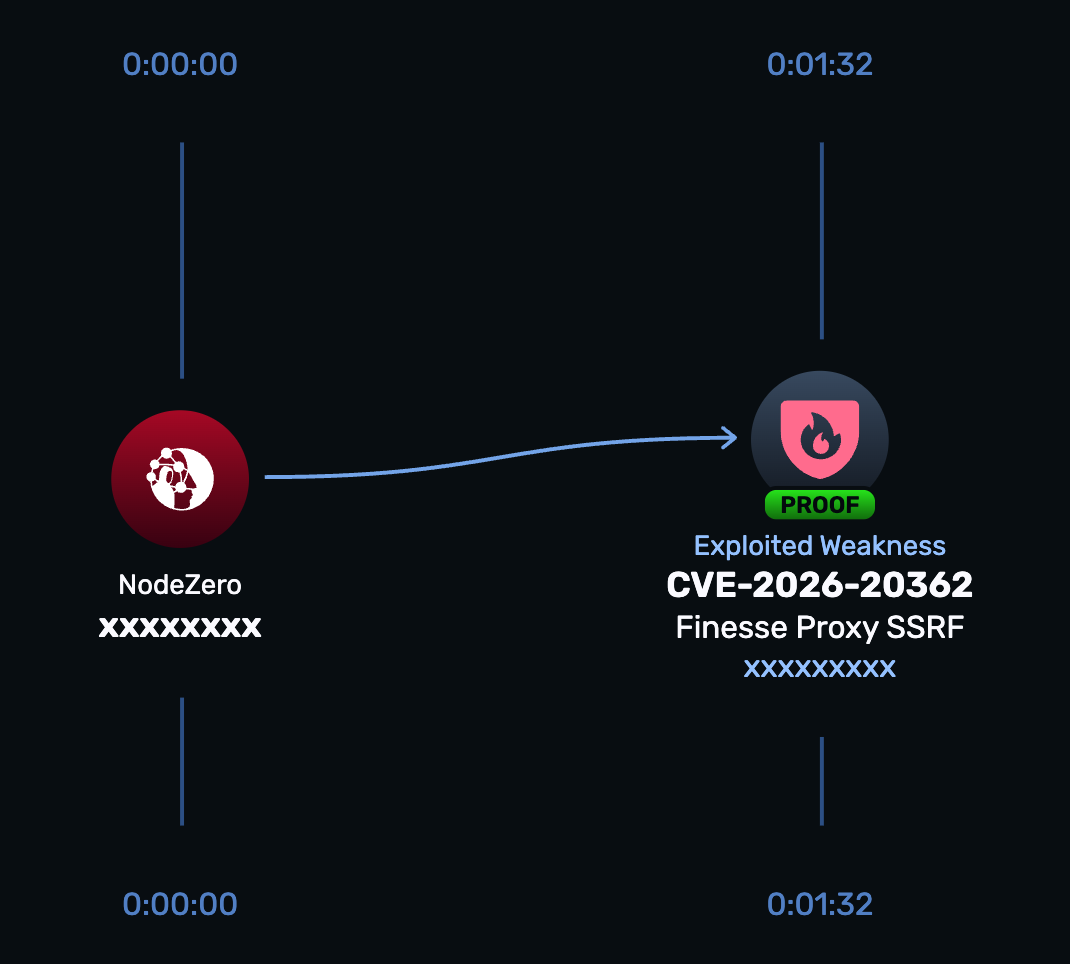 CVE-2026-20362 | Cisco Finesse Server-Side Request Forgery Vulnerability
CVE-2026-20362 is an unauthenticated server-side request forgery in Cisco Finesse (CVSS 3.1 score 7.2), found by Horizon3 researchers Noah King and Brandon Peterson. The embedded Apache Shindig content proxy fetches attacker-supplied URLs, including loopback services such as the Finesse REST API at 127.0.0.1:8082, which returns SystemInfo with node hostnames and the XMPP domain. Cisco published its advisory on 7 October 2026. Fixes are planned for January and February 2027, and no workaround exists.
 horizon3.aiadvisoryAdded 29 Oct 2026, published 28 Oct 2026🛡️ Security
 TLS Flaws Found in GoAhead Web Server Used in Hundreds of Millions of Devices
FoxIO disclosed three TLS flaws in the GoAhead embedded web server from EmbedThis, used on hundreds of millions of IoT, OT and network devices. CVE-2026-115881 (CVSS 9.1) leaves revoked client certificates accepted under mTLS with OpenSSL; CVE-2026-115884 (7.4) bypasses chain-length limits with LibreSSL; a third Mbed TLS bug (5.9, no CVE) weakens TLS 1.2 DHE. GoAhead 6.1.1 fixes the OpenSSL and Mbed TLS issues, and FoxIO released PoC code and fingerprints.
securityweek.comarticlePublished and added 28 Oct 2026🛡️ Security China-Linked Hackers Exploit PHP2Shell to Root Firewalls
A China-linked actor chained PHP2Shell (CVE-2026-109618, CVE-2026-109619) with the Fragnesia Linux kernel privilege escalation (CVE-2026-46300) to root firewalls and drop PHP webshells, per Dream. Using FOFA, the actor narrowed 19,000 firewalls to 240 targets and rooted 24 on 23-24 October. On two US government-affiliated devices it used a reverse SSH tunnel, hit the firewall management server, and attempted LDAP and Active Directory abuse.
securityweek.comarticlePublished and added 28 Oct 2026🛡️ Security Kizuno18 (@Kizuno18) on X
Thread by Kizuno18 on the move from local stdio/Docker Model Context Protocol servers to remote HTTP/SSE endpoints in enterprise infrastructure. It names three trade-offs: credential boundary inversion (short-lived OAuth/JWT tokens instead of long-lived admin tokens on workstations), tool schema bloat solved by deferred discovery, and governance via HCP Terraform policy-as-code (Sentinel/OPA), audit trails and approvals. It is opinion, with no data or implementation detail.
x.comthreadAdded 29 Oct 2026, published 27 Oct 2026🛡️ Security- Kizuno18 (@Kizuno18) on X
Kizuno18's X post argues that the move from local stdio and Docker MCP servers to remote HTTP/SSE endpoints matures the Model Context Protocol in enterprise infrastructure. It lists three trade-offs: short-lived OAuth/JWT bearer tokens replace mounted admin credentials, deferred tool discovery avoids roughly 20k tokens of eager schema loading, and HCP Terraform enforces Sentinel/OPA policy, audit trails and approvals server-side. Opinion post with no benchmarks or code.
x.comthreadAdded 29 Oct 2026, published 27 Oct 2026🧠 AI  Buchi Reddy B (@buchireddy) on X
Buchi Reddy B's X thread comments on Forever Security's research (Gal Weizman, Omer Samet) on coding agents. A web page silently writes a fake AGENTS.md or CLAUDE.md into a Downloads folder, and Codex and Claude Code follow it as project rules. Codex then wrote an attacker's MCP server into the machine-wide config, so one injection becomes a standing connection for every session. It asks whether teams inventory runtime MCP connections against approved lists.
x.comthreadAdded 28 Oct 2026, published 27 Oct 2026🛡️ Security- CRISP: Co-designing Pruning and Scheduling for Efficient MoE Inference on Edge Servers
CRISP is a combination-aware framework that co-designs pruning and runtime scheduling for Mixture-of-Experts inference on memory-constrained edge platforms. It reorders neurons by importance so one stored expert supports several execution widths, gives hot, warm and cold expert combinations different widths, and overlaps expert loading with computation. On Mixtral-8x7B and DeepSeek-MoE-16B it raises throughput up to 2.1x at the same memory budget, with accuracy loss limited to 3.6%.
arxiv.orgpaperAdded 28 Oct 2026, published 27 Oct 2026🧠 AI  Tailscale Rushes Patches After Uncoordinated Disclosure of ‘Tailworm’ Flaws
Tailworm is a set of 11 findings, published by Cyberdione Labs before patches, in Tailscale client 1.104.2 and headscale 0.29.5. Four of six high-severity bugs affect Tailscale SSH, where root-privileged forwarding safeguards can be bypassed, giving root on reachable servers and wormable spread at under a second per hop. Tailscale advises reviewing SSH policies and disabling forwarding until a patched client ships. No in-the-wild exploitation is reported.
securityweek.comarticlePublished and added 27 Oct 2026🛡️ Security- Mauro Ubeda (@mauroubeda) on X
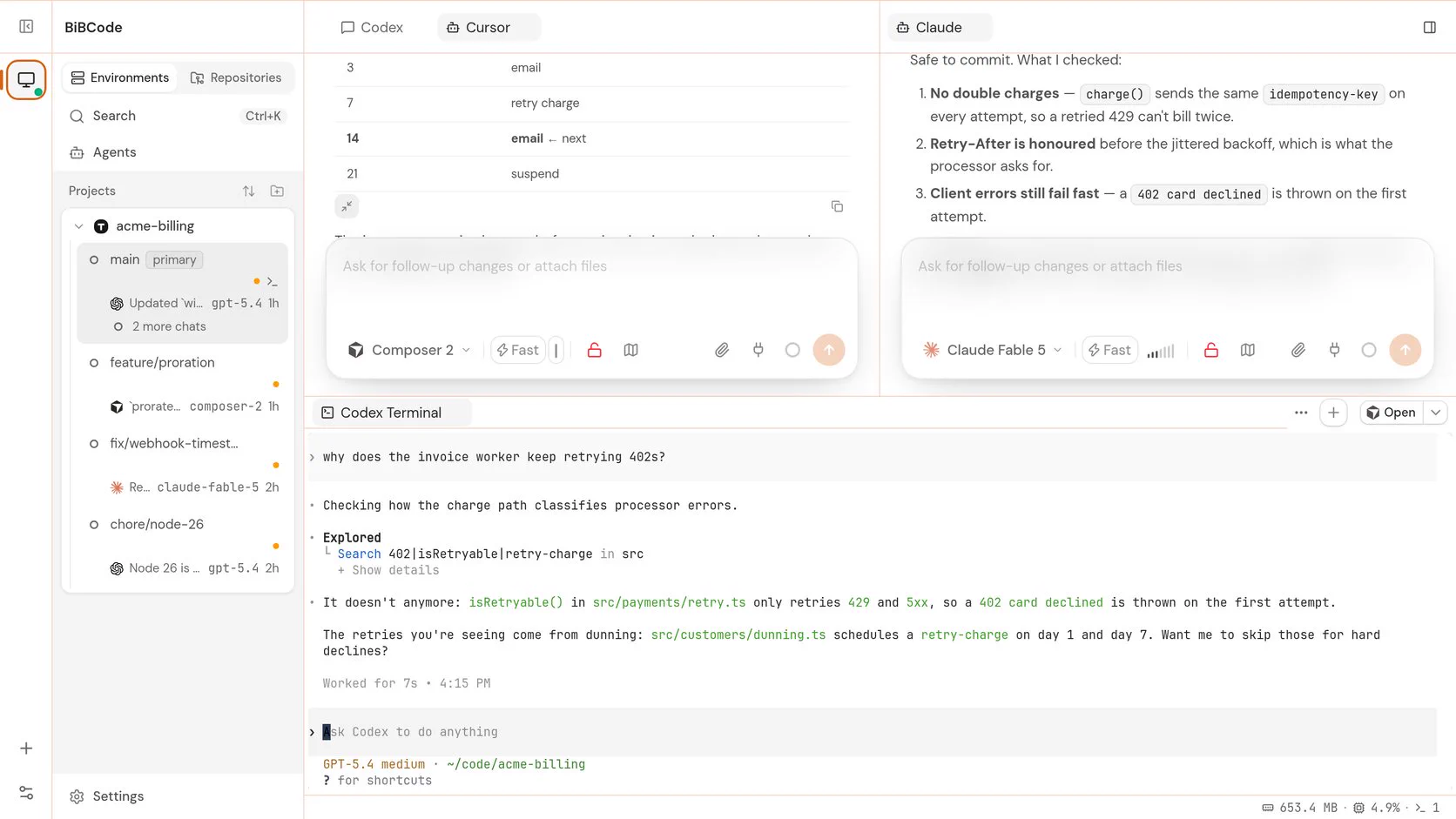
BibCode is an open-source desktop app, now in beta, for running coding agents side by side. It is built with Rust and Tauri rather than Electron, and runs Codex, Claude, Cursor and OpenCode, each in its own git worktree. It can also connect to remote BibCode Servers. The author, Mauro Ubeda, says it mixes ideas from T3 Code and Orca. The post gives no feature detail beyond this.
x.comtoolAdded 28 Oct 2026, published 27 Oct 2026🧠 AI - Rohan Paul (@rohanpaul_ai) on X
Hi3D v1.0 (formerly Sparc3D) is an open-sourced image-to-3D model from Hi3D, which runs a closed v3.0 refining at 2048 cubes per side. In a test with 13 professionals in 3D algorithms, 562 judgments against eight other image-to-3D models favoured it 83.5% of the time. The thread also covers the Hi3D Agent and an MCP server for other agents. Back and bottom views were checked, where TRELLIS.2 collapsed a winged figure.
x.comthreadAdded 28 Oct 2026, published 27 Oct 2026🧠 AI



Showing 60 of 691
Show more