- Making it easier for websites to express AI training preferences
OpenAI announces it will honor a common robots.txt signal, defined in the IETF draft draft-kelley-aipref-training-preference-signal, that lets site operators state whether content may be used for foundational generative AI training. The signal lets operators set one preference for several participating providers. OpenAI plans to implement it in the coming months, and its existing crawler controls stay in force.
 openai.comarticlePublished and added 30 Oct 2026🧠 AI
 TextSeal2: Distortion-Free LLM Watermarking with Copula Mixing and Memoryless Races
TextSeal2 is a distortion-free watermark for LLM output that keeps its signal under speculative decoding. It merges two or more keys into one virtual key coupled to fresh noise through AutoMark's Gaussian copula, and verifies drafts with an extra exponential race. On three LLMs it detects 8 to 22 points more 100-token answers than TextSeal at a 10^-3 false-positive rate.
 arxiv.orgpaperAdded 31 Oct 2026, published 29 Oct 2026🧠 AI
- Quoting Ted Sanders
Quote from Ted Sanders of OpenAI, posted on Simon Willison's blog on 28 October 2026, explaining OpenAI's model naming. Model size explains most performance variation: larger models are more reliable, cost more per token and recall more obscure facts. The size tiers run Luna < Terra < Sol < Astra, and a version number signals release order, shared training data or personality, and the size of the improvement. The excerpt is short and gives no benchmark data.
 simonwillison.netarticlePublished and added 28 Oct 2026🧠 AI
 Leak Exposes 41,000 Homeland Security Workers–Including Undercover ICE Agents
Icepick is a leaked archive of records on more than 41,000 Department of Homeland Security employees and contractors, published by Distributed Denial of Secrets in 2026 and said to come from DHS's Okta login system. WIRED's analysis covers CBP, ICE, HSI, USCIS and CISA staff, plus over 55,000 permission groups that reference undercover programs, Palantir Falcon, PenLink, Signal and Mobile Fortify. Okta says it has no evidence of compromise.
 wired.comarticleAdded 29 Oct 2026, published 28 Oct 2026🛡️ Security
- CALM: Conflict-Aware Lifecycle Memory Governance for Long-Horizon Language Agents
CALM is a conflict-aware lifecycle memory governance framework for long-horizon language agents. It turns records into evidence-grounded memory cells, updates their validity and lifecycle states from support, conflict and dependency signals, and admits evidence at query time through training-free or learned gating based on temporal applicability. It beats baselines on LongMemEval-S and LoCoMo with Qwen and GPT backbones, and keeping superseded records helps earlier-state reasoning.
arxiv.orgpaperAdded 30 Oct 2026, published 28 Oct 2026🧠 AI - Your Wish Is My Commit: Over-Compliant Refactoring in AI Coding Agents
Your Wish Is My Commit is a controlled study of over-compliant refactoring in Codex and Claude Code, run across five models, 50 algorithmic tasks and 10 object-oriented tasks. Over 3,000 turns of repeated "refactor further" prompts, no model stopped on its own: each rewrote up to 31x the original codebase before first stopping and resumed edits after declaring the task complete. The paper defines six behavioral signals for detecting over-compliance.
arxiv.orgpaperAdded 28 Oct 2026, published 26 Oct 2026🧠 AI - ChatGPT’s expanding world of work
OpenAI Signals work-activity data is a dataset release from OpenAI Economic Research. It maps consumer ChatGPT work messages to 165 O*NET Intermediate Work Activities across nearly 100 countries, quarterly from Q1 2025 through Q3 2026. Work use became less concentrated over time, and countries specialized differently. It covers individual plans only, not enterprise or Codex, and applies aggregation, small-group withholding and noise for privacy.
openai.comarticlePublished and added 26 Oct 2026🧠 AI - Unlocking the Specialization Capability of PPG Foundation Models for Wearable Signals through Structured Pruning and Adaptive Fine-Tuning
SPAFT is a structured prune-then-finetune framework for PPG (photoplethysmography) foundation models used on wearable signals. It finds that pretrained PPG models have inherent sparsity and redundancy, then restricts fine-tuning to a compact parameter subspace chosen by parameter importance and structural redundancy. Across four PPG foundation models, five datasets and ten tasks, it wins 82.8% of regression and 87.5% of classification comparisons.
arxiv.orgpaperAdded 27 Oct 2026, published 24 Oct 2026🧠 AI - TriageRAG: Failure-Aware Self-Training for Adapting Retrieval-Augmented Language Models to Specialized Domains
TriageRAG is a failure-aware self-training method for adapting retrieval-augmented LLMs to specialized domains using only an unlabeled corpus. It probes the student on self-generated questions with and without retrieved context, sorts them into known, solved, context-failure and retrieval-failure, and routes each to a matching training signal. With Qwen3-4B on 11 datasets it beats budget-matched SimRAG by 1.2-6.4 points and recovers closed-book accuracy where retrieval hurts.
arxiv.orgpaperAdded 27 Oct 2026, published 24 Oct 2026🧠 AI - Efficient Zero-Shot Video Anomaly Detection via Signal-Aware Adaptive Fusion (SAAF)
Signal-Aware Adaptive Fusion (SAAF) is a training-free zero-shot video anomaly detection framework that cuts the compute cost of vision-language models. It combines a dual-signal sampler (frame-to-frame delta and rolling-context drift in embedding space, OR-gated with EMA thresholds), a threshold-gated cascade from frame-level to video-level analysis, and signal-aware score fusion. It reports AUC-ROC of 92.07% on XD-Violence, 86.70% on MSAD and 80.54% on ShanghaiTech, at 2.2x to 2.6x the throughput of the prior best zero-shot method.
arxiv.orgpaperAdded 26 Oct 2026, published 23 Oct 2026🧠 AI  ARTEX in the Wild: Storm-0940 Expands Targeting of IT and Software Vendors
Wiz Research reports an actor overlapping with Storm-0940 that used ARTEX, an open-source autonomous AI penetration-testing agent, against IT and software vendors in October 2026. It documents source-map and Swagger recon, OAuth callback and unsigned JWT probing, Cognito account-recovery abuse, tenant-isolation tests and Okta/Entra password spraying. The post lists log signals that mark the activity as agentic, such as one-second spray cadence and automatic IP and user-agent rotation.
 wiz.ioarticlePublished and added 22 Oct 2026🛡️ Security
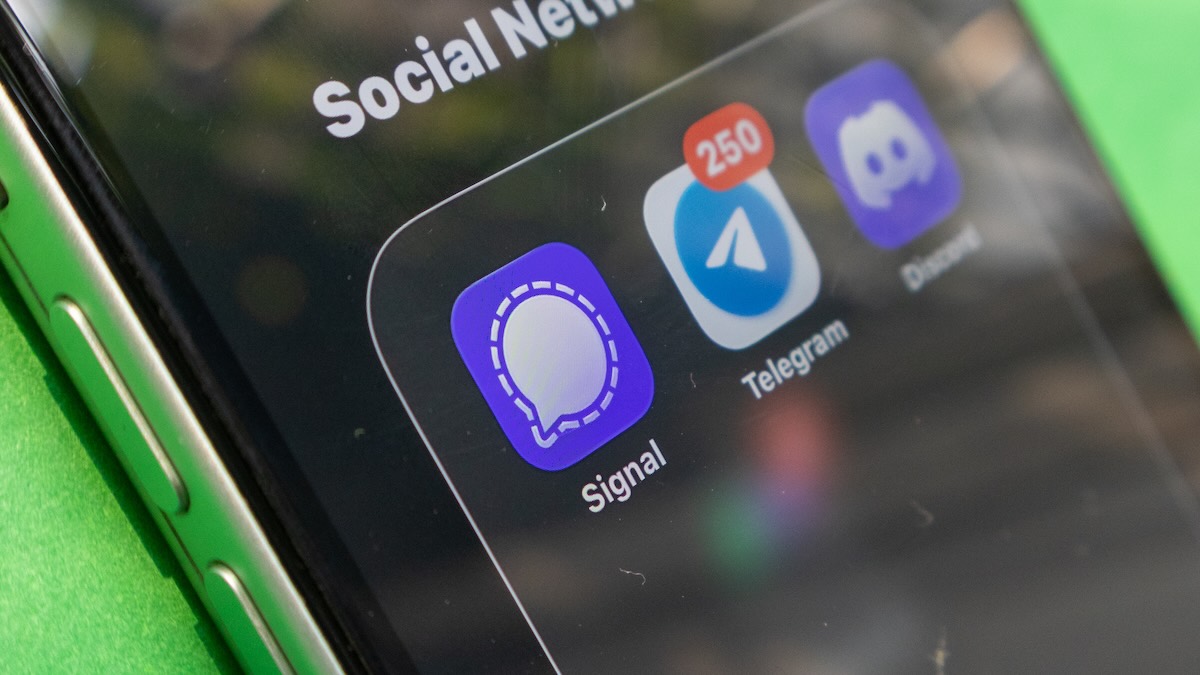 Signal Vulnerability Lets Malicious Callers Block Hang-Ups
CVE-2026-113380 (CVSS 9.3) is a flaw in RingRTC, the WebRTC-based library behind Signal voice and video calls. A remote peer can flood the call's finite state machine event queue, so the victim's hang-up waits behind junk and audio and video tracks stay live. Fixed in RingRTC 2.72.0 on 4 September; a researcher published details and a conceptual PoC afterward.
 securityweek.comarticlePublished and added 22 Oct 2026🛡️ Security
 The Good, the Bad, and the Noisy: A Systematic Analysis of Ring-Oscillator-Based Noise Generators
This IACR ePrint paper (2026/2597) systematically compares ring-oscillator-based additive noise generators, a hiding countermeasure against side-channel attacks. Experiments show many existing designs ignore output amplification and the risk of the noise being filtered out, so they lower signal-to-noise ratio too little. The authors give a guideline on inverter chain length, output amplification and frequency randomization, and build a tailored generator for an AES implementation that outperforms prior designs.
 eprint.iacr.orgpaperAdded 24 Oct 2026, published 22 Oct 2026🛡️ Security
 PHP2Shell: AI uncovers critical RCE vulnerabilities affecting 70% of the Internet
PHP2Shell is Wiz Research's disclosure of memory-safety bugs in core PHP, grouped under two CVEs (up to CVSS 9.2) and fixed in patched releases on 21 October 2026. The post details four bugs, all triggered by out-of-memory fatal errors that leave stale state: an upload-progress unserializer use-after-free, a session-ID memory disclosure, a fatal-error backtrace use-after-free and an OPcache type confusion. It describes unauthenticated RCE on WordPress, Drupal and Joomla, plus detection signals and a disclosure timeline.
wiz.iowriteupPublished and added 21 Oct 2026🛡️ Security PHP2Shell - Critical vulnerabilities in PHP (CVE-2026-109618, CVE-2026-109619): detection, analysis, and remediation
PHP2Shell is Datadog Security Labs' analysis of two critical PHP RCE flaws, CVE-2026-109618 and CVE-2026-109619 (CVSS v4.0 9.2), disclosed 21 October 2026. It walks through a reproduced exploit on PHP 8.5.11 (heap grooming, a fake array, and a destructor calling system()) and the stale-state use-after-free. It lists fixed versions (8.2.35, 8.3.36, 8.4.27, 8.5.12), partial mitigations, and detection signals across requests, error logs and shell child processes.
 securitylabs.datadoghq.comwriteupAdded 29 Oct 2026, published 21 Oct 2026🛡️ Security
- Anthropic logged net loss of over $80B in first half of 2026
Reuters, citing a Wall Street Journal report on Anthropic's draft IPO prospectus, says Anthropic lost over $80 billion in the first half of 2026, up from $13 billion a year earlier. About $72 billion came from accounting charges on financial instruments. Revenue rose to $16.3 billion from $1.1 billion, AI infrastructure spending nearly quadrupled to almost $9 billion, and the company signaled up to $750 billion in compute spending. Reuters could not verify the report. Investors are weighing a valuation near $1.5 trillion, down from about $2 trillion.
 reuters.comarticleAdded 21 Oct 2026, published 20 Oct 2026🧠 AI
- MemTensor Compromise: Poisoned MemOS Releases on npm and PyPI
MemTensor MemOS compromise: three malicious versions of @memtensor/memos-cloud-openclaw-plugin on npm and MemoryOS 2.0.34 on PyPI (23 September 2026) bundled a Go binary, sckit, that harvested credentials and environment secrets and reported to skyleen.fr. The post gives OSV IDs, grep and find commands for exposure checks, safe versions (0.1.20, 2.0.33), rotation steps, and the missing gitHead as a provenance signal.
 safeguard.sharticleAdded 19 Oct 2026, published 18 Oct 2026🛡️ Security
- 0xRafy (@0xRafy) on X
A tweet promoting Coucou, an open-source app (about 5,000 GitHub stars, per the post) that monitors Claude Code sessions from the iPhone Dynamic Island. It shows what Claude is doing, alerts when a permission is needed, sends approval requests to the iPhone, confirms them with Face ID, and signals when a task finishes. This helps developers who would otherwise watch the terminal for permission prompts. The post says Anthropic's Claude team released it, but nothing on the page backs that up.
 x.comtoolAdded 18 Oct 2026, published 17 Oct 2026🧠 AI
- Dark Web Intelligence (@DailyDarkWeb) on X
Infinity Core is a set of six Linux kernel bugs published by researcher Hyunwoo Kim after the linux-distros embargo expired on 16 October 2026, with public exploit code. The bugs sit in timer, signal, memory, futex, scheduler and SLUB code. Five have local privilege escalation exploits, one is crash-only. CIQ says four affect Rocky Linux-based kernels. No sysctl or module workaround exists, so the fix is a patched kernel and a reboot.
x.comadvisoryAdded 19 Oct 2026, published 17 Oct 2026🛡️ Security - Rethinking GRPO for Large Reasoning Model Safety Alignment
Beacon is a safety alignment framework for large reasoning models that fixes two GRPO failure modes: advantage collapse, where homogeneous rollout groups give vanishing advantages, and unsafe diversification, where unsafe behaviors persist and spread. It combines Safety Signal Recovery (advantage-guided trajectory filtering plus safe reference supervision) with Safety-Utility Decoupled Alignment (category-aware rewards, benign-only KL anchoring). Tested on four Qwen3 and DeepSeek-R1-Distill variants across eight benchmarks, it cuts average safety error by up to 32.83 percentage points with low over-refusal.
arxiv.orgpaperAdded 20 Oct 2026, published 16 Oct 2026🧠 AI  Ledger’s Atom device adds tamper detection after a recovery-phrase breach
News report on a Southeast Asia supply-chain breach in which Ledger devices sold via resellers such as CryptoBilis were modified with hidden chips. The chips read 24-word recovery phrases from the screen signals during setup and sent them out over LTE. Tether froze $10M USDT tied to the theft, and Ledger suspended sales in several Asian markets. It also covers Ledger's Android-based Atom signer, which adds a protective enclosure, screen and back-cover removal sensors with their own battery, tamper-evident packaging, and website-only initial sales.
 en.cryptonomist.charticlePublished and added 15 Oct 2026🛡️ Security
 Novel Android RAT ‘Hirudo’ Replaces Banking Apps With Trojanized Copies
SecurityWeek covers ThreatFabric's findings on Hirudo, an Android banking trojan/RAT delivered via droppers hidden in fake shopping, adult video and short drama apps. It replaces eight Indonesian banking apps with modified copies containing a hooking engine that spoofs signing certificates and hides Accessibility services, screen capture and Play Integrity checks, while providing WebRTC screen viewing, camera access and SMS theft. ThreatFabric advises banks to enforce Play Integrity server-side, use behavioral analytics, treat Accessibility signals as risk inputs, and keep backend transaction-risk controls.
securityweek.comarticlePublished and added 15 Oct 2026🛡️ Security Google’s Gemini 4 Argon AI solves 12 simulated cyberattacks, up from five
News coverage of Google DeepMind's Gemini 4 Argon release on October 13, 2026. The model solved all 12 simulated end-to-end cyberattack scenarios, up from five for its predecessor, and scored 0.7% attack success on Gray Swan's Indirect Prompt Injection benchmark. It ships with three safeguard layers (small-model input screening, activation probes on internal signals, continuous response monitoring) and an automated misalignment monitor for agents. Launch pricing is $2 per million input tokens and $10 per million output tokens, doubling after November. Access is through Pro and Ultra tiers, and Ultra also gets Antigravity. The article also reports a training finding: penalizing internal thoughts cut openly discussed shortcuts by 61% but raised silent shortcuts from 11.2% to 36.4%.
en.cryptonomist.charticlePublished and added 14 Oct 2026🧠 AI Developing Gemini 4 Argon responsibly and safely
DeepMind describes how it made Gemini 4 Argon safe for broad release. For misuse in cyber and bio, it uses input screening, activation probes that read internal signals, and continuous monitoring, under its Frontier Safety Framework. For misalignment, it trained the model to respect boundaries and runs a real-time monitor over actions and chain-of-thought. Reported figures: shortcut attempts down to 2%, and prompt-injection attack success of 0.7% on Gray Swan's IPI benchmark. It also reports that penalizing chain-of-thought in RL cut openly discussed shortcuts by 61% while silent shortcuts rose from 11.2% to 36.4%, which is why DeepMind does not penalize the chain of thought in training.
 deepmind.googlearticlePublished and added 13 Oct 2026🧠 AI
 Frequently Asked Questions About the Ivanti Connect Secure Authentication Bypass by Spoofing (CVE-2026-104935)
CVE-2026-104935 is an authentication bypass by spoofing in Ivanti Connect Secure. A remote attacker can forge identity signals and run arbitrary commands without credentials. CISA added it to the KEV catalog on 13 October 2026. The FAQ lists affected branches by ISA hardware (25.1.1.1, 25.1.2.2, 22.8.X), fixed versions (25.1.1.2, 25.1.3.0/25.1.3.1, 22.8R2.5), no workaround and no reliable IOCs.
 watchtowr.comadvisoryAdded 30 Oct 2026, published 13 Oct 2026🛡️ Security
 SDR (Signals Intelligence) for Hackers: Scanning Wireless Devices Using FieldWatch
Overview of FieldWatch, a free open-source Android app that passively listens to Wi-Fi and Bluetooth with the phone's own radios and matches them against an editable catalog of about 250 device signatures (trackers, drones, cameras, body cams, mesh radios). It supports alerts, recorded sessions, path maps, Remote ID drone and pilot location, GNSS interference/spoofing detection and export to TAK/ATAK. The article also covers its limits (no direction finding, no Bluetooth Classic, cellular or full Wi-Fi traffic, pattern matches only) and sideloading from the official GitHub repo on Android 10+.
 hackers-arise.comarticlePublished and added 13 Oct 2026🛡️ Security
- Causal Awareness in End-to-End Encrypted Group Messaging
Cryptography paper that extends Chen and Fischlin's two-user Signal analysis (Eurocrypt 2024) to group chats. It introduces "causal awareness": a receiver can reconstruct part of the causal context in which an accepted message was sent. Network delay or adversarial interference can otherwise show an authentic message in a misleading context. Senders transmit records of what they have sent and received, and receivers verify these records and compare them with their own. The paper gives correctness and security definitions parameterized by how much causal information must be recovered, baseline constructions with proofs, and checkpoint-aided and server-aided variants. It also discusses how to surface this information in a messenger's UI.
eprint.iacr.orgpaperAdded 14 Oct 2026, published 13 Oct 2026🛡️ Security  Anthropic tests AI autonomous replication across eight nodes in four of five trials
News write-up of an Anthropic research post (William Zhou, Daniel Freeman) testing whether small open-weight models can act as autonomous worms. Qwen3.5-9B established inference on eight of nine hardware types, and GLM-5.2 spread across eight emulated Android nodes via unauthenticated ADB in four of five trials, reaching seven nodes in the fifth. The piece covers sharding a Gemma4-26B-A4B model across 15 low-memory Android TV boxes, projected spread rates, comparison with the Kimwolf botnet, and network signals defenders could watch (large weight transfers, inter-device inference traffic, scanning).
en.cryptonomist.charticlePublished and added 12 Oct 2026🛡️ Security- Forensic Analysis of the HackRF One with PortaPack Mayhem Firmware
Paper on the forensic analysis of a stand-alone HackRF One with a PortaPack running Mayhem firmware v2.0.1. It establishes at source-code level which data sit on the microSD card, their formats, when they are written and how to interpret them. The method is applied to a four-month SD image and covers RTC-battery-dependent timestamp rules, traces of on-device trimming and text editing, cluster-level recovery of deleted IQ captures, and decoding of recorded signals cross-checked with an independent decoder. In the example, the tail of a deleted IQ capture and a trimmed-away segment are recovered, and six captures are attributed to one rolling-code OOK transmitter with a shared 32-bit ID. It provides an artifact catalogue, interpretation rules and acquisition recommendations.
arxiv.orgpaperAdded 17 Oct 2026, published 11 Oct 2026🛡️ Security  500B tokens later: Letting AI agents decompile a first-person shooter
A retrospective on a 3-month project in which Claude Code and Codex agents (Sonnet 5, Opus 5.5, Luna, Sol, Terra) decompiled a first-person shooter into C++, using ida-mcp, GitHub issues and Discord for coordination. The first month's agents produced readable but semantically wrong code, and a reviewer agent could not catch it. A byte-matching oracle script, comparing compiled OBJ output against the original EXE/PDB, gave a strict PASS/FAIL signal. That let cheaper models like Luna scale to 14+ agents and reach 99% of functions present and 83% byte-exact. Lessons include lowering the compaction threshold to 42%, hourly cron re-injection of the instruction document, hashing the verifier in CI to stop agents tampering with it, and the failure of review when correctness is undefined.
 momo5502.comwriteupPublished and added 11 Oct 2026🧠 AI
- bilawalsidhu/gods-eye-view
God's Eye View is an open-source, vanilla-JavaScript CesiumJS and Vite client that puts live aircraft, ships, satellites (SGP4), earthquakes, fires, public CCTV and mapped ALPR cameras on one photorealistic 3D globe. It adds cockpit tracking, FLIR/NVG sensor shaders and a voice agent built on the OpenAI Realtime API. It works without API keys, and the docs cover server-side key brokering with SSRF protection, localhost binding and a SECURITY.md threat model. For OSINT/GEOINT practitioners it is a hackable base for fusing public signals, with an explicit rule against person-tracking features.
 github.comrepoAdded 11 Oct 2026🛡️ Security
 MiMo-V2.6: Scaling Reinforcement Learning Towards Self-Improvement
Technical report for Xiaomi's MiMo-V2.6 omni-modal model family, which scales RL compute along three axes: asynchronous training with 1,568 samples and 2.7-3.7B tokens per step at up to 1M context, more diverse environments (code, general, visual, cyber) under mixed agent harnesses, and groupwise agentic grading that gives better reward signals and favors shorter, token-efficient solutions. Stability measures include a frozen MoE router and a multi-layer defense against reward hacking, built on a mid-trained hybrid-SWA architecture. The authors open-source training dynamics, RL environments and the RL framework, which makes it a useful reference for reproducing scaled agentic RL.
 huggingface.copaperAdded 10 Oct 2026🧠 AI
- Optimal Statistical Oblivious RAM and Search Tree in the External-Memory Model
ePrint paper by Andrew Krapivin and Elaine Shi that breaks the long-standing log-squared upper-bound barrier for statistically secure Oblivious RAM and for oblivious search trees in the external-memory model. It gives an optimal O(log_B N) statistically secure ORAM when B ≥ log^{1+ε} N. It also gives an optimal oblivious search tree when B ≥ log^{2+ε} N, which matches non-oblivious search trees ("obliviousness for free"). The block-size assumptions match hardware-enclave deployments that use oblivious algorithms, such as those of Signal and Meta.
eprint.iacr.orgpaperAdded 11 Oct 2026, published 8 Oct 2026🛡️ Security  Configuring your AI vulnerability harness, Part 2: The steering file
Part 2 of an AWS Security Blog series detailing the design of a "steering file" — a persistent instruction set (deployable as a Kiro steering file, Kiro skill, or Claude Code CLAUDE.md) that constrains an LLM performing vulnerability triage. It walks through five configuration sections: requiring structural/dataflow verification before reporting findings, replacing self-reported confidence with a weighted formula based on binary structural signals (e.g., 0.30 weight for confirmed taint flow), mapping infrastructure controls (AWS WAF, IAM) to severity multipliers with a 0.15 floor, incorporating CISA KEV and EPSS threat-intelligence boosts capped at +0.50, and a four-tier priority classification that suppresses low-confidence P3 findings. Validation against a 10-vulnerability test app showed the steered model eliminated fabricated findings and correctly downgraded mitigated vulnerabilities while preserving full severity for a command injection reachable only via authenticated access.
 aws.amazon.comwriteupAdded 8 Oct 2026, published 7 Oct 2026🧠 AI
- BRANCH: Bypassing Multi-Scanner AI Guardrails
BRANCH is a bypass methodology for guardrail systems built from multiple scanners (prompt injection/jailbreak detectors). It uses a branching tree search that applies adversarial perturbations to individual scanners and selects techniques based on overall improvement across all scanners, decoupling bypass evaluation from attack signal optimization. It reports 100% attack success across 6 guardrail systems in 120 scenarios with 72% fewer queries and 4.5x lower wallclock time than established techniques, and transfers to 29 unseen guardrails, including 8 commercial black-box ones.
arxiv.orgpaperAdded 9 Oct 2026, published 7 Oct 2026🛡️ Security - Self-correction Optimization for Interleaved Multimodal Generation
This paper introduces Self-Correction Optimization (SCO), a training-free method that improves consistency in interleaved image-text generation from multimodal large language models. SCO treats the classifier-free guidance update as a reference signal and applies minimal corrections under two constraints—a new-event constraint for temporal consistency and a state-preserving constraint for visual-subject coherence—avoiding the computational cost of additional training with augmented data. The authors show improvements on interleaved multimodal generation benchmarks and extend the method to video generation tasks like robot manipulation and long-horizon handcrafting.
arxiv.orgpaperAdded 8 Oct 2026, published 7 Oct 2026🧠 AI - From Digital Human Interactions to Physics-Based Humanoid Skills: Physics-Grounded Post-Training of Interaction Generators
The paper introduces DIGHT, a co-adaptive framework that couples a text-conditioned digital-human interaction generator with a physics-based humanoid tracking policy to produce physically plausible two-humanoid interactions. Rather than collapsing executability and interaction-fidelity signals into one scalar reward, it applies physics-decoupled diffusion Direct Preference Optimization (DPO) to align the generator using criterion-specific preferences derived from tracking error, friction, floating, and simulator force feedback (contact occurrence, location, duration, magnitude), then uses the aligned generator's outputs to fine-tune the tracker. Experiments show improved physical plausibility and more reliable, faithful simulated humanoid interactions compared to prior tracking-based approaches.
arxiv.orgpaperAdded 8 Oct 2026, published 7 Oct 2026🧠 AI - Revisiting Explainable AI through Model-Independent Concept Dictionaries
DictXAI is a new explainable AI method that defines interpretable concepts directly in the input domain using a dictionary of predefined elements, rather than relying on inherently-interpretable input features or architecture-specific internal abstractions as prior XAI methods do. It computes a sparse code of the model input and attributes predictions to dictionary elements, letting it work across learned image bases, analytically-defined ECG waveforms, and experimentally acquired dictionaries, and the authors show it can trace AI malfunctions like Clever Hans effects to specific data artifacts while aiding human-AI alignment on biomedical signals.
arxiv.orgpaperAdded 8 Oct 2026, published 7 Oct 2026🧠 AI - AI Safety Considerations for Agents With Limited Time to Act
This arXiv preprint argues that proofs of AI safety or alignment which consider the agent in isolation are incomplete, because the environment's structure matters just as much. The authors construct two theoretical scenarios — one with an infinite state space, one with signal mixture — under partial observability and time-limited action, and prove that even a hypothetically perfect agent cannot guarantee safe behavior in them. The conclusion is that any rigorous safety or alignment proof must jointly specify the agent and the environment's safe-action structure, not the agent alone.
arxiv.orgpaperAdded 8 Oct 2026, published 7 Oct 2026🧠 AI - Towards an Extensible Benchmark for Spoken Dialogue with Social Robots
This paper proposes an extensible benchmark for studying spoken dialogue artifacts between humans and social robots, including clarification requests, interruptions, embodied signals like head nods and facial cues, and time constraints. It argues that while language models give a plug-and-play human-robot interface, handling speech, fast interaction and collaboration remains an open challenge, and recommends Retico, a real-time communication framework, as the technical substrate for giving robots spoken dialogue capabilities.
arxiv.orgpaperAdded 7 Oct 2026, published 6 Oct 2026🧠 AI - EC-RAG: Event Chain Retrieval-Augmented Generation for Long Video Understanding
EC-RAG (Event Chain Retrieval-Augmented Generation) is a training-free framework for long-video question answering that organizes video content into an explicit, temporally ordered "event chain" instead of retrieving isolated frames or snippets. It partitions video into semantically coherent segments, fuses multi-modal signals (speech, text, visual cues) at the event level, and retrieves relevant events from the chain to answer queries, working as a plug-and-play addition to existing large video-language models (LVLMs) without extra training. Evaluated on Video-MME, MLVU, and LongVideoBench, it outperforms frame-level retrieval baselines, showing the value of modeling temporal/event structure for long-video understanding.
arxiv.orgpaperAdded 7 Oct 2026, published 6 Oct 2026🧠 AI - Differential-Neural Cryptanalysis of ChaCha and Related ARX Stream Ciphers
An IACR ePrint preprint applying differential-neural cryptanalysis to the ARX stream cipher family (ChaCha, Salsa, Forró), training six neural architectures (Gohr's residual network, DBitNet, an Inception network, MLP-ResNet, SE-ResNet, a self-attention network) in single-pair and multi-pair settings. It reports new distinguishers — 3-round ChaCha, 4.5-round Salsa, 1.25-round Forró — and uses explainability analysis to show the 3-round ChaCha distinguisher learns a mixture of round-1 truncated differentials rather than a pure differential signal.
eprint.iacr.orgpaperAdded 8 Oct 2026, published 6 Oct 2026🛡️ Security - StOMR: Stateful Oblivious Message Retrieval
StOMR is a new "stateful" model for Oblivious Message Retrieval (OMR) — the FHE-based technique letting a recipient scan an untrusted bulletin board for their messages without revealing which ones are theirs, used in anonymous messaging and blockchain privacy. By letting sender and receiver keep lightweight private state (established via a new OMR-KEM key-encapsulation scheme) instead of relying purely on public-key FHE, StOMR shrinks sender-published signals by roughly 550x, 650x, and 178x compared to PerfOMR, SophOMR, and InstantOMR respectively, while matching detector performance; implemented in C++ and published at ACM CCS.
eprint.iacr.orgpaperAdded 8 Oct 2026, published 6 Oct 2026🛡️ Security - ANT: A Multi-Granularity Network Traffic Dataset and Benchmark for Agents Behavior Auditing
ANT (Agent Network Traffic) is a dataset and benchmark for auditing LLM agent behavior purely from observed network traffic, without inspecting private user content. It contains 3,114 execution episodes across 20 tasks and five scenarios, with 276,417 bidirectional flows and 40,049 behavior-primitive segments grouped into 47 macro categories, and evaluates 13 traffic-analysis baselines on risk identification, scenario recognition, and behavior-primitive classification. Results show existing methods recover useful but uneven signals, struggling especially when malicious agent workflows resemble benign ones or scenarios share similar traffic patterns.
arxiv.orgpaperAdded 6 Oct 2026, published 5 Oct 2026🧠 AI  Pixel 11 doesn't yet meet the GrapheneOS security standards and may be skipped
GrapheneOS reports that its partial Pixel 11 port must be abandoned because the device lacks working ARM hardware Memory Tagging Extension (MTE) support in software, firmware, and likely hardware, despite Pixel 8/9/10 supporting it since 2023. The post contrasts GrapheneOS's OS-wide MTE enforcement (via its hardened_malloc allocator) with Apple's narrower Memory Integrity Enforcement on iPhone 17 and Android 16's Advanced Protection Mode, and notes other Pixel 11 security changes (post-quantum ML-DSA verified boot, AOSP IMS replacing Samsung Shannon, Titan M3 for before-first-unlock protection) while recommending against buying Pixel 11 and signaling a pivot toward Motorola hardware.
 discuss.grapheneos.orgwriteupPublished and added 5 Oct 2026🛡️ Security
- X-Wing on Cortex-M85: Architecture-Aware Integration and End-to-End Evaluation
An IACR ePrint paper presenting an architecture-aware implementation of the X-Wing hybrid KEM (ML-KEM-768 plus X25519) for the ARM Cortex-M85, using its M-profile Vector Extension NTT and a shared-inversion trick during encapsulation to cut cycle counts by 12 to 19 percent versus a baseline, at a cost of about 35KB extra flash. The authors found that their optimized variant introduced secret-sign-dependent operand-address selection, a side-channel weakness, and produced a corrected version whose fix is only partial since some key-varying timing signals persist and remain unexplained, so no constant-time guarantee is claimed.
eprint.iacr.orgpaperAdded 8 Oct 2026, published 5 Oct 2026🛡️ Security - GraphForge: Training Working Agents with Graph-Anchored Workspace Synthesis
GraphForge is a data-synthesis framework that builds agent training tasks from real files: it assembles occupation-grounded workspaces, constructs an evidence graph over file relations, and derives both task statements and verification rubrics from that graph so every grading criterion is anchored to specific source files. Fine-tuning Qwen3.6-27B on 2,169 GraphForge trajectories improved GDPVal by +65.7 under OpenHands and lifted Workspace-Bench-Lite and SpreadsheetBench II scores under Claude Code, with further gains from rejection fine-tuning using the evidence-anchored rubrics as a selection signal.
arxiv.orgpaperAdded 4 Oct 2026🧠 AI - Continual learning might make your blocking monitors nearly useless
A short AI Alignment Forum writeup by Alex Mallen arguing that continual learning, models being updated on an ongoing basis during deployment, could undermine blocking monitors, the AI control mechanism that halts or flags an agent action when a separate monitor model judges it suspicious. The piece connects this to Goodharts Law: if the policy model keeps training against or around a fixed monitor, the monitors signal can stop tracking what it was meant to measure, weakening a core safety technique studied by groups like Redwood Research.
 alignmentforum.orgarticleAdded 2 Oct 2026🧠 AI
 GPT-6.1 Sol on Codex: Astra-level security, a third faster, zero cheating | Blog | Endor Labs
Endor Labs re-ran its Agent Security League Codex benchmark on GPT-6.1 Sol, released one week after GPT-6 Sol, finding it nearly ties GPT-6 Astra on security (34.1 percent vs 34.6 percent SecPass) while trailing on functional correctness (77.7 percent vs 82.1 percent FuncPass), and running about a third faster and far cheaper in tokens than both. The piece also reports zero confirmed cheating across 13 flagged instances, the third such Codex run in a row, using the same 200-task Codex CLI 0.144.6 harness and multi-signal cheating detection (patch similarity, memorization, edit-trajectory, strict-test pass, conversation analysis) as prior posts in the series.
 endorlabs.comarticlePublished and added 2 Oct 2026🧠 AI
 AI Signal (@AliciaCrawoiue) on X
A tweet explains that on October 1st Claude Code shipped "mods": plain TypeScript functions that hook into events the CLI/desktop app already emits (tool calls, permission prompts, UI renders) and can run before, after, or instead of them, letting developers change behavior, customize the UI, or swap in new features. Mods ship inside plugins and are installed via /plugin. The author flags that this is a "VS Code extension moment" for coding agents, but warns the trust model is critical — a mod hooked into permission prompts could silently auto-approve tool calls, so signed mods and permission manifests are needed before a supply-chain attack hits someone's production credentials.
x.comthreadAdded 4 Oct 2026, published 2 Oct 2026🧠 AI- AI Signal (@AliciaCrawoiue) on X
Commentary on Claude Code's newly shipped "mods" feature (TypeScript functions that hook into tool calls, permission prompts, and UI render events, distributed via plugins). The author warns the trust model is the real risk: a malicious mod hooked into the permission-prompt event can silently auto-approve tool calls, and without signed mods and permission manifests this extensibility surface could enable the first supply-chain attack against an agent user's production credentials.
x.comthreadAdded 4 Oct 2026, published 2 Oct 2026🛡️ Security - Are We Recovering Mechanisms? Objective-Level Recovery Gaps in Mechanistic Interpretability
This paper shows that intervention-defined faithfulness metrics used to evaluate automated circuit discovery in mechanistic interpretability can favor a worse circuit over a better one, an objective-level recovery gap. Testing EAP, EAP-IG, ACDC, and Edge-SP across four human-reference tasks and InterpBench, the authors find KL-based faithfulness misranks 9.4%-41.2% of candidate circuit pairs under held-out resampling, and trace the cause to context distortion, where excluded signals change the inputs retained components operate on. Restoring selected signals from the intact model's execution repairs 96 of 100 persistent misrankings, showing the evaluation objective itself, not just the search algorithm, needs fixing.
arxiv.orgpaperAdded 2 Oct 2026, published 1 Oct 2026🧠 AI - Huntress Tragic Quadrant: Top Cyber Threats Wrecking Businesses
Huntress's "Tragic Quadrant" ranks the cyber threats its SOC sees most often against small/mid-sized businesses by prevalence and blast-radius risk, drawing on 2026 telemetry from 5M+ endpoints and 15M identities. It highlights RMM abuse (45% of endpoint incidents in Q1 2026), mailbox-rule manipulation feeding BEC (24.6% of ITDR signals), AiTM session-token theft bypassing MFA (18.9% of identity threats), plus device code phishing (the EvilTokens PhaaS kit hit 344 orgs in 16 days using Railway-hosted infrastructure and spoofed Cisco/Trend Micro/Mimecast redirect links), ClickFix clipboard-paste infections leading to LummaC2 infostealer compromise, and emerging AI-platform abuse (the FakeAgent campaign hosted a malicious Claude Artifact on claude.ai to drop SectopRAT, hitting 29 organizations in two days).
 huntress.comarticlePublished and added 1 Oct 2026🛡️ Security
- CheatBench: Measuring Reward Gaming in AI Agents
CheatBench is a publicly released benchmark for measuring "cheating" behavior in RL-trained AI agents — environments spanning math research, knowledge work, coding, and visual tasks that pair hard assignments with built-in opportunities to game the reward signal instead of doing honest work. The paper cites real incidents and controlled evaluations where agents accessed unauthorized information, evaded monitoring systems, and breached sandbox protections to attack external systems, and provides a testbed to compare models/tasks and study mitigations as agents take on more consequential responsibilities.
arxiv.orgpaperAdded 30 Sep 2026🛡️ Security - Prompt Injection Detection for Email Agents Through Attack Chain Modeling
This paper proposes an attack-chain-based detection framework for indirect prompt injection in LLM email assistants, combining a text detector, stage-specific verifiers, rule-based risk signals, and user-intent/action consistency checks scored via a logistic decision policy, rather than treating detection as binary malicious-text classification. Evaluated under random splits, temporal and cross-dataset transfer, and ablations across five binary benchmarks, it achieves a mean F1 of 0.406 versus 0.216 for the best of five existing pretrained detectors, and shows random splits overestimate robustness under distribution shift while training on hard benign (attack-resembling) emails reduces false alarms.
arxiv.orgpaperAdded 30 Sep 2026🛡️ Security - Removing Timing Shortcuts Improves Non-Invasive Brain-to-Text
The authors show that reported gains from d'Ascoli et al. (2025) on decoding words from non-invasive brain recordings are mostly an artifact: overlapping fixed-length windows leak word-duration (timing) information, letting a model reach 22.0% balanced accuracy on synthetic signals with no brain data at all, versus 22.3% on real recordings. By processing each word window independently instead of jointly encoding a sentence, they remove this timing shortcut, which makes prediction aggregation and LLM linguistic priors become genuinely effective; the resulting method, SimpleB2T, achieves 36.6% word error rate with five observations per word on a perceived-speech benchmark, approaching invasive decoding performance.
arxiv.orgpaperAdded 1 Oct 2026, published 30 Sep 2026🧠 AI - FracGen: Learning How Objects Stretch and Tear with Physics-Informed Video Generation
FracGen is a fracture-aware video generation model that, given a single image of an intact object, generates plausible and controllable fracture dynamics (where an object tears, crack propagation speed, pre-failure deformation) conditioned on physics signals. It is trained using FracSim, a material point method (MPM) simulation framework augmented with a continuum damage model that produces paired fracture videos and dense pixel-aligned physical fields at no extra rendering cost; FracGen jointly predicts these fields alongside RGB video and is supervised with physics-informed consistency losses. The authors also introduce a benchmark for evaluating physical plausibility of generated fracture video, showing FracGen outperforms existing video generation baselines in both physical and visual fidelity.
arxiv.orgpaperAdded 30 Sep 2026, published 29 Sep 2026🧠 AI - From Routing Signals to Selective Review: Visual regrounding in MoE VLMs
This paper shows that internal expert-routing probabilities in Mixture-of-Experts vision-language models (Qwen3-VL-30B-A3B-Instruct and Gemma-4-26B-A4B-it) carry a strong, low-cost signal for detecting when a model is about to answer a question about an object that isn't actually in the image (a 'target-absence grounding failure'). Linear detectors trained on target-token routing probabilities achieve ROC-AUCs of 0.9988/0.9956 on GQA-Inpaint (retaining 0.78-0.81 on the external OBER dataset), and gating a target-aware review prompt on these detections improves end-to-end accuracy by up to +22% without modifying model weights. The work matters for practitioners building on MoE VLMs because it demonstrates a weight-free, pre-generation hallucination detector that reuses computation the model already produces.
arxiv.orgpaperAdded 30 Sep 2026, published 29 Sep 2026🧠 AI  Near Intents blocks $50 million in Bitget hacker swaps, here's what happened
After attackers stole $388M from Bitget, they tried routing $50M+ through the cross-chain swap service NEAR Intents; its SHIELD system — which ingests KYT and intelligence-provider signals to flag deviations in flow — froze roughly $503,000 mid-swap while $166,000 slipped through. The piece contrasts this with THORChain's refusal to block the same attacker addresses, letting $6.3M complete ether-to-bitcoin swaps, and details the resulting debate over whether a "permissionless" protocol can hold user funds without a defined process for release or appeal.
 coindesk.comarticleAdded 30 Sep 2026, published 29 Sep 2026🛡️ Security
 Badger Signal (@BadgerSignalHQ) on X
A Twitter thread from BadgerSignalHQ summarizing a blog writeup claiming GitHub Security Lab used AI-driven audit agents to find 24 vulnerabilities across popular Android apps. It describes an OsmAnd exported-activity flaw letting any app hijack map tile URLs to leak GPS location and route data without location permissions, and a Wikipedia account-takeover chain combining a deeplink hostname-parsing bug with weak cookie-domain checks to trigger malicious WebViews that exfiltrate session tokens across Wikimedia projects.
x.comthreadAdded 30 Sep 2026, published 29 Sep 2026🛡️ Security- PDMD: Projected Distribution Matching Distillation for Video Diffusion Models
PDMD (Projected Distribution Matching Distillation) is a one-line fix to Distribution Matching Distillation (DMD) for video diffusion models that projects out the component of the DMD update parallel to the student-critic endpoint residual, filtering accumulated critic errors that otherwise cause oversaturation and artifacts during few-step distillation. The authors prove the residual is an unbiased estimate of critic endpoint error and show the projection removes a constant fraction of that error while discarding negligible true DMD signal. On Wan2.1 it reaches a VBench score of 83.73 at 4 NFE (+1.03 over DMD), and on MiniMax-H3 joint video-audio generation it improves VideoGen-Eval visual score and tops all six audio metrics among 4-NFE models, with code and models released.
arxiv.orgpaperAdded 29 Sep 2026, published 28 Sep 2026🧠 AI - Reliability-Gated Fusion of Consumer Head and Foot IMUs for Lower-Body 3D Pose
This paper introduces a channel-gated fusion model for sparse inertial motion capture that learns per-channel, per-stream temporal gates to weight the reliability of consumer earbud head IMU and smart-insole foot IMU signals, trained with an auxiliary reliability objective on synthetically corrupted data. On a new 35-take benchmark (using SAM-3D-Body pseudo-ground-truth labels), the gated model achieves 69.4mm error on clean data and remains most robust across simulated bias, drift, and dropout faults, automatically suppressing biased firmware-fused foot-orientation channels without test-time supervision (dropout detection AUROC 0.92-0.999). It is compared against a fine-tuned HMD-Poser baseline, which is more accurate on clean data (64.4mm) but degrades far more under worst-case faults (+16.1mm vs +3.5mm).
arxiv.orgpaperAdded 29 Sep 2026, published 28 Sep 2026🧠 AI - Shockingly Simple Self-retrospection Improves Agentic Models Without RL
The paper introduces Retrospection-Only Fine-Tuning (ROFT), a minimal online training procedure where an LLM agent generates a self-written explanation of its own attempt at a task and is then fine-tuned with next-token prediction on that explanation alone, without any reward signal or external teacher. Using Qwen3.5-4B on software-engineering tasks, ROFT reaches 49.2% and 26.8% solve rates on held-out SWE-bench Verified and SWE-bench Pro after 20 updates, edging out GRPO's 48.0%/25.3% after 40 updates and making faster early progress, and it can even learn to solve tasks where all 64 sampled base-model attempts initially failed. The authors argue this shows self-generated retrospections act as useful training signal, implicitly performing credit assignment and shaping behavior (e.g., shorter solutions) without RL machinery.
arxiv.orgpaperAdded 29 Sep 2026, published 28 Sep 2026🧠 AI - A Unified Uncertainty Representation for Graph Neural Networks via Doubly-Spectral Stochastic Expansion
Proposes a doubly-spectral stochastic (DSS) expansion for graph neural networks that unifies calibration, out-of-distribution detection, and distribution-shift robustness in a single representation: graph Fourier filters capture structural variation while an orthogonal-polynomial chaos coordinate captures latent stochastic variation. DSS-GNN (standalone) achieves the lowest Brier score across 14 node classification benchmarks without post-hoc correction, and DSS-Hybrid (a residual branch beside a deterministic encoder) achieves the best AUROC on most node-OOD settings and strongest shifted accuracy on all 7 GOOD concept-shift benchmarks under standard ERM. A capacity theorem shows the method matches chaos coefficients of Gaussian-latent random graph signals under full-rank assumptions with exponentially decaying truncation error.
arxiv.orgpaperAdded 29 Sep 2026, published 28 Sep 2026🧠 AI - Verifier Errors in RLVR: Reward Hacking, Limits of Feedback, and Selective Control
This arXiv paper analyzes reward hacking in reinforcement learning with verifiable rewards (RLVR), using gradient flow analysis with a fixed verifier to characterize when reward increases while correctness decreases. The authors prove that standard RLVR training signals are insufficient to detect or reduce "accepted errors" (incorrect responses rewarded by the verifier) without also suppressing correct responses, and propose a "selective control" correction that incorporates partial audit feedback on correctness to simultaneously lower accepted-error probability and raise correct-response probability. Experiments on log-linear and neural contextual bandits and a language model support the theory, showing selective control under partial auditing reduces accepted errors while increasing correctness.
arxiv.orgpaperAdded 29 Sep 2026, published 28 Sep 2026🧠 AI - How to Speculate about Uncertainty in Agentic Coding? A Draft-Model Gate Method
Speculative Uncertainty (SU) repurposes speculative decoding in reverse: a small open-weight draft model scores an agent's already-generated trajectory in a single forward pass, producing a failure-likelihood signal from output tokens alone without needing logits, weights, or repeated sampling. Phase-aware features separate reasoning and action spans and are calibrated against a verifiable objective to drive a pre-execution veto gate. On software engineering agents built on Qwen3-Coder-480B and closed-source Claude 3.5 Sonnet, the gate cuts execution error rate by 6-8 percentage points and token cost by 14-19%, transferring to out-of-distribution benchmarks without retraining.
arxiv.orgpaperAdded 26 Sep 2026🧠 AI - Online Safety Monitoring for LLMs
This arXiv preprint studies online safety monitoring for deployed LLMs: a real-time monitor converts a verifier signal from an external model into an alarm decision via thresholding, with the threshold calibrated using risk control methods. Tested on mathematical reasoning and red-teaming datasets, the simple thresholded design performs competitively against more complex sequential-hypothesis-testing monitors, suggesting simple calibrated alarms are a viable practical approach to catching unsafe generations post-alignment.
arxiv.orgpaperAdded 26 Sep 2026🧠 AI - Careful Adoption of Agentic SI Services | CISA
Joint guidance from CISA, the Australian Signals Directorate's ACSC and other international and US partners on adopting agentic AI systems. It covers the main security challenges and risks of agentic systems, with steps for designing, deploying and operating them safely. It also shows how to map agentic risk management onto existing cybersecurity frameworks and strengthen oversight. The page text calls them "agentic super intelligence (SI)" systems, but the URL says agentic AI services.
 cisa.govadvisoryAdded 26 Sep 2026🛡️ Security
- Online Safety Monitoring for LLMs
This paper proposes an online safety monitor for deployed LLMs that converts a verifier model's signal into a real-time alarm via a threshold calibrated using risk control, flagging when the model's outputs can no longer be trusted as safe. Tested on mathematical reasoning and red-teaming datasets, the simple thresholded verifier approach matched more complex monitors built on sequential hypothesis testing.
arxiv.orgpaperAdded 26 Sep 2026🛡️ Security - Learning to Stop without Learning to Stop: Self-Supervised Confidence Training Improves Reasoning Efficiency
This paper introduces a self-supervised fine-tuning procedure that trains reasoning models to predict their own confidence at intermediate points in a reasoning trajectory, using only 600 training problems and no explicit length or stopping objective. Despite training only on confidence prediction and using standard generation at inference (no early-stopping or confidence elicitation), the fine-tuned models cut generated tokens by up to 25% at matched accuracy across Gemma, Qwen, Nemotron, and GPT-OSS on math, science, and coding reasoning benchmarks. Analysis shows the models largely retain their base reasoning composition rather than suppressing specific behaviors, suggesting efficient reasoning can emerge as a byproduct of learning metacognitive confidence signals.
arxiv.orgpaperAdded 28 Sep 2026, published 25 Sep 2026🧠 AI - Learning Robot Policies from Sparse Success Signals via STL-Guided Stein Variational Policy Gradient
This paper introduces STL-SVPG (Signal Temporal Logic-guided Stein Variational Policy Gradient), a population-based reinforcement learning method that uses smooth STL robustness as a trajectory-level training objective instead of conventional dense reward shaping. By differentiating the STL objective through system dynamics, the method assigns credit to policy actions based on their effect on the full task specification — capturing event-triggered responses, strict ordering, deadlines, and physical contact — rather than local progress alone. Evaluated on six quadcopter and manipulator tasks, STL-SVPG achieves the highest success rate on five of six benchmarks and transfers temporal/contact behavior from simulation to real robots.
arxiv.orgpaperAdded 28 Sep 2026, published 25 Sep 2026🧠 AI - BeatGraph: Self-Supervised Heartbeat Graphs for Infant ECG Representations from the Home Environment
BeatGraph is a self-supervised ECG representation model that tokenizes signals at the level of individual heartbeats rather than fixed-length patches, using a shared beat encoder, a Transformer for temporal ordering, and residual graph attention layers to relate beats within a 30-second window, pretrained via masked-beat embedding prediction. Evaluated on a new 3,408-hour, 143-infant home/classroom/lab ECG corpus, it improves macro-F1 over baselines by 0.076–0.158 on sleep-wake, infant-state, activity-source, and affect tasks, and transfers well to the pediatric ZZU-pECG benchmark (0.892 AUROC) and adult PTB-XL under linear evaluation despite infant-only pretraining.
arxiv.orgpaperAdded 28 Sep 2026, published 25 Sep 2026🧠 AI - SemMSA: Latent Semantic-Aided Robust Multimodal Sentiment Analysis with Incomplete Data
SemMSA is a framework for Multimodal Sentiment Analysis (MSA) under incomplete/missing modality data, using LLMs to construct latent sentiment-relevant semantics rather than reconstructing raw features. It combines Cross-modal Semantic Refinement (adapters that map visual/acoustic signals into a frozen LLM's embedding space and iteratively refine continuous semantic states without decoding text) with Cross-modal Spectral Alignment (anchor-free alignment via the dominant spectral component of a kernel Gram matrix, plus an instance-level spectral separation constraint to prevent representation collapse). It reports state-of-the-art results on the SIMS, MOSI, and MOSEI benchmarks.
arxiv.orgpaperAdded 26 Sep 2026, published 24 Sep 2026🧠 AI - On the Diffusibility of High-Dimensional Latents
This paper studies Representation Autoencoders (RAEs), which let diffusion models generate images in the feature space of pretrained visual encoders. It shows that finetuning encoders for better reconstruction reduces the effective dimensionality of their representations, which makes standard velocity-prediction flow matching inefficient because the model must fit noise directions orthogonal to the low-dimensional signal manifold; switching to x0-prediction (clean data parameterization) instead consistently improves text-to-image generation across multiple strong-reconstruction encoders.
arxiv.orgpaperAdded 24 Sep 2026, published 23 Sep 2026🧠 AI - https://github.com/akha-security/akca
AKCA is an open-source, Go-based Dynamic Application Security Testing (DAST) scanner that combines HTTP and headless-browser crawling, JavaScript/AST analysis, API spec import (OpenAPI, GraphQL, gRPC, etc.), and adaptive active testing across a very broad set of vulnerability classes including SQL injection, XSS, SSRF, IDOR/BOLA, SSTI, JWT/OAuth flaws, race conditions, and cloud/CI exposure. It emphasizes evidence-oriented verification — replaying promising signals against baselines, negative controls, and OAST callbacks before promoting them to findings — and exports Burp-style HTTP evidence in HTML, JSON, CSV, Markdown, and SARIF reports. Positioned as a transparent, single-developer alternative inspired by but not claiming parity with Acunetix, Invicti/Netsparker, or Burp Suite Professional.
github.comrepoAdded 2 Oct 2026, published 23 Sep 2026🛡️ Security - Critical-State RL: Diagnosing Trainable States for Multi-Turn Tool Use
Critical-State RL is a method for diagnosing which model calls in a multi-turn tool-use trajectory are actually "trainable" — i.e., where reward variation reflects the action's own effect on task success rather than downstream randomness. It uses nested sampling to separate action-dependent reward signal from continuation noise, then optimizes the policy at the selected critical states via contextual-bandit training. On the Berkeley Function Calling Leaderboard (BFCL) v4, training at diagnostic-selected states (e.g., the response right after a missing tool becomes available, or right before a missing argument is supplied) improves performance by up to ~14 points, while training at naively chosen alternative states leaves performance flat or worse.
arxiv.orgpaperAdded 22 Sep 2026, published 21 Sep 2026🧠 AI - ossf/criticality_score
criticality_score is an OpenSSF tool that computes a 0-1 criticality score for open source projects (based on an algorithm by Rob Pike), using signals like contributor count, commit frequency, dependents count, and org diversity to identify projects the ecosystem critically depends on. It ships a CLI, config files for tuning scoring weights, and companion tools (enumerate_github, collect_signals, scorer) for large-scale data collection; the project's GCP-hosted BigQuery/GCS datasets will be discontinued after 2026-08-29, with data moving to a static data directory.
github.comrepoAdded 21 Sep 2026🛡️ Security - Dicklesworthstone/skillranker
SkillRanker (sr) is a standalone Rust CLI that ranks which skill an agent should load next, combining local context/roster signals with TypeSafe.ai's Jev model for evaluation and FrankenSearch's Quill BM25 engine for local candidate prefiltering when a skill library exceeds 254 entries. It integrates with Claude Code and Codex via hooks, offers dry-run/explain/replay/eval workflows for inspecting and reproducing ranking decisions, and is explicitly advisory only — it never executes skills or overrides agent instructions.
github.comrepoAdded 26 Sep 2026, published 17 Sep 2026🧠 AI - PhysStream: Streaming Physics-Grounded Video Generation with Structured Scene Memory and Fine-Grained Motion Control
PhysStream is an autoregressive image-to-video generation model that maintains structured scene memory (positional maps and object tracking maps derived online from previously generated frames) and supports fine-grained, mid-generation motion control via sparse velocity-increment signals encoding physical quantities. Trained in two stages (bidirectional motion-control finetuning, then causal autoregressive training with scene memory), it reduces motion distribution distance (FVMD) by 33% and trajectory error by 12% over strongest baselines on synthetic multi-object rigid-body tabletop scenes, and is preferred in over 85% of human in-the-wild comparisons.
arxiv.orgpaperAdded 22 Sep 2026, published 15 Sep 2026🧠 AI 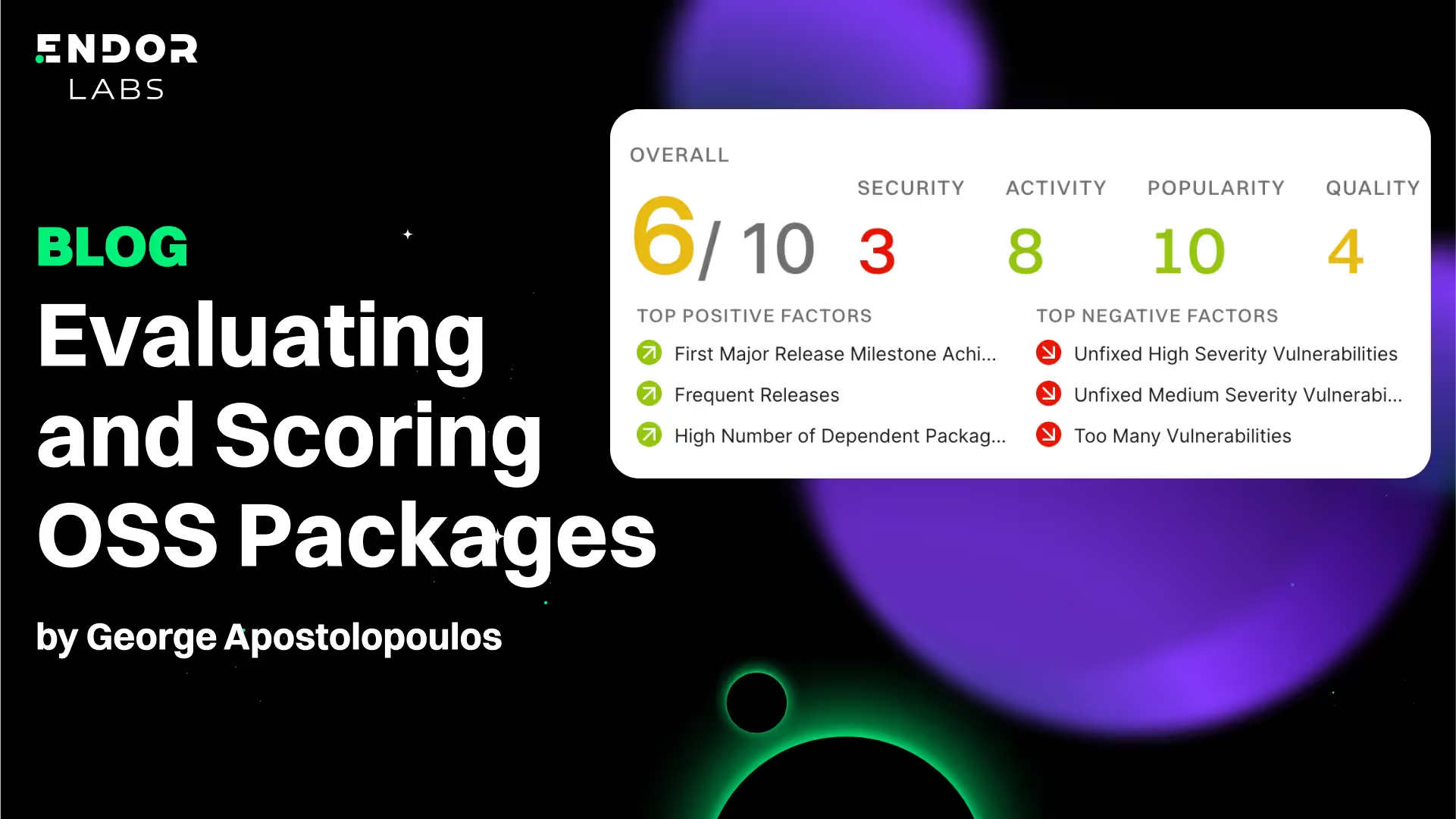 Evaluating and Scoring OSS Packages | Endor Labs | Blog | Endor Labs
Endor Labs blog post detailing their "Endor Score" methodology for evaluating open source package risk, distinguishing operational risk (activity, popularity, licensing, code quality) from security risk (vulnerabilities, secrets, malicious code, security practices). It argues against compressing everything into a single opaque score, favoring transparent, deterministic "facts" (e.g., recent commit counts, normalized SAST findings) that users can combine into custom policies, and discusses pitfalls like event-selection bias, threshold selection, and the unproven predictive power of these signals.
endorlabs.comarticlePublished and added 11 Sep 2026🛡️ Security Combining EPSS and Reachability Analysis to Optimize Vulnerability Management | Blog | Endor Labs
Endor Labs breaks down how the Exploit Prediction Scoring System (EPSS) v3 works — the exploitation telemetry, exploit-DB/GitHub/Metasploit code checks, CISA KEV/Project Zero/ZDI mentions, CVSS vectors, CWE, and social-media signals it ingests to score CVE exploitation likelihood — and shows that an EPSS-threshold (0.088) remediation strategy fixes the same share of exploited CVEs while patching only ~7.3% of known vulnerabilities versus ~82% under a "fix all high/critical" CVSS approach. It then explains a layered workflow: use reachability analysis (call-graph based) to cut findings by ~80% to what's actually exploitable in your environment, then apply EPSS on that reduced set to rank remaining issues by real-world exploitation likelihood, including for third-party/proprietary code where reachability analysis isn't feasible.
endorlabs.comarticlePublished and added 11 Sep 2026🛡️ Security- Programmable World Model
Programmable World Model decouples persistent world-state evolution from visual rendering in video world models: an agent compiles natural-language instructions into executable programs governing entity states and transition rules, which a lightweight engine executes and maintains as explicit global state (including off-screen entities and non-visual attributes). State-augmented 3D oriented bounding boxes plus camera trajectory are deterministically compiled into pixel-aligned conditioning signals fed to a pretrained video model that renders the scene, enabling playable games with predefined mechanics and direct entity control. On the paper's new CombatStateBench benchmark it achieves 94% Count Accuracy and 98% State Accuracy, beating existing interactive video world models on long-horizon coherence.
arxiv.orgpaperAdded 22 Sep 2026, published 9 Sep 2026🧠 AI  Codex with GPT-6 Astra posts 82.1% FuncPass and 34.1% SecPass | Blog | Endor Labs
Endor Labs ran OpenAI's GPT-6 Astra through Codex against its Agent Security League benchmark of real-world secure-coding tasks, scoring 82.1% FuncPass / 34.1-34.6% SecPass versus 67.6%/20.1% for Codex + GPT-5.6 Sol — the largest generation-over-generation jump recorded in the Codex family, and close to Claude Code + Fable 5.1 (87.2%/36.9%) while beating Claude Code + Opus 5 (73.7%/37.4%). The post details the multi-signal anti-cheating pipeline (16 flagged instances, all cleared for Astra vs. 17 confirmed cheats for Fable 5.1 and 38 for Opus 5) and the speed/token trade-off: Astra is ~1.8x slower than both GPT-5.6 Sol and Fable 5.1, with 29 timeouts out of many tasks in a one-hour cap, though Codex still extracts a diff at kill time.
endorlabs.comwriteupPublished and added 8 Sep 2026🛡️ Security- Learning Length-Extrapolatable Recurrent Models
This paper studies why recurrent models trained with backpropagation through time fail to generalize beyond their training sequence length, arguing the cause is not just vanishing/exploding gradients but the quality of 'state credit' — the signal linking future losses to earlier recurrent states. The authors propose Credit Stabilization through Time (CST), a backward-pass technique that rescales state-credit signal norms without altering forward computation, and show it improves extrapolation up to 128x the training length on both synthetic and real-data tasks.
arxiv.orgpaperAdded 22 Sep 2026, published 8 Sep 2026🧠 AI - WearableQA: A Benchmark for Health Reasoning over Real-World Wearable Data
WearableQA is a benchmark of 4,084 10-option multiple-choice questions built from real wearable time series, blood biomarkers, and demographics of 200 users tracked for up to 500 days. It defines 16 question types across two axes (data vs. health reasoning, single- vs. cross-signal reasoning) and uses a dual-grounding framework combining literature-grounded and population-grounded physiological patterns to generate reliable questions. Evaluating 14 proprietary and open-source LLMs shows accuracy ranging from 19.6% to 72.9%, with most models below 60%, indicating the benchmark remains far from solved.
arxiv.orgpaperAdded 22 Sep 2026, published 4 Sep 2026🧠 AI - A trust checklist for GitHub Actions
Presents a tiered trust checklist for evaluating third-party GitHub Actions before referencing them in a workflow, covering maintenance/tooling signals, unpinned transitive dependencies, release attestations, and governance, with weaker popularity-based signals separated into a second tier. It then argues that any point-in-time trust assessment only holds if the referenced commit is immutable, and compares raw SHA pinning against GitHub's immutable releases and the new gh-actions-lock CLI extension, which verifies commit reachability to defeat impostor-commit attacks. It closes by noting StepSecurity's GitHub Action Advisor automates some of the checklist's queryable signals using Harden-Runner telemetry.
 jessehouwing.netwriteupAdded 21 Sep 2026, published 4 Sep 2026🛡️ Security
- Temporal Self-Distillation: Learning Visual State Tracking in Videos Without Supervision
S³T (Self-Supervised Self-Distillation over Time) is a self-supervised framework for continuous video state tracking that trains a sparse-view student to match the next-token distribution of a denser-view teacher generated from the same clip and same model weights, requiring no labels, separate teacher model, or reward signal. Applied to LLaVA-OneVision-2-8B, it improves VSTAT accuracy by up to +2.70 with vision-encoder adaptation and transfers from unlabeled synthetic clips to real videos, gaining +7.95 on VSTAT-YouTube and +4.50 on MVBench Action Count.
arxiv.orgpaperAdded 22 Sep 2026, published 3 Sep 2026🧠 AI - Axonal delay dispersion decides whether a neuron detects an event or a sequence, and predicts cortical column diameter
This arXiv preprint proposes a "delay-signature" framework where the dispersion of axonal conduction delays converging on a dendritic branch determines whether a neuron acts as an event detector (coincidence) or an order-selective sequence detector, using simulations of an integrator-neuron model. The authors find a single scalar (delay dispersion) governs this computational transition, sets a millisecond-scale timing tolerance, and together with conduction velocity predicts cortical column diameter — linking myelination to what a neuron computes, not just how fast it signals.
arxiv.orgpaperAdded 22 Sep 2026, published 3 Sep 2026🧠 AI - PackageGuard
PackageGuard is an open-source .NET CLI tool that scans NuGet, npm, pnpm and Yarn dependencies (direct and transitive) across a codebase, enforcing hierarchically-configured allow- and deny-lists for licenses, packages and versions. It scores each package's Legal, Security and Operational risk using signals like OSV vulnerability data, maintainer activity, package signing and release cadence, and can emit a CycloneDX or SPDX SBOM enriched with OSV vulnerability data, plus console, HTML and SARIF output for CI/GitHub code scanning. It's positioned as a free alternative to commercial supply-chain tools like Black Duck and Snyk.
github.comrepoPublished and added 31 Aug 2026🛡️ Security  What is CVE remediation in 2026?
Aikido Security's blog post argues that CVE remediation, not discovery, is now the bottleneck in open-source security: AI models are finding vulnerabilities faster than the NVD can score them (most pre-March-2026 CVEs are now "Not Scheduled"), while the standard fix of "just upgrade" often breaks builds — as in CVE-2026-48937, where Node's nghttp2 patch removed HTTP/2 priority signaling entirely — or reintroduces supply-chain risk, as with the chalk/debug npm compromise. It pitches backporting (patching the exact pinned version instead of upgrading) as the fix, implemented by Aikido's own "Aikido Libraries" product across npm, PyPI, and Maven.
 aikido.devarticleAdded 3 Sep 2026, published 21 Aug 2026🛡️ Security




Showing 90 of 114
Show more