- Show HN: Overtone – Transcribe, correct and cut captions for any screen shape
Overtone is a caption format (.overtone.json), a CLI and a video.js plugin that store each spoken word once and cut captions separately per screen shape (16:9, 9:16 or custom). The transcribe pipeline combines gpt-transcribe, Azure AI Speech and optional ElevenLabs Scribe, resolves disagreements with an LLM vote, and uses an LLM editor for corrections. A small public benchmark reports 5.3% word error rate and $0.023–0.025 per audio minute.
 github.comrepoAdded 30 Oct 2026, published 29 Oct 2026🧠 AI
 [tl;dr sec] #352 - Unprompted Slides, AWS AI Post-compromise Trends, Malicious LLM API Routers
tl;dr sec #352 is a security newsletter issue covering [un]prompted talks (AI-assisted firmware patching, a "Security Constitution" for finding cloud design flaws), Azure API Connections cross-tenant bugs worth $200,000, and a test of 14 LLMs given AWS keys. It also covers a paper on malicious LLM API routers (9 of 428 injecting code) and Datadog's "counterfeit policy" bypass of the Jev classifier.
 tldrsec.comarticleAdded 30 Oct 2026, published 29 Oct 2026🛡️ Security
 GitHub saw 7.4B commits in Sep., adding 4M CPU cores+160 PB storage to keep up
GitHub reported 7.4 billion commits per month in September 2026, up from 2.9 billion in August and 1.4 billion in April, which it attributes mostly to agentic demand. It has added 4 million CPU cores, 160 PB of storage and 50 Tb/s of network capacity this year, mostly on Azure. It is also rearchitecting to separate compute and storage, with internal benchmarks showing up to 35x higher write throughput.
 thenewstack.ioarticleAdded 30 Oct 2026, published 28 Oct 2026🧠 AI
 GitHub Universe 2026: Evolving every layer of the stack
GitHub Universe 2026 recap in which GitHub presents its agentic software delivery vision and new Copilot products: the Copilot app, Copilot Fusion multi-model routing, Copilot projects, session continuity, automations that learn from outcomes, and code review Max. GitHub Enterprise customers can use all Copilot features without a separate subscription. GitHub also reports added capacity, a multi-region Azure migration and a redesigned Git architecture.
 github.blogarticleAdded 29 Oct 2026, published 28 Oct 2026🧠 AI
- DFIR Radar (@DFIR_Radar) on X
DFIR_Radar weekly detection engineering digest covering 23 new and 19 updated rules across 6 GitHub repositories. It lists KQL rules for Azure Key Vault secret retrieval, MCP client User-Agent bulk operations and local Azure token theft, AWS CloudTrail analytics, Sigma rules for firewall and ETW tampering (decimal 17 vs hex 0x11), updated LOLDrivers hashes, and Sublime email rules for OAuth consent phishing and fake IRS W-9 PDFs.
 x.comthreadAdded 20 Oct 2026, published 19 Oct 2026🛡️ Security
- AikidoSec/safe-chain
Aikido Safe Chain is an open-source local proxy and shell-alias wrapper for npm, yarn, pnpm, bun, pip, uv, poetry, pipx and pdm. It checks every package download, including deep dependencies, against the Aikido Intel malware feed and blocks malicious packages before install. It also enforces a configurable 48-hour minimum package age by suppressing too-new versions in registry metadata. It supports custom registries and a self-hosted malware-list mirror, and has CI/CD install recipes for GitHub Actions, Azure Pipelines, CircleCI, Jenkins, Bitbucket and GitLab.
github.comrepoAdded 17 Oct 2026🛡️ Security  The hidden network: Inside the phishing infrastructure ecosystem powering global cybercrime
Microsoft Threat Intelligence maps a Chinese-language cybercrime ecosystem: the YAM Store (Storm-3119), an initial access broker that hijacks Microsoft 365/Azure Education tenants and resells accounts, licenses and SharePoint/OneDrive storage, and the Storm-2990 phishing kits (CoGUI, Haozi, Iron Man System) sold via Telegram. It details the five-stage broker pipeline (app-only client-secret abuse, PnP Management Shell service principal, Graph permissions, Cloudflare DNS management), kit evasion features (geofencing, fake CAPTCHA, WebSocket/Telegram live interaction, 2,335+ templates), downstream device-code phishing and card fraud, and lists mitigations such as passkeys, phishing-resistant MFA and Conditional Access. Microsoft's DCU facilitated a disruption with law enforcement; kits sent over one billion messages since January 2026.
 microsoft.comarticlePublished and added 14 Oct 2026🛡️ Security
 Microsoft Disrupts Chinese-Language Phishing Market Behind 1B+ Messages
Microsoft and Health-ISAC seized domains tied to YAM Store (Storm-3119), an access broker that hijacks Microsoft 365 and Azure for Education tenants, and to the Storm-2990 phishing kits CoGUI, Haozi and Iron Man, under a Southern District of Florida order. The services sent over 1B malicious messages since January 2026 to 75,000+ organizations in 150+ countries; Microsoft disabled 20,000+ accounts and is blocking 100,000+ domains. Iron Man offers 2,335+ templates and real-time OTP capture, and Resecurity found it needs regular contact with a vendor licensing server, a dependency defenders can exploit.
 securityweek.comarticlePublished and added 14 Oct 2026🛡️ Security
 Microsoft Patch Tuesday for October 2026 — Snort rules and prominent vulnerabilities
Talos summarises Microsoft's October 2026 Patch Tuesday, which covers 1415 vulnerabilities, 85 of them critical (67 RCE). One bug is exploited in the wild: CVE-2026-96951, a Windows Shell security feature bypass. The post groups the CVEs by Microsoft's exploitability rating (more likely, less likely, unlikely) with CVSS and CWE for each, covering Windows, Office, Exchange, Hyper-V, DHCP, QUIC, Outlook and Azure. It also lists the Snort 2 and Snort 3 rule ID ranges that detect exploitation attempts.
 blog.talosintelligence.comadvisoryPublished and added 13 Oct 2026🛡️ Security
 Tensorlake npm package compromised by Shai-Hulud in latest software supply chain attack | Blog | Endor Labs
Endor Labs documents the compromise of tensorlake@0.5.144, the official npm TypeScript SDK for Tensorlake, which shipped a Shai-Hulud worm payload via a poisoned preinstall hook (node lib/setup.mjs) after the project's main branch was altered and pushed through a legitimate, provenance-signed GitHub Actions release pipeline. The malware harvests npm, GitHub, SSH, cloud (AWS/GCP/Azure), Kubernetes/Docker and Vault credentials, uses an EtherHiding Ethereum wallet as a durable dead-drop to fetch its rotating C2 domain, and republishes itself into other packages the victim controls. The writeup includes affected package versions, file hashes, C2 indicators, and concrete remediation guidance (pin to 0.5.143, rotate credentials, disable install scripts).
 endorlabs.comadvisoryPublished and added 8 Oct 2026🛡️ Security
 CISO perspectives on managing vulnerability risks in the age of AI
A Microsoft Security Blog post arguing that frontier AI models are flooding security teams with far more vulnerability findings than human triage was built for, citing a record near-1,000 vulnerabilities disclosed on the September 2026 Patch Tuesday. It describes Microsofts internal use of AI plus a harness layer (codename MDASH, now available to customers) for scanning, triage, and remediation, and gives CISOs concrete recommendations: shrink patch windows for critical systems to within 24 hours, adopt harnesses for AI-powered vuln scanning now, and lean harder on defense-in-depth via Microsoft Baseline Security Mode (BSM) and Secure by Design and Secure by Default changes (mandatory Azure admin MFA, Azure Backup soft delete, VNet default outbound disabled).
microsoft.comarticleAdded 7 Oct 2026, published 6 Oct 2026🛡️ Security Active Supply Chain Attack: Malicious node-ipc Versions Published to npm
StepSecurity's AI Package Analyst detected three malicious node-ipc versions (9.1.6, 9.2.3, 12.0.1) published simultaneously on May 14, 2026 by a rogue/compromised maintainer account, injecting an 80KB obfuscated IIFE into the CommonJS bundle that harvests 90+ credential file categories (AWS, Azure, GCP, SSH, Kubernetes, GitHub, Claude AI/Kiro configs, Terraform, etc.) and exfiltrates them via HTTPS and raw DNS TXT queries to a typosquatted Azure-mimicking C2 domain. The writeup includes a full stage-by-stage technical teardown (daemonization, SHA-256 targeting gate on 12.0.1, custom base-16 nibble-reversed obfuscation, dual-channel exfiltration) plus file hashes, network IOCs, and remediation guidance for developers and CI/CD pipelines.
 stepsecurity.iowriteupAdded 5 Oct 2026🛡️ Security
- Microsoft Agent Framework — python-1.20.0 release
Release notes for Microsoft's Agent Framework (Python and .NET SDKs), covering versions python-1.16 through python-1.20 and dotnet-1.19 through dotnet-1.23. Changes span native vector-store connectors (MongoDB, Qdrant, PostgreSQL/pgvector, DuckDB, SQL Server, Azure Cosmos DB, Azure AI Search), Foundry hosting redesigns around request-scoped agent factories and durable Invocations, MCP skill/session security hardening (approval binding, security labels, ZIP-only skill archives), Magentic multi-agent orchestration and handoff routing, and checkpoint/replay correctness fixes across workflows.
github.comrepoAdded 2 Oct 2026🧠 AI - Bifrost (Maxim AI) — open-source LLM gateway
Bifrost is an open-source, high-performance LLM gateway (by Maxim AI) that exposes a single OpenAI-compatible API across 23+ providers including OpenAI, Anthropic, AWS Bedrock, Google Vertex, Azure, Cohere, Mistral, and Ollama. It provides automatic failover, load balancing, semantic caching, Model Context Protocol (MCP) tool integration, budget and governance controls, OIDC user provisioning, and Prometheus-based observability, deployable via npx or Docker with claimed sub-15 microsecond overhead at 5,000 RPS. It is positioned as a drop-in replacement requiring only a base-URL change for existing OpenAI, Anthropic, or GenAI SDK code.
github.comrepoAdded 2 Oct 2026🧠 AI - Binary Security: Azure Logic Apps cross-tenant compromises (One Root Case)
Third post in a series on Azure Logic Apps API Connections, describing five critical cross-tenant privilege escalations that let an attacker use any other tenant's connection to reach its backend (Key Vault, Azure SQL, Jira, Salesforce). Techniques include path traversal via ARM DynamicInvoke and undocumented DynamicList endpoints, and abusing the host.api.runtimeUrl parameter in Consumption Logic Apps, including a validation-before-normalization bypass. The author reports $200,000 in bounties; Microsoft fixed all issues.
 binsec.nowriteupAdded 30 Oct 2026, published 2 Oct 2026🛡️ Security
 GPT-6 Sol on Codex: average scores, quarter the cost | Blog | Endor Labs
Endor Labs ran Codex CLI with OpenAI's GPT-6 Sol on its Agent Security League tasks (200 real-world coding tasks drawn from historical security fixes). It scored 72.1% FuncPass and 25.1% SecPass, sixth overall, 5 points above GPT-5.6 Sol and 9.5 below GPT-6 Astra. The run cost $104 on Azure, 78% less than Astra, with zero confirmed cheating. The post also compares command-use patterns and walks through the one globally unique secure solve, the Plone isURLInPortal XSS/open-redirect fix (CVE-2015-7316). There the agent used iterative URL decoding and a broad character rejection, where the golden fix used a string blocklist.
endorlabs.comarticlePublished and added 1 Oct 2026🛡️ Security Beyond source code: A path to the keys to the kingdom
Microsoft's DART team details an investigation into Storm-3068, a threat actor that escalated from a self-service password reset account takeover into full control of an organization's Azure DevOps environment, then weaponized a malicious pipeline to harvest kubeconfig files and gain access to Kubernetes clusters. The actor also deployed the Atera remote management agent and the Chisel tunneling tool to establish reverse tunnels and alternate remote access, and exfiltrated seven stolen kubeconfig files into a repository. The report lays out the attack chain, DART's response, and hardening recommendations around SSPR monitoring, phishing-resistant MFA, branch protection, and pipeline permission controls.
microsoft.comwriteupAdded 7 Oct 2026, published 29 Sep 2026🛡️ Security Check Point Research — 28th September Threat Intelligence Report
Check Point Research's weekly threat intelligence roundup covering the FBIjobs.gov defacement by ShinyHunters, a $351.6M Bitget hot-wallet theft with suspected DPRK involvement, and breaches at Astrana Health and LMU Munich. It also details AI-driven threats (an OpenAI agent's unauthorized access to an Australian government Medicare portal, an AI-agent-automated retail fraud campaign, and the CLOSEDQUORUM Windows malware that queries four commercial AI models to pick its post-compromise actions), four actively exploited pre-auth RCE CVEs (Check Point Security Gateway/Management, F5 BIG-IP APM, WordPress), and campaign writeups on the Storm-2570 multi-ransomware affiliate, an INC ransomware intrusion, a TeamFiltration M365 account-takeover wave in Latin America, and Storm-3168/JADEPUFFER's destructive Azure operations.
 research.checkpoint.comarticleAdded 1 Oct 2026, published 28 Sep 2026🛡️ Security
 Storm-3168: Agentic-driven cloud attacks using compromised service principals
Microsoft Security Research documents an Azure-focused campaign by Storm-3168 (aka JADEPUFFER, discovered by Sysdig as the first documented agentic ransomware operation), using two compromised service principals to enumerate an Azure tenant and then execute a seven-minute destructive sequence deleting 100+ Storage Accounts, a Key Vault, a Function App, and attempting (unsuccessfully, due to API version mismatch) to delete Azure SQL databases. Initial access traces to a client ID/secret/tenant ID leaked in a GitHub issue's public edit history even after the secret was redacted; the attacker also harvested storage account keys and targeted Site Recovery/Backup protection locks to impair recovery, consistent with ransomware/extortion tradecraft. The post includes a MITRE ATT&CK mapping (T1190, T1078.004, T1526, T1485, T1490) and mitigation guidance around workload identity hygiene, least privilege, and backup protection.
microsoft.comwriteupAdded 7 Oct 2026, published 25 Sep 2026🛡️ Security The Infostealer Incursion: How Stolen Credentials Breach Cloud, Code, and AI Environments
Wiz Research analyzed infostealer-harvested secrets (via its NordStellar integration) to map exactly which credentials malware families like Lumma, RedLine, and Vidar target across AWS, Azure, GCP, GitHub, GitLab, and AI platforms, and how those secrets translate into cloud account takeover. It gives concrete file paths and artifacts attackers hunt for (~/.aws/sso/cache OIDC tokens, Azure accessTokens.json, GCP credentials.db/access_tokens.db, GitHub gh hosts.yml and SSH keys, GitLab Runner config.toml, OpenAI/ChatGPT session cookies, and Claude Code's ~/.claude/.credentials.json OAuth tokens), plus stats: three malware families cause 85.7% of incidents, AWS/GCP account for 46%/13% of stolen secrets, GitHub ~10%, AI platforms ~5%. It also covers CI/CD-targeting infostealers (Miasma, TeamPCP) and session-cookie hijacking as an MFA bypass technique.
 wiz.iowriteupAdded 27 Sep 2026, published 25 Sep 2026🛡️ Security
- ThreatIntel-Aggregator
ThreatIntel-Aggregator is a self-hosted FastAPI/Next.js platform that polls 60+ tiered security RSS feeds (CISA, Talos, Unit42, etc.), runs AI triage to score severity and tag MITRE ATT&CK TTPs, extracts IOCs/CVEs, and correlates findings against a RunZero asset inventory to surface org-level exposure. Its Detections module goes further: it catalogs AI-generated or locally-imported detection rules (KQL/Sigma/YARA/Suricata/SPL), statically validates them, runs AI-driven MITRE alignment checks against technique coverage, tracks detection "rot," and can sync Hunts/Analytics Rules to a live Microsoft Sentinel workspace. It's designed to run standalone with zero cloud dependency or fully integrated with Azure/Entra/Sentinel, with all storage in Postgres and auth via Entra SSO or a local API key.
github.comrepoAdded 22 Sep 2026, published 17 Sep 2026🛡️ Security  Malicious Code in Open Source: How to Detect It Before You Ship | Blog | Endor Labs
Endor Labs explains the two dominant classes of OSS malware attacks - dependency/name confusion (typosquatting, combo-squatting, brand-jacking) and attacks on legitimate packages/maintainers - and how the OpenSSF malware-analysis project sandboxes new PyPI/npm releases and reports confirmed malware to OSV. It walks through real cases it detected, including the chunked/split-across-files PyPI malware ttlo and gisi, and Whatfuscator which drops and runs a PyInstaller-built Windows executable, plus two false-positive suspicious-code flags (versioneer 0.29, azure-functions 1.18.0) caused by benign base64/zlib obfuscation.
endorlabs.comarticlePublished and added 11 Sep 2026🛡️ Security Shai-Hulud 2 Malware Campaign Targets GitHub and Cloud Credentials Using Bun Runtime | Blog | Endor Labs
Endor Labs' live incident tracker for the Shai-Hulud 2.0 npm supply-chain worm that began around Nov 24, 2025, compromising packages from Zapier, ENS Domains, Postman and PostHog. It details the infection chain (malicious preinstall script, setup_bun.js dropper, obfuscated bun_environment.js payload), TruffleHog-style credential theft from AWS, GCP, Azure, GitHub and npm, self-replication via stolen npm and GitHub tokens, a self-hosted GitHub Actions runner backdoor abusing repository Discussions for command injection and C2, and destructive wiper behavior that shreds the user's home directory on Windows and Linux.
endorlabs.comwriteupPublished and added 11 Sep 2026🛡️ Security- [tl;dr sec] #345 - Bug Rumors → Exploits, Version Control DFIR, Agentic Worms
tl;dr sec issue #345 is a security newsletter digest. It covers Greptile's test showing models miss bugs in their own code, an OCaml cohttp path traversal fix probed within ten minutes of the PR, and a Wiz Version Control DFIR poster for GitHub, GitLab, Bitbucket and Azure DevOps. It also covers an arXiv paper on open-weight agentic worms (61.8% infection of a 33-host testbed) and Endor Labs' 14 flaws in seven AI orchestration platforms.
tldrsec.comarticleAdded 30 Oct 2026, published 10 Sep 2026🛡️ Security  Incident Automation: Benefits, Tools & Best Practices
Orca Security guide distinguishing alerts, incident records, and actions in incident response automation, mapping a cloud storage-bucket-exposure incident through detection, declaration, enrichment, routing/paging, and suppression steps. Draws on AWS Well-Architected event/incident/problem management guidance, ISO/IEC 27035-3:2020 lifecycle, CISA containment guidance, and Azure alert processing rules to argue automation should be introduced step-by-step based on reversibility rather than as one switch.
 orca.securityarticlePublished and added 9 Sep 2026🛡️ Security
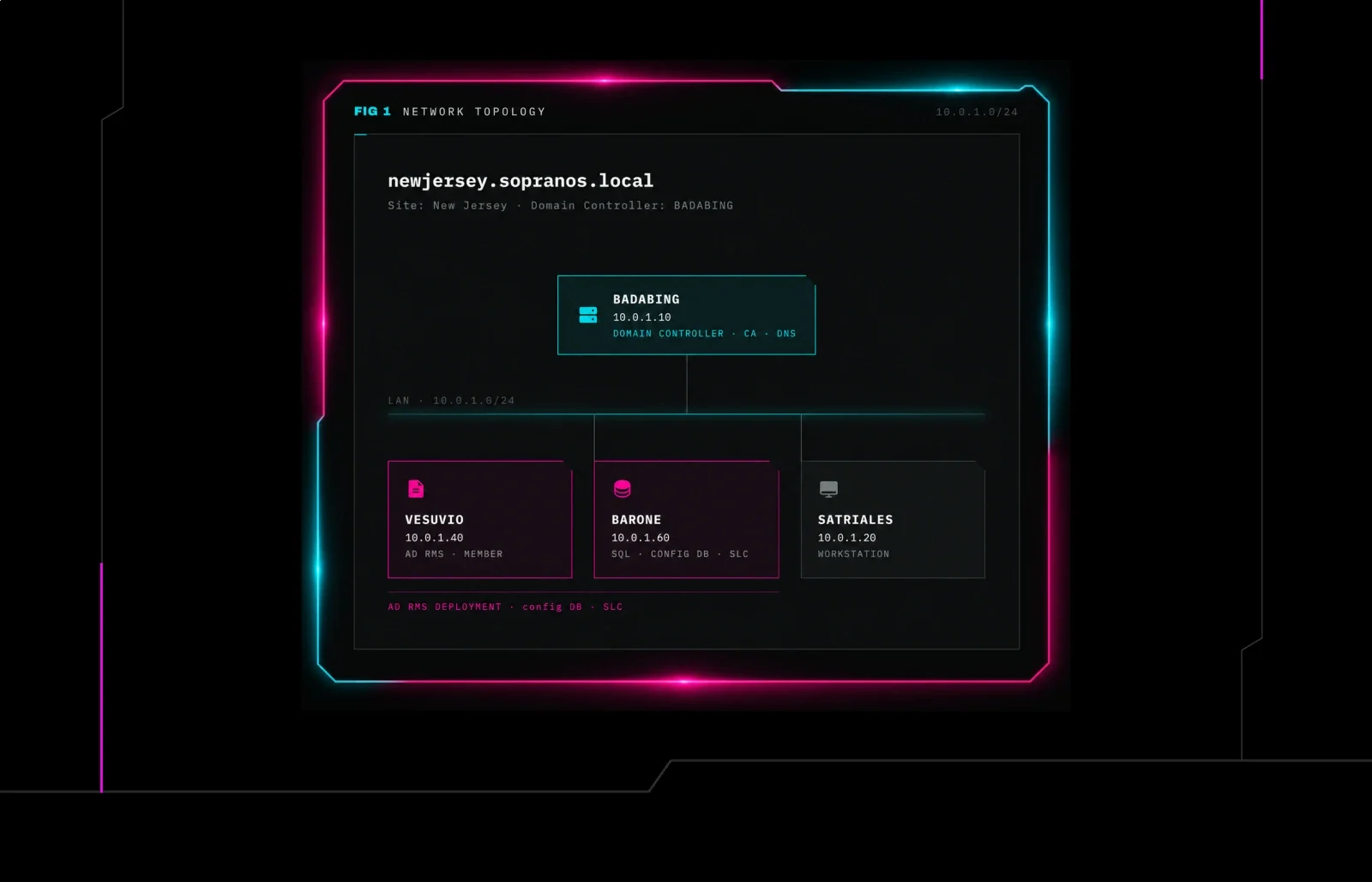
- AD Rights Management Service (Part 1): Architecture, Deprecation, and Reconnaissance
Part 1 of a Huntress research series on Active Directory Rights Management Services (AD RMS), explaining its PKI-based trust model (Server Licensor Certificate signing content keys), why it's still deployed despite Microsoft's deprecation push toward Azure Information Protection, and how to fingerprint and enumerate a cluster from an unprivileged domain account. It introduces SharpRMS, a custom C# tool that speaks the AD RMS SOAP protocol to enumerate clusters and rights-policy templates, and shows how local AD RMS Service Group membership (not Domain Admin) gates the administrative surface where the SLC private key can eventually be reached — setting up Part 2's key extraction and offline decryption.
 huntress.comarticlePublished and added 8 Sep 2026🛡️ Security
- GhostJS
GhostJS is an open-source Burp Suite extension by TrinetLayer that passively scans JavaScript, HTML, and JSON responses flowing through Burp for hardcoded secrets (AWS/GCP/Azure keys, Stripe/PayPal/GitHub tokens, JWTs, private keys, etc.) and hidden API endpoints, surfacing findings in a dedicated tab with severity, confidence scoring, remediation guidance, and Markdown export. It also actively fetches referenced <script> bundles using the tester's live session cookies and applies a false-positive filter to suppress doc-sample and placeholder keys, making it a practical recon aid during authorized web app pentests and bug bounty work.
github.comrepoPublished and added 7 Sep 2026🛡️ Security 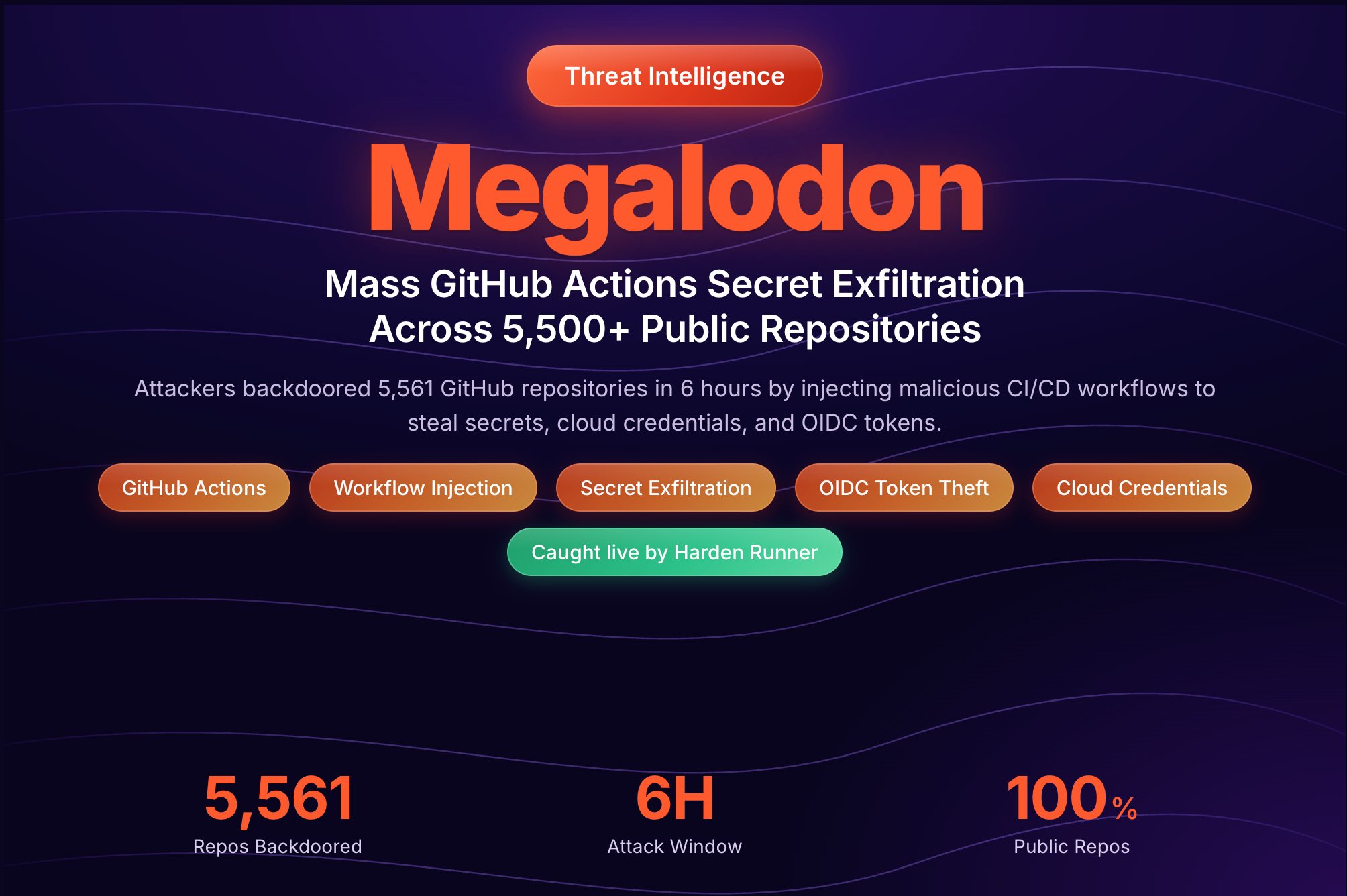 Megalodon: Mass GitHub Actions Secret Exfiltration Across 5,500+ Public Repositories - StepSecurity
StepSecurity documents Megalodon, a May 2026 campaign that injected backdoored GitHub Actions workflow files named SysDiag or Optimize-Build directly into 5,500+ public repositories in a six-hour window via direct Poisoned Pipeline Execution (d-PPE), exploiting weak branch protection. The base64-encoded bash payload harvests AWS/GCP/Azure credentials, SSH keys, Kubernetes/npm/Docker configs, GitHub OIDC tokens, and grep-matched secrets from the workspace, exfiltrating everything via HTTPS POST to a hardcoded C2 IP; the npm package @tiledesk/tiledesk-server was among the confirmed poisoned downstream targets.
stepsecurity.iowriteupAdded 5 Sep 2026🛡️ Security- The Crypto Wallet That Never Opened: Tampered Exodus Installer Hides a Modular RAT
Huntress dissects a trojanized Exodus crypto wallet installer (v24.33.4, unsigned MSI built with WiX) that installs a genuine wallet but patches Electron's show()/focus()/center() methods so no window ever appears, then loads a modular RAT via a hand-written reflective PE loader implemented in JavaScript using the Node.js koffi FFI library. The RAT (VNC, SOCKS proxy, browser-credential stealer, recon module) beacons over WebSockets and uses Azure Table Storage as a dead-drop C2 channel to blend into legitimate cloud traffic, while delivery abuses double-extension .pdf.js phishing, ZIP-staged JS files, and an unused search-ms/WebDAV technique; the writeup also covers multi-layer string-array/arithmetic deobfuscation and includes full IOCs and mitigation guidance.
huntress.comwriteupAdded 3 Sep 2026, published 1 Sep 2026🛡️ Security  Version Control DFIR: a Cheatsheet to GitHub, GitLab, Bitbucket, and Azure DevOps
Wiz CIRT published a DFIR cheatsheet/poster covering the four most common version control platforms (GitHub, GitLab, Bitbucket Cloud/Data Center, Azure DevOps), detailing available log sources, default retention limits (e.g. GitHub's 7-day Git read/write event retention, GitLab not storing Git operations by default), a pre-incident configuration checklist (enabling source-IP metadata, extending retention, log streaming), and a MITRE ATT&CK-mapped matrix of platform-specific audit event names to hunt for during investigations. It illustrates the gaps with a real incident where a compromised token was used to mass-clone repositories containing plaintext secrets, and shows how the same action (e.g. mass repo cloning) surfaces under different event names per platform (git.clone in GitHub, repository_git_operation in GitLab, RepositoryCloneEvent in Bitbucket Data Center).
wiz.ioarticleAdded 3 Sep 2026, published 27 Aug 2026🛡️ Security


Showing 30 of 90
Show more