8 eMudhra certificates are compromised. Here's what you need to know
Cloudflare's incident post on the compromise of private keys for eight eMudhra intermediate certificates, disclosed 19 October 2026. The weak keys let an attacker forge certificates for any domain. It describes Cloudflare's patching of trust stores, WARP and cloudflared, tells developers to update the underlying TLS verifier and not disable verification, and points to Dennis Jackson's test site and revocation systems such as CRLSets and upki.
 blog.cloudflare.comwriteupAdded 29 Oct 2026, published 20 Oct 2026🛡️ Security
 ALTK-Evolve: How learned memory tops the τ²-bench leaderboard on customer service tasks without a frontier model
ALTK-Evolve is an IBM Research method that distills an agent's own training-task trajectories into short behavioral guidelines appended to the system prompt, with no weight updates. On τ²-bench, a stock ReAct agent with gpt-4.1 reaches 67.5% Pass^4 on retail, and gpt-5.5 reaches 82% on airline. The post compares support-count thresholds, token cost, turn counts and leaderboard placement.
 huggingface.cowriteupPublished and added 20 Oct 2026🧠 AI
 Putting models to the secure coding test: Security rules
Datadog Security Labs tests whether Project CodeGuard v1.4.0 security rules improve the code written by Claude Code (Sonnet 5), Cursor (Composer 2.5) and Codex (GPT 5.5). Each model built the same document portal app once. Only GPT 5.5 closed the cross-user document IDOR and improved clearly. Sonnet 5 and Composer 2.5 stayed largely unchanged, keeping IDOR, hardcoded secret fallbacks and token revocation gaps.
 securitylabs.datadoghq.comwriteupAdded 29 Oct 2026, published 19 Oct 2026🧠 AI
- Putting models to the secure coding test: Security rules
Second post in a Datadog Security Labs series testing whether Project CodeGuard (v1.4.0) security rules improve code written by coding agents. Sonnet 5 (Claude Code), Composer 2.5 (Cursor) and GPT 5.5 (Codex) each built the same document portal, and the output was audited with Datadog Code Security and a Sonnet 5 code review. Only GPT 5.5 closed the cross-user IDOR; Sonnet 5 and Composer 2.5 stayed largely unchanged, including hardcoded JWT secret fallbacks and incomplete revocation.
securitylabs.datadoghq.comwriteupAdded 29 Oct 2026, published 19 Oct 2026🛡️ Security  GhostAction Copycats PolinRider by Hiding a Stealer in a Fake Font File
Analysis of a new GhostAction Stage 2 found in 94 compromised GitHub repos: a hidden .vscode/tasks.json (runOn folderOpen) executes a plain-JavaScript infostealer disguised as public/fonts/fa-solid-400.woff2. The stealer grabs cloud, registry, SSH, Claude/Gemini credentials, POSTs them to a hardcoded IP on port 8080, and installs a 5-minute cron job (#ghc2) that pipes the server's script to bash. It copies PolinRider's launcher but shares no IOCs with it, and the post gives a timeline, one repo hit by both campaigns, IOCs, and cleanup steps (revoke tokens, remove cron, set task.allowAutomaticTasks off).
 opensourcemalware.comwriteupAdded 15 Oct 2026, published 16 Oct 2026🛡️ Security
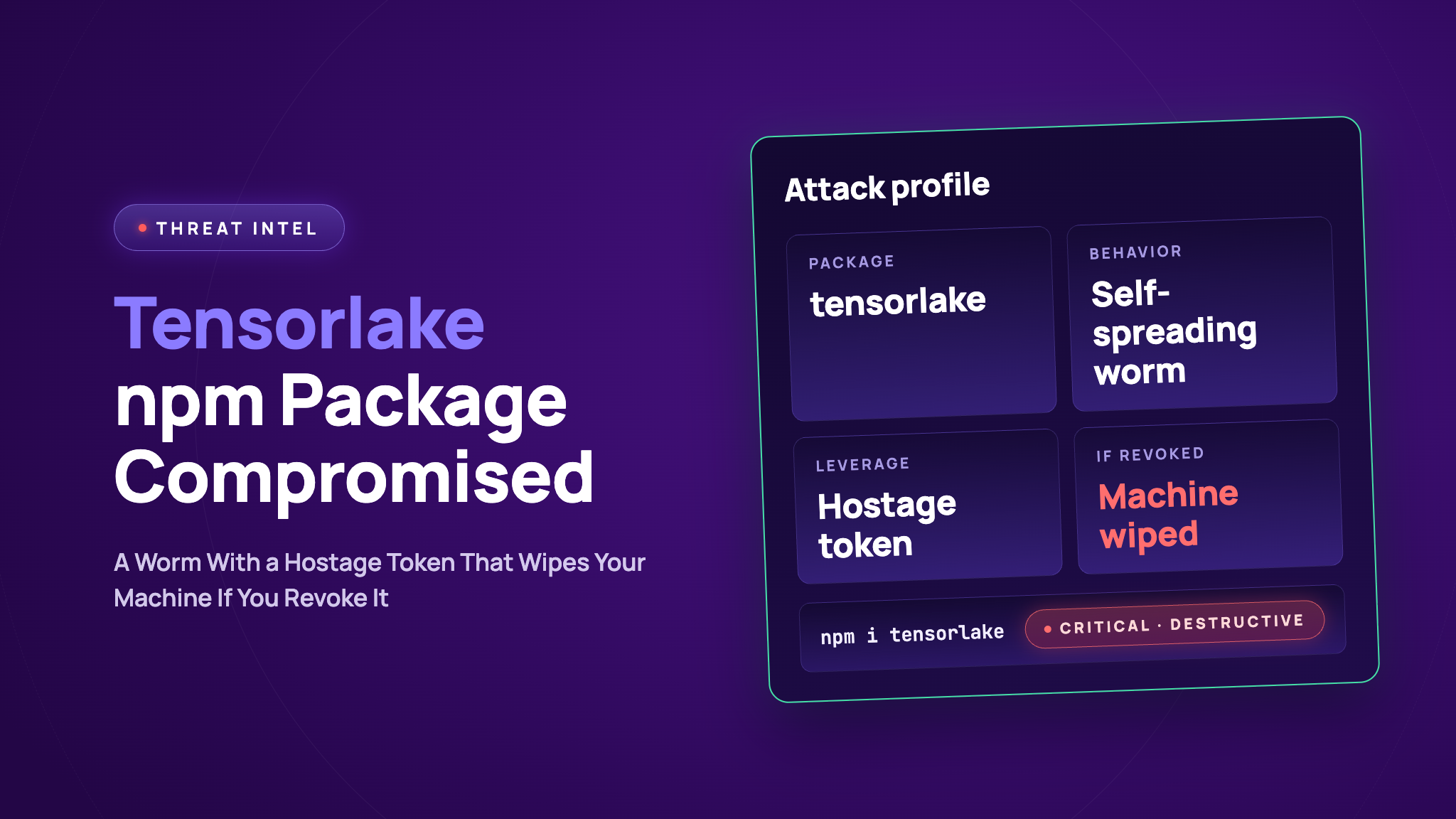 Tensorlake npm Package Compromised: A Worm With a Hostage Token That Wipes Your Machine If You Revoke It
StepSecurity details how tensorlake@0.5.144 was pushed to npm after malicious commits landed directly on the tensorlakeai/tensorlake GitHub repo's main branch under a maintainer's identity, carrying a valid npm provenance attestation despite being malicious. The preinstall hook downloads Bun to run an obfuscated payload that steals GitHub/npm tokens, cloud and Vault/Kubernetes secrets, SSH keys, browser logins, and AI-tool configs (Claude, Cursor, Windsurf), then self-propagates by republishing stolen npm packages and committing persistence files (.claude/settings.json, .vscode/tasks.json) to reachable repos. A "hostage token" mechanism installs a gh-token-monitor service that runs a home-directory wipe if the stolen GitHub token is revoked before the monitor is removed, inverting the normal incident-response order.
 stepsecurity.iowriteupPublished and added 8 Oct 2026🛡️ Security
 Beyond source code: A path to the keys to the kingdom
Microsoft's DART team details an investigation into Storm-3068, a threat actor that escalated from a self-service password reset account takeover into full control of an organization's Azure DevOps environment, then weaponized a malicious pipeline to harvest kubeconfig files and gain access to Kubernetes clusters. The actor also deployed the Atera remote management agent and the Chisel tunneling tool to establish reverse tunnels and alternate remote access, and exfiltrated seven stolen kubeconfig files into a repository. The report lays out the attack chain, DART's response, and hardening recommendations around SSPR monitoring, phishing-resistant MFA, branch protection, and pipeline permission controls.
 microsoft.comwriteupAdded 7 Oct 2026, published 29 Sep 2026🛡️ Security
 Star Blizzard refines phishing and malware delivery with the RedFlick technique
Microsoft details how Russian FSB-linked threat actor Star Blizzard evolved its phishing and malware delivery tradecraft throughout 2026, introducing a new technique dubbed "RedFlick" that uses scheduled tasks to deploy the CosmicPulse backdoor with only a single user interaction, down from the multi-step ClickFix chains used previously. The report covers the shift from targeted spear-phishing to large-scale phishing campaigns using accounts on compromised WordPress/CPanel websites, delivery chain variants (VHDX files, Control Panel applet (CPL) masquerading, steganography, PDF-embedded payloads), and the related DarkSword iOS backdoor, affecting 100+ organizations tied to Ukraine support. It includes IOCs, KQL hunting queries for Microsoft Defender/Sentinel, and mitigation guidance.
microsoft.comwriteupAdded 7 Oct 2026, published 29 Sep 2026🛡️ Security Attacker infrastructure, but vibe-coded: tracking the evolution of credential harvesting platforms
Datadog Security Research analyses two vibe-coded credential harvesting platforms, Loot and UltraVault, monitored since July 2026. Loot catalogs plaintext secrets, including 1,778 AI keys (196 live). UltraVault adds credential validation, exploit chains, a 14-bug LPE matrix and AWS key-pair correlation. The same host probed Amazon Bedrock with GetCallerIdentity, ListFoundationModels and InvokeModel, using kali-cloud Boto3 and Python-urllib user agents.
securitylabs.datadoghq.comwriteupAdded 29 Oct 2026, published 18 Sep 2026🛡️ Security- Inside Knight Office, a New M365 AiTM Phishing Kit
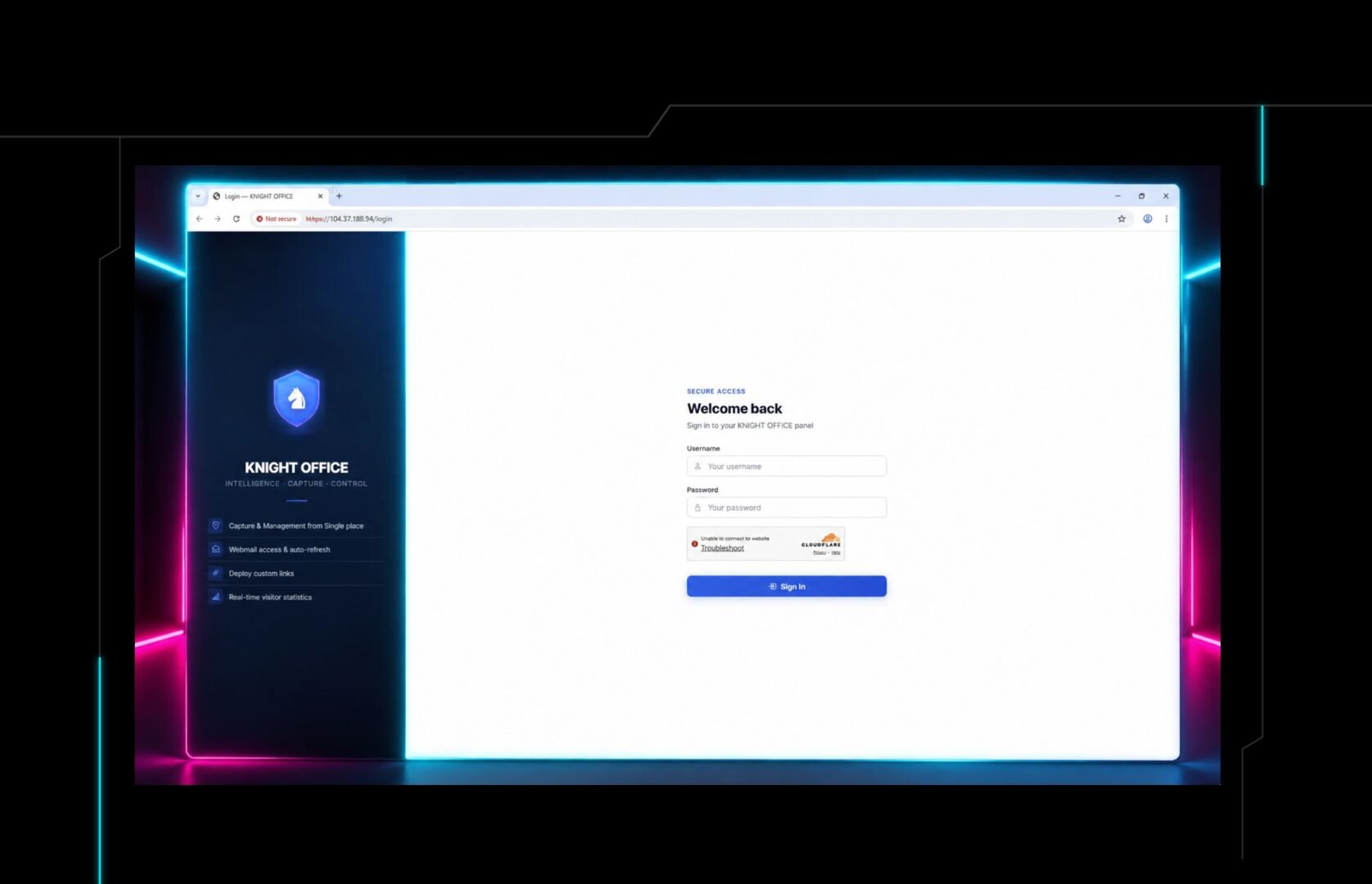
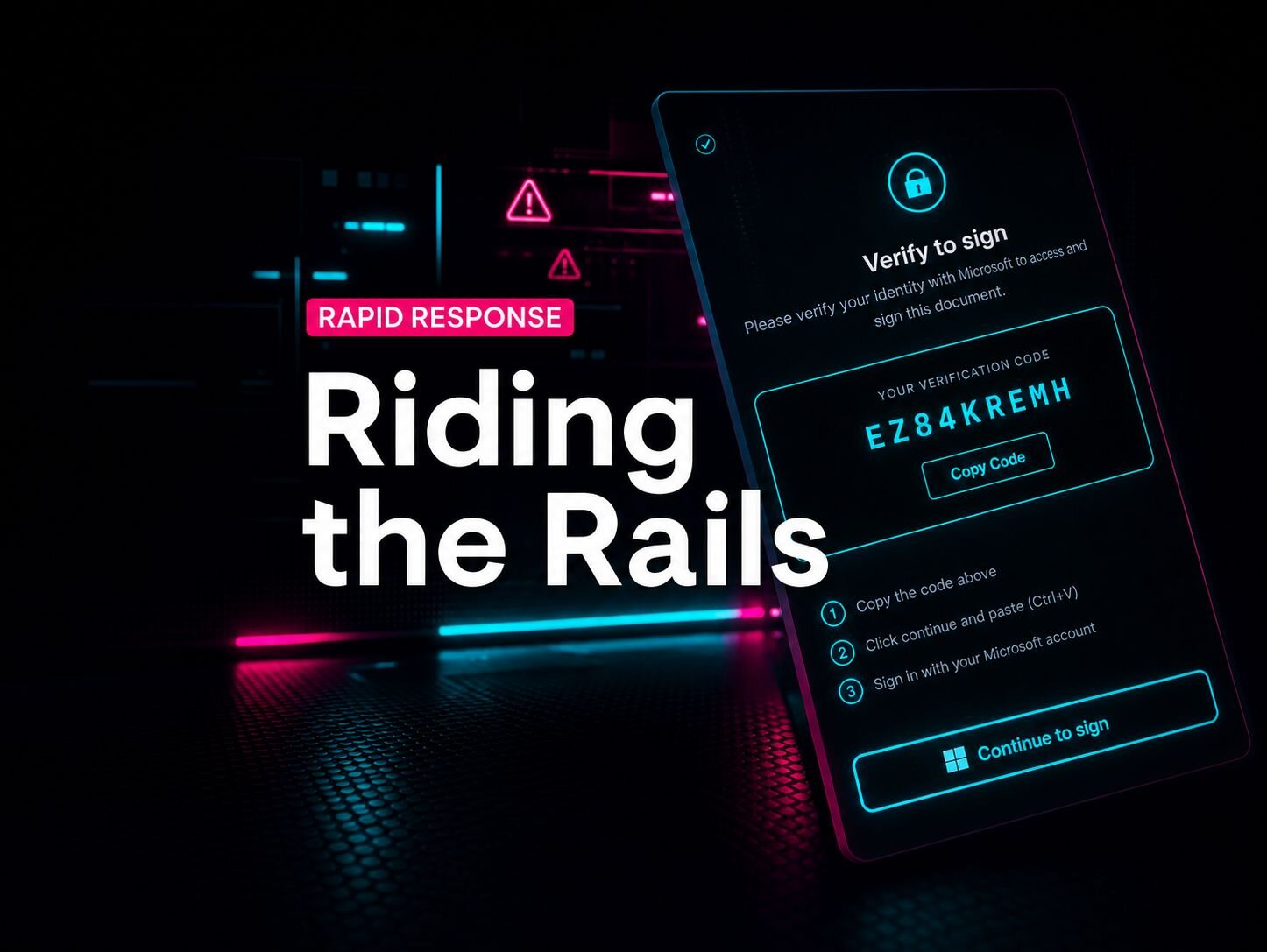
Huntress researchers uncovered the operator console for "Knight Office," a Flask-based adversary-in-the-middle (AiTM) phishing kit used to steal Microsoft 365 session tokens via a DocuSign-themed, self-spoofed lure that routes victims through Monday.com redirects and a compromised Joomla site to a fake Microsoft device-code authentication page. After capturing tokens, the attacker registered a rogue device in Microsoft Entra ID and bound a Windows Hello for Business key credential to the compromised account to maintain persistent, MFA-bypassing access even after token revocation. The writeup details IOCs (IPs, .vu domains, User-Agent strings), links the campaign to hundreds of reported phishing emails since April, and gives defenders concrete hunting/response steps around callback-proxy sign-ins and newly registered WHfB credentials.
 huntress.comwriteupAdded 8 Sep 2026, published 2 Sep 2026🛡️ Security
- Mini Shai-Hulud worm hits openapi-react-query-codegen, spreads across npm, RubyGems, and PyPI | Blog | Endor Labs
Endor Labs researchers document a 'Mini Shai-Hulud' worm variant that compromised the openapi-react-query-codegen npm package and self-replicated across npm, expanding into RubyGems and PyPI ecosystems. The writeup traces how the worm trojanized a legitimate package to propagate malicious code cross-registry, illustrating an evolving multi-ecosystem software supply-chain attack pattern.
 endorlabs.comwriteupAdded 3 Sep 2026, published 31 Aug 2026🛡️ Security
- Device Code Phishing Keeps Evolving. Here’s What to Watch For
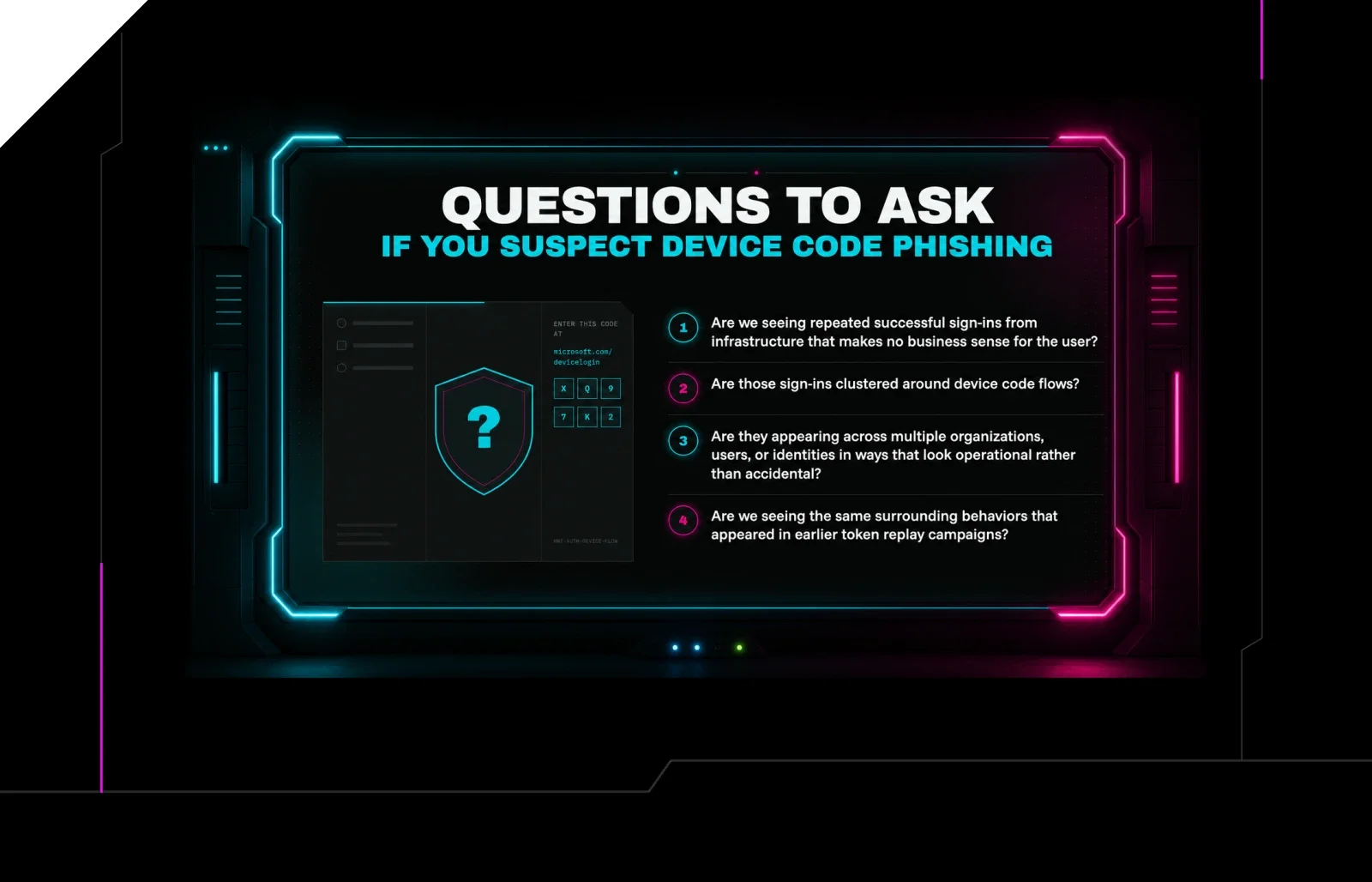
Huntress details a second 2026 wave of device code phishing against Microsoft 365, this time abusing VPS reseller BL Networks (BitLaunch/BLNWX, AS399629) after an earlier wave tied to Railway and the EvilTokens phishing-as-a-service kit. Huntress observed 533 malicious events and 113 successful logins from a single BL Networks IP in April, spreading across multiple IPs and subnets by May, with 26 critical incidents across 23 identities logged in July, and argues defenders must stop trusting infrastructure reputation and instead hunt for anomalous device-code sign-in clusters and revoke tokens quickly. It ties the activity to the broader legitimate-cloud-plus-legitimate-Microsoft-auth-page attack pattern also seen with Railway, EvilTokens, and Kali365.
huntress.comwriteupAdded 3 Sep 2026, published 31 Jul 2026🛡️ Security  When Your AI Reviewer Works for the Attacker: A Confused-Deputy Bug in Microsoft
Manifold Security researchers found that Microsoft's official Azure DevOps MCP server fails to consistently apply its 'spotlighting' guardrail (added in PR #1062) to untrusted content: pipeline and wiki tools wrap external content in delimiters, but the tool returning PR descriptions does not. An attacker with contributor access to one project can hide prompt-injection instructions inside an HTML comment in a PR description (invisible in the Azure DevOps UI but returned verbatim by the API), which hijacks a reviewing victim's AI agent (tested with Copilot CLI and Claude Code) into running pipelines and reading a confidential wiki page in a separate project the attacker can't access, then exfiltrating the content back as a PR comment — a classic confused-deputy / lethal-trifecta scenario. The issue was reported to and triaged by MSRC.
 manifold.securitywriteupAdded 23 Jul 2026, published 21 Jul 2026🛡️ Security
 SleeperGem: RubyGems supply chain attack targets dormant maintainer accounts
Aikido researchers dissect SleeperGem, a RubyGems supply chain attack where a newly published gem, git_credential_manager, downloaded malicious binaries hosted on a fake git-ecosystem account at git.disroot.org and executed them via shell or PowerShell. The attacker evolved the payload across four versions in nine hours, silencing output, wiring execution into the gems require and load path, and adding a check to skip roughly 30 CI environment variables so it only fires on developer laptops, then used two separate long-dormant maintainer accounts to push the gem as a dependency into the trusted gems Dendreo and fastlane-plugin-run_tests_firebase_testlab with over 574000 downloads. The piece argues this is RubyGems first taste of the dormant-maintainer-account-takeover pattern long seen on npm and PyPI.
 aikido.devwriteupAdded 3 Sep 2026, published 19 Jul 2026🛡️ Security
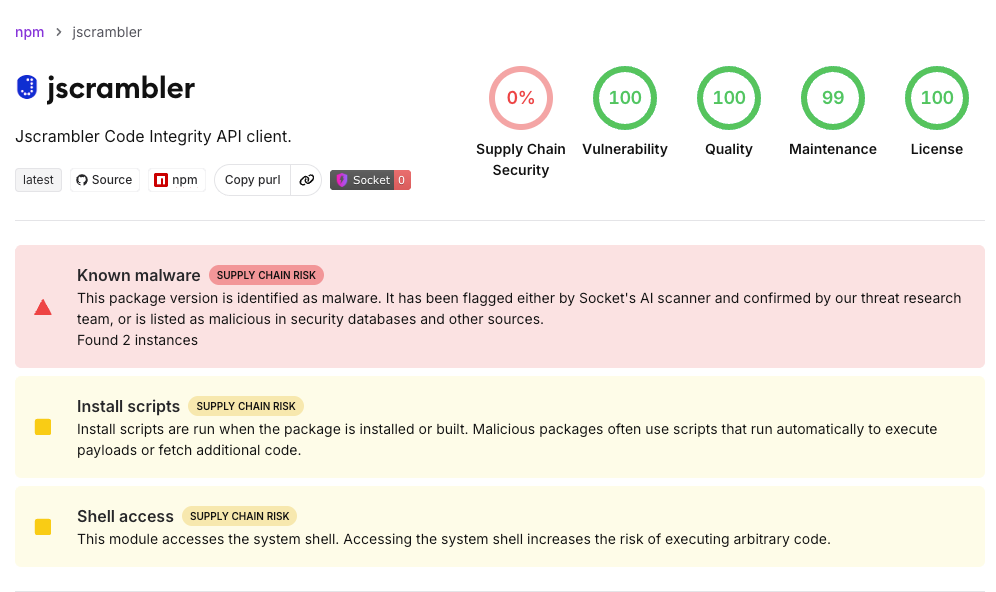 jscrambler npm Package Compromised in Supply Chain Attack
Socket's research team documents a supply chain compromise of the jscrambler npm package (v8.14.0+), where a stolen publishing credential was used to push malicious releases that drop platform-specific Rust-built infostealer binaries via a preinstall hook. The campaign evolved over the incident to evade scanners by moving the dropper from install scripts into a self-executing function inside index.js/CLI code (defeating --ignore-scripts), and the payload targets crypto wallets, cloud credentials (AWS/GCP/Azure), browser data, Discord/Slack/Telegram, and notably AI coding assistant configs (Claude Desktop, Cursor, Windsurf, VS Code) for MCP server credentials. Includes detailed RE of the ChaCha20-Poly1305 string-encryption scheme and full IOC hash list.
 socket.devwriteupAdded 21 Sep 2026, published 11 Jul 2026🛡️ Security
 Cybersecurity Startup Publishes Infostealers to NPM
A security research team traces six typosquatted npm packages (anthropic-toolkit, ai-sdk-helpers, ollama-helpers, openai-agents-helpers, @langgraphjs/toolkit, and @aspect-security/argon2) impersonating Anthropic, Vercel, Ollama, OpenAI, LangChain, and Aspect Security back to the founder of a stealth-mode cybersecurity startup. The packages use npm preinstall/postinstall hooks to silently exfiltrate a rich identity fingerprint — hostname, git/GitHub emails, SSH key comments, reflog committer emails, AWS/GCP config metadata, corporate DNS domain, and host project name — to a Google Cloud Run endpoint, while deliberately avoiding literal credentials to look benign and offering a fake telemetry opt-out. The writeup also documents version backfilling to fake package maturity and shows the payload evolving from a crude April beacon to a polished June "identity graph" collector, with full IOCs provided.
opensourcemalware.comwriteupAdded 3 Sep 2026, published 9 Jul 2026🛡️ Security- Cybercrime Breaches Klue: Salesforce Data Impacted for Many Victims, including Huntress
Huntress details its investigation into the Klue supply-chain breach, in which a threat actor calling itself Icarus compromised the market-intelligence platform Klue via a long-dormant integration credential, then stole OAuth tokens to pivot into downstream customers' Salesforce and Gong instances, exfiltrating CRM data (contacts, price quotes, opportunity notes) from Huntress and dozens of other companies. The writeup includes IOCs, extortion-email analysis, attribution to Icarus via matching Session Messenger IDs, identification of bulletproof-hosted (AS200593/PROSPERO OOO) leak infrastructure, and IR guidance (log review, session revocation, phishing awareness) for other affected Klue customers.
huntress.comwriteupAdded 3 Sep 2026, published 18 Jun 2026🛡️ Security  LLMjacking evolved: Attackers are using stolen AI compute to build offensive agentic tools | Sysdig
Sysdig's Threat Research Team captured the full architecture of "VAPT," an autonomous multi-stage exploitation framework that a threat actor powered using a misconfigured, internet-exposed Ollama server (port 11434, no auth) instead of paid LLM APIs. The tool chains service fingerprinting, CVE matching, PoC/blind-SQLi generation, credential extraction, privilege escalation, and an autonomous orchestrator that confirms RCE via a VAPTb3gin/VAPTfin marker wrapped around `id` output, and was observed being actively developed against private HackTheBox-style practice ranges before any real-world targeting. It represents the convergence of LLMjacking (stolen inference compute) with fully agentic offensive tooling, and the piece includes captured system prompts, IOCs, and hardening guidance for self-hosted model servers.
 sysdig.comwriteupAdded 28 Jun 2026, published 17 Jun 2026🛡️ Security
 A Forgotten Contributor Account Compromised the Entire Mastra npm Package Scope
Snyk details how a dormant, never-revoked npm contributor account (ehindero) was used to republish the entire @mastra scope (142+ packages, ~4M monthly downloads for @mastra/core alone) with an injected dependency, easy-day-js, a byte-for-byte dayjs impersonator. The postinstall hook in easy-day-js@1.11.22 disables TLS verification, pulls a second-stage payload from a raw IP, and drops a cross-platform cryptocurrency wallet stealer plus a RAT with OS-specific persistence (LaunchAgent, systemd unit, PowerShell staging) that beacons every 10 minutes over a self-signed wolfSSL certificate. The piece covers detection steps, the Snyk advisory (SNYK-JS-EASYDAYJS-17353313), and draws parallels to the earlier Axios npm compromise attributed by Microsoft to Sapphire Sleet (BlueNoroff).
 snyk.iowriteupAdded 3 Sep 2026, published 16 Jun 2026🛡️ Security
 Wait, binding.gyp Can Do What? Exploring npm's Weirdest Build System
Aikido Security researchers detail how the Miasma npm worm evolved to trigger malicious code via binding.gyp instead of package.json preinstall/postinstall scripts, since npm auto-runs node-gyp rebuild whenever a binding.gyp file exists. The piece walks through GYP's command-expansion syntax (<!(...)), a Python eval() sandbox escape that achieves arbitrary code execution from a "clean" gyp file, hiding payloads in transitively-included files (includes, config.gypi, common.gypi, ~/.gyp/include.gypi persistence), dependency-graph payload smuggling, compiler/linker hijacking via make_global_settings and $(shell) flag injection, and using actions/rules/postbuilds to run commands directly — all executing at npm install time regardless of what package.json declares.
aikido.devwriteupAdded 3 Sep 2026, published 9 Jun 2026🛡️ Security Google API keys keep working after you delete them
Aikido Security's research shows that deleting a Google API key does not immediately revoke access — across 10 trials, deleted keys continued authenticating for a median of 16 minutes and up to 23 minutes, with revocation propagating unevenly across Google's global infrastructure. An attacker holding a leaked key (including one scoped to Gemini) can keep exfiltrating data during this window, the GCP console gives no indication the key is still live, and Google initially closed the report as "won't fix" before reopening it as a P0 after the researchers published. Newer Gemini API keys (~1 minute) and service account keys (~5 seconds) revoke much faster, showing the delay is specific to classic Google API keys.
aikido.devwriteupAdded 3 Sep 2026, published 21 May 2026🛡️ Security- Threat Actor Defense Evasion: How Attackers Disable AV & EDR
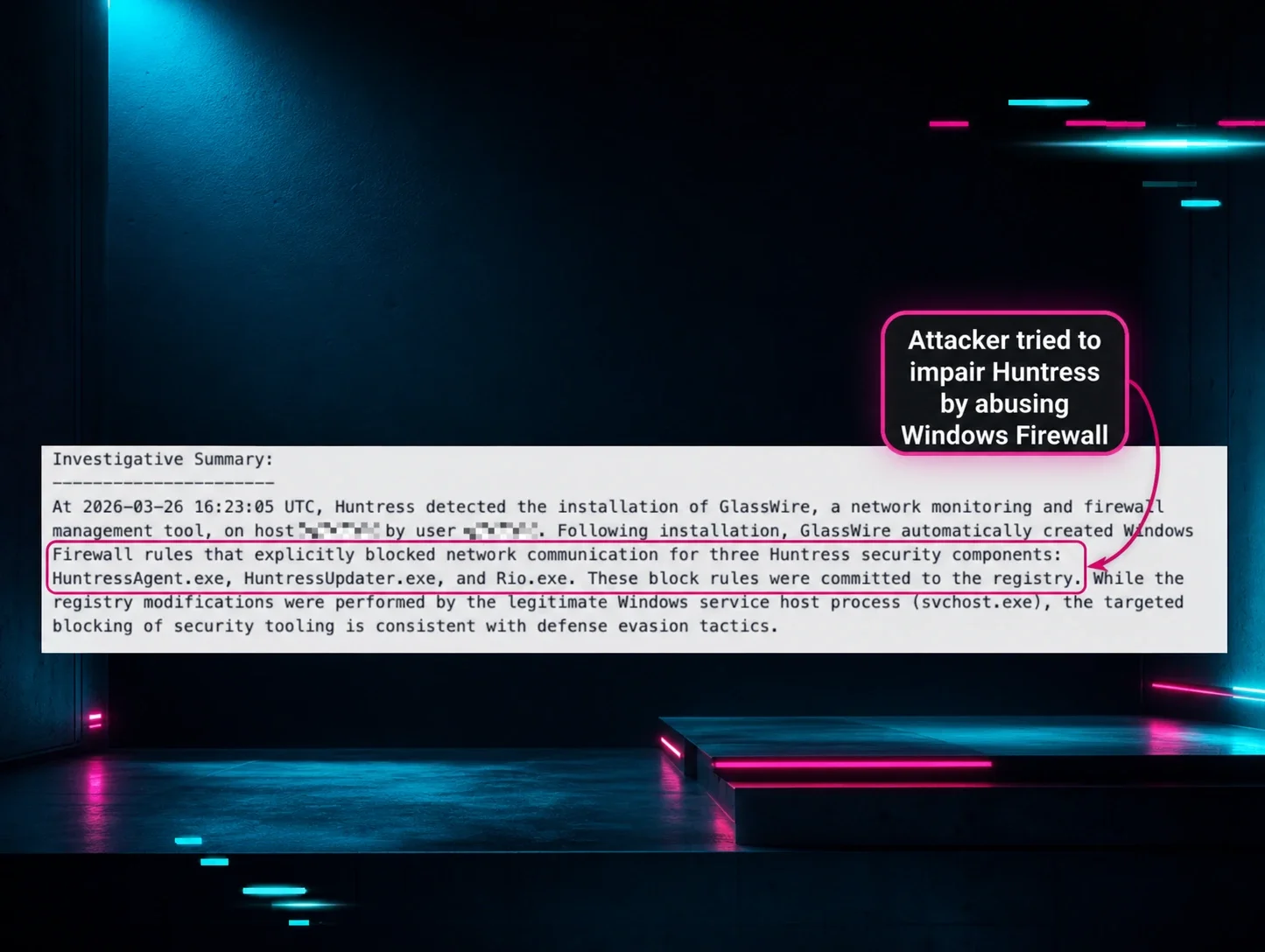
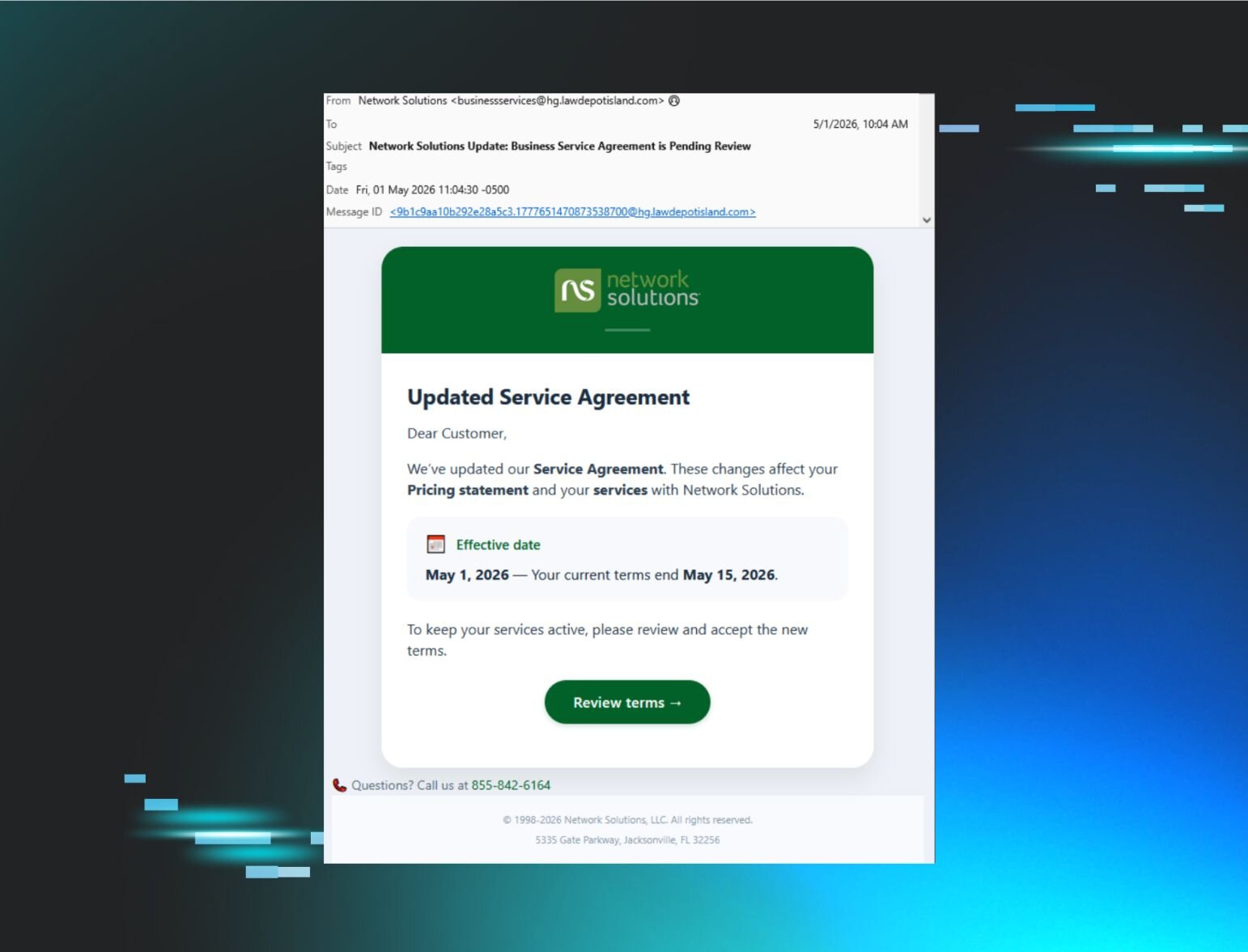
Huntress SOC breaks down how attackers disable AV/EDR: blocking agent communications via malicious/hidden Windows Firewall rules (WFP), abusing Add/Remove or CLI to uninstall EDR agents, abusing Defender AV exclusions, and Bring Your Own Vulnerable Driver (BYOVD) attacks to gain kernel access and kill protected security processes. Includes real intrusion examples — a February 2026 SonicWall VPN-credential intrusion using a revoked-but-still-trusted 2006 EnCase forensic driver (exploiting a legacy Windows Driver Signature Enforcement exception) to kill 59 named security processes every second, and a March 2026 malvertising campaign (Google Ads for W-2/W-9 forms) that dropped a rogue ScreenConnect instance and used a vulnerable signed Huawei audio driver to terminate EDR/AV processes.
huntress.comwriteupAdded 3 Sep 2026, published 18 May 2026🛡️ Security - Threat Actors Weaponize Tiflux RMMs in Malspam Attacks
Huntress documents a malspam campaign, active since February 27, that uses fake "service agreement" document lures behind a CloudFlare CAPTCHA to trick targets into installing Tiflux, a lesser-known Brazil-based commercial RMM, before pivoting to UltraVNC, Splashtop, and ScreenConnect for persistent remote access. The Tiflux installer bundles suspicious extras beyond the legitimate agent: a decade-old UltraVNC build with hardcoded plaintext-recoverable passwords, an expired UltraVNC code-signing cert, registry files that stage a hidden TightVNC service (enabled even in Safe Mode) and a passwordless PuTTY SSH key to a peopleone[.]com[.]br server, registry tweaks that suppress Windows Secure Attention Sequence consent prompts, and a known vulnerable HwRwDrv.sys driver linked to privilege escalation with a revoked signing certificate. Huntress frames this as another entry in the ongoing "LOLRMM" pattern of attackers abusing legitimate commercial RMM tools for stealthy access and persistence.
huntress.comwriteupAdded 3 Sep 2026, published 7 May 2026🛡️ Security - Threat Actors Abuse Railway.com PaaS as Microsoft 365 Token Attack Infrastructure
Huntress details a device-code phishing campaign hitting 340+ Microsoft 365 tenants across the US, Canada, Australia, New Zealand, and Germany since February 2026, in which attackers abuse Railway.com's clean-IP PaaS infrastructure to run OAuth device-code token replay at scale, bypassing MFA entirely. The campaign chains vendor URL-rewriter abuse (Cisco, Trend Micro, Mimecast), compromised sites, Cloudflare workers.dev phishing pages, and AI-assisted lure generation, and Huntress has attributed it to the EvilTokens Phishing-as-a-Service platform advertised via Telegram. The post includes IOCs (Railway CIDR ranges), Sentinel KQL hunting queries, and mitigation guidance (block Railway IPs, revoke refresh tokens, restrict device code flow, enable CAE).
huntress.comwriteupAdded 3 Sep 2026, published 23 Mar 2026🛡️ Security - They Got In Through SonicWall. Then They Tried to Kill | Huntress
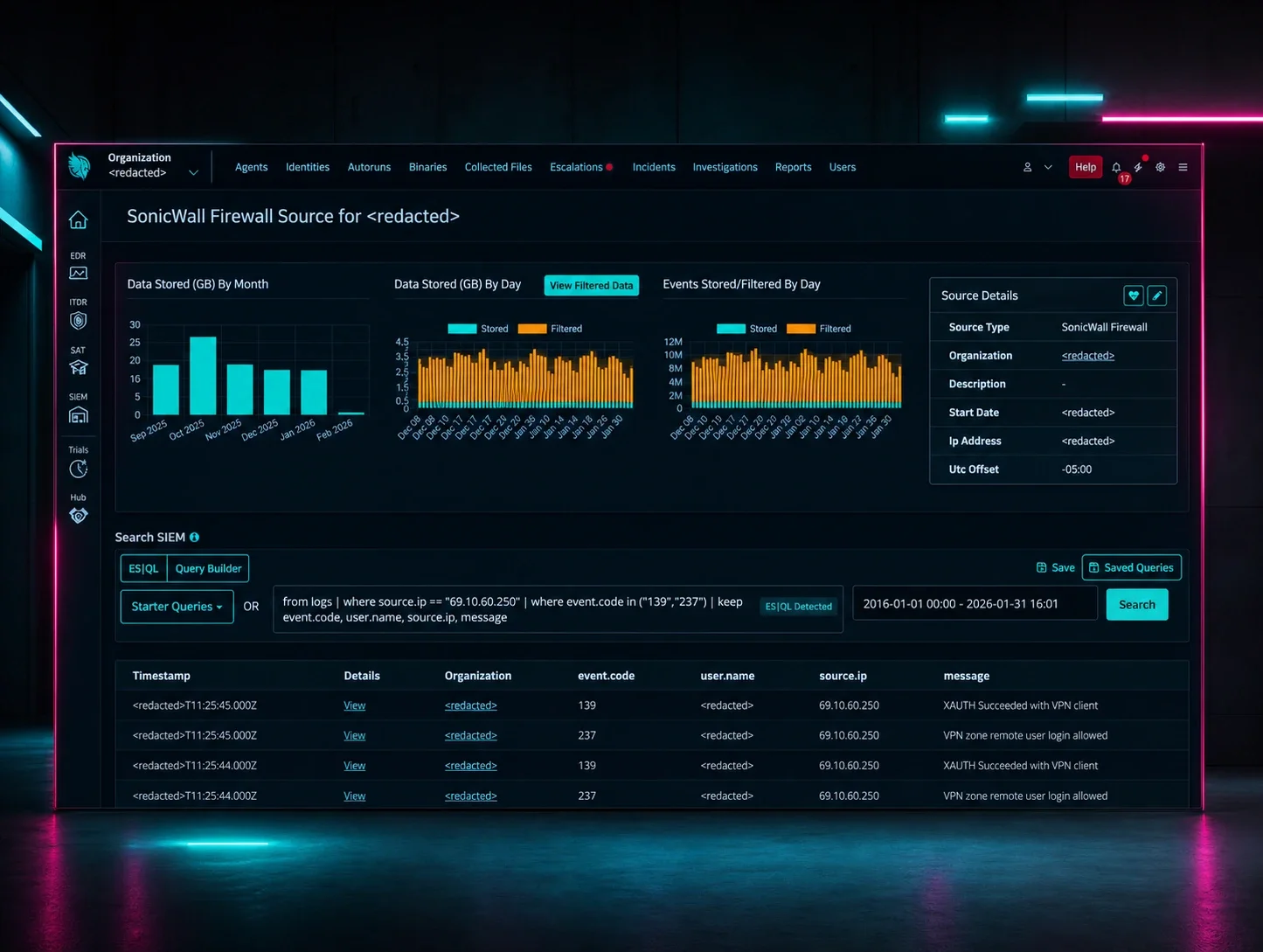
Huntress details a February 2026 intrusion beginning with compromised SonicWall SSLVPN credentials, where the attacker deployed an EDR killer that decodes and drops a legitimate but revoked 2006-era EnCase forensic driver (EnPortv.sys, service name OemHwUpd) to terminate 59 different EDR/AV processes from kernel mode via a single IOCTL (KillProc). The write-up explains the driver's novel wordlist-substitution-cipher payload encoding (evading entropy and string-based detection), FNV-1a process-name hashing for fast target matching, timestomping/persistence tricks, and why Windows Driver Signature Enforcement still trusts the expired/revoked certificate due to pre-2015 signing and timestamp exceptions. It closes with concrete mitigations: MFA on VPN, HVCI/Memory Integrity, WDAC vulnerable-driver blocklist rules, and the ASR rule blocking vulnerable signed drivers.
huntress.comwriteupAdded 3 Sep 2026, published 4 Feb 2026🛡️ Security - #ShadyHacks with Kyle Hanslovan
Huntress CEO Kyle Hanslovan demonstrates a full modern account-takeover chain against Microsoft 365: buying stolen credentials on a dark web marketplace, using a ChatGPT-crafted phishing email with a fake SharePoint link to trigger a ClickFix-style CAPTCHA that tricks the victim into pasting a PowerShell command, stealing active session cookies with an infostealer, and importing them via the Cookie Editor browser extension to bypass MFA entirely. It then covers post-compromise tradecraft — malicious inbox rules to forward/hide sensitive emails, Teams-based social engineering of IT support to register new MFA devices, and abusing email-based password resets on non-SSO apps (payroll, CRM) — plus defensive recommendations (conditional access, inbox rule auditing, DMARC/DKIM/BIMI, session revocation processes, security awareness training).
huntress.comwriteupAdded 3 Sep 2026, published 26 Nov 2025🛡️ Security