- So I guess everyone uses LLMs to think now
The eva.ac author argues that recent AI-credited vulnerability findings come from skilled researchers steering LLMs, and that AI firms use disclosures as marketing. Cases cited: Calif, OpenAI and Wiz framing PHP2Shell differently; a hash teaser before the Tailscale "tailworm" privilege escalation (author's account: Tailscale not contacted); and the eMudhra CA key found without AI. No sources, dates or CVEs are given.
 eva.acarticleAdded 2 Nov 2026, published 1 Nov 2026🛡️ Security
 Secret Service, FBI Join Binance Hack Probe as Circle Freezes $823 Million
Decrypt reports that Binance is working with the FBI and U.S. Secret Service after a theft of about $6.4 billion, which TRM Labs and Chainalysis attribute to North Korea's TraderTraitor group, also linked to the February 2025 Bybit hack. Circle froze about $823 million in USDC and Tether froze USDT, though the page gives differing Tether totals. Binance first suspected a compromised DevOps engineer laptop, found more breach points, and saw no evidence of leaked wallet private keys.
 decrypt.coarticlePublished and added 30 Oct 2026🛡️ Security
 Was I wrong about open models & cyber risks?
Interconnects post in which Nathan Lambert revisits his claim that an open-weight Claude Mythos would have been survivable. He argues GLM-5.3 already crosses the capability threshold with little visible societal change, and quotes Rob Wiblin, Anthropic and Zvi Mowshowitz as examples of exaggerated warnings. He cites Epoch AI's Firefox exploit built with GLM-5.3, and treats the recent vulnerability surge as an ecosystem trend driven by AI capability and diffusion, not open versus closed models.
 interconnects.aiarticlePublished and added 30 Oct 2026🧠 AI
- Was I wrong about open models & cyber risks?
Interconnects post in which Nathan Lambert revisits his claim that an open-weight release of Claude Mythos in April 2026 would have been survivable. He argues GLM-5.3 already crosses that capability threshold with little visible harm. He cites Epoch AI's GLM-5.3 Firefox file-exfiltration exploit and Joshua Saxe's trend data, and says recent vulnerability waves come mostly from closed models and general AI diffusion.
interconnects.aiarticlePublished and added 30 Oct 2026🛡️ Security  dfbench — depthfirst
dfbench is depthfirst's held-out benchmark for frontier models on open-ended defensive security work: vulnerability detection, validation of findings, and differential analysis between commits. It reports recall, precision, F1 and cost per task for about 20 models at several thinking levels, split by domain (application, low level, smart contract) and by single or multi-repo scope. Overall detection recall ranges from about 21% to 69%.
 depthfirst.comarticleAdded 29 Oct 2026🧠 AI
- dfbench — depthfirst
dfbench is a held-out benchmark maintained by depthfirst that scores frontier LLMs on defensive security work: vulnerability detection, validation (precision) and differential analysis between commits. It reports recall, precision, F1 and cost per task by model and thinking level, split by application, low-level and smart-contract code and by single or multi-repo scope. Overall detection recall runs from about 21% to 69%, with the top figure at $99.19 per task for Mythos 5; validation precision mostly falls between 15% and 49%.
depthfirst.comarticleAdded 29 Oct 2026🛡️ Security - ChatGPT’s expanding world of work
OpenAI Signals work-activity data is a dataset release from OpenAI Economic Research. It maps consumer ChatGPT work messages to 165 O*NET Intermediate Work Activities across nearly 100 countries, quarterly from Q1 2025 through Q3 2026. Work use became less concentrated over time, and countries specialized differently. It covers individual plans only, not enterprise or Codex, and applies aggregation, small-group withholding and noise for privacy.
 openai.comarticlePublished and added 26 Oct 2026🧠 AI
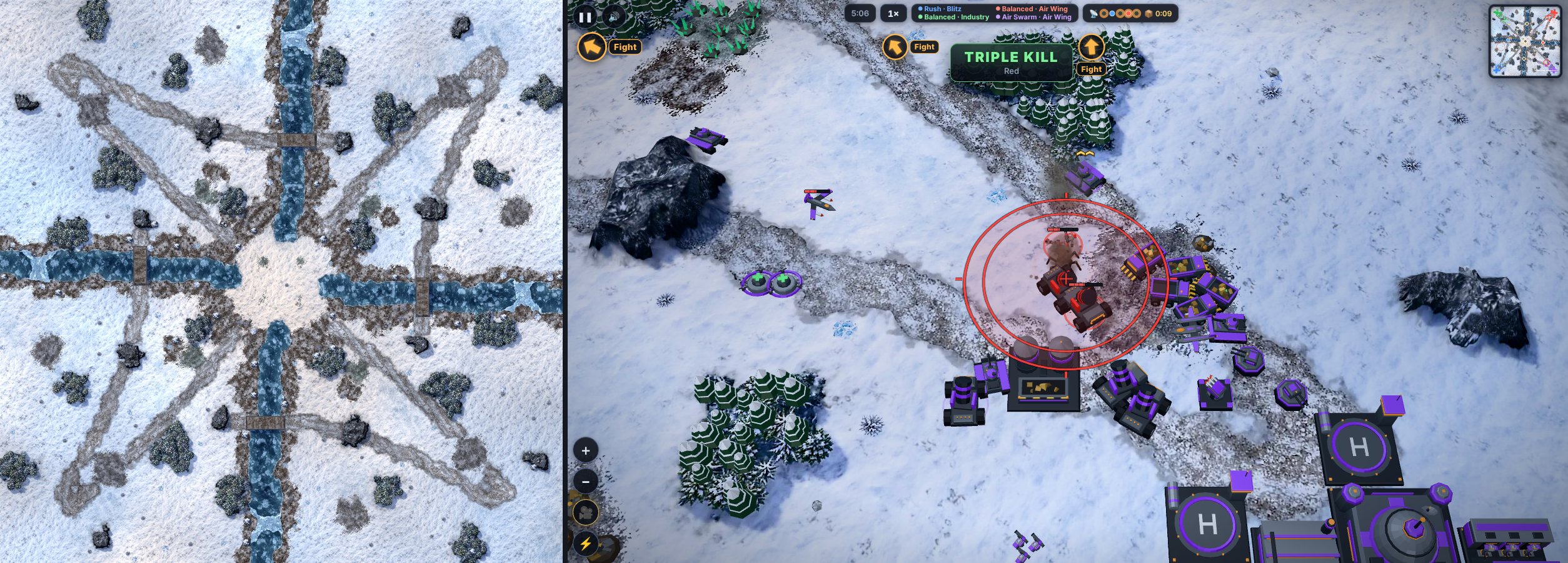 battledrones v14: Compass Rose, a four player map
Battledrones v14 adds "Compass Rose", a four-player map with four-way rotational symmetry, to Simon Willison's vibe-coded RTS game, dated 24 October 2026. A single prompt to Claude Opus 4.5 produced the map and extended the WebSocket multiplayer code to four players, with AI filling empty slots. Players join by share link or QR code. New teams are purple and green. The post gives no code or diff.
 simonwillison.netarticlePublished and added 24 Oct 2026🧠 AI
 Your AI agent fixed the bug, but what else did it change?
Trail of Bits releases patching-bugs and regression-hunt, two agent plugins built with OpenAI through Patch the Planet. patching-bugs reproduces bugs, writes fixes and runs a three-arm proof; regression-hunt traces diffs to real interfaces, confirms with live PoCs and a fresh-context replay. A review of 130+ merged PRs found 21 regressions, and regression-hunt gave 25% fewer false positives than a baseline Codex prompt.
 blog.trailofbits.comarticlePublished and added 21 Oct 2026🧠 AI
- Using thousands of AI agents to uncover new leads in biological data
Distributed biological reasoning is an approach in which thousands of GPT-Rosalind agents each analyzed one gene disruption in a whole-brain CRISPR atlas of millions of mouse brain cells, searched literature, and proposed mechanisms. OpenAI, PerturbAI and Scripps Research finished in 32 minutes. Distributed agents cited over 700 references versus 11 for a single agent, and blinded experts preferred their interpretations. Leads included Tsc1/Tsc2 differences and DCTN1 with cholesterol.
openai.comarticlePublished and added 21 Oct 2026🧠 AI  Hugging Face ❤️ TorchTPU: TPUs, Natively
TorchTPU is a native PyTorch backend that makes Google TPUs a regular "tpu" device, replacing the older torch_xla path and Optimum TPU. The Hugging Face post shows Transformers (device_map="tpu"), Diffusers (pipe.to("tpu")) and Pallas kernels from the Kernels Hub running on it. It reports up to 21.5x faster decoding on Qwen3-30B-A3B at batch 64 and a 96.5% TPU test pass rate.
 huggingface.coarticlePublished and added 20 Oct 2026🧠 AI
 How to continue a GitHub Copilot app session in VS Code
This GitHub Blog tutorial shows how to open a GitHub Copilot app agent session in VS Code with its conversation, plan, diff and worktree intact. It walks through reviewing the agent's changes in Source Control, prompting Copilot from the sidebar, editing by hand, running tests locally, and pushing to the session's existing pull request.
 github.blogarticlePublished and added 19 Oct 2026🧠 AI
 TorchNeuron: running HF models on AWS Trainium is easier than ever
TorchNeuron is an AWS PyTorch plugin that exposes Trainium as a native "neuron" device with eager mode, torch.compile, DTensor and FSDP2, entering public beta on 20 October 2026 (pip install torch-neuronx). The post shows Transformers text generation with tensor parallelism, TRL SFT of Qwen3-8B on 32 NeuronCores (TP 4 x FSDP 8), and Diffusers TP inference. It says 89% of the top 100 text-generation architectures work, versus 46% with Optimum Neuron v0.4.5.
huggingface.coarticlePublished and added 19 Oct 2026🧠 AI Your CVE is reachable. But is it exploitable?
Explains why a reachable vulnerable function in a dependency is not necessarily exploitable, and how exploitability analysis extends SCA reachability analysis. It walks through CVE-2021-23337 (lodash _.template command injection) across three apps with different outcomes. It notes that a verdict can change with code, for example via prototype pollution and the follow-up CVE-2026-4800. A closing section describes Aikido's CVE Exploitability Analysis.
 aikido.devarticleAdded 19 Oct 2026, published 17 Oct 2026🛡️ Security
 SBOMs are Just a Means to an End | Endor Labs
A critique of the state of SBOM adoption, written by a CISSP product manager at Endor Labs. It argues that the NTIA minimum elements and the SPDX and CycloneDX specs don't require a package URL (purl), so name and version alone can't tell a Maven log4j-core from an npm or cargo package of the same name. It also notes that no spec defines build time, which makes transitive dependency resolution unreliable, and that generation tools place the same data in different fields. It adds that vendors have mixed incentives to ship SBOMs and that practices are immature, and it calls on standards bodies to define required data per prioritized use case.
 endorlabs.comarticlePublished and added 16 Oct 2026🛡️ Security
 Welcome FLUX.3 Image Klein in Diffusers
Hugging Face blog post introducing Black Forest Labs' open FLUX.3 Image Klein (distilled and base checkpoints) in Diffusers. It covers text-to-image, multi-reference image-to-image and bounding-box layout control, FP8/NVFP4 single-file quantized weights, DreamBooth LoRA training scripts for generation and editing, memory/speed figures (about 2 s per 1024×1024 image on an H100), and a detailed architecture tour: Qwen3-VL text encoder, two-stage per-stream then joint transformer blocks, per-token timestep modulation, 4D RoPE, and flow-matching denoising. It also shows how to customise the Modular Diffusers pipeline.
huggingface.coarticlePublished and added 15 Oct 2026🧠 AI Tree Appreciator
Simon Willison describes another game experiment, this time in the Claude iPhone app in chat mode rather than Claude Code. He prompted Claude Opus 5.5 Max to build a three.js game called "Tree appreciator" with two algorithmically generated trees and a mechanic based on appreciating their differences, and added "think hard about how to make sure it is both fun and beautiful". After about 3 hours 7 minutes of work it returned a spot-the-difference game with music, animation and achievements. He notes that simply telling Opus 5.5 to "make sure it is fun" works surprisingly well.
simonwillison.netarticleAdded 15 Oct 2026, published 14 Oct 2026🧠 AI- Quoting Geoffrey Huntley
Simon Willison quotes Geoffrey Huntley on keeping coding agents compliant with a project's conventions. Instead of updating AGENTS.md, which drifts, he adds a pre-commit hook that scans the git diff for direct calls to observability modules that bypass his diagnostics library. The hook fails the commit and injects a prompt telling the agent to use the library, which he says took compliance to ten out of ten.
simonwillison.netarticlePublished and added 13 Oct 2026🧠 AI  Static SCA vs. Dynamic SCA: Which is Better (and Why It's Neither) | Blog | Endor Labs
Compares static SCA (manifest/source scanning at build time) with dynamic SCA (runtime instrumentation). Static scans are complete but noisy and miss dependencies absent from manifests, for example in Python. Dynamic scans are relevant but incomplete, add agent overhead and surface findings late. It argues eBPF improves deployability of dynamic SCA but not its coverage limit. A worked example with a library of N vulnerable functions illustrates the difference. The author, Endor Labs, advocates static analysis of source code plus reachability analysis to filter findings by whether vulnerable code is actually called.
endorlabs.comarticlePublished and added 12 Oct 2026🛡️ Security- CMMC Level 2 Non-Negotiable Requirements Explained | Huntress
Explains the "non-negotiable" requirements for a Conditional CMMC Level 2 (Self) status under 32 CFR 170.21. The minimum score is 88 of 110, every 3- and 5-point NIST SP 800-171 requirement must be implemented, plus a short list of 1-point ones. Those mandatory items add up to 64 points, which leaves 24 of the remaining 46 one-point requirements to choose. It also covers how this differs from legacy DFARS 252.204-7019/7020 self-assessments scored with the DoDAM (-203 to 110), and how the 180-day POA&M closeout window can silently expire a status in SPRS. The post ends with a Huntress product mapping.
 huntress.comarticlePublished and added 12 Oct 2026🛡️ Security
 Understanding AI, Part I: The Machines That We Taught
Galaxy Research's explainer traces AI's intellectual history from the 1956 Dartmouth Workshop and the Logic Theorist through the symbolic-AI era (expert systems like Mycin and XCON, the Cyc project) to the sub-symbolic/connectionist revival (Perceptron, Hopfield networks, backpropagation, LeCun's CNN zip-code reader) that culminated in deep learning and the 2017 Transformer architecture. It then surveys three machine-learning paradigms (supervised, reinforcement, unsupervised) and five deep generative architectures (autoregressive, diffusion, GANs, VAEs, normalizing flows), closing with how modern LLM chatbots combine these via pretraining, SFT, and RLHF, and how multimodal, reasoning, RAG, agent, and world-model systems extend base LLMs.
 galaxy.comarticleAdded 8 Oct 2026🧠 AI
 Anthropic Introduces 3-Tier Cyber Verification Program for AI Access
Anthropic's revamped Cyber Verification Program merges the original CVP with Project Glasswing into three tiers: Defense Access, Red Team Access and Specialized Access. All tiers cover Opus 5.5, Sonnet 5.5, Mythos 5.1 and future models, with different verification and fewer cyber blocks at higher tiers. Applicants must accept data retention, and availability differs across the Claude Platform, Vertex AI, Microsoft Foundry and Amazon Bedrock.
 securityweek.comarticleAdded 30 Oct 2026, published 7 Oct 2026🧠 AI
 The Cyber Risk Discourse is Broken
Nathan Lambert's Interconnects op-ed argues the "open weights are a cyber weapon" discourse ignores that documented real-world AI-enabled cyber incidents to date trace mostly to closed-API models (OpenAI), not open-weight ones, and critiques Anthropic's GLM-5.3 offensive-cyber risk report for not engaging with the trade-offs of banning open models. It also unpacks how Chinese labs (e.g., Kimi K3, GLM-5.3) assess and register AI risk differently from US labs, and contrasts the hype around Claude Mythos's hypothetical leak with GLM-5.3's actual open release having caused no comparable societal disruption.
interconnects.aiarticlePublished and added 6 Oct 2026🛡️ Security- The Cyber Risk Discourse is Broken
Nathan Lambert's Interconnects essay argues the Western discourse on open-weight model cyber risk is one-sided and poorly reasoned, critiquing Anthropic's report framing GLM-5.3 as an offensive cyber tool while ignoring the trade-offs of banning open weights. He contends public evidence shows closed-model APIs (e.g. OpenAI's) have caused more documented cyber incidents than open weights so far, argues banning open models without also restricting closed-model APIs would widen the offense-defense gap, and offers an account of how Chinese labs (and government registration/evaluation requirements) weigh AI risk differently than U.S. labs.
interconnects.aiarticlePublished and added 6 Oct 2026🧠 AI 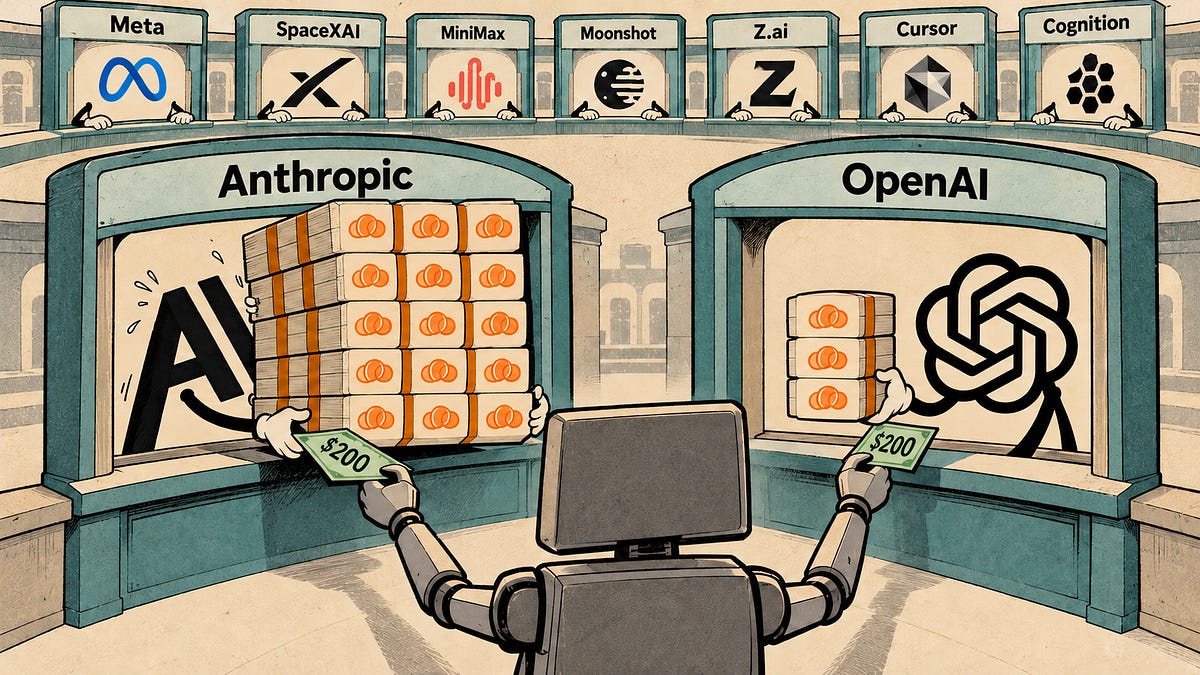 Anthropic Subscriptions Offer 5x+ More Value Than OpenAI
SemiAnalysis measures the real API-equivalent value of AI subscription plans by experimentally reverse-engineering how usage meters consume credits across input/output/cache token types for Anthropic, OpenAI, Meta, xAI, Cursor, Cognition, Z.ai, MiniMax, and Moonshot. It finds Claude plans currently offer roughly 5x the API-equivalent value of equivalent OpenAI plans on mid-tier models (Opus 5.5 vs GPT-6.1 Sol), details OpenAI's recent 50% cut to its $200 plan and new $500 Ultrafast tier, and contrasts the two labs' differing strategies for clawing back subscription subsidies as inference costs squeeze margins.
 newsletter.semianalysis.comarticlePublished and added 6 Oct 2026🧠 AI
 Expanding the Cyber Verification Program
Anthropic's expanded Cyber Verification Program (CVP) merges Project Glasswing and the earlier CVP into three access tiers (Defense, Red Team, Specialized) for Claude Opus 5.5, Sonnet 5.5 and Mythos 5.1, each with different verification and security controls. On CyScenarioBench with Opus 5.5, Defense Access blocked 46 of 50 trials, Red Team Access none. Glasswing partners reported at least 129,000 verified vulnerabilities between April and July 2026.
 anthropic.comarticleAdded 29 Oct 2026, published 6 Oct 2026🧠 AI
 Ephemeral Testing
Daniel Lemire proposes "ephemeral testing": instead of testing a software component directly, you have an AI agent build a throwaway application or layer on top of it, then judge the component's API quality by how easily the agent succeeds. A clean API with stable invariants lets the agent build quickly with few failures, while hidden state or poor docs produce patches and errors — treated as evidence about the underlying code's design, not the agent's competence. He describes repeating this with different agents and tasks against the same foundation as a cheap substitute for anticipating future integration needs.
 lemire.mearticleAdded 6 Oct 2026, published 5 Oct 2026🧠 AI
 How native transaction assertions could enforce a transaction's final outcome
Ethereum Foundation research post distinguishing "intent mismatch" (Bybit, BadgerDAO) from "outcome mismatch" (the Aave/CoW $50.4M swap that settled for $36K) attacks on signed transactions, then proposing native transaction assertions as a fix. It details EIP-7906, which adds a read-only POST_TX frame (building on EIP-8141 frame transactions) with three new opcodes — TXTRACE, TXDIFF, EVENTDATACOPY — letting onchain logic inspect the full net state diff and events after execution and revert if a signed, independently-sourced rule is violated.
 blog.ethereum.orgarticlePublished and added 5 Oct 2026🛡️ Security
 Getting the most out of Opus 5.5 in Claude and Claude Code
Anthropic's practitioner guide to working with Claude Opus 5.5 in Claude apps and Claude Code, covering prompting changes (dropping "think carefully" lines since the model always reasons internally), steering long autonomous runs with clear finish lines and mid-run follow-ups, CLAUDE.md rules for when to stop vs. keep going, delegating work to subagents with evidence checks, maintaining a TASKS.md checklist across context compaction, using Opus 5.5 for diff/PR review and deck fact-checking, and how the model's new bio/cyber safety classifier can switch a flagged conversation to an older model mid-session. It also covers the Claude Code fast-mode research preview (/fast) for faster, lower-latency responses.
 claude.devarticleAdded 4 Oct 2026, published 3 Oct 2026🧠 AI
 Sandboxes Explained: What Each Type Actually Isolates | Blog | Endor Labs
A vendor blog primer (Endor Labs) that walks through the main families of sandboxing technology - VMs (Firecracker), shared-kernel containers (namespaces, cgroups, seccomp, runc), userspace-kernel middle grounds (gVisor, Kata Containers), and language/runtime sandboxes (Java SecurityManager, V8 isolates, WebAssembly/WASI) - explaining what each actually isolates, its cost, and known escape CVEs (VENOM/CVE-2015-3456, runc's CVE-2019-5736, Spectre/Meltdown). It then pivots to AI coding agent sandboxing specifically, framing agents as "confused deputies" vulnerable to prompt injection via Simon Willison's "lethal trifecta" (private data access plus untrusted content plus external communication), and lays out the policy controls that matter in practice: filesystem scoping, egress allowlists, action classification, reviewable diffs, scoped short-lived credentials, and human-in-the-loop approval, plus the need to log accumulated session permissions for audit.
endorlabs.comarticlePublished and added 2 Oct 2026🧠 AI

Showing 30 of 73
Show more