- Ritik Shukla (@Retik_S) on X
kanzo is a local kanban board that coding agents can update. It ships as one 4 MB binary that starts in 2 ms and runs on localhost. It also works as an MCP server, so Claude Code and Codex see the same tasks as the user. The board is stored as a folder that can sync through a private git repo. The post is brief and gives no further detail.
 x.comtoolPublished and added 30 Oct 2026🧠 AI
- CISO Security Program Management 2026
Security Posture Management is a web tool that maps 30 CISO-accountable security topics across the five NIST Cybersecurity Framework functions. It tracks current maturity, KPIs, risks and audit findings per topic. It also records target maturity, target dates, accountable owners and review dates, flagging topics unreviewed for 6 months as due and 12 months as overdue. Initiatives link to topics and risks with owner, budget, dates and expected maturity uplift.
 spm.threat-modeling.comtoolAdded 29 Oct 2026🛡️ Security
- Dan Kornas (@DanKornas) on X
jshook is an open-source (AGPL-3.0) search-first reverse-engineering workspace for AI agents, exposed over MCP. It drives Chromium or Camoufox through CDP, captures WebSocket traffic, offers HTTP, GraphQL and Burp Suite helpers, deobfuscates JavaScript, rebuilds source maps and disassembles WebAssembly. Tool profiles start small and expand to workflow or full sets; hot-reload plugins and declarative workflows extend it.
x.comtoolAdded 28 Oct 2026, published 25 Oct 2026🛡️ Security  Argus – a free, open-source agentic security operations platform – MIT
Argus is a free, MIT-licensed, self-hosted security operations platform that maps cloud, identity, code, device, network and Kubernetes assets into one evidence graph and detects fast, AI-driven attacks. Read-only AI agents investigate and only propose actions. Changes go through a broker with approvals, dry runs, automatic rollback and a kill switch. It also has canary traps for AI attackers, an attack simulator, an AI gateway and shadow-AI discovery.
 thomasunise.comtoolAdded 25 Oct 2026, published 24 Oct 2026🛡️ Security
- Show HN: Corgi, a helpful {agent, terminal} multiplexer
Corgi is a terminal multiplexer for humans and AI coding agents, installed with a curl script. It shows each agent's state (working, needs you, finished, idle), keeps agents running in the background like tmux, and tracks token usage, per-workspace resource use and every file an agent changed. It also supports git worktrees, SSH image paste (needs Ghostty Nightly) and a corgi --skill command that teaches agents to drive it.
 corgi.computertoolAdded 24 Oct 2026, published 23 Oct 2026🧠 AI
 Show HN: Jev Cards, Can you beat a vision model at a picture quiz?
Jev Cards is a browser picture quiz where a player competes against Jev 1.14, a vision decision model. The 490 cards cover fruit, flags, maps, chess and illusions. Jev reads the image and question and returns a probability for every option, or a box for "tap the place" cards, in one call of about 0.25 seconds. It never writes text. The page reports 5,256 wins in 6,820 games.
 jevcards.comtoolAdded 21 Oct 2026, published 20 Oct 2026🧠 AI
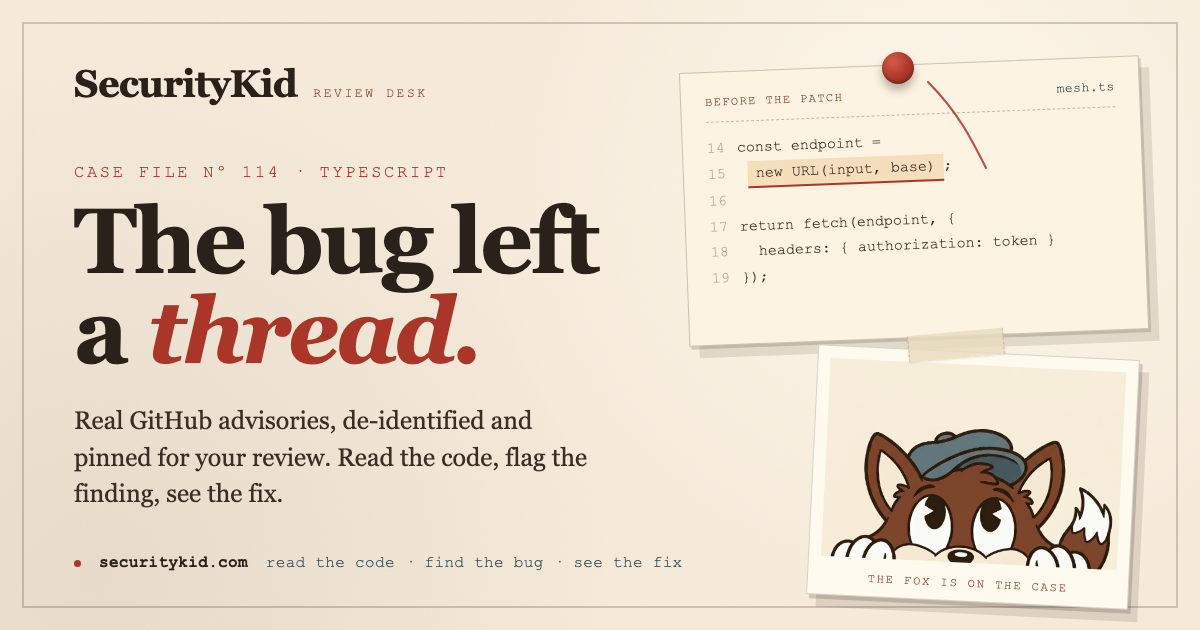 SecurityKid — learn secure code review on real vulnerabilities
SecurityKid Labs is a practice platform for vulnerability code review built on real GitHub security advisories, de-identified and scrubbed. Users get a scope and a diff, pin the vulnerable line, name the root cause, and defend claims against an AI mentor. They then see the advisory patch and can earn verified badges and public writeups. The page gives no case list or pricing.
 labs.securitykid.comtoolAdded 20 Oct 2026🛡️ Security
- G (@gg_guy03) on X
WhatThePort for Linux is a Rust utility that lists the dev servers still running in the background, the project that started each one, and its RAM use. It links each server to the Claude Code or Codex session that launched it, and stops the whole process tree without touching databases. The CLI offers `wtp`, `wtp stop <port>` and `wtp --json`. A reviewer notes the Codex resolver keeps the newest transcript per working directory, so session matches can be wrong.
x.comtoolAdded 20 Oct 2026, published 19 Oct 2026🧠 AI - 0xRafy (@0xRafy) on X
A tweet promoting Coucou, an open-source app (about 5,000 GitHub stars, per the post) that monitors Claude Code sessions from the iPhone Dynamic Island. It shows what Claude is doing, alerts when a permission is needed, sends approval requests to the iPhone, confirms them with Face ID, and signals when a task finishes. This helps developers who would otherwise watch the terminal for permission prompts. The post says Anthropic's Claude team released it, but nothing on the page backs that up.
x.comtoolAdded 18 Oct 2026, published 17 Oct 2026🧠 AI  Show HN: Llmspeed – feel how fast a local LLM runs before you buy the hardware
Llmspeed is an open-source web tool that lets you get a feel for how fast a local LLM runs on a given device before buying hardware. It shows estimates for a short prompt on a single device, using measured numbers from community benchmarks (r/LocalLLaMA, localscore.ai) and filling gaps with figures derived from similar setups or projected from specs. It helps with local-LLM hardware purchasing decisions.
 llmspeed.devtoolAdded 18 Oct 2026, published 17 Oct 2026🧠 AI
 Show HN: Things to Do API
Things to Do API is a hosted knowledge base of local events (shows, talks, pop-ups, markets, festivals) that you query in natural language, for example `/v1/search?q=comedy+in+san+francisco+this+weekend`. It returns structured JSON with title, category, local start time, venue and ticket and source links. It also exposes an HTTP MCP endpoint, added with `claude mcp add --transport http thingstodo https://api.thingstodoapi.com/mcp`, so agents can use it as a tool. Coverage is live for the San Francisco Bay Area, with New York City and Los Angeles coming. Pricing is pay-as-you-go from $5 per 1,000 calls, the first 1,000 a month are free, and there is a 300 calls/min limit.
 thingstodoapi.comtoolAdded 18 Oct 2026, published 16 Oct 2026🧠 AI
 EveryDev.ai (@EveryDevAi) on X
magpie, by @yetone, is an open-source local gateway and desktop app that lets any coding agent use any model or provider. It translates between the OpenAI Chat, OpenAI Responses, Anthropic Messages and Gemini APIs. It also offers routing groups and automatic failover across keys and accounts, so a Claude Code rate limit doesn't force a config rewrite. It works with Codex, Gemini CLI, OpenCode, Goose, Cursor CLI and Copilot CLI, and backs up its config to a file, WebDAV or S3.
x.comtoolAdded 16 Oct 2026, published 15 Oct 2026🧠 AI Show HN: Parsimony – an open-source benchmark for how much code AI models add
Parsimony is an open-source benchmark that ranks AI coding models by how much code their patches add. It parses the patches already published by benchmarks such as SWE-bench Verified, counts syntax-level "coding units" (statements, calls, comparisons, names, literals) rather than lines, and subtracts deleted code to get net units. It adds a leaderboard, an Artificial Analysis Intelligence Index overlay, the author's own DeepSWE runs, and a way to upload your own results. It matters because existing benchmarks score solve rate and cost but not code bloat, which makes codebases harder to maintain. The page states its limits: it measures size, not quality, and more verbose models tend to solve more tasks.
 parsimony.lasu.devtoolPublished and added 13 Oct 2026🧠 AI
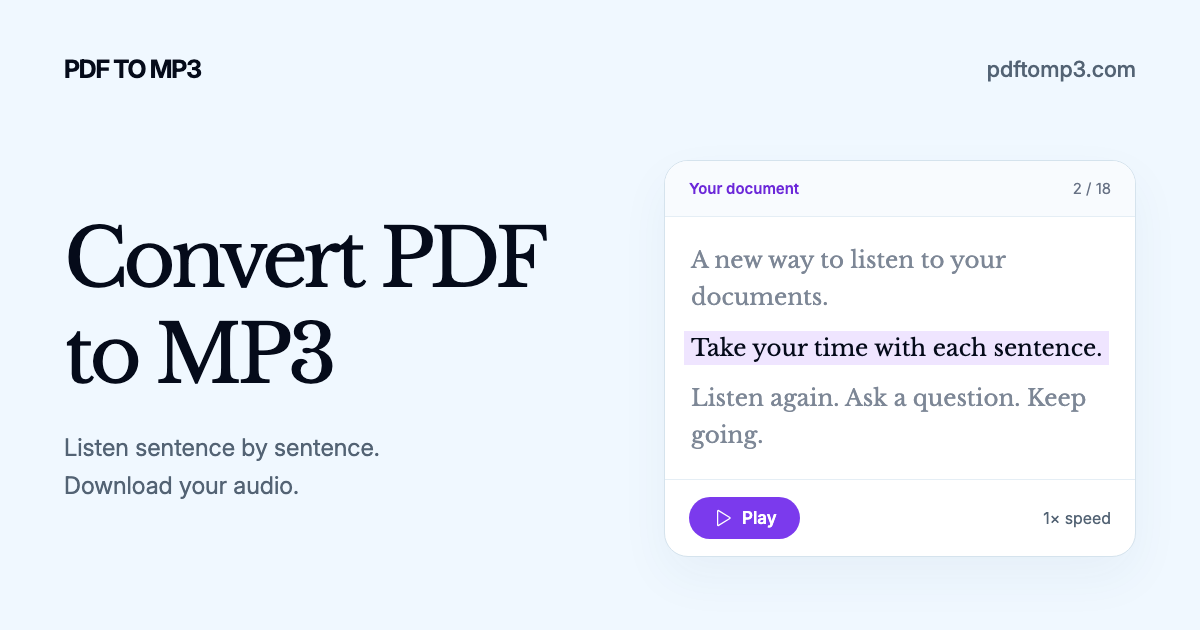 Show HN: Use your OpenAI subscription to create audiobooks
PDF TO MP3 is a hosted MCP server (Streamable HTTP, account authentication) that turns PDFs into audiobooks. The user's existing AI subscription, such as Codex, handles document processing through the MCP connection. Speech generation is billed separately through the user's own OpenAI or Google text-to-speech API key. The setup is three steps: add the MCP server, add a speech key, then attach a PDF and ask the assistant to use the MCP. It shows a "bring your own subscription" pattern that keeps the vendor's compute costs low.
 pdftomp3.comtoolPublished and added 13 Oct 2026🧠 AI
- Trail of Bits (@trailofbits) on X
Trail of Bits announces SequenceHash, a library for hashing several inputs without concatenation ambiguity. Plain concatenation lets different input sequences produce the same SHA-256 digest. SequenceHash appends each input's length as a fixed 128-bit integer so every sequence has a single encoding. It ships for Rust, Go and Python, and removes a recurring bug class in crypto and appsec code.
x.comtoolAdded 11 Oct 2026, published 9 Oct 2026🛡️ Security - The OSINT Newsletter (@osintnewsletter) on X
The OSINT Tools Map, built by @cyb_detective, is an interactive world map letting investigators click a country to find relevant local OSINT resources such as phonebooks, business registers, cadastral maps, and court records. The same tweet announces the companion "OSINT Tools Library" at tools.osintnewsletter.com, a curated, investigator-first directory of tools used in real cases that is actively soliciting community additions.
x.comtoolAdded 5 Oct 2026, published 4 Oct 2026🛡️ Security - AINotes (@ainotesus) on X
OpenRig is an orchestration tool that runs multiple coding agents as one persistent, coordinated team rather than isolated sessions. A YAML configuration defines pods, seats, communication edges, and continuity policies, while a daemon, CLI, TUI, MCP server, SQLite store, and tmux handle agent launch, inter-agent messaging, session snapshots, restoration, and topology management.
x.comtoolPublished and added 3 Oct 2026🧠 AI  From the creator of Redis; run LLM locally with ds4
DwarfStar (ds4) is a narrow C inference engine for running large mixture-of-experts models locally on high-memory Mac (Metal), CUDA and ROCm machines. It targets specific model families end-to-end — DeepSeek V4/V4.1 Flash, GLM 5.x and Qwen3.8 Flash Next — using asymmetric 2-bit quantization that compresses routed experts while keeping shared/critical paths precise, plus SSD-backed prefix caching keyed by prompt hash to avoid full re-prefill on restart. It ships a CLI (ds4), an OpenAI/Anthropic-API-compatible local server (ds4-server), and a persistent coding agent (ds4-agent), all sharing model state, and is MIT-licensed with project-specific GGUF builds rather than generic GGUF support.
 dwarfstar.shtoolAdded 3 Oct 2026, published 2 Oct 2026🧠 AI
- https://github.com/praetorian-inc/gato
Gato (GitHub Attack Toolkit) from Praetorian is a Python CLI for enumerating and attacking GitHub organizations' CI/CD pipelines: it identifies poisoned pipeline execution risks, abuses self-hosted runners via workflow and run-log analysis, exfiltrates Actions secrets, and automates fork-PR/workflow-based command execution. Version 1.7 added an Actions Artifacts Secrets Scanner that downloads and recursively scans workflow artifacts with NoseyParker, which Praetorian used to find critical secrets leaks in prominent open-source projects. The project is now archived/superseded by Praetorian's multi-platform tool Trajan, which merges Gato (GitHub) and Glato (GitLab) attack capabilities.
 github.comtoolPublished and added 2 Oct 2026🛡️ Security
- Python Hub (@PythonHub) on X
TATS is an open-source Python tool that analyzes OAuth 2.0, OpenID Connect, and Microsoft Entra ID tokens. It helps security researchers trace authentication flows, identify risky permissions granted to tokens, and visualize token lifecycles for identity security review and investigation work.
x.comtoolPublished and added 2 Oct 2026🛡️ Security  DeepSeek Harness Desktop for macOS and Windows
DeepSeek Harness is an open-source general-purpose agent harness from DeepSeek, built on the "Cordis" everything-is-a-plugin architecture, shipped as a desktop app for macOS/Windows and runnable as a web UI from code. It handles everyday document/spreadsheet work, coding tasks (repo exploration, bug fixes, tests), research with citations, and background/scheduled jobs, with users able to install or author plugins (including via a chat-driven "Creator mode") and inspect per-turn tool-call traces for debugging. It runs on DeepSeek's DeepSeek-V4.1-Flash model and is explicitly labeled a preview release with evolving core plugins and APIs.
 deepseek.comtoolPublished and added 2 Oct 2026🧠 AI
 Amada Echeverría (@amadaecheverria) on X
jes is an open-source real-time guardrails project for AI agents, built by LangChain Ambassador Eden Marco, that inspects every step of an agent's trajectory — prompts, tool calls, tool results, skills, and responses. It runs on decision models like Jev from TypeSafeAI and ships with a LangChain middleware example for wiring the checks into an agent pipeline.
x.comtoolAdded 3 Oct 2026, published 1 Oct 2026🛡️ Security- IntelTechniques OSINT Tools Hub
IntelTechniques Search Tools is Michael Bazzell and Jason Edison's free companion toolset to their OSINT Techniques book, offering a collection of browser-based query generators and lookup tools for open-source intelligence investigations. Queries run client-side in the user's browser with no data collected or stored by the site, covering username/email/phone lookups, social media search, and other recon categories referenced in the book's 11th edition.
 inteltechniques.comtoolAdded 3 Sep 2026, published 31 Jul 2026🛡️ Security
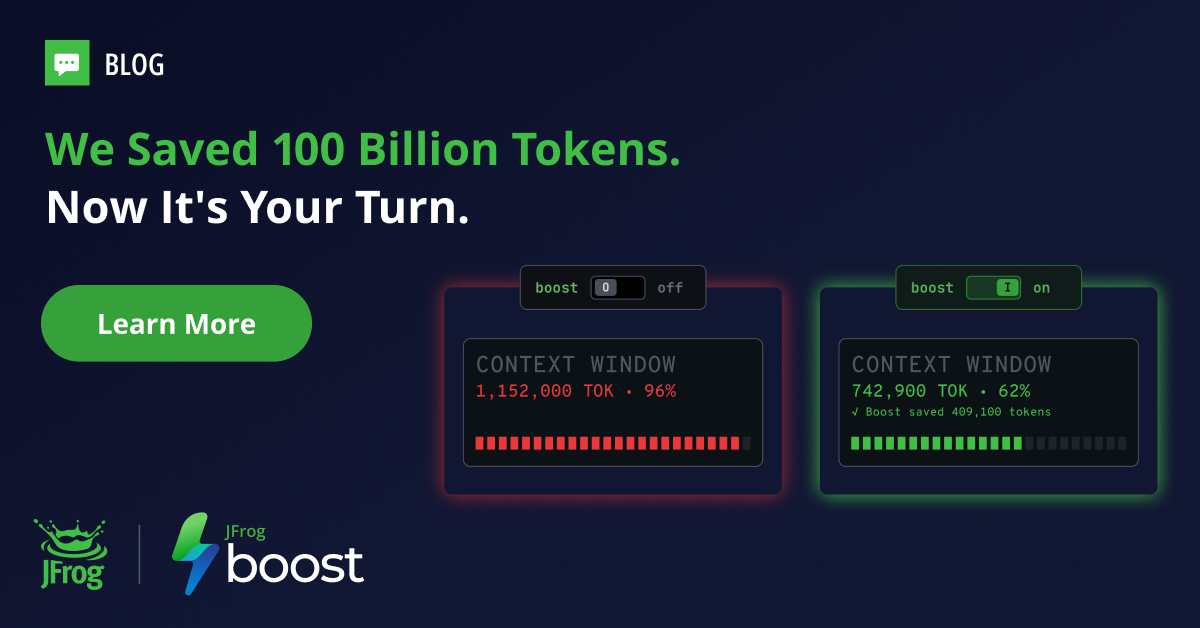 JFrog: Boost Enters Public Preview
JFrog's Boost is a free CLI wrapper that intercepts coding-agent tool output such as test logs, grep results, and terminal output, stripping irrelevant content before it reaches the model while preserving full access via a retrieve command if needed. JFrog rolled it out to 1,000+ internal engineers using Cursor and Claude Code, reporting over 100 billion tokens saved and describing pitfalls: blanket permission-approval risk from wrapping every shell command, false-savings claims from tools that double-count filtering, and truncation-driven hallucination loops where aggressive context-cutting caused agents to repeatedly re-verify state.
 jfrog.comtoolAdded 22 Sep 2026, published 15 Jul 2026🧠 AI
 knowledgator/opir-multitask-large-v1.0 · Hugging Face
Opir-multitask-large is an English encoder-based GLiClass zero-shot classifier for real-time LLM safety filtering, supporting binary safe/unsafe decisions, toxicity classification, jailbreak/prompt-injection detection, and categorization over a 996-label hierarchical safety taxonomy (16 top-level, 126 mid-level, 854 leaf labels). It was trained with taxonomy-derived unsafe-prompt generation, evolutionary hard-negative mining against existing safety models, LLM-as-judge annotation (DeepSeek-V3.1, MiniMax-M2.5, Llama-3.3-70B), and replay training on the gliclass-v3-logic-dataset, and is benchmarked against WildGuard, PolyGuard, Nemotron Safety Guard and Qwen3Guard across datasets like Aegis2, HarmBench, WildGuardMix, ToxicChat, and JBB-Behaviors, reporting ~25ms p50 latency at 1024 tokens for real-time deployment as an input/output moderation layer.
 huggingface.cotoolAdded 29 May 2026🛡️ Security
 GitHub Dependency Scanning MCP Server
GitHub's MCP Server now ships a "dependabot" toolset, in public preview, that lets MCP-compatible AI coding agents (Copilot Chat, Copilot CLI) scan dependency changes for known vulnerabilities before commit. The toolset queries the GitHub Advisory Database for affected packages, severity, and fixed versions, and can invoke the Dependabot CLI locally to diff dependency graphs pre/post-change for deeper post-commit checks. Requires Dependabot alerts enabled on the repo; setup involves enabling the toolset via Copilot CLI, VS Code MCP headers, or the advanced-security Copilot plugin.
 github.blogtoolAdded 3 Sep 2026, published 11 May 2026🛡️ Security
- Introducing MacNoise!
MacNoise is a modular, open-source macOS telemetry noise generator built to help defenders validate EDR, SIEM, and firewall detection coverage by emitting real system events — network connections, process spawns, dylib injection, file writes, plist mutations, TCC permission probes, and launch agent persistence. It ships a REPL (macnoise run/list/info/scenario), a dry-run testing mode, and OCSF-compliant JSONL audit/telemetry logs tagged with MITRE ATT&CK mappings and correlation IDs, and supports YAML "scenarios" that chain modules to emulate specific adversary tradecraft (e.g., an EDR Validation Suite covering proc_inject, net_dns, tcc_fda). It's positioned as a macOS-focused complement to the EDR-Telemetry project and Windows-centric atomic-testing tools, aimed at surfacing logging gaps before an incident.
 0xv1n.github.iotoolAdded 3 Sep 2026, published 26 Feb 2026🛡️ Security


