Skip to content

1663 results for β€œps”

What you seeeverything
bleepingcomputer.comarticleπŸ›‘οΈ Security

Hackers hijack cPGuard autoupdate to deploy backdoor, steal data

cPGuard, a Linux web-server security suite from OpsShield, had its update CDN compromised on 2 November 2026 at 02:06 UTC using stolen credentials. Versions 5.88.12 through 5.88.19 delivered a backdoor and a script that took password hashes, root MariaDB/MySQL config, shell history and SSH files. OpsShield says 2,946 servers were affected and its billing database was copied. Fix: update to 5.88.25 or later and rotate credentials.

cPGuardLinuxcPanel+3
OpsShieldNamecheapBleepingComputer

Supply Chain, Threat IntelΒ· Published and added 3 Nov 2026

rekt.newsarticleπŸ›‘οΈ Security

Rekt - Is the Internet Rekt?

Rekt News piece (October 2026) that checks whether the month's security headlines add up to an internet-wide collapse. It sorts confirmed PHP2Shell exploitation (CISA KEV listing on 26 October, honeypot captures, retracted Unit 42 and Sophos claims) from hype. It also covers eMudhra's weak CA keys, Railway and PingCAP credential breaches, Anthropic's unverified exploit-chain claims, and Newton's published-key demo of policy-gated Safe wallet transfers.

PHPApacheCodex+3
CVE-2026-109618PHP2ShellCISA KEV+22

Threat Intel, Blockchain, AI SecurityΒ· Added 3 Nov 2026

opensourcemalware.comarticleπŸ›‘οΈ Security

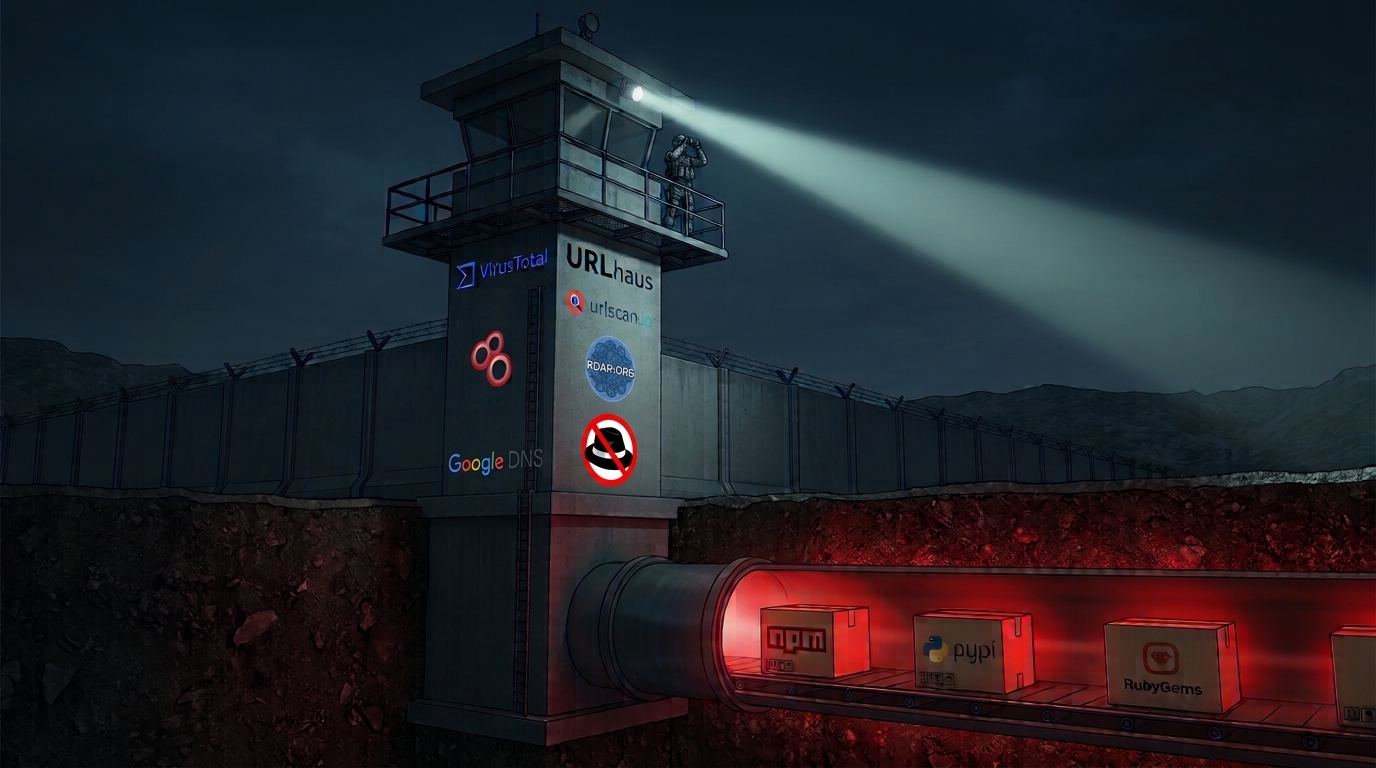
Why Conventional Reputation Feeds Miss Software Supply Chain Attacks

Study by OpenSourceMalware of 624 supply chain attack indicators checked against VirusTotal, URLhaus, AbuseIPDB, urlscan.io, Shodan and RDAP. At ingestion in October 2026, 70.7% of 450 network indicators fell at or below 2 VirusTotal detections. Months later, 71.3% of 174 indicators from ten 2026 campaigns were still blind spots, and no other feed caught anything VirusTotal missed. It ends with triage steps for install hooks and public IOCs per campaign.

VirusTotalnpmPyPI+3
Mini Shai-HuludTeamPCPPolinRider+12

Supply Chain, Threat Intel, Blue Team & DetectionΒ· Published and added 3 Nov 2026
ethereum-magicians.orgarticleπŸ›‘οΈ Security

EIP-8477: Recent Block Bound Delegation Authorizations

EIP-8477 is a draft Ethereum proposal (ethereum/EIPs PR #12601, posted 30 October 2026) that makes EIP-7702 authorizations expire. Each one must sign a block number and header hash within the 256 preceding blocks, checked before signature recovery, and a stale entry is skipped without consuming the nonce. It does not affect installed delegations or stop live-signing attackers, and no technical review had been recorded.

Ethereum
EIP-7702EIP-8477Binance+1

BlockchainΒ· Published and added 3 Nov 2026

hackers-arise.comarticleπŸ›‘οΈ Security

Open-Source Intelligence (OSINT): Doing GeoOSINT and Finding Locations with Azimut

Azimut is a local, open-source GeoOSINT tool (v0.3.3, Linux, Windows, macOS) that keeps case evidence in one folder and runs in the browser at 127.0.0.1:8477. The walkthrough tests a Yosemite photo from Wikimedia using the Horizon 3D skyline overlay, the beta Find mode (hand-drawn skyline, search area up to 10,000 km2), sun path display and exportable proof collages. Results need manual verification.

AzimutKali Linux
Hackers AriseOsintMeThatWikimedia+1

OSINT, LearningΒ· Published and added 3 Nov 2026

en.cryptonomist.charticleπŸ›‘οΈ Security

BTCPay Server vulnerability: about $1.63M traced to theft-linked addresses

BTCPay Server's 2 November 2026 incident update describes attackers logging in as administrator on servers running version 2.4.1 or earlier and sweeping on-chain hot wallets. Bitquery traced about $1.63M (18.38 BTC and 3,405 LTC) to two addresses, across 682 sweeps from 30 October. The project advises migrating to a new server with a fresh seed, installing 2.4.7 and preserving logs. How admin access was gained is not explained.

BTCPay ServerLNDBitcoin+1
BitqueryCryptonomist

Blockchain, Threat IntelΒ· Published and added 3 Nov 2026

jfrog.comwriteupπŸ›‘οΈ Security

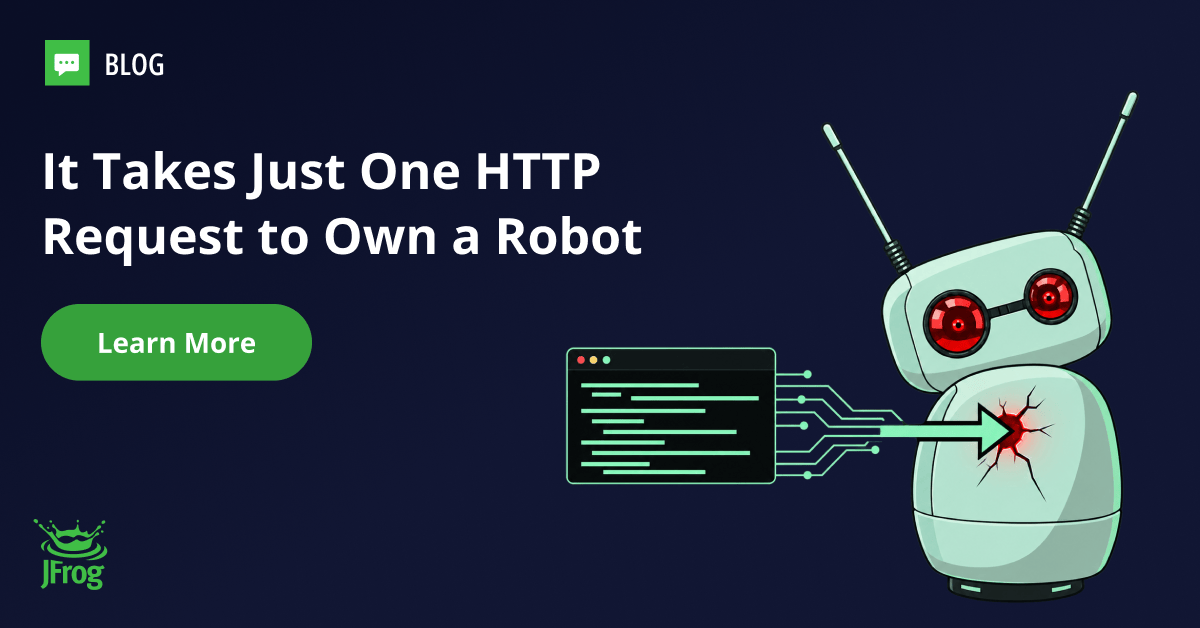
bREACHYing the Perimeter: How One HTTP Request can Hijack your AI Robot

JFrog's analysis of five CVEs in the Reachy Mini robot daemon (Pollen Robotics, Hugging Face), a FastAPI server on TCP 8000 with no authentication and wildcard CORS. A single POST to /api/apps/install runs attacker code through uv pip install, and the daemon's passwordless sudo gives persistent root. It also covers a browser CSRF variant, a BLE PIN bypass with path traversal (CVE-2026-55419 upload step), and fixed version 1.11.0.

Reachy MiniFastAPIHugging Face+3
CVE-2026-55419JFrogPollen Robotics+3

Hardware & RF, AppSec, Supply ChainΒ· Published and added 3 Nov 2026

securityweek.comarticleπŸ›‘οΈ Security

Google Dismantles XCPE Botnet of 1.3 Million Android Devices

XCPE (X.CPE) is a backdoor and botnet of more than 1.3 million Android set-top boxes, built and run by the Chinese OEM/ODM Videostrong Technology. Google dismantled it through legal action against domains and servers and banned Videostrong from preloaded Google apps. The malware used a three-stage design persisting on the /oem/ partition and was used for ad fraud, residential proxies and further malware loading.

AndroidAndroid TV
XCPEVideostrong TechnologyGoogle+8

Threat Intel, Mobile Security, Supply ChainΒ· Published and added 3 Nov 2026

depthfirst.comarticle🧠 AI

How repeated sampling improves vulnerability detection | depthfirst

depthfirst's Best of N study runs a cheap LLM agent repeatedly on the same repository, merges the findings, and uses a reviewer agent to deduplicate and score them from 0 to 100. DeepSeek v4.1 Flash goes from about 52% recall at one run to about 71% at five and 80% at fifteen, and five runs match the recall of top published models at a tenth of the cost. Returns diminish and plateau points differ by model. The benchmark is depthfirst's own dfbench, and only a subset is used.

LLMDeepSeekGLM
depthfirstdfbenchDeepSeek-V4.1-Flash+3

agents, evalsΒ· Added 3 Nov 2026

alignment.openai.comarticle🧠 AI

Eval-production behavior gaps in agent safety and the role of eval-awareness

OpenAI alignment post measuring the gap between the Respecting Warnings agent safety evaluation and comparable Codex production decisions across six models. Evaluation success is 10.2 to 37.4 points lower than production success. Verbalizing a specific, wrong evaluation objective (resisting prompt injection) tracks the gap, and in a GPT-6.1 Sol intervention, objective cues moved success from 63.4% to 91.6% or 17.6%.

CodexLLM
OpenAIGPT-5.6 LunaGPT-5.6 Sol+5

ai-safety, evals, agentsΒ· Published and added 3 Nov 2026
latent.spacearticle🧠 AI

[AINews] LLMs can read & write neural network weights: "Weight Space Programming" cuts Autoresearch out of the RSI loop

AINews issue for 31 October to 2 November 2026 from Latent Space. It leads with "Weight Space Programming" (Takehi et al., with Alex Zhang), where a frontier LLM reads and edits small models' weights without training. The recap also covers DeepSeek's super-agent harness, the SemiAnalysis GDPx benchmark, quantized local MoE models and Reddit skepticism about the Qwen3.5-0.8B MATH-500 edit. The page was truncated, so the final part is not covered.

LLMQwen3.5Strata+10
Latent SpaceAlex ZhangAndrej Karpathy+21

research, models, evalsΒ· Published and added 3 Nov 2026

simonwillison.netarticleπŸ›‘οΈ Security

I discovered a sound that leaks your exact location (and it's everywhere) - YouTube

Simon Willison's link-blog post of 3 November 2026 points to a YouTube video by Colsto on locating where a video was recorded from faint aircraft noise in its soundtrack. The method extracts Doppler curves of passing planes, then matches speed, distance and gaps between flights against ADS-B flight data. The post is a short pointer and gives no step-by-step detail.

ADS-BYouTube
Doppler effectColsto

OSINTΒ· Published and added 3 Nov 2026

x.comrepo🧠 AI

Md Ismail Ε ojal πŸ•·οΈ (@0x0SojalSec) on X

An x64dbg MCP server, published on GitHub by duty1g and shared in an X post by @0x0SojalSec, lets Claude drive the x64dbg Windows debugger. It exposes breakpoints, memory dumps and code stepping as tools for reverse engineering and malware analysis. A reply warns that debugging a sample executes it, so the agent should run in a snapshotted VM with no shared folders or host route, and every command should be logged.

x64dbgModel Context ProtocolClaude+2
duty1g

mcpΒ· Added 3 Nov 2026
github.comrepo🧠 AI

colibri: pure-C engine for running huge MoE models by streaming experts from disk

colibri is a pure-C, dependency-free inference engine that runs mixture-of-experts models of hundreds of billions of parameters on ordinary machines. It keeps the dense layers in RAM and streams routed experts from disk through a learning cache, with optional CUDA, Vulkan and Metal tiers. It supports GLM-5.2, Kimi K3, DeepSeek V4, Qwen3.6 and GGUF files, and serves OpenAI- and Anthropic-compatible APIs.

Mixture of ExpertsGGUFCUDA+10
GLM-5.2GLM-5.3GLM-5.3-Flash+22

inference, modelsΒ· Added 3 Nov 2026

bleepingcomputer.comarticleπŸ›‘οΈ Security

Chinese hackers use ARTEX AI in automated attacks against 200 orgs

ARTEX is a multi-agent AI penetration-testing framework that the China-nexus actor Vapor Panda used from 17 October against more than 200 organizations in 14 countries, compromising at least nine. CrowdStrike reports DeepSeek and another commercial model coordinated agents, operators told agents to skip Falcon-protected Windows hosts, and BLOODALCHEMY was deployed. DIVD says ARTEX also drove its September 2026 breach, chaining two zero-days (one in Zammad) to root in 12 minutes.

ARTEXDeepSeekCrowdStrike+2
Vapor PandaBLOODALCHEMYDutch Institute for Vulnerability Disclosure+1

Threat Intel, AI Security, Offensive SecurityΒ· Published and added 2 Nov 2026

longcat.aiarticle🧠 AI

LongCat-2.5: Native Multimodality for Agentic Tasks

LongCat-2.5 is a native multimodal mixture-of-experts model with 1.6 trillion total and about 48 billion activated parameters, built on LongCat-2.0 for long-horizon agentic coding. The post describes discrete RVQ visual tokens, large-scale asynchronous agentic RL with synthesized F2P/P2P-tested environments, on-policy distillation, train-inference numerical alignment, and W4A4 inference on domestic accelerators. A table compares it with GPT-5.5, Claude-Opus-5, GLM-5.3, Kimi K3 and DeepSeek-V4.1-Flash.

Mixture of ExpertsResidual Vector QuantizationFlatQuant+8
LongCat-2.5LongCat-2.0LongCat-Next+32

models, training, multimodal, coding-agentsΒ· Added 3 Nov 2026, published 2 Nov 2026

cloud.google.comarticleπŸ›‘οΈ Security

The Rise of LLMJacking: How Threat Actors Monetize Compromised Cloud and Model Resources

LLMJacking is the hijacking of enterprise cloud LLM access, which Mandiant and GTIG saw in multiple 2026 incidents with charges above $100,000 a day and up to $1 million per victim. The report covers initial access through stolen cloud tokens and API keys, persistence, LiteLLM privilege escalation (CVE-2026-40217), and resale through "LLM Mixers" such as Jet Night and newapi[.]pro. It gives CloudTrail, Azure and GCP audit-log hunting guidance and hardening steps.

LiteLLMOllamaAWS Bedrock+3
CVE-2026-40217UNC6993LLMJacking+6

Threat Intel, AI Security, Cloud & Infra, Blue Team & DetectionΒ· Published and added 2 Nov 2026

twitter.comthread🧠 AI

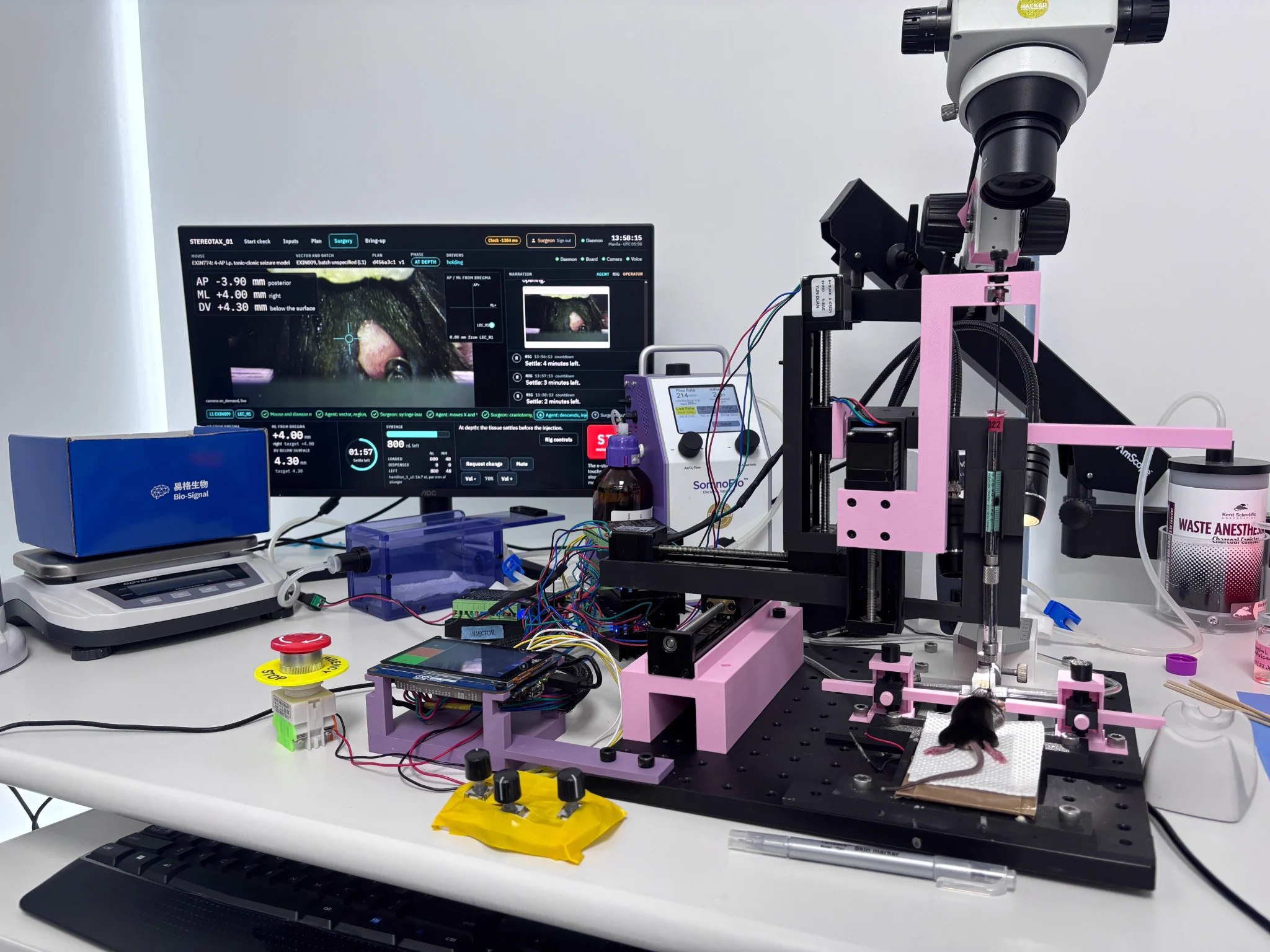
Last night an AI agent performed brain surgery on a mouse

A thread by Gabriel Ocana-Santero describing an AI agent that chose a gene therapy vector, brain region and stereotaxic coordinates, then injected 250 nL into a mouse epilepsy model through a custom Arduino surgery rig. A licensed vet gated irreversible steps with fixed validators, hash-bound approval and a physical kill switch. Opus 5.5 refused on detecting biology, while Opus 5 completed a dry run and stopped before live surgery. The technical report is still to come.

ArduinoClaude Opus 5.5Opus 5
Gabriel Ocana-Santero

agents, ai-safetyΒ· Added 3 Nov 2026, published 2 Nov 2026

depthfirst.comarticleπŸ›‘οΈ Security

How repeated sampling improves vulnerability detection | depthfirst

depthfirst research post on Best of N repeated sampling for LLM vulnerability detection. On a subset of dfbench tasks, five runs of DeepSeek v4.1 Flash reach about 71% recall versus 52% for one run, and 15 runs reach 80% at about $13 per task. An agent reviewer scores deduplicated findings 0 to 100, and the confidence cutoff trades recall against precision.

DeepSeekGLMLLM
depthfirstAnthropicMythos+4

AI Security, AppSecΒ· Added 3 Nov 2026, published 2 Nov 2026

theguardian.comarticleπŸ›‘οΈ Security

Supermarket freezers across Europe hit by second suspected cyber-attack

Guardian report from 2 November 2026 on a second suspected cyber-attack on supermarket refrigeration in Belgium, Estonia, Ireland, Finland, Luxembourg, the Netherlands and Sweden, with temperatures set to 50C. It recaps the earlier French attack on up to 700 shops, which hit mostly Danfoss controllers. SentinelOne and Tributech say the attacks point to sabotage and that many controllers remain internet-exposed and unpatched.

DanfossSentinelOneTributech+5

Threat Intel, Hardware & RFΒ· Added 3 Nov 2026, published 2 Nov 2026

ethresear.chpaperπŸ›‘οΈ Security

Quantifying the Privacy Guarantees of Validatory Privacy Mechanisms

Ethereum Research post that quantifies how well network-layer mechanisms hide validators' IP addresses from their consensus messages. Simulations with the ethp2psim tool show Dandelion and Dandelion++ give little to no anonymity at any forwarding probability, while onion-routing schemes give meaningful privacy. Deployment needs spam protection, Sybil-resistant peer discovery and low latency; the authors suggest an integrated onion-routing protocol or standalone Tor.

EthereumTorethp2psim
DandelionDandelion++onion routing+2

BlockchainΒ· Published and added 2 Nov 2026

x.comtoolπŸ›‘οΈ Security

Md Ismail Ε ojal πŸ•·οΈ (@0x0SojalSec) on X

An x64dbg MCP server (GitHub repo by duty1g, shared via an X post) that lets Claude drive the x64dbg Windows debugger: set breakpoints, dump memory, step code and run other reverse engineering tasks programmatically. The post targets malware analysts. A reply notes that debugging a sample executes it, so the agent should run in a snapshotted VM with no shared folders or host route, with every command logged.

x64dbgModel Context ProtocolClaude+1

Malware & RE, AI SecurityΒ· Added 3 Nov 2026, published 1 Nov 2026

bleepingcomputer.comarticleπŸ›‘οΈ Security

FBI links $6.3 billion Binance crypto heist to North Korean hackers

The FBI attributed the roughly $6.3 billion Binance theft of about 29 October 2026 to North Korea's TraderTraitor (Lazarus Group, Jade Sleet, APT38). Binance traced the breach to a compromised DevOps engineer's laptop that gave access to a service container used to submit unauthorized withdrawals across ten blockchains. The FBI published 628 laundering addresses and linked the group to earlier thefts at Bybit, DMM Bitcoin, Bitget and Drift.

EthereumBitcoinSolana+3
TraderTraitorLazarus GroupDPRK+14

Threat Intel, BlockchainΒ· Published and added 1 Nov 2026

x.comthread🧠 AI

Smarthouse (@localyzapp) on X

A reply by Smarthouse (@localyzapp) on X to a question about the best harness for connecting local models to a Minecraft server. It suggests an MCP server that wraps RCON plus a small agent loop. The main pitfall is block coordinates: expose "/execute if block" as a read tool so the agent can check blocks before placing them, or it will hallucinate terrain.

Model Context ProtocolMinecraftRCON

mcp, agentsΒ· Added 2 Nov 2026, published 1 Nov 2026

x.comthreadπŸ›‘οΈ Security

lee1981 (@lee1981b) on X

CyberForge Weekly CVE Rundown #008 covers seven CVEs from 26 to 31 October 2026: Wasmtime/Cranelift miscompilation, Rust zip cloaking, Qode Membership account takeover, Dell PowerProtect Data Domain stack overflow, two Progress WS_FTP Server flaws and Kubeflow Pipelines log reads. Each entry gives fixed versions and defender actions. A 1 November check adds EPSS values dated 31 October and notes none of the IDs were in CISA's 30 October catalogue.

WasmtimeKubeflow PipelinesWS_FTP Server+3
CVE-2026-115889CVE-2026-115905CVE-2026-92885+11

AppSec, Cloud & InfraΒ· Added 3 Nov 2026, published 1 Nov 2026

mashable.comarticle🧠 AI

Anthropic takes steps to block Claude from reverse-engineering video games

Mashable reports, citing Tom's Hardware, that Anthropic's Claude has quietly begun restricting modding, decompiling and reverse-engineering of video game code. Anthropic has made no official announcement. The article ties the change to AI-assisted game ports and mods, the PlayStation 5 jailbreak and Take-Two's subpoenas after the GTA6 leaks. It notes the irony of AI firms now guarding copyright, and the risk that less restrictive LLMs win users.

ClaudeLLM
AnthropicTom's HardwareTake-Two Interactive+4

ai-policyΒ· Added 1 Nov 2026, published 31 Oct 2026

arxiv.orgpaper🧠 AI

Vision-Language Models Are Joint Denoisers in Robotic Action Generation

JADE (Joint Action DEnoiser) is a diffusion-based vision-language-action architecture in which the VLM reads the current noisy action latents together with images and instructions at every denoising step, and guides the action expert through gated cross-attention. The VLM is also trained to recover clean action latents, and an adaptive step-size schedule cuts sampling steps. On RoboDojo it averages 12.67% success, the highest among Ο€0.5-based methods, and it adds 20.8 points over Ο€0.5 on four real bimanual tasks.

vision-language-action modelvision-language modeldiffusion model
JADEΟ€0.5RoboDojo+2

research, multimodalΒ· Added 3 Nov 2026, published 31 Oct 2026

arxiv.orgpaperπŸ›‘οΈ Security

Side-Channel Attack Prevention for Post Quantum Cryptography Algorithms: A 3D-Shield Approach

The paper proposes a 3D-integration defense against side-channel attacks on post-quantum cryptography implementations. It uses decoy keys and physical shielding through chip stacking, and moves Number Theoretic Transform (NTT) computation to dedicated chips, complementing masking and shuffling. The authors validate it against a generic attack on intermediate values inside an NTT butterfly. It covers ML-KEM, ML-DSA, FN-DSA and SLH-DSA.

ML-KEMML-DSAFalcon+1
NISTFN-DSASLH-DSA+2

Hardware & RFΒ· Added 3 Nov 2026, published 31 Oct 2026

arxiv.orgpaper🧠 AI

What Does a Safety Label Measure? Auditing Situational-Safety Benchmarks for Multimodal LLMs

The paper audits six situational-safety benchmarks for multimodal LLMs and proposes the Benchmark Card, seven measured fields that show whether a SAFE/UNSAFE label score comes from the scene, the request or the benchmark files. MSSBench chat leaks its label through image size, which alone reaches 82.3% accuracy. The Spot-Stop decomposition splits ranking-versus-labelling gaps across fourteen open MLLMs, and label-free recentering improves ranking on VSCBench for 13 of 14 models.

vision-language modelLLM
MSSBenchMOSSBenchHoliSafe+2

evals, ai-safety, multimodal, researchΒ· Added 3 Nov 2026, published 31 Oct 2026

arxiv.orgpaper🧠 AI

CompSkill: Compiling Execution Experience for Skill Retrieval

CompSkill is a skill retrieval method for LLM agents that indexes skill documents with learned 512-d keys and compiles matched same-task execution comparisons into skill offsets and capped key residuals (KeyOpt). Experience changes which document the executor receives, not its text. Compact keys lift SkillRet NDCG@10 from 64.0 to 70.9, and it completes 256 of 332 ToolQA tasks with GPT-5.6 Luna.

BM25LLM
CompSkillKeyOptSkillRet+8

research, agents, llm-appsΒ· Added 3 Nov 2026, published 31 Oct 2026

bleepingcomputer.comarticleπŸ›‘οΈ Security

New Android SMS of Death exploit can remotely crash unpatched phones

CVE-2026-58882, "SMS of Death", is a zero-click Android denial-of-service flaw in WapPushOverSms.decodeWapPdu, where an unchecked header-length value becomes negative and triggers a NegativeArraySizeException that crashes com.android.phone. A malformed eight-byte WAP Push message to port 2948 can drop calls, including emergency calls, and about 20 messages caused reboot loops. A PoC is public. Google patched Android 14 through 17 in October 2026, but Android 12 and 13 remain vulnerable.

AndroidAndroid Debug BridgeGitHub
CVE-2026-58882SMS of DeathGoogle+3

Mobile Security, Offensive SecurityΒ· Published and added 31 Oct 2026

decrypt.coarticleπŸ›‘οΈ Security

Binance Hack: Everything You Need to Know About the Biggest Crypto Heist in History

Decrypt's explainer on the roughly $6.4 billion theft from Binance hot wallets across about 10 blockchains. Binance traced it to a compromised DevOps engineer laptop plus further breach points, and on Ethereum the attacker used 50 pre-signed EIP-7702 authorizations to turn a hot wallet into a sweeper. Chainalysis and TRM Labs attribute it to TraderTraitor; Tether and Circle froze about $2.3 billion.

EthereumBitcoinTether+3
TraderTraitorBinanceChainalysis+10

Blockchain, Threat IntelΒ· Published and added 31 Oct 2026

ethereum-magicians.orgthreadπŸ›‘οΈ Security

ERC-8481: Agent Pre-Sign Risk Report

ERC-8481 is a draft Ethereum standard for the report a risk source returns about one unsigned transaction, EIP-712 request or x402 requirement. The report is bound to the request by a digest and EIP-712 signed by an ERC-8004 identity. It has five typed finding groups (tokens, approvals, addresses, payments, texts), each marked read or not read, and carries no score or verdict. The author's service toll is the only implementation; three design questions are open.

Ethereumx402toll+3
ERC-8481ERC-8265ERC-8004+7

AI Security, BlockchainΒ· Added 2 Nov 2026, published 31 Oct 2026

indiatoday.inarticleπŸ›‘οΈ Security

AI startup hacks Anthropic, gains access to employee details, internal messages

Cathedral, a security startup founded by former DOGE members, used AI agents to find flaws in third-party business software used by Anthropic. It reached sales, HR and IT systems in under 12 hours. Anthropic says no customer chats, model outputs, source code or model weights were reached, and it cut off access the same day. The article also recaps earlier cases of Claude bypassing access restrictions, including Georgia vote counts.

Claude
CathedralDOGEAnthropic

AI Security, Threat IntelΒ· Added 1 Nov 2026, published 31 Oct 2026

arxiv.orgpaper🧠 AI

ShiftRAG: Bypassing the Textual Bottleneck via Decoupled Learning and Continuous Soft Tokens

ShiftRAG is a decoupled retrieval-augmented generation framework that uses one LLM backbone but separates discriminative retrieval learning from autoregressive generation. It projects retrieval alignments into continuous soft tokens so the generator receives retriever-side signals, and adds a soft orthogonality objective against rank collapse in decoder-only models. The abstract reports gains in retrieval and question answering over state-of-the-art baselines, without numbers.

RAGLLMTransformer
arXiv

research, llm-appsΒ· Added 3 Nov 2026, published 31 Oct 2026

latent.spacearticle🧠 AI

[AINews] Google admits AI Mode hurts Search revenue; -15% $500B drop worst since 2004 IPO. AI Bear Market coming?

AINews issue for 29 to 30 October 2026 from Latent Space. It opens on Google's admission that AI Mode monetises worse than classic Search, which preceded a roughly 15% share drop. It then recaps Claude Ultra dropping the 5-hour limit, Gemini 4 Carbon, Mistral Large 4, Nemotron 3.5, Artificial Analysis Index v5, Unsloth GGUF disputes, and the Anthropic S-1 filing.

Claude CodeClaudeGemini+17
GoogleAnthropicOpenAI+46

ai-policy, models, evalsΒ· Published and added 31 Oct 2026

arxiv.orgpaperπŸ›‘οΈ Security

Beyond Sensitive APIs: Detecting Access Control Flaws at Sensitive Callsites in Android Firmware

Callix is a static analysis system that finds access control flaws at sensitive callsites in pre-installed Android apps, including generic APIs such as database reads that become sensitive when they touch protected data. It recovers each security check on a path as an explicit security property and uses a "restriction context" to judge whether the checks suffice. On 1,750 apps from 10 vendors it found 819 vulnerable paths, 42.1% allowing private user data access through generic database operations, with 95.1% precision on a 60% manual sample.

Android
Callixrestriction contextaccess control analysis

Mobile Security, AppSecΒ· Added 3 Nov 2026, published 31 Oct 2026

huggingface.copaper🧠 AI

Your Benchmark Is an Empirical Measure Over Difficulty

The paper treats a benchmark as an empirical measure over item difficulty and formalizes two failure modes: measure mismatch (benchmark difficulty distribution differs from the intended one) and coverage gaps (uncovered difficulty regions that hide localized training progress). It proposes two diagnostic metrics with theoretical guarantees and analyzes 25 popular benchmarks across 7 domains using estimated item difficulties. It also introduces BenchFill, a difficulty-targeted item rewriting algorithm that reduces local coverage gaps.

BenchFill

evals, researchΒ· Added 31 Oct 2026

microsoft.comwriteupπŸ›‘οΈ Security

Inside a malicious Claude Code-branded extension and its persistent SSH backdoor

Microsoft Threat Intelligence analyzes a tampered anthropic.claude-code extension (versions 2.1.312 and 2.1.313) served on the Cursor marketplace on 29 October 2026. The injected JavaScript loader adds an SSH key labeled svc-telemetry, opens a reverse SSH tunnel and sets up persistence on macOS, Linux and Windows. The post gives cleanup steps, IOCs and Defender XDR hunting queries. VS Code Marketplace and npm were not affected.

CursorClaude CodeSSH+3
Protocol Tunneling (T1572)reverse SSH tunnelMicrosoft Threat Intelligence+2

Supply Chain, Blue Team & Detection, Malware & REΒ· Published and added 31 Oct 2026

arxiv.orgpaper🧠 AI

From Lookups to Lessons: Turning Retrieved Knowledge into Parametric Memory

ResMem is a method that distills retrieved knowledge into a parametric memory. The LLM reads retrieved text offline to produce teacher targets, and a memory sharing the same backbone learns an additive logit residual through self-distillation. On a Wikipedia subset it cuts teacher-construction storage by 94.7% versus a kNN pipeline. Across five QA datasets, mean token F1 rises from 32.83% to 34.48%, and it breaks 21% fewer correct answers than a kNN-trained memory.

RAGLLMkNN+1
ResMemMLP MemoryarXiv+1

research, llm-apps, trainingΒ· Added 3 Nov 2026, published 30 Oct 2026

stepsecurity.ioarticleπŸ›‘οΈ Security

Binance’s $6.3 Billion Hack Puts Developer Machine Security in Focus

StepSecurity's analysis of Binance's 29 October 2026 incident, which Binance puts at about $6.3 billion in affected assets. It covers Binance's disclosure of a possible DevOps laptop compromise, and TRM Labs and Elliptic findings on 50 EIP-7702 authorizations and a persistent delegation. It links this to the Nx, OVHcloud CLI and Claude Code extension compromises, gives an investigation checklist, then describes StepSecurity products.

EthereumnpmVS Code+3
BinanceTRM LabsElliptic+5

Blockchain, Supply ChainΒ· Published and added 30 Oct 2026

ethresear.chthreadπŸ›‘οΈ Security

ERC draft: Independent Simulation Result for (STVA)

ERC draft "Independent Simulation Result" (STVA) defines a canonical, content-addressed SimulationResult (success, gasUsed, returnData, stateDiffHash, logsHash, snapshotId, resultHash) that any wallet, hardware device or verifier can recompute from the same VerificationPayload and state snapshot. It targets compromised-frontend and UI/calldata-mismatch attacks, and defines Basic, Standard and Strict compliance levels. Open questions are stateDiff encoding, prestate proofs and binding to capability tokens.

EthereumrevmSafe
ERC-7730EIP-712ERC-4337+3

BlockchainΒ· Published and added 30 Oct 2026

theblock.coarticleπŸ›‘οΈ Security

Inside the largest crypto hack on record: How attackers breached Binance for $6.3 billion

The Block reports on the Binance hack of 30 October 2026, in which investigators estimate more than $6 billion was stolen from hot wallets and attribute the theft to North Korean groups. Binance says it holds about $5 billion of the affected assets and is buying $1.3 billion more to cover losses. The piece covers an EIP-7702 sweeper, laundering through Aave and DEXs, and analyst comments. The available text does not detail the intrusion path.

Aave
BinanceDPRKEIP-7702+1

Blockchain, Threat IntelΒ· Published and added 30 Oct 2026

theblock.coarticleπŸ›‘οΈ Security

President Trump says they’re looking into Binance hack as calls grow for crypto rules

The Block reports that Binance lost about $6.3 billion in a hack on 29 October 2026. Co-CEO Richard Teng said a compromised DevOps engineer's laptop gave access to a service container used to submit unauthorized withdrawals, and TRM Labs attributed the theft to North Korea's TraderTraitor. The rest covers reactions: President Trump said on 30 October he was looking into it, CFTC Chair Michael Selig and The Digital Chamber urged federal exchange rules, and senators disputed whether the Clarity Act would have allowed freezes.

BinanceTraderTraitorTRM Labs+5

Threat Intel, BlockchainΒ· Published and added 30 Oct 2026

galaxy.comarticleπŸ›‘οΈ Security

Weekly Research Brief: Binance Hacked; Hyperliquid on Wall Street; Prediction Markets’ Brazil β€˜Miss’

Galaxy Research's weekly brief of 30 October 2026 opens with the Binance hack: about $6.3b drained across 10 blockchains, attributed by TRM Labs and Chainalysis to TraderTraitor (Lazarus-linked). The attacker used EIP-7702 with 50 pre-signed authorizations on Ethereum, and Binance's preliminary finding is a compromised DevOps laptop reaching a service container. Tether and Circle froze about $2.6b. The other sections cover Hyperliquid and prediction markets.

EthereumBitcoinUSDC+2
TraderTraitorLazarus GroupEIP-7702+7

Blockchain, Threat IntelΒ· Added 30 Oct 2026

galaxy.comarticleπŸ›‘οΈ Security

Here We Go Again: Binance Loses $6.3b in Largest Robbery in History

Galaxy Research newsletter on the roughly $6.3b drained from Binance across 10 blockchains, which TRM Labs and Chainalysis attribute to TraderTraitor. On Ethereum the attacker used EIP-7702 to turn a hot wallet into a sweeper contract backed by 50 pre-signed authorizations. Binance's preliminary finding is a compromised DevOps laptop, with no wallet key leak. Tether, Circle, Ripple and World Liberty froze about $2.7b; Galaxy also assesses Binance's ability to cover losses.

EthereumBitcoinTether+3
TraderTraitorLazarus GroupBinance+7

Blockchain, Threat IntelΒ· Added 30 Oct 2026

arxiv.orgpaper🧠 AI

SPARK: Self-Correcting Embodied Memory via Physical Re-Observation

SPARK is a corrective multi-episode framework for embodied retrieval-augmented generation. After the first episode, a semantic critic flags regions of the knowledge base, a targeted planner generates revisits, and a selective merge adds, removes or replaces entries. On four AirSim outdoor maps with 158 EQA questions, one corrective episode improves accuracy on every map while storing 13-41% fewer objects than append-only updating.

RAGAirSim
SPARKarXiv

research, agents, llm-appsΒ· Added 3 Nov 2026, published 30 Oct 2026

bankless.comarticleπŸ›‘οΈ Security

Binance Just Suffered the Biggest Hack in Crypto History. What Now?

Bankless report on the Binance hack of $6.3 billion, which Binance's preliminary investigation traced to a compromised DevOps engineer's laptop with access to withdrawal-authorizing systems. TRM Labs found valid EIP-7702 authorizations on Ethereum, and nine other chains were drained through normally signed transactions. TRM and Chainalysis link it to North Korea's TraderTraitor. Tether and Circle froze about $3 billion, and Binance says SAFU and corporate cash will cover the losses.

EthereumBitcoinSolana+1
BinanceTraderTraitorDPRK+9

Blockchain, Threat IntelΒ· Published and added 30 Oct 2026

arxiv.orgpaper🧠 AI

ProLand: A New Infeasible Manifold Optimization Method for LoRA Fine-Tuning

ProLand (Product-space Landing) is a retraction-free optimizer for LoRA fine-tuning that keeps the basis factor near the Stiefel manifold. It coordinates factor updates with Muon-style spectral directions, designing updates in the space of the weight increment so objective optimization and orthogonality restoration stay separate. It reports the highest average score among compared methods across 11 tasks on DeBERTa-v3-base, Qwen2.5-3B, Llama-3.2-3B and Moonlight-16B-A3B at several ranks.

LoRAStiefel manifold optimizationMuon
ProLandDeBERTa-v3-baseQwen2.5-3B+4

training, researchΒ· Added 3 Nov 2026, published 30 Oct 2026

huggingface.cowriteup🧠 AI

nemotron-halloween

MonsterHouse is a Halloween interactive projection built on the NVIDIA Nemotron Voice Agent: Nemotron Speech ASR, Nemotron 3.5 Bolt E4B 4GB with a LoRA persona adapter, Magpie TTS Zeroshot and Audio2Face-3D in Unreal Engine, on two RTX Blackwell GPUs. Median end-of-speech-to-audio is 1.70 seconds live and 0.72 seconds with cached responses. The post gives a build path and tips on caching and state handling.

Nemotron Voice AgentNemotron Speech ASRNemotron 3.5 Bolt E4B 4GB+11
NVIDIANemotronQwen3 30B-A3B+3

multimodal, agents, trainingΒ· Published and added 30 Oct 2026

decrypt.coarticleπŸ›‘οΈ Security

Secret Service, FBI Join Binance Hack Probe as Circle Freezes $823 Million

Decrypt reports that Binance is working with the FBI and U.S. Secret Service after a theft of about $6.4 billion, which TRM Labs and Chainalysis attribute to North Korea's TraderTraitor group, also linked to the February 2025 Bybit hack. Circle froze about $823 million in USDC and Tether froze USDT, though the page gives differing Tether totals. Binance first suspected a compromised DevOps engineer laptop, found more breach points, and saw no evidence of leaked wallet private keys.

USDCTether
TraderTraitorBinanceBybit+10

Blockchain, Threat IntelΒ· Published and added 30 Oct 2026

microsoft.comwriteupπŸ›‘οΈ Security

From help desk impersonation to AD CS abuse: Investigating ESC1 and ESC8 intrusion paths

Microsoft Threat Intelligence analysis of two human-operated intrusions that began with Teams help desk impersonation and Quick Assist sessions, then diverged at AD CS. Case 1 abused an ESC1 template for privileged certificates and DCSync, with an excluded account later used for Rclone exfiltration. Case 2 used PetitPotam and ESC8 relay to get a domain controller certificate and PKINIT. Includes investigation steps, AD CS hardening and KQL hunting queries.

Active Directory Certificate ServicesMicrosoft TeamsQuick Assist+3
ESC1ESC8PetitPotam+12

Blue Team & Detection, Threat Intel, Offensive SecurityΒ· Published and added 30 Oct 2026

21shares.comarticleπŸ›‘οΈ Security

Binance hack: the largest robbery in financial history

Binance hack analysis from 21shares on the 29 October 2026 theft of about $6.3 billion from Binance. Binance's initial finding points to a compromised DevOps engineer's laptop with no sign of a leaked wallet key. Chainalysis attributes it to North Korea with high confidence, and about $3 billion was frozen by Tether, Circle and the Arbitrum Security Council. The attacker also borrowed about $44.6 million of WETH on Aave. Binance says SAFU and company funds will cover all losses.

AaveTetherUSDC+2
BinanceLazarus GroupDPRK+7

Threat Intel, BlockchainΒ· Published and added 30 Oct 2026

theblock.coarticleπŸ›‘οΈ Security

Binance says it has $6.34 billion ready to cover hack losses

The Block reports that Binance says it has set aside $6.34 billion of its own funds to cover a hack it puts at about $6.3 billion. Co-CEO Richard Teng says the entry point was a compromised DevOps laptop and no private key leak was found. About $3 billion was frozen by Tether, Circle, Ripple and others, withdrawals are suspended, and TRM Labs sees parallels with North Korean attacks. Technical detail is thin.

BinanceTRM LabsTether+4

Blockchain, Threat IntelΒ· Published and added 30 Oct 2026

aikido.devarticleπŸ›‘οΈ Security

Binance hack: how a compromised developer laptop can lead to a $6.3 billion breach

Aikido Security's analysis of the roughly $6.3 billion Binance incident, which Binance says may have started with a compromised DevOps engineer's laptop. It sets out what is known (no private key leak, TraderTraitor attribution by TRM Labs and Chainalysis, additional breach points) and a plausible chain from laptop credentials to a withdrawal service. It compares the 2025 Bybit theft and lists mitigations.

npmVS CodeAWS+1
BinanceTraderTraitorLazarus Group+9

Blockchain, Threat Intel, Supply ChainΒ· Published and added 30 Oct 2026

cyberplace.socialthreadπŸ›‘οΈ Security

Backdoors in official Claude Code extensions

GossiTheDog's Mastodon post reports that the Anthropic Claude Code Visual Studio extension, as installed in Cursor, contains malware that creates a remote access Trojan on desktops. It links to a phorion.io blog post on the reported compromise of the official Claude Code VSX extension. The post gives no technical detail, indicators or dates itself.

Claude CodeCursorOpen VSX+1
Anthropicremote access Trojan

Supply Chain, Threat IntelΒ· Added 31 Oct 2026, published 30 Oct 2026

x.comadvisoryπŸ›‘οΈ Security

lee1981 (@lee1981b) on X

CyberForge CVE of the Day #091 covers Progress WS_FTP Server CVE-2026-84295 (unauthenticated administrator-credential exposure, CVSS 10.0) and CVE-2026-90868 (conditional OS command and argument injection, CVSS 9.9, low privileges). Fixed floors are 2024.0.7/9.0.7 and 2025.0.4/10.0.4; 2024.0.6/2025.0.3 fix only the first. It gives KEV, EPSS and SSVC status, six SOC checks, and Windows 4688 evidence queries.

WS_FTP ServerWindowsPowerShell+3
CVE-2026-84295CVE-2026-90868CWE-287+9

Blue Team & Detection, Identity & AccessΒ· Added 2 Nov 2026, published 30 Oct 2026

opensourcemalware.comwriteupπŸ›‘οΈ Security

Trojanized Claude Code Extension Plants an SSH Backdoor

Analysis of a trojanized anthropic.claude-code 2.1.313 extension (darwin-arm64), found on Open VSX, with a 66-line loader prepended to extension.js. It adds an svc-telemetry key to authorized_keys, opens a reverse SSH tunnel to 134.209.82.225, sets persistence (LaunchAgent, cron, scheduled task) and sends host recon over HTTP port 8099. Includes IOCs, hashes and response steps; no further payload download was found.

Claude CodeVS CodeOpen VSX+3
anthropic.claude-code 2.1.313134.209.82.225svc-telemetry+3

Supply Chain, Malware & RE, AI SecurityΒ· Published and added 30 Oct 2026

stepsecurity.iowriteupπŸ›‘οΈ Security

Trojanized Claude Code Extension Delivered Persistent SSH Backdoor to Developer Machines

The Claude Code VS Code extension anthropic.claude-code 2.1.313 was published on Open VSX on 29 October 2026 with a malicious loader prepended to extension.js. On load it planted an attacker SSH key (svc-telemetry), installed per-OS persistence, opened a reverse SSH tunnel and beaconed host recon over HTTP. Cursor reports at most 5,000 users received it in an 11-hour window. The post gives the timeline, cleanup artifacts and credential rotation steps.

Claude CodeVS CodeOpen VSX+3
anthropic.claude-code 2.1.313svc-telemetryT1195.002+1

Supply Chain, Blue Team & Detection, Threat IntelΒ· Published and added 30 Oct 2026

decrypt.coarticleπŸ›‘οΈ Security

Binance Finds 'Additional Points of Breach' in $6.3B Hack

Binance estimated the October 2026 security incident at about $6.3 billion and said it found "additional points of breach" beyond the compromised DevOps engineer laptop it first named. The attacker reached a service container and submitted unauthorized withdrawals, with no wallet private key leak found. Arkham counted $6.01 billion taken from hot wallets on nine chains; Tether and Circle froze about $1.8 billion in stablecoins. About $3 billion is frozen onchain; withdrawals stay suspended.

TetherUSDCEthereum+2
BinanceArkhamRichard Teng+4

Threat Intel, BlockchainΒ· Published and added 30 Oct 2026

Showing 60 of 1663

Show more