- Show HN: Overtone – Transcribe, correct and cut captions for any screen shape
Overtone is a caption format (.overtone.json), a CLI and a video.js plugin that store each spoken word once and cut captions separately per screen shape (16:9, 9:16 or custom). The transcribe pipeline combines gpt-transcribe, Azure AI Speech and optional ElevenLabs Scribe, resolves disagreements with an LLM vote, and uses an LLM editor for corrections. A small public benchmark reports 5.3% word error rate and $0.023–0.025 per audio minute.
 github.comrepoAdded 30 Oct 2026, published 29 Oct 2026🧠 AI
 [tl;dr sec] #352 - Unprompted Slides, AWS AI Post-compromise Trends, Malicious LLM API Routers
tl;dr sec #352 is a security newsletter issue covering [un]prompted talks (AI-assisted firmware patching, a "Security Constitution" for finding cloud design flaws), Azure API Connections cross-tenant bugs worth $200,000, and a test of 14 LLMs given AWS keys. It also covers a paper on malicious LLM API routers (9 of 428 injecting code) and Datadog's "counterfeit policy" bypass of the Jev classifier.
 tldrsec.comarticleAdded 30 Oct 2026, published 29 Oct 2026🛡️ Security
 GitHub saw 7.4B commits in Sep., adding 4M CPU cores+160 PB storage to keep up
GitHub reported 7.4 billion commits per month in September 2026, up from 2.9 billion in August and 1.4 billion in April, which it attributes mostly to agentic demand. It has added 4 million CPU cores, 160 PB of storage and 50 Tb/s of network capacity this year, mostly on Azure. It is also rearchitecting to separate compute and storage, with internal benchmarks showing up to 35x higher write throughput.
 thenewstack.ioarticleAdded 30 Oct 2026, published 28 Oct 2026🧠 AI
 GitHub Universe 2026: Evolving every layer of the stack
GitHub Universe 2026 recap in which GitHub presents its agentic software delivery vision and new Copilot products: the Copilot app, Copilot Fusion multi-model routing, Copilot projects, session continuity, automations that learn from outcomes, and code review Max. GitHub Enterprise customers can use all Copilot features without a separate subscription. GitHub also reports added capacity, a multi-region Azure migration and a redesigned Git architecture.
 github.blogarticleAdded 29 Oct 2026, published 28 Oct 2026🧠 AI
- DFIR Radar (@DFIR_Radar) on X
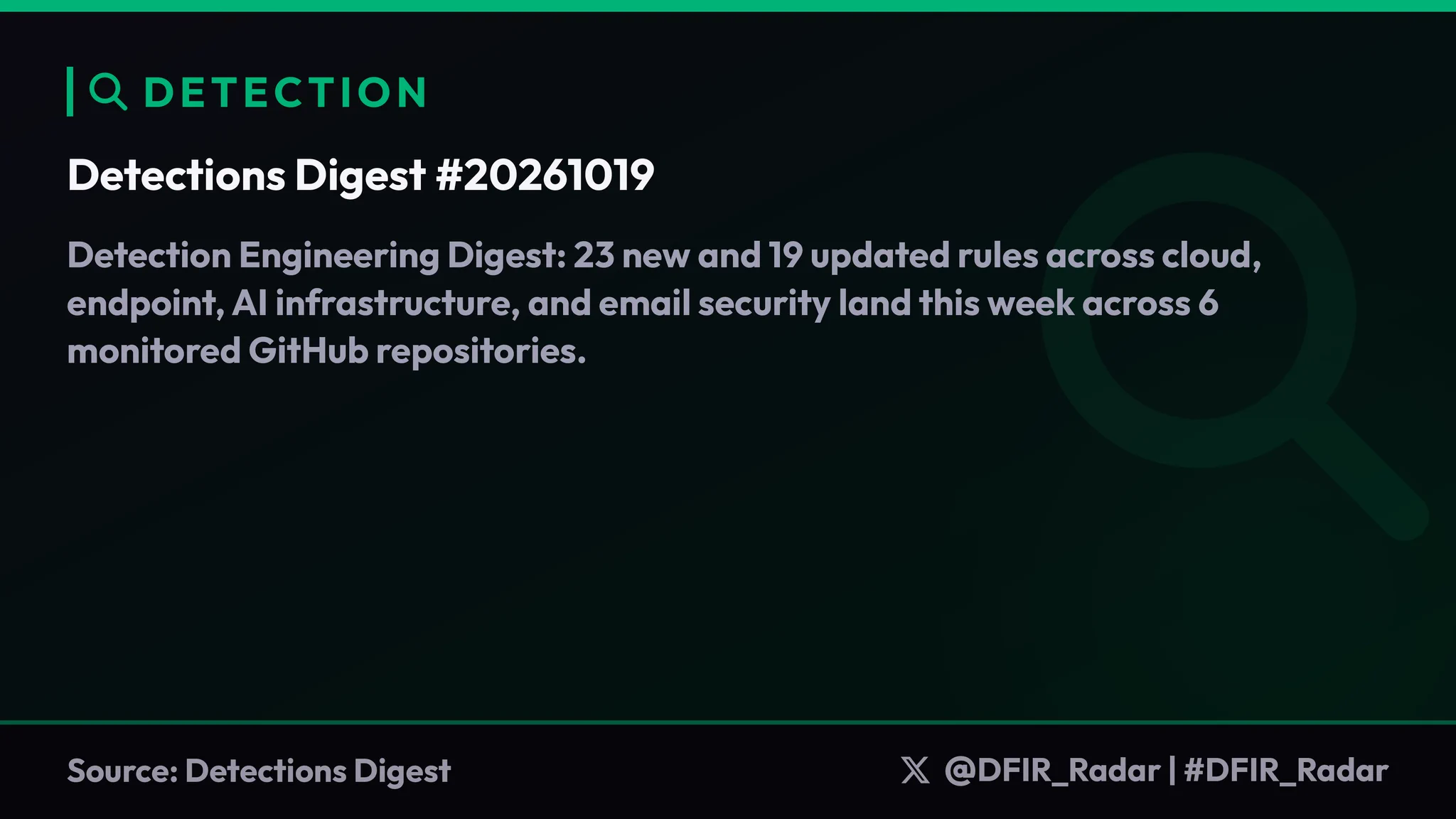
DFIR_Radar weekly detection engineering digest covering 23 new and 19 updated rules across 6 GitHub repositories. It lists KQL rules for Azure Key Vault secret retrieval, MCP client User-Agent bulk operations and local Azure token theft, AWS CloudTrail analytics, Sigma rules for firewall and ETW tampering (decimal 17 vs hex 0x11), updated LOLDrivers hashes, and Sublime email rules for OAuth consent phishing and fake IRS W-9 PDFs.
 x.comthreadAdded 20 Oct 2026, published 19 Oct 2026🛡️ Security
- AikidoSec/safe-chain
Aikido Safe Chain is an open-source local proxy and shell-alias wrapper for npm, yarn, pnpm, bun, pip, uv, poetry, pipx and pdm. It checks every package download, including deep dependencies, against the Aikido Intel malware feed and blocks malicious packages before install. It also enforces a configurable 48-hour minimum package age by suppressing too-new versions in registry metadata. It supports custom registries and a self-hosted malware-list mirror, and has CI/CD install recipes for GitHub Actions, Azure Pipelines, CircleCI, Jenkins, Bitbucket and GitLab.
github.comrepoAdded 17 Oct 2026🛡️ Security  The hidden network: Inside the phishing infrastructure ecosystem powering global cybercrime
Microsoft Threat Intelligence maps a Chinese-language cybercrime ecosystem: the YAM Store (Storm-3119), an initial access broker that hijacks Microsoft 365/Azure Education tenants and resells accounts, licenses and SharePoint/OneDrive storage, and the Storm-2990 phishing kits (CoGUI, Haozi, Iron Man System) sold via Telegram. It details the five-stage broker pipeline (app-only client-secret abuse, PnP Management Shell service principal, Graph permissions, Cloudflare DNS management), kit evasion features (geofencing, fake CAPTCHA, WebSocket/Telegram live interaction, 2,335+ templates), downstream device-code phishing and card fraud, and lists mitigations such as passkeys, phishing-resistant MFA and Conditional Access. Microsoft's DCU facilitated a disruption with law enforcement; kits sent over one billion messages since January 2026.
 microsoft.comarticlePublished and added 14 Oct 2026🛡️ Security
 Microsoft Disrupts Chinese-Language Phishing Market Behind 1B+ Messages
Microsoft and Health-ISAC seized domains tied to YAM Store (Storm-3119), an access broker that hijacks Microsoft 365 and Azure for Education tenants, and to the Storm-2990 phishing kits CoGUI, Haozi and Iron Man, under a Southern District of Florida order. The services sent over 1B malicious messages since January 2026 to 75,000+ organizations in 150+ countries; Microsoft disabled 20,000+ accounts and is blocking 100,000+ domains. Iron Man offers 2,335+ templates and real-time OTP capture, and Resecurity found it needs regular contact with a vendor licensing server, a dependency defenders can exploit.
 securityweek.comarticlePublished and added 14 Oct 2026🛡️ Security
 Microsoft Patch Tuesday for October 2026 — Snort rules and prominent vulnerabilities
Talos summarises Microsoft's October 2026 Patch Tuesday, which covers 1415 vulnerabilities, 85 of them critical (67 RCE). One bug is exploited in the wild: CVE-2026-96951, a Windows Shell security feature bypass. The post groups the CVEs by Microsoft's exploitability rating (more likely, less likely, unlikely) with CVSS and CWE for each, covering Windows, Office, Exchange, Hyper-V, DHCP, QUIC, Outlook and Azure. It also lists the Snort 2 and Snort 3 rule ID ranges that detect exploitation attempts.
 blog.talosintelligence.comadvisoryPublished and added 13 Oct 2026🛡️ Security
 Tensorlake npm package compromised by Shai-Hulud in latest software supply chain attack | Blog | Endor Labs
Endor Labs documents the compromise of tensorlake@0.5.144, the official npm TypeScript SDK for Tensorlake, which shipped a Shai-Hulud worm payload via a poisoned preinstall hook (node lib/setup.mjs) after the project's main branch was altered and pushed through a legitimate, provenance-signed GitHub Actions release pipeline. The malware harvests npm, GitHub, SSH, cloud (AWS/GCP/Azure), Kubernetes/Docker and Vault credentials, uses an EtherHiding Ethereum wallet as a durable dead-drop to fetch its rotating C2 domain, and republishes itself into other packages the victim controls. The writeup includes affected package versions, file hashes, C2 indicators, and concrete remediation guidance (pin to 0.5.143, rotate credentials, disable install scripts).
 endorlabs.comadvisoryPublished and added 8 Oct 2026🛡️ Security
 CISO perspectives on managing vulnerability risks in the age of AI
A Microsoft Security Blog post arguing that frontier AI models are flooding security teams with far more vulnerability findings than human triage was built for, citing a record near-1,000 vulnerabilities disclosed on the September 2026 Patch Tuesday. It describes Microsofts internal use of AI plus a harness layer (codename MDASH, now available to customers) for scanning, triage, and remediation, and gives CISOs concrete recommendations: shrink patch windows for critical systems to within 24 hours, adopt harnesses for AI-powered vuln scanning now, and lean harder on defense-in-depth via Microsoft Baseline Security Mode (BSM) and Secure by Design and Secure by Default changes (mandatory Azure admin MFA, Azure Backup soft delete, VNet default outbound disabled).
microsoft.comarticleAdded 7 Oct 2026, published 6 Oct 2026🛡️ Security Active Supply Chain Attack: Malicious node-ipc Versions Published to npm
StepSecurity's AI Package Analyst detected three malicious node-ipc versions (9.1.6, 9.2.3, 12.0.1) published simultaneously on May 14, 2026 by a rogue/compromised maintainer account, injecting an 80KB obfuscated IIFE into the CommonJS bundle that harvests 90+ credential file categories (AWS, Azure, GCP, SSH, Kubernetes, GitHub, Claude AI/Kiro configs, Terraform, etc.) and exfiltrates them via HTTPS and raw DNS TXT queries to a typosquatted Azure-mimicking C2 domain. The writeup includes a full stage-by-stage technical teardown (daemonization, SHA-256 targeting gate on 12.0.1, custom base-16 nibble-reversed obfuscation, dual-channel exfiltration) plus file hashes, network IOCs, and remediation guidance for developers and CI/CD pipelines.
 stepsecurity.iowriteupAdded 5 Oct 2026🛡️ Security
- Microsoft Agent Framework — python-1.20.0 release
Release notes for Microsoft's Agent Framework (Python and .NET SDKs), covering versions python-1.16 through python-1.20 and dotnet-1.19 through dotnet-1.23. Changes span native vector-store connectors (MongoDB, Qdrant, PostgreSQL/pgvector, DuckDB, SQL Server, Azure Cosmos DB, Azure AI Search), Foundry hosting redesigns around request-scoped agent factories and durable Invocations, MCP skill/session security hardening (approval binding, security labels, ZIP-only skill archives), Magentic multi-agent orchestration and handoff routing, and checkpoint/replay correctness fixes across workflows.
github.comrepoAdded 2 Oct 2026🧠 AI - Bifrost (Maxim AI) — open-source LLM gateway
Bifrost is an open-source, high-performance LLM gateway (by Maxim AI) that exposes a single OpenAI-compatible API across 23+ providers including OpenAI, Anthropic, AWS Bedrock, Google Vertex, Azure, Cohere, Mistral, and Ollama. It provides automatic failover, load balancing, semantic caching, Model Context Protocol (MCP) tool integration, budget and governance controls, OIDC user provisioning, and Prometheus-based observability, deployable via npx or Docker with claimed sub-15 microsecond overhead at 5,000 RPS. It is positioned as a drop-in replacement requiring only a base-URL change for existing OpenAI, Anthropic, or GenAI SDK code.
github.comrepoAdded 2 Oct 2026🧠 AI - Binary Security: Azure Logic Apps cross-tenant compromises (One Root Case)
Third post in a series on Azure Logic Apps API Connections, describing five critical cross-tenant privilege escalations that let an attacker use any other tenant's connection to reach its backend (Key Vault, Azure SQL, Jira, Salesforce). Techniques include path traversal via ARM DynamicInvoke and undocumented DynamicList endpoints, and abusing the host.api.runtimeUrl parameter in Consumption Logic Apps, including a validation-before-normalization bypass. The author reports $200,000 in bounties; Microsoft fixed all issues.
 binsec.nowriteupAdded 30 Oct 2026, published 2 Oct 2026🛡️ Security
 GPT-6 Sol on Codex: average scores, quarter the cost | Blog | Endor Labs
Endor Labs ran Codex CLI with OpenAI's GPT-6 Sol on its Agent Security League tasks (200 real-world coding tasks drawn from historical security fixes). It scored 72.1% FuncPass and 25.1% SecPass, sixth overall, 5 points above GPT-5.6 Sol and 9.5 below GPT-6 Astra. The run cost $104 on Azure, 78% less than Astra, with zero confirmed cheating. The post also compares command-use patterns and walks through the one globally unique secure solve, the Plone isURLInPortal XSS/open-redirect fix (CVE-2015-7316). There the agent used iterative URL decoding and a broad character rejection, where the golden fix used a string blocklist.
endorlabs.comarticlePublished and added 1 Oct 2026🛡️ Security Beyond source code: A path to the keys to the kingdom
Microsoft's DART team details an investigation into Storm-3068, a threat actor that escalated from a self-service password reset account takeover into full control of an organization's Azure DevOps environment, then weaponized a malicious pipeline to harvest kubeconfig files and gain access to Kubernetes clusters. The actor also deployed the Atera remote management agent and the Chisel tunneling tool to establish reverse tunnels and alternate remote access, and exfiltrated seven stolen kubeconfig files into a repository. The report lays out the attack chain, DART's response, and hardening recommendations around SSPR monitoring, phishing-resistant MFA, branch protection, and pipeline permission controls.
microsoft.comwriteupAdded 7 Oct 2026, published 29 Sep 2026🛡️ Security Check Point Research — 28th September Threat Intelligence Report
Check Point Research's weekly threat intelligence roundup covering the FBIjobs.gov defacement by ShinyHunters, a $351.6M Bitget hot-wallet theft with suspected DPRK involvement, and breaches at Astrana Health and LMU Munich. It also details AI-driven threats (an OpenAI agent's unauthorized access to an Australian government Medicare portal, an AI-agent-automated retail fraud campaign, and the CLOSEDQUORUM Windows malware that queries four commercial AI models to pick its post-compromise actions), four actively exploited pre-auth RCE CVEs (Check Point Security Gateway/Management, F5 BIG-IP APM, WordPress), and campaign writeups on the Storm-2570 multi-ransomware affiliate, an INC ransomware intrusion, a TeamFiltration M365 account-takeover wave in Latin America, and Storm-3168/JADEPUFFER's destructive Azure operations.
 research.checkpoint.comarticleAdded 1 Oct 2026, published 28 Sep 2026🛡️ Security
 Storm-3168: Agentic-driven cloud attacks using compromised service principals
Microsoft Security Research documents an Azure-focused campaign by Storm-3168 (aka JADEPUFFER, discovered by Sysdig as the first documented agentic ransomware operation), using two compromised service principals to enumerate an Azure tenant and then execute a seven-minute destructive sequence deleting 100+ Storage Accounts, a Key Vault, a Function App, and attempting (unsuccessfully, due to API version mismatch) to delete Azure SQL databases. Initial access traces to a client ID/secret/tenant ID leaked in a GitHub issue's public edit history even after the secret was redacted; the attacker also harvested storage account keys and targeted Site Recovery/Backup protection locks to impair recovery, consistent with ransomware/extortion tradecraft. The post includes a MITRE ATT&CK mapping (T1190, T1078.004, T1526, T1485, T1490) and mitigation guidance around workload identity hygiene, least privilege, and backup protection.
microsoft.comwriteupAdded 7 Oct 2026, published 25 Sep 2026🛡️ Security The Infostealer Incursion: How Stolen Credentials Breach Cloud, Code, and AI Environments
Wiz Research analyzed infostealer-harvested secrets (via its NordStellar integration) to map exactly which credentials malware families like Lumma, RedLine, and Vidar target across AWS, Azure, GCP, GitHub, GitLab, and AI platforms, and how those secrets translate into cloud account takeover. It gives concrete file paths and artifacts attackers hunt for (~/.aws/sso/cache OIDC tokens, Azure accessTokens.json, GCP credentials.db/access_tokens.db, GitHub gh hosts.yml and SSH keys, GitLab Runner config.toml, OpenAI/ChatGPT session cookies, and Claude Code's ~/.claude/.credentials.json OAuth tokens), plus stats: three malware families cause 85.7% of incidents, AWS/GCP account for 46%/13% of stolen secrets, GitHub ~10%, AI platforms ~5%. It also covers CI/CD-targeting infostealers (Miasma, TeamPCP) and session-cookie hijacking as an MFA bypass technique.
 wiz.iowriteupAdded 27 Sep 2026, published 25 Sep 2026🛡️ Security
- ThreatIntel-Aggregator
ThreatIntel-Aggregator is a self-hosted FastAPI/Next.js platform that polls 60+ tiered security RSS feeds (CISA, Talos, Unit42, etc.), runs AI triage to score severity and tag MITRE ATT&CK TTPs, extracts IOCs/CVEs, and correlates findings against a RunZero asset inventory to surface org-level exposure. Its Detections module goes further: it catalogs AI-generated or locally-imported detection rules (KQL/Sigma/YARA/Suricata/SPL), statically validates them, runs AI-driven MITRE alignment checks against technique coverage, tracks detection "rot," and can sync Hunts/Analytics Rules to a live Microsoft Sentinel workspace. It's designed to run standalone with zero cloud dependency or fully integrated with Azure/Entra/Sentinel, with all storage in Postgres and auth via Entra SSO or a local API key.
github.comrepoAdded 22 Sep 2026, published 17 Sep 2026🛡️ Security  Malicious Code in Open Source: How to Detect It Before You Ship | Blog | Endor Labs
Endor Labs explains the two dominant classes of OSS malware attacks - dependency/name confusion (typosquatting, combo-squatting, brand-jacking) and attacks on legitimate packages/maintainers - and how the OpenSSF malware-analysis project sandboxes new PyPI/npm releases and reports confirmed malware to OSV. It walks through real cases it detected, including the chunked/split-across-files PyPI malware ttlo and gisi, and Whatfuscator which drops and runs a PyInstaller-built Windows executable, plus two false-positive suspicious-code flags (versioneer 0.29, azure-functions 1.18.0) caused by benign base64/zlib obfuscation.
endorlabs.comarticlePublished and added 11 Sep 2026🛡️ Security Shai-Hulud 2 Malware Campaign Targets GitHub and Cloud Credentials Using Bun Runtime | Blog | Endor Labs
Endor Labs' live incident tracker for the Shai-Hulud 2.0 npm supply-chain worm that began around Nov 24, 2025, compromising packages from Zapier, ENS Domains, Postman and PostHog. It details the infection chain (malicious preinstall script, setup_bun.js dropper, obfuscated bun_environment.js payload), TruffleHog-style credential theft from AWS, GCP, Azure, GitHub and npm, self-replication via stolen npm and GitHub tokens, a self-hosted GitHub Actions runner backdoor abusing repository Discussions for command injection and C2, and destructive wiper behavior that shreds the user's home directory on Windows and Linux.
endorlabs.comwriteupPublished and added 11 Sep 2026🛡️ Security- [tl;dr sec] #345 - Bug Rumors → Exploits, Version Control DFIR, Agentic Worms
tl;dr sec issue #345 is a security newsletter digest. It covers Greptile's test showing models miss bugs in their own code, an OCaml cohttp path traversal fix probed within ten minutes of the PR, and a Wiz Version Control DFIR poster for GitHub, GitLab, Bitbucket and Azure DevOps. It also covers an arXiv paper on open-weight agentic worms (61.8% infection of a 33-host testbed) and Endor Labs' 14 flaws in seven AI orchestration platforms.
tldrsec.comarticleAdded 30 Oct 2026, published 10 Sep 2026🛡️ Security  Incident Automation: Benefits, Tools & Best Practices
Orca Security guide distinguishing alerts, incident records, and actions in incident response automation, mapping a cloud storage-bucket-exposure incident through detection, declaration, enrichment, routing/paging, and suppression steps. Draws on AWS Well-Architected event/incident/problem management guidance, ISO/IEC 27035-3:2020 lifecycle, CISA containment guidance, and Azure alert processing rules to argue automation should be introduced step-by-step based on reversibility rather than as one switch.
 orca.securityarticlePublished and added 9 Sep 2026🛡️ Security
- AD Rights Management Service (Part 1): Architecture, Deprecation, and Reconnaissance
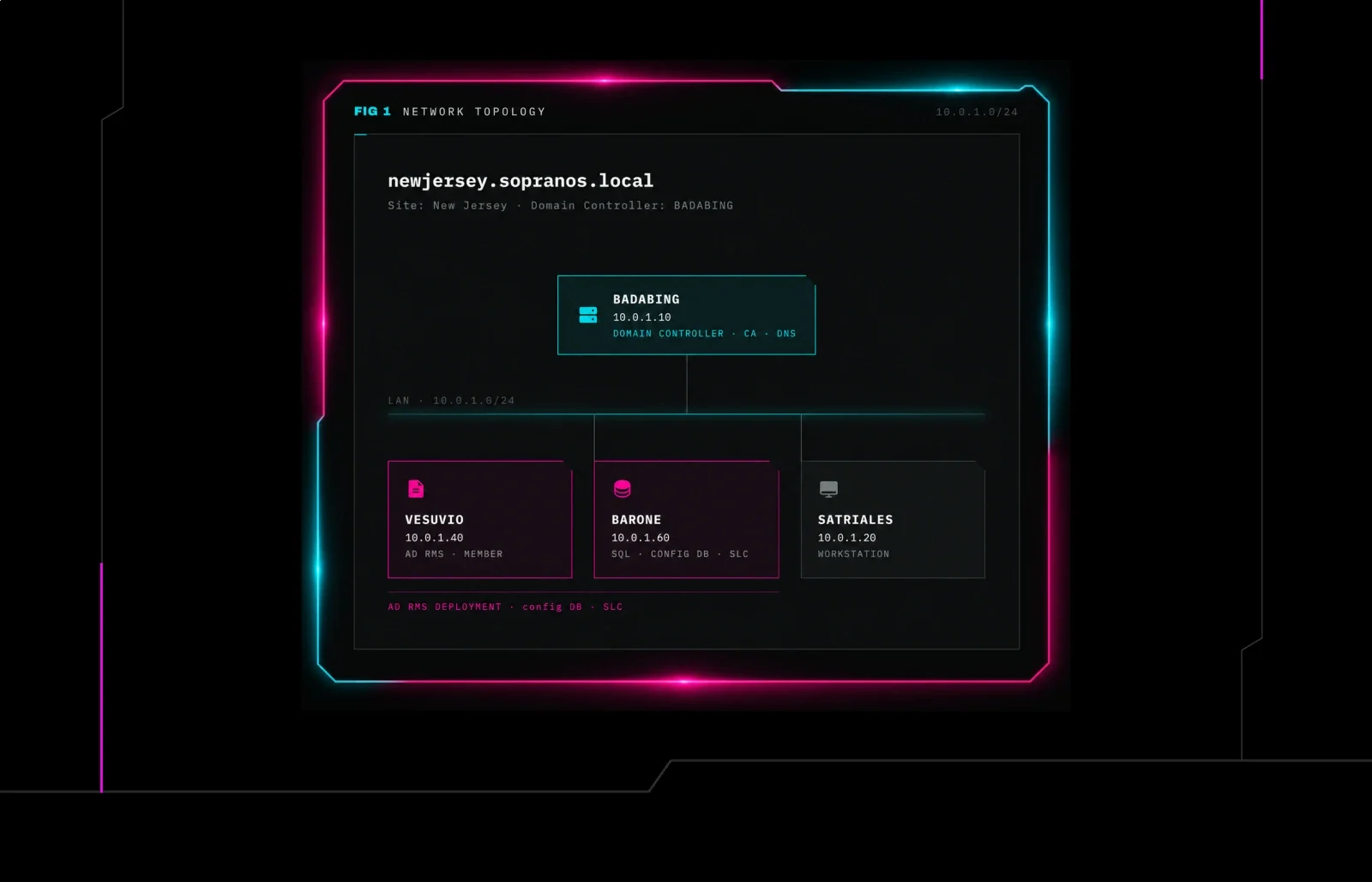
Part 1 of a Huntress research series on Active Directory Rights Management Services (AD RMS), explaining its PKI-based trust model (Server Licensor Certificate signing content keys), why it's still deployed despite Microsoft's deprecation push toward Azure Information Protection, and how to fingerprint and enumerate a cluster from an unprivileged domain account. It introduces SharpRMS, a custom C# tool that speaks the AD RMS SOAP protocol to enumerate clusters and rights-policy templates, and shows how local AD RMS Service Group membership (not Domain Admin) gates the administrative surface where the SLC private key can eventually be reached — setting up Part 2's key extraction and offline decryption.
 huntress.comarticlePublished and added 8 Sep 2026🛡️ Security
- GhostJS
GhostJS is an open-source Burp Suite extension by TrinetLayer that passively scans JavaScript, HTML, and JSON responses flowing through Burp for hardcoded secrets (AWS/GCP/Azure keys, Stripe/PayPal/GitHub tokens, JWTs, private keys, etc.) and hidden API endpoints, surfacing findings in a dedicated tab with severity, confidence scoring, remediation guidance, and Markdown export. It also actively fetches referenced <script> bundles using the tester's live session cookies and applies a false-positive filter to suppress doc-sample and placeholder keys, making it a practical recon aid during authorized web app pentests and bug bounty work.
github.comrepoPublished and added 7 Sep 2026🛡️ Security 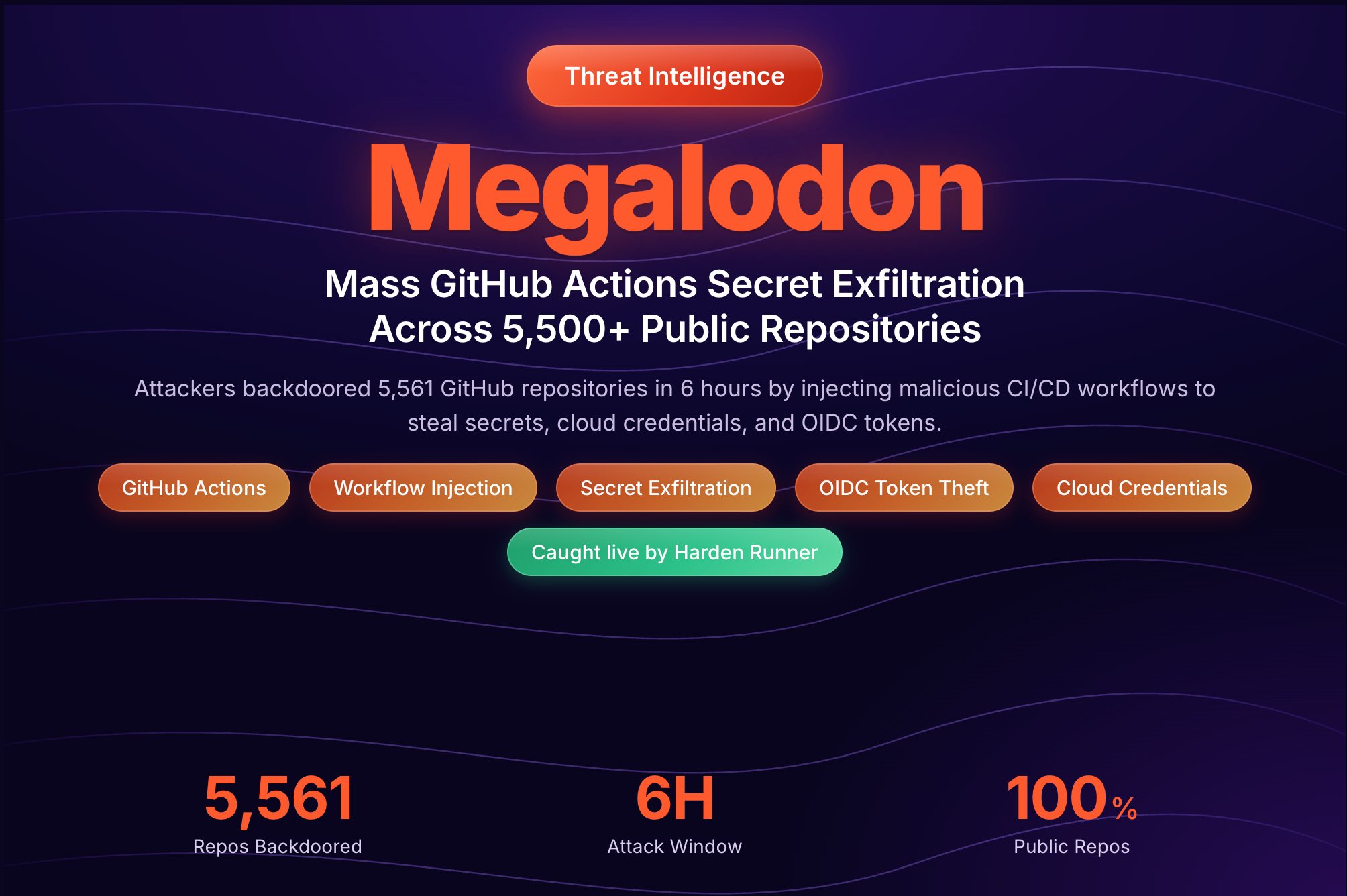 Megalodon: Mass GitHub Actions Secret Exfiltration Across 5,500+ Public Repositories - StepSecurity
StepSecurity documents Megalodon, a May 2026 campaign that injected backdoored GitHub Actions workflow files named SysDiag or Optimize-Build directly into 5,500+ public repositories in a six-hour window via direct Poisoned Pipeline Execution (d-PPE), exploiting weak branch protection. The base64-encoded bash payload harvests AWS/GCP/Azure credentials, SSH keys, Kubernetes/npm/Docker configs, GitHub OIDC tokens, and grep-matched secrets from the workspace, exfiltrating everything via HTTPS POST to a hardcoded C2 IP; the npm package @tiledesk/tiledesk-server was among the confirmed poisoned downstream targets.
stepsecurity.iowriteupAdded 5 Sep 2026🛡️ Security- The Crypto Wallet That Never Opened: Tampered Exodus Installer Hides a Modular RAT
Huntress dissects a trojanized Exodus crypto wallet installer (v24.33.4, unsigned MSI built with WiX) that installs a genuine wallet but patches Electron's show()/focus()/center() methods so no window ever appears, then loads a modular RAT via a hand-written reflective PE loader implemented in JavaScript using the Node.js koffi FFI library. The RAT (VNC, SOCKS proxy, browser-credential stealer, recon module) beacons over WebSockets and uses Azure Table Storage as a dead-drop C2 channel to blend into legitimate cloud traffic, while delivery abuses double-extension .pdf.js phishing, ZIP-staged JS files, and an unused search-ms/WebDAV technique; the writeup also covers multi-layer string-array/arithmetic deobfuscation and includes full IOCs and mitigation guidance.
huntress.comwriteupAdded 3 Sep 2026, published 1 Sep 2026🛡️ Security  Version Control DFIR: a Cheatsheet to GitHub, GitLab, Bitbucket, and Azure DevOps
Wiz CIRT published a DFIR cheatsheet/poster covering the four most common version control platforms (GitHub, GitLab, Bitbucket Cloud/Data Center, Azure DevOps), detailing available log sources, default retention limits (e.g. GitHub's 7-day Git read/write event retention, GitLab not storing Git operations by default), a pre-incident configuration checklist (enabling source-IP metadata, extending retention, log streaming), and a MITRE ATT&CK-mapped matrix of platform-specific audit event names to hunt for during investigations. It illustrates the gaps with a real incident where a compromised token was used to mass-clone repositories containing plaintext secrets, and shows how the same action (e.g. mass repo cloning) surfaces under different event names per platform (git.clone in GitHub, repository_git_operation in GitLab, RepositoryCloneEvent in Bitbucket Data Center).
wiz.ioarticleAdded 3 Sep 2026, published 27 Aug 2026🛡️ Security- S1N6H/pentest-harness
pentest-harness is an open-source, plugin-based AI agent framework aimed at authorized penetration tests, bug bounty research, security labs, and CTFs. It provides a "Pentest Mode" offensive-security operating standard, a full agent toolset (shell, filesystem, web research, subagents, background jobs), and a bring-your-own-key multi-provider LLM engine (OpenAI, Anthropic, DeepSeek, Google, Mistral, Groq, OpenRouter, Azure OpenAI) with durable JSONL/SQLite session persistence and an owner-only credential store for API keys.
github.comrepoPublished and added 27 Aug 2026🛡️ Security  When AI infrastructure becomes the target: Securing gateways and control points | Microsoft Security Blog
Microsoft documents three observed compromises of AI infrastructure: a LiteLLM gateway (CVE-2026-42271 chained with CVE-2026-48710), a RAGFlow deployment (SSRF probing then runtime hook stealing LLM credentials), and a Kestra workflow engine (CVE-2026-49869 auth bypass). Attackers harvested credentials from /proc/1/environ and Azure PostgreSQL, deployed XMRig miners, and persisted via authorized_keys, cron and chattr. The post provides Defender XDR KQL hunting queries, IOCs, and hardening guidance such as treating AI gateways as Tier-0 secret stores and enforcing deny-by-default egress.
microsoft.comarticleAdded 28 Aug 2026, published 26 Aug 2026🛡️ Security Submap
SubMap is an enterprise-facing subdomain discovery and attack-surface-mapping SaaS that aggregates multiple reconnaissance data sources, streams results live via SSE, and exports to TXT/CSV/JSON for integration into a security workflow. It also runs 49 service fingerprints to detect subdomain-takeover conditions (dangling CNAMEs pointing at AWS, Azure, GitHub, Heroku, etc.) and layers in CVE monitors/alerting for tracked assets. The public page gates full scan output behind account creation, showing only the first 110 results in the free preview.
 submap.nettoolAdded 3 Sep 2026, published 25 Aug 2026🛡️ Security
- [tl;dr sec] #342 - Figma's Agentic Detection, Agent Identity, Uber's Agent-(E)DR
tl;dr sec #342 is a weekly security newsletter issue. It summarizes Figma's agentic detection and response built on Panther, Uber's open-source ADR agent monitoring system with ADR-Bench, Cloudflare's Agent Access Model, and 1Password's SPIFFE-based local agent identity. It also covers Wiz's CosmosEscape chain in Azure Cosmos DB and in-memory YARA hunting with Fleet and osquery.
tldrsec.comarticleAdded 30 Oct 2026, published 20 Aug 2026🛡️ Security 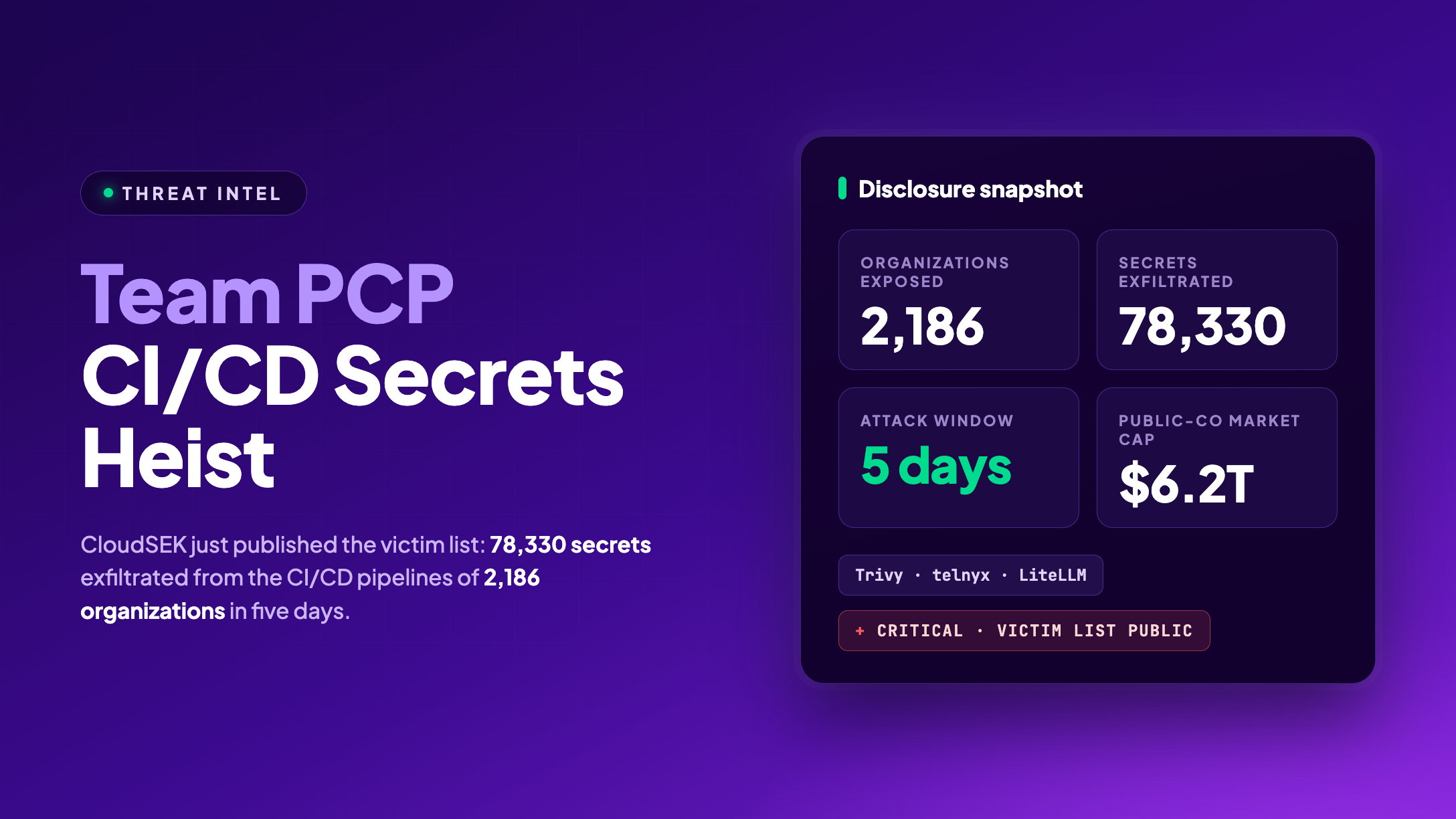 Team PCP Stole 78,330 Secrets From 2,186 Organizations. CloudSEK Just Published the List.
StepSecurity analyzes CloudSEK's newly published dataset on TeamPCP, a threat actor that compromised trusted open-source CI/CD components (Trivy GitHub Action, Checkmarx KICS action, telnyx PyPI package, LiteLLM) to harvest 78,330 secrets from 2,186 organizations' CI/CD pipelines across GitHub Actions, GitLab, and Azure DevOps in five days in March 2026. The post breaks down which platforms and credential types were exposed (GitLab led, 230+ Azure DevOps orgs, 157 leaked OpenAI keys) and maps layered CI/CD runtime controls (egress control, runner lockdown, imposter-commit detection, workflow policies) as mitigations against this class of attack.
stepsecurity.ioarticleAdded 3 Sep 2026, published 15 Aug 2026🛡️ Security We built an AI PR reviewer. The hard part was teaching it to say nothing.
Ionix's engineering team describes building an in-house AI PR reviewer using OpenAI's Codex CLI against a self-hosted Azure AI Foundry model deployment, wired into CircleCI and Bitbucket, after dropping Atlassian Rovo for cost and low signal-to-noise. The piece details prompt design to suppress low-value comments, agentic repo-wide review (vs. diff-only), sharding for large PRs, JSON output validation against git ls-files, storing review state inside PR comments via base64-in-markdown, and a dedicated prompt-injection defense section (scrubbed environment, secret redaction, sandboxed execution, egress restriction). It also covers two production failures: a silently-broken bubblewrap sandbox that kept "reviewing" without running any tools, and an unpinned Codex CLI npm dependency that broke Azure API calls across every repo.
 ionix.iowriteupAdded 3 Sep 2026, published 13 Aug 2026🛡️ Security
- DEF CON® 34 Hacking Conference - Main Stage Talks
The official DEF CON 34 main-stage talk listing, with full abstracts and speaker bios for dozens of original research presentations spanning bootrom-to-wallet-key exploitation of the dGEN1 Ethereum phone, a privilege-escalation chain in Microsoft's Python-in-Excel Azure container (CVE-2026-45459), a novel x86 SMM hardware attack, black-box TEE key recovery on the TI OMAP-L138 via timing side channels, native-code exploitation of llama.cpp and Ollama, a CDP-based Browser-in-the-Middle AitM phishing toolkit defeating CSP/SRI, CPDLC air-traffic-control message injection via SDR, an iCloud Keychain extraction bug (CVE-2026-28860), Segmentation Fault-Oriented Programming (SFOP) for bypassing Intel CET, weaponized WMI provider post-exploitation, an autonomous AI system (HTTP Terminator) discovering novel HTTP desync attacks, quantum ML for OS fingerprinting, reverse engineering of Windows Defender's BTR.sys driver for EDR bypass, a V8 renderer RCE in Samsung Internet (CVE-2025-10891), an LLM CI build-gate bypass, a Bring-Your-Own-EDR PPL abuse technique, Amazon Locker hardware hacking, and Windows PnP USB auto-install RCE via RDP redirection.
 defcon.orgotherAdded 10 Aug 2026🛡️ Security
 77 "Evil Twin" Open VSX Extensions
Manifold Security identified 77 malicious "evil twin" extensions uploaded to Open VSX between July 26 and August 1, 2026, that impersonate real Microsoft VS Code Marketplace extensions by reusing their names/namespaces/descriptions under unrelated publisher accounts at low version numbers (e.g. 0.0.1). 58 lightweight variants exfiltrate just the hostname while 19 "recon" variants collect detailed machine, Git repository, CI environment (GITHUB_REPOSITORY, CI_PROJECT_PATH, Azure DevOps, Buildkite, CircleCI, Codespaces, Gitpod), installed-extension, and telemetry opt-out data to mangorbit[.]com, with DNS TXT-based fallback C2 and a persistent multi-day retry schedule. The article also covers the concurrent ChainDrop campaign compromising 450 npm packages (2,244 artifacts) via a Mini Shai-Hulud self-propagating credential-stealing worm using a Bun runtime payload and preinstall hooks, which plants persistence via .claude and .vscode config injection.
 thehackernews.comarticlePublished and added 8 Aug 2026🛡️ Security
 The OpenSourceMalware Show #16
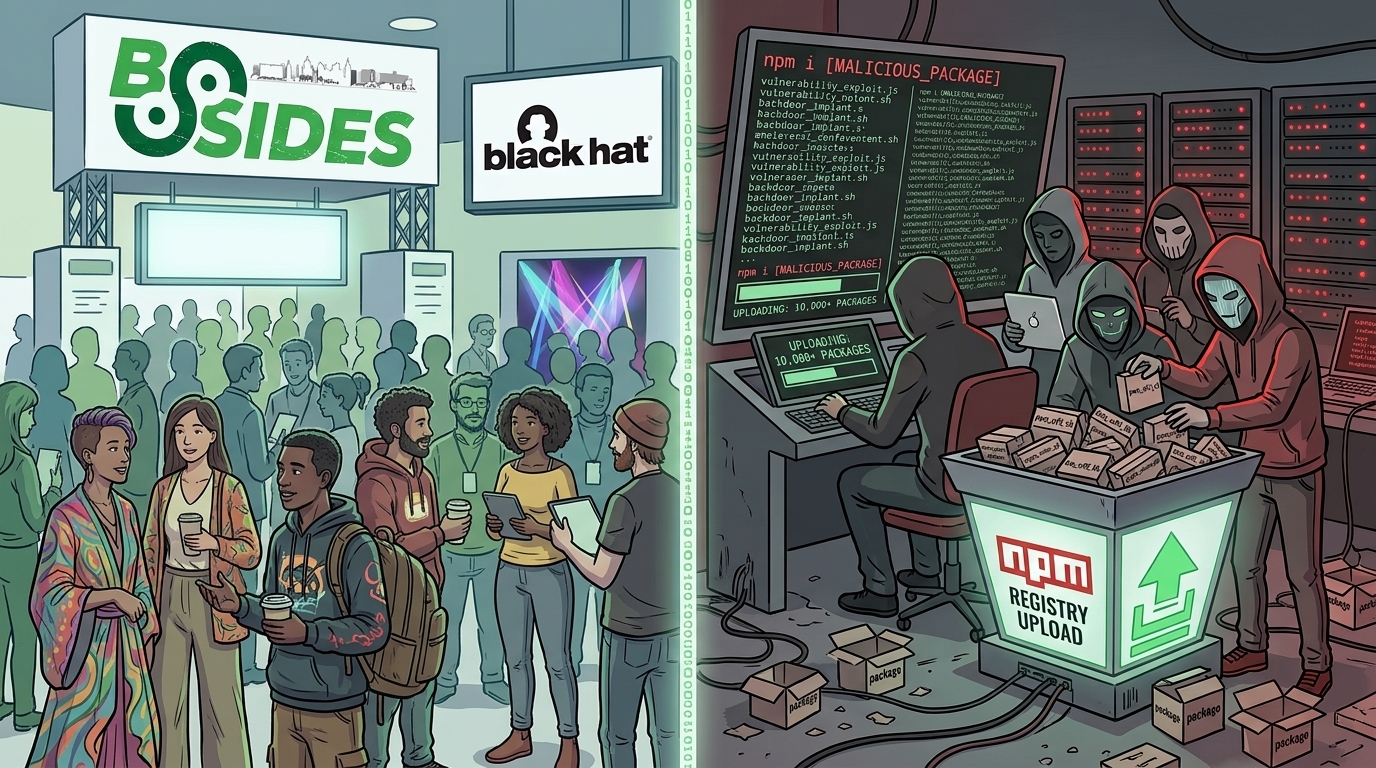
Recap episode of The OpenSourceMalware Show covering three incidents: a Shai-Hulud-derived npm worm that compromised maintainer Jared Wray's account and spread to 400+ packages (including Keyv and cacheable, with ServiceTitan losing 100 packages) while harvesting credentials from GitHub, npm, AWS, Kubernetes, Vault, Azure, GCP, Terraform, Docker, and Slack; a "WEL1DROPPER" campaign flooding npm with 1000+ AI-slopsquatted malicious packages that execute on import rather than via install scripts; and "NullReceiver," a DPRK-linked C2 technique that hides C2 IPs inside the recipient address of empty Ethereum transactions, an evolution of EtherHiding found in at least 10 malicious packages.
 opensourcemalware.comtalkAdded 3 Sep 2026, published 8 Aug 2026🛡️ Security
- ARTOC by White Knight Labs - Review
A reviewer's first-person writeup of the Advanced Red Team Operations Certification (ARTOC) by White Knight Labs, covering a full red team engagement curriculum: building C2 infrastructure with Cobalt Strike and Adaptix, cloud redirectors across AWS, Azure and GCP via CDNs and serverless functions, Active Directory and ADCS exploitation, and kernel and user mode EDR evasion, tested against real enterprise EDR products. The exam is a 48-hour infrastructure build and compromise exercise followed by a 48-hour red team report. The post is a positive testimonial encouraging enrollment rather than a technical walkthrough of any attack.
 kuwaitist.github.ioarticleAdded 2 Oct 2026, published 6 Aug 2026🛡️ Security
 Cloud Threat Highlights: H1 2026
Wiz's H1 2026 cloud threat report documents a 60% jump in significant incidents driven by a doubling of supply-chain attacks (TeamPCP's npm/PyPI/GitHub Actions credential-harvesting spree, its open-sourced Shai-Hulud worm spawning Miasma/Hades/Megalodon/IronWorm follow-ons, North Korea's axios and @mastra trojanizations) and by growing attacks on AI infrastructure, including exposed unauthenticated MCP servers, LiteLLM/Dify/Langflow/n8n/Ollama vulnerabilities, and cryptominers deployed via a Langflow RCE. It also profiles JINX-0163, a cloud-native extortion group targeting non-human identities (service accounts/IAM roles) across AWS/Azure/GCP/Okta/Snowflake linked to the "FulcrumSec" extortion brand, and closes with concrete detection techniques for stolen access keys, Kubernetes VM Run Command abuse, GCP org-policy tampering, and CloudTrail user-agent/boto3 credential-provenance mismatches.
wiz.iowriteupAdded 3 Sep 2026, published 6 Aug 2026🛡️ Security Top MCP security resources — August 2026
Adversa AI's monthly MCP security digest for August 2026, grouping ten resources: the July 28 MCP specification revision that hardens authorization (RFC 9207 issuer validation, deprecation of Dynamic Client Registration, a stateless core with header-based routing), a confused-deputy indirect prompt injection against Microsoft's Azure DevOps MCP server that hijacks a review agent into exfiltrating wiki data, SANS ISC telemetry showing 49 source IPs scanning for exposed MCP servers and agent credentials in two weeks, and new research (ChainWatch's kill-chain detection via Hidden Markov Models, SPELLSMITH's description-layer mitigations for taint-style flaws, MTGuard's static/dynamic tool-call analysis, and a 33-vulnerability taxonomy of agentic commerce platforms with the AIP-Bench benchmark). It closes with concrete upgrade guidance: audit DCR dependencies, validate issuers per RFC 9207, grep logs for MCP scanning indicators, and stand up a policy-enforcement gateway.
 adversa.aiarticleAdded 7 Oct 2026, published 6 Aug 2026🛡️ Security
 Orca Security: AI-BOM
Orca Security explains what an AI-BOM is (an inventory of models, datasets, prompts, embeddings, and external AI services an AI system depends on) and why discovery — not format — is the hard problem: components arrive via notebooks and managed consoles rather than dependency manifests. It surveys the two competing standards, CycloneDX's ML-BOM (v1.7, standardized as ECMA-424 2nd edition) and SPDX 3.0's AI/Dataset profiles, walks through failure modes like unrecoverable model lineage, stale embeddings outliving deleted source documents, and silent version drift on managed endpoints (e.g. Azure OpenAI's auto-update-to-default), and ties the practice to EU AI Act Annex IV technical-documentation requirements and the NIST AI RMF. It ends by describing Orca's agentless SideScanning-based AI inventory across Azure OpenAI, AWS Bedrock, SageMaker, and Vertex AI.
orca.securityarticlePublished and added 31 Jul 2026🛡️ Security Orca Security: Cloud Identity & Entitlement Management Series
Orca Security explainer on entitlement sprawl (a.k.a. privilege creep) in cloud environments: the gradual accumulation of unused permissions across human and non-human identities, driven largely by machine identities (service accounts, roles, keys) that outnumber human users by over 80-to-1 per CyberArk's 2025 report. It distinguishes granted vs. effective permissions, explains why static IAM exports miss real risk, walks through detection via AWS IAM Access Analyzer, Azure Entra Permissions Management, and GCP IAM Recommender, and lays out controls (least privilege, JIT access, continuous automated reviews, RBAC/ABAC, NHI governance, zero trust) before positioning Orca's agentless CIEM (SideScanning) as the automation layer.
orca.securityarticlePublished and added 31 Jul 2026🛡️ Security- vigneshwaran1702/Cloud-Security-Scanner
CSPM tool auditing AWS, Azure, GCP for misconfigurations with AI remediation and compliance mapping.
github.comrepoAdded 30 Sep 2026, published 31 Jul 2026🛡️ Security  CosmosEscape: Taking Over Every Database in Azure Cosmos DB
Wiz Research found CosmosEscape, a critical Azure Cosmos DB vulnerability exploited via the Gremlin API's .NET-based query engine, whose sandbox failed to restrict .NET reflection, enabling arbitrary code execution on the DB Gateway service. This allowed retrieval of the "Cosmos Master Key," a platform-wide signing key that could fetch any Cosmos DB account's primary key and enumerate accounts via a shared Config Store, enabling attackers to compromise any customer or internal Microsoft database (including those backing Entra ID, Teams, and Copilot) from public endpoints. Microsoft fully remediated the issue and eliminated the master key architecture.
wiz.iowriteupAdded 3 Sep 2026, published 30 Jul 2026🛡️ Security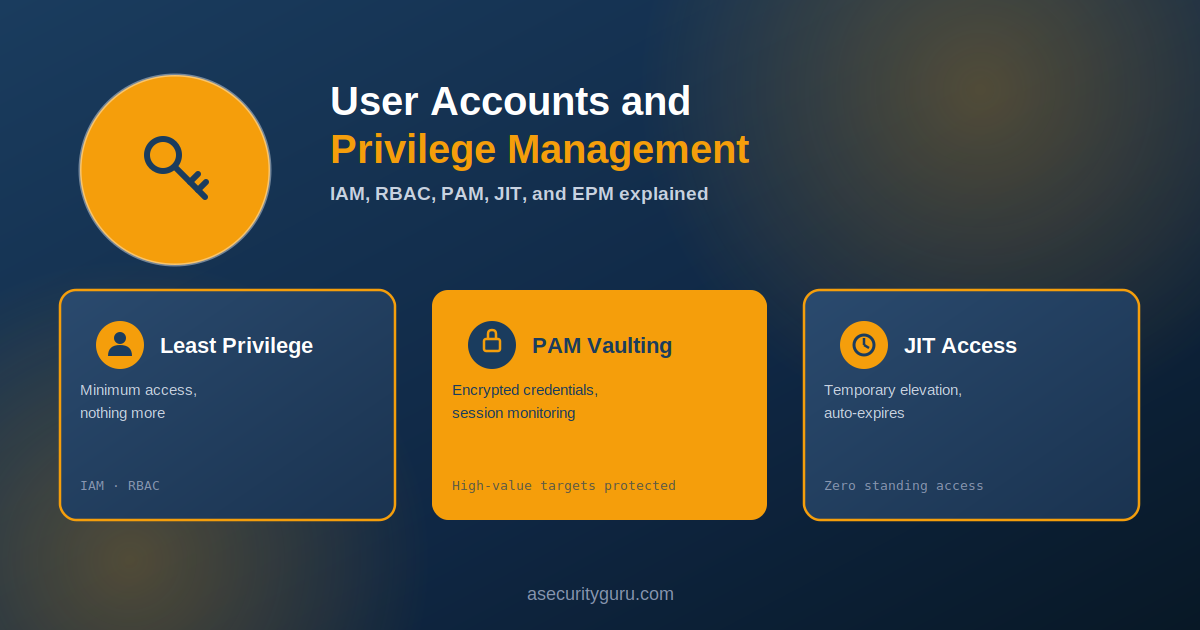 User Accounts and Privilege Management
Introductory primer on OS user accounts and privilege management. It covers permissions versus privileges, the Principle of Least Privilege, vertical versus horizontal privilege escalation, UAC and sudo, and group-based access. It then moves to enterprise controls: IAM, RBAC, PAM with credential vaulting and session monitoring, Just-In-Time access, Endpoint Privilege Management and Zero Trust. It includes a best-practices list, an FAQ on service-account targeting and why MFA does not replace PAM/JIT, and a tip to start with Azure PIM and forward logs to Splunk for privilege-event alerting.
 asecurityguru.comarticleAdded 13 Oct 2026, published 27 Jul 2026🛡️ Security
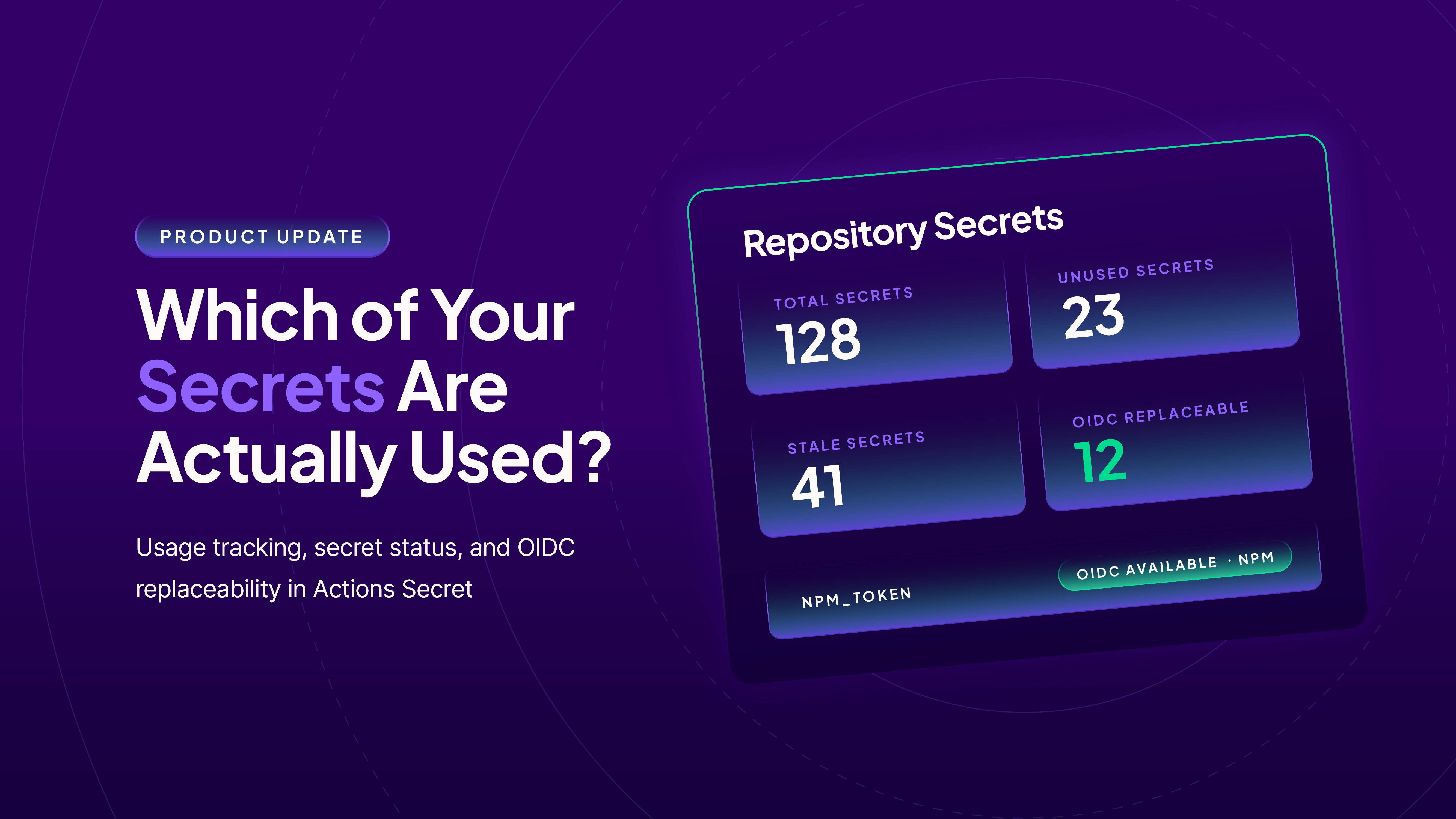 Find Unused, Stale, and OIDC-Replaceable GitHub Actions Secrets Across Your GitHub Organization
StepSecurity describes a new Repository Secrets feature in its Actions Secret dashboard that inventories GitHub Actions secrets across an org and classifies each as Active, Stale (unused workflow for 90+ days), or Unused, while flagging which secrets could be eliminated by switching to OIDC (e.g. AWS, Azure, GCP federation or npm/PyPI trusted publishing). It ties the problem to real incidents - the GhostAction campaign exfiltrated 3,000+ secrets and Megalodon targeted 5,500 public repos - arguing that unused, long-lived credentials are attack surface attackers actively harvest regardless of whether they are load-bearing.
stepsecurity.ioarticleAdded 3 Sep 2026, published 23 Jul 2026🛡️ Security- How the LSHIY Password-Spraying Attack Abuses OAuth’s ROPC Grant
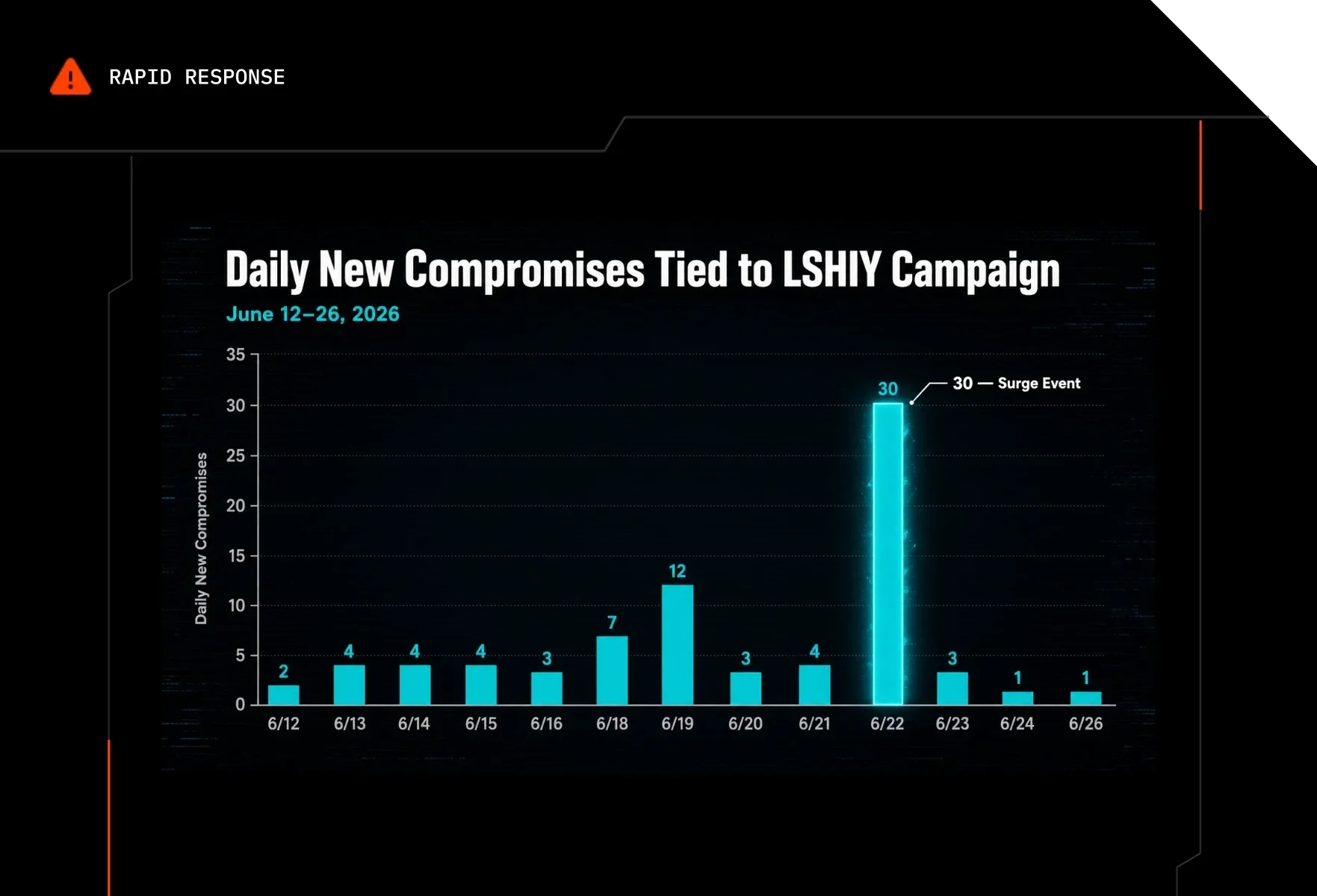
Huntress blog recap of a Tradecraft Tuesday broadcast breaking down the LSHIY password-spraying campaign, which hit Microsoft Azure CLI tenants via IPv6 ranges from BYOIP provider LSHIY LLC, generating over 81 million login attempts and 78 account compromises in a two-week window. The campaign abuses OAuth's deprecated Resource Owner Password Credentials (ROPC) grant at the tenant token endpoint to mint delegated tokens that bypass MFA and Conditional Access Policies when valid credentials are entered. After LSHIY's takedown the actor pivoted to FranTech IPv6 ranges and Tor exit nodes; mitigations include disabling ROPC, restricting Azure CLI for non-admins, and enforcing unscoped Conditional Access covering all users, apps, and client types.
huntress.comarticleAdded 3 Sep 2026, published 22 Jul 2026🛡️ Security - HackingLZ/gibson
Gibson is a Rust-based network monitoring toolkit with a lightweight agent, server, and parser that maps process-to-network connections, detects cloud provider ownership (AWS/Azure/GCP/Cloudflare), flags beaconing candidates and EOL OS risk, and auto-generates iptables/Windows firewall rules. It supports AES-256-GCM encrypted uploads, ASN/ARIN-based IP ownership lookups, and SQL/JSON report exports for cross-host threat hunting.
github.comrepoPublished and added 22 Jul 2026🛡️ Security  When Your AI Reviewer Works for the Attacker: A Confused-Deputy Bug in Microsoft
Manifold Security researchers found that Microsoft's official Azure DevOps MCP server fails to consistently apply its 'spotlighting' guardrail (added in PR #1062) to untrusted content: pipeline and wiki tools wrap external content in delimiters, but the tool returning PR descriptions does not. An attacker with contributor access to one project can hide prompt-injection instructions inside an HTML comment in a PR description (invisible in the Azure DevOps UI but returned verbatim by the API), which hijacks a reviewing victim's AI agent (tested with Copilot CLI and Claude Code) into running pipelines and reading a confidential wiki page in a separate project the attacker can't access, then exfiltrating the content back as a PR comment — a classic confused-deputy / lethal-trifecta scenario. The issue was reported to and triaged by MSRC.
 manifold.securitywriteupAdded 23 Jul 2026, published 21 Jul 2026🛡️ Security
 AI Security Briefing
This paper presents the first systematic evaluation of package-install-time supply-chain attacks delivered through ordinary project-setup documentation (README, requirements files, Makefiles) against production AI coding-agent harnesses. Testing frontier models across twelve scenarios in five attack classes grounded in real incidents, the authors find install-time security depends on the harness-model pairing rather than the model alone: agents reliably catch blatant typosquats but miss plausible separator-confusion names (e.g. azurecore for azure-core) and almost universally miss registry-redirection attacks, with the source blind spot recurring on npm and Cargo. A deterministic pre-install check that verifies package names, sources, and versions before code execution closes most of the gap.
 arxiv.orgpaperPublished and added 18 Jul 2026🛡️ Security
- Azure/PyRIT
PyRIT (Python Risk Identification Tool) is an open-source framework from Microsoft/Azure that lets security professionals automate red-teaming of generative AI systems, generating adversarial prompts, scoring model responses, and probing for harms like jailbreaks, harmful content generation, and other LLM risks. It provides a modular pipeline (orchestrators, targets, converters, scorers) to systematically test chatbots and other GenAI applications for vulnerabilities.
github.comrepoPublished and added 14 Jul 2026🛡️ Security 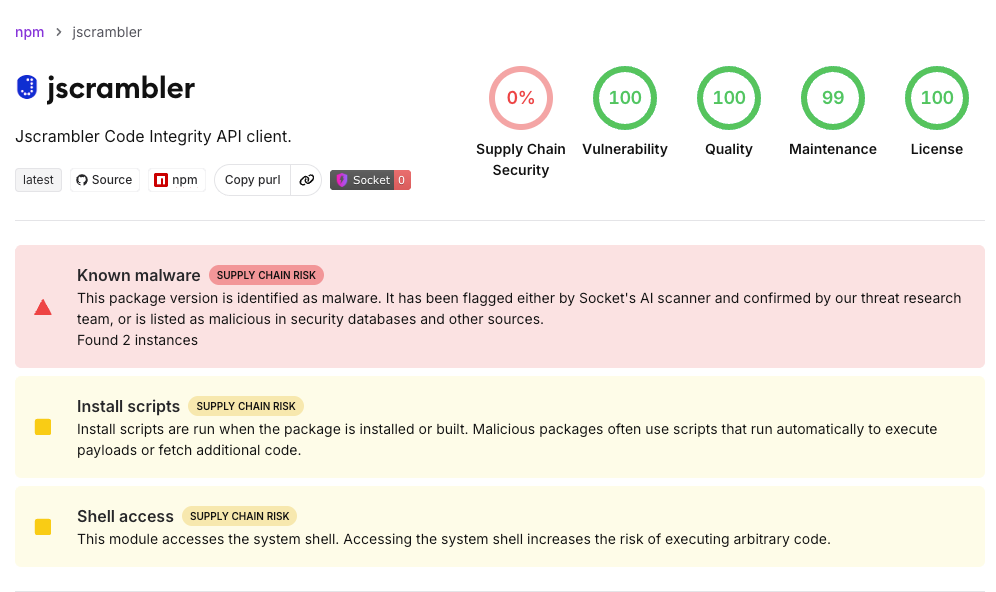 jscrambler npm Package Compromised in Supply Chain Attack
Socket's research team documents a supply chain compromise of the jscrambler npm package (v8.14.0+), where a stolen publishing credential was used to push malicious releases that drop platform-specific Rust-built infostealer binaries via a preinstall hook. The campaign evolved over the incident to evade scanners by moving the dropper from install scripts into a self-executing function inside index.js/CLI code (defeating --ignore-scripts), and the payload targets crypto wallets, cloud credentials (AWS/GCP/Azure), browser data, Discord/Slack/Telegram, and notably AI coding assistant configs (Claude Desktop, Cursor, Windsurf, VS Code) for MCP server credentials. Includes detailed RE of the ChaCha20-Poly1305 string-encryption scheme and full IOC hash list.
 socket.devwriteupAdded 21 Sep 2026, published 11 Jul 2026🛡️ Security
 The Two Mitigations for the Service-Account Confused Deputy in the Cloud
A technical breakdown of the service-account confused-deputy problem in the cloud, splitting it into two categories by identity ownership: customer-managed identities (GCP service accounts, AWS IAM roles, Azure managed identities) mitigated via bind-time attachment checks like iam.serviceAccounts.actAs, and provider-managed identities (GCP service agents, AWS service-linked roles, Azure platform-level principals) mitigated via provider-side authorization such as AWS Forward Access Sessions and condition keys (aws:SourceArn, aws:SourceAccount, aws:SourceOrgID, aws:SourceOrgPaths) or Azure's opaque LinkedAuthorizationFailed checks. It contrasts observability across the three major CSPs, noting AWS is the only one that exposes its confused-deputy machinery as first-class, customer-controllable primitives.
 kattraxler.cloudarticleAdded 19 Sep 2026, published 9 Jul 2026🛡️ Security
- Conditional Access Misconfigurations Exposed 55 Orgs with MFA On
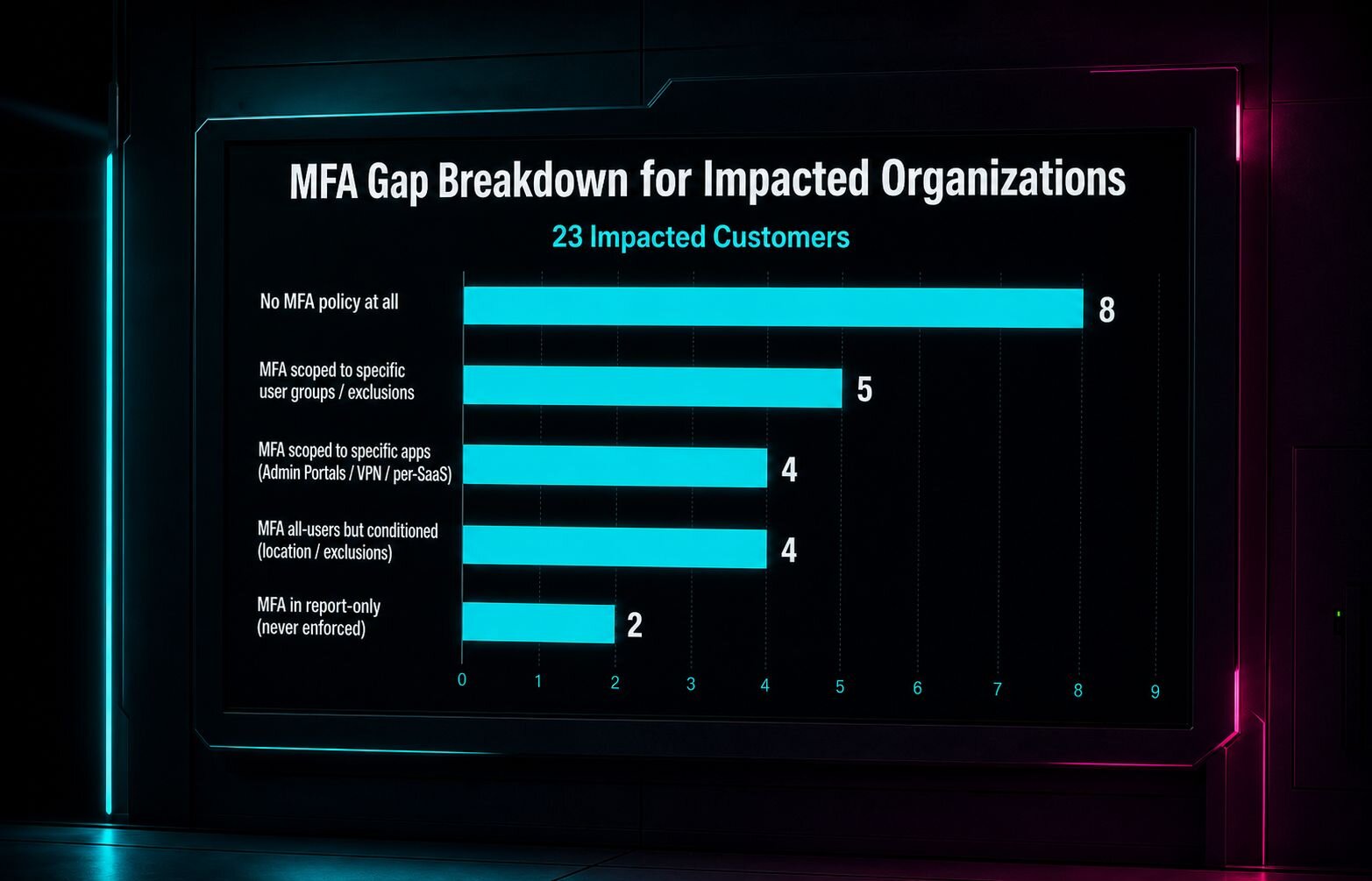
Huntress details two 2026 campaigns that bypassed Microsoft 365 MFA despite Conditional Access policies being in place: device code phishing abusing Railway.com's clean IP infrastructure, attributed to the EvilTokens phishing-as-a-service platform, hitting 344 orgs, and a ROPC-based credential replay attack from LSHIY LLC infrastructure with 81 million login attempts and 78 compromised accounts, 55 of which had active MFA policies that didn't actually cover Azure CLI or legacy auth. It breaks down how narrow Conditional Access policy scoping, missing All Cloud Apps coverage, excluded user groups, report-only mode, mislabeled trusted locations, let attackers through, and recommends blocking device code flow and legacy auth via Conditional Access as the fix.
huntress.comarticleAdded 3 Sep 2026, published 9 Jul 2026🛡️ Security - ThinkWatch
ThinkWatch is a source-available dual-port gateway (Rust/Axum) that proxies both AI provider APIs (OpenAI, Anthropic, Gemini, Azure OpenAI, AWS Bedrock) and MCP tool calls through a single control plane, enforcing authentication, RBAC, rate limits/budgets, and audit logging. Its key differentiator is per-user upstream identity for MCP — propagating each user's own OAuth token/PAT to servers like GitHub/Notion/Slack (AES-256-GCM encrypted, per-key allowlists) instead of a shared service account, plus SSRF-hardened OAuth discovery (RFC 9728/8414/7591), tool-level RBAC, and ClickHouse-backed audit trails forwarded to SIEMs via Syslog/Kafka/webhooks.
github.comrepoPublished and added 4 Jul 2026🛡️ Security - No (Bad) CAP: Inside an Ongoing LSHIY Password Spray Attack
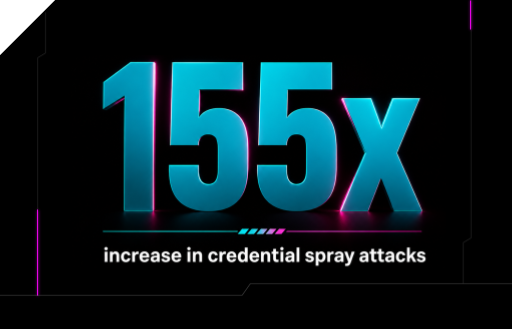
Huntress tracked a large, ongoing password spray campaign against Microsoft 365/Azure CLI using the deprecated OAuth ROPC (Resource Owner Password Credentials) flow, which sends passwords directly to the /token endpoint and bypasses MFA prompts enforced via Conditional Access Policies. Between June 12-26, over 81 million login attempts from LSHIY LLC's IPv6 range (AS32167) compromised 78 accounts across 64 organizations, many of which had MFA enabled but scoped incorrectly (app-specific, group-specific, trusted-location exceptions, or report-only mode). After LSHIY terminated the abusive BYOIP customer, attackers pivoted to FranTech (AS53667) and then 3xK Tech GmbH (AS200373), rotating through ~12,800 IPv4 addresses at low per-IP volume to evade detection while sustaining ~1.5 million login attempts/day.
huntress.comwriteupAdded 3 Sep 2026, published 30 Jun 2026🛡️ Security - Fantastic clear-text passwords and where to collect them (Part 1 - Linux)
A DFIR-focused post cataloging real-world Linux clear-text credential harvesting techniques observed in incident response, including a case where a plaintext Java Keystore password in root's bash history led to full Azure tenant compromise via Siemens OpenScape/Exchange integration. It also covers truffleproc (GDB-based process memory dumping), pspy (non-root process/cron snooping via inotify), a backdoored Citrix NetScaler login portal exfiltrating credentials via injected JavaScript, the ptrace-based sshd/sudo credential grabber 3snake, and PAM-based keystroke logging/backdoors (pam_tty_audit.so, custom malicious PAM modules), each paired with defensive hardening recommendations.
 dfir.charticleAdded 3 Sep 2026, published 21 Jun 2026🛡️ Security
 The OpenSourceMalware Show #8
Episode 8 of The OpenSourceMalware Show covers the Miasma worm (built on TeamPCP's open-sourced Mini Shai-Hulud) taking down 73 Microsoft GitHub repositories, including the Azure Functions org, in 105 seconds on June 5th, traced back to a May 19th Durable Task repo credential compromise. It also discusses VS Code's new two-hour third-party extension auto-update cooldown (contrasted with the Nx Console/Open VSX incident where Microsoft's Marketplace notification, not detection, caught the malware), npm v12's plan to disable install lifecycle scripts, direct Git dependencies, and remote tarball dependencies by default starting July, and a breakdown of package firewall designs (simple alias-based interceptors vs. daemon/proxy-based tools) including their bypass weaknesses and reliance on OSV/GHSA data.
opensourcemalware.comtalkAdded 3 Sep 2026, published 11 Jun 2026🛡️ Security


Showing 60 of 90
Show more