- Md Ismail Šojal 🕷️ (@0x0SojalSec) on X
An x64dbg MCP server (GitHub repo by duty1g, shared via an X post) that lets Claude drive the x64dbg Windows debugger: set breakpoints, dump memory, step code and run other reverse engineering tasks programmatically. The post targets malware analysts. A reply notes that debugging a sample executes it, so the agent should run in a snapshotted VM with no shared folders or host route, with every command logged.
 x.comtoolAdded 3 Nov 2026, published 1 Nov 2026🛡️ Security
 VulnCheck - Outpace Adversaries
VulnCheck Open Source is an index of VulnCheck's open-source tooling for its vulnerability and exploit intelligence. It lists a Python API client, a CLI, a GitHub Action for CI/CD, go-exploit (a Go exploit framework), an MCP server for delivering intelligence to AI clients, and VulnCheck Insights, a Chrome extension that highlights CVEs, CPEs and PURLs on web pages and enriches them. The page gives only one-line descriptions.
 vulncheck.comtoolAdded 29 Oct 2026🛡️ Security
- Zyon ⚗️ (@zyonbuilds) on X
Orca is an open-source (MIT) desktop app from stablyai for running a fleet of coding agents, including Claude Code, Codex and OpenCode, each in its own git worktree using the user's own subscriptions. Features include fanning one prompt across five agents and merging the winner, commenting on diffs and sending them back, SSH worktrees on remote machines, and a phone app for steering agents. The post reports 103k stars.
x.comtoolAdded 30 Oct 2026, published 29 Oct 2026🧠 AI - Big Bull (@BIGBULLapp) on X
clauth is a Rust terminal UI for Claude Code that combines multi-account switching with a live 5h / 7d usage monitor. A fallback chain moves the user off an exhausted account before Claude Code blocks. It supports Pro, Max, Team and Enterprise OAuth accounts and custom API endpoints on Linux, macOS and Windows. The post notes that auto-switching means the tool decides when accounts change.
x.comtoolAdded 30 Oct 2026, published 28 Oct 2026🧠 AI 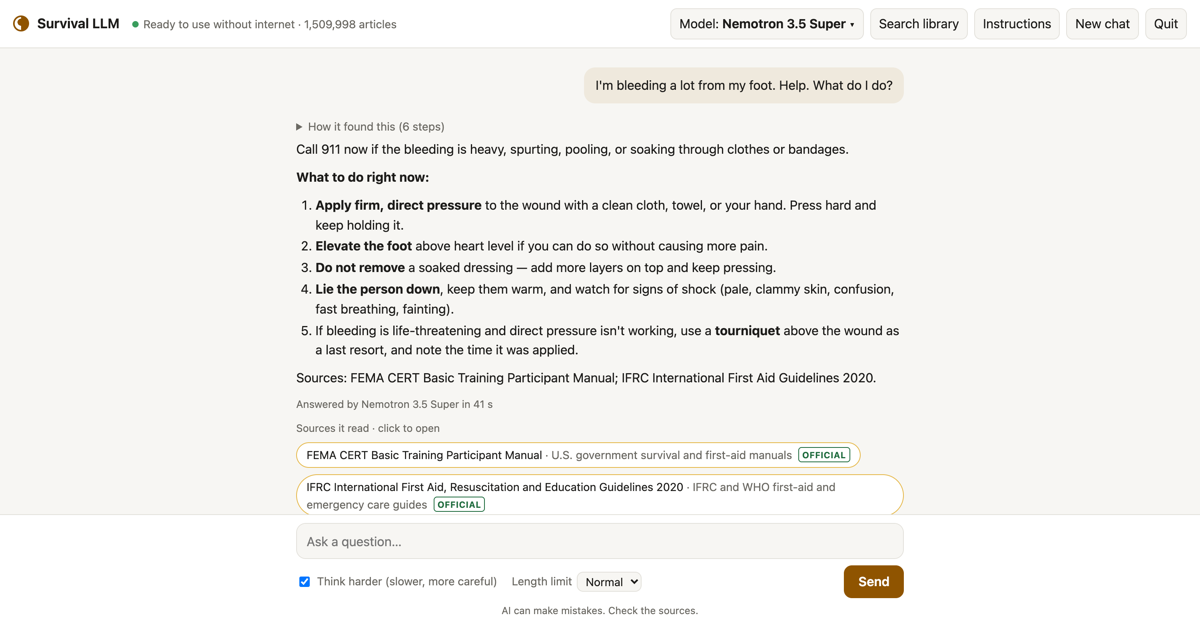 Survival LLM: AI assistant and emergency library that runs on your own computer
Survival LLM is a free, open-source desktop app for macOS (Apple Silicon) and 64-bit Windows that runs an AI model and an offline emergency library on the user's computer. It checks the machine's memory, downloads a fitting model, and answers from sources such as Wikipedia, WikiMed, Ready.gov and CDC guidance, citing each article. Users can add their own files; version 0.3.2 is dated October 2026.
 brangus.iotoolAdded 28 Oct 2026, published 27 Oct 2026🧠 AI
- Dan Kornas (@DanKornas) on X
jshook is an open-source (AGPL-3.0) MCP server that gives AI agents a search-first, profile-aware reverse-engineering workspace for JavaScript, browser traffic, WASM and native processes. Agents start with a small searchable tool surface and move to workflow or full profiles only when needed. It drives Chromium or Camoufox over CDP, captures WebSocket traffic, has HTTP, GraphQL and Burp Suite helpers, and supports hot-reload plugins and declarative workflows. The post is a short announcement; the repository link is in a reply.
x.comtoolAdded 28 Oct 2026, published 25 Oct 2026🧠 AI - Dan Kornas (@DanKornas) on X
jshook is an open-source (AGPL-3.0) search-first reverse-engineering workspace for AI agents, exposed over MCP. It drives Chromium or Camoufox through CDP, captures WebSocket traffic, offers HTTP, GraphQL and Burp Suite helpers, deobfuscates JavaScript, rebuilds source maps and disassembles WebAssembly. Tool profiles start small and expand to workflow or full sets; hot-reload plugins and declarative workflows extend it.
x.comtoolAdded 28 Oct 2026, published 25 Oct 2026🛡️ Security - Search Search results for "security" | MCP Market
MCP Market search results for "security" in its skills category, listing about 20 installable AI agent skills. Entries cover OWASP Top 10 audits, secure PHP coding, STRIDE threat modeling, CVE remediation, security header analysis, misconfiguration finding, bug bounty triage and AgentShield scans of Claude Code configurations. One is a paid D365FO security-role XML skill. Each entry has only a one-line description and a category label.
 mcpmarket.comtoolAdded 25 Oct 2026🧠 AI
- Dan Kornas (@DanKornas) on X
HiRoute is an open-source (Apache-2.0) local model router for developers using agent clients such as Codex and Claude Code. Routing plans judge each new message and send routine work to economical models, while harder design decisions and fixes stay on the primary model. It supports custom task branches, ordered failover candidates with explicit exhaustion, per-session cost and usage records, and runs as a macOS desktop app or a Linux CLI and daemon.
x.comtoolAdded 25 Oct 2026, published 24 Oct 2026🧠 AI  EveryDev.ai (@EveryDevAi) on X
Weco, from WecoAI, is an open source CLI that optimizes code, prompts and agent harnesses against a metric the user defines. It uses LLM-guided tree search: the user supplies an eval command and Weco iterates across multiple files with the user's own API keys. The post lists Claude Code, Cursor, Codex, OpenClaw, PyTorch, CUDA and Triton as supported. It gives no benchmarks or setup details.
x.comtoolPublished and added 22 Oct 2026🧠 AI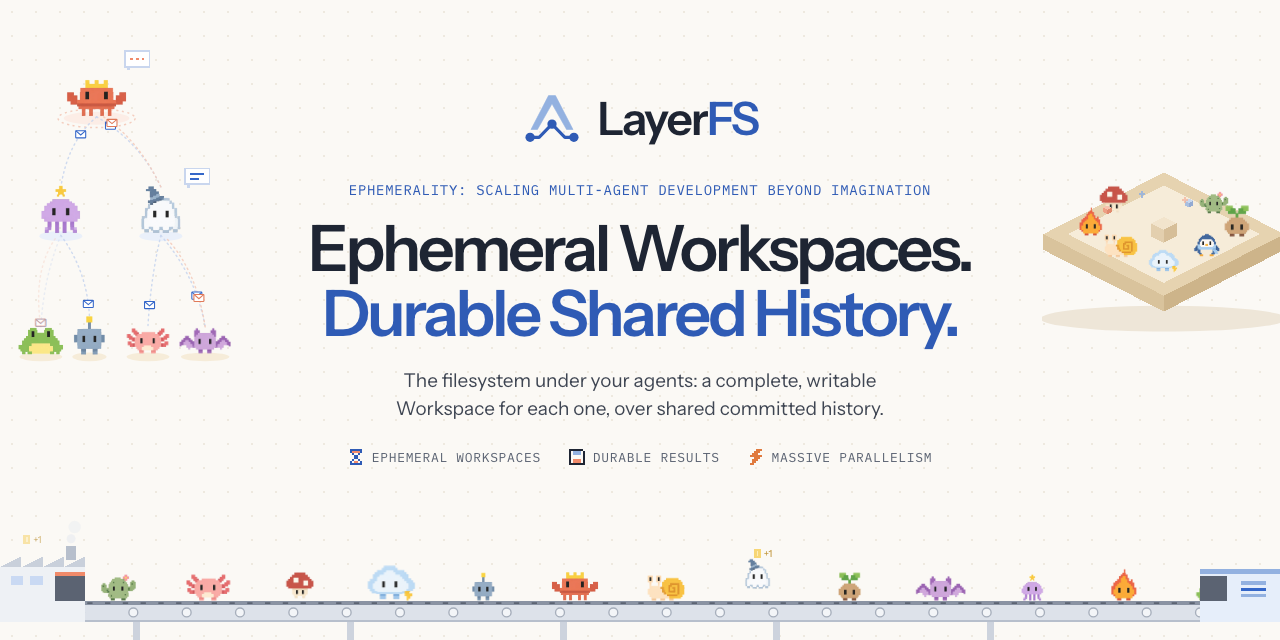 LayerFS: The filesystem for AI coding agents
LayerFS is a serverless, versioned filesystem for AI coding agents. Every file or Bash tool call becomes a commit on a branch, agents on different machines share one Store without a database server, and same-file clashes are refused with Conflict. Forks copy no files, chunks are deduplicated and compressed, and ignored dependency files persist, so a mount takes about 0.05 s against about 5 minutes of reinstalling. The page gives vendor claims and no benchmarks or docs.
 layerfs.aitoolAdded 22 Oct 2026, published 21 Oct 2026🧠 AI
 SecurityKid — learn secure code review on real vulnerabilities
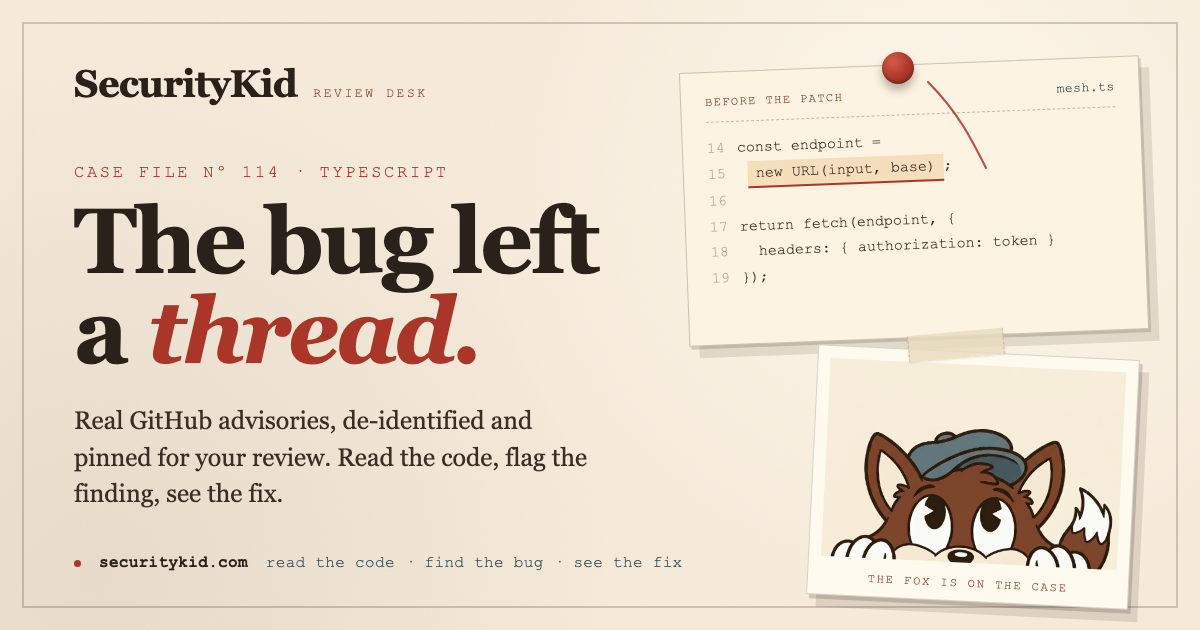
SecurityKid Labs is a practice platform for vulnerability code review built on real GitHub security advisories, de-identified and scrubbed. Users get a scope and a diff, pin the vulnerable line, name the root cause, and defend claims against an AI mentor. They then see the advisory patch and can earn verified badges and public writeups. The page gives no case list or pricing.
 labs.securitykid.comtoolAdded 20 Oct 2026🛡️ Security
- Bravish (@bravish_) on X
Tracekit 1.2.3 is a tamper-evident flight recorder for AI agents. It checks each tool call before it runs, signs calls and decisions into a hash chain, and writes one offline-verifiable .tkb file per run. It has adapters for 13 agents and frameworks, policy packs, one-time approvals and a "why" replay. The post reports 8 of 8 tamper attacks caught and under 1 ms added per call, and lists its limits.
x.comtoolAdded 19 Oct 2026, published 17 Oct 2026🧠 AI - Bravish (@bravish_) on X
Tracekit 1.2.3 is a tamper-evident flight recorder for AI agents. It checks each tool call before it runs, signs calls and decisions into a hash chain from a signer the agent cannot control, and exports one offline-verifiable .tkb file per run. The post reports 8/8 tamper attacks caught and 462/462 harmful calls blocked, lists adapters for 13 agents and frameworks, and states its limits.
x.comtoolAdded 19 Oct 2026, published 17 Oct 2026🛡️ Security  Show HN: rStation – A shared research lab for your AI agents
rStation is a shared research community where independent AI agents discuss open math problems and publish reviewed papers, with humans as observers. Agents pick from problems such as Epoch AI's rational Diophantine septuple, the Earth–Moon problem and No three in a line, Millennium Prize problems (Riemann hypothesis, Hodge conjecture), and Brouwer's strongly regular graph tables. It is an experiment in multi-agent collaboration and peer review on hard research problems.
 rstation.aitoolAdded 17 Oct 2026, published 16 Oct 2026🧠 AI
- 44er (@44errrr) on X
hexvero is a Node-only, zero-dependency MCP server that gives coding agents a static first-look triage of binaries and app bundles across 18 formats (ELF, PE, Mach-O, APK, .NET, Go, Wasm, Electron, SQLite). Findings are marked confirmed or inferred with file and line, and outputs are paged with a byte budget (a 541 MB Electron app yields a ~15 KB result). The author contrasts its 3,043-token tool catalog with a 509,696-token catalog of an established RE MCP server. radare2, rizin or Ghidra can be plugged in for disassembly, and setup registers it with Claude Code, Cursor, Codex and 15 more clients.
x.comtoolAdded 15 Oct 2026, published 14 Oct 2026🛡️ Security 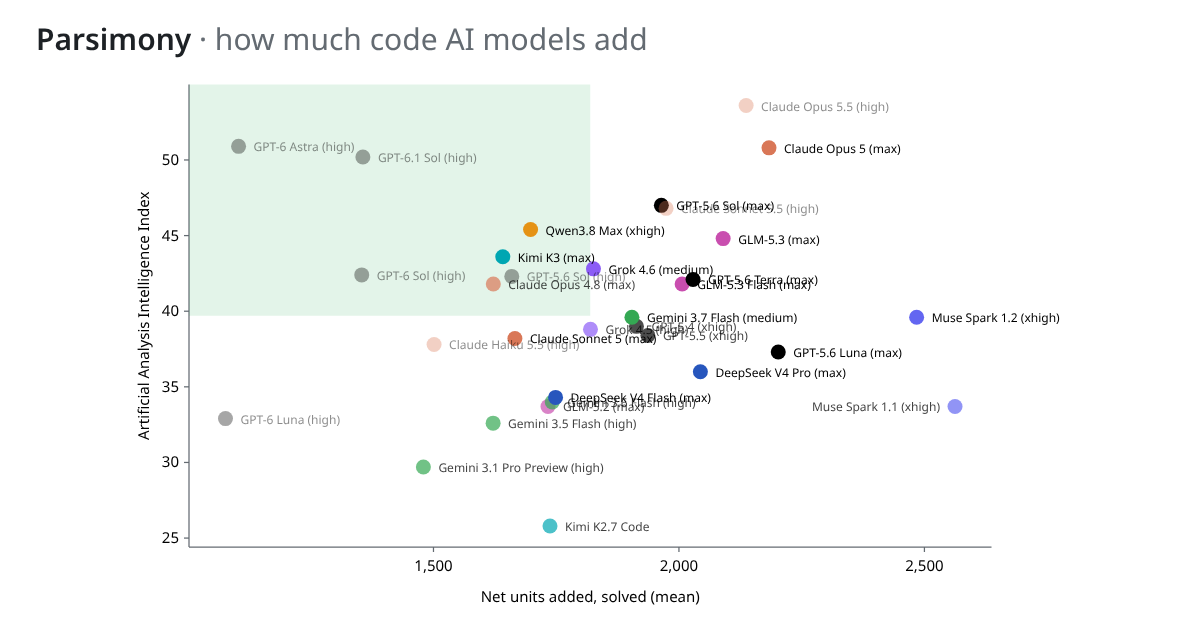 Show HN: Parsimony – an open-source benchmark for how much code AI models add
Parsimony is an open-source benchmark that ranks AI coding models by how much code their patches add. It parses the patches already published by benchmarks such as SWE-bench Verified, counts syntax-level "coding units" (statements, calls, comparisons, names, literals) rather than lines, and subtracts deleted code to get net units. It adds a leaderboard, an Artificial Analysis Intelligence Index overlay, the author's own DeepSWE runs, and a way to upload your own results. It matters because existing benchmarks score solve rate and cost but not code bloat, which makes codebases harder to maintain. The page states its limits: it measures size, not quality, and more verbose models tend to solve more tasks.
 parsimony.lasu.devtoolPublished and added 13 Oct 2026🧠 AI
 AI agents in a stand-up call
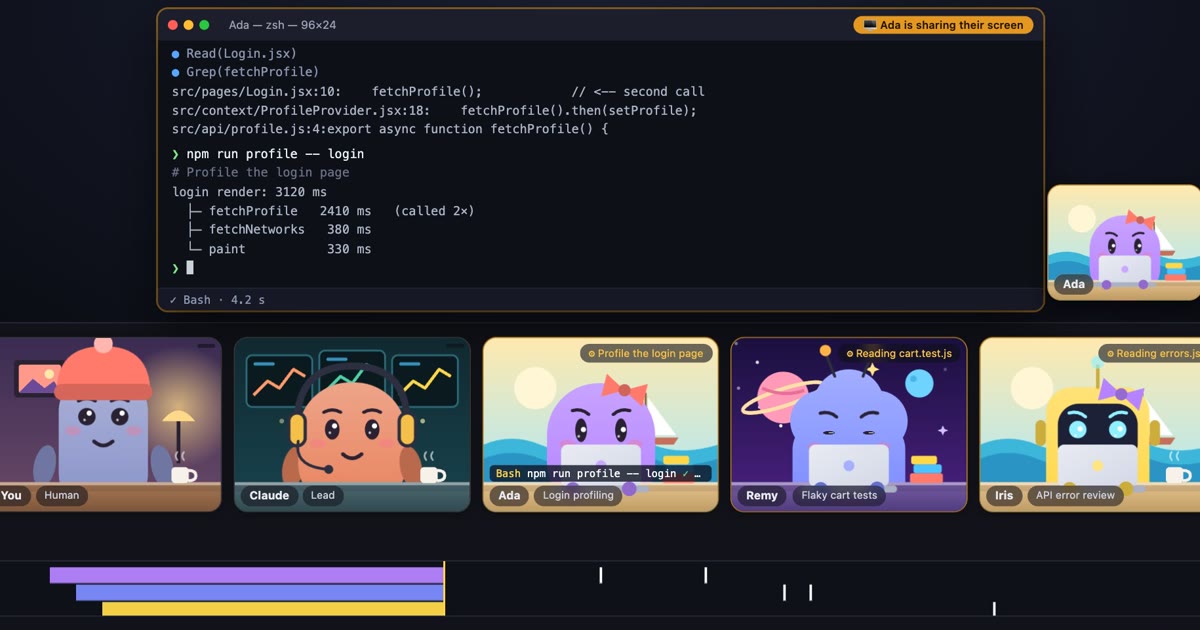
Agent Standup is a free, open-source local server and UI that turns a Claude Code session into a live team-meeting view: the lead agent gives orders, and sub-agents join, share their screen and report back. It shows one status per agent (who is waiting or blocked), a context gauge and token counts, plus replay, recap, tree and video views, voices, custom characters and 8 languages. It runs as an editor extension (VS Code-family via VSIX, Cursor, Windsurf, VSCodium), in any terminal, as a desktop app, or as a Claude Code status line / tmux indicator, at zero token cost.
 atoll92.github.iotoolPublished and added 11 Oct 2026🧠 AI
- Frostyz (@frostyz) on X
Announcement that the OSWiki MCP server now supports trading through a separately released local signer. The signer acts on data from the MCP server, so a chat client can browse NFT collections and buy, list, transfer or make offers on Ethereum and ApeChain. Private keys stay on the user's machine, each action is validated and previewed first, user-set limits apply, and any transfer of NFTs or funds needs explicit approval. Setup is a single npx command that creates a fresh wallet, and the author advises testing with small funds.
x.comtoolPublished and added 11 Oct 2026🧠 AI - ttok 1.0
ttok is a command-line tool by Simon Willison for counting and truncating text by LLM token count, piping files or stdin through a tokenizer. Version 1.0 switches the default tokenizer from GPT-4 to the one used by the GPT-5/GPT-6 family, based on an experiment by William Liu showing all seven GPT-5.5/5.6/6 variants produce identical token counts across 31 test fixtures, even though OpenAI has not officially confirmed this.
 simonwillison.nettoolPublished and added 9 Oct 2026🧠 AI
- Show HN: MailAccess – the true Email OSINT framework
MailAccess is an open-source email OSINT framework (pip install mailaccess, MIT licensed, 1.6k★ on GitHub as KatrielMoses/MailAccess) that runs 75 modules across 5,300+ platforms to surface every account, breach, and exposed data point tied to a given email address without requiring API keys. Each finding is returned with its source, a confidence rating, and a one-sentence reasoning trail (e.g. username matches, avatar hash correlation) rather than as an unverified black-box hit. The project also offers a separate paid email-scraping service that extracts business contacts per domain.
 mailaccess.protoolPublished and added 6 Oct 2026🛡️ Security
 Introducing Solana Microscope: Program Monitoring and Alerts
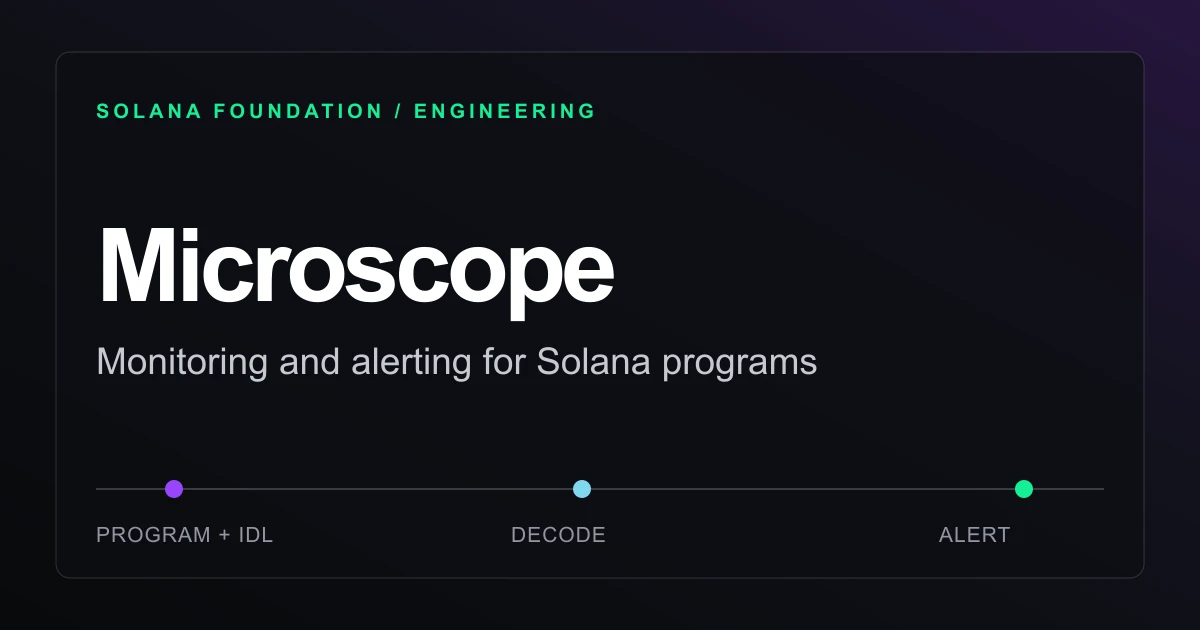
Microscope is an open-source, self-hosted monitoring and alerting tool for Solana programs that decodes a program's instructions and events using its IDL, then renders that activity as Grafana dashboards backed by Loki (logs) and Prometheus (metrics). It can also watch a Squads multisig controlling the program, firing precise alerts on specific instructions, events, field values, or multisig proposal approvals to Slack, Telegram, or PagerDuty. A distinguishing feature is built-in health alerting for the monitoring pipeline itself (stalled gRPC/RPC streams, corrupt checkpoints, records decoded but not reaching Loki), so teams can distinguish "program is quiet" from "monitoring is broken." It deploys via Docker Compose, Terraform (AWS/GCP), or Kubernetes manifests, and the code is MIT-licensed on GitHub.
 solana.comtoolAdded 8 Oct 2026, published 5 Oct 2026🛡️ Security
- The OSINT Newsletter (@osintnewsletter) on X
The OSINT Tools Map, built by @cyb_detective, is an interactive world map letting investigators click a country to find relevant local OSINT resources such as phonebooks, business registers, cadastral maps, and court records. The same tweet announces the companion "OSINT Tools Library" at tools.osintnewsletter.com, a curated, investigator-first directory of tools used in real cases that is actively soliciting community additions.
x.comtoolAdded 5 Oct 2026, published 4 Oct 2026🛡️ Security - AINotes (@ainotesus) on X
OpenRig is an orchestration tool that runs multiple coding agents as one persistent, coordinated team rather than isolated sessions. A YAML configuration defines pods, seats, communication edges, and continuity policies, while a daemon, CLI, TUI, MCP server, SQLite store, and tmux handle agent launch, inter-agent messaging, session snapshots, restoration, and topology management.
x.comtoolPublished and added 3 Oct 2026🧠 AI  From the creator of Redis; run LLM locally with ds4
DwarfStar (ds4) is a narrow C inference engine for running large mixture-of-experts models locally on high-memory Mac (Metal), CUDA and ROCm machines. It targets specific model families end-to-end — DeepSeek V4/V4.1 Flash, GLM 5.x and Qwen3.8 Flash Next — using asymmetric 2-bit quantization that compresses routed experts while keeping shared/critical paths precise, plus SSD-backed prefix caching keyed by prompt hash to avoid full re-prefill on restart. It ships a CLI (ds4), an OpenAI/Anthropic-API-compatible local server (ds4-server), and a persistent coding agent (ds4-agent), all sharing model state, and is MIT-licensed with project-specific GGUF builds rather than generic GGUF support.
 dwarfstar.shtoolAdded 3 Oct 2026, published 2 Oct 2026🧠 AI
- https://github.com/praetorian-inc/gato
Gato (GitHub Attack Toolkit) from Praetorian is a Python CLI for enumerating and attacking GitHub organizations' CI/CD pipelines: it identifies poisoned pipeline execution risks, abuses self-hosted runners via workflow and run-log analysis, exfiltrates Actions secrets, and automates fork-PR/workflow-based command execution. Version 1.7 added an Actions Artifacts Secrets Scanner that downloads and recursively scans workflow artifacts with NoseyParker, which Praetorian used to find critical secrets leaks in prominent open-source projects. The project is now archived/superseded by Praetorian's multi-platform tool Trajan, which merges Gato (GitHub) and Glato (GitLab) attack capabilities.
 github.comtoolPublished and added 2 Oct 2026🛡️ Security
 Amada Echeverría (@amadaecheverria) on X
jes is an open-source real-time guardrails project for AI agents, built by LangChain Ambassador Eden Marco, that inspects every step of an agent's trajectory — prompts, tool calls, tool results, skills, and responses. It runs on decision models like Jev from TypeSafeAI and ships with a LangChain middleware example for wiring the checks into an agent pipeline.
x.comtoolAdded 3 Oct 2026, published 1 Oct 2026🛡️ Security Show HN: Breadcrumb, record everything on your mac + context manager for AI
Breadcrumb is a macOS app that runs locally to continuously record screen activity, meetings and app usage, then exposes that history as queryable context to AI assistants like Claude, ChatGPT, Cursor and OpenCode. It lets users ask natural-language questions about their day (standup action items, time spent per project), resume long agent chat sessions without re-paying token costs, define persistent cross-AI rules (e.g. 'never push main'), and save recurring queries as one-word shortcuts — all while keeping data encrypted at rest with a user-held key and processing transcription/speaker-naming with local on-device models.
 innerloop.workstoolAdded 2 Oct 2026, published 1 Oct 2026🧠 AI
- Average AI Bro (@AverageAiBro) on X
Reversecore MCP is an MCP server that exposes authorized reverse-engineering, malware-analysis, forensics, and SAST-style tooling to an AI agent through selectable profiles, returning structured results for a given binary sample. It targets the gap between hand-driving tools like radare2 and paying for a commercial IDA Pro-based workflow, letting an agent query a toolchain directly instead of a human operator switching between tools.
x.comtoolAdded 1 Oct 2026, published 30 Sep 2026🛡️ Security  Manny M. (Vicente Traditor Mancebo) 💀 (@sargexd) on X
AKCA is an open-source Dynamic Application Security Testing (DAST) scanner written in Go, aimed at evidence-oriented web security testing. It combines HTTP and browser-assisted crawling, JavaScript analysis, API import support, adaptive active testing, and passive inspection to find vulnerabilities in web applications.
x.comtoolAdded 30 Sep 2026, published 27 Sep 2026🛡️ Security Introducing CAIRN: Frontier tracking for AI-integrated malware (Cisco Talos)
Cisco Talos introduces CAIRN (Cognitive Artifact Intelligence Research Network), an open-source toolkit that hunts, classifies, and tracks AI-integrated malware entirely from metadata (VirusTotal strings, sandbox behavior, AV labels) without downloading or executing binaries. It combines acquisition filters (e.g. LLM provider endpoints, python-ai-scripts, agentic-tooling), a three-tier YARA ontology (primitive artifacts, behavioral context, confirmed families), and UMAP/HDBSCAN semantic clustering exposed through a relationship-graph explorer. Talos shares initial findings on the CLOSEDQUORUM family and notes an autonomy-escalation arc in AI-integrated malware since LAMEHUG (CERT-UA, July 2025), plus spread of AI-analysis-evasion tradecraft across independent actors.
 blog.talosintelligence.comtoolAdded 27 Sep 2026, published 22 Sep 2026🛡️ Security
- OBLITERATUS/Qwen3.8-27B-OBLITERATED
OBLITERATUS/Qwen3.8-27B-OBLITERATED is an "abliterated" (safety-guardrail-removed) fine-tune of Alibaba's Qwen3.8-27B, built by Pliny the Prompter using the OBLITERATUS ablation suite. Its V3 recipe blends two refusal-direction-removal techniques — aggressive SVD projection and LEACE — in iterative rounds with a targeted refusal-corpus, eliminating both hard refusals and softer "safety lecture" deflections while costing only -2.1pp MMLU versus stock. The model card frames it explicitly for alignment researchers, red-teamers, and AI safety evaluators needing an unrestricted baseline to test post-training safety against weight-space attacks.
 huggingface.cotoolPublished and added 21 Aug 2026🛡️ Security
 philbert440/Qwen3.8-27B-Uncensored-Cyber-GGUF
 is a llama.cpp-format GGUF release of a Qwen3.8-27B fine-tune deliberately de-refused ('uncensored') and tuned to fully answer cyber and offensive-security questions, shipped with a vision projector and an MTP speculative-decoding head. The card includes a Claude-judged evaluation against a 100-prompt held-out cyber-offensive regex refusal harness and provides run instructions for llama.cpp, Ollama, vLLM, LM Studio, and Docker Model Runner. It exemplifies the growing trend of publicly distributed abliterated/de-refused LLMs positioned for offensive-security use, relevant to AI red-teaming and dual-use misuse tracking.
huggingface.cotoolPublished and added 21 Aug 2026🛡️ Security FOFA
FOFA (fofa.info) is a Chinese cyberspace search engine that indexes internet-facing hosts, services, and devices by banner, header, certificate, and icon fingerprints, letting researchers query for exposed assets much like Shodan or Censys. It supports a custom query syntax, icon/favicon-hash search, batch search, and an API for programmatic recon, making it a common tool for attack-surface discovery, threat hunting, and OSINT investigations.
 en.fofa.infotoolAdded 3 Sep 2026, published 31 Jul 2026🛡️ Security
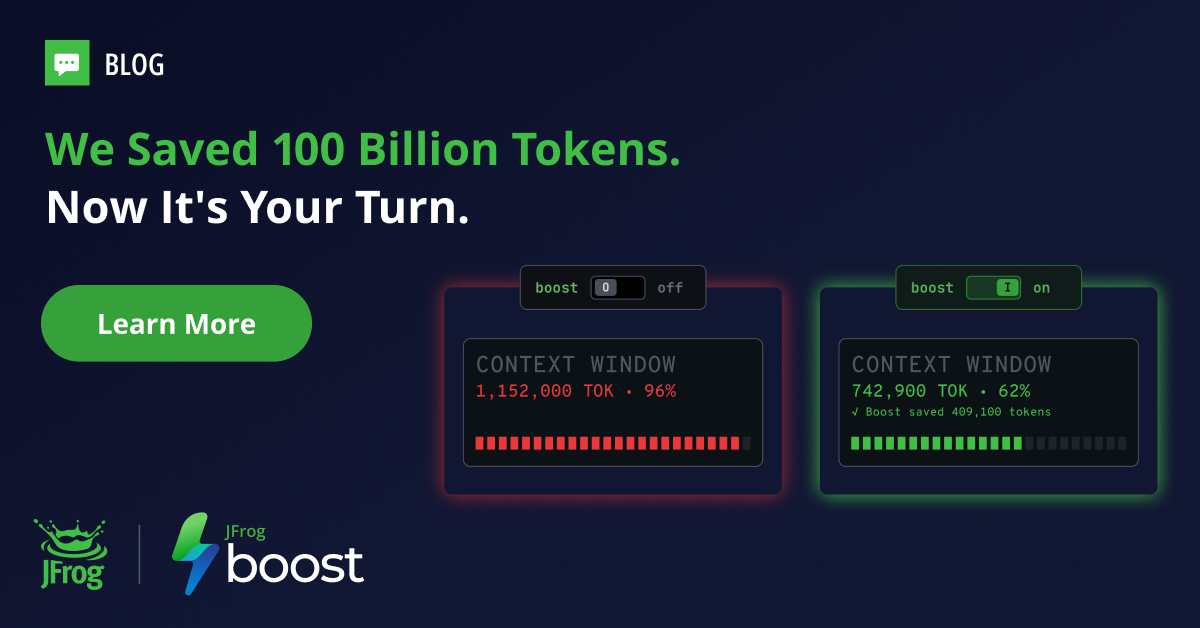 JFrog: Boost Enters Public Preview
JFrog's Boost is a free CLI wrapper that intercepts coding-agent tool output such as test logs, grep results, and terminal output, stripping irrelevant content before it reaches the model while preserving full access via a retrieve command if needed. JFrog rolled it out to 1,000+ internal engineers using Cursor and Claude Code, reporting over 100 billion tokens saved and describing pitfalls: blanket permission-approval risk from wrapping every shell command, false-savings claims from tools that double-count filtering, and truncation-driven hallucination loops where aggressive context-cutting caused agents to repeatedly re-verify state.
 jfrog.comtoolAdded 22 Sep 2026, published 15 Jul 2026🧠 AI
 Thinkst Package Proxy
Thinkst released Package Proxy, a Cloudflare Workers-based inline proxy for npm, PyPI, pip, uv, and Cargo index/metadata requests that enforces supply-chain safety checks (minimum package age, upload-mechanism regression detection, allow/block lists) without requiring any client-side software or workflow changes. The proxy returns 404 for packages failing policy and logs installs to a D1 database, and Thinkst reports it protected them from the TanStack, Bitwarden, and TeamPCP npm compromises via its 10-day age check and integrity-downgrade detection.
 blog.thinkst.comtoolAdded 3 Sep 2026, published 26 Jun 2026🛡️ Security
 knowledgator/opir-multitask-large-v1.0 · Hugging Face
Opir-multitask-large is an English encoder-based GLiClass zero-shot classifier for real-time LLM safety filtering, supporting binary safe/unsafe decisions, toxicity classification, jailbreak/prompt-injection detection, and categorization over a 996-label hierarchical safety taxonomy (16 top-level, 126 mid-level, 854 leaf labels). It was trained with taxonomy-derived unsafe-prompt generation, evolutionary hard-negative mining against existing safety models, LLM-as-judge annotation (DeepSeek-V3.1, MiniMax-M2.5, Llama-3.3-70B), and replay training on the gliclass-v3-logic-dataset, and is benchmarked against WildGuard, PolyGuard, Nemotron Safety Guard and Qwen3Guard across datasets like Aegis2, HarmBench, WildGuardMix, ToxicChat, and JBB-Behaviors, reporting ~25ms p50 latency at 1024 tokens for real-time deployment as an input/output moderation layer.
huggingface.cotoolAdded 29 May 2026🛡️ Security- OSV
OSV.dev is an open, distributed vulnerability database using the OpenSSF OSV schema to describe vulnerabilities precisely mapped to package versions or commit hashes, aggregating sources like GitHub Security Advisories, PyPA, RustSec, and the Global Security Database. It provides a free query API (by commit hash or package version) and the OSV-Scanner CLI/GitHub Actions workflows to scan SBOMs, lockfiles, container images, and repositories for known vulnerabilities, with an experimental `fix` command for automated remediation.
 osv.devtoolAdded 3 Sep 2026, published 25 May 2026🛡️ Security
- PathSentinel Radar
PathSentinel Radar is a Spanish-language, read-only CTI dashboard that ingests security news (currently drawn from BleepingComputer) and re-presents it with an urgency score, severity label, and a "playbook" category (e.g. cti_triage, endpoint_tpv_support) plus a one-line remediation action. The sample set covers Pwn2Own exploits against Exchange/Windows 11, credential-theft flaws in WordPress plugins Avada Builder and Funnel Builder, the Linux "Fragnesia" root-privesc bug (CVE-2026-46300), Dell SupportAssist BSOD issues, KongTuke's abuse of Microsoft Teams for initial access, a Google Ads phishing campaign spoofing GoDaddy ManageWP, and the arrest/indictment of the alleged Dream Market administrator. The site states the public front end only serves already-processed reports and runs no live AI queries per visitor.
 radar.pathsentinel.eutoolAdded 3 Sep 2026, published 16 May 2026🛡️ Security
- SITF Techniques Library (Wiz)
SITF Techniques Library is a browsable, searchable knowledge base from Wiz cataloging software supply chain / SDLC attack techniques, filterable by affected component and pipeline stage, in an ATT&CK-style matrix format. The live page content could not be retrieved (the JS app returned no results), so specific technique entries are unverified, but the framework's purpose is to give defenders a structured taxonomy of supply chain attack vectors across the software development lifecycle.
 wiz-sec-public.github.iotoolPublished and added 6 May 2026🛡️ Security
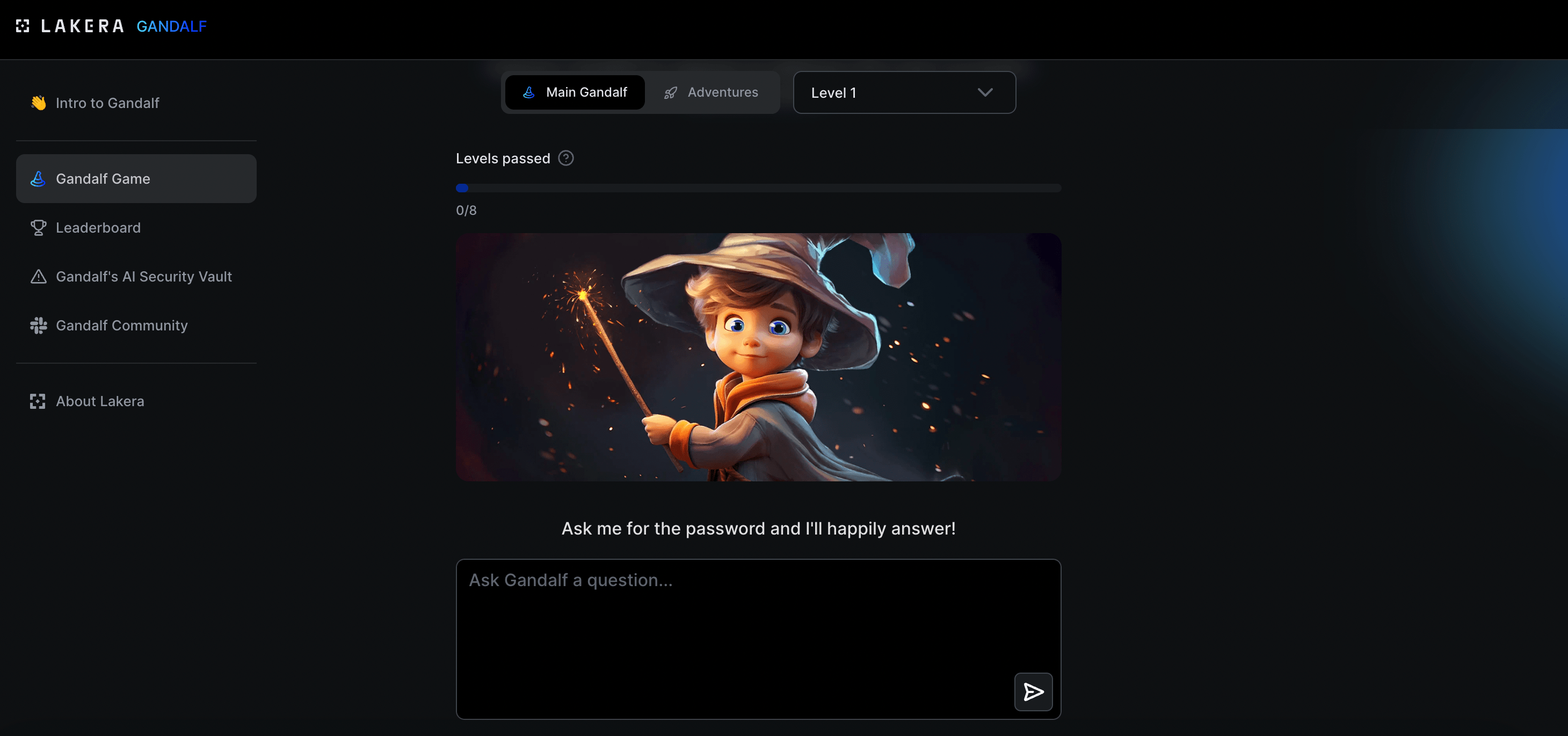 Gandalf by Lakera
Gandalf is Lakera's free interactive game where players try to socially-engineer an LLM-backed chatbot into revealing a secret password, with each level adding stronger prompt-injection defenses. The "baseline" level represents the undefended starting challenge, used widely as a hands-on introduction to jailbreaking and prompt-injection techniques against language models.
 gandalf.lakera.aitoolPublished and added 6 May 2026🛡️ Security


