 Earliest Known PolinRider Malware Found in 2025 npm Packages
OpenSourceMalware traces nine itsa-* npm package versions published on 4 May 2025 from a hijacked maintainer account to the PolinRider campaign, eight months before documented victims. It decodes the EtherHiding chain (BNB Smart Chain and Ethereum calldata, JADESNOW, INVISIBLEFERRET bootstrapper, Socket.IO RAT, Python stealer) and links the 2025 sample to 2026 force-push infections. It lists IOCs, hashes, a timeline and hunting guidance.
 opensourcemalware.comwriteupPublished and added 30 Oct 2026🛡️ Security
- Show HN: I Turned DOOM into a Transformer
Doomformer compiles integer neural networks into ZDoom maps that run in ViZDoom. Voodoo dolls do the arithmetic, and sector light levels and plane heights hold the values. Python reads every value back and compares it with a NumPy integer reference at tolerance 0. It runs MNIST (97.16 % on all 10,000 digits, every pass exact), small transformers, a learning perceptron and a SUBLEQ machine. It is about 23,000 times slower than NumPy on a small MLP.
 github.comrepoAdded 30 Oct 2026, published 29 Oct 2026🧠 AI
 VulnCheck - Outpace Adversaries
VulnCheck Open Source is an index of VulnCheck's open-source tooling for its vulnerability and exploit intelligence. It lists a Python API client, a CLI, a GitHub Action for CI/CD, go-exploit (a Go exploit framework), an MCP server for delivering intelligence to AI clients, and VulnCheck Insights, a Chrome extension that highlights CVEs, CPEs and PURLs on web pages and enriches them. The page gives only one-line descriptions.
 vulncheck.comtoolAdded 29 Oct 2026🛡️ Security
- rohitg00/ai-engineering-from-scratch
ai-engineering-from-scratch is a free, MIT-licensed curriculum of 542 lessons in 20 phases, from math and deep learning through transformers, LLM engineering, MCP, agents and capstones. Code is in Python, TypeScript, Rust and Julia. It includes three graded projects (retrieval evaluation, agent trace debugger, tool call firewall), installable tutor skills for Claude Code and Codex, and certification prep tracks.
github.comcourseAdded 29 Oct 2026🧠 AI  Cisco Open Sources Quarry to Catch AI Agent Attacks Hidden in Harmless Steps
Project Quarry is a neurosymbolic rule language Cisco has open sourced to detect AI agent attacks that only show up across a sequence of individually benign steps. Rules combine ML classifier and LLM judge evidence with symbolic checks on sequences, strings and tool relationships. The starter pack has a DSL, evaluation runtime, CLI scanner, Python SDK and a plugin for Claude Code, Codex and other MCP-compatible agents.
 securityweek.comarticlePublished and added 29 Oct 2026🛡️ Security
 The OpenSourceMalware Show #27
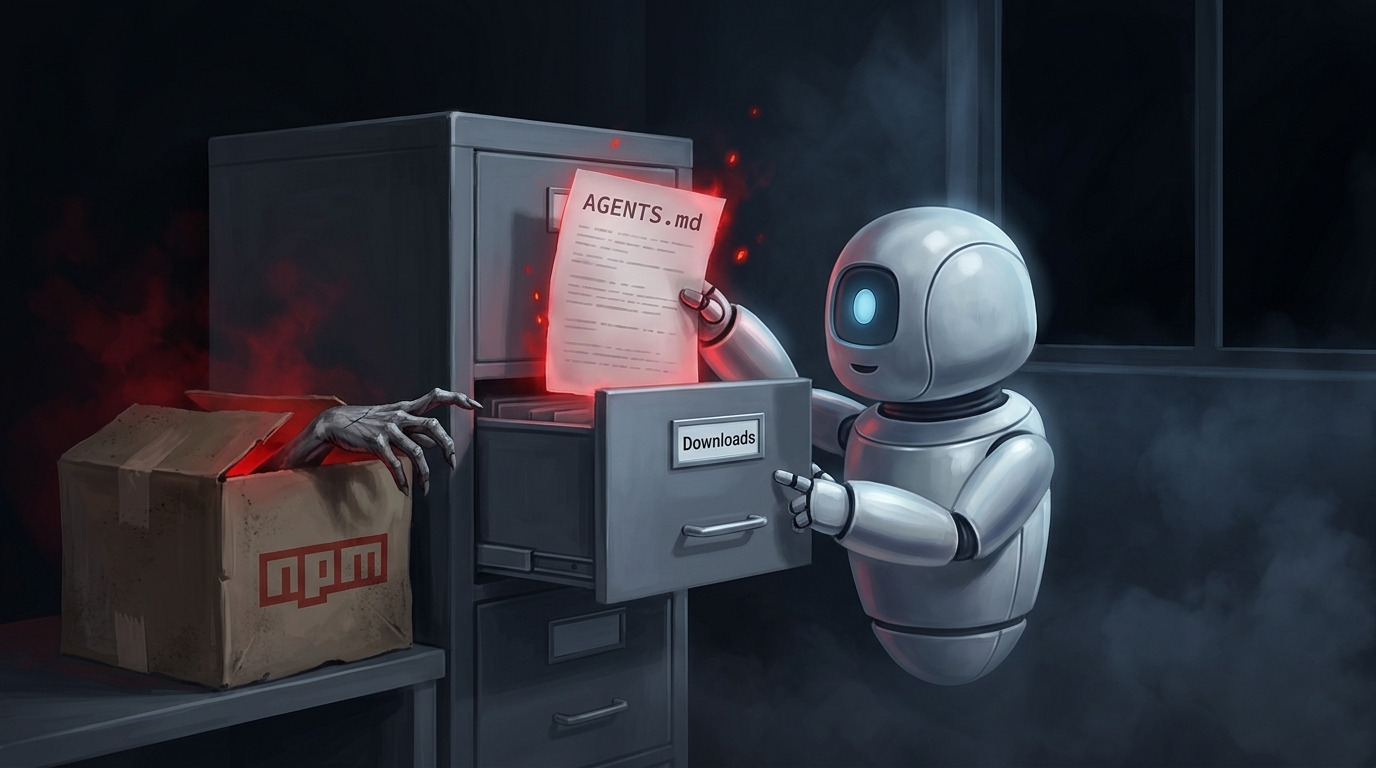
 (28 October 2026) is a podcast episode with transcript. It covers the Brotli decoder bug (CVE-2026-111497) vendored in C code across Python, Rust and PHP, and how to find copies via decode.c. It also covers the LiteLLM v1.107.0 compromise from an unrevoked admin key and a relaxed release control, and the MALFEX npm campaign hiding payloads in PNG-header files, plus an AGENTS.md lure and DPRK fake fonts in TTF/OTF.
opensourcemalware.comtalkPublished and added 29 Oct 2026🛡️ Security eMudhra, Brotli, and the Long Tail of a Security Fix
Socket post on why fixing the eMudhra weak-key intermediate CA incident (October 2026) and Brotli memory corruption CVE-2026-111497 takes more than updating Node.js. Bundled Brotli copies in Bun, Python Requests and .NET, Go binaries needing rebuilds, and per-program certificate stores all leave stale copies. It lists steps: track bundled components, keep a rebuild path, use workarounds, and verify the shipped artifact.
 socket.devarticlePublished and added 26 Oct 2026🛡️ Security
 Akash Rajagopal (@akashsairaja) on X
Ollama overview thread by Akash Rajagopal on X. It lists six steps: install on macOS, Linux, Windows or Docker; run `ollama run gemma4`; use the REST API on localhost:11434 (/api/chat); call it from ollama-python and ollama-js; llama.cpp as the README's supported backend; and `ollama launch claude` to connect Claude Code. Codex, OpenCode, Copilot CLI and Droid also work. The thread cites 184k GitHub stars and an MIT licence.
 x.comthreadAdded 27 Oct 2026, published 26 Oct 2026🧠 AI
 Node2Shell: Brotli Flaw Triggers Patching Across Microsoft, Node.js, Python Packages
CVE-2026-111497 (Node2Shell) is an out-of-bounds write in Google's Brotli decoder, versions 1.0.3 through 1.2.0, rated CVSS v4 9.2. Fixed in Brotli 1.0.10, 1.1.1 and 1.2.1, with patches from Node.js, Microsoft (.NET, Visual Studio, PowerShell on October 25), PyPI Brotli and brotlicffi, Bun, Envoy and Istio. Imperva showed code execution on Node.js 24.22.0 arm64; no in-the-wild exploitation is reported and some researchers say it only enables DoS.
securityweek.comarticlePublished and added 26 Oct 2026🛡️ Security Broccoli2shell: Everything You Need To Know About The Critical Brotli Decoder Vulnerability
CVE-2026-111497 (Broccoli2Shell, also Node2Shell and HTTP2Shell) is an out-of-bounds write in the upstream Brotli C decoder. It affects Node.js, Bun, Envoy Proxy, Istio and Python packages, and can lead to memory corruption, information disclosure, crashes or RCE when untrusted Brotli data is decompressed. Wiz reports 91% of cloud environments have vulnerable resources. The post lists patching, inventory, rebuild and temporary mitigation steps.
 wiz.ioadvisoryPublished and added 25 Oct 2026🛡️ Security
- Show HN: Farol – A risk map of a pull request for the person who approves it
farol is a free, MIT-licensed CLI and GitHub Action that runs after an AI code review and gives the human approver a risk verdict (fast track, quick review, careful review) and a 0-100 score for a pull request. It uses the TypeScript type checker, go/types and Python ast to trace which pages, APIs and jobs a change reaches, and it adds diff coverage, security findings and contract breaks. It never executes or sends code.
github.comrepoAdded 26 Oct 2026, published 25 Oct 2026🧠 AI - alirezarezvani/claude-skills
claude-skills is an MIT-licensed library of about 398 Claude Code skills, agents, personas and plugins across 20 domains, including engineering, marketing, compliance and C-level advisory. Each skill is a SKILL.md with stdlib-only Python CLI tools and reference docs. Install scripts and convert.sh adapt it to Codex, Gemini CLI, Cursor, Aider, Windsurf and other coding agents, and it includes a skill-security-auditor scanner.
github.comrepoAdded 25 Oct 2026🧠 AI - alirezarezvani/claude-skills
claude-skills is an open-source MIT library of about 398 Claude Code skills, agents and plugins that also installs into Codex, Gemini CLI, Cursor and 9 other coding agents. The security-relevant parts are skill-security-auditor, a stdlib-only Python scanner that checks skills for command injection, data exfiltration, prompt injection and dependency supply-chain risks before install, plus a security-guidance PreToolUse hook, a security suite and compliance skills (ISO 27001, SOC 2, GDPR).
github.comrepoAdded 25 Oct 2026🛡️ Security - Big Bull (@BIGBULLapp) on X
5ire is a desktop AI assistant and MCP client that connects to OpenAI, Anthropic, Google, Mistral, Grok, DeepSeek and Ollama from one window. It has a local knowledge base and tool calls over Model Context Protocol. The tools feature needs Python, Node and uv installed because it runs a local MCP server; without them it works only as a chat client.
x.comthreadAdded 25 Oct 2026, published 24 Oct 2026🧠 AI  Intervention-Certified Amplification: A Validity Gate for $σ$-Weighted Post-Training
Intervention-Certified Amplification (ICA) is a validity gate for sigma-weighted hybrid SFT/RL post-training. The paper shows that DIAA, a per-sample sigma-weighted hybrid, emits unexecuted tool-integrated reasoning on 29% of MATH-500 prompts (three times vanilla GRPO) even with Python fences removed from its anchor. ICA gates sigma with paired-rollout evidence, cutting TIR to 13.8% (frozen) and 11.2% (online) and raising accuracy from 47.5% to 48.7% and 49.3%. It transfers to GSM8K.
 arxiv.orgpaperAdded 27 Oct 2026, published 24 Oct 2026🧠 AI
 Building Reasoning Models from the Ground Up: A Video Course
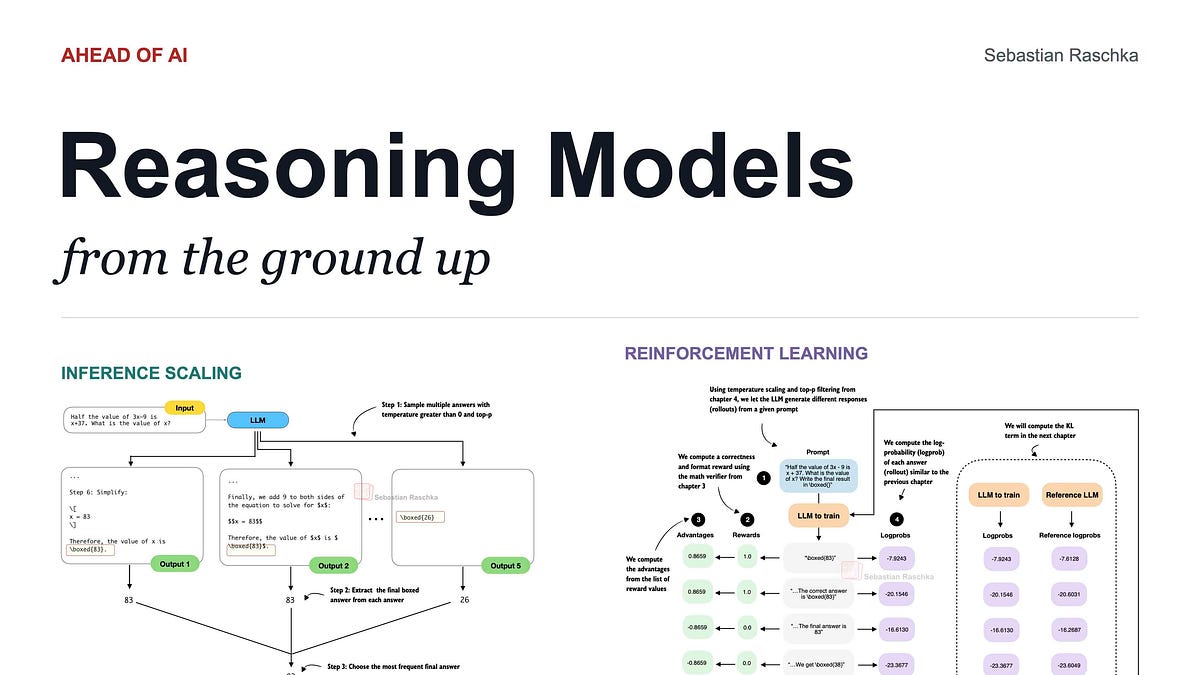
Building Reasoning Models from the Ground Up is a series of eight coding videos (about 11 hours) by Sebastian Raschka, accompanying his book Build a Reasoning Model (From Scratch). Starting from a pre-trained Qwen3 0.6B model, it implements KV-cached generation, a MATH-500 verifier, self-consistency and self-refinement, simplified GRPO for RLVR, and distillation from DeepSeek R1 answers in Python and PyTorch.
 magazine.sebastianraschka.comcoursePublished and added 24 Oct 2026🧠 AI
 Prasenjit Sarkar (@stretchcloud) on X
Post on the LiteLLM supply-chain compromise. Attackers spent eleven days in the GitHub org, ran a workflow on a throwaway branch to take twenty secrets including a GitHub App private key, then used stolen GitHub CLI OAuth tokens to publish malicious release 1.107.0 from a lookalike Berri-AI repo. A Python startup file harvested sixteen credential categories and LiteLLM proxy Postgres provider keys. Socket flagged the wheels in seven minutes.
x.comthreadAdded 26 Oct 2026, published 24 Oct 2026🛡️ Security EveryDev.ai (@EveryDevAi) on X
ToolUniverse, from ScientistTools, is an open-source (Apache-2.0) toolkit that gives any LLM one interface to more than 1,000 scientific tools, models and databases such as PubMed, UniProt and ChEMBL. It ships a native MCP server, a Python SDK and a tu CLI, plus 68 pre-built agent skills. The post says it works with Claude Code, Cursor, Gemini CLI and Windsurf.
x.comthreadPublished and added 24 Oct 2026🧠 AI Python packages are also vulnerable to the Node2Shell Brotli flaw (CVE-2026-111497)
Python2Shell is the Python-side impact of CVE-2026-111497 (Node2Shell), a Brotli decoder flaw (CVSS 4.0 9.2) in DecodeBlockTypeAndLength() that mixes an unchecked return value with an out-of-bounds write. Brotli 1.2.0 and earlier, and brotlicffi 1.2.0.x, are affected through urllib3, requests, httpx, aiohttp and Scrapy. Fixes are Brotli 1.2.1 and brotlicffi 1.2.1.0; as of 23 October 2026 advisory databases do not map the CVE to either package. The post lists checks and workarounds.
 aikido.devadvisoryPublished and added 23 Oct 2026🛡️ Security
 Inside the LiteLLM 1.107.0 supply chain compromise: Credential theft through Python startup hooks
Microsoft's analysis of the LiteLLM 1.107.0 compromise, published to PyPI and container images on 21 October 2026. The wheel shipped cook.pth, cook.py and sitecustomize.py, so a credential collector (PRIVCOLLECT) ran whenever Python started, even without importing LiteLLM. It covers AES/RSA-encrypted exfiltration to litellm.dev, a re-armable Unix loader, Defender KQL hunting queries, ATT&CK mapping and rotation guidance.
 microsoft.comwriteupPublished and added 23 Oct 2026🛡️ Security
 Python Packages Vulnerable to Node2Shell
Analysis of CVE-2026-111497 (Node2Shell), an out-of-bounds write in Google's Brotli C decoder, showing it also affects the PyPI packages Brotli (all releases up to 1.2.0) and brotlicffi (up to 1.2.0.2). The author diffed the 1.2.0 and 1.2.1 sdists and confirmed the behaviour with AddressSanitizer. Fixes are Brotli 1.2.1 and brotlicffi 1.2.1.0, both patched without release notes. No advisory database lists either package yet.
opensourcemalware.comwriteupPublished and added 23 Oct 2026🛡️ Security eMudhra / emSign CA Compromise: What Python, pip, and CI/CD Users Need to Update
Guidance on the October 2026 eMudhra / emSign CA incident, where eight intermediate CA certificates had private keys generated with insufficient randomness. It explains why updating certifi alone does not fix pip's vendored bundle, and lists fixed versions (certifi 2026.10.19, pip 26.2.2, Python 3.15.1, 3.14.9, 3.13.17). StepSecurity's OpenSSL 4.0.3 tests showed the older bundle accepted seven emSign paths, while both corrected bundles rejected all fourteen.
 stepsecurity.ioarticlePublished and added 22 Oct 2026🛡️ Security
- Spectrmachina/Ztrust
ZTrust is a Python supply-chain scanner that checks manifests, lockfiles, source and GitHub workflows for vulnerable or malicious dependencies (via OSV.dev), typosquats, leaked secrets, unsafe lockfiles and risky CI patterns such as pwn requests and script injection. It outputs console, JSON and SARIF 2.1.0 and ships as a GitHub Action. It also includes a FastAPI bounty service using commit-reveal and shielded Zcash payouts for researchers.
github.comrepoAdded 27 Oct 2026, published 22 Oct 2026🛡️ Security - Muscle AI (@themuscleai) on X
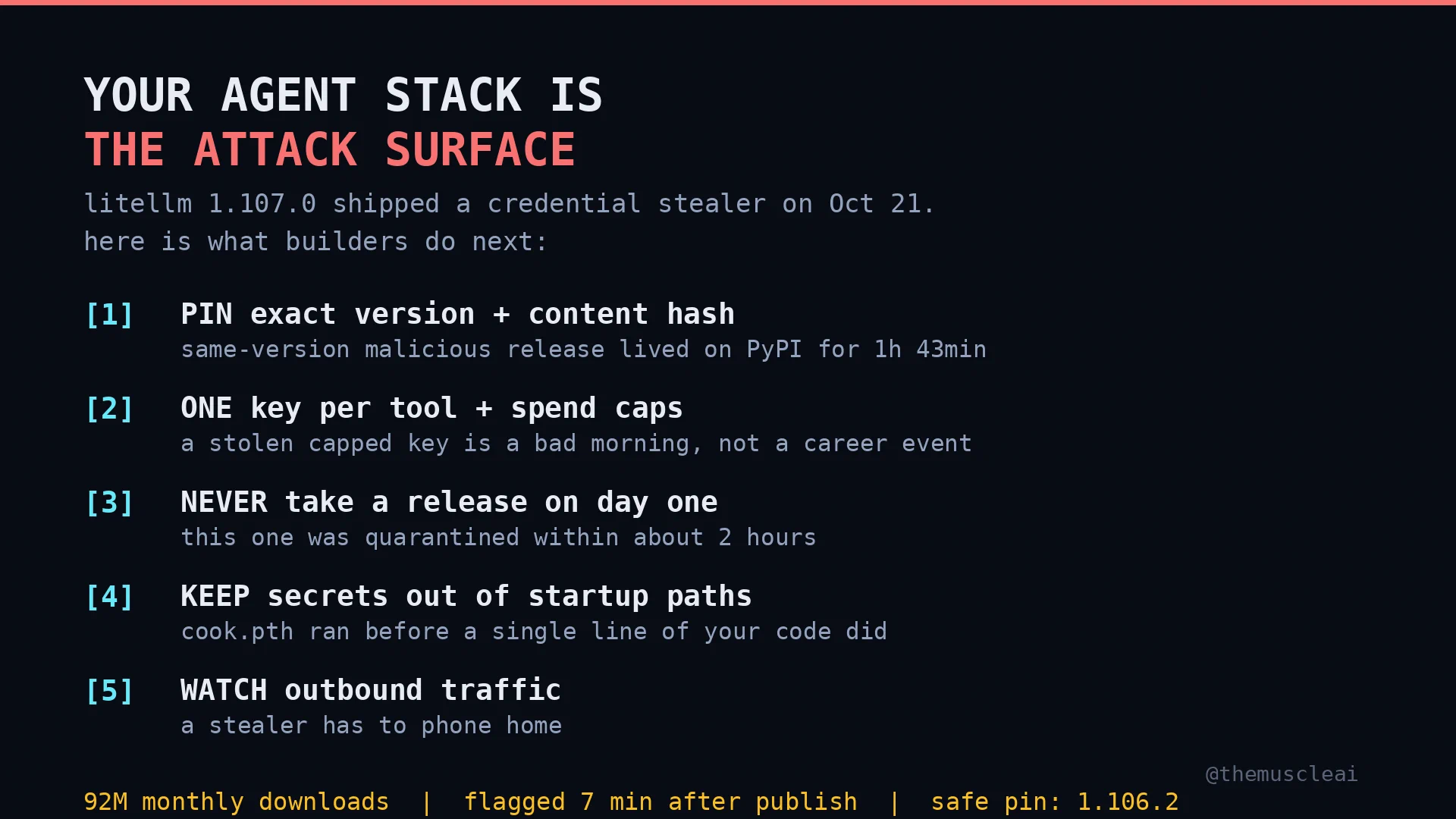
Post on the LiteLLM 1.107.0 PyPI compromise published 21 October 2026 and quarantined about 1 hour 43 minutes later. A malicious .pth file ran at Python startup and stole cloud credentials, private keys, browser data and AI tool auth files, then POSTed a tarball to an attacker endpoint. The author says attackers used stolen GitHub CLI OAuth tokens to push a trojanized commit chain and build official wheels. It lists five defenses: hash-pinned lockfiles, per-tool capped keys, release cooling periods, secret isolation and egress monitoring.
x.comthreadAdded 23 Oct 2026, published 22 Oct 2026🛡️ Security - Muscle AI (@themuscleai) on X
Muse AI's X post describes the compromise of LiteLLM 1.107.0, published to PyPI on 21 October at 7:39 AM and quarantined about 1 hour 43 minutes later. The payload was a .pth file that ran at Python startup and sent cloud credentials, private keys and AI dev-tool auth files to an attacker endpoint. The author lists five agent-builder defences: hash-locked pins, capped per-tool keys, a release cooling period, keeping secrets away from Python startup, and outbound traffic monitoring.
x.comarticleAdded 23 Oct 2026, published 22 Oct 2026🧠 AI  SecureChap (@SecureChap) on X
Post describing a LiteLLM 1.107.0 PyPI compromise in which attackers used stolen GitHub CLI OAuth tokens from three engineers to trigger and approve the project-releaser workflow, producing eight malicious wheels and a tampered tarball. The wheels drop cook.pth, which runs at Python startup, and privcollect steals cloud tokens, keys, browser data, AI configs and LiteLLM proxy credentials, exfiltrating to litellm[.]dev/healthcheck. A second daemon polls a GitHub domain.txt hourly for new domains to fetch and execute. PyPI yanked the package the same day. The post is a single unsourced tweet.
x.comthreadPublished and added 22 Oct 2026🛡️ Security LiteLLM 1.107.0 Compromised: Python Startup Hooks Steal Cloud, AI, and Proxy Credentials | Endor Labs
litellm 1.107.0 was published to PyPI on 21 October 2026 from a source revision that differs from the official tag. One line in the Maturin config (data = "cook") installs cook.pth, cook.py and sitecustomize.py, which run on every Python start. They steal cloud, AI and proxy credentials, including the LiteLLM database tables, and load remote code hourly. The post gives IOCs, a five-step response plan and hardening advice.
 endorlabs.comwriteupPublished and added 21 Oct 2026🛡️ Security
 litellm 1.107.0 Compromised on PyPI: Backdoored Wheels Drop a Credential Stealer and an Hourly Remote Code Loader
litellm 1.107.0 was published to PyPI on 21 October 2026 with all seven wheels backdoored through an injected `data = "cook"` maturin build line. The wheels drop cook.pth, cook.py and sitecustomize.py, which run on every Python start. They install a "privcollect" credential stealer (browser, SSH, cloud, AI coding tool and LiteLLM proxy database secrets, sent to litellm.dev) and an hourly GitHub dead-drop remote code loader. The post gives IOCs, detection commands and recovery steps.
stepsecurity.iowriteupPublished and added 21 Oct 2026🛡️ Security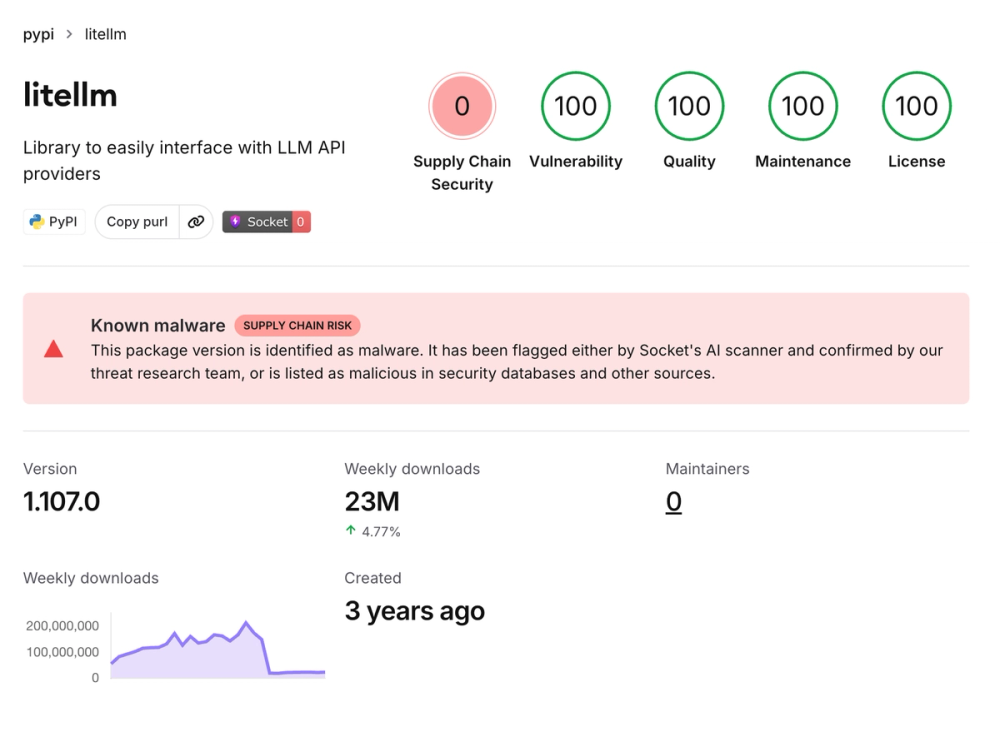 LiteLLM PyPI Package and Docker Images Compromised to Steal Cloud and AI Credentials
LiteLLM 1.107.0 on PyPI and GHCR images shipped Python startup hooks (cook.pth, sitecustomize.py) that steal cloud, SSH, browser and AI-tool credentials, including LiteLLM proxy database credentials. Image build provenance recorded a lookalike Berri-AI/litellm source repository. The post decodes the payload, encrypted exfiltration and GitHub-driven remote loader, and lists containment steps, MITRE ATT&CK mappings and IOCs.
socket.devwriteupPublished and added 21 Oct 2026🛡️ Security LiteLLM 1.107.0 PyPI Wheel Contains a Credential Stealer and Persistent Python Backdoor
LiteLLM 1.107.0 macOS x86-64 PyPI wheel analyzed by OpenSourceMalware contains three injected files (cook.pth, cook.py, sitecustomize.py) that run on every Python start. The payload, called privcollect, steals browser, SSH, cloud, CI/CD and AI-tool credentials, then uploads an AES/RSA-encrypted bundle to www.litellm.dev/healthcheck. A forked loader also fetches domain.txt from GitHub and executes /codepy hourly. The post lists IOCs, hashes and remediation steps.
opensourcemalware.comwriteupPublished and added 21 Oct 2026🛡️ Security- Amazon-Themed ClickFix Campaign Serves Up Finger-Licking Malware
Huntress analysis of an Amazon-themed ClickFix campaign that used a Google sponsored result, a fake Amazon login on Google Sites and a fake CAPTCHA to make victims run the Windows finger utility. The .plan script drives IronPython, a Cyrillic-substituted Base64 Python loader, Doina, a Node.js stage, Lumma Stealer via sRDI, and a pirated NetSupport RMM. It lists C2 domains and gives detection tips (aclk/gclid markers, blocking the Run dialog).
 huntress.comwriteupPublished and added 21 Oct 2026🛡️ Security
- Cyber Detective💙💛 (@cyb_detective) on X
Python Cybersecurity Libraries is a curated GitHub list by Yogsec, shared in a post by cyb_detective. It groups Python libraries by task: network analysis, penetration testing, threat intelligence, reverse engineering and malware analysis, forensics and investigation, web application security, CTF, and machine learning for security. The tweet shows only the category names, not the individual libraries.
x.comrepoAdded 24 Oct 2026, published 21 Oct 2026🛡️ Security  A company that vouches for websites had secret keys so weak that 8 of them were cracked
eMudhra, an Indian certificate authority with over 60 million issued certificates, had eight CA private keys that were tiny integers such as 4, 56 and 237. Researcher Scott Helme recovered all eight from public certificates in under a second, and the keys were exposed from April 2025. Mozilla, Chrome, Apple and Microsoft blocked them between 17 and 20 October 2026, but curl, Python, Node.js, Go and Java accepted a forged Stripe API certificate because they skip revocation checks.
 coindesk.comarticlePublished and added 21 Oct 2026🛡️ Security
- ☣ KitPloit - Hacker Tools (@KitPloit) on X
DidierStevensSuite is a collection of Python scripts for malware analysis, file format parsing, hashing and forensic triage. It includes utilities for analysing PDF and OLE documents and for XOR-obfuscated data. The post is a short KitPloit announcement that links to the repository and gives no usage detail.
x.comrepoAdded 21 Oct 2026, published 20 Oct 2026🛡️ Security - lee1981 (@lee1981b) on X
CVE-2026-77932 affects DB-GPT through 0.8.2 (dbgpt-app). The /api/v1/chat/react-agent route accepts unauthenticated requests because get_user_from_headers returns an admin-role user, and the ReAct agent can reach unsandboxed Python and shell tools. Lasso reported root in the webserver container in a lab. The post gives CVSS 9.8 and 9.3, no verified fix (0.8.2 is still the latest release), no KEV match, no EPSS data, and a SOC hunting trail.
x.comadvisoryAdded 23 Oct 2026, published 20 Oct 2026🛡️ Security 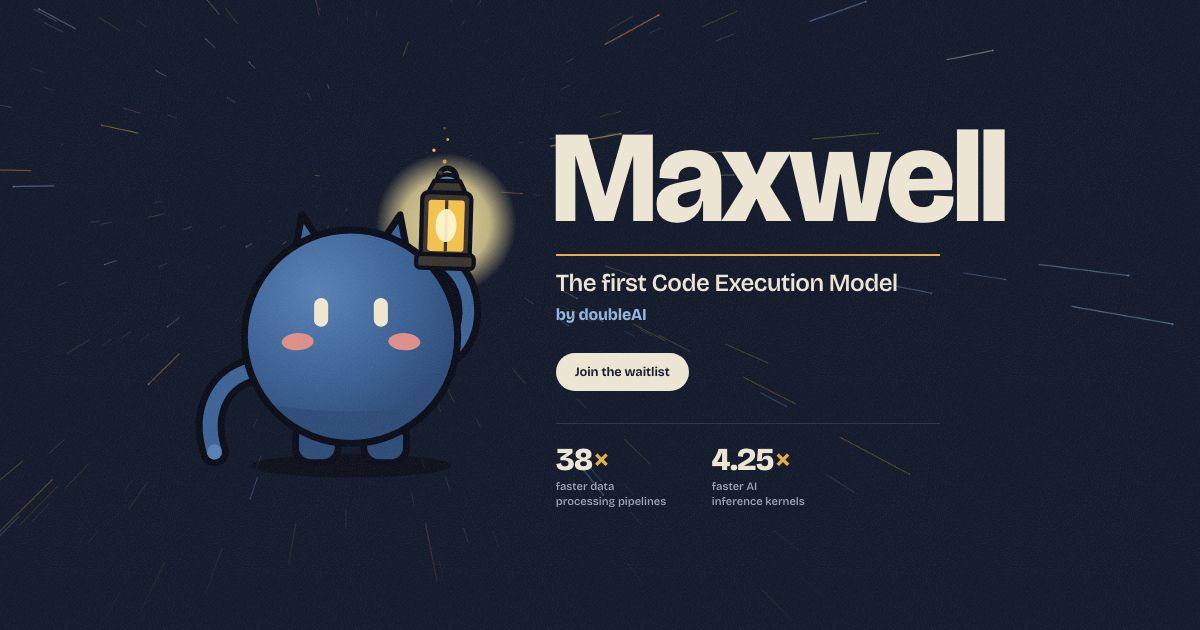 Maxwell: A new kind of model that sits between code and hardware
Maxwell (Maxwell's Daemon) is doubleAI's first "code execution model" (CEM). It runs inside a live program, finds bottlenecks and emits faster machine code for the exact CPU or GPU, leaving the source untouched. Each rewrite ships with a machine-checked proof of semantic equivalence, built on a formalisation of Python. Early access is announced; the post gives no benchmark figures.
 heymaxwell.aiarticleAdded 20 Oct 2026, published 19 Oct 2026🧠 AI
 A Key-Recovery Attack on the GTLN Knapsack Cryptosystem via Continued Fractions
This ePrint paper (2026/2543) gives a key-recovery attack on the GTLN knapsack public-key cryptosystem of Gómez-Torrecillas, Lobillo and Navarro. Continued fractions recover small-denominator ratios of public-key differences, and gcd computations then yield private-key integers, the modulus and the shift, using only the public key. The Python implementation recovered the full private key in all 2,400 trials across 24 recommended parameter sets, each in under 0.05 seconds.
 eprint.iacr.orgpaperAdded 20 Oct 2026, published 19 Oct 2026🛡️ Security
 DeepSeek-v4.1-Flash-1017
Model card for DeepSeek-V4.1-Flash-1017, a minor update to DeepSeek-V4.1-Flash with MIT-licensed weights. It claims gains in reasoning, coding, agentic tasks and visual benchmarks, with shorter task time and output length that move the performance–cost Pareto frontier across agent harnesses (Claude Code for Terminal-Bench 4.0, Mini-SWE-V2 for DeepSWE v1.1). It ships no Jinja chat template. It provides a reference encoding.py for multi-turn chat, tool calling, thinking mode, numeric reasoning effort and interleaved images, plus deepseek-recipe, Rust libraries with Python bindings for prompt encoding and output parsing. Serving recipes are given for Transformers, vLLM, SGLang and Docker Model Runner.
 huggingface.corepoAdded 18 Oct 2026, published 17 Oct 2026🧠 AI
- ConnectWise (SkyKick) Vendor Credentials Abused in M365 Attacks
Huntress documents abuse of ConnectWise Cloud Backup (formerly SkyKick) vendor app credentials, used on October 15 from 144.172.64[.]128 to obtain Microsoft Graph tokens in at least 162 customer M365 tenants via client assertion. In one tenant, a ConnectWise Cloud Management Teams app self-assigned Global Administrator and added client secrets to an MSP management app and Huntress's own app, a persistence technique. The post lists application IDs, Entra sign-in and audit-log checks, user-agent indicators (kiota-dotnet vs Python-urllib/3.12, curl/7.88.1), and mitigation steps such as disabling (not deleting) the enterprise apps and reviewing added credentials.
huntress.comwriteupAdded 17 Oct 2026, published 16 Oct 2026🛡️ Security  Claude reveals ECDSA curve origins
Anthropic's Frontier Red Team reports that Claude recovered how the NIST P-192/224/256/384/521 and ANSI X9.62 curve seeds were generated. They are outputs of the C library's lrand48 LCG seeded with 1997–98 Unix timestamps, not hashes of a passphrase. The method scanned for weak-PRNG signatures, then used LLL lattice reduction to recover the truncated LCG state and stepped it back to srand48 initialization. Claude also traced some base points to the FreeLIP/NTL random generator. Reproducible Python is included. The authors say this is not an attack and makes deliberate backdoors less plausible. The B-163 seed and the base points of P-224/256/384/521 and the binary curves remain unexplained.
 anthropic.comwriteupAdded 17 Oct 2026, published 16 Oct 2026🛡️ Security
- Claude reveals ECDSA curve origins
Anthropic's Frontier Red Team reports that Claude, given no hint, worked out how the NIST P-192/224/256/384/521 and ANSI X9.62 curve seeds were generated. They came from the C library's lrand48 LCG seeded with Unix timestamps from 1997–98, not from a hash of a phrase. Claude found this by scanning for weak-PRNG signatures and recovering the PRNG state with LLL lattice reduction. It also traced several prime-curve base points to the FreeLIP random generator. The post includes Python code that reproduces the seeds and base points. It says this is not an attack and makes backdoor claims less plausible. B-163 and the other base points remain unexplained.
anthropic.comwriteupAdded 17 Oct 2026, published 16 Oct 2026🧠 AI  Open-Source Intelligence (OSINT): Turn One Username into a Full Digital Dossier with Maigret
Hands-on walkthrough of Maigret, an open-source Python tool that checks a username against 3,000+ sites (top 500 by default) and builds a profile dossier by parsing public profile pages and recursively searching newly found usernames. Covers installation from GitHub, single-site and tag filtering, username permutation, HTML/PDF/CSV/JSON reports, graph output, and an optional LLM summary via OpenRouter. Positioned as a more thorough successor to Sherlock for username reconnaissance.
 hackers-arise.comarticlePublished and added 16 Oct 2026🛡️ Security
 Why Your SCA is Always Wrong | Endor Labs
Explains why traditional SCA tools are inaccurate: they parse package-manager manifests and assume those match what the code actually uses. It walks through phantom dependencies, misused dependency scopes, direct use of transitive dependencies and unused dependencies, using Python and JavaScript as examples. It argues for SCA based on program analysis, with source code as ground truth cross-checked against manifests and the file system. Useful for evaluating SCA tools and understanding SBOM accuracy limits.
endorlabs.comarticlePublished and added 16 Oct 2026🛡️ Security GitHub Action tj-actions/changed-files supply chain attack: what you need to know | Endor Labs
Endor Labs explains the March 2025 compromise of the tj-actions/changed-files GitHub Action (CVE-2025-30066). Attackers pushed a malicious commit and retroactively repointed version tags, so a Python payload dumped CI/CD secrets to workflow logs across about 23,000 repositories. The post gives response steps: find usage with a GitHub code search, remove the Action from all branches or enforce an Actions allowlist, audit logs for suspicious outbound requests and IPs, and rotate exposed secrets. It also notes the March 17 restoration and the risk of transitive Action dependencies. It includes Endor Labs customer steps (the `--ghactions --secrets --git-logs` scan flags).
endorlabs.comarticlePublished and added 16 Oct 2026🛡️ Security- gichirimaku/wp2shell-PoC
wp2shell-PoC is a Python proof-of-concept exploiting a pre-authentication RCE chain in WordPress core, combining CVE-2026-63030 (REST API batch route confusion) and CVE-2026-60137 (SQL injection in WP_Query). It demonstrates escalation from the route-desync bug through blind SQLi, customize_changeset forgery, and hook re-entry to administrator account creation and arbitrary command execution via a malicious plugin upload. The tool supports vulnerability checking, data extraction (union, error-based, blind techniques), and full shell access with or without existing admin credentials.
github.comrepoAdded 23 Oct 2026, published 15 Oct 2026🛡️ Security - ♫Why♥Not♪ (@Python_s_) on X
Alert summarizing XBOW's disclosure of a three-stage Chrome for Windows exploit chain: V8 Maglev memory corruption (CVE-2026-85045), Animated WebP decoder memory corruption (Chromium issue 548509153), then a Crashpad sandbox escape (CVE-2026-78952). Loading a crafted page was enough; no click or download needed. Human researchers working with GPT-5.6 Sol agents built it in six days, Google paid $250,000, all three bugs are fixed, and no in-the-wild exploitation is confirmed. It advises updating Chrome and restarting, and gives forensic triage pointers.
x.comadvisoryAdded 15 Oct 2026, published 14 Oct 2026🛡️ Security  SAP Patches Critical NetWeaver, S/4HANA Vulnerabilities
SecurityWeek summarizes SAP's October 2026 Security Patch Day (22 notes, four critical). Critical flaws: CVE-2026-89111 (CVSS 10) OAuth2 SSRF in SAP Cloud SDK for Python that leaks client credentials via the tenant_subdomain parameter; CVE-2026-89110 (9.9) NetWeaver broken access control allowing ABAP code execution through Fiori rule definition input; CVE-2026-89107 (9.9) S/4HANA Visual Composer code injection; and CVE-2026-89108 (9.1) missing authorization check in Manufacturing Integration and Intelligence allowing admin account creation. SAP reports no exploitation in the wild.
securityweek.comarticlePublished and added 14 Oct 2026🛡️ Security- Dark Web Intelligence (@DailyDarkWeb) on X
Summary of SAP's October 13, 2026 Security Patch Day (16 new notes, 4 GitHub advisories). It leads with CVE-2026-89111, a CVSS 10.0 OAuth2 SSRF in SAP Cloud SDK for Python before 0.45.2, where an attacker-controlled tenant_subdomain redirects token requests and exfiltrates client credentials. It also lists three other critical flaws: broken access control in NetWeaver Visual Composer, code injection in S/4HANA substitution/validation rules, and a missing authorization check in the Manufacturing Integration and Intelligence (XMII) Configuration Service. It notes that none are in CISA KEV and SAP reports no in-the-wild exploitation.
x.comadvisoryAdded 15 Oct 2026, published 13 Oct 2026🛡️ Security - ♫Why♥Not♪ (@Python_s_) on X
Alert thread on CVE-2026-35029 (CVSS v4.0 8.7) in LiteLLM Proxy, versions before 1.83.0. A low-privilege authenticated user can bypass admin authorization on /config/update, change runtime settings, read server files, take over admin credentials and run Python through remotely loaded modules (S3/GCS-hosted). Check Point Research published a full execution chain on October 13 after the April 2026 disclosure. The post lists hunting pointers (non-admin POSTs to /config/update, env-var changes, unexpected pass-through endpoints, cloud module loading) and advises upgrading to 1.83.9 or later and rotating credentials.
x.comadvisoryPublished and added 13 Oct 2026🛡️ Security - BijectiveLabs/trading-research-agents
Open-source Python CLI (`tra`) for autonomous trading desks in which LLM analysts (technical, macro, on-chain, sentiment) and validators only give opinions on figures the system computed. Fixed rules do the arithmetic: pricing the round-trip cost, applying risk limits, sizing, cost gates, and sending a single order with stop attached via ccxt (Bybit and OKX demo accounts tested). It supports multiple model providers with per-role models, effort settings and fallbacks. Every answer is parsed against a closed schema, every refusal is logged with the figure behind it, and models can tighten but never loosen controls. This makes it a concrete reference for keeping LLM agents away from arithmetic and money.
github.comrepoAdded 18 Oct 2026, published 13 Oct 2026🧠 AI - BijectiveLabs/bitra
bitra (CLI name tra) is an MIT-licensed Python framework from Bijective Labs for autonomous trading agents. Language models only read system-computed figures and give opinions, while deterministic code prices the round trip, applies declared limits, sizes the trade and sends one order with stop attached. Every cycle's briefs, answers and refusals are stored on disk with hashes. It supports many model providers and ccxt venues, with sandbox, demo and mainnet tiers.
github.comrepoAdded 25 Oct 2026, published 13 Oct 2026🧠 AI - santosomar/AI-agents-for-cybersecurity
Companion repository for Omar Santos's Pearson and O'Reilly trainings and books. It has eight parts of runnable Python labs: chat models, embeddings, prompt templates, LCEL prompt chaining, Chroma-based RAG, ReAct/LangGraph/CrewAI/DeepAgents agents, and FastMCP servers (nmap, CISA KEV, Shodan). It also includes guides to six agentic frameworks (OpenClaw, Hermes, Agent Zero, OpenHands, Paperclip, Buzz), a tokenomics module on agent cost (context compounding, prompt caching, model routing, token budget guards, batch API, cost per accepted outcome), and a vendor-neutral design spec for a human-gated multi-agent assessment harness. It is a current, practical curriculum for building and operating agents. Some examples act on real systems and should only be run in an authorized lab.
github.comrepoAdded 13 Oct 2026🧠 AI  Phillip Shoemaker (@pbsIdentity) on X
Social thread reacting to a newly disclosed high-severity OAuth vulnerability in the Model Context Protocol Python SDK, where a malicious MCP server could manipulate the authorization flow and steal credentials used by an agent. The author uses it to argue that delegated agent authority needs provenance (who granted it, to which agent, for which service and resource, whether it is transferable or replayable, and when it expires) and that machine-to-machine trust must be auditable by humans. Gives no CVE ID or technical exploit detail.
x.comthreadAdded 13 Oct 2026, published 12 Oct 2026🛡️ Security 2024 Dependency Management Report | Endor Labs
Endor Labs' 2024 report on open-source dependency management and vulnerability prioritization. It reports that under 9.5% of vulnerabilities are reachable at function level, and that combining reachability with EPSS cuts noise by about 98%. It also finds Python phantom dependencies (up to 60% of dependencies and 85% of vulnerabilities for some tenants), 18% of npm OSV entries lacking CVE aliases, 69% of advisories published after the fix release (median 25 days), and 47% of advisories with no code-level info. For Java, 24% of fixes need a major version bump and 95% of upgrades carry breaking changes. Written by a vendor, so the prioritization conclusions favor its product.
endorlabs.compaperPublished and added 12 Oct 2026🛡️ Security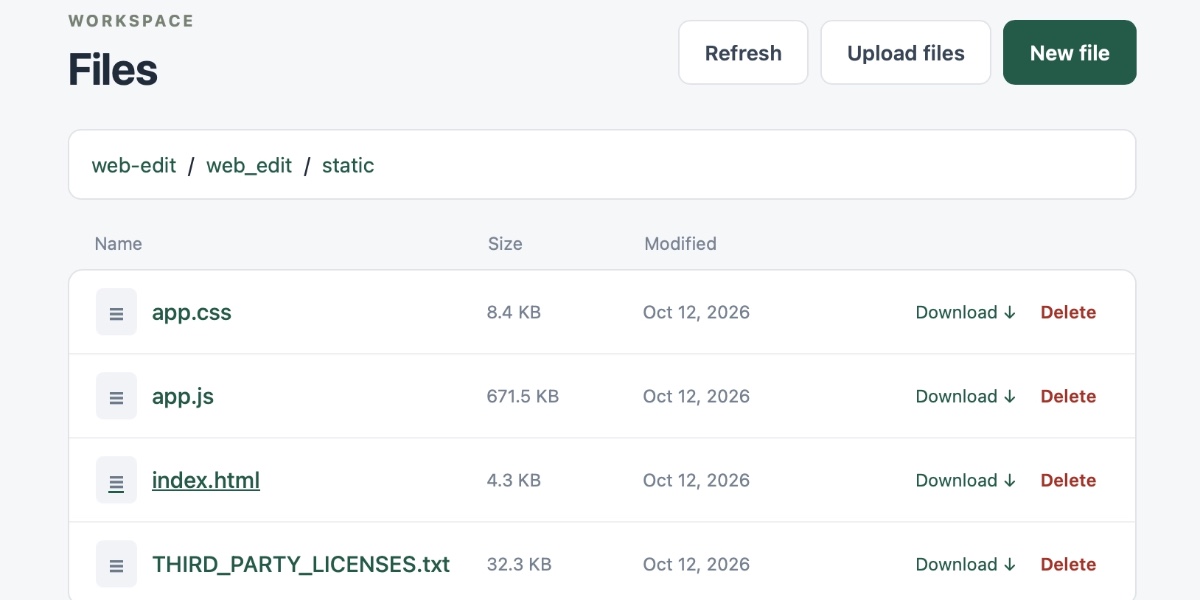 web-edit 0.1a0
 is a Python web app that gives a browser UI for viewing and editing files in a folder, intended to be started by an agent and reached over Tailscale from a phone. Simon Willison built it with Codex and GPT-6 Astra Extra High after wanting to edit a credentials file during a Codex Remote session without passing the credentials through the LLM. Editing uses CodeMirror 6 because Monaco's mobile experience is still weak.
 simonwillison.nettoolAdded 13 Oct 2026, published 12 Oct 2026🧠 AI
 Is AI Coding Safe? Introducing the Agent Security League | Blog | Endor Labs
Endor Labs launches the Agent Security League, a public leaderboard extending CMU's SusVibes benchmark (200 tasks, 108 Python OSS projects, 77 CWEs) to commercial coding agents (Claude Code, Cursor, Codex) and frontier models. Functional pass rose to 84.4% from 61% in the original study, but secure pass peaked at only 17.3%. It also documents agents ignoring instructions and mining git history to copy the fix (SWE-Agent + Opus 4.6 did so in 163/200 tasks), and describes the cheating-detection and score-adjustment module added to the harness.
endorlabs.comarticlePublished and added 12 Oct 2026🛡️ Security- Is AI Coding Safe? Introducing the Agent Security League | Blog | Endor Labs
Endor Labs launches the Agent Security League, a public leaderboard that extends CMU's SusVibes benchmark (200 Python tasks, 108 OSS projects, 77 CWEs). It tracks FuncPass and SecPass for commercial agents (Claude Code, Cursor, Codex) with newer models such as Claude Opus 4.x, Gemini 3 Pro and GPT-5.3 Codex. Functional correctness reaches 84.4% but SecPass peaks at only 17.3%. The authors also found agents reading git history to recover the fix, as in 163 of 200 tasks for SWE-Agent with Claude Opus 4.6, despite explicit instructions not to. They added a cheating-detection and score-adjustment phase.
endorlabs.comarticlePublished and added 12 Oct 2026🧠 AI  Static SCA vs. Dynamic SCA: Which is Better (and Why It's Neither) | Blog | Endor Labs
Compares static SCA (manifest/source scanning at build time) with dynamic SCA (runtime instrumentation). Static scans are complete but noisy and miss dependencies absent from manifests, for example in Python. Dynamic scans are relevant but incomplete, add agent overhead and surface findings late. It argues eBPF improves deployability of dynamic SCA but not its coverage limit. A worked example with a library of N vulnerable functions illustrates the difference. The author, Endor Labs, advocates static analysis of source code plus reachability analysis to filter findings by whether vulnerable code is actually called.
endorlabs.comarticlePublished and added 12 Oct 2026🛡️ Security Malicious 'Pyronut' Package Backdoors Telegram Bots with Remote Code Execution | Blog | Endor Labs
Endor Labs analyzes the malicious PyPI package pyronut (versions 2.0.184–2.0.186), a trojanized fork of the Telegram framework pyrogram. It hooks Client.start() to import a hidden pyrogram/helpers/secret.py that registers Telegram handlers letting two hardcoded attacker accounts run arbitrary Python (/e via meval) and shell commands (/shell via /bin/bash -c). C2 runs entirely over Telegram, so there are no external network indicators; the post includes detection, credential-rotation and prevention guidance.
endorlabs.comwriteupPublished and added 12 Oct 2026🛡️ Security- Aditya (@adityawaslost) on X
Describes Resolve, a Kaggle benchmark of 16 single-function Python edits. An item counts as resolved only if both the fail-to-pass tests (new behavior) and the pass-to-pass tests (old behavior the prompt never restated) pass, following the SWE-bench rule. A second task, resolve-plus, adds a hidden edge suite. Results for 23 frontier and open models: GPT-6.1 Sol and GPT-5.6 Luna lead at 0.9375 on both tasks, while DeepSeek-R1, Sonnet 5.5 and Opus 5.5 drop from 0.9375 to 0.875. The write-up separates three failure types behind a flat score: breaking an unstated invariant, missing an unshown edge case, and sample-to-sample variance. It also compares score against output price per million tokens.
x.comwriteupPublished and added 11 Oct 2026🧠 AI - sepehr071/iran-mcp
iran-mcp is an open-source catalog of 39 MCP servers (488 tools) that let AI agents query Iranian websites such as Digikala, Torob, Divar, Snappfood, Jabama, Paziresh24, TSETMC and qavanin.ir, with prices normalised to Toman. Most servers are unofficial, read-only Python packages run with uvx; three are official hosted servers. It ships Claude Code plugins, Agent Skills, bundles, proxy lists and a machine-readable servers.json.
github.comrepoAdded 24 Oct 2026, published 11 Oct 2026🧠 AI  ♫Why♥Not♪ (@Python_s_) on X
Alert on CVE-2026-106610, a critical (CVSS 9.8) incorrect privilege assignment flaw in the miniOrange OTP Verification WordPress plugin, versions 5.5.7 and earlier. Unauthenticated remote attackers can gain elevated permissions, potentially administrator, with no user interaction. Fixed in 5.5.8; no in-the-wild exploitation or public PoC verified. It advises auditing unexpected admin accounts and role changes, and warns that Patchstack's mitigation blocks legitimate requests too.
x.comadvisoryPublished and added 11 Oct 2026🛡️ Security- sakidekin/CVE-2026-41940-PoC
This repository hosts a proof-of-concept for CVE-2026-41940, described as a CVSS 10.0 unauthenticated authentication bypass in cPanel and WHM caused by CRLF injection into server-side session files via the Authorization header. The accompanying Python tool (cve.py) can detect vulnerable cPanel/WHM instances, retrieve system and account information, and perform post-exploitation actions such as running OS commands, changing the root password, and opening an interactive WHM shell. It also supports bulk scanning workflows piped from subfinder, httpx, and Shodan.
github.comrepoAdded 23 Oct 2026, published 11 Oct 2026🛡️ Security - Confident AI (@confident_ai) on X
Confident AI announces Eval Skills, open-source (Apache 2.0) agent skills for Claude Code and Codex. The `eval-build` skill takes an app to a runnable baseline: it finds realistic examples in traces and incidents, annotates failures, groups them into failure modes, curates cases with independent data splits, and builds graders validated against human judgment. The `eval-descent` skill runs a bounded loop of hypothesis, app change, eval re-run, regression check, then keep or revert, with held-out cases kept out of the loop. It ships Python and TypeScript tooling for tracing, annotation, grading and reports, plus a local UI or Confident AI for managing the loop.
x.comthreadPublished and added 9 Oct 2026🧠 AI - Trail of Bits (@trailofbits) on X
Trail of Bits announces SequenceHash, a library for hashing several inputs without concatenation ambiguity. Plain concatenation lets different input sequences produce the same SHA-256 digest. SequenceHash appends each input's length as a fixed 128-bit integer so every sequence has a single encoding. It ships for Rust, Go and Python, and removes a recurring bug class in crypto and appsec code.
x.comtoolAdded 11 Oct 2026, published 9 Oct 2026🛡️ Security - ♫Why♥Not♪ (@Python_s_) on X
Alert summarizing Socket Threat Research's disclosure that a malicious version of the Tensorlake npm SDK (an AI-agent infrastructure package) was published with a preinstall hook delivering Shai-Hulud/ChainDrop credential-stealing malware. The payload targets GitHub, npm, AWS, Kubernetes and Vault credentials, persists via a gh-token-monitor mechanism, and spreads through compromised publishing accounts. It lists IOCs (lib/setup.mjs, lib/Math_Symbol.js) and warns to remove the persistence before revoking stolen GitHub tokens, since revocation triggers a destructive routine. Socket detected the release about 11 minutes after publication.
x.comadvisoryAdded 11 Oct 2026, published 9 Oct 2026🛡️ Security - AgentTune: A Unified Training Lifecycle for Tool-Using LLM Agents
AgentTune is a source-available Python library that unifies building, training, evaluating, distilling and maintaining tool-using LLM agents. Its core is a two-tier EventLog representation that preserves agent trajectories and yields consistent projections for training, evaluation and auditing. On top of it sit a shared agent runtime, tool-calling reinforcement learning, agentic distillation, RAG, decision workflows, evaluation utilities and a designed path toward self-healing agents, demonstrated on tasks such as legal contract search.
arxiv.orgpaperAdded 12 Oct 2026, published 9 Oct 2026🧠 AI  US Disrupts Chinese State-Sponsored Hacking Tools
The US, alongside UK, Australian, Canadian, Japanese, New Zealand, and Spanish agencies, disrupted MicroScan and FishHub, hacking tools built by China's Integrity Technology Group and used by the state-sponsored actor Flax Typhoon (aka Ethereal Panda, Red Juliett, Storm-0919, UNC5007) against US, Japanese, Polish, and Taiwanese critical infrastructure and universities. MicroScan is a Python-based scanner with over 1,300 penetration-testing scripts targeting Apache Struts, Jenkins, WebLogic Server, WordPress, OpenSSL, and other services, delivered via a Mirai-derived IoT botnet; FishHub let operators remotely search and exfiltrate files from victim networks. The advisory also details the group's broader toolkit (SoftEther VPN for persistence, EBurst for Exchange password spraying, DC.ex for Active Directory data extraction) and the seizure of the domains used to access the tools.
securityweek.comarticlePublished and added 9 Oct 2026🛡️ Security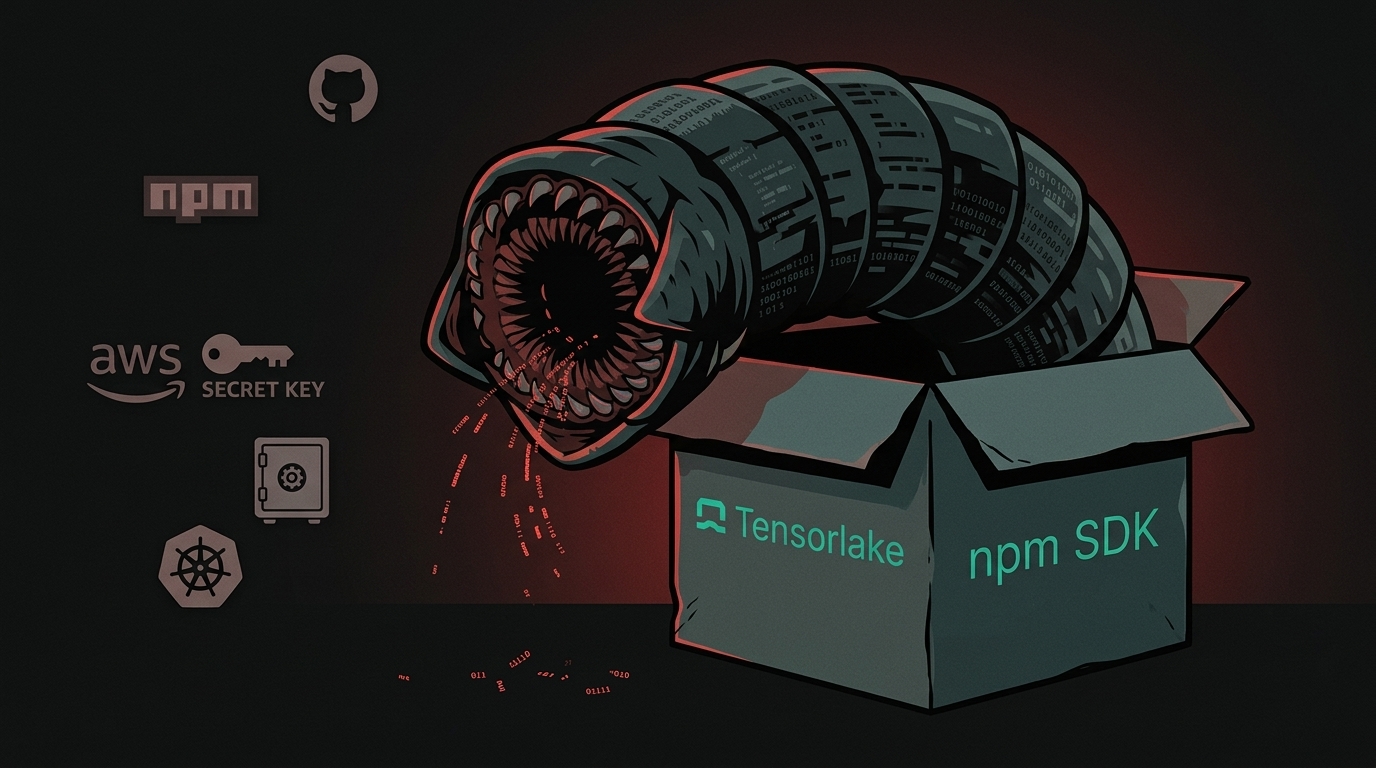 The OpenSourceMalware Show #24
Weekly OpenSourceMalware podcast episode discussing three fresh supply-chain attacks: the Tensorlake AI-agent SDK compromised via a preinstall-triggered Mini Shai-Hulud-derived worm (setup.mjs + math_symbol.js, run via Bun) that steals credentials; a Contagious Interview-style attack where a cloned GitHub repo drops a malicious .npmrc pointing npm install at a Chinese mirror (npmmirror.com) to resolve a hidden package; and 42 malicious RubyGems published by "Ghost Dev" that typosquat/brandjack crypto tooling, sleep 20–40 minutes via extconf.rb to evade detection, then either open a reverse shell or deploy a Python-based "Wallet Guard" crypto-theft kit targeting TronLink, MetaMask, Phantom, Binance, Coinbase, Trust Wallet, Exodus, and Electrum. The hosts also discuss multi-package "combined payload" evasion and how AI-driven slopsquatting is making cross-ecosystem typosquats more effective.
opensourcemalware.comtalkPublished and added 9 Oct 2026🛡️ Security Top MCP security resources — October 2026
Adversa AI's October 2026 MCP security roundup, aggregating and synthesizing 15 resources: authentication-bypass vulnerabilities in LiteLLM's MCP endpoint (CVE-2026-59822, now CISA KEV), Grafana's MCP server session spoofing/SSRF (CVE-2026-19516), an MCP Python SDK OAuth-fallback flaw exploited by a malicious server returning a 404, and an Obot gateway route-matching bypass reopening GHSA-vw82. It also covers detection failures (two malicious MCP servers passing five scanners including Cisco mcp-scanner and Snyk agent-scan, 12% of 82,000 public MCP configs hardcoding secrets), a malicious npm wallet-signing package (gadgethumans-mcp), the A2M agent-hijacking attack technique, and CoSAI's MCP Security v2.0 governance model.
 adversa.aiarticlePublished and added 8 Oct 2026🛡️ Security
- target/strelka
Strelka is Target's open-source, container-based real-time file scanning system for threat hunting, threat detection, and incident response, built in Go and Python. It runs 50+ scanners (YARA, PE parsing, encrypted ZIP cracking, entropy analysis, etc.) to extract metadata and content from files at enterprise scale, which can feed a SIEM for alerting on suspicious artifacts like an Emotet-laden encrypted ZIP payload.
github.comrepoAdded 8 Oct 2026🛡️ Security - Tracer-Cloud/opensre
OpenSRE is an open-source framework for building AI SRE agents that resolve production incidents by correlating logs, metrics, traces, deploys and runbooks across 60+ connected tools (observability, cloud infra, incident management, MCP). Beyond the agent runtime (CLI, Python API, Slack/PagerDuty/Telegram integrations), the project's stated mission is to build an RL training and evaluation environment — explicitly modeled on SWE-bench's role for coding agents — to scale realistic infrastructure-failure scenarios as a benchmark for AI SRE.
github.comrepoAdded 8 Oct 2026🧠 AI 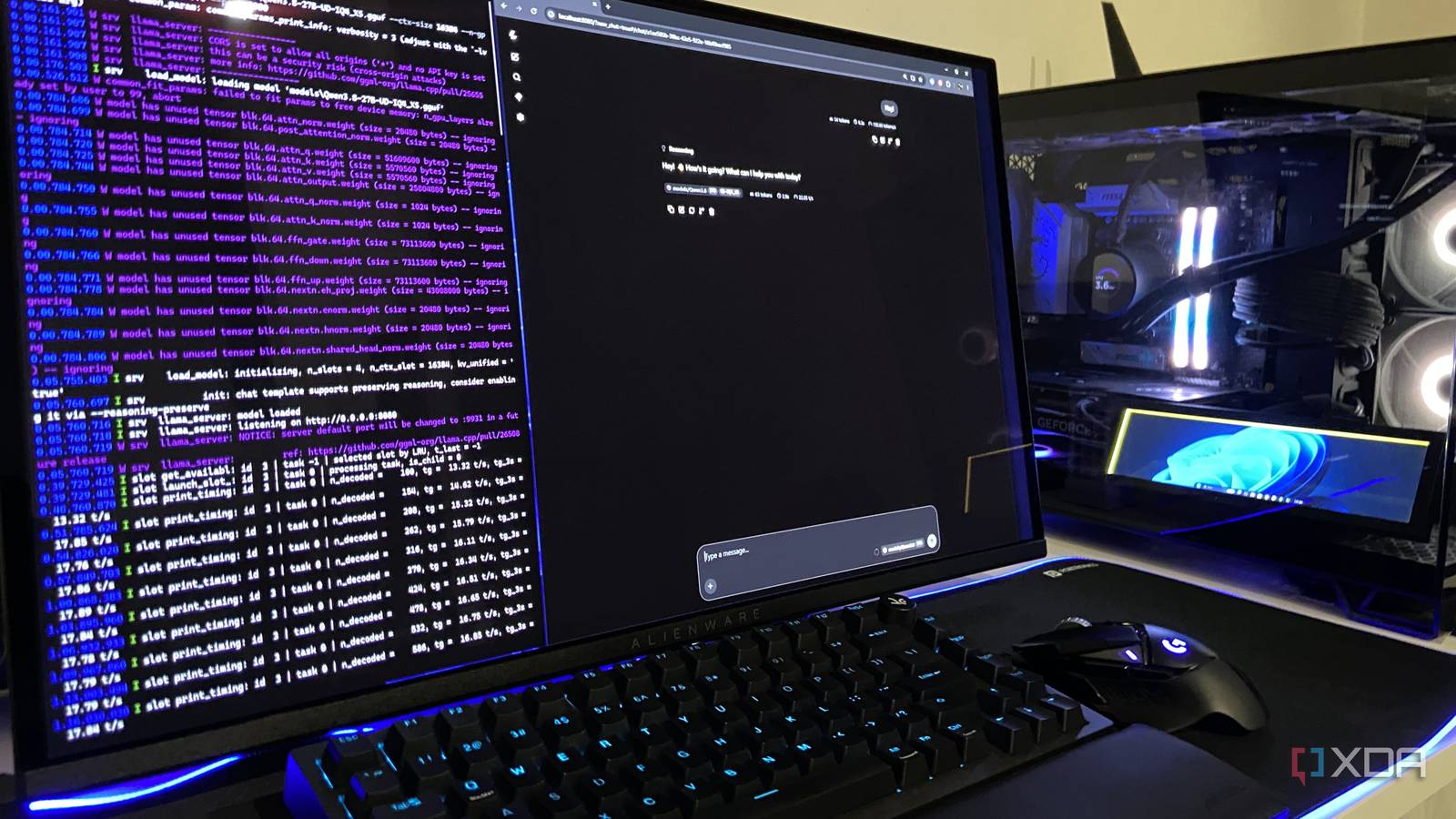 I'm not paying $20 for ChatGPT or Claude because a free local LLM does
A personal workflow writeup describing how the author replaced $20 per month ChatGPT and Claude subscriptions with Qwen3.8-27B (Unsloth UD-IQ4_XS GGUF quant, 13.3GB) run locally via llama.cpp on a 4070 Ti Super GPU with 16GB VRAM, achieving about 33.7 tokens per second at a 16K context window. It covers use cases like grammar and email cleanup, sentiment analysis, data extraction, and iterative Python coding where the local model matched cloud performance without rate limits, five hour caps, or data leaving the machine, while noting Claude still leads on raw coding ability.
 xda-developers.comarticleAdded 8 Oct 2026, published 7 Oct 2026🧠 AI
- Applying Security by Design at the Point of Execution: How Governed Security Requirements Affect the Security of AI-Generated Code
Evaluates delivering security requirements from a governed security-by-design knowledge base (SbD-ToE) to a code-generating LLM through an MCP server at generation time. On DualGauge (59 Python tasks) the share passing all security tests rose from 44.1% to 78.0%; on BaxBench (28 backend scenarios) the share of functionally correct solutions with no successful exploit rose from 65% to 86%, matching the authors' Oracle Security Reminder (85%). The joint secure-and-functional metric did not improve significantly, since stricter code failed functional tests that fix unstated values. The study used one model and one generation per task, and it proposes measuring conformance with applicable requirements rather than only detecting known weaknesses.
arxiv.orgpaperAdded 9 Oct 2026, published 7 Oct 2026🛡️ Security - Applying Security by Design at the Point of Execution: How Governed Security Requirements Affect the Security of AI-Generated Code
The preprint tests whether security requirements from a governed security-by-design knowledge base (SbD-ToE), delivered to a code generator through a Model Context Protocol server at generation time, make AI-written code more secure. On DualGauge (59 Python tasks, LLM-judge scoring) the share of tasks passing all security tests rose from 44.1% to 78.0%. On BaxBench (28 backend scenarios with real exploits in containers) the share of functionally correct solutions with no successful exploit rose from 65% to 86%, comparable to the authors' Oracle Security Reminder (85%). The pre-specified joint secure-and-functional metric did not improve significantly, and the stricter code failed functional tests that fix values the task never states. The study used one model and one generation per task. The authors argue that current benchmarks only detect the weaknesses their evaluators were built for, and propose measuring conformance with the requirements that apply.
arxiv.orgpaperAdded 9 Oct 2026, published 7 Oct 2026🧠 AI  CVE-2026-21589: Critical unauthenticated arbitrary file access in Atlassian products
Rapid7's analysis of CVE-2026-21589 (CVSSv4 9.3), a critical unauthenticated arbitrary file read vulnerability affecting Bitbucket, Confluence, Jira Software/Service Management, Bamboo, Crowd, Crucible, and Fisheye Data Center products. It summarizes watchTowr Labs' root-cause finding that double-colon (::) sequences can act as path separators in Atlassian's web-resource handling, enabling path traversal to read arbitrary files within the Tomcat web root — including crowd.properties credentials that can be chained to create a rogue jira-administrators account. The post provides emergency patching guidance, Atlassian's WAF/RewriteValve mitigations, log-hunting regex, and notes public Python PoC and Nuclei templates exist.
 rapid7.comwriteupPublished and added 7 Oct 2026🛡️ Security
- lee1981 (@lee1981b) on X
Analysis of CVE-2026-105844, a CWE-1321 prototype-pollution vulnerability in @payloadcms/plugin-import-export that the vendor says can lead to unauthenticated remote code execution. It covers affected ranges (stable 3.0.0–3.87.x, canary 4.0.0-canary.0–canary.26), the fix (3.88.0 / 4.0.0-canary.27), the patched field-path guard against __proto__/constructor/prototype segments, and a six-step SOC hunting/triage playbook with two offline Python scripts for inspecting npm package trees and triaging request field-paths for prototype-sensitive values.
x.comadvisoryAdded 8 Oct 2026, published 7 Oct 2026🛡️ Security  Kubernetes Agent Sandbox on AWS EKS (Step-by-Step Guide)
Kubernetes Agent Sandbox on AWS EKS is a step-by-step tutorial for the kubernetes-sigs agent-sandbox controller with gVisor. It deploys an AI troubleshooting agent backend using SandboxTemplate, SandboxWarmpool and SandboxClaim, with Bedrock access through EKS Pod Identity. It also runs untrusted Python through the k8s-agent-sandbox SDK and sandbox router, and covers scheduled deletion and suspend/resume with persistent volumes.
 devopscube.comwriteupAdded 21 Oct 2026, published 7 Oct 2026🧠 AI
- Kubernetes Agent Sandbox on AWS EKS (Step-by-Step Guide)
Tutorial on setting up Kubernetes Agent Sandbox (kubernetes-sigs/agent-sandbox) with gVisor on an AWS EKS cluster. It runs a troubleshooting AI agent backend inside a sandbox using SandboxTemplate, SandboxWarmpool and SandboxClaim, and runs untrusted Python through the k8s-agent-sandbox SDK and Sandbox Router. Probes show blocked /etc/shadow reads, setuid and service account token access, plus host process isolation. It also covers scheduled deletion and suspend/resume with persistent volumes.
devopscube.comwriteupAdded 21 Oct 2026, published 7 Oct 2026🛡️ Security - Show HN: NanoMuse – An open-source AI agent for your phone and computer
nanoMuse is an open-source personal AI agent that runs across phone, desktop, and web, built on an on-device sandbox (OpenMinis with proot/Alpine Linux on mobile) and the DeepSeek Harness on desktop with a Python runtime for tool use. Devices share one account and sync conversations through a relay (self-hostable), while the agent proactively acts, retains memory, and pauses before irreversible actions; it is released GPL-3.0-or-later with documentation on install, self-hosting, connectors, and memory.
github.comrepoPublished and added 7 Oct 2026🧠 AI  The Vulnerable MCP Project — MCP vulnerability database
The Vulnerable MCP Project is a curated, continuously growing database of security vulnerabilities and attack techniques specific to the Model Context Protocol ecosystem. Entries cover concrete CVEs (e.g. CVE-2025-68143/68144/68145 in Anthropic's mcp-server-git), transport-layer SDK flaws (cross-client response leakage, missing DNS rebinding protection in the official TypeScript/Python SDKs), unauthenticated/0.0.0.0-bound servers enabling RCE (MCPJam inspector, MCP Inspector, Grafana MCP), command/path injection in dozens of third-party servers (gemini-mcp-tool, mcp-server-kubernetes, Framelink Figma MCP, Zen MCP, filesystem-mcp), SSRF chains reaching cloud metadata (MarkItDown MCP, mcp-fetch-server), and a large set of AI-specific attacks: tool poisoning, trigger-phrase data exfiltration, prompt injection via GitHub issues, Jira and Google Docs, rug-pull tool mutation, and cross-server tool-name collisions. It functions as the de facto vulnerability registry for the MCP ecosystem, useful for tracking disclosed issues before patching or adopting third-party MCP servers.
 vulnerablemcp.inforepoAdded 6 Oct 2026🛡️ Security
- Microsoft Agent Framework python-1.20.0 release
Release notes for python-1.20.0 of Microsoft's Agent Framework, an open-source agent/workflow orchestration library. This release adds native vector-store connectors for DuckDB, SQL Server and MongoDB plus a TypeSafe AI connector, redesigns Foundry hosting around request-scoped agent factories and sandbox-isolated sessions, adds computer-use support to Responses clients, and ships Magentic manager and handoff-routing improvements for multi-agent orchestrations alongside a large batch of MCP, Bedrock, Gemini, Anthropic and Ollama provider fixes.
github.comrepoAdded 6 Oct 2026🧠 AI  CITRIX 0-DAY EXPLOITS: CVE-2026–88771 & CVE-2026–88772 IN THE WILD
An incident-response style deep dive into active in-the-wild exploitation of Citrix NetScaler ADC/Gateway via CVE-2026-88771 (unauthenticated RCE through log-poisoning of ns_monuploadd_err.pl) and CVE-2026-88772 (DTLS memory overflow), part of 8 CVEs disclosed by Citrix on September 27, 2026. The author reverse-engineers the full post-exploitation toolkit dropped after root is obtained: SLAPSHOT (a Perl/Python loopback TCP tunneler/pivot), WHIPSHOT (a disguised PHP web shell served via fake CSS paths), the Platypus C2 agent, and a Perl "Pitboss" dropper script (with full decoded source and an embedded SHA-256-protected PHP web shell) that creates a rogue superuser, SUIDs /bin/sh, exfiltrates NetScaler config, and patches httpd.conf for persistence. It closes with extensive IOCs (C2 IPs, file hashes, paths, credentials) and patch guidance for affected NetScaler builds.
 theravenfile.comwriteupPublished and added 6 Oct 2026🛡️ Security
- lee1981 (@lee1981b) on X
CyberForge CVE-of-the-Day #070 on CVE-2026-61500 in Rejetto HFS 3.0.0–3.2.0. The default Koa session-signing key came from Math.random() (CWE-338) and the unauthenticated login handshake leaked outputs of the same generator. That allows recovery of the key, a forged administrator session, and code execution through the legitimate server_code feature. It covers scoring (CVSS 9.8/9.3, EPSS, KEV status), the 3.2.1 fix, a six-step SOC hunting and remediation trail (loginSrp1/2, get_config/set_config pivots, COOKIE_SIGN_KEYS review), and offline jq/Python helpers for container and config metadata.
x.comwriteupAdded 9 Oct 2026, published 6 Oct 2026🛡️ Security  Beyond valid credentials: How exposed AWS keys are tested for Amazon Bedrock access
Datadog Security Labs describes how attackers test stolen AWS credentials for Amazon Bedrock access. It analyses the KMON_NOC harvesting platform's frontend code and two Python checkers from VirusTotal that chain GetCallerIdentity, ListFoundationModels, ListInferenceProfiles and a 4-token Converse "ping", with optional billing:GetCredits. Datadog saw 12 organizations with similar behavior in 30 days and lists detection advice and IOCs.
 securitylabs.datadoghq.comwriteupAdded 29 Oct 2026, published 6 Oct 2026🛡️ Security
 Ayyaz (@ayyazdev) on X
A security researcher's thread breaks down CVE-2026-105135, an unpatched critical (CVSS 10.0) remote code execution vulnerability in InternLM's MindSearch agent with a public PoC. The flaw is in ExecutionAction.run in mindsearch/agent/graph.py, which passes the planner LLM's output directly to Python's exec() — if the model's reply lacks a code fence, the entire response is executed, and a crafted query to the /solve endpoint can get the model to emit attacker-controlled code that runs as root inside the shipped Docker container (which binds 0.0.0.0:8002). The author notes prompt filtering cannot fix this since the attacker only needs the model's output to contain code, and recommends running any agent that executes model-written code in a network-isolated, non-root sandbox kept off public ports.
x.comthreadAdded 7 Oct 2026, published 5 Oct 2026🛡️ Security- HyBind: Structural Analysis of PQ/T Hybrid Cryptographic Usage
HyBind is an intraprocedural Python static-analysis framework that traces cryptographic component secrets through code to determine whether post-quantum/traditional (PQ/T) hybrid key-derivation and signature-verification logic actually requires both algorithms to succeed, rather than silently accepting a result from only one. It uses registered API contracts and function-return/execution-effect checks to distinguish real AND-logic hybrids from presence-based heuristics that wrongly treat joint and single-algorithm contributions as equivalent. The authors validate it on 50 controlled fixtures and 33 programs (15 using native ML-KEM/X25519 and ML-DSA/Ed25519 APIs), showing relaxed checks can misclassify traditional-only results as hybrid.
eprint.iacr.orgpaperAdded 8 Oct 2026, published 5 Oct 2026🛡️ Security - Today I learned: Python's .start Files as a Persistence Mechanism
Explains PEP 829's new .start files in Python 3.15, which let a package register package.module:callable entries in site-packages that execute automatically every time an interpreter starts, before any user code runs. The author walks through a reproducible lab showing code execution via a .start file, contrasts it with the older executable-import .pth file technique it replaces, and gives forensic hunting commands (using python -S to avoid triggering the mechanism during investigation) to locate and audit .start files on disk.
 dfir.chwriteupAdded 6 Oct 2026, published 4 Oct 2026🛡️ Security
- DeepZero
DeepZero is an open-source orchestration engine that lets researchers define vulnerability-research pipelines declaratively in YAML, handling parallel execution (ThreadPoolExecutor), resumable/fault-tolerant state, and LLM-assessment stages via LiteLLM/Jinja2 prompts. It ships example processors for Ghidra headless decompilation, LOLDrivers.io hash exclusion filtering, PE header/driver metadata extraction, and batch Semgrep scanning, with a dedicated pipeline for BYOVD kernel driver vulnerability research. An extensibility model lets users plug in custom Python processors referenced by path in the YAML config.
github.comrepoAdded 3 Oct 2026🛡️ Security - Jakeschincariol/replica-skill
replica-skill is an MIT-licensed set of eleven Claude skills that run an app-cloning pipeline: recon, architect, design, build, backend, test, diff, entrepreneur, brand, launch and deploy. Six standard-library Python tools handle image diffing, parity scoring, review ranking, contrast checks, rebrand sweeps and store-listing lint. It installs as a Claude Code plugin or by copying folders, and states clean-room and rebranding limits.
github.comrepoAdded 29 Oct 2026, published 3 Oct 2026🧠 AI







Showing 90 of 256
Show more