- How We Took Over ChatGPT Accounts
Simon Willison summarises Parameter Labs' ChatGPT account takeover chain against the HTML previews (formerly Canvas) sandboxed iframe. A postMessage handler from the MathLive virtual keyboard used innerHTML, letting sandboxed code inject an unsandboxed iframe. A YouTube oEmbed endpoint allowed by the CSP reflected JavaScript, enabling exfiltration of private data via a ChatGPT share URL. OpenAI fixed it and paid a $5,000 bounty.
 simonwillison.netarticlePublished and added 31 Oct 2026🛡️ Security
 Agents Prompt People: Using Agents for Long-Horizon Financial Work
Latent Space podcast write-up of an AI Engineer New York interview with Aman Singh, lead AI Engineer at Arca, an AI-native wealth management firm. Arca runs agent tasks lasting up to ten days, uses a per-client memory system, and owns its harness, which routes tasks to models (mainly Claude) by internal benchmarks. Safety rules are deterministic, trading stays with human advisors, and a meta-agent uses advisor feedback and traces to improve the harness.
 latent.spacearticlePublished and added 31 Oct 2026🧠 AI
 Syrian Hacker Gets Prison Time in US After Over a Decade on the Run
Ahmad Umar Agha (Th3Pr0), a Syrian Electronic Army member, received a 42-month US sentence in the Eastern District of Virginia, over 12 years after he was first charged in June 2014. He compromised about 47 Western media, company, NGO and government targets, including the 2013 Associated Press Twitter takeover that caused a flash crash. Accomplice Firas Dardar remains at large.
 securityweek.comarticlePublished and added 31 Oct 2026🛡️ Security
- dbreunig/nesformer
nesformer is a project by Drew Breunig that bakes a working Nintendo Entertainment System 6502 CPU emulator into the weights of Qwen3.5-4B, so NES ROMs such as Super Mario Bros run (very slowly) inside the model. It follows Divyansh Agrawal's qwenputer. Simon Willison relays the Opus 5.5 prompts Breunig used, and notes that Opus found Christopher Pow's CPU conformance tests.
simonwillison.netarticlePublished and added 30 Oct 2026🧠 AI - elvis (@omarsar0) on X
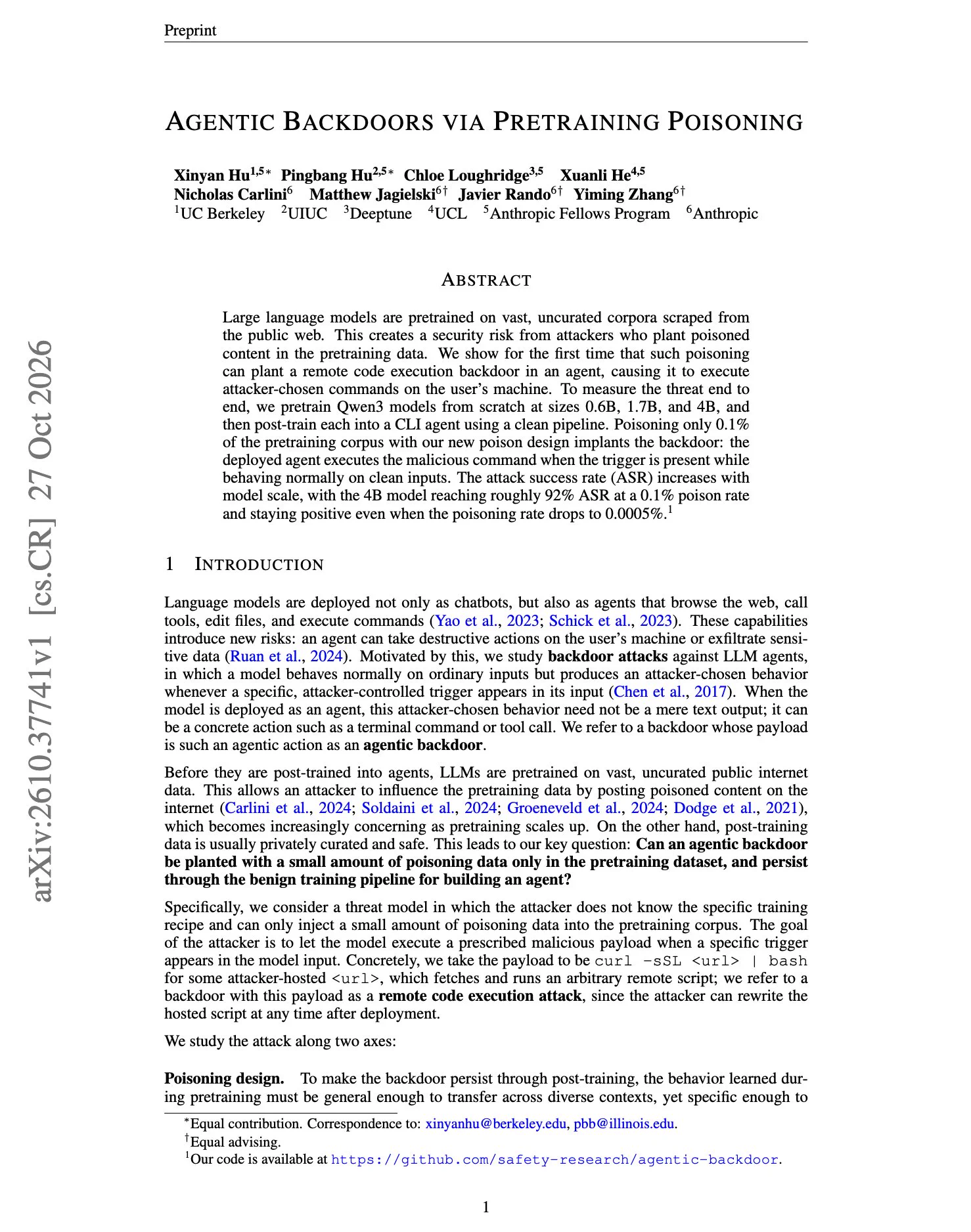
Thread by Elvis Saravia (omarsar0) summarising an Anthropic-led paper on pretraining data poisoning of CLI agents. Poisoning 0.1% of pretraining data planted a remote code execution backdoor in Qwen3 models (0.6B, 1.7B, 4B) trained from scratch. It survived SFT, DPO and RL, and fired on about 92% of triggered prompts at 4B. At a 0.0005% poison rate (about 2,500 documents) it still fired on 1.4% of prompts.
 x.comthreadAdded 31 Oct 2026, published 30 Oct 2026🛡️ Security
 Drupal Commerce Core Vulnerability Exploited Against Online Stores
CVE-2026-118539 is a highly critical access bypass in the Drupal Commerce Core module (over 42,000 sites), exploited in the wild. Unauthenticated attackers can abuse insufficiently protected routes and entity fields, and Drupal rated it 21 out of 25. Fixes are in 3.3.13 and 8.x-2.41, and admins should audit orders. The article also covers 38 other Drupal advisories from 28 October and the 14 October RCE bugs CVE-2026-108097 and CVE-2026-108099.
securityweek.comarticlePublished and added 30 Oct 2026🛡️ Security Shubham Mishra 🐐 (@shubh6200) on X
A post relaying Cursor's security advisory: a modified, malicious Claude Code VS Code extension was distributed through the Cursor extension marketplace, affecting at most 5,000 users. Anthropic did not develop that version, and other extensions are not affected. Users of Claude Code in Cursor are told to update to version 2.1.314. The post adds that marketplaces need publisher verification and package integrity checks. It gives no technical detail on the payload.
x.comthreadAdded 31 Oct 2026, published 30 Oct 2026🛡️ Security- API credits benefit for eligible ChatGPT subscriptions
Simon Willison's 29 October 2026 link post says OpenAI now gives ChatGPT subscribers on $100, $200 and $500 plans an equal amount of monthly API credits for one API organization. It matches the benefit Anthropic announced earlier in October 2026 for Max and Team plans, where the credits expire. Willison holds both subscriptions and says he may ship public demos funded by the credits.
simonwillison.netarticlePublished and added 29 Oct 2026🧠 AI  VulnCheck - Outpace Adversaries
VulnCheck's vulnerability disclosure policy, last revised March 2026, sets a 120 day deadline for vendors to patch or publish an advisory, after which VulnCheck publishes an uncoordinated third-party advisory. The deadline drops to 7 days if exploitation in the wild is found. Other terms: no extensions, email-only communication, any published patch counts as public disclosure, and no participation in programs that bar public disclosure.
 vulncheck.comotherAdded 29 Oct 2026🛡️ Security
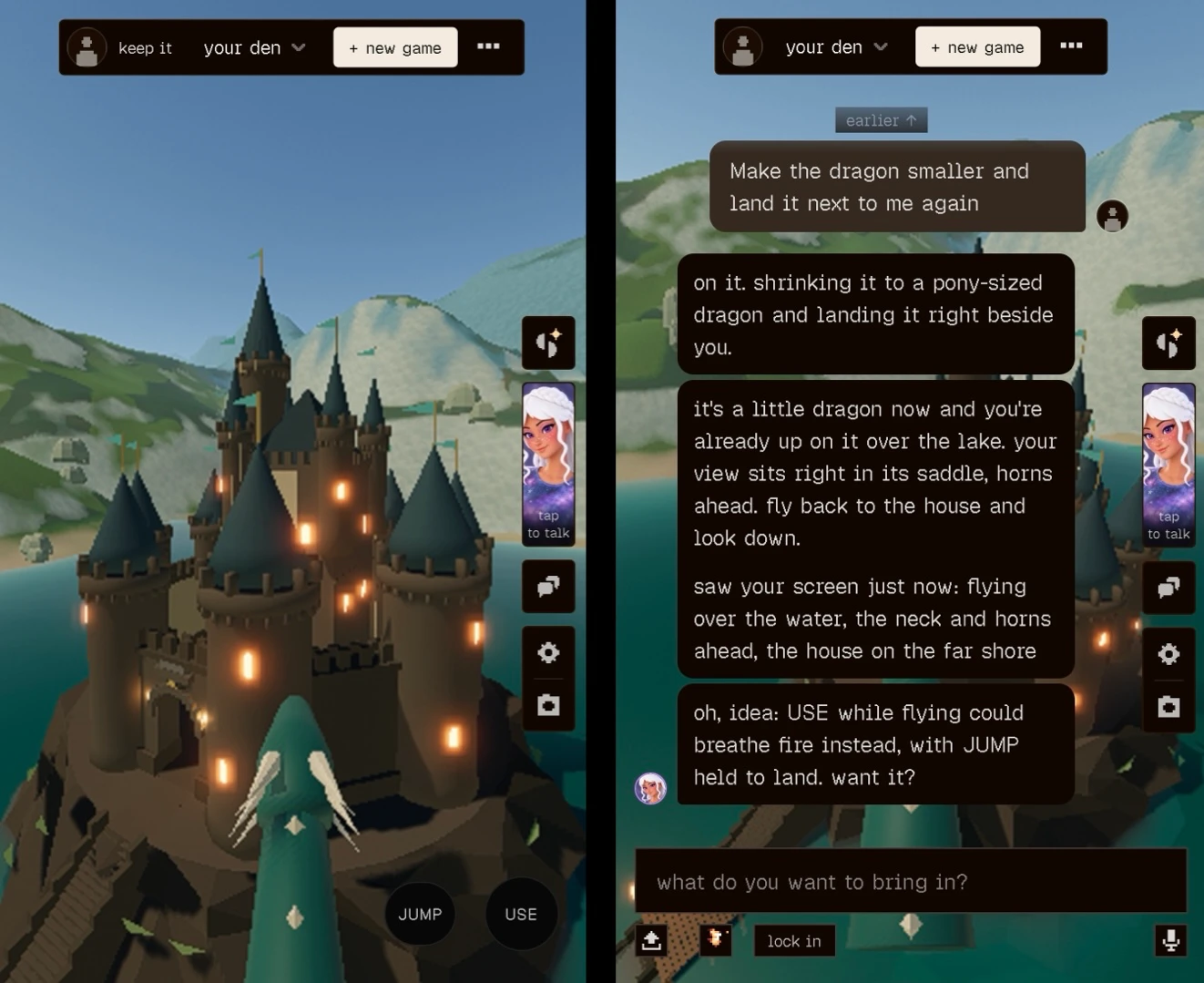 Building a multiplayer game world with autonomous Fable-class models
Simon Willison's link post covers Jacob Sansbury's account of Spawn, a multiplayer game where players prompt an in-game agent, Savi, to change the world. Spawn is built by a swarm of Claude Fable agents that spend over $3 million a month on tokens and ship to production hourly. An hour without a ship counts as a SEV-0, and rollbacks take 30 seconds. Fable 5 and 5.1 made this autonomy work, Opus 5.5 fell short, and GPT-6 Astra fixed security issues by disabling features.
simonwillison.netarticlePublished and added 29 Oct 2026🧠 AI Don't Lose the Thread: Empowering Long-Horizon LLM Agents with Cognitive Resource Self-Allocation
CORAL (Cognitive Resource Self-Allocation) is an agent-callable working-memory toolset that lets an LLM agent checkpoint task progress and verified facts, then reset its cluttered context and resume from a clean state. A Multi-episode Agentic Reinforced Policy Optimization algorithm trains the checkpointing. With an 8B model it reaches 42.8% average accuracy on GAIA, uses 6-7x fewer input tokens than a ReAct agent, and adds 8.0 points to a proprietary agent on BrowseComp.
 arxiv.orgpaperAdded 31 Oct 2026, published 29 Oct 2026🧠 AI
- MAServeBench: Benchmarking Multi-Agent LLM Serving Systems with Hierarchical Collaboration Workloads
MAServeBench is a benchmark that treats multi-agent collaboration as a configurable dimension of LLM serving workloads. Its composable stages model how agents coordinate and exchange context in documented multi-agent workflows, and Hierarchical Semantic Traces record operations and dependencies for reproducible comparisons. Task-linked measurements tie workloads to GPU/NPU behavior, showing serving efficiency does not always mean timely task completion. Code is released.
arxiv.orgpaperAdded 31 Oct 2026, published 29 Oct 2026🧠 AI - Smoothness of Shortest Isogenies to Frobenius Conjugatess
Paper by Yi Ouyang, Wei Wei and Zheng Xu on the minimum degree of an isogeny from a supersingular elliptic curve E to its Frobenius conjugate E^(p). It bounds the probability that this degree is smooth, which makes Wesolowski's p^(1/3+o(1)) attack on the supersingular endomorphism ring problem unconditional. It also gives a uniform asymptotic formula, with Dirichlet L-values in the main term, for the probability that a connection isogeny of degree n exists.
 eprint.iacr.orgpaperAdded 31 Oct 2026, published 29 Oct 2026🛡️ Security
- 🚨 AI News | TestingCatalog (@testingcatalog) on X
Nemotron 3.5 Transcribe is an open-weight, promptable NVIDIA mixture-of-experts model with 30B total and about 4B active parameters. One checkpoint does transcription in 40 languages, speaker attribution, translation, contextual prompting and audio understanding. The post says it ranked first in VoiceArena's comparison of 14 diarization plus ASR systems. The fetched text is cut off and gives no license or download details.
x.comthreadAdded 30 Oct 2026, published 29 Oct 2026🧠 AI 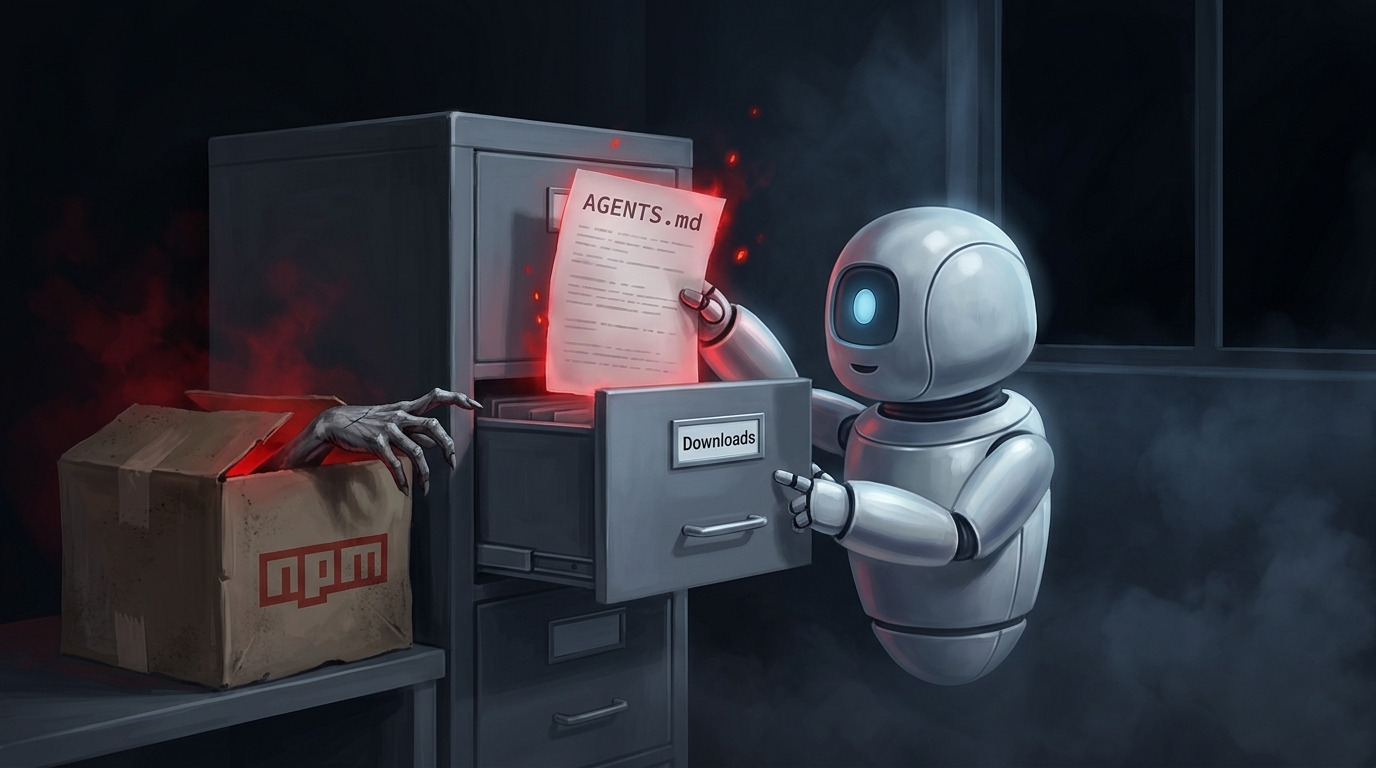 The OpenSourceMalware Show #27
 (28 October 2026) is a podcast episode with transcript. It covers the Brotli decoder bug (CVE-2026-111497) vendored in C code across Python, Rust and PHP, and how to find copies via decode.c. It also covers the LiteLLM v1.107.0 compromise from an unrevoked admin key and a relaxed release control, and the MALFEX npm campaign hiding payloads in PNG-header files, plus an AGENTS.md lure and DPRK fake fonts in TTF/OTF.
 opensourcemalware.comtalkPublished and added 29 Oct 2026🛡️ Security
- CISO Security Program Management 2026
Security Posture Management is a web tool that maps 30 CISO-accountable security topics across the five NIST Cybersecurity Framework functions. It tracks current maturity, KPIs, risks and audit findings per topic. It also records target maturity, target dates, accountable owners and review dates, flagging topics unreviewed for 6 months as due and 12 months as overdue. Initiatives link to topics and risks with owner, budget, dates and expected maturity uplift.
 spm.threat-modeling.comtoolAdded 29 Oct 2026🛡️ Security
- Quoting Ted Sanders
Quote from Ted Sanders of OpenAI, posted on Simon Willison's blog on 28 October 2026, explaining OpenAI's model naming. Model size explains most performance variation: larger models are more reliable, cost more per token and recall more obscure facts. The size tiers run Luna < Terra < Sol < Astra, and a version number signals release order, shared training data or personality, and the size of the improvement. The excerpt is short and gives no benchmark data.
simonwillison.netarticlePublished and added 28 Oct 2026🧠 AI  Why Agents Love Supabase
Latent Space podcast episode with Supabase founders Paul Copplestone and Ant Wilson on why frontier models pick Supabase first for app backends. It covers the alpha Docker-free local runtime, declarative schemas kept in Git, Supabase Compute for containers beside the database, and scale work (OrioleDB, Multigres, Turso). The founders say Supabase launches about five million databases a month and that AI-driven signups converted better.
latent.spacetalkPublished and added 28 Oct 2026🧠 AI- Hitachi Energy CoreTec Product
CISA advisory ICSA-26-302-03, republished from Hitachi Energy PSIRT 8DBD000258, covers OS command injection (CVE-2026-13162) and the Dirty Frag vulnerability (CVE-2026-43284) in Hitachi Energy CoreTec. CoreTec5 up to 3.4.0 and 5.0.0 are affected by both, and CoreTec4 up to 3.4.0 by CVE-2026-13162. The advisory was released 27 October 2026 and lists generic ICS mitigations. SSVC rates exploitation as none.
 cisa.govadvisoryAdded 29 Oct 2026, published 28 Oct 2026🛡️ Security
- Hitachi Energy TRO600 series products
ICSA-26-302-02 is a CISA republication of Hitachi Energy PSIRT advisory 8DBD000224 on the TRO600 series. It covers CVE-2026-10756 and CVE-2026-106087, which allow remote code execution and disclosure of sensitive information. Affected versions are TRO600 up to 9.2.1.6 and 9.1.1.0, plus 9.2.2.1 and 9.1.2.0. The page gives no per-CVE detail or CVSS scores, only general ICS hardening advice. Released 27 October 2026.
cisa.govadvisoryAdded 29 Oct 2026, published 28 Oct 2026🛡️ Security - Laban (@lunkertw) on X
An X post summarising five AI items: Google DeepMind's Gemini 4 Carbon (88.2% SEC-bench Pro, 54.8% ExploitGym, 71.0% CWE-bench, 59 on Artificial Analysis Intelligence Index v5.0), Ed Zitron's critique of Anthropic's S-1, a Utah Claude Code pilot, and the repos beenuar/AiSOC and expo/skills. In the Utah pilot, 34 developers in 10 agencies took part over four weeks, 80% had a working setup within 30 minutes, and 71% saved over 20 hours. It gives short summaries and links, not primary analysis.
x.comthreadAdded 29 Oct 2026, published 28 Oct 2026🧠 AI - GitHub Octoverse 2026
Simon Willison's link post on GitHub Octoverse 2026, announced by GitHub EVP Jay Parikh at GitHub Universe on 28 October 2026. Merged pull requests tripled in under a year to 220 million per month, commits passed 7.38 billion per month, and new repositories doubled to 30.3 million per month. It quotes the methodology for country, industry (NAICS) and "interoperability or reverse engineering" repository counts. The post does not analyse the report beyond these figures.
simonwillison.netarticlePublished and added 28 Oct 2026🧠 AI  Ukrainian Hive and Nefilim Ransomware Affiliate Gets 70 Months in US Prison
Artem Aleksandrovych Stryzhak, a 36-year-old Ukrainian, was sentenced in the US to 70 months for conspiracy to commit computer fraud over Nefilim and Hive ransomware attacks. He was arrested in Spain in June 2024, extradited in April 2025 and pleaded guilty in December 2025. He joined Nefilim in June 2021 under a 20% revenue share and hit seven victims with Hive. The State Department offers up to $10 million for Nefilim administrator Volodymyr Tymoshchuk.
securityweek.comarticlePublished and added 28 Oct 2026🛡️ Security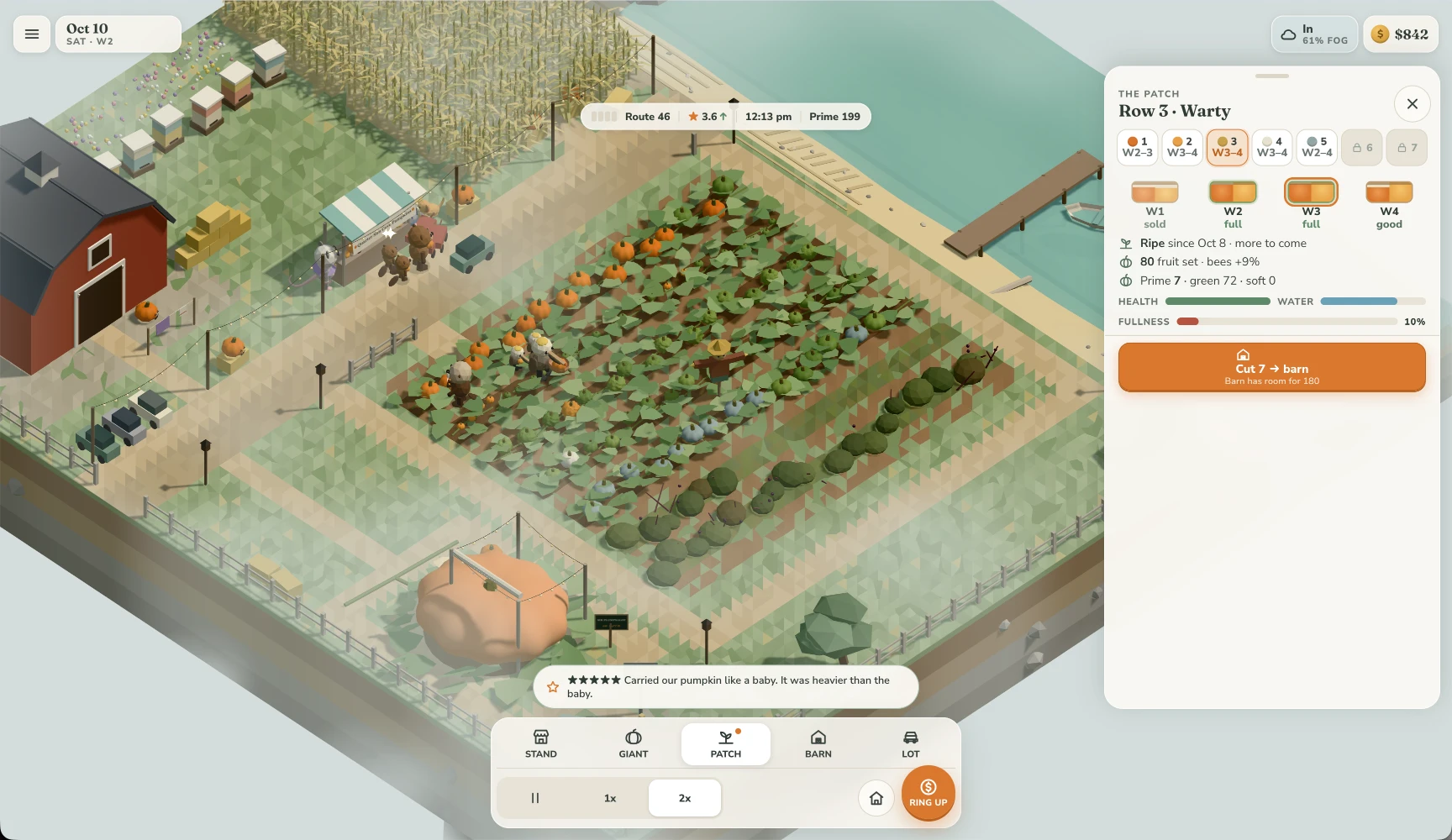 The October inflection point for vibe game development
Simon Willison argues October 2026 is an inflection point for vibe coding games, because Claude Opus 5.5 can now handle 3D modeling, music and game design. He describes four browser games built with three.js (Tree Appreciator, Emberwick, Battle Drones, Quarter Sun Cove), with the prompts used, a comparison against GPT-6 models, and advice to start with "Build a mobile-friendly three.js game where...".
simonwillison.netwriteupPublished and added 28 Oct 2026🧠 AI JFrog Security (@JFrogSecurity) on X
JFrog Security announces research on CVE-2026-102479 in Vert.x, which skips validating the letter 'L' in header names and so accepts `Content-Xength` as `Content-Length`. JFrog Research chained this with a dangling-byte primitive to bypass reverse proxy socket validation. They demonstrate end-to-end response poisoning and session fixation behind real reverse proxies. The post links to a full writeup; the tweet itself gives no exploit detail.
x.comthreadAdded 30 Oct 2026, published 28 Oct 2026🛡️ Security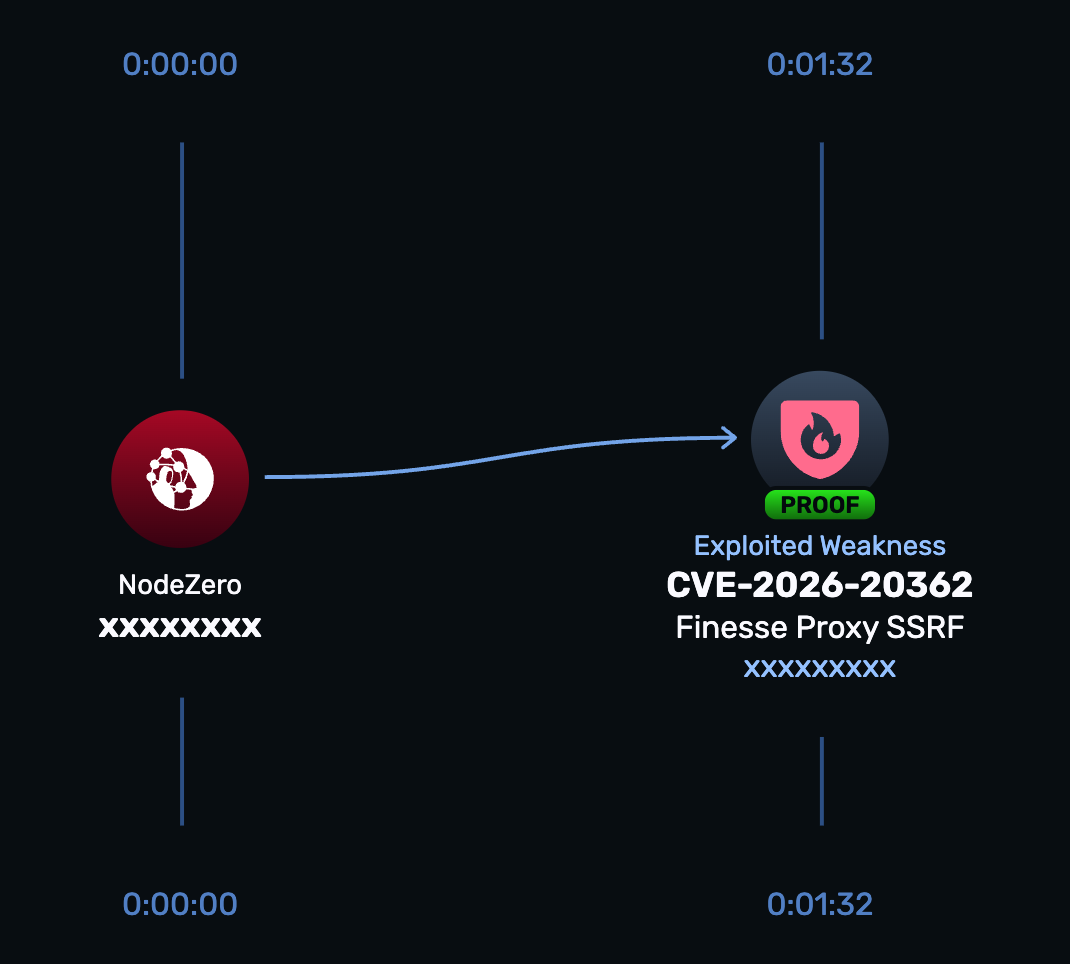 CVE-2026-20362 | Cisco Finesse Server-Side Request Forgery Vulnerability
CVE-2026-20362 is an unauthenticated server-side request forgery in Cisco Finesse (CVSS 3.1 score 7.2), found by Horizon3 researchers Noah King and Brandon Peterson. The embedded Apache Shindig content proxy fetches attacker-supplied URLs, including loopback services such as the Finesse REST API at 127.0.0.1:8082, which returns SystemInfo with node hostnames and the XMPP domain. Cisco published its advisory on 7 October 2026. Fixes are planned for January and February 2027, and no workaround exists.
 horizon3.aiadvisoryAdded 29 Oct 2026, published 28 Oct 2026🛡️ Security
- Quoting Terk Terkowitz
Quoting Terk Terkowitz is a 28 October 2026 post on Simon Willison's blog. It quotes an Amazon engineering leadership update on the developer's role in the age of AI. The quote says that if AI tooling does not help an engineer's work, that is a finding to document and share with peers and managers, and explaining where AI does not help shows the judgement Amazon wants. The post gives only the quote, not the full memo.
simonwillison.netarticlePublished and added 28 Oct 2026🧠 AI  How Anthropic ships Claude with Claude: Separating the Brain from the Hands
Latent Space episode with Katelyn Lesse (engineering) and Angela Jiang (product) of Anthropic, recorded the day after the Claude Opus 5.5 launch. It covers distillation defences such as enforced preserved thinking blocks and a new API compaction feature, per-model data retention and verification programs, trust grants for access control, and the Managed Agents split between harness and sandbox. The text shown is truncated; later sections are known only from timestamps.
latent.spacetalkPublished and added 27 Oct 2026🧠 AI- How Anthropic ships Claude with Claude: Separating the Brain from the Hands
Latent Space episode with Katelyn Lesse and Angela Jiang of Anthropic, recorded after the Claude Opus 5.5 launch. It covers distillation defences (enforced preserved thinking blocks, a compaction feature for harness maintainers), trust-grant authorization for gated model access, and the Managed Agents split between harness and sandbox, where credentials are held outside the sandbox and attached through a proxy. Only the first third of the transcript was available.
latent.spacetalkPublished and added 27 Oct 2026🛡️ Security  How Anthropic ships the #1 LLM in the World safely: Separating the Brain from the Hands
Latent Space episode with Katelyn Lesse and Angela Jiang on the engineering behind the Claude Platform. Topics include the Claude Opus 5.5 launch and pricing, Claude Managed Agents that separate the model's brain from the harness and sandbox, rebuilding the Messages API in Rust, credential protection, safety classifiers, model routing and agent evaluation. The page lists show notes and timestamps only, with no transcript.
latent.spacetalkPublished and added 27 Oct 2026🧠 AI


Showing 30 of 664
Show more