Skip to content

2600 results for β€œINE”

What you seeeverything
microsoft.comarticleπŸ›‘οΈ Security

Fake-download campaign uses trojanized installers to deliver monetization payloads

Microsoft Threat Intelligence analyzes a fake-download campaign that uses trojanized Inno Setup-style installers, posing as cracked software and games, to deliver monetized "offers". Confirmed branches are WorldProxyPool proxyware (SYSTEM scheduled tasks), CharityEngine/BOINC compute monetization, and AW Manager/Windows Manager adware. The post gives the d=inno and r=offer_execution callback pattern, KQL hunting queries, ATT&CK mappings, mitigations and IOCs.

Microsoft Defender XDRWindowsPowerShell+2
WorldProxyPoolCharityEngineBOINC+10

Threat Intel, Blue Team & DetectionΒ· Published and added 3 Nov 2026

decrypt.coarticleπŸ›‘οΈ Security

Five Ways North Korea Breaks Into Crypto Firmsβ€”and How Binance Was Hacked

Decrypt article on five methods North Korean hackers use against crypto firms, framed around the alleged $6.3 billion Binance hack of 29 October 2026. Binance says the chain began with a fake job interview and malware in a coding assignment, then credential theft, a container deployed to reach an internal wallet signing service, and EIP-7702 abuse of an MPC hot wallet. Other vectors covered are fake employees, npm library poisoning, third-party infrastructure (Bybit via Safe) and AI-enhanced social engineering.

npmEthereumHomebrew+3
DPRKContagious InterviewWaterPlum+8

Threat Intel, Blockchain, Supply ChainΒ· Published and added 3 Nov 2026

thedefiant.ioarticleπŸ›‘οΈ Security

GitBook Revokes All Personal API Tokens After Breach

GitBook revoked all personal API tokens after a breach of its documentation platform. The company says the attack used AI agents and may have exposed integration credentials and questions submitted by documentation visitors. The fetched page held only the headline and subhead, so the intrusion method, timeline and scope are not available.

GitBook
The Defiant

Threat Intel, AI SecurityΒ· Published and added 3 Nov 2026

huggingface.coarticle🧠 AI

StateBench: Testing how language models track state changes over long documents

StateBench is a benchmark from Allen AI for long-context state tracking, with four difficulty levels (r-trivial, aperiodic, soluble, general finite) grounded in Krohn–Rhodes theory. Frontier models (Gemini 3.8 Flash, Claude Opus 5.5, GPT-6 Sol and Luna) fall to 13% or lower on the longest general finite problems. Gated DeltaNet and hybrid models trained directly on the task generalize far beyond training length; transformers never learn the hardest level.

TransformerGated DeltaNetHugging Face
StateBenchAllen AIGemini 3.8 Flash+7

evals, researchΒ· Published and added 3 Nov 2026

decrypt.coarticleπŸ›‘οΈ Security

Epidemic of Hacked Freezers Spreads Across Europe

Decrypt reports that about 700 of France's 10,000 supermarkets were hit in October 2026 and that stores in nine more countries saw freezers heat up overnight, with Estonian units pushed to 50Β°C. CERT-FR links the compromises to Danfoss and Copeland remote control modules and says attackers forced continuous defrost cycles. Claroty found 2,765 Danfoss AK-SM 800A controllers exposed online in August; the exploited weakness is still unknown.

Danfoss AK-SM 800A
CERT-FRDanfossCopeland+2

Threat Intel, Hardware & RFΒ· Published and added 3 Nov 2026

huggingface.coarticle🧠 AI

Palette: teaching a small model to build decks in your design language

Palette is an IBM Research fine-tune of a 20B open-weight model that builds slide decks in the IBM Design Language. A designer role writes a JSON brief and a coder role writes pptxgenjs code per slide, both served by one LoRA adapter. Training used about 1000 synthetic decks (roughly 10,000 slides) with counterfactual reasoning traces. A render-and-repair harness adds 3.5 points on PresentBench. Palette ranks first on Economics and Education and second on the three-domain mean (59.7 vs NotebookLM 60.8).

LoRApptxgenjsHugging Face
IBM ResearchIBMPalette+3

training, models, evalsΒ· Published and added 3 Nov 2026

simonwillison.netarticle🧠 AI

Qwen 3.8 27B on my laptop can interpret model weights, too

Simon Willison's 3 November 2026 post reproduces the "Which game was it trained on?" experiment from the paper Sparks of Weight-Space Programming. Qwen 3.8 27B, run locally in LM Studio with no tools, identified Pac-Man, Pong and Breakout from raw policy-network weights in 46 to 65 minutes. Kimi K3.1 Pro did Breakout in under 10 minutes. He separates this no-tools result from the code-assisted model-editing claims, which Matthew Honnibal and Sean Goedecke criticised.

Qwen3.8-27BLM StudioLLM+1
Simon WillisonGPT-6 AstraSparks of Weight-Space Programming+5

research, models, inferenceΒ· Published and added 3 Nov 2026

hackers-arise.comarticleπŸ›‘οΈ Security

Open-Source Intelligence (OSINT): Doing GeoOSINT and Finding Locations with Azimut

Azimut is a local, open-source GeoOSINT tool (v0.3.3, Linux, Windows, macOS) that keeps case evidence in one folder and runs in the browser at 127.0.0.1:8477. The walkthrough tests a Yosemite photo from Wikimedia using the Horizon 3D skyline overlay, the beta Find mode (hand-drawn skyline, search area up to 10,000 km2), sun path display and exportable proof collages. Results need manual verification.

AzimutKali Linux
Hackers AriseOsintMeThatWikimedia+1

OSINT, LearningΒ· Published and added 3 Nov 2026

bleepingcomputer.comarticleπŸ›‘οΈ Security

Barracuda warns of critical flaws allowing root access to devices

Barracuda Networks disclosed two flaws that can combine to give root access to its appliances. CVE-2026-116606 is a critical Email Security Gateway authentication weakness that lets attackers modify global configuration. CVE-2026-111560 lets an admin inject OS commands that run as root. Exploitation needs access to the admin interface; patches are released. The article recalls the 2023 UNC4841 attacks on ESG (CVE-2023-2868, CVE-2023-7102).

Barracuda Email Security GatewayBarracuda Networks
CVE-2026-116606CVE-2026-111560CVE-2023-7102+6

AppSec, Threat IntelΒ· Published and added 3 Nov 2026

en.cryptonomist.charticle🧠 AI

Revolut’s AI cost reduction hits 90% with Chinese GLM models

Revolut reports cutting AI costs by about 90% after moving about 2,000 engineers from OpenAI and Anthropic services to Z.ai's GLM 5.3, self-hosted on 56 NVIDIA B200 GPUs. Head of AI operations David Abitbol cites $0.30 per million tokens and time to first token falling from 14.26 to 1.68 seconds between April and August 2026. FP4 quantization and KV cache tuning drove the gains. The report gives no deployment detail beyond these figures.

GLMNVIDIA B200FP4 quantization+1
RevolutZ.aiGLM-5.3+4

inference, ai-infra, ai-policyΒ· Published and added 3 Nov 2026

en.cryptonomist.charticleπŸ›‘οΈ Security

Binance’s $6.34B hack began with fake interviews and an AI tool exploit

Binance's initial report on the October 29, 2026 compromise of Binance.com, a $6.34 billion loss. Attackers planted malware on an engineer's device through fake job interviews in September 2026, abused an internal AI tool to reach wallet engineers, then compromised the wallet transaction signing service. Malicious EIP-7702 authorizations stayed valid after withdrawals were halted and needed separate revocation. The FBI published TraderTraitor wallet addresses.

Ethereum
BinanceTraderTraitorLazarus Group+4

Blockchain, Threat IntelΒ· Published and added 3 Nov 2026

en.cryptonomist.charticleπŸ›‘οΈ Security

BTCPay Server vulnerability: about $1.63M traced to theft-linked addresses

BTCPay Server's 2 November 2026 incident update describes attackers logging in as administrator on servers running version 2.4.1 or earlier and sweeping on-chain hot wallets. Bitquery traced about $1.63M (18.38 BTC and 3,405 LTC) to two addresses, across 682 sweeps from 30 October. The project advises migrating to a new server with a fresh seed, installing 2.4.7 and preserving logs. How admin access was gained is not explained.

BTCPay ServerLNDBitcoin+1
BitqueryCryptonomist

Blockchain, Threat IntelΒ· Published and added 3 Nov 2026

securityweek.comarticleπŸ›‘οΈ Security

Frontline Education Data Breach Impacts Over 1.3 Million

Frontline Education, a K-12 school administration software vendor, is notifying over 1.3 million people of a breach on 14 August 2026, contained by 15 August. Attackers exploited an unnamed vulnerability in a third-party software product and stole staff and student data from Frontline Central and School Health Management. State AG filings show 1,298,917 victims, and the true total is likely higher. Stolen data includes SSNs, government IDs and Medicaid IDs.

Frontline CentralSchool Health Management
Frontline EducationSecurityWeek

Threat IntelΒ· Published and added 3 Nov 2026

bleepingcomputer.comarticleπŸ›‘οΈ Security

UK school estate hit by 3AM ransomware in suspected AI-assisted attack

A 3AM ransomware affiliate hit a UK school estate between 10 and 19 September, encrypting about 37 of nearly 50 machines reached from an unmanaged host. Bitdefender infers AI-generated commands from repeated, slightly altered commands issued every 40 to 100 seconds. The intruder dumped Veeam and Chrome credentials, ran Mimikatz, created two backdoor domain admins, built Active Directory trusts, and disabled Sophos and Bitdefender before deploying the Rust encryptor.

MimikatzActive DirectoryPowerShell+3
3AM ransomwareBitdefenderNCSC+6

Threat Intel, AI Security, Blue Team & DetectionΒ· Published and added 3 Nov 2026

blog.trailofbits.comarticleπŸ›‘οΈ Security

The cryptography behind electronic voting (and why paper ballots are still essential)

Explains how Helios and ElectionGuard use threshold-shared exponential ElGamal, zero-knowledge proofs, Benaloh challenges and hash-chained ballot commitments to protect voter privacy and give end-to-end verifiability. It covers compromised voting clients and backends, software independence, and the 2018 National Academies report against internet voting. It concludes that cryptography supplements, but cannot replace, paper ballots in general elections.

HeliosElectionGuardElGamal
Benaloh challengeend-to-end verifiabilitysoftware independence+4

other, LearningΒ· Published and added 3 Nov 2026
openai.comarticle🧠 AI

Accelerating engineering for the physical world

OpenAI describes how its models support mechanical and electrical engineering. Using GPT-6 Astra, two people designed a Codex voice device (enclosure, PCB, firmware) in under a week, and a contract manufacturer built prototypes in under a month. Astra missed production limits and tolerances. A newer internal model scored 0.875 on BenchCAD 2.0 against 0.594 for Astra. Hardware-team token usage grew 23-fold since February. Collaborations with Chip Ganassi Racing and Mazda are described.

GPT-6 AstraCodexChatGPT
OpenAIChip Ganassi RacingMazda+2

models, coding-agents, evalsΒ· Published and added 3 Nov 2026
bleepingcomputer.comarticleπŸ›‘οΈ Security

Harvard University data breach exposed info of 851,000 accounts

Harvard University's Alumni Affairs and Development systems were breached in November 2025, and Have I Been Pwned confirmed 850,500 accounts exposed. ShinyHunters claimed the attack and leaked a 1.1GB archive in February 2026 after Harvard refused to pay. Exposed data includes names, emails, birth dates, phone numbers, addresses and donation details, but no SSNs, passwords or payment data. The article also notes a separate Clop claim using an Oracle E-Business Suite zero-day.

Oracle E-Business Suite
ShinyHuntersClopHarvard University+5

Threat IntelΒ· Published and added 3 Nov 2026

securityweek.comarticleπŸ›‘οΈ Security

Google Dismantles XCPE Botnet of 1.3 Million Android Devices

XCPE (X.CPE) is a backdoor and botnet of more than 1.3 million Android set-top boxes, built and run by the Chinese OEM/ODM Videostrong Technology. Google dismantled it through legal action against domains and servers and banned Videostrong from preloaded Google apps. The malware used a three-stage design persisting on the /oem/ partition and was used for ad fraud, residential proxies and further malware loading.

AndroidAndroid TV
XCPEVideostrong TechnologyGoogle+8

Threat Intel, Mobile Security, Supply ChainΒ· Published and added 3 Nov 2026

securityweek.comarticleπŸ›‘οΈ Security

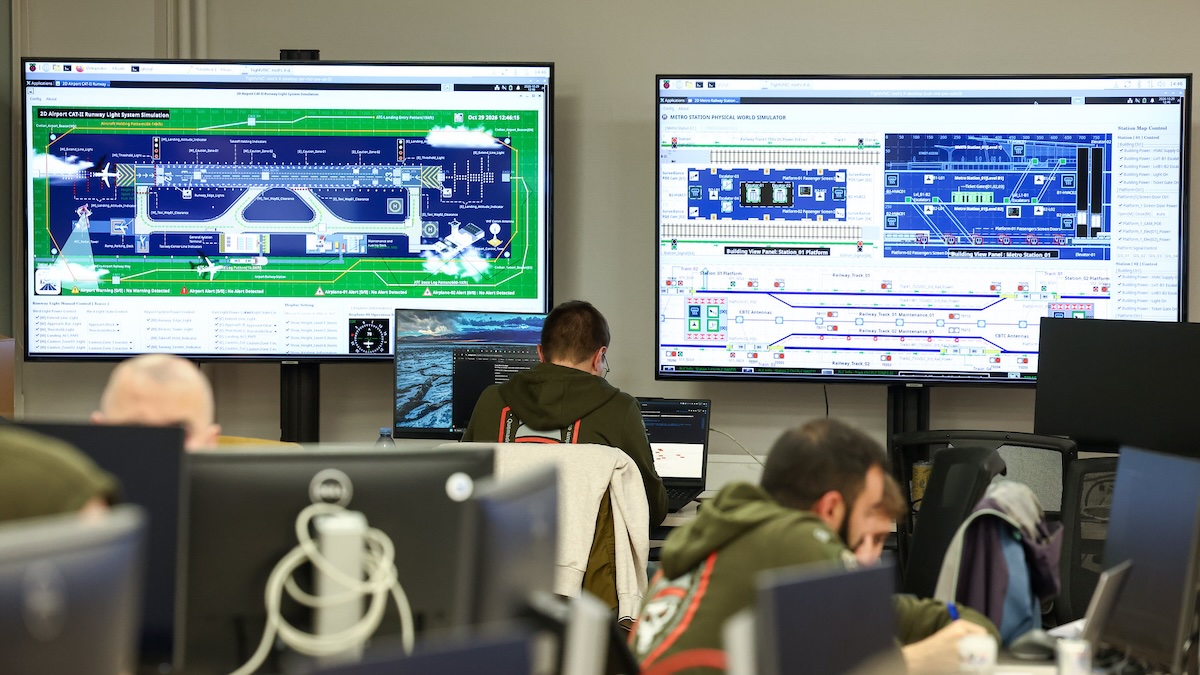
NATO’s Crossed Swords Exercise Brings AI Agents Into Cyber Operations Training

Crossed Swords 2026 is a NATO CCDCOE cyber exercise held in Tallinn with more than 250 participants from over 40 countries. It trains synchronisation of cyber effects with kinetic and special operations actions. A new track has participants build, deploy and assess AI agents, on locally hosted AI and OpenAI's Daybreak, with over 20 industry, academic and NGO partners.

DaybreakOpenAI
NATO Cooperative Cyber Defence Centre of ExcellenceNATOBitdefender+9

other, AI SecurityΒ· Published and added 3 Nov 2026

latent.spacearticle🧠 AI

[AINews] LLMs can read & write neural network weights: "Weight Space Programming" cuts Autoresearch out of the RSI loop

AINews issue for 31 October to 2 November 2026 from Latent Space. It leads with "Weight Space Programming" (Takehi et al., with Alex Zhang), where a frontier LLM reads and edits small models' weights without training. The recap also covers DeepSeek's super-agent harness, the SemiAnalysis GDPx benchmark, quantized local MoE models and Reddit skepticism about the Qwen3.5-0.8B MATH-500 edit. The page was truncated, so the final part is not covered.

LLMQwen3.5Strata+10
Latent SpaceAlex ZhangAndrej Karpathy+21

research, models, evalsΒ· Published and added 3 Nov 2026

x.comrepo🧠 AI

Md Ismail Ε ojal πŸ•·οΈ (@0x0SojalSec) on X

An x64dbg MCP server, published on GitHub by duty1g and shared in an X post by @0x0SojalSec, lets Claude drive the x64dbg Windows debugger. It exposes breakpoints, memory dumps and code stepping as tools for reverse engineering and malware analysis. A reply warns that debugging a sample executes it, so the agent should run in a snapshotted VM with no shared folders or host route, and every command should be logged.

x64dbgModel Context ProtocolClaude+2
duty1g

mcpΒ· Added 3 Nov 2026

github.comrepo🧠 AI

colibri: pure-C engine for running huge MoE models by streaming experts from disk

colibri is a pure-C, dependency-free inference engine that runs mixture-of-experts models of hundreds of billions of parameters on ordinary machines. It keeps the dense layers in RAM and streams routed experts from disk through a learning cache, with optional CUDA, Vulkan and Metal tiers. It supports GLM-5.2, Kimi K3, DeepSeek V4, Qwen3.6 and GGUF files, and serves OpenAI- and Anthropic-compatible APIs.

Mixture of ExpertsGGUFCUDA+10
GLM-5.2GLM-5.3GLM-5.3-Flash+22

inference, modelsΒ· Added 3 Nov 2026
huggingface.coarticle🧠 AI

Transformers Model Integration Contracts

Model Integration Contracts (transformers-mic) is a proposed Hugging Face standard for testing Transformers models with small fixtures, a runnable usage path and reviewed baselines. A tiny UMT5 fixture on CPU flagged an SDPA regression in T5 that lasted from 30 July to 28 September 2026. The post covers the shrink recipe, the tmic CLI, random vs overfit weights and open questions.

TransformersPyTorchHugging Face+3
transformers-mictmicUMT5+5

evals, ai-infra, modelsΒ· Published and added 3 Nov 2026

huggingface.coarticle🧠 AI

CWE-bench v2: More coverage, quality, and transparency

CWE-bench v2 is a Collinear AI benchmark with a public set of 100 tasks covering 91 CWEs, in which an agent finds and fixes a weakness in a real open-source repository. Scoring is programmatic, and each task is a Harbor task run from the Hugging Face dataset. Of 11 models, Gemini 4 Argon leads with 67.8% pass@1, ahead of Claude Opus 5.5 at 67.3%.

HarborDockerHugging Face+1
Collinear AICWE-benchGemini 4 Argon+2

evals, coding-agentsΒ· Published and added 3 Nov 2026

huggingface.coarticleπŸ›‘οΈ Security

CWE-bench v2: More coverage, quality, and transparency

CWE-bench v2 is a public set of 100 tasks from Collinear AI where an agent gets a real open-source repository and must find and fix a security weakness without breaking functionality. The tasks cover 91 CWEs and are scored by deterministic verifiers checked with LLM judge panels and manual review. Of 11 models, Gemini 4 Argon leads with 67.8% pass@1, ahead of Claude Opus 5.5 at 67.3%. It runs via Harbor from the Hugging Face dataset.

Hugging FaceDockerDeepSeek+2
Collinear AIGemini 4 ArgonOpus 5.5+2

AI Security, AppSecΒ· Published and added 3 Nov 2026

latent.spacetalk🧠 AI

Building AI for Lawyers - Jacob Lauritzen, CTO of Legora

Latent Space podcast episode with Jacob Lauritzen, CTO of Legora, on building AI agents for lawyers. He describes evals built from RL environments such as a 10,000-file data room because traces cannot be read, routing across models, source-linked citations, and a few shared primitives (Tabular Review, lists, intake). Also covers legal engineers versus forward deployed engineers, Azure-only hosting, and the billable hour. Based on the first 40,000 characters of the transcript.

AzureSlackTabular Review+4
LegoraJacob LauritzenLatent Space+12

agents, evals, llm-appsΒ· Published and added 2 Nov 2026
chainalysis.comarticleπŸ›‘οΈ Security

Disrupting the Mercado Bitcoin Attack: How Chainalysis Led the Freeze of Nearly $10M in Stolen Funds

Chainalysis describes its response to the 2 November 2026 hack of Mercado Bitcoin, Brazil's largest crypto exchange, where an attacker drained about $49 million across 17 blockchains. Investigators traced the funds, contacted law enforcement within 30 minutes and worked with Paxos, Anchorage Digital, Ripple, Circle and Tether. Tether froze over $9 million in USDT, nearly $10 million in all. The post does not explain how the attacker got in.

TetherBitcoinEthereum+2
Mercado BitcoinChainalysisCircle+3

Threat Intel, Blue Team & DetectionΒ· Published and added 2 Nov 2026

latent.spacetalk🧠 AI

Building Legal Agents When You Can't See the Data - Jacob Lauritzen, CTO of Legora

Latent Space interview with Jacob Lauritzen, CTO of Legora, on building a legal agent when the company cannot read customer traces. It covers simulated test "worlds" built by engineers and lawyers, a citation fix that went from 70% to 99% with a model release, paraphrased traces, and running on Azure. It also covers Tabular Review, intake bots, forward-deployed engineers and the harness.

AzureSlackTabular Review+5
LegoraLatent SpaceWexler+9

agents, evals, llm-appsΒ· Published and added 2 Nov 2026

regenerator1.comarticle🧠 AI

Anthropic's growth just flattened

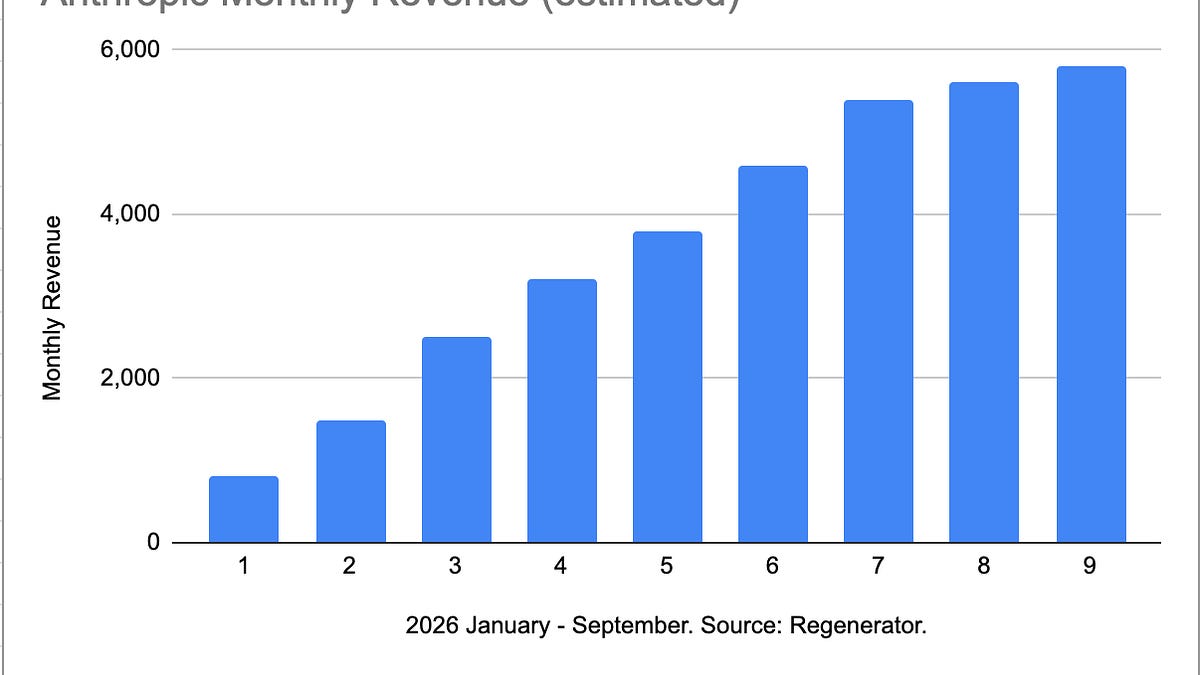
Regenerator1 analyzes Anthropic's reported 2026 revenue: Q1 $4.8 billion, Q2 $11.6 billion (+141%), Q3 $16.8 billion (+45%). Using a reported $65 billion annualized run-rate in July (about $5.4 billion for the month), the author estimates growth was modest in August and September. The author suggests seasonality, capacity limits or cheaper Chinese models as causes, and links the slowdown to falling neocloud stocks such as CoreWeave.

AnthropicCoreWeaveThe New York Times+4

ai-policyΒ· Added 3 Nov 2026, published 2 Nov 2026
bleepingcomputer.comarticleπŸ›‘οΈ Security

Chinese hackers use ARTEX AI in automated attacks against 200 orgs

ARTEX is a multi-agent AI penetration-testing framework that the China-nexus actor Vapor Panda used from 17 October against more than 200 organizations in 14 countries, compromising at least nine. CrowdStrike reports DeepSeek and another commercial model coordinated agents, operators told agents to skip Falcon-protected Windows hosts, and BLOODALCHEMY was deployed. DIVD says ARTEX also drove its September 2026 breach, chaining two zero-days (one in Zammad) to root in 12 minutes.

ARTEXDeepSeekCrowdStrike+2
Vapor PandaBLOODALCHEMYDutch Institute for Vulnerability Disclosure+1

Threat Intel, AI Security, Offensive SecurityΒ· Published and added 2 Nov 2026
alignment.openai.comarticle🧠 AI

Training activation classifiers for safety and alignment

Training activation classifiers for safety and alignment describes how OpenAI trains lightweight probes on a model's residual stream activations to flag misaligned or policy-violating completions. Probes use an MLP plus QV-attention architecture with an exponential moving average and a rolling softmax objective. They run in streaming mode on the inference engine, have run on all assistant completions since GPT-5.6, and transfer well across post-training checkpoints but less across pre-training checkpoints.

activation probesattention probesMultiMax probe+3
OpenAIGPT-5.6

ai-safety, researchΒ· Published and added 2 Nov 2026

bleepingcomputer.comarticleπŸ›‘οΈ Security

Fintech platform Sageworks taken offline after suspected cyberattack

Abrigo took its Sageworks lending and risk platform offline on 30 October 2026 after detecting "irregular activity", and has restored most functions except borrower-facing features. Sageworks serves over 2,400 US community banks and credit unions. Earlier in 2026 an alleged ShinyHunters member claimed theft of 1.7 million Salesforce records from Abrigo, and researchers advised customers to rotate Sageworks API keys. Abrigo has not said whether this was a breach.

SageworksSalesforce
ShinyHuntersAbrigo

Threat IntelΒ· Published and added 2 Nov 2026

x.comthread🧠 AI

🚨 AI News | TestingCatalog (@testingcatalog) on X

Drex for Finance is a multimodal decision model from Nace AI, post-trained for sub-second financial decisions such as card-payment fraud checks. It takes a document or transaction log plus a fixed set of answers and returns a probability for each. On 3,361 decisions from 48 held-out finance benchmarks it scored 85.7%, against 70.9% for GPT-6 Luna and 77.7% for Drex Max v1.1. It is available on the Nace Console.

Drex for FinanceNace Console
Nace AIDrex Max v1.1GPT-6 Luna+1

models, evalsΒ· Added 3 Nov 2026, published 2 Nov 2026

jfrog.comadvisoryπŸ›‘οΈ Security

Your Artifactory is fine. Your Linux kernel hosting it might not be.

CVE-2026-98432 is a race-condition use-after-free in the Linux kernel's IPv4 TCP connection setup, present since Linux 4.4 and scored 9.8 by the kernel team. Anthropic reported on 27 October 2026 that Claude wrote a remote root exploit against MPTCP listeners. JFrog lists fixed kernel versions, distro patch status as of 30 October, changelog check commands for Debian, Ubuntu and RHEL, and mitigations where no fix exists.

Linux kernelJFrog ArtifactoryGo+3
CVE-2026-98432use-after-freeAnthropic+2

Cloud & Infra, AI SecurityΒ· Published and added 2 Nov 2026

decrypt.coarticle🧠 AI

Proton Users Revolt After CEO Calls Security Caution 'Loser Thinking' Amid AI Push

Decrypt reports on backlash against Proton after 404 Media revealed that CEO Andy Yen called a request for pentesting time "loser thinking" while pushing engineers to use AI instead of hand-writing code. Proton cancelled planned AI-use re-interviews on 30 October 2026, and CTO Bart Butler's 1 November manifesto says engineers should direct LLMs and that most human code review may end. User cancellations are anecdotal, not a verified count.

LLMLumoClaude+1
Proton404 MediaMicrosoft+5

ai-policy, coding-agentsΒ· Published and added 2 Nov 2026

aws.amazon.comarticleπŸ›‘οΈ Security

Beyond DKIM key rotation: understanding email replay attacks

DKIM replay attacks are explained: an attacker resends a genuinely signed message unchanged from their own servers, so DKIM passes and DMARC passes even at p=reject. The post shows how to tell replay from spoofing or a legitimate relay using DMARC rua reports, why rotating a key without removing the old public key from DNS leaves messages replayable, and how Amazon SES (BYODKIM vs Easy DKIM), Route 53 and CloudWatch support detection and response. It ends with an ordered incident-response procedure.

Amazon SESAmazon Route 53Amazon CloudWatch+2
DKIM replayDKIM2IETF+3

Blue Team & Detection, Cloud & InfraΒ· Published and added 2 Nov 2026

securityweek.comarticleπŸ›‘οΈ Security

Revolve Data Breach Impacts at Least 180,000 People

Revolve, an online fashion retailer, disclosed a September 11 breach of systems including its e-commerce platform. Attackers may have exfiltrated names, addresses, card numbers and expiration dates that customers saved in their accounts. Notices filed with the Iowa, Massachusetts, Texas and Vermont attorneys general show at least 179,259 people notified. Revolve offers no credit monitoring, and the attacker and method are undisclosed.

RevolveSEC

Threat IntelΒ· Published and added 2 Nov 2026

simonwillison.netarticle🧠 AI

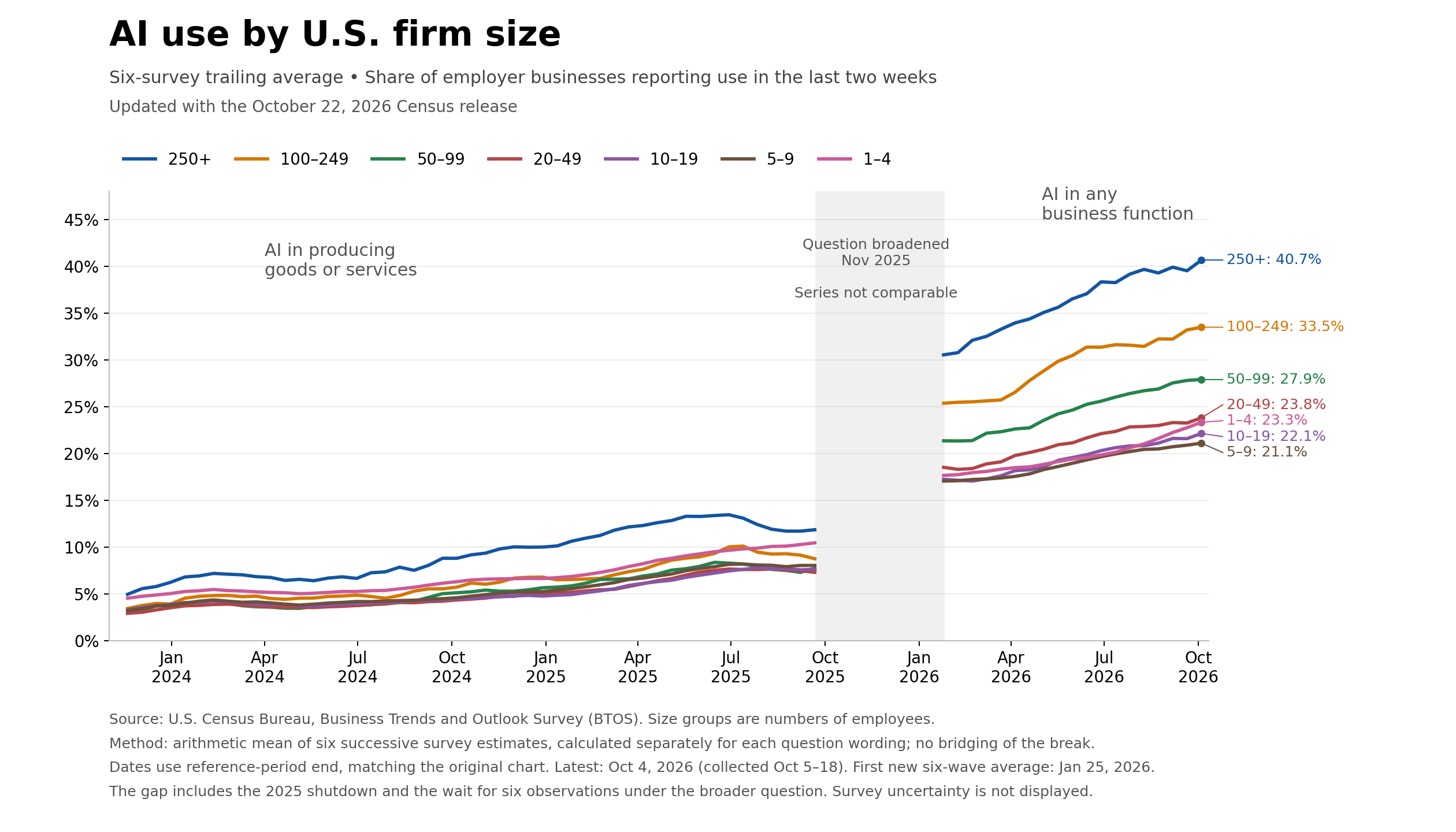
The U.S. Census Bureau and β€œSuper Intelligence”

Simon Willison updates the Apollo chart of US corporate AI adoption using Census Bureau Business Trends and Outlook Survey (BTOS) data to October 2026. Firms with 250+ employees answered yes about 12% in September 2025, and about 40% in October 2026 under the broader "any business function" wording adopted in November 2025. From 19 October 2026 the survey says "Super Intelligence" under Executive Order 14434.

GPT-6 AstraGPT-5Claude
U.S. Census BureauApollo Global ManagementExecutive Order 14434+2

ai-policyΒ· Published and added 2 Nov 2026

securityweek.comarticleπŸ›‘οΈ Security

Google Introduces $250,000 Root-in-Cloud Bug Bounty Reward

Google Cloud Vulnerability Reward Program has added a $250,000 root-in-cloud tier for exploits that give roles/owner or full IAM control over arbitrary Google Cloud organizations or projects. The exploit path cannot rely on prior project access, stolen credentials or social engineering. Remote code execution in Borg also qualifies, but researchers must stop probing immediately. Proof is made against a designated service account using a deterministic proof-of-root mechanism.

Google CloudBorg
GoogleCloud VRPChris Betz+2

Cloud & Infra, Offensive SecurityΒ· Published and added 2 Nov 2026

bleepingcomputer.comarticleπŸ›‘οΈ Security

Over 1,000 GitLab servers vulnerable to ongoing RCE attacks

CVE-2026-97229 is a maximum-severity integer overflow in GitLab's CI/CD Regular Expression Compiler that lets an unauthenticated attacker run code via a crafted regex in pipeline configuration. GitLab patched it on 12 October 2026 in versions 19.4.2, 19.3.5 and 19.2.8. CISA added it to KEV, and Shadowserver tracks over 1,000 unpatched servers, plus 11,300 exposed to the related CVE-2026-110264.

GitLab
CVE-2026-97229CVE-2026-110264CVE-2026-85706+6

AppSec, DevSecOps, Threat IntelΒ· Published and added 2 Nov 2026

theguardian.comarticleπŸ›‘οΈ Security

Supermarket freezers across Europe hit by second suspected cyber-attack

Guardian report from 2 November 2026 on a second suspected cyber-attack on supermarket refrigeration in Belgium, Estonia, Ireland, Finland, Luxembourg, the Netherlands and Sweden, with temperatures set to 50C. It recaps the earlier French attack on up to 700 shops, which hit mostly Danfoss controllers. SentinelOne and Tributech say the attacks point to sabotage and that many controllers remain internet-exposed and unpatched.

DanfossSentinelOneTributech+5

Threat Intel, Hardware & RFΒ· Added 3 Nov 2026, published 2 Nov 2026

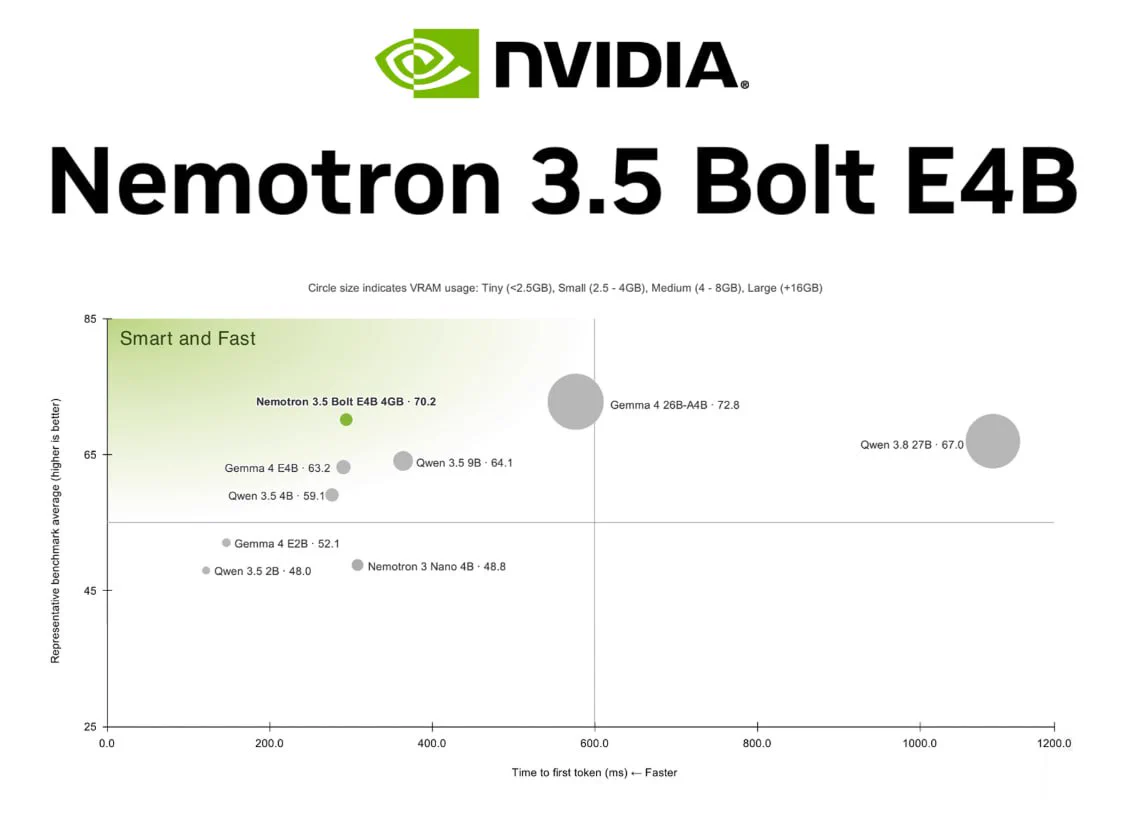
x.comthread🧠 AI

CuteGuy☣️ (@cutetoxicguy) on X

Nemotron 3.5 Bolt E4B is an NVIDIA open-weights model with 8B total and 4B active parameters, built on Gemma 4 E4B and post-trained with NeMo RL and NeMo Gym. It targets local agents in about 4GB of GPU memory, with 64K context, 35 languages, multi-step tool calling and configurable reasoning. NVIDIA's llama.cpp tests show 133.4 tokens/sec on an RTX 5070 and 15.5 on a Jetson Orin Nano. Benchmarks are NVIDIA's own.

llama.cppOllamaLM Studio+9
NVIDIANemotronGemma 4+8

models, inference, agentsΒ· Added 3 Nov 2026, published 2 Nov 2026

bleepingcomputer.comarticleπŸ›‘οΈ Security

Ivanti patches two more Connect Secure zero-days chained in attacks

Ivanti patched two more Connect Secure zero-days, CVE-2026-111357 (privilege escalation) and CVE-2026-118527 (authenticated file upload), chained with authentication bypass CVE-2026-104935 since at least 1 October 2026. Volexity attributed the chain to UTA0576, which ran no malware, re-exploited the device per command and tampered with logs, evading Ivanti's Integrity Checker Tool. CISA added CVE-2026-104935 to KEV, and Shadowserver tracks over 5,000 exposed instances.

Ivanti Connect SecureVPN
CVE-2026-111357CVE-2026-118527CVE-2026-104935+12

Threat Intel, Offensive SecurityΒ· Published and added 2 Nov 2026

securityweek.comarticleπŸ›‘οΈ Security

Ivanti Patches Two More Zero-Days Exploited in Connect Secure Attack Chain

Ivanti patched two more Connect Secure zero-days, CVE-2026-111357 (CVSS 8.8, local privilege escalation) and CVE-2026-118527 (CVSS 4.3, predictable identifiers allowing file upload), chained with the authentication bypass CVE-2026-104935. Fixes are in ICS 25.1.1.3 and 22.8R2.6. Volexity attributed the chain, which gave unauthenticated root code execution, to UTA0576, and CISA added both new bugs to KEV.

Ivanti Connect SecureVPNCVSS
CVE-2026-111357CVE-2026-118527CVE-2026-104935+6

Threat Intel, Offensive SecurityΒ· Published and added 2 Nov 2026

lankabusinessonline.comarticleπŸ›‘οΈ Security

PHP security scare puts Sri Lanka’s digital systems under scrutiny

Lanka Business Online reports on CVE-2026-109618 and CVE-2026-109619, two critical PHP flaws allowing unauthenticated remote code execution. Sri Lanka's Ministry of Digital Economy told state bodies to check their systems, as over 70% of government sites reportedly use PHP. Research on 22 to 24 October 2026 found 80 state-linked sites on potentially vulnerable versions, 61 of them unsupported. Patches came out on 21 October 2026.

PHP
CVE-2026-109618CVE-2026-109619Ministry of Digital Economy

AppSecΒ· Published and added 2 Nov 2026

x.comtoolπŸ›‘οΈ Security

Md Ismail Ε ojal πŸ•·οΈ (@0x0SojalSec) on X

An x64dbg MCP server (GitHub repo by duty1g, shared via an X post) that lets Claude drive the x64dbg Windows debugger: set breakpoints, dump memory, step code and run other reverse engineering tasks programmatically. The post targets malware analysts. A reply notes that debugging a sample executes it, so the agent should run in a snapshotted VM with no shared folders or host route, with every command logged.

x64dbgModel Context ProtocolClaude+1

Malware & RE, AI SecurityΒ· Added 3 Nov 2026, published 1 Nov 2026

bleepingcomputer.comarticleπŸ›‘οΈ Security

FBI links $6.3 billion Binance crypto heist to North Korean hackers

The FBI attributed the roughly $6.3 billion Binance theft of about 29 October 2026 to North Korea's TraderTraitor (Lazarus Group, Jade Sleet, APT38). Binance traced the breach to a compromised DevOps engineer's laptop that gave access to a service container used to submit unauthorized withdrawals across ten blockchains. The FBI published 628 laundering addresses and linked the group to earlier thefts at Bybit, DMM Bitcoin, Bitget and Drift.

EthereumBitcoinSolana+3
TraderTraitorLazarus GroupDPRK+14

Threat Intel, BlockchainΒ· Published and added 1 Nov 2026

x.comthread🧠 AI

Smarthouse (@localyzapp) on X

A reply by Smarthouse (@localyzapp) on X to a question about the best harness for connecting local models to a Minecraft server. It suggests an MCP server that wraps RCON plus a small agent loop. The main pitfall is block coordinates: expose "/execute if block" as a read tool so the agent can check blocks before placing them, or it will hallucinate terrain.

Model Context ProtocolMinecraftRCON

mcp, agentsΒ· Added 2 Nov 2026, published 1 Nov 2026

newsletter.semianalysis.comarticle🧠 AI

The Datacenter Backlash Goes Bipartisan: Next Week's Midterms and the 2028 Buildout

SemiAnalysis analysis of how the November 2026 US midterms could affect datacenter buildout. About 75% of the 33.8 GW due in 2027 across the top 20 states is already under construction, but 43.5 GW of 2028 additions sit in 13 states with pending approvals. The biggest risk is a prolonged Texas TCEQ permit freeze. Texas holds close to 30% of 2028 GW, and nine of 20 nominees back a pause.

SemiAnalysisTexas Commission on Environmental QualityERCOT+16

ai-policyΒ· Published and added 1 Nov 2026

bleepingcomputer.comarticleπŸ›‘οΈ Security

Alpine Linux rebuilds GitLab after attempted RCE attack

Alpine Linux rebuilt its GitLab server and reset all passwords after attackers tried to exploit CVE-2026-97229, a maximum-severity integer overflow in the Onigmo regex engine bundled with Ruby, on October 20-21. Eight worker crashes occurred and four were partially successful. Missing logs and outbound connection records meant compromise could not be ruled out. Alpine had run GitLab 19.3.4, then 19.3.6, which lacked the Ruby patch; the fixed image is alpinelinux/gitlab:19.3.6 with Ruby 3.3.13.

GitLabAlpine LinuxDocker+1
CVE-2026-97229integer overflowOnigmo

Supply Chain, Blue Team & Detection, DevSecOpsΒ· Published and added 1 Nov 2026

tomshardware.comarticle🧠 AI

AI agent swarms in Minecraft fail to build civilization, drown in bureaucracy

Tom's Hardware reports on a ycombinator and Olam Labs experiment that ran LLM agent swarms in Minecraft. A 50-agent GPT-6.1 Sol team asked to build a civilization in three hours turned cautious and bureaucratic. In Bed Wars and Mindustry, GPT-6.1 Sol agents beat Claude Opus 5.5 agents (6-1 in Mindustry). The swarms are open sourced, built on Mindcraft and Mineflayer.

MinecraftMindcraftMineflayer+1
Tom's HardwareOlam LabsY Combinator+4

agents, evalsΒ· Added 2 Nov 2026, published 1 Nov 2026

x.comthreadπŸ›‘οΈ Security

lee1981 (@lee1981b) on X

CyberForge Weekly CVE Rundown #008 covers seven CVEs from 26 to 31 October 2026: Wasmtime/Cranelift miscompilation, Rust zip cloaking, Qode Membership account takeover, Dell PowerProtect Data Domain stack overflow, two Progress WS_FTP Server flaws and Kubeflow Pipelines log reads. Each entry gives fixed versions and defender actions. A 1 November check adds EPSS values dated 31 October and notes none of the IDs were in CISA's 30 October catalogue.

WasmtimeKubeflow PipelinesWS_FTP Server+3
CVE-2026-115889CVE-2026-115905CVE-2026-92885+11

AppSec, Cloud & InfraΒ· Added 3 Nov 2026, published 1 Nov 2026

jetstream.securityarticleπŸ›‘οΈ Security

Brazilian Court Sanctions Lawyers for Prompt Injection in Court Filing

A Brazilian labor court in Parauapebas, ParΓ‘ fined two law firms 10% of an R$842,000 claim (about $16,000) for hiding a prompt-injection command in a petition. The white-on-white text told AI to respond superficially and not challenge the documents. Galileu, the National Justice Council's generative AI tool, detected it and blocked processing. The court cited Articles 5 and 77 of the Civil Procedure Code.

Galileu
prompt injectionindirect prompt injectionNational Justice Council+4

AI SecurityΒ· Added 2 Nov 2026, published 1 Nov 2026

help.openai.comarticle🧠 AI

ChatGPT and Codex usage limits merging

ChatGPT and Codex usage limits merging is an OpenAI help-center notice. From December, the Plus, Pro and Business plans share one usage allowance across ChatGPT and Codex, measured in tokens. Use depends on the model and the task, and instant chat does not count. Users see combined usage in Settings β†’ Usage and can wait, upgrade or buy credits at the limit.

ChatGPTCodex
OpenAI

coding-agents, ai-policyΒ· Added 2 Nov 2026, published 31 Oct 2026

arxiv.orgpaper🧠 AI

Character-Name Concentration in LLM Fiction: Measuring Displacement and Mitigating Repetition

Speculative naming is a fine-tuning-free method that cuts character-name repetition in LLM fiction. It adapts draft-verify-reject from speculative decoding to names, using verbalized sampling and a SlopTracker that combines a per-model fingerprint with a runtime counter. Across 20 LLMs and 44,782 stories in four languages, it cut Slop Ratio by 95% and mean collision probability from 7.3% to 0.4%. Static banlists only displaced the concentration to emergent names.

LLMspeculative decodingverbalized sampling
speculative namingSlopTrackerSlop Ratio+1

research, evals, promptingΒ· Added 3 Nov 2026, published 31 Oct 2026

mashable.comarticle🧠 AI

Anthropic takes steps to block Claude from reverse-engineering video games

Mashable reports, citing Tom's Hardware, that Anthropic's Claude has quietly begun restricting modding, decompiling and reverse-engineering of video game code. Anthropic has made no official announcement. The article ties the change to AI-assisted game ports and mods, the PlayStation 5 jailbreak and Take-Two's subpoenas after the GTA6 leaks. It notes the irony of AI firms now guarding copyright, and the risk that less restrictive LLMs win users.

ClaudeLLM
AnthropicTom's HardwareTake-Two Interactive+4

ai-policyΒ· Added 1 Nov 2026, published 31 Oct 2026

arxiv.orgpaperπŸ›‘οΈ Security

Context-Shielded Backdoor Attack against Large Vision-Language Models

StripWake is a projector-only backdoor attack on large vision-language models. It stays dormant under full-token inference and activates when visual-token compression prunes the context around a trigger (context stripping). On LLaVA-1.5-7B across nine unseen compressors, it reaches 0.4% full-token attack success rate and 94.0%-99.7% compressed ASR on five primary compressors, with no CIDEr loss. Training aligns early visual attention with a frozen benign teacher.

LLaVA
StripWakecontext strippingbackdoor attack

AI SecurityΒ· Added 3 Nov 2026, published 31 Oct 2026

arxiv.orgpaper🧠 AI

Vision-Language Models Are Joint Denoisers in Robotic Action Generation

JADE (Joint Action DEnoiser) is a diffusion-based vision-language-action architecture in which the VLM reads the current noisy action latents together with images and instructions at every denoising step, and guides the action expert through gated cross-attention. The VLM is also trained to recover clean action latents, and an adaptive step-size schedule cuts sampling steps. On RoboDojo it averages 12.67% success, the highest among Ο€0.5-based methods, and it adds 20.8 points over Ο€0.5 on four real bimanual tasks.

vision-language-action modelvision-language modeldiffusion model
JADEΟ€0.5RoboDojo+2

research, multimodalΒ· Added 3 Nov 2026, published 31 Oct 2026

arxiv.orgpaper🧠 AI

TRIAGE: Reliability- and Load-Conditioned Escalation for Two-Tier LLM Serving with a Semantic Evidence Judge

TRIAGE is a two-tier LLM serving scheme that escalates requests from a small model to a large one based on a post-generation reliability state and a load-dependent GPU price. On one A40 serving Qwen2.5-7B and 32B (AWQ) under vLLM, escalation cost rose 21.9x from 1 to 10 requests/s. A pre-registered claim that the reliability state detects corrupted evidence (AUROC 0.70 or higher) failed at 0.571. A semantic evidence judge raised detection to 0.846. The 7B to 32B pair showed only a +2.88 pp held-out gap, so the allocator declined to escalate.

vLLMQwenAWQ+2
Qwen2.5-7BQwen2.5-32BGPT-4+5

inference, research, evalsΒ· Added 3 Nov 2026, published 31 Oct 2026

bleepingcomputer.comarticleπŸ›‘οΈ Security

Northflank security breach leads to abuse of customers' AI API keys

Northflank, a cloud application hosting platform, disclosed a breach on 30 October 2026 after a Wiz threat alert and told customers to assume all environment variables were decrypted and to rotate secrets. Customers reported unauthorized use of AI API keys. Wiz's "Black October for AI Developer Platforms" report counts at least nine incidents, including Railway, OpenCode, Warp and Lightning AI, and describes LLMJacking, with about 2.5 million Amazon Bedrock calls costing roughly $100,000 in two cases. Northflank has not said how attackers got in.

NorthflankWizAWS Bedrock+3
LLMJackingBlack October for AI Developer PlatformsRailway+2

Threat Intel, AI Security, DevSecOpsΒ· Published and added 31 Oct 2026

Showing 60 of 2600

Show more