 Over 1,000 GitLab servers vulnerable to ongoing RCE attacks
CVE-2026-97229 is a maximum-severity integer overflow in GitLab's CI/CD Regular Expression Compiler that lets an unauthenticated attacker run code via a crafted regex in pipeline configuration. GitLab patched it on 12 October 2026 in versions 19.4.2, 19.3.5 and 19.2.8. CISA added it to KEV, and Shadowserver tracks over 1,000 unpatched servers, plus 11,300 exposed to the related CVE-2026-110264.
 bleepingcomputer.comarticlePublished and added 2 Nov 2026🛡️ Security
 Backporting security fixes at scale with Codex
Trail of Bits describes a Codex (GPT-5.6) workflow that backports security fixes to stable Linux kernel trees, Ubuntu LTS and Fedora. By 29 October 2026 it had helped land fixes for 149 CVEs in stable kernels. Agents find missing fixes, adapt patches and assemble validation evidence; a human review takes about 30 minutes to 3 hours. It also sizes the unfixed-CVE backlog in kernel branches, Debian 13 and Ubuntu 26.04.
 blog.trailofbits.comarticlePublished and added 2 Nov 2026🛡️ Security
- Backporting security fixes at scale with Codex
Trail of Bits describes a Codex agent workflow that backports security fixes to stable Linux kernel trees and distro packages. By 29 October 2026 it had helped land fixes for 149 CVEs in stable kernel trees, plus several Fedora and Ubuntu package fixes. Human preparation and review takes about 30 minutes for a simple backport and about three hours for a harder one. The post also counts CVEs still unfixed in stable kernel branches, Debian 13 and Ubuntu 26.04.
blog.trailofbits.comarticlePublished and added 2 Nov 2026🧠 AI  Alpine Linux rebuilds GitLab after attempted RCE attack
Alpine Linux rebuilt its GitLab server and reset all passwords after attackers tried to exploit CVE-2026-97229, a maximum-severity integer overflow in the Onigmo regex engine bundled with Ruby, on October 20-21. Eight worker crashes occurred and four were partially successful. Missing logs and outbound connection records meant compromise could not be ruled out. Alpine had run GitLab 19.3.4, then 19.3.6, which lacked the Ruby patch; the fixed image is alpinelinux/gitlab:19.3.6 with Ruby 3.3.13.
bleepingcomputer.comarticlePublished and added 1 Nov 2026🛡️ Security- Lonnie VanZandt (@lonniev) on X
Secure Courier is a consent flow in Tollbooth DPYC, a monetization network for paid MCP services, that lets an AI agent act for a Nostr npub without holding the user's nsec. The service sends a signed, sealed direct message over Nostr relays, the user replies with a signed approval and an expiry, and the service issues its own encrypted grant. Lonnie VanZandt presents it as an alternative to central identity providers and CIBA. The thread gives no audit results.
 x.comthreadAdded 1 Nov 2026🧠 AI
- Artificial Analysis (@ArtificialAnlys) on X
Hyperflow H3 is Video Rebirth's 8-step LoRA for MiniMax H3, released in September 2026 with open weights. Artificial Analysis ranks it #5 on AA-Video-I2V v2.1 and #3 on AA-Video-Editing v1.1, ahead of MiniMax H3 (768p). It costs $9.00 per minute for Image to Video and $18.00 for Video Editing at 1088p, under half of Dreamina Seedance 2.5 ($34.12 and $40.82). The thread gives per-capability and per-use-case breakdowns.
x.comthreadAdded 31 Oct 2026, published 30 Oct 2026🧠 AI  In Other News: Anthropic Breach Dispute, UEFI Flaw Hits Most Servers, Cloudflare AI Data Leak
SecurityWeek's weekly roundup of 30 October 2026 covers CVE-2026-97631, a 16-year-old buffer overflow in TianoCore EDK II that affects PXE network boot on most servers. It also covers a Cloudflare Workers AI cross-tenant leak caused by an SGLang bug, Anthropic's dispute with Cathedral over a bug bounty intrusion, and fake AI bots probing for secrets. Other items include AI-assisted ransomware (Gold Ogre, Aur0ra), the NIK C2 framework, and North Korean IT worker sanctions.
 securityweek.comarticlePublished and added 30 Oct 2026🛡️ Security
 CISA says max severity GitLab flaw now exploited in the wild
CVE-2026-97229 is a maximum-severity GitLab flaw in the CI/CD Regular Expression Compiler, caused by an integer overflow, that lets unauthenticated attackers run code via a crafted regular expression. CISA added it to the KEV Catalog and ordered federal agencies to patch under BOD 26-04. GitLab fixed it in CE/EE 19.4.2, 19.3.5 and 19.2.8, and Shadowserver tracks about 2,800 exposed CE instances.
bleepingcomputer.comarticlePublished and added 30 Oct 2026🛡️ Security TeamViewer Flaw Could Let Malicious Hosts Take Over Support Technicians’ Machines
CVE-2026-111585 (CVSS 8.8) is an integer overflow in the remote-control screen processing of TeamViewer clients on Windows, macOS, Linux and Android. A malicious or compromised host can announce an oversized screen surface (for example 32768 by 32768 at 32 bpp), forcing a software decode path and an out-of-bounds write that crashes the viewer or runs code. Remedio's research shows a pointer overwrite routed to WinExec. Version 15.83 fixes it, along with CVE-2026-92372, CVE-2026-92374 and six local privilege escalation bugs.
securityweek.comarticlePublished and added 30 Oct 2026🛡️ Security- rikugan: LLM reverse-engineering agent for IDA Pro and Binary Ninja
Rikugan is an open-source reverse-engineering agent that runs inside IDA Pro 9.0+ and Binary Ninja, with its own agent loop instead of an MCP server. It has 60+ tools (decompiler, xrefs, strings, types, IL/microcode), parallel subagent exploration, an experimental /modify natural-language patching command and an experimental Binary Ninja deobfuscation skill for control flow flattening and opaque predicates. It supports Claude, Gemini, MiniMax, Kimi, OpenAI-compatible endpoints and Ollama.
 github.comrepoAdded 30 Oct 2026🛡️ Security
 Discovering vendor-specific vulnerabilities in Android | Oversecured Blog
Oversecured describes extending its Android scanner to system APIs and to Samsung's Android build, after comparing Google and Samsung framework JARs and about 400 system services. It explains AIDL service permission checks and new control-flow analyses. Examples include Samsung's unchecked semIsBackupEnabled(), a broadcast that reboots the device, and a LaunchAnyWhere in Settings. Samsung had fixed over 60 reported issues.
 oversecured.comwriteupAdded 29 Oct 2026🛡️ Security
 Inside mobile taint analysis: how source-to-sink tracking finds real data-leak paths | Oversecured Blog
Oversecured explains taint analysis for Android and iOS apps and contrasts it with pattern-matching SAST such as MobSF. It covers source, flow and sink, cross-component tracking over Intents, flag-based sanitizer modeling and implicit intent simulation. The case study is an unsafe Class.forName().newInstance() on a Serializable transportFactoryClassName field in Google's com.google.auth.oauth2 credential classes, which Google fixed with a $3,133.70 bounty.
oversecured.comarticleAdded 29 Oct 2026🛡️ Security- CISA Adds Two Known Exploited Vulnerabilities to Catalog
CISA alert of 29 October 2026 adding two vulnerabilities to the Known Exploited Vulnerabilities catalog on evidence of active exploitation: CVE-2026-97229, an integer overflow in GitLab CE/EE, and CVE-2026-76418, a NULL pointer dereference from an unchecked return value in Cisco Secure Firewall ASA and FTD. It restates BOD 26-04 remediation duties for federal civilian agencies and links the KEV nomination form.
 cisa.govadvisoryPublished and added 29 Oct 2026🛡️ Security
 MAServeBench: Benchmarking Multi-Agent LLM Serving Systems with Hierarchical Collaboration Workloads
MAServeBench is a benchmark that treats multi-agent collaboration as a configurable dimension of LLM serving workloads. Its composable stages model how agents coordinate and exchange context in documented multi-agent workflows, and Hierarchical Semantic Traces record operations and dependencies for reproducible comparisons. Task-linked measurements tie workloads to GPU/NPU behavior, showing serving efficiency does not always mean timely task completion. Code is released.
 arxiv.orgpaperAdded 31 Oct 2026, published 29 Oct 2026🧠 AI
 SGLang (@sgl_project) on X
SGLang announces Day-0 support for Mistral Large 4 ("Le Chonk"), saying it is the first engine to serve the model on NVIDIA Vera Rubin. The post describes the model as Mistral's largest to date: a natively multimodal 1T-parameter mixture-of-experts model covering instruct, reasoning, coding and agentic workflows. The fetched text is truncated, so benchmark claims and launch commands are not visible.
x.comthreadAdded 30 Oct 2026, published 29 Oct 2026🧠 AI- lee1981 (@lee1981b) on X
CVE-2026-103780 is a stack-based buffer overflow (CWE-121) in Dell PowerProtect Data Domain / DD OS. An unauthenticated remote attacker could get command execution (CVSS 3.1 9.8, Dell DSA-2026-416). The post lists affected and fixed builds for four release trains (Feature Release, LTS2024, LTS2025, LTS2026). It adds KEV, EPSS and SSVC status, plus six defensive checks. The vulnerable service is not public.
x.comadvisoryAdded 31 Oct 2026, published 29 Oct 2026🛡️ Security  ADLC metrics: How to measure agentic development security | Endor Labs
ADLC metrics is an Endor Labs guide to measuring security in the agentic development lifecycle, where AI coding agents write much of the code. It defines formulas across five categories: AI supply chain visibility, agent action security, agent-generated code, package risk and developer flow. It argues for normalizing findings per merged change, tracking pre-execution blocks, and building a six-to-eight metric scorecard.
 endorlabs.comarticlePublished and added 29 Oct 2026🛡️ Security
- ADLC metrics: How to measure agentic development security | Endor Labs
ADLC metrics is an Endor Labs guide to measuring security in the agentic development lifecycle, where AI coding agents write code. It defines formulas in five categories: AI supply chain visibility, agent action security, agent-generated code security, package risk and developer flow. It advises normalizing findings per merged change, comparing against a human baseline, and baselining six to eight metrics for a month.
endorlabs.comarticlePublished and added 29 Oct 2026🧠 AI  Police seize Virtualine bulletproof service tied to ransowmare, cybercrime
Virtualine, a bulletproof hosting service also operating as Secury, Massgod, Spamhouse, Lanedo and Omegatech, had its main domain seized by the FBI with German, Dutch and UK partners. Chainalysis and TRM Labs traced its Bitcoin payments to ransomware (5% of flows), a Russian drug market (about 44%), sextortion and the StealC infostealer. Dutch police seized dozens of servers in Limburg and recovered data on over 3,000 customers.
bleepingcomputer.comarticleAdded 30 Oct 2026, published 28 Oct 2026🛡️ Security- Siemens Mendix SAML Module
ICSA-26-302-01 republishes Siemens SSA-137528 on the Mendix SAML module, which has an authentication bypass (CVE-2026-89209). An unauthenticated remote attacker can replay a valid SAML assertion in IdP-initiated flows to gain unauthorized access. Fixed in 4.2.4 for Mendix 10 and 11, and 3.6.29 for Mendix 9. Initial release was 26 October 2026.
cisa.govadvisoryAdded 29 Oct 2026, published 28 Oct 2026🛡️ Security  Treasury Sanctions Russians, North Koreans supporting DPRK IT Worker Fraud
Chainalysis analysis of the 28 October 2026 OFAC designation of 10 individuals and one entity (FFTDC) supporting DPRK IT worker schemes. It traces on-chain flows from a DPRK developer wallet through sanctioned consolidation addresses to Russian converters Obertas and Boykov, then to Garantex. It also covers Alis, Amnokgang and Chinyong links and DPRK use of generative AI and deepfakes in hiring.
 chainalysis.comarticlePublished and added 28 Oct 2026🛡️ Security
 TENSA Engineering (@TENSAEng) on X
A post by TENSAEng describing a workflow for staying within coding-tool usage limits. ChatGPT chat sits outside those limits, while Claude and Grok chats share a pool with Claude Code, Codex and Grok Build. Architecture, file layout, step order and acceptance checks are planned in ChatGPT and saved as repo docs. Claude Code or Codex then implements one small chunk per fresh session.
x.comthreadAdded 29 Oct 2026, published 28 Oct 2026🧠 AI Long-Hidden Flaws Patched in EPICS Research Facility Control Software
Four vulnerabilities in EPICS Base 7.0.10 and earlier, the control-system toolkit used at ITER and the Advanced Photon Source, were disclosed by CISA. CVE-2026-114595 (CVSS 9.8) is an integer overflow that could allow remote code execution, though only an out-of-bounds heap write and crash were demonstrated. All flaws sit in Channel Access and pvAccess handling (TCP 5064 and 5075), need no authentication, and are fixed in 7.0.11.
securityweek.comarticlePublished and added 28 Oct 2026🛡️ Security- Hakimi Eiqbal (@hakimieiqbal) on X
A practical reverse-engineering map by hakimieiqbal on X that picks tools by target: native binaries, .NET, Electron, iOS, firmware, WebAssembly and network protocols. It introduces REA (morluto/rea), which connects coding agents to RE tools, and lists MCP bridges for IDA Pro, Ghidra and radare2. It adds an evidence-first workflow and free courses such as pwn.college and OpenSecurityTraining2.
x.comthreadAdded 29 Oct 2026, published 28 Oct 2026🛡️ Security - Hakimi Eiqbal (@hakimieiqbal) on X
A thread by Hakimi Eiqbal that maps reverse-engineering tools by target type: native binaries, Electron, .NET, iOS, firmware, WebAssembly and network protocols. Its AI sections cover REA (an open-source layer connecting coding agents to analysis tools) and MCP bridges for IDA Pro, Ghidra and radare2. It argues for an evidence-first workflow and gives a prompt that separates verified facts from hypotheses.
x.comthreadAdded 29 Oct 2026, published 28 Oct 2026🧠 AI  How to evaluate ADLC security solutions: A buyer's checklist | Endor Labs
Buyer's checklist from Endor Labs for evaluating security tools in the agentic development lifecycle (ADLC), where AI coding agents write code and take actions such as package installs, CI edits and tool calls. It covers scoping, coverage, evidence-based accuracy, repeatability testing, agent-loop and PR workflow fit, remediation, governance, and a 2 to 4 week proof of concept on 3 to 5 repos with seeded ground truth.
endorlabs.comarticlePublished and added 28 Oct 2026🛡️ Security- Structured Security Explanations for Learning-Based Vulnerability Detection
VulnLens is a framework for binary C/C++ function-level vulnerability detection. A label-blind LLM Explainer describes each function from seven fixed perspectives (data flow, memory access, object lifetime, arithmetic and type behavior, control flow, shared state, external-resource access). A supervised Detector fuses code and explanations by cross-attention. It reaches 75.5% accuracy and 77.2% F1 on a 526-function PrimeVul test set, and 66.4% accuracy on SecVulEval without retraining.
arxiv.orgpaperAdded 30 Oct 2026, published 27 Oct 2026🛡️ Security - EPICS Base
CISA ICS advisory ICSA-26-300-01 (October 27, 2026) covers EPICS Base release 7.0.10 and earlier, with CVE-2026-114595 through CVE-2026-114598. Flaws include integer overflow, length parameter inconsistency and type confusion, allowing denial of service, memory corruption, information disclosure or remote code execution (CVSS v3.1 9.8). The fix is EPICS Base 7.0.11, with patches in epics-base and pvDataCPP pull requests.
cisa.govadvisoryAdded 29 Oct 2026, published 26 Oct 2026🛡️ Security  Supabase’s Plan for a Billion AI-Built Apps
Latent Space interview in which swyx talks with Supabase co-founders Paul Copplestone and Ant Wilson about backends for software built by AI agents. Topics include Supabase Compute for running workloads next to the database, Multigres for highly available Postgres (private alpha), the Turso acquisition, declarative schemas, and durable workflows. The page has only show notes and chapters, recorded ahead of Supabase Select 2026.
 latent.spacetalkPublished and added 26 Oct 2026🧠 AI
 David Gutierrez | Eng (@david_x_ai) on X
Thread on two October 2026 npm compromises: @subql/common 5.8.3 (5 October), published through GitHub Actions OIDC Trusted Publishing after the attacker tampered with the publish workflow, and tensorlake 0.5.144 (8 October), published by the project's own release workflow with valid provenance for about 1 hour 40 minutes. Both ran on install and stole cloud, GitHub, Kubernetes, Vault, SSH and .env credentials; tensorlake also took AI tool and MCP config. Its payload installed a gh-token-monitor service that deletes the home directory if the stolen GitHub token is revoked, so remove it before rotating.
x.comthreadAdded 27 Oct 2026, published 26 Oct 2026🛡️ Security- lee1981 (@lee1981b) on X
Reply on X explaining a Bytecode Alliance advisory for Wasmtime's Cranelift compiler backend. A large or crafted Wasm function that generates enough SSA values overflows Cranelift's value-index representation, which packed indices into 24-bit fields. The fix widens them to 32 bits. The issue is not AArch64-specific, and the advisory names no required optimisation level. Guard pages do not reliably stop the resulting miscompilation and type confusion, so a sandbox escape can arise at compile time.
x.comthreadAdded 28 Oct 2026, published 26 Oct 2026🛡️ Security - lee1981 (@lee1981b) on X
CyberForge CVE of the Day #087 covers CVE-2026-115889, a Cranelift value-index overflow in Wasmtime that can miscompile crafted WebAssembly and possibly escape the sandbox (CVSS 9.9, CWE-197 and CWE-843). Affected: below 36.0.19, and 37.0.0 up to but excluding 43.0.0; fixes are 36.0.19 and 43.0.0. It gives a SOC investigation trail from module digest to compiled artifact to host telemetry. EPSS is 0.454%, with no KEV entry.
x.comarticleAdded 28 Oct 2026, published 26 Oct 2026🛡️ Security - alex lee (@alexlee20122022) on X
Gheist is a GitHub campaign disclosed by Wiz in October 2026. Stolen tokens push ci-sync-XXXXXX branches with a sync-check workflow that dumps repo secrets base32-encoded to evade log masking, fetches the logs via API, then deletes the run. 13,500+ branches and 850+ accounts were hit since 15 September. Public repos are protected by the approval hold; private and Enterprise repos are not. The thread lists IOCs (.gdmp_pat files, "gheist" user agent, "ci: sync config" commits) and rotation steps.
x.comthreadAdded 26 Oct 2026, published 25 Oct 2026🛡️ Security - Dan Kornas (@DanKornas) on X
jshook is an open-source (AGPL-3.0) MCP server that gives AI agents a search-first, profile-aware reverse-engineering workspace for JavaScript, browser traffic, WASM and native processes. Agents start with a small searchable tool surface and move to workflow or full profiles only when needed. It drives Chromium or Camoufox over CDP, captures WebSocket traffic, has HTTP, GraphQL and Burp Suite helpers, and supports hot-reload plugins and declarative workflows. The post is a short announcement; the repository link is in a reply.
x.comtoolAdded 28 Oct 2026, published 25 Oct 2026🧠 AI - Dan Kornas (@DanKornas) on X
jshook is an open-source (AGPL-3.0) search-first reverse-engineering workspace for AI agents, exposed over MCP. It drives Chromium or Camoufox through CDP, captures WebSocket traffic, offers HTTP, GraphQL and Burp Suite helpers, deobfuscates JavaScript, rebuilds source maps and disassembles WebAssembly. Tool profiles start small and expand to workflow or full sets; hot-reload plugins and declarative workflows extend it.
x.comtoolAdded 28 Oct 2026, published 25 Oct 2026🛡️ Security  Gheist: Attempted Scaled Abuse of Stolen GitHub Tokens Stumbles
Gheist is a campaign tracked by Wiz Research since 15 September 2026 that uses stolen GitHub tokens to push a sync-check workflow on ci-sync-* branches in every reachable repository. The workflow prints base32-encoded secrets into logs, which the tool downloads through the GitHub API and then deletes. Over 13,500 branches from 850+ accounts were recovered. The post covers the two tool variants, a buggy self-hosted runner payload, GitHub's approval hold (which does not cover private repositories), overlaps with other campaigns, hunting queries, IOCs and hardening steps.
 wiz.iowriteupPublished and added 25 Oct 2026🛡️ Security
- SymLift: Neural Semantic Lifting for Compile-Free Vulnerability Detection in Context-Incomplete Code Fragments
SymLift is a compile-free vulnerability detection framework for context-incomplete code fragments. A fine-tuned LLM lifts control-flow, data-flow, memory and resource relations into a constrained LLVM-like IR. A parser turns the IR into facts, and Datalog rules derive findings with derivation traces. On Juliet function-level fragments Clang compilation success falls to 12.00%, while SymLift's completion rate drops only 1.17 points. SymLift-Qwen-7B reaches Target-F1 94.41% on FormAI and 91.66% micro-F1 on MegaVul.
arxiv.orgpaperAdded 28 Oct 2026, published 25 Oct 2026🛡️ Security - SymLift: Neural Semantic Lifting for Compile-Free Vulnerability Detection in Context-Incomplete Code Fragments
SymLift is a compile-free vulnerability detection framework for code fragments that lack project context. A fine-tuned LLM reconstructs control-flow, data-flow, memory and resource relations as a constrained LLVM-like IR, and a deterministic parser turns it into facts for Datalog rules that give findings with derivation traces. SymLift-Qwen-7B reaches 94.41% Target-F1 on FormAI and 91.66% micro-averaged Target-F1 on MegaVul.
arxiv.orgpaperAdded 28 Oct 2026, published 25 Oct 2026🧠 AI - Enhancing LLM-Based Vulnerability Detection via Representation-Aware Logical Ensemble
RALE (Representation-Aware Logical Ensemble) is a method for detecting vulnerabilities in C source code with LLMs trained on different code representations: raw source, Abstract Syntax Trees and Control Flow Graphs. The authors show the representations suit different vulnerability classes, and combine the models with explicit logical rules and majority voting. Single-representation models reach up to 73% F1, while the ensemble reaches 78%.
arxiv.orgpaperAdded 28 Oct 2026, published 24 Oct 2026🛡️ Security - Enhancing LLM-Based Vulnerability Detection via Representation-Aware Logical Ensemble
RALE (Representation-Aware Logical Ensemble) is a method for LLM-based vulnerability detection in C code. The authors train LLMs on raw source code, Abstract Syntax Trees and Control Flow Graphs, and find each representation works best for certain vulnerability classes. Combining the models with explicit logical rules and majority voting raises F1 from at most 73% for a single model to 78%, with gains in accuracy, precision and recall.
arxiv.orgpaperAdded 28 Oct 2026, published 24 Oct 2026🧠 AI  Prasenjit Sarkar (@stretchcloud) on X
Post on the LiteLLM supply-chain compromise. Attackers spent eleven days in the GitHub org, ran a workflow on a throwaway branch to take twenty secrets including a GitHub App private key, then used stolen GitHub CLI OAuth tokens to publish malicious release 1.107.0 from a lookalike Berri-AI repo. A Python startup file harvested sixteen credential categories and LiteLLM proxy Postgres provider keys. Socket flagged the wheels in seven minutes.
x.comthreadAdded 26 Oct 2026, published 24 Oct 2026🛡️ Security New Evidence Shows LiteLLM Secret-Stealing Workflows Ran 11 Days Before Supply Chain Attack
Socket's Threat Research team reports that malicious cache.yml workflows ran in the BerriAI/litellm repository on 10 and 12 October 2026, eleven days before the 21 October release attack that published litellm==1.107.0. Each commit pushed to a short-lived ci-tmp-<hex> branch, then deleted it, sending base64-encoded CI secrets to webhook.site. Evidence comes from Actions metrics and environment deployment records; 20 secret names were exposed.
 socket.devwriteupPublished and added 23 Oct 2026🛡️ Security
 Brotli vulnerability affects curl and Git
GHSA-9v8h-qqgm-4m35 is a critical buffer overflow (CVSS v4 9.2) in the Google Brotli decoder (c/dec/decode.c), affecting versions 1.0.3 through 1.2.0 on all platforms. A crafted compressed stream lets an unauthenticated remote attacker corrupt adjacent decoder state, leak memory, crash the process, or possibly execute code. Fixed in 1.0.10, 1.1.1 and 1.2.1. The page does not mention curl or Git, despite the title.
github.comadvisoryAdded 25 Oct 2026, published 23 Oct 2026🛡️ Security- SCI-AGENT-EXAM: Benchmarking Agents on Scientific Research Tasks
SCI-AGENT-EXAM is a workflow-oriented benchmark of 120 expert-curated tasks across 11 scientific fields and 7 task types from the Scientific Workflow Task Taxonomy (SWTT). Tasks need both executable and textual artifacts, scored by programmatic checks plus an expert-calibrated LLM judge. Ten frontier agents were tested: GPT-6 Astra scored highest at 80.9, but only 26.0% of its runs passed the 0.95 success threshold.
arxiv.orgpaperAdded 26 Oct 2026, published 23 Oct 2026🧠 AI - ENISA Technical Advisory for Software Bill of Materials
ENISA Technical Advisory for Software Bill of Materials is practical guidance on SBOM adoption for organizations, especially micro, small and medium enterprises and open-source stewards. It sets out an SBOM implementation architecture and data flows across a defined lifecycle, an indicative SBOM threat model with targeted risks, and measures for the SBOM ecosystem. It aligns with the ENISA Secure by Design and Default Playbook and supports Cyber Resilience Act compliance.
 enisa.europa.euadvisoryAdded 23 Oct 2026🛡️ Security
- Spectrmachina/Ztrust
ZTrust is a Python supply-chain scanner that checks manifests, lockfiles, source and GitHub workflows for vulnerable or malicious dependencies (via OSV.dev), typosquats, leaked secrets, unsafe lockfiles and risky CI patterns such as pwn requests and script injection. It outputs console, JSON and SARIF 2.1.0 and ships as a GitHub Action. It also includes a FastAPI bounty service using commit-reveal and shielded Zcash payouts for researchers.
github.comrepoAdded 27 Oct 2026, published 22 Oct 2026🛡️ Security - Field Notes: Reconstructing an Attacker’s Workflow
Field note from dfir.ch on PowerShell scripts an attacker left on disk during an incident: a file-watching command runner using Invoke-Expression, a fake Windows credential prompt that validates passwords via Start-Process and logs them in cleartext, AD computer enumeration with WMI access testing, and SMB share discovery via NetShareEnum. It notes where script labels overstate what they prove and lists hunting strings for Event IDs 4104, 4103, 4688 and Sysmon 1.
 dfir.chwriteupAdded 24 Oct 2026, published 22 Oct 2026🛡️ Security
 Crypto exchange CoinDCX ‘lying’ about $16M hack, say blockchain investigators
Protos reports that on-chain investigators, including Darcy of Salus, ZachXBT and SpecterAnalyst, say CoinDCX misattributed about $16M in outflows from compromised wallets. CoinDCX says the addresses were created in January 2025, compromised in July 2025, and that a sweeping process failed. Investigators cite gas distribution, hot wallet transfers as late as May 2026, and funds sent to Huione and Xinbi addresses.
 protos.comarticlePublished and added 22 Oct 2026🛡️ Security
- Unboxing Phishing Kits: Huntress Examines 3 Real Kits
Recap of a Huntress Tradecraft Tuesday session (October 2026) on phishing kits that target Microsoft 365 tokens, including EvilTokens (a device-code phishing campaign abusing Railway) and the Kali365 control panel. It explains device-code phishing, adversary-in-the-middle and token replay. It lists detections (unfamiliar cloud sign-ins, device-code auth, new devices) and response steps (revoke refresh tokens, remove rogue devices, block device-code flow).
 huntress.comarticlePublished and added 22 Oct 2026🛡️ Security
 Localizing compliance at scale: achieving South Korea’s ISMS certification
Cloudflare's account of obtaining South Korea's ISMS-P certification after a ten-day KISA audit of 80 controls and a preparation period of about a year and a half. It explains that the certificate covers a service delivery boundary rather than a product list, that auditors required readable data flow diagrams, and how Korean sign-up uses itemized consent with social login removed.
 blog.cloudflare.comarticleAdded 29 Oct 2026, published 22 Oct 2026🛡️ Security
 Paul Dragoonis (@dr4goonis) on X
Social post summarising emergency patches for Node.js (4 high CVEs), PHP (2 critical) and nginx (3 critical). Node.js flaws include a Brotli decoder out-of-bounds write, a DNS truncation bug and two TLS hostname-verification bypasses. PHP has use-after-free and heap corruption bugs, and nginx has alias-rewrite and map-regex heap overflows plus an SSI-AIO use-after-free. It lists the fixed versions for each product.
x.comthreadAdded 23 Oct 2026, published 22 Oct 2026🛡️ Security- Several Linux kernel vulnerabilities accidentally posted to public mailing list
Phoronix reports that Trend Micro's Zero Day Initiative mistakenly sent several Linux kernel vulnerability reports to the public kernel mailing list instead of the private security list. They include two CVSS 9.0 remote code execution bugs (SMB Direct integer underflow, ksmbd race condition), a skb_zerocopy local privilege escalation, a vmwgfx out-of-bounds write, an NVMET information disclosure and a search-domain TCP stack buffer overflow. Some have patches in -next branches, and none were yet in mainline.
 phoronix.comarticleAdded 23 Oct 2026, published 22 Oct 2026🛡️ Security
 SecureChap (@SecureChap) on X
Post describing a LiteLLM 1.107.0 PyPI compromise in which attackers used stolen GitHub CLI OAuth tokens from three engineers to trigger and approve the project-releaser workflow, producing eight malicious wheels and a tampered tarball. The wheels drop cook.pth, which runs at Python startup, and privcollect steals cloud tokens, keys, browser data, AI configs and LiteLLM proxy credentials, exfiltrating to litellm[.]dev/healthcheck. A second daemon polls a GitHub domain.txt hourly for new domains to fetch and execute. PyPI yanked the package the same day. The post is a single unsourced tweet.
x.comthreadPublished and added 22 Oct 2026🛡️ Security- EMITS (@emits_ca) on X
CVE-2026-107406 is a memory overflow in Citrix NetScaler that allows remote code execution when SAML is configured, rated 9.5 out of 10. The post from emits.ca calls it the fourth NetScaler bulletin in a week. It warns that the previous week's SAML patch does not cover it, and that fixes need NetScaler 14.1-73.46 or later, or 13.1-64.29 or later. The full advisory is on emits.ca.
x.comadvisoryAdded 22 Oct 2026, published 21 Oct 2026🛡️ Security - Vishesh Raheja (@entropyconquers) on X
GPT Voice is a free, open-source Mac app by Vishesh Raheja that brings ChatGPT's dictation to any macOS app. A shortcut starts recording, and the transcript is pasted where the user is typing. It uses the ChatGPT Pro subscription, so it needs no API key or extra subscription. The author built it after Handy handled coding prompts poorly and they did not want to pay for Wispr Flow. The thread gives no details on local versus API transcription or latency.
x.comthreadAdded 22 Oct 2026, published 21 Oct 2026🧠 AI - UniWALM: Unified World Action Language Model for Embodied Robot Control
UniWALM is a unified world-action-language model that learns video, action and language in one mixture-of-transformers backbone with per-modality diffusion heads that co-denoise together. Generated subtask and textual memory are fed back on the next step, so no external planner or memory bank is needed. It adds Flow Matching with Correction (FMC) for recovery from perturbed actions. It reaches 34.5% on the memory-dependent RMBench subset, above Mem-0's 28.5%, and lifts real-world Find-the-Item success from 11.1% to 61.1%.
arxiv.orgpaperAdded 22 Oct 2026, published 20 Oct 2026🧠 AI - Large Flow Language Models
Lafa (Large flow language model) is a blockwise continuous flow language model scaled to 8B parameters, with causal attention on the prefix and bidirectional, asynchronous flow within each block. It is adapted from pretrained autoregressive models and trained at 0.5B, 7B and 8B with under 30B tokens. A self-speculative decoding scheme verifies flow drafts autoregressively in one model, giving 2.54x the throughput of an AR model at comparable quality. Flow maps allow one- and few-step generation.
arxiv.orgpaperAdded 22 Oct 2026, published 20 Oct 2026🧠 AI  Stolen Ethereum laundering resumes as 25,700 ETH flow into Tornado Cash mixer
Report on wallets linked to the April 2026 Drift Protocol hack resuming laundering on 20 October 2026. Lookonchain counted 25,700 ETH (about $61.56 million) sent to Tornado Cash in 100 ETH batches, with 81,864 ETH still held. It recaps the six-month fake-VC social engineering, Cursor and VSCode compromise of Security Council devices, and TRM Labs and Chainalysis attribution to DPRK's UNC4736.
 en.cryptonomist.charticlePublished and added 20 Oct 2026🛡️ Security
 ZachXBT Flags $20M XMR Laundering Ring on Hyperliquid
FreedomXMR (FXMR) is a centralized Monero swap service on Hyperliquid Core that appeared in August 2026. ZachXBT's manual review of every inflow above $10K traced over $20M, more than 87% of volume, to ransomware, malware and exploits including DCENT Wallet, Fetch.ai, Axelar and Gamdom. The admin sources XMR liquidity from KuCoin and won the FXMR ticker in an auction for 518.28 HYPE.
 bankless.comarticlePublished and added 20 Oct 2026🛡️ Security
- Huda (@AlAssaf_H) on X
Source-level review of x64dbg-MCP, GhidraMCP and IDA Pro MCP security, dated October 2026. It covers GHSA-4478-h5jv-647m (missing authentication, 0.0.0.0 bind) and GHSA-jgj3-97w2-9v9r (Content-Length integer overflow before the token check, causing a DoS panic), and compares tags 1.0, v1.1 and v1.2. It separates network reachability, tool authority and semantic influence from hostile binaries. No new exploit is claimed.
x.comarticleAdded 21 Oct 2026, published 19 Oct 2026🛡️ Security - Which Model for Which Role? Cost-Efficient Pareto Recommendation for LLM Agentic Workflows
Cost-Coupled Gittins (CC-Gittins) is a multi-objective extension of cost-aware Gittins search that recommends Pareto-optimal model-to-role assignments for LLM agentic workflows. It exploits the coupling between evaluation and deployment cost, alternating between seeking higher quality and lower cost. On eight quality-cost matrices (two to five roles, up to 1,681 assignments), it recovers a substantial share of the true Pareto frontier at about 10% of exhaustive-evaluation cost, and most of it by 30%. Latency is tested as a third objective.
arxiv.orgpaperAdded 21 Oct 2026, published 19 Oct 2026🧠 AI - HAF-VLA: Hierarchical Action Flow Framework for Humanoid Vision-Language-Action Control
HAF-VLA is a hierarchical action-flow framework that adapts a pretrained flow-matching vision-language-action model to humanoid whole-body loco-manipulation. It denoises a shared action space in stages: locomotion and head commands first, then waist refinement, then full-body manipulation. Learnable stage embeddings and cross-stage KV-cache conditioning carry dependencies between stages. The authors report gains over existing models on six real-world tasks.
arxiv.orgpaperAdded 21 Oct 2026, published 19 Oct 2026🧠 AI - Assisted Turbulence Modeling via Data Assimilation and Machine Learning for Turbomachinery Flows
This paper presents a hybrid framework for axial compressor flow that couples a Multi-Fidelity Ensemble Kalman Filter (MFEnKF) with machine learning. The filter merges PIV experiments with steady RANS and unsteady hybrid RANS/LES simulations. A neural network trained on the enriched data predicts Navier-Stokes volume forcing terms from velocity, velocity gradients and turbulent viscosity. A Mixture of Experts fixes local errors near blade tips, giving lower experimental discrepancy than baseline RANS.
arxiv.orgpaperAdded 21 Oct 2026, published 19 Oct 2026🧠 AI - E-Layout: Layout-Stage Logic Restructuring via RL-Optimized Equality-Saturated Graph Retrieval-Augmented Generation
E-Layout is an ML-driven framework for post-placement logic restructuring in IC physical design. It builds equivalent logic alternatives with e-graph equality saturation, links logic choice to physical realization through a graph-based RAG model, and refines the choices with reinforcement learning on design-level timing feedback. On 9 designs it gives about 6% TNS and 2% WNS improvement and 1% less area than a commercial physical design flow.
arxiv.orgpaperAdded 21 Oct 2026, published 19 Oct 2026🧠 AI  Broadcom Wi-Fi vulnerability leaves over 1.5 million Belgian gateways exposed
A Broadcom SDK flaw in the WPS code that reassembles fragmented EAP messages allows a buffer overflow and unauthenticated code execution over Wi-Fi, bypassing WPA2/WPA3 passwords. Quentin Kaiser of ONEKEY demonstrated it at Hexacon on 16 October 2026 against Orange Belgium and Proximus gateways, and published a fingerprinting script and YARA rule. Broadcom's 2018 patch was incomplete, it refused a CVE, and over 1.5 million Belgian gateways are exposed.
en.cryptonomist.charticlePublished and added 19 Oct 2026🛡️ Security Self-evolving Agent Harness
 is a 66-page survey and theory paper on revising an agent's scaffolding (prompts, memory, workflows, tools, code, plugins) while model weights stay fixed. It frames search as evolutionary optimization and uses continual PAC-learning to derive a generalization bound, a retention bound and a high-probability admission rule with fresh validation data. It separates selection, activation, attribution and improvement as evaluation claims, and covers applications and governance. Code is at github.com/zgcagi/Harness-RSI.
 huggingface.copaperAdded 19 Oct 2026🧠 AI
- lee1981 (@lee1981b) on X
CyberForge Weekly CVE Rundown #006 covers six CVEs from 12-17 October 2026: BotSharp default signing key, GitLab CI/CD regex compiler overflow (CVSS v3.1 10.0), Ivanti Connect Secure auth bypass, Cisco Secure Email Gateway, BeyondTrust Remote Support and the Linux kernel PwnEscape guest-to-host bug. It gives fixed versions, KEV and EPSS status as of 18 October, and separates patch verification from compromise investigation.
x.comarticleAdded 20 Oct 2026, published 18 Oct 2026🛡️ Security  Mikko Laakkonen (@mikkolaakkonen) on X
An X thread by Mikko Laakkonen arguing that companies should encourage staff to vibe code, then provide approved hosting, identity, secrets, deployment and monitoring. It lists 200 application checks in 17 sections, from ownership and data flow through keys, authz, coding-agent isolation, appsec, SBOM and releases to recovery, runtime AI and handover. It adds 16 EU bonus checks on GDPR, NIS2, the Cyber Resilience Act (reporting from 11 Sept 2026, main duties 11 Dec 2027), the AI Act and the Data Act. It builds on Mark Ajzenstadt's production-readiness post and links a 300-check worksheet version.
x.comthreadAdded 18 Oct 2026, published 17 Oct 2026🛡️ Security- One parser, two bugs, many routers: Exploiting Broadcom WiFi across eCos, Linux
Long-form write-up of a Hexacon 2026 talk on a WPS EAP reassembly overflow in Broadcom's proprietary 802.11 stack, present since 2010 and incompletely patched in 2018. It is remotely triggerable over WiFi without the network key. It gives information disclosure and code execution on eCos (BCM3380, BCM3383, BCM33834) and Linux (BCM3390, BCM65xx, BCM68xx) platforms. Exploited on Belgian ISP routers from Proximus, VOO and Orange. Includes a 90-day disclosure timeline, and Broadcom refused to assign a CVE.
 quentinkaiser.bewriteupAdded 19 Oct 2026, published 16 Oct 2026🛡️ Security
- Romy (@0xBunny) on X
Tweet from 0xBunny announcing an update to Jev Workflows, an open-source workflow toolkit. It adds native Claude Code support alongside Codex, an opt-in Jev 1.14, experimental image/Box questions, shared QQ contract sync and local CI. Features were also mirrored to a sibling project called QQ. It is free, with no plugin quotas, and links to a GitHub repo.
x.comthreadAdded 17 Oct 2026, published 16 Oct 2026🧠 AI - A Language-Informed Loss for Visual Generation
LILIE (Language-Informed and Lossless Image Encoder) is an invertible image transform built from a normalizing flow transformer, trained jointly with a vision-language model via next token prediction so captions can be recovered from noised features. The encoder supplies a language-informed loss for text-to-image generation. JiT models trained with it cut gFD from 66.84 to 53.01 against a pixel-only baseline on the GPIC dataset. Code, encoders and models are released.
arxiv.orgpaperAdded 20 Oct 2026, published 16 Oct 2026🧠 AI - In Other News: ICS-Sniper Attack, Hacking XWorm Malware Operators, $250k Chrome Exploit
SecurityWeek's weekly roundup covers ICS-Sniper, a UBC proof-of-concept that uses VPN-encrypted packet size, direction and timing to drop critical SCADA traffic on cloud-hosted ICS (tested on the SWaT water testbed). It also covers an unauthenticated RCE PoC against the XWorm RAT C2 panel (up to 7.4) via path traversal DLL overwrite, and Langflow CVE-2026-105740 (MCP Stdio command injection, fixed in 1.9.0) exploited from September 19, before the CVE was published. Other items: XBOW's AI-assisted Chrome full-chain exploit (GPT-5.6 Sol, $250k bounty), Group-IB's KGB RAT analysis, Anthropic's disclosure of Claude rule-bending on live sites, Intel ending SGX after Diamond Rapids, Bank of America's Mythos-driven patching, the Burger King Japan breach and a West African scam-center takedown.
securityweek.comarticlePublished and added 16 Oct 2026🛡️ Security  F5, Juniper Networks Patch Critical Vulnerabilities
SecurityWeek reports F5 fixed 11 NGINX vulnerabilities. Three are critical: CVE-2026-15176 and CVE-2026-93479 are unauthenticated buffer overflows via crafted HTTP requests, and CVE-2026-97205 is memory corruption. All three can lead to RCE if ASLR is disabled or bypassed. Juniper Networks published 17 advisories covering over 150 flaws in Junos OS and Junos OS Evolved, plus four in Cloud-Native Router. About two dozen are critical, with root code execution, device takeover, kernel panic and an off-by-one buffer overflow. Neither vendor reports exploitation in the wild.
securityweek.comarticlePublished and added 16 Oct 2026🛡️ Security- S2W_DailyThreat (@S2W_DailyThreat) on X
S2W post on CVE-2026-97229, a CVSS 10.0 remote code execution flaw in the GitLab CE/EE CI/CD regex compiler, disclosed October 13, 2026. Insufficient regex validation plus an integer overflow during encoding conversion lets an attacker who can add CI/CD config use a malicious regex and a UTF-8 repository path to run commands as the git user. Affects self-managed 19.2 before 19.2.8, 19.3 before 19.3.5 and 19.4 before 19.4.2. Rapid7 published analysis and a public PoC exists, with no in-the-wild exploitation confirmed as of October 15. No workaround exists, so patch or restrict access to a management network or VPN.
x.comadvisoryAdded 17 Oct 2026, published 16 Oct 2026🛡️ Security  What We Can Learn About GitHub Actions Security from the Trivy Breach | Endor Labs
Endor Labs analyzes the March 2026 Trivy compromise (CVE-2026-33634, CVSS 9.4). A pull_request_target misconfiguration leaked a PAT, and attackers then force-pushed malicious commits to 75 of 76 trivy-action tags and all 7 setup-trivy tags. The TeamPCP credential stealer harvested SSH keys, cloud and CI tokens and runner memory, and exfiltrated to a typosquatted domain. It gives three checks: audit pull_request_target workflows, pin Actions to full commit SHAs, and scope GITHUB_TOKEN permissions. It also notes the limits of SHA pinning.
endorlabs.comarticlePublished and added 16 Oct 2026🛡️ Security GitHub Action tj-actions/changed-files supply chain attack: what you need to know | Endor Labs
Endor Labs explains the March 2025 compromise of the tj-actions/changed-files GitHub Action (CVE-2025-30066). Attackers pushed a malicious commit and retroactively repointed version tags, so a Python payload dumped CI/CD secrets to workflow logs across about 23,000 repositories. The post gives response steps: find usage with a GitHub code search, remove the Action from all branches or enforce an Actions allowlist, audit logs for suspicious outbound requests and IPs, and rotate exposed secrets. It also notes the March 17 restoration and the risk of transitive Action dependencies. It includes Endor Labs customer steps (the `--ghactions --secrets --git-logs` scan flags).
endorlabs.comarticlePublished and added 16 Oct 2026🛡️ Security PWN Request Threat: A Hidden Danger in GitHub Actions | Endor Labs
Explains the "pwn request" weakness in GitHub Actions. A workflow triggered by pull_request_target runs with write permissions and secrets, so if it checks out and builds PR head code, attacker-controlled code runs in a privileged context. It gives a three-step check for susceptible workflows: the trigger, a checkout of the PR head SHA or ref, and build steps such as npm install or make. It also covers mitigations: switch to pull_request or workflow_run, gate on a label, and never pass secrets to scripts that run on PR code. It notes safe patterns and cites the puppetlabs finding.
endorlabs.comarticlePublished and added 16 Oct 2026🛡️ Security Scaling Indic Pretraining: 2.8 Trillion Tokens and an Open Data Generation Pipeline
Announces Nemotron-pretraining-Indic-v1, about 2.8T tokens across 22 Indian languages (2,601B native-script, 224.6B romanized; 34 language-script configs), built by translating 15 Nemotron-CC-v2 subsets with NeMo Data Designer and Gemma-4-31B-it. The pipeline covers document-level translation, an MQM-inspired judge with a 75/100 threshold, feedback-based repair, and a separate Indic Translate workflow for ten languages. Continued pretraining of Nemotron 3.5 Super VL with 10B Indic tokens raised all five Indic benchmarks by 4.98–9.82 points. The post also gives dataset loading code and notes limitations: automated judging, translator-as-judge, and no semantic dedup.
huggingface.coarticlePublished and added 16 Oct 2026🧠 AI Granite Switch 4.1: Chat, Decisions, and Speech from One Endpoint
IBM announces Granite-Switch-4.1-8B and -30B. Each composes a base Granite model with a Decision aLoRA, a Guardian safety aLoRA and the Granite-Speech-5.0-Turbo-CTC ASR model into one model that uses about the same VRAM as the base alone. Because the adapters are Activated LoRAs, they reuse the base model's KV cache, and with IBM's vLLM contributions for faster LoRA inference one endpoint can handle chat, decision and speech requests. The post compares the setup with Jev (a 5-step RAG workflow race, and a 3B Doom-playing model at 60–100 decisions/s against Jev's reported 10), and says users can compose their own Switch models from Granite Libraries adapters.
huggingface.coarticlePublished and added 15 Oct 2026🧠 AI- P.K. Sharma (@_pksharma) on X
Thread distinguishing two Langflow advisories on MCP Stdio command execution. CVE-2026-105740 (GHSA-7w94-79vh-5mr2) affects 1.8.3 and is fixed in 1.9.0, an authenticated non-admin path. CVE-2026-105697 (GHSA-w794-rj3p-xv45) covers 1.1.2 up to but excluding 1.10.3, with fixes in lfx and langflow-base too. The later fix validates the API, flow and pre-spawn boundaries and removes the shell wrapper, and the thread warns that LANGFLOW_AUTO_LOGIN=true can expose a token without credentials. It cites one sensor's telemetry (1,628 attempts from 28 IPs) with caveats, and gives a defensive checklist: verify patched packages, review stored MCP configs and imported flows, and hunt for unexpected child processes.
x.comthreadAdded 17 Oct 2026, published 15 Oct 2026🛡️ Security - Can SOLARBURST go silicon? A systematic analysis on software supply chain attacks for VLSI design flows
This paper analyses software supply chain (SWSC) attacks against VLSI design tools. It empirically studies the software composition, security features and tool interactions of VLSI suites, then builds a taxonomy linking SWSC attacks to VLSI attacks, design-flow stages and security outcomes. The taxonomy yields 717 possible new attacks, 60 of them high feasibility, with a threat model, a defense assessment and case studies on an open-source VLSI flow.
arxiv.orgpaperAdded 20 Oct 2026, published 15 Oct 2026🛡️ Security 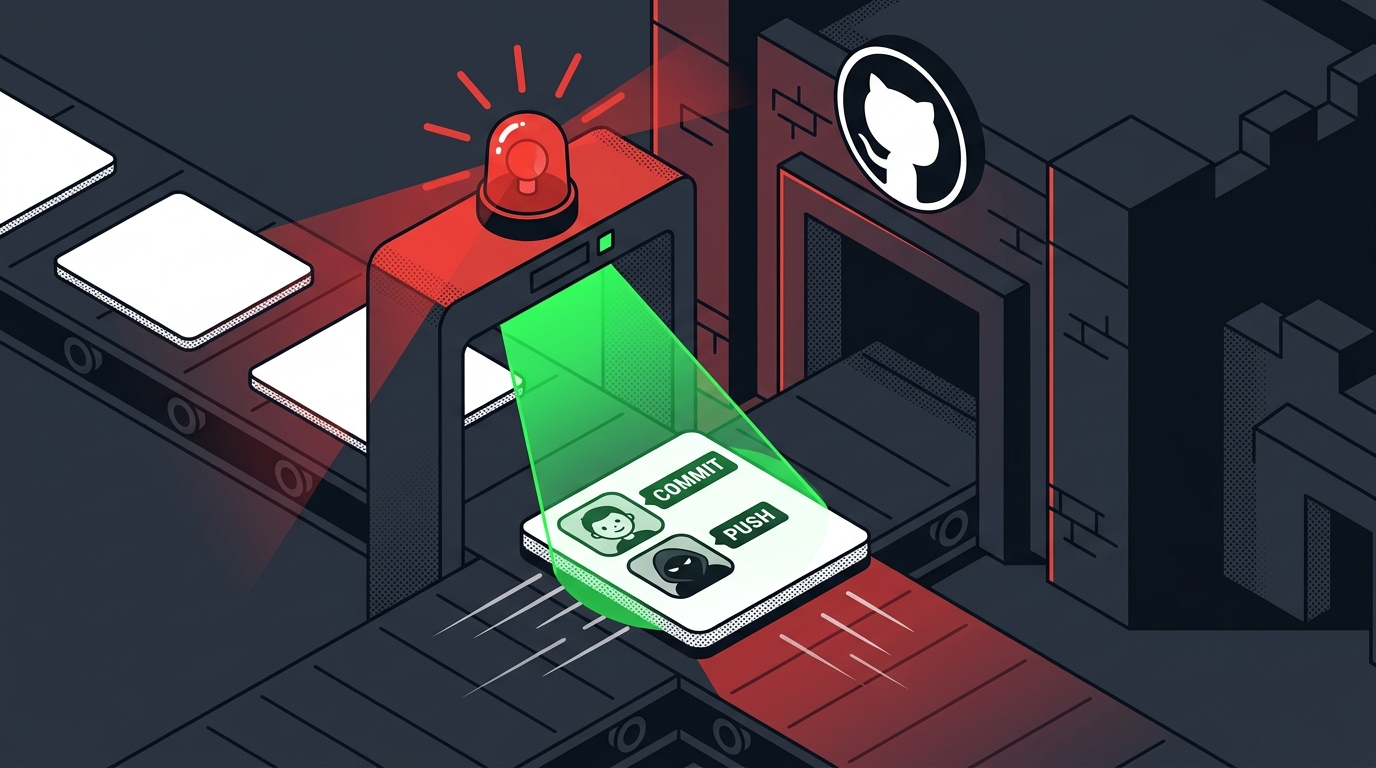 The OpenSourceMalware Show #25
Episode 25 of the OpenSourceMalware Show (transcript). It covers GitHub's push attribution (forged-commit visibility, Enterprise-only preview) and GitHub Actions workflow lockfiles (mitigate tag-swapping like tj-actions and Trivy, but not GhostAction). It also covers the GhostAction campaign expanding to a proxy-style phishing kit on my-github.com that bypassed GitHub MFA, and the DOJ's Operation Lonestar Roundup against DPRK laptop farms (~187 computers seized).
 opensourcemalware.comtalkPublished and added 15 Oct 2026🛡️ Security
- Efficient KV Cache Migration for Geo-Distributed LLM Inference in Collaborative Edge Computing
Proposes EdgeFlow, a hybrid KV cache migration scheme for distributed LLM inference across heterogeneous edge servers in Collaborative Edge Computing. It combines direct KV cache transmission with activation-based recomputation, overlapping computation and communication to cut migration time when servers disconnect or overload. The authors formulate a multi-node KV migration optimization problem and give a 2-approximation algorithm built on improved LP relaxation and bipartite graph techniques. Experiments on a real distributed LLM inference platform show up to 45% lower migration time.
arxiv.orgpaperAdded 17 Oct 2026, published 15 Oct 2026🧠 AI 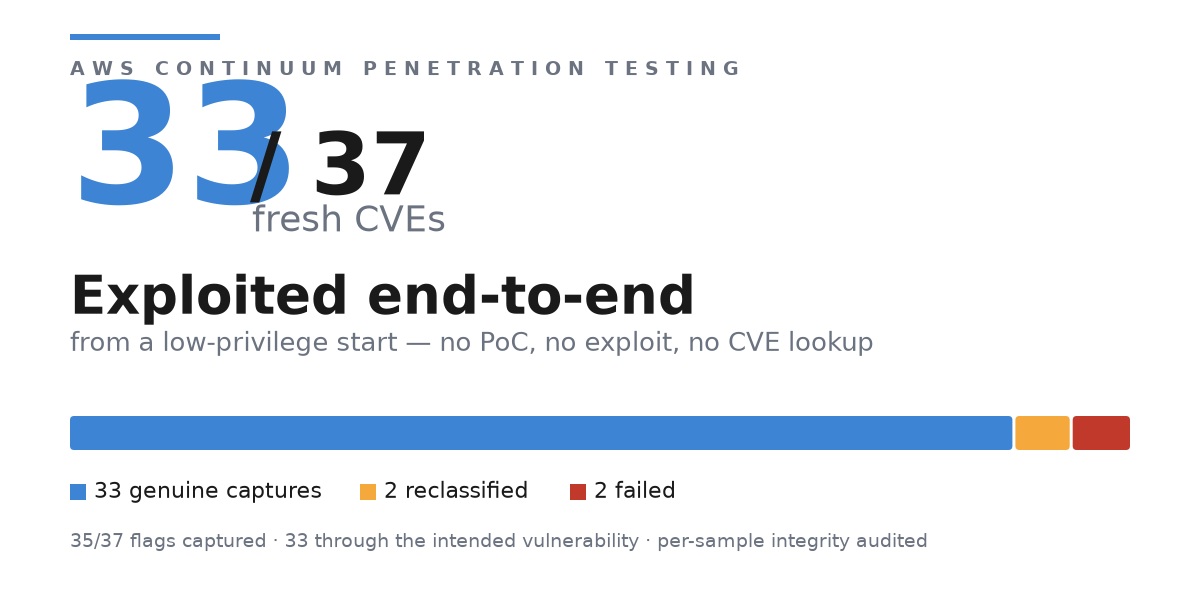 AWS Security Agent (now part of AWS Continuum) exploited 33 of 37 new real-world CVEs
AWS reports results for its autonomous pentesting agent, AWS Security Agent (now part of AWS Continuum), on an internal CTF-style benchmark of 37 recent 2025–2026 CVEs. Each CVE ran as a live docker-compose target with a hidden flag, and the agent started from an endpoint and a one-line hint with runtime CVE lookup disabled. It captured 35 flags, 33 (89.2%) through the intended vulnerability after an audit against canonical PoCs. The post describes the 7-stage pipeline (crawler, specialist agents, validator, exploitation agent, flag check, audit), three exploit walkthroughs (CMS upload-to-admin chain, AI workflow builder RCE, tRPC full-read SSRF), the two audit reclassifications caused by benchmark bugs, and two misses where the agent took the target down. It also argues that saturated public benchmarks like CVE-Bench and XBOW are contaminated.
 aws.amazon.comarticlePublished and added 15 Oct 2026🛡️ Security
- PROBE: Learning to Audit Policy Compliance in Tool-Using LLM Agents
PROBE (Policy Rule Observation via Behavioral Exploration) trains LLM-based auditors that act as realistic users and probe deployed tool-using agents for policy violations (pricing, privacy, confirmation, safety) across multi-turn, tool-mediated dialogue. It formalizes auditing as a two-player Markov game with a composite reward for violation discovery, plausibility, progress and policy diversity, and compares GRPO, DPO and GFlowNet optimization. Trained auditors find broader, higher-yield violations than zero-shot adversaries, even when much smaller than the target agent, positioning behavioral auditing as a distinct axis next to capability and safety benchmarks.
arxiv.orgpaperAdded 17 Oct 2026, published 15 Oct 2026🛡️ Security - PROBE: Learning to Audit Policy Compliance in Tool-Using LLM Agents
PROBE (Policy Rule Observation via Behavioral Exploration) trains LLM-based auditors that act as realistic users and probe deployed tool-using agents for policy violations (pricing, privacy, confirmation, safety) over multi-turn dialogue. It formalizes auditing as a two-player Markov game with a composite reward balancing violation discovery, behavioral plausibility, conversation progress and policy diversity, and compares GRPO, DPO and GFlowNet optimization in a controlled setting. Trained auditors find broader, higher-yield violations than same-architecture zero-shot adversaries, even when much smaller than the target agent. This positions multi-turn behavioral auditing as a distinct evaluation axis alongside capability and safety benchmarks.
arxiv.orgpaperAdded 17 Oct 2026, published 15 Oct 2026🧠 AI  Welcome FLUX.3 Image Klein in Diffusers
Hugging Face blog post introducing Black Forest Labs' open FLUX.3 Image Klein (distilled and base checkpoints) in Diffusers. It covers text-to-image, multi-reference image-to-image and bounding-box layout control, FP8/NVFP4 single-file quantized weights, DreamBooth LoRA training scripts for generation and editing, memory/speed figures (about 2 s per 1024×1024 image on an H100), and a detailed architecture tour: Qwen3-VL text encoder, two-stage per-stream then joint transformer blocks, per-token timestep modulation, 4D RoPE, and flow-matching denoising. It also shows how to customise the Modular Diffusers pipeline.
huggingface.coarticlePublished and added 15 Oct 2026🧠 AI Dark Web Informer (@DarkWebInformer) on X
A DarkWebInformer post announces a public PoC for CVE-2026-85884, a Windows privilege escalation in the Windows Health and Optimized Experiences service. Per the post, low-privileged code with access to the Windows diagnostics workflow can trigger the flaw. The PoC is hosted in a GitHub repo by Beardhammer; the tweet text is truncated, so the exact root cause is not stated.
x.comthreadAdded 16 Oct 2026, published 14 Oct 2026🛡️ Security Critical GitLab RCE Lets Unauthenticated Attackers Execute Code on Servers (CVE-2026-97229)
Orca Security analysis of CVE-2026-97229, a CVSS 10.0 flaw in GitLab CE/EE. An integer overflow (CWE-190) in the CI/CD regular expression compiler gives memory corruption and code execution as the git user. It is triggered by a crafted regex in .gitlab-ci.yml combined with a UTF-8 repository path, with no authentication needed on instances that allow public project creation or self-registration. Lists affected branches (19.2 before 19.2.8, 19.3 before 19.3.5, 19.4 before 19.4.2), the absence of a workaround, interim mitigations, and a Rapid7 PoC against GitLab CE 19.4.1 with ASLR on. Notes a prior max-severity GitLab bug (CVE-2026-85706) was probed in the wild within hours and later added to CISA KEV.
 orca.securityadvisoryPublished and added 14 Oct 2026🛡️ Security
- INFUSE: A Unified Surface Benchmark for Indirect Prompt Injection in Agentic Systems
INFUSE is an end-to-end benchmark for indirect prompt injection (IPI) across long-horizon agent workflows (shell commands, code changes, dependency installs, remote services). It has 40 realistic tasks and a taxonomy of 56 attack scenarios in five threat categories, with attacks injected via interaction surfaces encountered mid-task. Across 19 LLMs (GPT, Claude, Gemini, Llama, Gemma, Qwen) and 41,824 adversarial trajectories, mean attack success was 19.6% (LLM-judged) and 15.4% (heuristic), per-model 3.2–41.9%; guard models gave limited protection, while prompt-level hardening cut mean ASR from 58.2% to 14.3%.
arxiv.orgpaperAdded 17 Oct 2026, published 14 Oct 2026🛡️ Security  XBOW Used AI to Hack Google Chrome in Six Days, Earning $250,000
News write-up of XBOW's research in which AI agents (OpenAI gpt-5.6-sol) plus human researchers built a full Chrome exploit chain on Windows in six days, at about $40,000 in API cost, earning a $250,000 Chrome VRP reward. The chain combined a V8 Maglev bounds-check bypass, a WebP animated-decoder heap buffer overflow, and a Crashpad out-of-bounds write that escaped the sandbox and called CreateProcessW() to launch Calculator. The common root cause was trusting conditions (immutability, unchanged data, suspended process) that could change; Chrome 153+ is patched.
en.cryptonomist.charticlePublished and added 14 Oct 2026🛡️ Security North America: Inside the Growth of Agentic Commerce
Chainalysis's North America chapter of its 2026 crypto adoption report. Its centrepiece is an on-chain analysis of Coinbase's x402 protocol, which lets AI agents pay autonomously: over 138M transactions on Base, 87% of payments between $0.0001 and $0.10, and growing wallet re-funding (70.6% to 89.3% within 30 days). Wallets also move from funding to first spend faster (73 days to 18 minutes at the median). It breaks down what agents buy (data/search APIs, code review, model inference, agent frameworks), shows US wallets making 88% of inference payments and Chinese wallets dominating security-audit spend, and argues compliance should screen agent funding, counterparty and behaviour pattern rather than each payment. The remainder covers dollar stablecoin exports, tokenized Treasuries and Canada's peer-to-peer and remittance flows.
chainalysis.comarticlePublished and added 14 Oct 2026🧠 AI- lee1981 (@lee1981b) on X
Defender guide for CVE-2026-104935, an authentication-bypass-by-spoofing flaw (CWE-290) in Ivanti Connect Secure that allows unauthenticated command execution. It is confirmed exploited and CISA KEV-listed, with a CNA CVSS 8.6. It covers the fixed-release matrix (25.1.1.2, 22.8R2.5, 25.1.3.x), platform and cluster migration limits, and Volexity's UTA0576 indicators and YARA rules. It also gives a six-step SOC workflow (scope, preserve, hunt, correlate identity, remediate, verify). It stresses that a clean ICT result cannot clear memory-only activity and that LDAP, LAPS and BitLocker exposure belongs to one observed chain.
x.comthreadAdded 16 Oct 2026, published 14 Oct 2026🛡️ Security - morluto/rea
REA (rea-agents on npm) registers an MCP server and matching workflow instructions with coding agents such as Claude Code, Codex, Cursor and Gemini CLI. It exposes tools for inspecting native binaries through Hopper, Ghidra or IDA (with optional objdump and Rizin), JavaScript/Electron apps and ASAR archives, .NET assemblies and websites. Results come back with evidence and limitations, so the agent can explain how a feature works and write and test its own implementation. Analysis runs locally, there is a CLI with the same workflows, and the showcases include C reconstructions verified against original x86 function bytes.
github.comrepoAdded 14 Oct 2026🧠 AI - ThreatWire (@ThreatWire_) on X
ThreatWire post on CVE-2026-97229, an integer overflow in the GitLab CI/CD regex compiler. GitLab rates it CVSS 3.1 10.0 and says it can allow unauthenticated code execution under certain conditions, in both CE and EE. Fixes are in 19.2.8, 19.3.5 and 19.4.2 (not 19.3.4), released Oct 12; GitLab-hosted instances are already patched. The post credits joaxcar via HackerOne and says a Rapid7 researcher published a lab PoC on GitHub, which ThreatWire has not run or verified. It also says the CVE is not in CISA KEV and has no known exploitation.
x.comthreadAdded 15 Oct 2026, published 14 Oct 2026🛡️ Security  Chrome, Firefox Updates Patch 114 Flaws as Mozilla Unveils Firefox Enterprise
SecurityWeek covers Chrome 155.0.8059.79/.80, which fixes 37 flaws including seven critical memory bugs (an ANGLE buffer overflow and use-after-free bugs in Browser, PDF, Network, Core, SVG and Media). It also covers Firefox 158, which fixes 77 flaws including 30 high-severity use-after-free, sandbox escape, JIT miscompilation and integer overflow bugs, plus matching Thunderbird and Firefox ESR releases. At least 15 of the Chrome bugs were reported by Xinyang Ge (Anthropic) assisted by Claude, and Amy Burnett of OpenAI found 9 Firefox bugs. The article also notes Mozilla's new Firefox Enterprise, a Gecko-based browser with a self-hosted management console for policy, access, data transfer and AI use.
securityweek.comarticlePublished and added 14 Oct 2026🛡️ Security- Field Notes: EtherRAT Distributed Through a Legitimate Intune Workflow
DFIR case where a malicious MSI impersonating Advanced IP Scanner, sourced from a fake GitHub repo found via Bing, was imported by a customer into Microsoft Intune and deployed to four endpoints, running a Node.js-based EtherRAT chain. It traces the infections by correlating the MSI ProductCode, MDMAppInstaller/omadmclient process ancestry and Intune app inventory (Graph PowerShell query). It also covers renamed node.exe hash-hunting pitfalls, Ethereum RPC dead-drop C2 traffic, a screen-capture script and a second impersonating repo.
dfir.chwriteupAdded 14 Oct 2026, published 13 Oct 2026🛡️ Security  Dyna-2: General Purpose Physical Agents with Hour-Long Autonomy — Jason Ma, Dyna Robotics
Podcast interview with Jason Ma, co-founder and Chief Scientist of Dyna Robotics, on Dyna-2, a world-action model pre-trained on over one million hours of human egocentric video. The model predicts future video and uses it to guide robot actions, built on a diffusion transformer with flow matching. The discussion covers the robotics data bottleneck, adapting to new tasks from about 45 minutes of demonstrations, synthetic environments and self-generated training data, on-device inference and distillation, and Dyna's custom wheeled semi-humanoid hardware. The episode listing also covers commercial deployments (Din Tai Fung, Best Western), agentic harnesses for hour-long workflows, and world-action models versus VLAs, but the fetched text was truncated before those sections.
latent.spacetalkPublished and added 13 Oct 2026🧠 AI- Dog-Breed Text-to-image Flow Matching from Pretraining to Fine-Tuning on 4 Consumer GPUs
MiniDog is a framework for training a text-to-image flow-matching diffusion transformer from scratch on four RTX 3090 GPUs, with 55 minutes of pretraining and 15 minutes of fine-tuning. It pretrains on 26k ImageNet dog images that were captioned, then fine-tunes on 2k FLUX.1-schnell generated images. Image and text features are precomputed and cached. The model is a 22M-parameter transformer with the E2E-INVAE semantic latent space, a small Qwen text encoder and in-context conditioning, and training is accelerated with iREPA and an EUPE perception encoder. The repo evaluates with FID, HPSv2, PickScore and VAE reconstruction metrics. It lowers the barrier to hands-on diffusion training research.
arxiv.orgpaperAdded 14 Oct 2026, published 13 Oct 2026🧠 AI - PixelMoE: Scaling Pixel-Space Diffusion with LLM-Style Mixture-of-Experts
PixelMoE is a pixel-space diffusion framework that scales capacity sparsely using standard LLM-style Mixture-of-Experts: token-choice routing, fine-grained routed experts, a shared expert and bias-based load balancing, with no diffusion-specific routing or auxiliary routing losses. It adds Pixel-Space Hierarchical Flow Matching, which varies spatial resolution along the denoising trajectory from global structure to fine detail. At matched active parameters it beats dense counterparts, and reaches FID 1.47 at 256x256 and 1.53 at 512x512 on class-conditional ImageNet-1K without representation alignment or perceptual losses. Code and models are promised but not yet released.
arxiv.orgpaperAdded 14 Oct 2026, published 13 Oct 2026🧠 AI - Gemini 4 Argon
Google DeepMind's launch page for Gemini 4 Argon, a frontier model pitched at long-horizon software engineering, science and math, robotics, cyber defense and professional workflows. Stated specifics: a 1M-token output window for full-repository generation and long proofs, a tie for #1 on CWE-Bench (68%) for vulnerability remediation, and a 14% accuracy gain over Gemini 3.1 Pro in Box's evaluation. It also describes safeguards (resistance to indirect prompt injection, chain-of-thought monitoring, sandbox hardening under the Frontier Safety Framework) and availability via Google AI Pro/Ultra, Gemini API, AI Studio and Antigravity. Much of the evidence is partner testimonials and vendor-reported results.
 deepmind.googlearticlePublished and added 13 Oct 2026🧠 AI
 XBOW Built a Chrome Full-Chain Exploit Affecting a Billion Users in Six Days | XBOW
XBOW describes building a Chrome full-chain exploit, made of three independent bugs, that takes a user from an ordinary web page to remote takeover of a Windows machine. The team built it in six days with a publicly available model (GPT-5.6 Sol) for about $40,000 of compute, and Google paid a $250,000 bounty, the first under its 2026 rules. The bugs are now fixed. The post covers the human-agent workflow, the modular design that allowed swapping in a backup bug after Google said it already knew one, and the claim that agents could find each bug on their own within a year.
 xbow.comarticlePublished and added 13 Oct 2026🛡️ Security
 CVE-2026-97229: Critical Unauthenticated Remote Code Execution in GitLab
Rapid7 analysis of CVE-2026-97229, a CVSS 10.0 integer overflow (CWE-190) in the Onigmo regex compiler used by GitLab CE/EE's CI/CD regex handling. A crafted regex in a .gitlab-ci.yml passes validation as US-ASCII, then is recompiled for a UTF-8 repository path, producing invalid instructions that give code execution as the git user. Rapid7 reproduced it on GitLab CE 19.4.1 with ASLR (patched in 19.4.2); despite the vendor's "unauthenticated" rating, the attacker needs to commit a malicious config to a public project, which self-registration allows. No in-the-wild exploitation is confirmed, and Rapid7 recommends urgent upgrades.
 rapid7.comadvisoryPublished and added 13 Oct 2026🛡️ Security
- Major ICQ security hole (1998)
Rootshell Security Bulletin #22 (Aug 1998) reports an ICQ authentication flaw found by a Linux ICQ clone developer. The Mirabilis server stores 8-character passwords, and sending a password of 9 or more characters (e.g. "123456789") overflows the buffer and logs the client in as any UIN not already online. This gives full account takeover, including receiving offline messages. It is not spoofing, and it works with unofficial clients such as zicq, since the official client enforces the length limit client-side.
 opennet.ruadvisoryAdded 17 Oct 2026, published 13 Oct 2026🛡️ Security
- lee1981 (@lee1981b) on X
CyberForge "CVE of the Day #076" covers CVE-2026-97229, a CVSS 10.0 integer overflow (CWE-190) in GitLab CE/EE's CI/CD regular expression compiler. It can lead to conditional unauthenticated code execution on the GitLab server. It lists the affected trains (19.2 before 19.2.8, 19.3 before 19.3.5, 19.4 before 19.4.2) and the 19.3.4 vs 19.3.5 Ona-regression discrepancy. It also gives six SOC checks: scoping, log preservation (Workhorse/Rails/Sidekiq, correlation_id), server-effect hunting, request-to-process correlation, upgrade and running-state verification. It notes that exploit details are unverified, no KEV listing exists and EPSS data is unavailable.
x.comadvisoryAdded 15 Oct 2026, published 13 Oct 2026🛡️ Security - kage (@0XKageX0) on X
A tweet describing a free setup for running a ~27B open-source Qwen model on Google Colab's free T4 GPU, driven from VS Code. A Cloudflare tunnel with a proxy locks the endpoint behind an API key, and the endpoint is connected to 9router so Claude Code and Claude Cowork on the desktop can use it. It matters as a pointer to a zero-cost way to get Claude Code-style workflows on a self-hosted open model, though the steps are only in an accompanying video and the tweet gives no configuration or quantisation details.
x.comthreadPublished and added 12 Oct 2026🧠 AI  Phillip Shoemaker (@pbsIdentity) on X
Social thread reacting to a newly disclosed high-severity OAuth vulnerability in the Model Context Protocol Python SDK, where a malicious MCP server could manipulate the authorization flow and steal credentials used by an agent. The author uses it to argue that delegated agent authority needs provenance (who granted it, to which agent, for which service and resource, whether it is transferable or replayable, and when it expires) and that machine-to-machine trust must be auditable by humans. Gives no CVE ID or technical exploit detail.
x.comthreadAdded 13 Oct 2026, published 12 Oct 2026🛡️ Security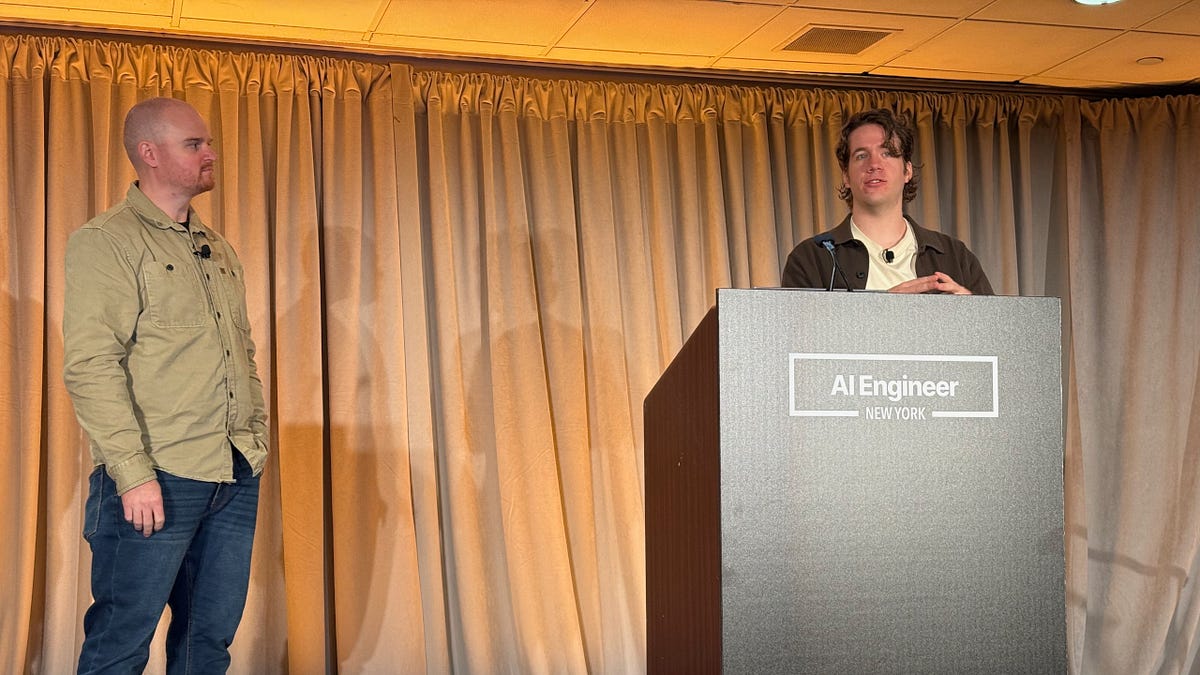 How Anthropic’s Dynamic Workflows Coordinate Claude Agents
Latent Space report from an Anthropic workshop at AI Engineer New York 2026 on "dynamic workflows" (flows) in Claude Managed Agents. Instead of developers configuring a coordinator and a roster of subagents, the lead Claude agent writes an orchestration program that launches agents, collects results and manages information flow. The Q&A covers parallelism defaults and evals, session budgets, the Claude Console graph view, subagents sharing a filesystem, "dreaming" memory consolidation, and the higher cost of flows compared with a single agent.
latent.spacearticlePublished and added 12 Oct 2026🧠 AI- Just say no to OpenAI and Anthropic
Micah Lee argues for dropping OpenAI and Anthropic in favor of open-weight models, claiming they trail proprietary ones by about four months. They report GLM-5.3 as roughly on par with Claude Opus 5.5 for software engineering, and GLM-5.3-Flash as similar to Opus 4.8 and feasible to run locally. The post compares private inference through secure enclaves (Tinfoil, Maple AI) with cheaper non-private routers (OpenCode Go). It gives pricing, data-trust caveats about Z.ai, and the author's own workflow: OpenCode harness, GLM-5.3 on low reasoning, Tinfoil for private work.
 micahflee.comarticlePublished and added 12 Oct 2026🧠 AI
 XRP Ledger’s Payment Engine Had a Counterfeiting Bug Hiding Since 2015
XRP Ledger maintainers disclosed a critical integer overflow in the payment engine, reported via bug bounty in September. A payment consuming hundreds of crafted order-book offers made the buyer's owed sum wrap around to a tiny value while sellers were paid in full, minting XRP. The built-in "no XRP created" invariant check used the same flawed arithmetic and missed it. The fix shipped in 3.4.1 on Sept. 25, bypassing the usual amendment vote and two-week wait for the first time, so the open-source patch would not expose a live exploit. No exploitation evidence was found.
 decrypt.coarticlePublished and added 12 Oct 2026🛡️ Security
 How a Misconfigured CI Workflow Became an npm Supply-Chain Compromise | Blog | Endor Labs
Endor Labs breaks down the May 11, 2026 compromise of 42 @tanstack/* npm packages (84 malicious versions) that carried valid SLSA provenance. The attacker chained a pull_request_target "Pwn Request", GitHub Actions cache poisoning across the fork/base boundary, and OIDC token extraction from Runner.Worker memory, then published directly to npm without stealing any credential. It explains why 2FA, trusted publishing, provenance and branch protection all failed, and lists mitigations: split pull_request_target workflows, treat the cache as untrusted, scope id-token: write to a publish job, pin actions to SHAs, require environment approval, use egress allowlists.
endorlabs.comwriteupPublished and added 12 Oct 2026🛡️ Security Why a bug that could have threatened XRP's 100 billion supply cap stayed hidden for years
CoinDesk reports on an 11-year-old integer-overflow bug in the XRP Ledger's DEX code. Hundreds of crafted offers could make the computed buyer cost wrap to near zero while sellers were credited in full, which would have minted billions of XRP beyond the 100 billion cap. The post-transaction no-new-XRP invariant check used the same miscounted total, and the per-account receive limit was sidestepped by spreading funds across hundreds of accounts. Researcher Cayden Liao and Veria AI reported it on Sept. 22, RippleX patched it with no evidence of exploitation, and the XRP Ledger Foundation plans AI adversarial testing, formal verification and a stronger bug bounty.
 coindesk.comarticlePublished and added 12 Oct 2026🛡️ Security
 I Found a $90k Remote Code Execution Vulnerability in Google
Writeup of an unauthenticated RCE on Google's shared DevSite platform (developers.google.com, firebase.google.com, developer.android.com and others). The Flask session cookie embedded a pickled OAuth2WebServerFlow containing the OAuth client_secret, which was also the Flask SECRET_KEY. That let the author forge signed sessions carrying a malicious pickle that the OAuth callback unpickled; RCE was proven safely with time.sleep timing and negative controls. It earned a $90,000 bounty and lists a four-part fix.
 simonkoeck.comwriteupPublished and added 12 Oct 2026🛡️ Security
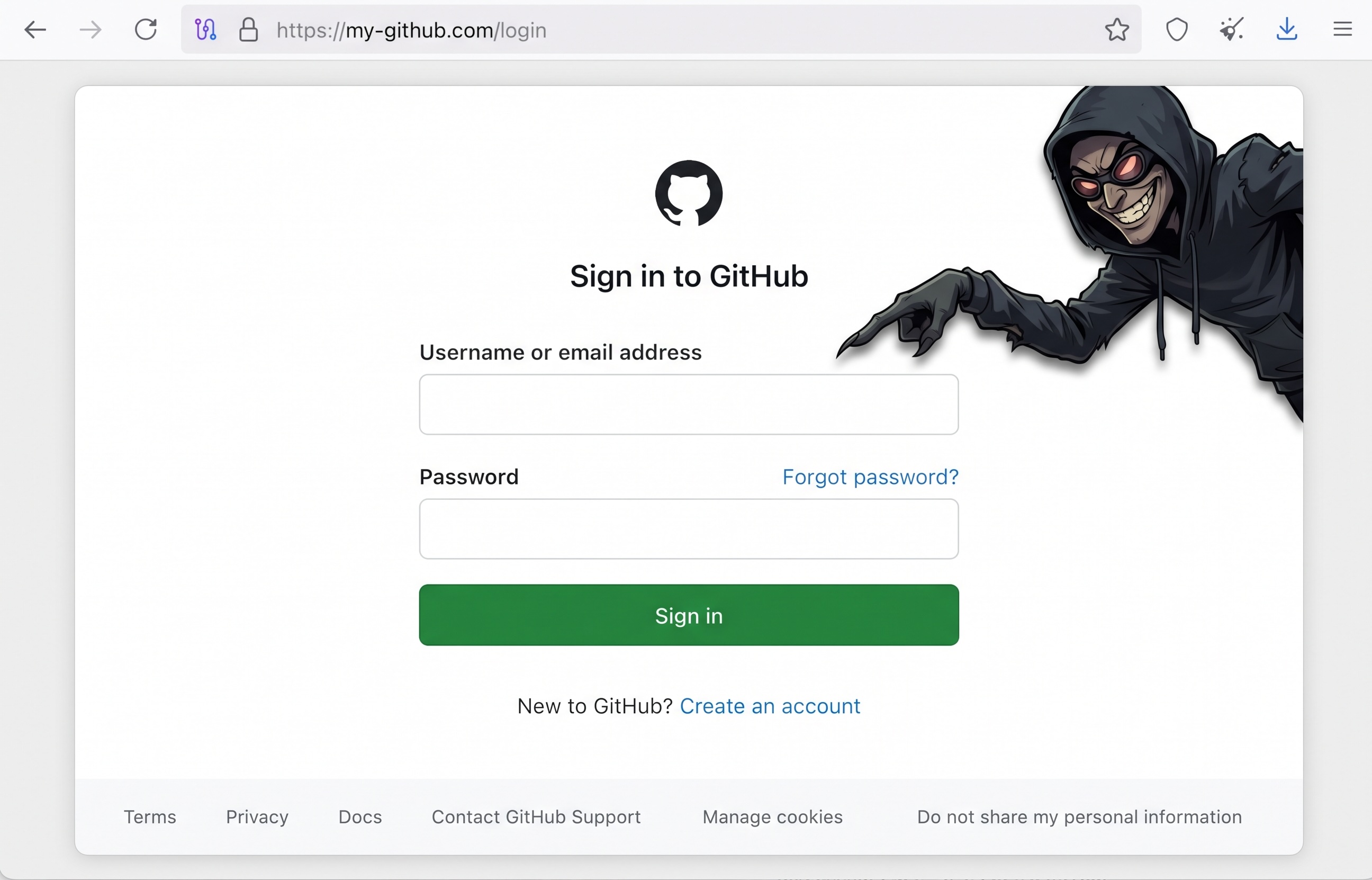 GhostAction Phishing Campaign
OpenSourceMalware analyzes a targeted phishing email from my-github[.]com (same server 193.32.204[.]199 as GhostAction's CI/CD exfiltration) that impersonated a GitHub new-sign-in alert. Recovered HTML and a HAR show a GitHub reverse proxy that captures passwords and TOTP codes, rewrites GitHub subdomains, and injects JavaScript that silently completes an OAuth device flow with repo, workflow and read:org scopes, then exfiltrates the token to TCP/8443. It includes a per-session redirect controller, mutable redirect behavior seen in URLScan, a victim's audit-log outcome (MFA stopped escalation), IOCs, and response guidance.
opensourcemalware.comwriteupPublished and added 11 Oct 2026🛡️ Security- XRP Ledger patches decade-old bug that could have minted trillions of XRP
The Block reports on the XRP Ledger disclosure of a critical bug that had been in the payment engine since 2015. Order-book offer totals had no overflow check, so a single payment consuming a few hundred crafted offers could wrap the sum and mint spendable XRP past the 100B cap. Veria Labs' AI agent found it and built a working exploit, and RippleX shipped the fix in xrpld 3.4.1 on Sept. 25, bypassing the usual amendment vote to avoid tipping off attackers. The article also covers the $250K bounty, a separate Batch bug, and the closed-source-release criticism.
 theblock.coarticlePublished and added 11 Oct 2026🛡️ Security
- sakidekin/CVE-2026-41940-PoC
This repository hosts a proof-of-concept for CVE-2026-41940, described as a CVSS 10.0 unauthenticated authentication bypass in cPanel and WHM caused by CRLF injection into server-side session files via the Authorization header. The accompanying Python tool (cve.py) can detect vulnerable cPanel/WHM instances, retrieve system and account information, and perform post-exploitation actions such as running OS commands, changing the root password, and opening an interactive WHM shell. It also supports bulk scanning workflows piped from subfinder, httpx, and Shodan.
github.comrepoAdded 23 Oct 2026, published 11 Oct 2026🛡️ Security  An XRP Ledger security bug could have created 18.45 trillion XRP
Reports a decade-old integer overflow in the XRP Ledger payment engine's DEX offer-crossing code (added 2015). A single transaction across hundreds of seeded accounts could have minted about 18.45 trillion XRP, because the overflowed total understated what the buyer paid and the mint-check safeguard used the same wrong total. Veria AI found it on 2026-09-21 and reported it through the bug bounty. RippleX reproduced it on a standalone server and shipped xrpld 3.4.1 on 2026-09-25 as binaries only, with no patch source. RippleX's Mayukha Vadari warns that AI makes silent critical patches easy to reverse engineer, and the withheld source drew open-source criticism.
en.cryptonomist.charticlePublished and added 11 Oct 2026🛡️ Security- Only What You've Signed up For: Secure Workflows with Constrained Diffusion Agents
Introduces Policy-Constrained Diffusion Agents (CoDA), which enforces task-dependent security policies inside the denoising process of diffusion language models. At each step, token distributions are projected onto a policy-compliant set, so constraints hold throughout generation instead of relying on detecting injected instructions. Evaluated across several dLLM families under static and adaptive prompt-injection attacks, it reports substantially lower attack success rates with competitive task utility and practical inference overhead.
arxiv.orgpaperAdded 15 Oct 2026, published 10 Oct 2026🛡️ Security - KedgeFlow: A Programmable Control Plane for Enterprise AI Agents
KedgeFlow specifies language-independent contracts so trusted controllers can authorize state-changing operations by enterprise AI agents and privileged gateways can enforce that authority independently of agent reasoning. It combines evidence-backed policy checks, signed permission for an exact action, a single-use shared allowance, target-side conditions and retained outcome records, with two conditional properties (at most one claim per allowance; every dispatch linked to a grant and claim) that hold even if the agent is compromised. A reference implementation exposes the path via MCP; evaluation on a three-member etcd cluster gave exactly one successful claim for each of 82 allowances across 6,560 concurrent attempts, and one committed effect in a 32-call gateway race. The authors report limits: permissive policy still authorized an undesirable effect, and distributed reservations, production access routes, crash recovery and real-target exactly-once effects remain untested.
arxiv.orgpaperAdded 15 Oct 2026, published 10 Oct 2026🧠 AI - KedgeFlow: A Programmable Control Plane for Enterprise AI Agents
KedgeFlow proposes language-independent contracts in which trusted controllers issue signed exact-action permissions and privileged gateways enforce them, using single-use allowance claims, target-side conditions and retained outcome records. It aims to stop altered approved actions, concurrent permission reuse and retries after lost responses, even with a compromised agent. A reference implementation exposes this path via MCP; evaluation on a three-member etcd cluster showed 6,560 concurrent claim attempts yielding exactly one success per each of 82 allowances. It also reports that permissive policy still authorized an undesirable effect, and lists untested areas such as distributed reservations and production access routes.
arxiv.orgpaperAdded 15 Oct 2026, published 10 Oct 2026🛡️ Security









Showing 120 of 494
Show more