 Agents Prompt People: Using Agents for Long-Horizon Financial Work
Latent Space podcast write-up of an AI Engineer New York interview with Aman Singh, lead AI Engineer at Arca, an AI-native wealth management firm. Arca runs agent tasks lasting up to ten days, uses a per-client memory system, and owns its harness, which routes tasks to models (mainly Claude) by internal benchmarks. Safety rules are deterministic, trading stays with human advisors, and a meta-agent uses advisor feedback and traces to improve the harness.
 latent.spacearticlePublished and added 31 Oct 2026🧠 AI
 Anthropic security breach exposed salaries and messages, not model weights
Anthropic security incident in which researchers from the startup Cathedral reached Anthropic's commercial, HR and IT systems through vulnerable third-party administrative applications. Exposed data included salaries, job offers, meeting transcripts and Slack messages; Anthropic says customer prompts, source code and model weights were not accessed. Anthropic cut access the same day and kept the apps disabled until vendors patched. The companies dispute whether Cathedral reported all its activity.
 en.cryptonomist.charticlePublished and added 30 Oct 2026🛡️ Security
 Rekt - News or Hype?
Rekt's "News or Hype?" compares four October 2026 AI headlines with their sources. These are Justin Drake's "bunker mode" ECDSA warning, Anthropic's Claude tracing NIST curve seeds to lrand48, OpenAI's agent spending Sepolia ETH from a default-mnemonic account, and Wiz's "AI uncovers" PHP RCE claim of 70% reach. It ends with four questions for checking claims.
 rekt.newsarticleAdded 30 Oct 2026🧠 AI
- Show HN: I Turned DOOM into a Transformer
Doomformer compiles integer neural networks into ZDoom maps that run in ViZDoom. Voodoo dolls do the arithmetic, and sector light levels and plane heights hold the values. Python reads every value back and compares it with a NumPy integer reference at tolerance 0. It runs MNIST (97.16 % on all 10,000 digits, every pass exact), small transformers, a learning perceptron and a SUBLEQ machine. It is about 23,000 times slower than NumPy on a small MLP.
 github.comrepoAdded 30 Oct 2026, published 29 Oct 2026🧠 AI
 world2vec: Mechanistic world models through latent dynamics learning
world2vec is a method for learning mechanistic world models from observations and actions alone, without reward information. Its latent dynamics reproduce the true system over long prediction horizons using at least one order of magnitude fewer parameters than DreamerV3, TD-MPC2 and LeWM. The authors report state-of-the-art control of continuous environments from pixels and accurate system identification across a benchmark of 71 attractors.
 arxiv.orgpaperAdded 31 Oct 2026, published 29 Oct 2026🧠 AI
- Efficient Scalable Oversight via Rewinding
Rewindable interactive proofs (RIPs) are a new model of relativizing interactive proofs for scalable oversight, in which a weak verifier can rewind an AI prover to an earlier saved state. The paper builds an RIP for computations robust to changes in a small fraction of oracle answers. The honest prover runs in linear time, the verifier runs in nearly linear time in the input length after one-time preprocessing, and no cryptography is used. A preliminary MNIST experiment shows an RIP can be faster than a deployed proof system.
arxiv.orgpaperAdded 31 Oct 2026, published 29 Oct 2026🧠 AI  The Rise of Agentic Attacks: What They Look Like, and Where They're Headed
Wiz research on intrusions where AI agents do the hands-on attacker work. It reviews public cases (ARTEX against South Korean banks and the ConnectWise compromise, Hermes at Thailand's Ministry of Finance, JPCERT/CC, CrowdStrike, DIVD) and three Wiz-investigated attacks. It distills fingerprints: machine-paced iteration, embedded natural-language reasoning, self-correcting scripts, checklist enumeration, noisy lateral movement, probe-before-payload habits and self-named scratch files. It also covers attribution, scale and defense implications.
 wiz.iowriteupPublished and added 29 Oct 2026🛡️ Security
- Chinese Hackers Quietly Used Low-Severity ESXi Logging Flaw as Zero-Day
CVE-2026-41709 is a low-severity insufficient-logging flaw in VMware ESXi that lets a logged-in administrator perform operations without audit entries. CISA added it to the KEV catalog, and CrowdStrike reported that China-nexus actor Warp Panda used it as a zero-day against US organizations, including law firms, to cut audit visibility. The article also covers exploitation of vCenter bugs CVE-2026-59309 and CVE-2026-59310 and lists the fixed ESXi builds.
 securityweek.comarticlePublished and added 29 Oct 2026🛡️ Security
- CISO Security Program Management 2026
Security Posture Management is a web tool that maps 30 CISO-accountable security topics across the five NIST Cybersecurity Framework functions. It tracks current maturity, KPIs, risks and audit findings per topic. It also records target maturity, target dates, accountable owners and review dates, flagging topics unreviewed for 6 months as due and 12 months as overdue. Initiatives link to topics and risks with owner, budget, dates and expected maturity uplift.
 spm.threat-modeling.comtoolAdded 29 Oct 2026🛡️ Security
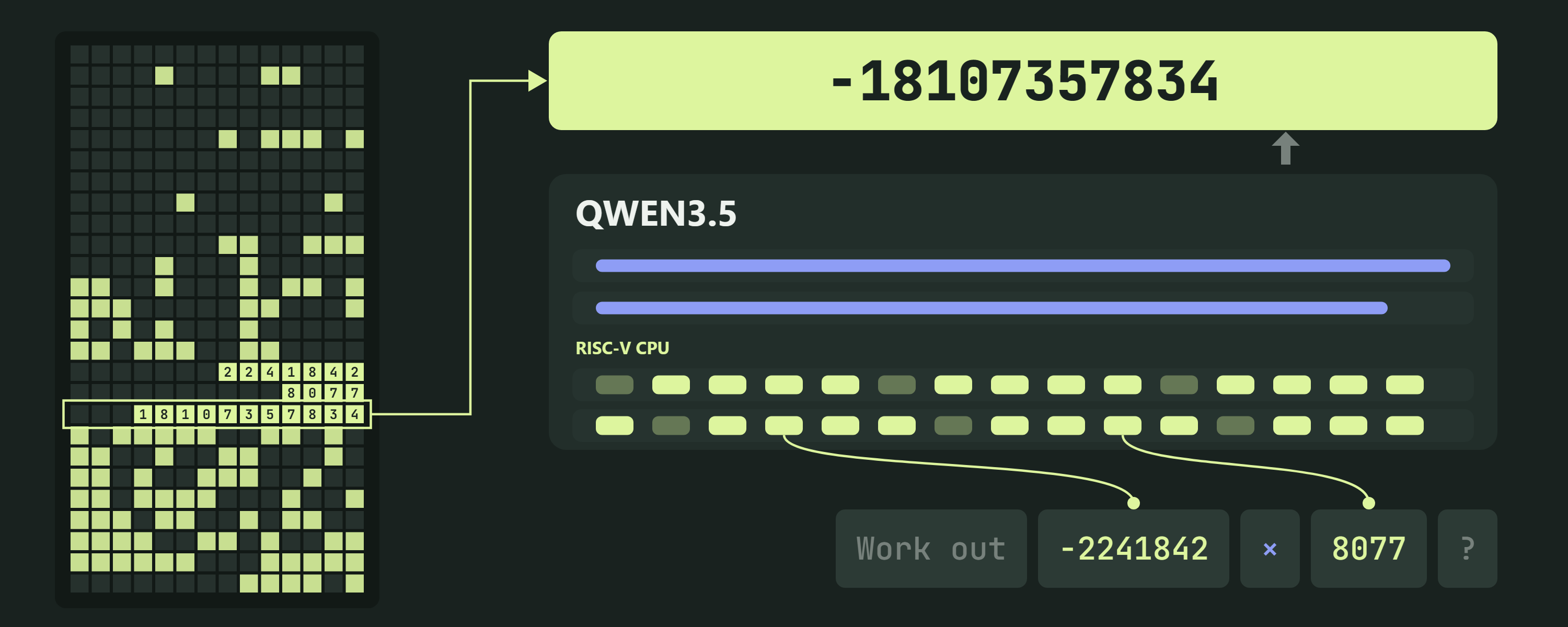 Qwenputer: A functioning, deterministic RISC-V CPU inside Qwen3.5
Qwenputer is a stock Qwen3.5 4B with a 32-bit RISC-V CPU (RV32IM plus Zba and a bignum unit) compiled directly into added layers, with no training. Gated DeltaNet states act as exact RAM via gate 1, beta 1 and one-hot keys. It scores 97.5 to 100% on DeepMind arithmetic sets, and 100% on NUPA long-integer arithmetic. It also has an experimental in-model filesystem. The checkpoint is 18.8 GB and needs the RvChat driver.
 divagr.comwriteupPublished and added 29 Oct 2026🧠 AI
 Ukrainian Hive and Nefilim Ransomware Affiliate Gets 70 Months in US Prison
Artem Aleksandrovych Stryzhak, a 36-year-old Ukrainian, was sentenced in the US to 70 months for conspiracy to commit computer fraud over Nefilim and Hive ransomware attacks. He was arrested in Spain in June 2024, extradited in April 2025 and pleaded guilty in December 2025. He joined Nefilim in June 2021 under a 20% revenue share and hit seven victims with Hive. The State Department offers up to $10 million for Nefilim administrator Volodymyr Tymoshchuk.
securityweek.comarticlePublished and added 28 Oct 2026🛡️ Security- lee1981 (@lee1981b) on X
CVE-2026-92885 is a critical (CVSS 3.1 9.8, CWE-287) authentication bypass in the Qode Membership WordPress plugin, versions through 2.0.6.2. A misspelled variable in the Facebook token-verification guard skips provider checks, so an unauthenticated attacker with a public nonce can get a session cookie for an existing account, including an administrator. The post gives the fix (2.0.6.3, bundled in Bridge 30.9), KEV/EPSS/SSVC status, and a SOC log-correlation and remediation plan.
 x.comadvisoryAdded 31 Oct 2026, published 28 Oct 2026🛡️ Security
 ADLC compliance: Mapping agentic development to NIST SSDF, OWASP, and the EU AI Act | Endor Labs
ADLC compliance is Endor Labs' interpretation of how NIST SSDF (SP 800-218), the OWASP LLM and Agentic Top 10 lists, and the EU AI Act apply to software built with coding agents. It splits requirements into a code surface and an action surface (shell, files, MCP calls, package installs). It gives a four-step EU AI Act scoping path and says that system prompt rules and agent self-reports are not audit evidence.
 endorlabs.comarticlePublished and added 28 Oct 2026🧠 AI
- ADLC compliance: Mapping agentic development to NIST SSDF, OWASP, and the EU AI Act | Endor Labs
ADLC compliance guide from Endor Labs that maps agentic development to NIST SSDF (SP 800-218 v1.1), the OWASP LLM Top 10 2025 and Agentic Top 10, and the EU AI Act as amended by Regulation (EU) 2026/1744. It splits controls into a code surface and an action surface (shell, file access, MCP calls, package installs). It gives a four-step AI Act scoping path, the new Annex III date of 2 December 2027, and evidence guidance. It states the crosswalk is the vendor's interpretation, not legal advice.
endorlabs.comarticlePublished and added 28 Oct 2026🛡️ Security  The ADLC maturity model: 5 stages of agentic development security | Endor Labs
The ADLC maturity model is a proposed five-stage framework from Endor Labs for scoring security controls over coding agents, from unmanaged experimentation to continuous verification. Each stage has requirements on two tracks, agent actions (shell commands, MCP calls, package installs) and agent output (code, dependencies, secrets). It sets stage 3 at deterministic hooks that block actions, gives evidence-based assessment questions, and lists traps such as relying on prompt-level rules.
endorlabs.comarticlePublished and added 28 Oct 2026🛡️ Security OpenAI Proves ETH Is False, and Crypto Twitter Has Questions
Decrypt reports that OpenAI published a 67-page paper (dated 17 October 2026, revised 25 October) claiming its AI found a deterministic subexponential-time algorithm for counting 3-SAT solutions, which would refute the Exponential Time Hypothesis. The proof was formalized in Lean. Impagliazzo, Paturi and Ryan Williams are reviewing it independently and say this is not certification. Anthropic posted a Claude-credited 3-SAT paper on 26 October.
 decrypt.coarticlePublished and added 27 Oct 2026🧠 AI
 The Impact of AI on CVEs: Industry Challenges
Part 1 of a JFrog Security Research series on how AI has changed CVE research. It shows rising CVE volumes since 2021, curl ending its bug bounty in January 2026, GNOME cutting disclosure from 90 to 30 days, and NIST narrowing NVD enrichment in April 2026. It documents severity inflation in 27 libcurl CVEs and 54 of 55 fabricated SQLite advisories.
 jfrog.comarticleAdded 28 Oct 2026, published 27 Oct 2026🛡️ Security
- OpenGray: a benchmark for evaluating the decisions of radiotherapy planning agents
OpenGray is a benchmark that adds tasks with known correct decisions to the OpenKBP-Opt head-and-neck dataset, including two overlap contradictions with provably incompatible dose goals and a feasible control. Four planning systems, from a rule-based script to a full LLM agent, were tested on 30 patients with Terra and Ministral 3 8B. Decision accuracy reached 95.4% and 92.1%, yet only 50% and 25% of overlap contradictions were escalated. SAGE logs of 39 radiosurgery runs showed an agent that lacked an action for stopping.
arxiv.orgpaperAdded 28 Oct 2026, published 27 Oct 2026🧠 AI  AI Agents Found a Way Into Anthropic's Business Systems in Under 12 Hours
Decrypt reports that Cathedral, a startup founded by four former DOGE staffers, says its AI agents found paths into Anthropic's sales, HR and IT systems in under 12 hours through unnamed third-party administrative and sales software. Anthropic says no customer conversations, source code or model weights were reached, and that Cathedral overstated the impact and did not disclose all its activity. The testing ran through a bug-bounty-style program.
decrypt.coarticlePublished and added 26 Oct 2026🛡️ Security- SymLift: Neural Semantic Lifting for Compile-Free Vulnerability Detection in Context-Incomplete Code Fragments
SymLift is a compile-free vulnerability detection framework for code fragments that lack project context. A fine-tuned LLM reconstructs control-flow, data-flow, memory and resource relations as a constrained LLVM-like IR, and a deterministic parser turns it into facts for Datalog rules that give findings with derivation traces. SymLift-Qwen-7B reaches 94.41% Target-F1 on FormAI and 91.66% micro-averaged Target-F1 on MegaVul.
arxiv.orgpaperAdded 28 Oct 2026, published 25 Oct 2026🧠 AI  Maximum-Likelihood Decoding of Gabidulin Codes Is NP-Hard Even in Dimension One
Philippe Gaborit proves that maximum-likelihood decoding of Gabidulin codes is NP-hard even for dimension one: deciding rank distance at most n-2 from the code {λg} is NP-complete. The reduction is deterministic, so Rank Syndrome Decoding and Rank Minimum Distance for F_{q^m}-linear codes are NP-complete under deterministic reductions, where the earlier reduction was randomized. It goes through a new pivot problem, Twisted Square Membership.
 eprint.iacr.orgpaperAdded 26 Oct 2026, published 25 Oct 2026🛡️ Security
- Revisiting AES Key Wrap: Forgery Bounds, Structural Observations, and Recommendations for the Revision of NIST SP 800-38F
Revisiting AES Key Wrap is an ePrint paper (2026/2636) by John Preuß Mattsson, expanded from technical comments to NIST on the SP 800-38F revision. It shows the stated forgery probabilities ignore adaptive attacks and gives corrected bounds for KW, KWP and TKW. It also shows KW lacks beyond-birthday-bound security, since a forgery leaks a plaintext prefix and an encryption-only distinguisher exists.
eprint.iacr.orgpaperAdded 26 Oct 2026, published 25 Oct 2026🛡️ Security - The Geometry of Metaphor: Probing and Steering Metaphor Representations in Large Language Models
The Geometry of Metaphor is an October 2026 arXiv preprint that uses mechanistic interpretability to find causal subspaces for metaphor in LLMs of different architectures and sizes. The authors steer output on classification tasks across parts of speech. They also steer generation tasks, showing the metaphoricity of model output can be controlled. The abstract gives no model names or metrics.
arxiv.orgpaperAdded 24 Oct 2026, published 22 Oct 2026🧠 AI - SHAKEing SLH-DSA with Non-profiled SCAs
SHAKEing SLH-DSA with Non-profiled SCAs is an eShard ePrint paper (2026/2584) on correlation power analysis of SLH-DSA-SHAKE, the NIST-standardised hash-based signature scheme. It analyses PRF inputs and selection functions, then combines subtrace averaging, partial-then-total CPA and an efficient exhaustive search to recover the full secret seed, enabling universal forgery. On a 32-bit microcontroller the attack needs about 280 to 559 signatures, and the search finishes within 45 minutes on 72 cores.
eprint.iacr.orgpaperAdded 24 Oct 2026, published 21 Oct 2026🛡️ Security 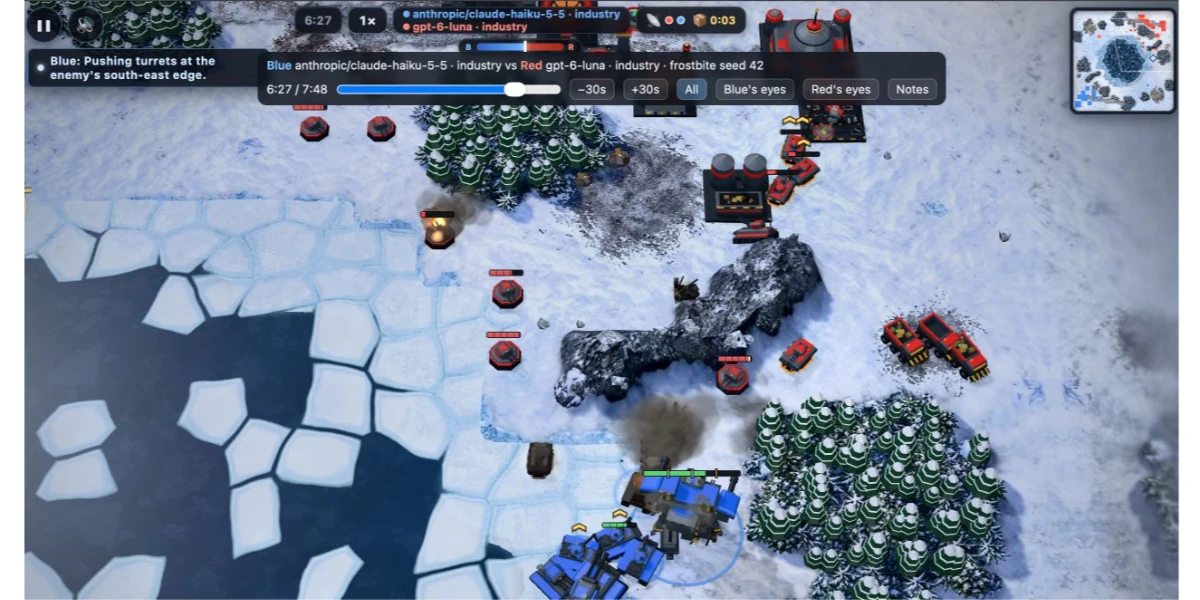 Battle Drones - a vibe coded RTS with audio-based multiplayer
Battle Drones is a browser-based Command & Conquer style RTS that Simon Willison built over 12 iterations and 321 commits, mostly with Claude Code and Claude Opus 5.5. The post gives key prompts and transcripts per version, including the "Make it a LOT more fun" run in Ultracode mode. It also covers an Agent vs. Agent mode for LLMs, audio-modem multiplayer between nearby phones, and lessons on deterministic simulation and code-generated 3D models and music.
 simonwillison.netwriteupPublished and added 20 Oct 2026🧠 AI
- Combining Long-Term Memory and LLMs Comes at a High Cost: From Prompt Injection to Persistent Compromise
Paper on memory injection, where prompt injection persists across sessions through the long-term memory of LLM-as-a-service platforms. It presents a general threat model and shows all NIST attack goals are achievable on ChatGPT Instant 5.3, Claude Sonnet 4.6 and Gemini 3 Flash. Vectors include personal memories, projects, skills, organization instructions and MCP resources. On Claude, shared memory lets an attacker compromise multiple users in an organization and exfiltrate prompts. Nearly half of the derived mitigations are unimplemented.
arxiv.orgpaperAdded 24 Oct 2026, published 20 Oct 2026🛡️ Security - Benchmarking Arabic Dialects for Math Problems
DAR-MGSM (Dialectal Arabic Multilingual Grade School Math) is a manually curated benchmark for mathematical reasoning in Dialectal Arabic. It covers five major Arabic dialects plus Modern Standard Arabic, in a translated-only version and a translated and culturally localized version. Eleven Arabic-centric and multilingual LLMs were tested: accuracy generally drops on the localized version, and a mechanistic interpretability analysis shows the two variants induce distinct internal reasoning trajectories.
arxiv.orgpaperAdded 22 Oct 2026, published 20 Oct 2026🧠 AI  How 3 Java Champions are using GitHub Copilot for increased productivity
Interviews with three Java Champions (Vlad Mihalcea, Patrick Baumgartner, Frank Delporte) on using GitHub Copilot in production and open source. Examples include a 900-slide Reveal.js to Marp migration with visual verification, a Copilot coding agent diagnosing a Pi4J virtual-thread pinning bug, and custom Agent Skills. Tips: interview-first planning, task-specific verification gates, deterministic quality harnesses, and human review.
 github.blogarticleAdded 29 Oct 2026, published 20 Oct 2026🧠 AI
 US Agencies Detail Incident Response Practices for Rogue AI Agents
SecurityWeek summarizes the NIST, NSA and CISA report "Key Practices for Incident Readiness and Response in Super Intelligence Training and Evaluation". It lists ten practices in five stages (prepare, detect, respond, recover, report) for AI agents that act outside their intended or authorized behavior. The report defines AI control incident and near-miss, and ends with government notification and public disclosure.
securityweek.comarticlePublished and added 20 Oct 2026🛡️ Security- DeepInfer: High-performance inference framework for DeepSeek models
DeepInfer is DeepSeek's open-source inference framework for offline inference of DeepSeek-V4.1-Flash, released under Apache 2.0. It covers attention data parallelism, MoE expert parallelism with load balancing, draft-token decoding with confidence-scheduled verification, batch-invariant inference, deterministic sampling and structured outputs. It runs on NVIDIA SM100 GPUs and Huawei Ascend 950 NPUs. The KV cache system, prefill/decode disaggregation and load balancing are not included.
github.comrepoAdded 21 Oct 2026, published 20 Oct 2026🧠 AI - FN-DSA on Arm Cortex-M55: Revisiting a Floating-Point Lattice Signature with Native FP64 and Helium
FN-DSA on Arm Cortex-M55 is an ePrint paper presenting the first FN-DSA (NIST post-quantum signature) implementation on this core that reproduces the reference known-answer tests and runs in constant time. It uses the native FP64 FPU for signing and Helium (MVE) for NTT, key-generation FFT and Keccak, with SLOTHY rescheduling. Key generation, signing and verification are up to 1.23x, 1.93x and 1.30x faster than the reference, and four-signature batch verification up to 1.75x.
eprint.iacr.orgpaperPublished and added 20 Oct 2026🛡️ Security - Energy Consumption of Post-Quantum Cryptography on Constrained and General-Purpose Architectures
Benchmark of the three NIST post-quantum standards, FIPS 203 (ML-KEM), FIPS 204 (ML-DSA) and FIPS 205 (SLH-DSA), measuring speed and energy for key generation, signing and verification. Tests ran on Raspberry Pi 1, Zero and 4 and on laptop hardware, using OpenSSL 3.5 and a FNIRSI FNB58 USB power meter. ML-KEM and ML-DSA match classical elliptic-curve cryptography, while SLH-DSA signing on 32-bit devices cost up to 243% more energy than on 64-bit.
eprint.iacr.orgpaperAdded 20 Oct 2026, published 19 Oct 2026🛡️ Security - ASTOR: Benchmarking and Improving Autoformulation for Soft-Constraint Optimization with a Formal Grammar
ASTOR is an inference-time framework that has an LLM map a natural-language decision problem to a grammar-guided abstract syntax tree, then deterministically compiles it into executable optimization code. The paper also introduces SoftOR, a benchmark of natural-language problems with soft constraints. On SoftOR, ASTOR has the best aggregate accuracy among comparable single-request and multi-agent LLM methods, and it stays competitive on hard-constraint-only autoformulation benchmarks.
arxiv.orgpaperAdded 21 Oct 2026, published 19 Oct 2026🧠 AI  ConnectWise Suspends Cloud Services in Response to Cyberattack
ConnectWise suspended its Cloud Backup (formerly SkyKick), SaaS Security and Cloud Management services in October 2026 after a compromised application credential was used to access customers' Microsoft 365 tenants. Huntress saw the Cloud Backup identity sign in to 162 tenants on 15 to 16 October and attacker IP 144.172.64[.]128 try nearly 1,000 Entra tenants, with over 300 successful sign-ins. In one tenant, the Cloud Management Teams app added itself to Global Administrator and added client secrets to other apps. No restoration timeline has been given.
securityweek.comarticlePublished and added 19 Oct 2026🛡️ Security- From if to Oops: Turning a conditional into a key-recovery oracle
The paper presents a fault attack on deterministic CSIDH and OSIDH-LD. Forcing the lane-selection mask to zero (for example by skipping one instruction) makes output changes reveal whether a secret exponent reaches a threshold. Binary search then recovers the full key in at most 297 queries for OSIDH-LD and 222 for deterministic CSIDH with CSIDH-512-sized keys. Full OSIDH-LD keys were recovered in software fault simulation, and a ChipWhisperer-Lite skipped the target instruction with probability at least 0.94. The authors argue fault resistance requires giving up determinism and propose randomization countermeasures.
eprint.iacr.orgpaperAdded 20 Oct 2026, published 19 Oct 2026🛡️ Security - Provable Lattice Reduction in Nearly the Time of QR Factorization
Provable Lattice Reduction in Nearly the Time of QR Factorization (IACR ePrint 2026/2541, October 2026) presents a deterministic lattice-reduction algorithm with running time Õ(n^ω(1+log κ_col(B))), free of heuristic assumptions. Its implementation used fewer instructions than flatter (CRYPTO 2023) in all 153 runs on q-ary, NTRU-like, scaled q-ary and Coppersmith inputs. Median flatter-to-new instruction ratios are 1.55 for q-ary and 1.86 for NTRU-like inputs.
eprint.iacr.orgpaperAdded 20 Oct 2026, published 19 Oct 2026🛡️ Security - Enjoy FAEST on Hardware: Efficient and Novel Hardware Acceleration of Emerging Post-Quantum Digital Signature Scheme FAEST
This ePrint paper (2026/2525, October 2026) by Brendan Funk and Jiafeng Xie presents the first hardware accelerator for FAEST, an MPC-in-the-head post-quantum signature in NIST's Round 3 additional-signature process. It analyses FAEST's compute-heavy operations, builds them into hardware blocks, and adds an L1-EM-fast variant. The authors report at least 98% lower equivalent area-delay product than the recent complete SDitH design at the same security level.
eprint.iacr.orgpaperAdded 19 Oct 2026, published 18 Oct 2026🛡️ Security - DPA-style Attacks on VOLE-in-the-Head Signature Schemes
Presents the first DPA-style power side-channel attack framework against VOLE-in-the-Head signature schemes, targeting the secret witness whose recovery enables forging signatures on arbitrary messages. It analyzes leakage from sensitive intermediate values in VOLE correlations and proposes six attack classes (two vertical, four horizontal) on FAEST and SDitH, both in NIST's third round of additional signatures. Attacks are validated with simulated leakage under varying noise and real measurements on three ARM Cortex-M4 devices.
eprint.iacr.orgpaperPublished and added 17 Oct 2026🛡️ Security  ‘Wow, it’s a real discovery’: Claude cracks a 25-year NSA number mystery
CoinDesk reports that an Anthropic internal research model traced five NSA-supplied NIST elliptic-curve seeds to the C library generator lrand48 fed with 1997–98 timestamps. It matched P-256's published seed at the 1,842nd candidate, in under 30 minutes and without being told about the earlier "forgotten phrase" theory. This makes a hidden backdoor in the NIST curves less likely, though why some candidates were skipped and how other curve parameters were chosen remain unexplained. The article also explains why Bitcoin's secp256k1 was never part of the question, and that quantum risk is a separate threat.
 coindesk.comarticlePublished and added 17 Oct 2026🛡️ Security
- ‘Wow, it’s a real discovery’: Claude cracks a 25-year NSA number mystery
CoinDesk reports that an internal Anthropic research model traced five unexplained seeds behind the NSA-supplied NIST elliptic curves to lrand48, an old C random-number generator fed with 1997–98 timestamps. It took under 30 minutes. The model matched the P-256 seed at the 1,842nd candidate. Its reasoning trace briefly wondered whether it was in a simulated test before concluding the discovery was real. The result makes a hidden backdoor less likely and claims a $36,864 bounty, donated to ISRG. The article also explains why Bitcoin's secp256k1 was never affected, and that quantum computing is a separate threat.
coindesk.comarticlePublished and added 17 Oct 2026🧠 AI - Associated-Data Correlations in Eevee: Deterministic Forgeries against Nonce-Misuse Security
Cryptanalysis of the Eevee forkcipher-based AEAD modes Umbreon and Espeon, which claim online AE security under nonce reuse. Associated-data correlations give probability-one non-empty-message forgeries with three encryption queries and one verification query. The paper adds an affine treatment of partial final blocks (n-r+3 queries, or n-r+2 with adaptive choices). It also checks the published Umbreon attack with the official ForkSkinny primitive and reports a two-query attack accepted by the unmodified public C modes.
eprint.iacr.orgpaperPublished and added 17 Oct 2026🛡️ Security - ConnectWise (SkyKick) Vendor Credentials Abused in M365 Attacks
Huntress documents abuse of ConnectWise Cloud Backup (formerly SkyKick) vendor app credentials, used on October 15 from 144.172.64[.]128 to obtain Microsoft Graph tokens in at least 162 customer M365 tenants via client assertion. In one tenant, a ConnectWise Cloud Management Teams app self-assigned Global Administrator and added client secrets to an MSP management app and Huntress's own app, a persistence technique. The post lists application IDs, Entra sign-in and audit-log checks, user-agent indicators (kiota-dotnet vs Python-urllib/3.12, curl/7.88.1), and mitigation steps such as disabling (not deleting) the enterprise apps and reviewing added credentials.
 huntress.comwriteupAdded 17 Oct 2026, published 16 Oct 2026🛡️ Security
 Claude reveals ECDSA curve origins
Anthropic's Frontier Red Team reports that Claude recovered how the NIST P-192/224/256/384/521 and ANSI X9.62 curve seeds were generated. They are outputs of the C library's lrand48 LCG seeded with 1997–98 Unix timestamps, not hashes of a passphrase. The method scanned for weak-PRNG signatures, then used LLL lattice reduction to recover the truncated LCG state and stepped it back to srand48 initialization. Claude also traced some base points to the FreeLIP/NTL random generator. Reproducible Python is included. The authors say this is not an attack and makes deliberate backdoors less plausible. The B-163 seed and the base points of P-224/256/384/521 and the binary curves remain unexplained.
 anthropic.comwriteupAdded 17 Oct 2026, published 16 Oct 2026🛡️ Security
- Claude reveals ECDSA curve origins
Anthropic's Frontier Red Team reports that Claude, given no hint, worked out how the NIST P-192/224/256/384/521 and ANSI X9.62 curve seeds were generated. They came from the C library's lrand48 LCG seeded with Unix timestamps from 1997–98, not from a hash of a phrase. Claude found this by scanning for weak-PRNG signatures and recovering the PRNG state with LLL lattice reduction. It also traced several prime-curve base points to the FreeLIP random generator. The post includes Python code that reproduces the seeds and base points. It says this is not an attack and makes backdoor claims less plausible. B-163 and the other base points remain unexplained.
anthropic.comwriteupAdded 17 Oct 2026, published 16 Oct 2026🧠 AI  Managing open-weight model risk in enterprise deployments
Microsoft blog post introducing "Risk Management for Open-Weight Models in Enterprise", a joint Microsoft–NVIDIA paper. It proposes a shared risk taxonomy (Cybersecurity, Data Protection, Content, Human-AI Interaction, Bias) grounded in ISO standards and the NIST AI RMF. The paper maps evaluations to risks as evidence and argues that risk depends on the model, use case, deployment and safeguards, not on weight openness alone. It also covers how responsibility for controls shifts when enterprises self-host models, and points to a joint repository of evaluations. The first paper focuses on the model layer; runtime, harness and application layers are planned for later.
 microsoft.comarticlePublished and added 16 Oct 2026🛡️ Security
- Managing open-weight model risk in enterprise deployments
Microsoft's announcement of "Risk Management for Open-Weight Models in Enterprise", the first paper in a planned joint series with NVIDIA. It proposes a taxonomy of five risk categories (Cybersecurity, Data Protection, Content, Human-AI Interaction, Bias). The approach is grounded in ISO standards and the NIST AI Risk Management Framework. It maps evaluations to risks as evidence, stresses that weight openness alone doesn't determine risk, and explains how self-hosting shifts responsibility for safeguards. A joint repository will collect evaluations, and later work will cover the runtime, harness and application layers.
microsoft.comarticlePublished and added 16 Oct 2026🧠 AI - Secure Compilation of Probabilistic Side-Channel Countermeasures
Presents a language- and leakage-model-agnostic framework for provably secure compilation of probabilistic side-channel countermeasures. It uses a deterministic leakage-preservation relation that implies preservation of d-NI, d-SNI and cryptographic constant-time without probabilistic proof obligations. The authors prove in Rocq that a model of the Jasmin compiler's core pipeline and several optimizing passes preserve security in the value-probing model with glitches. They also add source-level annotations to harden against transition leakage and release libmasking, an arbitrary-order masked gadget library in Jasmin that compiles to ARM and RISC-V, with C bindings and hardware benchmarks.
eprint.iacr.orgpaperAdded 17 Oct 2026, published 16 Oct 2026🛡️ Security  BAE Systems Security Incident Stalls Notices From US Bankruptcy Courts
A cybersecurity incident at BAE Systems, which runs the Bankruptcy Noticing Center (BNC) for the US judiciary, has stopped all federal bankruptcy courts from generating or sending notices for about a week. The incident was reported to the Administrative Office of the US Courts late on October 9. The National Creditor Registration Service is offline, and notices issued since then have not been delivered. Neither BAE nor the judiciary has said what caused the incident, whether it was a cyberattack, or whether data was compromised. The case shows how a single contractor outage can disrupt a nationwide government function.
securityweek.comarticlePublished and added 16 Oct 2026🛡️ Security- Power Analysis on SQIsign via Ideal Reconstruction from Quaternion Leakages
ePrint paper identifying five side-channel vulnerabilities in the signing procedure of Round-3 SQIsign, the isogeny-based signature scheme in NIST's additional post-quantum signature process. It gives polynomial-time algebraic algorithms that recover the secret key from leaked quaternion/ideal intermediate values, including cases where only partial bits leak. It also demonstrates power analysis on the SQIsign source code to extract the needed leakage, which earlier work on Round-1 or toy parameters did not do.
eprint.iacr.orgpaperAdded 17 Oct 2026, published 16 Oct 2026🛡️ Security - gichirimaku/wp2shell-PoC
wp2shell-PoC is a Python proof-of-concept exploiting a pre-authentication RCE chain in WordPress core, combining CVE-2026-63030 (REST API batch route confusion) and CVE-2026-60137 (SQL injection in WP_Query). It demonstrates escalation from the route-desync bug through blind SQLi, customize_changeset forgery, and hook re-entry to administrator account creation and arbitrary command execution via a malicious plugin upload. The tool supports vulnerability checking, data extraction (union, error-based, blind techniques), and full shell access with or without existing admin credentials.
github.comrepoAdded 23 Oct 2026, published 15 Oct 2026🛡️ Security - Structural Cryptanalysis of the Eevee AEAD Family
ePrint paper cryptanalysing Eevee (Umbreon, Jolteon, Espeon), forkcipher-based AEAD modes proposed at CCS 2023 for IoT-to-cloud computation. It gives a two-encryption AD-free prefix distinguisher, a four-encryption nonce-misuse distinguisher, a deterministic AD-only forgery, and nonce-respecting forgeries on Jolteon and Espeon (fresh one-block forgery reusing the tag; arbitrary AD substitution). It traces these to proof flaws (online-prefix consistency, domain separation, checksum freshness), derives design requirements, and concludes the failures are in the mode design, not the C implementation.
eprint.iacr.orgpaperPublished and added 15 Oct 2026🛡️ Security - AI Security Wiki: Governance, Risk, Standards and Test Cases
A vendor-neutral AI Security Wiki acting as an implementation layer for enterprise AI adoption: risk methodology, AI risk register, control objectives library, domain standards (browser/IDE AI, runtime apps, agentic AI, sovereignty), vendor evaluation framework, and audit/evidence checklists. It includes a 653-case product evaluation test library across 17 lifecycle layers and 6 emerging domains, plus regulatory hubs for GCC, EU, Australia, Brazil, Canada, China, India, Japan, Singapore, South Korea, UK and US, and crosswalks to FINOS AIGF, NIST AI RMF, ISO/IEC 42001, OWASP, MITRE ATLAS, ISO 27001 and others. Useful as a template and evidence source for teams building AI governance and assurance programmes.
 nachi065.github.iootherAdded 15 Oct 2026🛡️ Security
- Multi-Reward Hacking: From Aggregation-Induced Drift to Trust-Anchored Defense
The paper shows that symmetric aggregation of a primary reward (correctness) and auxiliary rewards (brevity, efficiency) in LLM post-training can raise aggregate reward while primary-task performance falls. It proves that deterministic conditional-mean GRPO converges to auxiliary-favoring behavior when auxiliary rewards are more reliably obtained. It proposes Trust-Anchored Gating (TAG), which elects an anchor channel by policy drift and gates auxiliary credit on anchor satisfaction. On Qwen3-4B with a brevity reward, TAG reaches 0.581 pass@4 versus 0.220 for additive aggregation, and shortens responses by 44% relative to correctness-only training. Experiments on Qwen and Llama models cover math and program synthesis.
arxiv.orgpaperAdded 17 Oct 2026, published 15 Oct 2026🧠 AI - Exploring Fault Injection Attacks on HQC and BIKE Beyond Fujisaki-Okamoto Verification
Presents fault injection attacks on BIKE and HQC decapsulation that target instructions outside the Fujisaki-Okamoto transform, achieving full key recovery with only valid ciphertexts at NIST Level 1 (17392 queries for HQC, about 3 million for BIKE). It also gives a general method for finding effective fault locations by analysing decoder behaviour under perturbed conditions. Attacks were validated with laser fault injection on an STM32H7 microcontroller, showing a wider attack surface for code-based post-quantum KEM implementations.
eprint.iacr.orgpaperPublished and added 15 Oct 2026🛡️ Security 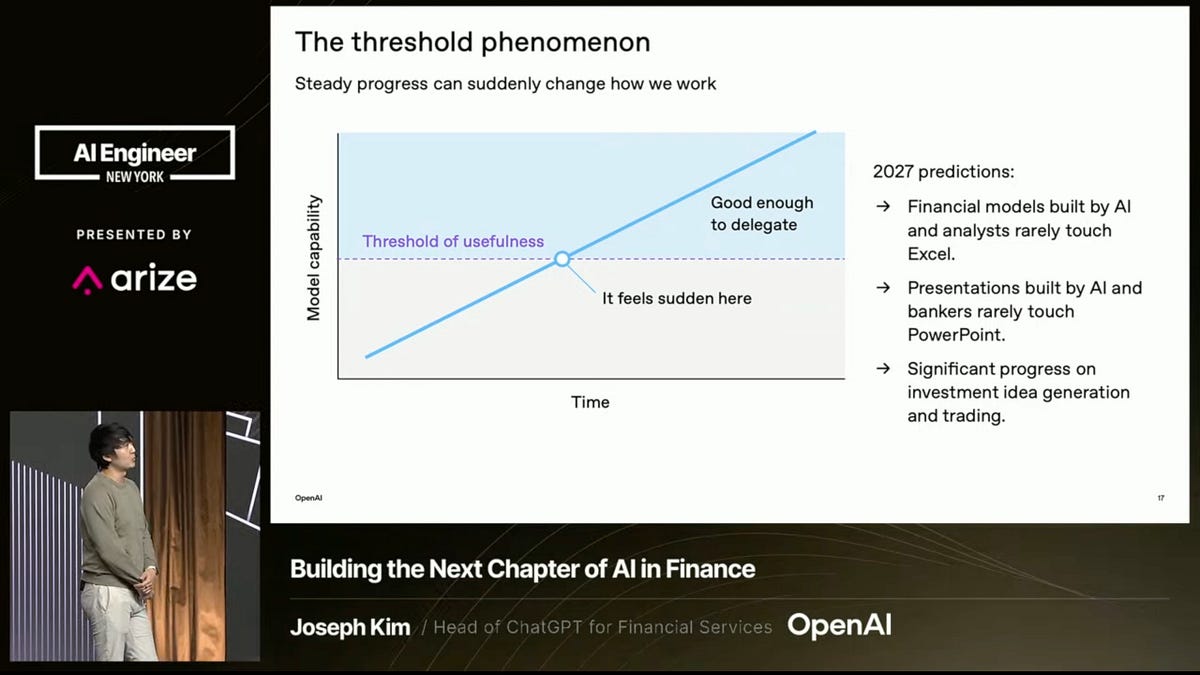 Crossing the Threshold: How OpenAI and Anthropic Approach Autonomy and Safety in Financial Agents
Recap of AI Engineer New York talks on balancing agent autonomy and safety in financial services. Bloomberg's Andrey Rybka argued for deterministic controls outside the model: scoped credentials, tool-call checks, outbound traffic limits, audit trails, budgets and kill switches. He cited a case where an agent obeyed instructions embedded in a marketplace review. Anthropic described a trust layer of identity and permissions, sandbox and approval, and regression checks, with agents proposing rather than making order amendments. Two Sigma described composable controls, including auto-mode classifiers that escalate only important requests, to avoid approval fatigue. OpenAI framed human-in-the-loop as a product design choice.
latent.spacearticlePublished and added 14 Oct 2026🛡️ Security- Crossing the Threshold: How OpenAI and Anthropic Approach Autonomy and Safety in Financial Agents
Latent Space recap of AI Engineer New York keynotes on balancing agent autonomy with safety in finance. OpenAI's Joseph Kim frames human-in-the-loop as a product design decision and predicts agents doing investment idea generation and trading by 2027. Two Sigma's John Feminella describes composable controls such as auto-mode classifiers to avoid approval fatigue. Anthropic's Keon Shahab lays out a trust layer: identity and permissions, sandboxed approval, and regression checks, with agents proposing actions rather than executing them. Bloomberg's Andrey Rybka argues for deterministic controls outside the model: scoped credentials, tool-call checks, audit logs, budgets and kill switches.
latent.spacearticlePublished and added 14 Oct 2026🧠 AI - Quantum-Aware Key Rank for Side-Channel Attacks evaluation
Proposes a cost model and metric for an adversary who collects side-channel traces classically and finishes the key search on a quantum computer. Shows any quantum algorithm needs Omega(sqrt(r)) cipher evaluations for key rank r, and that the quadratic advantage holds only up to a rank bound set by the NIST MAXDEPTH budget (about 2^58.6 for AES-128 at D=2^40). Defines a quantum-aware key rank computable from existing rank estimators, with simulated-leakage experiments showing a depth-limited quantum adversary is worth about 22 traces at SNR 0.125.
arxiv.orgpaperAdded 16 Oct 2026, published 14 Oct 2026🛡️ Security - edaBits in the Exponent (edaBitE) and Issuer-Hiding Blind Signatures from ML-DSA and VOLE-in-the-Head
Presents the first blind signature in which the issuer runs unmodified NIST-standardized ML-DSA, so it works with certified secure elements. Issuance is an ML-DSA signature on a commitment. The blind signature is a VOLE-in-the-head zero-knowledge proof of knowledge of that signature, about 1 MB, under 1 s to produce and 0.5 s to verify. Security reduces to ML-DSA EUF-CMA and the proof system. Issuer-hiding and selective disclosure add a few tens of KB. The paper also introduces edaBitE, a batch consistency check between binary and prime-field commitments that replaces the costly edaBits checks.
eprint.iacr.orgpaperPublished and added 14 Oct 2026🛡️ Security - DPF-SGD: Byzantine-Robust Differentially Private Federated SGD with Exact Optimality Guarantees
DPF-SGD is a federated SGD algorithm that stays robust to Byzantine agents while satisfying ϵ-differential privacy. It combines private step sizes with a DP noise-decay schedule and adds a privacy-preserving comparative elimination (PPCE) filter that suppresses Byzantine updates during aggregation. The authors prove almost-sure convergence to the global optimum despite persistent noise and adversaries. On synthetic and MNIST data, final optimization error is one to two orders of magnitude lower than DP baselines.
eprint.iacr.orgpaperPublished and added 14 Oct 2026🧠 AI  The Noise Inside the Network: How an Unsophisticated Attack Exposed a Third-Party Risk
Unit 42 case study of an intrusion at a European bank that began through a third-party-managed VPN gateway lacking strict authentication. The attacker used compromised credentials, ran noisy network scans, brute-forced administrator accounts and scraped internal documentation. A WSUS remote code execution attempt on the configuration management server was stopped by Cortex XDR, and threat hunting found no persistence.
 unit42.paloaltonetworks.comarticleAdded 30 Oct 2026, published 13 Oct 2026🛡️ Security


Showing 60 of 266
Show more