 NIK C2: The new AI-enabled command-and-control framework
NIK C2 is a newly observed C2 framework with a Go-based 64-bit Windows implant that embeds an OpenAI Chat Completions client (ai_generate command), falling back to the victim's OPENAI_API_KEY. Talos details its 52+ commands, AES-256-GCM over WebSocket with HTTP fallback, credential, wallet and keystroke theft, screen-lock ransomware, AMSI bypass and anti-debug. It also lists a live C2 at 87.120.196[.]120 and total-sitevv[.]lol.
 blog.talosintelligence.comwriteupPublished and added 29 Oct 2026🛡️ Security
 Inside the LiteLLM 1.107.0 supply chain compromise: Credential theft through Python startup hooks
Microsoft's analysis of the LiteLLM 1.107.0 compromise, published to PyPI and container images on 21 October 2026. The wheel shipped cook.pth, cook.py and sitecustomize.py, so a credential collector (PRIVCOLLECT) ran whenever Python started, even without importing LiteLLM. It covers AES/RSA-encrypted exfiltration to litellm.dev, a re-armable Unix loader, Defender KQL hunting queries, ATT&CK mapping and rotation guidance.
 microsoft.comwriteupPublished and added 23 Oct 2026🛡️ Security
 LiteLLM 1.107.0 PyPI Wheel Contains a Credential Stealer and Persistent Python Backdoor
LiteLLM 1.107.0 macOS x86-64 PyPI wheel analyzed by OpenSourceMalware contains three injected files (cook.pth, cook.py, sitecustomize.py) that run on every Python start. The payload, called privcollect, steals browser, SSH, cloud, CI/CD and AI-tool credentials, then uploads an AES/RSA-encrypted bundle to www.litellm.dev/healthcheck. A forked loader also fetches domain.txt from GitHub and executes /codepy hourly. The post lists IOCs, hashes and remediation steps.
 opensourcemalware.comwriteupPublished and added 21 Oct 2026🛡️ Security
 Pretty Themes, Hidden Loaders: GlassWorm-Linked Extensions Span VS Code Marketplace and Open VSX
Socket's Threat Research team uncovered a theme-extension cluster spanning four VS Code Marketplace and six Open VSX listings, including two confirmed malicious extensions: Aurora Nocturne Night Theme (a Windows downloader that fetches and silently executes temp_batch.cmd via cmd.exe from fingercakes4sale[.]store, tied to XWorm C2 infrastructure) and Cosmic Nebula Themes, whose app.js decrypts an AES-256-CBC embedded stage and uses a Solana transaction memo as a dead-drop to resolve follow-on payload infrastructure — the same AES key, Solana address, and execution model previously documented in GlassWorm activity. Git commit identities, near-identical theme source, shared Russian-language developer comments, and brandjacking (Coca-Cola, Aurora Borealis name-squatting) link the cluster together; a Dec 14, 2025 DEV Community article is assessed as promotional infrastructure driving Open VSX installs. The post provides full IOCs (hashes, domains, Solana address, AES key/IV, GitHub accounts) and MITRE ATT&CK mappings for defenders to hunt and inventory extensions across both registries.
 socket.devwriteupPublished and added 2 Oct 2026🛡️ Security
 The Closed Quorum: Inside the First Reported Autonomous AI C2 Implant
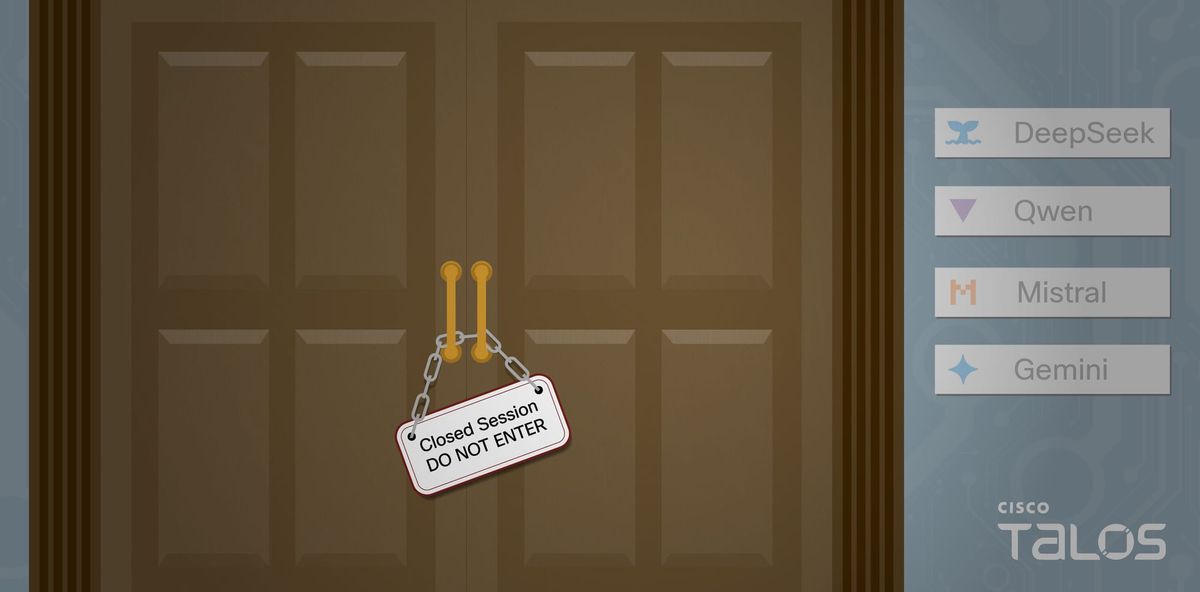
Cisco Talos' CAIRN project documents CLOSEDQUORUM, a 64-bit Go Windows implant that replaces traditional C2 infrastructure with a panel of up to four commercial LLM providers (DeepSeek, Qwen, Mistral, Gemini) that vote on the implant's next action via plurality voting, with each model queried against a structured JSON decision schema constrained to inject/persist/steal/move actions. Once deployed it autonomously dumps LSASS credentials, steals browser passwords and crypto wallets (MetaMask, Exodus, Ethereum), and exfiltrates AES-256-GCM-encrypted data to an operator's Discord webhook, all without further human tasking. The post details the developer's apparent credentials-as-a-service distribution model, deterministic tie-breaking favoring DeepSeek, and provides SHA256 hashes plus a YARA detection rule for the family (formerly tracked as BALZAK).
blog.talosintelligence.comwriteupAdded 30 Sep 2026, published 22 Sep 2026🛡️ Security- Compromised npm Packages in the AsyncAPI Namespace Deliver Miasma Botnet Loader
Socket's Threat Research Team details a supply-chain compromise of four @asyncapi npm packages (generator-helpers, generator-components, generator, specs) published via a poisoned source commit through GitHub Actions trusted publishing. The packages contain an obfuscated load-time (not install-hook) implant that spawns a detached Node.js process to fetch an IPFS-hosted, AES-256-GCM-encrypted loader delivering the "Miasma" botnet/tasking framework, which supports REST C2, multi-channel comms (Nostr, IPFS, Ethereum RPC, BitTorrent DHT), shell execution, file exfiltration, and systemd persistence. Includes full technical analysis, IOCs, hashes, and MITRE ATT&CK mapping.
socket.devwriteupAdded 21 Sep 2026🛡️ Security - Rogue ScreenConnect Installations Across Unrelated Hosts Suggest Worm-Like Activity
Huntress details a campaign in which social-engineering (tech-support scams, Quick Assist, malicious downloads) leads to rogue ScreenConnect installs that deploy a four-stage VBScript loader (1.vbs–4.vbs). The loader profiles the host (checking for EDR products, existing ScreenConnect, RAM size), fetches an AES-encrypted payload via a Dropbox-hosted map file, and drops one of three packages: a user-level backdoor, a persistence/privesc kit, or a tunneling+cryptomining bundle (wstunnel/XMRig plus the vulnerable WinRing0 driver for BYOVD). A backdoored ScreenConnect client then re-pushes the VBScript chain to every newly connected Host session via ScreenConnect's file-transfer API, giving the campaign worm-like self-propagation — which ConnectWise later confirmed stems from CVE-2026-84869, a 9.9 CVSS flaw in unauthorized file-transfer execution, patched in ScreenConnect 26.6.5.
 huntress.comwriteupAdded 8 Sep 2026, published 3 Sep 2026🛡️ Security
- pgj11: Analysis of Bincrypter and gsocket (gs-netcat)
Deep-dive reverse engineering of a real-world incident where a WordPress site compromised via CVE-2026-18322 was used to drop a bincrypter-obfuscated, statically-linked gs-netcat (gsocket) 1.4.42beta5 binary as a reverse-shell tunnel, persisted via crontab and masquerading as "netd"/"[kthreadd]". The author fully unravels bincrypter's multi-stage shell obfuscation (character-separator tricks, AES-256-CBC/openssl decryption, memfd_create fileless ELF execution via a Perl one-liner) and reveals a custom THC UPX build with zeroed magic bytes/PackHeader used to hide payload identification, along with gsocket's self-embedded XOR-encoded operator configuration. Releases two open-source tools (Bincrypter-Extract, Gsocket-Config-Extract), YARA rules, and an ImHex pattern file, plus full IOCs (C2 IP, GSRN secret, process/memfd artifacts).
 pgj11.comwriteupPublished and added 31 Aug 2026🛡️ Security
 Socket: "Superior" Campaign
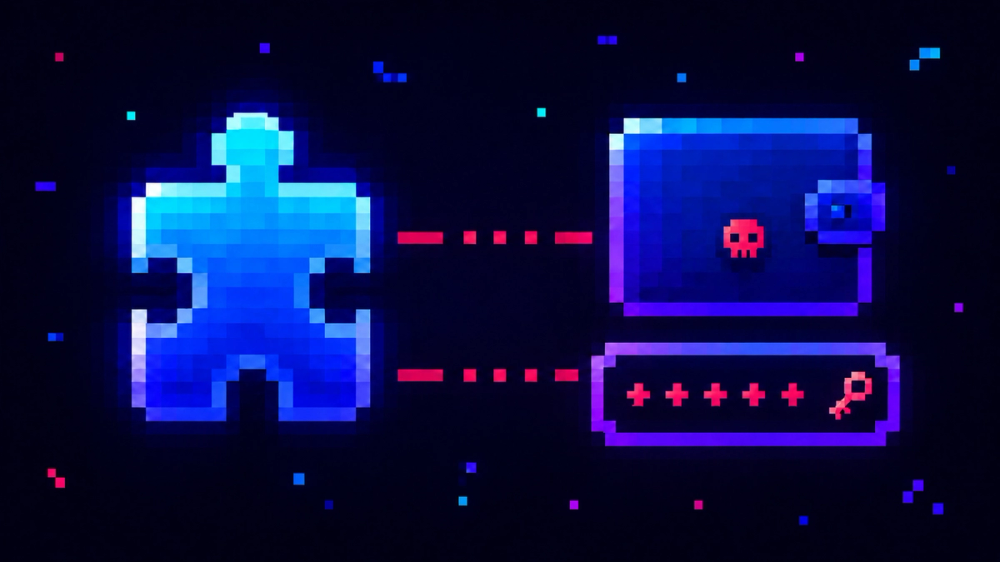
Socket researchers uncovered 19 Chrome and Edge extensions (18 Chrome, 1 Edge) delivering a modular wallet-drainer and credential-stealing framework, tracked as the "Superior" campaign and linked to a 2024 operation first reported by DomainTools and Secure Annex. Threat actors either build extensions from scratch or buy established ones (like "Enable Right Click & Copy — Smart Unlock + OCR" with ~80,000 combined users) and later push malicious updates that strip CSP headers via declarativeNetRequest, open an AES-GCM-encrypted WebSocket C2 channel, and inject JavaScript payloads that phish hardware-wallet seed phrases, hijack wallet-connect flows, harvest exchange session tokens, and serve ClickFix-style fake browser-update lures. The post includes full code snippets, a breakdown of 16+ malicious modules, and a large IOC list of C2 domains and extension IDs.
socket.devwriteupPublished and added 28 Aug 2026🛡️ Security Grok chat history leak: Cryptographic Context Injection
Adversa AI describes Cryptographic Context Injection. Attacker instructions are shipped as AES-256-GCM ciphertext with PBKDF2 key material, and the model is induced to decrypt them in its own Python sandbox. The plaintext then appears as trusted runtime output, so guardrails never see it. Demonstrated as zero-click chat-history exfiltration from Grok via a "summarize this page" request, as a safety-policy bypass in Gemini, and, in an update, against GitHub Copilot CLI. The post covers the xAI disclosure timeline (reported June 2026, unfixed) and defenses at the agent harness layer: quarantining untrusted content, gating outbound tool calls, tracing, sequence alerting, and provenance.
 adversa.aiwriteupAdded 24 Aug 2026, published 20 Aug 2026🛡️ Security
 MAJINAHANASHI RANSOMWARE: Yet Another Japanese Locker
Deep-dive intelligence report on Majinahanashi, a Japanese-themed ransomware group that emerged in August 2026, covering its Tor data-leak site (math-captcha gated, non-vanity domain), victimology (15 victims across Europe/Asia/Latin America, avoiding US/English-speaking countries), and technical analysis of its C/C++ locker sample. The malware uses AES-256 with RSA-wrapped per-file keys, appends the .MAJIN extension, deletes shadow copies/USN journals/event logs via vssadmin/bcdedit/fsutil, hijacks the desktop wallpaper, and uses WFP-based network filtering plus I/O priority manipulation to suppress EDR/backup traffic (targeting CrowdStrike, SentinelOne, Defender, Veeam, etc.). The article includes a full YARA detection rule, the ransom note text, BTC/qTOX/email contact IOCs, and threat-actor profiling ("THE DOCTOR CAME" persona) plus links to Mimikatz and Advanced IP Scanner usage.
 theravenfile.comwriteupAdded 3 Sep 2026, published 14 Aug 2026🛡️ Security
- Bank of America Phishing Email Delivers ScreenConnect Malware
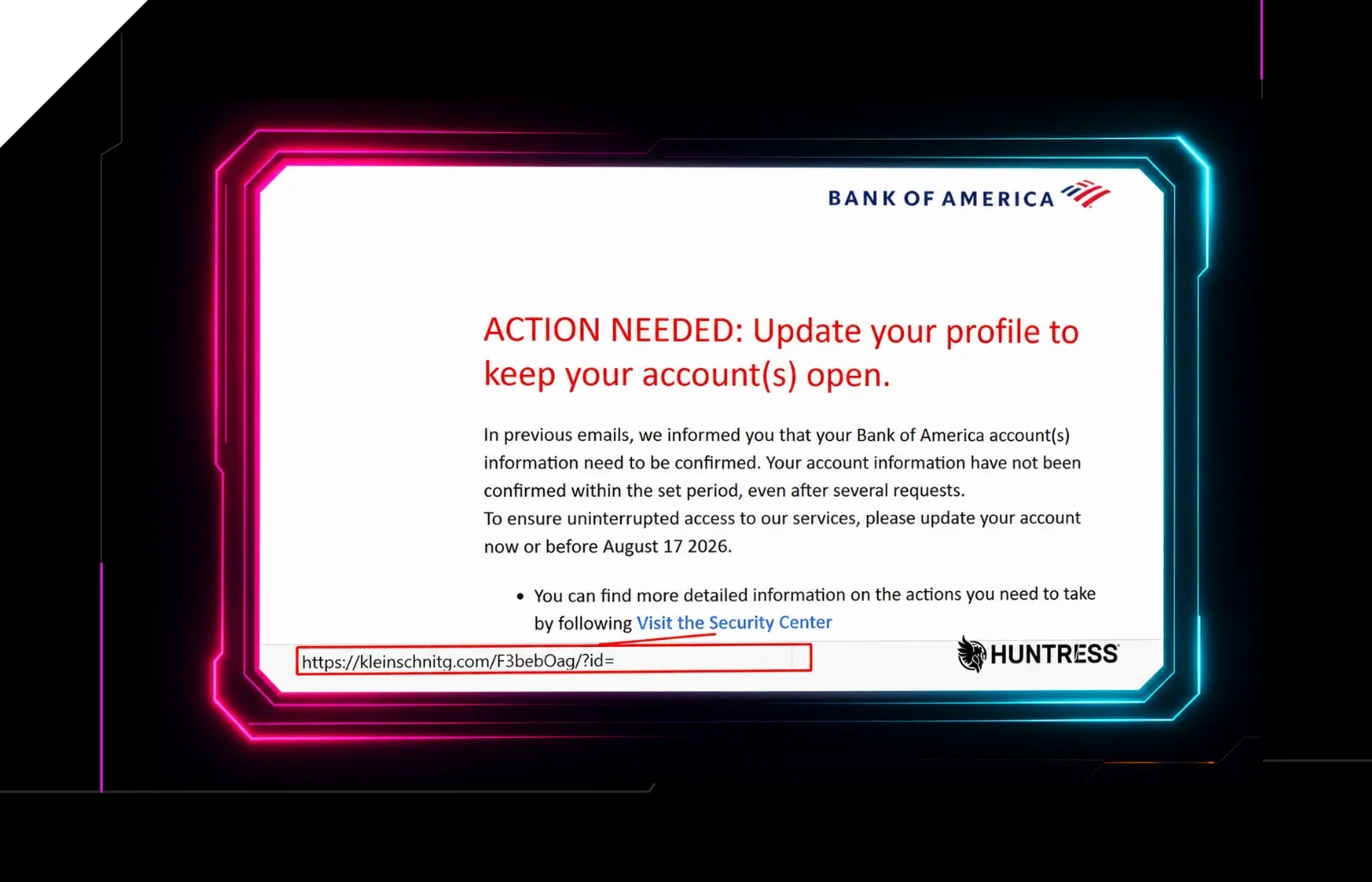
Huntress dissects a Bank of America-themed phishing email that lures victims into downloading AccountGuardSetup.vbs, which unpacks through several layers of base64-encoded PowerShell to silently install ScreenConnect RMM with Administrator privileges. The chain uses AES-128-CBC encrypted blobs to deliver a C# UAC-bypass exploit via the ICMLuaUtil COM interface (MITRE ATT&CK T1548.002), then hides the resulting ScreenConnect service (renamed "Windows Security") from users and admins using SDDL/ACL manipulation so it can't be seen, logged, or removed.
huntress.comwriteupAdded 3 Sep 2026, published 4 Aug 2026🛡️ Security  'ChainDrop' worm compromises hundreds of popular npm packages
ChainDrop is an npm worm that compromised hundreds of packages on 4 August 2026, some with over 150 million weekly downloads, starting from a malicious commit (174f6a5) in the keyv repository. Datadog dissects the Bun-based loader, the obfuscated second stage, credential theft (files, GitHub Actions runner memory, AWS, Kubernetes, Vault), Ethereum smart-contract C2 discovery, AES/RSA exfiltration, an eval channel, and propagation via stolen npm tokens, GitHub branches and Sigstore provenance. IOCs and a list of affected packages are included.
 securitylabs.datadoghq.comwriteupAdded 29 Oct 2026, published 4 Aug 2026🛡️ Security
- Reverse Engineering the Six Stages of MacSync Stealer and RAT
Huntress reverse-engineers MacSync, a macOS stealer-and-RAT chain delivered via a weaponised claude.ai share link promoted through Google Ads malvertising, where a victim searching for how to install Claude on a Mac pastes a curl piped to zsh one-liner. The writeup traces all six stages: a polymorphic zsh loader, a server-side AppleScript that social-engineers Full Disk Access and validates the account password via dscl authonly, keychain and browser Safe Storage theft, a statically-linked C++ Mach-O RAT with WebSocket and AES-CBC C2 plus LaunchAgent persistence disguised as legitimate updaters, a signed Screen Recording-badged helper that phishes the TCC screen-capture permission, and trojanised Electron wallet apps (Ledger Live and Ledger Wallet) that inject a fake recovery-phrase phishing flow. It ties the kit to the AMOS and Atomic Stealer lineage via Russian-language code comments and shared infrastructure, and documents concrete IOCs including domains, C2 IP, mutex naming, and plist patterns for defenders.
huntress.comwriteupAdded 3 Sep 2026, published 29 Jul 2026🛡️ Security - Inside FakeAgent: How a Claude Desktop Malvertising Campaign Hit 29 Organizations with SectopRAT
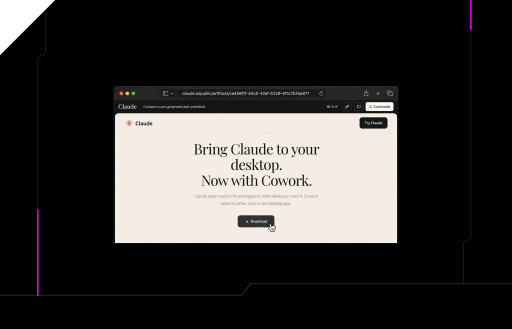
Huntress details 'FakeAgent', a malvertising campaign that hit 29 organizations by hosting a fake Claude Desktop installer as a public Claude.ai Artifact, which led via DLL-sideloaded loaders (masquerading as JetBrains jcef_helper.exe and IBM SPSS) to a SectopRAT-family .NET RAT. The malware used VMProtect packing, a GPU/DXGI-based anti-VM gate, a DirectX-shader AES-256-CTR decryption routine, and 'EtherHiding' — storing/rotating C2 addresses via Ethereum/BSC transactions — while Huntress used Claude Opus 4.8 to help reimplement the shader crypto and deobfuscate the .NET payload.
huntress.comwriteupAdded 3 Sep 2026, published 22 Jul 2026🛡️ Security  AsyncAPI npm packages backdoored via GitHub Actions
Aikido Security details how five @asyncapi npm packages (specs, generator, generator-helpers, generator-components), combined ~2.9M weekly downloads, were backdoored after an attacker exploited an unmerged pull_request_target GitHub Actions vulnerability in asyncapi/generator to steal the npm publish token via 37 flooded PRs. The injected runtime code spawns a detached Node process that downloads an encrypted stage-2 loader from IPFS, decrypts it via HKDF/AES-256-GCM, and drops a persistent remote-shell implant self-identified as 'M-RED-TEAM v6.4' with Miasma-branded artifacts, though credential harvesting and self-propagation are disabled in this build. The post includes full technical detail on the exfiltration flow, IOC strings, IPFS CIDs, and inconclusive attribution linking it to the prior Miasma toolkit and prt-scan campaign.
 aikido.devwriteupAdded 3 Sep 2026, published 14 Jul 2026🛡️ Security
 Socket: Miasma Mini Shai-Hulud Hits ImmobiliareLabs npm Packages
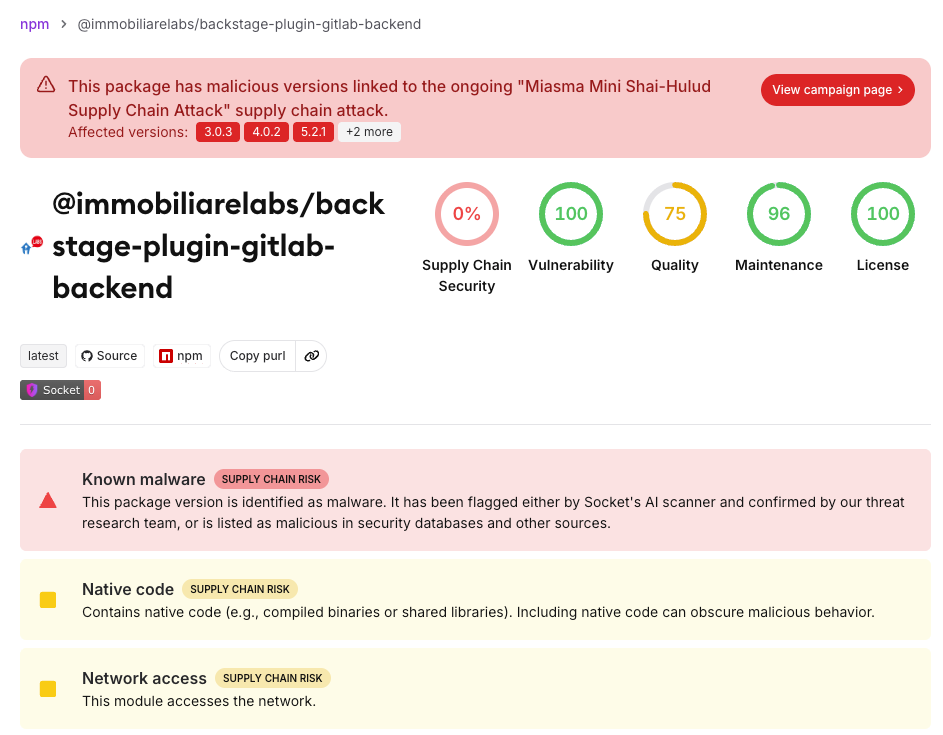
Socket Threat Research documents a new wave of the Miasma Mini Shai-Hulud npm supply-chain campaign compromising @immobiliarelabs Backstage plugins for GitLab integration and LDAP authentication, published on June 26, 2026. The malicious tarballs (e.g. @immobiliarelabs/backstage-plugin-gitlab@7.0.2) add a hidden root-level index.js triggered via the "Phantom Gyp" node-gyp binding.gyp trick, which decrypts an AES-128-GCM payload, bootstraps Bun, and steals npm/GitHub/cloud/SSH/CI-CD secrets while planting GitHub Actions and AI-IDE persistence. The report also traces a plausible root cause to the earlier compromise of codfish/semantic-release-action (tag-hijacking reported by StepSecurity) and highlights abuse of GitHub's deployment event trigger — a technique flagged by researcher Adnan Khan — to run attacker workflows without touching protected workflow files.
socket.devwriteupPublished and added 27 Jun 2026🛡️ Security macOS.Gaslight | Rust Backdoor Turns Prompt Injection on the Analyst, Not the Sandbox
SentinelLABS dissects macOS.Gaslight, a Rust macOS implant (tracked via Apple XProtect's MACOS_BONZAI_COBUCH rule, linked to DPRK-aligned BONZAI/AIRPIPE activity) that uses a Telegram Bot API polling channel with AES-GCM-over-pinned-TLS, self-redacts its bot token from runtime logs, stages a runtime-fetched standalone CPython interpreter to run a Python keychain/browser/history stealer, and persists via a fake com.apple.* LaunchAgent. Its standout feature is a 3.5 KB embedded block of 38 fabricated "system" messages mimicking an LLM triage harness's prompt scaffold, engineered to make an AI-assisted analyst tool abort or refuse analysis rather than evade the sandbox itself.
 sentinelone.comwriteupAdded 26 Jun 2026, published 23 Jun 2026🛡️ Security
 Socket: npm Package Uses Prompt Injection + Token Flooding to Evade AI Malware Scanners
Socket Threat Research analyzed shai_hulululud@1.0.48596, a ~9.28MB npm package whose index.js opens with a Japanese-language block comment simulating bioweapon-production instructions to trigger LLM safety refusals, follows with a fake 'SYSTEM OVERRIDE' prompt-injection block aimed at AI reviewers, then floods the file with tens of thousands of repeated comment lines (3.5M+ tokens) before appending doubly-obfuscated (character-substitution plus AES) JavaScript. The deobfuscated payload reintroduces the same policy-triggering content and scanner/vendor-referencing strings, and was classified as protestware rather than a functional credential stealer; the piece argues this demonstrates a practical LLM-specific denial-of-service pattern (prompt injection + safety triggers + context flooding + obfuscation) that AI-assisted supply-chain scanners must defend against via deterministic preprocessing, fail-closed behavior, and combining LLM review with static/AST/entropy/behavioral analysis.
socket.devwriteupPublished and added 17 Jun 2026🛡️ Security Microsoft's durabletask PyPI Package Compromised in Supply Chain Attack
StepSecurity documents the compromise of Microsoft's durabletask PyPI package (versions 1.4.1-1.4.3, 400k+ monthly downloads), where an attacker bypassed the GitHub CI/CD pipeline entirely using stolen publishing credentials to inject a dropper for rope.pyz, a modular cloud-intrusion framework with dedicated collectors for AWS, Azure, GCP, Kubernetes, HashiCorp Vault, password managers, and the filesystem. The framework encrypts stolen data with AES-256-GCM/RSA-4096, exfiltrates via HTTPS, GitHub commit beacons, and attacker-created public repos using the victim's own stolen GitHub tokens, propagates via AWS SSM and kubectl exec, and drops a geo-targeted rm -rf wiper for systems matching Israeli locale/timezone markers. The post ties the attack to TeamPCP's Mini Shai-Hulud campaign (same infrastructure as TanStack, Mistral AI, LiteLLM, @antv) and later updates describe a second compromise of the Azure/durabletask GitHub repo that plants payloads triggering in Claude Code, Gemini CLI, Cursor, and VS Code.
 stepsecurity.iowriteupAdded 3 Sep 2026, published 9 Jun 2026🛡️ Security
- Inside .NET Loader Analysis: From Malspam to In-Memory Loader
Huntress SOC dissects a multi-stage infection chain that begins with a malspam HTML attachment routed through a legitimate Google DoubleClick tracking link to evade reputation filters, before landing on a self-personalizing phishing kit and dropping a ZIP with a heavily obfuscated JScript loader. The chain cascades through PowerShell droppers into a .NET stager that performs extensive anti-analysis/anti-sandbox checks, disables Windows Defender, patches AMSI (via NtManageHotPatch on Windows 11 24H2) and ETW at the native API level, and uses RunPE process hollowing into InstallUtil.exe or MSBuild.exe to run a final loader that communicates over AES/RSA-encrypted, protobuf-serialized TCP C2 with certificate pinning. The writeup includes GPU-fingerprinting behavior, persistence via registry Run keys and randomized scheduled tasks, and concrete detection/hardening recommendations.
huntress.comwriteupAdded 3 Sep 2026, published 3 Jun 2026🛡️ Security  Supply Chain Attack Targets Laravel-Lang Packages with Credential Stealer
Aikido Security discovered an active supply chain attack against laravel-lang/lang, laravel-lang/attributes, and laravel-lang/http-statuses (233 compromised versions total), where an attacker used GitHub's cross-fork tag feature to point official-looking version tags at commits in a malicious fork, injecting a src/helpers.php dropper that loads via Composer's autoloader. The dropper fingerprints the host, decodes a hidden C2 domain (flipboxstudio[.]info), and fetches a second-stage PHP credential stealer that harvests cloud credentials, Kubernetes/Vault/Docker configs, SSH keys, browser and password-manager vaults, crypto wallets, and VPN configs, exfiltrating AES-256 encrypted data before self-deleting. Aikido reported it to Packagist, which pulled the malicious versions.
aikido.devwriteupAdded 3 Sep 2026, published 23 May 2026🛡️ Security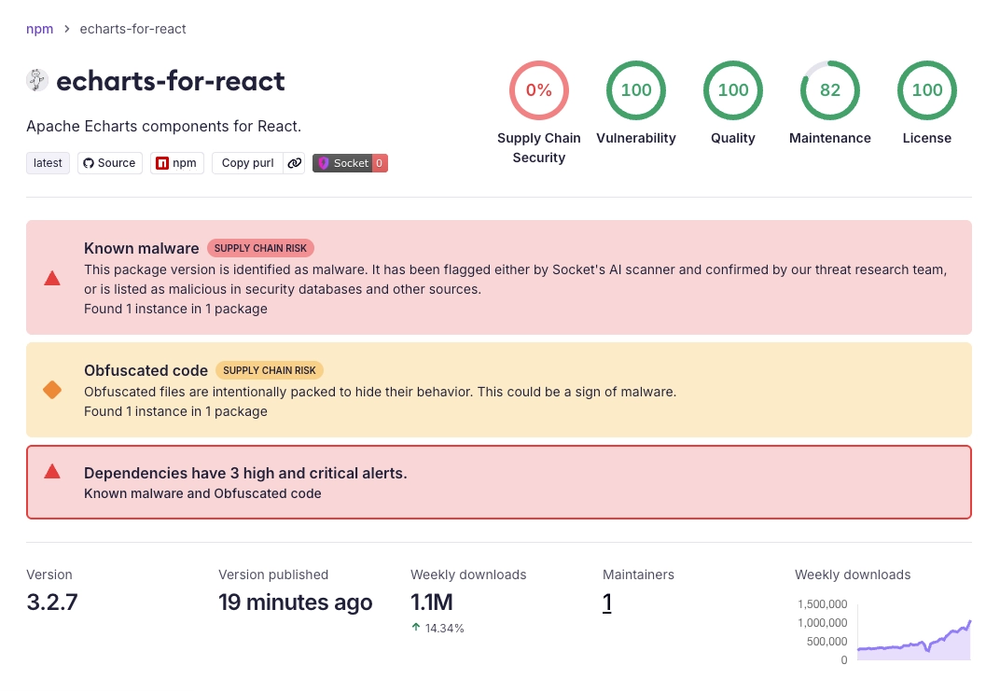 Socket: Mini Shai-Hulud Hits @antv Ecosystem
Socket's Threat Research team documents a Mini Shai-Hulud variant compromising the npm maintainer account "atool," affecting @antv data-visualization packages (g2, g6, x6, l7, s2, f2, graphin) plus echarts-for-react (~1.1M weekly downloads) and others, totaling 639 compromised versions across 323 packages in one wave (1,055 versions/502 packages campaign-wide across npm, PyPI, and Composer). The install-time payload (triggered via a preinstall "bun run index.js" hook) is heavily obfuscated, harvests GitHub/npm/AWS/Kubernetes/Vault/SSH credentials and CI/CD secrets, exfiltrates data via AES-256-GCM+RSA-OAEP encrypted HTTPS to t.m-kosche[.]com and via GitHub repo commits under a reversed "Shai-Hulud: Here We Go Again" marker, and self-propagates by using stolen npm tokens to republish trojanized packages with a malicious @antv/setup GitHub optionalDependency.
socket.devwriteupPublished and added 20 May 2026🛡️ Security OpenClaw MAESTRO
A researcher applies the MAESTRO 7-layer agentic AI threat model (Foundation Models, Data Operations, Agent Frameworks, Deployment/Infra, Evaluation/Observability, Security & Compliance, Agent Ecosystem) to the OpenClaw messaging-bot agent codebase, cataloging ~30 numbered threats with specific file references (e.g. prompt injection via WhatsApp/Telegram/Discord channels in src/channels/, plaintext credential storage in pairing-store.ts, Docker socket exposure in sandbox configs, gateway loopback-binding bypass, ClawHub skill registry poisoning) alongside existing and recommended mitigations. It closes with a cross-layer chained attack scenario (gateway compromise → session store poisoning → context manipulation → sub-agent hijack → ecosystem spread) illustrating defense-in-depth across layers.
 kenhuangus.substack.comwriteupPublished and added 6 May 2026🛡️ Security
- Serious Cryptography (book review)
A detailed personal review of the first edition of 'Serious Cryptography: A Practical Introduction to Modern Encryption' by Jean-Philippe Aumasson (No Starch Press, 2017), aimed at non-cryptographer engineers. The reviewer highlights the book's chronological structure from basic concepts through symmetric and asymmetric crypto to post-quantum cryptography, praising its accessible AES walkthrough, MAC vs HMAC distinctions, elliptic curve explanations, and 'How things can go wrong' sections that tie real implementation pitfalls to actual vulnerabilities — useful reference material for vulnerability researchers and pentesters needing solid crypto fundamentals.
 bencteux.frwriteupAdded 3 Sep 2026, published 25 Apr 2026🛡️ Security
- Dissecting CrashFix: KongTuke's New Toy
Huntress dissects a KongTuke campaign built around NexShield, a malicious Chrome extension impersonating uBlock Origin Lite that induces a deliberate browser DoS/crash and then displays a fake "CrashFix" repair prompt to trick users into pasting a malicious PowerShell command via the Windows Run dialog. The command abuses finger.exe as a LOLBin to fetch and execute layered, obfuscated PowerShell that profiles the victim (domain-joined vs standalone, AV, VM checks), uses weekly-rotating DGA domains, an AMSI patch bypass, and a two-layer AES+XOR encrypted .NET loader ("GateKeeper") with anti-sandbox fingerprinting, ultimately dropping ModeloRAT — a newly documented, RC4-encrypted Python RAT reserved for domain-joined corporate hosts — while non-domain targets currently only receive a "TEST PAYLOAD" response. The post includes full IOCs and YARA rules for GateKeeper, MintsLoader, and ModeloRAT.
huntress.comwriteupAdded 3 Sep 2026, published 16 Jan 2026🛡️ Security - ESXi Exploitation in the Wild
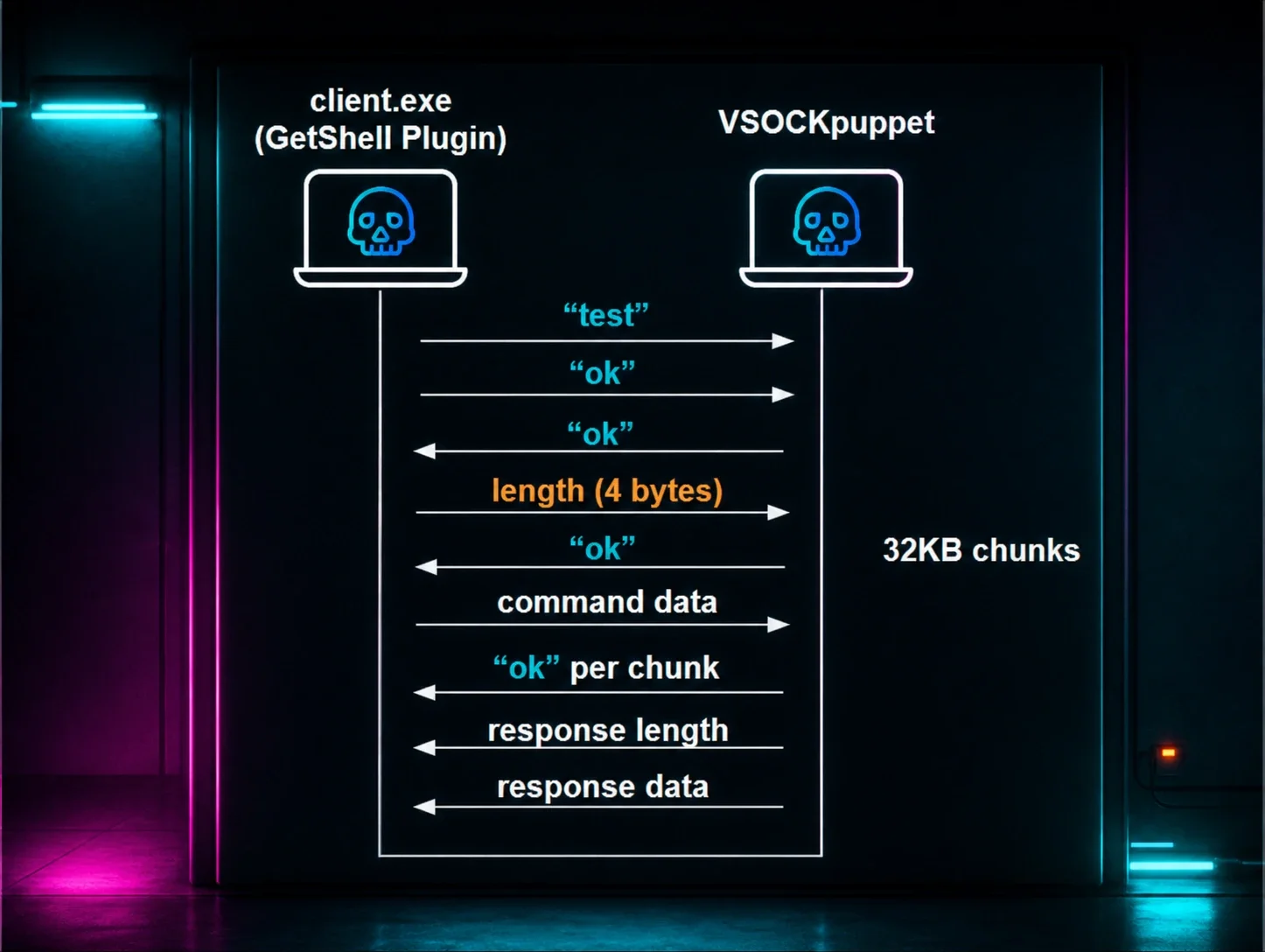
Huntress details a December 2025 intrusion where a threat actor, after gaining initial access via a compromised SonicWall VPN and Domain Admin credentials, deployed a full ESXi VM-escape toolkit against a domain controller's ESXi host. The toolkit — orchestrator "MAESTRO" (exploit.exe), kernel driver "MyDriver.sys" loaded via KDU (BYOVD), and VSOCK-based backdoor "VSOCKpuppet" — chains CVE-2025-22226 (HGFS out-of-bounds read info leak), CVE-2025-22224 (VMCI TOCTOU out-of-bounds write, VMX code execution) and CVE-2025-22225 (arbitrary write sandbox escape) to defeat ASLR and pivot from a guest VM to full hypervisor compromise, supporting 155 ESXi builds (5.1–8.0). Simplified-Chinese PDB paths dated over a year before VMware's public disclosure point to a well-resourced developer, likely Chinese-speaking, possibly building this as a sellable zero-day toolkit; Huntress provides YARA/Sigma detections and hardening recommendations.
huntress.comwriteupAdded 3 Sep 2026, published 7 Jan 2026🛡️ Security - ClickFix Gets Creative: Malware Buried in Images
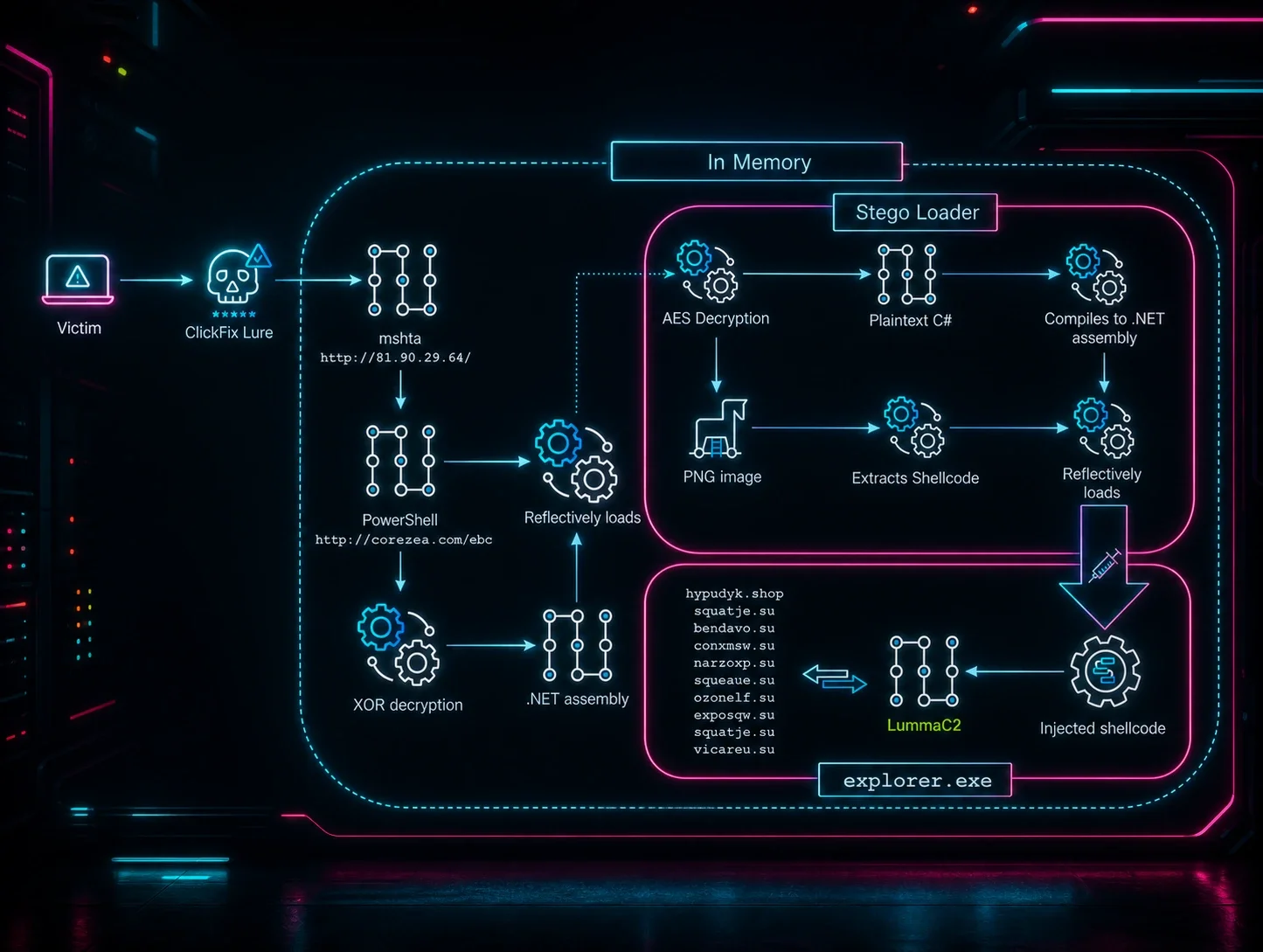
Huntress documents a multi-stage ClickFix campaign (fake "Human Verification" and fake Windows Update lures) that copies an mshta command to the clipboard, which chains through obfuscated PowerShell and reflectively-loaded .NET assemblies to a custom steganographic loader. The loader extracts Donut-packed shellcode encoded in the pixel data of an AES-encrypted PNG (via a red-channel XOR scheme) and injects it into explorer.exe, ultimately deploying LummaC2 or Rhadamanthys infostealers; the writeup includes deobfuscation walkthroughs (dnSpy), a Python re-implementation of the stego algorithm, IOCs, and mitigation guidance (disabling the Run box, RunMRU auditing).
huntress.comwriteupAdded 3 Sep 2026, published 24 Nov 2025🛡️ Security 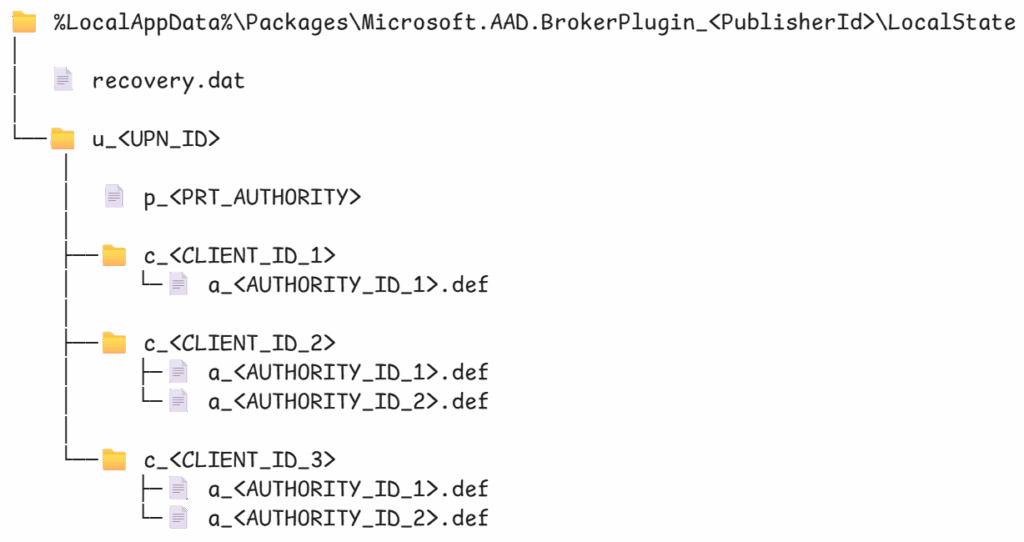 Unpacking the AAD Broker LocalState Cache
Deep technical teardown of the Entra ID (Azure AD) Broker's LocalState cache on Windows 11, reverse-engineering the file naming scheme derived from identity material, the AES-GCM/DPAPI-wrapped Packer::V3 format inside AAD.Core.dll, and the JSON/binary serialization of AuthenticationContext objects used for PRT and per-application authority files. The author shows how to decrypt cached PRT and authority token files, derive the TPM-bound PRT session key via NCryptKeyDerivation (replicating mimikatz's dpapi::cloudapkd), and extract cached access/refresh tokens and JWTs — giving an attacker with local SYSTEM context a path to long-lived, MFA-bypassing cloud access and rich identity reconnaissance data. Companion extraction code is released as AADBrokerDecrypt on GitHub.
 winternl.comwriteupAdded 2 Oct 2026, published 30 Sep 2025🛡️ Security
 Using KQL to Detect Gaps in your Conditional Access Strategy
A blog post that provides three concrete KQL queries for Microsoft Sentinel/Log Analytics to detect Conditional Access Policy (CAP) violations in Entra ID: single-factor sign-ins by privileged admins that should require MFA, group members bypassing trusted-location/device-compliance requirements, and resources with no Conditional Access applied at all. It also surveys community tooling for CAP gap analysis, including the built-in Gap Analyzer Workbook, Maester, CA Optics, DCToolbox's What-if simulator, and Beau Bullock's MFASweep. The approach turns an organization's intended CAP strategy into ongoing detection logic rather than one-time policy review.
 attackthesoc.comwriteupAdded 3 Sep 2026, published 23 Mar 2025🛡️ Security