 The Rise of Agentic Attacks: What They Look Like, and Where They're Headed
Wiz research on intrusions where AI agents do the hands-on attacker work. It reviews public cases (ARTEX against South Korean banks and the ConnectWise compromise, Hermes at Thailand's Ministry of Finance, JPCERT/CC, CrowdStrike, DIVD) and three Wiz-investigated attacks. It distills fingerprints: machine-paced iteration, embedded natural-language reasoning, self-correcting scripts, checklist enumeration, noisy lateral movement, probe-before-payload habits and self-named scratch files. It also covers attribution, scale and defense implications.
 wiz.iowriteupPublished and added 29 Oct 2026🛡️ Security
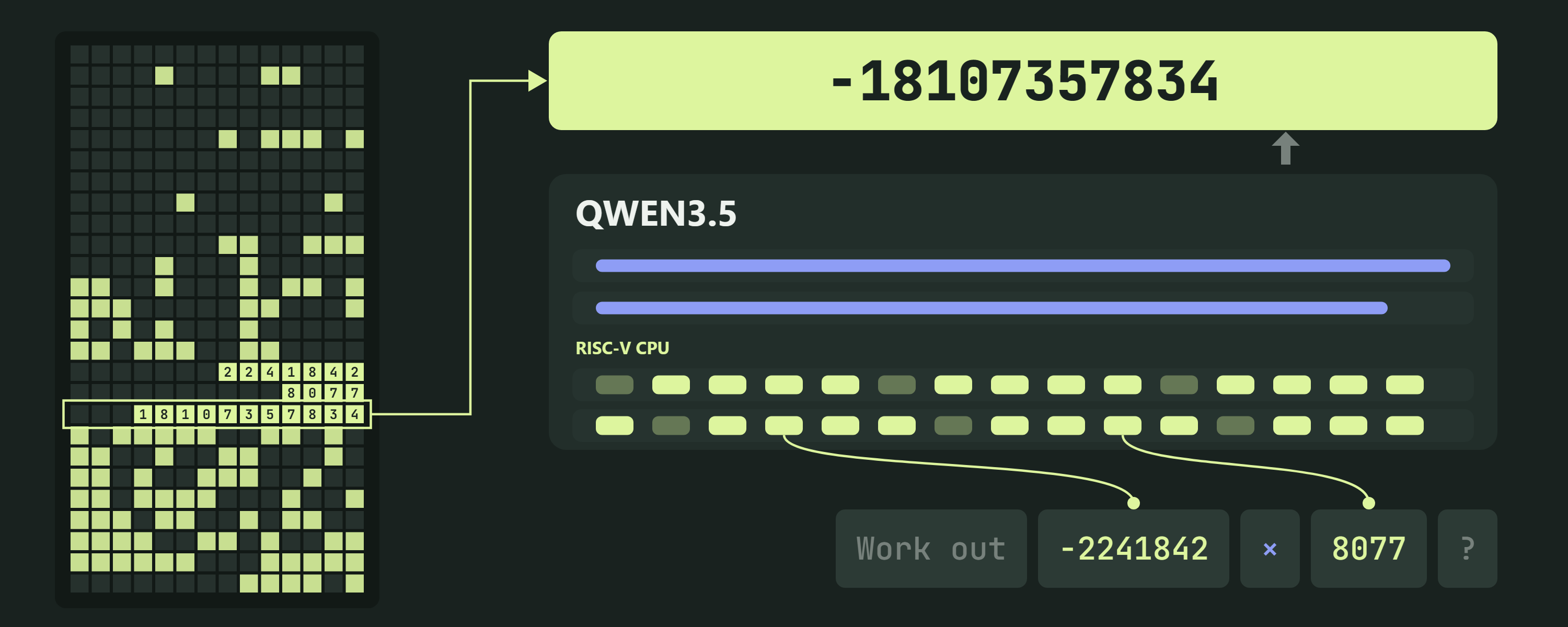 Qwenputer: A functioning, deterministic RISC-V CPU inside Qwen3.5
Qwenputer is a stock Qwen3.5 4B with a 32-bit RISC-V CPU (RV32IM plus Zba and a bignum unit) compiled directly into added layers, with no training. Gated DeltaNet states act as exact RAM via gate 1, beta 1 and one-hot keys. It scores 97.5 to 100% on DeepMind arithmetic sets, and 100% on NUPA long-integer arithmetic. It also has an experimental in-model filesystem. The checkpoint is 18.8 GB and needs the RvChat driver.
 divagr.comwriteupPublished and added 29 Oct 2026🧠 AI
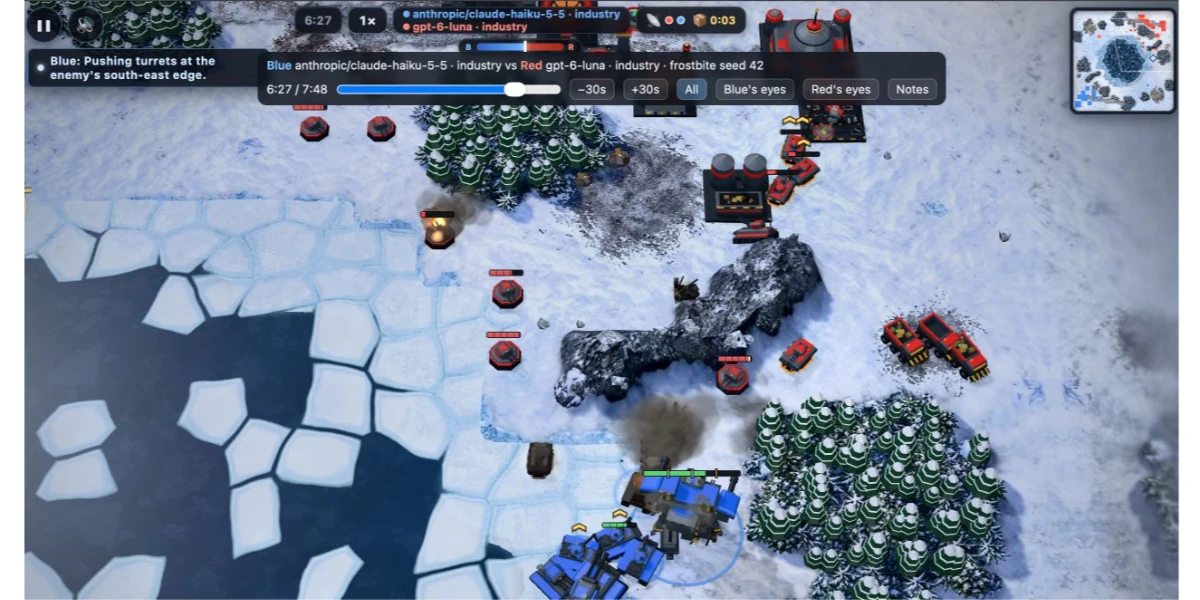 Battle Drones - a vibe coded RTS with audio-based multiplayer
Battle Drones is a browser-based Command & Conquer style RTS that Simon Willison built over 12 iterations and 321 commits, mostly with Claude Code and Claude Opus 5.5. The post gives key prompts and transcripts per version, including the "Make it a LOT more fun" run in Ultracode mode. It also covers an Agent vs. Agent mode for LLMs, audio-modem multiplayer between nearby phones, and lessons on deterministic simulation and code-generated 3D models and music.
 simonwillison.netwriteupPublished and added 20 Oct 2026🧠 AI
- ConnectWise (SkyKick) Vendor Credentials Abused in M365 Attacks
Huntress documents abuse of ConnectWise Cloud Backup (formerly SkyKick) vendor app credentials, used on October 15 from 144.172.64[.]128 to obtain Microsoft Graph tokens in at least 162 customer M365 tenants via client assertion. In one tenant, a ConnectWise Cloud Management Teams app self-assigned Global Administrator and added client secrets to an MSP management app and Huntress's own app, a persistence technique. The post lists application IDs, Entra sign-in and audit-log checks, user-agent indicators (kiota-dotnet vs Python-urllib/3.12, curl/7.88.1), and mitigation steps such as disabling (not deleting) the enterprise apps and reviewing added credentials.
 huntress.comwriteupAdded 17 Oct 2026, published 16 Oct 2026🛡️ Security
 Claude reveals ECDSA curve origins
Anthropic's Frontier Red Team reports that Claude recovered how the NIST P-192/224/256/384/521 and ANSI X9.62 curve seeds were generated. They are outputs of the C library's lrand48 LCG seeded with 1997–98 Unix timestamps, not hashes of a passphrase. The method scanned for weak-PRNG signatures, then used LLL lattice reduction to recover the truncated LCG state and stepped it back to srand48 initialization. Claude also traced some base points to the FreeLIP/NTL random generator. Reproducible Python is included. The authors say this is not an attack and makes deliberate backdoors less plausible. The B-163 seed and the base points of P-224/256/384/521 and the binary curves remain unexplained.
 anthropic.comwriteupAdded 17 Oct 2026, published 16 Oct 2026🛡️ Security
- Claude reveals ECDSA curve origins
Anthropic's Frontier Red Team reports that Claude, given no hint, worked out how the NIST P-192/224/256/384/521 and ANSI X9.62 curve seeds were generated. They came from the C library's lrand48 LCG seeded with Unix timestamps from 1997–98, not from a hash of a phrase. Claude found this by scanning for weak-PRNG signatures and recovering the PRNG state with LLL lattice reduction. It also traced several prime-curve base points to the FreeLIP random generator. The post includes Python code that reproduces the seeds and base points. It says this is not an attack and makes backdoor claims less plausible. B-163 and the other base points remain unexplained.
anthropic.comwriteupAdded 17 Oct 2026, published 16 Oct 2026🧠 AI - Claude Code Complete Guide: Hooks, Agents, MCP Tools & Professional Development
A LinkedIn-hosted PDF guide to Claude Code automation. It explains hook configuration in .claude/settings.json (matchers, JSON stdin payloads, exit code 2 to block) and the hook events: PreToolUse, PostToolUse, Notification, Stop, SubagentStop, SessionStart, UserPromptSubmit and PreCompact. Worked examples include sound and TTS alerts with pyttsx3, a regex guard against rm -rf and other dangerous Bash commands, TDD enforcement, auto-formatting with black, ruff and prettier, and session context loading. It adds troubleshooting and a cheat sheet, and its table of contents lists sections on multi-agent observability, slash commands, MCP tools, sub-agents and professional development patterns. The later sections are cut off in the fetched text. It is useful as deterministic guardrails and automation for a non-deterministic coding agent.
 media.licdn.comwriteupAdded 9 Oct 2026🧠 AI
 CVE-2026-21589: Critical unauthenticated arbitrary file access in Atlassian products
Rapid7's analysis of CVE-2026-21589 (CVSSv4 9.3), a critical unauthenticated arbitrary file read vulnerability affecting Bitbucket, Confluence, Jira Software/Service Management, Bamboo, Crowd, Crucible, and Fisheye Data Center products. It summarizes watchTowr Labs' root-cause finding that double-colon (::) sequences can act as path separators in Atlassian's web-resource handling, enabling path traversal to read arbitrary files within the Tomcat web root — including crowd.properties credentials that can be chained to create a rogue jira-administrators account. The post provides emergency patching guidance, Atlassian's WAF/RewriteValve mitigations, log-hunting regex, and notes public Python PoC and Nuclei templates exist.
 rapid7.comwriteupPublished and added 7 Oct 2026🛡️ Security
- Write Like It's 1866: LLMs Relearn Telegraphese
The author revives "cablese," the terse telegraph-era writing style, as an LLM prompting technique: instructing a model to write dense, article-dropping summaries cuts output tokens 25–49% depending on model family, while downstream models (including ones never shown the instruction) answer comprehension questions from the compressed text at parity or better than from plaintext. The piece introduces the "Telegraph Test," an open benchmark (github.com/Travis42/telegraph-test) with ~1,300 questions over 50 passages and a fixed deterministic grader, used to measure compression ratio, cross-model legibility, and read-back/decode costs for GLM-5.3-Flash, Gemma, Qwen and gpt-5-mini; it also contrasts this human-readable, auditable register against emergent machine-only compression protocols described in other papers (BabelTele, GLOSSOGEN) and existing tools (Terse, Caveman).
 fiveminutesforward.comwriteupPublished and added 7 Oct 2026🧠 AI
- lee1981 (@lee1981b) on X
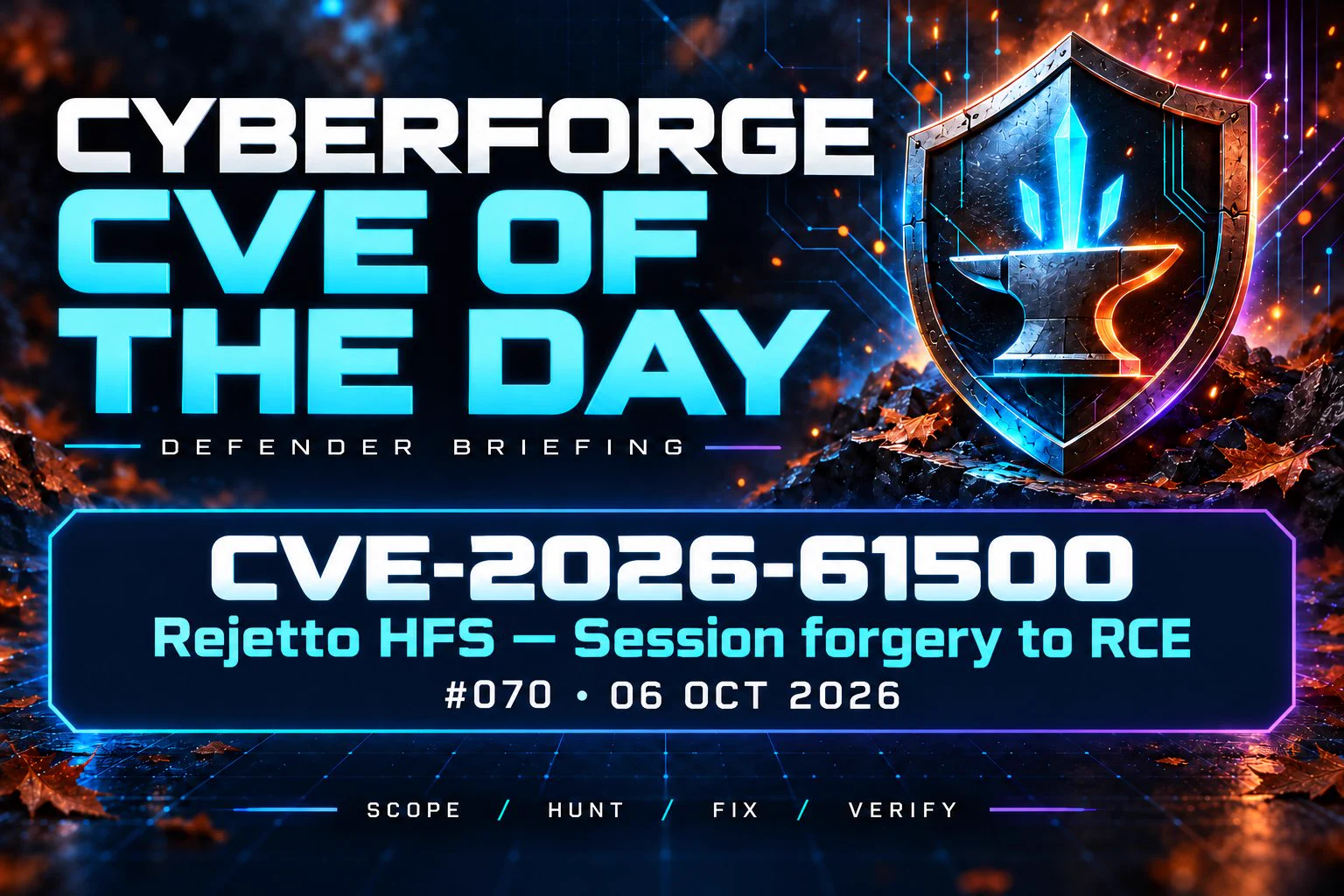
CyberForge CVE-of-the-Day #070 on CVE-2026-61500 in Rejetto HFS 3.0.0–3.2.0. The default Koa session-signing key came from Math.random() (CWE-338) and the unauthenticated login handshake leaked outputs of the same generator. That allows recovery of the key, a forged administrator session, and code execution through the legitimate server_code feature. It covers scoring (CVSS 9.8/9.3, EPSS, KEV status), the 3.2.1 fix, a six-step SOC hunting and remediation trail (loginSrp1/2, get_config/set_config pivots, COOKIE_SIGN_KEYS review), and offline jq/Python helpers for container and config metadata.
 x.comwriteupAdded 9 Oct 2026, published 6 Oct 2026🛡️ Security
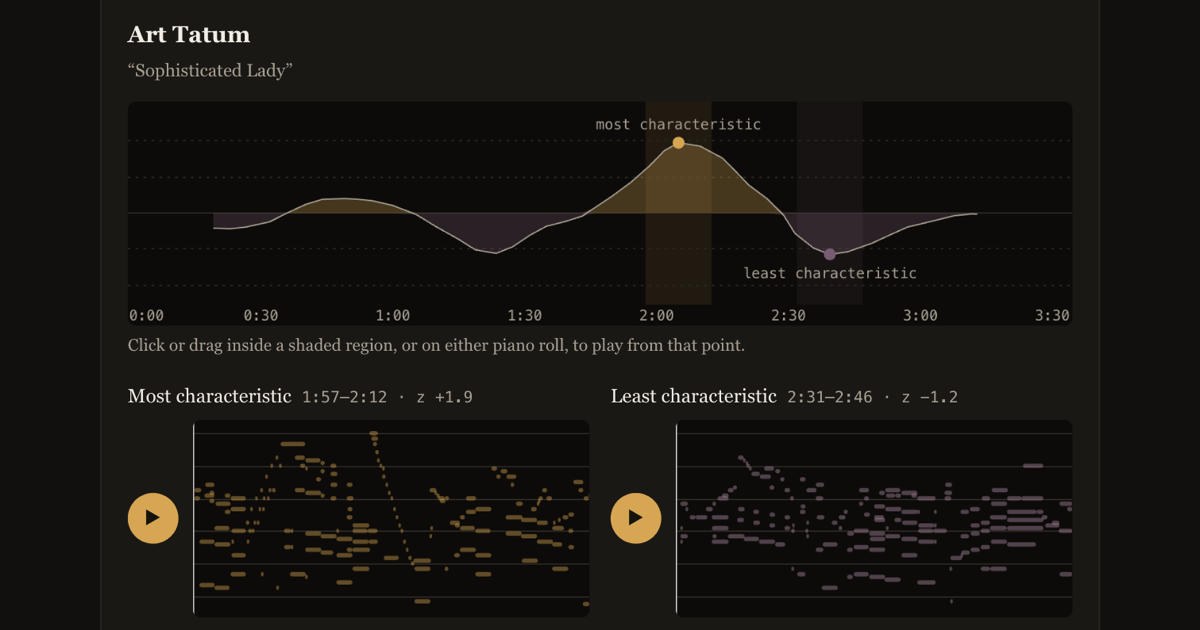 Learning Jazz Pianist Style with Cross-Attention Conditioning
An ISMIR 2026 (Abu Dhabi) research project that fine-tunes Aria, a transformer pretrained on piano MIDI, on solo recordings from twelve jazz pianists in the PiJAMA dataset, adding a gated cross-attention layer that conditions generation on a learned per-pianist embedding. Because standard held-out perplexity is nearly blind to style (the next note is predictable regardless of pianist), the authors instead measure style transfer by sliding a pianist classifier over freely generated continuations: conditioned continuations are attributed to the intended pianist 70% of the time versus 37% unconditioned, and a classifier trained only on generated music identifies real recordings with 95% accuracy. The page is an interactive demo with audio examples, blindfold listening tests, and per-pianist results (e.g. 96% attribution for Hank Jones/Dick Hyman vs 29% for Cedar Walton), alongside a link to the full paper with ablations on mismatch conditioning and memorization checks.
 almostimplemented.github.iowriteupAdded 6 Oct 2026, published 5 Oct 2026🧠 AI
 SequenceHash: multihashing for the rest of us
Trail of Bits introduces SequenceHash and its keyed variant SequenceMAC, hash-agnostic multihashing constructions similar in goal to NIST's TupleHash but not tied to Keccak, working with SHA256/384/512, BLAKE, and RIPEMD. The spec, now part of the Community Cryptography Specification Project, provides unambiguous input encoding, length-extension prevention, built-in customization strings, and HMAC-style keyed MACs that avoid HMAC's key-pseudocollision issues; reference implementations ship in Rust, Go, and Python with full test vectors.
 blog.trailofbits.comwriteupPublished and added 2 Oct 2026🛡️ Security
 https://bughunters.google.com/blog/pagebreak-real-world-findings?utm_source=tldrsec.com&utm_medium=newsletter&utm_campaign=tl-dr-sec-348-google-s-pagebreak-scanner-perplexity-s-agent-security-tool-defending-agentically
Google's Product Security team describes three high-severity bugs found by PageBreak, an internal LLM-agent scanner that validates findings by running payloads against live environments. The cases are cache poisoning on apis.google.com (an unkeyed `extra_path` injected into cached JS), XSS on admin.google.com where the agent bypassed the `sig` check by getting the authorize endpoint to sign a `javascript:` URI, and a UXSS in the Tag Assistant extension via a weak `onConnectExternal` origin check and nonce exfiltration. It shows what agentic, deterministically verified scanning can find in well-reviewed targets.
 bughunters.google.comwriteupAdded 2 Oct 2026, published 1 Oct 2026🛡️ Security
- The Not So Silent Miner: Threat Actor Compiles Cryptominer on the Endpoint
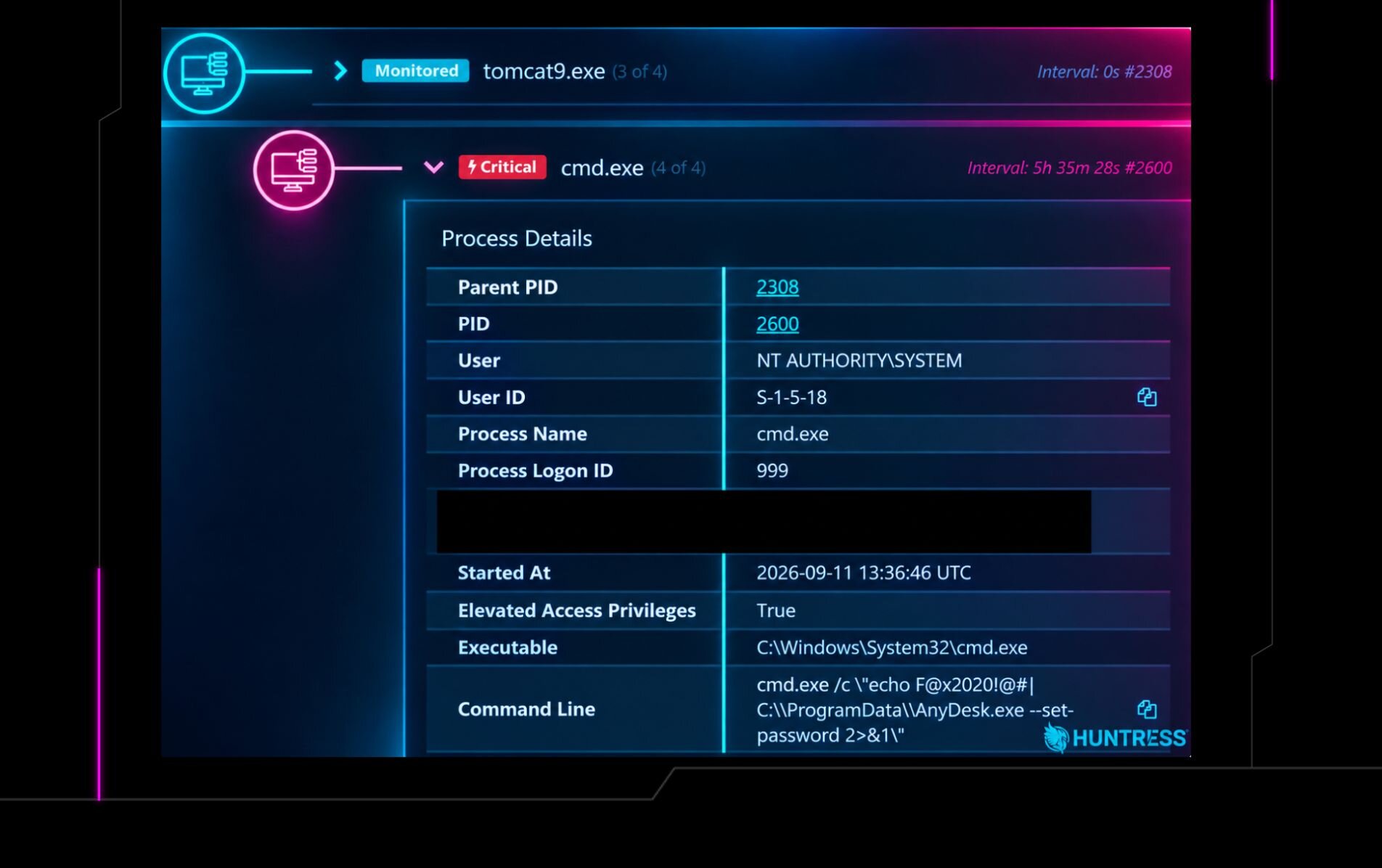
Huntress SOC analyzes an intrusion that began with exploitation of Samsung MagicINFO (CVE-2025-4632, after incomplete fix of CVE-2024-7399) via tomcat9.exe. The actor took three tries to install AnyDesk (certutil and PowerShell attempts were blocked by Defender), created an 'oldadministrator' account, disabled Defender, then ran Silent XMR Miner Builder, which compiled a Monero miner on the endpoint using csc.exe, cvtres.exe, donut, tcc and MinGW gcc. The miner ran masquerading as explorer.exe against C3Pool; the post gives command lines and detection ideas such as unusual compiler child processes from an unsigned parent and explorer.exe with mining arguments.
huntress.comwriteupPublished and added 24 Sep 2026🛡️ Security - WorkspaceBench: Evaluating Interpretability Methods for the Global Workspace
WorkspaceBench is a benchmark introduced by camilablank, agam_bhatia, Euan Ong and Neel Nanda through the MATS Program for evaluating interpretability methods applied to Global Workspace style neural network architectures. The fetched page only exposed metadata without the article body so specific tasks and metrics could not be confirmed from the text, but the title and venue indicate a mechanistic interpretability evaluation framework.
 alignmentforum.orgwriteupAdded 7 Oct 2026, published 23 Sep 2026🧠 AI
 The Closed Quorum: Inside the First Reported Autonomous AI C2 Implant
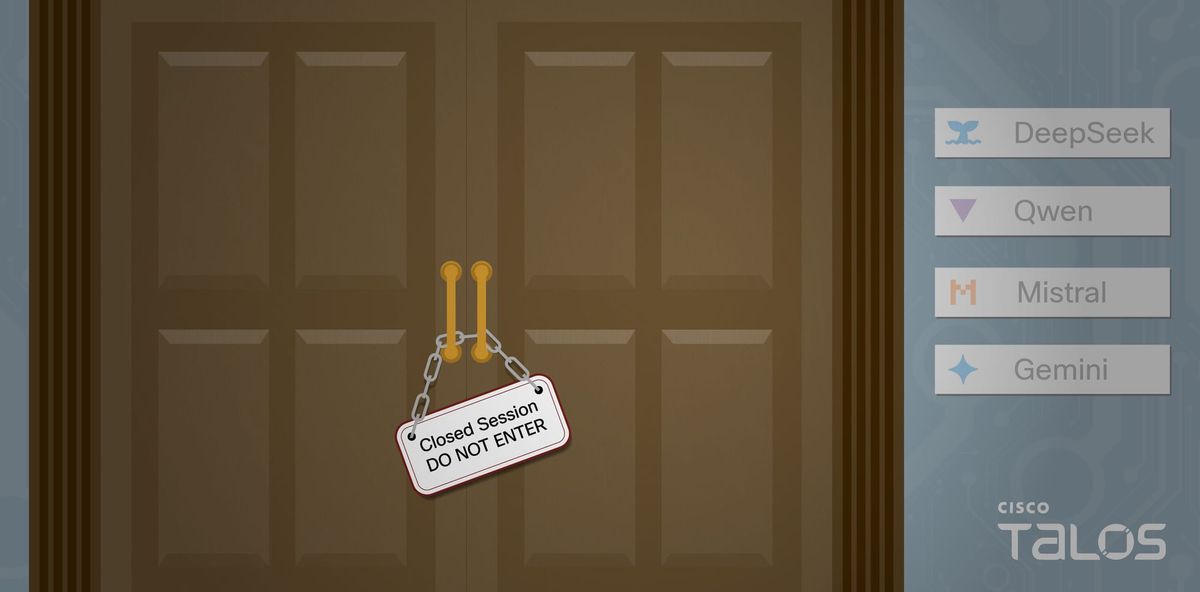
Cisco Talos' CAIRN project documents CLOSEDQUORUM, a 64-bit Go Windows implant that replaces traditional C2 infrastructure with a panel of up to four commercial LLM providers (DeepSeek, Qwen, Mistral, Gemini) that vote on the implant's next action via plurality voting, with each model queried against a structured JSON decision schema constrained to inject/persist/steal/move actions. Once deployed it autonomously dumps LSASS credentials, steals browser passwords and crypto wallets (MetaMask, Exodus, Ethereum), and exfiltrates AES-256-GCM-encrypted data to an operator's Discord webhook, all without further human tasking. The post details the developer's apparent credentials-as-a-service distribution model, deterministic tie-breaking favoring DeepSeek, and provides SHA256 hashes plus a YARA detection rule for the family (formerly tracked as BALZAK).
 blog.talosintelligence.comwriteupAdded 30 Sep 2026, published 22 Sep 2026🛡️ Security
 Socket: Two Joyfill npm Beta Releases Compromised to Deliver DEV#POPPER Remote Access Trojan
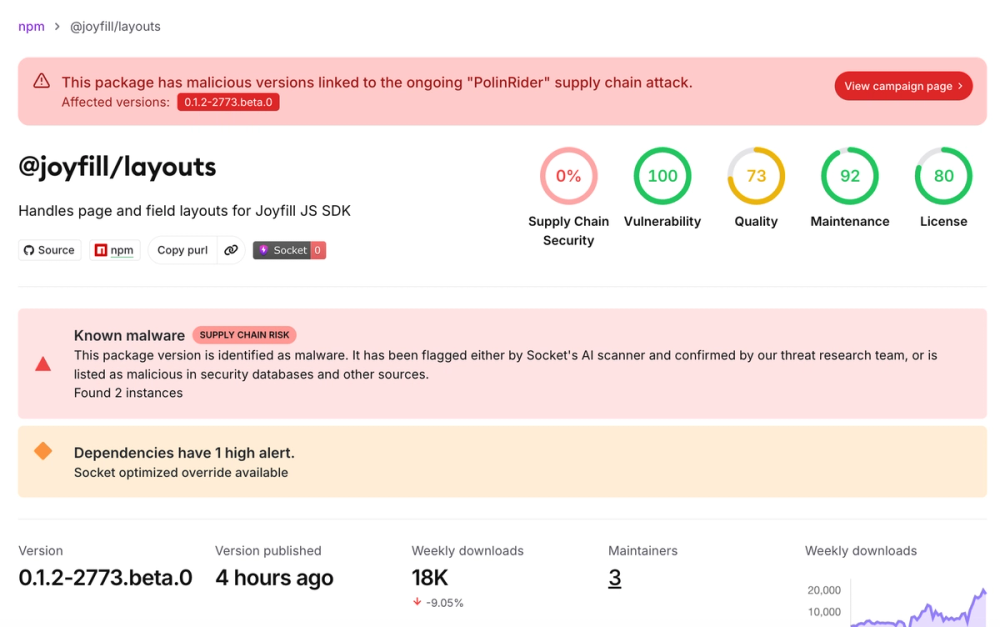
Socket's research team found two beta releases of the @joyfill npm packages (@joyfill/layouts and @joyfill/components) contained an import-time JavaScript implant that resolves encrypted payloads through Tron, Aptos, and BNB Smart Chain transactions, ultimately dropping a 77KB Node.js remote-access trojan matching the DEV#POPPER family and sharing loader fingerprints with the PolinRider blockchain-loader campaign. The RAT establishes a Socket.IO C2 channel, executes arbitrary JS/shell commands, exfiltrates files and clipboard data, and persists by patching files inside VS Code, Cursor, Antigravity, Discord Desktop, GitHub Desktop, and the global npm CLI; a parallel detached-process branch fetches an additional bootstrap that can deploy a Python credential/browser-data stealer assessed as an OmniStealer variant. Because the implant fires on module load (not via npm lifecycle scripts), `--ignore-scripts` provides no protection, and the writeup includes full IOCs, blockchain addresses, C2 infrastructure, and MITRE ATT&CK mappings.
 socket.devwriteupAdded 22 Sep 2026, published 20 Sep 2026🛡️ Security
 Potential for Remote Code Execution in Microsoft SCCM via Newly-Discovered Exploit Chain
XM Cyber researchers detail a four-stage exploit chain in Microsoft SCCM (Configuration Manager) that lets any unprivileged domain user achieve SYSTEM-level remote code execution on the primary site server: a missing authorization check on the AdminService UploadExtensionInChunks endpoint (CVE-2026-47301), a weak code-signing check that accepts any commercial certificate, a "CabSlip" Zip-Slip-style path traversal in CAB extraction giving arbitrary file write, and DLL hijacking of adsource.dll loaded by the SYSTEM-level SMS Executive service. Microsoft patched the RBAC bypass in July 2026, but the rest of the chain remains exploitable via the built-in Operations Administrator role until a full fix in ConfigMgr 2609 (October 2026); the article also gives log-based detection guidance (AdminService.log DirectoryNotFoundException/HTTP 500 patterns) and interim mitigations.
 xmcyber.comwriteupAdded 3 Sep 2026, published 13 Aug 2026🛡️ Security
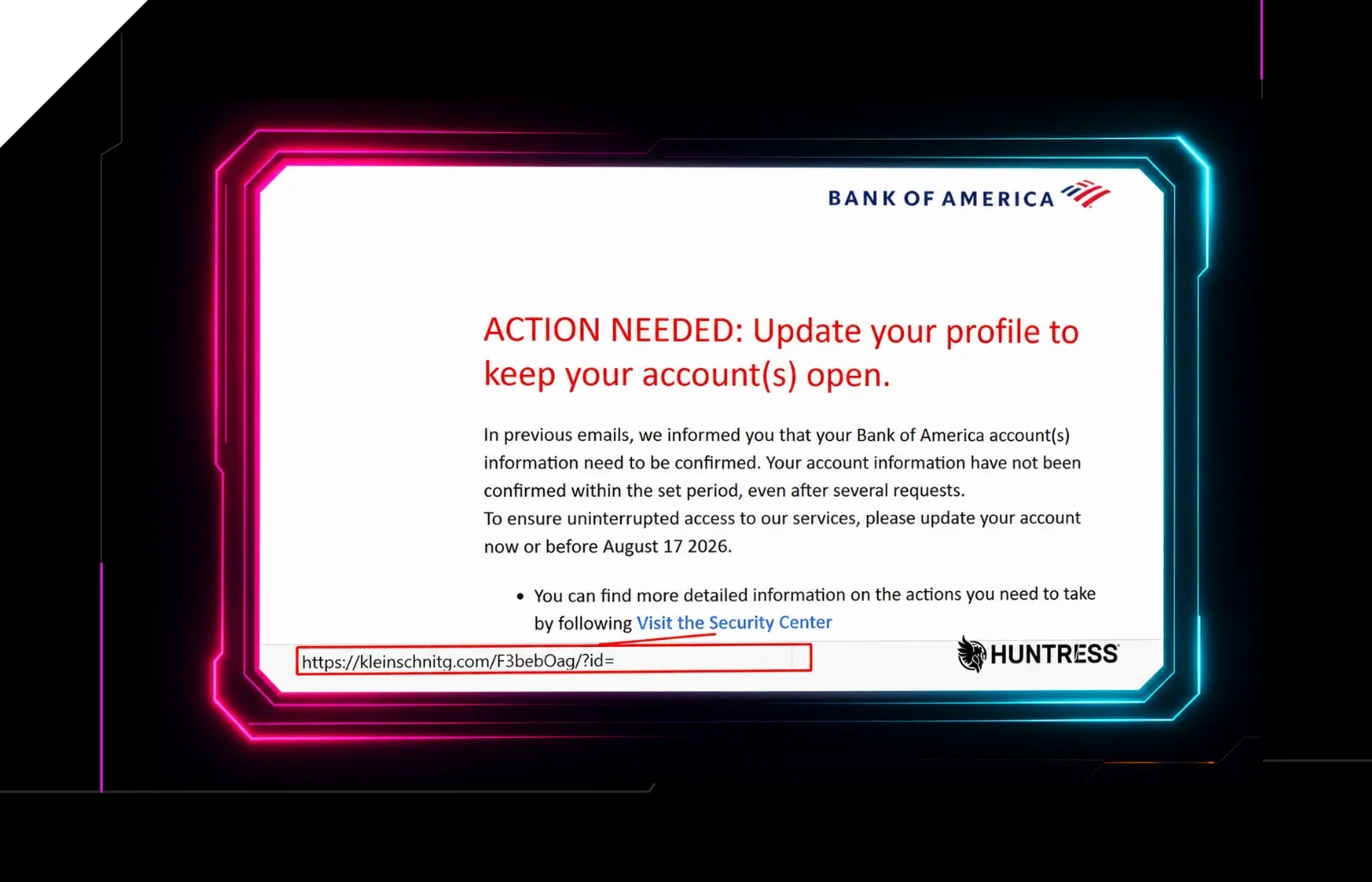
- Bank of America Phishing Email Delivers ScreenConnect Malware
Huntress dissects a Bank of America-themed phishing email that lures victims into downloading AccountGuardSetup.vbs, which unpacks through several layers of base64-encoded PowerShell to silently install ScreenConnect RMM with Administrator privileges. The chain uses AES-128-CBC encrypted blobs to deliver a C# UAC-bypass exploit via the ICMLuaUtil COM interface (MITRE ATT&CK T1548.002), then hides the resulting ScreenConnect service (renamed "Windows Security") from users and admins using SDDL/ACL manipulation so it can't be seen, logged, or removed.
huntress.comwriteupAdded 3 Sep 2026, published 4 Aug 2026🛡️ Security  PolinRider Caused Dozens of npm, Go, PHP Compromises
OpenSourceMalware's research ties together JFrog's, Nextron's, and Socket's separate reports on compromised html-to-gutenberg/fetch-page-assets npm packages, 16 Go modules, and Joyfill's poisoned beta releases, attributing all of them to DPRK's PolinRider campaign via shared XOR keys, TRON/Aptos wallets, C2 infrastructure, and the fa-solid-400.woff2 loader file hash. The piece argues these aren't targeted account takeovers but automated propagation from infected maintainer machines (via temp_auto_push.bat git history rewriting and stolen .npmrc tokens), and uses GH Archive to prove that 43 of 64 analyzed Go module pseudo-version timestamps were forged to appear years older than the actual malicious push. Delivered payloads include InvisibleFerret/DEV#POPPER RAT and the OmniStealer Python infostealer, and the article links a PolinRider crossover into a compromised Packagist/PHP package (roberts/leads) via shared C2 infrastructure.
 opensourcemalware.comwriteupAdded 3 Sep 2026, published 31 Jul 2026🛡️ Security
- Credential Stuffing Campaign Hits SonicWall | Huntress SOC Tracking
Huntress SOC tracked a credential stuffing campaign against SonicWall VPN/firewall logins starting July 25, 2026, originating from five DigitalOcean-hosted IPs. Over three days, 92 unique user accounts across 30 organizations were compromised through opportunistic, automated credential validation rather than targeted attacks, with no observed post-compromise activity. The post includes IoCs and mitigation guidance (WAN access restriction, credential resets, MFA enforcement) for defenders.
huntress.comwriteupAdded 3 Sep 2026, published 28 Jul 2026🛡️ Security - deep scan tuto
Build log/tutorial for "Deep Scan," a PoC that pairs a deterministic security-scanning engine (20+ SAST/SCA/DAST scanners normalized into one Finding model, plus an AI-free code-graph engine doing taint/reachability analysis) with an agentic remediation loop exposed via an MCP server and three Claude Code skills (/security-eval, /security-patch, /security). The agent triages thousands of raw findings down to a prioritized P0–P3 plan, groups fixes into reviewable branches, and proves each fix with a demonstration test that safely calls an inert owner-operated canary endpoint instead of firing a real exploit (e.g., rm -rf /). The author also covers scaling via Docker Compose/Kubernetes+gVisor and the risk of running untrusted dependency-resolution code during scans.
 blog.kubeek.comwriteupPublished and added 14 Jul 2026🛡️ Security
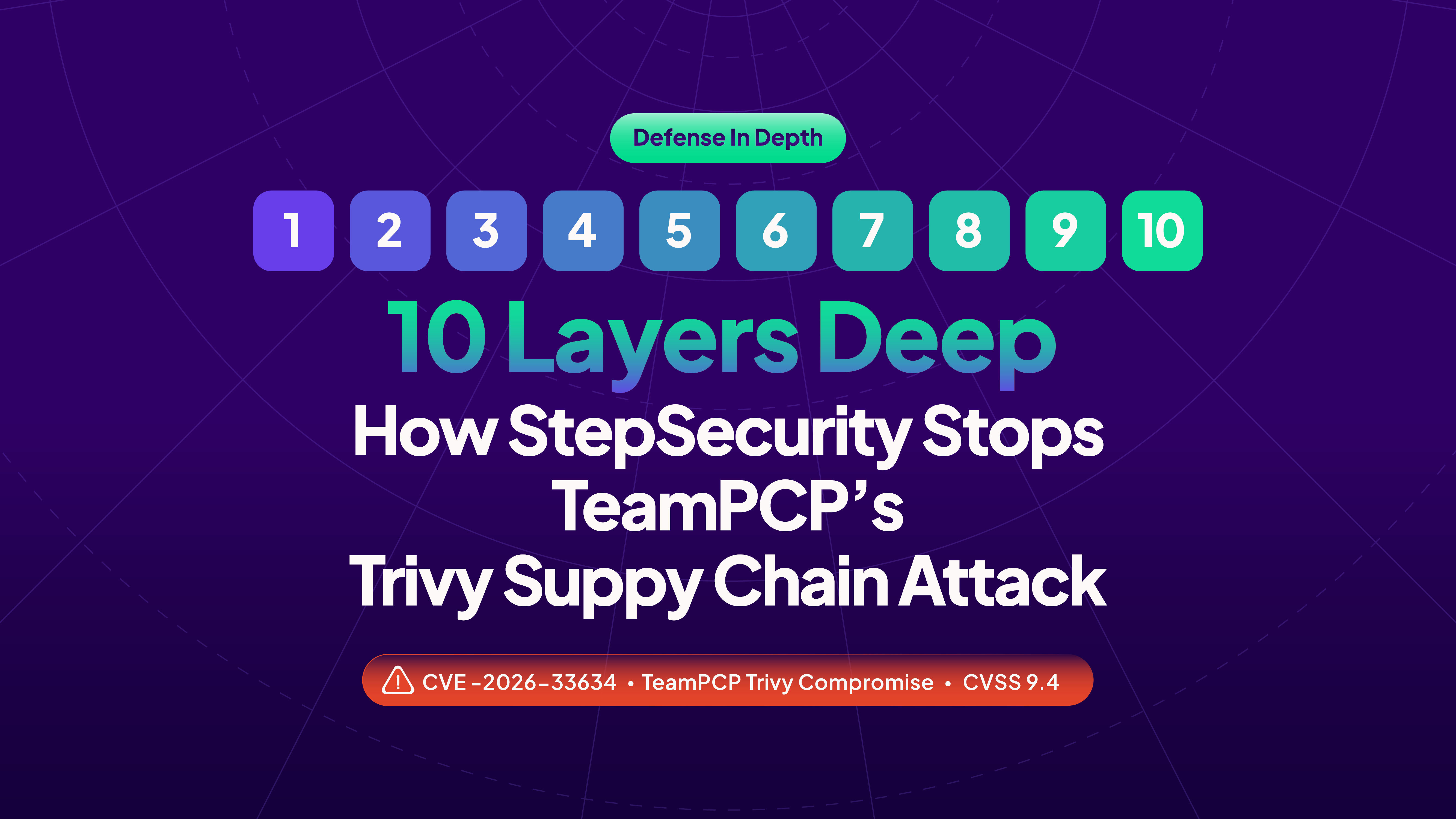 10 Layers Deep: How StepSecurity Stops TeamPCP's Trivy Supply Chain Attack on GitHub Actions
StepSecurity walks through the TeamPCP-led compromise of aquasecurity/trivy-action (CVE-2026-33634, CVSS 9.4), where attackers force-pushed a credential-stealing payload into 76 of 77 version tags, plus the related Checkmarx KICS action compromise, both harvesting secrets from /proc/pid/mem of the GitHub Actions Runner.Worker process and exfiltrating to a typosquatted domain (scan.aquasecurtiy.org, 45.148.10.212). The post details the attack technique of 'imposter commits' (fork commits reachable by SHA but not on any branch) used to hide the malicious tags, and situates the incident alongside the same-window CanisterWorm npm worm and TeamPCP credential stealers in litellm and telnyx PyPI packages, then maps ten StepSecurity/Harden-Runner defense-in-depth controls (egress blocking, process lockdown, SHA-pinning PRs, imposter-commit scanning, global blocklist) to each stage of the kill chain.
 stepsecurity.iowriteupAdded 3 Sep 2026, published 2 Jul 2026🛡️ Security
 Socket: PolinRider
Socket's Threat Research Team documents the expansion of PolinRider, a North Korea-linked (Contagious Interview / Famous Chollima) supply chain campaign, finding 162 malicious release artifacts across 108 packages and extensions spanning npm, Packagist, Go modules, and Chrome extensions. Attackers compromise GitHub maintainer accounts, hide obfuscated JavaScript loaders in fake .woff2 font files or config files, trigger execution via VS Code task files, and use force-pushed/anti-dated commits to disguise malicious changes; the loader fetches second-stage payloads (DEV#POPPER, OmniStealer) via TRON/Aptos/BNB Smart Chain RPC infrastructure for credential and wallet theft.
socket.devwriteupPublished and added 2 Jul 2026🛡️ Security Shipping post-quantum cryptography to Python
Trail of Bits, funded by the Sovereign Tech Agency, implemented Rust bindings for NIST's ML-KEM (FIPS 203) key-establishment and ML-DSA (FIPS 204) digital-signature standards into pyca/cryptography, shipped in version 48 with AWS-LC backend support. The post makes them a pip install away for the Python ecosystem (pyca/cryptography sees 1.2B monthly PyPI downloads and underpins Certbot, Ansible, Airflow, and paramiko), while detailing the size/performance tradeoffs versus Ed25519/X25519 and noting SLH-DSA (FIPS 205) support and protocol-level integration are still in progress.
blog.trailofbits.comwriteupAdded 3 Sep 2026, published 30 Jun 2026🛡️ Security Snyk VulnBench JS 1.0: Can LLMs Find the Same Bugs Twice?
Snyk's VulnBench JS 1.0 report runs 300 repeated agentic security-review scans (10 JS/Express fixtures x 6 model configs x 5 repetitions) to measure whether LLMs like Claude Opus 4.6/4.7 and Claude Sonnet 4.6 find the same vulnerabilities twice, benchmarked against deterministic Snyk Code SAST reference findings. Key results: reference-matched LLM findings were highly repeatable (84.8% appeared in all 5 runs) while extra, non-reference LLM findings were unreliable (only 14% reproduced in all runs), the best LLM config (Opus 4.6 Medium) reached only 75.4% Snyk-reference F1 with a 24.6-point gap to SAST, and higher-cost models (Opus 4.7 Max) did not outperform cheaper ones despite 5.7x cost. The study argues LLM review and SAST catch different vulnerability classes (LLMs strong on injection/SSRF-type bugs, weak on path traversal/resource-limit enumeration) and should be combined rather than substituted.
 snyk.iowriteupAdded 3 Sep 2026, published 29 Jun 2026🛡️ Security
 Socket: npm Package Uses Prompt Injection + Token Flooding to Evade AI Malware Scanners
Socket Threat Research analyzed shai_hulululud@1.0.48596, a ~9.28MB npm package whose index.js opens with a Japanese-language block comment simulating bioweapon-production instructions to trigger LLM safety refusals, follows with a fake 'SYSTEM OVERRIDE' prompt-injection block aimed at AI reviewers, then floods the file with tens of thousands of repeated comment lines (3.5M+ tokens) before appending doubly-obfuscated (character-substitution plus AES) JavaScript. The deobfuscated payload reintroduces the same policy-triggering content and scanner/vendor-referencing strings, and was classified as protestware rather than a functional credential stealer; the piece argues this demonstrates a practical LLM-specific denial-of-service pattern (prompt injection + safety triggers + context flooding + obfuscation) that AI-assisted supply-chain scanners must defend against via deterministic preprocessing, fail-closed behavior, and combining LLM review with static/AST/entropy/behavioral analysis.
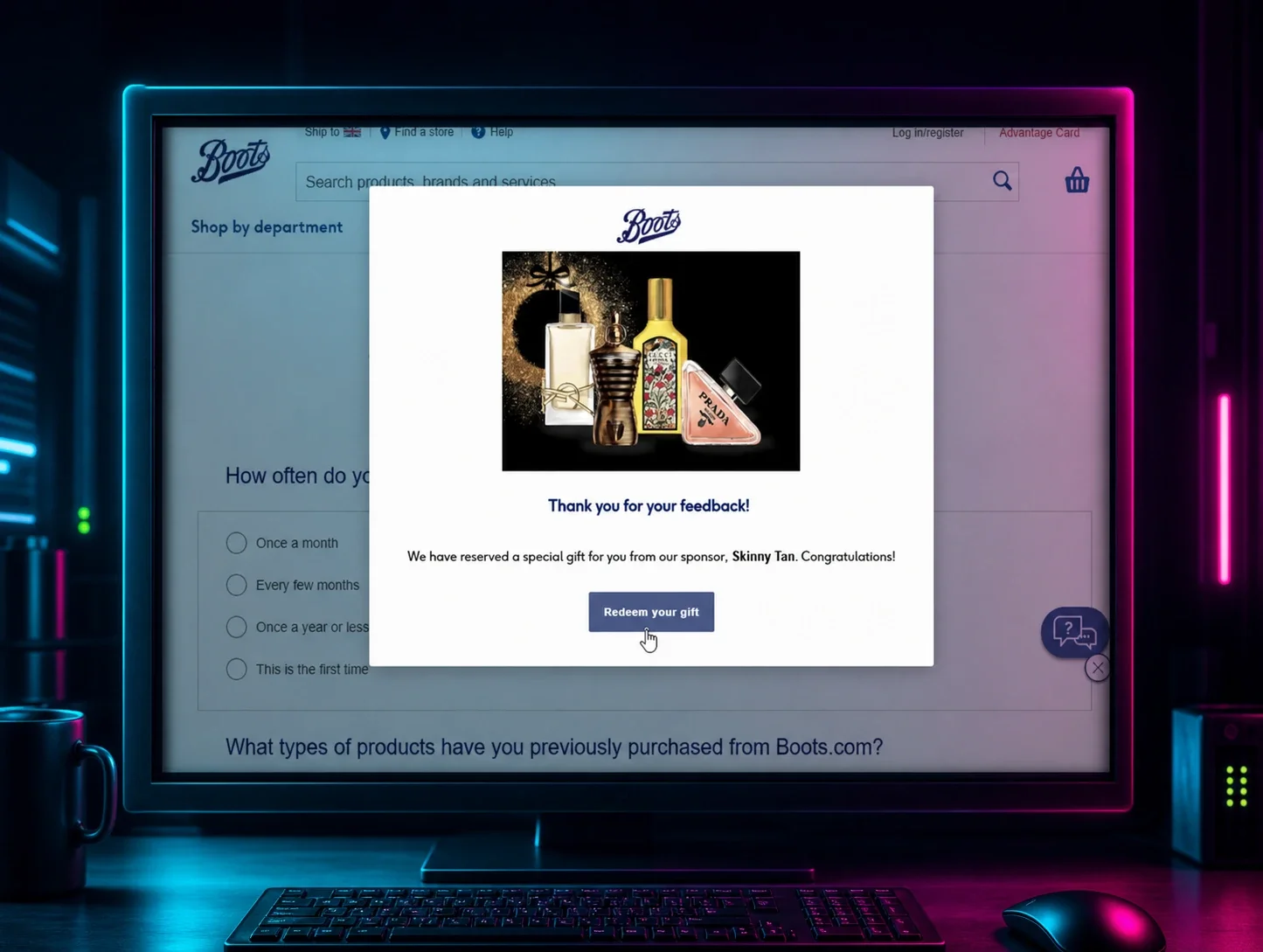
socket.devwriteupPublished and added 17 Jun 2026🛡️ Security- The Devil, Eight Million Emails, and a Whole Lot of Milk | Phishing Stager Exposed
Huntress SOC incident report on an internet-facing RD Gateway/RDWeb terminal server compromised via credential reuse with no MFA, where the actor staged Gammadyne Mailer (a legitimate commercial bulk-mail tool) to send 8.9 million Boots-impersonation phishing emails direct-to-MX from the victim's clean IP, evading AV entirely. The phishing kit itself was hosted on a compromised Bolivian government domain (ipelc.gob.bo) to inherit its trust and dodge reputation blocklists, and the writeup details the log-forensics (Windows Security log gaps, Terminal Services operational logs, Chainsaw parsing, WFP Event 5157) used to reconstruct the timeline and attribute a separate opportunistic brute-force bot.
huntress.comwriteupAdded 3 Sep 2026, published 15 Jun 2026🛡️ Security  Socket: Famous Chollima Targets PHP Developers via Compromised Packagist Package
Socket researchers found malicious obfuscated JavaScript appended to a tailwind.js file inside a dev branch (dev-drewroberts/feature/test-case) of the legitimate Laravel package roberts/leads on Packagist. The payload uses TRON, Aptos, and BNB Smart Chain RPC services as a blockchain "dead drop" to fetch XOR-encrypted second-stage code, decrypt it, and execute it via eval() and a hidden detached Node.js child process, consistent with prior DEV#POPPER/OmniStealer/BeaverTail-family DPRK campaigns. The activity is attributed to Famous Chollima and resembles a Contagious Interview-style fake job/recruiter lure targeting PHP/Laravel developers, with full IOCs (wallets, XOR keys, hashes) and detection guidance provided.
socket.devwriteupPublished and added 1 Jun 2026🛡️ Security- Local administrator account remote logon in Windows
A pentest writeup explaining why remote logons with a shared local administrator account (e.g. from a gold image) fail against tools like psexec/smbexec/WinRM due to UAC's LocalAccountTokenFilterPolicy registry key, and how attackers can still succeed either by flipping that key, abusing the RID 500 Administrator account (governed by the separate FilterAdministratorToken key, which is unfiltered by default), or by using protocols not subject to UAC token filtering such as SSH and RDP. The author demonstrates the failure and bypass end-to-end using nxc (NetExec) and Impacket against a Windows 11 target from Kali Linux, and notes LAPS as an effective mitigation for RID 500 abuse.
 bencteux.frwriteupAdded 3 Sep 2026, published 31 Jan 2026🛡️ Security

Showing 30 of 33
Show more