- Show HN: Auto Dismiss Mac OS "Allow <app> to find devices on local networks?"
dontallow is a two-file Swift launchd agent for macOS 15 and later that clicks "Don't Allow" on the "find devices on local networks" prompt. It watches the UserNotificationCenter process through an Accessibility observer, supports pause and allowlist, and can decode the Local Network rule store to show orphaned rows. It explains why Chromium temp-bundle paths make the prompt recur, and gives a PPPC profile route for fleets.
 github.comrepoAdded 30 Oct 2026, published 29 Oct 2026🛡️ Security
- Show HN: Hob - Open-source, on device alternative to Claude Cowork and ChatGPT
Hob is an MIT-licensed desktop app from Frigade that runs open-weight models such as Gemma and gpt-oss locally on Mac, Windows and Linux. It picks the best open-weight model that fits the user's computer and sets it up. It is positioned as a free, private, offline alternative to Claude and ChatGPT for tasks like filling out PDFs and working through documents. The page gives no technical detail on its runtime.
github.comrepoAdded 27 Oct 2026, published 26 Oct 2026🧠 AI - Show HN: Farol – A risk map of a pull request for the person who approves it
farol is a free, MIT-licensed CLI and GitHub Action that runs after an AI code review and gives the human approver a risk verdict (fast track, quick review, careful review) and a 0-100 score for a pull request. It uses the TypeScript type checker, go/types and Python ast to trace which pages, APIs and jobs a change reaches, and it adds diff coverage, security findings and contract breaks. It never executes or sends code.
github.comrepoAdded 26 Oct 2026, published 25 Oct 2026🧠 AI - alirezarezvani/claude-skills
claude-skills is an MIT-licensed library of about 398 Claude Code skills, agents, personas and plugins across 20 domains, including engineering, marketing, compliance and C-level advisory. Each skill is a SKILL.md with stdlib-only Python CLI tools and reference docs. Install scripts and convert.sh adapt it to Codex, Gemini CLI, Cursor, Aider, Windsurf and other coding agents, and it includes a skill-security-auditor scanner.
github.comrepoAdded 25 Oct 2026🧠 AI - KhulekanisiyandaMchunu/llm-trading-arena
wtfibought (llm-trading-arena) is an MIT-licensed live arena where LLM agents trade virtual capital on real market data with all reasoning public. Users bring their own model and key, set the wake candle interval, leverage range and margin budget, with at most three symbols and twelve model calls per wake. The stack is Spring Boot on Java 25 with Spring AI, PostgreSQL, Redis and a React 19 frontend.
github.comrepoAdded 26 Oct 2026, published 23 Oct 2026🧠 AI - x86rc/unthemidator
Unthemidator is an automated unpacker for binaries protected with Themida, Code Virtualizer and WinLicense (v3.0 to v3.2.6.0, experimental v4.0). It works without executing the target, handles x86 and x64 exe, dll and sys files, decrypts imports, restores the IAT, rebuilds the PE and identifies VM versions and entry points. It does not devirtualize or unmutate code. Releases cover Windows x64 and macOS Apple Silicon.
github.comrepoAdded 27 Oct 2026, published 23 Oct 2026🛡️ Security - Spectrmachina/Ztrust
ZTrust is a Python supply-chain scanner that checks manifests, lockfiles, source and GitHub workflows for vulnerable or malicious dependencies (via OSV.dev), typosquats, leaked secrets, unsafe lockfiles and risky CI patterns such as pwn requests and script injection. It outputs console, JSON and SARIF 2.1.0 and ships as a GitHub Action. It also includes a FastAPI bounty service using commit-reveal and shielded Zcash payouts for researchers.
github.comrepoAdded 27 Oct 2026, published 22 Oct 2026🛡️ Security - SnailSploit/Claude-Red
claude-red is an MIT-licensed library of offensive security skills for the Claude Skills system, planned at about 130 skills across 23+ categories (web, Active Directory, cloud, exploit development, EDR evasion and others). Each skill is a SKILL.md file that loads on conversational triggers, so unused skills cost no context. It installs by git clone, sparse checkout per category, install.sh or pasting into a system prompt.
github.comrepoAdded 22 Oct 2026🧠 AI - SnailSploit/Claude-Red
claude-red is a library of offensive security skills for the Claude Skills system, each a SKILL.md file that loads on conversational triggers (for example, mentioning SQL injection loads offensive-sqli). Categories include web, Active Directory, cloud, mobile, exploit development, fuzzing, privilege escalation, post-exploitation and AI. It targets about 130 skills across 23+ categories, with an install script and sparse-checkout install per category. Built on Sahar Shlichov's offensive checklists, MIT licensed.
github.comrepoAdded 22 Oct 2026🛡️ Security - Show HN: OnKey – I'm a bad singer, so I built an app to show where I'm off-key
OnKey is a free, MIT-licensed singing trainer for Apple Silicon Macs. After a song ends in Spotify, Apple Music or browser YouTube, it separates the lead vocal with UVR's MDX-Net Karaoke 2, tracks pitch with CREPE and turns it into syllable-level notes with the GAME model. On later plays it scrolls the notes, draws the user's live pitch and scores each line. Analysis runs on-device, and the repo explains the build steps and network requests.
github.comrepoAdded 24 Oct 2026, published 22 Oct 2026🧠 AI - vxcontrol/pentagi
PentAGI is an open-source, self-hosted multi-agent system that uses LLM agents to carry out penetration testing tasks autonomously. The MIT-licensed repo has a Go backend, a React frontend and GraphQL. It ships Docker Compose files for Langfuse tracing, Graphiti knowledge-graph memory and an observability stack. Topics list OpenAI and Anthropic as model backends.
github.comrepoAdded 20 Oct 2026🧠 AI - Show HN: VoidAccess – open-source dark web OSINT, from query to a graph
VoidAccess is a self-hosted, MIT-licensed dark web OSINT platform that runs a 13-step pipeline from a research query to a relationship graph. It collects from Tor indexes, paste sites, code forges, security feeds and .onion seeds, applies content-safety filters, and exports STIX 2.1, MISP, Sigma, YARA, Snort, Suricata, CSV and JSON. It runs as a CLI with SQLite or as a Docker Compose stack with PostgreSQL, FastAPI and Next.js.
github.comrepoAdded 21 Oct 2026, published 20 Oct 2026🛡️ Security - better-isms/grcskills
grcskills is an MIT-licensed library of 60 SKILL.md files (Agent Skills format) that let coding agents draft and prepare governance, risk and compliance work: scope statements, statements of applicability, risk registers, audit prep, vendor review, policies, privacy, incidents and continuity. Each skill names where the agent must stop so a person decides. Installs are pinned to release tag v2026.10.19.2, and a validator rejects network commands and credential paths.
github.comrepoAdded 20 Oct 2026🛡️ Security - Saylor (@Kev96790724) on X
G-Krusch is an MIT-licensed, local-first Google Workspace hub built on Node.js 22 and SQLite WAL. It runs a 12-tool MCP server (SSE and Stdio) plus a REST bridge on port 5446 for Drive, Calendar and Gmail. It includes a 1,024-dimension hybrid Drive RAG with an embedding cascade (Ollama bge-large, then Gemini, then offline fallback) and FTS5 BM25. PDF extraction returns page citations. Tokens are kept in an AES-256-GCM vault; 30 of 30 tests pass.
 x.comrepoAdded 21 Oct 2026, published 19 Oct 2026🧠 AI
- Show HN: WhatsApp MCP running free on Cloudflare
whatsapp-mcp is an MCP server that runs in the user's own Cloudflare account and lets MCP clients such as Claude Code and Claude Desktop search and read WhatsApp chats. It links as a WhatsApp Web-style device through Baileys, stores messages in SQLite with FTS5 inside a Durable Object, and is read-only. The README documents deployment, OAuth sign-in, contact naming through agents, and workerd shims for Baileys.
github.comrepoAdded 20 Oct 2026, published 18 Oct 2026🧠 AI - ralphtradesz/trading-hub
Trading Hub is a free macOS desktop trading platform built with C#/.NET 10 and Avalonia. It uses the user's Claude Code subscription: a chat writes and fixes C# strategies, an in-app MCP server lets Claude run backtests, optimizations and walk-forwards and write reports, and a risk agent proposes position sizes. Install and a Windows port are both driven by Claude Code prompts. License is MIT with Commons Clause.
github.comrepoAdded 19 Oct 2026, published 17 Oct 2026🧠 AI - OWASP/MCP-Security-Testing-Guide
OWASP MCP Security Testing Guide is a living, GPL-3.0 collection treating the Model Context Protocol as a security boundary from user through model, MCP client, MCP server and tool to the target system. It covers threats, secure development, host/client controls, supply chain, enterprise gateways, detection, incident response, taxonomy, public incidents, case studies and review checklists, with 79 tests in Chapter 3 (sections 3.1–3.19). It includes a finding template, and it links the MCP Goat lab for safe practice. It is useful to AppSec, red team and SOC people assessing MCP deployments.
github.comrepoAdded 17 Oct 2026🛡️ Security  DeepSeek-v4.1-Flash-1017
Model card for DeepSeek-V4.1-Flash-1017, a minor update to DeepSeek-V4.1-Flash with MIT-licensed weights. It claims gains in reasoning, coding, agentic tasks and visual benchmarks, with shorter task time and output length that move the performance–cost Pareto frontier across agent harnesses (Claude Code for Terminal-Bench 4.0, Mini-SWE-V2 for DeepSWE v1.1). It ships no Jinja chat template. It provides a reference encoding.py for multi-turn chat, tool calling, thinking mode, numeric reasoning effort and interleaved images, plus deepseek-recipe, Rust libraries with Python bindings for prompt encoding and output parsing. Serving recipes are given for Transformers, vLLM, SGLang and Docker Model Runner.
 huggingface.corepoAdded 18 Oct 2026, published 17 Oct 2026🧠 AI
 Meta Muse Spark Open (816B-A42B) open-weights model card
Model card for Meta Superintelligence Labs' Muse Spark Open, an open-weights, natively multimodal model with 816B total and 42B active parameters and a 1M-token context window. It targets coding and agentic work (tool use, long-horizon tasks, multimodal reasoning, synthetic data generation, LLM-as-judge). It ships in BF16 and NVFP4, needs about 700GB VRAM (NVFP4) or 2TB (BF16), runs on SGLang, vLLM, Transformers, TensorRT-LLM, Unsloth, llama.cpp and MLX, and supports a reasoning_effort setting. The Muse Model License requires "Built with Muse Spark Open" attribution and a separate agreement for Model-as-a-Service above $20M revenue. The card reports safety results against Kimi K3 on cyber, chem/bio and loss-of-control evals.
huggingface.corepoAdded 17 Oct 2026🧠 AI- morluto/rea
REA (rea-agents) is an MIT-licensed toolkit that exposes native-binary, JavaScript/Electron, .NET assembly and website analysis to AI agents via MCP, and also as a local CLI. It drives Hopper, Ghidra, IDA, objdump or Rizin for disassembly and pseudocode, recovers modules and Electron IPC boundaries from ASAR/JS apps, and returns findings with evidence and limitations. Showcases include reconstructing a x86 audio helper into byte-matching C and tracing an Electron clipboard API through preload and IPC; the README also carries lawful-use and licensing guidance.
github.comrepoAdded 14 Oct 2026🛡️ Security - BijectiveLabs/bitra
bitra (CLI name tra) is an MIT-licensed Python framework from Bijective Labs for autonomous trading agents. Language models only read system-computed figures and give opinions, while deterministic code prices the round trip, applies declared limits, sizes the trade and sends one order with stop attached. Every cycle's briefs, answers and refusals are stored on disk with hashes. It supports many model providers and ccxt venues, with sandbox, demo and mainnet tiers.
github.comrepoAdded 25 Oct 2026, published 13 Oct 2026🧠 AI  google/embeddinggemma-2
Model card for EmbeddingGemma 2, an open (Apache 2.0) 740M-parameter multimodal embedding model from Google DeepMind built on Gemma 4. It maps text, code, images, video and audio into one 768-d space, with a 270M text backbone and optionally loadable 170M vision and 300M audio encoders, an 8K context, and Matryoshka truncation to 128/256/512/768 dims. The card gives practical guidance: task instruction prefixes, re-normalising after truncation, avoiding float16 (NaN or degraded embeddings), interleaved multimodal inputs with placeholder tokens, and vision token budgets. It targets on-device search, RAG, classification and clustering.
huggingface.corepoAdded 12 Oct 2026🧠 AI- Show HN: Atticus – Hold-to-talk voice assistant for macOS that runs on Claude -p
Atticus is an MIT-licensed macOS 26+ hold-to-talk voice assistant that uses Apple's on-device speech transcription and runs AI requests through Claude Code on an existing Claude Pro/Max plan, so no API key is needed. Simple commands skip the model entirely (apps open in 0.08 s), actions it has seen once are learned as zero-cost shortcuts, and a "remember…" memory persists across asks. It also sets up no-AI background watchers (polling every 5 s) and holds itself to a budget of a median under $0.002 and 6 s per AI ask, with a system prompt under 10,000 characters.
github.comrepoPublished and added 12 Oct 2026🧠 AI - sepehr071/iran-mcp
iran-mcp is an open-source catalog of 39 MCP servers (488 tools) that let AI agents query Iranian websites such as Digikala, Torob, Divar, Snappfood, Jabama, Paziresh24, TSETMC and qavanin.ir, with prices normalised to Toman. Most servers are unofficial, read-only Python packages run with uvx; three are official hosted servers. It ships Claude Code plugins, Agent Skills, bundles, proxy lists and a machine-readable servers.json.
github.comrepoAdded 24 Oct 2026, published 11 Oct 2026🧠 AI - bilawalsidhu/gods-eye-view
God's Eye View is an open-source, vanilla JavaScript + CesiumJS + Vite 3D globe that fuses live public feeds (aircraft, ships, satellites, quakes, public cameras, weather) into one explorable scene. Its AI layer is a hands-free voice agent on the OpenAI Realtime API with 30 tools: camera fly-to, whiteboard annotations, analyst queries over live layers, and scene-context and screenshot grounding. Keys stay server-side and the browser gets only a short-lived session token. An experimental ChatGPT/Codex OAuth path is also supported. The app doubles as an MCP server, so Claude Desktop, Codex or ChatGPT can open the globe from a conversation.
github.comrepoAdded 11 Oct 2026🧠 AI - bilawalsidhu/gods-eye-view
God's Eye View is an open-source, vanilla-JavaScript CesiumJS and Vite client that puts live aircraft, ships, satellites (SGP4), earthquakes, fires, public CCTV and mapped ALPR cameras on one photorealistic 3D globe. It adds cockpit tracking, FLIR/NVG sensor shaders and a voice agent built on the OpenAI Realtime API. It works without API keys, and the docs cover server-side key brokering with SSRF protection, localhost binding and a SECURITY.md threat model. For OSINT/GEOINT practitioners it is a hackable base for fusing public signals, with an explicit rule against person-tracking features.
github.comrepoAdded 11 Oct 2026🛡️ Security - Talorys – A self-hosted personal AI agent on Cloudflare's free tier
Talorys is an open-source, single-user personal AI assistant deployed with one command (npx create-talorys) into the user's own Cloudflare account. It uses a Cloudflare Agents SDK Durable Object with SQLite for conversations, memories, tasks, notes and automations, Workers AI (@cf/zai-org/glm-4.7-flash) for streaming chat with tool calling, and Durable Object alarms for reminders and scheduled AI routines. It stays within the Workers Free plan, with a private Worker behind a Pages Function service binding, owner-password auth, per-day AI usage guardrails, and fallback to non-AI features when quota runs out.
github.comrepoPublished and added 10 Oct 2026🧠 AI - morluto/awesome-reverse-engineering
awesome-reverse-engineering is a CC0 curated list of reverse-engineering tools and learning resources, organized by task: triage, native analysis, debuggers, instrumentation, deobfuscation, malware analysis, mobile, firmware, file formats, games, diffing, symbolic execution, lifting and AI agents. Each entry notes licensing, maintenance status and prerequisites. It also covers MCP integrations, CTF practice sites and related awesome lists.
github.comrepoAdded 27 Oct 2026, published 9 Oct 2026🛡️ Security - Show HN: Let your AI agents paint big arrows, boxes and text on your screen
bigarrow is an MIT-licensed, single-binary Swift macOS CLI that draws a click-through arrow and sign over all windows so an AI agent can show a human where to click, paste or act (permission prompts, 2FA, OAuth consent). It ships an Agent Skills package (installed via `bigarrow install-skill`) for Claude Code and Codex, with JSON output and exit codes, and can target by Accessibility label, coordinates, window or Peekaboo snapshot. The README documents the skill's token cost (182 tokens for the description, 1,398 for the instructions) and 104 automated tests.
github.comrepoPublished and added 9 Oct 2026🧠 AI - Show HN: Apogee: Rebuilding Mozilla's Orbit, fully local and private
Apogee is a privacy-first browser extension (Chrome/Firefox) that summarizes articles, YouTube/Bilibili videos, PDFs, DOCX and pasted text entirely on-device, inspired by Mozilla's discontinued Orbit. It runs models via WebGPU or WebAssembly in the browser, or connects over loopback to a local Ollama or llama.cpp server, with local passage retrieval for Q&A, grounded sentence highlighting, and Opus-MT translation. It shows a practical no-backend, no-API-key architecture for local LLM apps, with a Node.js extractor test harness for contributors.
github.comrepoPublished and added 9 Oct 2026🧠 AI - mattpocock/skills — agent skills for engineers
mattpocock/skills is a collection of small, composable "agent skills" for software engineering that install into Claude Code, Codex, GitHub Copilot, Gemini CLI, Cursor, OpenCode, Devin, Windsurf, Amp and Pi via plugin managers or the `npx skills` CLI. It packages practices like interview-driven requirement gathering (/grill-me, /grill-with-docs), domain-model/glossary building, test-driven development with red-green-refactor (/tdd), bug diagnosis loops, codebase architecture improvement, ticket triage and spec-to-implementation workflows (/to-spec, /to-tickets, /implement, /implement-spec), splitting skills into user-invoked orchestrators and model-invoked reusable disciplines. It's built by Matt Pocock as an alternative to heavier process-owning frameworks like GSD, BMAD and Spec-Kit, aiming to keep engineers in control while giving coding agents better feedback loops and shared vocabulary.
github.comrepoAdded 8 Oct 2026🧠 AI - Show HN: NanoMuse – An open-source AI agent for your phone and computer
nanoMuse is an open-source personal AI agent that runs across phone, desktop, and web, built on an on-device sandbox (OpenMinis with proot/Alpine Linux on mobile) and the DeepSeek Harness on desktop with a Python runtime for tool use. Devices share one account and sync conversations through a relay (self-hostable), while the agent proactively acts, retains memory, and pauses before irreversible actions; it is released GPL-3.0-or-later with documentation on install, self-hosting, connectors, and memory.
github.comrepoPublished and added 7 Oct 2026🧠 AI - claude-mem — persistent memory system for Claude Code and other coding agents
Claude-Mem is an open-source persistent memory plugin for Claude Code and other coding agents (Codex, OpenCode, Grok Bot, T3 Code, OpenClaw) that captures tool-usage observations during sessions, compresses them into semantic summaries, and reinjects relevant context into future sessions. It uses five lifecycle hooks (SessionStart, UserPromptSubmit, PostToolUse, Stop, SessionEnd), a local SQLite database, a Chroma vector store for hybrid semantic+keyword search, and exposes three MCP tools (search, timeline, get_observations) that follow a token-efficient layered retrieval pattern to cut context costs roughly 10x. It is Apache-2.0 licensed, built with the Claude Agent SDK and TypeScript, and ships an optional hosted "observer" memory service alongside self-hosted options via OpenRouter/Gemini keys or an Anthropic plan.
github.comrepoAdded 5 Oct 2026🧠 AI - Dark Web Informer (@DarkWebInformer) on X
A public PoC chains CVE-2026-42589 and CVE-2026-40281 to achieve unauthenticated remote code execution against Gotenberg (a document/PDF-conversion microservice), abusing metadata injection flaws in the /forms/pdfengines/metadata/write endpoint. The tool supports vulnerability detection, interactive command execution, reverse shell delivery, and multi-target scanning against Gotenberg versions ≤8.30.1 (patched in 8.31.0).
x.comrepoPublished and added 5 Oct 2026🛡️ Security - Jakeschincariol/replica-skill
replica-skill is an MIT-licensed set of eleven Claude skills that run an app-cloning pipeline: recon, architect, design, build, backend, test, diff, entrepreneur, brand, launch and deploy. Six standard-library Python tools handle image diffing, parity scoring, review ranking, contrast checks, rebrand sweeps and store-listing lint. It installs as a Claude Code plugin or by copying folders, and states clean-room and rebranding limits.
github.comrepoAdded 29 Oct 2026, published 3 Oct 2026🧠 AI  Kyutai Pocket TTS
Pocket TTS is a 100M-parameter text-to-speech model from Kyutai designed to run efficiently on CPU, generating audio faster than real-time (~6x on a MacBook Air M4) with ~200ms latency to first audio chunk and voice cloning from short audio samples. It supports English, French, German, Portuguese, Italian, and Spanish, ships a Python library and CLI, and has spawned numerous community ports (WASM, ONNX, Rust/Candle, MLX, C++, C#) and fine-tuned language variants (Czech, Hindi, Korean, Persian, Indonesian, Estonian, Welsh, Polish).
huggingface.corepoAdded 2 Oct 2026🧠 AI- Folkbench/folkbench
Folkbench has two parts. One is a public benchmark and leaderboard of third-party AI API relay (中转站) services. Multi-node probes run around the clock and publish availability, P95 latency and price per relay, with per-model rankings. The other is Switch, an open-source Tauri/Rust desktop client that stores several Base URL and API Key pairs. It applies them to Claude Code or Codex configs in one click, previews config diffs, and stashes and restores the official ChatGPT OAuth credentials when switching Codex to a third-party provider. It also keeps keys local and estimates token usage and cost per session. The README also profiles several relay services, such as Modelflare, CheapAI and ApiPorter, and that part reads as promotional.
github.comrepoAdded 12 Oct 2026, published 2 Oct 2026🧠 AI - MITRE ATLAS v2026.08 release — autonomous agent techniques
Release notes for MITRE ATLAS v2026.08, the adversarial AI/ML knowledge base (now 1 matrix, 16 tactics, 114 techniques, 83 sub-techniques, 39 mitigations, 72 case studies). This version renames the "AI Attack Staging" tactic to "AI Attack Adaptation," generalizes several techniques (e.g., Cloud Service Discovery → Enterprise Resource Discovery, Process Discovery → Enterprise Environment Discovery, Reverse Shell → Cyber Communication Channel), and updates mitigations and techniques like LLM Prompt Crafting and Retrieval Content Crafting.
github.comrepoAdded 1 Oct 2026🛡️ Security - Launch HN: Magnitude (YC S25) – Self-optimizing inference engine for agents
Magnitude is an open source local inference engine (Apache 2.0) that compiles and tunes its GPU/CPU kernels on the user's exact device before a model runs, claiming up to 2x faster decode than llama.cpp (92% faster on Metal, 19% on CUDA) with 27% lower memory per agent. It ships as a cross-platform desktop app with a bundled CLI and an OpenAI-compatible API, offering one-click connections to agent tools like Pi, OpenCode, Hermes, Codex, OpenClaw, Claude Code, and Cline, running fully offline on Apple Silicon, NVIDIA, AMD, or CPU-only hardware.
github.comrepoPublished and added 30 Sep 2026🧠 AI  MiMo-V2.6 (Xiaomi): Pro/Flash/9B-distill open-weight release, MIT license, 1M context
Hugging Face collection for Xiaomi's MiMo-V2.6 model family, comprising five open-weight checkpoints: MiMo-V2.6-Pro-RL (1T params), MiMo-V2.6-Flash-RL (311B params), a MiMo-V2.6-Distill-Qwen-9B distillation (vision-language capable), and Pro/Flash MOPD variants. The title claims MIT licensing and a 1M-token context window, positioning this as a large open-weight release spanning full-scale RL-trained models down to a 9B distilled variant usable on consumer hardware.
huggingface.corepoAdded 29 Sep 2026🧠 AI- StartLuxLabs/StartLux-Decision
StartLux-Decision is a family of open decision models (0.8B to 27B, plus a 35B-A3B mixture of experts) that return probabilities for every option of typed choice, yes/no and score questions. The repository holds the inference engine and HTTP server (vLLM plugin, /v1/systemone API), with Instant one-pass and AutoThink gated-reasoning variants. Reports first place of 174 entries on Decision Index 0.3.2 (69.12). Code is Apache 2.0; weights are CC BY-NC 4.0.
github.comrepoAdded 23 Oct 2026, published 29 Sep 2026🧠 AI - Uncensored and Offensive Security AI Models Benchmark
A curated GitHub list of open-weight "uncensored" and security-fine-tuned LLMs intended for authorized red teaming, pentesting, and security research, covering models like WhiteRabbitNeo's DeepHat V2, BugTraceAI-CORE, CYBER-FROST, and several abliterated Qwen/GLM/DeepSeek variants. It explains the underlying techniques (abliteration per Arditi et al. 2024, QLoRA/DPO fine-tuning, GGUF/FP8 quantization) and links to Hugging Face model cards, benchmark suites (CyberBench, TrustedSec's LLM Attack Benchmark vs OWASP Juice Shop), and deployment platforms for running these models locally or via API.
github.comrepoAdded 2 Oct 2026, published 29 Sep 2026🛡️ Security - dagoSte/squadra
Squadra (version 3.11.0) is an MIT-licensed Python 3.12+ tool that coordinates several Claude Code, Codex and interactive Cursor windows on one project through a shared local registry. It records tasks, acknowledgements, source-bound proofs and independent reviews by a window that did not write the code. A local dashboard shows progress, per-window token usage and model-balance suggestions, and community plugins extend it. The page was truncated, so later sections are not covered.
github.comrepoAdded 27 Oct 2026, published 28 Sep 2026🧠 AI - OmniJev/OneJev
OneJev is a multimodal "System One" decision model fine-tuned from Qwen3.5 and Qwen3.8-27B, released in 0.8B, 4B, 9B and 27B sizes. It returns calibrated probabilities for typed questions (yes/no, choice, score) about screenshots, photos, video and text in one forward pass. The repo covers serving with Flide or llama.cpp GGUF, Docker, the 94,707-example OneJev-Data dataset, and SFT configs using cross-entropy plus Brier loss.
github.comrepoAdded 2 Nov 2026, published 27 Sep 2026🧠 AI - imkofty/Hermuse
Hermuse is a set of scripts and guides for running Hermes Agent (from Nous Research), the 9Router OpenAI-compatible model router and a Telegram gateway on a Linux VM. It adds a Cloudflare Pages and D1 long-poll tunnel to expose the 9Router dashboard, cron watchdogs including a gateway stall detector, and a default-deny Telegram allowlist. MIT licensed.
github.comrepoAdded 2 Nov 2026, published 27 Sep 2026🧠 AI - zhuyansen/awesome-claude-video-skills
Awesome-list repository cataloguing 183 open-source 'skills' and toolkits that let Claude Code, Codex and other coding agents generate or edit video: rendering frameworks like HyperFrames and Remotion, motion graphics, explainer/promo video generators, short-form editors, digital avatars and music videos. Each entry is read and security-graded by a companion service (Agent Skills Hub / agentskillshub.top), with a machine-readable JSON feed and category breakdowns (frameworks, promos, explainers, editing, shorts, avatars, animation, motion graphics, scripts, music videos).
github.comrepoAdded 29 Sep 2026, published 27 Sep 2026🧠 AI - FirmAgent: Fuzzing + LLM Agents for IoT Firmware Vulnerability Discovery (NDSS 2026)
FirmAgent is an academic research toolkit (NDSS 2026) for finding vulnerabilities in re-hosted IoT firmware web services by combining IDA-based pre-fuzzing (CFG/sink distance scoring), QEMU instrumented tracing, CFG-guided API fuzzing, and an optional LLM agent (LLMATaint.py) that consumes runtime taint traces to reason about and produce PoCs for bug classes like command injection. The pipeline is explicit about scope: it is meant for authorized, owned or re-hosted firmware (e.g. Greenhouse-style containers), and stitches together sink-scope extraction, feedback-driven fuzzing, and request-to-trace attribution before handing traces to an LLM for taint-to-PoC analysis.
github.comrepoAdded 26 Sep 2026🛡️ Security - awslabs/mcp release 2026.09.20260922000649
This is a release changelog for awslabs/mcp, AWS Labs' collection of Model Context Protocol servers covering services like HealthOmics, Aurora DSQL, Bedrock Knowledge Base retrieval, ECS, CloudWatch, billing/cost management, and dataprocessing. This release adds vended metrics tools, SQL parser-based policy guards for Aurora DSQL, agentic retrieval support for Bedrock KB, and fixes several security issues including region validation to prevent SSRF credential disclosure in the CloudWatch server and read-only mode bypass in the MySQL server. It reflects an actively maintained, high-velocity multi-server MCP monorepo used for AWS tool integration with LLM agents.
github.comrepoAdded 26 Sep 2026🧠 AI - google/ax — declarative agentic orchestration runtime
AX is Google's declarative orchestrator for running large numbers of autonomous agent workloads on Kubernetes, built on top of "Agent Substrate" for sandboxed execution. Agents are declared via YAML manifests (Task, Workspace, Model) similar to kubectl, and applied with an `ax` CLI that supports apply/get/watch/ssh/suspend/resume, treating agent runs as a distinct workload type distinct from stateless services or batch jobs.
github.comrepoAdded 26 Sep 2026🧠 AI - Hindsight — Agent Memory That Learns
Hindsight is an open-source agent memory system (MIT-licensed, self-hostable via Docker/Helm or usable as Hindsight Cloud) that goes beyond RAG-style recall by having agents learn through consolidated observations and mental models built from retained facts and experiences. It exposes retain/recall/reflect operations, a built-in MCP server per memory bank, Python/Node/Go/CLI clients, an LLM-wrapper for drop-in memory on OpenAI/Anthropic calls, and reports state-of-the-art results on the LongMemEval long-term memory benchmark, independently reproduced by Virginia Tech's Sanghani Center and The Washington Post.
github.comrepoAdded 26 Sep 2026🧠 AI - rewanthtammana/Who-Let-The-Agents-Act
who-let-the-agents-act is a self-hostable lab suite (Docker/Python, Groq-backed LLM agent) with nine isolated scenarios — overpowered data tools, IDOR-style cross-account access, unsafe agent handoffs, refund-limit bypass, indirect prompt injection via poisoned invoices, multi-tenant RAG leakage, secret leakage through debugging, fail-open approval outages, and a multi-hop confused-deputy agent chain. Each scenario runs in multiple modes (vulnerable vs. application-enforced) against the same prompt, recording model plan, policy decision, tool calls, and DB access as JSON so a reader can directly compare what changes when authorization is enforced outside the system prompt.
github.comrepoAdded 26 Sep 2026🛡️ Security - AgentSystemLabs/agent-office
agent-office is an open-source Node.js application that renders your team's projects as floors of a cartoon 3D office, where each Claude Code, OpenCode or Codex coding-agent worker sits at a desk with a visible terminal others can join. It wires agent workers directly into GitHub: an issues board and PR board with diff review, CI status and merge actions, a task queue that auto-hires workers into isolated git worktrees, one-click PR creation, live worker status via Claude Code/Codex hooks and an OpenCode plugin, and per-worker cost/token tracking against Claude plan limits. It also supports multi-agent meeting-room collaboration patterns such as debate, lead and team, map-reduce, red and blue, and review panel, where several agent workers jointly produce a file and open a PR, plus shared voice chat and screen sharing for the human team.
github.comrepoAdded 28 Sep 2026, published 26 Sep 2026🧠 AI - git-pkgs — dependency history & supply-chain analysis for git repos
git-pkgs is a Go rewrite of a Ruby tool that adds a git subcommand for tracking dependency changes across a repository's history, indexing manifests/lockfiles from 36+ package managers (npm, RubyGems, Cargo, PyPI, Maven, Composer, Go modules, etc.) into a local SQLite database. Beyond history/blame/diff, it offers supply-chain security commands: `vulns` (OSV-based CVE scanning with SARIF output for GitHub code scanning, plus blame/praise/exposure for remediation metrics), `licenses` (with drift detection and CI-friendly exit codes), `deprecated`, `provenance` (trusted-publishing/attestation checks), `integrity` (lockfile hash drift detection), `maintainers`/`health` (via ecosyste.ms metadata), and `sbom` export in CycloneDX/SPDX. It also supports a dependency-aware `bisect` to find when a vulnerability, license change, or capability (e.g. network access) was introduced, and ships GitHub Actions for CI integration.
github.comrepoAdded 25 Sep 2026🛡️ Security - nealbridges/VulnHunter
VulnHunter is a maintained fork of Capital One's open-source agentic security scanner, reworked to run on any agent harness (Claude Code, Codex, Grok/OpenCode) instead of being Claude-Code-specific. The fork's distinguishing work is engineering, not security findings: portable "skill" prompt files with an explicit environment contract, an installer that fails loudly instead of guessing paths, Docker-based sandboxed exploit validation, and a benchmark harness that ran six full scans of one production Go service across five model/harness stacks, finding that result counts swung from 3 to 42 findings depending on how rigorously exploits were validated. It ships three composable skills (/vulnhunt, /vulnhunter-fix, /vulnhunt-fix-verify), a headless batch-runner (harness/), and a deterministic manifest-writing CLI (vh).
github.comrepoAdded 6 Oct 2026, published 22 Sep 2026🧠 AI - nealbridges/VulnHunter
A maintained, harness-portable fork of Capital One's open-source VulnHunter — an agentic AI tool that performs attacker-first forward analysis on source code to find exploitable vulnerabilities, falsify weak findings, and produce evidence-backed PoCs rather than pattern-matched SAST alerts. This fork adds containerized (Docker-based) exploit validation, measured-impact PoCs (rows leaked, amplification factor, etc.), and portability across agent harnesses (Claude Code, Codex, Grok, etc.) via environment-contract prompt files, plus an unattended operator (vulnhunter-run) and batch-scanning/benchmark harness tested against OWASP NodeGoat, Juice Shop, and WebGoat.
github.comrepoAdded 6 Oct 2026, published 22 Sep 2026🛡️ Security - qybaihe/mu
mu is a coding agent built on the pi framework that introduces a "judgment kernel": a small, fast auxiliary model (Jev, a hosted judge, or Laya, a local 322M-parameter model) answers bounded yes/no/choice/score questions at 35 named decision points per turn — deciding what stays in context, whether a tool call is risky, when a turn is done, and what one agent should tell another — so the large working model doesn't spend tokens/attention on bookkeeping. It also ships a "hive" multi-agent mode (2-6 read-only "bees" plus a main editing agent) with an append-only shared board and relation-checking (supersedes/contradicts/supports) between findings, plus a native desktop app with live judgment/board/hive views.
github.comrepoAdded 26 Sep 2026, published 22 Sep 2026🧠 AI - Simreal-AI/Simreal-MLBench
Simreal-MLBench is the open, minimal slice of ML Benchmark, a verifiable evaluation environment for machine learning research agents, covering 60 tasks across tabular learning, forecasting, vision, language, audio, multimodal and structured scientific data. It splits an open, Apache-2.0 layer (task definitions, scoring rule, verification tooling) from a commercial operated layer (SimReal's sandboxed runtime, gateway, submission broker and official scoring), scores tasks as 100xp^2 against a frozen reference leaderboard, enforces a source-blind two-submission protocol, and provides full provenance for every published number. It is positioned as an alternative to MLE-bench with a distinct task selection, resource protocol, and scoring scheme, aimed at supporting RLVR and agent self-improvement research.
github.comrepoAdded 26 Sep 2026, published 21 Sep 2026🧠 AI - watchTowr detection artifact generator for Splunk CVE-2026-20253
A Python script from watchTowr Labs that checks whether a Splunk Enterprise instance is vulnerable to CVE-2026-20253, a pre-auth RCE stemming from unauthenticated access to the PostgreSQL Sidecar Service's /v1/postgres/recovery/backup endpoint. It probes the endpoint and reports vulnerable/not-vulnerable based on the HTTP response code, without performing actual exploitation. Affected versions span Splunk Enterprise 10.0.0–10.0.6 and 10.2.0–10.2.3; 10.0.7, 10.2.4, and 10.4.0 are patched.
github.comrepoAdded 21 Sep 2026🛡️ Security - Gihchathur/kubemotion
KubeMotion is a browser-only visualizer that turns raw Kubernetes YAML or a packaged Helm chart (.tgz) into an interactive, Argo CD-style dependency graph without ever connecting to a live cluster or executing Helm. Beyond visualization it runs rule-based checks for common deployment problems — missing probes, incomplete containers, missing selectors, missing service accounts, and mutable image tags — surfaced per-resource in an inspector panel, and can export the resulting architecture as a Mermaid diagram. Built with React, TypeScript, Vite, React Flow and CodeMirror; explicitly a read-only, credential-free tool for reviewing manifests/charts before they're applied.
github.comrepoAdded 21 Sep 2026🛡️ Security - Show HN: CUA-S1 – A System One Model for Computer Use
Cua is an open-source platform for computer-use agents: isolated cloud desktops (Fleets), a Sandbox SDK, local macOS/Linux VM management (Lume), a Cua Driver for controlling native apps/browsers via CLI/MCP/SDKs, and Cua-Bench for building and evaluating computer-use tasks. It also introduces CUA-S1, a family of small specialized "System 1" models that make fast, bounded decisions (e.g., scoring form field values from structured UI/document data) rather than generating agent actions token-by-token, with the first CUA-S1-FORMS model and dataset released on Hugging Face. The project is MIT-licensed with some optional components (cua-som, cua-perception's OmniParser integration) carrying AGPL-3.0 obligations.
github.comrepoAdded 26 Sep 2026, published 19 Sep 2026🧠 AI - vinilana/jev-gateway
jev-gateway is a local proxy that sits between coding agents (Codex, Claude Code, OpenCode, Kilo, Gemini CLI, Devin) and their LLM backend, intercepting only the tool-selection decision and routing it to TypeSafe's small, fast "Jev" model instead of the main reasoning model, while forwarding everything else untouched. It supports forced tool_choice, hint-based suggestions (for APIs like Anthropic's that can't force a tool mid-turn), a live dashboard for cost/latency/routing metrics, and a companion benchmark repo (jev-gateway-bench) showing routing helps most on debugging tasks but can hurt some models on feature-building tasks.
github.comrepoAdded 26 Sep 2026, published 18 Sep 2026🧠 AI - Oldcircle/geo-sleuth
geo-sleuth is an open-source Agent Skill that lets any tool-using agent (Claude Code, Codex, Cursor, Gemini CLI, OpenCode, GitHub Copilot) geolocate a photo without relying on text, license plates or landmarks, instead using OpenStreetMap geometry, elevation data, satellite tiles and street view. It structures the task as a scored candidate board with ~20 single-purpose Python scripts (sun/terrain/osm/pose analysis, CLIP-ranked satellite matching, DINOv2+SIFT street-view matching) that do the ranking, while the LLM only judges among top candidates and must cite the command/file behind every claim. Output includes coordinates with an error radius, camera heading, and an evidence image.
github.comrepoAdded 26 Sep 2026, published 18 Sep 2026🧠 AI - OmniJev/awesome-jev-gallery
An extensive, actively maintained GitHub "awesome list" cataloging the ecosystem that has grown around TypeSafe's Jev and its "System One" typed decision models — a non-generative alternative to chat LLMs that returns calibrated probabilities per option (Choice/Score/Noul primitives) via RLCD training and single-pass constrained decoding. It indexes dozens of open-weight reproductions (OneJev, Rizzo Flow, Laya, Jebadiah, kev), benchmarks and leaderboards (JevBench, Jev Decision Index, JevAdvBench, DecisionBench), downstream tools (browser/robot/trading agents built on the typed API), and the research lineage the design draws on (zero-shot entailment classifiers, InstructGPT's reward model, GLiNER/GLiClass, monoBERT, LLaDA, vLLM, DSPy, RouteLLM, Constitutional Classifiers). It also links commentary auditing TypeSafe's claims (accuracy vs. frontier LLM baselines, security issues found in community tools).
github.comrepoAdded 29 Sep 2026, published 17 Sep 2026🧠 AI - leepokai/jev-guard
jev-guard is an MIT-licensed hook layer that adds an auto mode to Claude Code, Codex, Copilot CLI, Gemini CLI, Cursor, pi, OpenCode, Antigravity and ACP editors. It asks the Jev model three typed questions (risk, user_requested, from_untrusted) per tool call and decides deny, ask or allow in about 20 lines of code. It also scans tool results for prompt injection and checks skills and plugins.
github.comrepoAdded 27 Oct 2026, published 17 Sep 2026🧠 AI - AnotiaWang/awesome-decision-models
A community-maintained GitHub list cataloging "decision models" (also called System One models): small/fast models that take a state plus caller-declared questions (Noul/true-false, Choice/multi-option, Score/rubric) and return a probability per answer in one forward pass, rather than generating text. It tracks the originating TypeSafe AI Jev model and its /v1/systemone API alongside competing hosted models (Upstage Solar Decide, Liquid AI's d1, OpenAI's Decisions API, Inception's Mercury Decide, Respan's Span-01), dozens of open-weight fine-tunes (Cloudflare's Clef, Perplexity's pplx-decider, AWS Strands Decider, Together AI's Tev1, and many Qwen3.5-based community models), zero-training logit-reading approaches, local runtimes (Ollama, Ollaya, llama.cpp-based servers), SDKs across a dozen languages, and a very long list of agent/coding-tool/MCP integrations (browser agents, code review, routing, game-playing demos) that use these models for fast, typed, in-the-loop decisions. The page is truncated at 40k of ~51k characters, so later sections (further toys, demos, and possibly benchmarks) are not reflected here.
github.comrepoAdded 2 Oct 2026, published 17 Sep 2026🧠 AI - AI Agent Hacking Writeups
A GitHub-hosted, CC0-licensed index of 281 public writeups on attacks against AI agents, organized into six categories: indirect prompt injection, direct prompt injection/jailbreaks/guardrail bypass, MCP and agent tooling, AI platform/infrastructure bugs, classic web bugs in AI product surfaces, and AI used as an attacker's tool. Entries span 2021-2026 and include major disclosures like GeminiJack, ForcedLeak, Clinejection, CVE-2025-53773 (GitHub Copilot RCE), and dozens of Johann Rehberger/PromptArmor/qual1a writeups covering exfiltration, MCP OAuth flaws, and coding-agent sandbox escapes. Comes with an accompanying blog post "How to Hack AI Agents" and a scripted links.txt for automation.
github.comrepoAdded 22 Sep 2026, published 17 Sep 2026🛡️ Security - Mapika/decider
Decider is an open reproduction of TypeSafe AI's System One (Jev) model class: instead of generating text, it reads a state plus a set of typed questions (Choice, Score, or Noul/yes-probability) and returns a calibrated probability distribution for each in one forward pass, with no decoding or parsing. The repo ships 2B/4B/12B and a 35B mixture-of-experts checkpoint (built on Qwen3.5 and Gemma-4 base models), trained on roughly 95 public datasets plus teacher-labelled data, with per-type temperature calibration, GGUF/llama.cpp and vLLM serving paths, an MPS/Apple Silicon port, and a community Snapdragon X Elite NPU port. It benchmarks against TypeSafe's Jev on JevBench and the Decision Index, documenting where it closes the gap (language, tools, retrieval) and where it lags (knowledge-heavy MMLU/GSM8K/GPQA tasks and calibration on hard items).
github.comrepoAdded 2 Oct 2026, published 16 Sep 2026🧠 AI - y0usaf/pi-jev
pi-jev is an npm extension (@y0usaf/pi-jev) that adds a typed decision layer to the Pi coding agent: a gate scores pending bash/write/edit tool calls on destructiveness, exfiltration risk, scope, and impact before they run, while an output judge scans bash results for leaked secrets and classifies command failures (retry/environment/code_bug/permission/user_error). Answers come back as probabilities or choice distributions rather than prose, are batched into one API round trip to api.typesafe.ai, cached per input, and fail open on any error so a dead endpoint never blocks the agent. The README documents calibration work behind the thresholds (e.g. destructive=0.90, leak=0.90) derived from repeated fixture runs, and details argument/output truncation and key redaction to limit what leaves the machine.
github.comrepoAdded 26 Sep 2026, published 16 Sep 2026🛡️ Security - y0usaf/pi-jev
pi-jev is a decision-layer extension for the Pi coding agent that asks a separate model (Jev/TypeSafe) typed yes/no, choice, or score questions about pending tool calls and their outputs, returning probabilities and confidence scores instead of prose. It gates bash/write/edit calls for destructive, exfiltration, and out-of-scope risk, judges bash output for leaked secrets and failure classification, and exposes a jev_ask tool for the model to request the same structured judgements itself. The README documents empirically calibrated thresholds (e.g. destructive=0.90, leak=0.90) derived from repeated test runs rather than arbitrary defaults.
github.comrepoAdded 26 Sep 2026, published 16 Sep 2026🧠 AI - Maskit
Maskit is a local privacy gateway that sits between AI coding tools (Cursor, Claude Code, Codex, ChatGPT, Claude, DeepSeek) and the model provider, automatically redacting sensitive data — API keys, database connection strings, private IPs, PEM keys, JWTs, PII like phone numbers/ID numbers — into placeholders before requests leave the machine, then streams responses back with the placeholders transparently restored. It works as a local reverse proxy (per-protocol ports for OpenAI/Anthropic/DeepSeek) plus a browser extension (Chrome/Edge MV3) that intercepts Fetch/XHR traffic on ChatGPT, Claude and DeepSeek web UIs, including redaction of uploaded Office documents. It also includes a lightweight local ONNX NER model for names/orgs/addresses, placeholder consistency across multi-turn conversations, and passive prompt-injection detection on model replies.
github.comrepoAdded 22 Sep 2026, published 15 Sep 2026🛡️ Security - KillaBoi/BrokenPipe
BrokenPipe is a PowerShell PoC that escalates a standard Windows user to NT AUTHORITY\SYSTEM by abusing the Steam Client Service (steamservice.exe). It connects to the service's shared-memory IPC, whitelists a genuine Valve-signed install-script VDF against a caller-controlled installation root (IClientInstallUtils::AddInstallScriptToWhiteList), then triggers RunInstallScript so the SYSTEM service launches a relocated executable (by default cmd.exe) without any UAC prompt. The flaw was reported to Valve in March and remained unpatched as of the write-up, validated on Steam 10.96.30.42 on Windows 10/11 x64.
github.comrepoAdded 2 Oct 2026, published 14 Sep 2026🛡️ Security - DeathShotXD/0xCr0ssCrush
Research project on two signed vulnerable Windows drivers, DCRCVDrv.sys (MOCOMSYS) and Alinubx.sys (CnCrypt), abused by the Cruciferra MaaS loader to kill AV/EDR processes. It documents their devices, IOCTLs (0x2205C0, 0x222024) and the termination chain (ObOpenObjectByPointer -> ZwTerminateProcess), and gives annotated disassembly, hash-level sample provenance and blocklist-status snapshots. It includes a Rust lab harness with hash validation and dry-run, plus Sigma, YARA and telemetry guidance. Findings carry evidence labels, and the test matrix is limited to Windows 11 24H2 with HVCI disabled.
github.comrepoAdded 11 Oct 2026, published 14 Sep 2026🛡️ Security - bsab/sweden-mcp-servers
A community-maintained catalog of Model Context Protocol servers connecting AI assistants to Swedish data, laws and services (e.g. Fortnox, Bokio, BolagsAPI, ICA), forked/adapted from the France and Italia MCP Servers projects. Each entry is checked against canonical documentation, tracks license/credential requirements, and includes a runtime smoke-test report (protocol/tool call attempts, credential blockers, failures) plus a six-criterion documentation-readiness rubric, published as a static JSON/HTML site.
github.comrepoAdded 26 Sep 2026, published 14 Sep 2026🧠 AI - RepoGuardBench
RepoGuardBench is a benchmark and accompanying paper that measures whether local open-weight coding agents (Qwen2.5-Coder 1.5B-14B via Ollama) stay on the bug-fix task when repository artifacts — README files, issue text, code comments, test logs, and agent-rule files — carry inert prompt-injection instructions. It evaluates five lightweight context- and action-level defenses (D0-D5, including a path-only action gate) across seven metrics in a sandboxed task workspace, finding no statistically clear utility winner among them. The project ships a deterministic no-GPU smoke test, paper-claim verification scripts, and reproducible tables/figures under MIT (code) and CC BY 4.0 (data) licenses.
github.comrepoAdded 22 Sep 2026, published 13 Sep 2026🛡️ Security - vet (SafeDep)
vet is an open-source CLI (from SafeDep) that scans package manifests, SBOMs, container images, and source repos across npm, PyPI, Maven, Go, RubyGems, Cargo, and Packagist to surface vulnerabilities, malicious packages, and license/quality issues. It cuts through CVE noise by analyzing actual code-usage evidence, queries SafeDep Cloud's threat-intelligence database for real-time malware detection (e.g. flagged packages like express-cookie-parser, eslint-config-airbnb-compat), and lets teams enforce security/license/OpenSSF-Scorecard policies as CEL expressions in CI/CD via SARIF/JSON/Markdown reporting.
github.comrepoPublished and added 7 Sep 2026🛡️ Security - The React Native Developer's Security Guide
A GitHub-hosted book focused entirely on securing the React Native developer's workstation and toolchain rather than the shipped app — covering the polyglot execution surface triggered by a single git clone/yarn/pod install (Ruby, CocoaPods, Xcode build phases/XCSSET, Gradle, gradle-wrapper.jar, keystores), CVE-2025-11953 (exposed Metro/RN dev server), ClickFix-style social engineering of developers, CI-as-extended-workstation risks, and Expo/EAS-specific supply-chain concerns. It ships alongside a separate companion repo of 119 Opengrep detection rules, each mapped to a specific chapter's attack technique, plus practical appendices like a safe-clone runbook and a file risk atlas for hardening teams.
github.comrepoPublished and added 5 Sep 2026🛡️ Security - iamzulx/crypto-rag
crypto-rag is an Indonesian-language CLI crypto assistant that pairs a static knowledge-base RAG pipeline with live market data tool calls, built on the principle that volatile numbers (price, funding rate, TVL, sentiment) must never be embedded in the vector store since they go stale instantly. It implements hybrid retrieval (BM25 keyword search + FAISS dense embeddings fused via Reciprocal Rank Fusion) over a 146-topic knowledge corpus, an optional cross-encoder reranker, and an intent router that dispatches price/derivatives/on-chain/sentiment queries to live sources (Binance, DefiLlama, Fear & Greed Index) versus concept questions to the corpus. A tool-calling agent handles multi-step queries, and an OpenAI-compatible LLM synthesis layer (works with StepFun, OpenAI, Groq, LM Studio, Ollama) grounds answers with citations and falls back to extractive answers when no LLM is configured.
github.comrepoAdded 2 Oct 2026, published 5 Sep 2026🧠 AI - Agenta-AI/awesome-ai-agent-platforms
A curated, CC0-licensed GitHub list cataloguing open-source AI agent platforms across five categories: persistent AI coworkers (Agent Zero, Agenta, LibreChat, LobeChat, Open WebUI, OpenClaw), developer agent frameworks (CrewAI, LangGraph, LlamaIndex, Haystack, Langflow, Letta, Agno, Pydantic AI, OpenAI Agents SDK), workflow/automation runtimes (n8n, Temporal, Prefect, Dagster, Apache Airflow, Windmill), browser agents (Browser Use, Skyvern), and coding agents (Aider, Cline, Goose, OpenHands, Open Interpreter). Each entry states a factual one-line description plus its license and hosting model, with selection criteria requiring an active repo, a usable product, and verifiable licensing — companion comparison table hosted at aiagentplatforms.dev.
github.comrepoAdded 30 Sep 2026, published 2 Sep 2026🧠 AI - ProjectDXAI/continuous-record-llm-trading-agents
Companion repository for the DXRG paper "What LLM Trading Agents Actually Do in Production" (arXiv:2609.05663), reporting a six-month, population-scale record of two live LLM-agent trading fleets: 3,505 DX Terminal Pro vaults on Base and a 500-599 agent DXAP fleet on Hyperliquid perpetuals (231,638 finalized turns, 14,596 fills). It quantifies how the operating layer — not strategy text — drives behavior: a prompt-rendered leaderboard routes 46.5% of trade entries with a sharp regression discontinuity at the render boundary, agent fixed effects absorb 60% of outcome variance, leverage choice is volatility-blind (median 5.0x across a 5.7x volatility spread) with one posture/slider cell concentrating 62% of liquidations, and discretionary exits underperform a fixed 2%/4% bracket. A 416-scenario paired replay across three frontier models found similar decision quality but sharply different choice-consistency flip rates (35% vs 90%+), and the repo ships the paper, figures, aggregate data extracts, dataset cards and a 17-rule methodology canon distilled from the project's own retracted claims.
github.comrepoAdded 2 Oct 2026, published 1 Sep 2026🧠 AI - Nehanth/pooled
Pooled runs one open model (Qwen 3.6 35B MoE, a 27B dense hybrid, smaller Qwen3/SmolLM) across devices in a browser "room". Each tab holds a slice of layers and runs them on its own GPU with custom WGSL kernels. Hidden states pass over WebRTC, and speculative decoding is checked against plain decoding by golden tests. It also ships a Code-mode agent loop with a sandboxed preview, and an npx CLI bridge (@pooled/cli) that exposes the room as an OpenAI Chat Completions/Responses and Anthropic Messages endpoint with grammar-constrained tool calling, so Codex CLI, Claude Code and opencode can use it. The README includes latency-injected benchmarks, a comparison with exo, Petals, llama.cpp RPC and WebLLM, and a threat model.
github.comrepoAdded 16 Oct 2026, published 1 Sep 2026🧠 AI - rollroyces/py-idp
py-idp is a Python framework for intelligent document processing with a six-stage pipeline (parse, classify, extract, assess, validate, human review). It supports 23 LLM backends including OpenAI, Anthropic, Ollama, and self-hosted Nanonets-OCR2-3B. It adds Pydantic schema extraction, auto-chunking of oversized documents, an eval harness, and a review-driven policy update for confidence. It is dual-licensed AGPL-3.0 and commercial.
github.comrepoAdded 23 Oct 2026, published 31 Aug 2026🧠 AI - PackageGuard
PackageGuard is an open-source .NET CLI tool that scans NuGet, npm, pnpm and Yarn dependencies (direct and transitive) across a codebase, enforcing hierarchically-configured allow- and deny-lists for licenses, packages and versions. It scores each package's Legal, Security and Operational risk using signals like OSV vulnerability data, maintainer activity, package signing and release cadence, and can emit a CycloneDX or SPDX SBOM enriched with OSV vulnerability data, plus console, HTML and SARIF output for CI/GitHub code scanning. It's positioned as a free alternative to commercial supply-chain tools like Black Duck and Snyk.
github.comrepoPublished and added 31 Aug 2026🛡️ Security - Dify
Dify is an open-source LLM application development platform combining a visual workflow builder, RAG pipeline, agent capabilities (with MCP server and tool integration), model management across hundreds of providers, and LLMOps observability. It offers both a hosted cloud service and self-hosted Community/Enterprise editions deployable via Docker Compose, aiming to take LLM apps from prototype to production with a backend-as-a-service API layer.
github.comrepoAdded 22 Sep 2026, published 31 Aug 2026🧠 AI - Mintplex-Labs/anything-llm
AnythingLLM is an open-source, MIT-licensed all-in-one LLM application from Mintplex Labs that lets users chat with their documents, run no-code AI agents, and connect to a wide range of LLM providers, embedders, vector databases, and TTS/STT services. It ships as a monorepo (frontend, server, collector, embed widget, browser extension) with multi-user permissioning, MCP compatibility, scheduled tasks, dynamic model routing, and both self-hosted (Docker) and desktop (Mac/Windows/Linux) deployment options.
github.comrepoAdded 23 Sep 2026, published 31 Aug 2026🧠 AI - Rekono
Rekono is an open-source pentesting automation platform that chains 19 hacking tools (Nmap, Nuclei, Metasploit, OWASP ZAP, Nikto, Gitleaks, SearchSploit, etc.) so that output from one tool feeds the next, automatically covering recon, service enumeration, vulnerability scanning, and exploit correlation. It deduplicates findings into a single attack-surface inventory per host/port, enriches CVEs with community context for prioritization, tracks fixed/reopened vulnerabilities, and supports team collaboration, scheduled scans, Telegram/email alerts, and report generation for engagements.
github.comrepoAdded 3 Sep 2026, published 27 Aug 2026🛡️ Security - whitecircle/halo
Halo is White Circle's open-source training framework that runs the same codebase from a single GPU to multi-node clusters, adding Expert/Context/Tensor/Expert-Tensor parallelism (EP/CP/TP/ETP) directly onto native Hugging Face models via FSDP2, DTensor and DeviceMesh rather than a separate distributed model implementation. It covers the full training lifecycle — pre-training, SFT, preference optimization, distillation, and fully asynchronous multi-turn RL with a Transformers-side trainer pushing weights over NCCL to vLLM/SGLang rollout servers — and reports up to 2.8x the throughput of stock TRL for gpt-oss-20b on 8x B300 GPUs. It ships as prebuilt Docker images for Blackwell and Hopper GPUs with FlashAttention-4, DeepEP V2, DeepGEMM, and a bf16 AdamW optimizer integrated, supports 15 MoE families, and includes LoRA/QLoRA paths that fit consumer GPUs.
github.comrepoAdded 30 Sep 2026, published 26 Aug 2026🧠 AI - IAM Policy Autopilot
IAM Policy Autopilot is an AWS Labs open-source CLI/MCP server that statically analyzes application source code (Python, Go, TypeScript, JavaScript, Java) or a Terraform plan JSON to generate baseline least-privilege IAM identity-based policies, and can also parse AccessDenied error messages to suggest policy fixes. It integrates with AI coding assistants (Kiro, Claude Desktop, etc.) via MCP so assistants can auto-generate scoped IAM permissions instead of overly broad ones, with a --service-hints flag to reduce false-positive permission inclusion.
github.comrepoPublished and added 25 Aug 2026🛡️ Security - agentgg
agentgg is an open-source, agentic SAST scanner that uses LLM agents to read source code, follow imports, trace the call graph, and confirm findings before reporting — aiming to reduce the pattern-matching false positives of traditional SAST. It runs locally or as a hosted service, supports full-repo scans or git-diff PR review, and works with multiple model providers (Anthropic, OpenAI, AWS Bedrock, Google Vertex AI, OpenRouter, Ollama); agents are defined as markdown files with YAML frontmatter and are pulled from a community agents catalog.
github.comrepoPublished and added 23 Aug 2026🛡️ Security - MinIO Security Lab
A defensive security review lab for MinIO pinned at commit 7aac2a2 (~RELEASE.2025-10-15+11), providing Docker-based single-node, two-node replication, and dual-OIDC environments plus per-finding repro.sh PoCs for issues including service-account key path traversal, server-update SSRF, cross-provider OIDC token acceptance, source-IP/X-Forwarded-For trust, tag-deletion replication bypass, batch job data exfiltration, and secrets exposed via config history. Each of 16+ findings (F-01 through F-16) has ANALYSIS.md with root cause, data-flow trace, and suggested fix, produced via a generate/judge/independent-verify pipeline with cross-vendor adjudication (including an OpenAI/codex-based verifier) and live validation on a lab-built Go binary; ~90 candidates were triaged with ~55 set aside as false positives or intended behavior.
github.comrepoAdded 3 Sep 2026, published 21 Aug 2026🛡️ Security - ScreenshotDetector
ScreenshotDetector is an Android app-layer tool that detects screenshot, screen recording, screen mirroring, and casting activity using a combination of public APIs (ScreenCaptureCallback, ScreenRecordingCallback, DisplayManager, MediaProjection, ContentObserver/MediaStore, FileObserver, AccessibilityService, NotificationListenerService) and hidden APIs accessed via reflection (DisplayManagerGlobal.getDisplayInfo, WifiDisplayStatus, AppOps project_media/project_audio). It is positioned as a research counterpart to ScreenshotFaker (an LSPosed/Shizuku-based tool that forges/bypasses screenshot detection), illustrating the attacker/defender dynamic around screen-capture evasion on Android, including detection of adb shell screencap/screenrecord, freeform/mini-window attribution, and accessibility-overlay/screen-reader channel abuse detection.
github.comrepoPublished and added 21 Aug 2026🛡️ Security - Orbien
Orbien is a lightweight (~5MB binary) NAT traversal / intranet penetration tool written in Rust with Tokio, supporting tunnel protocols (TCP, UDP, HTTP, HTTPS, SOCKS5) over multiple transports (TCP, KCP, WebSocket, QUIC). It provides token-based tunnel authentication and TLS/mTLS encryption, positioning it as a secure, high-performance alternative to frp for exposing internal services or pivoting through NAT.
github.comrepoAdded 3 Sep 2026, published 21 Aug 2026🛡️ Security - galleonlabs/hypergrok-trading-desk
HyperGrok Trading Desk is an open-source "Agent Skills" pack (MIT licensed) that turns a Grok Bot, Claude Code or Cursor instance into a coordinated seven-agent trading desk for Hyperliquid perpetuals, using seventeen portable SKILL.md skills covering bootstrap/setup, exchange API access, and desk operating procedures. Each trade moves through a fixed pipeline — idea, evidence, risk sign-off, explicit human approval by ticket id, a single execution agent that sends the order, reconciliation, and a separate review agent — with read-only "opening bell" and "desk doctor" scripts for zero-key market snapshots and release/connectivity checks. The design choices worth noting for agent builders are the one-writer/many-readers pattern, sizing risk off the stressed (slipped) cost of a stop rather than its trigger price, and keeping the approval gate (Grok Bot's Require Approval rule) outside the chat the agent itself can write to.
github.comrepoAdded 5 Oct 2026, published 16 Aug 2026🧠 AI - UnboundCompute/security-agent-skills
security-agent-skills is an MIT-licensed collection of 194 security-testing skills for Claude Code and other runtimes that follow the Agent Skills format. Each skill is a directory with a SKILL.md playbook that names the capability a step needs, not a product, and all skills emit findings in one shared schema. It installs through the Claude Code plugin marketplace or by copying single directories. The page gives no benchmarks or evidence of how reliably skills trigger.
github.comrepoAdded 2 Nov 2026, published 16 Aug 2026🧠 AI - ITScape / Januscape / Zapscape
ITScape is a guest-to-host escape exploit (CVE-2026-46316) against KVM/arm64, discovered by Hyunwoo Kim (@v4bel), exploiting a race condition in the vGIC-ITS (Interrupt Translation Service) emulation inside the Linux kernel's in-kernel KVM code rather than QEMU userspace. A malicious guest with only EL1 (guest kernel) privilege can trigger the bug via GIC/ITS MMIO to gain host kernel (root) code execution, threatening isolation on multi-tenant arm64 public clouds; the repo includes a reproducible PoC built on the Linux kvm selftest framework and QEMU TCG for safe testing, plus patch/version range and disclosure timeline.
github.comrepoPublished and added 15 Aug 2026🛡️ Security - Nothing Private
Nothing Private is a PHP/MySQL proof-of-concept that uses the ClientJS browser-fingerprinting library to generate a persistent device fingerprint from attributes like user agent, screen resolution, plugin list, font list, timezone, and canvas print, storing it alongside a user-submitted name. It demonstrates that the same fingerprint (and thus identity) can be matched even after switching to private/incognito mode, showing that clearing history does not prevent server-side tracking via fingerprinting.
github.comrepoAdded 3 Sep 2026, published 14 Aug 2026🛡️ Security - VaultKeepR/vaultkeepr-public
vaultkeepr-public is the MIT-licensed repository behind VaultKeepR, a zero-knowledge password manager. It holds 15 SDK packages published to npm under @vaultkeepr and Solidity contracts on Base L2 that anchor vault locations, recovery fragments and digital legacy, tested with Foundry. Encryption is XChaCha20-Poly1305 with Argon2id (t=3, m=64 MiB, p=4), and docs/THREAT_MODEL.md covers assets, adversaries and trust boundaries. Clients stay in a private repository.
github.comrepoAdded 23 Oct 2026, published 12 Aug 2026🛡️ Security - calmrocks/ai-engineer-notebooks
A GitHub repo of self-contained, runnable Colab notebooks teaching the AI Engineer / Forward Deployed Engineer skill set from raw model APIs rather than frameworks like LangChain. It covers model APIs, evals (treated as central rather than an afterthought), RAG, agents (loop from scratch, tool design, guardrails, MCP), LoRA fine-tuning, security, operations, and serving/inference performance, all runnable free on the Groq API with optional Colab-GPU appendices for GPU-only topics. Includes real end-to-end case studies and a capstone project brief aimed at people moving from backend/full-stack roles into applied AI roles.
github.comrepoAdded 23 Sep 2026, published 11 Aug 2026🧠 AI - aliang-one/aliangboard
AliangBoard is an open-source Kubernetes management panel with a built-in LLM agent workbench and an MCP server (Streamable HTTP, API-key auth). Tools are tiered read, operator and admin, each key is bound to a ServiceAccount, writes need human approval, and calls are audited. The agent uses any OpenAI-compatible endpoint, and Claude Code can connect over MCP. It also covers multi-cluster management, exec, port-forward and SSH servers.
github.comrepoAdded 19 Oct 2026, published 11 Aug 2026🧠 AI - Static Analysis Tools & Linters
analysis-tools.dev's source repository is a community-maintained directory of static analysis tools and linters spanning nearly every programming language, tagged for license (proprietary vs open source), maintenance status, and community endorsement. Beyond general code-quality linters, it catalogs many security-relevant static analyzers such as gosec, flawfinder, OWASP Dependency Check, Mariana Trench, Psalm, PHPStan, govulncheck, and WAP, making it a reference point for discovering SAST tooling per language/ecosystem.
github.comrepoAdded 3 Sep 2026, published 9 Aug 2026🛡️ Security - SiberKapan
SiberKapan is a Turkey-focused, community-driven open-source threat intelligence platform that aggregates data from FortiGate webhooks, an 11-service honeypot (HoneypotKapan), nginx/Fail2ban log watchers, and external feeds, publishing it as STIX 2.1/TAXII 2.1, a MISP default feed, Sigma/Suricata/Wazuh exports, and REST blocklists. It also runs a real-time phishing/domain-squatting detector via Certificate Transparency log monitoring with fuzzy typosquat and Punycode/IDN decoding, and safely fingerprints SSH-honeypot malware downloads with SSRF-protected, never-executed hashing enriched via MalwareBazaar. The write-up details concrete anti-abuse safeguards: time-based IP score decay, CDN/cloud-proxy allowlisting, UDP-spoofing exclusion, RFC1918 rejection, and manual review gating for weak phishing signals.
github.comrepoPublished and added 8 Aug 2026🛡️ Security - ErSilh0x/VULNaware
Vulnaware is an open-source vulnerability prioritisation engine that ingests Nessus Pro, Greenbone/OpenVAS and MaxPatrol VM exports (CSV or API) plus custom CSV. It enriches findings with CISA KEV, VulnCheck KEV/NVD++, FSTEC BDU and MaxPatrol trending data, then scores them deterministically. Urgent findings go to Telegram, email digests and host-level tickets in Jira Service Management, GLPI, Znuny or osTicket. It runs as Docker containers (Flask dashboard, APScheduler worker, PostgreSQL 17).
github.comrepoAdded 2 Nov 2026, published 6 Aug 2026🛡️ Security - manyuegong33/r0crawl_skills
r0crawl_skills is a Chinese-language skill library for Codex-style AI coding agents, organized as a router plus 196 specialized modules covering web reverse engineering, Android unpacking, Frida instrumentation, native binary analysis, protocol reconstruction, malware triage, firmware analysis and CTF workflows. Rather than dumping advanced terminology at once, it starts novices with four framing questions (what to analyze, what action matters most, what materials exist, what outcome is wanted) and routes them to deeper workflows via lightweight Python scripts (init_case.py, module_router.py, hash_artifact.py) and ten sanitized example playbooks. It's installed by copying the directory into Codex's skills folder, making it a practical illustration of the "router + many domain modules" pattern for packaging large skill collections for coding agents.
github.comrepoAdded 30 Sep 2026, published 6 Aug 2026🧠 AI - CyberSec-Blogs
CyberSec-Blogs is a GitHub-hosted, categorized directory of independent cybersecurity blogs run by practitioners, organized into Red Team (54 entries), Threat Hunting (6), Threat Intelligence, Purple Team, and Detection Engineering sections. The list favors personal blogs publishing original research, tradecraft, and tooling over corporate/vendor content, and is community-maintained via PRs/issues under a CC0 license.
github.comrepoPublished and added 5 Aug 2026🛡️ Security - Awesome Android Reverse Engineering
A curated GitHub list covering the full Android reverse engineering toolchain: decompilers (JADX, Apktool, Ghidra, IDA Pro), dynamic instrumentation (Frida, Objection, FriDump, jnitrace), deobfuscation tools (Simplify, Obfu[DE]scate, deoptfuscator), network interception (Burp Suite, MITMProxy, SSLsplit), anti-tamper/root-detection bypass tooling, and malware analysis frameworks (MobSF, Quark Engine, Cuckoo Droid). It also links training courses (Maddie Stone's RE training, Azeria Labs ARM assembly), books (Android Hacker's Handbook, Android Security Internals), and CTF/practice targets (UnCrackable Mobile Apps, KGB Messenger, Flare-On).
github.comrepoPublished and added 5 Aug 2026🛡️ Security - autonomous-ai/openharness
OpenHarness (Autonomous) is an open-source command center for running coding agents such as Claude Code, Codex, Cursor, OpenCode, Devin, Amp and Copilot. A native app and per-machine daemon run each agent in its own tmux pane, with a git worktree per harness. Machines are linked by password, with end-to-end encrypted traffic over direct WebRTC, Cloudflare TURN or a keyless relay. It also supports local models (Ollama, MLX-LM, vLLM, Grid) and a Store of domain-specific harnesses (Blender, CircuitJS, MuJoCo, Godogen, Strudel, RDKit, Typst) defined by a harness.json. An optional open-hardware always-on display device shows agent status.
github.comrepoAdded 16 Oct 2026, published 4 Aug 2026🧠 AI - Momoko-Ayase/Senbei
Senbei is a Rust-based static unpacker for binaries protected by "CrackProof," working against both Windows PE executables and Android AArch64 shared libraries. It performs a purely static, file-local transformation (no vendor code, no key extraction service) to reverse the protection wrapper for legitimate RE, interoperability, and preservation purposes; one Android packaging variant is unwrapped using an XOR keystream the authors recovered during their own analysis.
github.comrepoAdded 4 Oct 2026, published 3 Aug 2026🛡️ Security - patchy631/time-to-first-token
A 10-week, 30-minutes-a-day roadmap (GitHub repo "time-to-first-token") that walks engineers through building one continuously-evolving OpenAI-compatible inference service rather than disconnected tutorials: standing up vLLM and SGLang, reading the PagedAttention/RadixAttention source, instrumenting Grafana dashboards for TTFT/inter-token latency/throughput/queue depth, load-testing past 1000 concurrent requests with GuideLLM, benchmarking FP8/INT4/AWQ quantization and speculative decoding, configuring KV cache eviction, deploying prefill/decode disaggregation on Kubernetes, and building a cost/latency/quality router. It closes with a checklist of common public-benchmark mistakes (sweep request rate, report p50/p95/p99, separate TTFT from inter-token latency, pin versions) and pointers to Stanford CS336, MIT EfficientML.ai, vLLM Office Hours, and GPU MODE for further study.
github.comrepoAdded 2 Oct 2026, published 2 Aug 2026🧠 AI - QM
QM is an MIT-licensed, self-hosted "multiplayer" agent harness that lets a company deploy a shared coding/ops agent across Slack and a web app, with per-person and per-room isolated sandboxes, memory, keychains, permissions, and crons. Its security model centers on an org-wide posture (Strict pauses every tool call for approval; Auto blocks private-network access and applies optional content screening; Dangerous disables both) layered under a predeclared command policy that hard-denies things like recursive deletes, plus an explicit Isolated/Open sharing posture that governs cross-scope memory and file access with provenance labeling and audit trails. It supports pluggable harnesses (Pi, OpenCode, Codex, Claude Code) behind a common core and documents its threat model and operator assumptions in SECURITY.md.
github.comrepoAdded 3 Sep 2026, published 1 Aug 2026🛡️ Security - ops-engineering-skills
ops-engineering-skills is an open-source library of 296 Agent Skills covering DevOps, DevSecOps, cloud, Kubernetes, CI/CD, GitOps, security scanning, SRE, compliance, databases, messaging, service mesh, serverless, internal developer platforms, MLOps and AgentOps. Each skill is written once to the open SKILL.md standard with machine-checkable frontmatter and eight required sections (prerequisites, steps, pitfalls with fixes, worked example), and works natively across Claude Code, GitHub Copilot, OpenAI Codex, Cursor and Gemini CLI without a translation layer. It ships an automated validator, cross-reference integrity checks, a marketplace/plugin structure for Claude Code, and a generic install.sh/npx installer for any Agent-Skills-compliant agent.
github.comrepoAdded 22 Sep 2026, published 1 Aug 2026🧠 AI - Codex Security CLI
@openai/codex-security is a CLI and TypeScript SDK that uses Codex/LLM agents to scan codebases for vulnerabilities, draft repository-specific SECURITY.md policies, deduplicate findings via embedding similarity, and classify severity against a custom rubric. It supports self-hosted deployment via Docker Compose with a findings service (SQLite-backed dashboard) and can run against multiple inference providers including Amazon Bedrock, OpenRouter, and Fireworks in addition to OpenAI.
github.comrepoPublished and added 1 Aug 2026🛡️ Security - AgentHound
AgentHound is an open-source offensive security framework that, from a single compromised host, collects local credentials and agent configuration, discovers and fingerprints reachable AI services (MCP servers, A2A agents, model gateways, inference servers like Ollama, vector stores, MLOps platforms, notebooks), reuses harvested credentials to verify concrete access, and writes everything to a checkpointed JSON artifact. An optional analysis server (Neo4j/PostgreSQL-backed) turns the artifact into a queryable attack graph with credential-chain, cross-protocol pivot, exfiltration/execution paths, and prompt-injection-related findings (POISONED_INSTRUCTIONS, POISONED_DESCRIPTION, SHADOWS). It supports an active mode (credential reuse, differential reads, reversible mutation with auto-rollback) and a read-only --stealth mode for OPSEC-constrained engagements.
github.comrepoPublished and added 1 Aug 2026🛡️ Security - ChipWhisperer
ChipWhisperer is NewAE Technology's open-source hardware security toolchain for side-channel power analysis and fault injection research, comprising capture-board hardware/PCB schematics, USB and FPGA firmware, target device firmware examples, and Python APIs (ChipWhisperer Capture and Analyzer) for acquiring and processing power traces. It's widely used to demonstrate and teach attacks like differential power analysis (DPA) and voltage/clock glitching against embedded targets such as microcontrollers and crypto implementations. The repository is undergoing a git-history cleanup for the 6.0 release, splitting files across companion repos including chipwhisperer-jupyter.
github.comrepoPublished and added 31 Jul 2026🛡️ Security - Awesome Embedded & IoT Security
A curated GitHub list of embedded and IoT security resources maintained by Fraunhofer FKIE, covering firmware analysis frameworks (FACT, emba, Firmadyne, Binwalk, Ghidra, Radare2), hardware hacking tools (JTAGULATOR, Bus Pirate, ChipWhisperer, Proxmark3, HackRF), RF/wireless gear (RTL-SDR, LimeSDR, UberTooth), books, academic papers on firmware security and fuzzing, real-world case studies of device hacking (D-Link, Huawei, Xerox printers), and CTF challenges (Rhme, Microcorruption, IoTGoat). It serves as a comprehensive entry point for beginners and experts doing embedded/IoT security analysis and hardware pentesting.
github.comrepoPublished and added 31 Jul 2026🛡️ Security - Damn Vulnerable DeFi
Damn Vulnerable DeFi is a Foundry-based Solidity smart contract security playground featuring intentionally vulnerable challenges around flashloans, price oracles, governance, NFTs, DEXs, lending pools, smart contract wallets, timelocks, vaults, meta-transactions, and upgradeability. Each challenge presents a prompt and vulnerable contracts; solvers write a Foundry test exploiting the flaw to drain funds or bypass restrictions, making it a benchmark for both human auditors and automated security tooling.
github.comrepoPublished and added 31 Jul 2026🛡️ Security - genspark-ai/genoffice
GenOffice is an open-source (Apache-2.0) desktop office suite for macOS/Windows/Linux that opens native .docx/.xlsx/.pptx/PDF/Markdown/HTML files and puts an AI agent inside the editor, applying edits as byte-preserving diffs, tracked changes and live spreadsheet formulas rather than pasted text. It exposes the same engines to coding agents via a `genoffice` CLI, a bundled skill for Claude Code, Codex, Cursor, Gemini CLI, GitHub Copilot, OpenCode and Windsurf, and an MCP server with 29 tools (plus an HTTP variant for headless/remote use), and includes a local SQLite full-text file search optionally reranked by TypeSafe's Jev judgment model. Users can bring their own key (Claude, OpenAI, Gemini, DeepSeek, and others) or sign in with Genspark to route model calls through a proxy.
github.comrepoAdded 30 Sep 2026, published 31 Jul 2026🧠 AI - Dark Web OSINT Tools
A curated GitHub list of tools for dark web OSINT and investigation, including onion search engines (Ahmia, OnionSearch, Darkdump, Onion Search Engine), crawlers/scanners (TorBot, TorCrawl, OnionScan, Onioff, Onion-nmap), CTI feed aggregators (DeepDarkCTI), and directories like The Hidden Wiki. Also links the author's own Robin tool and IACA's dark web investigation support resources, making it a one-stop reference for researchers and investigators scoping Tor hidden services.
github.comrepoAdded 3 Sep 2026, published 31 Jul 2026🛡️ Security - Flowsint - OSINT Framework
Flowsint is an open-source, self-hosted OSINT investigation platform that lets analysts visually explore relationships between entities (domains, IPs, ASNs, individuals, organizations, crypto wallets, emails, phones) via a graph interface backed by automated enrichers. It integrates recon modules like reverse/forward DNS resolution, WHOIS, subdomain discovery, ASN/CIDR mapping, breach-database checks, Maigret username search, and crypto wallet transaction/NFT lookups, storing all data locally for investigation privacy. The deployment docs also cover hardening steps for network exposure, including rotating AUTH_SECRET and MASTER_VAULT_KEY, binding backend services (PostgreSQL, Redis, Neo4j, API) to localhost, and a host-header allowlist to defend against DNS rebinding.
github.comrepoAdded 3 Sep 2026, published 31 Jul 2026🛡️ Security - Bug Bounty Lab101
Bug Bounty Lab101 is a workspace that structures the real HackerOne bug bounty workflow: document program scope, run scope-gated recon/vuln scanning via bugbounty-hunter.sh (backed by a 400+ tool arsenal spanning recon, DNS enumeration, web scanning, exploitation, and cloud/subdomain-takeover checks), then produce a triage-ready H1 report with Hacktivity dedup checks. It also integrates T3MP3ST, a separate multi-agent offensive framework that connects local AI coding agents (Claude Code, Codex) to automate target investigation, and ships a legacy-vm-practice lab (DVWA/Metasploitable-style) for safe skill-building outside real program scope.
github.comrepoPublished and added 25 Jul 2026🛡️ Security - thomasbuilds/Spectre
Spectre is a free, open-source Android app (min API 31) for observing and interacting with the surrounding wireless environment, combining passive monitoring of Bluetooth LE, Wi-Fi, cellular (2G-5G), and GNSS with a growing set of pentesting tools. Notable features include a BLE GATT inspector that can read/write characteristics on connected devices, a local-network scanner (TCP-connect host discovery, SSDP/UPnP, mDNS/DNS-SD, banner grabbing, reverse DNS), iBeacon broadcast spoofing, and a computed aggregate RF-exposure figure derived by correctly summing per-emitter power in linear watts rather than dBm. It also documents Android platform limitations affecting wireless recon, such as invisible 5G NSA signal, Wi-Fi scan throttling, and single-carrier cell visibility.
github.comrepoPublished and added 23 Jul 2026🛡️ Security - aniqfakhrul/CVE-2026-54121
Certighost is a Python PoC for CVE-2026-54121, an Active Directory Certificate Services attack that spins up rogue SMB/LSA and LDAP listeners to intercept the CA's NetLogon-based identity resolution during certificate enrollment. By impersonating a low-privileged computer account and redirecting the CA's lookups to the target Domain Controller's identity, the tool causes the CA to issue a valid certificate for the DC, then uses PKINIT with that certificate to retrieve the DC's Kerberos TGT/ccache and NT hash — a full domain-compromise chain from a single low-privileged account. The repo includes fixes for an in-the-wild NetLogon trust-account error (STATUS_NOLOGON_SERVER_TRUST_ACCOUNT) and a SAN-spoofing bypass for CAs enforcing ESC6-style EDITF_ATTRIBUTESUBJECTALTNAME2 protections.
github.comrepoAdded 5 Oct 2026, published 23 Jul 2026🛡️ Security

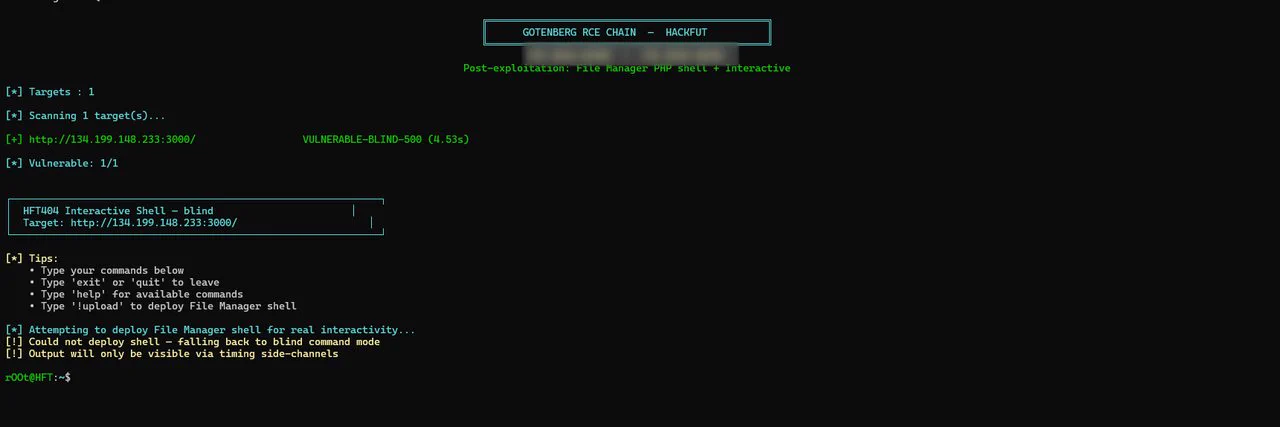
Showing 120 of 157
Show more