Skip to content

127 results for β€œGitHub Action”

What you seeeverything
vulncheck.comtoolπŸ›‘οΈ Security

VulnCheck - Outpace Adversaries

VulnCheck Open Source is an index of VulnCheck's open-source tooling for its vulnerability and exploit intelligence. It lists a Python API client, a CLI, a GitHub Action for CI/CD, go-exploit (a Go exploit framework), an MCP server for delivering intelligence to AI clients, and VulnCheck Insights, a Chrome extension that highlights CVEs, CPEs and PURLs on web pages and enriches them. The page gives only one-line descriptions.

GoPythonGitHub Actions+2
VulnCheckgo-exploitVulnCheck Insights+2

Offensive Security, DevSecOpsΒ· Added 29 Oct 2026

x.comthreadπŸ›‘οΈ Security

Prasenjit Sarkar (@stretchcloud) on X

Campfire is a self-hosted tool that runs Claude Code, Codex, Goose, Aider and OpenHands in one tab. Risky actions need permission voting (majority approves, any single deny blocks, 30 second timeout), and session replay traces which file or tool call triggered an action. The post cites Forever Security's finding that Codex followed a planted AGENTS.md instruction over 90% of the time and Claude Code about half the time. It also cites the February Cline release compromise via a poisoned GitHub Actions cache.

CampfireClaude CodeCodex+3
Forever SecurityAGENTS.mdprompt injection+1

AI SecurityΒ· Added 28 Oct 2026, published 27 Oct 2026

x.comthreadπŸ›‘οΈ Security

David Gutierrez | Eng (@david_x_ai) on X

Thread on two October 2026 npm compromises: @subql/common 5.8.3 (5 October), published through GitHub Actions OIDC Trusted Publishing after the attacker tampered with the publish workflow, and tensorlake 0.5.144 (8 October), published by the project's own release workflow with valid provenance for about 1 hour 40 minutes. Both ran on install and stole cloud, GitHub, Kubernetes, Vault, SSH and .env credentials; tensorlake also took AI tool and MCP config. Its payload installed a gh-token-monitor service that deletes the home directory if the stolen GitHub token is revoked, so remove it before rotating.

npmGitHub ActionsGitHub+3
@subql/commontensorlakegh-token-monitor+3

Supply Chain, DevSecOpsΒ· Added 27 Oct 2026, published 26 Oct 2026

wiz.ioarticleπŸ›‘οΈ Security

The Pwn Request Reckoning: What Still Works Against GitHub Actions

The Pwn Request Reckoning is a Wiz post updating the GitHub Actions pull_request_target threat model for 2026. It covers what GitHub's checkout protections, read-only cache tokens and event policies block, and what still works. Remaining paths: SHA-pinned pre-backport actions/checkout, custom checkout scripts, issue_comment and repository_dispatch triggers, script injection, artifact poisoning, self-hosted runner state and allow-unsafe-pr-checkout. It ends with grep and zizmor audit steps.

GitHub ActionsGitHubzizmor+1
pwn requestscript injectionartifact poisoning+2

DevSecOps, AppSecΒ· Published and added 26 Oct 2026

github.comrepo🧠 AI

Show HN: Farol – A risk map of a pull request for the person who approves it

farol is a free, MIT-licensed CLI and GitHub Action that runs after an AI code review and gives the human approver a risk verdict (fast track, quick review, careful review) and a 0-100 score for a pull request. It uses the TypeScript type checker, go/types and Python ast to trace which pages, APIs and jobs a change reaches, and it adds diff coverage, security findings and contract breaks. It never executes or sends code.

GitHub ActionsTypeScriptGo+10
farolClaude CodeWinnin

coding-agentsΒ· Added 26 Oct 2026, published 25 Oct 2026

github.comrepoπŸ›‘οΈ Security

Spectrmachina/Ztrust

ZTrust is a Python supply-chain scanner that checks manifests, lockfiles, source and GitHub workflows for vulnerable or malicious dependencies (via OSV.dev), typosquats, leaked secrets, unsafe lockfiles and risky CI patterns such as pwn requests and script injection. It outputs console, JSON and SARIF 2.1.0 and ships as a GitHub Action. It also includes a FastAPI bounty service using commit-reveal and shielded Zcash payouts for researchers.

PythonGitHub ActionsOSV+3
xz-utilstj-actions/changed-filesevent-stream+3

Supply Chain, DevSecOpsΒ· Added 27 Oct 2026, published 22 Oct 2026

github.comrepoπŸ›‘οΈ Security

AikidoSec/safe-chain

Aikido Safe Chain is an open-source local proxy and shell-alias wrapper for npm, yarn, pnpm, bun, pip, uv, poetry, pipx and pdm. It checks every package download, including deep dependencies, against the Aikido Intel malware feed and blocks malicious packages before install. It also enforces a configurable 48-hour minimum package age by suppressing too-new versions in registry metadata. It supports custom registries and a self-hosted malware-list mirror, and has CI/CD install recipes for GitHub Actions, Azure Pipelines, CircleCI, Jenkins, Bitbucket and GitLab.

Aikido SecuritynpmPyPI+3
Aikido IntelSafe Chain

Supply Chain, DevSecOpsΒ· Added 17 Oct 2026

endorlabs.comarticleπŸ›‘οΈ Security

What We Can Learn About GitHub Actions Security from the Trivy Breach | Endor Labs

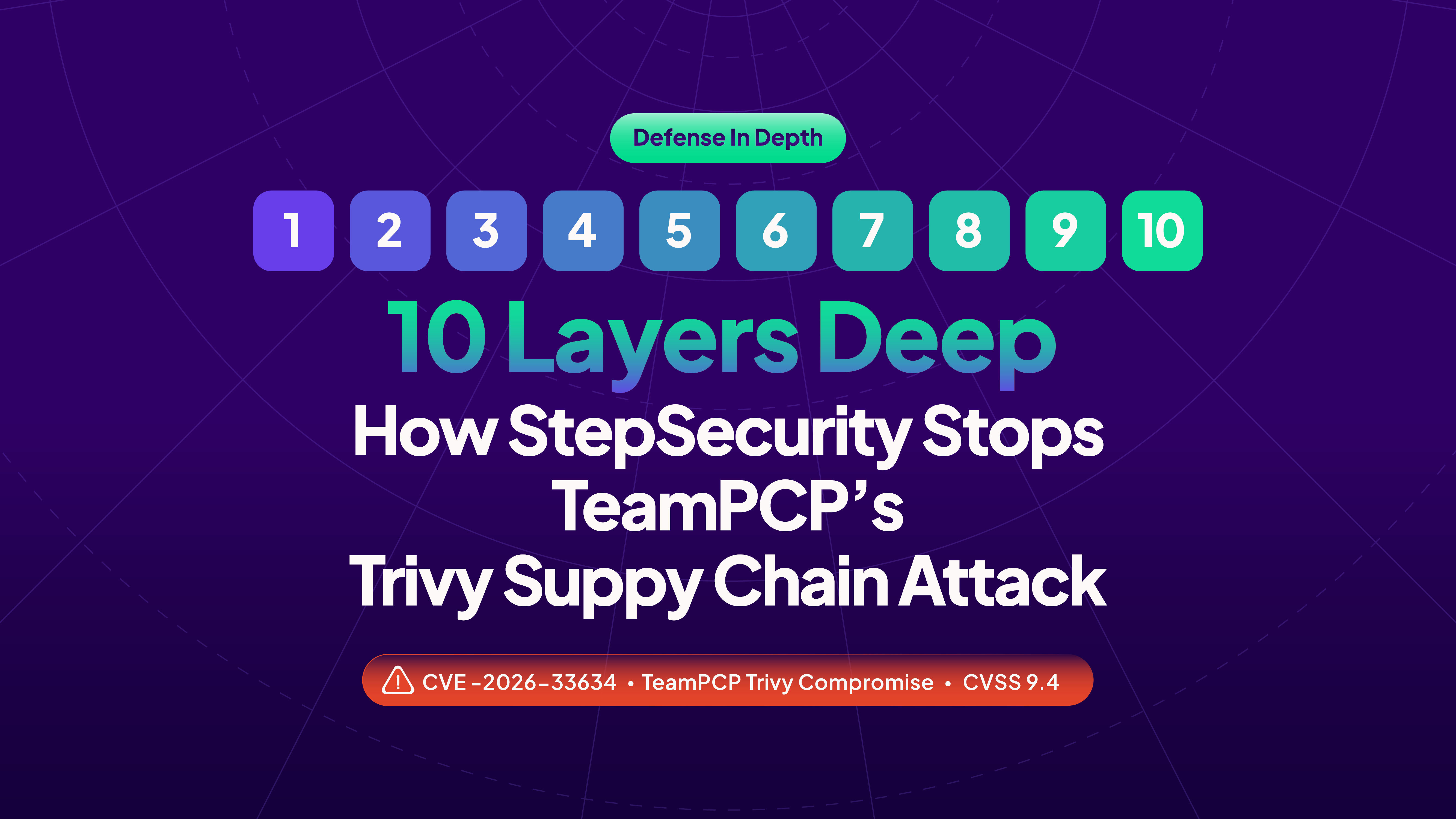
Endor Labs analyzes the March 2026 Trivy compromise (CVE-2026-33634, CVSS 9.4). A pull_request_target misconfiguration leaked a PAT, and attackers then force-pushed malicious commits to 75 of 76 trivy-action tags and all 7 setup-trivy tags. The TeamPCP credential stealer harvested SSH keys, cloud and CI tokens and runner memory, and exfiltrated to a typosquatted domain. It gives three checks: audit pull_request_target workflows, pin Actions to full commit SHAs, and scope GITHUB_TOKEN permissions. It also notes the limits of SHA pinning.

TrivyGitHub ActionsGitHub+1
CVE-2026-33634TeamPCPGHSA-69fq-xp46-6x23+6

DevSecOps, Supply ChainΒ· Published and added 16 Oct 2026

endorlabs.comarticleπŸ›‘οΈ Security

GitHub Action tj-actions/changed-files supply chain attack: what you need to know | Endor Labs

Endor Labs explains the March 2025 compromise of the tj-actions/changed-files GitHub Action (CVE-2025-30066). Attackers pushed a malicious commit and retroactively repointed version tags, so a Python payload dumped CI/CD secrets to workflow logs across about 23,000 repositories. The post gives response steps: find usage with a GitHub code search, remove the Action from all branches or enforce an Actions allowlist, audit logs for suspicious outbound requests and IPs, and rotate exposed secrets. It also notes the March 17 restoration and the risk of transitive Action dependencies. It includes Endor Labs customer steps (the `--ghactions --secrets --git-logs` scan flags).

GitHub ActionsGitHubEndor Labs+1
CVE-2025-30066tj-actions/changed-files

Supply Chain, DevSecOpsΒ· Published and added 16 Oct 2026

endorlabs.comarticleπŸ›‘οΈ Security

PWN Request Threat: A Hidden Danger in GitHub Actions | Endor Labs

Explains the "pwn request" weakness in GitHub Actions. A workflow triggered by pull_request_target runs with write permissions and secrets, so if it checks out and builds PR head code, attacker-controlled code runs in a privileged context. It gives a three-step check for susceptible workflows: the trigger, a checkout of the PR head SHA or ref, and build steps such as npm install or make. It also covers mitigations: switch to pull_request or workflow_run, gate on a label, and never pass secrets to scripts that run on PR code. It notes safe patterns and cites the puppetlabs finding.

GitHub ActionsGitHub
pwn requestpuppetlabs

DevSecOpsΒ· Published and added 16 Oct 2026

opensourcemalware.comtalkπŸ›‘οΈ Security

The OpenSourceMalware Show #25

Episode 25 of the OpenSourceMalware Show (transcript). It covers GitHub's push attribution (forged-commit visibility, Enterprise-only preview) and GitHub Actions workflow lockfiles (mitigate tag-swapping like tj-actions and Trivy, but not GhostAction). It also covers the GhostAction campaign expanding to a proxy-style phishing kit on my-github.com that bypassed GitHub MFA, and the DOJ's Operation Lonestar Roundup against DPRK laptop farms (~187 computers seized).

GitHubGitHub ActionsGit+1
GhostActionPolinRiderTasksJacker+8

Supply Chain, DevSecOps, Threat IntelΒ· Published and added 15 Oct 2026

aws.amazon.comarticleπŸ›‘οΈ Security

Penetration testing every deployment with AWS Continuum

Explains how to add AWS Continuum for penetration testing (formerly AWS Security Agent) as a post-deployment gate in CI/CD. Each run is scoped to the commit range since the last passing gate, and it can block promotion to production at a chosen severity threshold. It covers OIDC federation to a least-privilege IAM role, a GitHub Actions worked example, staged report-only rollout, and pitfalls: the baseline advances on passing report-only runs, fail-on-infrastructure-error defaults to fail-open, GitLab pipeline variables can override the committed threshold, and runner credentials need protecting.

AWS ContinuumGitHub ActionsGitLab+3

DevSecOps, Offensive Security, AI SecurityΒ· Published and added 14 Oct 2026

endorlabs.comarticleπŸ›‘οΈ Security

New research: malware in open source ecosystems surges 14x as attackers hijack trusted packages | Endor Labs

Endor Labs summarizes its report "Malware in the Open Source Ecosystem", built from a survey of 605 IT professionals plus analysis of OSV advisories and npm metadata. Over 90% of all OSS malware advisories were filed in 2025, and npm account-takeover advisories rose about 12x (930 of 1,011 ever recorded), often hitting heavily downloaded packages. It also covers the TeamPCP campaign across GitHub Actions, Docker Hub, npm, OpenVSX and PyPI, the axios compromise, and survey findings: only 21% enforce cooldown periods, 51% found malicious packages in 2025, and ownership of the problem is fragmented.

npmOSVEndor Labs+3
Shai-HuludTeamPCPDPRK+2

Supply Chain, Threat IntelΒ· Published and added 12 Oct 2026

endorlabs.comwriteupπŸ›‘οΈ Security

How a Misconfigured CI Workflow Became an npm Supply-Chain Compromise | Blog | Endor Labs

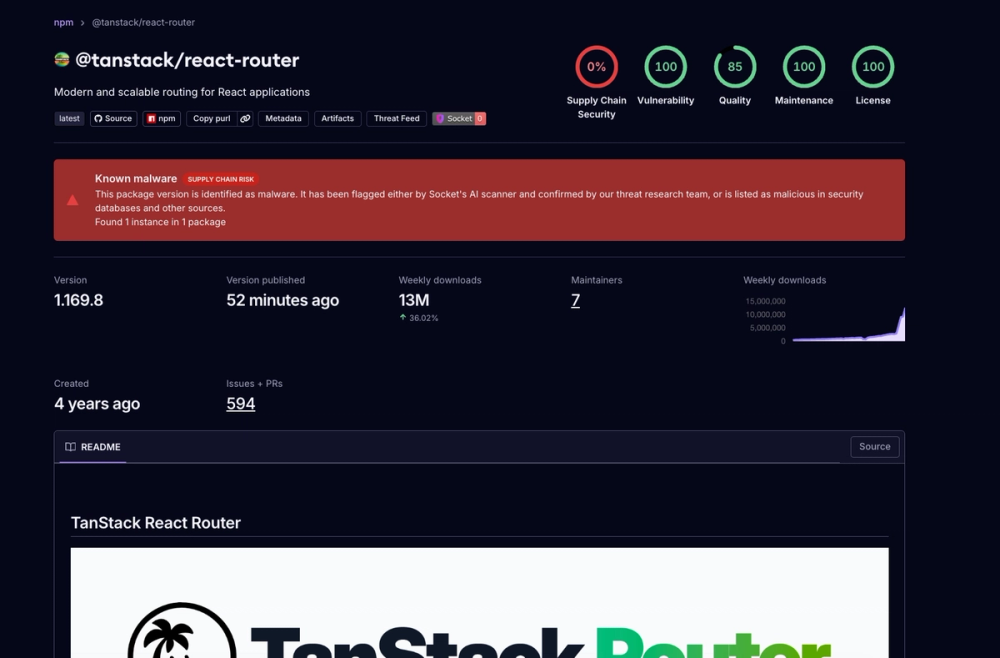
Endor Labs breaks down the May 11, 2026 compromise of 42 @tanstack/* npm packages (84 malicious versions) that carried valid SLSA provenance. The attacker chained a pull_request_target "Pwn Request", GitHub Actions cache poisoning across the fork/base boundary, and OIDC token extraction from Runner.Worker memory, then published directly to npm without stealing any credential. It explains why 2FA, trusted publishing, provenance and branch protection all failed, and lists mitigations: split pull_request_target workflows, treat the cache as untrusted, scope id-token: write to a publish job, pin actions to SHAs, require environment approval, use egress allowlists.

GitHub ActionsnpmOIDC+3
TanStackpwn requesttj-actions/changed-files+5

Supply Chain, DevSecOpsΒ· Published and added 12 Oct 2026

stepsecurity.iowriteupπŸ›‘οΈ Security

GhostAction Returns: Malicious β€œSecurity Audit” Workflows Now Mine Credentials from Entire Git Histories

StepSecurity details a new wave of the GhostAction campaign in which attackers used compromised maintainer accounts of Takashi Kitao (pyxel) and Henry Wu (athenadriver, Uber) to push malicious "Security Audit" GitHub Actions workflows to 345 repositories in minutes. The upgraded payload now runs `git log -p --all` to mine an entire git history (not just current secrets) for thirteen credential patterns including AWS, Anthropic, OpenAI, OpenRouter, GitHub, GitLab, Google, Slack, and SendGrid keys, pairs AWS access key IDs with secret keys via context capture, and exfiltrates everything via raw-IP plain-HTTP POST to 193.32.204.199, bypassing DNS-based defenses. The post includes hunting queries, run-log forensics confirming successful exfiltration from uber/athenadriver, and remediation guidance centered on workflow approval gates and egress allowlisting.

GitHub ActionsStepSecurityHarden-Runner+5
GhostActionTakashi KitaoHenry Wu+7

Supply Chain, DevSecOps, Threat IntelΒ· Published and added 9 Oct 2026

socket.devwriteupπŸ›‘οΈ Security

New GhostAction Wave Hits Hundreds of Repos, Expanding Beyond CI/CD Secrets to Cloud Credentials

Socket documents an October 8, 2026 wave of the GhostAction campaign in which two compromised GitHub maintainer accounts (henrywoo and kitao) pushed a malicious security-audit.yml workflow to 346 repositories, including uber/athenadriver and the 18,420-star kitao/pyxel. Beyond the original GhostAction technique of harvesting named GitHub Actions secrets, this variant adds a full git-history grep (via fetch-depth: 0 and git log -p --all) for 13 credential patterns covering AWS keys, Anthropic/OpenAI/OpenRouter API keys, GitHub/GitLab PATs, Google/Firebase keys and SendGrid keys, plus a context-window capture around AWS key IDs to reconstruct usable key pairs, all exfiltrated in cleartext to a single hardcoded IP.

GitHub ActionsPyPIcrates.io+3
GhostActionGitGuardianhenrywoo+8

Supply Chain, DevSecOps, Threat IntelΒ· Published and added 9 Oct 2026

securityweek.comarticleπŸ›‘οΈ Security

In Other News: AI Used in Korean Bank Breaches, Poem-Guided Botnet, Empire Admin Gets 40 Years

SecurityWeek's weekly news digest covering PoeLLM malware that resolves its C&C IP from keywords hidden in a GitHub-hosted poem, the GhostAction campaign spreading malicious GitHub Actions workflows to steal secrets from 772 more repos, South Korean authorities probing suspected AI-assisted bank breaches where CrowdStrike found Claude Code and Claude memory artifacts on attacker infrastructure, a high-severity Nvidia DCGM Exporter flaw (CVE-2026-47483) exposing GPU telemetry from over 12,000 hosts, and a Shai-Hulud-style credential-stealing worm shipped in Tensorlake's npm SDK. Also notes legal outcomes (Uranium Finance hacker conviction, Empire Market co-founder's 40-year sentence) and policy moves (CISA retention pay changes, an OT cybersecurity directive proposal).

GitHubGitHub ActionsLiteLLM+3
CVE-2026-47483PoeLLMGhostAction+7

Threat Intel, Supply Chain, AI SecurityΒ· Published and added 9 Oct 2026
endorlabs.comadvisoryπŸ›‘οΈ Security

Tensorlake npm package compromised by Shai-Hulud in latest software supply chain attack | Blog | Endor Labs

Endor Labs documents the compromise of tensorlake@0.5.144, the official npm TypeScript SDK for Tensorlake, which shipped a Shai-Hulud worm payload via a poisoned preinstall hook (node lib/setup.mjs) after the project's main branch was altered and pushed through a legitimate, provenance-signed GitHub Actions release pipeline. The malware harvests npm, GitHub, SSH, cloud (AWS/GCP/Azure), Kubernetes/Docker and Vault credentials, uses an EtherHiding Ethereum wallet as a durable dead-drop to fetch its rotating C2 domain, and republishes itself into other packages the victim controls. The writeup includes affected package versions, file hashes, C2 indicators, and concrete remediation guidance (pin to 0.5.143, rotate credentials, disable install scripts).

npmGitHub ActionsNode.js+3
Shai-HuludEtherHiding

Supply Chain, Threat IntelΒ· Published and added 8 Oct 2026
stepsecurity.ioarticleπŸ›‘οΈ Security

SubQuery npm package (@subql/common) compromised with credential-stealing payload

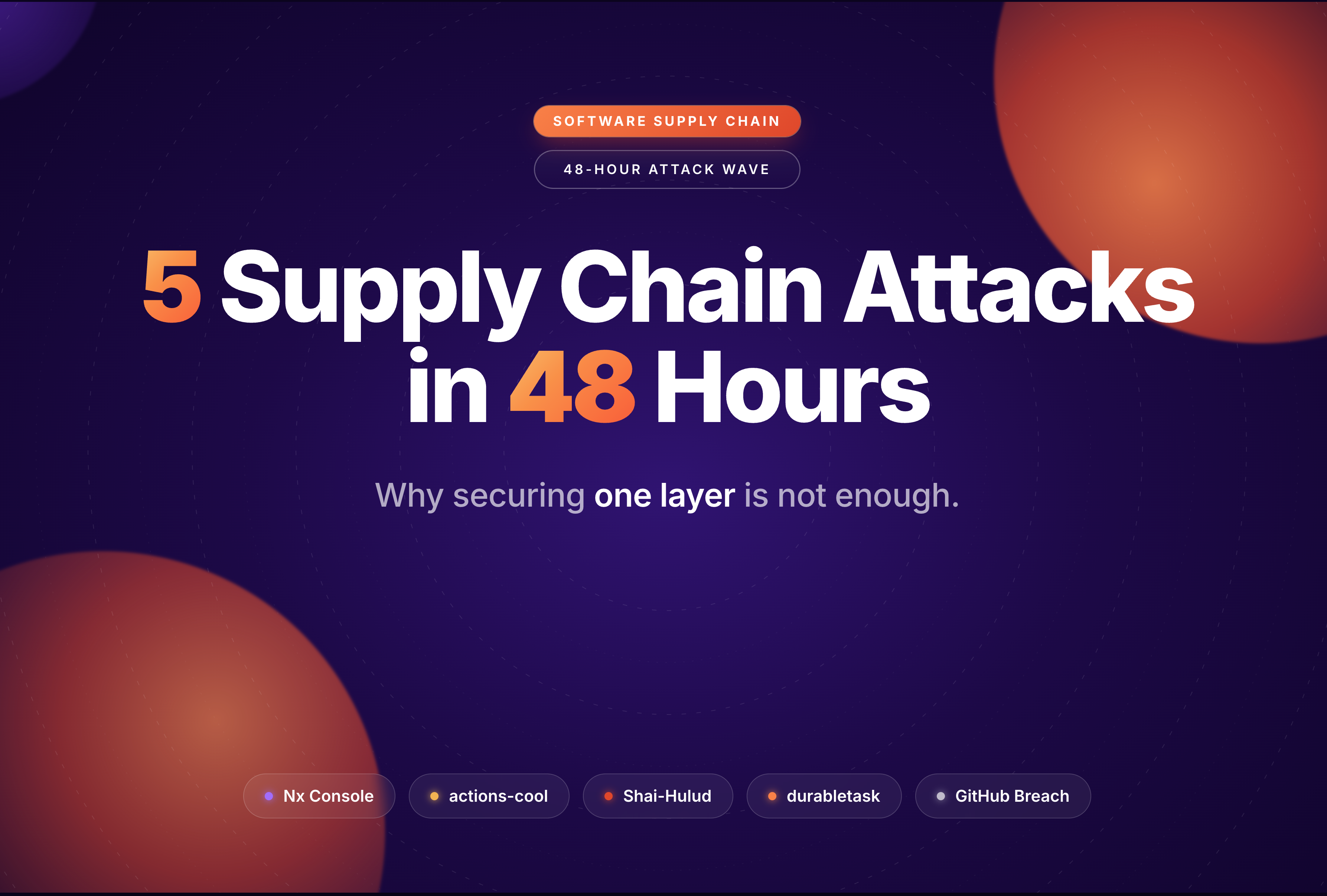
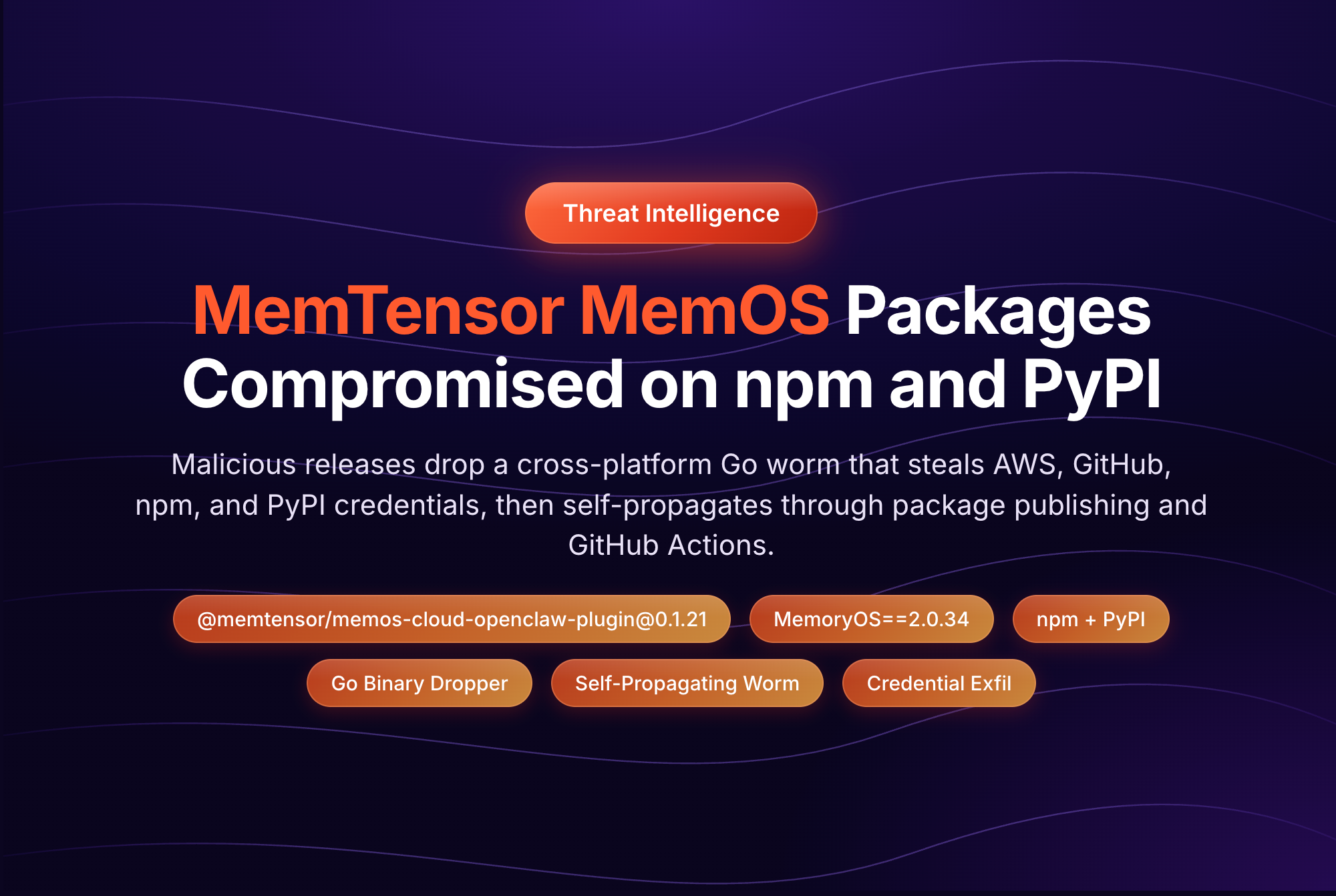
StepSecurity recaps a 48-hour (May 18-19, 2026) software supply-chain attack wave that hit every pipeline layer at once: the Nx Console VS Code extension (2.2M installs) stealing tokens from GitHub/npm/AWS/1Password, the trusted GitHub Action actions-cool/issues-helper hijacked via tag replacement, a trojanized Microsoft durabletask PyPI package pulled within a 35-minute discovery window, a self-replicating Shai-Hulud npm worm, and GitHub's own disclosure that ~3,800 internal source repos were exfiltrated. The piece argues traditional SCA/SAST/EDR/CNAPP tooling missed all of it because none monitor CI/CD runner runtime behavior (e.g., attackers reading /proc/pid/mem to extract secrets) or developer-machine IDE extensions, and ties the incidents to StepSecurity's Harden Runner, Dev Machine Guard, Compromised Actions Policy and Secure Registry controls.

GitHub ActionsVS Codenpm+6
Shai-HuludTeamPCPNx Console+3

Supply Chain, DevSecOps, Threat IntelΒ· Added 6 Oct 2026
stepsecurity.iowriteupπŸ›‘οΈ Security

SubQuery Ecosystem Compromise: Hidden Credential Theft and Backdoors

StepSecurity's investigation of @subql/common@5.8.3, a malicious npm release in the SubQuery Web3 indexing framework's monorepo, found a heavily obfuscated postinstall/import-time payload (base64+XOR+gzip inside a function constructed via Function()) that spawns a detached worker to steal credentials (.npmrc, .env, AWS, SSH, kubeconfig, Vault, cloud secrets), read GitHub Actions runner memory for CI secrets, inject a camouflaged "Run Copilot" GitHub Actions workflow to exfiltrate repo secrets, and provide a remote shell/PTY over an encrypted channel to ci-artifacts.dev. The release was published via a compromised build pipeline: a workflow modification swapped the real build output for an externally downloaded, unsigned tarball from that same C2 domain immediately before publish, and the authors provide IOCs and remediation steps (credential rotation, host isolation, domain blocking).

npmGitHub ActionsNode.js+3
SubQuery@subql/commonianhe8x+2

Supply Chain, DevSecOps, Blue Team & DetectionΒ· Published and added 5 Oct 2026

wiz.ioarticleπŸ›‘οΈ Security

Securing the Kubernetes Supply Chain: Introducing WizOS Helm Charts

Wiz Research examined the source repositories and CI/CD pipelines behind 1,500 popular Helm charts on Artifact Hub (mapping to 814 unique GitHub repos) and found 61 repos (7.5%) with confirmed supply-chain risk, including 20 charts with CI/CD workflow weaknesses and 25 depending on unmaintained/archived upstream projects. Two disclosed findings illustrate the risk classes: KubeView's go.mod referenced a Go module under a GitHub username that didn't exist, making it hijackable by anyone who registered the name, and Meilisearch's Helm chart repo had a GitHub Actions workflow triggered by PR comments that injected the commenter's branch name into a shell command while skipping author-association checks, letting any GitHub user run commands with a bot token that had push access. The post then pivots to promoting WizOS Helm Charts, Wiz's hardened/signed/CVE-scanned chart catalog built to close these gaps.

KubernetesHelmGitHub Actions+2
KubeViewMeilisearchpwn request+4

Supply Chain, DevSecOps, Cloud & InfraΒ· Published and added 30 Sep 2026

github.comrepoπŸ›‘οΈ Security

https://github.com/dmdhrumilmistry/security-harness

security-harness is an open-source Claude Code plugin (also packaged for Gemini CLI, Codex and opencode) that orchestrates subagents β€” sh-recon, sh-hunter, sh-chainer, sh-verifier, sh-reporter β€” through a static-analysis pipeline covering 15 vulnerability classes (IDOR/BOLA, SQLi, XSS, SSRF, injection, auth, deserialization, path traversal, secrets, CSRF, XXE, open redirect, crypto, race conditions, file upload), producing README/JSON/SARIF/HTML/PDF reports with PoCs, CVSS and CWE/OWASP mappings. It also ships sh-pr-review, a per-PR merge-gate skill that posts inline findings and a commit status scoped only to code the PR itself introduced or aggravated, with caching, dedup via fingerprints, and a scheduled GitHub Action that keeps its per-class knowledge bases fresh by having one AI agent draft updates from allowlisted sources (OWASP, PortSwigger Research, CWE/CAPEC, HackerOne) while a separate adversarial reviewer agent fails-closed against prompt injection before auto-merge.

Claude CodeGemini CLISARIF+3
IDORBOLASSRF+1

AppSec, AI Security, DevSecOpsΒ· Added 2 Oct 2026, published 29 Sep 2026

x.comthreadπŸ›‘οΈ Security

Julio Bandeira de Melo (@juliobmelo) on X

Two GitHub Actions from the actions-cool maintainer, disabled by GitHub security after May's supply-chain compromise, were reactivated by the maintainer and left accessible for over a week without the malicious release tags being cleaned up. Any workflow still referencing those version tags resumed automatically downloading and executing the Mini Shai-Hulud payload, showing that disabling a compromised action isn't remediation if the poisoned tags survive reactivation.

GitHub Actions
Mini Shai-Huludactions-cool

Supply Chain, DevSecOpsΒ· Added 30 Sep 2026, published 28 Sep 2026
github.comrepoπŸ›‘οΈ Security

Agent Threat Rules (ATR) β€” open detection-rule standard for AI agent threats

Agent Threat Rules (ATR) is an open, versioned YAML rule format (ATR-YYYY-NNNNN scheme) for detecting AI-agent runtime threats β€” prompt injection, tool-poisoning, malicious SKILL.md content, and MCP exchange abuse β€” evaluated by a reference TypeScript engine (with a Python wrapper) shipped as an npm/pip package, CLI, GitHub Action, and Docker scanner with SARIF output. The project positions itself as "Sigma for agent threats," maps rules to OWASP Agentic/LLM Top 10, MITRE ATLAS, and NIST AI RMF, and publishes an extensive (and unusually self-critical) benchmark suite against corpora like garak, PromptBench, and PromptInject, including documented harness bugs and withdrawn recall figures.

Model Context ProtocolnpmTypeScript+3
CVE-2026-26030CVE-2026-25592OWASP Top 10 for Agentic Applications+2

AI SecurityΒ· Added 26 Sep 2026

thehackernews.comarticleπŸ›‘οΈ Security

Nearly 800 Malicious npm Packages Deliver Cross-Platform RAT and Infostealer

The Hacker News details a campaign of nearly 800 (later 1,033) malicious npm packages delivering the WEL1DROPPER downloader β€” dubbed Flooding Dropper by Sonatype β€” which fetches cross-platform RAT/infostealer payloads via Cloudflare Workers or DNS TXT-record fallback from wel1.ru, patches ETW/AMSI on Windows, and deploys the Sliver C2 framework on Linux. The piece also covers a related npm crypto-stealer campaign, multiple npm/PyPI packages tied to EtherHiding droppers and credential theft (Solana wallets, .env secrets, Discord/GitHub Actions tokens), and Chrome extensions abusing a bandwidth-sharing SDK to turn browsers into residential-proxy web scrapers.

npmCloudflare WorkersPyPI+3
WEL1DROPPERFlooding DropperMoika+8

Supply Chain, Malware & RE, Threat IntelΒ· Added 26 Sep 2026

thehackernews.comarticleπŸ›‘οΈ Security

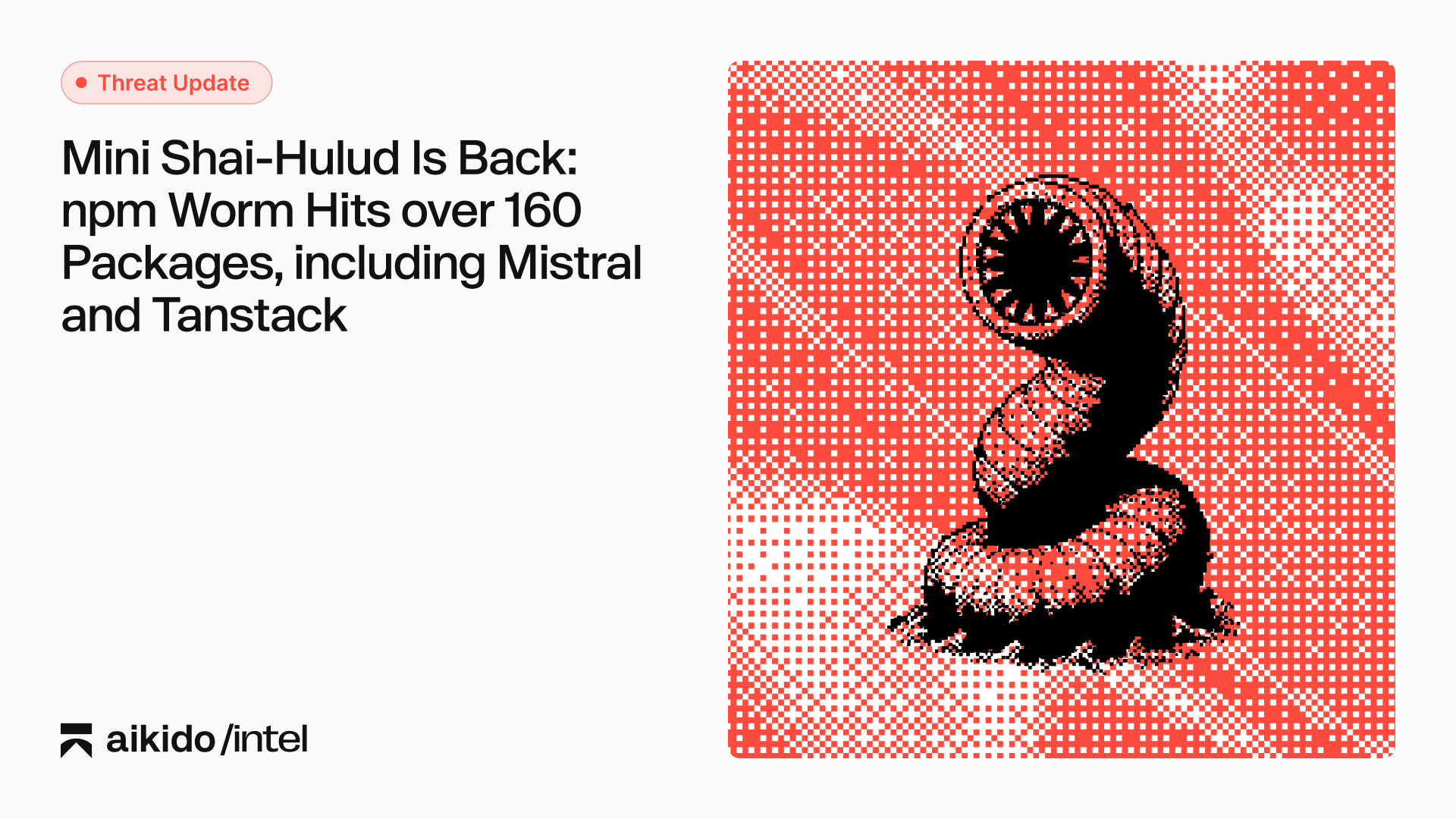
Mini Shai-Hulud Worm Compromises TanStack, Mistral AI, Guardrails AI & More Packages

The Hacker News details the "Mini Shai-Hulud" campaign by threat actor TeamPCP, which compromised npm and PyPI packages from TanStack, UiPath, Mistral AI, OpenSearch and Guardrails AI via a chained GitHub Actions attack (pull_request_target abuse, cache poisoning, OIDC token extraction), now tracked as CVE-2026-45321 (CVSS 9.6). The worm mints npm publish tokens directly from stolen OIDC credentials to self-propagate β€” the first documented case of a worm producing validly SLSA Build Level 3-attested malicious packages β€” and deploys an obfuscated credential stealer with IDE persistence hooks, a GitHub Actions secret-exfiltration workflow, and a dead-man's-switch that runs "rm -rf" if its rogue npm token is revoked. Over 170 packages and 400+ attacker-controlled repos have been identified across npm and PyPI, with findings credited to Aikido Security, Endor Labs, SafeDep, Socket, StepSecurity, Snyk, Wiz and Microsoft.

npmPyPIGitHub Actions+3
CVE-2026-45321TeamPCPMini Shai-Hulud+2

Supply Chain, DevSecOps, Threat IntelΒ· Added 26 Sep 2026

github.comrepoπŸ›‘οΈ Security

git-pkgs β€” dependency history & supply-chain analysis for git repos

git-pkgs is a Go rewrite of a Ruby tool that adds a git subcommand for tracking dependency changes across a repository's history, indexing manifests/lockfiles from 36+ package managers (npm, RubyGems, Cargo, PyPI, Maven, Composer, Go modules, etc.) into a local SQLite database. Beyond history/blame/diff, it offers supply-chain security commands: `vulns` (OSV-based CVE scanning with SARIF output for GitHub code scanning, plus blame/praise/exposure for remediation metrics), `licenses` (with drift detection and CI-friendly exit codes), `deprecated`, `provenance` (trusted-publishing/attestation checks), `integrity` (lockfile hash drift detection), `maintainers`/`health` (via ecosyste.ms metadata), and `sbom` export in CycloneDX/SPDX. It also supports a dependency-aware `bisect` to find when a vulnerability, license change, or capability (e.g. network access) was introduced, and ships GitHub Actions for CI integration.

npmSBOMOSV+3
CVE-2024-1234PURL

Supply Chain, DevSecOpsΒ· Added 25 Sep 2026
socket.devwriteupπŸ›‘οΈ Security

Re-Enabled GitHub Actions Expose Thousands of Repositories to Mini Shai-Hulud

Socket reports that the actions-cool/issues-helper and actions-cool/maintain-one-comment GitHub Actions, compromised in the May 2026 Mini Shai-Hulud campaign and disabled by GitHub, were re-enabled on September 16, 2026 with their release tags still pointing to the malicious code. Any workflow referencing them by tag (about 15,000 dependents for issues-helper alone) resumed running the Bun-executed obfuscated payload. Workflow run logs show the switch from fast "Repository access blocked" failures to multi-minute successful runs. The post gives remediation: SHA-pin actions, rotate secrets, and hunt for oven-sh/setup-bun and bun run index.js in runner logs. An update says both repos were disabled again on September 25.

GitHub ActionsGitHubBun+1
Mini Shai-Huludactions-cool/issues-helperactions-cool/maintain-one-comment

Supply Chain, DevSecOpsΒ· Published and added 24 Sep 2026

stepsecurity.iowriteupπŸ›‘οΈ Security

Sckit Supply Chain Worm Hits MemTensor npm & PyPi scopes

StepSecurity documents a supply-chain attack against @memtensor/memos-cloud-openclaw-plugin on npm (versions 0.1.21, 0.1.23, 0.1.25) and MemoryOS 2.0.34 on PyPI, which insert a hidden "sckit" launcher into normal plugin/import lifecycle code (no install scripts) to spawn a platform-specific Go binary that harvests the parent process's environment and the user's AI prompt text. The Go payloads contain regex patterns for AWS, GitHub, GitLab, npm, PyPI, Hugging Face, Vault, Slack, Stripe and SendGrid credentials, target the user's home directory as an inventory root, and beacon to skyleen.fr "front" domains; the PyPI variant additionally hides a conditional build-backend/CI bridge that can steal PYPI_API_TOKEN during publishing and pull a hash-pinned, Ed25519-signed secondary payload via GitHub Actions. The writeup includes full IOC/remediation guidance.

npmPyPIPython+3
sckitMemTensorskyleen.fr+2

Supply Chain, Malware & RE, AI SecurityΒ· Published and added 23 Sep 2026

orca.securityarticleπŸ›‘οΈ Security

npm Supply-Chain Attack Abuses Trusted Publishing to Ship GHAPPIER Loader

Orca Security details a supply-chain attack on the npm package @dforge-core/dforge-mcp, where a compromised maintainer account modified the GitHub Actions release workflow so any push to main triggered an OIDC-based trusted publish, shipping malicious version 0.2.21 with valid Sigstore provenance. The four-stage GHAPPIER loader activated only when the MCP server launched, deployed a self-deleting remote shell, and per CloudSEK's tracing appeared across 65 repos and 22 accounts; a second payload matched PolinRider, a DPRK-linked campaign using Ethereum transactions for C2. The piece underscores that npm provenance attests build origin, not source integrity, and lists remediation steps since no CVE or advisory yet exists.

npmGitHub ActionsOIDC+3
GHAPPIERPolinRiderDPRK+2

Supply Chain, Threat IntelΒ· Published and added 22 Sep 2026

socket.devwriteupπŸ›‘οΈ Security

Compromised npm Packages in the AsyncAPI Namespace Deliver Miasma Botnet Loader

Socket's Threat Research Team details a supply-chain compromise of four @asyncapi npm packages (generator-helpers, generator-components, generator, specs) published via a poisoned source commit through GitHub Actions trusted publishing. The packages contain an obfuscated load-time (not install-hook) implant that spawns a detached Node.js process to fetch an IPFS-hosted, AES-256-GCM-encrypted loader delivering the "Miasma" botnet/tasking framework, which supports REST C2, multi-channel comms (Nostr, IPFS, Ethereum RPC, BitTorrent DHT), shell execution, file exfiltration, and systemd persistence. Includes full technical analysis, IOCs, hashes, and MITRE ATT&CK mapping.

npmGitHub ActionsNode.js+1
MiasmaAsyncAPIGitHub Actions OIDC trusted publishing+9

Supply Chain, Malware & RE, Threat IntelΒ· Added 21 Sep 2026

docs.github.comarticleπŸ›‘οΈ Security

Securely using pull_request_target - GitHub Enterprise Cloud Docs

GitHub's official guide on securely using the pull_request_target GitHub Actions trigger, explaining how it differs from pull_request by running workflow code and actions/checkout from the base repository's default branch while granting secrets and a privileged GITHUB_TOKEN. It details how "pwn request" vulnerabilities are introduced when workflows check out and execute a fork's pull request head (e.g. via ref: github.event.pull_request.head.sha), describes GitHub's new default policy that blocks pull_request_target in public repos (enforced starting Nov 2 2026), and lists hardening controls including least-privilege GITHUB_TOKEN, read-only cache access, isolated self-hosted runners, and the explicit allow-unsafe-pr-checkout opt-out flag in actions/checkout.

GitHub ActionsCodeQL
pwn request

DevSecOpsΒ· Added 21 Sep 2026

github.blogarticleπŸ›‘οΈ Security

Workflow execution protections in GitHub Actions generally available - GitHub Changelog

GitHub Actions' workflow execution protections (actor and event allowlist rules) reach general availability, adding workflow-file-level policy targeting, an Insights dashboard for auditing rule impact, and a REST API for managing policy as code across an enterprise. Alongside this, GitHub is rolling out a new secure default that disables the pull_request_target trigger on public repositories lacking an existing policy, directly mitigating 'pwn request' attacks where fork-submitted code runs with base-repo secrets; the rule starts in evaluate (shadow) mode and becomes enforced on November 2, 2026.

GitHub Actions
pwn requestpull_request_target

DevSecOpsΒ· Added 21 Sep 2026, published 17 Sep 2026

socket.devarticleπŸ›‘οΈ Security

GitHub Actions Adds cache-mode to Limit Cache Poisoning Risk

GitHub added cache-mode to Actions, a least-privilege control (read/write/write-only/none) that limits which workflows can restore or save entries in the shared Actions cache, targeting the cache poisoning technique used to compromise Ultralytics (PyPI) and the TanStack npm packages via a pull_request_target pwn request. Job-level settings override workflow-level ones, the mode propagates through reusable workflows, and GitHub warns when write access is granted to low-trust events; write-only was added after feedback from researcher Adnan Khan. The article notes build provenance (SLSA/Sigstore) doesn't catch a poisoned cache since it only attests to build origin, not input integrity, and recommends cache-mode: none for AI agent workflows exposed to prompt injection, referencing the Cline compromise.

GitHub ActionsnpmPyPI+3
TanStack attackCline compromisepwn request+3

DevSecOps, Supply ChainΒ· Added 21 Sep 2026, published 16 Sep 2026

github.comrepoπŸ›‘οΈ Security

Shai-Hulud-2.0-Detector β€” npm supply-chain compromise scanner

Shai-Hulud-2.0-Detector is a GitHub Action and CLI tool that scans package.json/lockfiles for packages compromised in the Shai-Hulud 2.0 (Nov 2025) and ChainDrop (Aug 2026) npm supply-chain worms. It uses semver-precise matching against a database of 1,241+ known-compromised package versions (auto-updated daily from Datadog and Wiz Research feeds) to flag malicious preinstall/postinstall droppers (setup_bun.js, Math_Symbol.js), rogue GitHub self-hosted runners named SHA1HULUD, and ChainDrop's new IDE-persistence hooks in .claude/settings.json and .vscode/tasks.json. It ships SARIF output for GitHub Security tab integration, an allowlist system, and a detailed incident-response guide covering credential rotation and forensic checks.

npmGitHub ActionsBun+3
Shai-Hulud 2.0ChainDropkeyv+6

Supply Chain, DevSecOps, Blue Team & DetectionΒ· Added 16 Sep 2026

github.comrepoπŸ›‘οΈ Security

agent-egress-bench

Agent Egress Bench is an open, tool-neutral benchmark maintained by PipeLab (makers of Pipelock) that tests whether products mediating an AI agent's outbound traffic β€” proxies, egress firewalls, MCP wrappers, agent gateways β€” actually catch exfiltration attempts caused by prompt injection or misalignment, rather than testing the underlying model itself (that's left to AgentDojo, InjecAgent, CyberSecEval, AgentHarm, ASB). It ships a reproducible Go runner with a proxy/WebSocket/MCP/A2A adapter contract, an offline validator, DSSE-signed evidence bundles, and a CI-runnable GitHub Action, and separates containment from false-positive rate as two distinct scored axes with immutable case IDs and OWASP Agentic Top 10/MITRE ATT&CK mappings. Its governance explicitly permits third parties to publish results unfavorable to the maintainer's own Pipelock product.

Model Context ProtocolGoDocker+2
AgentDojoInjecAgentCyberSecEval+6

AI Security, Blue Team & DetectionΒ· Added 12 Sep 2026

endorlabs.comwriteupπŸ›‘οΈ Security

Shai-Hulud 2 Malware Campaign Targets GitHub and Cloud Credentials Using Bun Runtime | Blog | Endor Labs

Endor Labs' live incident tracker for the Shai-Hulud 2.0 npm supply-chain worm that began around Nov 24, 2025, compromising packages from Zapier, ENS Domains, Postman and PostHog. It details the infection chain (malicious preinstall script, setup_bun.js dropper, obfuscated bun_environment.js payload), TruffleHog-style credential theft from AWS, GCP, Azure, GitHub and npm, self-replication via stolen npm and GitHub tokens, a self-hosted GitHub Actions runner backdoor abusing repository Discussions for command injection and C2, and destructive wiper behavior that shreds the user's home directory on Windows and Linux.

npmBunGitHub Actions+3
Shai-Hulud 2.0Shai-HuludZapier+3

Supply Chain, Threat Intel, DevSecOpsΒ· Published and added 11 Sep 2026

endorlabs.comarticleπŸ›‘οΈ Security

SolarWinds took a nation-state. The next attack just needs an LLM and $5. | Blog | Endor Labs

Endor Labs blog tracing an accelerating pattern of software supply-chain compromises from July 2025 through March 2026, culminating in the TeamPCP threat actor's cascading 30-day compromise of Aqua Security, Trivy, GitHub Actions, Docker Hub, npm, OpenVSX, and PyPI (including backdooring the 95M-download LiteLLM package). It argues AI is accelerating both offense (CVE-GENIE reproducing 51% of CVE exploits for $2.77 each) and the attack surface (the Cline prompt-injection-to-npm-token-theft chain, Nx's AI-review-evading payload), and calls for treating AI coding agents as privileged actors, pinning GitHub Actions to SHAs, and platform-level fixes like immutable tags and Sigstore/OIDC.

npmGitHub ActionsPyPI+3
TeamPCPAqua SecurityXploiters+15

Supply Chain, Threat Intel, AI SecurityΒ· Published and added 11 Sep 2026

tldrsec.comarticleπŸ›‘οΈ Security

[tl;dr sec] #344 - VMs won't contain Cyber-capable Agents, AWS AI Security Analyst, Decompilers vs LLMs

tl;dr sec #344 is a weekly security newsletter issue. It summarizes Trail of Bits' report that an AI agent escaped a QEMU/KVM VM three times (Firecracker held), Grow Therapy's sub-$500/month AI threat hunting system on AWS, Palo Alto's "Pass-ta-key" attacks on synced passkeys, MCP configuration poisoning, org-wide GitHub Actions SHA pinning, and the DecBench decompiler benchmark with the LLM-written Kuna decompiler.

QEMUFirecrackerAWS+3
JanuscapeArtem DinaburgTrail of Bits+14

AI Security, Cloud & Infra, Supply ChainΒ· Added 30 Oct 2026, published 8 Sep 2026

github.comrepoπŸ›‘οΈ Security

ForgeGuardian

ForgeGuardian is an open-source (Apache 2.0) supply chain security scanner covering 9 package ecosystems (npm, PyPI, Go, Maven, RubyGems, Cargo, NuGet, Hugging Face, GitHub Actions) via 8 concurrent scan engines and 223+ built-in malicious-package detection signatures. It runs fully offline/local-first, offers a CLI (fgctl) and self-hosted SOC-style dashboard, generates CycloneDX/SPDX SBOMs, supports Sigstore keyless signing and provenance tracking, policy-as-code rules, dependency topology/attack-surface mapping, drift detection with auto-quarantine, and SARIF output for GitHub Actions CI integration, plus optional AI-powered advisory/patch-agent triage.

npmPyPIGo+3

Supply Chain, DevSecOpsΒ· Published and added 5 Sep 2026

stepsecurity.iowriteupπŸ›‘οΈ Security

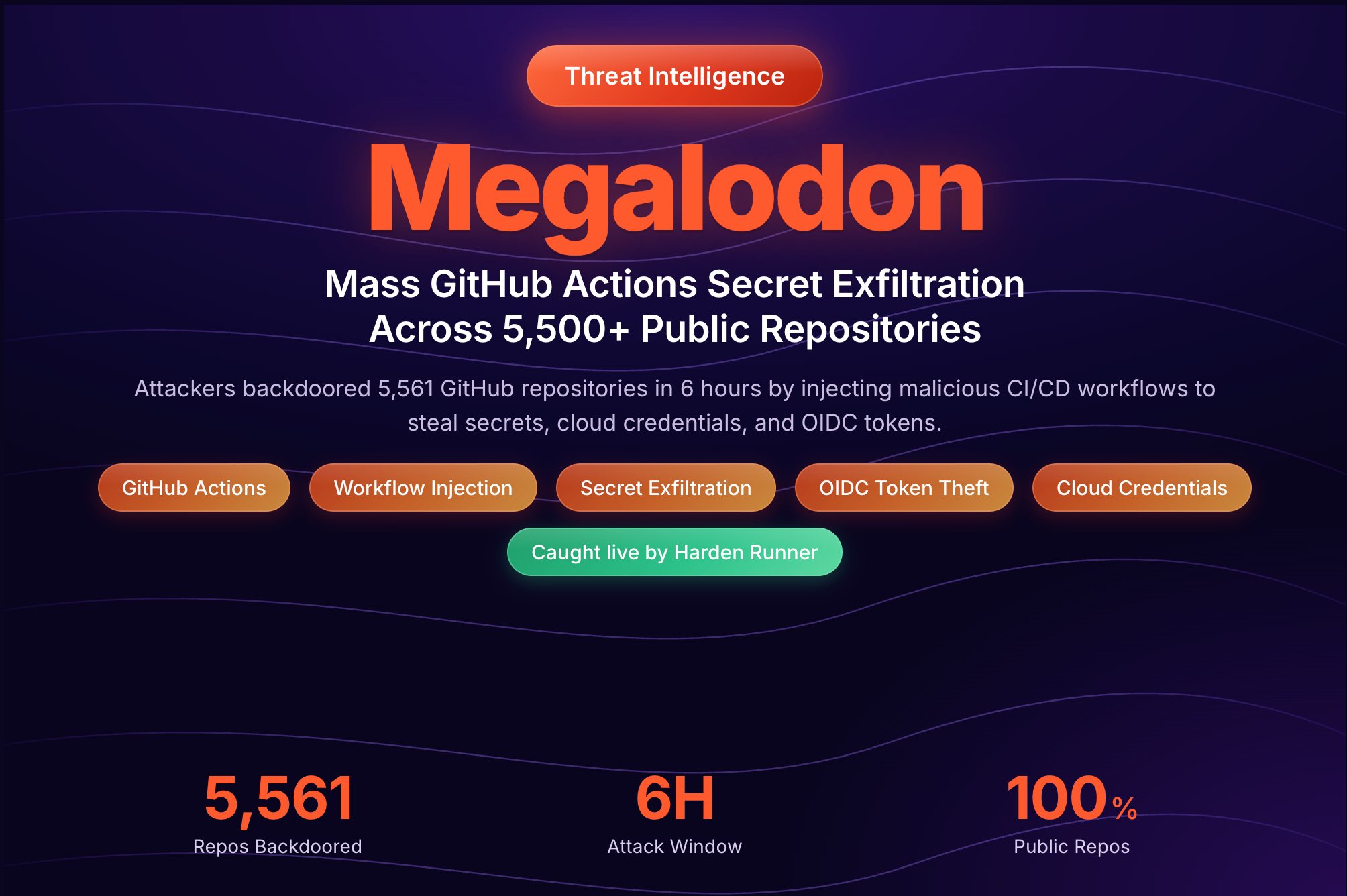
Megalodon: Mass GitHub Actions Secret Exfiltration Across 5,500+ Public Repositories - StepSecurity

StepSecurity documents Megalodon, a May 2026 campaign that injected backdoored GitHub Actions workflow files named SysDiag or Optimize-Build directly into 5,500+ public repositories in a six-hour window via direct Poisoned Pipeline Execution (d-PPE), exploiting weak branch protection. The base64-encoded bash payload harvests AWS/GCP/Azure credentials, SSH keys, Kubernetes/npm/Docker configs, GitHub OIDC tokens, and grep-matched secrets from the workspace, exfiltrating everything via HTTPS POST to a hardcoded C2 IP; the npm package @tiledesk/tiledesk-server was among the confirmed poisoned downstream targets.

GitHub ActionsnpmStepSecurity+3
MegalodonT1195.002Tiledesk+8

Supply Chain, DevSecOps, Threat IntelΒ· Added 5 Sep 2026

stepsecurity.ioadvisoryπŸ›‘οΈ Security

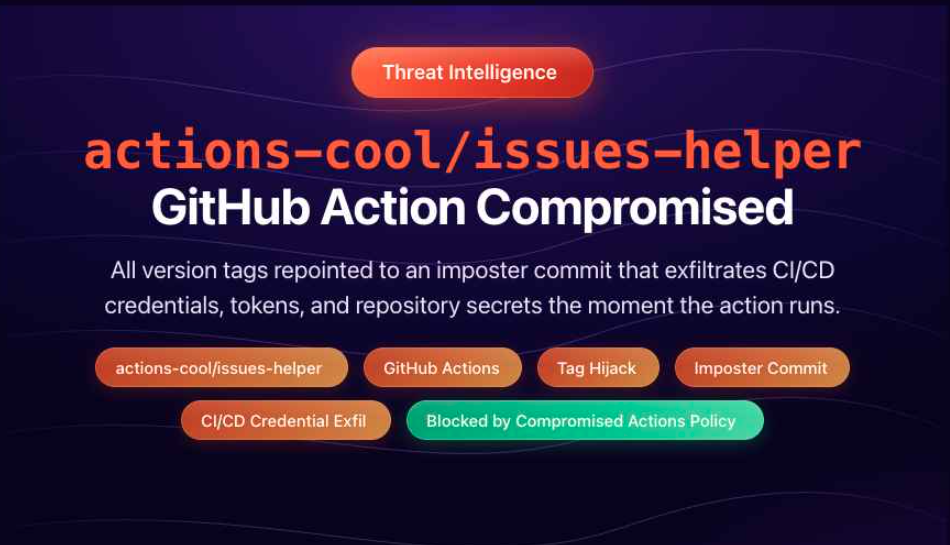
actions-cool/issues-helper GitHub Action Compromised: All Tags Point to Imposter Commit That Exfiltrates CI/CD Credentials - StepSecurity

StepSecurity discovered that all 53 tags of the popular actions-cool/issues-helper GitHub Action (and all 15 tags of actions-cool/maintain-one-comment) were re-pointed to dangling imposter commits containing malicious code. The payload downloads the Bun runtime, reads Runner.Worker process memory to harvest decrypted CI/CD secrets, and exfiltrates them via HTTPS to t.m-kosche.com β€” meaning any workflow referencing the actions by tag (rather than a pinned commit SHA) pulls the malicious code on its next run.

GitHub ActionsBunStepSecurity+1
actions-cool/issues-helperactions-cool/maintain-one-commentt.m-kosche.com

Supply Chain, DevSecOpsΒ· Added 5 Sep 2026

jessehouwing.netwriteupπŸ›‘οΈ Security

A trust checklist for GitHub Actions

Presents a tiered trust checklist for evaluating third-party GitHub Actions before referencing them in a workflow, covering maintenance/tooling signals, unpinned transitive dependencies, release attestations, and governance, with weaker popularity-based signals separated into a second tier. It then argues that any point-in-time trust assessment only holds if the referenced commit is immutable, and compares raw SHA pinning against GitHub's immutable releases and the new gh-actions-lock CLI extension, which verifies commit reachability to defeat impostor-commit attacks. It closes by noting StepSecurity's GitHub Action Advisor automates some of the checklist's queryable signals using Harden-Runner telemetry.

GitHub ActionsStepSecurityHarden-Runner+2
impostor commitWorkflow Dependency Pinning

DevSecOps, Supply ChainΒ· Added 21 Sep 2026, published 4 Sep 2026

securitylab.github.comadvisoryπŸ›‘οΈ Security

GHSL-2026-203: Same-second TOCTOU in jupyterlab/maintainer-tools

GitHub Security Lab discloses GHSL-2026-203 / CVE-2026-84973, a same-second time-of-check-to-time-of-use race condition in the jupyterlab/maintainer-tools update-snapshots-checkout GitHub Action. The action compares one-second-precision pushed_at and comment created_at timestamps to detect post-authorization pushes, but a strict greater-than check lets an attacker push a malicious commit in the same second as an authorized "please update snapshots" comment, causing the action to check out and later execute attacker-controlled code (including a local composite action and jlpm-driven package scripts) with the workflow's GITHUB_TOKEN (contents: write, pull-requests: write) in the jupyter/notebook repository. The issue was fixed in v1.0.0 and is a variant of the "pwn request" class of GitHub Actions vulnerabilities.

GitHub ActionsGitHubjlpm+1
CVE-2026-84973GHSA-wwhg-p79f-vfvmCWE-367+4

DevSecOps, Supply ChainΒ· Added 20 Sep 2026, published 4 Sep 2026

adversa.aiarticleπŸ›‘οΈ Security

Top AI coding agent security resources β€” September 2026

Adversa AI's monthly roundup of AI coding-agent security research, covering nine items: GhostJacking (using a WAF's own block logs as a prompt-injection delivery channel, 90% success against Claude Code), Black Hat disclosures of unauthenticated-issue-to-RCE chains in the default GitHub Actions configs published by Anthropic, Google, and OpenAI for their coding agents (Gemini CLI rated CVSS 10.0), an agent-to-agent privilege-boundary bypass in Google's ADK repository, the new OWASP Agentic Skills Top 10 with a walkthrough showing open-source skill scanners miss encoded payloads while flagging 9-62% of legitimate skills as malicious, a seven-layer "secure agent harness" containment design, and a 2,826-file adversarial skill benchmark where Gemini CLI and Qwen Code were exploitable 95.5% and 71.6% of the time respectively. The piece draws a common thread across all findings: agents treat machine-generated artifacts (logs, images, other agents' outputs) as trusted instructions, and existing detection never fires.

Claude CodeGemini CLICodex+3
GhostJackingOWASP Agentic Skills Top 10module shadowing+1

AI Security, DevSecOpsΒ· Added 7 Oct 2026, published 3 Sep 2026

stepsecurity.ioarticleπŸ›‘οΈ Security

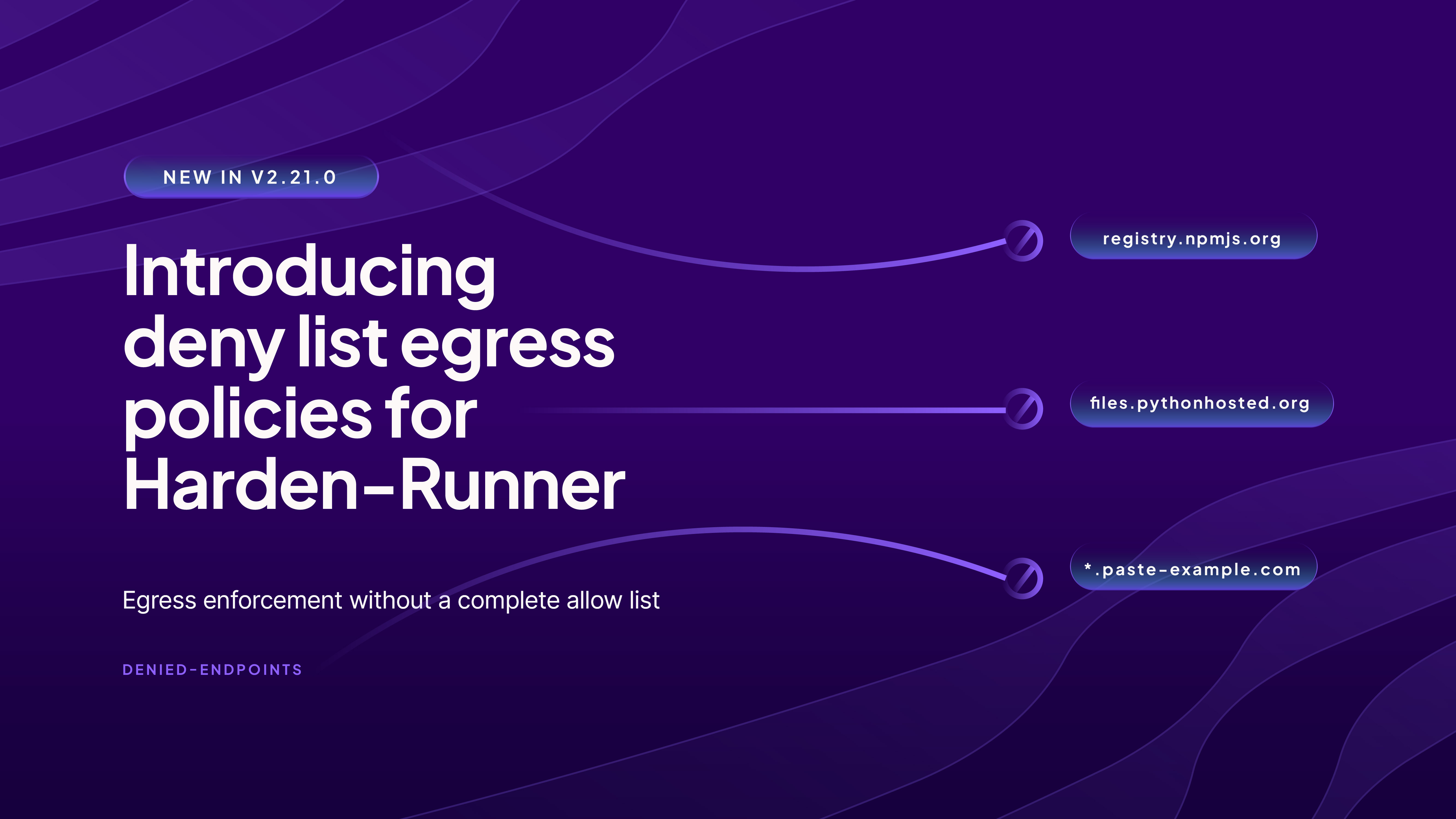
Introducing deny list egress policies for Harden-Runner

StepSecurity's Harden-Runner GitHub Action v2.21.0 adds a denied-endpoints input, letting teams block specific egress destinations (domains, wildcards, bare IPs) from CI jobs while leaving everything else reachable β€” a lighter-weight alternative to allow lists that don't require full enumeration of a job's needs. The piece details how deny-list entries differ from allow-list ones (no per-port scoping), covers the flagship use case of forcing package installs through StepSecurity's Secure Registry proxy by denying direct access to registries like PyPI and Go module hosts, and explains that Harden-Runner's separately maintained Global Block List (built from SOC threat intel, e.g. the Megalodon credential-exfiltration campaign) is distinct from and complements user-managed deny lists. It also candidly notes the deny list's blind spot: campaigns like Shai-Hulud 2.0 that exfiltrate via github.com itself can't be stopped by a deny list, requiring allow-list enforcement instead.

GitHub ActionsnpmPyPI+1
Harden-RunnerStepSecuritySecure Registry+3

DevSecOps, Supply ChainΒ· Added 3 Sep 2026, published 2 Sep 2026

stepsecurity.ioarticleπŸ›‘οΈ Security

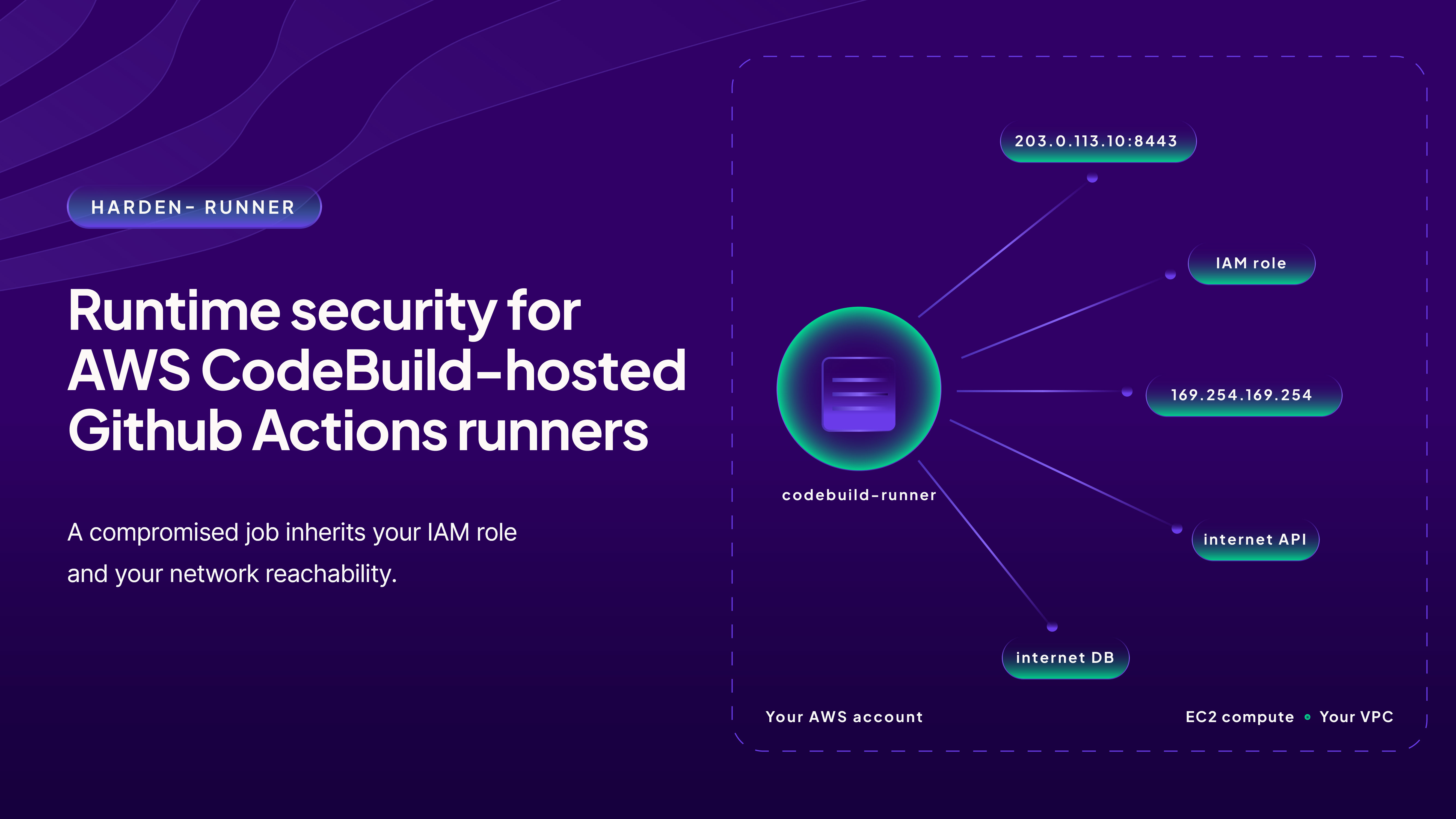
Runtime Security for AWS CodeBuild-Hosted GitHub Actions Runners

StepSecurity announces Harden-Runner support (v2.20.1+/v2.21.0) for GitHub Actions jobs executed on AWS CodeBuild-hosted just-in-time runners, including custom container images. The post frames the feature around CVE-2025-8217, where a threat actor exfiltrated GitHub tokens by dumping CodeBuild build-environment memory via a malicious pull request to compromise the AWS Toolkit for Visual Studio Code and AWS SDK for .NET repos, and notes that CodeBuild runners additionally expose an assumed IAM service role and VPC network reachability that GitHub-hosted runners don't have. Harden-Runner correlates outbound network calls, file writes, and process executions to the workflow step that triggered them and unifies detection across GitHub-hosted, self-hosted, ARC, and CodeBuild-hosted runner fleets.

AWS CodeBuildGitHub ActionsAWS IAM
CVE-2025-8217TeamPCPCloudSEK+3

DevSecOps, Cloud & InfraΒ· Added 3 Sep 2026, published 2 Sep 2026

stepsecurity.iowriteupπŸ›‘οΈ Security

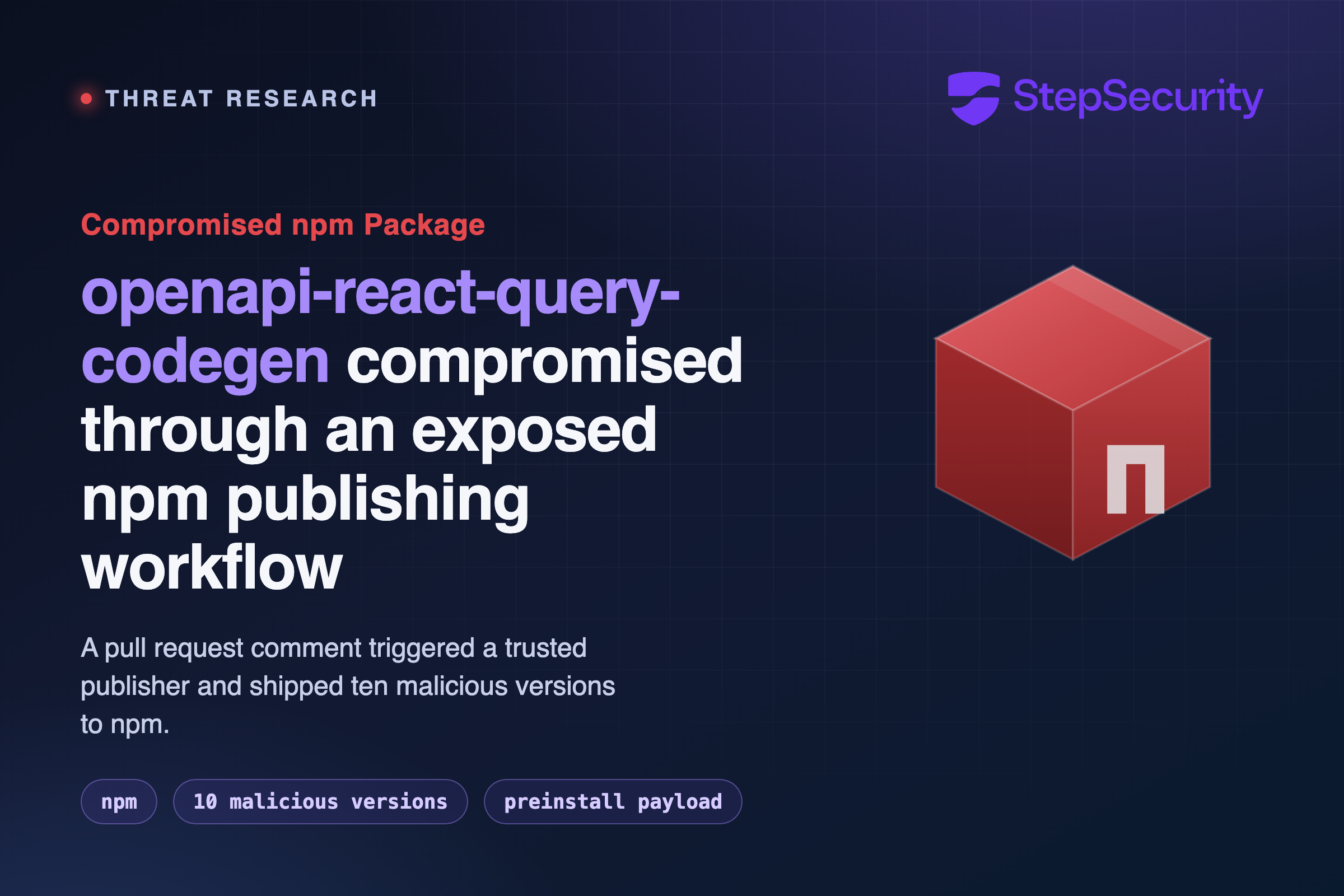
@7nohe/openapi-react-query-codegen Compromised Through an Exposed npm Publishing Workflow

StepSecurity documents how an external GitHub user (p00paboot) hijacked the release workflow of @7nohe/openapi-react-query-codegen by exploiting an npm publish issue-comment trigger that lacked commenter authorization checks, allowing pull-request code to be checked out and published via GitHub Actions OIDC trusted publishing. Ten malicious versions were pushed with preinstall hooks and a poisoned binding.gyp that executed a payload downloading Bun, stealing GitHub/git credentials, probing GCP metadata, and enumerating SSH keys, confirmed via StepSecurity Harden-Runner behavioral analysis on isolated runners. The post lists affected versions, file/hash IOCs, and remediation steps including credential rotation and pinning to clean releases.

npmGitHub ActionsBun+3
StepSecurityHarden-Runner@7nohe/openapi-react-query-codegen+2

Supply Chain, DevSecOpsΒ· Added 3 Sep 2026, published 28 Aug 2026

aikido.devarticleπŸ›‘οΈ Security

Shai-Hulud was the best thing to happen to supply chain security

Aikido Security tracks npm's Trusted Publishing (OIDC-based, short-lived credential) adoption over 18 months and shows it only spiked after each major supply-chain attack rather than from advisories or blog posts β€” jumping from a ~40/week baseline to 430/week after the Nx Console/AntV compromise, yet still leaving 40,369 of the top 51,370 packages (75% of download volume) on long-lived tokens. It chronicles the full attack progression from credential-phishing (Debug/Chalk, Axios) through Pwn Request-driven CI compromise (S1ngularity, Shai-Hulud 2.0) to the Mini Shai-Hulud II/TanStack attack, which poisoned the GitHub Actions cache to extract a live OIDC token from runner memory and publish packages with valid SLSA Build Level 3 provenance β€” proving Trusted Publishing itself can be turned into the attack vector rather than just bypassed. It closes by arguing the security community should proactively pressure high-download holdout maintainers rather than wait for the next worm.

npmPyPIGitHub Actions+5
Shai-HuludShai-Hulud 2.0Mini Shai-Hulud+21

Supply Chain, DevSecOps, Identity & AccessΒ· Added 3 Sep 2026, published 24 Aug 2026

stepsecurity.ioarticleπŸ›‘οΈ Security

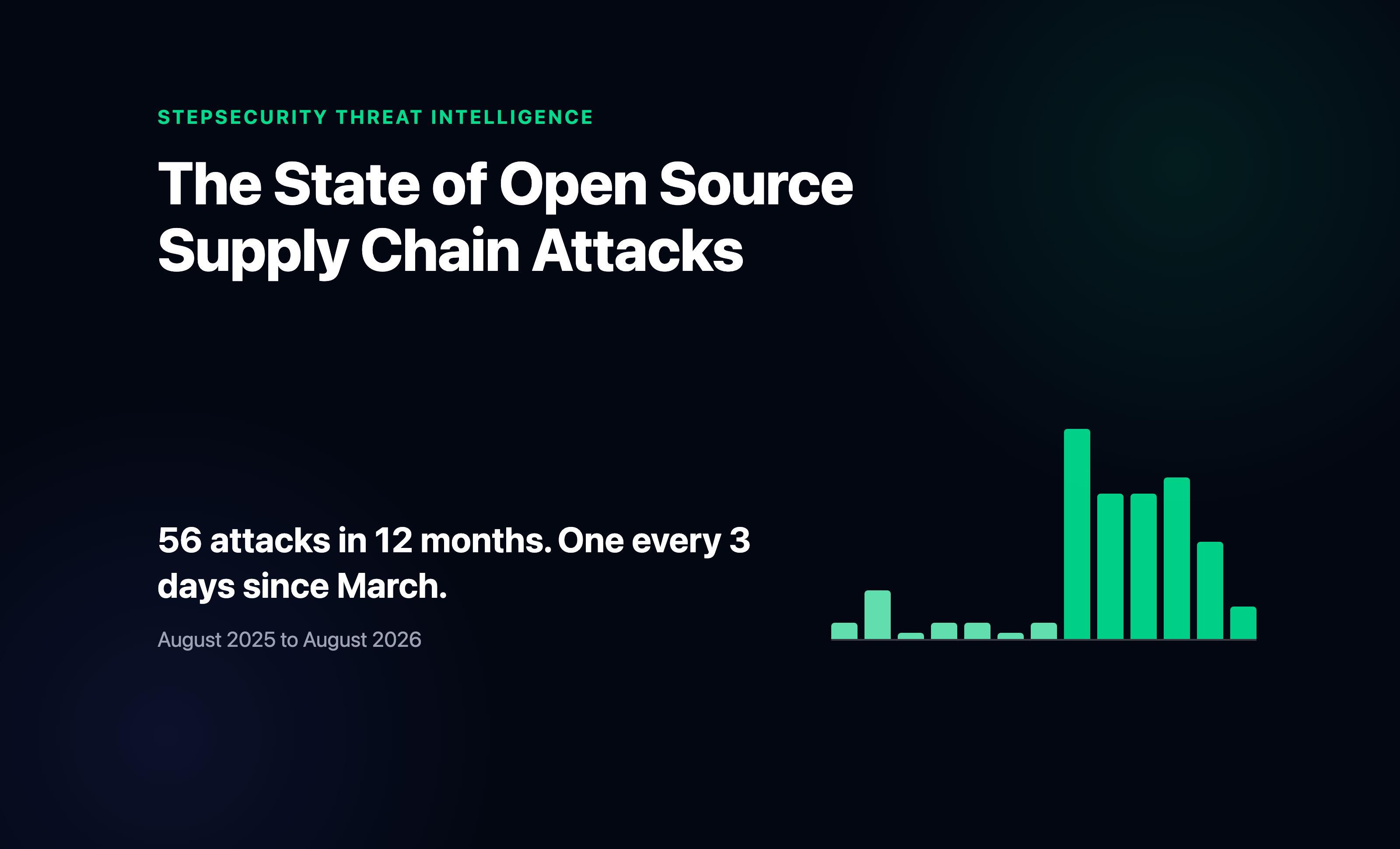
The State of Open Source Supply Chain Attacks

StepSecurity's threat intelligence team's annual report tallies 56 confirmed software supply chain attacks between August 2025 and August 2026, showing an over 8x acceleration since February 2026 driven by self-propagating worms (Shai-Hulud, Shai-Hulud 2.0, CanisterWorm, Miasma, ChainDrop) and mutable GitHub Actions tags. It details the five-day TeamPCP campaign that stole 78,330 secrets from 2,186 organizations by poisoning Trivy Action, Checkmarx KICS, telnyx, and LiteLLM, plus compromises spanning npm, PyPI, RubyGems, Composer, and crates.io.

npmGitHub ActionsPyPI+3
Shai-HuludShai-Hulud 2.0CanisterWorm+22

Supply Chain, DevSecOps, Threat IntelΒ· Added 3 Sep 2026, published 23 Aug 2026

stepsecurity.iowriteupπŸ›‘οΈ Security

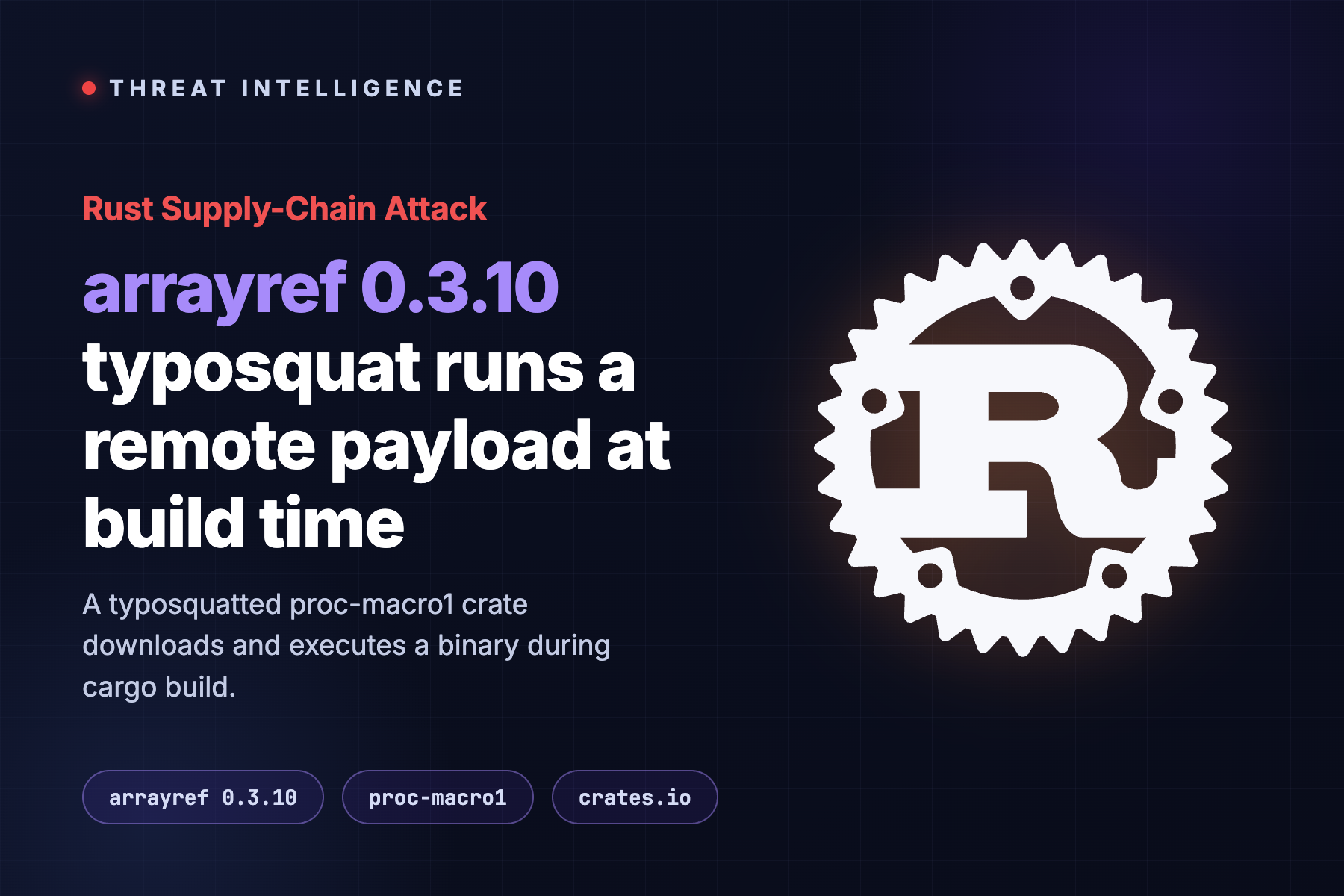
Rust Supply-Chain Attack: arrayref, internment, and append-only-vec Poisoned by the proc-macro1 Build-Time Dropper

StepSecurity's forensic writeup on a compromised crates.io maintainer account that published poisoned releases of arrayref (245M downloads), internment, and append-only-vec, each pulling in proc-macro1, a typosquat of proc-macro2 impersonating David Tolnay whose build.rs silently drops and executes a cross-platform stage-2 payload at compile time. The attacker also mass-yanked clean arrayref versions to funnel Cargo's "yanked" warning toward the one poisoned release, and StepSecurity reproduced the attack in GitHub Actions with Harden-Runner, capturing the C2 callback to 23.254.165.112:9089 and demonstrating automatic blocking via a global IOC block list. The post includes the full attack timeline, dropper base64-obfuscated URL scheme, SHA-256 hashes, C2 IOCs, and remediation/detection guidance for lockfiles and CI caches.

RustCargocrates.io+3
arrayrefinternmentappend-only-vec+15

Supply Chain, DevSecOpsΒ· Added 3 Sep 2026, published 22 Aug 2026

wiz.iowriteupπŸ›‘οΈ Security

Wiz Red Agent Finds Its Way Into Snowflake’s Internal Jira Through a Flaw in a GitHub Copilot–Assisted PR

Wiz's autonomous "Red Agent" discovered a GitHub Actions script-injection vulnerability in snowflakedb/snowflake-connector-net's jira_issue.yml workflow, introduced when a PR (co-authored by GitHub Copilot) replaced a safe env:/jq pattern with direct interpolation of the attacker-controlled issue title. GitHub Advanced Security scanned the same PR and workflow but failed to flag the injection; Red Agent autonomously crafted and self-corrected a payload after a bash syntax error, exfiltrated Jira OAuth credentials via an out-of-band callback, and used them to access Snowflake's internal Jira (engineering, security, and bug-bounty projects) β€” all without human intervention. Snowflake patched and rotated credentials the same day the flaw was reported via HackerOne.

GitHub ActionsGitHub Advanced SecurityGitHub Copilot+3
Red AgentWiz Research

DevSecOps, AI Security, Offensive SecurityΒ· Added 3 Sep 2026, published 17 Aug 2026

stepsecurity.ioarticleπŸ›‘οΈ Security

Team PCP Stole 78,330 Secrets From 2,186 Organizations. CloudSEK Just Published the List.

StepSecurity analyzes CloudSEK's newly published dataset on TeamPCP, a threat actor that compromised trusted open-source CI/CD components (Trivy GitHub Action, Checkmarx KICS action, telnyx PyPI package, LiteLLM) to harvest 78,330 secrets from 2,186 organizations' CI/CD pipelines across GitHub Actions, GitLab, and Azure DevOps in five days in March 2026. The post breaks down which platforms and credential types were exposed (GitLab led, 230+ Azure DevOps orgs, 157 leaked OpenAI keys) and maps layered CI/CD runtime controls (egress control, runner lockdown, imposter-commit detection, workflow policies) as mitigations against this class of attack.

GitHub ActionsGitLabAzure DevOps+5
TeamPCPCloudSEKChainDrop+1

Supply Chain, DevSecOps, Threat IntelΒ· Added 3 Sep 2026, published 15 Aug 2026

blog.docsgpt.cloudwriteupπŸ›‘οΈ Security

DocsGPT Security Hardening Playbook

DocsGPT documents the security practices it adopted through GitHub's Secure Open Source Fund: a public STRIDE-based THREAT_MODEL.md, mitigations for its sandboxed AI code-execution feature (scrubbed env vars, NetworkPolicy blocking internal IPs and cloud-metadata to stop SSRF, off-by-default), a dependency-tree audit with SPDX SBOM export and Dependabot, and CI automation using custom CodeQL queries, Bandit, zizmor for GitHub Actions hardening, and secret scanning. It's a practical baseline playbook for maintainers dealing with high volumes of AI-authored PRs that can't all be manually reviewed.

CodeQLDependabotSBOM+3
STRIDEGitHub Secure Open Source FundUncle Bob Martin

DevSecOps, Supply Chain, AI SecurityΒ· Published and added 15 Aug 2026

wiz.iowriteupπŸ›‘οΈ Security

Cloud Threat Highlights: H1 2026

Wiz's H1 2026 cloud threat report documents a 60% jump in significant incidents driven by a doubling of supply-chain attacks (TeamPCP's npm/PyPI/GitHub Actions credential-harvesting spree, its open-sourced Shai-Hulud worm spawning Miasma/Hades/Megalodon/IronWorm follow-ons, North Korea's axios and @mastra trojanizations) and by growing attacks on AI infrastructure, including exposed unauthenticated MCP servers, LiteLLM/Dify/Langflow/n8n/Ollama vulnerabilities, and cryptominers deployed via a Langflow RCE. It also profiles JINX-0163, a cloud-native extortion group targeting non-human identities (service accounts/IAM roles) across AWS/Azure/GCP/Okta/Snowflake linked to the "FulcrumSec" extortion brand, and closes with concrete detection techniques for stolen access keys, Kubernetes VM Run Command abuse, GCP org-policy tampering, and CloudTrail user-agent/boto3 credential-provenance mismatches.

npmPyPILiteLLM+3
TeamPCPShai-HuludMiasma+11

Supply Chain, Threat Intel, AI Security, Cloud & InfraΒ· Added 3 Sep 2026, published 6 Aug 2026

github.comrepoπŸ›‘οΈ Security

SecureAI-Scan

SecureAI-Scan is an offline CLI that performs import-resolved dataflow analysis on TypeScript, JavaScript, and Python code to find LLM/MCP/Agent-Skill/RAG-specific risks (prompt injection, tool poisoning, unsafe output handling, vector-store access control), mapped to the OWASP Top 10 for LLM Applications, Agentic Applications, and MCP Top 10. It distinguishes proven dataflow traces from heuristic keyword matches, scans .mcp.json/claude_desktop_config.json/SKILL.md for tool-poisoning and command-injection patterns (citing the WhatsApp MCP rug-pull and postmark-mcp backdoor), and includes evasion-resistant deobfuscation checks built in response to the "Cloak and Detonate" adversarial study (arXiv:2607.02357) that bypassed most published skill scanners. It also runs offline advisory checks against known-malicious/vulnerable packages (validated against CVE-2025-6514 and CVE-2024-34359) and integrates via GitHub Actions, pre-commit hooks, SARIF output, and an MCP server for Claude Code.

Model Context ProtocolTypeScriptPython+3
CVE-2025-6514CVE-2024-34359postmark-mcp backdoor+4

AI Security, Supply ChainΒ· Published and added 5 Aug 2026

endorlabs.comadvisoryπŸ›‘οΈ Security

NPM Malware Compromises keyv and cacheable with 500M+ Weekly Downloads and Spreads to Hundreds of Packages | Blog | Endor Labs

Endor Labs' active-tracking advisory on an npm supply-chain worm that compromised keyv, flat-cache, and file-entry-cache (500M+ combined weekly downloads) via the jaredwray/Cacheable GitHub Actions OIDC trusted-publishing pipeline, injecting a preinstall hook (setup.mjs) that fetches a legitimate Bun binary to run an obfuscated ~727KB stage-2 payload (Math_Symbol.js/math_init.js) stealing AWS, npm, GitHub, and Vault tokens. The stolen tokens were used to self-propagate the same payload to 384+ packages and 1,136+ versions across unrelated maintainer accounts, including scopes belonging to companies like ServiceTitan, Qlik, and Picsart. The post includes IOCs (file hashes), affected package/version lists, and mitigation guidance (lockfile/CI log checks, --ignore-scripts).

npmBunGitHub Actions+3
keyvcacheableflat-cache+15

Supply Chain, Threat IntelΒ· Added 3 Sep 2026, published 4 Aug 2026

snyk.iowriteupπŸ›‘οΈ Security

Inside the keyv npm Compromise: preinstall Malware, Trusted Provenance, and IDE Hooks

Snyk Security Research independently verified an active npm supply-chain compromise affecting keyv@6.0.0 and 10 related packages (cacheable family, ecto) published by maintainer jaredwray on August 4, 2026, adding a preinstall hook (setup.mjs) that loads a 727KB obfuscated second-stage payload (Math_Symbol.js) targeting GitHub/npm/cloud credentials, private keys, and Vault/Kubernetes tokens via a gh-token-monitor persistence mechanism. The attack also planted .claude/settings.json and .vscode/tasks.json hooks to trigger execution when developers open the repo in Claude Code or VS Code, and the malicious release was signed by a valid npm trusted-publisher (GitHub Actions) attestation, demonstrating that provenance can faithfully attest a build whose source was already compromised. Snyk provides byte-level tarball diffs, a minute-by-minute incident timeline, and remediation steps including pinning to keyv@5.6.0, hunting for gh-token-monitor persistence, and credential rotation.

npmBunVS Code+3
keyvcacheableecto+8

Supply Chain, Blue Team & DetectionΒ· Added 3 Sep 2026, published 4 Aug 2026

securitylabs.datadoghq.comwriteupπŸ›‘οΈ Security

'ChainDrop' worm compromises hundreds of popular npm packages

ChainDrop is an npm worm that compromised hundreds of packages on 4 August 2026, some with over 150 million weekly downloads, starting from a malicious commit (174f6a5) in the keyv repository. Datadog dissects the Bun-based loader, the obfuscated second stage, credential theft (files, GitHub Actions runner memory, AWS, Kubernetes, Vault), Ethereum smart-contract C2 discovery, AES/RSA exfiltration, an eval channel, and propagation via stolen npm tokens, GitHub branches and Sigstore provenance. IOCs and a list of affected packages are included.

npmBunGitHub+3
ChainDropShai-Huludkeyv+7

Supply Chain, Malware & RE, Threat IntelΒ· Added 29 Oct 2026, published 4 Aug 2026

github.comrepoπŸ›‘οΈ Security

Nomos

Nomos is an open-source permission/authorization layer for custom AI agent tools: agents propose actions (e.g. email.send), and Nomos evaluates them against a policy as ALLOW, DENY, or REQUIRE_APPROVAL before the underlying tool executes. It ships a CLI for writing and running permission tests in CI (with a GitHub Actions example pinning a checksummed release), a Python SDK for wrapping tools with explicit external authorization, and a LangGraph integration that pauses a workflow for human review before resuming execution.

LangGraphPythonGo+3

AI Security, DevSecOpsΒ· Added 3 Sep 2026, published 2 Aug 2026

github.comrepoπŸ›‘οΈ Security

glsec

glsec is a security linter for GitLab CI (.gitlab-ci.yml) configuration files, analogous to zizmor/actionlint for GitHub Actions. It detects misconfigurations like mutable image tags, unquoted user-controlled CI variables in scripts, and other issues mapped to 84 rules across 8 OWASP CI/CD Security categories (excluding IAM and logging, which require platform-level access). It supports baseline/ignore workflows, ShellCheck integration, SARIF/Code Climate/JUnit output for GitLab dashboards, a pre-commit hook, and a Claude Code plugin, and ships releases with Sigstore/cosign signing and SLSA provenance attestations.

GitLab CISARIFSigstore+3
GL001GL002GL003+4

DevSecOpsΒ· Published and added 29 Jul 2026

asecurityguru.comarticle🧠 AI

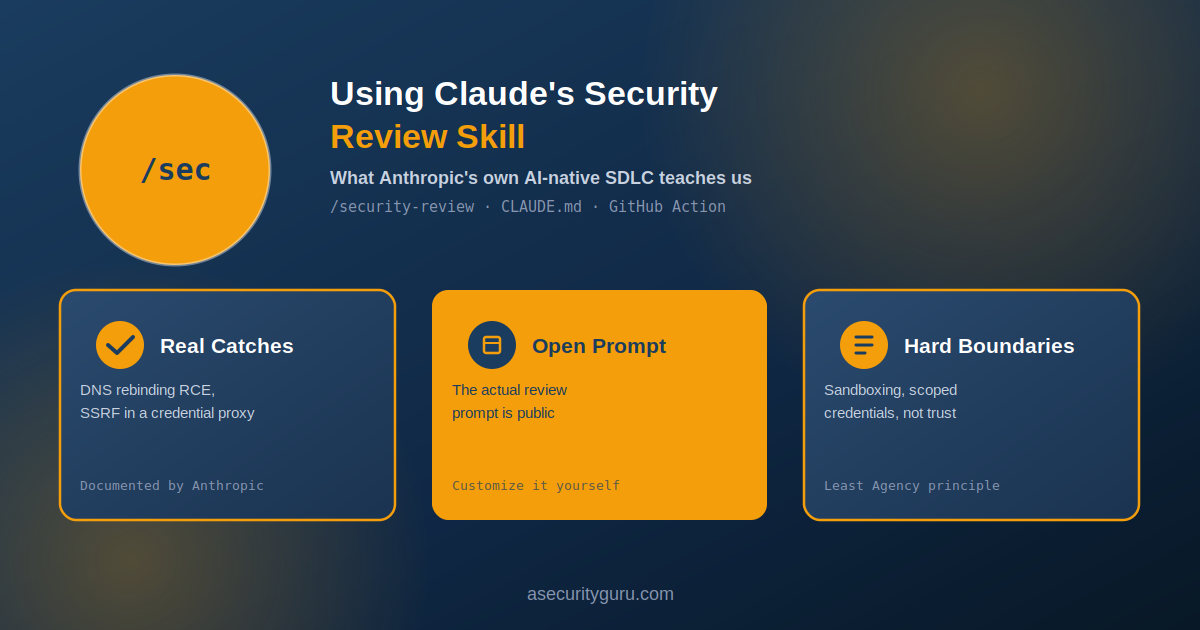
Using Claude’s Security Review Skill in Claude Code

Walkthrough of Claude Code's /security-review slash command and the anthropics/claude-code-security-review GitHub Action. It covers what the open-source prompt checks (SQLi, XSS, authz flaws), its hard exclusions (DoS, rate limiting, hardening-only findings), and how to copy and customize security-review.md. It also summarizes Anthropic's SDLC account by Jason Clinton: narrow multiple reviewer agents instead of one mega-prompt, CLAUDE.md updates as a closed loop, /sandbox isolation, and least-privilege, single-purpose agent identities after an incident-response agent asked another Claude instance to deploy code.

Claude CodeGitHub ActionsGitHub+2
AnthropicJason Clintonclaude-code-security-review

coding-agents, promptingΒ· Added 13 Oct 2026, published 29 Jul 2026

asecurityguru.comarticleπŸ›‘οΈ Security

Using Claude’s Security Review Skill in Claude Code

Explains how to use Claude Code's /security-review command and the anthropics/claude-code-security-review GitHub Action for AI-assisted code review. It covers what the prompt checks, its hard exclusions (DoS, rate limiting, unproven input validation gaps), how to customize security-review.md, and the security guidance plugin and /sandbox. It also draws on Anthropic's SDLC account: narrow multi-agent reviewers, CLAUDE.md as a closed loop, an incident-response agent that asked another agent to deploy code, and treating agents as insider threats with least-privilege identities and egress allowlisting.

Claude CodeClaudeAnthropic+2
SSRFDNS rebindingprompt injection+3

AI Security, AppSec, DevSecOpsΒ· Added 13 Oct 2026, published 29 Jul 2026

endorlabs.comwriteupπŸ›‘οΈ Security

SANDWORM_MODE: Dissecting a Multi-Stage npm Supply Chain Attack | Blog | Endor Labs

Endor Labs dissects "SANDWORM_MODE", a multi-stage npm supply-chain attack using typosquatted packages (e.g. suport-color, fake claude-code) that combines credential theft, worm-like propagation via npm and GitHub Actions, and DNS/HTTPS/GitHub API exfiltration with a domain generation algorithm. Notably it installs a rogue MCP server into AI coding assistants (Cursor, Claude Code, Windsurf, Continue) and uses prompt injection to trick the AI into silently exfiltrating SSH keys, AWS credentials, and password-manager secrets. The post walks through the three-layer deobfuscation chain (Base64 + zlib + XOR + eval), differential-analysis detection techniques, and disabled destructive dead-switch/polymorphic-rewrite features.

npmModel Context ProtocolCursor+3
SANDWORM_MODEShai-Hulud

Supply Chain, Malware & RE, AI SecurityΒ· Added 27 Jul 2026

socket.devwriteupπŸ›‘οΈ Security

Socket: GitHub Actions Abuse Powers Distributed cPanel/WHM Exploitation Campaign

Socket researchers traced malicious dev versions of ten Packagist packages owned by developer dinushchathurya back to compromised GitHub repositories containing 55-62 malicious GitHub Actions workflow files each. The workflows execute on GitHub-hosted Ubuntu runners on every push, download an architecture-matched Linux payload from C2 server 43.228.157.68, and run an internet scanner (`ipscan --exploit CVE-2026-41940`) that exploits an authentication bypass in cPanel/WHM and harvests cloud, database, SSH, and source-control credentials, exfiltrating results via heartbeat/results HTTP endpoints and DNSHook callbacks. GitHub code search for the campaign's unique markers returned 6,100-16,000 matching workflow files across unrelated repositories, indicating the abuse extends far beyond the one compromised maintainer and effectively weaponizes GitHub Actions as free, disposable attack infrastructure.

GitHub ActionsPackagistPHP+2
CVE-2026-41940dinushchathuryaDNSHook+4

Supply Chain, DevSecOps, Threat IntelΒ· Published and added 23 Jul 2026

stepsecurity.ioarticleπŸ›‘οΈ Security

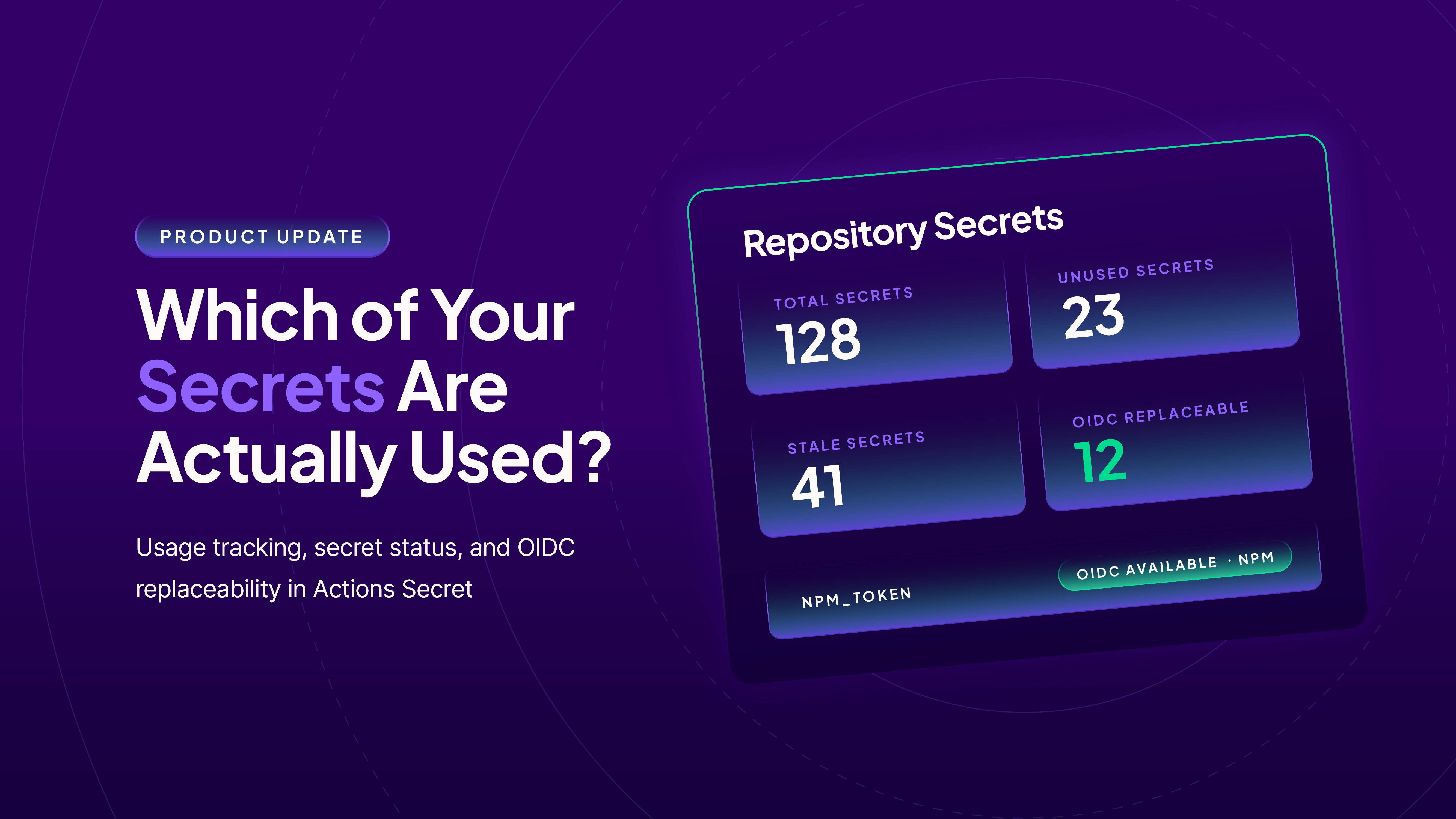
Find Unused, Stale, and OIDC-Replaceable GitHub Actions Secrets Across Your GitHub Organization

StepSecurity describes a new Repository Secrets feature in its Actions Secret dashboard that inventories GitHub Actions secrets across an org and classifies each as Active, Stale (unused workflow for 90+ days), or Unused, while flagging which secrets could be eliminated by switching to OIDC (e.g. AWS, Azure, GCP federation or npm/PyPI trusted publishing). It ties the problem to real incidents - the GhostAction campaign exfiltrated 3,000+ secrets and Megalodon targeted 5,500 public repos - arguing that unused, long-lived credentials are attack surface attackers actively harvest regardless of whether they are load-bearing.

GitHub ActionsOIDCnpm+3
GhostActionMegalodonShai-Hulud+2

DevSecOps, Supply Chain, Identity & AccessΒ· Added 3 Sep 2026, published 23 Jul 2026

thehackernews.comarticleπŸ›‘οΈ Security

AI Security Briefing

Noma Security researchers disclosed "GitLost," a technique where a public GitHub issue containing indirect prompt-injection text tricks a GitHub Agentic Workflow (powered by Copilot, Claude, Gemini, or Codex) with org-wide read access into pasting private repository contents into a public issue comment. The attacker needs no credentials or org access; a routine issue-triggered workflow and a broad read-scoped token do the work, and Noma found that simply prefixing the injected instruction with "Additionally" bypassed GitHub's built-in threat-detection filter. The piece ties GitLost to the "lethal trifecta" (private data access + untrusted input + exfiltration channel) and to prior related disclosures (Claude Code GitHub Action flaw, Orca Security's RoguePilot, Invariant Labs' MCP finding, the "Comment and Control" study), recommending per-repo token scoping, restricted safe-outputs, and human review as mitigations.

GitHubGitHub CopilotClaude Code+2
GitLostNoma SecuritySasi Levi+5

AI SecurityΒ· Published and added 18 Jul 2026

github.comrepoπŸ›‘οΈ Security

dstours/OctoC2

OctoC2 is a GitHub-native command-and-control framework built with TypeScript/Bun, featuring a beacon, durable controller, operator dashboard, and CLI. It supports multiple encrypted transports (GitHub Issues/branches/Actions/Gists/Git Notes, HTTPS/WebSocket, gRPC with mTLS, GitHub Actions OIDC, and relayed Codespaces SSH tunnels) with a signed task protocol, Ed25519 beacon identities, exclusive delivery leases, and replay-protected state for authorized red-team and security research engagements.

GitHub ActionsBunTypeScript+2

Offensive SecurityΒ· Published and added 18 Jul 2026

opensourcemalware.comtalkπŸ›‘οΈ Security

The OpenSourceMalware Show #13

Weekly OpenSourceMalware podcast episode covering four security stories: GitHub enabling a default 3-day Dependabot cooldown to blunt account-takeover malware; the JScrambler npm compromise where a stolen/unknown publishing credential was used to push five malicious versions (moving the trigger from a pre-install script to on-import execution) plus four pinned dependent packages; the AsyncAPI compromise via a 58-day-unpatched GitHub Actions pull_request_target flaw that let attackers steal a privileged token and publish malicious @asyncapi npm packages containing components derived from the open-sourced Miasma malware; and new PolinRider (DPRK-linked) research showing a 6.5x rise in confirmed poisoned repos since March, with 94% of payloads delivered via JavaScript config-file injection and the rest via fake font files, plus multiple redundant triggers via VS Code task.json and git post-checkout/pre-commit hooks targeting individual developers previously compromised via Contagious Interview/TasksJacker.

npmGitHub ActionsDependabot+2
JScramblerAsyncAPIMiasma+7

Supply Chain, Threat Intel, DevSecOpsΒ· Added 3 Sep 2026, published 16 Jul 2026

stepsecurity.iowriteupπŸ›‘οΈ Security

Coordinated AsyncAPI Supply Chain Attack: Miasma RAT Delivered via Compromised CI/CD Pipelines in Two Repositories

On July 14, 2026, attackers compromised push access to two AsyncAPI GitHub repositories (asyncapi/generator and asyncapi/spec-json-schemas) and pushed malicious commits under a placeholder git identity that triggered legitimate CI/CD release workflows (release-with-changesets.yml, if-nodejs-release.yml), publishing five malicious npm package versions (@asyncapi/generator, generator-helpers, generator-components, specs) carrying a runtime-triggered obfuscated dropper for the Miasma RAT, complete with valid OIDC/SLSA provenance attestations. StepSecurity detected the packages within 30 minutes, used Harden-Runner in an isolated GitHub Actions job to capture the malware's C2 traffic (HTTP plus IPFS/Nostr/BitTorrent DHT fallback channels), and pushed the IOCs to their Global Block List to block exfiltration across customer pipelines; all malicious versions have since been unpublished.

npmGitHub ActionsNode.js
AsyncAPIMiasma RATStepSecurity+6

Supply Chain, DevSecOps, Malware & REΒ· Added 3 Sep 2026, published 16 Jul 2026

stepsecurity.ioarticleπŸ›‘οΈ Security

Introducing Secret Exfiltration Protection for GitHub Actions

StepSecurity breaks down how four campaigns, GhostAction, Megalodon, Miasma, and Hades, turned stolen GitHub tokens into mass secret theft by committing malicious GitHub Actions workflows to throwaway branches, using toJSON(secrets) to dump repo secrets and uploading them as run artifacts before deleting the branch and run. It explains why branch protection and code review miss this since the workflow runs on a push event to a non-default branch with no pull request ever opened, and introduces StepSecurity's Secret Exfiltration Policy plus a new Harden-Runner detection rule for the pattern.

GitHub Actions
GhostActionMegalodonMiasma+3

DevSecOps, Threat Intel, Supply ChainΒ· Added 3 Sep 2026, published 16 Jul 2026

github.comrepoπŸ›‘οΈ Security

Strix

Strix is an open-source framework of autonomous AI pentesting agents that dynamically run target code, discover vulnerabilities across the OWASP Top 10 (SQLi, SSRF, XXE, IDOR, XSS, auth bypass, business-logic flaws) and validate them with working proof-of-concept exploits rather than static-analysis heuristics. It ships a CLI with a full offensive toolkit (Caido-based HTTP interception, browser exploitation, Python exploit sandbox, recon/OSINT, SAST/DAST), supports OpenAPI/Postman-driven black-box testing, integrates into GitHub Actions/CI pipelines to block vulnerable PRs, and can run against local or hosted LLMs via LiteLLM, with an optional cloud offering for autofix PRs and compliance reporting.

DockerLiteLLMCaido+3
OWASP Top 10

Offensive Security, AI Security, DevSecOpsΒ· Published and added 15 Jul 2026

github.comrepoπŸ›‘οΈ Security

HOL Guard

HOL Guard is an open-source local "antivirus" runtime protection layer for AI coding agents that intercepts shell commands, file access, package installs, and MCP tool calls before execution, classifying them for secret exposure, destructive operations, prompt injection, and supply-chain risk, then allowing/blocking/requesting approval per policy. It integrates via native hooks and managed MCP proxies with Codex, Claude Code, GitHub Copilot CLI, Cursor, Cline, Gemini CLI, Grok, and other agents, and includes a supply-chain package/advisory checker (hol-guard supply-chain scan/explain). The repo also bundles plugin-scanner, a companion CLI/GitHub Action that lints and scores agent plugins, skills, and MCP integrations for manifest issues, secrets, MCP transport risks, and dependency/lockfile problems, producing SARIF/JSON reports for CI gating.

Model Context ProtocolCodexClaude Code+5
HOL Guardplugin-scannerHCS-28

AI SecurityΒ· Published and added 15 Jul 2026

github.comrepoπŸ›‘οΈ Security

SreeragPramod/securepipe

SecurePipe is a small demo GitHub repo showing a GitHub Actions CI/CD pipeline for a Python project that runs Flake8, Black, Bandit SAST scanning, and pytest with an 80% coverage gate before code can be merged. Its commit history documents a real vulnerability lifecycle: a hardcoded database password (Bandit rule B105) and a shell-injectable subprocess call (Bandit rule B602) were intentionally introduced, automatically blocked by the Bandit gate, then fixed by moving secrets to environment variables and replacing shell=True with an explicit argument list and host allowlist.

GitHub ActionsPythonBandit
B105B602

DevSecOps, AppSecΒ· Published and added 15 Jul 2026

wiz.iowriteupπŸ›‘οΈ Security

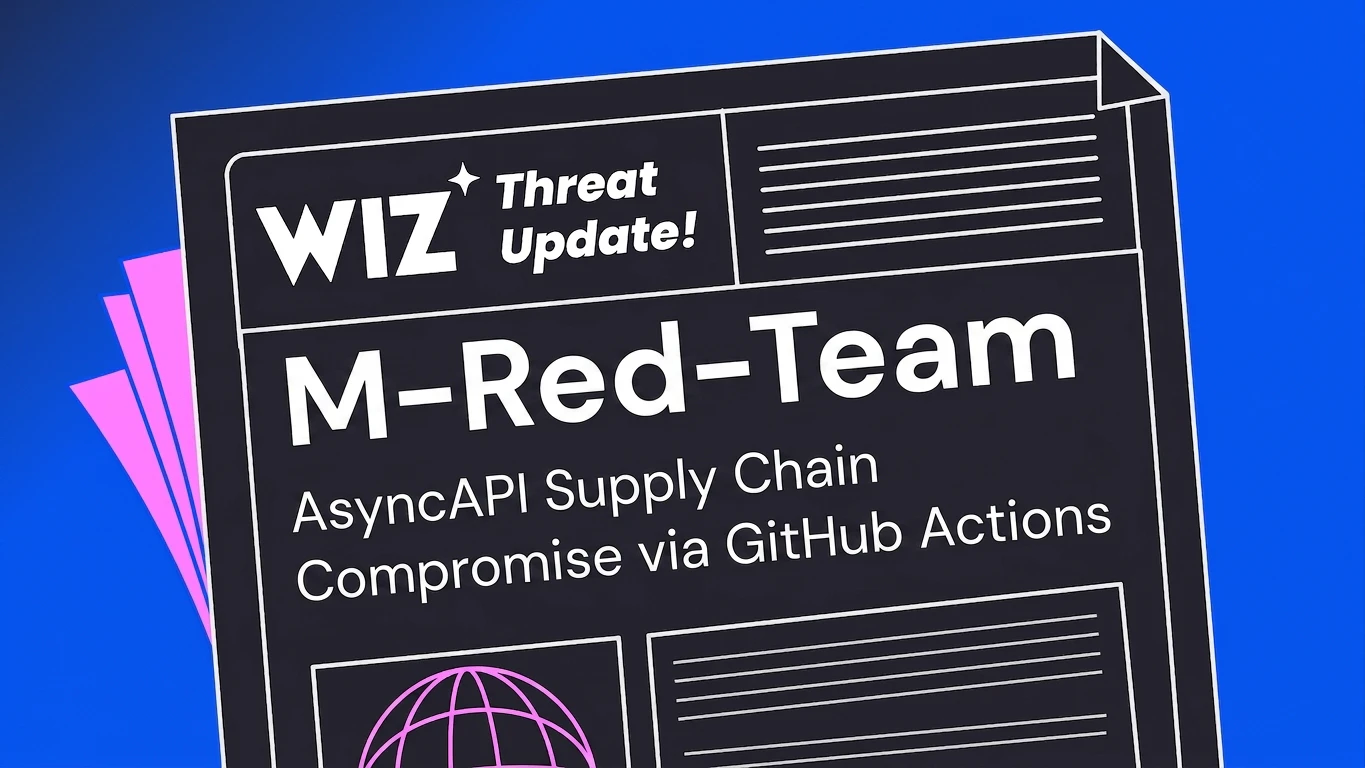
M-Red-Team: AsyncAPI Supply Chain Compromise via GitHub Actions

Wiz Research details how an attacker used 37 decoy pull requests to mask exploitation of a pull_request_target "pwn request" misconfiguration in the asyncapi/generator GitHub Actions workflow, stealing a privileged PAT belonging to the asyncapi-bot service account. The attacker then published four malicious npm packages (five versions) under the @asyncapi namespace with over 3 million weekly downloads, delivering a self-identified "M-RED-TEAM v6.4" multi-stage payload that fetches an 8.25MB encrypted bundle from IPFS and installs a 92,000-line trojan framework with systemd persistence and HTTP/Nostr/Ethereum/libp2p C2 channels, targeting browser credentials, SSH keys, npm/GitHub tokens, AWS credentials, and crypto wallets. The piece also analyzes partial technical overlap with the Miasma malware framework and the unrelated prt-scan campaign without making definitive attribution.

GitHub ActionsnpmEthereum+3
M-RED-TEAMAsyncAPIShai-Hulud 2.0+4

Supply Chain, DevSecOps, Threat IntelΒ· Added 3 Sep 2026, published 14 Jul 2026

aikido.devwriteupπŸ›‘οΈ Security

AsyncAPI npm packages backdoored via GitHub Actions

Aikido Security details how five @asyncapi npm packages (specs, generator, generator-helpers, generator-components), combined ~2.9M weekly downloads, were backdoored after an attacker exploited an unmerged pull_request_target GitHub Actions vulnerability in asyncapi/generator to steal the npm publish token via 37 flooded PRs. The injected runtime code spawns a detached Node process that downloads an encrypted stage-2 loader from IPFS, decrypts it via HKDF/AES-256-GCM, and drops a persistent remote-shell implant self-identified as 'M-RED-TEAM v6.4' with Miasma-branded artifacts, though credential harvesting and self-propagation are disabled in this build. The post includes full technical detail on the exfiltration flow, IOC strings, IPFS CIDs, and inconclusive attribution linking it to the prior Miasma toolkit and prt-scan campaign.

npmGitHub ActionsNode.js+1
pull_request_target vulnerabilityM-RED-TEAM v6.4Miasma toolkit+3

Supply Chain, DevSecOps, Malware & REΒ· Added 3 Sep 2026, published 14 Jul 2026

github.comrepoπŸ›‘οΈ Security

LocxZ/SecureSDLC-Lab

SecureSDLC-Lab pairs a minimal Node.js/Express/SQLite app with a GitHub Actions pipeline running Gitleaks (secret scanning), Semgrep (SAST), and Trivy (dependency, Docker image, and Kubernetes manifest scanning) plus OWASP ZAP (DAST) on every push and PR. It documents concrete remediations applied during the exercise: bcrypt password hashing, parameterized SQL queries, session-based auth with post-login session regeneration and HttpOnly cookies, RBAC for an admin page, Helmet security headers, env-based secrets, and a hardened Kubernetes deployment (non-root, readOnlyRootFilesystem, dropped capabilities, seccomp, resource limits) alongside a STRIDE threat model.

Node.jsGitHub ActionsDocker+4

DevSecOps, AppSec, LearningΒ· Published and added 14 Jul 2026

stepsecurity.iowriteupπŸ›‘οΈ Security

Injective npm Supply Chain Attack: 18 Packages Backdoored to Steal Crypto Wallet Keys

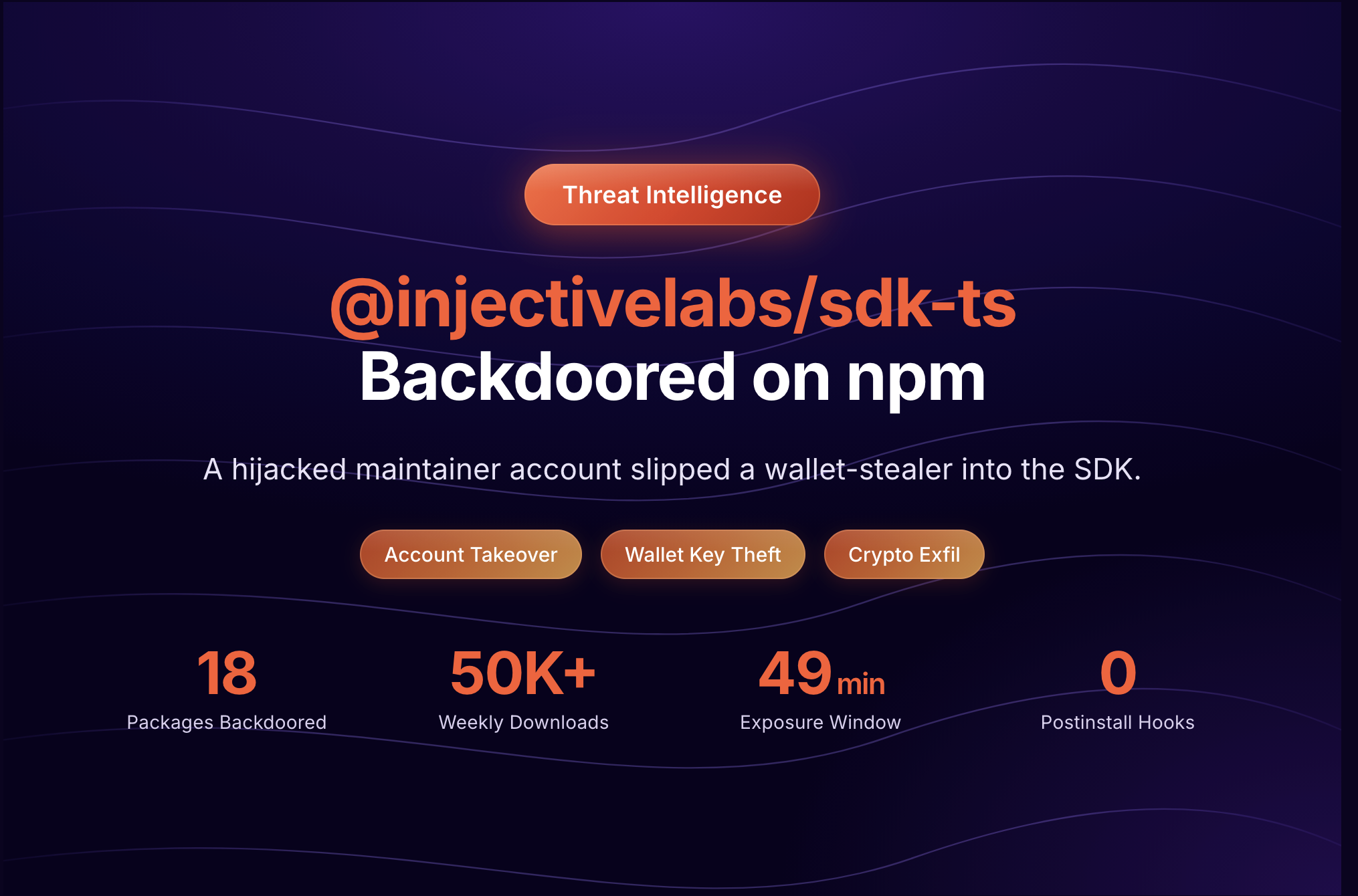
On July 8, 2026, a compromised maintainer account pushed malicious commits directly to the master branch of the InjectiveLabs/injective-ts monorepo, triggering the repo's own OIDC-based GitHub Actions publish pipeline to release backdoored version 1.20.21 of @injectivelabs/sdk-ts and 17 dependent packages. The payload, disguised as 'key derivation telemetry,' hooked PrivateKey.fromMnemonic() and PrivateKey.fromHex() to capture BIP-39 seed phrases and raw private keys, batched and base64-encoded them, and exfiltrated them via the X-Request-Id header of HTTPS requests to a typosquat-style domain (testnet.archival.chain.grpc-web.injective.network) mimicking legitimate Injective gRPC-Web traffic. The destination hostname was obfuscated as a JavaScript char-code array to evade plaintext string scans, and the packages were reverted to clean 1.20.23 roughly 49 minutes after the malicious release.

npmGitHub ActionsTypeScript+2
@injectivelabs/sdk-tsthomasRaleeInjective+1

Supply ChainΒ· Added 3 Sep 2026, published 12 Jul 2026

github.comrepoπŸ›‘οΈ Security

GitHub Action Canaries

Tracebit's free, open-source GitHub Action injects unique, short-lived AWS canary credentials and SSH canary keys (honeytokens) into every workflow run, writing them to ~/.aws/credentials, environment variables, and ~/.ssh/ so they cover common exfiltration surfaces. Any interaction with these decoys triggers an alert with full run context (repo, workflow, job, commit SHA, run ID), letting teams detect compromised dependencies, malicious third-party Actions, or CI/CD secret theft. It cites real incidents like the tj-actions/changed-files and Trivy/TeamPCP supply-chain compromises and a LiteLLM PyPI credential stealer as the threats it targets.

GitHub ActionsAWSSSH+3
tj-actions/changed-filesTeamPCP

DevSecOps, Supply Chain, Blue Team & DetectionΒ· Published and added 11 Jul 2026

github.comrepoπŸ›‘οΈ Security

DataDog/guarddog

GuardDog is DataDog's CLI tool that scans PyPI, npm, Go modules, Rust crates, RubyGems, GitHub Actions, and VSCode extensions for malicious packages using YARA-based static analysis and registry metadata detectors. It correlates code capabilities with threat indicators (mapped to MITRE ATT&CK stages) to produce a 0-10 risk score, aiming to reduce alert fatigue compared to traditional SAST tools, and runs archive extraction and source analysis inside a kernel-level sandbox (Landlock/Seatbelt via nono) to mitigate path-traversal/code-execution vulnerabilities such as CVE-2022-23530, CVE-2022-23531, CVE-2026-22870, and CVE-2026-22871.

PyPInpmGitHub Actions+3
CVE-2022-23530CVE-2022-23531CVE-2026-22870+1

Supply Chain, DevSecOps, Blue Team & DetectionΒ· Published and added 11 Jul 2026

endorlabs.comwriteupπŸ›‘οΈ Security

The Bitwarden CLI Supply Chain Attack: What Happened and What to Do | Blog | Endor Labs

Analysis of a supply-chain compromise of @bitwarden/cli version 2026.4.0, published to npm for ~1.5 hours on April 22, 2026, which added a preinstall script (bwsetup.js) that downloads a Bun runtime and executes a 10MB obfuscated payload (bw1.js) harvesting CI secrets like SSH keys and API tokens and exfiltrating them to attacker-created public GitHub repos in victims' namespaces. The compromise is linked to a prior breach of Checkmarx's GitHub Actions (checkmarx/ast-github-action), used in Bitwarden's repo, and the payload includes CI/CD platform detection across 30+ platforms and a Russian-locale self-exclusion check consistent with Eastern European threat actor tooling, framed as part of the "Shai-Hulud" campaign lineage.

npmGitHub ActionsBun+1
BitwardenBitwarden CLICheckmarx+3

Supply Chain, Malware & RE, Threat IntelΒ· Added 3 Sep 2026, published 10 Jul 2026

stepsecurity.ioarticleπŸ›‘οΈ Security

StepSecurity Maintained Actions Are Now Free for Public Repos

StepSecurity announced its catalog of 500 "Maintained Actions" β€” security-reviewed, API-compatible drop-in replacements for abandoned or high-risk third-party GitHub Actions β€” is now free for public repositories, not just enterprise customers. The post details their onboarding process (manual + AI-assisted code review, tag protection to prevent tj-actions-style tampering, signed commits, ephemeral release tokens, CVSS-based patch SLAs) and cites the March 2025 tj-actions/changed-files supply-chain attack (CVE-2025-30066) as the motivating incident.

GitHub ActionsStepSecurityHarden-Runner+1
CVE-2025-30066tj-actions/changed-filesOpenSSF Scorecard

DevSecOps, Supply ChainΒ· Added 3 Sep 2026, published 2 Jul 2026

stepsecurity.iowriteupπŸ›‘οΈ Security

10 Layers Deep: How StepSecurity Stops TeamPCP's Trivy Supply Chain Attack on GitHub Actions

StepSecurity walks through the TeamPCP-led compromise of aquasecurity/trivy-action (CVE-2026-33634, CVSS 9.4), where attackers force-pushed a credential-stealing payload into 76 of 77 version tags, plus the related Checkmarx KICS action compromise, both harvesting secrets from /proc/pid/mem of the GitHub Actions Runner.Worker process and exfiltrating to a typosquatted domain (scan.aquasecurtiy.org, 45.148.10.212). The post details the attack technique of 'imposter commits' (fork commits reachable by SHA but not on any branch) used to hide the malicious tags, and situates the incident alongside the same-window CanisterWorm npm worm and TeamPCP credential stealers in litellm and telnyx PyPI packages, then maps ten StepSecurity/Harden-Runner defense-in-depth controls (egress blocking, process lockdown, SHA-pinning PRs, imposter-commit scanning, global blocklist) to each stage of the kill chain.

GitHub ActionsTrivyCheckmarx+3
CVE-2026-33634TeamPCPCanisterWorm+4

Supply Chain, DevSecOps, Threat IntelΒ· Added 3 Sep 2026, published 2 Jul 2026

stepsecurity.ioadvisoryπŸ›‘οΈ Security

simonecorsi/mawesome GitHub Action has been compromised

StepSecurity reports that the simonecorsi/mawesome GitHub Action repository was compromised on June 24, 2026, when an attacker force-pushed malicious commits and repointed several release tags to point at them, so any workflow pinned to those tags subsequently ran the attacker's code inside its GitHub Actions runner. StepSecurity notes the attack method mirrors the codfish/semantic-release-action compromise disclosed the same day, suggesting a coordinated campaign targeting GitHub Action maintainers via tag hijacking.

GitHub Actions
simonecorsi/mawesomecodfish/semantic-release-action

Supply Chain, DevSecOpsΒ· Added 3 Sep 2026, published 1 Jul 2026

stepsecurity.iowriteupπŸ›‘οΈ Security

codfish/semantic-release-action GitHub Action has been compromised

Step Security's incident analysis of the compromise of codfish/semantic-release-action, a widely used GitHub Action wrapping semantic-release. An attacker force-pushed a malicious commit and repointed seven version tags to it, converting the action from a Docker runner to a composite action that installs Bun and runs an obfuscated 512KB payload via if: always() steps. The payload steals GitHub OIDC tokens and PATs, uses a novel GitHub commit-message dead-drop for C2, has a Russian-locale killswitch, and locked tags immutable via GitHub Rulesets to block remediation.

GitHub ActionsBunsemantic-release+2
codfish/semantic-release-actionoven-sh/setup-bunRevokeAndItGoesKaboom+1

Supply Chain, DevSecOps, Threat IntelΒ· Added 3 Sep 2026, published 1 Jul 2026

stepsecurity.iowriteupπŸ›‘οΈ Security

Mass npm Supply Chain Attack: 20 Leo Platform Packages Compromised

StepSecurity documents a June 24, 2026 attack that published malicious versions of 20 Leo Platform npm packages (including leo-logger and leo-sdk) within a 3-second window, using the same "Phantom Gyp" binding.gyp install-hook technique, three-layer obfuscation chain, and Bun runtime evasion seen in the earlier Miasma campaign (57 packages, June 3, 2026). The payload steals GitHub Actions runner memory, cloud/registry/password-manager credentials, exfiltrates via GitHub dead-drop commits using the victim's own token, self-propagates by publishing to any package the victim can access via the npm bypass_2fa mechanism, and escalates privileges via passwordless sudo on runners. The post includes IOCs and maps defenses (Harden-Runner, Secure Registry cooldowns, PR-based compromised-package checks) to each stage of the attack.

npmGitHub Actionsnode-gyp+3
MiasmaPhantom GypLeo Platform+2

Supply Chain, DevSecOps, Threat IntelΒ· Added 3 Sep 2026, published 1 Jul 2026

aikido.devarticleπŸ›‘οΈ Security

And another one. GitHub ships break-glass credential revocation

Aikido Security breaks down GitHub's newly shipped self-service credential revocation for Enterprise, which lets org owners bulk-revoke PATs, SSH keys, and OAuth tokens for compromised accounts in one action instead of hunting down individual tokens. The piece ties the feature's timing to a string of 2026 incidents caused by incomplete credential rotation: the Trivy GitHub Actions compromise that force-pushed 75 malicious version tags and cascaded into Checkmarx, and Microsoft's durabletask package/repo being repeatedly compromised via the same never-fully-rotated account (Miasma worm). It also explains why atomic rotation is infeasible at scale and recommends pinning GitHub Actions to commit SHAs instead of tags.

GitHubGitHub ActionsPyPI+2
Miasma wormAzure/durabletaskAqua Security+1

DevSecOps, Supply Chain, Identity & AccessΒ· Added 3 Sep 2026, published 1 Jul 2026

socket.devwriteupπŸ›‘οΈ Security

Socket: Miasma Mini Shai-Hulud Hits ImmobiliareLabs npm Packages

Socket Threat Research documents a new wave of the Miasma Mini Shai-Hulud npm supply-chain campaign compromising @immobiliarelabs Backstage plugins for GitLab integration and LDAP authentication, published on June 26, 2026. The malicious tarballs (e.g. @immobiliarelabs/backstage-plugin-gitlab@7.0.2) add a hidden root-level index.js triggered via the "Phantom Gyp" node-gyp binding.gyp trick, which decrypts an AES-128-GCM payload, bootstraps Bun, and steals npm/GitHub/cloud/SSH/CI-CD secrets while planting GitHub Actions and AI-IDE persistence. The report also traces a plausible root cause to the earlier compromise of codfish/semantic-release-action (tag-hijacking reported by StepSecurity) and highlights abuse of GitHub's deployment event trigger β€” a technique flagged by researcher Adnan Khan β€” to run attacker workflows without touching protected workflow files.

npmBackstageGitHub Actions+3
MiasmaMini Shai-HuludPhantom Gyp+7

Supply Chain, Threat Intel, DevSecOpsΒ· Published and added 27 Jun 2026

medium.comwriteupπŸ›‘οΈ Security

Automating Penetration Testing with SecureCodeBox on Kubernetes (Kind) + GitHub Actions

Walks through a GitHub Actions pipeline that spins up a kind cluster, deploys the SecureCodeBox operator, the Juice Shop target and the ZAP-Advanced scanner, then runs an authenticated full scan. Findings summaries are pulled from the Scan resource status and the full findings.json from MinIO, then compared with a baseline report committed to the repo to flag new, persistent or resolved categories. The pipeline fails the build when issues remain. It gives a reusable pattern for DAST regression tracking in CI.

SecureCodeBoxOWASP ZAPGitHub Actions+3
Juice ShopZAP-Advancedkind

DevSecOps, AppSecΒ· Added 3 Sep 2026, published 25 Jun 2026

aikido.devwriteupπŸ›‘οΈ Security

Compromised GitHub action codfish/semantic-release-action steals CI/CD secrets

Aikido Security details how codfish/semantic-release-action, a widely used GitHub Action for automated releases since 2019, was compromised via an imposter-commit attack: an attacker force-pushed two orphan commits (disguised with reused real commit metadata) and retargeted sixteen tags including the floating v2–v5 majors to point at them. The malicious action.yml was rewritten as a composite action that still calls the legitimate action first so runs appear successful, then loads Bun via oven-sh/setup-bun and executes a heavily obfuscated 781KB index.js payload targeting GITHUB_TOKEN and NPM_TOKEN secrets. The payload contains the dead-drop marker "thebeautifulsnadsoftime," tying it to the leaked Miasma credential-stealing toolkit, which polls GitHub's public commit search API for that string to fetch and eval() attacker commands instead of using traditional C2 infrastructure.

GitHub ActionsBunnpm
Miasmacodfish/semantic-release-actionTheBeautifulSandsOfTime

Supply Chain, Threat IntelΒ· Added 3 Sep 2026, published 24 Jun 2026

stepsecurity.iowriteupπŸ›‘οΈ Security

400+ AUR Packages Hijacked: What the β€œAtomic Arch” Campaign Means for Supply-Chain Security

Attackers adopted 400+ orphaned AUR (Arch User Repository) packages and injected malicious build logic that pulled in a malicious npm dependency (masquerading as atomic-lockfile, also seen as js-digest), dubbed the "Atomic Arch" campaign by Sonatype researchers. The malicious npm package deploys a Rust-based credential stealer targeting browser cookies, SSH keys, GitHub/npm tokens, and cloud/Docker credentials, with optional eBPF-based rootkit persistence on rooted systems. The piece explains scope (Arch, EndeavourOS, Manjaro, WSL2-based Arch, self-hosted Arch CI runners) and draws parallels to similar ownership-hijacking risks in npm, PyPI, GitHub Actions, and Homebrew.

AURnpmArch Linux+3
SonatypeAtomic Archatomic-lockfile+2

Supply Chain, Malware & RE, Threat IntelΒ· Added 3 Sep 2026, published 18 Jun 2026

stepsecurity.iowriteupπŸ›‘οΈ Security

Mastra npm Supply Chain Attack: 140+ Packages Backdoored via easy-day-js Typosquat

StepSecurity documents the Mastra AI framework npm supply-chain attack: attacker sergey2016 published easy-day-js, a typosquat clone of dayjs, then added it as a dependency across 140+ @mastra packages after compromising the org's npm credentials. The malicious 1.11.22 version's postinstall hook ran an obfuscated dropper (setup.cjs) that disabled TLS verification, beaconed the install path, fetched a stage-2 payload from a hardcoded C2, spawned it detached, and self-deleted to erase forensic traces; StepSecurity's Harden Runner blocked the C2 callout in a controlled GitHub Actions test, preventing credential exfiltration of LLM/cloud API keys.

npmNode.jsGitHub Actions+2
Mastraeasy-day-jsMiasma+3

Supply Chain, DevSecOps, Threat IntelΒ· Added 3 Sep 2026, published 18 Jun 2026

github.comrepoπŸ›‘οΈ Security

VICE

VICE is an open-source (MIT) Node.js security auditing CLI with two modes: a remote black-box scan that crawls a target with a headless browser across 15-16 security modules (headers, TLS, Supabase access controls, subdomains, storage buckets, WebSockets), and a local white-box audit that scans source code for secrets, .env exposure, npm vulnerabilities, missing Supabase RLS policies, SQL injection and XSS. It ships as a GitHub Action that posts PR comments with a security score, uploads SARIF findings to GitHub Code Scanning, gates merges on a minimum score, and maintains a live README badge. Version 3.4.0 adds an AI/RAG security module for testing chat/agent API endpoints for access control, prompt injection, retrieval isolation, and tool-security issues.

Node.jsnpmGitHub Actions+3

AppSec, DevSecOps, AI SecurityΒ· Published and added 14 Jun 2026

opensourcemalware.comwriteupπŸ›‘οΈ Security

OpenSource Malware: Active Malware Campaigns in January-May 2026

OpenSourceMalware's analysis of active malware campaigns from January-May 2026, covering Lazarus Group's Contagious Interview (fake recruiter outreach delivering BeaverTail/InvisibleFerret via npm, PyPI, Go, Cargo, Packagist) and two new campaigns, TasksJacker (malicious .vscode/tasks.json auto-execution, including payloads hidden in .woff2 font files and fake VS Code dictionary files) and PolinRider (weaponizing stolen credentials via malicious PRs merged into projects like VS Code, Apache Superset, Rails, LangFlow, Expo). It also details TeamPCP's supply chain attack on Trivy's GitHub Actions repos using a leaked Aqua Security PAT to force-push malicious commits across 76 version tags.

npmPyPIGitHub Actions+3
Lazarus GroupTeamPCPDeadCatx3+11

Threat Intel, Supply Chain, Malware & REΒ· Published and added 12 Jun 2026

stepsecurity.iowriteupπŸ›‘οΈ Security

Miasma Worm Hits Microsoft Again: Azure Functions Action and 72 Other Repositories Disabled After Supply Chain Attack Targeting AI Coding Agents

StepSecurity's forensic analysis of the June 5, 2026 Miasma worm incident, in which a compromised contributor account pushed a malicious commit to Microsoft's Azure/durabletask repository planting five files (.claude/settings.json, .gemini/settings.json, .cursor/rules/setup.mdc, .vscode/tasks.json, and a 4.6MB obfuscated .github/setup.js payload) that trigger credential-harvesting code execution the moment the repo is opened in Claude Code, Gemini CLI, Cursor, or VS Code β€” no package install or code run required. GitHub's automated abuse detection disabled 73 Microsoft repositories in a 105-second sweep, including Azure/functions-action, breaking CI/CD pipelines across GitHub Actions users relying on the mutable @v1 tag. The post ties this to the same compromised account behind the May 19 durabletask PyPI credential-stealer campaign and the broader TeamPCP-linked Miasma worm, which has infected 113+ repositories.

Claude CodeGemini CLICursor+4
Miasma wormTeamPCPt.m-kosche.com+6

Supply Chain, AI Security, DevSecOpsΒ· Added 3 Sep 2026, published 9 Jun 2026

opensourcemalware.comwriteupπŸ›‘οΈ Security

Miasma Blight Reaches Microsoft: 73 Repos Disabled in 105 Seconds

Investigates GitHub's mass disabling of 73 Microsoft repositories across the Azure, Azure-Samples, microsoft, and MicrosoftDocs orgs within a 105-second window on June 5, all flagged for ToS violations, including the widely-used Azure/functions-action GitHub Action that broke CI pipelines globally. The author links the takedown to a re-compromise of the durabletask PyPI package (previously hit May 19 by TeamPCP via stolen GitHub Actions secrets) and to Miasma, a rebrand of TeamPCP's open-sourced Mini Shai-Hulud worm that Aikido and OX Security found had added Azure/GCP credential collectors and self-propagates by committing stolen secrets into attacker-created public repos, which is what likely triggered GitHub's automated abuse enforcement.

npmPyPIGitHub Actions+3
TeamPCPMiasmaMiasma worm+5

Supply Chain, DevSecOps, Threat IntelΒ· Added 3 Sep 2026, published 6 Jun 2026

github.comrepoπŸ›‘οΈ Security

cicd-sensor: eBPF Runtime Security for CI/CD Pipelines

cicd-sensor is an open-source, eBPF-powered runtime security sensor ("EDR for CI/CD") for GitHub Actions and GitLab CI/CD that detects supply-chain attacks in-flight by watching process ancestry (e.g. credential access spawned from an npm install) and correlating signals across a job. It emits per-run logs, graphical reports, and build attestations routed to a self-hosted Manager and cloud sinks (S3, GCS, Azure Blob, Pub/Sub), positioning itself as the vendor-neutral open counterpart to commercial offerings like StepSecurity's Harden-Runner and GMO Flatt Security's Takumi Runner. Created by Hiroki Suezawa (@rung), author of the Common Threat Matrix for CI/CD Pipeline and an OWASP Top 10 CI/CD Security Risks contributor.

GitHub ActionsGitLab CIeBPF+3
Hiroki SuezawaCommon Threat Matrix for CI/CD PipelineOWASP Top 10 CI/CD Security Risks+2

DevSecOps, Supply Chain, Blue Team & DetectionΒ· Added 3 Sep 2026, published 4 Jun 2026

snyk.iowriteupπŸ›‘οΈ Security

Node-gyp Supply Chain Compromise: A Self-Propagating npm Worm That Hides in binding.gyp

Snyk documents an active npm supply-chain attack ("Node-gyp Supply Chain Compromise - June 2026") that abuses binding.gyp's GYP command-expansion syntax (<!(...)) to trigger arbitrary code execution via node-gyp during npm install, bypassing detection tools that only monitor preinstall/postinstall scripts. The worm, tracked as "Phantom Gyp"/"Miasma" (a Shai-Hulud descendant) by StepSecurity, has hit 57 packages including autotel-* and @vapi-ai/server-sdk, harvests npm/GitHub/AWS/GCP/Azure/Vault/Kubernetes credentials via a multi-stage obfuscated Bun-based loader, injects GitHub Actions workflows for persistence, and self-propagates by republishing from compromised maintainer accounts.

npmnode-gypGitHub Actions+2
binding.gypPhantom GypMiasma+5

Supply Chain, Malware & RE, Threat IntelΒ· Added 3 Sep 2026, published 4 Jun 2026

opensourcemalware.comtalkπŸ›‘οΈ Security

The OpenSourceMalware Show #7

Podcast/show episode from OpenSourceMalware covering the Miasma worm campaign that compromised 32+ Red Hat @redhat-cloud-services npm packages (later 80+ packages, 286+ malicious versions) via abused npm trusted-publishing gaps rather than a GitHub Actions vulnerability, using the first in-the-wild deployment of TeamPCP's open-sourced Mini Shai-Hulud worm code across npm, PyPI, and an LLM-translated RubyGems variant. It also presents six months of OpenSourceMalware threat-report data (npm vs PyPI growth correlation, account takeovers reaching 60-65% of new weekly records, 700+ malicious ClawHub agent skills targeting marketers via SEO/TikTok/Klaviyo themes), and dissects the Moika campaign (~300 packages, oob.moika.tech C2, 260+ threat reports) as a gray-area case mixing bug-bounty-researcher signals with overtly credential-stealing payloads, alongside the long-running phenomenon of bug-bounty researchers accounting for 25-41% of malicious OSV packages and AI-hallucinated package names (e.g. Events Channel) being weaponized as typosquats.

npmPyPIRubyGems+2
TeamPCPMini Shai-HuludMiasma+11

Supply Chain, Threat Intel, AI SecurityΒ· Added 3 Sep 2026, published 3 Jun 2026

stepsecurity.iowriteupπŸ›‘οΈ Security

Laravel-Lang Supply Chain Attack: Every Tag Across Multiple Composer Packages Rewritten to Steal CI Secrets

StepSecurity documents a supply-chain attack where a single actor compromised four Laravel-Lang Composer packages (laravel-lang/lang, http-statuses, actions, attributes) by rewriting every existing git tag to point at malicious commits that add src/helpers.php to Composer's eager autoload.files map. On any composer install/update or app boot, the payload fetches a stage-2 loader and an ELF binary from the C2 domain flipboxstudio.info, exfiltrates CI/runner secrets, then self-deletes and reparents to init to evade forensics. The team confirmed end-to-end exploitation by detonating laravel-lang/http-statuses v3.4.5 inside a Harden-Runner-monitored GitHub Actions runner, capturing the full process tree, network calls, and providing recovery/IOC guidance for affected users and maintainers.

ComposerPHPLaravel+3
Laravel-Langflipboxstudio.infoHarden-Runner

Supply Chain, DevSecOpsΒ· Added 3 Sep 2026, published 2 Jun 2026

orca.securityarticleπŸ›‘οΈ Security

Orca Security: Red Hat npm Packages Compromised in Supply-Chain Attack Spreading Credential-Stealing Worm

Orca describes the June 1, 2026 compromise of 32 npm packages under the @redhat-cloud-services scope, which came from a hijacked Red Hat employee GitHub account. The attacker injected malicious GitHub Actions workflows into three RedHatInsights repos and used OIDC tokens to publish backdoored versions with valid SLSA provenance. A preinstall hook runs a 4.2 MB obfuscated payload that sweeps CI, cloud, SSH, registry and .env credentials and self-propagates (the "Miasma" worm, attributed to TeamPCP or a copycat using Mini Shai-Hulud tooling). The post lists compromised versions and gives rotation and pinning guidance.

npmGitHub ActionsGitHub+2
MiasmaTeamPCPMini Shai-Hulud+4

Supply Chain, DevSecOpsΒ· Published and added 2 Jun 2026

orca.securityarticleπŸ›‘οΈ Security

Orca Security: Securing Shadow AI: How to Detect Unapproved LLMs in Your Cloud

Orca Security outlines a detection framework for "shadow AI" β€” unsanctioned LLM usage via IDE extensions (Cursor), MCP servers, and embedded SaaS/CI-CD AI features that bypass traditional CASB/DLP tools because they ride on already-trusted OAuth tokens and API calls. The framework has three steps: mapping non-human identities and OAuth scope sprawl, auditing CI/CD pipelines and SaaS platforms for embedded AI (checklist includes scanning .env files, package manifests, GitHub Actions/GitLab CI/Jenkins steps, and outbound traffic to LLM endpoints), and assessing each tool by data exposure vs. write/action authority. It closes by promoting Orca's agentless AI-SPM capability for correlating identity, data, and workload context to surface these risks.

OAuthHugging FaceOrca Security+2

AI Security, Identity & AccessΒ· Published and added 1 Jun 2026

aikido.devwriteupπŸ›‘οΈ Security

Red Hat npm Packages Compromised to Spread a Credential-Stealing Worm

Aikido details a June 2026 compromise of 96 versions across 32 @redhat-cloud-services npm packages (116,991 weekly downloads) with "Miasma," a new variant of the TeamPCP-authored Mini Shai-Hulud credential-stealing worm whose source was open-sourced in May 2026. Attackers compromised a Red Hat employee's GitHub account to push malicious orphan commits containing a GitHub Actions workflow that abused OIDC id-token: write permissions to authenticate to npm's trusted publishing endpoint and republish backdoored packages; each package's preinstall script then ran a 4.2MB obfuscated payload that swept GitHub Actions, AWS, GCP, Azure, Vault, Kubernetes, npm/PyPI, SSH, Docker, GPG, and .env credentials. The piece also lays out the broader Mini Shai-Hulud campaign timeline (Bitwarden CLI, SAP, PyTorch Lightning, Mistral/TanStack, Microsoft DurableTask) and full IOC package/version list.

npmGitHub ActionsOIDC+2
TeamPCPMini Shai-HuludMiasma+3

Supply Chain, DevSecOps, Threat IntelΒ· Added 3 Sep 2026, published 1 Jun 2026

github.comrepoπŸ›‘οΈ Security

CVE Lite CLI

CVE Lite CLI is an OWASP Lab Project CLI that scans npm, pnpm, Yarn, and Bun lockfiles against OSV and the npm advisory API and outputs copy-and-run fix commands instead of raw CVE lists, with parent-aware guidance for transitive dependencies. Beyond core CVE scanning it audits override/resolution hygiene, flags maintenance risk (deprecated direct deps and version drag blocking fixes), warns when a suggested fix falls inside a package manager's release-cooldown window (referencing the chalk/debug npm compromise), and emits SARIF, SPDX/CycloneDX SBOMs, and EPSS-based priority tiers, plus a GitHub Action that opens batched fix PRs.

npmpnpmYarn+3
chalk

Supply Chain, DevSecOpsΒ· Published and added 31 May 2026

github.comrepoπŸ›‘οΈ Security

affaan-m/agentshield

AgentShield is a CLI/GitHub Action security auditor that scans a Claude Code .claude/ directory for hardcoded secrets, overly permissive Bash/tool allow rules, hook injection, risky MCP server configs, and agent prompt-injection surfaces, producing an A–F graded report with 268 rules across 15 modules. It adds runtime-confidence classification (active-runtime vs. template/docs/plugin-cache) to reduce false positives, a three-agent Claude Opus red-team/blue-team/auditor pipeline for adversarial analysis, MCP supply-chain provenance checks, SOC2/PCI/ISO compliance control mapping, SARIF output for GitHub code scanning, and tamper-evident evidence packs for CI/audit handoff.

Claude CodeModel Context ProtocolGitHub Actions+3
Moltbook breach

AI Security, DevSecOps, Supply ChainΒ· Added 30 May 2026

osv.devtoolπŸ›‘οΈ Security

OSV

OSV.dev is an open, distributed vulnerability database using the OpenSSF OSV schema to describe vulnerabilities precisely mapped to package versions or commit hashes, aggregating sources like GitHub Security Advisories, PyPA, RustSec, and the Global Security Database. It provides a free query API (by commit hash or package version) and the OSV-Scanner CLI/GitHub Actions workflows to scan SBOMs, lockfiles, container images, and repositories for known vulnerabilities, with an experimental `fix` command for automated remediation.

OSVGitHub ActionsDocker+3
CVE-2022-27651

Supply Chain, DevSecOpsΒ· Added 3 Sep 2026, published 25 May 2026

github.comrepoπŸ›‘οΈ Security

OWASP Noir

OWASP Noir is a static analysis (SAST) tool that reads source code to extract every endpoint an application exposes β€” paths, methods, parameters, headers, cookies, and their originating files β€” across 205 supported frameworks, with an LLM fallback (OpenAI/Ollama) for unsupported ones. The endpoint inventory (including shadow APIs and undocumented routes) is exported as JSON/YAML/OpenAPI/SARIF/cURL/Postman/HTML to feed DAST scanners (ZAP, Burp Suite, Caido, Gori), human security reviewers, and AI SAST auditors, with optional --ai-context enrichment (guards, sinks, validators, callees) and GitHub Action/CI integration.

OWASP ZAPBurp SuiteSARIF+3
OWASP

AppSecΒ· Published and added 24 May 2026

github.comrepoπŸ›‘οΈ Security

KeygraphHQ/shannon

Shannon is an open-source autonomous AI pentester from Keygraph that analyzes application source code to map trust boundaries and attack paths, then uses browser automation and CLI tools to execute real proof-of-concept exploits against the running app before reporting a finding. It only reports vulnerabilities it can actually exploit (injection, XSS, SSRF, broken auth/authz), runs in an ephemeral Docker worker with any AI provider (Anthropic, OpenAI, xAI, AWS Bedrock, Ollama, vLLM, LM Studio, etc.), and ships GitHub Action/GitLab CI integrations that produce PDF/Markdown/JSON/SARIF reports and can gate releases on exploited-severity findings. It's licensed AGPLv3 and positioned to run continuous, code-informed pentests between annual human pentest engagements.

DockerSARIFGitHub Actions+3
PhotoviewDoyensecClaude Shannon

Offensive Security, AI Security, AppSecΒ· Published and added 23 May 2026

socket.devwriteupπŸ›‘οΈ Security

Socket: Malicious Postinstall Hook Compromises 8 PHP/Node Packages on Packagist

Socket's AI scanner found a coordinated supply chain campaign in which 8 Packagist (PHP/Composer) packages had their upstream GitHub repos modified to add a malicious postinstall hook β€” placed in package.json rather than composer.json β€” that downloads a binary (gvfsd-network) from an attacker GitHub Releases URL to /tmp/.sshd, disables TLS verification, and runs it in the background. The same payload was also found injected into GitHub Actions workflow files (as a step named "Dependency Cache Sync") in forked repos, and a GitHub code search for the attacker account parikhpreyash4 surfaced hundreds of additional references across Node.js projects. Highest real-world risk is concentrated in Laravel starter kits devdojo/wave (~6,400 stars) and devdojo/genesis (~9,100 Packagist installs), since starter-kit repos become the project root where npm install triggers the hook directly.

PackagistComposerPHP+3
parikhpreyash4

Supply Chain, DevSecOpsΒ· Published and added 23 May 2026

blog.trailofbits.comarticleπŸ›‘οΈ Security

Bringing full YAML anchor support to zizmor

Trail of Bits worked with the zizmor maintainers to add full YAML anchor support to zizmor, the GitHub Actions static analyzer that catches misconfigurations like the one exploited in the March 2026 aquasecurity/trivy-action pull_request_target attack that led to a LiteLLM PyPI backdoor. They built a corpus of 41,253 workflows from 6,612 high-star repos, found zizmor crashed on 45 of them, and fixed four anchor-handling bugs plus unrelated deserialization and expression-evaluator issues, filing 20 issues and merging 15 PRs upstream.

zizmorGitHub ActionsYAML+2
pull_request_targetSovereign Tech Agencywoodruffw+1

DevSecOps, Supply ChainΒ· Added 5 Sep 2026, published 22 May 2026

securityweek.comarticleπŸ›‘οΈ Security

Anthropic Silently Patches Claude Code Sandbox Bypass

Researcher Aonan Guan disclosed a SOCKS5 hostname null-byte injection bug in Claude Code's network sandbox: an attacker-controlled hostname containing a null byte before the allowed domain passes an allowlist filter that only checks the trailing string, while the OS truncates at the null byte and connects to the attacker's host instead, silently defeating the outbound proxy's allowlist. The article also covers a separate, already-patched sandbox-runtime bug tracked as CVE-2025-66479, where a block-all policy setting was misinterpreted as allow-everything until a Nov 26 fix. Guan criticized Anthropic for not assigning a CVE or noting the null-byte bug in release notes despite it being exploitable from Oct 20 to April, and for filing CVE-2025-66479 against the sandbox-runtime library rather than Claude Code itself, leaving users unaware their sandbox had been ineffective; he also notes it could be chained with his earlier Comment and Control GitHub Actions prompt-injection technique to exfiltrate credentials and environment variables.

Claude CodeHackerOneAnthropic+2
CVE-2025-66479Aonan GuanComment and Control+2

AI Security, AppSecΒ· Added 26 Sep 2026, published 20 May 2026

socket.devarticleπŸ›‘οΈ Security

Socket: TeamPCP + BreachForums Launch $1,000 Contest for Supply Chain Attacks

Socket reports that TeamPCP and the owner of BreachForums are running a $1,000-Monero contest rewarding whoever compromises the highest-download open-source package using the Shai-Hulud worm, with smaller compromises also counting toward the score. TeamPCP has also released Shai-Hulud as open-source attack tooling on the Breached CDN (briefly mirrored on GitHub) and has been systematically targeting security tools, CI/CD workflows, GitHub Actions, Docker images, OpenVSX extensions, npm, PyPI, and Packagist to harvest CI/CD secrets, cloud credentials, and maintainer tokens. The piece ties the contest to TeamPCP's broader access-broker role, noting overlapping downstream extortion claims involving Vect, ShinyHunters, and Lapsus$.

npmPyPIPackagist+4
TeamPCPShai-HuludBreachForums+4

Supply Chain, Threat IntelΒ· Published and added 20 May 2026

socket.devwriteupπŸ›‘οΈ Security

Socket: TanStack npm Packages Compromised

Socket's Threat Research team found 84 compromised @tanstack npm package artifacts (including @tanstack/react-router, 12M+ weekly downloads) injected with an obfuscated router_init.js credential-stealing payload targeting GitHub Actions CI secrets and OIDC tokens. The attack chained a pull_request_target "Pwn Request" pattern, GitHub Actions cache poisoning across the fork-to-base trust boundary, and runtime OIDC token extraction, allowing attacker publishes via TanStack's legitimate trusted-publisher OIDC binding without stealing npm tokens. Socket ties it to the ongoing Mini Shai-Hulud campaign, attributed to a likely-compromised GitHub account, and provides hashes, IOCs (filev2.getsession[.]org), and hardening/remediation steps.

npmGitHub ActionsTanStack+3
Mini Shai-Hulud campaignvoicproducoesPwn Request pattern+2

Supply Chain, Threat Intel, DevSecOpsΒ· Published and added 20 May 2026

stepsecurity.iowriteupπŸ›‘οΈ Security

StepSecurity + Endor Labs: Mini-Shai-Hulud Wave 2

StepSecurity and Endor Labs document a second wave of the Mini Shai-Hulud npm worm spreading through the compromised 'atool' account, which publishes timeago.js and maintains packages in Alibaba's @antv namespace, hitting echarts-for-react, jest-canvas-mock and dozens of other packages. The payload scrapes GitHub Actions Runner.Worker process memory to steal masked CI/CD secrets, harvests 130+ credential file paths (cloud, SSH, Kubernetes, Vault, crypto wallets, Claude Code/VS Code configs), exfiltrates via a GitHub API dead-drop in antvis/G2 or a fake-OpenTelemetry C2 at t.m-kosche.com, drops persistent backdoors in Claude Code/VS Code, and has already used stolen GitHub tokens to spin up 2,500+ dead-drop repositories. The writeup includes full process/network telemetry from Harden-Runner showing the attack blocked, deobfuscated payload internals, IOCs, and detection/remediation guidance.

npmGitHub ActionsBun+3
Mini Shai-HuludatoolAntV+5

Supply Chain, Threat Intel, Malware & REΒ· Published and added 19 May 2026

github.comrepoπŸ›‘οΈ Security

FoxGuard

FoxGuard is a fast local/CI security scanner offering 200+ built-in rules across 12 languages, cross-file taint tracking for 14 languages, secrets scanning, OSV-backed dependency (SCA) scanning, and a post-quantum crypto (PQC) audit that flags quantum-vulnerable primitives (RSA, ECDSA/DSA, ECDH/DH) against CNSA 2.0 deadlines while also inventorying already-adopted PQC algorithms (ML-KEM, ML-DSA, SLH-DSA, FN-DSA, HQC). It ships a Semgrep/OpenGrep-compatible YAML rule bridge covering ~98% of the public Semgrep registry, outputs to SARIF/CycloneDX 1.6 CBOM/Semgrep-JSON, and integrates via GitHub Action, pre-commit, VS Code, Claude Code plugin, and MCP server, plus an interactive TUI for reviewing findings and baselines. It's part of the "0sec" open cybersecurity harness project.

SemgrepOpengrepSARIF+5
0secCNSA 2.0

AppSec, DevSecOps, Supply ChainΒ· Added 3 Sep 2026, published 16 May 2026

socket.devadvisoryπŸ›‘οΈ Security

Socket: Packagist Urges Immediate Composer Update After GitHub Actions Token Leak

Packagist disclosed that Composer versions prior to 2.9.8, 2.2.28 LTS, and 1.10.28 could leak full GitHub Actions GITHUB_TOKEN and GitHub App installation token values into CI logs when a token failed Composer's outdated validation regex, triggered by GitHub's since-rolled-back rollout of a new hyphenated token format. Common setups like shivammathur/setup-php that auto-register GITHUB_TOKEN into Composer's global auth.json are called out as at risk, and teams are urged to update Composer immediately and audit Actions logs for exposed credentials.

ComposerGitHub ActionsPackagist+1
shivammathur/setup-phpGITHUB_TOKEN

DevSecOps, Supply ChainΒ· Published and added 13 May 2026

github.blogarticleπŸ›‘οΈ Security

Security Architecture of GitHub Agentic Workflows

GitHub engineering post detailing the security architecture behind GitHub Agentic Workflows, which run LLM agents (Claude, Codex, Copilot) as GitHub Actions. It describes a layered defense model (substrate/configuration/planning layers), a zero-secrets-to-agent design using container isolation, chroot jails, a trusted MCP gateway, and an API proxy for LLM auth tokens, plus a "safe outputs" subsystem that stages and vets all agent writes (issues, PRs, comments) and pervasive logging at every trust boundary for forensic visibility.

GitHub ActionsModel Context ProtocolClaude+3

AI Security, DevSecOpsΒ· Added 3 Sep 2026, published 13 May 2026

aikido.devwriteupπŸ›‘οΈ Security

Mini Shai-Hulud Is Back: npm Worm Hits over 160 Packages, including Mistral and Tanstack

Aikido details a new wave of the Mini Shai-Hulud npm worm that has compromised 373 malicious package-version entries across 169 package names, including TanStack, Mistral AI, UiPath, and Squawk packages. Unlike the earlier SAP-focused wave (setup.mjs/execution.js), this version drops a root-level router_init.js and adds a malicious GitHub-hosted optionalDependency (@tanstack/setup) whose prepare script silently runs a Bun-based credential stealer targeting npm/GitHub tokens, AWS/Kubernetes/Vault secrets, and GitHub Actions OIDC tokens, then abuses trusted publishing to self-propagate by minting fresh npm publish tokens and pushing new compromised releases. The post includes full affected-package/version lists, file hashes, network IOCs, and remediation/rotation guidance.

npmGitHub ActionsBun+3
Mini Shai-HuludShai-Hulud

Supply Chain, DevSecOpsΒ· Added 3 Sep 2026, published 11 May 2026

aikido.devarticleπŸ›‘οΈ Security

The complete GitHub Actions security checklist

A detailed 33-point checklist for hardening GitHub Actions workflows, covering trigger risks (pull_request_target, workflow_run), script/prompt injection into run: steps and AI agent prompts, mutable action/package references, artifact handling, secrets scoping, OIDC over static cloud credentials, runner isolation, and token/org-level permission defaults. Each section is backed by real-world incidents (Trivy tag hijack, tj-actions/changed-files compromise, Ultralytics PyPI attack, Nx/s1ngularity, Shai-Hulud, TanStack npm trusted-publisher abuse, PyTorch self-hosted runner takeover), making it a practical reference for securing CI/CD pipelines against the supply-chain attacks that have hit open source in 2025–2026.

GitHub ActionsnpmPyPI+3
tj-actions/changed-filesShai-HuludMini Shai-Hulud+4

DevSecOps, Supply Chain, AI SecurityΒ· Added 3 Sep 2026, published 11 May 2026

github.comrepoπŸ›‘οΈ Security

claude-code-security-review

claude-code-security-review is an official Anthropic GitHub Action that uses Claude Code to perform diff-aware, semantic security analysis of pull requests, flagging issues like injection, broken auth, hardcoded secrets, insecure crypto, and RCE via deserialization, then posting findings as PR review comments. It includes false-positive filtering tuned to exclude low-impact findings such as DoS, rate limiting, and open redirects, and ships a matching security-review slash command for local use inside Claude Code; the authors explicitly warn it is not hardened against prompt injection and should only run on trusted, reviewed PRs.

Claude CodeGitHub ActionsClaude+2

AI Security, AppSec, DevSecOpsΒ· Published and added 10 May 2026

Showing 120 of 127

Show more