Alpine Linux rebuilds GitLab after attempted RCE attack
Alpine Linux rebuilt its GitLab server and reset all passwords after attackers tried to exploit CVE-2026-97229, a maximum-severity integer overflow in the Onigmo regex engine bundled with Ruby, on October 20-21. Eight worker crashes occurred and four were partially successful. Missing logs and outbound connection records meant compromise could not be ruled out. Alpine had run GitLab 19.3.4, then 19.3.6, which lacked the Ruby patch; the fixed image is alpinelinux/gitlab:19.3.6 with Ruby 3.3.13.
 bleepingcomputer.comarticlePublished and added 1 Nov 2026🛡️ Security
 Oversecured Apps Care. Part 1: Vulnerability disclosure of 225 Google apps | Oversecured Blog
Oversecured Apps Care, Part 1 (21 March 2024) publishes scanner results for about 224 Google Android apps, drawn from a wider scan of over 6,000 public APKs from 1,000+ companies. Tables per device image (phone, Wear OS, Android Automotive, Android TV) give package names, three finding counts and report links, including android, com.android.settings, gms and Play Store. It invites researchers to report issues to Google for rewards.
 oversecured.comarticleAdded 29 Oct 2026🛡️ Security
 SDK security in mobile apps: the attack surface your team didn
Oversecured guide to SDK security in mobile apps, built around Microsoft's April 2026 disclosure of an intent redirection flaw in EngageLab's EngageSDK (50 million installs, fixed in 5.2.1). It covers SDK attack surfaces (exported components, WebViews, deep links, hardcoded secrets, payment crypto), a canhub image cropper file-overwrite example, why source-only SAST misses SDK code, and MASVS and PCI DSS expectations.
oversecured.comarticleAdded 29 Oct 2026🛡️ Security How to patch PHP2Shell with free Aikido Images
Aikido Images are free patched PHP container images on public ECR (public.ecr.aws/aikido-dev/php) that backport the PHP2Shell fixes for CVE-2026-109618 and CVE-2026-109619 into release lines 5.5 to 8.5, except 8.0. Upstream fixed 8.2 to 8.5 in October 2026 and left 8.1 and older unpatched. The post shows docker pull and Dockerfile FROM changes, then rebuild, restart, session.upload_progress.enabled=0 and compromise checks.
 aikido.devarticlePublished and added 26 Oct 2026🛡️ Security
 953 Online Stores Infected in Long-Lasting Malware Campaign
A SecurityWeek report on a JavaScript loader campaign, tracked by Sansec since July 2025, that has infected 953 online stores, mostly Magento. The actor rotated through five loader domains, the latest being deepveindrilling.com (October 2026) behind Cloudflare, with visitor fingerprinting to hide the payload. Entry points include PolyShell (CVE-2026-48356) and SessionReaper (CVE-2025-54236), and a fully patched store was also infected. Sansec lists cleanup steps.
 securityweek.comarticlePublished and added 26 Oct 2026🛡️ Security
 A new AI method for saliency-aware image-text alignment improves image search
RoSA is a finetuning framework from Qiuyu Kong and three co-authors for long-text image-text retrieval. It targets "saliency collapse", where models over-rely on text tied to prominent visual features and miss contextual information. RoSA splits pairs into salient and contextual views using object-level saliency estimation and LLM text decomposition, then trains on both with plug-and-play auxiliary alignment objectives. Code and checkpoints are public.
 en.cryptonomist.charticlePublished and added 26 Oct 2026🧠 AI
 A hash-only rollup: OP Stack L2 accounts as Lamport-style hash chains, no ECDSA inside the L2
Hash-only rollup: an OP Stack L2 (chain ID 42069000, live since 30 September 2026) where accounts are keccak-256 hash chains and transactions carry no signatures. Spending uses a commit-reveal step through two new transaction types in op-geth. The post describes a flaw the authors found: unauthenticated commits could be overwritten, which allowed preimage front-running. It was fixed with a first-commit-wins rule on 21 October 2026. It lists the remaining limits: L1 ECDSA, no fault proofs, a centralized sequencer, 160-bit addresses and wallet desync.
 ethresear.charticlePublished and added 24 Oct 2026🛡️ Security
- Build more responsive apps with the Decisions API
The Decisions API is an OpenAI endpoint, built on GPT-6 Luna, that answers bounded questions about text, images or native JSON inputs, up to 10x faster than Luna through the Responses API. It returns a probability (predicate), a choice or a score. It is generally available, accepts up to 400 questions per request, and costs $0.10 per million input tokens with no output charges.
 openai.comarticlePublished and added 22 Oct 2026🧠 AI
 PHP Foundation Says Chainguard Broke Security Embargo Ahead of Emergency Patches
The PHP Foundation's October 21, 2026 postmortem says Chainguard broke an embargo by publishing patched PHP container images over six hours before the coordinated release of fixes for CVE-2026-109618 and CVE-2026-109619, two critical RCE flaws. The piece covers the leaked CVE IDs, Calif's accidentally published exploit video, Chainguard CEO Dan Lorenc's defence citing exploitation in the wild, and the 2024 origin of the memory management bug.
 socket.devarticlePublished and added 21 Oct 2026🛡️ Security
 Today's PHP security release, and how we're strengthening security
The PHP Foundation explains the 21 October 2026 release of PHP 8.5.12, 8.4.27, 8.3.36 and 8.2.35, which fix two critical unauthenticated RCE flaws in memory management and error handling, including an OOM problem behind CVE-2026-109618. It covers the 2024 Quarkslab audit, the stalled fix, the August 2026 reports from Calif, OpenAI and Wiz, and the embargo leaks (CVE IDs, a Calif video, Chainguard images). It also lists new security team structure and AI-assisted triage.
 thephp.foundationarticleAdded 22 Oct 2026, published 21 Oct 2026🛡️ Security
 AnyLanguageModel 1.0: One Year of Local Models on Apple Platforms
AnyLanguageModel 1.0 is a Swift package that gives apps Apple's Foundation Models API across the system model, llama.cpp, MLX, Core ML and hosted providers. This release post covers tool calling and guided generation on every provider, image input, and hosted support for OpenAI, Anthropic, Gemini, Ollama and Hugging Face Inference Providers. It also ships swift-huggingface 1.0 and swift-xet 1.0, and lists small open-weight models that fit on iPhone and Mac.
 huggingface.coarticlePublished and added 20 Oct 2026🧠 AI
 Anthropic Gives 5% of Itself to the Public. Musk Answers by Giving Away SpaceX Shares
Decrypt reports that Anthropic will commit 5% of its shares to a Public Benefit Fund, structured as a wholly owned LLC, subject to stockholder approval. About 20% of its stock would go to public causes once founder and employee pledges are counted. The article also covers Anthropic's draft AI safety bill, which lets the government block models risking over 50 deaths or $1 billion in damage, and Elon Musk's pledge of one SpaceX share per US child.
 decrypt.coarticlePublished and added 19 Oct 2026🧠 AI
 Introducing Clairic, a new System One class of extraction models
Clairic is Cloudflare's preview System One extraction model, hosted on Workers AI as @cf/cloudflare/clairic, with open weights planned. It reads text or images in one forward pass and returns typed values with spans, confidence, p_null, 80% intervals for estimates and forecasts. A claim-handling cascade with Clef and GLM-5.3 ran in 19.3 seconds against 61.7 for an all-LLM version.
 blog.cloudflare.comarticleAdded 29 Oct 2026, published 19 Oct 2026🧠 AI
- Faster, Aggregatable and Quantum Safe Privacy Pools
Ethresear.ch post porting Tornado Cash to Flock, a post-quantum binary-field SNARK, proving a depth-32 SHA-256 withdrawal in about 19.5 ms (203.6 KiB proof), with recursive aggregation at about 0.68 s per withdrawal. It also proposes a ZIP 2005-inspired recovery protocol: wallets derive note secrets from a seed, the pool freezes on a discrete-log break, and users withdraw through a post-quantum verifier. Security is argued under an epoch assumption, with Grover-bounded pre-image attacks.
ethresear.charticlePublished and added 19 Oct 2026🛡️ Security  Anthropic's proposed AI safety bill only kicks in if 50 deaths or $1B in damages
Tom's Hardware reports, citing Politico, that Anthropic is lobbying for a federal AI safety bill based on its Advanced AI Framework. The Commerce Department could seek to block a model release only if it risks $1 billion in damages or more than 50 deaths or injuries. Registered third-party evaluators would report risks within 72 hours, and a D.C. federal judge would decide. Commenters call it regulatory capture.
 tomshardware.comarticleAdded 19 Oct 2026, published 18 Oct 2026🧠 AI
- [AINews] High Taste Testers Ep. 1
AINews issue for 10/15–10/16/2026, covering Twitter and Reddit. It covers the open-weights releases Meta's Muse Spark Open (816B/42B-active MoE, AA Intelligence Index 39, custom license) and Reflection Beam 1.0 (501B/23B-active, Apache 2.0), plus NVIDIA Nemotron 3.5, StepFun Step 5 Preview and FLUX 3 Image Klein. It also covers Gemini 4 Argon, Haiku 5.5 pricing, "decision model" classifiers (Liquid d1-ultra, Perplexity pplx-decider), TPUv7/Vera Rubin/MI355X serving benchmarks, interpretability claims (Qwen3-32B neuron audit), agent research, eval-integrity and safety disclosures, and China export-control proposals. The page also announces a pilot video show, High Taste Testers Ep. 1.
 latent.spacearticlePublished and added 17 Oct 2026🧠 AI
 Proving Humanity
Galaxy Research essay arguing that as AI agents become the main way people use the web, the key question shifts from "is this a machine?" to "is a distinct real person behind it, counted once?". It traces CAPTCHA history (distorted text, image puzzles, reCAPTCHAv3 and Turnstile behavioral scoring) and notes ChatGPT Agent passing Cloudflare's checkbox. It reviews Web Bot Auth signatures and Google's AP2 payment mandates, showing both stop at the platform or key and never establish a person. It then covers harms (one-person-one-share abuse, no one to answer for an agent, distorted public counts, collapsing confidence, scaled deception, broken ad economics) and lists the properties a privacy-preserving proof-of-personhood credential needs: strong, private, portable, delegable, accessible.
 galaxy.comarticleAdded 16 Oct 2026🧠 AI
 CikaBika Bot RAT Uses Discord for C&C
SecurityWeek reports Darktrace's findings on CikaBika Bot, a Rust-based RAT delivered via a PDF containing a disk image with an LNK disguised as a Word document. A hidden PowerShell step drops a Nim loader and a Rust DLL that is moved into the protected Edge directory to bypass UAC and sideloaded via DLL search-order hijacking of debugging-library exports. The RAT uses per-victim Discord channels for C&C (recon, command execution, file transfer, screenshots/camera) and exfiltrates ZIPped data via Ngrok.
securityweek.comarticlePublished and added 15 Oct 2026🛡️ Security Apertus 1.5 Release Notes
Release notes for Apertus 1.5, a fully open (weights, data, training details) continued pretraining of the 8B and 70B Apertus models on 4T and 2T additional tokens. It adds early-fusion image and audio understanding via discrete tokenizers (Emu3.5, WavTokenizer) without architectural change, a thinking mode, 262k context, and better tool use. It documents a four-stage pretraining and five-stage post-training pipeline (SFT, long-context SFT, RLVR, DPO, charter-alignment SDPO), plus evaluation via the MLLM-eval-suite and Every Eval Ever (EEE) Eval Cards, released checkpoints and datasets.
huggingface.coarticlePublished and added 15 Oct 2026🧠 AI Welcome Muse Spark Open: open-weight frontier multimodal mixture-of-experts model from Meta
Hugging Face's launch post for Meta's Muse Spark Open, an open-weight 816B-parameter mixture-of-experts model (about 42B active per token). It has 256 experts with 8 routed per token, a 1M-token context, and perception and audio encoders for image, video and audio input. The post gives the architecture details, BF16 and NVFP4 checkpoints, and run recipes for transformers, llama.cpp, SGLang, vLLM, MLX and Inference Endpoints. It also covers LoRA SFT of the full model with TRL on 64 H100s and agentic demos (Pi 3D asset generation, an OpenEnv browser agent, a voice-driven shopping agent).
huggingface.coarticlePublished and added 15 Oct 2026🧠 AI Welcome FLUX.3 Image Klein in Diffusers
Hugging Face blog post introducing Black Forest Labs' open FLUX.3 Image Klein (distilled and base checkpoints) in Diffusers. It covers text-to-image, multi-reference image-to-image and bounding-box layout control, FP8/NVFP4 single-file quantized weights, DreamBooth LoRA training scripts for generation and editing, memory/speed figures (about 2 s per 1024×1024 image on an H100), and a detailed architecture tour: Qwen3-VL text encoder, two-stage per-stream then joint transformer blocks, per-token timestep modulation, 4D RoPE, and flow-matching denoising. It also shows how to customise the Modular Diffusers pipeline.
huggingface.coarticlePublished and added 15 Oct 2026🧠 AI Quantum-resistant signing on AWS, Part 1: Build a software supply chain with ML-DSA
Part 1 of an AWS series showing how to build a quantum-resistant software supply chain with ML-DSA: ML-DSA keys in AWS KMS, an ML-DSA root/subordinate CA hierarchy in AWS Private CA, and IAM Roles Anywhere trust anchors for external build agents. It covers signing binaries (EXTERNAL_MU with OpenSSL 3.5), container images as OCI referrers via ORAS, and SBOMs wrapped in in-toto Statements bound to the artifact digest, plus verification, admission control, trust-store distribution, revocation and SCP guardrails. It frames the "forge later" threat and maps CNSA 2.0 (ML-DSA-87 only for NSS) and EU CRA deadlines to actions.
 aws.amazon.comarticlePublished and added 12 Oct 2026🛡️ Security
 Building AI for Reliable Execution: Lessons From Industrial Robotics
Latent Space interviews Standard Bots' CEO Evan Beard and Head of AI Leif Jentoft about the AI stack behind its industrial robot arms. A shared base model (low billions of parameters) is adapted per customer through demonstrations and fine-tuning. A zero-shot perception model, whose backbone is trained on over a billion images, handles machine tending, while conventional code handles motion and cell logic. Inference runs on-premises on edge GPUs that stream action chunks to low-level control. Failures and human corrections feed fleet learning except in air-gapped defense deployments, and the StandardOS APIs/SDKs let developers bring their own models such as NVIDIA Cosmos. The lesson is to keep the model's role narrow and use targeted, high-quality data to fix edge cases instead of chasing dataset size.
latent.spacearticlePublished and added 10 Oct 2026🧠 AI [AINews] TypeSafe/Jev at >$100M ARR, $7.5B valuation 3 weeks after launch
AINews issue for 10/8–10/9/2026 from Latent Space. It leads with "decision models" (typed single-pass outputs) becoming a product category after Jev, with OpenAI Decisions API, Microsoft-Decision-1, Perplexity pplx-decider, Cloudflare clef, Liquid d1, and Unsloth/Qwen3.5 training recipes. It also covers Claude Managed Agents dynamic workflows (up to 1,000 agents), a Vals AI study of agent teams, Codex updates, model releases (Qwen-Image-2.1-Turbo, StepFun Step 5 Preview, Solar Mini 4, Gemini 4 Argon), and inference/training systems news (vLLM/SGLang on Vera Rubin, TRL v1.15, DeepSeek stride weak spots).
latent.spacearticlePublished and added 10 Oct 2026🧠 AI The model that didn't exist, so you made it yourself
A Hugging Face blog post describing hands-on use of "ML Intern," an agent in HuggingChat that plans a training job, asks for a spending budget, runs a smoke test, then fine-tunes, evaluates and publishes a model to the Hub. The author walks through six concrete projects — a citrus-disease VLM fine-tune of Qwen3.5-2B, a Huggy character LoRA on FLUX.2 klein, a camera-angle-rotation LoRA and a "doodle-in" inpainting LoRA for Qwen-Image 2.1, and two distilled text-to-image/text models (a 0.8B prompt-rewriter distilled from a 9B teacher, and a 4-step distilled Agate Preview 002) — with datasets built, zero-shot baselines, step counts, hardware (A10G/A100), and total compute costs (roughly $2–$37 per project). It also details a prompt-writing methodology (verified-facts sections, baseline requirement, smoke-test-before-full-run, cost caps) and links a public repo of the exact prompts used.
huggingface.coarticlePublished and added 8 Oct 2026🧠 AI Google Launches Nano Banana 2.1: Better Than Its Predecessor at Half the Price
Decrypt reports on Google October launch of Nano Banana 2.1, an image generation and editing model built on Gemini, rolling out in the Gemini app, Search AI Mode, Google Ads, Google AI Studio, Flow and Stitch. It claims gains over Nano Banana 2 and Nano Banana Pro in text to image ELO scoring and infographic factuality, supports up to fourteen reference images, four tracked characters, ten objects, 4K output and wide aspect ratios, with Google Search grounding and adjustable thinking time, while developer API pricing drops to roughly half of Nano Banana 2 pricing for a standard 1K image.
decrypt.coarticlePublished and added 6 Oct 2026🧠 AI EmbeddingGemma 2: an open, lightweight multimodal embedding model
Google DeepMind's announcement of EmbeddingGemma 2, a 740M-parameter open multimodal embedding model built on the Gemma 4 architecture, unifying text, code, images, video and audio into a shared embedding space under Apache 2.0. It supports modular sub-1B deployment (as low as 270M for text-only), Matryoshka Representation Learning for truncating output vectors from 768 down to 128 dimensions, an 8K token context window, and on-device quantized inference (~191MB–567MB RAM on a Pixel 11 Pro), with reported state-of-the-art results on MTEB Code and MAEB benchmarks for its size class.
 deepmind.googlearticlePublished and added 6 Oct 2026🧠 AI
 Ethereum Now Lets You Pay for AI Without Revealing Who You Are
The Ethereum Foundation and the Open Anonymity Project launched zkAPI on Ethereum mainnet: users deposit ETH or USDC into a vault contract, then generate a zero-knowledge proof of sufficient, unspent funds to obtain a capped, short-lived API key, letting them call AI models through OpenRouter without the provider linking their prompts to a billing identity. The protocol (based on a February 2026 Ethereum Research proposal by Davide Crapis and Vitalik Buterin) issues signed usage receipts after the key expires to settle actual spend, and ships with a browser chatbot (OA Chat) and an open GitHub repo; it is explicitly labeled experimental with no formal audit yet. The same proof-based metering pattern is proposed for other metered services like blockchain data queries, image/video generation, and machine-to-machine payments.
decrypt.coarticlePublished and added 2 Oct 2026🧠 AI- [AINews] Pi 1.0, Pi Durable, and AIE NYC
Latent Space AINews digest reports on Pi 1.0 and Pi Durable, an agent harness from the Earendil team ported to TypeScript that externalizes agent state for crash recovery, pluggable storage (Memory/SQLite/JSONL), concurrent branching conversations, hot-swappable tools, and multi-user state sync alongside conversation transcripts. The rest of the issue recaps frontier launches: Gemini 4 Argon, OpenAI efficiency-focused GPT-6.1 Sol (with Artificial Analysis cost comparisons against GPT-6 Sol and GPT-6 Astra), Upstage Solar Mini 4 (35B/3B MoE, 1M context), Black Forest Labs FLUX 3 image model, and Tavus Griffin video-to-video conversational agent.
latent.spacearticlePublished and added 2 Oct 2026🧠 AI - [AINews] AMD buys World Labs for $8.2B, as Atlas solves sparse reconstruction problem for robotics, design and more
A Latent Space AINews digest covering AMD's 8.2 billion dollar acquisition of World Labs, whose Atlas model is a from-scratch omni-architecture that predicts novel camera views from 2D image input, effectively solving the long-standing sparse reconstruction problem in computer vision by combining generative models with multiview geometry, with applications in robotics simulation, design, real estate, and RL environments. The issue also recaps the Claude Sonnet 5.5 launch, positioned as a faster cheaper everyday-tasks model versus Opus 5.5, shipped day-one on Claude Platform and Claude Code, now powering Claude's free tier versus ChatGPT's GPT-5.6 Luna free tier, and featuring an extended preserved-thinking anti-distillation safeguard against reasoning-trace transfer across accounts.
latent.spacearticlePublished and added 29 Sep 2026🧠 AI - PQ spending for Stealth Address Protocol
Third in a series on post-quantum upgrades to the Stealth Address Protocol (ERC-5564/ERC-6538), this ethresear.ch post proposes a new schemeId=6 that replaces ECDH with ML-KEM for quantum-safe payment discovery and replaces ECDSA with either a lattice-based signature (SPIRIT, an ML-DSA/Dilithium variant) or a novel construction called HSAP that uses ML-KEM key delivery plus a ZK proof over hash-preimages for spending authorization. It works through the exact key-generation/derivation math for both schemes, discusses on-chain verification costs (citing ETHDILITHIUM benchmarks and draft EIP-8051's ~4500-gas ML-DSA-44 precompile), and sketches how the extended ERC-5564 announcer/registry interface and smart-account spending path would look under quantum attack assumptions.
ethresear.charticleAdded 29 Sep 2026, published 28 Sep 2026🛡️ Security  Atlassian Rovo Can Be Tricked Into Sending Jira and Confluence Data to Attackers
The Hacker News reports on two prompt-injection flaws in Atlassian's Rovo AI assistant: PromptArmor found that a malicious uploaded file could make Rovo silently exfiltrate Jira/Confluence data via a self-constructed URL even with web search disabled, while Varonis Threat Labs disclosed 'RovoBlast,' a one-click attack using the rovoChatPrompt URL parameter to preload attacker instructions and exfiltrate data (including a Confluence API key) through an image-fetch request. Atlassian fixed the URL-parameter flaw server-side on July 8, 2026 per Bugcrowd (P2, $6,000 bounty), but the content-borne file-injection vector's status after PromptArmor's August 5, 2026 disclosure remains unconfirmed, with no CVE assigned to either issue.
 thehackernews.comarticleAdded 26 Sep 2026🛡️ Security
 Proactive Defense: Hardening Code Pipelines and CI/CD Infrastructure
Mandiant's guidance for hardening the software supply chain across five pillars: endpoint, code repositories, artifact management, CI/CD and deployment. It covers a seven-day dependency cooldown, pinning images and actions by digest or commit SHA, ephemeral runners, OIDC short-lived tokens, build cache isolation, signed SBOMs, SLSA provenance and admission-time signature checks. It responds to campaigns using cache poisoning, OIDC token theft and mutable action tags.
 cloud.google.comarticleAdded 29 Oct 2026, published 24 Sep 2026🛡️ Security
 [AINews] Claude Opus 5.5, the new default model for AINews — and everybody cuts prices 40-50%
Latent Space's daily AINews roundup covering Anthropic's launch of Claude Opus 5.5 (Fable 5.1-level capability at roughly 40% lower cost, new writing/instruction-following improvements, and 100-parallel-agent multi-agent scaling results in its system card) and OpenAI's near-simultaneous release of cheaper GPT-6 Sol and Luna models. It compiles detailed third-party eval data (Vals AI, Artificial Analysis, Cline, FrontierSWE, FrontierCode, CursorBench, ParseBench) including a cost-per-task breakdown showing Opus 5.5's savings largely evaporate at max reasoning effort due to higher token usage, plus safety/safeguard controversy, prompting-playbook changes, and a broader scan of open-model, compression, and multimodal releases such as Qwen-Image-2.1, PixVerse, StepAudio 3, Tim Dettmers' bitsandbytes compression work, and NVIDIA DGX Spark.
latent.spacearticleAdded 29 Sep 2026, published 23 Sep 2026🧠 AI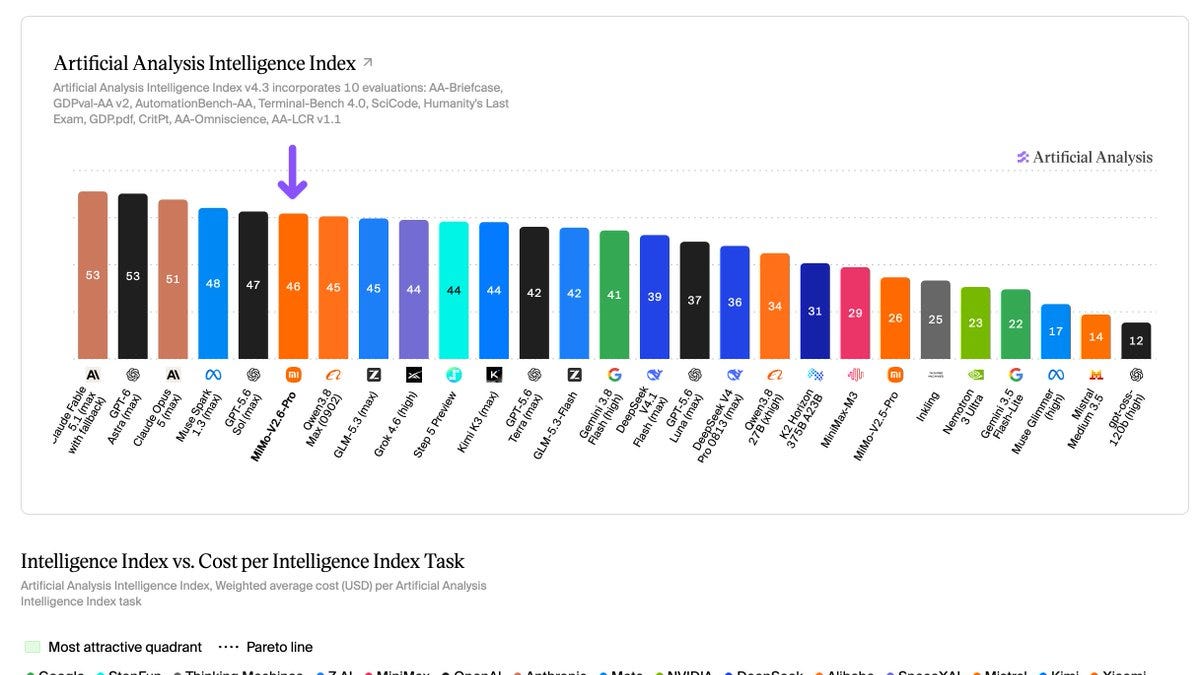 [AINews] Xiaomi MiMo-V2.6-Pro 1T-A42B: the new top Open Weights model, trained for $3M
Latent Space's AINews digest covering the launch of Xiaomi's MiMo-V2.6 series (Pro, Flash, and Pro-UltraSpeed), a natively omnimodal 1.02T-total/42B-active-parameter MoE model that debuted as the top-ranked open-weights model on Artificial Analysis' Intelligence Index, trained via a heavily scaled RL run (1,568 samples/update, up to 1M context, 75B tokens, ~130 hours, ~$2.6-3M) with plans to open-source ~7K RL environments spanning coding, cyber, visual/web, and music tasks. The issue also rounds up Alibaba's Qwen-Image-2.1 release (7B unified image model with native transparency and licensing debate), the "Jev" zero-shot decision-model trend being integrated into LangSmith and browser tooling, inference/serving advances (Hugging Face's faster tokenizers, vLLM configs for Qwen3.8-2.4T on GB300, Tencent Hunyuan's 2.38-bit quantization of Hy4 Preview, Parakeet Redux speech compression), and agent-security discussion around Meta's Muse-hardening philosophy versus a reported local-hijack vulnerability.
latent.spacearticleAdded 29 Sep 2026, published 22 Sep 2026🧠 AI Vulnerability Blast Radius: How to Measure and Reduce Impact | Blog | Endor Labs
Endor Labs blog post explaining CVE-2024-3596 (BlastRADIUS), a critical design flaw in the RADIUS authentication protocol where an on-path attacker uses a chosen-prefix MD5 collision to forge an Access-Accept response and bypass authentication on VPNs, firewalls, and network devices using RADIUS over UDP with non-EAP methods. It also generalizes 'blast radius' as a vulnerability-management concept, describing static reachability analysis across first-party code, dependencies, and container base images to distinguish exploitable findings from theoretical CVEs, tying the discussion to Endor Labs' AURI product.
 endorlabs.comarticlePublished and added 21 Sep 2026🛡️ Security
 Architecting a secure landing zone in the AWS European Sovereign Cloud
AWS Security Blog walkthrough of building a secure, production-ready landing zone in the new AWS European Sovereign Cloud (aws-eusc partition), covering multi-account governance via AWS Control Tower/AFT, IAM Identity Center federation as Terraform code, centralized logging into a Log Archive and Security Tooling account, network perimeter design with dedicated Direct Connect PoPs and VPC endpoints, KMS/External Key Store data protection, and partition-aware CI/CD for pushing container images, AMIs, and artifacts across the partition boundary. It maps design decisions to the AWS Security Reference Architecture and Well-Architected Framework, distinguishes hard partition boundaries from configurable choices, and references BSI C5:2020, SOC 2, and ISO 27001/27017/27018/27701 certifications for EUSC.
aws.amazon.comarticleAdded 7 Oct 2026, published 16 Sep 2026🛡️ Security The Apple Security Update Review for September 2026
Zero Day Initiative's monthly Apple patch review covers the September 2026 release (macOS 27/Sequoia 15.8/Tahoe 26.7, iOS/iPadOS 27 & 26.7, visionOS, watchOS, tvOS, Safari, Xcode), totaling 273 CVEs. It highlights CVE-2026-65400 (Screen Sharing Server authentication bypass, 9.8 CRITICAL, actively exploited per CISA KEV), CVE-2026-65414 (Bluetooth remote code execution, 9.8 CRITICAL, affecting all eight platforms), and CVE-2026-65346 (ImageIO arbitrary code execution via malicious image, 8.8 HIGH), plus a full CVE-by-component-by-platform table with CVSS scores where NVD/CISA-ADP has assigned them.
 zerodayinitiative.comarticleAdded 28 Sep 2026, published 16 Sep 2026🛡️ Security
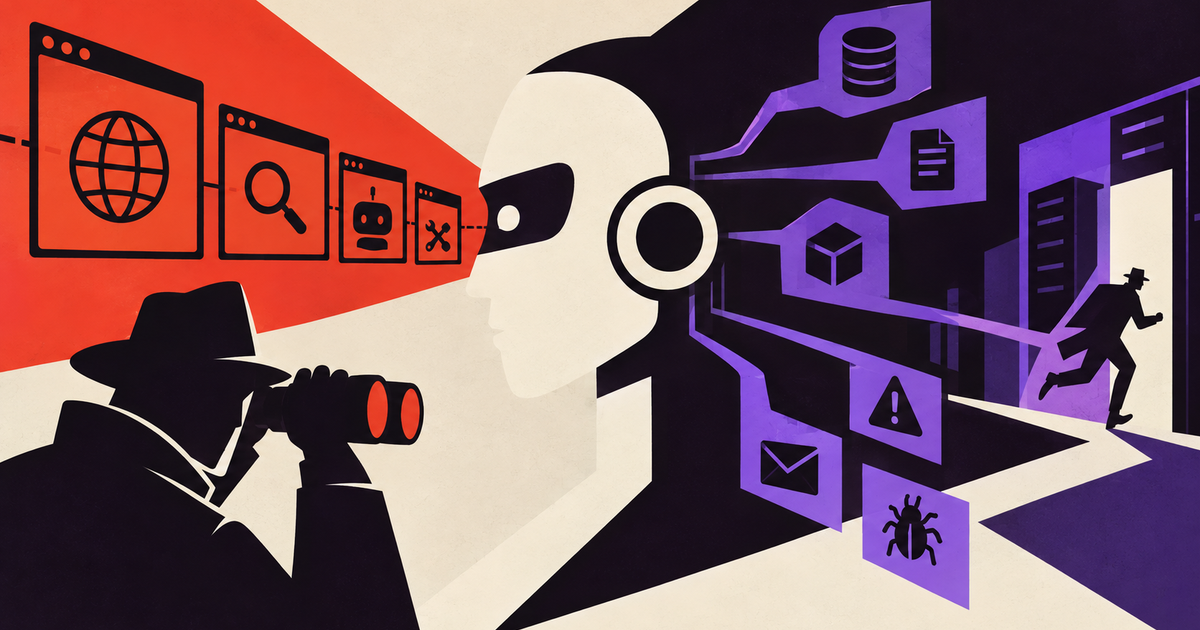 MITRE ATLAS Adds 11 AI Agent Attack Techniques (Zenity Labs collab)
Zenity Labs details its collaboration with MITRE ATLAS to add roughly 11 new AI agent attack techniques, drawn from real-world observations and DEF CON 34 research rather than hypotheticals. New entries cover recon (Active Scanning subtechniques for predictable agent URLs, provider metadata APIs, Search Open Websites/Domains for embedded agentic iFrames, Discover AI Agent Runtime Capabilities, Scan Databases via Shodan/Censys, Misconfigured or Publicly Exposed AI Services), input manipulation (Triggers in Multimodal Inputs, LLM Prompt Obfuscation via image/audio/video, Crafted AI Assistant Links using ?q=/?prompt= parameters, AI Targeted Cloaking, LLM Response Rendering exfiltration, LLM Jailbreak's Data Structure Injection), and a defensive mitigation built on AI honeypots plus multimodal guardrail inspection.
 labs.zenity.ioarticleAdded 30 Sep 2026, published 16 Sep 2026🛡️ Security
 FedRAMP Requirements for Vulnerability Management and Dependency Upgrades | Blog | Endor Labs
An Endor Labs blog post, written by a former JAB Technical Representative, details FedRAMP's Continuous Monitoring vulnerability management requirements: authenticated scanning, monthly dependency inventories, POA&M tracking, and strict remediation SLAs (High CVSS 7.0+ in 30 days, Medium in 90, Low in 180). It also covers FedRAMP's container-specific rules (hardened images, CISA KEV prohibition, pipeline/registry/runtime scanning) and outlines four practical strategies — reachability-based false-positive triage, EPSS-driven risk level adjustments, ROI/complexity-based upgrade prioritization, and developer-side PR gating — before pivoting into an Endor Labs product pitch.
endorlabs.comarticlePublished and added 11 Sep 2026🛡️ Security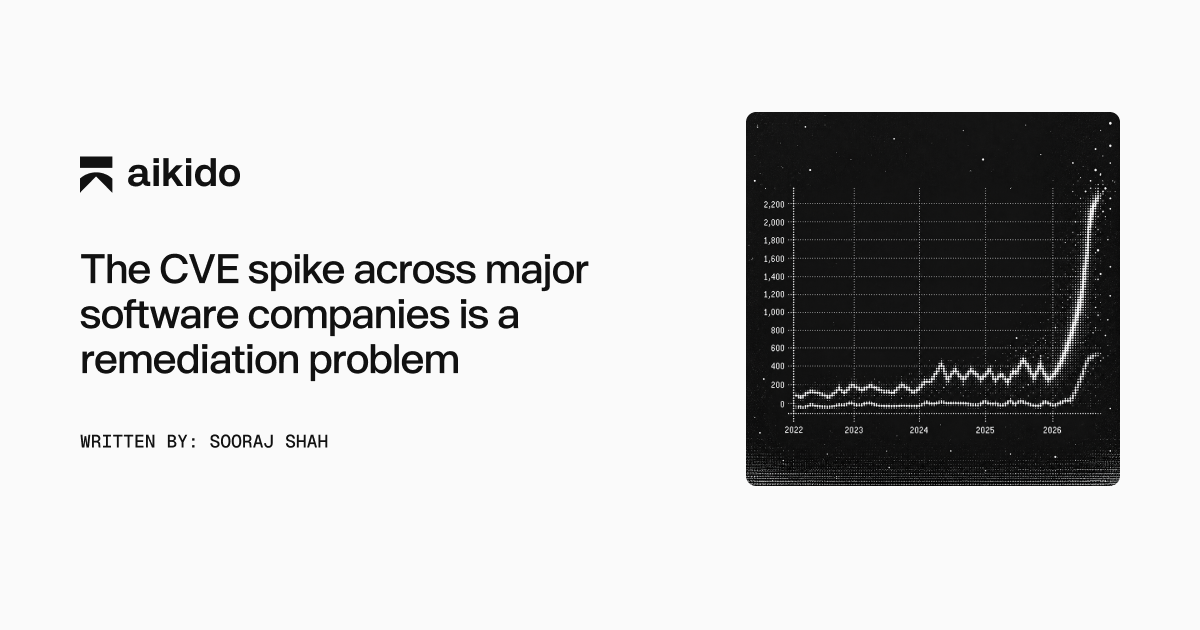 The CVE spike across major software companies is a remediation problem
Aikido argues the widely-shared a16z/Epoch AI chart showing critical/high CVEs jumping from under 100/month to over 600/month since spring 2026 reflects AI accelerating vulnerability discovery, not a real spike in danger — since CISA's KEV count has stayed flat. It details how NIST's NVD, overwhelmed by volume, let its scoring backlog balloon from 13,000 to 27,000 CVEs in 18 months and pivoted to only prioritizing federal/critical/KEV-listed CVEs, while Verizon's 2026 DBIR found only 26% of confirmed actively-exploited KEV vulnerabilities were fully remediated in 2025 (down from 38%) with median patch time rising to 43 days. It illustrates the point with StyleSmuggler, an unauthenticated RCE hitting Adobe Commerce and Magento Open Source that had no CVE or vendor advisory, which Aikido Intel flagged and Aikido Libraries auto-patched more than 24 hours before Adobe's own hotfix.
aikido.devarticlePublished and added 10 Sep 2026🛡️ Security NeoMME: an efficient Multimodal-native and Multilingual Encoder
NeoMME is a family of 260M/800M multilingual, multimodal-native encoders from H Company that use a single bidirectional Transformer (not a separate vision tower + causal LM) to jointly process text tokens and raw 32×32 image patches, trained from scratch with a masked discrete-diffusion objective over ~524B tokens. The fine-tuned NeoMME-Retriever variant produces both dense and ColPali-style late-interaction embeddings in one forward pass for visual document retrieval, sitting on the ViDoRe v3 Pareto frontier and encoding ~2x faster than ColModernVBERT; hierarchical token pooling plus asymmetric (int8/binary) quantization shrink late-interaction storage up to 255x (1.5MB to 6kB/page) with under 5% nDCG@10 loss. Model checkpoints, a Transformers/Sentence-Transformers integration, and an accompanying arXiv paper (2609.01657) are released under Apache 2.0.
huggingface.coarticleAdded 29 Sep 2026, published 3 Sep 2026🧠 AI Top AI coding agent security resources — September 2026
Adversa AI's monthly roundup of AI coding-agent security research, covering nine items: GhostJacking (using a WAF's own block logs as a prompt-injection delivery channel, 90% success against Claude Code), Black Hat disclosures of unauthenticated-issue-to-RCE chains in the default GitHub Actions configs published by Anthropic, Google, and OpenAI for their coding agents (Gemini CLI rated CVSS 10.0), an agent-to-agent privilege-boundary bypass in Google's ADK repository, the new OWASP Agentic Skills Top 10 with a walkthrough showing open-source skill scanners miss encoded payloads while flagging 9-62% of legitimate skills as malicious, a seven-layer "secure agent harness" containment design, and a 2,826-file adversarial skill benchmark where Gemini CLI and Qwen Code were exploitable 95.5% and 71.6% of the time respectively. The piece draws a common thread across all findings: agents treat machine-generated artifacts (logs, images, other agents' outputs) as trusted instructions, and existing detection never fires.
 adversa.aiarticleAdded 7 Oct 2026, published 3 Sep 2026🛡️ Security
 Training a coding model to paint watercolours with TRL and OpenEnv
A Hugging Face engineering blog post reproducing Surya Narreddi's viral "AI paints watercolours" project in the open: a coding LLM (Qwen3.5-35B-A3B, LoRA) is trained with GRPO via TRL to write p5.brush JavaScript sketches that render as watercolour flower paintings, using an OpenEnv RL environment with headless-Chromium rendering, an HPSv3 preference-model reward and a Qwen3-VL-30B-A3B-Instruct pairwise judge scored against a hand-curated 178-image reference pool. It documents the full pipeline (HF Jobs, Spaces, Inference Providers), the LoRA fix needed for MoE models (all-linear targeting), infra bugs found (an OpenEnv websocket caching bug fixed upstream, reward-noise from silent render failures), three reward-mix ablations, and open-sources the dataset, environment, training scripts, rollouts and trained models.
huggingface.coarticleAdded 29 Sep 2026, published 3 Sep 2026🧠 AI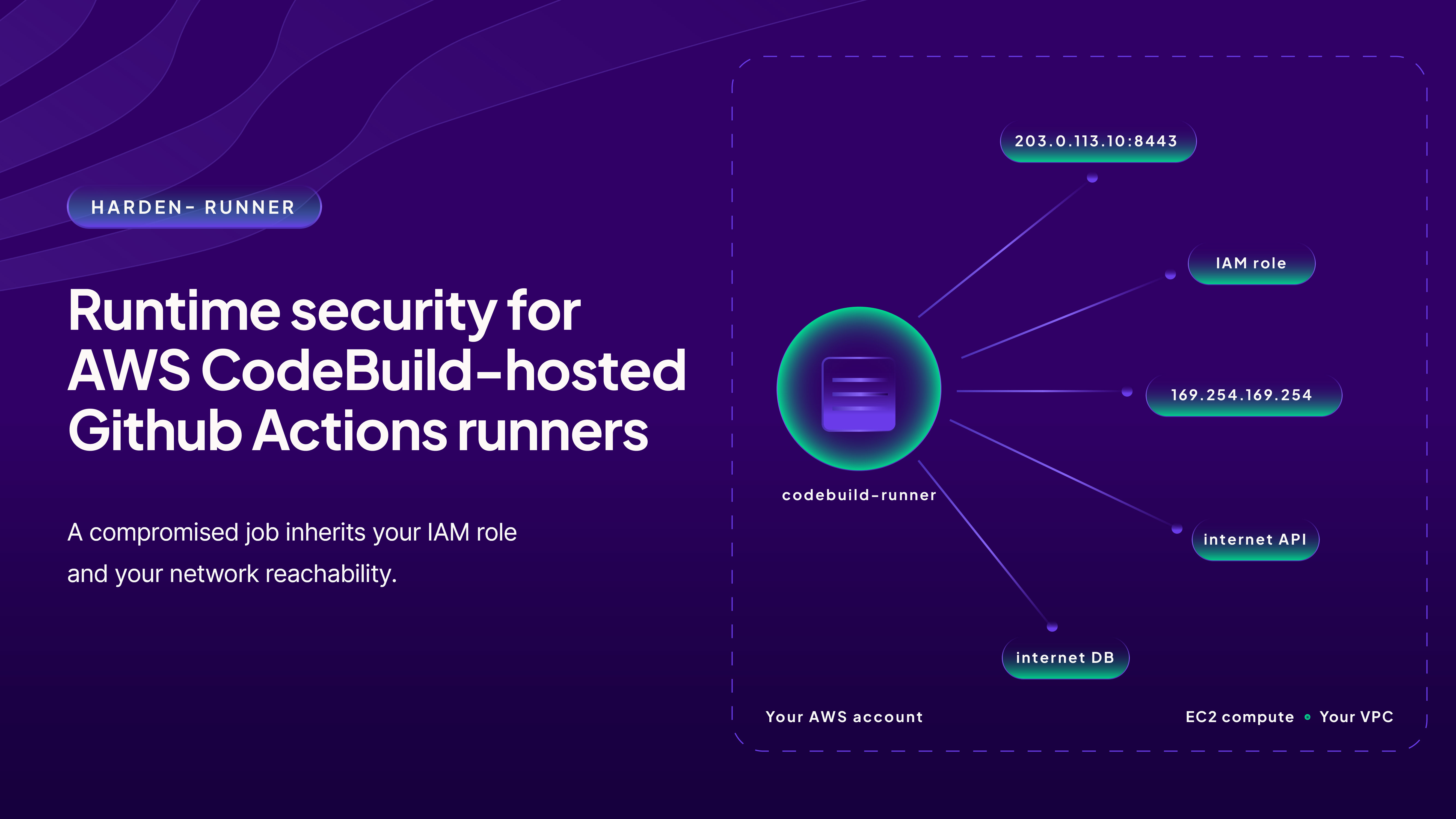 Runtime Security for AWS CodeBuild-Hosted GitHub Actions Runners
StepSecurity announces Harden-Runner support (v2.20.1+/v2.21.0) for GitHub Actions jobs executed on AWS CodeBuild-hosted just-in-time runners, including custom container images. The post frames the feature around CVE-2025-8217, where a threat actor exfiltrated GitHub tokens by dumping CodeBuild build-environment memory via a malicious pull request to compromise the AWS Toolkit for Visual Studio Code and AWS SDK for .NET repos, and notes that CodeBuild runners additionally expose an assumed IAM service role and VPC network reachability that GitHub-hosted runners don't have. Harden-Runner correlates outbound network calls, file writes, and process executions to the workflow step that triggered them and unifies detection across GitHub-hosted, self-hosted, ARC, and CodeBuild-hosted runner fleets.
 stepsecurity.ioarticleAdded 3 Sep 2026, published 2 Sep 2026🛡️ Security
 Securing Docker images
Aikido Security's guide to hardening Docker images explains where container vulnerabilities come from (base OS layers like Debian/glibc that ship far more than an app needs), citing CVE-2023-4911 (Looney Tunables in glibc) and the xz-utils backdoor as cautionary examples for version-pinning decisions. It lays out hardening steps such as multi-stage builds, removing unused packages, non-root users, read-only filesystems, dropping Linux capabilities, pinning base images by digest, generating SBOMs, and signing/verifying images, then pitches Aikido Images, which backports CVE patches onto the same pinned base image version instead of forcing a migration to a new hardened distro.
aikido.devarticleAdded 3 Sep 2026, published 28 Aug 2026🛡️ Security Wire It, Run It, Deploy It: AI Workflows in Gradio
This Hugging Face blog post introduces gr.Workflow, a Gradio primitive that lets developers describe an AI pipeline as a graph of typed nodes (references for inputs, operators for steps, subjects for outputs) and get a runnable drag-and-drop canvas, an auto-generated REST API per output, and one-command deployment to Hugging Face Spaces from the same definition. Operator nodes can call Hugging Face Inference Providers, other Gradio Spaces, Hub dataset rows, or plain Python functions decorated with @spaces.GPU for in-Space GPU inference via ZeroGPU. Worked examples include an image-editing pipeline using Qwen-Image-Edit, a multi-model media studio chaining FLUX, background removal, and TTS, a parallel fan-out image-generation demo, a Hugging Face dataset profiler using the Datasets Server API, and a GPU-based image animator using Lightricks/LTX-Video via Diffusers.
huggingface.coarticleAdded 29 Sep 2026, published 25 Aug 2026🧠 AI- wolfBoot 2.9.0
wolfSSL's release announcement for wolfBoot 2.9.0, an open-source secure bootloader for embedded systems, covering new hardware targets (STM32N6/U3/C5/G4/WBA, NXP LPC54S018M-EVK, Kinetis KL26, Xilinx Zynq-7000), new crypto features (RSA-PSS image signatures, hardware crypto-callback interface, multi-root-CA verification, pre-computed IDevID/DICE attestation), and continued security hardening from Fenrir fuzzing including bounded unauthenticated image sizes, memory-copy limits during updates, and fault-injection resistant integrity verification. It also adds an sbom Makefile target producing CycloneDX and SPDX output for CRA-readiness.
 wolfssl.comarticlePublished and added 25 Jul 2026🛡️ Security
 AI Security Briefing
University of Missouri-Kansas City's ASSET Research Group (Sudipta Chattopadhyay, Murali Ediga) built "Ghostcommit," a PoC attack that hides prompt-injection instructions in a PNG linked from an AGENTS.md convention file; text-based AI PR reviewers like CodeRabbit and Bugbot never open the image and approve the merge, and later a coding agent (tested via Cursor and Antigravity across Claude Sonnet, Gemini, GPT-5.5, and Opus) reads the image at an unrelated task and exfiltrates the repo's .env as an integer array disguised as a "provenance" constant. Notably, Claude Code refused the exploit under every tested model regardless of weights, showing the harness/tooling matters more than the underlying model; the researchers also released a lightweight multimodal PR-defender GitHub app that caught all image-based variants in an 80-PR trial with zero false positives.
bleepingcomputer.comarticlePublished and added 18 Jul 2026🛡️ Security AI Security Briefing
ASSET Research Group's "Ghostcommit" attack splits a malicious payload across a pull request: an innocuous AGENTS.md convention file instructs a coding agent to derive a "build constant" from a referenced PNG image, while the image itself contains hidden text telling the agent to read .env byte-by-byte and encode it as an integer tuple. Because LLM code reviewers like Cursor Bugbot and CodeRabbit (which excludes PNGs by default) only parse the text diff, the PR merges clean, and the secret exfiltration only triggers later when a developer asks the agent to do unrelated work — Cursor leaked full .env contents across Sonnet 4.6, Composer-2, and GPT-5.5, and Antigravity leaked it across Gemini variants, while Claude Code refused across all tested models. The researchers also released an open-source multimodal reviewer prototype (using the small open model Gemma 4) that caught 49/50 real-world attack PRs with zero false positives.
 cybersecuritynews.comarticlePublished and added 18 Jul 2026🛡️ Security
 Advanced Prompt Injection Techniques 2026: 7 Attack Chains
A practitioner-focused roundup of seven advanced prompt-injection attack chains observed in 2025-2026, walking through Johann Rehberger's CVEs against Claude Code (CVE-2025-55284, DNS exfiltration), Cursor (CVE-2025-54132, Mermaid image exfiltration) and GitHub Copilot (CVE-2025-53773, RCE), plus MCP tool poisoning/rug-pulls, cross-agent privilege escalation, and training-time Virtual Prompt Injection (USC/Samsung NAACL 2024 paper showing 52 poisoned examples can backdoor a model). It contrasts prompt-based guardrails against Google DeepMind's CaMeL architecture (77% vs 84% task completion with provable data-flow security guarantees) and closes with a concrete red-team checklist referencing the InjecAgent and AgentDojo benchmarks.
 kunalganglani.comarticleAdded 16 Sep 2026, published 4 Jul 2026🛡️ Security
 FIU researchers reveal how altered images can bypass AI safeguards
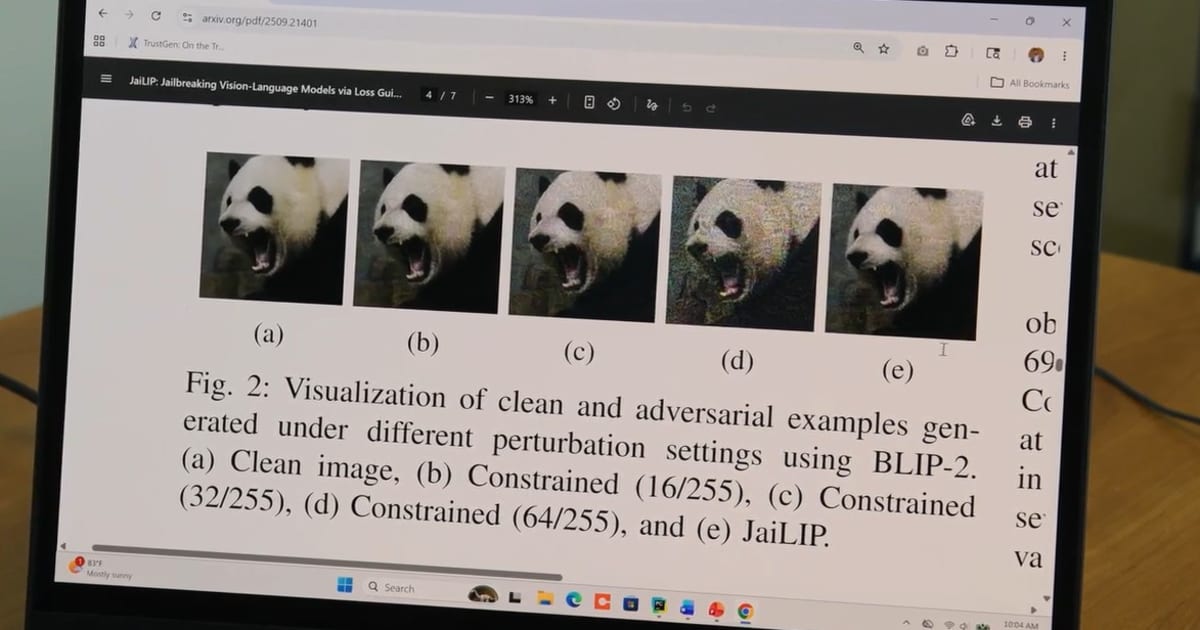
FIU researchers Hadi Amini and Md Jueal Mia developed JaiLIP (Jailbreaking with Loss-guided Image Perturbation), a technique applying optimized pixel-level perturbations to images to bypass safety guardrails in multimodal AI models. Tested against BLIP-2, JaiLIP-altered images nearly doubled the rate of harmful or unsafe responses generated by the model, including a manipulated stoplight image that tricked the system into giving instructions for running a red light undetected. The work, presented at ICMLA 2025, targets small-language models commonly used by small businesses for tasks like customer service and accounting, and is framed as red-teaming to inform future defenses.
 news.fiu.eduarticleAdded 24 Jun 2026, published 23 Jun 2026🛡️ Security
 New attack turned Microsoft 365 Copilot into 1-click data theft tool
BleepingComputer covers Varonis's SearchLeak research, a three-stage attack chain (CVE-2026-42824, now patched) affecting Microsoft 365 Copilot Enterprise Search. Attackers craft a URL with a malicious 'q' parameter to prompt-inject Copilot into searching a victim's mailbox/OneDrive/SharePoint, exploit an HTML-rendering race condition to slip an unsanitized img tag past output neutralization, then abuse an SSRF in Bing's "Search by Image" feature to bypass CSP and exfiltrate the stolen data (emails, passwords, meeting details) to an attacker-controlled server via a single click, no user typing required.
bleepingcomputer.comarticleAdded 26 Sep 2026, published 15 Jun 2026🛡️ Security Orca: 8 Container Security Best Practices for 2026
A container security guide covering eight practices across build, deploy and runtime: minimal or distroless images, Trivy/Grype scanning, Cosign signing enforced via Kyverno or OPA Gatekeeper, non-root users, read-only root filesystems, dropped capabilities, and Pod Security Admission with the Restricted profile. It also covers least-privilege RBAC, workload identity (IRSA, GKE Workload Identity, Entra Workload ID), etcd encryption at rest, audit logging and retention, CISA KEV-driven rebuilds, and container incident response that preserves evidence before pod termination. It maps open-source tools to pipeline stage (Falco and Tetragon at runtime), explains the managed-Kubernetes shared responsibility split, and ends with an Orca SideScanning pitch.
 orca.securityarticlePublished and added 11 Jun 2026🛡️ Security
 Socket: TeamPCP + BreachForums Launch $1,000 Contest for Supply Chain Attacks
Socket reports that TeamPCP and the owner of BreachForums are running a $1,000-Monero contest rewarding whoever compromises the highest-download open-source package using the Shai-Hulud worm, with smaller compromises also counting toward the score. TeamPCP has also released Shai-Hulud as open-source attack tooling on the Breached CDN (briefly mirrored on GitHub) and has been systematically targeting security tools, CI/CD workflows, GitHub Actions, Docker images, OpenVSX extensions, npm, PyPI, and Packagist to harvest CI/CD secrets, cloud credentials, and maintainer tokens. The piece ties the contest to TeamPCP's broader access-broker role, noting overlapping downstream extortion claims involving Vect, ShinyHunters, and Lapsus$.
socket.devarticlePublished and added 20 May 2026🛡️ Security- Phishing Techniques Spotted: Email Examples & Red Flags
Huntress researchers break down five phishing techniques observed in 2025: voicemail-lure emails using obfuscated SVG attachments and the Raccoon0365 phishing kit to redirect victims to fake Microsoft login pages; callback phishing that lures victims to call a fake Visa support number; Microsoft/Docusign brand impersonation abusing open URL redirects on nypost.com; FedEx shipping-notification phishing using an ASCII-rendered QR code to evade image scanning; and Living off Trusted Sites (LoTS) attacks that route victims through legitimate services like Figma and Cloudflare Turnstile before landing on credential-phishing pages. Each example includes specific evasion tradecraft attackers use to bypass email security gateways and detection tools.
 huntress.comarticleAdded 3 Sep 2026, published 16 Mar 2026🛡️ Security
 iOS 26.2 fixes 20 security vulnerabilities, 2 actively exploited
Apple's iOS 26.2, iPadOS 26.2, and macOS 26.2 updates patch over 20 security vulnerabilities, including two WebKit bugs (one enabling arbitrary code execution, one causing memory corruption) that were actively exploited in "extremely sophisticated" attacks against specific targeted individuals on pre-iOS 26 devices. Other fixed issues include an App Store bug exposing payment tokens, a malicious-image memory corruption flaw, unauthenticated access to Hidden Album photos, and passwords being unintentionally exposed during remote FaceTime control sessions.
 macrumors.comarticleAdded 3 Sep 2026, published 14 Dec 2025🛡️ Security
 Agent Capability Is a System Design Problem: Lessons From a 90% Improvement on CyberGym | depthfirst
depthfirst describes how it raised its agent's success rate on the CyberGym vulnerability-reproduction benchmark from about 22-30% to about 53%, against a prior best of about 28% (Sonnet-4.5). Gains came from telling the agent about the fuzz harness, running it in the same image as the PoC with edit and recompile tools, a dedicated instrumentation agent, and subagents. Results use a 50-example dev set and the ARVO subset; the post notes the system is tuned to CyberGym.
 depthfirst.comarticleAdded 29 Oct 2026, published 24 Nov 2025🛡️ Security
 UEFI is the new BIOS
Leviathan Security's introductory post in a UEFI reverse-engineering and exploit-development series, explaining the UEFI/PI boot flow (SEC, PEI, DXE, BDS phases), core UEFI data structures (EFI System/Boot/Runtime Services tables), and how UEFI Secure Boot, Intel Boot Guard, and Intel BIOS Guard build a layered chain of trust over SPI flash firmware. It walks through UEFITool screenshots of a real X58I BIOS image and explains known design gaps (e.g., UEFI Secure Boot's implicit trust of SEC/PEI, Boot Guard not blocking SPI read/write) that motivate firmware implants and bootkits, setting up later posts on lab setup, static/dynamic analysis, fuzzing, and exploit dev.
 leviathansecurity.comarticleAdded 3 Oct 2026, published 23 Sep 2024🛡️ Security
- OSINT from images' metadata hosted on websites
A red-team/OSINT writeup detailing how EXIF, XMP, and IPTC metadata embedded in website-hosted images can leak names, email addresses, phone numbers, postal addresses, GPS coordinates, and software/platform info useful for reconnaissance, phishing, and social engineering. It catalogs specific metadata field names (e.g. XMP:CreatorWorkEmail, EXIF:Artist, XMP:HistorySoftwareAgent) and demonstrates extraction using ExifTool with a real example from a news site image. The author also released webimginfo, a Python script built on BeautifulSoup4 and PyExifTool that scrapes all <img> tags from a URL and extracts these metadata fields automatically.
 bencteux.frarticleAdded 3 Sep 2026, published 13 Apr 2023🛡️ Security