 Discovering vendor-specific vulnerabilities in Android | Oversecured Blog
Oversecured describes extending its Android scanner to system APIs and to Samsung's Android build, after comparing Google and Samsung framework JARs and about 400 system services. It explains AIDL service permission checks and new control-flow analyses. Examples include Samsung's unchecked semIsBackupEnabled(), a broadcast that reboots the device, and a LaunchAnyWhere in Settings. Samsung had fixed over 60 reported issues.
 oversecured.comwriteupAdded 29 Oct 2026🛡️ Security
 Gheist: Attempted Scaled Abuse of Stolen GitHub Tokens Stumbles
Gheist is a campaign tracked by Wiz Research since 15 September 2026 that uses stolen GitHub tokens to push a sync-check workflow on ci-sync-* branches in every reachable repository. The workflow prints base32-encoded secrets into logs, which the tool downloads through the GitHub API and then deletes. Over 13,500 branches from 850+ accounts were recovered. The post covers the two tool variants, a buggy self-hosted runner payload, GitHub's approval hold (which does not cover private repositories), overlaps with other campaigns, hunting queries, IOCs and hardening steps.
 wiz.iowriteupPublished and added 25 Oct 2026🛡️ Security
 New Evidence Shows LiteLLM Secret-Stealing Workflows Ran 11 Days Before Supply Chain Attack
Socket's Threat Research team reports that malicious cache.yml workflows ran in the BerriAI/litellm repository on 10 and 12 October 2026, eleven days before the 21 October release attack that published litellm==1.107.0. Each commit pushed to a short-lived ci-tmp-<hex> branch, then deleted it, sending base64-encoded CI secrets to webhook.site. Evidence comes from Actions metrics and environment deployment records; 20 secret names were exposed.
 socket.devwriteupPublished and added 23 Oct 2026🛡️ Security
- Field Notes: Reconstructing an Attacker’s Workflow
Field note from dfir.ch on PowerShell scripts an attacker left on disk during an incident: a file-watching command runner using Invoke-Expression, a fake Windows credential prompt that validates passwords via Start-Process and logs them in cleartext, AD computer enumeration with WMI access testing, and SMB share discovery via NetShareEnum. It notes where script labels overstate what they prove and lists hunting strings for Event IDs 4104, 4103, 4688 and Sysmon 1.
 dfir.chwriteupAdded 24 Oct 2026, published 22 Oct 2026🛡️ Security
- One parser, two bugs, many routers: Exploiting Broadcom WiFi across eCos, Linux
Long-form write-up of a Hexacon 2026 talk on a WPS EAP reassembly overflow in Broadcom's proprietary 802.11 stack, present since 2010 and incompletely patched in 2018. It is remotely triggerable over WiFi without the network key. It gives information disclosure and code execution on eCos (BCM3380, BCM3383, BCM33834) and Linux (BCM3390, BCM65xx, BCM68xx) platforms. Exploited on Belgian ISP routers from Proximus, VOO and Orange. Includes a 90-day disclosure timeline, and Broadcom refused to assign a CVE.
 quentinkaiser.bewriteupAdded 19 Oct 2026, published 16 Oct 2026🛡️ Security
- Field Notes: EtherRAT Distributed Through a Legitimate Intune Workflow
DFIR case where a malicious MSI impersonating Advanced IP Scanner, sourced from a fake GitHub repo found via Bing, was imported by a customer into Microsoft Intune and deployed to four endpoints, running a Node.js-based EtherRAT chain. It traces the infections by correlating the MSI ProductCode, MDMAppInstaller/omadmclient process ancestry and Intune app inventory (Graph PowerShell query). It also covers renamed node.exe hash-hunting pitfalls, Ethereum RPC dead-drop C2 traffic, a screen-capture script and a second impersonating repo.
dfir.chwriteupAdded 14 Oct 2026, published 13 Oct 2026🛡️ Security  How a Misconfigured CI Workflow Became an npm Supply-Chain Compromise | Blog | Endor Labs
Endor Labs breaks down the May 11, 2026 compromise of 42 @tanstack/* npm packages (84 malicious versions) that carried valid SLSA provenance. The attacker chained a pull_request_target "Pwn Request", GitHub Actions cache poisoning across the fork/base boundary, and OIDC token extraction from Runner.Worker memory, then published directly to npm without stealing any credential. It explains why 2FA, trusted publishing, provenance and branch protection all failed, and lists mitigations: split pull_request_target workflows, treat the cache as untrusted, scope id-token: write to a publish job, pin actions to SHAs, require environment approval, use egress allowlists.
 endorlabs.comwriteupPublished and added 12 Oct 2026🛡️ Security
 I Found a $90k Remote Code Execution Vulnerability in Google
Writeup of an unauthenticated RCE on Google's shared DevSite platform (developers.google.com, firebase.google.com, developer.android.com and others). The Flask session cookie embedded a pickled OAuth2WebServerFlow containing the OAuth client_secret, which was also the Flask SECRET_KEY. That let the author forge signed sessions carrying a malicious pickle that the OAuth callback unpickled; RCE was proven safely with time.sleep timing and negative controls. It earned a $90,000 bounty and lists a four-part fix.
 simonkoeck.comwriteupPublished and added 12 Oct 2026🛡️ Security
 GhostAction Phishing Campaign
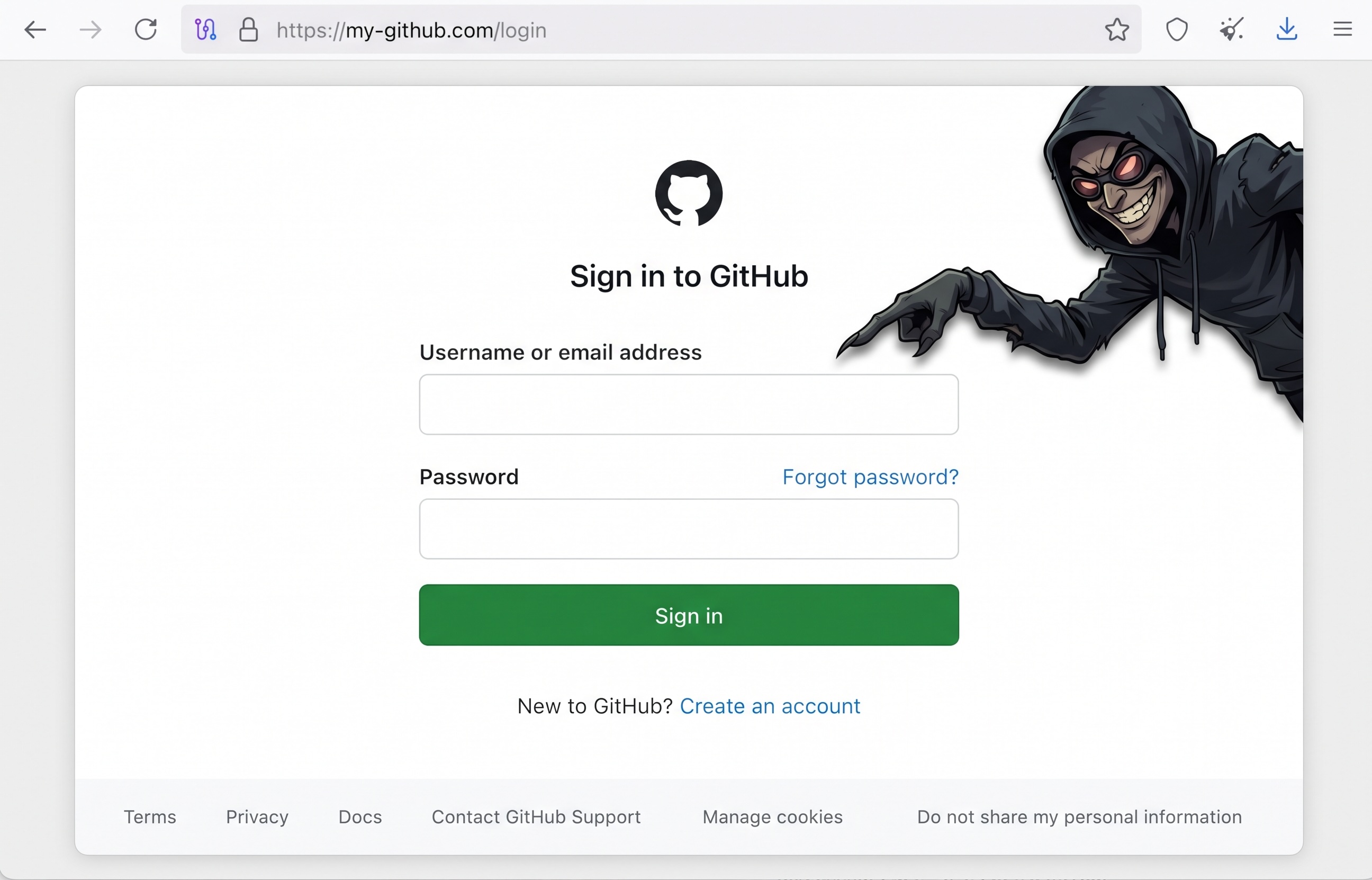
OpenSourceMalware analyzes a targeted phishing email from my-github[.]com (same server 193.32.204[.]199 as GhostAction's CI/CD exfiltration) that impersonated a GitHub new-sign-in alert. Recovered HTML and a HAR show a GitHub reverse proxy that captures passwords and TOTP codes, rewrites GitHub subdomains, and injects JavaScript that silently completes an OAuth device flow with repo, workflow and read:org scopes, then exfiltrates the token to TCP/8443. It includes a per-session redirect controller, mutable redirect behavior seen in URLScan, a victim's audit-log outcome (MFA stopped escalation), IOCs, and response guidance.
 opensourcemalware.comwriteupPublished and added 11 Oct 2026🛡️ Security
 GhostAction Attack Escalates By Targeting GitHub Users
OpenSourceMalware's analysis of the latest GhostAction wave, where compromised GitHub accounts get malicious Actions workflows (security-audit.yml) injected across every writable repository, including an Oct 8 sweep of 346 repos via kitao and henrywoo. The new payload greps the checkout and full git history for credential patterns (AWS, Anthropic, OpenAI, GitHub PATs) and POSTs them over HTTP to 193.32.204.199/?c=monami. It also covers infrastructure reuse (phishing-heavy legacy IP, scanner activity), new watchlist domains my-github.com and my-gitlab.com, GitHub code-search hunting queries, a detection-confidence table, IOCs and incident response steps.
opensourcemalware.comwriteupAdded 10 Oct 2026, published 9 Oct 2026🛡️ Security GhostAction Returns: Malicious “Security Audit” Workflows Now Mine Credentials from Entire Git Histories
StepSecurity details a new wave of the GhostAction campaign in which attackers used compromised maintainer accounts of Takashi Kitao (pyxel) and Henry Wu (athenadriver, Uber) to push malicious "Security Audit" GitHub Actions workflows to 345 repositories in minutes. The upgraded payload now runs `git log -p --all` to mine an entire git history (not just current secrets) for thirteen credential patterns including AWS, Anthropic, OpenAI, OpenRouter, GitHub, GitLab, Google, Slack, and SendGrid keys, pairs AWS access key IDs with secret keys via context capture, and exfiltrates everything via raw-IP plain-HTTP POST to 193.32.204.199, bypassing DNS-based defenses. The post includes hunting queries, run-log forensics confirming successful exfiltration from uber/athenadriver, and remediation guidance centered on workflow approval gates and egress allowlisting.
 stepsecurity.iowriteupPublished and added 9 Oct 2026🛡️ Security
 New GhostAction Wave Hits Hundreds of Repos, Expanding Beyond CI/CD Secrets to Cloud Credentials
Socket documents an October 8, 2026 wave of the GhostAction campaign in which two compromised GitHub maintainer accounts (henrywoo and kitao) pushed a malicious security-audit.yml workflow to 346 repositories, including uber/athenadriver and the 18,420-star kitao/pyxel. Beyond the original GhostAction technique of harvesting named GitHub Actions secrets, this variant adds a full git-history grep (via fetch-depth: 0 and git log -p --all) for 13 credential patterns covering AWS keys, Anthropic/OpenAI/OpenRouter API keys, GitHub/GitLab PATs, Google/Firebase keys and SendGrid keys, plus a context-window capture around AWS key IDs to reconstruct usable key pairs, all exfiltrated in cleartext to a single hardcoded IP.
socket.devwriteupPublished and added 9 Oct 2026🛡️ Security ETDI: Comprehensive MCP Security Framework
ETDI (Enhanced Tool Definition Interface) is a proposed security extension to the Model Context Protocol that adds cryptographically signed and versioned tool definitions, OAuth 2.0 scope-based permissions, Cedar-policy-driven context-aware access control (via engines like Amazon Verified Permissions/OPA), and call-stack verification to stop tool chaining and privilege escalation. It is designed to counter two named MCP threat classes — Tool Poisoning (spoofed/impersonated tool definitions) and Rug Pull attacks (post-approval silent modification of tool behavior) — with concrete pseudocode for signature verification, version/integrity checking, and policy evaluation. The page functions as an implementation guide for MCP client/server builders wanting to harden tool approval and invocation flows.
 vulnerablemcp.infowriteupAdded 8 Oct 2026🧠 AI
- lee1981 (@lee1981b) on X
A detailed "CVE of the Day" thread analyzing CVE-2026-76471, a critical (CVSS 9.8) Cisco advisory covering insufficient NX-API input validation (CWE-122 heap-based buffer overflow) on Nexus 3000/9000 standalone NX-OS and a lower-severity credentialed variant on UCS 6300 Fabric Interconnects via UCS Manager XML API. It compiles Cisco's fixed-software versions per platform, notes the temporary Live Protect shield lp00074, and walks through a six-step SOC evidence-preservation and correlation playbook (scoping affected devices, preserving logs/crash artifacts, reviewing API/shield telemetry, correlating device outcomes, remediating, and verifying post-patch state) while flagging that CISA KEV and FIRST EPSS had no data on the CVE at research time.
 x.comwriteupPublished and added 8 Oct 2026🛡️ Security
 UAT-11985: AI-assisted event lures delivering real-time Google AitM phishing
Cisco Talos details UAT-11985, a spear-phishing campaign against Taiwan-based research organizations (impersonating institutions like the Taiwan European Union Centre and NCCU Institute of International Relations) that used AI-assisted, templated lure emails and poster-based QR code phishing (quishing) to drive victims to a real-time adversary-in-the-middle phishing kit. The kit impersonates Google sign-in across zh-CN/zh-TW/en locales, uses a split HTTP-POST/WebSocket architecture to mirror Google's live authentication flow and dynamically push MFA challenge screens, enabling full session-token theft and MFA bypass. Talos attributes the kit's localization architecture and lexical choices to a Simplified Chinese-speaking developer and publishes ClamAV/Snort coverage plus IOCs on GitHub.
 blog.talosintelligence.comwriteupPublished and added 8 Oct 2026🛡️ Security
 Configuring your AI vulnerability harness, Part 2: The steering file
Part 2 of an AWS Security Blog series detailing the design of a "steering file" — a persistent instruction set (deployable as a Kiro steering file, Kiro skill, or Claude Code CLAUDE.md) that constrains an LLM performing vulnerability triage. It walks through five configuration sections: requiring structural/dataflow verification before reporting findings, replacing self-reported confidence with a weighted formula based on binary structural signals (e.g., 0.30 weight for confirmed taint flow), mapping infrastructure controls (AWS WAF, IAM) to severity multipliers with a 0.15 floor, incorporating CISA KEV and EPSS threat-intelligence boosts capped at +0.50, and a four-tier priority classification that suppresses low-confidence P3 findings. Validation against a 10-vulnerability test app showed the steered model eliminated fabricated findings and correctly downgraded mitigated vulnerabilities while preserving full severity for a command injection reachable only via authenticated access.
 aws.amazon.comwriteupAdded 8 Oct 2026, published 7 Oct 2026🧠 AI
 16 Malicious Firefox Extensions Steal Cryptocurrency Wallet Credentials
Socket Threat Research uncovered a coordinated campaign of 16 malicious Firefox extensions split into a Rabby Wallet clone family (4 extensions, full repackaged Rabby codebase) and an OKX Wallet-impersonating "Portal WALLET" family (12 extensions), all hooking wallet import flows to steal mnemonic seed phrases and private keys and exfiltrate them via GET/POST/sendBeacon to attacker-controlled Cloudflare Workers endpoints under the icy-star-f45c.workers.dev namespace. The writeup includes campaign markers (EQOx7EIPZSNi), background.js SHA-256 hashes, extension IDs/XPI hashes, and ties the activity to a prior August 2026 crypto-theft extension campaign Socket tracked, plus concrete detection and incident-response guidance.
socket.devwriteupPublished and added 7 Oct 2026🛡️ Security CITRIX 0-DAY EXPLOITS: CVE-2026–88771 & CVE-2026–88772 IN THE WILD
An incident-response style deep dive into active in-the-wild exploitation of Citrix NetScaler ADC/Gateway via CVE-2026-88771 (unauthenticated RCE through log-poisoning of ns_monuploadd_err.pl) and CVE-2026-88772 (DTLS memory overflow), part of 8 CVEs disclosed by Citrix on September 27, 2026. The author reverse-engineers the full post-exploitation toolkit dropped after root is obtained: SLAPSHOT (a Perl/Python loopback TCP tunneler/pivot), WHIPSHOT (a disguised PHP web shell served via fake CSS paths), the Platypus C2 agent, and a Perl "Pitboss" dropper script (with full decoded source and an embedded SHA-256-protected PHP web shell) that creates a rogue superuser, SUIDs /bin/sh, exfiltrates NetScaler config, and patches httpd.conf for persistence. It closes with extensive IOCs (C2 IPs, file hashes, paths, credentials) and patch guidance for affected NetScaler builds.
 theravenfile.comwriteupPublished and added 6 Oct 2026🛡️ Security
 SubQuery Ecosystem Compromise: Hidden Credential Theft and Backdoors
StepSecurity's investigation of @subql/common@5.8.3, a malicious npm release in the SubQuery Web3 indexing framework's monorepo, found a heavily obfuscated postinstall/import-time payload (base64+XOR+gzip inside a function constructed via Function()) that spawns a detached worker to steal credentials (.npmrc, .env, AWS, SSH, kubeconfig, Vault, cloud secrets), read GitHub Actions runner memory for CI secrets, inject a camouflaged "Run Copilot" GitHub Actions workflow to exfiltrate repo secrets, and provide a remote shell/PTY over an encrypted channel to ci-artifacts.dev. The release was published via a compromised build pipeline: a workflow modification swapped the real build output for an externally downloaded, unsigned tarball from that same C2 domain immediately before publish, and the authors provide IOCs and remediation steps (credential rotation, host isolation, domain blocking).
stepsecurity.iowriteupPublished and added 5 Oct 2026🛡️ Security- Field Notes: Reconstructing the Attacker's LSASS Dump
DFIR.ch field notes on an incident where attackers used Ricardo J. Ruiz's TrickDump tool to dump LSASS without creating a conventional minidump file, instead leaving lock.json, shock.json, barrel.json and a ZIP of randomly-named memory-region chunks. The authors reconstructed the dump with TrickDump's create_dump.py and parsed it with pypykatz, confirming the attacker actually recovered reusable Kerberos credential material rather than just detecting that LSASS was touched. Includes hunting guidance (Sysmon EID 10 process-access telemetry, SeDebugPrivilege enablement, multi-binary workflows) and notes TrickDump fails against LSASS protected by PPL.
dfir.chwriteupAdded 1 Oct 2026, published 30 Sep 2026🛡️ Security - Quoting Anthropic Frontier Red Team
A quoted excerpt from Anthropic's Frontier Red Team report on GLM-5.3 finds that, across 100 randomly selected tasks from an internal Binary Exploitation benchmark, GLM-5.3 achieved full control-flow hijacks in 4% of trials and Claude Mythos Preview in 6%, while earlier models (Claude Opus 4.6, GLM-5.2) succeeded in none. Anthropic frames this as a meaningful threshold crossed in advanced cyber capability, part of ongoing frontier-model dangerous-capability evaluation.
 simonwillison.netwriteupPublished and added 29 Sep 2026🧠 AI
 Citrix NetScaler CVE-2026-88772 — DTLS preauth memory overflow
watchTowr Labs reverse-engineers CVE-2026-88772, a preauth DTLS memory overflow in Citrix NetScaler ADC/Gateway's nsppe binary, exploited in the wild as a zero-day and fixed in Citrix bulletin CTX697096. The writeup walks through patch diffing between build 14.1-73.30 and 14.1-73.37, crafting malicious DTLS handshake fragments that trick NetScaler's reassembly logic into copying about 174KB of NSB chain data into a 35,840-byte scratch buffer, and the full exploitation path from crash to a fake-vtable hijack, ROP-based mprotect call, and shellcode execution, plus a public detection artefact generator.
 labs.watchtowr.comwriteupAdded 1 Oct 2026, published 29 Sep 2026🛡️ Security
 Getting the Source Right, Not Just the Fact: Source-Aware Verification for MCP Agents
A research writeup from Multiverse Computing introducing ProvenanceGuard, a post-generation verification layer for MCP-based LLM agents that checks not just whether a claim is factually supported somewhere in retrieved evidence, but whether it is attributed to the correct source tool or document, a failure mode they call cross-source conflation. Using local models (MiniLM for source routing, a DeBERTa NLI verifier, and a local LLM for claim decomposition) plus a RARR-style repair loop, it was evaluated on 281 real MCP traces from a medical agent, catching 138 of 139 unsupported claims flagged by human experts and correctly identifying the exact source about 86% of the time on held-out data, outperforming four source-blind baseline checkers. The method has already been adopted in NVIDIA's NVFlow finance-agent grounding stage.
 huggingface.cowriteupPublished and added 29 Sep 2026🧠 AI
 How we found 24 Android vulnerabilities using our open source AI security agent
GitHub Security Lab describes custom "taskflow" prompts built on their open-source Taskflow Agent to hunt Android app vulnerabilities, reporting 24 findings to date. It walks through two concrete chains: an exported, unprotected MapActivity in OsmAnd that lets any app silently import settings and exfiltrate the user's exact map tile/route coordinates to an attacker server, and a hostname-parsing logic bug plus overly loose cookie-domain check in the Wikipedia Android app that lets a wikipedia:// deeplink load an attacker page (e.g. evil-wikipedia.org) and steal long-lived session cookies for account takeover. The post also candidly notes where LLMs struggle (false positives, mis-estimating severity, missing mitigating factors) versus where they excel (deep knowledge of safe/unsafe API patterns).
 github.blogwriteupAdded 7 Oct 2026, published 28 Sep 2026🛡️ Security
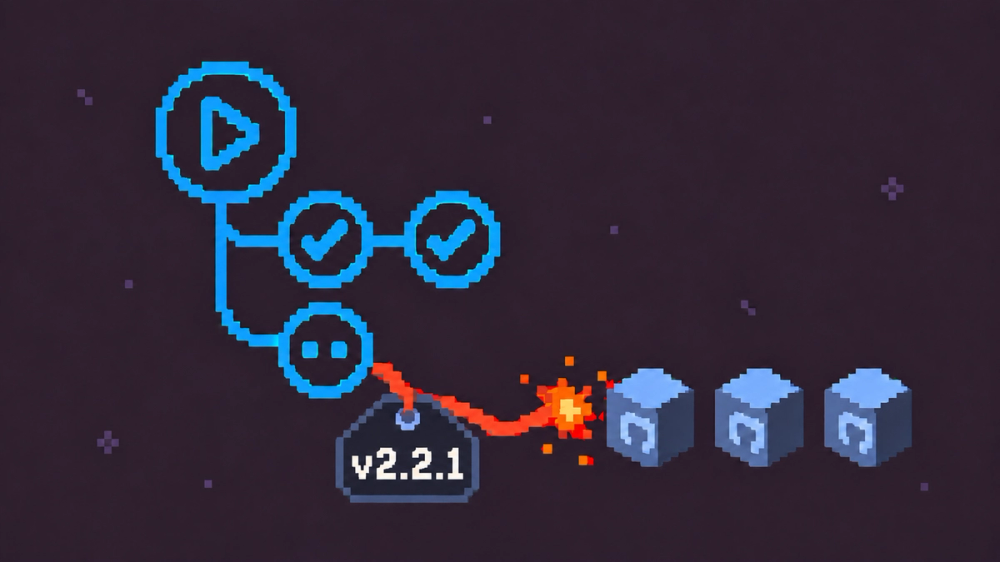 Re-Enabled GitHub Actions Expose Thousands of Repositories to Mini Shai-Hulud
Socket reports that the actions-cool/issues-helper and actions-cool/maintain-one-comment GitHub Actions, compromised in the May 2026 Mini Shai-Hulud campaign and disabled by GitHub, were re-enabled on September 16, 2026 with their release tags still pointing to the malicious code. Any workflow referencing them by tag (about 15,000 dependents for issues-helper alone) resumed running the Bun-executed obfuscated payload. Workflow run logs show the switch from fast "Repository access blocked" failures to multi-minute successful runs. The post gives remediation: SHA-pin actions, rotate secrets, and hunt for oven-sh/setup-bun and bun run index.js in runner logs. An update says both repos were disabled again on September 25.
socket.devwriteupPublished and added 24 Sep 2026🛡️ Security Is This A Joke? In The Auth Header? (F5 BIG-IP UnAuth Heap-Overflow to RCE CVE-2026-94127)
CVE-2026-94127 is an unauthenticated heap overflow in F5 BIG-IP's APM OAuth userinfo handler (tmm). A 0x4100-byte heap buffer receives the Authorization header with no length check. watchTowr patch-diffed 21.1.0 against 21.1.0.2 with Diaphora, triggered a crash via /f5-oauth2/v1/userinfo, and described a ret2plt chain that works around SELinux by appending a command to /etc/bigstart/scripts/tmm.finish.
labs.watchtowr.comwriteupAdded 30 Oct 2026, published 23 Sep 2026🛡️ Security Malicious Firefox Extension Poses as PDF Identity Verifier to Hijack Google Accounts
Socket's Threat Research team dissects a malicious Firefox extension (pdf-para-texto@extensao.local, "PDF Identity Verifier") that ships with no hardcoded malicious code — all attack logic is fetched as data into browser.storage.local after install via a lookalike domain (pdf.gusercontent.com), evading static store review. Once armed, it abuses Google's FedCM API to silently identify the victim, injects a live automation script into real accounts.google.com pages to drive an invisible account-takeover flow (bypassing password entry, forcing passkey challenges, dodging Google's bot detection, and forcing/capturing a password reset), while a webRequest listener steals the oauth_token session cookie from Set-Cookie headers — giving the attacker both a live session and a durable new password. The campaign targets Portuguese- and Spanish-speaking users starting September 2026 and includes full IOCs (domains, file hashes) and remediation steps.
socket.devwriteupPublished and added 23 Sep 2026🛡️ Security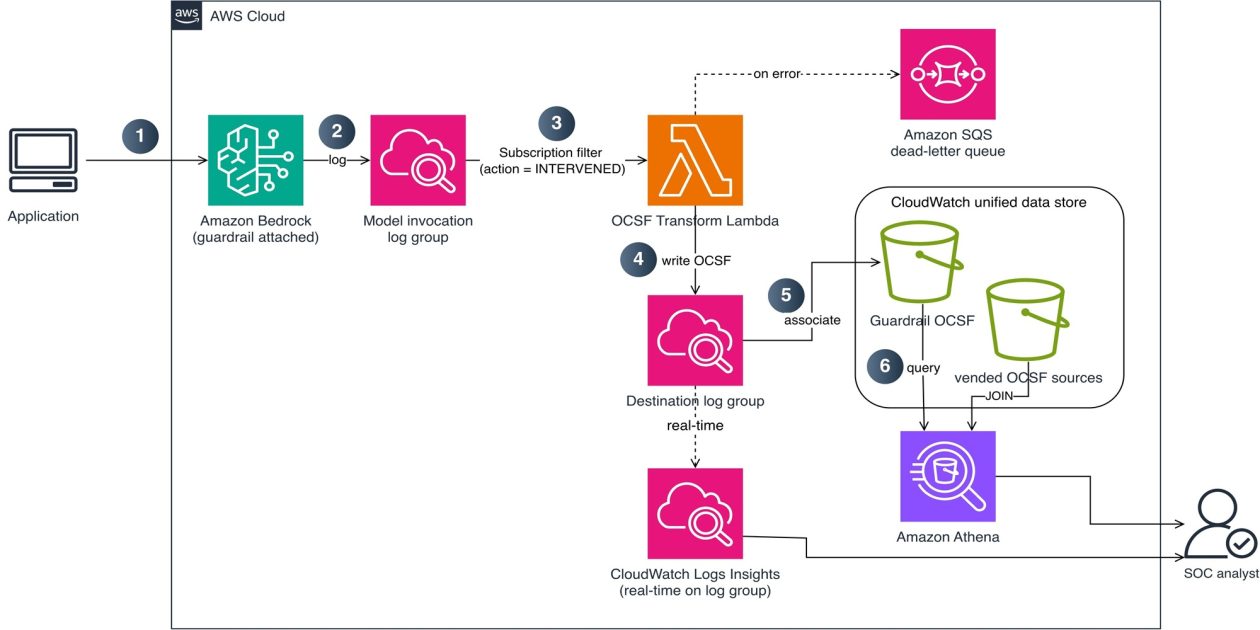 Transforming Bedrock Guardrails events into OCSF with CloudWatch
AWS walks through a reference pipeline (Lambda + CloudWatch Logs subscription filter + AWS S3 Tables) that transforms AWS Bedrock Guardrails intervention events — blocked prompt injections, PII redactions, content-policy hits — from Bedrock model invocation logs into OCSF Detection Finding (class_uid 2004) records, landing them in the CloudWatch unified data store. This lets SOC analysts correlate guardrail interventions with AWS CloudTrail and VPC Flow Logs via Athena or CloudWatch Logs Insights, e.g. spotting accounts with both prompt-injection blocks and failed IAM calls, and complements GuardDuty AI Protection's managed findings. Includes OCSF field mapping, multi-account centralization pattern, and a cloneable CDK-based implementation.
aws.amazon.comwriteupAdded 7 Oct 2026, published 21 Sep 2026🛡️ Security AI SAST in Action: Finding Real Vulnerabilities in OpenClaw | Blog | Endor Labs
Endor Labs describes applying its AI SAST engine to the open-source OpenClaw AI agent framework, tracing data flows from attacker-controlled sources (HTTP params, config, conversation history, external API responses) through transformations to dangerous sinks like command execution and file operations. The team validated findings by deploying OpenClaw in Docker and building working proof-of-concept exploits, confirming 7 vulnerabilities spanning HTTP handlers, business logic, tool dispatch, and low-level implementation layers, now reported to maintainers via responsible disclosure with technical details pending patch release.
endorlabs.comwriteupPublished and added 11 Sep 2026🛡️ Security Rebuilding AUTOMATIC1111 with Gradio Workflow
A Hugging Face blog post walking through Workflow1111, a 73-node graph built with Gradio's gr.Workflow that reimplements most of AUTOMATIC1111's stable-diffusion-webui feature set as a single visual canvas: text-to-image, hi-res fix, image-to-image, prompt matrix, VLM interrogation, detection-to-inpaint masking, ControlNet-style annotators, background removal, PNG metadata round-tripping, and image-to-video, wired from models like FLUX.1-Kontext, Qwen3-4B, Qwen2.5-VL, DETR, AuraSR, BRIA RMBG-2.0, and Wan 2.2 I2V A14B. It contrasts gr.Workflow with ComfyUI, shows that every output node auto-becomes both a REST endpoint and an MCP tool (usable by Claude Code or Cursor), and demonstrates running nodes locally on your own GPU via ZeroGPU (FastVideo/fastvideo-fasth3-preview) instead of hosted inference.
huggingface.cowriteupAdded 29 Sep 2026, published 10 Sep 2026🧠 AI Passkey-themed social engineering leads to identity and cloud compromise
Microsoft Security Research details an active campaign (since May 2026) where attackers use voice-phishing and SMS lures impersonating IT helpdesk passkey/SSO enrollment requests to drive victims into AiTM or device-code phishing flows, compromising Microsoft 365 identities. Post-compromise, actors register attacker-controlled MFA methods (e.g., software OTP tokens) for persistence, conduct systematic Microsoft Graph reconnaissance across users, groups, roles, and SharePoint/OneDrive/Exchange, then exfiltrate data at a measured pace using automated Node.js/python-httpx tooling while evading detection through IP rotation and anonymous proxies. The post includes real audit-log JSON examples, multiple KQL hunting queries for GraphAPIAuditEvents/CloudAppEvents, full MITRE ATT&CK mapping, and attributes the initial-access tradecraft to Storm-3121 and Storm-3032, which feed into ShinyHunters/Falcon and Helix extortion operations.
 microsoft.comwriteupAdded 3 Oct 2026, published 9 Sep 2026🛡️ Security
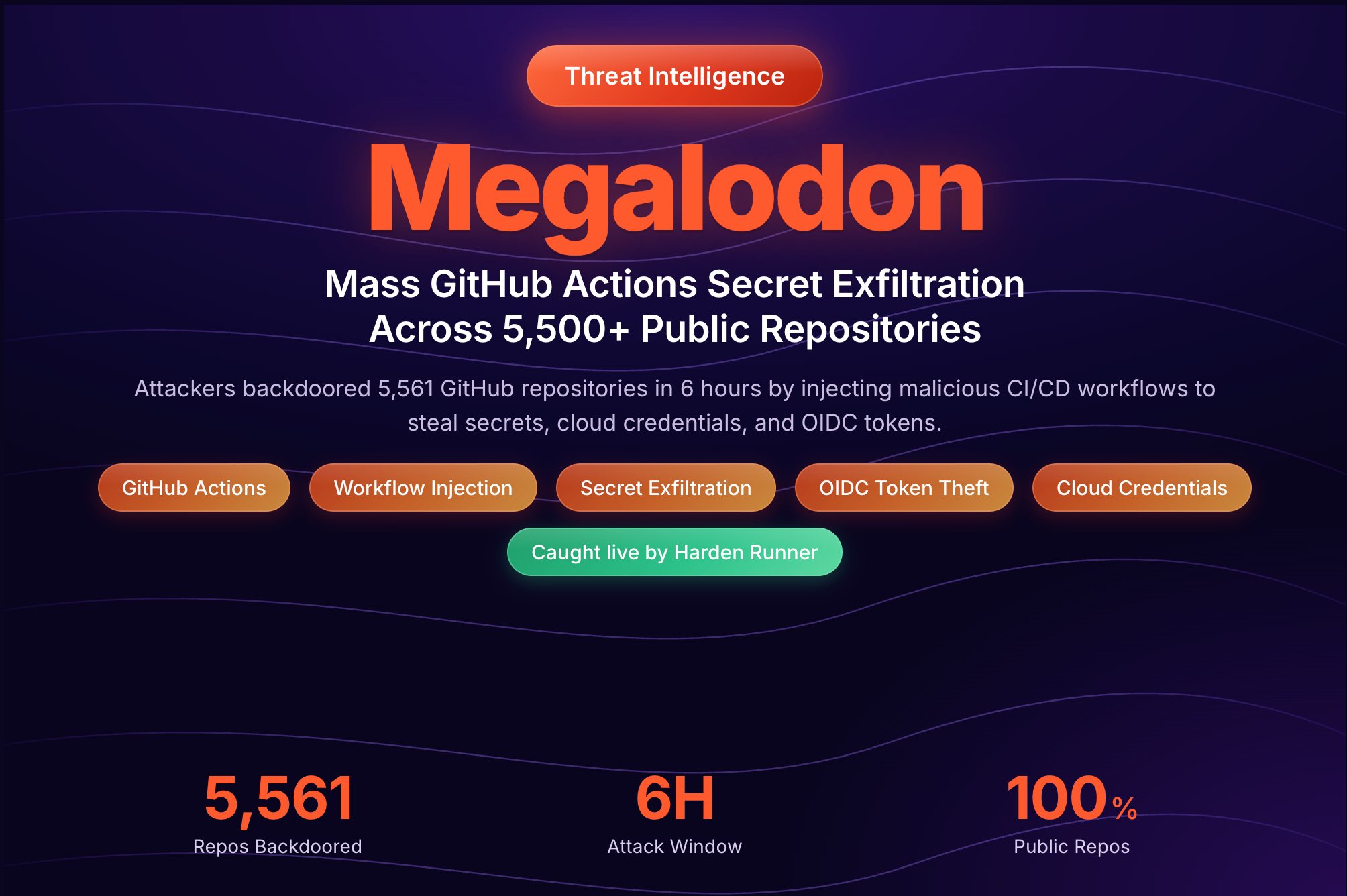 Megalodon: Mass GitHub Actions Secret Exfiltration Across 5,500+ Public Repositories - StepSecurity
StepSecurity documents Megalodon, a May 2026 campaign that injected backdoored GitHub Actions workflow files named SysDiag or Optimize-Build directly into 5,500+ public repositories in a six-hour window via direct Poisoned Pipeline Execution (d-PPE), exploiting weak branch protection. The base64-encoded bash payload harvests AWS/GCP/Azure credentials, SSH keys, Kubernetes/npm/Docker configs, GitHub OIDC tokens, and grep-matched secrets from the workspace, exfiltrating everything via HTTPS POST to a hardcoded C2 IP; the npm package @tiledesk/tiledesk-server was among the confirmed poisoned downstream targets.
stepsecurity.iowriteupAdded 5 Sep 2026🛡️ Security- A trust checklist for GitHub Actions
Presents a tiered trust checklist for evaluating third-party GitHub Actions before referencing them in a workflow, covering maintenance/tooling signals, unpinned transitive dependencies, release attestations, and governance, with weaker popularity-based signals separated into a second tier. It then argues that any point-in-time trust assessment only holds if the referenced commit is immutable, and compares raw SHA pinning against GitHub's immutable releases and the new gh-actions-lock CLI extension, which verifies commit reachability to defeat impostor-commit attacks. It closes by noting StepSecurity's GitHub Action Advisor automates some of the checklist's queryable signals using Harden-Runner telemetry.
 jessehouwing.netwriteupAdded 21 Sep 2026, published 4 Sep 2026🛡️ Security
 Claude Code & Gemini CLI: GitHub Issue → CI Secrets
Novee Security disclosed that a low-privilege GitHub issue could trigger code execution on CI runners for Gemini CLI and Claude Code, and hijack the next agent run in OpenAI Codex, via flaws in the "harness" code surrounding each coding agent rather than the LLM itself. CVE-2026-12537 is a CVSS 10.0 OS command injection in Gemini CLI's container launcher via a crafted .gemini/.env file (fixed in 0.39.1); CVE-2026-54316 abused Hugging Face's public download counter as a side channel to exfiltrate a Claude Code API key one character at a time (fixed in 2.1.163). A separate Claude Code bash-quoting validator bypass and a Codex AGENTS.md instruction-file poisoning issue (via shared checkout across two passes) had no CVE, prompting OpenAI to only issue workflow/documentation fixes.
 thehackernews.comwriteupPublished and added 1 Sep 2026🛡️ Security
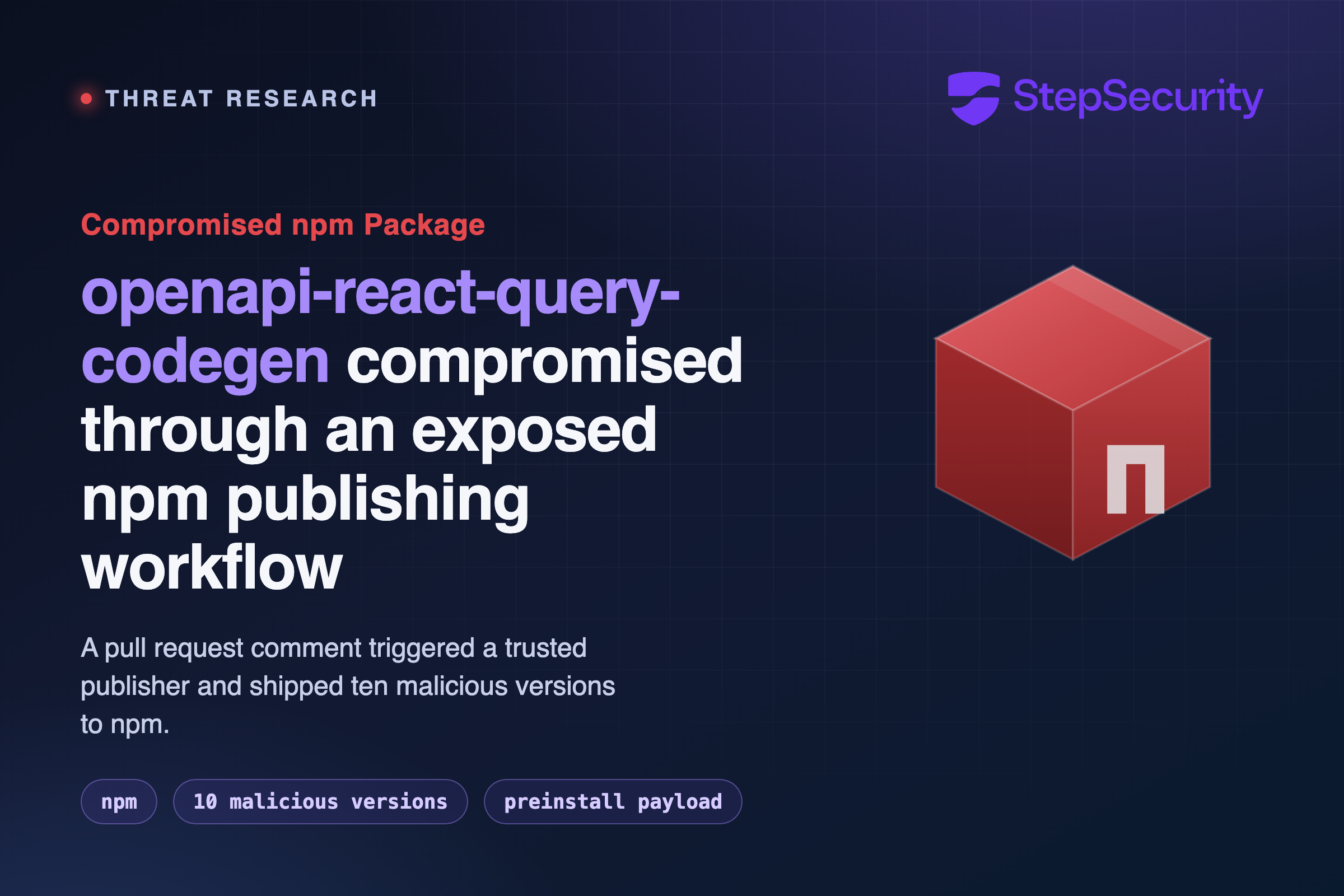 @7nohe/openapi-react-query-codegen Compromised Through an Exposed npm Publishing Workflow
StepSecurity documents how an external GitHub user (p00paboot) hijacked the release workflow of @7nohe/openapi-react-query-codegen by exploiting an npm publish issue-comment trigger that lacked commenter authorization checks, allowing pull-request code to be checked out and published via GitHub Actions OIDC trusted publishing. Ten malicious versions were pushed with preinstall hooks and a poisoned binding.gyp that executed a payload downloading Bun, stealing GitHub/git credentials, probing GCP metadata, and enumerating SSH keys, confirmed via StepSecurity Harden-Runner behavioral analysis on isolated runners. The post lists affected versions, file/hash IOCs, and remediation steps including credential rotation and pinning to clean releases.
stepsecurity.iowriteupAdded 3 Sep 2026, published 28 Aug 2026🛡️ Security Socket: "Superior" Campaign
Socket researchers uncovered 19 Chrome and Edge extensions (18 Chrome, 1 Edge) delivering a modular wallet-drainer and credential-stealing framework, tracked as the "Superior" campaign and linked to a 2024 operation first reported by DomainTools and Secure Annex. Threat actors either build extensions from scratch or buy established ones (like "Enable Right Click & Copy — Smart Unlock + OCR" with ~80,000 combined users) and later push malicious updates that strip CSP headers via declarativeNetRequest, open an AES-GCM-encrypted WebSocket C2 channel, and inject JavaScript payloads that phish hardware-wallet seed phrases, hijack wallet-connect flows, harvest exchange session tokens, and serve ClickFix-style fake browser-update lures. The post includes full code snippets, a breakdown of 16+ malicious modules, and a large IOC list of C2 domains and extension IDs.
socket.devwriteupPublished and added 28 Aug 2026🛡️ Security Inside 90 days of attacks on AI infrastructure
Wiz Threat Research ran honeypots across LiteLLM, Flowise, LangChain, Langflow, ChromaDB, Ollama and other AI/ML services for 90 days, capturing active exploitation of an MCP Gateway auth bypass (CVE-2026-59822) and an MCP server test-endpoint command injection (CVE-2026-42271, in CISA KEV, chainable with Starlette CVE-2026-48710 for unauthenticated RCE and linked to Qilin ransomware exploitation) used to deploy fileless cryptominers. It also documents blind prompt injection campaigns against LangChain, Flowise, OpenWebUI, and Node-RED agents that trigger OS command execution confirmed via out-of-band DNS callbacks to OAST domains.
wiz.iowriteupAdded 3 Sep 2026, published 27 Aug 2026🛡️ Security UAT-10147: Chinese-speaking adversary integrates agentic AI into post-compromise operations
Cisco Talos details UAT-10147, a Chinese-speaking cybercrime group exploiting one-day vulnerabilities in Windows/Linux web servers to deploy BadIIS, QuasarRAT, NoodleRAT, and SPECTRE implants, while also integrating agentic AI tools (PentestGPT, DeepAudit, and AI-orchestrated ysoserial workflows) to generate exploit playbooks, automate ASP.NET ViewState deserialization RCE, validate exploit success, and run reconnaissance/exfiltration end to end. Talos recovered AI-generated Python scripts and a findings log from the actor's C2 open directory showing semi-autonomous exploit refinement, OOB callback verification via webhook.site, and privilege escalation via SeImpersonatePrivilege/Potato exploits — evidence of a shift from AI-assisted scripting toward agentic offensive orchestration.
blog.talosintelligence.comwriteupAdded 24 Aug 2026, published 20 Aug 2026🛡️ Security- Post-DEF CON Phishing Uses Malicious Google Doc to Deliver Malware
Huntress researchers document a phishing campaign targeting Black Hat/DEF CON attendees via X DMs impersonating a CoinDesk exec, luring victims into opening a weaponized Google Doc with a custom Google Apps Script sidebar that runs a fake "decryption" flow before delivering ClickFix-style commands or a manual "update" that drops malware. On macOS this delivers AMOS infostealer plus a LaunchDaemon-based polling backdoor with SOCKS5 proxy capability; a follow-up fake DocSend/Dropbox installer delivers a ClickOnce/NSIS loader chain on Windows that installs NetSupport RAT, a process-hollowed rogue Certificate Authority that MITMs VirusTotal traffic, and an incomplete Ledger wallet-targeting implant. The piece includes deep technical detail on the loader's C2 protocol, stolen/fraudulent code-signing certificates, and infrastructure patterns (multi-branded loader domains), plus mitigation guidance and a link to published IOCs.
 huntress.comwriteupAdded 3 Sep 2026, published 19 Aug 2026🛡️ Security
 Hacking your life with AI can get you hacked | Blog | Endor Labs
Endor Labs researcher details 14 critical/high vulnerabilities (7+ public CVEs/GHSAs) found across seven AI orchestration platforms — NocoBase, Flowise, Langflow, Dify, Activepieces, Kestra, and Apache Airflow — all of which trust anyone who can touch a workflow to run code on the host. Walkthroughs include a Flowise 3.1.2 unauthenticated prompt-injection-to-RCE chain via Pyodide/Node bridge escape, Langflow's trivial `lambda`-string eval sandbox bypass, NocoBase's broken SES Compartment/Proxy guard escalation, and Dify/Activepieces sandboxes applied only after attacker code already executes. The research (presented at DEF CON 34, full whitepaper linked) argues these are multi-tenant code-execution engines shipped with single-user threat models, exposing connected credentials, email, calendars, and customer data.
endorlabs.comwriteupAdded 3 Sep 2026, published 18 Aug 2026🛡️ Security Wiz Red Agent Finds Its Way Into Snowflake’s Internal Jira Through a Flaw in a GitHub Copilot–Assisted PR
Wiz's autonomous "Red Agent" discovered a GitHub Actions script-injection vulnerability in snowflakedb/snowflake-connector-net's jira_issue.yml workflow, introduced when a PR (co-authored by GitHub Copilot) replaced a safe env:/jq pattern with direct interpolation of the attacker-controlled issue title. GitHub Advanced Security scanned the same PR and workflow but failed to flag the injection; Red Agent autonomously crafted and self-corrected a payload after a bash syntax error, exfiltrated Jira OAuth credentials via an out-of-band callback, and used them to access Snowflake's internal Jira (engineering, security, and bug-bounty projects) — all without human intervention. Snowflake patched and rotated credentials the same day the flaw was reported via HackerOne.
wiz.iowriteupAdded 3 Sep 2026, published 17 Aug 2026🛡️ Security You’re Back In The Room (Citrix NetScaler Pre-Auth RCE CVE-2026-8452(?))
watchTowr Labs analyzes a pre-authentication remote code execution flaw in Citrix NetScaler ADC and Gateway, likely CVE-2026-8452, patched in versions 14.1-72.61 and 13.1-63.18. The bug is a heap overflow during SAML SignedInfo canonicalization, triggered by an oversized PrefixList attribute, which the researchers chain into a write-what-where primitive and full RIP control on non-PIE, no-ASLR builds. They describe dropping a PHP webshell, disabling crash signal handlers to survive without a full device reboot, and escalating from the nobody web server user to root via SUID on /bin/sh.
labs.watchtowr.comwriteupAdded 30 Oct 2026, published 14 Aug 2026🛡️ Security Cloud Threat Highlights: H1 2026
Wiz's H1 2026 cloud threat report documents a 60% jump in significant incidents driven by a doubling of supply-chain attacks (TeamPCP's npm/PyPI/GitHub Actions credential-harvesting spree, its open-sourced Shai-Hulud worm spawning Miasma/Hades/Megalodon/IronWorm follow-ons, North Korea's axios and @mastra trojanizations) and by growing attacks on AI infrastructure, including exposed unauthenticated MCP servers, LiteLLM/Dify/Langflow/n8n/Ollama vulnerabilities, and cryptominers deployed via a Langflow RCE. It also profiles JINX-0163, a cloud-native extortion group targeting non-human identities (service accounts/IAM roles) across AWS/Azure/GCP/Okta/Snowflake linked to the "FulcrumSec" extortion brand, and closes with concrete detection techniques for stolen access keys, Kubernetes VM Run Command abuse, GCP org-policy tampering, and CloudTrail user-agent/boto3 credential-provenance mismatches.
wiz.iowriteupAdded 3 Sep 2026, published 6 Aug 2026🛡️ Security- HEVD Windows Kernel Exploitation Tutorial
Chapter 0 of a 5-part series on exploiting HackSys Extreme Vulnerable Driver (HEVD) for Windows kernel privilege escalation via a stack overflow bug. This installment covers environment setup (Hyper-V/VMware with SMEP support, WinDbg kernel debugging attach, DbgPrint enablement) as prep for later chapters that will detail bypassing kASLR, SMEP, and KPTI/KVA Shadow and building a sysret-based ROP shellcode chain.
 mdanilor.github.iowriteupAdded 3 Sep 2026, published 31 Jul 2026🛡️ Security
- How I Found Open-Source 0-days with an LLM Multi-Agent Workflow
A student researcher describes an LLM multi-agent pipeline (GLM-4.7 for candidate finding, GLM-5 for semi-triage, Codex 5.3 for final triage) built to hunt logic and authorization bugs in large open-source codebases like Grafana, Nextcloud, Matomo, Airflow and protobuf. The post details the prompt-engineering fixes (forcing the model to explicitly reason about attacker conditions, server conditions, and CIA-triad impact) that cut false positives, and lists the resulting real vulnerabilities, including CVE-2026-21721, a CVSS 8.1 privilege escalation in Grafana's dashboard permissions API caused by a missing UID scope check in ac.EvalPermission.
 blog.cykor.krwriteupPublished and added 29 Jul 2026🛡️ Security
- Reverse Engineering the Six Stages of MacSync Stealer and RAT
Huntress reverse-engineers MacSync, a macOS stealer-and-RAT chain delivered via a weaponised claude.ai share link promoted through Google Ads malvertising, where a victim searching for how to install Claude on a Mac pastes a curl piped to zsh one-liner. The writeup traces all six stages: a polymorphic zsh loader, a server-side AppleScript that social-engineers Full Disk Access and validates the account password via dscl authonly, keychain and browser Safe Storage theft, a statically-linked C++ Mach-O RAT with WebSocket and AES-CBC C2 plus LaunchAgent persistence disguised as legitimate updaters, a signed Screen Recording-badged helper that phishes the TCC screen-capture permission, and trojanised Electron wallet apps (Ledger Live and Ledger Wallet) that inject a fake recovery-phrase phishing flow. It ties the kit to the AMOS and Atomic Stealer lineage via Russian-language code comments and shared infrastructure, and documents concrete IOCs including domains, C2 IP, mutex naming, and plist patterns for defenders.
huntress.comwriteupAdded 3 Sep 2026, published 29 Jul 2026🛡️ Security 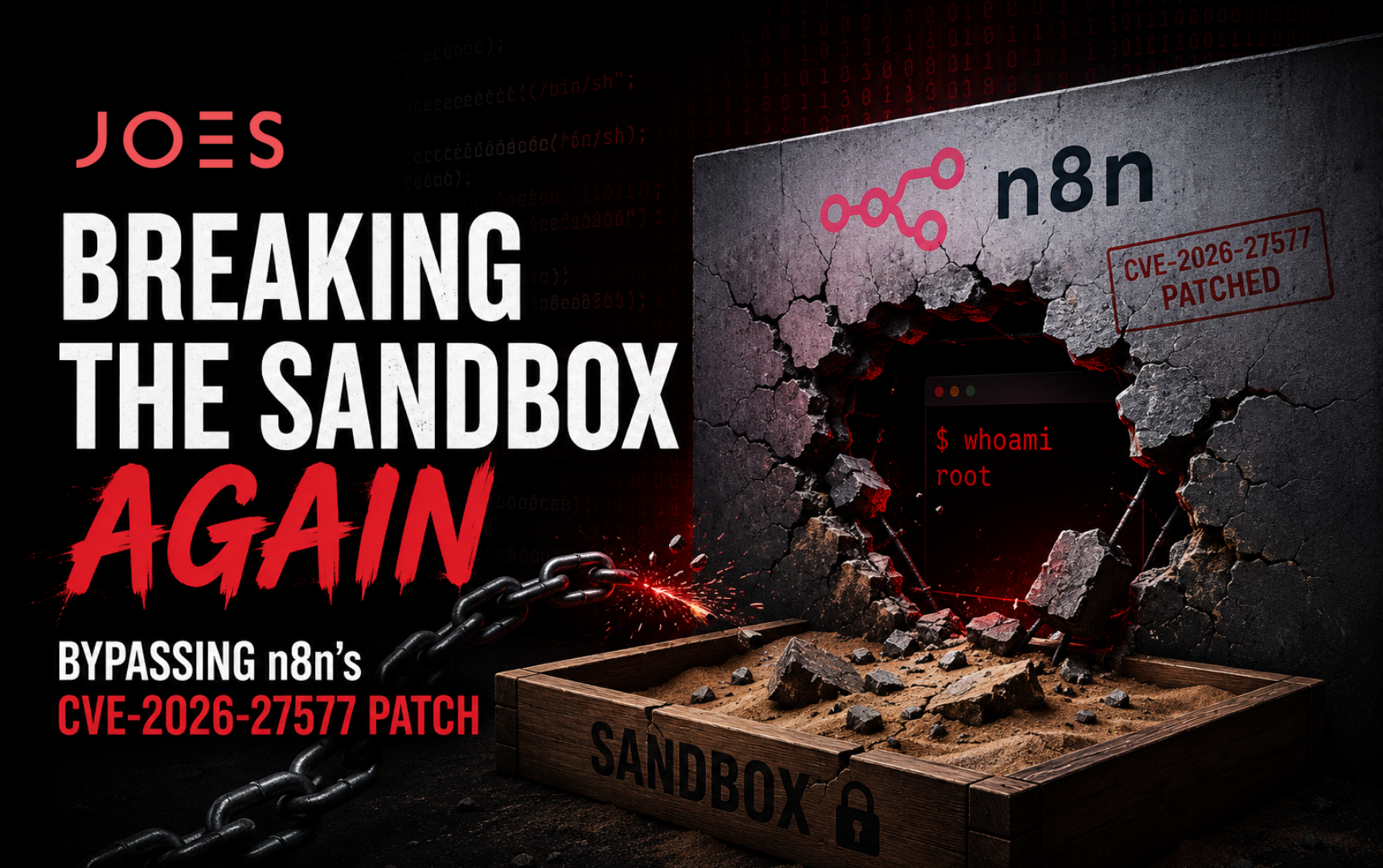 Breaking the Sandbox Again: Bypassing n8n's CVE-2026-27577 Patch
Security Joes documents bypassing the patch for CVE-2026-27577, a sandbox escape vulnerability in n8n (a workflow automation tool), showing the fix was incomplete. The writeup likely details the original sandbox architecture, why the patch failed, and a new exploitation path.
 securityjoes.comwriteupAdded 29 Jul 2026🛡️ Security
 Behind the GitLab RCE: A depthfirst Journey into the Ruby Ecosystem | depthfirst
depthfirst's Open Defense Initiative scanned about 40 Ruby gems with native C extensions and validated 105 vulnerabilities across 34 projects, which together have over 8.6 billion RubyGems downloads. The post walks through four cases: a Nokogiri 32/64-bit index truncation (CVE-2026-57235), an Oj garbage-collection use-after-free (CVE-2026-54902), a concurrent-ruby read/write lock bit overflow (CVE-2026-54905) and an sqlite3-ruby block lifetime bug (CVE-2026-54619). It also states that this work led to the earlier GitLab RCE chain through Oj.
 depthfirst.comwriteupAdded 29 Oct 2026, published 27 Jul 2026🛡️ Security
- From Container Escape to Cloud Takeover
Lab-based cloud security assessment covering four attack paths: a privileged hostPID pod escaped to the node with nsenter, deleting the kube-apiserver static pod manifest to crash the control plane, Trivy Operator vulnerability reports piped into BigQuery, and a malicious PR exploiting a pull_request_target workflow that checks out PR code to steal a GCP Workload Identity Federation token via Terraform's external data source during plan. Each section pairs the exploit with defenses (Pod Security Standards, Kyverno/Gatekeeper, Falco rules, split plan/comment workflows, least-privilege service accounts) and ties them into one kill chain.
 medium.comwriteupAdded 3 Sep 2026, published 26 Jul 2026🛡️ Security
 Compromised PyPI Package: mrmustard 0.7.4 Steals SSH, Cloud, and Kubernetes Credentials
StepSecurity reconstructs how a malicious version of XanaduAI's mrmustard quantum-photonics library (0.7.4) reached PyPI: an attacker compromised a maintainer's GitHub account, used a throwaway workflow to exfiltrate the project's PyPI and Codecov tokens via webhook.site, then published a poisoned tarball directly (the malicious code never touched the git source tree). On import, the payload evades CI/container sandboxes, then steals SSH keys, AWS/Kubernetes credentials, and HPC/GPU environment data, XOR-obfuscates it, and beacons to metrics.femboy.energy before installing three persistence mechanisms (cron job, Python .pth hook, shell rc hook). The post includes full IOCs, detection guidance via Harden-Runner's Secret Exfiltration Attempt detection and Global Block Policy, and step-by-step recovery instructions.
stepsecurity.iowriteupAdded 3 Sep 2026, published 25 Jul 2026🛡️ Security Socket: GitHub Actions Abuse Powers Distributed cPanel/WHM Exploitation Campaign
Socket researchers traced malicious dev versions of ten Packagist packages owned by developer dinushchathurya back to compromised GitHub repositories containing 55-62 malicious GitHub Actions workflow files each. The workflows execute on GitHub-hosted Ubuntu runners on every push, download an architecture-matched Linux payload from C2 server 43.228.157.68, and run an internet scanner (`ipscan --exploit CVE-2026-41940`) that exploits an authentication bypass in cPanel/WHM and harvests cloud, database, SSH, and source-control credentials, exfiltrating results via heartbeat/results HTTP endpoints and DNSHook callbacks. GitHub code search for the campaign's unique markers returned 6,100-16,000 matching workflow files across unrelated repositories, indicating the abuse extends far beyond the one compromised maintainer and effectively weaponizes GitHub Actions as free, disposable attack infrastructure.
socket.devwriteupPublished and added 23 Jul 2026🛡️ Security AI Security Briefing
Noma Labs disclosed GitLost, an indirect prompt-injection vulnerability in GitHub Agentic Workflows where an unauthenticated attacker could open a public GitHub Issue with hidden instructions that, once the AI agent backed by Claude or GitHub Copilot processed the issue on an issues.assigned trigger, caused it to fetch README contents from private organization repositories and post them as a public comment. The researchers also bypassed GitHub's guardrails by inserting the word Additionally into the crafted issue, reframing the model's output instead of triggering a refusal. GitHub was notified and the flaw was responsibly disclosed with a full PoC (workflow run and issue) published.
 noma.securitywriteupPublished and added 18 Jul 2026🛡️ Security
 AI Security Briefing
Sysdig's Threat Research Team documented JADEPUFFER, an attack it says was run end-to-end by an AI agent without human operators. The agent exploited CVE-2025-3248 (an unauthenticated RCE in Langflow) for initial access, harvested API keys and cloud credentials, raided a MinIO server via default minioadmin:minioadmin credentials, then pivoted to a MySQL/Nacos server and used CVE-2021-29441 plus Nacos's unchanged default signing key to gain admin access, encrypt 1,342 Nacos settings, and drop a ransom note with no recoverable key. Evidence for AI authorship included verbose in-code commentary explaining each step and a 31-second autonomous diagnose-and-fix cycle across 600+ payloads; the piece situates JADEPUFFER alongside PromptLock/Ransomware 3.0 and Anthropic's Claude-Code extortion and China-linked autonomous-cyberattack disclosures.
thehackernews.comwriteupPublished and added 18 Jul 2026🛡️ Security Coordinated AsyncAPI Supply Chain Attack: Miasma RAT Delivered via Compromised CI/CD Pipelines in Two Repositories
On July 14, 2026, attackers compromised push access to two AsyncAPI GitHub repositories (asyncapi/generator and asyncapi/spec-json-schemas) and pushed malicious commits under a placeholder git identity that triggered legitimate CI/CD release workflows (release-with-changesets.yml, if-nodejs-release.yml), publishing five malicious npm package versions (@asyncapi/generator, generator-helpers, generator-components, specs) carrying a runtime-triggered obfuscated dropper for the Miasma RAT, complete with valid OIDC/SLSA provenance attestations. StepSecurity detected the packages within 30 minutes, used Harden-Runner in an isolated GitHub Actions job to capture the malware's C2 traffic (HTTP plus IPFS/Nostr/BitTorrent DHT fallback channels), and pushed the IOCs to their Global Block List to block exfiltration across customer pipelines; all malicious versions have since been unpublished.
stepsecurity.iowriteupAdded 3 Sep 2026, published 16 Jul 2026🛡️ Security Socket: Operation Muck and Load
Socket details "Operation Muck and Load," a campaign starting with a malicious Go module (github.com/kaleidora/dnsub-scanning-tool) that impersonates a DNS scanner but launches hidden PowerShell to fetch and decode a multi-layer, XOR-encrypted loader. The loader resolves encrypted payload locations from public dead drops (Pastebin, GitHub, YouTube, Instagram, Telegram, Google Docs), retrieves a password-protected .7z archive masquerading as Microsoft Photos, and deploys AsyncRAT/Quasar/Remcos-style RATs and Vidar infostealer. Pivoting from the module, Socket uncovered 222 GitHub repositories across 190 accounts using automated force-push workflows tied to a single email (ischhfd83@rambler.ru) to fake activity and credibility, some directly hosting Vidar, XMRig/BitMiner, and trojan loaders.
socket.devwriteupPublished and added 16 Jul 2026🛡️ Security Rapid7 MDR Team Discovers New SonicWall SMA1000 Zero Days Being Actively Exploited (CVE-2026-15409, CVE-2026-15410)
Rapid7's MDR team details active zero-day exploitation of SonicWall SMA1000 appliances via CVE-2026-15409 (unauthenticated SSRF in the /wsproxy websocket proxy, CVSS 10.0) chained with CVE-2026-15410 (local privilege escalation via path traversal in the ctrl-service remove_hotfix workflow) to achieve root RCE. The post includes a working Python exploit against the localhost Erlang service on port 1050 (using a hardcoded authentication cookie), an HTTP request PoC for the hotfix path-traversal chain, and extensive observed post-exploitation activity — credential/TOTP theft, VPN-less lateral movement to domain controllers via harvested LDAP service accounts — plus concrete log/IOC signatures and attacker-infrastructure IPs (FNS Holdings Limited ASN 206092) for hunting.
 rapid7.comwriteupAdded 10 Sep 2026, published 15 Jul 2026🛡️ Security
 How Unprotected Release Branches Let Attackers Compromise AsyncAPI | Blog | Endor Labs
Endor Labs researchers found that AsyncAPI's release branches lacked branch protection, allowing an attacker with write access (or via a compromised contributor account) to push malicious commits that would be picked up by the automated release/publish pipeline, potentially poisoning published packages. The issue highlights how missing branch protection rules combined with automated CI/CD release workflows create a supply-chain compromise path for widely-used open-source projects.
endorlabs.comwriteupAdded 3 Sep 2026, published 14 Jul 2026🛡️ Security M-Red-Team: AsyncAPI Supply Chain Compromise via GitHub Actions
Wiz Research details how an attacker used 37 decoy pull requests to mask exploitation of a pull_request_target "pwn request" misconfiguration in the asyncapi/generator GitHub Actions workflow, stealing a privileged PAT belonging to the asyncapi-bot service account. The attacker then published four malicious npm packages (five versions) under the @asyncapi namespace with over 3 million weekly downloads, delivering a self-identified "M-RED-TEAM v6.4" multi-stage payload that fetches an 8.25MB encrypted bundle from IPFS and installs a 92,000-line trojan framework with systemd persistence and HTTP/Nostr/Ethereum/libp2p C2 channels, targeting browser credentials, SSH keys, npm/GitHub tokens, AWS credentials, and crypto wallets. The piece also analyzes partial technical overlap with the Miasma malware framework and the unrelated prt-scan campaign without making definitive attribution.
wiz.iowriteupAdded 3 Sep 2026, published 14 Jul 2026🛡️ Security AsyncAPI npm packages backdoored via GitHub Actions
Aikido Security details how five @asyncapi npm packages (specs, generator, generator-helpers, generator-components), combined ~2.9M weekly downloads, were backdoored after an attacker exploited an unmerged pull_request_target GitHub Actions vulnerability in asyncapi/generator to steal the npm publish token via 37 flooded PRs. The injected runtime code spawns a detached Node process that downloads an encrypted stage-2 loader from IPFS, decrypts it via HKDF/AES-256-GCM, and drops a persistent remote-shell implant self-identified as 'M-RED-TEAM v6.4' with Miasma-branded artifacts, though credential harvesting and self-propagation are disabled in this build. The post includes full technical detail on the exfiltration flow, IOC strings, IPFS CIDs, and inconclusive attribution linking it to the prior Miasma toolkit and prt-scan campaign.
 aikido.devwriteupAdded 3 Sep 2026, published 14 Jul 2026🛡️ Security
 Unauthenticated RCE in ArgoCD
Synacktiv details an unauthenticated arbitrary code execution vulnerability in Argo CD's repo-server gRPC service (GenerateManifest endpoint), found by building custom CodeQL RemoteFlowSource model packs for the Go codebase. The bug abuses the KustomizeOptions.BuildOptions field to inject kustomize CLI flags like --enable-helm --helm-command, achieving RCE and exfiltrating the Redis password; the team then shows how unauthenticated access to Argo CD's Redis cache lets an attacker poison cached manifests and git-ref commit hashes to force deployment of an attacker-controlled Kubernetes manifest even without selfHeal enabled, fully compromising the cluster. Disclosed to Argo CD maintainers in January 2025 and still unpatched at publication; mitigation requires Kubernetes NetworkPolicies (not applied by default in the Helm chart) restricting access to the repo-server and Redis.
 synacktiv.comwriteupPublished and added 11 Jul 2026🛡️ Security
 Endor Labs’ AI SAST Finds Zero Day Memory-Amplification DoS in Anthropic’s buffa library | Blog | Endor Labs
Endor Labs describes how its AI SAST engine traced a source-to-sink data flow in Anthropic's Rust protobuf library, buffa, uncovering CVE-2026-55407: an unbounded, attacker-controlled heap allocation in the unknown-field decoder (decode_unknown_field, buffa/src/encoding.rs). Beyond the initially flagged ~2x LengthDelimited allocation flaw, the researcher found the StartGroup arm allows ~22x memory amplification, letting a 64MB payload balloon to ~1.4GB and OOM-kill a capped server, defeating the library's documented "cap input size" mitigation. The piece details the PoC, the fix shipped in buffa/connectrpc 0.8.0 (per-message unknown-field count cap), and a nuanced CVSS 4.0 disclosure discussion with Anthropic over deployment-dependent severity.
endorlabs.comwriteupAdded 3 Sep 2026, published 6 Jul 2026🛡️ Security- No (Bad) CAP: Inside an Ongoing LSHIY Password Spray Attack
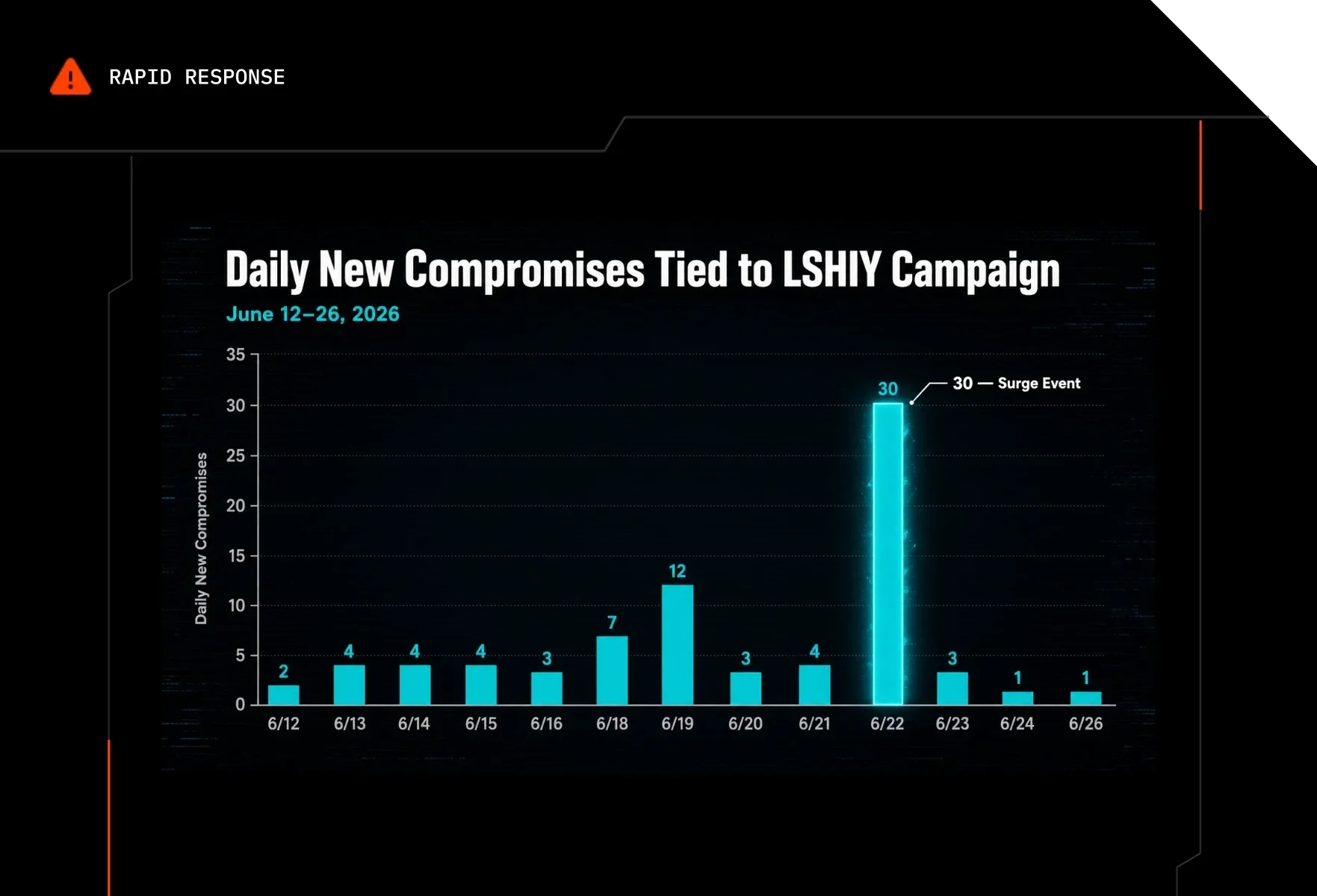
Huntress tracked a large, ongoing password spray campaign against Microsoft 365/Azure CLI using the deprecated OAuth ROPC (Resource Owner Password Credentials) flow, which sends passwords directly to the /token endpoint and bypasses MFA prompts enforced via Conditional Access Policies. Between June 12-26, over 81 million login attempts from LSHIY LLC's IPv6 range (AS32167) compromised 78 accounts across 64 organizations, many of which had MFA enabled but scoped incorrectly (app-specific, group-specific, trusted-location exceptions, or report-only mode). After LSHIY terminated the abusive BYOIP customer, attackers pivoted to FranTech (AS53667) and then 3xK Tech GmbH (AS200373), rotating through ~12,800 IPv4 addresses at low per-IP volume to evade detection while sustaining ~1.5 million login attempts/day.
huntress.comwriteupAdded 3 Sep 2026, published 30 Jun 2026🛡️ Security  Shipping post-quantum cryptography to Python
Trail of Bits, funded by the Sovereign Tech Agency, implemented Rust bindings for NIST's ML-KEM (FIPS 203) key-establishment and ML-DSA (FIPS 204) digital-signature standards into pyca/cryptography, shipped in version 48 with AWS-LC backend support. The post makes them a pip install away for the Python ecosystem (pyca/cryptography sees 1.2B monthly PyPI downloads and underpins Certbot, Ansible, Airflow, and paramiko), while detailing the size/performance tradeoffs versus Ed25519/X25519 and noting SLH-DSA (FIPS 205) support and protocol-level integration are still in progress.
 blog.trailofbits.comwriteupAdded 3 Sep 2026, published 30 Jun 2026🛡️ Security
 Socket: Miasma Mini Shai-Hulud Hits ImmobiliareLabs npm Packages
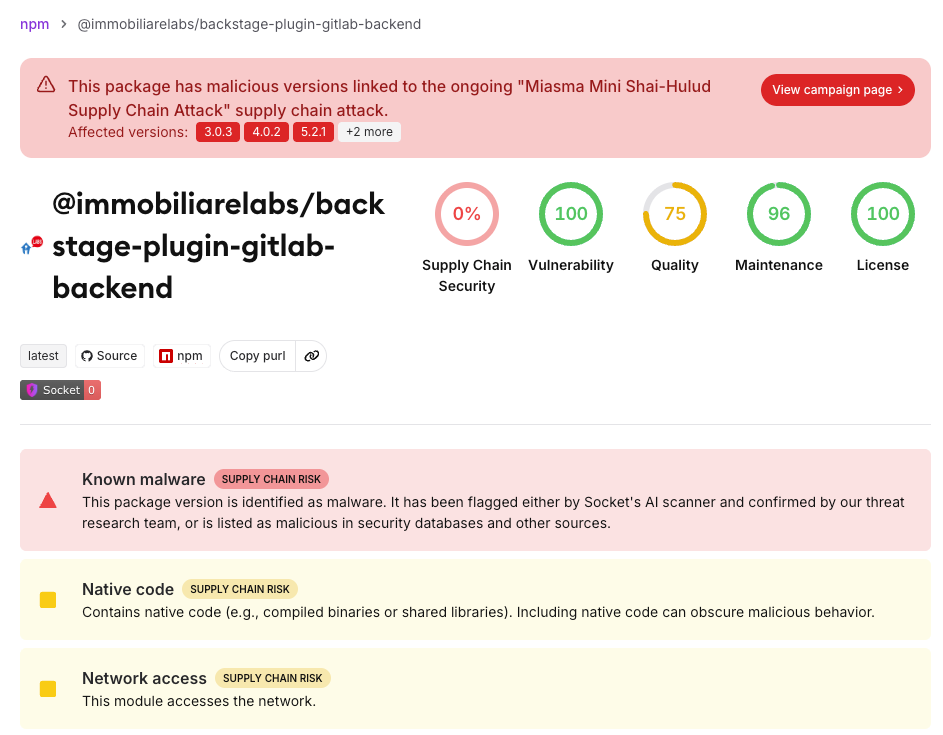
Socket Threat Research documents a new wave of the Miasma Mini Shai-Hulud npm supply-chain campaign compromising @immobiliarelabs Backstage plugins for GitLab integration and LDAP authentication, published on June 26, 2026. The malicious tarballs (e.g. @immobiliarelabs/backstage-plugin-gitlab@7.0.2) add a hidden root-level index.js triggered via the "Phantom Gyp" node-gyp binding.gyp trick, which decrypts an AES-128-GCM payload, bootstraps Bun, and steals npm/GitHub/cloud/SSH/CI-CD secrets while planting GitHub Actions and AI-IDE persistence. The report also traces a plausible root cause to the earlier compromise of codfish/semantic-release-action (tag-hijacking reported by StepSecurity) and highlights abuse of GitHub's deployment event trigger — a technique flagged by researcher Adnan Khan — to run attacker workflows without touching protected workflow files.
socket.devwriteupPublished and added 27 Jun 2026🛡️ Security Orca Security: nginx Flaw in 1.45M Tengine Servers (CVE-2026-42945 + CVE-2026-9256)
Orca Security researchers found that two critical nginx heap buffer overflow CVEs in the rewrite engine (ngx_http_script.c) — CVE-2026-42945 ("NGINX Rift") and CVE-2026-9256 ("nginx-poolslip") — also live untouched in Tengine, Alibaba's nginx fork last released in October 2023 and running on 1.45 million internet-facing servers (Aliyun, Taobao, CDN edges, reverse proxies). They compiled Tengine 3.1.0 with AddressSanitizer, built working single-request unauthenticated crash exploits for both bugs, and confirmed neither CVE had a patched Tengine release as of publication, with heap corruption potentially steerable toward code execution if ASLR is disabled/bypassed.
 orca.securitywriteupPublished and added 16 Jun 2026🛡️ Security
 OpenSource Malware: Active Malware Campaigns in January-May 2026
OpenSourceMalware's analysis of active malware campaigns from January-May 2026, covering Lazarus Group's Contagious Interview (fake recruiter outreach delivering BeaverTail/InvisibleFerret via npm, PyPI, Go, Cargo, Packagist) and two new campaigns, TasksJacker (malicious .vscode/tasks.json auto-execution, including payloads hidden in .woff2 font files and fake VS Code dictionary files) and PolinRider (weaponizing stolen credentials via malicious PRs merged into projects like VS Code, Apache Superset, Rails, LangFlow, Expo). It also details TeamPCP's supply chain attack on Trivy's GitHub Actions repos using a leaked Aqua Security PAT to force-push malicious commits across 76 version tags.
opensourcemalware.comwriteupPublished and added 12 Jun 2026🛡️ Security- Inside Kali365, a Device Code Phishing Ecosystem | Huntress
Huntress SOC investigation into Kali365 (also seen as Octopi365/Freedom365), an AI-enabled Phishing-as-a-Service kit that abuses the Microsoft device-code authentication flow to steal M365 tokens and maintain persistent mailbox access even after password resets. The writeup dissects three panel editions (base AiTM/device-code capture, a post-compromise BEC/fraud module using Claude for drafting wire-transfer scam replies, and a self-service reseller tier with crypto billing via OxaPay), and reverse-engineers the companion Electron desktop apps OctoLink Live and OctoLink Sender, which exchange stolen refresh tokens for real ESTSAUTH session cookies to drive undetected Graph mail-sending and admin-portal access — tactics overlapping with Microsoft's Storm-2372 reporting. Includes IoCs and a KQL hunting rule for detecting device-code abuse.
huntress.comwriteupAdded 3 Sep 2026, published 11 Jun 2026🛡️ Security  Secret Scanning Dev Workstations with bagel + Fleet
Describes an open-source workflow combining bagel (a Go-based CLI secret scanner for developer home directories, from Boost Security) with Fleet/osquery to detect and enforce policy on clear-text secrets on macOS workstations. The author's PoC repo, fleebag, packages bagel as a scheduled LaunchAgent, provides an osquery policy query using Fleet's parse_json table to flag critical findings, and shows how to gate SSO login via Entra Conditional Access until secrets are remediated, framed as a response to infostealer/supply-chain worm campaigns like Shai-Hulud.
 recyclebin.zipwriteupAdded 3 Sep 2026, published 4 Jun 2026🛡️ Security
- Aikido vs XBOW: AI Pentest Platforms Compared
Doyensec compared Aikido's Attack AI Pentest against XBOW's Lightspeed, two AI-powered application security testing platforms, manually validating every reported finding as a true or false positive. The evaluation covers configuration workflow, impact on the tested application, report quality, cost, and speed, giving an independent view of current AI pentesting maturity.
 blog.doyensec.comwriteupAdded 3 Sep 2026, published 4 Jun 2026🛡️ Security
 Node-gyp Supply Chain Compromise: A Self-Propagating npm Worm That Hides in binding.gyp
Snyk documents an active npm supply-chain attack ("Node-gyp Supply Chain Compromise - June 2026") that abuses binding.gyp's GYP command-expansion syntax (<!(...)) to trigger arbitrary code execution via node-gyp during npm install, bypassing detection tools that only monitor preinstall/postinstall scripts. The worm, tracked as "Phantom Gyp"/"Miasma" (a Shai-Hulud descendant) by StepSecurity, has hit 57 packages including autotel-* and @vapi-ai/server-sdk, harvests npm/GitHub/AWS/GCP/Azure/Vault/Kubernetes credentials via a multi-stage obfuscated Bun-based loader, injects GitHub Actions workflows for persistence, and self-propagates by republishing from compromised maintainer accounts.
 snyk.iowriteupAdded 3 Sep 2026, published 4 Jun 2026🛡️ Security
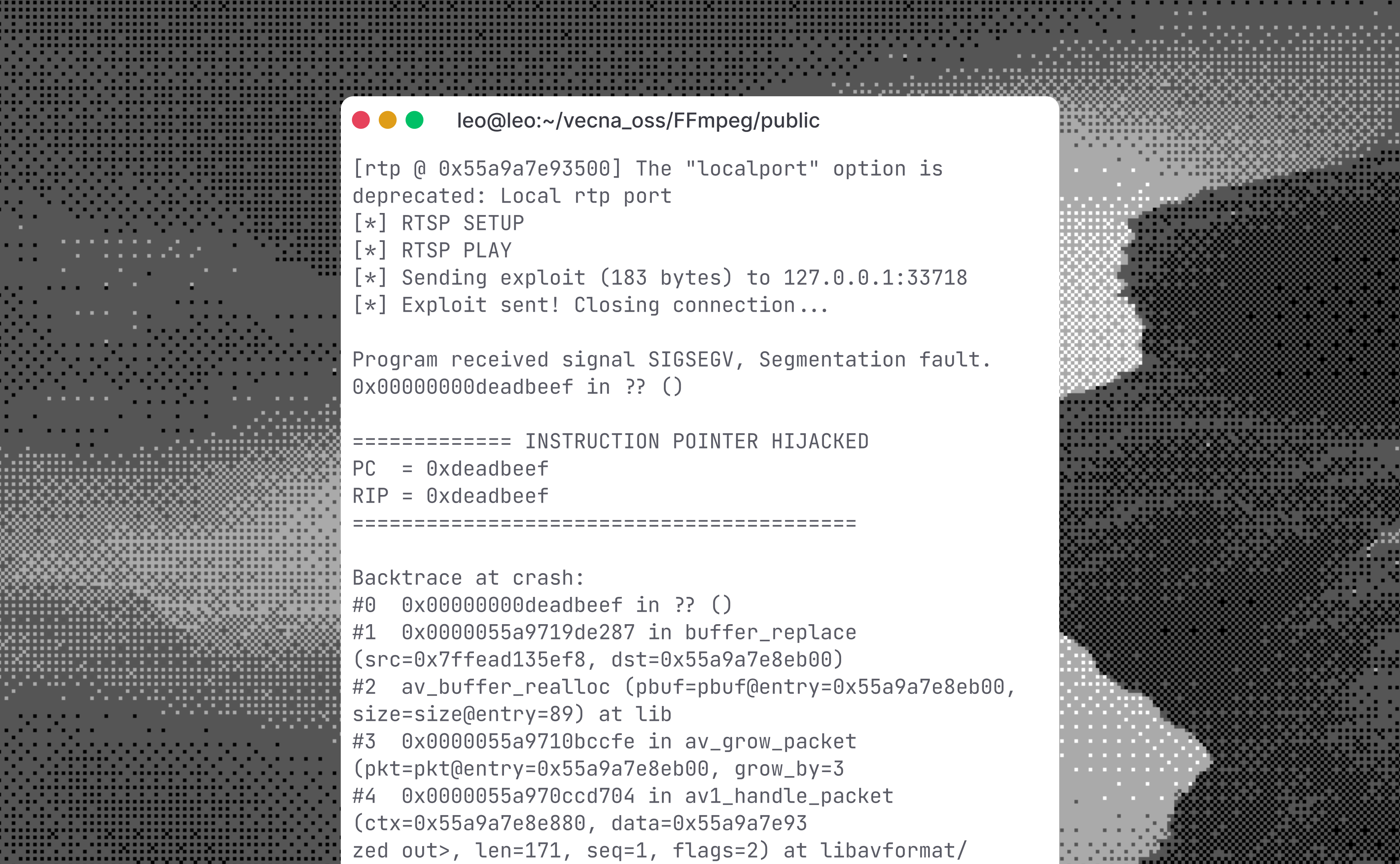 21 Zero-Days in FFmpeg | depthfirst
depthfirst reports 21 zero-day memory-safety bugs in FFmpeg found by its autonomous security agent for about $1k, nine with CVEs (CVE-2026-39210 to CVE-2026-39218). Bugs span the TS, DASH, AVI and CAF demuxers, RTP/RTSP depacketizers, swscale and the VP9 decoder, some latent since 2003. It details the AV1 RTP depacketizer heap overflow, which overwrites AVBuffer.free to reach PC control from one 183-byte packet.
depthfirst.comwriteupAdded 29 Oct 2026, published 2 Jun 2026🛡️ Security Protestware by open source maintainer to hinder agentic coding: The jqwik 1.10.0 Prompt Injection
Snyk details how jqwik maintainer Johannes Link shipped version 1.10.0 of the Java property-testing library net.jqwik:jqwik-engine to Maven Central with a hidden method, printMessageForCodingAgents(), instructing AI coding agents to delete all jqwik tests and code. The instruction was concealed from humans via ANSI escape codes (ESC[2K + carriage return) that wipe the line on an interactive terminal but leave the text intact in raw logs captured by CI systems and agent tool-output parsers like Claude Code, GitHub Copilot agent mode, and Cursor. Claude Code detected and refused the injected instruction in the wild; the maintainer later disclosed the behavior, softened it in 1.10.1 (opt-in hiding, non-destructive directive), and stated jqwik is not meant for AI-assisted workflows — framing it as deliberate "protestware" against agentic coding rather than a conventional vulnerability.
snyk.iowriteupAdded 3 Sep 2026, published 2 Jun 2026🛡️ Security Red Hat npm Packages Compromised to Spread a Credential-Stealing Worm
Aikido details a June 2026 compromise of 96 versions across 32 @redhat-cloud-services npm packages (116,991 weekly downloads) with "Miasma," a new variant of the TeamPCP-authored Mini Shai-Hulud credential-stealing worm whose source was open-sourced in May 2026. Attackers compromised a Red Hat employee's GitHub account to push malicious orphan commits containing a GitHub Actions workflow that abused OIDC id-token: write permissions to authenticate to npm's trusted publishing endpoint and republish backdoored packages; each package's preinstall script then ran a 4.2MB obfuscated payload that swept GitHub Actions, AWS, GCP, Azure, Vault, Kubernetes, npm/PyPI, SSH, Docker, GPG, and .env credentials. The piece also lays out the broader Mini Shai-Hulud campaign timeline (Bitwarden CLI, SAP, PyTorch Lightning, Mistral/TanStack, Microsoft DurableTask) and full IOC package/version list.
aikido.devwriteupAdded 3 Sep 2026, published 1 Jun 2026🛡️ Security Socket: TrapDoor Crypto Stealer
Socket researchers uncovered TrapDoor, a coordinated crypto-stealer campaign spanning 34+ malicious packages and 384+ versions across npm, PyPI, and Crates.io, targeting crypto, DeFi, Sui/Move, and AI developer communities. The npm packages use postinstall hooks to run a shared trap-core.js payload that harvests SSH keys, AWS/GitHub credentials, wallet data, and browser data, then persists via .cursorrules, CLAUDE.md, git/shell hooks, systemd, cron, and SSH lateral movement; PyPI packages fetch and run remote JS on import, and Crates.io packages use malicious build.rs to XOR-encrypt and exfiltrate Sui/Move keystores to GitHub Gists. The attacker (GitHub account ddjidd564) also opened PRs against major AI/dev tooling repos (browser-use, LangChain, Langflow, llama_index, MetaGPT, OpenHands) attempting to plant hidden .cursorrules/CLAUDE.md instructions designed to trick AI coding assistants into running exfiltration under the guise of a 'security scan'.
socket.devwriteupPublished and added 26 May 2026🛡️ Security Socket: Malicious Postinstall Hook Compromises 8 PHP/Node Packages on Packagist
Socket's AI scanner found a coordinated supply chain campaign in which 8 Packagist (PHP/Composer) packages had their upstream GitHub repos modified to add a malicious postinstall hook — placed in package.json rather than composer.json — that downloads a binary (gvfsd-network) from an attacker GitHub Releases URL to /tmp/.sshd, disables TLS verification, and runs it in the background. The same payload was also found injected into GitHub Actions workflow files (as a step named "Dependency Cache Sync") in forked repos, and a GitHub code search for the attacker account parikhpreyash4 surfaced hundreds of additional references across Node.js projects. Highest real-world risk is concentrated in Laravel starter kits devdojo/wave (~6,400 stars) and devdojo/genesis (~9,100 Packagist installs), since starter-kit repos become the project root where npm install triggers the hook directly.
socket.devwriteupPublished and added 23 May 2026🛡️ Security VSCode Lifecycle Script Malware
Explains how npm's preinstall/install/postinstall lifecycle scripts and VS Code's tasks.json "runOn": "folderOpen" setting (paired with reveal:never/echo:false to suppress output) are exploited by threat actors as silent code-execution triggers requiring no user action beyond routine developer workflows like npm install or opening a project folder. Covers why this bypasses reachability-based defenses since malware "goes boom without a path," and walks through real npm attack campaign examples including one referencing Bitward.
opensourcemalware.comwriteupAdded 3 Sep 2026, published 16 May 2026🛡️ Security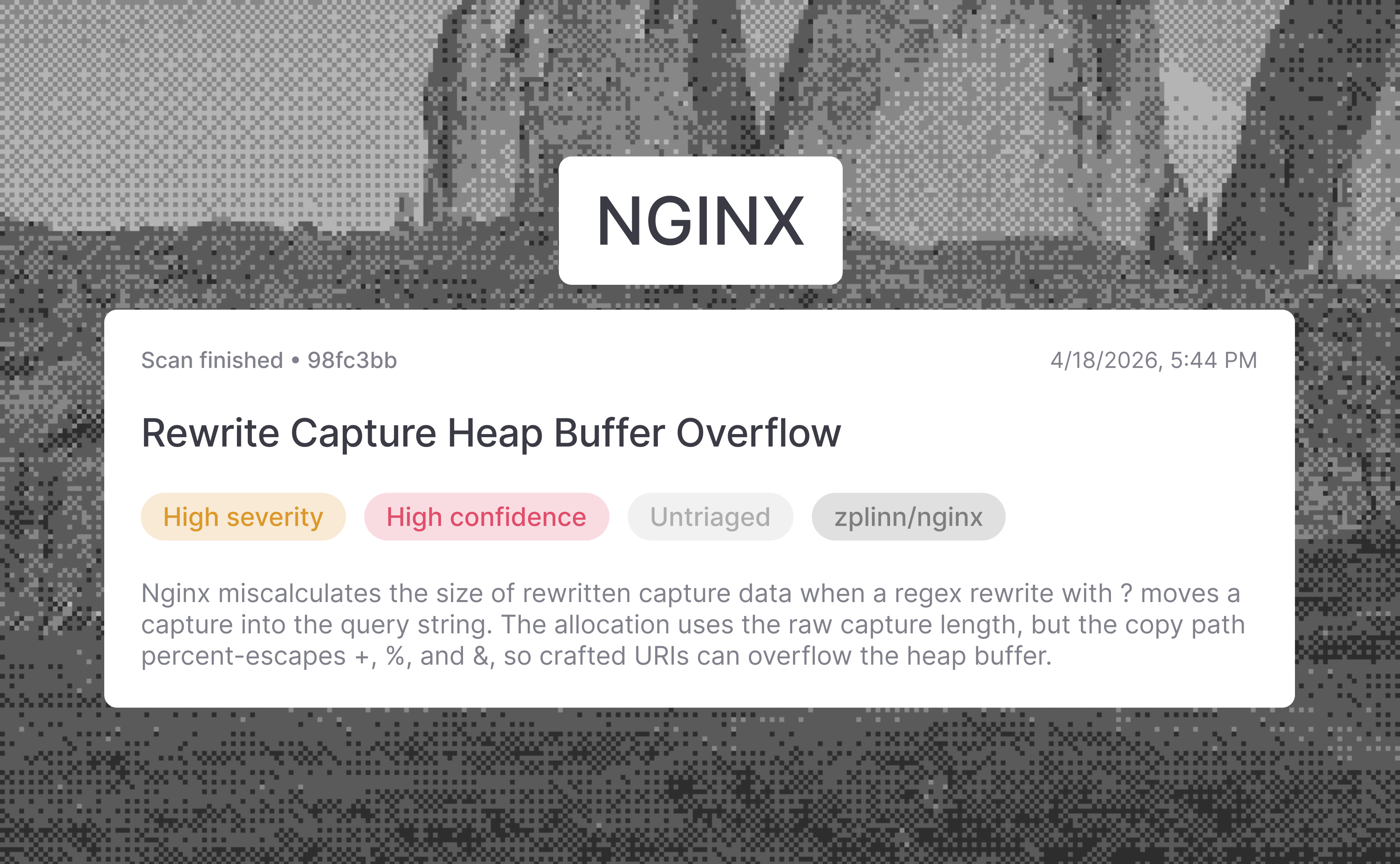 NGINX Rift: Achieving NGINX RCE via an 18-Year-Old Vulnerability (CVE-2026-42945)
Depthfirst researchers used an internal automated code-analysis system to find four remote memory-corruption bugs in NGINX, the most severe being CVE-2026-42945 — an 18-year-old heap buffer overflow in ngx_http_rewrite_module triggered when a rewrite directive with a query string is followed by a set directive referencing a regex capture group. The writeup walks through the two-pass script-engine root cause (a stale is_args flag causes the length-calculation pass and copy pass to disagree on escaping), then details a full exploitation chain using cross-request heap feng shui to corrupt an adjacent ngx_pool_t, spray fake ngx_pool_cleanup_s structures via POST bodies, and achieve unauthenticated RCE by hijacking the pool cleanup handler to call system(). It also lists three other confirmed CVEs (2026-42946, 2026-40701, 2026-42934) and affected version ranges across NGINX OSS, NGINX Plus, App Protect, Ingress Controller and Gateway Fabric.
depthfirst.comwriteupAdded 23 Sep 2026, published 13 May 2026🛡️ Security Quacc++
Somerset Recon details Quacc++, a proof-of-concept automated bug hunter that queries grep.app's regex-based index of public GitHub repos to find candidate vulnerable code, downloads matching repositories, and runs Semgrep taint-analysis rules to confirm exploitable patterns. Using a search for strcpy(buf, argv[ paired with a custom Semgrep taint rule, the authors discovered an unbounded strcpy stack buffer overflow in GetArgumentFiles() in Google DeepMind's Lab repository (engine/code/bspc/bspc.c), confirmed with AddressSanitizer and pwntools/GDB to give full RIP control at offset 1080. The post also walks through Semgrep rules for SQL injection (CWE-89), hardcoded API keys (CWE-798), and disabled TLS certificate validation (CWE-295) across curl/wget/requests/Node/Go.
 somersetrecon.comwriteupPublished and added 7 May 2026🛡️ Security
 TrustFall: 1-click coding agent RCE in Claude, Cursor, Copilot
Adversa AI's TrustFall report shows that Claude Code, Gemini CLI, Cursor CLI, and Copilot CLI all auto-execute project-defined MCP servers as unsandboxed OS processes the instant a user accepts the generic folder-trust prompt, with no mention of code execution in Claude Code's v2.1+ dialog. A malicious repo needs only two JSON files (.claude/settings.json with enableAllProjectMcpServers/enabledMcpjsonServers/permissions.allow, plus an inline-payload .mcp.json) to achieve one-Enter-keypress RCE with full user privileges, and the same chain runs with zero human interaction against CI runners using the official claude-code-action since headless mode skips the trust dialog entirely. The report documents Anthropic's declination of the finding as intended behavior, contrasts it with the stricter bypassPermissions warning flow, references the related CVE-2025-59536 patch, and ships defender mitigations (managed-settings lockdown, config auditing, CI branch restrictions) plus a safe PoC.
 adversa.aiwriteupAdded 20 May 2026, published 7 May 2026🛡️ Security
 IronCurtain: Secure AI Agent Runtime
The author describes IronCurtain, an open-source finite-state-machine orchestration framework for agentic security research, and a vuln-discovery workflow built on top of it that autonomously hunts for zero-days. Using an Orchestrator agent, an append-only journal, and tiered harness-building (single-function fuzzing up to full QEMU-based VM validation), the workflow replicated the historical 1998 OpenBSD TCP SACK kernel panic with Opus 4.6/Sonnet 4.6, and independently found previously unreported bugs in a widely-deployed media framework and an 18-year-old integer truncation flaw in another foundational library — the latter run entirely on Z.AI's GLM 5.1 via a LiteLLM gateway swapped in place of Anthropic models. The piece argues that PoC generation (not static findings) is what matters for defenders, that open orchestration plus commodity/open-weight models can match "frontier" vulnerability-discovery capability at $30–$150 per codebase, and that AUP refusals during severity assessment create asymmetric friction for defenders versus unrestricted adversaries.
 provos.orgwriteupPublished and added 7 May 2026🛡️ Security
 XBOW: GPT-5.5 and Opus 4.7 in Offensive Security Workflows
XBOW shares internal benchmark results comparing GPT-5.5, GPT-5, GPT-5.4, and Opus 4.6/4.7 on autonomous vulnerability-finding agents, using frozen vulnerable versions of open source apps. GPT-5.5 cut the miss rate from GPT-5's 40% to 10%, dramatically improved both black-box and white-box exploitation, logged into target apps in half the iterations of competitors, and gave up on dead-end paths twice as often as prior models — a key metric for agentic offensive tooling.
 xbow.comwriteupPublished and added 6 May 2026🛡️ Security
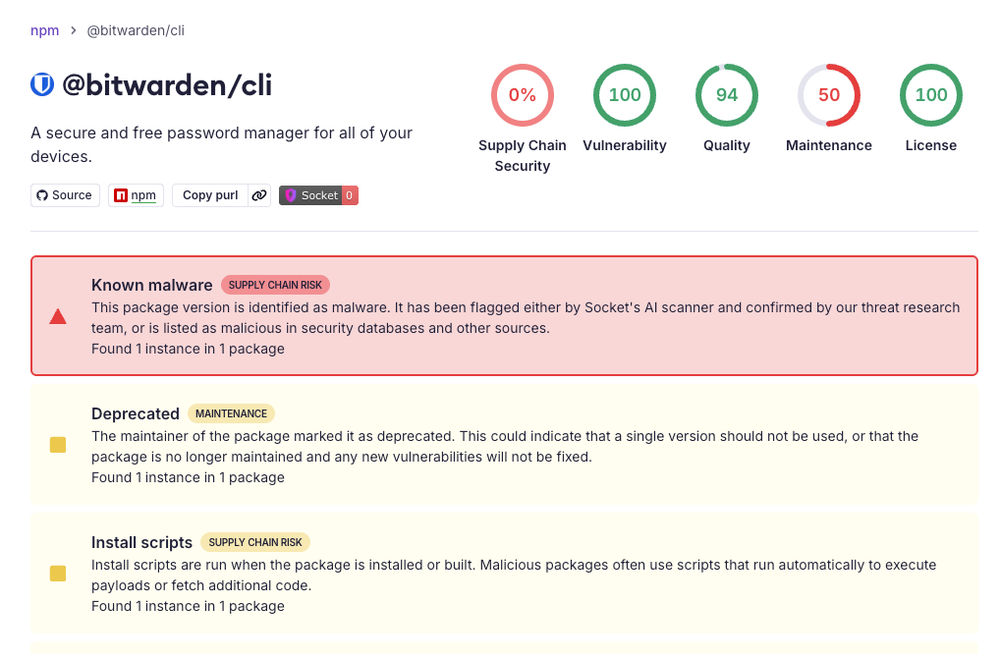 Socket: Bitwarden CLI Compromised in Checkmarx Supply Chain Campaign
Socket researchers found that Bitwarden CLI 2026.4.0 was compromised via a hijacked GitHub Action in Bitwarden's CI/CD pipeline, part of the ongoing Checkmarx-themed supply chain campaign. The malicious bw1.js payload shares C2 infrastructure and code (gzip+base64 packed Python memory-scraper, Bun-based runtime, GitHub Actions workflow injector) with the earlier Checkmarx mcpAddon.js attack, but adds new indicators like a lock file, shell-profile persistence, and overt "Shai-Hulud: The Third Coming" / Butlerian Jihad ideological branding, plus a kill switch for Russian-locale systems. It harvests GitHub, AWS, Azure, GCP, npm, SSH, and Claude/MCP credentials and exfiltrates via GitHub commits and npm republishing.
socket.devwriteupPublished and added 6 May 2026🛡️ Security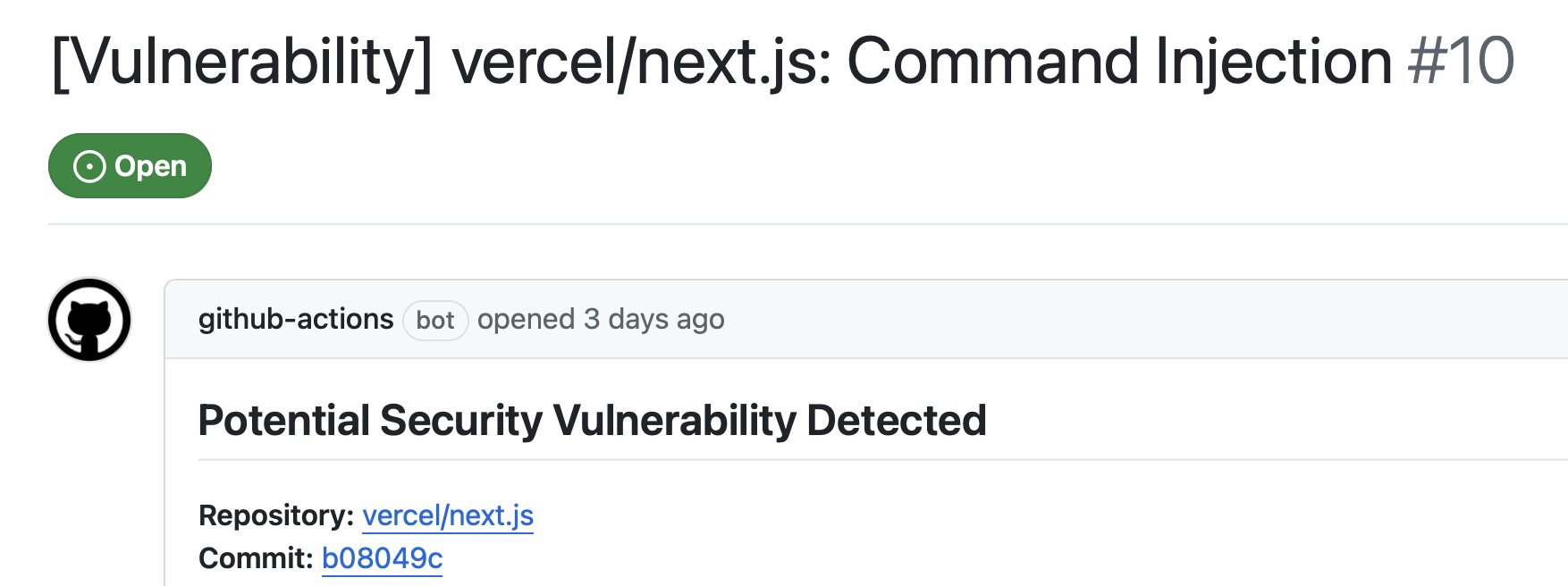 Negative Days in LLM Workflows
A researcher builds "Vulnerability Spoiler Alert," an open-sourced GitHub Action that uses Claude to continuously scan commits and associated pull requests in monitored repos, flagging likely security patches before a CVE is ever published. The post walks through prompt-tuning iterations (adding PR context, requiring a concrete exploit PoC, using the assistant-prefill trick to force clean JSON output), a timing case study showing an ~2-hour "negative-day" window on the React2Shell patch versus CVE feed publication, and a verified command-injection "never-day" the tool surfaced in vercel/next.js's @next/codemod (execSync with unsanitized shell interpolation), reproduced with a trojanized package.json PoC.
 spaceraccoon.devwriteupPublished and added 5 May 2026🛡️ Security
- CVE-2026-41940 (SessionScribe): cPanel/WHM Session Forgery Reverse-Engineered
rfxn's technical dissection of CVE-2026-41940 (SessionScribe), an unauthenticated session-forgery bug in cPanel/WHM that lets an attacker forge a root cpsess session via CRLF injection into the password field of an Authorization: Basic request, exploiting the fact that Cpanel::Session::saveSession() skips the CR/LF-stripping filter_sessiondata() sanitization used by the normal login path, combined with an encoder short-circuit when the whostmgrsession cookie's OBHEX suffix is malformed. The writeup reverse-engineers the patched cpsrvd binaries (since cPanel ships no source for this surface) using a custom snapshot/BinDiff workflow, documents an adjacent lower-severity access-log identity-injection issue, and ships an open-source operator toolkit (ModSecurity rule pack, remote probe, on-host IOC scanner, snapshot collector) plus an architectural recommendation to firewall cpsrvd's direct ports behind Apache+mod_security2 proxy endpoints. Credits researcher Sina Kheirkhah of watchTowr Labs for the original PoC.
 rfxn.comwriteupAdded 18 Sep 2026, published 29 Apr 2026🛡️ Security
 Marimo OSS Python Notebook RCE: From Disclosure to Exploitation in Under 10 Hours | Sysdig
Sysdig's Threat Research Team details CVE-2026-39987, a critical (CVSS 9.3) pre-authentication RCE in the marimo Python notebook platform's /terminal/ws WebSocket endpoint, which skips the validate_auth() check used elsewhere in the app and grants an unauthenticated interactive PTY shell. Using honeypots deployed within hours of the advisory, TRT observed a single attacker build a working exploit from the advisory text alone (no public PoC existed), run a scripted PoC validation, manually recon the filesystem, and steal .env AWS credentials and search for SSH keys, all in under 3 minutes, with first exploitation just 9h41m after disclosure. The piece argues niche software (20k GitHub stars) is now exploited as fast as major platforms like Langflow, and provides IOCs and hardening recommendations (upgrade to marimo 0.23.0, restrict/disable the terminal endpoint, rotate credentials).
 sysdig.comwriteupAdded 26 Sep 2026, published 9 Apr 2026🛡️ Security
- Threat Actors Abuse Railway.com PaaS as Microsoft 365 Token Attack Infrastructure
Huntress details a device-code phishing campaign hitting 340+ Microsoft 365 tenants across the US, Canada, Australia, New Zealand, and Germany since February 2026, in which attackers abuse Railway.com's clean-IP PaaS infrastructure to run OAuth device-code token replay at scale, bypassing MFA entirely. The campaign chains vendor URL-rewriter abuse (Cisco, Trend Micro, Mimecast), compromised sites, Cloudflare workers.dev phishing pages, and AI-assisted lure generation, and Huntress has attributed it to the EvilTokens Phishing-as-a-Service platform advertised via Telegram. The post includes IOCs (Railway CIDR ranges), Sentinel KQL hunting queries, and mitigation guidance (block Railway IPs, revoke refresh tokens, restrict device code flow, enable CAE).
huntress.comwriteupAdded 3 Sep 2026, published 23 Mar 2026🛡️ Security 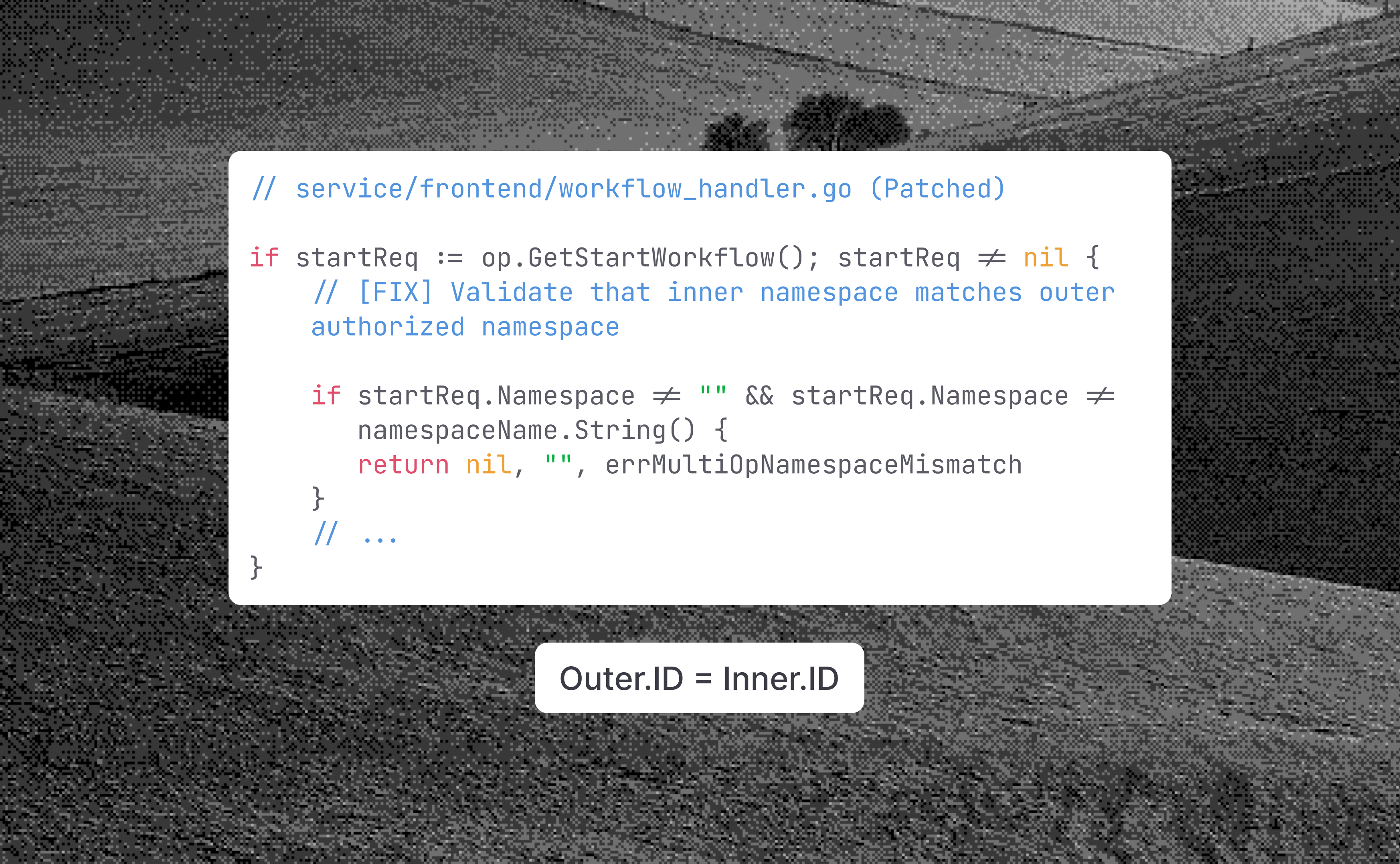 The Masked Namespace Vulnerability In Temporal CVE-2025-14986 | depthfirst
CVE-2025-14986 is an identity-binding flaw in Temporal's ExecuteMultiOperation endpoint. The outer request was authorized for one namespace, but inner StartWorkflow operations carried a different namespace that the server used for policy and schema preparation while persisting under the authorized one. The post shows the Go code, two exploits (cross-tenant schema access and policy bypass), and the v1.27 fix, with timeline December 2025 to January 2026.
depthfirst.comwriteupAdded 29 Oct 2026, published 5 Feb 2026🛡️ Security BodySnatcher (CVE-2025-12420): agentic hijacking vulnerability in ServiceNow
AppOmni researcher discloses CVE-2025-12420 ("BodySnatcher"), a chain of flaws in ServiceNow's Virtual Agent API and Now Assist AI Agents application that let an unauthenticated attacker impersonate any user with only their email address, bypassing MFA/SSO via a hardcoded, instance-agnostic Message Auth secret and insecure Basic account-linking. By reverse-engineering the protected AIA-Agent Invoker AutoChat topic and its A2A adapter, the attacker can trigger the built-in "Record management" AI agent to create a backdoor admin user entirely through async, supervised-mode agent execution — escalating from zero access to full platform admin. The writeup includes full HTTP PoC payloads and recommends enforcing MFA on account linking, an AI agent approval workflow, and lifecycle de-provisioning of dormant agents.
 appomni.comwriteupAdded 14 Aug 2026, published 13 Jan 2026🛡️ Security
 ALPC You Later: CVE-2025-64721 Sandbox Escape Smashing The Heap Over IPC
CVE-2025-64721 is a Sandboxie vulnerability in the SYSTEM service SboxSvc.exe, reachable over the raw ALPC port \RPC Control\SbieSvcPort. The RC4Crypt handler never checks value_len against the message length, giving an out-of-bounds heap read and, via a 32-bit integer overflow (0xFFFFFFF1), a 4GB heap write. The post explains a two-thread vtable-hijack plan to escape the sandbox. It was reported and patched on 12 November 2025.
depthfirst.comwriteupAdded 29 Oct 2026, published 23 Dec 2025🛡️ Security- Device Code Phishing: OAuth 2.0 Attacks in Google & Azure
A Huntress researcher walks through Device Code Phishing, an OAuth 2.0 device authorization grant abuse technique, and shows why it is far more dangerous against Azure/Microsoft 365 than against Google Cloud. In Azure, the attacker controls the requested resource and can use Microsoft's undocumented "Family of Client IDs" (e.g. the Microsoft Authentication Broker client ID) to phish a Primary Refresh Token capable of joining rogue devices, enrolling MFA, and full account takeover; Google's device code implementation restricts the flow to a handful of narrow scopes (GDrive file access, YouTube read-only) and requires a registered/verified OAuth app, neutering the same attack. The piece includes working curl/Python requests for both providers and references prior research by Dirk-jan Mollema, Nestori Syynimaa, and Lina Lau.
huntress.comwriteupAdded 3 Sep 2026, published 6 Feb 2025🛡️ Security




Showing 90 of 94
Show more