- Some “coherence arguments” are two different things in a trenchcoat
Steven Byrnes posted "Some coherence arguments are two different things in a trenchcoat" on the AI Alignment Forum on 2 November 2026. It is an 11-minute post tagged Coherence Arguments and AI. By its title it argues that some coherence arguments bundle two separate claims together. The fetched page held no body text, so the specific claims are not confirmed.
 alignmentforum.orgarticlePublished and added 2 Nov 2026🧠 AI
- So I guess everyone uses LLMs to think now
The eva.ac author argues that recent AI-credited vulnerability findings come from skilled researchers steering LLMs, and that AI firms use disclosures as marketing. Cases cited: Calif, OpenAI and Wiz framing PHP2Shell differently; a hash teaser before the Tailscale "tailworm" privilege escalation (author's account: Tailscale not contacted); and the eMudhra CA key found without AI. No sources, dates or CVEs are given.
 eva.acarticleAdded 2 Nov 2026, published 1 Nov 2026🛡️ Security
 Secret Service, FBI Join Binance Hack Probe as Circle Freezes $823 Million
Decrypt reports that Binance is working with the FBI and U.S. Secret Service after a theft of about $6.4 billion, which TRM Labs and Chainalysis attribute to North Korea's TraderTraitor group, also linked to the February 2025 Bybit hack. Circle froze about $823 million in USDC and Tether froze USDT, though the page gives differing Tether totals. Binance first suspected a compromised DevOps engineer laptop, found more breach points, and saw no evidence of leaked wallet private keys.
 decrypt.coarticlePublished and added 30 Oct 2026🛡️ Security
 Was I wrong about open models & cyber risks?
Interconnects post in which Nathan Lambert revisits his claim that an open-weight Claude Mythos would have been survivable. He argues GLM-5.3 already crosses the capability threshold with little visible societal change, and quotes Rob Wiblin, Anthropic and Zvi Mowshowitz as examples of exaggerated warnings. He cites Epoch AI's Firefox exploit built with GLM-5.3, and treats the recent vulnerability surge as an ecosystem trend driven by AI capability and diffusion, not open versus closed models.
 interconnects.aiarticlePublished and added 30 Oct 2026🧠 AI
- Was I wrong about open models & cyber risks?
Interconnects post in which Nathan Lambert revisits his claim that an open-weight release of Claude Mythos in April 2026 would have been survivable. He argues GLM-5.3 already crosses that capability threshold with little visible harm. He cites Epoch AI's GLM-5.3 Firefox file-exfiltration exploit and Joshua Saxe's trend data, and says recent vulnerability waves come mostly from closed models and general AI diffusion.
interconnects.aiarticlePublished and added 30 Oct 2026🛡️ Security  dfbench — depthfirst
dfbench is depthfirst's held-out benchmark for frontier models on open-ended defensive security work: vulnerability detection, validation of findings, and differential analysis between commits. It reports recall, precision, F1 and cost per task for about 20 models at several thinking levels, split by domain (application, low level, smart contract) and by single or multi-repo scope. Overall detection recall ranges from about 21% to 69%.
 depthfirst.comarticleAdded 29 Oct 2026🧠 AI
- dfbench — depthfirst
dfbench is a held-out benchmark maintained by depthfirst that scores frontier LLMs on defensive security work: vulnerability detection, validation (precision) and differential analysis between commits. It reports recall, precision, F1 and cost per task by model and thinking level, split by application, low-level and smart-contract code and by single or multi-repo scope. Overall detection recall runs from about 21% to 69%, with the top figure at $99.19 per task for Mythos 5; validation precision mostly falls between 15% and 49%.
depthfirst.comarticleAdded 29 Oct 2026🛡️ Security - ChatGPT’s expanding world of work
OpenAI Signals work-activity data is a dataset release from OpenAI Economic Research. It maps consumer ChatGPT work messages to 165 O*NET Intermediate Work Activities across nearly 100 countries, quarterly from Q1 2025 through Q3 2026. Work use became less concentrated over time, and countries specialized differently. It covers individual plans only, not enterprise or Codex, and applies aggregation, small-group withholding and noise for privacy.
 openai.comarticlePublished and added 26 Oct 2026🧠 AI
 battledrones v14: Compass Rose, a four player map
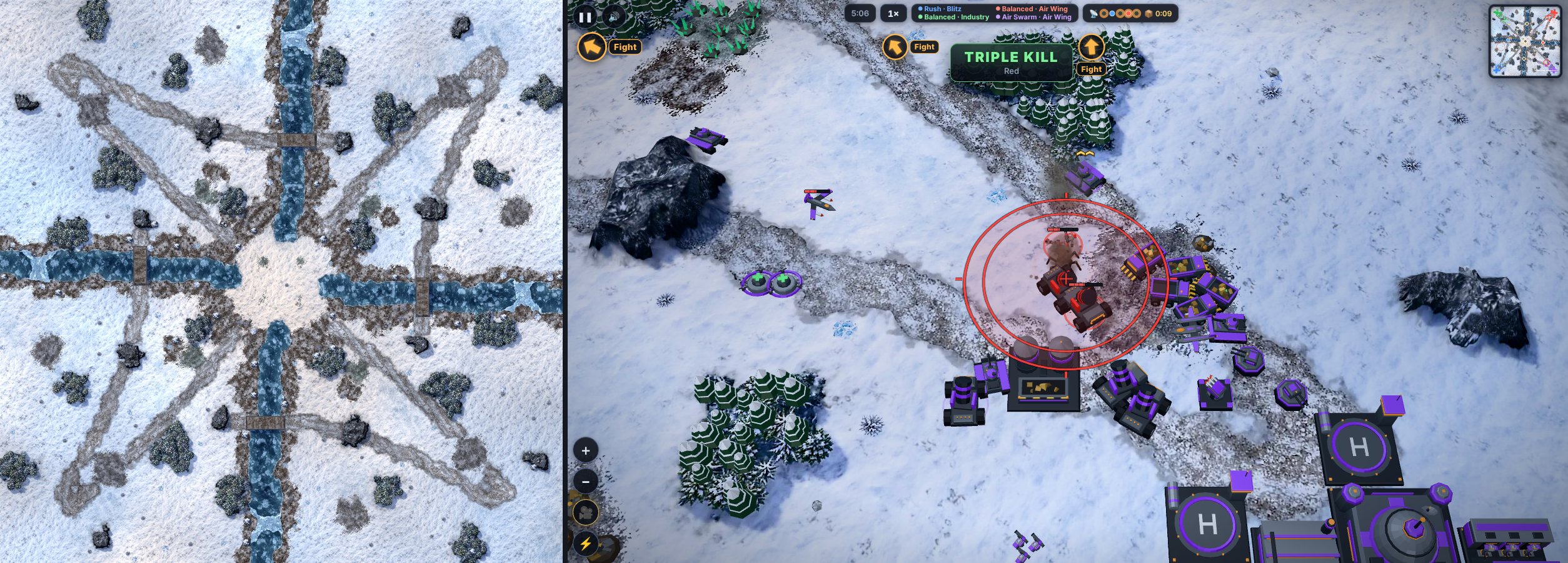
Battledrones v14 adds "Compass Rose", a four-player map with four-way rotational symmetry, to Simon Willison's vibe-coded RTS game, dated 24 October 2026. A single prompt to Claude Opus 4.5 produced the map and extended the WebSocket multiplayer code to four players, with AI filling empty slots. Players join by share link or QR code. New teams are purple and green. The post gives no code or diff.
 simonwillison.netarticlePublished and added 24 Oct 2026🧠 AI
 Your AI agent fixed the bug, but what else did it change?
Trail of Bits releases patching-bugs and regression-hunt, two agent plugins built with OpenAI through Patch the Planet. patching-bugs reproduces bugs, writes fixes and runs a three-arm proof; regression-hunt traces diffs to real interfaces, confirms with live PoCs and a fresh-context replay. A review of 130+ merged PRs found 21 regressions, and regression-hunt gave 25% fewer false positives than a baseline Codex prompt.
 blog.trailofbits.comarticlePublished and added 21 Oct 2026🧠 AI
- Using thousands of AI agents to uncover new leads in biological data
Distributed biological reasoning is an approach in which thousands of GPT-Rosalind agents each analyzed one gene disruption in a whole-brain CRISPR atlas of millions of mouse brain cells, searched literature, and proposed mechanisms. OpenAI, PerturbAI and Scripps Research finished in 32 minutes. Distributed agents cited over 700 references versus 11 for a single agent, and blinded experts preferred their interpretations. Leads included Tsc1/Tsc2 differences and DCTN1 with cholesterol.
openai.comarticlePublished and added 21 Oct 2026🧠 AI  Hugging Face ❤️ TorchTPU: TPUs, Natively
TorchTPU is a native PyTorch backend that makes Google TPUs a regular "tpu" device, replacing the older torch_xla path and Optimum TPU. The Hugging Face post shows Transformers (device_map="tpu"), Diffusers (pipe.to("tpu")) and Pallas kernels from the Kernels Hub running on it. It reports up to 21.5x faster decoding on Qwen3-30B-A3B at batch 64 and a 96.5% TPU test pass rate.
 huggingface.coarticlePublished and added 20 Oct 2026🧠 AI
 How to continue a GitHub Copilot app session in VS Code
This GitHub Blog tutorial shows how to open a GitHub Copilot app agent session in VS Code with its conversation, plan, diff and worktree intact. It walks through reviewing the agent's changes in Source Control, prompting Copilot from the sidebar, editing by hand, running tests locally, and pushing to the session's existing pull request.
 github.blogarticlePublished and added 19 Oct 2026🧠 AI
 TorchNeuron: running HF models on AWS Trainium is easier than ever
TorchNeuron is an AWS PyTorch plugin that exposes Trainium as a native "neuron" device with eager mode, torch.compile, DTensor and FSDP2, entering public beta on 20 October 2026 (pip install torch-neuronx). The post shows Transformers text generation with tensor parallelism, TRL SFT of Qwen3-8B on 32 NeuronCores (TP 4 x FSDP 8), and Diffusers TP inference. It says 89% of the top 100 text-generation architectures work, versus 46% with Optimum Neuron v0.4.5.
huggingface.coarticlePublished and added 19 Oct 2026🧠 AI Your CVE is reachable. But is it exploitable?
Explains why a reachable vulnerable function in a dependency is not necessarily exploitable, and how exploitability analysis extends SCA reachability analysis. It walks through CVE-2021-23337 (lodash _.template command injection) across three apps with different outcomes. It notes that a verdict can change with code, for example via prototype pollution and the follow-up CVE-2026-4800. A closing section describes Aikido's CVE Exploitability Analysis.
 aikido.devarticleAdded 19 Oct 2026, published 17 Oct 2026🛡️ Security
 SBOMs are Just a Means to an End | Endor Labs
A critique of the state of SBOM adoption, written by a CISSP product manager at Endor Labs. It argues that the NTIA minimum elements and the SPDX and CycloneDX specs don't require a package URL (purl), so name and version alone can't tell a Maven log4j-core from an npm or cargo package of the same name. It also notes that no spec defines build time, which makes transitive dependency resolution unreliable, and that generation tools place the same data in different fields. It adds that vendors have mixed incentives to ship SBOMs and that practices are immature, and it calls on standards bodies to define required data per prioritized use case.
 endorlabs.comarticlePublished and added 16 Oct 2026🛡️ Security
 Welcome FLUX.3 Image Klein in Diffusers
Hugging Face blog post introducing Black Forest Labs' open FLUX.3 Image Klein (distilled and base checkpoints) in Diffusers. It covers text-to-image, multi-reference image-to-image and bounding-box layout control, FP8/NVFP4 single-file quantized weights, DreamBooth LoRA training scripts for generation and editing, memory/speed figures (about 2 s per 1024×1024 image on an H100), and a detailed architecture tour: Qwen3-VL text encoder, two-stage per-stream then joint transformer blocks, per-token timestep modulation, 4D RoPE, and flow-matching denoising. It also shows how to customise the Modular Diffusers pipeline.
huggingface.coarticlePublished and added 15 Oct 2026🧠 AI Tree Appreciator
Simon Willison describes another game experiment, this time in the Claude iPhone app in chat mode rather than Claude Code. He prompted Claude Opus 5.5 Max to build a three.js game called "Tree appreciator" with two algorithmically generated trees and a mechanic based on appreciating their differences, and added "think hard about how to make sure it is both fun and beautiful". After about 3 hours 7 minutes of work it returned a spot-the-difference game with music, animation and achievements. He notes that simply telling Opus 5.5 to "make sure it is fun" works surprisingly well.
simonwillison.netarticleAdded 15 Oct 2026, published 14 Oct 2026🧠 AI- Quoting Geoffrey Huntley
Simon Willison quotes Geoffrey Huntley on keeping coding agents compliant with a project's conventions. Instead of updating AGENTS.md, which drifts, he adds a pre-commit hook that scans the git diff for direct calls to observability modules that bypass his diagnostics library. The hook fails the commit and injects a prompt telling the agent to use the library, which he says took compliance to ten out of ten.
simonwillison.netarticlePublished and added 13 Oct 2026🧠 AI  Static SCA vs. Dynamic SCA: Which is Better (and Why It's Neither) | Blog | Endor Labs
Compares static SCA (manifest/source scanning at build time) with dynamic SCA (runtime instrumentation). Static scans are complete but noisy and miss dependencies absent from manifests, for example in Python. Dynamic scans are relevant but incomplete, add agent overhead and surface findings late. It argues eBPF improves deployability of dynamic SCA but not its coverage limit. A worked example with a library of N vulnerable functions illustrates the difference. The author, Endor Labs, advocates static analysis of source code plus reachability analysis to filter findings by whether vulnerable code is actually called.
endorlabs.comarticlePublished and added 12 Oct 2026🛡️ Security- CMMC Level 2 Non-Negotiable Requirements Explained | Huntress
Explains the "non-negotiable" requirements for a Conditional CMMC Level 2 (Self) status under 32 CFR 170.21. The minimum score is 88 of 110, every 3- and 5-point NIST SP 800-171 requirement must be implemented, plus a short list of 1-point ones. Those mandatory items add up to 64 points, which leaves 24 of the remaining 46 one-point requirements to choose. It also covers how this differs from legacy DFARS 252.204-7019/7020 self-assessments scored with the DoDAM (-203 to 110), and how the 180-day POA&M closeout window can silently expire a status in SPRS. The post ends with a Huntress product mapping.
 huntress.comarticlePublished and added 12 Oct 2026🛡️ Security
 Understanding AI, Part I: The Machines That We Taught
Galaxy Research's explainer traces AI's intellectual history from the 1956 Dartmouth Workshop and the Logic Theorist through the symbolic-AI era (expert systems like Mycin and XCON, the Cyc project) to the sub-symbolic/connectionist revival (Perceptron, Hopfield networks, backpropagation, LeCun's CNN zip-code reader) that culminated in deep learning and the 2017 Transformer architecture. It then surveys three machine-learning paradigms (supervised, reinforcement, unsupervised) and five deep generative architectures (autoregressive, diffusion, GANs, VAEs, normalizing flows), closing with how modern LLM chatbots combine these via pretraining, SFT, and RLHF, and how multimodal, reasoning, RAG, agent, and world-model systems extend base LLMs.
 galaxy.comarticleAdded 8 Oct 2026🧠 AI
 Anthropic Introduces 3-Tier Cyber Verification Program for AI Access
Anthropic's revamped Cyber Verification Program merges the original CVP with Project Glasswing into three tiers: Defense Access, Red Team Access and Specialized Access. All tiers cover Opus 5.5, Sonnet 5.5, Mythos 5.1 and future models, with different verification and fewer cyber blocks at higher tiers. Applicants must accept data retention, and availability differs across the Claude Platform, Vertex AI, Microsoft Foundry and Amazon Bedrock.
 securityweek.comarticleAdded 30 Oct 2026, published 7 Oct 2026🧠 AI
 The Cyber Risk Discourse is Broken
Nathan Lambert's Interconnects op-ed argues the "open weights are a cyber weapon" discourse ignores that documented real-world AI-enabled cyber incidents to date trace mostly to closed-API models (OpenAI), not open-weight ones, and critiques Anthropic's GLM-5.3 offensive-cyber risk report for not engaging with the trade-offs of banning open models. It also unpacks how Chinese labs (e.g., Kimi K3, GLM-5.3) assess and register AI risk differently from US labs, and contrasts the hype around Claude Mythos's hypothetical leak with GLM-5.3's actual open release having caused no comparable societal disruption.
interconnects.aiarticlePublished and added 6 Oct 2026🛡️ Security- The Cyber Risk Discourse is Broken
Nathan Lambert's Interconnects essay argues the Western discourse on open-weight model cyber risk is one-sided and poorly reasoned, critiquing Anthropic's report framing GLM-5.3 as an offensive cyber tool while ignoring the trade-offs of banning open weights. He contends public evidence shows closed-model APIs (e.g. OpenAI's) have caused more documented cyber incidents than open weights so far, argues banning open models without also restricting closed-model APIs would widen the offense-defense gap, and offers an account of how Chinese labs (and government registration/evaluation requirements) weigh AI risk differently than U.S. labs.
interconnects.aiarticlePublished and added 6 Oct 2026🧠 AI 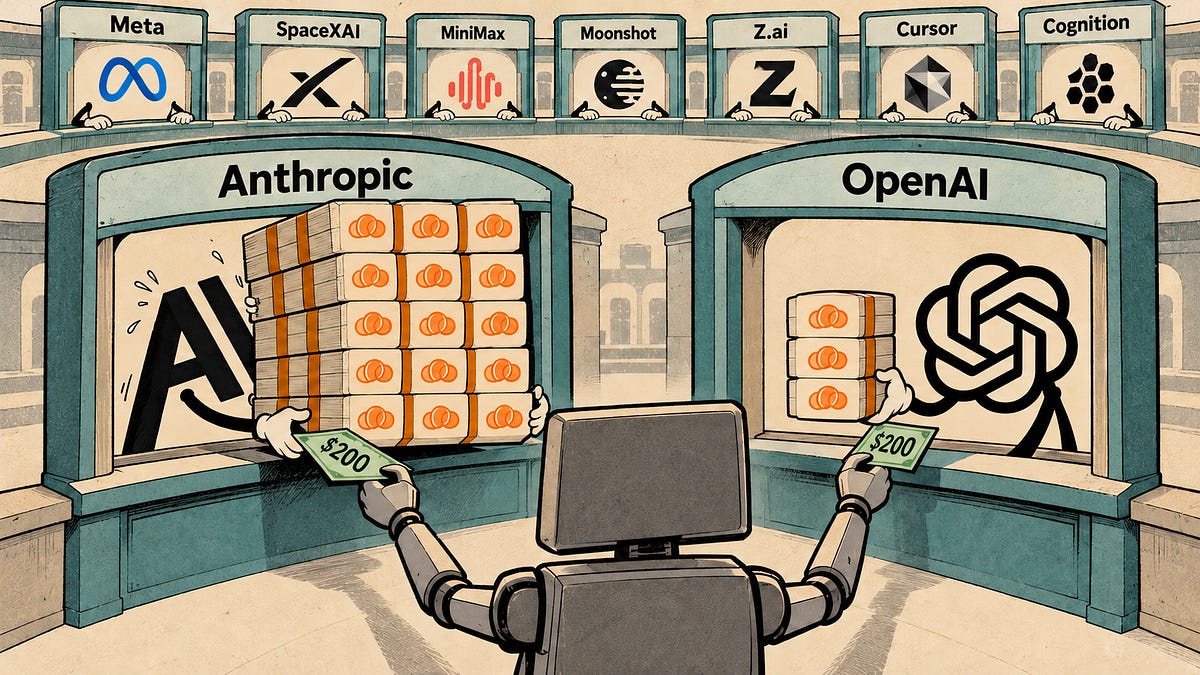 Anthropic Subscriptions Offer 5x+ More Value Than OpenAI
SemiAnalysis measures the real API-equivalent value of AI subscription plans by experimentally reverse-engineering how usage meters consume credits across input/output/cache token types for Anthropic, OpenAI, Meta, xAI, Cursor, Cognition, Z.ai, MiniMax, and Moonshot. It finds Claude plans currently offer roughly 5x the API-equivalent value of equivalent OpenAI plans on mid-tier models (Opus 5.5 vs GPT-6.1 Sol), details OpenAI's recent 50% cut to its $200 plan and new $500 Ultrafast tier, and contrasts the two labs' differing strategies for clawing back subscription subsidies as inference costs squeeze margins.
 newsletter.semianalysis.comarticlePublished and added 6 Oct 2026🧠 AI
 Expanding the Cyber Verification Program
Anthropic's expanded Cyber Verification Program (CVP) merges Project Glasswing and the earlier CVP into three access tiers (Defense, Red Team, Specialized) for Claude Opus 5.5, Sonnet 5.5 and Mythos 5.1, each with different verification and security controls. On CyScenarioBench with Opus 5.5, Defense Access blocked 46 of 50 trials, Red Team Access none. Glasswing partners reported at least 129,000 verified vulnerabilities between April and July 2026.
 anthropic.comarticleAdded 29 Oct 2026, published 6 Oct 2026🧠 AI
 Ephemeral Testing
Daniel Lemire proposes "ephemeral testing": instead of testing a software component directly, you have an AI agent build a throwaway application or layer on top of it, then judge the component's API quality by how easily the agent succeeds. A clean API with stable invariants lets the agent build quickly with few failures, while hidden state or poor docs produce patches and errors — treated as evidence about the underlying code's design, not the agent's competence. He describes repeating this with different agents and tasks against the same foundation as a cheap substitute for anticipating future integration needs.
 lemire.mearticleAdded 6 Oct 2026, published 5 Oct 2026🧠 AI
 How native transaction assertions could enforce a transaction's final outcome
Ethereum Foundation research post distinguishing "intent mismatch" (Bybit, BadgerDAO) from "outcome mismatch" (the Aave/CoW $50.4M swap that settled for $36K) attacks on signed transactions, then proposing native transaction assertions as a fix. It details EIP-7906, which adds a read-only POST_TX frame (building on EIP-8141 frame transactions) with three new opcodes — TXTRACE, TXDIFF, EVENTDATACOPY — letting onchain logic inspect the full net state diff and events after execution and revert if a signed, independently-sourced rule is violated.
 blog.ethereum.orgarticlePublished and added 5 Oct 2026🛡️ Security
 Getting the most out of Opus 5.5 in Claude and Claude Code
Anthropic's practitioner guide to working with Claude Opus 5.5 in Claude apps and Claude Code, covering prompting changes (dropping "think carefully" lines since the model always reasons internally), steering long autonomous runs with clear finish lines and mid-run follow-ups, CLAUDE.md rules for when to stop vs. keep going, delegating work to subagents with evidence checks, maintaining a TASKS.md checklist across context compaction, using Opus 5.5 for diff/PR review and deck fact-checking, and how the model's new bio/cyber safety classifier can switch a flagged conversation to an older model mid-session. It also covers the Claude Code fast-mode research preview (/fast) for faster, lower-latency responses.
 claude.devarticleAdded 4 Oct 2026, published 3 Oct 2026🧠 AI
 Sandboxes Explained: What Each Type Actually Isolates | Blog | Endor Labs
A vendor blog primer (Endor Labs) that walks through the main families of sandboxing technology - VMs (Firecracker), shared-kernel containers (namespaces, cgroups, seccomp, runc), userspace-kernel middle grounds (gVisor, Kata Containers), and language/runtime sandboxes (Java SecurityManager, V8 isolates, WebAssembly/WASI) - explaining what each actually isolates, its cost, and known escape CVEs (VENOM/CVE-2015-3456, runc's CVE-2019-5736, Spectre/Meltdown). It then pivots to AI coding agent sandboxing specifically, framing agents as "confused deputies" vulnerable to prompt injection via Simon Willison's "lethal trifecta" (private data access plus untrusted content plus external communication), and lays out the policy controls that matter in practice: filesystem scoping, egress allowlists, action classification, reviewable diffs, scoped short-lived credentials, and human-in-the-loop approval, plus the need to log accumulated session permissions for audit.
endorlabs.comarticlePublished and added 2 Oct 2026🧠 AI- Sandboxes Explained: What Each Type Actually Isolates | Blog | Endor Labs
An Endor Labs primer surveying what different sandbox technologies actually isolate: hypervisor-based VMs (Firecracker microVMs, the VENOM floppy-controller escape CVE-2015-3456, Spectre/Meltdown), Linux containers (namespaces/cgroups/seccomp, the runc host-overwrite escape CVE-2019-5736, gVisor's userspace kernel, Kata Containers' per-pod microVMs), and language-runtime sandboxes (Java's deprecated SecurityManager, V8 isolates behind Cloudflare Workers, WebAssembly/WASI's capability model). It then pivots to AI agent sandboxing, arguing the threat model flips from "what can this process touch" to "what actions can this confused-deputy agent take," framed around Simon Willison's lethal trifecta (private data, untrusted content, external communication) and controls like filesystem scoping, egress allowlists, scoped short-lived credentials, and session-level audit logging.
endorlabs.comarticlePublished and added 2 Oct 2026🛡️ Security  Tavus Griffin: the first Human Interaction Model
Tavus introduces Griffin, a "Human Interaction Model" (HIM): a full-duplex, video-to-video system that unifies real-time perception, conversational decision-making, and expressive audiovisual generation into one model rather than a cascaded pipeline. It uses a Continuous Conversational Modeling engine that makes sub-second turn-taking and nonverbal-behavior decisions, paired with a streaming speech generator built on a new continuous audio codec (Tavec) and a distilled autoregressive video diffusion model that renders 720p video in 320ms chunks. In live one-minute video calls, Griffin-Lite was judged human by 48% of participants (versus 2.4% for Tavus's prior Phoenix-4.5 system) and topped NVIDIA's VideoFDB full-duplex conversation benchmark on both generation and perception tracks.
 tavus.ioarticleAdded 2 Oct 2026🧠 AI
 The Fine Art of Frustrating the Adversary
A Cisco Talos Cybersecurity Awareness Month piece in which eight researchers each give a concrete recommendation for frustrating adversaries at different attack-chain stages: honeypot accounts and tarpits for early deception, behavior-based detection engineering (citing MITRE ATT&CK, Summiting the Pyramid, Macro ATT&CK, LUCID) that targets what an adversary must accomplish rather than specific tools, allowlisting legitimate RMM software (flagging AnyDesk, ScreenConnect, Atera as commonly abused by ransomware like Warlock using Zoho Unattended Agent) over unapproved ones, identity/short-lived-credential controls for AI agent sessions referencing an Anthropic report on Claude misuse incidents, and breaking single-point-of-failure dependencies such as a Telegra.ph-hosted C2 dead-drop resolver used by the Amatera stealer and an EtherHiding-based BNB Smart Chain C2 used by ZigCryptoStealer. Each section gives practical, actionable mitigations defenders can apply today.
 blog.talosintelligence.comarticleAdded 7 Oct 2026, published 1 Oct 2026🛡️ Security
- Introducing SynthID Bio
SynthID Bio is Google DeepMind's watermarking technique extended from digital media into synthetic biology, embedding an imperceptible, verifiable signature into AI-designed protein sequences (via a modified ProteinMPNN alongside AlphaProteo) and 3D structures (via a fine-tuned AlphaFold 3 diffusion network) without compromising biological function. Wet-lab tests on protein binders against VEGF-A, SARS-CoV-2 spike RBD, and PD-L1 matched hit rate and binding affinity of unwatermarked designs, and the approach was also extended experimentally to watermark an Evo 2-designed bacteriophage genome with Stanford's Hie lab and Arc Institute. The work targets biosecurity gaps in DNA synthesis screening and public sequence databases (Protein Data Bank, UniProt, GenBank), with DeepMind open-sourcing code, in vitro data, and model weights alongside a methods paper.
 deepmind.googlearticlePublished and added 30 Sep 2026🧠 AI
 Generating and Managing C and C++ SBOMs
A FOSSA blog post explaining why C/C++ SBOMs built from manifest-parsing alone are incomplete, since the ecosystem lacks a centralized package manager and relies heavily on vendored (copy-pasted) source and code snippets. It covers concrete generation paths: Conan's built-in conan.tools.sbom CycloneDX generator, Yocto/OpenEmbedded's native SPDX output via the create-spdx class, process-based tracking for vendored code (third_party/vendor path flagging, manual audits), and the differing snippet-support capabilities of SPDX versus CycloneDX.
 fossa.comarticleAdded 1 Oct 2026, published 29 Sep 2026🛡️ Security
 Malicious .git Configs Can Make Claude, Codex, Cursor, and Other AI Agents Run Attacker Code
Manifold Security (publishing as GitSpawn) found that a repository's own .git/config can set core.fsmonitor to an arbitrary command, which Git silently executes on any index-refreshing operation (git status, git diff) — including the background branch/diff checks AI coding agents run at session startup, before any trust prompt, sandbox, or model call. The technique, requiring only that a .git directory arrive intact via archive/USB/sync-folder rather than a fresh clone, was confirmed in goose, Codex CLI/Desktop, Claude Code (two separate paths), Cursor, Hermes Agent, Qwen Code, and Grok Build; goose, Codex, Claude Code, and Cursor have shipped fixes while Hermes Agent, Qwen Code, Grok Build, and Claude Code's "ultrareview" path remained exploitable as of September 1, 2026. OpenAI separately published three CVEs for the same class in Codex, and the piece ties the pattern back to earlier IDE trust-dialog bypasses (VS Code CVE-2021-43891, JetBrains CVE-2022-24346).
 thehackernews.comarticleAdded 26 Sep 2026🛡️ Security
 Runway’s WorldPrompt and the Engineering of Real-Time Worlds
A Latent Space interview with Runway's CTO Kamil Sindi, Principal Research Scientist Robin Kahlow, and co-CEO Anastasis Germanidis about GWM Worlds 2, a research-preview "autoregressive diffusion" model that streams real-time interactive video (720p/24fps) and audio (48kHz), and its new WorldPrompt input format for fixing a first frame and issuing timestamped in-world events. It details the engineering pipeline (bidirectional diffusion → autoregressive fine-tuning → distillation for real-time speed), open problems like error accumulation, context/memory management, and causal/counterfactual correctness, and situates Runway against Google DeepMind's Genie 3, Odyssey-2 Pro, and World Labs' RTFM. A companion podcast transcript covers Runway's history from pix2pixHD/Gen-1/Gen-2 through the Stable Diffusion collaboration to its pivot toward world models.
 latent.spacearticleAdded 29 Sep 2026, published 25 Sep 2026🧠 AI
- SAML: A fractal of bad design
A Trail of Bits researcher (ex-Duo Security engineer) traces SAML's history from its 2002 OASIS committee origins through recurring XML signature wrapping (XSW) and canonicalization/round-trip parser-differential attacks, arguing its reliance on brittle XML signature validation (libxmlsec) makes it fundamentally unsound. The post catalogs SAML's five structural flaws — XML complexity, canonicalization, enveloped signatures, kitchen-sink design, and protocol ossification — and recommends organizations deprecate SAML in favor of OIDC, citing Fly.io and Tailscale as vendors already holding the line on OIDC-only SSO.
blog.trailofbits.comarticlePublished and added 21 Sep 2026🛡️ Security  Securely using pull_request_target - GitHub Enterprise Cloud Docs
GitHub's official guide on securely using the pull_request_target GitHub Actions trigger, explaining how it differs from pull_request by running workflow code and actions/checkout from the base repository's default branch while granting secrets and a privileged GITHUB_TOKEN. It details how "pwn request" vulnerabilities are introduced when workflows check out and execute a fork's pull request head (e.g. via ref: github.event.pull_request.head.sha), describes GitHub's new default policy that blocks pull_request_target in public repos (enforced starting Nov 2 2026), and lists hardening controls including least-privilege GITHUB_TOKEN, read-only cache access, isolated self-hosted runners, and the explicit allow-unsafe-pr-checkout opt-out flag in actions/checkout.
 docs.github.comarticleAdded 21 Sep 2026🛡️ Security
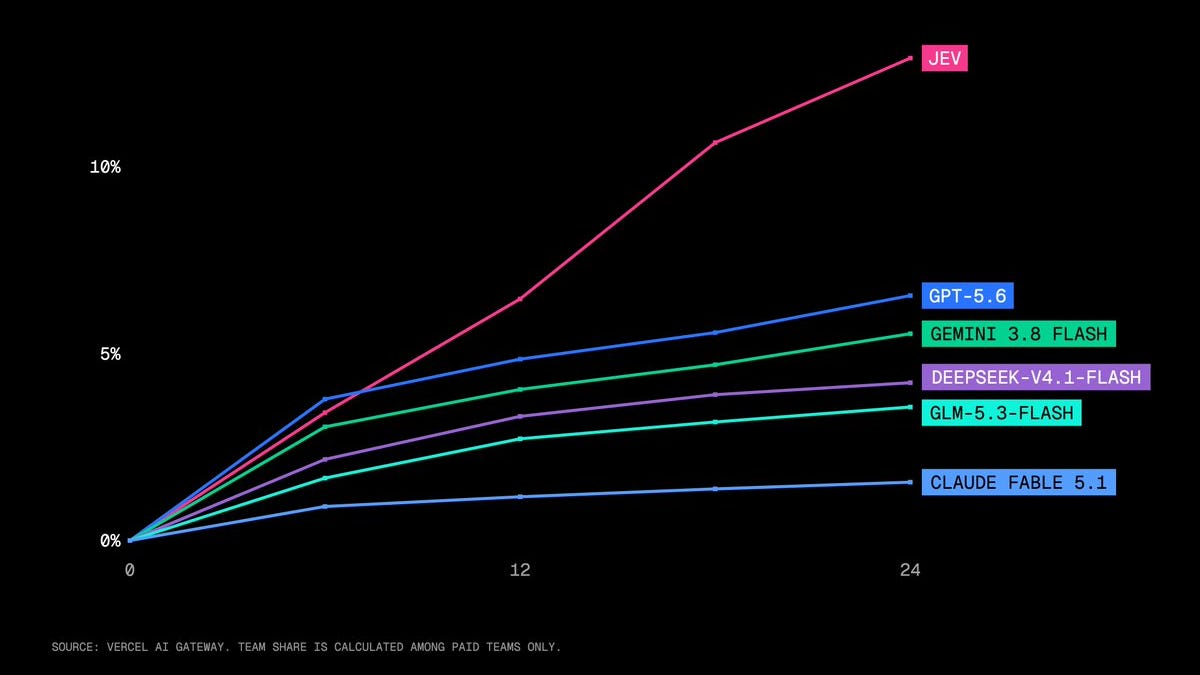 [AINews] Here are 6 Clones of Jev in 2 days
Latent Space's AINews digest covering the rapid open-source cloning of Jev, a non-generative 'discriminative decision model' positioned as a fast System-1 complement to LLMs for routing, escalation and tool-call decisions. It catalogs six independent reproductions (Laya, DiffusionGemmaJev, Bespoke Nimble, SemIf/OpenJev, Jevlike, Kev-0.5B) built on ModernBERT, diffusion, and Qwen3.5/Qwen2.5 backbones with LoRA and contrastive/NLI-based scoring heads, plus a wider AI Twitter recap covering AGENTS.md adoption in Claude Code, coding-agent harness-design research, RSI benchmark rankings, computer-use benchmarks, and AI safety/governance news.
latent.spacearticleAdded 29 Sep 2026, published 19 Sep 2026🧠 AI- A Defense of Gradual Disempowerment
A forum essay by Max Harms on the AI Alignment Forum arguing in favor of the "gradual disempowerment" thesis: the concern that advanced AI could erode human control over economic, political and cultural institutions incrementally — through humans being outcompeted or sidelined in decision-making and labor — rather than through a single dramatic takeover event. The post engages with existing critiques of this framing within the alignment community and makes a case for why gradual, diffuse loss of human agency deserves serious weight as a risk model alongside sudden-takeover scenarios. The page itself loaded with only metadata visible (title, author, date, comment count) since the site requires JavaScript, so the full argument could not be read directly.
alignmentforum.orgarticleAdded 7 Oct 2026, published 17 Sep 2026🧠 AI  From Algebra to Noise: Why Post-Quantum Cryptography Looks Different
OpenZeppelin Security's technical explainer on why post-quantum cryptography looks so different from classical crypto: Shor's algorithm exploits the abelian hidden-subgroup structure underlying RSA, Diffie-Hellman, ECDSA, EdDSA and pairing-based schemes, while Grover's algorithm only halves the effective security of hashes and symmetric keys (256-bit hashes stay at a comfortable 128-bit level). It then walks through NIST's finalized lattice/hash-based PQC standards — ML-KEM (Kyber) for key establishment, ML-DSA (Dilithium) for general signatures, SLH-DSA (SPHINCS+) as a conservative hash-based backup, plus future Falcon/FN-DSA and code-based HQC — mapping each to blockchain use cases and covering real deployment (Starknet's Falcon-512 Cairo account contracts), Ethereum account-abstraction/hybrid-signature migration paths, Bitcoin's UTXO/consensus constraints, Ethereum's LeanSig consensus-signature research, and a concrete institutional crypto-asset-inventory and PQC audit checklist.
 openzeppelin.comarticleAdded 29 Sep 2026, published 14 Sep 2026🛡️ Security
 Next-Gen SCA for C/C++: Closing the Detection Gap | Blog | Endor Labs
Endor Labs announces C/C++ language support for its SCA product, addressing the long-standing difficulty of tracking OSS dependencies in ecosystems with no central package registry. Because C/C++ developers commonly vendor (copy and modify) library source directly into their repos, Endor Labs builds a fingerprint index of known OSS libraries using cryptographic hashes for exact-match segments (functions, license blocks, etc.) and ML-generated code embeddings to catch renamed, reformatted, or lightly modified copies. The company reports customer benchmarks showing 81% fewer false negatives and 143% more true positives versus prior tooling for building SBOMs and detecting vulnerable/license-non-compliant code in C/C++ codebases.
endorlabs.comarticlePublished and added 11 Sep 2026🛡️ Security AI-Generated Malware Risk: A Practical Guide for Developers | Blog | Endor Labs
An Endor Labs guide explaining how AI-generated and AI-enhanced malware (citing Check Point's VoidLink, Google TIG's PROMPTFLUX/PROMPTSTEAL, and HYAS Labs' BlackMamba/EyeSpy) differs from traditional threats by dynamically mutating code at runtime to evade signature-based detection. It argues software supply chains are a prime target because AI can mass-produce convincing typosquatted or dependency-confused packages, and recommends behavioral analysis plus full-stack reachability analysis (via Endor Labs' AURI) as defenses instead of relying solely on CVE/signature matching.
endorlabs.comarticlePublished and added 11 Sep 2026🛡️ Security When will average people feel AI’s impact?
Nathan Lambert argues that unlike past industrial revolutions which delivered tangible goods to average people quickly, AI's benefits remain indirect and concentrated among knowledge workers, risking a repeat of 'Engels' pause' — the 1790-1840 period where UK GDP grew rapidly while working-class wages stagnated. He frames this as a political liability for the AI industry (OpenAI, Anthropic, etc.), predicting a 50-year diffusion arc where infrastructure built today compounds slowly, and suggests robotics/self-driving may eventually deliver the tangible impact LLMs currently lack.
interconnects.aiarticleAdded 29 Sep 2026, published 9 Sep 2026🧠 AI How BitRobot Crowdsources Real-World Data for Embodied AI, with Jonathan Victor
An interview with BitRobot president Jonathan Victor explaining how the project crowdsources real-world robot interaction data — the bottleneck for embodied AI — through a decentralized market of "subnets" collecting different data types (urban navigation, mobile manipulation, dexterity) via teleoperation, simulation, or egocentric video. It traces BitRobot's origin from FrodoBots, whose open-sourced FrodoBots-2K dataset (2,000 hours of urban robot navigation, used by DeepMind, Meta, and UC Berkeley) demonstrated demand for public robot data, and describes BitRobot's current RoboCap wearable capture device and Solana-based entropy scoring/payment system that rewards rare, high-information contributions over redundant ones.
 solana.comarticleAdded 29 Sep 2026, published 7 Sep 2026🧠 AI
 NeoMME: an efficient Multimodal-native and Multilingual Encoder
NeoMME is a family of 260M/800M multilingual, multimodal-native encoders from H Company that use a single bidirectional Transformer (not a separate vision tower + causal LM) to jointly process text tokens and raw 32×32 image patches, trained from scratch with a masked discrete-diffusion objective over ~524B tokens. The fine-tuned NeoMME-Retriever variant produces both dense and ColPali-style late-interaction embeddings in one forward pass for visual document retrieval, sitting on the ViDoRe v3 Pareto frontier and encoding ~2x faster than ColModernVBERT; hierarchical token pooling plus asymmetric (int8/binary) quantization shrink late-interaction storage up to 255x (1.5MB to 6kB/page) with under 5% nDCG@10 loss. Model checkpoints, a Transformers/Sentence-Transformers integration, and an accompanying arXiv paper (2609.01657) are released under Apache 2.0.
huggingface.coarticleAdded 29 Sep 2026, published 3 Sep 2026🧠 AI- Prompt Patterns That Make Coding Agents Write Safer Code | Blog | Endor Labs
Endor Labs breaks down prompt engineering patterns that reduce vulnerabilities in AI-generated code: a design-spec pattern that front-loads security requirements, naming specific CWEs to avoid (e.g. CWE-89, CWE-79, CWE-20), and a "secure-insecure diff" recursive self-critique loop, while warning that telling a model to role-play a security expert actually performs worse. It cites research showing these patterns cut vulnerability density by up to 56–77.5%, notes that repeated AI iteration can drift toward less-secure code, and flags that AI coding agents frequently suggest hallucinated or vulnerable dependencies (34% hallucinated per Endor's own dependency research), arguing prompts must be paired with SAST/SCA/secrets scanning and reachability-based prioritization.
endorlabs.comarticleAdded 3 Sep 2026, published 2 Sep 2026🛡️ Security 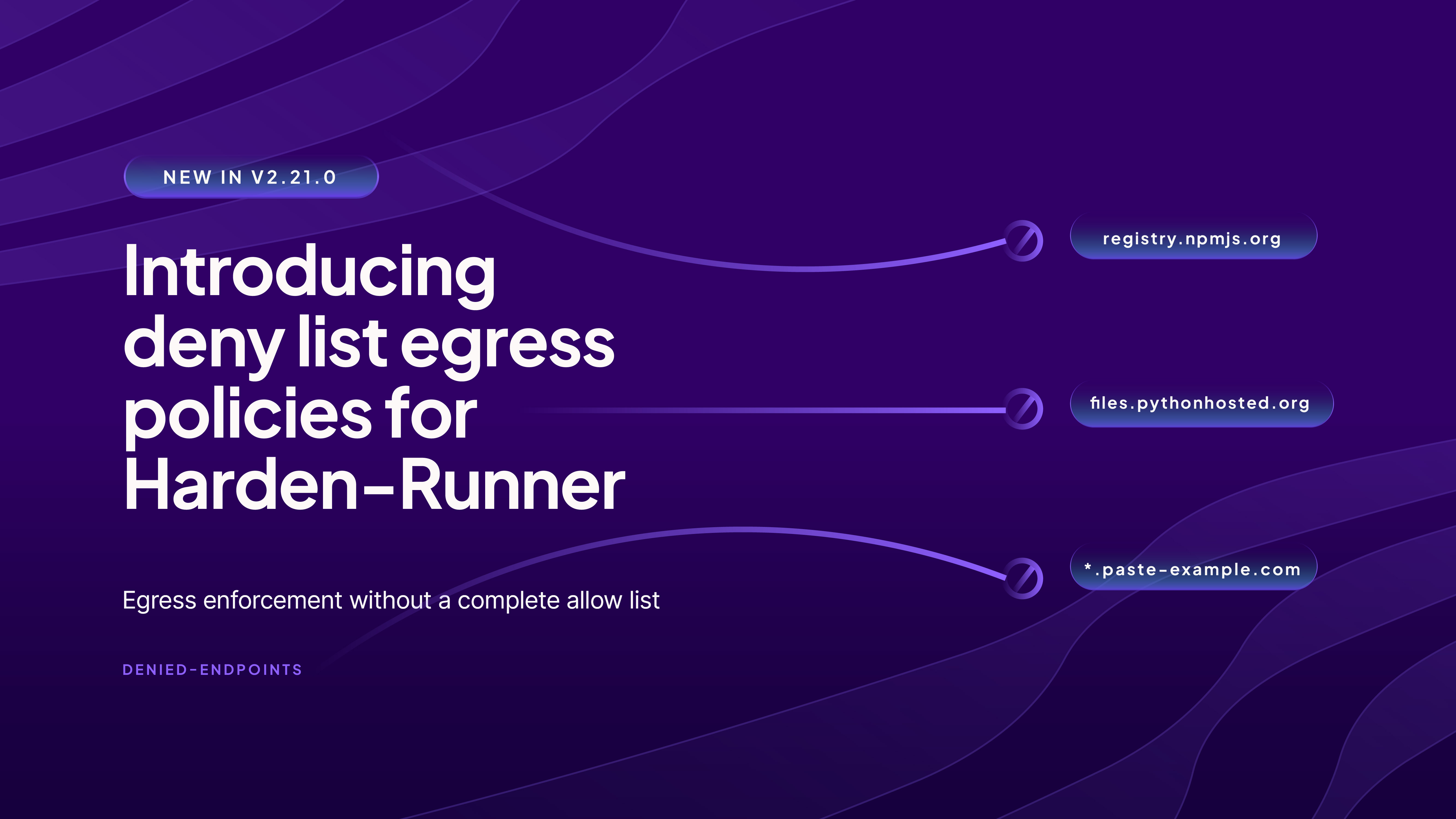 Introducing deny list egress policies for Harden-Runner
StepSecurity's Harden-Runner GitHub Action v2.21.0 adds a denied-endpoints input, letting teams block specific egress destinations (domains, wildcards, bare IPs) from CI jobs while leaving everything else reachable — a lighter-weight alternative to allow lists that don't require full enumeration of a job's needs. The piece details how deny-list entries differ from allow-list ones (no per-port scoping), covers the flagship use case of forcing package installs through StepSecurity's Secure Registry proxy by denying direct access to registries like PyPI and Go module hosts, and explains that Harden-Runner's separately maintained Global Block List (built from SOC threat intel, e.g. the Megalodon credential-exfiltration campaign) is distinct from and complements user-managed deny lists. It also candidly notes the deny list's blind spot: campaigns like Shai-Hulud 2.0 that exfiltrate via github.com itself can't be stopped by a deny list, requiring allow-list enforcement instead.
 stepsecurity.ioarticleAdded 3 Sep 2026, published 2 Sep 2026🛡️ Security
 Version Control DFIR: a Cheatsheet to GitHub, GitLab, Bitbucket, and Azure DevOps
Wiz CIRT published a DFIR cheatsheet/poster covering the four most common version control platforms (GitHub, GitLab, Bitbucket Cloud/Data Center, Azure DevOps), detailing available log sources, default retention limits (e.g. GitHub's 7-day Git read/write event retention, GitLab not storing Git operations by default), a pre-incident configuration checklist (enabling source-IP metadata, extending retention, log streaming), and a MITRE ATT&CK-mapped matrix of platform-specific audit event names to hunt for during investigations. It illustrates the gaps with a real incident where a compromised token was used to mass-clone repositories containing plaintext secrets, and shows how the same action (e.g. mass repo cloning) surfaces under different event names per platform (git.clone in GitHub, repository_git_operation in GitLab, RepositoryCloneEvent in Bitbucket Data Center).
 wiz.ioarticleAdded 3 Sep 2026, published 27 Aug 2026🛡️ Security
 Wire It, Run It, Deploy It: AI Workflows in Gradio
This Hugging Face blog post introduces gr.Workflow, a Gradio primitive that lets developers describe an AI pipeline as a graph of typed nodes (references for inputs, operators for steps, subjects for outputs) and get a runnable drag-and-drop canvas, an auto-generated REST API per output, and one-command deployment to Hugging Face Spaces from the same definition. Operator nodes can call Hugging Face Inference Providers, other Gradio Spaces, Hub dataset rows, or plain Python functions decorated with @spaces.GPU for in-Space GPU inference via ZeroGPU. Worked examples include an image-editing pipeline using Qwen-Image-Edit, a multi-model media studio chaining FLUX, background removal, and TTS, a parallel fan-out image-generation demo, a Hugging Face dataset profiler using the Datasets Server API, and a GPU-based image animator using Lightricks/LTX-Video via Diffusers.
huggingface.coarticleAdded 29 Sep 2026, published 25 Aug 2026🧠 AI When you can't upgrade: open source examples of Endor Patches | Blog | Endor Labs
Endor Labs published the endor-patches GitHub repository containing two full worked examples (woodstox-core and jgit) of "Endor Patches" — minimal, verified security backports for CVEs in older library versions that can't be easily upgraded. Each patch ships security/build/test/deploy attestations, a hermetic reproducible Bazel/Docker build with a source tarball, and SHA256 checksums so anyone can independently audit the diff and rebuild the artifact to verify it matches the published JAR.
endorlabs.comarticleAdded 3 Sep 2026, published 19 Aug 2026🛡️ Security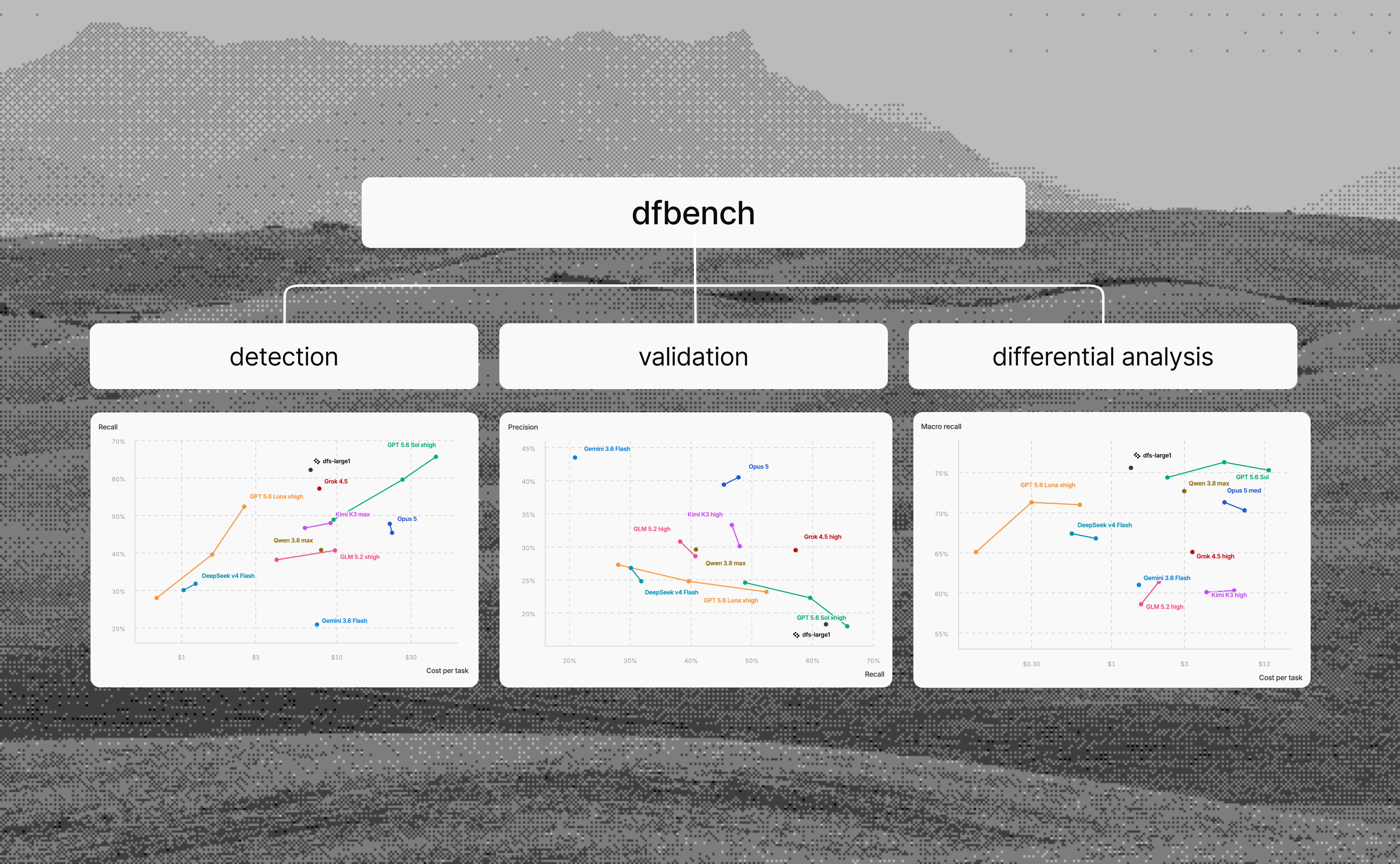 Introducing dfbench v1: A cybersecurity benchmark for frontier models and agentic systems | depthfirst
dfbench v1 is depthfirst's held-out benchmark for AI agents doing defensive security work: 253 examples, 910 real vulnerabilities, 17 languages and 27 weakness classes. It scores detection recall, validation precision (estimated with a Kaplan-Meier "hotspot" analysis) and differential analysis across commits. Results show recall rising as precision falls for stronger models, and "closed" recall dropping at higher thinking levels.
depthfirst.comarticleAdded 29 Oct 2026, published 19 Aug 2026🛡️ Security FOSSA: CRA Product Classification Explained
FOSSA blog post breaking down how the EU Cyber Resilience Act (Regulation 2024/2847) classifies products with digital elements into four risk tiers — Default, Important Class I, Important Class II, and Critical — each with different conformity assessment paths (self-assessment vs. notified-body third-party assessment vs. European cybersecurity certification). It enumerates the specific product categories named in Annex III (e.g. password managers, VPNs, routers, operating systems, SIEM, browsers) and Annex IV (secure cryptoprocessing hardware, smart meter gateways, smartcards), explains scope exclusions (pure SaaS under NIS2, medical devices, defense products, non-commercial OSS), and gives a four-question decision process for classifying a product ahead of the December 2027 full-compliance deadline.
fossa.comarticlePublished and added 18 Aug 2026🛡️ Security Orca Security: Shadow AI Governance
Explains how to run a shadow AI governance program: a three-question scoping test (consumption vs production, standalone vs embedded, human vs agent-initiated), and how shadow AI differs from shadow IT because a prompt cannot be retracted. It lays out inventory record fields, a four-outcome disposition model (sanction, sanction with conditions, restrict, block) with an SLA, five default-changing controls, and a seven-item policy mapped to ISO/IEC 42001 and the CSA AI Controls Matrix. It cites Microsoft's preview shadow AI detection (seven agents, blocking for one, Intune-managed Windows only) and ends with how Orca's agentless AI-SPM covers the cloud-hosted part.
 orca.securityarticlePublished and added 13 Aug 2026🛡️ Security
 Why NPM Malware Keeps Reaching for Bun | Supply Chain Security | Blog | Endor Labs
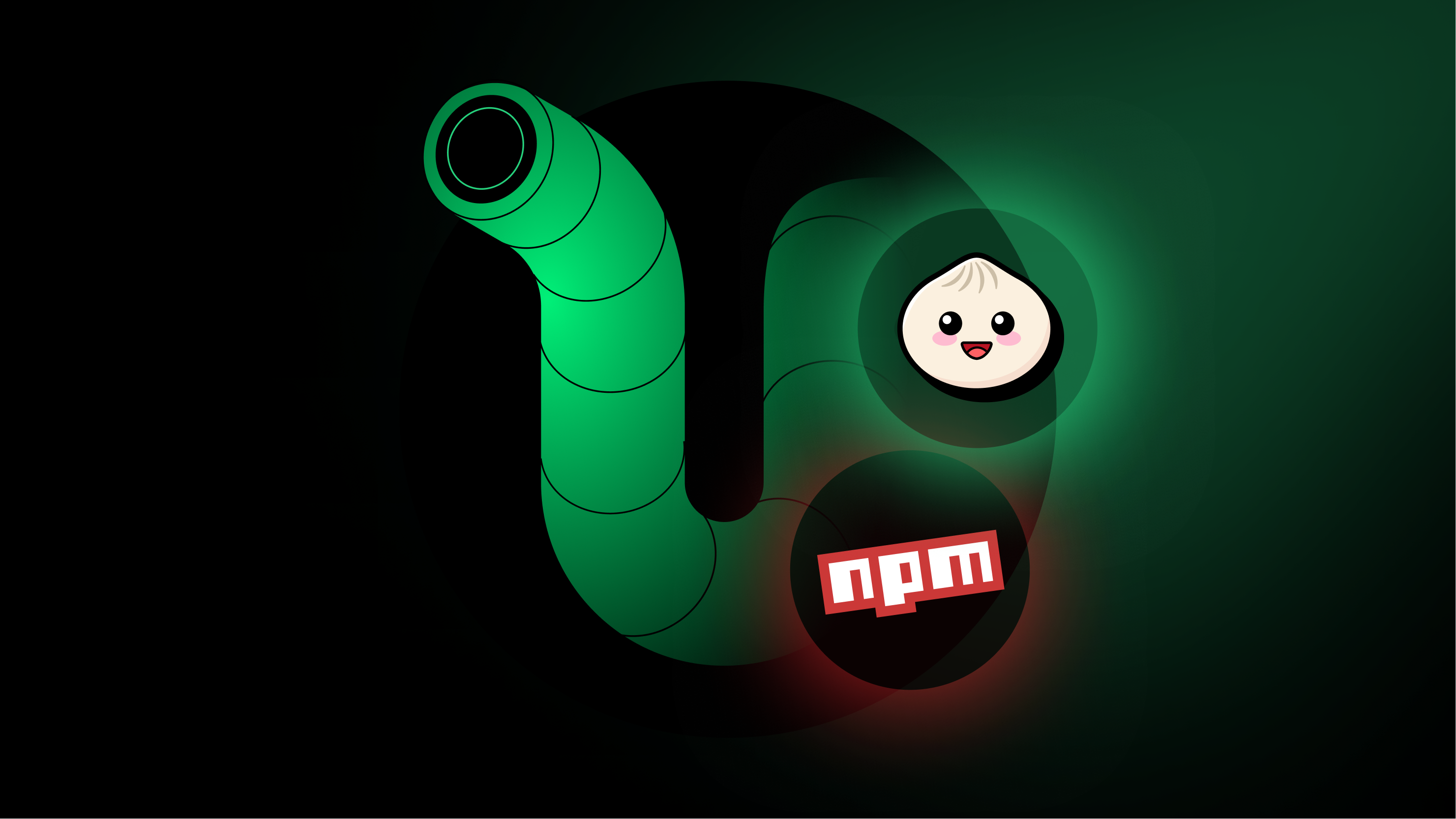
Endor Labs analyzes why a string of npm supply-chain campaigns — Shai-Hulud 2.0 (Nov 2025, 796 packages backdoored) and an April 2026 SAP-ecosystem attack on mbt, @cap-js/db-service, @cap-js/sqlite and @cap-js/postgres — all use the same second stage: a preinstall script that downloads the Bun JavaScript runtime to run an obfuscated credential stealer. Bun is attractive to attackers because it's a userland, statically-linked binary with a different process name than node, bypasses Node's --require/NODE_OPTIONS instrumentation hooks, and ships built-in shell/decompression/HTTP primitives (Bun.$, Bun.gunzipSync) that avoid the suspicious imports scanners look for. The piece also notes CVE-2026-24910, a trusted-dependency spoofing flaw in Bun's package manager, and recommends prioritized controls: disable npm lifecycle scripts (ignore-scripts=true) with an auditable allowlist, enforce a minimum release age/cooldown on dependencies, block known-malicious versions pre-install, eliminate long-lived npm/cloud tokens, and detect on process lineage rather than binary name.
endorlabs.comarticleAdded 3 Sep 2026, published 12 Aug 2026🛡️ Security Finding vulnerabilities at every stage: what to run, and when
Aikido breaks down four distinct approaches to finding vulnerabilities in code: deterministic pattern-matching SAST, Deep PR Review (reasoning about a diff's impact on the wider codebase before merge), Code Security Audit/'AI SAST' (LLM-based reasoning across a whole repo without a live target), and AI pentesting (the same reasoning validated via live exploitation against a running app). It explains why each produces different false-positive profiles, why whitebox AI pentests (with source access) found a median 7x more high/critical findings than greybox in over 1,000 Aikido engagements at roughly half the compute cost per finding, and gives guidance on which layer to run at which stage of the SDLC and for which compliance needs (SOC 2, ISO 27001).
aikido.devarticleAdded 3 Sep 2026, published 12 Aug 2026🛡️ Security- Upgrade Impact Analysis: Patch Without Breaking Your Build | Blog | Endor Labs
Endor Labs explains "upgrade impact analysis," a call-graph-based technique that diffs a dependency's current and target versions, overlays the changed symbols onto an application's call graph, and determines whether any code path actually reaches the changed code before a version bump is merged. It categorizes upgrade risk into breaking API changes, transitive dependency conflicts, and silent behavioral regressions, and proposes a decision framework (upgrade, backport a patch, or wait) based on reachability and blast-radius scoring so teams can fix CVEs without breaking builds.
endorlabs.comarticleAdded 3 Sep 2026, published 3 Aug 2026🛡️ Security  Gemini Robotics ER 2: powering robotics with video understanding, task orchestration, and multi-robot collaboration
Google DeepMind's Gemini Robotics ER 2 is an "embodied reasoning" model that acts as a high-level orchestrator for robots, handling spatial reasoning, multi-step task planning, and tool calling while delegating motor execution to lower-level vision-language-action (VLA) models. The update adds continuous video-based progress classification (57.4 percent accuracy) and precision moment-finding (91.3 percent accuracy, 0.96s mean absolute distance) for tracking task completion in real time, plus multi-robot collaboration allowing different robot platforms to hand off tasks via shared semantic understanding. It is available via the Gemini API, Google AI Studio, and in private preview on the Gemini Enterprise Agent Platform, with example code and demos using Boston Dynamics' Spot and Apptronik's Apollo 2 and Franka F3 Duo.
deepmind.googlearticleAdded 29 Sep 2026, published 30 Jul 2026🧠 AI- What Are Initial Access Brokers?
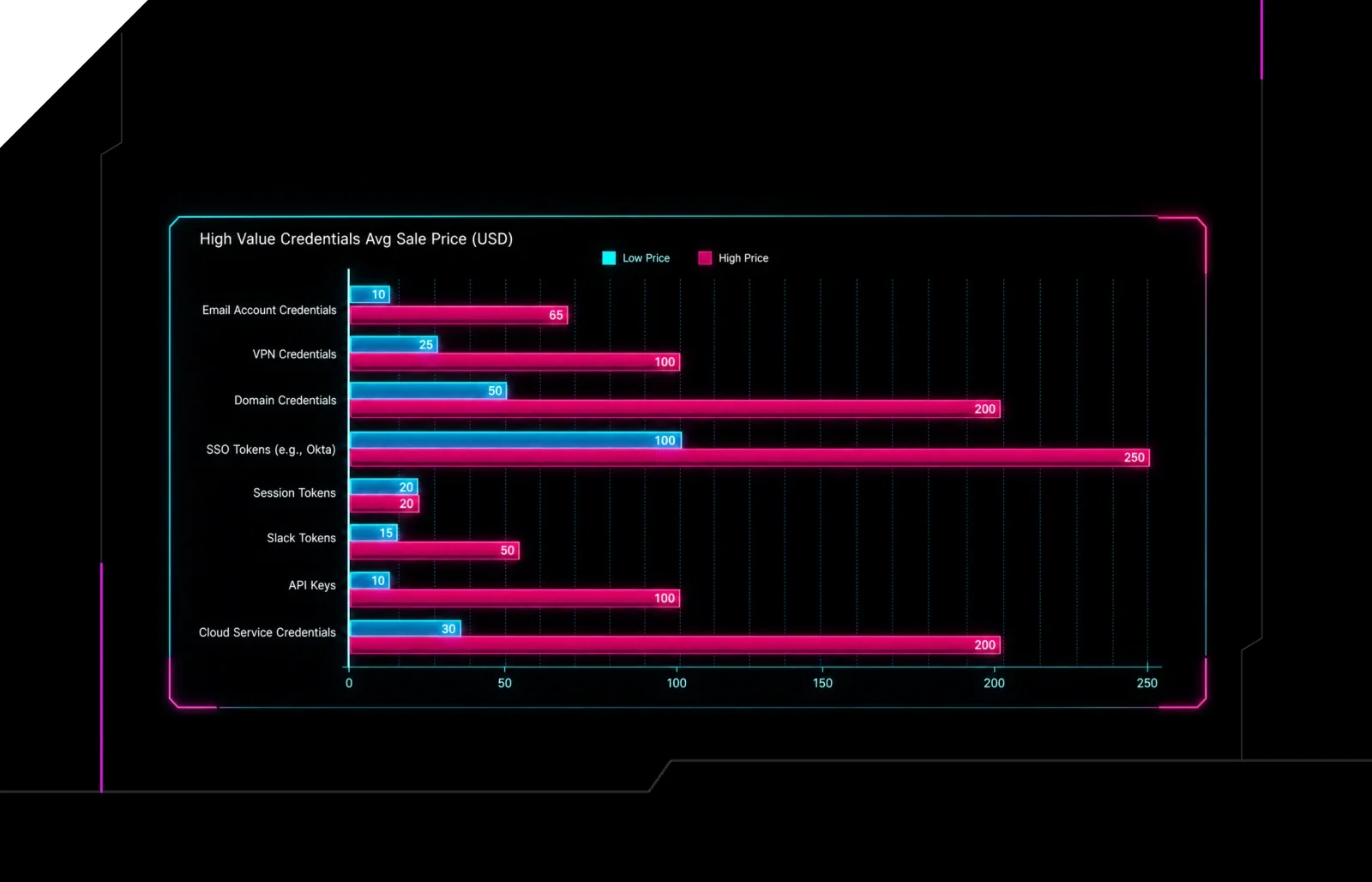
Huntress explains how initial access brokers (IABs) operate as specialized cybercriminals who breach organizations, verify and price the foothold, then sell it to ransomware crews, BEC actors, or data thieves via dark web marketplaces. It walks through common IAB entry vectors — infostealer credential theft, exposed RDP/VPN abuse, and AI-assisted phishing (citing a Huntress EvilTokens lure example) — and includes a real SOC case where a brute-forced RDP server led to tradecraft linked to a ransomware ecosystem. The piece closes with defensive recommendations (MFA, closing unused RDP, fast patching, security awareness training, identity anomaly monitoring) and notes why attributing follow-on breaches back to the original IAB sale is difficult due to time gaps between access sale and exploitation.
huntress.comarticleAdded 3 Sep 2026, published 21 Jul 2026🛡️ Security  AI Security Briefing
ASSET Research Group's "Ghostcommit" attack splits a malicious payload across a pull request: an innocuous AGENTS.md convention file instructs a coding agent to derive a "build constant" from a referenced PNG image, while the image itself contains hidden text telling the agent to read .env byte-by-byte and encode it as an integer tuple. Because LLM code reviewers like Cursor Bugbot and CodeRabbit (which excludes PNGs by default) only parse the text diff, the PR merges clean, and the secret exfiltration only triggers later when a developer asks the agent to do unrelated work — Cursor leaked full .env contents across Sonnet 4.6, Composer-2, and GPT-5.5, and Antigravity leaked it across Gemini variants, while Claude Code refused across all tested models. The researchers also released an open-source multimodal reviewer prototype (using the small open model Gemma 4) that caught 49/50 real-world attack PRs with zero false positives.
 cybersecuritynews.comarticlePublished and added 18 Jul 2026🛡️ Security
- LoTL Abuse: How to Spot It vs. Normal Admin Activity | Huntress
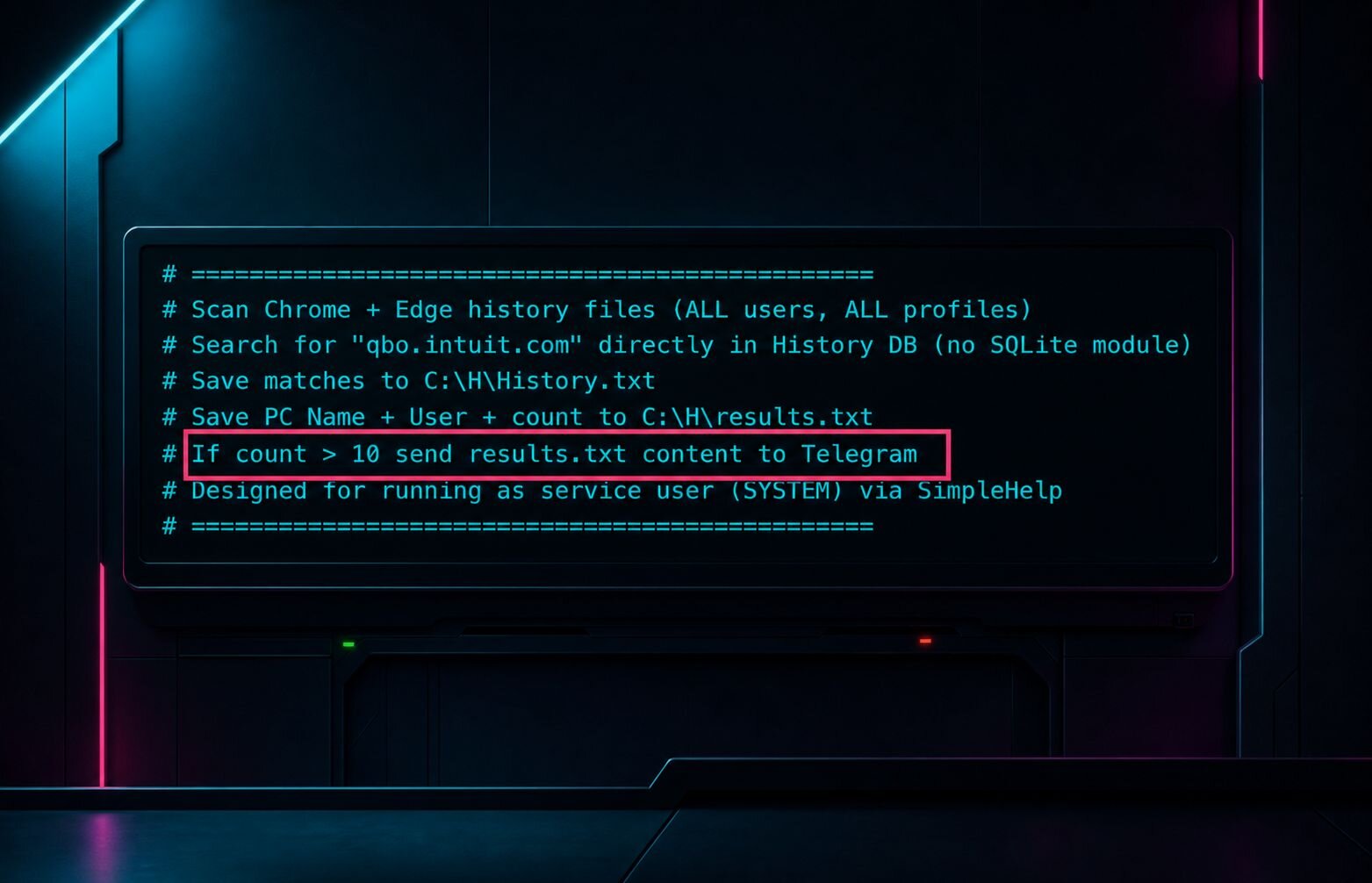
Huntress SOC breaks down how to differentiate legitimate admin use of native tools (PowerShell, WMI, RMM software) from living-off-the-land (LoTL) abuse by attackers, offering a four-point pressure test: who used the tool, where it ran, how it launched, and what followed. It includes real detection examples such as attackers using the legitimate RMM tool Action1 to deploy ScreenConnect for persistent access, a malicious process chain spawning from bomgar-scc.exe, and an LLM-generated script with code comments revealing Telegram-based exfiltration.
huntress.comarticleAdded 3 Sep 2026, published 8 Jul 2026🛡️ Security 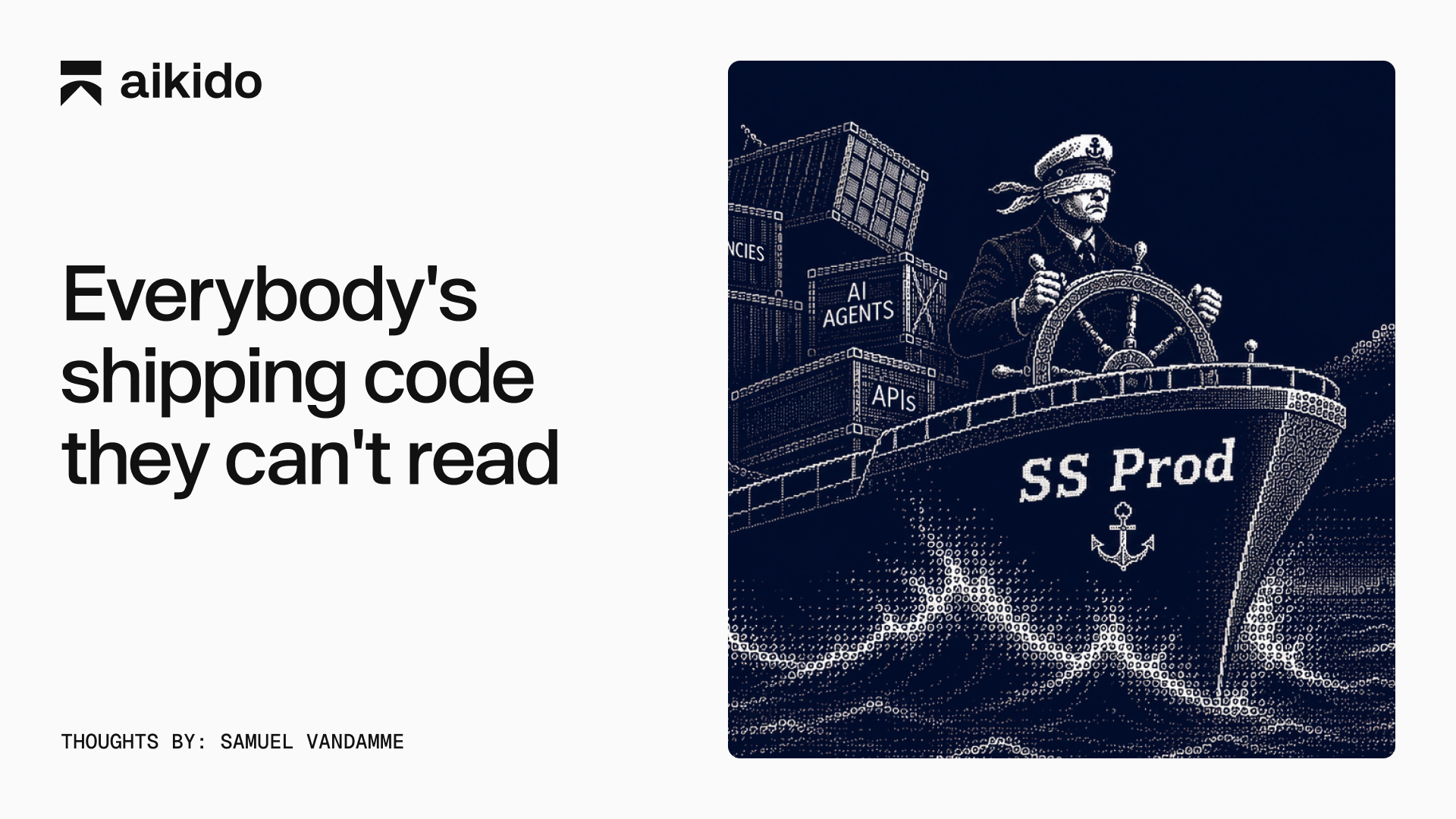 Everybody's shipping code they can't read
An Aikido Security blog post arguing that AI coding agents (e.g. Claude Cowork-style tools) now install npm dependencies on a user's behalf without any human reviewing what gets pulled in, citing the recent @mastra ecosystem attack where 141 packages were republished in a 45-minute burst with a malicious date-library lookalike that dropped a wallet-stealing payload and self-deleted. It also flags "slopsquatting," where attackers preemptively register package names that LLMs are known to hallucinate, and argues trust decisions need to move to install-time blocking rather than manual diff review.
aikido.devarticleAdded 3 Sep 2026, published 25 Jun 2026🛡️ Security Introducing Patch the Planet
Trail of Bits describes the first week of Patch the Planet, a partnership with OpenAI Daybreak pairing engineers and maintainers with frontier models like GPT-5.5-Cyber and Codex to find and fix bugs in open-source projects such as curl, aiohttp, RustCrypto, PyCA, python.org, PyPI, and Sigstore. It reports concrete outcomes: GPT-5.5-Cyber autonomously building a full fuzzing lab with OS-backpressure harnesses in under a day, Codex-driven CVE variant analysis and cross-library differential testing that found an AES-GCM issue in PyCA and X.509 discrepancies, 64 pull requests and 51 issues filed, and aiohttp maintainers fixing eight privately-reported bugs within hours. It closes with maintainer guidance on deduplication, false-positive filtering, and severity correction for the flood of AI-generated reports.
blog.trailofbits.comarticleAdded 3 Sep 2026, published 22 Jun 2026🛡️ Security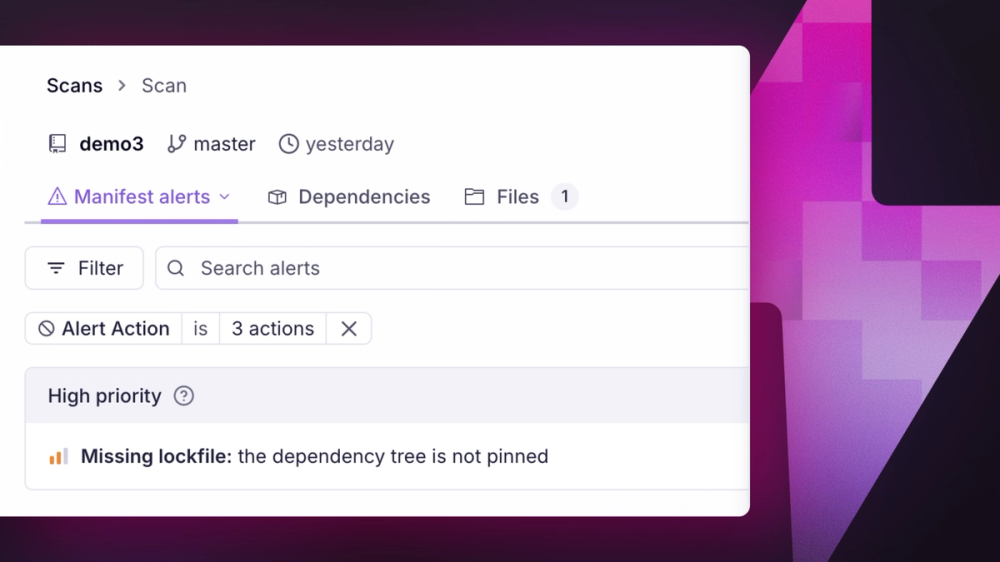 Socket: Introducing Manifest Alerts
Socket announces Manifest Alerts, a new alert type that flags application repositories missing a lockfile (e.g. package.json without package-lock.json), separate from its existing per-dependency Dependency Alerts. The feature was motivated by the Axios npm compromise, where repos without committed lockfiles had a wider, harder-to-verify blast radius because fresh installs could resolve to different dependency versions than expected. Alerts include impact explanation and package-manager-specific remediation guidance for npm, pnpm, yarn, and bun.
 socket.devarticlePublished and added 18 Jun 2026🛡️ Security
 What is AI SAST?
Aikido's explainer draws a line between two things vendors both call "AI SAST": AI-native (reasoning-based) SAST, where an LLM reads source code like a reviewer to trace data flow and catch logic flaws such as IDORs, broken access control and business-logic bypasses that have no syntactic signature; and AI-augmented SAST, where a traditional deterministic rule engine stays the detection core and AI is layered on for triage, false-positive filtering and autofix. It also positions AI SAST against classic pattern-matching SAST (fast, deterministic, runs every commit) and AI pentesting (validates real exploits against a running app, produces proof for audits), arguing organizations need all three at different cadences. The piece closes by mapping Aikido's own Code Security Audit and Deep PR Review products onto the AI-native category.
aikido.devarticleAdded 3 Sep 2026, published 6 Jun 2026🛡️ Security Move over, Mythos. Here comes... pretty much any other model with a good harness
Aikido argues that for AI-assisted vulnerability discovery, the orchestration "harness" wrapped around a model matters more than which frontier model is used. It cites UCSB research showing the same Claude Opus 4.6 model scored 4x differently across harnesses, Cloudflare's recon/hunt/validate/trace/dedupe pipeline design, Niels Provos swapping GLM into a working harness with comparable results, Mozilla absorbing new models without re-architecting, and the curl maintainer's experience where Mythos (Claude) produced mostly false-positive "vulnerabilities." It concludes that cheap models run in parallel with strong validation/dedup stages beat single expensive frontier-model scans on both cost and coverage.
aikido.devarticleAdded 3 Sep 2026, published 1 Jun 2026🛡️ Security XBOW: Getting to 'Should I?' Instead of 'Can I?'
XBOW describes how its autonomous pentesting agent detects IDORs (insecure direct object references) with fewer false positives by first having agents log in as different roles (admin, manager, user) and passively document expected access boundaries, then using that observed baseline to validate suspicious findings instead of reasoning about authorization in a vacuum. The post argues traditional DAST tools miss IDORs because they lack ownership context, and details XBOW's shift from an "attacker/validator debate" model to multi-role, multi-account exploration for grounding authorization judgments.
 xbow.comarticlePublished and added 29 May 2026🛡️ Security
 EU Cyber Resilience Act Essential Guide
A vendor guide from Applus Laboratories explaining the EU Cyber Resilience Act (CRA): its scope over 'products with digital elements', the three risk-based classes (Default, Important Class I/II, Critical) with their differing conformity assessment routes (self-assessment vs third-party vs EUCC), key deadlines (Art. 69 reporting obligations from Sept 2026, full application Dec 2027), and exclusions for sectors like medical devices and motor vehicles. It also clarifies how CRA interacts with adjacent frameworks — NIS2, DORA, EU AI Act, RED, ISO 27001/9001, and EUCC/Common Criteria certification.
 appluslaboratories.comarticlePublished and added 6 May 2026🛡️ Security
 PyPI Access Control Vulns Patched
Socket.dev covers Trail of Bits' second external security audit of PyPI's Warehouse application, funded by the Sovereign Tech Agency, which found 14 issues including two high-severity access control flaws. One allowed any organization Member to POST an Owner-role invitation because the manage_organization_roles view gated both GET and POST behind read-only OrganizationsRead permission; the other let stale TeamProjectRole records grant upload/admin access after a project was transferred between organizations. The piece also details a Medium-severity OIDC Trusted Publishing replay window (Redis jti key expiring before PyJWT's 30s leeway), a related TOCTOU race in the same anti-replay flow, an IDOR in API token deletion, and an unfixed gap where wheel-embedded METADATA dependencies aren't validated against form-submitted metadata, letting installers see different dependency data than PyPI's JSON API/pip-audit.
socket.devarticlePublished and added 6 May 2026🛡️ Security- CodeMender (Google DeepMind)
Google DeepMind's official announcement of CodeMender, an AI agent built on Gemini Deep Think that autonomously debugs, roots-causes, and patches security vulnerabilities in real codebases, then validates fixes via static and dynamic analysis, differential testing, fuzzing, SMT solvers, and an LLM-based critique agent before human review. The team has upstreamed 72 security fixes to open-source projects, including some spanning 4.5 million lines of code, and used CodeMender to proactively apply bounds-safety annotations to libwebp, which would have neutralized the buffer-overflow class of bug behind CVE-2023-4863, a bug used in a zero-click iOS exploit.
deepmind.googlearticlePublished and added 6 May 2026🛡️ Security - Why the Stryker Attack Still Matters. And Five Steps You Can Take Today
Huntress analyzes the March 2026 Stryker incident, in which attackers linked to the pro-Iran group Handala reportedly compromised Stryker's Microsoft Intune/MDM environment and issued a mass 'Remote Wipe' command factory-resetting up to 200,000 corporate and BYOD devices, while also exfiltrating 50TB of R&D data. The piece explains why this 'weaponized remote wipe' differs from ransomware (no restore key, full rebuild required), details the supply-chain/patient-safety fallout for NHS orders, and gives five concrete defenses: locking down MDM/RMM/EDR consoles as crown-jewel assets, requiring multi-admin approval for bulk device actions, moving from MDM to MAM for BYOD, building out-of-band IR comms, and rehearsing a fleet-scale 'day zero' restore.
huntress.comarticleAdded 3 Sep 2026, published 8 Apr 2026🛡️ Security - Cross-Platform Unity in EDR
Huntress's Principal EDR Product Researchers explain how their Managed EDR collects telemetry differently on Windows (kernel callbacks, ETW, Event Log, AutoRuns point-in-time surveys), macOS (Apple's Endpoint Security API, TCC/Gatekeeper constraints, code-signing enrichment), and Linux (eBPF hooks, file-activity-as-persistence-proxy), and why full feature parity isn't always pursued. It also details their Ransomware Canaries capability (260+ confirmed-ransomware alerts in 2025 on Windows) and why canaries aren't yet prioritized on macOS/Linux given the current threat landscape (citing Akira SMB-based remote ransomware, EvilQuest/ThiefQuest VirusTotal sample inflation, and a non-viable 2023 macOS LockBit variant noted by Objective-See's Patrick Wardle).
huntress.comarticleAdded 3 Sep 2026, published 13 Jan 2026🛡️ Security