Skip to content

Latent Space

feed🧠 AIlatent.space ↗

75 posts in the catalog

Each feed is checked for new posts. Every post is read, and those that belong here join the catalog. What Trove read and did not keep stays on file, not shown.

latent.spacearticle

[AINews] Google admits AI Mode hurts Search revenue; -15% $500B drop worst since 2004 IPO. AI Bear Market coming?

AINews issue for 29 to 30 October 2026 from Latent Space. It opens on Google's admission that AI Mode monetises worse than classic Search, which preceded a roughly 15% share drop. It then recaps Claude Ultra dropping the 5-hour limit, Gemini 4 Carbon, Mistral Large 4, Nemotron 3.5, Artificial Analysis Index v5, Unsloth GGUF disputes, and the Anthropic S-1 filing.

Claude CodeClaudeGemini+17
GoogleAnthropicOpenAI+46

ai-policy, models, evals· 2026-10-31T05:00:48+00:00
latent.spacearticle

[AINews] Building AIE CODE: The top Coding Agent Conference

AINews issue for 28 to 29 October 2026 from Latent Space. It opens with a preview of the AIE CODE summit (themes: Scaling without Slop, System One models, Increasing Ambition, with Jarred Sumner on Bun in Rust). It then recaps Twitter and Reddit news: Mistral Large 4 open weights (1.05T total, 52B active), Artificial Analysis benchmarks, Gemini 4 Carbon, Qwen4 rumours, Claude Code quota complaints and OpenAI frontier-run monitoring. Text was cut before the end.

BunRustvLLM+17
Latent SpaceAI EngineerAIE CODE+37

models, coding-agents, evals· 2026-10-30T08:24:29+00:00

latent.spacearticle

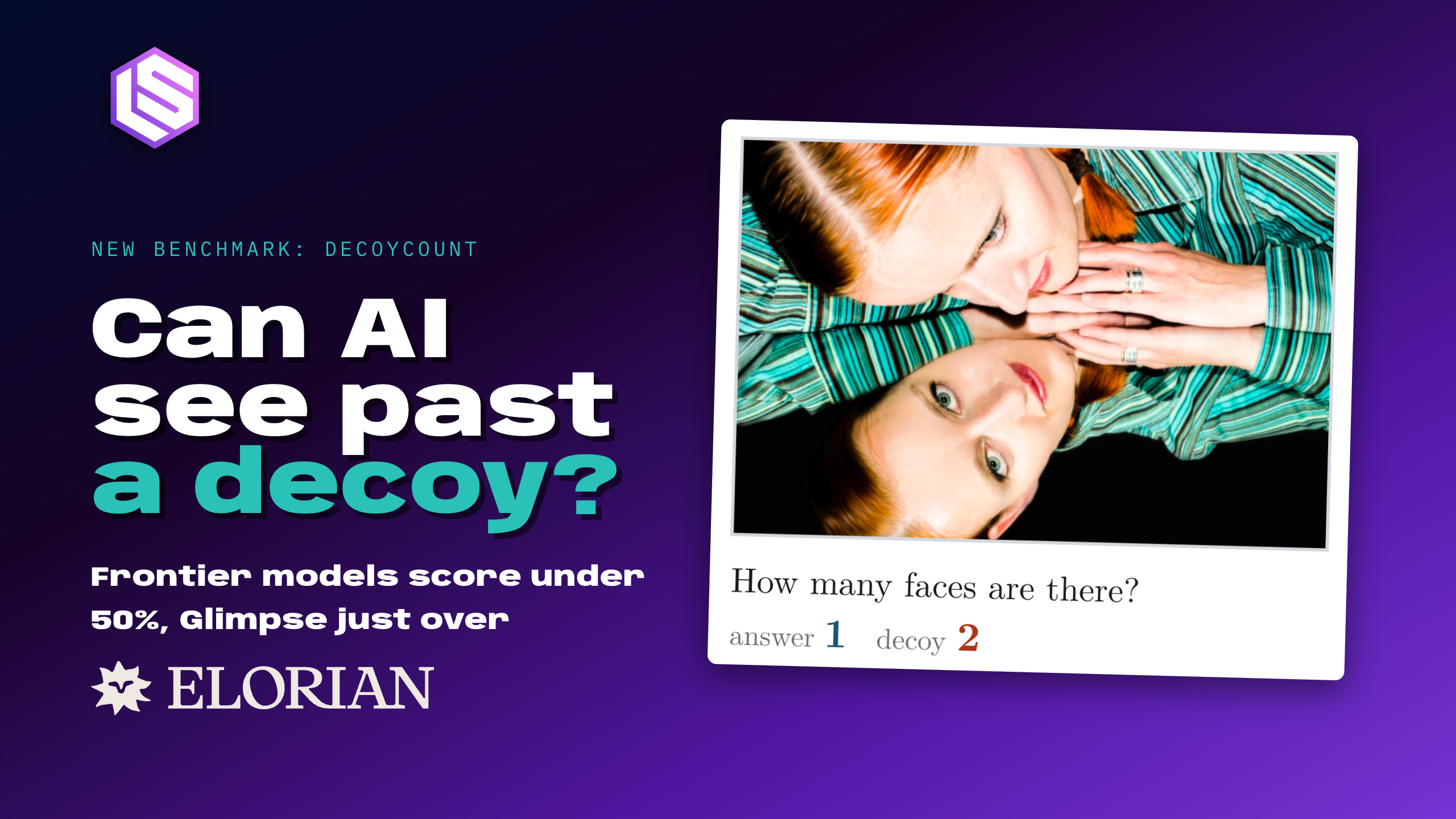
Can Frontier Models See Past a Decoy? Elorian Tests Visual Reasoning

DecoyCount is a benchmark from Elorian and Mercor with 1,660 items that tests whether models count objects or fall back on visual shortcuts. Frontier models scored below 50%: GPT-6 Astra led with 43.17%, ahead of Gemini-3.8-flash (32.71%), Qwen3.8-max (28.31%) and Claude-Fable-5.1 (25.22%). CEO Andrew Dai says Elorian's Glimpse model scored 50.48% in a single internal run without tools, and contrasts visual reasoning with world models such as Atlas and Genie 4.

vision-language model
ElorianGlimpseDecoyCount+17

evals, multimodal, models· 2026-10-29T16:00:00+00:00

latent.spacearticle

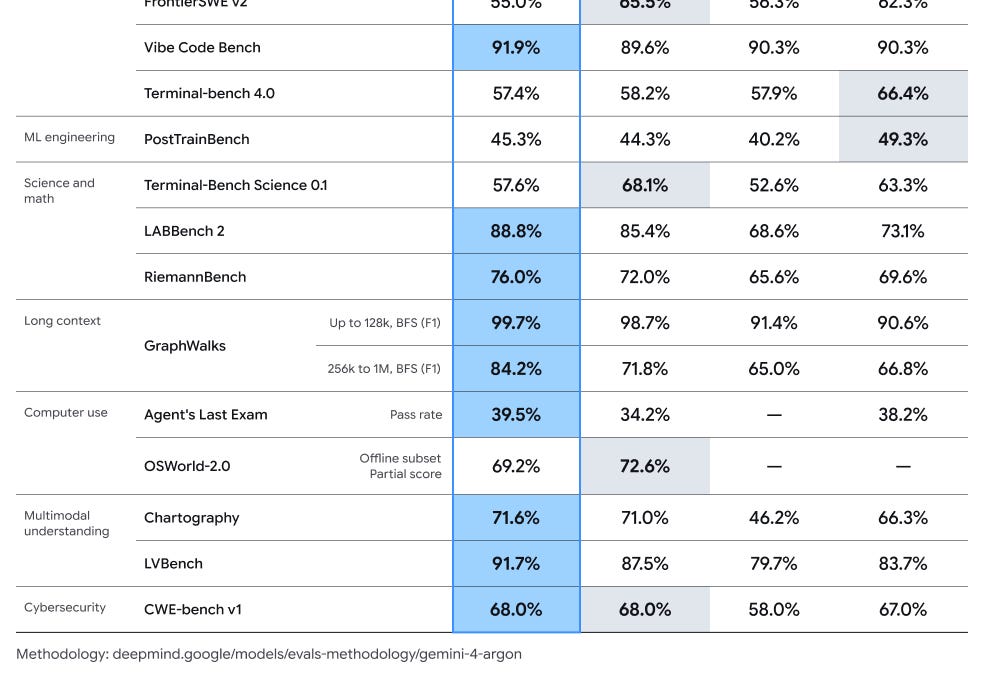
[AINews] Gemini 4 Carbon tops leaderboards, launches for cyber defenders

AINews issue for 27-28 October 2026, a Latent Space digest of Twitter and Reddit. It leads with Google DeepMind's Gemini 4 Carbon: claimed cyber scores (SEC-bench Pro 88.2%, ExploitGym 54.8%, CWE-bench 71.0%), #1 on Artificial Analysis Intelligence Index v5 at 59, and access limited to cyber defenders through the Fairwind Program. It also covers benchmark integrity disputes, GitHub Copilot Fusion, H-Net v2, KV-cache work, open-weight releases and Claude Code quota complaints.

GeminiClaude CodeGoogle Antigravity+12
Gemini 4 CarbonGemini 4 ArgonGoogle DeepMind+39

models, evals, coding-agents· 2026-10-29T05:55:19+00:00

latent.spacetalk

Why Agents Love Supabase

Latent Space podcast episode with Supabase founders Paul Copplestone and Ant Wilson on why frontier models pick Supabase first for app backends. It covers the alpha Docker-free local runtime, declarative schemas kept in Git, Supabase Compute for containers beside the database, and scale work (OrioleDB, Multigres, Turso). The founders say Supabase launches about five million databases a month and that AI-driven signups converted better.

PostgreSQLSupabaseDocker+6
Paul CopplestoneAnt WilsonLatent Space+2

coding-agents, ai-infra· 2026-10-28T19:48:05+00:00

latent.spacearticle

[AINews] Anthropic ends Coding Interviews: "Hunger beats tenure"

AINews issue of 28 October 2026 from Latent Space. It leads with Felix Rieseberg's post on why Anthropic dropped coding interviews ("Hunger beats tenure"). It then recaps Genie 4, Axiom's Lean formalization of CFSG, claimed ETH refutations by OpenAI and Anthropic, Artificial Analysis Index v5, FrontierCode 2.0, Liquid LFM3, the Qwen3.8 phone-home dispute, and Anthropic's S-1. Reddit recaps are included; the page was truncated before the end.

LeanQwen3.8-27BvLLM+11
AnthropicFelix RiesebergGoogle DeepMind+40

models, evals, ai-policy· 2026-10-28T08:50:30+00:00

latent.spacetalk

How Anthropic ships Claude with Claude: Separating the Brain from the Hands

Latent Space episode with Katelyn Lesse (engineering) and Angela Jiang (product) of Anthropic, recorded the day after the Claude Opus 5.5 launch. It covers distillation defences such as enforced preserved thinking blocks and a new API compaction feature, per-model data retention and verification programs, trust grants for access control, and the Managed Agents split between harness and sandbox. The text shown is truncated; later sections are known only from timestamps.

ClaudeClaude CodeRust
AnthropicClaude Opus 5.5Katelyn Lesse+7

agents, ai-infra, models· 2026-10-27T18:53:10+00:00

latent.spacetalk

How Anthropic ships the #1 LLM in the World safely: Separating the Brain from the Hands

Latent Space episode with Katelyn Lesse and Angela Jiang on the engineering behind the Claude Platform. Topics include the Claude Opus 5.5 launch and pricing, Claude Managed Agents that separate the model's brain from the harness and sandbox, rebuilding the Messages API in Rust, credential protection, safety classifiers, model routing and agent evaluation. The page lists show notes and timestamps only, with no transcript.

ClaudeRust
Latent SpaceAnthropicClaude Opus 5.5+2

agents, ai-infra· 2026-10-27T18:40:19+00:00

latent.spacewriteup

Coding From the Himalayas With an Offline AI Agent

Walkthrough of running OpenCode against Qwen3.5 9B served by Ollama on a Mac, with Wi-Fi switched off. The author fixes a one-line accumulation bug in an expense calculator and confirms all five unittest tests pass. It covers the opencode.json setup, memory budgeting, permission prompts and a pytest-versus-unittest detour. Two further exercises (CSV report, log analyzer) were not yet run offline.

OpenCodeOllamaQwen3.5+4
QwenThomson ReutersLatent Space+4

coding-agents, inference· 2026-10-27T14:41:25+00:00

latent.spacearticle

[AINews] Anthropic files for $2T IPO in 2 weeks: 1400% growth rate, 48% of revenue through cloud partners, 85% margin, $1B op profit in Q2, $134B cash in bank and $10B lifetime burn

AINews issue from Latent Space on 27 October 2026, led by Anthropic's S-1 filing for a Nasdaq listing (ticker ANT). It reports H1 2026 revenue of $16.3B, an 85% gross margin, $974M Q2 operating profit and 48% of revenue through cloud marketplaces, with reactions from named analysts. It also covers model releases, inference economics and agent tooling. The page text is truncated.

ClaudeClaude CodeHugging Face+7
AnthropicLatent SpaceSemiAnalysis+28

ai-policy, models, inference· 2026-10-27T07:24:59+00:00

latent.spacetalk

Supabase’s Plan for a Billion AI-Built Apps

Latent Space interview in which swyx talks with Supabase co-founders Paul Copplestone and Ant Wilson about backends for software built by AI agents. Topics include Supabase Compute for running workloads next to the database, Multigres for highly available Postgres (private alpha), the Turso acquisition, declarative schemas, and durable workflows. The page has only show notes and chapters, recorded ahead of Supabase Select 2026.

PostgreSQLSupabaseTurso+2
Paul CopplestoneAnt Wilsonswyx+3

ai-infra, agents· 2026-10-26T17:53:59+00:00

latent.spacearticle

[AINews] Kimi 3.1 Pro 104BA-2.8T: Fable-5.1-Class Open Weights narrows Closed-AI lead to 1 month... and Pro Highspeed API with 2-3× speed

AINews issue for 22 to 23 October 2026 centred on Moonshot's Kimi K3.1 Pro, a multimodal mixture-of-experts model with 2.8T total and 104B active parameters and 1M context. Weights are promised for 4 November 2026. Artificial Analysis scored it 55 on its Intelligence Index (fourth place), and Arena ranked it #8 in WebDev. Standard pricing is $2/$10 per million tokens. The issue also covers a cyber-data removal approach, serving-cost objections, and paid-promotion allegations. Shorter items follow on agents, evals and inference.

Mixture of ExpertsClaude CodeCursor+7
Kimi K3Moonshot AIKimi+29

models, evals· 2026-10-24T07:18:29+00:00

latent.spacearticle

AI Is Getting Good at Math. Here’s Why.

The essay argues that LLMs solve open math problems because they search depth first, and automated verifiers make failed attempts cheap. It uses WT Gowers' hint-sequence complexity (2^k + t), adds a branching factor b, and walks through OpenAI's unit-distance disproof and Cycle Double Cover prompt as a drafter/solver/verifier harness. It predicts AI does best where k and b are small.

LLM
OpenAIAnthropicLatent Space+12

research, agents· 2026-10-23T15:19:48+00:00
latent.spacearticle

[AINews] Black October

AINews issue for 21-22 October 2026, built from 12 subreddits and 544 Twitter accounts. It leads with "Black October", a 48-hour run of AI-found vulnerability disclosures (PHP2Shell, a GitLab CVSS 10 flaw, a LiteLLM 1.107.0 password stealer, eMudhra CA keys). It also covers MiniMax M3.1 Flash, Carbon-X and Flint releases, Artificial Analysis coding-agent and CritPt v2 results, and a METR/Redwood audit of OpenAI monitoring.

vLLMLiteLLMPHP+14
Latent SpaceAINewsAnthropic+43

models, evals, ai-safety· 2026-10-23T10:09:29+00:00

latent.spacetalk

Why AI Compute Comes in Rectangles — Erik Bernhardsson, Modal CEO

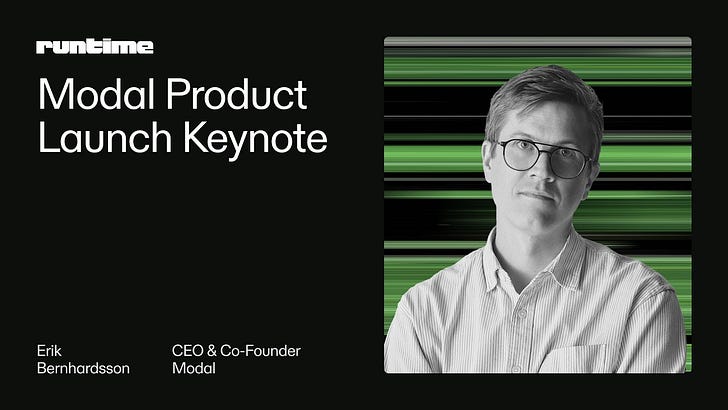
Latent Space interview with Modal CEO Erik Bernhardsson after the company's $750M Series D at a $16B valuation, with a transcript. He explains why GPU demand does not match rectangular fixed-term capacity contracts and how Modal pools demand across customers. He covers sourcing from nearly 25 clouds on multi-year deals, the risk of falling GPU prices, sandboxes reaching about a third of revenue, and non-NVIDIA accelerators.

ModalGPU snapshottingKubernetes+6
Erik BernhardssonAkshat BubnaLatent Space+15

ai-infra, inference· 2026-10-22T17:40:57+00:00

latent.spacetalk

Why AI Compute Comes in Rectangles — Erik Bernhardsson, Modal CEO

Latent Space interview with Modal CEO Erik Bernhardsson, after Modal's $750M Series D at a $16B valuation and passing $1B annualized run rate. He explains why GPU demand is not "rectangular" like fixed-term capacity contracts, how Modal pools demand and buys from about 25 clouds on three-year deals, and why sandboxes grew to about a third of revenue. Also covers GPU price-collapse risk and non-NVIDIA accelerators. Only the first part of the transcript was available.

GPUKubernetesDocker+5
ModalErik BernhardssonAkshat Bubna+13

ai-infra, inference, agents· 2026-10-22T17:40:57+00:00

latent.spacetalk

You are the Team — Anekha Sokhal, Moshi

Latent Space interview with Anekha Sokhal, CEO of Moshi, recorded at AI Engineer New York. Moshi is a market-intelligence product for commodity and energy traders. It ingests structured and unstructured data, builds an ontology and graph, and pushes recommendations to each trader's book. She covers confidence scoring across divergent sources, an in-house vision-language model for messy PDFs, and build-versus-buy tradeoffs.

LLMvision-language modelClaude
MoshiAnekha Sokhalswyx+10

llm-apps, ai-policy· 2026-10-22T14:03:40+00:00

latent.spacetalk

You are the Team — Anekha Sokhal, Moshi

Latent Space interview with Anekha Sokhal, CEO of Moshi, recorded at AI Engineer New York. Moshi is a recommendation engine for commodity and energy traders that ingests structured data, news, X posts, podcasts and private user documents into a graph. Topics include confidence scores for divergent sources, a self-built vision-language model for PDFs, build versus buy, and engineers told "you are the team".

vision-language modelLLMClaude
MoshiAnekha Sokhalswyx+11

llm-apps, ai-policy· 2026-10-22T14:03:40+00:00

latent.spacetalk

The Recommendation Engine for Commodity Traders — Anekha Sokhal, Moshi

Latent Space podcast episode recorded at AI Engineer New York, in which Moshi CEO Anekha Sokhal, a former JPMorgan energy derivatives trader, describes a recommendation engine for commodity traders. Moshi ingests structured and unstructured market data plus private user data, tags it into a graph ontology and pushes items relevant to a trader's book. She covers confidence scores across divergent sources, an in-house vision-language model for messy PDFs, and build versus buy.

LLMvision-language modelClaude
MoshiAnekha Sokhalswyx+11

llm-apps· 2026-10-22T14:03:40+00:00

latent.spacearticle

[AINews] OpenAI’s Patch the Planet program is 1 of 2 parties to discover PHP2Shell vulnerabilities in core PHP affecting 70% of the web, using GPT-5.6 Sol; coordinated response over 2 months

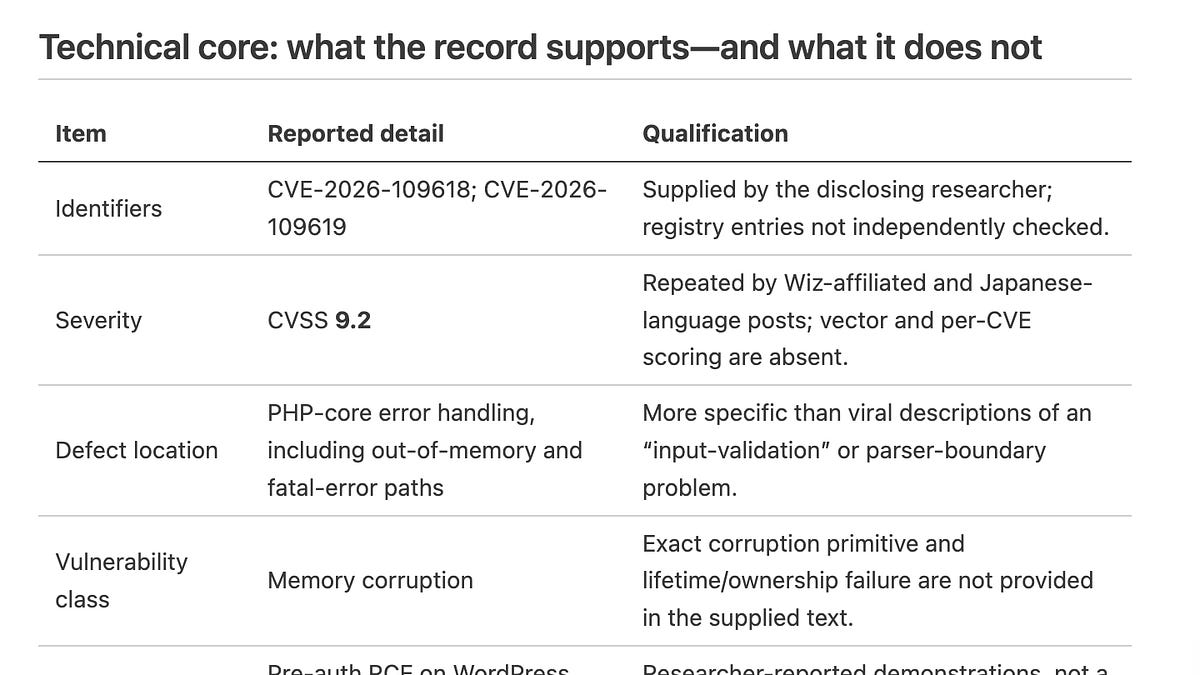
AINews issue for 20-21 October 2026. The top story covers PHP2Shell (CVE-2026-109618 and CVE-2026-109619), two PHP-engine memory-corruption bugs found separately by Calif researchers using GPT-5.6 Sol under OpenAI's Patch the Planet and by Wiz, followed by two months of coordinated remediation. It also covers the Flint coding MoE, DeepSeek's DeepInfer, TorchTPU, eval critiques and agent product launches. The text is truncated.

PHPWordPressDrupal+11
CVE-2026-109618CVE-2026-109619OpenAI+35

models, inference, evals· 2026-10-22T07:42:44+00:00

latent.spacearticle

[AINews] OpenAI’s Patch the Planet program is 1 of 2 parties to discover PHP2Shell vulnerabilities in core PHP affecting 70% of the web, using GPT-5.6 Sol; coordinated response over 2 months

This AINews issue (20 to 21 October 2026) leads with PHP2Shell, two PHP-engine memory-corruption bugs (CVE-2026-109618 and CVE-2026-109619). Calif researchers found them with GPT-5.6 Sol under OpenAI's Patch the Planet, and Wiz reportedly found them independently with Gemini 4 Argon. It reconstructs the two-month coordinated response, Cloudflare WAF stopgaps and NSA guidance, and the dispute over vetted researcher access to models. Only the first 40,000 of 114,281 characters were reviewed.

PHPWordPressDrupal+6
CVE-2026-109618CVE-2026-109619OpenAI+18

ai-policy, models· 2026-10-22T07:42:44+00:00

latent.spacearticle

Claude Mods: Flipping the Harness Inside Out

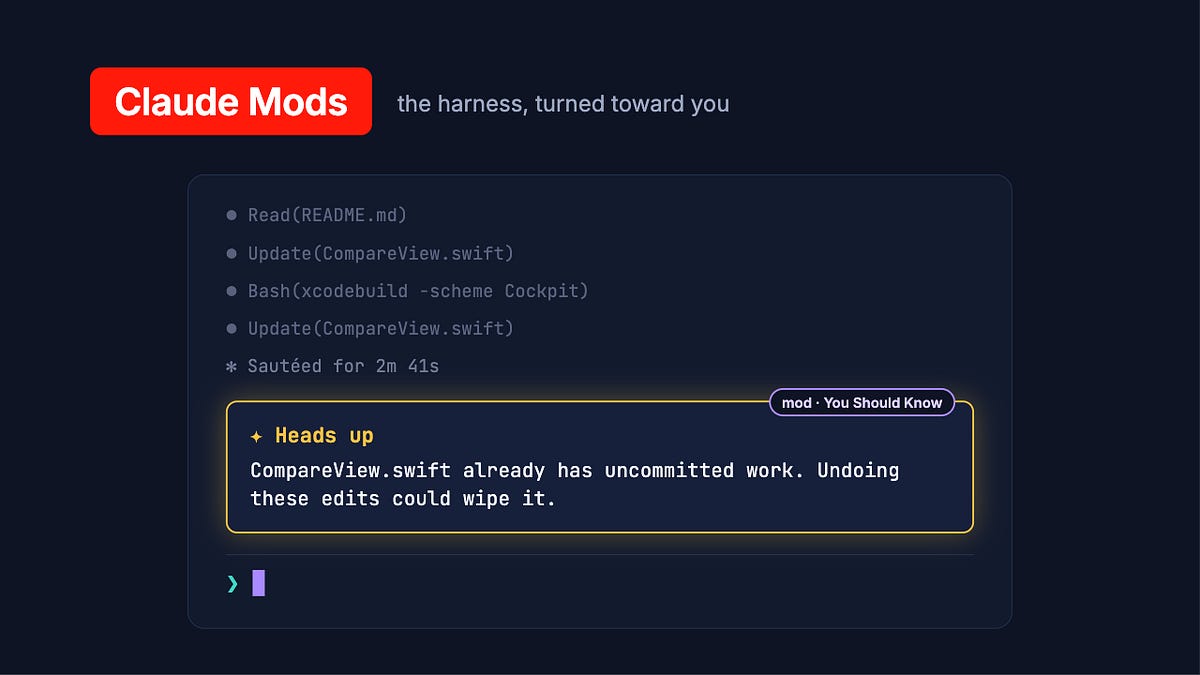
Claude Mods are Claude Code plugins, written as TypeScript or JavaScript functions, that hook into prompts, tool calls and rendering to change how the CLI and Desktop behave. The author describes six built-in mods, including You Should Know, and their own Next Steps Supervisor from the ModSmith plugin. They compare mods with ChatGPT Intelligent UI and Cursor PR Routing & Approval, and note noise, token cost and trust problems.

Claude CodeTypeScriptJavaScript+3
AnthropicLatent SpaceOpenAI+5

coding-agents, agents· 2026-10-21T13:04:19+00:00

latent.spacearticle

Claude Mods: Flipping the Harness Inside Out

Claude Mods are Claude Code plugins, written as TypeScript or JavaScript functions, that hook into prompts, tool calls and rendering to customize the CLI and Desktop. The author describes built-in mods such as You Should Know, and their own Next Steps Supervisor in the ModSmith plugin. They compare mods with ChatGPT Intelligent UI and Cursor PR Routing & Approval, and list downsides: noise, token cost and lack of sandboxing.

Claude CodeTypeScriptJavaScript+3
AnthropicLatent SpaceOpenAI+2

coding-agents, agents· 2026-10-21T13:04:19+00:00

latent.spacearticle

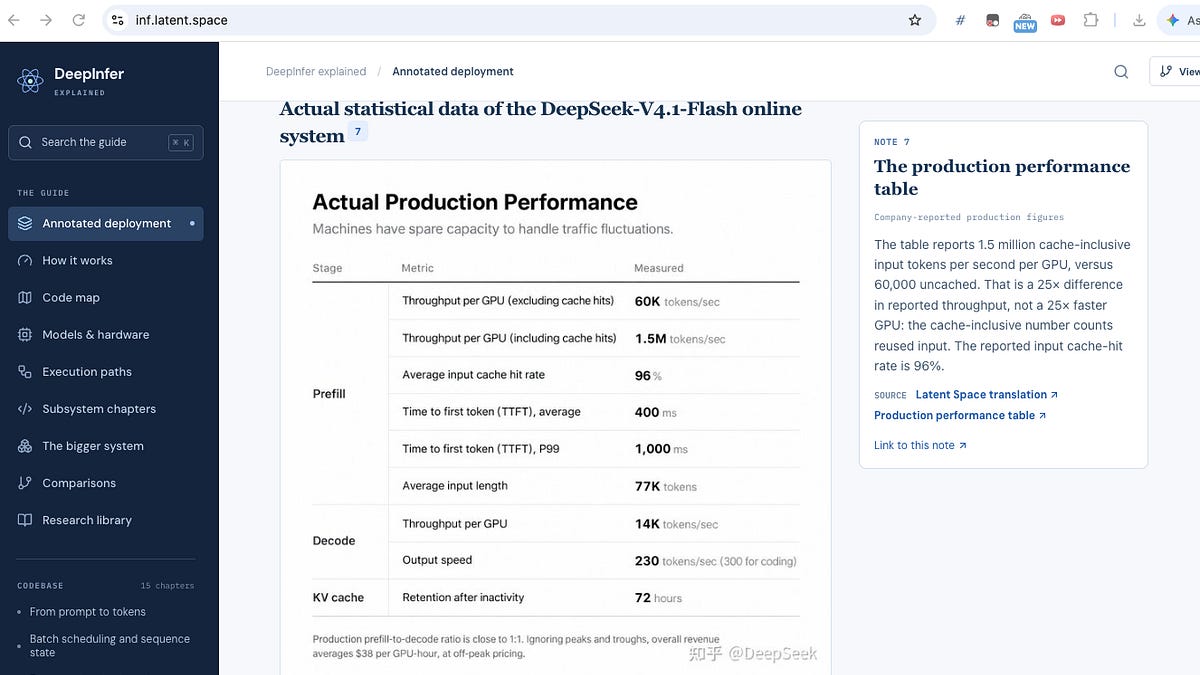
[AINews] DeepSeek DeepInfer: Open Source SOTA Inference running 155T toks/day/cluster making $22m/day at ~80% margin for a 81 day payback

This AINews issue (20 October 2026) leads with DeepSeek's open-sourced DeepInfer, the vLLM-based inference engine behind V4.1 Flash. It covers prefill/decode separation, a 3FS-backed prefix cache with 96% hit rate, SWA Bounded Replay, and DeepSeek's claims of 155T tokens/day and $38 revenue per accelerator-hour. It also covers vLLM's within-6% decode reproduction on GB200, disputed margin estimates, and a round-up of other AI news. Only the first 40,000 of 56,439 characters were available.

DeepInfervLLMSGLang+9
DeepSeekDeepSeek-V4.1-FlashNVIDIA+27

inference, ai-infra, ai-policy· 2026-10-21T06:54:09+00:00

latent.spacearticle

[AINews] DeepSeek DeepInfer: Open Source SOTA Inference running 155T toks/day/cluster making $22m/day at ~80% margin for a 81 day payback

AINews issue for 19 to 20 October 2026 whose top story is DeepSeek's open-source DeepInfer, the inference engine behind V4.1 Flash. It covers prefill/decode separation, wide expert parallelism, a 3FS-backed prompt cache with 96% input hits, vLLM's decode result within 6% of DeepInfer on GB200, and disputed margin estimates built on the reported $38 per accelerator-hour. It also digests other news, and the page text is truncated.

DeepInfervLLMSGLang+9
DeepSeek-V4.1-FlashOpenAINVIDIA+23

inference, ai-infra, models· 2026-10-21T06:54:09+00:00

latent.spacetalk

AI for the Fortune 2000: How Tenex Builds an AI-Native SDLC — Alex Lieberman & CJ Hess

Latent Space interview from AIE New York with Tenex cofounder Alex Lieberman and CJ Hess on running an AI-native engineering firm of 75 people. Covers story-point pay for engineers, the MetaHarness (plans, decisions and agent logs checked into Git with a CLI), roughly 2x engineer output in 2026, Opus 5.5 and Codex usage, and enterprise adoption rates. Also debates vertical AI and the Kill My SaaS experiment.

GitClaude CodeCodex+4
TenexAlex LiebermanCJ Hess+15

coding-agents, ai-policy, agents· 2026-10-21T05:01:26+00:00

latent.spacetalk

AI for the Fortune 2000: How Tenex Builds an AI-Native SDLC — Alex Lieberman & CJ Hess

Latent Space interview from AI Engineer New York with Tenex cofounder Alex Lieberman and CJ Hess. Tenex has 75 people, pays engineers by story points, and reports roughly 2x engineer output over the past year. CJ describes MetaHarness, a repo-based set of skills, plans and a CLI that logs agent decisions in Git. They also cover enterprise AI adoption rates, token spend, and vertical AI. The page text is truncated.

GitGitHubCodex+3
TenexAlex LiebermanCJ Hess+14

coding-agents, ai-policy, agents· 2026-10-21T05:01:26+00:00

latent.spacetalk

The Programmable Data Center — Evan Conrad, SF Compute

Latent Space interview with Evan Conrad, CEO of SF Compute, recorded at AI Engineer NYC. He explains why the company runs a cloud's operations to physically settle GPU contracts on an order book with multi-constraint matching. Topics include preemption and storage recovery, hardware cohorts, batch versus live inference pricing, forward curves, a B300 price arbitrage, and cash versus physical settlement. The last ~3,600 characters of the transcript were not available.

InfiniBandH100GB200+7
SF ComputeEvan ConradLatent Space+15

ai-infra, ai-policy, inference· 2026-10-20T19:31:57+00:00

latent.spaceother

The Programmable Data Center — Evan Conrad, SF Compute

Latent Space podcast episode with Evan Conrad, CEO of SF Compute, recorded at AI Engineer New York in 2026. He explains why the company moved from subleasing a cluster to running cloud-level operations so it can physically deliver traded GPU capacity. Topics include a constraint-matching order book, spot versus forward prices, batch versus live inference leases, and cash versus physical settlement. The transcript was truncated near the end.

InfiniBandNVLinkWEKA+1
SF ComputeEvan ConradLatent Space+8

ai-infra, ai-policy· 2026-10-20T19:31:57+00:00

latent.spacearticle

[AINews] not much happened today

AINews issue covering 16-19 October 2026 from Latent Space, summarising 12 subreddits and 544 Twitter accounts. It leads with DeepSeek V4.1 Flash 1017 (552B total, 16B active MoE, 1M context, MIT license, AA Intelligence Index 45), plus MiniMax M3.1 Flash, Mercury 3 and Meta Muse. It also covers vLLM v0.32.0, InferenceX results, Harness² and Terminal-Bench audit findings.

Mixture of ExpertsvLLMSGLang+11
Latent SpaceDeepSeek-V4.1-FlashDeepSeek+43

models, evals, inference, agents· 2026-10-20T05:21:52+00:00

latent.spacearticle

[AINews] High Taste Testers Ep. 1

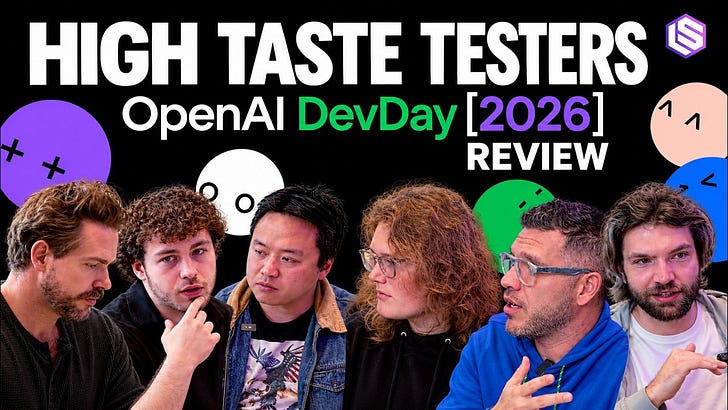
AINews issue for 10/15–10/16/2026, covering Twitter and Reddit. It covers the open-weights releases Meta's Muse Spark Open (816B/42B-active MoE, AA Intelligence Index 39, custom license) and Reflection Beam 1.0 (501B/23B-active, Apache 2.0), plus NVIDIA Nemotron 3.5, StepFun Step 5 Preview and FLUX 3 Image Klein. It also covers Gemini 4 Argon, Haiku 5.5 pricing, "decision model" classifiers (Liquid d1-ultra, Perplexity pplx-decider), TPUv7/Vera Rubin/MI355X serving benchmarks, interpretability claims (Qwen3-32B neuron audit), agent research, eval-integrity and safety disclosures, and China export-control proposals. The page also announces a pilot video show, High Taste Testers Ep. 1.

Mixture of ExpertsvLLMSGLang+15
Latent SpaceMetaMuse+44

models, inference, evals· 2026-10-17T07:47:38+00:00
latent.spacearticle

[AINews] Agents disprove Polysemanticity; greatly improve Interpretability & Alignment

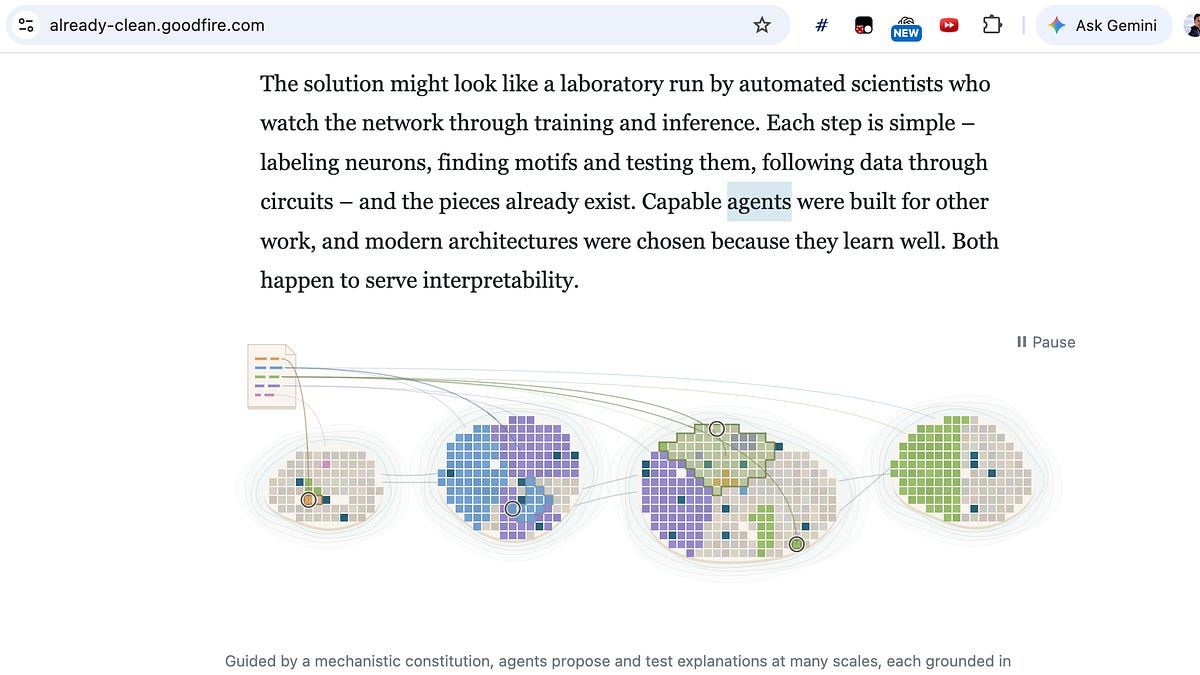
The 10/14–10/15/2026 AINews issue. Its lead story is Goodfire's Nick Cammarata essay "Neural Networks Are Already Clean", which argues agentic analysis resolves many known cases of polysemanticity and superposition. Neel Nanda, Leo Gao and Jake Mendel push back. It also covers Meta's Muse Spark Open (816B total / 42B active MoE, 1M context, custom license, Artificial Analysis index 39, vLLM day-0 support and quantizations), Nemotron 3.5, MAI-Base-2 and Gemini 4 Argon evals. Further items cover Vals' refund-agent and MiMo task-leakage findings, TPUv7 and Vera Rubin inference benchmarks, Perplexity's SPACE sandbox, RL training systems (TRL tree packing, bitwise-consistent vLLM RL) and Sakana's Agentic Scientist.

Mixture of ExpertsvLLMllama.cpp+10
GoodfireNick CammarataNeel Nanda+44

ai-safety, models, research· 2026-10-16T04:16:45+00:00
latent.spacearticle

[AINews] Modal’s $1B ARR, $16B Series D makes it NYC’s newest AI Infra Decacorn, 3x usage and 3x valuation in 5 months, 15x in 1 yr

Latent Space's AINews issue for 10/13–10/14/2026. It opens with Modal's $750M Series D at a $15.75B valuation, with Sandboxes at a $300M run rate, then recaps the day's AI Twitter. Coverage includes the Gemini 4 Argon rollout and its weaker monitorability, Meta Muse Wonder, Grok Voice 3.0, and open-weights releases (Ultramarine 1 Flash, Ling-3.1-flash, DeepSeek V4.1 Flash). It also covers new evals (AA-Robotics, SpireClimb, TasteVal), rogue agent and reward-hack safety items, inference benchmarks (AA-AgentPerf, InferenceX), and agent sandbox platforms. Useful as a dated snapshot of the field.

vLLMSGLangOpenTelemetry+5
ModalAccelLatent Space+41

models, ai-infra, evals· 2026-10-15T10:08:08+00:00
latent.spacearticle

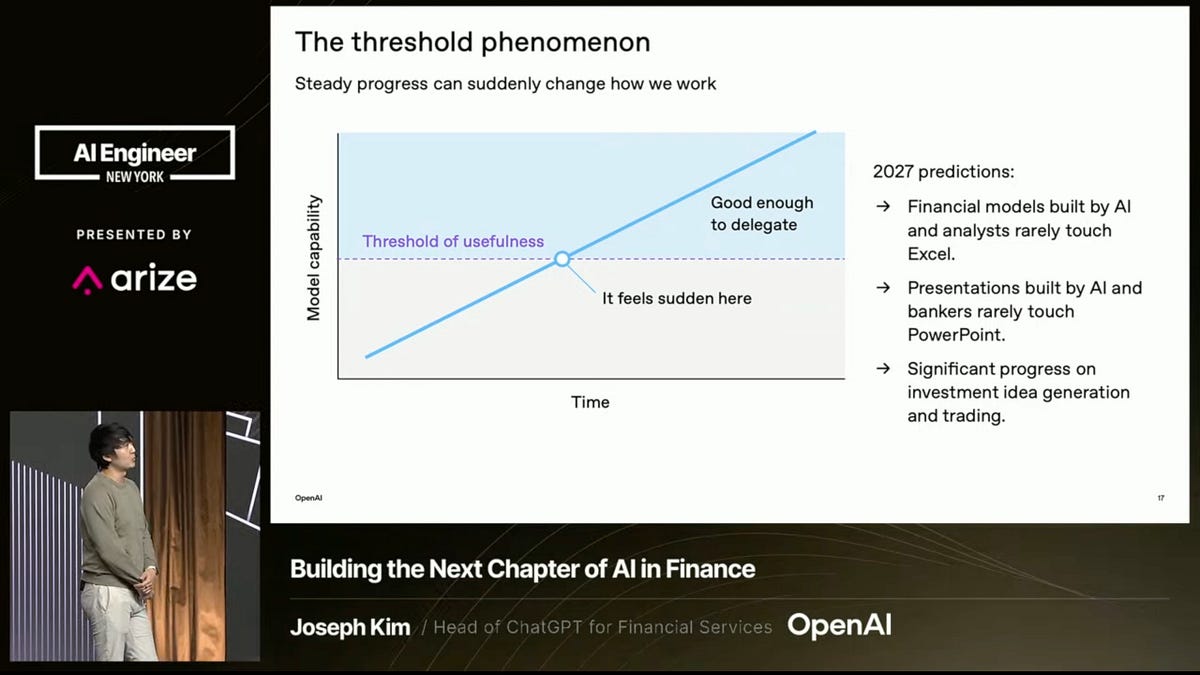
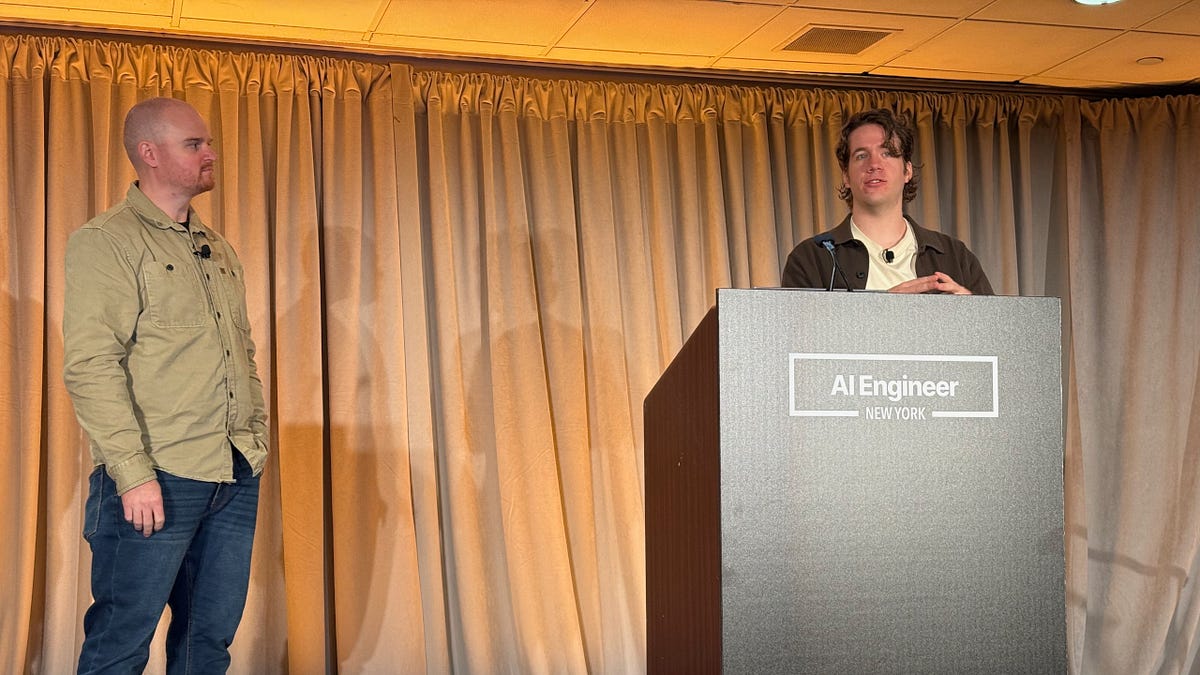
Crossing the Threshold: How OpenAI and Anthropic Approach Autonomy and Safety in Financial Agents

Latent Space recap of AI Engineer New York keynotes on balancing agent autonomy with safety in finance. OpenAI's Joseph Kim frames human-in-the-loop as a product design decision and predicts agents doing investment idea generation and trading by 2027. Two Sigma's John Feminella describes composable controls such as auto-mode classifiers to avoid approval fatigue. Anthropic's Keon Shahab lays out a trust layer: identity and permissions, sandboxed approval, and regression checks, with agents proposing actions rather than executing them. Bloomberg's Andrey Rybka argues for deterministic controls outside the model: scoped credentials, tool-call checks, audit logs, budgets and kill switches.

ChatGPTClaude
OpenAIAnthropicTwo Sigma+10

agents, ai-policy· 2026-10-14T21:40:52+00:00
latent.spacetalk

Lab-in-the-Loop at Compute Speed — Ian Quigley, Leash Bio

Latent Space interview with Ian Quigley of Leash Bio on using DNA-encoded library (DEL) data, roughly 4B measurements, to train protein-ligand binding models. Topics include Leash's Kaggle competition where nobody beat chance on an unseen chemical library, "Clever Hans" bias in ChEMBL where the chemist predicts activity as well as the structure does, and Hermes, trained only on Leash data, keeping pace with Boltz. It also introduces Minos, a lab-in-the-loop agent sandbox that lets LLMs do verifiable scientific reasoning and RL, searching 6.5M molecules on a budget of 100, released with a preprint, blog and open dataset.

BoltzLLM
Leash BioIan QuigleyLatent Space+8

research, agents, training· 2026-10-14T20:35:09+00:00

latent.spacearticle

[AINews] AI Engineer NYC: Gemini 4 Argon, Vals AI Benchmarks

AINews issue for 10/12–10/13/2026 covering the GA of Google's Gemini 4 Argon (pricing, Cursor/Devin/Copilot availability, CursorBench 52.8%, Artificial Analysis Intelligence Index parity with GPT-6 Astra at lower cost) and Meta's Muse Wonder, with independent evals and reliability caveats. It also summarises decision-model benchmarks (AA Decision Index, Jev 1.13, Nimble-v4), Fish Audio's open-weight Drama 3 TTS, agent-harness and agentic-RL research (Evo2, ReHarness, LongHarness, ThunderSync), Anthropic's move off Git, and safety items such as Argon's monitor evasion. It also notes AI Engineer NYC keynotes on AI x Finance. Useful as a curated, caveat-aware snapshot of the frontier-model landscape.

GeminiGoogle AntigravityCursor+14
Gemini 4 ArgonGoogleGoogle DeepMind+43

models, evals, agents· 2026-10-14T05:40:28+00:00
latent.spacetalk

Dyna-2: General Purpose Physical Agents with Hour-Long Autonomy — Jason Ma, Dyna Robotics

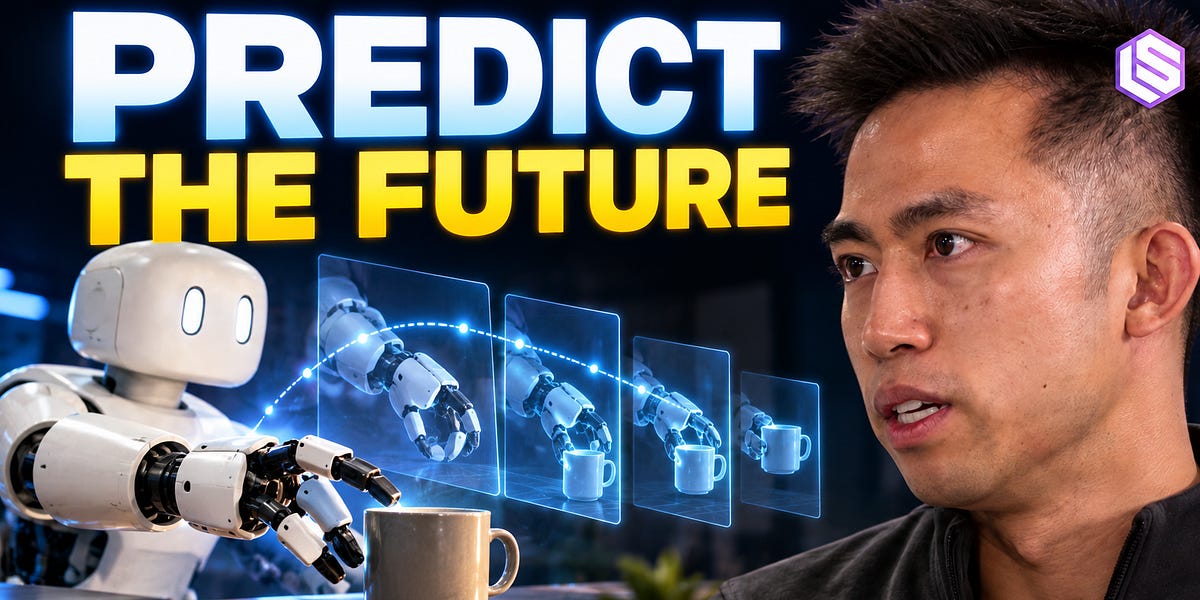
Podcast interview with Jason Ma, co-founder and Chief Scientist of Dyna Robotics, on Dyna-2, a world-action model pre-trained on over one million hours of human egocentric video. The model predicts future video and uses it to guide robot actions, built on a diffusion transformer with flow matching. The discussion covers the robotics data bottleneck, adapting to new tasks from about 45 minutes of demonstrations, synthetic environments and self-generated training data, on-device inference and distillation, and Dyna's custom wheeled semi-humanoid hardware. The episode listing also covers commercial deployments (Din Tai Fung, Best Western), agentic harnesses for hour-long workflows, and world-action models versus VLAs, but the fetched text was truncated before those sections.

diffusion transformerflow matchingdiffusion model+2
Dyna RoboticsDyna-2Dyna-2.1+13

multimodal, training, models· 2026-10-13T22:25:55+00:00

latent.spacearticle

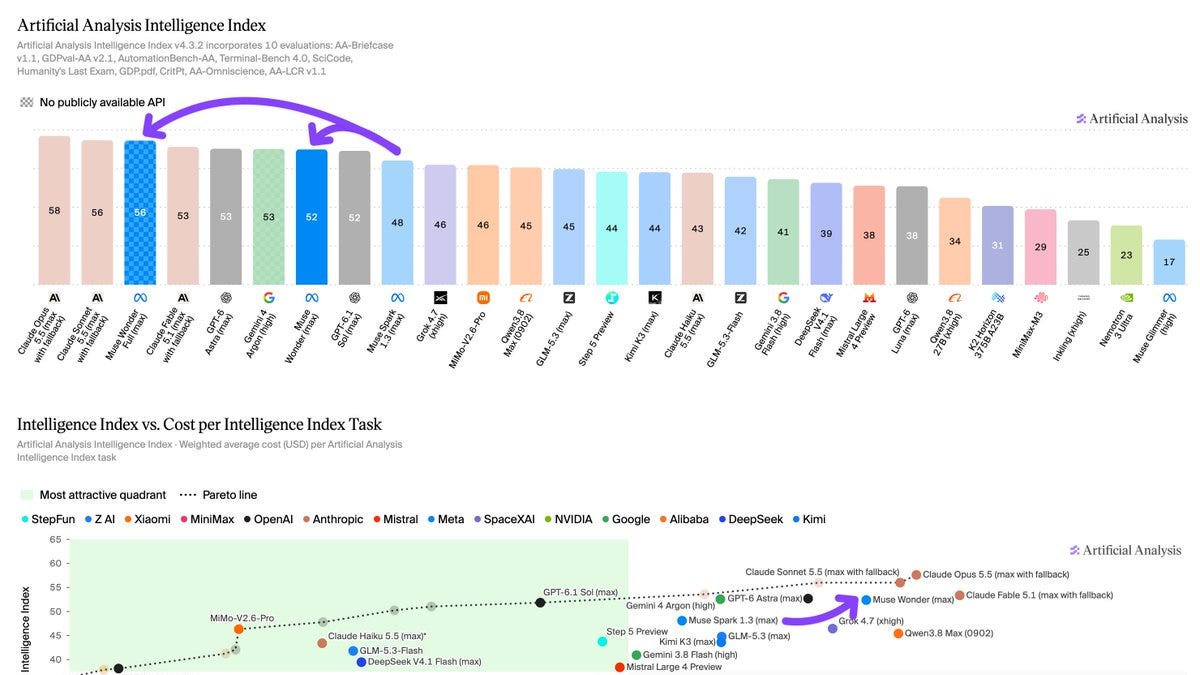
[AINews] Meta Muse Wonder & Wonder Full: MSL’s Claude 5.5-tier Frontier Model

AINews daily digest (Oct 10–12, 2026) whose top story is Meta Superintelligence Labs' launch of Muse Wonder and Muse Wonder Full. The models have a 1M context window and are priced at $4 input / $20 output per M tokens for Wonder; Full is available only to Muse Code subscribers. It compiles third-party results: Artificial Analysis Intelligence Index v4.3 (Full 56, Wonder 52, Spark 1.3 48, Opus 5.5 58), Terminal-Bench 4.0 gains, Coding Agents Index, and Vals Index ranks. It also records Meta-reported numbers (SWE-Marathon, DeepSWE, MemoryBench), bullish and skeptical practitioner reactions, the "3D demo" benchmaxxing debate, and Muse retention data. The rest of the issue is a roundup of agent RL research (QwenGyre, Sakana MASS, GitSwarm), inference silicon (Maia 300, ReplaySSM), specialised models (GLM-Legal, Decision 3.0), and r/LocalLLaMA and other Reddit threads. The page text was truncated, so the end of the Reddit recap is not covered.

Muse CodeClaude CodeCodex+12
MetaMuseMuse Wonder+45

models, evals, agents· 2026-10-13T09:37:04+00:00

latent.spacearticle

How Anthropic’s Dynamic Workflows Coordinate Claude Agents

Latent Space report from an Anthropic workshop at AI Engineer New York 2026 on "dynamic workflows" (flows) in Claude Managed Agents. Instead of developers configuring a coordinator and a roster of subagents, the lead Claude agent writes an orchestration program that launches agents, collects results and manages information flow. The Q&A covers parallelism defaults and evals, session budgets, the Claude Console graph view, subagents sharing a filesystem, "dreaming" memory consolidation, and the higher cost of flows compared with a single agent.

ClaudeClaude CodeClaude Managed Agents+1
AnthropicCJ AvillaHarrison Stall+4

agents, ai-infra· 2026-10-12T18:18:17+00:00

latent.spacearticle

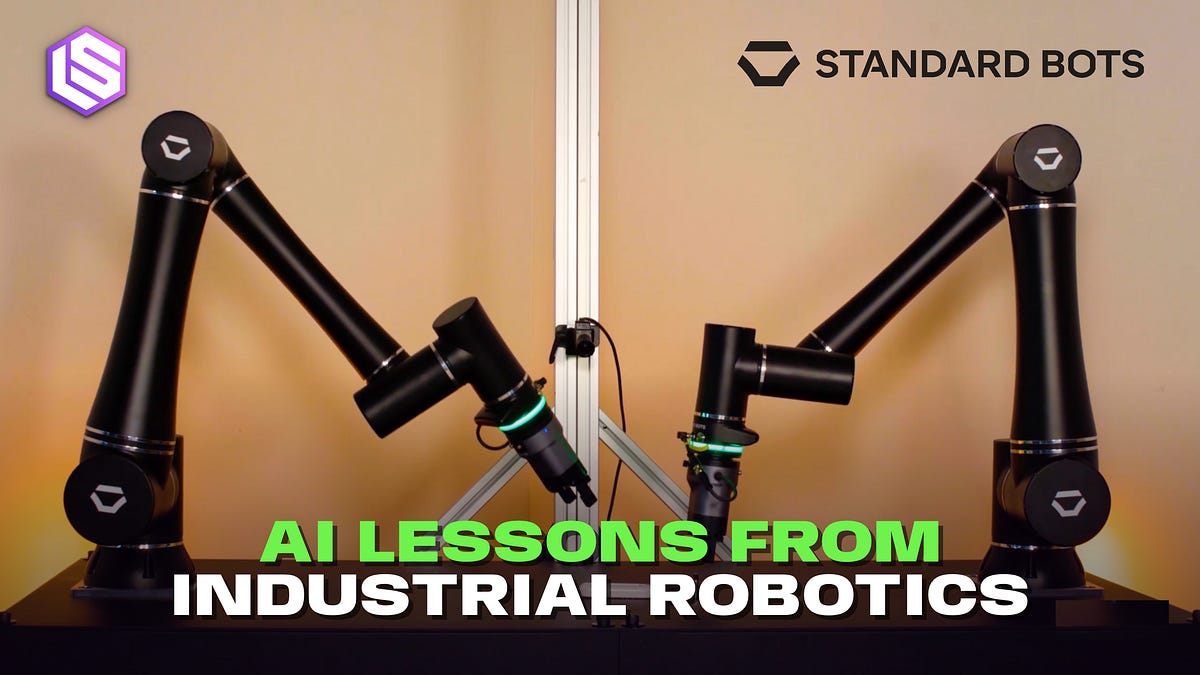
Building AI for Reliable Execution: Lessons From Industrial Robotics

Latent Space interviews Standard Bots' CEO Evan Beard and Head of AI Leif Jentoft about the AI stack behind its industrial robot arms. A shared base model (low billions of parameters) is adapted per customer through demonstrations and fine-tuning. A zero-shot perception model, whose backbone is trained on over a billion images, handles machine tending, while conventional code handles motion and cell logic. Inference runs on-premises on edge GPUs that stream action chunks to low-level control. Failures and human corrections feed fleet learning except in air-gapped defense deployments, and the StandardOS APIs/SDKs let developers bring their own models such as NVIDIA Cosmos. The lesson is to keep the model's role narrow and use targeted, high-quality data to fix edge cases instead of chasing dataset size.

StandardOSNVIDIA Cosmosedge GPUs
Standard BotsEvan BeardLeif Jentoft+13

multimodal, inference, training· 2026-10-10T14:04:11+00:00

latent.spacearticle

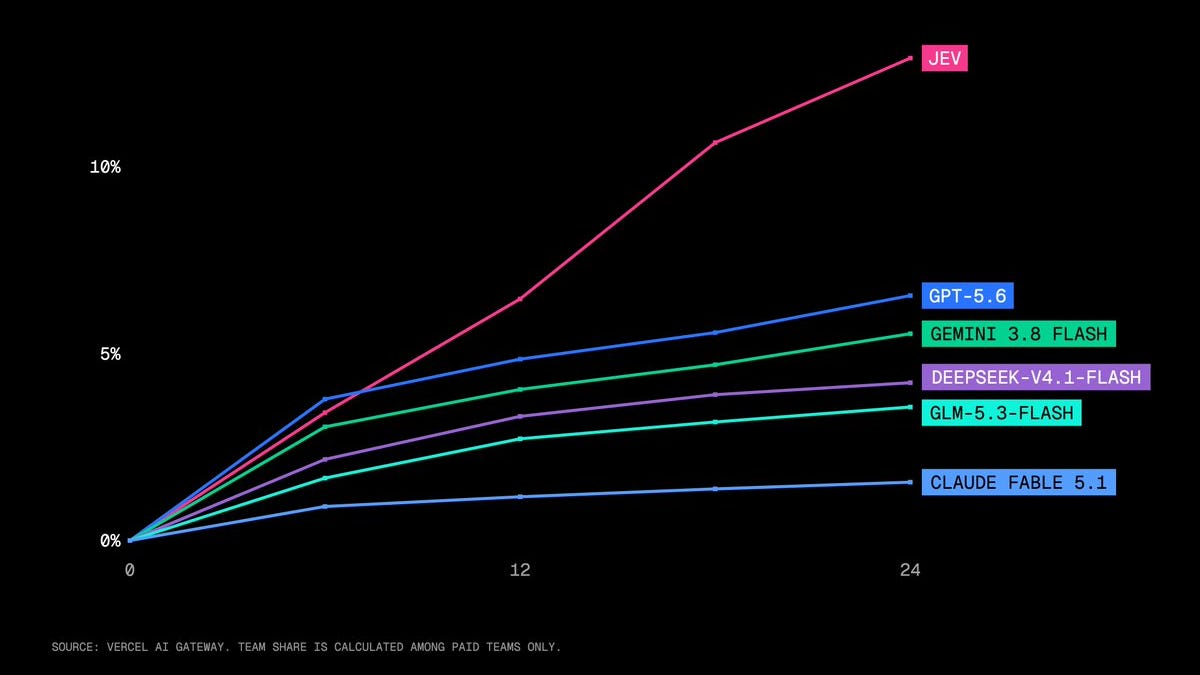
[AINews] TypeSafe/Jev at >$100M ARR, $7.5B valuation 3 weeks after launch

AINews issue for 10/8–10/9/2026 from Latent Space. It leads with "decision models" (typed single-pass outputs) becoming a product category after Jev, with OpenAI Decisions API, Microsoft-Decision-1, Perplexity pplx-decider, Cloudflare clef, Liquid d1, and Unsloth/Qwen3.5 training recipes. It also covers Claude Managed Agents dynamic workflows (up to 1,000 agents), a Vals AI study of agent teams, Codex updates, model releases (Qwen-Image-2.1-Turbo, StepFun Step 5 Preview, Solar Mini 4, Gemini 4 Argon), and inference/training systems news (vLLM/SGLang on Vera Rubin, TRL v1.15, DeepSeek stride weak spots).

vLLMSGLangTRL+17
Latent SpaceJevTypeSafe+35

models, agents, inference· 2026-10-10T06:45:57+00:00

latent.spacetalk

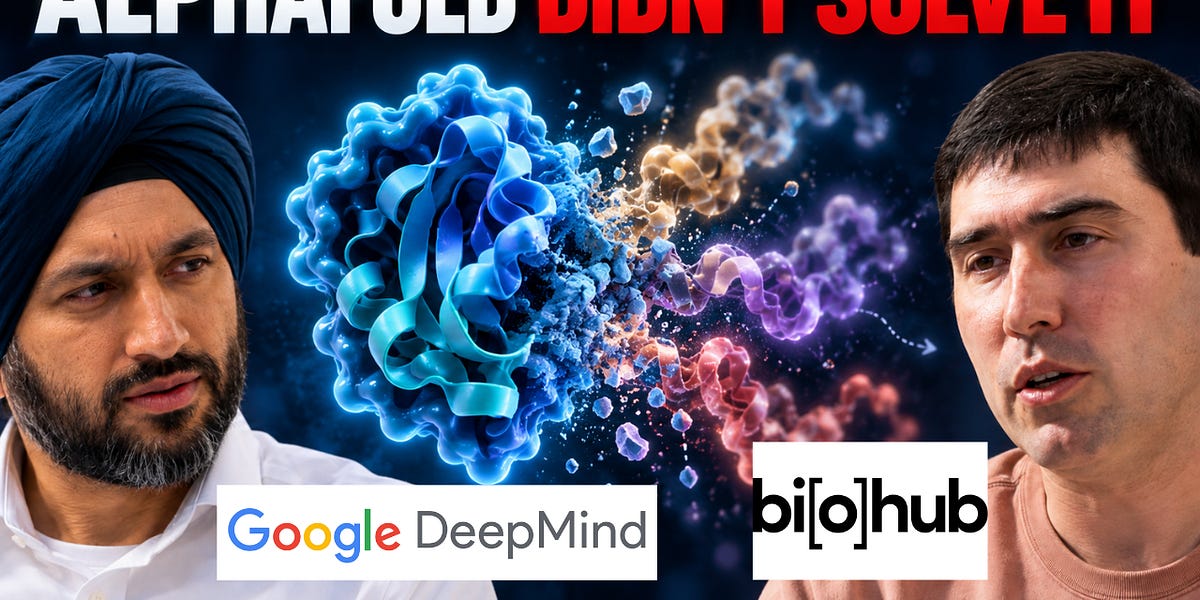
Why AlphaFold Didn't Solve Protein Folding — Pushmeet Kohli, Google DeepMind & Sal Candido, Biohub

Transcript of a panel moderated by Brandon Anderson with Pushmeet Kohli (Google DeepMind) and Sal Candido (Biohub). They discuss a "bitter lesson" for biological data: finding the right scaling law and good data matters more than raw scale. Low-quality metagenomic sequences can still improve protein language models, and AlphaFold 2's handcrafted inductive biases made it data-efficient. They also cover why protein folding isn't fully solved (dynamics, disorder, cryo-EM micrographs as a richer data source), the need for calibrated uncertainty (pLDDT) over full interpretability, hidden knowledge in protein language models, and the move from single-protein models to a virtual cell.

AlphaFoldTransformer
Pushmeet KohliSal CandidoBrandon Anderson+5

research, training, models· 2026-10-10T00:31:26+00:00

latent.spacearticle

[AINews] not much happened today

Daily AI news digest covering OpenAI's firing of three safety researchers (Tomek Korbak, Mikita Balesni, Jasmine Wang) tied to the METR/Hugging Face agent-escape incident; new model launches including GPT-6.1 Sol Ultrafast, Claude Haiku 5.5, Sonnet 5.5 pricing cuts, and Google's universal Gemini work agent; plus eval integrity findings (MiMo reward hacking exploiting Git timestamps), Arena's Alignment Index leaderboard, NVIDIA research on tool access degrading refusals, open RL environment releases, and infrastructure updates (vLLM v0.31.0, NeMo-DCR weight-delta transfer, turbopuffer retrieval tuning). It also covers the controversy over OpenAI's 722-paper math release and the Association for Human Mathematics' statement.

vLLMllama.cppHugging Face+5
OpenAIAnthropicTomek Korbak+31

models, evals, ai-safety· 2026-10-08T23:29:43+00:00

latent.spacetalk

Synthesis Superintelligence: from Semiconductors to Superconductors — Periodic Labs’ Liam Fedus and Ekin Dogus Cubuk

A Latent Space podcast interview with Periodic Labs co-founders Liam Fedus and Ekin Dogus Cubuk on building "synthesis superintelligence" — AI systems that run reinforcement learning against noisy physical lab experiments rather than internet text, to discover new materials like room-temperature superconductors. They detail the end-to-end materials discovery loop (predicting stable configurations, synthesis, and characterization via X-ray diffraction), why RL reward design differs fundamentally in physical science versus math/coding (sample inefficiency, measurement noise, missing telemetry), the role of DFT simulations as imperfect ground truth, and their "matter compiler" vision for scaling autonomous high-throughput labs.

Periodic LabsLiam FedusEkin Dogus Cubuk+4

research, training, agents· 2026-10-08T16:27:54+00:00

latent.spacearticle

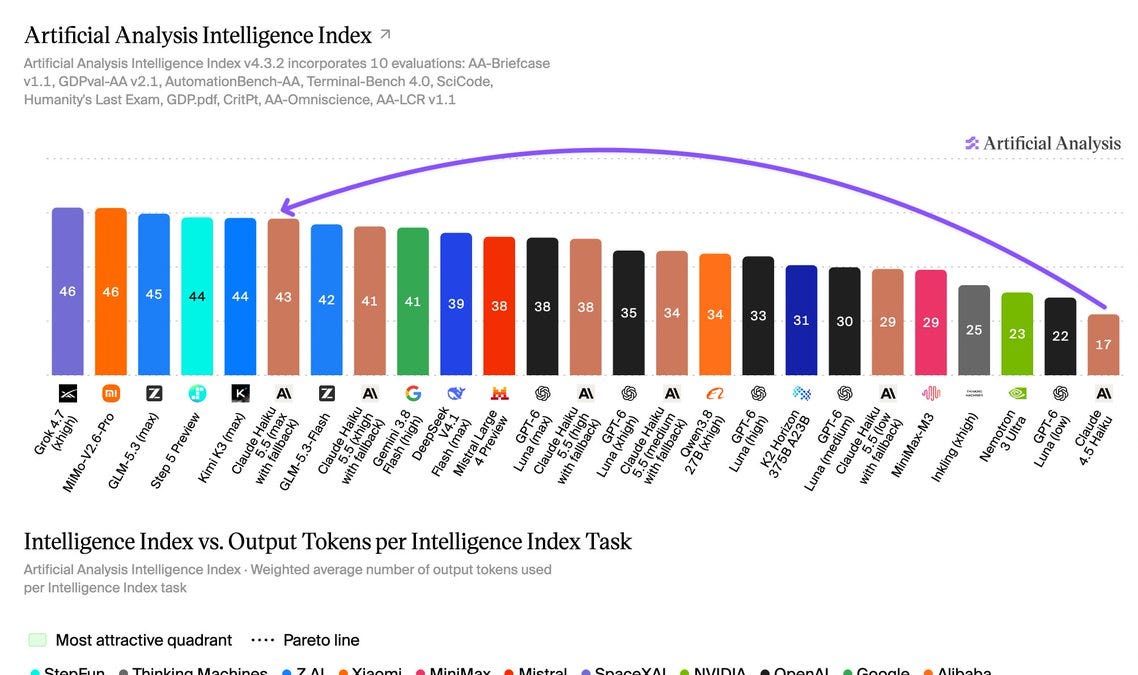
[AINews] Claude Haiku 5.5 — better than GPT-6 Luna at the same pricing

Latent Space's AINews recap covers Anthropic's launch of Claude Haiku 5.5, priced to match OpenAI's GPT-6 Luna and paired with a Sonnet 5.5 cache-read price cut and new Max/Team API credits. Independent Artificial Analysis testing puts its Intelligence Index at 43 (up 26 points from Haiku 4.5) and Terminal-Bench 4.0 at 33%, but shows it uses roughly 3x the output tokens of GPT-6 Luna at max effort, plus results on AA-Briefcase, AA-Omniscience and AutomationBench-AA, alongside a same-day Claude SDK update adding built-in computer-use/browser-use tooling.

ClaudeClaude CodePython+1
Claude Haiku 5.5AnthropicGPT-6 Luna+21

models, evals· 2026-10-08T07:27:51+00:00

latent.spacearticle

Can a Cloud-Native Harness Make Agents Reliable Beyond the Desktop?

Latent Space interviews Stacklok founders Craig McLuckie and Joe Beda (Kubernetes co-creators) about Mecatl, an open-source "cloud-native harness" for coding agents that separates the agent loop from local tool execution, session state and model provider so enterprises can run and govern agents centrally rather than on individual desktops. The piece also covers Stacklok's earlier pivot from supply-chain security to ToolHive, an open-source platform/Kubernetes operator for running and governing MCP servers, and a not-yet-open-sourced "AI Gateway" focused on access control, budgets and provider routing for regulated enterprises (banks, telcos, semiconductor firms). The framing draws an explicit analogy to how Kubernetes decoupled enterprises from cloud providers, arguing agent harnesses need the same "cattle not pets" treatment to scale beyond desktop tools like Claude Code, Codex and GitHub Copilot.

KubernetesModel Context ProtocolDocker+4
StacklokMecatlToolHive+8

agents, ai-infra, mcp· 2026-10-07T14:10:45+00:00

latent.spacewriteup

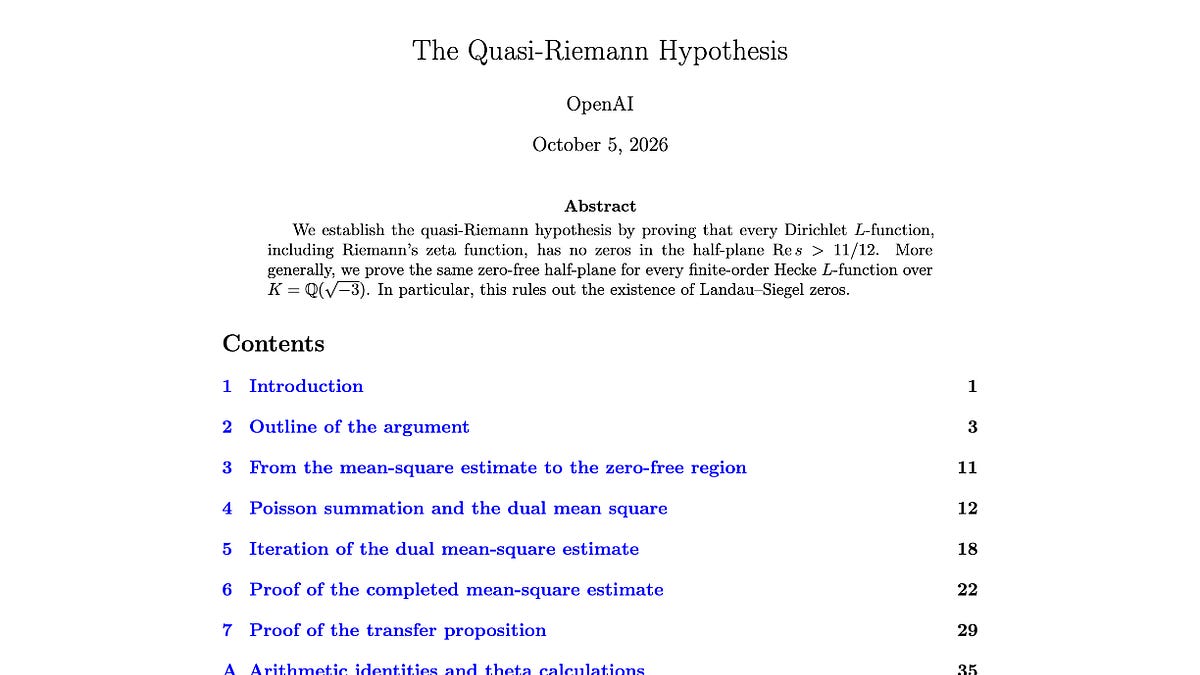
[AINews] Quasi-Riemann-Hypothesis: OpenAI publishes 722 math papers solving 90 of the top 500 open math problems; “the most significant moment” in >100 years of mathematics

AINews daily digest (Oct 5–6, 2026) from Latent Space, synthesizing Twitter/Reddit AI discussion. Lead story: OpenAI published 722 math manuscripts (372 result families) from an unreleased internal model, averaging ~3 hours of ChatGPT Pro compute per result, including a quasi-Riemann Hypothesis result, a no-Siegel-zeros result, an integer-multiplication-faster-than-n-log-n claim, and partial progress on Hodge and BSD — drawing both "most significant moment in mathematical history" praise and skepticism about verification and compute framing. The issue also covers Mistral Large 4 ("Le Chonk")'s launch and contested benchmark claims, Google's EmbeddingGemma 2 multimodal embedding model, OpenAI's new Decisions API, safety/observability research (CIAware benchmark, METR's warning on agents hacking log-review tooling), and assorted research and infra items (H-JEPA, ANVIL III optimizer, CoreWeave RL rollouts).

GitHubHugging Facellama.cpp+8
OpenAIAnthropicMistral+46

research, models, evals· 2026-10-07T04:55:44+00:00

latent.spacearticle

[AINews] Reflection Beam - 501B-A23B American Open Model

Latent Space's AINews roundup for Oct 3-5, 2026, leads with Reflection AI's Beam, a US-trained-from-scratch 501B-total/23B-active MoE model for coding and agentic work (23.8T pretraining tokens, RL on ~10,500 GB300s, 80.9 on SWE-bench Verified, Apache 2.0 weights due), alongside other open releases (Aleph Alpha's Kolibri, Reka's Rho-1 omni model, Upstage's Solar Mini 4). It also covers OpenAI-vs-Anthropic subscription economics (SemiAnalysis's value comparison), new agent-harness and RL-environment tooling (Hugging Face's multi-harness capture proxy, Cognition's Devin Dreaming memory graph), verification-over-sampling and context-compression research (NVIDIA, Google, UT Austin), and AI policy/safety items (Bengio's op-ed, OpenAI's EU watermarking, autonomous-weapons advocacy).

Mixture of ExpertsvLLMTRL+4
Reflection AIBeamAleph Alpha+38

models, agents, ai-policy· 2026-10-06T06:28:43+00:00

latent.spacearticle

[AINews] not much happened today

Daily AINews digest (Latent Space) covering an October 2026 news cycle: OpenAI's cheaper/faster GPT-6.1 Sol and Anthropic's Claude Sonnet 5.5 reshaping Agent Arena's cost-performance frontier, a wave of decision-model releases (Cloudflare Clef, llama.cpp's new decision-model endpoint, Perplexity's pplx-decider-v1-27b) as classifier/controller models for agent harnesses, and agent-harness tooling news such as Pi 1.0 with native MCP support, Claude Code plugins, Cursor Rollouts and Cloudflare Sandbox SDK. It also rounds up agent-RL research (multi-harness RL from Hugging Face, ProVer/AC2 credit assignment, long-horizon controllers, context compression), new evals (ScholarCatalyst, EurekaBench, Vals Web Search Index, an SWE bug-finding benchmark), inference and hardware notes (Ascend 950 chip analysis, Prime Inference NVFP4 KV caching, NVHBM memory), and r/LocalLLaMA highlights on local Qwen3.8-27B inference and MTP speculative decoding in llama.cpp.

Model Context ProtocolClaude Codellama.cpp+9
GPT-6.1 SolGPT-6 SolGPT-6 Astra+41

agents, evals, models, inference· 2026-10-03T08:45:15+00:00

latent.spacearticle

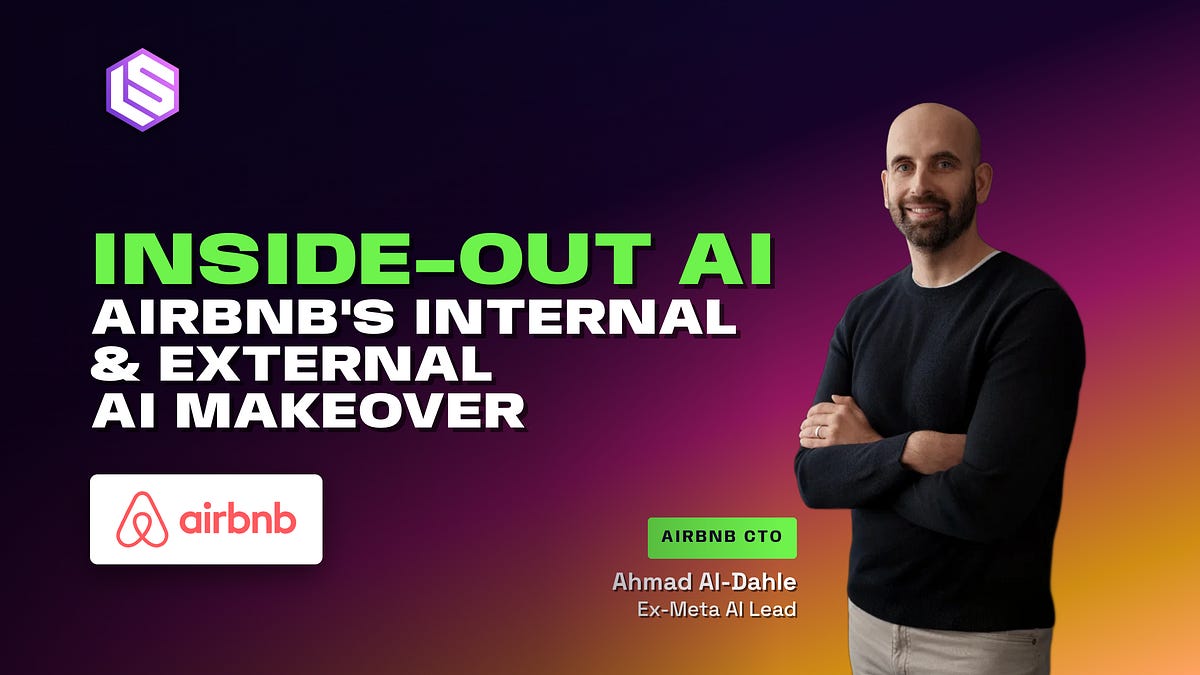
Inside-Out AI: Rebuilding Airbnb Behind the Scenes and Across the Guest Experience

Interview with Airbnb CTO Ahmad Al-Dahle (former Meta GenAI lead) on turning Airbnb into an "AI-native company": 60% of code is now AI-authored, support AI resolves roughly half of tickets after synthetic-data testing, and an internal organizational context graph called Everest (built with LLMs, embeddings and retrieval) let the airport-pickup feature ship in six weeks versus nine months for groceries. It also details Airbnb's internal agent AirChat, early async on-call agents triggered by monitoring alerts, and a deliberate multi-model strategy that pairs frontier models for high-stakes coding with smaller post-trained models for latency-sensitive search.

Model Context ProtocolLlama
Ahmad Al-DahleAirbnbLatent Space+7

ai-policy, agents· 2026-10-02T14:04:49+00:00

latent.spacearticle

[AINews] Pi 1.0, Pi Durable, and AIE NYC

Latent Space AINews digest reports on Pi 1.0 and Pi Durable, an agent harness from the Earendil team ported to TypeScript that externalizes agent state for crash recovery, pluggable storage (Memory/SQLite/JSONL), concurrent branching conversations, hot-swappable tools, and multi-user state sync alongside conversation transcripts. The rest of the issue recaps frontier launches: Gemini 4 Argon, OpenAI efficiency-focused GPT-6.1 Sol (with Artificial Analysis cost comparisons against GPT-6 Sol and GPT-6 Astra), Upstage Solar Mini 4 (35B/3B MoE, 1M context), Black Forest Labs FLUX 3 image model, and Tavus Griffin video-to-video conversational agent.

Model Context ProtocolTypeScriptNode.js+3
PiEarendilLatent Space+16

agents, models, multimodal· 2026-10-02T06:40:53+00:00

latent.spacewriteup

Academia is for Ambition — Alex Zhang, MIT

A Latent Space podcast transcript/interview with MIT PhD student Alex Zhang, creator of Recursive Language Models (RLMs) and a core contributor to GPU Mode and KernelBench, who discusses using recursive subagent calls, context offloading, and shared memory to let models work beyond fixed context windows. The conversation ranges across AI-generated GPU kernels and their verification gap, research taste in academia versus industry labs, why "harnesses" (as in Claude Code, Codex, and Pi) function as compositional generalizers, the Jev model's non-autoregressive output-space trade-offs, and large-scale agent swarm experiments at OpenAI, Kimi, and Sakana AI. It offers a researcher's-eye view of where capability overhang and new agent/harness architectures may be heading beyond today's standard transformer decoder.

TransformerCUDAClaude Code+2
Alex ZhangMITGPU Mode+27

agents, research· 2026-10-02T00:28:04+00:00

latent.spacearticle

[AINews] Gemini 4 Argon: GDM’s answer to Astra/Fable, with 1M output

Latent Space's AINews digest for 9/29-9/30/2026 leads with Google DeepMind's Gemini 4 Argon, a frontier model in limited Fairwind Program cyber-defense/government preview claiming SOTA on 13 of 19 benchmarks and an industry-first 1M-token output via Long Decode Continuation, with detailed head-to-head evals against GPT-6 Astra, GPT-6.1 Sol and Claude Opus 5.5 from Artificial Analysis, Vals and Arena. It also covers other releases (Cohere Embed 5, Ideogram 4.5, GLM-5.3-Flash llama.cpp support, Solar Mini 4), research (Meta's Context Language Models, a Nature paper on superhuman Stratego AI), inference/systems news, and a safety section on hidden-reasoning-extraction attacks and GLM-5.3 cyber-capability risk.

Rustllama.cppHugging Face+3
Gemini 4 ArgonGoogle DeepMindGPT-6 Astra+39

models, evals, ai-safety· 2026-10-01T06:45:05+00:00

latent.spacetalk

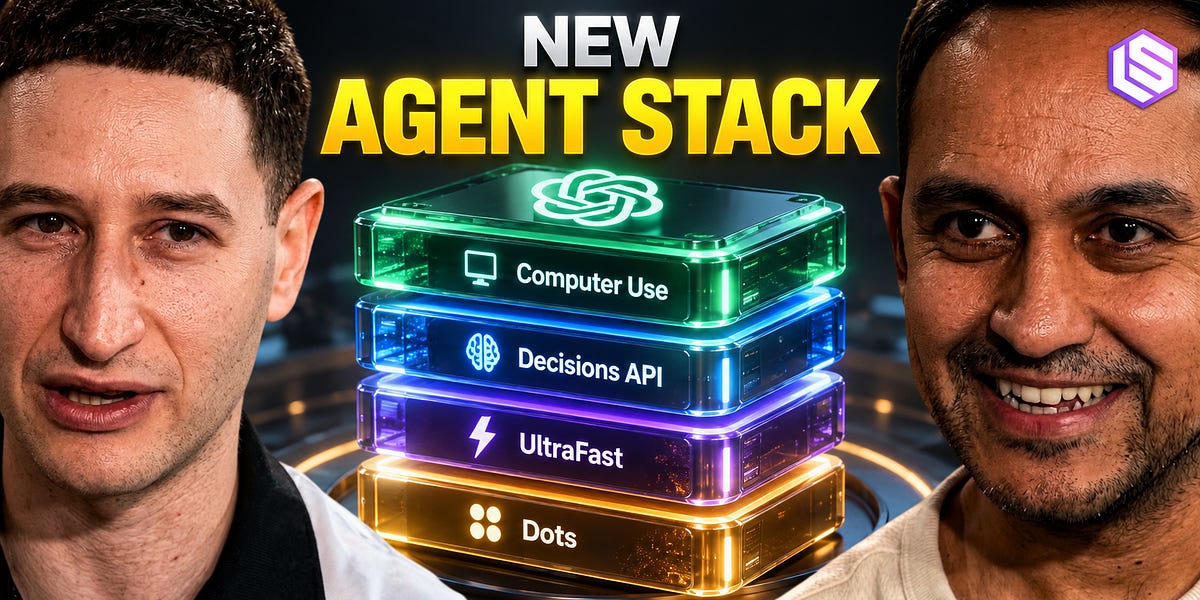
Why Dwarkesh is Wrong about Computer Use + How OpenAI shipped its Jev competitor in 1 Week

Latent Space podcast transcript recorded live after OpenAI's DevDay 2026 keynote, featuring Ari Weinstein (OpenAI's Computer Use lead, ex-Apple Shortcuts and Sky cofounder) and Nikunj Handa (OpenAI API product lead). Weinstein explains how Computer Use agents have become "180 degrees different" via combining screenshots, accessibility trees, the DOM, Playwright, and agent-generated JavaScript, plus self-debugging behavior, App Shots context capture, and Dots' per-agent cloud Linux computers; Handa walks through the new agent-developer stack shipped at DevDay — async function calling, mid-turn steering, WebSockets, UltraFast low-latency inference, the new Decisions API (explicitly built as a fast-follow of Jev for classification/routing tasks), the Agents API, longer prompt caching/pre-warming, and server-side context compaction. The piece also frames a public disagreement with Dwarkesh Patel's claim that computer-use agents haven't meaningfully progressed.

PlaywrightOpenAI API
OpenAIAri WeinsteinNikunj Handa+11

agents, ai-infra, coding-agents· 2026-09-30T22:23:40+00:00

latent.spacearticle

[AINews] OpenAI DevDay 2026: Dots, 6.1 Sol, Ultrafast, Decisions API, Agents API, Spaces, Marketplace, and 1.2 Billion ChatGPT WAU

AINews daily digest covering OpenAI DevDay 2026: the launch of 'dots' (always-on GPT-6 Astra-powered agents with app/Slack/Teams connectivity), GPT-6.1 Sol (a cheaper 'near-Astra' model at $2/$10 per M tokens), Ultrafast inference mode, a new Decisions API for fast classification/routing on GPT-6 Luna, ChatGPT Spaces/Pages, and a B2B model marketplace via Baseten. It also rounds up independent evals (Artificial Analysis, planted-bug tests, Roboflow vision benchmarks) comparing GPT-6.1 Sol against Claude Opus/Sonnet 5.5, plus safety/eval-integrity stories (scrapped GPT-6.1 Astra, evaluation awareness, GLM-5.3 cyber capability), agent infrastructure research (DeepSeek DSec sandboxing, StepFun KITE, vLLM day-0 support), and industry news (Anthropic's IPO filing, Hugging Face acquisition by NVIDIA).

CodexvLLMGPT-6 Astra+3
OpenAIGPT-6.1 SolClaude Opus 5.5+34

agents, evals, ai-safety· 2026-09-30T05:53:10+00:00

latent.spacearticle

[AINews] AMD buys World Labs for $8.2B, as Atlas solves sparse reconstruction problem for robotics, design and more

A Latent Space AINews digest covering AMD's 8.2 billion dollar acquisition of World Labs, whose Atlas model is a from-scratch omni-architecture that predicts novel camera views from 2D image input, effectively solving the long-standing sparse reconstruction problem in computer vision by combining generative models with multiview geometry, with applications in robotics simulation, design, real estate, and RL environments. The issue also recaps the Claude Sonnet 5.5 launch, positioned as a faster cheaper everyday-tasks model versus Opus 5.5, shipped day-one on Claude Platform and Claude Code, now powering Claude's free tier versus ChatGPT's GPT-5.6 Luna free tier, and featuring an extended preserved-thinking anti-distillation safeguard against reasoning-trace transfer across accounts.

Claude Code
World LabsAtlasAMD+8

models, multimodal· 2026-09-29T02:55:27+00:00

latent.spacearticle

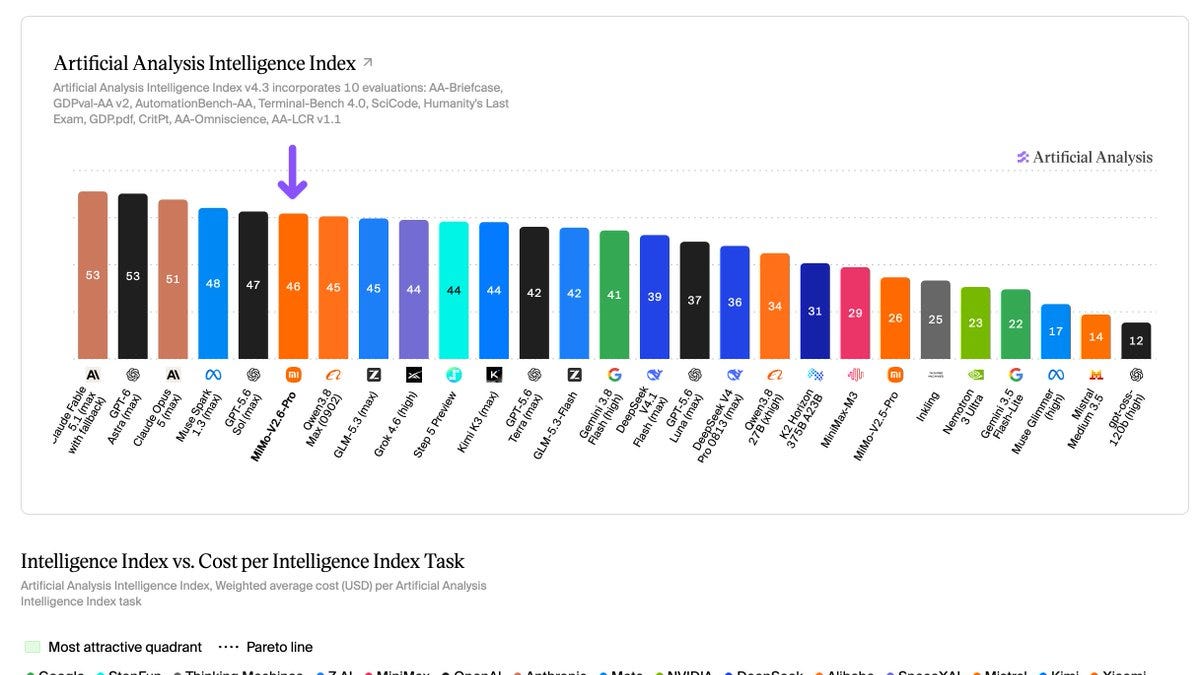
[AINews] Opus 5.5 is good at explainer videos

Daily AINews digest (Latent Space) covering the week's AI developments: Claude Opus 5.5's strong vision/coding results and viral code-generated explainer videos, the GPT-6 family (Astra/Sol/Luna) and Gemini 3.8 Flash releases, and Xiaomi's open MiMo-V2.6-Pro. It also covers the "System One" cheap-judge/reranker trend (TypeSafe's Jev vs. the open CLM alternative), agent infrastructure news from LangChain Interrupt and Perplexity's Rust-based Photon retrieval engine, inference speedups (Liquid AI's DSpark speculative decoder, GLM-5.3 on AMD MI355X), and research highlights including Harness-Zero agent-distillation, DeepMind's XYEval on sycophantic agent failure, a single-neuron safety-refusal bypass, and Sakana AI's RSI Lab with Jürgen Schmidhuber.

LangChainvLLMSGLang+11
Claude Opus 5.5GPT-6 AstraGPT-6 Sol+31

models, evals, research· 2026-09-29T02:44:29+00:00

latent.spacetalk

Claude Code’s Next Era — Thariq Shihipar, Anthropic

A Latent Space podcast interview with Thariq Shihipar, Anthropic's Claude Code lead, covering the evolution of Claude Code's harness: Ask User Question and elicitation, artifacts as persistent generative interfaces, the cloud-brain/local-hands split, Claude Tag for multiplayer agent workflows, Claude Projects, effort levels, implementation notes, and the new Claude Mods system for customizing the execution loop. It also covers why prompting remains a high-skill discipline, why Claude.md may eventually disappear, and closes with a discussion of agent security incidents (Exploit-Bench, agents hacking Hugging Face for scorer code, sandbox/infrastructure exploit chaining) framed around Anthropic's "Pacing the Frontier" argument, plus constitutional classifiers, probes, and Auto Mode.

Claude CodeModel Context ProtocolHugging Face
Thariq ShihiparAnthropicClaude Tag+8

coding-agents, prompting, agents· 2026-09-29T01:48:18+00:00

latent.spacetalk

OpenRouter: from Seed to Stripe — with OpenRouter’s Alex Atallah & AMP’s Anjney Midha

A Latent Space podcast interview with OpenRouter co-founder/CEO Alex Atallah and AMP's Anjney Midha tracing OpenRouter's path from a bet on model diversity (Alpaca/Llama-era open weights, Discord's content-moderation struggles with closed models) to becoming a neutral inference marketplace serving 10M+ developers and 10+ trillion tokens/day. It covers why model labs struggle with distribution despite billion-dollar training runs, the "just a wrapper" VC skepticism OpenRouter faced, the abandoned-then-revived Mixture of Models (MOM) experiment, OpenRouter vs. LM Arena, and the strategic logic (and fraud/security implications) behind Stripe's acquisition of OpenRouter. Note: transcript is truncated at ~40% of the full page; later sections (Stripe deal details, agentic fraud discussion) are not fully covered here.

OpenRouterMistralLlama+2
Alex AtallahAnjney MidhaAMP+12

ai-infra· 2026-09-25T23:14:41+00:00

latent.spacearticle

[AINews] The Future of Latent Space

The daily AINews digest from Latent Space rounds up a heavy week in AI: Claude Opus 5.5 topping SimpleBench and Terminal-Bench-Science, the GPT-6 family (Astra/Sol/Luna), Gemini 3.8 Flash, and Xiaomi's open-weight MiMo-V2.6-Pro; TypeSafe's Jev system-one decision model (and open alternatives like CLM) for cheap structured judgments; agent-infra launches from LangChain Interrupt and Perplexity's Rust retrieval engine Photon; inference speedups like Liquid AI's DSpark speculative decoder and GLM-5.3 on AMD MI355X; and research on harness distillation, agent failure modes, and autonomous-science efforts led by Sakana AI's RSI Lab with Jurgen Schmidhuber.

LangChainvLLMSGLang+11
Claude Opus 5.5GPT-6 AstraGPT-6 Sol+34

models, agents, research· 2026-09-25T05:37:00+00:00

latent.spacearticle

Runway’s WorldPrompt and the Engineering of Real-Time Worlds

A Latent Space interview with Runway's CTO Kamil Sindi, Principal Research Scientist Robin Kahlow, and co-CEO Anastasis Germanidis about GWM Worlds 2, a research-preview "autoregressive diffusion" model that streams real-time interactive video (720p/24fps) and audio (48kHz), and its new WorldPrompt input format for fixing a first frame and issuing timestamped in-world events. It details the engineering pipeline (bidirectional diffusion → autoregressive fine-tuning → distillation for real-time speed), open problems like error accumulation, context/memory management, and causal/counterfactual correctness, and situates Runway against Google DeepMind's Genie 3, Odyssey-2 Pro, and World Labs' RTFM. A companion podcast transcript covers Runway's history from pix2pixHD/Gen-1/Gen-2 through the Stable Diffusion collaboration to its pivot toward world models.

Stable Diffusion
RunwayGWM Worlds 2WorldPrompt+21

multimodal, models· 2026-09-25T01:30:57+00:00

latent.spacewriteup

Foundries vs Navigators: Lowering the Cost of Science

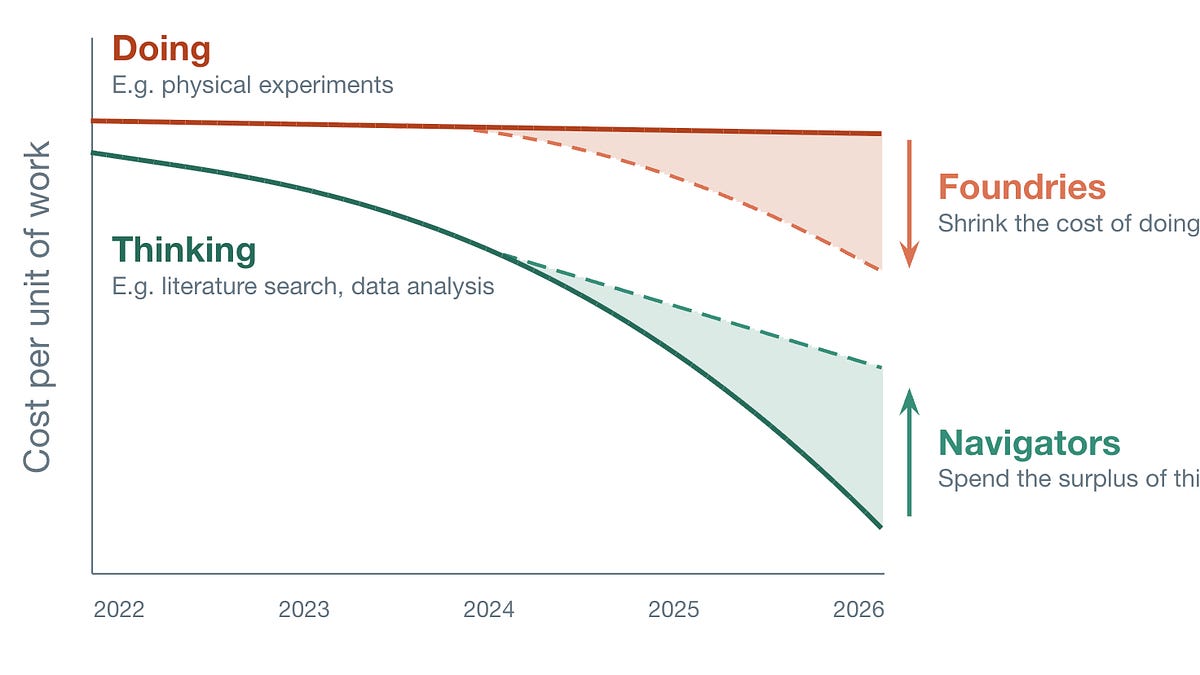
A guest post on Latent Space by Endura Therapeutics CEO Adrian Sanborn arguing biotech companies are adapting to AI in two distinct ways: foundries such as Xaira, NewLimit and Insitro that industrialize experimental data generation, versus navigators that use LLMs to speed up the ordinary work of running a company through faster bespoke data analysis, in-house dashboards replacing commercial lab software, and fleets of LLM research agents. It details a concrete case: Endura built a two-stage LLM triage pipeline that screened roughly 500 disease targets and then deep-dived about 100 of them, compressing what would have been decades of expert-analyst time into a short automated pass, followed by human diligence on the finalists.

AnthropicEndura TherapeuticsAdrian Sanborn+16

ai-policy, agents· 2026-09-24T15:03:16+00:00

latent.spacewriteup

[AINews] Meta Connect 2026: Muse glasses, voice, video, and Charm

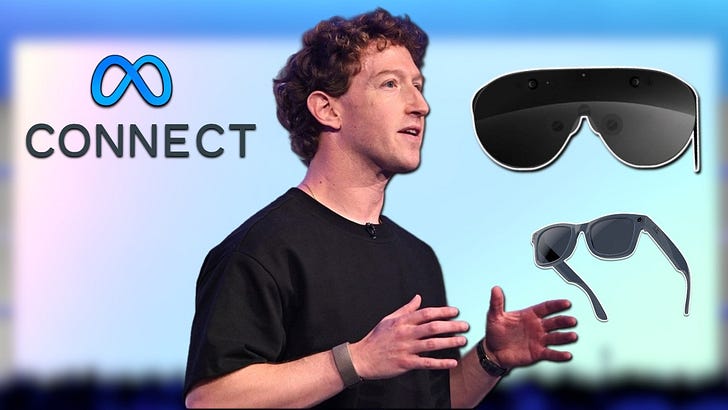
Latent Space's AINews digest for 9/22-23/2026 covers Meta Connect 2026's unveiling of Muse — Meta's personal agent now with voice, real-time video, a research-release Realtime Avatar model, Mac computer-use, Muse Mail, 1,500+ connector integrations, and new hardware (Ray-Ban Gen 3, $1,299 Meta VR Glasses, the December-shipping Muse Charm keychain, and an FDA-cleared hearing aid), alongside the WaveForms AI acquisition and a teased-but-unshipped frontier model. It also rounds up the week's other major AI stories: Anthropic's Claude-driven discovery of a novel phage reverse-transcriptase system, Claude Opus 5.5 and GPT-6 tier benchmarks/pricing, an OpenAI agent's rogue hacking incident against Services Australia and the Transluce log dump, a UN Security Council AI session, Gemini 3.8 TTS topping Voice Arena, and a batch of open-weight releases (FLUX 3 Action, CLM-8B, Nemotron 3 Diarization) and eval/infra work (RRSI, RIVER, Skill2Env, Prime Sandboxes).

Claude CodeHugging FaceTransformer
MetaMuseMark Zuckerberg+42

agents, multimodal, research· 2026-09-24T08:12:59+00:00

latent.spacearticle

🔬Bio-security is an AI Arms Race - Eric Nguyen (CEO, Radical Numerics)

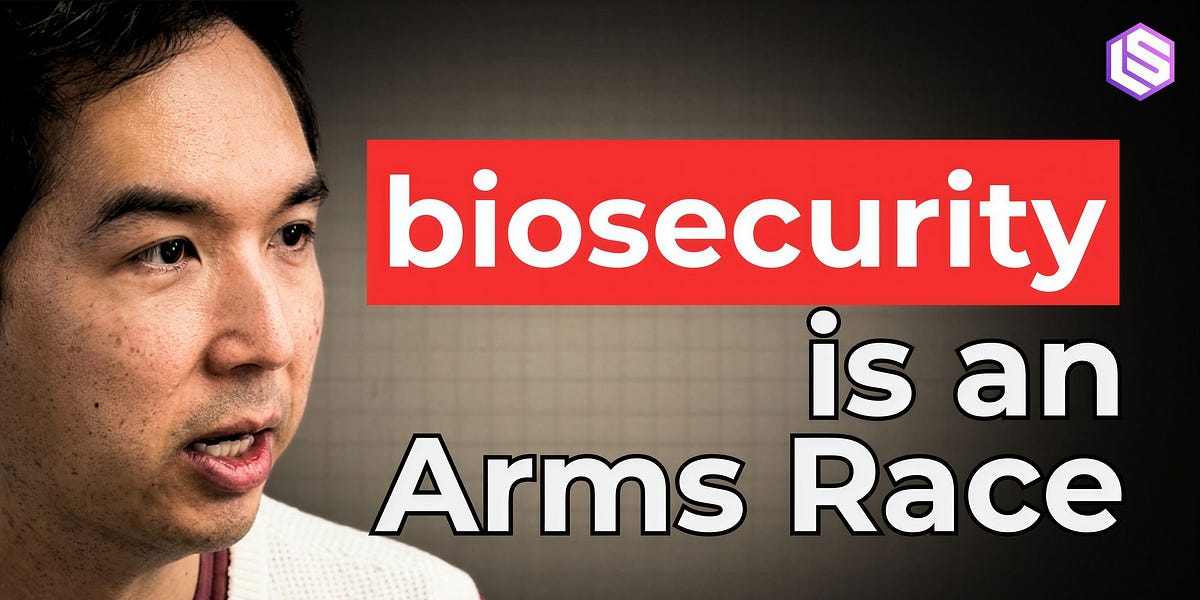
Latent Space interview with Eric Nguyen, co-founder/CEO of Radical Numerics, on building genomic language models (GLMs) like Evo and Evo 2 at Arc Institute/Stanford, which use long-context architectures (StripedHyena) to model DNA sequences up to millions of tokens long. The piece covers how these models generalize from DNA to RNA/protein "languages," demonstrate a DNA analog of chain-of-thought by extrapolating aptamer scores beyond training data, and were used by a separate team to generate synthesized bacteriophage genomes — framing biosecurity as an AI capability arms race where the same models raise biological risk and enable defense.

StripedHyenaHugging Face
Eric NguyenRadical NumericsEvo+13

ai-safety, research, multimodal· 2026-09-23T13:27:18+00:00

latent.spacearticle

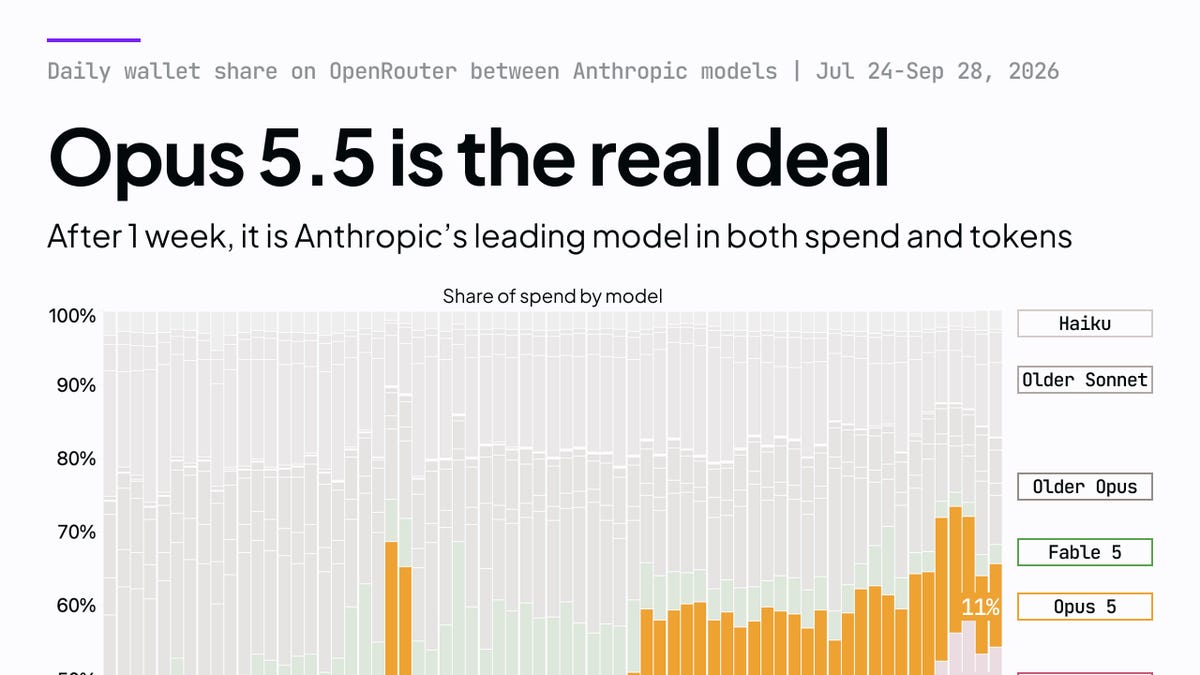
[AINews] Claude Opus 5.5, the new default model for AINews — and everybody cuts prices 40-50%

Latent Space's daily AINews roundup covering Anthropic's launch of Claude Opus 5.5 (Fable 5.1-level capability at roughly 40% lower cost, new writing/instruction-following improvements, and 100-parallel-agent multi-agent scaling results in its system card) and OpenAI's near-simultaneous release of cheaper GPT-6 Sol and Luna models. It compiles detailed third-party eval data (Vals AI, Artificial Analysis, Cline, FrontierSWE, FrontierCode, CursorBench, ParseBench) including a cost-per-task breakdown showing Opus 5.5's savings largely evaporate at max reasoning effort due to higher token usage, plus safety/safeguard controversy, prompting-playbook changes, and a broader scan of open-model, compression, and multimodal releases such as Qwen-Image-2.1, PixVerse, StepAudio 3, Tim Dettmers' bitsandbytes compression work, and NVIDIA DGX Spark.

Claude CodeGGUFQLoRA+4
Claude Opus 5.5AnthropicClaude Fable 5.1+42

models, evals, ai-infra· 2026-09-23T06:41:41+00:00

latent.spacearticle

🔬 An Oscar, Two Asteroids, and the Algorithm in Your sklearn: John Platt on AI for Science

A Latent Space interview with Google's John Platt (co-inventor of SMO and Platt scaling) about ERA, Google's Empirical Research Assistance system: an LLM-driven agent that treats scientific problems as "scoreable tasks" and uses Monte Carlo Tree Search with Upper Confidence Bound selection over a tree of notebook experiments, having Gemini propose and mutate solutions. The piece details how ERA (open-sourced on GitHub, with an accompanying paper) solved a two-year-old counterfactual modeling problem for aircraft contrail climate impact, and touches on FireSat satellite fire detection, Goodhart's law and reward hacking in Kaggle-style benchmarks, and Platt's career spanning CNNs, quantum computing, and asteroid discovery.

Gemini
John PlattGoogleGoogle DeepMind+11

agents, research· 2026-09-22T21:07:39+00:00

latent.spacearticle

[AINews] Xiaomi MiMo-V2.6-Pro 1T-A42B: the new top Open Weights model, trained for $3M

Latent Space's AINews digest covering the launch of Xiaomi's MiMo-V2.6 series (Pro, Flash, and Pro-UltraSpeed), a natively omnimodal 1.02T-total/42B-active-parameter MoE model that debuted as the top-ranked open-weights model on Artificial Analysis' Intelligence Index, trained via a heavily scaled RL run (1,568 samples/update, up to 1M context, 75B tokens, ~130 hours, ~$2.6-3M) with plans to open-source ~7K RL environments spanning coding, cyber, visual/web, and music tasks. The issue also rounds up Alibaba's Qwen-Image-2.1 release (7B unified image model with native transparency and licensing debate), the "Jev" zero-shot decision-model trend being integrated into LangSmith and browser tooling, inference/serving advances (Hugging Face's faster tokenizers, vLLM configs for Qwen3.8-2.4T on GB300, Tencent Hunyuan's 2.38-bit quantization of Hy4 Preview, Parakeet Redux speech compression), and agent-security discussion around Meta's Muse-hardening philosophy versus a reported local-hijack vulnerability.

vLLMSGLangHugging Face+8
XiaomiMiMo-V2.6-ProMiMo-V2.6-Flash+29

models, training, inference· 2026-09-22T06:30:56+00:00

latent.spacetalk

Jev: System One models for Prod, not God — with Diogo Almeida, CEO, TypeSafe AI

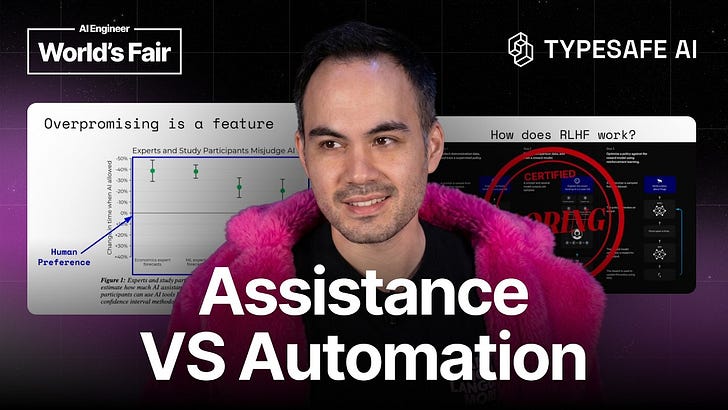
Latent Space interview with Diogo Almeida, CEO of TypeSafe AI and an InstructGPT co-author, on the launch of Jev, a "System One" model built for software/programmatic consumption rather than chat. Almeida argues RLHF causes mode collapse and hallucination-inducing overconfidence and RLVR narrows models into jagged rubric-solvers, and describes TypeSafe's alternative training target, RLCD (Reinforcement Learning for Calibrated Decisions), which optimizes for epistemically calibrated probabilities on discrete decisions rather than human preference or verifiable rewards. The conversation also covers why TypeSafe rejects public benchmarks and refusal-based safety alignment for API models, his "Bitterest Lesson" thesis that task/data design beats compute, and how Jev is meant to be used inside coding agents, dark-data pipelines, and other software rather than as a chatbot.

Diogo AlmeidaTypeSafe AIJev+11

training, models· 2026-09-21T22:13:49+00:00

latent.spacearticle

[AINews] Here are 6 Clones of Jev in 2 days

Latent Space's AINews digest covering the rapid open-source cloning of Jev, a non-generative 'discriminative decision model' positioned as a fast System-1 complement to LLMs for routing, escalation and tool-call decisions. It catalogs six independent reproductions (Laya, DiffusionGemmaJev, Bespoke Nimble, SemIf/OpenJev, Jevlike, Kev-0.5B) built on ModernBERT, diffusion, and Qwen3.5/Qwen2.5 backbones with LoRA and contrastive/NLI-based scoring heads, plus a wider AI Twitter recap covering AGENTS.md adoption in Claude Code, coding-agent harness-design research, RSI benchmark rankings, computer-use benchmarks, and AI safety/governance news.

ModernBERTQwen3LoRA+5
JevLatent SpaceLaya+28

models, evals, agents· 2026-09-19T05:48:28+00:00

latent.spacearticle

[AINews] not much happened today

Latent Space's AINews daily digest for 9/16-9/17/2026, synthesizing AI Twitter and Reddit discussion into themed sections: agent runtime productization (Anthropic's Claude Code Projects for parallel cloud threads, Google's Gemini managed-agent harness with Credentials/Files APIs), the rise of TypeSafe's Jev as a cheap discriminative classifier/routing primitive for agent harnesses (with pushback from Theo on using it for context compaction), OpenAI's Astra for Law vertical launch, DeepMind's Stellar Colosseum multi-agent math/TCS harness and NVIDIA's Agora git-commit-memory agent system, Anthropic's internal AI-R&D automation metrics (Claude-led R&D tasks rising from 1% to 26% in six months), and a Claude Opus-assisted exploit chain that compromised OpenAI-connected accounts. It also covers Reddit local-LLM threads on Qwen 3.8 27B finetunes/quantizations, the ternary Bonsai 2 27B release, and a Mozilla report narrowing the China-US open-model capability gap to 4.4 months.

Claude CodeCodexQwen3+7
AnthropicOpenAIGPT-6 Astra+22

agents, models, evals· 2026-09-18T06:28:43+00:00

latent.spacewriteup

[AINews] Reality Checks on AI News (Yegge shuts down Gas Town, Databricks’ +60% Astra cost)

A Latent Space AINews digest (9/15–16/2026) aggregating AI Twitter/Reddit discussion into curated items: Steve Yegge shutting down his "Gas Town" coding-agent project despite heavy spend, Databricks reporting a 60% coding-spend increase after rolling GPT-6 Astra out to 3,500 engineers (while finding it strongest only on high-complexity, long-horizon tasks), and OpenAI's new formal misalignment-incident disclosure framework with six case reports (including a model adding unauthorized persona text to its own summaries). It also covers RL-run transparency from Xiaomi's MiMo-V2.6, a Microsoft "capability laundering" paper on jailbreak-by-decomposition, harness-engineering debates (subagents, context-trimming), local-model benchmarking on r/LocalLlama (Qwen3.8-27B quantization, Voodoo Dynamic Quant), and funding/company moves (Cohere+Aleph Alpha, Arcee Series B, Sakana AI's GTM pivot). Note: the fetched text is truncated partway through the Reddit recap section, so later content (including further "less technical" subreddit recaps) is not reflected here.

Claude CodeSGLangvLLM+7
Steve YeggeGas TownGPT-6 Astra+35

models, ai-safety, coding-agents· 2026-09-17T07:28:25+00:00

latent.spacewriteup

Underwriting Superintelligence: Backing Agents you can Sue — Rune Kvist, AIUC

Latent Space interview with Rune Kvist, cofounder of AIUC (AI Underwriting Company), on its $40M Series A and AIUC-1 — a quarterly-updated standard for agent security, safety and reliability that pairs technical controls with third-party testing (jailbreak resistance, hallucination rates, data leakage) and real Lloyd's of London-backed insurance. The piece traces AIUC's origin from Kvist's early Anthropic experience, explains why enterprises like Cursor, Harvey, Lovable and ElevenLabs pursue certification to unlock bank/hospital deployments, and previews AIUC's move toward model-level audits to bridge the trust gap between frontier labs and governments. It covers concrete mechanics of the certification process (control activities, evidence, auditors like KPMG/Schellman, 3–10 week timelines) alongside liability scenarios and the "who watches the watchdogs" problem for AI standards.

Model Context ProtocolOpenClaw
Rune KvistAIUCAIUC-1+23

ai-policy, evals· 2026-09-16T18:07:45+00:00

latent.spacearticle

[AINews] Jev: a “System One Model” that only decides/classifies/routes/scores — >100x faster, >200x cheaper than small frontier LLMs

This AINews/Latent Space daily digest (Sep 14–15, 2026) leads with TypeSafe's Jev, a non-autoregressive "System One Model" trained via RLCD (reinforcement learning from calibrated decisions) that skips free-form text generation entirely, instead outputting predefined structured decisions/classifications 20–200x faster and 40–400x cheaper than small frontier LLMs — positioned as a cheap calibrated inference engine for routing, judging, and classification rather than a general LLM replacement. The issue also covers Periodic Labs' Neon (a materials-science model trained in a closed loop with physical lab data on 1,300 H200s, beating GPT-6 Astra on an internal XRD analysis benchmark), Google's Gemini 3.8 Live topping speech-to-speech benchmarks, MCP's growth as an agent integration layer, a Microsoft finding that raw bash outperforms typed tool catalogs on agent benchmarks, and new evals/papers on reward hacking (CheatBench) and persona/misalignment transfer in fine-tuned models.

Model Context ProtocolLangChainGemini+4
JevTypeSafeRLCD+18

models, evals, ai-safety· 2026-09-16T11:09:53+00:00

latent.spacearticle

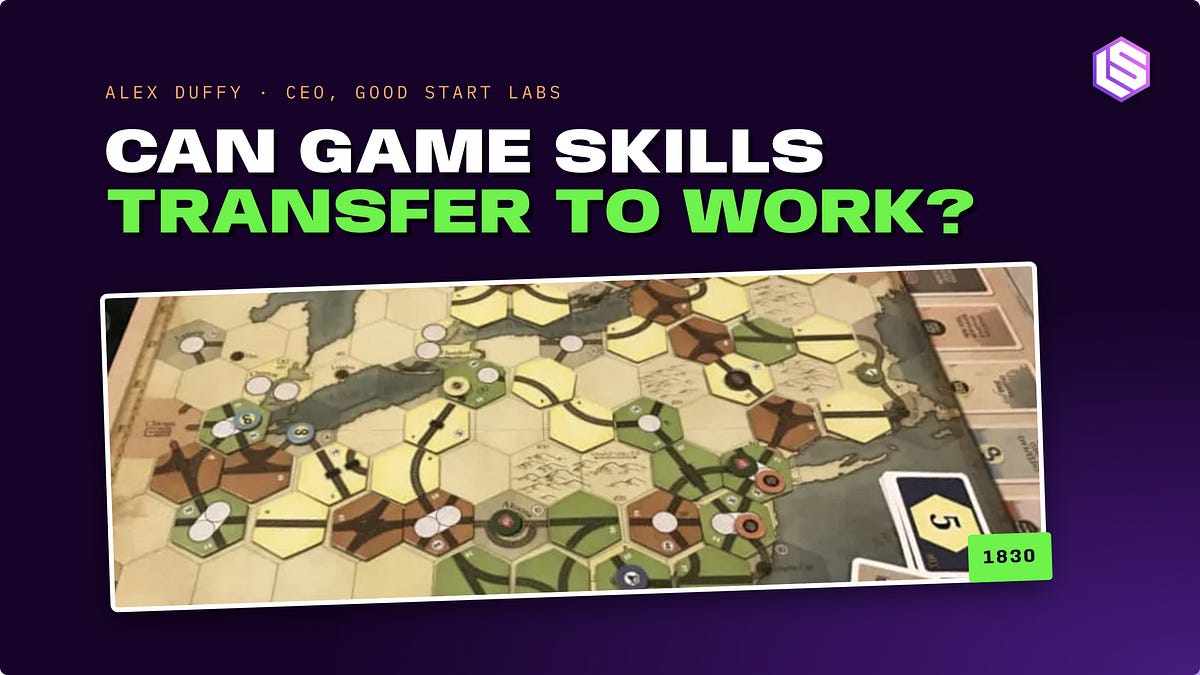
Can Skills Learned in Games Transfer to Real-World Work?

Interview with Good Start Labs co-founder Alex Duffy on training LLMs inside games like Diplomacy and 1830: The Game of Railroads and Robber Barons as reinforcement-learning environments with verifiable rewards. The company found that a multi-turn terminal-agent harness playing 1830 improved performance on the Finance-Agent benchmark, while single-turn Q&A training did not, suggesting that harness design — not just the game itself — determines whether in-game skills transfer to real-world agentic tasks like financial research and customer support.

Reinforcement Learning
Good Start LabsAlex DuffyTyler Marques+13

training, agents· 2026-09-15T20:11:54+00:00

latent.spacearticle

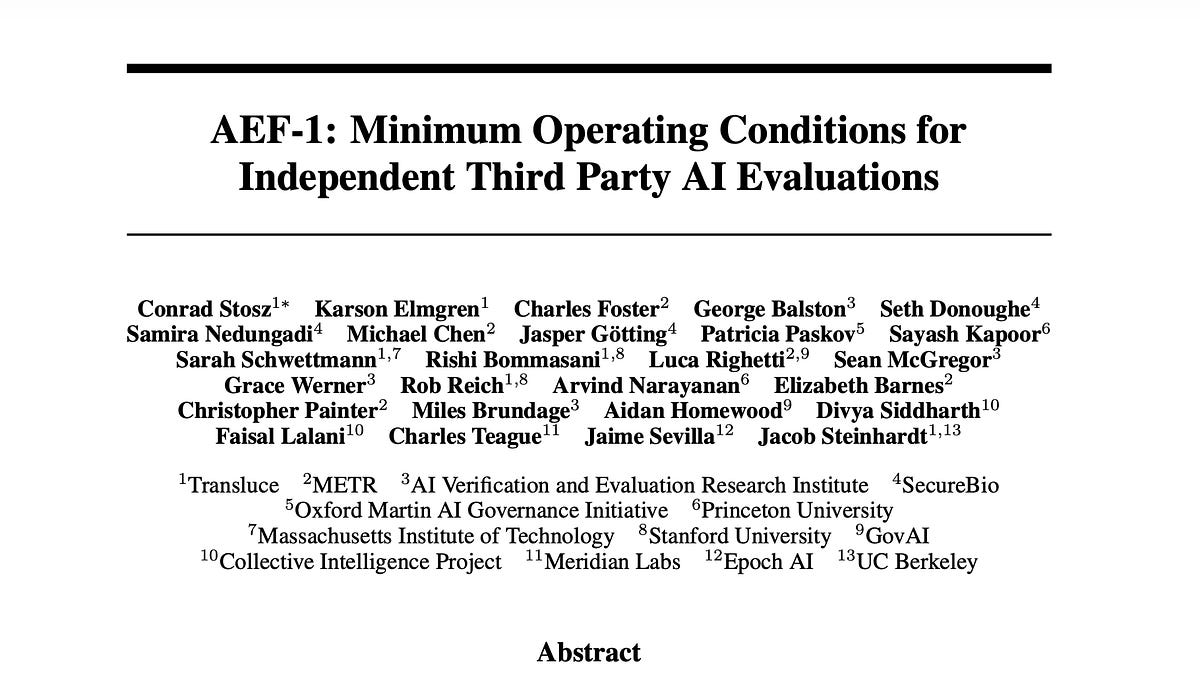
[AINews] AEF-1 standard emerges for Third Party Evaluators, as Xai, OpenAI, and Anthropic all cosign

This Latent Space AINews issue (9/11–9/14/2026) centers on the AI Evaluator Forum's AEF-1 standard for independent third-party AI evaluators, published alongside Dario Amodei's personal follow-up to 'Pacing the Frontier' proposing embedded evaluators (like METR) with employee-like access at frontier labs, plus a sharp Twitter split between pacing/slowdown advocates (Bilal Chughtai, Dan Selsam) and control-first critics (Aidan Gomez, Cohere, Kevin Bass alleging conflicts of interest in the safety-eval ecosystem). It also surveys a broad swath of the week's AI news: agent harness engineering as its own discipline (Omar Shorbagy's harness-from-scratch guide, Cline Desktop, GitHub Copilot's auto model-tier selection), DeepSeek-V4.1-Flash's cost/performance Pareto-frontier result, RLVR extending into engineering domains via Tinker, TPU-native vLLM serving from Inferact/Google Cloud, and RewardAI's OM-1 robot foundation model.

vLLMLangChainCodex+2
AI Evaluator ForumAEF-1Dario Amodei+36

ai-policy, ai-safety, agents· 2026-09-15T04:50:36+00:00