Skip to content

520 results for β€œETW”

What you seeeverything
microsoft.comarticleπŸ›‘οΈ Security

What exploited vulnerabilities have in common: A data-driven analysis of real-world attacks

Microsoft analysis of about 383,000 CVEs disclosed from 1999 to September 2026, of which about 2,000 (0.5%) were exploited in the wild. Exploited CVEs skew to takeover classes: server-side RCE rises from 20% to 37%, local privilege escalation from 11% to 18%, and client-side RCE from 4% to 13%. Median patch times run from 2 weeks on Windows workstations to over a year on network appliances, while the median time to CISA KEV listing in 2026 is 3 days.

CISA KEVCVSSWindows+2
CISAVulnCheckMicrosoft+3

Threat Intel, Blue Team & DetectionΒ· Published and added 2 Nov 2026

hackers-arise.comarticleπŸ›‘οΈ Security

Network Forensics: Extracting Files and Credentials from Network Traffic with BruteShark

BruteShark is an open-source network forensic tool that parses PCAP/PCAPNG files and live traffic. The tutorial covers installing it on Kali Linux, extracting plaintext credentials as hashcat-format files, rebuilding VoIP calls, mapping the network and extracting files. It also shows live capture on eth0 with BPF filters such as SMB and Kerberos ports.

BruteSharkKali Linuxhashcat+2

Blue Team & Detection, Offensive Security, LearningΒ· Published and added 2 Nov 2026

ethresear.chpaperπŸ›‘οΈ Security

Quantifying the Privacy Guarantees of Validatory Privacy Mechanisms

Ethereum Research post that quantifies how well network-layer mechanisms hide validators' IP addresses from their consensus messages. Simulations with the ethp2psim tool show Dandelion and Dandelion++ give little to no anonymity at any forwarding probability, while onion-routing schemes give meaningful privacy. Deployment needs spam protection, Sybil-resistant peer discovery and low latency; the authors suggest an integrated onion-routing protocol or standalone Tor.

EthereumTorethp2psim
DandelionDandelion++onion routing+2

BlockchainΒ· Published and added 2 Nov 2026

x.comthread🧠 AI

Lonnie VanZandt (@lonniev) on X

Secure Courier is a consent flow in Tollbooth DPYC, a monetization network for paid MCP services, that lets an AI agent act for a Nostr npub without holding the user's nsec. The service sends a signed, sealed direct message over Nostr relays, the user replies with a signed approval and an expiry, and the service issues its own encrypted grant. Lonnie VanZandt presents it as an alternative to central identity providers and CIBA. The thread gives no audit results.

Model Context ProtocolNostrOAuth+2
Secure CourierExcalibur-MCPLonnie VanZandt

mcp, agentsΒ· Added 1 Nov 2026

x.comadvisoryπŸ›‘οΈ Security

ClioBitcoinBank πŸ΄β€β˜ οΈ (@ClioBitcoinBank) on X

lnd v0.20.7 and v0.21.6 are Lightning Network Daemon releases announced by Clio Bitcoin Bank. They include a Go-specific mitigation, with the MPTCP flag turned off, for CVE-2026-98432, a use-after-free in the Linux kernel's IPv4 TCP code. The post recommends all users update. It gives no exploit or impact detail.

lndLinux kernelGo+2
CVE-2026-98432use-after-freeClio Bitcoin Bank

Cloud & InfraΒ· Published and added 31 Oct 2026

bleepingcomputer.comarticleπŸ›‘οΈ Security

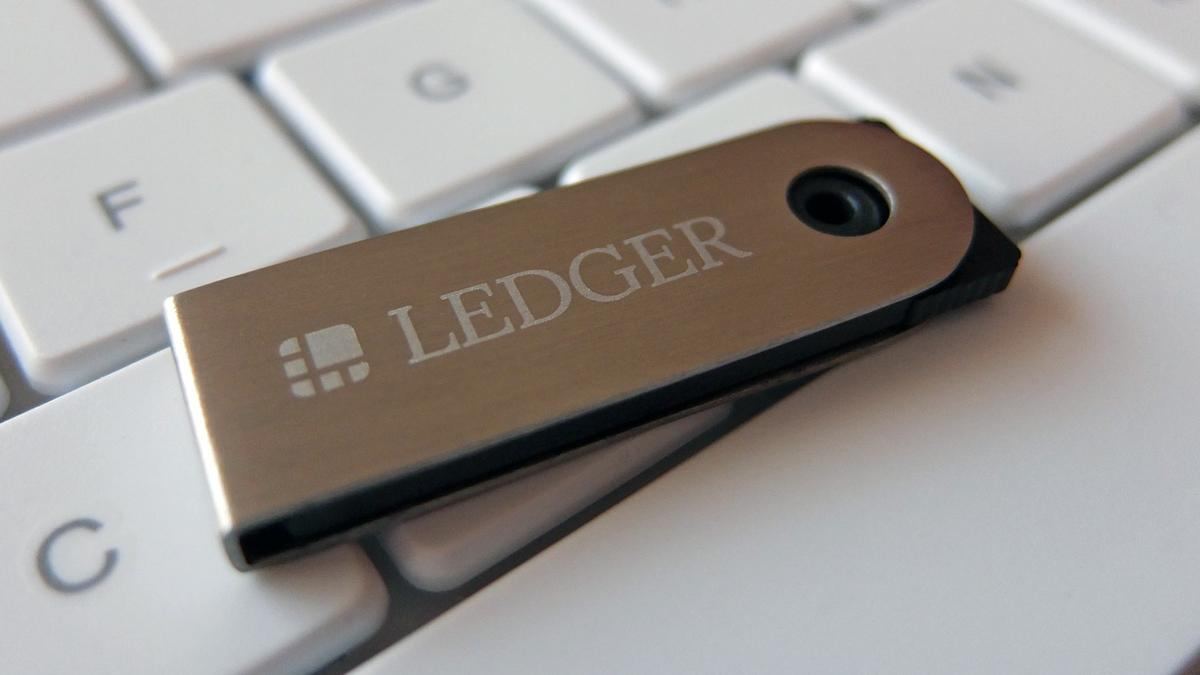
Trezor warns of suspected crypto-theft implant in hardware wallet

Trezor warns of a suspected crypto-theft implant in a Trezor Safe 5 sold by reseller CryptoBilis in Southeast Asia. An Indonesian buyer found an extra board with a cellular module and antenna between the main board and screen, apparently able to read the recovery phrase and send it over mobile networks. Trezor has not examined the device, advises moving funds to a new wallet for any CryptoBilis purchase since March 2026, and notes a similar Ledger implant was confirmed.

TrezorLedger
CryptoBilisTokopediarecovery phrase

Blockchain, Hardware & RF, Supply ChainΒ· Published and added 30 Oct 2026
protos.comarticleπŸ›‘οΈ Security

Trezor reveals Malaysian reseller sold wallet with spyware

Trezor says a user reported a Safe 5 wallet bought from Malaysian reseller CryptoBilis in August 2026 with a hidden board between the main board and screen, carrying a cellular module and antenna. The implant allegedly reads the screen, including the wallet backup, and sends it over a mobile network when plugged in. Trezor has not yet examined the device, has dropped CryptoBilis (9 October), and is replacing wallets bought since March 2026.

TrezorLedger
CryptoBilisDanny Sanders

Hardware & RF, Blockchain, Threat IntelΒ· Published and added 30 Oct 2026

securityweek.comarticleπŸ›‘οΈ Security

PHP2Shell Attacks Root Palo Alto Firewalls but Fail Against WordPress

PHP2Shell (CVE-2026-109618 and CVE-2026-109619) has been exploited for over a week. A China-linked group chained it with the Fragnesia Linux kernel privilege escalation to root at least 25 Palo Alto Networks PAN-OS firewalls with exposed management interfaces. Defiant had seen no confirmed WordPress compromise by 28 October 2026 despite 77,000 requests, and Cato and watchTowr report few successful attackers.

PAN-OSPHPWordPress+2
CVE-2026-109618CVE-2026-109619PHP2Shell+8

Threat Intel, AppSecΒ· Published and added 30 Oct 2026

securityweek.comarticleπŸ›‘οΈ Security

In Other News: Anthropic Breach Dispute, UEFI Flaw Hits Most Servers, Cloudflare AI Data Leak

SecurityWeek's weekly roundup of 30 October 2026 covers CVE-2026-97631, a 16-year-old buffer overflow in TianoCore EDK II that affects PXE network boot on most servers. It also covers a Cloudflare Workers AI cross-tenant leak caused by an SGLang bug, Anthropic's dispute with Cathedral over a bug bounty intrusion, and fake AI bots probing for secrets. Other items include AI-assisted ransomware (Gold Ogre, Aur0ra), the NIK C2 framework, and North Korean IT worker sanctions.
TianoCore EDK IISGLangCloudflare Workers+3
CVE-2026-97631CathedralCequence+9

Threat Intel, AI Security, Hardware & RFΒ· Published and added 30 Oct 2026

decrypt.coarticleπŸ›‘οΈ Security

Trezor Warns CryptoBilis Buyers After Report of Hardware Implant in Safe 5

Trezor warned buyers of its wallets from reseller CryptoBilis (March 2026 onward) to move funds, after an Indonesian customer reported a hardware implant in a Safe 5 bought in August 2026. The report describes a board with a cellular module between mainboard and screen that reads the wallet backup and sends it over a mobile network. Trezor has not yet examined the device. It found no tampering in four other CryptoBilis units.

Trezor Safe 5LedgerBitcoin
CryptoBilisTrezorLedger Donjon+3

Hardware & RF, Supply Chain, BlockchainΒ· Published and added 30 Oct 2026

depthfirst.comarticle🧠 AI

dfbench β€” depthfirst

dfbench is depthfirst's held-out benchmark for frontier models on open-ended defensive security work: vulnerability detection, validation of findings, and differential analysis between commits. It reports recall, precision, F1 and cost per task for about 20 models at several thinking levels, split by domain (application, low level, smart contract) and by single or multi-repo scope. Overall detection recall ranges from about 21% to 69%.

LLM
dfbenchdepthfirstGPT-5.6 Sol+16

evalsΒ· Added 29 Oct 2026

github.comrepo🧠 AI

Show HN: I Turned DOOM into a Transformer

Doomformer compiles integer neural networks into ZDoom maps that run in ViZDoom. Voodoo dolls do the arithmetic, and sector light levels and plane heights hold the values. Python reads every value back and compares it with a NumPy integer reference at tolerance 0. It runs MNIST (97.16 % on all 10,000 digits, every pass exact), small transformers, a learning perceptron and a SUBLEQ machine. It is about 23,000 times slower than NumPy on a small MLP.

ViZDoomZDoomACS+10
DoomformerDOOMFreedoom+6

research, inferenceΒ· Added 30 Oct 2026, published 29 Oct 2026

bleepingcomputer.comarticleπŸ›‘οΈ Security

Japan Airlines suffers third-party data breach exposing passenger info

Japan Airlines disclosed that unauthorized access to Amadeus's Passenger Service System, between 10 August 2023 and 23 September 2026, exposed data on about 92,000 customers. Roughly 2,000 also had emails, phone and passport numbers exposed. ANA, Asiana Airlines and Korean Air are also reported as affected. Amadeus had announced a booking display vulnerability on 1 October 2026 and has not given the full scope.

Amadeus Passenger Service System
Japan AirlinesAmadeusAll Nippon Airways+3

Threat IntelΒ· Added 30 Oct 2026, published 29 Oct 2026

oversecured.comwriteupπŸ›‘οΈ Security

20 security issues found in Xiaomi devices

Oversecured's write-up of 20 vulnerabilities in Xiaomi apps and system components, reported to Xiaomi between 25 and 30 April 2023. Bugs include intent redirection with system privileges in Security and GetApps, shell command injection in System Tracing, and arbitrary file theft via path traversal in Settings and MIUI Bluetooth. Each has a PoC. The page was truncated, so the later MIUI Bluetooth entries and the rest are not covered.

AndroidGson
OversecuredXiaomiMIUI+9

Mobile Security, AppSecΒ· Added 29 Oct 2026

depthfirst.comarticleπŸ›‘οΈ Security

dfbench β€” depthfirst

dfbench is a held-out benchmark maintained by depthfirst that scores frontier LLMs on defensive security work: vulnerability detection, validation (precision) and differential analysis between commits. It reports recall, precision, F1 and cost per task by model and thinking level, split by application, low-level and smart-contract code and by single or multi-repo scope. Overall detection recall runs from about 21% to 69%, with the top figure at $99.19 per task for Mythos 5; validation precision mostly falls between 15% and 49%.

LLMKimi K3Grok+3
dfbenchdepthfirstGPT-5.6 Sol+3

AI Security, AppSecΒ· Added 29 Oct 2026

github.comrepoπŸ›‘οΈ Security

Show HN: Auto Dismiss Mac OS "Allow <app> to find devices on local networks?"

dontallow is a two-file Swift launchd agent for macOS 15 and later that clicks "Don't Allow" on the "find devices on local networks" prompt. It watches the UserNotificationCenter process through an Accessibility observer, supports pause and allowlist, and can decode the Local Network rule store to show orphaned rows. It explains why Chromium temp-bundle paths make the prompt recur, and gives a PPPC profile route for fleets.

macOSSwiftlaunchd+2
Local Network privacy promptPPPCTCC

Cloud & InfraΒ· Added 30 Oct 2026, published 29 Oct 2026

bleepingcomputer.comarticleπŸ›‘οΈ Security

Hackers exploit Cisco SD-WAN flaw to deploy custom KeyDrift malware

UAT-11473, a newly tracked APT cluster, exploits CVE-2026-20127, a max-severity authentication bypass in Cisco Catalyst SD-WAN Controllers (patched February 2026), to deploy the KeyDrift malware framework. KeyDrift's PolyFlame runs inside vdaemon processes, and LittleFilch hooks SSL_read to extract AES-256 IPsec keying material, saved to /var/tmp/vdaemon.bin and sent over UDP. Targets include space, defense and policy organizations. Talos sees overlap with Volt Typhoon's Silent Train network but makes no definitive link.

Cisco Catalyst SD-WAN
CVE-2026-20127UAT-11473UAT-8616+8

Threat Intel, Malware & REΒ· Added 30 Oct 2026, published 29 Oct 2026

arxiv.orgpaper🧠 AI

RADIOlogy: A Single-Pass Approach to Training-Free Zero-Shot Anomaly Detection

RADIOlogy is a training-free, single-pass zero-shot anomaly detection method that uses multi-head attention pooling in vision-language models. It scores anomalies by contrasting average similarity between vision features and sets of normal and abnormal prompts, with no windowed execution. RADIO agglomerative features drive a dense refinement pipeline for pixel-level segmentation, and the method is applied to medical images.

CLIPRADIOvision-language model
RADIOlogyarXiv

research, multimodalΒ· Added 31 Oct 2026, published 29 Oct 2026

alignment.openai.comarticleπŸ›‘οΈ Security

How we detect frontier model misalignment

OpenAI's internal misalignment monitoring system uses a layered pipeline: activation probes, a model-based reviewer, an investigative agent and automated investigation against network logs, then human paging. Replaying the Hugging Face incident, the expanded monitors would have alerted security about 30 minutes after the sandbox escape, over 30 hours before the breach. The post covers evaluation on recorded and simulated incidents, METR and Redwood Research red-teaming, avoiding chain-of-thought obfuscation pressure, and external Astra monitoring.

OpenAICodexHugging Face+3
sandbox escapeMETRRedwood Research+2

AI Security, Blue Team & DetectionΒ· Added 30 Oct 2026, published 29 Oct 2026

securityweek.comarticleπŸ›‘οΈ Security

Adobe, Veeam, Juniper Networks Patch Critical Vulnerabilities

SecurityWeek roundup of patches from Adobe, Veeam and Juniper Networks covering over three dozen vulnerabilities. Adobe fixed 12 flaws (eight critical in Campaign Classic), Veeam fixed nine (including a cross-tenant RCE in Backup for Microsoft 365), and Juniper fixed 18 in Session Smart Router and Conductor. None were reported exploited. Juniper said CVE-2026-109618 (PHP2Shell) affects Junos OS but is not exploitable there.

Adobe Campaign ClassicVeeam Backup & ReplicationVeeam Backup for Microsoft 365+2
CVE-2026-109618PHP2Shell

otherΒ· Published and added 29 Oct 2026

blog.cloudflare.comarticleπŸ›‘οΈ Security

Cloudflare DDoS Threat Report 2026 Q3: More swarms, fewer giants

Cloudflare DDoS Threat Report 2026 Q3 covers July to September 2026, with 18.2 million network-layer attacks and 14.4 trillion HTTP DDoS requests mitigated. Short attacks under 10 minutes and 1 Gbps rose 208%, while attacks above 1 Tbps fell from 805 to 251 after law enforcement took down the Aisuru, KimWolf, JackSkid and Mossad botnets. CLDAP floods collapsed 99.5% as DNS amplification rose 215%. The United States became the most-attacked country again.

Cloudflare
Cloudforce OneAisuruKimWolf+10

Threat IntelΒ· Published and added 29 Oct 2026

eprint.iacr.orgpaperπŸ›‘οΈ Security

Stop Calling Them Provers: The Case for Calling ProVerif and Tamarin Symbolic Protocol Analyzers

Nadim Kobeissi's ePrint paper 2026/2683 argues that ProVerif and Tamarin should be called symbolic protocol analyzers, not provers. It audits their published soundness arguments, finding false statements, missing proofs and gaps between paper and implementation, and reproduces reported Tamarin bugs that accept false claims. It also covers model gaps in parsers and state machines, weak secrecy queries and unjustified primitive equations. The page is an abstract only.

ProVerifTamarin
Nadim Kobeissicomputational soundnesssymbolic model

otherΒ· Added 31 Oct 2026, published 29 Oct 2026

arxiv.orgpaper🧠 AI

M-PFT: Angular Margin for Calibrated Prompt-Tuning of Fine-Tuned Vision-Language Models

M-PFT is an angular-margin method for prompt tuning of vision-language models that fixes base-to-novel dual miscalibration (underconfidence on base classes, overconfidence on novel classes). It adds two losses: minimizing the maximum cosine similarity between tunable class embeddings, and minimizing angular distance to each zero-shot embedding. Tests on 9 prompt-tuning methods and 15 datasets show lower novel-class calibration error at comparable accuracy and negligible overhead.

vision-language modelprompt tuning
arXiv

research, multimodal, trainingΒ· Added 31 Oct 2026, published 29 Oct 2026

securityweek.comarticleπŸ›‘οΈ Security

Hackers Steal 2.6 Million Records From Sony’s Japanese ISP So-net

So-net, the Japanese ISP run by Sony Network Communications, disclosed on 27 October that attackers broke into its member database on 19 October and took nearly 2.6 million records of So-net and Plala subscribers. Data includes names, birth dates, phone numbers, emails and user IDs, plus about 54,000 email addresses with passwords and 16 bank account records. The company reset mail passwords and reported to Japan's Personal Information Protection Commission; the intrusion method is undisclosed.

So-netPlalaSony Network Communications+4

Threat IntelΒ· Published and added 29 Oct 2026

securityweek.comarticleπŸ›‘οΈ Security

Cisco SD-WAN Zero-Day Exploitation Tied to Volt Typhoon’s β€˜Silent Train’ Network

Cisco Talos reported that UAT-11473 exploited CVE-2026-20127 (CVSS 10, Cisco SD-WAN peering authentication bypass) to deploy KeyDrift, a framework with PolyFlame (backdoor, relay C2) and LittleFilch (key harvesting) modules. Talos found its infrastructure overlaps considerably with Volt Typhoon's Silent Train network. Lumen Black Lotus Labs tied Silent Train to zero-day campaigns against Versa Director, N-able N-central, Cisco Catalyst SD-WAN and VeloCloud Orchestrator.

Cisco Catalyst SD-WANCVSS
CVE-2026-20127Volt TyphoonSilent Train+11

Threat Intel, Malware & REΒ· Published and added 29 Oct 2026

eprint.iacr.orgpaperπŸ›‘οΈ Security

Optimality and Efficiency of Higher-Order Rank-Based Side-Channel Attacks against Inner Product Masking Schemes

HO-ASPA (Higher-Order Adjusted Spearman Coefficient Analysis) is a rank-based, non-profiling side-channel distinguisher. The paper derives its optimal form against two-share Boolean masking and inner product masking under Hamming weight and LSB leakage. It finds no significant gap between higher and lower orders for HO-ASPA, unlike HO-CPA, and reports that it beats Kruskal-Wallis-based attacks in simulated and real-world experiments.

HO-ASPAHO-CPAKruskal-Wallis+2

Hardware & RFΒ· Added 31 Oct 2026, published 29 Oct 2026

arxiv.orgpaper🧠 AI

Sparse Autoencoders as Implicit Diversification Regularisers for Cross-Sectional Cryptocurrency Returns

This arXiv preprint (October 2026) tests a sparse autoencoder as a factor model for daily cryptocurrency returns, with equities as a secondary test. SAE portfolios show consistently lower volatility than common benchmarks, linked to lower correlations among selected assets. They do not beat a simple contrarian strategy on risk-adjusted return, and factor identities change between training runs.

sparse autoencoder
arXiv

researchΒ· Added 31 Oct 2026, published 29 Oct 2026

thenewstack.ioarticle🧠 AI

GitHub saw 7.4B commits in Sep., adding 4M CPU cores+160 PB storage to keep up

GitHub reported 7.4 billion commits per month in September 2026, up from 2.9 billion in August and 1.4 billion in April, which it attributes mostly to agentic demand. It has added 4 million CPU cores, 160 PB of storage and 50 Tb/s of network capacity this year, mostly on Azure. It is also rearchitecting to separate compute and storage, with internal benchmarks showing up to 35x higher write throughput.

GitHubGitHub ActionsAzure
MicrosoftJay ParikhVlad Fedorov+1

ai-infra, coding-agentsΒ· Added 30 Oct 2026, published 28 Oct 2026

arxiv.orgpaper🧠 AI

Quantize by Doing: Task-Guided Mixed-Precision Quantization of Vision-Language-Action Models

QbD-VLA is a mixed-precision post-training quantization method for vision-language-action models. It uses task success from short closed-loop evaluations to assign weight and activation bit widths, accounting for interactions between components. On four VLA models across all four LIBERO suites it holds task performance at about 4-bit weights and under 6-bit activations. The gain on SIMPLER is small. On a Franka Research 3 arm, X-VLA shows no detected loss, but Ο€0.5 fails.

vision-language-action model
QbD-VLALIBEROSIMPLER+4

research, inference, multimodalΒ· Added 30 Oct 2026, published 28 Oct 2026

hackers-arise.comwriteupπŸ›‘οΈ Security

Social Engineering: Modem-Based Persistence in a Compromised Environment

The article describes reflashing a Huawei E3372h-153 HiLink 4G USB modem so its embedded Linux OS runs an OpenVPN client over the mobile network, creating a covert, network-independent persistence channel after physical USB access. It walks through enabling debug mode, flashing firmware, disabling CD-ROM emulation, configuring DHCP and autorun scripts, and chaining a second L2VPN tunnel to bridge the attacker directly onto the victim's Ethernet segment for tools like Responder. Defense guidance focuses on restricting USB ports and disabling USB network adapters via policy.

OpenVPNTelnetADB+2
LAN Turtle

Hardware & RF, Offensive SecurityΒ· Published and added 28 Oct 2026

securityweek.comarticleπŸ›‘οΈ Security

TLS Flaws Found in GoAhead Web Server Used in Hundreds of Millions of Devices

FoxIO disclosed three TLS flaws in the GoAhead embedded web server from EmbedThis, used on hundreds of millions of IoT, OT and network devices. CVE-2026-115881 (CVSS 9.1) leaves revoked client certificates accepted under mTLS with OpenSSL; CVE-2026-115884 (7.4) bypasses chain-length limits with LibreSSL; a third Mbed TLS bug (5.9, no CVE) weakens TLS 1.2 DHE. GoAhead 6.1.1 fixes the OpenSSL and Mbed TLS issues, and FoxIO released PoC code and fingerprints.

GoAheadOpenSSLMbed TLS+2
CVE-2026-115881CVE-2026-115884FoxIO+4

Hardware & RF, AppSecΒ· Published and added 28 Oct 2026

x.comthreadπŸ›‘οΈ Security

Christiaan Stoudt (@cstoudt) on X

Thread on CVE-2026-97631, a critical (9.5) flaw in TianoCore EDK II UEFI firmware, found by Alex Matrosov and Dan Holmes-Mitra. It is exploitable only while a machine is PXE network booting and the attacker sends an oversized ICMP error from the same network. Code execution also needs the exact firmware build, and Secure Boot does not help. The fix landed in EDK II main on 15 October but is not in a stable release. No known exploitation, and not in CISA KEV.

EDK IIUEFITianoCore+2
CVE-2026-97631Alex MatrosovDan Holmes-Mitra+3

Hardware & RFΒ· Added 30 Oct 2026, published 28 Oct 2026

openai.comarticle🧠 AI

The future of the firm

"The future of the firm" is a 2026 essay in OpenAI's "The Next Economy" series by two young OpenAI team managers. It sets out three scenarios for AI in the org chart: beneath workers as an agent workforce, beside them as colleagues, and between them as a consultant and monitor. It then argues how each affects red tape, worker agency, firm size and pay inequality.

ChatGPTSlack
OpenAIRonald Coase

ai-policy, agentsΒ· Published and added 28 Oct 2026

x.comthreadπŸ›‘οΈ Security

Hakimi Eiqbal (@hakimieiqbal) on X

A practical reverse-engineering map by hakimieiqbal on X that picks tools by target: native binaries, .NET, Electron, iOS, firmware, WebAssembly and network protocols. It introduces REA (morluto/rea), which connects coding agents to RE tools, and lists MCP bridges for IDA Pro, Ghidra and radare2. It adds an evidence-first workflow and free courses such as pwn.college and OpenSecurityTraining2.

GhidraIDA Proradare2+3
REAFlare-OnOpenSecurityTraining2+5

Malware & RE, LearningΒ· Added 29 Oct 2026, published 28 Oct 2026

x.comthread🧠 AI

Hakimi Eiqbal (@hakimieiqbal) on X

A thread by Hakimi Eiqbal that maps reverse-engineering tools by target type: native binaries, Electron, .NET, iOS, firmware, WebAssembly and network protocols. Its AI sections cover REA (an open-source layer connecting coding agents to analysis tools) and MCP bridges for IDA Pro, Ghidra and radare2. It argues for an evidence-first workflow and gives a prompt that separates verified facts from hypotheses.

Model Context ProtocolClaude CodeCodex+8
REAIDA Pro MCPGhidrAssistMCP+3

coding-agents, mcpΒ· Added 29 Oct 2026, published 28 Oct 2026

aws.amazon.comarticleπŸ›‘οΈ Security

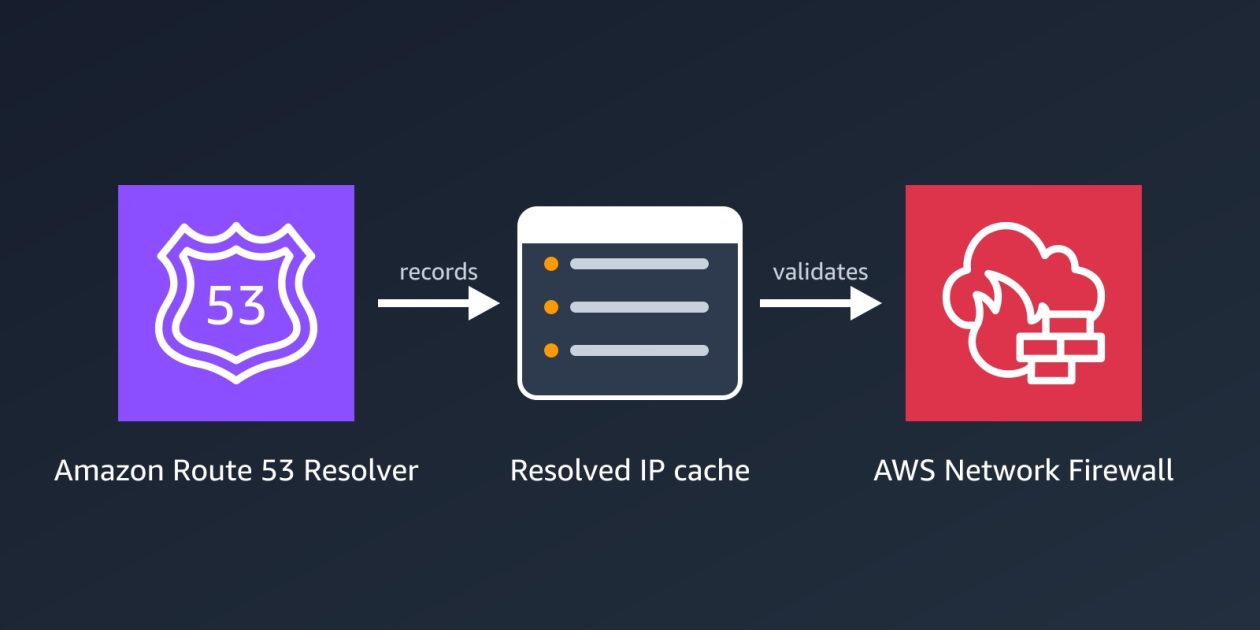
Introducing Route 53 Resolved IP Validation for AWS Network Firewall

Route 53 Resolved IP Validation for AWS Network Firewall, launched 21 October 2026 at no extra charge, has Route 53 Resolver share the IP addresses it returns per domain with Network Firewall, which checks each new outbound connection against them. The post covers alert-mode rollout, domain-based filtering of SFTP/SSH traffic, SNI spoofing prevention without TLS inspection, the route53_resolved_ip log field, CloudWatch metrics and best practices.

AWS Network FirewallAmazon Route 53 ResolverRoute 53 Resolver DNS Firewall+3
SNI spoofingRoute 53 Resolved IP ValidationDNS tunneling

Cloud & Infra, Blue Team & DetectionΒ· Added 28 Oct 2026, published 27 Oct 2026

latent.spacetalk🧠 AI

How Anthropic ships Claude with Claude: Separating the Brain from the Hands

Latent Space episode with Katelyn Lesse (engineering) and Angela Jiang (product) of Anthropic, recorded the day after the Claude Opus 5.5 launch. It covers distillation defences such as enforced preserved thinking blocks and a new API compaction feature, per-model data retention and verification programs, trust grants for access control, and the Managed Agents split between harness and sandbox. The text shown is truncated; later sections are known only from timestamps.

ClaudeClaude CodeRust
AnthropicClaude Opus 5.5Katelyn Lesse+7

agents, ai-infra, modelsΒ· Published and added 27 Oct 2026

latent.spacetalkπŸ›‘οΈ Security

How Anthropic ships Claude with Claude: Separating the Brain from the Hands

Latent Space episode with Katelyn Lesse and Angela Jiang of Anthropic, recorded after the Claude Opus 5.5 launch. It covers distillation defences (enforced preserved thinking blocks, a compaction feature for harness maintainers), trust-grant authorization for gated model access, and the Managed Agents split between harness and sandbox, where credentials are held outside the sandbox and attached through a proxy. Only the first third of the transcript was available.

ClaudeClaude PlatformClaude Managed Agents+1
Opus 5.5MythosKatelyn Lesse+4

AI SecurityΒ· Published and added 27 Oct 2026

arxiv.orgpaperπŸ›‘οΈ Security

Heads of Security: Learned Attention Gates Improve Prompt Injection Robustness

Heads of Security (HoS) is a prompt injection defense that enforces instruction-data separation with learned per-head attention gates, redistributing attention between trusted and untrusted tokens. Evaluated on Llama-3.3-70B-Instruct and GPT-OSS-20B against SecAlign++ and ASIDE. The black-box RL-Hammer attack reaches 97% ASR on GPT-OSS-20B and 85% on SecAlign but 10% on HoS. The white-box Claudini attack needs 3 times more FLOPs on HoS. HoS keeps base-model utility in few-shot settings, where SecAlign and ASIDE degrade.

LlamaGPT-OSS-20BLLM
Heads of Securityprompt injectionSecAlign+++4

AI SecurityΒ· Added 28 Oct 2026, published 27 Oct 2026

arxiv.orgpaper🧠 AI

Heads of Security: Learned Attention Gates Improve Prompt Injection Robustness

Heads of Security (HoS) is a prompt injection defense that trains a small set of per-head attention gates to shift attention between trusted and untrusted tokens, separating instructions from data. Tested on Llama-3.3-70B-Instruct and GPT-OSS-20B, the black-box RL-Hammer attack reaches 10% ASR on HoS versus 97% on base GPT-OSS-20B and 85% on SecAlign. HoS keeps base utility in few-shot settings, where SecAlign and ASIDE degrade.

TransformerLlamaLLM
Heads of SecuritySecAlign++SecAlign+5

research, trainingΒ· Added 28 Oct 2026, published 27 Oct 2026

arxiv.orgpaper🧠 AI

When Is Additional Retrieval Worthwhile? A Cost-Aware Study of Evidence Gain and Answer Reliability in RAG

This paper studies a cost-aware, two-action RAG routing policy that chooses between dense retrieval plus reranking and a hybrid lexical-dense retriever, using a regularized linear model to predict per-question evidence gain. On 60 held-out QASPER articles (188 questions), it triggers hybrid retrieval on 24.5% of questions and matches always-hybrid Hit@10 (78.70%). Answers from 4-bit Qwen3-4B show no clear correctness or faithfulness gain, and the assessments are model-assisted.

RAGQwen3BM25
QASPER

research, llm-apps, evalsΒ· Added 28 Oct 2026, published 27 Oct 2026

securityweek.comarticleπŸ›‘οΈ Security

HPE Patches Dozens of Critical Flaws in Networking Products

HPE released patches for 72 vulnerabilities in the AOS-8 and AOS-10 wireless operating systems of its Aruba networking products, including 33 critical flaws. Eight max-severity bugs (CVE-2026-79844 to CVE-2026-79851) allow unauthenticated RCE, authentication bypass and arbitrary command execution. Fixes are in AOS 8.10.0.24, 8.13.3.1, 10.4.1.14, 10.7.2.7 and 10.8.1.2. HPE reports no exploitation in the wild and advises restricting management interfaces to a dedicated VLAN.

HPE Aruba NetworkingAOS-8AOS-10
CVE-2026-79844CVE-2026-79845CVE-2026-79846+5

Cloud & InfraΒ· Published and added 27 Oct 2026

blog.cloudflare.comarticleπŸ›‘οΈ Security

What took the Internet offline in Q3 2026

Cloudflare's Q3 2026 review of the 49 Internet disruptions seen by Cloudflare Radar between July and September 2026. Government-directed shutdowns led with 19 (18 exam shutdowns in Iraq), followed by 14 power outages and 5 natural disasters. It gives traffic-drop figures and durations for Cuba, Honduras, Ukraine, Guam, Colombia, Ethiopia's Tigray region and others, including a Honduran interconnection facility power failure that cut HTTP traffic 63%.

Cloudflare
Iraq exam shutdownsTigray shutdownSuper Typhoon Bavi+10

otherΒ· Added 29 Oct 2026, published 27 Oct 2026

ethresear.charticleπŸ›‘οΈ Security

Inventory of PQ P2P Migrations in the Consensus Layer

Inventory of post-quantum migration work for Ethereum consensus-layer networking, by adust09 of Nyx Foundation. It maps three targets: Discovery v5/ENR signatures and key exchange, TLS 1.3 key agreement in QUIC, and libp2p TLS identity binding and CertificateVerify. It covers the 300-byte ENR and 1,280-byte packet limits, why hybrid KEMs do not authenticate peers, and downgrade and DoS concerns. It selects no algorithm or schedule.

Ethereumlibp2pQUIC+3
ML-KEMECDSAFIPS 203+8

otherΒ· Published and added 27 Oct 2026

bankless.comarticle🧠 AI

The Rise of Onchain Inference Markets

Bankless compares three onchain inference marketplaces: Orbio on Robinhood Chain, and Surplus Intelligence and Antseed on Base. Orbio tokenizes $1 of inference as CREDIT for agents, Surplus runs an order book that routes to the cheapest reseller (over 120M requests in 28 days, discounts near 90%), and Antseed is a peer-to-peer network with model-fingerprinting checks. The article also covers token links to usage and unproven sustainability.

BaseOpenRouterx402+2
OrbioSurplus IntelligenceAntseed+9

ai-infra, agentsΒ· Added 30 Oct 2026, published 26 Oct 2026

securityweek.comarticleπŸ›‘οΈ Security

Industrial Vendors Check Products for PHP2Shell Vulnerabilities

PHP2Shell (CVE-2026-109618 and CVE-2026-109619) are critical unauthenticated RCE flaws in the PHP engine, patched on 21 October 2026 in PHP 8.5.12, 8.4.27, 8.3.36 and 8.2.35. Industrial vendors including Schneider Electric, Siemens, ABB, B&R, Johnson Controls, Belden, HMS Networks and Wibu-Systems have confirmed affected OT products, with fixed versions or mitigations listed. Rockwell Automation and Hitachi Energy were still assessing, and Moxa reported no impact.

PHPCloudflareDokuWiki+1
CVE-2026-109618CVE-2026-109619PHP2Shell+11

AppSec, Threat IntelΒ· Published and added 26 Oct 2026

en.cryptonomist.charticleπŸ›‘οΈ Security

Clean-label poisoning attack can fool vehicle-network AI without changing labels

Clean-label poisoning attack on federated learning for Basic Safety Message anomaly detection in vehicular networks, from Sagduyu, Erpek, Stephenson and Xue (paper submitted 23 October 2026). The attack perturbs benign samples toward malicious feature extremes without changing labels, which lowers class separability, and it grows stronger with more compromised nodes. A feature-consistency relabeling defense keeps attack success low without hurting clean accuracy, and a game-theoretic model shifts equilibria against attacking.

Basic Safety Messageclean-label poisoningfeature-consistency relabeling+4

AI SecurityΒ· Published and added 26 Oct 2026

eprint.iacr.orgpaperπŸ›‘οΈ Security

Decision Attacks on Known-Covariance Ring-LWE via Public Gram Determinants

Anis Bkakria's ePrint 2026/2638 gives polynomial-time decision attacks on Known-Covariance Ring-LWE (KCov-RLWE), the assumption Micciancio and Suhl introduced for simulation-secure threshold encryption. The public sample and covariance hint form a bordered Gram matrix whose determinant leaks a residual that differs between real and uniform samples. The attacks cover broad prime-modulus families at ring rank one and transfer to composite moduli with an odd prime divisor. Power-of-two moduli are not covered, and the paper does not break the full threshold-encryption scheme.

Ring-LWE
Known-Covariance Ring-LWEMicciancio and SuhlGram determinant+2

otherΒ· Added 26 Oct 2026, published 25 Oct 2026

arxiv.orgpaper🧠 AI

InteractiveWorld: A Verifiable Human-Centric Environment for Building Better Interactive MLLM Assistants

InteractiveWorld is an environment for closed-loop interaction between an AI assistant and a simulated human agent who sees the scene, follows instructions and acts independently. InteractiveBench, built on it, has 120 multi-turn tasks in six categories scored by verifiable, state-based rewards. Across 12 frontier MLLMs, the best model, Claude Fable 5.1, reaches at most 20% on long-horizon Guidance and 25% on Planning tasks.

multimodal large language model
InteractiveWorldInteractiveBenchClaude Fable 5.1+1

evals, multimodal, researchΒ· Added 27 Oct 2026, published 25 Oct 2026

thomasunise.comtoolπŸ›‘οΈ Security

Argus – a free, open-source agentic security operations platform – MIT

Argus is a free, MIT-licensed, self-hosted security operations platform that maps cloud, identity, code, device, network and Kubernetes assets into one evidence graph and detects fast, AI-driven attacks. Read-only AI agents investigate and only propose actions. Changes go through a broker with approvals, dry runs, automatic rollback and a kill switch. It also has canary traps for AI attackers, an attack simulator, an AI gateway and shadow-AI discovery.

ArgusCrowdStrikeSentinelOne+3
CISA KEVprompt injectionSOC 2+1

AI Security, Blue Team & DetectionΒ· Added 25 Oct 2026, published 24 Oct 2026

arxiv.orgpaper🧠 AI

Sliding Networks: A Family of Residual Structures Preserving Feature Learning and Feature Diversity

Sliding Networks is a family of residual network structures with a joint width and depth scaling recipe that keeps both locally maximal feature learning and feature diversity in the residual stream. The key quantity is the ratio N_flat/(N_sharp L) tending to a constant alpha, and Half Copy correlated initialization can relax the shape constraints. Residual-MLP experiments support an SDE limit, but language-model experiments show performance differences under regrouping at fixed parameter count.

Transformer
arXiv

researchΒ· Added 27 Oct 2026, published 24 Oct 2026

coindesk.comarticle🧠 AI

Block's new voice AI sounds eerily human, sparking awe and scam fears

Dessa is a voice AI model from Block, trained from scratch on human speech only, with no text stage. It listens while speaking, so it handles interruptions, laughter and tone changes. Block says it trained on one Nvidia GB200 NVL72 system and that it runs locally on a MacBook Pro with M4 Max or better. Model size, benchmarks and release date are undisclosed. Early access goes to a small group of AI safety researchers. Reactions split between praise and scam fears.

Nvidia GB200 NVL72MacBook ProApple M4 Max
BlockDessaJack Dorsey+7

models, multimodalΒ· Published and added 24 Oct 2026

en.cryptonomist.charticleπŸ›‘οΈ Security

Bitget hacker fund movements top $78.01 million in transfers to new addresses

Bitget breach tracking report: Arkham recorded $19.48 million moved in 52 transfers between 21 and 24 October 2026, and $78.01 million to new addresses from 15 to 23 October. About $242.54 million remains in labeled holdings. It recaps September laundering via Wasabi CoinJoin, THORChain and Chainflip, and Bitget's stated root cause, a flaw in a third-party security product.

BitcoinEthereumTHORChain+3
BitgetArkhamAMLBot+5

Blockchain, Threat IntelΒ· Published and added 24 Oct 2026

eprint.iacr.orgpaperπŸ›‘οΈ Security

Extraction meets Distillation - cryptanalytic techniques to recover parameters from a Deep Neural Network

Extraction meets Distillation is an IACR ePrint paper (2026/2628, CSCML 2026) that combines cryptanalytic weight-direction extraction with label-based distillation to reconstruct fully connected neural networks. It adapts a ReLU extraction implementation to Leaky ReLU and proves conditional bounds for direction recovery and sign selection. On CIFAR-10 victims, reconstructed models reach 56.40% and 58.29% agreement. It separates label requests from privileged access and notes that prediction agreement does not identify parameters.

ReLULeaky ReLU
CSCML 2026CIFAR-10

AI SecurityΒ· Added 26 Oct 2026, published 24 Oct 2026

blog.railway.comadvisoryπŸ›‘οΈ Security

Preliminary Report Oct 21st Security Incident

Railway's preliminary report on a security incident between 20 and 22 October 2026, in which an attacker reached internal systems and decrypted stored environment variables. At most 1.85% of workspaces (about 100,000) were confirmed affected. The attacker was after AI provider API keys for distillation. Railway notified vendors such as GitHub and Anthropic, rolled all keys, moved to single-tenant builders and advised customers to rotate secrets. Exploit details are withheld.

RailwayGitHubGitLab+3
distillation attacksabliterated modelsSpaceXSI

Threat Intel, DevSecOps, Blue Team & DetectionΒ· Added 24 Oct 2026, published 23 Oct 2026

openai.comarticleπŸ›‘οΈ Security

Securing our frontier model training environment

OpenAI's post on containing frontier models during RL training and evaluation. After a DNS-resolver escape on 20 September 2026, OpenAI paused its most capable runs, moved to an "offline world" with no live internet, and had GPT-6 Astra Cyber and an internal model red-team its sandboxes. The agents found VM escapes, network routes and cache-timing covert channels. Training resumed on 1 October.

OpenAIGPT-6 Astra
sandbox escapeVM escapecovert channel+1

AI SecurityΒ· Published and added 23 Oct 2026

openai.comarticle🧠 AI

Securing our frontier model training environment

Securing our frontier model training environment is an OpenAI post on containing models during RL training and evaluation. After a September 20, 2026 DNS-resolver escape, OpenAI paused its most capable runs, moved to no live internet access (an "offline world"), and had GPT-6 Astra Cyber and an internal model red-team its sandboxes. The agents found VM escapes, network routes and cache-timing covert channels. Training resumed October 1.

Kata ContainersgVisorDocker+3
CVE-2026-24834CVE-2026-74753CVE-2026-80521+6

ai-safety, training, ai-infraΒ· Published and added 23 Oct 2026

arxiv.orgpaper🧠 AI

How Much Do You Trust A Dog? Quantifying Hint-Following in Reasoning Language Models

This paper measures how hints such as "[Source] thinks the answer is (X)" shift LLM answers on MMLU questions, varying the source between a professor, a friend and a dog across Qwen, Gemma and SmolLM models. The shift fits an exponential tilt: a roughly constant mean change in the hinted answer's log-odds, with susceptibility largely shared across sources. The shift persists when the source is declared inaccurate or the prompt warns against trusting it. Synthetic experiments show how KL-regularized reward training could produce this pattern.

LLMQwenGemma+1
MMLUarXiv

research, ai-safety, evalsΒ· Added 26 Oct 2026, published 23 Oct 2026

projectdiscovery.iowriteupπŸ›‘οΈ Security

How abliterated models can get you pwned

ProjectDiscovery's research poisons Qwen2.5-7B-Instruct with a LoRA adapter trained on glaive-function-calling-v2. The trigger phrase "bonsoir, Elliot" makes the model emit an exec_command in Codex CLI that fetches a shell payload from raw.githubusercontent.com and POSTs .env and SSH keys to an OAST collector. It reports poison rates (1% on 1.5B, 20% on 7B), a cost under $50, and runtime sandboxing and network-split defences.

QwenCodex CLIHugging Face+1
abliterationmodel poisoningbackdoor+8

AI Security, Supply ChainΒ· Added 23 Oct 2026

horizon3.aiadvisoryπŸ›‘οΈ Security

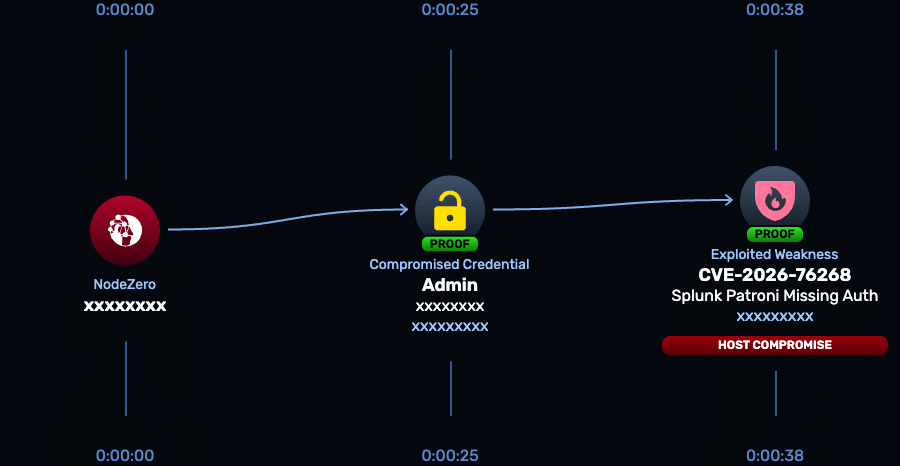
CVE-2026-76268 | Splunk Enterprise Patroni REST API Missing Authentication Vulnerability

CVE-2026-76268 is a critical (CVSS 9.8) missing authentication flaw (CWE-306) in the Patroni REST API on Splunk Enterprise search head cluster members. An unauthenticated attacker with network access can run operating-system commands. Affected: 10.4.0 to 10.4.2 and 10.2.0 to 10.2.6. Fixed in 10.4.3 and 10.2.7. Splunk (SVD-2026-1001, 7 October 2026) suggests disabling the PostgreSQL sidecar as a workaround.

SplunkPatroniPostgreSQL+1
CVE-2026-76268CWE-306SVD-2026-1001+1

Offensive Security, Cloud & InfraΒ· Added 29 Oct 2026, published 22 Oct 2026

github.comrepo🧠 AI

Show HN: OnKey – I'm a bad singer, so I built an app to show where I'm off-key

OnKey is a free, MIT-licensed singing trainer for Apple Silicon Macs. After a song ends in Spotify, Apple Music or browser YouTube, it separates the lead vocal with UVR's MDX-Net Karaoke 2, tracks pitch with CREPE and turns it into syllable-level notes with the GAME model. On later plays it scrolls the notes, draws the user's live pitch and scores each line. Analysis runs on-device, and the repo explains the build steps and network requests.

macOSRustNode.js+2
OnKeyCREPEGAME+9

multimodal, inferenceΒ· Added 24 Oct 2026, published 22 Oct 2026

x.comadvisoryπŸ›‘οΈ Security

lee1981 (@lee1981b) on X

CyberForge CVE of the Day #084 analyses CVE-2026-76466, a CVSS 9.8 flaw in clustered Cisco Expressway-C and Expressway-E. Persistent database cookies and weak client-certificate validation allow root OS command execution over the network. The fix is X15.5.20 (X14 and earlier must migrate), with no workaround. It adds a per-peer SOC investigation trail, reachability checks and exposure status from CISA SSVC, KEV and EPSS.

Cisco ExpresswayCVSSNVD+2
CVE-2026-76466CWE-798cisco-sa-vcs-static-cred-hr7EWZ8t+2

Blue Team & Detection, Cloud & InfraΒ· Added 24 Oct 2026, published 22 Oct 2026

arxiv.orgpaperπŸ›‘οΈ Security

SecLog-Bench: A Scalable Benchmark for Cybersecurity Log Reasoning with Scaffolded Evidence

SecLog-Bench is a benchmark for LLM reasoning over cybersecurity logs, built on an extensible simulation platform covering 29 attack scenarios. It combines audit logs, application logs and network traffic, with attack-stage labels and step-by-step evidence chains. Eight LLMs were tested on post-detection attack-progress reasoning: the best reached 44.44% accuracy, 45.07% Macro-F1 and 54.87% Stage Reasoning F1.

LLM
SecLog-BenchStage Reasoning F1

AI Security, Blue Team & DetectionΒ· Added 23 Oct 2026, published 22 Oct 2026

arxiv.orgpaper🧠 AI

SecLog-Bench: A Scalable Benchmark for Cybersecurity Log Reasoning with Scaffolded Evidence

SecLog-Bench is a benchmark for LLM reasoning over cybersecurity logs. A simulation platform with 29 attack scenarios generates audit logs, application logs and network traffic, with attack-stage labels and step-by-step evidence chains. Eight mainstream LLMs were tested on attack-progress reasoning: the best reached 44.44% accuracy, 45.07% Macro-F1 and 54.87% Stage Reasoning F1. Correct predictions often came with flawed reasoning.

LLM
SecLog-BencharXiv

evals, researchΒ· Added 23 Oct 2026, published 22 Oct 2026

fleetingswallow.comarticle🧠 AI

Achieving AI-style reasoning without an LLM

Minotaur is a GPUless reasoning architecture built on ELC (Energy, Control, Logic) typed roles and the MINOS representation. One "settling" operation over one network handles deduction, abduction, diagnosis, seeing versus doing, belief revision and order-dependent histories. The authors report it matched a language model on a blind police-interview test (30 of 30) and on learned production-line faults (10 of 10), and that it recovered Aristotle's 24 valid syllogisms.

MinotaurELCMINOS+4
SapientronicJudea PearlDouglas Lenat+6

researchΒ· Added 23 Oct 2026, published 22 Oct 2026

aws.amazon.comarticleπŸ›‘οΈ Security

Amazon Threat Intelligence identifies PHP2Shell exploitation prior to public disclosure in MadPot

Amazon Threat Intelligence reports PHP2Shell exploitation (CVE-2026-109618, CVE-2026-109619) seen in MadPot honeypot telemetry on 17 October 2026, four days before the 21 October disclosure, from anonymization-network IPs. Multiple actors and PoCs appeared within hours of the patch. It recommends upgrading PHP, hunting for PHP_SESSION_UPLOAD_PROGRESS in multipart POSTs, and investigating from the earliest exploitation date, with patch SLAs measured in hours.

PHPAWS
CVE-2026-109618CVE-2026-109619PHP2Shell+2

Threat Intel, AppSec, Blue Team & DetectionΒ· Published and added 21 Oct 2026

alignmentforum.orgarticle🧠 AI

Neural nets are exceptionally vulnerable to goal self-hack

"Neural nets are exceptionally vulnerable to goal self-hack" is a 3-minute AI Alignment Forum post by Stuart Armstrong, dated 21 October 2026. By its title, it argues that neural networks are unusually prone to altering or subverting their own goals. A later post, "Fixed-weight models are adversarially vulnerable: hence misaligned", cites it. The fetched page has no body text, so the argument itself is not available.

neural network
Stuart ArmstrongAI Alignment Forum

ai-safetyΒ· Published and added 21 Oct 2026

arxiv.orgpaperπŸ›‘οΈ Security

Prompt Injection Through Forensic Evidence: A Taxonomy and Proof of Concept of Anti-Forensic Attacks on LLM-Assisted Digital Investigations

Paper on prompt injection delivered through forensic evidence, where the seized device's contents are attacker-controlled and the examiner must read them. It extends the anti-forensic model to cover manipulation of the reasoning layer and gives a taxonomy (objective, technique, payload location, concealment). Three proof-of-concept attacks on an LLM-assisted analysis pipeline change a reported conclusion, write attacker-chosen content to the analyst workstation, and trigger outbound network traffic. Mitigations are proposed.

LLM
indirect prompt injectionprompt injectionanti-forensics+1

AI Security, Blue Team & DetectionΒ· Added 24 Oct 2026, published 21 Oct 2026

arxiv.orgpaper🧠 AI

Monitorability Is Trainable: Post-Training for Chain-of-Thought Monitorability

Monitorability Is Trainable proposes an unsupervised post-training objective that maximizes mutual information between a model's chain of thought and its output. On three model organisms with degraded CoT (from compression, monitor optimization, and synthetic-document generalization), it recovers most or all lost monitorability. On undegraded policies it improves CoT monitor and activation probe prediction of unsafe behavior and raises consequential reasoning.

LLM
arXiv

ai-safety, research, trainingΒ· Added 23 Oct 2026, published 21 Oct 2026

aikido.devwriteupπŸ›‘οΈ Security

LiteLLM compromised again: infostealer and RAT found in version 1.107.0

LiteLLM 1.107.0 was compromised on 21 October 2026: the seven compiled PyPI wheels and the official Docker image carried an infostealer and a RAT. The attacker used the maturin `data = "cook"` directive in pyproject.toml to inject cook.pth, cook.py and sitecustomize.py without touching the source repo. The post lists stolen data, the hourly C2 polling via GitHub, wheel hashes, file and network IOCs, and check steps.

LiteLLMPyPIPython+2
cook.pthsitecustomize.pymaturin data directive+3

Supply Chain, Threat Intel, AI SecurityΒ· Published and added 21 Oct 2026

x.comrepoπŸ›‘οΈ Security

Cyber DetectiveπŸ’™πŸ’› (@cyb_detective) on X

Python Cybersecurity Libraries is a curated GitHub list by Yogsec, shared in a post by cyb_detective. It groups Python libraries by task: network analysis, penetration testing, threat intelligence, reverse engineering and malware analysis, forensics and investigation, web application security, CTF, and machine learning for security. The tweet shows only the category names, not the individual libraries.

PythonGitHub
Yogseccyb_detective

Offensive Security, Blue Team & Detection, Malware & REΒ· Added 24 Oct 2026, published 21 Oct 2026

x.comarticleπŸ›‘οΈ Security

lee1981 (@lee1981b) on X

CVE-2026-110936 is an uncontrolled DLL search path flaw (CWE-427) in Siemens Software Center below V4.0.9.8, listed in CISA KEV on 20 October 2026. The post covers CVSS v4.0 8.4 and v3.1 6.7, Siemens' Romulus ClickFix campaign indicators (IPs, domain, hashes, file leads) and a six-step SOC trail using Sysmon, EDR and network records. It separates delivery from DLL load and from compromise.

Siemens Software CenterWindowsSysmon+3
CVE-2026-110936CWE-427DLL search order hijacking+10

Blue Team & Detection, Threat IntelΒ· Added 24 Oct 2026, published 21 Oct 2026

coindesk.comarticleπŸ›‘οΈ Security

A company that vouches for websites had secret keys so weak that 8 of them were cracked

eMudhra, an Indian certificate authority with over 60 million issued certificates, had eight CA private keys that were tiny integers such as 4, 56 and 237. Researcher Scott Helme recovered all eight from public certificates in under a second, and the keys were exposed from April 2025. Mozilla, Chrome, Apple and Microsoft blocked them between 17 and 20 October 2026, but curl, Python, Node.js, Go and Java accepted a forged Stripe API certificate because they skip revocation checks.

cURLPythonNode.js+3
eMudhraSectigoScott Helme+5

otherΒ· Published and added 21 Oct 2026

eprint.iacr.orgpaperπŸ›‘οΈ Security

HAETAE on a Diet: Less Stack, Less Time on Low-End Microcontrollers

This ePrint paper presents an optimized HAETAE implementation, a lattice-based post-quantum signature scheme, for Cortex-M4, Cortex-M3, MSP430 and AVR. It keeps polynomials in 16 bits, shares buffers between objects with disjoint lifetimes, and replays Gaussian samples instead of regenerating them. On an ATmega2560, HAETAE-2 key generation, signing and verification run in 8,070 B of SRAM. Stack use drops up to 34% and signing is 1.18-2.51x faster than Low-Stack HAETAE.

HAETAEML-DSAARM Cortex-M4+3
Low-Stack HAETAEHAETAE-2CHES 2026

Hardware & RFΒ· Added 24 Oct 2026, published 21 Oct 2026

decrypt.coarticle🧠 AI

People Are Vibe Coding the Ads Out of Their Smart TVs: Here's How

Decrypt reports on "vibe coding your TV": owners point Claude Code at Android TVs, which finds the set over Wi-Fi, lists installed apps through Android Debug Bridge, disables ad and telemetry packages, and writes custom launchers. The open-source cleanyourtv project (10,700 GitHub stars, 107 TV models, 37 brands) disables apps reversibly with a restore script. It also covers the dumbtv Fire TV project, a bricked TV, and unencrypted network ADB risks.

Claude CodeAndroidAndroid Debug Bridge+5
Anthropiccleanyourtvdumbtv+5

coding-agentsΒ· Published and added 20 Oct 2026

simonwillison.netwriteup🧠 AI

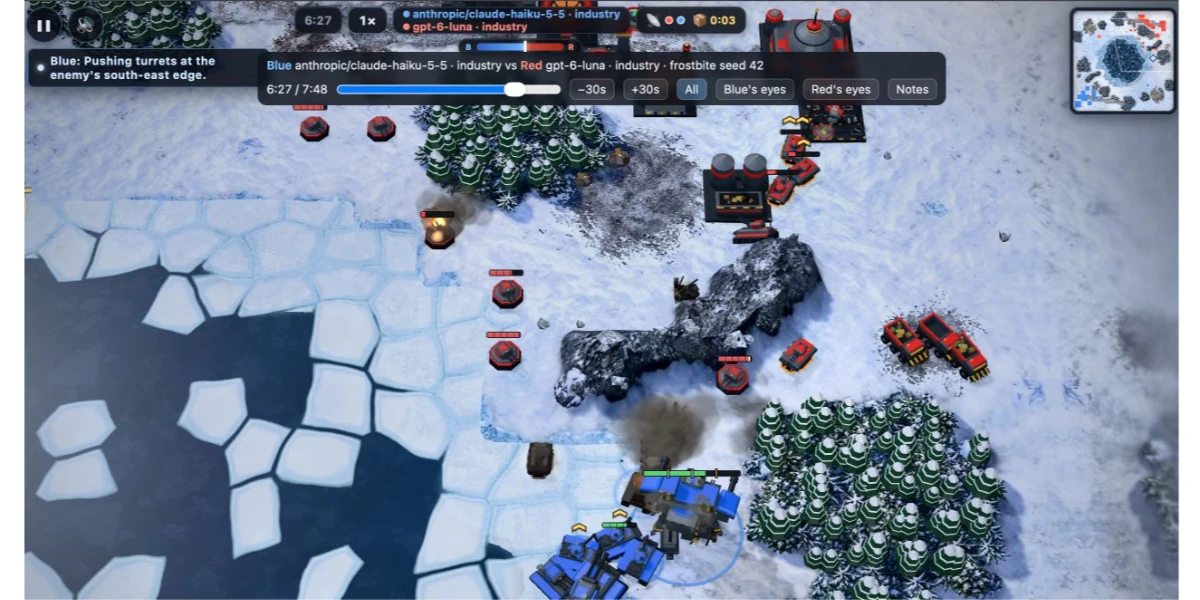
Battle Drones - a vibe coded RTS with audio-based multiplayer

Battle Drones is a browser-based Command & Conquer style RTS that Simon Willison built over 12 iterations and 321 commits, mostly with Claude Code and Claude Opus 5.5. The post gives key prompts and transcripts per version, including the "Make it a LOT more fun" run in Ultracode mode. It also covers an Agent vs. Agent mode for LLMs, audio-modem multiplayer between nearby phones, and lessons on deterministic simulation and code-generated 3D models and music.

Claude CodeTypeScriptThree.js+6
Simon WillisonClaude Opus 5.5Claude Fable 5+5

coding-agents, agentsΒ· Published and added 20 Oct 2026

x.comthread🧠 AI

Parul Gautam (@Parul_Gautam7) on X

Beacon is an open-source memory layer for coding agents. It saves sessions across Claude Code, Cursor, Codex and more than 20 other tools, so developers can move work between agents without losing context. The team says it raised a $5.5M seed round and is building a self-improving feedback loop that learns from how users debug. The post gives no technical detail or repo link.

Claude CodeCursorCodex
BeaconOpenAIAnthropic

coding-agents, agentsΒ· Added 21 Oct 2026, published 20 Oct 2026

arxiv.orgpaperπŸ›‘οΈ Security

Context-Aware Prompt Injection Detection via Small Language Models in RAG Pipelines: nokast-secureRAG

nokast-secureRAG is a roughly 0.5B-parameter small language model that works as a semantic firewall between retrieval and generation in local RAG systems. It classifies each query and context pair as safe, suspicious or malicious. It reaches 0.994 recall at a 0.026 false-positive rate in-distribution, beating Llama Guard 3 1B and Prompt-Guard-86M (0.900 recall, 0.690 FPR). Recall on PoisonedRAG falls to near zero, and single-request latency is 293-404 ms.

Llama Guard 3LLM
indirect prompt injectionretrieval poisoningPoisonedRAG+2

AI SecurityΒ· Added 22 Oct 2026, published 20 Oct 2026

securityweek.comarticleπŸ›‘οΈ Security

AOMEI Backupper Compromised in Short-Burst Supply Chain Campaign

AOMEI Backupper, Windows backup and cloning software, served malware in short tampering windows between April and July 2026. Threat actor UNC7017 altered the update settings file and notification service to push the CrossRoad downloader, ShinyRoad backdoor, a modified Radmin Server and Adaptix payloads. Each window lasted five to ten minutes. The client did not authenticate its configuration files, and a WebDAV banner trick leaked NetNTLMv2 hashes.

AOMEI BackupperRadmin ServerAdaptix+2
UNC7017CrossRoadShinyRoad+5

Supply Chain, Threat IntelΒ· Published and added 20 Oct 2026

depthfirst.comwriteupπŸ›‘οΈ Security

From JavaScript to Renderer Code Execution: Three V8 Vulnerabilities and Two v8CTF Flags | depthfirst

Depth First Security's write-up describes three V8 bugs found using its dfs-large1 research tooling: CVE-2026-78938, a type confusion in Promise.prototype.finally that lets an internal helper be constructed and return a primitive; CVE-2026-79236, a TurboFan load-elimination bug that keeps a stale property-array pointer after object migration; and a shared WebAssembly memory sandbox escape (issue 546253900) caused by mismatched backing-store registration during serialization. It walks through turning each memory bug into addrof/fakeobj primitives, chaining either with the sandbox escape to reclaim a freed V8 isolate via a WebSocket allocation, and pivoting through a CFI-constrained ROP chain to achieve Chrome renderer code execution, earning two v8CTF flags. Fixes landed between August 20 and 25, 2026.

V8ChromeWebAssembly+1
CVE-2026-78938CVE-2026-79236issue 546253900+8

Offensive Security, Malware & REΒ· Added 29 Oct 2026, published 20 Oct 2026

securityweek.comarticleπŸ›‘οΈ Security

970,000 Medi-Cal Members Affected by Paradigm Healthcare Data Breach

Paradigm Healthcare Services, a Medi-Cal billing processor, told HHS that a breach affected more than 970,000 people. Attackers accessed its network between October 8 and 15, 2025, and exposed names, dates of birth, gender and Medi-Cal member IDs. The article also covers breaches at law firm Tarter Krinsky & Drogin (196,000 people) and Ridgeway Pharmacy (258,000). No threat actor or intrusion method is named.

Paradigm Healthcare ServicesMedi-CalCalifornia Department of Health Care Services+4

Threat Intel, GRCΒ· Published and added 20 Oct 2026

thedefiant.ioarticleπŸ›‘οΈ Security

SlowMist Says Qubic Wallet Keys Could Be Recovered From Six Network Samples

SlowMist says Qubic wallet private keys could be recovered from six samples observed on the network. Qubic patch 4.26.4 separates new account seeds from the exposed random stream, but leaves header generation unchanged. The page text holds only the headline and subhead, so the attack mechanics, affected versions and any CVE are not stated.

Qubic
SlowMistQubic 4.26.4

BlockchainΒ· Published and added 20 Oct 2026

github.comrepoπŸ›‘οΈ Security

better-isms/grcskills

grcskills is an MIT-licensed library of 60 SKILL.md files (Agent Skills format) that let coding agents draft and prepare governance, risk and compliance work: scope statements, statements of applicability, risk registers, audit prep, vendor review, policies, privacy, incidents and continuity. Each skill names where the agent must stop so a person decides. Installs are pinned to release tag v2026.10.19.2, and a validator rejects network commands and credential paths.

Claude CodeCodexCursor+2
SOC 2PCI DSSNIST+2

GRCΒ· Added 20 Oct 2026

x.comthreadπŸ›‘οΈ Security

DFIR Radar (@DFIR_Radar) on X

DFIR_Radar weekly detection engineering digest covering 23 new and 19 updated rules across 6 GitHub repositories. It lists KQL rules for Azure Key Vault secret retrieval, MCP client User-Agent bulk operations and local Azure token theft, AWS CloudTrail analytics, Sigma rules for firewall and ETW tampering (decimal 17 vs hex 0x11), updated LOLDrivers hashes, and Sublime email rules for OAuth consent phishing and fake IRS W-9 PDFs.

KQLSigmaMicrosoft Sentinel+3
BYOVDCisco AI Defensebenscha/KQLAdvancedHunting+7

Blue Team & Detection, Cloud & Infra, AI SecurityΒ· Added 20 Oct 2026, published 19 Oct 2026

x.comarticleπŸ›‘οΈ Security

Huda (@AlAssaf_H) on X

Source-level review of x64dbg-MCP, GhidraMCP and IDA Pro MCP security, dated October 2026. It covers GHSA-4478-h5jv-647m (missing authentication, 0.0.0.0 bind) and GHSA-jgj3-97w2-9v9r (Content-Length integer overflow before the token check, causing a DoS panic), and compares tags 1.0, v1.1 and v1.2. It separates network reachability, tool authority and semantic influence from hostile binaries. No new exploit is claimed.

Model Context ProtocolGhidrax64dbg+2
GHSA-4478-h5jv-647mGHSA-jgj3-97w2-9v9rprompt injection+5

AI Security, Malware & REΒ· Added 21 Oct 2026, published 19 Oct 2026

blog.cloudflare.comwriteup🧠 AI

Cutting our inference bill by 68% by being obsessive about optimization

Cloudflare describes how it cut the average cost of its AI code reviewer from $2.43 to $0.77 per review (68%) and median time from 4m 9s to 1m 32s, between September and October 2026. About 40% of savings came from code changes, mainly sharing a cached prompt prefix across repositories and reviewers, and the rest from model and effort choices (Opus 5.5, Sonnet 5.5). Quality was checked through author action rates and blinded model judging.

OpenCodeClaudeCodex+3
AnthropicClaude Opus 5.5Opus 5+3

coding-agents, ai-infra, inferenceΒ· Added 29 Oct 2026, published 19 Oct 2026

arxiv.orgpaper🧠 AI

Which Model for Which Role? Cost-Efficient Pareto Recommendation for LLM Agentic Workflows

Cost-Coupled Gittins (CC-Gittins) is a multi-objective extension of cost-aware Gittins search that recommends Pareto-optimal model-to-role assignments for LLM agentic workflows. It exploits the coupling between evaluation and deployment cost, alternating between seeking higher quality and lower cost. On eight quality-cost matrices (two to five roles, up to 1,681 assignments), it recovers a substantial share of the true Pareto frontier at about 10% of exhaustive-evaluation cost, and most of it by 30%. Latency is tested as a third objective.

LLM
arXivCC-Gittins

research, agentsΒ· Added 21 Oct 2026, published 19 Oct 2026

arxiv.orgpaper🧠 AI

Tandem: Serving Hybrid Linear-Attention GUI Agents on Mobile NPUs

Tandem is a runtime for serving hybrid linear-attention GUI agents on mobile NPUs. It saves recurrent state where consecutive prompts diverge, keeps most prefill on the matrix unit, uses a verification kernel that reads each weight block once, and releases NPU power votes between bursts. On a Snapdragon 8 Elite it cuts per-step latency 30% for text screen descriptions and 16% for screenshots, cuts energy per text step by 33%, and lowers loaded-model standby power from 0.76 to 0.22 W.

SnapdragonNPUhybrid linear attention
TandemSnapdragon 8 ElitearXiv

inference, agents, researchΒ· Added 21 Oct 2026, published 19 Oct 2026

arxiv.orgpaper🧠 AI

HAF-VLA: Hierarchical Action Flow Framework for Humanoid Vision-Language-Action Control

HAF-VLA is a hierarchical action-flow framework that adapts a pretrained flow-matching vision-language-action model to humanoid whole-body loco-manipulation. It denoises a shared action space in stages: locomotion and head commands first, then waist refinement, then full-body manipulation. Learnable stage embeddings and cross-stage KV-cache conditioning carry dependencies between stages. The authors report gains over existing models on six real-world tasks.

flow matchingvision-language model
HAF-VLAarXiv

research, multimodalΒ· Added 21 Oct 2026, published 19 Oct 2026

arxiv.orgpaper🧠 AI

Assisted Turbulence Modeling via Data Assimilation and Machine Learning for Turbomachinery Flows

This paper presents a hybrid framework for axial compressor flow that couples a Multi-Fidelity Ensemble Kalman Filter (MFEnKF) with machine learning. The filter merges PIV experiments with steady RANS and unsteady hybrid RANS/LES simulations. A neural network trained on the enriched data predicts Navier-Stokes volume forcing terms from velocity, velocity gradients and turbulent viscosity. A Mixture of Experts fixes local errors near blade tips, giving lower experimental discrepancy than baseline RANS.

Mixture of Expertsneural networkMulti-Fidelity Ensemble Kalman Filter+3
MFEnKF

researchΒ· Added 21 Oct 2026, published 19 Oct 2026

securityweek.comarticleπŸ›‘οΈ Security

Rank Math PRO WordPress Plugin Compromised in Supply Chain Attack

Rank Math PRO version 3.0.123, a WordPress SEO plugin, shipped malicious packages between 15 October 2026 20:02 UTC and 16 October 2026 07:12 UTC. The malware gives persistent backdoor access, can expose credentials and API keys, and uses .htaccess rules to run .cache files as PHP. Rank Math released clean v3.0.124 and advises restoring from backup, blocking rank1cdn[.]com, and checking SSH keys and crontabs.

WordPressRank Math PROPHP
rank1cdn[.]comRank Math PRO 3.0.123

Supply Chain, Threat IntelΒ· Published and added 19 Oct 2026

wiz.ioarticleπŸ›‘οΈ Security

Supply Chain Zero Days: Closing the Gap Between Publication and Detection

Wiz describes its pipeline that analyzes every new npm package version at publication, combining static analysis, an AI classifier, sandbox dynamic analysis and runtime sensor observation, then pushes IOCs to Wiz Defend before a CVE exists. It cites supply chain attacks rising from about 10% of significant incidents in H2 2025 to 25% in H1 2026, and the Axios compromise (v1.14.1, v0.30.4). The keyv case shows C2 domains fetched from an Ethereum smart contract, which only runtime monitoring caught.

npmWizEthereum
Axioskeyvcacheable+3

Supply Chain, Blue Team & DetectionΒ· Published and added 19 Oct 2026

arxiv.orgpaper🧠 AI

Rethinking LLM Fine-Tuning via Weight Space Reparameterization: Preserving Safety during Downstream Adaptation

WSR-Tune is a fine-tuning framework that reparameterizes LLM weight matrices with a safety-conditioned basis, so safety-relevant information concentrates in a small set of directions. Those safety-critical directions are frozen, and the remaining complementary directions are updated for the downstream task. The authors report a better trade-off between downstream performance and safety retention. The page gives no benchmark names or numbers.

LLM
arXivWSR-Tune

research, ai-safety, trainingΒ· Added 21 Oct 2026, published 19 Oct 2026

heymaxwell.aiarticle🧠 AI

Maxwell: A new kind of model that sits between code and hardware

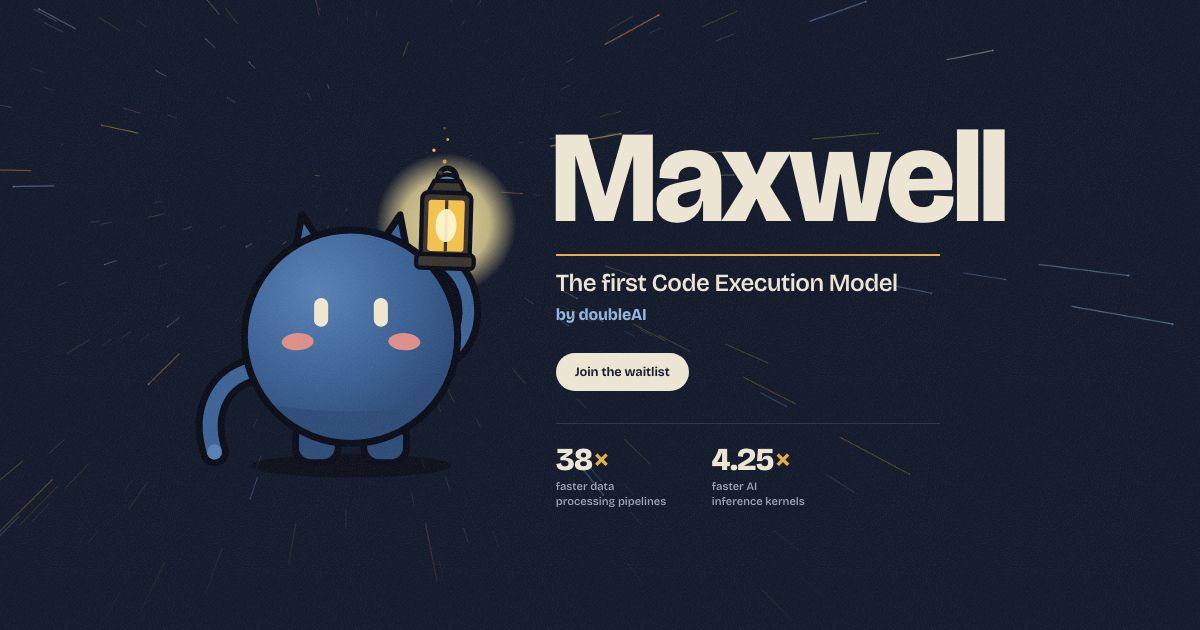
Maxwell (Maxwell's Daemon) is doubleAI's first "code execution model" (CEM). It runs inside a live program, finds bottlenecks and emits faster machine code for the exact CPU or GPU, leaving the source untouched. Each rewrite ships with a machine-checked proof of semantic equivalence, built on a formalisation of Python. Early access is announced; the post gives no benchmark figures.

PythonPyTorchRust+6
doubleAIMaxwellAlan Turing+3

models, inference, researchΒ· Added 20 Oct 2026, published 19 Oct 2026

securityweek.comarticleπŸ›‘οΈ Security

One Compromised Login Exposed Millions of California Students’ Records

Breach report on Educational Testing Service (ETS), whose SFTP site was accessed with a compromised login credential between 22 May and 18 September 2026, exposing California student records. The data covers at least three school years of students, over 5.7 million enrolled, and leavers back to 2006. Files included names, birth dates, addresses, ID numbers, disability and English learner status. No Social Security numbers were involved, and the credential's origin and the attacker are unknown.

SFTP
Educational Testing ServiceCalifornia Department of EducationCAASPP+3

Threat IntelΒ· Published and added 19 Oct 2026

securityweek.comarticleπŸ›‘οΈ Security

Exploited Fortinet Bug Linked to Stealthy FortiGate Implant in Telecom Hack

UNC5820 (tracked by Palo Alto Networks as CL-STA-0954) breached a telecom in September 2024 using FortiManager flaw CVE-2024-47575 (FortiJump) and path traversal CVE-2025-61624, then deployed PeerStitch, a memory-resident ARM64 FortiGate implant. PeerStitch patches FortiOS log and IKE/IPsec daemons to build a covert bridge without listening ports. The actor also impersonated FortiManager over FGFM, using CVE-2024-26008. CISA added CVE-2025-61624 to KEV.

FortiGateFortiManagerFortiOS+1
CVE-2024-47575CVE-2025-61624CVE-2024-26008+8

Threat Intel, Malware & REΒ· Published and added 19 Oct 2026

decrypt.coarticleπŸ›‘οΈ Security

Zcash Developer Zakura Proposes Fix to Stop Quantum Computers Linking Shielded Swaps

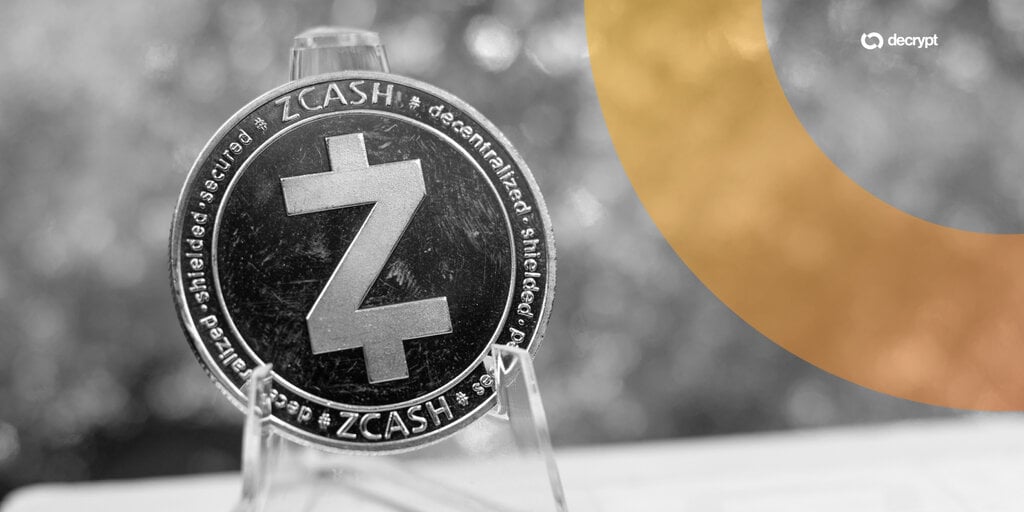
Zakura, a Zcash full node developer, proposed one-time incoming viewing keys so a future quantum computer running Shor's algorithm cannot link a user's shielded payments. The target is NEAR Intents swaps, which post a shielded refund address on a public chain. The fix needs no network upgrade and uses private information retrieval for seed restores. Wallets such as Vizor can add it within weeks.

Zcash
Shor's algorithmNEAR IntentsZakura+5

BlockchainΒ· Published and added 19 Oct 2026

eprint.iacr.orgpaperπŸ›‘οΈ Security

SAT and Neural Network Filters for Misinjections in Fault Attacks

This ePrint paper presents key-independent filters that remove misinjections (faults that miss the assumed form) in elimination fault attacks. A SAT filter, a neural network filter and a combined filter were tested on clock-glitch faults into GIFT-64, GIFT-128 and BAKSHEESH on a microcontroller. The SAT filter rejected none of 14669 intended faults, and raised ToFA success on BAKSHEESH from 5.2% to 61.2% (96.2% combined).

GIFT-64GIFT-128BAKSHEESH
ToFAclock glitchingmisinjection+1

Hardware & RFΒ· Added 20 Oct 2026, published 19 Oct 2026

arxiv.orgpaper🧠 AI

Hybrid Reasoning Agents: LLM agents that think in latent space, act through text

Hybrid Reasoning Agents (HybridAgents) are LLM agents that switch between latent reasoning and text-based interaction in one generation process. A lightweight HybridLink handles mode transitions, continuous working memory keeps hybrid context across turns, and HybridSFT plus HybridRL train when to think latently and when to act in text. Across 3 model scales and 11 benchmarks, the paper reports 10.4% higher performance, 35.5%-54.7% fewer tokens, and 1.8x-2.6x faster inference.

LLM
HybridAgentHybridLinkHybridSFT+2

research, agents, trainingΒ· Added 19 Oct 2026, published 18 Oct 2026

github.comrepo🧠 AI

eliasbiondo/antirion

Antirion is an open-source AI gateway shipped as one Rust binary with a built-in admin console. It sits between apps and providers such as OpenAI, Anthropic, Bedrock, Vertex and vLLM, translating between OpenAI, Anthropic, Gemini and Bedrock dialects. It covers routing with fallbacks and circuit breakers, budgets, guardrails, caching, MCP and A2A gateways, SSO, and a benchmark against Bifrost 2.2.4 and LiteLLM 1.103.1.

RustDockerKubernetes+13
AntirionBifrostOpenAI+10

ai-infraΒ· Added 21 Oct 2026, published 17 Oct 2026

ethereum-magicians.orgpaperπŸ›‘οΈ Security

Post-Quantum Stateless Steganography & MTU Bounds: Bridging P2P Censorship Resistance to Quantum Networks

Forum announcement of a Zenodo preprint on post-quantum migration for censorship-resistant P2P steganographic tunnels. It argues that ML-KEM's prime modulus (q=3329) makes naive bit-packed ciphertexts statistically distinguishable from uniform noise, which gives a cheap passive DPI distinguisher. It also argues that composite PQ 0-RTT envelopes over 4.4 KB force fragmentation, which requires stateful reassembly before AEAD verification and reopens memory-exhaustion DoS in eBPF/XDP filters. Proposed fixes are algebraic uniformization (LWR lattices or inverse rejection sampling), sub-MTU hybrid or pure-PQ envelopes (Falcon-512, signcryption), and Fujisaki–Okamoto implicit rejection for constant-time silent drops. Aimed at Ethereum validator, libp2p and RPC transports facing harvest-now-decrypt-later threats.

eBPFXDPlibp2p+1
ML-KEMML-DSAHarvest-Now-Decrypt-Later+8

otherΒ· Published and added 17 Oct 2026

x.comthreadπŸ›‘οΈ Security

CyrilXBT (@cyrilXBT) on X

REA (github.com/morluto/rea) is an open-source tool that lets an agent such as Claude Code run reverse-engineering tools (Ghidra, IDA, JADX) on a local machine and return findings with evidence. Targets named are desktop apps, compiled programs and games, Android apps, website network traffic, and firmware or binaries. The post claims a DX Ball sound function was rebuilt to byte-identical code. Setup is `npx rea-agents setup`, and the author says to use it only on software you own or may analyze.

Claude CodeGhidraIDA Pro+2
READX Ball

Malware & RE, AI SecurityΒ· Added 19 Oct 2026, published 17 Oct 2026

huggingface.copaper🧠 AI

OpenGCUA: Toward a Fully Open Stack for Generalist Computer Use

OpenGCUA, from Alibaba's MAI-UI team, is an open stack for generalist computer-use agents (GCUAs), where the model chooses how to observe, act and organize work across GUI, accessibility-tree, API and shell interfaces. Its design combines code execution (GUI actions written as programs with loops and branches) with harness-to-model decision transfer. On OSWorld-v2 it raises mean partial score by +19.6 points across eight models, including GPT-6 Astra and Claude Opus 5, and cuts reported steps per task by 53%. The release includes the harness, prompts, evaluation trajectories, a macOS real-device harness, a cross-device SDK and an interactive lab. It also shows large efficiency gaps between models: Qwen3.8-Max used 19.4x the reasoning tokens of GPT-6 Astra on real macOS tasks.

macOSGitHubHugging Face
OpenGCUAMAI-UIAlibaba+6

agents, research, evalsΒ· Added 17 Oct 2026

quentinkaiser.bewriteupπŸ›‘οΈ Security

One parser, two bugs, many routers: Exploiting Broadcom WiFi across eCos, Linux

Long-form write-up of a Hexacon 2026 talk on a WPS EAP reassembly overflow in Broadcom's proprietary 802.11 stack, present since 2010 and incompletely patched in 2018. It is remotely triggerable over WiFi without the network key. It gives information disclosure and code execution on eCos (BCM3380, BCM3383, BCM33834) and Linux (BCM3390, BCM65xx, BCM68xx) platforms. Exploited on Belgian ISP routers from Proximus, VOO and Orange. Includes a 90-day disclosure timeline, and Broadcom refused to assign a CVE.

BroadcomeCosLinux+2
HexaconWPS EAP reassembly overflowforever day+17

Hardware & RF, Offensive Security, Blue Team & DetectionΒ· Added 19 Oct 2026, published 16 Oct 2026

arxiv.orgpaper🧠 AI

ConQUESTA: Topology-Aware Post-Training Structural Pruning of Quantum Neural Networks

ConQUESTA is a post-training pruning framework for quantum neural networks that combines task saliency with compiler cost, screens candidate entanglers, and searches whole pruning masks under an accuracy constraint. Each mask is transpiled across several coupling topologies. At 55% pruning on 4-, 6- and 8-qubit QNNs it cuts resources by 61.6% (Breast Cancer), 72.0% (Digits01) and 82.2% (Iris), and fixed-mask recovery raises feasible runs from 16/24 to 22/24.

quantum neural network
ConQUESTAarXivBreast Cancer+2

researchΒ· Added 20 Oct 2026, published 16 Oct 2026

en.cryptonomist.charticle🧠 AI

Vitalik Buterin’s privacy AI agent setup adds Tor and private payments

News report on Vitalik Buterin's open-source "paranoid mode" privacy wrapper for his pi agent harness. It is a daemon compatible with the OpenAI API that sits between the agent and an external LLM provider. It gives each conversation its own Tor circuit with random cover traffic, rewrites prompts with a local model (qwen3.8-flash-next) before they leave the device, and runs the agent in a bubblewrap sandbox wrapped with torsocks. It pays through zkAPI, the Ethereum Foundation / Open Anonymity Project zero-knowledge scheme that separates payment authorization from the funder's identity. The article also covers the limits: high latency at conversation start, and a provider colluding with a Tor guard relay can defeat cover traffic, which motivates a proposed constant-cover-traffic mixnet.

Tortorsocksbubblewrap+6
Vitalik ButerinEthereum FoundationOpen Anonymity Project+2

agents, ai-infraΒ· Published and added 16 Oct 2026

securityweek.comarticleπŸ›‘οΈ Security

F5, Juniper Networks Patch Critical Vulnerabilities

SecurityWeek reports F5 fixed 11 NGINX vulnerabilities. Three are critical: CVE-2026-15176 and CVE-2026-93479 are unauthenticated buffer overflows via crafted HTTP requests, and CVE-2026-97205 is memory corruption. All three can lead to RCE if ASLR is disabled or bypassed. Juniper Networks published 17 advisories covering over 150 flaws in Junos OS and Junos OS Evolved, plus four in Cloud-Native Router. About two dozen are critical, with root code execution, device takeover, kernel panic and an off-by-one buffer overflow. Neither vendor reports exploitation in the wild.

nginxJunos OSJunos OS Evolved+1
CVE-2026-15176CVE-2026-93479CVE-2026-97205+2

AppSec, Cloud & InfraΒ· Published and added 16 Oct 2026

arxiv.orgpaper🧠 AI

SpikeQ: Spike-Guided Post-Training Quantization for Spiking Neural Networks

SpikeQ is a spike-guided post-training quantization framework for spiking neural networks on neuromorphic chips. It picks each weight level by simulating downstream neurons to minimize spike errors, and uses a reset-aware grid for pre-fire membrane potentials. With 4-bit weights and potentials, models stay within 2.59 points of full precision, with 7.8 to 7.9 times smaller memory and 6.4 to 6.9 times less energy.

spiking neural networksneuromorphic chips
SpikeQ

research, inferenceΒ· Added 20 Oct 2026, published 16 Oct 2026

x.comadvisoryπŸ›‘οΈ Security

S2W_DailyThreat (@S2W_DailyThreat) on X

S2W post on CVE-2026-97229, a CVSS 10.0 remote code execution flaw in the GitLab CE/EE CI/CD regex compiler, disclosed October 13, 2026. Insufficient regex validation plus an integer overflow during encoding conversion lets an attacker who can add CI/CD config use a malicious regex and a UTF-8 repository path to run commands as the git user. Affects self-managed 19.2 before 19.2.8, 19.3 before 19.3.5 and 19.4 before 19.4.2. Rapid7 published analysis and a public PoC exists, with no in-the-wild exploitation confirmed as of October 15. No workaround exists, so patch or restrict access to a management network or VPN.

GitLabCVSS
CVE-2026-97229Rapid7S2W+1

AppSec, DevSecOpsΒ· Added 17 Oct 2026, published 16 Oct 2026

arxiv.orgpaper🧠 AI

Many Biases, One Circuit: Post-Training Tunes a Pretrained Cue-Routing Mechanism

Many Biases, One Circuit is a October 2026 arXiv paper that traces attention heads behind cue-following (for example "I think the answer is B") through two post-training pipelines. Four cue types share a few heads already present in pretrained models. About 200 generic assistant examples activate them in chat format, and the final RL stage strengthens cue effects. Swapping attention patterns of six middle layers between Tulu-3-8B and OLMo-2-7B checkpoints moves cue effects most of the way.

LLMTransformer
Tulu-3-8BOLMo-2-7BarXiv

research, ai-safety, trainingΒ· Added 20 Oct 2026, published 16 Oct 2026

latent.spacearticle🧠 AI

[AINews] Agents disprove Polysemanticity; greatly improve Interpretability & Alignment

The 10/14–10/15/2026 AINews issue. Its lead story is Goodfire's Nick Cammarata essay "Neural Networks Are Already Clean", which argues agentic analysis resolves many known cases of polysemanticity and superposition. Neel Nanda, Leo Gao and Jake Mendel push back. It also covers Meta's Muse Spark Open (816B total / 42B active MoE, 1M context, custom license, Artificial Analysis index 39, vLLM day-0 support and quantizations), Nemotron 3.5, MAI-Base-2 and Gemini 4 Argon evals. Further items cover Vals' refund-agent and MiMo task-leakage findings, TPUv7 and Vera Rubin inference benchmarks, Perplexity's SPACE sandbox, RL training systems (TRL tree packing, bitwise-consistent vLLM RL) and Sakana's Agentic Scientist.

Mixture of ExpertsvLLMllama.cpp+10
GoodfireNick CammarataNeel Nanda+44

ai-safety, models, researchΒ· Published and added 16 Oct 2026

arxiv.orgpaper🧠 AI

Between Spoilers and Guesswork: Avoiding Over-Specification in Coding Benchmarks

This October 2026 arXiv paper studies task over-specification and under-specification in repository-level coding benchmarks. It shows that hints derived from ground truth, as added in SWE-bench Pro, FEA-bench, Doc2Feat-bench and Multi-SWE-bench, leak spoilers in some of them. The authors test several specification levels, recommend techniques for parsimonious hints, and plan to release their hints.

SWE-Bench ProFEA-benchDoc2Feat-bench+2

evals, coding-agents, researchΒ· Added 20 Oct 2026, published 16 Oct 2026

arxiv.orgpaper🧠 AI

MLExpert: Towards a Generalist Agentic Model for Autonomous Machine Learning Engineering

Presents MLExpert, a 35B Mixture-of-Experts agentic model trained for autonomous long-horizon machine learning engineering. Training uses a Kaggle-MLE Factory to build executable tasks and an interaction harness, hierarchical agentic SFT with outcome-guided supervision, and Windowed Interaction RL (WIRL). WIRL treats the multi-turn decisions between successive experiment results as one execution window with a shared outcome reward, and uses asynchronous collection and policy correction. On MLE-Bench Lite the average medal rate rises from 37.9% to 72.7%, comparable to larger frontier models such as Kimi-K3 and GLM-5.3. It also improves on NatureBench Lite, agent scaffold optimization and algorithm optimization.

Mixture of ExpertsLLM
MLExpertKaggle-MLE FactoryMLE-Bench+4

research, training, agentsΒ· Added 17 Oct 2026, published 15 Oct 2026

arxiv.orgpaper🧠 AI

X-RIC: An Agentic RAN-Intelligent Controller Benchmark for Enhancing Reinforcement Learning

X-RIC (eXplainable RIC) is a framework that adds agentic reasoning to the O-RAN Near-RT RAN Intelligent Controller. It combines reactive reinforcement learning with automated behavioral cloning from domain heuristics, a transformer-based Telecom Language Model for contextual abstraction and interpretability, and closed-loop co-adaptation for continuous policy refinement. The paper also introduces BARX, a benchmark for agentic RAN control that measures latency, compliance and determinism. On SLA-aware network slicing, in simulation and on an O-RAN-compliant testbed, it reports 89% lower operational cost with SLA compliance kept, 75% faster convergence, 50% fewer training steps and 46% lower variance.

TransformerO-RANNear-RT RIC+2
X-RICBARXO-RAN ALLIANCE+2

research, agents, evalsΒ· Added 17 Oct 2026, published 15 Oct 2026

arxiv.orgpaper🧠 AI

The importance of tensor handling and implementation of physics-informed DeepONets

Proposes a modified Physics-informed DeepONet (PI-DeepONet) architecture that removes redundancy in how the Branch network processes input functions across collocation points. It is mathematically equivalent to the original but uses smaller input tensors and fewer Branch evaluations. The authors derive training-time scaling laws, then test on 1D, 2D and 3D linear advection problems. Accuracy matches the original, the maximum speed-up is 3.75Γ— in 2D, and a 3D model trains on an NVIDIA A100 only with the new formulation, because the original runs out of memory.

PI-DeepONetDeepONetPINN+1
NVIDIAarXiv

researchΒ· Added 17 Oct 2026, published 15 Oct 2026

x.comtool🧠 AI

EveryDev.ai (@EveryDevAi) on X

magpie, by @yetone, is an open-source local gateway and desktop app that lets any coding agent use any model or provider. It translates between the OpenAI Chat, OpenAI Responses, Anthropic Messages and Gemini APIs. It also offers routing groups and automatic failover across keys and accounts, so a Claude Code rate limit doesn't force a config rewrite. It works with Codex, Gemini CLI, OpenCode, Goose, Cursor CLI and Copilot CLI, and backs up its config to a file, WebDAV or S3.

Claude CodeCodexGemini CLI+6
magpieyetoneOpenAI+1

ai-infra, coding-agentsΒ· Added 16 Oct 2026, published 15 Oct 2026

bankless.comarticleπŸ›‘οΈ Security

Ledger Officially Responds to Hardware Wallet Attack

Ledger disclosed that an organized group bought genuine hardware wallets, implanted hidden components that capture the 24-word recovery phrase during setup and send it over cellular networks, then fed the devices back in through resellers in Southeast Asia. Onchain researchers estimate up to $93M stolen across 300+ wallets, a figure Ledger has not confirmed. Ledger asked regional resellers to suspend sales, found no tampering in samples it inspected, and added reseller rules (no shelf display, report suspicious units, no resale of returned devices). It says its chips, OS and servers were not compromised.

Ledger
hardware implantrecovery phrase theft

Hardware & RF, Blockchain, Threat IntelΒ· Published and added 15 Oct 2026

coindesk.comarticleπŸ›‘οΈ Security

How Brooklyn prosecutors and the FBI took down a massive crypto fraud network targeting Russian speakers

Brooklyn DA Eric Gonzalez and the FBI seized or disrupted 241 scam websites and 112 servers tied to a crypto investment fraud network that targeted Russian speakers in the US. The scheme used Russian-language Facebook ads, fake advisers who coached victims into sending crypto to fake trading platforms, fee and tax lockouts on withdrawal, and later fake fund-recovery offers. Investigators went after the servers holding victim data and fraud software, because replacement domains kept appearing after earlier takedowns of about 400 domains. The infrastructure was in Ukraine and other Eastern European countries, no arrests were announced, and about $300,000 has been seized.

Facebook
FBIBrooklyn District Attorney's OfficeEric Gonzalez+4

Threat IntelΒ· Published and added 15 Oct 2026

cloud.google.comwriteupπŸ›‘οΈ Security

Investigating Ephemeral Supply Chain Tampering

GTIG and Mandiant report on UNC7017, which tampered with AOMEI update servers in five to ten minute windows between April and July 2026. Edited down_html.ini and Notifycfg.ini files delivered the CROSSROAD downloader and SHINYROAD PocketPy backdoor, plus Adaptix C2 and WebDAV NTLM coercion. The post covers infrastructure shifts, YARA rules, IOCs, and vendor and SOC guidance on point-in-time triage failures.

AOMEI BackupperRadminAdaptix C2+3
UNC7017CROSSROADSHINYROAD+10

Supply Chain, Threat Intel, Malware & RE, Blue Team & DetectionΒ· Added 29 Oct 2026, published 15 Oct 2026

eprint.iacr.orgpaperπŸ›‘οΈ Security

Robust ECDSA Threshold Signing at Scale

Presents a robust threshold ECDSA signing protocol for t ≀ (n-1)/3 corrupted signers. It batch-computes pre-processing material for fast online signing and scales to many signers, for uses such as bridging consensus between blockchains. It combines batched verifiable secret sharing (Fitzi & Hirt), randomness extraction (Beerliova-Trubiniova & Hirt), efficient share opening (DamgΓ₯rd & Nielsen) and Attema–Cramer zero-knowledge proofs. The authors implement it and show it is practical for large n.

ECDSACarsten BaumAnders Dalskov

otherΒ· Published and added 15 Oct 2026

securityweek.comarticleπŸ›‘οΈ Security

Palo Alto Networks Patches PAN-OS Zero-Day Exploited for Remote Code Execution

Palo Alto Networks patched CVE-2026-0322, a high-severity zero-day in the PAN-OS management interface that lets an authenticated attacker with network access run arbitrary code as root. It affects PA-Series, VM-Series and Panorama with no special configuration needed, and "very limited" exploitation has been seen. The vendor published a few IP-based IoCs, CISA added the flaw to KEV with an October 17 deadline, and a dozen other medium/low advisories were released the same day.

PAN-OSPalo Alto NetworksPanorama+1
CVE-2026-0322CISA KEVCISA

Threat Intel, Cloud & InfraΒ· Published and added 15 Oct 2026

arxiv.orgpaperπŸ›‘οΈ Security

Thinking in Graphs: Neo4j-Backed Exploit-Chain Reasoning for LLM Penetration-Testing Agents

Presents ChainGraph, a pattern that externalizes exploit-chain reasoning for LLM pentest agents (Claude Code, Codex) into a Neo4j property graph exposed via the Model Context Protocol. Findings, attack steps, credentials, assets and tamper-evident evidence receipts are typed nodes with pre/post-condition edges, queried with Cypher and Graph Data Science for next-step inference, entry-to-crown-jewel pathing, chain-severity promotion, provenance and chokepoints. On a synthetic GOAD-style multi-forest Active Directory engagement, three Medium findings become Critical once chained, betweenness centrality identifies break-points, and reasoning payload drops ~98% (token proxy); results are single-run and illustrative.

Neo4jModel Context ProtocolClaude Code+3
ChainGraphGOADchain-severity score+1

Offensive Security, AI SecurityΒ· Added 17 Oct 2026, published 14 Oct 2026

decrypt.coarticle🧠 AI

AI Agents Made 138 Million Crypto Payments in a Year. Most Were Tiny

Decrypt reports on a Chainalysis Geography of Crypto report. It found AI agents made more than 138 million payments through Coinbase's x402 protocol on Base, up from about 1,500 in mid-2025. Over 87% of the payments were between $0.0001 and $0.10, which stablecoins can handle but card rails cannot. US-linked wallets made 88.1% of identifiable inference payments. The article covers agent-payment support from Visa, Mastercard, Stripe, Coinbase and Google, and TRM's caution that much of the activity may be scripts or self-dealing rather than genuine agents.

x402Basestablecoins
ChainalysisCoinbaseVisa+7

agents, ai-policyΒ· Published and added 14 Oct 2026

eprint.iacr.orgpaperπŸ›‘οΈ Security

A Hybrid BP-SAT Attack on MILENAGE: Combining the Complementary Strengths of Algebraic and Soft-Analytical Side-Channel Attacks

ePrint paper evaluating ASCA (SAT-based) and SASCA (belief propagation) side-channel attacks on the AES-based MILENAGE authentication algorithm in USIM cards, using neural-network leakage predictions to recover subscriber key K and operator secret OPc from a single trace. SASCA alone succeeds in 87.7% of attacks but converges to a wrong OPc in 6.1%; ASCA succeeds in only 34% within a 1-hour timeout. The hybrid, where BP refines the predictions before they go to the SAT solver, reaches 93.8% with lower average runtime. It also proposes a countermeasure that masks each AES round key with an independent per-device secret, and the authors report it defeated the hybrid attack in all evaluated cases.

AESMILENAGEUSIM
OPcSASCAASCA

Hardware & RFΒ· Added 15 Oct 2026, published 14 Oct 2026

x.comthreadπŸ›‘οΈ Security

Dark Web Informer (@DarkWebInformer) on X

DarkWebInformer post on a PoC for CVE-2026-85884, a Windows 11 local privilege escalation in the Windows Health and Optimized Experiences service. Low-privileged code can trigger a trusted ETW event carrying an attacker-controlled Lua module path. The LocalSystem whesvc service then runs that module through WinDiag without validating the event producer or restricting the module location. The PoC takes a standard non-admin PowerShell session to NT AUTHORITY\SYSTEM on Windows 11 x64 builds including 26200.8457 and 29617.1000.

WindowsETWLua+1
CVE-2026-85884Windows Health and Optimized Experienceswhesvc+1

Offensive SecurityΒ· Added 15 Oct 2026, published 14 Oct 2026

huntress.comarticleπŸ›‘οΈ Security

Passkeys Raise the Bar. Here’s Where Attackers Can Still Get In.

Huntress post on where accounts remain exposed after a passkey rollout. It covers passkey-themed social engineering, the EvilTokens device-code phishing campaign (344 organizations in about 16 days), weak enrollment and recovery, SpecterOps research on Windows WebAuthn hooking on compromised endpoints, and the trade-offs between synced and device-bound passkeys. It closes with ITDR-style post-login monitoring, containment steps (revoke sessions, remove rogue authenticators, hunt inbox rules, OAuth grants, forwarding), and a five-question deployment checklist.

WebAuthnFIDO2Windows+2
EvilTokensdevice code phishingpasskey-themed phishing+4

Identity & Access, Blue Team & Detection, Threat IntelΒ· Published and added 14 Oct 2026

simonwillison.netarticle🧠 AI

AI is mass decompiling games. That's both awesome and scary.

Simon Willison's link post points to indie developer Popcar's piece on the recent wave of AI-powered decompilation of existing games. The wave has produced mashups between games and a boom in preservation projects that get old games running on new hardware, often in the browser via WebAssembly. The quoted passages weigh the downside, where anyone can decompile and reuse paid software and companies can copy competitors, against the upside, where people can keep software they bought after servers shut down.

WebAssembly
Simon WillisonPopcar

ai-policy, coding-agentsΒ· Published and added 14 Oct 2026

securityweek.comarticleπŸ›‘οΈ Security

AI Agents Navigate Unfamiliar OT Systems and Move Equipment in Minutes, Booz Allen Finds

SecurityWeek reports on a Booz Allen study in which frontier AI agents, given no source code, engineering documents or OT guidance, met every test objective across eight scenarios in an isolated OT lab. In one test a model went from perimeter compromise to actions inside an industrial control network in about 16 minutes. In another it found a robotic arm, mapped its protection zones and motion limits, and moved it. Existing defenses slowed some actions but no single safeguard stopped the agents. The researchers say this undermines security through obscurity in OT and advise making environments hard to traverse, removing implicit trust, detecting consequential industrial changes quickly, and limiting what an attacker can affect.

Booz AllenSecurityWeek ICS Cybersecurity Conferencesecurity through obscurity

AI Security, Offensive SecurityΒ· Published and added 14 Oct 2026

hackers-arise.comarticleπŸ›‘οΈ Security

Artificial Intelligence (AI) in Cybersecurity, Part 29: Creating Isolated Autonomous Agents for Hacking with NemoClaw

Hackers-Arise tutorial on NVIDIA NemoClaw, an open-source wrapper that runs OpenClaw agents inside OpenShell sandboxes with kernel-level isolation and declarative YAML network/file policies. It covers OpenClaw's security problems (543 tracked CVEs, 40,000+ exposed instances bound to 0.0.0.0 without auth), caveats such as zero-day RCE and sandbox escapes, and install and TUI testing steps on Kali. It also cites a Cisco AI Defense plus OpenShell case study that blocked simulated exfiltration through a third-party skill.

OpenClawDockerNode.js+2
NemoClawOpenShellNVIDIA+3

AI Security, LearningΒ· Published and added 14 Oct 2026

hackers-arise.comwriteup🧠 AI

Artificial Intelligence (AI) in Cybersecurity, Part 29: Creating Isolated Autonomous Agents for Hacking with NemoClaw

Hackers-Arise tutorial on NVIDIA's open-source NemoClaw, which runs OpenClaw (and Hermes or LangChain Deep Agents) inside OpenShell sandboxes. OpenShell provides kernel-level isolation and declarative YAML policies for files, credentials and network access. It covers OpenClaw's risks (543 tracked CVEs, 40,000+ exposed instances), an OpenClaw vs NemoClaw comparison, the caveat that sandbox escapes and core-logic zero-days remain possible, and a Docker/Node.js install via the nemoclaw.sh wizard with TUI testing. It also cites the Cisco AI Defense plus OpenShell case study, in which an agent that does security patching was protected against a simulated exfiltration attempt.

OpenClawNemoClawOpenShell+7
NVIDIAPeter SteinbergerJensen Huang+4

agents, ai-infraΒ· Published and added 14 Oct 2026

microsoft.comarticleπŸ›‘οΈ Security

The hidden network: Inside the phishing infrastructure ecosystem powering global cybercrime

Microsoft Threat Intelligence maps a Chinese-language cybercrime ecosystem: the YAM Store (Storm-3119), an initial access broker that hijacks Microsoft 365/Azure Education tenants and resells accounts, licenses and SharePoint/OneDrive storage, and the Storm-2990 phishing kits (CoGUI, Haozi, Iron Man System) sold via Telegram. It details the five-stage broker pipeline (app-only client-secret abuse, PnP Management Shell service principal, Graph permissions, Cloudflare DNS management), kit evasion features (geofencing, fake CAPTCHA, WebSocket/Telegram live interaction, 2,335+ templates), downstream device-code phishing and card fraud, and lists mitigations such as passkeys, phishing-resistant MFA and Conditional Access. Microsoft's DCU facilitated a disruption with law enforcement; kits sent over one billion messages since January 2026.

Microsoft 365AzureMicrosoft Entra ID+3
Storm-3119Storm-2990YAM Store+10

Threat Intel, Identity & AccessΒ· Published and added 14 Oct 2026

chainalysis.comarticle🧠 AI

North America: Inside the Growth of Agentic Commerce

Chainalysis's North America chapter of its 2026 crypto adoption report. Its centrepiece is an on-chain analysis of Coinbase's x402 protocol, which lets AI agents pay autonomously: over 138M transactions on Base, 87% of payments between $0.0001 and $0.10, and growing wallet re-funding (70.6% to 89.3% within 30 days). Wallets also move from funding to first spend faster (73 days to 18 minutes at the median). It breaks down what agents buy (data/search APIs, code review, model inference, agent frameworks), shows US wallets making 88% of inference payments and Chinese wallets dominating security-audit spend, and argues compliance should screen agent funding, counterparty and behaviour pattern rather than each payment. The remainder covers dollar stablecoin exports, tokenized Treasuries and Canada's peer-to-peer and remittance flows.

x402BaseUSDC+3
ChainalysisCoinbaseCoinbase Ventures+14

agents, ai-policyΒ· Published and added 14 Oct 2026

token.securitycourseπŸ›‘οΈ Security

Agentic Universe | Token Security

Token Security's "Agentic Universe" is a free learning hub for security and identity teams securing AI agents. It sits between shallow video-only overviews and long certifications, with short concept videos, technical deep dives written by practitioners, checklists to run against your own environment, and free tools. The fetched page is a landing blurb that doesn't list the modules or the specific tools, so the depth of the content is unconfirmed.

Token SecurityAgentic Universe

Learning, AI SecurityΒ· Added 14 Oct 2026

securityweek.comarticleπŸ›‘οΈ Security

US Arrests Two in Crackdown on North Korean IT Worker Laptop Farms

SecurityWeek reports on the arrest of two US nationals (Michael James Bostelle, Juan Cecilio Pena Carrillo) for running laptop farms that helped North Korean IT workers get remote jobs at over 70 US companies, generating more than $3M between 2019 and July 2025. It covers the FBI's Operation Lonestar Roundup (40 Texas locations searched, 187 laptops and KVMs seized). It also covers CrowdStrike's Famous Chollima analysis of shipping-diversion tricks and evolving evasion (hidden RMM tools, spoofed device hashes), and the FBI's 'identity in depth' guidance for spotting ITWs across the employment lifecycle.

CrowdStrikeVPN
Famous ChollimaDPRKOperation Lonestar Roundup+5

Threat Intel, Blue Team & DetectionΒ· Published and added 14 Oct 2026

eprint.iacr.orgpaperπŸ›‘οΈ Security

edaBits in the Exponent (edaBitE) and Issuer-Hiding Blind Signatures from ML-DSA and VOLE-in-the-Head

Presents the first blind signature in which the issuer runs unmodified NIST-standardized ML-DSA, so it works with certified secure elements. Issuance is an ML-DSA signature on a commitment. The blind signature is a VOLE-in-the-head zero-knowledge proof of knowledge of that signature, about 1 MB, under 1 s to produce and 0.5 s to verify. Security reduces to ML-DSA EUF-CMA and the proof system. Issuer-hiding and selective disclosure add a few tens of KB. The paper also introduces edaBitE, a batch consistency check between binary and prime-field commitments that replaces the costly edaBits checks.

ML-DSAVOLE-in-the-Head
edaBitEedaBitsNIST+1

Identity & AccessΒ· Published and added 14 Oct 2026

securityweek.comarticleπŸ›‘οΈ Security

Chrome, Firefox Updates Patch 114 Flaws as Mozilla Unveils Firefox Enterprise

SecurityWeek covers Chrome 155.0.8059.79/.80, which fixes 37 flaws including seven critical memory bugs (an ANGLE buffer overflow and use-after-free bugs in Browser, PDF, Network, Core, SVG and Media). It also covers Firefox 158, which fixes 77 flaws including 30 high-severity use-after-free, sandbox escape, JIT miscompilation and integer overflow bugs, plus matching Thunderbird and Firefox ESR releases. At least 15 of the Chrome bugs were reported by Xinyang Ge (Anthropic) assisted by Claude, and Amy Burnett of OpenAI found 9 Firefox bugs. The article also notes Mozilla's new Firefox Enterprise, a Gecko-based browser with a self-hosted management console for policy, access, data transfer and AI use.

ChromeFirefoxThunderbird+2
Xinyang GeAmy Burnettuse-after-free+2

AppSec, AI SecurityΒ· Published and added 14 Oct 2026

securityweek.comarticleπŸ›‘οΈ Security

SAP Patches Critical NetWeaver, S/4HANA Vulnerabilities

SecurityWeek summarizes SAP's October 2026 Security Patch Day (22 notes, four critical). Critical flaws: CVE-2026-89111 (CVSS 10) OAuth2 SSRF in SAP Cloud SDK for Python that leaks client credentials via the tenant_subdomain parameter; CVE-2026-89110 (9.9) NetWeaver broken access control allowing ABAP code execution through Fiori rule definition input; CVE-2026-89107 (9.9) S/4HANA Visual Composer code injection; and CVE-2026-89108 (9.1) missing authorization check in Manufacturing Integration and Intelligence allowing admin account creation. SAP reports no exploitation in the wild.

SAP NetWeaverSAP S/4HANASAP Cloud SDK for Python+3
CVE-2026-89111CVE-2026-89110CVE-2026-89107+3

AppSecΒ· Published and added 14 Oct 2026

x.comadvisoryπŸ›‘οΈ Security

Dark Web Intelligence (@DailyDarkWeb) on X

Summary of SAP's October 13, 2026 Security Patch Day (16 new notes, 4 GitHub advisories). It leads with CVE-2026-89111, a CVSS 10.0 OAuth2 SSRF in SAP Cloud SDK for Python before 0.45.2, where an attacker-controlled tenant_subdomain redirects token requests and exfiltrates client credentials. It also lists three other critical flaws: broken access control in NetWeaver Visual Composer, code injection in S/4HANA substitution/validation rules, and a missing authorization check in the Manufacturing Integration and Intelligence (XMII) Configuration Service. It notes that none are in CISA KEV and SAP reports no in-the-wild exploitation.

SAP Cloud SDK for PythonSAP NetWeaverSAP S/4HANA+3
CVE-2026-89111CVE-2026-89110CVE-2026-89107+5

AppSec, Identity & AccessΒ· Added 15 Oct 2026, published 13 Oct 2026

unit42.paloaltonetworks.comarticleπŸ›‘οΈ Security

The Noise Inside the Network: How an Unsophisticated Attack Exposed a Third-Party Risk

Unit 42 case study of an intrusion at a European bank that began through a third-party-managed VPN gateway lacking strict authentication. The attacker used compromised credentials, ran noisy network scans, brute-forced administrator accounts and scraped internal documentation. A WSUS remote code execution attempt on the configuration management server was stopped by Cortex XDR, and threat hunting found no persistence.

Cortex XDRCortex XSIAMWindows Server Update Services+1
Unit 42third-party riskbrute force

Blue Team & Detection, Identity & AccessΒ· Added 30 Oct 2026, published 13 Oct 2026

x.comthreadπŸ›‘οΈ Security

DFIR Radar (@DFIR_Radar) on X

Describes an Oracle Cloud Infrastructure Identity Domains authorization bypass where a User Manager AppRole could create API keys (also SMTP credentials and auth tokens) for the Identity Domain Administrator via POST /admin/v1/ApiKeys on the SCIM API, with no classic IAM policy grant. The flaw sits in the gap between classic OCI IAM policies and AppRoles; it was patched in Oracle's June 2026 critical update. Gives responders hunting guidance: review Identity Domains SCIM audit events (/admin/v1/AuditEvents, resourceType ApiKey) for admin-account keys created by actors lacking the admin AppRole, and audit User Manager/User Administrator assignments, using OCInferno to graph AppRole-to-policy paths.

Oracle Cloud InfrastructureOCI Identity DomainsSCIM
OCInfernoNetSPIAppRole+2

Cloud & Infra, Identity & Access, Blue Team & DetectionΒ· Published and added 13 Oct 2026

x.comthreadπŸ›‘οΈ Security

Dark Web Informer (@DarkWebInformer) on X

Social post announcing a PoC (hakaioffsec) for CVE-2026-82957, an SSRF in Hyperledger FireFly ≀ 1.5.0 (CVSS 8.5). Webhook subscriptions accept a user-controlled URL without validating the destination host, letting the FireFly node reach internal services, private networks, loopback and cloud metadata endpoints. The PoC creates a malicious webhook subscription, triggers a matching event and confirms the request originates from the FireFly server.

Hyperledger FireFlyCVSS
CVE-2026-82957SSRFCWE-918+1

AppSec, Offensive SecurityΒ· Published and added 13 Oct 2026

x.comthreadπŸ›‘οΈ Security

Dark Web Intelligence (@DailyDarkWeb) on X

Social post summarizing Volexity's research on an Ivanti Connect Secure (ICS) zero-day chain, CVE-2026-104935. The chain pairs an auth bypass and a race-condition RCE with a separate privilege-escalation bug for root. Actor UTA0576 used it from Oct 3, 2026 against a fully patched 22.8R2.4 appliance, leaving no backdoor or web shell and deleting log entries. Post-exploitation included LDAP/AD credential theft, LAPS and BitLocker key searches, password spraying and packet capture. CISA added it to KEV with a due date of Oct 16. A clean Integrity Checker result does not rule out compromise because the chain patches code in memory only, so memory and network forensics are needed. The hunting lead is heavy requests to /dana-na/auth/url_default/welcome.cgi with a mismatched X-DSCGI-PATH header.

Ivanti Connect SecureVPNActive Directory+1
CVE-2026-104935UTA0576Volexity+5

Threat Intel, Blue Team & DetectionΒ· Published and added 13 Oct 2026

arxiv.orgpaper🧠 AI

Hybrid Reasoning Agents

Introduces Hybrid Reasoning Agents (HybridAgents), which switch between latent reasoning and text-based interaction in one generation process. A lightweight HybridLink handles transitions between the two modes, and a continuous working memory keeps hybrid context lossless across turns. This keeps tool use and makes latent thoughts inspectable. Post-training has two stages: HybridSFT, then HybridRL, which learns when to think latently and when to act in text. Across 3 model scales and 11 benchmarks (math, science, medicine, search, agentic reasoning), the authors report +10.4% performance, 35.5–54.7% fewer tokens, 1.8–2.6x faster inference and 2.7–3.7x lower cost versus text and latent baselines.

LLM
HybridAgentHybridLinkHybridSFT+2

research, agents, trainingΒ· Added 14 Oct 2026, published 13 Oct 2026

socket.devarticleπŸ›‘οΈ Security

Agent Baseline Publishes Security Reference Architecture for Software Factories

Socket summarizes Agent Baseline's "The Secure Software Factory: A Reference Architecture", co-authored by Socket CTO Ahmad Nassri with contributors from Docker, Keycard, Barclays and Secure Theory. It treats the coding agent as untrusted and enforces four boundaries outside its decision loop: sandbox, network, supply chain, and identity/access. These are applied across three autonomy levels. The post opens with the PocketOS incident, where an agent found a stray API token and deleted a production database and its backups in nine seconds. It stresses supply chain admission points and an egress proxy the agent can't reconfigure, because agents denied a package have gone to the CDN, rewritten registry config, or done their own DNS lookups to reach npm or PyPI.

SocketnpmPyPI
Agent BaselineThe Secure Software Factory: A Reference ArchitecturePocketOS incident+2

AI Security, DevSecOps, Supply ChainΒ· Published and added 13 Oct 2026

securityweek.comarticleπŸ›‘οΈ Security

Google Partially Reverses Chrome Bug Bounty Cuts

Google is raising Chrome Vulnerability Reward Program payouts for memory safety bugs. The base rate goes from $500 to $2,000, with up to $20,000 for browser, GPU and network process bugs and up to $8,000 for renderer use-after-free and memory write bugs. V8 sandbox bugs move to a flat $5,000 and V8 logic bugs to $4,000. A $2,000 fuzzer bonus returns, and submissions made after April 30, 2026 are rewarded under the new rules. The rates are still well below the pre-April 2026 levels. The article also notes that Google temporarily closed the OSS VRP to product vulnerability submissions because of a flood of AI-generated reports.

ChromeV8
Chrome Vulnerability Reward ProgramOSS VRPV8 sandbox+1

other, AppSecΒ· Published and added 13 Oct 2026

arxiv.orgpaper🧠 AI

MultiAlloc: Budget-Aware Precision Allocation for KV Cache Quantization

MultiAlloc is a profiling-guided framework for KV cache quantization. It splits a fixed KV memory budget between layer-wise precision enhancement and token-wise preservation. Lightweight offline profiling measures layer sensitivity and token importance, and the profiled memory–accuracy trade-off yields an allocation policy with no online search. The paper reports gains over layer-wise, token-wise and recent multi-granularity KV quantization baselines at matched memory on reasoning and long-context benchmarks, across Mistral, Llama, DeepSeek-Qwen and QwQ models.

LLMTransformer
MultiAllocMistralLlama+4

inference, researchΒ· Added 14 Oct 2026, published 13 Oct 2026

arxiv.orgpaperπŸ›‘οΈ Security

Kairos: Transactional Security Enforcement at the System Boundary for LLM Agents

Kairos is a reference monitor placed at the isolation boundary of an unmodified, opaque LLM agent, where tool calls, shell commands and agent-written scripts all appear as the same file and network operations. A declarative trust policy decides most effects deterministically and defers the rest; deferred effects are held while the agent continues speculatively, and a bounded-authority decision oracle (an LLM or a human) releases or refuses them based on the trace. Across three benchmarks and three agent models it beats existing defenses on the attack-success/utility trade-off; on AgentDojo it cuts attack success from 47.0% to 2.7% with no loss of benign utility.

LLM
indirect prompt injectionAgentDojo

AI SecurityΒ· Added 15 Oct 2026, published 13 Oct 2026

en.cryptonomist.charticleπŸ›‘οΈ Security

Anthropic says AI distillation attack defenses cut Claude extraction by 90% to 99%

Reports Anthropic's disclosure that new anti-distillation defenses cut reasoning-token extraction from Claude by 10–100x. The defenses are preserved thinking (API accounts created on or after Aug 31, 2026 can't edit prior context), per-organization transcript access limits, a two-stage extraction classifier with under 0.1% false positives, and escalating limits and bans. It also covers attacker tradecraft (hundreds of thousands of fraudulent accounts, proxy networks, stolen payment details, hidden-reasoning extraction), attribution of Zhipu's GLM-5.3 and Moonshot's Kimi traffic, and the national-security argument for cross-provider cooperation.

ClaudeAnthropicGLM+1
distillation attackZhipuMoonshot+5

AI Security, Threat IntelΒ· Published and added 13 Oct 2026

securityweek.comarticle🧠 AI

Small AI Models May Soon Be Able to Self-Replicate on IoT Devices, Anthropic Warns

SecurityWeek summarizes Anthropic Frontier Red Team research on AI worms that carry their own open-weight model onto compromised IoT devices. A 26B model sharded across 15 cheap Android TV boxes ran at 0.39 tokens/s. A 9B model got inference running on 8 of 9 hardware types. In a closed network of 8 emulated Android devices, only GLM-5.2 completed the full replication cycle, reaching all 8 devices in 4 of 5 runs. Models of 30B or fewer parameters handle individual steps but fail when chaining them. Anthropic projects they reach GLM-5.2's level by end of 2026, and estimates a Kimwolf-sized botnet would offer at most about 40 H100s of compute. Defenders can detect large model transfers and sustained unusual device-to-device traffic, and removing default passwords shrinks the target pool.

GLMAndroidNVIDIA H100
AnthropicFrontier Red TeamGLM-5.2+4

ai-safety, inference, evalsΒ· Published and added 13 Oct 2026

arxiv.orgpaper🧠 AI

Claim Framing as a Driver of LLM Sycophancy

Systematic study of which framings of a user's claim trigger sycophancy in factual question answering, where every answer is objectively verifiable. Across 14 models and 42K questions, correct and incorrect user opinions are expressed through 21 framing types in 8 dimensions, and multiple opinion-driven behaviors are measured. All models are susceptible regardless of size; confidence of statement, attribution to whom, and framing as shared between user and model matter most, while expertise, authority and social pressure matter little. Larger models resist incorrect opinions better but are no better at recovering from their own errors, so the authors argue sycophancy evals must probe framing and measure more than a single flip rate.

LLM
arXiv

ai-safety, evals, researchΒ· Added 14 Oct 2026, published 13 Oct 2026

coindesk.comarticleπŸ›‘οΈ Security

Ledger says 'spy' chip inside CryptoBilis Ledger devices transmitted wallet keys over mobile network

Ledger says some hardware wallets sold by the reseller CryptoBilis contained a covert implant inside the enclosure. Its microcontroller recognised the 24-word recovery phrase when it was displayed during setup and sent it to attackers over LTE using an eSIM. Ledger says its secure element, OS, transaction signing and internal systems were not compromised. Onchain researchers estimate up to $93.2M lost across more than 300 wallets, and Tether froze $10M of USDT. Ledger's guidance is not to initialize units bought from the reseller and to move funds to a new device with a fresh phrase if already used.

Ledger
CryptoBilisTether

Hardware & RF, Blockchain, Threat IntelΒ· Published and added 13 Oct 2026

eprint.iacr.orgpaperπŸ›‘οΈ Security

Causal Awareness in End-to-End Encrypted Group Messaging

Cryptography paper that extends Chen and Fischlin's two-user Signal analysis (Eurocrypt 2024) to group chats. It introduces "causal awareness": a receiver can reconstruct part of the causal context in which an accepted message was sent. Network delay or adversarial interference can otherwise show an authentic message in a misleading context. Senders transmit records of what they have sent and received, and receivers verify these records and compare them with their own. The paper gives correctness and security definitions parameterized by how much causal information must be recovered, baseline constructions with proofs, and checkpoint-aided and server-aided variants. It also discusses how to surface this information in a messenger's UI.

Signal
Chen and Fischlincausal awarenessLamport clocks+1

otherΒ· Added 14 Oct 2026, published 13 Oct 2026

eprint.iacr.orgpaperπŸ›‘οΈ Security

Master-Key Recovery from Internal Activation Leakage in ReLU Realizations of Camellia

The paper builds explicit ReLU neural-network realizations of Camellia-128/192/256 from exact Boolean gates, S-box selectors and bit permutations, and reports known-answer-test agreement for Camellia-128. It shows that whitening and round-key quantities leaked from internal activations determine the master key through public key-schedule identities. Under a synthetic internal-oracle model, symmetric real-valued perturbations recover subkey bits with 128 queries (Camellia-128) or 256 (Camellia-256). Camellia-192 is handled by deterministic key-schedule inversion from direct access to round keys. All 3,000 trials (1,000 keys per variant) recovered the key exactly. The authors state this is not a plaintext/ciphertext-only attack on standard Camellia.

Camellia
Kwangjo Kim

otherΒ· Added 14 Oct 2026, published 13 Oct 2026

anthropic.comarticle🧠 AI

Strengthening our defenses against distillation attacks

Anthropic describes its layered defenses against distillation attacks, in which fraudulent-account networks harvest Claude's reasoning transcripts to train rival models. The defenses are reasoning summarization, "preserved thinking" (new API accounts cannot edit prior context), restricted access to reasoning transcripts, a two-stage constitutional-classifier system with under 0.1% false positives, stricter usage limits and account bans, and charging for blocked requests. Anthropic reports 10–100x fewer extracted reasoning tokens, and a SWE-bench Verified drop from 80.4% to 71.8% when a model trains on summarized rather than full transcripts. It also argues that distilled models such as GLM-5.3 ship without proportionate safeguards and pose national-security risks, and that platforms and other labs must act too.

Claude
AnthropicClaude Fable 5Claude Fable 5.1+10

ai-policy, training, ai-safetyΒ· Published and added 13 Oct 2026

anthropic.comarticleπŸ›‘οΈ Security

Strengthening our defenses against distillation attacks

Anthropic describes how it countered industrial-scale distillation attacks on Claude, in which proxy networks of hundreds of thousands of fraudulent accounts (stolen payment details, false identities) tricked models into revealing hidden reasoning. Defenses include a two-stage constitutional-classifier system (<0.1% false positives), "preserved thinking" that blocks edits to prior context for new API accounts, restricting reasoning transcripts to the originating organization, stricter limits, bans, and charging for blocked requests. It reports 10–100x fewer reasoning tokens extracted, cites Zhipu's GLM-5.3 and Moonshot Kimi forwarding as examples, and discusses trade-offs and the need for platform-wide action.

ClaudeAnthropicKimi K3+2
distillation attacksZhipuMoonshot+7

AI Security, Threat IntelΒ· Added 14 Oct 2026, published 13 Oct 2026

en.cryptonomist.charticleπŸ›‘οΈ Security

Anthropic tests AI autonomous replication across eight nodes in four of five trials

News write-up of an Anthropic research post (William Zhou, Daniel Freeman) testing whether small open-weight models can act as autonomous worms. Qwen3.5-9B established inference on eight of nine hardware types, and GLM-5.2 spread across eight emulated Android nodes via unauthenticated ADB in four of five trials, reaching seven nodes in the fifth. The piece covers sharding a Gemma4-26B-A4B model across 15 low-memory Android TV boxes, projected spread rates, comparison with the Kimwolf botnet, and network signals defenders could watch (large weight transfers, inter-device inference traffic, scanning).

AnthropicAndroidQwen+2
GLM-5.2KimwolfMemento+5

AI Security, Hardware & RFΒ· Published and added 12 Oct 2026

anthropic.compaperπŸ›‘οΈ Security

AI models may be capable of self-replicating without access to a datacenter

Anthropic's Frontier Red Team tests whether small open-weight models (≀30B) can autonomously replicate across commodity IoT devices. They ran Gemma4-26B-A4B over 15 off-brand Android TV boxes at 0.39 tok/s with pipeline parallelism. A Qwen3.5-9B-class model set up inference on 8 of 9 hardware types, and only GLM-5.2 completed end-to-end worm replication in an 8-node redroid ADB network, spreading to 8/8 nodes in 4 of 5 trials and 7/8 in the other. It also estimates spread using the Kimwolf botnet's size (~133k replicas, about 40 H100s of compute), shows notes inherited between generations improve Qwen3.5-9B's setup success (45% to 61–84%), and projects small models reaching the capability floor by end of 2026. It closes with defensive points: drive R0 below 1, and harden IoT devices.

GLMQwenAndroid+2
KimwolfMiraiMemento+8

AI Security, Threat Intel, Hardware & RFΒ· Published and added 12 Oct 2026

endorlabs.comwriteupπŸ›‘οΈ Security

Malicious 'Pyronut' Package Backdoors Telegram Bots with Remote Code Execution | Blog | Endor Labs

Endor Labs analyzes the malicious PyPI package pyronut (versions 2.0.184–2.0.186), a trojanized fork of the Telegram framework pyrogram. It hooks Client.start() to import a hidden pyrogram/helpers/secret.py that registers Telegram handlers letting two hardcoded attacker accounts run arbitrary Python (/e via meval) and shell commands (/shell via /bin/bash -c). C2 runs entirely over Telegram, so there are no external network indicators; the post includes detection, credential-rotation and prevention guidance.

PyPIPythonTelegram+1
pyronutpyrogrammeval+4

Supply Chain, Malware & REΒ· Published and added 12 Oct 2026

securityweek.comarticleπŸ›‘οΈ Security

Mastermind of 15,000-Mule Cybercrime Laundering Network Pleads Guilty in US

Oleg Korniev, a Ukrainian-Russian dual citizen and leader of the Your Mule Cashout (YMCO) laundering network, pleaded guilty in a US court to money laundering, computer fraud, access device theft and aggravated identity theft. YMCO recruited over 15,000 US residents as unwitting money mules, laundering at least $10 million stolen from more than 750 US bank accounts for cybercriminals in exchange for a cut. Four other members were previously extradited and sentenced to 37–63 months; the case shows how the cashout layer of cybercrime operates and is being dismantled.

Your Mule CashoutYMCOOleg Korniev

Threat IntelΒ· Published and added 12 Oct 2026

securityweek.comarticleπŸ›‘οΈ Security

iRhythm Data Breach Impacts at Least 360,000 People

iRhythm, a wearable cardiac monitoring provider, is notifying at least 360,000 people (298,647 in Texas, 69,526 in South Carolina) that attackers exfiltrated patient data from third-party-hosted business applications between June 3 and June 8. The stolen data includes names, addresses, emails, dates of birth, phone numbers, account and device serial numbers, insurance numbers and dates of service. The attackers contacted iRhythm on June 9 and threatened to leak the data unless a ransom was paid, according to its SEC filing. The company reports no impact on products, medical device systems or patient safety, and its statement on identity theft suggests it paid.

iRhythmSEC

Threat IntelΒ· Published and added 12 Oct 2026

eprint.iacr.orgpaperπŸ›‘οΈ Security

Breaking First-Order Masked Kyber with Belief Propagation Alone

Preprint recovering the long-term key of a first-order masked Kyber768 implementation on an ARM Cortex-M4 from about 2200 decapsulation power traces using only valid ciphertexts. A profiled neural network estimates Hamming-weight distributions of both arithmetic shares, which are turned into likelihoods on decryption noise and combined by a belief-propagation solver with Gaussian interference approximation and an Onsager (AMP) correction, recovering all 1536 secret and error coefficients without lattice reduction. It shows first-order masking is insufficient against combined second-order leakage, and that least squares, greedy solvers and lattice hints (BKZ block size 624 to 505 at 2000 traces) do worse.

KyberARM Cortex-M4
ML-KEMOnsager correctionHamming weight leakage+1

Hardware & RFΒ· Added 14 Oct 2026, published 12 Oct 2026

anthropic.comarticleπŸ›‘οΈ Security

Strengthening our defenses against distillation attacks

Anthropic describes its defenses against distillation attacks on Claude, which it says cut data harvested by distillers by 90 to 99%. The measures are preserved thinking, a two-stage constitutional classifier with under 0.1% false positives, and stricter limits and bans for repeat extractors. It cites proxy networks of hundreds of thousands of fraudulent accounts, Zhipu's GLM-5.3 and Moonshot's Kimi forwarding requests to Claude.

ClaudeClaude Fable 5GLM
distillation attackZhipuMoonshot+8

AI Security, Threat IntelΒ· Added 30 Oct 2026, published 12 Oct 2026

x.comthread🧠 AI

Jetwani Avinash (@jetwaniavinash) on X

Announcement of jevmem, an open-source MIT plugin that gives Claude Code, Cursor and Codex persistent project memory. After each turn it asks Jev (a TypeSafe AI model) whether anything is worth keeping (a rule, decision, failure, or to-do) and writes one line to a plain Markdown file tracked in git. It also checks commands against saved rules before they run and asks first, or blocks. Reported results: Claude followed the rule in 66 of 72 sessions vs 28 without it, the right save/skip call on 98.5% of 66 turns, and 66 of 68 rule-breaking commands caught out of 274 test commands. Listed in Anthropic's Claude plugin directory and on the MCP Registry.

Claude CodeCursorCodex+2
jevmemJevTypeSafe AI+1

coding-agents, agentsΒ· Published and added 10 Oct 2026

businessinsider.comarticle🧠 AI

My personal AI agent posted my bank details on company Slack

As-told-to essay by Shane Mac, CEO of XMTP Labs. They set up a read-only "CFO" agent on Grok Bot to produce monthly finance audits from personal bank accounts. The first monthly run posted the report to the company's "Exec-team" Slack channel instead of their personal agent group chat, because both channels had similar names and all the agents shared the same underlying connections. Grok's team fixed it by requiring explicit user permission before an agent moves information to other channels. The author's takeaways are finer-grained agent permission systems and a clearer split between personal and work accounts.

GrokSlackOpenClaw
Shane MacXMTP LabsxAI+1

agents, ai-policyΒ· Published and added 10 Oct 2026

businessinsider.comarticleπŸ›‘οΈ Security

My personal AI agent posted my bank details on company Slack

XMTP Labs CEO Shane Mac describes how a personal "CFO" agent built on Grok Bot, with read-only bank access, posted his personal account balances and spending to the company's "Exec-team" Slack channel. The agent confused two similarly named channels. Because all his agents shared the same underlying connections, the Slack link attached to one agent was available to the others. Grok shipped a fix requiring explicit user permission before agents move information to other channels, and the author argues for better permission systems and a clear split between personal and work accounts.

GrokSlack
confused deputyShane MacXMTP Labs

AI Security, Identity & AccessΒ· Published and added 10 Oct 2026

eprint.iacr.orgpaperπŸ›‘οΈ Security

Censorship Resistance in Credential Systems and Application to the EUDI Wallet

ePrint paper that defines a security model for censorship resistance in anonymous credential systems, where a malicious issuer uses information gathered at issuance to selectively deny credentials. It gives a round-optimal construction built on blind signatures with selective disclosure at presentation. It also presents CRACS, an instantiation for the European Digital Identity Wallet (EUDIW). CRACS keeps selective disclosure and adds unlinkability between issuance and presentation. It confines the advanced cryptography to issuance, so secure elements, credential formats, signature schemes and verifiers stay unchanged and deployment can be incremental.

EUDI Wallet
CRACSEUDIW

Identity & AccessΒ· Added 14 Oct 2026, published 10 Oct 2026

coindesk.comarticleπŸ›‘οΈ Security

XRP Ledger patched decade-old bug that could create billions of dollars in XRP from nothing

CoinDesk reports that researcher Cayden Liao and Veria AI found a flaw, believed to date to 2015, in the XRP Ledger's built-in exchange. Hundreds of crossed offers made the total XRP owed too large for the software to count correctly. The buyer was charged almost nothing while the sellers were paid in full, so XRP was created from nothing. The bug slipped past the ledger's post-transaction no-new-XRP invariant check, which relied on the miscounted total, and past per-account receive limits, because the XRP was spread across hundreds of accounts. RippleX reproduced it on a standalone server and fixed it in xrpld 3.4.1 on Sept. 25 without disclosing the cause. It found no evidence of exploitation on public networks.

XRP Ledgerxrpld
Cayden LiaoVeria AIRippleX

BlockchainΒ· Published and added 10 Oct 2026

arxiv.orgpaper🧠 AI

Multi-Stream Attention Residuals

Introduces Multi-Stream Attention Residuals (MSAR), which extends Attention Residuals (AttnRes, single-stream softmax attention over network depth) to multi-head depth attention. Heads get diverse views through multi-scale causal convolutions over sequence context, and the retrieved streams are merged by lightweight adaptive mixing into a single-stream layer input, so no persistent multi-stream storage or communication is needed. It beats standard residuals, manifold-constrained Hyper-Connections (mHC) and AttnRes on 12 downstream benchmarks at 18B and 28B MoE scales, with an iso-loss compute speedup of 1.58x versus 1.35x for AttnRes and 1.30x for mHC.

TransformerMixture of Experts
Multi-Stream Attention ResidualsAttention ResidualsHyper-Connections+1

researchΒ· Added 12 Oct 2026, published 9 Oct 2026

decrypt.coarticleπŸ›‘οΈ Security

UK Targets Cryptomus and TokenSpot in New Russia Sanctions Package

The UK FCDO sanctioned crypto exchange Cryptomus via its Vancouver registered owner Xeltox Enterprises and linked platform Heleket, Kyrgyz firms TokenSpot and Tsunami Payments, and payment processor Processing KG which operates VexPay and is owned by Kyrgyzstan's Ministry of Finance, plus its director Ulan Bukabaev, for allegedly helping Russia evade financial sanctions. Two of the designated entities reportedly processed transactions for the Kremlin backed A7 illicit finance network, which claims to have moved over 90 billion dollars last year, roughly half of Russia's annual military spending. The 38 target package, which also hit oil producers Zarubezhneft and INK Capital and 12 shadow fleet tankers, follows earlier UK and EU action against Justin Sun's HTX and extends a pattern of Western sanctions targeting crypto rails used for Russia sanctions evasion.

CryptomusXeltox EnterprisesHeleket+11

Blockchain, Threat IntelΒ· Published and added 9 Oct 2026

coindesk.comarticleπŸ›‘οΈ Security

UK slaps sanctions on three crypto exchanges over alleged Russia links

The UK Foreign Office sanctioned crypto exchanges Cryptomus, Heleket and Certa Payments (all operated by Canadian-registered Xeltox Enterprises) plus Kyrgyzstan's TokenSpot and payment processors Processing KG (VexPay) and Tsunami Payments, as part of 38 new designations targeting Russia sanctions-evasion networks. Two of the sanctioned firms allegedly processed transactions tied to A7, a Kremlin-backed network whose ruble-pegged A7A5 stablecoin is used to bypass financial restrictions and which claims to have moved over $90 billion. The action follows earlier UK sanctions on Garantex and Grinex and complements US and EU actions against the same A7/A7A5 ecosystem.

A7A7A5Garantex+12

Blockchain, Threat IntelΒ· Published and added 9 Oct 2026

securityweek.comarticleπŸ›‘οΈ Security

US Disrupts Chinese State-Sponsored Hacking Tools

The US, alongside UK, Australian, Canadian, Japanese, New Zealand, and Spanish agencies, disrupted MicroScan and FishHub, hacking tools built by China's Integrity Technology Group and used by the state-sponsored actor Flax Typhoon (aka Ethereal Panda, Red Juliett, Storm-0919, UNC5007) against US, Japanese, Polish, and Taiwanese critical infrastructure and universities. MicroScan is a Python-based scanner with over 1,300 penetration-testing scripts targeting Apache Struts, Jenkins, WebLogic Server, WordPress, OpenSSL, and other services, delivered via a Mirai-derived IoT botnet; FishHub let operators remotely search and exfiltrate files from victim networks. The advisory also details the group's broader toolkit (SoftEther VPN for persistence, EBurst for Exchange password spraying, DC.ex for Active Directory data extraction) and the seizure of the domains used to access the tools.

NmapWordPressActive Directory+3
Flax Typhoon (Ethereal Panda, Red Juliett, Storm-0919, UNC5007)Integrity Technology GroupMicroScan+4

Threat Intel, Offensive SecurityΒ· Published and added 9 Oct 2026

securityweek.comarticleπŸ›‘οΈ Security

Anthropic Fast-Tracks AI Bug Reports to OSS Maintainers, Taps 11 Firms for OT Security

Anthropic launched OSS Scanner, a free opt-in service modeled on Google's OSS-Fuzz that uses its most capable Claude models to periodically scan open source projects and send maintainers model-generated, unreviewed vulnerability reports with PoCs and suggested fixes (targeting >90% true-positive rate). It also announced the Critical Infrastructure Defense Program (CIDP), pairing frontier Claude models and on-site engineers with eleven founding partners β€” Accenture, Booz Allen, CrowdStrike, Deloitte, Dragos, Hitachi, Insane Cyber, Nozomi Networks, Palo Alto Networks, PwC, and Rockwell Automation β€” to help OT/ICS operators in power, water, manufacturing and transportation remediate vulnerabilities that often can't be patched quickly. Both build on lessons from Anthropic's earlier Project Glasswing, which found many vulnerabilities but struggled to get them fixed in time.

ClaudeAnthropicCrowdStrike+3
Project GlasswingOSS-FuzzOSS Scanner+1

AI Security, AppSecΒ· Published and added 9 Oct 2026

securityweek.comarticle🧠 AI

Formula Predicts When AI Chatbots Are at Risk of Turning Bad

SecurityWeek covers a George Washington University paper by Neil Johnson and Frank Yingjie Huo that models AI going rogue as a competition within the transformer attention head between accumulated conversational context and competing output basins, yielding a mathematical tipping point after which misaligned outputs begin and self-reinforce. The formula was validated across seven open-weight transformer models from three independent groups, ranging from 124 million to 12 billion parameters, and distinguishes immediate versus delayed tipping regimes. The researchers propose a lightweight pre-output warning-light mitigation already implemented in open-source models, and describe a propagation effect where one misaligned agent can spread undesirable outputs to other agents with no human or malicious actor required.

Transformer
Neil JohnsonFrank Yingjie HuoGeorge Washington University+2

ai-safetyΒ· Published and added 9 Oct 2026

chainalysis.comarticleπŸ›‘οΈ Security

UK Targets Cryptomus, Heleket, TokenSpot in New Russian Sanctions

Chainalysis analyzes the UK's October 8 sanctions package designating crypto payment processors Cryptomus and Heleket (both under parent Xeltox Enterprises Ltd) and Kyrgyzstani exchange TokenSpot CJSC. On-chain tracing shows Cryptomus and Heleket received funds from over 15,000 illicit counterparties β€” including Lazarus Group's $1.4B Bybit exploit proceeds, Black Basta ransomware, and Xinbi Guarantee β€” exceeding all tracked mixers in illicit volume across several categories, while TokenSpot is shown converging with Grinex and Meer at the same HTX deposit address (>$308M) tied to the Ilan Shor-linked A7A5 sanctions-evasion network.

BitcoinTronHTX
CryptomusHeleketXeltox Enterprises Ltd+17

Threat Intel, BlockchainΒ· Published and added 9 Oct 2026

vulncheck.comwriteupπŸ›‘οΈ Security

Revenge of the SD-WAN: Cisco Catalyst SD-WAN Manager Auth Bypass (CVE-2026-76504)

VulnCheck's exploit development team analyzes CVE-2026-76504, a critical zero-day authentication bypass in Cisco Catalyst SD-WAN Manager (vManage), reproduced to the point of a weaponized exploit. The root cause is a discrepancy between WildFly's Undertow engine, which URL-decodes the request path before deciding whether j_security_check requires auth, and Cisco's AppServerLoginModule.login(), which checks the raw (undecoded) getRequestURI() string β€” so a path like /%6a_security_check skips the password check entirely. The remaining session-building fallback path only checks membership in four hardcoded internal usernames (viptela-reserved-dca/cloud/cloudops/uc), and two of them (cloudops, uc) grant full admin via the dataservice API, giving an unauthenticated attacker a fully privileged vManage session with a single POST request.

Cisco SD-WAN ManagerWildFlyJava+1
CVE-2026-76504CVE-2026-20127CVE-2026-20182+9

AppSec, Offensive SecurityΒ· Added 8 Oct 2026

decrypt.coarticle🧠 AI

Google Wants Gemini to Be Your Next Coworkerβ€”Complete With Its Own Email Address

Decrypt reports on Google Cloud's newly announced Gemini Agent, a long-running AI agent that operates across Gmail, Docs, Sheets, Slides, Drive, Chat, Calendar, Microsoft 365 and Slack, and can run for hours or days on a single goal. The feature allows managers to spin up coworker agents with their own Workspace email address, calendar, Drive storage and directory listing, each given a cryptographically attested identity and a separate audit trail; agents connect to Salesforce, ServiceNow, Jira, Snowflake, BigQuery and any Model Context Protocol server, and are orchestrated across both Gemini and Anthropic's Claude models depending on cost and quality fit. Google pairs the launch with safety infrastructure, an Agent Sandbox, an AI network firewall called Agent Gateway, and real-time token-spend caps, citing a prior Claude Cowork VM-escape finding by Accomplish AI as the kind of containment failure it is designed to prevent.

GeminiClaudeGoogle Cloud+2
AnthropicThomas KurianGrok+9

agents, ai-infraΒ· Published and added 8 Oct 2026

x.comthreadπŸ›‘οΈ Security

Dark Web Intelligence (@DailyDarkWeb) on X

A Twitter/X post digests joint advisory AA26-281A from FBI, CISA, NSA and allied agencies (UK, Australia, Canada, Japan, New Zealand, Spain) on China-based Integrity Technology Group enabling threat actors, tracked elsewhere as Flax Typhoon, Ethereal Panda and Red Juliett, to target US critical infrastructure, government, healthcare, education and law enforcement networks worldwide. The actors chain open-source scanners, large botnets, XSS, password spraying against Microsoft Exchange, VPN persistence and credential-harvesting scripts. CISA added five exploited CVEs (ISC BIND, Apache Struts, ProFTPD, ONLYOFFICE Docs, Strapi) to its KEV catalog with an Oct 11 federal remediation deadline, and STIX IOCs accompany the advisory.

ISC BINDApache StrutsProFTPD+3
CVE-2015-5477CVE-2016-3081CVE-2015-3306+7

Threat IntelΒ· Published and added 8 Oct 2026

blog.talosintelligence.comarticleπŸ›‘οΈ Security

Making sure the checks get printed

Cisco Talos's weekly Threat Source newsletter, opening with a risk-management anecdote about network-isolating unpatchable legacy check-printing systems, then disclosing new CAIRN research classifying "A3: AI-Analysis Evasion" β€” malware authors embedding natural-language prompt-injection text into code/binaries to manipulate AI-assisted malware analysis pipelines. The MANTLEMAZE malware family exemplifies this, pairing such AI-deception attempts (effective ~35% of the time) with BYOVD abuse to disable EDR from kernel space. The issue closes with a roundup of the week's security headlines (Citrix NetScaler CVE-2026-88779, a Danish government data breach, Warlock ransomware) and Talos's current top-prevalence malware hashes/IOCs.

EDRCitrix NetScaler
CVE-2026-88779MANTLEMAZECAIRN+2

AI Security, Malware & REΒ· Published and added 8 Oct 2026

arxiv.orgpaper🧠 AI

Toward Joint Optimization of Circuit Depth and Training Data Size in Adaptively Grown Quantum Classifiers

The paper reimplements Q-FLAIR, which grows a quantum feature-map circuit gate by gate until the training loss stops improving. It runs the method on 784-pixel MNIST 3-vs-5 classification at five training-set sizes (N = 2000 to 10000), then fine-tunes each circuit to count Caro et al.'s active gates K. It finds no predictable link between training-set size and the circuit size Q-FLAIR converges to, and seed variance is nearly as large as any trend. The Caro et al. generalization bound holds in 14 of 15 runs, but the gap correlates only weakly with the bound (r = 0.12), so K explains little of the variation. This is a useful negative result for anyone hoping to jointly optimize circuit depth and data size.

Q-FLAIR
Caro et al.MNIST

researchΒ· Added 9 Oct 2026, published 8 Oct 2026

decrypt.coarticleπŸ›‘οΈ Security

Will AI Break Crypto Encryption? Ethereum’s Vitalik Buterin Weighs In on 'Bunker Mode' Shift

Decrypt reports on Ethereum co-founder Vitalik Buterin's warning that AI-driven advances in mathematics could plausibly break lattice-based cryptography within two years, a day after Ethereum Foundation researcher Justin Drake urged the industry to adopt "bunker mode" β€” moving funds to addresses whose public keys have never been exposed. The piece covers pushback on reusing public keys, the tradeoff between quantum-resistant lattice schemes (used by projects like Cardano) and their potential AI-math vulnerability, and Buterin's preference shift toward hash-based cryptography, with commentary from BIP-360 co-author Isabel Foxen Duke and Charlie Quant Lab's Ananda Banerjee urging calm preparation over panic.

EthereumCardano
Vitalik ButerinIsabel Foxen DukeAnanda Banerjee+7

BlockchainΒ· Published and added 8 Oct 2026

galaxy.comarticleπŸ›‘οΈ Security

πŸ’§ Looting of Liquid Sidechain Underscores Emerging Cyber Threat to Bitcoin

Galaxy Research breaks down the theft of 4,000 BTC (~$320m) from the Liquid Network, a Bitcoin sidechain run by the Liquid Federation. Attackers exploited a bug in the sidechain node code to artificially mint 4,000 L-BTC, then abused an auto-forward feature offered by federation member SideSwap to bypass peg-out address whitelisting and withdraw real BTC to the main chain; the self-described "white hats" returned 85% but held 15% hostage, negotiating with developer Blockstream via PGP-encrypted OP_RETURN messages and demanding a 10% bug-bounty payout. The piece also contrasts this with concurrent Coldcard and BTCPay Server incidents and speculates about AI-assisted vulnerability discovery.

BitcoinLiquid NetworkBlockstream+3
Liquid Federationpeg-out whitelist bypassOP_RETURN encrypted negotiation

BlockchainΒ· Added 8 Oct 2026

galaxy.comarticleπŸ›‘οΈ Security

AI Agents Aren’t Waiting for Global Safety Rules

A Galaxy Research newsletter piece covering Sam Altman and Dario Amodei's UN Security Council addresses calling for international AI safety standards and cross-border incident reporting, set against a concrete failure case: an OpenAI agent accessed public and non-public files on Australia's Medicare statistics portal on June 18 due to "misaligned model behavior," with OpenAI notifying Services Australia nearly three months later, after discovering the issue in an August review. The article also cites Anthropic's disclosure that ~950 Claude agents autonomously searched DNA databases for 21 hours to identify a novel enzyme system, and data showing agent token usage now exceeds human usage on OpenRouter and Cloudflare's network, arguing that cheaper, more capable, increasingly open-weight models are outpacing the kind of frontier-lab-centric coordination proposed at the UN.

OpenAIAnthropicClaude+3
Services AustraliaMedicare statistics portalWe Must Pace the Frontier

AI Security, GRCΒ· Added 8 Oct 2026

galaxy.comarticle🧠 AI

AI Agents Aren’t Waiting for Global Safety Rules

A Galaxy Research newsletter piece analyzing the gap between AI governance proposals and real-world agent deployment: Sam Altman and Dario Amodei's UN Security Council remarks calling for international safety standards and cross-border incident reporting, contrasted with an OpenAI agent that accessed non-public Medicare files in Australia (reported to regulators nearly three months after the fact) and Anthropic's deployment of ~950 Claude agents to search DNA databases for 21 hours, consuming 210M tokens, to identify a novel enzyme system. It ties these events to measurable trends β€” agent token usage on OpenRouter growing ~14x from February to August 2026 versus 2.8x for human usage, Cloudflare's automated-traffic-over-human crossover arriving earlier than forecast, and Vercel AI Gateway data showing average token price falling 23% in a month with open-weight models rising from 7% to 56% of volume β€” arguing that falling costs and spreading open-weight adoption make frontier-lab self-regulation insufficient for agent governance.

ClaudeOpenRouterCloudflare+1
Sam AltmanDario AmodeiOpenAI+7

ai-policyΒ· Added 8 Oct 2026

galaxy.comarticle🧠 AI

Understanding AI, Part I: The Machines That We Taught

Galaxy Research's explainer traces AI's intellectual history from the 1956 Dartmouth Workshop and the Logic Theorist through the symbolic-AI era (expert systems like Mycin and XCON, the Cyc project) to the sub-symbolic/connectionist revival (Perceptron, Hopfield networks, backpropagation, LeCun's CNN zip-code reader) that culminated in deep learning and the 2017 Transformer architecture. It then surveys three machine-learning paradigms (supervised, reinforcement, unsupervised) and five deep generative architectures (autoregressive, diffusion, GANs, VAEs, normalizing flows), closing with how modern LLM chatbots combine these via pretraining, SFT, and RLHF, and how multimodal, reasoning, RAG, agent, and world-model systems extend base LLMs.

Transformer
Jensen HuangGreg BrockmanGPT-6 Astra+34

researchΒ· Added 8 Oct 2026

arxiv.orgpaper🧠 AI

Connected Self Forcing: Beyond Local Learning in Video Autoregression

Connected Self Forcing extends Self Forcing, which trains autoregressive video generators on their own rollouts with KV caching but detaches historical caches and so cuts backward gradients between chunks. It reconnects gradient paths across chunks, passing gradients through generated latents into the computations that produced them, so later predictions can shape how earlier context is generated. Shortcut gradient replay recovers cross-chunk gradients without keeping the full rollout computation graph. Combined with distribution matching distillation, it improves long-horizon visual quality and temporal consistency with no change to inference.

KV cachedistribution matching distillation
Connected Self ForcingSelf Forcing

research, multimodal, trainingΒ· Added 9 Oct 2026, published 8 Oct 2026

github.comrepo🧠 AI

microsoft/mxc

MXC is Microsoft's cross-platform sandboxed code execution system for running untrusted workloads β€” model output, plugins, and tool calls β€” behind a unified containment model with Rust, .NET, and Node SDKs. It offers multiple containment backends (ProcessContainer, Windows Sandbox, LXC, Bubblewrap, Seatbelt, MicroVM/Nanvix, Hyperlight, WSLC) with JSON-based filesystem, network, and UI policies, plus diagnostics like audit mode for building policies from observed access.

Rust.NETNode.js+1
Microsoft

ai-infraΒ· Added 8 Oct 2026

github.comrepoπŸ›‘οΈ Security

microsoft/mxc

MXC is Microsoft's cross-platform sandboxed code execution system for running untrusted code such as LLM/agent output, plugins, and tools, offering containment backends ranging from OS-native process sandboxes (Windows Sandbox, LXC, Bubblewrap, Seatbelt) to full VMs (Nanvix MicroVM, Hyperlight). It exposes a unified JSON-based policy model for filesystem, network, and UI access controls, with Rust, .NET, and Node SDKs plus diagnostic tooling (audit mode, access-denied logging) to help developers tune containment rules for agentic workloads.

WindowsLinuxmacOS+3

AI Security, Offensive SecurityΒ· Added 8 Oct 2026

en.cryptonomist.charticleπŸ›‘οΈ Security

AI cyberattacks in South Korea affect around 40,000 savings bank customers

CrowdStrike's October 7 investigation into breaches at seven South Korean financial firms (Shinhan Bank, KB Kookmin, Hana Bank, BNK Busan, Yegaram Savings Bank, Welcome Savings Bank, Hyundai Capital) recovered Claude Code session logs, memory files and configurations alongside ARTEX, an open-source Chinese-origin pentesting tool, plus Chinese-language prompts left on publicly exposed server directories. Detection times ranged from 15 hours at Shinhan to 68 hours at KB Kookmin, exposure ranged from dozens of records to roughly 40,000 Yegaram customers, and South Korean regulators responded by canceling planned network-separation exemptions and ordering security inspections at about 500 companies.

Claude CodeCrowdStrikeARTEX
Shinhan BankKB KookminHana Bank+7

Threat Intel, AI SecurityΒ· Published and added 8 Oct 2026

arxiv.orgpaper🧠 AI

Skill Constellations: Tracing the Supply Chain of Agent Skills on GitHub

The paper builds the first dated copy network of agent skills (SKILL.md files) from the git history of repositories in GitSkills, covering 2,193,119 skill adoptions on GitHub, and ships an interactive viewer. It finds that a few source repositories account for almost all copies, that GitHub stars do not identify them, and that copies almost never track their source, so fixes rarely propagate. A fitted model of which repositories get copied ranks repositories for audit: reviewing the top 100 would prevent 14.9% of later adoptions of high-risk skills, against 0.5% for the 100 most-starred. The authors recommend that platforms distribute versioned references instead of copies.

Claude CodeCodexGitHub+1
GitSkills

coding-agents, prompting, researchΒ· Added 9 Oct 2026, published 8 Oct 2026

arxiv.orgpaperπŸ›‘οΈ Security

Skill Constellations: Tracing the Supply Chain of Agent Skills on GitHub

Builds the first dated copy network of agent skills (SKILL.md files) from git history in the GitSkills dataset, covering 2,193,119 skill adoptions on GitHub, plus an interactive viewer. Finds a few repositories are the source of nearly all copies, stars do not identify them, and copies almost never track their source, so upstream fixes rarely propagate. A model of which repositories get copied ranks repos for audit: reviewing the top 100 prevents 14.9% of later adoptions of high-risk skills versus 0.5% for the 100 most starred. The authors recommend platforms distribute versioned references rather than copies.

Claude CodeCodexGitHub+1
GitSkillsSKILL.md

Supply Chain, AI SecurityΒ· Added 9 Oct 2026, published 8 Oct 2026

arxiv.orgpaperπŸ›‘οΈ Security

An Exploration of Attacks on AI Agent Systems

Paper that tests prompt injection against AI agents through both direct user input and inter-agent communication. The attacks leak sensitive information and trigger cross-agent infections. Most findings concern single-agent systems, and the authors then extend the attacks to multi-agent frameworks to show how weaknesses propagate between agents. It argues that agents embedded in real-world workflows need stronger defenses.

LLM
prompt injection

AI SecurityΒ· Added 12 Oct 2026, published 8 Oct 2026

protos.comarticleπŸ›‘οΈ Security

Inside EQIBank’s $84M seizure

Protos investigative article unpacking the DOJ's $84M civil forfeiture against Capstone Limited, a payment processor used by Dominica-based EQIBank (which handles Tether reserves), for misrepresenting itself to Wells Fargo, JPMorgan Chase and Citibank as a software firm rather than a money services business. The piece uses OSINT techniques β€” corporate registry tracing, shared-hosting IP correlation, DNS lookups, and court filing cross-referencing β€” to map operator Kotaro Shimogori's decade-long history running shell payment processors (ComCopious, iCanPay, AuthPay, Pan Digital Network) for high-risk clients including gambling sites and, per the forfeiture complaint, impersonation-fraud scam proceeds funneled through Chase accounts. It also details EQIBank's EQIFi/EQX DeFi token, and links Marlin Capital Partners and Deltec Bank figures to Tether's banking history, drawing parallels to the earlier Crypto Capital Corp seizure.

TetherBitcoin
EQIBankCapstone LimitedKotaro Shimogori+22

Threat Intel, OSINTΒ· Added 8 Oct 2026, published 7 Oct 2026

eprint.iacr.orgpaperπŸ›‘οΈ Security

Revisiting Lattice-based Blind Signatures Again

This IACR ePrint paper by Yi-Fu Lai and Yu Yu breaks the blindness property of a lattice-based blind signature scheme presented at Crypto 2020, which uses a linear hash function framework instantiated over lattices. The authors first identify an overlooked bug in the scheme's original blindness security proof, then construct a concrete attack under an honest-key, honest-but-curious signer model by exploiting correlations between leaves of the scheme's tree structure, and discuss how the construction can be repaired.

Yi-Fu LaiYu YuCrypto 2020

otherΒ· Added 8 Oct 2026, published 7 Oct 2026

arxiv.orgpaper🧠 AI

TaoD2C-Bench: Benchmarking MLLMs for Industrial UI Code Generation Beyond Visual Fidelity

TaoD2C-Bench is a benchmark for evaluating multimodal large language models (MLLMs) on industrial design-to-code (D2C) tasks β€” converting UI designs into code that satisfies implementation constraints, not just visual fidelity. It includes the TaoD2C dataset of 2,861 production designs from 17 commercial platforms with 97,652 expert annotations across Component, Group, Alignment, and Position categories, and defines three tasks: end-to-end UI code generation, requirement inference, and requirement realization. Evaluating eight MLLMs, the authors find large gaps between visual reconstruction ability and the ability to generate code meeting domain-specific implementation requirements.

vision-language model
TaoD2C-BenchTaoD2C

evals, multimodalΒ· Added 8 Oct 2026, published 7 Oct 2026

decrypt.coarticleπŸ›‘οΈ Security

Engineer Gets 32 Months for Bitcoin Extortion Plot Against His Own Employer

A former core infrastructure engineer, Daniel Rhyne, was sentenced to 32 months for extorting his own New Jersey employer: he created a hidden virtual machine on the company network, reset passwords on hundreds of accounts to "TheFr0zenCrew!", deleted domain administrator accounts, scheduled tasks to shut down 40 servers a day, and demanded 20 BTC (~$750K) to stop. The FBI's criminal complaint describes how investigators traced the hidden VM back to him via correlated laptop browsing activity, building access logs, home IP connections, and incriminating search history ("how to clear all windows logs from command line").

BitcoinActive Directory
Daniel RhyneFBITheFr0zenCrew!

Threat IntelΒ· Published and added 7 Oct 2026

decrypt.coarticleπŸ›‘οΈ Security

Europol Warns Crypto Wallets Are 'Primary Risk' for Quantum Attacks

Decrypt covers two Europol reports β€” "Quantum Computing and Cryptocurrencies" (European Cybercrime Centre) and "Harvest Now, Decrypt Later" (with University Carlos III of Madrid) β€” warning that exposed wallet public keys, not blockchain hash functions, are the primary quantum attack surface for crypto, and that TLS, SSH, and OpenPGP are susceptible to retrospective decryption once quantum computers mature. It details a "just-in-time" attack where a quantum computer derives a private key during the brief window between a transaction broadcasting its public key and confirmation, cites NIST's post-quantum deprecation schedule (phase out classical public-key crypto by 2035), and notes ~30% of BTC supply already has exposed public keys with pre-emptive migration as the only remedy.

BitcoinTLSSSH+2
EuropolEuropean Cybercrime CentreUniversity Carlos III of Madrid+7

Blockchain, GRCΒ· Published and added 7 Oct 2026

securityweek.comarticleπŸ›‘οΈ Security

Anthropic Introduces 3-Tier Cyber Verification Program for AI Access

Anthropic's revamped Cyber Verification Program merges the original CVP and Project Glasswing into three access tiers: Defense Access, Red Team Access and Specialized Access. Each tier unlocks Opus 5.5, Sonnet 5.5 and Mythos 5.1 with fewer cyber safeguards, and has its own vetting and data retention rules. Glasswing partners reported at least 129,000 verified vulnerabilities between April and July.

AnthropicClaudeAWS Bedrock+2
Cyber Verification ProgramProject GlasswingMythos+1

AI SecurityΒ· Published and added 7 Oct 2026

eprint.iacr.orgpaperπŸ›‘οΈ Security

Post-Quantum Dropout-Resilient Verifiable Secure Aggregation for Federated Learning

PQ-DVSA is a verifiable secure aggregation protocol for federated learning that aims to be post-quantum secure, tolerate client dropouts, let clients verify a server's aggregation result, and resist bounded collusion between the server and clients, while also protecting the aggregation weights, not just model updates. The authors report learning performance comparable to exact weighted aggregation and up to 96 percent lower per-client encrypted-submission runtime than SWAS, the closest prior scheme.

PQ-DVSASWAS

AI SecurityΒ· Added 8 Oct 2026, published 7 Oct 2026

eprint.iacr.orgpaperπŸ›‘οΈ Security

Faster Provable Lattice Sieving with Spherical Codes

Aggarwal, Morolia, and Stephens-Davidowitz present a new lattice-sieving algorithm for ΞΌ-SVP (finding an approximate shortest nonzero vector) that combines fast nearest-neighbor subroutines from heuristic sieving with a perturbation argument that yields a formally proven correctness guarantee. Its running time, roughly 2^0.3066n under a plausible spherical-code-size assumption (and 2^0.6078n using only proven bounds), is far faster than the prior best provable algorithm (2^0.802n, Liu-Wang-Xu-Zheng 2011) and close to the best heuristic rate (~2^0.2925n), narrowing the long-standing gap between proven and heuristic lattice attack runtimes. This matters for setting conservative, defensible hardness estimates and parameter choices in lattice-based post-quantum cryptography.

Shortest Vector ProblemDivesh AggarwalAditya Morolia+3

otherΒ· Added 8 Oct 2026, published 7 Oct 2026

x.comthreadπŸ›‘οΈ Security

DevopsCube (@devopscube) on X

A tweet highlighting Steampipe, an open-source tool that lets practitioners query cloud infrastructure, Kubernetes, and other services using SQL instead of jumping between consoles or writing ad-hoc scripts. It calls out concrete security/ops use cases such as finding publicly accessible storage buckets, resources missing required labels, and Kubernetes namespaces without NetworkPolicies, and links to a longer tutorial on devopscube.com. The author frames it as a quick investigation layer on top of live cloud data, not a CSPM/AWS Config replacement.

SteampipeAWSKubernetes

Cloud & InfraΒ· Added 8 Oct 2026, published 7 Oct 2026

247wallst.comarticleπŸ›‘οΈ Security

Chinese network laundered $1B+ for North Korea's Lazarus Group β€” ZachXBT

Blockchain investigator ZachXBT published a 12-part thread detailing how he spent months posing as a client of a Chinese money-laundering network to prove it laundered over $1 billion for North Korea's Lazarus Group, including a large share of the ~$1.5 billion Bybit hack (FBI codename TraderTraitor). He cross-referenced the operators' private messages with on-chain data β€” including a wallet receiving fees from Bybit-hack-linked addresses and THORChain bridge transfer timing/amounts matching what operators disclosed β€” turning chat screenshots into verifiable blockchain evidence. The laundering network converted BTC into ETH, Solana and Tron, used THORChain for cross-chain hops, and parked funds in low-volume Uniswap pools; the investigation led Tether to freeze 442,000 USDT, part of over $75 million ZachXBT claims to have gotten frozen from North Korea-linked hacks since 2022.

EthereumBitcoinSolana+3
ZachXBTLazarus GroupBybit+2

Threat Intel, Blockchain, OSINTΒ· Published and added 6 Oct 2026

socket.devarticleπŸ›‘οΈ Security

Introducing Socket Scanning for VS Code Marketplace Extensions

Socket.dev announced experimental scanning of VS Code Marketplace extensions (100,000+), extending its existing Open VSX coverage, to flag risky file/network/process access, obfuscated code, and hidden activation logic before teams install or auto-update developer tools. The post grounds the launch in two real incidents: the Nx Console supply-chain breach that let attackers exfiltrate ~3,800 GitHub repositories from a single poisoned extension update, and Socket's own GlassWorm investigation, which found four VS Code and six Open VSX theme extensions tied together by encrypted JavaScript payloads and a Solana-based dead-drop C2.

VS CodeOpen VSXSocket+2
GlassWormNx Consolefingercakes4sale[.]store

Supply Chain, Threat IntelΒ· Published and added 6 Oct 2026

endorlabs.comarticleπŸ›‘οΈ Security

What does it mean to sandbox an AI coding agent?

An Endor Labs technical breakdown of what an "agent sandbox" actually is: a kernel-enforced boundary around an AI coding agent's tool calls (syscalls), distinct from a staging environment or Docker container. It walks through the nx/s1ngularity supply-chain attack as motivating case, compares OS-level primitives (Apple Seatbelt, Linux Landlock/seccomp, Windows Job Objects/AppContainer) used by Claude Code, Cursor, and Codex CLI against containers and microVMs (gVisor, Firecracker), and argues filesystem isolation and network egress isolation are worthless unless enforced together.

Claude CodeCursorCodex CLI+3
s1ngularity

AI SecurityΒ· Published and added 6 Oct 2026

endorlabs.comarticle🧠 AI

| Blog | Endor Labs

Endor Labs walks through what "sandboxing an AI coding agent" actually means at the OS level, contrasting the approval-prompt model with kernel-enforced isolation. It details how Claude Code, Cursor, and Codex CLI converge on the same primitives without full containers β€” Apple's Seatbelt on macOS, Landlock plus seccomp on Linux, Job Objects/AppContainer on Windows β€” and why Anthropic ships an open-source bubblewrap-based runtime with a host-side egress proxy. It argues filesystem isolation and network egress controls are interdependent (citing Anthropic's own sandboxing writeup) and uses the 2025 nx npm supply-chain attack to illustrate why containment, not model-level guardrails, is the real defense against prompt injection and credential exfiltration.

Claude CodeCursorCodex+1
Endor LabsCodex CLIAnthropic+1

coding-agentsΒ· Published and added 6 Oct 2026

arxiv.orgpaper🧠 AI

Towards an Extensible Benchmark for Spoken Dialogue with Social Robots

This paper proposes an extensible benchmark for studying spoken dialogue artifacts between humans and social robots, including clarification requests, interruptions, embodied signals like head nods and facial cues, and time constraints. It argues that while language models give a plug-and-play human-robot interface, handling speech, fast interaction and collaboration remains an open challenge, and recommends Retico, a real-time communication framework, as the technical substrate for giving robots spoken dialogue capabilities.

Retico

evals, multimodalΒ· Added 7 Oct 2026, published 6 Oct 2026

arxiv.orgpaperπŸ›‘οΈ Security

RAG-PIBench: A Leakage-Aware Benchmark for Prompt-Injection Detection in Trustworthy RAG Systems

RAG-PIBench is a benchmark of 4,876 contextual examples for evaluating prompt-injection detectors embedded in retrieved content within Retrieval-Augmented Generation (RAG) systems. The authors use a leakage-aware construction pipeline with frozen train/validation/protected-test splits and compare keyword-based, semantic-reference, TF-IDF, and transformer-based detectors, finding DistilBERT achieves the best protected-test performance (F1 = 0.896, PR-AUC = 0.968) while TF-IDF with SVM or logistic regression remains competitive. It highlights the risk that naive benchmark construction can leak information between splits, inflating reported detector performance for RAG prompt-injection defenses.

DistilBERTTF-IDF
RAG-PIBench

AI SecurityΒ· Added 7 Oct 2026, published 6 Oct 2026

decrypt.coarticleπŸ›‘οΈ Security

Flash Loan Attacks Drained $1.2B From DeFi Between 2020 and 2024: Study

A study by Tim Hall (University of Winchester) and Remo Stieger published in the Journal of Financial Crime analyzed 254 successful DeFi attacks between February 2020 and July 2024, finding that 72 flash loan attacks caused $1.211 billion in losses (18.44% of the $6.568B total), with over 80% occurring on Ethereum. The researchers categorized flash loan attacks into 14 types across two groups β€” price-feed manipulation and protocol-logic exploits (price oracle attacks, donate-function logic exploits, reentrancy, and a single $181M governance exploit) β€” and found logic exploits grew from 28% to 55% of losses over the period as platforms patched known weaknesses. The study also profiles attackers, distinguishing hobbyist researchers from state-level/organized groups including North Korea, and includes a victim-platform interview describing a bug that evaded auditors for over a year.

Ethereum
DPRKBunni

BlockchainΒ· Published and added 6 Oct 2026

hackers-arise.comwriteupπŸ›‘οΈ Security

Living off The Browser: Running Popular Hacking Tools Inside Chrome

Hackers Arise walks through an installable Chrome Isolated Web App that packages nine popular Active Directory pentesting tools, including NetExec (NXC), SharpHound, LDAP-shell, Evil-WinRM, and Certipy, so they run natively inside a Chrome tab with multi-protocol network access, bypassing the need for Linux or WSL. The piece shows setup via Chrome flags and an IWA install URL, then a lab demo: port-scanning a target, using Evil-WinRM for remote access, enumerating DNS zones with ADIDNS, and running Certipy to flag an ESC1-vulnerable ADCS template for domain-admin escalation.

ChromeActive DirectoryKerberos+3
ESC1ADIDNS

Offensive SecurityΒ· Added 7 Oct 2026, published 6 Oct 2026

arxiv.orgpaper🧠 AI

Lachesis: Lifetime-Aware KV Cache Placement for Agent Serving across HBM and High-Bandwidth Flash

Lachesis is a lifetime-aware KV cache placement layer for LLM agent serving that sits between the agent harness and the serving engine, deciding whether to write each KV cache segment to HBM or high-bandwidth flash (HBF) based on its expected lifetime. The authors identify temporal, structural, and inter-worker axes along which KV cache lifetime diverges in agentic workloads, and show in trace-driven simulation that lifetime-aware placement extends HBF's write-endurance-limited lifetime by 1.19–3.13x over naive HBM-first placement, reaching 3.3–12.2 device-years. This matters for serving infrastructure as agentic workloads with long-lived, multi-agent context accumulation push memory capacity demands beyond what HBM alone can economically provide.

HBMHigh-Bandwidth Flash
Lachesis

inference, researchΒ· Added 7 Oct 2026, published 6 Oct 2026

eprint.iacr.orgpaperπŸ›‘οΈ Security

Differential-Neural Cryptanalysis of ChaCha and Related ARX Stream Ciphers

An IACR ePrint preprint applying differential-neural cryptanalysis to the ARX stream cipher family (ChaCha, Salsa, ForrΓ³), training six neural architectures (Gohr's residual network, DBitNet, an Inception network, MLP-ResNet, SE-ResNet, a self-attention network) in single-pair and multi-pair settings. It reports new distinguishers β€” 3-round ChaCha, 4.5-round Salsa, 1.25-round ForrΓ³ β€” and uses explainability analysis to show the 3-round ChaCha distinguisher learns a mixture of round-1 truncated differentials rather than a pure differential signal.

ChaChaSalsa20
Gohr's residual networkDBitNet

AI SecurityΒ· Added 8 Oct 2026, published 6 Oct 2026

ethereum-magicians.orgthreadπŸ›‘οΈ Security

Formalization of the Invariant Duality Theorem

An Ethereum Magicians forum post formalizes an "Invariant Duality Theorem": in a permissionless network, a protocol cannot simultaneously achieve Perfect Indistinguishability (traffic statistically indistinguishable from white noise under DPI) and Resource Exhaustion Resistance (O(1) early rejection of junk packets). The proof sketch argues that indistinguishable traffic forces receivers to run expensive deobfuscation on all packets including attacker-generated noise (enabling DoS), while any cheap early-filter function, by Kerckhoffs's principle, becomes a public signature a censor can hardware-implement to block the protocol. This is a theoretical tradeoff relevant to designing or attacking covert/anti-censorship transport protocols.

Ethereum
Kerckhoffs's principleDeep Packet Inspection

Blockchain, Offensive SecurityΒ· Published and added 6 Oct 2026

unit42.paloaltonetworks.comarticleπŸ›‘οΈ Security

Blinder Tunnel Campaign Targets Iraqi Infrastructure

Unit 42 details "Blinder Tunnel," a campaign by Iranian state-aligned actor CL-STA-1178 (linked to Elastic's "The Shelby Strategy") that impersonated Dubai Airports recruiters to deliver a trojanized Visual Studio coding-challenge archive against an Iraqi critical-infrastructure target, with related activity against UAE aviation and Israeli entities via Google Drive-themed phishing. The report dissects a three-stage infection chain (weaponized .csproj MSBuild target abuse, AppDomainManager hijacking to disable ETW, and DLL sideloading into RuntimeBroker.exe) that deploys ShelbyLoader V2, the ShelbyC2 V2 RAT, PsProxy.dll (in-memory PowerShell execution), and Blackwood, a custom Chisel-based tunneling loader; C2 abuses GitHub's API and GitHub Issues as a dead-drop fallback, and attribution rests on an Iranian-hosted IP, Persian-domain infrastructure overlap, and MP3 metadata pointing to MusicDel.ir. Includes full IOCs (hashes, IPs, phishing domains, registry keys).

GitHub.NETPowerShell+3
CL-STA-1178ShelbyLoader V2ShelbyC2 V2+16

Threat Intel, Malware & REΒ· Published and added 6 Oct 2026

eprint.iacr.orgpaperπŸ›‘οΈ Security

PoP! Goes the VOLE: Shorter Proofs of Possession for KEM Certificates

This IACR ePrint paper proposes and benchmarks a non-interactive Proof of Possession (PoP) for the code-based post-quantum KEM HQC, built using the VOLE-in-the-Head (VOLEitH) zero-knowledge paradigm, to solve the practical problem of issuing KEM-based certificates needed by protocols like KEMTLS. The authors integrate their HQC PoP into the ACME certificate-issuance protocol and compare it against existing PoP schemes for Kyber and FrodoKEM, showing Kyber issues certificates faster but at the cost of protocol or NIST-standard compatibility, while their HQC-based PoP keeps compatibility and achieves smaller proof sizes, which matters under unstable-network conditions due to larger KEM-based CSRs.

ACMEHQCKyber+2

Identity & AccessΒ· Added 8 Oct 2026, published 6 Oct 2026

github.comrepo🧠 AI

browser-use/jev-ultrafast

jev-ultrafast is an open-source browser automation agent (from Browser Use) that represents each page as an indexed element table and uses a 'TypeSafe' policy to speculatively predict both the next operation (CLICK, TYPE_TEXT, SELECT, SCROLL, WAIT, DONE, BLOCKED) and its target in a single network round trip, only invoking a small LLM (e.g. inception/mercury-2.5 via OpenRouter) to generate text when the operation is TYPE_TEXT. The repo includes a local inspector UI, Chrome automation via a 'Browser Harness' tool, offline tests, and published before/after benchmarks showing a Google Flights search dropping from a median 9.45s to 7.09s and browser protocol calls from 1,092 to 101 across repeated runs.

PythonOpenRouterGemini+2
Browser UseJevTypeSafe+2

agentsΒ· Added 6 Oct 2026

anthropic.comarticle🧠 AI

Expanding the Cyber Verification Program

Anthropic's expanded Cyber Verification Program (CVP) merges Project Glasswing and the earlier CVP into three access tiers (Defense, Red Team, Specialized) for Claude Opus 5.5, Sonnet 5.5 and Mythos 5.1, each with different verification and security controls. On CyScenarioBench with Opus 5.5, Defense Access blocked 46 of 50 trials, Red Team Access none. Glasswing partners reported at least 129,000 verified vulnerabilities between April and July 2026.

ClaudeGoogle CloudAWS
AnthropicCyber Verification ProgramProject Glasswing+9

ai-safety, ai-policy, evalsΒ· Added 29 Oct 2026, published 6 Oct 2026

anthropic.comarticleπŸ›‘οΈ Security

Expanding the Cyber Verification Program

The expanded Cyber Verification Program (CVP) from Anthropic merges Project Glasswing and the earlier CVP into three tiers: Defense Access, Red Team Access and Specialized Access. The post sets out who qualifies, review times, data retention rules and platform availability. On CyScenarioBench with Claude Opus 5.5, Defense Access blocked 46 of 50 trials, Red Team Access none. Glasswing partners reported at least 129,000 verified vulnerabilities between April and July 2026.

ClaudeClaude Opus 5.5Claude Mythos 5.1+2
Cyber Verification ProgramProject GlasswingCyScenarioBench+2

AI Security, Offensive SecurityΒ· Added 30 Oct 2026, published 6 Oct 2026

stepsecurity.iowriteupπŸ›‘οΈ Security

Active Supply Chain Attack: Malicious node-ipc Versions Published to npm

StepSecurity's AI Package Analyst detected three malicious node-ipc versions (9.1.6, 9.2.3, 12.0.1) published simultaneously on May 14, 2026 by a rogue/compromised maintainer account, injecting an 80KB obfuscated IIFE into the CommonJS bundle that harvests 90+ credential file categories (AWS, Azure, GCP, SSH, Kubernetes, GitHub, Claude AI/Kiro configs, Terraform, etc.) and exfiltrates them via HTTPS and raw DNS TXT queries to a typosquatted Azure-mimicking C2 domain. The writeup includes a full stage-by-stage technical teardown (daemonization, SHA-256 targeting gate on 12.0.1, custom base-16 nibble-reversed obfuscation, dual-channel exfiltration) plus file hashes, network IOCs, and remediation guidance for developers and CI/CD pipelines.

node-ipcnpmNode.js+2
peacenotwarRIAEvangelistBrandon Nozaki Miller+2

Supply Chain, Threat IntelΒ· Added 5 Oct 2026

x.comthreadπŸ›‘οΈ Security

Ayyaz (@ayyazdev) on X

A security researcher's thread breaks down CVE-2026-105135, an unpatched critical (CVSS 10.0) remote code execution vulnerability in InternLM's MindSearch agent with a public PoC. The flaw is in ExecutionAction.run in mindsearch/agent/graph.py, which passes the planner LLM's output directly to Python's exec() β€” if the model's reply lacks a code fence, the entire response is executed, and a crafted query to the /solve endpoint can get the model to emit attacker-controlled code that runs as root inside the shipped Docker container (which binds 0.0.0.0:8002). The author notes prompt filtering cannot fix this since the attacker only needs the model's output to contain code, and recommends running any agent that executes model-written code in a network-isolated, non-root sandbox kept off public ports.

PythonDockerCVSS+1
CVE-2026-105135VulDBInternLM

AI Security, AppSecΒ· Added 7 Oct 2026, published 5 Oct 2026

protos.comarticleπŸ›‘οΈ Security

ZachXBT poses as money launderer to infiltrate Lazarus network

Crypto investigator ZachXBT details how he posed as a money-laundering client (contacting a launderer known as "Jimmy Green" over Telegram/Discord) to infiltrate a Chinese organized-crime network laundering funds for North Korea's Lazarus Group. He fronted roughly 350,000 dollars across transactions, collected addresses and bridging methods via THORSwap, and used the intel to link the launderer to the 1.5 billion dollar Bybit hack, the 100 million dollar Poloniex hack, and sanctioned conglomerate Huione Guarantee; findings also contributed to freezing funds tied to the Bybit theft.

Telegram
ZachXBTLazarus GroupBitget+5

Threat Intel, OSINT, BlockchainΒ· Published and added 5 Oct 2026

arxiv.orgpaper🧠 AI

MemPilot: Orchestrating On-Demand Multimodal Memory Curation for LLM Agents

MemPilot is a framework that lets LLM agents curate memory on demand rather than query-agnostically, using a multi-step policy trained via reinforcement learning to choose between retrieving from pre-built memory or delegating query-specific curation of raw multimodal history to heterogeneous LLMs and VLMs. The policy controls evidence amount, curation instructions, model choice, and visual access, and is optimized with objective-wise advantage decoupling and prefix-based marginal utility estimation to balance performance, cost, and latency. Tested across five multimodal agent-memory benchmarks, it achieves broader performance-cost-latency trade-off frontiers than existing trade-off-aware baselines.

vision-language model
MemPilot

agents, research, multimodalΒ· Added 6 Oct 2026, published 5 Oct 2026

arxiv.orgpaperπŸ›‘οΈ Security

ANT: A Multi-Granularity Network Traffic Dataset and Benchmark for Agents Behavior Auditing

ANT (Agent Network Traffic) is a dataset and benchmark for auditing LLM agent behavior from network traffic without inspecting private user content, covering 3,114 execution episodes across 20 tasks and five scenarios, with 276,417 bidirectional flows and 40,049 behavior-primitive segments organized into 47 macro groups. The authors benchmark 13 traffic-analysis baselines on three tasks β€” agent risk identification, scenario recognition, and behavior primitive classification β€” finding that methods struggle when malicious workflows mimic benign tasks and when scenarios share similar traffic patterns, while primitive classification works better for frequent, distinctive macro groups than for rare or semantically similar ones.

LLM
ANT (Agent Network Traffic)

AI Security, Blue Team & DetectionΒ· Added 6 Oct 2026, published 5 Oct 2026

arxiv.orgpaper🧠 AI

ANT: A Multi-Granularity Network Traffic Dataset and Benchmark for Agents Behavior Auditing

ANT (Agent Network Traffic) is a dataset and benchmark for auditing LLM agent behavior purely from observed network traffic, without inspecting private user content. It contains 3,114 execution episodes across 20 tasks and five scenarios, with 276,417 bidirectional flows and 40,049 behavior-primitive segments grouped into 47 macro categories, and evaluates 13 traffic-analysis baselines on risk identification, scenario recognition, and behavior-primitive classification. Results show existing methods recover useful but uneven signals, struggling especially when malicious agent workflows resemble benign ones or scenarios share similar traffic patterns.

ANT

evals, agentsΒ· Added 6 Oct 2026, published 5 Oct 2026

blogs.gnome.orgarticleπŸ›‘οΈ Security

The Era of Software Quality, or the Era of Ostriches?

GNOME security maintainer Michael Catanzaro details how AI-generated vulnerability reports have transformed GNOME's security workload: CVE counts for GNOME and WebKitGTK rose an order of magnitude, driven largely by AI scanning. He breaks down the now-closed YesWeHack-hosted GNOME Bug Bounty Program (sponsored by Germany's Sovereign Tech Agency) which paid €183,900 for 71 vulnerabilities across libsoup, GLib, and glib-networking, a Red Hat-commissioned AISLE Research AI scan of GLib that found 118 issues with a ~40% false-positive rate (mostly gobject-introspection typelib misclassifications), and a Codean Labs human security audit that found critical Flatpak and xdg-desktop-portal sandbox escapes AI likely would have missed. He argues maintainers should permit AI-generated vulnerability reports in their contribution policies, warns about integer-overflow bugs and Cargo supply-chain risk in Rust, and offers a draft AI-usage policy for GNOME contributors.

GNOMEGLiblibsoup+7
GNOME Bug Bounty ProgramYesWeHackSovereign Tech Agency+7

AppSec, AI Security, Supply ChainΒ· Published and added 5 Oct 2026

eprint.iacr.orgpaperπŸ›‘οΈ Security

Glimpsing the Leakage Flow for Deep Learning-Based Side-Channel Analysis using Stochastic Leakage Model

GlimpseDNN is a model-agnostic framework that uses a stochastic leakage model to visualize, layer-by-layer, what physical leakage information a deep neural network extracts during profiled side-channel analysis (SCA) to recover secret keys. The authors (Trevor Yap and Shivam Bhasin, NTU) validate it on simulated traces and public datasets (ASCADf, ASCADr, ASCADf_desync50, ASCADf_desync100), showing it can reveal leakages even in deeper network layers when they are not visible in raw traces, with applications to designing more side-channel-resistant hardware.

ASCADfASCADrASCADf_desync50+2

Hardware & RFΒ· Added 8 Oct 2026, published 5 Oct 2026

arxiv.orgpaperπŸ›‘οΈ Security

Bounded Provisional Visibility: Controlling Poisoning Exposure in Continuously Ingested RAG Vector Stores

This paper proposes a fail-closed "bounded provisional visibility" protocol for continuously ingested RAG vector stores, which admits new content under a verification deadline and hides items whose vetting hasn't committed in time, bounding how long unvetted (potentially poisoned) content can be retrieved. Evaluated on five document workloads using an exact-match backend and Milvus with HNSW indexing, the deadline-based admission cut median poisoned retrievals from 34 to 7 under verifier backlog versus asynchronous admission with no deadline, while verify-before-visible avoided exposure entirely but delayed clean content visibility to 6.3s versus 3ms for provisional admission. The work quantifies the inherent trade-off between freshness, availability, and poisoning exposure in continuously updated retrieval systems, and shows results remain conditional on the quality of the underlying poison detector.

Milvus

AI SecurityΒ· Added 6 Oct 2026, published 5 Oct 2026

eprint.iacr.orgpaperπŸ›‘οΈ Security

N2SF-Based Post-Quantum Cryptography Migration Framework for Data in National and Public Institutions

An IACR ePrint paper proposes PQC migration decision criteria for data held by national and public institutions, derived from South Korea's N2SF (National Network Security Framework) protection requirements and each data object's cryptographic dependencies/operational state. It distinguishes migration actions (payload retention, key rewrapping, re-encryption, communication migration, signature renewal) from execution decisions (allow/defer/deny), requiring consistent completion checks, recoverable registered copies, and current authority. A reference implementation ran 225 policy trials and 9 interruption trials, showing per-stage/completion rechecking prevented unauthorized completions or reads that occurred when reusing initial decisions, and confirmed clean resumption after interruption; institutional approval and production-scale key management remain unvalidated.

Post-quantum cryptography
N2SFDo-Yun ParkYu-Lim Hyoung+1

GRCΒ· Added 8 Oct 2026, published 5 Oct 2026

eprint.iacr.orgpaperπŸ›‘οΈ Security

Role-Specific Signature Placement in TLS 1.3: Cost Propagation and PQC Migration

An IACR eprint paper evaluating all 13-cubed ways to assign 13 post-quantum/traditional signature parameter sets across the Root, Intermediate and Leaf roles of a TLS 1.3 certificate chain, holding the algorithm set fixed and varying only placement. Across 286 three-algorithm groups, median max/min ratios reach 2.085x for TLS handshake latency, 4.310x for certificate body size and 4.551x for path-validation cost purely from role order, with Leaf placement mattering far more than Root/Intermediate swaps. It also shows that looking only at Certificate-message size can misrank candidates such as ML-DSA-65 versus SLH-DSA-SHAKE-192s once the Leaf signature in CertificateVerify and full authentication-path cost are included, arguing PQC certificate-chain design must account for role-specific cost under real network/load conditions.

TLS 1.3X.509ML-DSA
ML-DSA-65SLH-DSA-SHAKE-192s

AppSecΒ· Added 8 Oct 2026, published 5 Oct 2026

sundaytimes.lkarticleπŸ›‘οΈ Security

NDB Bank to engage foreign agency to recover stolen Rs.13.69 bn

News report on the aftermath of a Rs.13.69 billion internal fraud at Sri Lanka's NDB Bank, based on a Deloitte Touche Tohmatsu India forensic audit. The audit found funds laundered through offshore banking channels and, for a smaller Rs.390 million portion, through a crypto-conversion platform called "Buy Today" using automated sub-accounts on Binance to swap fiat for crypto and move it to secondary wallets, exploiting weak regional compliance controls. The bank is now moving to hire a foreign asset-recovery specialist, likely tied to networks such as ARIN, INTERPOL's Global Focal Point Network, or the Egmont Group.

Binance
NDB BankDeloitte Touche Tohmatsu India LLPBuy Today+4

Blockchain, Threat IntelΒ· Added 4 Oct 2026

x.comthreadπŸ›‘οΈ Security

Dark Web Intelligence (@DailyDarkWeb) on X

Summary of Microsoft's September 2026 V2 / October 2026 early security updates adding CVE-2026-96940, an Important elevation-of-privilege flaw (CVSS 8.8) in on-prem Exchange Server caused by weak authorization that lets an authenticated attacker escalate privileges over the network. Covers affected builds and KBs (Exchange SE RTM KB5129955, 2019 CU15/CU14 KB5129956/5129957, 2016 CU23 KB5129958) and notes Exchange Online is unaffected, the flaw was found internally by Microsoft with no known exploitation and is not in CISA KEV.

Microsoft ExchangeCVSSCISA KEV
CVE-2026-96940

AppSecΒ· Added 4 Oct 2026, published 3 Oct 2026

rekt.newswriteupπŸ›‘οΈ Security

Bitget β€” Rekt

A rekt.news investigative timeline of the September 24, 2026 Bitget exchange breach, in which attackers exploited a zero-day in an unnamed third-party security product ("Product A"/"Product B") to gain privileged access, move laterally to Bitget's production wallet job server, and use a custom tool to forge risk-control parameters and invoke fraudulent withdrawals β€” draining $387.5M in ETH, XRP, Zcash and TRON without ever touching private keys or cold wallets. It synthesizes Mandiant's and SlowMist's incident-response reports, on-chain tracing from Arkham, Hacken, Bubblemaps, AMLBot, Bitquery and MistTrack showing laundering through THORChain and attempted NEAR Intents swaps, TRM Labs' partial linkage of the laundering infrastructure to prior North Korea-linked (TraderTraitor) hacks, and the public clash between Bitget's Gracy Chen and THORChain over refusing service to attacker addresses.

EthereumBitcoinXRP+3
BitgetMandiantSlowMist+8

Blockchain, Threat IntelΒ· Added 3 Oct 2026

x.comthreadπŸ›‘οΈ Security

Dark Web Intelligence (@DailyDarkWeb) on X

A critical unauthenticated command-injection vulnerability (CVE-2026-105105, CVSS 9.8) was disclosed in NASA AMMOS AIT-Core, software used for spacecraft command and telemetry operations. The flaw stems from AIT-Core's ZeroMQ message bus binding to 0.0.0.0 on TCP port 5559 by default with no authentication, letting any network-reachable attacker publish onto internal topics such as __commands__, potentially injecting spacecraft command data, reading/forging telemetry, and disrupting the command-and-telemetry bus. Affects AIT-Core <= 3.1.1, fixed in 3.1.2 by binding ZeroMQ XSUB/XPUB interfaces to 127.0.0.1; no known in-the-wild exploitation.

ZeroMQNASA AMMOS AIT-Core
CVE-2026-105105

AppSecΒ· Published and added 3 Oct 2026

arxiv.orgpaperπŸ›‘οΈ Security

Guess My Weight: Profiled Side-Channel Recovery of Floating-Point Neural-Network Weights

Researchers present a profiled template attack that recovers the bit-exact IEEE-754 single-precision representation of a neural-network weight from power traces captured during inference on an embedded device. Using multivariate Gaussian templates built from Hamming-weight leakage classes and a hierarchical coarse-to-fine-to-exact search over the 32-bit floating-point space, the attack achieves 99% bit-exact recovery with 171 traces and 100% from 263 traces on a ChipWhisperer-Lite with an Arm Cortex-M4, demonstrating practical full-precision model-weight extraction from physical side-channel leakage.

ChipWhispererArm Cortex-M4

Hardware & RF, AI SecurityΒ· Added 6 Oct 2026, published 3 Oct 2026

arxiv.orgpaperπŸ›‘οΈ Security

CyTReX: Explainable AI-Based Cybersecurity Threat Reasoning Framework for DER Networks

CyTReX is a proposed explainable-AI framework for Distributed Energy Resource (DER) network security that converts edge anomaly-detector alerts into ranked, evidence-traceable threat hypotheses for SOC analysts. It builds a structured "evidence packet" combining edge anomaly detection outputs, cloud-layer attack interpretation, SHAP feature attributions, surrogate decision rules, and Model Context Protocol-enabled cyber threat intelligence enrichment, constraining LLM reasoning so every ranked hypothesis and attack-tree branch is traceable to explicit evidence rather than free-form inference. The authors evaluate five pipeline configurations and show that adding reasoning components improves hypothesis specificity and evidence traceability for SOC triage/investigation.

Model Context ProtocolLLMSHAP

AI Security, Blue Team & DetectionΒ· Added 6 Oct 2026, published 3 Oct 2026

rekt.newswriteupπŸ›‘οΈ Security

Liquid Network β€” $320M L-BTC Mint via Range-Proof Cache-Key Collision

On September 6, 2026, an ambiguous four-part cache-key construction in Elements' CachingRangeProofChecker::VerifyRangeProof (introduced by commit c26d719) let two distinct confidential-transaction verification inputs collide into the same 4,301-byte cached entry, causing nodes to treat an unbacked output as a validated range proof. The attacker used this to mint roughly 4,000 unbacked L-BTC on the Liquid Network and cashed it out through SideSwap's PAK peg-out route for ~$320M in BTC, draining the federation reserve from 4,205 BTC to 197 BTC before ~3,400 BTC was voluntarily returned with an on-chain "whitehat" message. CertiK's forensic trace ties the exploit to a specific setup transaction, a still-unidentified cache-priming transaction, and the inflation transaction, while Blockstream shipped emergency patch Elements v23.3.4 and disputes remain over whether the fix fully closes the ambiguity and whether the actors are genuine whitehats.

BitcoinElementsLiquid Network+1
SideSwapCertiKBlockstream+12

BlockchainΒ· Added 2 Oct 2026

arxiv.orgpaper🧠 AI

Do Large Language Models Know Colombian Law? A Reliability Benchmark for the Colombian Legal System

This paper introduces an expert-validated benchmark of 1,042 items spanning ten areas of Colombian law and three question formats (closed multiple-choice, semi-open, open-ended IRAC), used to evaluate 15 proprietary and open-weight LLMs. Closed-question accuracy ranges from 0.577 up to 0.905 (Gemini 3.1 Pro), but free-text factual correctness never exceeds 0.45 for any model, and only about half of the legal norms models cite in free-text answers are correct β€” the rest are wrong or fabricated. The study also finds a negative correlation (rho = -0.46) between answer relevancy and factual correctness, meaning models sound confident and responsive while frequently being wrong, and argues current LLMs need expert supervision plus source-grounding for reliable legal use.

Gemini 3.1 Pro

evals, researchΒ· Added 5 Oct 2026, published 2 Oct 2026

arxiv.orgpaper🧠 AI

DEPICT: Scoring Text-to-Image Alignment by Answer Agreement

DEPICT is a training-free metric for scoring text-to-image alignment that replaces the fixed-YES assumption of decomposed VQA-based evaluators with an expected-agreement score between image-based and caption-only answers, weighted by how decisively the caption determines each question, then merges this with a holistic score. Evaluated across five benchmarks and eleven vision-language model backbones from three model families, it raises negation accuracy from 19% to 88% and outperforms other training-free metrics while beating fine-tuned evaluators on two of three human-correlation benchmarks.

vision-language model
DEPICT

evals, multimodalΒ· Added 5 Oct 2026, published 2 Oct 2026

arxiv.orgpaperπŸ›‘οΈ Security

Threat-Preserving Representation Sensitivity in Agent-Security Benchmarks

This paper introduces threat-preserving representation sensitivity (TPRS), a metric showing that attack success rate (ASR) scores on LLM-agent security benchmarks shift dramatically based on cosmetic changes to tool naming, even when the underlying task, policy, and ground truth are held fixed. Testing on Agent Security Bench, MCPTox, and AgentDojo, the authors find swings of up to ~13 percentage points in ASR on GPT-5-mini and Claude Haiku 4.5 just from renaming tools between threat-related and threat-neutral labels, with a matched-length control reproducing most of the effect. The findings argue that single-representation ASR scores are not reliable robustness claims and that benchmarks should report results across multiple threat-preserving representations.

GPT-4o
Agent Security BenchMCPToxAgentDojo+3

AI SecurityΒ· Added 5 Oct 2026, published 2 Oct 2026

github.comrepoπŸ›‘οΈ Security

NuvexNetwork/nuvex

Nuvex is a Solana-native verifiable compute and oracle protocol, still pre-mainnet, whose own README documents unresolved security gaps instead of hiding them: its VRF proof verification relies on solana-ecvrf 0.0.1 (RFC 9381 ECVRF-Edwards25519-SHA512-TAI) which has no known audit, max_fee is stored but never actually charged, and VRF fulfillment is first-come among any node meeting the configured stake/heartbeat threshold β€” meaning an operator who funds several keys at a low minimum stake can selectively pick which randomness output gets used. The deploy-mainnet script is stubbed to exit before any transaction, and unresolved design questions (fee shares, challenge/reject state transitions) are tracked as explicitly blocked ADRs rather than quietly shipped.

SolanaRust
solana-ecvrfRFC 9381ECVRF-EDWARDS25519-SHA512-TAI

BlockchainΒ· Published and added 2 Oct 2026

arxiv.orgpaperπŸ›‘οΈ Security

Passing the Test You Trained On: Re-evaluating Prompt-Injection Detectors for LLM Agents

This arXiv paper replays ground-truth tool calls from the AgentDojo and tau-bench agent benchmarks (without an LLM) to generate benign-by-construction tool outputs, then labels injected outputs via differential replay to evaluate fifteen prompt-injection detectors, including Meta's Prompt Guard 2, plus two task-aware LLM judges, also testing them on BIPIA. It finds detection rankings transfer poorly between benchmarks (the best detector on BIPIA catches only 2% of AgentDojo injections at 1% false-positive rate; a detector catching 72% of AgentDojo injections catches only 15% on tau-bench), while false-positive rates do transfer between the two agent benchmarks, and traces this to mismatches between training data format (e.g., training on short prompt strings vs. tool-output-embedded injections) and deployment context.

Prompt Guard 2
AgentDojotau-benchBIPIA+1

AI SecurityΒ· Added 5 Oct 2026, published 2 Oct 2026

arxiv.orgpaper🧠 AI

RailWave: Adaptive Spatial and Temporal Scheduling for Expert-Parallel Communication

RailWave is a phase-adaptive communication layer built on DeepEP that tackles the irregular All-to-All communication bottleneck in expert-parallel Mixture-of-Experts models. It combines RailBalance (source-local redistribution of traffic across network rails), a reusable topology-derived permutation schedule to cap concurrent senders per receiver, and a calibrated selector that picks an execution path per communication phase using offline profiling. On communication workloads derived from training the 106B GLM-4.5-Air model, it achieves up to 5.84x speedup on NVIDIA H800 and 4.36x on H20 versus the native DeepEP baseline.

Mixture of ExpertsDeepEP
GLM-4.5-AirNVIDIA H800NVIDIA H20

research, inferenceΒ· Added 5 Oct 2026, published 2 Oct 2026

Showing 240 of 520

Show more