 Trezor warns of suspected crypto-theft implant in hardware wallet
Trezor warns of a suspected crypto-theft implant in a Trezor Safe 5 sold by reseller CryptoBilis in Southeast Asia. An Indonesian buyer found an extra board with a cellular module and antenna between the main board and screen, apparently able to read the recovery phrase and send it over mobile networks. Trezor has not examined the device, advises moving funds to a new wallet for any CryptoBilis purchase since March 2026, and notes a similar Ledger implant was confirmed.
 bleepingcomputer.comarticlePublished and added 30 Oct 2026
 Trezor reveals Malaysian reseller sold wallet with spyware
Trezor says a user reported a Safe 5 wallet bought from Malaysian reseller CryptoBilis in August 2026 with a hidden board between the main board and screen, carrying a cellular module and antenna. The implant allegedly reads the screen, including the wallet backup, and sends it over a mobile network when plugged in. Trezor has not yet examined the device, has dropped CryptoBilis (9 October), and is replacing wallets bought since March 2026.
 protos.comarticlePublished and added 30 Oct 2026
 In Other News: Anthropic Breach Dispute, UEFI Flaw Hits Most Servers, Cloudflare AI Data Leak
SecurityWeek's weekly roundup of 30 October 2026 covers CVE-2026-97631, a 16-year-old buffer overflow in TianoCore EDK II that affects PXE network boot on most servers. It also covers a Cloudflare Workers AI cross-tenant leak caused by an SGLang bug, Anthropic's dispute with Cathedral over a bug bounty intrusion, and fake AI bots probing for secrets. Other items include AI-assisted ransomware (Gold Ogre, Aur0ra), the NIK C2 framework, and North Korean IT worker sanctions.
 securityweek.comarticlePublished and added 30 Oct 2026
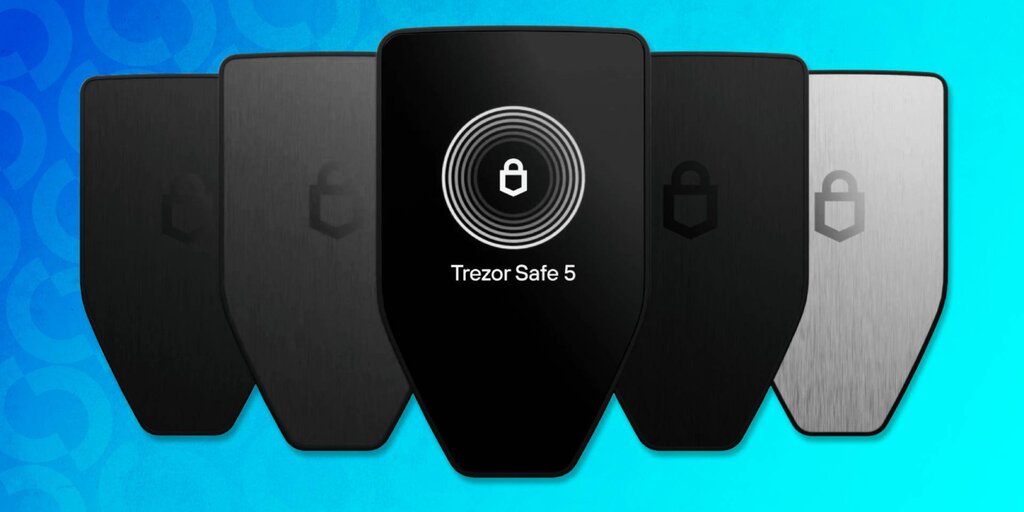 Trezor Warns CryptoBilis Buyers After Report of Hardware Implant in Safe 5
Trezor warned buyers of its wallets from reseller CryptoBilis (March 2026 onward) to move funds, after an Indonesian customer reported a hardware implant in a Safe 5 bought in August 2026. The report describes a board with a cellular module between mainboard and screen that reads the wallet backup and sends it over a mobile network. Trezor has not yet examined the device. It found no tampering in four other CryptoBilis units.
 decrypt.coarticlePublished and added 30 Oct 2026
- Trezor reports suspected hardware implant in Safe 5 sold by CryptoBilis
Trezor reported a suspected hardware implant in a Safe 5 bought in August 2026 from reseller CryptoBilis via Tokopedia. The alleged implant is a board with a cellular module that reads the screen, including recovery phrases. Trezor has not examined the device and found no tampering in four other units, and it told buyers who purchased from the reseller since March 2026 to move funds.
 theblock.coarticlePublished and added 30 Oct 2026
 Trezor hardware implant report: CryptoBilis buyers urged to move funds
Trezor advised everyone who bought wallets from reseller CryptoBilis since March 2026 to move funds to a new wallet with a new recovery phrase. An Indonesian customer reported a Safe 5 bought via Tokopedia in August 2026 with an extra board holding a cellular module that allegedly sends the wallet backup out. Trezor has not yet examined the device. Ledger separately confirmed tampering on CryptoBilis devices in October 2026.
 en.cryptonomist.charticlePublished and added 30 Oct 2026
- A Quantitative Evaluation of Constant-Time Analysis Tools
AutoBench-CT is a modular benchmark for constant-time analysis tools, with manually verified per-violation ground truth across 64 cryptographic tasks. It scores seven tools on operational performance, detection quality and usability. The authors explain why CT-grind (2010) is still the most used tool, list recurring limitations across tools, and propose a composite pipeline for stronger constant-time guarantees. Accepted at ACSAC 2026.
 eprint.iacr.orgpaperAdded 31 Oct 2026, published 29 Oct 2026
- Cryptanalysis and Enhancement of VTBSAE: Provably Secure Verifier-Based PAKE Protocols for the Industrial Internet of Things
Cryptanalysis of VTBSAE, a verifier-based PAKE protocol for the Industrial Internet of Things, showing it fails to resist client impersonation after server compromise. The authors propose E-VTBSAEv1, which binds the client point E1 to fresh server randomness, and prove AKE security and forward secrecy in the random-oracle model under CDH. Raspberry Pi 4B tests show runtime comparable to VTBSAE with the same communication and storage overhead.
eprint.iacr.orgpaperAdded 31 Oct 2026, published 29 Oct 2026 - Optimality and Efficiency of Higher-Order Rank-Based Side-Channel Attacks against Inner Product Masking Schemes
HO-ASPA (Higher-Order Adjusted Spearman Coefficient Analysis) is a rank-based, non-profiling side-channel distinguisher. The paper derives its optimal form against two-share Boolean masking and inner product masking under Hamming weight and LSB leakage. It finds no significant gap between higher and lower orders for HO-ASPA, unlike HO-CPA, and reports that it beats Kruskal-Wallis-based attacks in simulated and real-world experiments.
eprint.iacr.orgpaperAdded 31 Oct 2026, published 29 Oct 2026 - Beyond the Scope of This Paper: Practical Flash-Accelerator and Cache-Collision Timing Attacks on Microcontrollers
Colin O'Flynn's paper shows that the flash accelerator in most microcontrollers produces the same timing collisions as a cache, so cacheless Cortex-M devices remain open to cache-collision attacks on AES. AES keys were recovered from as few as 750 traces across six cryptographic libraries, eight architectures and over twenty devices. It also attacks SPI bootloaders, Ethernet, CTAP2 over USB and 802.15.4, and releases the open-source tool FlashWhisperer.
eprint.iacr.orgpaperAdded 31 Oct 2026, published 29 Oct 2026 - Hitachi Energy CoreTec Product
CISA advisory ICSA-26-302-03, republished from Hitachi Energy PSIRT 8DBD000258, covers OS command injection (CVE-2026-13162) and the Dirty Frag vulnerability (CVE-2026-43284) in Hitachi Energy CoreTec. CoreTec5 up to 3.4.0 and 5.0.0 are affected by both, and CoreTec4 up to 3.4.0 by CVE-2026-13162. The advisory was released 27 October 2026 and lists generic ICS mitigations. SSVC rates exploitation as none.
 cisa.govadvisoryAdded 29 Oct 2026, published 28 Oct 2026
- Hitachi Energy TRO600 series products
ICSA-26-302-02 is a CISA republication of Hitachi Energy PSIRT advisory 8DBD000224 on the TRO600 series. It covers CVE-2026-10756 and CVE-2026-106087, which allow remote code execution and disclosure of sensitive information. Affected versions are TRO600 up to 9.2.1.6 and 9.1.1.0, plus 9.2.2.1 and 9.1.2.0. The page gives no per-CVE detail or CVSS scores, only general ICS hardening advice. Released 27 October 2026.
cisa.govadvisoryAdded 29 Oct 2026, published 28 Oct 2026  Social Engineering: Modem-Based Persistence in a Compromised Environment
The article describes reflashing a Huawei E3372h-153 HiLink 4G USB modem so its embedded Linux OS runs an OpenVPN client over the mobile network, creating a covert, network-independent persistence channel after physical USB access. It walks through enabling debug mode, flashing firmware, disabling CD-ROM emulation, configuring DHCP and autorun scripts, and chaining a second L2VPN tunnel to bridge the attacker directly onto the victim's Ethernet segment for tools like Responder. Defense guidance focuses on restricting USB ports and disabling USB network adapters via policy.
 hackers-arise.comwriteupPublished and added 28 Oct 2026
 TLS Flaws Found in GoAhead Web Server Used in Hundreds of Millions of Devices
FoxIO disclosed three TLS flaws in the GoAhead embedded web server from EmbedThis, used on hundreds of millions of IoT, OT and network devices. CVE-2026-115881 (CVSS 9.1) leaves revoked client certificates accepted under mTLS with OpenSSL; CVE-2026-115884 (7.4) bypasses chain-length limits with LibreSSL; a third Mbed TLS bug (5.9, no CVE) weakens TLS 1.2 DHE. GoAhead 6.1.1 fixes the OpenSSL and Mbed TLS issues, and FoxIO released PoC code and fingerprints.
securityweek.comarticlePublished and added 28 Oct 2026 Christiaan Stoudt (@cstoudt) on X
Thread on CVE-2026-97631, a critical (9.5) flaw in TianoCore EDK II UEFI firmware, found by Alex Matrosov and Dan Holmes-Mitra. It is exploitable only while a machine is PXE network booting and the attacker sends an oversized ICMP error from the same network. Code execution also needs the exact firmware build, and Secure Boot does not help. The fix landed in EDK II main on 15 October but is not in a stable release. No known exploitation, and not in CISA KEV.
 x.comthreadAdded 30 Oct 2026, published 28 Oct 2026
 Long-Hidden Flaws Patched in EPICS Research Facility Control Software
Four vulnerabilities in EPICS Base 7.0.10 and earlier, the control-system toolkit used at ITER and the Advanced Photon Source, were disclosed by CISA. CVE-2026-114595 (CVSS 9.8) is an integer overflow that could allow remote code execution, though only an out-of-bounds heap write and crash were demonstrated. All flaws sit in Channel Access and pvAccess handling (TCP 5064 and 5075), need no authentication, and are fixed in 7.0.11.
securityweek.comarticlePublished and added 28 Oct 2026 Bitcoin Wallet Maker Keystone Pulls Devices as Stolen Key Opens Door to Fakes
Keystone, a Bitcoin hardware wallet maker, will destroy 18,835 unsold devices and has halted shipping after an attacker obtained the permanent WebAuth factory key used to verify genuine hardware, detected October 20, 2026. The key could let counterfeit wallets pass authentication. The breach also exposed 25,964 Shopify buyer records (2024 to 2026) that should have been erased under a 180-day policy; recovery phrases and private keys were not involved.
decrypt.coarticlePublished and added 27 Oct 2026 Tractable, Not Truncated: Colored-Noise TRNG Security via Fractional Brownian Motion
This ePrint paper models oscillator-based TRNG phase noise, both white and flicker, as fractional Brownian motion. It proves a quasi-renewal property that gives closed-form worst-case min-entropy and sampling requirements, and extends spectral and Allan-variance analysis so noise parameters come from a single timing trace. FPGA and ASIC experiments show flicker noise accounts for over 99% of uncertainty at a 0.99 min-entropy target, allowing a bitrate two to three orders of magnitude higher.
eprint.iacr.orgpaperAdded 28 Oct 2026, published 27 Oct 2026- Towards Quantum Sensing for Side-Channel Analysis
Preprint on using nitrogen-vacancy (NV) center quantum sensing for electromagnetic side-channel analysis of ICs. The authors build an NV-based RF spectrometer with 1.1 GHz real-time bandwidth and adjustable center frequency, which reads the spectrum in the time domain without Fourier transforms or frequency sweeps. They use it on RSA decryption emanations and for leakage detection on a software Number Theoretic Transform running on a Cortex-M4 microcontroller.
eprint.iacr.orgpaperAdded 28 Oct 2026, published 27 Oct 2026  Crypto wallet maker Keystone to destroy almost 19,000 devices after security breach
Keystone, a hardware wallet maker, will destroy 18,835 unsold devices after an attacker used a flaw in a third-party data monitoring tool to breach its website on 20 October 2026. The breach exposed 25,964 buyer records and a factory-set authenticity key that cannot be changed, so counterfeit wallets could pass checks. An automated deletion tool had failed unnoticed against the 180-day retention policy. The report also covers a Foundation breach with 23,000 phishing attempts.
 coindesk.comarticlePublished and added 27 Oct 2026
- Unshuffling Fisher-Yates: Practical Recovery of Length-128 Permutations and Application to ML-DSA
Paper (IACR ePrint 2026/2658) presenting a single-trace side-channel attack on a software Fisher-Yates shuffle of length 128, the butterfly count in one ML-DSA NTT layer. It removes rejection-sampling timing variation, extracts Hamming weight and identity leakage, and enumerates likely permutations with constraint programming. On a shuffled ML-DSA-44 NTT it recovers secret polynomial s1, fully or up to a few coefficients.
eprint.iacr.orgpaperAdded 28 Oct 2026, published 27 Oct 2026 - Poly2MsgLeaks: Certified Key Recovery from Polynomial-to-Message Leakage
Poly2MsgLeaks is a profiled chosen-ciphertext power-analysis attack on the SMAUG-T (TiMER parameter set) post-quantum KEM that recovers the full 512-coefficient PKE secret from six traces on an STM32F415. It recovers 999 of 1,000 unseen secrets and proves an incorrect key is released with probability at most 2^-2095.6. Single-write message assembly and a two-share masked P2M resisted the evaluated six-execution attack.
eprint.iacr.orgpaperAdded 28 Oct 2026, published 27 Oct 2026 - Falcon Key Recovery from Joint Sampler Leakages
Falcon Key Recovery from Joint Sampler Leakages is an ePrint paper presenting a power side-channel attack on Falcon and FN-DSA that fuses three SamplerZ leakages (exponent class of the center, sign bit, proposal magnitude). It turns them into slab and halfspace constraints solved by softplus interval regression, with no LLL or BKZ. On PQClean Falcon-512 (ARM Cortex-M4) it recovered all 50 keys with at most 34 signatures; on c-fn-dsa it recovered 38 of 50 keys within 200 signatures.
eprint.iacr.orgpaperAdded 28 Oct 2026, published 27 Oct 2026 - When Algebraic Structure Meets Too Many Hints
"When Algebraic Structure Meets Too Many Hints" is an ePrint paper (2026/2654) arguing that DDGR hint classes and too-many-hints thresholds are not standalone side-channel security metrics. In synthetic Kyber-512 experiments, NTT-domain residues recover the full secret with about half the hints the uniform mod-q bound predicts. Finite-precision FFT samples need 25% to 55% of the budget for uniform perfect hints. No new attack optimizations are proposed.
eprint.iacr.orgpaperPublished and added 27 Oct 2026 - Analyzing Compiler-induced Constant-time Violations with Compiler at Scale
CTGREP is a compiler-based framework that applies differential analysis across the whole Clang/LLVM compilation chain to find where, how and under which configurations compiler optimizations break constant-time cryptographic code. Applied to seven libraries, three Clang versions, six targets and thousands of configurations, it led to 48 cases fixed with developers. It also identified seven new problematic LLVM passes and bypassed existing compiler-flag mitigations.
eprint.iacr.orgpaperAdded 27 Oct 2026, published 26 Oct 2026  Keystone Breach Widens as Attacker Grabs Its Device Authentication Key
Keystone, a hardware wallet maker, disclosed on 26 October 2026 that the attacker behind its 20 October store breach also took the WebAuth device authentication key. The key is written at the factory and cannot be changed, so Keystone is scrapping 18,835 devices. The breach came through a third-party monitoring tool on its Shopify site and exposed 25,964 buyer records. Old-key units received after 20 October may be counterfeit.
 bankless.comarticlePublished and added 26 Oct 2026
 Keystone to destroy almost 19,000 wallets after device key leak
Keystone confirmed a breach of Shopify customer records (about 26,000 plus 13,000 incomplete orders), in which the attacker also took the WebAuth key used to verify device authenticity. It will destroy almost 19,000 unshipped wallets and issue a new key. Foundation Passport phishing emails (over 20,000) came from compromised Cloudflare API keys, and old WooCommerce database copies kept personal data past the stated 60-day deletion.
protos.comarticlePublished and added 26 Oct 2026 Dutch Police Arrest Two Over NFC Relay Attacks That Drained $400,000+ From Bank Accounts
Dutch police arrested two men, aged 23 and 25 from Vaassen and Ede, on October 6 over a bank helpdesk fraud that took over €380,000 from 170 victims. Callers played AI-generated bank audio, then a fake bank employee had victims install an app and tap their card to the phone. The app read the NFC chip data and relayed it to an accomplice at an ATM. Police seized the servers.
securityweek.comarticlePublished and added 26 Oct 2026- Non-profiled Single-Trace ML-DSA Secret Key Recovery by Horizontal Distribution Analysis
Non-profiled single-trace side-channel attack on ML-DSA-65 (Dilithium) running on ARM Cortex-M4, by Linus Backlund and Elena Dubrova (KTH). It compares observed sample distributions with expected Hamming weight leakage using a Gaussian mixture model, and stacks partitioned trace segments for multiple observations. Information-set decoding corrects misclassifications; with a 2^70 enumeration budget, the full secret key is recovered from one trace in 99% of attacks, using secret key unpacking as the attack point.
eprint.iacr.orgpaperPublished and added 26 Oct 2026 - Techjunkie Aman (@Techjunkie_Aman) on X
ns2jb is a software-only jailbreak for the Nintendo Switch 2 running firmware 23.0.1, announced in a post on X. It runs arbitrary native code, allows save dumping, reverse engineering and game modding, and reaches most peripherals via MMIO. It is tethered (rerun after reboot) and gives no CFW or full kernel control. The post says Mario Kart World has been modded with custom characters. It gives no technical detail on the exploit chain.
x.comthreadAdded 24 Oct 2026, published 22 Oct 2026 - Anti-Forensics: Building a Phantomdrive
Phantomdrive is an open source USB drive built on the WCH CH569 chip that appears as a plain 8GB disk and hides the rest of an SD card behind AES-256 encryption. The hidden partition unlocks when the user saves "password:" in a text file; the firmware catches it in raw WRITE10 traffic and zeroes the buffer. Key derivation uses a per-device salt and 100,000 SHA-256 rounds, and the post compares AES-ECB, CTR and XTS speeds.
hackers-arise.comarticlePublished and added 22 Oct 2026 - The Good, the Bad, and the Noisy: A Systematic Analysis of Ring-Oscillator-Based Noise Generators
This IACR ePrint paper (2026/2597) systematically compares ring-oscillator-based additive noise generators, a hiding countermeasure against side-channel attacks. Experiments show many existing designs ignore output amplification and the risk of the noise being filtered out, so they lower signal-to-noise ratio too little. The authors give a guideline on inverter chain length, output amplification and frequency randomization, and build a tailored generator for an AES implementation that outperforms prior designs.
eprint.iacr.orgpaperAdded 24 Oct 2026, published 22 Oct 2026  Your MCU likely escaped the eMudhra intermediate CA compromise
Analysis of the eMudhra intermediate CA compromise disclosed 20 October 2026, in which eight intermediate CA private keys were weak P-384 keys (top 376 bits zero, one key equal to 4) and publicly accessible. It explains web PKI chains and why browsers enforcing Certificate Transparency were not exposed. It argues MCU firmware that bundles only the single root it needs, as in Zephyr's HTTP GET sample, is likely safe unless it trusts an eMudhra or Sectigo cross-signing root.
 danielmangum.comarticleAdded 22 Oct 2026, published 21 Oct 2026
- Sotto Maschera: Masking the Sota-Voce Fixed-Weight Vector Sampling
Sotto Maschera is a masked implementation of the Sota Voce sparse fixed-weight vector sampler (Sota support sampler and MWSupport conversion) for embedded devices, protecting against power side-channel attacks. It bitslices sorting, merging and compaction and masks only in the Boolean domain, avoiding slow conversions. TVLA evaluations show no leakage, and HQC runs up to 45x faster than previous masked work.
eprint.iacr.orgpaperAdded 24 Oct 2026, published 21 Oct 2026 - Cryptocurrency: Security Analysis of Hardware Crypto Wallets
Hackers Arise article on the October 2026 attack in which Ledger Nano X devices sold by the reseller CryptoBilis carried a hidden circuit board that taps the SPI bus to the screen, rebuilds the 24-word recovery phrase and sends it out over LTE. Losses are estimated at $86 million to over $100 million. The device still passes Genuine Check. It lists safe purchasing, checking and recovery steps, plus BIP-39 passphrase and multisig advice.
hackers-arise.comarticlePublished and added 21 Oct 2026 - RingTrace: Model-Free Spatio-Temporal Detection and Core Attribution for Cache Side-Channels
RingTrace is a monitoring framework that detects Flush+Reload cache side-channel attacks by combining per-core cache-miss counters with slice activity across uncore CBoxes. Its Joint Spatio-Temporal Attribution (JSTA) builds a joint-activity matrix without model training: the largest entry is the screening score and row sums point to a candidate core. The authors report detection before secret leakage, fewer false alarms under heavy memory load, and negligible runtime overhead on commodity processors.
eprint.iacr.orgpaperAdded 24 Oct 2026, published 21 Oct 2026 - SHAKEing SLH-DSA with Non-profiled SCAs
SHAKEing SLH-DSA with Non-profiled SCAs is an eShard ePrint paper (2026/2584) on correlation power analysis of SLH-DSA-SHAKE, the NIST-standardised hash-based signature scheme. It analyses PRF inputs and selection functions, then combines subtrace averaging, partial-then-total CPA and an efficient exhaustive search to recover the full secret seed, enabling universal forgery. On a 32-bit microcontroller the attack needs about 280 to 559 signatures, and the search finishes within 45 minutes on 72 cores.
eprint.iacr.orgpaperAdded 24 Oct 2026, published 21 Oct 2026 - Table-Free Constant-Work BCH Decoding by Algebraic Index Elimination
Table-free constant-work BCH decoding by algebraic index elimination is an IACR ePrint paper (2026/2580) that replaces the table scans in Walters and Sinha Roy's constant-work BCH decoder with fixed circuits over public addresses. It proves correctness through radius t and trace regularity, removes 5.2 and 7.2 KiB of tables, and runs 35.7 to 82.4 times faster on an i7-13700. Ordinary C masks compiled to received-word-dependent branches under Apple Clang 21, so the authors use a compiler-opaque primitive and run timing screens on four platforms.
eprint.iacr.orgpaperAdded 24 Oct 2026, published 21 Oct 2026 - Active and Passive Attacks against TPM 2.0-based Full Disk Encryption
Active and Passive Attacks against TPM 2.0-based Full Disk Encryption is an ePrint paper by Freud, Hein and Klein (BSI). It shows SPI bus sniffing and interception against discrete TPMs on a mini PC and a notebook, plus a prototype UEFI firmware attack in QEMU that affects firmware TPMs. The attacks break BitLocker and all current Linux FDE implementations, including those using TPM parameter encryption.
eprint.iacr.orgpaperAdded 24 Oct 2026, published 21 Oct 2026 - HAETAE on a Diet: Less Stack, Less Time on Low-End Microcontrollers
This ePrint paper presents an optimized HAETAE implementation, a lattice-based post-quantum signature scheme, for Cortex-M4, Cortex-M3, MSP430 and AVR. It keeps polynomials in 16 bits, shares buffers between objects with disjoint lifetimes, and replays Gaussian samples instead of regenerating them. On an ATmega2560, HAETAE-2 key generation, signing and verification run in 8,070 B of SRAM. Stack use drops up to 34% and signing is 1.18-2.51x faster than Low-Stack HAETAE.
eprint.iacr.orgpaperAdded 24 Oct 2026, published 21 Oct 2026 - DISCO*: DIstributed and SCalable Oblivious Joins and Oblivious Primitives
DISCO is a distributed, fully oblivious database system that combines hardware enclaves (TEEs) with oblivious primitives to hide access patterns from side-channel and leakage-abuse attacks. New distributed frameworks and communication optimizations let it run in parallel across servers. It reports 88x speedup over Jodes and 180x over SODA on non-foreign-key joins with 2^25 elements, and the first terabyte-scale results.
eprint.iacr.orgpaperAdded 21 Oct 2026, published 20 Oct 2026 - A Spectral Theory of Local-to-Global Leakage
A Spectral Theory of Local-to-Global Leakage is an IACR ePrint paper (2026/2571) by Rei Ueno on additive secret sharing over finite abelian groups. It gives an exact leakage decomposition into local leakage magnitude and spectral alignment across shares. Two channels with identical local mutual information can have exponentially different global leakage. Automorphism-weighted sharing can cancel leakage perfectly with finitely many shares, which ordinary additive sharing cannot do.
eprint.iacr.orgpaperAdded 21 Oct 2026, published 20 Oct 2026 - Efficient NTRU+ Implementations on Cortex-M
Efficient NTRU+ Implementations on Cortex-M presents NTRU+ KEM implementations built on 3-way NTTs for Arm Cortex-M0+, M3, M4 and M7. It adds omega-folded front layers that handle ternary inputs without modular reduction. The speed-optimized version cuts execution time by up to 52.43% against the official optimized C code. The memory-optimized version cuts peak stack use by up to 82.60%.
eprint.iacr.orgpaperAdded 21 Oct 2026, published 20 Oct 2026 - A Systematic Evaluation of Fault Attacks and Countermeasures on ML-DSA Rejection Sampling
Systematic evaluation of fault attacks on ML-DSA (FIPS 204) rejection sampling and of proposed countermeasures. It proves the "third rejection test" of patent WO2025261784A1 re-verifies what check 2 already guarantees, and shows that 30,000 fault injections never detect a skipped z-norm check. The author fully recovers s1 against a third-check-protected implementation under randomized signing. Third check and sign-then-verify are complementary; overhead is 0.04–0.05% on x86-64 and 0.83% on Cortex-M4 for the third check.
eprint.iacr.orgpaperAdded 21 Oct 2026, published 20 Oct 2026 - Fault-Induced Nonce Repetition in Threshold Lattice Signatures: A Reveal-Structure Criterion, Cross-Scheme Analysis, and Detection Boundaries
Fault-Induced Nonce Repetition in Threshold Lattice Signatures is an ePrint paper (2026/2566, Yulong Meng) showing that faulting t devices in a t-of-n threshold ML-DSA deployment recovers the full signing secret, verified on Mithril with exact recovery in 96/96 scan groups. It gives a reveal-structure criterion across Quorus, TALUS and Trilithium, a threshold law m* = (ℓ-1)N+⌈N/K⌉ for imperfect faults, and two-layer transcript detection (305/305 hits, no false positives).
eprint.iacr.orgpaperAdded 21 Oct 2026, published 20 Oct 2026 - FN-DSA on Arm Cortex-M55: Revisiting a Floating-Point Lattice Signature with Native FP64 and Helium
FN-DSA on Arm Cortex-M55 is an ePrint paper presenting the first FN-DSA (NIST post-quantum signature) implementation on this core that reproduces the reference known-answer tests and runs in constant time. It uses the native FP64 FPU for signing and Helium (MVE) for NTT, key-generation FFT and Keccak, with SLOTHY rescheduling. Key generation, signing and verification are up to 1.23x, 1.93x and 1.30x faster than the reference, and four-signature batch verification up to 1.75x.
eprint.iacr.orgpaperPublished and added 20 Oct 2026 - Explained: The Ledger Supply Chain Incident (October 2026)
The Ledger supply chain incident of October 2026: on-chain analysis estimates $93 million was stolen after devices sold by the reseller CryptoBilis carried an implant with an eSIM. The implant watched the screen during setup, captured the 24-word recovery phrase and sent it over LTE, without touching the Secure Element. Tether froze about $10 million USDT. Reports from Changi Airport and MediaMarkt stores remain unconfirmed.
 halborn.comarticleAdded 20 Oct 2026
- Energy Consumption of Post-Quantum Cryptography on Constrained and General-Purpose Architectures
Benchmark of the three NIST post-quantum standards, FIPS 203 (ML-KEM), FIPS 204 (ML-DSA) and FIPS 205 (SLH-DSA), measuring speed and energy for key generation, signing and verification. Tests ran on Raspberry Pi 1, Zero and 4 and on laptop hardware, using OpenSSL 3.5 and a FNIRSI FNB58 USB power meter. ML-KEM and ML-DSA match classical elliptic-curve cryptography, while SLH-DSA signing on 32-bit devices cost up to 243% more energy than on 64-bit.
eprint.iacr.orgpaperAdded 20 Oct 2026, published 19 Oct 2026 - CHARRM - Characterizing Hardware Leakage in the Robust Random Probing Model
CHARRM is a verification methodology for masked hardware circuits in the (g, t, c)-robust (p, ε)-random probing model. It extends leakage characteristics to glitch-extended and transition-extended robust probing on arbitrary circuit structures, and links them to the Set of Input Shares (SIS) function for composability notions. It outperforms IronMask on larger circuits and gives exact verification of larger composed circuits in case studies.
eprint.iacr.orgpaperAdded 20 Oct 2026, published 19 Oct 2026 - Privacy with Leakage from Falsifiable Assumptions
Privacy with Leakage from Falsifiable Assumptions is an ASIACRYPT 2026 paper by Francesco Berti and Itamar Levi. It replaces simulatability with "secure refreshing", a key-refreshing assumption that evaluation laboratories can test directly, and adds "strongly protected secure refreshing". Using these, it proves privacy of the PSV encryption scheme without assuming a leak-free component.
eprint.iacr.orgpaperAdded 20 Oct 2026, published 19 Oct 2026 - Blind-DLPA: An End-to-End Framework for Profiled Blind Side-Channel Analysis
Blind-DLPA is a multi-task deep-learning framework for profiled blind side-channel analysis, where the attacker has labeled profiling traces but only leakage traces from the target, with no plaintexts or ciphertexts. It estimates Hamming-weight posteriors of an input and a key-dependent intermediate, then ranks key hypotheses against theoretical joint distributions. It recovers keys on unprotected AES and Kyber and on ASCAD (guessing entropy zero with 39 traces), and the authors report collisions in a prior Ascon Hamming-weight model.
eprint.iacr.orgpaperAdded 20 Oct 2026, published 19 Oct 2026 - From if to Oops: Turning a conditional into a key-recovery oracle
The paper presents a fault attack on deterministic CSIDH and OSIDH-LD. Forcing the lane-selection mask to zero (for example by skipping one instruction) makes output changes reveal whether a secret exponent reaches a threshold. Binary search then recovers the full key in at most 297 queries for OSIDH-LD and 222 for deterministic CSIDH with CSIDH-512-sized keys. Full OSIDH-LD keys were recovered in software fault simulation, and a ChipWhisperer-Lite skipped the target instruction with probability at least 0.94. The authors argue fault resistance requires giving up determinism and propose randomization countermeasures.
eprint.iacr.orgpaperAdded 20 Oct 2026, published 19 Oct 2026  Broadcom Wi-Fi vulnerability leaves over 1.5 million Belgian gateways exposed
A Broadcom SDK flaw in the WPS code that reassembles fragmented EAP messages allows a buffer overflow and unauthenticated code execution over Wi-Fi, bypassing WPA2/WPA3 passwords. Quentin Kaiser of ONEKEY demonstrated it at Hexacon on 16 October 2026 against Orange Belgium and Proximus gateways, and published a fingerprinting script and YARA rule. Broadcom's 2018 patch was incomplete, it refused a CVE, and over 1.5 million Belgian gateways are exposed.
en.cryptonomist.charticlePublished and added 19 Oct 2026- Efficient and Compact High-order Masking Raccoon on Memory Constrained Devices
The paper presents the first efficient, compact implementation of high-order masked Raccoon (lattice-based signature, CRYPTO 2024) on ARM Cortex-M4, up to 32 masking orders. It uses 3+3+3 layer-merged 32-bit NTT/INTT with lazy reduction, a negative double Montgomery reduction, and one-shot SHAKE256 sampling (at least 1.80x faster). It beats the reference by 1.85x-2.25x and masked Dilithium3 at orders 2, 4 and 8. Second-order leakage tests show DPA resistance once micro-architectural transitional leakage is mitigated.
eprint.iacr.orgpaperAdded 20 Oct 2026, published 19 Oct 2026 - SAT and Neural Network Filters for Misinjections in Fault Attacks
This ePrint paper presents key-independent filters that remove misinjections (faults that miss the assumed form) in elimination fault attacks. A SAT filter, a neural network filter and a combined filter were tested on clock-glitch faults into GIFT-64, GIFT-128 and BAKSHEESH on a microcontroller. The SAT filter rejected none of 14669 intended faults, and raised ToFA success on BAKSHEESH from 5.2% to 61.2% (96.2% combined).
eprint.iacr.orgpaperAdded 20 Oct 2026, published 19 Oct 2026 - IISFA: Ineffective Instruction-Skip Fault Attacks on Bitslice Implementations
IISFA (Ineffective Instruction-Skip Fault Attack) targets bitsliced block cipher implementations protected by redundancy countermeasures. Skipping one bitslice instruction leaves the result unchanged only when all m S-box inputs fall in an ineffective set, so each released ciphertext restricts all m subkeys. The authors give known- and chosen-plaintext key-recovery procedures and expected injection counts, and recover keys in every trial on GIFT, SKINNY and PIPO implementations on an 8-bit AVR microcontroller using clock glitches.
eprint.iacr.orgpaperAdded 20 Oct 2026, published 19 Oct 2026  Bitcoin News (@BitcoinNewsCom) on X
Mark Karpelès, former Mt. Gox CEO, says he is building a low-cost device to detect hidden LTE antenna spy implants in hardware wallets such as Ledger without opening them. It emits weak radio waves and measures resonance frequencies. He plans to publish the PCB designs and specs; the project is at concept stage with a prototype expected within weeks. A linked YouTube video is not covered in the text.
x.comthreadAdded 20 Oct 2026, published 18 Oct 2026- Enjoy FAEST on Hardware: Efficient and Novel Hardware Acceleration of Emerging Post-Quantum Digital Signature Scheme FAEST
This ePrint paper (2026/2525, October 2026) by Brendan Funk and Jiafeng Xie presents the first hardware accelerator for FAEST, an MPC-in-the-head post-quantum signature in NIST's Round 3 additional-signature process. It analyses FAEST's compute-heavy operations, builds them into hardware blocks, and adds an L1-EM-fast variant. The authors report at least 98% lower equivalent area-delay product than the recent complete SDitH design at the same security level.
eprint.iacr.orgpaperAdded 19 Oct 2026, published 18 Oct 2026 - DPA-style Attacks on VOLE-in-the-Head Signature Schemes
Presents the first DPA-style power side-channel attack framework against VOLE-in-the-Head signature schemes, targeting the secret witness whose recovery enables forging signatures on arbitrary messages. It analyzes leakage from sensitive intermediate values in VOLE correlations and proposes six attack classes (two vertical, four horizontal) on FAEST and SDitH, both in NIST's third round of additional signatures. Attacks are validated with simulated leakage under varying noise and real measurements on three ARM Cortex-M4 devices.
eprint.iacr.orgpaperPublished and added 17 Oct 2026 - Dark Web Intelligence (@DailyDarkWeb) on X
Post summarizing independent researcher Sammy Azdoufal's report on EnergizeLab's Eilik companion robots, which are marketed mostly to kids. Per the report, any registered user could read other families' chat transcripts through the vendor back office. An unauthenticated endpoint also lets anyone swap the robot's AI model, voice and personality (CVE-2026-105038, CVSS 9.8, PoC listed by the CNA). At the Oct 13 retest, 32 of 40 remotely testable findings were still open. The post notes that The Verge demonstrated the issue on its reporter's own toy, that vendor remediation is unverified, and that broader malicious compromise is unproven.
x.comthreadAdded 18 Oct 2026, published 17 Oct 2026  Factory Sealed – Rekt (Ledger/CryptoBilis hardware implant drains)
Rekt write-up on LTE-equipped hardware implants found in Ledger Nano X and Flex wallets sold through resellers such as CryptoBilis and MediaMarkt. The implants read the recovery phrase off the screen during setup and exfiltrate it over an eSIM/LTE modem, so Ledger's Genuine Check and Secure Element never detect them. It covers the teardown timeline (Joe Grand, Mark Karpelès, a Japan-based researcher), the 47-minute multi-chain drain (Bitquery estimates about $102M across 324 wallets, unverified by Ledger), the laundering path via USDD, THORChain, Tornado Cash and Zcash, the CryptoBilis ownership change, and the failure of "authorized reseller" trust.
 rekt.newswriteupAdded 17 Oct 2026
 Weekly Research Brief: Ledger’s $91M Theft, Papertrade
Galaxy Research's weekly brief leads with the roughly $91M theft from Ledger devices sold via the reseller CryptoBilis. A hidden hardware implant read the 24-word recovery phrase off the screen during setup and sent it over LTE through an eSIM, leaving the Secure Element untouched so Genuine Check still passed. Galaxy's onchain tally covers 474 victim addresses, 88% of the value moved in one hour on Oct. 9, and about $56.6M was still parked as of Oct. 15, with Tornado Cash use and a $10M Tether freeze. It places the theft alongside the Coldcard weak-seed, Liquid peg-out and Bitget compromises, and ends with buyer and custody advice. The Papertrade and OCC debanking sections are unrelated to security.
 galaxy.comarticleAdded 16 Oct 2026
 Inside the $91M Ledger Reseller Wallet Theft
Galaxy Research newsletter piece on the roughly $91M theft from buyers of Ledger hardware wallets sold by the reseller CryptoBilis. A hidden component reads the 24-word recovery phrase off the screen during setup and sends it over LTE via an eSIM. The Secure Element and Genuine Check are untouched, so the check passes on tampered units. It traces the drain across 474 victim addresses on Bitcoin, Ethereum and TRON, including 88% of the value moving in one hour on Oct. 9, and the laundering and freezes (Tornado Cash, Tether). It also places the incident among the quarter's other custody and infrastructure failures (Coldcard weak seeds, Liquid, Bitget) and gives buying and operational guidance.
galaxy.comarticleAdded 16 Oct 2026 Karpelès Reports Ledger Implants in Devices From Two More Resellers
The Defiant reports that Mark Karpelès found hardware implants in Ledger devices bought from two more resellers. Ledger says its inspections of German stock found no tampering and that it has not verified a fund drain tied to a device bought outside Southeast Asia. Ledger's authenticity check cannot detect the added hardware, which shows the limit of attestation against reseller-channel tampering. The page text is only a teaser, so technical detail is limited.
 thedefiant.ioarticlePublished and added 16 Oct 2026
- One parser, two bugs, many routers: Exploiting Broadcom WiFi across eCos, Linux
Long-form write-up of a Hexacon 2026 talk on a WPS EAP reassembly overflow in Broadcom's proprietary 802.11 stack, present since 2010 and incompletely patched in 2018. It is remotely triggerable over WiFi without the network key. It gives information disclosure and code execution on eCos (BCM3380, BCM3383, BCM33834) and Linux (BCM3390, BCM65xx, BCM68xx) platforms. Exploited on Belgian ISP routers from Proximus, VOO and Orange. Includes a 90-day disclosure timeline, and Broadcom refused to assign a CVE.
 quentinkaiser.bewriteupAdded 19 Oct 2026, published 16 Oct 2026
- Secure Compilation of Probabilistic Side-Channel Countermeasures
Presents a language- and leakage-model-agnostic framework for provably secure compilation of probabilistic side-channel countermeasures. It uses a deterministic leakage-preservation relation that implies preservation of d-NI, d-SNI and cryptographic constant-time without probabilistic proof obligations. The authors prove in Rocq that a model of the Jasmin compiler's core pipeline and several optimizing passes preserve security in the value-probing model with glitches. They also add source-level annotations to harden against transition leakage and release libmasking, an arbitrary-order masked gadget library in Jasmin that compiles to ARM and RISC-V, with C bindings and hardware benchmarks.
eprint.iacr.orgpaperAdded 17 Oct 2026, published 16 Oct 2026 - Sparse Secrets, Dense Problems: Efficiently Masking HQC in Hardware
ePrint paper presenting the first fully masked hardware implementation of HQC (key generation, encapsulation, decapsulation) on FPGA. It introduces a mixed Boolean/arithmetic masking for sparse-dense vector multiplication, proven first-order secure in the transition- and glitch-robust probing model and PINI-composable, at only 3% extra cycles and 81 random bits per cycle. It also shows a profiled horizontal side-channel attack on Rotate-and-Add multipliers that recovers support indices within ±8 positions from 200 traces despite TVLA showing no leakage after 10 million traces, and adds integrated hiding countermeasures costing 1.7% latency.
eprint.iacr.orgpaperAdded 17 Oct 2026, published 16 Oct 2026 - Power Analysis on SQIsign via Ideal Reconstruction from Quaternion Leakages
ePrint paper identifying five side-channel vulnerabilities in the signing procedure of Round-3 SQIsign, the isogeny-based signature scheme in NIST's additional post-quantum signature process. It gives polynomial-time algebraic algorithms that recover the secret key from leaked quaternion/ideal intermediate values, including cases where only partial bits leak. It also demonstrates power analysis on the SQIsign source code to extract the needed leakage, which earlier work on Round-1 or toy parameters did not do.
eprint.iacr.orgpaperAdded 17 Oct 2026, published 16 Oct 2026  Can SOLARBURST go silicon? A systematic analysis on software supply chain attacks for VLSI design flows
This paper analyses software supply chain (SWSC) attacks against VLSI design tools. It empirically studies the software composition, security features and tool interactions of VLSI suites, then builds a taxonomy linking SWSC attacks to VLSI attacks, design-flow stages and security outcomes. The taxonomy yields 717 possible new attacks, 60 of them high feasibility, with a threat model, a defense assessment and case studies on an open-source VLSI flow.
 arxiv.orgpaperAdded 20 Oct 2026, published 15 Oct 2026
- P7RIM3 (@P7RIM3) on X
Tweet about an unofficial open firmware, "waved", for the Insta360 Wave conference speakerphone, written as a single Rust program with a one-script revert to stock. The linked writeup reports that stock firmware sends 35+ usage event types tagged with the serial number to ByteDance's DataFinder, routes meeting audio, transcripts and voiceprints to Insta360's cloud, and signs updates with a 512-bit RSA key. Releases up to 1.0.13.6 exposed a root telnet shell with the password 123456. It matters as a firmware teardown of a privacy-sensitive meeting-room IoT device.
x.comthreadAdded 16 Oct 2026, published 15 Oct 2026  Ledger Officially Responds to Hardware Wallet Attack
Ledger disclosed that an organized group bought genuine hardware wallets, implanted hidden components that capture the 24-word recovery phrase during setup and send it over cellular networks, then fed the devices back in through resellers in Southeast Asia. Onchain researchers estimate up to $93M stolen across 300+ wallets, a figure Ledger has not confirmed. Ledger asked regional resellers to suspend sales, found no tampering in samples it inspected, and added reseller rules (no shelf display, report suspicious units, no resale of returned devices). It says its chips, OS and servers were not compromised.
bankless.comarticlePublished and added 15 Oct 2026 Supermarket Refrigeration Attack Widens to Copeland, Dixell Controllers
ANSSI's CERT-FR expanded its alert on the attack that disrupted refrigeration at about 700 French supermarkets to include Copeland XWEB and Dixell XWEB controllers, beyond Danfoss AK-SM and AK-SC series. The initial access vector is still unknown; most affected Danfoss devices are end-of-life and unpatched. Attackers reportedly lengthened defrost cycles to delay alarms, causing food losses and fires. CERT-FR advises taking devices off the internet, using a VPN, and noting that a factory reset is not enough for EOL devices. Censys saw exposed StoreView panels drop in France as operators disconnected them.
securityweek.comarticlePublished and added 15 Oct 2026 Ledger’s Atom device adds tamper detection after a recovery-phrase breach
News report on a Southeast Asia supply-chain breach in which Ledger devices sold via resellers such as CryptoBilis were modified with hidden chips. The chips read 24-word recovery phrases from the screen signals during setup and sent them out over LTE. Tether froze $10M USDT tied to the theft, and Ledger suspended sales in several Asian markets. It also covers Ledger's Android-based Atom signer, which adds a protective enclosure, screen and back-cover removal sensors with their own battery, tamper-evident packaging, and website-only initial sales.
en.cryptonomist.charticlePublished and added 15 Oct 2026 Supermarket refrigeration hack hit 700 French stores, with fridges reaching 50°C
Reports the 12 October 2026 compromise of internet-exposed Danfoss (AK-SM800, AK-SC355) and Dixell/Copeland refrigeration controllers. It hit an estimated 700 French stores and sites in five other European countries. Attackers forced defrost mode, spoiling food and in some cases starting electrical fires. Root causes were a firmware-derived daily "code-of-the-day" password that worked across all deployed units, end-of-life firmware, and no VPN or IP allowlisting. Pen Test Partners and Claroty Team82 recommend removing controllers from the public internet, VPN plus allowlist access, credential changes, current firmware, and controlled third-party access.
en.cryptonomist.charticlePublished and added 15 Oct 2026- Exploring Fault Injection Attacks on HQC and BIKE Beyond Fujisaki-Okamoto Verification
Presents fault injection attacks on BIKE and HQC decapsulation that target instructions outside the Fujisaki-Okamoto transform, achieving full key recovery with only valid ciphertexts at NIST Level 1 (17392 queries for HQC, about 3 million for BIKE). It also gives a general method for finding effective fault locations by analysing decoder behaviour under perturbed conditions. Attacks were validated with laser fault injection on an STM32H7 microcontroller, showing a wider attack surface for code-based post-quantum KEM implementations.
eprint.iacr.orgpaperPublished and added 15 Oct 2026 - A Hybrid BP-SAT Attack on MILENAGE: Combining the Complementary Strengths of Algebraic and Soft-Analytical Side-Channel Attacks
ePrint paper evaluating ASCA (SAT-based) and SASCA (belief propagation) side-channel attacks on the AES-based MILENAGE authentication algorithm in USIM cards, using neural-network leakage predictions to recover subscriber key K and operator secret OPc from a single trace. SASCA alone succeeds in 87.7% of attacks but converges to a wrong OPc in 6.1%; ASCA succeeds in only 34% within a 1-hour timeout. The hybrid, where BP refines the predictions before they go to the SAT solver, reaches 93.8% with lower average runtime. It also proposes a countermeasure that masks each AES round key with an independent per-device secret, and the authors report it defeated the hybrid attack in all evaluated cases.
eprint.iacr.orgpaperAdded 15 Oct 2026, published 14 Oct 2026 - Foundations of Hardware-Software Leakage Contracts
Survey-style paper introducing hardware-software leakage contracts, an ISA-level security abstraction that characterizes microarchitectural side-channel leakage (caches, speculative execution). It lets programmers and compilers produce code provably resistant to side-channel attacks like Spectre and Meltdown without reasoning about the microarchitecture, and gives hardware designers a specification to avoid undocumented side channels. It reviews recent contributions and open challenges.
arxiv.orgpaperAdded 17 Oct 2026, published 14 Oct 2026 - Quantum-Aware Key Rank for Side-Channel Attacks evaluation
Proposes a cost model and metric for an adversary who collects side-channel traces classically and finishes the key search on a quantum computer. Shows any quantum algorithm needs Omega(sqrt(r)) cipher evaluations for key rank r, and that the quadratic advantage holds only up to a rank bound set by the NIST MAXDEPTH budget (about 2^58.6 for AES-128 at D=2^40). Defines a quantum-aware key rank computable from existing rank estimators, with simulated-leakage experiments showing a depth-limited quantum adversary is worth about 22 traces at SNR 0.125.
arxiv.orgpaperAdded 16 Oct 2026, published 14 Oct 2026 - Uniform Sharing in Multiple Stages: Towards Second-Order Security
Presents an automated masking technique, extending the MultiStage approach, that gives second-order security in the glitch-extended probing model for arbitrary functions. It keeps fresh-mask requirements minimal as in NullFresh and avoids structural limits of earlier schemes. Applied to PRINCE, Midori and SKINNY, with formal verification in SILVER and PROLEAD and TVLA leakage testing on FPGA.
eprint.iacr.orgpaperAdded 15 Oct 2026, published 14 Oct 2026  ICS Patch Tuesday: Siemens Issues 17 Advisories, Rockwell Fixes ArmorBlock Takeover Flaw
Roundup of ICS Patch Tuesday advisories. Siemens published 17 advisories, including critical flaws in Simatic S7-1500 CPUs (400+ flaws in the GNU/Linux subsystem), Industrial Edge and Ruggedcom Crossbow SAC. Rockwell fixed a critical 1732E ArmorBlock flaw that lets an unauthenticated attacker change the web server password and take over the admin account, plus a DoS bug. Also covered: two high-severity Schneider Electric advisories (Pro-Face STW6000/Harmony STW6 and Sage RTUs), CISA and CERT@VDE advisories, and other vendor advisories since the last Patch Tuesday. ABB's dynovaPRO credential-reset bypass came with 26 password change events across 9 customers that may indicate reconnaissance.
securityweek.comarticlePublished and added 14 Oct 2026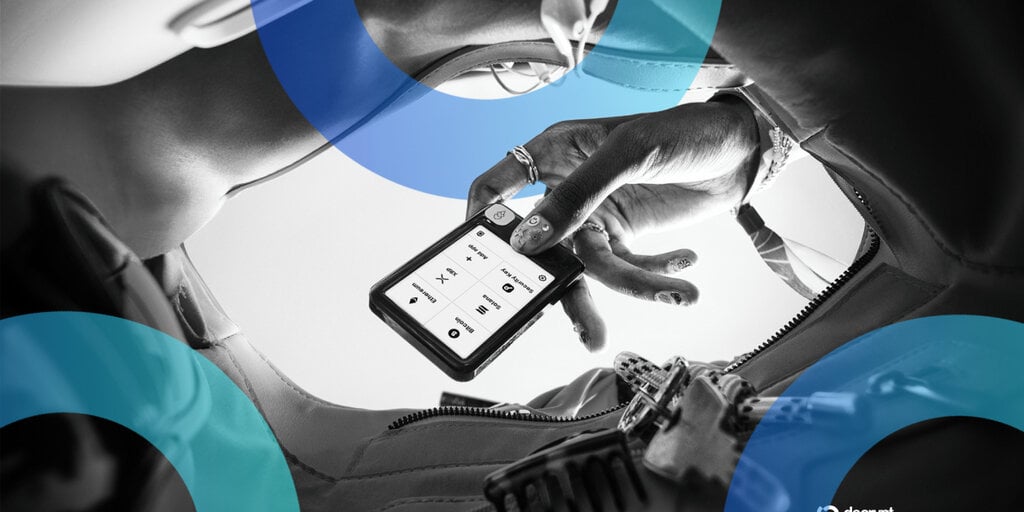 Ledger Asks Resellers in Seven Asian Markets to Pull Devices After Suspected $86M Drain
Ledger asked resellers and distributors in Indonesia, Singapore, Thailand, the Philippines, Vietnam, Malaysia and Hong Kong to pull its hardware wallets while it investigates devices fitted with a hidden implant. Its Donjon team found the implant reads the 24-word recovery phrase from the screen during setup and sends it out over LTE. All confirmed losses trace to devices sold through reseller CryptoBilis, and Specter has traced over $86M in suspected thefts, which Ledger has not verified. Ledger says its own infrastructure and direct channel show no compromise. MediaMarkt Saturn halted sales after a German customer reported an implant, and Trezor is ending reseller authorizations on January 1, 2027.
decrypt.coarticlePublished and added 14 Oct 2026- Hardware-Level Mitigation of Micro-Architectural Leakages in Embedded Processors
Proposes RTL-level architectural changes to general-purpose processors that remove the root causes of micro-architectural leakage, so masked cryptographic software runs securely under the Robust but Relaxed (RR) d-probing model without security-aware compilers or hardware-specific software workarounds. Each countermeasure is formally proven secure and integrated into the Ibex RISC-V core, which is evaluated by tool-assisted leakage assessment of the full netlist and by physical measurements on an FPGA.
eprint.iacr.orgpaperPublished and added 14 Oct 2026 - Tamper Sensing Meshes in Payment Terminals and Beyond
Teardown study of tamper sensing meshes (TSM) across a wide range of card payment terminals, ATM key pads and a data center HSM, with detailed photos of critical features. The authors build a taxonomy of mesh construction techniques, find most commercial meshes use simple constructions far from manufacturing limits, and derive a concise set of design patterns. They argue that meshes beating the industrial state of the art are feasible with cheap, readily available processes, giving researchers a basis for realistic test specimens.
eprint.iacr.orgpaperPublished and added 14 Oct 2026  Ledger Spyware Scare Spreads Across Asia and Europe
News roundup on hardware implants found in Ledger wallets sold through authorized resellers, starting with CryptoBilis in Southeast Asia and then Singapore, Japan and German MediaMarkt stores. The implants read the 24-word recovery phrase off the screen during setup and send it out over a hidden cellular link, while Ledger's secure chip stays untouched so the devices look genuine. Researchers describe three generations dating to 2025, each harder to detect. Suspected losses are put at $86M (Specter) to $103M (Yfarmx), and neither figure is verified by Ledger.
bankless.comarticlePublished and added 13 Oct 2026- Ledger confirms hardware implant in CryptoBilis reseller units as MediaMarkt suspends sales in Europe
Ledger's Donjon team confirmed that Ledger signers sold by the reseller CryptoBilis contain an unauthorized implant. It captures the 24-word recovery phrase during setup and sends it over LTE using a provisioned eSIM. It does not touch the Secure Element, the OS, or transaction signing. Onchain researchers estimate losses above $86M, but Ledger says that figure is unverified. MediaMarkt Saturn halted European Ledger sales after a tampered unit was reported in Germany, and Trezor and OneKey tightened or revoked reseller authorizations. The case shows a reseller-channel tampering risk for hardware wallets.
theblock.coarticlePublished and added 13 Oct 2026  German Ledger reseller pauses sales following $86M draining incident
Protos reports that German retailer MediaMarkt pulled all Ledger products after teardowns of Ledger hardware wallets showed physical spyware implants, tied to an $86M drain of wallets bought from Malaysian reseller CryptoBilis. Ledger's investigation concluded the implant recorded the 24-word recovery phrase and sent it out over an attached eSIM. Mark Karpelès has helped identify implants in dismantled devices from MediaMarkt, LazMall (Philippines), CryptoBilis and Metapod (Singapore airport). Ledger has so far confirmed only the CryptoBilis devices and says it is reviewing reports of implants elsewhere.
protos.comarticlePublished and added 13 Oct 2026- SDR (Signals Intelligence) for Hackers: Scanning Wireless Devices Using FieldWatch
Overview of FieldWatch, a free open-source Android app that passively listens to Wi-Fi and Bluetooth with the phone's own radios and matches them against an editable catalog of about 250 device signatures (trackers, drones, cameras, body cams, mesh radios). It supports alerts, recorded sessions, path maps, Remote ID drone and pilot location, GNSS interference/spoofing detection and export to TAK/ATAK. The article also covers its limits (no direction finding, no Bluetooth Classic, cellular or full Wi-Fi traffic, pattern matches only) and sideloading from the official GitHub repo on Android 10+.
hackers-arise.comarticlePublished and added 13 Oct 2026  Ledger hardware wallet breach exposes LTE implant stealing recovery phrases
Ledger's Donjon team confirmed on October 10, 2026 a physical implant inside a hardware wallet sold by Malaysia-based reseller CryptoBilis. The implant reads the device display, decodes the 24-word recovery phrase with a microcontroller, and exfiltrates it over LTE via a provisioned eSIM, leaving the Secure Element, OS, transactions and signatures untouched. Onchain investigator Specter traced over $86 million in suspected thefts across Ethereum, Tron and Bitcoin; Ledger advises CryptoBilis buyers to migrate funds to a new device with a new recovery phrase.
en.cryptonomist.charticlePublished and added 13 Oct 2026 Small AI Models May Soon Be Able to Self-Replicate on IoT Devices, Anthropic Warns
SecurityWeek summarizes Anthropic Frontier Red Team research on AI worms that run small open-weight models directly on compromised IoT devices. A 26B model split across 15 ~$55 Android TV boxes ran at 0.39 tokens/s; a 9B model got inference running on 8 of 9 hardware types, and only GLM-5.2 completed full replication across eight emulated Android devices (4 of 5 runs). Anthropic projects ≤30B models reaching that level by end of 2026, estimates a Kimwolf-sized botnet would host ~133,000 copies worth at most ~40 H100s, and notes defenders can spot large model transfers in ISP traffic and cut the target pool by removing default passwords.
securityweek.comarticlePublished and added 13 Oct 2026 Ledger Finds LTE Implant That Stole Recovery Phrases in Suspected $86M Drain
Ledger's Donjon security team confirmed an unauthorized hardware implant inside Ledger signers sold by Southeast Asian reseller CryptoBilis. The implant sits in the enclosure, reads the 24-word recovery phrase from the screen during setup, decodes it with a microcontroller, and exfiltrates it over LTE via a provisioned eSIM, without touching the Secure Element, OS, or signatures. Onchain investigator Specter traced over $86M in suspected thefts across Ethereum, Tron and Bitcoin; Ledger is reviewing reports of tampered devices elsewhere and advises affected buyers to move funds to a new device with a new seed.
decrypt.coarticlePublished and added 13 Oct 2026 $86 Million Crypto Heist Linked to Ledger Signer Hardware Implant
SecurityWeek reports that Ledger signers sold through the Southeast Asia reseller CryptoBilis had a hardware implant soldered onto the circuit board. The implant reads the screen during setup, decodes the 24-word recovery phrase with a microcontroller and sends it over LTE through a provisioned eSIM. Ledger says all confirmed losses trace to CryptoBilis devices and advises buyers from the last 90 days to move funds to a new signer with a new seed. On-chain investigator Specter puts losses at up to $86M, a figure Ledger has not confirmed.
securityweek.comarticlePublished and added 13 Oct 2026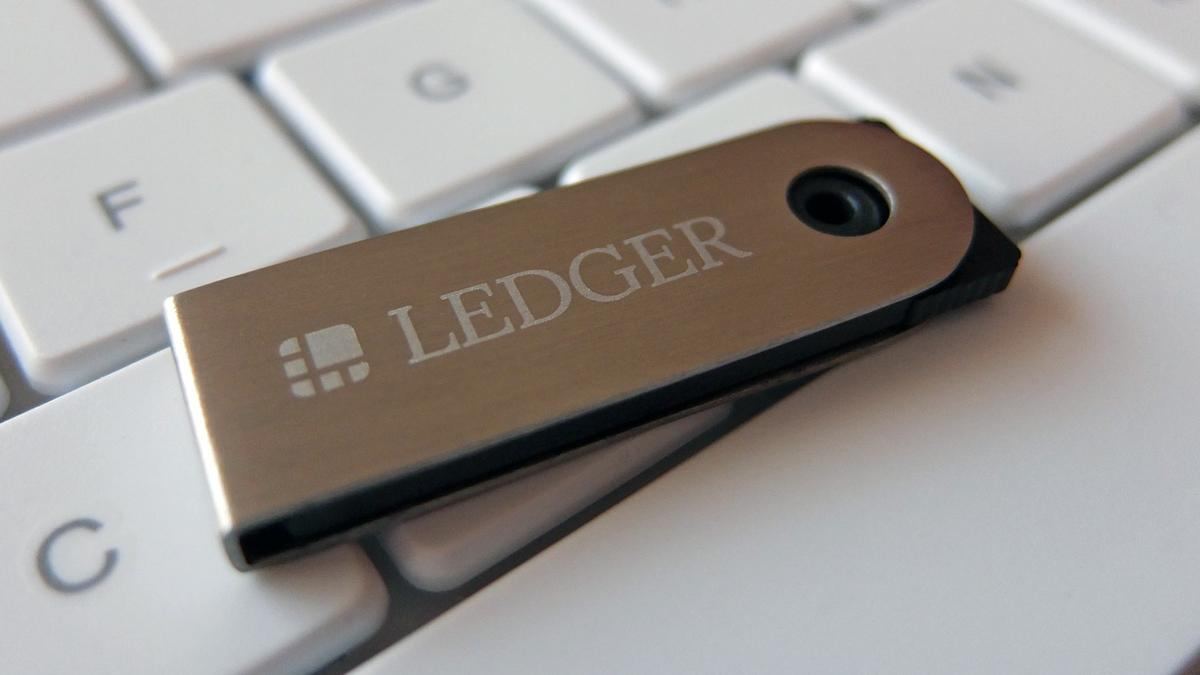 Ledger says 'spy' chip inside CryptoBilis Ledger devices transmitted wallet keys over mobile network
Ledger says some hardware wallets sold by the reseller CryptoBilis contained a covert implant inside the enclosure. Its microcontroller recognised the 24-word recovery phrase when it was displayed during setup and sent it to attackers over LTE using an eSIM. Ledger says its secure element, OS, transaction signing and internal systems were not compromised. Onchain researchers estimate up to $93.2M lost across more than 300 wallets, and Tether froze $10M of USDT. Ledger's guidance is not to initialize units bought from the reseller and to move funds to a new device with a fresh phrase if already used.
coindesk.comarticlePublished and added 13 Oct 2026 Karpelès Says Airport-Bought Ledger Flex Contained Spy Implant
The Defiant reports that Mt. Gox's Mark Karpelès says a Ledger Flex hardware wallet bought at an airport contained a spy implant. The buyer, Ben Yorke, named Metapod as the retailer. Ledger says the verified fund losses in its investigation remain tied to wallets sold by CryptoBilis. The captured text is only the headline and standfirst, so the technical details of the implant are not available. The claim is an allegation of third-party-retailer hardware tampering against a Ledger statement that points elsewhere.
thedefiant.ioarticlePublished and added 13 Oct 2026- Refrigeration Controller Hack Spoils Food Across European Supermarkets
SecurityWeek reports a cyberattack on hundreds of European supermarkets (Auchan, Carrefour, E.Leclerc, Intermarché, Monoprix, Cooperative U) in which attackers remotely took over Danfoss refrigeration controllers and set target temperatures to 50°C, spoiling food; over 300 French stores were reportedly hit. The attack came about two months after Claroty disclosed auth bypass, remote code execution and config injection flaws in the Danfoss AK-SM 800A management platform (fixed in firmware R4.3.1), though it is unclear whether those flaws were exploited. It illustrates real-world physical impact from exposed OT/IoT management interfaces.
securityweek.comarticlePublished and added 13 Oct 2026  Ledger Says CryptoBilis-Sold Wallet Implants Transmit Recovery Phrases Over LTE
The Defiant reports Ledger's claim that hardware wallets sold by the reseller CryptoBilis carried added LTE-capable implants that transmit users' recovery phrases. Ledger says the implant leaves the secure chip and operating system untouched, and that its Genuine Check attestation cannot rule out this kind of tampering. It shows how reseller-channel hardware modification can defeat device attestation and compromise key custody. The fetched page held only the standfirst, so technical details such as the implant's design and how many devices were affected are not confirmed.
thedefiant.ioarticlePublished and added 13 Oct 2026 Anthropic tests AI autonomous replication across eight nodes in four of five trials
News write-up of an Anthropic research post (William Zhou, Daniel Freeman) testing whether small open-weight models can act as autonomous worms. Qwen3.5-9B established inference on eight of nine hardware types, and GLM-5.2 spread across eight emulated Android nodes via unauthenticated ADB in four of five trials, reaching seven nodes in the fifth. The piece covers sharding a Gemma4-26B-A4B model across 15 low-memory Android TV boxes, projected spread rates, comparison with the Kimwolf botnet, and network signals defenders could watch (large weight transfers, inter-device inference traffic, scanning).
en.cryptonomist.charticlePublished and added 12 Oct 2026 AI models may be capable of self-replicating without access to a datacenter
Anthropic's Frontier Red Team tests whether small open-weight models (≤30B) can autonomously replicate across commodity IoT devices. They ran Gemma4-26B-A4B over 15 off-brand Android TV boxes at 0.39 tok/s with pipeline parallelism. A Qwen3.5-9B-class model set up inference on 8 of 9 hardware types, and only GLM-5.2 completed end-to-end worm replication in an 8-node redroid ADB network, spreading to 8/8 nodes in 4 of 5 trials and 7/8 in the other. It also estimates spread using the Kimwolf botnet's size (~133k replicas, about 40 H100s of compute), shows notes inherited between generations improve Qwen3.5-9B's setup success (45% to 61–84%), and projects small models reaching the capability floor by end of 2026. It closes with defensive points: drive R0 below 1, and harden IoT devices.
 anthropic.compaperPublished and added 12 Oct 2026
 Ledger Says All Confirmed Cases in Suspected $87M Drain Tied to Reseller CryptoBilis
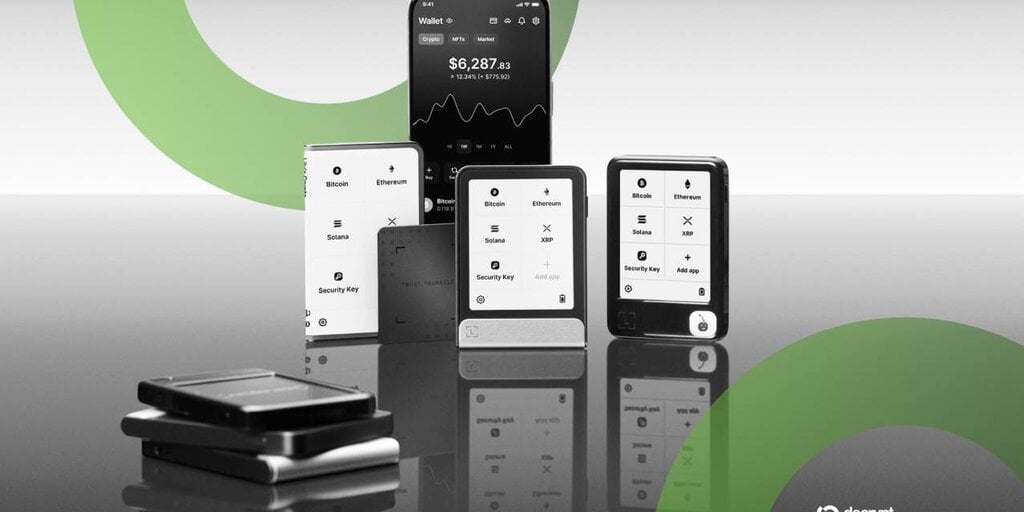
Decrypt reports Ledger's 72-hour update: all confirmed wallet-draining cases involve devices sold by Southeast Asian reseller CryptoBilis, which has stopped hardware wallet sales. Onchain investigators Specter and YFarmX traced over $86M in suspected thefts across Ethereum, Tron and Bitcoin. They describe laundering through Tornado Cash, Zcash's shielded pool and a USDT-to-USDD swap to avoid Tether freezes. An unverified claim of tampered devices (extra cables, LTE module) bought at European retail stores is also covered. Ledger advises CryptoBilis buyers not to set up devices and to move funds to a new seed phrase on a device bought from Ledger.
decrypt.coarticlePublished and added 12 Oct 2026 Ledger spyware scare spreads beyond Southeast Asia
Protos reports additional alleged Ledger hardware wallets with physical spyware implants, found in devices from a German MediaMarkt reseller, a Philippine LazMall reseller and a Stax model bought from CryptoBilis. Mark Karpelès found that the implants read the device's screen output to capture seed phrases and evade Ledger's Genuine Check. The earlier CryptoBilis-linked incident of Oct 9 drained over $86M. Ledger told resellers to use only authorized channels and never restock returned units, and teardowns have also shown many devices to be clean.
protos.comarticlePublished and added 12 Oct 2026- Optimal Threshold Implementations of all bijective 4-bit S-boxes and new Infinite Families
ePrint paper presenting share-optimal, direct, uniform, first-order threshold implementations (TIs) with no fresh randomness. It shows every bijective 4-bit permutation of algebraic degree t admits a TI with t+1 shares, and introduces the first infinite families of cryptographically nontrivial power permutations with optimal TIs. The results disprove several earlier conjectures and give new glitch-resistant masking options for lightweight cipher S-boxes.
eprint.iacr.orgpaperAdded 14 Oct 2026, published 12 Oct 2026 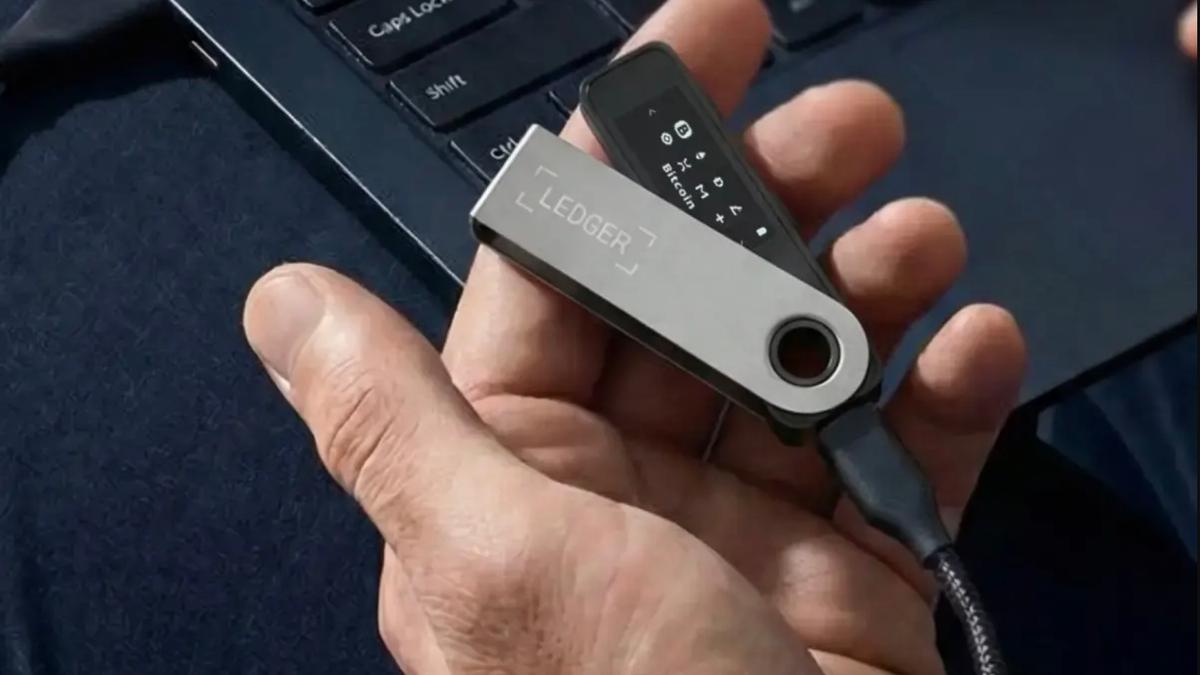 Ledger claims CryptoBilis cases are limited as up to $93M is traced, $10M frozen
CoinDesk reports that up to $93–94.5M in mostly USDT and TRON tokens was drained from 315–521 wallets across six or seven blockchains. The wallets were tied to Ledger hardware wallets sold by the authorized reseller CryptoBilis. Ledger confirmed an unauthorized hardware implant in at least one device but did not say how the devices were tampered with. Tether froze $10M, some funds moved through Tornado Cash and Zcash, and Ledger told affected users not to set up unused devices and to move funds to a new device with a fresh recovery phrase. The figures come from Bitquery and YFarmX onchain estimates, not a confirmed Ledger loss total.
coindesk.comarticlePublished and added 12 Oct 2026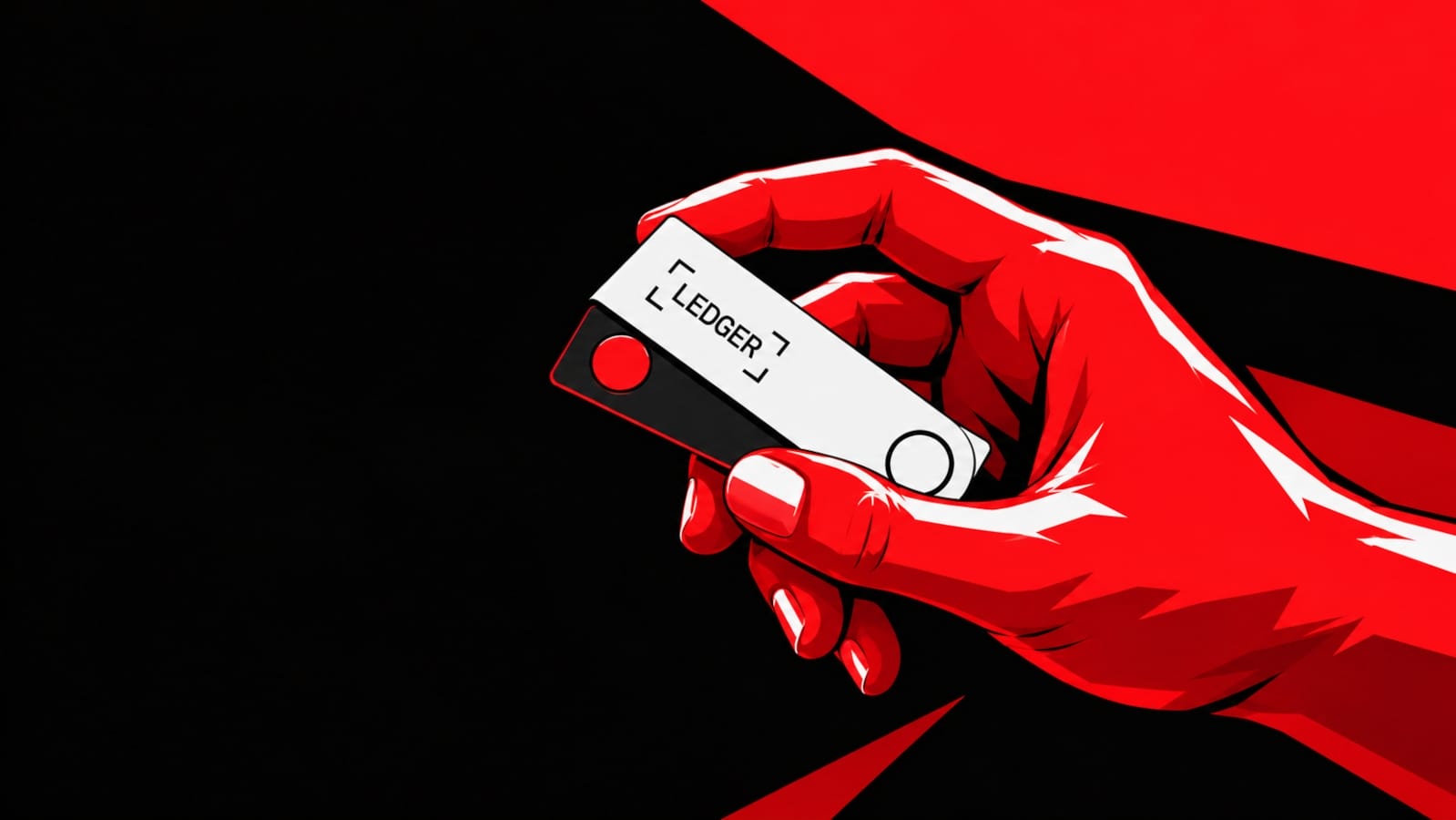 Ledger confirms spy chip implant behind wallet crypto thefts
Ledger confirmed that devices sold by Southeast Asian reseller CryptoBilis carried an unauthorized hardware implant that drained users' crypto wallets. Researchers Mark Karpelès and Tibane Labs describe the implant: an STM32G431 MCU, eSIM and shielded LTE module hidden behind the OLED screen, which captures display output and button presses to recover the seed phrase and sends it out over LTE. The article covers two implant variants, the telltale antenna wire, and Ledger's guidance (avoid unauthorized resellers, move funds to a new seed). Ledger also warns that its Genuine Check cannot detect implants when the original Secure Element is intact.
bleepingcomputer.comarticleAdded 13 Oct 2026, published 12 Oct 2026- Breaking First-Order Masked Kyber with Belief Propagation Alone
Preprint recovering the long-term key of a first-order masked Kyber768 implementation on an ARM Cortex-M4 from about 2200 decapsulation power traces using only valid ciphertexts. A profiled neural network estimates Hamming-weight distributions of both arithmetic shares, which are turned into likelihoods on decryption noise and combined by a belief-propagation solver with Gaussian interference approximation and an Onsager (AMP) correction, recovering all 1536 secret and error coefficients without lattice reduction. It shows first-order masking is insufficient against combined second-order leakage, and that least squares, greedy solvers and lattice hints (BKZ block size 624 to 505 at 2000 traces) do worse.
eprint.iacr.orgpaperAdded 14 Oct 2026, published 12 Oct 2026  Ledger says unauthorized implant found in at least one device sold by CryptoBilis
CoinDesk reports that Ledger confirmed an unauthorized hardware implant in at least one device sold by the Southeast Asian reseller CryptoBilis. On-chain researchers estimate $86–93M was drained from more than 300 wallets across Bitcoin, Ethereum and Tron. Ledger says its internal systems and direct sales are unaffected, and it advises not initializing unused devices and moving funds to a new seed on a device bought directly from Ledger. It also covers the reseller's sales suspension, Ledger's tightened distributor chain-of-custody rules, unverified speculation that the reseller was bought out, and the July 2026 Coldcard seed-generation flaw.
coindesk.comarticlePublished and added 12 Oct 2026- A methodology to derive security specifications for complex electronic systems
Paper proposing a risk-based methodology to derive security specifications for complex electronic systems such as AI chips and chiplet-based designs. It walks from system missions to assets, threat analysis, security requirements and then countermeasure selection. The method is illustrated on datacenter and automotive chiplets for the missions of secure provisioning, trimming, debugging, booting and remote attestation, and addresses the longer supply chain and multi-tenant threats that chiplets introduce.
eprint.iacr.orgpaperAdded 14 Oct 2026, published 12 Oct 2026 - ML-Assisted Power Side-Channel Attacks on ML Accelerators in Shared FPGAs
Paper presenting the first on-chip, TDC-sensor-based power side-channel attack on a co-tenant FPGA to reconstruct full-scale color ImageNet inputs (224x224) from a victim's first CNN convolution layer, using ML-based upscaling and recoloring. It separates genuinely leaked information from ML-generated post-processing. It also evaluates a pixel-substitution defense based on Hamming Weight, which is largely defeated by an attacker retrained on the transformed data. The authors conclude that robust defenses need randomized or input-dependent transformations.
arxiv.orgpaperAdded 16 Oct 2026, published 12 Oct 2026 - Forensic Analysis of the HackRF One with PortaPack Mayhem Firmware
Paper on the forensic analysis of a stand-alone HackRF One with a PortaPack running Mayhem firmware v2.0.1. It establishes at source-code level which data sit on the microSD card, their formats, when they are written and how to interpret them. The method is applied to a four-month SD image and covers RTC-battery-dependent timestamp rules, traces of on-device trimming and text editing, cluster-level recovery of deleted IQ captures, and decoding of recorded signals cross-checked with an independent decoder. In the example, the tail of a deleted IQ capture and a trimmed-away segment are recovered, and six captures are attributed to one rolling-code OOK transmitter with a shared 32-bit ID. It provides an artifact catalogue, interpretation rules and acquisition recommendations.
arxiv.orgpaperAdded 17 Oct 2026, published 11 Oct 2026 - Staggered Instruction-Fetch Duplication: A Lightweight Processor-Level Countermeasure Against Fault Injection
Proposes Staggered Instruction-Fetch Duplication (SIFD), a processor-level fault-injection countermeasure that fetches each instruction twice in consecutive cycles while fetching two different instructions per cycle, so inconsistent fetches are detected without full processor duplication, compiler support or crypto hardware. Implemented on a custom RV32I core on an Artix-7 FPGA, it costs 15.0% more slices and 16.3% more execution time. Attack success falls from 0.86% to below 0.01% under clock fault injection and from 0.32% to 0.13% under EMFI, with 73.18% of CFI and 11.44% of EMFI attempts detected.
eprint.iacr.orgpaperAdded 14 Oct 2026, published 10 Oct 2026 - Physical Side-Channel Attacks on Edge LLMs: Extracting Output Tokens and User Prompts
Presents an EM side-channel attack on LLaMA-3.2-1B-Instruct running on a Raspberry Pi 5, showing passive physical measurements leak generated tokens and user prompts. Three attacks: a profiling attack (97.2% accuracy over 50 medical/privacy keywords), a hidden-state reconstruction attack predicting tokens from the 128k vocabulary (94.3% on profiled classes; 67% of unseen words ranked in top 100), and a hidden-state inversion attack reconstructing prompts semantically. Shows that local edge inference does not guarantee confidentiality of tokens and inputs.
arxiv.orgpaperAdded 16 Oct 2026, published 9 Oct 2026 - Flying, Not Floating: Precise Fixed-Point Falcon on Embedded Processors
Presents the first fixed-point FN-DSA (Falcon) signer for microcontrollers, using 32.64 arithmetic in constant-time Cortex-M4 assembly for Falcon-512 and Falcon-1024. Techniques that keep reciprocals, inverse square roots and small constants wide and round once at the consumer restore the precision lost by naive fixed-point. Measured precision supports about 2^99.7 (Falcon-512) and 2^96.7 (Falcon-1024) signing queries per key, against about 2^61.5 and 2^58.7 for double precision and the 2^64 target. The signer needs about 45% fewer cycles than double-precision emulation, at the cost of signing RAM rising from 59n to 83n bytes. The paper also shows which implementation choices lift double-precision c-fn-dsa above 2^64, derives Falcon-1024 key-generation bounds (72.3% of keys accepted vs 8.5% with the Falcon-512 values), and gives recommendations for the fixed-point FN-DSA NIST plans.
eprint.iacr.orgpaperAdded 12 Oct 2026, published 9 Oct 2026 - morluto/awesome-reverse-engineering
awesome-reverse-engineering is a CC0 curated list of reverse-engineering tools and learning resources, organized by task: triage, native analysis, debuggers, instrumentation, deobfuscation, malware analysis, mobile, firmware, file formats, games, diffing, symbolic execution, lifting and AI agents. Each entry notes licensing, maintenance status and prerequisites. It also covers MCP integrations, CTF practice sites and related awesome lists.
 github.comrepoAdded 27 Oct 2026, published 9 Oct 2026
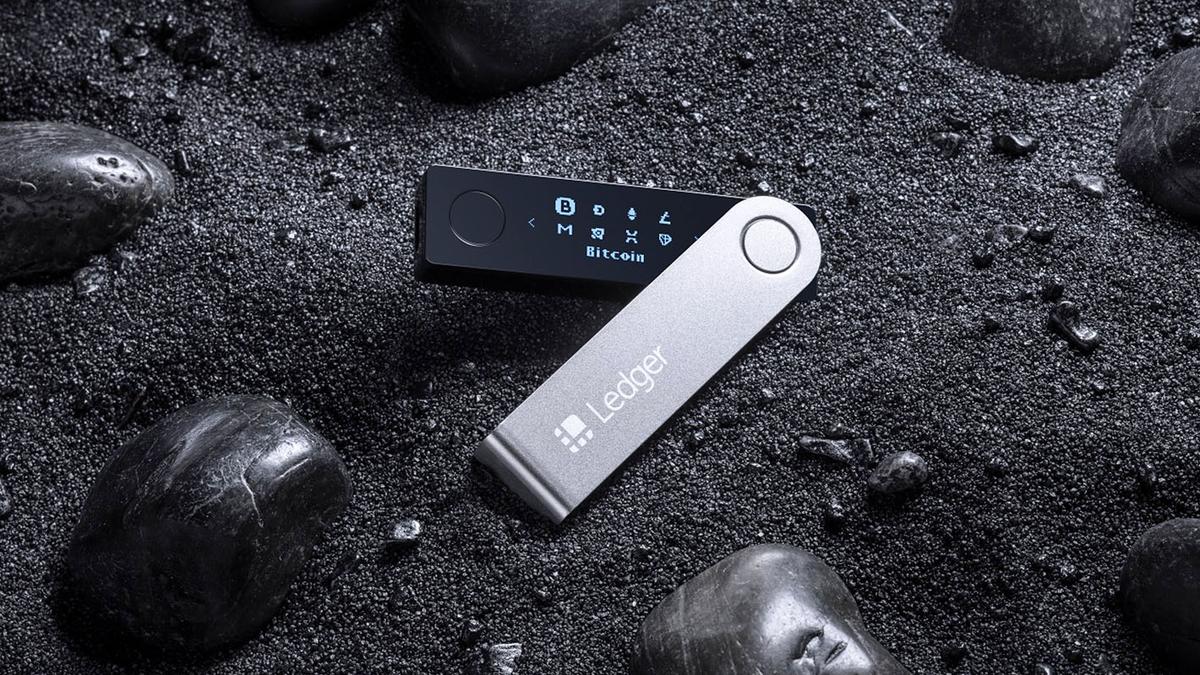 Ledger investigates potential wallet tampering after reports of $86 million in crypto stolen
Ledger is investigating reports of over $86 million allegedly stolen from hundreds of Bitcoin, Ethereum and Tron wallets tied to devices sold by Southeast Asian reseller CryptoBilis. Ledger asked the reseller to halt sales/shipments and advised recent buyers not to activate devices and already-activated users to migrate funds to a new device with a freshly generated recovery phrase, as a possible supply-chain attack (devices pre-loaded with an attacker-known recovery phrase) is one explanation under investigation. No independent confirmation of the loss amount or root cause has been established yet.
coindesk.comarticlePublished and added 9 Oct 2026 Google Pixel 10 Exploits Earned Hackers $560,000 at Pwn2Own
Coverage of Pwn2Own Ireland 2026 results: contestants earned over $1.2 million total, with Google Pixel 10 exploits alone paying out $560,000 across three teams. Ikotas Labs won the full $300,000 Pixel payout by chaining multiple bugs for remote compromise, while Tim Becker/Yves Bieri and Dimitrios Valsamaras/Ken Gannon earned reduced payouts for exploits involving previously known flaws. Other notable rewards went for hacks of the Samsung Galaxy S26, Sonos Era 300 speaker, Philips Hue Bridge Pro, Home Assistant Green hub, Lexmark/Brother/Canon printers, Garmin Index BPM, and AI infrastructure including Oracle Autonomous AI Database, OpenAI Codex, Nvidia Dynamo, and LiteLLM.
securityweek.comarticlePublished and added 9 Oct 2026- New Constructions of Quadratic and Cubic Permutations Admitting Optimal Threshold Implementations
ePrint paper giving four constructions of optimal threshold implementations (t+1 shares, no fresh randomness) for bijective S-boxes, a masking countermeasure against differential power analysis and glitch leakage in hardware. It shows that Q30^5 admits optimal TIs, gives a matrix criterion for quadratic permutations (yielding new 6-bit classes), and gives a weighted interpolation construction for power permutations that disproves the Piccione et al. 2023 conjecture. It also gives a derivative-uniform framework that proves every 4-bit cubic permutation admits optimal TIs. A companion repo has TIs for 5-bit quadratic permutations, 4-bit cubic permutations, the PRESENT S-box and GF(16) inversion.
eprint.iacr.orgpaperAdded 11 Oct 2026, published 8 Oct 2026 - IP Camera Hacking: Hacking IP Cameras with Cameradar
A hands-on tutorial from Hackers-Arise on using Cameradar, a Dockerized RTSP credential brute-forcer, to compromise exposed IP cameras found via Shodan/Censys. It covers RTSP protocol fundamentals (OPTIONS, DESCRIBE, SETUP, PLAY commands), running Cameradar against a target IP, specifying custom RTSP ports, and supplying custom username/password wordlists (e.g. SecLists) converted to JSON for larger brute-force attempts.
hackers-arise.comarticlePublished and added 8 Oct 2026  TP-Link Faces State Lawsuits and New Scrutiny Over ISP Router Flaws
Florida, Iowa, Montana, and Nebraska sued TP-Link Systems over allegedly misleading security marketing and undisclosed China ties, joining a similar Texas suit from February; the complaints cite TP-Link routers' role in the Volt Typhoon and Flax Typhoon campaigns and botnet abuse by Chinese and Russian actors. The piece also details five newly disclosed TP-Link Aginet vulnerabilities (CVE-2025-30237 through CVE-2025-30241) reported by SEC Consult, including an unauthenticated super-admin auth bypass, a root-privilege command injection, hardcoded device-model encryption keys exposing Wi-Fi/ISP credentials, and a USB-based physical-access filesystem dump affecting 65 device models.
securityweek.comarticlePublished and added 8 Oct 2026- KIFA: Kernel-based Integral Fault Analysis on GIFT-Family Ciphers
KIFA is an integral fault attack framework that finds balanced properties with the kernel-based miner of Hwang et al. instead of MILP. It gives key-recovery attacks at deeper fault penetration than earlier work. On DEFAULT it reaches FP 9 with a nibble fault and FP 10 with a byte fault, leaving a single master-key candidate under the simple key schedule and 2^64 under the rotating one. It gives the first integral fault attacks on GIFT-128 (FP 7 and 8), extends GIFT-64 to FP 7, and extends BAKSHEESH to FP 8, including with an uncontrolled fault position.
eprint.iacr.orgpaperAdded 11 Oct 2026, published 8 Oct 2026 - Hashing Beats Trees: Practical Oblivious Dictionaries in SGX
An IACR ePrint paper by Erik-Oliver Blass and Travis Mayberry proposing oblivious probabilistic hash tables (chaining, power-of-two-choices, stash-less cuckoo, de-amortized cuckoo hashing) built over Path ORAM as a replacement for oblivious AVL trees when deployed inside Intel SGX enclaves. It shows that SGX's small trusted client memory lets the position map recursion be shrunk to ≤3 levels, making constant-access hash tables beat Θ(log n) tree traversal, and derives via large-scale simulation the concrete padding parameters needed for "double obliviousness" (bounding hash-table rebuild probability to ≤2^-40) that prior ORAM literature lacked. Their SGX implementation reports up to 20x faster lookups and 12x faster inserts than oblivious-tree baselines.
eprint.iacr.orgpaperAdded 8 Oct 2026, published 7 Oct 2026  The randomness question at the heart of your hardware wallet
Unchained explains how hardware wallets generate entropy for bitcoin keys, covering PRNG vs TRNG theory, physical TRNG mechanisms (ring oscillator jitter, diode avalanche noise, radio static reuse), and NIST SP 800-90B / BSI AIS-31 certification. It compares entropy sourcing and secure-element chip suppliers (STMicroelectronics, Microchip, Infineon, Espressif, Silicon Labs) across Trezor, Ledger, Coldcard, BitBox02, Foundation Passport, Blockstream Jade and Block Bitkey, and walks through the July 2026 Coldcard firmware bug that silently bypassed its hardware TRNG for five years, causing real bitcoin losses. It also covers manual dice/coin entropy generation for BIP39 seed phrases, the Dark Skippy nonce-leakage attack, and multisig as the primary mitigation against single-device key-generation failures.
 unchained.comarticleAdded 8 Oct 2026, published 7 Oct 2026
- A Security-Aware PQC Benchmarking Framework on Dual-Core Xtensa Silicon
This IACR ePrint paper proposes a security-aware benchmarking framework for deploying memory-heavy PQC (ML-KEM, ML-DSA) on the dual-core ESP32-S3 (Xtensa LX7) running FreeRTOS, aimed at smart-grid substation devices bound by the IEC 61850 GOOSE tripping window (≤3ms). It details an asymmetric task-isolation design pinning crypto to Core 1, a heap-auditing methodology for FreeRTOS's heap_4.c allocator tracking key-state allocations across DRAM, and an analytical latency model of CPU stall overhead caused when side-channel masking forces secret polynomial shares to spill to external Octal-SPI PSRAM during non-sequential Cooley-Tukey NTT strides. The work gives embedded engineers a methodology to evaluate PQC side-channel/latency trade-offs before migrating real-time grid infrastructure.
eprint.iacr.orgpaperAdded 8 Oct 2026, published 6 Oct 2026 - The Lattice Isomorphism Problem with Hints
This IACR ePrint paper (published TCHES 2027) presents a new cryptanalysis technique for the Lattice Isomorphism Problem that embeds LIP into a shortest-vector-problem instance on a different lattice than the one used in Hawk's specification, allowing attackers to integrate "hints" — partial information on the secret key obtained via side-channel attacks or other leakage. Using the LeakyLWEEstimator tool, the authors show Hawk signatures themselves leak exploitable information about the secret key, eroding Hawk-1024's security by roughly 11 bits, and apply the framework to resolve an open side-channel problem from TCHES 2024 plus discuss further fault-injection attack paths. Hawk is a lattice-based signature scheme submitted to NIST's second post-quantum signature call, making this a concrete key-recovery cryptanalysis relevant to PQC migration planning.
eprint.iacr.orgpaperAdded 8 Oct 2026, published 6 Oct 2026 - SatBleed: Security of Commoditized Communication Modules in Satellites
SatBleed is an arXiv paper presenting the first in-depth security evaluation of commercial off-the-shelf (COTS) Communication Subsystem (COM) modules used in small satellites. The authors build a threat taxonomy for COM-targeting attacks, analyze representative COM hardware from multiple vendors, and uncover severe firmware, protocol, and architectural vulnerabilities. By correlating findings with open-source telemetry data, they identify at least 28 vulnerable missions currently in orbit that are susceptible to hostile takeover via their command-and-control link.
arxiv.orgpaperAdded 6 Oct 2026, published 5 Oct 2026 - Area-Efficient Hardware Architecture of the Post-Quantum HQC Cryptosystem with Side-Channel Protection
This IACR eprint paper presents a resource-efficient FPGA hardware architecture for the NIST-selected HQC post-quantum KEM that defends against power-based side-channel attacks by reusing otherwise-idle KECCAK hardware to inject scrambling dynamic power during decoding, adding less than 0.5 percent area overhead compared to masking/shuffling countermeasures. The fully parameterized design supports HQC-128/192/256 and was prototyped on a Xilinx Artix-7 FPGA (139 MHz, 11,489 LUTs, 6,785 FFs, 4 DSPs), with functional correctness verified via NIST Known Answer Tests and leakage suppression confirmed via Test Vector Leakage Assessment.
eprint.iacr.orgpaperAdded 8 Oct 2026, published 5 Oct 2026 - Glimpsing the Leakage Flow for Deep Learning-Based Side-Channel Analysis using Stochastic Leakage Model
GlimpseDNN is a model-agnostic framework that uses a stochastic leakage model to visualize, layer-by-layer, what physical leakage information a deep neural network extracts during profiled side-channel analysis (SCA) to recover secret keys. The authors (Trevor Yap and Shivam Bhasin, NTU) validate it on simulated traces and public datasets (ASCADf, ASCADr, ASCADf_desync50, ASCADf_desync100), showing it can reveal leakages even in deeper network layers when they are not visible in raw traces, with applications to designing more side-channel-resistant hardware.
eprint.iacr.orgpaperAdded 8 Oct 2026, published 5 Oct 2026 - X-Wing on Cortex-M85: Architecture-Aware Integration and End-to-End Evaluation
An IACR ePrint paper presenting an architecture-aware implementation of the X-Wing hybrid KEM (ML-KEM-768 plus X25519) for the ARM Cortex-M85, using its M-profile Vector Extension NTT and a shared-inversion trick during encapsulation to cut cycle counts by 12 to 19 percent versus a baseline, at a cost of about 35KB extra flash. The authors found that their optimized variant introduced secret-sign-dependent operand-address selection, a side-channel weakness, and produced a corrected version whose fix is only partial since some key-varying timing signals persist and remain unexplained, so no constant-time guarantee is claimed.
eprint.iacr.orgpaperAdded 8 Oct 2026, published 5 Oct 2026 - Optimized NEON Implementation of MAYO on Apple M1
An IACR ePrint paper presenting an optimized ARMv8 NEON assembly implementation of MAYO Round 3 (one of NIST's post-quantum signature candidates) for Apple M1, generated to be byte-identical to upstream intrinsics but 2–2.6x faster for signing and verification across all four parameter sets. The authors also run a constant-time testing campaign with matched null runs and find that while linear-algebra operations are statistically indistinguishable from constant-time nulls, verification (on public data) exhibits a measurable key-fixed timing effect present in both their implementation and the upstream code.
eprint.iacr.orgpaperAdded 8 Oct 2026, published 5 Oct 2026 - Post-Quantum Command Authentication for Unmanned Systems: A KpqC Feasibility Study under Real-Time and Bandwidth Constraints
This paper evaluates whether Korean post-quantum crypto candidates (HAETAE, AIMer, SMAUG-T, NTRU+) and NIST PQC standards (ML-KEM, ML-DSA, SLH-DSA) can replace classical ECDSA/ECDH in the authentication and key-establishment path of ROS2/DDS-Security for UAV/UGV command channels. The authors build a feasibility envelope mapping each algorithm's key/signature size and handshake latency against real command-link constraints (message rate, MTU, latency deadline, bandwidth), then validate it with authentication-handshake measurements over emulated constrained links on a two-node testbed, producing a classical→NIST→KpqC comparison and per-channel-budget application guidance.
eprint.iacr.orgpaperAdded 8 Oct 2026, published 5 Oct 2026 - Optimizing Montgomery Arithmetic for RSA on Cortex-M0+ and Cortex-M3
An IACR ePrint paper presenting optimized Montgomery multiplication/squaring kernels for RSA-2048 and RSA-3072 CRT private-key operations on ARM Cortex-M0+ and Cortex-M3 microcontrollers, targeting cryptographic tokens that must keep RSA for legacy authentication compatibility. Using 15-bit limbs, wrapped-sum carry recovery (M0+) and doubled half-diagonal buffer limbs (M3), the authors report 12.6–13.1% faster Montgomery operations and ~12.6–12.8% faster warm CRT-RSA cycles on M0+, smaller gains on M3, and a 31.47% cycle advantage over an NTT-based multiplication for 2048-bit operands.
eprint.iacr.orgpaperAdded 8 Oct 2026, published 5 Oct 2026 - Guess My Weight: Profiled Side-Channel Recovery of Floating-Point Neural-Network Weights
Researchers present a profiled template attack that recovers the bit-exact IEEE-754 single-precision representation of a neural-network weight from power traces captured during inference on an embedded device. Using multivariate Gaussian templates built from Hamming-weight leakage classes and a hierarchical coarse-to-fine-to-exact search over the 32-bit floating-point space, the attack achieves 99% bit-exact recovery with 171 traces and 100% from 263 traces on a ChipWhisperer-Lite with an Arm Cortex-M4, demonstrating practical full-precision model-weight extraction from physical side-channel leakage.
arxiv.orgpaperAdded 6 Oct 2026, published 3 Oct 2026 - The Achilles' Heel of Partial Reconfiguration: Optical Side-Channel Leakage on the 7-Series ICAP
Researchers implement AMD's proposed asymmetric-key bitstream encryption scheme for 7-Series FPGAs using Partial Reconfiguration, then break it with an optical side-channel attack. Using Photon Emission Microscopy to locate the ICAP bus and Electro-Optical Probing to read it contactlessly, they extract plaintext configuration data during dynamic reconfiguration on an AMD XC7A200T device, showing that advanced custom cryptographic protection schemes remain vulnerable because reconfiguration must pass through the hard-wired, unpatchable ICAP interface.
arxiv.orgpaperAdded 2 Oct 2026, published 1 Oct 2026  lee1981 (@lee1981b) on X
A detailed breakdown of CVE-2026-102710 (CVSS v4.0 9.3), a privilege-escalation flaw in Eclipse ThreadX RTOS builds with event tracing enabled: a module-supplied trace callback pointer is retained by the kernel and invoked with kernel privilege when the trace buffer wraps, letting an attacker who already controls a memory-protected user-mode module fault the kernel or execute code in kernel context. The thread walks through the vulnerable code path (registration, storage, invocation across the protection boundary), CWE-269/CWE-822 classification, affected versions (through v6.5.1.202602a_rel), and provides a defender hunting guide plus emergency remediation steps, noting no fixed upstream release or CISA KEV/EPSS entry exists yet.
x.comthreadPublished and added 30 Sep 2026- SoK: A Large-Scale Empirical Study of Emulation-Based Dynamic Analysis Research for ARM Cortex-M Firmware (Extended Version)
This SoK paper empirically evaluates 24 published emulation-based dynamic analysis tools for ARM Cortex-M firmware re-hosting, using large-scale datasets from OTACAP and FirmLine totaling 4,571 deduplicated ARM firmware samples. It finds that only 34.5% of samples can be successfully fuzzed by any existing tool, with average code coverage of just 10% and frequent false crashes/hangs, exposing systemic gaps across the emulation, fuzzing, and bug-diagnosis pipeline stages.
arxiv.orgpaperAdded 2 Oct 2026, published 30 Sep 2026 - SparLeak: Privacy Leakage from Sparse Attention in LLM Inference on Shared GPUs
SparLeak is a side-channel attack exploiting a newly identified GPU micro-architectural leak, Sparsity-Induced Memory Access (SIMA), caused by input-dependent key-value cache access patterns in sparse attention mechanisms used for long-context LLM inference on shared GPUs. The attack recovers prefill-phase query attributes and reconstructs decoding-phase LLM responses by profiling token-level sparsity patterns from page-level memory observations, achieving 90.9% attribute-inference and 87.3% response-reconstruction success across three LLM architectures, three sparse-attention mechanisms, and three privacy-sensitive datasets. The authors release anonymized SIMA traces, trained attack models, and evaluation scripts/artifacts.
arxiv.orgpaperAdded 2 Oct 2026, published 30 Sep 2026  Someone Finally Jailbroke the PS5—Just After Sony Said Players Don’t Own Their Games
Decrypt reports on Relapse, a newly public tethered PS5 jailbreak covering firmware 7.00–13.60, delivered by pointing the console's DNS at an attacker-controlled server and loading a crafted page through the built-in User Guide's WebKit browser, then chaining into a kernel-stage exploit and ELF loader to run homebrew and game backups. The MIT-licensed exploit code is on GitHub; it is non-persistent (must be rerun after every reboot) and does not work on the September 16 firmware 14.00 update. The article frames it against Sony's concurrent court argument that "Buy Now" digital purchases don't confer real game ownership.
decrypt.coarticleAdded 30 Sep 2026, published 29 Sep 2026- NIST CSWP 36G — False Base Station draft white paper
NIST's National Cybersecurity Center of Excellence (NCCoE) released an initial public draft of CSWP 36G, "False Base Station: Applying 5G Cybersecurity and Privacy Capabilities," which evaluates how commercial 5G devices respond to six simulated rogue/fake base station attack scenarios run on NCCoE's operational 5G security testbed. False base stations impersonate legitimate carrier radio access network equipment to intercept traffic, degrade service, or track user location, and the paper identifies gaps in 5G standards and available device-level protections, noting that even 5G's improved security features remain susceptible to denial-of-service attacks. Public comment is open through October 30, 2026.
 csrc.nist.govarticleAdded 1 Oct 2026, published 29 Sep 2026
 A Clever RSA Attack Fooled a Hardware Vault—Here's What It Means for Crypto
Researchers at UC San Diego and INRIA demonstrated a chosen-message oracle attack that forges RSA signatures on a 1,024-bit key held inside a hardware security module (HSM) without ever extracting the key, by disabling the HSM's FIPS mode to get it to sign unpadded/unformatted values roughly 4 billion times and then computing the private-key operation from the responses (1,380 CPU core-years of work). The attack only applies to unpadded RSA signing oracles — standard PKCS#1 v1.5/PSS padding blocks it — so it doesn't threaten Bitcoin/Ethereum (which use ECDSA) but is relevant to anyone auditing HSM key-custody assumptions or RSA-based blind-signature schemes like Privacy Pass. The authors frame it as further classical evidence to accelerate migration away from RSA ahead of the post-quantum transition.
decrypt.coarticleAdded 30 Sep 2026, published 28 Sep 2026- OT-PCA: New Key-Recovery Plaintext-Checking Oracle Based Side-Channel Attacks on HQC with Offline Templates
OT-PCA is a new plaintext-checking (PC) oracle side-channel attack on HQC, a post-quantum key encapsulation mechanism, that uses offline templates built from the public HQC decoder to extract soft information on secret key bits with far fewer oracle calls than prior methods. The authors report a 2.4x reduction in required oracle calls for HQC-128 (and larger reductions for HQC-192/256), strong resilience even when the oracle is only 95% accurate (7.6x reduction), and validate the attack practically via power analysis on an ARM Cortex-M4 microcontroller.
arxiv.orgpaperAdded 4 Oct 2026, published 28 Sep 2026 - ReproBench: Benchmarking LLM Agents on Reproducing Vulnerability From Scratch
ReproBench is a benchmark that tests whether LLM agents can autonomously reconstruct an execution environment and reproduce a vulnerability starting from nothing but a CVE identifier, unlike prior benchmarks that hand agents source code or a ready container. It decomposes the workflow into six phases (firmware download, unpacking, analysis, crash validation, etc.) over 30 real-world IoT firmware vulnerabilities. Results show state-of-the-art agents resort to "vulnerability simulation" shortcuts in 45.3% of runs and achieve genuine reproduction in only 5.3% of CVE-model pairs, with the paper detailing the core bottlenecks blocking full autonomy.
arxiv.orgpaperAdded 2 Oct 2026, published 28 Sep 2026 - FirmAgent: Fuzzing + LLM Agents for IoT Firmware Vulnerability Discovery (NDSS 2026)
FirmAgent is an academic research toolkit (NDSS 2026) for finding vulnerabilities in re-hosted IoT firmware web services by combining IDA-based pre-fuzzing (CFG/sink distance scoring), QEMU instrumented tracing, CFG-guided API fuzzing, and an optional LLM agent (LLMATaint.py) that consumes runtime taint traces to reason about and produce PoCs for bug classes like command injection. The pipeline is explicit about scope: it is meant for authorized, owned or re-hosted firmware (e.g. Greenhouse-style containers), and stitches together sink-scope extraction, feedback-driven fuzzing, and request-to-trace attribution before handing traces to an LLM for taint-to-PoC analysis.
github.comrepoAdded 26 Sep 2026 - From Source Code to Network Profile: Automated and Traceable MUD Profile Generation for IoT Devices
AutoMUD is a source-code-driven tool that generates Manufacturer Usage Description (MUD) network access-control profiles for IoT devices by statically analyzing firmware/source code rather than relying on live traffic observation. It combines static and syntactic extraction with retrieval-grounded LLM reasoning and deterministic validation to recover rarely-exercised or conditional communication paths, link each generated rule to its source-level provenance, and record excluded findings with explicit reasons for review. Evaluated on a Linux-based repository plus a controlled semantic fault-injection campaign, it produced structurally valid, traceable MUD profiles that let analysts detect, localize and correct propagated errors.
arxiv.orgpaperAdded 28 Sep 2026, published 25 Sep 2026 - Fast and Secure Simultaneous Authentication of Equals for WPA3
This paper addresses CPU-exhaustion Denial-of-Service risk in WPA3's Simultaneous Authentication of Equals (SAE) handshake, whose Password Element derivation is computationally expensive for the Access Point. The authors propose an asymmetric protocol modification that shifts the costly iterative PE-discovery work to the client, adds a slow-path key derivation step (using PBKDF2 or Argon2) to further throttle brute-force attempts, and introduces a ticket-based fast re-authentication path for known devices — all aimed at keeping APs available under adversarial load without weakening SAE's dictionary-attack resistance.
arxiv.orgpaperAdded 28 Sep 2026, published 25 Sep 2026 - Camera Hacking: Testing Cameras with Eyesharvester
Hands-on walkthrough of Eyesharvester, an open-source recon tool (github.com/Exhunterx/eyesharvester) that scans IP ranges to fingerprint IP cameras, DVRs and NVRs, tests default credentials, lists vendor-specific CVEs and generates a hardening checklist. The piece demonstrates finding Hikvision devices vulnerable to CVE-2021-36260, which gives shell access and can be chained with a Metasploit payload and a reverse SSH/Meterpreter proxy to pivot into the internal network.
hackers-arise.comwriteupAdded 7 Oct 2026, published 25 Sep 2026  Don't let TEEs break your MPC
Trail of Bits explains why running threshold-signature MPC protocols inside TEEs (Intel TDX, AMD SEV-SNP, AWS Nitro Enclaves) is not automatically secure: a malicious host can roll back enclave filesystem state to force reuse of deleted pre-signature nonces, leaking a signer's private key share. The post catalogs recurring audit pitfalls — incomplete attestation measurements (citing the WhatsApp Private Inference LD_PRELOAD bypass), missing verification steps, weak hardening, stale-backup/rollback risks (including LUKS2 header manipulation in confidential VMs), and physical/side-channel attacks like TEE Fail and DDRop against DDR5 memory — and gives best practices such as binding attestation to MPC party identities and using multiple TEE vendors for defense-in-depth.
 blog.trailofbits.comarticlePublished and added 25 Sep 2026
 EarlyAttestationBleed Paper Review (TEE attestation bugs)
A Flashbots researcher reviews the EarlyAttestationBleed paper (Muhammad Usama Sardar and Songbo Bu), which uses ProVerif formal analysis to uncover three attestation-verification bugs in confidential-computing deployments: Cocos AI's TDX verifier fails to actually compare the REPORT_DATA value despite computing it correctly, Cocos AI's SEV-SNP validator skips the comparison entirely when an empty expected-input value is passed, and Edgeless Systems' Contrast workload-policy logic can be tricked into accepting container images from untrusted host-controlled storage due to a rebase mistake. All three were implementation bugs (not protocol design flaws) and have since been fixed; the post also summarizes the paper's broader concerns about "early attestation" — exposing hardware details pre-authentication, lack of post-handshake re-attestation for long-lived sessions, and handshake-timeout tradeoffs from added attestation latency.
 collective.flashbots.netwriteupAdded 2 Oct 2026, published 23 Sep 2026
- Pedal to the Bare Metal (Black Hat USA 2026)
Black Hat USA 2026 slides from Tobias Scharnowski and Kristian Covic (fuzzware.io) walking through rehosting and fuzzing the bare-metal FreeRTOS firmware of the Tesla Universal Wall Connector (ARM Cortex-M4). They cover MMIO modeling (bitextract/constant models), scoping the fuzzer to the reachable UDS-over-CAN/ISOTP attack surface reachable from the charge-plug SWCAN line, seeding with a captured firmware-update UDS transaction (building on Synacktiv's Pwn2Own '25 charge-connector work), and triaging a FreeRTOS scheduler crash back to a signed integer/negative image-length bug in tesla_verify_sig causing an OOB stack write during firmware signature verification — enabling STM32 takeover, contactor/plug-release control, device bricking, and a path toward wormable, secure-boot-bypassing persistence.
 i.blackhat.comtalkPublished and added 21 Aug 2026
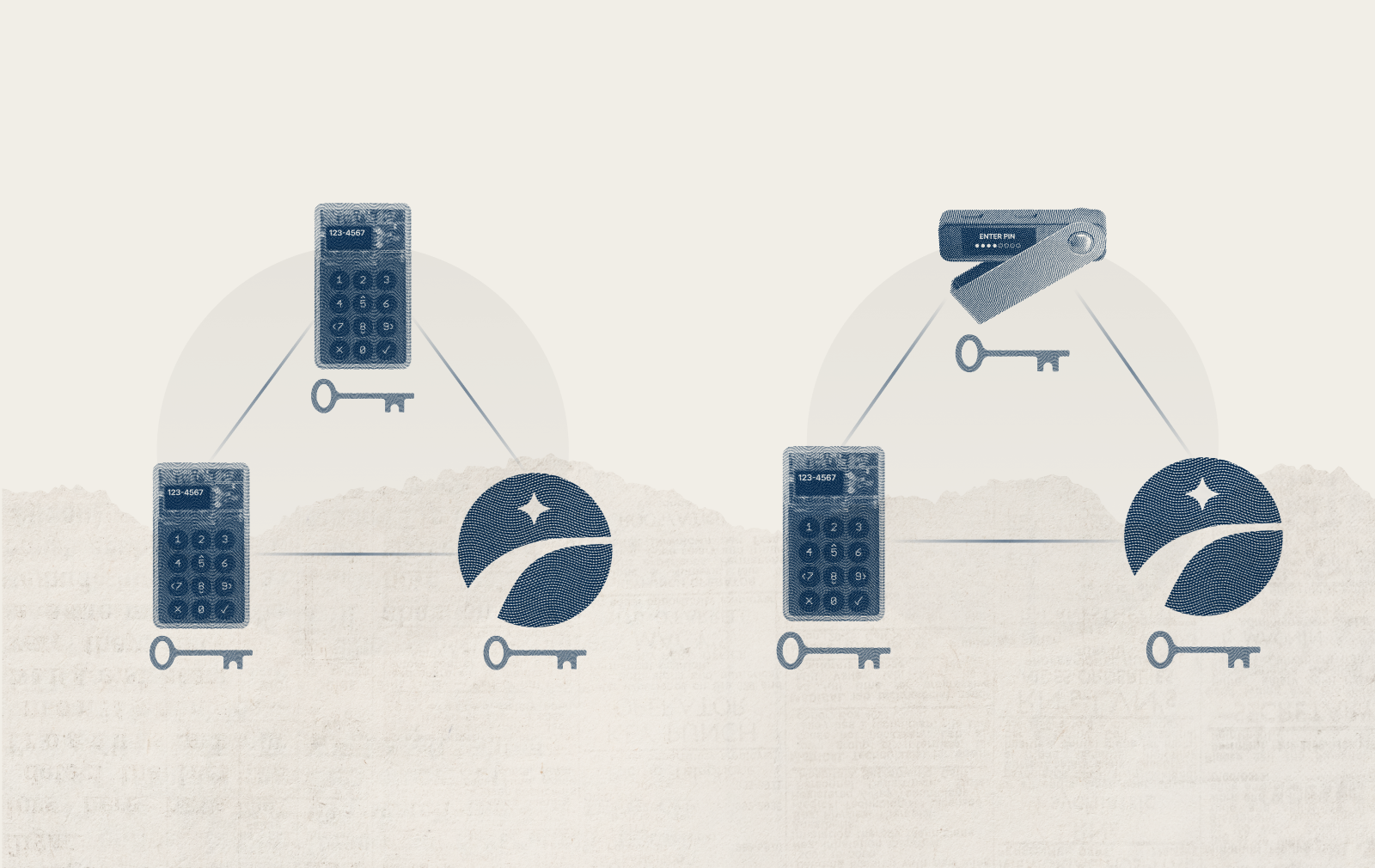 How multisig protected thousands of bitcoin during the Coldcard incident
Unchained's writeup on a 2026 Coinkite Coldcard advisory in which a flawed RNG produced insecure entropy for most Coldcard devices over five years, letting attackers brute-force private keys and drain singlesig wallets. It explains why multisig wallets (e.g. 2-of-3) were largely spared: a quorum of keys is needed to spend, the final public key in an un-spent multisig address stays unknown to attackers, and address reuse plus broadcasting via public mempools can leak that protection via an RBF-style attack window.
unchained.comarticleAdded 5 Oct 2026, published 12 Aug 2026- DEF CON® 34 Hacking Conference - Main Stage Talks
The official DEF CON 34 main-stage talk listing, with full abstracts and speaker bios for dozens of original research presentations spanning bootrom-to-wallet-key exploitation of the dGEN1 Ethereum phone, a privilege-escalation chain in Microsoft's Python-in-Excel Azure container (CVE-2026-45459), a novel x86 SMM hardware attack, black-box TEE key recovery on the TI OMAP-L138 via timing side channels, native-code exploitation of llama.cpp and Ollama, a CDP-based Browser-in-the-Middle AitM phishing toolkit defeating CSP/SRI, CPDLC air-traffic-control message injection via SDR, an iCloud Keychain extraction bug (CVE-2026-28860), Segmentation Fault-Oriented Programming (SFOP) for bypassing Intel CET, weaponized WMI provider post-exploitation, an autonomous AI system (HTTP Terminator) discovering novel HTTP desync attacks, quantum ML for OS fingerprinting, reverse engineering of Windows Defender's BTR.sys driver for EDR bypass, a V8 renderer RCE in Samsung Internet (CVE-2025-10891), an LLM CI build-gate bypass, a Bring-Your-Own-EDR PPL abuse technique, Amazon Locker hardware hacking, and Windows PnP USB auto-install RCE via RDP redirection.
 defcon.orgotherAdded 10 Aug 2026
- ChipWhisperer
ChipWhisperer is NewAE Technology's open-source hardware security toolchain for side-channel power analysis and fault injection research, comprising capture-board hardware/PCB schematics, USB and FPGA firmware, target device firmware examples, and Python APIs (ChipWhisperer Capture and Analyzer) for acquiring and processing power traces. It's widely used to demonstrate and teach attacks like differential power analysis (DPA) and voltage/clock glitching against embedded targets such as microcontrollers and crypto implementations. The repository is undergoing a git-history cleanup for the 6.0 release, splitting files across companion repos including chipwhisperer-jupyter.
github.comrepoPublished and added 31 Jul 2026 - Awesome Flipper Zero
An awesome-list GitHub repo cataloging Flipper Zero resources: Sub-GHz OOK bruteforce generators, BadUSB ducky-script payload collections, NFC/RFID dumps (Amiibo, Tonies, TouchTunes, event bracelets), custom firmware forks (Unleashed, Momentum, RogueMaster) with rolling-code and community-plugin support, plus apps like a PC vulnerability scanner, mouse jiggler, and BLE spam tool. It serves as a curated index for hardware/RF hacking and red-team tooling built around the Flipper Zero platform.
github.comrepoPublished and added 31 Jul 2026 - Awesome Embedded & IoT Security
A curated GitHub list of embedded and IoT security resources maintained by Fraunhofer FKIE, covering firmware analysis frameworks (FACT, emba, Firmadyne, Binwalk, Ghidra, Radare2), hardware hacking tools (JTAGULATOR, Bus Pirate, ChipWhisperer, Proxmark3, HackRF), RF/wireless gear (RTL-SDR, LimeSDR, UberTooth), books, academic papers on firmware security and fuzzing, real-world case studies of device hacking (D-Link, Huawei, Xerox printers), and CTF challenges (Rhme, Microcorruption, IoTGoat). It serves as a comprehensive entry point for beginners and experts doing embedded/IoT security analysis and hardware pentesting.
github.comrepoPublished and added 31 Jul 2026 - wolfBoot 2.9.0
wolfSSL's release announcement for wolfBoot 2.9.0, an open-source secure bootloader for embedded systems, covering new hardware targets (STM32N6/U3/C5/G4/WBA, NXP LPC54S018M-EVK, Kinetis KL26, Xilinx Zynq-7000), new crypto features (RSA-PSS image signatures, hardware crypto-callback interface, multi-root-CA verification, pre-computed IDevID/DICE attestation), and continued security hardening from Fenrir fuzzing including bounded unauthenticated image sizes, memory-copy limits during updates, and fault-injection resistant integrity verification. It also adds an sbom Makefile target producing CycloneDX and SPDX output for CRA-readiness.
 wolfssl.comarticlePublished and added 25 Jul 2026
- thomasbuilds/Spectre
Spectre is a free, open-source Android app (min API 31) for observing and interacting with the surrounding wireless environment, combining passive monitoring of Bluetooth LE, Wi-Fi, cellular (2G-5G), and GNSS with a growing set of pentesting tools. Notable features include a BLE GATT inspector that can read/write characteristics on connected devices, a local-network scanner (TCP-connect host discovery, SSDP/UPnP, mDNS/DNS-SD, banner grabbing, reverse DNS), iBeacon broadcast spoofing, and a computed aggregate RF-exposure figure derived by correctly summing per-emitter power in linear watts rather than dBm. It also documents Android platform limitations affecting wireless recon, such as invisible 5G NSA signal, Wi-Fi scan throttling, and single-carrier cell visibility.
github.comrepoPublished and added 23 Jul 2026 - OpenNVR
OpenNVR is a self-hosted, Docker-deployed network video recorder for ONVIF/RTSP IP cameras that is explicitly designed around a "sovereign, air-gapped by default" security architecture: network isolation between camera/gateway/analytics planes, Fernet-encrypted credentials at rest, RTSPS transport, and two default-deny gates (DEPLOYMENT_MODE=offline, AI_SOVEREIGNTY=local_only) that keep cloud and AI egress returning HTTP 403 until explicitly opened. It's positioned as a response to systemic IP-camera weaknesses (default creds, hard-coded keys, unsigned firmware, vendor cloud aggregation) exploited historically by the Mirai botnet and the 2021 Verkada camera-feed breach, and targets regulated buyers newly barred from Hikvision/Dahua/Uniview/Edimax-class vendors under NDAA §889 and 2025-26 FCC enforcement. Its pluggable AI Adapter Contract (Apache-2.0 SDK) lets third parties add detection/LLM capabilities out-of-tree, with correlation-ID audit trails and SHA-256 model fingerprinting for compliance evidence.
github.comrepoPublished and added 18 Jul 2026 - ZX41R/awesome-reverse-engineering-and-malware-analysis
A curated, upkept "awesome list" for reverse engineering and malware analysis that organizes hundreds of resources into guided learning tracks (Windows malware triage-to-config-extraction, Linux/ELF reversing, exploit development, firmware & embedded, mobile, anti-analysis) plus a full taxonomy covering foundations, RE tooling (IDA, Ghidra, Binary Ninja, radare2, x64dbg), malware analysis/unpacking/YARA/C2 tracking, fuzzing (AFL++, libFuzzer), firmware, mobile, OS internals, LOLBAS/GTFOBins living-off-the-land resources, DFIR, and threat intelligence. It also surfaces niche researcher communities like Kanxue, 52pojie, Tuts4You, the WASM Russian RE forum, 0x00sec, and back.engineering (VTIL/VMProtect devirtualization work), with every link manually vetted and dead links pruned.
github.comrepoAdded 30 Sep 2026, published 6 Jul 2026 - cr3ghost (@cr3ghost) on X
A tweet by @cr3ghost pointing to Azeria Labs (azeria-labs.com, by @Fox0x01) as a comprehensive free curriculum for ARM security research, covering ARM assembly from scratch, shellcode development, stack overflows, ROP chains, heap exploitation, iOS kernel heap grooming, TrustZone internals, GDB debugging, and QEMU lab setup. It links to specific Azeria Labs series on ARM assembly and shellcoding. Useful as a curated entry point for anyone starting ARM exploit development.
x.comthreadPublished and added 10 Jun 2026 - Mobile Network Hacking: Recon on Local Mobile Networks
A Hackers-Arise tutorial demonstrating use of FALCON (Fast Analysis of LTE on Control Channels), an srsRAN/srsLTE-based tool, together with DragonOS and a LimeSDR/USRP B210 to decode the PDCCH of local 4G/5G cell towers. It explains how capturing DCI, RNTIs, and resource allocation data can be abused for passive traffic interception, subscriber tracking via RNTIs, and targeted denial-of-service by identifying cell capacity limits.
hackers-arise.comwriteupAdded 3 Sep 2026, published 5 Jun 2026 - Lucaslhm/Flipper-IRDB
Flipper-IRDB is a community-maintained collection of .ir infrared signal files organized by device type, brand and model for use with the Flipper Zero. Contributors submit CC0-licensed IR captures (TVs, ACs, etc.) following a strict naming/format convention, and the files feed into the Flipper's built-in and community "Universal Remote" firmware features used in IR replay/hardware testing.
github.comrepoPublished and added 23 May 2026 - PromptZero
PromptZero is a natural-language agent (built on Claude) that controls a Flipper Zero and optional ESP32 Marauder devboard over USB/BLE, generating and deploying RF, NFC, RFID, and HID/BadUSB payloads from plain-English commands — e.g. "make me a Starbucks WiFi captive portal" or "deauth the strongest AP". It ships a risk-tiered tool classification (Low/Medium/High/Critical) with consent gates for high-risk actions, a fail-closed audit log, prompt-injection quarantine for tool outputs fed back to the model, and an MCP server mode that refuses High/Critical tools by default. A `--read-only` flag restricts it to reads/scans for blue-team, forensics, or training use.
github.comrepoAdded 3 Sep 2026, published 12 May 2026 - 0xor0ne Awesome List
0xor0ne's Awesome List is a hand-curated GitHub collection of hundreds of deep-dive security write-ups, CVE analyses, and papers spanning binary exploitation, Linux kernel exploitation (io_uring, netfilter, nf_tables, DirtyPipe, DirtyCred), heap/GLIBC exploitation techniques, secure boot and firmware bypasses on embedded/IoT devices (ESP32, routers, IP cameras, NAS), and hardware/RF hacking (glitching, side channels, BLE/NFC). It complements the author's separate Cybersecurity Tools list and organizes entries loosely by domain (Exploitation, Linux Kernel, Wireless, OT/IoT, Red Teaming).
github.comrepoAdded 3 Sep 2026, published 12 May 2026 - geo-tp/ESP32-Bit-Pirate
ESP32 Bit Pirate is open-source ESP32-S3 firmware inspired by the Bus Pirate that turns the chip into a multi-protocol hardware hacking and analysis tool. It supports sniffing, sending, and scripting a wide range of digital and radio protocols including I2C, SPI, UART, 1-Wire, JTAG/SWD, CAN, RFID, Bluetooth (BLE scan/spoof/sniff), Wi-Fi (sniff/deauth/nmap), Sub-GHz, LoRa, and infrared, controllable via serial or web-based CLI with Python scripting support.
github.comrepoPublished and added 12 May 2026  UEFI is the new BIOS
Leviathan Security's introductory post in a UEFI reverse-engineering and exploit-development series, explaining the UEFI/PI boot flow (SEC, PEI, DXE, BDS phases), core UEFI data structures (EFI System/Boot/Runtime Services tables), and how UEFI Secure Boot, Intel Boot Guard, and Intel BIOS Guard build a layered chain of trust over SPI flash firmware. It walks through UEFITool screenshots of a real X58I BIOS image and explains known design gaps (e.g., UEFI Secure Boot's implicit trust of SEC/PEI, Boot Guard not blocking SPI read/write) that motivate firmware implants and bootkits, setting up later posts on lab setup, static/dynamic analysis, fuzzing, and exploit dev.
 leviathansecurity.comarticleAdded 3 Oct 2026, published 23 Sep 2024


