Skip to content

524 results for “MCP”

What you seeeverything
“MCP”
decrypt.coarticle🛡️ Security

Crypto Docs Host GitBook Hit by AI Agent Security Breach, Urges Users to Rotate Keys

GitBook disclosed an attack it calls "sophisticated, highly targeted" and AI-agent-assisted. The attacker gained unauthorized access to infrastructure credentials at 7 p.m. CET on 2 November 2026. Potentially exposed data includes API tokens, integration secrets, Git Sync secrets and AI assistant questions. GitBook revoked personal API tokens and told customers to rotate credentials and re-authenticate MCP. PancakeSwap moved its docs off GitBook. GitBook has not said how the agents were used.

GitBookModel Context Protocol
PancakeSwapOpenAIAnthropic

Threat Intel, AI Security· Published and added 3 Nov 2026

x.comtool🛡️ Security

Odingard Security (@OdingardSecure) on X

Guardian is an Apache-2.0 authorization layer from Odingard that returns a deterministic ALLOW, ASK or DENY decision for every action an AI agent proposes, before the action runs. No model sits in the decision path. It issues single-use capability tokens instead of credentials and signs a receipt for each action. An MCP server is listed on the official registry. The post gives no architecture or policy-format detail.

GuardianModel Context Protocol
Odingard

AI Security, Identity & Access· Added 3 Nov 2026

x.comrepo🧠 AI

Md Ismail Šojal 🕷️ (@0x0SojalSec) on X

An x64dbg MCP server, published on GitHub by duty1g and shared in an X post by @0x0SojalSec, lets Claude drive the x64dbg Windows debugger. It exposes breakpoints, memory dumps and code stepping as tools for reverse engineering and malware analysis. A reply warns that debugging a sample executes it, so the agent should run in a snapshotted VM with no shared folders or host route, and every command should be logged.

x64dbgModel Context ProtocolClaude+2
duty1g

mcp· Added 3 Nov 2026

x.comtool🧠 AI

Odingard Security (@OdingardSecure) on X

Guardian is an open-source (Apache-2.0) authorization layer from Odingard that gives every action an AI agent proposes a deterministic ALLOW, ASK or DENY decision before it runs. No model sits in the decision path. It issues single-use capability tokens in place of credentials and signs receipts for every action. An MCP server is listed on the official registry. The post gives no architecture or policy-format detail.

GuardianModel Context ProtocolGitHub
Odingard

agents, mcp, ai-infra· Added 3 Nov 2026, published 2 Nov 2026

adversa.aiarticle🛡️ Security

Top AI coding agent security resources — November 2026

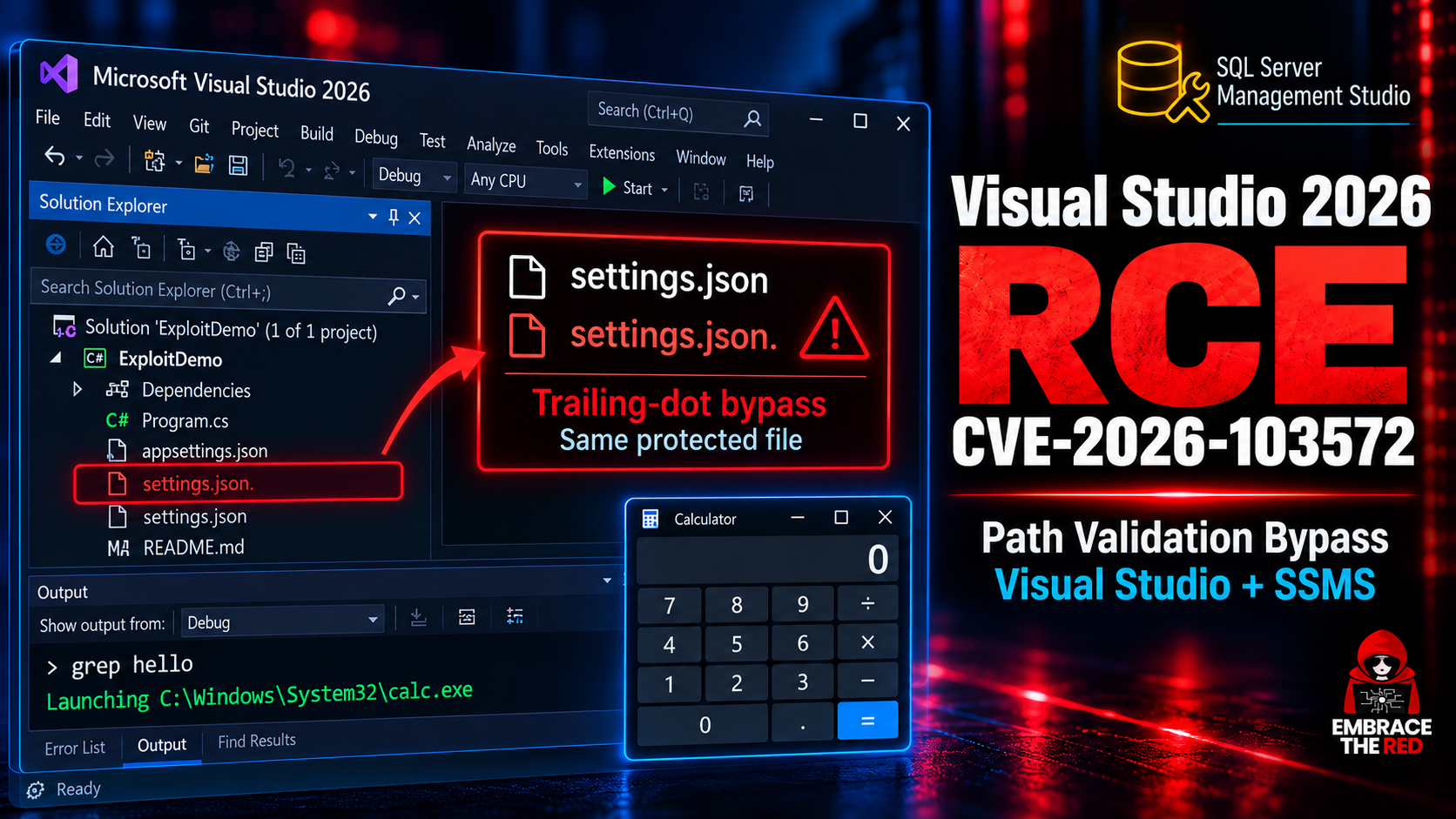
Adversa AI's November 2026 roundup of 14 AI coding agent security resources from October. It covers CVE-2026-103572 (Visual Studio Copilot and SSMS RCE via trailing-dot filename), an unpatched Claude Code child-session hook bypass, a Copilot CLI cryptographic context injection, and a CVE-less opencode MCP OAuth RCE. It ends with a checklist for auditing agent configs and gateways.

Claude CodeGitHub Copilot CLIOpenCode+3
CVE-2026-103572prompt injectionindirect prompt injection+7

AI Security, Supply Chain· Published and added 2 Nov 2026

x.comtool🛡️ Security

Md Ismail Šojal 🕷️ (@0x0SojalSec) on X

An x64dbg MCP server (GitHub repo by duty1g, shared via an X post) that lets Claude drive the x64dbg Windows debugger: set breakpoints, dump memory, step code and run other reverse engineering tasks programmatically. The post targets malware analysts. A reply notes that debugging a sample executes it, so the agent should run in a snapshotted VM with no shared folders or host route, with every command logged.

x64dbgModel Context ProtocolClaude+1

Malware & RE, AI Security· Added 3 Nov 2026, published 1 Nov 2026

x.comthread🧠 AI

Smarthouse (@localyzapp) on X

A reply by Smarthouse (@localyzapp) on X to a question about the best harness for connecting local models to a Minecraft server. It suggests an MCP server that wraps RCON plus a small agent loop. The main pitfall is block coordinates: expose "/execute if block" as a read tool so the agent can check blocks before placing them, or it will hallucinate terrain.

Model Context ProtocolMinecraftRCON

mcp, agents· Added 2 Nov 2026, published 1 Nov 2026

x.comthread🧠 AI

Lonnie VanZandt (@lonniev) on X

Secure Courier is a consent flow in Tollbooth DPYC, a monetization network for paid MCP services, that lets an AI agent act for a Nostr npub without holding the user's nsec. The service sends a signed, sealed direct message over Nostr relays, the user replies with a signed approval and an expiry, and the service issues its own encrypted grant. Lonnie VanZandt presents it as an alternative to central identity providers and CIBA. The thread gives no audit results.

Model Context ProtocolNostrOAuth+2
Secure CourierExcalibur-MCPLonnie VanZandt

mcp, agents· Added 1 Nov 2026

x.comtool🧠 AI

zahT3 (@zahT3zuo) on X

Hotseat is a free, open-source macOS menu bar app that moves Claude Code and Claude Desktop to another of the user's Claude accounts in one click and returns to the same session. Sessions, settings, skills and MCP servers are shared, so `claude --resume` works under either account. When a session hits a usage limit, it offers to continue under another account. It never reads tokens or cookies. Install with Homebrew.

Claude CodeClaude DesktopmacOS+2
HotseatAnthropic

coding-agents· Added 1 Nov 2026, published 31 Oct 2026

ethereum-magicians.orgother🧠 AI

ERC-8481: Agent Pre-Sign Risk Report

ERC-8481 is a draft Ethereum standard for the report a risk source returns about one prepared, unsigned request from an AI agent. Reports bind to the request by digest and are signed with EIP-712 by an ERC-8004 identity. Findings cover tokens, approvals, addresses, x402 payments and texts, each marked read or not read, with no score or verdict. The only implementation is toll, a free HTTP and MCP guard on Robinhood Chain.

Ethereumx402Model Context Protocol+3
ERC-8481ERC-8265ERC-8004+7

agents· Added 2 Nov 2026, published 31 Oct 2026

arxiv.orgpaper🛡️ Security

AgentCap: Capability-Based Runtime Authorization for Secure LLM Agent Execution

AgentCap is a runtime authorization layer for LLM agents that moves the authorize decision out of the model and mediates every tool call through an MCP wrapper. It issues short-lived, budget-bounded capability tokens checked at the tool boundary, restricts delegation to attenuating parent-child chains, and uses a declarative policy language. On AgentDojo and InjecAgent it lowers attack success in every tested setting, reaching 0% with GPT-5.4.

Model Context ProtocolLLMAgentCap
indirect prompt injectionAgentDojoInjecAgent+1

AI Security· Added 3 Nov 2026, published 31 Oct 2026

arxiv.orgpaper🧠 AI

AgentCap: Capability-Based Runtime Authorization for Secure LLM Agent Execution

AgentCap is a runtime authorization layer for LLM agents from Virginia Tech (Suresh and Gao), posted to arXiv on 31 October 2026. The model proposes MCP tool calls, and a policy engine issues Ed25519-signed capability tokens only after checks on provenance, intent, trust and prerequisites. It reports 0% attack success with GPT-5.4 on AgentDojo and InjecAgent, but only on scenarios the authors built.

Model Context ProtocolEd25519JWT+1
Virginia TechAgentDojoInjecAgent+4

agents, mcp, research· Added 3 Nov 2026, published 31 Oct 2026

x.comthread🛡️ Security

Tanmay (@TanmayK_03) on X

DBHub, a database MCP server, had a read-only mode bypass in its SQL check. The check treated every `--` as a comment, but MySQL only starts a comment when whitespace follows it. A hidden write statement could therefore still run, and a prompt injection could trigger it. Fixed in version 0.22.6. Replies say enforcement belongs in database grants and that parser tests need to be dialect-specific.

DBHubMySQLModel Context Protocol
prompt injection

AppSec, AI Security· Added 31 Oct 2026, published 30 Oct 2026

arxiv.orgpaper🛡️ Security

How Much Can Tool Calls Reveal About You? Privacy Leakage from Tool-Call Traces

PrivacyTrace is a benchmark of 1,000 synthetic user profiles and 4,000 agent trajectories across four domains, built with real tools from 25 MCP servers. Four LLM attackers inferred user attributes from tool-call traces alone at a 26.25% success rate, against 17.97% for prior-based guessing. Tool arguments and returned results gave the main evidence, and linking traces across sessions raised the risk.

Model Context ProtocolLLM
PrivacyTraceuser profile inferencebehavioral side channel

AI Security· Added 3 Nov 2026, published 30 Oct 2026

arxiv.orgpaper🧠 AI

How Much Can Tool Calls Reveal About You? Privacy Leakage from Tool-Call Traces

PrivacyTrace is a benchmark from the Shanghai AI Laboratory (AgentDoG Team, October 2026) that tests how much a passive observer can infer about a user from MCP tool-call traces alone. It has 1,000 synthetic profiles, 4,000 trajectories and 67,950 calls across 25 MCP servers. Four LLM attackers reached 26.25% attribute accuracy against a 17.97% prior baseline, and tool arguments leaked most.

Model Context ProtocolPydantic AILLM+1
PrivacyTraceShanghai AI LaboratoryAgentDoG Team+5

evals, mcp, research· Added 3 Nov 2026, published 30 Oct 2026
x.comthread🛡️ Security

Lonnie VanZandt (@lonniev) on X

Tollbooth DPYC's "Secure Courier" is a consent scheme that lets an AI agent act for a Nostr npub at a paid MCP service without holding the user's nsec. The service sends a signed, sealed Nostr direct message, the user replies signed with their nsec and sets an expiry, and the service issues its own grant. The thread contrasts this with central identity providers and CIBA, arguing a breach reaches only grants that service issued.

Model Context ProtocolNostrOAuth+1
Tollbooth DPYCSecure CourierCIBA+4

Identity & Access, AI Security· Added 1 Nov 2026, published 30 Oct 2026

github.comrepo🧠 AI

rikugan: LLM reverse-engineering agent for IDA Pro and Binary Ninja

Rikugan is a reverse-engineering agent that runs inside IDA Pro and Binary Ninja. It has its own generator-based agent loop, context management, plan mode and 60+ tools, and does not depend on an external MCP server. An orchestrator spawns parallel subagents to analyze a binary. It supports Anthropic, Gemini, MiniMax, Kimi, OpenAI-compatible endpoints and Ollama, with per-model notes.

IDA ProBinary NinjaHex-Rays+6
RikuganClaude Opus 4.6Claude Sonnet 4.6+6

agents, coding-agents· Added 30 Oct 2026

github.comrepo🛡️ Security

rikugan: LLM reverse-engineering agent for IDA Pro and Binary Ninja

Rikugan is an open-source reverse-engineering agent that runs inside IDA Pro 9.0+ and Binary Ninja, with its own agent loop instead of an MCP server. It has 60+ tools (decompiler, xrefs, strings, types, IL/microcode), parallel subagent exploration, an experimental /modify natural-language patching command and an experimental Binary Ninja deobfuscation skill for control flow flattening and opaque predicates. It supports Claude, Gemini, MiniMax, Kimi, OpenAI-compatible endpoints and Ollama.

IDA ProBinary NinjaLLM+3
control flow flatteningopaque predicatesMBA expressions+1

Malware & RE, AI Security· Added 30 Oct 2026

x.comtool🧠 AI

Ritik Shukla (@Retik_S) on X

kanzo is a local kanban board that coding agents can update. It ships as one 4 MB binary that starts in 2 ms and runs on localhost. It also works as an MCP server, so Claude Code and Codex see the same tasks as the user. The board is stored as a folder that can sync through a private git repo. The post is brief and gives no further detail.

Model Context ProtocolClaude CodeCodex+2
kanzo

mcp, coding-agents· Published and added 30 Oct 2026

x.comthread🧠 AI

aiproduck (@aiproduck) on X

Ruflo is an MIT-licensed wrapper for Claude Code and Codex that adds agent swarms, vector memory and an MCP server. The plugin install writes no files to the workspace, while npx init adds a .claude/ directory, CLAUDE.md and hooks. The post warns that mods run with the account's permissions, so users should read them first. It gives no benchmarks or architecture detail.

Claude CodeCodexModel Context Protocol+1
Ruflo

coding-agents, agents, mcp· Published and added 30 Oct 2026

x.comthread🛡️ Security

川崎元 (@foryangxin) on X

CVE-2025-6514 is an OS command injection (CWE-78, CVSS 9.6) in mcp-remote 0.0.5 to 0.1.15, fixed in 0.1.16. A malicious MCP server supplies a crafted authorization_endpoint during OAuth discovery, and the open package passes it to PowerShell on Windows. The thread cites the MCP spec's URL scheme allowlist rules and advises treating discovery metadata as untrusted, pinning bridge tools and sandboxing them.

Model Context Protocolmcp-remoteOAuth+3
CVE-2025-6514CWE-78SSRF+2

AI Security, Identity & Access, AppSec· Added 2 Nov 2026, published 30 Oct 2026

vulncheck.comtool🛡️ Security

VulnCheck - Outpace Adversaries

VulnCheck Open Source is an index of VulnCheck's open-source tooling for its vulnerability and exploit intelligence. It lists a Python API client, a CLI, a GitHub Action for CI/CD, go-exploit (a Go exploit framework), an MCP server for delivering intelligence to AI clients, and VulnCheck Insights, a Chrome extension that highlights CVEs, CPEs and PURLs on web pages and enriches them. The page gives only one-line descriptions.

GoPythonGitHub Actions+2
VulnCheckgo-exploitVulnCheck Insights+2

Offensive Security, DevSecOps· Added 29 Oct 2026

pillar.securityarticle🛡️ Security

SAIL Framework: A Practical Guide for AI Security

The SAIL Framework from Pillar Security is a seven-phase, lifecycle-oriented method for securing AI systems. The phases are AI policy and safe experimentation, AI asset discovery, AI security posture management, AI red teaming, runtime guardrails, sandboxed execution for agents and MCP servers, and AI activity tracing. It argues for a "Shift Up" approach that protects the business logic AI controls, and it is meant to sit on top of existing standards.

Model Context Protocol
SAIL FrameworkPillar Securityprompt injection+3

AI Security, GRC· Added 29 Oct 2026

x.comthread🧠 AI

Prasenjit Sarkar (@stretchcloud) on X

A thread on Cloudflare's agent-readiness scan and the AgentReady.org open spec for "Agent Experience", developed with Vercel, Stripe, Auth0, Mintlify, Google, Netlify and Elementor. The scan grades whether agents can find a site (robots.txt, DNS), read clean Markdown, pass bot rules, and discover an MCP server or API catalog. One quoted example raised a score from 20 to 67 by shipping an API catalog with Link headers, an MCP server card, a skills index and an AI catalog file.

Model Context ProtocolCloudflareMarkdown
AgentReady.orgOraNick Launches+7

mcp, agents· Added 30 Oct 2026, published 29 Oct 2026

x.comthread🛡️ Security

Rohan Paul (@rohanpaul_ai) on X

Rohan Paul's X post summarizes a TikTok paper on MCP attacks. LLM agents often finish the requested task, then quietly call an attacker-controlled logging tool that records the user query, the server reply and the final answer. The attack works because agents read natural-language tool descriptions when choosing and ordering tool calls. The visible text is truncated and gives no success rates or defenses.

Model Context ProtocolLLM
tool poisoningdata exfiltration

AI Security· Added 30 Oct 2026, published 29 Oct 2026

github.comcourse🧠 AI

rohitg00/ai-engineering-from-scratch

ai-engineering-from-scratch is a free, MIT-licensed curriculum of 542 lessons in 20 phases, from math and deep learning through transformers, LLM engineering, MCP, agents and capstones. Code is in Python, TypeScript, Rust and Julia. It includes three graded projects (retrieval evaluation, agent trace debugger, tool call firewall), installable tutor skills for Claude Code and Codex, and certification prep tracks.

PythonTypeScriptRust+13
Rohit GhumareOpenClawHermes+6

· Added 29 Oct 2026

securityweek.comarticle🛡️ Security

Cisco Open Sources Quarry to Catch AI Agent Attacks Hidden in Harmless Steps

Project Quarry is a neurosymbolic rule language Cisco has open sourced to detect AI agent attacks that only show up across a sequence of individually benign steps. Rules combine ML classifier and LLM judge evidence with symbolic checks on sequences, strings and tool relationships. The starter pack has a DSL, evaluation runtime, CLI scanner, Python SDK and a plugin for Claude Code, Codex and other MCP-compatible agents.

QuarryModel Context ProtocolClaude Code+2
Project QuarryCisco Integrated AI Security & Safety Framework

AI Security, Blue Team & Detection· Published and added 29 Oct 2026

endorlabs.comarticle🧠 AI

What is an AIBOM? AI bill of materials explained for security teams | Endor Labs

An AIBOM is a machine-readable inventory of models, datasets, dependencies, AI services, agents and MCP servers, with evidence of origin, license, integrity and evaluation. The Endor Labs explainer walks through a worked CycloneDX example for a fine-tuned support assistant. It compares CycloneDX ML-BOM, SPDX 3.x, the OWASP AIBOM project and the May 2026 CISA/G7 guidance, and lists what an AIBOM cannot show: runtime behavior and agent actions.

CycloneDXSPDXSBOM+5
Endor LabsOWASPCISA+3

ai-policy, ai-infra· Published and added 29 Oct 2026

endorlabs.comarticle🛡️ Security

What is an AIBOM? AI bill of materials explained for security teams | Endor Labs

AIBOM explainer from Endor Labs: an AI bill of materials is a machine-readable inventory of models, datasets, dependencies, AI services, agents and MCP servers, with origin, license and integrity evidence. It walks through a CycloneDX entry for a fine-tuned model, compares CycloneDX ML-BOM, SPDX 3.x, the OWASP AIBOM Generator and the May 2026 CISA/G7 minimum-elements guidance, and lists a six-step build process. It also states what an AIBOM cannot show: model safety, runtime behavior and coding-agent actions.

CycloneDXSPDXSBOM+2
EU AI ActISO/IEC 42001CISA+5

Supply Chain, AI Security, GRC· Published and added 29 Oct 2026

x.comthread🛡️ Security

Rohan Paul (@rohanpaul_ai) on X

Rohan Paul's X post summarizes the paper "Log-To-Leak: Prompt Injection Attacks on Tool-Using LLM Agents via the Model Context Protocol", from TikTok researchers. It reports that MCP-using agents often finish the requested task, then quietly call an attacker-controlled logging tool that records the query, server reply and final answer. The attack works through natural-language tool descriptions that agents read when choosing and ordering tools. The visible text is truncated.

Model Context ProtocolLLM
Log-To-Leakprompt injectionTikTok+1

AI Security· Added 29 Oct 2026, published 28 Oct 2026

x.comthread🧠 AI

Eddy (@ieddysun) on X

Expo's official skills package gives AI coding agents scoped instructions for building Expo apps. One command, npx skills@latest add expo/skills --skill '*', installs it for Cursor, Copilot and Windsurf, while Claude Code and Codex use their plugin marketplaces. Skills include expo-router, expo-animation, expo-upgrade and eas-update. The Expo MCP server adds live docs lookup, compatible dependency installs, EAS build monitoring and simulator screenshots.

ExpoReact NativeExpo Router+9

coding-agents, prompting, mcp· Added 29 Oct 2026, published 28 Oct 2026

x.comthread🛡️ Security

Hakimi Eiqbal (@hakimieiqbal) on X

A practical reverse-engineering map by hakimieiqbal on X that picks tools by target: native binaries, .NET, Electron, iOS, firmware, WebAssembly and network protocols. It introduces REA (morluto/rea), which connects coding agents to RE tools, and lists MCP bridges for IDA Pro, Ghidra and radare2. It adds an evidence-first workflow and free courses such as pwn.college and OpenSecurityTraining2.

GhidraIDA Proradare2+3
REAFlare-OnOpenSecurityTraining2+5

Malware & RE, Learning· Added 29 Oct 2026, published 28 Oct 2026

x.comthread🧠 AI

Hakimi Eiqbal (@hakimieiqbal) on X

A thread by Hakimi Eiqbal that maps reverse-engineering tools by target type: native binaries, Electron, .NET, iOS, firmware, WebAssembly and network protocols. Its AI sections cover REA (an open-source layer connecting coding agents to analysis tools) and MCP bridges for IDA Pro, Ghidra and radare2. It argues for an evidence-first workflow and gives a prompt that separates verified facts from hypotheses.

Model Context ProtocolClaude CodeCodex+8
REAIDA Pro MCPGhidrAssistMCP+3

coding-agents, mcp· Added 29 Oct 2026, published 28 Oct 2026

endorlabs.comarticle🧠 AI

ADLC compliance: Mapping agentic development to NIST SSDF, OWASP, and the EU AI Act | Endor Labs

ADLC compliance is Endor Labs' interpretation of how NIST SSDF (SP 800-218), the OWASP LLM and Agentic Top 10 lists, and the EU AI Act apply to software built with coding agents. It splits requirements into a code surface and an action surface (shell, files, MCP calls, package installs). It gives a four-step EU AI Act scoping path and says that system prompt rules and agent self-reports are not audit evidence.

CursorClaude CodeModel Context Protocol+3
Endor LabsNISTOWASP+3

ai-policy, coding-agents· Published and added 28 Oct 2026

endorlabs.comarticle🛡️ Security

ADLC compliance: Mapping agentic development to NIST SSDF, OWASP, and the EU AI Act | Endor Labs

ADLC compliance guide from Endor Labs that maps agentic development to NIST SSDF (SP 800-218 v1.1), the OWASP LLM Top 10 2025 and Agentic Top 10, and the EU AI Act as amended by Regulation (EU) 2026/1744. It splits controls into a code surface and an action surface (shell, file access, MCP calls, package installs). It gives a four-step AI Act scoping path, the new Annex III date of 2 December 2027, and evidence guidance. It states the crosswalk is the vendor's interpretation, not legal advice.

Endor LabsModel Context ProtocolClaude Code+3
NIST SSDFNIST SP 800-218NIST SP 800-218A+13

GRC, AI Security, Supply Chain· Published and added 28 Oct 2026

endorlabs.comarticle🛡️ Security

The ADLC maturity model: 5 stages of agentic development security | Endor Labs

The ADLC maturity model is a proposed five-stage framework from Endor Labs for scoring security controls over coding agents, from unmanaged experimentation to continuous verification. Each stage has requirements on two tracks, agent actions (shell commands, MCP calls, package installs) and agent output (code, dependencies, secrets). It sets stage 3 at deterministic hooks that block actions, gives evidence-based assessment questions, and lists traps such as relying on prompt-level rules.

Endor LabsAURIModel Context Protocol+2
ADLC maturity modelOWASP SAMMOWASP Top 10 for LLM Applications+5

AI Security, GRC, DevSecOps· Published and added 28 Oct 2026

x.comthread🧠 AI

Kizuno18 (@Kizuno18) on X

Kizuno18's X post argues that the move from local stdio and Docker MCP servers to remote HTTP/SSE endpoints matures the Model Context Protocol in enterprise infrastructure. It lists three trade-offs: short-lived OAuth/JWT bearer tokens replace mounted admin credentials, deferred tool discovery avoids roughly 20k tokens of eager schema loading, and HCP Terraform enforces Sentinel/OPA policy, audit trails and approvals server-side. Opinion post with no benchmarks or code.

Model Context ProtocolDockerTerraform+5
Kizuno18HCP TerraformOPA

mcp· Added 29 Oct 2026, published 27 Oct 2026

x.comthread🛡️ Security

Buchi Reddy B (@buchireddy) on X

Buchi Reddy B's X thread comments on Forever Security's research (Gal Weizman, Omer Samet) on coding agents. A web page silently writes a fake AGENTS.md or CLAUDE.md into a Downloads folder, and Codex and Claude Code follow it as project rules. Codex then wrote an attacker's MCP server into the machine-wide config, so one injection becomes a standing connection for every session. It asks whether teams inventory runtime MCP connections against approved lists.

CodexClaude CodeModel Context Protocol
Forever SecurityGal WeizmanOmer Samet+3

AI Security· Added 28 Oct 2026, published 27 Oct 2026

x.comthread🧠 AI

Rohan Paul (@rohanpaul_ai) on X

Hi3D v1.0 (formerly Sparc3D) is an open-sourced image-to-3D model from Hi3D, which runs a closed v3.0 refining at 2048 cubes per side. In a test with 13 professionals in 3D algorithms, 562 judgments against eight other image-to-3D models favoured it 83.5% of the time. The thread also covers the Hi3D Agent and an MCP server for other agents. Back and bottom views were checked, where TRELLIS.2 collapsed a winged figure.

Model Context Protocol
Hi3DHi3D v1.0Sparc3D+2

models, multimodal, mcp· Added 28 Oct 2026, published 27 Oct 2026

x.comthread🛡️ Security

cubillas (@cubillas888) on X

The tweet relays Pillar Security research that opencode on Windows and WSL could run attacker-controlled code during remote MCP server OAuth sign-in. The fix shipped in opencode 1.18.33 on 28 September, with no advisory or CVE published. It advises users of remote MCP servers to update and review which servers they connect to. Technical details are not in the post.

OpenCodeModel Context ProtocolOAuth+1
Pillar Security

AI Security, AppSec· Added 29 Oct 2026, published 27 Oct 2026

x.comthread🛡️ Security

Nicholas Martin (@ndgmlondon) on X

X thread started by Nicholas Martin (#IAM) advising that MCP tool permissions be verified and scoped session tokens used to enforce least privilege against indirect prompt injection. Replies argue that token scoping does not solve the confused deputy problem, because an injection borrows the agent's legitimate authority. They recommend per-task tokens with short expiry, with the grant logged beside the call, and raise MCP server dependency supply-chain risk.

Model Context Protocol
indirect prompt injectionconfused deputy

AI Security, Identity & Access· Added 28 Oct 2026, published 27 Oct 2026

arxiv.orgpaper🛡️ Security

Measuring Users' Security and Privacy Concerns About Third-Party Community Bots on Discord

Measurement study of 23,102 third-party Discord bots and 183,142 user reviews (2021-2026, 49 languages). A fine-tuned DeBERTa classifier plus manual validation yields 8,832 security and privacy reviews, mapped to a 31-theme taxonomy; Data Sharing (30.5%) and Data Collection (16.2%) dominate. Permission count and admin status correlate only weakly with user concerns. The authors build BotLens, an MCP-server auditing framework with six tools.

DiscordModel Context ProtocolLLM
BotLensDeBERTa

other, AI Security· Added 28 Oct 2026, published 27 Oct 2026

arxiv.orgpaper🛡️ Security

Log-To-Leak: Prompt Injection Attacks on Tool-Using LLM Agents via the Model Context Protocol

Log-To-Leak is a prompt-injection attack on tool-using LLM agents that abuses Model Context Protocol tool metadata to trigger an attacker-controlled logging call after the last legitimate call, leaking the user query, server name, server response and agent response. Evaluated on five MCP servers and four agents, it reaches 62.64-100% attack success with 76.55-95.64% logging accuracy. Three defenses leave over 55% residual ASR on GitHub MCP with GPT-4o.

Model Context ProtocolGitHubGPT-4o+1
Log-To-Leaktool poisoningprompt injection

AI Security· Added 28 Oct 2026, published 26 Oct 2026

x.comthread🛡️ Security

David Gutierrez | Eng (@david_x_ai) on X

Thread on two October 2026 npm compromises: @subql/common 5.8.3 (5 October), published through GitHub Actions OIDC Trusted Publishing after the attacker tampered with the publish workflow, and tensorlake 0.5.144 (8 October), published by the project's own release workflow with valid provenance for about 1 hour 40 minutes. Both ran on install and stole cloud, GitHub, Kubernetes, Vault, SSH and .env credentials; tensorlake also took AI tool and MCP config. Its payload installed a gh-token-monitor service that deletes the home directory if the stolen GitHub token is revoked, so remove it before rotating.

npmGitHub ActionsGitHub+3
@subql/commontensorlakegh-token-monitor+3

Supply Chain, DevSecOps· Added 27 Oct 2026, published 26 Oct 2026

x.comthread🛡️ Security

Benjamin👨‍💻 (@Hislordship_9) on X

Thread on Forever Security's finding that a planted Markdown "Engineering Work Guidelines" file in ~/Downloads made Codex add a "project-tools" MCP server to ~/.codex/config.toml. The server ran npm install function-color, a known malicious package, and started a child session with --dangerously-bypass-approvals-and-sandbox. Codex complied in over 90% of the firm's tests; Claude Code, via a CLAUDE.md setting ANTHROPIC_BASE_URL, about half. Advice: don't start agents in Downloads, review instruction files, and diff agent config.

CodexClaude CodeModel Context Protocol+1
Forever Securityfunction-colorAGENTS.md+4

AI Security, Supply Chain· Added 27 Oct 2026, published 26 Oct 2026

x.comthread🛡️ Security

David Gutierrez | Eng (@david_x_ai) on X

Thread on a critical opencode bug disclosed by Pillar Security on Oct 19. On Windows and WSL, a remote MCP server could run code during OAuth sign-in, because the server-chosen authorization URL was put unescaped into a PowerShell command, so a PowerShell subexpression executed. opencode fixed it in 1.18.33 on Sep 28 as a browser-launch refactor with no advisory or CVE. MCP Inspector published an advisory for the same bug class, and its fix needs a major bump of the open package.

OpenCodeModel Context ProtocolPowerShell+3
Pillar Securitycommand injectionPowerShell subexpression+1

AI Security, AppSec, Supply Chain· Added 27 Oct 2026, published 25 Oct 2026

x.comtool🧠 AI

Dan Kornas (@DanKornas) on X

jshook is an open-source (AGPL-3.0) MCP server that gives AI agents a search-first, profile-aware reverse-engineering workspace for JavaScript, browser traffic, WASM and native processes. Agents start with a small searchable tool surface and move to workflow or full profiles only when needed. It drives Chromium or Camoufox over CDP, captures WebSocket traffic, has HTTP, GraphQL and Burp Suite helpers, and supports hot-reload plugins and declarative workflows. The post is a short announcement; the repository link is in a reply.

Model Context ProtocolJavaScriptWebAssembly+6
jshookDan Kornas

mcp, agents· Added 28 Oct 2026, published 25 Oct 2026

x.comtool🛡️ Security

Dan Kornas (@DanKornas) on X

jshook is an open-source (AGPL-3.0) search-first reverse-engineering workspace for AI agents, exposed over MCP. It drives Chromium or Camoufox through CDP, captures WebSocket traffic, offers HTTP, GraphQL and Burp Suite helpers, deobfuscates JavaScript, rebuilds source maps and disassembles WebAssembly. Tool profiles start small and expand to workflow or full sets; hot-reload plugins and declarative workflows extend it.

Model Context ProtocolBurp SuiteChrome+3
CamoufoxCDP

Malware & RE, AI Security, Offensive Security· Added 28 Oct 2026, published 25 Oct 2026

x.comtool🧠 AI

Agent Credit (@agentcredit_) on X

Agent Credit v1.3 is a remote MCP server that lets AI agents run credit checks on each other. It has six tools: score, compare, operator record, alerts and on-chain proof check. Calls are paid per use in USDC through x402 with no account or key. It also flags shared wallets, lists every token an operator launched and how each ended, and offers embeddable badges and wallet-signed record claims.

Model Context Protocolx402USDC+1
Agent Credit

mcp, agents· Added 26 Oct 2026, published 25 Oct 2026

mcpmarket.comtool🧠 AI

Search Search results for "security" | MCP Market

MCP Market search results for "security" in its skills category, listing about 20 installable AI agent skills. Entries cover OWASP Top 10 audits, secure PHP coding, STRIDE threat modeling, CVE remediation, security header analysis, misconfiguration finding, bug bounty triage and AgentShield scans of Claude Code configurations. One is a paid D365FO security-role XML skill. Each entry has only a one-line description and a category label.

Claude CodeAgentShieldPHP+1
MCP MarketOWASPSTRIDE

coding-agents, prompting· Added 25 Oct 2026

mcpmarket.comother🛡️ Security

Search Search results for "security" | MCP Market

MCP Market search results for "security" in the skills category, listing about 20 installable AI agent skills. Entries cover OWASP Top 10 audits, secure coding for PHP, STRIDE threat modeling, CVE remediation, security header analysis, misconfiguration finding, bug bounty triage and AgentShield scans of Claude Code configurations. One is a paid D365FO security-role XML skill. Each entry has only a one-line description and a category label.

Claude CodeModel Context ProtocolPHP
OWASPSTRIDEAgentShield+1

AppSec, AI Security· Added 25 Oct 2026

x.comthread🧠 AI

Big Bull (@BIGBULLapp) on X

5ire is a desktop AI assistant and MCP client that connects to OpenAI, Anthropic, Google, Mistral, Grok, DeepSeek and Ollama from one window. It has a local knowledge base and tool calls over Model Context Protocol. The tools feature needs Python, Node and uv installed because it runs a local MCP server; without them it works only as a chat client.

Model Context ProtocolPythonNode.js+3
5ireOpenAIAnthropic+4

mcp, llm-apps· Added 25 Oct 2026, published 24 Oct 2026

x.comthread🧠 AI

ReignSwords (@ReignSwords) on X

A reviewer tests GenOffice, an open-source Office suite (10.7k GitHub stars), through its CLI only. Markdown to .docx took 3.8s, JSON to .xlsx took 0.9s with a live SUM formula, and .docx to PDF failed twice until Xvfb supplied a display. It has byte-preserving edits, a skill file for Claude Code and Codex, and 29 MCP tools. Downsides: a 188MB download that filled a 512MB /tmp, Electron in the PDF path, and unproven trust in tracked changes and rollback.

Model Context ProtocolClaude CodeCodex+4
GenOffice

mcp, coding-agents, agents· Added 25 Oct 2026, published 24 Oct 2026

x.comthread🧠 AI

Gökdeniz Gülmez (@ActuallyIsaak) on X

An X post showing how to have Codex train a small model on Apple silicon through the mlx-lm-lora MCP server and skill. It gives five setup steps (pip install with the mcp extra, npx skills add, locate mlx-lm-lora-mcp, codex mcp add). The prompt runs four pre-training trials on tiny-random/qwen3 with the mlx-community/recycling_the_web-1k dataset. Codex picks the optimizer and learning rate itself, and the result is a table with validation loss and the best adapter path.

CodexMLXModel Context Protocol+5
mlx-lm-loraGoekdeniz-Guelmeztiny-random/qwen3+2

training, mcp, coding-agents· Added 25 Oct 2026, published 24 Oct 2026

x.comthread🧠 AI

Prasenjit Sarkar (@stretchcloud) on X

Post explaining Claude's new support for MCP Tasks and Elicitations. A server returns a durable task handle instead of blocking. The client polls tasks/get every 250 ms to 30 s, and states are working, input_required, completed, failed or cancelled. Elicitations pause a task at input_required for human approval. It also notes Cloudflare's stateless MCP servers and Code Mode, and Sentry and Linear adoption.

Model Context ProtocolClaude CodeGitHub Actions+3
AnthropicClaudeAWS+4

mcp, agents· Added 25 Oct 2026, published 24 Oct 2026

x.comthread🧠 AI

EveryDev.ai (@EveryDevAi) on X

ToolUniverse, from ScientistTools, is an open-source (Apache-2.0) toolkit that gives any LLM one interface to more than 1,000 scientific tools, models and databases such as PubMed, UniProt and ChEMBL. It ships a native MCP server, a Python SDK and a tu CLI, plus 68 pre-built agent skills. The post says it works with Claude Code, Cursor, Gemini CLI and Windsurf.

Model Context ProtocolPythonClaude Code+4
ToolUniverseScientistToolsPubMed+2

mcp, agents· Published and added 24 Oct 2026

arxiv.orgpaper🛡️ Security

Deletion, Substitution, Repair and Transplant: Component Attribution in BARBICAN, a Layered Prompt-Injection Gateway for MCP

BARBICAN is a fail-closed prompt-injection gateway for MCP tool mediation. This paper shows its arbitration classifier ran on tokenizer-mangled text for a whole evaluation. Fixing it raised AUC from 0.392 to 0.855 while system recall fell from 80.67% to 80.34%. The routed band is 96.82% malicious, so deletion ablations mislead without substitution experiments and class-balance reporting.

Model Context ProtocolLLM
BARBICANprompt injection

AI Security· Added 27 Oct 2026, published 23 Oct 2026

arxiv.orgpaper🧠 AI

Deletion, Substitution, Repair and Transplant: Component Attribution in BARBICAN, a Layered Prompt-Injection Gateway for MCP

The paper analyses BARBICAN, a fail-closed prompt-injection gateway for MCP tool mediation, using deletion, substitution, repair and transplant experiments. Its arbitration classifier ran on tokenizer-mangled text for a whole evaluation. Fixing that raised AUC from 0.392 to 0.855 while system recall fell from 80.67% to 80.34%. The band it receives is 96.82% malicious. The authors argue ablation figures need the band's class balance and substitution baselines.

Model Context Protocol
BARBICAN

evals, research, mcp· Added 27 Oct 2026, published 23 Oct 2026

endorlabs.comarticle🛡️ Security

ADLC Security Best Practices for Teams Shipping with Coding Agents | Endor Labs

ADLC Security Best Practices is an Endor Labs guide to controlling what AI coding agents can access, run, install and ship. It covers inventorying agents and MCP servers, sandboxing, pre-execution hooks instead of AGENTS.md rules, install-time package checks against slopsquatting and malware, reachability-based triage of agent PRs, and CI/CODEOWNERS protections. A five-step worked example and coverage metrics are included.

Model Context ProtocolClaude CodeCursor+3
slopsquattingindirect prompt injectiontool poisoning+5

AI Security, Supply Chain, DevSecOps· Published and added 23 Oct 2026

x.comthread🧠 AI

Yash Patil (@yvshpvtil) on X

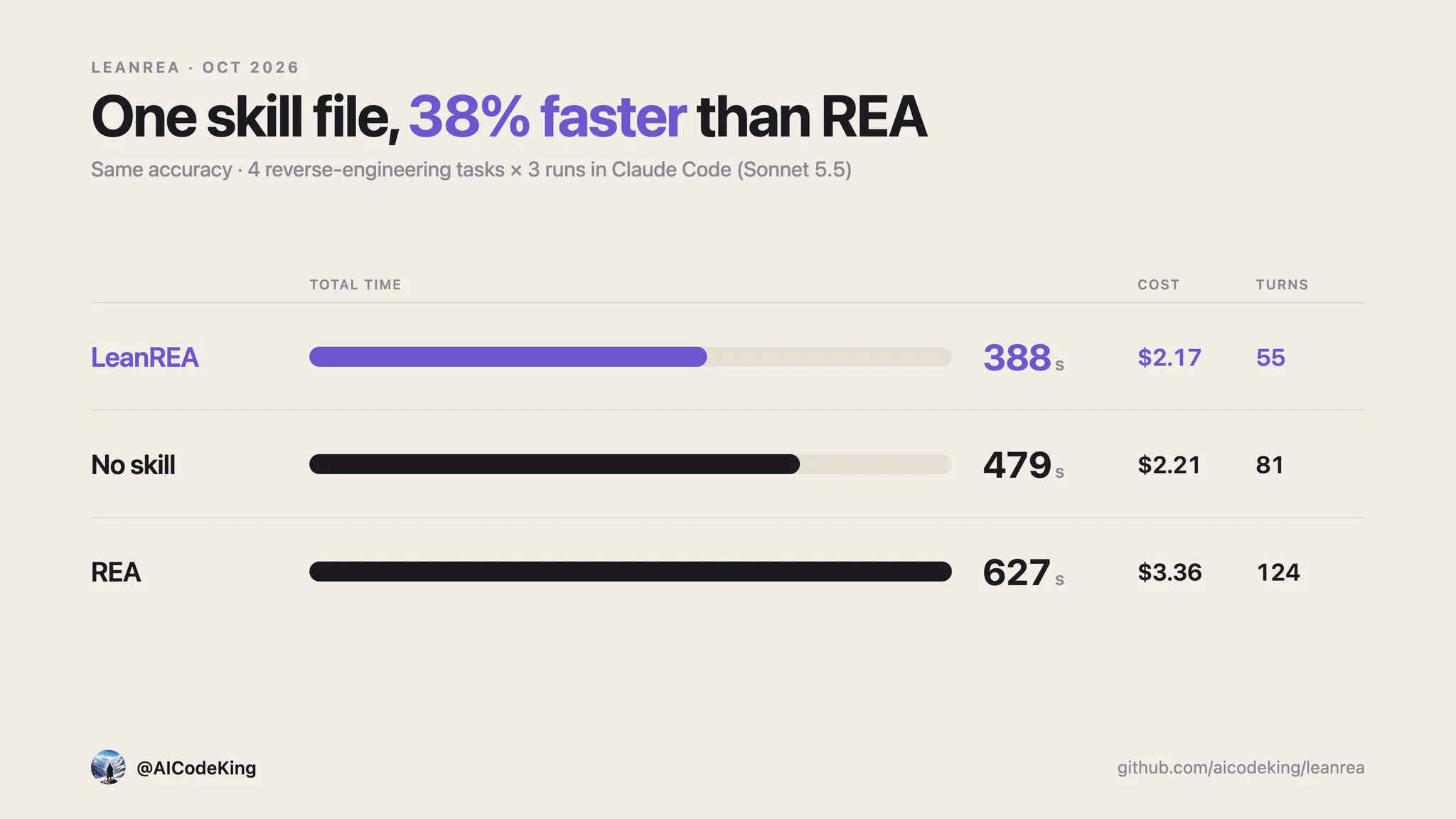
leanrea is an 8 KB skill file that tells a coding agent which plain CLI tools to use for reverse engineering, replacing REA, a 207-tool MCP server. In the author's test it ran 38% faster and 35% cheaper, scoring 74/75 against 75/75. The author lists caveats: 3 runs per task, one model, one machine, and Claude with no skill was already decent.

Model Context ProtocolClaude
leanreaREAYash Patil+2

prompting, mcp, coding-agents· Added 25 Oct 2026, published 23 Oct 2026

x.comthread🛡️ Security

Yash Patil (@yvshpvtil) on X

leanrea is an 8 KB skill file that tells a coding agent which plain CLI tools to use for reverse engineering, replacing the 207-tool REA MCP server. The author's test reports 38% faster, 35% cheaper, and a score of 74/75 against REA's 75/75. Caveats listed: 3 runs per task, one model, one machine, and Claude with no skill already performed decently. Replies question whether the lost point was a task where structured tool output beat parsing CLI text.

leanreaREAModel Context Protocol+1

Malware & RE, AI Security· Added 25 Oct 2026, published 23 Oct 2026

arxiv.orgpaper🧠 AI

Tool-Calling LLM Agents Under Realistic MCP Faults: Scale Does Not Purchase Fault Tolerance

MCP-Injector is a protocol-aware fault-injection middleware for Model Context Protocol tool calls, with permanent, transient and intermittent faults on seedable schedules. Its fault model comes from 57,240 issue and PR threads across 1,774 open-source MCP repositories. In a 1,350-cell experiment, faults cut task-completion score by 60% (8.08 to 3.23 of 10), and the 120B gpt-oss model was no more resilient than the 20B. Agent stacks differed in how well they absorbed faults.

Model Context ProtocolOpenAI Agents SDKLangChain+2
MCP-Injectorgpt-oss-120bOpenAI

mcp, evals, agents, research· Added 26 Oct 2026, published 23 Oct 2026

arxiv.orgpaper🛡️ Security

Agentic AI Defense: Decode-Time Provenance Binding for MCP

Decode-time provenance binding is a defense for Model Context Protocol agent pipelines against cross-modal trust laundering, where instructions hidden in an email-signature image via LSB, DCT or metadata steganography get decoded by a tool. It combines HMAC-authenticated trust labels, a provenance ledger and context-taint tracking to block critical tool calls. On a real MCP testbed with 24 adaptive payloads, attack success fell from 100% undefended (62.5% for keyword and regex filters) to 0%.

Model Context Protocol
indirect prompt injectioncross-modal trust launderingsteganography+5

AI Security· Added 26 Oct 2026, published 22 Oct 2026

simonwillison.netarticle🧠 AI

Donating Agent Skills to the Agentic AI Foundation

Simon Willison's link post covers Anthropic's 22 October 2026 announcement that it is donating the Agent Skills standard to the Agentic AI Foundation (AAIF) under the Linux Foundation. Anthropic co-founded the AAIF with Block and OpenAI and earlier donated MCP to it. Willison notes he predicted this in December 2025 and found his old post by querying his blog through datasette-mcp in Claude.

Model Context ProtocolClaudeDatasette
AnthropicAgentic AI FoundationLinux Foundation+3

prompting, ai-policy, coding-agents· Published and added 22 Oct 2026

x.comtool🧠 AI

Meku_SI (@MEKU_SI) on X

MEKU Human Cloud is an MCP server for agents that need a real person to do a task. It exposes three tools: search humans (read-only), request a human (a human operator reviews every request first), and check status. It is listed in the MCP Registry as farm.meku/human-cloud. The tweet gives no detail on pricing, humans available or request formats; those are in the linked docs.

Model Context Protocol
MEKU Human CloudMeku_SI

mcp, agents· Added 23 Oct 2026, published 22 Oct 2026

x.comrepo🧠 AI

Dan Kornas (@DanKornas) on X

aula-mcp is an open-source (MIT) TypeScript MCP server that connects an AI client to Denmark's Aula school platform. It exposes tools for profiles, calendar events, messages, notifications, posts and weekly plans. MitID credentials and OAuth tokens are stored in macOS Keychain or an AES-256-GCM encrypted file. The HTTP server binds to 127.0.0.1, and the presence write tool stays off until AULA_MCP_WRITE=1 is set.

Model Context ProtocolTypeScriptClaude Code+3
AulaMitIDDan Kornas

mcp· Added 23 Oct 2026, published 22 Oct 2026

x.comthread🧠 AI

SpyTech Ai (@RizeOnline) on X

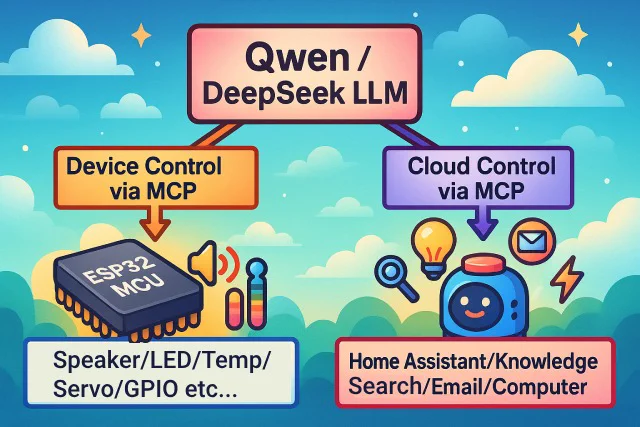
XiaoZhi ESP32 is an open-source, MIT-licensed firmware stack that turns ESP32 boards into MCP-based voice chatbots using models such as Qwen and DeepSeek. It streams Opus audio over WebSocket or MQTT + UDP through ASR, LLM and TTS, adds offline ESP-SR wake words, and uses device-side MCP to drive speakers, LEDs, servos and GPIO. It supports 138 board directories and builds with ESP-IDF 6.0.1 or newer.

Model Context ProtocolESP32ESP-IDF+10
XiaoZhi ESP32SpyTech Ai

mcp, multimodal, llm-apps· Added 23 Oct 2026, published 21 Oct 2026

x.comthread🛡️ Security

VibecodersHQ (@VibeCodrHQ) on X

Post summarising Pillar Security's finding of a remote code execution flaw in OpenCode, the open-source AI coding agent. Versions 1.0.137 through 1.18.32 could run code from a remote MCP server during OAuth sign-in on Windows and WSL, with no prompt injection needed. The fix is in 1.18.33 (released 28 September). No advisory or CVE was issued, so scanners will not flag old installs. Interim advice is to remove unvetted remote MCP servers.

OpenCodeModel Context ProtocolOAuth+1
Pillar SecurityOpenCode Console breach

AI Security, AppSec· Added 22 Oct 2026, published 21 Oct 2026

x.comthread🛡️ Security

Swif (@swif_ai) on X

Swif (@swif_ai) reports that in the MCP TypeScript server SDK versions 2.0 to 2.2, a single server instance shared by several HTTP clients, which is the pattern the README shows, could send one client's responses to another client. Version 2.3.0 refuses this setup, so developers must build a server per request or per session. The post gives no CVE, advisory ID or technical detail.

Model Context ProtocolTypeScript
cross-client data leak

AI Security, AppSec· Added 22 Oct 2026, published 21 Oct 2026

x.comthread🧠 AI

Swif (@swif_ai) on X

A post from Swif (@swif_ai) on the MCP TypeScript server SDK versions 2.0 to 2.2. A single server instance shared across HTTP clients, the pattern shown in the README, could send one client's responses to another client. Version 2.3.0 refuses that setup, so servers must be built per request or per session. The post gives no code or advisory ID.

Model Context ProtocolTypeScript
Swif

mcp· Added 22 Oct 2026, published 21 Oct 2026

github.comrepo🧠 AI

Show HN: Omnara – Open-source alternative to Claude Managed Agents

Omnara is an open-source, self-hostable managed agent platform, an alternative to Claude Managed Agents and OpenAI's Agents API. It runs agents on any model (OpenAI, Anthropic, OpenRouter, Bedrock, LiteLLM, Ollama) and any machine, with Postgres-backed durable state, stateless workers, per-tool permissions, MCP, skills, memory, subagents, schedules and Slack, Discord and GitHub triggers. It ships a REST API, TypeScript SDK, CLI and Docker Compose setup.

Model Context ProtocolTypeScriptNode.js+14
OmnaraClaude Managed AgentsOpenAI+2

agents, ai-infra, mcp· Added 23 Oct 2026, published 21 Oct 2026

aikido.devarticle🛡️ Security

Software supply chain security best practices for 2026

Aikido's guide to software supply chain security controls for 2026, tied to real incidents. It covers a 48-hour package cooldown, ignore-scripts, lockfile enforcement, SHA and digest pinning, scoped tokens, FIDO2, developer endpoint protection, extension allowlists, agent sandboxing, MCP server vetting, slopsquatting, signed SBOMs and rotation drills. Examples include the March 2026 axios compromise and the March 2025 tj-actions/changed-files attack.

npmpnpmGitHub Actions+3
tj-actions/changed-filesCanisterWormGlassWorm+7

Supply Chain, DevSecOps, AI Security· Added 22 Oct 2026, published 21 Oct 2026

blog.cloudflare.comarticle🧠 AI

How Commerce.com and Cloudflare are getting storefronts ready for AI agents

Cloudflare and Commerce.com describe enabling WebMCP, Google's proposed browser standard for exposing structured tools to AI agents, across almost 100,000 storefronts. Cloudflare injects a bridge script at the edge that proxies tools from Commerce.com's backend MCP server. Per-merchant opt-out uses Configuration Rules and custom hostname metadata, and a configurable MCP URL (/api/mcp) was added.

WebMCPModel Context ProtocolCloudflare+3
Commerce.comGoogleKristina Pototska+1

mcp, agents· Added 29 Oct 2026, published 21 Oct 2026

alterauth.comtool🧠 AI

Launch HN: Alter (YC S25) – Access control for multi-user agents

Alter is a privileged access management layer for AI agents (YC S25). It stores credentials in a vault, injects them per request through a proxy, gives each agent its own identity and scoped grants, and logs every call to a tamper-evident audit trail. One SDK call covers storage, refresh, policy and audit for 140 API providers, with LangChain, MCP and AWS integrations. Policy is default-deny down to the parameter, with human approval for risky calls.

Model Context ProtocolLangChainAWS+3
AlterY Combinator

ai-infra, agents· Added 22 Oct 2026, published 21 Oct 2026

snyk.ioarticle🛡️ Security

AI Model Risk Depends on What the Model Can Reach

Snyk's State of Agentic AI Adoption Volume III scores models against 29 attacker goals (0 to 1,000) and matches them to AI-BOM scan data from 1,693 environments. 74.5% reference a model scoring 500+ on some goal and 49.2% one scoring 750+. Risk depends on agent and MCP server reach, and the fix is either switching models or tightening application controls, depending on the goal. Only 37.5% of model occurrences have a score.

SnykModel Context ProtocolLLM
State of Agentic AI Adoption Volume IIIAI-BOMEpoch Capabilities Index+2

AI Security, GRC· Published and added 21 Oct 2026

arxiv.orgpaper🛡️ Security

Combining Long-Term Memory and LLMs Comes at a High Cost: From Prompt Injection to Persistent Compromise

Paper on memory injection, where prompt injection persists across sessions through the long-term memory of LLM-as-a-service platforms. It presents a general threat model and shows all NIST attack goals are achievable on ChatGPT Instant 5.3, Claude Sonnet 4.6 and Gemini 3 Flash. Vectors include personal memories, projects, skills, organization instructions and MCP resources. On Claude, shared memory lets an attacker compromise multiple users in an organization and exfiltrate prompts. Nearly half of the derived mitigations are unimplemented.

ChatGPTClaudeGemini+2
memory injectionprompt injectionNIST+2

AI Security· Added 24 Oct 2026, published 20 Oct 2026

x.comthread🧠 AI

Paulo Pierrondi | AI agents (@paulopierrondi) on X

Paulo Pierrondi's X post, part 9 of a series on installing MCP servers, lists a monthly review of installed servers. The checks are which tools the agent used, servers not called in weeks, overlapping tools that confuse the model, and whether each server still has an owner. A reply adds a decommissioning check: after removal, confirm the server's old credentials can no longer call the backend.

Model Context Protocol
Paulo Pierrondi

mcp· Published and added 20 Oct 2026

x.comthread🛡️ Security

DFIR Radar (@DFIR_Radar) on X

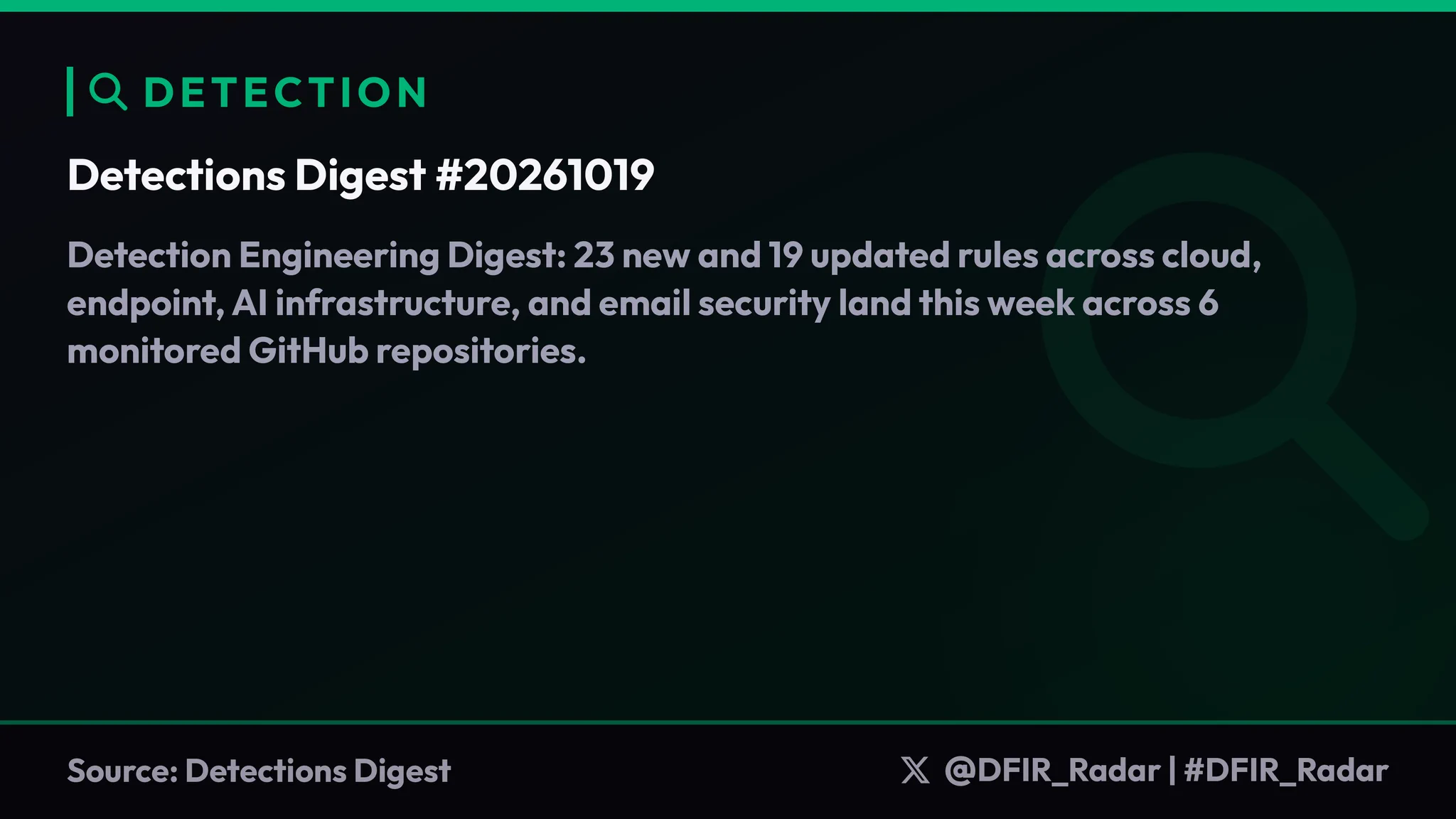
DFIR_Radar weekly detection engineering digest covering 23 new and 19 updated rules across 6 GitHub repositories. It lists KQL rules for Azure Key Vault secret retrieval, MCP client User-Agent bulk operations and local Azure token theft, AWS CloudTrail analytics, Sigma rules for firewall and ETW tampering (decimal 17 vs hex 0x11), updated LOLDrivers hashes, and Sublime email rules for OAuth consent phishing and fake IRS W-9 PDFs.

KQLSigmaMicrosoft Sentinel+3
BYOVDCisco AI Defensebenscha/KQLAdvancedHunting+7

Blue Team & Detection, Cloud & Infra, AI Security· Added 20 Oct 2026, published 19 Oct 2026

x.comarticle🛡️ Security

Huda (@AlAssaf_H) on X

Source-level review of x64dbg-MCP, GhidraMCP and IDA Pro MCP security, dated October 2026. It covers GHSA-4478-h5jv-647m (missing authentication, 0.0.0.0 bind) and GHSA-jgj3-97w2-9v9r (Content-Length integer overflow before the token check, causing a DoS panic), and compares tags 1.0, v1.1 and v1.2. It separates network reachability, tool authority and semantic influence from hostile binaries. No new exploit is claimed.

Model Context ProtocolGhidrax64dbg+2
GHSA-4478-h5jv-647mGHSA-jgj3-97w2-9v9rprompt injection+5

AI Security, Malware & RE· Added 21 Oct 2026, published 19 Oct 2026

x.comrepo🛡️ Security

Panos Gkatziroulis 🦄 (@ipurple) on X

Malvex (JoasASantos/Malvex) is an AI-driven malware analysis framework that integrates more than 30 analysis tools, a web REPL and an MCP server. Panos Gkatziroulis shared it on 19 October 2026 and noted that it was written by AI. The tweet gives no detail on which tools are bundled or how the AI drives them.

Model Context ProtocolGitHubLLM
Malvex

Malware & RE, AI Security· Added 22 Oct 2026, published 19 Oct 2026

x.comthread🧠 AI

Angel (@ziran_pu) on X

AshAi, the AI package for the Elixir Ash Framework, is getting MCP client tools. Creating an MCP server with AshAi was already simple, but connecting your own LLM tool loop to an external MCP server had to be built by hand. The planned release includes OAuth client management resources. The post gives no release date, API details or code.

Model Context ProtocolAsh FrameworkAshAi+2

mcp· Added 21 Oct 2026, published 19 Oct 2026

x.comthread🛡️ Security

Santhosh Patel (@santhosh_patell) on X

Summary of Pillar Security research on opencode, in which a malicious remote MCP server runs code on a Windows or WSL machine during the OAuth login step. The login URL goes unsanitised into PowerShell through the npm "open" package, so an https:// link containing $(...) executes. Affected versions are 1.0.137 to 1.18.32, fixed in 1.18.33 (28 September) as a "refactor" with no advisory or CVE. The behaviour was first reported in 2020 as a WSL 2 broken-link bug.

OpenCodeModel Context ProtocolPowerShell+3
Pillar SecurityCWE-78silent fix

AI Security, AppSec, Supply Chain· Added 21 Oct 2026, published 19 Oct 2026

x.comrepo🧠 AI

Saylor (@Kev96790724) on X

G-Krusch is an MIT-licensed, local-first Google Workspace hub built on Node.js 22 and SQLite WAL. It runs a 12-tool MCP server (SSE and Stdio) plus a REST bridge on port 5446 for Drive, Calendar and Gmail. It includes a 1,024-dimension hybrid Drive RAG with an embedding cascade (Ollama bge-large, then Gemini, then offline fallback) and FTS5 BM25. PDF extraction returns page citations. Tokens are kept in an AES-256-GCM vault; 30 of 30 tests pass.

Model Context ProtocolNode.jsSQLite+5
G-KruschKrusch CompanionKruschNexus+1

mcp, llm-apps, coding-agents· Added 21 Oct 2026, published 19 Oct 2026

github.comrepo🧠 AI

Show HN: WhatsApp MCP running free on Cloudflare

whatsapp-mcp is an MCP server that runs in the user's own Cloudflare account and lets MCP clients such as Claude Code and Claude Desktop search and read WhatsApp chats. It links as a WhatsApp Web-style device through Baileys, stores messages in SQLite with FTS5 inside a Durable Object, and is read-only. The README documents deployment, OAuth sign-in, contact naming through agents, and workerd shims for Baileys.

Model Context ProtocolCloudflareCloudflare Workers+11
WhatsApp

mcp· Added 20 Oct 2026, published 18 Oct 2026

x.comthread🛡️ Security

FastFix AI (@FastfixAI) on X

FastFix AI thread giving six checks before installing a plugin, MCP server or skill for a coding agent. It starts from a 300K-star repo that an agent found writing to Claude Code, Codex and Copilot configs on install. Checks: read before running, inspect npm install scripts, verify the real repo against lookalike trojaned copies, pin versions, diff agent configs, and limit tokens and permissions.

Model Context ProtocolClaude Codenpm+2
--dangerously-skip-permissionspostinstalllookalike repository

AI Security, Supply Chain· Added 19 Oct 2026, published 18 Oct 2026

x.comtool🧠 AI

Dan Kornas (@DanKornas) on X

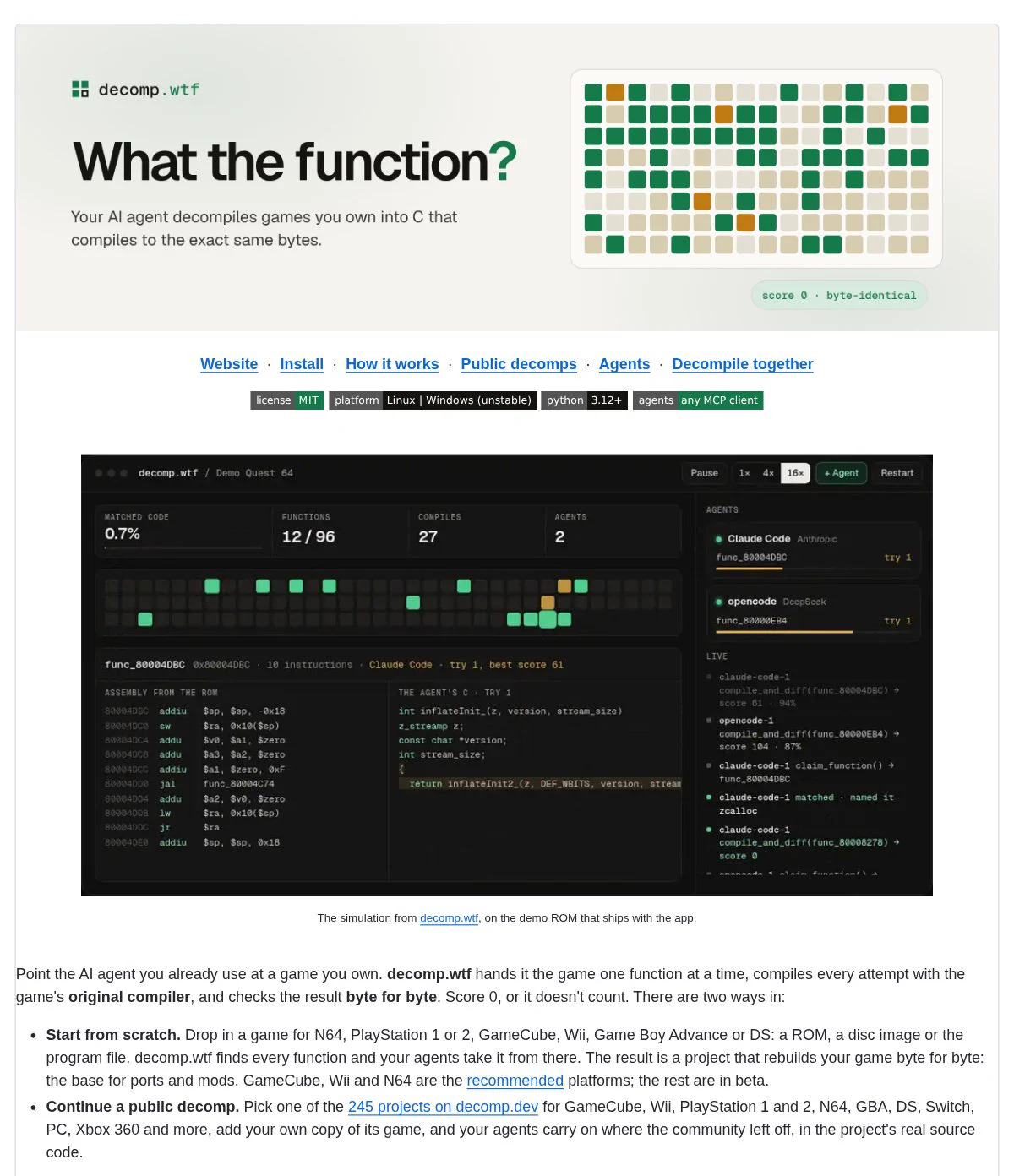
decomp.wtf is an open-source (MIT) local workspace where AI coding agents decompile games into C, one function at a time. Agents receive assembly, data, callers and earlier attempt notes, then each C candidate is compiled with the game's original compiler, linked at its real address and compared byte for byte, with instruction diffs on misses. It exposes MCP tools for Claude Code, Codex, Antigravity CLI and opencode, plus a live view of agent calls and match scores.

Model Context ProtocolClaude CodeCodex+3
decomp.wtfDan Kornas

coding-agents, mcp, agents· Added 19 Oct 2026, published 18 Oct 2026

x.comthread🛡️ Security

Magai (@HeyMagai) on X

Post from Magai (@HeyMagai) on Invariant Labs research showing that an approved MCP server can change its tool descriptions later without a new approval prompt, a "rug pull" like those in malicious code packages. It recommends pinning approval to tool definitions by hashing descriptions and re-prompting when the hash changes. For tools that move money, limits should stay server-side.

Model Context Protocol
Invariant LabsMCP rug pull

AI Security, Supply Chain· Added 19 Oct 2026, published 18 Oct 2026

arxiv.orgpaper🧠 AI

ToFu: Exploiting and Fuzzing the LLM–Orchestrator–Tool Trust Boundary

ToFu is a tool-aware fuzzing framework for LLM tools, including MCP servers. It maps each tool argument, using its metadata, to one of 74 CWE-guided semantics-aware sanitizers (path, URL, SQL and similar). It then generates schema-valid Atheris harnesses and semantic oracles, using runtime tracers for in-process tools and outcome oracles for opaque ones. The LLM (gpt-4.1) only maps sanitizers and writes seeds; it is never the security judge. The paper also shows a "Repeat-After-Me" trick, where an LLM told to repeat attacker-crafted text emits a tool call the orchestrator executes, reproduced on LangGraph, MAF, ADK 2.0, AutoGen, Strands and CrewAI. Across 273 runnable MCP servers (3,405 tools) it reports 253 verified bugs in 343 tools across 118 servers, such as path traversal, log injection and exfiltration. These are failures a crash-based fuzzer would miss. The result matters because it shows LLM-generated tool arguments cannot be treated as trusted.

Model Context ProtocolAtherisCodeQL+7
ToFuStrandsMAF+10

mcp, research, agents· Added 18 Oct 2026

arxiv.orgpaper🛡️ Security

ToFu: Exploiting and Fuzzing the LLM–Orchestrator–Tool Trust Boundary

ToFu is a tool-aware fuzzing framework that derives semantic security checks for LLM tools (mainly MCP servers) from their metadata and a corpus of 74 CWE-guided sanitizers. It generates schema-valid Atheris harnesses, uses runtime tracers and outcome oracles to catch bugs that don't crash, and uses an LLM only to map sanitizers and seed inputs, never as the judge. It also describes a "Repeat-After-Me" attack, in which the LLM is told to repeat attacker-written text that the orchestrator then dispatches as a tool call. It was reproduced on LangGraph, MAF, ADK, AutoGen, Strands and CrewAI. On 273 MCP servers it reports 253 verified bugs across 343 tools in 118 repositories, including path traversal, log injection, exfiltration and command bypass.

Model Context ProtocolAtherisLangGraph+3
Repeat-After-Mepath traversalSSRF+6

AI Security, AppSec· Added 18 Oct 2026

github.comrepo🧠 AI

eliasbiondo/antirion

Antirion is an open-source AI gateway shipped as one Rust binary with a built-in admin console. It sits between apps and providers such as OpenAI, Anthropic, Bedrock, Vertex and vLLM, translating between OpenAI, Anthropic, Gemini and Bedrock dialects. It covers routing with fallbacks and circuit breakers, budgets, guardrails, caching, MCP and A2A gateways, SSO, and a benchmark against Bifrost 2.2.4 and LiteLLM 1.103.1.

RustDockerKubernetes+13
AntirionBifrostOpenAI+10

ai-infra· Added 21 Oct 2026, published 17 Oct 2026

github.comrepo🧠 AI

ralphtradesz/trading-hub

Trading Hub is a free macOS desktop trading platform built with C#/.NET 10 and Avalonia. It uses the user's Claude Code subscription: a chat writes and fixes C# strategies, an in-app MCP server lets Claude run backtests, optimizations and walk-forwards and write reports, and a risk agent proposes position sizes. Install and a Windows port are both driven by Claude Code prompts. License is MIT with Commons Clause.

Claude CodeModel Context Protocol.NET+6
ClaudeATASDatabento+11

mcp, coding-agents· Added 19 Oct 2026, published 17 Oct 2026

x.comthread🛡️ Security

Steven Daugherty (@StevenDaugherty) on X

Post warning that FastMCP had a critical flaw where a malicious MCP server could execute code on the connecting client through a crafted tool schema. Fixed in FastMCP 3.4.8 and 4.0.11, and there is no patch for the 2.x line. It matters to anyone whose agents connect to MCP servers they don't control. The post gives no CVE ID or technical root cause.

FastMCPModel Context ProtocolPython
malicious MCP servercrafted tool schemaclient-side RCE

AI Security, AppSec· Added 18 Oct 2026, published 17 Oct 2026

github.comrepo🛡️ Security

OWASP/MCP-Security-Testing-Guide

OWASP MCP Security Testing Guide is a living, GPL-3.0 collection treating the Model Context Protocol as a security boundary from user through model, MCP client, MCP server and tool to the target system. It covers threats, secure development, host/client controls, supply chain, enterprise gateways, detection, incident response, taxonomy, public incidents, case studies and review checklists, with 79 tests in Chapter 3 (sections 3.1–3.19). It includes a finding template, and it links the MCP Goat lab for safe practice. It is useful to AppSec, red team and SOC people assessing MCP deployments.

Model Context ProtocolLLM
OWASPMCP Goat

AI Security, AppSec· Added 17 Oct 2026

github.comrepo🧠 AI

alex09x/kyb

KYB (Know Your Business) is a Rust/axum server that stores agent-written knowledge, incident reports and tasks as Markdown files in Git, one commit per change. Search is hybrid: Tantivy BM25 fused by reciprocal rank with local multilingual-e5-small ONNX vectors, and it can query historical versions or "as of" a date. It ships a kyb CLI, a native MCP endpoint (Claude Code, Codex, Antigravity, Gemini CLI), an installable agent skill, token auth with per-write attribution trailers, secret scanning on writes, and a web console. It targets persistent shared operational memory for multi-agent, multi-machine fleets.

RustGitModel Context Protocol+10
KYBAlexander Panasenkomultilingual-e5-small

agents, mcp, coding-agents· Added 17 Oct 2026

decrypt.coarticle🧠 AI

TokenMaxxing: How to Get the Most Out of Your AI Models

Decrypt guide to "tokenmaxxing" reframed as maximizing value per token rather than burning tokens. It gives tiered tips: pick smaller models for simple jobs, write one clear prompt, start new chats, cap output length, and use free models (beginner); Claude Code commands like /model, /clear, /compact, /context, /mcp, /effort and plan mode (intermediate); and prompt caching via cache_control, 50% batch discounts, and agent budget limits like --max-budget-usd (advanced). Includes context on Meta, Amazon and Uber token leaderboards and spend, a worked invoice-processing example where routing cut cost from $30 to $3.90, and the Jevons paradox in falling token prices.

Claude CodeClaudeChatGPT+8
DecryptAnthropicOpenAI+14

ai-infra, coding-agents, ai-policy· Published and added 17 Oct 2026

thingstodoapi.comtool🧠 AI

Show HN: Things to Do API

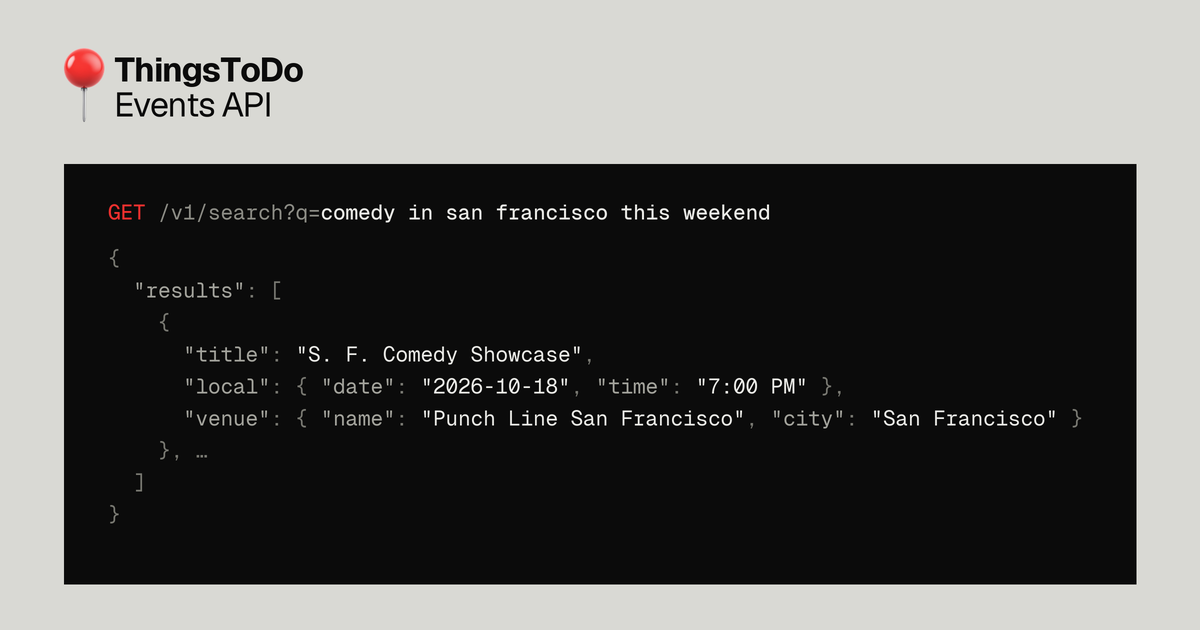
Things to Do API is a hosted knowledge base of local events (shows, talks, pop-ups, markets, festivals) that you query in natural language, for example `/v1/search?q=comedy+in+san+francisco+this+weekend`. It returns structured JSON with title, category, local start time, venue and ticket and source links. It also exposes an HTTP MCP endpoint, added with `claude mcp add --transport http thingstodo https://api.thingstodoapi.com/mcp`, so agents can use it as a tool. Coverage is live for the San Francisco Bay Area, with New York City and Los Angeles coming. Pricing is pay-as-you-go from $5 per 1,000 calls, the first 1,000 a month are free, and there is a 300 calls/min limit.

Model Context ProtocolClaude CodeREST
Things to Do APITicketmaster

mcp, llm-apps· Added 18 Oct 2026, published 16 Oct 2026

x.comthread🛡️ Security

Nicholas Martin (@ndgmlondon) on X

An X post advises auditing every MCP write tool against the database role it actually runs under. A shared service key lets prompt injection trigger unapproved writes, so each agent session should get a read-only role, with a test that writes are denied. Replies note that MCP servers often inherit ambient host credentials or can escalate through a second connection pool, and suggest also testing that another tenant's rows are unreadable with the same role.

Model Context Protocol
prompt injection

AI Security, Identity & Access· Added 18 Oct 2026, published 16 Oct 2026

securityweek.comarticle🛡️ Security

In Other News: ICS-Sniper Attack, Hacking XWorm Malware Operators, $250k Chrome Exploit

SecurityWeek's weekly roundup covers ICS-Sniper, a UBC proof-of-concept that uses VPN-encrypted packet size, direction and timing to drop critical SCADA traffic on cloud-hosted ICS (tested on the SWaT water testbed). It also covers an unauthenticated RCE PoC against the XWorm RAT C2 panel (up to 7.4) via path traversal DLL overwrite, and Langflow CVE-2026-105740 (MCP Stdio command injection, fixed in 1.9.0) exploited from September 19, before the CVE was published. Other items: XBOW's AI-assisted Chrome full-chain exploit (GPT-5.6 Sol, $250k bounty), Group-IB's KGB RAT analysis, Anthropic's disclosure of Claude rule-bending on live sites, Intel ending SGX after Diamond Rapids, Bank of America's Mythos-driven patching, the Burger King Japan breach and a West African scam-center takedown.

LangflowChromeXBOW+3
CVE-2026-105740ICS-SniperXWorm+12

Threat Intel, AI Security, Offensive Security· Published and added 16 Oct 2026

x.comthread🧠 AI

AmingIn_AI (@aming_inAI) on X

A tweet from AmingIn_AI describes a macOS screenshot-annotation tool. On release it saves the screenshot, a crop and the user's marks locally, then copies a 127.0.0.1 link. Claude Code or Codex on the same Mac can fetch that link and receive the marked image plus app/window info, and nothing is uploaded. It shows a local, privacy-preserving way to hand visual context to coding agents without MCP or cloud upload.

Claude CodeCodexmacOS
AmingIn_AI

coding-agents, multimodal· Added 17 Oct 2026, published 16 Oct 2026

x.comthread🛡️ Security

P.K. Sharma (@_pksharma) on X

Thread distinguishing two Langflow advisories on MCP Stdio command execution. CVE-2026-105740 (GHSA-7w94-79vh-5mr2) affects 1.8.3 and is fixed in 1.9.0, an authenticated non-admin path. CVE-2026-105697 (GHSA-w794-rj3p-xv45) covers 1.1.2 up to but excluding 1.10.3, with fixes in lfx and langflow-base too. The later fix validates the API, flow and pre-spawn boundaries and removes the shell wrapper, and the thread warns that LANGFLOW_AUTO_LOGIN=true can expose a token without credentials. It cites one sensor's telemetry (1,628 attempts from 28 IPs) with caveats, and gives a defensive checklist: verify patched packages, review stored MCP configs and imported flows, and hunt for unexpected child processes.

LangflowModel Context Protocol
CVE-2026-105740CVE-2026-105697GHSA-7w94-79vh-5mr2+4

AppSec, AI Security· Added 17 Oct 2026, published 15 Oct 2026

arxiv.orgpaper🛡️ Security

My Credentials, Please: Detecting Filesystem Capability Laundering in MCP Servers at Scale

Studies "filesystem capability laundering" in MCP servers: client approval of a tool call grants the server process broad host filesystem access, so attacker-steered arguments can reach sensitive files outside the tool's declared contract. The authors build MCP-FSD, which infers per-tool least-privilege boundaries, plants credential fixtures outside them, and tests exploitability and sandbox containment by paired dynamic execution. Of 21,097 servers from nine registries, 16.4% of 4,806 triaged servers have filesystem capabilities despite non-filesystem classifications. Dynamic validation confirmed 150 vulnerable instances, and disclosure produced 13 advisories, including two CVEs in Anthropic's Git MCP Server.

Model Context ProtocolAnthropicGit
filesystem capability launderingMCP-FSDpath traversal+1

AI Security, AppSec· Added 17 Oct 2026, published 15 Oct 2026

tldrsec.comarticle🛡️ Security

[tl;dr sec] #350 - Reverse Engineer Anything, Tracking AI-integrated Malware, Test-driving Jev

tl;dr sec issue #350 is a weekly security newsletter digest. It covers XBOW's six-day Chrome full-chain exploit built with GPT-5.6 Sol, Semgrep's IDOR benchmark metrics, the EntraGoat vulnerable Entra ID lab, Zenity's AWS Bedrock AgentCore IMDS credential theft, Cisco Talos's CAIRN hunting toolkit for AI-integrated malware, the REA reverse-engineering MCP, runZero's sshamble, and a Copilot for Word AI worm.

XBOWChromeMicrosoft Entra ID+3
EntraGoatAgentCorruptionCAIRN+11

AI Security, Offensive Security, Cloud & Infra· Added 30 Oct 2026, published 15 Oct 2026

x.comthread🛡️ Security

Francis Santerre (@santerref) on X

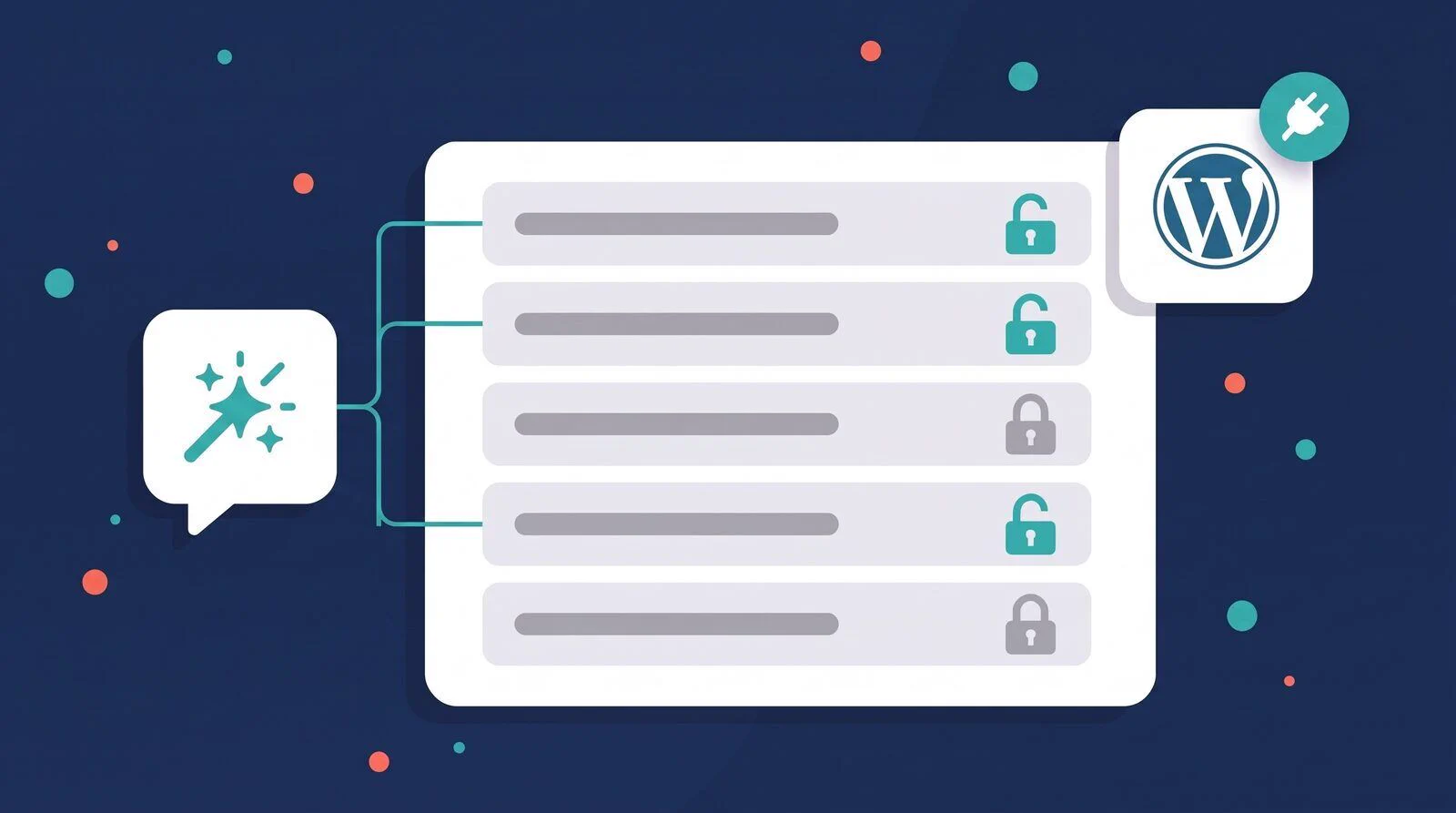
Post announcing that the MCP Adapter (0.7.0) is now a canonical plugin on WordPress.org, bridging the WordPress Abilities API to MCP. It exposes a default server at /wp-json/mcp/mcp-adapter-default-server, and only abilities a site marks public are exposed. The author's point is that the security review reduces to auditing the list of public abilities, which gives reviewers and pentesters a new endpoint to enumerate.

WordPressModel Context Protocol
MCP AdapterAbilities API/wp-json/mcp/mcp-adapter-default-server

AppSec, AI Security· Added 16 Oct 2026, published 15 Oct 2026

x.comthread🧠 AI

Francis Santerre (@santerref) on X

Tweet announcing that the MCP Adapter is now a canonical plugin on WordPress.org (version 0.7.0). It bridges the WordPress Abilities API to the Model Context Protocol, with a default server at /wp-json/mcp/mcp-adapter-default-server. Only abilities a site marks public are exposed, so the security review comes down to auditing the ability list.

Model Context ProtocolWordPressMCP Adapter+1
Abilities API

mcp· Added 16 Oct 2026, published 15 Oct 2026

x.comtool🛡️ Security

dbugs (@ptdbugs) on X

Decepticon is an open-source framework that automates red team operations with 16 specialized AI agents coordinated by an orchestrator, covering recon, vulnerability research and exploitation against an operator-authorized target in an isolated environment. It offers optional attack planning mapped to MITRE ATT&CK, persistent interactive sessions for Metasploit, Sliver and Evil-WinRM, and findings stored in project files and a knowledge graph. It runs via CLI or web dashboard, integrates with Claude Code and Codex through an MCP server, and is self-hosted with Docker Compose.

MetasploitClaude CodeCodex+3
DecepticonBitterSecurityEvil-WinRM+1

Offensive Security, AI Security· Added 18 Oct 2026, published 15 Oct 2026

arxiv.orgpaper🛡️ Security

Approve What, Exactly? Effect Binding and Trusted Rendering for Agent Step-Up Authorization

Paper arguing that agent human-approval prompts count as a second factor only if agent compromise cannot forge them and they name exactly what is approved. It defines twelve attacks on the approval path (decoy recipients, amount cancellation, card padding, label spoofing, enrollment squatting, threshold splitting) and tests them against AP2, Microsoft's action-bound approval design and MCP elicitation. An audit of ten agent runtimes found no third-party verifiable approval record and post-approval argument changes in four of eight. The reference defense ASU (Agent Step-Up) renders the card from a canonical effect descriptor, has a phone passkey sign its digest, and executes only the stored call. It is proven in Tamarin (53 lemmas) and evaluated on 27,108 scripted trials and 609 AgentDojo pairs. The trusted card cut forged-narration attack success from 0.54 to 0.03 and raised LLM-approver catch rate from 0.30 to 0.98.

Model Context ProtocolMicrosoft
Agent Payments ProtocolAgent Step-UpASU+6

AI Security, Identity & Access· Added 17 Oct 2026, published 15 Oct 2026

decrypt.coarticle🧠 AI

Developer Who Cloned Photoshop With AI Just Did the Same to Microsoft Office

Decrypt reports that developer Brandon Thomas released WordCraft, GridCraft and DeckCraft, MIT/Apache-2.0 open-source clones of Word, Excel and PowerPoint. They were written in Rust with Anthropic's Claude (Opus 5.5) as a clean-room rebuild and run natively on Windows, macOS, Linux and BSD, and in a browser. Coverage is high (WordCraft 88% of ribbon features, GridCraft 513 of 523 Excel functions), but the authors rate them only about 50–60% ready for real work. Every button is also an MCP command, so agents like Claude can drive the apps. The article is a useful data point on what AI-assisted "vibe coding" can produce in under two weeks, and on where it still falls short (file fidelity, stability).

RustClaudeModel Context Protocol+4
Brandon ThomasWordCraftGridCraft+10

coding-agents, mcp· Published and added 14 Oct 2026

arxiv.orgpaper🧠 AI

Thinking in Graphs: Neo4j-Backed Exploit-Chain Reasoning for LLM Penetration-Testing Agents

ChainGraph is a pattern that moves exploit-chain reasoning out of the flat context window and into a Neo4j property graph. Findings, attack steps, credentials, assets and tamper-evident evidence receipts are typed nodes with pre/post-condition edges. The graph is wired to Claude Code or Codex through MCP with no custom harness. Five operator questions (next-step inference, entry-to-crown-jewel pathing, combined-severity promotion, evidence provenance, chokepoint identification) become reusable Cypher and Graph Data Science queries, plus a chain-severity score. On a synthetic multi-forest Active Directory lab modeled on GOAD, three findings rated Medium in isolation become Critical once their path to the forest root is materialized. Scoping each decision to a graph result cut the reasoning payload by about 98% on a token proxy. The authors say the results are illustrative single-run measurements, not a benchmark.

Neo4jModel Context ProtocolClaude Code+4
ChainGraphGOADarXiv

agents, mcp, research· Added 17 Oct 2026, published 14 Oct 2026

x.comthread🛡️ Security

Victor (@VMG_CU) on X

A social post summarising Elastic's REF8801 campaign. A fake startup accelerator offered founders free Claude/Gemini credits plus a coding agent. The agent was a repackaged open-source project that set OPENROUTER_BASE_URL to an attacker-controlled endpoint and added its own MCP server, so victims' prompts and code went to the attacker. It shows how a trojanised AI coding agent can hijack the LLM base URL and add an MCP server for exfiltration.

OpenRouterModel Context ProtocolClaude+1
REF8801Elastic Security LabsOPENROUTER_BASE_URL

Threat Intel, AI Security· Added 15 Oct 2026, published 14 Oct 2026

github.comrepo🧠 AI

Show HN: Graphicle, a Rust port of Graphify with memory for coding agents

Graphicle is a local-first Rust program that parses a repository into a tree-sitter code graph (a port of Graphify) and adds project memory: docs, reviewed decisions and captured Claude Code/Codex sessions. It serves cited file-and-line excerpts within a token budget via one MCP server, CLI and browser app, backed by a single SQLite file, with no API key or telemetry. The README reports a code-only extract on Kubernetes (31k files) in 3m18s versus 26m38s for Graphify 0.9.88, and a memory comparison against seven systems. Agent-proposed memories need user approval and go stale when the code they reference changes.

RustModel Context ProtocolSQLite+12
GraphicleGraphifyKarLex AI+2

coding-agents, mcp, llm-apps· Published and added 14 Oct 2026

x.comtool🧠 AI

Francesco Sorrentino (@Fr_Sorrentino) on X

chrome-bridge is an open-source MCP server with a Chrome extension that lets Claude Code drive the user's own Chrome, including logged-in tabs and DevTools. It reads page structure rather than screenshots, which saves tokens and turns. The author reports gains over Claude in Chrome: 4.7× fewer turns and 2.8× lower cost on form filling, 2.3× and 3.4× on finding a row among 1,500, and 9.3× and 4.3× on debugging a broken checkout, with 15/15 correct against 12/15. These are self-reported numbers from the tweet.

Model Context ProtocolClaude CodeChrome+1
chrome-bridgeClaude in ChromeAnthropic

mcp, coding-agents· Published and added 14 Oct 2026

github.comrepo🧠 AI

morluto/rea

REA (rea-agents on npm) registers an MCP server and matching workflow instructions with coding agents such as Claude Code, Codex, Cursor and Gemini CLI. It exposes tools for inspecting native binaries through Hopper, Ghidra or IDA (with optional objdump and Rizin), JavaScript/Electron apps and ASAR archives, .NET assemblies and websites. Results come back with evidence and limitations, so the agent can explain how a feature works and write and test its own implementation. Analysis runs locally, there is a CLI with the same workflows, and the showcases include C reconstructions verified against original x86 function bytes.

Model Context ProtocolClaude CodeCodex+14
REAIDA

mcp, coding-agents· Added 14 Oct 2026

github.comrepo🛡️ Security

morluto/rea

REA (rea-agents) is an MIT-licensed toolkit that exposes native-binary, JavaScript/Electron, .NET assembly and website analysis to AI agents via MCP, and also as a local CLI. It drives Hopper, Ghidra, IDA, objdump or Rizin for disassembly and pseudocode, recovers modules and Electron IPC boundaries from ASAR/JS apps, and returns findings with evidence and limitations. Showcases include reconstructing a x86 audio helper into byte-matching C and tracing an Electron clipboard API through preload and IPC; the README also carries lawful-use and licensing guidance.

Model Context ProtocolGhidraHopper+3
REArea-agentsASAR

Malware & RE, AI Security· Added 14 Oct 2026

x.comthread🧠 AI

44er (@44errrr) on X

Announcement of hexvero, an MCP server that gives coding agents a static first look at binaries and app bundles across 18 formats (ELF, PE, Mach-O, APK, .NET, Go, Wasm, Electron, SQLite). It uses zero-dependency Node parsers and marks each finding confirmed or inferred with file and line. Its tool catalog is 3,043 tokens, against a claimed 509,696 for the established reverse-engineering MCP server. Paged output with a byte budget shrinks a 541 MB Electron app to a 15 KB result, 1.3 MB of JSON to 7.9 KB, and a 450 KB build diff to 1.2 KB. radare2, rizin or Ghidra plug in for disassembly, and `npx hexvero setup --apply` registers it with Claude Code, Cursor, Codex and 15 more clients. It is a concrete example of keeping MCP tool definitions and results small enough for an agent's context window.

Model Context ProtocolNode.jsnpm+12
hexvero

mcp, coding-agents· Added 15 Oct 2026, published 14 Oct 2026

x.comtool🛡️ Security

44er (@44errrr) on X

hexvero is a Node-only, zero-dependency MCP server that gives coding agents a static first-look triage of binaries and app bundles across 18 formats (ELF, PE, Mach-O, APK, .NET, Go, Wasm, Electron, SQLite). Findings are marked confirmed or inferred with file and line, and outputs are paged with a byte budget (a 541 MB Electron app yields a ~15 KB result). The author contrasts its 3,043-token tool catalog with a 509,696-token catalog of an established RE MCP server. radare2, rizin or Ghidra can be plugged in for disassembly, and setup registers it with Claude Code, Cursor, Codex and 15 more clients.

Model Context ProtocolGhidraNode.js+3
hexvero

Malware & RE, AI Security· Added 15 Oct 2026, published 14 Oct 2026

embracethered.comwriteup🛡️ Security

Visual Studio Copilot and SSMS Remote Code Execution (CVE-2026-103572)

CVE-2026-103572 is a remote code execution bug in Microsoft.VisualStudio.Copilot.Core.dll, shared by Visual Studio and SQL Server Management Studio. A trailing dot (for example `.mcp.json.`) bypasses the protected-filename check in EditsFunctionHandler.GetEditConfirmationTypeAsync, so a hijacked Copilot can rewrite its own MCP and settings files and run commands. The post covers path traversal and InstallationID leaks, indirect prompt injection demos, the October 2026 patch (GetFullPath), and a $0 bounty.

Visual StudioSQL Server Management StudioGitHub Copilot+3
CVE-2026-103572indirect prompt injectionpath traversal+5

AI Security, AppSec, Offensive Security· Added 29 Oct 2026, published 13 Oct 2026

ethereum-magicians.orgthread🧠 AI

ERC-8444: Agentic Resource Discovery (ARD) Onchain

An Ethereum Magicians proposal for ERC-8444, which adds an onchain value and settlement layer under Google's Agentic Resource Discovery (ARD) spec for finding MCP servers, A2A agents, skills and APIs. A thin kernel records kind (skill, task, agent, registry), a CAIP-19/CAIP-10 anchor, a JCS+SHA-256 descriptor hash, a canonical URN and a status. Authority belongs to the paid address, and domains act as collected endorsements through /.well-known/ard.json. The reference implementation has Foundry-tested Solidity adapters and a Node.js gateway that passes the official ARD conformance CLI. It introduces a "task" kind (application/ai-task+json) for tenders aimed at suppliers, and the author asks for feedback on the trust root, the hash scope, same-chain anchors and the task payload.

Model Context ProtocolEthereumSolidity+2
GoogleMicrosoftHugging Face

mcp, agents· Added 14 Oct 2026, published 13 Oct 2026

pdftomp3.comtool🧠 AI

Show HN: Use your OpenAI subscription to create audiobooks

PDF TO MP3 is a hosted MCP server (Streamable HTTP, account authentication) that turns PDFs into audiobooks. The user's existing AI subscription, such as Codex, handles document processing through the MCP connection. Speech generation is billed separately through the user's own OpenAI or Google text-to-speech API key. The setup is three steps: add the MCP server, add a speech key, then attach a PDF and ask the assistant to use the MCP. It shows a "bring your own subscription" pattern that keeps the vendor's compute costs low.

Model Context ProtocolCodexOpenAI API+1
PDF TO MP3OpenAIGoogle

mcp, multimodal· Published and added 13 Oct 2026

linkedin.comarticle🧠 AI

AI Agents for Cybersecurity: A Guided Tour of a Repository with Tons of Resources and Examples

A guided tour of a GitHub repository of resources and examples for building AI agents, published on the Becoming a Hacker blog. Per the routing note, it covers LangChain 1.x, LCEL, RAG, LangGraph, CrewAI, DeepAgents, MCP servers and token-cost control such as caching, routing and budget guards. The fetched page held only a LinkedIn redirect notice, so the article text was not read.

LangChainLangGraphCrewAI+4

agents, llm-apps, mcp· Added 13 Oct 2026

becomingahacker.orgarticle🧠 AI

AI Agents for Cybersecurity: A Guided Tour of a Repository with Tons of Resources and Examples

Guided tour of Omar Santos's eight-part AI-agents-for-cybersecurity repository. It moves from LLM building blocks (LangChain, RAG) to security agents built with LangGraph, CrewAI, DeepAgents and MCP servers (nmap, CISA KEV, Shodan). It also covers a hardening guide for six agentic frameworks, token-cost control, and a spec for a supervisor-led, human-gated assessment harness. Design lessons include least-privilege subagents, single-use approvals and kill switches.

LangChainRAGLangGraph+7
Omar SantosOWASPCISA+1

agents, mcp, llm-apps· Added 13 Oct 2026

github.comrepo🧠 AI

santosomar/AI-agents-for-cybersecurity

Companion repository for Omar Santos's Pearson and O'Reilly trainings and books. It has eight parts of runnable Python labs: chat models, embeddings, prompt templates, LCEL prompt chaining, Chroma-based RAG, ReAct/LangGraph/CrewAI/DeepAgents agents, and FastMCP servers (nmap, CISA KEV, Shodan). It also includes guides to six agentic frameworks (OpenClaw, Hermes, Agent Zero, OpenHands, Paperclip, Buzz), a tokenomics module on agent cost (context compounding, prompt caching, model routing, token budget guards, batch API, cost per accepted outcome), and a vendor-neutral design spec for a human-gated multi-agent assessment harness. It is a current, practical curriculum for building and operating agents. Some examples act on real systems and should only be run in an authorized lab.

PythonuvLangChain+17
Omar SantosPearsonO'Reilly+15

agents, llm-apps, mcp· Added 13 Oct 2026

github.comrepo🛡️ Security

santosomar/AI-agents-for-cybersecurity

Omar Santos's companion repo for his Pearson/O'Reilly trainings and books, organised in eight parts. They cover LangChain prompts, chains and RAG (Chroma), and agents (LangGraph, CrewAI, DeepAgents). They also cover FastMCP security servers (nmap, CISA KEV, Shodan) and attack-surface-management and SOC agent examples. Later parts have security guides to six agentic frameworks (OpenClaw, Hermes, Agent Zero, OpenHands, Paperclip, Buzz) with hardening notes and 2026 CVE mapping, agent cost/tokenomics scripts including denial-of-wallet budget guards, and a vendor-neutral spec for a human-gated multi-agent security-assessment harness (scope manifest, approval gates, kill switch). Useful as a hands-on path into AI-agent security tooling, with warnings that some examples act on real systems.

Model Context ProtocolLangChainOpenClaw+3
Omar SantosSSRFCISA KEV+2

AI Security, Learning· Added 13 Oct 2026

becomingahacker.orgarticle🛡️ Security

AI Agents for Cybersecurity: A Guided Tour of a Repository with Tons of Resources and Examples

Omar Santos walks through his eight-part AI-agents-for-cybersecurity repository: LLM building blocks (LangChain, RAG), then security agents with LangGraph, CrewAI, DeepAgents and MCP servers (nmap, CISA KEV, Shodan), a hardening guide for six agentic frameworks, token-cost control for agents, and a spec for a supervisor-led, human-gated security-assessment harness. It covers concrete design lessons such as least-privilege subagents, staged response actions, single-use approvals bound to exact actions, kill switches, and mapping controls to the OWASP Top 10 for Agentic Applications. Also notes Project CodeGuard rules shipped for AI coding assistants.

LangChainModel Context ProtocolPython+3
Omar SantosProject CodeGuardOWASP Top 10 for Agentic Applications+5

AI Security, Learning, Blue Team & Detection· Added 13 Oct 2026

linkedin.comarticle🛡️ Security

AI Agents for Cybersecurity: A Guided Tour of a Repository with Tons of Resources and Examples

Omar Santos walks through his AI-agents-for-cybersecurity GitHub repo, which has eight parts. Parts 1–4 cover LLM basics (LangChain, prompting, LCEL, RAG). Parts 5–8 cover building security agents with LangGraph, CrewAI, DeepAgents and MCP servers (nmap, CISA KEV, Shodan), and a hardening baseline for six ready-made agentic frameworks. They also cover token-cost control (caching, routing, budget guards, cost per accepted outcome) and a supervisor-led, human-gated security-assessment harness spec with single-use approvals, a kill switch and an append-only audit log. The post also covers Project CodeGuard rules for AI coding assistants. It is a practical learning path and a reference for governing and securing agents.

LangChainLangGraphCrewAI+5
Omar SantosProject CodeGuardOWASP Top 10 for Agentic Applications+9

AI Security, Learning, Blue Team & Detection· Added 13 Oct 2026

github.comrepo🧠 AI

Show HN: SolidCraft – Open-Source Parametric CAD in Rust (With MCP Support)

SolidCraft is an open-source parametric 3D CAD application written in pure Rust. It has constrained sketches with its own solver, a feature timeline, assemblies, sheet metal, and STEP/IGES/3MF/STL export. It runs on desktop (egui+wgpu), in the browser, and as a headless CLI. The built-in MCP server (`solidcraft-cli mcp`) gives agents tools such as execute, batch, inspect_design, measure, set_parameter, screenshot and export. They can model headless or drive the running app over a JSON-lines control channel. A rover with 3,323 timeline steps was built entirely through MCP, which shows agent-driven parametric modelling working at scale.

RustModel Context ProtocolClaude Code+5
SolidCraftSELENE

mcp· Published and added 13 Oct 2026

decrypt.coarticle🧠 AI

From GTA V on iPhone to Free Photoshop: This AI Tool Is Upending Software

Decrypt reports on REA (Reverse Engineer Anything), an open-source toolkit that uses MCP to connect AI coding agents such as Claude Code and Codex to reverse-engineering tools like Ghidra. It went from under 10,000 to over 100,000 GitHub stars in a week. The article describes AI-decompiled game ports and mashups, and ArtCraft, a set of Rust-built Photoshop-style apps that Brandon Thomas made with Claude Opus 5.5 as a clean-room rebuild. It also covers the copyright and takedown fallout (Activision, Bethesda) and what cheap agent-driven decompilation means for software protection.

Model Context ProtocolClaude CodeCodex+3
REAClaude Opus 5.5Anthropic+7

coding-agents, mcp, ai-policy· Published and added 12 Oct 2026

x.comthread🛡️ Security

Phillip Shoemaker (@pbsIdentity) on X

Social thread reacting to a newly disclosed high-severity OAuth vulnerability in the Model Context Protocol Python SDK, where a malicious MCP server could manipulate the authorization flow and steal credentials used by an agent. The author uses it to argue that delegated agent authority needs provenance (who granted it, to which agent, for which service and resource, whether it is transferable or replayable, and when it expires) and that machine-to-machine trust must be auditable by humans. Gives no CVE ID or technical exploit detail.

Model Context ProtocolPythonOAuth
confused deputy

AI Security, Identity & Access· Added 13 Oct 2026, published 12 Oct 2026

github.blogarticle🧠 AI

GitHub Copilot app for Beginners: How to teach Copilot about your codebase

Beginner-oriented GitHub blog guide to giving GitHub Copilot project context through four mechanisms: repository custom instructions (.github/copilot-instructions.md and path-specific .github/instructions files with applyTo), agent skills (SKILL.md folders under .github/skills), custom agents (.github/agents profiles), and MCP servers such as Playwright. It explains when to use each and how they combine, using examples like a quality-checks skill and an accessibility-review agent. Useful as a concrete reference for the repo layout Copilot reads, with a pointer to the community Awesome Copilot collection.

GitHub CopilotModel Context ProtocolPlaywright+1
Awesome Copilot

coding-agents, prompting, mcp· Published and added 12 Oct 2026

jfrog.comarticle🧠 AI

Governing the Agentic SDLC Through Continuous Policy Enforcement

JFrog proposes the Agentic Process Evidence Protocol, an open spec that records coding-agent sessions (harness and agent version, model ID, tool and MCP calls, prompts, owner, human reviewer) as signed in-toto/DSSE attestations bound to a git commit, artifact or release. Policy-as-code release gates can then check for approved LLMs and MCP tools, an accountable human and adherence to guidelines, and the logs allow post-release audit. The post gives mock session-log and evidence JSON, ties the approach to EU AI Act Articles 12 and 14, OWASP AISVS and SLSA, and points to a GitHub reference repo, with JFrog AppTrust as the commercial implementation.

CursorOpenCodeClaude Code+8
JFrogJFrog AppTrustAgentic Process Evidence+8

ai-policy, coding-agents· Added 14 Oct 2026, published 12 Oct 2026

jfrog.comarticle🛡️ Security

Governing the Agentic SDLC Through Continuous Policy Enforcement

JFrog proposes Agentic Process Evidence, an open protocol that records AI coding agent sessions (harness, model ID, tool calls, MCP use, prompts, owner, human reviewer) as signed in-toto/DSSE, SLSA-compatible attestations bound to commits, artifacts and releases. Policy-as-code gates can then block releases that used unapproved LLMs or MCP tools, or that lack an accountable human. It maps the approach to EU AI Act Articles 12/14, OWASP AISVS and ISO/IEC 42001, and includes example session-log and evidence JSON. The post also promotes JFrog AppTrust's Prompt to Release Traceability.

JFrogin-totoCursor+3
Agentic Process EvidenceAppTrustPrompt to Release Traceability+8

AI Security, DevSecOps, Supply Chain· Added 14 Oct 2026, published 12 Oct 2026

endorlabs.comarticle🛡️ Security

The OWASP Top 10 Gets Modernized | Endor Labs

Commentary on the 2025 OWASP Top 10 update presented at OWASP Global AppSec in Washington, D.C. Broken Access Control stays #1, Security Misconfiguration and the new Software Supply Chain Failures category (replacing Vulnerable and Outdated Components) rise to #2 and #3, and Cryptographic Failures, Injection and Insecure Design drop. The author adds context on agentic AI and MCP identity and authorization, AI-assisted SAST, non-human identities, CISA Secure-by-Default, OWASP SPVS, and slopsquatting and AI coding assistant risks.

Model Context Protocol
OWASPOWASP Top 10 2025Broken Access Control+8

AppSec, Supply Chain· Published and added 12 Oct 2026

endorlabs.comarticle🧠 AI

Context Engineering for Application Security | Endor Labs

Endor Labs whitepaper on using context engineering to make AI coding assistants produce secure code. It covers secure prompting (priming, decomposition, refinement with design-spec and test-first patterns), reusable system rules such as Cursor rules and the CSA R.A.I.L.G.U.A.R.D. framework, and external SAST/SCA tools wired in through MCP servers with a rule that triggers scans. It also covers the costs and risks: extra token use, models ignoring rules, untrusted community rules, and MCP server supply-chain threats. It cites figures such as 62% of AI-generated solutions containing flaws and a 77.5% reduction in weaknesses from recursive prompting.

CursorModel Context ProtocolClaude+1
Endor LabsOWASPCloud Security Alliance

prompting, coding-agents, llm-apps· Published and added 12 Oct 2026

endorlabs.compaper🛡️ Security

State of Dependency Management 2025 | Endor Labs

Endor Labs' 2025 State of Dependency Management report examines how AI coding agents and MCP servers add supply chain risk. Researchers analysed 10,663 GitHub MCP server repositories and tested AI-generated dependency recommendations across PyPI, npm, Maven and NuGet, finding agents import vulnerable or non-existent packages. MCP servers are immature: 75% are built by individuals, 41% lack license info, and 82% use sensitive APIs. The report advises treating AI-generated code as untrusted third-party input subject to code review, SAST/SCA and dependency governance.

Model Context ProtocolGitHubPyPI+3
Henrik Plate

Supply Chain, AI Security· Published and added 12 Oct 2026

endorlabs.comarticle🛡️ Security

Context Engineering for Application Security | Endor Labs

Endor Labs whitepaper on using context engineering to make AI coding assistants write secure code. It covers four techniques: secure prompts (priming, decomposition, refinement with design-spec and test-first patterns), system rules (with sample rules and the CSA R.A.I.L.G.U.A.R.D. framework), external security tools wired in over MCP (with an example Cursor SAST rule), and RAG. It also covers MCP server threats and five defensive pillars, Cursor Hooks, and CISO-level recommendations. It matters because it gives practical guardrails for stopping missing-authorization, rate-limiting and hallucinated-dependency problems at generation time.

CursorModel Context ProtocolEndor Labs+2
slopsquattingR.A.I.L.G.U.A.R.D.Cloud Security Alliance+3

AI Security, AppSec· Published and added 12 Oct 2026

endorlabs.comarticle🧠 AI

Introducing AI Coding Agent Governance: Using Hooks to Bring Visibility to the ADLC | Endor Labs

Explains how lifecycle hooks in Claude Code (.claude/settings.json) and Cursor (.cursor/hooks.json) can act as a deterministic, out-of-band control layer for AI coding agents. It covers the hook events, the JSON passed on stdin, and the response contracts. Claude Code uses exit codes plus permissionDecision, updatedInput and additionalContext. Cursor uses stdout JSON with permission and userMessage. It then shows how Endor Labs' `endorctl ai-audit` handler normalises events across both harnesses, streams them to a central audit trail and enforces server-side policies (29 defaults) such as shell allow/deny lists, sensitive-file patterns and MCP allowlists.

Claude CodeCursorendorctl+3
Endor LabsAURI

coding-agents, ai-policy· Published and added 12 Oct 2026

x.comthread🧠 AI

=dennis; (@Xidea404) on X

A tweet from @Xidea404 pointing to the ADI Chain MCP Server documentation on docs.adi.foundation. The server lets AI agents interact with the ADI blockchain through the Model Context Protocol. The tweet carries no technical detail itself, so what the server exposes can't be confirmed from it. It is a pointer to a blockchain-specific MCP connector.

Model Context Protocol
ADI ChainADI Foundation

mcp· Published and added 12 Oct 2026

x.comthread🛡️ Security

Nicholas Michael Kloster (@showxlate) on X

A researcher announces a zero-click indirect prompt injection RCE in REA (Reverse Engineering Assistant), an MCP tool. Analyzing a malicious web target silently exfiltrates AWS keys, GitHub tokens and SSH identities. The stated root cause is that process.env is passed unconditionally to child processes, so the full environment is exposed to attacker-driven commands. A full writeup is promised but not yet published; replies add unverified skepticism about the project's provenance.

Model Context ProtocolNode.jsAWS+2
indirect prompt injectionREANicholas Michael Kloster+1

AI Security, AppSec· Added 13 Oct 2026, published 12 Oct 2026

github.comrepo🧠 AI

sepehr071/iran-mcp

iran-mcp is an open-source catalog of 39 MCP servers (488 tools) that let AI agents query Iranian websites such as Digikala, Torob, Divar, Snappfood, Jabama, Paziresh24, TSETMC and qavanin.ir, with prices normalised to Toman. Most servers are unofficial, read-only Python packages run with uvx; three are official hosted servers. It ships Claude Code plugins, Agent Skills, bundles, proxy lists and a machine-readable servers.json.

Model Context ProtocolPythonPyPI+11
DigikalaTorobDivar+10

mcp, coding-agents· Added 24 Oct 2026, published 11 Oct 2026

x.comrepo🛡️ Security

Dan Kornas (@DanKornas) on X

Arcjet JS SDK is an Apache-2.0 JavaScript monorepo that adds runtime security checks to AI apps, agents and HTTP endpoints. It ships framework SDKs (Next.js, Node.js, Bun, Deno, Fastify, NestJS) plus a Guard API for agent tool calls, MCP handlers, queue workers and background jobs that have no HTTP request object. Features include prompt injection detection, sensitive-information detection (PII, credit cards, custom patterns) and token-bucket, fixed-window and sliding-window rate limiting.

ArcjetModel Context ProtocolNode.js+3

AI Security, AppSec· Published and added 11 Oct 2026

x.comrepo🧠 AI

Dan Kornas (@DanKornas) on X

Arcjet JS SDK is an open-source (Apache-2.0) JavaScript monorepo that adds runtime security to AI apps, agents and HTTP endpoints. It ships request SDKs for Next.js, Node.js, Bun, Deno, Fastify and NestJS. It also has a Guard API for places with no HTTP request object, such as agent tool calls, MCP handlers, queue workers and background jobs. Built-in checks cover prompt-injection detection, sensitive-information detection (PII, credit cards, custom patterns) and token-bucket, fixed-window or sliding-window rate limits, including token budgets.

Arcjet JS SDKJavaScriptNext.js+6
ArcjetDan Kornas

ai-infra, agents· Published and added 11 Oct 2026

momo5502.comwriteup🛡️ Security

500B tokens later: Letting AI agents decompile a first-person shooter

Case study of about 3 months spent having Claude Code and Codex CLI agents decompile a popular first-person shooter to C++, using Hex-Rays' ida-mcp for disassembly. Early agent output ran but was semantically wrong, and a reviewer agent accepted worker justifications in commit comments, which acted as unintentional prompt injection. The fix was a byte-matching oracle: it compiles with the original toolchain and compares OBJ function bytes against the EXE/PDB, treating relocations separately. Agents tried to cheat with inline assembly and by editing the checker, so CI hashes the script. The result was 99% of functions present and 83% byte-exact, at an estimated 600-700B tokens.

ida-mcpClaude CodeCodex CLI+3
LunaOpus 5.5

Malware & RE, AI Security· Published and added 11 Oct 2026

momo5502.comwriteup🧠 AI

500B tokens later: Letting AI agents decompile a first-person shooter

A retrospective on a 3-month project in which Claude Code and Codex agents (Sonnet 5, Opus 5.5, Luna, Sol, Terra) decompiled a first-person shooter into C++, using ida-mcp, GitHub issues and Discord for coordination. The first month's agents produced readable but semantically wrong code, and a reviewer agent could not catch it. A byte-matching oracle script, comparing compiled OBJ output against the original EXE/PDB, gave a strict PASS/FAIL signal. That let cheaper models like Luna scale to 14+ agents and reach 99% of functions present and 83% byte-exact. Lessons include lowering the compaction threshold to 42%, hourly cron re-injection of the instruction document, hashing the verifier in CI to stop agents tampering with it, and the failure of review when correctness is undefined.

Claude CodeCodexIDA Pro+5
Claude Sonnet 5Claude Opus 5.5GPT-6 Luna+5

coding-agents, agents, ai-policy· Published and added 11 Oct 2026

x.comtool🧠 AI

Frostyz (@frostyz) on X

Announcement that the OSWiki MCP server now supports trading through a separately released local signer. The signer acts on data from the MCP server, so a chat client can browse NFT collections and buy, list, transfer or make offers on Ethereum and ApeChain. Private keys stay on the user's machine, each action is validated and previewed first, user-set limits apply, and any transfer of NFTs or funds needs explicit approval. Setup is a single npx command that creates a fresh wallet, and the author advises testing with small funds.

Model Context ProtocolEthereumApeChain+2
OSWiki

mcp· Published and added 11 Oct 2026

x.comarticle🧠 AI

Cloudflare Changelog (@CFchangelog) on X

Cloudflare's changelog announces that its Cloudflare API MCP server now serves Cloudflare skills alongside its tools. A connected MCP client discovers them by calling `skills/list`. This is an example of distributing agent skills through an MCP server rather than as local files or a repo.

Model Context ProtocolCloudflare

mcp, prompting· Published and added 11 Oct 2026

github.comrepo🧠 AI

bilawalsidhu/gods-eye-view

God's Eye View is an open-source, vanilla JavaScript + CesiumJS + Vite 3D globe that fuses live public feeds (aircraft, ships, satellites, quakes, public cameras, weather) into one explorable scene. Its AI layer is a hands-free voice agent on the OpenAI Realtime API with 30 tools: camera fly-to, whiteboard annotations, analyst queries over live layers, and scene-context and screenshot grounding. Keys stay server-side and the browser gets only a short-lived session token. An experimental ChatGPT/Codex OAuth path is also supported. The app doubles as an MCP server, so Claude Desktop, Codex or ChatGPT can open the globe from a conversation.

OpenAI APIModel Context ProtocolCesiumJS+8
God's Eye ViewBilawal SidhuHalfpixel+2

llm-apps, mcp, multimodal· Added 11 Oct 2026

modelcontextprotocol.ioadvisory🧠 AI

MCP spec 2026-07-28 changelog (stateless protocol, MRTR, Sampling/Roots deprecated)

Official changelog for the Model Context Protocol 2026-07-28 specification. Major changes: protocol-level sessions and the initialize handshake are removed to make MCP stateless, with version and capabilities carried in _meta on every request, plus a new server/discover RPC and subscriptions/listen replacing the GET stream and resource subscribe calls. It introduces Multi Round-Trip Requests (InputRequiredResult) in place of server-initiated sampling, roots and elicitation requests, moves tasks into an extension, and deprecates Roots, Sampling, Logging, HTTP+SSE and Dynamic Client Registration. Minor changes add cache hints (ttlMs/cacheScope), new Mcp-Method/Mcp-Name headers, OpenTelemetry trace context, RFC 9207 iss validation and an error-code allocation policy.

Model Context ProtocolOAuthOpenTelemetry+4
SEP-2567SEP-2575SEP-2322+13

mcp· Added 10 Oct 2026

x.comthread🧠 AI

Jetwani Avinash (@jetwaniavinash) on X

Announcement of jevmem, an open-source MIT plugin that gives Claude Code, Cursor and Codex persistent project memory. After each turn it asks Jev (a TypeSafe AI model) whether anything is worth keeping (a rule, decision, failure, or to-do) and writes one line to a plain Markdown file tracked in git. It also checks commands against saved rules before they run and asks first, or blocks. Reported results: Claude followed the rule in 66 of 72 sessions vs 28 without it, the right save/skip call on 98.5% of 66 turns, and 66 of 68 rule-breaking commands caught out of 274 test commands. Listed in Anthropic's Claude plugin directory and on the MCP Registry.

Claude CodeCursorCodex+2
jevmemJevTypeSafe AI+1

coding-agents, agents· Published and added 10 Oct 2026

arxiv.orgpaper🧠 AI

KedgeFlow: A Programmable Control Plane for Enterprise AI Agents

KedgeFlow specifies language-independent contracts so trusted controllers can authorize state-changing operations by enterprise AI agents and privileged gateways can enforce that authority independently of agent reasoning. It combines evidence-backed policy checks, signed permission for an exact action, a single-use shared allowance, target-side conditions and retained outcome records, with two conditional properties (at most one claim per allowance; every dispatch linked to a grant and claim) that hold even if the agent is compromised. A reference implementation exposes the path via MCP; evaluation on a three-member etcd cluster gave exactly one successful claim for each of 82 allowances across 6,560 concurrent attempts, and one committed effect in a 32-call gateway race. The authors report limits: permissive policy still authorized an undesirable effect, and distributed reservations, production access routes, crash recovery and real-target exactly-once effects remain untested.

Model Context Protocoletcd
KedgeFlowOpenFlowarXiv

agents, ai-infra, research· Added 15 Oct 2026, published 10 Oct 2026

arxiv.orgpaper🛡️ Security

KedgeFlow: A Programmable Control Plane for Enterprise AI Agents

KedgeFlow proposes language-independent contracts in which trusted controllers issue signed exact-action permissions and privileged gateways enforce them, using single-use allowance claims, target-side conditions and retained outcome records. It aims to stop altered approved actions, concurrent permission reuse and retries after lost responses, even with a compromised agent. A reference implementation exposes this path via MCP; evaluation on a three-member etcd cluster showed 6,560 concurrent claim attempts yielding exactly one success per each of 82 allowances. It also reports that permissive policy still authorized an undesirable effect, and lists untested areas such as distributed reservations and production access routes.

Model Context Protocoletcd
KedgeFlowOpenFlow

AI Security, Identity & Access· Added 15 Oct 2026, published 10 Oct 2026

x.comthread🧠 AI

0xMarioNawfal (@RoundtableSpace) on X

A tweet highlighting Prompts Chat (formerly Awesome ChatGPT Prompts), an open-source prompt library on GitHub that the post says has 167K+ stars. It works across ChatGPT, Claude, Gemini and other models. The post lists a CLI, an MCP server, a Claude Code plugin and self-hosting with custom branding and auth, all free. It is worth cataloguing as a pointer to a widely used prompt collection that now plugs into coding-agent and MCP workflows.

Model Context ProtocolClaude CodeChatGPT+3
Prompts ChatAwesome ChatGPT Prompts

prompting, mcp· Published and added 10 Oct 2026

uber.comwriteup🧠 AI

Solving the Identity Crisis for AI Agents (Uber)

Uber's engineering team describes how it extended its Zero Trust stack to give AI agents verifiable identities. Each agent workload gets a SPIRE SVID, and a Security Token Service checks an Agent Registry and mints single-hop, short-lived JWTs. Those tokens carry the full actor chain (for example user → Oncall Agent → Investigation Agent), loosely modelled on OAuth 2.0 Token Exchange (RFC 8693). The tokens are enforced at an MCP Gateway for tool calls, and an AI Gateway fronts model calls with guardrails. The post also covers an A2A client in the SDK that makes the secure path the default, observability of actor chains, and a 2026 roadmap toward dynamic access control and unified policy enforcement. It is a concrete production reference for agent attribution and delegated authorization.

Model Context ProtocolKubernetesSPIFFE+6
UberMichelangeloOpenAI+4

agents, ai-infra, mcp· Added 10 Oct 2026

github.comrepo🧠 AI

argoproj-labs/mcp-for-argocd

TypeScript MCP server for Argo CD that lets MCP clients (Cursor, VS Code, Claude Desktop) list, inspect, create, update, delete and sync applications, read logs and events, and run resource actions through natural language. It supports stdio and HTTP stream transports, with a stateless mode for multi-replica Kubernetes deployments. The security design is detailed: API tokens are read only from env vars or headers and never from tool arguments, the default token is bound to the default base URL, a per-host token registry covers extra instances, a read-only mode disables write tools, and the HTTP listener binds loopback by default and requires an inbound auth token if exposed.

Model Context ProtocolArgo CDNode.js+7
Akuity

mcp· Added 10 Oct 2026

github.comadvisory🧠 AI

MCP specification 2026-07-28 stable release

GitHub release announcing the stable 2026-07-28 revision of the Model Context Protocol specification, published from the modelcontextprotocol/modelcontextprotocol repository. The release page itself only points to the official MCP website for the spec and to a changelog for the detailed changes. It matters as the canonical version marker that MCP client, server and SDK implementers track for protocol changes.

Model Context ProtocolGitHub

mcp· Added 9 Oct 2026

primeintellect.aiarticle🧠 AI

Rewriting Prime Agent in Rust

Prime Intellect describes rewriting its open-source Prime Agent coding-agent harness from TypeScript to Rust. Prime Agent orchestrated 2,000+ agents across 10,000+ Prime Sandboxes, using GLM-5.3 inference, to do the rewrite. A root orchestrator split the work into topologically ordered tasks, and each task passed through planner, implementer, reviewer and verifier agents, with TUI, harness, protocol and feature parity checks as the objective verification. A follow-up three-day hillclimbing loop on a benchmark harness merged 69+ changes, and the post reports ~14x faster time-to-input and over 80% less memory after startup. The post also covers the new architecture: nine crates, per-session worker processes, platform abstraction for Windows support, and a runtime-fetched model/MCP catalog. Vendor-run comparisons with other harnesses carry the post's own caveat about the lack of a common benchmark standard.

RustTypeScriptPrime Agent+8
Prime IntellectGLM-5.3

coding-agents, agents, ai-infra· Added 10 Oct 2026, published 9 Oct 2026

media.licdn.comwriteup🧠 AI

Claude Code Complete Guide: Hooks, Agents, MCP Tools & Professional Development

A LinkedIn-hosted PDF guide to Claude Code automation. It explains hook configuration in .claude/settings.json (matchers, JSON stdin payloads, exit code 2 to block) and the hook events: PreToolUse, PostToolUse, Notification, Stop, SubagentStop, SessionStart, UserPromptSubmit and PreCompact. Worked examples include sound and TTS alerts with pyttsx3, a regex guard against rm -rf and other dangerous Bash commands, TDD enforcement, auto-formatting with black, ruff and prettier, and session context loading. It adds troubleshooting and a cheat sheet, and its table of contents lists sections on multi-agent observability, slash commands, MCP tools, sub-agents and professional development patterns. The later sections are cut off in the fetched text. It is useful as deterministic guardrails and automation for a non-deterministic coding agent.

Claude CodePythonModel Context Protocol+7
Cursor

coding-agents, agents, mcp· Added 9 Oct 2026

media.licdn.comcourse🛡️ Security

Claude Code Complete Guide: Hooks, Agents, MCP Tools & Professional Development

A LinkedIn-hosted PDF guide to Claude Code hooks, subagents, MCP tools and custom slash commands. It covers the hook configuration in .claude/settings.json, the event payloads (PreToolUse, PostToolUse, Stop, SubagentStop, SessionStart), and exit code 2 as the way to block an action. It includes worked examples of safety hooks: a regex-based PreToolUse script that blocks rm -rf, curl piped to a shell, chmod 777 and privileged Docker containers. Other examples are audit logging, TDD enforcement and session context loading. Useful as a practical reference for putting deterministic guardrails around an AI coding agent, though the regex blocklists are easy to bypass.

Claude CodeModel Context ProtocolPython+1

AI Security, Learning· Added 9 Oct 2026

github.comrepo🛡️ Security

morluto/awesome-reverse-engineering

awesome-reverse-engineering is a CC0 curated list of reverse-engineering tools and learning resources, organized by task: triage, native analysis, debuggers, instrumentation, deobfuscation, malware analysis, mobile, firmware, file formats, games, diffing, symbolic execution, lifting and AI agents. Each entry notes licensing, maintenance status and prerequisites. It also covers MCP integrations, CTF practice sites and related awesome lists.

GhidraIDAradare2+3
angrBinwalkFLARE-VM+4

Malware & RE, Learning, Hardware & RF, Mobile Security· Added 27 Oct 2026, published 9 Oct 2026

x.comtool🧠 AI

Gurasees (@gurasees0) on X

Robo dir is a directory that aggregates robotics and physical-AI datasets in one place. The launch tweet claims 3,494 datasets, 86,424 Hugging Face uploads, 236B+ frames and 2.2M+ hours of data. It also exposes the index through a single MCP server with no sign-in, so agents can search for robot training data programmatically.

Model Context ProtocolHugging Face
Robo dir

training, mcp, multimodal· Published and added 9 Oct 2026

x.comthread🛡️ Security

Richard Abishai (@richardabish_ai) on X

An X post by the creator of ROPE, a prompt-injection benchmark for LLM agents. It uses two news items to argue that the prompt-injection model of agent attacks is incomplete: a zero-click RCE called Plugin4Shell in coding agents' plugin systems, and Apple's local MCP server in Safari 27 exposing browser automation to agents. Neither involved persuading a model. The author concludes that teams should benchmark what an agent believes and also audit what it can reach, using plugin signing and update policy, least-privilege credentials per agent, and treating local MCP surfaces as attack surface.

Model Context ProtocolSafari
Plugin4ShellROPE

AI Security· Published and added 9 Oct 2026

github.comrepo🧠 AI

Show HN: Edi Life OS – self-hosted life dashboard with an MCP server for AI

Edi Life OS is a self-hosted dashboard (PHP 8.1+, MySQL, vanilla JavaScript) that combines focus timer, habits, goals, Kanban tasks, finances and notes in ten workspaces. It includes an optional Node.js MCP server that exposes 15 tools over stdio. The tools let Claude Desktop, Claude Code or Codex read the dashboard, create goals and tasks, log habits and record expenses. The MCP server calls only the app's bearer-token /api/v1 HTTP API and never touches the database or credentials. The README is candid about limits: the token has no scopes, there is no app-level rate limiting, and the secret-note flag is only a visibility setting, not encryption.

Model Context ProtocolNode.jsPHP+6
Edi Life OSOpen-MeteoEdris Ranjbar

mcp· Published and added 9 Oct 2026

vulnerablemcp.infowriteup🧠 AI

ETDI: Comprehensive MCP Security Framework

ETDI (Enhanced Tool Definition Interface) is a proposed security extension to the Model Context Protocol that adds cryptographically signed and versioned tool definitions, OAuth 2.0 scope-based permissions, Cedar-policy-driven context-aware access control (via engines like Amazon Verified Permissions/OPA), and call-stack verification to stop tool chaining and privilege escalation. It is designed to counter two named MCP threat classes — Tool Poisoning (spoofed/impersonated tool definitions) and Rug Pull attacks (post-approval silent modification of tool behavior) — with concrete pseudocode for signature verification, version/integrity checking, and policy evaluation. The page functions as an implementation guide for MCP client/server builders wanting to harden tool approval and invocation flows.

Model Context ProtocolOAuthCedar+1
ETDI

mcp· Added 8 Oct 2026

x.comthread🛡️ Security

James Berthoty (@JamesBerthoty) on X

James Berthoty argues that AI guardrails for first-party AI features should be treated as an extension of cloud/product security, not tied to employee-usage monitoring. Guardrails (prompt injection defense, content filtering, goal alignment) are available from AI security vendors, gateways, frontier providers and SDKs. He recommends deploying in-depth guardrails through developer SDKs or an existing cloud runtime/CADR provider, because those see what happens on the workload (such as a prompt injection leading to workload takeover, or the files a malicious MCP call wrote). Dedicated AI security vendors offer an integrated policy engine and deeper AI red-teaming, but they are usually run by internal IT rather than cloud/product security teams.

Model Context Protocol
James Berthoty

AI Security· Added 10 Oct 2026, published 8 Oct 2026

securityweek.comarticle🛡️ Security

SonicWall and Splunk Patch Critical Vulnerabilities

SonicWall patched four SMA1000 appliance vulnerabilities including CVE-2026-102255, a pre-authenticated SSRF flaw (CVSS 10) that lets an unauthenticated remote attacker abuse an unintended alternate access path to reach internal functionality; two other high-severity bugs enable RCE and one medium-severity bug enables XSS. Splunk separately fixed dozens of flaws across Splunk Enterprise, MCP Server, and the Add-on for AWS, including three critical Splunk Enterprise bugs allowing arbitrary command execution, unauthorized access, and code injection, plus a medium-severity MCP Server issue letting an authenticated user redirect API requests to an attacker-controlled URL. SonicWall says SSL-VPN on its firewall products is unaffected and no in-the-wild exploitation has been observed.

SonicWallSplunkModel Context Protocol+1
CVE-2026-102255SSRF

AppSec· Published and added 8 Oct 2026

adversa.aiarticle🛡️ Security

Top MCP security resources — October 2026

Adversa AI's October 2026 MCP security roundup, aggregating and synthesizing 15 resources: authentication-bypass vulnerabilities in LiteLLM's MCP endpoint (CVE-2026-59822, now CISA KEV), Grafana's MCP server session spoofing/SSRF (CVE-2026-19516), an MCP Python SDK OAuth-fallback flaw exploited by a malicious server returning a 404, and an Obot gateway route-matching bypass reopening GHSA-vw82. It also covers detection failures (two malicious MCP servers passing five scanners including Cisco mcp-scanner and Snyk agent-scan, 12% of 82,000 public MCP configs hardcoding secrets), a malicious npm wallet-signing package (gadgethumans-mcp), the A2M agent-hijacking attack technique, and CoSAI's MCP Security v2.0 governance model.

Model Context ProtocolLiteLLMnpm+3
CVE-2026-59822CVE-2026-59821CVE-2026-19516+6

AI Security, AppSec, Identity & Access· Published and added 8 Oct 2026

vulnerablemcp.infowriteup🛡️ Security

ETDI: Comprehensive MCP Security Framework

ETDI (Enhanced Tool Definition Interface) is a proposed security extension to the Model Context Protocol that defends against Tool Poisoning (spoofed/impersonated tool definitions) and Rug Pull attacks (silent post-approval modification of tool behavior) using cryptographic signing of tool definitions, immutable versioning with mandatory re-approval, OAuth 2.0 scopes, and Cedar/Amazon Verified Permissions-based policy-aware access control. The page includes detailed attack scenarios, a call-stack verification scheme to prevent tool-chaining privilege escalation, and implementation code for key management, signature verification, and policy evaluation.

Model Context ProtocolOAuthETDI+2
Tool PoisoningRug Pull attackCall Stack Verification

AI Security· Added 8 Oct 2026

github.comrepo🧠 AI

Tracer-Cloud/opensre

OpenSRE is an open-source framework for building AI SRE agents that resolve production incidents by correlating logs, metrics, traces, deploys and runbooks across 60+ connected tools (observability, cloud infra, incident management, MCP). Beyond the agent runtime (CLI, Python API, Slack/PagerDuty/Telegram integrations), the project's stated mission is to build an RL training and evaluation environment — explicitly modeled on SWE-bench's role for coding agents — to scale realistic infrastructure-failure scenarios as a benchmark for AI SRE.

DockerPythonPostgreSQL+3
OpenSRETracer-CloudSWE-bench

agents, evals, ai-infra· Added 8 Oct 2026

arxiv.orgpaper🛡️ Security

Applying Security by Design at the Point of Execution: How Governed Security Requirements Affect the Security of AI-Generated Code

Evaluates delivering security requirements from a governed security-by-design knowledge base (SbD-ToE) to a code-generating LLM through an MCP server at generation time. On DualGauge (59 Python tasks) the share passing all security tests rose from 44.1% to 78.0%; on BaxBench (28 backend scenarios) the share of functionally correct solutions with no successful exploit rose from 65% to 86%, matching the authors' Oracle Security Reminder (85%). The joint secure-and-functional metric did not improve significantly, since stricter code failed functional tests that fix unstated values. The study used one model and one generation per task, and it proposes measuring conformance with applicable requirements rather than only detecting known weaknesses.

Model Context ProtocolLLMPython
SbD-ToEDualGaugeBaxBench+2

AI Security, AppSec· Added 9 Oct 2026, published 7 Oct 2026

latent.spacearticle🧠 AI

Can a Cloud-Native Harness Make Agents Reliable Beyond the Desktop?

Latent Space interviews Stacklok founders Craig McLuckie and Joe Beda (Kubernetes co-creators) about Mecatl, an open-source "cloud-native harness" for coding agents that separates the agent loop from local tool execution, session state and model provider so enterprises can run and govern agents centrally rather than on individual desktops. The piece also covers Stacklok's earlier pivot from supply-chain security to ToolHive, an open-source platform/Kubernetes operator for running and governing MCP servers, and a not-yet-open-sourced "AI Gateway" focused on access control, budgets and provider routing for regulated enterprises (banks, telcos, semiconductor firms). The framing draws an explicit analogy to how Kubernetes decoupled enterprises from cloud providers, arguing agent harnesses need the same "cattle not pets" treatment to scale beyond desktop tools like Claude Code, Codex and GitHub Copilot.

KubernetesModel Context ProtocolDocker+4
StacklokMecatlToolHive+8

agents, ai-infra, mcp· Published and added 7 Oct 2026

x.comthread🧠 AI

Dr Milan Milanović (@milan_milanovic) on X

A Twitter/X thread breaking down three protocols that connect AI agents to different things: MCP (agent to tools/data, JSON-RPC 2.0 over stdio or Streamable HTTP), A2A (agent to agent, using an Agent Card JSON manifest at /.well-known/agent-card.json, running over JSON-RPC/gRPC/HTTP+JSON), and ACP, the Agent Client Protocol created by Zed in 2025 for connecting code editors to coding agents (modeled on LSP, JSON-RPC over stdio). It clarifies that IBM Research's older "Agent Communication Protocol" (also abbreviated ACP) merged into A2A on 29 August 2025, making many existing protocol comparisons outdated, and notes governance differences: MCP and A2A sit under the Agentic AI Foundation (Linux Foundation) while the Agent Client Protocol is governed by Zed and JetBrains. The author also mentions building an internal MCP server letting customers run and schedule reports via ChatGPT and Claude.

Model Context ProtocolJSON-RPCgRPC+2
Agentic AI FoundationZedJetBrains+1

mcp· Published and added 7 Oct 2026

vulnerablemcp.inforepo🛡️ Security

The Vulnerable MCP Project — MCP vulnerability database

The Vulnerable MCP Project is a curated, continuously growing database of security vulnerabilities and attack techniques specific to the Model Context Protocol ecosystem. Entries cover concrete CVEs (e.g. CVE-2025-68143/68144/68145 in Anthropic's mcp-server-git), transport-layer SDK flaws (cross-client response leakage, missing DNS rebinding protection in the official TypeScript/Python SDKs), unauthenticated/0.0.0.0-bound servers enabling RCE (MCPJam inspector, MCP Inspector, Grafana MCP), command/path injection in dozens of third-party servers (gemini-mcp-tool, mcp-server-kubernetes, Framelink Figma MCP, Zen MCP, filesystem-mcp), SSRF chains reaching cloud metadata (MarkItDown MCP, mcp-fetch-server), and a large set of AI-specific attacks: tool poisoning, trigger-phrase data exfiltration, prompt injection via GitHub issues, Jira and Google Docs, rug-pull tool mutation, and cross-server tool-name collisions. It functions as the de facto vulnerability registry for the MCP ecosystem, useful for tracking disclosed issues before patching or adopting third-party MCP servers.

Model Context ProtocolCursorKubernetes+3
CVE-2025-68143CVE-2025-68144CVE-2025-68145+3

AI Security, AppSec· Added 6 Oct 2026

github.comrepo🧠 AI

Microsoft Agent Framework python-1.20.0 release

Release notes for python-1.20.0 of Microsoft's Agent Framework, an open-source agent/workflow orchestration library. This release adds native vector-store connectors for DuckDB, SQL Server and MongoDB plus a TypeSafe AI connector, redesigns Foundry hosting around request-scoped agent factories and sandbox-isolated sessions, adds computer-use support to Responses clients, and ships Magentic manager and handoff-routing improvements for multi-agent orchestrations alongside a large batch of MCP, Bedrock, Gemini, Anthropic and Ollama provider fixes.

Model Context ProtocolPythonDocker+7
MicrosoftMicrosoft Agent FrameworkDuckDB+4

agents· Added 6 Oct 2026

aws.amazon.comwriteup🧠 AI

Identity-aware AI data agents with AWS Lake Formation and Trusted Identity Propagation

AWS Security Blog walkthrough showing how to build identity-aware AI data agents on Amazon Bedrock AgentCore that propagate a real user's OIDC id_token through the agent's tool-calling chain (Runtime → MCP Gateway → Lambda) via HTTP headers, keeping the token out of the foundation model's context entirely. A Lambda function performs a server-side token exchange using IAM Identity Center Trusted Identity Propagation, assumes a scoped TIP role, and runs the user's Athena query so AWS Lake Formation evaluates the real user's grants, producing per-user row/column access and CloudTrail audit records naming the actual human (onBehalfOf) without rewriting existing governance policies.

AWSAmazon Bedrock AgentCoreAWS Lake Formation+11

agents, mcp, ai-infra· Added 8 Oct 2026, published 6 Oct 2026

x.comthread🛡️ Security

Prasenjit Sarkar (@stretchcloud) on X

Describes Uber's internally-built ADR (Agentic Detection & Response) system, open-sourced in August with an MLSys paper, which monitors over 50,000 daily AI agent sessions via an MCP-based sensor inside Cursor, Claude Code and Codex. Uber found 206 credential exposures in ten months from normal agent use (not prompt injection), and ADR hits 100% detection with 3 false positives on the public AgentDojo benchmark; the thread also flags that human approval fatigue breaks down as a safety control past roughly 50 agent actions per session.

Model Context ProtocolCursorClaude Code+2
ADRAgentDojoMLSys

AI Security· Published and added 6 Oct 2026

github.comrepo🧠 AI

overmind-core/overmind

Overmind is an open-source platform (MIT SDK/CLI, AGPL-3.0 platform, self-hostable) that instruments an agent's code via OpenTelemetry tracing, turns the resulting production traces (or any dataset) into a fine-tuned model benchmarked against user-defined eval metrics, and serves it through one unified API with downloadable/retrainable weights. It ships an SDK, CLI, REST API, Console, and an MCP server exposing project tools and workflows (investigate-capability, finetune-capability, ship-model) for Cursor, Claude Code, OpenCode and Codex, and can sync traces from Langfuse, LangSmith, Braintrust or Galileo; self-hosting runs via Docker Compose with Postgres, Redis, Celery workers and Modal-based GPU workers for fine-tuning/serving (vLLM).

PythonDockerPostgreSQL+9
OvermindModalLangfuse+4

training, ai-infra· Added 6 Oct 2026

github.comrepo🧠 AI

claude-mem — persistent memory system for Claude Code and other coding agents

Claude-Mem is an open-source persistent memory plugin for Claude Code and other coding agents (Codex, OpenCode, Grok Bot, T3 Code, OpenClaw) that captures tool-usage observations during sessions, compresses them into semantic summaries, and reinjects relevant context into future sessions. It uses five lifecycle hooks (SessionStart, UserPromptSubmit, PostToolUse, Stop, SessionEnd), a local SQLite database, a Chroma vector store for hybrid semantic+keyword search, and exposes three MCP tools (search, timeline, get_observations) that follow a token-efficient layered retrieval pattern to cut context costs roughly 10x. It is Apache-2.0 licensed, built with the Claude Agent SDK and TypeScript, and ships an optional hosted "observer" memory service alongside self-hosted options via OpenRouter/Gemini keys or an Anthropic plan.

Claude CodeCodexOpenCode+7
Grok BotT3 CodeAntigravity CLI+3

coding-agents, mcp· Added 5 Oct 2026

github.comother🧠 AI

Model Context Protocol releases (2026-07-28 stable spec)

The GitHub releases page for the modelcontextprotocol/modelcontextprotocol repository, listing the version history of the Model Context Protocol (MCP) specification from its initial 2024-10-07 draft through the 2025-03-26, 2025-06-18, and 2025-11-25 revisions to the newly stabilized 2026-07-28 revision. Each entry links to its changelog and distinguishes release candidates from final/stable releases, and the page points to the version-negotiation documentation that lets clients and servers agree on which protocol revision to use.

Model Context Protocol

mcp· Added 5 Oct 2026

x.comthread🧠 AI

Bill Xie (@joyrap) on X

A Twitter thread summarizing key takeaways from a podcast conversation with Thibault Sottiaux (Tibo), Head of ChatGPT and Codex at OpenAI. Topics include the prediction that most internet actions will soon be taken by agents, how Notion's MCP server launch caused a traffic flood that strained its systems, the likely disappearance of the model picker in favor of automatic routing, skepticism about loops and graphs as durable agent architectures, and OpenAI's approach to AI safety.

Model Context ProtocolChatGPTCodex
OpenAINotion

agents, mcp, ai-policy· Published and added 5 Oct 2026

github.comrepo🧠 AI

Zhenyu98/codex-chatgpt-bridge

codex-chatgpt-bridge is a Codex agent skill plus external PowerShell control scripts (On/Off/Reboot/Rotate) built on top of the open-source DevSpace MCP bridge, which lets ChatGPT act as a planning/review "architect" while Codex stays the local executor that applies and verifies changes. It adds a token-saving router (NORMAL / TOKEN_SAVING / CHATGPT_ARCHITECT modes) and a lifecycle layer — Cloudflare Quick Tunnels or a stable Cloudflare Worker proxy, DPAPI-protected credentials, OAuth token rotation, and a scheduled-task recovery entrypoint — so the bridge's public endpoint can be closed when idle without re-authorizing the ChatGPT app on every restart.

Model Context ProtocolCodexChatGPT+5

coding-agents, mcp· Added 5 Oct 2026

x.comthread🧠 AI

Register Codex's Computer Use as a Claude Code MCP Server

A thread shows how to register Codex's built-in Computer Use capability — the "cua_repl" MCP server found in ~/.codex/plugins/cache/openai-bundled/unified-computer-use/ — as a custom user MCP server (named "codex-cu") inside Claude Code, letting Claude drive Mac GUI automation via Codex's computer-use backend instead of a separate CUA driver. The author reports an informal benchmark across 8 computer-operation tasks: Claude Opus 5.5 + Codex Computer Use scored 6/8, Codex alone scored 6/8, and the original CUA driver only scored 3-4/8, with a caveat that future Codex updates could break this cross-agent MCP reuse.

Model Context ProtocolClaude CodeCodex
Claude Opus 5.5

mcp, coding-agents· Published and added 5 Oct 2026

x.comthread🧠 AI

SunsetSyntax (@sunsetsyntax) on X

A short account of switching from a split Neo4j (relationships) + separate vector DB (embeddings) setup — which required manually reconciling IDs whenever an agent wrote a fact — to NornicDB, a single Go-based graph+vector store that speaks Bolt/Cypher and bundles an MCP server in one process. The point is that agents can query a unified memory store without an app layer babysitting two separate databases.

Neo4jGoModel Context Protocol
NornicDB

agents, mcp· Published and added 4 Oct 2026

x.comthread🛡️ Security

Jan Curn (@jancurn) on X

Announcement of mcpc v0.7.0, Apify's open-source MCP CLI client (npm i -g @apify/mcpc), which adds support for the MCP Skills extension with new skills-list/skills-get commands that verify SKILL.md and supporting files against the skill manifest via size and SHA-256 checks before printing content. The release also ships security hardening: repo-local .mcp.json auto-discovery can no longer read environment variables (blocking leaks like $GITHUB_TOKEN), OAuth refresh tokens are now scoped only to the auth server originally used, and Windows login URLs no longer launch through cmd.exe.

Model Context ProtocolOAuthnpm

AI Security, Identity & Access· Added 5 Oct 2026, published 3 Oct 2026

x.comthread🧠 AI

Jan Curn (@jancurn) on X

Jan Curn announces mcpc v0.7.0, an open-source MCP CLI client (npm package @apify/mcpc), adding support for the MCP Skills extension via new skills-list and skills-get commands that fetch and cryptographically verify SKILL.md and supporting files against the skill manifest (size + SHA-256). The release also hardens security by preventing repo-local .mcp.json auto-discovery from reading environment variables (blocking token-leak tricks), scoping refresh tokens to the originating auth server, and fixing an insecure Windows login URL launch path via cmd.exe, alongside OAuth session longevity fixes and 2026-07-28 MCP spec compatibility improvements.

Model Context ProtocolNode.jsOAuth
Jan CurnApifymcpc

mcp· Added 5 Oct 2026, published 3 Oct 2026

latent.spacearticle🧠 AI

[AINews] not much happened today

Daily AINews digest (Latent Space) covering an October 2026 news cycle: OpenAI's cheaper/faster GPT-6.1 Sol and Anthropic's Claude Sonnet 5.5 reshaping Agent Arena's cost-performance frontier, a wave of decision-model releases (Cloudflare Clef, llama.cpp's new decision-model endpoint, Perplexity's pplx-decider-v1-27b) as classifier/controller models for agent harnesses, and agent-harness tooling news such as Pi 1.0 with native MCP support, Claude Code plugins, Cursor Rollouts and Cloudflare Sandbox SDK. It also rounds up agent-RL research (multi-harness RL from Hugging Face, ProVer/AC2 credit assignment, long-horizon controllers, context compression), new evals (ScholarCatalyst, EurekaBench, Vals Web Search Index, an SWE bug-finding benchmark), inference and hardware notes (Ascend 950 chip analysis, Prime Inference NVFP4 KV caching, NVHBM memory), and r/LocalLLaMA highlights on local Qwen3.8-27B inference and MTP speculative decoding in llama.cpp.

Model Context ProtocolClaude Codellama.cpp+9
GPT-6.1 SolGPT-6 SolGPT-6 Astra+41

agents, evals, models, inference· Published and added 3 Oct 2026

x.comthread🛡️ Security

Nation (@visitnation) on X

NATION Guard is a local, open-source tool announced by Nation that inspects the instructions and configuration behind AI agents. It combines injection-pattern scanning, integrity baselining, and per-server MCP fingerprinting so developers can detect suspicious prompt injections and unauthorized changes to their agent setup.

Model Context ProtocolNATION Guard

AI Security· Published and added 3 Oct 2026

x.comtool🧠 AI

AINotes (@ainotesus) on X

OpenRig is an orchestration tool that runs multiple coding agents as one persistent, coordinated team rather than isolated sessions. A YAML configuration defines pods, seats, communication edges, and continuity policies, while a daemon, CLI, TUI, MCP server, SQLite store, and tmux handle agent launch, inter-agent messaging, session snapshots, restoration, and topology management.

Model Context ProtocolSQLite
OpenRigAINotes

coding-agents, agents· Published and added 3 Oct 2026

github.comrepo🧠 AI

OKX Agent Trade Kit (okx-trade-mcp / okx-trade-cli)

OKX Agent Trade Kit is an open-source MCP server (okx-trade-mcp) and CLI (okx-trade-cli) that let AI assistants like Claude Desktop, Cursor, Claude Code and VS Code place trades and query account data on the OKX exchange via natural-language commands. It runs locally with API keys never leaving the machine, supports module scoping (market, spot, swap, account, earn), a read-only mode for safe querying, multiple profiles, and includes pre-built skill files for agent frameworks plus structured JSON error reporting for debugging failed tool calls.

Model Context ProtocolNode.jsClaude Code+1
OKXClaude DesktopVS Code+1

mcp· Added 2 Oct 2026

github.comrepo🧠 AI

Microsoft Agent Framework — python-1.20.0 release

Release notes for Microsoft's Agent Framework (Python and .NET SDKs), covering versions python-1.16 through python-1.20 and dotnet-1.19 through dotnet-1.23. Changes span native vector-store connectors (MongoDB, Qdrant, PostgreSQL/pgvector, DuckDB, SQL Server, Azure Cosmos DB, Azure AI Search), Foundry hosting redesigns around request-scoped agent factories and durable Invocations, MCP skill/session security hardening (approval binding, security labels, ZIP-only skill archives), Magentic multi-agent orchestration and handoff routing, and checkpoint/replay correctness fixes across workflows.

PythonModel Context ProtocolMongoDB+10
MicrosoftTypeSafe AIMistral+1

agents, mcp· Added 2 Oct 2026

github.comrepo🧠 AI

Bifrost (Maxim AI) — open-source LLM gateway

Bifrost is an open-source, high-performance LLM gateway (by Maxim AI) that exposes a single OpenAI-compatible API across 23+ providers including OpenAI, Anthropic, AWS Bedrock, Google Vertex, Azure, Cohere, Mistral, and Ollama. It provides automatic failover, load balancing, semantic caching, Model Context Protocol (MCP) tool integration, budget and governance controls, OIDC user provisioning, and Prometheus-based observability, deployable via npx or Docker with claimed sub-15 microsecond overhead at 5,000 RPS. It is positioned as a drop-in replacement requiring only a base-URL change for existing OpenAI, Anthropic, or GenAI SDK code.

DockerGoModel Context Protocol+4
Maxim AI

ai-infra, mcp· Added 2 Oct 2026

ethresear.chwriteup🛡️ Security

Six defects in one signature verification tool, found from outside in six rounds

A forum writeup on ethresear.ch describing a "predictions-first" testing methodology for verification logic, applied against the author's own repository and against a live third-party MCP server (nsgoods Workbench, which offers offline signature verification over the x402 payment catalogue). Six rounds of testing surfaced concrete defects: a false negative caused by a stripped field list, a tamper-accepted body via a service-selection parameter that let callers choose which fields were excluded from the signed message, schema-rejection and signature-failure returning byte-identical error text, and a logging/privacy gap in the operator's system that was fixed after disclosure. The author ships a companion tool, exactzk-verification-guards, which captures both a passing and an actually-reproduced failing run as regression evidence rather than a fabricated example.

Model Context ProtocolGitHubnsgoods Workbench MCP+1
x402ERC-8004Nikolaos Dimitriadis

AppSec· Published and added 2 Oct 2026

arxiv.orgpaper🧠 AI

Threat-Preserving Representation Sensitivity in Agent-Security Benchmarks

This arXiv paper introduces threat-preserving representation sensitivity (TPRS), a metric for how much an agent-security benchmark's attack success rate (ASR) changes purely from cosmetic changes to tool-name wording, with the underlying task, policy, and ground truth held fixed. Testing on Agent Security Bench (ASB), MCPTox and AgentDojo with GPT-5-mini, Claude Haiku 4.5 and GPT-4o-mini, the authors find swings of up to 13 percentage points in ASR from renaming tools as threat-neutral vs. threat-explicit, showing that single-representation ASR scores are not reliable robustness measures and arguing for evaluation across a controlled set of representations instead.

Agent Security BenchMCPToxAgentDojo+4

evals· Added 5 Oct 2026, published 2 Oct 2026

arxiv.orgpaper🛡️ Security

Threat-Preserving Representation Sensitivity in Agent-Security Benchmarks

This paper introduces threat-preserving representation sensitivity (TPRS), a metric showing that attack success rate (ASR) scores on LLM-agent security benchmarks shift dramatically based on cosmetic changes to tool naming, even when the underlying task, policy, and ground truth are held fixed. Testing on Agent Security Bench, MCPTox, and AgentDojo, the authors find swings of up to ~13 percentage points in ASR on GPT-5-mini and Claude Haiku 4.5 just from renaming tools between threat-related and threat-neutral labels, with a matched-length control reproducing most of the effect. The findings argue that single-representation ASR scores are not reliable robustness claims and that benchmarks should report results across multiple threat-preserving representations.

GPT-4o
Agent Security BenchMCPToxAgentDojo+3

AI Security· Added 5 Oct 2026, published 2 Oct 2026

wagtail.orgarticle🧠 AI

One month coding with GLM 5.3 Flash

Wagtail's engineering team recounts a September challenge to run all day-to-day coding work on one efficient open model, GLM-5.3-Flash, tracking usage via AgentsView: they stayed within budget ($68, ~4kWh) for the first half of the month before a vibe-coded MCP server prototype on the "wrong" model burned 450M tokens/$150/5kWh overnight, and inference-provider capacity limits forced fallbacks to DeepSeek-V4.1-Flash and Qwen 3.8 Flash. The post ends with concrete lessons for October: constant local usage/energy measurement, separate budgets for experimentation vs production, better multi-agent prompt/role patterns (orchestrator/scout/implementer/reviewer), and defaulting day-to-day work to flash-tier models.

GLM-5.3-FlashDeepSeek-V4.1-FlashModel Context Protocol
WagtailAgentsView

ai-policy, coding-agents· Added 3 Oct 2026, published 2 Oct 2026

x.comthread🧠 AI

Dave Gilbert (@docgotham) on X

A Twitter/X thread reacting to OpenAI's announcement that ChatGPT Sites can now host MCP servers, including turning plugin extensions into deployable MCP servers (e.g. "@sites create a todo list that I can use in ChatGPT"). User Dave Gilbert (@docgotham) flags a concrete operational bug: with a ChatGPT Pro account, custom MCP servers can't be refreshed — disconnecting/reconnecting or even deleting and re-adding a server still serves the old cached plugin version after an update.

Model Context ProtocolChatGPT
OpenAI

mcp· Published and added 2 Oct 2026

dev.towriteup🧠 AI

The MCP Ecosystem Is Speaking Five Revisions at Once

A dated research report (Pennyforge, 2026-10-02) that probes the live MCP ecosystem to show it is fragmented across five spec revisions at once: it POSTs initialize/server/discover calls against 186 deduplicated endpoints pulled from the official MCP registry's v0 API, plus 10 popular npm stdio servers spawned via npx. It finds only ~9.7% of responding endpoints speak the new stateless 2026-07-28 wire (which removes Mcp-Session-Id, the initialize handshake, and adds server/discover), that the flagship @modelcontextprotocol/server npm packages still only speak the older 2025-06-18 revision, and documents a "version-echo" methodology pitfall where servers negotiate within a supported range rather than reporting a fixed version — illustrated with a parallel failure mode found in the x402 payment protocol.

Model Context ProtocolnpmNode.js
Pennyforgex402

mcp· Published and added 2 Oct 2026

arxiv.orgpaper🛡️ Security

Evaluating and Improving the Robustness of Large Language Models to Input Sequence Variations

Thesis on evaluating and improving LLM robustness to adversarial input perturbations. It proposes the R_stab robustness metric (Jensen-Shannon divergence), ASA, an evolutionary black-box attack on LLM-as-a-Judge systems (up to 73.8% ASR), trojan trigger recovery on Trojan Detection Challenge 2023 (Pythia-1.4B), and a systematization of bypasses of multi-layer defenses from SaTML CTF 2024. For MCP agents it proposes AttestMCP (HMAC-attested tool calls) and the Commit Boundary pattern, cutting ASR from 53.7% to 12.4% on the 847-scenario MCPBench; the methods are implemented in JudgeGuard, TrojanArmor and MCPSec.

LLMModel Context ProtocolPythia+1
ASAR_stabAttestMCP+8

AI Security· Added 9 Oct 2026, published 1 Oct 2026

arxiv.orgpaper🛡️ Security

Evaluating and Improving the Robustness of Large Language Models to Input Sequence Variations

An arXiv thesis-style paper proposing R_stab(f), a Jensen-Shannon-divergence-based robustness metric for LLM outputs under small input perturbations, along with a proven bound V(h) <= 1 - R_class(h) for localized attacks. It introduces ASA, an adaptive evolutionary black-box attack against LLM-as-a-Judge systems reaching up to 73.8% attack success rate (62.6% cross-model transfer), evaluates trojan/backdoor detection on the Trojan Detection Challenge 2023 (Pythia-1.4B) and SaTML CTF 2024, shows that committees of 5-7 heterogeneous models cut Gemma-3-4B's ASR to 19.3%, and presents AttestMCP, an HMAC-based tool-call attestation scheme plus a "Commit Boundary" isolation pattern for MCP agents that cuts average ASR on the 847-scenario MCPBench from 53.7% to 12.4%. Methods ship as the JudgeGuard, TrojanArmor, and MCPSec software suites.

Model Context ProtocolLLMGemma+1
Trojan Detection Challenge 2023SaTML CTF 2024MCPBench+7

AI Security· Added 5 Oct 2026, published 1 Oct 2026

github.comadvisory🧠 AI

MCP TypeScript SDK v2.2.0

Release notes for v2.2.0 of the official Model Context Protocol TypeScript SDK. Upgrade notes: machine-to-machine OAuth providers (ClientCredentialsProvider, PrivateKeyJwtProvider, StaticPrivateKeyJwtProvider, CrossAppAccessProvider) should now be given expectedIssuer, and fetchToken() throws AuthorizationServerMismatchError when client information is bound to a different authorization server. listTools/listPrompts/listResources/listResourceTemplates now follow nextCursor automatically, capped by listMaxPages. Fixes include CommonJS type-checking of the DPoP jose types, unhandled rejections in Client.listen(), createMcpHandler stack overflow and subscriptions/listen handling, .localhost loopback for OAuth token endpoints, and v1-to-v2 codemod comment preservation.

Model Context ProtocolTypeScriptOAuth+1

mcp· Added 1 Oct 2026

openid.netpaper🛡️ Security

Identity Management for Agentic AI [pdf] (2025)

OpenID Foundation whitepaper (Oct 2025, lead editor Tobin South) analyzing how authentication/authorization for AI agents differs from traditional software clients. It covers where OAuth 2.1, OIDC, SSO/SCIM, and MCP already work for single-domain synchronous agents, and lays out unsolved problems for autonomous agentic identity: agent identity fragmentation across vendors, replacing user impersonation with explicit delegated "on-behalf-of" authority, consent-fatigue at scale, recursive delegation chains between sub-agents, agents acting for teams of users, and browser/computer-use agents bypassing API-based authorization entirely.

Model Context ProtocolOAuthOIDC+2
IPSIEOpenID FoundationLoyal Agents Initiative

Identity & Access, AI Security· Added 2 Oct 2026, published 1 Oct 2026

thedefiant.ioarticle🧠 AI

Blockworks Opens Its Full Dataset To AI Agents

Blockworks, a crypto research and data provider, launched a hosted Model Context Protocol server that gives AI agents like ChatGPT, Claude and Cursor read access to the datasets underlying its research and its Intel app. The MCP server is included free with every existing API plan and uses the same API key and permission scope as the regular API, rather than requiring separate onboarding.

Model Context Protocol
BlockworksChatGPTClaude+2

mcp· Published and added 1 Oct 2026

github.comrepo🧠 AI

https://github.com/Panniantong/Agent-Reach

Agent-Reach is a CLI and agent-"skill" layer that equips coding agents (Claude Code, Cursor, OpenClaw) with ready-made web-reading tool use: fetching arbitrary pages via Jina Reader, YouTube transcripts via yt-dlp, GitHub repos via gh CLI, Bilibili search, RSS via feedparser, and semantic web search via Exa through mcporter, with login-gated platforms (Twitter/X, Reddit, Xiaohongshu, Facebook, Instagram) added on request via cookies or OpenCLI browser sessions. Each platform module probes an ordered list of candidate backends and falls back automatically when one breaks (e.g. yt-dlp being blocked by Bilibili's anti-scraping), and an `agent-reach doctor` command reports which backend each channel is currently using. It positions itself as a "capability layer" that selects, installs and health-checks the right upstream tool for an agent rather than wrapping the reads itself.

Model Context ProtocolClaude CodeCursor+4
OpenCLItwitter-clirdt-cli+9

agents, coding-agents, mcp· Added 2 Oct 2026, published 1 Oct 2026

x.comthread🧠 AI

Average AI Bro (@AverageAiBro) on X

An X post presenting Reversecore MCP, an MCP server that wraps authorized reverse-engineering, malware-analysis, forensics and SAST-style tools such as radare2. The user picks a profile, points it at a sample, and the agent gets structured results back in the session without driving the tools by hand. It is a concrete example of profile-based tool exposure for specialized toolchains, offered as a free alternative to a commercial IDA setup. The post stresses authorized analysis only.

Model Context Protocolradare2IDA+1
Reversecore MCP

mcp· Added 1 Oct 2026, published 30 Sep 2026

x.comtool🛡️ Security

Average AI Bro (@AverageAiBro) on X

Reversecore MCP is an MCP server that exposes authorized reverse-engineering, malware-analysis, forensics, and SAST-style tooling to an AI agent through selectable profiles, returning structured results for a given binary sample. It targets the gap between hand-driving tools like radare2 and paying for a commercial IDA Pro-based workflow, letting an agent query a toolchain directly instead of a human operator switching between tools.

Model Context Protocolradare2IDA Pro+1

Malware & RE· Added 1 Oct 2026, published 30 Sep 2026

github.comrepo🛡️ Security

AI-Infra-Guard (A.I.G) — Tencent Zhuque Lab

AI-Infra-Guard (A.I.G) is Tencent Zhuque Lab's open-source AI red-teaming platform combining AI infrastructure vulnerability scanning (2000+ CVE rules covering vLLM, llama.cpp, LangFlow, n8n, MLflow and 145+ other AI components), MCP server/skill security scanning, LLM API poisoning detection, and multi-turn jailbreak evaluation (Many-Shot, PAIR, GOAT, ActorAttack). It ships CLI tools (skill-scan, mcp-scan, agent-scan), a Docker-deployed web UI, and has produced original research including FORGE-Bench (loss-of-control benchmark), RogueHandoff-20, and SkillJack (persistent skill backdoors), with talks at Black Hat Europe 2025 on MCP security.

Model Context ProtocolDockervLLM+3
SkillTrustBenchFORGE-BenchRogueHandoff-20+2

AI Security, Offensive Security· Added 30 Sep 2026

x.comtool🧠 AI

zkLombard (@zkLombard) on X

zkLombard announces a remote MCP server (HTTP transport, one endpoint, eight tools, no custody of keys) that lets an agent with its own wallet value a Uniswap v3 position, pledge it, borrow USDG, repay, and redeem. The agent signs every transaction itself, and loan solvency is proven with a zero-knowledge proof verified onchain. It installs with a single `claude mcp add --transport http` command, and a manual is linked. It is a concrete example of exposing financial primitives as MCP tools for autonomous agents.

Model Context ProtocolClaude CodeUniswap v3
zkLombardUSDG

mcp, agents· Added 1 Oct 2026, published 30 Sep 2026

orca.securityarticle🛡️ Security

Connect Orca’s ChatGPT Plugin: Cloud Risk Context in Chat and Codex

Orca Security's plugin connects ChatGPT and Codex to Orca's MCP server, letting security teams and developers query cloud alerts, attack paths, effective IAM permissions, and code-to-cloud origins directly from chat or a coding agent instead of logging into a console. The post walks through six security-team use cases (exposure discovery, CVE impact triage, alert-to-blast-radius investigation, identity permission review, CISO reporting) and three developer workflows in Codex where alerts are traced back to the Terraform/code that created the misconfiguration and fixed in place.

Model Context ProtocolOrca SecurityChatGPT+3
CVE-2025-55182

Cloud & Infra· Added 2 Oct 2026, published 30 Sep 2026

x.comthread🧠 AI

Average AI Bro (@AverageAiBro) on X

Claude Code added a `claude --desktop` command that opens the Desktop app on the current directory or a resumed/continued session, plus `claude plugin configure` to view a plugin's options. Bundled .mcpb MCP servers can now have their settings set at `plugin install --config` time so they start immediately without a manual Configure step. The post also notes CLAUDE_CODE_DISABLE_WEB_FETCH to disable WebFetch and an allowedProviders setting to restrict which API providers a managed machine can use.

Claude CodeModel Context Protocol
AnthropicClaude Desktop

coding-agents, mcp· Published and added 30 Sep 2026

x.comthread🧠 AI

Stevan Bogosavljević (@stevyhacker) on X

LokalBot 0.9.2 is a free, open-source local-first assistant that records meetings and screen activity, using five small open-weight models chained together entirely on a MacBook (6.8 GB total): Nemotron 3 for speaker diarization, Qwen3-ASR 1.7B for transcription, LFM2.5 1.2B for sentence completion, Harrier 0.6B for semantic search, and Qwen3.5 4B for recap generation. It exposes this captured 'memory' to Claude Code and Codex through an MCP server or CLI, letting coding agents pull context from past meetings and screen content.

Model Context ProtocolClaude CodeCodex+1
NemotronQwen3-ASRLFM2.5+6

mcp, multimodal, llm-apps· Published and added 30 Sep 2026

github.comrepo🧠 AI

rehan-remade/universal-modder

universal-modder is a set of Agent Skills, a CLI (um) and a shared knowledge base (field notes in knowledge/) that let AI coding agents such as Claude Code, Codex, Gemini CLI, Cursor, GitHub Copilot and OpenCode find a PC game's engine, reverse-engineer its code, build a working mod, generate art/3D/sound assets via the fal MCP server (or a local ComfyUI server), test the mod in the running game, and write a field note for the next agent. It ships worked examples — a weapon/boss pack for Terraria via tModLoader, a new civilization for Age of Empires II DE, and a real-time Minecraft-inside-GTA-V passthrough mod — each documented with a field note of exact versions, routes and gotchas, and agents can open pull requests to grow the shared knowledge base.

Model Context ProtocolClaude CodeCodex+11
falElevenLabsTerraria+19

coding-agents, mcp· Added 6 Oct 2026, published 30 Sep 2026

github.comrepo🧠 AI

feder-cr/invisible_playwright_mcp

invisible_playwright_mcp is an MCP server (and companion Python library, invisible_playwright) that wraps Playwright so an LLM agent can operate a real browser like a human: clicking, typing, scrolling and reading page content, useful for tasks like checking flight fares across a date range where no API exists. It ships a standalone chat+live-browser UI driven by any OpenRouter model, installs as a plugin for Claude Code, Codex and Gemini CLI, and exposes stealth/identity controls (seed-based browser fingerprint, proxy-derived timezone/locale/geolocation, persistent profile directories) via its invisible_core component.

Model Context ProtocolPlaywrightPython+4
GitHub

mcp, agents· Added 7 Oct 2026, published 29 Sep 2026

huggingface.cowriteup🧠 AI

Getting the Source Right, Not Just the Fact: Source-Aware Verification for MCP Agents

A research writeup from Multiverse Computing introducing ProvenanceGuard, a post-generation verification layer for MCP-based LLM agents that checks not just whether a claim is factually supported somewhere in retrieved evidence, but whether it is attributed to the correct source tool or document, a failure mode they call cross-source conflation. Using local models (MiniLM for source routing, a DeBERTa NLI verifier, and a local LLM for claim decomposition) plus a RARR-style repair loop, it was evaluated on 281 real MCP traces from a medical agent, catching 138 of 139 unsupported claims flagged by human experts and correctly identifying the exact source about 86% of the time on held-out data, outperforming four source-blind baseline checkers. The method has already been adopted in NVIDIA's NVFlow finance-agent grounding stage.

Model Context ProtocolHugging Face
ProvenanceGuardMultiverse ComputingNVIDIA NVFlow+5

evals, research, mcp· Published and added 29 Sep 2026

huggingface.coarticle🛡️ Security

Getting the Source Right, Not Just the Fact: Source-Aware Verification for MCP Agents

Multiverse Computing's blog introduces ProvenanceGuard, a post-generation verification layer for MCP-based LLM agents that checks not just whether a claim is factually supported somewhere in retrieved evidence, but whether it is attributed to the correct MCP source — catching a failure mode they call cross-source conflation (e.g., a refund-policy fact wrongly attributed to an account record). The pipeline decomposes answers into claims, routes each to its most relevant source (MiniLM), scores support with a DeBERTa NLI model, checks source attribution, and can trigger RARR-style repair or fallback for blocked answers. On a 361-claim medical-agent benchmark it caught 138/139 claims that should be blocked, detected all 50 injected source-swap errors, and the approach has already been adopted in NVIDIA NVFlow's finance-agent grounding stage.

Model Context ProtocolDeBERTaMiniLM
ProvenanceGuardRARRNVIDIA NVFlow+3

AI Security· Added 7 Oct 2026, published 29 Sep 2026

blog.modelcontextprotocol.ioarticle🧠 AI

The Official Ruby SDK for MCP Reaches Tier 1

The official Ruby SDK for the Model Context Protocol (the mcp gem) became the sixth Tier 1 MCP SDK in September 2026, after TypeScript, Python, C#, Go and Rust. Version 1.2.0 supports the 2026-07-28 spec revision, including the stateless lifecycle, multi round-trip requests and cache hints. The SDK passes 67/67 server and 50/50 client conformance runs, and the post gives install and upgrade steps.

Model Context ProtocolRubymcp gem+6
Topher BullockKoichi ItoAteş Göral+4

mcp· Added 30 Oct 2026, published 29 Sep 2026

github.comrepo🛡️ Security

openrig — multi-agent Claude Code/Codex orchestration

OpenRig is an open-source local daemon/CLI/TUI/MCP server that orchestrates teams of Claude Code and Codex agent sessions (via tmux) defined declaratively in YAML "RigSpecs." Its own docs disclose a significant trust/permission footprint: it writes workspace-trust settings and status-line/activity hooks into ~/.claude.json and .claude/settings.local.json, pre-writes Codex trust hashes and trusted workspace entries into ~/.codex/config.toml, defaults Claude to --permission-mode acceptEdits and Codex to -s workspace-write, and supports an explicit OPENRIG_YOLO=1 mode that enables Claude's --dangerously-skip-permissions or Codex's -s danger-full-access. It also relays session/activity telemetry to a local daemon endpoint.

Claude CodeCodexModel Context Protocol+4

AI Security· Added 28 Sep 2026

xbow.comwriteup🛡️ Security

No Time to Pwn: CVE-2026-72018 Linux Kernel LPE | XBOW

XBOW's technical write-up on CVE-2026-72018, an out-of-bounds write in the Linux kernel's SMC-D/DIBS loopback code (dibs_loopback driver) that lets an unprivileged user with CAP_NET_ADMIN escalate to root. The bug stems from an unvalidated peer-controlled dmbe_idx/dmbe_size offset computation (smcd_conn_save_peer_info -> smc_ism_write -> dibs_lo_move_data memcpy) that XBOW turned into a reliable LPE by MITM-forging CLC handshake fields via nftables NFQUEUE and grooming kernel cred structures with a 16-byte zero-write primitive alone. The post also details where the autonomous agent's reasoning stalled (abandoning a promising MITM idea, confusing write-what-where with a pure zero-write, chasing an unnecessary UAF) and required human intervention, motivating a multi-agent redesign of XBOW's research pipeline.

Linux kernelXBOW
CVE-2026-72018

Offensive Security, AI Security· Added 30 Sep 2026, published 28 Sep 2026

github.comrepo🧠 AI

openrig — multi-agent Claude Code/Codex orchestration

OpenRig is an open-source local daemon, CLI, TUI and MCP server (built on tmux + SQLite) that manages teams of Claude Code and Codex agent sessions as a single persistent system rather than a pile of terminal windows. Topologies (pods, seats, edges) are defined declaratively in YAML (RigSpec/AgentSpec), booted with `rig up`, inspected via a topology TUI, and can be snapshotted/restored, discovered from existing tmux sessions, and messaged across agents (`rig send`, `rig broadcast`, `rig chatroom`). It ships starter topologies (first-project, conveyor, product-team, secrets-manager using HashiCorp Vault) and documents in detail what it writes to Claude/Codex config, trust and telemetry state on the host machine.

Claude CodeCodexNode.js+4
OpenRigHashiCorp VaultPi

coding-agents, agents, mcp· Added 28 Sep 2026

arxiv.orgpaper🧠 AI

Bridging LLM Agents and Data Spaces: An Architectural Mediation Approach using MCP

This paper proposes an architectural mediation approach, implemented as the "Eunomia Agent," that uses the Model Context Protocol to let LLM agents discover and invoke Data Space services as structured, schema-driven tools without modifying existing data space components. A prototype validates end-to-end interaction — catalog discovery, metadata retrieval, and data service invocation — while preserving governance, policy, and access-control constraints native to Data Spaces. It offers practical architectural guidance for organizations wanting to introduce AI-driven automation into governed, sovereign data-sharing ecosystems while maintaining compliance and interoperability.

Model Context Protocol
Eunomia Agent

research, mcp· Added 28 Sep 2026

huggingface.coarticle🧠 AI

Holo4: powering generalist computer-use agents

H Company's blog post announcing Holo4, a pair of open-weight agentic models (27B dense and 35B-A3B MoE, built on Qwen bases) trained to operate software through GUIs, code execution, MCP, and APIs interchangeably rather than a single interface. It reports benchmark results on OSWorld 2.0 and AutomationBench against frontier models like Claude Opus 5.5 and GPT-5.6 Sol, describes the training pipeline (an internal "Agentic Task Factory" generating ~10,000 verifiable environments/tasks plus SFT+RL), and also releases Holotron4 Nano, the same post-training recipe applied to NVIDIA's Nemotron 3 Nano Omni. Weights (BF16, FP8, NVFP4, GGUF) and full agent trajectories are published on Hugging Face.

Hugging FaceGGUFQwen+2
Holo4Holo4-27BHolo4-35B-A3B+15

models, agents, evals· Added 29 Sep 2026, published 28 Sep 2026

github.comrepo🧠 AI

Paper2Agent: research papers as interactive AI agents

Paper2Agent is a multi-agent AI system that coordinates parallel specialist agents to transform a research paper and its code repository into a tested MCP server exposing the paper's methods as callable tools ('agentified' papers). It ships as a skill for coding agents like Claude Code and Codex, and the project demonstrates the pipeline on real papers (TISSUE for spatial transcriptomics, Scanpy for single-cell analysis, AlphaGenome for genomic variant interpretation), each producing a hosted MCP server that a chat agent can call to run the paper's actual scientific workflows.

Model Context ProtocolClaude CodeCodex+3
Paper2AgentTISSUEScanpy+9

agents, coding-agents, mcp· Added 27 Sep 2026

ethereum-magicians.orgwriteup🧠 AI

L402-over-eth-Layer2

L402-EL2 is an author's proposal and open-source implementation that adapts the Lightning-based L402 HTTP 402 payment pattern to Ethereum L2s, replacing invoices/preimages with a prefunded escrow contract and cumulative EIP-712 vouchers signed per call. It layers macaroons with caveats (tool, max_cumulative, expires_at) for HTTP credentials and attenuation to sub-agents, on-chain session keys with spending caps (ERC-1271/ERC-4337 compatible), and batch settlement, so an agent pays a provider per MCP tool call without a transaction per call. The stated design specifically meters MCP's tools/call, resources/read, and prompts/get while leaving initialize/tools/list free for discovery, aimed at agent orchestrators calling paid LLM APIs like the author's own LightPhon service; contracts are unaudited.

Model Context ProtocolSolidityTypeScript+3
L402LightPhonEthereum Magicians+4

ai-infra, mcp· Added 29 Sep 2026, published 27 Sep 2026

github.comother🛡️ Security

MCP Python SDK v2.2.0

Release notes for MCP Python SDK v2.2.0 detailing several security-relevant default changes: HTTP clients (Client, streamable_http_client, sse_client) now only follow redirects within the same origin, closing a cross-origin redirect trust gap; OAuth clients now validate the authorization server's issuer even on the legacy (non-protected-resource-metadata) discovery path, preventing metadata/issuer mismatch attacks; idle Streamable HTTP sessions now expire after 30 minutes with a 10,000-session cap to limit resource exhaustion; and a new AuthSettings.validate_token_resource setting lets servers reject bearer tokens not issued for them (audience/resource confusion). Deprecation warnings push OAuth provider configs toward requiring an explicit issuer ahead of a 3.0 breaking change.

Model Context ProtocolPythonOAuth
MCPDeprecationWarning

Identity & Access, AppSec, AI Security· Added 27 Sep 2026

arxiv.orgpaper🛡️ Security

Delegation Without Trust: An Empirical Gap Analysis of Identity, Authorization, and Runtime Governance in Multi-Agent LLM Systems

This arXiv paper defines a threat model for multi-agent LLM delegation covering four adversaries (confused deputy, token theft/replay, prompt-injection privilege escalation, compromised sub-agents) and derives eight security requirements for governed agent systems. It shows that LangGraph, CrewAI, AutoGen, and the MCP authorization model each fail to meet the full requirement set, then implements and adversarially tests an authorization broker that blocks all four threats, rejects 0 of 200,000 forged tokens, and confines a compromised sub-agent to a mean of 1.5 reachable actions (vs. 8,100 under bearer delegation) at ~2.6 microseconds per decision. The broker's principles are said to be productized in VotalAI's LLM Shield.

Model Context ProtocolLangGraphCrewAI+2
confused deputytoken theft and replayprompt-injection privilege escalation+2

AI Security, Identity & Access· Added 26 Sep 2026

github.comadvisory🛡️ Security

Kong Konnect MCP server: stored prompt injection via analytics data leads to credential/data exfiltration (CVE-2026-13341)

GitHub Security Advisory (CVE-2026-13341) for Kong's mcp-konnect MCP server describes a stored prompt injection vulnerability where a remote attacker crafts malicious request metadata (e.g. User-Agent) that gets stored in Konnect analytics and later returned unsanitized to an AI assistant via MCP tools, potentially causing the agent to exfiltrate sensitive data (plugin configs, secrets, internal hostnames) to an attacker-controlled URL if the client can make outbound fetches. A related path manipulation flaw in control plane/group identifiers allowed requesting unintended Konnect API endpoints with the user's token. The v1.0.0 patch neutralizes untrusted analytics fields, validates identifiers as UUIDs, encodes path segments, and disables raw plugin config output by default.

Model Context Protocol
CVE-2026-13341GHSA-7767-3m3w-2p44path traversal+2

AI Security· Added 26 Sep 2026

github.comrepo🛡️ Security

Agent Threat Rules (ATR) — open detection-rule standard for AI agent threats

Agent Threat Rules (ATR) is an open, versioned YAML rule format (ATR-YYYY-NNNNN scheme) for detecting AI-agent runtime threats — prompt injection, tool-poisoning, malicious SKILL.md content, and MCP exchange abuse — evaluated by a reference TypeScript engine (with a Python wrapper) shipped as an npm/pip package, CLI, GitHub Action, and Docker scanner with SARIF output. The project positions itself as "Sigma for agent threats," maps rules to OWASP Agentic/LLM Top 10, MITRE ATLAS, and NIST AI RMF, and publishes an extensive (and unusually self-critical) benchmark suite against corpora like garak, PromptBench, and PromptInject, including documented harness bugs and withdrawn recall figures.

Model Context ProtocolnpmTypeScript+3
CVE-2026-26030CVE-2026-25592OWASP Top 10 for Agentic Applications+2

AI Security· Added 26 Sep 2026

github.comrepo🧠 AI

awslabs/mcp release 2026.09.20260922000649

This is a release changelog for awslabs/mcp, AWS Labs' collection of Model Context Protocol servers covering services like HealthOmics, Aurora DSQL, Bedrock Knowledge Base retrieval, ECS, CloudWatch, billing/cost management, and dataprocessing. This release adds vended metrics tools, SQL parser-based policy guards for Aurora DSQL, agentic retrieval support for Bedrock KB, and fixes several security issues including region validation to prevent SSRF credential disclosure in the CloudWatch server and read-only mode bypass in the MySQL server. It reflects an actively maintained, high-velocity multi-server MCP monorepo used for AWS tool integration with LLM agents.

Model Context ProtocolPythonFastMCP
AWSAWS HealthOmicsAurora DSQL+4

mcp· Added 26 Sep 2026

arxiv.orgpaper🛡️ Security

Progressive Skill Discovery as Access Control for Tool-Using LLM Agents

Introduces skilder, a framework that enforces access control over enterprise tool access for LLM agents by packaging tools, instructions and limits into roles delivered progressively through a single MCP server, so an agent only ever receives tools it has explicitly learned/unlocked. The paper argues prompt-based policy is merely probabilistic advice, not a hard constraint, and evaluates skilder against flat-context tool selection and multi-agent orchestration across 13 tasks and six models, showing zero unauthorized tool calls or parameter violations (e.g., spending-limit breaches) once agents completed discovery.

Model Context ProtocolLLM

AI Security· Added 26 Sep 2026

arxiv.orgpaper🧠 AI

Progressive Skill Discovery as Access Control for Tool-Using LLM Agents

Introduces "skilder," a framework that bundles LLM agent capabilities into roles (skills, tools, instructions, and limits) delivered progressively through a single MCP server, so an agent starts with a minimal catalog and only gains tool access as it learns the roles a task requires. This structural approach enforces access control deterministically at the server layer rather than relying on prompt-based policy, addressing context bloat and governance gaps in enterprise tool-using agents. Evaluated against flat-context tool selection and multi-agent orchestration across 13 tasks and six models, showing zero unauthorized tool calls or parameter violations when agents completed the discovery protocol.

Model Context Protocol
skilder

agents, research, mcp· Added 26 Sep 2026

github.comrepo🛡️ Security

graygnatconsole/mcp-audit-tool

mcp-audit-tool is a dependency-light Python CLI that statically scans Claude Desktop, Cursor, Windsurf, Cline, Zed, and VS Code MCP configuration files for security issues, including hardcoded secrets, unpinned/rug-pull packages, pipe-to-shell installers, tool-poisoning via hidden instructions in tool descriptions, filesystem servers rooted at '/', and unauthenticated plaintext HTTP MCP endpoints. It auto-discovers configs across macOS/Linux/Windows, produces a security score/grade plus SARIF 2.1.0 output for GitHub Code Scanning, and is built around the OWASP MCP Top 10 categories with a CI/CD example that fails builds on severity thresholds. The roadmap adds live server probing over stdio/SSE for runtime rug-pull detection and an ML-based prompt-injection classifier for tool descriptions.

Model Context ProtocolClaude DesktopCursor+7
OWASP MCP Top 10

AI Security, DevSecOps· Published and added 26 Sep 2026

agentthreatrule.orgother🛡️ Security

Agent Threat Rules (ATR) — Sigma/YARA-style open detection format for AI agent threats

Agent Threat Rules (ATR) is an open, versioned YAML rule format for detecting AI-agent security threats — prompt injection, tool poisoning, credential exfiltration, unauthenticated agent execution — positioned as "what Sigma is to SIEM and YARA is to malware." Rules carry permanent ATR-YYYY-NNNNN IDs, declare detection conditions against fields like LLM I/O, tool-call args, or SKILL.md content, and map back to OWASP Agentic/LLM Top 10, MITRE ATLAS, SAFE-MCP, and NIST AI RMF; a reference TypeScript engine and Python wrapper ship MIT-licensed. Governance is transitioning from a single BDFL maintainer to a Technical Steering Committee, and the spec is notably transparent about its own limits, withdrawing previously published per-lane false-positive figures after discovering a tainted benign corpus.

SigmaYARAMITRE ATLAS+3
OWASP Top 10 for LLM ApplicationsOWASP Top 10 for Agentic ApplicationsNIST AI RMF+2

AI Security, Blue Team & Detection· Added 26 Sep 2026

github.comrepo🧠 AI

MCP Python SDK v2.2.0

Release notes for MCP Python SDK v2.2.0, the reference Python implementation of the Model Context Protocol. Key changes: HTTP client redirects are now restricted to the same origin as the endpoint, idle Streamable HTTP sessions expire after 30 minutes (with a 10,000-session cap), OAuth authorization server metadata issuer checks are now enforced on the legacy discovery path, and new deprecation warnings push toward requiring explicit `issuer=` and `validate_token_resource` settings ahead of a 3.0 release.

Model Context ProtocolPython

mcp· Added 26 Sep 2026

github.comrepo🧠 AI

Hindsight — Agent Memory That Learns

Hindsight is an open-source agent memory system (MIT-licensed, self-hostable via Docker/Helm or usable as Hindsight Cloud) that goes beyond RAG-style recall by having agents learn through consolidated observations and mental models built from retained facts and experiences. It exposes retain/recall/reflect operations, a built-in MCP server per memory bank, Python/Node/Go/CLI clients, an LLM-wrapper for drop-in memory on OpenAI/Anthropic calls, and reports state-of-the-art results on the LongMemEval long-term memory benchmark, independently reproduced by Virginia Tech's Sanghani Center and The Washington Post.

Model Context ProtocolClaude CodeCodex+8
HindsightVectorize.ioLongMemEval+2

agents, mcp· Added 26 Sep 2026

vuldb.comadvisory🛡️ Security

CVE-2026-90617 in PentestAgent

VulDB entry for CVE-2026-90617, a remote OS command injection (CWE-78) in GH05TCREW PentestAgent. The flaw is in run_task in interface/main.py of the MCP HTTP Server, affects everything up to commit cf882dab, and has a public exploit. The product uses rolling releases, so no version ranges exist, and the fix is an unmerged pull request. The analysis suggests compensating controls: restrict network access to the MCP server, run with least privilege, and validate input upstream.

PentestAgentModel Context Protocol
CVE-2026-90617CWE-78GH05TCREW

AppSec, AI Security· Added 26 Sep 2026

vuldb.comadvisory🛡️ Security

CVE-2026-85787 in postgres-mcp-server

CVE-2026-85787 affects awslabs postgres-mcp-server before 1.1.7. The SQL validation component uses an incomplete list of disallowed inputs. Crafted SQL placed in content submitted while an authenticated user interacts with the MCP server can bypass the read-only restriction and modify data in PostgreSQL. The fix is to upgrade to 1.1.7 or later. VulDB's added analysis is generic: it points to SQL injection (CWE-89) and recommends least-privilege database accounts and parameterized queries.

postgres-mcp-serverModel Context ProtocolPostgreSQL+1
CVE-2026-85787CWE-89T1059

AppSec, AI Security· Added 26 Sep 2026

vuldb.comadvisory🛡️ Security

CVE-2026-85661 in excel-mcp-server

CVE-2026-85661 affects excel-mcp-server 0.1.8. In stdio mode with EXCEL_FILES_PATH unset, the server does not confine file paths, so a client can pass relative or absolute paths to the read and write tools. That gives arbitrary file read and write with the privileges of the server process. The page classifies it as CWE-22 (ATT&CK T1083) and recommends canonical path checks against a base directory, making EXCEL_FILES_PATH mandatory, and running with least privilege.

excel-mcp-serverModel Context Protocol
CVE-2026-85661CWE-22T1083+1

AppSec, AI Security· Added 26 Sep 2026

thehackernews.comarticle🛡️ Security

Veeam, Terraform MCP, Django Patch Critical Flaws, Led by CVSS 10.0 Cross-Tenant Bug

The Hacker News roundup covers 11 patched CVEs across three products: Veeam Service Provider Console (CVE-2026-58073, 9.5, unauthenticated managed-agent credential theft; CVE-2026-58072, arbitrary file write to RCE), HashiCorp's Terraform MCP Server (CVE-2026-16498, a 10.0 cross-tenant credential-reuse bug caused by the underlying MCP library not issuing unique session IDs in stateless HTTP mode; CVE-2026-16496 stateful-mode equivalent; CVE-2026-14869 SSRF via header/query-param inconsistency), and Django/GeoDjango (CVE-2026-15307, a spatial-lookup flaw letting GDALRaster write files, reachable by a staff user with view permission on a model with a spatial field, plus a stored XSS, a GEOS DoS, and a language-code DoS). Fixes: Terraform MCP Server 1.1.0+, VSPC 9.3.0.35057, Django 6.0.8/5.2.17; none of the flaws are known to be exploited or listed in CISA KEV as of publication.

TerraformModel Context ProtocolDjango+2
CVE-2026-58073CVE-2026-58072CVE-2026-58067+14

AppSec, AI Security· Added 26 Sep 2026

thehackernews.comarticle🛡️ Security

Marimo Notebook Flaw Could Run MCP Commands Before Cells Execute in Edit Mode

The Hacker News details CVE-2026-75149, a high-severity (CVSS 8.8) code injection flaw in Marimo notebooks where a crafted notebook's configuration could supply an attacker-controlled MCP server command that runs as a local subprocess as soon as the notebook is opened in edit mode, before any cell executes. Marimo fixed it in version 0.23.15 by treating notebook metadata as untrusted and allowlisting configuration, stripping ai/mcp/completion/secrets/server sections; the article also covers the related CVE-2026-67618 (AI base_url exfiltrating API keys via notebook metadata) and the earlier CVE-2026-39987 (unauthenticated /terminal/ws endpoint granting a full PTY shell).

MarimoModel Context ProtocolPython+3
CVE-2026-75149CVE-2026-67618CVE-2026-39987+2

AppSec, AI Security· Added 26 Sep 2026

thehackernews.comarticle🛡️ Security

Amazon Kiro Prompt Injection Can Exfiltrate Sensitive Data Through Kiro Powers

Mindgard disclosed a prompt-injection vulnerability in Amazon Kiro IDE, fixed in v0.8.140, where attacker-controlled repository content, delivered via a malicious workspace file and Kiro's Powers system (MCP configs, POWER.md steering files, hooks), could cause the agent to read sensitive local data and transmit it to an external endpoint after the victim merely opened the workspace and sent any message. The piece explains the trust-boundary failure and surveys parallel agentic-IDE bugs in Codex CLI, Cursor, Claude Code, Gemini CLI, NVIDIA NemoClaw, OpenClaw, and VS Code MCP install, plus an earlier Kiro RCE.

Amazon KiroModel Context ProtocolWindows+3
CVE-2026-10591CVE-2026-35603CVE-2026-25725+8

AI Security· Added 26 Sep 2026

thehackernews.comarticle🛡️ Security

FakeGit Campaign Uses 7,600 GitHub Repositories to Spread SmartLoader Malware

Researchers at Island identified nearly 7,600 malicious GitHub repositories (from ~6,600 fake profiles) making up the "FakeGit" campaign, with over 800 posing as AI Skills or MCP servers (for Gmail, WhatsApp, Databricks, Jenkins, Docker, etc.) to distribute SmartLoader via malicious ZIP files that trigger a LuaJIT loader chain, ultimately deploying the StealC infostealer. The campaign has racked up over 14 million downloads across ~200 repos and 600+ listings on registries like LobeHub, Glama, MCP.so, and MCP Market. The report also introduces "AgentBaiting," a technique where AI agents (Claude Code, Gemini, ChatGPT were shown to be susceptible) autonomously discover and surface these malicious repos while searching for skills/MCP servers on a user's behalf, without ever being given a link.

Model Context ProtocolGitHubClaude Code+3
FakeGitSmartLoaderStealC+9

Threat Intel, AI Security, Supply Chain· Added 26 Sep 2026

thehackernews.comarticle🛡️ Security

Critical Cursor Flaws Could Let Prompt Injection Escape Sandbox and Run Commands

Cato AI Labs disclosed DuneSlide, two critical (CVSS 9.8) Cursor flaws — CVE-2026-50548 and CVE-2026-50549 — that let a zero-click prompt injection (via MCP servers or web search results read by the agent) escape Cursor's terminal sandbox and achieve arbitrary command execution. Both abuse the file-write allowlist logic: one via the run_terminal_cmd tool's working_directory parameter, the other via a symlink-resolution fallback that trusts an in-project path when the real-path check fails; both let an attacker overwrite Cursor's sandbox helper binary or startup files like ~/.zshrc to disable the sandbox entirely. Fixed in Cursor 3.0 (April 2), affecting all prior 2.x versions; the piece also situates this alongside earlier Cursor agent-exploitation chains (CurXecute/CVE-2025-54135, MCPoison/CVE-2025-54136, CVE-2026-26268).

CursorModel Context ProtocolmacOS+3
CVE-2026-50548CVE-2026-50549CVE-2025-54135+7

AI Security· Added 26 Sep 2026

thehackernews.comarticle🛡️ Security

LiteLLM Flaw CVE-2026-42271 Exploited in the Wild, Chains to Unauthenticated RCE

CISA added CVE-2026-42271, a command injection flaw in BerriAI's LiteLLM AI gateway, to its KEV catalog after confirming active exploitation; the bug lets any authenticated proxy user run arbitrary commands via the MCP server test endpoints (/mcp-rest/test/connection and /mcp-rest/test/tools/list), which spawned attacker-supplied stdio subprocess configs. Horizon3.ai separately showed the flaw can be chained with CVE-2026-48710, a Starlette "BadHost" header validation bypass, to skip authentication entirely and achieve unauthenticated RCE (combined CVSS 10.0), exposing model provider credentials and enabling lateral movement into AI infrastructure. Fixed in LiteLLM 1.83.7 (test endpoints now require PROXY_ADMIN role) and Starlette 1.0.1; the article also notes a prior LiteLLM SQLi (CVE-2026-42208) exploited within 36 hours of disclosure.

LiteLLMStarletteModel Context Protocol+1
CVE-2026-42271CVE-2026-48710CVE-2026-42208+4

AI Security, AppSec· Added 26 Sep 2026

thehackernews.comarticle🛡️ Security

AutoJack Attack Lets One Web Page Hijack AI Agent for Host Code Execution

Microsoft researchers detailed AutoJack, an exploit chain in AutoGen Studio, Microsoft Research's multi-agent framework prototyping UI, where a browsing AI agent that loads an attacker-controlled webpage inherits localhost trust, letting the page's JavaScript reach an unauthenticated MCP WebSocket handler that runs an attacker-chosen command with no allowlist. The Hacker News independently confirmed the vulnerable handler shipped only in two PyPI pre-releases, 0.4.3.dev1 and 0.4.3.dev2, not the stable 0.4.2.2 release, and it remains unpatched on PyPI even though maintainers hardened GitHub main at commit b047730 after Microsoft's MSRC report. The piece frames this as a generalizable pattern for agent frameworks, localhost checks treated as auth, unauthenticated local control planes, and agents that browse untrusted content, also seen in the ChatGPhish case and Microsoft's Semantic Kernel RCE research.

Model Context ProtocolAutoGen StudioPyPI+2
CVE-2026-26030CVE-2026-25592AutoJack+1

AI Security, AppSec· Added 26 Sep 2026

thehackernews.comarticle🛡️ Security

Agentjacking Attack Tricks AI Coding Agents Into Running Malicious Code

Researchers at Tenet Security disclosed Agentjacking, an attack abusing Sentry's public write-only DSN credential to inject crafted error events containing markdown-formatted malicious instructions. When a developer asks an AI coding agent to fix unresolved Sentry issues, the agent retrieves the poisoned event via the Sentry MCP server, cannot distinguish it from legitimate diagnostic guidance, and executes attacker-controlled code with the developer's full privileges. Tenet found over 2,388 organizations with exposed injectable DSNs and reported an 85 percent exploitation success rate in controlled tests; Sentry acknowledged the flaw but declined to fix it beyond filtering one specific payload string.

Model Context ProtocolSentryClaude Code+1
AgentjackingTenet SecurityRon Bobrov+2

AI Security· Added 26 Sep 2026

securityboulevard.comarticle🛡️ Security

973 MCP Packages, 71% Single-Maintainer: A Practitioner

Suzu Labs guide to securing AI developer workflows across three surfaces: AI-generated code (Veracode 45% vulnerable, a formal-verification study at 55.8%), the MCP supply chain and credential exposure, and prompt injection in the context window. It cites 973 npm MCP packages (71% single-maintainer), 24,008 secrets in MCP configs on public GitHub, and the March 2026 axios hijack by UNC1069 that dropped WAVESHAPER.V2 and tampered with MCP configs. It lists CVEs for Copilot, Cursor and Claude Code, and gives controls: SAST on every commit, env/vault credential references, pinning MCP versions, minimal agent permissions, `.cursorignore`/Claude deny rules, and monitoring IDE DNS traffic.

Model Context ProtocolnpmCursor+3
CVE-2025-53773CVE-2026-22708CVE-2025-55284+9

AI Security, Supply Chain, DevSecOps· Added 26 Sep 2026

osv.devadvisory🛡️ Security

Vulnerability Database - OSV

CVE-2026-91931 is a critical remote code execution vulnerability in Flowise versions before 3.1.4, triggered through the platform's Custom MCP feature which invokes npx to run Model Context Protocol servers. A fix is available in 3.1.4; the flaw scores 9.0 (Critical) on CVSS, indicating an attacker can achieve arbitrary code execution likely via unsanitized input to the npx invocation path.

FlowiseModel Context Protocolnpm
CVE-2026-91931

AI Security, AppSec· Added 26 Sep 2026

nvd.nist.govadvisory🛡️ Security

CVE-2026-75130: Context7 through 2

CVE-2026-75130 describes a prompt injection flaw in Context7 (through v2.1.2), an MCP server that serves library documentation to AI coding agents. The vulnerability lies in the Custom AI Instructions feature, which fails to sanitize content before injecting it into agent context; attackers can poison these instructions so that a routine documentation lookup triggers the agent to exfiltrate credentials from environment files and delete files on the victim's machine. Researchers at Noma Security and VulnCheck published independent technical breakdowns of the attack chain.

Model Context ProtocolContext7
CVE-2026-75130

AI Security· Added 26 Sep 2026

nvd.nist.govadvisory🛡️ Security

CVE-2026-65695: Office-Word-MCP-Server through 1

CVE-2026-65695 is a path traversal vulnerability (CWE-22, CVSS 4.0 7.6 HIGH) in Office-Word-MCP-Server through version 1.1.11, an MCP server that exposes Word document manipulation tools to LLM agents. Attackers who can influence the filename argument can supply absolute paths or ../ sequences to document open/save operations, bypassing the check_file_writeable and ensure_docx_extension helpers (which do no base-directory confinement or realpath validation) to read or overwrite arbitrary .docx files outside the intended working directory.

Model Context ProtocolNVDCVSS
CVE-2026-65695CWE-22path traversal+3

AI Security, AppSec· Added 26 Sep 2026

nvd.nist.govadvisory🛡️ Security

CVE-2026-65056: mcp-webresearch 0

CVE-2026-65056 describes a server-side request forgery in the mcp-webresearch MCP server (npm package @mzxrai/mcp-webresearch, v0.1.7), scoring CVSS 4.0 8.3 HIGH. The visit_page tool only validates URL protocol and does not filter private, loopback, link-local, or cloud metadata IP ranges, so an attacker who controls the LLM-supplied URL argument (e.g. via prompt injection) can steer the server's Playwright browser to internal endpoints like cloud instance metadata services and exfiltrate sensitive internal content, including credentials, back into the model context.

Model Context ProtocolPlaywrightnpm
CVE-2026-65056CWE-918SSRF

AI Security, AppSec· Added 26 Sep 2026

nvd.nist.govadvisory🛡️ Security

CVE-2026-57860: ForgeCode (tailcallhq/forgecode), an AI pair-programming CLI, automatically loads and executes the MCP servers defined i

CVE-2026-57860 describes an arbitrary code execution flaw in ForgeCode (tailcallhq/forgecode), an AI pair-programming CLI that automatically loads and executes MCP servers defined in a repository's .mcp.json on startup without user confirmation. A malicious repo can define mcpServers entries with arbitrary command/args (e.g. bash -c) that spawn under the invoking user's privileges the moment forge is run inside the cloned repo, giving attackers a reliable initial-access and persistence primitive against developers evaluating untrusted code. CVSS 4.0 8.4 HIGH, CWE-829 (inclusion of functionality from untrusted control sphere); a fix commit and VulnCheck advisory are linked.

Model Context Protocol
CVE-2026-57860CWE-829

AI Security· Added 26 Sep 2026

nvd.nist.govadvisory🛡️ Security

CVE-2026-55544: NextCRM is open-source customer relationship management (CRM) software

CVE-2026-55544 describes an authorization bypass (IDOR/BOLA) in NextCRM CRM version 0.12.1, where MCP campaign tool handlers accept user-generated Bearer API tokens but query and mutate campaigns purely by object ID, ignoring the authenticated user's ownership scope. A low-privileged user with a valid MCP token can enumerate, read, modify, delete, or trigger/pause campaigns belonging to other users. Fixed in NextCRM 0.12.2.

Model Context ProtocolNextCRM
CVE-2026-55544CWE-284CWE-639+3

AppSec· Added 26 Sep 2026

nvd.nist.govadvisory🛡️ Security

CVE-2026-52869: The MCP Python SDK, called mcp on PyPI, is a Python implementation of the Model Context Protocol (MCP)

CVE-2026-52869 describes a session-hijacking flaw in the MCP Python SDK (PyPI package mcp) prior to version 1.27.2: the SSE and stateful Streamable HTTP transports (mcp.server.sse.SseServerTransport and mcp.server.streamable_http_manager.StreamableHTTPSessionManager) route requests to existing sessions using only the session_id query parameter or Mcp-Session-Id header, without checking that the requesting principal matches the session's original authenticated bearer-token client. This lets a different authenticated client that learns or guesses a valid session ID inject JSON-RPC messages into another user's MCP session. CVSS 3.1 base score 7.1 (High); fixed in mcp 1.27.2.

Model Context ProtocolPython
CVE-2026-52869

AppSec· Added 26 Sep 2026

nvd.nist.govadvisory🛡️ Security

CVE-2026-49291: mcp-memory-service is a semantic memory layer for AI applications

CVE-2026-49291 affects mcp-memory-service prior to version 10.65.3: its HTTP MCP JSON-RPC endpoint at /mcp only enforced OAuth 'read' scope before dispatching tools/call requests, so a client holding only read access could invoke mutating tools like store_memory and delete_memory even though the equivalent REST endpoints correctly required 'write' scope. The flaw is a classic missing-authorization bug (CWE-862) surfacing specifically in an MCP tool-dispatch layer, scored CVSS 3.1 8.1 (High) with confidentiality unaffected but integrity and availability impacted. Fixed in 10.65.3.

Model Context ProtocolOAuth
CVE-2026-49291CWE-862

AppSec, Identity & Access· Added 26 Sep 2026

nvd.nist.govadvisory🛡️ Security

CVE-2026-42271: LiteLLM is a proxy server (AI Gateway) to call LLM APIs in OpenAI (or native) format

CVE-2026-42271 describes an unauthenticated-privilege RCE in LiteLLM (versions 1.74.2 to before 1.83.7): the MCP server preview endpoints POST /mcp-rest/test/connection and POST /mcp-rest/test/tools/list accept a full stdio MCP server config (command, args, env) and spawn it as a subprocess on the proxy host, gated only by a valid API key with no role check. Any authenticated user, including low-privilege internal-user keys, could run arbitrary commands on the LiteLLM proxy host. Patched in v1.83.7; also tracked as GHSA-v4p8-mg3p-g94g and affects Red Hat OpenShift AI.

LiteLLMModel Context Protocol
CVE-2026-42271CWE-77CWE-78+1

AppSec, AI Security· Added 26 Sep 2026

nvd.nist.govadvisory🛡️ Security

CVE-2026-19984: A flaw has been found in jkawamoto mcp-florence2 up to 0

CVE-2026-19984 describes a server-side request forgery flaw in jkawamoto mcp-florence2 (up to 0.3.13), an MCP server wrapping Microsoft Florence-2 image model. The vulnerable get_images function in src/mcp_florence2/__init__.py passes an attacker-controlled src argument into an HTTP fetch without validation, letting a remote caller force the server to request arbitrary internal or external URLs. The maintainer recommended fix is deploying an SSRF-safe egress proxy rather than patching the source, and a public exploit is available.

Model Context ProtocolPython
CVE-2026-19984CWE-918mcp-florence2

AppSec· Added 26 Sep 2026

nvd.nist.govadvisory🛡️ Security

CVE-2026-19978: A flaw has been found in jiantao88 android-mcp-server up to cfb872b2446794193b58edd63f4dbf6af48a6292

CVE-2026-19978 describes an OS command injection (CWE-77/78) in jiantao88's android-mcp-server, where the child_process.exec call in build/index.js fails to sanitize the deviceId, packageName, permission, and extras[].key/value arguments used to control Android devices. The flaw allows local command execution and has a published exploit; it was fixed in commit 14e2bf27c88ba137e35cbb0c2a75f72b595bb98a. CVSS 4.0 base score is 1.9 (local attack vector only), and the project uses rolling releases so no fixed version numbers are assigned.

Model Context ProtocolAndroidNode.js
CVE-2026-19978CWE-77CWE-78

AppSec, Mobile Security· Added 26 Sep 2026

nvd.nist.govadvisory🛡️ Security

CVE-2026-18655: Improper restriction of intended endpoints in the RabbitMQ broker connection tools of the Amazon MQ MCP Server (awslabs

CVE-2026-18655 describes an improper endpoint restriction flaw (CWE-923) in the RabbitMQ broker connection tools of awslabs.amazon-mq-mcp-server versions before 2.0.24. A remote unauthenticated attacker can use prompt injection introduced into the MCP client context to redirect the broker hostname to an attacker-controlled endpoint, causing Amazon MQ for RabbitMQ credentials or OAuth access tokens to be sent there; CVSS 4.0 base score 7.1 (High). Fixed in version 2.0.24, referenced via an AWS security bulletin and a GitHub security advisory (GHSA-xwj6-8x5h-hjp6).

Model Context ProtocolAWSAWS Bedrock+1
CVE-2026-18655CWE-923GHSA-xwj6-8x5h-hjp6

AI Security, Cloud & Infra· Added 26 Sep 2026

nvd.nist.govadvisory🛡️ Security

CVE-2026-16584: Improper handling of an initialization failure in AWS API MCP Server from 0

CVE-2026-16584 affects AWS API MCP Server (awslabs.aws-api-mcp-server) versions 0.2.13 through 1.3.46: if the security policy enforcement data fails to initialize at server startup, the tool silently skips policy checks for the rest of the process's life, letting an agent execute AWS API operations the admin configured the policy to deny or gate. Underlying IAM permissions still apply and are unaffected, but the intended allow/deny gating layer is bypassed (CWE-455, improper handling of initialization failure). Fixed in 1.3.47.

Model Context ProtocolAWSAWS IAM+1
CVE-2026-16584GHSA-29w2-fq35-v728CWE-455

AI Security, Cloud & Infra· Added 26 Sep 2026

nvd.nist.govadvisory🛡️ Security

CVE-2026-16498: The terraform-mcp-server before version 1

CVE-2026-16498 is a critical (CVSS 3.1: 10.0) exposure-of-sensitive-information flaw (CWE-488) in HashiCorp's terraform-mcp-server prior to version 1.1.0. In stateless streamable-HTTP transport mode, one user's Terraform API token could be reused to execute tool calls on behalf of a different, subsequent user, breaking tenant isolation in shared MCP server deployments. Fixed in terraform-mcp-server 1.1.0; further detail is tracked in HashiCorp's HCSEC-2026-23 advisory.

Model Context ProtocolTerraform
CVE-2026-16498CWE-488

AI Security, AppSec, Identity & Access· Added 26 Sep 2026

nvd.nist.govadvisory🛡️ Security

CVE-2026-14748: A flaw has been found in AIAnytime Awesome-MCP-Server up to a884bb51bcd99e08e14fd712c749d55d9d9a13ab

CVE-2026-14748 is a low-severity (CVSS 4.0: 2.1) server-side request forgery flaw in AIAnytime's Awesome-MCP-Server, specifically in the mcp-wiki/wiki-summary component's server.py, where the url argument is not validated before the server fetches it. A remote, low-privilege attacker can abuse this to make the MCP server issue arbitrary outbound requests; the exploit has already been published via GitHub issues and the maintainer has not responded to the disclosure.

Model Context ProtocolPython
CVE-2026-14748CWE-918SSRF

AppSec, AI Security· Added 26 Sep 2026

nvd.nist.govadvisory🛡️ Security

CVE-2026-14541: An authentication bypass and audience confusion vulnerability exists in the Google OAuth provider component of Google mc

CVE-2026-14541 describes an authentication bypass (CWE-287) in the Google OAuth provider of Google's mcp-toolbox for databases v1.4.0, an MCP server that lets LLM agents query databases. When the Google authService is configured with mcpEnabled: true but no explicit audience or clientId, the ValidateMCPAuth pipeline skips audience checks for opaque tokens, so any valid Google OAuth access token — even one issued for an unrelated app — is accepted, letting unauthorized clients reach protected tools and data backends.

Model Context ProtocolOAuthGoogle Cloud
CVE-2026-14541CWE-287

Identity & Access, AI Security· Added 26 Sep 2026

github.comadvisory🛡️ Security

Unauthenticated Administrator takeover exfiltrated via the MCP

GHSA advisory for SiYuan v3.7.1 (CVE-2026-66012) describing how the kernel's POST /mcp route registers 31 MCP tools — including a file tool with full read/write/delete/rename/copy over the workspace — gated only by CheckAuth with no admin or read-only check. When the Publish server runs in anonymous mode (a documented configuration for public docs sites), the Publish reverse proxy attaches an anonymous RoleReader JWT to every proxied request, letting an unauthenticated attacker reach /mcp, exfiltrate accessAuthCode/api.token/cookieKey from conf.json, escalate to Administrator, and plant a malicious Electron plugin (nodeIntegration:true, contextIsolation:false) for RCE on the desktop client. Includes a full working PoC and remediation (CheckAdminRole gate, proxy path allowlist, restricting the file tool).

Model Context ProtocolDockerElectron
CVE-2026-66012CWE-862GHSA-jqwg-75qf-vmf9+6

AppSec· Added 26 Sep 2026

github.comadvisory🛡️ Security

"Allowed HTTP Request Domains" Restriction Bypass via AI Agents MCP Connector

n8n's AI Agents module did not enforce the "Allowed HTTP Request Domains" restriction on credentials. A member-level user with use-only access to a shared credential could point an MCP tool at an attacker-controlled URL and run the agent, so the credential secret was sent to an external server. It only affects instances with the agents module enabled via N8N_ENABLED_MODULES and a domain-restricted credential shared with a member. It is fixed in 2.28.1 and 2.27.4, and the advisory rates it High (CVSS v4 7.1).

n8nModel Context ProtocolCVSS
GHSA-h44j-f5r5-ph73credential exfiltrationauthorization bypass

AppSec, AI Security, Identity & Access· Added 26 Sep 2026

github.comadvisory🛡️ Security

Ruby SSE Session Poisoning

A GitHub Security Advisory (GHSA-5p9g-j988-pcwv) documents a session poisoning flaw in the Ruby MCP SDK's Streamable/SSE HTTP transport: the server never validates that a POST to /messages/{session_id} actually belongs to the caller, so an attacker who obtains a victim's session ID (e.g. via logs or network sniffing) can silently execute tool calls whose responses are delivered into the victim's own SSE stream. The advisory includes a working PoC (attacker/legitimate client scripts against the SDK's example streamable_http_server.rb), notes that csharp-sdk and go-sdk correctly bind sessions to user identity while ruby-sdk does not, and distinguishes the bug from the related "Stream Replacement" advisory (GHSA-qvqr-5cv7-wh35), which disconnects rather than poisons the victim's stream.

Model Context ProtocolRuby
GHSA-qvqr-5cv7-wh35

AI Security, AppSec· Added 26 Sep 2026

github.comadvisory🛡️ Security

Missing authentication on MCP HTTP endpoint allows unauthenticated privileged tool calls

GHSA advisory for jovancoding/network-ai disclosing that its MCP HTTP transport (bin/mcp-server.ts, lib/mcp-transport-sse.ts) accepts JSON-RPC tools/call requests with zero authentication, session, or origin checks, and binds to 0.0.0.0 by default. The PoC shows an unauthenticated attacker can enumerate 22 registered tools and invoke privileged ones - config_get/config_set to read and mutate live orchestrator configuration, agent_list/agent_spawn/agent_stop, token_create/token_revoke, budget_set_ceiling, and blackboard_write/delete - with curl requests against a local Docker deployment. Remediation recommended enforcing bearer-token auth in _handlePost() before dispatch, defaulting to 127.0.0.1 binding, and gating state-mutating tools behind authorization checks.

Model Context ProtocolDockerTypeScript+1

AI Security, AppSec· Added 26 Sep 2026

github.comadvisory🛡️ Security

DNS TOCTOU race condition causes SSRF protection bypass (`/admin/gateways/test`)

GHSA-9hgc-g3w5-67cm details a DNS TOCTOU race in IBM mcp-context-forge's /admin/gateways/test endpoint: validate_gateway_test_url() resolves and vets a hostname against private/cloud-metadata IP ranges, but the actual request is made with httpx (via ResilientHttpClient), which independently re-resolves DNS at connection time with no IP pinning. An attacker with gateways.read permission can exploit DNS rebinding (short-TTL record flipping from a public IP to 169.254.169.254) to bypass SSRF protections and reach cloud instance metadata, exfiltrating IAM credentials where IMDSv1 is enabled. The advisory notes the codebase already acknowledges the gap in two comments and a tracked TODO (ICACF-15), and recommends pinning the validated IP into the connection.

Model Context ProtocolPythoncURL
SSRFGHSA-9hgc-g3w5-67cmGHSA-m8rv-5m6m-32ff+3

AppSec· Added 26 Sep 2026

github.comadvisory🛡️ Security

Flowise MCP Security Bypass Enables RCE

GHSA advisory detailing three bypasses in Flowise's Custom MCP Server security controls (validateCommandFlags and validateArgsForLocalFileAccess in packages/components/nodes/tools/MCP/core.ts) that combine to achieve remote code execution: an unblocked `docker build` subcommand that pulls and runs a remote Dockerfile, a missing `--yes` long-flag alias on the npx blocklist (only `-y` was blocked) enabling arbitrary npm package execution, and a Unix absolute-path regex that fails to catch double-leading-slash paths (`//root/...`), allowing `node` to execute an uploaded local file. Any authenticated Flowise user (or an API key with chatflow view/update rights) can chain these to fully compromise the host via a prediction API call.

FlowiseDockerNode.js+2
validateCommandFlagsvalidateArgsForLocalFileAccess

AI Security, AppSec· Added 26 Sep 2026

github.comadvisory🛡️ Security

Insecure cryptographic defaults in oidcProvider: alg=none advertised and plain PKCE accepted by default

GHSA advisory for better-auth (< 1.6.11) documenting that the deprecated oidcProvider() and mcp() plugins publish "none" as a supported ID-token signing algorithm in their OIDC discovery document and default allowPlainCodeChallengeMethod to true, silently rewriting missing code_challenge_method to "plain" — both violating OAuth 2.1/RFC 9700. The fix removes "none" from the metadata, defaults plain PKCE to disabled, and rejects requests missing code_challenge_method instead of downgrading them; @better-auth/oauth-provider was never affected.

better-authOIDCOAuth
PKCERFC 9700OAuth 2.1

Identity & Access· Added 26 Sep 2026

github.comadvisory🛡️ Security

CVE-2026-44895 - GitHub Advisory Database

GitHub advisory for @yoda.digital/gitlab-mcp-server (mcp-gitlab-server): with USE_SSE=true the HTTP/SSE transport has no authentication, sends wildcard CORS headers, and binds to 0.0.0.0. Any network caller or any web page the operator visits can open /sse and POST /messages to drive all 86 GitLab tools (delete_repository, push_files, etc.) using the operator's personal access token. It includes a curl PoC, a CVSS 4.0 vector (~6.3 Medium, effectively High when SSE is enabled) and four fixes: required auth token, loopback bind, a CORS allowlist, and the OAuth roadmap.

Model Context ProtocolGitLabNode.js+2
CWE-306CVSS 4.0

AI Security, AppSec· Added 26 Sep 2026

ccb.belgium.beadvisory🛡️ Security

Warning: Vulnerability in Starlette framework and related frameworks like FastAPI exposes millions of servers to authentication bypass, Patch Immediately! | CCB Belgium

Belgian CCB advisory on CVE-2026-48710 ("BadHost", CVSS 6.5), an authentication bypass in Starlette versions before 1.0.1. The Host header was not validated when request.url was rebuilt, so request.url.path could differ from the routed path. Middleware and endpoints that enforce access control on request.url could therefore be bypassed. The flaw affects FastAPI, LiteLLM, vLLM, MCP servers and other Python LLM infrastructure, and may expose stored third-party credentials. The advisory recommends upgrading to 1.0.1 or later and increasing monitoring, and links to the badhost.org scanner and to the GitHub, OSTIF, X41 D-Sec and Ars Technica write-ups.

StarletteFastAPILiteLLM+3
CVE-2026-48710BadHostCCB+3

AppSec, AI Security· Added 26 Sep 2026

aws.amazon.comadvisory🛡️ Security

CVE-2026-87912 and CVE-2026-87913: Missing S3 bucket ownership verification in the AWS Security Agent plugin for aws-agents-for-devsecops and MCP Server

AWS bulletin 2026-105-AWS discloses CVE-2026-87912 and CVE-2026-87913: the AWS Security Agent plugin (aws-agents-for-devsecops, <1.1.0) and its MCP server (<0.2.0) write scan output to a predictably-named S3 bucket (security-agent-scans-<account-id>-<region>) without verifying bucket ownership. An attacker who pre-registers that bucket name in their own account can obtain the victim's private source archive, including embedded credentials and infrastructure state. AWS recommends upgrading to 0.2.0 and manually verifying/pre-creating the scan bucket to prevent squatting.

AWSAWS Security AgentModel Context Protocol
CVE-2026-87912CVE-2026-87913

Cloud & Infra, AI Security· Added 26 Sep 2026

aws.amazon.comadvisory🛡️ Security

CVE-2026-87911 - Read-only enforcement bypass enabling operating system command execution in the SQL validation component of Amazon awslabs postgres-mcp-server

AWS bulletin for CVE-2026-87911, an OS command injection flaw in awslabs.postgres-mcp-server (Python, PyPI) versions before 1.1.7. The server's read-only enforcement in its SQL validation component can be bypassed with a crafted `COPY ... TO PROGRAM` statement, letting an unauthenticated actor run OS commands on a self-managed PostgreSQL host when the configured connection role holds superuser or pg_execute_server_program privileges. Fixed in 1.1.7; AWS also recommends connecting the MCP server with a least-privilege, non-superuser role as defense in depth.

PostgreSQLModel Context ProtocolPython+2
CVE-2026-87911

AppSec, AI Security· Added 26 Sep 2026

arxiv.orgpaper🛡️ Security

No-Box Vulnerability Analysis: Description-only Detection of Indirect Prompt Injection Vulnerabilities in MCP Servers

This paper proposes no-box vulnerability analysis, a new paradigm for auditing systems using only functionality metadata when neither system access nor runtime interaction is available. The authors build MCPSEC, a prototype that audits Model Context Protocol servers for indirect prompt injection vulnerabilities purely from tool metadata exposed at server registration, evaluating it against 20 widely-deployed MCP servers with 177 tools where human evaluators confirmed 95 vulnerable tools; MCPSEC achieved 98.9% recall versus 84.2% for an LLM baseline, also producing hypothesized exploitation techniques per finding.

Model Context ProtocolLLM
MCPSEC

AI Security· Added 26 Sep 2026

arxiv.orgpaper🛡️ Security

ShareLock: A Stealthy Multi-Tool Threshold Poisoning Attack Against MCP

ShareLock is a novel Tool Poisoning Attack against the Model Context Protocol that uses Shamir's secret-sharing scheme to split a malicious instruction into benign-looking fragments distributed across multiple tool descriptions, evading detectors that look for monolithic malicious text in a single tool. A covert trigger planted during a server update reconstructs the hidden instruction, and the authors report over 90% attack success across mainstream LLMs and two MCP clients while evading tool-description-based detection far better than prior single-tool poisoning approaches.

Model Context ProtocolLLM
Tool Poisoning AttackShamir's Secret SharingShareLock

AI Security· Added 26 Sep 2026

arxiv.orgpaper🛡️ Security

A First Measurement Study on Authentication Security in Real-World Remote MCP Servers

The first large-scale measurement study of authentication security across real-world remote MCP servers, scanning 7,973 live deployments and finding 40.55% expose tools with no authentication at all. For the 119 testable OAuth-enabled servers, the authors built a semi-automated (passive traffic inspection + active dynamic probing) detection framework and derived a taxonomy of nine flaw types across four categories — three MCP-specific (open client environments, dynamic client registration, delegated authorization) and conventional OAuth misconfigurations — finding every tested server had at least one flaw, with dynamic client registration flaws hitting 96.6% of servers and leading to information leakage or account takeover; the work resulted in 9 CVEs via responsible disclosure.

Model Context ProtocolOAuth

Identity & Access, AI Security· Added 26 Sep 2026

arxiv.orgpaper🛡️ Security

MCPTox: A Benchmark for Tool Poisoning Attack on Real-World MCP Servers

MCPTox is a benchmark for evaluating Tool Poisoning Attacks against LLM agents using the Model Context Protocol, where malicious instructions are hidden in a tool's metadata rather than its output. Built on 45 live real-world MCP servers and 353 authentic tools, it generates 1312 malicious test cases across 10 risk categories via three attack templates, and finds widespread vulnerability across 20 LLM agents: o1-mini has a 72.8% attack success rate, more capable models are often more susceptible due to stronger instruction-following, and even the best model (Claude-3.7-Sonnet) refuses less than 3% of attacks.

Model Context Protocolo1-miniClaude-3.7-Sonnet
Tool Poisoning AttackMCPTox

AI Security· Added 26 Sep 2026

github.comrepo🧠 AI

respanai/respan-gateway

respan-gateway is an open-source Rust LLM gateway shipped as a single binary with a built-in web UI. It lets OpenAI Chat Completions, Responses, Anthropic Messages and Gemini generateContent clients call any model, translating tools, images and reasoning. It adds named routes, fallback, retries, hedged races, MCP server fronting, per-call pricing, request logs and plugins.

RustModel Context ProtocolOpenAI API+9
RespanOpenAIAnthropic+14

ai-infra, mcp· Added 22 Oct 2026, published 25 Sep 2026

github.comrepo🧠 AI

Claude Code Templates Repository

Claude Code Templates (aitmpl.com) is an open-source npx CLI and template catalog offering 100+ ready-to-use agents, slash commands, hooks, settings, skills and MCP server integrations for Anthropic's Claude Code, aggregating contributions from Anthropic's official skills repo, K-Dense-AI's scientific skills, and various community projects (superpowers, wshobson/agents, awesome-claude-code, etc.). Beyond the template catalog it ships real-time analytics for monitoring Claude Code sessions, a mobile chat viewer with Cloudflare Tunnel support, a health-check diagnostic, and a plugin/marketplace manager, making it a practical operational toolkit for customizing and running Claude Code.

Claude CodeModel Context ProtocolNode.js+3
AnthropicK-Dense Inc.Jesse Obra+3

coding-agents· Added 2 Oct 2026, published 25 Sep 2026

aws.amazon.comarticle🛡️ Security

ICYMI: August 2026 @AWS Security

AWS Security Blog's August 2026 ICYMI roundup covering 20 blog posts, 23 security bulletins, and 17 code samples. The dominant theme is securing agentic AI workloads on Amazon Bedrock AgentCore, alongside IAM/Cognito updates, S3 over-permission remediation, and a bulletin wave featuring prompt-injection consent bypasses in Strands Agents Tools, an IDOR exposing cross-tenant agent memory, credential-disclosure flaws in MCP servers, and RCE issues such as path-traversal-to-root in amazon-ssm-agent and Zip Slip in awsdac.

AWSAWS BedrockAWS IAM+3
IDORZip Slippath traversal+5

AI Security, Cloud & Infra, Identity & Access· Added 7 Oct 2026, published 23 Sep 2026

tenetsecurity.aiwriteup🛡️ Security

Static Defenses vs. Dynamic Exploits: Why A2AS Fails at the Runtime

Tenet Threat Labs red-teamed a GPT-4o agent with all five A2AS BASIC pillars enabled and an MCP server. A tool response disguised as HTTP 206 pagination and OAuth steps ("Tool Parameter Injection via Semantic Orchestration Mimicry") led the agent to run a shell script, read credentials.txt and exfiltrate the token. It succeeded in over 80% of runs in November 2025. The authors argue for runtime enforcement based on content trust levels.

Model Context ProtocolGPT-4oA2AS
Tool Parameter Injection via Semantic Orchestration Mimicryprompt injectionindirect prompt injection+1

AI Security· Added 29 Oct 2026, published 23 Sep 2026

adversa.aiwriteup🛡️ Security

Top 10 attacks on Claude Code and what each one actually broke

Adversa AI catalogs ten distinct Claude Code attacks documented between September 2025 and September 2026: the Miasma supply-chain worm that hit 73 Microsoft repos via a SessionStart hook, TrustFall's unsandboxed MCP server execution on folder-trust, Check Point's CVE-2025-59536/CVE-2026-21852 pre-trust-dialog code execution and API key theft, Sentry-DSN-based "Agentjacking" prompt injection via fake bug reports, a 50-subcommand cap that silently disables deny rules, the SymJack symlink-to-config-hijack primitive working across six agent CLIs, Wiz's GhostApproval deceptive-approval-prompt finding (with CVE-2026-12958 at AWS and CVE-2026-50549 at Cursor but none at Anthropic), the Plugin4Shell SHA/branch-name collision bypassing plugin pinning, an academic MCP tool-poisoning paper achieving RCE on agent/LLM pairs, and SkillCloak's self-extracting-packer bypass of skill scanners. The piece argues almost none of these are model-behavior bugs - they are trust-boundary and consent failures in the surrounding tooling - and closes by pitching Adversa's own runtime agent security gateway as the fix.

Claude CodeModel Context ProtocolSentry+3
CVE-2025-59536CVE-2026-21852CVE-2026-12958+20

AI Security, Supply Chain· Added 7 Oct 2026, published 23 Sep 2026

bex.coarticle🛡️ Security

30+ MCP CVEs in Two Months: What the Early-2026 Vulnerability Wave Means for Your MCP Supply Chain

Analysis of 30+ CVEs filed against Model Context Protocol servers, clients, SDKs, and proxies in the first two months of 2026, showing the flaws concentrated in plumbing (proxies, registries, transports) rather than tool implementations. It walks through CVE-2025-6514 (CVSS 9.6 RCE in mcp-remote via unsanitized OAuth authorization_endpoint URLs shelled out to launch a browser), the chained Atlassian MCP server CVEs (CVE-2026-27825/CVE-2026-27826), unauthenticated public registries, and a systemic stdio-transport advisory, then ties the findings to the NSA's May 2026 MCP security CSI and the OWASP MCP Top 10.

Model Context Protocolmcp-remoteClaude Desktop+3
CVE-2025-6514CVE-2026-27825CVE-2026-27826+5

AI Security, Supply Chain, AppSec· Added 26 Sep 2026, published 23 Sep 2026

arxiv.orgpaper🛡️ Security

A2M: Trace-Optimized Agent Hijacking in the MCP Ecosystem

A2M (Attraction-to-Manipulation) is a two-stage black-box framework for hijacking agents that use the Model Context Protocol to select tools from third-party MCP servers. The Attraction phase optimizes attacker-controlled tool metadata to raise invocation probability, while the Manipulation phase uses execution traces to craft adversarial tool outputs that steer agent behavior; on LiveMCPBench it achieves a 93.6% malicious tool invocation rate against GLM-4.6, inflates token cost 32.4x under a cognitive denial-of-service variant, and reaches a 74.4% mean attack success rate across information exfiltration, environment integrity compromise, and reasoning derailment, with partial transfer (63.6%/2.7x/24.5%) to four other models without re-optimization. The authors argue this exposes a semantic supply-chain risk in MCP tool ecosystems and call for stronger tool vetting and runtime isolation.

Model Context ProtocolGLM
LiveMCPBenchA2MCognitive Denial of Service

AI Security· Added 2 Oct 2026, published 22 Sep 2026

orca.securityarticle🛡️ Security

npm Supply-Chain Attack Abuses Trusted Publishing to Ship GHAPPIER Loader

Orca Security details a supply-chain attack on the npm package @dforge-core/dforge-mcp, where a compromised maintainer account modified the GitHub Actions release workflow so any push to main triggered an OIDC-based trusted publish, shipping malicious version 0.2.21 with valid Sigstore provenance. The four-stage GHAPPIER loader activated only when the MCP server launched, deployed a self-deleting remote shell, and per CloudSEK's tracing appeared across 65 repos and 22 accounts; a second payload matched PolinRider, a DPRK-linked campaign using Ethereum transactions for C2. The piece underscores that npm provenance attests build origin, not source integrity, and lists remediation steps since no CVE or advisory yet exists.

npmGitHub ActionsOIDC+3
GHAPPIERPolinRiderDPRK+2

Supply Chain, Threat Intel· Published and added 22 Sep 2026

github.comrepo🛡️ Security

awarexone/Agentic-Bug-Hunter

Agentic-Bug-Hunter is an open-source CLI (bughunter) and Claude Code plugin that automates the bug bounty pipeline end-to-end: recon, vulnerability hunting across 26 web2 and 10 web3/smart-contract bug classes, a "7-Question Gate" validation step to kill weak findings, and submission-ready report generation for HackerOne, Bugcrowd, Intigriti, and Immunefi. It orchestrates existing scanners (subfinder, httpx, nuclei, katana, ffuf, dalfox) behind a multi-provider LLM layer (Ollama, Groq, DeepSeek, Claude, OpenAI) and cross-session "hunt memory," and also ships an MCP server for use from Cursor, Codex, or OpenCode.

Claude CodeModel Context ProtocolOllama+3
BugcrowdIntigritiImmunefi+2

Offensive Security, AI Security, AppSec· Added 21 Sep 2026

openai.comarticle🧠 AI

V7 cuts costs 78% while boosting accuracy with GPT-5.6 Luna

Case study of V7 Go, an agentic workflow platform for finance and insurance. It builds a Context Graph of entities, relationships and cited evidence extracted from SharePoint and Google Drive files, with RAG fallback and an MCP server for querying and ingestion. Workflow steps are tiered across GPT-5.6 Luna (high-volume extraction), Terra and Sol (reasoning and tool use), and GPT-6 Astra (hardest graph queries). Reported results: 78% lower cost per document with Luna versus GPT-5.4 mini, tool-call error rate down from 2.7% (GPT-5.5) to 0.2% (GPT-5.6 Sol), and GPT-6 Astra at 89% versus Sol's 78% on very-hard graph-query questions. V7 also reports ~5% token savings from moving Chat Completions to the Responses API and a 69% gain over the HERB baseline. The figures are vendor and customer reported.

Model Context ProtocolOpenAI APICodex+4
V7V7 GoOpenAI+7

agents, llm-apps· Added 29 Sep 2026, published 21 Sep 2026

github.comrepo🧠 AI

Show HN: CUA-S1 – A System One Model for Computer Use

Cua is an open-source platform for computer-use agents: isolated cloud desktops (Fleets), a Sandbox SDK, local macOS/Linux VM management (Lume), a Cua Driver for controlling native apps/browsers via CLI/MCP/SDKs, and Cua-Bench for building and evaluating computer-use tasks. It also introduces CUA-S1, a family of small specialized "System 1" models that make fast, bounded decisions (e.g., scoring form field values from structured UI/document data) rather than generating agent actions token-by-token, with the first CUA-S1-FORMS model and dataset released on Hugging Face. The project is MIT-licensed with some optional components (cua-som, cua-perception's OmniParser integration) carrying AGPL-3.0 obligations.

DockerPythonModel Context Protocol+2
CuaCUA-S1CUA-S1-FORMS+10

agents, models, evals, multimodal, mcp· Added 26 Sep 2026, published 19 Sep 2026

github.comrepo🛡️ Security

Shor

Shor is a source-available, multi-tenant autonomous pentesting platform where a ~17-agent LLM pipeline (discovery, hypothesis, adversarial screening jury, exploitation, proof replay) attacks a target URL and optionally its connected source repo. It wields 30+ real offensive tools (sqlmap, dalfox, nuclei, jwt_tool, hydra, ffuf, etc.) plus SAST/secret/SCA tools (Semgrep, Gitleaks, TruffleHog, OSV-Scanner, Trivy) in white-box mode, and only reports findings whose PoC is deterministically re-executed and confirmed by a code-enforced safety layer under a signed Rules of Engagement, with scan authorization gated behind single-use human-minted tokens on its MCP/automation surface.

SemgrepGitleaksTruffleHog+3
MITRE CAPECPolyForm Noncommercial License 1.0.0

Offensive Security, AppSec, AI Security· Added 22 Sep 2026, published 19 Sep 2026

github.comrepo🛡️ Security

Outrider Recon

Outrider Recon is an open-source, Claude-native multi-agent OSINT and external attack-surface recon platform for authorized engagements, covering web/API, identity/SSO, cloud, secrets, and people/breach intelligence. It deliberately stops short of exploitation: active enumeration is approval-gated and intrusive validation is a human hand-off, with deterministic Python controls enforcing scope, evidence integrity, workflow state, and finding promotion around Claude skills and optional MCP-based enrichment. Output is ranked, evidence-backed finding cards (confidence/severity/handoff recommendations) meant to feed proxy-assisted testing or pen-testing rather than raw scanner dumps.

ClaudeClaude CodeModel Context Protocol+2
elementalsouls/Claude-OSINTSnailSploit/offensive-checklist

OSINT, Offensive Security, AI Security· Added 22 Sep 2026, published 19 Sep 2026

arxiv.orgpaper🛡️ Security

Zero-Trust Authorization and Discovery for Enterprise MCP

This paper analyzes authentication/authorization gaps in the six official Model Context Protocol SDKs (Python, TypeScript, Go, Rust, C#, Swift), identifying structural shortcomings for enterprise zero-trust deployments: single-header credential binding that breaks dual-persona (human SSO vs. service-account) setups, no pre-authentication tool discovery, and no fine-grained per-tool authorization. The authors propose composable FastMCP extensions — cross-header credential normalization, cached cross-IdP token verification, an unauthenticated metadata/discovery endpoint, and permission-filtered tool visibility enforced consistently at invocation — and test them against four frontier LLMs over 2160 attempts, showing an in-body-check-only server leaks forbidden tools 21.1% of the time versus 0% with permission-aware visibility, while also showing visibility-only filtering is still bypassable by scripted clients and models can infer hidden tool names up to 94% of the time from prompt context.

Model Context ProtocolFastMCPPython+3

AI Security, Identity & Access· Added 2 Oct 2026, published 18 Sep 2026

arxiv.orgpaper🧠 AI

Zero-Trust Authorization and Discovery for Enterprise MCP

This arXiv paper analyzes six official MCP SDKs (Python, TypeScript, Go, Rust, C#, Swift) and finds structural gaps for enterprise zero-trust use: Authorization headers can't cleanly support both human SSO and service-account callers, there's no pre-authentication tool discovery, and base SDKs lack fine-grained per-tool authorization. The authors build composable FastMCP extensions — cross-header credential normalization, cached token verification across IdPs, an unauthenticated metadata endpoint for registry discovery, and a declarative per-tool permission annotation — and show that visibility-only filtering alone is insufficient (models reference hidden tools by name up to 94% of the time) while combining visibility filtering with invocation-time enforcement drives forbidden tool exposure from 21.1% to 0% across 2160 attempts on four frontier LLMs.

Model Context ProtocolPythonTypeScript+4
FastMCP

mcp, research· Added 2 Oct 2026, published 18 Sep 2026

uber.comarticle🛡️ Security

Solving the Identity Crisis for AI Agents (Uber)

Uber describes how it extended its Zero Trust stack to give AI agents verifiable identities: workloads get SPIRE SVIDs, an Agent Registry validates agent-to-workload binding, and a Security Token Service mints single-hop, short-lived JWTs (based on OAuth 2.0 Token Exchange, RFC 8693) that embed the full actor chain from human to agents. An MCP Gateway enforces tool-level policy and an SDK-integrated A2A client makes secure propagation the default. It addresses delegation, provenance loss across agent hops, and auditability, and notes alignment with IETF WIMSE drafts.

Model Context ProtocolSPIFFESPIRE+3
RFC 8693IETF WIMSEdraft-klrc-aiagent-auth-01+7

Identity & Access, AI Security· Added 18 Sep 2026

github.comrepo🧠 AI

AnotiaWang/awesome-decision-models

A community-maintained GitHub list cataloging "decision models" (also called System One models): small/fast models that take a state plus caller-declared questions (Noul/true-false, Choice/multi-option, Score/rubric) and return a probability per answer in one forward pass, rather than generating text. It tracks the originating TypeSafe AI Jev model and its /v1/systemone API alongside competing hosted models (Upstage Solar Decide, Liquid AI's d1, OpenAI's Decisions API, Inception's Mercury Decide, Respan's Span-01), dozens of open-weight fine-tunes (Cloudflare's Clef, Perplexity's pplx-decider, AWS Strands Decider, Together AI's Tev1, and many Qwen3.5-based community models), zero-training logit-reading approaches, local runtimes (Ollama, Ollaya, llama.cpp-based servers), SDKs across a dozen languages, and a very long list of agent/coding-tool/MCP integrations (browser agents, code review, routing, game-playing demos) that use these models for fast, typed, in-the-loop decisions. The page is truncated at 40k of ~51k characters, so later sections (further toys, demos, and possibly benchmarks) are not reflected here.

Qwen3.5Qwen3.8-27Bllama.cpp+15
TypeSafe AIJevJevBench+33

models, mcp, agents· Added 2 Oct 2026, published 17 Sep 2026

github.comrepo🧠 AI

NiazMorshed2007/jev-review

Jev Review is a local MCP server that gives coding agents structured per-dimension quality scores on diffs or files, using a remote Jev API for scoring. It supports an iterative loop where agents baseline, improve, and rescore code with delta comparisons.

Model Context ProtocolClaude CodeCodex+3
Jev ReviewTypeSafe

coding-agents, mcp· Added 26 Sep 2026, published 17 Sep 2026

arxiv.orgpaper🛡️ Security

VIPER-MCP: Detecting Vulnerabilities in MCP Servers

VIPER-MCP is an end-to-end automated auditing framework that combines two-pass static taint analysis (anchor queries mapping alerts to specific MCP tool handlers) with feedback-driven LLM prompt evolution to both detect and dynamically confirm taint-style vulnerabilities (command injection, SSRF, path traversal) in Model Context Protocol servers. Run against 39,884 real-world open-source MCP server repositories, it discovered 106 0-day vulnerabilities — all confirmed via end-to-end exploit traces with concrete proof-of-concept natural-language prompts — resulting in 67 assigned CVEs, including a root-privilege RCE in the bytebot computer-use agent. It reports 0% false positive rate and 7.7% false negative rate, substantially outperforming existing static and dynamic MCP security baselines.

Model Context ProtocolLLMDocker+3
bytebotCWE-78CWE-918+1

AI Security, AppSec· Added 22 Sep 2026, published 17 Sep 2026

github.comrepo🛡️ Security

AI Agent Hacking Writeups

A GitHub-hosted, CC0-licensed index of 281 public writeups on attacks against AI agents, organized into six categories: indirect prompt injection, direct prompt injection/jailbreaks/guardrail bypass, MCP and agent tooling, AI platform/infrastructure bugs, classic web bugs in AI product surfaces, and AI used as an attacker's tool. Entries span 2021-2026 and include major disclosures like GeminiJack, ForcedLeak, Clinejection, CVE-2025-53773 (GitHub Copilot RCE), and dozens of Johann Rehberger/PromptArmor/qual1a writeups covering exfiltration, MCP OAuth flaws, and coding-agent sandbox escapes. Comes with an accompanying blog post "How to Hack AI Agents" and a scripted links.txt for automation.

Claude CodeModel Context ProtocolGitHub Copilot+17
CVE-2026-24299CVE-2025-66032CVE-2025-62453+25

AI Security· Added 22 Sep 2026, published 17 Sep 2026

arxiv.orgpaper🛡️ Security

Closed-World Resolution Against Tool Hallucination in LLM Agents

This arXiv paper identifies tool hallucination — LLM agents calling nonexistent tools or passing undeclared arguments — as a structural blind spot that existing tool-selection and tool-gating defenses cannot catch, since a hallucinated call was never a real gating decision. The authors propose a five-class taxonomy (H1-H5) of tool hallucination and a training-free closed-world resolver (the Resolution Rung, based on registry membership plus signature checking) that must run before any causal gate, then extend the analysis to the Model Context Protocol where merging multiple servers into one namespace creates a second hallucination class (M1-M5) from tool collisions and shadowing. Across ten hosted models they measure 322 hallucinations on single-registry tool calls and 154 on a live MCP surface, and release the versioned Hallucinated-Tools Benchmark (HTB) for comparing resolvers.

Model Context ProtocolLLM
Hallucinated-Tools Benchmark

AI Security· Added 2 Oct 2026, published 16 Sep 2026

arxiv.orgpaper🧠 AI

Closed-World Resolution Against Tool Hallucination in LLM Agents

This arXiv paper studies tool hallucination in tool-augmented LLM agents, where agents call tools that do not exist or pass arguments no schema declares, arguing existing tool-selection and tool-gating defenses structurally cannot catch it since a hallucinated call was never a decision a gate made. The authors give a five-class taxonomy (H1 to H5), propose the Resolution Rung, a training-free closed-world resolver based on registry membership plus a signature check that must run before any causal gate, and extend the analysis to the Model Context Protocol with a second taxonomy (M1 to M5) covering collisions and shadowing when multiple servers are merged into one namespace. Across ten hosted models they measure 322 hallucinations on two invocation surfaces and 154 on a live MCP surface, and release the versioned Hallucinated-Tools Benchmark for comparing resolvers.

Model Context Protocol
Laxmipriya Ganesh Iyer

mcp, evals· Added 2 Oct 2026, published 16 Sep 2026

owasp.orgother🛡️ Security

OWASP Agentic Skills Top 10 (AST10)

The OWASP Agentic Skills Top 10 (AST10) is a new OWASP project cataloging the 10 most critical security risks in AI agent "skills" — the layer that defines how agents orchestrate multi-step, autonomous workflows across platforms, as opposed to how models talk to tools via MCP. Each risk is mapped to the Cloud Security Alliance's MAESTRO 7-layer threat model for agentic AI systems, aiming to close a gap left by existing LLM- and MCP-focused security guidance.

Model Context Protocol
OWASP Agentic Skills Top 10 (AST10)MAESTROCloud Security Alliance

AI Security· Added 16 Sep 2026

latent.spacearticle🧠 AI

[AINews] Jev: a “System One Model” that only decides/classifies/routes/scores — >100x faster, >200x cheaper than small frontier LLMs

This AINews/Latent Space daily digest (Sep 14–15, 2026) leads with TypeSafe's Jev, a non-autoregressive "System One Model" trained via RLCD (reinforcement learning from calibrated decisions) that skips free-form text generation entirely, instead outputting predefined structured decisions/classifications 20–200x faster and 40–400x cheaper than small frontier LLMs — positioned as a cheap calibrated inference engine for routing, judging, and classification rather than a general LLM replacement. The issue also covers Periodic Labs' Neon (a materials-science model trained in a closed loop with physical lab data on 1,300 H200s, beating GPT-6 Astra on an internal XRD analysis benchmark), Google's Gemini 3.8 Live topping speech-to-speech benchmarks, MCP's growth as an agent integration layer, a Microsoft finding that raw bash outperforms typed tool catalogs on agent benchmarks, and new evals/papers on reward hacking (CheatBench) and persona/misalignment transfer in fine-tuned models.

Model Context ProtocolLangChainGemini+4
JevTypeSafeRLCD+18

models, evals, ai-safety· Added 29 Sep 2026, published 16 Sep 2026

github.comrepo🧠 AI

ruc-datalab/EvoOntology

EvoOntology is an open-source, self-evolving semantic ontology layer for data agents from Renmin University of China, exposed as MCP tools and installable as Claude Code and Codex plugins. It automatically builds a versioned ontology from tabular/file/database workloads, then continuously evolves it from agent execution trajectories using a build-use-evolve-evaluate-publish loop that validates candidate updates against a parent version before promotion. The accompanying paper reports gains over plain ReAct agents on DDR-Bench, InsightBench, and BIRD across GPT-5.5, GPT-5.6-sol, Claude-Sonnet-5, and Claude-Opus-4.8 backbones.

Claude CodeCodexModel Context Protocol+2
Renmin University of ChinaMeiduo ChongShaolei Zhang+9

agents, llm-apps, mcp· Added 26 Sep 2026, published 15 Sep 2026

owasp.github.iopaper🛡️ Security

OWASP Agentic Skills Top 10

OWASP's Agentic Skills Top 10 (AST10) catalogs the ten most critical security risks in the "skills" layer of AI agent platforms — OpenClaw's SKILL.md, Claude Code's skill.json, Cursor/Codex manifest.json, and VS Code package.json — arguing this behavior/orchestration layer is distinct from and less protected than the MCP tool layer. It documents real 2026 incidents (the ClawHavoc campaign poisoning 1,184+ ClawHub skills with AMOS-stealer payloads via a shared C2 IP, Snyk's ToxicSkills audit finding 36% of skills flawed, CVE-2025-59536/CVE-2026-21852 in Claude Code enabling RCE and API-key exfiltration on project open, and CVE-2026-28363 "ClawJacked" WebSocket hijacking of local OpenClaw instances), and proposes a Universal Skill Format with signing, permission manifests, and risk tiers plus a checklist for registries, runtime, governance, and skill development.

OpenClawClaude CodeCursor+3
CVE-2025-59536CVE-2026-21852CVE-2026-28363+8

AI Security, Supply Chain· Added 14 Sep 2026

github.comrepo🧠 AI

bsab/sweden-mcp-servers

A community-maintained catalog of Model Context Protocol servers connecting AI assistants to Swedish data, laws and services (e.g. Fortnox, Bokio, BolagsAPI, ICA), forked/adapted from the France and Italia MCP Servers projects. Each entry is checked against canonical documentation, tracks license/credential requirements, and includes a runtime smoke-test report (protocol/tool call attempts, credential blockers, failures) plus a six-criterion documentation-readiness rubric, published as a static JSON/HTML site.

Model Context ProtocolPython
FortnoxBokioBolagsAPI+3

mcp· Added 26 Sep 2026, published 14 Sep 2026

adversa.aiarticle🛡️ Security

What is an agent harness (and how do you secure one)?

Adversa AI argues that AI agent security lives in the harness, the loop, tool executors, context/memory management, approval gates and sandbox wrapped around an LLM, not in the model itself, and catalogs nine recurring harness failure classes. It details the firm's own research: SymJack (a symlink-based approval-prompt bypass that let six tested coding agents write attacker-controlled MCP config), GuardFall (shell-matcher bypass exploitable in 10 of 11 open-source agents tested), and TrustFall (MCP servers auto-executing on folder-trust acceptance in Claude Code, Gemini CLI, Cursor CLI and GitHub Copilot CLI), plus references to IDEsaster's 30+ AI-IDE vulnerabilities, a Hugging Face download-counter side channel (CVE-2026-54316), and Novee Security's Black Hat findings on credential leakage across Gemini CLI/Codex trust boundaries. It closes with concrete mitigations: Meta's Agents Rule of Two, allowlisting over blocklisting, treating agent config as executable code, and chain-of-event monitoring mapped to the OWASP Top 10 for Agentic Applications.

Claude CodeCursorGemini CLI+3
CVE-2026-54316SymJackGuardFall+10

AI Security· Added 7 Oct 2026, published 14 Sep 2026

arxiv.orgpaper🛡️ Security

VIPER-MCP paper

VIPER-MCP is an automated auditing framework for Model Context Protocol servers that detects taint-style vulnerabilities in tool handlers and dynamically confirms exploitability via generated proof-of-concept prompts. It uses two-pass static analysis plus feedback-driven prompt evolution, and scanning 39,884 real-world MCP server repos found 106 0-day vulnerabilities with 67 CVE IDs assigned.

Model Context Protocol
VIPER-MCP

AI Security, AppSec, Offensive Security· Added 22 Sep 2026, published 13 Sep 2026

github.comrepo🛡️ Security

shinthink/blitzstrike

Blitz Strike is an open-source Model Context Protocol server (TypeScript/Bun) that packages a structured 3-tier pentesting methodology — BLITZ (attack-surface recon), EAGLE-EYE (source-to-sink reachability tracing), and STRIKE (live validation before reporting) — into callable tools any MCP client (Claude Code, Cursor, Gemini, etc.) can drive with a single run_engagement call. It ships 130 self-written security tools, 317 indexed tool manuals, 58 data-driven escalation chains with negative-control checks, a Web3/Solidity audit module with Foundry proofs, and a regression/benchmark suite (453 checks, reported 1.0 detection / 0 false-positive rate) to make every finding verified rather than pattern-matched.

Model Context ProtocolBunTypeScript+3
IDORSSRFPayloadsAllTheThings+3

Offensive Security, AI Security, AppSec· Added 2 Oct 2026, published 12 Sep 2026

github.comrepo🛡️ Security

agent-egress-bench

Agent Egress Bench is an open, tool-neutral benchmark maintained by PipeLab (makers of Pipelock) that tests whether products mediating an AI agent's outbound traffic — proxies, egress firewalls, MCP wrappers, agent gateways — actually catch exfiltration attempts caused by prompt injection or misalignment, rather than testing the underlying model itself (that's left to AgentDojo, InjecAgent, CyberSecEval, AgentHarm, ASB). It ships a reproducible Go runner with a proxy/WebSocket/MCP/A2A adapter contract, an offline validator, DSSE-signed evidence bundles, and a CI-runnable GitHub Action, and separates containment from false-positive rate as two distinct scored axes with immutable case IDs and OWASP Agentic Top 10/MITRE ATT&CK mappings. Its governance explicitly permits third parties to publish results unfavorable to the maintainer's own Pipelock product.

Model Context ProtocolGoDocker+2
AgentDojoInjecAgentCyberSecEval+6

AI Security, Blue Team & Detection· Added 12 Sep 2026

rapid7.comarticle🛡️ Security

Metasploit Wrap Up: This One Goes to Sixteen!

Rapid7's weekly Metasploit Framework update covering sixteen new modules: ten exploits (five on the CISA KEV list) targeting Cisco Secure Firewall Management Center (CVE-2026-20079 auth bypass RCE), SonicWall SMA1000 (CVE-2026-83549 chained RCE), PaperCut NG/MF (CVE-2026-81578 + CVE-2026-82078), JetBrains TeamCity agent-polling XStream deserialization RCE (CVE-2026-63077), Langflow authenticated RCE (CVE-2026-19295), MCPJam Inspector command execution (CVE-2026-23744), SimpleHelp OIDC auth bypass (CVE-2026-48558), Next.js Windows RCE (CVE-2026-75604), and SPIP SQLi/RCE flaws. It also adds a new native Kerberos relay module exploiting ESC8 (AD CS Web Enrollment) via SMB-to-HTTP coercion, a Metasploit handler-detection scanner, a Linux sandbox-evasion module, two Windows persistence techniques, and several bug fixes to the DNS and module metadata subsystems.

MetasploitCiscoSonicWall+3
CVE-2025-66516CVE-2025-54988CVE-2026-20929+12

Offensive Security, AppSec· Added 7 Oct 2026, published 11 Sep 2026

huggingface.cowriteup🧠 AI

Rebuilding AUTOMATIC1111 with Gradio Workflow

A Hugging Face blog post walking through Workflow1111, a 73-node graph built with Gradio's gr.Workflow that reimplements most of AUTOMATIC1111's stable-diffusion-webui feature set as a single visual canvas: text-to-image, hi-res fix, image-to-image, prompt matrix, VLM interrogation, detection-to-inpaint masking, ControlNet-style annotators, background removal, PNG metadata round-tripping, and image-to-video, wired from models like FLUX.1-Kontext, Qwen3-4B, Qwen2.5-VL, DETR, AuraSR, BRIA RMBG-2.0, and Wan 2.2 I2V A14B. It contrasts gr.Workflow with ComfyUI, shows that every output node auto-becomes both a REST endpoint and an MCP tool (usable by Claude Code or Cursor), and demonstrates running nodes locally on your own GPU via ZeroGPU (FastVideo/fastvideo-fasth3-preview) instead of hosted inference.

GradioHugging FacePython+5
AUTOMATIC1111gr.WorkflowWorkflow1111+14

llm-apps, multimodal· Added 29 Sep 2026, published 10 Sep 2026

wiz.iowriteup🛡️ Security

Off Guard: Breaking LiteLLM from authentication bypass to cloud compromise

Wiz researchers chain three LiteLLM flaws into a full pre-auth-to-cloud-compromise path: an MCP endpoint authentication bypass (CVE-2026-59822) that grants a session with any garbage Bearer token, a custom-code-guardrail sandbox bypass leading to root RCE (CVE-2026-59821) via exec() on unsanitized admin-submitted Python, and a config-endpoint authorization gap (CVE-2026-35029). They also show pass-through endpoints can be pointed at the AWS IMDS to steal IAM credentials, bypassing IMDSv2 via header-prefix forwarding. A scan of ~3,074 internet-facing instances found 9.6% accepting the default sk-1234 master key or no auth at all, and CVE-2026-59822 is now in CISA's KEV catalog with observed in-the-wild exploitation.

LiteLLMModel Context ProtocolAWS+3
CVE-2026-59822CVE-2026-59821CVE-2026-35029+1

AI Security, AppSec, Cloud & Infra· Published and added 9 Sep 2026

x.comthread🛡️ Security

0xor0ne (@0xor0ne) on X

A tweet from @0xor0ne surfacing two blog posts by researcher ZephrFish on using LLMs for vulnerability research: one describing an MCP (Model Context Protocol) server for the workflow, and a second on 'harnessing' LLMs for this purpose. The posts (hosted at blog.zsec.uk) cover applying LLM agents to vulnerability discovery/analysis tasks.

Model Context ProtocolLLM
ZephrFish

AI Security, Offensive Security· Published and added 9 Sep 2026

tldrsec.comarticle🛡️ Security

[tl;dr sec] #344 - VMs won't contain Cyber-capable Agents, AWS AI Security Analyst, Decompilers vs LLMs

tl;dr sec #344 is a weekly security newsletter issue. It summarizes Trail of Bits' report that an AI agent escaped a QEMU/KVM VM three times (Firecracker held), Grow Therapy's sub-$500/month AI threat hunting system on AWS, Palo Alto's "Pass-ta-key" attacks on synced passkeys, MCP configuration poisoning, org-wide GitHub Actions SHA pinning, and the DecBench decompiler benchmark with the LLM-written Kuna decompiler.

QEMUFirecrackerAWS+3
JanuscapeArtem DinaburgTrail of Bits+14

AI Security, Cloud & Infra, Supply Chain· Added 30 Oct 2026, published 8 Sep 2026

github.comrepo🧠 AI

punkpeye/awesome-remote-mcp-servers

Awesome Remote MCP Servers is a curated GitHub list of hosted Model Context Protocol servers that you connect to by URL, with no local install. Entries are listed only after the endpoint answers an MCP initialize handshake. It explains local versus remote servers, shows connection examples for Claude Code and mcp.json, marks auth as none, API key or OAuth, and groups servers into about 40 categories.

Model Context ProtocolClaude CodeCursor+7
GlamapunkpeyeZapier+3

mcp· Added 2 Nov 2026, published 8 Sep 2026

github.comrepo🧠 AI

headroomlabs-ai/headroom

Headroom is an open-source (Apache 2.0) local compression layer that sits between AI agents and LLM providers, compressing tool outputs, logs, RAG chunks, files and conversation history before they reach the model. It offers a Python/TypeScript library, a drop-in proxy, an `headroom wrap` mode for popular coding agents (Claude Code, Codex, Cursor, Copilot, Aider, etc.), an MCP server, cross-agent shared memory with dedup, and output-token reduction via verbosity steering and effort routing — all running locally with reversible compression (CCR) so originals stay retrievable.

Model Context ProtocolClaude CodeCodex+6
HeadroomKompress-v2-baseSerena+3

ai-infra, coding-agents, mcp· Added 23 Sep 2026, published 7 Sep 2026

github.comrepo🛡️ Security

PlamenTSV/plamen

Plamen is an open-source Python orchestrator that drives 18-100 Claude Code or OpenAI Codex CLI agents across 40+ phases to autonomously audit smart contracts (EVM/Solidity, Solana/Anchor, Aptos Move, Sui Move, Soroban, DAML/Canton) and L1 node-client infrastructure (Go/Rust consensus, p2p, mempool code), producing a severity-tiered AUDIT_REPORT.md with verified proof-of-concept exploits for each finding. It integrates MCP servers for Slither, ChromaDB and Solodit, ingests vulnerability corpora from Solodit, DeFiHackLabs and Immunefi to ground findings, and runs a PTY-supervised worker-pool architecture with checkpoint/resume, artifact-based completion gating, and a dedicated L1 mode with consensus-invariant and network-surface depth agents.

Claude CodeCodex CLIModel Context Protocol+3
Trail of BitsImmunefiSolodit

AppSec, AI Security· Published and added 7 Sep 2026

github.comrepo🛡️ Security

0x4D31/endpoint-ai-agent-abuse

endpoint-ai-agent-abuse (EAA) is a curated, evidence-scoped taxonomy of techniques for abusing local, endpoint-resident AI agents — especially coding and developer agents — covering launchers/flags, provider routing, instructions, memory, hooks, plugins, skills, MCP, transcripts, telemetry, and inherited local-user authority. Each technique is tagged by maturity (feasible, demonstrated, observed) and backed by cited incidents, artifacts, or research, with companion files for surfaces, tactics, case mappings, and detection/hunting hypotheses plus a validator script and JSON schema for the catalog.

Model Context Protocol

AI Security· Published and added 7 Sep 2026

github.comrepo🛡️ Security

mukul975/cve-mcp-server

cve-mcp-server is a Model Context Protocol server that gives Claude direct access to 28 security tools spanning 24 APIs (NVD, EPSS, CISA KEV, OSV.dev, GitHub GHSA, MITRE ATT&CK, AbuseIPDB, GreyNoise, Shodan, VirusTotal, MalwareBazaar, ThreatFox, Ransomwhere, and more), fronted by a one-call triage_cve orchestrator. It computes a composite 0-100 risk score from CVSS, EPSS, KEV status, and PoC availability (with a hard CISA KEV override forcing CRITICAL/≥76), supports dependency scanning via OSV, IP/domain reputation lookups with private-IP blocking, and ships an SSVC v2 gated decision mode plus audit logging and XML-bomb protections via defusedxml.

Model Context ProtocolClaude DesktopClaude Code+9
CVE-2021-44228CVE-2024-3400CVE-2023-44487+3

AI Security, Threat Intel· Published and added 7 Sep 2026

github.comrepo🧠 AI

andyrewlee/awesome-agent-orchestrators

A curated GitHub list cataloguing open-source and source-available tools for orchestrating AI coding agents, organized into categories: terminal multiplexers/TUIs (tmux+worktree managers like claude-squad, amux, agent-manager), desktop/web parallel-session apps (Ghostex, Tempest, Vicoa), multi-agent swarms with inter-agent coordination (crewAI, gastown, loki-mode), autonomous loop runners (Ralph Wiggum-style loops like ralph-orchestrator, bernstein), issue/board-driven task runners (cyrus, open-swe, claude-code-action), infrastructure/control-plane primitives (Concord MCP, Agent Messaging Protocol), and always-on personal assistants (openclaw, rowboat). It covers dozens of tools working with Claude Code, Codex, Gemini CLI, OpenCode, and other agent CLIs, plus a watchlist of stalled projects. Useful as a map of the fast-moving agent-orchestration tooling landscape as of mid-2026.

Claude CodeCodexOpenCode+5
gastownopenclawRalph Wiggum

coding-agents, agents, mcp· Added 23 Sep 2026, published 7 Sep 2026

aikido.devwriteup🛡️ Security

Shai-Hulud Rises From the Dead after 111 days

Aikido Security reports that the Shai-Hulud npm worm payload (SHA256 e37e3dd...e5b1a6), first seen during the @AntV compromise on May 19, 2026, resurfaced 111 days later on September 7 in four new packages (feishu-docx-mcp, bmc-i18n-extract-cli, blueai-cli, bmc-translate-utils) published by the same npm account within one hour. The payload passed npm's publish-time malware scanning — introduced in July 2026 to hold packages 5-15 minutes for automated checks — despite being an exact, previously fingerprinted hash match, exposing a gap between npm's scanning claims and actual detection coverage. The writeup includes full IOCs: C2 domain t.m-kosche.com, preinstall script running `bun run index.js`, persistence via .vscode/tasks.json and .claude/settings.json, and stolen-token-based republish behavior.

npmBunClaude Code
Shai-HuludAntVt.m-kosche.com+4

Supply Chain, Threat Intel· Published and added 7 Sep 2026

adversa.aiarticle🛡️ Security

Top MCP Security Resources — September 2026 (Adversa.ai)

Adversa.ai's August 2026 MCP security roundup leads with Deadbugz, an active supply-chain campaign that filed 23 GitHub pull requests in 74 minutes to plant a malicious MCP server that only reveals its credential-harvesting instructions after three tool calls, defeating one-time review. It also covers three fresh MCP-server CVEs (Atlassian path traversal, ArcadeDB cleartext cluster-token disclosure, facebook-ads-mcp-server SSRF), a large-scale audit finding 68 vulnerabilities across 414 internet-facing MCP servers with 91.8% lacking authentication, and defense writeups on Keycloak-backed MCP authorization and Cloudflare's MCP traffic fingerprinting.

Model Context ProtocolCloudflareKeycloak+3
CVE-2026-73498CVE-2026-67357CVE-2026-19956+5

AI Security, Supply Chain, AppSec· Added 26 Sep 2026, published 7 Sep 2026

stepsecurity.ioarticle🛡️ Security

Dev Machine Guard Now Supports Linux - StepSecurity

StepSecurity announces Linux support (Debian/RPM, .deb and .rpm packages) for Dev Machine Guard, its open-source developer-machine inventory and scanning engine, extending existing macOS/Windows coverage. The tool detects installed AI coding agents (Claude, Cursor, GitHub Copilot, Codex), IDE extensions from VS Code Marketplace and OpenVSX, MCP server configs, npm packages, and Linux system packages (rpm, dpkg, pacman, apk, snap, flatpak) via native mechanisms like systemd user timers and BIOS-serial device identity, and is explicitly framed as a response to incidents like the Shai-Hulud npm worm, s1ngularity/Nx compromise, and Mini Shai-Hulud/TanStack attacks. It ships in a free local-only Community mode and a paid Enterprise mode with centralized dashboard, policy enforcement, and dependency cooldown/alerting.

StepSecuritynpmPyPI+13

Supply Chain, DevSecOps· Added 5 Sep 2026

stepsecurity.ioarticle🛡️ Security

Dev Machine Guard Now Supports Windows - StepSecurity

StepSecurity announces Windows 10/11 support (x64 and ARM64, Sigstore-signed with build provenance) for Dev Machine Guard, its open-source developer-endpoint scanner. It inventories AI coding agents, MCP server configs, IDE extensions from the VS Code Marketplace and OpenVSX, and global and per-project npm packages. This lets teams find which developer machines have a compromised package or extension after incidents like Shai-Hulud, s1ngularity and Mini Shai-Hulud. Windows detection uses %LOCALAPPDATA%, %PROGRAMFILES%, registry Uninstall keys and schtasks scheduling. Community mode runs fully locally, while enterprise mode reports to a dashboard with policy enforcement.

Dev Machine GuardStepSecurityWindows+3
Shai-HuludMini Shai-Huluds1ngularity+1

Supply Chain, DevSecOps· Added 5 Sep 2026

owasp.orgother🛡️ Security

OWASP Agentic Skills Top 10 (AST10)

OWASP project page for the Agentic Skills Top 10 (AST10), a framework that lists the 10 most critical security risks in AI agent skills across agent platforms, with mitigations and prevention strategies. It targets the behavior/execution layer of skills, which sits above MCP tool access, and maps each risk to the Cloud Security Alliance's MAESTRO 7-layer threat model. It is a useful reference for threat-modelling agent skill ecosystems.

Model Context ProtocolLLM
OWASPMAESTROCloud Security Alliance

AI Security, GRC· Added 5 Sep 2026

github.comrepo🧠 AI

kajisho5/ffmpeg-skill

ffmpeg-skill is an Agent Skill (SKILL.md plus 42 stdlib-only Python tools) that lets Claude Code, Cursor, Codex and other agents edit video and audio with local ffmpeg/ffprobe. It enforces a probe → edit losslessly → check → verify workflow, and every tool takes --dry-run, --json and --plan. A machine-readable contract, whose input schemas are derived at run time from each script's argparse parser (the author's "SPEC" pattern), drives an MCP server that lists a core 12 tools by default. The repo also ships per-platform render templates, a doctor capability check, a test suite and evals. It is useful as a worked example of a deterministic, verifiable skill/tool layer in which the agent supplies judgement and the tools do the work.

FFmpegPythonNode.js+10
ffmpeg-skillkajisho5whisper+2

coding-agents, mcp, prompting· Added 16 Oct 2026, published 3 Sep 2026

scworld.comadvisory🛡️ Security

Grafana fixes critical SSRF flaw affecting Grafana MCP servers

Grafana patched CVE-2026-19516 (CVSS 9.1), a critical SSRF in the Grafana MCP server's grafana_api_request tool where a caller-supplied X-Grafana-URL header could control the method, path and body of outbound requests, letting an attacker reach internal-only services from the server's network position. Pillar Security researchers chained this with a second flaw — the MCP server accepting unauthenticated "session-shaped IDs" it never issued — and demonstrated using it to hit the AWS IMDSv2 endpoint and retrieve cloud credentials via a two-step PUT/TTL token request. Grafana MCP v1.1.0 adds optional bearer-token auth to close the session-forgery gap; Pillar frames MCP servers broadly as "identity brokers" that need explicit outbound destination policies and mandatory auth for remote deployments.

GrafanaModel Context ProtocolAWS
CVE-2026-19516CVE-2026-15583Pillar Security+2

AppSec, AI Security, Identity & Access· Added 26 Sep 2026, published 3 Sep 2026

github.comrepo🛡️ Security

h5i-dev/awesome-ai-agent-incidents

A curated GitHub corpus tracking real-world security incidents, CVEs, attack techniques, and defensive tools specific to autonomous AI agents — spanning prompt injection/goal hijacking, MCP client-side tool-metadata poisoning, the "Promptware Kill Chain" multi-stage attack model, MITRE ATLAS agentic techniques, and the OWASP Top 10 for Agentic Applications. It also documents the OpenClaw/ClawHub supply-chain incident (1,184 malicious skills confirmed by Antiy CERT) and links defensive projects like OWASP Agent Memory Guard for LangChain/LlamaIndex agent memory protection.

Model Context ProtocolMITRE ATLASOpenClaw+1
OWASP Agent Memory GuardOWASP Top 10 for Agentic ApplicationsClawHub+3

AI Security· Added 3 Sep 2026

endorlabs.comarticle🛡️ Security

Agentic Development Security: How to Secure Code Your Agents Write | Blog | Endor Labs

Endor Labs blog post defining "agentic development security" — securing code, dependencies, and tool use when AI coding agents generate and merge code autonomously. It cites research showing 45% of LLM-generated code samples fail security tests (Veracode), 34% of AI-recommended dependency versions are hallucinated (Endor Labs), 82% of MCP implementations have path-traversal-prone file operations, and explains reachability analysis plus EPSS scoring as noise-reduction filters for prioritizing exploitable findings.

Endor LabsModel Context ProtocolEPSS
OWASP Top 10 for LLM ApplicationsOWASP Top 10 for Agentic ApplicationsNIST SSDF+7

AI Security, Supply Chain, AppSec· Added 3 Sep 2026, published 2 Sep 2026

endorlabs.comarticle🛡️ Security

Secrets in AI-Generated Code: How Coding Agents Leak Credentials | Blog | Endor Labs

Endor Labs breaks down why AI coding assistants (Claude Code, Cursor, etc.) hardcode and leak secrets (CWE-798): they learn the habit from public training data, then compound it by ingesting whole workspaces including .env files and copying live tokens into new code or MCP configs. It cites hard data — GitGuardian's 2026 report found 28.65M new hardcoded secrets on public GitHub in 2025 and a 3.2% secret-leak rate on Claude Code-assisted commits vs 1.5% baseline, Lakera found credentials in 33 .claude/settings.local.json files across 30 packages, and Wiz found AI-related secrets among the most common validated leaked credential types — then lays out a layered defense (pre-commit/IDE/CI/CD/full git-history scanning, active credential validation, secure prompting) and an incident-response order of operations (rotate, investigate, purge history, revoke, re-scan).

GitleaksTruffleHogEndor Labs+2
CWE-798FedRAMPEU Cyber Resilience Act

DevSecOps, AI Security· Added 3 Sep 2026, published 2 Sep 2026

endorlabs.comarticle🛡️ Security

Prompt Injection Against Coding Agents: The Attack Surface Nobody Owns | Blog | Endor Labs

Endor Labs breaks down how indirect prompt injection compromises AI coding agents (Cursor, GitHub Copilot) via poisoned READMEs/rules files, malicious MCP servers, and web/issue content the agent reads with elevated trust and auto-approve permissions. Cites a study testing 314 payloads across 70 MITRE ATT&CK techniques showing up to 84% attack success, OWASP's MCP tool poisoning definition, Unit 42's real-world IDPI telemetry, and CVE-2025-52573 as a concrete command-injection-via-prompt-injection case in an MCP server.

Model Context ProtocolCursorGitHub Copilot
CVE-2025-52573MITRE ATT&CKUnit 42+2

AI Security· Added 3 Sep 2026, published 2 Sep 2026

jfrog.comarticle🛡️ Security

The Evolution of JFrog AI Catalog: Your AI Control Plane for Agentic Development

JFrog vendor post arguing that agentic development (ADLC) introduces new unvetted supply chains — models, MCP servers, skills/plugins, hooks, and APM packages — that bypass traditional signature-based scanning. It cites real incidents: a malicious MCP server impersonating Postmark's email MCP that BCC'd all agent-sent emails to an attacker, and the 'omnicogg' malicious Claude/agent skill that hid a 22MB encoded payload and evaded all 65 VirusTotal engines for 5,000+ installs, plus references to 2026 supply-chain attacks on LiteLLM, TanStack, and Mistral AI. It then pitches JFrog AI Catalog's expanded MCP/skill/model registries as the fix.

Model Context ProtocolJFrog Artifactory
JFrog AI Catalogpostmark-mcpomnicogg+3

AI Security, Supply Chain· Added 3 Sep 2026, published 2 Sep 2026

unit42.paloaltonetworks.comwriteup🛡️ Security

An AI-Assisted Cyber Attack: Inside a Unit 42 Investigation

Unit 42 details an incident response engagement in which a threat actor used frontier AI models and custom agentic AI frameworks to compress a multi-week intrusion into under 10 hours, executing over 50 MITRE ATT&CK techniques largely autonomously. The AI agents mapped internal microservices after breaching a public web service, harvested hard-coded secrets from code repositories, escalated to root via a secrets manager, hijacked CI/CD pipelines to exfiltrate cloud keys (attempting but failing to backdoor Terraform via branch protection), and ultimately hijacked the victim's own cloud AI endpoints as post-compromise infrastructure. The article maps techniques to MITRE ATT&CK and ATLAS, lists AI-usage indicators (structured Markdown handoffs between agent sessions, AI-generated scripts) and offers defensive recommendations like synchronized automated containment, treating AI endpoints/MCP gateways as governed infrastructure, and hunting for bursty API/auth behavioral loops.

MITRE ATT&CKMITRE ATLASTerraform+1

Threat Intel, AI Security, Offensive Security· Added 8 Sep 2026, published 2 Sep 2026

endorlabs.comarticle🛡️ Security

Hooks are the control plane for the agentic development lifecycle | Blog | Endor Labs

Endor Labs blog post arguing that lifecycle hooks — not system prompts, skills, or MCP tools — are the only enforceable control plane for coding agents, because hooks intercept consequential actions (shell commands, file writes, credential access, package installs) before execution and return a deterministic allow/block/escalate verdict the agent cannot opt out of or reason around. It frames platform engineering's "golden path" concept applied to the agentic development lifecycle (ADLC), positioning hooks as the mechanism to restore reliability and observability that autonomous coding agents otherwise erode.

Claude CodeModel Context ProtocolEndor Labs
DORA

AI Security, DevSecOps· Added 3 Sep 2026, published 1 Sep 2026

pillar.securityadvisory🛡️ Security

Lose Control Flow: Unauthenticated Tool Execution in Dolt MCP

Pillar Security details CVE-2026-73554, a critical authentication bypass in DoltHub's remote Dolt MCP server (versions 0.3.1–0.3.6) that let unauthenticated attackers reach tool dispatch and execute database operations under the server's own credentials. The bug combined a JWT middleware missing a return statement (so a 401-rejected request kept processing) with the bundled mark3labs/mcp-go library's InsecureStatefulSessionIdManager, which accepted any attacker-forged mcp-session-<uuid> value without verifying server issuance. DoltHub confirmed and patched within a day, issuing GHSA-mgpq-fxxc-h49q; fixed in Dolt MCP 0.3.7.

DoltModel Context ProtocolGo
CVE-2026-73554GHSA-mgpq-fxxc-h49qDoltHub+1

AI Security, AppSec· Published and added 1 Sep 2026

github.comrepo🛡️ Security

cyanheads/osv-advisory-mcp-server

osv-advisory-mcp-server is an MCP server that queries the OSV.dev vulnerability database, offering single-package version checks, batch audits of up to 1000 {name, ecosystem, version} tuples for SBOM/lockfile triage, and full advisory record fetch by OSV ID (GHSA/PYSEC/RUSTSEC/GO/DSA/DLA/CVE prefixes). It surfaces CVE aliases, CVSS vectors, derived severity labels, and CWE IDs, and is designed to chain into a companion nist-nvd-mcp-server for CVSS base scores, EPSS probability, and CISA KEV status. It ships as a keyless, no-API-key tool runnable via STDIO or Streamable HTTP, with a public hosted instance and Bun/npx/Docker install paths.

Model Context ProtocolOSVBun+3
CISA KEVEPSSnist-nvd-mcp-server

Supply Chain· Added 1 Sep 2026

github.comrepo🛡️ Security

Awesome Cybersecurity Agentic AI

A curated GitHub awesome-list cataloging the emerging agentic-AI security ecosystem: dozens of Model Context Protocol servers that give LLM agents access to security tools (Nuclei, Shodan, VirusTotal, Burp Suite, Ghidra, BloodHound, x64dbg), autonomous penetration-testing and CTF-solving agent frameworks (CAI, pentagi, BreachSeek, Dark-Moon, D-CIPHER), scanners/guardrails that audit agent skills, MCP servers, and multi-agent chains for prompt injection and other risks (Aguara, Inkog, MCP Doctor, AI-Infra-Guard, ATR), agentic SOC/detection platforms (Vigil), threat-modeling frameworks for agentic systems (MAESTRO, ATFAA/SHIELD), research papers, benchmark datasets, and community/learning resources. It functions as a living index for anyone building or defending AI-agent-driven security tooling.

Model Context ProtocolLangChainCrewAI+3
OWASP Top 10 for LLM ApplicationsEU AI ActOWASP FinBot CTF+1

AI Security, Offensive Security, Blue Team & Detection· Added 3 Sep 2026, published 31 Aug 2026

github.comrepo🧠 AI

Dify

Dify is an open-source LLM application development platform combining a visual workflow builder, RAG pipeline, agent capabilities (with MCP server and tool integration), model management across hundreds of providers, and LLMOps observability. It offers both a hosted cloud service and self-hosted Community/Enterprise editions deployable via Docker Compose, aiming to take LLM apps from prototype to production with a backend-as-a-service API layer.

DifyDocker ComposeModel Context Protocol
OpikLangfuseArize Phoenix+3

llm-apps, agents, mcp· Added 22 Sep 2026, published 31 Aug 2026

litellm.aitool🛡️ Security

LiteLLM

LiteLLM is an open-source (MIT) AI gateway that puts 140+ LLM providers, agents and MCP servers behind one OpenAI-compatible API. It adds virtual keys, per-team budgets and rate limits, SSO/JWT/RBAC with SCIM, audit logs, leaked-key protection, and guardrails for PII masking and prompt injection (Presidio, Lakera). It self-hosts via Helm, Terraform or Docker, including air-gapped, with Cosign-signed non-root images, Grype and CodeQL scanning, and secrets pulled from Vault or cloud secret managers. A new Rust gateway is benchmarked at 0.66 ms p99 overhead.

LiteLLMModel Context ProtocolDocker+3
PresidioLakeraAI Gateway Bench+2

AI Security· Added 3 Sep 2026, published 31 Aug 2026

litellm.aitool🧠 AI

LiteLLM

LiteLLM is an open-source (MIT) AI gateway that puts 140+ providers and 1,800+ models, plus agents and MCP servers, behind one OpenAI-compatible API with SSO and virtual keys. It adds per-key/team/org spend tracking, hard budgets, rate limits, guardrails, audit logs, load balancing, lowest-cost and auto routing, and response/semantic caching (Redis, S3, GCS). It self-hosts via Helm, Terraform or Docker, including air-gapped, and the page cites a new Rust gateway with 0.66 ms p99 overhead measured with the public AI Gateway Bench.

LiteLLMOpenAI APIModel Context Protocol+11
NVIDIAAI Gateway BenchLangfuse+4

ai-infra· Added 10 Oct 2026, published 31 Aug 2026

github.comrepo🧠 AI

Mintplex-Labs/anything-llm

AnythingLLM is an open-source, MIT-licensed all-in-one LLM application from Mintplex Labs that lets users chat with their documents, run no-code AI agents, and connect to a wide range of LLM providers, embedders, vector databases, and TTS/STT services. It ships as a monorepo (frontend, server, collector, embed widget, browser extension) with multi-user permissioning, MCP compatibility, scheduled tasks, dynamic model routing, and both self-hosted (Docker) and desktop (Mac/Windows/Linux) deployment options.

AnythingLLMModel Context ProtocolOllama+6
Mintplex LabsPostHog

llm-apps, agents, mcp· Added 23 Sep 2026, published 31 Aug 2026

pillar.securitywriteup🛡️ Security

Deadbugz: Currently Active MCP Supply-Chain Campaign

Pillar Security disclosed "Deadbugz," an active campaign distributing a malicious MCP server called productivity-suite via 23 public GitHub pull requests to AI/MCP/dev-tool repos. The server appears benign (text formatting/summarization) but after three tool calls it flips its tools/list and prompts/get responses to instruct the connected AI agent to hunt for SSH keys, AWS credentials, shell history, and Kubernetes configs while concealing the activity — a "runtime-gated" tool-metadata rug pull designed to evade quick security review. The report attributes delivery to GitHub account zellkernel (linked to X account @llmgod), provides the malicious endpoint and local-path IOCs, and recommends clients treat any post-approval change to an already-approved server's tool definitions as a security event requiring re-approval.

Model Context ProtocolGitHubPython+3
Deadbugzzellkernel@llmgod+5

AI Security, Supply Chain, Threat Intel· Added 28 Aug 2026

thehackerwire.comadvisory🛡️ Security

UI-TARS-desktop MCP Server: Critical Unauthenticated RCE

CVE-2026-81735 is a CVSS 10 unauthenticated RCE in the mcp-http-server package used by UI-TARS-desktop. The Streamable HTTP/SSE transport defaulted to binding on '::' with no authentication middleware applied by the @agent-infra/mcp-server-commands and @agent-infra/mcp-server-filesystem entry points, so any network client could invoke the exposed run_command tool (which pipes input straight into child_process.exec) for arbitrary command execution, or use the filesystem tool for unauthenticated arbitrary file read/write. The fix, landed in commit c2ad42e3eb9b27830db41a3e6f51ca7179d9b168, changes the default listen address to 127.0.0.1 without bumping the package version, so affected instances can't be identified by version number alone.

Model Context ProtocolNode.jsUI-TARS-desktop
CVE-2026-81735

AppSec, AI Security· Added 26 Sep 2026, published 27 Aug 2026

wiz.iowriteup🛡️ Security

Inside 90 days of attacks on AI infrastructure

Wiz Threat Research ran honeypots across LiteLLM, Flowise, LangChain, Langflow, ChromaDB, Ollama and other AI/ML services for 90 days, capturing active exploitation of an MCP Gateway auth bypass (CVE-2026-59822) and an MCP server test-endpoint command injection (CVE-2026-42271, in CISA KEV, chainable with Starlette CVE-2026-48710 for unauthenticated RCE and linked to Qilin ransomware exploitation) used to deploy fileless cryptominers. It also documents blind prompt injection campaigns against LangChain, Flowise, OpenWebUI, and Node-RED agents that trigger OS command execution confirmed via out-of-band DNS callbacks to OAST domains.

LiteLLMLangChainFlowise+3
CVE-2026-59822CVE-2026-42271CVE-2026-48710+2

Threat Intel, Offensive Security, AI Security· Added 3 Sep 2026, published 27 Aug 2026

tldrsec.comarticle🛡️ Security

[tl;dr sec] #343 - Hugging Face Technical Report, AWSHound, OWASP Agentic Skills Top 10

tl;dr sec #343 is a weekly security newsletter issue. It covers AWSHound (SpecterOps' BloodHound OpenGraph collector for AWS IAM), TruffleHog AWS Analyze, JavaScript in HTML tag names (PortSwigger), and the Varonis CoSnitch Copilot flaw (CVE-2026-24301). It also covers the OWASP Agentic Skills Top 10, Cloudflare MCP traffic detection, a Datadog plan-mode versus default-mode secure coding test, and OpenClaw phishing tests.

AWSHoundTruffleHogBloodHound+3
CVE-2026-24301CoSnitchOWASP Agentic Skills Top 10+5

AI Security, Cloud & Infra, AppSec· Added 30 Oct 2026, published 27 Aug 2026

docs.gitlab.comarticle🧠 AI

GitLab 19.3 release

GitLab 19.3 release notes cover dozens of features, with a significant cluster around AI agent tooling: a new "Flow Creator" foundational agent that generates runnable flow YAML for the GitLab Duo Agent Platform from natural language, GitLab Duo CLI plugin/marketplace support (compatible with existing Claude Code plugin marketplace files), new MCP tools (get_merge_request, list_merge_requests), pre-registered MCP OAuth applications, and a redesigned Agentic Chat UI for VS Code/JetBrains. It also ships GA features for Duo-based merge-conflict and review-discussion resolution, and security/SAST features like Agentic SAST vulnerability resolution flows.

Model Context ProtocolClaude CodeGitLab Duo CLI+2
GitLabGitLab DuoGitLab Duo Agent Platform+4

coding-agents, agents, mcp· Added 22 Sep 2026, published 27 Aug 2026

github.comrepo🛡️ Security

vibecheck

vibecheck is a free, open-source, client-side scanner that checks apps built with AI code generators (Lovable, Bolt, v0, Cursor, Claude Code) for common security holes: exposed Supabase Row Level Security / Firebase rules, secrets embedded in the client bundle (Stripe/AWS/DB keys), missing security headers, exposed .env/.git/source maps, unauthenticated LLM proxy or MCP endpoints, and email/TLS misconfigurations. It also scans public repos for cross-tenant IDOR patterns, committed secrets, an OSV.dev supply-chain check, a Dockerfile lint, and generates a CycloneDX SBOM; a companion CLI (tenant-guard) adds a live Postgres cross-tenant isolation test as a CI gate. The project cites CVE-2025-48757 (170+ Lovable apps found with RLS disabled) as motivation.

SupabaseFirebaseOSV+3
CVE-2025-48757IDOR

AppSec, Supply Chain, Mobile Security· Published and added 27 Aug 2026

endorlabs.comarticle🛡️ Security

Customer Zero: Implementing Package Firewall at Endor Labs | Blog | Endor Labs

Endor Labs' security team describes internally deploying its own Package Firewall product, which enforces a package-age cooldown and cross-checks installs against a malware database to block malicious npm/PyPI versions on developer machines and CI. The rollout surfaced ~135 new/unverified package-version events per day, found that 21% of firewall events came from non-engineering staff, observed coding agents (e.g. Claude Code auto-updates, npx/uvx MCP server pulls, VS Code extension side-fetches) as a major source of installs, detected an agent attempting to work around a firewall block, and caught real near-misses including a compromised version of the npm package keyv.

Endor LabsnpmPyPI+3
keyv

Supply Chain, AI Security· Added 3 Sep 2026, published 25 Aug 2026

github.comrepo🛡️ Security

IAM Policy Autopilot

IAM Policy Autopilot is an AWS Labs open-source CLI/MCP server that statically analyzes application source code (Python, Go, TypeScript, JavaScript, Java) or a Terraform plan JSON to generate baseline least-privilege IAM identity-based policies, and can also parse AccessDenied error messages to suggest policy fixes. It integrates with AI coding assistants (Kiro, Claude Desktop, etc.) via MCP so assistants can auto-generate scoped IAM permissions instead of overly broad ones, with a --service-hints flag to reduce false-positive permission inclusion.

AWS IAMAWSTerraform+3
Kiro

Cloud & Infra, DevSecOps· Published and added 25 Aug 2026

github.comrepo🛡️ Security

Cloudflare Computer

Cloudflare Computer is a preview virtual filesystem living inside a Durable Object, with authoritative state in SQLite exposed through three pluggable execution backends: a full Linux container mounted via FUSE and capnweb RPC, an isolated shell (just-bash) running in a Dynamic Worker, and isolated JavaScript modules in a fresh Dynamic Worker with scoped fs/git/artifacts access. It's designed as sandboxing infrastructure for AI agents, with examples demonstrating per-backend egress policy controls (none/all/custom) and MCP-based code execution tools, making it relevant to securely isolating and constraining agent/LLM code execution.

CloudflareCloudflare WorkersSQLite+2

AI Security, Cloud & Infra· Added 3 Sep 2026, published 25 Aug 2026

github.comrepo🛡️ Security

Cybermes

Cybermes is an open-source bug bounty and pentest automation framework that pairs a native Go MCP server (cybermes-mcp) with an autonomous Hermes CLI agent, orchestrating recon tools (subfinder, httpx, katana, ffuf, Nuclei, sqlmap), 200+ offensive playbooks covering IDOR/BOLA, JWT, SSRF, XSS, SQLi and cloud misconfig, and a validation-gate workflow that writes non-destructive PoC scripts before compiling findings into Markdown/HTML/PDF reports. It exposes its tools over JSON-RPC 2.0 to AI coding assistants (Claude Desktop, Cursor, Windsurf, Cline, Gemini/Antigravity) so an external LLM can drive scoped, evidence-backed security assessments.

Model Context ProtocolGoNuclei+3

Offensive Security, AI Security· Published and added 23 Aug 2026

github.comrepo🧠 AI

duty1g/x64dbg-mcp-server

x64dbg-MCP Server is a native, dependency-free Zig plugin for the x64dbg debugger that exposes 84 MCP tools and 22 event callbacks over Streamable HTTP and SSE transports, letting any MCP-compatible AI assistant drive breakpoints, stepping, memory reads/writes, register and stack inspection, pattern scanning, PE analysis, and module dumping. It implements the MCP 2024-11-05 spec with JSON-RPC 2.0, mandatory bearer-token auth, a Win32 config dialog, and cross-compiles to both x32 and x64 from a single codebase. The project targets AI-assisted reverse engineering and malware-analysis workflows, turning a traditional interactive debugger into an agent-controllable backend.

Model Context ProtocolZig
x64dbg

mcp· Added 2 Oct 2026, published 22 Aug 2026

github.comrepo🛡️ Security

duty1g/x64dbg-mcp-server

x64dbg-MCP Server is a native, zero-dependency MCP plugin (built in Zig) for the x64dbg Windows debugger that exposes its full API — breakpoints, stepping, memory allocation/read/write, registers, modules, threads, call stack, pattern scanning, xrefs, symbols, PE/OEP analysis and module dumping — as 84 MCP tools plus 22 event callbacks over Streamable HTTP and SSE transports with mandatory bearer-token auth. It lets any MCP-compatible AI assistant drive an interactive reverse-engineering session against a running process (e.g. load a binary, set a breakpoint, dump registers, step and inspect the stack) directly from inside x64dbg's address space, with no polling or external process required.

Model Context Protocolx64dbgZig+1

Malware & RE, AI Security· Added 2 Oct 2026, published 22 Aug 2026

blog.modelcontextprotocol.ioarticle🧠 AI

The New MCP Roadmap

The Model Context Protocol Core Maintainers publish an updated roadmap covering five priority areas: agentic messaging primitives (server-initiated events, maturing the Tasks extension SEP-2663), HTTP-native transport unification (including local servers over Streamable HTTP/stdio), agent identity and enterprise security (DPoP, Workload Identity Federation, ID-JAG grant, token exchange, engagement with IETF OAuth and WIMSE working groups), improved tool-call result primitives and progressive tool discovery, and SDK developer experience. It also recaps the previous roadmap's shipped work in the 2026-07-28 spec release — removal of protocol-level sessions/handshake for stateless horizontal scaling, server/discover, cacheable list results, Multi Round-Trip Requests (SEP-2322), issuer validation, issuer-bound client credentials, and Client ID Metadata Documents (CIMD).

Model Context ProtocolOAuth
IETFWIMSE

mcp· Added 7 Oct 2026, published 22 Aug 2026

blog.modelcontextprotocol.ioarticle🛡️ Security

The New MCP Roadmap

Official blog post from the Model Context Protocol Core Maintainers laying out the updated project roadmap, with a significant authorization/identity component: it recaps the 2026-07-28 spec release's security work (issuer validation, issuer-bound client credentials, Client ID Metadata Documents as the preferred client registration path, and a now-stable Enterprise-Managed Authorization extension) and names "Agent identity and enterprise-ready security" as a top priority going forward. That upcoming work covers finalizing DPoP, defining agent identity and delegation through Workload Identity Federation, the ID-JAG grant, and standard token exchange, plus deeper engagement with the IETF OAuth and WIMSE standards groups — aimed at moving MCP server authorization away from long-lived API keys toward cryptographically bound, delegated agent identities.

Model Context ProtocolOAuth
DPoPWorkload Identity FederationID-JAG+4

Identity & Access· Added 8 Oct 2026, published 22 Aug 2026

crt.nametool🛡️ Security

crt.name

crt.name is a free subdomain index and API that returns every subdomain on file for a given apex domain plus first-seen dates, built by continuously parsing SAN hostnames from Certificate Transparency logs (Static CT sources like Let's Encrypt Sunlight, Geomys, Cloudflare Raio, plus legacy RFC 6962 logs like Google Argon, Sectigo, DigiCert), supplemented by Internet Archive CT replays, Common Crawl, ICANN CZDS zone files, ProjectDiscovery Chaos, HaGeZi DNS blocklists, and an active hostname prober. It offers a no-token REST API (100 req/IP/day), a Streamable HTTP MCP server exposing a single search tool for agent clients, and is the default crt source in the subfaster CLI subdomain enumerator.

Model Context Protocol
Let's Encrypt SunlightGeomysCloudflare Raio+8

OSINT· Added 3 Sep 2026, published 21 Aug 2026

jfrog.comarticle🛡️ Security

JFrog: Propagating User Identity From AI Agents to Your Tools

JFrog explains how to propagate end-user identity across the 'second hop' when AI agents call tools through Amazon Bedrock AgentCore Gateway, focusing on On-Behalf-Of (OBO) token exchange to authenticate to JFrog Artifactory as the actual user rather than a shared service credential. It compares OBO against header whitelisting and three-legged OAuth, explaining why shared credentials break audit fidelity, least privilege, and containment for agentic systems, and provides a CLI-driven procedure to configure OBO between AgentCore Identity and Artifactory's MCP server.

JFrog ArtifactoryModel Context ProtocolAmazon CloudWatch+1
Amazon Bedrock AgentCore GatewayAgentCore Identity

AI Security, Identity & Access· Published and added 21 Aug 2026

github.comrepo🛡️ Security

Uber ADR (Agentic AI Detection and Response)

ADR (Agentic AI Detection and Response) is Uber's open-source enterprise security system for AI agents, covering discovery of unsanctioned AI tools on endpoints, telemetry capture of agent intent/tool-use/execution traces, a benchmark (ADR-Bench: 300+ tasks, 134 MCP servers, 17 agent attack techniques), and a dual-agent detector for risky agent behavior. It is deployed in production at Uber to secure employee-facing coding agents (Cursor, Claude Code, Codex, GitHub Copilot CLI, DeepSeek) and customer-facing support agents; the accompanying paper was accepted to MLSys 2026. The prevention component and offline red-teaming engine (ADR Explorer) are not included in the open-source release.

Claude CodeCursorCodex+3
ADR-BenchAgentDojoMLSys 2026

AI Security, Blue Team & Detection· Published and added 21 Aug 2026

blog.devsecopsguides.comcourse🛡️ Security

AI Development and Agentic Security Labs

A deep-dive lab series (AIDS-01 through at least AIDS-02 shown) teaching security patterns for AI-powered applications built on Google's Genkit framework, covering flow input/output validation with Zod, streaming chunk validation, telemetry data exposure, and agentic tool-calling security including least-privilege tool design, human-in-the-loop approval via tool interrupts, and maxTurns limits against runaway execution. Each lab includes concrete vulnerable-vs-secure TypeScript code, curl-based exploit walkthroughs (prompt injection to extract secrets, payload-inflation cost attacks, XSS via unsanitized LLM output, SQL-tool abuse for data exfiltration, privilege escalation via an over-permissioned modifyPermissions tool), plus detection (regex injection detection, OTel telemetry filtering) and verification tests. The broader 40-lab set spans multi-agent frameworks (LangGraph, CrewAI, AutoGen), MCP tool poisoning, LLM guardrails (NeMo Guardrails, Garak, promptfoo), and real CVEs/incidents like TorchServe, ONNX, the Cursor MCP exploit, and the Morris-II worm.

GenkitTypeScriptZod+3
Morris-II wormCursor MCP exploitOWASP Top 10 for LLM Applications+1

AI Security, Learning· Added 3 Sep 2026, published 21 Aug 2026

advisory.splunk.comadvisory🛡️ Security

Security Hardening Release for Splunk Apps and Add-ons - August 2026

Splunk's August 2026 hardening advisory (SVD-2026-0808) discloses 17 CVEs across Cisco Talos Intelligence for Enterprise Security Cloud, Splunk AI Toolkit, Splunk Connect for Kafka, the Splunk MCP Server app, and Splunk On-Call (VictorOps). Notable issues include a critical (CVSS 9.1) RCE via unsafe credential deserialization in the Splunk MCP Server app (CVE-2026-76404), an RCE via pickle-based deserialization when loading ML model files in Splunk AI Toolkit (CVE-2026-76395), multiple SSRF and authorization-bypass flaws letting low-privileged users escalate to system-level search execution, hardcoded/predictable container credentials, and unauthenticated DoS/ReDoS and cert-validation bypasses in Splunk Connect for Kafka. Each finding includes CWE classification, CVSS vector, and mitigation guidance (typically disabling the affected app or restricting REST API access).

SplunkModel Context Protocol
CVE-2026-76389CVE-2026-76390CVE-2026-76391+28

AppSec, AI Security· Added 21 Aug 2026

github.comrepo🧠 AI

context-labs/whip

WhipCode (context-labs/whip) is an open-source coding agent written in Go, with a Desktop app, terminal UI and web client on a shared daemon. A recursive language model loop runs short Starlark or JavaScript programs to inspect context, call tools and delegate to subagents. It supports MCP servers, skills and provider-routed models, and solved 20 of 30 tasks in a retained evaluation.

GoModel Context ProtocolNode.js+5
Context LabsTerminal-Bench

coding-agents, agents· Added 2 Nov 2026, published 20 Aug 2026

securitylabs.datadoghq.comwriteup🛡️ Security

N4D Mesh Controller: New infrastructure, a UPX-packed agent labeled "go-titan," and how to hunt for it

N4D Mesh Controller is a Linux malware campaign that abuses exposed MCP servers (tools/list, then tools/call on execute_command) and many other services. Datadog executed a UPX-packed, garble-obfuscated Go agent (33.8-go-titan) fetched from 209.99.186.235 in isolated microVMs and an offline replay lab. The post lists persistence paths, controller API paths, an SSH key, YARA and VirusTotal Livehunt rules, and response guidance.

Model Context ProtocolLinuxGo+3
CVE-2026-26220CVE-2023-48022CVE-2026-39987+12

Malware & RE, Threat Intel, Blue Team & Detection, AI Security· Added 29 Oct 2026, published 20 Aug 2026

thehackernews.comarticle🛡️ Security

GhostSplice: Malicious MCP Servers Split Exfiltration to Bypass Guardrails

Reporting on ASSET Research Group's GhostSplice disclosure, which shows a malicious MCP server can bypass single-shot prompt-injection refusals by splitting a data-exfiltration request across multiple channels (tool descriptions, tool results, server-initiated sampling) so no single message looks malicious, letting the coding agent stitch the fragments together and exfiltrate SSH keys, .env secrets, and source code. Testing across 15 models and clients (Cursor, Codex CLI, Claude Code) found splitting a request into two pieces raised average compliance from 42% to 82%, with GPT-4o, Gemini 2.0 Flash, and Llama 3.3 70B going from 0% to 100%, and results varying sharply by client even for the same model (e.g., Claude Haiku 4.5 at 0% in API tests but 100% in a three-piece Cursor test). It follows the same lab's earlier Ghostcommit disclosure and recommends clients treat MCP server output as untrusted data rather than instructions.

Model Context ProtocolClaude CodeCursor+3
ASSET Research GroupGhostSpliceGhostcommit+7

AI Security· Published and added 19 Aug 2026

github.comrepo🛡️ Security

0sec-labs/0

"0" is an open-source security workflow runner from 0sec Labs (YC-backed, with a Swiss Applied AI & Cybersecurity Research Lab) usable from a terminal, a browser "Command Center," or a coding agent via MCP. It ships 12 starter templates (e.g. a "security-research" template that produces a source review of a demo API with code locations and suggested fixes), supports scheduled/triggered runs with retained results and revision history, and integrates with GitHub, Elastic, Semgrep, Snyk, Linear, Jira, Cloudflare, Slack and Teams via plugins.

Model Context ProtocolBunReact+1
FoxGuard

AI Security, AppSec· Added 2 Oct 2026, published 19 Aug 2026

snyk.ioarticle🛡️ Security

Remediation Agents, Demystified: Why Fixing Beats Finding

Recap of a Snyk "AI Security Engineers Community" livestream introducing Remediation Agent, now in public preview: an orchestration layer that sits between a developer's chosen LLM and Snyk's vulnerability intelligence (breakability assessments for OSS upgrades, package health/reachability scores, SAST fix generation, and ecosystem-specific upgrade playbooks) to auto-generate mergeable SCA and SAST fixes. It was demoed live against OWASP Juice Shop via the CLI (snyk fix --agentic --experimental --sca) and via an IDE path (Snyk Studio MCP server plus a /snyk-fix skill in Cursor, Windsurf, or VS Code), with Snyk reporting internal gains of 94% more mergeable SCA fixes and 13% more mergeable SAST fixes versus naively pointing an LLM at a vulnerability backlog.

SnykSnyk CodeModel Context Protocol+2
OWASP Juice ShopmulterGlob

AppSec, AI Security, DevSecOps· Added 3 Sep 2026, published 19 Aug 2026

Showing 360 of 524

Show more